Long hair doesn’t have to feel heavy or one-dimensional when you know the transformative power of soft front layers.
If you’ve been searching for a way to add movement, dimension, and effortless style to your lengthy locks, you’re about to discover the perfect solution.
Soft front layers frame your face beautifully, create the illusion of volume, and work with virtually every hair type and texture.
Whether you’re looking for subtle face-framing pieces or dramatic cascading layers, the right cut can completely change your look without sacrificing length.
This comprehensive guide to 27 Long Haircuts With Soft Front Layers You’ll Want to Try will walk you through stunning variations that range from barely-there wispy layers to bold statement styles, each designed to enhance your natural beauty and give your hair the life it deserves.
You’ll find options for straight, wavy, curly, and textured hair, along with styling tips and maintenance advice to keep your layers looking fresh and flattering every single day.
1. Face-Framing Feathered Layers

Face-framing feathered layers are the epitome of soft, romantic styling that draws attention to your best features.
This technique involves cutting shorter pieces around the face that gradually blend into longer lengths, creating a feathered effect that moves beautifully with every turn of your head.
- The feathered technique creates texture without harsh lines, making it perfect for those who want subtle dimension.
- These layers typically start around cheekbone or chin length and seamlessly transition into the rest of your hair.
- Feathered front layers work exceptionally well for oval and heart-shaped faces by softening angular features.
- This style adds movement to straight hair and enhances the natural texture of wavy or curly hair types.
- Styling is simple with a round brush and blow dryer, directing the layers away from your face for maximum effect.
- The feathered approach requires minimal maintenance and grows out gracefully without creating awkward stages.
2. Curtain Bangs With Long Layers

Curtain bangs paired with long layers create a effortlessly chic look that has dominated hair trends for good reason.
This style features center-parted bangs that sweep to either side of the face, complemented by soft layers throughout the length.
- Curtain bangs typically start at eyebrow level and gradually lengthen toward the temples, creating a flattering frame.
- This combination works beautifully for those wanting bangs without the commitment of traditional blunt styles.
- The soft layers prevent the hair from looking heavy or triangular, maintaining balance throughout.
- Curtain bangs are incredibly versatile and can be styled swept back, pinned aside, or left to naturally frame the face.
- This cut suits most face shapes but particularly flatters round and square faces by adding vertical lines.
- Regular trims every 6-8 weeks keep the curtain bangs at the ideal length and maintain the layered shape.
- The style has a French-girl aesthetic that feels both polished and undone at the same time.
3. Long Shag With Soft Front Pieces

The long shag haircut brings back vintage vibes with a modern twist, featuring choppy layers throughout and especially soft, wispy pieces around the face.
This textured style adds volume and movement without requiring excessive styling.
- The shag technique involves cutting layers at various lengths to create a deliberately tousled, lived-in appearance.
- Soft front pieces in a shag are cut shorter and more delicately than the choppier internal layers.
- This style works exceptionally well for fine to medium hair textures, creating the illusion of thickness and body.
- The shag requires minimal daily styling and actually looks better with a slightly messy, air-dried finish.
- Those with naturally wavy or textured hair will find this cut enhances their natural pattern beautifully.
- A texturizing spray or sea salt spray helps define the layers and adds to the effortlessly cool aesthetic.
- The long shag grows out well due to its intentionally unstructured nature, making it low-maintenance between cuts.
4. Soft V-Cut Layers
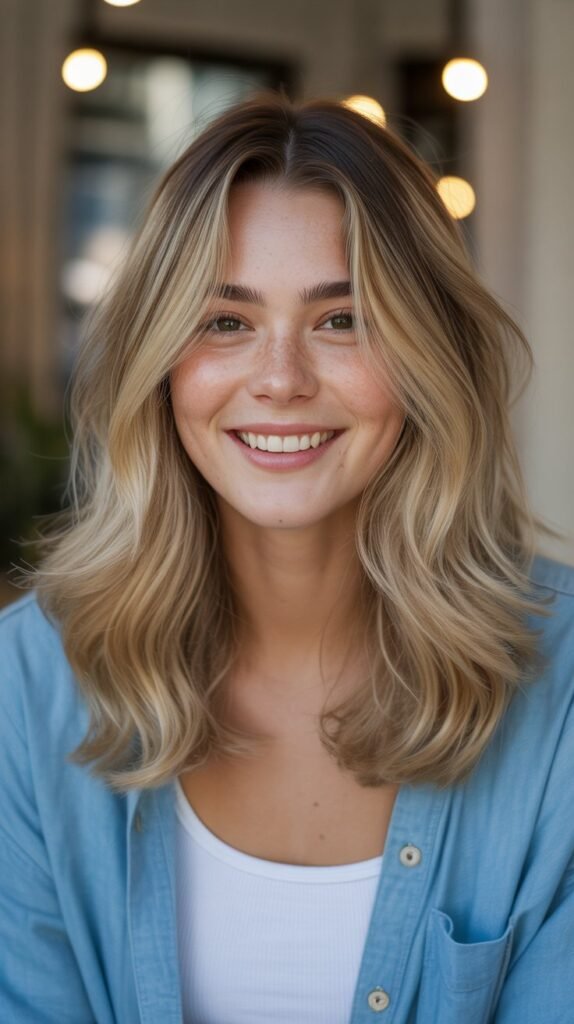
The V-cut creates a distinctive shape when hair is viewed from the back, with the longest point in the center and gradually shorter lengths toward the sides.
When combined with soft front layers, this creates a cohesive, flowing silhouette.
- The V-shape adds visual interest to long hair and prevents it from looking blunt or heavy at the ends.
- Soft front layers complement the V-cut by adding dimension around the face while maintaining the overall shape.
- This cut is particularly flattering for those with thick, dense hair as it removes weight without sacrificing length.
- The V-cut creates natural movement and prevents hair from laying flat against the back.
- Styling is versatile, working beautifully worn down, in ponytails, or in braided styles that showcase the V-shape.
- When curled or waved, the V-cut creates a stunning cascading effect with layers falling at different points.
- This style requires minimal maintenance and the V-shape remains visible even as hair grows.
5. Wispy Front Layers With Blunt Ends

Combining wispy, delicate front layers with blunt ends throughout the rest of your hair creates an interesting contrast that feels both edgy and feminine.
This style offers face-framing softness while maintaining the sleek, thick appearance of blunt-cut hair.
- Wispy layers are cut with thinning shears or point-cutting techniques to create soft, feathery texture around the face.
- The blunt ends maintain weight and fullness at the bottom, creating a healthy, thick appearance.
- This combination is ideal for those who want the best of both worlds—softness and structure.
- The wispy front pieces can be styled to blend seamlessly or kept more defined for added texture.
- This cut works well for all hair types but shows particularly beautifully on straight or slightly wavy hair.
- The contrast between textures makes hair appear more dynamic and intentionally styled even when air-dried.
- Minimal layering through the length means less frequent trims are needed to maintain the overall shape.
6. Butterfly Layers

Butterfly layers got their name from the way they create a wing-like shape when hair falls naturally around the shoulders.
This technique features the shortest layers starting at the collarbone area, creating maximum volume and movement in the mid-lengths.
- The defining feature is layers that are shortest around the collarbone and shoulders, gradually lengthening toward the ends.
- Soft front layers complement butterfly layers by creating a cohesive frame from face to shoulders.
- This cut adds significant volume to the crown and mid-length areas without removing too much hair from the ends.
- Butterfly layers work beautifully for those with fine or flat hair who want to create fuller-looking locks.
- The style gained popularity on social media for its ability to create dramatic transformation and bounce.
- When blow-dried with a round brush, butterfly layers create a lifted, voluminous silhouette.
- This cut requires styling to look its best, making it ideal for those who enjoy spending time on their hair routine.
7. Long Layers With Side-Swept Bangs

Side-swept bangs paired with long, soft layers throughout create a timeless, flattering look that never goes out of style.
This combination offers versatility and suits a wide range of face shapes and personal styles.
- Side-swept bangs typically start at the part and angle across the forehead, blending into the longer layers.
- This style is particularly flattering for those with prominent foreheads or who want to balance facial proportions.
- The angle of the bangs and layers creates diagonal lines that elongate and slim the face.
- Styling involves blow-drying the bangs in the desired direction with a round brush for smooth, polished results.
- Side-swept bangs offer more versatility than blunt bangs, easily pinned back or tucked behind the ear when desired.
- The long layers add movement throughout while keeping plenty of length and weight at the bottom.
- This classic style works equally well for professional settings and casual everyday wear.
8. Soft Graduated Layers
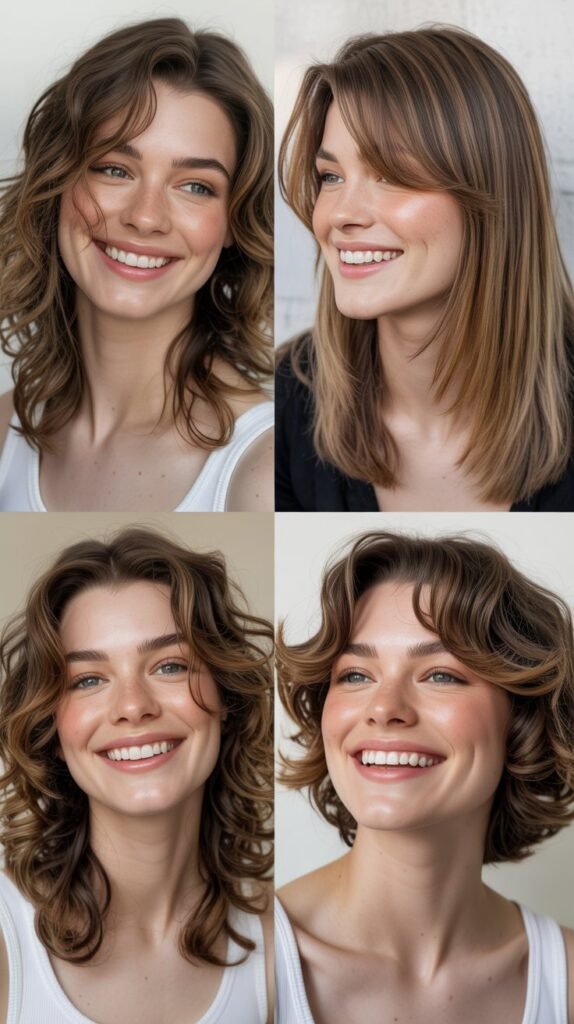
Graduated layers involve cutting hair at progressively shorter lengths from the bottom to the top, creating a stacked effect that adds volume and dimension.
When executed with soft techniques, this creates a flowing, natural appearance.
- Graduated layering creates more volume at the crown and mid-lengths while maintaining length at the bottom.
- The soft approach to graduation ensures layers blend seamlessly without visible lines or steps.
- This technique is excellent for adding body to fine or limp hair that tends to fall flat.
- The front layers are cut to frame the face softly while working in harmony with the graduated structure.
- Blow-drying with a round brush enhances the volumizing effect of graduated layers.
- This style works for both straight and wavy hair textures, each showcasing the layers differently.
- Regular maintenance every 8-10 weeks keeps the graduated shape intact and prevents layers from becoming too blended.
9. Face-Framing Money Pieces

Money pieces are bright, face-framing highlights combined with strategically cut layers that draw attention to the face and create a glowing, dimensional effect.
The term comes from the high-value placement around the face.
- Money pieces typically involve lighter color on the front sections that are also cut into soft, face-framing layers.
- The layers are designed to showcase the color contrast and create maximum impact around the face.
- This combination of color and cut creates a brightening effect that enhances natural features.
- The layering technique ensures the highlighted pieces fall naturally and frame the face beautifully.
- Money pieces work with various color combinations, from subtle dimension to bold contrast.
- The strategic placement of both color and layers draws the eye upward, creating a face-lifting effect.
- Maintenance involves both color touch-ups and regular trims to keep the front pieces at the ideal length.
10. Soft Razor-Cut Layers
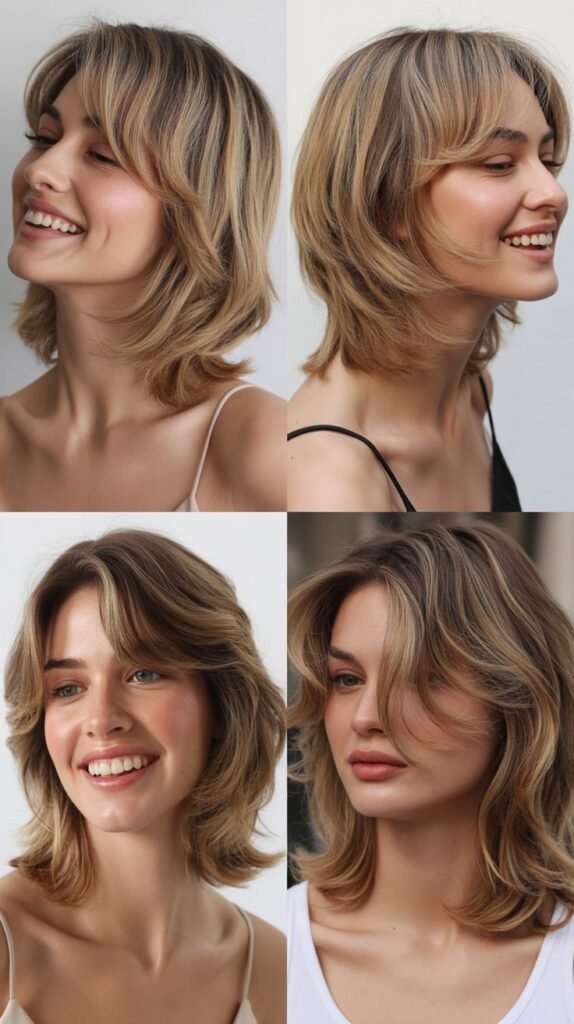
Razor cutting creates exceptionally soft, feathered edges that move beautifully and feel lightweight.
This technique involves using a razor blade instead of scissors to create layers with a distinctly wispy, textured finish.
- Razor cutting removes weight while creating soft, tapered ends that blend seamlessly.
- The technique is particularly effective for creating ultra-soft front layers that have no harsh lines.
- This method works best on medium to thick hair textures, as fine hair may become too thin with razor cutting.
- Razor-cut layers require less styling product to achieve a natural, flowing appearance.
- The soft edges created by razor cutting enhance natural waves and create texture in straight hair.
- This technique may cause more split ends over time in certain hair types, requiring regular maintenance trims.
- The result is a softer, more romantic look compared to scissor-cut layers.
11. Soft Layers With Middle Part

A middle part combined with soft front layers creates a balanced, symmetrical look that works beautifully for most face shapes.
This classic styling approach highlights facial features evenly and feels both modern and timeless.
- The middle part creates a vertical line that elongates the face and works particularly well for round and oval faces.
- Soft layers on either side of the middle part should be cut symmetrically to maintain balance.
- This style highlights cheekbones and creates a frame that draws attention to the eyes.
- Middle parts work best when hair is cut to complement the natural fall pattern from the crown.
- The combination creates a sleek, pulled-together look that’s perfect for professional and formal occasions.
- Styling involves blow-drying the layers away from the face on both sides for maximum dimension.
- This approach showcases hair health and shine, as the middle part displays the hair’s natural condition.
12. Long Layers With Choppy Front Pieces
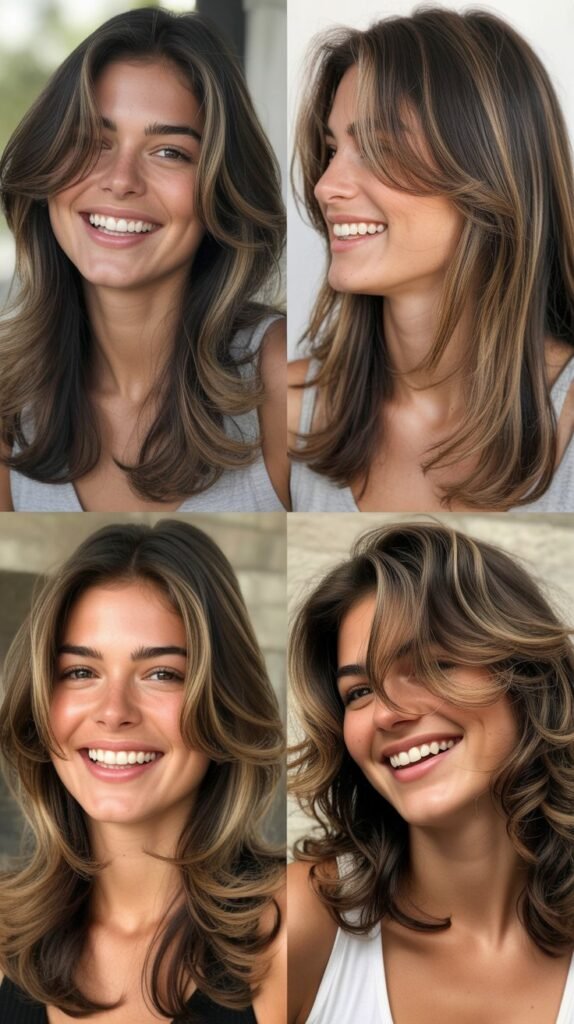
Choppy front pieces add an edgy, textured element to long, soft layers, creating a style that feels modern and fashion-forward.
This combination balances softness with intentional texture and attitude.
- Choppy pieces are created using point-cutting or notching techniques that create uneven, textured ends.
- The front pieces typically have more visible texture while the rest of the layers remain soft and blended.
- This style adds interest and prevents long hair from looking too polished or predictable.
- The choppy texture works particularly well for those with edgy personal style or creative professions.
- Styling products like texture paste or dry shampoo enhance the piecey, separated effect of choppy layers.
- This cut grows out well because the intentional texture doesn’t require precision maintenance.
- The combination of choppy and soft creates depth and makes hair appear thicker and more voluminous.
13. Soft Layers With Deep Side Part

A deep side part creates drama and volume, and when paired with soft front layers, it creates an elegant, glamorous look.
This styling approach has been a red carpet favorite for its face-slimming and sophisticated appearance.
- The deep side part is positioned far from center, typically creating a 70/30 or 80/20 split.
- Soft layers on the heavier side cascade down, creating volume and drama.
- The shorter side is tucked behind the ear or styled sleek, emphasizing the asymmetry.
- This style creates the illusion of more volume and thickness on one side.
- Deep side parts are particularly flattering for those wanting to conceal a receding hairline or add height at the crown.
- The dramatic asymmetry draws attention to facial features and creates a glamorous, old Hollywood vibe.
- Styling requires setting the part with product or clips while hair dries to maintain the deep position.
14. Bottleneck Bangs With Long Layers
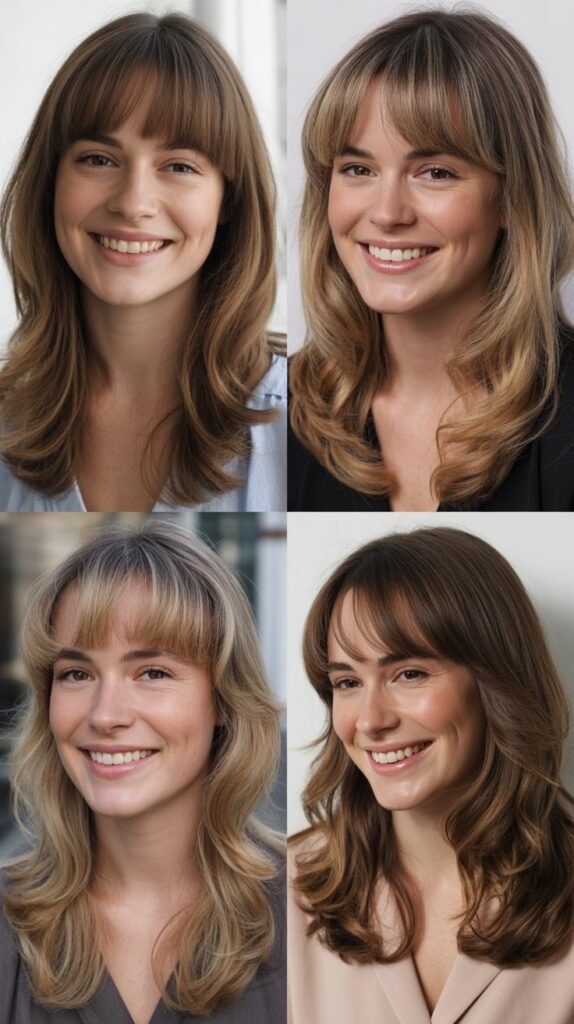
Bottleneck bangs are characterized by their unique shape—narrower at the forehead and gradually widening as they reach the cheekbones, resembling the shape of a bottle.
Combined with long layers, this creates a distinctly modern look.
- The narrow top section of bottleneck bangs sits close to the forehead, typically starting around eyebrow level.
- As the bangs descend, they gradually widen and blend into the longer layers around the cheekbones and jaw.
- This shape creates a flattering frame that works for various face shapes, particularly elongated or oval faces.
- The unique cut draws attention to the eyes while softening the overall appearance.
- Bottleneck bangs require more styling than traditional bangs to maintain their distinctive shape.
- A round brush and blow dryer help create the proper shape and prevent the bangs from falling flat.
- This trendy style offers a fresh alternative to traditional curtain bangs or side-swept options.
15. Soft Layers With Tapered Ends

Tapered ends involve gradually thinning the hair toward the tips, creating a soft, lightweight finish that prevents blunt, heavy-looking hair.
Combined with soft front layers, this creates a cohesive, flowing appearance throughout.
- Tapering is achieved through point-cutting or slide-cutting techniques that remove bulk from the ends.
- This method prevents the “triangle effect” that thick hair can create when grown long.
- Soft front layers are tapered to blend seamlessly with the rest of the hair’s tapered structure.
- Tapered ends move more freely and create a lighter, airier appearance.
- This technique works exceptionally well for thick, coarse hair types that tend to feel heavy.
- The tapered approach prevents blunt lines and creates a more natural, organic finish.
- Hair with tapered ends tends to show less visible split ends as damage blends into the texture.
16. Soft Layers With Textured Ends
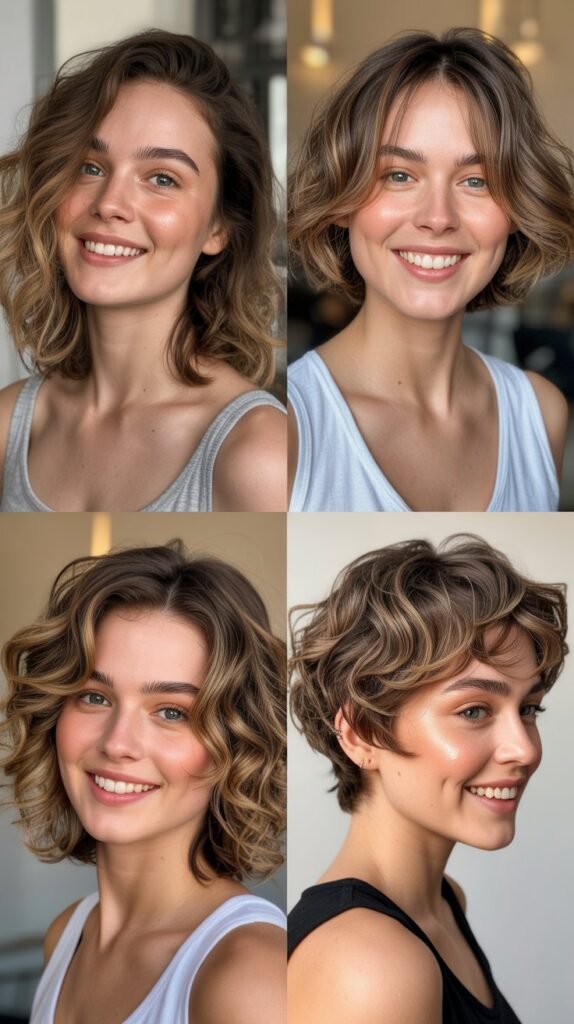
Textured ends add intentional, separated piece-iness to the bottom of long hair, creating visual interest and a modern, lived-in appearance.
Combined with soft front layers, this creates dimension from top to bottom.
- Textured ends are created using pointing scissors or razor techniques that create uneven, separated pieces.
- The texture prevents hair from looking too blunt or dated, adding contemporary edge.
- Soft front layers maintain facial softness while the textured ends provide interest at the bottom.
- This combination works well for those transitioning from shorter styles or recovering from damaged ends.
- Styling products like texture spray or light pomade enhance the separated, piecey effect.
- Textured ends appear thicker and fuller than blunt cuts because they create visual depth.
- The intentional texture makes hair appear more dimensional even in a single natural color.
17. Long Layers With Baby Bangs

Baby bangs, or micro bangs, are ultra-short fringe that sits well above the eyebrows, creating a bold, fashion-forward statement.
When paired with long, soft layers, this creates maximum contrast and drama.
- Baby bangs typically end at the mid-forehead or higher, creating a distinctive, eye-catching look.
- The dramatic contrast between short bangs and long layers creates a striking, fashion-forward aesthetic.
- This style requires confidence and commitment, as baby bangs are highly visible and grow out slowly.
- Soft layers throughout the length balance the boldness of baby bangs, preventing an overly harsh appearance.
- This combination works best for those with oval or heart-shaped faces and smaller foreheads.
- Styling baby bangs requires precision blow-drying or straightening to keep them flat and neat.
- The look has a retro, 1960s-inspired vibe that feels both vintage and ultra-modern.
18. Soft Layers With Invisible Layers

Invisible layers are subtly cut layers that add movement and remove weight without creating obvious, visible steps in the hair.
This technique creates seamless dimension while maintaining the appearance of one-length hair.
- Invisible layers are typically cut at minimal elevation, creating subtle length variation that’s barely detectable.
- The technique removes internal weight without dramatically changing the overall silhouette.
- Soft front layers provide the visible framing element while invisible layers work behind the scenes for movement.
- This approach is perfect for those wanting the benefits of layers without a drastic change in appearance.
- Invisible layering maintains maximum length and thickness at the perimeter while reducing bulk.
- The subtle nature means hair appears to have natural movement and flow rather than an obviously styled cut.
- This technique works beautifully for all hair types and is particularly good for thick, heavy hair.
19. Swoopy Front Layers With Long Hair
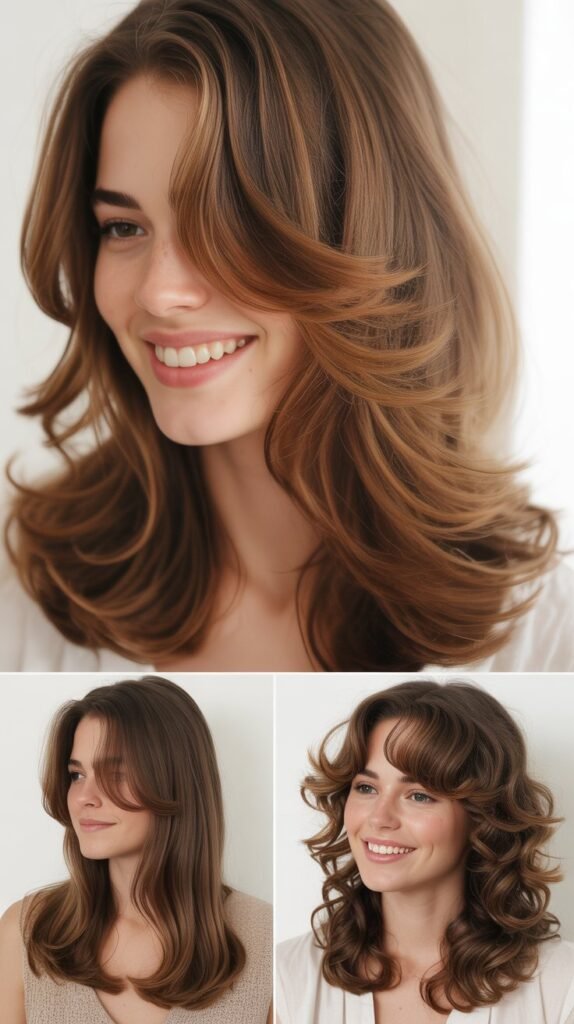
Swoopy layers create dramatic, curved pieces that sweep dramatically around the face, adding movement and theatrical flair.
This technique emphasizes curves and flow rather than straight, linear layers.
- Swoopy layers are cut with consideration for how hair naturally falls and curves around the face.
- The technique creates C-shaped or S-shaped pieces that add dimension and visual interest.
- This style works particularly well for naturally wavy or curly hair that already has movement.
- Blow-drying with a large round brush enhances the swoopy effect and creates smooth, curved shapes.
- The dramatic movement of swoopy layers creates a glamorous, voluminous appearance.
- This cut adds width at the sides, making it ideal for those wanting to balance narrow face shapes.
- Swoopy layers require regular styling to maintain their characteristic curved shape.
20. Soft Layers With Blended Bangs

Blended bangs seamlessly integrate with the front layers, creating a cohesive, flowing appearance without distinct separation between bangs and layers.
This approach creates a softer, more natural-looking frame.
- Blended bangs don’t have a clear line of demarcation; they gradually transition into the longer layers.
- This technique creates a more forgiving style that grows out gracefully without awkward stages.
- The seamless integration ensures the face is framed without harsh lines or obvious sections.
- Blended bangs work well for those hesitant to commit to traditional bangs but wanting face-framing.
- Styling is simplified because the blended approach doesn’t require separate styling of bangs and layers.
- This method suits all face shapes as the soft blending can be customized to flatter individual features.
- The style maintains versatility, easily swept back or styled forward depending on preference.
21. Long Layers With Eyebrow-Grazing Fringe

Eyebrow-grazing fringe sits right at or just above the eyebrows, creating a soft, romantic frame that draws attention to the eyes.
Combined with long layers, this creates a balanced, feminine look.
- The fringe is cut to precisely meet the eyebrows, creating a deliberate, polished appearance.
- This length is flattering for most face shapes and doesn’t obstruct vision like longer bangs might.
- The eyebrow-grazing length allows the eyes to remain visible while still providing face-framing benefits.
- Soft layers throughout the length complement the fringe and create overall harmony in the cut.
- This style requires more frequent bang trims, typically every 3-4 weeks, to maintain the precise length.
- The fringe can be styled straight across for a blunt look or swept slightly to the side for softness.
- This length works beautifully with various textures, from pin-straight to gently wavy hair.
22. Soft Layers With Piece-y Bangs

Piece-y bangs feature separated, textured sections rather than a solid, uniform curtain of hair.
Combined with soft layers, this creates an intentionally tousled, modern aesthetic.
- Piece-y bangs are created using point-cutting or notching techniques that separate sections.
- The textured approach prevents bangs from looking too heavy or dated.
- This style works particularly well for those with thick hair who want bangs without excessive bulk.
- Soft layers throughout complement the textured nature of the piece-y bangs.
- Styling involves using fingers to separate sections and texturizing products to enhance the piece-y effect.
- The separated nature makes these bangs more forgiving on humid days compared to smooth, straight-across styles.
- Piece-y bangs create a casual, effortless vibe that suits modern, laid-back personal styles.
23. Soft Layers With Grown-Out Bangs
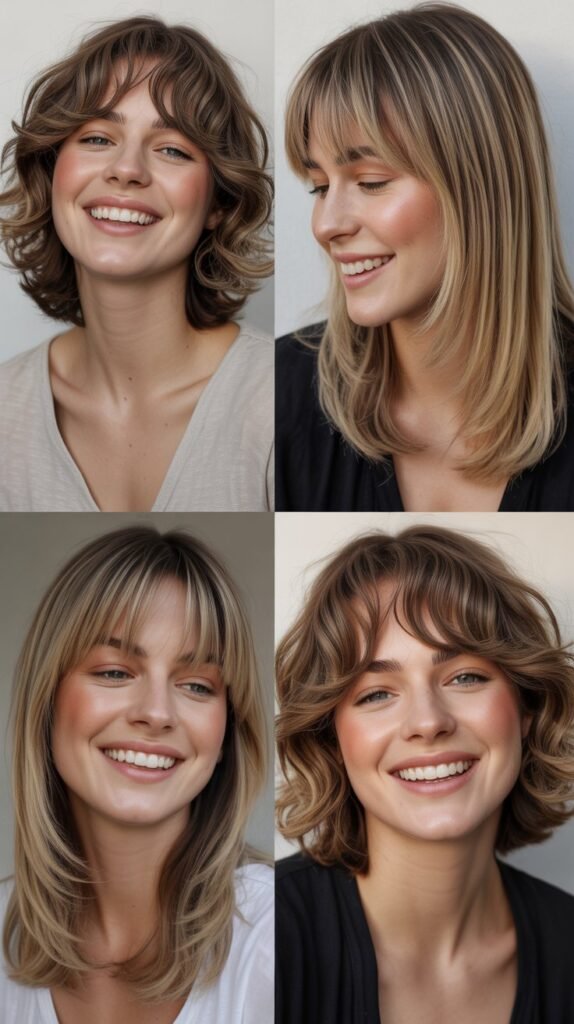
Grown-out bangs that are being transitioned into layers create a beautiful, effortless look.
This approach celebrates the in-between stage rather than treating it as an awkward phase to endure.
- Grown-out bangs typically fall around nose to chin length, the perfect point to integrate into face-framing layers.
- Strategic layering during this phase creates intentional shape rather than leaving bangs as an awkward length.
- The transition period becomes an opportunity to discover a flattering length for permanent face-framing layers.
- Styling techniques like tucking behind ears, using clips, or incorporating into braids help manage the length.
- Soft layers throughout the rest of the hair help the grown-out bangs blend more seamlessly.
- This approach eliminates the frustration of growing out bangs by making each stage look intentional.
- Regular trims to shape the growing bangs into layers prevent the transition from looking unkempt.
24. Soft Layers With Rounded Front Sections

Rounded front sections create a soft, curved frame around the face rather than straight, angular pieces.
This technique emphasizes femininity and creates a gentle, flowing appearance.
- Rounded layers are cut following the natural curve of the face, creating a softer, less geometric look.
- The technique involves considering where hair naturally falls to create curves rather than fighting against it.
- This approach is particularly flattering for angular face shapes, softening sharp features.
- Rounded front sections blend seamlessly into the longer layers, creating continuous flow.
- Styling with a round brush enhances the curved shape and creates smooth, flowing movement.
- The soft curves add width at the sides, helpful for balancing narrow or long face shapes.
- This technique works beautifully for those wanting a romantic, soft aesthetic in their hairstyle.
25. Soft Layers With Disconnected Front Pieces

Disconnected front pieces are intentionally cut shorter than the surrounding layers, creating deliberate contrast and visual interest.
This technique adds edge and modernity to long, soft layers.
- Disconnected layers don’t blend seamlessly but instead create visible, intentional separation.
- The front pieces are typically cut 2-4 inches shorter than the layers immediately behind them.
- This technique adds dimension and creates the appearance of multiple textures within one hairstyle.
- The disconnected approach works well for those wanting a unique, fashion-forward look.
- Styling can emphasize or minimize the disconnect depending on preference and occasion.
- This cut creates natural movement as the shorter pieces fall separately from the longer sections.
- The technique requires confidence to wear and regular maintenance to keep the intentional disconnect visible.
26. Soft Layers With Face-Framing Highlights
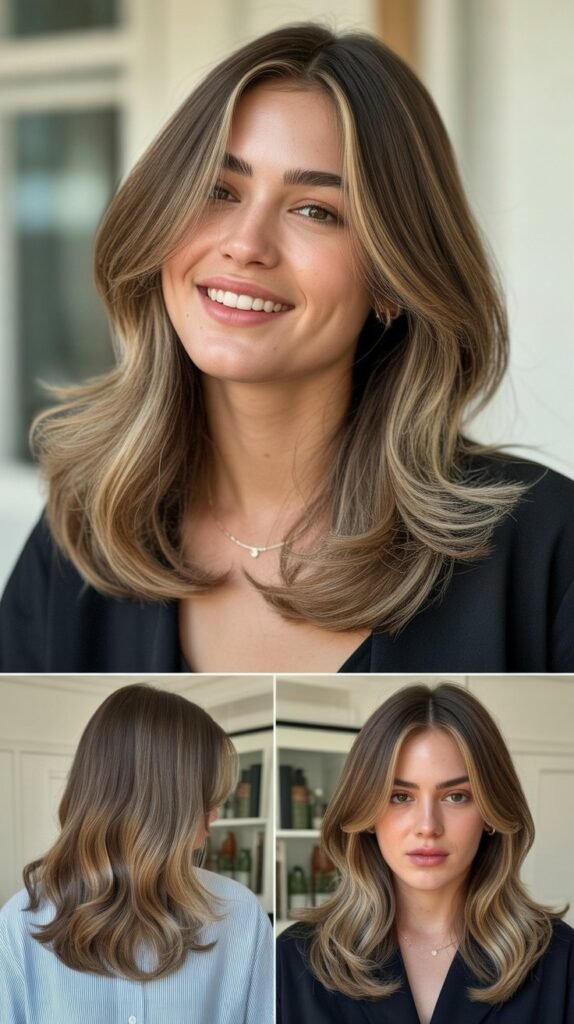
Face-framing highlights strategically placed on soft front layers create dimension and draw attention to facial features.
The combination of cut and color works synergistically to maximize impact.
- Highlights are placed specifically on the front layers to create a brightening, face-lifting effect.
- The layered cut ensures highlighted pieces fall in the most flattering positions around the face.
- This combination creates dimension that’s visible even in lower lighting conditions.
- Face-framing highlights can be subtle or bold depending on personal preference and natural base color.
- The strategic placement of both cut and color creates a cohesive, intentionally designed look.
- Maintenance involves both regular color touch-ups and trims to keep layers at optimal length.
- The brightening effect of highlights on face-framing layers creates a fresh, youthful appearance.
27. Soft Layers With Minimal Face-Framing

Minimal face-framing involves the subtlest possible layers around the face, perfect for those wanting just a touch of softness without dramatic change.
This approach maintains maximum length while adding gentle dimension.
- Minimal layers typically start at chin length or lower, creating barely perceptible framing.
- This technique is ideal for those testing whether they like face-framing layers before committing to more dramatic cuts.
- The subtle approach works for conservative professional environments or personal styles.
- These layers add just enough movement to prevent hair from looking completely one-length and flat.
- Styling requires minimal effort as the layers are designed to blend naturally with the overall length.
- The barely-there approach grows out seamlessly, requiring less frequent maintenance.
- This option provides the benefits of layers—movement and dimension—without sacrificing the appearance of one-length hair.
Conclusion
Whether you’re drawn to dramatic curtain bangs, subtle wispy pieces, or bold disconnected layers, the 27 Long Haircuts With Soft Front Layers You’ll Want to Try showcased in this guide prove that long hair can be anything but boring.
Soft front layers offer the perfect solution for adding life, movement, and dimension to lengthy locks without the commitment of cutting significant length.
From face-framing feathered styles to trendy bottleneck bangs, each option provides a unique way to enhance your natural beauty and express your personal style.
The key to finding your perfect long layered look lies in considering your face shape, hair texture, lifestyle, and styling preferences, then working with a skilled stylist who understands how to customize these techniques for your individual needs.
With the right cut and minimal maintenance, soft front layers can transform your long hair into a dynamic, flattering style that makes you feel confident and beautiful every single day.
