
Reaching your fifties doesn’t mean compromising on style, especially when it comes to your hair.
If you have thin, fine hair and worry about volume, texture, or finding flattering cuts, this comprehensive guide to 28 Amazing Hairstyles for Thin Fine Hair Over 50 That Defy Aging will transform your perspective entirely.
This article explores cutting-edge styles, expert techniques, and modern approaches that add body, movement, and youthful energy to delicate hair textures.
From strategic layering and precision cuts to color techniques that create dimension, you’ll discover proven solutions that work specifically for mature hair.
Each hairstyle recommendation includes styling tips, maintenance advice, and visual inspiration to help you make confident decisions.
Whether you prefer short pixies, elegant bobs, or longer styles, these options celebrate your natural beauty while addressing the unique challenges of fine hair after fifty, proving that age is truly just a number when you have the right hairstyle.
1. The Textured Pixie Cut
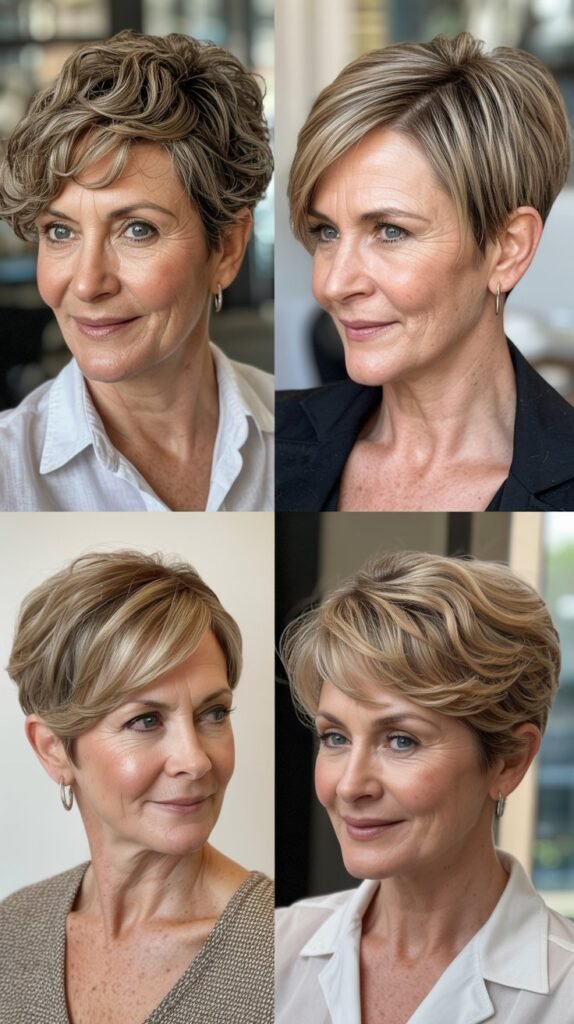
The textured pixie represents one of the most liberating choices for women over 50 with fine hair, offering effortless style with minimal maintenance requirements.
This cut works by removing weight from the hair while adding strategic layers that create the illusion of fullness and dimension.
- The textured pixie focuses on varying lengths throughout the crown and sides, with shorter sections at the nape transitioning to slightly longer pieces on top.
- Stylists typically use point-cutting and razor techniques to soften edges and prevent the blunt, heavy appearance that can make fine hair look flat.
- This style particularly benefits those with naturally straight or slightly wavy hair textures, as the cut enhances any existing movement.
- The beauty of this approach lies in how the choppy, piecey layers catch light differently, creating depth that makes hair appear thicker than it actually is.
- Morning styling requires only 5-10 minutes with a lightweight texturizing product and quick finger-styling for a modern, youthful finish.
- Women with fine hair should request their stylist create more texture at the crown area specifically, where thinning often becomes most noticeable.
- This cut grows out gracefully, typically maintaining its shape for 6-8 weeks before requiring a trim.
2. The Asymmetrical Bob
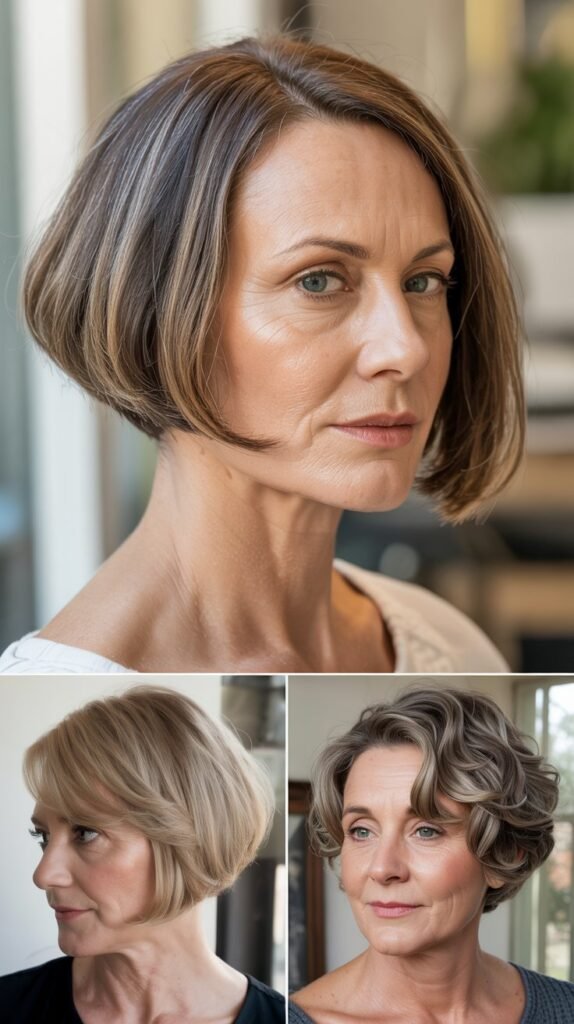
Asymmetrical bobs bring contemporary edge to classic elegance while solving multiple concerns associated with thin, fine hair in mature women.
The uneven lengths create visual intrigue that distracts from any lack of density.
- This style features one side cut shorter than the other, typically with a difference of 1-3 inches depending on personal preference and face shape.
- The longer side can be swept forward to frame the face, drawing attention to your best features while the shorter side reveals the neck and jawline.
- Asymmetry naturally adds movement and prevents hair from lying completely flat against the head, which is essential for creating volume.
- Fine hair holds this shape exceptionally well because it lacks the weight that would pull the style down or cause it to lose its distinctive lines.
- Stylists often incorporate subtle layers throughout to enhance the shape without creating gaps or wispy ends that can make thin hair look sparse.
- The angled cut creates a lifting effect that makes hair appear fuller, particularly when the back is slightly stacked or graduated.
- This versatile style transitions easily from casual daytime looks to elegant evening appearances with simple styling adjustments.
3. The Classic French Bob
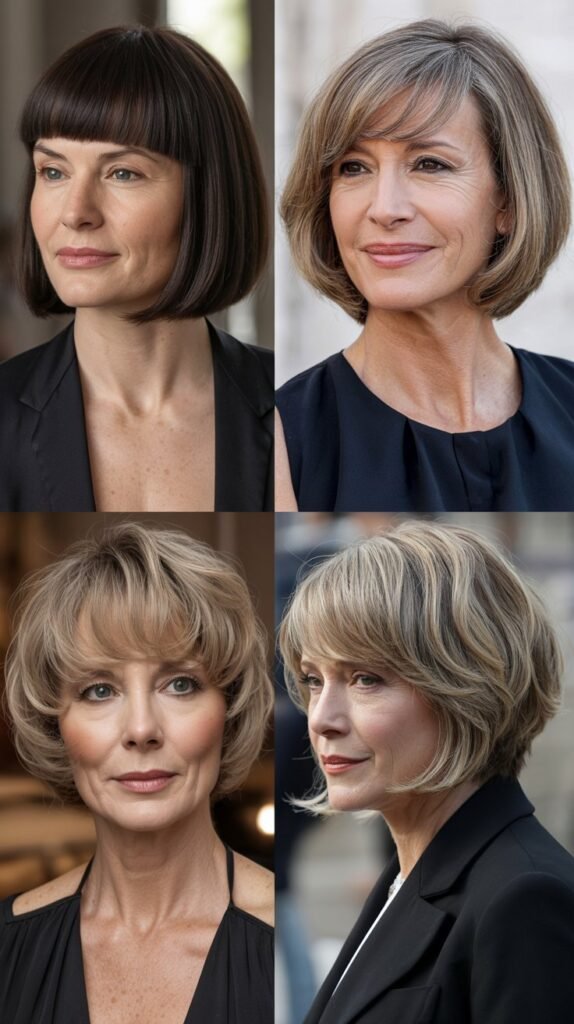
The French bob embodies timeless sophistication while providing the structure and shape that fine hair desperately needs to appear voluminous and healthy.
This chin-length cut with blunt ends and minimal layering creates a striking silhouette.
- The defining characteristic involves a straight, blunt cut that falls between the chin and just above the shoulders, typically with short, eyebrow-grazing bangs.
- Blunt cutting actually benefits fine hair by preventing the tapered, thin ends that can make delicate strands look wispy or damaged.
- The weight of the blunt line helps hair appear fuller and more substantial, creating the optical illusion of greater density.
- French bobs work particularly well with slight natural texture or wave, which adds dimension without requiring extensive styling.
- This cut requires precision maintenance every 4-6 weeks to preserve the clean lines and prevent the style from looking overgrown or unkempt.
- Women over 50 appreciate how this style frames the face elegantly while maintaining a youthful, fashion-forward appearance.
- The minimal styling requirement makes it practical for daily wear, needing only a round brush blow-dry or simple air-drying for casual occasions.
4. The Layered Lob (Long Bob)
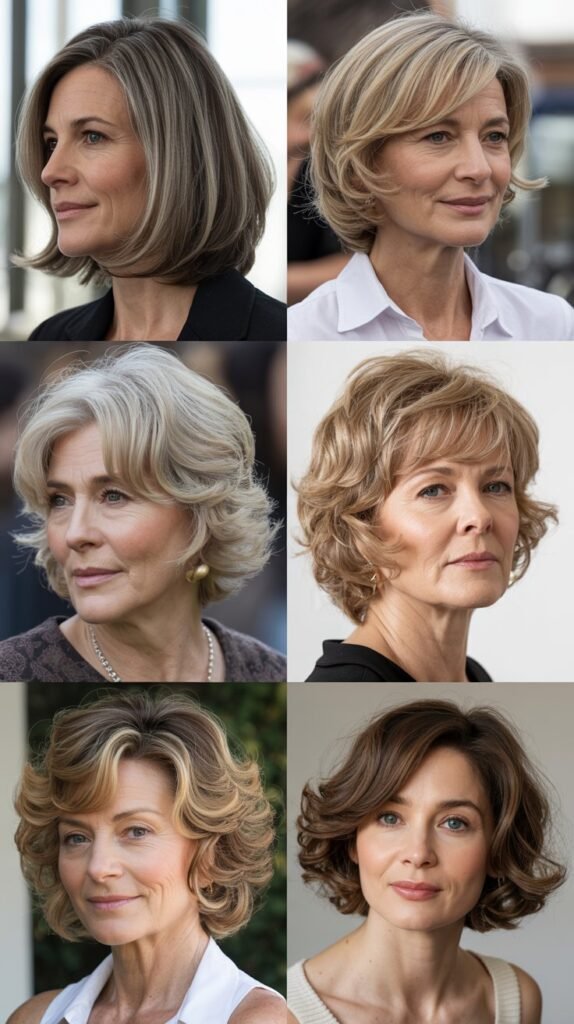
The layered lob represents the perfect middle ground between short and long styles, offering versatility and volume that thin, fine hair often lacks.
Strategic layering throughout creates movement and prevents the flat appearance common with one-length cuts.
- This style typically falls between the collarbone and shoulders, with internal layers that remove bulk without sacrificing the appearance of thickness.
- Layers should be cut at varying lengths throughout the hair rather than creating distinct, visible steps that can expose thinning areas.
- The length provides enough weight to prevent fine hair from becoming too flyaway while remaining light enough to hold volume.
- Face-framing layers around the front add dimension and draw attention to facial features rather than focusing on hair density.
- This cut offers multiple styling options including straight sleek looks, loose waves, or textured styles depending on the occasion.
- The lob length allows for various updo options when desired, providing flexibility that shorter cuts cannot offer.
- Maintenance requirements remain reasonable with trims needed every 6-8 weeks to maintain the shape and prevent split ends from traveling up the hair shaft.
5. The Shaggy Crop
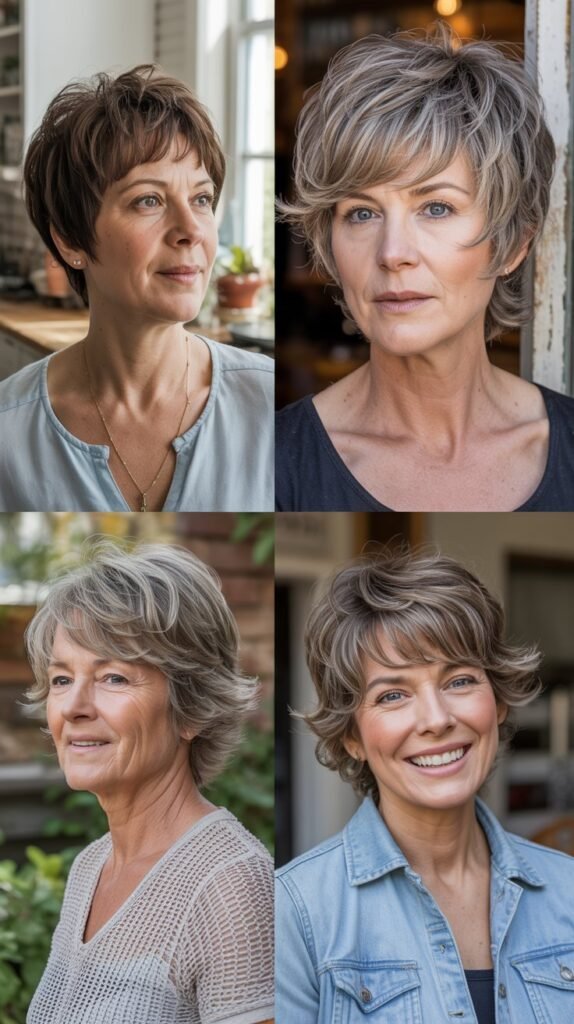
The shaggy crop brings back seventies-inspired texture with a modern twist perfectly suited for thin hair that needs dimension and movement.
This deliberately messy style celebrates texture rather than fighting against it.
- The cut features choppy layers throughout with varying lengths that create a deliberately undone, effortlessly cool appearance.
- Stylists use razor cutting and point cutting techniques extensively to create the soft, feathered edges characteristic of this style.
- The shagginess naturally adds volume because layers fall at different points, preventing hair from lying flat or appearing one-dimensional.
- This approach works exceptionally well for women transitioning to gray hair, as the texture helps blend different color tones naturally.
- Styling requires minimal effort with texturizing products applied to damp hair and air-dried or lightly diffused for maximum movement.
- The length typically ranges from chin to shoulder, though shorter variations exist for those preferring easier maintenance.
- This style grows out beautifully, maintaining its intentionally messy character even as hair lengthens between appointments.
6. The Side-Swept Pixie
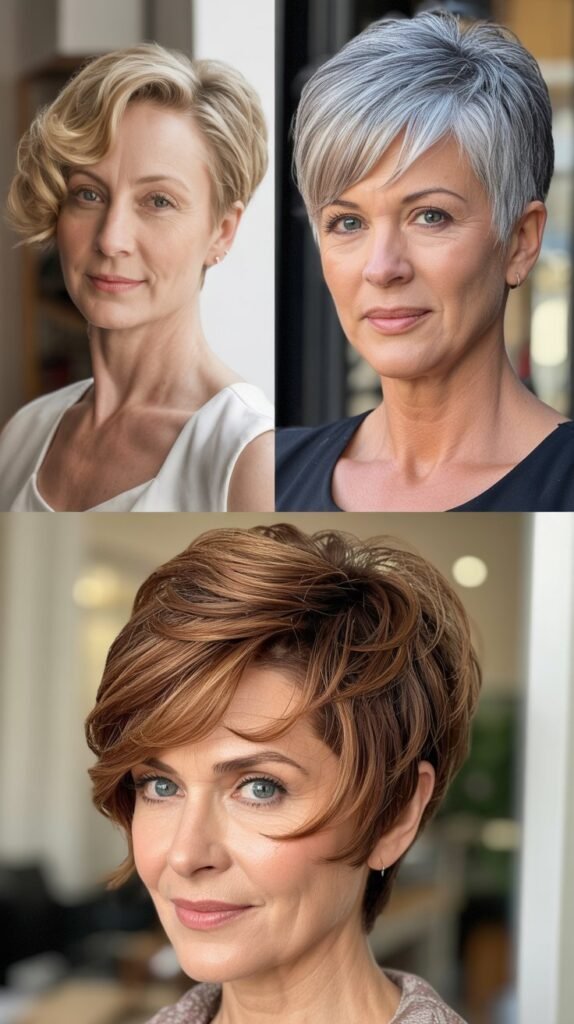
Side-swept pixies offer all the benefits of short hair while incorporating asymmetry and directional styling that flatters mature faces and thin hair textures.
The swept styling adds crucial height at the roots.
- This variation features longer pieces on one side that sweep across the forehead, creating diagonal lines that elongate the face and add interest.
- The opposite side is cut shorter and can be tapered or undercut depending on personal style preferences and hair growth patterns.
- Sweeping hair to one side naturally lifts roots away from the scalp, creating volume that fine hair typically struggles to achieve.
- The style works beautifully for women with cowlicks or difficult growth patterns, as the swept direction can work with rather than against natural tendencies.
- Styling involves blow-drying hair in the desired direction with a small round brush or directing product through damp hair for a more casual finish.
- This cut requires regular trims every 4-5 weeks to maintain the precise lines and prevent the longer side from becoming too heavy.
- The asymmetrical nature draws eyes across the face rather than focusing attention on any single feature, creating balanced, harmonious proportions.
7. The Graduated Bob
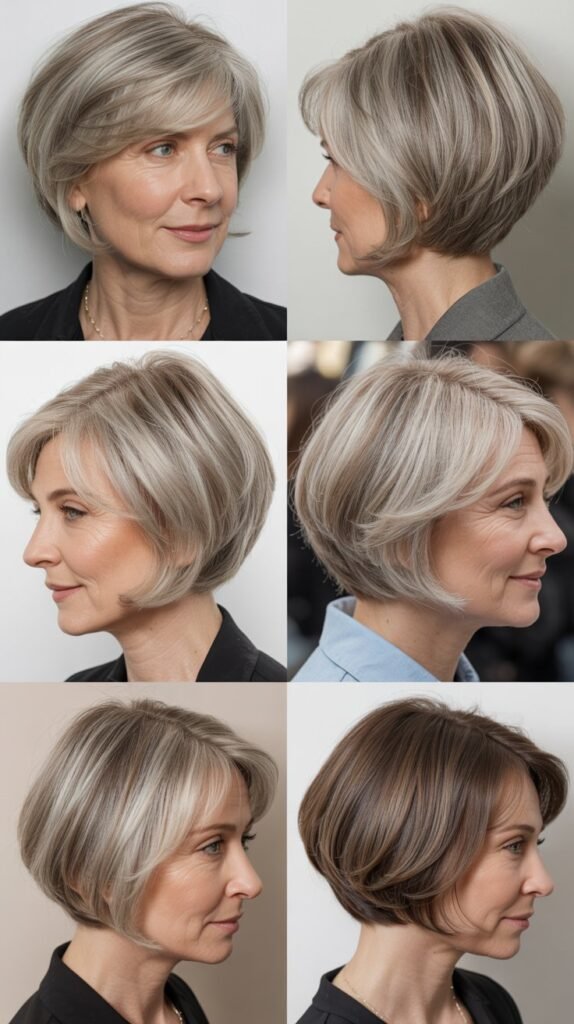
Graduated bobs utilize strategic angle-cutting that stacks layers in the back while maintaining length in the front, creating shape and volume where thin hair needs it most.
This architectural approach builds structure into the cut itself.
- The graduation refers to increasingly shorter layers as you move from front to back, with the shortest pieces at the nape creating a stacked effect.
- This stacking adds height at the crown and back of the head, areas where fine hair often falls flat and reveals thinning.
- The front pieces remain longer, framing the face and providing versatility for styling forward or tucked behind the ears.
- The graduated cut creates a lifted appearance that makes hair seem fuller and more voluminous from all angles.
- This style particularly benefits women with fine, straight hair as the cut itself provides the shape and structure without requiring extensive styling.
- Maintenance involves regular trims every 5-6 weeks to preserve the graduation and prevent the back from growing too long and losing its shape.
- The architectural nature of this cut means it looks polished and intentional even with minimal styling effort.
8. The Wispy Bangs Addition
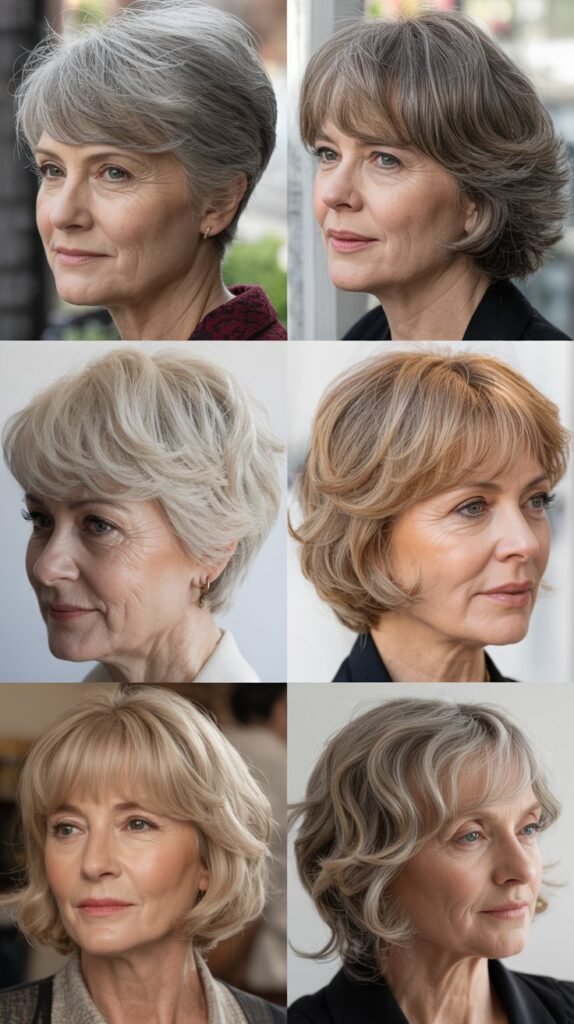
Adding wispy, textured bangs to existing hairstyles transforms the entire look while drawing attention upward toward the eyes and away from areas of thinning.
These soft fringes create youthful energy without overwhelming fine hair.
- Wispy bangs feature irregular, piece-y sections rather than a solid, blunt line, which prevents them from appearing too heavy on fine hair.
- The texture allows scalp to show through slightly, which might seem counterintuitive but actually looks more natural on thin hair than dense, thick bangs.
- Stylists cut these bangs with point-cutting or razor techniques to create soft, feathered edges that blend seamlessly with the rest of the hair.
- The irregular lengths mean these bangs frame the face from multiple angles, creating dimension and movement across the forehead.
- Maintenance remains simple with most women trimming their own bangs between salon visits using thinning shears or regular scissors with point-cutting techniques.
- These bangs work with virtually any hairstyle length from pixies to longer styles, making them an adaptable option for testing new looks.
- The softness of wispy bangs flatters mature skin beautifully, creating a gentler frame than harsh, blunt alternatives.
9. The Blunt Shoulder-Length Cut
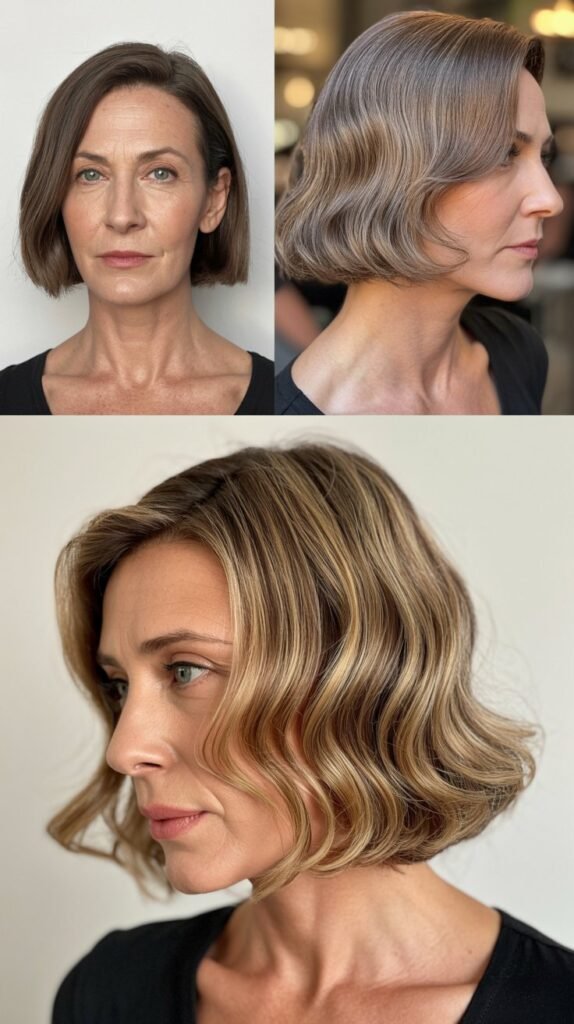
Blunt shoulder-length cuts create the illusion of thickness through strategic one-length cutting that makes every strand count toward the overall appearance of fullness.
The clean line adds polish and sophistication.
- This style features hair cut to one length at the shoulders with minimal or no layering, creating a solid, substantial-looking hemline.
- The blunt cut prevents the tapered, thin ends that layered cuts can create, which is particularly important for fine hair that easily looks sparse.
- This length hits at an ideal point that’s long enough to style various ways but short enough to maintain volume at the roots.
- The weight distribution of a one-length cut actually helps fine hair hold style better and appear thicker than heavily layered alternatives.
- Styling versatility allows for straight sleek looks, gentle waves, or even pulled-back styles that all maintain the blunt line’s integrity.
- This cut requires precise maintenance every 6-8 weeks to remove split ends and maintain the blunt line’s crisp appearance.
- The classic nature of this style ensures it never goes out of fashion while remaining flattering across different face shapes and personal styles.
10. The Feathered Cut
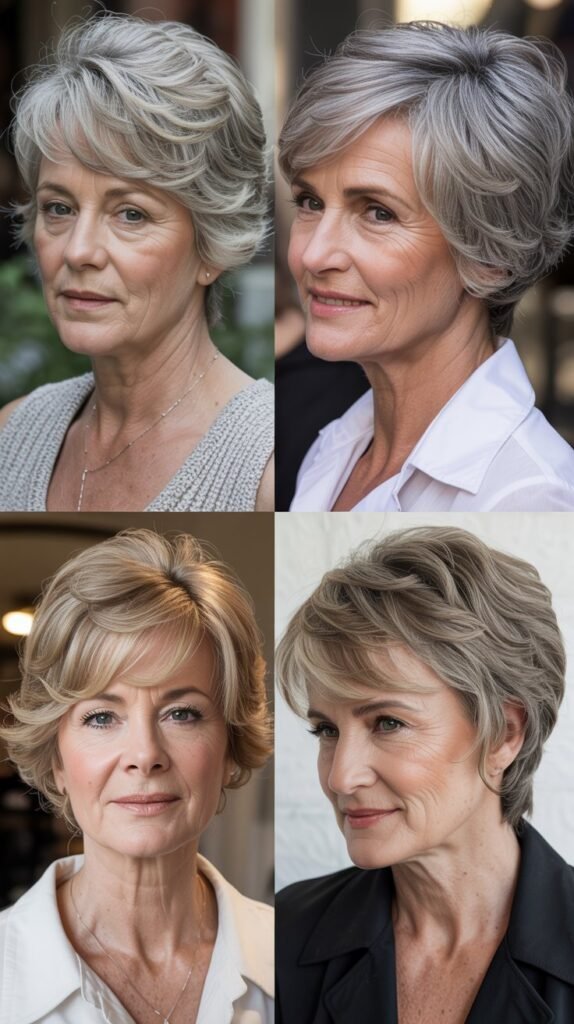
Feathered cuts bring back a beloved classic technique that creates soft, sweeping movement ideal for adding dimension to thin, fine hair.
The delicate layering mimics the appearance of feathers spreading outward.
- Feathering involves cutting hair at angles that create pieces which flip outward at the ends, adding width and movement to the overall style.
- This technique works throughout the hair rather than just at the ends, with multiple feathered sections creating depth and texture.
- The outward movement of feathered pieces makes hair appear fuller because it occupies more space rather than hanging straight and flat.
- Stylists achieve this look through razor cutting or scissors-over-comb techniques that create the characteristic soft, tapered edges.
- This approach particularly flatters oval and heart-shaped faces, as the outward movement balances facial proportions beautifully.
- Styling requires round brush blow-drying to encourage the outward flip, or users can wrap sections around large curlers for a more dramatic effect.
- The feathered look maintains its shape well between washes, making it practical for women who prefer styling twice weekly rather than daily.
11. The Tapered Cut
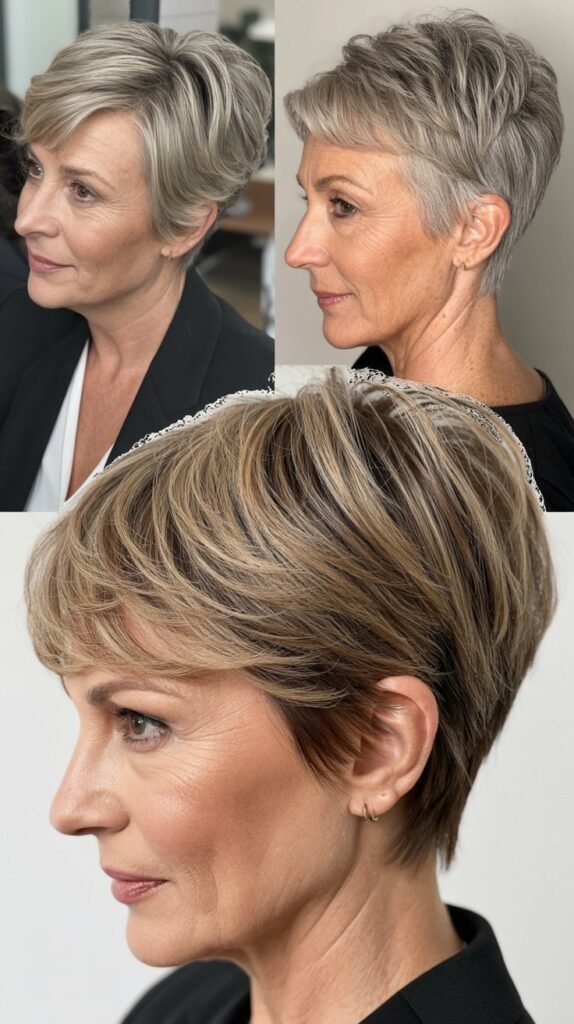
Tapered cuts gradually decrease in length from top to bottom, creating streamlined elegance while building volume at the crown where thin hair needs it most.
This approach combines practicality with sophisticated styling.
- The tapering technique involves cutting hair progressively shorter as you move down and toward the nape, creating a refined, polished silhouette.
- This graduation removes weight from the lower sections, preventing hair from pulling down at the roots and flattening the style.
- The retained length at the top and crown provides enough hair to work with for creating volume and styling versatility.
- Tapered cuts work exceptionally well for women with round or square face shapes, as the narrowing lines create length and elongate proportions.
- The precision required for proper tapering means this cut should be performed by experienced stylists who understand fine hair’s unique needs.
- Maintenance involves regular trims every 5-7 weeks to preserve the clean lines and prevent the taper from growing uneven.
- This style transitions beautifully from professional settings to casual environments, maintaining elegance regardless of the occasion.
12. The Choppy Bob
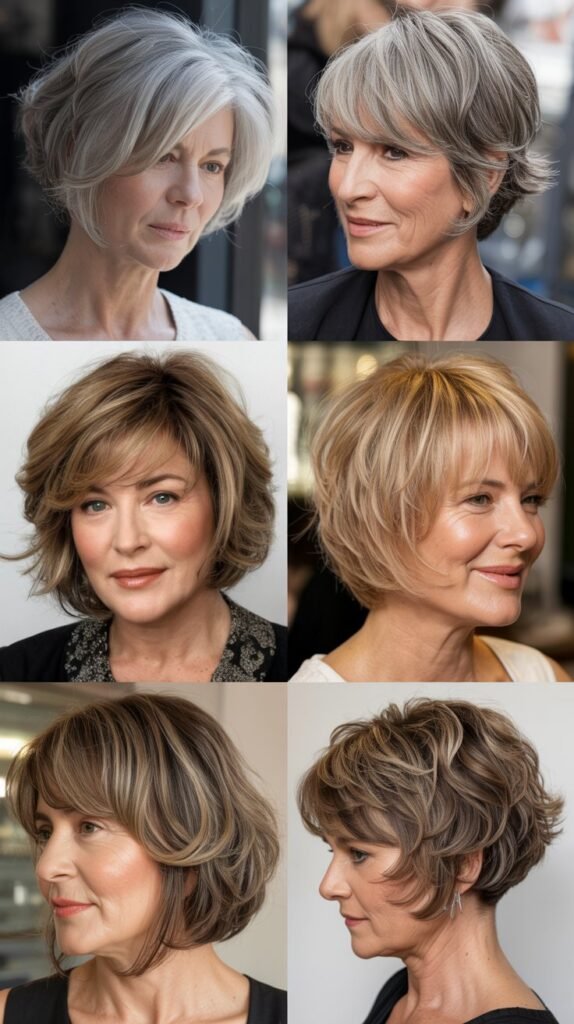
Choppy bobs embrace texture and deliberate irregularity, creating visual interest that distracts from fine hair’s natural limitations while adding contemporary edge.
The disconnected pieces create fullness through strategic disorder.
- This style features varying lengths throughout with some pieces significantly shorter or longer than others, creating intentional choppiness.
- The irregular cutting prevents hair from lying too smoothly or revealing thinning areas by ensuring pieces fall at different points.
- Stylists use combination cutting techniques including point-cutting, slide-cutting, and razor work to achieve the signature choppy texture.
- This approach works particularly well for women wanting modern, fashion-forward styles that break away from traditional expectations for mature hair.
- The choppiness naturally adds movement and prevents the static, flat appearance that plagues fine hair in more uniform cuts.
- Styling flexibility allows for messy, textured looks or smoother finishes depending on product choice and technique.
- This cut grows out gracefully with the intentional irregularity meaning slightly longer lengths don’t immediately look unkempt or neglected.
13. The Voluminous Crown Cut
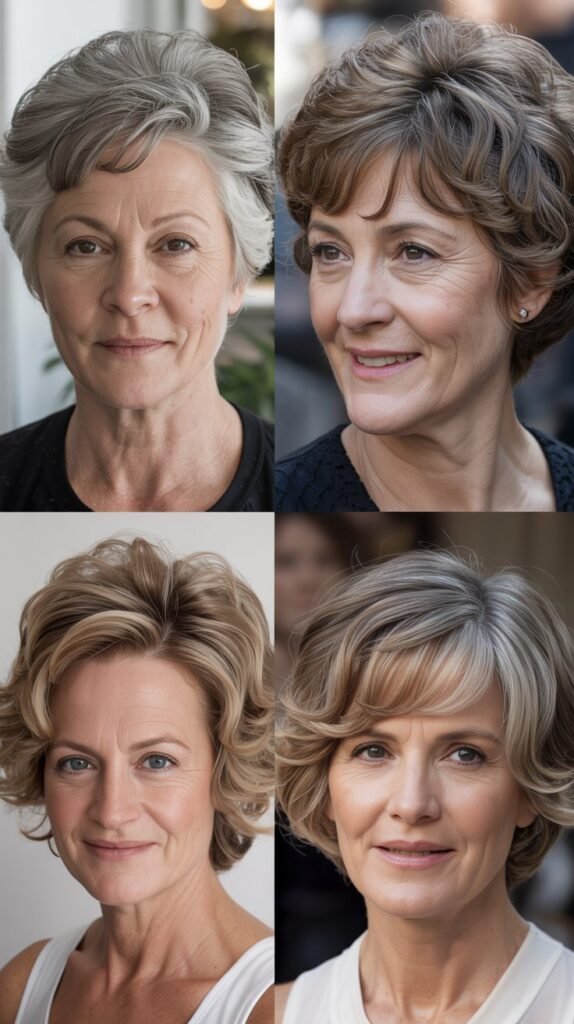
Voluminous crown cuts strategically concentrate shorter layers at the crown area to create height and fullness exactly where thinning typically appears most noticeable.
This targeted approach maximizes impact where it matters most.
- The defining feature involves significantly shorter layers at the crown that graduate to longer lengths throughout the rest of the hair.
- These shorter crown pieces stand away from the scalp more easily, creating lift and volume that makes the overall style appear fuller.
- The technique works for various overall lengths from short crops to shoulder-length styles, adapting to personal preferences.
- Stylists must carefully blend the shorter crown layers into longer sections to avoid obvious demarcation lines or awkward transitions.
- Styling focuses on blow-drying crown sections upward and outward using a round brush or fingers to maximize the built-in volume.
- This approach particularly benefits women experiencing thinning primarily at the crown while maintaining better density at the sides and back.
- The volume created at the crown draws eyes upward and creates more balanced proportions across the entire head.
14. The A-Line Bob
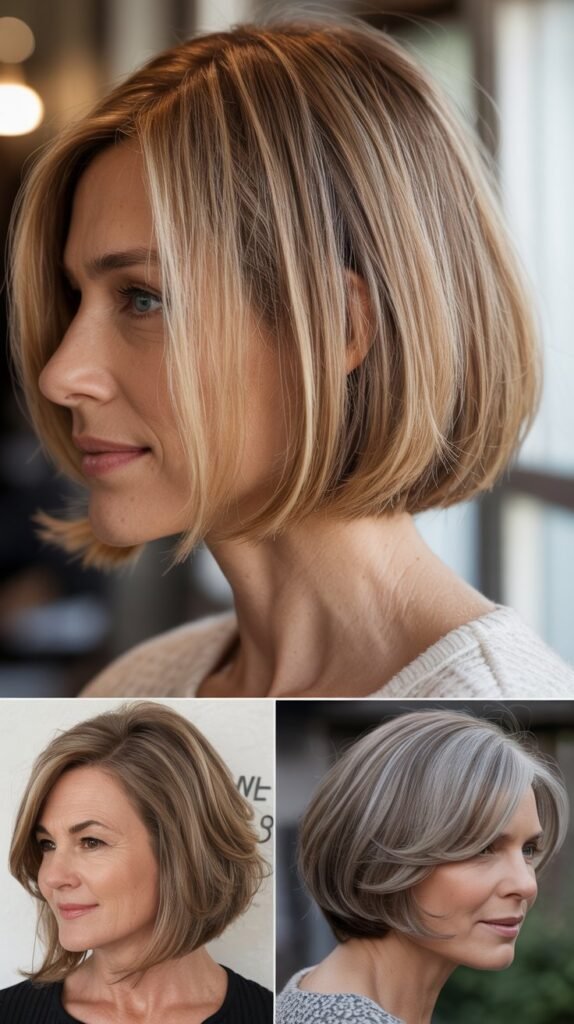
A-line bobs feature hair that’s longer in front and shorter in back, creating dynamic diagonal lines that add movement and interest while flattering fine hair beautifully.
The angle itself creates the illusion of fuller hair.
- The characteristic angle typically involves front pieces falling at or below the chin while back sections reach the nape or slightly below.
- This forward-angling cut naturally creates swing and movement as you turn your head, preventing the static appearance of straight, uniform styles.
- The longer front sections provide face-framing benefits while the shorter back prevents excessive weight that would pull fine hair flat.
- The angle can be subtle or dramatic depending on personal preference, with more dramatic angles creating bolder, fashion-forward statements.
- This cut particularly flatters heart-shaped and oval faces by balancing wider foreheads with the fuller front sections.
- Styling remains straightforward with simple blow-drying or air-drying sufficient to maintain the angle’s integrity.
- The clean lines require regular maintenance every 6-7 weeks to prevent the angle from growing out and losing its distinctive shape.
15. The Textured Crop
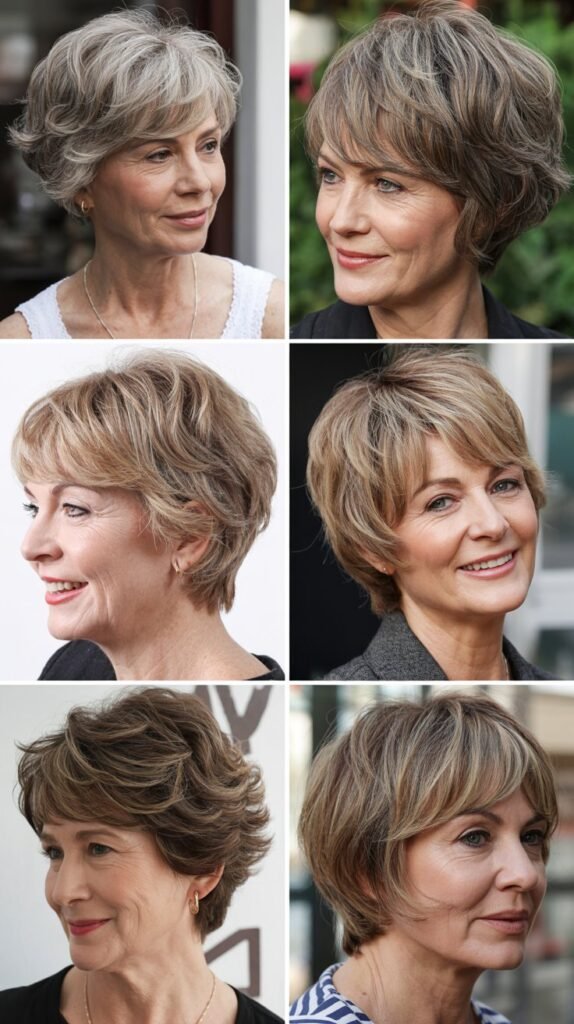
Textured crops maximize surface area and dimension through choppy, irregular cutting that makes fine hair appear substantially thicker and more dynamic.
The all-over texture creates depth from every angle.
- This style involves short to medium-short length with texture created throughout rather than in specific sections, ensuring consistent fullness.
- Stylists employ multiple texturizing techniques including point-cutting, razoring, and thinning shears to create the multi-dimensional finish.
- The varied lengths catch light differently throughout the day, creating the optical illusion of greater density and volume.
- This approach works exceptionally well for women with naturally straight fine hair that typically falls flat without intervention.
- Styling requires minimal time with texturizing products applied to damp hair and air-dried or quickly blow-dried for effortless results.
- The short to medium length prevents weight from pulling hair down while remaining long enough for basic styling versatility.
- This cut maintains its shape well between appointments, typically looking good for 6-8 weeks before requiring professional maintenance.
16. The Rounded Bob
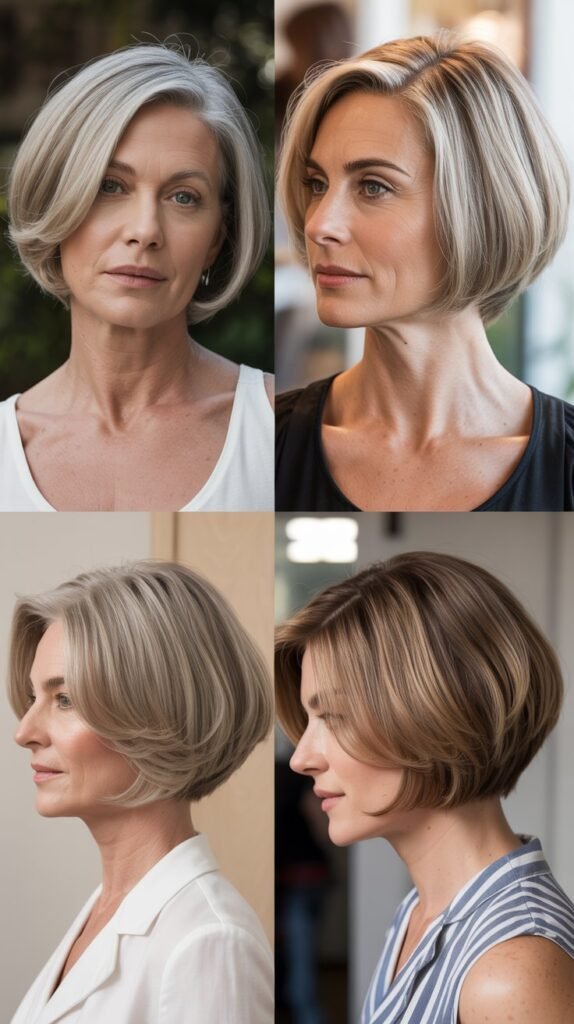
Rounded bobs create soft, curved silhouettes that add width and fullness through strategic shaping rather than relying solely on hair density.
The curved line mimics natural volume beautifully.
- This style features hair cut to create a rounded shape around the head, typically slightly shorter in back and curving forward toward the face.
- The curvature builds in volume by creating space between the hair and scalp, particularly at the sides and back of the head.
- Internal layering removes weight while maintaining the rounded exterior line, preventing the style from becoming too heavy or flat.
- This approach particularly flatters round and square face shapes by adding softness and balancing angular features.
- The rounded shape means hair doesn’t hang straight down but instead curves around the face, creating a more flattering frame.
- Styling involves round brush blow-drying to emphasize the curved shape, or using large rollers for more dramatic roundness.
- This classic style remains timeless and appropriate for all occasions from casual daily life to formal events.
17. The Piece-y Pixie
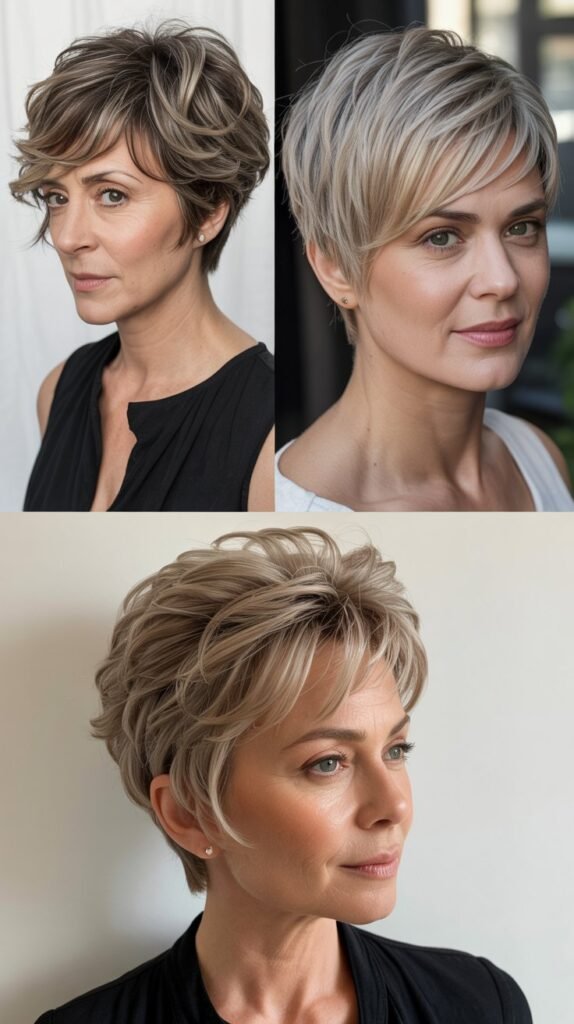
Piece-y pixies break up short hair into distinct sections that create texture, dimension, and the appearance of greater volume through intentional separation.
The defined pieces add visual interest that distracts from thinness.
- This variation features shorter lengths throughout with strategic cutting that encourages hair to separate into individual pieces rather than lying flat together.
- Stylists achieve this through combination cutting that includes point-cutting and razoring to create the separation and prevent pieces from clumping.
- The piece-y nature means each section catches light independently, creating depth and shadows that make hair appear thicker.
- Styling involves applying small amounts of texturizing or styling products to create and define the individual pieces while maintaining movement.
- This style works beautifully for active women who need wash-and-go convenience without sacrificing style or sophistication.
- The short length means morning styling takes mere minutes, typically involving just product application and finger-styling.
- Regular trims every 4-5 weeks maintain the precise cutting that creates the piece-y texture and prevents the style from becoming too grown-out.
18. The Soft Layered Cut
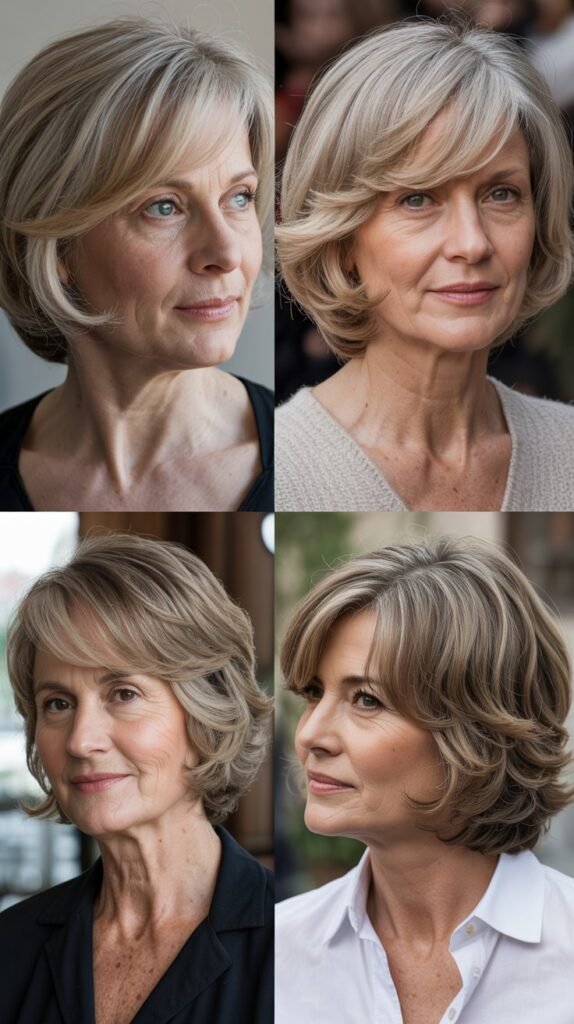
Soft layered cuts incorporate subtle, blended layers that add movement and dimension without creating gaps or thin spots in fine hair.
The gentle graduation maintains fullness while preventing flatness.
- These layers feature minimal length variation between sections, typically only 1-2 inches difference between the shortest and longest pieces.
- The soft, blended nature means layers flow seamlessly without obvious steps or demarcation lines that can expose thinning areas.
- Stylists cut these layers with scissors rather than razors to maintain clean lines and prevent frayed, wispy ends on fine hair.
- This approach adds movement and prevents the monolithic appearance of one-length cuts while maintaining the appearance of thickness.
- The versatility allows for multiple styling options including straight, wavy, or curled looks that all benefit from the layered structure.
- Maintenance requirements remain moderate with trims needed every 6-8 weeks to prevent split ends and maintain the layer integrity.
- This style works across various lengths from shoulder-grazing to longer styles, adapting to personal preferences and lifestyle needs.
19. The Side Part Emphasis
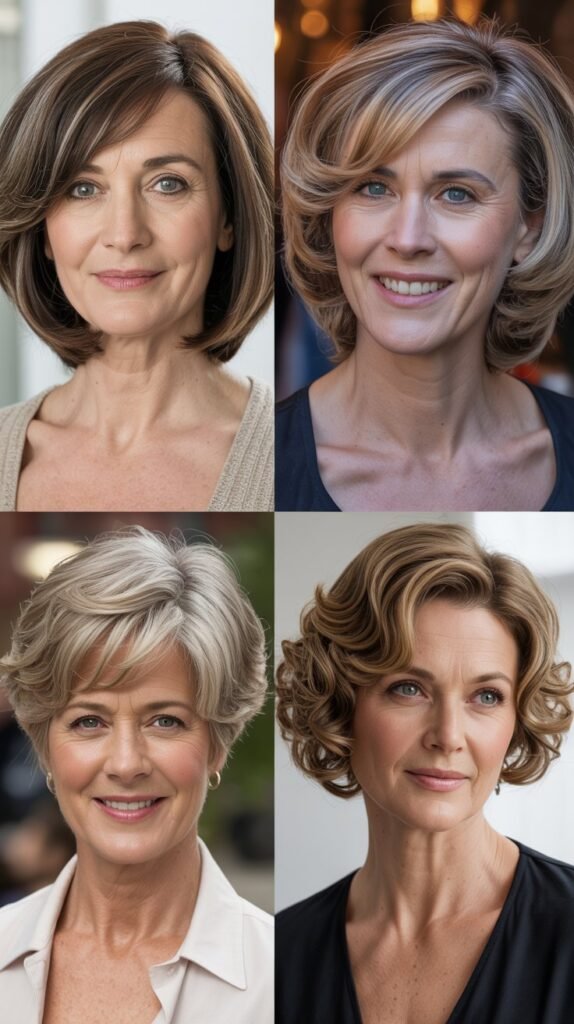
Emphasizing a deep side part creates instant volume and dimension by lifting hair away from the scalp and creating asymmetry that makes fine hair appear fuller.
The simple change transforms existing styles dramatically.
- A deep side part typically begins at or near the arch of one eyebrow rather than centering over the nose, creating significant volume on the heavier side.
- The change in parting direction lifts roots away from their natural growth pattern, creating height and volume at the crown area.
- The heavier side provides face-framing volume while the lighter side creates sleekness and reveals facial features beautifully.
- This technique works with virtually any hairstyle length or cut, making it an instantly implementable volume solution.
- Regular part changes prevent hair from becoming permanently trained in one direction and developing noticeable separation lines.
- Styling involves blow-drying hair in the opposite direction from its natural fall before directing it toward the part for maximum lift.
- The dramatic part creates visual interest and contemporary styling without requiring cuts or chemical treatments.
20. The Pixie with Longer Top
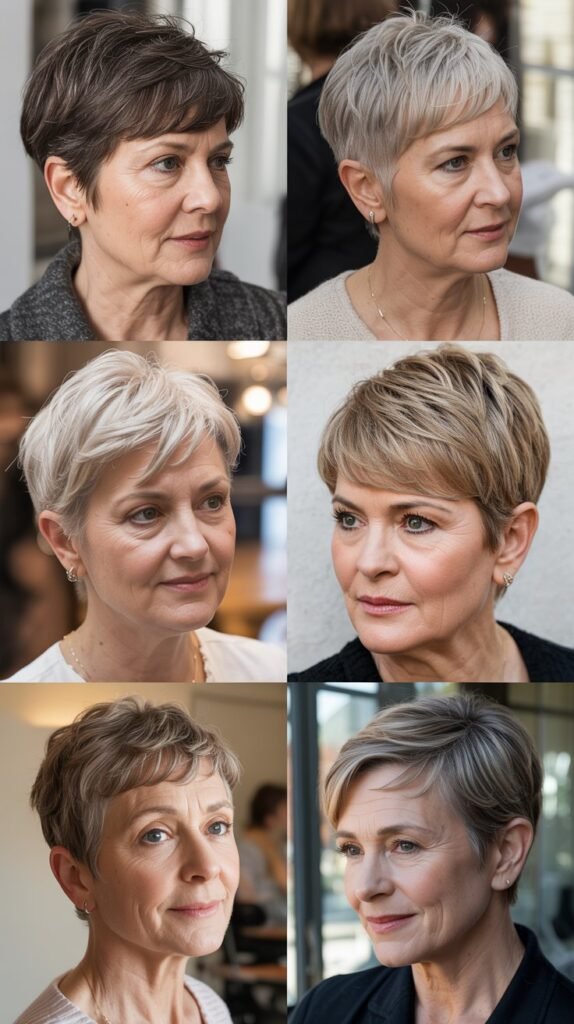
Pixies with longer tops combine the ease of short hair with styling versatility and volume opportunities that shorter all-over cuts cannot provide.
The length contrast creates dimension and interest.
- This style features very short sides and back, often tapered or undercut, while maintaining 2-4 inches of length on top for styling flexibility.
- The longer top can be swept forward, back, or to the side depending on preference, changing the entire look with simple directional changes.
- The length difference naturally creates volume because the longer top pieces stand away from the scalp rather than lying flat.
- This approach particularly benefits women with fine hair because the weight is concentrated where it’s most visible while eliminated where bulk isn’t needed.
- Styling options range from sleek and sophisticated to messy and textured depending on products and techniques employed.
- The contrast between short sides and longer top creates contemporary, fashion-forward aesthetics that feel modern and youthful.
- Maintenance focuses primarily on the longer top with sides requiring regular trimming every 4-5 weeks to maintain the shape.
21. The Disconnected Cut
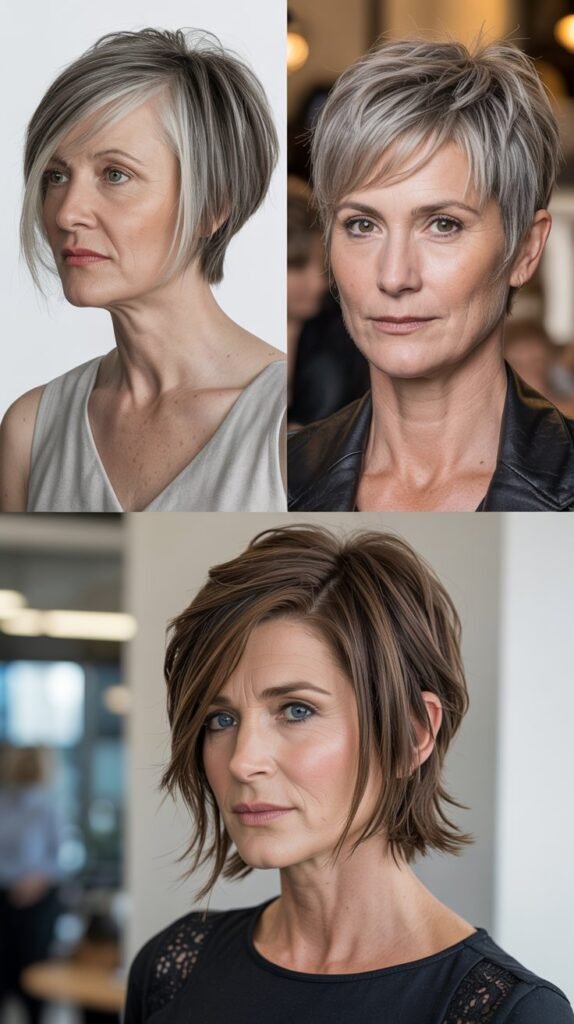
Disconnected cuts feature intentional gaps between different hair lengths without blending, creating bold, architectural looks that add drama and dimension to fine hair.
The deliberate contrast makes thinness irrelevant.
- These cuts involve distinct sections of different lengths that don’t seamlessly connect, such as an undercut with significantly longer top layers.
- The disconnect creates visual interest and texture that distracts from any lack of density by focusing attention on the style itself.
- This approach allows for multiple looks within one cut, with hair worn down showing longer sections or styled up revealing shorter underlayers.
- Stylists must carefully plan disconnected cuts to ensure the style looks intentional rather than accidentally uneven or poorly executed.
- This contemporary technique appeals to women wanting bold, statement-making styles that break traditional expectations for mature hair.
- The longer sections provide enough hair to style various ways while shorter sections reduce bulk and add edge to the overall look.
- Maintenance involves regular trimming of shorter sections while allowing longer pieces to grow or maintaining them at desired lengths.
22. The Layered Pixie
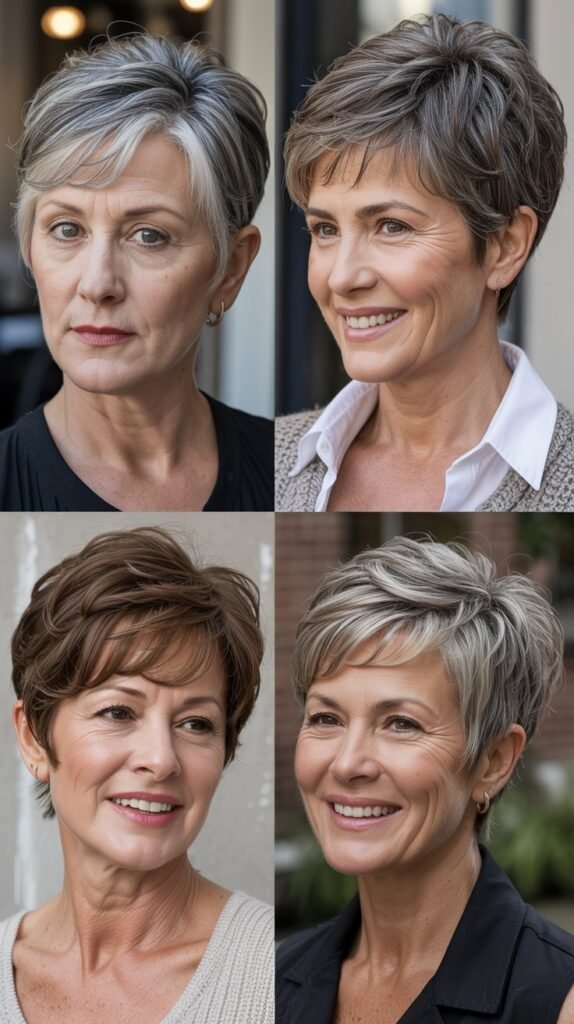
Layered pixies incorporate multiple length levels throughout short cuts to create movement, texture, and the appearance of greater volume.
The layers prevent fine hair from looking too controlled or stiff.
- This style features graduated layers throughout with varying lengths from crown to nape, creating dimension and depth.
- The layering removes weight that would otherwise pull fine hair flat while maintaining enough length for styling and shaping.
- Shorter layers at the crown create lift while longer pieces around the face provide flattering framing and softness.
- The multi-dimensional nature means hair appears thicker because layers fall at different points rather than in uniform patterns.
- Styling involves applying lightweight products and using fingers to direct hair in desired directions for effortless, natural-looking results.
- This cut works beautifully for women with any face shape as layers can be customized to flatter individual features and proportions.
- Regular maintenance every 5-6 weeks preserves the layered structure and prevents the cut from losing its shape and dimension.
23. The Shoulder-Grazing Waves
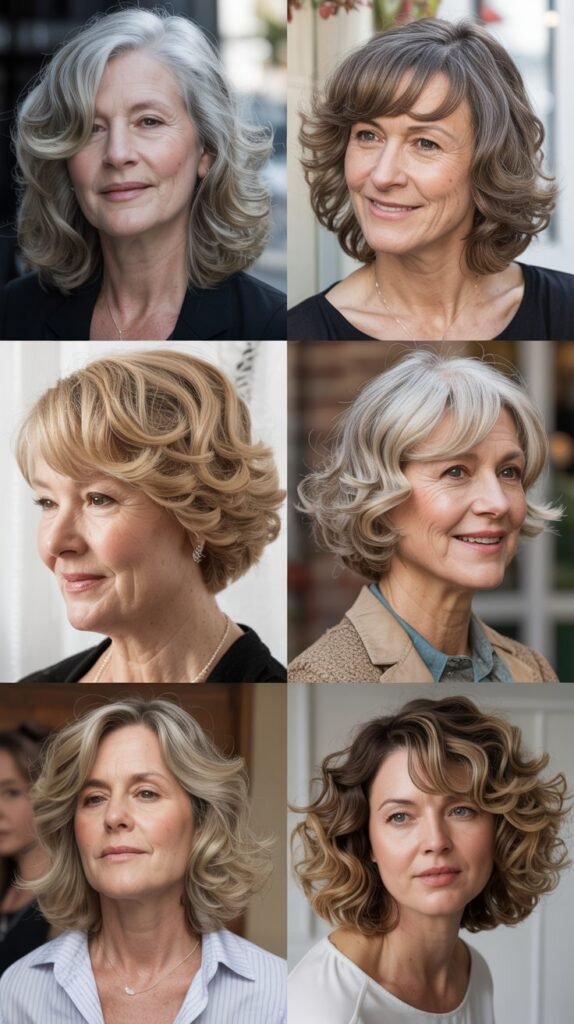
Shoulder-grazing waves combine ideal length with textured styling that makes fine hair appear substantially thicker and more voluminous.
The wave pattern creates dimension that straight styles cannot achieve.
- This length falls at or just touching the shoulders, providing enough length for the wave pattern to fully develop and showcase.
- Waves are created through various methods including curling irons, braiding damp hair, or using heat-free wave formers depending on preference.
- The texture of waves naturally occupies more space than straight hair, creating the immediate impression of greater volume and thickness.
- The shoulder length prevents excessive weight from pulling waves out while remaining long enough to avoid the triangle effect of too-short wavy cuts.
- Product selection matters tremendously with lightweight mousses and wave-enhancing sprays maintaining texture without weighing fine hair down.
- This style works beautifully for special occasions or daily wear, with waves lasting multiple days when properly maintained with dry shampoo.
- The classic, timeless nature of soft waves ensures this style remains perpetually flattering and appropriate for all settings.
24. The Curly Pixie
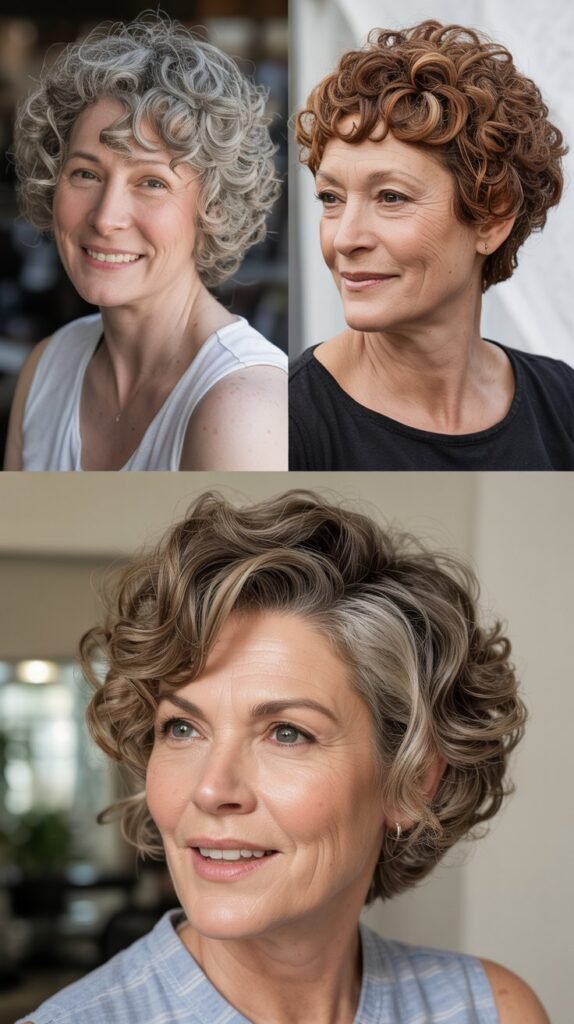
Curly pixies embrace natural or styled curl patterns in short cuts, creating maximum volume and texture that fine hair desperately needs.
The curl naturally adds dimension and fullness.
- This style works for women with naturally wavy or curly hair, or those willing to use styling tools to create curls in their pixie cut.
- The curls create three-dimensional texture that makes hair appear much thicker than it actually is by occupying more space.
- Short length prevents curl weight from pulling sections flat while maintaining enough length for curls to form properly.
- Styling involves curl-enhancing products applied to damp hair and either air-dried or diffused for maximum curl definition.
- This approach particularly benefits women transitioning to natural gray hair, as the texture helps blend color variations beautifully.
- The inherent volume of curls means minimal additional styling needed to achieve fullness at the roots and throughout.
- Maintenance focuses on keeping curls healthy and defined with regular trims every 6-8 weeks and proper moisturizing treatments.
25. The Stacked Bob
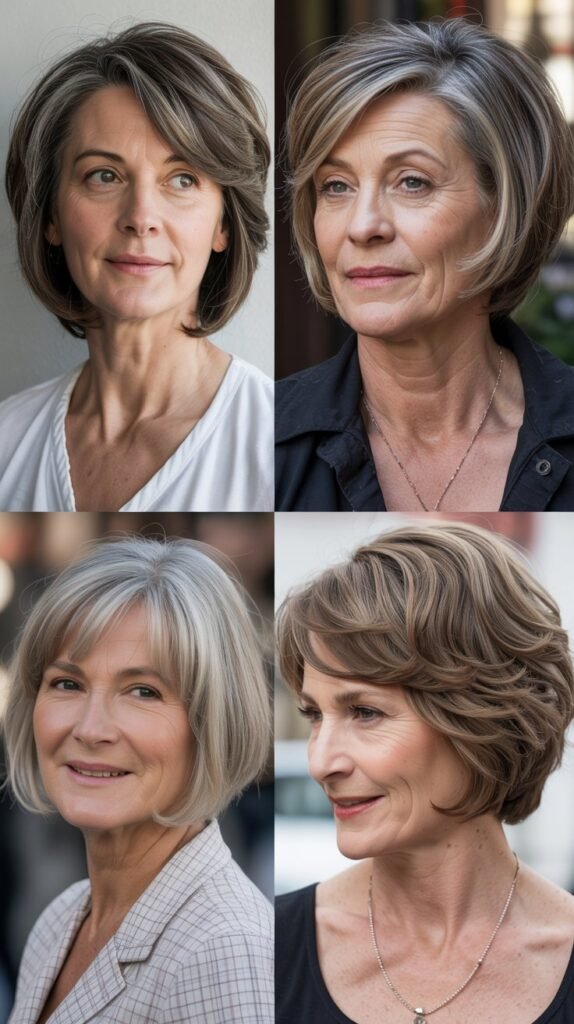
Stacked bobs feature graduated layers in the back that create dramatic volume and shape while maintaining longer front pieces for face-framing benefits.
The stacking builds in architectural fullness.
- The stacking involves cutting the back in short, graduated layers that create a rounded, voluminous shape at the back of the head.
- This technique adds substantial height at the crown and back, areas where fine hair commonly appears flat and lifeless.
- Front pieces remain significantly longer, typically falling at chin length or below, creating elegant face-framing and styling versatility.
- The dramatic difference between back and front lengths creates visual interest and ensures the style looks intentional and fashionable.
- This cut requires precise technical execution with stylists using point-cutting and layering techniques to create the stacked effect properly.
- Styling focuses on emphasizing the stacked back through blow-drying or round brushing to enhance the built-in volume.
- Regular maintenance every 5-6 weeks preserves the stacked shape and prevents the back from growing too long and losing its structure.
26. The Tousled Bob
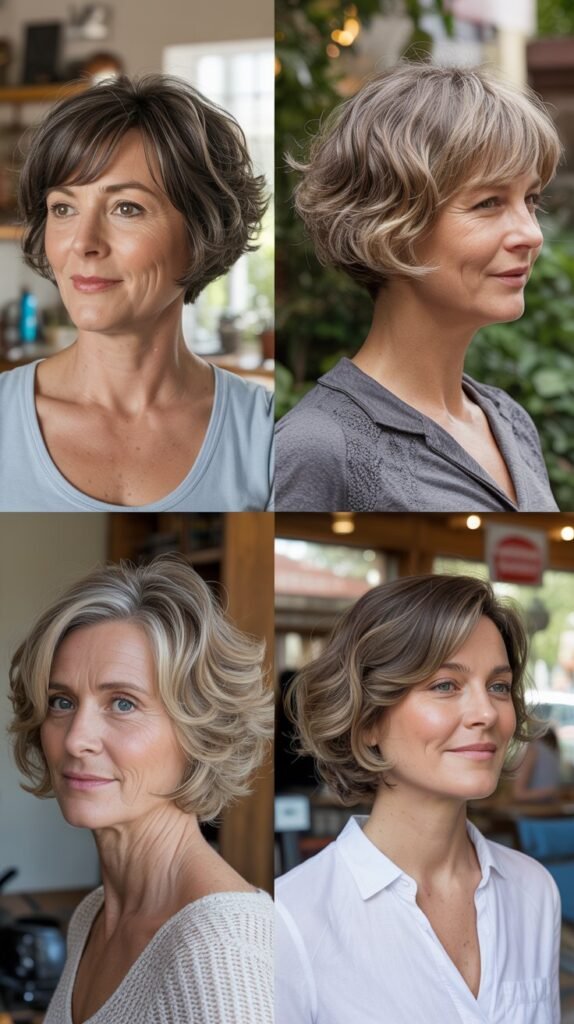
Tousled bobs embrace intentional messiness and lived-in texture that makes fine hair appear thicker through deliberate imperfection.
The casual styling creates effortless, contemporary appeal.
- This style features bob-length hair with textured, piece-y styling that looks naturally undone rather than overly polished or controlled.
- The tousled appearance comes from strategic cutting that creates texture combined with styling products that enhance separation and movement.
- This approach disguises fine hair’s limitations by making any thinness look intentional rather than accidental or problematic.
- Styling involves applying texturizing products to damp hair and scrunching, tousling with fingers, or air-drying for casual, natural results.
- The low-maintenance nature appeals to women wanting stylish hair without extensive daily styling routines or time commitments.
- This style works across various bob lengths from chin-length to shoulder-grazing, adapting to personal preferences and lifestyles.
- The deliberately imperfect aesthetic means the style looks good even on second or third-day hair with minimal refreshing needed.
27. The Angled Layers
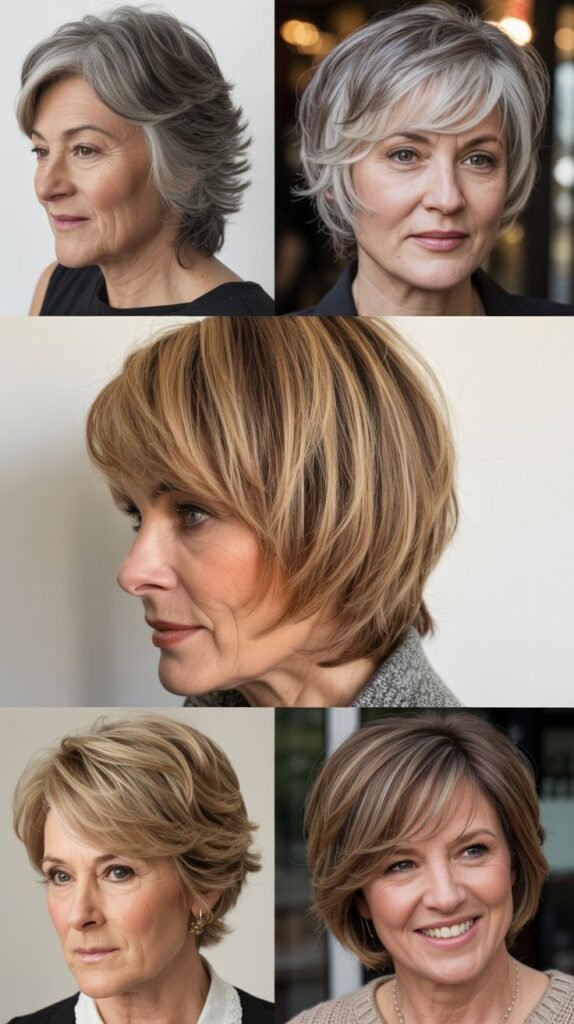
Angled layers incorporate diagonal cutting lines that create movement and dimension while strategically adding fullness where fine hair needs it most.
The angles themselves create visual interest.
- These layers feature cutting at angles rather than straight across, creating dynamic lines that add movement as hair shifts and moves.
- The angled approach prevents the blunt, uniform appearance that can make fine hair look flat and one-dimensional.
- Stylists cut layers at various angles throughout the hair, with some directed forward, others backward, creating multi-directional texture and fullness.
- The angled cutting naturally creates lift at the roots because hair doesn’t fall in uniform patterns but instead moves in multiple directions.
- This technique works exceptionally well for adding volume around the face and crown without creating obvious layered steps or demarcation lines.
- Face-framing angled layers draw attention to features while the overall angled structure throughout adds body and prevents flatness.
- Styling remains flexible with angled layers looking beautiful straight, wavy, or curled depending on the occasion and personal preference.
- This approach suits various hair lengths from bobs to longer styles, with the angled technique adapting to different cuts effectively.
- Maintenance requires regular trims every 6-8 weeks to maintain the angled lines and prevent the style from losing its directional structure.
28. The Messy Shag
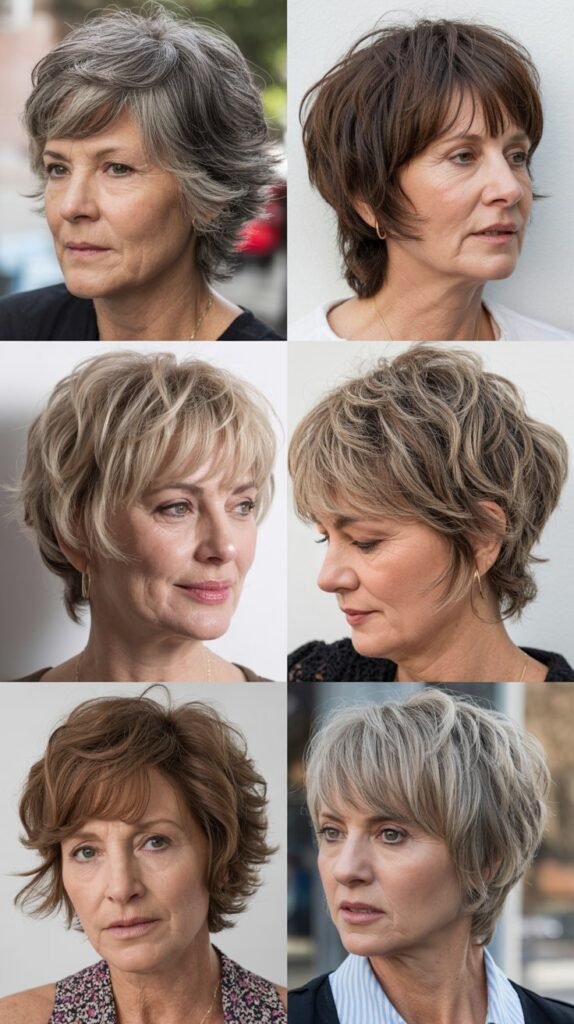
The messy shag represents the ultimate combination of texture, layers, and deliberate imperfection that transforms thin fine hair into a voluminous, style-forward statement.
This iconic cut brings together multiple techniques for maximum impact.
- This style features heavy layering throughout with varying lengths creating intentional choppiness and texture from roots to ends.
- The “messy” component comes from piece-y cutting techniques and styling that celebrates disorder rather than fighting for perfect uniformity.
- Multiple layers at different lengths create depth and dimension that makes hair appear substantially thicker than it actually measures.
- The shag works across various lengths from short crops to shoulder-length styles, with the layering technique remaining consistent regardless of overall length.
- Bangs or face-framing pieces typically accompany shags, adding to the overall textured, lived-in appearance that defines the style.
- Styling embraces the messy aesthetic with texturizing products applied to damp hair and either air-dried or roughly blown dry for effortless results.
- The beauty of this cut lies in how it actually looks better slightly undone, making it perfect for women wanting stylish hair without precise daily styling.
- This style grows out gracefully with the intentional messiness meaning slightly longer lengths don’t immediately appear unkempt or neglected.
- The shag’s resurgence in popularity means this retro-inspired cut feels contemporary and fashion-forward rather than dated or old-fashioned.
- Regular maintenance every 6-8 weeks preserves the layered structure while allowing the messy, textured character to remain dominant.
Conclusion
Discovering your perfect style among these 28 Amazing Hairstyles for Thin Fine Hair Over 50 That Defy Aging opens new possibilities for confidence and self-expression at any age.
The journey through textured pixies, sophisticated bobs, volumizing layers, and contemporary cuts reveals that thin fine hair presents opportunities rather than limitations when approached with the right techniques and knowledge.
Each style recommendation in this comprehensive guide addresses specific concerns while celebrating the unique beauty of mature hair, proving that volume, movement, and youthful energy remain completely achievable regardless of hair density.
The strategic cutting methods, styling approaches, and maintenance schedules outlined provide practical roadmaps for transforming your hair into your most flattering accessory.
Whether you choose dramatic short crops, elegant shoulder-length styles, or anything in between, the key lies in working with experienced stylists who understand fine hair’s unique characteristics and embrace the architectural possibilities these cuts offer.
Remember that the best hairstyle combines technical excellence with personal style preferences, lifestyle needs, and the confidence that comes from knowing you look absolutely stunning.
These 28 options prove definitively that age and thin hair never limit style potential when armed with expert knowledge and contemporary techniques.
