Are you ready to embrace a bold, liberating hairstyle that combines effortless chic with low-maintenance styling? The short shaggy pixie haircut has emerged as one of the most versatile and fashion-forward choices for women seeking a dramatic yet manageable transformation.
This comprehensive guide explores 29 Fresh Short Shaggy Pixie Haircuts that will inspire your next salon visit, whether you’re craving edgy layers, soft texture, or a complete reinvention of your look.
From classic cuts with modern twists to daring contemporary styles, you’ll discover pixie variations that flatter every face shape, hair texture, and personal aesthetic.
These carefully curated styles showcase how strategic layering, thoughtful texturing, and creative styling can turn a simple pixie into a statement-making masterpiece that reflects your unique personality and lifestyle.
1. Classic Textured Shaggy Pixie
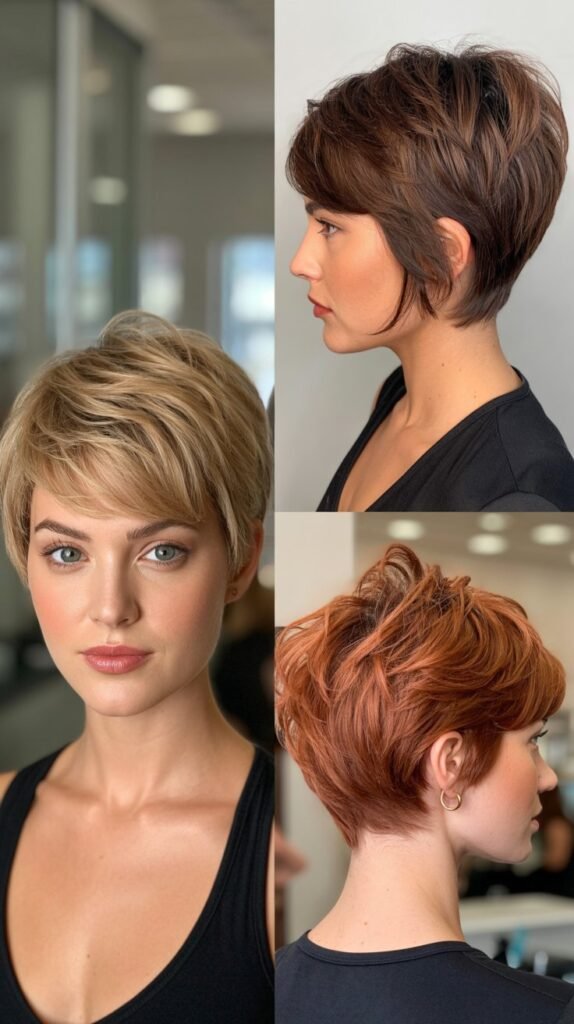
The classic textured shaggy pixie serves as the foundation for countless variations, featuring choppy layers throughout the crown and sides that create natural movement and dimension.
This timeless style works beautifully for women transitioning from longer hair who want a sophisticated yet edgy appearance.
- The choppy layers are strategically cut at varying lengths to prevent a flat, uniform look while adding volume to fine or thin hair.
- Texture is achieved through point-cutting techniques that create soft, feathered ends rather than blunt lines.
- This cut typically features shorter sides and back with slightly longer pieces on top, measuring approximately 2-3 inches in length.
- Styling requires minimal effort—simply apply a texturizing cream to damp hair and tousle with fingers while air-drying or use a blow dryer with a diffuser attachment.
- The versatility of this cut allows you to dress it up with sleek styling products or embrace a more casual, tousled appearance for everyday wear.
- Face-framing layers can be customized to accentuate cheekbones and soften angular jawlines.
2. Asymmetrical Shaggy Pixie with Side Sweep
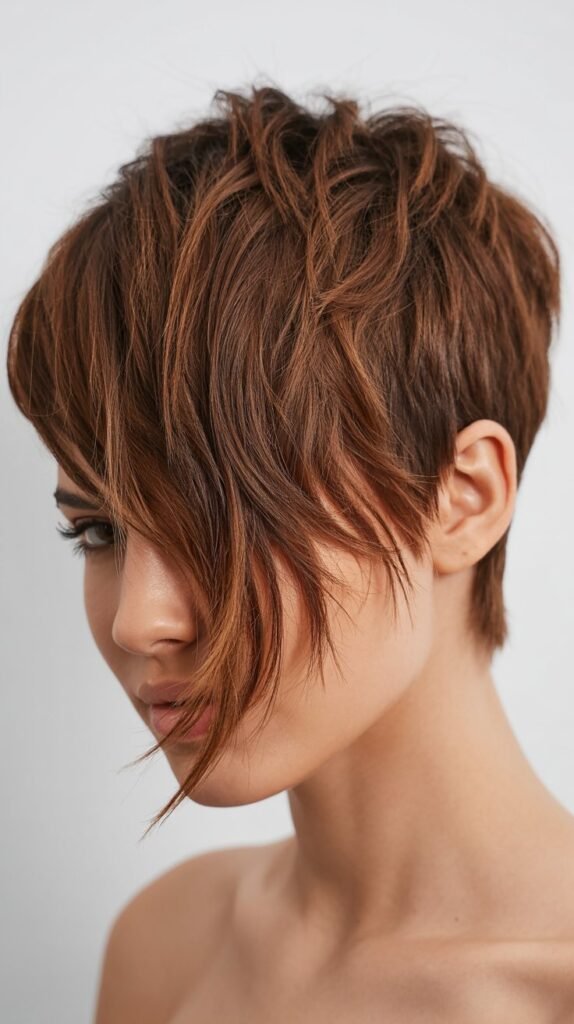
An asymmetrical approach to the shaggy pixie introduces an element of modern edge and visual interest through intentionally uneven lengths that create a striking silhouette.
- One side is cut significantly shorter (often buzzed or closely cropped) while the opposite side maintains longer layers that can be swept across the forehead.
- The dramatic length difference creates a bold statement that draws attention to facial features, particularly the eyes and cheekbones.
- This style works exceptionally well for those with thick hair, as the shorter side reduces bulk while the longer side showcases texture.
- The side sweep can be styled forward for a mysterious, fashion-forward look or tucked behind the ear for a softer appearance.
- Regular maintenance every 4-6 weeks is recommended to maintain the sharp contrast between sides.
- Styling products like pomade or styling wax help define the longer pieces and keep the swept section in place throughout the day.
3. Choppy Layered Pixie with Wispy Bangs
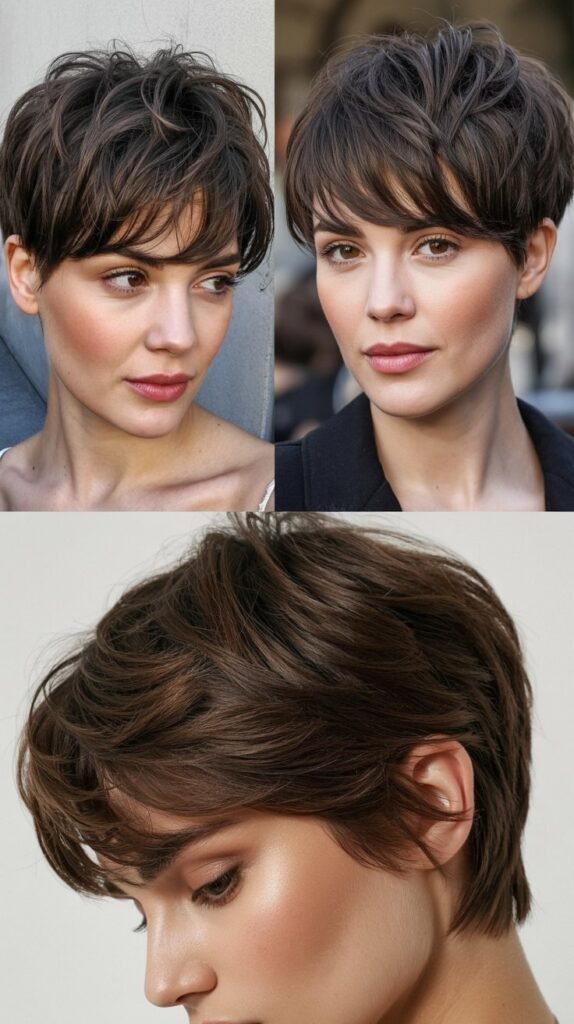
Combining choppy layers with wispy, textured bangs creates a feminine and youthful interpretation of the shaggy pixie that softens facial features while maintaining an edgy foundation.
- Wispy bangs are cut with a razor or texturizing shears to create feathered, lightweight fringe that falls gently across the forehead.
- The choppy layers throughout add dimension and prevent the style from appearing too heavy or structured.
- This cut works particularly well for heart-shaped and oval faces, as the bangs help balance proportions.
- The wispy texture of the bangs allows them to blend seamlessly with the rest of the cut rather than creating a harsh line of separation.
- Styling involves applying a lightweight mousse to damp hair and using fingers to piece out individual sections for a piecey, separated look.
- The bangs can be styled straight across, swept to the side, or even pinned back when you want to change up your look.
4. Platinum Blonde Shaggy Pixie
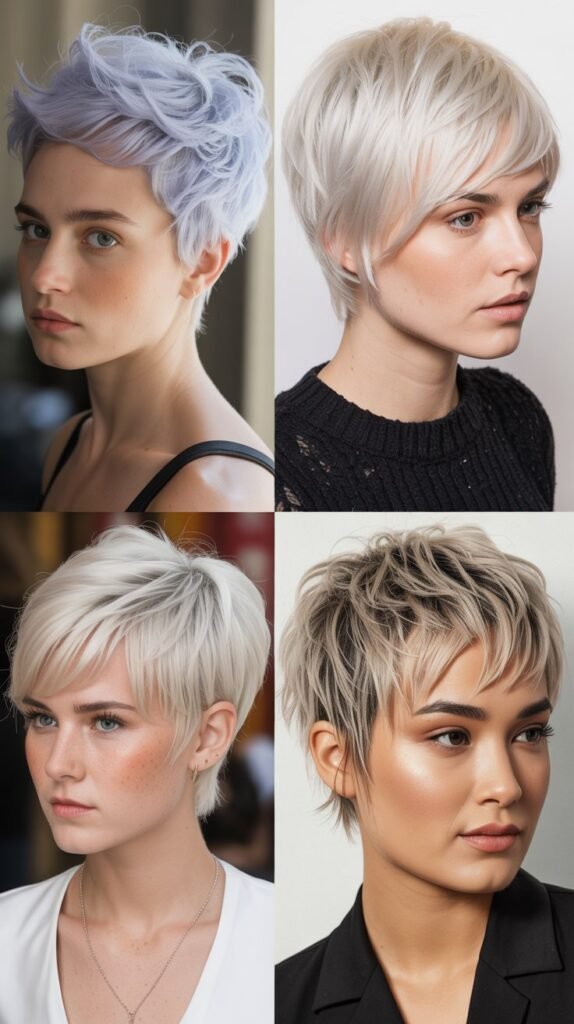
Taking your shaggy pixie to platinum blonde creates a high-impact, fashion-forward statement that demands attention and exudes confidence.
- The platinum shade provides maximum contrast against darker roots, creating depth and dimension that enhances the layered texture.
- This dramatic color choice works with various skin tones but requires proper consultation with a colorist to determine the most flattering platinum shade for your complexion.
- The light color reflects more light, which naturally highlights the choppy layers and textured pieces throughout the cut.
- Maintenance is intensive, requiring regular toning treatments every 2-3 weeks to prevent brassiness and maintain the cool, icy tone.
- Purple shampoo becomes an essential part of your hair care routine to neutralize yellow undertones between salon visits.
- The combination of platinum color and shaggy texture creates a rock-and-roll aesthetic that’s simultaneously edgy and elegant.
5. Curly Shaggy Pixie
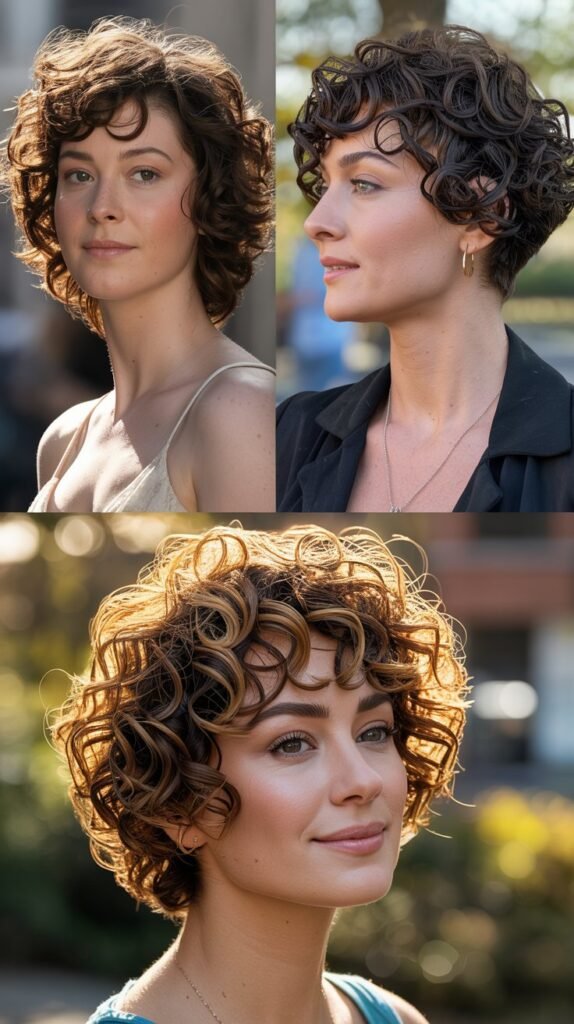
Natural curls or waves transform the shaggy pixie into a voluminous, romantic style that celebrates texture while maintaining the cut’s characteristic edge.
- Curly hair adds automatic volume and dimension to the shaggy layers, creating a fuller appearance without additional styling effort.
- The key to this style is strategic cutting that works with the natural curl pattern rather than against it, removing weight while maintaining definition.
- Longer layers on top allow curls to spring up and create height, while shorter sides keep the overall silhouette balanced.
- A curl-defining cream or gel applied to soaking wet hair and then diffused or air-dried maintains curl integrity and minimizes frizz.
- This style works beautifully for those with 2B to 3C curl patterns, though adjustments can be made for looser or tighter curl types.
- The shaggy cut prevents the “triangle effect” that curly-haired individuals often experience with poorly executed short cuts.
6. Razor-Cut Shaggy Pixie
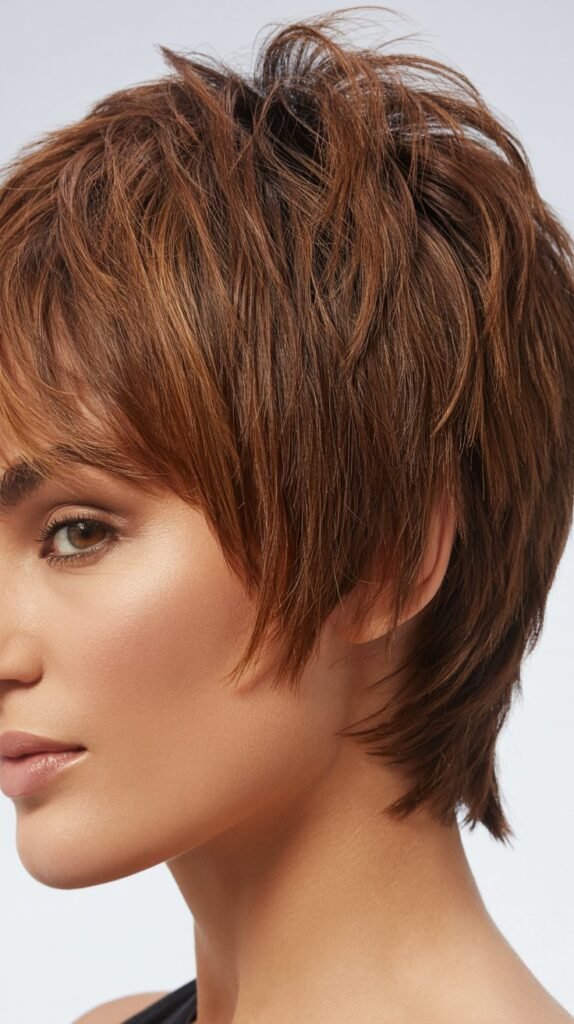
The razor-cut technique introduces extreme texture and movement to the shaggy pixie, creating ultra-fine, feathered ends that move with incredible fluidity.
- Razor cutting creates softer, more tapered ends compared to scissor cutting, resulting in a lighter, airier appearance.
- This technique is particularly effective for thick or coarse hair types, as it significantly reduces bulk while adding movement.
- The razor creates micro-layers within each section, producing depth and dimension that’s difficult to achieve with traditional scissors alone.
- Styling is effortless since the razor-cut edges naturally separate and create texture without much product manipulation.
- The fine, feathered ends may require more frequent trims (every 3-4 weeks) to prevent the style from looking scraggly or overgrown.
- A lightweight texturizing spray enhances the natural movement and separation created by the razor technique.
7. Undercut Shaggy Pixie
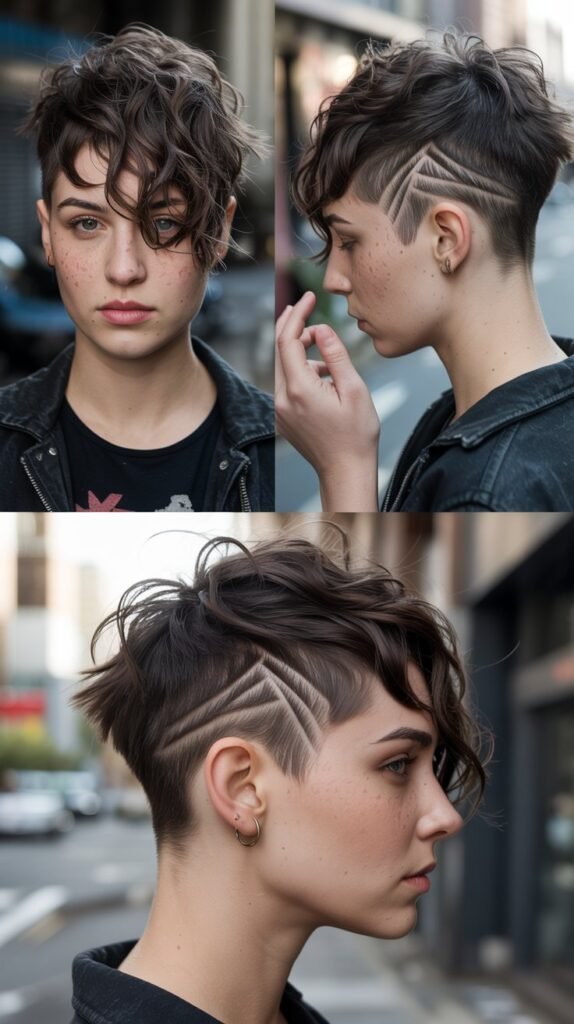
Incorporating an undercut into the shaggy pixie design adds a rebellious edge while providing relief for those with exceptionally thick hair.
- The undercut involves shaving or closely cropping the hair at the nape of the neck and potentially along the sides, hidden beneath longer top layers.
- This creates a “secret” element to the style—the undercut may only be visible when hair is styled up or away from the face.
- The contrast between the shaved sections and textured top layers creates dramatic visual interest and reduces overall hair volume.
- In warmer weather, the undercut provides cooling relief and makes the style more comfortable to wear.
- Creative designs or patterns can be shaved into the undercut area for those seeking maximum personalization.
- Maintenance requires regular touch-ups every 2-3 weeks to keep the shaved sections neat and defined.
8. Balayage Shaggy Pixie
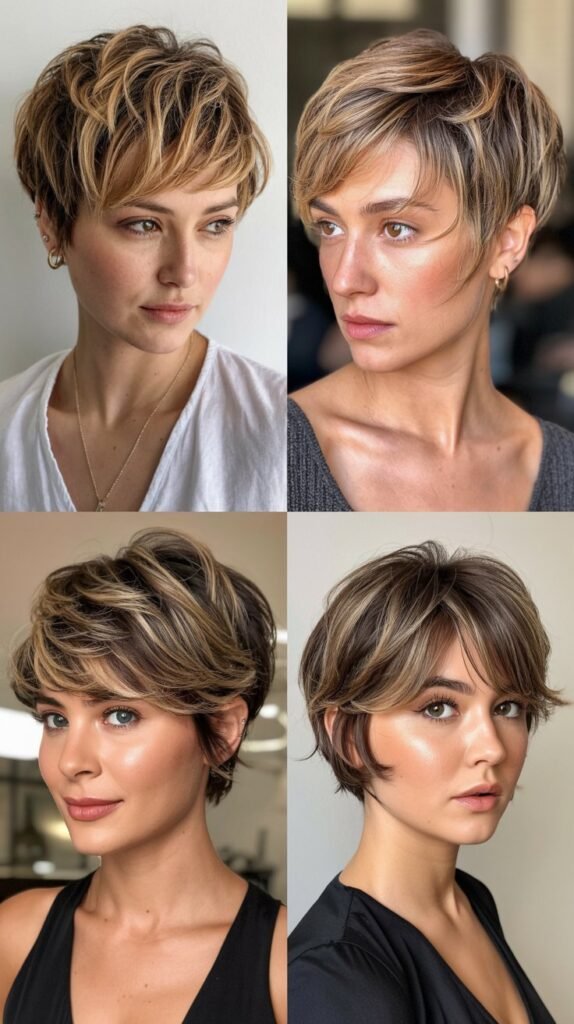
Balayage coloring technique applied to a shaggy pixie creates dimensional, sun-kissed highlights that emphasize the textured layers and add depth to the overall style.
- The hand-painted balayage method allows for customized placement of lighter pieces that naturally highlight the choppy layers.
- This technique works with any base color, from brunette to blonde, creating a multi-tonal effect that adds visual interest.
- The lighter pieces are concentrated around the face and throughout the top layers where they’ll be most visible and frame facial features.
- Unlike traditional foil highlights, balayage creates a softer, more natural grow-out that requires less frequent maintenance.
- The dimensional color enhances the illusion of thickness and texture, making fine hair appear fuller.
- A gloss treatment every 4-6 weeks maintains color vibrancy and adds shine to both highlighted and base-colored sections.
9. Tapered Shaggy Pixie
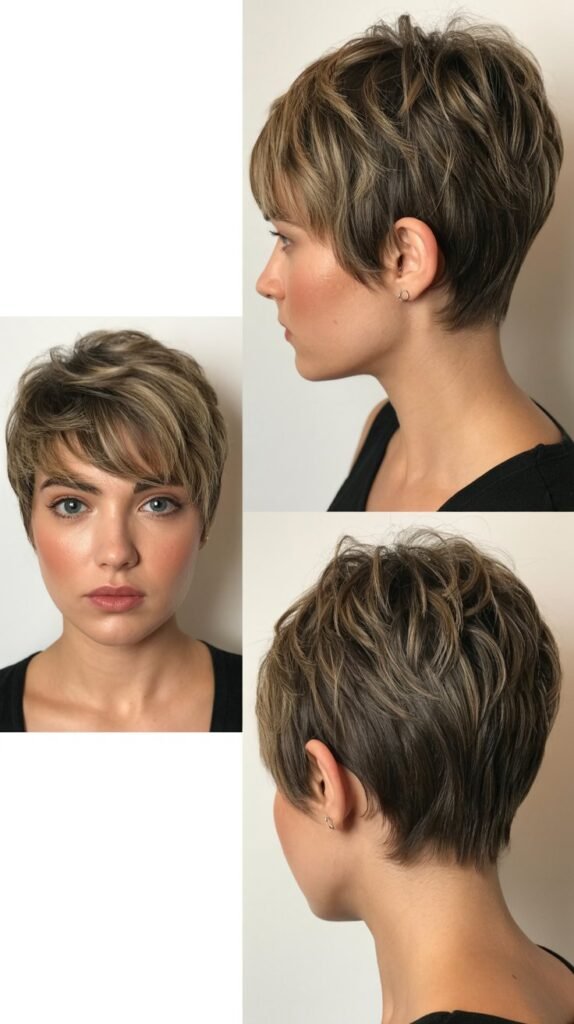
The tapered shaggy pixie gradually decreases in length from the top of the head down to the nape and sides, creating a sleek yet textured silhouette.
- The taper creates a clean, polished outline while maintaining the shaggy, textured appearance on top.
- This style works exceptionally well for professional environments where a more refined appearance is preferred.
- The gradual length transition creates a flattering shape that elongates the neck and highlights the jawline.
- Tapered sides and back keep the cut looking fresh and neat for longer between salon visits.
- Styling products like a light pomade or cream can be used to emphasize the texture on top while keeping the tapered sections smooth.
- This cut flatters nearly all face shapes, making it one of the most universally wearable pixie variations.
10. Messy Bedhead Shaggy Pixie
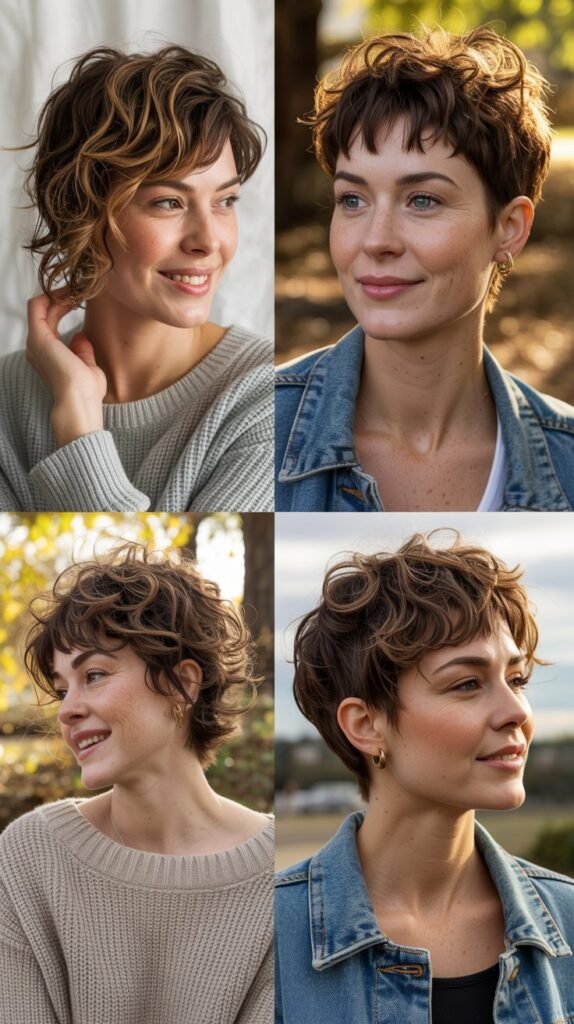
Embracing intentional “imperfection,” the messy bedhead shaggy pixie celebrates natural texture and effortless styling for a relaxed, carefree aesthetic.
- This style is designed to look deliberately tousled and undone, as if you just rolled out of bed with perfect hair.
- Extreme layering and texturizing create the foundation for this purposefully disheveled appearance.
- The key to achieving this look lies in the cut itself—when executed properly, minimal styling is required beyond towel-drying and finger-combing.
- A sea salt spray or texturizing powder applied to damp or dry hair enhances the piece-y, separated quality of the layers.
- This style works beautifully for those with naturally wavy or slightly unruly hair that resists being tamed into sleeker styles.
- The bedhead aesthetic pairs perfectly with casual, bohemian fashion choices and conveys an easy-going, confident personality.
11. Long Pixie Shag
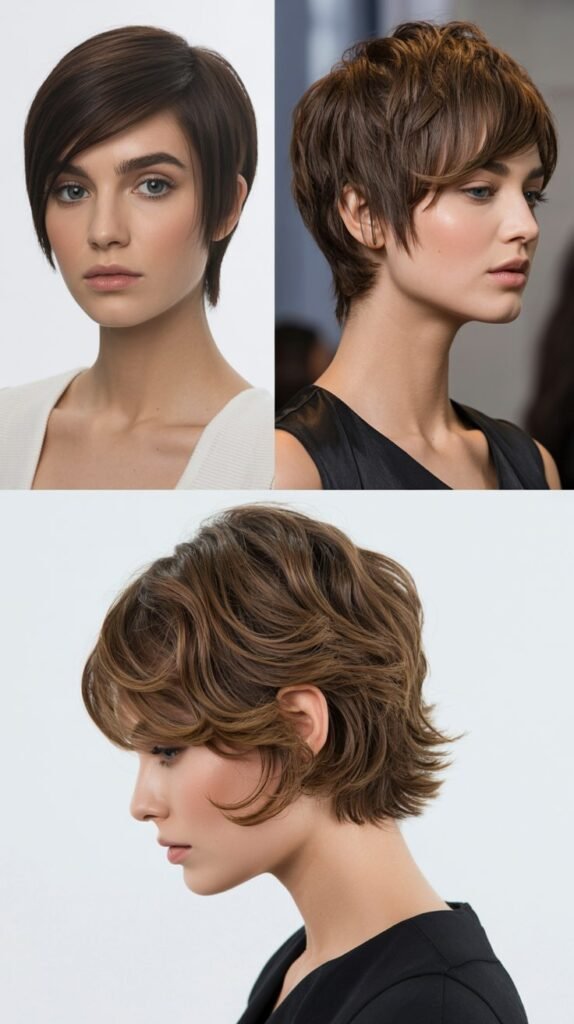
Straddling the line between pixie and short bob, the long pixie shag maintains extra length on top (3-5 inches) while keeping the sides and back shorter.
- This extended length provides more styling versatility than traditional pixies, allowing for various partings and swept styles.
- The longer top layers can be curled, straightened, or left natural depending on your mood and the occasion.
- This style serves as an excellent transitional cut for those growing out a shorter pixie or testing the waters before committing to a more dramatic length.
- Face-framing pieces can be left longer to accentuate features and create a softer, more feminine appearance.
- The shaggy layers throughout prevent the extra length from appearing heavy or triangular.
- Styling options include slicking back the longer pieces for a sophisticated look or pushing them forward for a more playful, modern vibe.
12. Shaggy Pixie with Nape Detailing
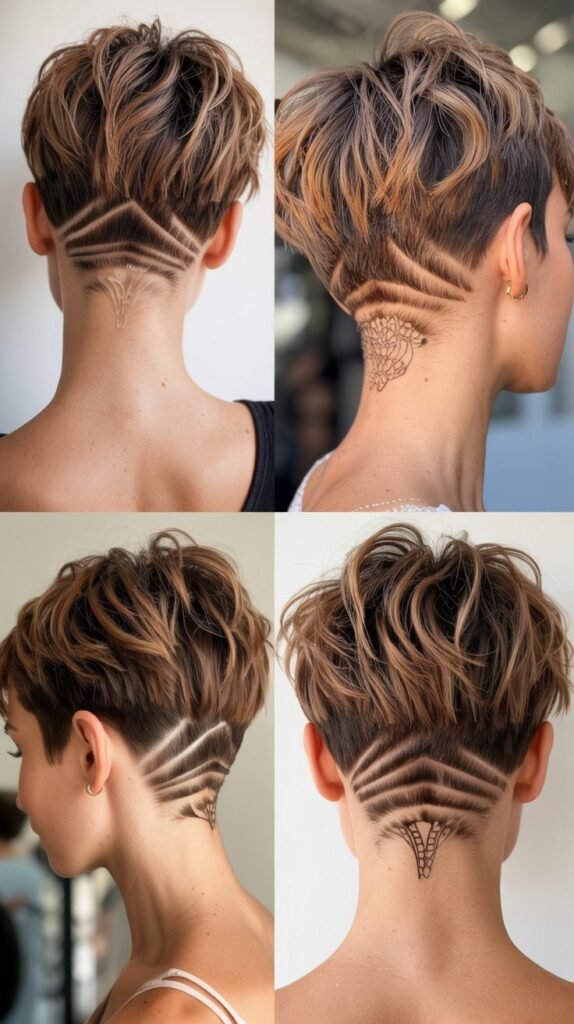
Adding creative detailing to the nape area transforms a standard shaggy pixie into a personalized work of art that’s revealed when hair is worn up or pushed forward.
- Nape detailing can include geometric designs, subtle patterns, or simply a more defined, shaped hairline.
- This hidden element adds an unexpected surprise factor and allows for personal expression without overwhelming the overall style.
- The detailing is most visible when the longer top sections are styled forward or secured away from the neck.
- Creative nape designs require maintenance every 2-3 weeks to keep lines sharp and patterns visible.
- This styling choice works particularly well for those who want edgy personalization that’s easily concealed when necessary for professional settings.
- The nape can also be tapered into a v-shape or soft point for a feminine touch without pattern work.
13. Shaggy Pixie with Face-Framing Highlights
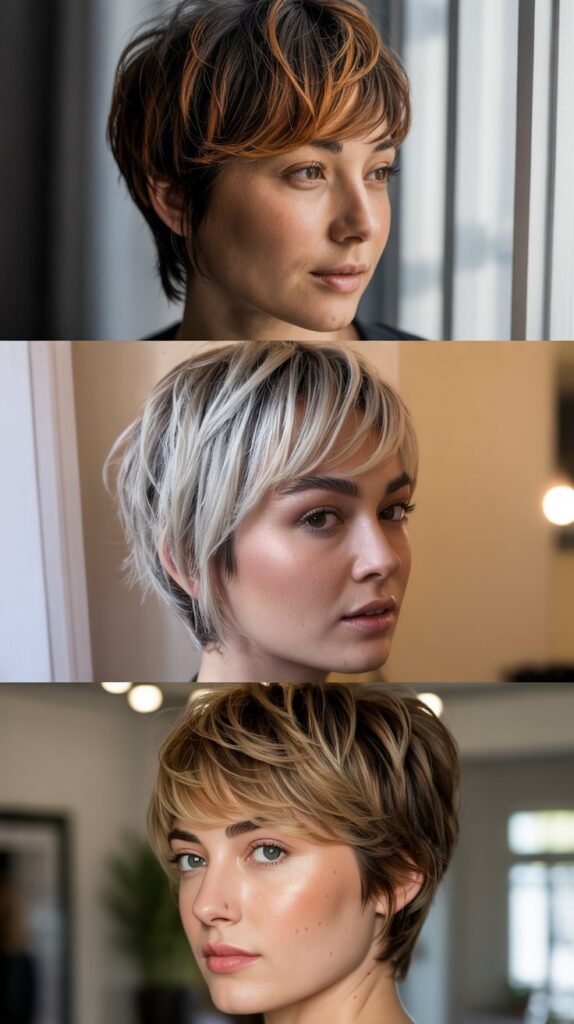
Strategic placement of highlights specifically around the face creates dimension and draws attention to your best features while complementing the shaggy texture.
- Face-framing highlights are placed along the hairline, around the temples, and through any longer front pieces.
- These lighter sections create a brightening effect that illuminates the complexion and makes eyes appear more vibrant.
- The technique works with any base color and can range from subtle (one shade lighter) to dramatic (several shades lighter).
- The highlights accentuate the choppy, textured layers by creating contrast and depth where light catches the hair.
- This is a lower-maintenance coloring option compared to all-over highlights since touch-ups can be less frequent.
- A toner applied during salon visits keeps the face-framing pieces vibrant and prevents brassiness between color appointments.
14. Mohawk-Inspired Shaggy Pixie
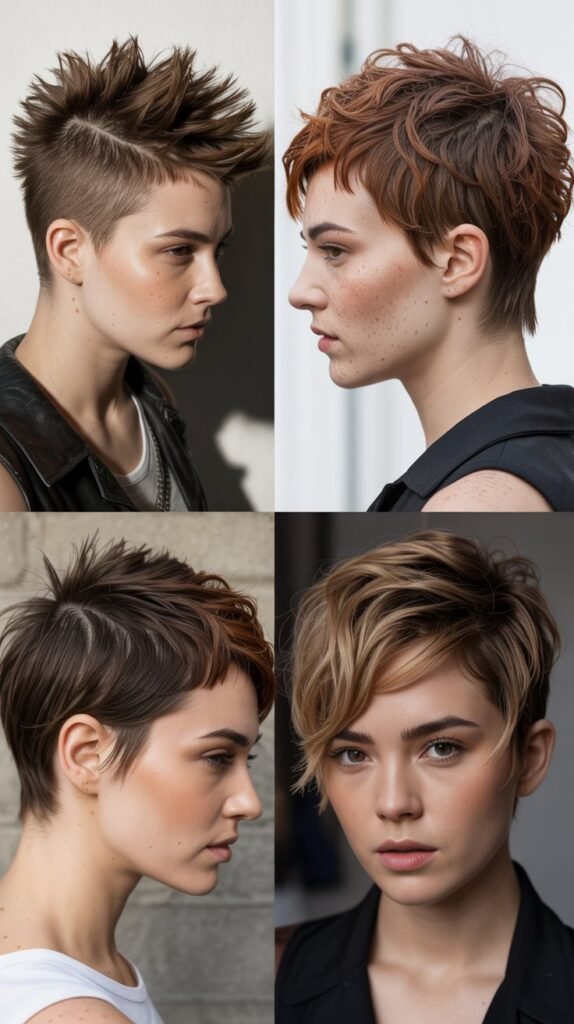
Drawing inspiration from punk rock aesthetics, the mohawk-inspired shaggy pixie features significantly shorter sides with dramatic length and volume concentrated through the center of the head.
- The sides are cut close to the scalp or given a short, tight fade while the center strip maintains 2-4 inches of textured length.
- This creates a bold, rebellious silhouette that makes a powerful style statement without requiring daily maintenance.
- The textured center section can be styled upward for maximum impact or pushed to one side for a softer interpretation.
- This cut works particularly well for those with thick, coarse hair that naturally holds volume and stands upward.
- Styling products like strong-hold gel, pomade, or mousse help the center section maintain height and definition throughout the day.
- Despite its edgy appearance, this style can be adapted for professional settings by styling the center section flatter or to the side.
15. Soft Shaggy Pixie for Fine Hair
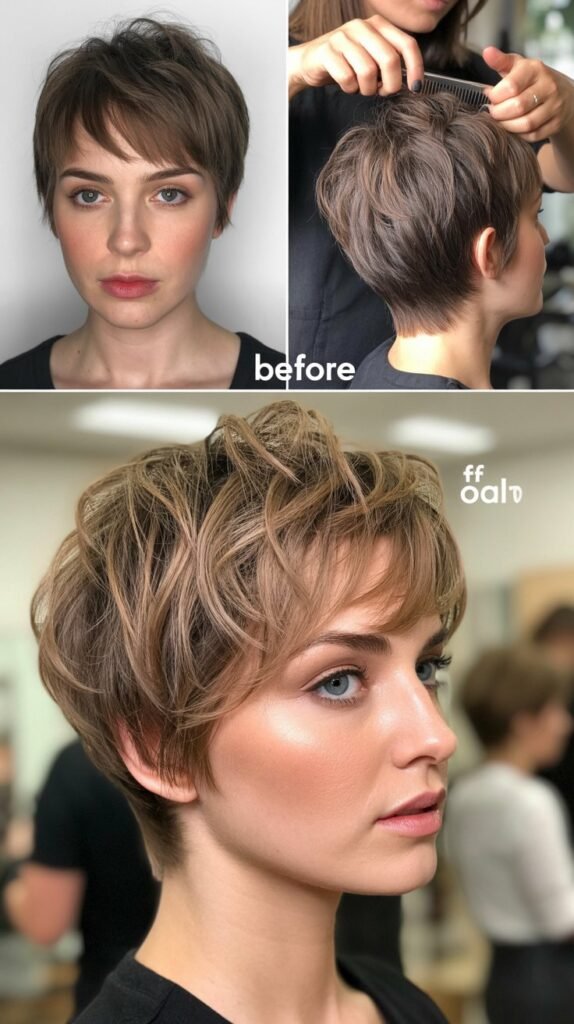
Specifically designed for those with fine or thin hair, this soft shaggy pixie utilizes strategic layering and cutting techniques to create the illusion of fuller, thicker hair.
- The layers are cut at specific angles that allow hair to stack upon itself, creating natural volume without requiring extensive styling.
- Point-cutting technique is used throughout to remove weight while maintaining density, preventing the wispy, thin appearance that can plague fine-haired individuals.
- Slightly longer layers on top provide the foundation for lift and fullness when styled.
- Volumizing products like root-lifting sprays and lightweight mousses are applied to damp hair before styling to maximize body.
- Blow-drying with a round brush or using a diffuser while lifting sections at the root creates lasting volume.
- This cut avoids over-thinning or excessive texturizing that can make fine hair appear even thinner and more sparse.
16. Silver/Gray Shaggy Pixie
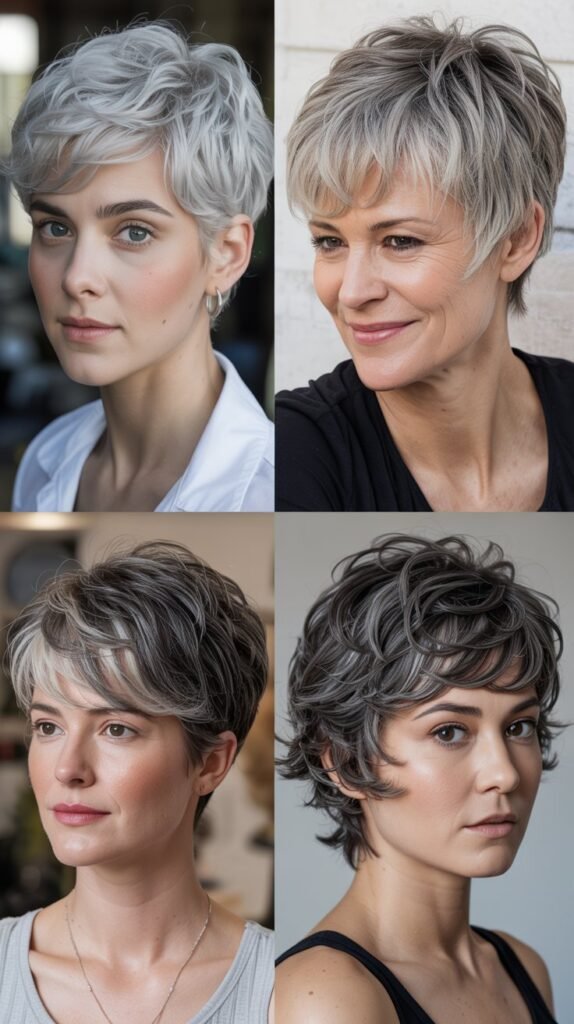
Embracing natural gray or choosing a trendy silver color transforms the shaggy pixie into a sophisticated, age-defying style that exudes confidence and modern sensibility.
- Silver and gray tones add a cool, contemporary edge to the textured layers and create a striking visual impact.
- These shades work beautifully with the shaggy texture, as the light-reflecting properties of silver hair emphasize dimension and movement.
- Transitioning to gray or silver requires proper preparation, especially for those with darker natural hair, often involving multiple lightening sessions.
- Maintenance includes regular purple or blue-toned shampoos to prevent yellowing and maintain the cool, ashy tones.
- The silver pixie has become a fashion-forward choice for women of all ages, challenging outdated notions about gray hair.
- Proper hair care with moisturizing treatments is essential, as lightened hair can be more prone to dryness and damage.
17. Shaggy Pixie with Textured Crown
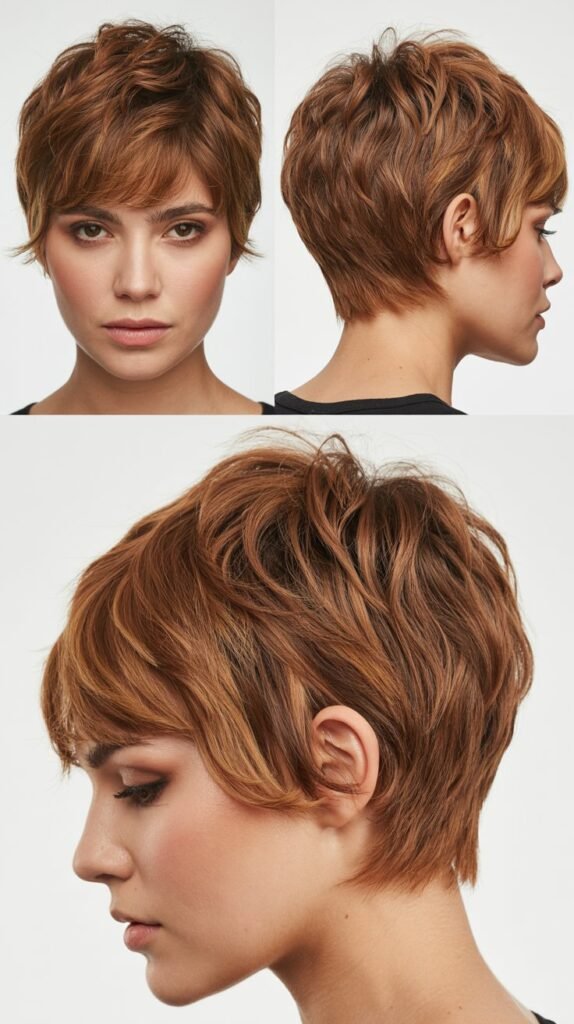
Concentrating maximum texture and volume at the crown creates a flattering lift that elongates the face and adds drama to the overall silhouette.
- The crown area is cut with the longest layers, creating a “peak” of volume at the highest point of the head.
- This technique helps balance round or square face shapes by adding vertical height and drawing the eye upward.
- Extra texturizing and layering at the crown prevents the area from falling flat, especially important for those with fine or straight hair.
- Styling involves applying volumizing products specifically to the crown area and blow-drying with fingers or a round brush to lift the roots.
- The sides and back are kept shorter and closer to the head, which emphasizes the dramatic volume at the crown.
- This style works particularly well for those who want to create the illusion of a longer face shape or add balance to bottom-heavy features.
18. Disconnected Shaggy Pixie
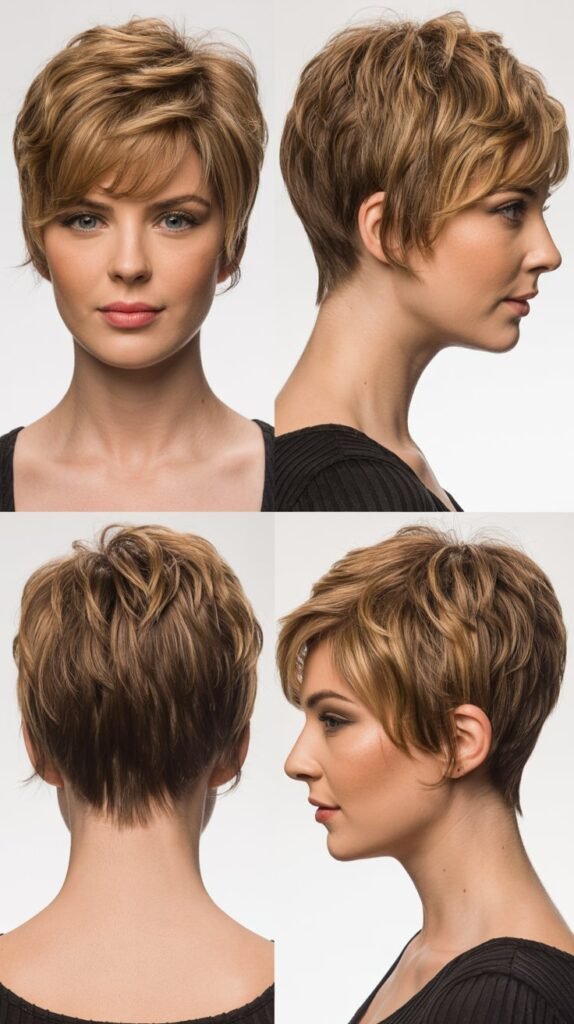
The disconnected shaggy pixie features deliberate separation between different sections of hair, with minimal blending between lengths for a bold, avant-garde aesthetic.
- Unlike traditional layering that gradually transitions between lengths, the disconnected cut creates dramatic jumps from short to long sections.
- This creates a choppy, editorial quality that appears intentionally edgy and fashion-forward.
- The technique works particularly well with thick hair, as the disconnection helps remove bulk while creating interesting visual texture.
- Styling can emphasize the disconnection by using products to separate and define individual sections and pieces.
- This cut requires a skilled stylist who understands how to create disconnection without making the style appear unfinished or poorly executed.
- The avant-garde nature of this style makes it ideal for creative professionals or those who enjoy pushing fashion boundaries.
19. Wavy Shaggy Pixie
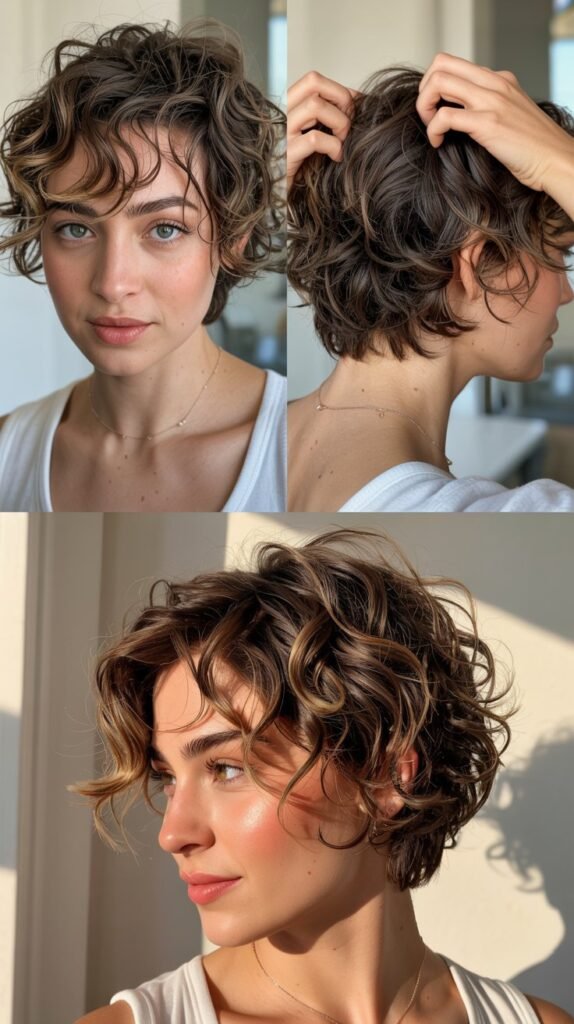
Natural waves add romantic movement and softness to the shaggy pixie structure, creating a feminine interpretation that’s simultaneously carefree and polished.
- Wavy texture naturally enhances the choppy layers, creating automatic dimension without requiring extensive styling.
- The cut is designed to work with the natural wave pattern, with layers following the direction of the wave for a harmonious flow.
- A curl-enhancing cream or wave-defining spray applied to damp hair and then air-dried or diffused brings out the natural texture.
- This style works beautifully for those with 2A to 2C wave patterns who want a low-maintenance option that celebrates their natural texture.
- The waves add volume and body to the cut, making it particularly flattering for those with medium to thick hair density.
- On straight hair, waves can be created with a flat iron, curling wand, or by braiding damp hair and allowing it to dry overnight.
20. Choppy Pixie Bob Hybrid
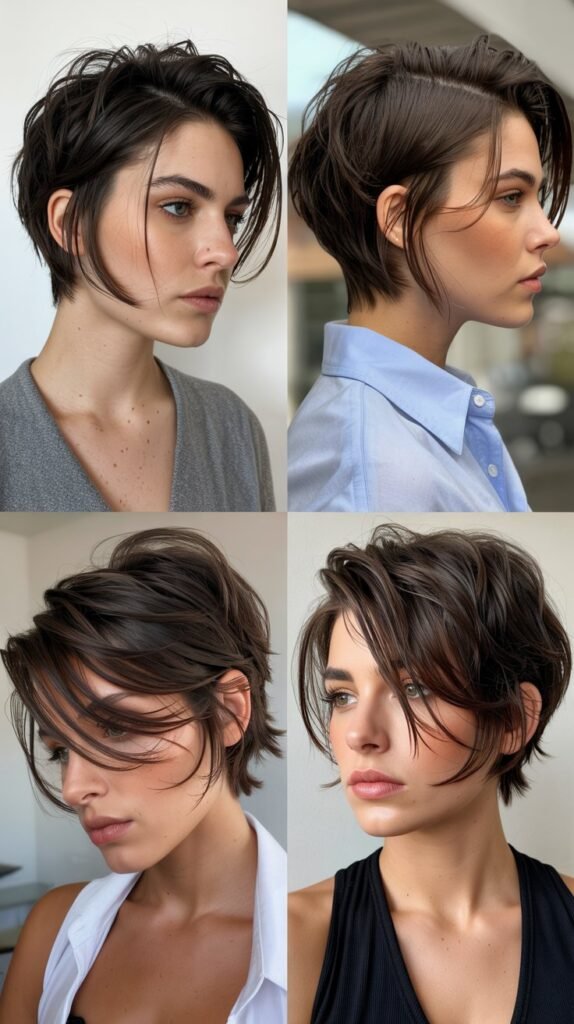
This hybrid style combines elements of both the pixie and bob, with significantly more length in the front sections that can graze the jawline or chin while maintaining shorter back sections.
- The dramatic length difference between front and back creates an edgy, contemporary silhouette that offers styling versatility.
- Front sections can be worn swept across the face, tucked behind ears, or styled away from the face depending on preference.
- This cut serves as an excellent option for those who want pixie-like ease in the back but prefer to maintain some length for styling options.
- The choppy, shaggy texture throughout prevents the style from appearing too structured or severe.
- Styling can range from sleek and sophisticated to messy and tousled depending on products and techniques used.
- This transitional style works well for those growing out a pixie or not quite ready to commit to a full short crop.
21. Feathered Shaggy Pixie
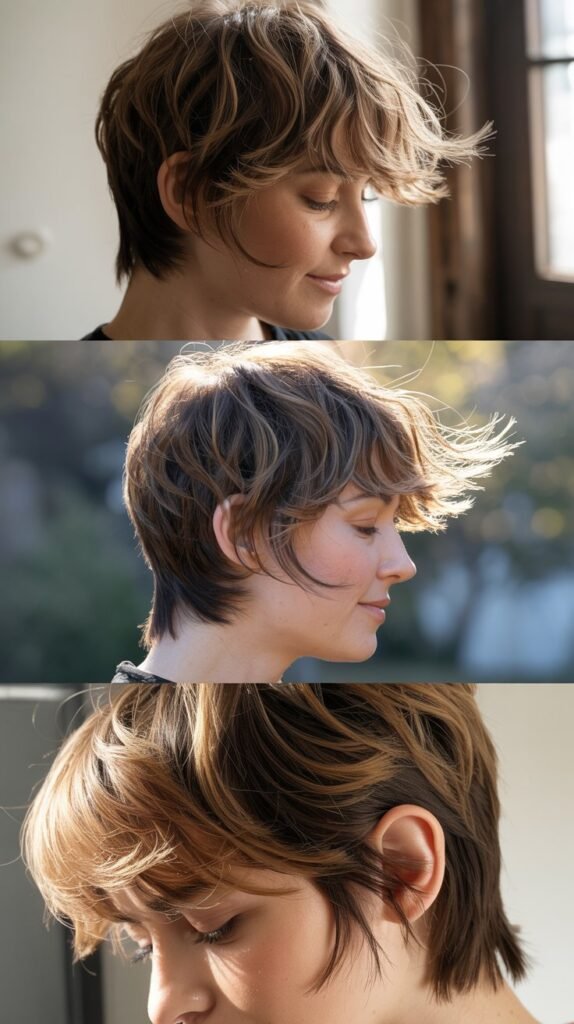
The feathered shaggy pixie utilizes cutting techniques that create ultra-soft, feather-like pieces throughout, resulting in maximum movement and a retro-inspired aesthetic with modern updates.
- Feathering is achieved through point-cutting or razor-cutting techniques that create tapered, feather-like ends on each layer.
- This technique creates incredible softness and fluidity in the hair’s movement, reminiscent of iconic 1970s styles but updated for contemporary tastes.
- The feathered pieces naturally separate and move individually, creating a dynamic quality that changes with every movement.
- This style works particularly well for fine to medium hair textures, as the feathering prevents the cut from appearing heavy or blunt.
- Styling requires minimal effort since the feathered cuts naturally create texture and separation with just a small amount of product.
- Blow-drying with fingers running through the hair enhances the feathered effect and creates additional volume and lift.
22. Shaggy Pixie with Side-Shaved Detail
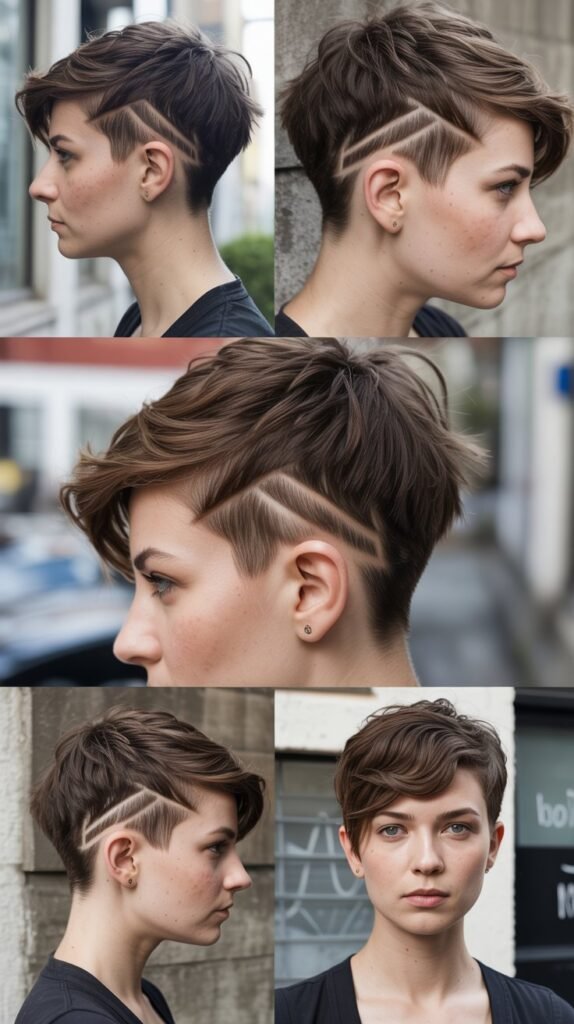
Adding a shaved panel on one or both sides introduces an element of edginess and reduces bulk while creating an interesting asymmetrical detail.
- The shaved section typically extends from the temple area down past the ear, creating a defined strip of very short or shaved hair.
- This technique dramatically reduces volume on the shaved side while maintaining full texture on the remaining sections.
- The contrast between the shaved panel and textured layers creates visual interest and draws attention to facial features.
- Creative designs or patterns can be incorporated into the shaved section for additional personalization.
- This style works particularly well for those with thick, heavy hair who want to reduce overall density without sacrificing the shaggy texture they love.
- Maintenance requires touch-ups every 2-3 weeks to keep the shaved sections clean and defined.
23. Graduated Shaggy Pixie
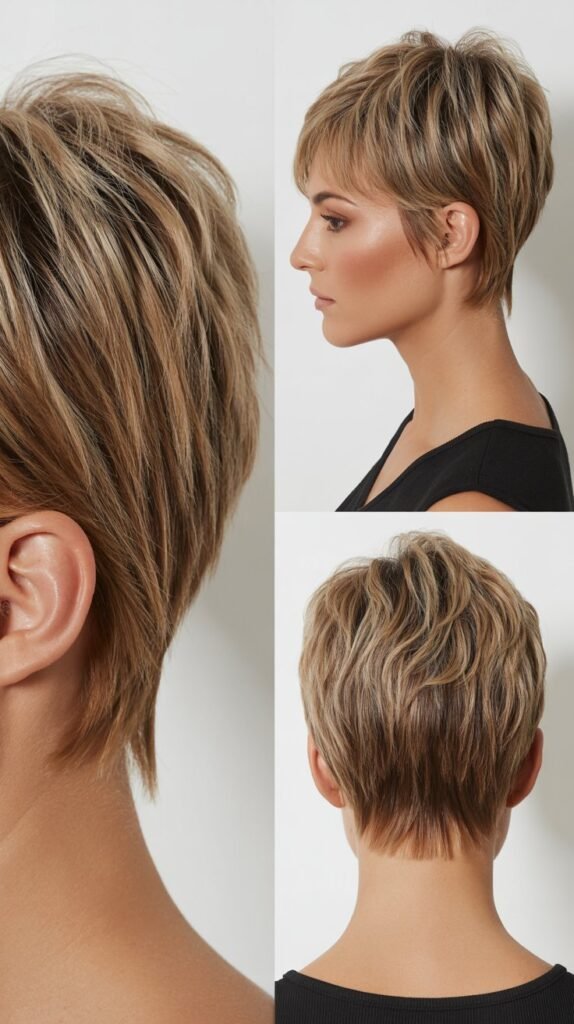
The graduated shaggy pixie features a stacked back section where layers are precisely cut to create gradual length increase from the nape upward, resulting in a rounded, dimensional shape.
- The graduation creates natural volume and roundness at the back of the head, flattering for those with flatter head shapes.
- Layers are meticulously cut to stack upon each other, creating a seamless transition from shortest at the nape to longest at the crown.
- This technique provides structure and shape while maintaining the textured, shaggy quality throughout the top and sides.
- The graduated back allows the style to grow out more gracefully than blunt cuts, requiring less frequent maintenance.
- Styling the graduated sections is simple—the cut itself creates the shape, requiring only basic blow-drying or air-drying.
- This classic technique has been updated with modern texturizing to create a contemporary version of a timeless style.
24. Shaggy Pixie with Extended Sideburns
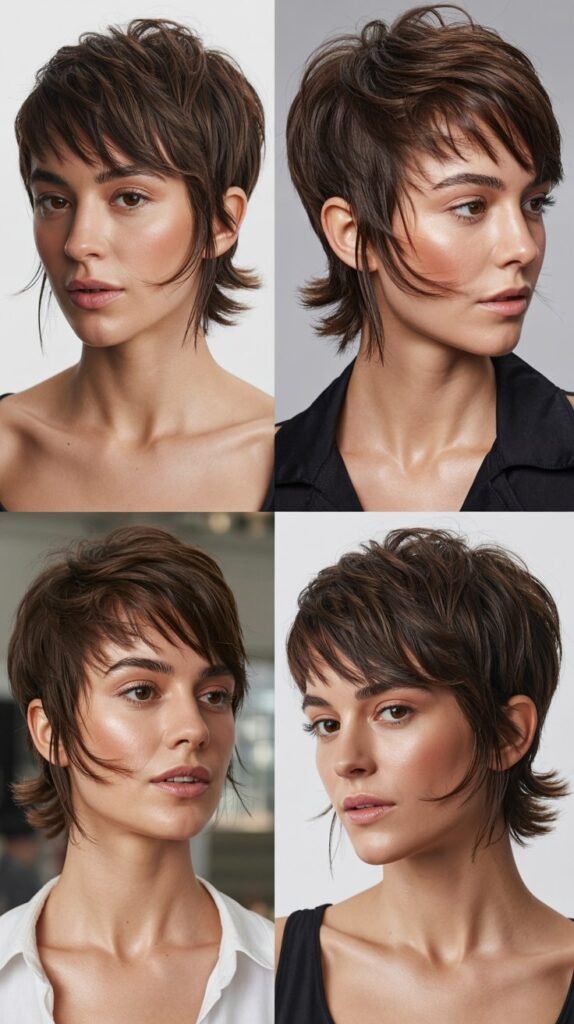
Intentionally leaving sideburn areas longer creates interesting face-framing angles and adds a unique, personalized touch to the shaggy pixie.
- Extended sideburns can range from subtle (just past the ear) to dramatic (reaching the jawline or beyond).
- These longer pieces create angular lines that draw attention to cheekbones and jawline, acting as natural contouring for the face.
- The sideburn pieces can be styled straight, textured, or even curled depending on the desired effect.
- This detail works particularly well with oval and heart-shaped faces, adding width and balance to the lower face.
- The extended pieces provide versatility—they can be left down to frame the face or tucked behind ears for a completely different look.
- Styling products like pomade or wax help define and control these longer pieces, keeping them in place throughout the day.
25. Textured Micro Pixie
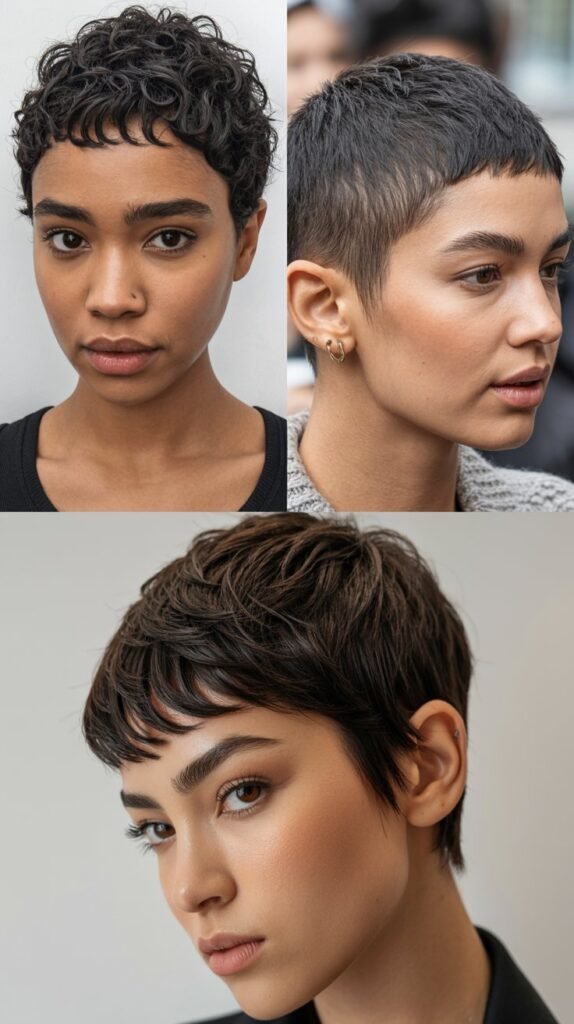
The textured micro pixie takes the shaggy concept to its shortest extreme, with ultra-short lengths throughout (typically 1-2 inches maximum) that are heavily textured for dimension.
- Despite the extremely short length, strategic texturizing prevents the cut from appearing too masculine or severe.
- This cut requires confident styling, as there’s minimal hair to hide behind or manipulate into different looks.
- The micro length showcases facial features prominently and requires strong bone structure to carry off effectively.
- Styling is incredibly low-maintenance—a small amount of texturizing product worked through with fingers is often sufficient.
- This ultra-short option is ideal for those seeking maximum ease and freedom from hair maintenance.
- Regular trims every 3-4 weeks are essential to maintain the textured, choppy quality and prevent the cut from growing out unevenly.
26. Ombre Shaggy Pixie
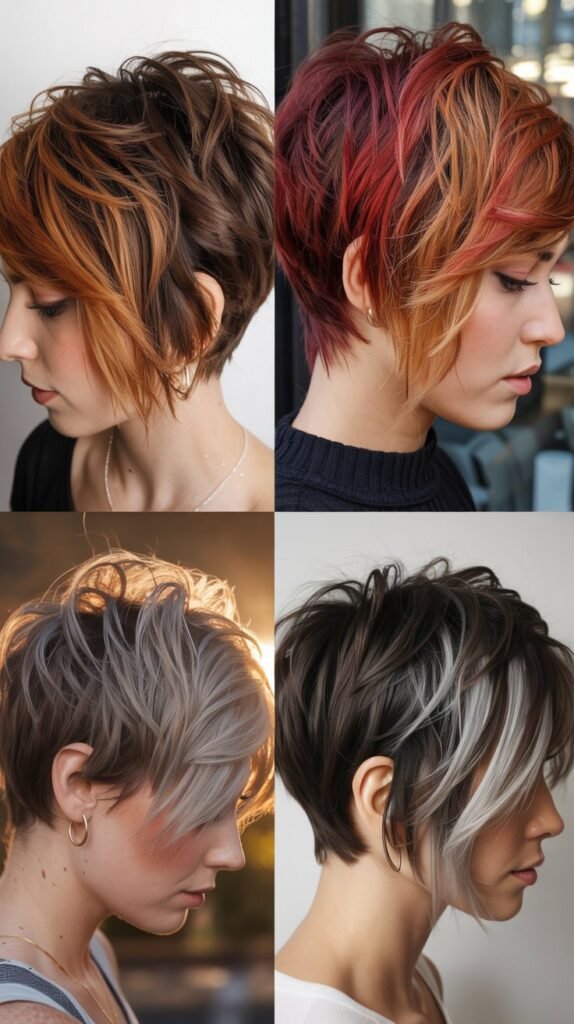
The ombre coloring technique applied to a shaggy pixie creates a gradual transition from darker roots to lighter ends, adding depth and emphasizing the layered texture.
- The color gradually lightens from root to tip, with the most dramatic color change occurring in the longer top sections where it’s most visible.
- This technique works with various color combinations—brunette to blonde, black to burgundy, or even unconventional colors like blue to teal.
- The ombre effect accentuates the choppy layers by creating a visual roadmap of how the hair is cut and textured.
- Unlike balayage, ombre creates a more defined, intentional gradient that makes a bold statement.
- The darker roots provide a low-maintenance color option since regrowth blends naturally with the ombre effect.
- Toning treatments maintain vibrancy in the lighter ends and prevent brassiness or fading between color appointments.
27. Punk-Inspired Spiked Shaggy Pixie
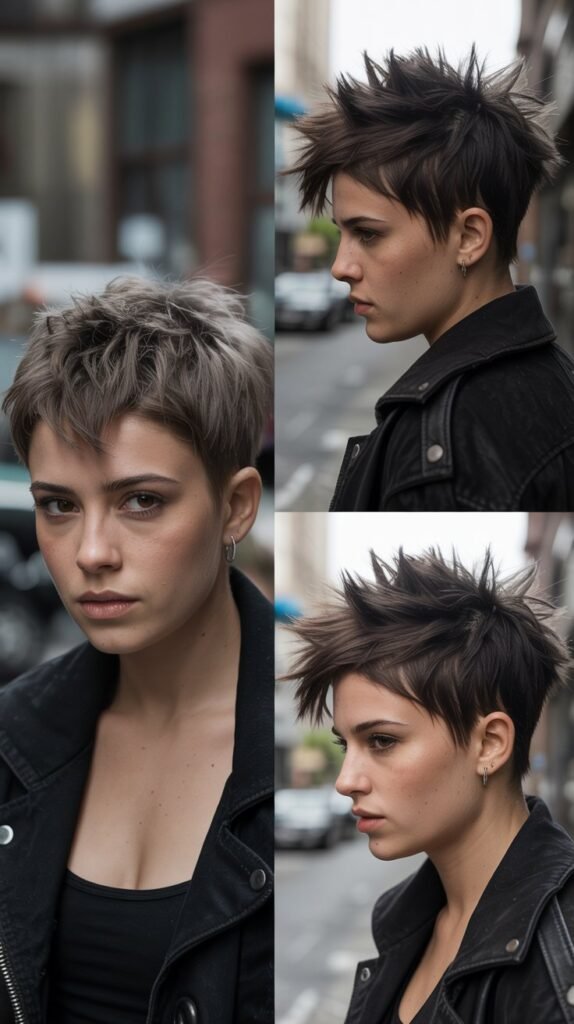
Channeling punk rock energy, this variation uses extreme texturizing and strategic styling to create defined spikes and piece-y separation throughout the cut.
- The cut features significant layering and texturizing that allows individual sections to be styled into defined spikes or separated pieces.
- This style works best with hair that has some natural body or thickness, as very fine hair may struggle to hold the spiked shape.
- Strong-hold styling products like gel, pomade, or molding paste are essential for creating and maintaining the defined spikes.
- The punk-inspired aesthetic can be adapted from subtle (small, textured spikes) to extreme (dramatic, gravity-defying points).
- Despite the edgy appearance, the style can be worn softer and more tousled for everyday occasions, then amplified for nights out or special events.
- This cut celebrates individuality and nonconformity, making it perfect for those who want their hair to reflect a bold, rebellious spirit.
28. Shaggy Pixie with Textured Fringe
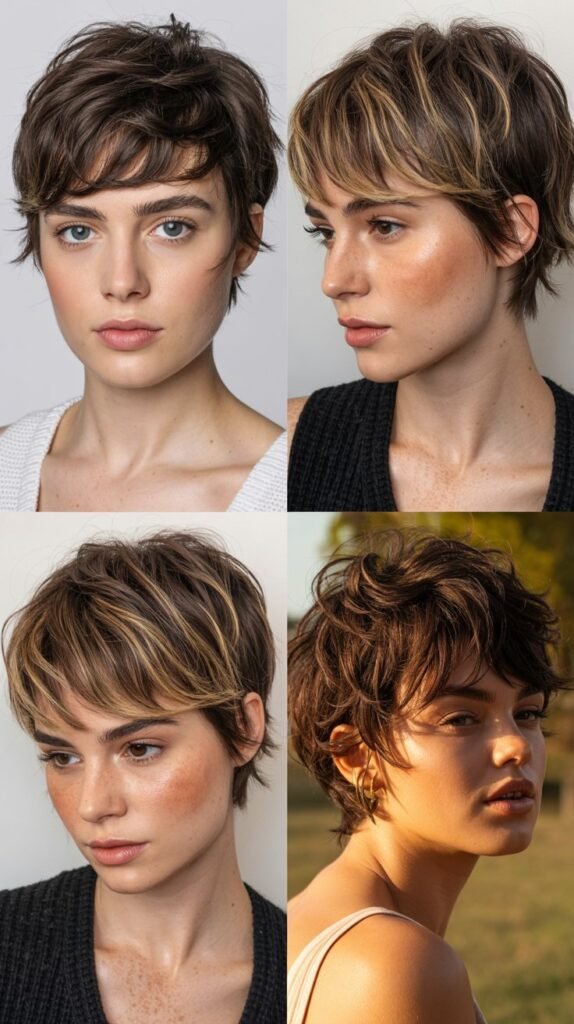
A heavily textured fringe adds dimension and versatility to the shaggy pixie, providing the option to style it forward across the forehead or swept to the side.
- The fringe is cut with significant texturizing to create piece-y, separated sections rather than a solid, blunt bang.
- Length can vary from brow-skimming to eye-length depending on preference and face shape considerations.
- The textured quality of the fringe allows it to blend seamlessly with the shaggy layers throughout the rest of the cut.
- Styling options include wearing it straight across for a mod-inspired look, sweeping it to one side for asymmetry, or pinning it back entirely for a different aesthetic.
- The fringe helps balance longer or higher foreheads and draws attention to the eyes.
- Regular fringe trims between full haircuts keep the length manageable and prevent it from becoming too long or heavy.
29. Natural Gray Shaggy Pixie with Dark Lowlights
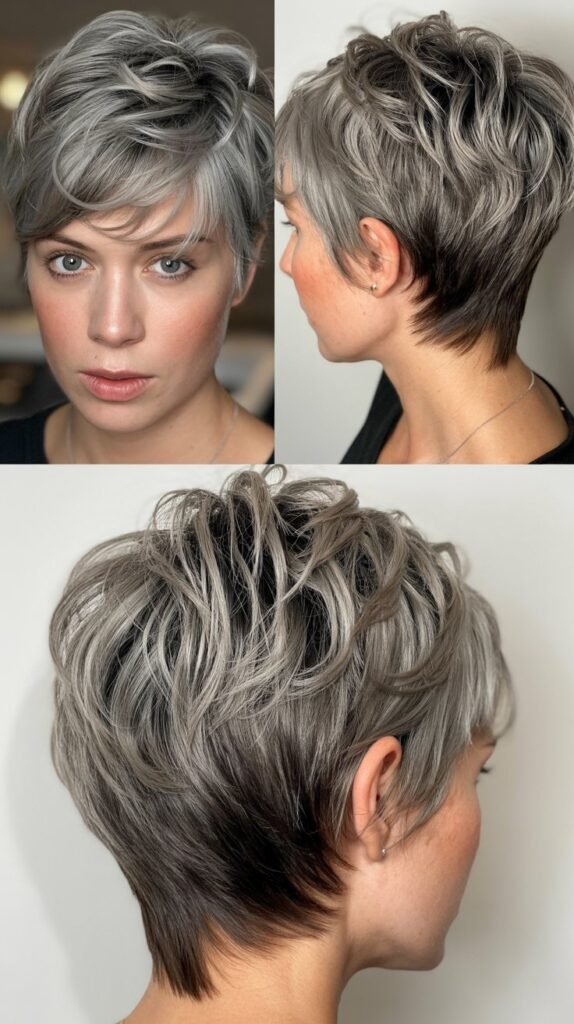
Embracing natural gray hair while adding strategic dark lowlights creates depth, dimension, and a sophisticated color palette that celebrates aging gracefully.
- Dark lowlights are woven throughout natural gray hair, adding richness and preventing the single-tone appearance that can sometimes wash out complexions.
- The contrast between silver/gray and darker tones emphasizes the shaggy texture and creates visual interest through the layered cut.
- This approach celebrates natural gray while adding a custom, dimensional quality that looks intentional and stylish rather than simply “letting yourself go gray.”
- The lowlights can be adjusted to match your original hair color or choose complementary tones that flatter your skin.
- Maintenance is relatively low since the gray roots are already the primary color and the lowlights simply add depth rather than covering gray.
- This sophisticated color combination works beautifully across all age ranges and challenges stereotypes about gray hair being unfashionable.
Conclusion
The versatility and transformative power of 29 Fresh Short Shaggy Pixie Haircuts offer endless possibilities for expressing your personal style while embracing low-maintenance beauty.
From classic textured cuts to avant-garde asymmetrical designs, these carefully selected variations prove that short hair can be just as dynamic and feminine as longer styles.
Whether you’re drawn to the punk-inspired edge of spiked textures, the romantic softness of wavy layers, or the sophisticated elegance of silver and gray tones, there’s a shaggy pixie perfectly suited to your unique features, lifestyle, and aesthetic preferences.
The key to success lies in choosing a cut that complements your face shape, working with your natural hair texture rather than against it, and finding a skilled stylist who understands how to customize these styles to enhance your best features.
With proper maintenance, quality styling products, and confidence in your choice, any of these 29 Fresh Short Shaggy Pixie Haircuts can become your signature look that turns heads and makes you feel authentically beautiful.
