Finding the perfect haircut when you have fine, thin hair can feel like searching for a needle in a haystack, but the right short bob can transform your entire look and boost your confidence instantly.
If you’ve been struggling with limp, lifeless strands that refuse to hold volume or style, you’re about to discover a game-changing solution.
This comprehensive guide to 30 Flattering Short Bob Haircuts for Fine Thin Hair will walk you through the most flattering cuts specifically designed to create the illusion of thickness, add movement, and bring life back to delicate hair textures.
From classic bobs with strategic layers to modern textured cuts that work with your hair’s natural characteristics, each style has been carefully selected to maximize volume and minimize the appearance of thinness.
Whether you prefer sleek and sophisticated or tousled and carefree, you’ll find expert styling tips, maintenance advice, and insider techniques that professional stylists use to make fine hair look its absolute best.
Get ready to explore cutting-edge techniques, discover which bob variations suit different face shapes, and learn how strategic cutting can actually make your hair appear twice as thick as it is now.
1. The Classic Blunt Bob
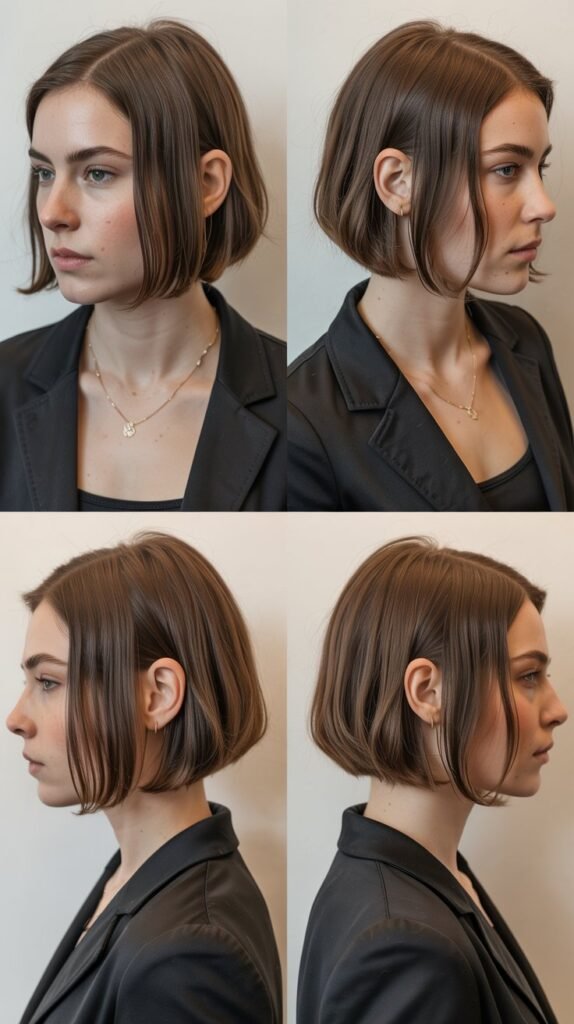
The blunt bob is a timeless choice that creates the illusion of thickness by keeping all your hair at one uniform length. This clean, sharp cut prevents wispy ends and makes fine hair appear fuller and healthier.
The solid perimeter line gives the impression of density that layered cuts sometimes can’t achieve with thin hair.
Why It Works for Fine Hair:
- The blunt cutting technique eliminates the tapered, see-through ends that often plague fine hair
- Every single strand ends at the same point, creating maximum visual weight at the perimeter
- The solid line reflects light uniformly, making hair appear shinier and more substantial
- There are no layers to separate and create gaps that reveal the scalp
Styling Tips:
- Use a round brush while blow-drying to create inward movement at the ends
- Apply a lightweight volumizing mousse to damp hair before styling
- Finish with a flat iron for an ultra-sleek look that emphasizes the sharp line
- Consider a slight angle with the front slightly longer than the back for added sophistication
Best Face Shapes:
- Oval faces can wear this cut at any length
- Heart-shaped faces benefit from a chin-length version
- Square faces should opt for a slightly longer variation that hits below the jawline
2. The Textured Choppy Bob
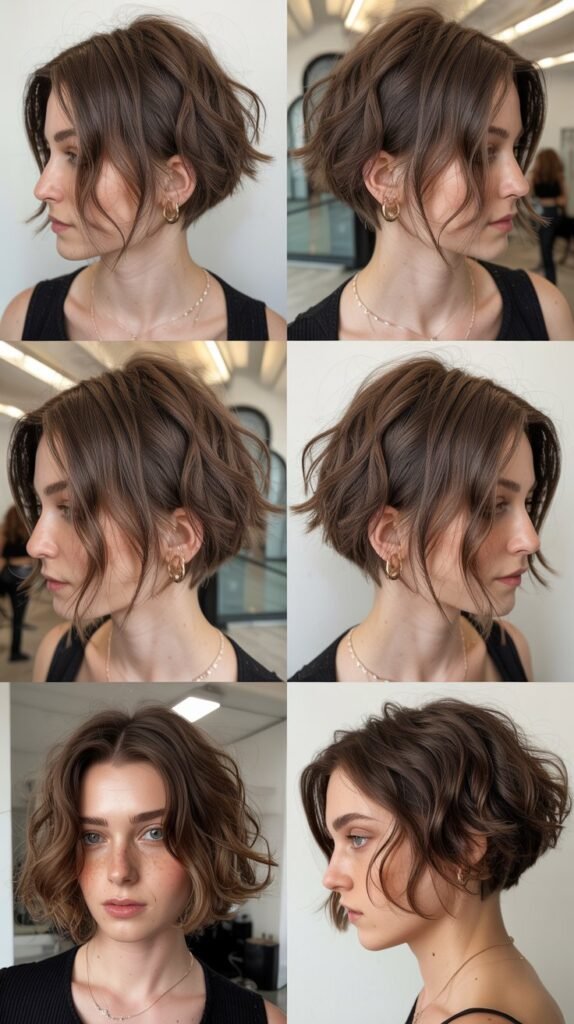
A textured choppy bob introduces strategic irregularity into your cut, creating movement and dimension that makes fine hair look thicker.
This edgy style uses point-cutting techniques to add piecey ends that separate beautifully and give the impression of more hair than you actually have.
The Texture Advantage:
- Point-cutting creates multiple ending points instead of one blunt line, multiplying visual interest
- The choppy pieces prevent hair from clumping together and looking stringy
- Texture disrupts the light reflection pattern, making hair appear more voluminous
- The broken perimeter line adds an effortless, lived-in quality
Maintenance Requirements:
- This cut requires trimming every 6-8 weeks to maintain the intentional choppiness
- Use a texturizing spray or dry shampoo to enhance the piecey separation
- Avoid heavy conditioning products that will weigh down the texture
- Consider a sea salt spray for beachy, undone styling
Styling Versatility:
- Air-dry with texturizing products for an effortless tousled look
- Straighten for a more polished choppy aesthetic
- Add loose waves with a curling wand for romantic volume
- The irregular ends make second-day hair look intentional rather than messy
3. The Stacked Bob with Volume
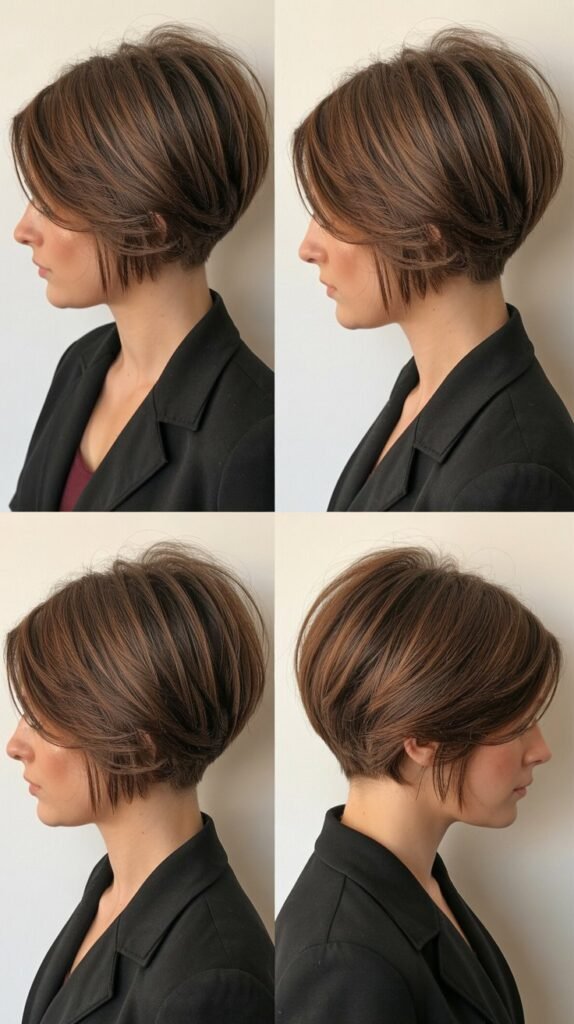
The stacked bob features shorter layers at the back that gradually lengthen toward the front, creating dramatic volume and lift at the crown.
This architectural cut is specifically engineered to combat the flatness that typically plagues fine, thin hair.
Structural Benefits:
- The graduated back section naturally lifts away from the head, creating instant volume
- Shorter layers at the nape allow longer front pieces to overlap, appearing thicker
- The stacking technique builds height at the crown where thinning is most noticeable
- The angle draws attention to facial features while minimizing hair concerns
Cutting Technique:
- Stylists use elevation and overdirection to create the signature stacked shape
- The back is cut shorter in a curved or triangular shape
- Front sections maintain more length, typically reaching chin level or below
- Interior layers are graduated to prevent bulk while maintaining volume
Daily Styling:
- This cut practically styles itself with minimal effort
- Blow-dry the back first, directing roots upward for maximum lift
- Use a small round brush to flip the ends under at the front
- A volumizing powder at the roots enhances the natural lift
4. The Layered Bob for Movement
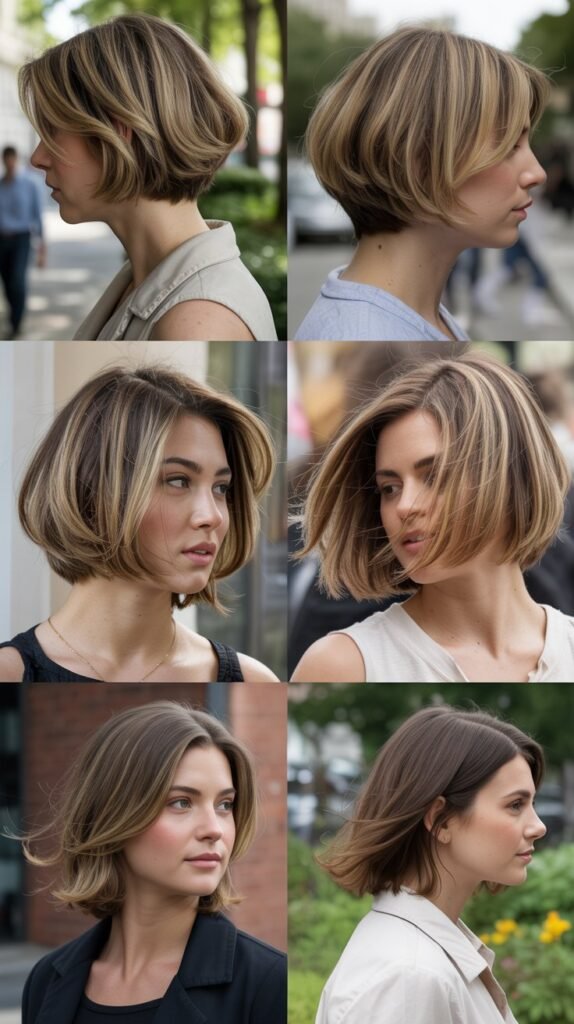
A layered bob incorporates different lengths throughout the cut to create movement, dimension, and the appearance of fuller hair.
When done correctly on fine hair, strategic layering removes just enough weight to allow hair to lift and move naturally.
Strategic Layer Placement:
- Layers should be subtle and strategic, not overly aggressive
- The longest layer provides the foundation for the illusion of thickness
- Mid-length layers create movement without creating gaps
- Shorter interior layers add lift at the roots without sacrificing density at the perimeter
Length Considerations:
- Keep the shortest layers no shorter than mid-ear level to prevent wispy thinness
- Maintain at least 2-3 inches between the shortest and longest layers
- The perimeter should remain relatively heavy to anchor the style
- Face-framing layers can be slightly shorter to highlight facial features
Styling for Maximum Effect:
- Blow-dry with a large round brush to create gentle curves in the layers
- Use a volumizing spray at the roots before drying
- Curl random sections away from the face for dimensional movement
- A light finishing spray maintains movement without weighing hair down
5. The Angled Bob (A-Line Bob)
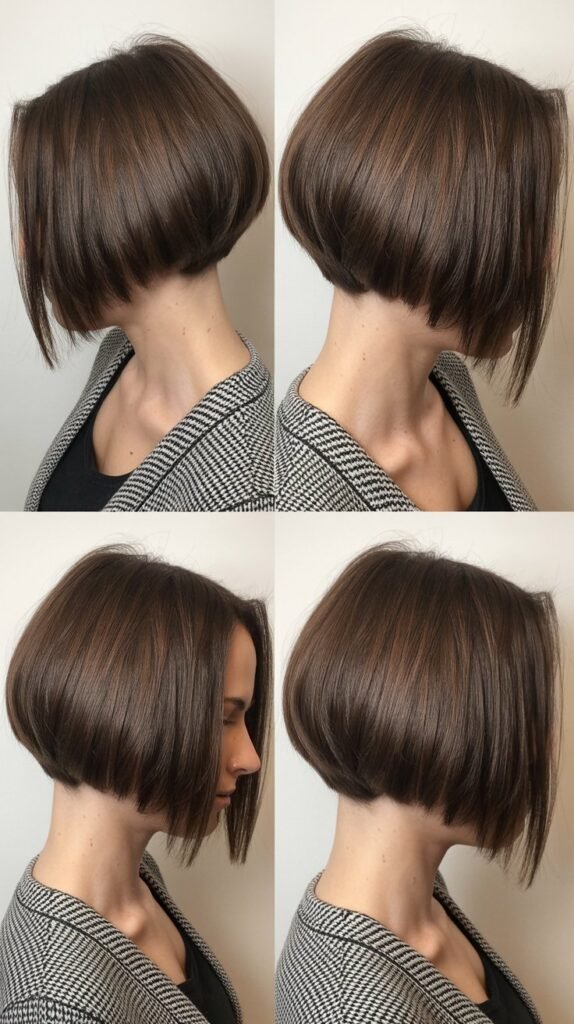
The angled bob, also known as an A-line bob, features hair that’s shorter in the back and gradually gets longer toward the front.
This geometric cut creates a slimming effect on the face while adding visual interest that distracts from fine hair texture.
The Angle Advantage:
- The dramatic angle creates a focal point that draws eyes away from hair density
- Longer front pieces can be styled with more volume and body
- The shorter back prevents a heavy, flat appearance at the nape
- The diagonal line is inherently eye-catching and modern
Degree of Angle:
- Subtle angles have about 1-2 inches difference from back to front
- Medium angles feature 2-4 inches of difference
- Dramatic angles can have 4+ inches of difference
- Fine hair typically looks best with medium to dramatic angles
Professional Consultation:
- Discuss your lifestyle and styling commitment with your stylist
- Dramatic angles require more maintenance and styling time
- The angle can be adjusted to complement your face shape
- Consider how the longer front pieces will frame your specific features
6. The Inverted Bob
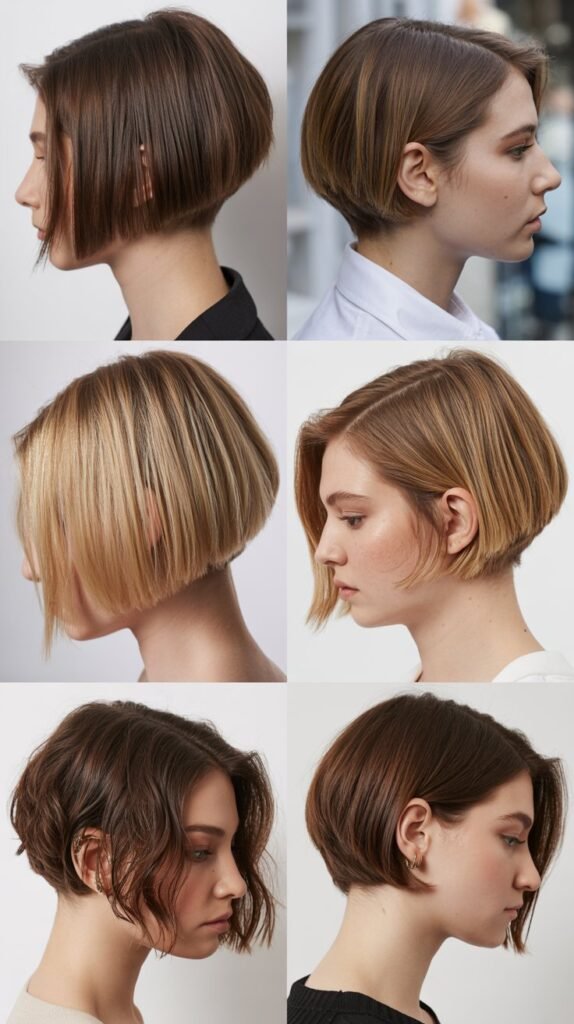
An inverted bob is cut with the back stacked high and short while the front pieces angle down dramatically, creating a bold, architectural silhouette.
This style is excellent for fine hair because the stacked back creates automatic volume without any styling effort.
Distinctive Features:
- The back is cut very short, often exposing the nape
- Front pieces can extend to the collarbone or beyond
- The silhouette creates an inverted triangle or V-shape
- Maximum volume is achieved at the crown and back
Volume Creation:
- The extreme stacking at the back forces hair to stand away from the scalp
- Shorter layers underneath longer layers create natural lift
- The weight of longer front pieces doesn’t affect the voluminous back
- The contrast between short and long creates dramatic dimension
Styling Commitment:
- This cut requires regular maintenance every 4-6 weeks
- The back section needs frequent trimming to maintain the shape
- Blow-drying is essential to maintain the volume and shape
- A round brush is necessary for styling the longer front sections
7. The Shaggy Bob
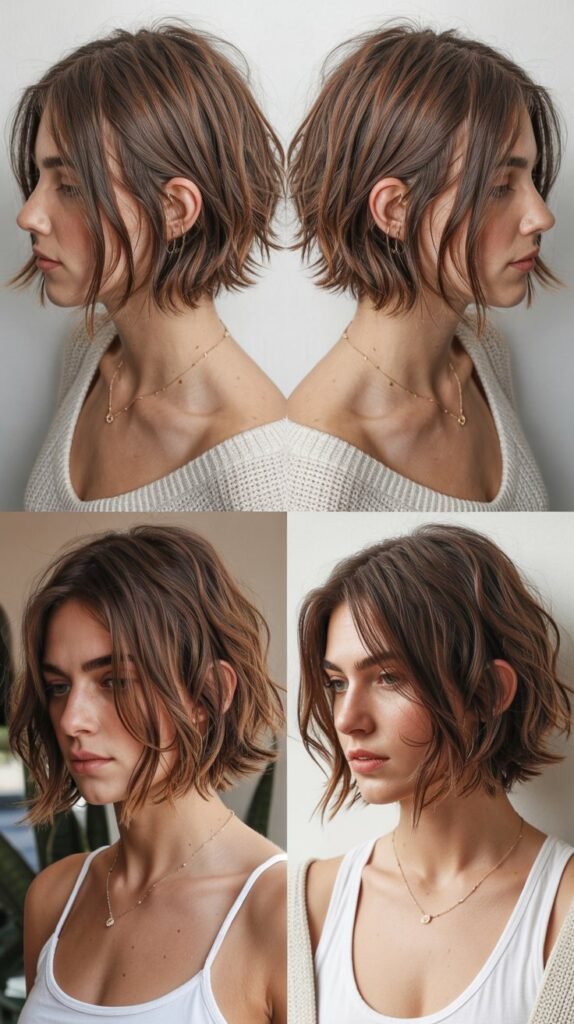
The shaggy bob brings back retro vibes with its heavily layered, undone aesthetic that’s perfect for adding volume and texture to fine hair.
This cut features lots of choppy layers throughout that create separation and movement.
Texture Overload:
- Multiple layers at different lengths create maximum texture and separation
- The shaggy technique uses point-cutting and razor techniques for soft, feathered ends
- Interior layers are heavily texturized to remove weight
- The overall effect is intentionally messy and effortless
Best for Casual Lifestyles:
- This cut embraces natural texture and doesn’t require perfect styling
- Air-drying with texturizing products achieves the desired look
- The undone quality means second and third-day hair looks great
- Minimal styling time is required for maximum impact
Product Recommendations:
- Sea salt spray enhances natural waves and texture
- Texturizing powder at the roots adds gritty volume
- Lightweight pomade separates pieces without weighing them down
- Dry shampoo refreshes and adds additional texture between washes
8. The Curved Bob
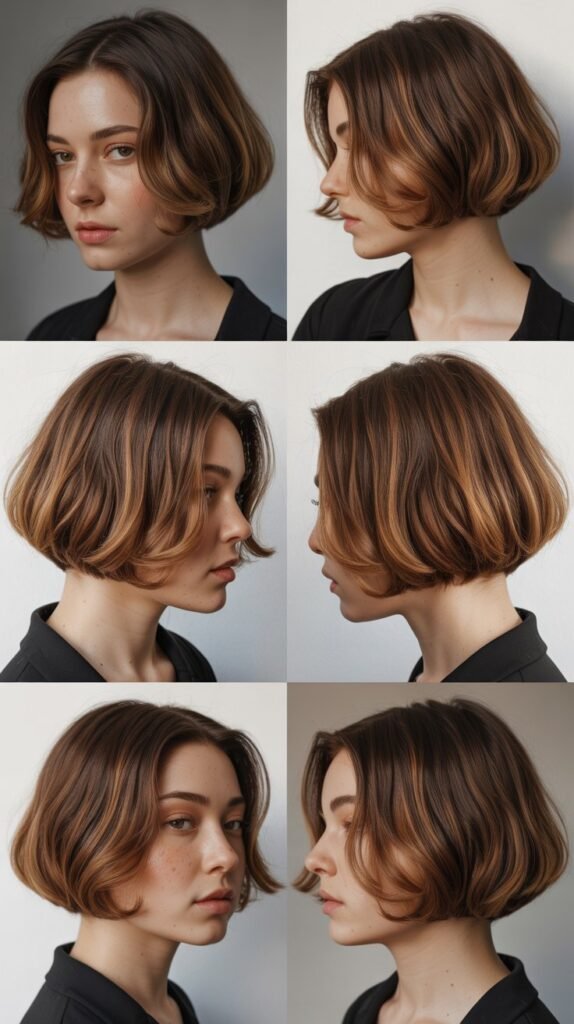
A curved bob follows the natural contour of the head, creating a rounded, soft silhouette that’s both classic and flattering.
This cut is particularly effective for fine hair because the gentle curve creates the illusion of fullness without requiring aggressive layering.
The Curved Shape:
- Hair is cut to follow the curve of the head from all angles
- The perimeter creates a continuous C-shape or oval shape
- No harsh angles or lines interrupt the soft silhouette
- The curve naturally directs hair away from the scalp, creating lift
Softening Effect:
- The rounded shape is universally flattering on most face shapes
- The gentle curve softens angular features
- The continuous line creates a polished, refined appearance
- The shape appears more voluminous than a straight, blunt line
Styling Simplicity:
- This cut is incredibly easy to maintain and style
- A simple blow-dry with a round brush maintains the curve
- The shape remains intact even with minimal styling
- Works well for both professional and casual settings
9. The Asymmetrical Bob
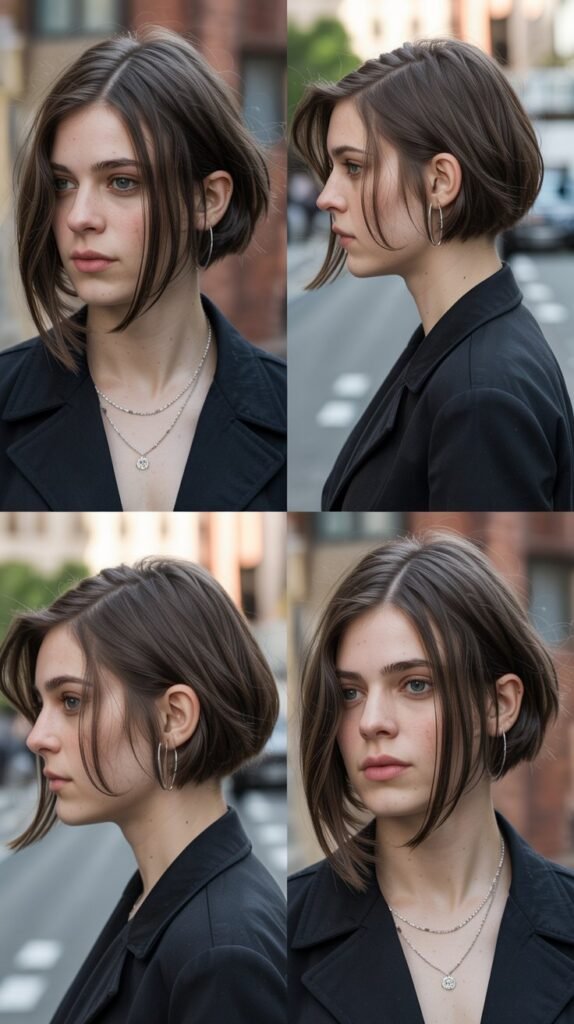
An asymmetrical bob features intentionally uneven lengths, with one side longer than the other.
This edgy, modern cut creates visual intrigue that completely distracts from fine hair concerns while adding a bold style statement.
Asymmetry Impact:
- The uneven lengths create an immediate focal point
- People focus on the interesting shape rather than hair density
- The longer side can be styled with extra volume and texture
- The dramatic difference between sides adds dimension
Degree of Asymmetry:
- Subtle asymmetry features 1-2 inches difference between sides
- Moderate asymmetry has 2-4 inches difference
- Dramatic asymmetry can have 4+ inches difference
- Fine hair benefits from more dramatic asymmetry for maximum impact
Styling Considerations:
- The longer side requires more styling attention
- You can change your look by switching which side you part on
- The shorter side can be tucked behind the ear for variety
- This cut makes a bold statement and requires confidence to wear
10. The Bob with Bangs
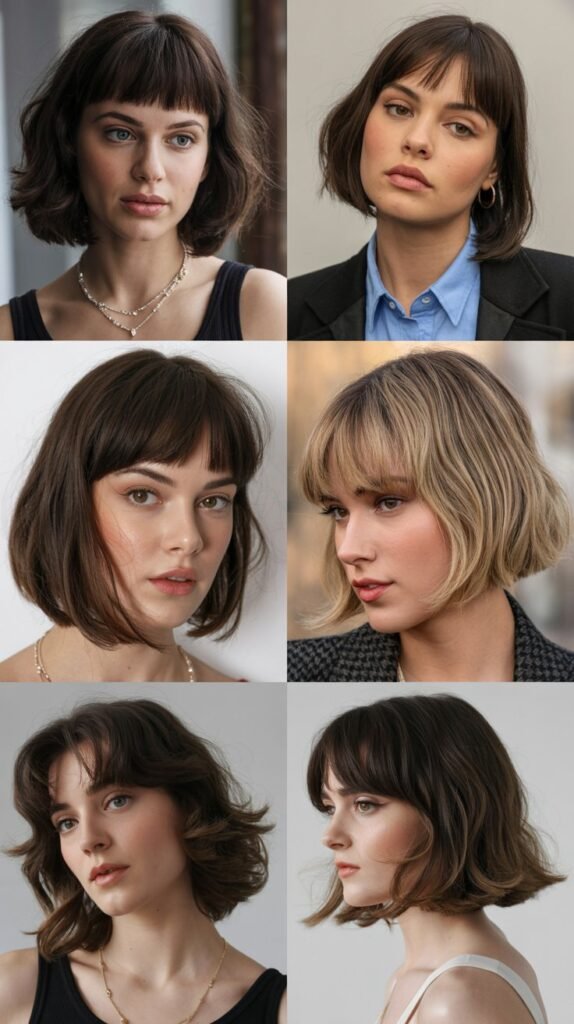
Adding bangs to a bob creates fullness at the front and draws attention to your facial features rather than your hair density.
Bangs are an excellent addition for fine hair when cut and styled correctly.
Bang Options for Fine Hair:
- Blunt bangs create a dramatic statement and make hair appear thicker
- Side-swept bangs are softer and easier to maintain
- Wispy, textured bangs prevent a heavy, dense look
- Curtain bangs part in the middle and frame the face beautifully
Thickness Considerations:
- Take bangs from a wider section to ensure adequate density
- Avoid cutting bangs too thin, which will look sparse
- Point-cut the ends to prevent a harsh, heavy line
- Consider slight layering within the bangs for movement
Maintenance Tips:
- Bangs require trimming every 2-3 weeks
- Use a small round brush to style bangs with volume
- Dry shampoo prevents oily bangs between washes
- A light pomade can separate and define bang pieces
11. The Chin-Length Bob
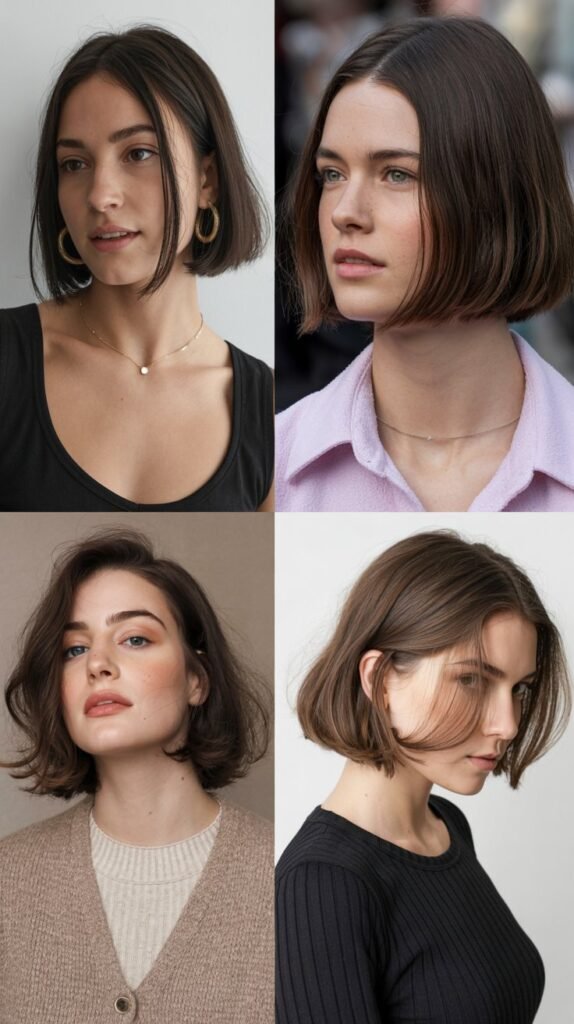
The chin-length bob hits right at the jawline, creating a classic, timeless look that flatters most face shapes.
This length is ideal for fine hair because it’s short enough to maintain volume but long enough to avoid looking wispy.
The Perfect Length:
- Chin-length provides enough hair to work with for styling
- The length prevents hair from looking too short and sparse
- This length can be easily tucked behind ears or left loose
- The weight is distributed evenly, preventing flat roots
Jawline Emphasis:
- This cut draws attention to the jawline and facial structure
- The hem naturally frames the face beautifully
- The length creates a slimming effect on round faces
- Sharp jawlines are highlighted and softened simultaneously
Universal Appeal:
- This length works for professional and casual settings
- Easy to style for various occasions
- Can be worn sleek and straight or with gentle waves
- The classic length never goes out of style
12. The Collarbone Bob (Long Bob/Lob)
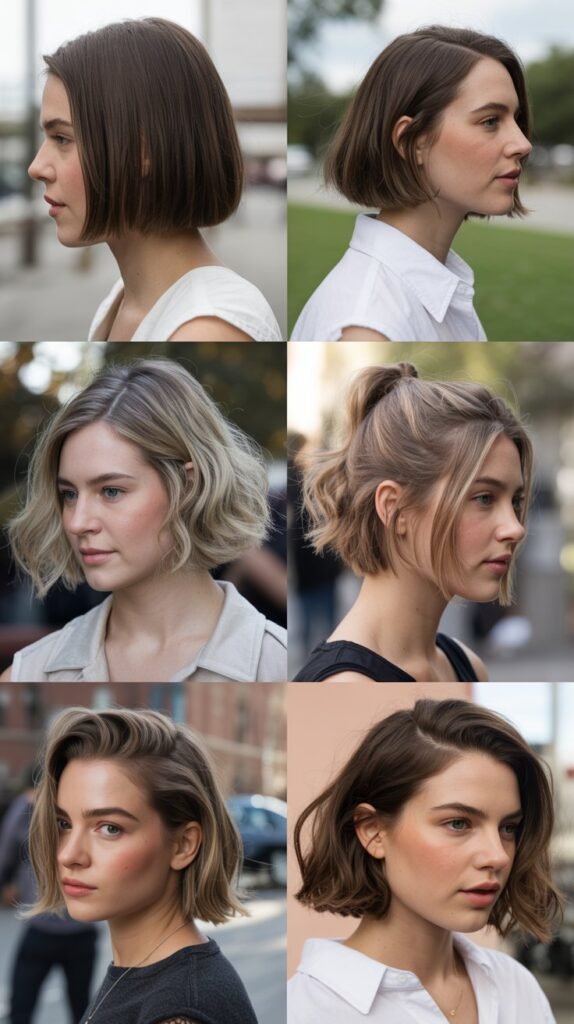
The collarbone bob, often called a “lob” (long bob), extends to the collarbone or slightly below.
This length offers maximum styling versatility while still maintaining the volume-boosting benefits of shorter hair.
Length Benefits:
- Long enough to pull into a small ponytail or bun
- Provides more styling options than shorter bobs
- The additional length adds weight that can be strategically styled for volume
- Works well for those transitioning from long hair to shorter styles
Styling Versatility:
- Can be worn straight for a sleek, polished look
- Loose waves add significant volume and texture
- Half-up styles create height at the crown
- Beach waves make hair appear fuller and more textured
Maintenance Level:
- Requires less frequent trims than shorter bobs
- Can go 8-10 weeks between cuts
- More forgiving as it grows out
- Easier to style yourself at home
13. The Bob with Undercut
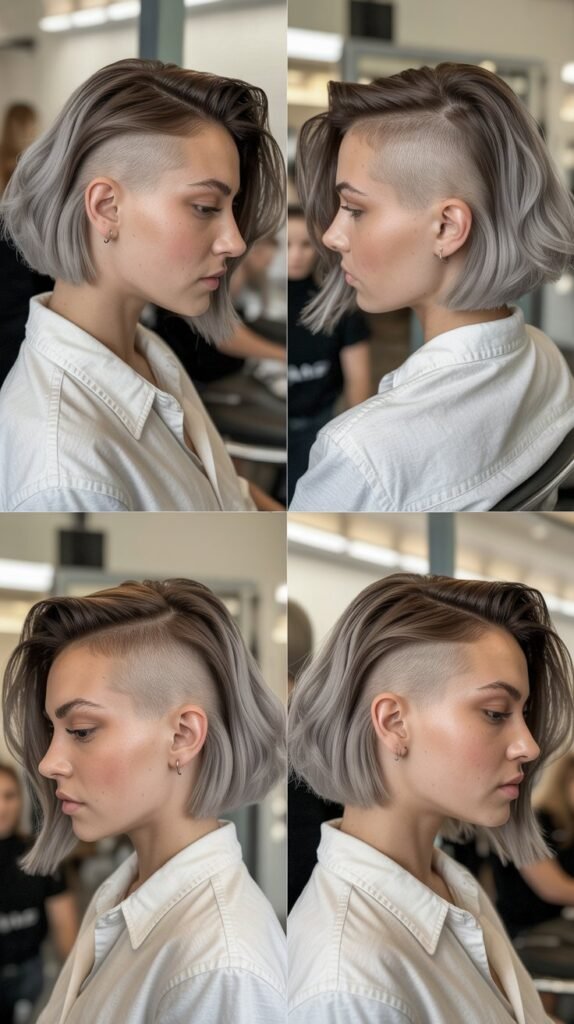
A bob with an undercut features shaved or very short hair underneath longer top layers.
This edgy style removes weight from the bottom, allowing top layers to achieve maximum volume and lift.
Undercut Advantages:
- Removes excess weight that pulls fine hair down
- Creates dramatic volume at the top layers
- The hidden undercut is a subtle style surprise
- Reduces overall hair density, making styling easier
Undercut Placement:
- Nape undercuts remove hair at the back of the neck
- Side undercuts create asymmetrical interest
- Full undercuts circle the entire perimeter
- The amount of hair shaved can be customized
Commitment Level:
- Growing out an undercut takes several months
- Requires maintenance every 3-4 weeks to keep clean
- Can be hidden when hair is down
- Offers an edgy option without fully committing to an extreme cut
14. The Rounded Bob
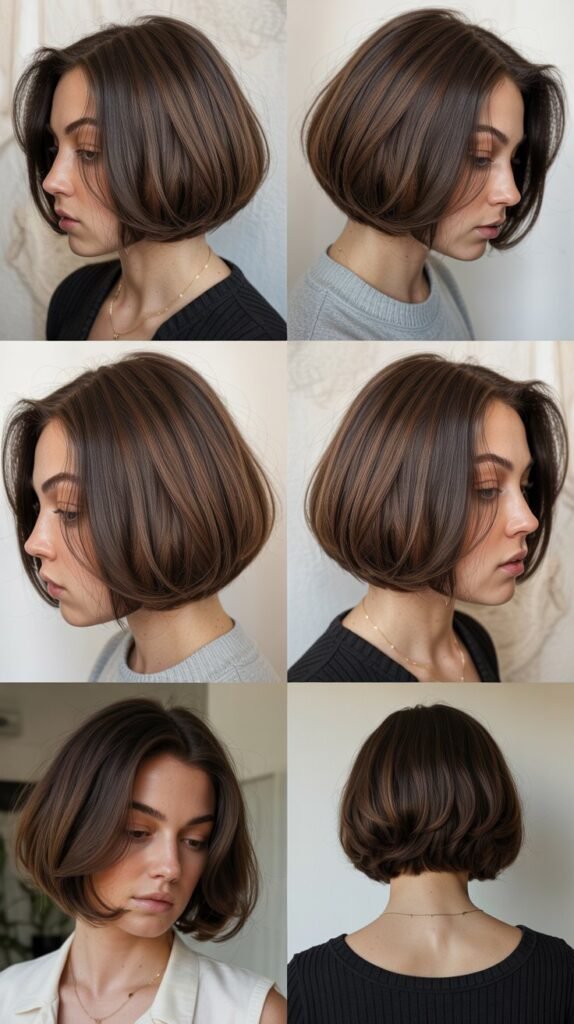
A rounded bob creates a circular silhouette around the head, with the hair shaped into a soft, domed shape.
This cut naturally creates volume through its rounded geometry and is flattering from every angle.
Architectural Volume:
- The rounded shape naturally stands away from the head
- The geometry creates automatic volume without products
- The dome shape distributes volume evenly around the entire head
- No flat spots or areas where scalp shows through
Cutting Technique:
- Stylists use point-cutting and slide-cutting to create the rounded shape
- Layers are subtly graduated to build the dome
- The perimeter follows a curved line from all angles
- Interior texturizing removes weight while maintaining shape
Ideal Candidates:
- Works beautifully on straight to slightly wavy fine hair
- Best for those who prefer a feminine, soft silhouette
- Complements round, oval, and heart-shaped faces
- Requires regular trims to maintain the precise rounded shape
15. The Piecey Bob
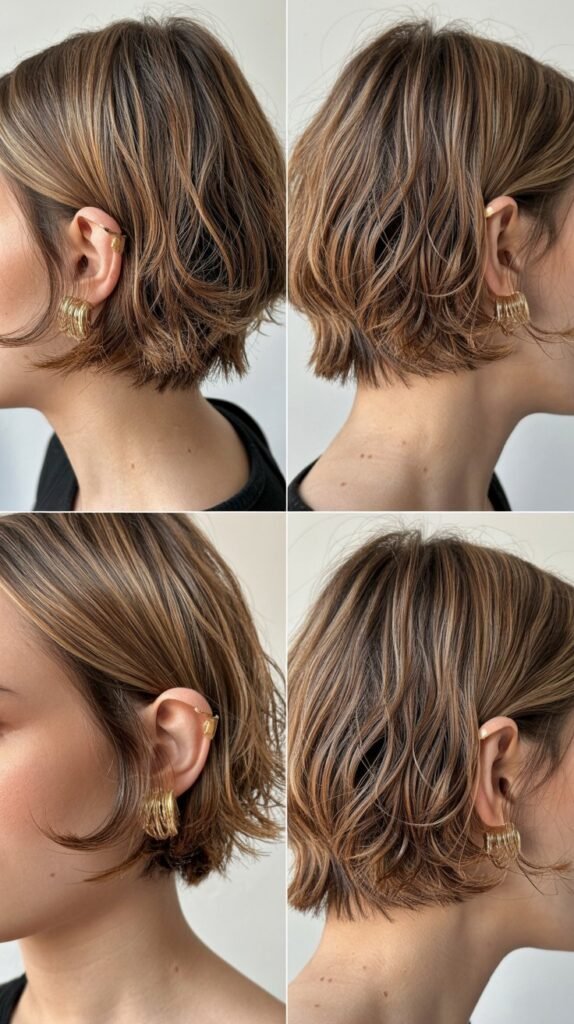
A piecey bob features heavily texturized ends that separate into distinct pieces rather than lying flat together.
This technique is excellent for fine hair because it creates the illusion of more individual strands and prevents clumping.
Texturizing Techniques:
- Point-cutting creates irregular, jagged ends
- Razor cutting produces feathered, separated pieces
- Thinning shears remove interior bulk while maintaining perimeter density
- Slide-cutting adds texture throughout the cut
Product Requirements:
- Texturizing paste separates pieces and adds definition
- Pomade creates piecey separation with shine
- Dry texture spray adds gritty texture and hold
- Lightweight wax defines individual pieces without heaviness
Styling Methods:
- Apply product to damp hair and scrunch while drying
- Use fingers to separate and define individual pieces
- Twist small sections while blow-drying for more definition
- Finish by manually separating pieces for the desired look
16. The Soft Layered Bob
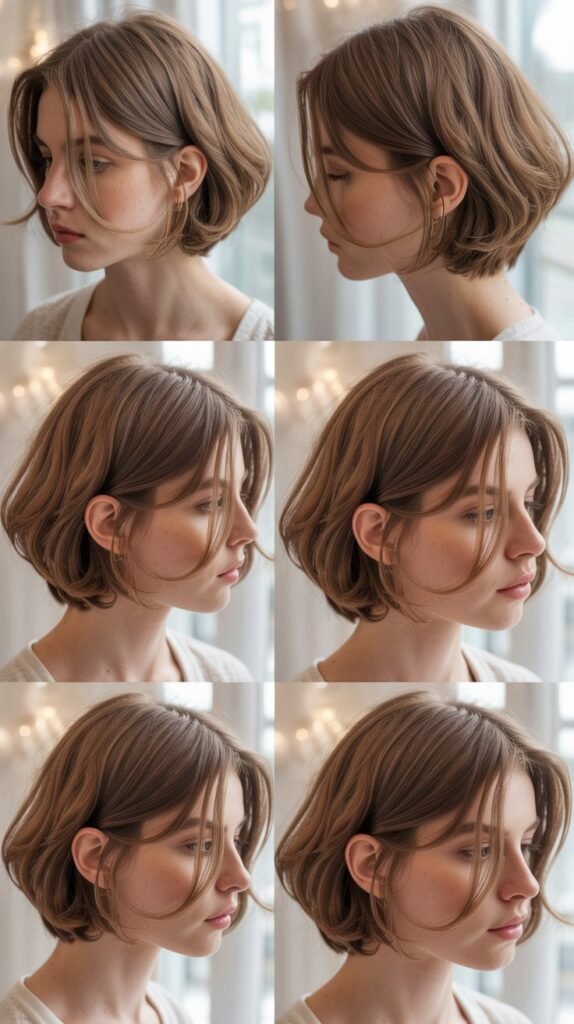
A soft layered bob features gentle, blended layers that create subtle movement without removing too much density.
This approach is perfect for fine hair because it adds dimension while maintaining maximum fullness.
Gentle Layer Strategy:
- Layers are long and subtle, blending seamlessly
- The difference between layers is minimal, typically 1-2 inches maximum
- Layers begin below the ears to maintain density at the crown
- The perimeter remains heavy to create the illusion of thickness
Face-Framing Elements:
- Soft layers around the face create gentle movement
- Face-framing pieces can be slightly shorter to highlight features
- Layers are cut with a slight forward angle to complement facial structure
- The softness prevents harsh lines or choppy texture
Styling for Softness:
- Use a large round brush to create gentle curves in the layers
- Blow-dry in a forward direction for face-framing movement
- Add loose waves with a large-barrel curling iron
- Finish with a light-hold hairspray to maintain the soft movement
17. The Graduated Bob
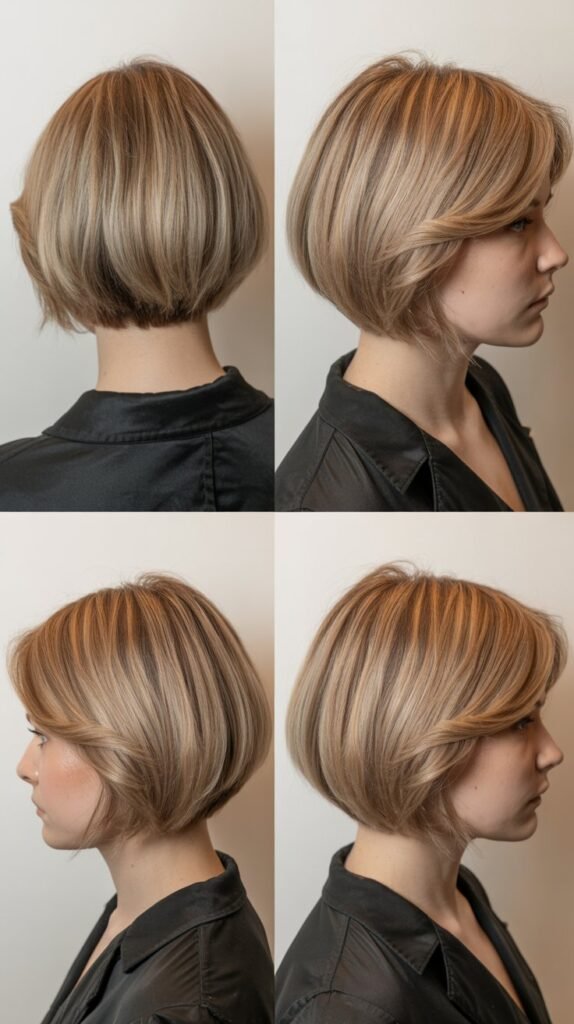
A graduated bob features stacked layers in the back that create a graduated, angled effect when viewed from the side.
This technical cut is engineered to create maximum volume where fine hair needs it most.
Graduation Explained:
- Hair is cut shorter in the back with increasing length toward the front
- Each layer graduates or “steps” to create an angled effect
- The graduation creates automatic volume through the back sections
- The technique removes weight from underneath while maintaining surface density
Technical Benefits:
- The graduated layers naturally lift away from the scalp
- The stacking effect multiplies the appearance of volume
- The angular shape is modern and sophisticated
- The cut holds its shape well between salon visits
Professional Execution:
- This cut requires precise sectioning and elevation
- A skilled stylist is essential for proper graduation
- The angle and degree of graduation can be customized
- Works best on straight to slightly wavy fine hair
18. The Wavy Bob
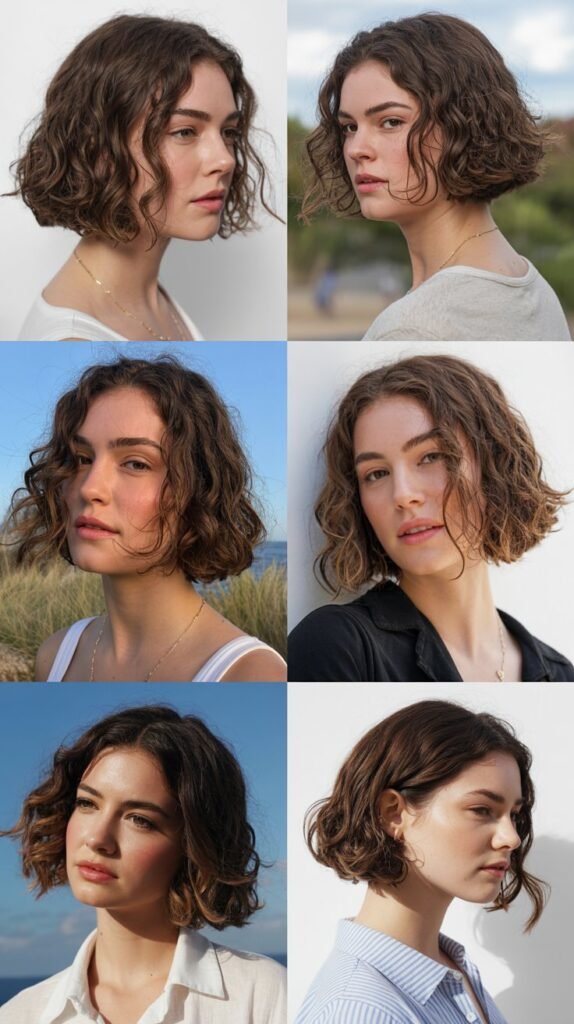
A wavy bob is cut to work with natural or styled waves, creating volume and texture that makes fine hair appear significantly fuller.
The cut accommodates wave patterns while creating a shapely silhouette.
Cut for Waves:
- The cut accounts for how waves will spring up and shorten the appearance
- Layers work with wave patterns to enhance natural texture
- The perimeter is cut slightly longer to accommodate wave contraction
- Interior layers remove weight to allow waves to form freely
Creating Waves:
- Sea salt spray enhances natural waves and adds texture
- Curling wands create loose, undone waves
- Braiding damp hair overnight produces natural-looking waves
- Diffusing naturally wavy hair amplifies existing texture
Wave Maintenance:
- Refresh waves with a light mist of water and product
- Sleep with hair in a loose bun to preserve waves
- Use a wide-tooth comb to gently separate waves, never a brush
- Apply a curl-enhancing cream to damp hair before styling
19. The Micro Bob
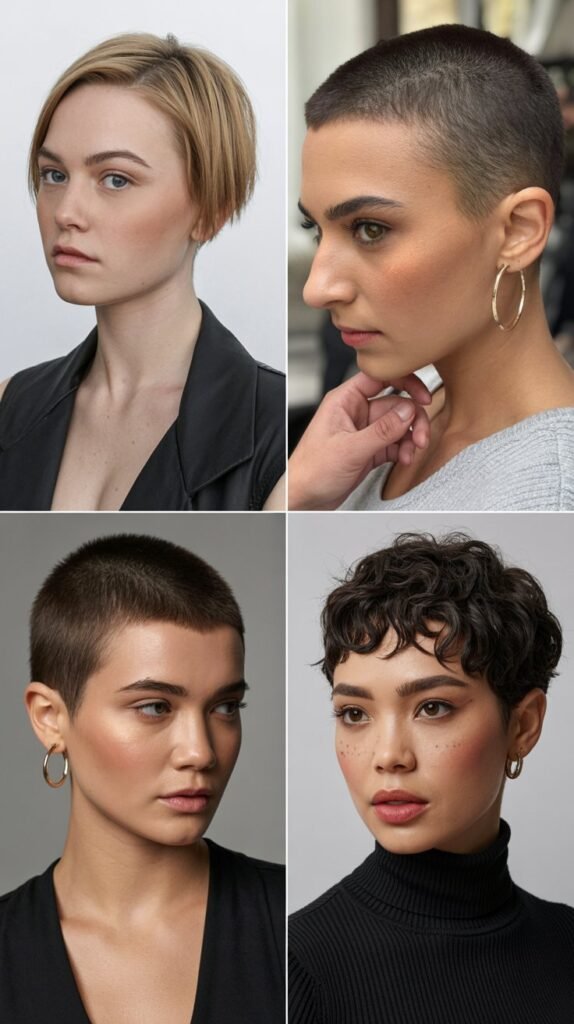
The micro bob is an ultra-short version that sits high on the neck, often above the ears.
While this might seem counterintuitive for fine hair, the extreme shortness actually creates the illusion of density by concentrating hair in a smaller area.
Ultra-Short Benefits:
- Extreme shortness makes fine hair appear thicker and denser
- Less hair to weigh itself down means maximum volume
- The bold, dramatic shape distracts from hair texture concerns
- Minimal styling required due to the short length
Styling Simplicity:
- Quick blow-dry with fingers creates instant texture
- A small amount of pomade adds definition and separation
- The short length air-dries quickly with minimal fuss
- Works well with both sleek and textured styling
Bold Statement:
- This cut requires confidence and commitment
- Growing out takes patience and multiple transitional cuts
- Best for those with strong facial features
- Makes a dramatic style statement
20. The Side-Parted Bob
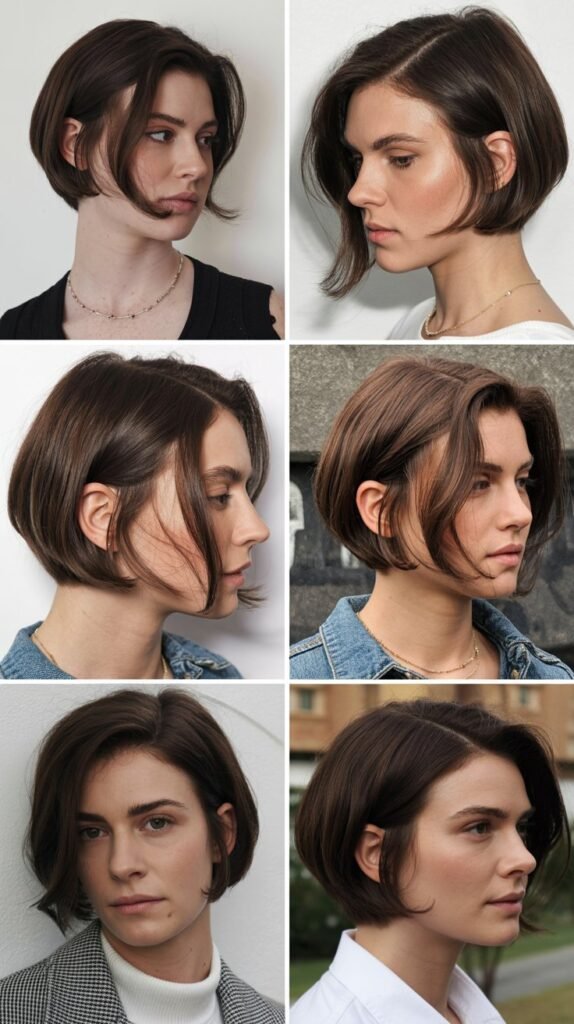
A side-parted bob creates instant volume by positioning hair off-center, allowing one side to sweep dramatically across the head.
The deep side part is a simple but effective trick for making fine hair appear fuller.
Part Placement Power:
- A deep side part creates instant height at the roots on the fuller side
- The dramatic sweep across the forehead adds width and volume
- Changing your part line lifts roots in new directions
- The asymmetry creates visual interest and dimension
Volume Maximization:
- Roots stand up naturally when parted in an unaccustomed direction
- The heavier side gains automatic lift and body
- The shorter side can be tucked behind the ear for contrast
- Teasing at the part line amplifies volume even more
Styling Techniques:
- Create the part while hair is damp for maximum hold
- Blow-dry the heavier side up and over for volume
- Use volumizing powder at the part line
- Set with hairspray to maintain the height throughout the day
21. The Textured Lob
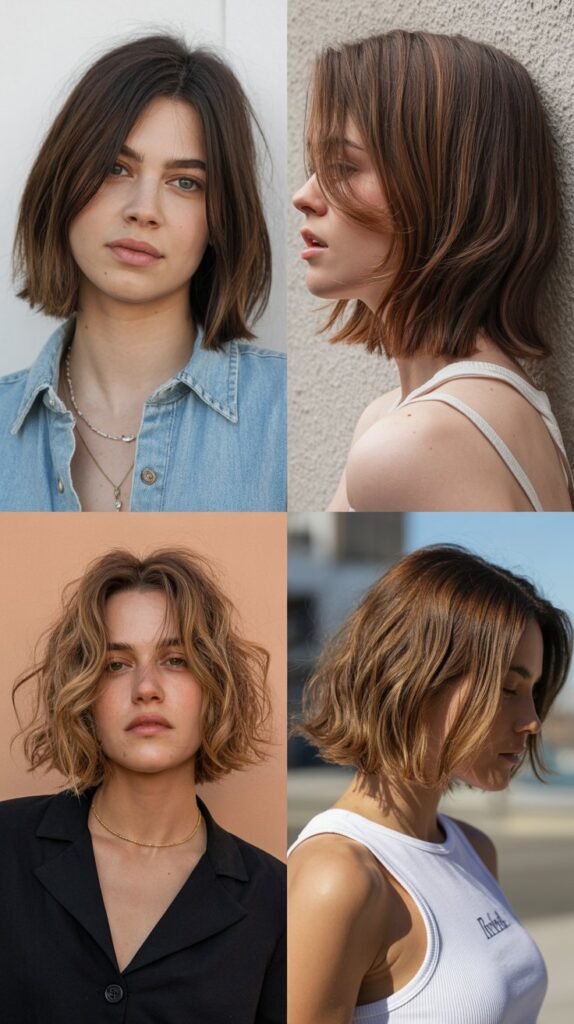
The textured lob combines the length of a long bob with heavily textured, piecey ends.
This style is perfect for fine hair because the texture prevents hair from looking limp while the length provides styling versatility.
Texture Techniques:
- Point-cutting creates separated, irregular ends
- Internal texturizing removes weight without sacrificing length
- Surface texturizing adds gritty texture to visible layers
- The combination creates movement and dimension
Length + Texture:
- The longer length provides more styling options than shorter bobs
- Texture prevents the length from looking thin and stringy
- The piecey ends create the illusion of more individual strands
- Movement and separation add visual volume
Beach-Inspired Styling:
- Sea salt spray creates tousled, textured waves
- Braid damp hair for effortless texture
- Curl random sections in different directions for undone waves
- Scrunch styling products into damp hair for natural texture
22. The Stacked Angled Bob
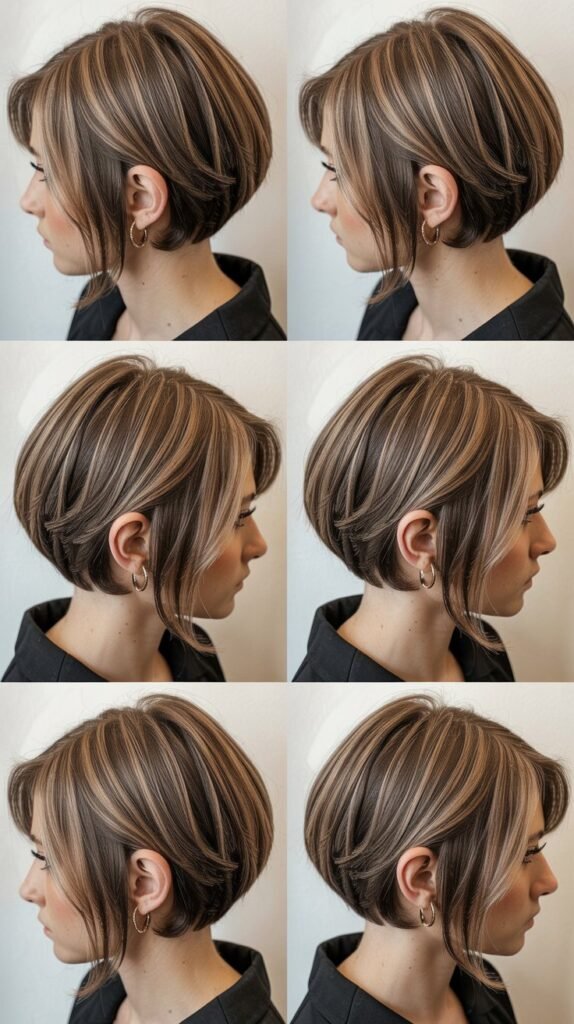
A stacked angled bob combines two powerful techniques: stacking in the back for volume and angling from short to long for visual interest.
This hybrid cut maximizes both height and dimension for fine hair.
Double Impact:
- Stacking at the back creates automatic volume and lift
- The angle draws the eye along the diagonal line
- The combination creates both height and length
- Maximum visual interest from every angle
Customization Options:
- The degree of stacking can be adjusted based on desired volume
- The angle can be subtle or dramatic
- The nape can be tapered or left fuller
- Face-framing pieces can be customized to suit features
Maintenance Needs:
- Requires trims every 5-6 weeks to maintain shape
- The back needs more frequent attention than the front
- Regular blow-drying maintains the volume and shape
- Invest in quality styling tools for best results
23. The Razored Bob
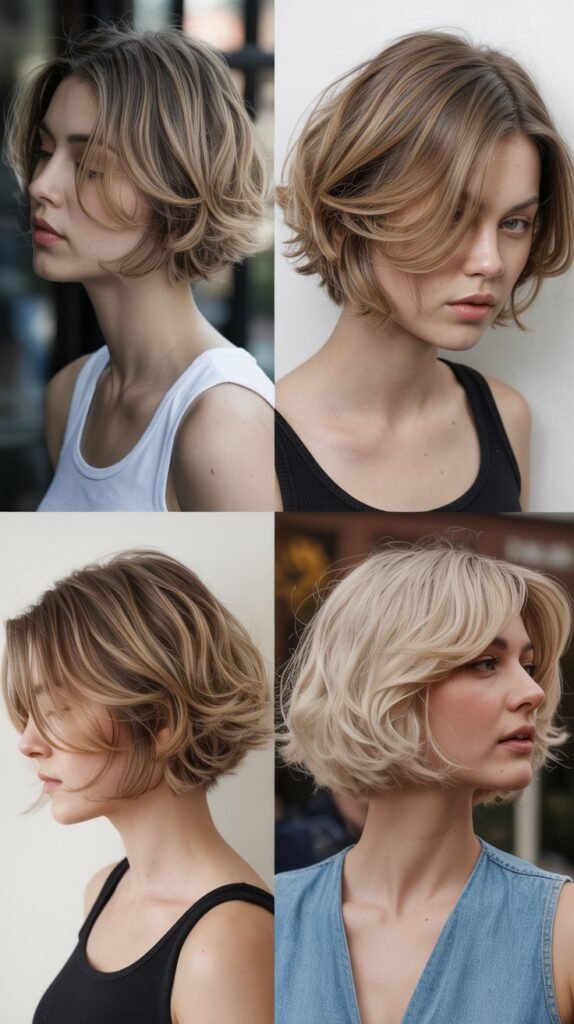
A razored bob is cut entirely or partially with a razor rather than scissors, creating ultra-soft, feathered ends that add movement and texture.
This technique is particularly effective for fine hair when executed by a skilled stylist.
Razor Cutting Benefits:
- Creates softer, more textured ends than scissor cutting
- The razor naturally thins and texturizes in one motion
- Feathered ends separate beautifully and prevent blunt heaviness
- The technique adds movement throughout the cut
Cautions for Fine Hair:
- Over-razoring can make fine hair too wispy and thin
- Only skilled stylists should use razors on fine hair
- Razoring should be strategic, not excessive
- The technique works best on the ends and surface layers
Styling the Razor Cut:
- The soft ends respond well to minimal styling
- Air-drying with texture spray creates effortless movement
- Light products prevent weighing down the feathered ends
- The textured ends make styling mistakes less noticeable
24. The Center-Parted Bob
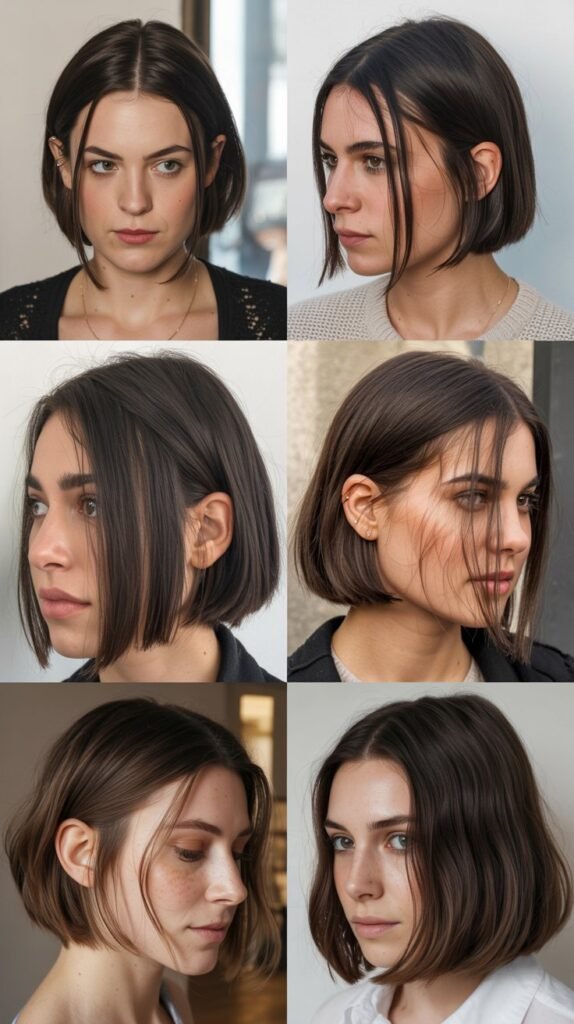
A center-parted bob creates symmetry and balance while offering a different volumizing approach than a side part.
The center part works well for fine hair when combined with the right cutting techniques.
Symmetrical Appeal:
- Center parts create a balanced, classic look
- Works beautifully with symmetrical face shapes
- The equal distribution of hair on both sides creates uniform volume
- Face-framing pieces mirror each other perfectly
Volume Strategies:
- Tease the crown area gently for lift at the center
- Use volumizing products at the roots on both sides equally
- Blow-dry forward and then back to create lift at the part
- Style with slight inward curves to prevent flatness
Face Shape Considerations:
- Best for oval, heart, and diamond face shapes
- Long faces benefit from a more textured, voluminous center part
- Round faces should add height at the crown to elongate
- Combine with layers or texture to prevent a severe look
25. The Tousled Bob
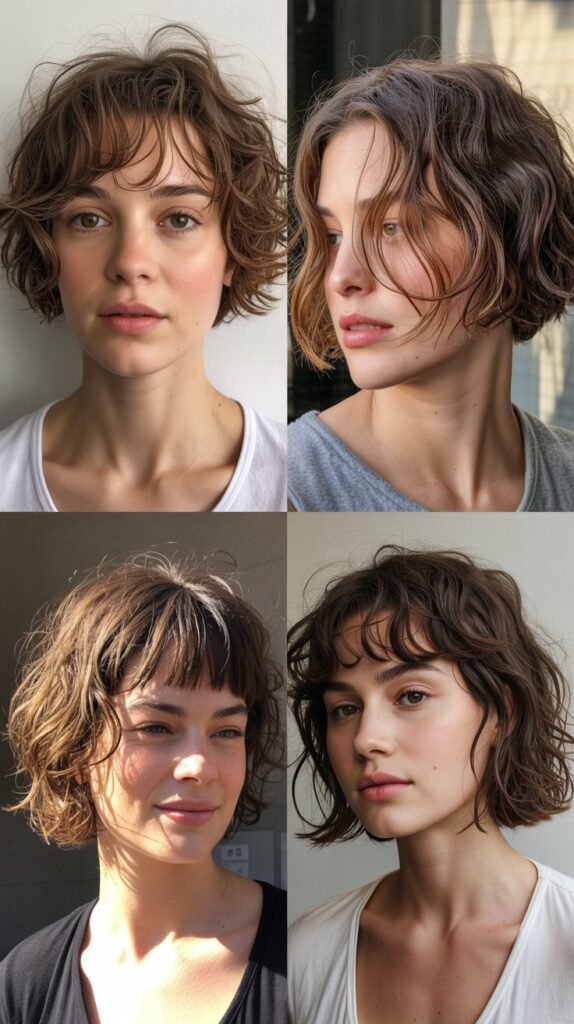
The tousled bob embraces an undone, bedhead aesthetic that’s actually carefully crafted.
This style works wonderfully for fine hair because the intentional messiness disguises any natural thinness or limpness.
Intentionally Undone:
- The messy texture creates volume through random directional movement
- Imperfection is the goal, making fine hair concerns irrelevant
- The tousled look adds width and dimension
- The casual vibe is modern and youthful
Creating Tousled Texture:
- Apply texturizing spray to damp hair
- Scrunch hair while blow-drying with a diffuser
- Use a curling wand to add random waves in various directions
- Finish by running fingers through hair to break up the waves
Product Selection:
- Dry texture spray adds gritty, voluminous texture
- Sea salt spray creates beachy, tousled waves
- Lightweight mousse provides hold without crunchiness
- Avoid heavy creams or oils that will flatten the tousled effect
26. The Bob with Highlights
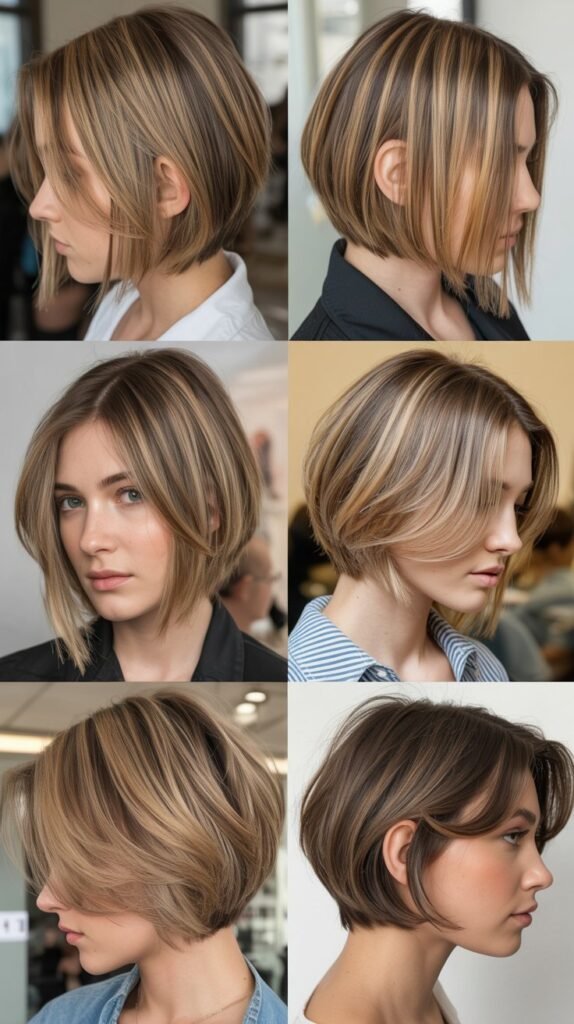
Adding highlights to a bob creates dimension and depth that makes fine hair appear significantly thicker.
Strategic color placement can transform flat, one-dimensional fine hair into a multifaceted, voluminous style.
Color and Volume:
- Highlights create visual depth and dimension
- The contrast between light and dark shades mimics shadows and adds perceived thickness
- Multiple tones break up the flat appearance of fine hair
- Strategic placement can create the illusion of fuller areas
Highlight Techniques:
- Balayage creates natural-looking, sun-kissed dimension
- Traditional foil highlights provide more dramatic contrast
- Face-framing highlights draw attention to facial features
- Root shadowing adds depth at the scalp for more dimension
Color Maintenance:
- Fine hair may require gentler lightening processes
- Use bond-building treatments to maintain hair health
- Purple shampoo prevents brassiness in blonde highlights
- Regular toning keeps colors vibrant and dimensional
27. The Classic Bob with Root Lift
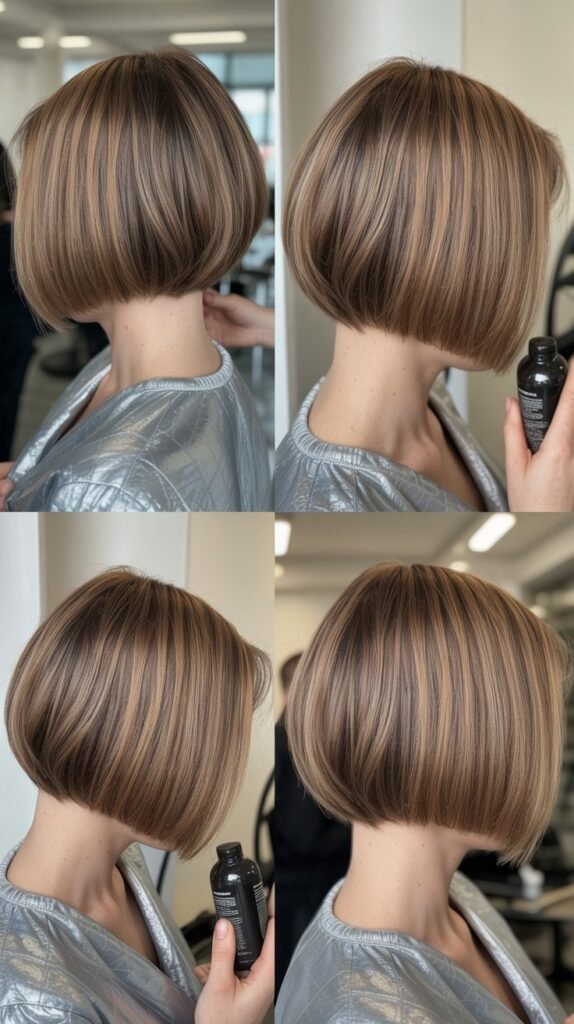
The classic bob with root lift focuses on volumizing techniques at the roots while maintaining a traditional bob shape.
This approach is all about the styling rather than the cutting, making it perfect for those who want volume without a dramatic cut.
Root-Lifting Techniques:
- Volumizing powder applied directly at the roots creates instant lift
- Teasing or backcombing the crown area adds height
- Blow-drying roots in the opposite direction of how they naturally grow creates lift
- Velcro rollers at the crown add volume while you finish your routine
Product Arsenal:
- Volumizing mousse applied to damp roots before drying
- Root-lifting spray provides targeted volume where needed
- Dry shampoo at the roots adds texture and absorbs oils
- Finishing spray holds the lifted roots in place all day
Styling Routine:
- Apply volumizing products to towel-dried roots
- Blow-dry roots in sections, lifting hair up and away from scalp
- Use a round brush to create volume at the crown
- Set with cool air to lock in the volume
- Finish with volumizing powder for extra lasting lift
Long-Term Volume Solutions:
- Consider a perm at the roots only for semi-permanent lift
- Volumizing treatments at salons can provide lasting body
- Regular trims prevent weight from pulling roots flat
- Sleep with hair in a loose topknot to maintain root volume
Conclusion
Finding the perfect style from these 27 Flattering Short Bob Haircuts for Fine Thin Hair can completely transform how you feel about your hair and yourself.
Each of these carefully selected cuts offers unique solutions to the challenges that fine, thin hair presents, from strategic layering that creates the illusion of thickness to architectural shapes that build automatic volume into every strand.
The key to success lies in choosing a cut that aligns with your lifestyle, styling abilities, and personal aesthetic while working with your hair’s natural characteristics rather than against them.
Remember that fine hair isn’t a limitation but rather an opportunity to explore styles that showcase precision cutting, beautiful movement, and effortless elegance.
With the right cut from this comprehensive collection, combined with proper styling techniques and products specifically designed for fine hair, you can achieve the full, voluminous bob you’ve always dreamed of having.
Take these ideas to a skilled stylist who understands fine hair, communicate your goals clearly, and prepare to fall in love with your hair all over again as you discover just how beautiful and versatile fine, thin hair can truly be.
