Have you been struggling with flat, lifeless hair that refuses to hold any body or movement? Medium-length hair offers the perfect canvas for creating dimension and volume through strategic layering techniques.
Whether you have fine hair that needs a boost or thick hair that requires texture and shape, the right layered cut can transform your look completely.
Layering removes bulk where needed while adding fullness in all the right places, giving you that effortlessly voluminous style you’ve been dreaming about.
This comprehensive guide explores 30 Layered Hairstyles for Medium-Length Hair That Create Natural Volume, from subtle face-framing layers to dramatic cascading cuts that make a statement.
You’ll discover how different layering techniques work with various hair textures, face shapes, and personal styles to deliver maximum volume and movement.
Get ready to say goodbye to flat hair and hello to gorgeous, bouncy locks that turn heads everywhere you go.
1. Classic Face-Framing Layers
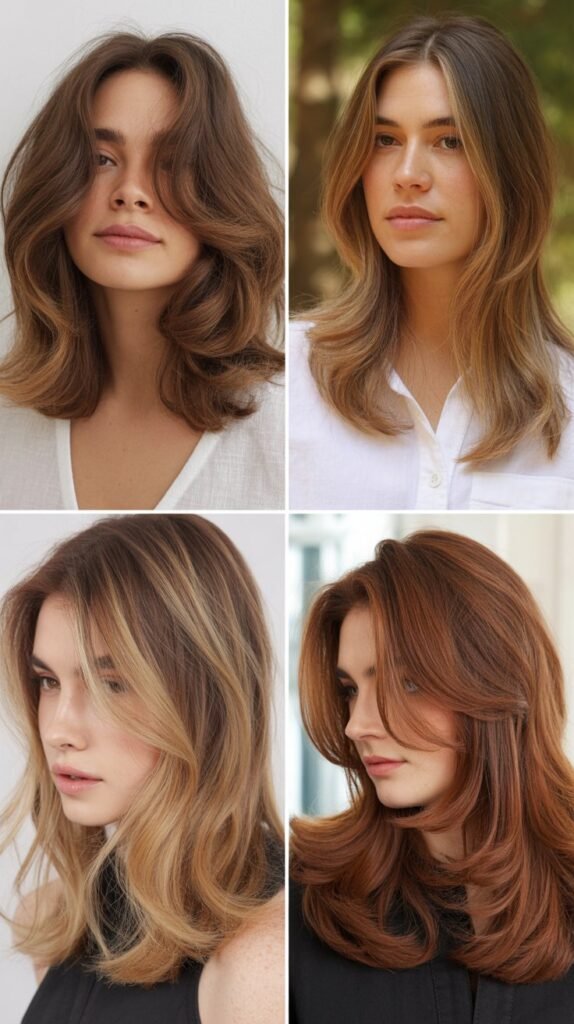
Face-framing layers start at your cheekbones or chin and gradually blend into your medium-length hair, creating a soft halo effect around your face.
This timeless technique adds instant dimension while drawing attention to your best features.
Key Benefits:
- Face-framing layers soften angular features and create a flattering silhouette that works with virtually any face shape.
- The shorter pieces at the front naturally lift away from your face, creating an illusion of fullness and movement.
- This style requires minimal maintenance and grows out gracefully without looking awkward during the growing-out phase.
- You can style these layers straight for a sleek look or with waves for added texture and volume.
Styling Tips:
- Use a round brush when blow-drying the front layers, rolling them away from your face for maximum lift.
- Apply a lightweight mousse to damp hair before styling to enhance volume without weighing down the layers.
- Finish with a texturizing spray to separate the layers and create a piecey, dimensional effect.
2. Long Choppy Layers
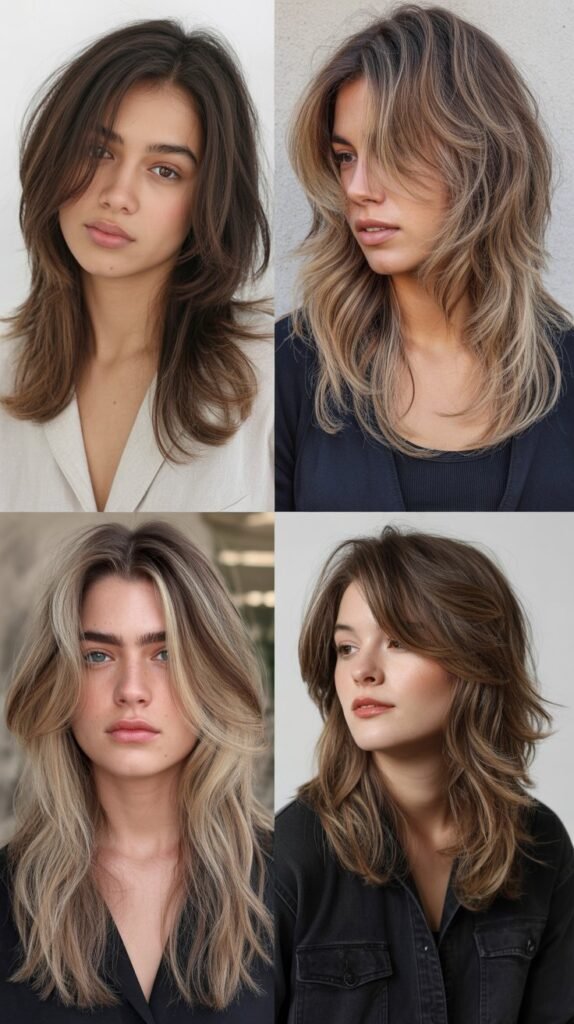
Long choppy layers feature more dramatic length variations throughout your hair, creating a bold, edgy aesthetic with plenty of movement.
This technique works exceptionally well for adding volume to thick hair by removing weight while maintaining length.
Characteristics:
- The “choppy” effect comes from cutting layers at different lengths with more noticeable separation between each layer.
- This style creates a lived-in, effortlessly cool vibe that’s perfect for modern, low-maintenance looks.
- Choppy layers work particularly well with wavy or curly hair textures, enhancing natural curl patterns.
- The intentional unevenness adds visual interest and prevents hair from looking too uniform or flat.
Maintenance Considerations:
- Regular trims every 6-8 weeks help maintain the choppy texture and prevent the layers from growing out unevenly.
- Use a sea salt spray or texturizing product to enhance the piecey, separated appearance of the layers.
- This style is incredibly versatile and looks great air-dried for a casual look or styled with heat tools for more polish.
3. Soft Graduated Layers
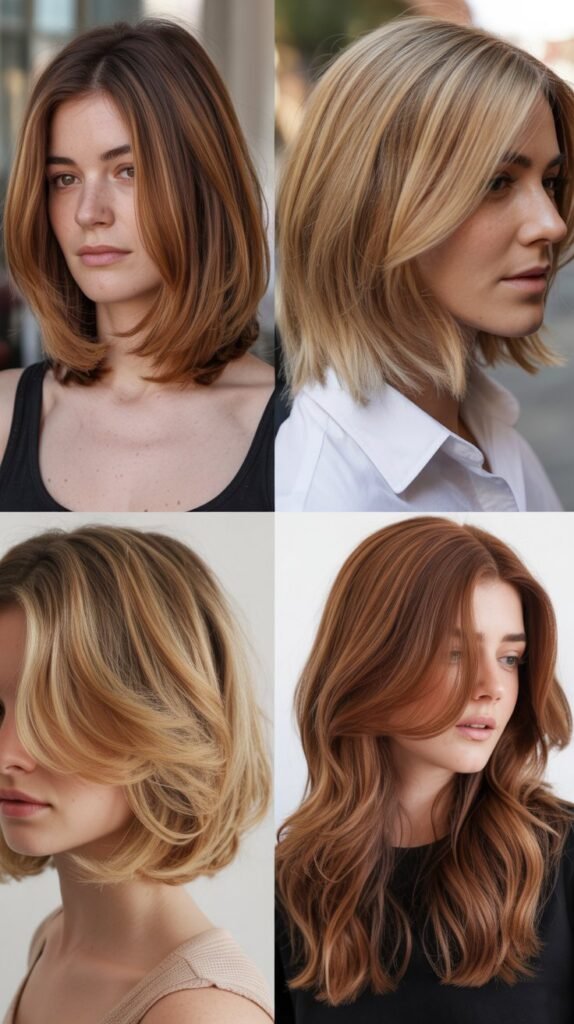
Soft graduated layers create a gentle, cascading effect where each layer smoothly transitions into the next without harsh lines.
This sophisticated approach delivers volume while maintaining a polished, elegant appearance.
What Makes It Special:
- The gradual progression of layers creates a waterfall effect that adds dimension without looking overly cut or structured.
- This technique is ideal for professional environments where you need volume but want to maintain a refined appearance.
- Soft graduated layers work beautifully with highlights or balayage, as the layering showcases color dimension.
- The seamless blending prevents any choppy or disconnected sections, resulting in a cohesive, flowing style.
Best Hair Types:
- Fine to medium hair textures benefit most from this layering technique, as it creates fullness without removing too much weight.
- Straight to slightly wavy hair shows off the graduated effect most clearly.
- Those with naturally thin hair will appreciate how this cut creates the illusion of thickness and body.
4. Shaggy Layered Bob

The shaggy layered bob combines the structure of a bob with the texture and volume of heavy layering throughout.
This retro-inspired style has made a major comeback and delivers serious volume and personality.
Style Elements:
- Multiple layers throughout the cut create a deliberately messy, undone texture that’s full of volume.
- The bob length keeps hair at shoulder level or slightly above, which is perfect for medium-length hair.
- Bangs or fringe often accompany this style, adding to the shaggy, carefree aesthetic.
- The layers are typically concentrated around the crown and throughout the body of the hair for maximum fullness.
Styling Approach:
- Blow-dry with your head flipped upside down to maximize root volume and create that signature shaggy texture.
- Use a flat iron or curling iron to add bends and waves throughout, emphasizing the layered structure.
- Finish with a dry texturizing spray or powder at the roots for extra lift and separation.
- This style embraces imperfection, so don’t worry about making it look too polished or perfect.
5. Textured Razored Layers
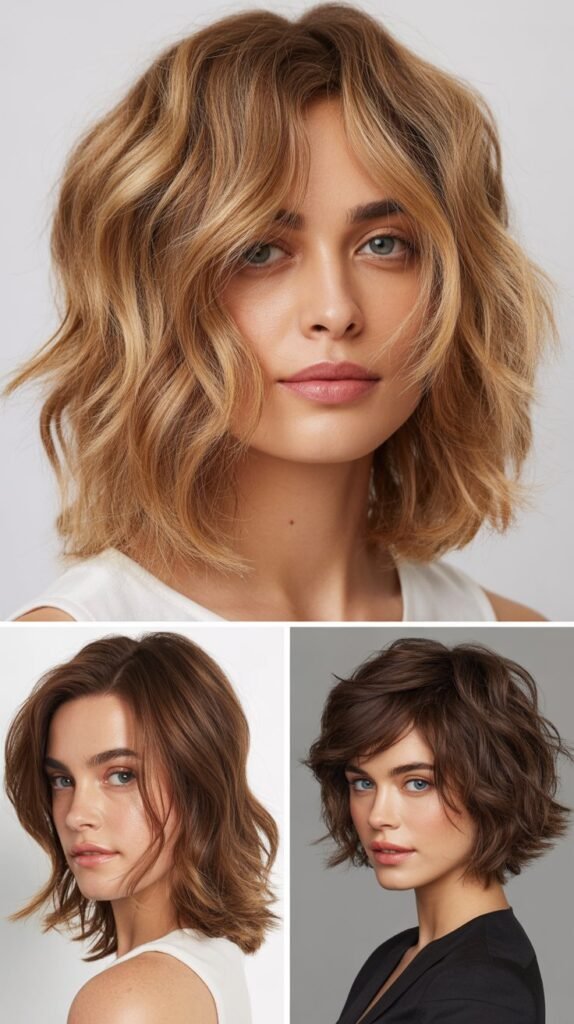
Textured razored layers are created using a razor cutting tool rather than shears, resulting in softer, feathered edges that blend seamlessly together.
This technique produces exceptional movement and natural-looking volume.
Razor Cutting Benefits:
- The razor creates a softer, more diffused edge compared to traditional shear cutting, resulting in lighter, airier layers.
- This technique is particularly effective for removing bulk from thick hair without creating harsh lines.
- Razored layers move more freely and naturally, creating that coveted “I woke up like this” appearance.
- The feathered ends catch light beautifully, enhancing the dimensional effect of the layers.
Important Considerations:
- Razored layers work best on straight to wavy hair; very curly hair may become too frizzy with this technique.
- Regular conditioning treatments are essential, as razored ends can be more prone to dryness than blunt-cut ends.
- Avoid heat styling tools on the highest settings to prevent damage to the delicate razored ends.
6. V-Shaped Layered Cut
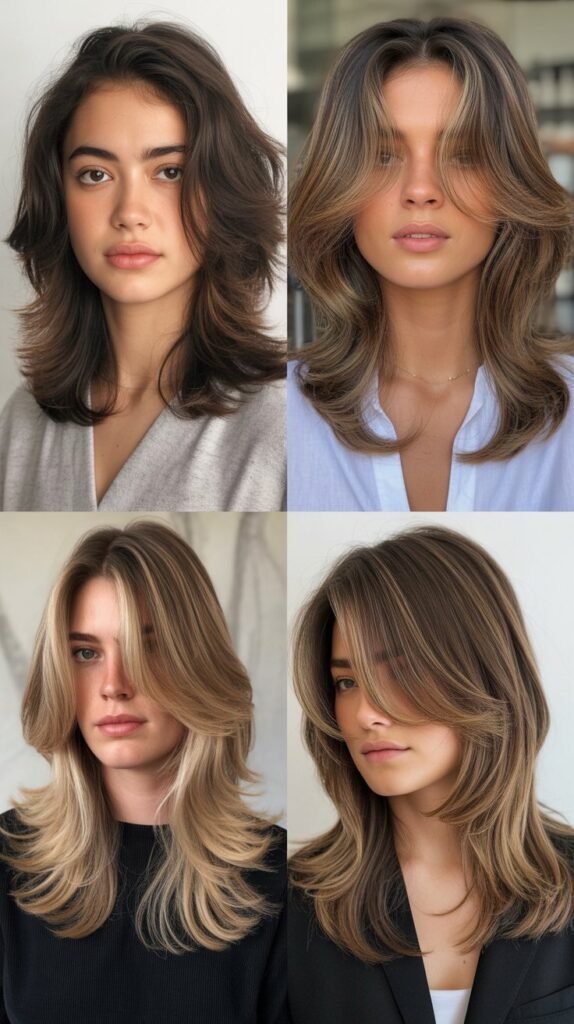
The V-shaped layered cut features layers that form a V shape when viewed from the back, with the longest point at the center back and gradually shorter pieces toward the front.
This creates dramatic volume and a striking silhouette.
Structural Design:
- The V shape creates natural movement as the layers fall and stack upon each other in a cascading pattern.
- This cut is excellent for adding width and fullness to the sides while maintaining length in the back.
- The angled layers prevent hair from looking bottom-heavy or triangular, which is common with one-length cuts.
- Face-framing pieces are typically incorporated to complement the V-shaped back layers.
Ideal Candidates:
- Those with fine or thin hair will love how this cut creates the illusion of thickness and density.
- Round or square face shapes benefit from the elongating effect of the V shape.
- If you want to maintain length while adding volume and movement, this cut offers the best of both worlds.
7. Layered Lob with Swoopy Bangs
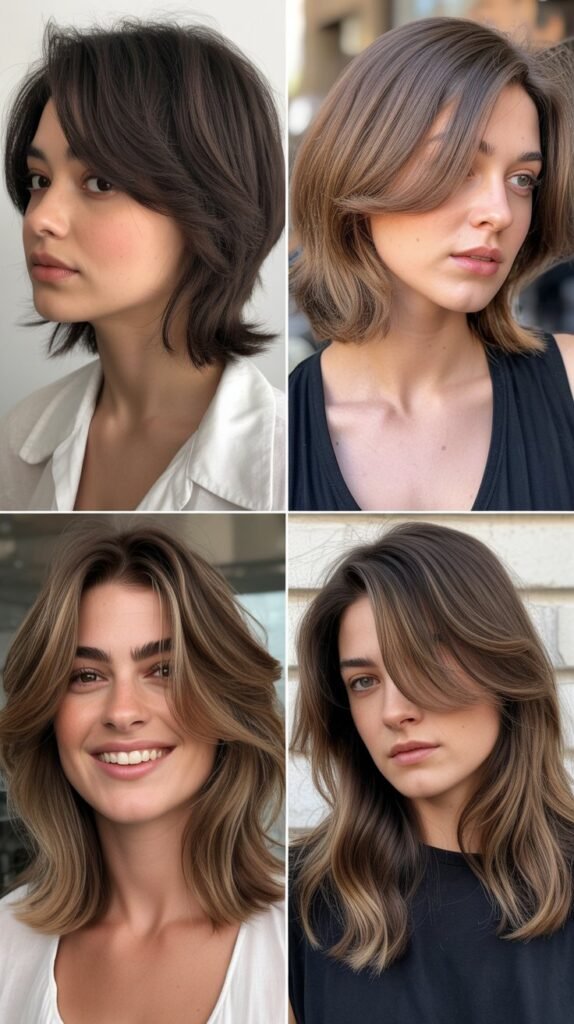
The layered lob (long bob) combined with swoopy bangs creates a youthful, voluminous look that frames the face beautifully.
This style has become incredibly popular for its versatility and flattering nature.
Components of the Style:
- The lob length typically falls between the chin and shoulders, which is ideal for medium-length hair.
- Layers throughout add body and prevent the blunt bob from looking too heavy or severe.
- Swoopy bangs (side-swept or curtain bangs) soften the forehead and add movement around the face.
- This combination creates natural volume at the crown while maintaining a modern, chic appearance.
Styling Versatility:
- The lob length is long enough to pull back into a small ponytail or bun when desired.
- You can style it straight for a sleek look, wavy for texture, or with vintage-inspired curls.
- The swoopy bangs can be styled in multiple directions depending on your mood or occasion.
- This cut transitions well through different seasons and styling trends.
8. Stacked Layers at the Crown
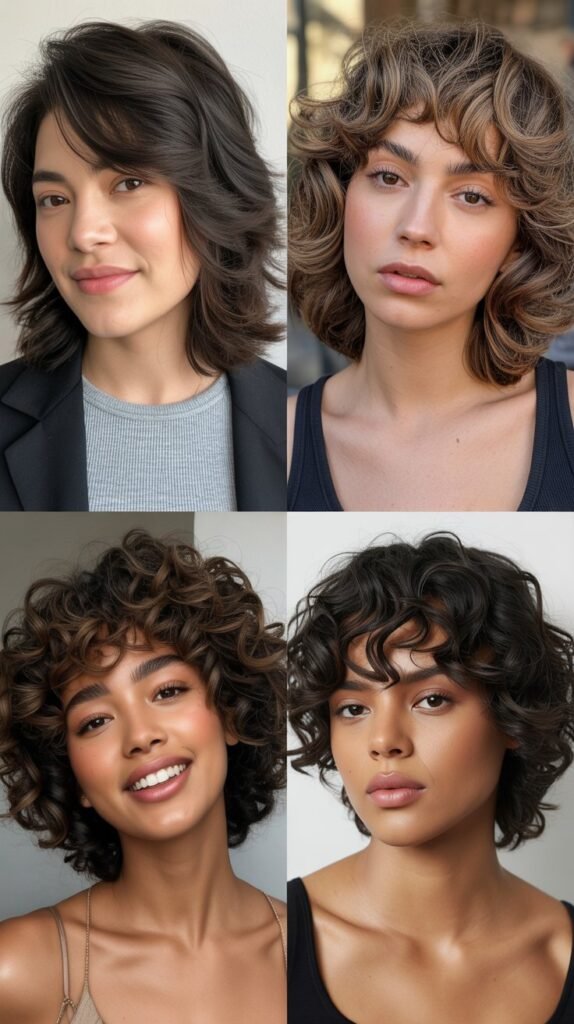
Stacked layers concentrated at the crown of your head create maximum volume at the top while maintaining length throughout the rest of your hair.
This technique is perfect for lifting flat roots and adding height.
Technical Aspects:
- Shorter layers are concentrated at the crown area and gradually blend into longer layers throughout the rest of the hair.
- This creates a stacked effect where each layer sits on top of the previous one, building volume upward.
- The technique is especially effective for those with flat hair that lacks natural root lift.
- Proper blending is crucial to avoid a disconnected or “shelf-like” appearance between the short and long sections.
Volume Enhancement:
- Blow-dry the crown layers upward and backward with a round brush to maximize the stacking effect.
- Use a root-lifting spray or powder at the crown before styling for extra height.
- Lightly tease the crown layers for special occasions when you want dramatic volume.
- The stacked layers maintain volume even as your hair grows out, extending the life of your cut.
9. Feathered Layers with Side Part
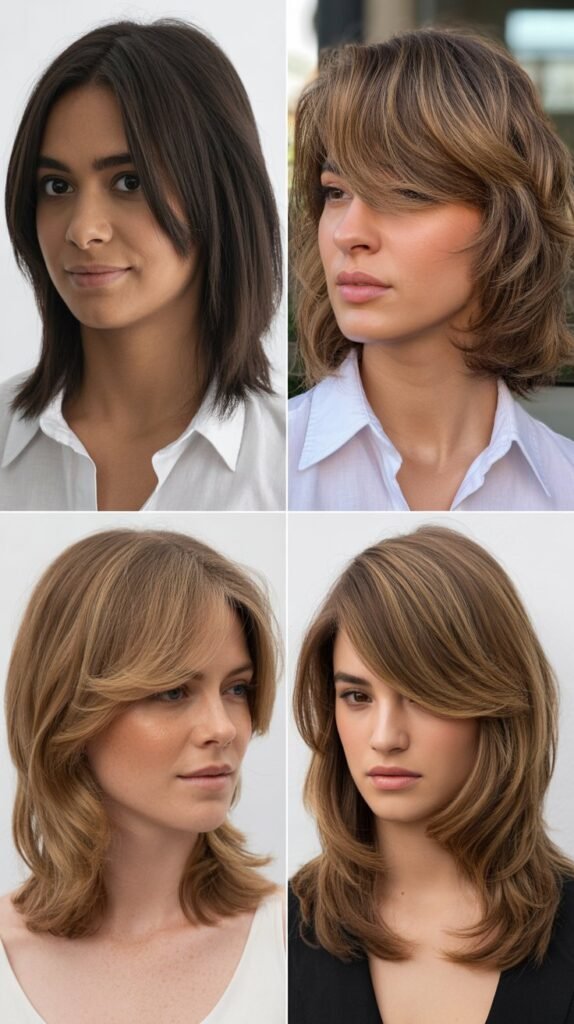
Feathered layers with a deep side part create a romantic, flowing style reminiscent of 1970s glamour but updated for modern sensibilities.
This combination adds both volume and sophisticated movement.
Styling Characteristics:
- Feathered layers are cut and styled to flip outward at the ends, creating a light, airy appearance.
- The deep side part adds instant volume to one side while creating an asymmetrical, face-flattering shape.
- This style works exceptionally well with highlights, as the feathered layers showcase dimensional color.
- The feathering technique creates softness around the face and prevents harsh lines.
Achieving the Look:
- Use a paddle brush or round brush to blow-dry hair away from the part, encouraging natural volume.
- The side with more hair will naturally have more volume due to the weight distribution.
- Apply a smoothing cream to damp hair before styling to enhance the feathered effect without frizz.
- Finish with a light-hold hairspray to maintain the style without making it stiff or crunchy.
10. Layered Cut with Internal Layers
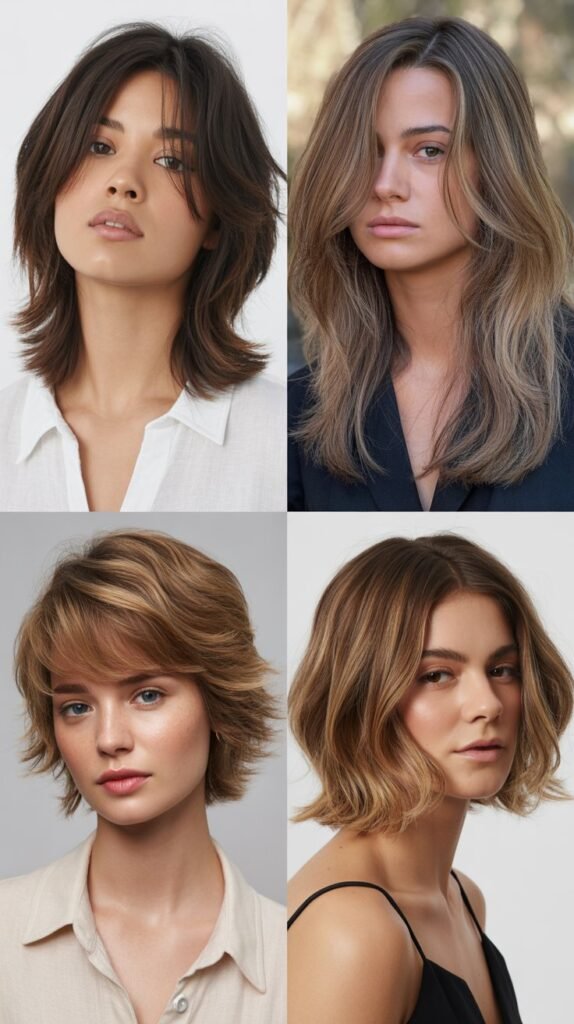
Internal layers are cut underneath the top layer of hair, creating hidden volume and movement without drastically changing the overall length or silhouette.
This subtle technique delivers natural-looking fullness.
How It Works:
- The stylist cuts shorter layers beneath the surface layer of hair, which remains longer.
- These hidden layers create space and lift, allowing the top layer to rest on them and appear fuller.
- The technique removes weight from thick hair without sacrificing the appearance of density.
- Internal layers are virtually invisible when hair is straight but become apparent when styled with waves or curls.
Advantages:
- This is an excellent option for those who want volume but are hesitant to commit to visible, dramatic layers.
- The outer layer maintains its length and can still be styled sleek and straight when desired.
- Internal layers reduce bulk and make thick hair more manageable without looking thin.
- The cut grows out gracefully since the top layer remains largely unchanged.
11. Layered Shag with Curtain Bangs
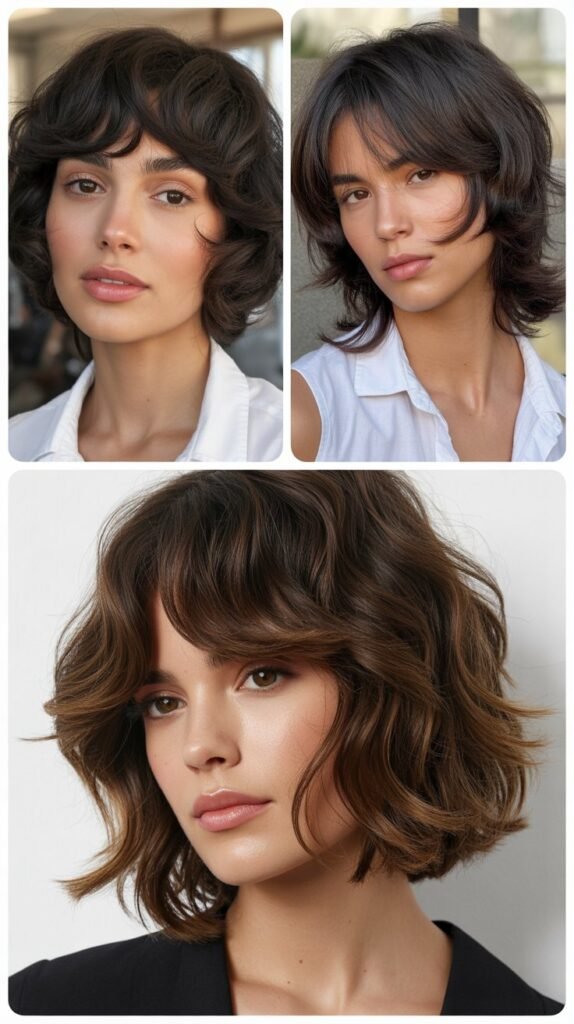
The layered shag with curtain bangs combines heavy texturizing throughout the hair with face-framing bangs that part down the middle.
This creates maximum volume with a distinctly bohemian, effortless vibe.
Defining Features:
- The shag cut includes multiple short to medium layers throughout the entire head for all-over texture and volume.
- Curtain bangs frame both sides of the face, parting naturally in the center and swooping outward.
- This combination creates volume at the crown, sides, and around the face simultaneously.
- The style has a deliberately undone, rock-and-roll aesthetic that’s both edgy and feminine.
Maintenance Requirements:
- Regular trims every 6-8 weeks are essential to maintain the shaggy texture and prevent the curtain bangs from growing too long.
- This style actually looks better with minimal styling—air drying with product enhances the textured appearance.
- Use a blow dryer with a diffuser attachment if you want to enhance natural wave or curl patterns.
- Curtain bangs require daily styling to maintain their shape and keep them swept away from the center of your face.
12. Disconnected Layers
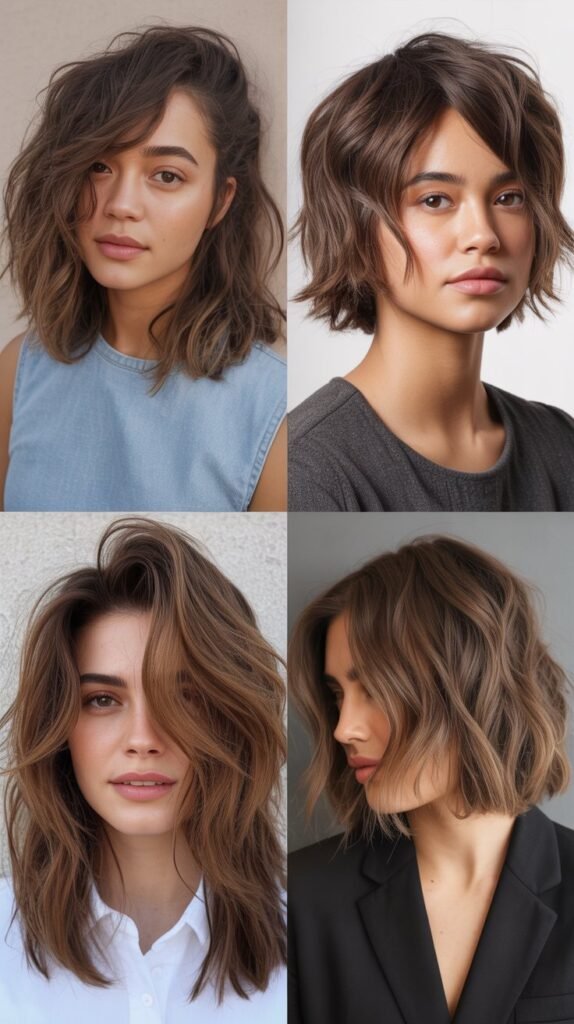
Disconnected layers feature intentional gaps between layer lengths, creating a more dramatic, editorial look with significant volume and movement.
This bold technique makes a fashion-forward statement.
What Makes It Unique:
- Unlike blended layers that transition smoothly, disconnected layers have noticeable space between each layer length.
- This creates more dramatic movement and a stronger visual impact when hair moves.
- The disconnection adds significant volume by preventing layers from lying flat against each other.
- This cutting technique works particularly well for those who want a bold, trendy look rather than a classic style.
Styling Considerations:
- Disconnected layers look most striking when styled with waves, curls, or bends rather than worn straight.
- Use styling products that enhance separation and definition, like texturizing sprays or pomades.
- This style requires confidence to wear, as it’s more noticeable and fashion-forward than subtle layering.
- The disconnected effect can be adjusted based on how dramatic you want the final result to appear.
13. Slide Cutting Technique Layers
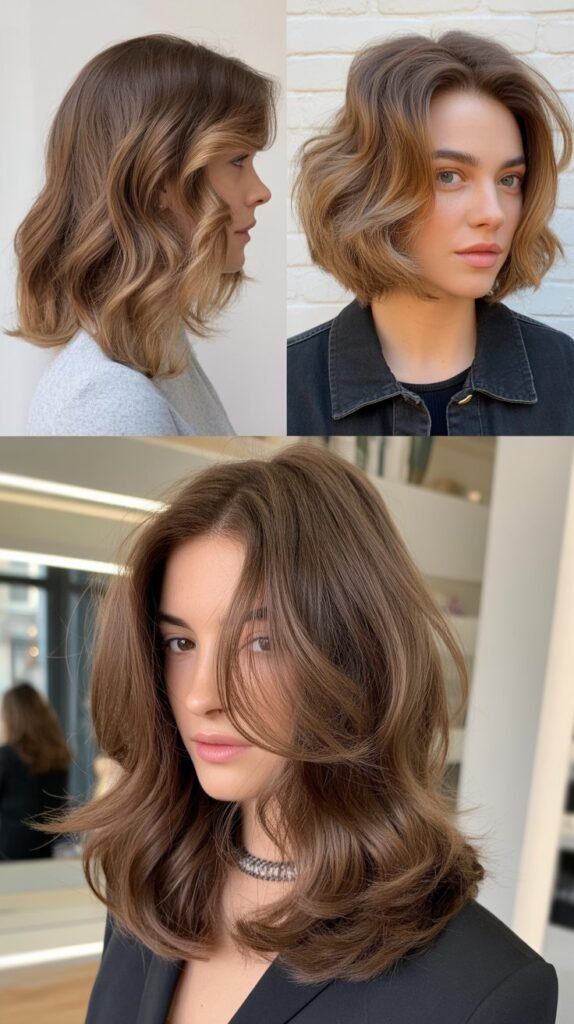
Slide cutting (also called slicing or slice cutting) creates soft, subtle layers by gliding the scissors along the hair shaft rather than cutting straight across.
This produces natural volume without obvious layer lines.
Technique Explanation:
- The stylist holds sections of hair taut and slides the scissors down the hair shaft, removing small amounts at varying points.
- This creates an imperceptible graduation that adds movement without distinct layer separation.
- The result is hair that moves naturally and has built-in texture without looking heavily layered or cut.
- Slide cutting is particularly effective for adding softness to thick, heavy hair.
Results and Benefits:
- The layers created through slide cutting blend so seamlessly that they’re virtually undetectable when hair is straight.
- When styled with waves or curls, the subtle layering creates beautiful, natural-looking volume and dimension.
- This technique is ideal for those who want the benefits of layers without a drastically different appearance.
- Hair cut with this method grows out extremely well, as there are no harsh lines to create awkward growth patterns.
14. Asymmetrical Layered Cut
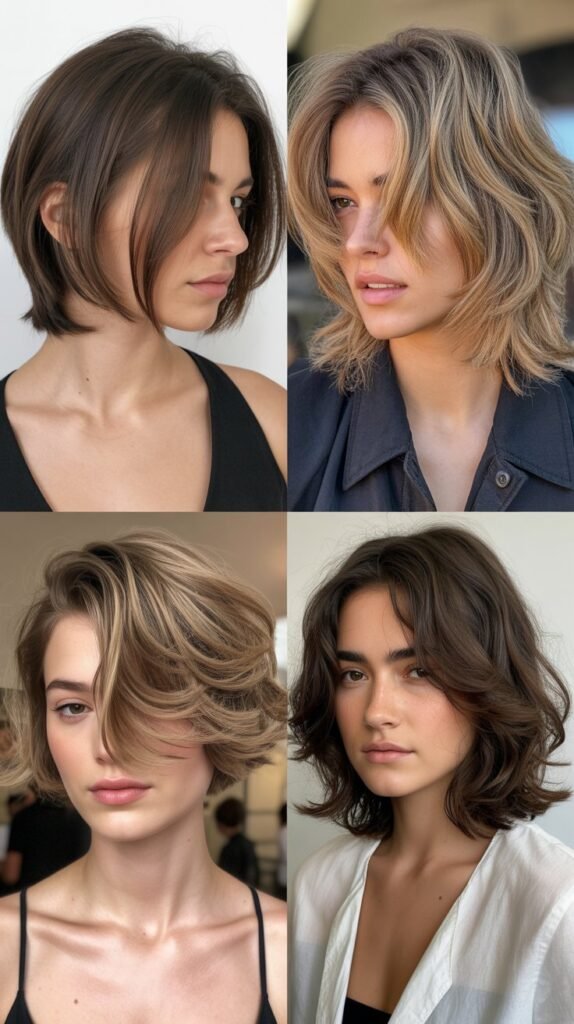
The asymmetrical layered cut features different lengths on each side of the head, with one side longer than the other, creating visual interest and natural volume through the intentional imbalance.
Design Elements:
- One side of the hair is cut noticeably longer than the other, creating an asymmetric silhouette.
- Layers are incorporated throughout to add texture and prevent the longer side from looking too heavy.
- The asymmetry naturally creates volume as the different lengths don’t lie flat against the head.
- This style makes a bold statement and works well for creative personalities who want to stand out.
Styling Options:
- You can wear the longer side forward over your shoulder or tucked behind your ear for different looks.
- The shorter side naturally has more volume due to less weight pulling it down.
- Experiment with your part placement to emphasize or minimize the asymmetry depending on the occasion.
- This cut works beautifully with bold colors, highlights, or creative color placement.
15. Layered Cut with Razored Bangs
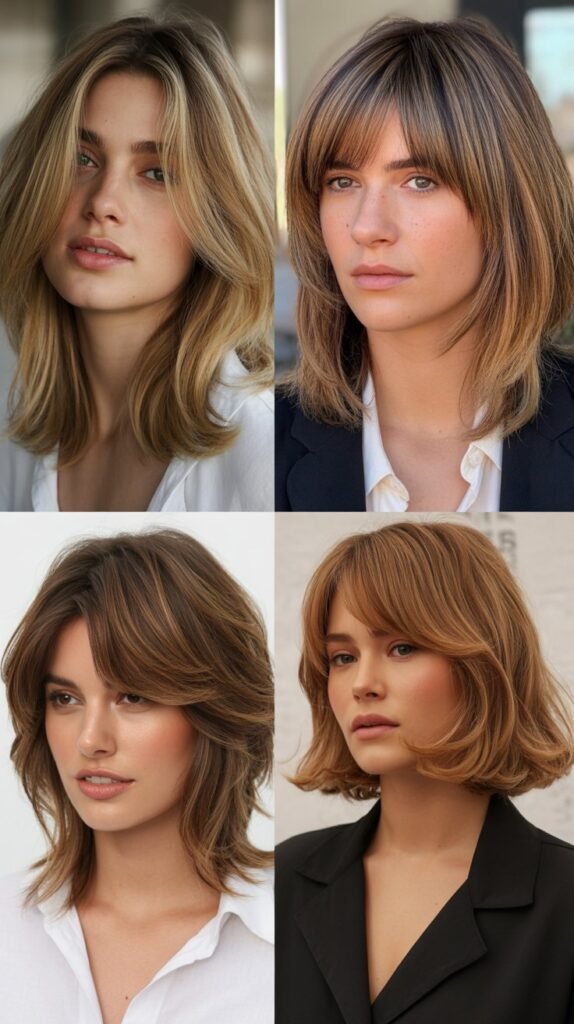
Combining a layered medium-length cut with razored, texturized bangs creates a soft, romantic look with plenty of volume around the face and throughout the hair.
Bang Characteristics:
- Razored bangs have soft, feathered edges that blend seamlessly into the rest of the layered hair.
- The textured fringe adds volume around the forehead and creates movement near the face.
- Unlike blunt bangs, razored bangs are lightweight and airy, preventing a heavy appearance.
- The wispy nature of razored bangs makes them more forgiving of different face shapes and styling approaches.
Overall Style Impact:
- The combination of layered body and textured bangs creates all-over volume and dimension.
- This style is particularly flattering for those with high foreheads or who want to balance their facial proportions.
- The soft, feathered appearance of both the layers and bangs creates a cohesive, flowing look.
- Razored bangs require less frequent trims than blunt bangs, as they grow out more gracefully.
16. Layered Haircut with Undercut
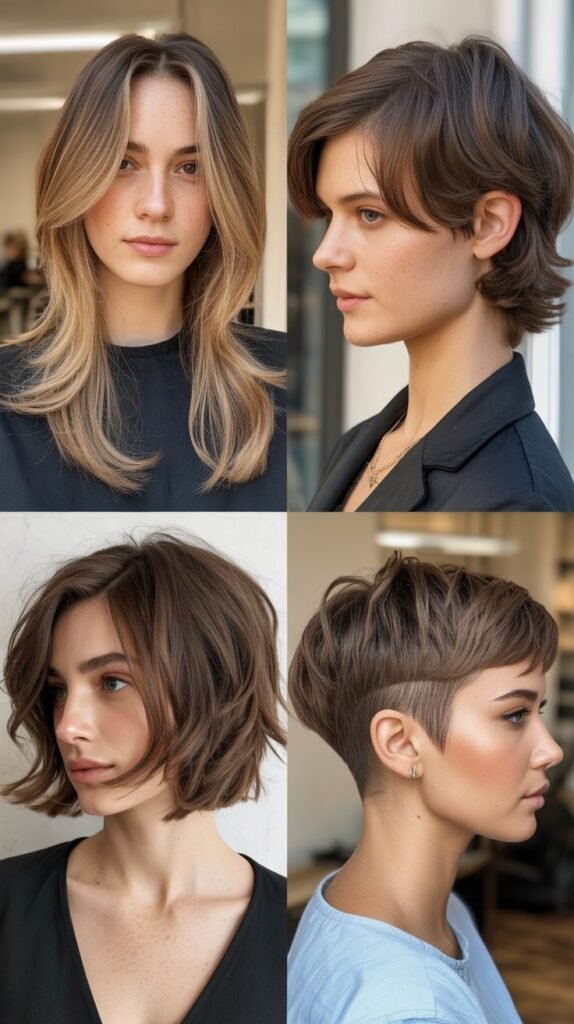
A layered haircut with an undercut features traditional layers throughout the visible hair with shaved or very short sections underneath, creating dramatic volume and an edgy aesthetic.
Structure and Benefits:
- The undercut removes significant weight from underneath, allowing the top layers to lift and appear fuller.
- This creates dramatic volume at the crown and throughout the visible hair without adding actual bulk.
- The undercut can be hidden when hair is down or revealed when styled in updos or half-up styles.
- This style offers versatility, allowing you to appear conventional or edgy depending on how you style it.
Design Variations:
- Undercuts can be subtle (just at the nape) or dramatic (extending up the sides and back).
- Some people add designs, patterns, or color to their undercut for additional personal expression.
- The contrast between the full, layered top section and the short undercut creates maximum volume perception.
- This option is particularly popular among those who love the look of long hair but struggle with thickness and heat.
17. Butterfly Layers
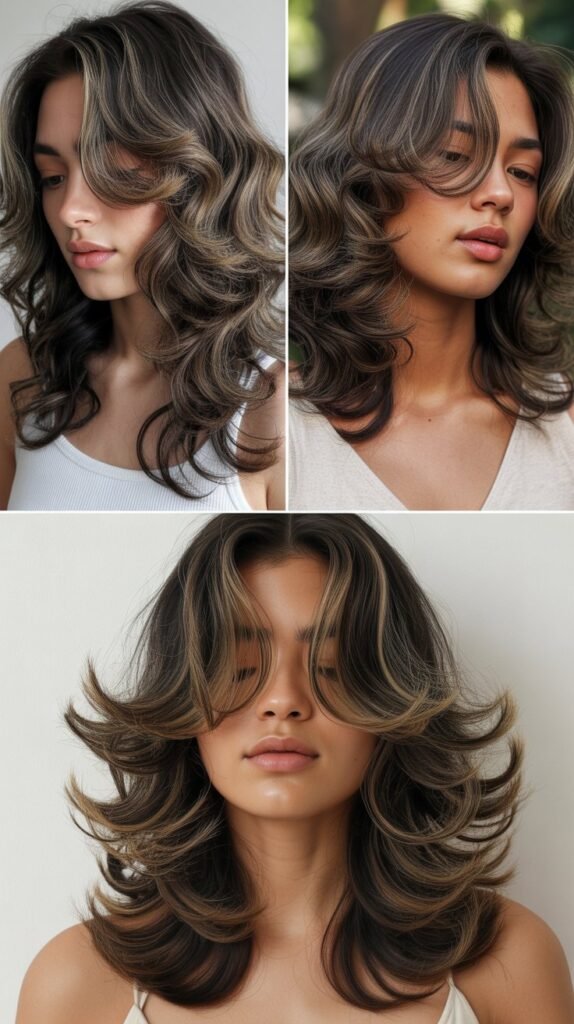
Butterfly layers create a distinctive shape where the layers are concentrated around the face and crown area, resembling butterfly wings when hair is parted down the middle.
This technique delivers exceptional face-framing volume.
Signature Characteristics:
- The layers start shorter at the crown and gradually lengthen, creating a cascading, wing-like effect on both sides.
- When parted down the middle, the shorter crown layers frame the face symmetrically like butterfly wings.
- This cut creates maximum volume at the top of the head while maintaining length at the bottom.
- The butterfly shape naturally lifts away from the face, preventing hair from looking flat or lifeless.
Best Suited For:
- This style works beautifully with naturally straight to slightly wavy hair that will showcase the distinct layer pattern.
- Those with long or oval face shapes benefit from the width that butterfly layers add to the sides of the face.
- If you love center parts and want face-framing volume, this cutting technique is ideal.
- The distinctive shape makes this cut stand out and creates a unique, recognizable silhouette.
18. Layered Blowout Cut
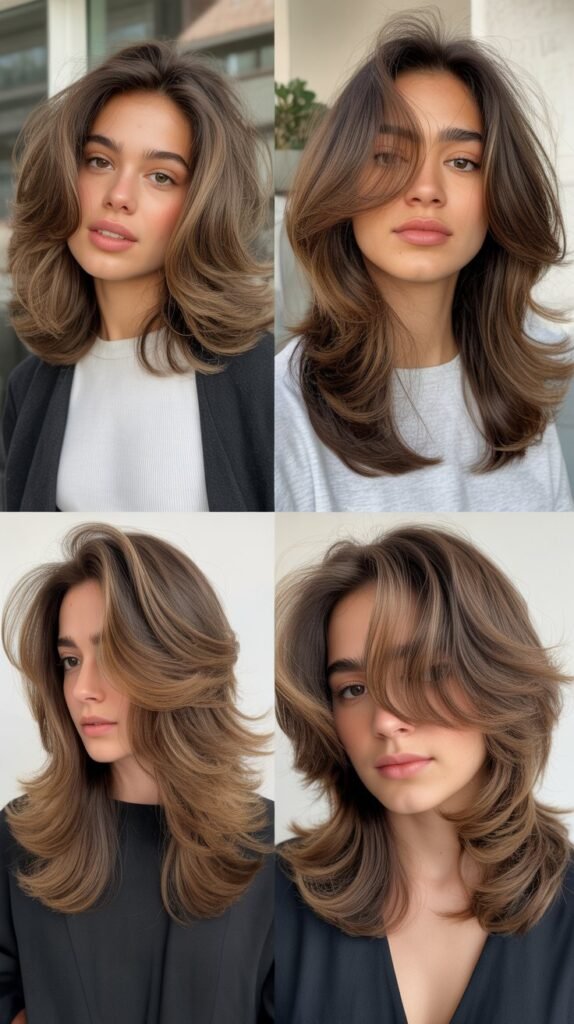
The layered blowout cut is specifically designed to look amazing when blow-dried, with layers strategically placed to maximize volume and create that coveted salon-fresh appearance at home.
Cut Design:
- Layers are positioned specifically where a round brush would naturally lift the hair during blow-drying.
- The cut takes into account how hair moves and falls when styled with heat and a brush.
- Strategic layering at the crown, sides, and around the face ensures volume in all the right places.
- This cut essentially builds the volume into the haircut itself, making styling easier and more effective.
Styling for Success:
- Use a round brush in the diameter that best suits your hair length (larger brush for longer medium hair).
- Blow-dry sections away from your head, rolling the brush under and through the layers for maximum lift.
- Apply volumizing mousse at the roots before blow-drying to enhance the built-in volume of the cut.
- This cut maintains its shape and volume better than non-layered cuts, even as you go throughout your day.
19. Wispy Layered Cut
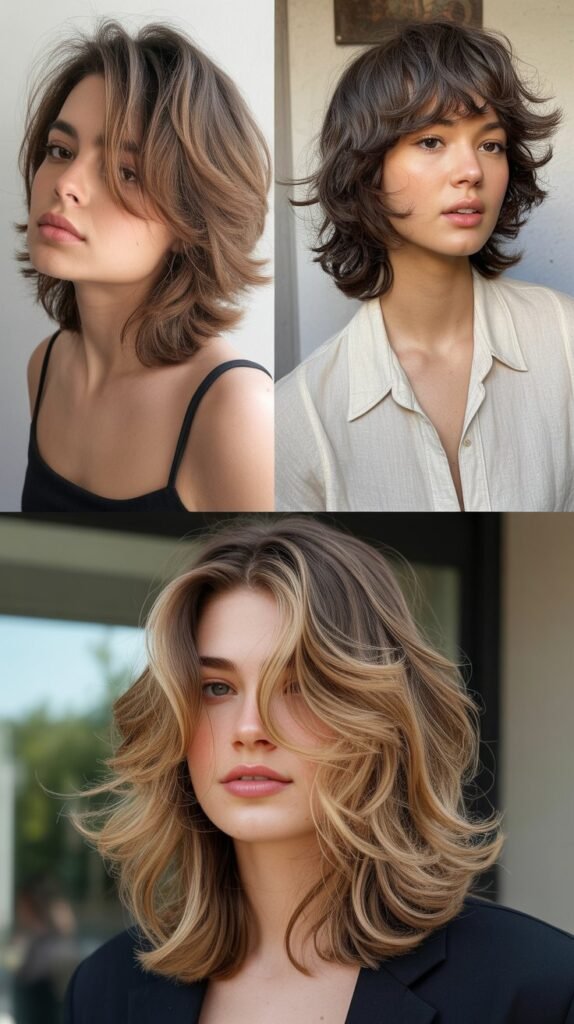
The wispy layered cut features ultra-light, thin ends created through point cutting or thinning techniques, resulting in an airy, ethereal appearance with natural movement and volume.
Cutting Technique:
- Point cutting (snipping into the ends vertically) creates the signature wispy, irregular edge.
- Thinning shears may be used throughout to reduce density and enhance the lightweight appearance.
- The layers are intentionally cut to create separation and prevent the ends from looking blunt or bulky.
- This technique removes weight while maintaining the perception of fullness through texture and movement.
Aesthetic Appeal:
- The wispy quality creates a soft, romantic, feminine appearance that’s highly flattering.
- This style is perfect for those who want volume without a heavy or dramatic look.
- The delicate ends catch and reflect light beautifully, adding dimension to the hair.
- Wispy layers work particularly well with fine to medium hair textures.
20. Graduated Bob with Layers
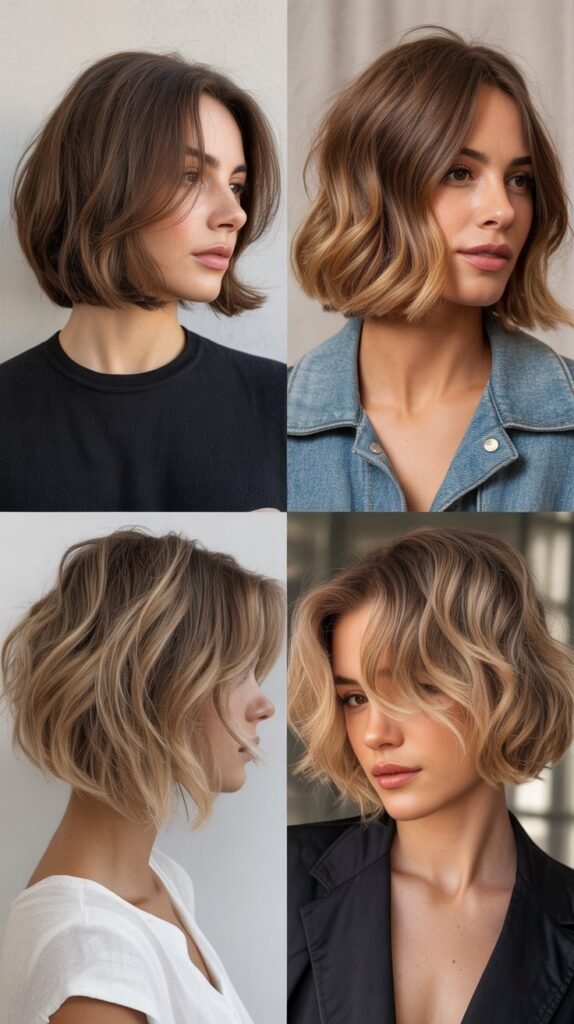
The graduated bob with layers (also called an inverted or stacked bob) is shorter in the back and longer toward the front, with additional layers throughout to create substantial volume and a modern silhouette.
Structural Components:
- The back is cut shorter and stacked with layers, creating significant volume at the crown and nape.
- Hair gradually lengthens toward the front, with the longest pieces framing the face.
- Additional layers throughout prevent the longer front sections from looking too heavy or flat.
- The graduation creates natural body and eliminates the need for extensive styling to achieve volume.
Why It Works:
- The stacked back naturally stands away from the head, creating built-in volume without styling products.
- The angled shape is incredibly flattering for most face shapes, especially round or square faces.
- This cut requires minimal maintenance to look polished and put-together.
- The graduated shape maintains its volume and structure even as hair grows out between appointments.
21. Layered Cut with Micro Bangs
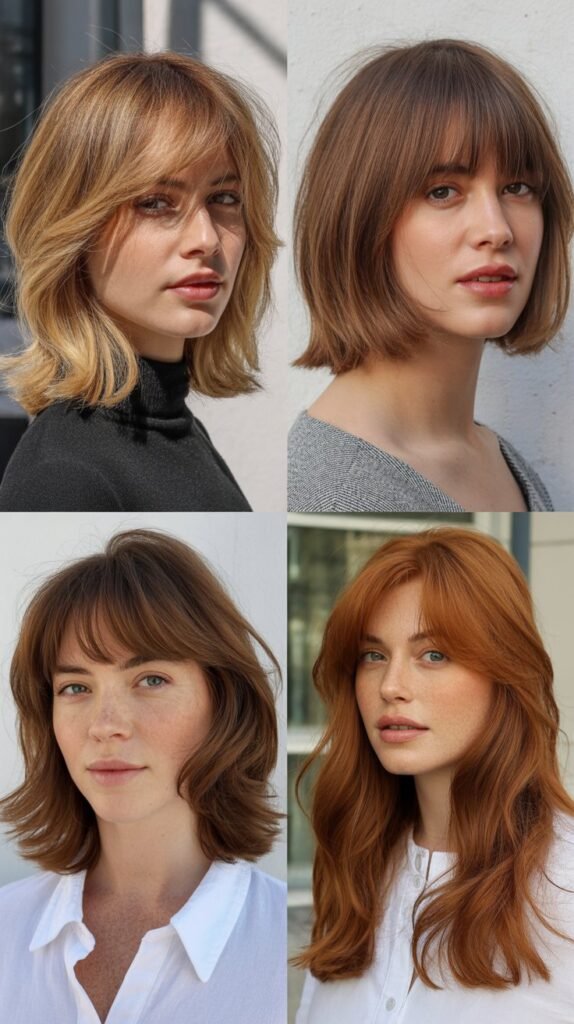
Combining a layered medium-length cut with ultra-short micro bangs creates a striking, fashion-forward look with volume throughout and a bold fringe that draws attention to the eyes.
Style Definition:
- Micro bangs are cut significantly shorter than traditional bangs, typically ending well above the eyebrows.
- The dramatic bangs create a strong focal point while the layered length provides volume and movement.
- This combination is definitely a statement style that projects confidence and fashion-awareness.
- The contrast between the very short bangs and medium-length hair creates visual interest and dimension.
Considerations:
- Micro bangs require frequent trims every 2-3 weeks to maintain their ultra-short length.
- This style works best for those with oval or heart-shaped faces, as it can emphasize a round or square face shape.
- The bold bangs pair beautifully with the softer volume of layered hair, creating an interesting contrast.
- If you’re considering this style, consult with your stylist about whether it will complement your features and lifestyle.
22. Layered Wavy Cut
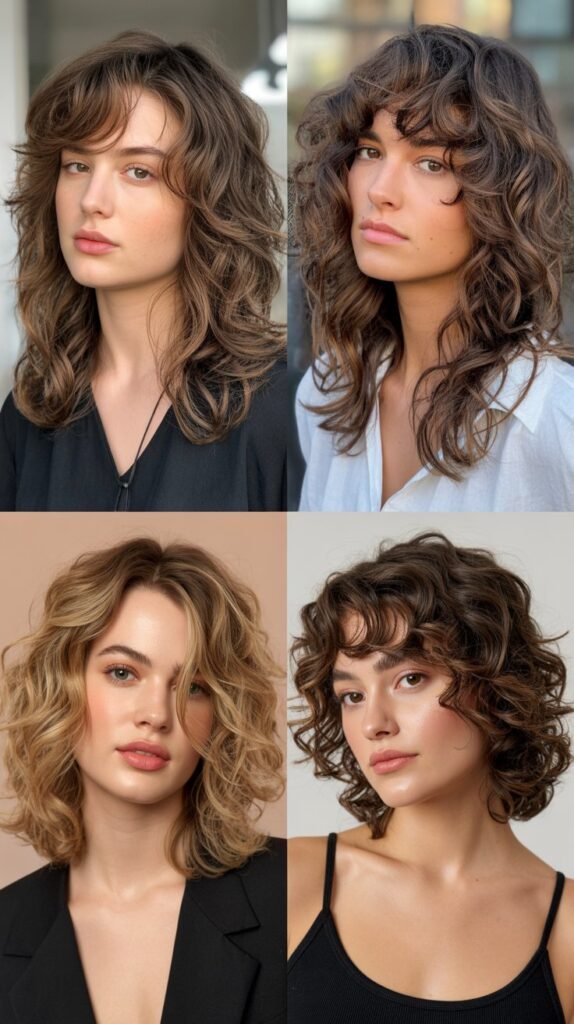
The layered wavy cut is specifically designed to enhance natural waves or create the perfect foundation for styled waves, with layers positioned to maximize the movement and volume of wavy texture.
Cut Specifications:
- Layers are cut with the natural wave pattern in mind, ensuring they enhance rather than fight the wave direction.
- The cutting is often done on dry hair so the stylist can see exactly how the waves will fall and layer naturally.
- Strategic layering removes weight from areas where waves tend to get weighed down, allowing them to spring up more.
- The layers are positioned to create the coveted “S” shape throughout wavy hair.
Maximizing Wavy Volume:
- Use curl-enhancing products that define waves without creating crunch or stiffness.
- Scrunch hair while air-drying or use a diffuser attachment to encourage natural wave formation.
- The layered cut allows waves to stack and overlap, creating dimensional volume.
- Sleeping with hair in a loose braid can enhance the wave pattern and increase volume.
23. Layered Cut with Tapered Ends
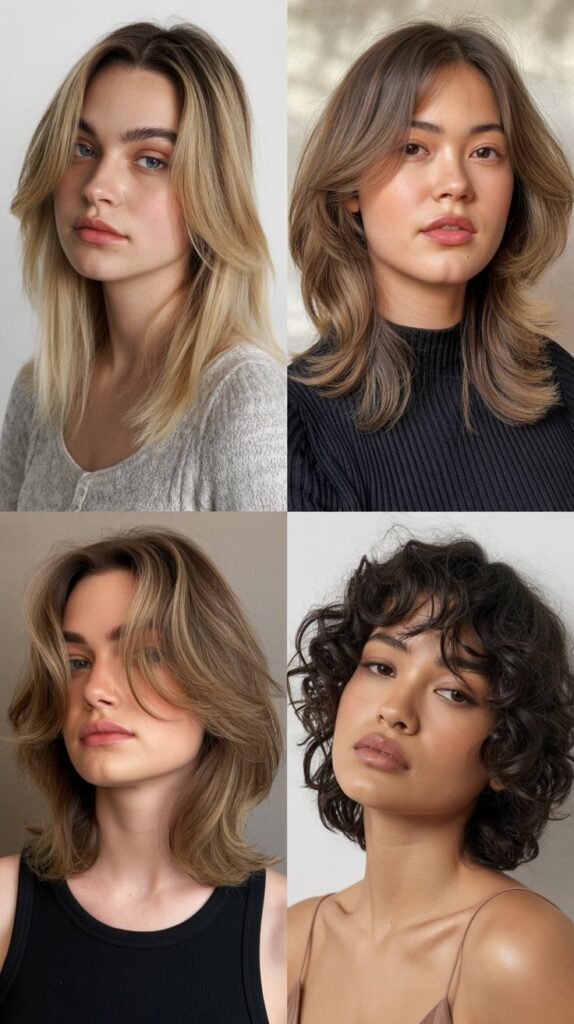
A layered cut with tapered ends features layers that gradually thin out toward the tips, creating lighter, more voluminous hair that moves freely and naturally.
Tapering Technique:
- The stylist thins the ends of each layer using point cutting, slide cutting, or thinning shears.
- This removes bulk from the very ends while maintaining density closer to the roots for fullness.
- Tapered ends prevent the bottom of the hair from looking heavy, blocky, or blunt.
- The technique creates a softer, more natural-looking finish than blunt-cut ends.
Volume Benefits:
- Removing weight from the ends allows the layers to lift and separate more easily.
- Tapered ends prevent hair from clumping together, which creates more visible volume and dimension.
- This approach is particularly beneficial for thick hair that tends to look bottom-heavy.
- The gradual thinning creates movement that enhances the layered structure of the cut.
24. Layered Curly Cut
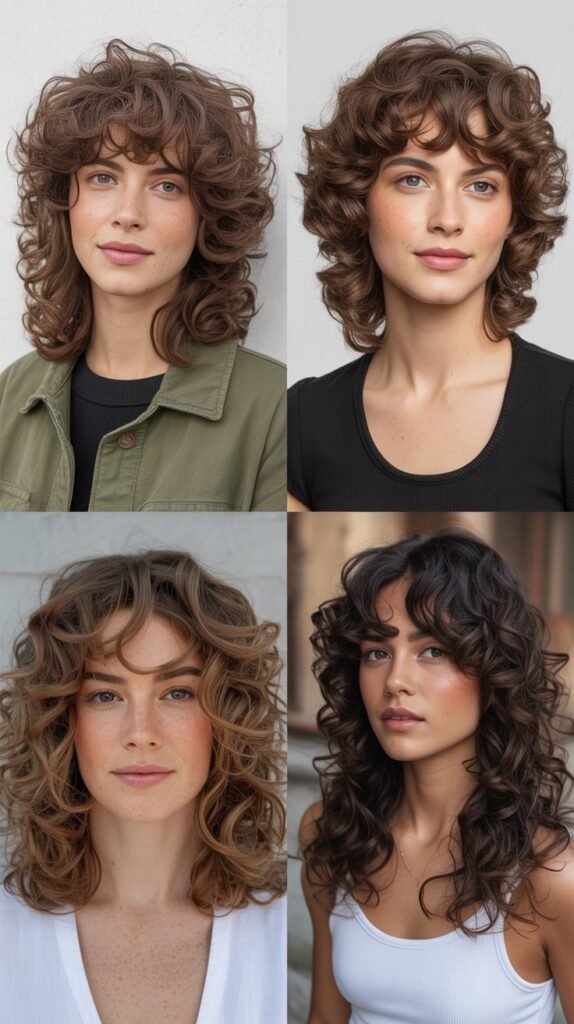
The layered curly cut is specialized for curly hair, with layers cut to enhance curl patterns, remove bulk, and create beautiful, voluminous shape that works with natural texture.
Curly Hair Considerations:
- Curly hair should always be cut by a stylist experienced with curly textures, ideally using dry-cutting techniques.
- Layers are positioned to remove weight from the right areas without creating frizz or disrupting curl patterns.
- The cut often includes “internal layering” to remove bulk from inside the curl while maintaining the outer curl structure.
- Proper layering prevents the dreaded triangle shape that curly hair can develop with one-length cuts.
Volume Enhancement:
- Layering allows curls to stack upon each other rather than weighing each other down.
- Removing excess weight helps curls spring up more, creating lift at the roots naturally.
- The right layering technique defines curl clumps and creates separation between curl groups for dimensional volume.
- Each curl has room to move and form its natural shape without being compressed by surrounding hair.
25. Layered Cut with Root Elevation

A layered cut with root elevation focuses on creating volume specifically at the roots through cutting techniques that lift hair away from the scalp, providing long-lasting height and fullness.
Technical Approach:
- The stylist cuts the base of each layer at a specific angle to encourage hair to naturally lift away from the scalp.
- Shorter layers at the crown are cut to stand more upright, creating a foundation of volume underneath longer layers.
- The technique considers hair’s natural growth patterns and cowlicks to work with rather than against them.
- Root elevation built into the cut means less styling effort required to achieve volume daily.
Lasting Volume:
- Unlike teasing or volumizing products that provide temporary lift, root elevation is structural and permanent (until the cut grows out).
- This technique is particularly beneficial for fine hair or hair that tends to lie flat against the scalp.
- The elevated roots create space and airiness throughout the entire head of hair.
- Even when hair is simply air-dried, the root elevation ensures some natural volume remains.
26. Layered Cut with Flipped Ends
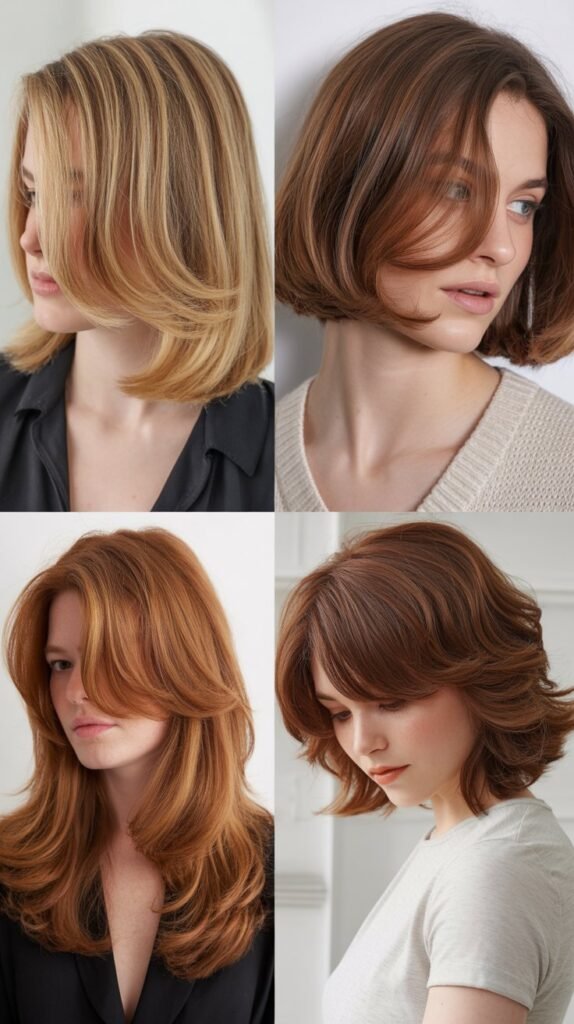
The layered cut with flipped ends features layers specifically cut and styled to flip outward at the ends, creating a playful, retro-inspired look with loads of volume and movement.
Cut and Style:
- The layers are cut to naturally encourage ends to flip outward rather than curling under.
- This is often achieved through angle and elevation during cutting combined with texturizing techniques.
- The flipped ends create width and volume, especially around the face and at the bottom of the hair.
- This style evokes a fun, youthful energy reminiscent of 1960s and 1990s trends.
Styling Tips:
- Use a round brush while blow-drying, rolling the ends outward and away from your head.
- A flat iron or curling iron can also create the flip by clamping at mid-length and flipping away from the head.
- Finish with a light hairspray to hold the flip without making it stiff or unnatural-looking.
- The layered structure ensures that multiple pieces flip at different lengths, creating dimensional volume.
27. Layered Tousled Cut
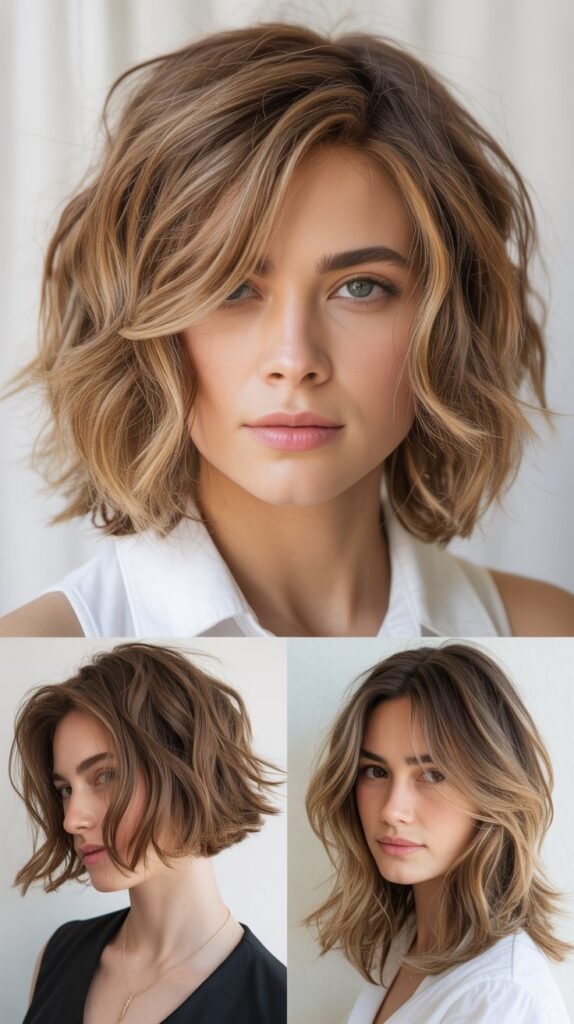
The layered tousled cut is designed to look perfectly undone and effortlessly voluminous, with multiple layers creating natural-looking texture and movement that appears casual yet intentional.
Achieving the Tousled Look:
- Heavy layering throughout removes weight and creates multiple lengths that naturally separate and tousle.
- The cut is designed to look great with minimal styling, embracing natural texture and movement.
- Products like sea salt spray, texturizing cream, or dry shampoo enhance the tousled appearance.
- The style celebrates imperfection and has an “I didn’t try too hard” aesthetic that’s currently very popular.
Why It Creates Volume:
- Multiple layers prevent hair from lying flat or appearing too structured and perfect.
- The intentional disorder means hair stands away from the head in various directions, creating fullness.
- Tousled styling encourages root lift and natural separation between pieces.
- This cut looks fuller than more polished styles because the disorder creates the perception of more hair.
28. Layered Cut with Balayage Placement
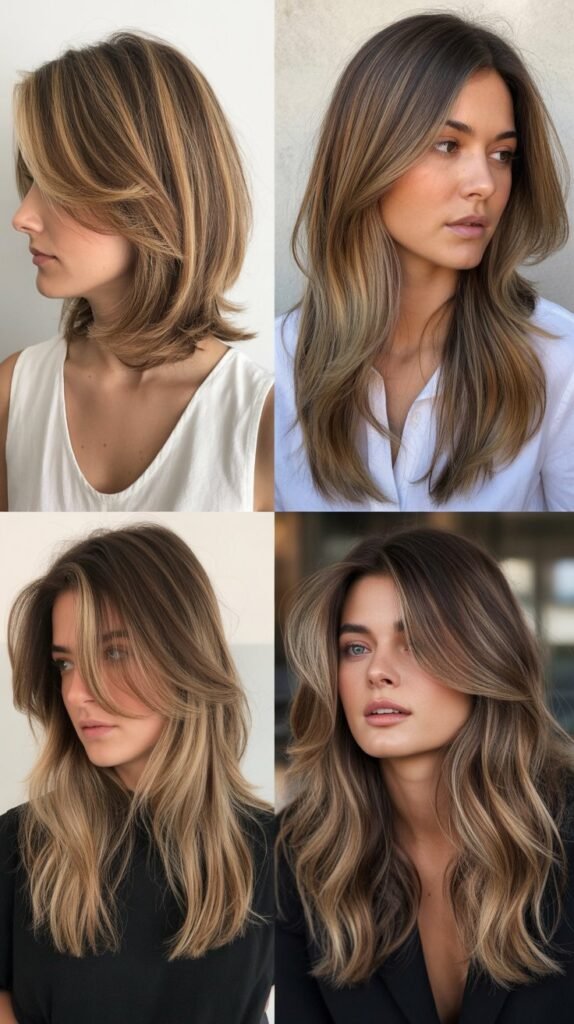
While balayage is a coloring technique, strategic color placement combin ‘with layered cutting creates incredible depth and the illusion of even more volume through dimensional contrast.
Color and Cut Synergy:
- Lighter pieces placed on the top layers and around the face create the illusion of volume and lift.
- Darker tones in the underlayers create depth and make the lighter layers appear to pop forward.
- The layered cut showcases the hand-painted balayage technique beautifully, as each layer displays different tones.
- Strategic highlighting on certain layers can make them appear thicker and more prominent.
Visual Volume Effect:
- The dimensional coloring creates a multidimensional appearance that makes hair look fuller and more voluminous.
- Lighter pieces catch and reflect more light, drawing attention to the layers and movement.
- The contrast between tones adds visual interest and prevents hair from looking flat or one-dimensional.
- When styled with waves or curls, the color placement enhances the texture and makes each layer distinct.
29. Layered Cut with Crown Teasing Integration

This layered cut is specifically designed to work seamlessly with crown teasing, featuring layers positioned to hide and support backcombing while creating dramatic, lasting volume.
Strategic Design:
- The cut includes shorter layers underneath at the crown that can be teased for foundation volume.
- Longer top layers smooth over the teased section, hiding the backcombing while benefiting from the lift it creates.
- The layering prevents teasing from creating a dated or overly dramatic appearance.
- This design allows for adjustable volume—light teasing for daily wear or more dramatic teasing for special occasions.
Creating the Volume:
- Section the top layer of crown hair and clip it aside.
- Gently backcomb the underneath layers at the roots using a fine-toothed comb.
- Smooth the top layer over the teased section, securing with bobby pins if needed.
- The layered structure ensures the teasing stays in place and provides a foundation for the visible layers to rest upon.
30. Layered Cut with Beveled Edges
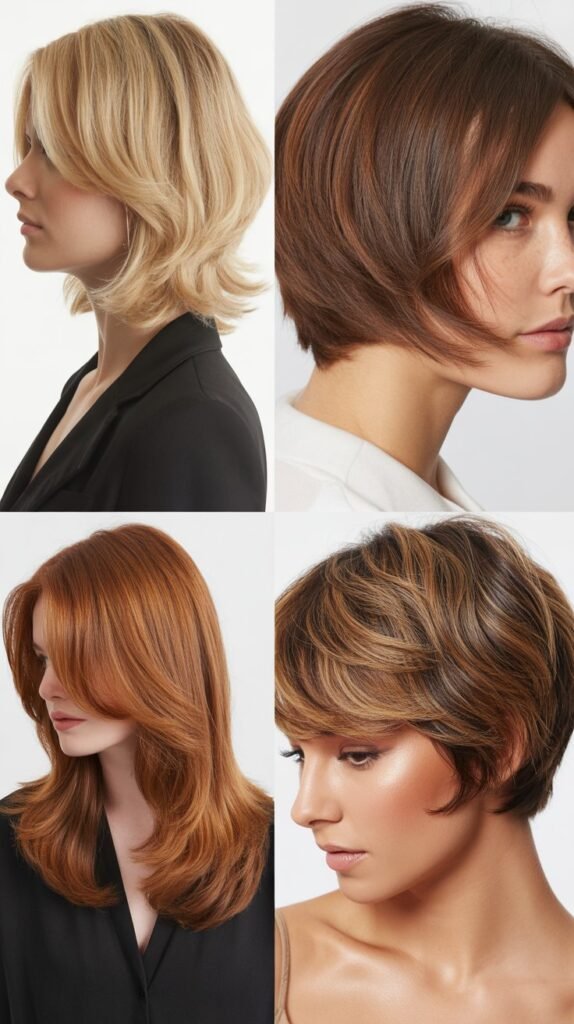
A layered cut with beveled edges features layers cut at an angle rather than straight across, creating soft, rounded edges that add volume and prevent harsh lines.
Beveling Technique:
- The stylist holds the scissors at an angle to the hair rather than perpendicular, creating a beveled or angled edge.
- This softens the ends and creates a rounded shape that adds body and fullness.
- Beveled edges blend more seamlessly than blunt-cut edges, creating a softer overall appearance.
- The technique is often combined with other layering methods for maximum dimension.
Volume Creation:
- The angled edges allow layers to stack upon each other with more space between them, preventing flatness.
- Beveling removes some weight from the ends while maintaining thickness, creating a fuller mid-section.
- The rounded shape created by beveling naturally bounces and moves more than blunt edges.
- This cutting approach is particularly flattering for fine hair that needs all the volume it can get.
Comparison Table: Layering Techniques and Hair Types
| Layering Style | Best Hair Texture | Maintenance Level | Volume Level | Best Face Shape |
|---|---|---|---|---|
| Face-Framing Layers | All textures | Low | Medium | All shapes |
| Choppy Layers | Wavy to curly | Medium | High | Oval, heart |
| Soft Graduated | Straight to wavy | Medium | Medium | All shapes |
| Shaggy Bob | All textures | Medium-High | Very High | Round, square |
| Razored Layers | Straight to wavy | Medium | High | Oval, heart |
| V-Shaped | Fine to medium | Low-Medium | Medium-High | Round, square |
| Stacked Crown | All textures | Medium | Very High | Long, oval |
| Butterfly Layers | Straight to wavy | Medium | High | Long, oval |
| Wispy Layers | Fine to medium | Medium | Medium | All shapes |
| Graduated Bob | All textures | Medium | Very High | Round, square |
Essential Styling Products for Layered Hair
For Fine Hair:
- Volumizing mousse applied to damp roots provides lift without weight.
- Root-lifting spray creates targeted volume exactly where layers begin.
- Lightweight dry shampoo adds texture and absorbs oil that can flatten layers.
- Texturizing spray adds grip and separation to enhance the layered effect.
For Thick Hair:
- Smoothing cream controls frizz and helps layers blend seamlessly.
- Anti-humidity spray keeps layers defined in moisture-prone environments.
- Thinning or texturizing paste adds separation without adding bulk.
- Heat protectant is essential for styling thick layered hair without damage.
For Curly Hair:
- Curl-defining cream enhances natural texture and supports layered curl patterns.
- Lightweight gel provides hold without crunch, keeping curls bouncy.
- Leave-in conditioner maintains moisture in layered curly hair that can be prone to dryness.
- Diffuser attachment for blow dryer dries curls without disrupting their formation.
Maintenance Tips for Layered Volume
Regular Trim Schedule:
- Layers require trimming every 6-8 weeks to maintain their shape and volume-creating properties.
- Waiting too long between trims causes layers to grow out and lose their effectiveness.
- Regular trims also remove split ends that can make layers look thin and damaged.
- Schedule appointments in advance to stay consistent with maintenance.
At-Home Care:
- Use sulfate-free shampoos that won’t strip natural oils needed for volume and bounce.
- Apply conditioner only from mid-length to ends to avoid weighing down roots where volume starts.
- Deep condition weekly to keep ends healthy and prevent the dry, frizzy appearance that diminishes volume.
- Sleep on a silk or satin pillowcase to reduce friction that can flatten layered styles overnight.
Heat Styling Protection:
- Always use heat protectant spray before blow-drying or heat styling layered hair.
- Invest in quality tools with adjustable heat settings to prevent damage to delicate layered ends.
- Allow hair to air-dry partially before heat styling to minimize heat exposure time.
- Use the cool shot button on your dryer to set volume and make it last longer.
Conclusion
Finding the perfect hairstyle that delivers effortless volume can transform not only your appearance but also your confidence and daily routine.
The 30 Layered Hairstyles for Medium-Length Hair That Create Natural Volume presented in this guide offer something for everyone, regardless of hair texture, face shape, or personal style preferences.
From subtle face-framing layers that provide gentle dimension to dramatic choppy cuts that make a bold statement, layering remains the most effective technique for adding volume without artificial styling.
Remember that the key to maintaining voluminous layered hair lies in regular trims, proper product selection, and styling techniques that work with your natural texture rather than against it.
Consult with an experienced stylist who can assess your individual hair type and recommend which layering technique will work best for your unique needs.
With the right cut and proper care, you can enjoy beautiful, bouncy, naturally voluminous hair that looks effortlessly stunning every single day.
