
Getting your child ready for school, playtime, or any activity can be challenging when hair keeps falling into their eyes.
Finding hairstyles that are both functional and appealing to kids requires creativity and practical knowledge.
This comprehensive guide presents 30 Practical Kids’ Hairstyles to Keep Hair Away from the Face, offering solutions for various hair types, lengths, and occasions.
Whether you’re a parent struggling with morning routines or looking for sporty styles for active children, you’ll discover step-by-step techniques, styling tips, and age-appropriate options that keep hair secured while maintaining comfort throughout the day.
From classic braids to modern twists, each hairstyle has been selected for its ability to withstand running, playing, and learning while keeping your child’s face clear and their hair protected.
1. The Classic High Ponytail

The high ponytail remains one of the most reliable hairstyles for keeping hair completely off the face and neck.
This timeless style works exceptionally well for school days, sports activities, and hot weather conditions.
Benefits and Best Practices:
- Position the ponytail at the crown of the head to ensure all face-framing pieces are pulled back securely
- Use fabric-covered elastic bands instead of rubber bands to prevent hair breakage and minimize pulling discomfort
- For fine hair, slightly tease the crown area before securing to add volume and prevent the ponytail from sliding down
- Apply a small amount of smoothing serum or water to tame flyaways around the hairline
- Secure baby hairs with small bobby pins or edge control product for activities requiring extended wear
Ideal For: All hair types, school days, sports activities, ages 3 and up
2. Double Dutch Braids

Double Dutch braids provide maximum security for active children while creating a stylish, symmetrical look.
These inside-out braids lie flat against the scalp and can last for multiple days with proper care.
Step-by-Step Technique:
- Part the hair down the center from forehead to nape, creating two equal sections
- Clip one section away while working on the first braid
- Begin at the hairline by dividing a small section into three strands
- Cross the outer strands under the middle strand instead of over, adding small sections of hair with each crossing
- Continue braiding tightly down to the nape, then finish with a regular braid to the ends
- Repeat the process on the opposite side, ensuring both braids are positioned at equal heights
- Secure each braid with a small elastic band and apply light hairspray for hold
Ideal For: Thick to medium hair, athletic activities, overnight wear, ages 5 and up
3. The Practical Low Bun
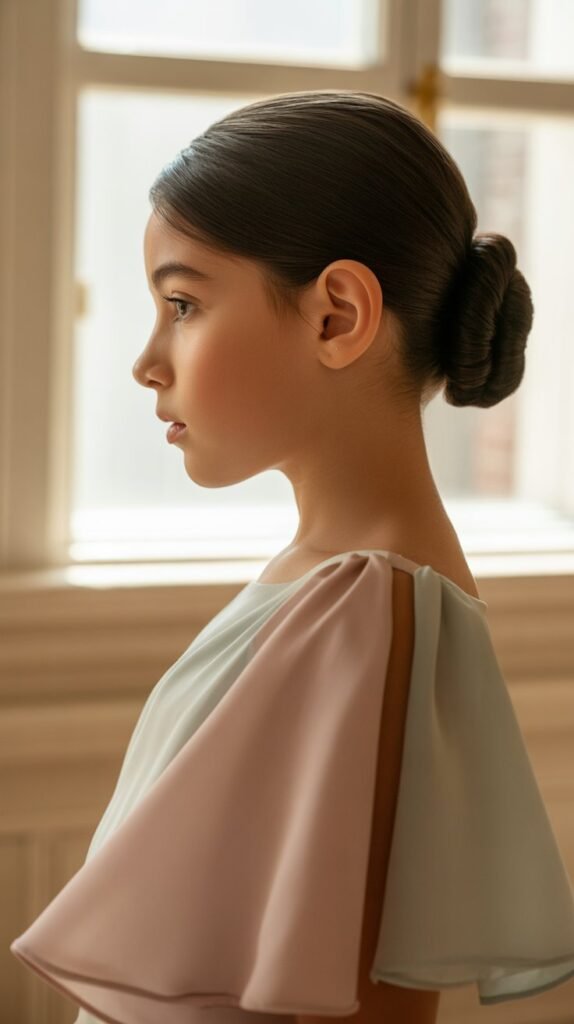
Low buns offer sophisticated elegance while keeping hair entirely away from the face and neck.
This versatile style transitions smoothly from school to special occasions.
Creation Method:
- Brush hair thoroughly to remove all tangles and create a smooth foundation
- Gather hair into a low ponytail at the nape of the neck
- Twist the ponytail length around its base, creating a coiled bun shape
- Secure with bobby pins inserted in an X-pattern for maximum stability
- Use a hair donut or sock bun for added volume and structure with thin hair
- Wrap any loose ends around the bun base and pin them underneath
- Finish with hairspray and smooth any bumps with a soft bristle brush
Ideal For: Fine to medium hair, formal events, dance classes, ages 6 and up
4. Braided Headband Style

The braided headband style combines functionality with decorative appeal, using the child’s own hair to create a natural headband that keeps bangs and shorter layers secured.
Construction Steps:
- Part hair from ear to ear across the top of the head
- Clip the back section away temporarily
- Starting at one temple, create a regular or Dutch braid along the hairline
- Braid tightly across the forehead area, incorporating all front pieces
- Continue the braid to the opposite temple
- Secure with a small clear elastic behind the ear
- Release the back section and style as desired (loose, ponytail, or braid)
- Pin the braid end underneath the loose hair for a seamless look
Ideal For: Growing out bangs, medium to long hair, casual outings, ages 4 and up
5. Space Buns

Space buns deliver a playful, youthful appearance while efficiently keeping all hair secured on top of the head.
This style has gained popularity for its fun aesthetic and practical benefits.
Assembly Instructions:
- Create a center part from forehead to nape, dividing hair into two equal sections
- Gather each section into a high ponytail positioned above the ears
- Twist each ponytail around its base, creating a bun shape
- Secure each bun with bobby pins and an additional elastic band if needed
- Pull gently on the bun edges to create fuller, rounder shapes
- Use edge control or gel to slick down any flyaways around the part and hairline
- Add decorative accessories like scrunchies or ribbons for extra flair
Ideal For: Thick hair, casual days, themed events, ages 5 and up
6. French Braid Ponytail Combo

This hybrid style combines the security of a French braid with the swing of a ponytail, offering the best of both worlds for active children.
Execution Method:
- Start a French braid at the crown of the head
- Braid down approximately halfway through the head length
- Secure the braid with an elastic band at the desired ponytail position
- Leave the remaining hair loose as a ponytail
- Wrap a small section of hair around the elastic to conceal it
- Apply hairspray to the braided section for extended hold
- Brush the ponytail portion smooth or leave slightly textured for a casual look
Ideal For: All hair types, school and play, ages 4 and up
7. Twisted Side Bun

The twisted side bun offers an asymmetrical, modern alternative to traditional centered buns while maintaining complete facial clearance.
Styling Process:
- Brush all hair to one side of the head
- Create a low side ponytail positioned behind the ear
- Divide the ponytail into two equal sections
- Twist each section individually in the same direction
- Wrap the twisted sections around each other in opposite directions
- Coil the rope-twisted hair around the ponytail base to form a bun
- Secure with bobby pins inserted at various angles
- Tuck loose ends underneath and add decorative pins if desired
Ideal For: Medium to thick hair, creative occasions, ages 6 and up
8. Criss-Cross Pigtails
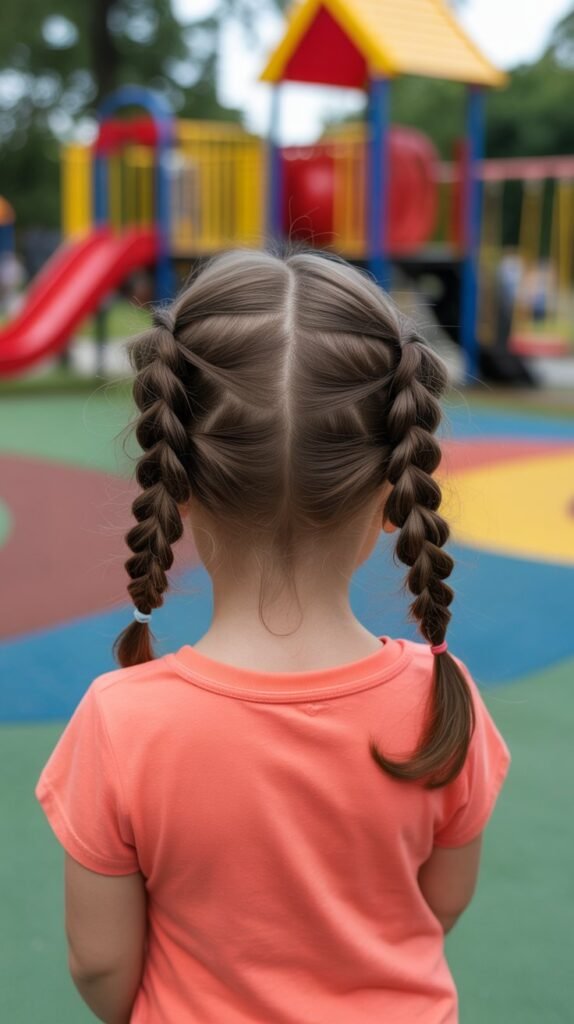
Criss-cross pigtails add an interesting geometric element to traditional twin tails while providing superior hold for face-framing pieces.
Creation Technique:
- Create a zigzag or diagonal part from front to back instead of a straight center part
- Separate hair into two sections following the zigzag pattern
- Secure each section into a ponytail positioned at ear level
- Braid each ponytail if additional security is needed
- The alternating part pattern helps capture shorter layers that often escape traditional pigtails
- Adjust the part pattern based on where the child’s natural cowlicks or growth patterns lie
- Use small elastic bands that match hair color for a seamless appearance
Ideal For: Fine to medium hair, toddlers and young children, ages 2 and up
9. Rope Braid
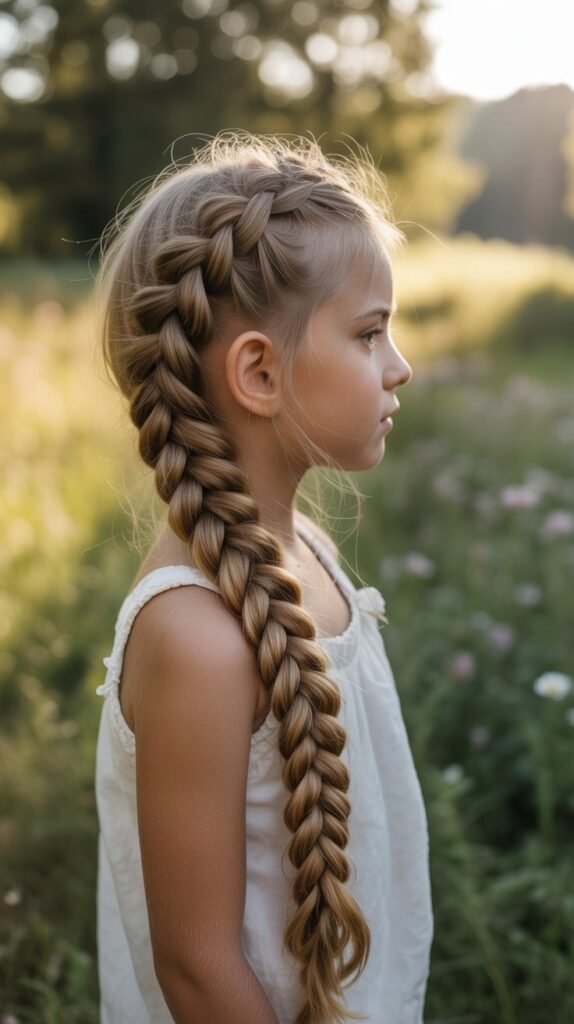
The rope braid offers a quick alternative to traditional braiding while providing excellent hold and a unique twisted texture.
Twisting Method:
- Gather hair into a ponytail at the desired height
- Divide the ponytail into two equal sections
- Twist each section tightly in a clockwise direction
- Wrap the two twisted sections around each other in a counter-clockwise direction
- The opposing twist directions create tension that holds the braid together
- Secure the end with an elastic band
- Pull gently on the twisted sections to create a fuller appearance
- Apply light hairspray to prevent unraveling during active play
Ideal For: All hair types, quick morning routines, ages 4 and up
10. Half-Up Top Knot

The half-up top knot secures the top section of hair while allowing the bottom to flow freely, balancing style with practicality.
Assembly Steps:
- Section the hair horizontally from ear to ear across the crown
- Gather the top section and brush it smooth
- Create a high ponytail with the top section only
- Twist the ponytail and wrap it around its base to form a small bun or knot
- Secure with bobby pins and an elastic band
- Leave the bottom section loose, or add loose waves for texture
- This style effectively keeps bangs and face-framing pieces secured while maintaining length visibility
Ideal For: Medium to long hair, casual versatility, ages 5 and up
11. Bubble Ponytail

The bubble ponytail transforms a basic ponytail into a segmented, dimensional style that stays secure throughout active days.
Construction Method:
- Create a high or mid-level ponytail as the foundation
- Secure additional elastic bands down the length of the ponytail at 2-3 inch intervals
- Gently pull on each section between elastics to create rounded “bubble” shapes
- Continue adding elastics until reaching near the ends
- Each elastic provides an additional anchor point, preventing the style from loosening
- Pancake each bubble section slightly for fuller volume
- Use colorful elastics to create a fun, playful look
Ideal For: Long hair, creative styling days, ages 4 and up
12. Crown Braid

The crown braid circles the head like a halo, keeping all hair secured away from the face while creating an elegant, timeless appearance.
Braiding Technique:
- Part hair from ear to ear over the top of the head
- Begin a Dutch braid at one ear, working along the hairline
- Braid around the back of the head, adding sections as you progress
- Continue braiding around to the starting point
- Tuck the braid end underneath and secure with bobby pins
- Pull gently on the braid edges to create a fuller, softer appearance
- This style works beautifully for special occasions while providing practical hold
Ideal For: Medium to long hair, special events, ages 6 and up
13. Twisted Side Ponytail

The twisted side ponytail adds texture and interest to a simple style while ensuring hair stays put throughout busy days.
Twisting Process:
- Create a deep side part on the preferred side
- Separate the hair into two sections on the heavier side
- Twist these sections around each other, working toward the back
- Gather all hair into a low side ponytail
- Secure with an elastic at the nape behind the ear
- The twisted section keeps front pieces contained while adding visual appeal
- Wrap a small section of hair around the elastic to polish the look
Ideal For: Medium to long hair, casual elegance, ages 5 and up
14. Braided Pigtails
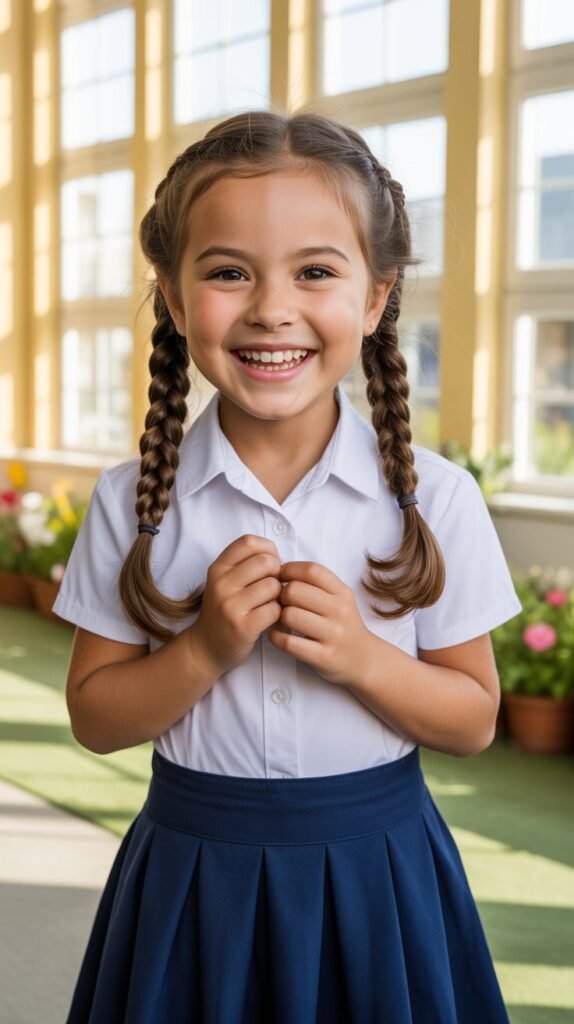
Classic braided pigtails provide double the security of single braids while creating a youthful, traditional appearance.
Braiding Steps:
- Part hair down the center from forehead to nape
- Secure each section into a ponytail at the desired height
- Braid each ponytail using a standard three-strand technique
- Keep braids tight for longer wear, looser for comfort
- Secure each braid end with a small elastic band
- Slightly pull on the braid edges for a fuller appearance
- Add ribbons or decorative ties for extra charm
Ideal For: All hair types, everyday wear, ages 3 and up
15. Sleek Low Ponytail with Side Part
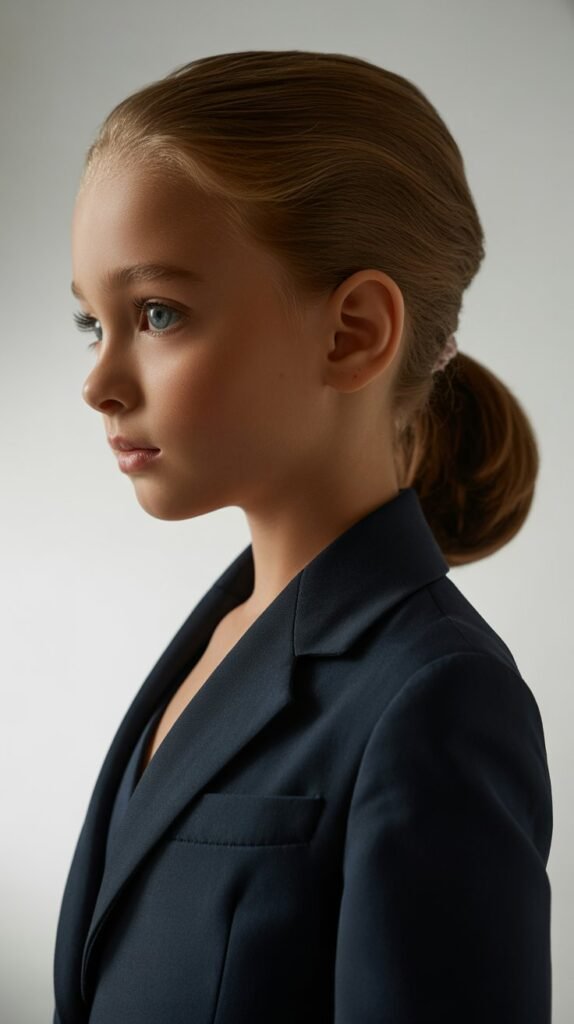
This sophisticated style offers a polished appearance while ensuring complete facial clearance for formal occasions or school photos.
Styling Method:
- Create a defined side part using a fine-toothed comb
- Apply smoothing serum or light gel to tame flyaways
- Brush hair straight back into a low ponytail at the nape
- Secure with a fabric elastic band
- Use a boar bristle brush for maximum smoothness
- Wrap a small section of hair around the elastic to conceal it
- Apply hairspray while brushing for a glossy, polished finish
Ideal For: All hair types, formal events, photo days, ages 5 and up
16. Waterfall Braid
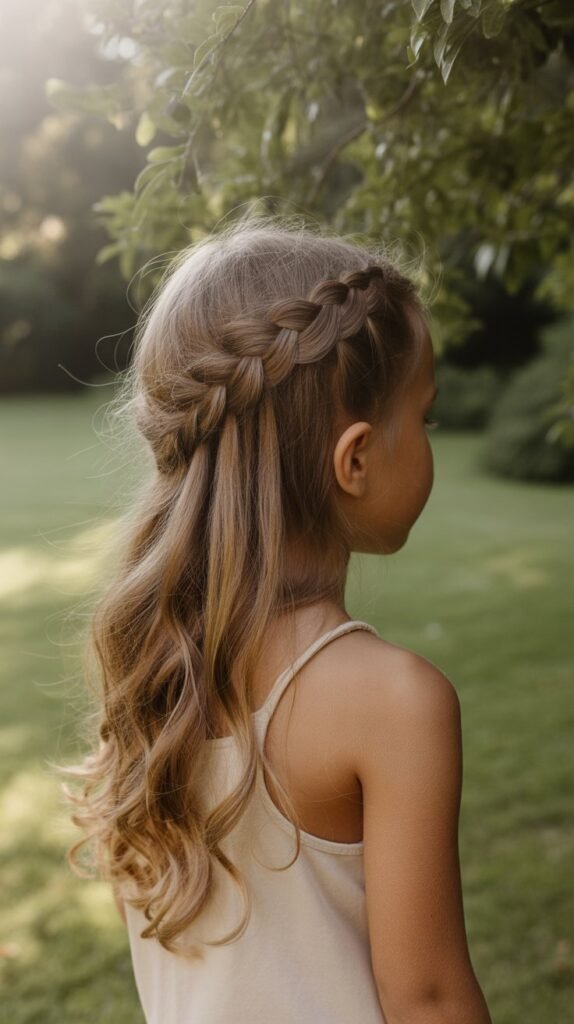
The waterfall braid creates a cascading effect while keeping the top sections secured, allowing some hair to flow freely with front pieces contained.
Weaving Technique:
- Begin with a side part
- Start a basic braid near the temple on the heavier side
- As you braid, drop the bottom strand and pick up a new section from the top
- The dropped strands create the “waterfall” effect
- Continue this pattern across the back of the head
- Secure when reaching the opposite side
- This style keeps bangs and face-framing pieces controlled while maintaining flowing length
Ideal For: Medium to long hair, special occasions, ages 7 and up
17. Messy Bun
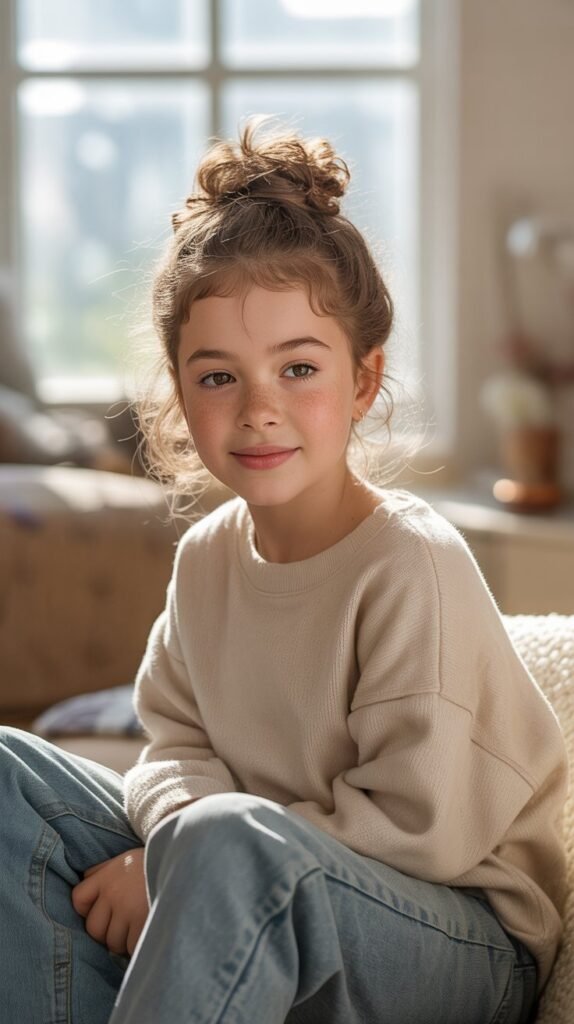
The messy bun offers effortless style while keeping all hair secured, perfect for lazy mornings or casual weekends.
Quick Assembly:
- Gather hair into a high ponytail without excessive smoothing
- Twist the ponytail loosely
- Wrap it around the base in a casual manner
- Secure with bobby pins, allowing some pieces to stick out intentionally
- Pull out a few face-framing tendrils for a softer look
- The deliberately undone appearance requires less precision while maintaining functionality
- Texture spray adds grip and helps the bun hold better
Ideal For: Medium to thick hair, casual days, ages 6 and up
18. Four-Strand Braid

The four-strand braid creates a more intricate pattern than traditional braids while providing exceptional hold for active children.
Advanced Braiding:
- Divide hair into four equal sections
- Cross the outer right section under its neighbor, then over the next section
- Cross the outer left section under its neighbor, then over the next section
- Repeat this under-over pattern alternating sides
- The additional strand creates a wider, flatter braid with superior grip
- Practice this technique several times to build muscle memory
- Secure the end tightly as four-strand braids can unravel more easily than three-strand
Ideal For: Thick hair, special occasions, ages 8 and up
19. Double Bun Style

Double buns positioned at mid-height offer a playful alternative to space buns while providing complete hair control.
Creation Process:
- Part hair horizontally from ear to ear
- Create two ponytails at medium height, one above the other
- Twist and wrap each ponytail into a bun
- Secure each bun with bobby pins and elastics
- Position the buns strategically to balance the overall look
- This stacked arrangement works particularly well for very long or thick hair
- Add decorative pins between the buns for extra flair
Ideal For: Long, thick hair, creative styling days, ages 6 and up
20. Braided Crown with Loose Hair

This style combines the security of a crown braid with the beauty of flowing hair, ideal for special occasions requiring both elegance and practicality.
Styling Approach:
- Section the front portion of hair from temple to temple
- Create a Dutch or French braid across the crown area
- Incorporate only the top sections, leaving the back hair loose
- Secure the braid end behind the ear with bobby pins
- Curl or style the remaining loose hair as desired
- The braided crown keeps face pieces controlled while showcasing hair length and texture
- This versatile style transitions easily from daytime activities to evening events
Ideal For: Medium to long hair, parties and celebrations, ages 6 and up
21. Zigzag Part Ponytail

The zigzag part adds visual interest to a basic ponytail while helping to camouflage visible scalp lines for children with fine hair.
Parting Technique:
- Use the pointed end of a rattail comb to create a zigzag pattern from forehead to crown
- Move the comb in diagonal movements, alternating directions every inch
- Gather all hair into a ponytail at the desired height
- The irregular part line creates dimension and distributes tension more evenly across the scalp
- This technique prevents the straight-line part that can become more visible as the day progresses
- Secure with a covered elastic and finish with smoothing cream on any flyaways
Ideal For: Fine to medium hair, school days, ages 4 and up
22. Twisted Halo

The twisted halo creates a rope-like frame around the face using the child’s own hair, combining elegance with security.
Twisting Method:
- Part hair from ear to ear across the crown
- Divide the front section into two parts at the center
- Twist each section away from the face
- Bring each twisted section to the back and secure with bobby pins
- Cross the twisted sections at the back for added security
- Leave the remaining hair down or gathered into a ponytail
- This style effectively controls bangs and shorter layers around the face
Ideal For: Medium to long hair, dressy casual occasions, ages 5 and up
23. Side Fishtail Braid

The side fishtail braid offers texture and visual complexity while keeping all hair secured to one side of the head.
Fishtail Technique:
- Gather all hair to one side over the shoulder
- Divide into two equal sections
- Take a thin strand from the outer edge of the right section
- Cross it over to join the left section
- Take a thin strand from the outer edge of the left section
- Cross it over to join the right section
- Continue this alternating pattern down to the ends
- The smaller the strands, the more intricate the fishtail appearance
- Secure with an elastic and gently pull on the edges for width
Ideal For: Medium to long hair, weekend outings, ages 7 and up
24. High Bun with Braided Wrap

This style elevates a simple high bun by wrapping it with a braid created from the child’s own hair.
Construction Steps:
- Leave out a small section of hair from the front or side before creating the bun
- Gather the remaining hair into a high ponytail and form a bun
- Secure the bun with bobby pins and elastics
- Braid the reserved section using a three-strand technique
- Wrap the braid around the base of the bun
- Secure the braid end underneath the bun with bobby pins
- This decorative element adds sophistication while increasing the style’s hold
Ideal For: Medium to long hair, dance or gymnastics, ages 6 and up
25. Crisscross Braided Ponytail

This innovative style features small braids that crisscross over the crown before joining into a single ponytail.
Design Process:
- Create multiple small sections at the hairline
- Braid each section and secure temporarily with clips
- Cross the braids over each other in a lattice pattern
- Incorporate all braids and remaining hair into one ponytail
- Remove temporary clips as you add each braid to the final ponytail
- The crossing pattern keeps face-framing pieces extremely secure
- Secure the final ponytail with a strong elastic band
Ideal For: Medium to thick hair, athletic activities, ages 6 and up
26. Low Twisted Pigtails
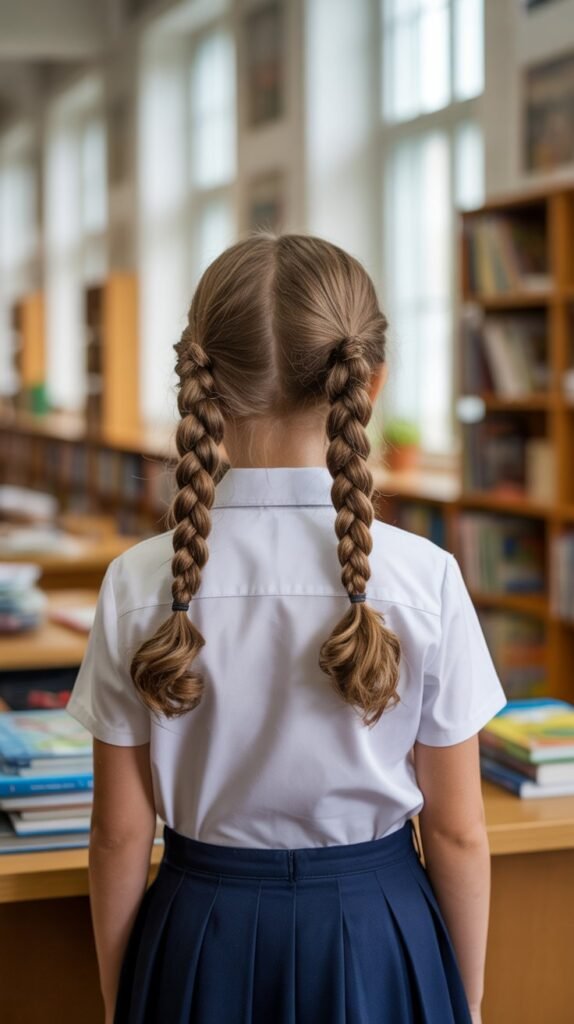
Low twisted pigtails offer a mature alternative to high pigtails while providing the same bilateral security.
Twisting Steps:
- Part hair down the center from forehead to nape
- Divide each section into two smaller sections
- Twist the two sections of each side around each other
- Secure each twisted pigtail at the ends with elastics
- Position the pigtails low at the nape rather than at ear height
- The twisted texture adds dimension while the low placement feels more sophisticated
- Pull gently on the twists to create fuller, rope-like appearance
Ideal For: All hair types, school days, ages 6 and up
27. Bandana Updo

The bandana updo uses fabric accessories to secure hair while adding colorful style elements.
Accessory Integration:
- Fold a bandana or scarf into a long strip
- Place the center of the bandana at the nape of the neck under the hair
- Gather all hair upward toward the crown
- Bring the bandana ends up and tie them at the top of the head
- Tuck hair ends into the secured bandana wrap
- The fabric provides grip and holds shorter layers that might escape traditional styles
- Choose bandana colors that complement the child’s outfit
Ideal For: Medium to long hair, summer days, ages 5 and up
28. Pull-Through Braid Ponytail

The pull-through braid creates the illusion of a complex braid using a series of ponytails, perfect for children who find traditional braiding uncomfortable.
Pull-Through Method:
- Create a ponytail at the crown and secure with an elastic
- Create a second ponytail directly below the first
- Split the first ponytail in half
- Bring these halves around the sides of the second ponytail
- Create a third ponytail that includes the split halves
- Continue this pattern down the length of the hair
- Gently pull on each section to create volume and a braided appearance
- This technique puts less tension on the scalp than traditional braiding
Ideal For: All hair types, sensitive scalps, ages 5 and up
29. Bow Bun

The bow bun transforms a basic bun into a decorative bow shape that delights younger children while keeping hair completely secured.
Bow Creation:
- Gather hair into a high ponytail
- Secure with an elastic, but on the final wrap, create a loop instead of pulling hair through completely
- Divide the loop in half to create two “bow loops”
- Use the remaining tail end to wrap around the center between the loops
- Secure the tail with bobby pins underneath
- Adjust the loops to create even, rounded bow shapes
- This playful style maintains security while adding whimsical appeal
Ideal For: Medium to long hair, parties and photos, ages 4 and up
30. Secure Headband with Hidden Bobby Pins

This final technique uses bobby pin placement and headband selection to keep all hair away from the face without complex styling.
Strategic Pinning:
- Brush hair back from the face smoothly
- Place a comfortable headband approximately one inch back from the hairline
- Use small bobby pins beneath the headband to secure it to the hair
- Insert pins in an X-pattern for maximum hold
- Add additional pins at the sides where the headband curves behind the ears
- Choose headbands with grippy inner material or textured surfaces
- This method works excellently for very short hair or growing-out styles
Ideal For: Short to medium hair, quick solutions, ages 3 and up
Essential Styling Products and Tools
Must-Have Items:
- Fabric-covered elastic bands in various sizes prevent breakage and provide comfortable hold
- Bobby pins in colors matching the child’s hair become invisible when properly placed
- Detangling spray or leave-in conditioner makes morning styling sessions gentler and faster
- Small hair clips help section hair during complex styling processes
- Wide-tooth combs work best for detangling wet or curly hair without causing damage
- Boar bristle brushes smooth hair and distribute natural oils for healthier appearance
- Light-hold hairspray keeps styles in place without creating stiff, uncomfortable texture
- Edge control or smoothing gel tames flyaways around the hairline and part lines
Storage and Organization:
- Designate a specific container for hair accessories to prevent morning searches
- Replace elastics regularly as they lose elasticity and can break hair
- Clean brushes and combs weekly to remove product buildup and shed hair
- Keep styling products in consistent locations for efficient routine establishment
Time-Saving Morning Routine Tips
Preparation Strategies:
- Style hair the night before whenever possible, particularly for braids that can last multiple days
- Establish a consistent hair routine so children know what to expect each morning
- Let children choose between two or three pre-approved styles to give them ownership while maintaining boundaries
- Use silk or satin pillowcases to reduce nighttime tangles and preserve styles longer
- Apply leave-in conditioner to damp hair before bed to make morning brushing easier
- Set out hair accessories the night before alongside the chosen outfit
- Allocate specific time for hair styling in the morning routine to prevent rushing
- Practice new hairstyles on weekends when time pressure is reduced
Efficiency Techniques:
- Master three go-to styles for different occasions rather than attempting many complex options
- Keep a spray bottle of water nearby to refresh and restyle sections without complete rewashing
- Work with the child’s natural hair texture rather than fighting against it
- Accept that not every style needs to be perfect—secure and comfortable outweigh salon-quality appearance
Age-Appropriate Styling Considerations
Toddlers (Ages 2-4):
- Keep styles simple with minimal time requirements as attention spans are limited
- Choose hairstyles that don’t require the child to sit still for extended periods
- Avoid styles with excessive bobby pins that curious hands might remove
- Select soft elastics and gentle products suitable for sensitive scalps
- Prioritize comfort over complexity to prevent negative associations with hair styling
Young Children (Ages 5-7):
- Introduce slightly more complex styles as coordination and patience develop
- Begin teaching children to participate in their hair care routine
- Focus on styles that withstand playground activities and physical education classes
- Allow children to select accessories to build interest in personal grooming
- Maintain realistic expectations about style longevity during highly active periods
Older Children (Ages 8-12):
- Encourage independence by teaching children to style their own hair
- Introduce heat-free styling techniques for creating texture and volume
- Respect growing preferences for personal style and self-expression
- Teach proper hair care practices including gentle detangling and product use
- Support experimentation with different looks while maintaining school dress code compliance
Maintaining Hairstyles Throughout the Day
Extended Wear Strategies:
- Apply light hairspray after completing styles that need to last through multiple activities
- Teach children to avoid touching or playing with their hair unnecessarily
- Carry a small emergency kit with extra elastics, pins, and a small comb for quick fixes
- Choose hairstyles appropriate to the day’s scheduled activities—secure braids for sports, softer styles for indoor activities
- Use texturizing products or dry shampoo to add grip for styles on second-day hair
- Position ponytails and buns strategically to avoid discomfort during car rides or leaning back
- Check and adjust styles midday if possible, particularly before afternoon activities
Addressing Common Problems:
- Bump the base of loose ponytails by gently pushing up on the elastic if they slide down
- Re-pin buns that lose bobby pins by inserting fresh pins in new positions
- Smooth new flyaways with a small amount of water or edge control product
- Tighten braids that loosen by weaving bobby pins through loose sections
- Add small decorative clips to secure pieces that escape from updos
Special Considerations for Different Hair Types
Fine Hair Challenges:
- Use volumizing products at the roots before styling to prevent flat, limp appearances
- Avoid heavy products that weigh down fine hair and cause styles to fall
- Tease or backcomb gently at the crown before creating ponytails to add height and prevent slipping
- Choose smaller elastics that grip fine hair more effectively than larger bands
- Layer multiple thin elastics rather than wrapping one elastic multiple times to prevent breakage
- Consider texturizing sprays that add grip without visible residue
- Braid slightly damp hair for better hold and reduced slippage throughout the day
Thick Hair Solutions:
- Section hair into multiple parts when creating any style to ensure thorough coverage
- Use large, strong elastics specifically designed for thick hair volumes
- Insert bobby pins at opposing angles to create X-patterns that hold heavy hair securely
- Allow extra time for styling as thick hair requires more manipulation
- Consider hair donuts or foam forms for buns to distribute weight more evenly
- Apply smoothing products in sections rather than all at once for even distribution
- Avoid styles that require hair to stay twisted tightly for extended periods as this can cause headaches
Curly and Textured Hair Techniques:
- Always work with moisturized hair—never attempt to style dry curly hair
- Use wide-tooth combs or fingers to detangle gently from ends to roots
- Apply leave-in conditioner or curl cream before styling to maintain moisture
- Embrace the hair’s natural texture rather than forcing it into styles designed for straight hair
- Consider protective styles like braids that last multiple days and reduce daily manipulation
- Use satin or silk scrunchies instead of regular elastics to prevent curl damage
- Refresh curls between washings with water and leave-in conditioner spray
- Follow the LOC (liquid, oil, cream) or LCO method for optimal moisture retention
Straight Hair Approaches:
- Add texture with braiding overnight or using foam rollers before styling
- Use dry shampoo or texturizing spray to add grip for better style retention
- Straight hair often shows every bump and imperfection, so focus on smooth technique
- Styles may need more product or pins to stay in place compared to textured hair
- Consider side parts or off-center styles to add visual interest to naturally straight hair
- Use shine serums sparingly to enhance natural gloss without creating greasiness
Seasonal Hair Styling Adaptations
Summer Hairstyles:
- Prioritize styles that keep hair completely off the neck and shoulders for cooling
- Choose water-resistant elastics and products for pool and beach activities
- Implement protective styles like braids to minimize sun damage and chlorine exposure
- Apply leave-in UV protection products before outdoor activities
- Consider shorter styles or regular trims during hot months for easier management
- Increase washing frequency during summer to remove sweat, sunscreen, and pool chemicals
- Use lightweight products that won’t feel heavy or sticky in humidity
Winter Considerations:
- Add extra moisture treatments as indoor heating dries out hair
- Protect styles under hats by choosing low buns or braids that fit comfortably
- Use anti-static products to combat winter flyaways caused by dry air
- Avoid going outside with wet or damp hair in freezing temperatures
- Consider slightly looser styles as tight hairstyles combined with hats can cause tension headaches
- Apply oil treatments to ends more frequently to prevent winter breakage
- Remove hats carefully to avoid disrupting carefully created styles
School Year Routines:
- Establish consistent styling routines for weekday mornings to reduce decision fatigue
- Choose durable styles that last through physical education classes and recess
- Follow school dress code policies regarding hair accessories and styles
- Prepare simple emergency fixes for mid-day hair disasters
- Coordinate hairstyle complexity with morning schedules—save elaborate styles for slower days
- Keep photo day schedules in mind when planning special styles
Holiday and Special Occasions:
- Practice formal styles several times before the actual event
- Build extra time into preparation schedules for elaborate hairstyles
- Coordinate hair accessories with outfit colors and themes
- Consider professional styling for once-in-a-lifetime events like weddings
- Take photos of successful special occasion styles for future reference
- Bring touch-up supplies to lengthy events like recitals or ceremonies
Teaching Children to Style Their Own Hair
Building Independence:
- Start with simple styles like basic ponytails around age 6-7
- Practice on dolls or mannequins before attempting self-styling
- Stand behind the child while they look in a mirror to guide their hands
- Break down each style into small, manageable steps
- Celebrate progress and effort rather than perfection
- Create visual instruction cards with step-by-step photos for reference
- Designate practice time separate from rushed morning routines
Progressive Skill Development:
- Begin with pulling hair into a ponytail using hands only
- Add elastic band placement once gathering technique is mastered
- Progress to creating parts with fingers, then with combs
- Introduce basic braiding on a single section before attempting full braids
- Teach bobby pin insertion techniques on secured styles first
- Gradually increase style complexity as confidence builds
- Encourage problem-solving when styles don’t work the first time
Helpful Learning Tools:
- Provide child-sized brushes and combs that fit comfortably in smaller hands
- Use colored elastics initially so children can easily see what they’re working with
- Install a lower mirror at the child’s height for better visibility
- Create a comfortable styling station with good lighting
- Keep supplies organized in labeled containers for easy access
- Show video tutorials together and pause to practice each step
- Join online communities where children share their styling achievements
Hair Health and Damage Prevention
Gentle Handling Practices:
- Always detangle from the ends upward to minimize breakage
- Use appropriate brush types for the child’s specific hair texture
- Avoid pulling hair too tightly, which can cause traction alopecia over time
- Limit heat styling tools, opting for heat-free methods whenever possible
- Allow hair to air-dry partially before styling when time permits
- Rotate hairstyle locations to prevent stress on the same scalp areas
- Remove elastics carefully by cutting them out if severely tangled
Signs of Hair Damage:
- Increased breakage or split ends appearing more frequently
- Bald patches or thinning areas, particularly around the hairline
- Complaints of scalp pain or sensitivity during styling
- Hair that tangles more easily than it previously did
- Loss of natural shine or increasingly dull appearance
- Brittle texture or hair that snaps easily when stretched
- Scalp irritation, redness, or visible bumps
Corrective Measures:
- Reduce styling frequency and opt for looser styles temporarily
- Implement deep conditioning treatments weekly for damaged hair
- Trim damaged ends regularly to prevent splits from traveling up the hair shaft
- Consult a pediatric dermatologist if hair loss or scalp issues persist
- Switch to silk or satin accessories that cause less friction
- Avoid chemical treatments, dyes, or harsh products on children’s hair
- Ensure adequate nutrition including proteins, vitamins, and healthy fats for hair health
Working with Professional Stylists
When to Seek Professional Help:
- For significant haircut decisions that will affect styling options
- When dealing with severe tangling or matting beyond home remedy capabilities
- To learn specialized techniques for unique hair textures or conditions
- Before major events when professional results are desired
- If the child expresses interest in a dramatic style change
- When experiencing persistent scalp issues or unexplained hair loss
Communicating with Stylists:
- Bring reference photos of desired styles from multiple angles
- Explain the child’s daily activities and styling time constraints
- Discuss the child’s sensitivity levels and comfort requirements
- Ask for at-home maintenance instructions and product recommendations
- Request demonstrations of techniques you can replicate at home
- Schedule appointments during calm times when the child is well-rested
- Communicate clearly about length preferences using specific measurements
Maximizing Salon Visits:
- Arrive with clean, detangled hair unless otherwise instructed
- Bring familiar comfort items for anxious children
- Allow the child to participate in style decisions appropriate to their age
- Take notes or photos during the stylist’s explanations
- Ask about the longevity and upkeep requirements of suggested styles
- Discuss budget-friendly alternatives if recommended products are costly
- Schedule regular maintenance appointments to keep styles manageable
Budget-Friendly Styling Solutions
Cost-Effective Product Alternatives:
- Use coconut oil or olive oil as deep conditioning treatments instead of expensive masks
- Create DIY detangling spray with water and a small amount of conditioner in a spray bottle
- Purchase elastic bands in bulk from craft stores rather than specialized hair sections
- Use fabric scraps or old t-shirts cut into strips as gentle hair ties
- Make hair accessories from ribbons and felt available at discount craft stores
- Buy basic bobby pins in large quantities and spray paint them to match different hair colors
- Use aloe vera gel as a natural alternative to commercial edge control products
Money-Saving Strategies:
- Learn to trim bangs and basic layers at home using online tutorials
- Form hair styling exchanges with other parents to share skills and ideas
- Purchase quality tools once rather than repeatedly buying cheap versions that break
- Buy styling products in larger sizes when on sale for better per-ounce value
- Repurpose clean mascara wands as inexpensive edge smoothing tools
- Create multiple styles from basic supplies rather than buying specialized accessories
- Join buy-nothing groups or children’s clothing swaps that include hair accessories
DIY Accessory Projects:
- Create fabric hair bows using scrap material and elastic
- Make beaded hair ties using large pony beads and elastic cord
- Design personalized headbands by wrapping plain bands with ribbon or fabric
- Construct hair clips by gluing decorations onto plain bobby pins or barrettes
- Fashion scrunchies from fabric remnants and elastic thread
- Create seasonal accessories by adding themed decorations to basic supplies
Addressing Common Parenting Challenges
Resistance to Hair Styling:
- Involve children in style selection to increase cooperation and buy-in
- Make styling time enjoyable with music, stories, or favorite shows
- Break the process into shorter sessions if attention spans are limited
- Offer small rewards or incentives for patient cooperation
- Explain the practical reasons for keeping hair away from the face
- Allow children to style a doll’s hair while you style theirs
- Respect genuine discomfort and adjust techniques rather than forcing compliance
Time Management Issues:
- Establish consistent routines that children can predict and prepare for
- Wake up fifteen minutes earlier on school days specifically for hair time
- Prepare supplies the night before to eliminate morning searching
- Choose a signature style for rushed mornings that everyone knows by heart
- Accept that some days require simpler solutions than others
- Teach older children to begin styling independently while you supervise
- Consider wash-and-go styles when schedules are particularly hectic
Dealing with Hair-Related Sensory Issues:
- Use extra-soft brushes designed for sensitive scalps
- Warm products slightly in your hands before applying to hair
- Allow children to control the tightness of ponytails within reasonable limits
- Avoid sprays directly on the scalp for children who dislike the sensation
- Provide fidget toys to occupy hands during styling sessions
- Take breaks if the child becomes overwhelmed or distressed
- Consult occupational therapists if sensory issues significantly impact daily routines
Cultural and Personal Expression Considerations
Respecting Cultural Practices:
- Research appropriate styling techniques for different hair textures and cultural traditions
- Learn from resources created by people who share your child’s hair type
- Avoid cultural appropriation by understanding the significance of certain styles
- Teach children to appreciate their natural hair texture and cultural heritage
- Seek stylists experienced with your child’s specific hair type when professional help is needed
- Connect with community groups that celebrate diverse hair types and styling traditions
Supporting Self-Expression:
- Allow children age-appropriate input in their hairstyle choices
- Respect evolving preferences as children develop their personal style
- Set reasonable boundaries that balance self-expression with practical considerations
- Teach children that hair is a form of self-expression that can change over time
- Avoid projecting your own hair preferences onto your child
- Support experimentation with temporary colors, accessories, or styles
- Help children understand school policies while finding creative ways to express themselves within guidelines
Building Positive Hair Identity:
- Speak positively about your child’s hair regardless of texture or manageability
- Avoid comparing their hair to siblings or other children
- Celebrate the unique characteristics of their specific hair type
- Teach proper terminology for hair textures without judgmental language
- Expose children to diverse representations of beauty in media and books
- Address negative comments from peers by building confidence and resilience
- Model healthy hair care attitudes through your own hair care practices
Quick Problem-Solving Guide
Common Issues and Rapid Solutions:
- Ponytail slipping down: Push elastic up while gathering hair in your other hand, then add second elastic
- Visible elastic bands: Wrap small section of hair around elastic and secure with bobby pin underneath
- Braids unraveling: Apply small amount of gel or hairspray before braiding, secure ends with multiple elastics
- Bumpy ponytails: Use fine-tooth comb to smooth sections before gathering, apply water or smoothing serum
- Bobby pins falling out: Insert at opposing angles creating X-pattern, or replace with new pins that have better grip
- Headband slipping: Secure with bobby pins underneath, or choose textured headbands with better grip
- Frizzy flyaways: Apply small amount of hairspray to toothbrush and smooth over problem areas
- Part won’t stay straight: Use rattail comb and apply gel or edge control along the part line
Emergency Kit Essentials:
- Multiple elastic bands in the child’s hair color
- Ten bobby pins in matching color
- Small comb or brush
- Single-use packets of hair gel or edge control
- Mini hairspray (travel size)
- Hair clips for temporary securing
- Headband as backup option
- Small mirror for checking styles
Conclusion
Managing children’s hair successfully requires patience, practice, and the right techniques to ensure comfort throughout busy days.
These 30 Practical Kids’ Hairstyles to Keep Hair Away from the Face offer versatile solutions for every hair type, activity level, and occasion your child encounters.
From simple morning ponytails to elaborate special-occasion braids, each style has been selected for its ability to withstand the demands of childhood while maintaining the primary goal of keeping hair away from the face.
Remember that the best hairstyle is one your child finds comfortable and you can execute confidently within your available time.
As you practice these techniques, you’ll discover which styles work best for your child’s unique hair texture, daily activities, and personal preferences.
The investment in learning proper styling techniques pays dividends in smoother morning routines, increased child comfort, and reduced hair-related frustrations.
Whether you’re preparing your child for school, sports, special events, or simply want a practical solution for everyday wear, these hairstyles provide the foundation for successful hair management that grows with your child through different ages and stages.
