Long layered hairstyles have remained a cornerstone of elegant styling for decades, offering versatility that flatters every face shape and hair texture.
Whether you’re seeking volume, movement, or a sophisticated edge, the right layering technique can transform your look from ordinary to extraordinary.
In this comprehensive guide to 30 Timeless Long Layered Hairstyles for a Polished Look, we’ll explore classic cuts, modern interpretations, styling techniques, and maintenance tips that will help you achieve salon-worthy results.
From soft cascading layers to bold dramatic cuts, you’ll discover the perfect style to complement your personality and lifestyle while learning how to keep your layered locks looking fresh and polished every day.
1. Classic Face-Framing Layers
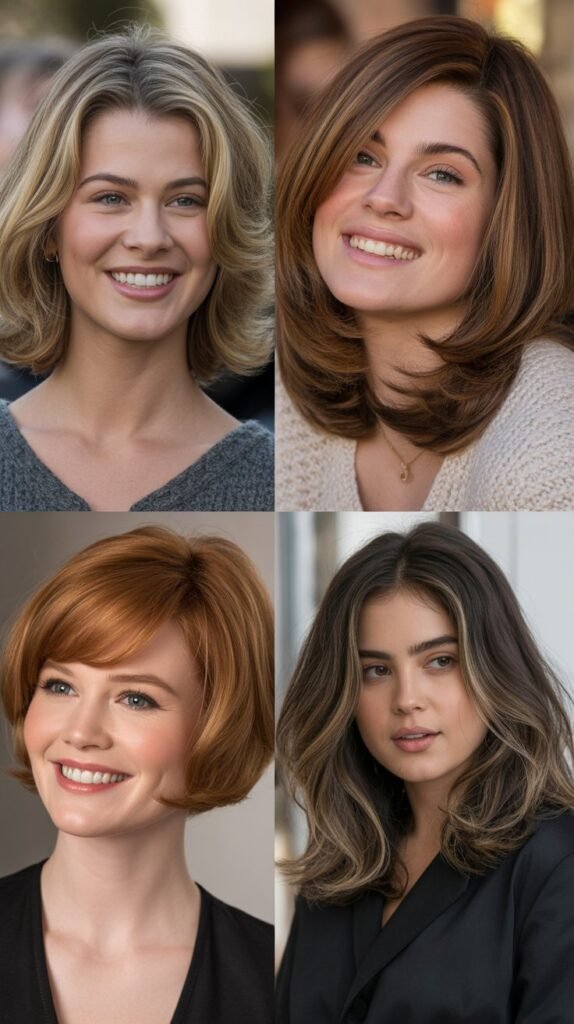
Face-framing layers remain one of the most flattering and timeless approaches to long layered hair, strategically cutting shorter pieces around the face to highlight your best features while maintaining length throughout the rest of the hair.
- Face-framing layers work by creating dimension that draws attention to the eyes and cheekbones while softening angular jawlines.
- The layers typically begin at chin or cheek level and gradually blend into the longer hair, creating a seamless transition.
- This style works exceptionally well for those with round or square face shapes as it creates the illusion of length.
- Styling requires minimal effort with just a round brush and blow dryer to achieve a polished finish.
- Face-framing layers add movement without sacrificing the overall length that many long-haired individuals cherish.
- Regular trims every 8-10 weeks help maintain the precision of the face-framing pieces and prevent split ends.
2. Long Layered Bob (Lob) with Extended Length
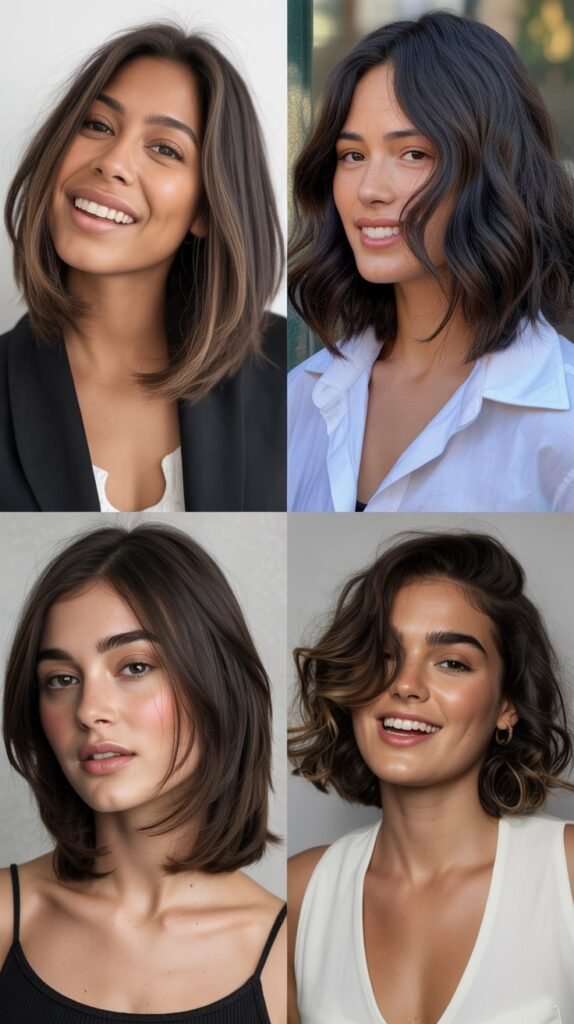
The long layered bob with extended length offers the sophistication of a lob while maintaining hair that reaches past the shoulders, creating a hybrid style that delivers both structure and flow.
- The extended lob typically falls between collarbone and mid-chest length, offering versatility for various styling options.
- Internal layers remove bulk while maintaining a polished, refined silhouette that looks intentional and sophisticated.
- The style flatters oval and heart-shaped faces particularly well by balancing proportions.
- Blow-drying with a paddle brush creates a sleek look, while air-drying with texturizing products yields effortless waves.
- This cut requires less maintenance than shorter bobs while still providing the structure and shape that defines the lob aesthetic.
3. Soft Cascading Layers Throughout
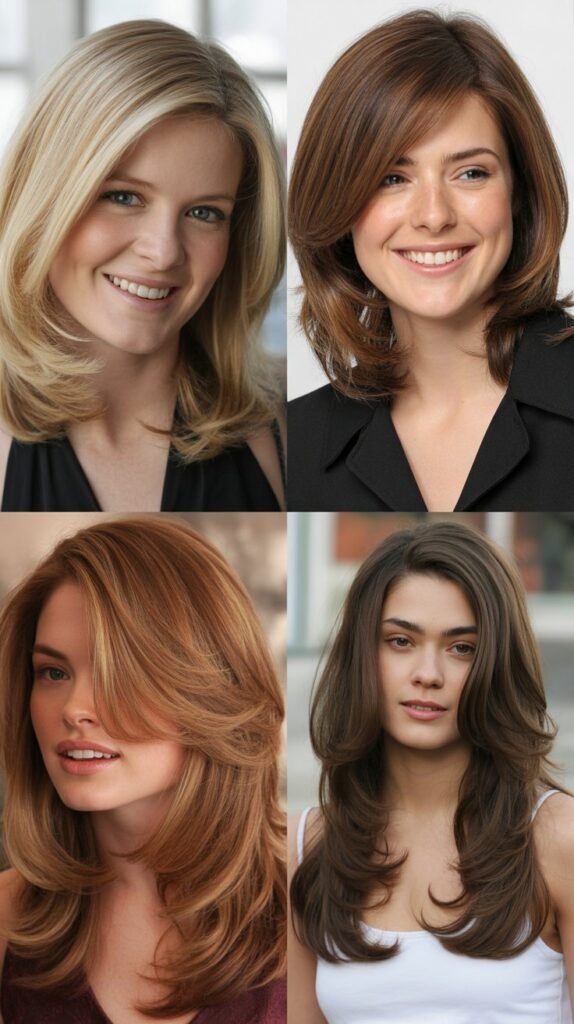
Soft cascading layers distributed evenly throughout long hair create romantic, flowing movement that catches light beautifully and adds dimension from every angle.
- Cascading layers begin at varying points throughout the hair, creating a waterfall effect that enhances natural movement.
- This technique works beautifully with wavy and curly hair textures as it encourages the natural pattern while reducing weight.
- The gradual length variation prevents harsh lines and creates a cohesive, blended appearance.
- Soft cascading layers add volume to fine hair without creating a choppy or disconnected look.
- Styling products like lightweight mousses and texturizing sprays enhance the cascading effect without weighing hair down.
- This versatile style transitions seamlessly from casual daytime wear to elegant evening looks with minimal adjustment.
4. V-Shaped Layered Cut
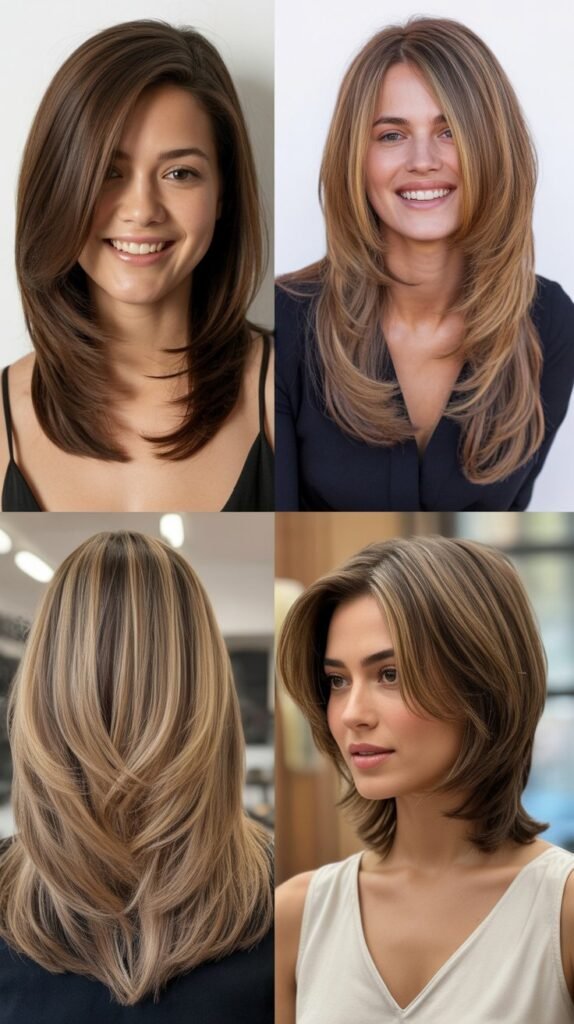
The V-shaped layered cut creates a dramatic, eye-catching silhouette when viewed from behind, with the longest point at the center creating a distinctive V formation.
- The V-shape is achieved by gradually increasing the length toward the center back, creating an unmistakable geometric form.
- This cut adds visual interest and drama while maintaining substantial length in the central section.
- V-shaped layers work particularly well for those with thick hair as they remove bulk from the sides while showcasing length.
- The style creates a slimming effect on the overall silhouette and draws the eye downward in a flattering manner.
- Straightening irons and smoothing serums help define the sharp V point for a polished, intentional appearance.
- Regular trims are essential to maintain the precise V formation and prevent the shape from becoming rounded or uneven.
5. Feathered Long Layers
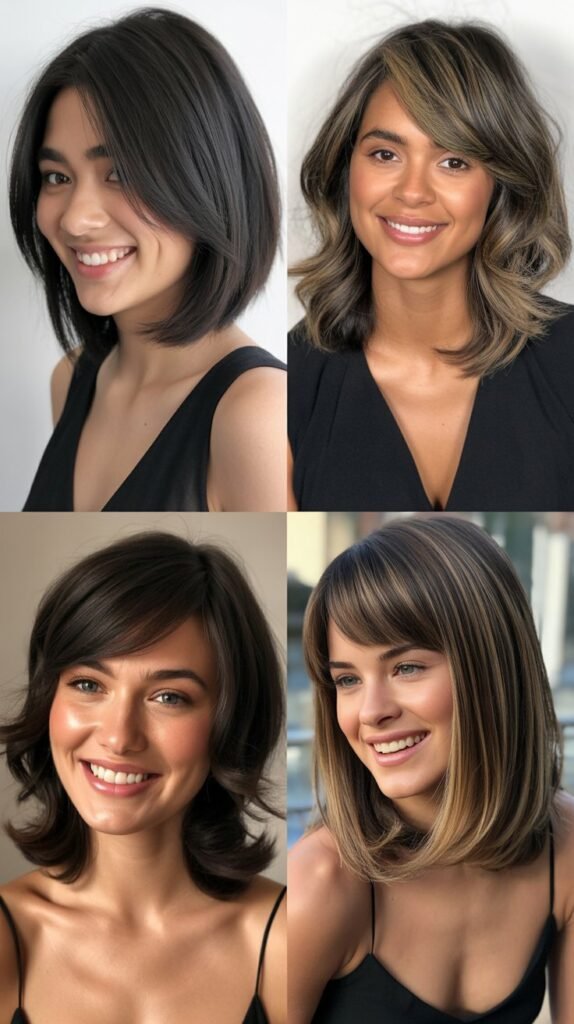
Feathered long layers incorporate delicate, wispy ends that create a soft, airy quality reminiscent of the iconic styles from the 1970s but updated for contemporary aesthetics.
- Feathering is achieved through point-cutting techniques that create texture at the ends while maintaining length throughout.
- This style adds movement and reduces the appearance of bulk without requiring dramatic length variation.
- Feathered layers work beautifully for fine to medium hair textures, creating the illusion of fuller, thicker hair.
- The wispy ends catch light differently than blunt cuts, adding dimension and visual interest.
- Blow-drying with fingers running through the hair enhances the feathered effect and creates natural-looking separation.
- Light-hold hairsprays and finishing creams help maintain the feathered texture without creating stiffness or heaviness.
6. Layered Hair with Curtain Bangs
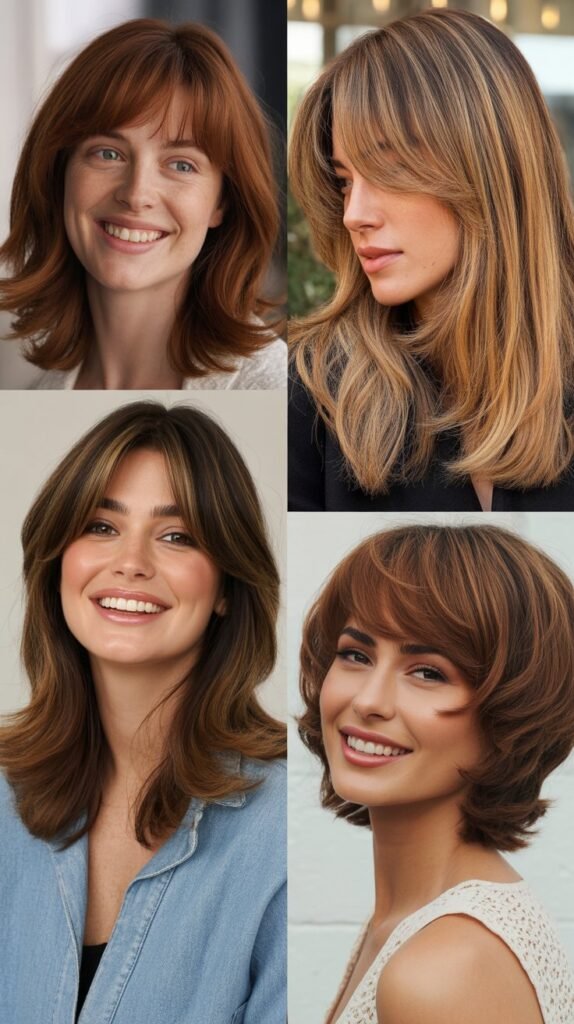
Combining long layers with curtain bangs creates a cohesive, face-flattering style that frames features beautifully while maintaining overall length and movement.
- Curtain bangs are parted in the middle and sweep to either side, creating a soft framing effect that complements layered cuts.
- The bangs typically reach cheekbone to chin length, blending seamlessly with the first layer of face-framing pieces.
- This combination works exceptionally well for those wanting to soften a prominent forehead or balance facial proportions.
- Curtain bangs require minimal styling commitment compared to full, straight-across bangs.
- A round brush and blow dryer directed away from the face create the signature outward sweep of curtain bangs.
- The style grows out gracefully, transitioning naturally into the face-framing layers without an awkward intermediate phase.
7. Shag-Inspired Long Layers
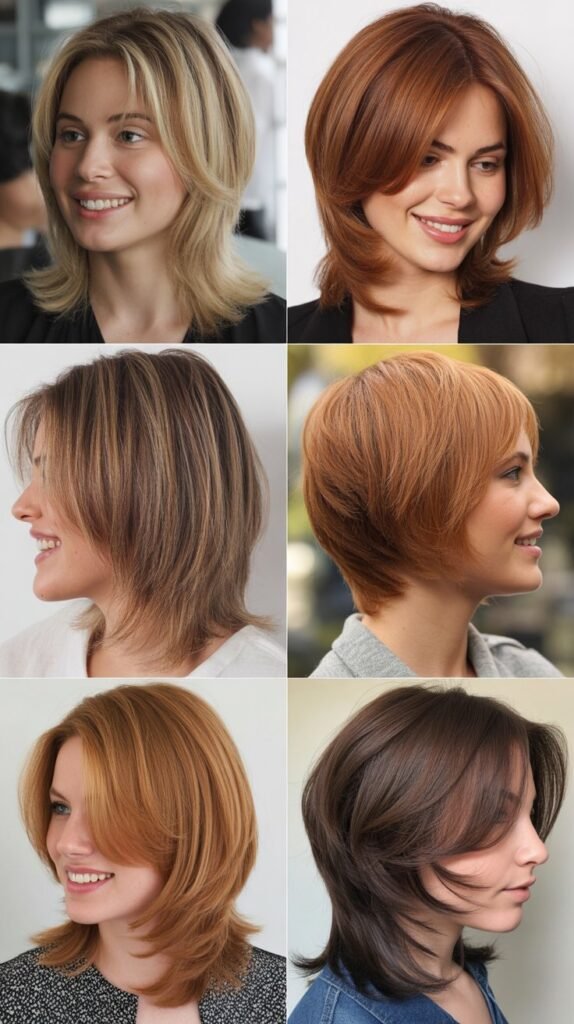
Modern shag-inspired long layers bring edgy texture and rock-and-roll attitude to traditional long hairstyles through strategic, choppy layering throughout.
- The modern shag incorporates more layering through the crown and mid-lengths compared to traditional long layered cuts.
- This style creates maximum volume at the roots and textured, piece-y ends for an effortlessly cool aesthetic.
- Shag layers work particularly well for those with naturally wavy or textured hair that embraces movement.
- The intentional “undone” appearance actually requires thoughtful cutting techniques to achieve a balanced, flattering result.
- Sea salt sprays, texturizing creams, and diffusing enhance the shaggy texture while maintaining definition.
- This style suits those seeking a low-maintenance cut that looks stylish with minimal daily styling effort.
8. Blunt Bottom with Internal Layers
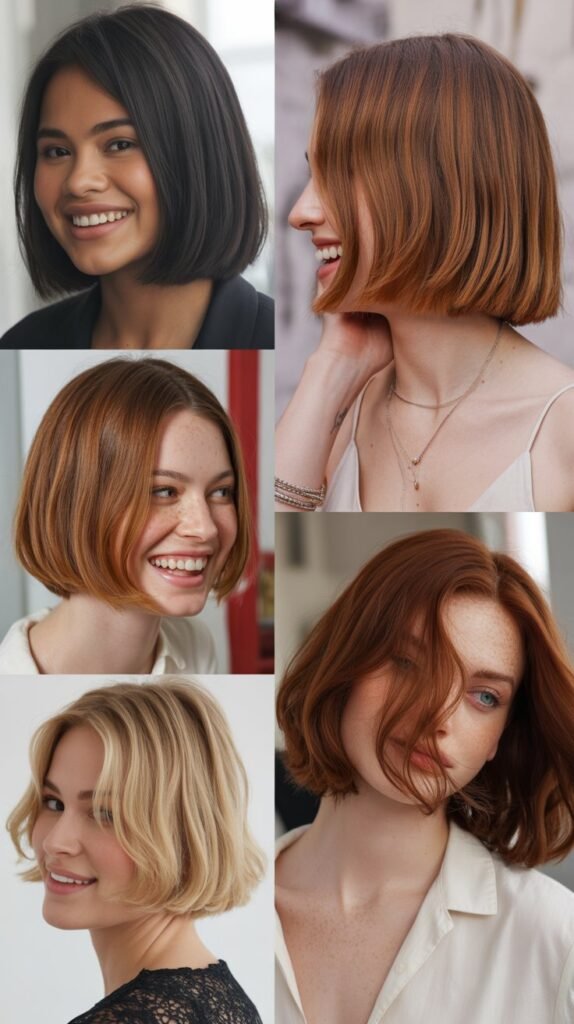
A blunt bottom perimeter combined with internal layers creates a polished, healthy-looking finish while removing bulk and adding movement throughout the interior of the hair.
- This technique maintains a solid, blunt line at the ends while incorporating layers that begin higher up in the hair.
- Internal layering removes weight without affecting the polished, intentional appearance of the perimeter.
- The blunt bottom creates the appearance of thicker, healthier hair regardless of actual density.
- This style works beautifully for professional settings where a refined, put-together appearance is essential.
- Flat irons and smoothing products enhance the sleek, polished finish of the blunt bottom.
- The contrast between the structured perimeter and the internal movement creates sophisticated dimension.
9. Long Layers with Balayage Highlights
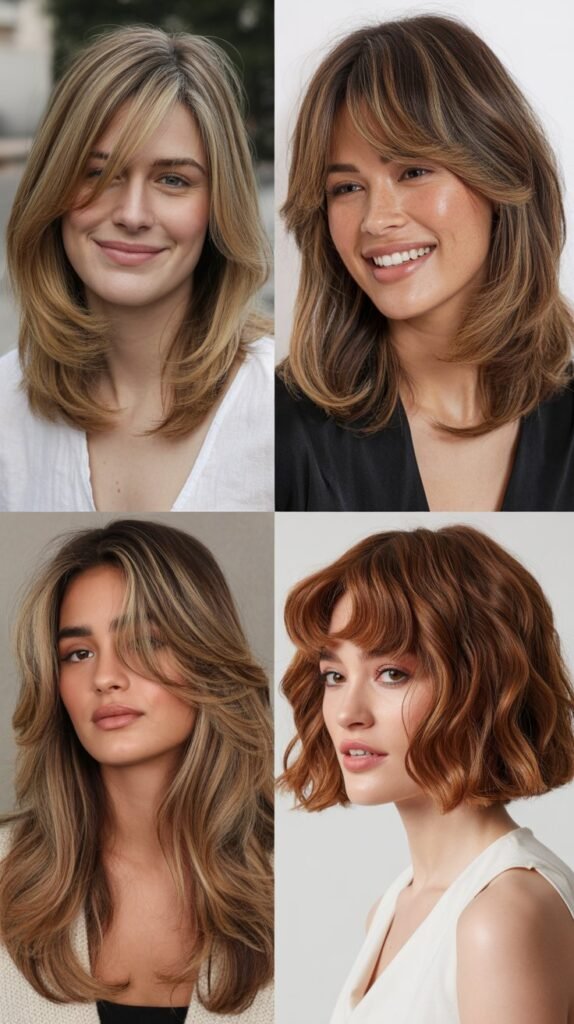
Combining long layers with balayage highlights creates multi-dimensional color that enhances the depth and movement created by the layered cut.
- Balayage application on layered hair strategically places lighter pieces where layers fall, accentuating the cut’s structure.
- The hand-painted highlighting technique creates a sun-kissed effect that looks natural and grows out gracefully.
- Lighter pieces at the ends draw attention to the layering while adding visual interest without requiring dramatic styling.
- This combination works across all base colors, from deep brunettes to platinum blondes.
- Purple-toning shampoos and color-protecting treatments maintain the vibrancy of highlights between salon visits.
- The layered cut allows highlights to move and catch light dynamically, maximizing the investment in color services.
10. Razored Long Layers
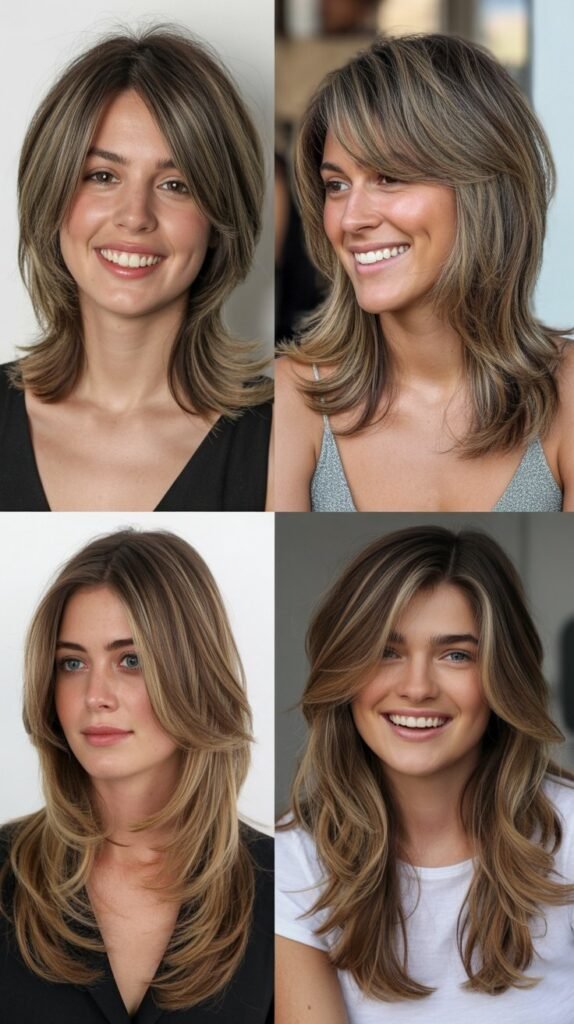
Razored long layers utilize a razor rather than scissors to create ultra-soft, textured ends that blend seamlessly and create exceptional movement.
- Razor cutting creates a different texture than scissor cutting, resulting in thinner, more tapered ends.
- This technique works exceptionally well for thick, coarse hair that needs weight removed without appearing choppy.
- Razored layers create a lived-in, effortless appearance that requires minimal styling to look polished.
- The softened ends blend beautifully, eliminating harsh lines between layers.
- Deep conditioning treatments are essential for razored hair as the technique can expose more of the hair shaft.
- This cutting method creates maximum movement and sway, ideal for those wanting hair that flows naturally.
11. Long Layers with Side-Swept Bangs
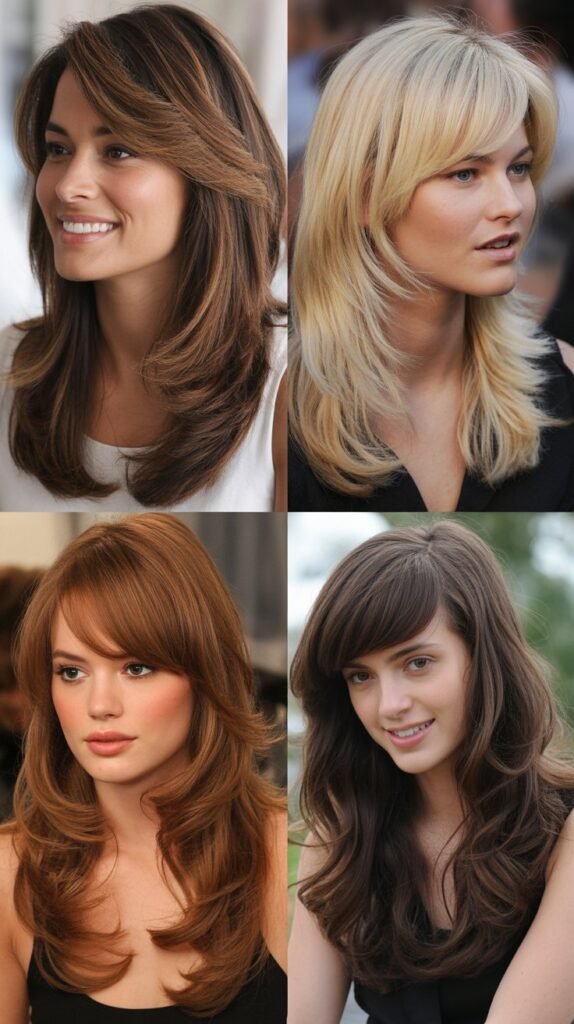
Long layers paired with side-swept bangs create asymmetry that flatters most face shapes while adding vintage-inspired sophistication to the overall style.
- Side-swept bangs add softness to angular features and create visual interest at the hairline.
- The bangs typically reach eyebrow to cheekbone length and sweep dramatically to one side.
- This combination works particularly well for those with round or square faces as it creates diagonal lines that elongate.
- Side-swept bangs can be easily incorporated into updos and ponytails for versatile styling options.
- A round brush and blow dryer directed to the side create the signature sweep, with light-hold hairspray maintaining the position.
- The style offers the framing benefits of bangs without the full commitment of straight-across fringe.
12. Graduated Long Layers
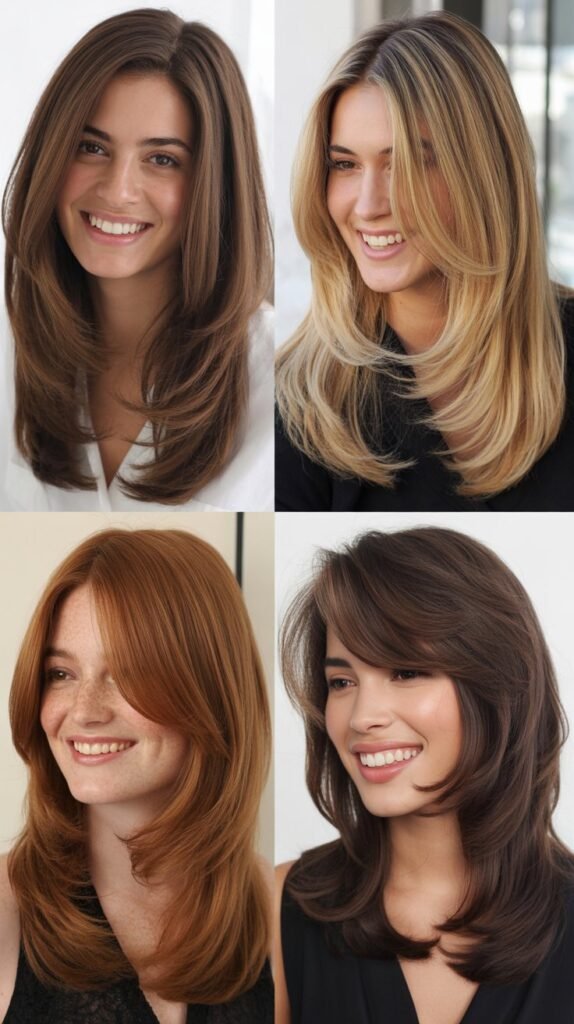
Graduated long layers feature more dramatic length variation, with shorter layers at the crown gradually increasing in length toward the ends for maximum volume and dimension.
- Graduated layering creates a stacked effect that adds height at the crown while maintaining length at the perimeter.
- This technique works beautifully for fine or flat hair, creating the illusion of substantial volume and thickness.
- The dramatic length variation creates movement in all directions, resulting in dynamic, eye-catching hair.
- Graduated layers require more frequent trims to maintain the shape and prevent the shortest layers from becoming awkwardly long.
- Volumizing products applied at the roots enhance the lifted appearance created by the graduated structure.
- This style suits those wanting maximum impact and aren’t concerned with maintaining one-length hair.
13. Long Layers with Subtle Highlights
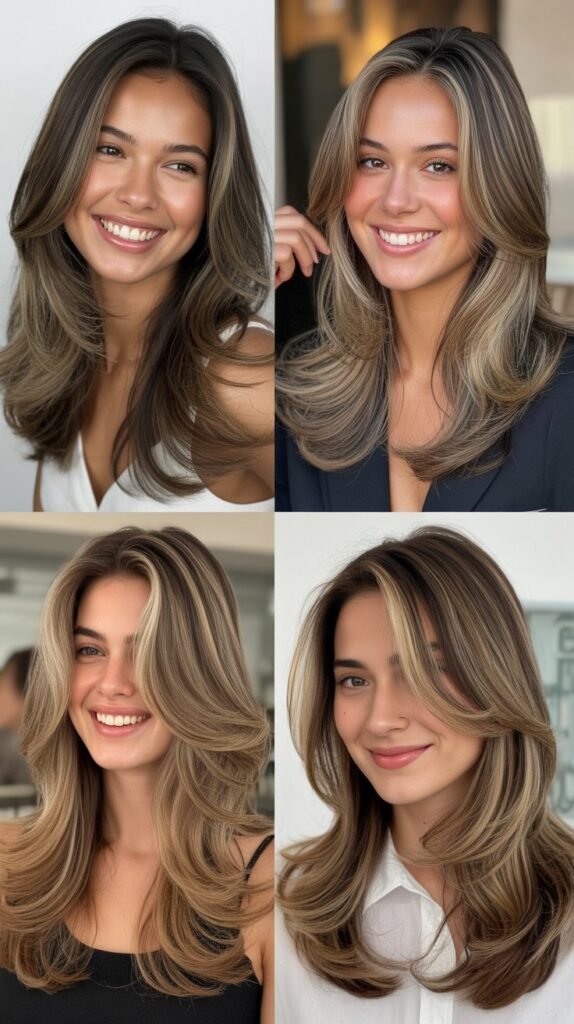
Long layers combined with subtle, natural-looking highlights create dimension that enhances the cut’s depth without overwhelming the overall look.
- Subtle highlights placed strategically throughout layered hair mimic natural sun lightening and enhance facial features.
- This approach works across all hair colors, using tones just a few shades lighter than the base for seamless blending.
- The combination adds visual interest for those who want enhancement without dramatic color commitment.
- Highlights placed at the face-framing layers draw attention to the eyes and create a brightening effect.
- Low-maintenance color options like babylights or subtle balayage grow out gracefully, minimizing upkeep requirements.
- Color-safe shampoos and weekly conditioning masks preserve the integrity of both the cut and color.
14. Textured Long Layers
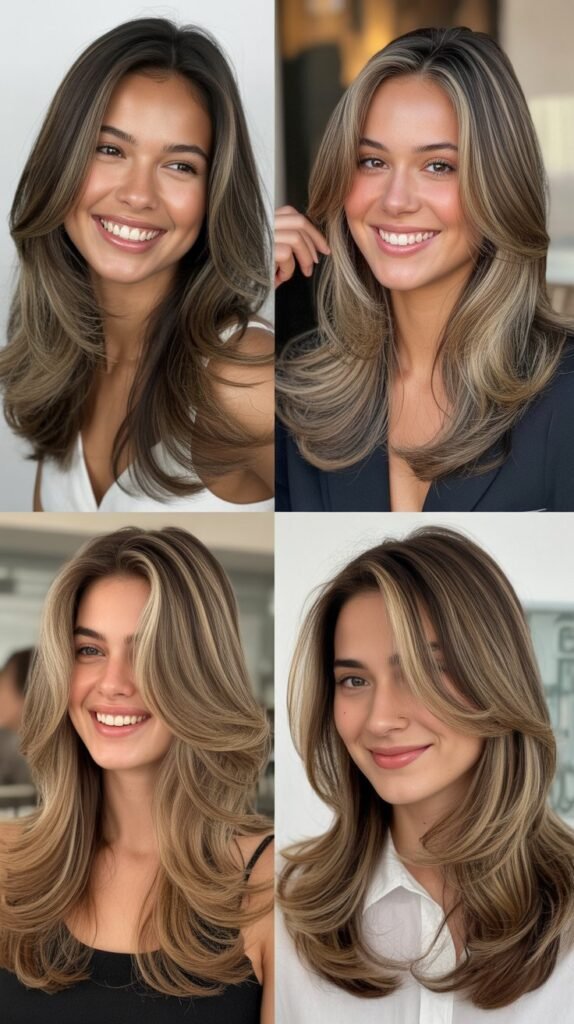
Textured long layers incorporate intentional, piece-y separation that creates modern, editorial-worthy styling with a effortlessly undone finish.
- Textured layering uses point-cutting and slide-cutting techniques to create varying lengths within each section.
- This approach works particularly well with second-day hair or intentionally “lived-in” styling aesthetics.
- The separated, piece-y quality adds edge and personality to what might otherwise be a conservative long style.
- Texturizing sprays, dry shampoos, and sea salt mists enhance the intentional separation and definition.
- This style suits those with natural wave or texture who want to embrace rather than fight their hair’s natural tendencies.
- The textured finish disguises minor styling imperfections and requires less precision than sleek, polished looks.
15. Long Layers with Volume at the Crown
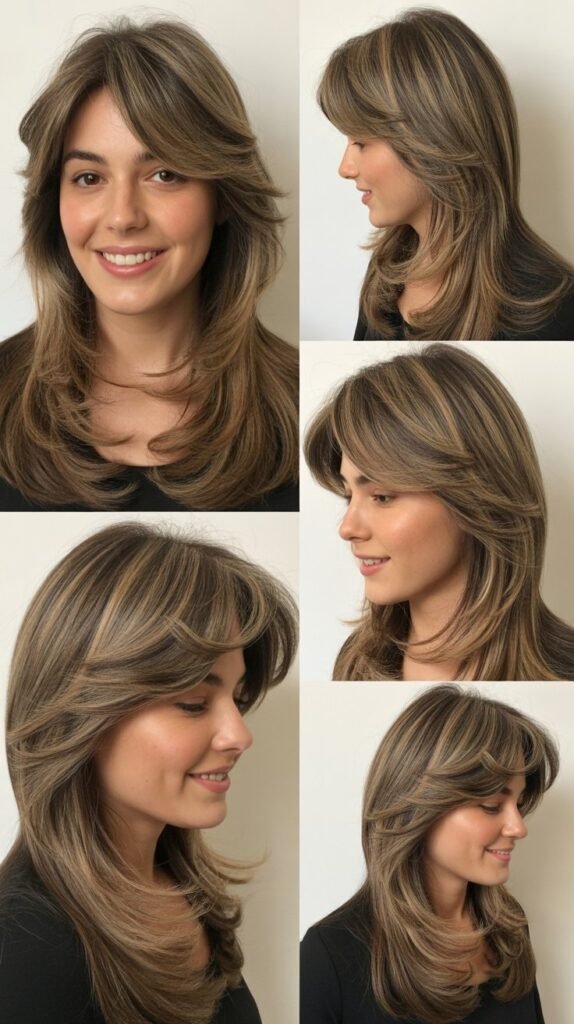
Long layers specifically designed to create volume at the crown address one of the most common concerns for those with long hair: root flatness.
- Strategic layering at the crown removes weight that pulls hair down, allowing natural volume to emerge.
- This technique often incorporates shorter layers starting at the crown that gradually blend into the longer lengths.
- Crown volume balances the proportions of long hair, preventing a triangular or bottom-heavy silhouette.
- Teasing or backcombing at the roots, combined with volumizing products, maximizes the lifted appearance.
- This style works exceptionally well for those with fine hair or naturally flat roots.
- Regular trims of the crown layers maintain the volume-boosting structure as hair grows.
16. Beachy Wave Long Layers
Beachy wave long layers are specifically cut to enhance and embrace natural wave patterns, creating effortless, vacation-inspired styling.
- This cut is designed to work with rather than against natural wave patterns, incorporating layers that enhance curl formation.
- The layering removes weight that can drag waves straight, allowing them to form more defined S-patterns.
- Beachy wave styles work across various wave types, from loose bends to tighter S-curves.
- Salt sprays, wave-enhancing creams, and scrunching techniques bring out the cut’s full potential.
- This style is ideal for those seeking low-maintenance hair that looks intentionally styled without hot tool use.
- The lived-in, tousled appearance suits casual and semi-formal occasions equally well.
17. Long Layers with Wispy Ends
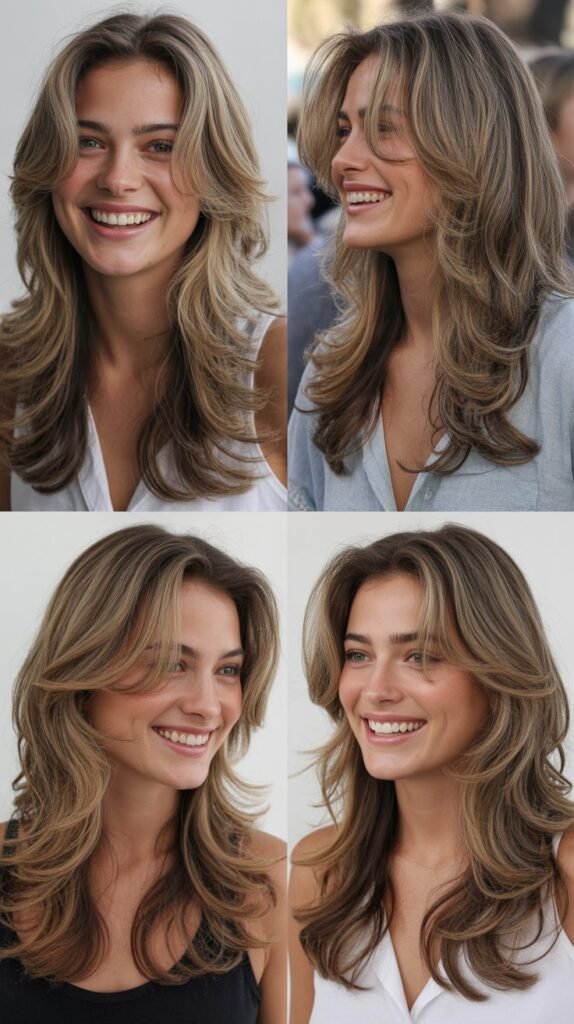
Long layers with wispy ends create an ethereal, romantic quality through ultra-fine, delicate tips that seem to float and catch light beautifully.
- Wispy ends are achieved through point-cutting or razor techniques that thin the very ends of the hair.
- This approach creates a soft, feminine finish that appears almost weightless.
- Wispy ends work particularly well for fine to medium hair textures, adding movement without heaviness.
- The delicate tips create beautiful movement in even slight breezes, adding dynamism to the style.
- Light oils or serums applied sparingly to the ends define the wispy texture without weighing it down.
- This style requires regular trims to maintain the intentional wispy quality and prevent split ends from appearing damaged.
18. Long Layers with Bangs and Texture
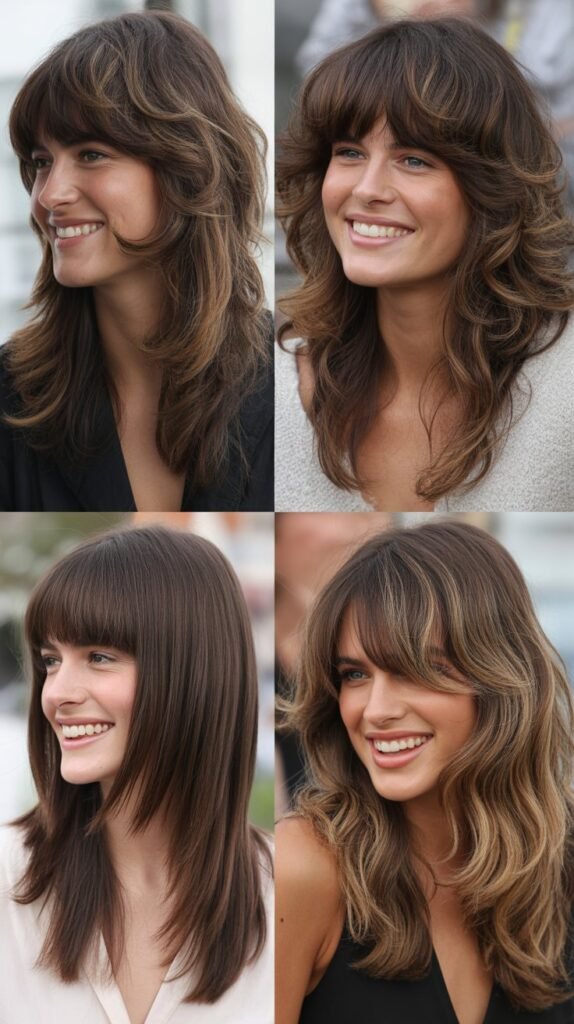
Combining long layers with textured bangs creates a cohesive, fashion-forward look that incorporates fringe without appearing dated or overly styled.
- Textured bangs feature intentional separation and varying lengths rather than a blunt, solid line.
- This combination offers the face-framing benefits of bangs while maintaining the edgy, modern aesthetic of textured styling.
- The piece-y quality of textured bangs allows them to blend seamlessly into the first face-framing layers.
- Styling requires minimal precision, with fingers used to create natural-looking separation and direction.
- This approach to bangs grows out more gracefully than blunt styles, with less obvious awkward stages.
- The textured fringe suits those wanting the commitment of bangs without the high-maintenance styling requirements.
19. Sleek Long Layers
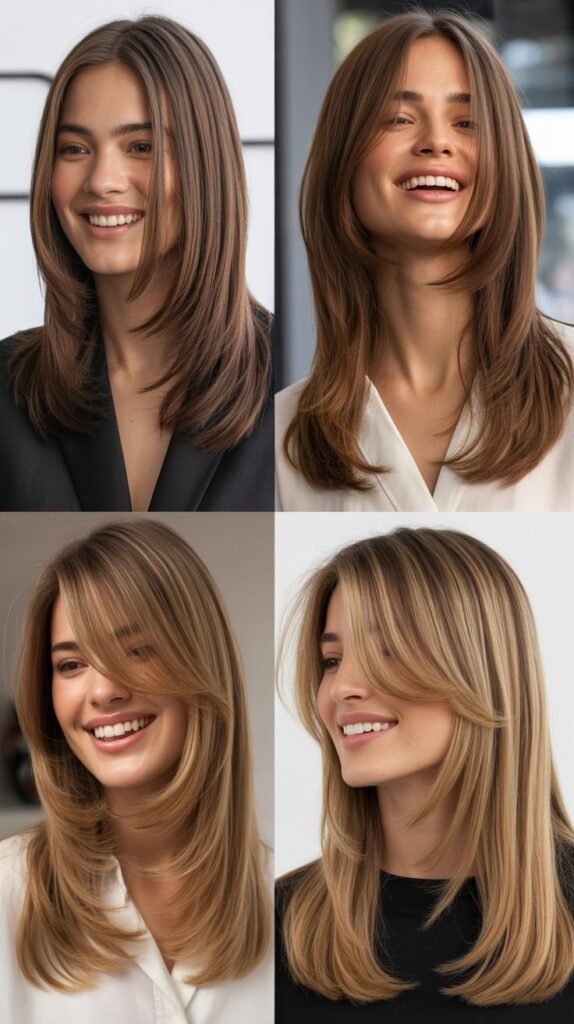
Sleek long layers prioritize smooth, glossy finish while maintaining the dimension and movement that layering provides.
- Sleek styling emphasizes the health and condition of layered hair while showcasing the cut’s structure.
- This look requires quality flat irons, heat protectants, and smoothing serums to achieve the signature glossy finish.
- The layers prevent the style from appearing flat or one-dimensional despite the smooth styling.
- Sleek long layers suit professional environments and formal occasions where polished presentation is important.
- Deep conditioning treatments and regular trims maintain the hair health necessary for truly sleek styling.
- This style works across all hair textures, though naturally straight hair achieves the look with less effort.
20. Long Layers with Peek-a-Boo Highlights
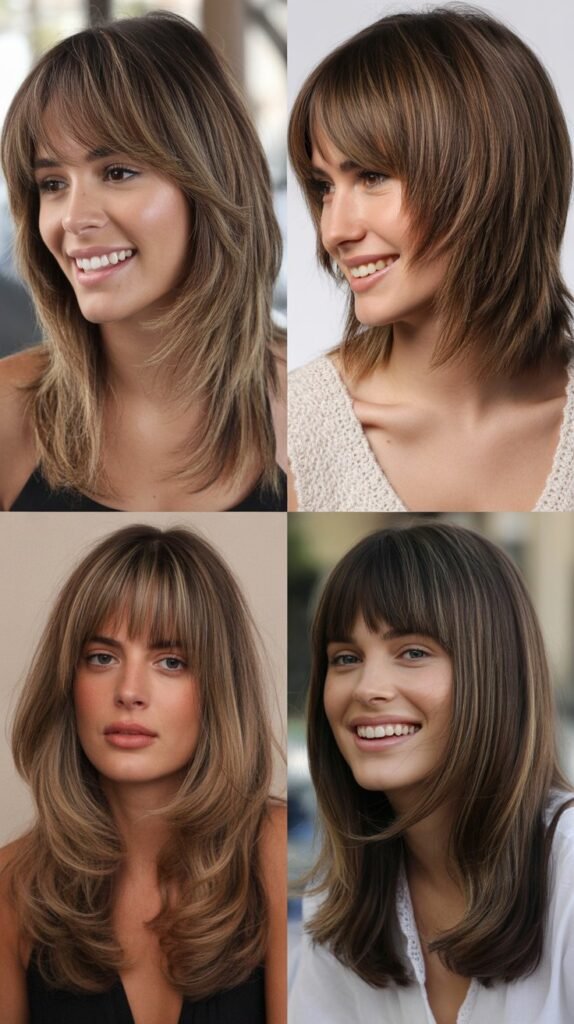
Long layers combined with peek-a-boo highlights create surprise pops of color that become visible with movement, adding playful dimension to the cut.
- Peek-a-boo highlights are placed on the underlayers of hair, remaining hidden unless hair moves or is styled up.
- This coloring technique adds dimension that becomes visible as the layers move and shift throughout the day.
- The hidden color provides creative expression while maintaining a more conservative appearance when desired.
- Peek-a-boo highlights work with both natural and vivid color choices, from subtle caramels to bold fashion shades.
- The layered cut is essential for this coloring technique as it creates the movement necessary to reveal the hidden color.
- Color-protecting products and occasional toning maintain the vibrancy of the peek-a-boo sections.
21. Layered Hair with Natural Roots
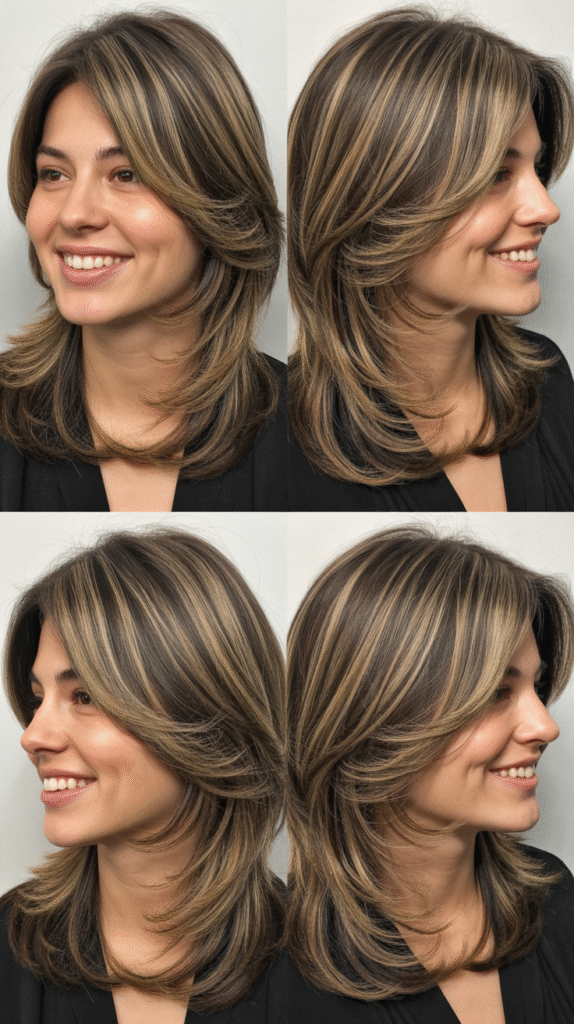
Embracing natural roots while maintaining long layers creates a low-maintenance color approach that works harmoniously with the cut’s dimension.
- Natural root growth or intentional root shadow creates depth that enhances rather than detracts from layered cuts.
- This approach significantly reduces color maintenance requirements and extends time between salon visits.
- The dimensional quality of layers helps blend the transition between natural roots and colored lengths.
- Root shadows can be strategically applied to create a gradual, intentional-looking fade from roots to ends.
- This style suits those seeking to grow out previous color or transition to their natural shade gracefully.
- The natural root aesthetic has gained popularity as a sustainable, hair-healthy approach to color.
22. Long Layers with Bouncy Curls
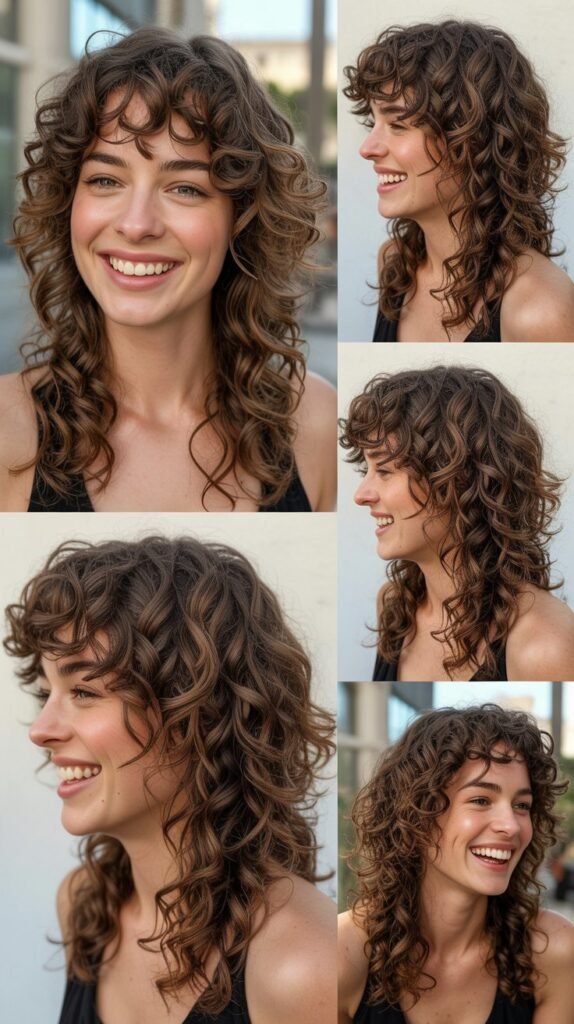
Long layers specifically designed for curly hair remove bulk while maintaining the length that prevents curls from appearing too short when they bounce up.
- Curly hair benefits enormously from layering as it prevents the triangular shape that can occur with one-length cuts.
- Layers should be cut dry on curly hair to ensure proper length when curls spring into their natural pattern.
- This approach creates more defined, separated curl clumps that move independently for maximum bounce.
- Curl-specific products like gels, creams, and leave-in conditioners define the curl pattern while controlling frizz.
- The layering allows curls to stack rather than pile on top of each other, creating beautiful dimensional shape.
- Regular trims every 10-12 weeks maintain the shape and remove damaged ends that can disrupt curl formation.
23. Long Layers with Middle Part
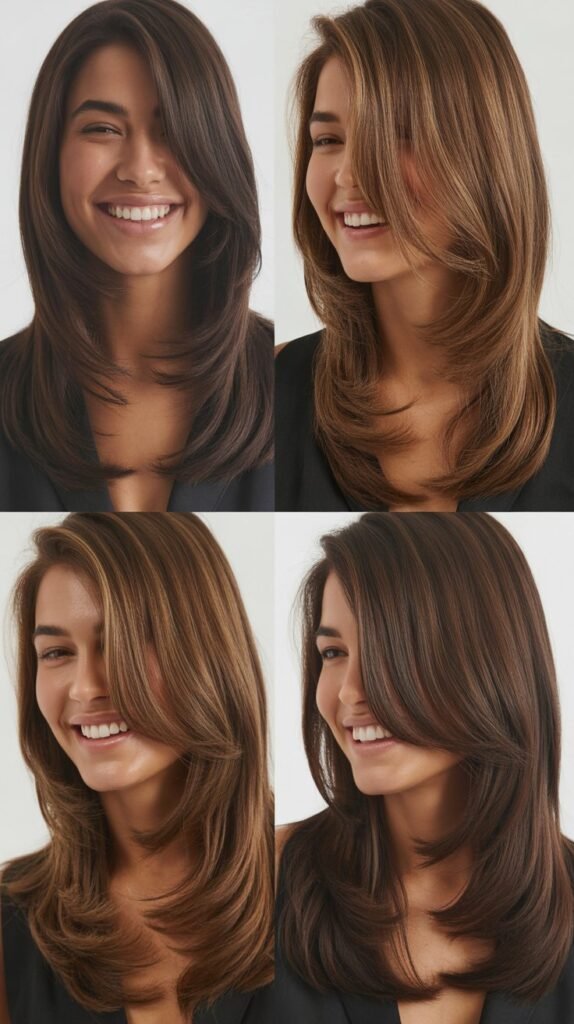
Long layers with a middle part create symmetrical face-framing that flatters balanced features and creates a classic, timeless aesthetic.
- Middle parts work particularly well with face-framing layers as they create balanced, symmetrical styling.
- This parting choice suits oval and heart-shaped faces especially well by emphasizing facial symmetry.
- The layers fall naturally on either side of the part, creating mirrored dimension and movement.
- Middle parts have experienced renewed popularity as vintage and minimalist aesthetics have gained prominence.
- Straightening or curling irons can be used to direct hair away from the face on both sides for polished styling.
- The middle part provides a clean, intentional look that requires minimal daily adjustment to maintain.
24. Long Layers with Deep Side Part
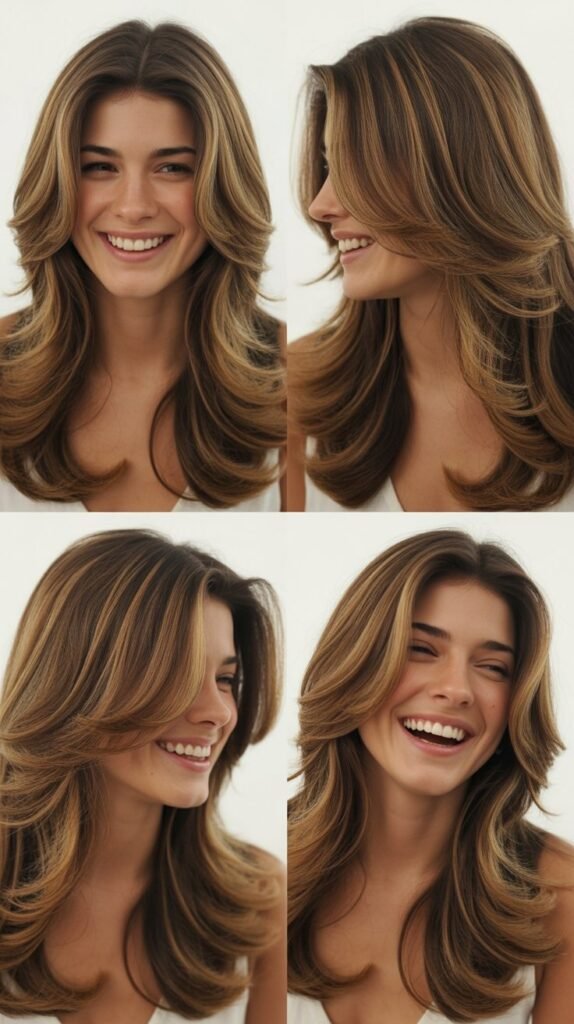
A deep side part combined with long layers creates dramatic asymmetry that adds volume on one side while maintaining sleek styling on the other.
- Deep side parts create instant volume on the heavier side while creating a smooth sweep across the opposite side of the head.
- This parting choice works beautifully for those with round faces as it creates diagonal lines that elongate.
- The layers enhance the volume on the fuller side while preventing the style from appearing unbalanced.
- Deep side parts add drama and vintage glamour reminiscent of Hollywood golden age styling.
- Bobby pins can secure the sleek side behind the ear for even more dramatic asymmetry.
- The side with less hair can be styled smooth and close to the head, creating striking contrast with the voluminous side.
25. Layered Hair with Ombré Color
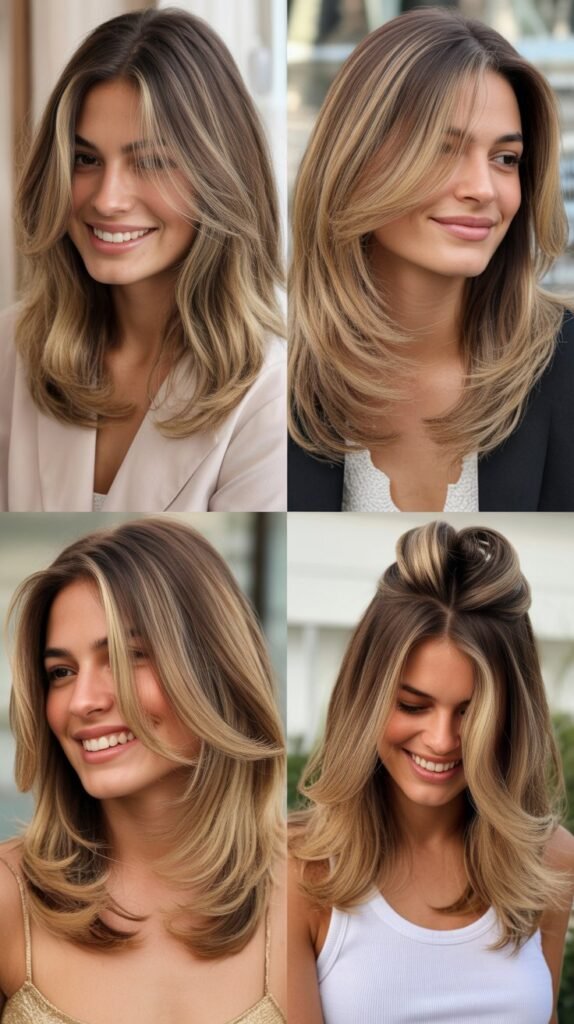
Long layers combined with ombré color create a gradient effect that’s enhanced by the dimensional quality of the layered cut.
- Ombré coloring creates a gradual fade from darker roots to lighter ends, enhanced by the varying lengths of layers.
- The layers showcase the color transition from multiple angles, making the gradient more visible and dynamic.
- This color technique works across all base shades, from natural browns to vivid fashion colors.
- Ombré requires less maintenance than traditional highlights as root growth is part of the intentional aesthetic.
- The darkest sections typically remain at the roots and crown, with gradual lightening beginning at mid-lengths.
- Color-protecting shampoos and purple or blue toning treatments maintain the vibrancy of the lighter ends.
26. Long Layers with Braided Details
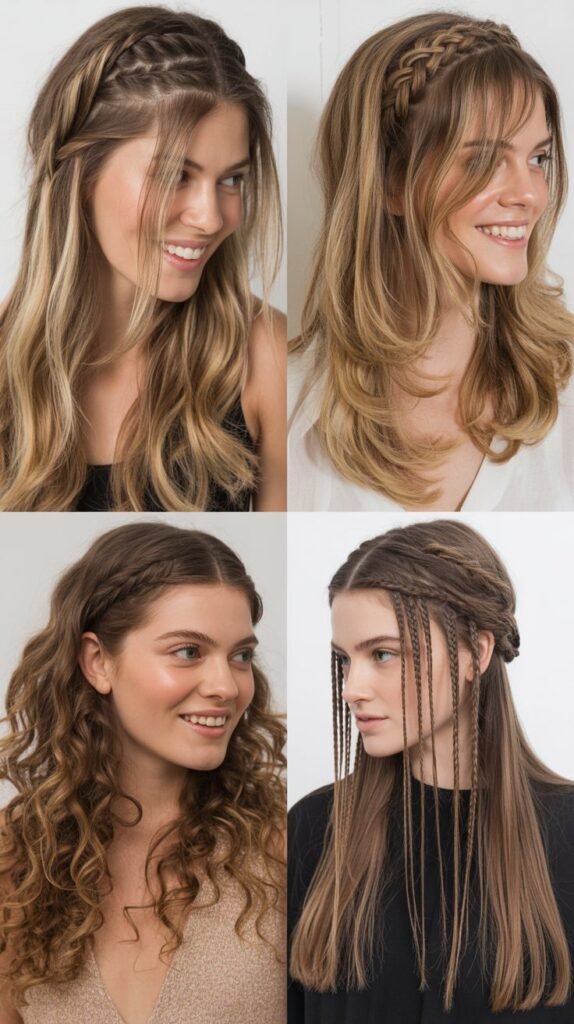
Incorporating braided details into long layered hair adds bohemian charm while showcasing the cut’s dimension and length.
- Small accent braids throughout layered hair create textural interest and highlight the varying lengths.
- Face-framing layers can be left out of braids to create softness while the remaining hair is partially braided.
- Braided details work particularly well with second or third-day hair when natural texture emerges.
- This styling approach suits casual, bohemian, and festival aesthetics while remaining workplace-appropriate.
- The layers prevent braids from appearing too uniform or rigid, adding to the effortless aesthetic.
- Braided sections can be secured with small clear elastics or decorative accessories that complement the style.
27. Long Layers with Flipped Ends
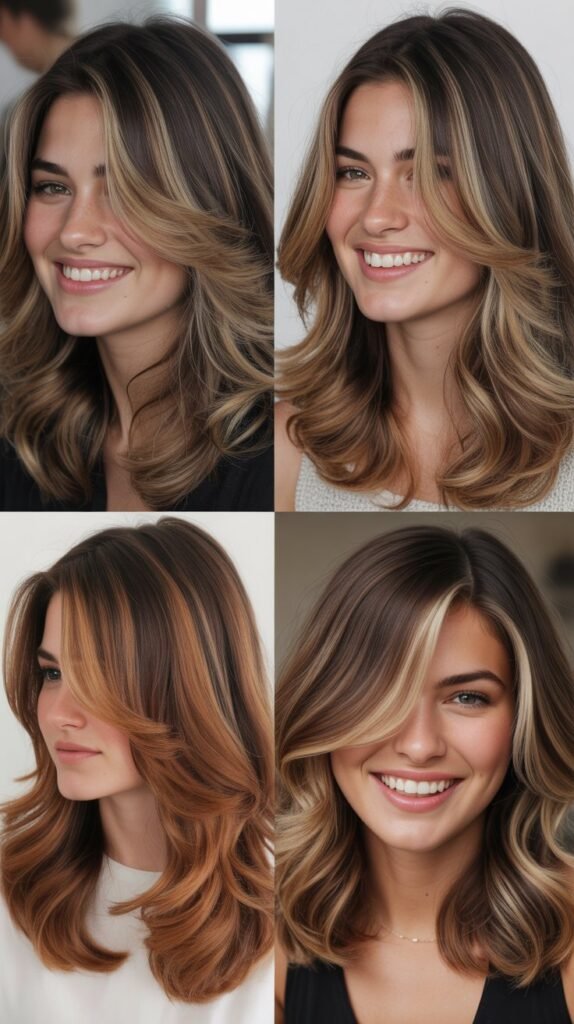
Long layers with deliberately flipped ends create a playful, retro-inspired finish that adds personality and charm to the classic layered cut.
- Flipped ends are achieved by curling the bottom few inches of hair away from the face using round brushes or curling irons.
- This styling technique adds volume at the ends and creates a bouncy, energetic appearance.
- The layers create varying lengths of flipped ends, adding dimension to the overall flip.
- Flipped ends work particularly well with internal layers and blunt perimeters for a polished, intentional look.
- This styling approach gained popularity in the 1960s and has experienced periodic revivals in fashion.
- Light-hold hairsprays maintain the flipped position without creating stiffness or an overly styled appearance.
28. Long Layers with Slicked Back Crown
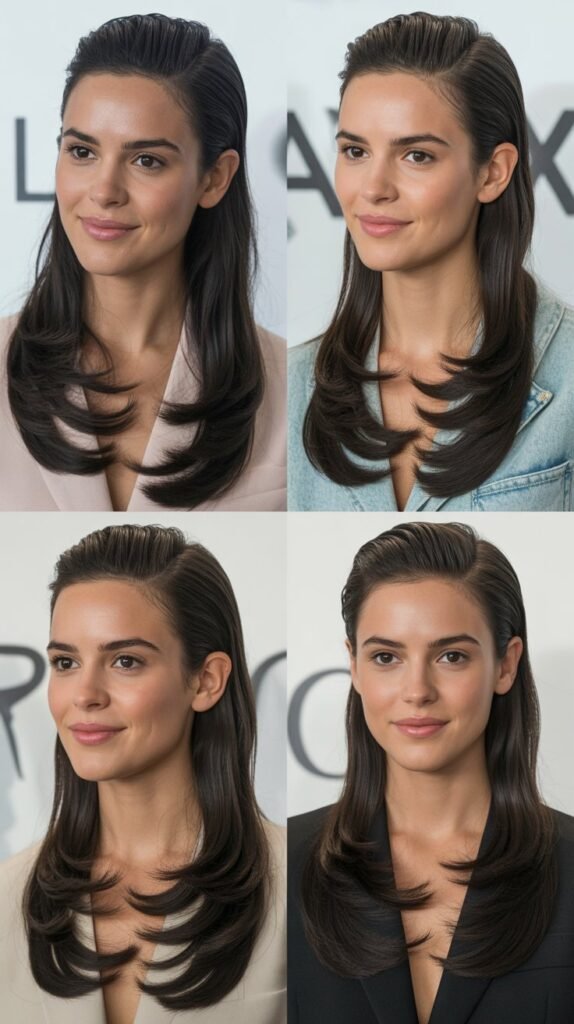
Combining long layers with a slicked-back crown creates sophisticated contrast between sleek roots and textured, flowing lengths.
- This style uses gels or pomades to create a sleek, controlled crown while allowing layers to flow naturally from mid-length downward.
- The contrast between textures creates editorial-worthy styling that’s surprisingly wearable for everyday situations.
- Slicked-back crowns work particularly well for second-day hair when roots have natural oils that aid in sleek styling.
- This approach suits those with prominent facial features who want to showcase rather than soften their bone structure.
- The slicked section can extend to just the crown or all the way to mid-length depending on desired contrast.
- This styling technique works across all hair colors and types, creating different but equally striking results.
29. Long Layers with Tousled Texture
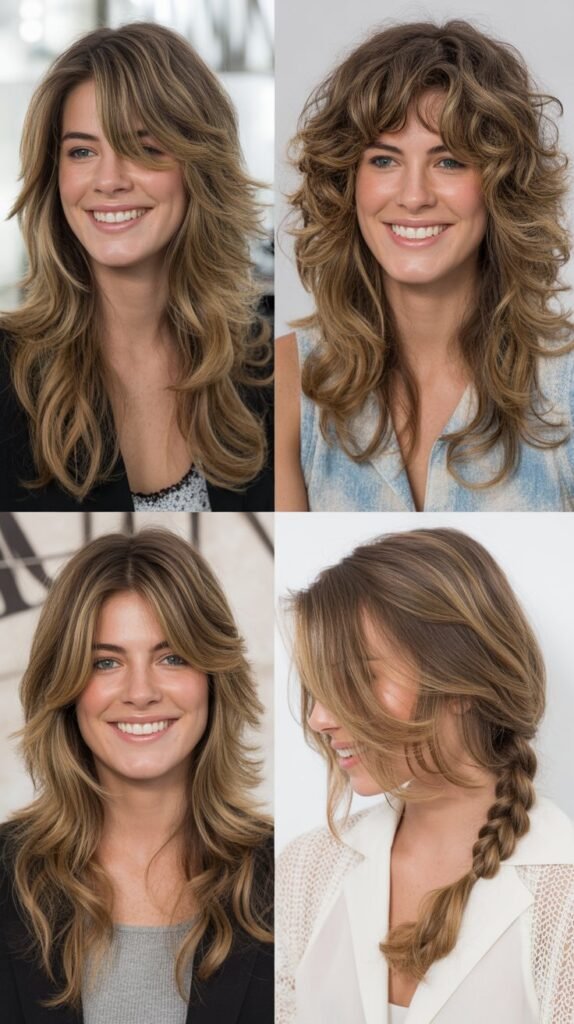
Tousled, lived-in texture combined with long layers creates an effortlessly chic appearance that looks intentionally undone.
- Tousled styling embraces natural texture and slight imperfection rather than fighting for perfectly smooth or curled results.
- This approach works particularly well with layered cuts as the varying lengths create natural, dimensional tousling.
- Sea salt sprays, texturizing mousses, and scrunching techniques enhance the tousled appearance.
- The style suits busy lifestyles as it looks intentional even when minimal time is invested in styling.
- Tousled texture works across all hair types, from naturally straight to wavy and curly.
- This aesthetic has dominated fashion and beauty trends as a reaction to overly styled, rigid hair of previous decades.
30. Long Layers with Accessories
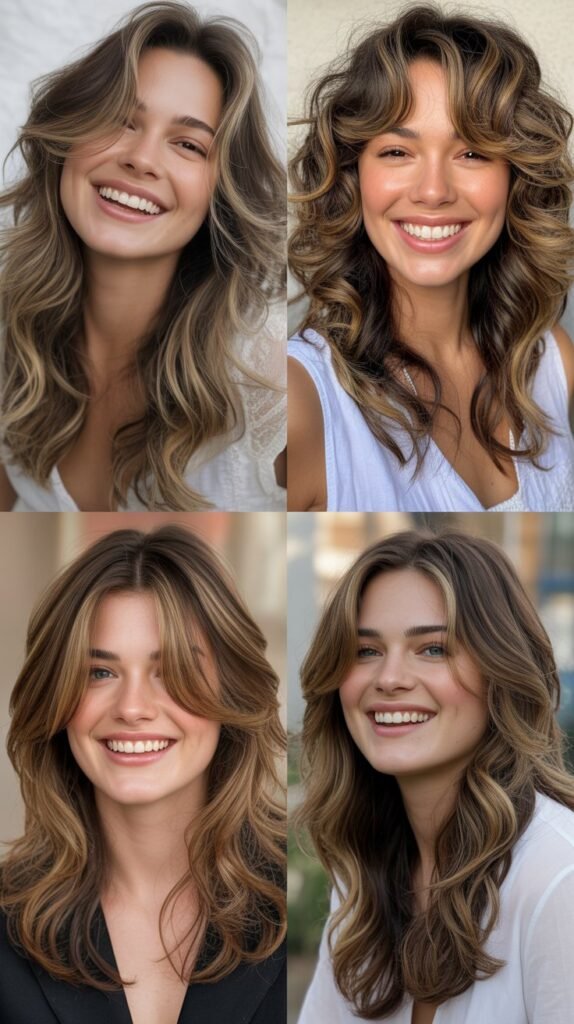
Long layered hair provides the perfect foundation for incorporating accessories that enhance the cut’s dimension while adding personal style.
- Hair accessories draw attention to the layers while providing functional benefits like keeping hair from the face.
- Headbands can be positioned to showcase face-framing layers while controlling volume at the crown.
- Decorative clips and pins secure sections of layered hair while creating visual interest points throughout the style.
- Scarves woven through layers or tied as headbands add color and pattern that complements the dimensional cut.
- Accessories allow for completely different looks using the same layered cut, maximizing styling versatility.
- The varying lengths of layers provide multiple placement options for accessories at different heights and positions.
Styling Products and Tools for Long Layered Hair
Achieving and maintaining beautiful long layered hairstyles requires the right combination of products and tools that enhance the cut’s natural dimension.
| Product/Tool Category | Purpose | Recommended Use |
|---|---|---|
| Heat Protectant Spray | Shields hair from thermal damage | Apply to damp hair before any heat styling |
| Volumizing Mousse | Adds body and lift at roots | Work through damp hair focusing on roots |
| Texturizing Spray | Creates piece-y separation and definition | Spray on dry hair for tousled, lived-in texture |
| Round Brush | Creates volume and smooth styling | Use while blow-drying to direct hair and add lift |
| Flat Iron | Smooths hair and creates sleek styles | Use on dry hair in small sections for best results |
| Curling Iron/Wand | Adds waves and curls to layers | Alternate curl direction for natural-looking results |
| Smoothing Serum | Eliminates frizz and adds shine | Apply sparingly to ends of damp or dry hair |
| Dry Shampoo | Absorbs oil and adds texture | Spray at roots between washes for refresh |
- Quality tools and products significantly impact the final appearance and health of layered hair.
- Heat tools should include adjustable temperature settings to accommodate different hair types and conditions.
- Product selection should consider hair texture, density, and desired styling outcome.
- Less is often more with styling products—starting with small amounts prevents buildup and heaviness.
- Professional-grade tools typically provide more consistent results and last longer than drugstore alternatives.
- Regular cleaning of tools prevents product buildup that can transfer to clean hair.
Maintenance Schedule for Long Layered Hair
Maintaining the integrity and appearance of long layered hairstyles requires consistent care and regular professional attention.
| Maintenance Task | Frequency | Purpose |
|---|---|---|
| Professional Trims | Every 8-10 weeks | Maintains layer shape and removes split ends |
| Deep Conditioning Treatment | Weekly | Provides intensive moisture and repair |
| Hair Masks | Bi-weekly | Addresses specific concerns like damage or color |
| Clarifying Shampoo | Monthly | Removes product buildup and impurities |
| Root Touch-ups (if colored) | 6-8 weeks | Maintains color consistency |
| Heat Tool Breaks | Weekly | Allows hair to recover from thermal styling |
- Consistent maintenance prevents small issues from becoming major problems requiring drastic cuts.
- The schedule can be adjusted based on hair’s individual needs and styling frequency.
- Seasonal changes may require modifications to the maintenance routine as humidity and temperature affect hair.
- Professional guidance on home care routines maximizes results between salon visits.
- Maintenance investments in quality products and regular trims protect the overall investment in the cut and color.
- Taking photos of freshly styled hair helps track changes and communicate with stylists about maintaining desired results.
Common Mistakes to Avoid with Long Layered Hair
Understanding what to avoid helps maintain the health, appearance, and integrity of long layered hairstyles.
- Over-washing strips natural oils that protect and nourish layered hair, leading to dryness and damage.
- Using excessive heat without protection causes damage that’s especially visible in layered cuts where ends are exposed.
- Skipping regular trims allows split ends to travel up the hair shaft, requiring more drastic cuts later.
- Choosing the wrong layer placement for your face shape can emphasize rather than flatter features.
- Over-processing with color or chemical treatments weakens hair structure, causing breakage at layer transitions.
- Using heavy products on fine layered hair weighs down the cut and eliminates the volume layers create.
- Brushing wet hair aggressively causes breakage, particularly at the vulnerable ends of layers.
- Sleeping with hair loose and unsecured creates tangles and friction damage that affect layer appearance.
- Neglecting scalp health impacts hair growth and the overall appearance of the layered style.
- Copying trendy cuts without considering personal hair texture, density, and lifestyle leads to dissatisfaction and difficult maintenance.
Conclusion
The enduring appeal of 30 Timeless Long Layered Hairstyles for a Polished Look lies in their remarkable versatility and universal flattery across all ages, face shapes, and hair types.
From classic face-framing layers to modern shag-inspired cuts, these styles offer something for everyone seeking to enhance their long hair with dimension and movement.
By understanding the various layering techniques, styling approaches, and maintenance requirements outlined in this comprehensive guide, you’re now equipped to choose and maintain the perfect layered look for your lifestyle and preferences.
Remember that the key to truly polished layered hair lies not just in the initial cut, but in consistent care, appropriate product selection, and regular professional maintenance.
Whether you opt for soft cascading layers, dramatic V-shaped cuts, or textured shag-inspired styles, the right layering technique can transform your long hair into a stunning, dynamic statement that frames your face beautifully and moves with natural grace.
Embrace the timeless elegance of layered hair and enjoy the confidence that comes with a hairstyle that’s both effortlessly chic and endlessly adaptable to your personal style journey.
