
Living with thin hair doesn’t mean sacrificing style or settling for flat, lifeless locks.
The right haircut can transform fine strands into a voluminous masterpiece that turns heads and boosts confidence.
Whether you’re dealing with naturally thin hair or experiencing thinning due to age or other factors, there’s a perfect cut waiting to revolutionize your look.
This comprehensive guide to 32 Cute Haircuts for Thin Hair to Add Volume and Style explores the most flattering cuts, styling techniques, and expert secrets that create the illusion of thickness and body.
From pixie cuts to layered bobs, blunt ends to textured waves, you’ll discover how strategic cutting techniques, proper layering, and smart styling choices can make your hair appear fuller, healthier, and more dynamic.
Get ready to explore face-framing styles, volume-boosting cuts, and maintenance tips that will help you embrace your hair type while looking absolutely fabulous every single day.
1. The Classic Blunt Bob
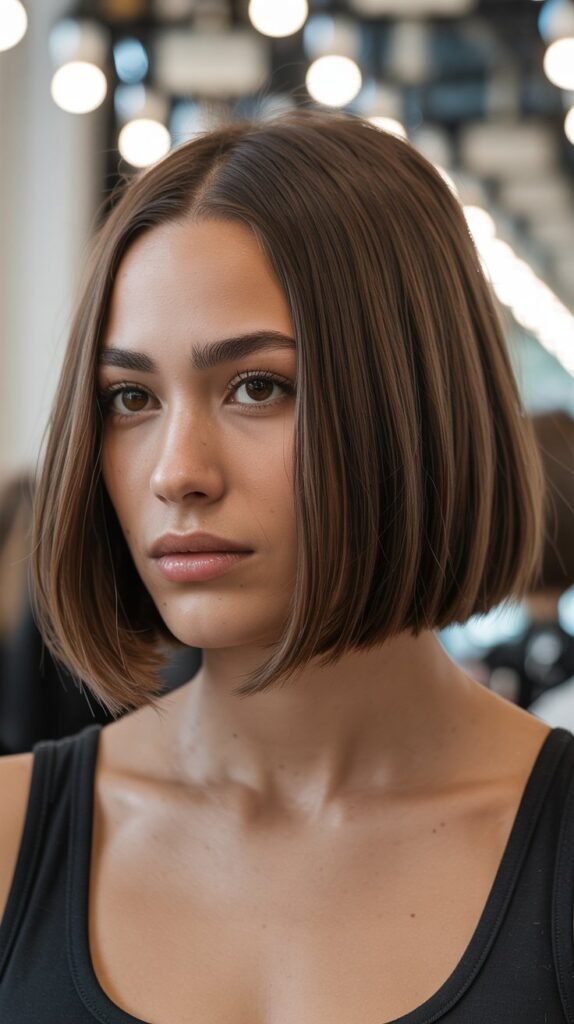
The blunt bob stands as one of the most effective haircuts for creating the appearance of thicker, fuller hair.
This timeless style features hair cut straight across at a uniform length, typically falling between the chin and shoulders, which makes every strand count toward creating a dense, voluminous look.
Why It Works for Thin Hair
- The blunt cutting technique eliminates wispy, tapered ends that make thin hair look even thinner.
- Every hair strand ends at the same point, creating a solid line that appears denser and more substantial.
- The uniform length prevents the eye from detecting sparse areas or gaps in hair coverage.
- The weight distribution across one level helps hair fall smoothly without revealing scalp.
Styling Tips
- Use a round brush while blow-drying to add lift at the roots for maximum volume.
- Apply volumizing mousse to damp hair before styling to enhance body and hold.
- Consider adding a slight inward curve at the ends to create movement without sacrificing the blunt line.
- Avoid heavy oils or serums that can weigh down fine hair and make it appear flat.
2. Textured Pixie Cut
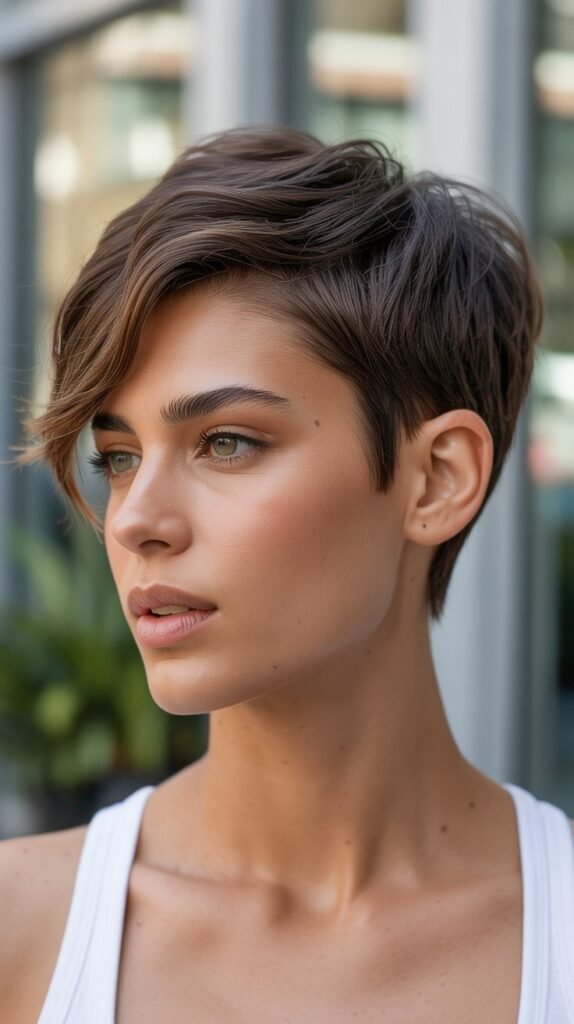
The textured pixie cut delivers incredible volume through strategically placed layers and choppy cutting techniques that make thin hair appear fuller and more dynamic.
This short, liberating style works beautifully for those ready to embrace minimal maintenance while maximizing impact.
Key Features
- Short length removes weight that can pull thin hair flat against the scalp.
- Textured layers create separation and movement that adds visual volume.
- The choppy cutting technique produces an intentionally piece-y look that disguises thin density.
- Crown area can be cut slightly longer to add height and dimension.
Best Styling Approach
- Work a small amount of texturizing paste through dry hair to enhance separation.
- Blow-dry hair in different directions to create natural lift and body.
- Use your fingers instead of a brush for a more tousled, voluminous finish.
- Consider adding subtle highlights to create depth and the illusion of more hair.
3. Long Layers with Face-Framing
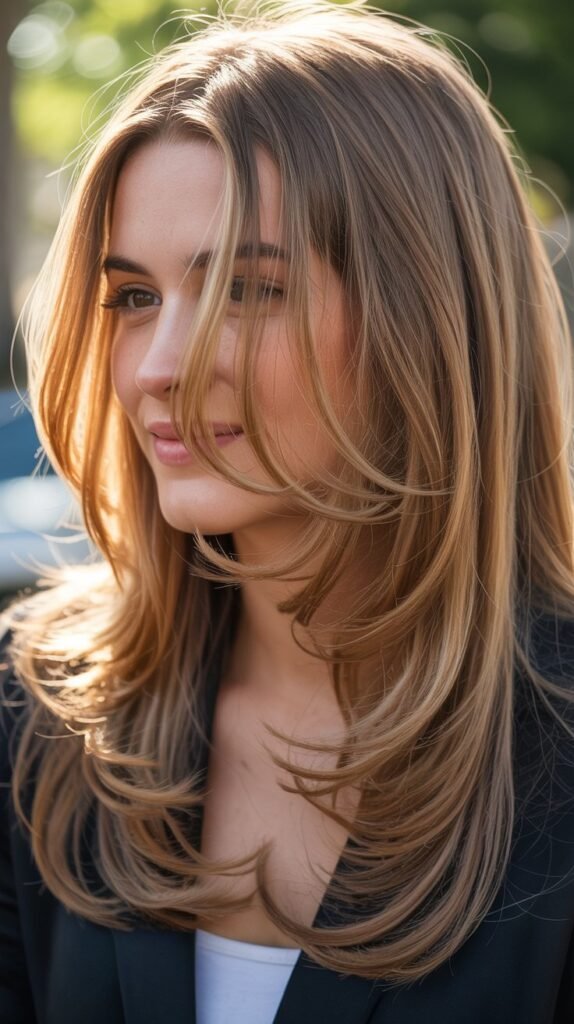
Long layers with face-framing pieces offer the perfect solution for those who want to maintain length while adding essential volume and movement to thin hair.
This versatile cut creates dimension without removing substantial length.
Layer Placement Strategy
- Layers should start around the cheekbones or chin to frame the face beautifully.
- Keeping the bulk of length intact prevents the stringy appearance that overly layered thin hair can develop.
- Strategic layering around the crown area creates lift where it’s needed most.
- Face-framing pieces add dimension and draw attention to facial features rather than hair texture.
Maintenance and Styling
- Regular trims every 6-8 weeks maintain the shape and prevent thin ends from looking ratty.
- Curl or wave face-framing layers away from the face to enhance volume.
- Apply volumizing spray at the roots before blow-drying for added lift.
- Sleep with hair in a loose bun to maintain body and prevent flattening overnight.
4. The Shaggy Lob (Long Bob)

The shaggy lob combines the sophistication of a bob with the carefree texture of shag layers, creating a perfect storm of volume for thin hair.
This shoulder-length cut has surged in popularity for its ability to make fine hair look effortlessly thick and styled.
What Makes It Special
- The length hits at the collarbone, providing enough weight to prevent flyaways while maintaining movement.
- Shaggy layers throughout create texture and separation that disguises thin density.
- Choppy ends add an edgy, modern vibe while making hair appear fuller.
- The style works equally well straight, wavy, or curly, offering versatile styling options.
Creating the Look
- Ask your stylist for point-cutting or razor-cutting techniques to create soft, feathered layers.
- Blow-dry with a round brush, directing hair away from the face for maximum volume.
- Use a sea salt spray to enhance natural texture and create that coveted piece-y look.
- Consider adding babylights or balayage to create depth and dimension.
5. Asymmetrical Bob
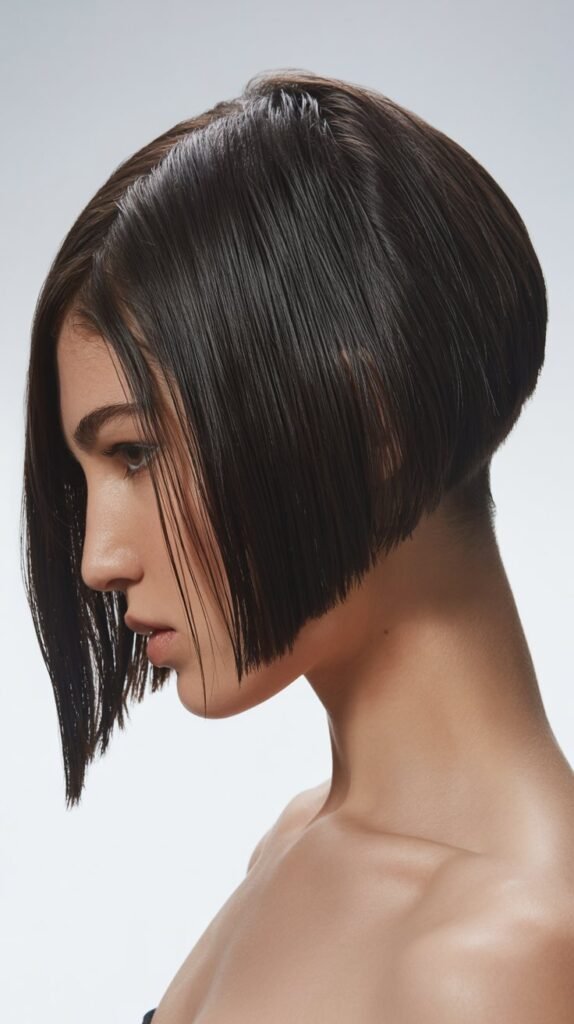
The asymmetrical bob features one side cut longer than the other, creating visual interest and the illusion of fuller hair through strategic angularity and modern edge.
This bold choice adds personality while solving thin hair challenges.
Design Elements
- The angled cut creates diagonal lines that add movement and dimension.
- Shorter side typically falls above the ear while longer side reaches chin or below.
- The dramatic difference in length draws attention away from hair density.
- Blunt cutting on both sides maintains thickness at the ends.
Styling Recommendations
- Straighten hair with a flat iron to emphasize the clean, sharp lines of the cut.
- Tuck shorter side behind ear to showcase the asymmetrical design.
- Add texture spray for a more casual, lived-in version of the style.
- Part hair on the shorter side to maximize volume on the longer side.
6. Micro Bangs with Volume
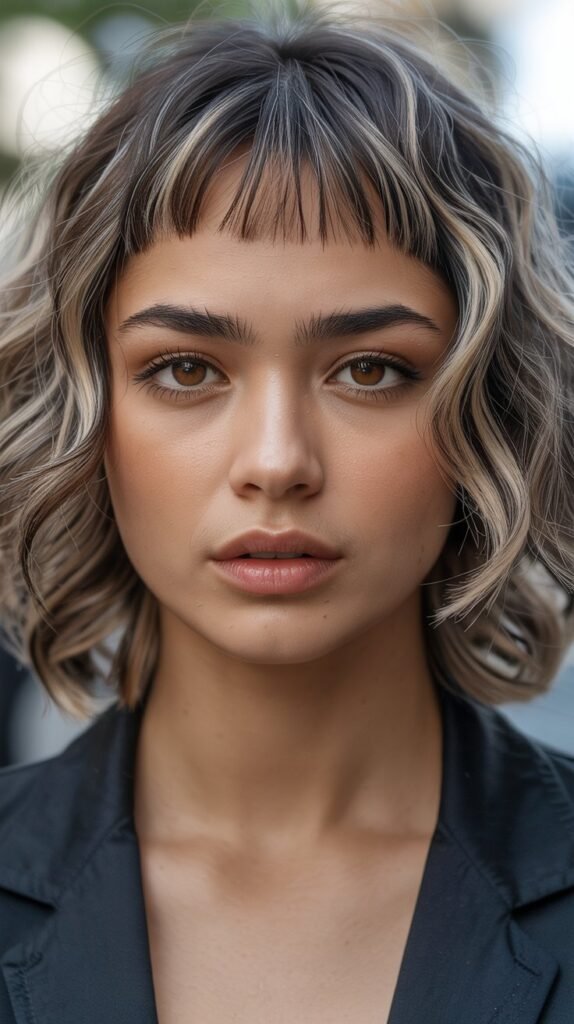
Micro bangs paired with voluminous hair create a striking contrast that makes thin hair appear thicker by focusing attention on bold styling choices.
This daring look requires confidence but delivers major impact for fine-haired individuals.
Why This Works
- Short bangs create a focal point that distracts from overall hair density.
- The contrast between short bangs and fuller hair below creates visual interest.
- Volume in the crown and throughout the length compensates for thin texture.
- The bold statement makes a fashion-forward impression that overshadows hair concerns.
Achieving the Style
- Micro bangs should be cut above the eyebrows in a straight or slightly textured line.
- Use volumizing products throughout the rest of the hair to create maximum body.
- Blow-dry bangs forward and flat while adding lift everywhere else.
- Maintain bangs with frequent trims every 2-3 weeks to keep the sharp look.
7. Soft Graduated Bob
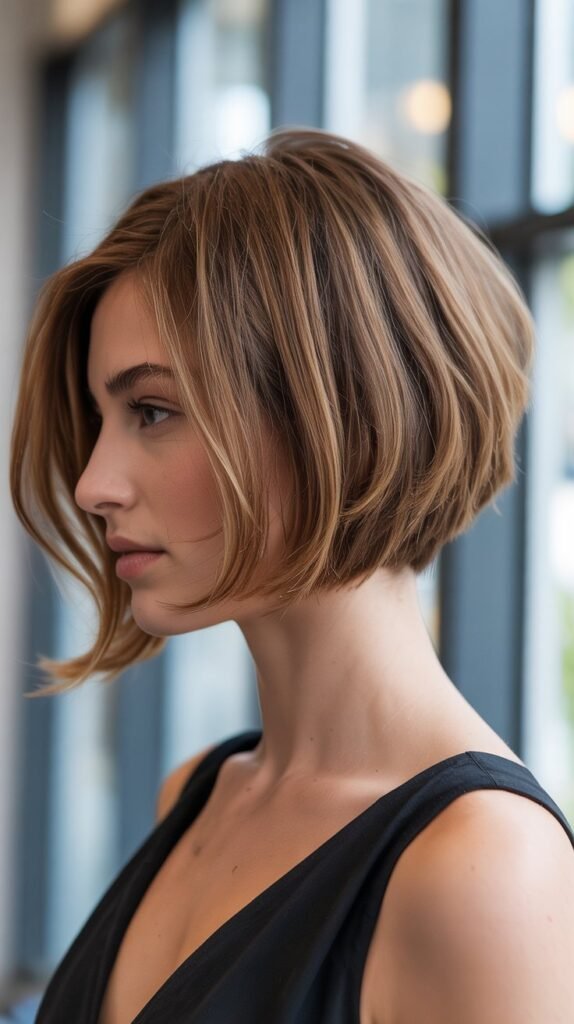
The soft graduated bob features shorter layers in the back that gradually lengthen toward the front, creating natural volume and a flattering silhouette for thin hair.
This classic technique has remained popular because it genuinely works.
Technical Advantages
- Shorter back removes weight and allows hair to stack, creating height at the crown.
- Gradual length increase toward the face provides framing without bulk.
- The stacked layers in back create natural volume without teasing or excessive product.
- The style flatters most face shapes while addressing thin hair concerns.
Styling Essentials
- Blow-dry hair upside down to maximize volume at the roots.
- Use a round brush to create smooth, polished results with body.
- Apply root-lifting spray before drying for enhanced height.
- Consider adding slight waves to the longer front pieces for added dimension.
8. Choppy Shoulder-Length Cut
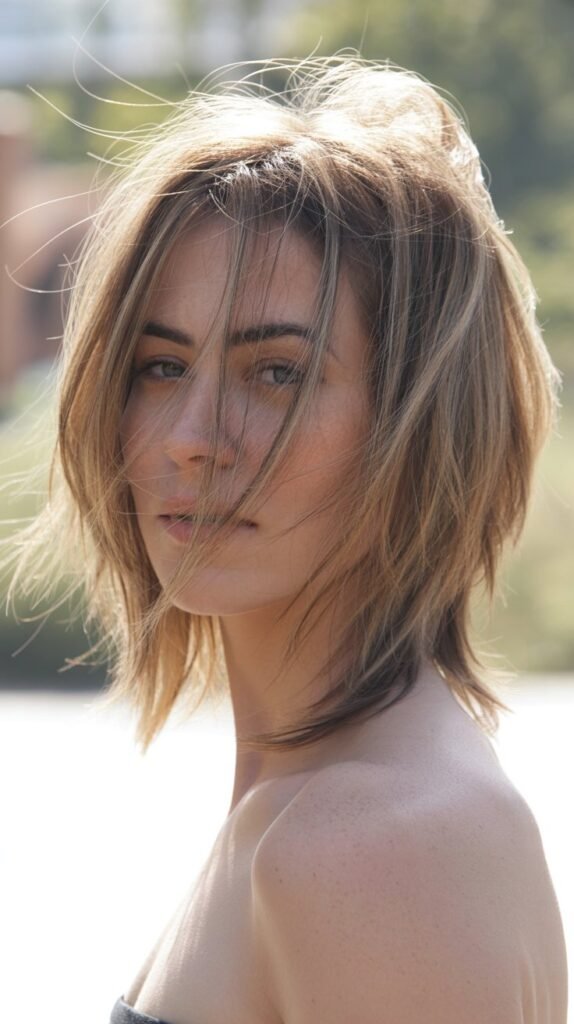
The choppy shoulder-length cut features irregular, textured layers throughout that create movement, dimension, and the appearance of thicker hair.
This modern approach to mid-length hair has become a favorite among those with fine strands.
Layer Distribution
- Choppy layers are scattered throughout rather than placed in uniform sections.
- Irregular cutting creates natural separation that makes hair appear fuller.
- The shoulder length provides enough weight to prevent excessive flyaways.
- Textured ends add visual interest and disguise thin density.
Styling Methods
- Scrunch hair with texturizing spray while damp for enhanced definition.
- Air-dry or diffuse for a natural, effortless look with maximum texture.
- Use a curling iron randomly throughout for added piece-y waves.
- Avoid brushing when dry to maintain the intentionally undone appearance.
9. Blunt Lob with Center Part
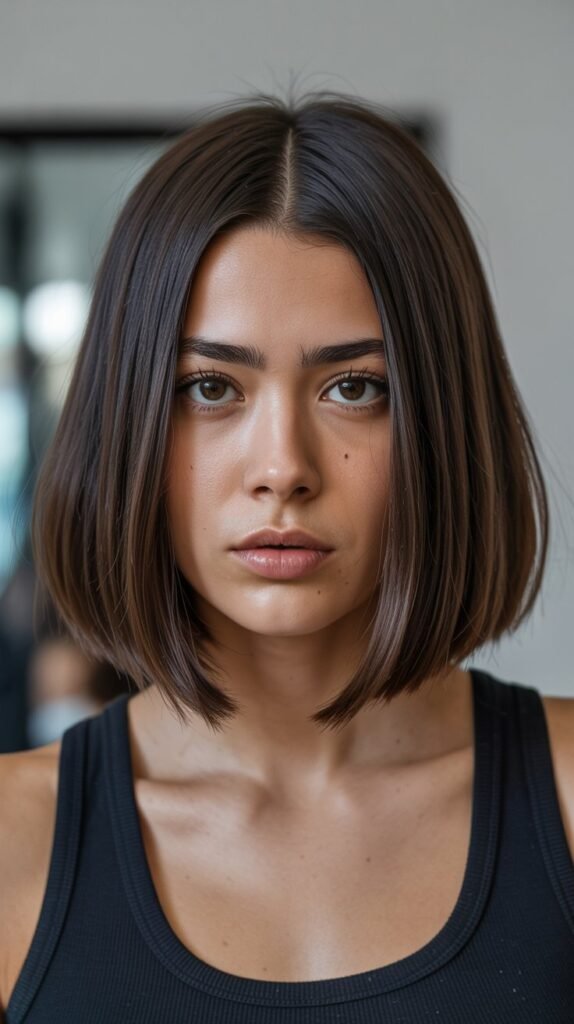
The blunt lob with a center part creates perfect symmetry and maximum thickness perception through clean lines and strategic length.
This Instagram-favorite style has dominated social media for good reason.
Why It’s Effective
- Blunt cut ensures every strand contributes to the dense appearance at the ends.
- Center part distributes hair evenly on both sides, maximizing coverage.
- Collarbone length provides enough weight for smooth, sleek results.
- The clean, modern aesthetic draws attention to the style rather than texture.
Care and Maintenance
- Regular trims every 6-8 weeks maintain the pristine blunt line.
- Use a flat iron to keep hair sleek and emphasize the clean cut.
- Apply shine serum sparingly to add gloss without weighing hair down.
- Consider a glossing treatment to enhance color depth and create illusion of density.
10. Feathered Layers All Over

Feathered layers throughout the hair create soft, flowing movement that makes thin hair appear fuller through enhanced texture and dimension.
This technique produces an ethereal, romantic look that’s both feminine and voluminous.
Cutting Technique
- Feathering involves holding hair vertically and cutting at an angle to create soft edges.
- Layers are distributed evenly throughout to maintain fullness while adding movement.
- The technique creates feather-like pieces that blend seamlessly together.
- Ends are intentionally softened rather than blunt for a delicate finish.
Styling Guidance
- Blow-dry with fingers running through hair to enhance the feathered texture.
- Use a large-barrel curling iron to add loose waves that complement the layers.
- Apply lightweight volumizing foam for body without stiffness.
- Finish with flexible-hold hairspray to maintain movement while controlling flyaways.
11. The Modern Mullet
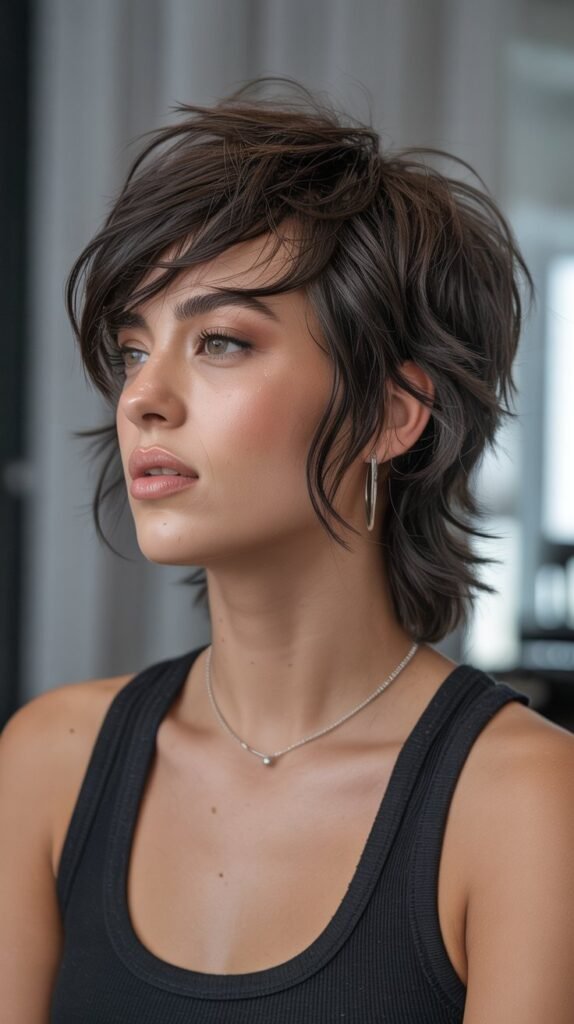
The modern mullet features short hair on top and sides with longer length in the back, creating a fashion-forward look that adds volume through contrasting lengths.
This revived retro style has been reimagined for contemporary tastes.
Contemporary Interpretation
- Today’s mullet is softer and more blended than the harsh cuts of the 1980s.
- Short top layers create lift and volume at the crown area.
- Gradual transition from short to long prevents harsh lines.
- The unconventional style makes a bold statement that overshadows hair texture concerns.
Styling Approach
- Use texturizing products on the shorter top section for piece-y separation.
- Blow-dry top hair forward or upward for maximum height.
- Add waves or curls to the longer back section for added body.
- Embrace the edgy, rock-and-roll vibe with confidence and attitude.
12. Side-Swept Bangs with Layers
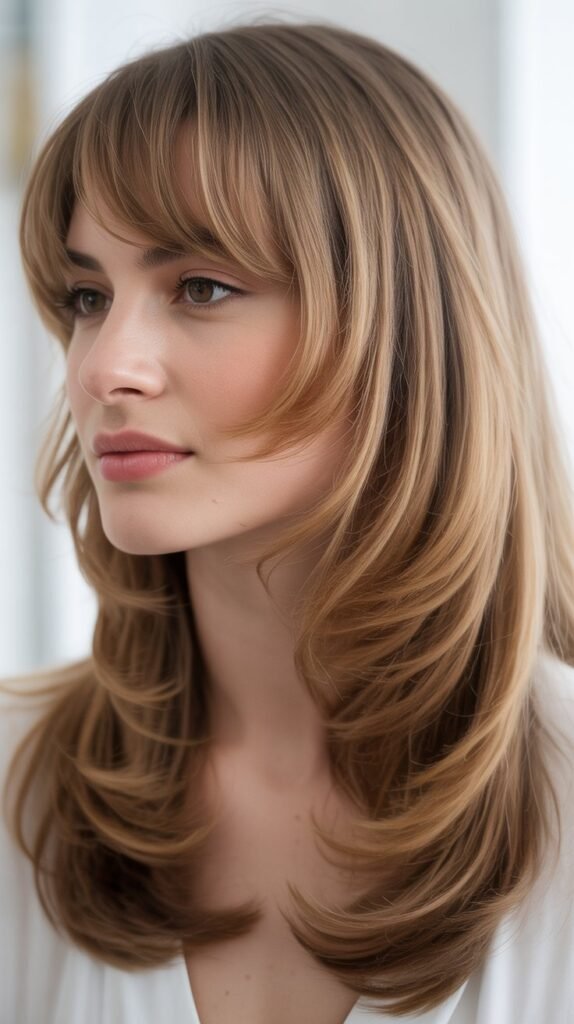
Side-swept bangs combined with layered hair create asymmetry and movement that enhance volume for thin hair.
This universally flattering approach adds dimension while maintaining femininity and polish.
Design Benefits
- Side-swept bangs create diagonal lines that add visual interest and movement.
- The asymmetrical framing disguises thin density at the hairline.
- Layers throughout provide lift and prevent flat appearance.
- The style frames the face beautifully while enhancing overall volume.
Maintenance Tips
- Blow-dry bangs to the side using a round brush for smooth results.
- Use a small amount of pomade or wax to control and direct bang placement.
- Trim bangs every 3-4 weeks to maintain the sweeping shape.
- Apply volumizing powder at roots of bangs for added lift and hold.
13. Stacked Bob with Volume
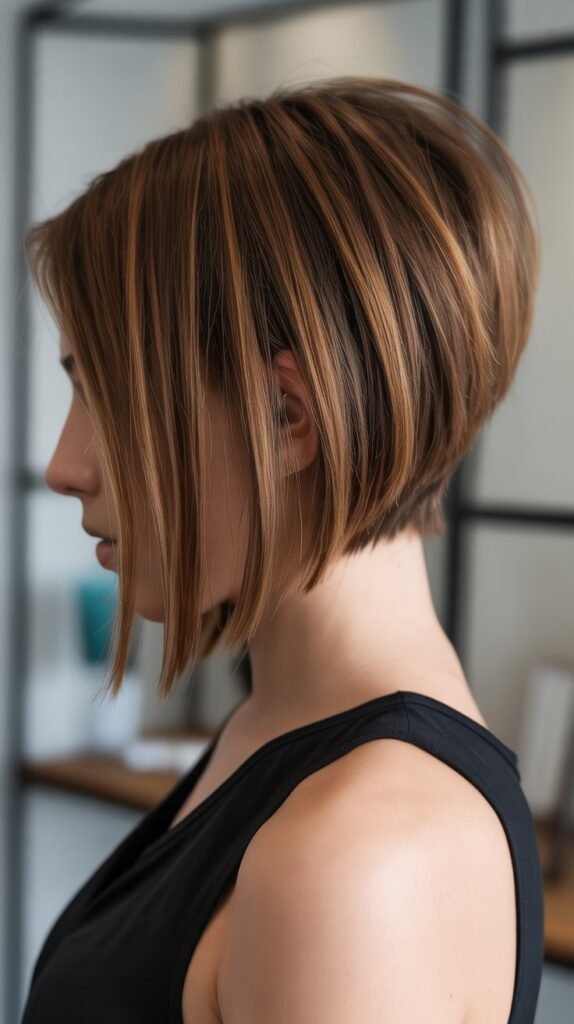
The stacked bob features graduated layers in the back that create height and volume through intentional weight removal and architectural shaping.
This cut delivers dramatic volume where thin hair needs it most.
Structural Elements
- Back layers are cut progressively shorter, creating a stacked, voluminous effect.
- The graduation builds natural height without teasing or excessive styling.
- Front pieces remain longer for face-framing softness.
- The architectural shape holds its form with minimal styling effort.
Styling Requirements
- Blow-dry back sections downward while using a round brush for smoothness.
- Apply root-lifting spray before drying for enhanced volume.
- Use a flat iron on front pieces to create sleek contrast with voluminous back.
- Regular trims are essential to maintain the precise stacked shape.
14. Curtain Bangs with Body
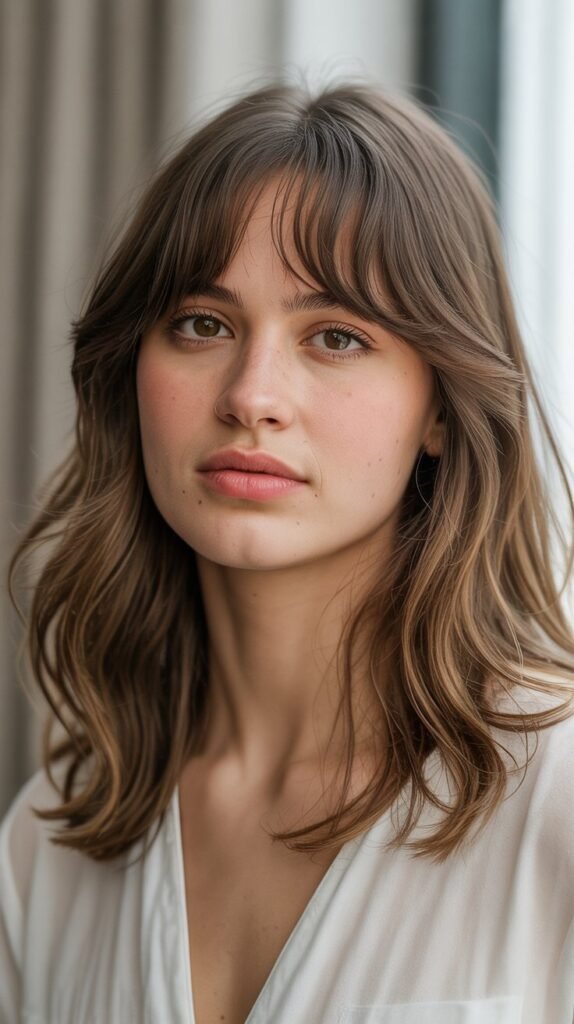
Curtain bangs part down the middle and frame both sides of the face, creating a soft, romantic look that adds dimension and volume to thin hair.
This trending style has captivated the beauty world with its effortless appeal.
Why They’re Popular
- Curtain bangs create vertical lines that lengthen the face and add height.
- The center part distributes bangs evenly, framing features symmetrically.
- Shorter pieces in front add dimension without harsh blunt bangs.
- The style grows out gracefully, requiring less maintenance than traditional bangs.
Achieving the Look
- Blow-dry bangs away from the face on each side using a round brush.
- Use a curling iron to add slight bends that enhance the curtain effect.
- Apply texturizing spray for piece-y separation and movement.
- Allow bangs to be slightly longer than traditional bangs for the signature drape.
15. Collarbone-Length Cut with Minimal Layers
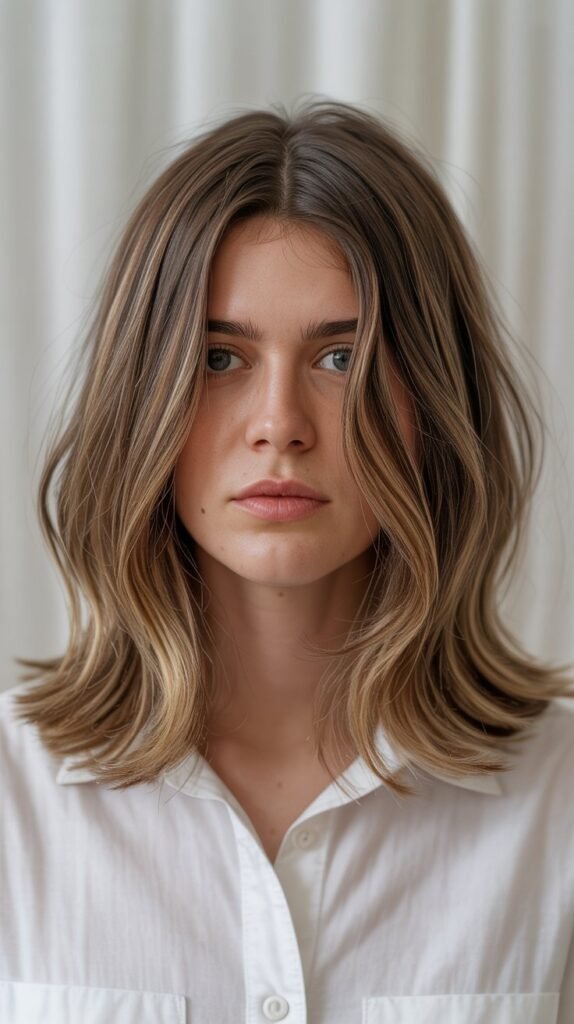
A collarbone-length cut with minimal layering maintains maximum density at the ends while providing enough movement for volume.
This smart approach preserves thickness while preventing the flat appearance of one-length hair.
Strategic Approach
- Minimal layers means only subtle shaping around the face and crown.
- Keeping most hair at one length preserves the appearance of density.
- The collarbone length provides enough weight to look polished without dragging hair flat.
- Few layers mean less opportunity for thin ends to appear wispy or stringy.
Best Practices
- Request only face-framing layers and slight crown layering from your stylist.
- Blow-dry with a paddle brush for smooth, sleek results.
- Use a flat iron to create subtle bends at the ends for movement without layers.
- Apply volumizing spray at roots only to avoid weighing down lengths.
16. The Pixie-Bob Hybrid
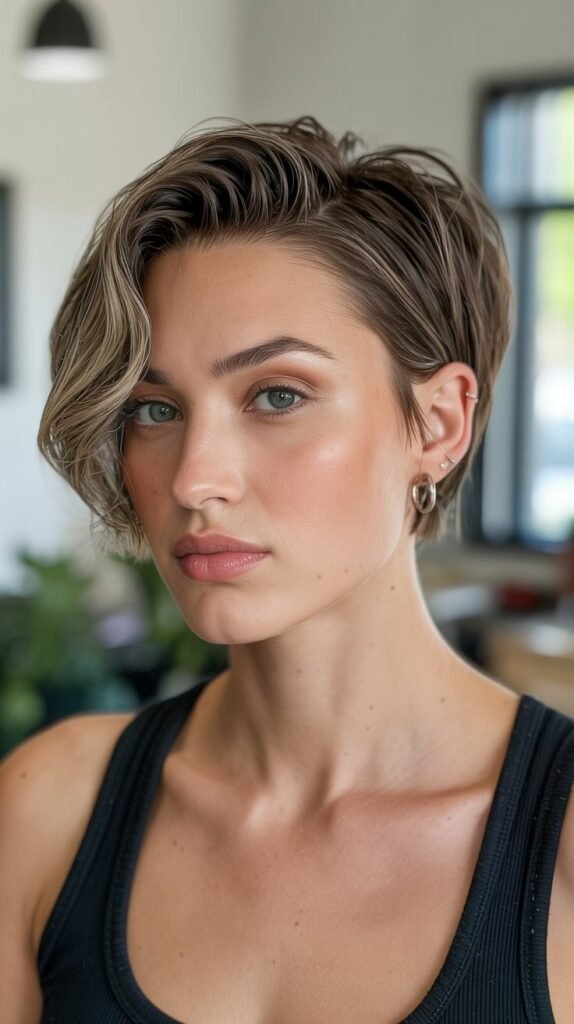
The pixie-bob hybrid combines the short, liberating elements of a pixie with the slightly longer versatility of a bob, creating a perfect balance for thin hair.
This transitional style offers the best of both cuts.
Combination Benefits
- Short back and sides remove weight and create lift at the crown.
- Longer top and front pieces provide styling versatility and face-framing.
- The contrast in lengths creates natural dimension and volume.
- The style offers pixie ease with bob femininity.
Styling Versatility
- Style top section forward for a classic pixie look with added length.
- Sweep longer pieces to the side for asymmetrical interest.
- Add texture with pomade or paste for piece-y separation.
- Blow-dry different directions to create natural lift and movement.
17. Jaw-Length Bob with Texture
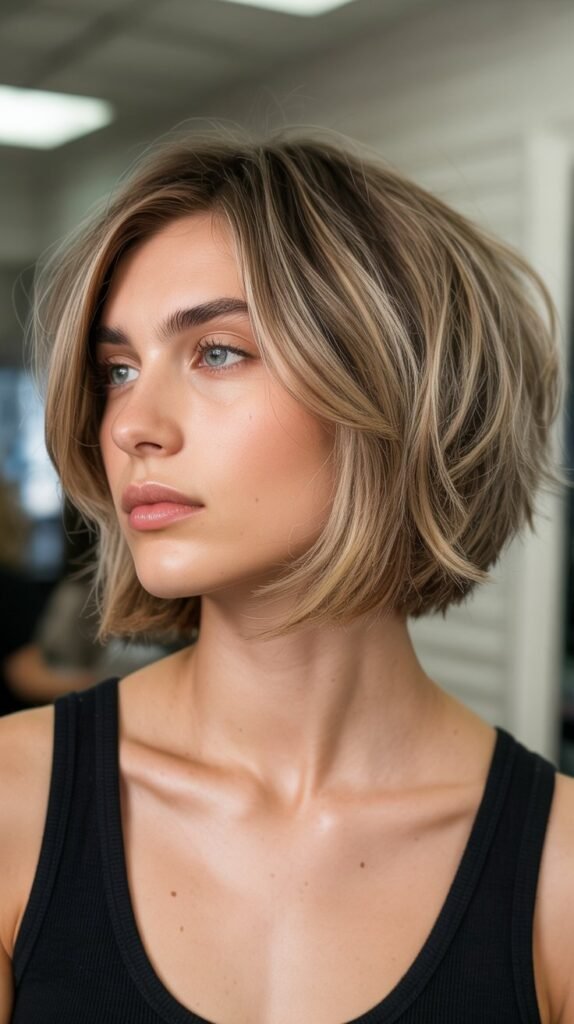
A jaw-length bob enhanced with texture creates the perfect frame for the face while maximizing volume for thin hair.
This flattering length has universal appeal and practical styling benefits.
Length Advantages
- Jaw length removes enough weight to prevent flatness while maintaining femininity.
- The cut naturally curls slightly under or flips out, adding movement.
- This length flatters most face shapes and ages beautifully.
- Added texture through cutting techniques enhances fullness perception.
Texturizing Methods
- Request point-cutting or razor work for softened, textured ends.
- Add subtle internal layers for movement without losing density.
- Use a curling iron to create bends and waves for added body.
- Apply sea salt spray for enhanced texture and natural-looking volume.
18. Crown-Focused Volume Cut
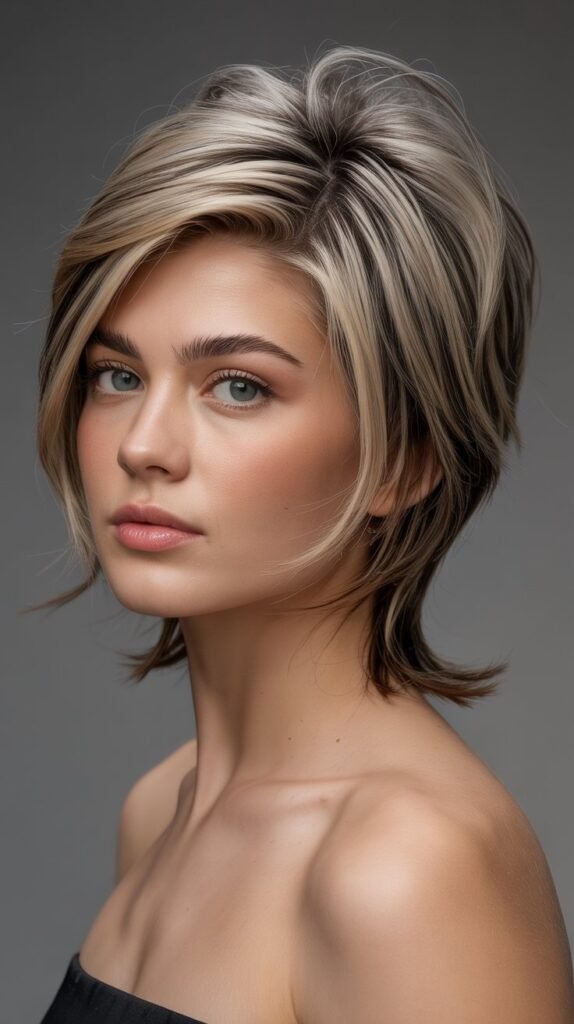
A crown-focused volume cut strategically places shorter layers on top to create maximum height where thinning is often most noticeable.
This targeted approach addresses specific problem areas effectively.
Technical Strategy
- Shorter layers at the crown area naturally lift away from the scalp.
- Weight is maintained around the perimeter for a balanced silhouette.
- The graduated length from crown to ends creates natural volume.
- This technique specifically targets the area where thin hair typically falls flat.
Crown Enhancement
- Blow-dry crown area in the opposite direction of natural growth for maximum lift.
- Use volumizing powder directly at the roots of crown layers.
- Tease gently underneath crown layers for added height.
- Set with light hairspray to maintain lift throughout the day.
19. Shaggy Layers with Bangs
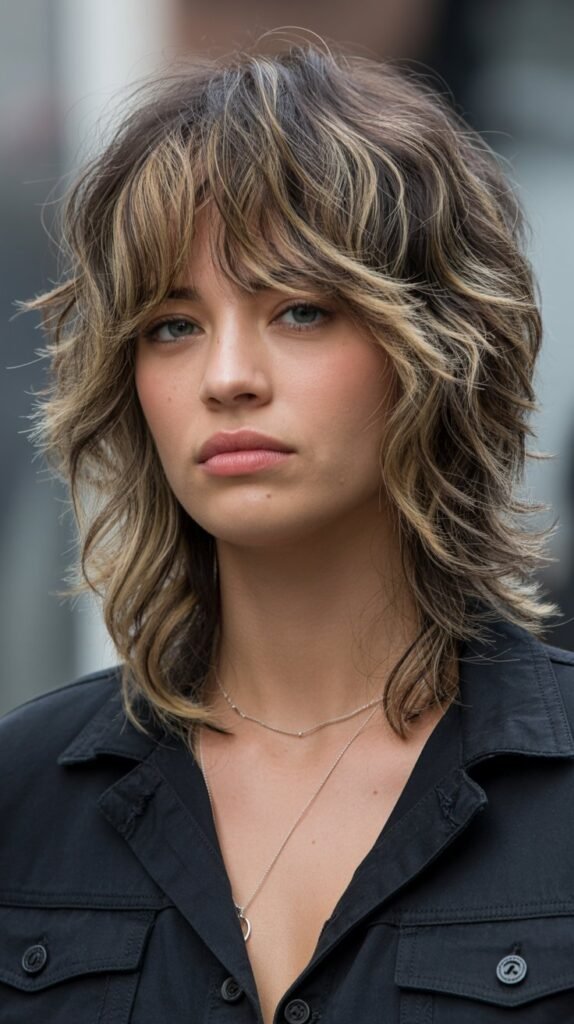
Shaggy layers combined with bangs create a carefree, textured look that’s ideal for disguising thin hair through intentional messiness and dimension.
This rock-and-roll inspired style exudes confidence and volume.
Shag Elements
- Layers are heavily textured and distributed throughout for maximum movement.
- Bangs add to the overall shaggy aesthetic while providing face-framing.
- The intentionally undone look makes thin hair appear purposefully piece-y rather than lacking density.
- Varying layer lengths create visual interest and fullness.
Styling the Shag
- Embrace natural texture by air-drying or diffusing with minimal manipulation.
- Scrunch texturizing product through damp hair for enhanced definition.
- Avoid perfectionism—the beauty is in the imperfection.
- Use dry shampoo to add grit and volume on second-day hair.
20. Angled Bob with Undercut
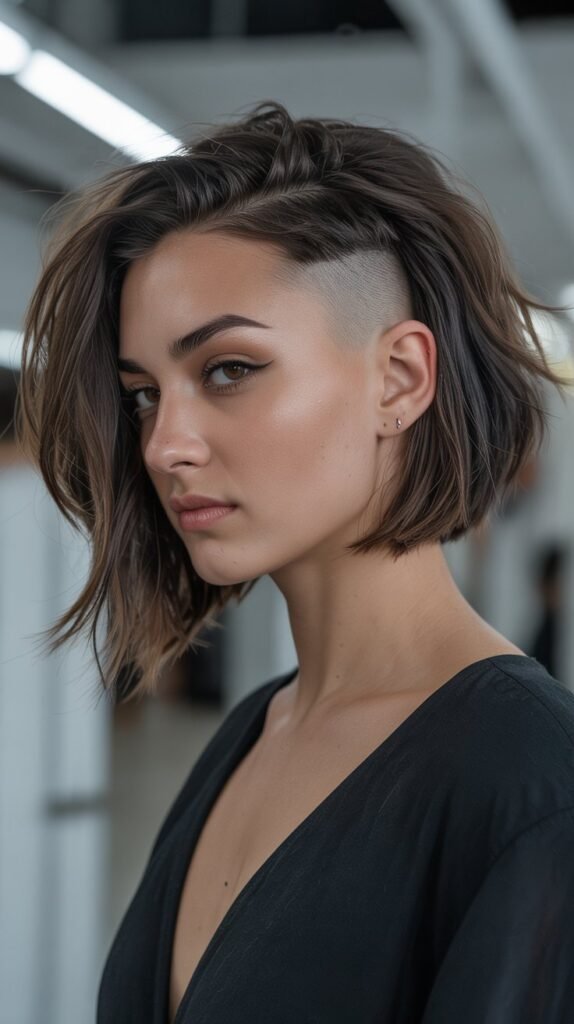
An angled bob paired with an undercut creates edgy contrast while removing bulk underneath that can weigh thin hair down.
This modern combination delivers style and practical volume benefits.
Design Concept
- The angled bob provides longer pieces in front that frame the face beautifully.
- Undercut removes heavy underneath layers that can pull thin hair flat.
- Less hair underneath allows top layers to achieve more natural lift.
- The hidden undercut adds an element of surprise and edge.
Maintenance Considerations
- Undercut requires maintenance every 4-6 weeks to keep clean.
- Top layers can be styled normally while undercut reduces overall bulk.
- The style works particularly well for those with thick areas underneath and thin top layers.
- Provides relief for those who find hair on the neck hot or uncomfortable.
21. Wispy Ends with Face-Framing

Wispy ends combined with face-framing layers create a soft, feminine look that works with thin hair rather than against it.
This delicate approach embraces fine texture as an asset.
Softness Strategy
- Wispy ends are achieved through point-cutting or razor techniques.
- The soft edges blend naturally and appear intentionally delicate.
- Face-framing pieces draw attention to features rather than hair density.
- This style works with the natural characteristics of thin hair.
Embracing Fineness
- Use lightweight products that enhance rather than weigh down hair.
- Blow-dry with minimal tension for soft, natural movement.
- Add subtle waves with a large-barrel curling iron.
- Finish with flexible-hold spray that maintains softness and touchability.
22. The Italian Bob
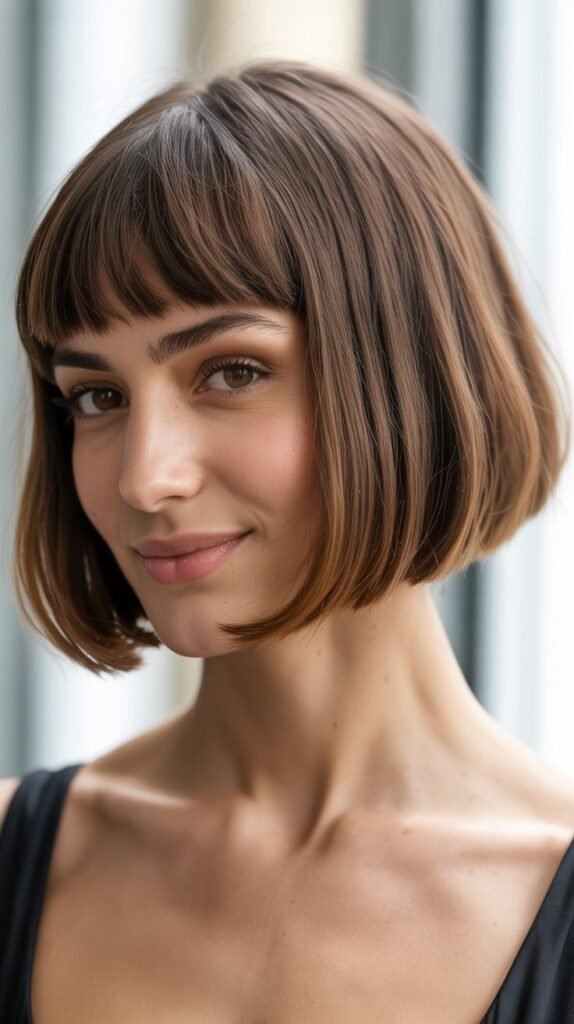
The Italian bob features a blunt cut around chin to shoulder length with subtle internal layers and often includes bangs, creating a chic, effortless look that’s swept social media.
This style adds continental sophistication to thin hair.
Signature Characteristics
- Slightly undone appearance that looks lived-in and natural.
- Blunt perimeter maintains density while subtle layers add movement.
- Often paired with curtain bangs or side-swept fringe.
- The effortless styling is key—imperfection is part of the charm.
Italian Styling Approach
- Air-dry with minimal manipulation for natural texture.
- Scrunch sea salt spray through damp hair for piece-y waves.
- Embrace slight frizz and imperfection as part of the aesthetic.
- Use fingers rather than brushes for an undone finish.
23. Razored Layers Throughout
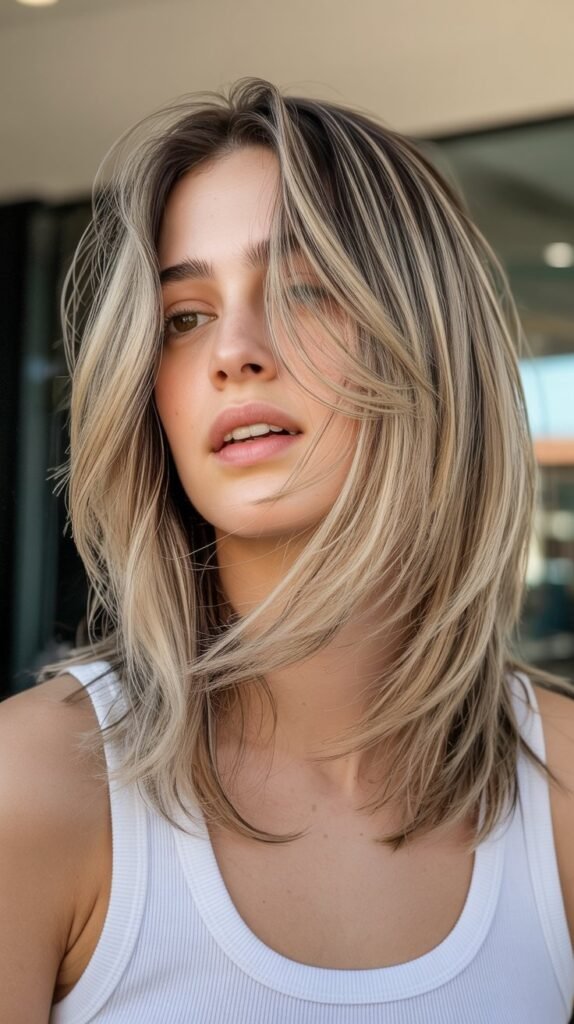
Razored layers create soft, feathered texture that enhances movement and volume for thin hair through specialized cutting techniques.
This method produces seamless blending and natural-looking fullness.
Razor Cutting Benefits
- The razor creates softer edges than scissors, ideal for fine hair.
- Layers blend more seamlessly without harsh lines or chunks.
- The technique removes minimal bulk while maximizing texture.
- Razored ends have natural movement and flow.
Considerations
- Razor cutting requires a skilled stylist experienced with the technique.
- Hair must be cut while damp for razor methods to work properly.
- The results last longer than scissor cuts before needing refreshing.
- Not recommended for naturally curly thin hair as it can increase frizz.
24. Volume-Boosting Pixie with Long Top
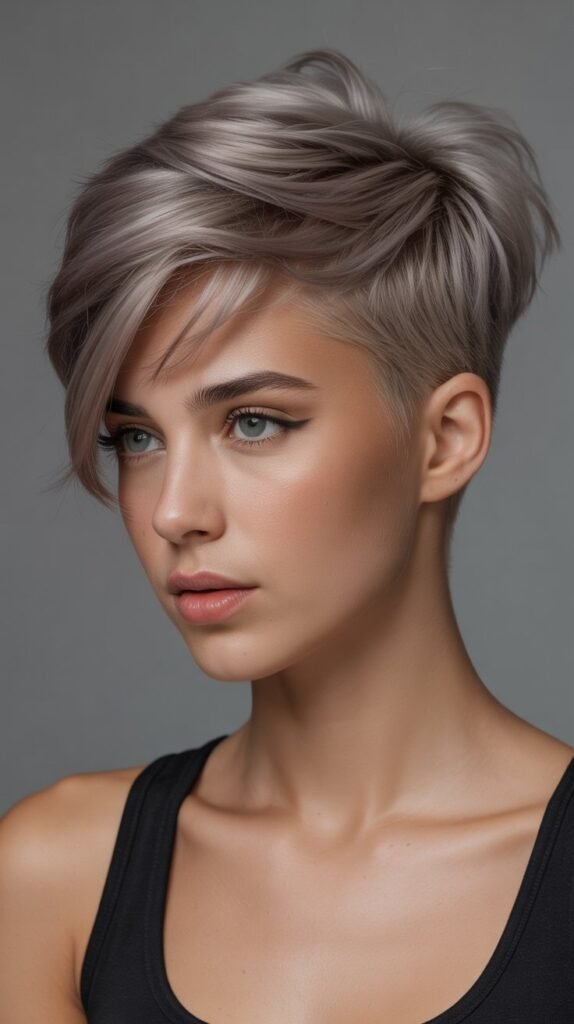
A volume-boosting pixie with a longer top section creates dramatic height and style versatility for thin hair.
This architectural cut makes a bold statement while solving volume challenges.
Structural Design
- Top section left significantly longer than sides and back.
- The length differential creates natural lift and height.
- Sides and back are kept very short to emphasize top volume.
- The style can be worn slicked back, spiked up, or swept to the side.
Volumizing Techniques
- Apply volumizing mousse to damp hair before blow-drying.
- Blow-dry top section upward using fingers for maximum height.
- Use strong-hold products to maintain lift throughout the day.
- Consider a diffuser for natural texture and body.
25. Soft A-Line Bob
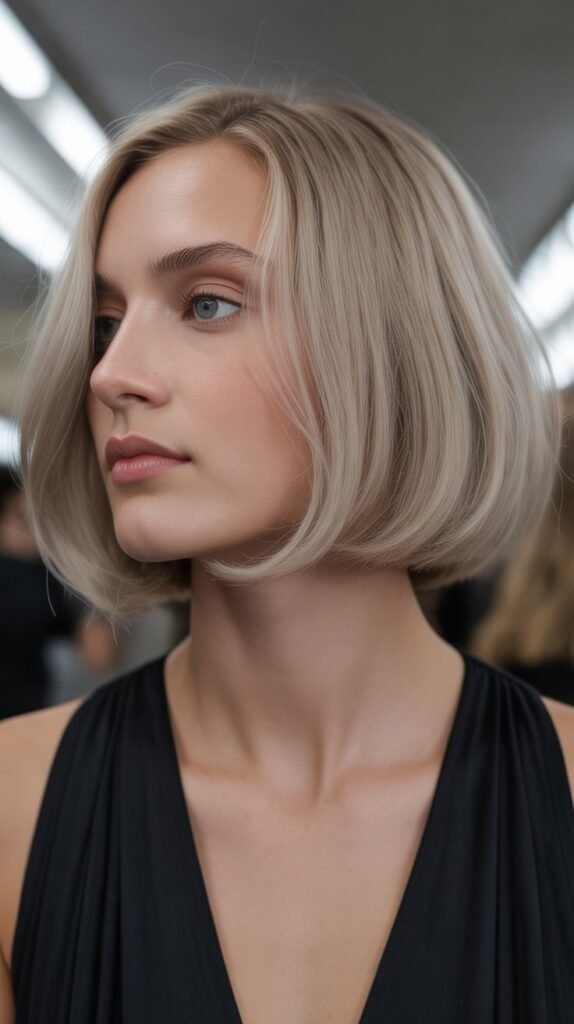
The soft A-line bob gradually angles from shorter back to longer front with gentle shaping that flatters while creating volume for thin hair.
This classic variation offers timeless appeal with modern functionality.
Gentle Angulation
- The angle is subtle rather than dramatic for a softer look.
- Back length typically hits at the nape or just below.
- Front pieces extend to chin or slightly below.
- Soft layers and edges prevent harsh lines.
Sophisticated Styling
- Blow-dry with a round brush, following the angle from back to front.
- Use a flat iron to smooth while maintaining gentle bend.
- Apply shine serum for polished, elegant finish.
- Tuck one side behind ear to showcase the angle asymmetrically.
26. Butterfly Layers
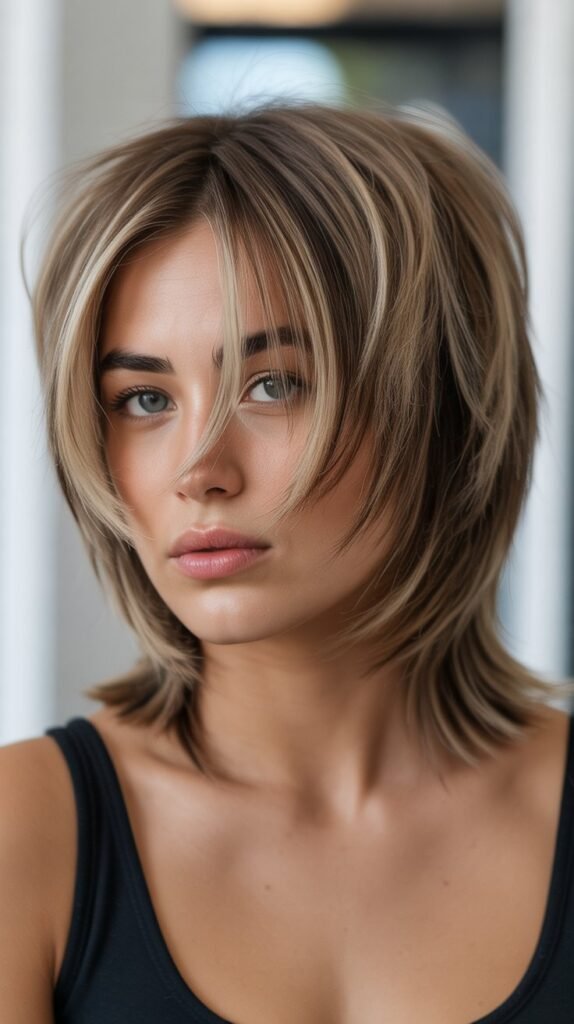
Butterfly layers feature shorter layers concentrated around the crown that gradually lengthen downward, resembling butterfly wings and creating beautiful volume for thin hair.
This trending technique delivers Instagram-worthy results.
Layer Placement
- Shortest layers begin at crown, creating maximum height there.
- Layers gradually increase in length as they move toward face and back.
- The effect creates a rounded, voluminous silhouette.
- Face-framing pieces complete the butterfly shape.
Achieving Butterfly Effect
- Blow-dry crown layers with a round brush, directing upward and outward.
- Add waves with a curling iron to enhance the dimensional effect.
- Use volumizing spray concentrated at crown area.
- The style works best on shoulder-length or longer hair.
27. Disconnected Layers
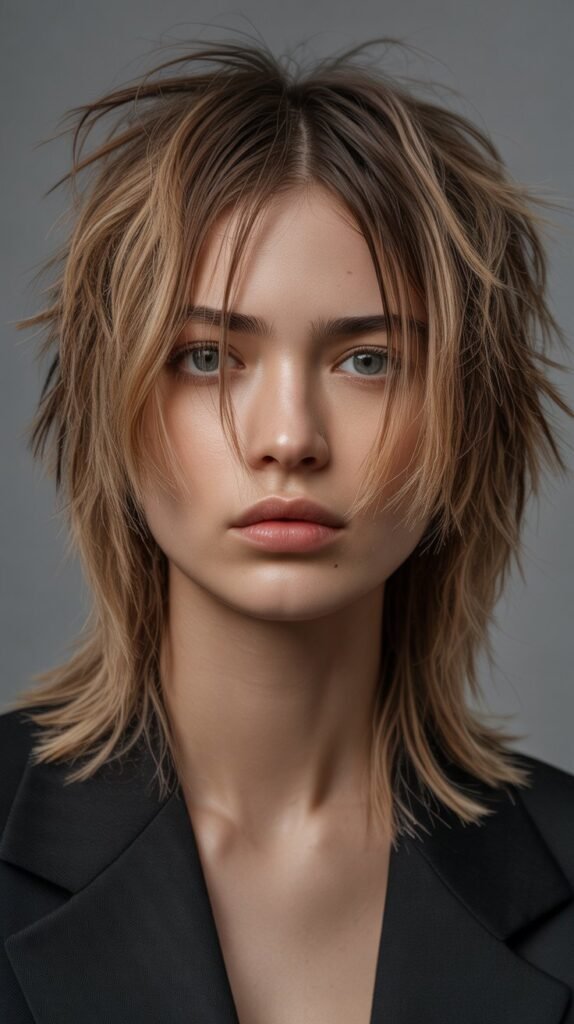
Disconnected layers feature intentional gaps between layer sections, creating dramatic texture and volume through contrast.
This editorial-inspired technique produces fashion-forward results for thin hair.
Disconnect Concept
- Layers don’t blend seamlessly but rather maintain distinct sections.
- The intentional separation creates visual interest and movement.
- Contrast between lengths enhances the perception of volume.
- The edgy approach works particularly well for fashion-forward individuals.
Styling Disconnected Hair
- Enhance separation by styling different sections in varying directions.
- Use texturizing products to emphasize the piece-y nature.
- The style benefits from slightly tousled, undone finishing.
- Consider contrasting colors or highlights to further emphasize disconnection.
28. Shoulder-Length with Fringe Benefits
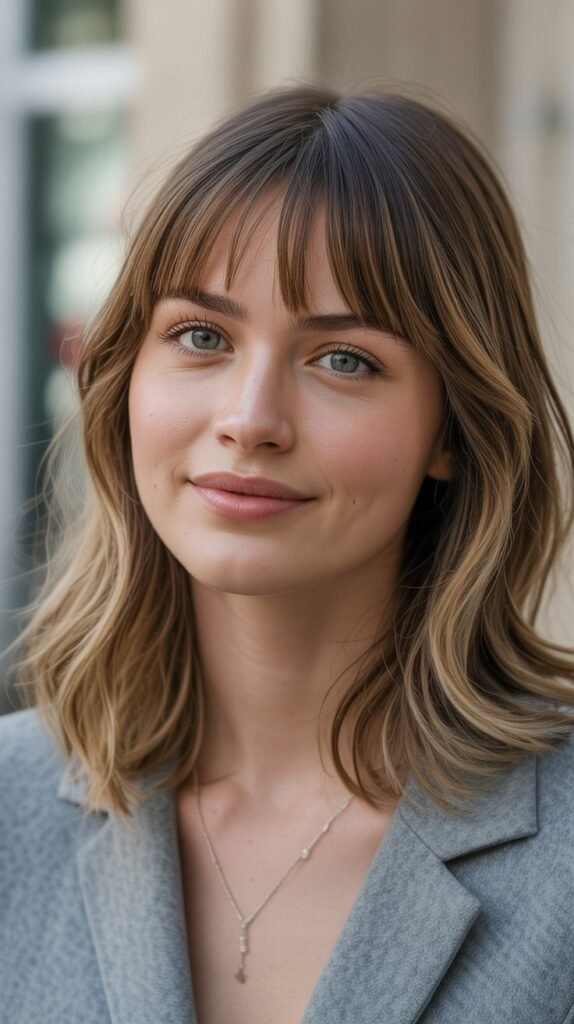
Shoulder-length hair paired with various fringe styles creates versatile volume and framing options for thin hair. This classic length proves enduringly popular for good reason.
Fringe Variations
- Blunt fringe creates bold statement and covers forehead completely.
- Wispy fringe offers softer, more delicate face-framing.
- Side-swept fringe adds asymmetry and movement.
- Curtain fringe parts in middle for balanced frame.
Length Benefits
- Shoulder length provides enough weight for smooth styling without excessive bulk.
- The length is professional and versatile for various occasions.
- Easy to style in multiple ways: straight, wavy, half-up, or fully styled.
- Fringe adds dimension and draws attention to facial features.
29. Micro Layers for Movement
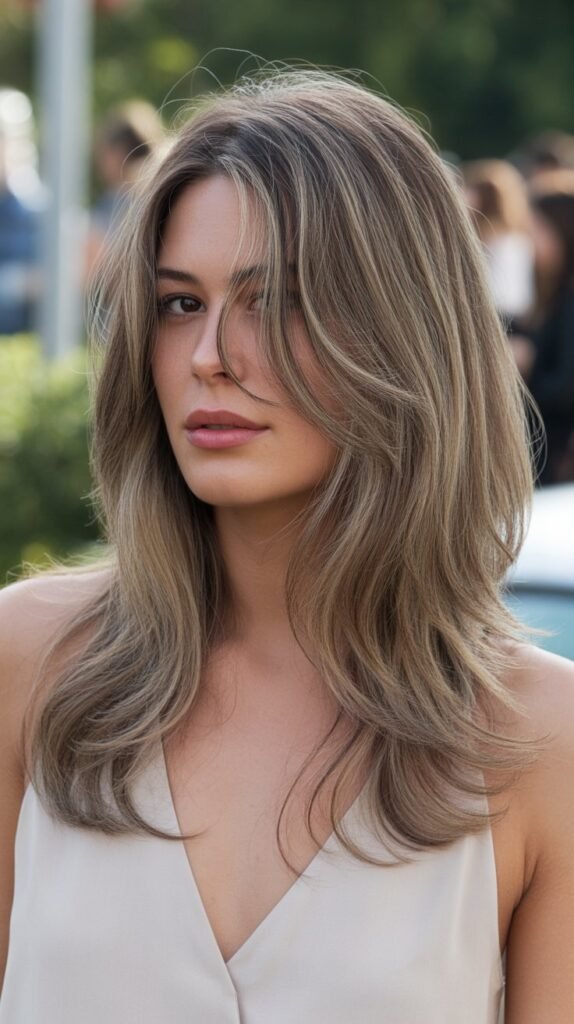
Micro layers involve very subtle layering that creates movement without sacrificing density, perfect for maintaining length while adding life to thin hair.
This nuanced approach requires skilled cutting.
Subtle Technique
- Layers are minimal and barely noticeable when hair is straight.
- The subtlety maintains maximum density throughout.
- Movement becomes apparent when hair is styled with waves or curls.
- Internal layering removes bulk without affecting exterior density.
When to Choose Micro Layers
- Ideal for those wanting length and fullness with minimal layering.
- Works well for those growing out previous haircuts.
- Provides movement for styling without commitment to heavy layers.
- Best for naturally straight to wavy thin hair.
30. The Octopus Haircut
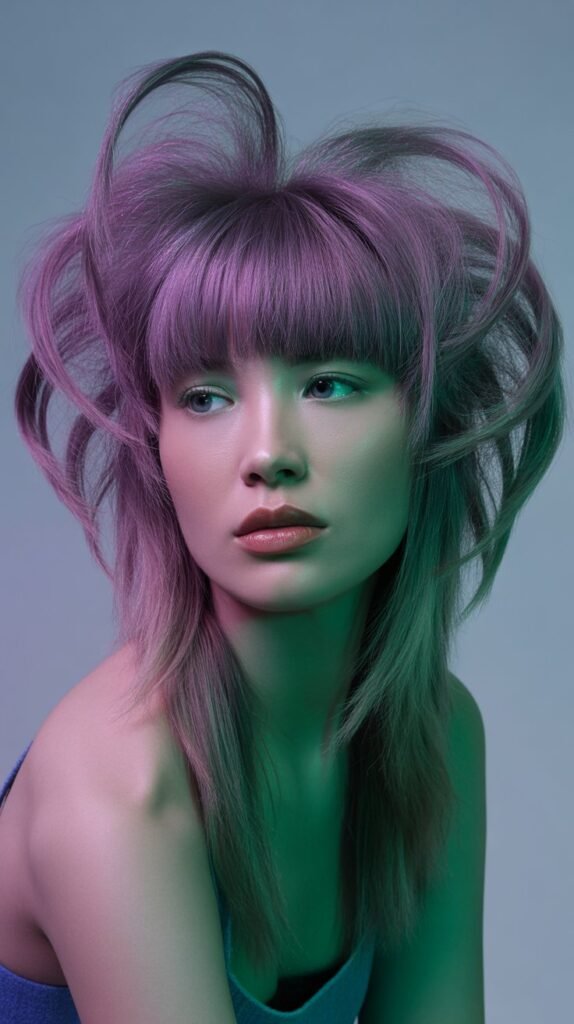
The octopus haircut features a distinctive two-tiered look with shorter crown layers and longer bottom layers, resembling tentacles and creating volume through dramatic length contrast.
This viral trend offers unique visual interest.
Defining Features
- Crown layers are significantly shorter, creating a rounded top section.
- Bottom layers remain longer, hanging like tentacles.
- The dramatic contrast creates visual volume and interest.
- The unconventional look makes a bold style statement.
Octopus Styling
- Blow-dry top layers with volume while allowing bottom to hang naturally.
- Add waves to bottom layers to enhance the tentacle effect.
- The style works best on medium to long hair lengths.
- Embrace the unique, fashion-forward nature of the cut.
31. Piecey Shag with Attitude

A piecey shag with attitude features heavy texturizing, separation, and intentional choppiness that creates volume through controlled chaos.
This rebellious style makes thin hair appear deliberately edgy rather than lacking density.
Attitude Elements
- Heavy point-cutting or razor work creates extreme texture.
- Pieces are intentionally separated rather than blended smoothly.
- The messy, undone look embraces imperfection as style.
- Confidence is essential to pulling off this bold look.
Edgy Maintenance
- Use strong-hold texturizing products for piece-y definition.
- Avoid brushing once styled to maintain separation.
- Embrace bedhead texture on second-day hair.
- Regular trims maintain the intentionally choppy shape.
32. Collarbone Cut with Soft Bends
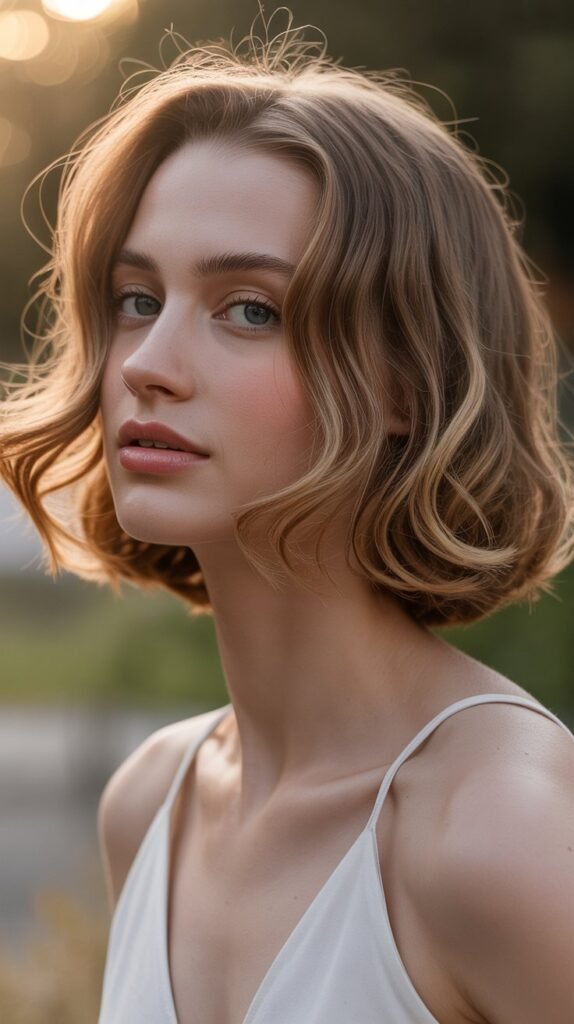
A collarbone-length cut enhanced with soft bends creates romantic, voluminous movement perfect for thin hair.
This feminine approach combines flattering length with body-building styling.
Romantic Approach
- The collarbone length provides ideal canvas for soft styling.
- Gentle bends add volume without excessive curling.
- The movement creates dimension that disguises thin density.
- The overall effect is soft, feminine, and approachable.
Creating Soft Bends
- Use a large-barrel curling iron or flat iron for gentle waves.
- Alternate curl directions for natural-looking movement.
- Brush through curls gently to soften into bends.
- Finish with light texturizing spray for hold with touchable softness.
Hair Color Techniques That Enhance Volume Perception
Beyond the cut itself, strategic hair coloring can significantly enhance the appearance of volume and thickness for thin hair.
Dimensional Color Benefits
- Multiple tones create depth that makes hair appear fuller and more substantial.
- Light and dark contrasts trick the eye into perceiving more density.
- Highlights and lowlights add visual texture that compensates for lack of physical texture.
- Strategic placement can create shadows and highlights that mimic volume.
Best Coloring Techniques
Balayage: Hand-painted highlights that create natural dimension and depth throughout thin hair.
Babylights: Very fine, delicate highlights that add subtle brightness and the illusion of more strands.
Lowlights: Darker pieces strategically placed to create shadows that suggest depth and volume.
Root Shadowing: Slightly darker roots that create dimension and make hair appear thicker at the scalp.
Glossing: Semi-permanent color treatment that adds shine and richness, enhancing the appearance of density.
Colors to Consider
- Avoid single-process, flat color that can make thin hair look one-dimensional.
- Lighter shades generally make hair appear fuller than very dark colors.
- Warm tones add richness while cool tones can appear more translucent.
- Multi-tonal approaches work better than monochromatic looks for creating fullness.
Blow-Drying Techniques for Maximum Volume
Proper blow-drying technique can make the difference between flat, lifeless thin hair and voluminous, body-filled locks.
Essential Tools
- Round brush (ceramic or ionic for even heat distribution)
- Paddle brush for smoothing sections
- Nozzle attachment to direct airflow precisely
- Diffuser for those with natural texture
- Quality blow dryer with adjustable heat and speed settings
Step-by-Step Volume-Boosting Method
Step 1: Apply volumizing product to damp, towel-dried hair, concentrating at roots.
Step 2: Flip head upside down and rough-dry hair 70% dry to create natural lift.
Step 3: Section hair into manageable parts, starting at the nape of the neck.
Step 4: Use round brush to lift each section at the root, directing hot air at the roots first.
Step 5: Roll brush through mid-lengths and ends, following with the dryer.
Step 6: Direct the nozzle downward along the hair shaft to smooth the cuticle and add shine.
Step 7: Once completely dry, blast with cool air to set the style and add hold.
Step 8: Apply volumizing powder or spray at roots if additional lift is needed.
Common Mistakes to Avoid
- Never blow-dry hair completely flat against the head without lift.
- Avoid using too much product, which weighs thin hair down.
- Don’t use excessive heat that can damage fine hair strands.
- Never skip the cool shot, which sets volume and adds lasting power.
- Avoid brushing through completely once styled, which can deflate volume.
Best Practices for Maintaining Healthy Thin Hair
Healthy hair always looks fuller and more voluminous than damaged hair, making maintenance crucial for thin-haired individuals.
Washing Guidelines
- Shampoo only the scalp and roots, allowing cleanser to rinse through ends.
- Use volumizing or thickening shampoos specifically formulated for fine hair.
- Avoid heavy, moisturizing formulas designed for thick or coarse hair.
- Consider washing less frequently to prevent stripping natural oils that add body.
- Use clarifying shampoo once monthly to remove product buildup that weighs hair down.
Conditioning Strategies
- Apply conditioner only to mid-lengths and ends, never at roots.
- Choose lightweight, volumizing conditioners over heavy, cream-based formulas.
- Leave conditioner on for minimal time to avoid over-conditioning.
- Rinse thoroughly with cool water to seal cuticles and add shine.
- Consider leave-in conditioner sprays rather than traditional rinse-out products.
Protection Methods
- Always use heat protectant spray before blow-drying, curling, or flat ironing.
- Minimize heat styling frequency when possible to prevent damage.
- Sleep on silk or satin pillowcases to reduce friction and breakage.
- Avoid tight hairstyles that pull on delicate thin hair and cause stress.
- Trim regularly every 6-8 weeks to remove split ends that make hair appear thinner.
Nutritional Support
- Ensure adequate protein intake, as hair is primarily made of keratin protein.
- Consider biotin supplements after consulting with a healthcare provider.
- Stay hydrated, as water intake affects hair health and appearance.
- Eat foods rich in omega-3 fatty acids, iron, zinc, and vitamins A, C, D, and E.
- Reduce stress through exercise, meditation, or other wellness practices, as stress contributes to hair thinning.
Styling Tools That Enhance Volume
The right tools make achieving volume with thin hair significantly easier and more effective.
Must-Have Tools
Teasing Brush: Small, fine-bristled brush perfect for backcombing roots to create lift without damage.
Velcro Rollers: Set hair while cooling after blow-drying to create lasting volume and body.
Large Barrel Curling Iron (1.5-2 inches): Creates loose waves and bends that add volume without tight curls.
Flat Iron: Can be used to create bends and waves while smoothing, adding controlled volume.
Crimping Iron: Creates texture at roots when used strategically underneath top layers.
Volumizing Hot Rollers: Heated rollers that set hair with body and bounce.
Tool Usage Tips
- Use lower heat settings on thin hair to prevent damage that leads to breakage.
- Allow heated tools to cool on hair before removing for longer-lasting results.
- Clean tools regularly to prevent product buildup that transfers to hair.
- Invest in quality tools with ceramic or tourmaline technology for even heat distribution.
- Consider cordless options for travel convenience without sacrificing results.
Professional Treatments for Thin Hair
Salon treatments can temporarily or semi-permanently enhance volume and thickness for thin hair.
Volume-Enhancing Treatments
Keratin Treatments: Smooth frizz and add body, making hair appear fuller and healthier.
Olaplex or Bond-Building Treatments: Strengthen hair from within, reducing breakage and improving overall health.
Glossing Treatments: Add shine and dimension that create the illusion of thicker hair.
Root Lifting Perms: Permanent wave solution applied only at roots for lasting lift and volume.
Hair Botox: Conditioning treatment that fills in gaps and creates fuller-looking strands.
Extensions and Enhancements
- Clip-in extensions add instant volume for special occasions without commitment.
- Tape-in extensions provide semi-permanent fullness for several weeks.
- Halo extensions offer temporary volume without any attachment to natural hair.
- Hair toppers target thinning crown areas specifically for natural-looking coverage.
- Micro-link extensions add volume with minimal damage to fine hair.
Treatment Considerations
- Consult with a stylist experienced in working with thin hair before committing.
- Understand maintenance requirements and costs before beginning any treatment.
- Be realistic about results—treatments enhance but don’t transform hair completely.
- Prioritize hair health over temporary aesthetic gains.
- Research thoroughly and read reviews before trying new treatments.
Common Mistakes to Avoid with Thin Hair
Certain practices and choices can make thin hair look even thinner, flatter, and less voluminous.
Cutting Mistakes
- Avoiding haircuts altogether, allowing split ends and damage to make hair appear thinner.
- Requesting too many layers that remove density and create stringy, wispy ends.
- Growing hair extremely long, which pulls hair flat under its own weight.
- Getting one-length cuts without any shaping, resulting in flat, lifeless appearance.
- Cutting bangs too thick, which removes volume from the rest of the hair.
Styling Errors
- Using too much product, which weighs thin hair down and makes it appear greasy.
- Applying conditioner or oils at the roots, causing flatness and lack of lift.
- Brushing hair excessively, which can cause breakage and static.
- Creating center parts in hair that naturally parts elsewhere, causing flatness.
- Over-washing hair, stripping natural oils that provide body and texture.
Color Pitfalls
- Choosing single-dimension color that makes hair appear flat and one-toned.
- Over-processing with bleach, causing damage that leads to breakage and thinning appearance.
- Going too dark, which can make scalp show-through more visible.
- Neglecting root touch-ups, creating harsh lines that emphasize thinness.
- Avoiding color altogether when strategic dimension could enhance fullness.
Product Problems
- Using heavy, moisturizing products designed for thick or coarse hair.
- Applying styling products to soaking wet hair, diluting effectiveness.
- Skipping heat protectant, leading to damage that thins hair further.
- Using old or expired products that don’t perform effectively.
- Over-relying on dry shampoo, which can build up and cause scalp issues.
Seasonal Hair Care for Thin Hair
Different seasons present unique challenges and opportunities for managing thin hair volume.
Summer Volume Strategies
- Embrace natural texture with sea salt sprays that enhance body.
- Protect hair from sun damage with UV-protectant products and hats.
- Use lighter styling products that won’t melt or become heavy in heat.
- Take advantage of humidity to add natural body and wave.
- Rinse chlorine and salt water immediately to prevent damage and dryness.
Winter Volume Maintenance
- Combat static with anti-frizz products and humidifiers indoors.
- Protect hair from cold, dry air with leave-in treatments.
- Use slightly heavier products in winter without going overboard.
- Wear silk-lined hats to prevent friction and breakage.
- Increase deep conditioning treatments to combat winter dryness.
Spring and Fall Transitions
- Adjust product types as humidity levels change seasonally.
- Consider seasonal haircuts to refresh and remove damaged ends.
- Modify washing frequency based on seasonal scalp oil production.
- Embrace transitional weather for trying new styling techniques.
- Prepare hair for upcoming season with appropriate treatments.
FAQ: Thin Hair Haircuts and Volume
Q: How often should I get my thin hair cut?
A: Every 6-8 weeks to maintain shape, remove split ends, and keep hair looking its fullest and healthiest.
Q: Will cutting my hair shorter make it look thicker?
A: Yes, shorter lengths often appear fuller because there’s less weight pulling hair down, and cuts can be shaped for maximum volume.
Q: Should I avoid layers if I have thin hair?
A: Not necessarily—strategic layering adds movement and volume, but excessive layers can make hair appear stringy; work with an experienced stylist.
Q: Can thin hair support bangs?
A: Absolutely! Bangs can actually make thin hair appear fuller by adding dimension and drawing attention to your face rather than hair density.
Q: What’s the best length for thin hair?
A: Chin to collarbone length typically works best, providing enough weight to look polished while not being so long that it pulls flat.
Q: Do blunt cuts really make thin hair look thicker?
A: Yes, blunt cuts create a solid line where all hair ends at the same point, making the overall appearance much denser and fuller.
Q: Can I have long hair if it’s thin?
A: Yes, but strategic minimal layering and regular trims are essential to prevent stringy ends and maintain the appearance of fullness.
Q: Will coloring my hair make it look fuller?
A: Dimensional color techniques like balayage and highlights create depth that makes hair appear thicker, but avoid over-processing.
Q: What’s the biggest mistake people make with thin hair?
A: Using too much heavy product and avoiding haircuts, both of which make thin hair look flatter, limper, and more sparse.
Conclusion
Finding the perfect haircut transforms the thin hair experience from frustrating to fabulous, opening up a world of style possibilities you may have thought were impossible.
This comprehensive guide to 32 Cute Haircuts for Thin Hair to Add Volume and Style has explored the most effective cuts, techniques, and strategies for creating the illusion of thickness while embracing your hair’s natural characteristics.
From bold pixies to flowing layers, blunt bobs to textured shags, each haircut offers unique benefits for different lifestyles, face shapes, and personal preferences.
The key lies in understanding that thin hair isn’t a limitation but simply a hair type that requires specific approaches to look its absolute best.
By choosing strategic cuts that remove weight in the right places, add texture where needed, and create architectural shape that defies gravity, you can achieve volume, movement, and style that rivals any hair type.
Remember that the perfect haircut is only part of the equation—proper products, skilled styling techniques, regular maintenance, and confidence in your choices complete the formula for gorgeous, voluminous thin hair.
Armed with this knowledge and inspiration, you’re ready to book that salon appointment, communicate clearly with your stylist, and embrace a new cut that makes you feel beautiful, confident, and ready to show the world that thin hair can absolutely be stunning, stylish, and full of life.
