We’ve all been there—hitting the snooze button one too many times, realizing we’re running late, and discovering our hair is looking less than pristine.
But here’s a secret that seasoned stylists know: dirty hair is actually your styling superpower. Second-day (or third, or fourth) hair has texture, grip, and volume that freshly washed hair simply can’t match.
This comprehensive guide on 33 Dirty Hair Work Hairstyles That Look Fresh will transform your approach to workday styling, proving that skipping a wash doesn’t mean sacrificing professionalism or polish.
From sleek updos to textured ponytails, messy buns to elegant braids, you’ll discover how to turn greasy roots into gorgeous, office-appropriate styles that look intentionally chic rather than accidentally unkempt.
Whether you have fine hair that goes limp, thick hair that gets weighed down, or curly hair that needs extra definition, these hairstyles work with your hair’s natural oils to create looks that are not only acceptable for the workplace but genuinely beautiful.
Get ready to embrace your dirty hair days with confidence and cut your morning routine in half while still looking put-together and professional.
1. The Classic Low Bun
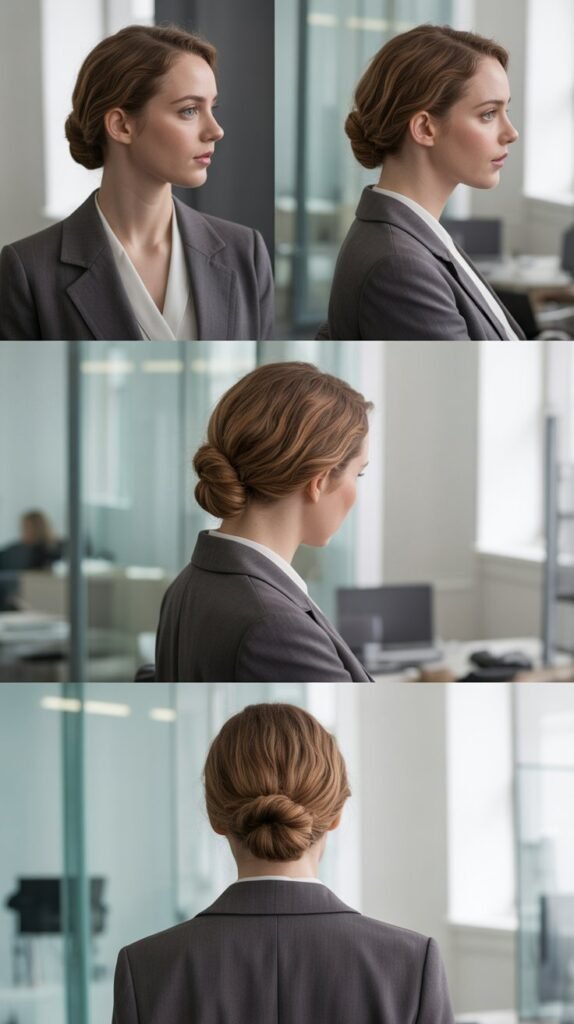
The classic low bun is the ultimate solution for dirty hair at work because it conceals oily roots while looking effortlessly sophisticated.
This timeless style works beautifully with second or third-day hair since the natural oils help smooth flyaways and create a sleeker finish.
It’s perfect for professional settings, client meetings, or presentations where you need to look polished without much effort.
How to Create:
- Gather your hair at the nape of your neck without brushing it thoroughly—the texture from dirty hair actually helps the style hold better.
- Twist the hair into a rope-like shape, coiling it around itself to form a bun.
- Secure with bobby pins, crisscrossing them for maximum hold.
- Use a small amount of dry shampoo at the roots only if needed, then smooth with your hands.
- Finish by pulling out a few face-framing pieces for a softer, more modern look.
Why It Works for Dirty Hair:
- Natural oils weigh down flyaways, creating a smoother appearance.
- The texture from unwashed hair provides better grip for pins and elastics.
- The low placement strategically hides greasier roots near the scalp.
Pro Tips:
- Add a decorative hair pin or clip to elevate the look for important meetings.
- Spray a toothbrush with hairspray to tame any baby hairs around your hairline.
- This style works on all hair lengths past shoulder-length.
2. The Textured High Ponytail
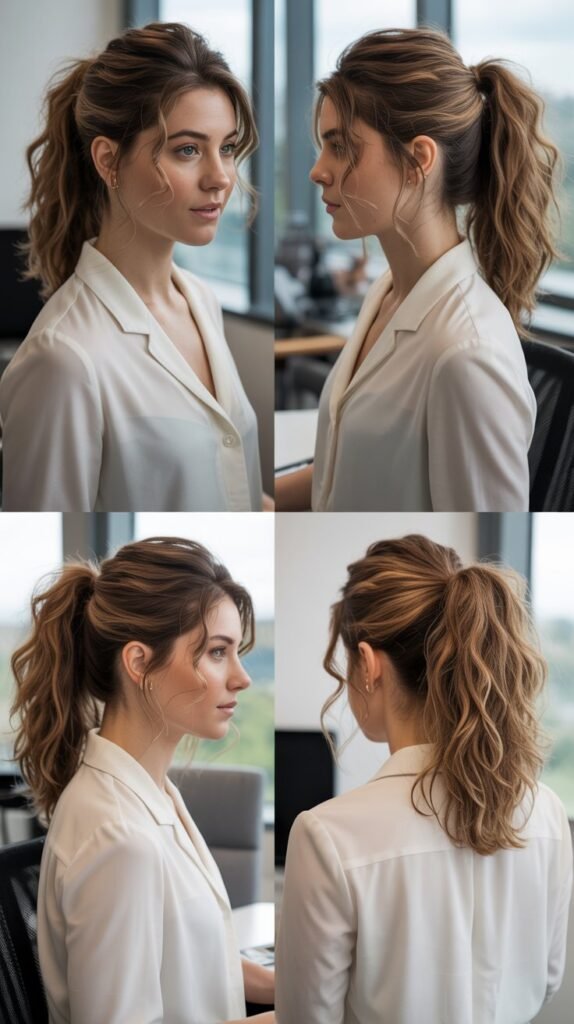
A textured high ponytail transforms greasy hair into a statement style that looks intentionally tousled and fashion-forward.
The height of this ponytail draws attention away from oily roots while the texture created by dirty hair adds volume and interest.
This style bridges the gap between casual and professional, making it ideal for creative workplaces or casual Fridays.
Styling Steps:
- Flip your head upside down and gather hair at the crown of your head.
- Secure with a strong elastic, allowing some texture and bumps rather than smoothing everything perfectly.
- Backcomb the ponytail itself gently to add volume and texture.
- Wrap a small section of hair around the elastic to hide it and secure with a bobby pin underneath.
- Gently pull at the crown to add height and create a slightly messy, lived-in texture.
Benefits for Unwashed Hair:
- The natural grit in dirty hair holds teasing and volume better than clean hair.
- Oils at the roots are hidden by the high placement and added height.
- The textured finish looks intentional rather than neglected.
Styling Variations:
- Add a velvet scrunchie for a trendy, polished twist.
- Braid the ponytail itself for added interest.
- Curl the ends for extra dimension.
3. The Sleek Side Part with Tuck
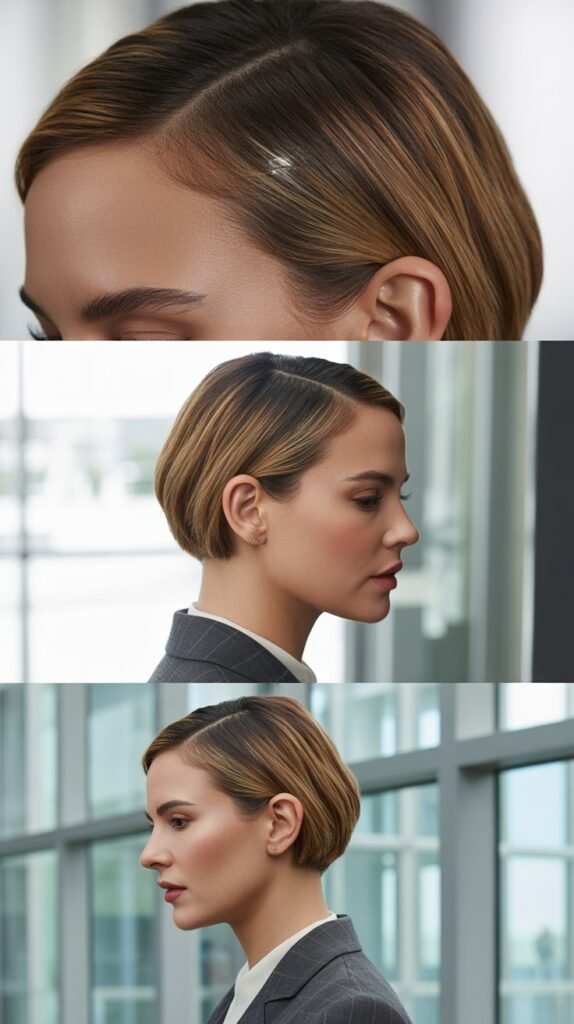
The sleek side part with tuck is a sophisticated solution that strategically hides greasy roots while creating an asymmetrical, modern look.
This style involves creating a deep side part and tucking one side behind the ear, secured with pins, while the other side falls forward.
It’s particularly effective for fine to medium hair types and works wonderfully in conservative office environments.
Creation Process:
- Create a deep side part using the end of a rat-tail comb, positioning it approximately two inches from your natural part.
- Apply a small amount of styling cream or oil to the smaller section to smooth it down.
- Tuck the smaller section behind your ear and secure with coordinating bobby pins placed in an X pattern.
- Leave the larger section loose, allowing it to drape over your shoulder.
- Use your fingers to arrange the loose section, embracing any natural wave or texture.
Why This Works:
- The side part repositions where volume naturally occurs, disguising oily roots.
- The tucked section shows intention and polish rather than neglect.
- Natural oils help achieve the sleek look on the tucked side without additional products.
Enhancement Ideas:
- Add decorative pins in gold or silver for evening work events.
- Curl the loose section for added sophistication.
- This style works exceptionally well on day-two or day-three hair.
4. The Braided Crown
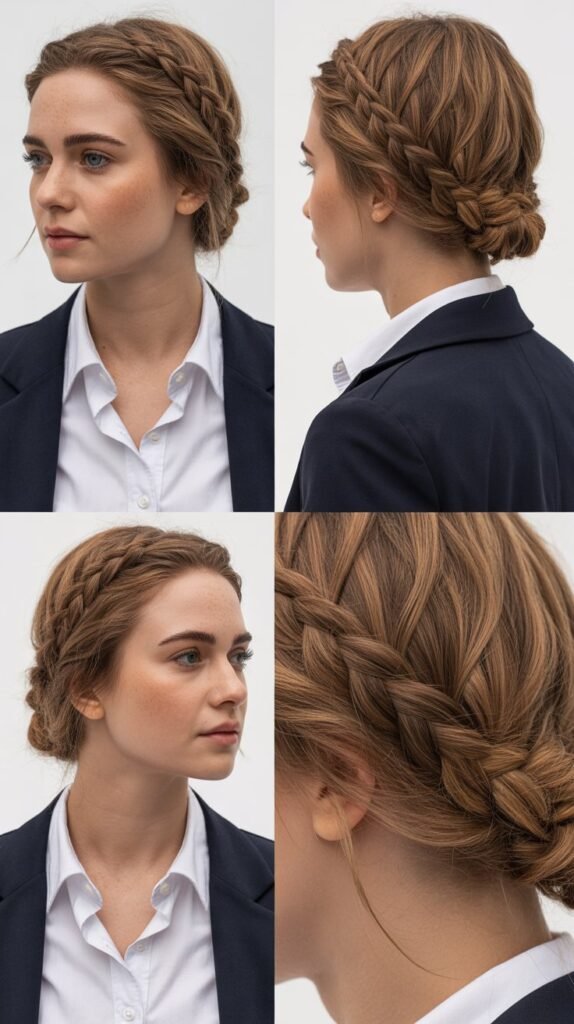
The braided crown is a romantic yet professional style that cleverly conceals oily roots by incorporating them into braids that wrap around your head like a halo.
This style works beautifully with dirty hair because the natural texture and oils help the braids grip better and create a fuller appearance.
It’s ideal for creative professionals or less formal work environments where personality can shine through.
Step-by-Step Instructions:
- Part your hair down the middle from forehead to nape.
- Beginning at one side near your ear, create a Dutch braid (braiding under rather than over) that follows your hairline around your head.
- Continue braiding, incorporating hair from the hairline, until you reach the opposite ear.
- Repeat on the other side, creating a second braid that meets the first.
- Pin the ends securely where they meet at the back, tucking them under for a seamless finish.
- Gently pull at the braid sections to create fullness and a softer appearance.
Dirty Hair Advantages:
- Oily roots provide the grip needed to keep the braid tight and secure throughout the workday.
- The braiding technique disguises greasy sections by incorporating them into the pattern.
- Natural texture prevents the smooth, “too perfect” appearance that can look juvenile.
Professional Modifications:
- Keep the braids tighter for a more polished, controlled look.
- Use clear elastics that disappear into your hair color.
- Avoid pulling out too many pieces, which can look messy rather than romantic in professional settings.
5. The Low Twisted Chignon
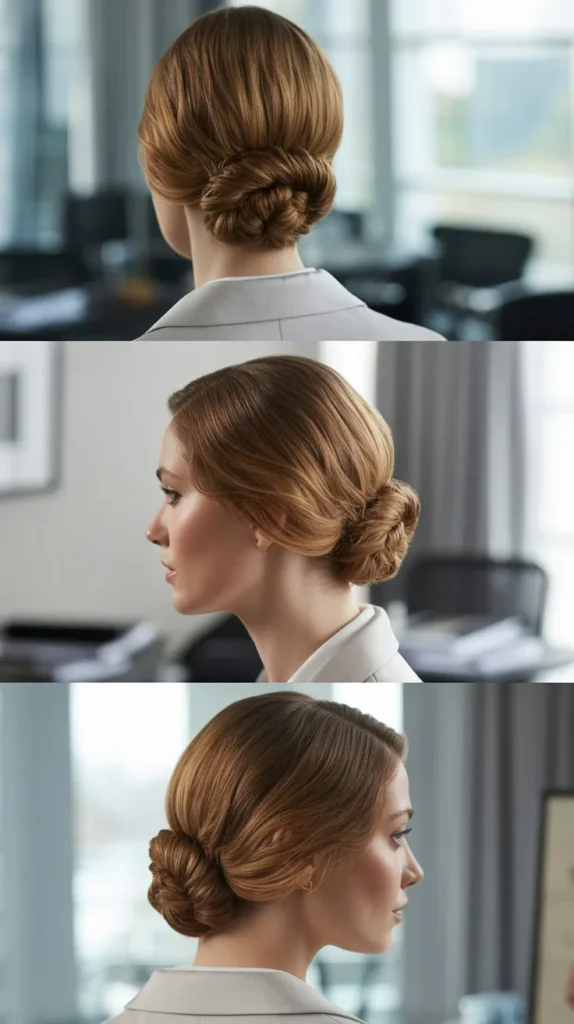
The low twisted chignon is an elegant, timeless hairstyle that works exceptionally well with dirty hair because the natural oils help create smooth twists without frizz.
This sophisticated updo sits at the nape of the neck and involves twisting sections of hair before pinning them into a low, gathered style.
It’s perfect for formal work presentations, interviews, or any situation requiring maximum professionalism.
Construction Method:
- Divide your hair into two equal sections by parting down the middle from crown to nape.
- Twist each section tightly in the same direction (both clockwise or both counterclockwise).
- Cross the twisted sections over each other at the nape of your neck.
- Wrap the sections around each other, coiling them into a low bun shape.
- Secure with multiple bobby pins, ensuring the structure feels tight and secure.
- Tuck any loose ends into the chignon and pin them invisibly.
Why Dirty Hair Excels:
- The weight of natural oils prevents twists from unraveling during the styling process.
- Texture from unwashed hair creates better friction, making the style last longer.
- The low placement completely conceals the greasiest part of your hair near the scalp.
Refinement Tips:
- Use pins that match your hair color for an invisible finish.
- A light mist of hairspray on your palms helps smooth without adding stiffness.
- This style is particularly stunning on hair that’s two to three days post-wash.
6. The Half-Up Top Knot
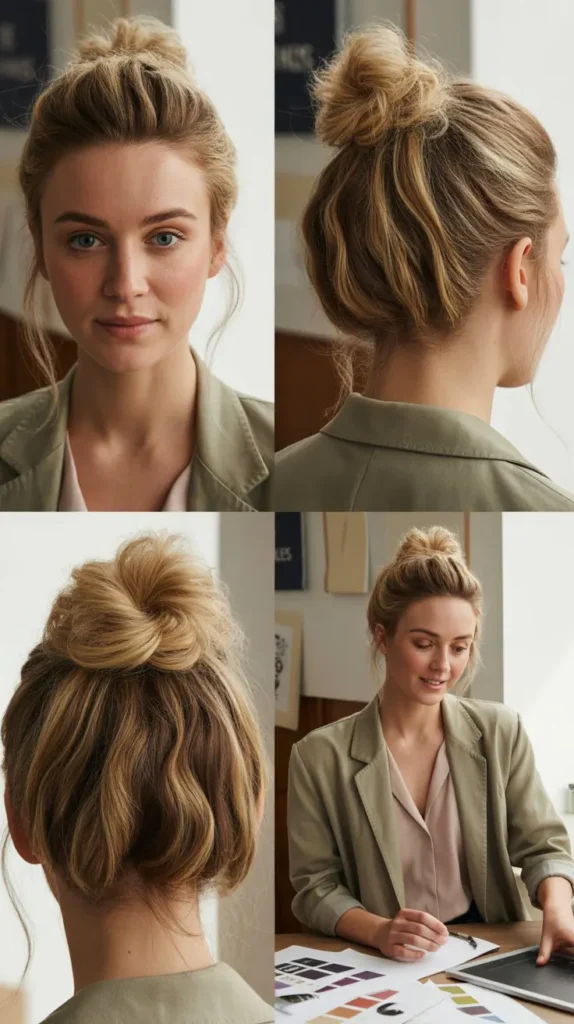
The half-up top knot is a trendy, youthful style that strategically addresses greasy roots by pulling up only the top section of hair where oil accumulates most.
This style leaves the bottom half down, creating a balanced look that’s both casual and put-together.
It works wonderfully in modern, creative work environments and is particularly flattering for those with layered haircuts.
How to Style:
- Section off the top half of your hair from temple to temple, approximately from ear-level upward.
- Gather this section at the crown of your head without smoothing it too much.
- Twist the section into a small bun or knot, securing with an elastic.
- Allow the bottom half to hang naturally, embracing any wave or texture.
- Pull a few face-framing pieces loose for a softer, more relaxed appearance.
Dirty Hair Benefits:
- Concentrates on lifting the oiliest section away from your face.
- The bottom section benefits from the weight of natural oils, appearing sleeker without effort.
- Texture in dirty hair prevents the top knot from looking too tight or severe.
Style Adjustments:
- Position the knot higher for a more playful look or lower for increased sophistication.
- Braid the top section before knotting for added interest.
- Use a decorative elastic or scrunchie to make it more polished.
7. The Faux Hawk Updo
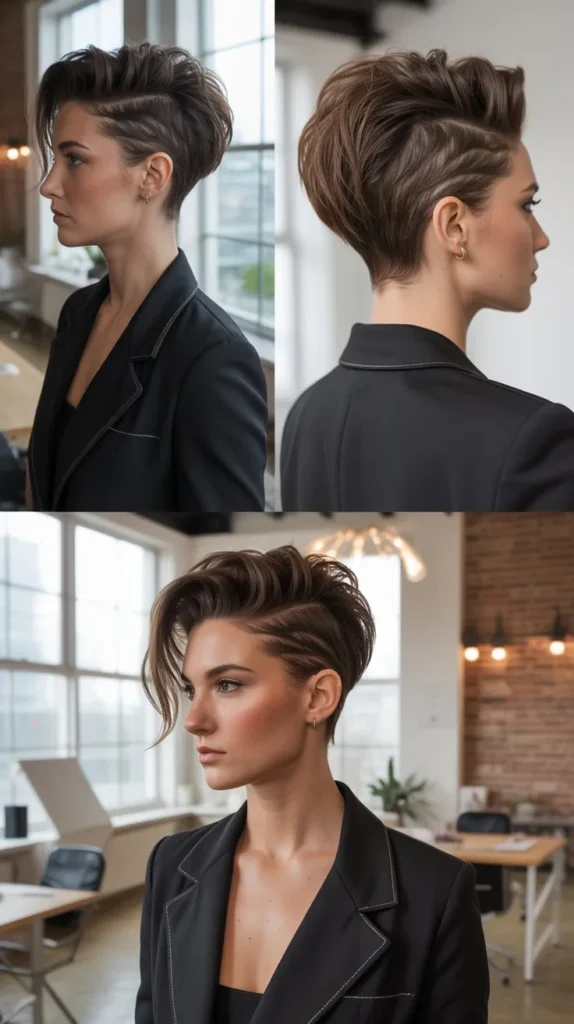
The faux hawk updo is an edgy, bold style that transforms dirty hair into a fashion-forward statement appropriate for creative industries and progressive workplaces.
This style involves creating height along the center of the head while smoothing or pinning the sides, mimicking the shape of a mohawk without actually shaving anything.
It’s surprisingly professional when executed with polish and works best on hair with natural texture and grip.
Creation Steps:
- Divide your hair into three vertical sections: left side, center strip, and right side.
- Smooth the left and right sections back toward the center, securing with bobby pins along the back of your head.
- Backcomb the center section aggressively to create significant volume and height.
- Smooth the very top layer of the backcombed section lightly with your palms.
- Pin the backcombed center section in place, creating a raised ridge effect down the center of your head.
- Tuck any ends underneath and secure invisibly.
Why It Works:
- Backcombing requires the grip that only dirty hair can provide.
- Natural oils at the roots help the smoothed sides stay flat without excessive product.
- The dramatic styling draws attention away from any greasiness to the intentional shape.
Professional Considerations:
- Keep the height moderate in conservative environments.
- Ensure the sides are very smooth for maximum polish.
- This style works best on hair that’s one to two days unwashed.
8. The Slicked-Back Low Ponytail
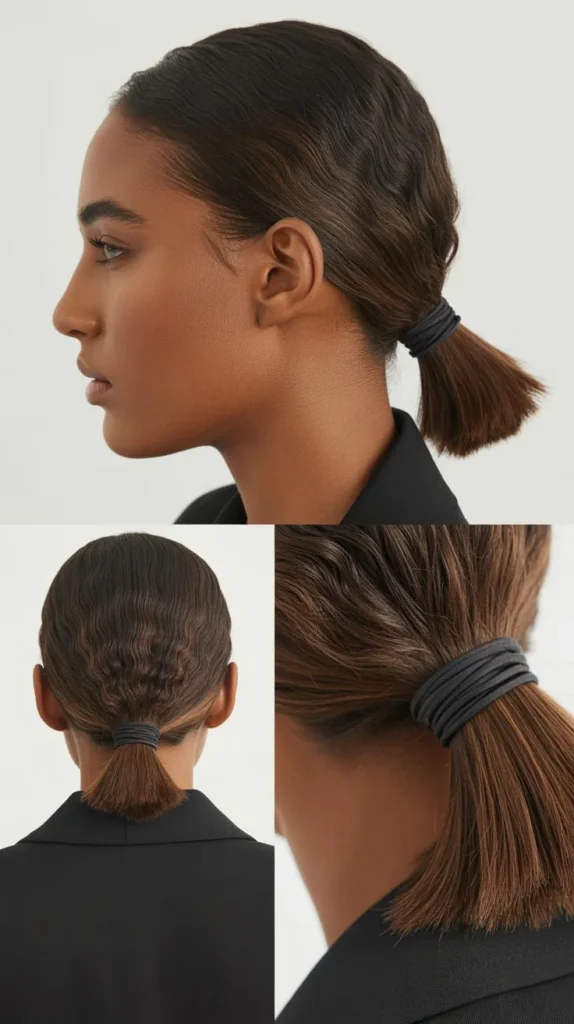
The slicked-back low ponytail is a minimalist, chic style that actually embraces the oils in dirty hair to create an intentionally sleek, wet-look aesthetic.
This style has graced fashion runways and red carpets, proving that what appears greasy can be transformed into high fashion with the right technique.
It’s perfect for confident professionals in fashion-forward industries.
Styling Instructions:
- Apply a small amount of hair oil or gel to your palms.
- Brush your hair straight back from your hairline, smoothing thoroughly with your hands.
- Gather everything into a low ponytail at the nape of your neck.
- Secure with a sleek elastic, preferably one that matches your hair color.
- Wrap a small section of hair around the elastic to conceal it.
- Apply additional oil or shine serum to enhance the glossy, intentional appearance.
Advantages of Unwashed Hair:
- Natural oils create the foundation for the slicked-back look without excessive product.
- The weight of greasy hair keeps everything smooth and in place throughout the day.
- You’re working with your hair’s natural state rather than against it.
Enhancement Options:
- Part your hair sharply to one side before slicking back for added interest.
- Add a leather hair cuff over the elastic for an elevated look.
- This style particularly shines on day-two or day-three hair.
9. The Messy French Twist
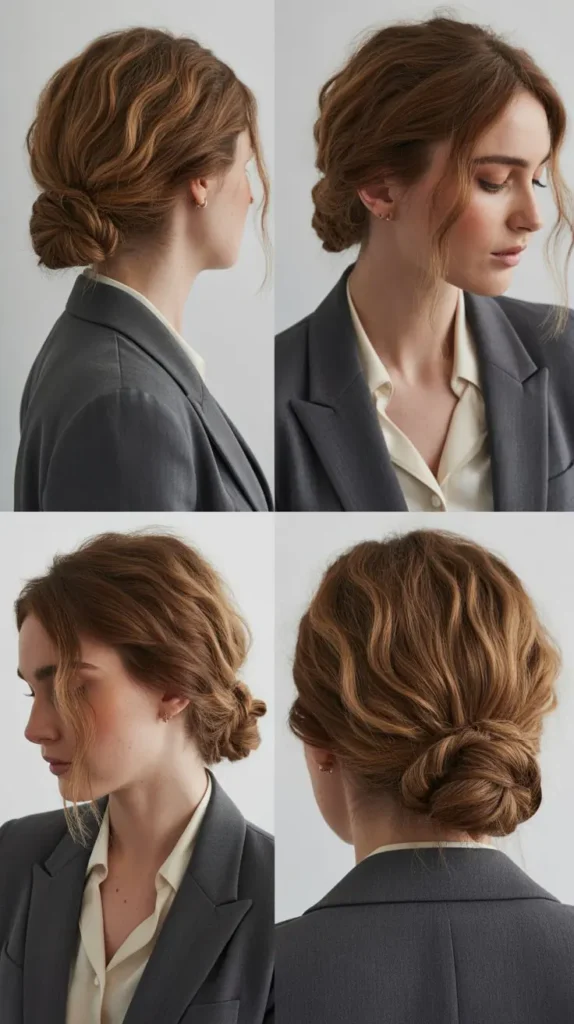
The messy French twist brings a relaxed, undone elegance to a traditionally formal hairstyle, making it perfect for dirty hair at work.
Unlike the precise, smooth French twist of decades past, this modern version embraces texture, loose pieces, and imperfection.
It’s ideal for all professional settings, from business meetings to work dinners, and actually looks better with the natural grip of unwashed hair.
How to Create:
- Gather your hair to one side at the nape of your neck without smoothing it.
- Twist the gathered hair upward along the back of your head toward the crown.
- As you twist, tuck the ends into the twist itself, creating a vertical roll.
- Secure with bobby pins inserted horizontally into the twist.
- Deliberately pull out a few pieces around your face and at the crown for texture.
- Allow some sections to remain loose and imperfect for the “messy” effect.
Why Dirty Hair Works Better:
- Clean hair is too slippery to hold the twisted shape throughout the day.
- Natural oils provide weight that keeps the twist in place without constant adjustment.
- Texture from unwashed hair creates the deliberate “undone” aesthetic that makes this style modern.
Polishing Touches:
- Insert decorative pins along the twist for special work occasions.
- The messier you make it, the more casual it appears—adjust based on your workplace.
- Works beautifully on hair that’s two to four days post-wash.
10. The Double Dutch Braids
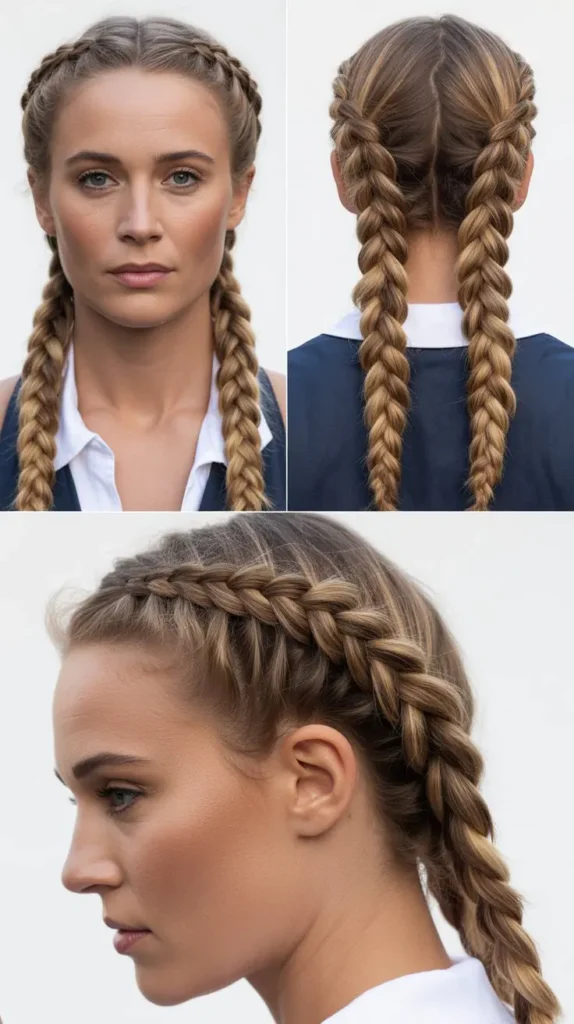
Double Dutch braids are a sporty yet polished style that completely conceals greasy roots by incorporating them into tight, raised braids that run along each side of your head.
While they might seem casual, when executed neatly, these braids are appropriate for many professional environments, particularly in healthcare, fitness, education, or creative fields.
Dirty hair actually creates superior braids because of the enhanced grip and texture.
Braiding Process:
- Part your hair down the center from forehead to nape, creating two equal sections.
- Beginning at your hairline on one side, separate a small section into three strands.
- Braid under (Dutch technique) rather than over, adding hair from the hairline with each stitch.
- Continue braiding tightly down toward the nape, keeping the braid close to your head.
- Secure the end with a clear elastic, then repeat on the other side.
- Gently pull at the braid edges to create fullness without destroying the pattern.
Dirty Hair Benefits:
- Oily roots are completely incorporated into the braid structure, becoming invisible.
- Texture prevents braids from slipping or coming undone during the workday.
- The grip of unwashed hair allows for tighter, longer-lasting braids.
Professional Adaptations:
- Keep braids very tight and neat for conservative environments.
- Cross the braids at the nape and pin them into a low bun for added sophistication.
- Use elastics that match your hair color for a seamless finish.
11. The Twisted Low Ponytail
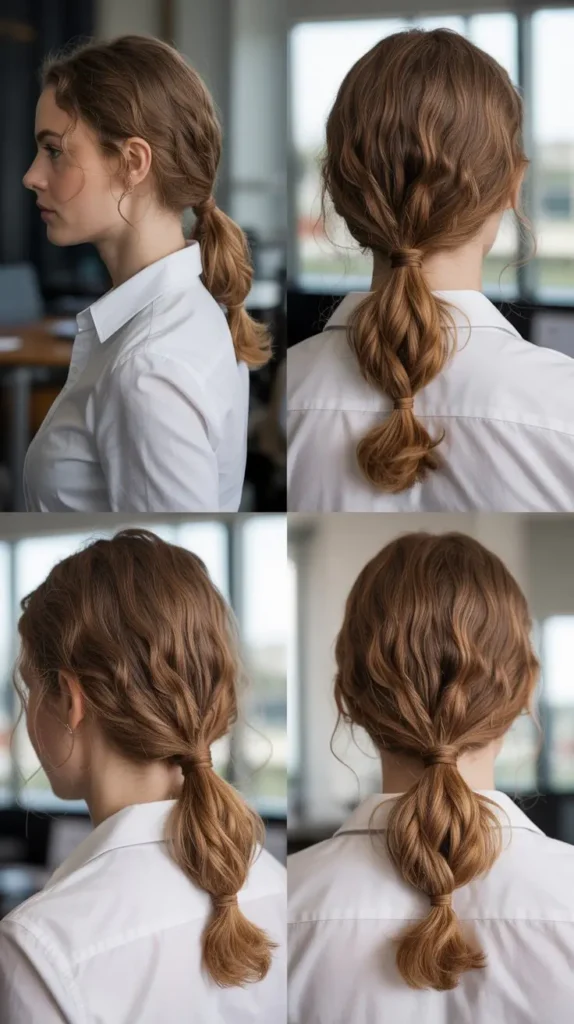
The twisted low ponytail is an effortless style that adds visual interest to a basic ponytail while strategically concealing oily roots.
This look involves creating a simple low ponytail and then twisting small sections around it for dimension and texture.
It’s sophisticated enough for professional settings while being quick enough for rushed mornings.
Construction Steps:
- Gather your hair into a low ponytail at the nape of your neck and secure with an elastic.
- Leave out two small sections at the front, one on each side of your face.
- Twist each front section individually, pulling them back toward the ponytail.
- Wrap these twisted sections around the base of the ponytail, covering the elastic.
- Secure the ends with bobby pins hidden underneath the ponytail.
- Gently pull at the crown to add subtle height and disguise flat, greasy roots.
Why This Suits Dirty Hair:
- The twisting technique works better with hair that has natural grip from oils.
- The low placement keeps attention away from the greasiest areas near your scalp.
- Texture from unwashed hair makes the twisted sections more defined and visible.
Customization Ideas:
- Twist multiple sections around the ponytail for increased complexity.
- Braid the ponytail itself after securing it.
- Add a ribbon or decorative elastic for special work events.
12. The Voluminous Side Braid
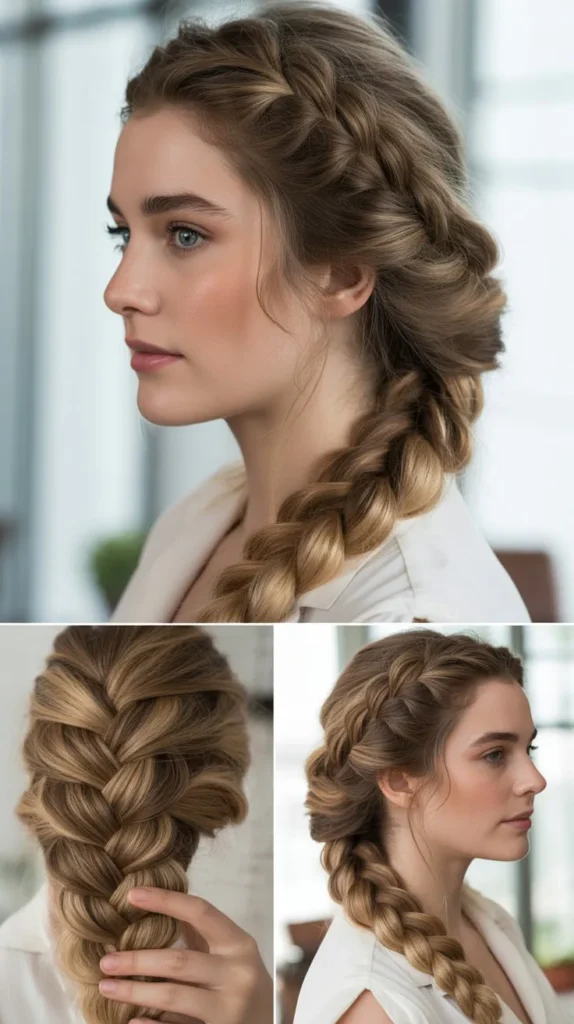
The voluminous side braid is a romantic, textured style that drapes over one shoulder, creating an asymmetrical look that’s both professional and eye-catching.
This style is particularly effective for dirty hair because the natural oils and texture create a fuller, more dimensional braid than freshly washed hair ever could.
It works in creative professional environments and is especially flattering for those with longer hair.
Braiding Instructions:
- Sweep all your hair over one shoulder, choosing your preferred side.
- Apply dry shampoo at the roots only if necessary, leaving the length textured.
- Divide hair into three sections and begin a traditional three-strand braid.
- Keep the braid loose rather than tight, allowing natural texture to show.
- Secure the end with an elastic, leaving a few inches unbraided.
- Gently pull at each section of the braid to create width and volume (this technique is called “pancaking”).
Advantages with Unwashed Hair:
- The weight and texture of dirty hair creates a thicker-looking braid.
- Natural oils help the “pancaked” sections hold their shape without falling flat.
- The side placement showcases the braid while hiding greasy roots from front view.
Enhancement Suggestions:
- Weave a ribbon through the braid for formal work occasions.
- Begin with a Dutch or French braid at the crown for added security.
- This style shines on hair that’s two to three days post-wash.
13. The Pinned-Back Waves
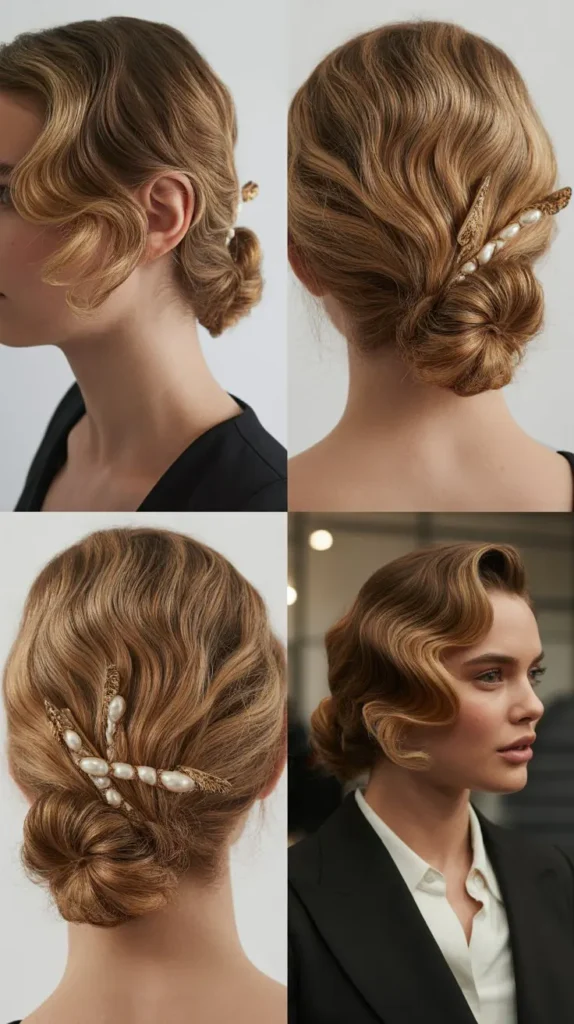
Pinned-back waves transform greasy hair into a glamorous, old-Hollywood style that’s surprisingly appropriate for modern workplaces.
This look involves creating or enhancing natural waves, then pinning back one or both sides while leaving length down.
It’s perfect for those who want to wear their hair down but need to keep it away from their face for professional reasons.
Styling Method:
- Work with your hair’s natural wave pattern rather than fighting it.
- Section off hair from your temple to behind your ear on one or both sides.
- Twist this section loosely back toward the crown.
- Pin the twisted section securely with bobby pins arranged in a decorative pattern.
- Apply a light texturizing spray to the lengths to enhance waves.
- Use your fingers to separate and define wave patterns throughout.
Why Dirty Hair Enhances This Style:
- Natural oils add weight that enhances wave definition without crunchiness.
- Day-old waves are more defined and textured than fresh curls.
- The pinned sections stay secure better with the grip of unwashed hair.
Professional Modifications:
14. The Ballerina Bun
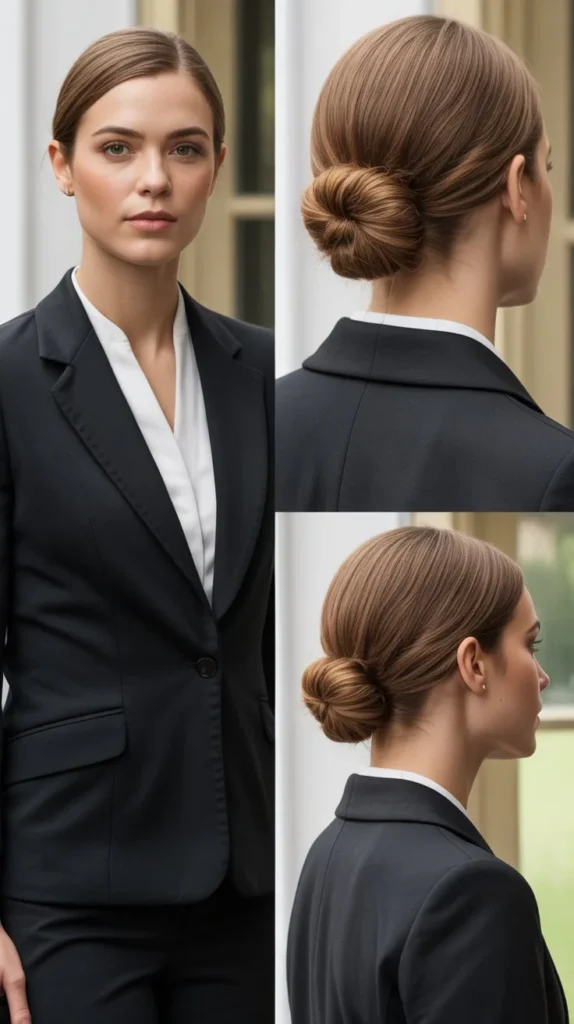
The ballerina bun is a high, rounded bun that sits at the crown of the head, creating a polished, elegant silhouette that’s perfect for professional environments.
This classic style works beautifully with dirty hair because the natural texture helps create volume within the bun without requiring excessive teasing or product.
It’s ideal for keeping hair completely off your face and neck during long workdays.
Creation Process:
- Gather all your hair at the crown of your head, smoothing only the front sections.
- Secure with a strong elastic to create a high ponytail.
- Twist the ponytail into a rope, then wrap it around the base in a circular motion.
- Tuck the end underneath the bun and secure with bobby pins placed around the entire circumference.
- Gently pull at the bun’s edges to create a fuller, rounder shape.
- Use bobby pins arranged in an X pattern for maximum security.
Benefits of Unwashed Hair:
- Natural oils provide the weight needed to smooth the front sections without gel.
- Texture within the ponytail creates a naturally fuller bun without sock or donut forms.
- The grip of dirty hair keeps pins secure throughout even the longest workdays.
Refinement Options:
- Wrap a small section of hair around the elastic base before creating the bun.
- Use a bun donut for additional volume if your hair is particularly fine.
- Position slightly lower on the head for a more conservative version.
15. The Braided Headband
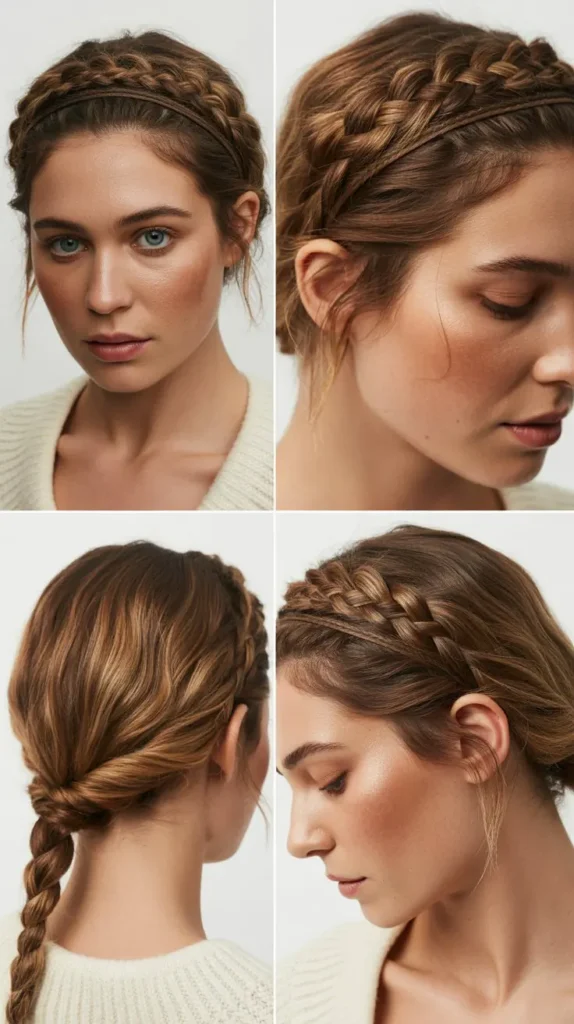
The braided headband style uses your own hair to create a braid that crosses over your head like an accessory, keeping hair away from your face while looking intentionally styled.
This charming look works wonderfully with dirty hair because the braid requires grip to stay in place, and the rest of the hair can be worn down, with the natural oils adding desirable weight and texture.
How to Create:
- Part your hair on one side, creating an off-center part.
- From the heavier side of the part, separate a small section near your temple.
- Create a traditional three-strand braid with this section, keeping it thin (about one inch wide).
- Braid all the way to the end and secure with a small, clear elastic.
- Bring the braid across the top of your head like a headband, positioning it a few inches back from your hairline.
- Pin the braid securely behind your opposite ear, tucking the end underneath.
Dirty Hair Advantages:
- The braid stays in place better with the natural grip of oils and texture.
- Hair worn down benefits from the weight of natural oils, appearing intentionally sleek rather than greasy.
- The braided section conceals the greasiest part of your roots along the hairline.
Style Variations:
- Create two braids, one from each side, meeting at the back of your head.
- Braid with four or five strands instead of three for a more complex look.
- Curl or wave the hair left down for added dimension.
16. The Asymmetrical Low Bun
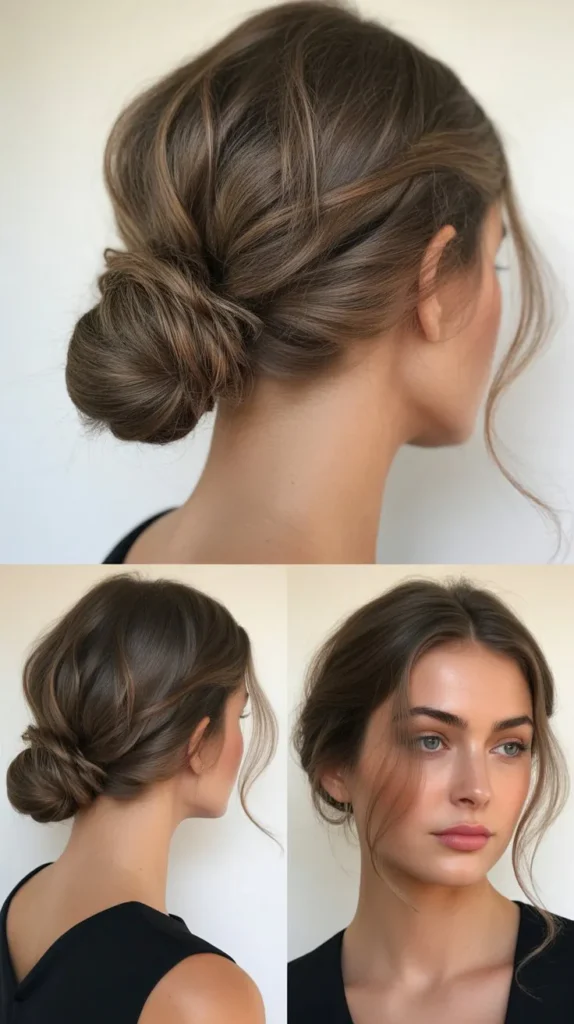
The asymmetrical low bun brings modern sophistication to the workplace by positioning a classic bun off-center, creating visual interest and contemporary edge.
This style particularly suits dirty hair because the asymmetrical placement and intentional messiness disguise any greasiness as deliberate texture.
It’s perfect for fashion-forward workplaces and creative professionals.
Styling Steps:
- Gather your hair to one side at the nape, positioning it behind your ear rather than at the center.
- Twist the gathered hair loosely, embracing any natural texture.
- Coil the twisted hair into a bun at this off-center position.
- Secure with bobby pins, intentionally leaving some pieces loose.
- Pull a few face-framing pieces out on the opposite side to balance the asymmetry.
- Allow some texture and imperfection rather than smoothing everything perfectly.
Why Dirty Hair Excels:
- The natural weight of oils helps the bun hold its shape without excessive pinning.
- Texture from unwashed hair creates the deliberate “undone” aesthetic that makes asymmetry look intentional.
- The off-center placement draws the eye away from any greasy roots at the crown.
Professional Considerations:
- Keep the bun relatively low and secure for conservative environments.
- The looser and more textured you make it, the more casual it appears.
- This style particularly shines on hair that’s two to three days post-wash.
17. The Rope Braid Ponytail
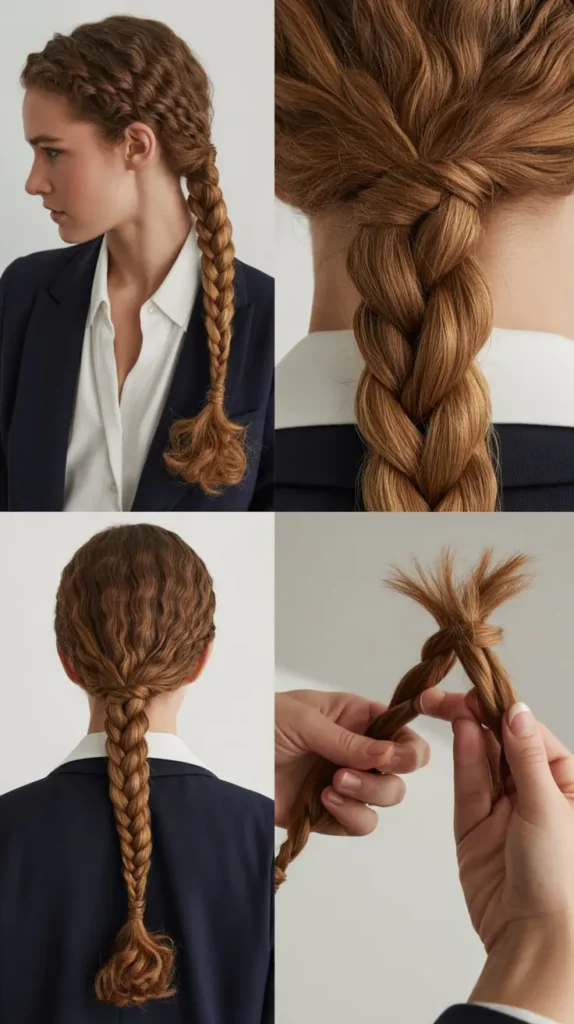
The rope braid ponytail offers a sleek alternative to traditional braids, creating a twisted, rope-like texture that looks complex but requires minimal skill.
This style is quick to execute, professional in appearance, and works exceptionally well with dirty hair because the natural texture helps the rope structure hold its shape throughout the day.
It’s appropriate for virtually any professional environment.
Creation Method:
- Gather your hair into a ponytail at your desired height (mid-level works well for office settings).
- Secure with an elastic, then divide the ponytail into two equal sections.
- Twist each section individually in the same direction (both clockwise or both counterclockwise).
- Once both sections are tightly twisted, wrap them around each other in the opposite direction.
- The sections will naturally coil together like a rope as you twist them around each other.
- Secure the end with another elastic and gently pull at the rope to create fuller sections.
Benefits of Unwashed Hair:
- The grip from natural oils prevents the individual twists from unraveling during the styling process.
- Texture in dirty hair makes the rope structure more visible and defined.
- The ponytail format conceals greasy roots while showcasing the interesting rope texture.
Enhancement Ideas:
- Wrap a section of hair around the base elastic to hide it.
- Position the ponytail higher for a more casual look or lower for increased sophistication.
- This technique works on all hair textures and lengths past shoulder-length.
18. The Crown Braid with Low Bun
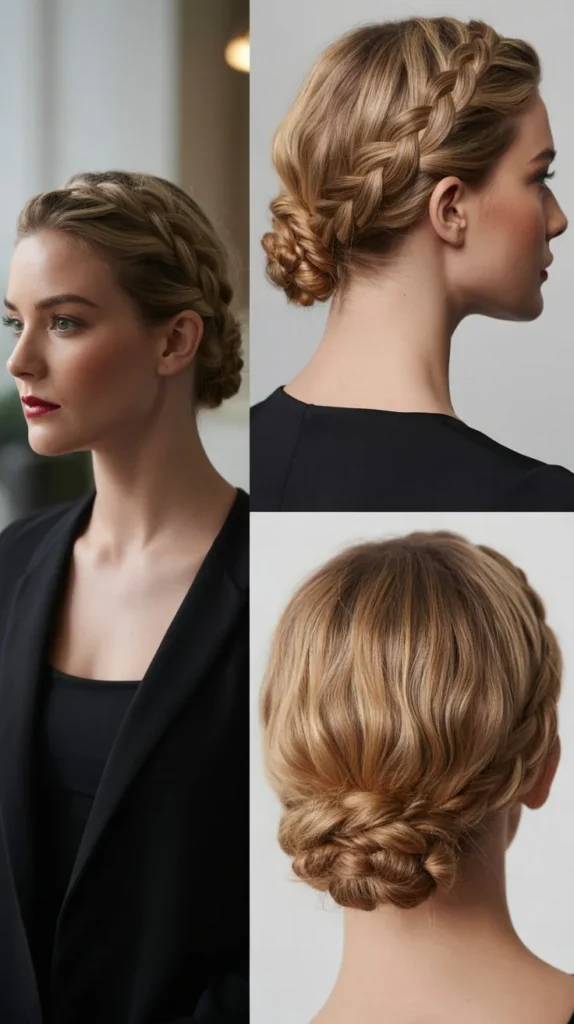
The crown braid with low bun is an elegant combination style that features a braid wrapping around the head like a crown, with the remaining hair gathered into a low bun at the nape.
This sophisticated look is perfect for important meetings, presentations, or any professional occasion requiring maximum polish.
Dirty hair actually performs better because the braiding and bun construction require texture and grip.
Construction Instructions:
- Create a side part, then begin a French or Dutch braid at your temple on the heavier side.
- Braid along your hairline, following the curve of your head like a headband, incorporating hair as you go.
- Continue braiding around the back of your head until you reach the opposite side.
- Gather any remaining unbraided hair (including the braid end) into a low ponytail at the nape.
- Twist this gathered hair and coil it into a low bun.
- Secure with bobby pins, ensuring both the braid end and bun are tightly pinned.
Why Dirty Hair Works Better:
- Braiding requires grip that only textured, unwashed hair can provide for all-day hold.
- Natural oils keep flyaways smoothed without requiring additional styling products.
- The combination of techniques conceals greasy roots from every angle.
Refinement Tips:
- Keep the crown braid tight and close to your head for a polished appearance.
- Position the low bun at the center nape for traditional elegance.
- This style works beautifully on hair that’s one to three days post-wash.
19. The Deep Side Part with Tuck and Pin
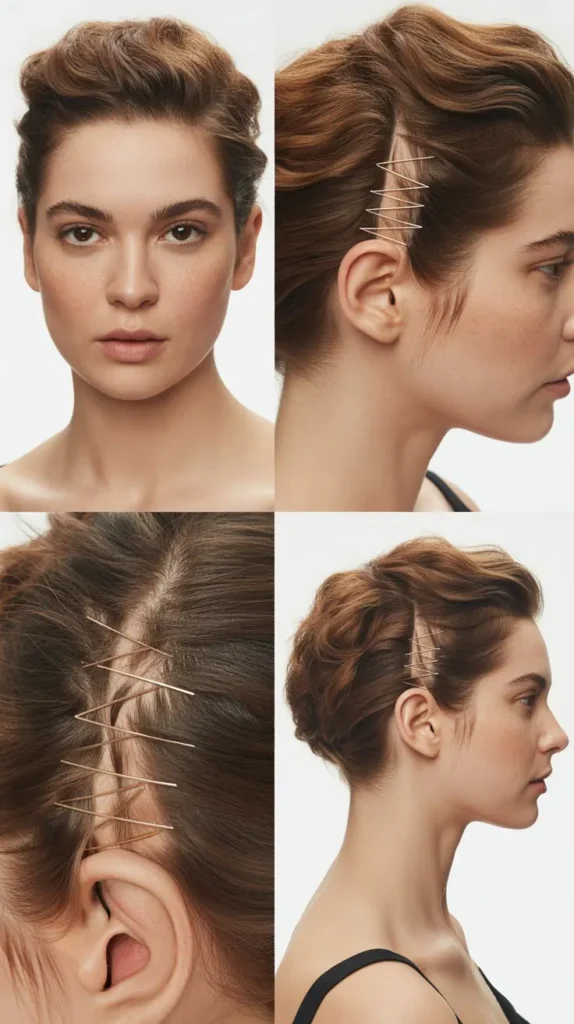
The deep side part with tuck and pin takes the simple side part concept further by creating dramatic asymmetry and securing everything on one side.
This sleek, editorial style works wonderfully for dirty hair because it transforms natural oils into an intentional, glossy finish.
It’s perfect for fashion-forward workplaces and makes a strong style statement while remaining professional.
Styling Process:
- Create a deep side part, positioning it approximately two to three inches from your natural part line.
- Apply a small amount of hair oil or serum to the smaller section to enhance shine and smoothness.
- Brush this smaller section straight back along your head, smoothing it flat.
- Pin this section behind your ear with multiple bobby pins arranged in a decorative or invisible pattern.
- Leave the larger section loose, allowing it to drape over the opposite shoulder.
- The natural oils in your hair will create a sleek, almost wet-look finish.
Advantages with Greasy Hair:
- Natural oils eliminate the need for excessive products to achieve the slicked-back effect.
- The dramatic part repositions where your hair naturally has volume, concealing flat, oily roots.
- The style embraces rather than fights your hair’s natural state.
Professional Styling:
- Use metallic or decorative bobby pins as an intentional style element.
- Keep the loose section smooth and straight for maximum sophistication.
- This look particularly works on hair that’s one to two days past washing.
20. The Twisted Half-Up Style
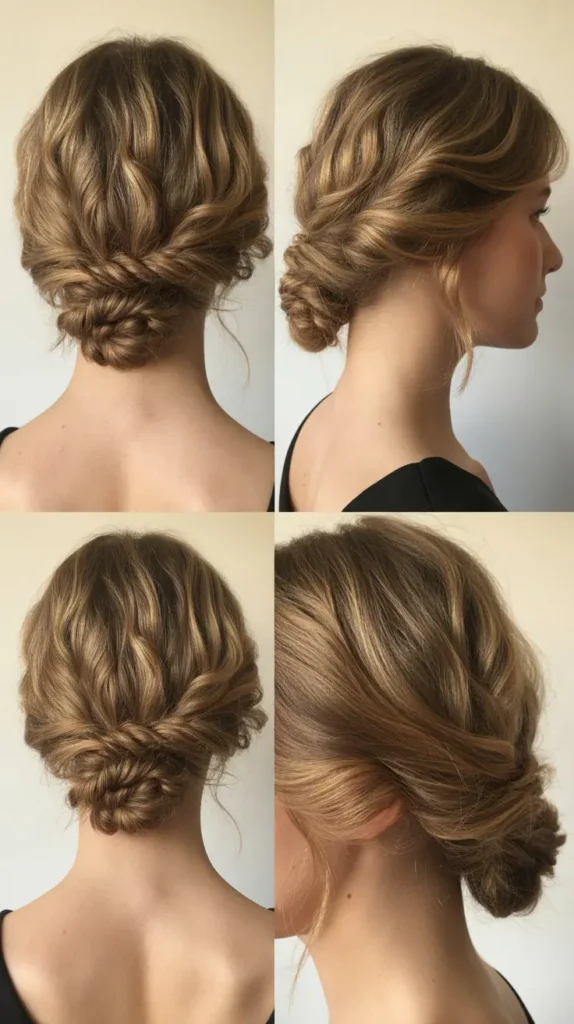
The twisted half-up style is a versatile, feminine look that takes small sections from each side of your head, twists them back, and secures them at the crown or back of your head.
This simple yet effective style keeps hair away from your face while showcasing length and works beautifully with the natural texture that dirty hair provides.
It’s appropriate for virtually all professional settings.
How to Create:
- Section off approximately two-inch wide pieces from each temple area.
- Twist each section individually, pulling them back toward the crown of your head.
- Cross the twisted sections over each other at the back of your head.
- Secure where they meet with bobby pins or a small elastic.
- Leave the remaining hair down, allowing natural texture or waves to show.
- Gently pull at the crown area to add subtle volume and height.
Dirty Hair Benefits:
- The twisting technique works better with hair that has natural grip from oils and texture.
- The style conceals the greasiest roots at the crown while showcasing less oily lengths.
- Natural texture in the hair left down appears intentional rather than unkempt.
Customization Options:
- Braid the sections instead of twisting them for variety.
- Secure with a decorative barrette or clip for added polish.
- Position the secured point higher or lower depending on your preference.
21. The Bubble Ponytail
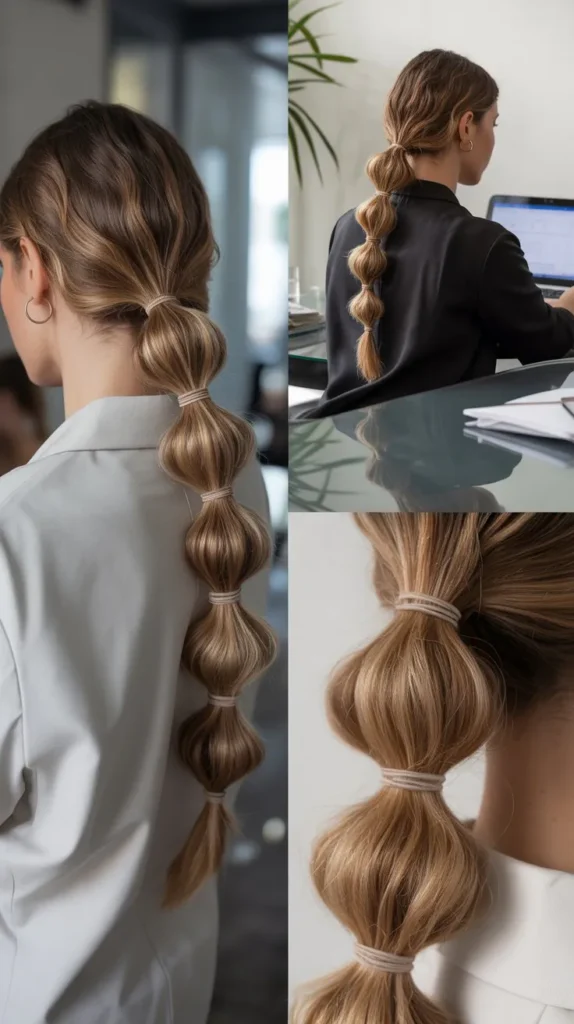
The bubble ponytail is a playful yet surprisingly professional style that involves creating “bubbles” or sections along a ponytail using multiple elastics.
This trendy look has been spotted on runways and red carpets, and it’s particularly effective for dirty hair because the texture helps each bubble maintain its shape and volume.
It works well in creative industries and less formal professional settings.
Creation Steps:
- Gather your hair into a ponytail at your desired height and secure with an elastic.
- Move down approximately two to three inches and add another elastic around the ponytail.
- Gently pull at the hair between the two elastics, creating a “bubble” effect with volume.
- Add another elastic two to three inches below the second one.
- Create another bubble by pulling at this section.
- Continue this pattern down the length of your ponytail, creating three to five bubbles total.
Why This Works with Unwashed Hair:
- The texture and natural oils in dirty hair help each bubble hold its volume without deflating.
- The ponytail format conceals greasy roots while the bubbles create visual interest down the length.
- Natural grip prevents the elastics from sliding down during the day.
Professional Adaptations:
- Use elastics that match your hair color for a subtle, sophisticated look.
- Keep bubbles modest in size for conservative environments.
- Position the initial ponytail lower for a more office-appropriate version.
22. The French Roll
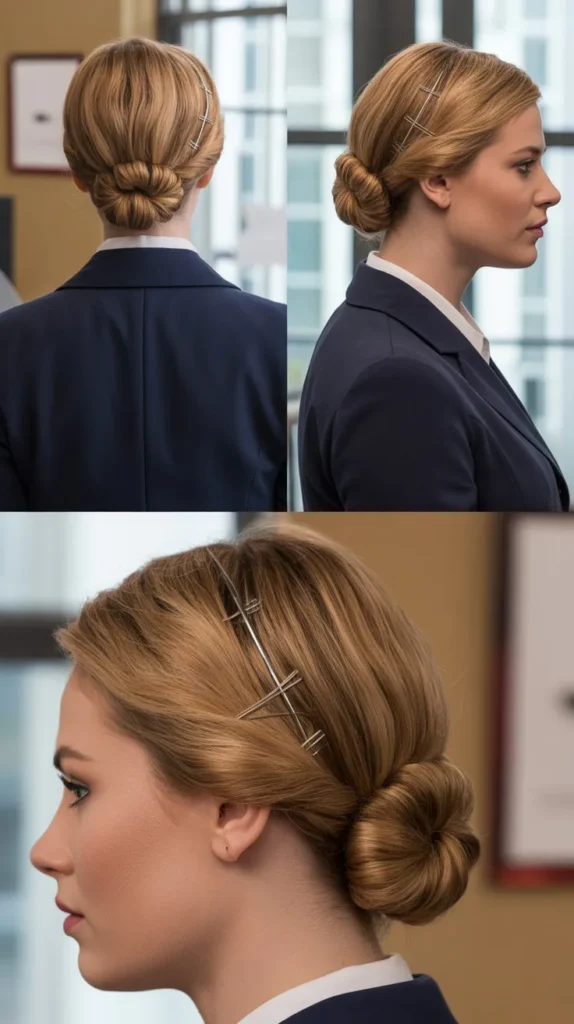
The French roll (also called French twist) is a classic, timeless updo that exudes sophistication and professionalism.
This vertical roll of hair along the back of the head is a staple in traditional professional environments and formal settings.
While it requires practice, dirty hair actually makes this style easier to execute and longer-lasting because clean hair tends to be too slippery to hold the structure.
Construction Method:
- Brush your hair to one side (typically the left side).
- Hold the hair against your head at the center back with one hand.
- With your other hand, begin rolling the hair upward and toward the center, creating a vertical cylinder.
- Continue rolling until all hair is incorporated into the roll and tucked securely.
- Insert bobby pins vertically into the roll, pushing them through to the scalp for security.
- Tuck the ends of the hair into the top of the roll and pin them invisibly.
Advantages of Dirty Hair:
- Natural oils create the weight and texture needed to keep the roll intact throughout the day.
- The grip from unwashed hair prevents sections from sliding out of the roll.
- Clean hair is notoriously difficult for this style, while two-day-old hair performs perfectly.
Refinement Tips:
- Use a rat-tail comb to smooth the surface of the roll without disrupting its structure.
- Insert pins at angles for maximum hold.
- This style is ideal for hair that’s one to three days past washing.
23. The Braided Low Ponytail
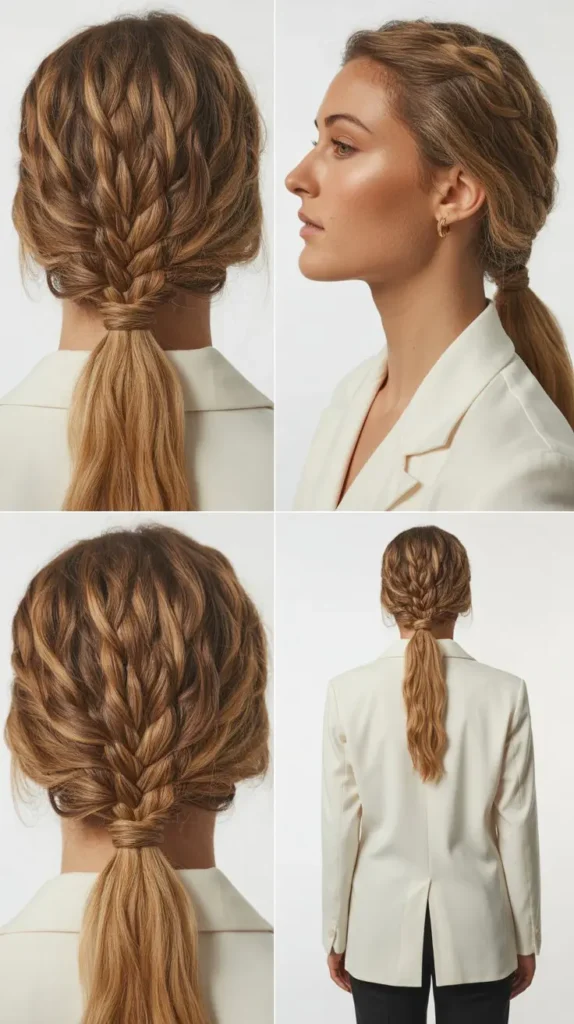
The braided low ponytail combines the security of a ponytail with the visual interest of a braid, creating a polished yet detailed style perfect for professional environments.
This look involves creating a braid that leads into or incorporates a low ponytail, offering texture and dimension.
Dirty hair enhances this style by providing the grip necessary for the braid to stay tight and defined throughout the workday.
Styling Instructions:
- Begin by creating a French or Dutch braid starting at your crown.
- Braid down toward the nape of your neck, incorporating hair from the sides as you go.
- When you reach the nape, gather all remaining hair including the braid into a low ponytail.
- Secure with an elastic at the nape level.
- Optionally, braid the ponytail itself for additional texture and interest.
- Gently pull at the braid sections to create fuller, more dimensional plaits.
Why Dirty Hair Excels:
- Braiding requires texture and grip that only unwashed hair can provide for lasting hold.
- The low ponytail placement conceals the greasiest roots near the scalp.
- Natural oils keep flyaways smooth without additional products.
Enhancement Options:
- Wrap a small section of hair around the elastic to conceal it.
- Add small metallic rings or cuffs to the braid for subtle decoration.
- This style works particularly well on hair that’s two to three days post-wash.
24. The Knotted Half-Up
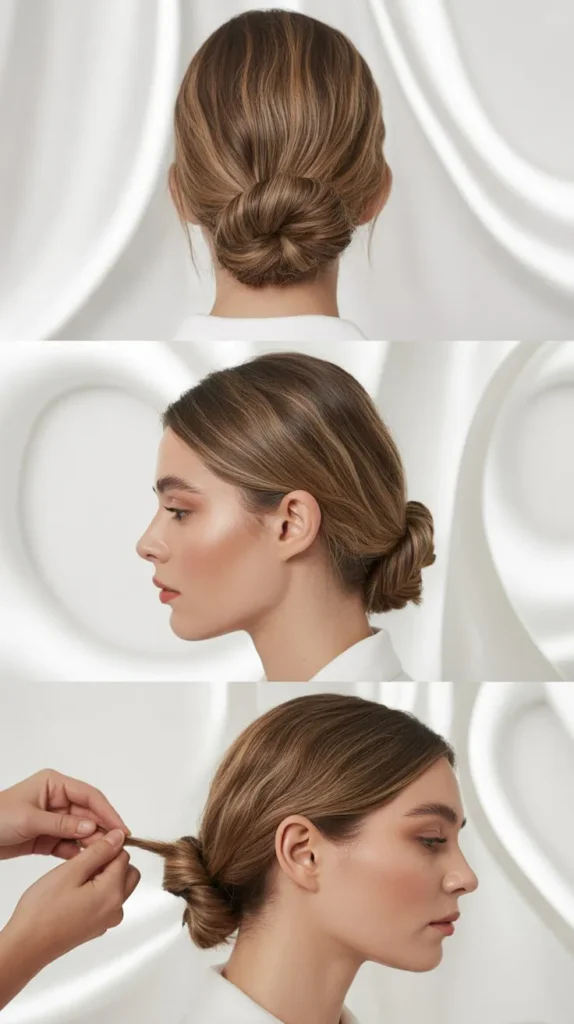
The knotted half-up style creates a sophisticated look by literally tying a knot with sections of hair at the back of your head instead of using elastics or pins.
This modern, minimalist approach works wonderfully with dirty hair because the texture helps the knot hold securely without slipping.
It’s perfect for contemporary workplaces and creates a polished appearance with very little effort.
Creation Process:
- Section off approximately two-inch wide pieces from each side of your head at temple level.
- Pull both sections back to the center back of your head.
- Tie these two sections together in a simple overhand knot, just as you would tie a rope.
- Pull the knot tight, ensuring it sits securely at your desired position.
- Tuck the ends of the tied sections into the knot or secure them with a small bobby pin underneath.
- Leave the rest of your hair down, allowing natural texture to show.
Benefits of Unwashed Hair:
- The natural grip from oils and texture prevents the knot from loosening throughout the day.
- Dirty hair has enough weight and friction to hold a knot that clean, slippery hair cannot maintain.
- The simplicity of the style allows the natural texture of unwashed hair to appear intentional.
Professional Considerations:
- Keep the knot relatively tight for a more polished appearance.
- This works best on medium to thick hair densities.
- Position the knot higher or lower based on your face shape and preference.
25. The Side-Swept Low Chignon
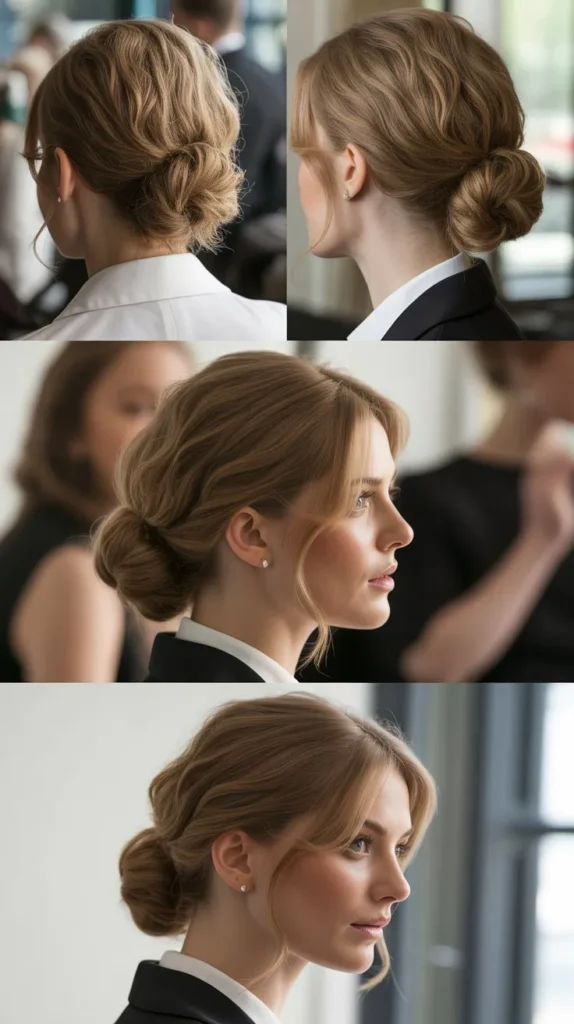
The side-swept low chignon is an elegant, asymmetrical updo that gathers hair to one side at the nape before twisting or coiling it into a sophisticated bun.
This romantic style suits formal work occasions, client dinners, or any professional event requiring elevated polish.
Dirty hair actually enhances this style by providing the weight and texture necessary for a secure, long-lasting chignon.
Styling Steps:
- Sweep all your hair to one side at the nape, positioning it behind one ear.
- Twist the gathered hair loosely, maintaining some texture rather than smoothing completely.
- Coil the twisted hair into a low bun at this side position.
- Secure with bobby pins inserted through the bun into your head, crisscrossing for security.
- Allow a few pieces to frame your face on the opposite side for softness.
- Gently pull at sections of the chignon to create a slightly undone, romantic appearance.
Advantages with Greasy Hair:
- Natural oils help smooth the sweep from front to side without requiring styling cream.
- Texture in dirty hair creates a fuller-looking chignon without padding or accessories.
- The weight of unwashed hair keeps the style secure and prevents flyaways.
Enhancement Ideas:
- Add decorative pins, combs, or flowers for special work events.
- Keep the chignon lower and tighter for conservative environments.
- This style particularly shines on hair that’s one to three days past washing.
26. The Waterfall Braid
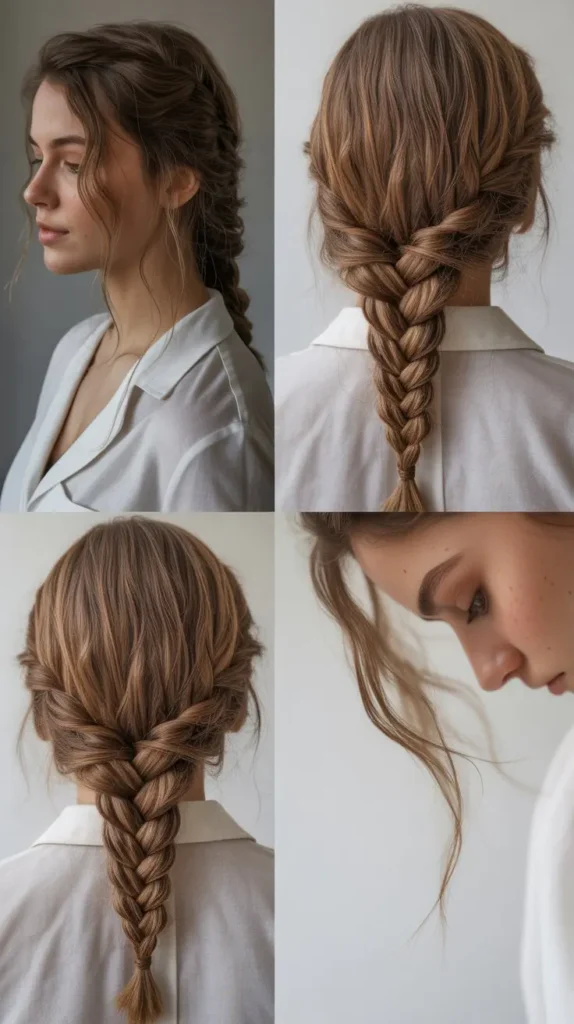
The waterfall braid is a intricate, romantic braid that creates the illusion of hair cascading through the braid like a waterfall.
This eye-catching style wraps around the head while leaving strands to fall naturally, creating dimension and visual interest.
It works beautifully with dirty hair because the natural texture makes the “waterfall” strands more defined and the braid itself holds better throughout the day.
Braiding Instructions:
- Begin with a small three-strand section near your temple on one side.
- Create one stitch of a regular braid, crossing the sections as usual.
- On the next stitch, drop the front strand and allow it to fall, becoming part of the “waterfall.”
- Pick up a new section from near your hairline to replace the dropped strand.
- Continue this pattern—braid once, drop the front strand, pick up a new section—working around your head.
- Continue the waterfall braid to the opposite side or as far as desired, then secure the braid end with a small elastic.
Why Dirty Hair Works Better:
- The texture and natural grip in unwashed hair prevent the dropped “waterfall” strands from blending back into the braid.
- Natural oils help the braid itself stay tight and defined without product.
- The weight of greasy hair creates more distinct separation in the waterfall effect.
Professional Modifications:
- Keep the braid relatively tight and neat for office appropriateness.
- Stop the braid at the back center rather than continuing to the opposite side for a more subtle look.
- This style works best on hair that’s one to two days post-wash.
27. The Twisted Headband Updo
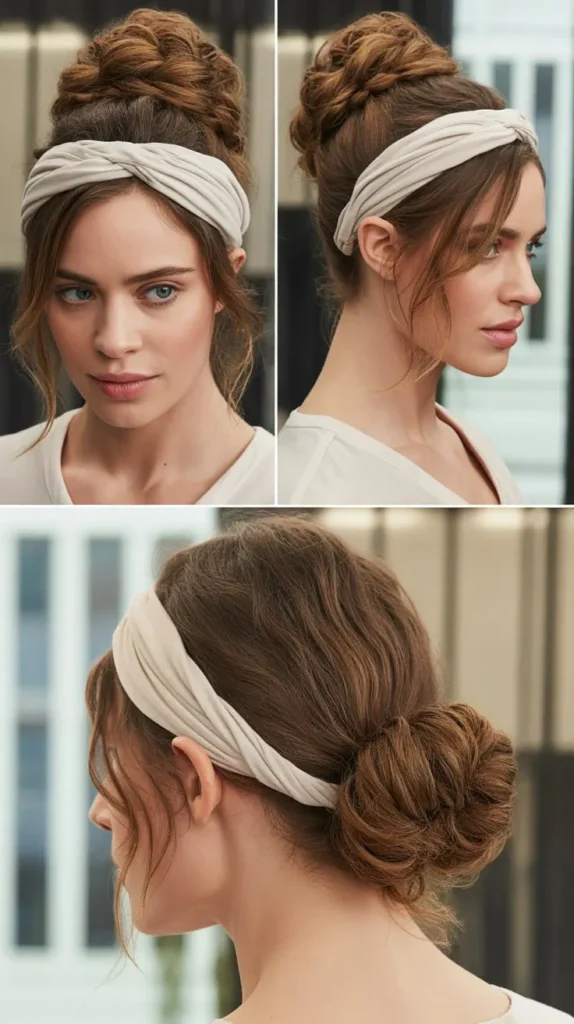
The twisted headband updo uses your own hair to create a twisted “headband” across the front, with the remaining hair gathered into an updo at the back.
This charming style keeps hair completely away from your face while creating visual interest through the twisted headband detail.
Dirty hair performs exceptionally well because the natural texture helps both the twisted sections and the updo hold their shape all day.
Creation Method:
- Section off approximately two-inch wide strips from each temple, leaving the front hairline free.
- Twist each section individually back toward the crown, keeping the twists relatively tight.
- Pin each twisted section at the crown, creating a headband effect across your head.
- Gather all remaining hair at the back into a ponytail.
- Twist or braid this ponytail and wrap it into a bun, chignon, or other updo style.
- Secure with bobby pins, ensuring the updo and twisted “headband” are both firmly attached.
Benefits of Dirty Hair:
- Natural texture prevents twists from unraveling during styling and throughout the day.
- The grip from oils keeps bobby pins secure in both the headband and updo sections.
- Unwashed hair has the weight necessary to create smooth twists without frizz.
Style Variations:
- Braid the front sections instead of twisting for a different texture.
- Position the twisted sections further back from the hairline for subtlety.
- This style is ideal for hair that’s two to three days past washing.
28. The Voluminous Ponytail with Teasing
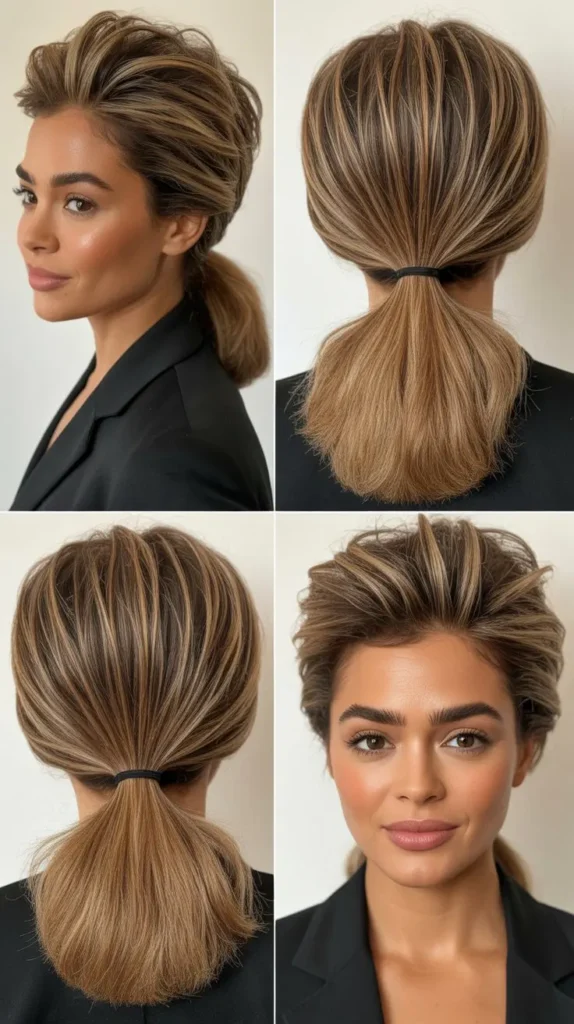
The voluminous ponytail with teasing transforms a basic ponytail into a statement style through strategic backcombing at the crown.
This glamorous look adds height and drama while remaining professional, making it perfect for presentations, important meetings, or days when you want your hairstyle to make an impact.
Dirty hair is actually essential for this style because clean hair won’t hold teasing effectively.
Styling Steps:
- Section off the top portion of your hair from temple to temple at approximately crown level.
- Backcomb (tease) this section aggressively at the roots to create significant volume.
- Smooth the very top layer of the teased section lightly with a brush.
- Gather all hair into a ponytail at your desired height, incorporating the teased section.
- Secure with a strong elastic, maintaining the height and volume at the crown.
- Wrap a small section of hair around the elastic to conceal it and pin underneath.
Why Dirty Hair is Essential:
- Backcombing requires the grip and texture that only unwashed hair possesses.
- Natural oils at the roots help maintain the teased volume throughout the day without deflating.
- Clean hair is too slippery to hold teasing effectively, causing the style to fall flat quickly.
Refinement Tips:
- Spray teased sections with hairspray before smoothing for extra hold.
- Adjust the amount of teasing based on your workplace—less teasing for conservative environments.
- This style works best on hair that’s one to two days past washing.
29. The Braided Bun
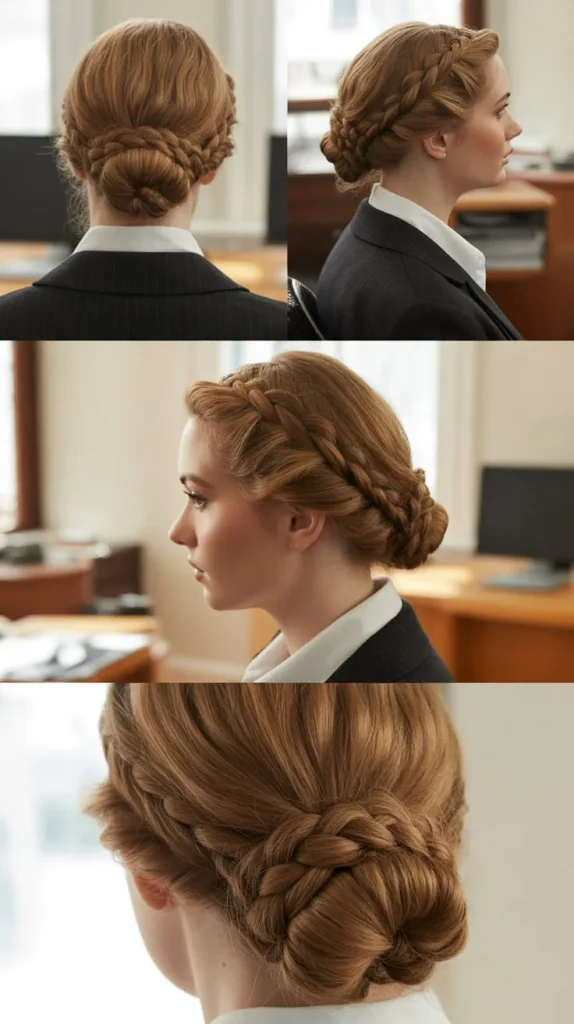
The braided bun combines the security and professionalism of a bun with the intricate detail of braiding, creating a sophisticated style perfect for any workplace.
This look involves braiding hair before coiling it into a bun, adding texture and visual interest to what might otherwise be a simple updo.
Dirty hair significantly enhances this style because braiding requires grip and texture that freshly washed hair simply doesn’t provide.
Construction Instructions:
- Gather your hair into a ponytail at your desired bun position (low, mid, or high).
- Secure the ponytail with an elastic.
- Braid the entire ponytail using your preferred braiding technique (three-strand, fishtail, Dutch, etc.).
- Wrap the braided ponytail around the base of the ponytail, coiling it into a circular bun shape.
- Tuck the end of the braid underneath the bun and secure with bobby pins.
- Insert additional bobby pins around the entire bun to ensure it’s secure throughout the day.
Advantages of Unwashed Hair:
- Braiding texture requires grip that dirty hair naturally provides, keeping the braid tight.
- Natural oils prevent flyaways from disrupting the braid’s pattern and the bun’s smoothness.
- The weight of greasy hair creates a fuller-looking bun without additional padding.
Professional Styling:
- Choose a low bun position for traditional, conservative workplaces.
- Use a three-strand braid for simplicity or a fishtail for added sophistication.
- This style works beautifully on hair that’s two to four days post-wash.
30. The Twisted Crown
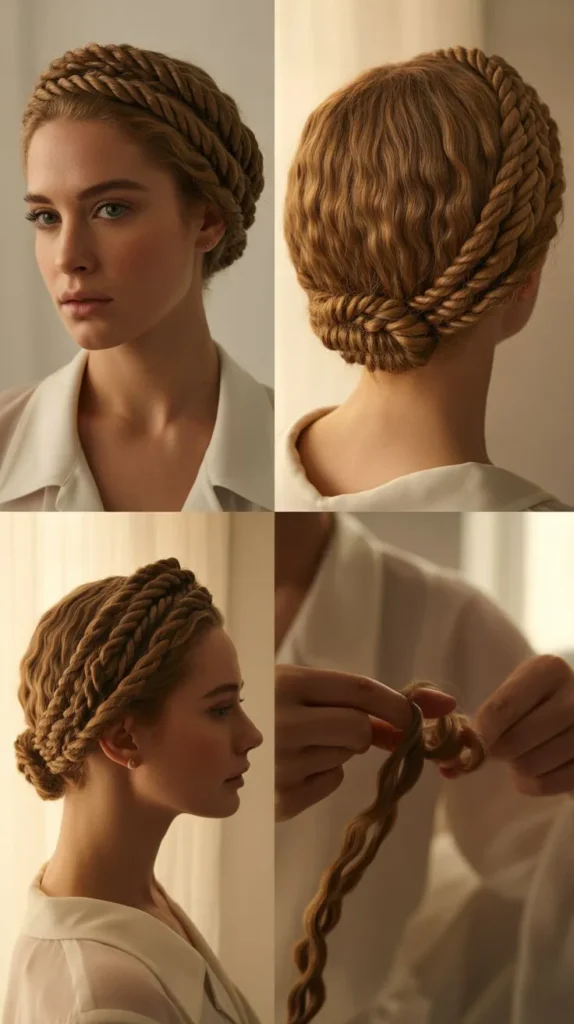
The twisted crown creates a halo effect by twisting sections of hair around the head, meeting at the back in either a bun or leaving the ends down.
This ethereal yet professional style keeps hair away from the face while creating romantic, dimensional texture.
Dirty hair enhances this look because the natural grip helps twists hold their shape and prevents them from unraveling throughout the day.
Creation Process:
- Part your hair down the center from forehead to nape.
- Starting on one side near your temple, take a small section of hair.
- Begin twisting this section back toward the crown, adding hair from the hairline with each rotation (similar to a French twist technique).
- Continue twisting around the back of your head at crown level.
- Repeat the process on the other side, creating a second twist that meets the first at the back.
- Secure where the twists meet with bobby pins, either leaving ends down or coiling them into a small bun.
Why Dirty Hair Excels:
- The natural texture and oils in unwashed hair prevent twists from loosening or falling apart.
- Dirty hair has the necessary grip to incorporate additional hair sections into the twist as you progress.
- Natural weight keeps the crown twists smooth against your head without excessive product.
Customization Options:
- Create looser twists for a more relaxed, bohemian professional look.
- Keep twists very tight and smooth for traditional office environments.
- This style is particularly stunning on hair that’s one to three days past washing.
31. The Side Fishtail Braid
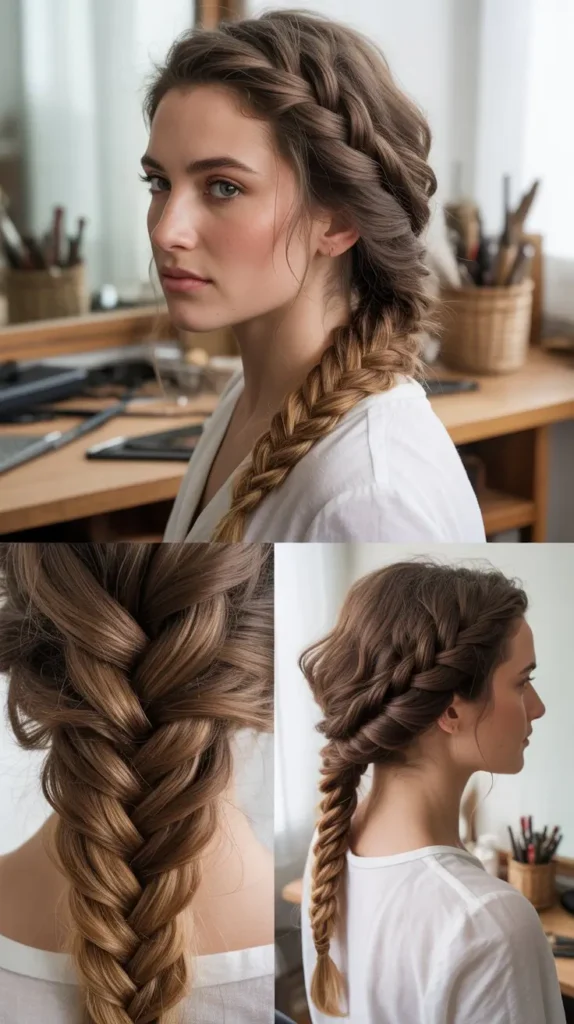
The side fishtail braid is an intricate-looking braid that drapes over one shoulder, creating an elegant, textured style that’s more interesting than a standard three-strand braid.
Despite its complex appearance, the fishtail is relatively simple to execute and works exceptionally well with dirty hair because the natural texture makes the intricate pattern more visible and defined.
It’s perfect for creative professional environments.
Braiding Instructions:
- Gather all your hair over one shoulder, choosing your preferred side.
- Divide hair into two equal sections rather than three.
- Take a thin strand from the outer edge of the left section and cross it over to join the right section.
- Take a thin strand from the outer edge of the right section and cross it over to join the left section.
- Continue this alternating pattern—left to right, right to left—down the entire length.
- Secure the end with an elastic, leaving a few inches unbraided.
- Gently pull at the braid’s edges to create width and a more relaxed, textured appearance.
Benefits of Dirty Hair:
- The intricate fishtail pattern is more visible and defined with the texture of unwashed hair.
- Natural oils provide grip that keeps the thin strands from slipping as you braid.
- The side placement showcases the braid while concealing greasy roots from front view.
Professional Modifications:
- Keep the pulled-apart sections modest for a neater, more conservative appearance.
- Start with a French fishtail from the crown for added security and polish.
- This style particularly shines on hair that’s two to three days post-wash.
32. The Low Knot Bun
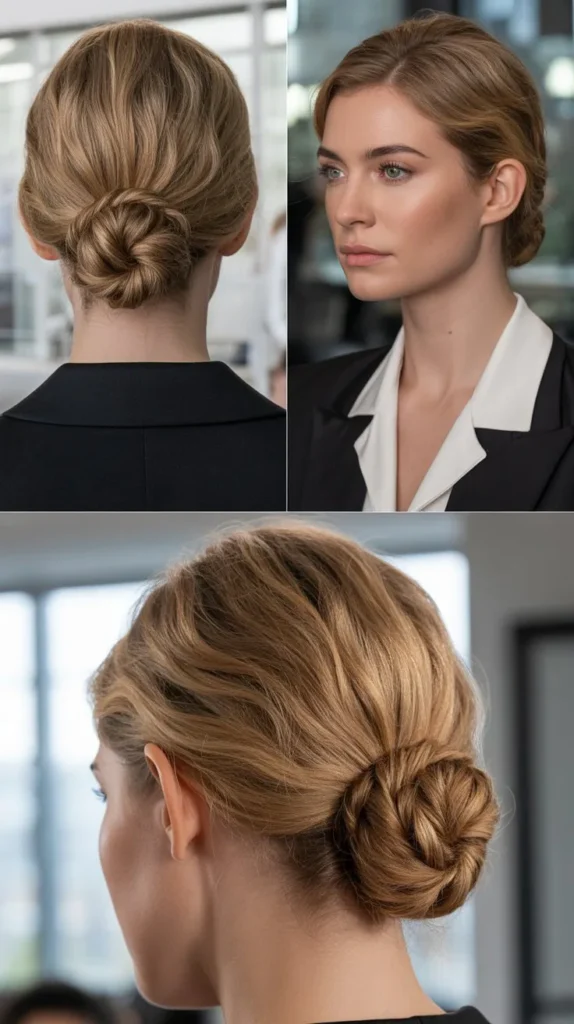
The low knot bun creates an elegant, sculptural updo by literally tying your hair into a knot before forming it into a bun.
This sophisticated style is perfect for formal professional occasions and works wonderfully with dirty hair because the natural texture helps the knot hold securely without slipping.
It’s a modern take on traditional updos that looks complex but is surprisingly straightforward to create.
Creation Method:
- Gather your hair into a low ponytail at the nape of your neck.
- Secure very loosely with an elastic (you’ll remove this later).
- Divide the ponytail into two equal sections.
- Tie these two sections into a simple overhand knot, just as you would tie a rope.
- Carefully remove the elastic at the base.
- Tuck the ends of the knotted hair underneath and around the knot, forming a bun shape.
- Secure with bobby pins inserted through the knot and into your head for maximum security.
Why Dirty Hair Works Better:
- The natural grip and weight of unwashed hair allows the knot to stay tied without immediate pinning.
- Texture prevents the knot from looking too smooth or appearing to unravel.
- Natural oils keep the overall shape smooth and elegant without styling products.
Enhancement Options:
- Create multiple knots down the back before forming the final bun for added complexity.
- Position slightly off-center for a contemporary asymmetrical look.
- This style is ideal for hair that’s one to three days past washing.
33. The Pretzel Bun
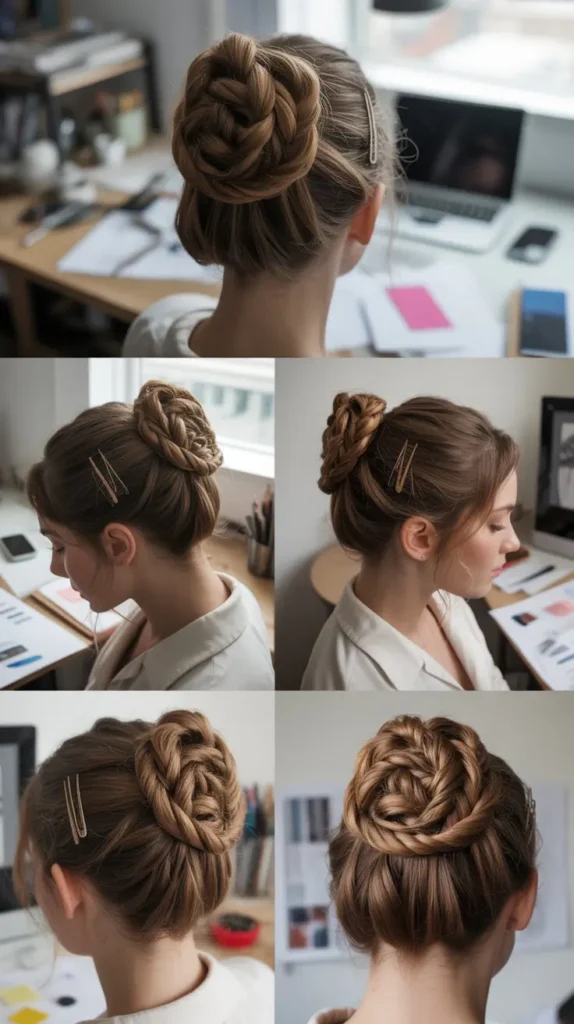
The pretzel bun is a unique, eye-catching updo that creates a twisted, pretzel-like shape with your hair.
This creative style makes a statement while remaining professional, perfect for fashion-forward industries and creative workplaces.
Dirty hair is actually ideal for this style because the natural texture helps maintain the complex shape throughout the day without the structure collapsing.
Styling Steps:
- Gather your hair into a high ponytail at the crown and secure with an elastic.
- Divide the ponytail into two equal sections.
- Twist each section individually in the same direction until they’re tight rope-like twists.
- Cross the twisted sections over each other, then loop them under and through, creating a pretzel or figure-eight shape.
- Continue manipulating the twisted sections until they create an interesting, sculptural shape.
- Tuck all ends underneath and secure the entire structure with multiple bobby pins.
Advantages of Dirty Hair:
- The texture and natural oils in unwashed hair help the twists maintain their shape without unraveling.
- Dirty hair has the grip necessary to keep the complex pretzel structure intact all day.
- Natural weight prevents the style from appearing too fluffy or undefined.
Professional Considerations:
- Position at mid-head level rather than very high for a more sophisticated appearance.
- Keep the shape relatively compact rather than loose and exaggerated for workplace appropriateness.
- This style works best on hair that’s one to two days past washing.
Comparison Table: Quick Style Selection Guide
| Style Type | Best for Hair Length | Ideal Dirty Hair Day | Professional Setting | Skill Level Required |
|---|---|---|---|---|
| Classic Low Bun | Medium to Long | Day 2-3 | All environments | Beginner |
| Textured High Ponytail | Medium to Long | Day 2-3 | Creative/Casual | Beginner |
| Sleek Side Part with Tuck | All lengths | Day 1-2 | Corporate | Beginner |
| Braided Crown | Medium to Long | Day 2-3 | Creative/Moderate | Intermediate |
| Low Twisted Chignon | Medium to Long | Day 2-3 | All environments | Intermediate |
| Half-Up Top Knot | All lengths | Day 2-3 | Creative/Casual | Beginner |
| Faux Hawk Updo | Medium to Long | Day 1-2 | Creative only | Intermediate |
| Slicked-Back Low Ponytail | All lengths | Day 2-3 | Fashion-forward | Beginner |
| Messy French Twist | Medium to Long | Day 2-4 | All environments | Intermediate |
| Double Dutch Braids | Medium to Long | Day 2-3 | Active/Creative | Intermediate |
| Twisted Low Ponytail | Medium to Long | Day 2-3 | All environments | Beginner |
| Voluminous Side Braid | Long | Day 2-3 | Creative/Moderate | Beginner |
| Pinned-Back Waves | Medium to Long | Day 2-3 | All environments | Beginner |
| Ballerina Bun | Medium to Long | Day 2-3 | Traditional/Formal | Intermediate |
| Braided Headband | Medium to Long | Day 2-3 | All environments | Intermediate |
| Asymmetrical Low Bun | Medium to Long | Day 2-3 | Fashion-forward | Beginner |
| Rope Braid Ponytail | Medium to Long | Day 2-3 | All environments | Beginner |
| Crown Braid with Low Bun | Medium to Long | Day 1-3 | Formal/Traditional | Advanced |
| Deep Side Part with Pin | All lengths | Day 1-2 | Fashion-forward | Beginner |
| Twisted Half-Up | All lengths | Day 2-3 | All environments | Beginner |
| Bubble Ponytail | Medium to Long | Day 2-3 | Creative/Casual | Beginner |
| French Roll | Medium to Long | Day 1-3 | Traditional/Formal | Advanced |
| Braided Low Ponytail | Medium to Long | Day 2-3 | All environments | Intermediate |
| Knotted Half-Up | Medium to Long | Day 2-3 | Modern/Moderate | Beginner |
| Side-Swept Low Chignon | Medium to Long | Day 1-3 | Formal/Elegant | Intermediate |
| Waterfall Braid | Medium to Long | Day 1-2 | Creative/Moderate | Advanced |
| Twisted Headband Updo | Medium to Long | Day 2-3 | Traditional/Formal | Intermediate |
| Voluminous Ponytail | All lengths | Day 1-2 | All environments | Intermediate |
| Braided Bun | Medium to Long | Day 2-4 | All environments | Intermediate |
| Twisted Crown | Medium to Long | Day 1-3 | All environments | Intermediate |
| Side Fishtail Braid | Long | Day 2-3 | Creative/Moderate | Intermediate |
| Low Knot Bun | Medium to Long | Day 1-3 | Formal/Modern | Intermediate |
| Pretzel Bun | Medium to Long | Day 1-2 | Creative only | Advanced |
Conclusion
Embracing your dirty hair days has never been easier or more stylish than with these 33 Dirty Hair Work Hairstyles That Look Fresh.
What once seemed like a beauty emergency—those unwashed hair days when you’d reach for a baseball cap or call in sick—has transformed into a styling opportunity that can actually produce better results than freshly washed hair.
The natural oils, texture, and grip that develop after a day or two create the perfect foundation for hairstyles that hold longer, look more intentional, and require fewer styling products.
From classic updos like the French roll and ballerina bun to contemporary styles like the pretzel bun and bubble ponytail, you now have an extensive toolkit of professional hairstyles that work with your hair’s natural state rather than against it.
These styles prove that professional polish doesn’t require daily washing, saving you time, protecting your hair from over-washing damage, and reducing your environmental impact through decreased water usage and styling product consumption.
Whether you work in a conservative corporate environment requiring sleek sophistication, a creative industry that welcomes bold styling choices, or anywhere in between, there’s a dirty hair style in this collection that will help you look polished, professional, and put-together.
The key is understanding that second-day, third-day, or even fourth-day hair isn’t something to hide—it’s a styling advantage waiting to be leveraged.
With these techniques in your repertoire, you’ll actually look forward to your dirty hair days, knowing they offer texture and hold that fresh hair simply cannot match.
Your morning routine will become faster, your hair will be healthier from less frequent washing, and you’ll consistently look professional and polished regardless of your wash schedule.
Embrace the natural oils, work with your hair’s texture, and let these 33 styles transform how you approach workday hair forever.
