
If you’ve been struggling with thin, flat hair that refuses to hold volume, you’re about to discover a transformative solution that stylists have been recommending for decades.
The right very short pixie haircut can be the ultimate game-changer for fine hair, creating the illusion of thickness, texture, and movement where none existed before.
This comprehensive guide explores 33 flawless very short pixie haircuts specifically designed to breathe life into thin, flat hair, offering you styling techniques, maintenance tips, and expert insights that will revolutionize your entire approach to hair care.
Throughout this article, you’ll find detailed descriptions of classic pixies, textured crops, asymmetrical cuts, undercut variations, and modern interpretations that work specifically with your hair type rather than against it.
Whether you’re considering your first dramatic chop or you’re a pixie veteran looking for fresh inspiration, these 33 Flawless Very Short Pixie Haircuts for Thin, Flat Hair will empower you to make confident decisions about your next salon visit and help you embrace the liberating beauty of short hair that finally works with your natural texture.
1. The Classic Tapered Pixie with Side-Swept Bangs
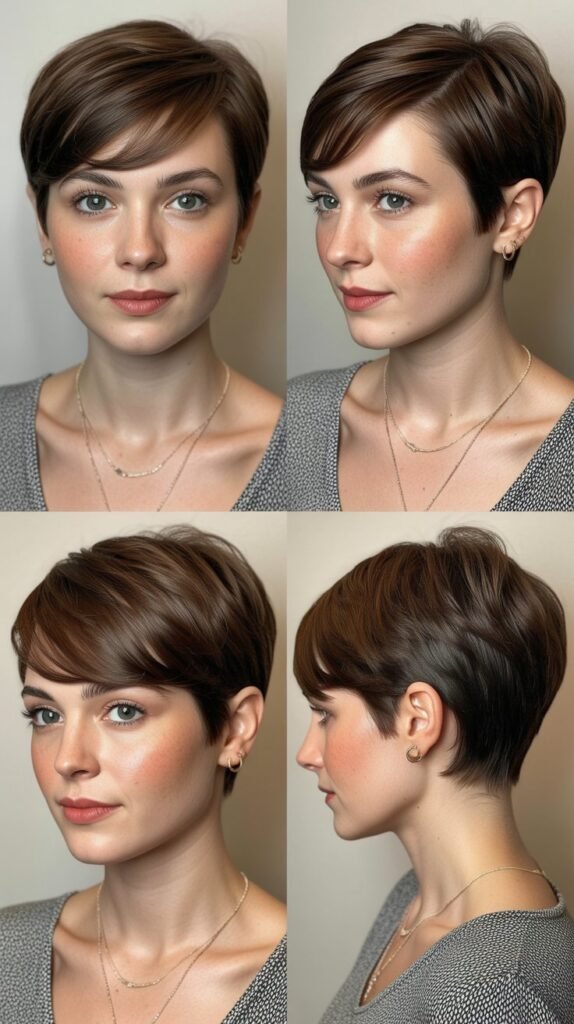
The classic tapered pixie with side-swept bangs remains one of the most flattering options for thin hair because it strategically places volume where you need it most.
This timeless cut features gradually shortened sides and back with slightly longer length on top, creating natural lift at the crown while the side-swept fringe adds softness and dimension to frame your face beautifully.
- The tapered sides eliminate bulk at the ears and nape, preventing the mushroom effect that can make thin hair look even flatter
- Side-swept bangs create the illusion of fuller hair by adding asymmetrical interest and movement across the forehead
- This cut works exceptionally well for oval, heart-shaped, and diamond face shapes by balancing facial proportions
- The longer top section can be styled with volumizing products and blow-dried forward or to the side for maximum lift
- Regular trims every 4-6 weeks maintain the shape and prevent the cut from growing out into unflattering proportions
- Styling takes minimal time—simply apply mousse to damp hair, blow-dry with a round brush at the roots, and finish with light-hold hairspray
2. The Textured Choppy Pixie for Maximum Volume
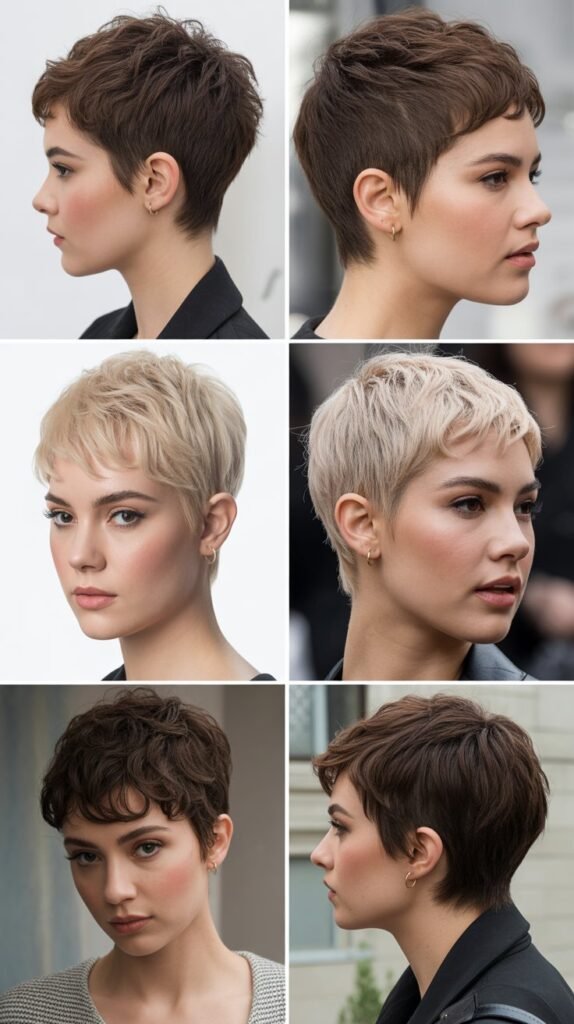
The textured choppy pixie introduces strategic layers and razored ends that create separation and movement, making thin hair appear significantly fuller and more dynamic.
This edgier variation relies on texturizing techniques that remove weight while maintaining length in key areas, resulting in a piecy, dimensional look that defies the limitations of fine hair.
- Point-cutting and razor techniques create irregular edges that catch light differently, adding visual depth and dimension
- The choppy layers prevent hair from lying flat against the scalp by introducing natural separation and air pockets
- This style works particularly well for those with naturally straight or slightly wavy thin hair
- Texturizing products like sea salt spray, molding paste, or dry shampoo become essential styling tools for this cut
- The intentionally undone appearance means imperfection is actually the goal, making it surprisingly low-maintenance
- Finger-styling rather than brush-styling enhances the piecey texture and prevents the hair from looking too controlled
- This cut can easily transition from casual daytime looks to evening sophistication with minimal product adjustment
3. The Micro Pixie with Buzzed Sides
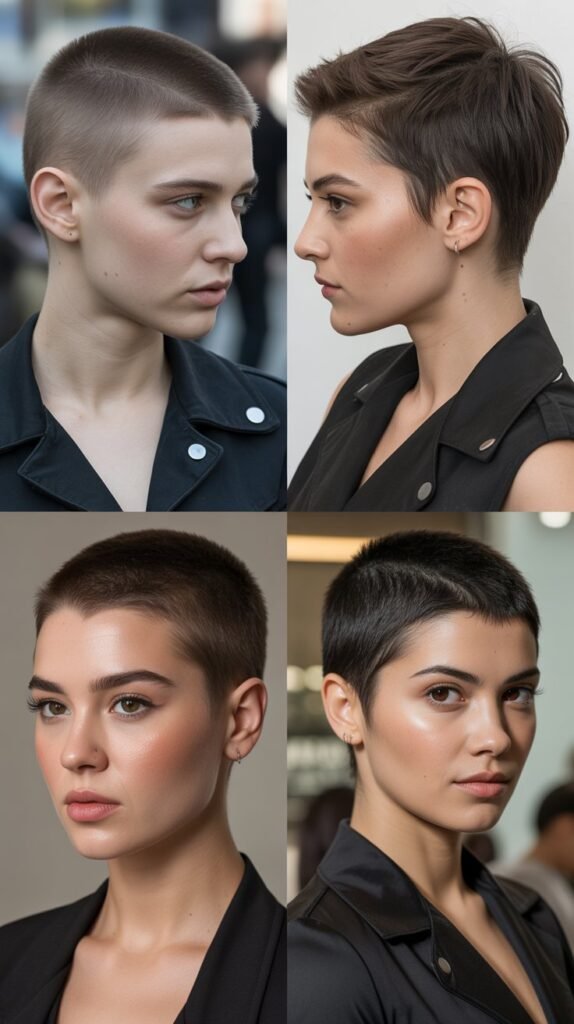
The micro pixie with buzzed sides represents the boldest approach to solving thin hair challenges by embracing extreme shortness with confidence and style.
This ultra-short cut eliminates the very concept of flatness by keeping hair so close to the scalp that volume becomes irrelevant, while the slightly longer top section provides just enough length for minimal styling versatility.
- Clipper-cut sides typically range from a #1 to #3 guard, creating clean lines and dramatic contrast with the top section
- This extreme cut removes all weight and bulk, making hair management virtually effortless
- The style draws attention to facial features, bone structure, and personal style rather than hair texture or volume
- Maintenance requires salon visits every 3-4 weeks to keep the buzzed sections from growing out unevenly
- This cut works best for confident individuals who are comfortable making a strong style statement
- The minimal hair means you’ll save significantly on styling products and drying time
- Face shape considerations become more important with such short hair—oval and heart-shaped faces typically carry this look most easily
4. The Asymmetrical Long Pixie
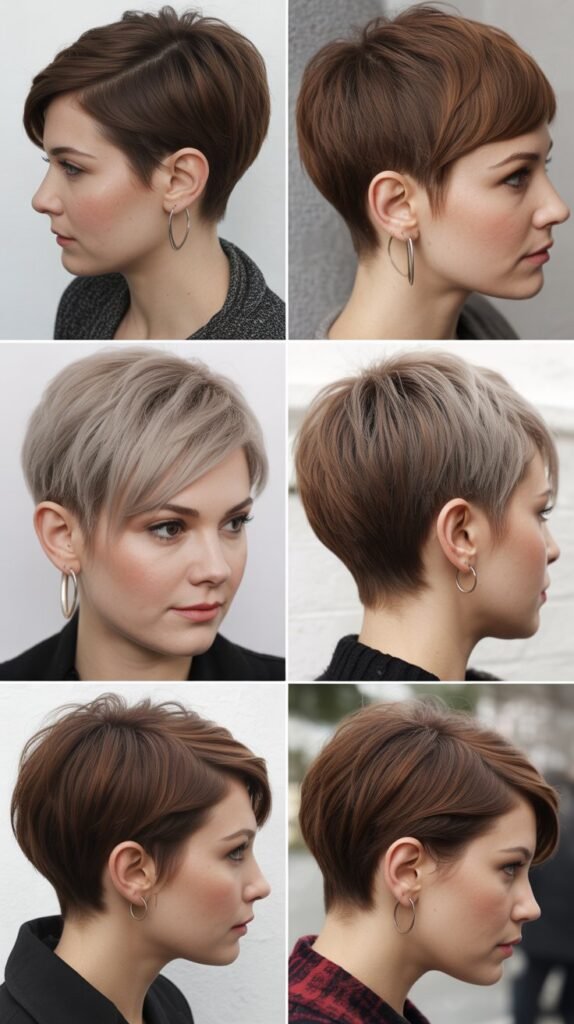
The asymmetrical long pixie creates visual interest through intentional imbalance, with one side significantly shorter than the other to add dimension and modern edge to thin hair.
This contemporary variation allows for more styling versatility than ultra-short pixies while still delivering the volume-boosting benefits of reduced weight and strategic layering.
- The longer side typically ranges from 3-5 inches while the shorter side stays around 1-2 inches for maximum contrast
- This dramatic difference creates the illusion of more hair by drawing the eye across the head rather than focusing on thinness
- The longer section can be tucked behind the ear, swept across the face, or styled with volume at the roots
- Deep side parts amplify the asymmetrical effect and add height at the crown where thin hair typically falls flat
- This style works particularly well for those transitioning from longer hair to shorter cuts, as it feels less extreme
- The asymmetry can be customized to flatter your specific face shape and features
- Balayage or ombre coloring techniques enhance the dimensional effect of the asymmetrical cut
5. The Pixie with Undercut Design
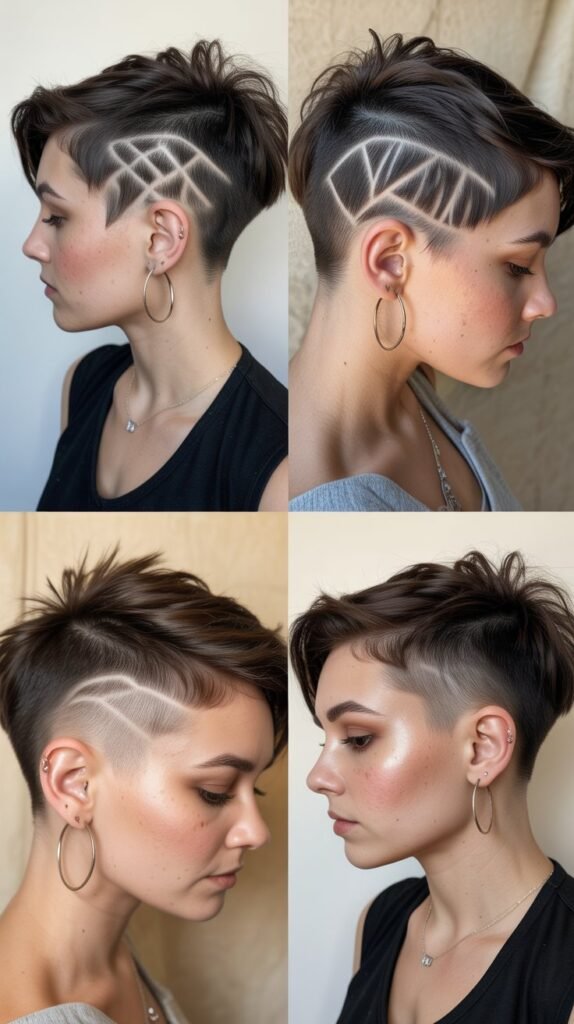
The pixie with undercut design transforms the traditional pixie into personalized art by incorporating shaved patterns or designs into the shorter sections.
This creative approach not only solves thin hair problems through strategic removal of weight but also adds unique visual interest that draws attention away from hair texture concerns.
- Undercut designs can range from simple clean lines to intricate geometric patterns or nature-inspired motifs
- The shaved sections create extreme contrast with the longer top portion, making the remaining hair appear thicker by comparison
- These designs require regular maintenance every 2-3 weeks as hair grows back quickly in buzzed areas
- The undercut provides excellent cooling benefits and reduces styling time significantly
- Popular design options include simple side lines, triangular patterns, floral motifs, or abstract geometric shapes
- This style appeals to those who want to express creativity and individuality through their haircut
- The designs can be temporary or evolving, changing with each salon visit for continuous fresh looks
6. The Feathered Crown Pixie
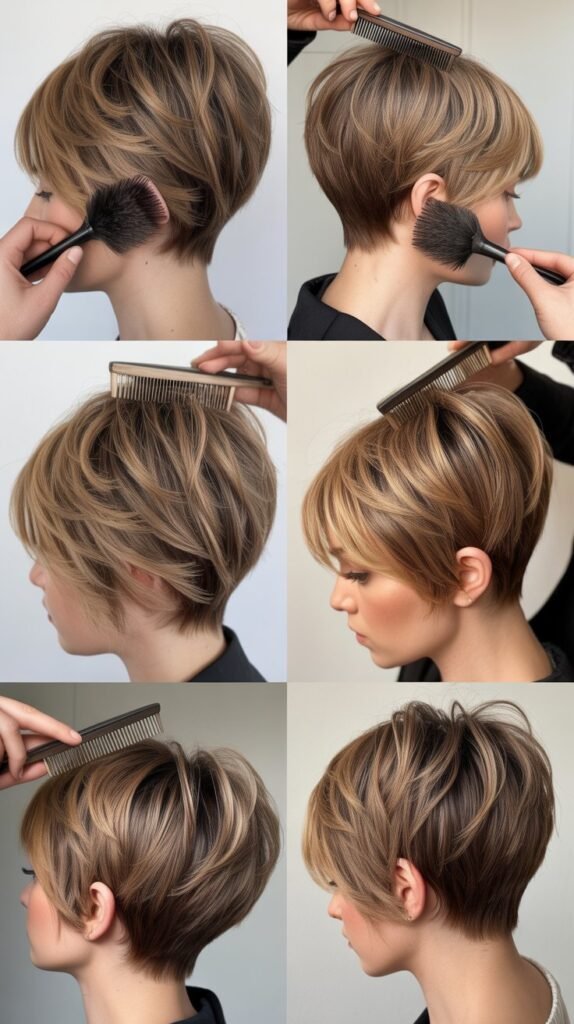
The feathered crown pixie focuses volume and texture specifically at the crown and top sections through specialized cutting techniques that create soft, feather-like layers.
This feminine approach to the pixie cut addresses the primary concern with thin hair—lack of height at the crown—while maintaining enough length for versatile styling options.
- Point-cutting techniques create the feathered effect by removing bulk while maintaining length and creating soft edges
- The crown area receives concentrated layering to maximize lift and prevent the hair from lying flat
- This style works beautifully for those who prefer a softer, more traditionally feminine pixie interpretation
- Blow-drying with a small round brush lifts the crown layers away from the scalp for maximum volume
- The feathered layers catch and reflect light beautifully, creating the illusion of more hair density
- This cut requires less frequent maintenance than more structured pixie styles, with trims needed every 6-8 weeks
- The soft, feathery texture works particularly well for mature women or those in professional environments
7. The Angular Pixie Bob Hybrid
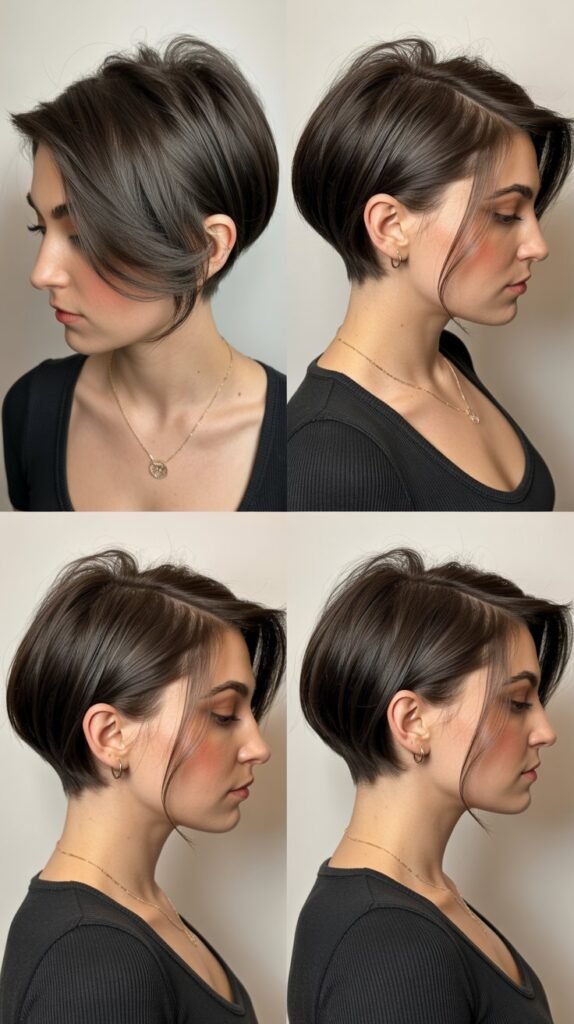
The angular pixie bob hybrid combines the best elements of both cuts, offering slightly more length than a traditional pixie while maintaining the lightweight, volume-boosting benefits of short hair.
This transitional style features a longer front section that gradually tapers to a short back, creating angles that flatter the face while solving thin hair challenges.
- The front sections typically range from 2-4 inches while the back stays pixie-short at under 2 inches
- This graduated length creates a strong diagonal line that adds visual interest and perceived volume
- The style offers more versatility than traditional pixies, allowing for behind-the-ear tucking or forward styling
- The angular cut draws the eye along its lines rather than focusing on hair density or texture
- This hybrid works exceptionally well for those nervous about committing to a full pixie cut
- The shape complements square and rectangular face shapes by softening angular jawlines
- Styling can range from sleek and polished to tousled and textured depending on your product choices
8. The Spiky Textured Pixie
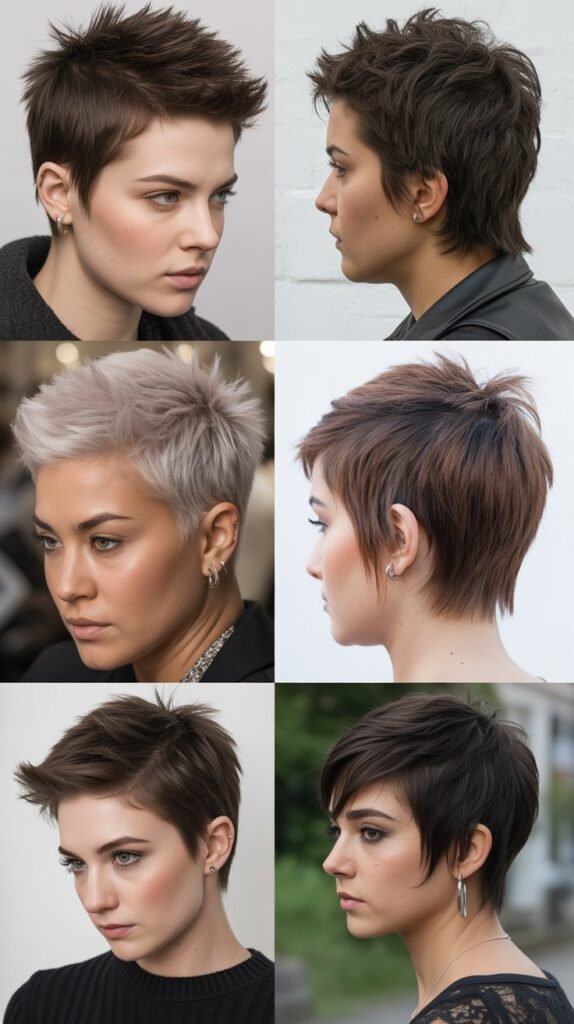
The spiky textured pixie embraces an edgier aesthetic by using products and cutting techniques to create upward, piece-separated sections that maximize height and dimension.
This rebellious variation completely eliminates flatness by styling hair in the opposite direction of its natural fall, making thin hair appear significantly fuller and more substantial.
- The cut features graduated layers throughout that allow individual sections to be styled upward independently
- Strong-hold products like gel, pomade, or molding paste are essential for creating and maintaining the spiky texture
- The spikes can vary in length and intensity from subtle texture to dramatic punk-inspired points
- This style works particularly well for thin hair because the upward direction creates automatic volume
- The intentionally messy, textured appearance means this cut is extremely forgiving and low-maintenance
- Color techniques like highlights or platinum blonde amplify the spiky texture by creating depth contrast
- This cut appeals to those who want an alternative, fashion-forward look that challenges conventional beauty standards
9. The Sleek Side-Part Pixie
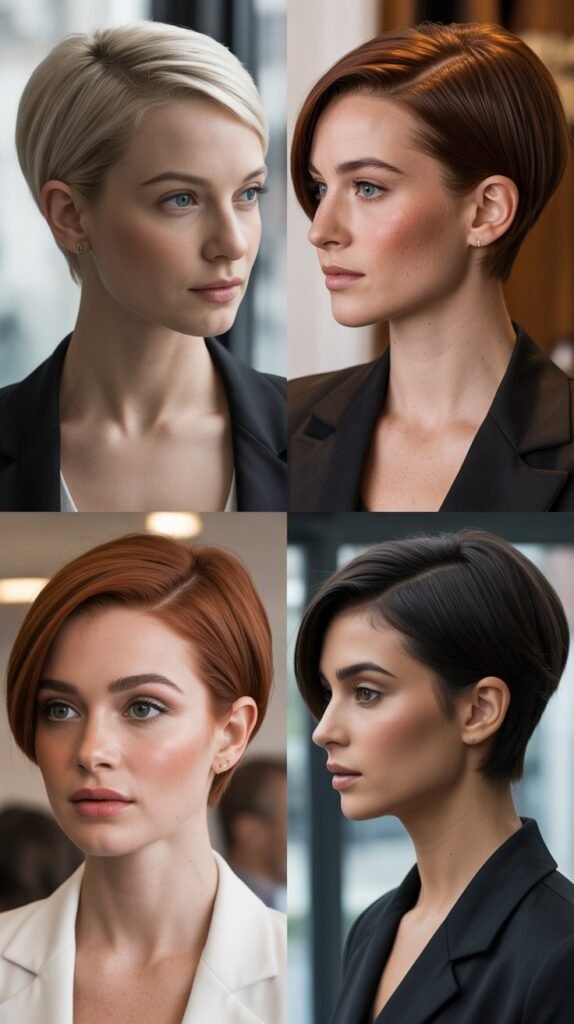
The sleek side-part pixie offers a polished, sophisticated approach to short hair that works beautifully in professional environments while still solving thin hair challenges.
This refined style uses a deep side part and smooth styling to create elegant lines and the illusion of density through strategic hair placement and shine enhancement.
- The deep side part (typically placed 2-3 inches from the center) creates instant height on the heavier side
- Smooth styling with blow-drying and flat-ironing creates reflective shine that makes hair appear denser
- This cut features subtle layers rather than choppy texture for a more refined, elegant appearance
- The sleek finish requires smoothing serums, shine sprays, and sometimes light pomade for control
- This style works exceptionally well for formal events, business settings, and conservative environments
- The clean lines and polished finish complement classic clothing styles and sophisticated personal aesthetics
- Regular deep conditioning treatments maintain the healthy shine essential to this look’s success
10. The Curly Pixie for Fine Hair
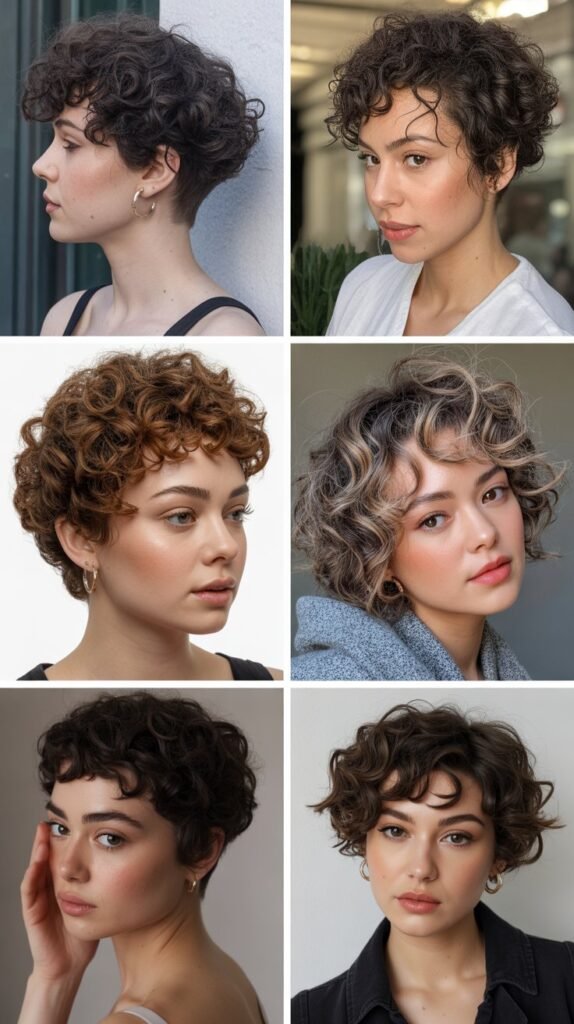
The curly pixie for fine hair recognizes that thin hair can still have natural curl or wave, requiring specialized cutting techniques that enhance texture while managing volume strategically.
This style embraces natural curl patterns rather than fighting them, using the curl’s structure to create the appearance of fuller, more dynamic hair.
- Cutting curly hair requires dry cutting techniques to see exactly how each curl will fall and spring
- The cut removes weight that can pull curls down while maintaining enough length for the curl pattern to develop
- Thin curly hair benefits from deva cuts or other curl-specialized cutting methods that work with natural texture
- Curl-defining products like mousses, gels, and creams replace volumizing products needed for straight thin hair
- The natural curl creates automatic volume and dimension that straight thin hair must achieve through styling
- This style requires understanding your specific curl pattern—loose waves versus tight ringlets need different approaches
- Avoiding heat styling and embracing natural texture actually makes this cut extremely low-maintenance
11. The Disconnected Pixie
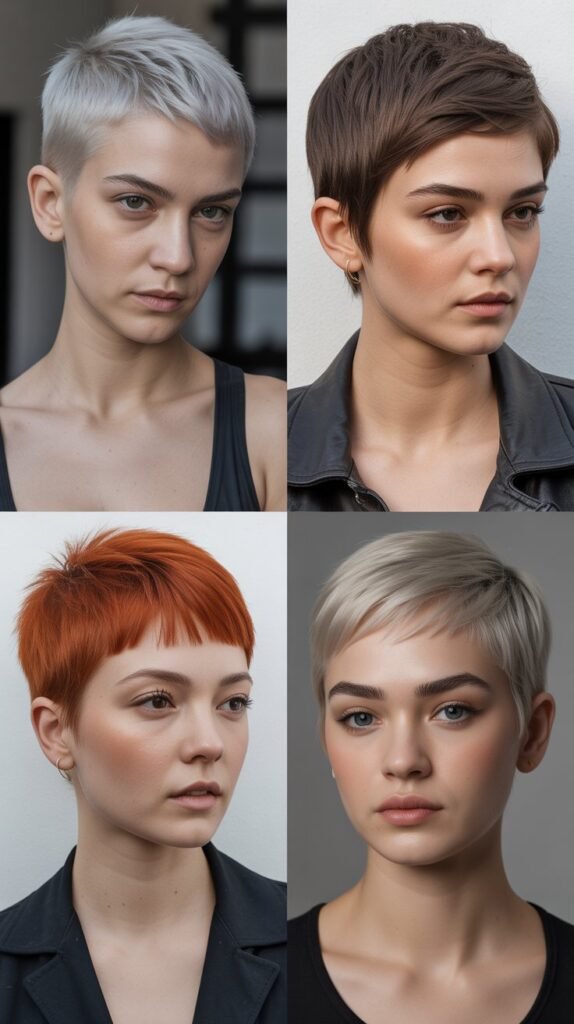
The disconnected pixie features intentional separation between different hair sections, with dramatically different lengths creating distinct zones that add visual interest and dimension.
This avant-garde approach uses contrast to make thin hair appear more substantial by creating multiple focal points rather than exposing overall thinness.
- The disconnect typically occurs between the top section and the sides, with minimal blending between lengths
- This creates a “floating” appearance where the longer section sits distinctly above the shorter perimeter
- The dramatic contrast draws attention to the cut’s architecture rather than hair texture or density
- This style works best for those comfortable with bold, unconventional looks that make fashion statements
- The disconnected sections can be styled independently, offering surprising versatility despite the short length
- Color techniques can emphasize the disconnect by using different tones in different sections
- This cut requires an experienced stylist who understands how to create intentional disconnection versus accidental patchiness
12. The Pixie with Long Bangs
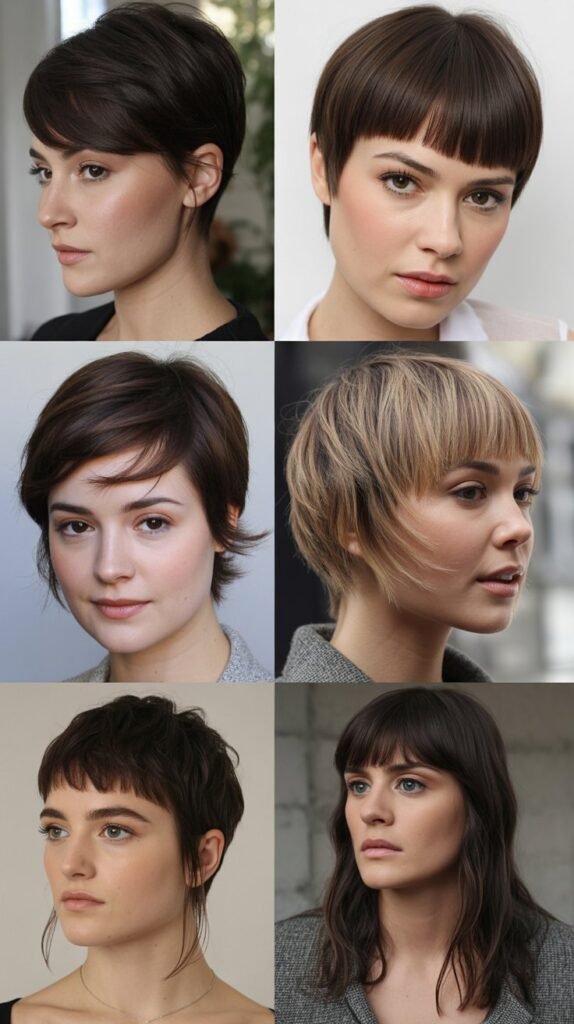
The pixie with long bangs maintains extra length in the fringe area while keeping the rest of the hair very short, creating a striking contrast that adds femininity and styling options.
The extended bangs draw the eye forward and provide enough hair to play with, making the transition to very short hair feel less extreme while still delivering volume benefits.
- The bangs typically range from 3-5 inches while the back and sides stay under 2 inches for maximum contrast
- This length allows for multiple styling options including side-sweeping, straight-across, or textured piece-separated looks
- The longer bangs provide a security blanket for those nervous about exposing their entire face with ultra-short hair
- The weight of the bangs can be adjusted through thinning to prevent them from looking too heavy for thin hair
- This style flatters most face shapes as the bangs can be customized to balance specific features
- The versatile bangs can be pinned back, braided, or twisted for completely different looks from the same cut
- Color placement in the bang area creates focal points and enhances the dimensional effect of the style
13. The Vintage-Inspired Pixie
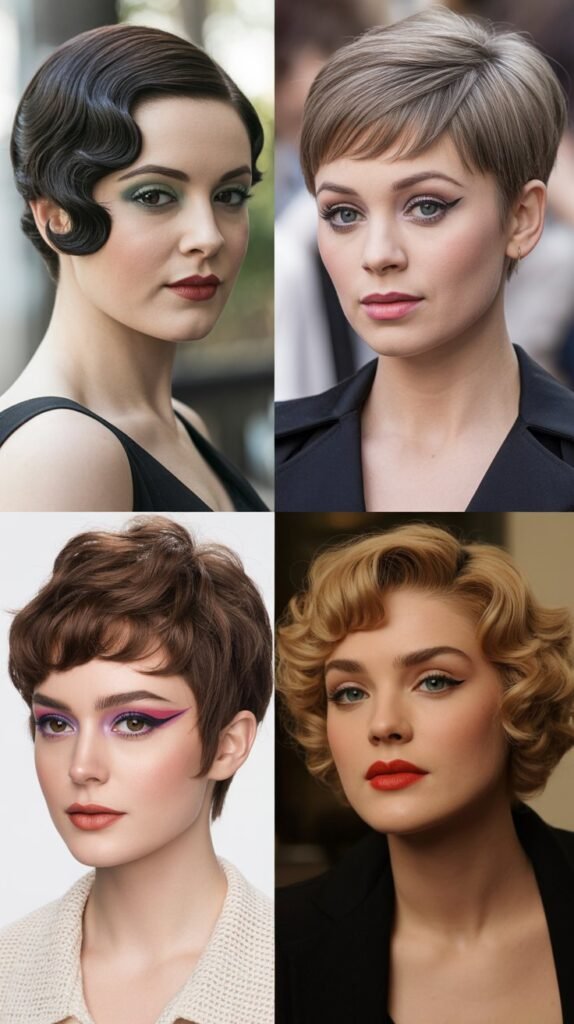
The vintage-inspired pixie draws from iconic short haircuts of past decades, incorporating retro elements like finger waves, pompadour-style height, or 1960s mod cuts.
These classic styles work beautifully for thin hair because vintage techniques were specifically designed to create volume and shape before modern volumizing products existed.
- 1920s-inspired versions feature close-cropped sides with finger waves or pin curls adding texture and dimension
- 1960s mod pixies incorporate geometric precision cutting and smooth, rounded shapes that flatter thin hair
- 1980s influences bring sharper angles, more dramatic height, and bold color contrasts
- Vintage styling techniques like setting lotions, pin curling, and finger waving create structure that modern products alone cannot achieve
- These retro looks pair beautifully with vintage fashion styles for cohesive, intentional aesthetic presentations
- The time-tested shapes have proven their flattering qualities across decades and continue to work beautifully today
- Modern adaptations can incorporate contemporary color techniques and textures while maintaining vintage silhouettes
14. The Pixie with Nape Undercut
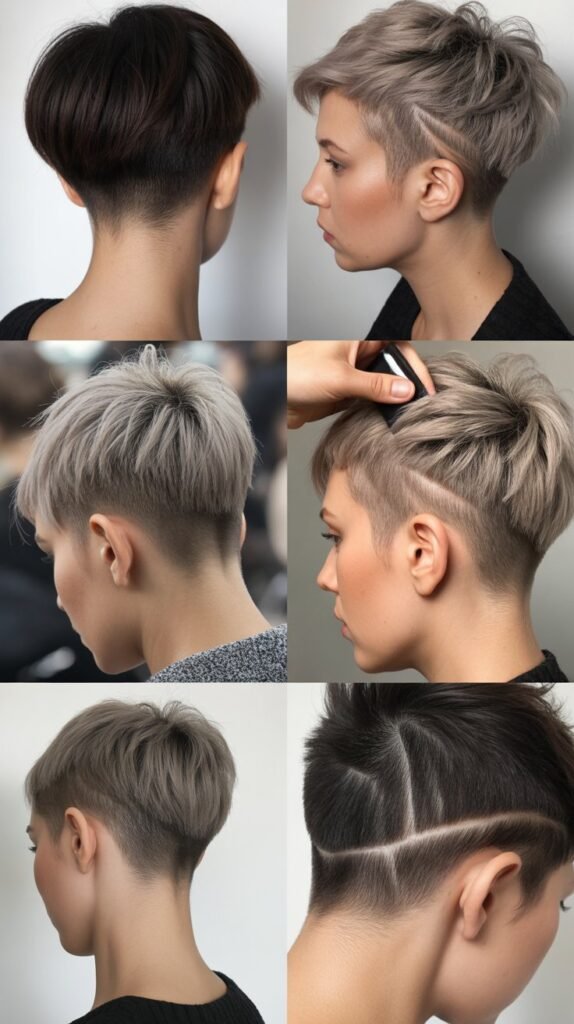
The pixie with nape undercut focuses the shortest section at the back of the neck, creating dramatic contrast with the crown and top sections while providing practical benefits.
This variation removes bulk from an area where thin hair can look particularly sparse, while the shaved nape creates clean lines and reduces styling time significantly.
- The nape is typically buzzed with clippers ranging from a #1 to #3 guard, creating smooth, short coverage
- This placement provides cooling benefits and comfort, especially in hot weather or for active lifestyles
- The undercut can extend just at the nape or can graduate up the back of the head for more dramatic effect
- This style works particularly well for those with naturally thick necks, as it creates a slimming visual effect
- The nape undercut requires maintenance every 3-4 weeks as the hair grows back quickly in this area
- Some choose to add shaved designs or patterns in the nape area for additional personalization
- This variation is less visible than side undercuts, making it more workplace-appropriate while still being edgy
15. The Tousled Bed-Head Pixie
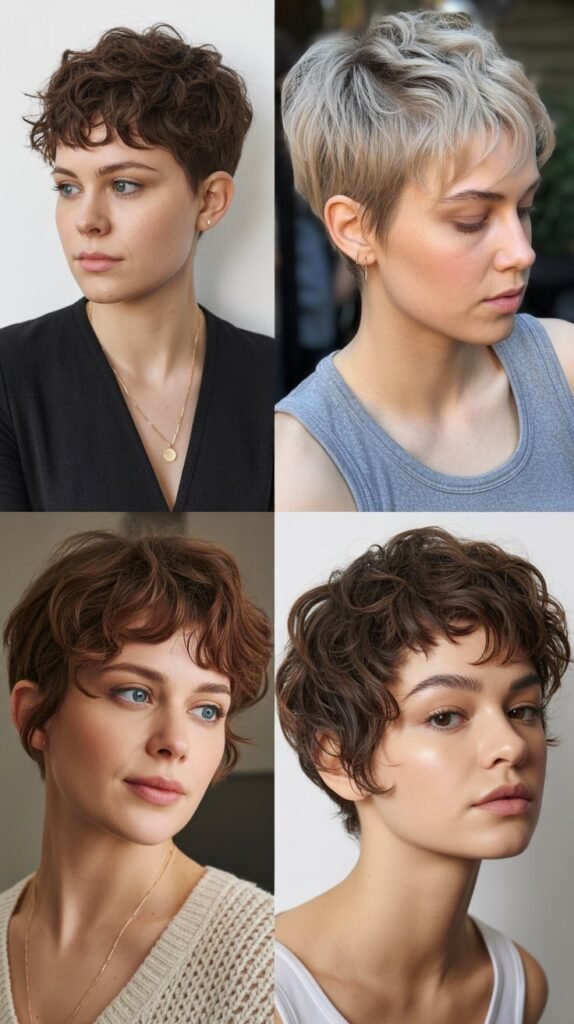
The tousled bed-head pixie embraces intentional messiness and natural texture, creating an effortlessly chic look that works perfectly with thin hair’s tendency to separate and move.
This deliberately undone style uses texturizing products and techniques to create piece-separated, lived-in texture that looks stylish rather than unkempt.
- The cut incorporates varied layering throughout to create natural separation and movement in multiple directions
- Texturizing sprays, sea salt sprays, and lightweight pomades are applied to damp hair and air-dried for natural texture
- The intentionally imperfect appearance means this style is extremely forgiving and actually improves throughout the day
- Thin hair benefits from this style because the separated pieces and natural movement create volume without effort
- This look pairs perfectly with casual fashion aesthetics and relaxed lifestyle approaches
- The style can be enhanced by scrunching, finger-combing, or simply running hands through hair periodically
- No blow-drying or heat tools are necessary, making this one of the most low-maintenance pixie variations
16. The Pixie with Shaved Side Design
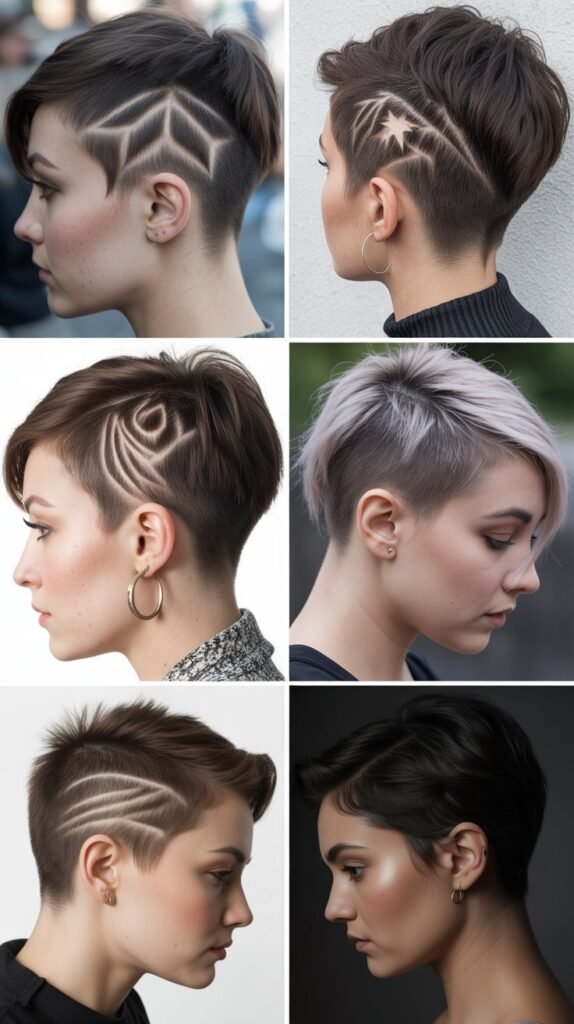
The pixie with shaved side design incorporates detailed artwork on one or both sides of the head, transforming the haircut into a canvas for creative expression.
This bold variation removes substantial weight from the sides while the artistic element creates a stunning focal point that draws attention away from thin hair concerns.
- Designs can range from simple geometric patterns to intricate artwork depending on your stylist’s skills and your preferences
- The shaved sections typically use multiple clipper guard sizes to create depth and dimension within the design
- Popular design themes include geometric shapes, nature elements like leaves or flowers, stars, lightning bolts, and abstract patterns
- These designs require touch-ups every 2-3 weeks as hair growth quickly blurs the detailed lines
- The artistic element creates conversation-starting uniqueness while solving practical thin hair challenges
- Temporary hair tattoos can be added to the shaved areas for special occasions or photoshoots
- This style works best for creative individuals or those in artistic fields where bold self-expression is celebrated
17. The Forward-Styled Crown Pixie
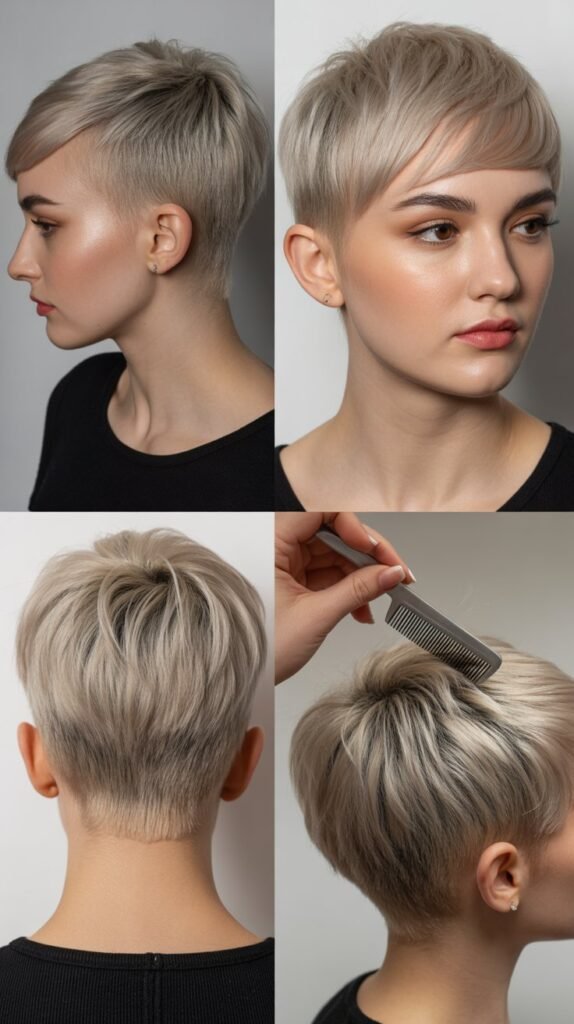
The forward-styled crown pixie directs all the top and crown hair toward the face, creating dramatic height at the back of the head while framing the face with textured, piece-separated sections.
This directional styling approach maximizes volume for thin hair by working with natural growth patterns rather than against them.
- The cut maintains maximum length at the crown area specifically to allow for forward styling with volume
- Blow-drying with a round brush or fingers directs hair forward from the crown toward the forehead
- The forward direction creates natural lift at the crown where thin hair typically falls flat
- This style works particularly well for those with round or square faces as it adds vertical length
- Strong-hold products applied at the roots maintain the forward direction throughout the day
- The face-framing pieces can be styled to blend with longer bangs or kept piece-separated for texture
- This directional styling creates the illusion of substantially more hair than actually exists
18. The Pixie-Mullet Hybrid
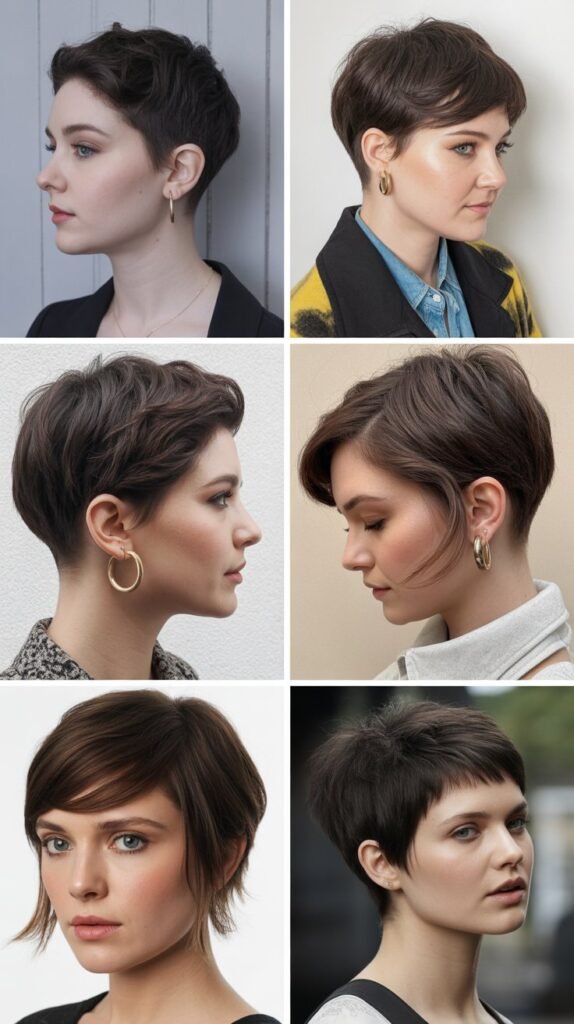
The pixie-mullet hybrid embraces the modern resurgence of mullet styling by maintaining very short hair on top and sides while leaving extra length at the nape.
This contemporary take on a controversial classic creates unexpected dimension and works surprisingly well for thin hair by concentrating length in a specific area rather than spreading thinness throughout.
- The top and sides stay pixie-short at 1-2 inches while the nape length can extend to 4-6 inches
- This creates a dramatic “business in front, party in back” contrast that has become fashion-forward again
- The concentrated length at the nape means thin hair doesn’t look sparse since the nape section has all the length
- This style works well for those with straight or slightly wavy thin hair that can hold some length
- The nape section can be styled straight, wavy, or even curled depending on your aesthetic preferences
- This cut appeals to those who want edgy, unconventional style that makes a confident statement
- The modern interpretation is more refined than 1980s versions, with careful blending and contemporary proportions
19. The Platinum Pixie
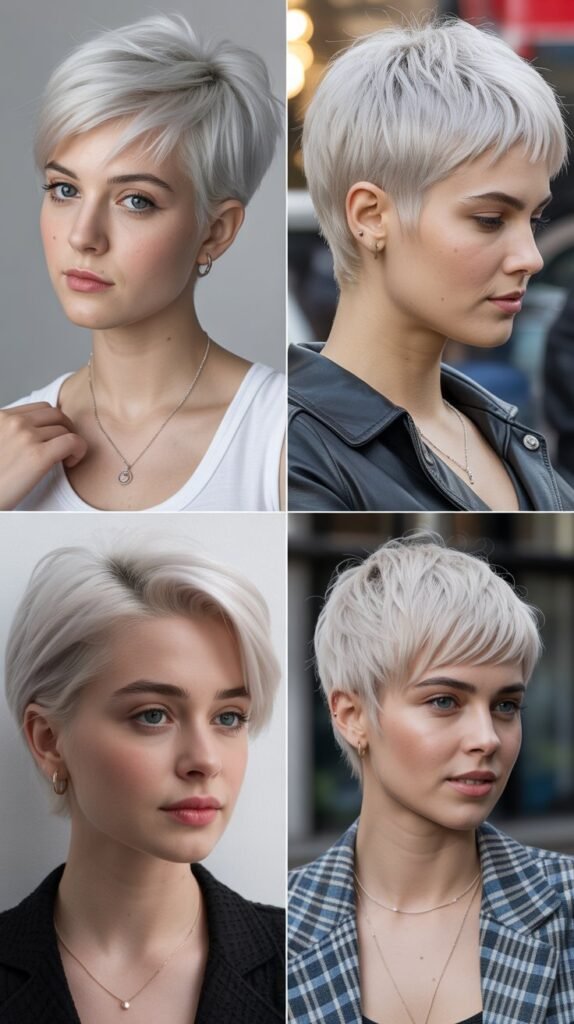
The platinum pixie combines very short hair with dramatic platinum blonde coloring, using color to create dimension and visual interest that helps thin hair appear fuller.
The extreme lightness reflects maximum light, creating brightness and the illusion of density while the pixie cut removes weight for natural volume.
- Platinum blonde reflects light intensely, creating brightness that makes hair appear more substantial
- The extreme color change requires professional treatment and proper toning to avoid brassy yellow tones
- Thin hair actually achieves platinum more easily as there’s less hair to process and lighten
- The dramatic color becomes a defining feature that draws attention away from hair texture concerns
- Cool-toned platinum shades work best for this effect—icy whites, silver-toned blondes, and ash platinums
- Maintenance includes purple shampoo treatments and regular toning appointments every 4-6 weeks
- The combination of short cut and light color creates striking contrast with darker clothing and dramatic personal style
20. The Soft Rounded Pixie
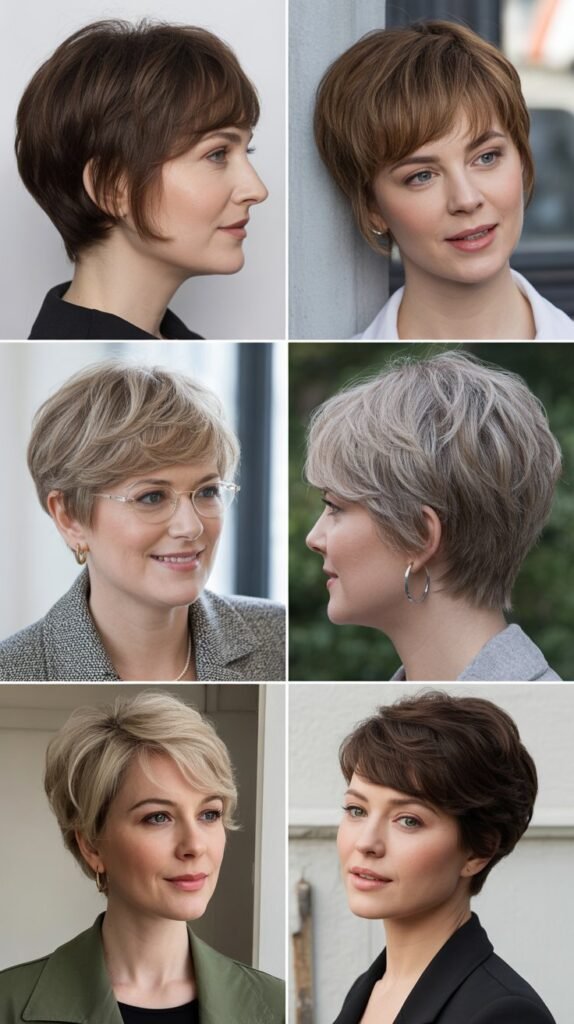
The soft rounded pixie features curved lines and gentle shaping rather than angular edges, creating a feminine, approachable aesthetic that flatters mature women and professional environments.
This graceful interpretation uses graduated layering to create soft volume around the head’s natural contours while maintaining the weight-reducing benefits of short hair.
- The cutting technique follows the head’s natural rounded shape, creating organic curves rather than geometric angles
- Layers are subtly graduated to create soft, blended transitions rather than choppy texture
- This style works beautifully for mature women, corporate professionals, and those preferring classic aesthetics
- The gentle shaping flatters round and oval face shapes by echoing their natural curves
- Styling involves smooth blow-drying with round brushes to enhance the curved lines and soft volume
- The refined appearance pairs perfectly with classic fashion choices and timeless personal style
- This pixie variation is forgiving of gray hair and actually looks sophisticated as natural silver emerges
21. The Edgy Razor-Cut Pixie
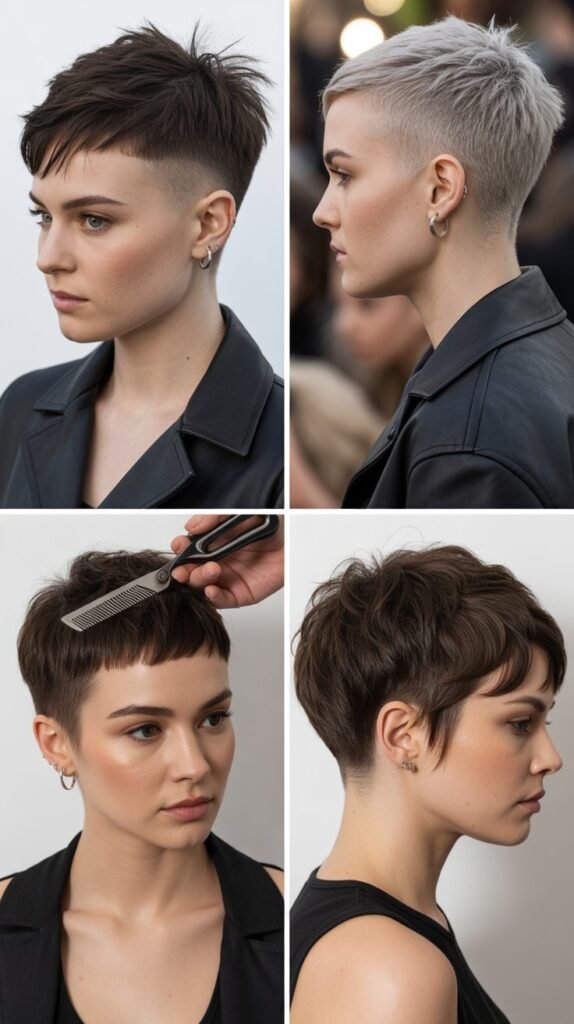
The edgy razor-cut pixie uses razor cutting techniques exclusively to create feathered, irregular edges that add movement and dimension to thin hair.
The razor removes weight while creating texture simultaneously, resulting in hair that naturally separates into piece-separated sections with built-in volume and interest.
- Razor cutting creates softer, more textured edges than scissor cutting, perfect for thin hair that needs dimension
- The technique removes bulk while maintaining length, creating lighter, more movable hair
- Razor-cut hair naturally falls into separated, piece-separated sections that enhance the appearance of fullness
- This cutting method works particularly well for straight or slightly wavy thin hair
- The irregular edges catch and reflect light at different angles, creating visual depth and dimension
- Styling products like texturizing sprays and light pomades enhance the piece-separated texture
- This edgier interpretation appeals to those wanting modern, fashion-forward style with movement and life
22. The Pixie with Micro Bangs
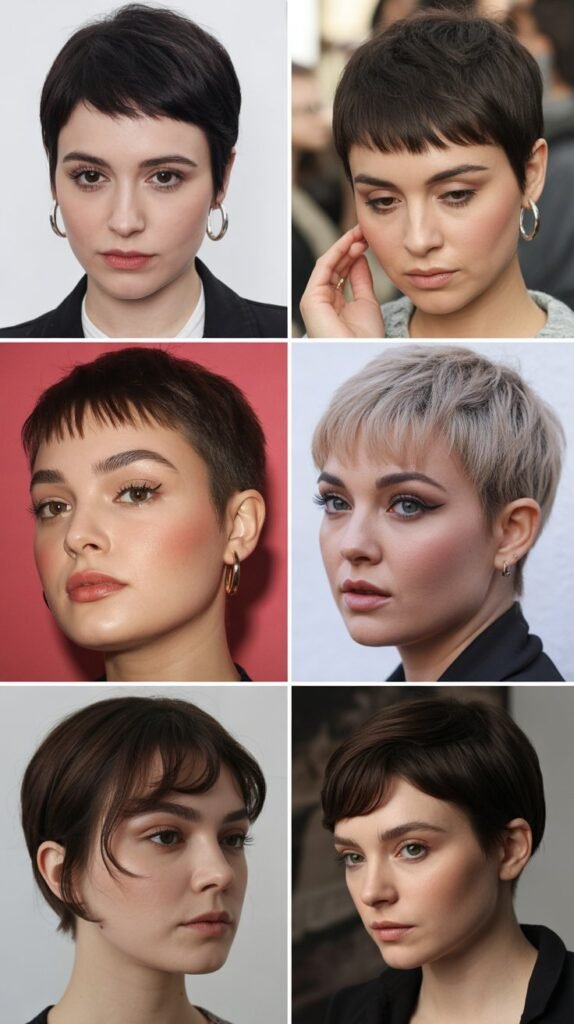
The pixie with micro bangs combines very short overall length with dramatically short, blunt-cut bangs that create striking visual impact.
This bold style draws attention to the eyes and makes a strong fashion statement while solving thin hair problems through extreme weight removal and structured styling.
- Micro bangs are cut well above the eyebrows, typically at mid-forehead level for maximum impact
- The blunt, straight-across cut creates strong horizontal lines that contrast with the short sides and back
- This dramatic look draws immediate attention to the eyes and upper face, deemphasizing hair texture
- The style works best for those with good skin, defined eyebrows, and confidence in making bold statements
- Face shape considerations are crucial—oval and heart-shaped faces typically carry micro bangs most successfully
- The structured, geometric quality requires regular trims every 3-4 weeks to maintain the precise line
- This cut has editorial, high-fashion appeal and works beautifully for artistic or creative individuals
23. The Layered Volume Pixie
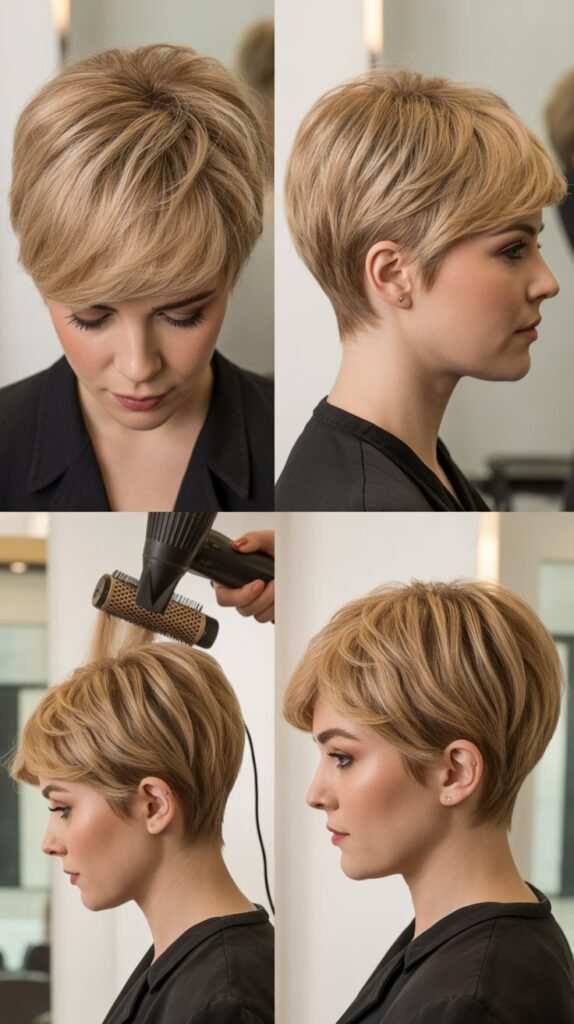
The layered volume pixie focuses specifically on creating maximum height and fullness through strategic layering concentrated at the crown and top.
This volume-maximizing approach uses graduated layers of varying lengths to create air pockets and lift, directly addressing the primary concern with thin, flat hair.
- Multiple layer lengths at the crown create stacked volume that lifts hair away from the scalp
- The shortest layers sit closest to the scalp while progressively longer layers build upward and outward
- This layering technique is the most effective for creating true volume in genuinely thin hair
- Blow-drying involves lifting sections at the roots with a round brush while applying heat from underneath
- Volumizing products like mousses, root-lifting sprays, and thickening sprays amplify the layered structure
- The volume-focused cut works for all face shapes as height creates flattering vertical length
- This style requires minimal daily styling time—the volume is built into the cut structure itself
24. The Pixie with Temple Undercuts
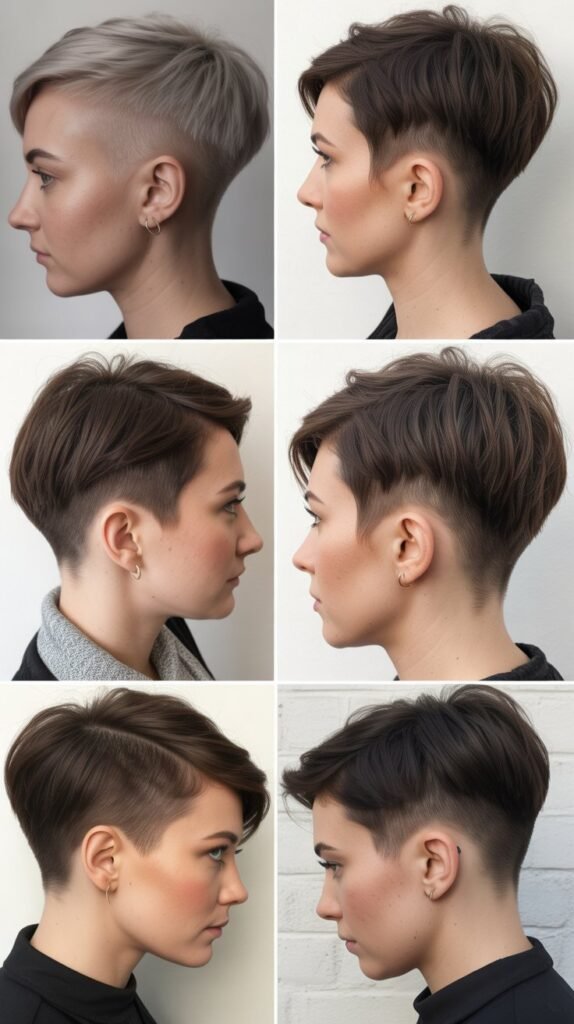
The pixie with temple undercuts shaves or crops the hair very short specifically at the temple areas on both sides, creating interesting geometric shapes and reducing bulk in areas where thin hair often looks particularly sparse.
This targeted approach maintains length on top while creating clean lines and modern edge at the sides.
- Temple undercuts typically use clippers with guards ranging from #1 to #3 for short, even coverage
- The shaved sections can be simple clean lines or incorporate geometric patterns and designs
- This placement creates visual width at the temple area, which can balance narrow or long face shapes
- The undercuts provide cooling benefits and reduce styling time in the temple zones
- The longer top section can be styled with volume, texture, or swept to the side depending on preference
- Maintenance requires touch-ups every 3-4 weeks to keep the temple areas cleanly shaved
- This modern variation offers edginess while remaining more subtle than full-side undercuts
25. The Swept-Back Pompadour Pixie
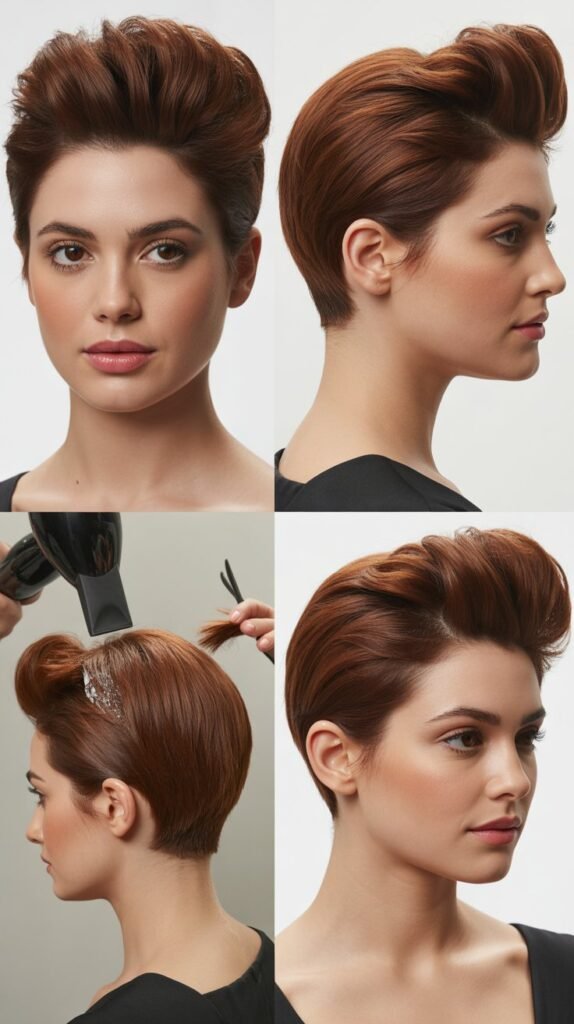
The swept-back pompadour pixie creates dramatic height at the front hairline by styling the top section backward and upward in a voluminous quiff or pompadour shape.
This retro-inspired styling approach maximizes volume for thin hair while creating a confident, commanding presence that draws attention to the face and personal style.
- The front section is blow-dried backward with a round brush, creating lift and height at the hairline
- Strong-hold products like gel, pomade, or mousse keep the pompadour shape in place throughout the day
- This style creates impressive volume by directing thin hair upward rather than allowing it to lay flat
- The pompadour works particularly well for those with high foreheads or long face shapes
- Historical references include 1950s rockabilly and 1980s new wave styles adapted for modern aesthetics
- The dramatic height can be adjusted from subtle to extreme depending on your comfort level and environment
- This style pairs beautifully with vintage fashion, rockabilly aesthetics, or modern gender-fluid styling
26. The Textured Shag Pixie
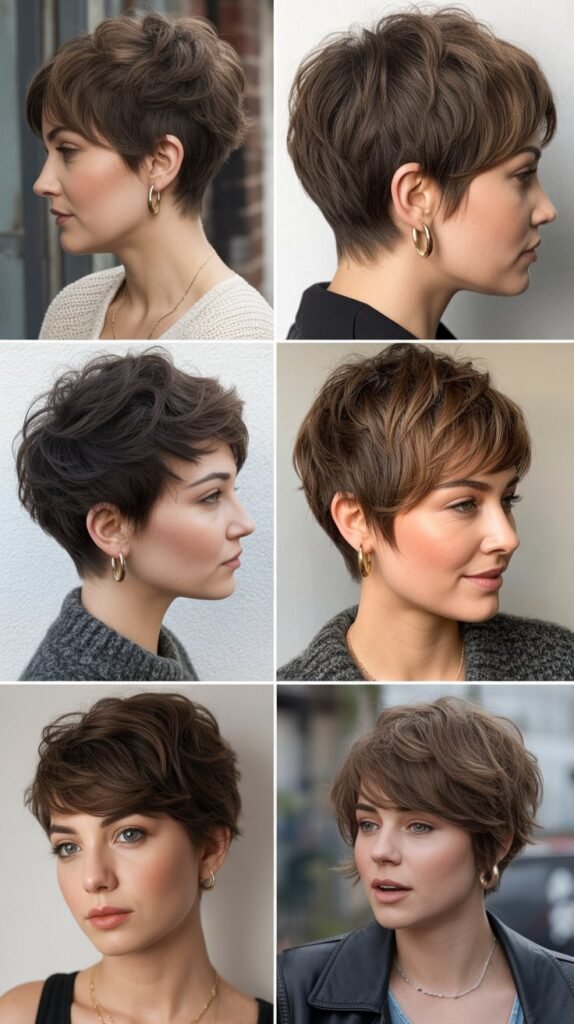
The textured shag pixie incorporates shag haircut principles into very short hair, creating layers of varying lengths throughout the entire head for maximum movement and dimension.
This style embraces natural texture and creates an effortlessly cool, undone appearance that works perfectly with thin hair’s tendency to separate into pieces.
- Shag cutting techniques create disconnected layers throughout rather than smoothly blended graduation
- The varied lengths create natural texture and separation without requiring extensive styling
- This approach works beautifully for thin hair as the layers create the illusion of more substantial hair
- The intentionally messy appearance means this style is extremely low-maintenance and forgiving
- Air-drying with texture-enhancing products creates the perfect casual, lived-in look
- The shag pixie works for all face shapes as the layering can be customized to flatter specific features
- This style has a distinctly bohemian, artistic vibe that appeals to creative, free-spirited individuals
27. The Side-Shaved Pixie
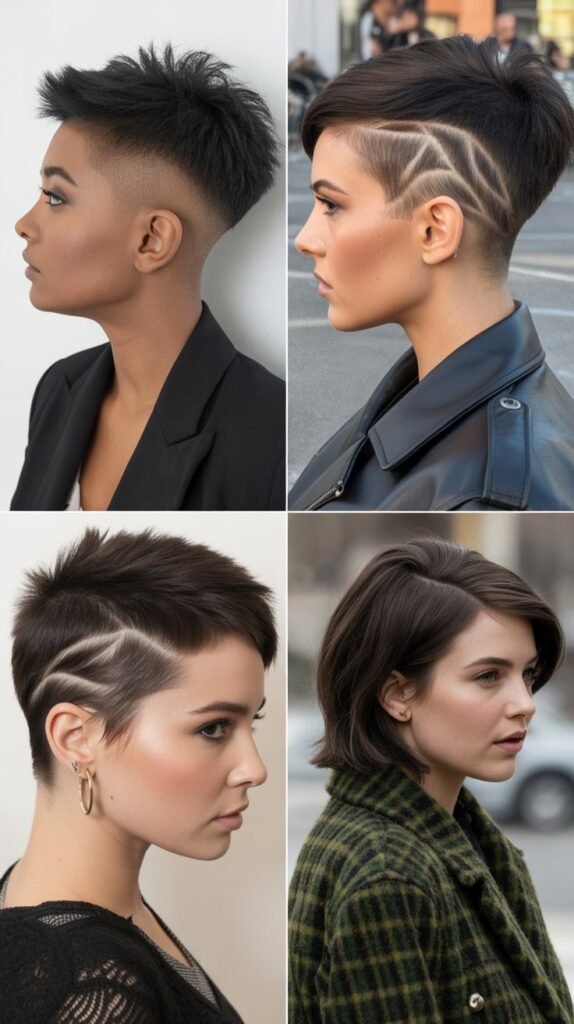
The side-shaved pixie removes hair completely or nearly completely from one entire side of the head while maintaining length on the opposite side and top.
This extremely asymmetrical approach creates dramatic visual interest and completely eliminates weight on the shaved side, making the remaining hair appear fuller by contrast.
- The shaved side typically extends from the part line to the ear and from the hairline to the nape
- This creates extreme asymmetry that becomes the defining feature of the haircut
- The remaining hair on the fuller side can be styled with volume, texture, or smooth sophistication
- This bold choice works best for confident individuals comfortable with attention-getting style
- The shaved side can remain smooth or incorporate patterns, designs, or even temporary tattoos
- Face shape becomes important—the longer side should fall on the side that best flatters your features
- Maintenance requires regular shaving or clipper work every 2-3 weeks to keep the shaved side clean
28. The Color-Blocked Pixie
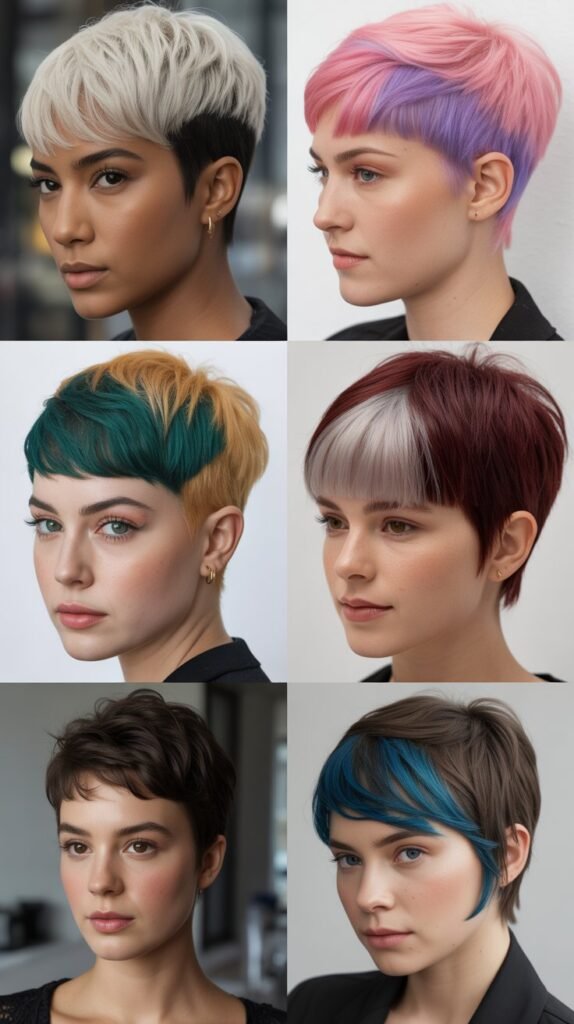
The color-blocked pixie uses distinct sections of contrasting hair colors to create visual interest and dimension that makes thin hair appear fuller.
This artistic approach treats the haircut as a canvas, with color placement strategically highlighting the cut’s structure while creating the illusion of more substantial hair through visual depth.
- Color blocking involves distinct sections of different colors rather than blended transitions
- Popular combinations include platinum/dark brown, pastel pink/natural brown, or vibrant jewel tones with natural bases
- The color contrast creates visual dimension that makes hair appear to have more depth and body
- Strategic color placement can emphasize the pixie’s structure, highlighting layers, undercuts, or asymmetrical elements
- This approach requires professional color application and regular maintenance to prevent fading and maintain distinct lines
- Thin hair actually color-blocks more successfully as there’s less hair to process evenly
- This style appeals to artistic individuals and those who embrace hair as a form of self-expression
29. The Pixie with Graduated Nape
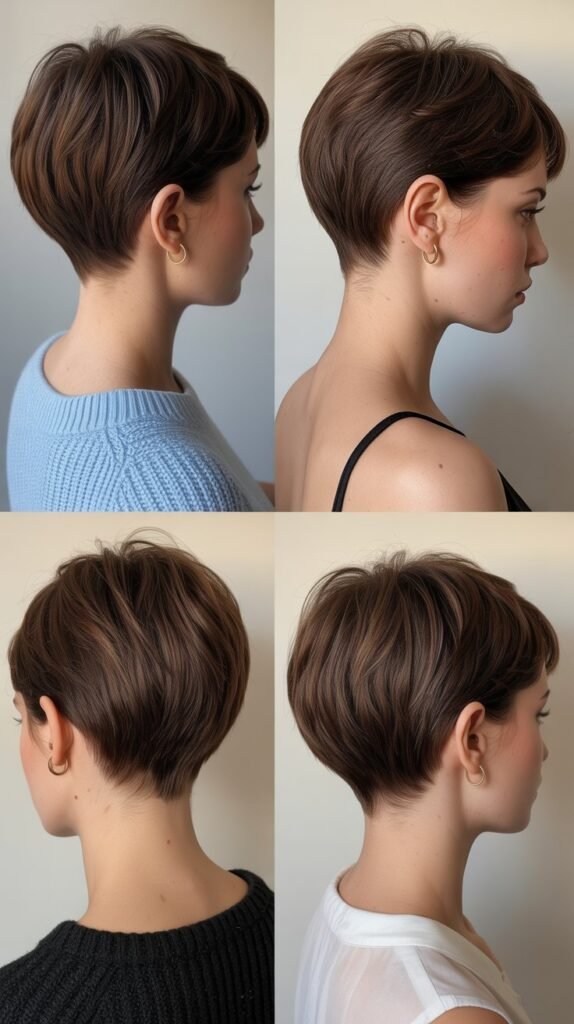
The pixie with graduated nape features a carefully tapered back section that transitions smoothly from the crown to the neckline in a gradient of lengths.
This classic approach creates elegant lines while removing bulk from the back where thin hair can look particularly sparse, resulting in a refined, polished appearance.
- The graduation creates a smooth transition from longer crown hair to very short nape hair
- This tapered approach looks professional and sophisticated while solving thin hair volume issues
- The technique works for all face shapes and is particularly flattering on longer necks
- The graduated nape creates vertical lines that elongate the neck and create graceful proportions
- This style requires precision cutting skills to create smooth, even graduation without choppy sections
- The refined appearance works beautifully in conservative professional environments
- Regular maintenance every 5-7 weeks keeps the graduation smooth and prevents the nape from appearing grown-out
30. The Tousled French Pixie
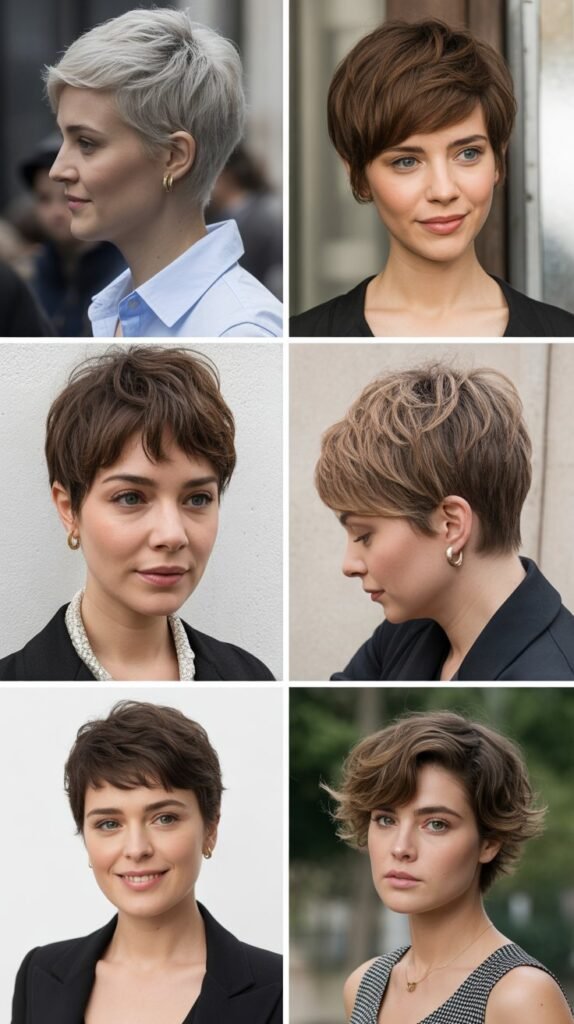
The tousled French pixie embraces the effortlessly chic aesthetic associated with Parisian style, featuring piece-separated texture, natural movement, and an undone quality that appears casually elegant.
This sophisticated interpretation works beautifully for thin hair because the intentional imperfection and texture create the illusion of fuller, more substantial hair.
- The cut incorporates subtle layering and point-cutting techniques that create natural separation
- Styling involves minimal product application to slightly damp hair, followed by air-drying or gentle diffusing
- The French approach values natural texture and movement over perfectly controlled styling
- This style works for all hair textures from straight to wavy, embracing whatever texture naturally exists
- The effortless aesthetic actually requires understanding your hair’s natural tendencies and working with them
- Color choices often include natural tones, subtle highlights, or grown-out roots for added dimension
- This pixie interpretation pairs perfectly with classic, timeless fashion and sophisticated personal style
31. The Pixie with Curved Bang
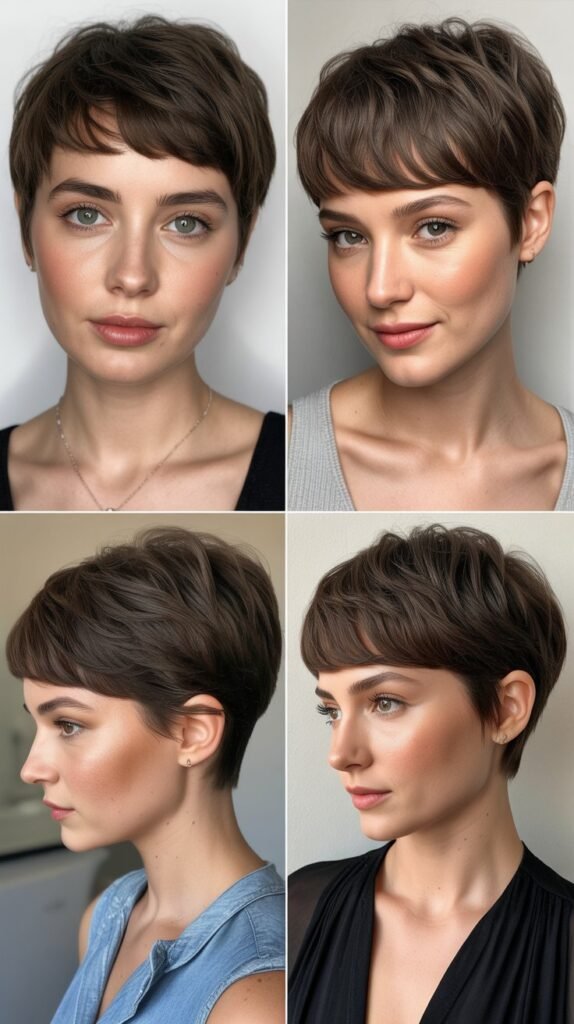
The pixie with curved bang features a rounded, face-framing fringe that follows the curve of the forehead and temples rather than falling straight across.
This softer approach to bangs creates feminine movement while the curved line draws attention to the eyes and softens angular features, working beautifully with the volume benefits of very short hair.
- The curved bang follows the natural arch of the eyebrows and forehead rather than creating a straight horizontal line
- This softer shape flatters most face shapes by creating gentle, organic lines
- The curve can be subtle or dramatic depending on your preference and styling approach
- The rounded fringe pairs particularly well with softer, more feminine pixie interpretations
- Styling involves blow-drying the bangs with a round brush to maintain and enhance the curved shape
- The bang can be swept to the side, worn forward, or pinned back for versatile styling options
- This variation works beautifully for those transitioning from longer hair who want maintained softness
32. The Structural Geometric Pixie
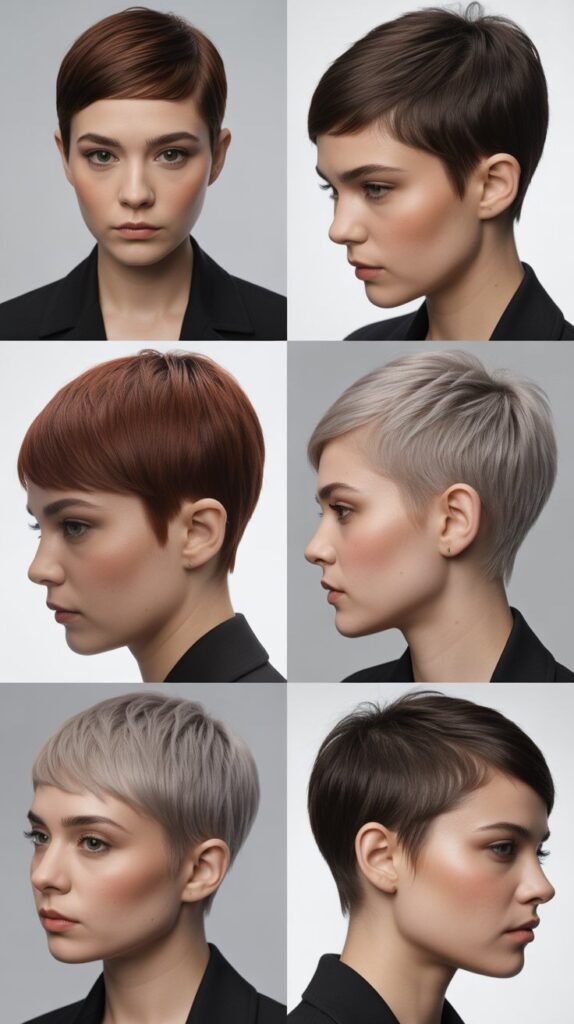
The structural geometric pixie emphasizes clean lines, sharp angles, and architectural precision, creating a bold, modern look that transforms thin hair into a statement-making design element.
This avant-garde approach treats the haircut as sculpture, with precise cutting techniques creating shapes that draw attention to the cut’s structure rather than hair texture.
- Precision cutting techniques create sharp, defined lines and intentional geometric shapes
- The structural quality works beautifully for thin hair as the focus becomes architectural design rather than hair density
- This style requires an experienced stylist with advanced cutting skills and understanding of geometry
- Common geometric elements include triangular sections, sharp angles at the temple, or asymmetrical shapes
- The bold structural quality works best for confident individuals in creative or fashion-forward environments
- Maintenance requires regular trims every 4-5 weeks to maintain the precise lines and shapes
- This cutting-edge style has editorial, high-fashion appeal and creates dramatic photographic impact
33. The Classic Hollywood Pixie
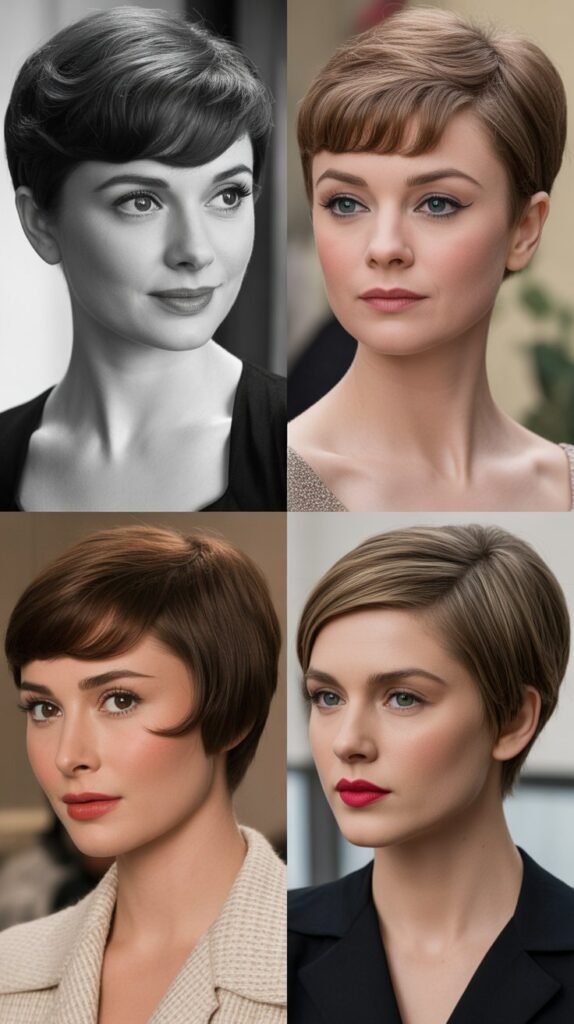
The classic Hollywood pixie draws inspiration from iconic short haircuts worn by legendary actresses, incorporating timeless elegance, refined shapes, and sophisticated styling.
This glamorous interpretation proves that very short hair can be utterly feminine and elegant while solving thin hair challenges through classic techniques that have proven their effectiveness across decades.
- This style references iconic pixies worn by Audrey Hepburn, Mia Farrow, Jean Seberg, and other Hollywood legends
- The cutting emphasizes refined shapes, smooth lines, and timeless proportions that transcend trend cycles
- Styling often involves smooth blow-drying, elegant side parts, and polished finishing for sophisticated glamour
- The classic approach works beautifully for formal events, weddings, and special occasions
- This pixie interpretation pairs perfectly with elegant fashion, classic jewelry, and timeless personal style
- The refined quality appeals to mature women and those who appreciate traditional beauty aesthetics
- Modern adaptations can incorporate contemporary color techniques while maintaining classic silhouettes
Styling Products Essential for Thin Hair Pixies
- Volumizing mousse applied to damp roots creates lift and body without weighing hair down
- Texturizing sprays add grip and separation, making hair appear thicker and more substantial
- Root-lifting sprays target the scalp area specifically where thin hair needs the most volume
- Lightweight pomades provide definition and piece-separation without the heavy feel of traditional waxes
- Dry shampoo not only refreshes hair between washes but also adds texture and volume at the roots
- Heat protectant sprays safeguard hair from blow-dryer and styling iron damage that thin hair cannot afford
- Finishing sprays with light to medium hold maintain styles without creating stiff, crunchy texture
Best Face Shapes for Very Short Pixie Cuts
- Oval face shapes are considered ideal for pixie cuts as they have balanced proportions that work with any variation
- Heart-shaped faces benefit from pixies with longer tops and bangs that balance a wider forehead with a narrower chin
- Square face shapes look stunning in asymmetrical or textured pixies that soften angular jawlines
- Round faces are flattered by pixies with height at the crown and angular elements that create vertical length
- Long or rectangular face shapes work well with pixies that have width at the sides and softer, rounded edges
- Diamond face shapes benefit from pixies with volume at the crown and chin-level interest to balance cheekbones
- Triangular face shapes look great with pixies that add volume and width at the forehead area
Color Techniques That Enhance Thin Pixie Hair
- Highlights create dimension and depth that make thin hair appear fuller by catching light at different levels
- Lowlights add richness and shadow that create the illusion of more substantial hair through visual contrast
- Balayage provides natural-looking dimension with hand-painted color that grows out gracefully
- All-over lightening to platinum or very light blonde reflects maximum light, creating brightness that implies fullness
- Root shadowing creates depth at the scalp that makes hair appear denser by adding dimensional contrast
- Color melting blends multiple tones seamlessly for a dimensional effect that enhances the pixie’s texture
- Vivid fashion colors can draw attention to the cut’s structure while creating visual interest that distracts from thinness
Conclusion
The journey through these 33 Flawless Very Short Pixie Haircuts for Thin, Flat Hair reveals that the challenges of fine hair can truly become opportunities for stunning style transformations.
Each variation we’ve explored—from classic tapered cuts to bold geometric designs, from vintage-inspired elegance to contemporary edginess—demonstrates that thin hair doesn’t limit your options but rather opens doors to cuts that were specifically designed to work with your natural texture.
The key insight running through every style is that removing weight through strategic short cutting creates the volume and movement that thin hair desperately needs, while the endless variety of pixie interpretations ensures there’s a perfect short cut for every face shape, personal style, and comfort level.
Whether you’re drawn to the polished sophistication of sleek side-part pixies, the carefree ease of tousled textures, or the bold statement of undercut designs, you now have the comprehensive knowledge to make informed decisions about your next haircut.
Remember that the right pixie isn’t just about copying a celebrity’s style but finding the specific variation that flatters your unique features while solving your thin hair concerns through expert cutting, strategic styling, and appropriate product choices.
With regular maintenance, quality products, and confidence in your choice, any of these 33 Flawless Very Short Pixie Haircuts for Thin, Flat Hair can transform not just your appearance but your entire relationship with your hair, proving that sometimes less truly is more when it comes to creating volume, style, and beauty.
