
If you’ve been dreaming of a dramatic hair transformation that defies the myth that fine, thin hair can’t pull off bold styles, you’re in exactly the right place.
Very short pixie haircuts aren’t just a fashion statement—they’re a game-changing solution for anyone struggling with limp, lifeless locks that refuse to cooperate.
This comprehensive guide explores 34 stunning very short pixie haircuts specifically designed for fine, thin hair, proving that less length can mean more volume, texture, and confidence.
We’ll walk you through classic cuts, modern interpretations, styling techniques, maintenance tips, and expert advice to help you choose the perfect pixie that flatters your face shape, lifestyle, and personal style.
Whether you’re considering your first big chop or you’re a pixie veteran looking for fresh inspiration, this article delivers everything you need to know about embracing the liberating world of very short pixie haircuts that make fine hair look fuller, thicker, and absolutely sensational.
1. Understanding Why Very Short Pixie Haircuts Work for Fine, Thin Hair

Very short pixie haircuts create an optical illusion that transforms fine, thin hair from a styling challenge into a stunning asset.
The reduced weight from cutting hair extremely short allows individual strands to stand up and away from the scalp naturally, generating volume that longer styles simply cannot achieve.
- Fine hair carries less natural body because each strand has a smaller diameter, making it prone to falling flat against the head when grown long.
- Very short pixie cuts eliminate the weight that pulls hair down, allowing it to maintain lift at the roots throughout the day.
- The strategic layering in pixie haircuts creates texture and dimension that makes hair appear significantly thicker than it actually is.
- Shorter hair shows less scalp visibility compared to longer fine hair that parts widely and reveals the scalp underneath.
- Professional stylists can add texture through razor cutting, point cutting, and layering techniques that would be impossible to maintain in longer hair.
- The concentrated volume at the crown and sides of very short pixies draws attention to facial features rather than hair density.
- Maintenance becomes simpler because fine hair tangles less and requires fewer products when kept in a very short pixie style.
2. The Classic Cropped Pixie

The classic cropped pixie represents the foundational style from which all very short pixie variations emerge, featuring uniformly short hair around the entire head with slightly more length on top.
This timeless cut has remained popular for decades because it delivers maximum impact with minimal fuss for fine-haired individuals.
- Hair is typically cut to half an inch to one inch on the sides and back, creating a neat, close-to-the-head appearance.
- The top section maintains one to two inches of length, providing just enough hair to add texture and styling versatility.
- This cut works exceptionally well for oval and heart-shaped faces by emphasizing cheekbones and jawlines.
- The uniform shortness prevents fine hair from looking stringy or separated, instead creating a cohesive, full appearance.
- Styling requires only five minutes with a small amount of pomade or wax worked through damp hair.
- The classic cropped pixie grows out gracefully, maintaining its shape for six to eight weeks between professional trims.
- This style suits professional environments while still making a bold fashion statement.
- The minimal length means less damage from heat styling tools, allowing fine hair to remain healthier.
3. The Textured Choppy Pixie

The textured choppy pixie introduces deliberate irregularity and piece-y segments that create remarkable visual interest and volume for fine, thin hair.
This contemporary interpretation adds edginess while solving the common problem of fine hair looking too flat or too perfect.
- Stylists use razor cutting and point cutting techniques to create uneven, choppy layers throughout the cut.
- The irregular lengths catch light differently, creating shadows and highlights that suggest greater hair density.
- This style works particularly well for fine hair because the choppy texture disguises any natural thinning or sparse areas.
- The top section features varied lengths ranging from one to three inches, allowing for multiple styling options.
- Sides remain very short, typically under one inch, creating dramatic contrast with the textured top.
- Applying texturizing spray or sea salt spray to damp hair enhances the piece-y, lived-in appearance.
- The choppy pixie complements square and rectangular face shapes by softening angular features through its irregular texture.
- This cut requires minimal daily styling—simply running fingers through hair with a small amount of styling paste creates the desired effect.
- The deliberately messy aesthetic means hair doesn’t need to look perfect, reducing daily styling pressure.
4. The Tapered Pixie with Undercut

The tapered pixie with undercut combines gradual length transitions with strategically shaved sections, creating maximum volume on top while maintaining ultra-short sides.
This architectural approach to pixie cutting works wonders for fine hair by concentrating available hair where it creates the most visual impact.
- The undercut section features hair cut extremely short or shaved completely, typically from the nape upward or around the sides.
- Hair gradually increases in length from the undercut area to the top section, creating a smooth transition.
- The top section retains two to three inches of length, appearing dramatically fuller when contrasted against the undercut.
- This style reduces overall hair weight significantly, allowing the longer top section to achieve maximum lift and volume.
- The tapered pixie with undercut suits oval, heart-shaped, and diamond face shapes by adding width at the crown.
- Maintenance requires professional touch-ups every three to four weeks to keep the undercut section sharp and defined.
- Styling the top section with volumizing mousse and blow-drying upward creates impressive height that fine hair typically cannot achieve in other cuts.
- The undercut provides cooling relief during hot weather while maintaining professional appearance when hair is styled forward.
- This versatile cut allows for both conservative styling (brushed forward) and bold styling (slicked back to reveal the undercut).
5. The Side-Swept Asymmetrical Pixie
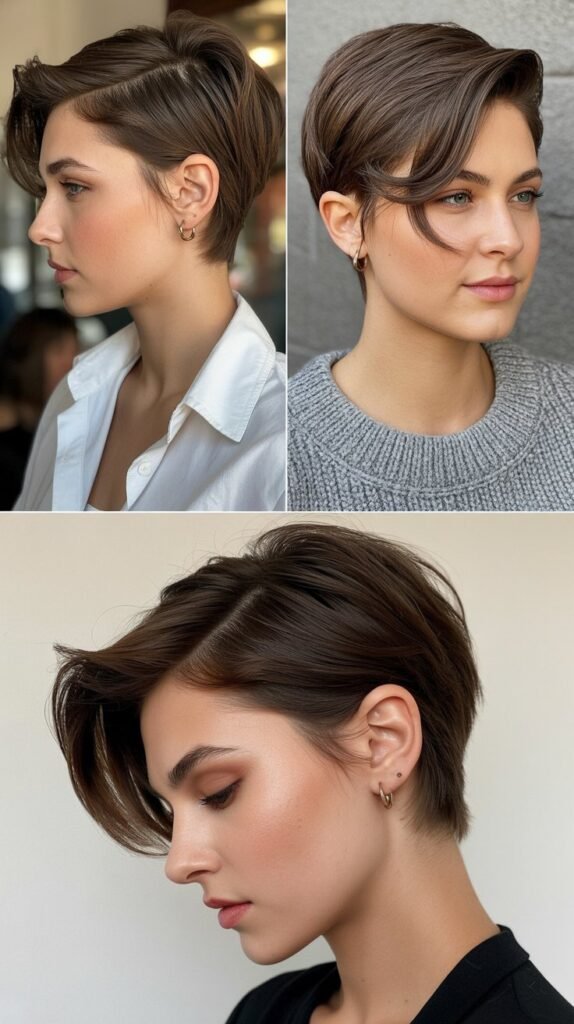
The side-swept asymmetrical pixie breaks traditional symmetry rules by creating intentionally uneven lengths that add drama and sophistication to fine, thin hair.
This directional cut guides the eye across the face while creating the illusion of abundant hair through strategic placement of volume.
- One side features significantly shorter hair, often cut close to the head at half an inch or less.
- The opposite side retains longer lengths, typically two to four inches, that sweep across the forehead and cheek.
- The dramatic length difference creates visual interest that distracts from any hair thinness or lack of natural volume.
- This cut particularly flatters round and square face shapes by creating vertical lines that elongate facial proportions.
- The longer side can be styled in multiple directions—swept forward, backward, or across—providing daily versatility.
- Fine hair holds the side-swept style exceptionally well because it lacks the weight that would pull the hair down.
- Applying lightweight styling cream to the longer section while using texture paste on the short side creates beautiful contrast.
- The asymmetrical pixie makes a strong style statement while remaining wearable for both professional and casual settings.
- Growing out this cut transitions naturally into a longer asymmetrical bob without awkward in-between stages.
6. The Platinum Blonde Pixie for Fine Hair

The platinum blonde pixie combines dramatic color with strategic cutting to create a showstopping look that actually benefits fine, thin hair through the texturizing effects of lightening processes.
This high-impact style proves that fine hair can carry bold color when cut into a very short pixie.
- Platinum blonde color adds significant texture to fine hair because the lightening process slightly roughens the hair cuticle.
- The increased texture from color processing allows fine hair to hold styles better and appear fuller throughout the day.
- Very short pixie cuts minimize damage concerns because regular trims remove any compromised ends quickly.
- The light-reflecting properties of platinum blonde create visual volume by catching and bouncing light at multiple angles.
- Maintaining platinum color requires purple-toning shampoo two to three times weekly to prevent brassiness on fine hair.
- The dramatic contrast of platinum blonde against the scalp makes hair appear denser than darker colors on fine hair.
- This style suits all face shapes when the pixie cut is customized to individual facial proportions and features.
- Applying bond-building treatments weekly helps maintain hair integrity despite the intensive lightening required for platinum shades.
- The platinum pixie makes a powerful fashion statement that projects confidence and style-forward thinking.
7. The Bowl-Cut Inspired Modern Pixie
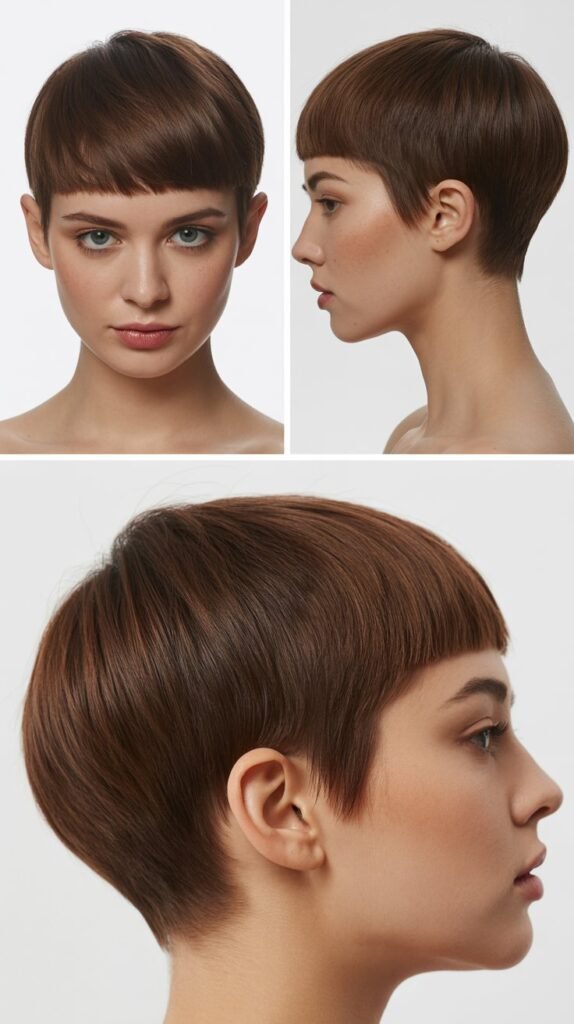
The bowl-cut inspired modern pixie reimagines a retro silhouette with contemporary techniques that create unexpected volume and shape for fine, thin hair.
This geometric approach to pixie cutting delivers clean lines and architectural structure that fine hair displays beautifully.
- The cut features a rounded shape around the crown and sides, creating a dome-like silhouette reminiscent of classic bowl cuts.
- Modern interpretations add texture and layering within the bowl shape, preventing the flat, helmet-like appearance of traditional bowl cuts.
- The sides and back are cut very short, typically under half an inch, creating dramatic contrast with the rounded top section.
- This style works exceptionally well for fine hair because the concentrated length at the top creates maximum visual fullness.
- The geometric precision of the bowl-cut inspired pixie complements oval and heart-shaped faces particularly well.
- Styling requires blow-drying the top section with a round brush to enhance the curved shape and add lift at the roots.
- The clean lines of this cut photograph beautifully, making it popular among fashion-forward individuals and creative professionals.
- Maintenance demands precision cutting every four to six weeks to maintain the defined geometric shape.
- This bold style makes a memorable impression while remaining surprisingly wearable for daily life.
8. The Spiky Pixie with Height

The spiky pixie with height transforms fine, thin hair into a gravity-defying style that projects energy, confidence, and youthful vitality.
This vertical-focused cut leverages the natural lightweight properties of fine hair to achieve impressive height that thicker hair types struggle to maintain.
- Hair on top is cut to uniform lengths of one to two inches, creating the perfect foundation for standing hair upright.
- The sides and back are kept extremely short, often less than half an inch, to maximize the visual impact of the spiky top.
- Fine hair actually performs better in spiky styles than thick hair because lightweight strands hold vertical positions more easily.
- Applying strong-hold gel or pomade to damp hair and blow-drying while directing hair upward creates the signature spiky effect.
- The vertical emphasis of spiky pixies adds height to the overall silhouette, complementing petite frames and round face shapes.
- This style communicates a bold, fearless attitude while remaining surprisingly easy to maintain with quick morning styling.
- The spiky pixie suits active lifestyles because the products that create spikes also provide all-day hold without additional touching up.
- Varying spike heights and directions prevents the style from looking too uniform or dated, keeping it contemporary.
- This cut transitions beautifully from professional daytime wear to evening social settings with simple restyling.
9. The Feminine Soft Pixie

The feminine soft pixie proves that very short hair can maintain delicate, romantic qualities through careful layering and strategic length placement designed specifically for fine, thin hair.
This approach creates a pixie cut that feels gentle rather than edgy while still delivering impressive volume.
- Layers are cut with softer, more gradual transitions rather than dramatic choppy sections, creating flowing movement.
- The front and side sections retain slightly more length, typically two to three inches, that can be styled to frame the face softly.
- Soft pixies avoid harsh lines and extreme contrasts, instead using subtle layering to build texture and dimension.
- This style particularly suits those transitioning to very short hair for the first time, offering a less dramatic entry point.
- The feminine soft pixie complements all face shapes but especially flatters heart-shaped and oval faces with gentle cheekbone framing.
- Fine hair looks remarkably healthy in soft pixie cuts because the layering prevents any stringy or separated appearance.
- Styling involves applying lightweight mousse and blow-drying with fingers to create soft, natural-looking volume without stiffness.
- This versatile cut works equally well in conservative professional environments and casual social settings.
- The soft pixie maintains its shape during growth, allowing flexibility with salon appointment timing.
10. The Buzz Cut Pixie
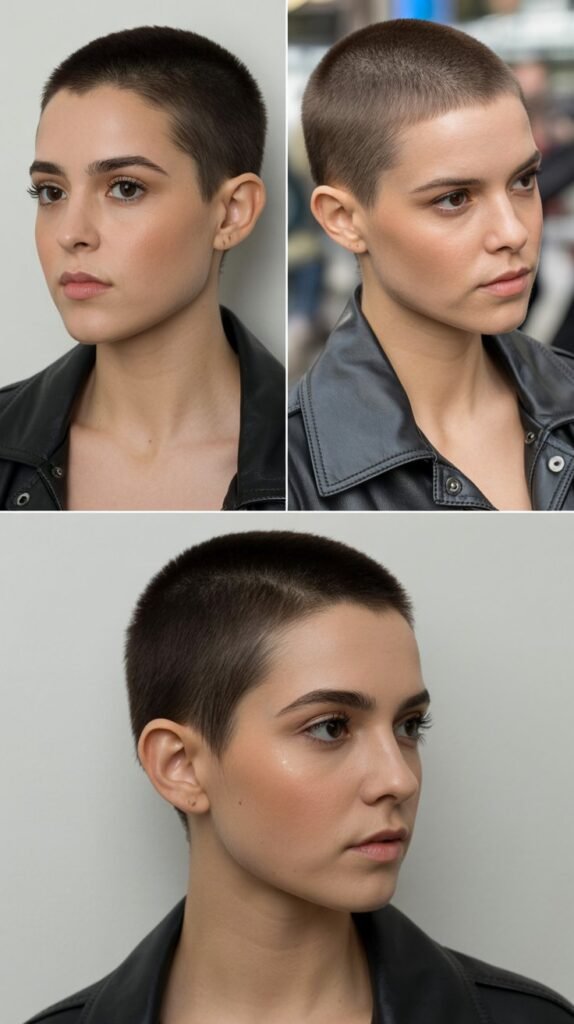
The buzz cut pixie takes very short hair to its extreme, offering liberation from traditional styling while creating unexpected elegance that fine, thin hair wears beautifully.
This minimalist approach eliminates hair concerns entirely while making a powerful style statement.
- Hair is cut uniformly to one-eighth to one-half inch all over the head using clippers with guard attachments.
- The extremely short length completely eliminates any appearance of thinness because no hair density comparisons are possible.
- This cut highlights facial features dramatically, particularly eyes, cheekbones, and jawline structure.
- The buzz cut pixie suits confident individuals ready to embrace minimalist beauty and challenge conventional standards.
- Fine-haired individuals often find buzz cuts liberating because hair quality concerns disappear entirely with this length.
- Maintenance requires simple at-home touch-ups every two to three weeks using clippers to maintain the uniform length.
- This style offers maximum convenience with zero daily styling time, simply applying light moisturizer to the scalp if needed.
- The buzz cut pixie works for all face shapes when length is customized slightly—slightly longer on top for round faces, uniform length for oval faces.
- Growing out a buzz cut allows experimentation with every pixie length as hair grows, providing a journey through different styles.
11. The Pixie with Micro Bangs
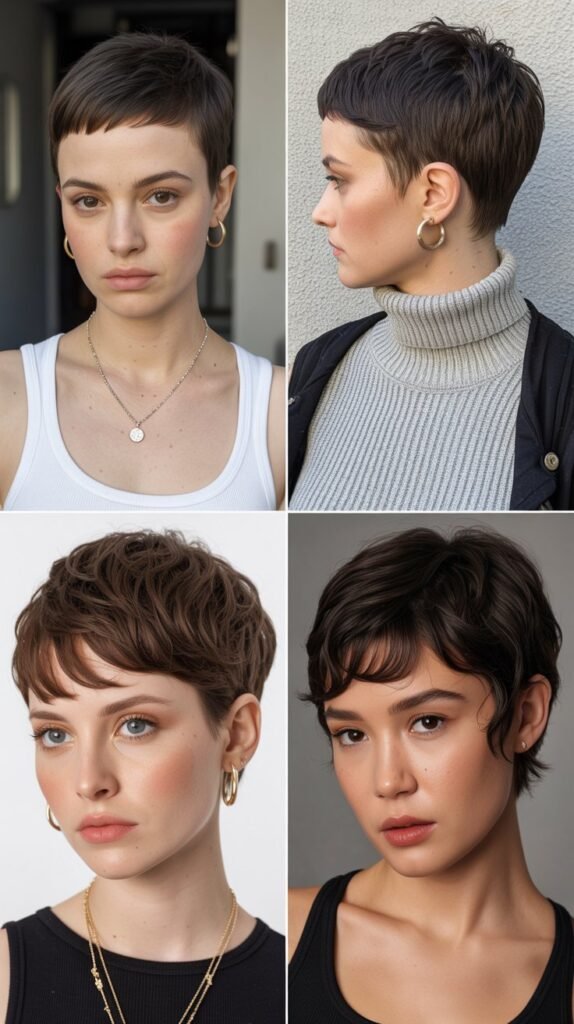
The pixie with micro bangs combines very short overall length with dramatically short fringe that creates striking visual interest perfectly suited to fine, thin hair.
This fashion-forward style makes a bold statement while the micro bangs actually help fine hair appear fuller.
- Micro bangs are cut extremely short, typically one to two inches above the eyebrows, creating unexpected proportions.
- The dramatic fringe draws attention to the eyes and upper face, distracting from any hair thinness concerns.
- The rest of the hair is cut into a classic short pixie, with sides very short and slightly more length on top.
- Fine hair holds micro bangs particularly well because lightweight strands maintain the blunt line without falling or separating.
- This style suits oval, heart-shaped, and diamond face shapes by adding horizontal visual weight at the forehead.
- Styling micro bangs requires only running a flat iron through them or blow-drying forward with a small round brush.
- The pixie with micro bangs projects confidence, creativity, and fashion awareness suitable for artistic and creative fields.
- Growing out micro bangs presents challenges, so this style works best for those committed to maintaining the look long-term.
- This cut photographs exceptionally well, making it popular among social media enthusiasts and fashion influencers.
12. The Curly Textured Pixie for Fine Hair
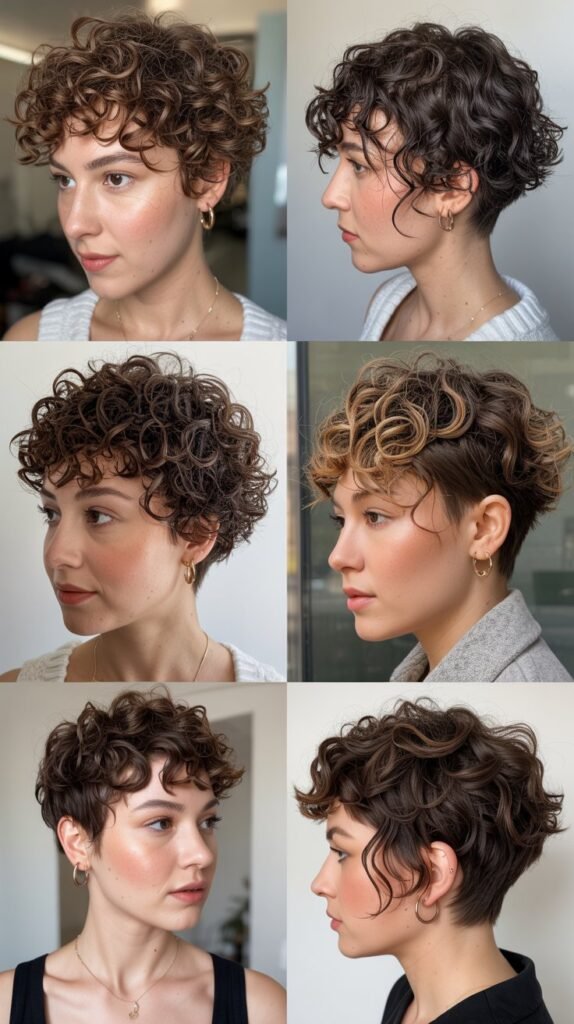
The curly textured pixie celebrates natural curl patterns while managing them in a very short cut that prevents fine, thin curly hair from becoming overwhelmed by its own texture.
This specialized approach acknowledges that fine hair can have curl while requiring different cutting techniques.
- Curly pixies are cut slightly longer than straight-hair versions because curls spring up significantly when dry.
- Layers are strategically placed to remove weight while maintaining curl formation and preventing the dreaded triangle shape.
- Fine curly hair benefits enormously from very short cuts because reduced length prevents curl patterns from drooping or losing definition.
- The sides are kept shorter while the top retains enough length for curls to form properly, typically two to four inches when stretched.
- Styling involves applying curl-defining cream to soaking wet hair, scrunching gently, and air-drying or diffusing on low heat.
- The curly textured pixie creates impressive volume naturally, as curls stand away from the scalp creating dimension.
- This style works beautifully for all face shapes because the curly texture softens any angular features naturally.
- Maintenance requires specialized curly hair cutting techniques, so seeking stylists experienced with curly hair is essential.
- The curly pixie celebrates natural texture rather than fighting it, promoting healthier hair and easier daily routines.
13. The Side-Shaved Pixie

The side-shaved pixie creates dramatic asymmetry by completely removing hair from one or both sides while maintaining length on top, offering an edgy solution that fine, thin hair carries surprisingly well.
This bold style concentrates available hair where it creates maximum visual impact.
- One or both sides of the head are shaved down to skin or very short stubble using clippers without guards.
- The top section retains two to four inches of length that can be styled across the head or pushed upward for height.
- The extreme contrast between shaved sides and longer top creates the illusion of abundant hair where length remains.
- This style suits oval, heart-shaped, and diamond face shapes by creating interesting angular lines and asymmetry.
- Fine hair benefits because all available hair is concentrated in one area rather than distributed thinly across the entire head.
- Maintenance requires frequent touch-ups to the shaved sections every one to two weeks to maintain crisp lines.
- The side-shaved pixie can be styled conservatively by brushing longer hair over the shaved section or boldly by revealing it fully.
- This versatile cut works for creative professionals, artists, and those in fashion-forward industries where bold style choices are celebrated.
- Growing out the shaved sections creates interesting undercut effects during the transition to other styles.
14. The Wispy Feathered Pixie

The wispy feathered pixie introduces delicate, feather-like layers that create airy movement perfectly suited to the natural characteristics of fine, thin hair.
This romantic interpretation of the pixie cut emphasizes lightness and texture rather than dramatic contrasts.
- Layers are cut with extreme precision to create wispy, separated ends that move independently when the head turns.
- The feathering technique involves holding hair at angles while cutting, creating soft, irregular edges throughout the style.
- Fine hair displays feathered layers beautifully because thin strands separate easily, showing off the individualized pieces.
- The wispy feathered pixie suits all face shapes by creating soft framing that adapts to individual features.
- Styling requires minimal product—a small amount of lightweight serum smoothed through damp hair enhances the feathered effect.
- This cut creates substantial movement and dimension despite fine hair texture, making hair appear lively and full of energy.
- The romantic quality of wispy layers makes this style appropriate for both professional settings and special occasions.
- Maintenance involves regular trims every five to six weeks to prevent layers from growing out and losing their feathered definition.
15. The Pixie with Tapered Nape

The pixie with tapered nape features graduated length from extremely short at the nape gradually increasing toward the crown, creating elegant lines that slim the neck appearance while adding volume where it matters for fine hair.
This technical approach to cutting delivers sophisticated results.
- The nape starts at nearly shaved length, often one-eighth inch or less, creating a clean, refined baseline.
- Length gradually increases as the cut moves upward, reaching one to three inches at the crown and top sections.
- The smooth gradient eliminates any harsh lines while creating the illusion of abundant hair at the top.
- This style particularly flatters those with shorter necks by creating vertical lines that elongate the neck visually.
- Fine hair benefits from the tapered approach because the technique removes weight progressively rather than creating heavy layers.
- The tapered nape pixie suits oval, heart-shaped, and diamond face shapes by balancing proportions beautifully.
- Styling focuses on the top section where length remains, using volumizing products and blow-drying upward for maximum lift.
- Maintenance requires professional attention every four to five weeks to maintain the gradual taper and prevent it from growing out unevenly.
- This sophisticated cut works beautifully in conservative professional environments while maintaining contemporary appeal.
16. The Disconnected Pixie

The disconnected pixie creates intentional separation between different sections of the cut, featuring dramatic length contrasts without gradual transitions typically seen in traditional pixies.
This modern cutting technique produces striking results that make fine, thin hair appear deliberately styled rather than simply thin.
- The top section maintains significantly more length than sides and back, with no blending or gradual transition between sections.
- Sides are cut extremely short, often one-quarter inch or less, creating sharp contrast with the longer top.
- The disconnected approach allows the longer top section to sit distinctly above shorter sides, creating a layered, dimensional appearance.
- Fine hair benefits because the distinct sections create clear visual separation that suggests intentional design rather than thinness.
- This style works particularly well for square and rectangular face shapes by adding softness through the contrasting sections.
- Styling the disconnected pixie involves applying different products to different sections—pomade on sides for sleekness, texture paste on top for definition.
- The dramatic contrasts in this cut make strong fashion statements suitable for creative industries and trend-forward individuals.
- Maintenance requires skilled cutting to preserve the distinct sections and prevent unintentional blending as hair grows.
- The disconnected pixie photographs beautifully from all angles because each view shows different length contrasts and dimensions.
17. The Pixie Bob Hybrid

The pixie bob hybrid occupies the transitional space between classic pixie cuts and short bobs, offering slightly more length than traditional pixies while maintaining the volume-boosting benefits for fine, thin hair.
This versatile style provides options for those hesitant to commit to extremely short hair.
- The back and sides are cut in typical pixie fashion—very short and close to the head—while front sections retain bob-like length.
- Front pieces typically measure three to five inches, allowing them to reach chin-length or slightly shorter when styled forward.
- The hybrid approach creates volume at the crown through short back sections while maintaining feminine length around the face.
- Fine hair wears this style exceptionally well because the short back eliminates weight while front sections remain manageable.
- This cut suits all face shapes and can be customized—longer fronts for square faces, shorter fronts for long faces.
- Styling versatility includes slicking front sections behind ears, wearing them forward for face framing, or styling them away for different looks.
- The pixie bob hybrid works beautifully in professional environments where very short pixies might feel too dramatic.
- Maintenance falls between pixie and bob requirements, needing professional trims every six to seven weeks.
- This style offers a comfortable entry point for those considering transitioning from bobs to pixies gradually.
18. The Silver/Gray Pixie for Fine Hair
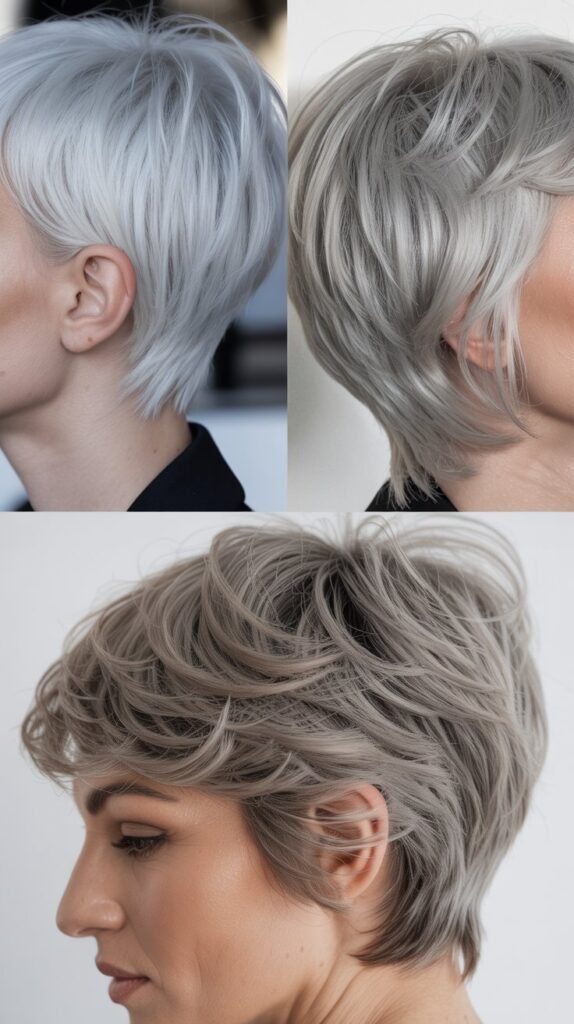
The silver or gray pixie embraces natural gray hair or intentional silver coloring while utilizing very short cuts to display the beautiful tones that fine hair carries particularly well.
This sophisticated style celebrates maturity while leveraging color to create texture and dimension.
- Silver and gray tones add visual texture to fine hair because the color variation creates depth that solid colors cannot achieve.
- Very short pixie cuts showcase silver hair beautifully by preventing any yellowing or dullness that can occur in longer gray hair.
- The light-reflecting properties of silver hair create visual volume similar to platinum blonde but with more natural-looking dimension.
- Fine hair transitioning to gray often improves in texture because gray hair typically has a slightly coarser structure than pigmented hair.
- This style works for all face shapes and age groups, from young people embracing silver trends to mature individuals celebrating natural gray.
- Maintaining silver pixies requires purple-toning treatments weekly to prevent any yellow or brassy tones on fine hair.
- The sophisticated appearance of silver pixies projects confidence, elegance, and style awareness in professional and social settings.
- Very short cuts minimize the awkward growth phase when transitioning from colored hair to natural gray.
- Silver pixies pair beautifully with bold makeup choices and statement accessories that complement the hair’s cool tones.
19. The Pixie with Longer Crown

The pixie with longer crown concentrates length at the top center of the head while keeping all surrounding areas very short, creating a mohawk-inspired silhouette that fine, thin hair carries with surprising success.
This strategic length placement maximizes visual impact where hair shows most prominently.
- The crown section maintains three to five inches of length while sides, back, and front are cut to one inch or shorter.
- The concentrated length at the crown creates the illusion of abundant hair because that’s where people’s eyes naturally focus.
- Fine hair benefits from this cut because the shorter surrounding areas eliminate weight, allowing the crown section to achieve maximum height.
- This style suits oval, heart-shaped, and diamond face shapes by adding vertical height and interest at the crown.
- Styling involves applying strong-hold products to the crown section and blow-drying upward while sides are simply smoothed down.
- The longer crown pixie makes bold statements while remaining more wearable than extreme mohawks for various professional settings.
- Maintenance requires attention to keeping sides short enough to maintain the dramatic contrast with the longer crown.
- This cut allows creative styling options—crown hair can be styled forward, backward, to sides, or straight up for different occasions.
- The architectural quality of this pixie creates memorable visual impact that photographs beautifully from all angles.
20. The Rounded Pixie with Volume

The rounded pixie with volume uses circular cutting techniques and strategic layering to create a full, rounded silhouette that makes fine, thin hair appear remarkably voluminous.
This approach to pixie cutting prioritizes fullness and shape over edgy contrasts.
- The cut follows the natural curve of the head, creating a rounded dome shape that suggests abundant hair throughout.
- Multiple internal layers are cut at various angles to create lift and separation that prevents fine hair from lying flat.
- The sides taper gradually into the rounded top rather than creating harsh lines, maintaining the circular silhouette.
- This style particularly flatters round and square face shapes by adding height that elongates facial proportions.
- Fine hair achieves impressive volume in rounded pixies because the strategic layering allows air to move through the cut, creating fullness.
- Styling involves blow-drying with a round brush throughout the entire head, directing hair outward and upward to enhance the rounded shape.
- The voluminous appearance makes this cut suitable for those who want short hair but worry about appearing to have “too little” hair.
- Maintenance requires skilled cutting every five to six weeks to preserve the carefully constructed rounded layers.
- This sophisticated style works beautifully for professional environments and special occasions equally well.
21. The Pixie with Shaved Designs
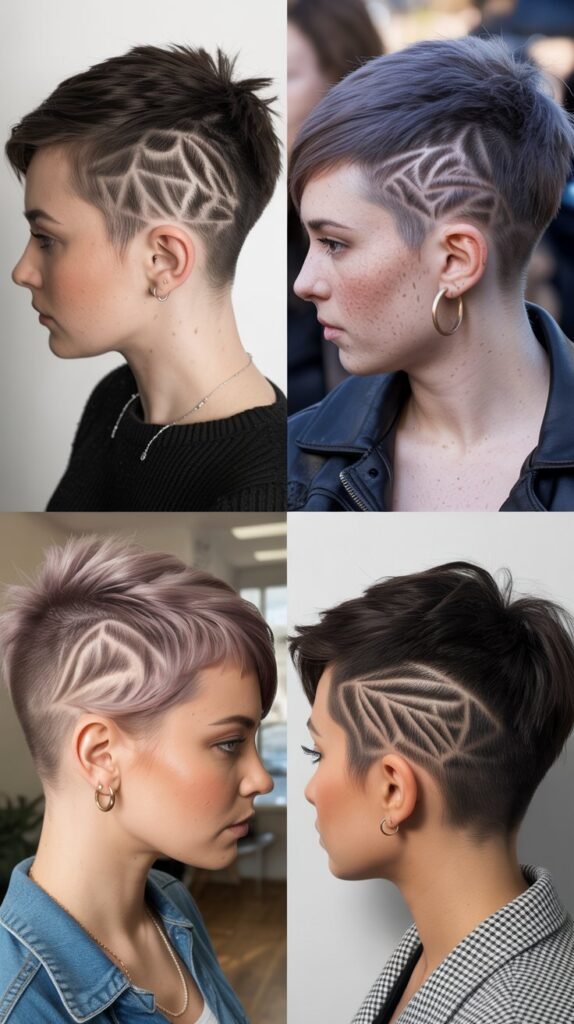
The pixie with shaved designs transforms the extremely short sides or back into canvases for artistic expression through carved patterns, creating personalized style statements that fine hair displays perfectly.
This creative approach adds visual interest exactly where fine hair might otherwise appear sparse.
- Designs are shaved into the very short sides or back sections using clippers and precise technique to create patterns, lines, or images.
- The shaved design area draws attention away from hair density concerns by creating focal points of artistic interest.
- Fine hair works beautifully for this style because the shaved sections require no hair density, while remaining hair on top creates sufficient contrast.
- Popular designs include geometric patterns, curved lines, stars, or custom imagery that reflects personal interests and style.
- This cut suits all face shapes depending on where designs are placed—side designs complement oval faces, back designs work for all shapes.
- Maintenance requires touch-ups every two to three weeks as hair growth begins to blur the designed patterns.
- The pixie with shaved designs projects creativity, individuality, and confidence suitable for artistic fields and fashion-forward environments.
- Temporary designs can be created for special events, allowing experimentation without long-term commitment.
- This style celebrates personal expression while solving practical concerns about styling fine, thin hair daily.
22. The Textured French Crop Pixie
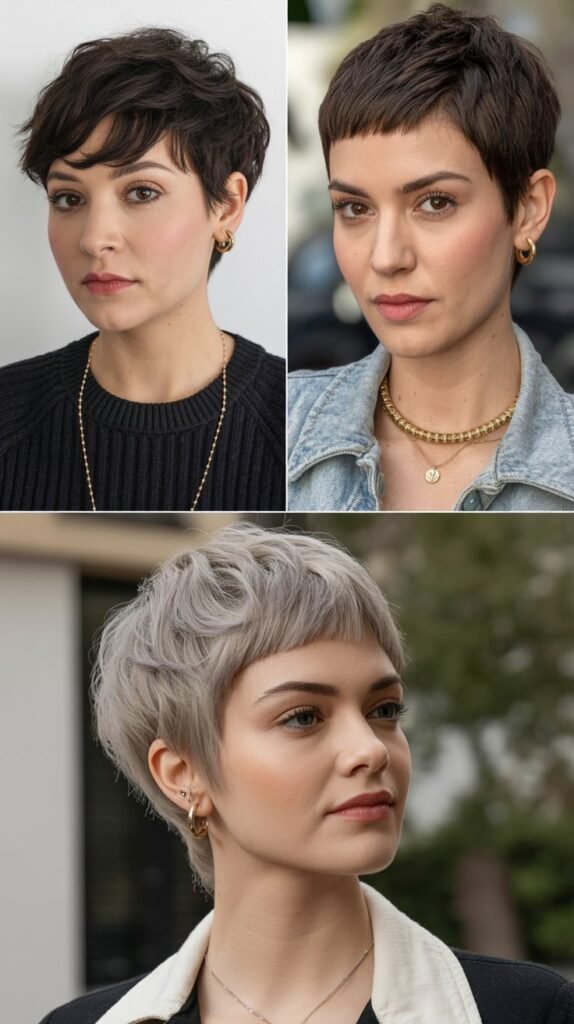
The textured French crop pixie adapts the classic French crop hairstyle into a feminine pixie cut that leverages the style’s natural volume-creating properties for fine, thin hair.
This European-inspired cut delivers effortless chic while addressing common fine hair challenges.
- The French crop features short back and sides with a slightly longer, textured top section that’s styled forward toward the forehead.
- A short, choppy fringe is cut to mid-forehead length, creating horizontal lines that balance facial proportions beautifully.
- The forward-styled top section creates impressive volume because hair naturally stands up and away from the scalp when directed forward.
- Fine hair benefits from this cut because the styling direction works with hair’s natural fall pattern rather than fighting it.
- This style suits all face shapes but particularly flatters round and square faces by adding vertical interest through the forward texture.
- Styling requires only a small amount of texture paste worked through damp hair, then pushing forward and slightly upward with fingers.
- The textured French crop pixie projects casual sophistication perfect for both professional and weekend casual settings.
- Maintenance involves regular trims every five to six weeks to maintain the textured fringe and short sides.
- This low-maintenance cut delivers maximum style impact with minimal daily styling time investment.
23. The Pixie with Swept-Back Crown

The pixie with swept-back crown directs all top hair backward away from the face, creating an elegant, face-opening style that fine, thin hair maintains beautifully throughout the day.
This sophisticated approach maximizes facial feature visibility while creating impressive volume through directional styling.
- Hair on top is cut to two to four inches in length, providing sufficient length to sweep backward while maintaining enough body to hold the style.
- Sides are kept very short, typically under one inch, creating clean lines and emphasizing the swept-back top section.
- The backward direction naturally lifts hair away from the scalp at the hairline, creating volume where it’s most visible.
- Fine hair holds swept-back styles exceptionally well because lightweight strands stay in place once dried in the desired direction.
- This cut suits oval, heart-shaped, and diamond face shapes by fully exposing and celebrating facial features.
- Styling involves applying volumizing mousse to damp hair, blow-drying backward while lifting at the roots, then finishing with light-hold spray.
- The swept-back pixie projects confidence and sophistication suitable for professional leadership roles and formal occasions.
- Maintenance requires minimal daily attention once hair is trained to naturally fall backward through consistent styling.
- This versatile cut can be styled sleek and polished or textured and casual depending on product choices and techniques.
24. The Pixie Mullet
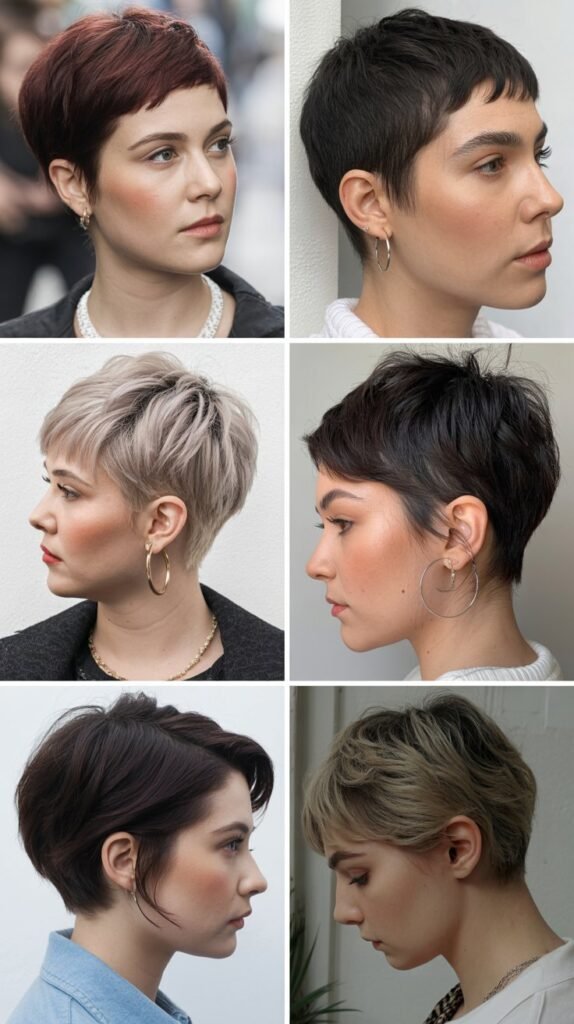
The pixie mullet combines very short hair on top and sides with intentionally longer sections at the nape, creating a contemporary interpretation of the classic mullet adapted specifically for fine, thin hair. This trend-forward style celebrates contrasts while distributing hair strategically for maximum impact.
- The top and sides are cut in typical pixie fashion—very short, often one inch or less—while the nape retains two to four inches of length.
- The dramatic contrast between short front sections and longer back creates visual interest that distracts from hair density concerns.
- Fine hair wears pixie mullets well because the longer nape section remains light enough to avoid pulling down or looking stringy.
- This style works for all face shapes, with customization focusing on the specific lengths and textures of the contrasting sections.
- Styling involves texturizing the short top section while allowing the longer nape to maintain natural movement and flow.
- The pixie mullet makes strong fashion statements suitable for creative industries, artistic fields, and trend-conscious individuals.
- Maintenance requires preserving the distinct length differences through regular trims that keep short sections short and longer sections shaped.
- This cut offers surprising versatility—the longer nape can be styled sleek, curly, or textured depending on preferences and occasions.
- The contemporary pixie mullet celebrates retro influences while maintaining modern appeal through updated cutting techniques.
25. The Pixie with Razored Edges
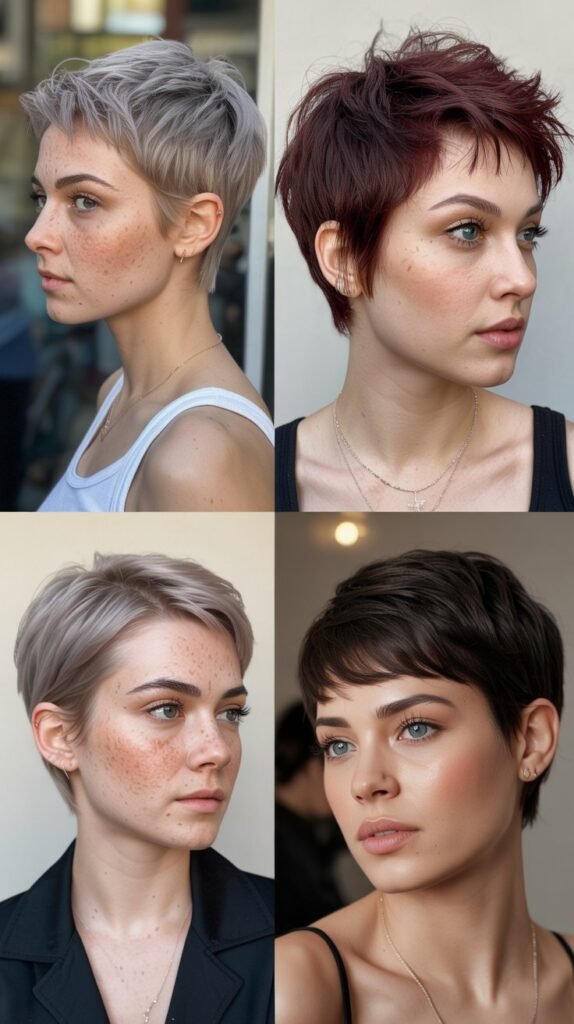
The pixie with razored edges utilizes razor cutting techniques throughout the style to create soft, irregular edges that add remarkable texture and movement to fine, thin hair.
This specialized cutting approach transforms the hair’s appearance through the unique properties razor cutting creates.
- Razors cut hair at slight angles rather than straight across, creating tapered ends that move independently and catch light differently.
- The irregular edges prevent fine hair from looking too perfect or helmet-like, instead creating natural-looking texture and dimension.
- Razored edges add visual thickness to fine hair because the tapered ends create shadows and highlights that suggest greater hair density.
- This technique works throughout the pixie cut—on top for texture, on sides for softness, and around the face for delicate framing.
- The pixie with razored edges suits all face shapes through its soft, flattering edges that adapt naturally to individual features.
- Styling razored pixies requires minimal product—light mousse or texturizing spray enhances the natural movement razor cutting creates.
- This cut maintains beautiful texture as it grows, avoiding the blunt, heavy appearance that scissors-cut pixies can develop between trims.
- Maintenance should continue with razor techniques to preserve the signature soft edges and textured appearance.
- The razored pixie projects effortless, lived-in style perfect for those who prefer natural-looking hair over perfectly polished styles.
26. The Pixie with Deep Side Part
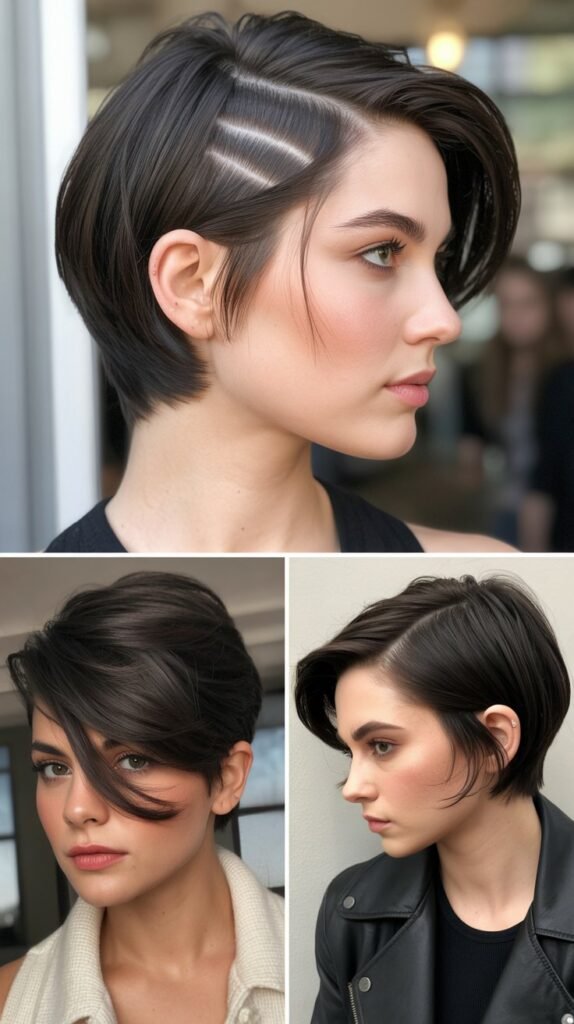
The pixie with deep side part creates dramatic asymmetry through an extreme off-center part that directs maximum volume to one side while keeping the opposite side sleek and close.
This strategic styling approach makes fine, thin hair appear remarkably full where volume is concentrated.
- The part is placed approximately two to three inches from one side of the head rather than in the center or slightly off-center.
- Hair on the heavier side benefits from the additional volume as more hair falls to one side, creating impressive fullness.
- The opposite side lays flat and sleek against the head, creating attractive contrast that highlights the fuller side.
- Fine hair naturally separates along parts easily, making deep side parts simple to create and maintain in pixie cuts.
- This styling approach suits oval, heart-shaped, and square face shapes by creating asymmetrical lines that balance features.
- Styling involves blow-drying the heavier side upward and outward while smoothing the lighter side down against the head.
- The deep side part pixie works beautifully for professional settings where polished appearance matters while maintaining style-forward appeal.
- The part can be switched to the opposite side occasionally to prevent hair from permanently developing a part line in one location.
- This versatile styling technique transforms the appearance of a basic pixie cut without requiring any cutting changes.
27. The Pixie with Nape Detail

The pixie with nape detail features special attention to the neck area through shaping, tapering, or design elements that create visual interest exactly where observers notice when viewing someone from behind.
This finishing touch elevates pixie cuts from simple to sophisticated for fine hair.
- Nape details can include V-shapes, soft curves, precise horizontal lines, or graduated tapering that creates attractive shapes at the hairline.
- The detail draws attention to an area that might otherwise appear sparse on fine-haired individuals, turning a potential concern into a feature.
- Very short pixies showcase nape details beautifully because the surrounding short hair creates clean canvas for the shaped nape area.
- This approach suits all face shapes and body types, focusing attention on the elegant neck area rather than hair density.
- Nape details work particularly well for fine hair because the area requires minimal hair to create the shaped effect successfully.
- Styling the nape requires no special attention—the cut creates the detail, which remains visible regardless of how top hair is styled.
- Maintenance includes regular attention to the nape area every three to four weeks to maintain precise lines and shapes.
- The nape detail adds personalization and sophistication to pixie cuts, distinguishing them from standard short haircuts.
- This subtle refinement projects attention to detail and style awareness that appeals in professional and social settings equally.
28. The Androgynous Pixie

The androgynous pixie creates a deliberately gender-neutral appearance through balanced proportions and classic lines that transcend traditional feminine or masculine styling for fine, thin hair.
This inclusive approach to pixie cutting celebrates versatility and personal expression.
- The cut maintains relatively uniform lengths throughout, avoiding extremely short sides or dramatic styling that might read as traditionally gendered.
- Hair on top typically measures one to two inches while sides and back remain slightly shorter, creating balanced proportions.
- The androgynous pixie avoids extreme femininity (like micro bangs or swept sections) and extreme masculinity (like high fades or aggressive tapering).
- Fine hair wears androgynous styles beautifully because the balanced, classic cut doesn’t require substantial hair density to appear complete.
- This versatile cut suits all face shapes through its adaptable nature that can be customized while maintaining androgynous appeal.
- Styling ranges from sleek and polished to textured and casual, allowing the wearer to express different aspects of personal style daily.
- The androgynous pixie works universally across professional, casual, and formal settings without appearing too styled for any environment.
- Maintenance follows standard pixie timelines with trims every five to six weeks to maintain the balanced, classic shape.
- This approach celebrates personal identity and challenges traditional beauty standards while remaining highly wearable.
29. The Layered Crown Pixie
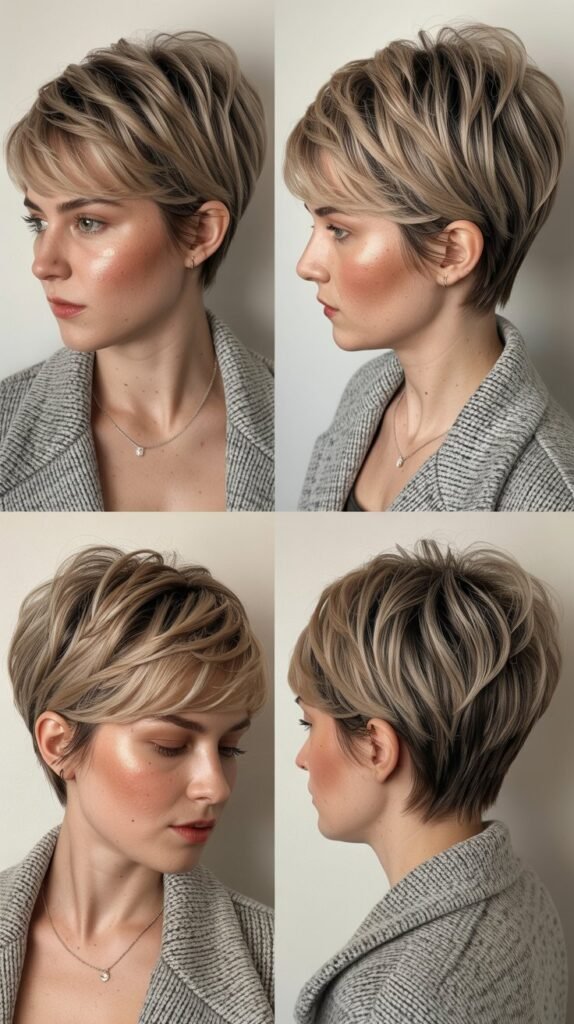
The layered crown pixie concentrates multiple layers specifically at the crown area while keeping surrounding hair shorter, creating a halo effect of volume that makes fine, thin hair appear remarkably full.
This targeted layering approach maximizes volume where it creates the most visual impact.
- Multiple short layers are cut throughout the crown section, with each layer slightly longer than the one below it.
- The layered structure allows air to flow between hair sections, creating lift and separation that fine hair desperately needs for volume.
- Sides and back remain very short, typically under one inch, directing all attention to the voluminous layered crown.
- This technique particularly suits fine hair because the layers prevent hair from lying flat while avoiding the stringy appearance single-length fine hair develops.
- The layered crown pixie complements round and square face shapes by adding height that elongates and balances facial proportions.
- Styling involves applying volumizing mousse to damp hair, blow-drying the crown area while lifting each section upward with fingers or a round brush.
- This cut delivers impressive volume that lasts throughout the day without requiring frequent touch-ups or additional product application.
- Maintenance requires skilled cutting to preserve the multiple crown layers and prevent them from growing out into one heavy layer.
- The layered crown pixie projects confidence and style while solving the primary concern fine-haired individuals face—lack of volume.
30. The Pixie with Temple Fade

The pixie with temple fade incorporates precise fading techniques at the temples, creating clean, modern lines that frame the face beautifully while concentrating fine, thin hair where it appears fullest.
This barbering-inspired technique brings contemporary edge to pixie cuts.
- The fade gradually transitions from skin or near-skin at the temples upward into longer hair, creating smooth gradients without harsh lines.
- Temple fades sharpen facial framing by creating precise edges that define where the haircut begins and ends.
- The technique removes the whispy, uncertain hair that often appears at temples on fine-haired individuals, replacing it with intentional design.
- Fine hair benefits because temple fades eliminate problem areas where thin hair might appear sparse or undefined.
- This style suits oval, heart-shaped, and diamond face shapes by creating angular definition that complements facial bone structure.
- Maintaining temple fades requires professional attention every two to three weeks as hair growth quickly blurs the precise gradients.
- The modern aesthetic of temple fades appeals to style-conscious individuals seeking contemporary interpretations of classic pixie cuts.
- Styling focuses on the longer top sections while the faded temples require no maintenance beyond keeping them clean and shaped.
- The pixie with temple fade bridges feminine and masculine aesthetics, creating versatile appeal across style preferences.
31. The Tousled Bed-Head Pixie
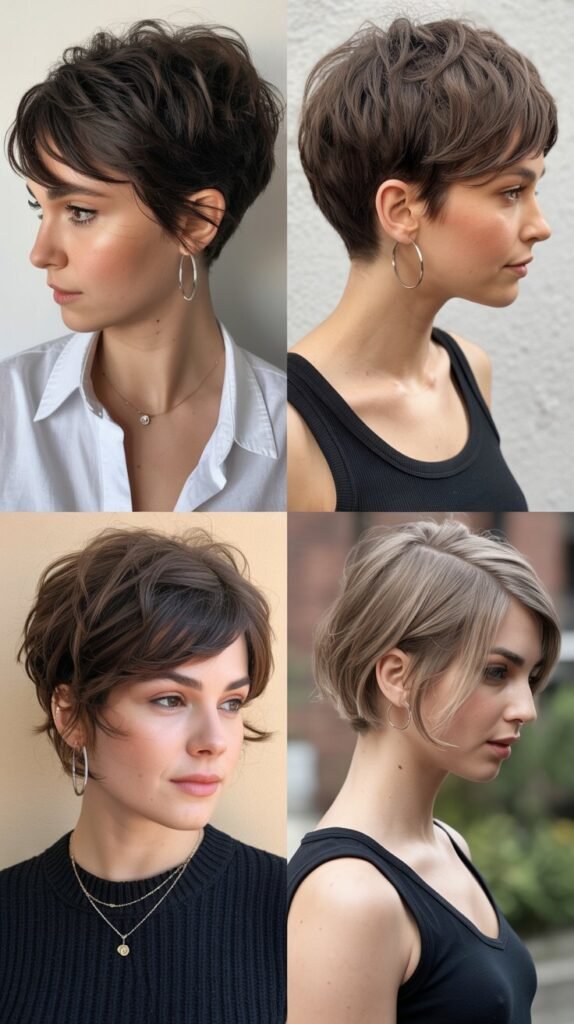
The tousled bed-head pixie embraces deliberately messy styling that creates the impression of effortlessly perfect hair while actually requiring strategic product application and technique suited to fine, thin hair.
This casual-chic approach makes fine hair appear textured and full through controlled chaos.
- The cut includes varied layers throughout that allow hair to fall in different directions naturally, creating the foundation for tousled styling.
- Hair lengths typically range from one to three inches on top with very short sides, providing enough length for tousling without looking unkempt.
- Fine hair achieves bed-head styles beautifully because lightweight strands hold textured positions easily without becoming heavy or droopy.
- Styling involves applying sea salt spray or texturizing spray to damp hair, scrunching randomly, and allowing to air dry or diffusing briefly.
- The deliberately messy appearance disguises any natural thinness in fine hair because the style is supposed to look imperfect and separated.
- This pixie suits all face shapes through its casual, adaptable nature that softens any angular features naturally through texture.
- The tousled bed-head pixie projects cool, effortless style perfect for creative fields, casual environments, and weekend wear.
- Maintenance involves regular trims to keep layers fresh but the styling itself requires minimal daily time investment.
- This approach celebrates natural texture and removes pressure to achieve perfect, smooth styles that fine hair struggles to maintain.
32. The Vintage-Inspired Pixie

The vintage-inspired pixie draws from iconic short haircuts of the 1950s and 1960s, adapting classic shapes and styling techniques for fine, thin hair with modern updates.
This nostalgic approach creates timeless elegance while leveraging historical techniques that worked beautifully for fine hair.
- The cut follows rounded shapes reminiscent of mid-century pixie cuts, with smooth curves and classic proportions rather than edgy modern contrasts.
- Hair is typically cut to uniform one to two inches throughout with very subtle layering that maintains the rounded silhouette.
- Vintage-inspired pixies often incorporate soft, side-swept bangs that frame the face in ways popularized during the golden age of Hollywood.
- Fine hair historically wore vintage pixies beautifully because the styling products and techniques of that era were developed specifically for finer hair textures.
- This style suits all face shapes, particularly oval and heart-shaped faces that vintage cuts were originally designed to flatter.
- Styling involves setting damp hair with small amounts of styling cream, smoothing into the desired shape, and allowing to dry naturally or with light blow-drying.
- The vintage-inspired pixie projects sophistication, femininity, and timeless style appropriate for formal occasions and professional environments.
- Maintenance requires preserving the classic rounded shape through regular trims every five to six weeks.
- This approach appeals to those seeking elegant, refined alternatives to edgier contemporary pixie interpretations.
33. The Pixie with Graduated Layers
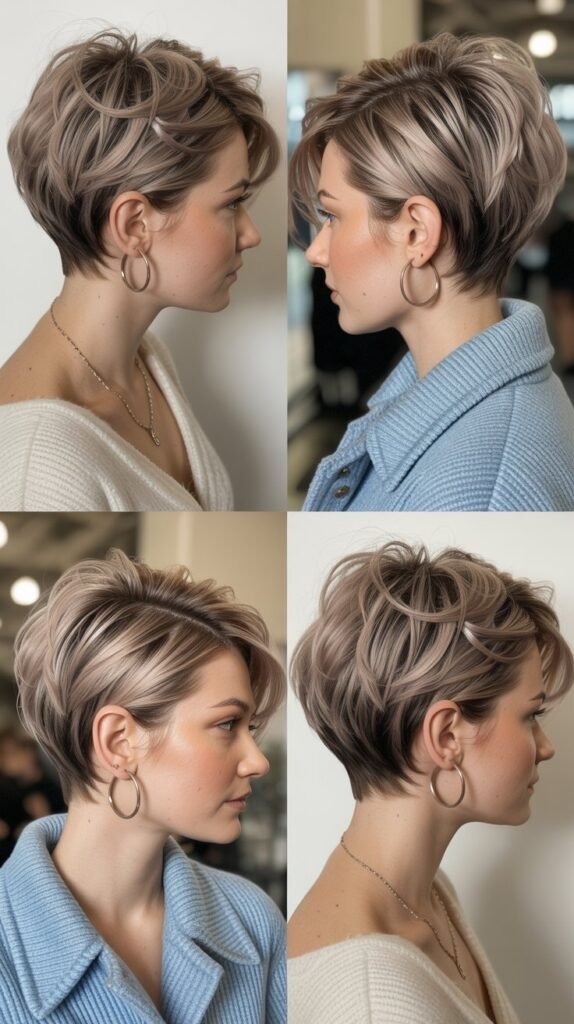
The pixie with graduated layers features systematically arranged layers that increase in length from bottom to top, creating structured volume and movement specifically designed for fine, thin hair.
This technical cutting approach delivers reliable fullness through precise layer placement.
- Layers are cut at specific intervals, with each successive layer slightly longer than the one below it, creating stacked volume.
- The graduated structure prevents fine hair from lying flat by building support through the underlayers that prop up outer layers.
- Hair at the nape starts very short, often half an inch or less, gradually increasing to two to three inches at the crown.
- This cutting technique creates the most volume possible from fine hair by maximizing lift through the graduated layer construction.
- The pixie with graduated layers suits all face shapes, with customization focusing on where maximum volume appears—crown for round faces, sides for long faces.
- Styling involves blow-drying each layer section upward and outward, working from bottom to top to enhance the graduated volume.
- This structured approach delivers consistent results, eliminating the unpredictability that fine hair often presents in less technical cuts.
- Maintenance requires precision cutting to preserve the specific layer lengths and graduated intervals that create the volume effect.
- The graduated layer pixie works beautifully for those who prioritize volume and fullness above all other styling considerations.
34. The Natural Texture Embracing Pixie
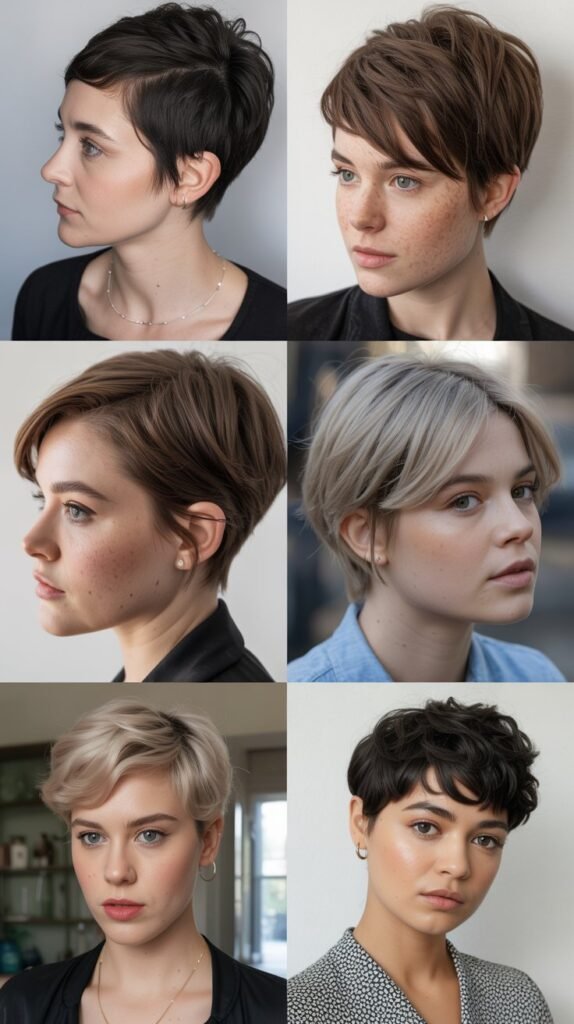
The natural texture embracing pixie works with whatever natural texture fine hair possesses—whether straight, wavy, or slightly curly—rather than fighting against it through excessive styling.
This acceptance-based approach creates the healthiest, most sustainable pixie cuts for fine hair.
- The cut is customized based on how hair naturally falls, grows, and moves when left to its own devices without heavy styling.
- Natural cowlicks, growth patterns, and texture variations are incorporated into the cut design rather than ignored or fought against.
- Fine hair thrives in natural texture pixies because the style requires minimal heat styling, products, or manipulation that can damage delicate strands.
- This approach works for all hair textures within the fine hair category—from pin-straight to loose wavy to gentle curl patterns.
- The natural texture pixie suits all face shapes because the cut is personalized to work with individual hair characteristics and features.
- Styling involves simply applying leave-in conditioner or light styling cream to damp hair and allowing it to air dry naturally.
- This low-maintenance approach celebrates authenticity and reduces daily styling time to nearly zero while maintaining attractive appearance.
- Maintenance focuses on keeping the cut shape fresh rather than fighting natural texture, requiring trims every six to eight weeks.
- The natural texture embracing pixie promotes hair health, reduces styling damage, and creates sustainable beauty routines for fine hair.
Conclusion
The journey through these 34 Best Very Short Pixie Haircuts for Fine, Thin Hair reveals that limitations in hair thickness should never limit your style possibilities.
Very short pixie haircuts transform what many consider a hair challenge into a distinctive advantage, creating volume, texture, and visual impact that longer styles on fine hair simply cannot achieve.
From classic cropped pixies to contemporary undercuts, from soft feminine layers to bold shaved designs, the options presented prove that fine hair can carry dramatic, beautiful, confidence-inspiring short cuts.
The key lies in understanding how strategic cutting techniques, proper styling products, and realistic maintenance schedules work together to make fine hair look its absolute best.
Whether you’re drawn to the sophisticated elegance of vintage-inspired pixies, the edgy appeal of disconnected cuts, or the liberating simplicity of buzz cuts, there’s a very short pixie haircut waiting to revolutionize your relationship with your hair.
Take these ideas to a skilled stylist who understands fine hair, communicate clearly about your lifestyle and styling preferences, and prepare to experience the freedom, confidence, and undeniable style that very short pixie haircuts bring to fine, thin hair.
Your perfect pixie is out there—now you have the knowledge to find it and wear it beautifully.
