
Embracing the transition to gray hair doesn’t mean sacrificing style or confidence.
The journey toward naturally graying hair can feel overwhelming, especially when you’re searching for options that enhance rather than hide your evolving color.
This comprehensive guide on 36 Gray-Blending Hairstyles for Women Over 40 That Look Natural offers transformative techniques that celebrate your natural silver while maintaining a youthful, sophisticated appearance.
From subtle highlights to strategic lowlights, dimensional color techniques to textured cuts, you’ll discover expert-approved methods that seamlessly blend gray strands with your existing hair color.
Whether you’re just beginning to see silver threads or well into your gray journey, these hairstyles provide practical solutions that work with your hair’s natural texture and growth pattern, ensuring you look polished and contemporary at every stage.
1. Balayage Blending Technique
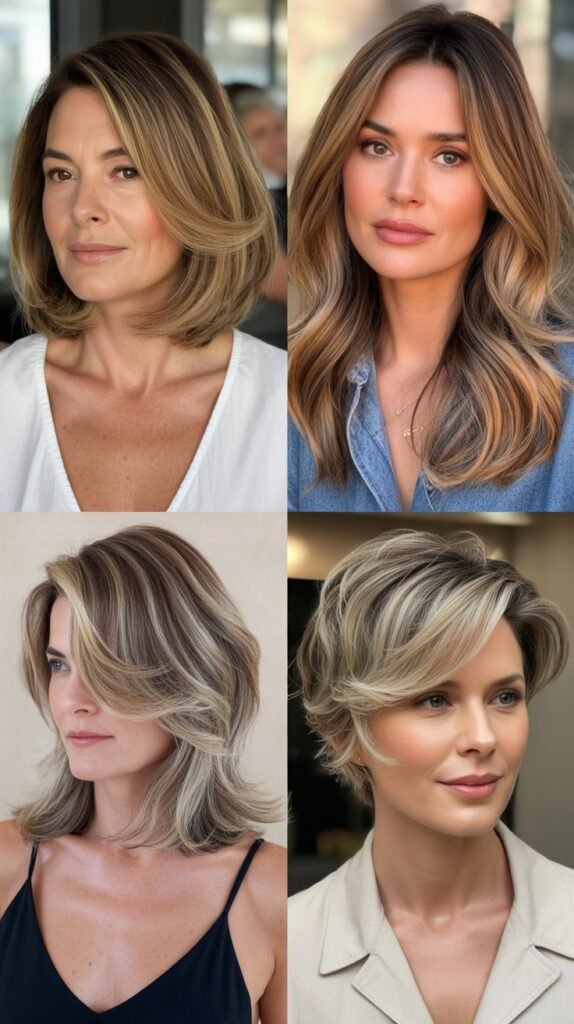
The balayage blending technique stands as one of the most popular methods for transitioning to gray hair naturally.
This hand-painted highlighting approach creates soft, sun-kissed dimension that camouflages gray strands while adding depth and movement to your overall look.
- The balayage method allows colorists to strategically place lighter tones exactly where gray hairs are emerging.
- This technique works exceptionally well for women with scattered gray throughout their hair rather than concentrated areas.
- Unlike traditional foil highlights, balayage creates a gradual, natural gradient that grows out gracefully without harsh lines.
- The hand-painting process enables customization based on your specific gray pattern and desired outcome.
- Maintenance requirements are significantly lower compared to full-coverage color, requiring touch-ups every 12-16 weeks.
- Balayage complements various hair textures from straight to curly, making it universally flattering.
- The dimensional effect created by balayage adds visual interest and prevents hair from looking flat or one-dimensional.
2. Silver Highlights with Lowlights
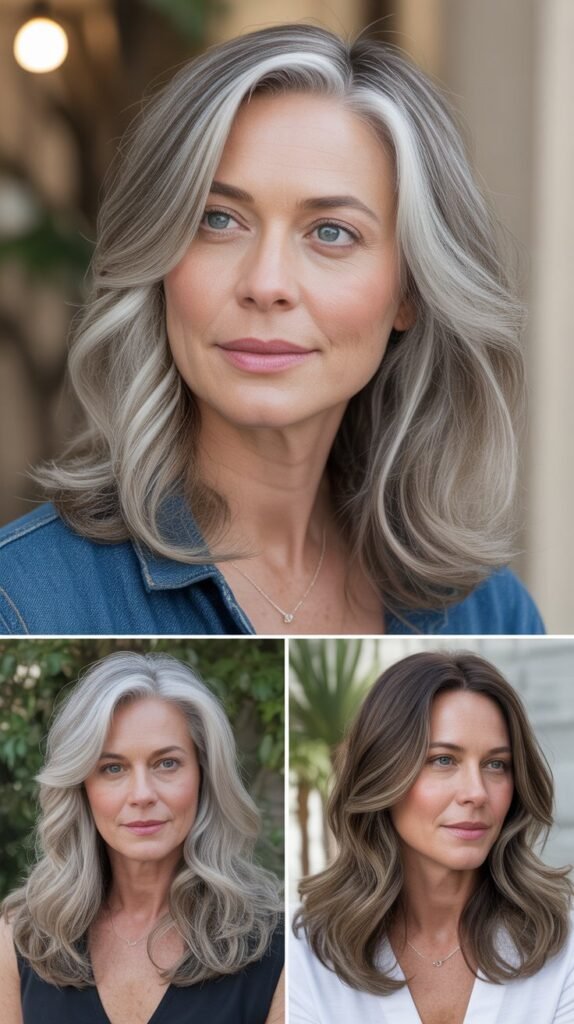
Incorporating silver highlights combined with strategic lowlights creates a sophisticated, multidimensional appearance that celebrates gray while maintaining depth.
This dual-tone approach prevents hair from appearing washed out while embracing the natural aging process.
- Silver highlights brighten the face and add luminosity that can counteract the dulling effects some people experience with solid gray.
- Lowlights provide contrast and prevent the overall color from looking too light or monochromatic.
- This combination technique works particularly well for women with medium to dark natural hair colors.
- The interplay between light and dark creates movement that makes hair appear thicker and more voluminous.
- Strategic placement of lowlights near the face can create a natural shadow effect that defines facial features.
- This method allows for gradual adjustment over time, adding more silver as your natural gray increases.
- The maintenance schedule typically involves salon visits every 8-12 weeks depending on hair growth rate.
3. Soft Babylights for Gray Coverage
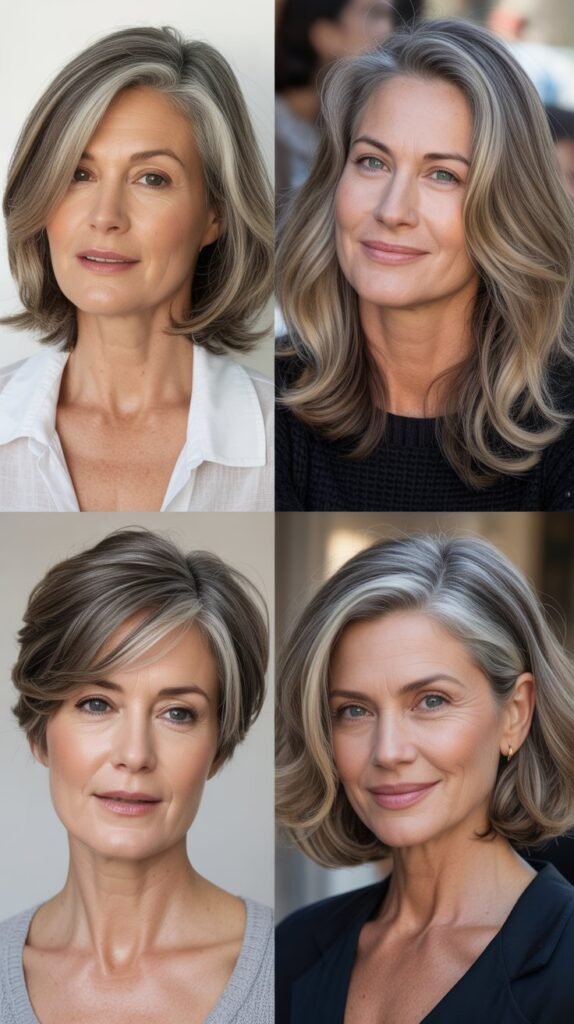
Babylights represent ultra-fine highlights that mimic the subtle, natural highlights seen in children’s hair.
When adapted for gray blending, this delicate technique creates an imperceptible transition that looks entirely organic.
- The extremely fine sections used in babylights create a soft, diffused effect rather than obvious streaks.
- This technique excels at breaking up the stark contrast between gray and pigmented hair.
- Babylights add brightness around the face without the commitment of a full highlight application.
- The subtle nature of babylights makes them ideal for conservative professional environments.
- This method works beautifully on fine to medium hair textures where bold highlights might appear too chunky.
- Color longevity is excellent with babylights since the fine placement blends seamlessly as hair grows.
- The application process takes longer than traditional highlights but delivers unmatched natural results.
4. Root Smudging Technique
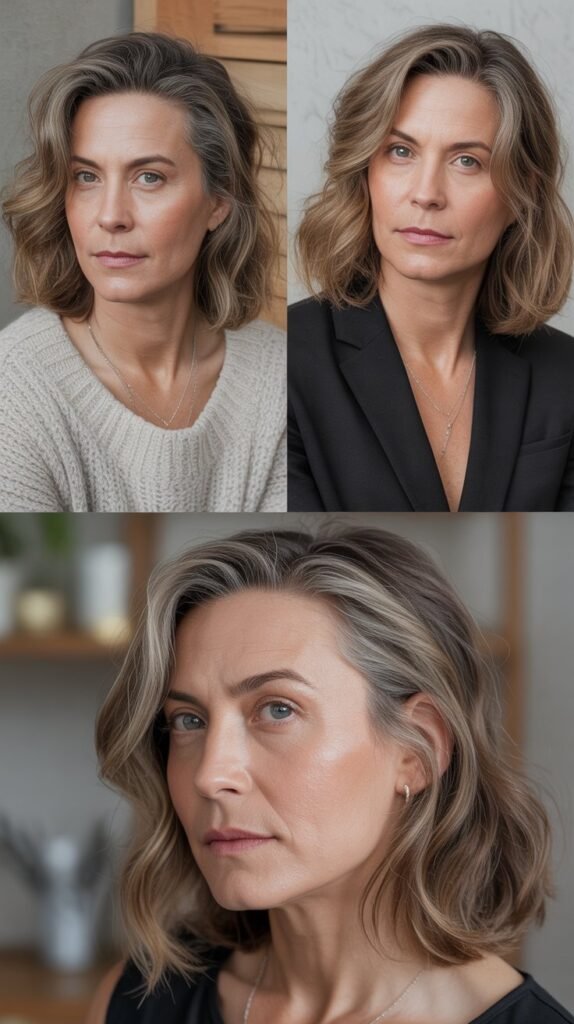
Root smudging involves applying a slightly darker tone at the roots and blending it downward, creating a soft shadow effect that disguises new gray growth.
This technique extends the life of your color while maintaining a natural gradient.
- The smudging process softens the demarcation line between colored hair and natural gray roots.
- This technique can add 4-6 weeks of presentable appearance between full color services.
- Root smudging creates a lived-in, dimensional look that appears intentional rather than grown-out.
- The darker root area provides depth that makes the overall color appear more natural and less flat.
- This method is particularly beneficial for women experiencing rapid gray growth at the hairline.
- Smudging can be combined with highlights or balayage for a comprehensive blending strategy.
- The application process is relatively quick and can often be completed during a regular highlight appointment.
5. Gray Blending with Face-Framing Highlights
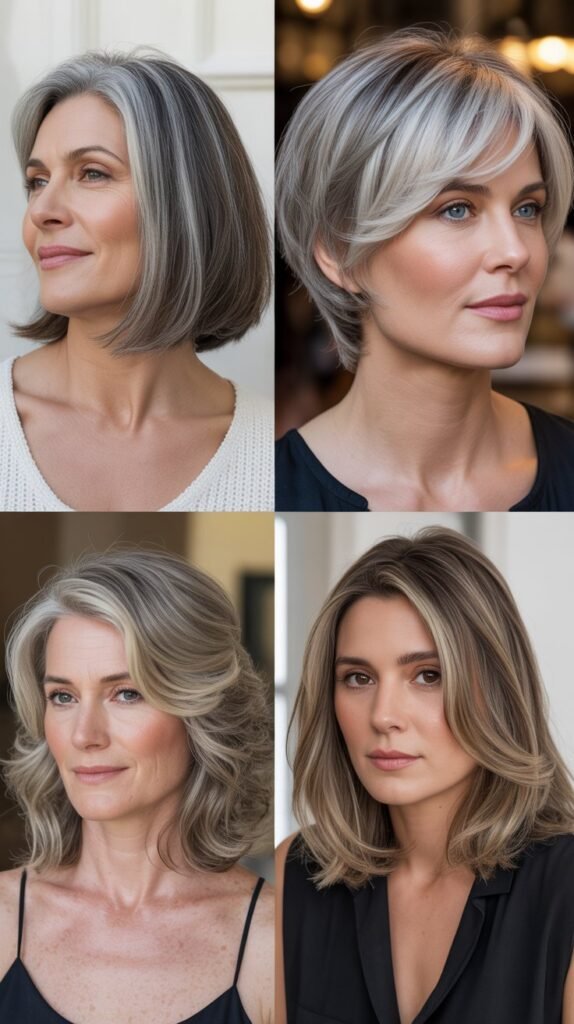
Face-framing highlights strategically placed around the hairline and facial contours create a brightening effect while seamlessly integrating gray strands.
This targeted approach draws attention to your best features while managing gray transition.
- Lighter pieces around the face create an illuminating effect that softens facial features and minimizes fine lines.
- This technique requires less overall color application, reducing potential damage to hair.
- Face-framing highlights work exceptionally well for women with gray concentration at the temples and hairline.
- The strategic placement draws the eye toward facial features rather than gray roots.
- This method can be customized in width and placement based on face shape and personal preference.
- Maintenance is simplified since the focus area is limited to the perimeter rather than the entire head.
- Face-framing highlights pair beautifully with textured cuts like long layers or shaggy styles.
6. Dimensional Gray Toning
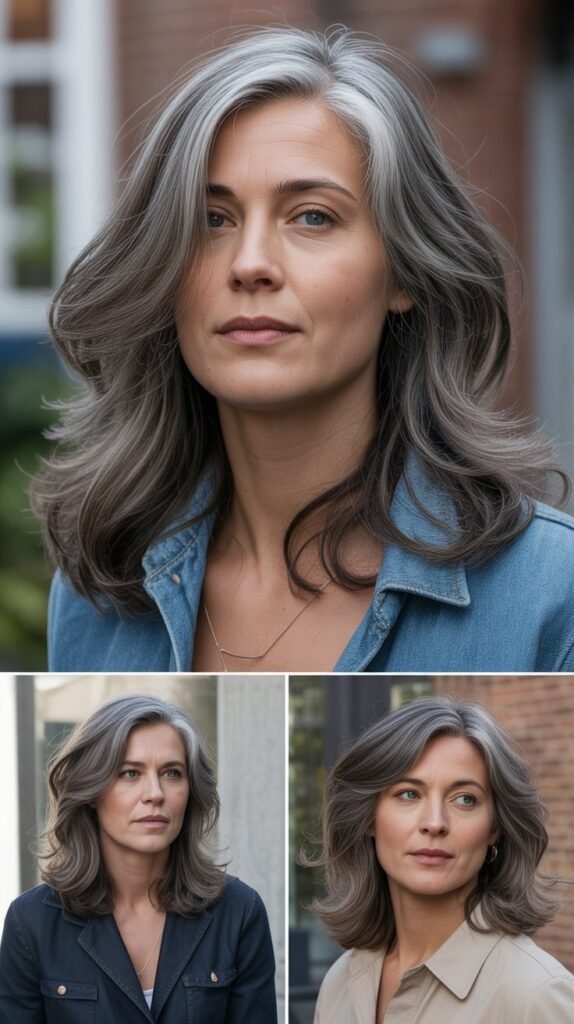
Dimensional gray toning involves applying various shades of gray, silver, and ash tones throughout the hair to create depth and prevent a flat, single-shade appearance.
This technique celebrates gray hair while enhancing its natural beauty.
- Multiple gray tones prevent the monochromatic look that can sometimes make fully gray hair appear dull.
- Cooler ash tones neutralize any unwanted yellow or brassy undertones in gray hair.
- Warmer gray tones add softness and prevent an overly cool appearance that might look harsh.
- This technique works beautifully for women who are mostly gray but want enhanced vibrancy.
- Dimensional toning can correct uneven gray distribution caused by previous coloring attempts.
- The variety of tones creates visual movement that makes hair appear fuller and more dynamic.
- Toning treatments typically last 4-6 weeks and can be refreshed with purple or silver shampoos.
7. Chunky Highlights for Bold Gray Blending
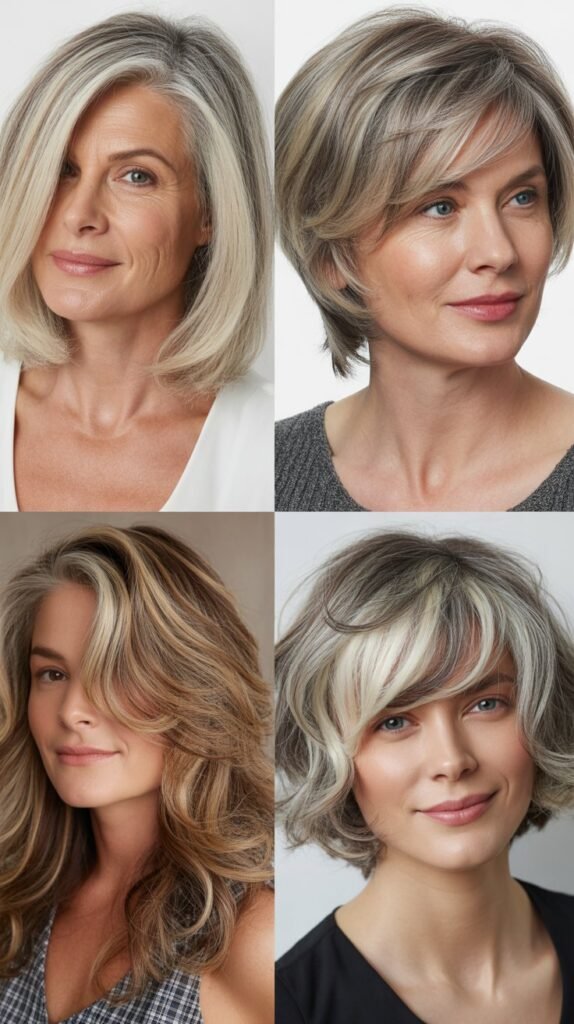
Chunky highlights offer a more dramatic approach to gray blending, featuring thicker sections of lighter color that create striking contrast.
This bold technique works well for women ready to embrace a more fashion-forward look.
- Thicker highlight sections make a strong style statement while effectively camouflaging gray strands.
- This technique adds significant dimension and can make thin hair appear substantially thicker.
- Chunky highlights are easier to maintain since the placement is more visible and intentional.
- The bold contrast created pairs exceptionally well with textured cuts and modern styling.
- This method works particularly well for women with naturally thick, coarse hair textures.
- The dramatic effect can be adjusted by varying the thickness and spacing of highlighted sections.
- Maintenance typically involves touch-ups every 10-14 weeks depending on contrast level and personal preference.
8. Reverse Balayage for Gray Integration
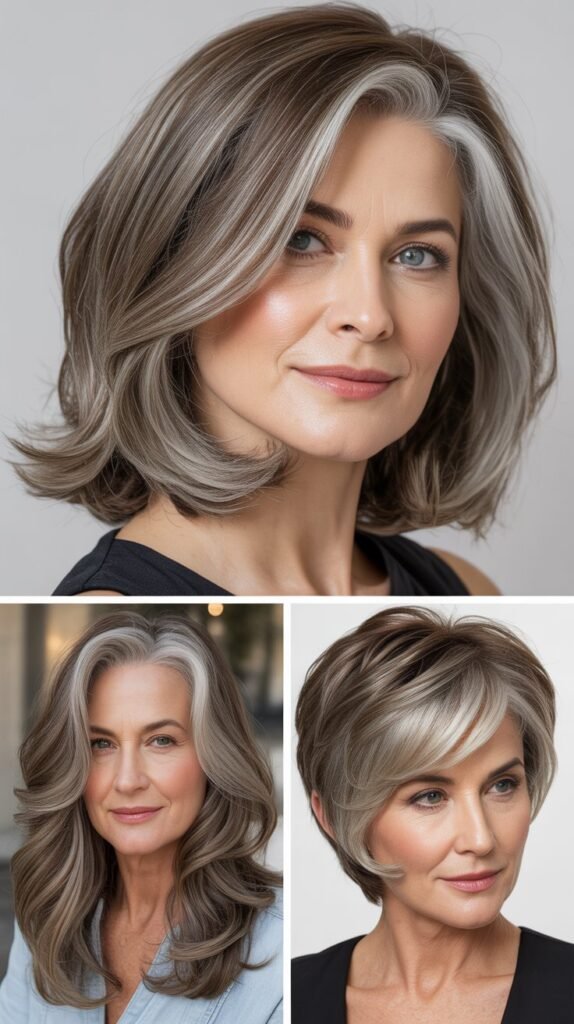
Reverse balayage applies darker tones to previously lightened hair or naturally lighter gray sections, creating depth and dimension.
This innovative technique adds richness while maintaining a natural appearance.
- Adding darker tones prevents overly light gray hair from appearing washed out or aging.
- This technique creates shadow and depth that adds visual interest to predominantly gray hair.
- Reverse balayage corrects over-lightened hair from previous coloring attempts.
- The strategic placement of darker pieces creates a more youthful, dimensional appearance.
- This method works exceptionally well for women transitioning from blonde to embracing natural gray.
- The darker accents provide contrast that makes the lighter gray sections appear more luminous.
- Maintenance is minimal since the darker tones blend naturally as gray hair continues to grow.
9. Foilayage Combination Technique
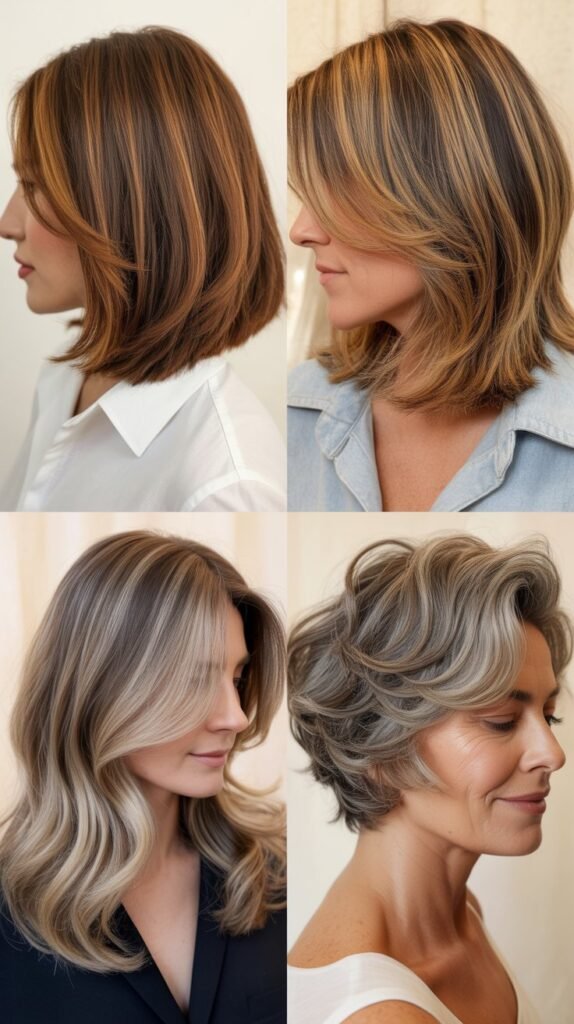
Foilayage combines traditional foil highlighting with freehand balayage painting, offering precision and dimension simultaneously.
This hybrid approach delivers maximum gray coverage while maintaining natural movement.
- The foil component allows for precise placement in areas requiring maximum gray coverage.
- Balayage sections add soft, natural dimension throughout the rest of the hair.
- This combination technique provides more lift and brightness than balayage alone.
- Foilayage works well for women with stubborn resistant gray that requires stronger processing.
- The dual-technique approach creates a more comprehensive coverage pattern.
- Results appear more natural than traditional all-over foil highlights while being more controlled than pure balayage.
- Maintenance requirements fall between traditional highlights and balayage, typically every 10-12 weeks.
10. Gray Blending with Lived-In Color
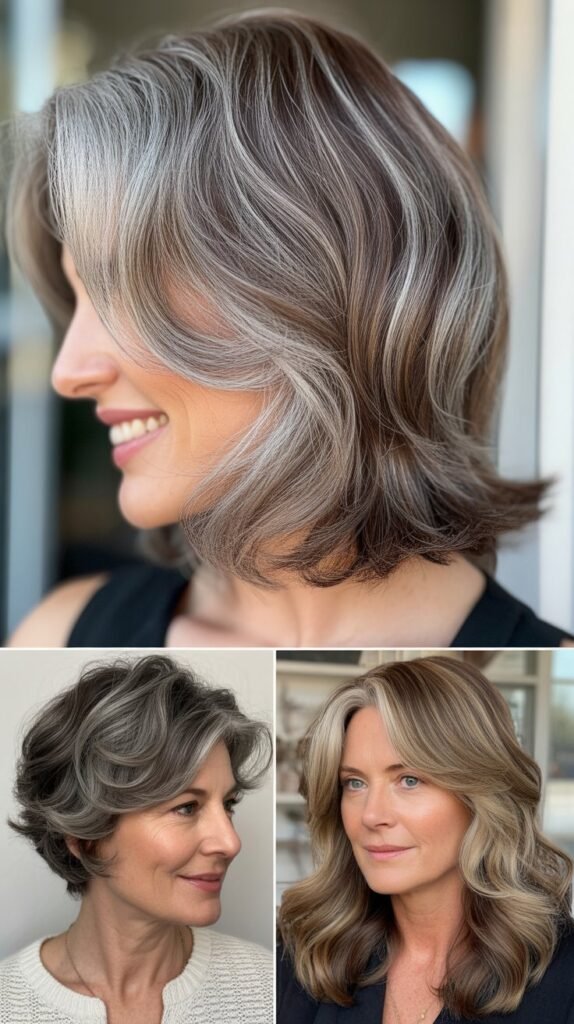
Lived-in color creates an effortlessly blended appearance designed to grow out gracefully over extended periods.
This low-maintenance approach prioritizes natural-looking dimension that works with your gray growth pattern.
- The intentionally soft root area eliminates harsh lines as hair grows, extending time between appointments.
- This technique emphasizes mid-lengths and ends rather than focusing heavily on roots.
- Lived-in color creates a vacation-inspired, sun-kissed appearance that looks naturally weathered.
- The low-maintenance nature makes it ideal for busy women who cannot commit to frequent salon visits.
- Strategic placement ensures gray blends seamlessly without requiring constant root touch-ups.
- This method works beautifully for various hair lengths but particularly shines on shoulder-length and longer styles.
- Most women can extend salon visits to 14-20 weeks while maintaining a polished appearance.
11. Ombre Gray Transition
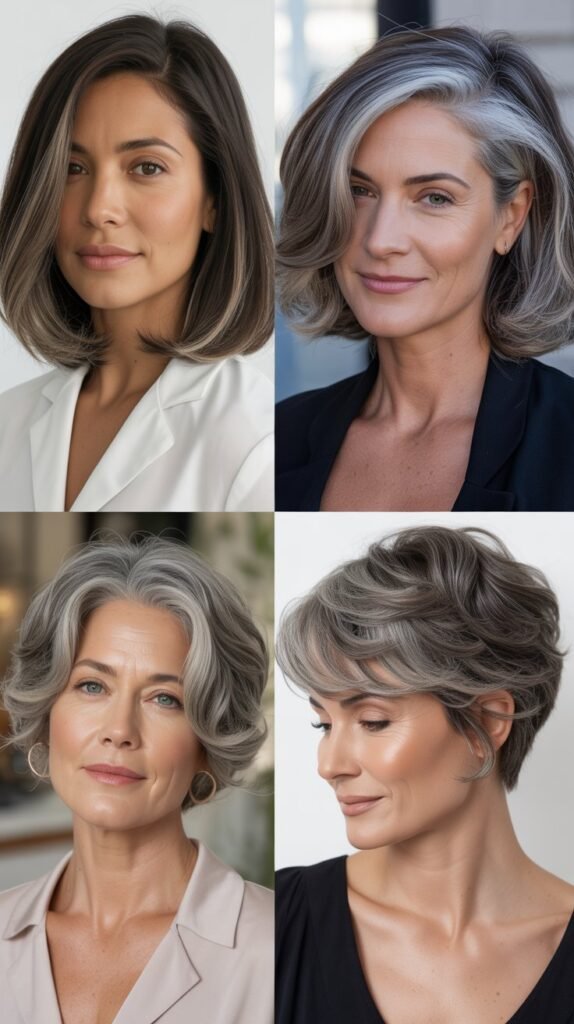
Ombre gray transition features darker roots gradually lightening to silver or lighter gray at the ends.
This gradient effect creates a modern, fashion-forward look while managing new gray growth at the roots.
- The darker root area provides low-maintenance coverage for new gray growth.
- Gradual lightening creates visual length and can make hair appear longer than it actually is.
- This technique offers artistic expression while serving the practical purpose of gray management.
- Ombre works particularly well for women ready to embrace a more dramatic, contemporary aesthetic.
- The transition point can be customized based on face shape and desired maintenance level.
- This style pairs exceptionally well with long layers and beachy waves for maximum impact.
- Touch-ups focus primarily on maintaining the gradient rather than frequent root coverage.
12. Money Piece Highlights
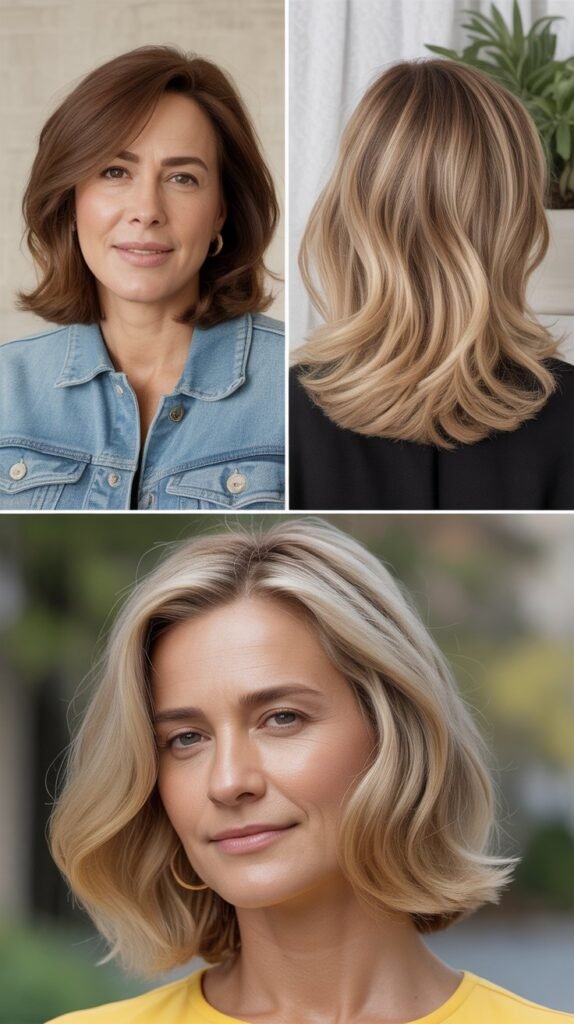
Money piece highlights involve placing bright, face-framing sections at the front hairline, creating a brightening, lifting effect.
When adapted for gray blending, this technique strategically camouflages temple grays while adding dimension.
- The concentrated brightness around the face creates an instant lifting, youthful appearance.
- This targeted approach requires minimal color application while delivering maximum visual impact.
- Money pieces effectively disguise the gray concentration that commonly occurs at temples and hairline.
- The dramatic contrast adds a fashion-forward element to otherwise classic hairstyles.
- This technique works across all hair colors from dark brunette to light blonde bases.
- Maintenance is simplified since only the front sections require regular touch-ups.
- Money pieces can be combined with other techniques like balayage for comprehensive coverage.
13. Soft Ombre with Gray Roots
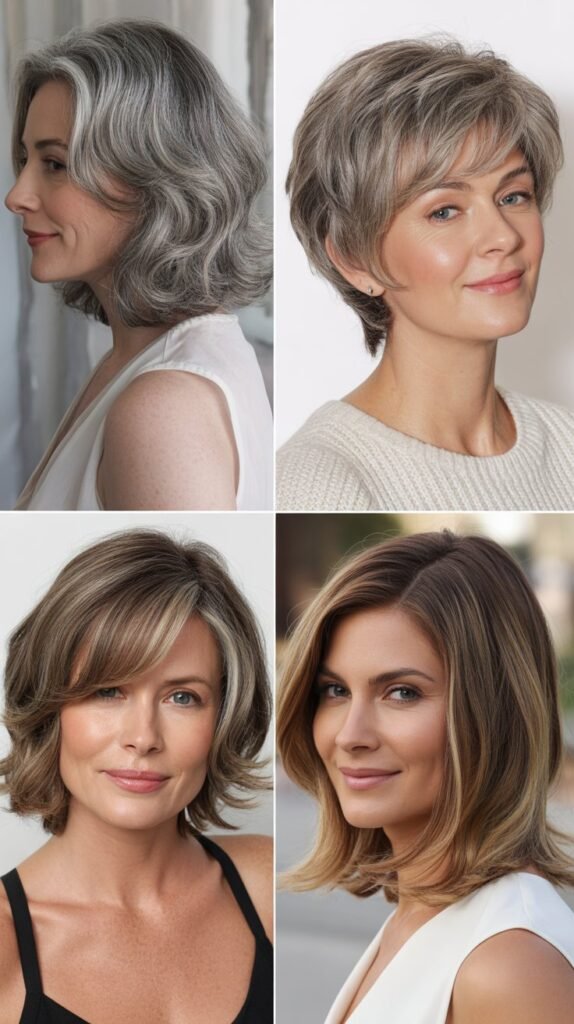
Soft ombre with intentionally darker gray roots creates a natural transition that celebrates emerging silver while maintaining dimension.
This gentle gradient approach offers style and practicality simultaneously.
- Allowing gray roots to show through creates an authentic, confident aesthetic.
- The soft ombre prevents harsh lines and creates a gradual, eye-pleasing transition.
- This approach significantly reduces maintenance requirements and salon visits.
- The technique works with your natural gray growth rather than fighting against it.
- Soft ombre pairs beautifully with textured cuts and loose, natural styling.
- This method appeals to women seeking a more organic, less processed appearance.
- The versatile nature of soft ombre adapts well to changing gray patterns over time.
14. Babylights with Root Shadow
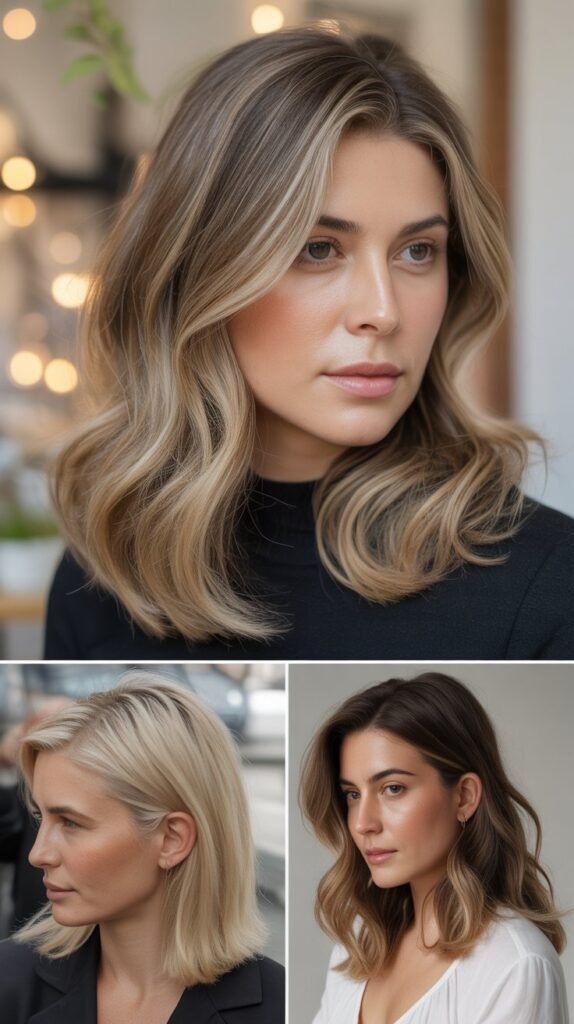
Combining delicate babylights with a strategic root shadow creates the ultimate natural-looking gray blend.
This dual-technique approach delivers soft dimension while managing new growth effectively.
- The root shadow provides depth and disguises new gray growth as it emerges.
- Fine babylights throughout create subtle brightness without obvious color placement.
- This combination offers the most natural-looking result available in gray-blending techniques.
- The depth at the roots prevents the washed-out appearance that can occur with all-over lightening.
- This method works exceptionally well for fine to medium hair textures.
- Maintenance intervals can extend to 12-16 weeks due to the soft, blended nature of the technique.
- The technique requires advanced colorist skills but delivers unmatched natural results.
15. Gray Camouflage with Glossing
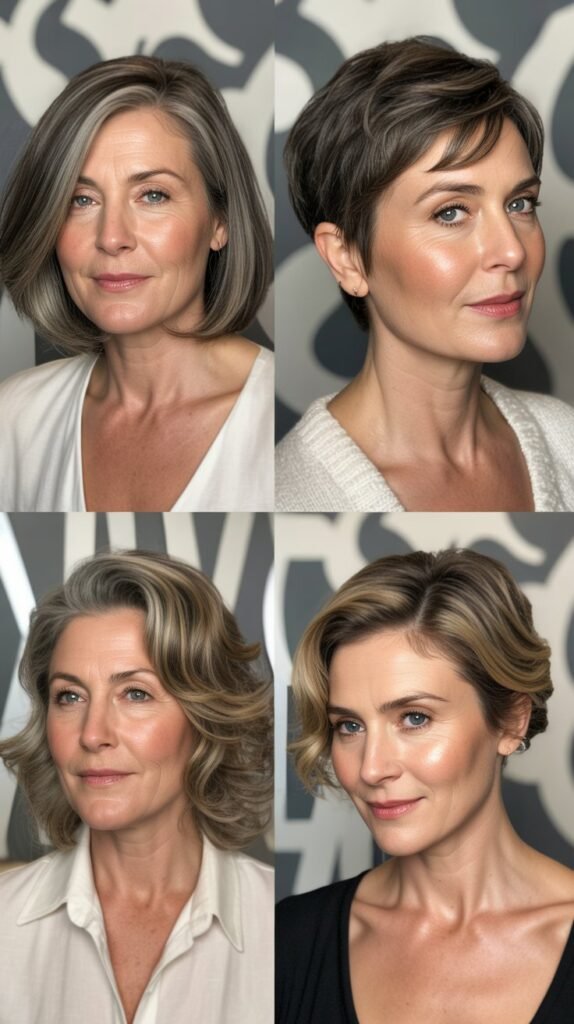
Gray camouflage glossing involves applying semi-permanent gloss treatments that coat and blend gray strands with surrounding pigmented hair.
This gentle, damage-free approach adds shine while managing visible gray.
- Gloss treatments contain no ammonia, making them gentler on hair than permanent color.
- The translucent formula allows natural gray to show through slightly while blending with base color.
- Enhanced shine from glossing treatments makes hair appear healthier and more youthful.
- This temporary solution typically lasts 4-6 weeks, allowing flexibility in color commitment.
- Glossing works well for women in early stages of gray who want minimal intervention.
- The quick application process makes it convenient for busy schedules.
- Regular glossing can actually improve hair condition by sealing the cuticle and adding moisture.
16. Ribboning Technique for Gray Blending
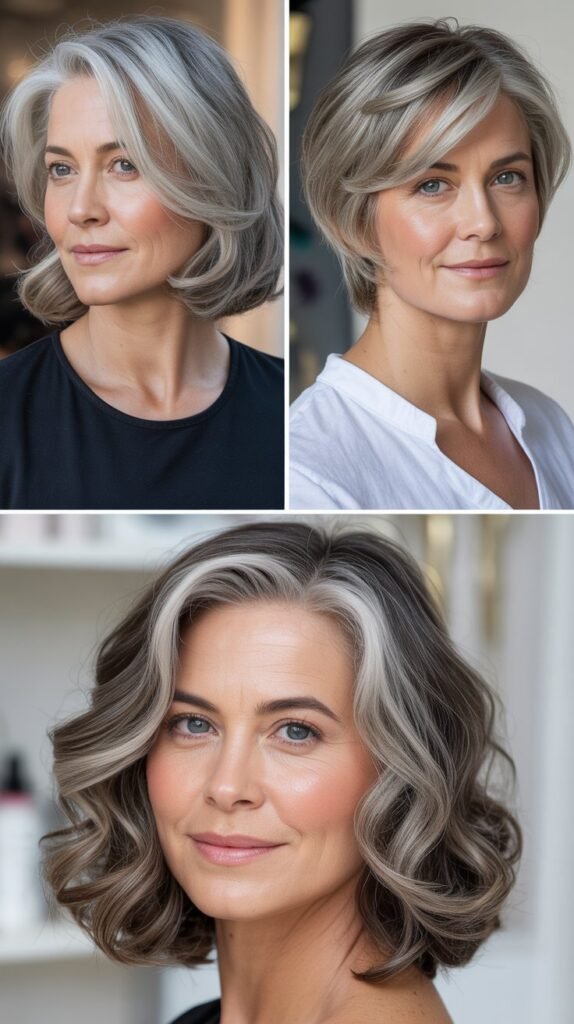
Ribboning creates thin, continuous strips of color through the hair, providing targeted gray coverage while maintaining overall dimension.
This precision technique offers control and natural-looking results.
- Thin ribbons of color create a woven appearance that naturally integrates with gray strands.
- This technique allows for precise placement in areas with concentrated gray growth.
- Ribboning works exceptionally well for women with gray distributed in specific patterns or sections.
- The linear placement creates visual interest and prevents a spotty or uneven appearance.
- This method can be customized in ribbon width based on desired coverage level.
- Maintenance typically involves touch-ups every 8-10 weeks to maintain the ribbon pattern.
- Ribboning pairs well with other techniques like glossing for comprehensive gray management.
17. Ash Blonde Gray Transition
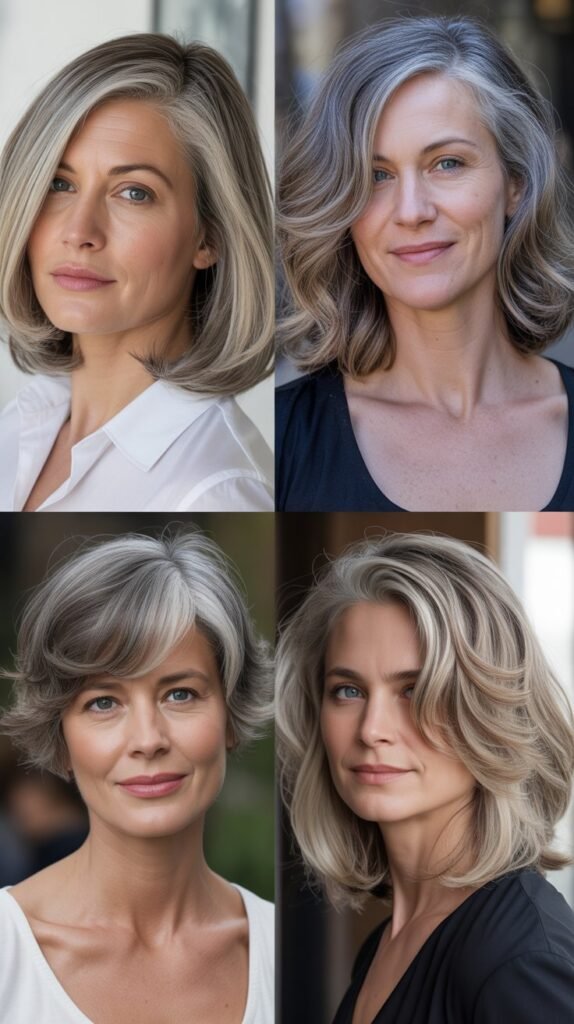
Transitioning to ash blonde provides a bridge between pigmented hair and emerging gray, creating a cohesive, sophisticated appearance.
This cooler tone complements natural silver while maintaining dimension.
- Ash tones neutralize warmth, creating harmony between gray and remaining pigmented hair.
- This transition works particularly well for women with naturally light to medium brown hair.
- Cooler blonde tones prevent the brassy appearance that can occur with traditional blonde highlighting.
- The similarity in tone between ash blonde and gray makes new growth less noticeable.
- This approach creates a modern, sophisticated aesthetic that appears intentional rather than grown-out.
- Maintenance focuses on toning to maintain cool, ash undertones rather than frequent root coverage.
- Purple or blue shampoos help maintain the cool tone between salon visits.
18. Sombre Gray Blending
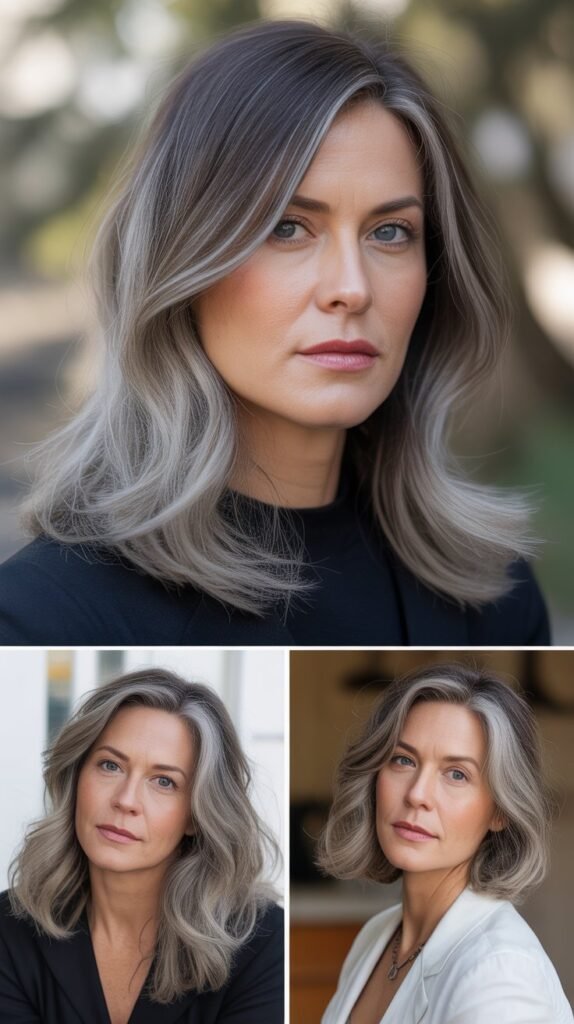
Sombre (subtle ombre) creates an even more gradual transition than traditional ombre, offering barely-there dimension that appears completely natural.
This refined technique blends gray seamlessly while maintaining sophistication.
- The ultra-subtle transition makes it nearly impossible to detect where one shade ends and another begins.
- Sombre works beautifully for conservative professional environments where dramatic color isn’t appropriate.
- This technique requires exceptional skill to achieve the seamlessly blended appearance.
- The gentle gradation extends maintenance intervals significantly, sometimes to 16-20 weeks.
- Sombre complements various hair lengths but particularly enhances longer styles.
- The understated nature appeals to women seeking natural beauty rather than obvious color.
- This method works with virtually any base color and gray percentage.
19. Partial Highlight Gray Coverage
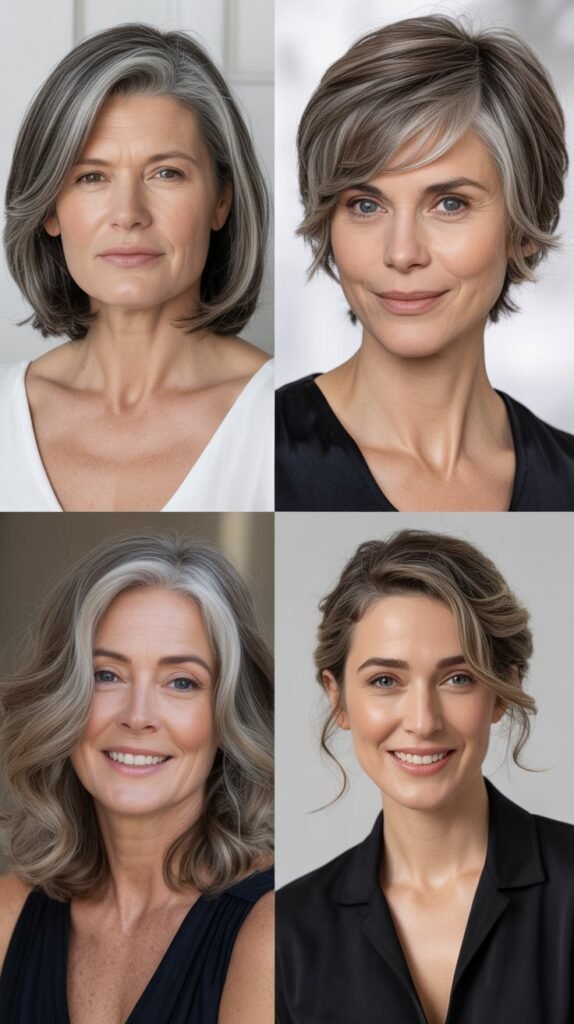
Partial highlights focus color placement on the most visible areas—typically the top and sides—while leaving the underneath hair natural.
This strategic approach reduces processing while maintaining a polished appearance.
- Limiting color to visible areas significantly reduces chemical exposure and potential damage.
- This technique is more affordable than full-head highlighting while delivering similar visual results.
- Partial highlighting works well for women with minimal gray in underneath sections.
- The natural underneath provides depth and dimension to the overall appearance.
- This approach is ideal for women with fine hair prone to damage from excessive coloring.
- Maintenance requirements are reduced since less hair requires regular attention.
- Partial highlights can be strategically placed to complement specific hairstyles and partings.
20. Bronde Gray Transition
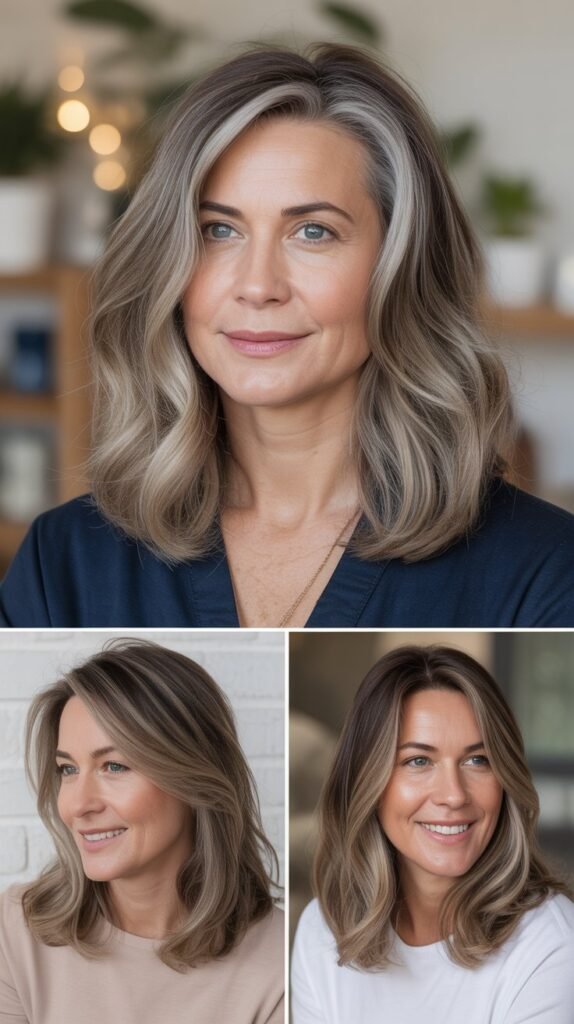
Bronde combines brown and blonde tones to create a neutral, versatile shade that bridges pigmented and gray hair beautifully.
This balanced approach works across various natural hair colors.
- The neutral tone of bronde complements both warm and cool skin undertones.
- Blending brown and blonde creates natural variation that camouflages uneven gray distribution.
- Bronde works exceptionally well for women transitioning from brunette to gray.
- This versatile shade adapts to seasonal changes and can be adjusted warmer or cooler as needed.
- The balanced tone prevents the harsh contrast that can occur with single-shade coverage.
- Maintenance involves both toning and subtle highlighting to maintain the dimensional bronde effect.
- This approach creates a youthful, sun-kissed appearance regardless of season.
21. Ecaille Gray Blending
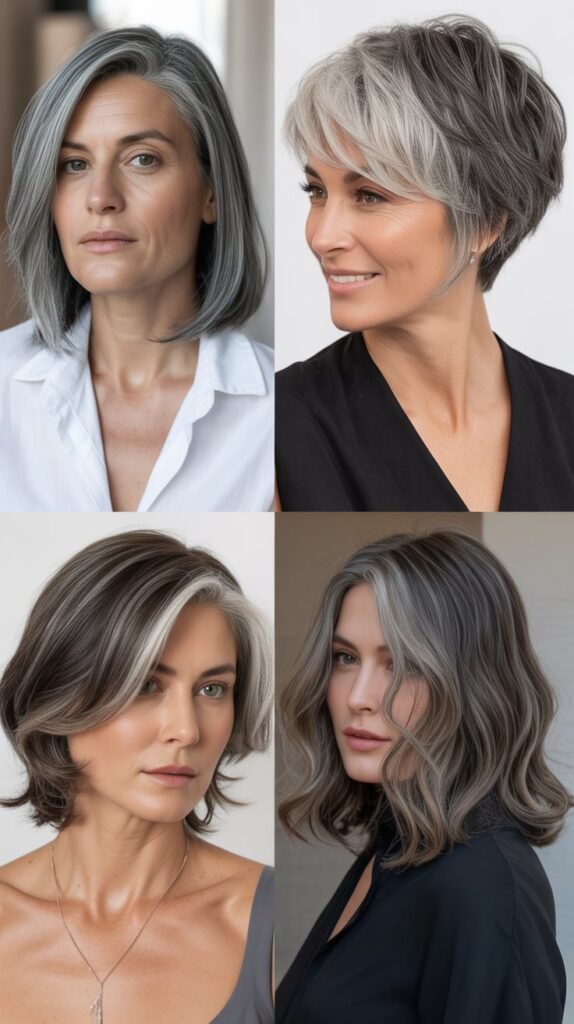
Ecaille (tortoiseshell) highlighting creates a rich, multidimensional effect using various shades that blend seamlessly like tortoiseshell patterns.
This luxurious technique adds depth while managing gray beautifully.
- Multiple complementary shades create exceptional depth and prevent flat, one-dimensional color.
- The varied tones naturally camouflage gray strands throughout the hair.
- Ecaille works across various base colors from deep brunette to lighter brown tones.
- This technique creates a luxurious, high-end appearance that looks expensive and sophisticated.
- The complex color placement requires advanced colorist expertise but delivers stunning results.
- Maintenance involves preserving the various tones rather than frequent root touch-ups.
- Ecaille highlighting makes hair appear thicker and fuller due to the dimensional effect.
22. Gray Blending with Glaze Treatments
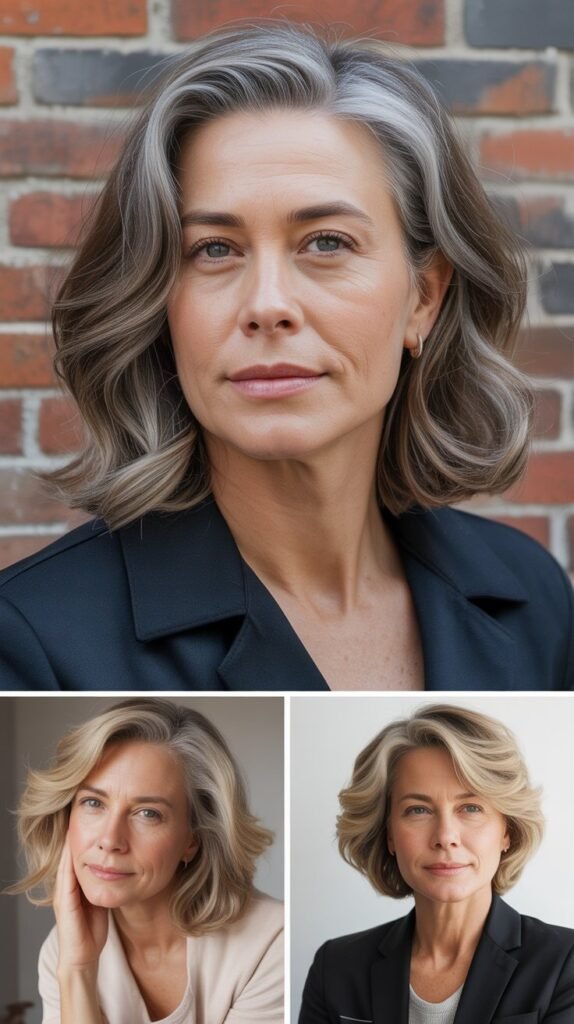
Regular glaze treatments deposit semi-permanent color that blends gray while adding intense shine.
This conditioning approach improves hair health while managing visible silver strands.
- Glaze formulas contain conditioning agents that improve hair texture while depositing color.
- The temporary nature allows experimentation with different tones without permanent commitment.
- Glazes enhance natural hair color vibrancy that can fade with age and sun exposure.
- This gentle approach works well for women concerned about hair health and damage.
- Regular glaze applications every 4-6 weeks maintain consistent gray coverage and shine.
- The quick service time makes glazing convenient for busy schedules.
- Various glaze tones can correct unwanted undertones in both natural and colored hair.
23. Feathered Highlight Technique
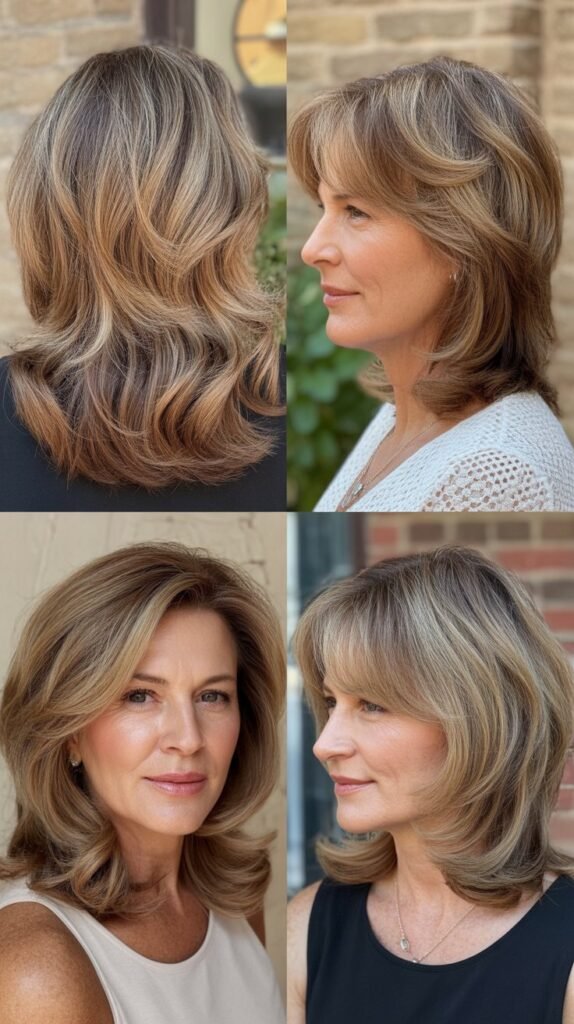
Feathered highlights use a sweeping motion to create soft, diffused color that blends imperceptibly with gray.
This artistic approach delivers natural-looking dimension without harsh lines.
- The feathering motion creates a soft, painterly effect rather than distinct color sections.
- This technique excels at breaking up concentrated gray areas with subtle lightness.
- Feathered highlights appear more natural than traditional foil highlights due to the blended application.
- The soft edges create seamless transitions as hair grows, extending maintenance intervals.
- This method works beautifully on wavy and curly hair textures where movement enhances the feathered effect.
- Strategic feathering can create the illusion of fuller, thicker hair through dimensional placement.
- The artistic nature of this technique requires a skilled colorist with advanced freehand abilities.
24. Gray Blending with Hair Toner
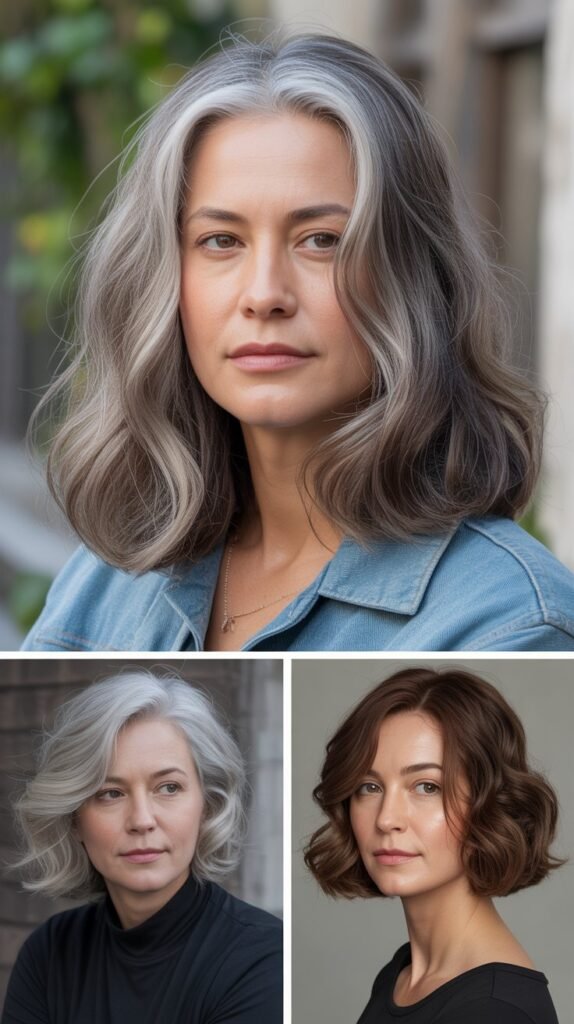
Regular toner applications neutralize unwanted undertones in both gray and colored hair while adding subtle color deposit.
This maintenance approach keeps gray looking fresh and intentional.
- Toners correct yellow, brassy, or dull undertones that commonly affect gray hair.
- Cool-toned toners create a silver or ash effect that enhances natural gray beauty.
- Warm-toned toners add golden richness that prevents gray from appearing lifeless.
- Regular toning every 4-6 weeks maintains vibrant, intentional-looking gray hair.
- Toners can be applied at home between salon visits using professional-quality products.
- The conditioning properties of modern toners improve hair texture while correcting color.
- Custom toner formulas can address specific concerns like yellow patches or uneven gray distribution.
25. Shadow Root with Highlights
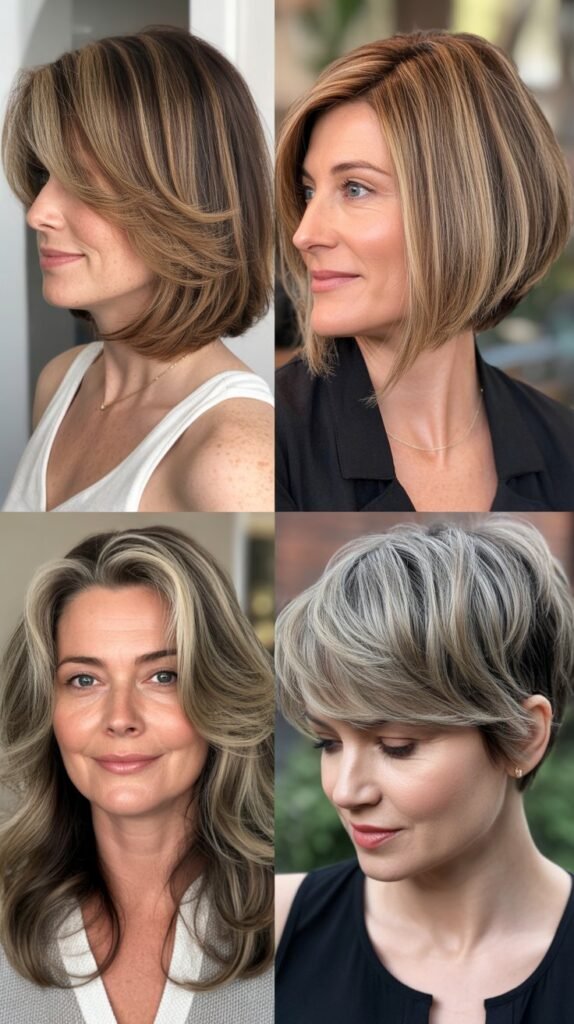
Shadow root involves darkening the root area while highlighting the mid-lengths and ends, creating natural depth and dimension.
This technique manages new gray growth while maintaining overall brightness.
- The darker root area extends the time between color appointments by blending with new growth.
- Highlights throughout provide brightness and dimension that prevents a heavy appearance.
- This combination creates a lived-in, natural look that appears effortless yet polished.
- Shadow root works exceptionally well for women with rapid gray growth at the hairline.
- The technique can be adjusted in depth and width based on personal preference.
- Maintenance focuses on refreshing highlights rather than constant root coverage.
- This approach works across all hair colors and textures with beautiful results.
26. Gray Blending with Demi-Permanent Color
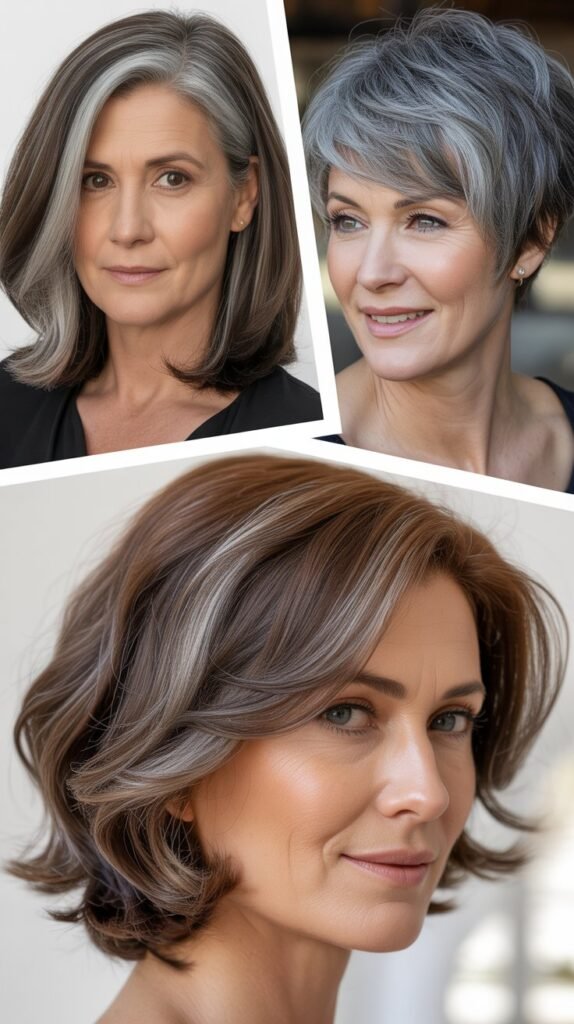
Demi-permanent color offers a gentler alternative to permanent dye, depositing color without lifting natural pigment.
This conditioning approach blends gray while maintaining hair health.
- Demi-permanent formulas contain no ammonia, reducing potential damage to aging hair.
- The color gradually fades over 24-28 shampoos, preventing harsh demarcation lines.
- This approach allows flexibility to adjust color as gray percentages increase over time.
- Enhanced shine from demi-permanent color makes hair appear healthier and more youthful.
- The conditioning properties improve hair texture that may become coarser with gray growth.
- Application can target specific areas with concentrated gray rather than processing all hair.
- Demi-permanent color works well in combination with highlighting techniques for comprehensive coverage.
27. Micro-Foiling for Precise Gray Coverage
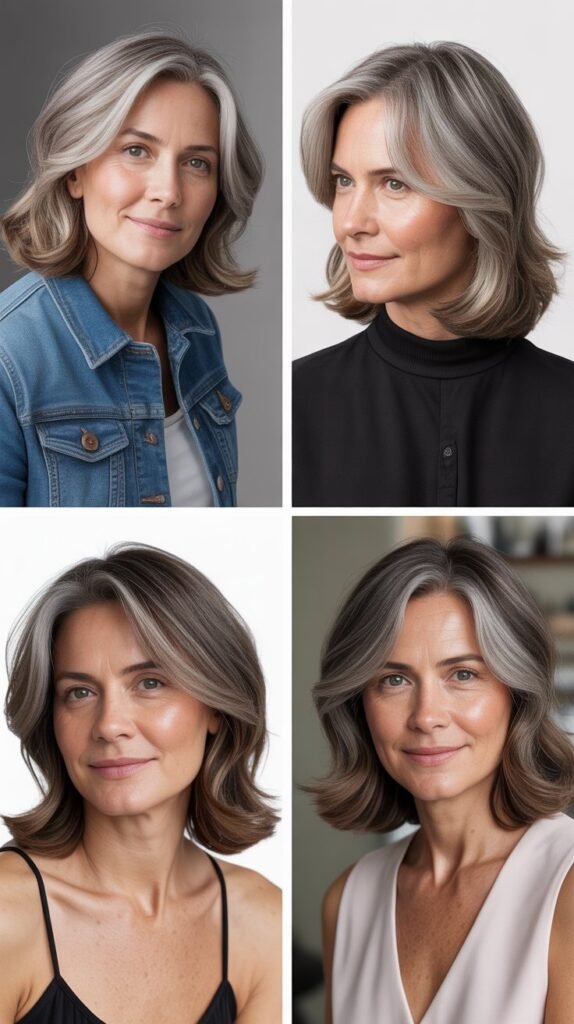
Micro-foiling uses extremely thin sections to create ultra-precise gray coverage.
This meticulous technique delivers natural-looking results with maximum control over placement.
- Thin foil sections create more natural-looking dimension than traditional thick highlights.
- This precision technique allows targeted coverage of specific gray patterns and concentrations.
- Micro-foiling works exceptionally well for resistant gray that requires thorough processing.
- The detailed placement prevents the stripey appearance that can occur with larger sections.
- This method delivers professional, salon-quality results that grow out gracefully.
- The application process is time-intensive but produces superior natural-looking coverage.
- Maintenance typically involves touch-ups every 10-12 weeks to maintain the micro-foil pattern.
28. Gray Blending with Color Melting
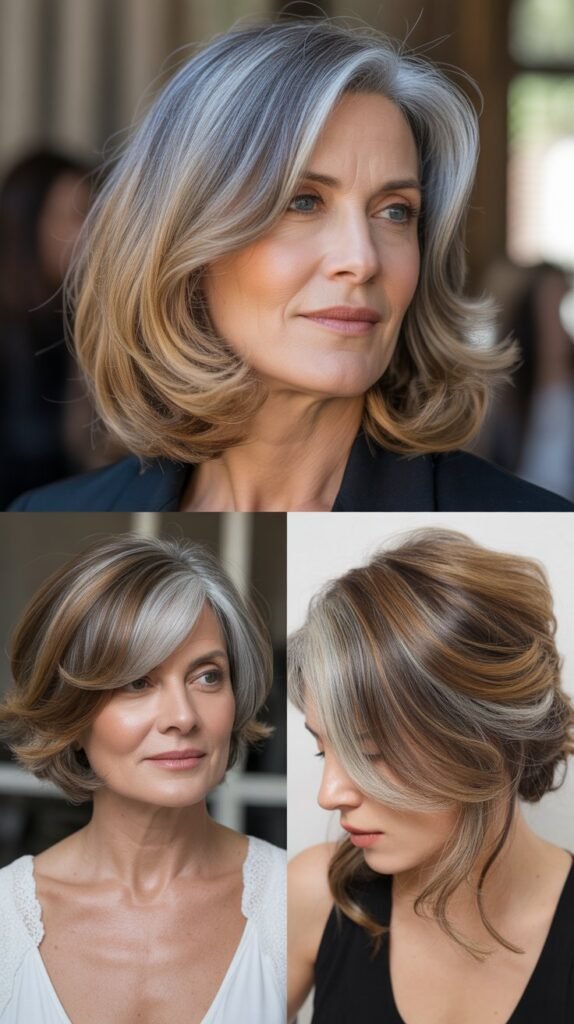
Color melting seamlessly blends multiple shades together without visible lines or harsh transitions.
This advanced technique creates fluid color movement that naturally incorporates gray strands.
- Multiple shades are applied and carefully blended where they meet for imperceptible transitions.
- This technique creates the most natural-looking dimensional color available.
- Color melting works beautifully for correcting previous color applications or uneven gray distribution.
- The seamless nature means hair looks intentional at every stage of growth.
- This advanced method requires significant colorist skill and extended application time.
- Results appear custom-designed and high-end regardless of natural base color.
- Maintenance focuses on preserving the melted effect rather than obvious root touch-ups.
29. Blonde Babylights for Gray Transition
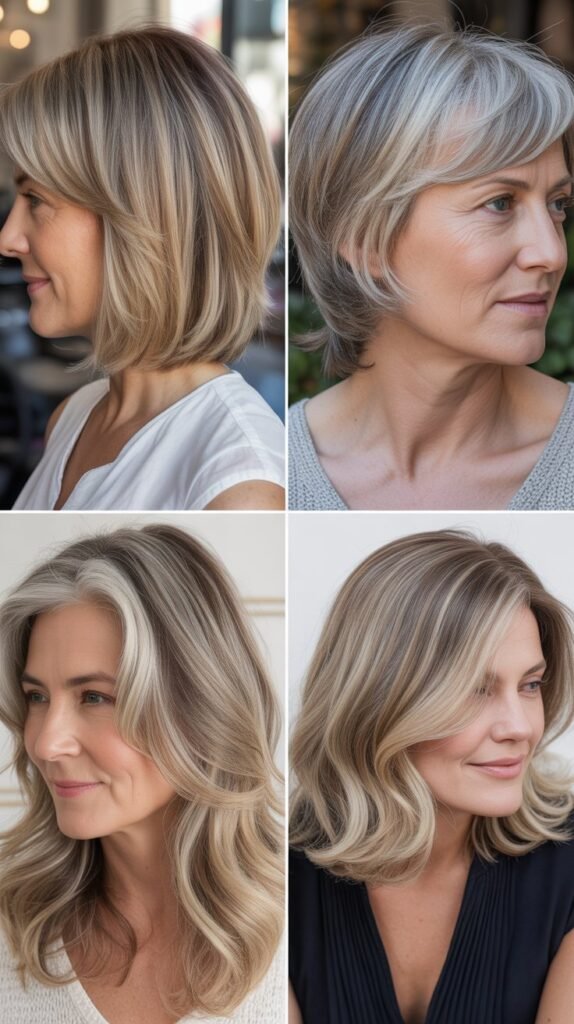
Blonde babylights create ultra-fine, natural-looking lightness that seamlessly blends with emerging gray.
This delicate approach works particularly well for women with light brown to blonde hair.
- Fine blonde sections mimic natural sun-lightened hair for an organic appearance.
- This technique works with natural gray rather than fighting against it.
- The subtle nature makes babylights appropriate for conservative professional settings.
- Blonde tones brighten the face and create a youthful, fresh appearance.
- This method requires minimal maintenance since the fine placement blends as hair grows.
- Babylights work exceptionally well on fine to medium hair textures.
- The application process is time-intensive but delivers lasting, natural results.
30. Gray Blending with Airtouch Technique
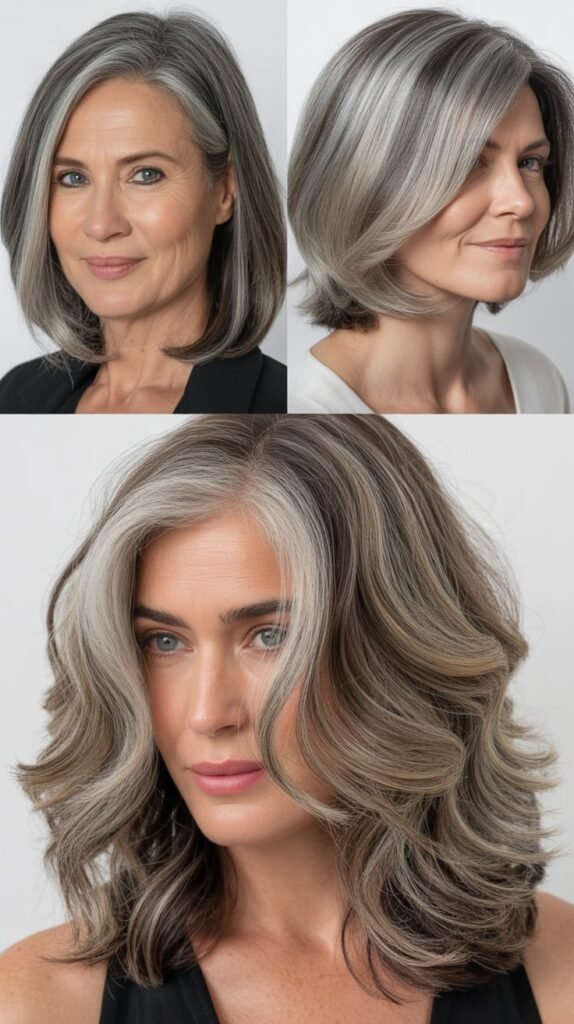
Airtouch uses forced air to separate shorter hairs before applying color, creating incredibly soft, blended results.
This innovative technique produces seamless gray integration with natural dimension.
- The air separation ensures only the longest, healthiest hairs receive color treatment.
- This selective process creates exceptionally natural-looking dimension and blending.
- Airtouch produces softer results than traditional balayage or foiling techniques.
- The technique works with various hair textures and naturally accommodates different gray patterns.
- Results grow out beautifully without obvious demarcation lines or harsh regrowth.
- This advanced method requires specialized training and equipment but delivers superior results.
- Maintenance intervals can extend to 14-18 weeks due to the seamless blending.
31. Warm Highlights with Cool Gray Base
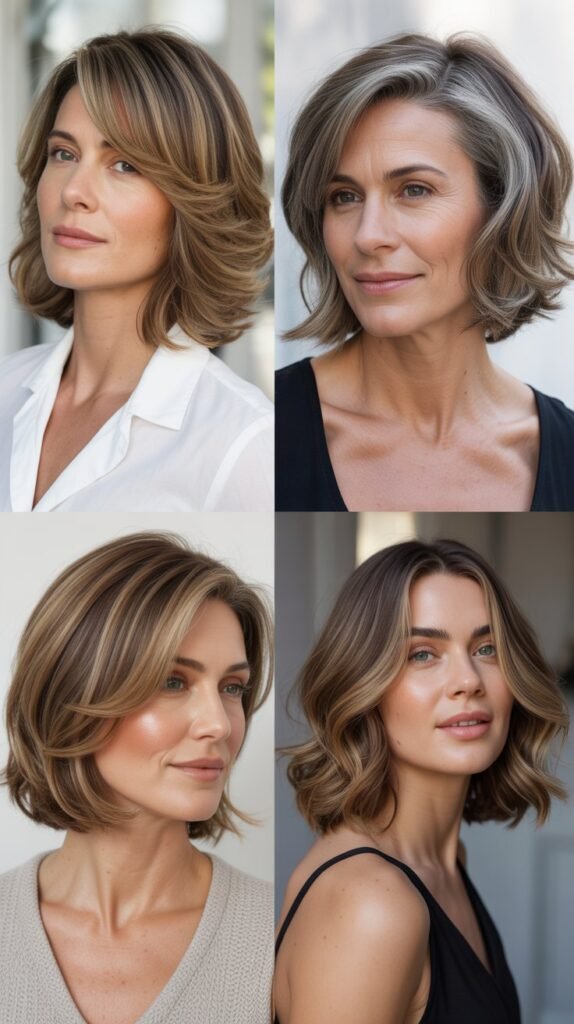
Combining warm highlight tones with naturally cool gray creates a balanced, dimensional appearance.
This complementary approach prevents gray from appearing too stark while adding warmth and life.
- Warm tones add golden or honey richness that prevents gray from looking flat or dull.
- The temperature contrast creates visual interest and prevents monochromatic appearance.
- This technique works particularly well for women with warm skin undertones.
- Strategic warm placement brightens the face and creates a healthy, vibrant glow.
- The complementary temperatures create depth that makes hair appear fuller.
- This approach can be customized from subtle to dramatic based on personal preference.
- Maintenance involves preserving both the warm highlights and cool gray base integrity.
32. Gray Blending with Dimensional Foiling
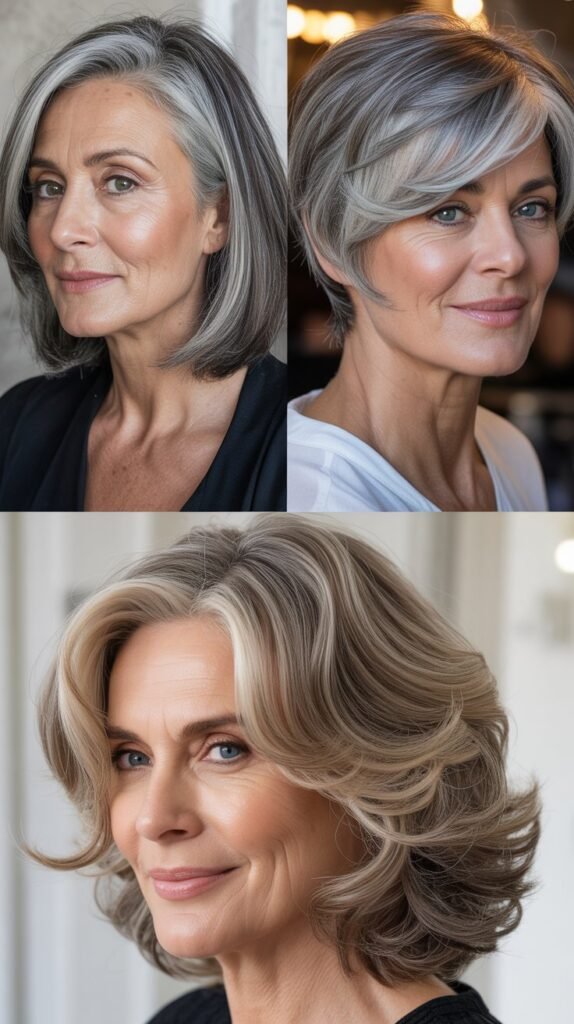
Dimensional foiling places highlights at varying depths and thicknesses throughout the hair, creating natural-looking dimension.
This strategic technique delivers comprehensive gray coverage with artistic flair.
- Varying foil thickness prevents the uniform, striped appearance of traditional highlighting.
- Strategic depth variation creates the appearance of natural sun-lightened hair.
- This technique allows customization based on specific gray distribution patterns.
- Dimensional placement ensures gray blends throughout the entire head rather than in isolated areas.
- The artistic nature of this method requires an experienced, skilled colorist.
- Results appear high-end and expensive due to the complex dimensional effect.
- Maintenance typically involves touch-ups every 10-14 weeks to preserve the dimensional pattern.
33. Slicing and Weaving for Gray Coverage
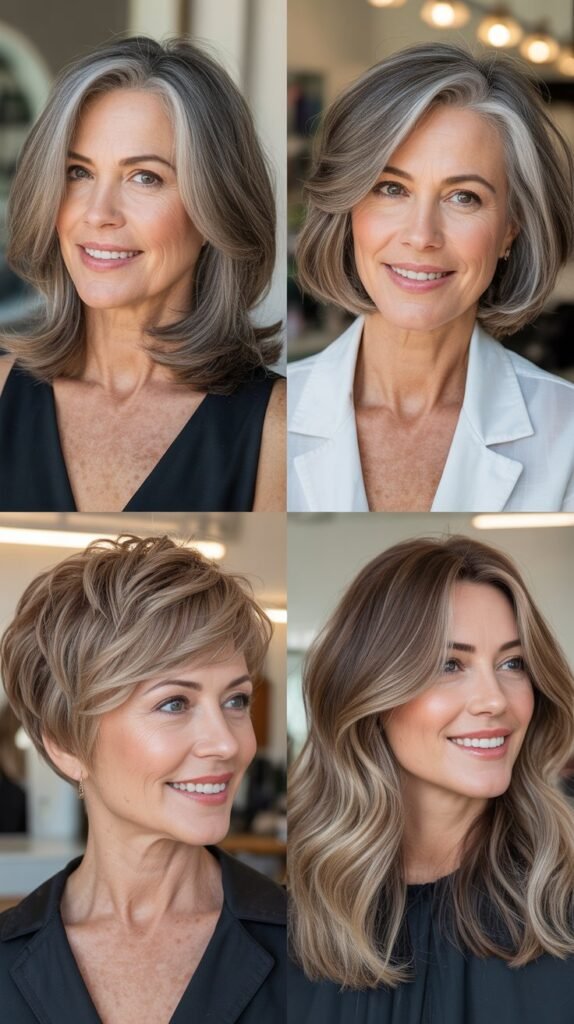
Slicing creates thick highlight sections while weaving creates fine sections, combining both for comprehensive gray coverage with natural dimension.
This hybrid approach delivers versatility and thorough blending.
- Thicker slices provide bold dimension while fine weaves create subtle blending.
- This combination technique adapts to various gray concentrations and patterns.
- Slicing and weaving allows customization of coverage level based on personal preference.
- The varied section sizes prevent obvious color placement and create natural movement.
- This versatile method works across all hair colors, textures, and lengths.
- Strategic placement of slices and weaves can enhance specific face shapes and features.
- Maintenance involves preserving both the bold slices and fine weaves for continued dimension.
34. Gray Blending with Pintura Technique
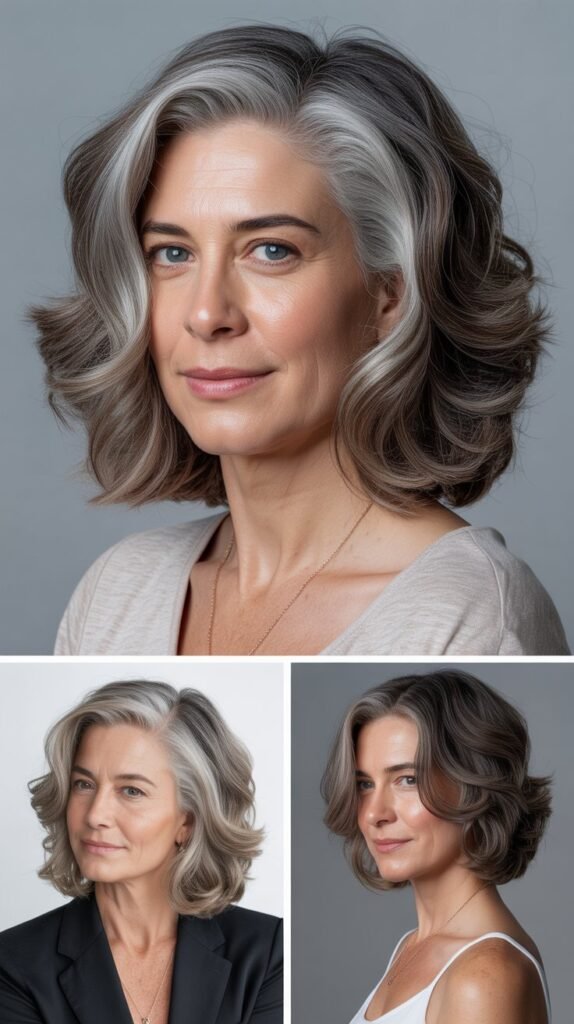
Pintura painting creates hand-painted color specifically designed for curly and textured hair.
This curl-respecting technique ensures gray blends beautifully while honoring natural curl patterns.
- Color is applied to respect and enhance natural curl formation rather than fighting against it.
- This technique prevents the halo effect that can occur with traditional highlighting on curly hair.
- Pintura works with the hair’s natural texture for seamless, dimensional results.
- The hand-painted approach allows precise placement around face-framing curls.
- This method delivers natural-looking color that enhances rather than competes with curl pattern.
- Curly-haired women often achieve superior results with pintura compared to traditional highlighting.
- Maintenance focuses on preserving curl health while maintaining color vibrancy.
35. Smokey Gray Blending with Depth
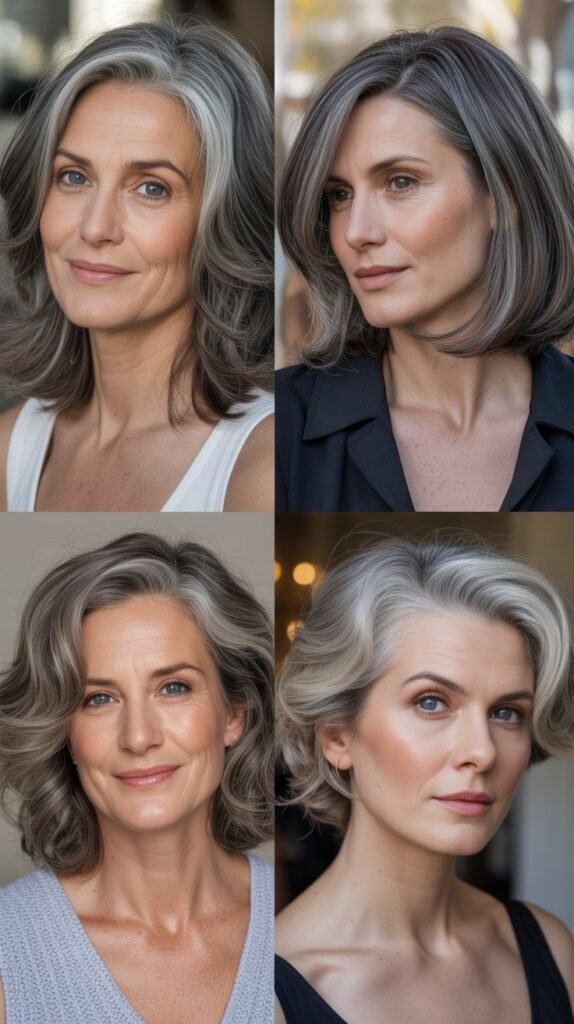
Smokey gray blending creates a rich, multi-dimensional effect using various depths of gray and ash tones.
This sophisticated technique celebrates natural silver while preventing a flat, single-tone appearance.
- Multiple gray depths create a smoky, artistic effect that appears intentionally styled.
- Darker ash tones provide shadow and contrast that enhances lighter gray sections.
- This technique works exceptionally well for women embracing full gray transition.
- The dimensional approach prevents the washed-out appearance that can occur with solid gray.
- Smokey blending adds sophistication and modernity to naturally gray hair.
- Strategic depth placement can enhance facial features and complement face shape.
- Maintenance involves regular toning to preserve the cool, smokey undertones.
36. Strategic Panel Highlighting for Gray Management
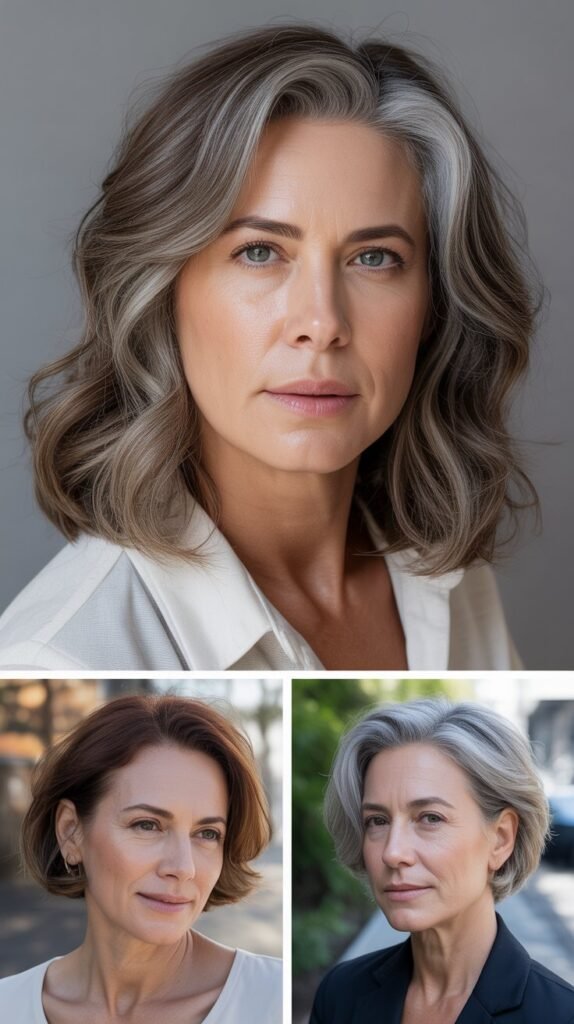
Panel highlighting divides hair into sections and applies varying color techniques to each panel based on gray concentration.
This customized approach delivers comprehensive coverage tailored to individual needs.
- Each panel receives customized treatment based on its specific gray pattern and density.
- This strategic approach ensures no area is over-processed or under-covered.
- Panel highlighting allows for complex combinations of techniques in a single service.
- The sectioned application creates natural-looking results despite comprehensive coverage.
- This method works well for uneven gray distribution or patchy gray patterns.
- Colorists can adjust panel treatments over time as gray percentages change.
- Maintenance is efficient since each panel can be addressed independently as needed.
Maintenance Tips for Gray-Blending Hairstyles
Maintaining your gray-blending hairstyle requires specific care to preserve color vibrancy and hair health. Understanding proper maintenance ensures your style remains fresh and polished between salon visits.
| Maintenance Aspect | Recommendation | Frequency |
|---|---|---|
| Purple/Silver Shampoo | Neutralizes yellow tones | 1-2 times per week |
| Deep Conditioning | Restores moisture | Weekly |
| Salon Toning | Refreshes color | Every 4-6 weeks |
| Highlight Touch-ups | Maintains dimension | Every 10-16 weeks |
| Trim | Removes damaged ends | Every 6-8 weeks |
| Heat Protection | Prevents damage | Before every styling |
- Use sulfate-free shampoos specifically formulated for color-treated hair to extend color longevity.
- Invest in quality purple or silver shampoos to neutralize brassy or yellow tones in gray-blended hair.
- Apply weekly deep conditioning treatments to combat the coarser texture that often accompanies gray hair.
- Limit heat styling to preserve color vibrancy and prevent damage to aging hair.
- Schedule regular glossing treatments between major color services to maintain shine and dimension.
- Protect hair from sun exposure, which can fade color and alter carefully balanced tones.
- Consider at-home toning products recommended by your colorist for maintenance between appointments.
- Stay hydrated and maintain proper nutrition to support healthy hair growth and color retention.
Choosing the Right Technique for Your Hair Type
Selecting the most appropriate gray-blending technique depends on your natural hair texture, gray percentage, and lifestyle. Understanding these factors ensures optimal results tailored to your specific needs.
For Fine Hair:
- Babylights create dimension without overwhelming delicate strands.
- Avoid chunky highlights that can make fine hair appear sparse.
- Choose techniques with minimal processing to prevent damage.
- Consider glossing treatments to add body and thickness appearance.
For Thick Hair:
- Chunky highlights and bold techniques work well with substantial hair volume.
- Dimensional foiling creates movement in dense hair.
- Multiple technique combinations deliver comprehensive coverage.
- Thicker hair typically tolerates more frequent coloring.
For Curly Hair:
- Pintura technique respects and enhances natural curl pattern.
- Avoid traditional foiling that can create unnatural-looking patterns on curls.
- Hand-painted methods deliver the most natural results.
- Focus on curl health alongside color maintenance.
For Gray Percentage:
- Under 25% gray: Face-framing highlights or babylights provide subtle blending.
- 25-50% gray: Balayage, foilayage, or dimensional techniques offer comprehensive coverage.
- 50-75% gray: Consider reverse balayage or lowlights to add depth.
- Over 75% gray: Embrace dimensional toning or strategic highlights for enhancement.
Conclusion
Transitioning to gray hair represents a journey of self-acceptance and style evolution that can be both beautiful and empowering.
The comprehensive guide to 36 Gray-Blending Hairstyles for Women Over 40 That Look Natural provides diverse options that work with your natural hair rather than against it, offering solutions for every texture, gray percentage, and personal aesthetic.
From subtle babylights to bold dimensional color, strategic balayage to innovative airtouch techniques, these methods prove that embracing gray doesn’t mean sacrificing style or sophistication.
By selecting the right technique for your specific hair type and maintenance preferences, you can achieve a polished, contemporary appearance that celebrates your natural evolution while maintaining the dimension and vibrancy that makes hair look healthy and youthful.
Remember that the best gray-blending approach is one that makes you feel confident, beautiful, and authentically yourself, whether you choose subtle integration or bold celebration of your silver strands.
