Long hair with front layers and a smooth, straight back creates a timeless silhouette that combines movement with sophistication.
This hairstyle offers the perfect balance between structured elegance and effortless beauty, allowing you to showcase dimension around your face while maintaining sleek, polished length.
Whether you’re looking for subtle face-framing wisps or dramatic curtain bangs paired with glossy straight locks, the combination of front layers and smooth backs delivers versatility for every occasion.
From classic styles that never go out of fashion to modern interpretations with contemporary twists, 40 Long Hair Ideas With Front Layers & Smooth, Straight Back presents a comprehensive guide to help you discover your next signature look.
This article explores various layering techniques, styling methods, maintenance tips, and creative variations that will inspire you to embrace this universally flattering hairstyle that enhances facial features while celebrating the beauty of long, flowing hair.
1. Classic Face-Framing Layers With Sleek Back
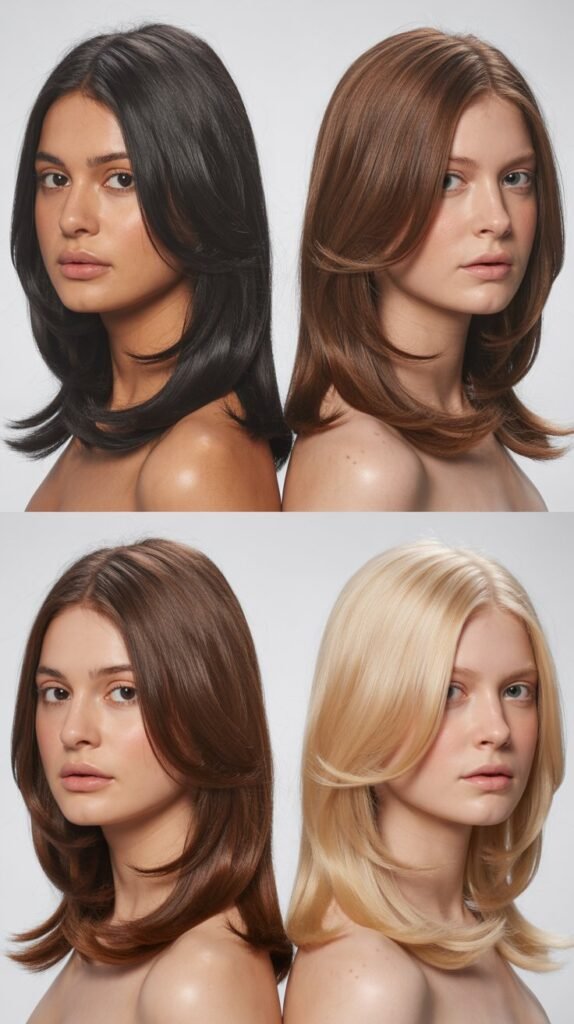
Face-framing layers that start around the cheekbones or jawline create instant dimension while keeping the back section perfectly straight and polished.
- This timeless approach softens angular features and draws attention to your eyes and smile.
- The layers gradually blend into the straight back, creating a seamless transition that looks natural and effortless.
- This style works exceptionally well for oval, heart-shaped, and square face shapes by adding gentle curves around the face.
- Use a flat iron to smooth the back sections while adding subtle bends to the front layers for a soft, wispy effect.
- Apply a lightweight serum from mid-length to ends on the straight back portion to enhance shine without weighing down the layers.
- This versatile look transitions easily from professional settings to casual outings with minimal styling adjustments.
2. Curtain Bangs With Straight Flowing Back
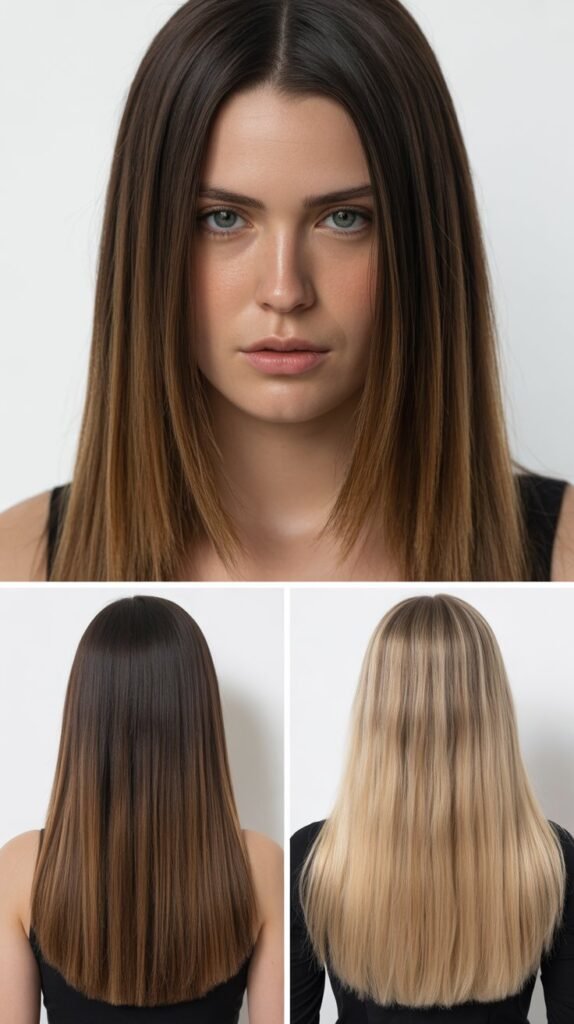
Curtain bangs part naturally in the middle and frame both sides of the face while the back remains sleek and straight from crown to ends.
- These soft, wispy bangs create a romantic, vintage-inspired aesthetic that complements long straight hair beautifully.
- The center part allows the bangs to sweep gracefully to each side, creating symmetry and balance.
- This style elongates round faces and softens the appearance of prominent foreheads.
- Blow-dry the curtain bangs with a round brush, directing them away from the center while keeping the back sections straight with a paddle brush.
- The length of curtain bangs typically ranges from nose-length to cheekbone-length for optimal face-framing effect.
- This look requires minimal maintenance compared to traditional straight-across bangs, growing out gracefully without awkward stages.
- Pair with a glossing treatment on the straight back sections to create stunning contrast between textured bangs and mirror-like shine.
3. Long Layers Starting At The Chin
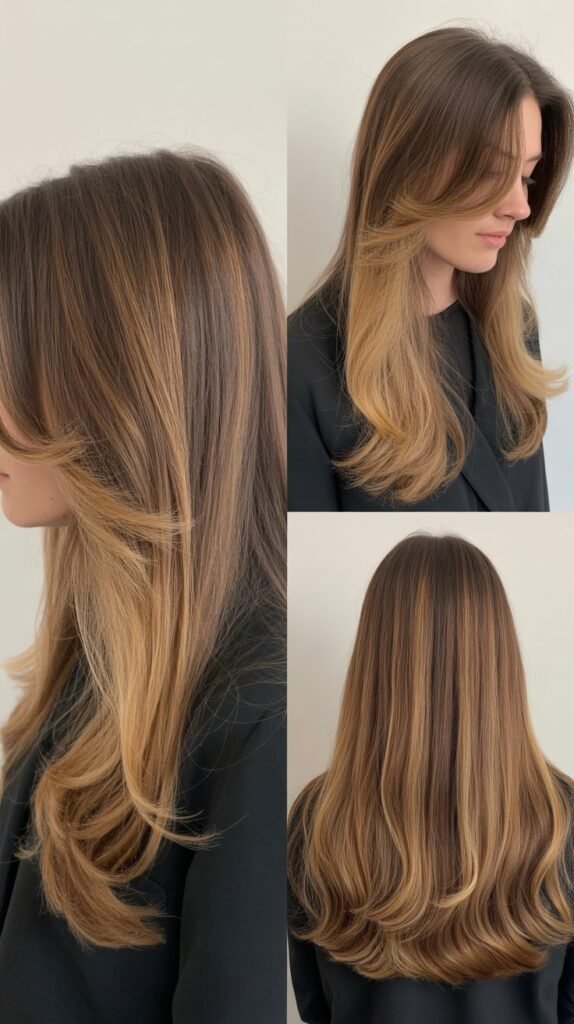
Strategic layering that begins at chin level creates movement in the front while preserving maximum length and straightness in the back.
- This technique adds body around the face without sacrificing the dramatic impact of long, straight hair.
- The chin-length starting point works universally across different face shapes, creating flattering proportions.
- Layers gradually extend longer as they move toward the back, maintaining weight and fullness at the ends.
- This style prevents the heavy, flat appearance that sometimes occurs with one-length long hair.
- Use a volumizing mousse at the roots before blow-drying to enhance lift in the layered sections.
- The straight back serves as a stunning canvas that emphasizes the dimensional layering around the face.
- This approach is ideal for those wanting to add interest to long hair without committing to dramatic length changes.
4. Feathered Front Layers With Glass Hair Back
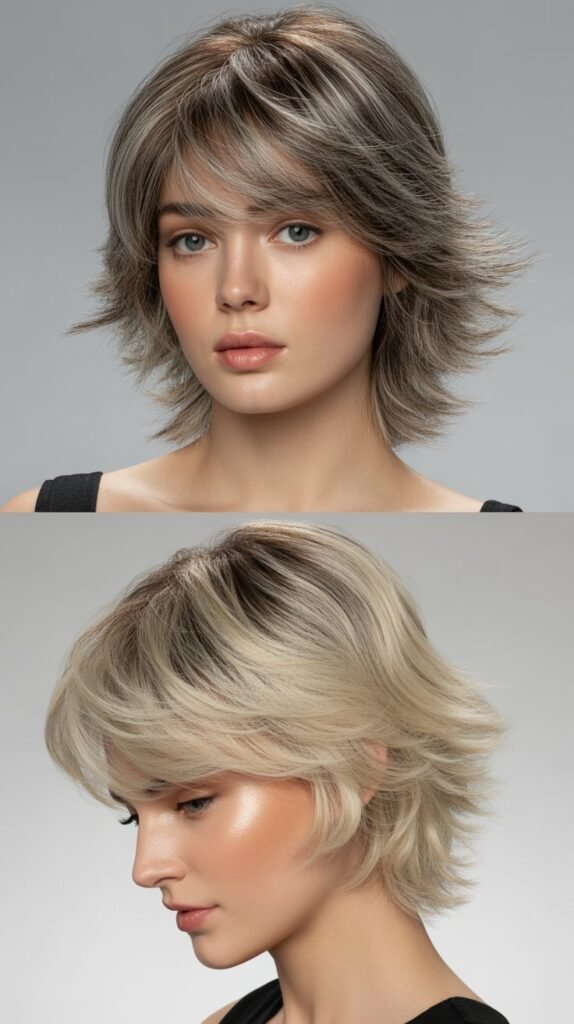
Feathered, textured front layers create soft, airy movement while the back is styled to achieve the “glass hair” trend with mirror-like smoothness.
- The contrast between textured feathering and ultra-sleek back creates a modern, editorial look.
- Feathering involves point-cutting techniques that create soft, wispy ends rather than blunt lines.
- This style adds a bohemian touch to the front while maintaining sophisticated polish in the back.
- Apply a smoothing cream to the back sections and use a flat iron at optimal temperature to achieve glass-like shine.
- The feathered front pieces should be dried with your fingers or a diffuser to maintain their airy texture.
- This combination works beautifully for fine to medium hair textures, adding perceived thickness through the feathered layers.
- Consider highlights or balayage on the front feathered pieces to emphasize the textural dimension.
5. Asymmetrical Front Layers With Even Back
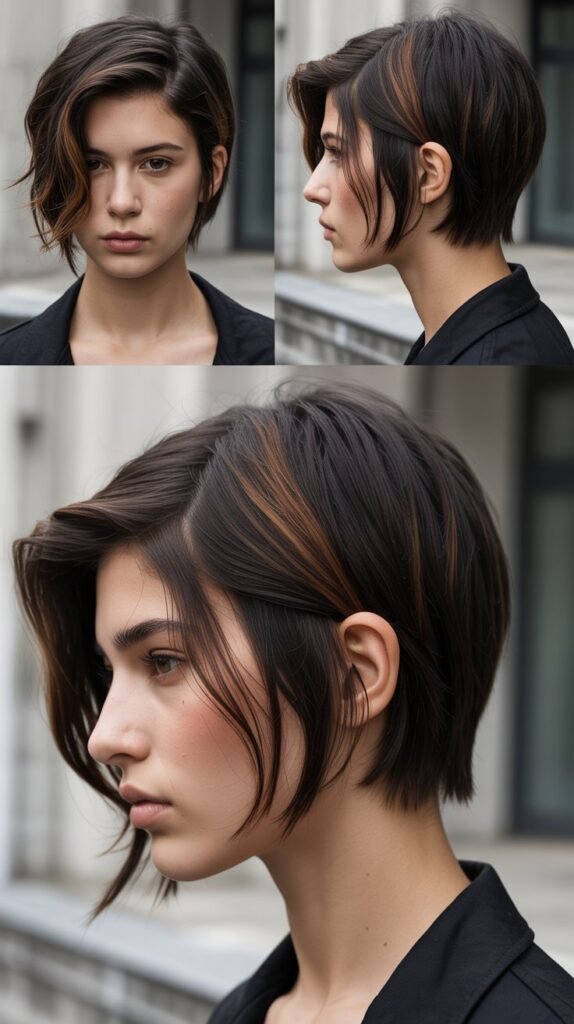
One side features shorter, more dramatic layers while the other side has longer, subtler layers, but the back remains uniformly straight and even.
- This edgy approach adds personality and uniqueness while keeping the overall look wearable for daily life.
- The asymmetry draws the eye and creates visual interest without requiring extreme cutting techniques.
- This style allows you to showcase one side more prominently, perfect for side-swept styling.
- The even, straight back provides stability and balance to the asymmetrical front design.
- This look is particularly flattering when you typically wear your hair swept to one side.
- Use a straightening balm on the back sections to maintain evenness while enhancing the dimensional front layers with texturizing spray.
- The contrast between asymmetrical front and symmetrical back creates a modern, fashion-forward aesthetic.
6. Wispy Baby Layers With Straight Length
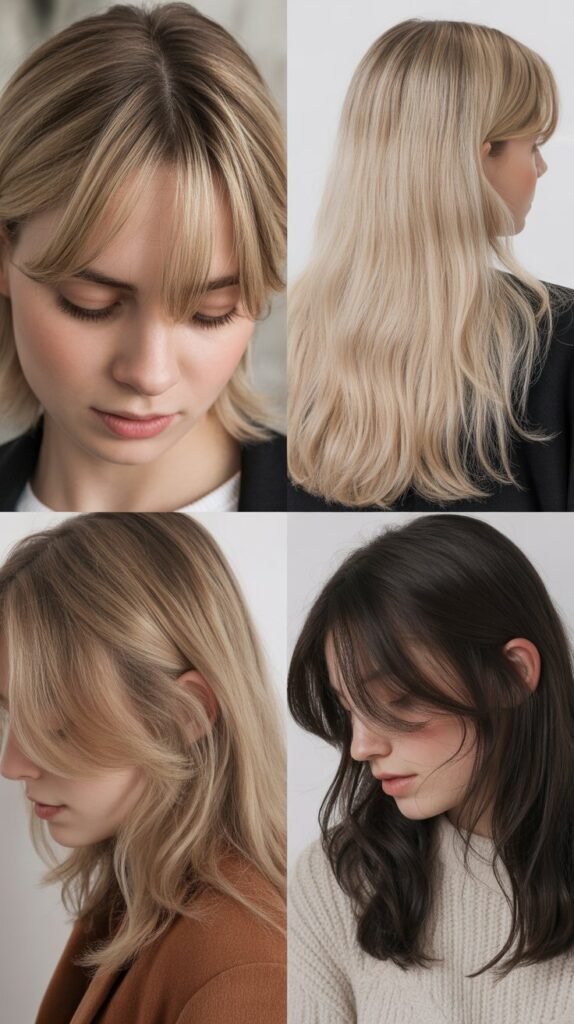
Delicate, wispy layers concentrated around the hairline and temples create a soft halo effect while the majority of the hair remains straight and long.
- These ultra-fine baby layers add romantic softness without altering the overall length or shape.
- The wispy texture frames the face gently, creating an ethereal, feminine appearance.
- This technique works exceptionally well for those with naturally straight hair who want subtle enhancement.
- Baby layers are typically cut very short, around eyebrow to temple length, and thinned significantly for that feathery effect.
- The straight back section should be kept healthy and hydrated to showcase its full length and shine.
- This style is perfect for adding dimension to fine hair without creating visible layering lines.
- Use a light hairspray to keep baby layers in place while maintaining their soft, touchable texture.
7. Blunt Front Layers With Sleek Styling
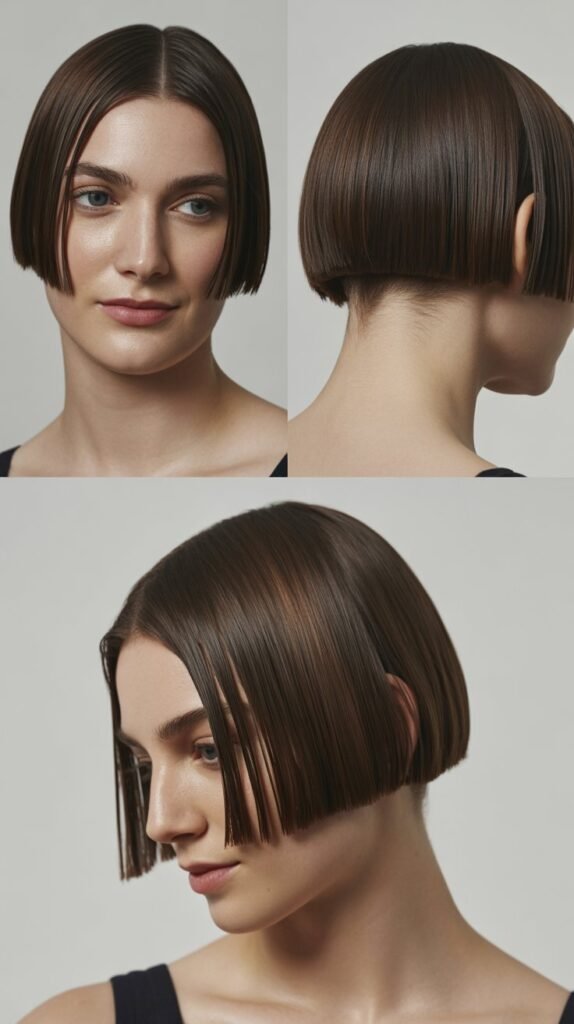
Blunt-cut front layers create clean, geometric lines while the straight back maintains a similarly sharp, precise finish.
- This modern approach emphasizes clean lines and intentional structure throughout the hairstyle.
- Blunt layers create a stronger, more dramatic frame around the face compared to softer, feathered techniques.
- The precision cutting required for this style creates a polished, high-fashion appearance.
- This technique works best on medium to thick hair textures that can support the weight of blunt ends.
- Use a flat iron with ceramic plates to achieve the sharp, straight finish on both front layers and back sections.
- The blunt approach prevents split ends and maintains shape longer between haircuts.
- This style makes a bold statement while remaining sophisticated and wearable for professional environments.
8. Side-Swept Layers With Center-Parted Back
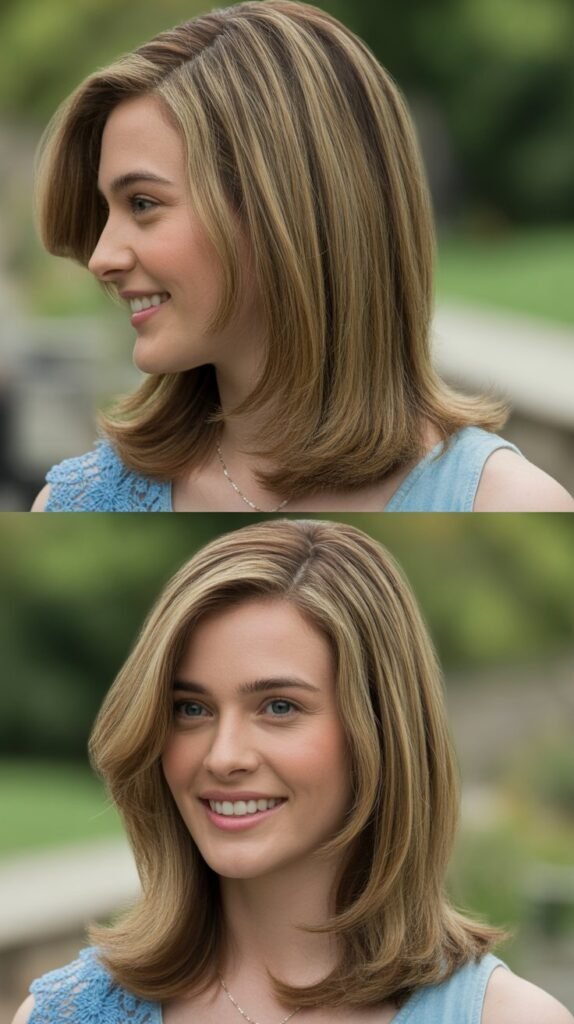
Front layers are designed to sweep dramatically to one side while the back features a clean center part with straight, flowing hair on both sides.
- This style combines asymmetrical front styling with symmetrical back design for balanced contrast.
- The side-swept layers create volume and drama on one side of the face.
- The center-parted back elongates the face and creates a classic, timeless silhouette.
- This approach is particularly flattering for those with round or heart-shaped faces.
- Use a large round brush while blow-drying the front layers, directing them to your preferred side.
- Apply a lightweight oil to the center-parted back sections to enhance smoothness and prevent frizz.
- This style photographs beautifully from all angles, making it ideal for special occasions or photo-ready moments.
9. Choppy Front Pieces With Polished Back
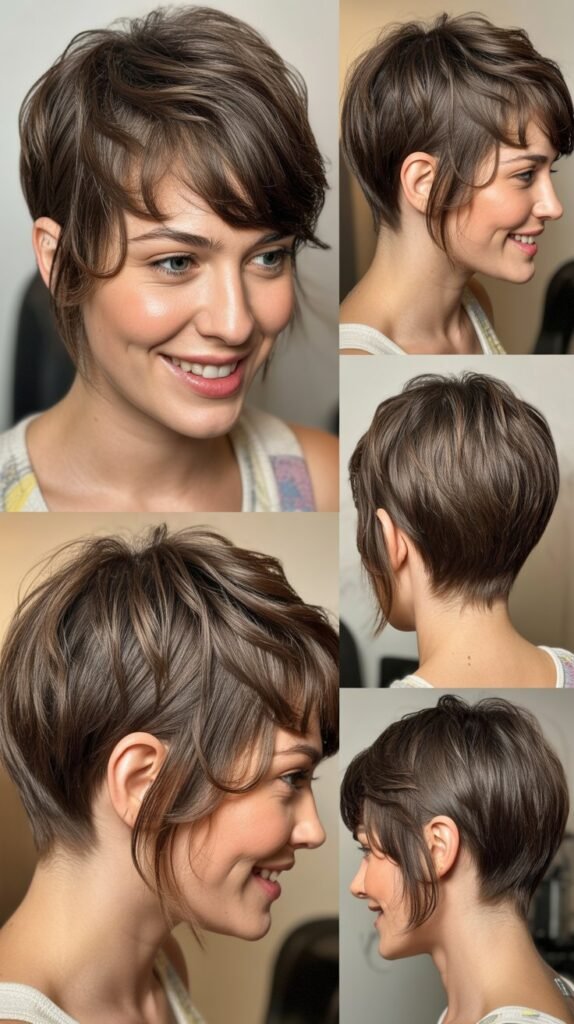
Intentionally choppy, textured front pieces create an edgy, modern vibe while the back remains impeccably polished and straight.
- This combination balances rebellious texture with refined sophistication.
- Choppy layers are achieved through point-cutting and razor techniques that create varied lengths and texture.
- The polished back provides a clean canvas that allows the textured front to stand out.
- This style works well for thick hair that can handle aggressive texturizing without appearing thin.
- Use texturizing paste or dry shampoo on the choppy front pieces to enhance separation and definition.
- The straight back should be treated with smoothing products to create maximum contrast.
- This look appeals to those wanting an alternative, fashion-forward style that remains professional enough for most workplaces.
10. Graduated Front Layers With Straight Ends
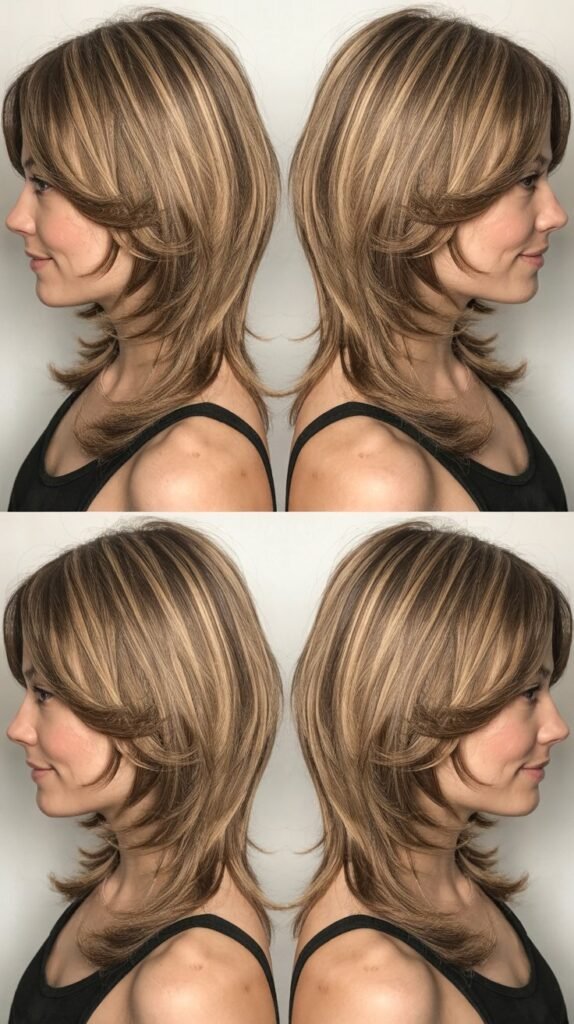
Layers that gradually increase in length from front to back create a cascading effect while maintaining blunt, straight ends throughout.
- This technique provides dimension and movement without sacrificing the health and appearance of the ends.
- Graduated layering creates a gentle slope from face to back rather than distinct stair-step layers.
- The blunt ends preserve thickness and prevent the wispy, thinned-out appearance that can occur with heavy layering.
- This style is ideal for those wanting subtle dimension rather than dramatic contrast.
- The straight ends make styling simpler, requiring only a paddle brush and blow dryer for a polished finish.
- This approach works beautifully for all hair textures, from fine to coarse.
- The graduated layers catch light differently at various angles, creating natural-looking dimension and depth.
11. Temple-Framing Tendrils With Straight Body
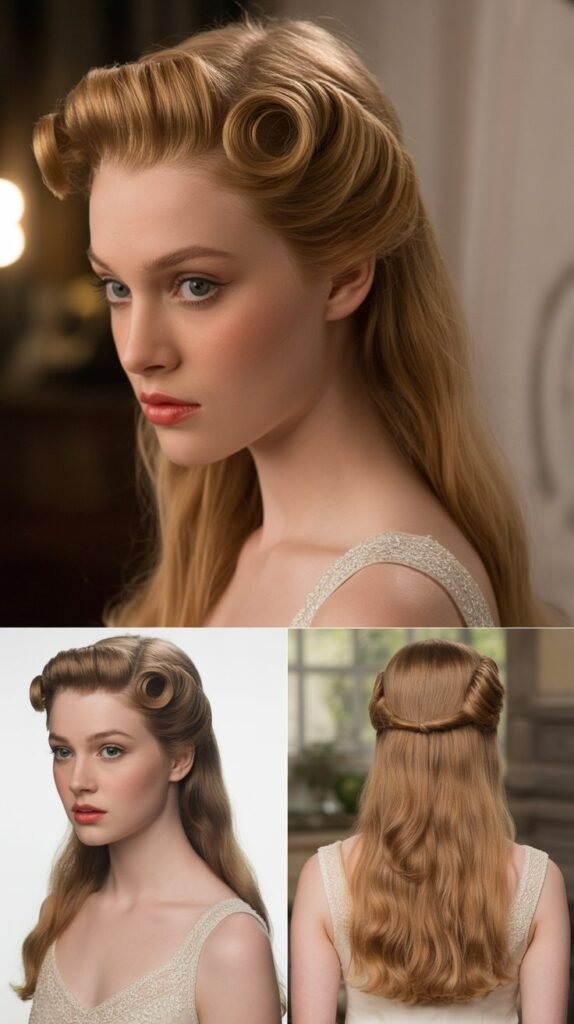
Delicate tendrils that frame the temples and curl slightly inward while the rest of the hair remains straight and flowing.
- These face-framing pieces add romantic softness and vintage charm to long straight hair.
- Temple tendrils are typically kept very thin, creating delicate wisps rather than chunky sections.
- This style evokes classic Hollywood glamour and works beautifully for formal occasions.
- The tendrils can be curled with a small-barrel curling iron or straightener for that gentle inward bend.
- The straight body of the hair provides contrast that makes the curled tendrils more noticeable and impactful.
- This technique is perfect for softening a strong jawline or prominent cheekbones.
- Keep tendrils light and wispy by using minimal product and allowing them to maintain natural movement.
12. Layered Fringe With Straight Flowing Length
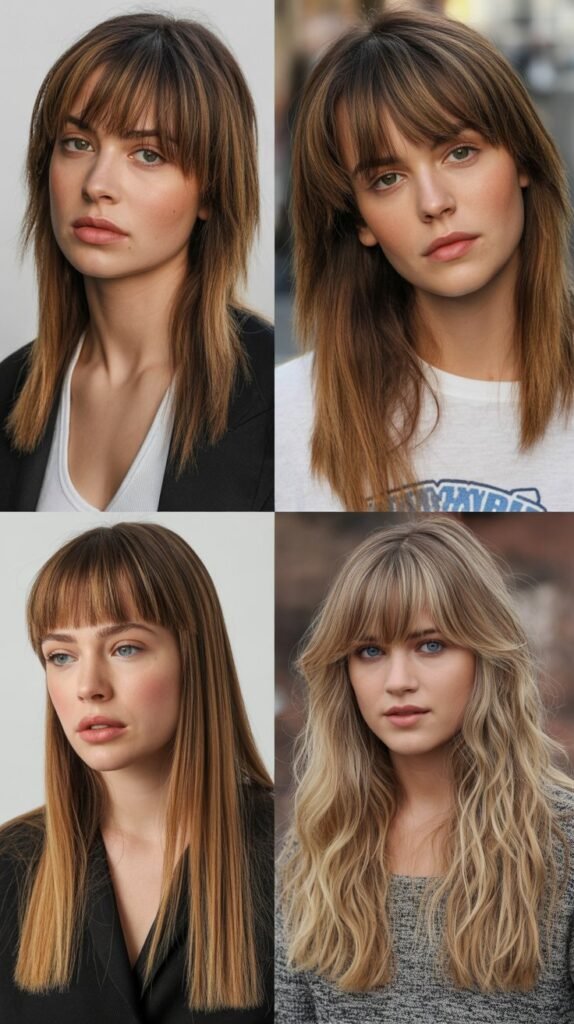
A layered, textured fringe across the forehead complements the long, straight hair flowing behind it.
- The layered fringe adds youthful energy and frames the eyes beautifully.
- Unlike blunt bangs, layered fringe has varied lengths that create movement and prevent a harsh line.
- The straight length behind showcases the contrast between textured fringe and sleek body.
- This style works for various fringe lengths, from eyebrow-skimming to longer, eye-level pieces.
- Use a round brush to add slight lift to the fringe while flat-ironing the back for smoothness.
- The layered approach prevents the fringe from appearing too heavy or overwhelming the face.
- This combination is particularly flattering for those with long foreheads or who want to emphasize their eyes.
13. V-Shaped Layers With Straight Back Sections
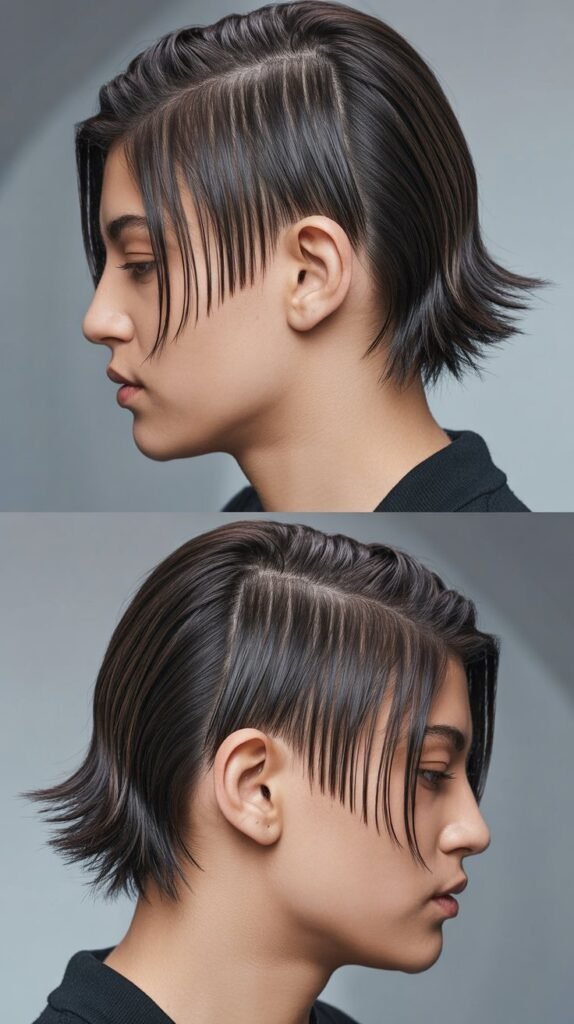
Front layers are cut in a V-shape that points toward the chin, creating a distinctive geometric frame while the back remains straight.
- The V-shape creates a dramatic focal point that draws attention to the face and neck.
- This angular approach adds modern edge to classic long straight hair.
- The pointed V directs the eye downward, elongating the face and creating a slimming effect.
- This technique requires precision cutting to achieve symmetrical V-formation on both sides.
- The straight back sections should be maintained at consistent length to emphasize the V-shaped front contrast.
- This style photographs exceptionally well from the front, making it popular for content creators and those who frequently take selfies.
- Use a flat iron to create sharp, defined lines in the V-shaped layers while keeping the back ultra-smooth.
14. Peek-A-Boo Layers With Smooth Surface
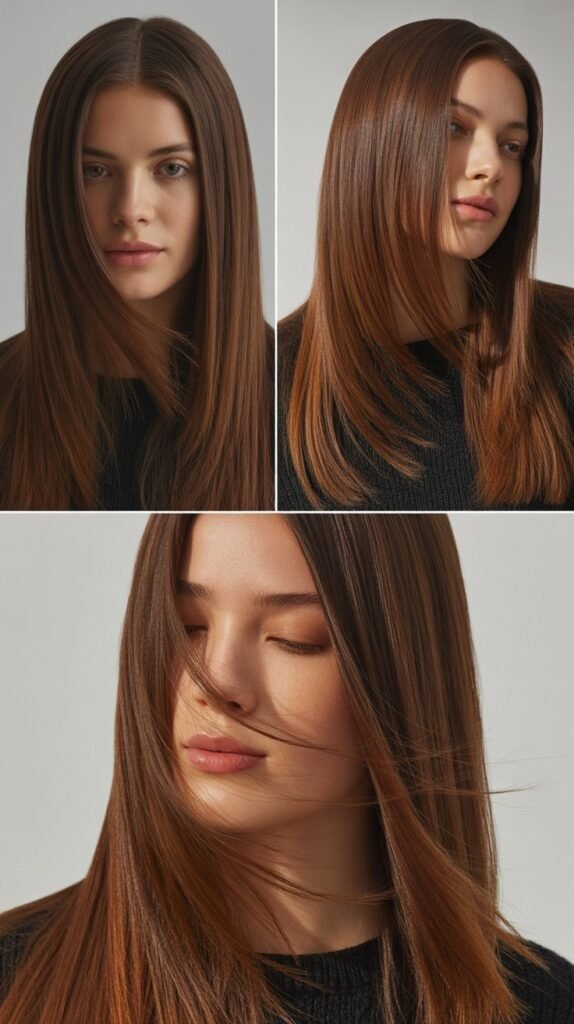
Shorter layers hidden underneath longer surface layers create subtle dimension that “peeks” through while the outer layer remains smooth and straight.
- This technique adds volume and movement without visible layering when hair is worn down.
- The hidden layers create internal texture that prevents flat, lifeless appearance.
- The smooth surface layer maintains a polished, put-together look for professional settings.
- When hair moves or is tucked behind the ears, the peek-a-boo layers become visible, adding surprise and interest.
- This approach is ideal for those who want the benefits of layering without committing to an obviously layered look.
- The straight surface sections should be kept healthy and shiny to showcase the sleek outer appearance.
- This technique works particularly well for thick hair that needs internal weight removal without visible external layering.
15. Shattered Front Layers With Glass-Like Back
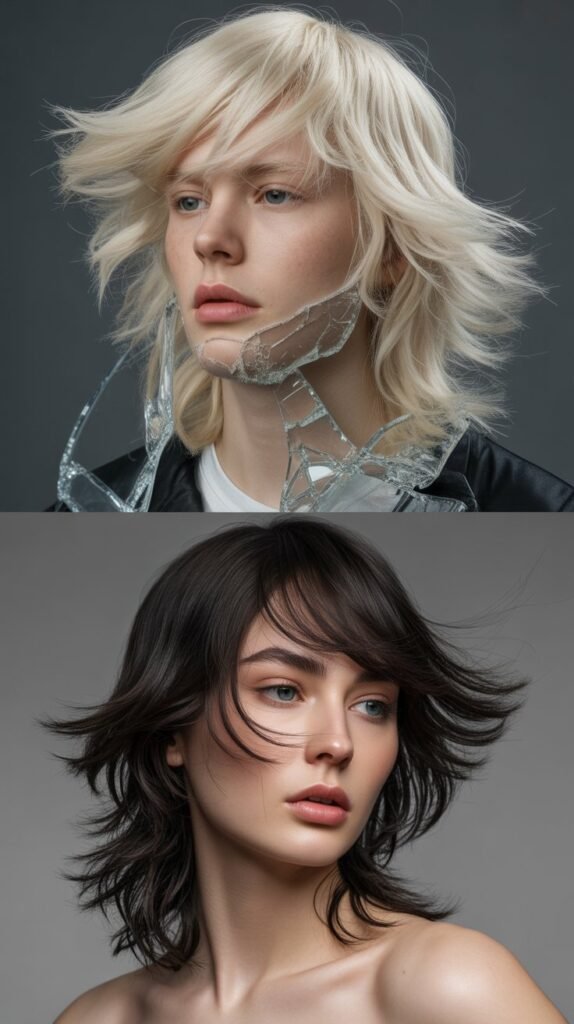
Heavily textured, “shattered” front layers create dramatic, piecey separation while the back is styled to ultra-smooth, glass-like perfection.
- This high-contrast style makes a bold statement by juxtaposing opposite textures.
- Shattered layers are created using razor cutting and point-cutting techniques for maximum separation.
- The glass-like back requires expert smoothing techniques and high-quality heat protectants.
- This style is popular in editorial and fashion contexts for its striking visual impact.
- Use texturizing powder or paste on the shattered front pieces to enhance separation and definition.
- The back sections need intensive smoothing treatments and serums to achieve the glass-like finish.
- This look requires commitment to maintenance but delivers unforgettable visual impact.
16. Soft Angle Layers With Straight Silhouette
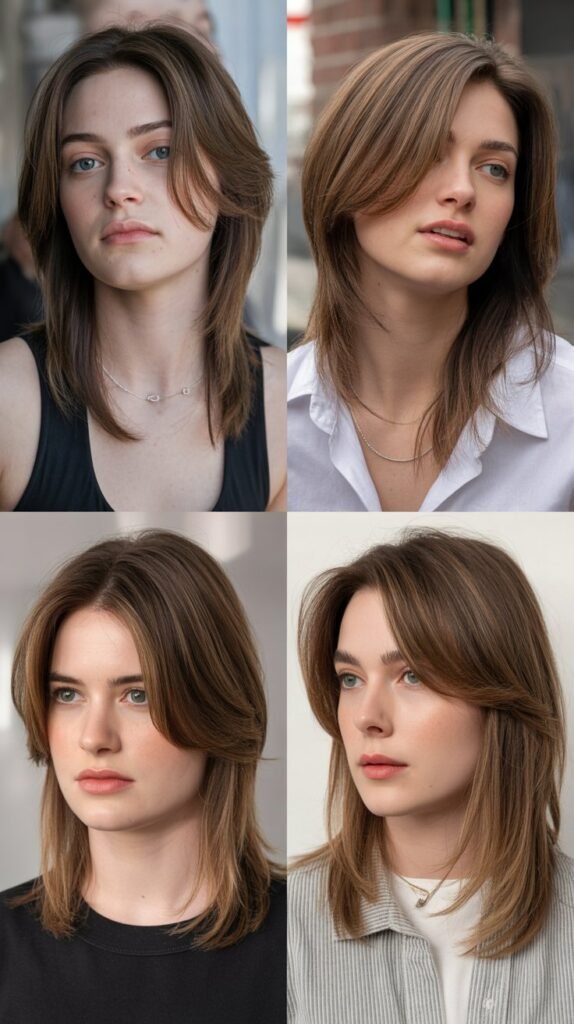
Gently angled layers that slope subtly from front to back create soft dimension while maintaining an overall straight silhouette.
- The soft angles add interest without creating obvious stair-step layering.
- This technique is more subtle than dramatic graduated layers, perfect for conservative styling preferences.
- The angled approach creates gentle movement that catches light beautifully.
- This style works universally across face shapes and hair textures.
- The straight silhouette is maintained through careful blow-drying and flat-ironing techniques.
- This approach adds dimension while keeping the style appropriate for any professional environment.
- The soft angles prevent the blunt, heavy appearance of one-length hair without going too editorial or dramatic.
17. Money Piece Front Layers With Dark Straight Back
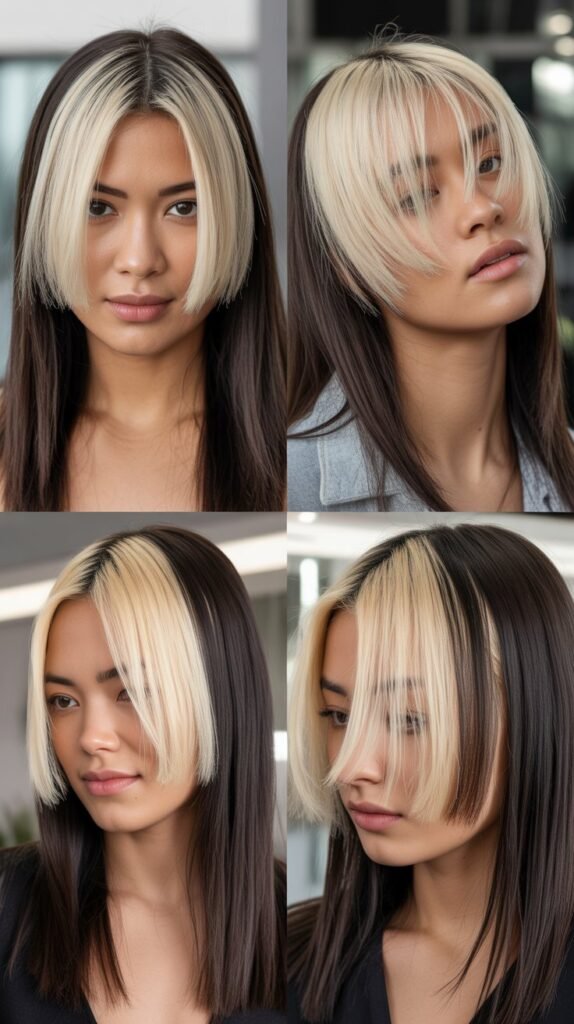
Bright, contrasting “money piece” highlights frame the face within front layers while the dark straight back creates dramatic contrast.
- The money piece trend involves face-framing highlights that are significantly lighter than the base color.
- This color placement emphasizes the front layers and draws attention to facial features.
- The dark straight back serves as a rich, dimensional canvas that makes the bright front pieces pop.
- This style works with various base colors, from chocolate brown to jet black.
- The front layers should be strategically placed to showcase the money piece highlights optimally.
- This combination creates a high-impact look that’s both trendy and timeless.
- The straight back styling prevents the look from becoming too busy or overwhelming.
18. Micro Layers With Long Straight Length
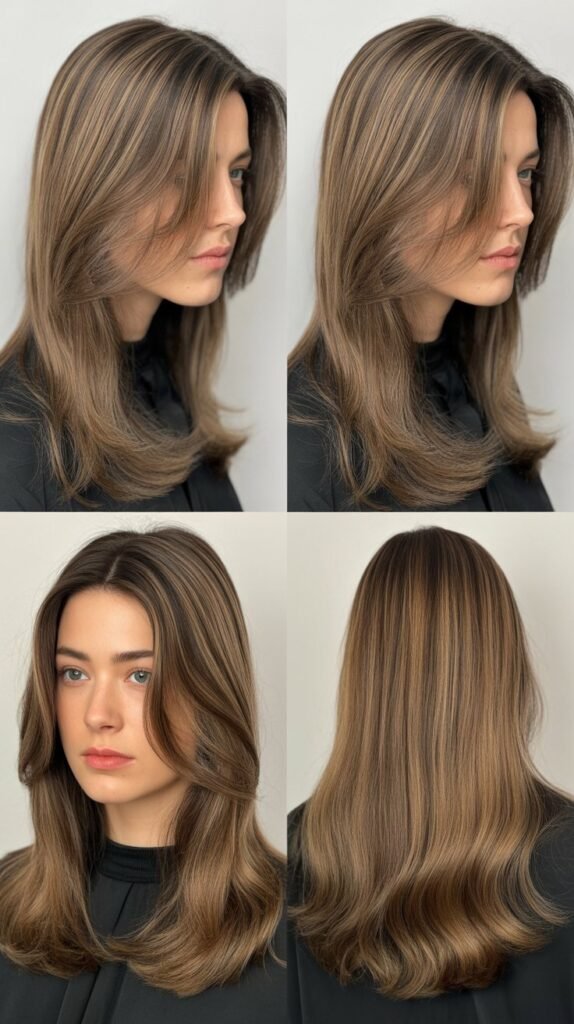
Very subtle, micro layers throughout the front and sides add imperceptible dimension while maintaining the appearance of long, straight one-length hair.
- Micro layering removes minimal length while adding maximum movement and body.
- This technique is perfect for those who want the benefits of layers without visible layering lines.
- The layers are so subtle that the hair appears to be one length from a distance.
- This approach adds life to fine, flat hair without sacrificing the illusion of thickness from long length.
- The straight styling emphasizes the seamless blending of the micro layers.
- This is an excellent maintenance strategy for growing out previously layered hair while maintaining shape.
- The technique prevents the triangular, pyramid shape that can occur with truly one-length long hair.
19. Disconnected Front Layers With Sleek Back
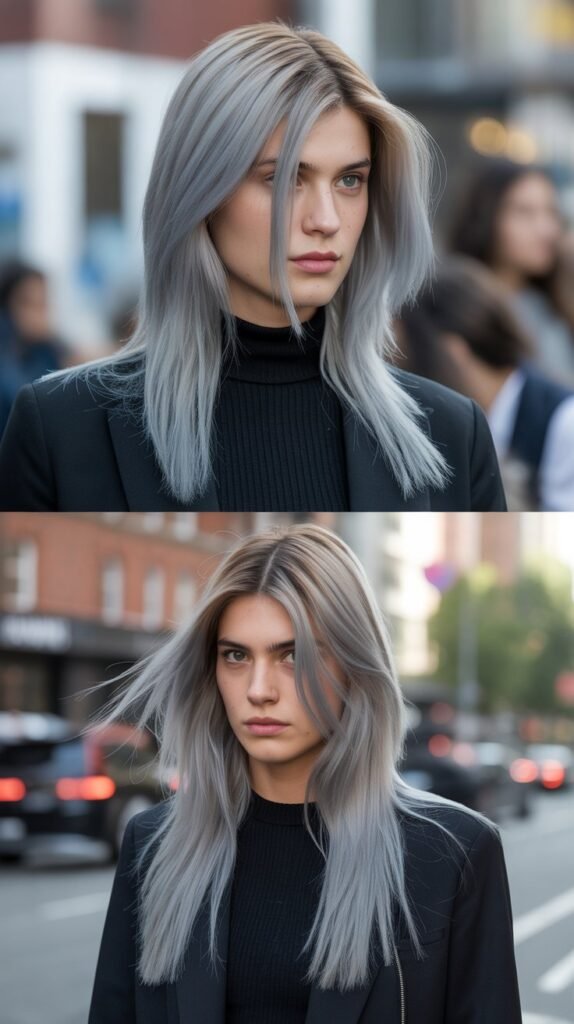
Intentionally disconnected front layers that have significant length difference from the back create an avant-garde, fashion-forward look.
- The disconnect creates dramatic contrast between shorter front pieces and long back length.
- This technique is bold and makes an intentional style statement.
- The sleek back emphasizes the dramatic disconnect by providing clean, uninterrupted length.
- This style works well for those wanting an edgy look that remains feminine and wearable.
- The front layers can range from chin to shoulder length while the back extends significantly longer.
- This approach requires confidence and regular maintenance to keep the disconnect looking intentional rather than grown-out.
- Style the disconnected front layers with texture while keeping the back ultra-smooth for maximum contrast.
20. Rounded Front Layers With Straight Body
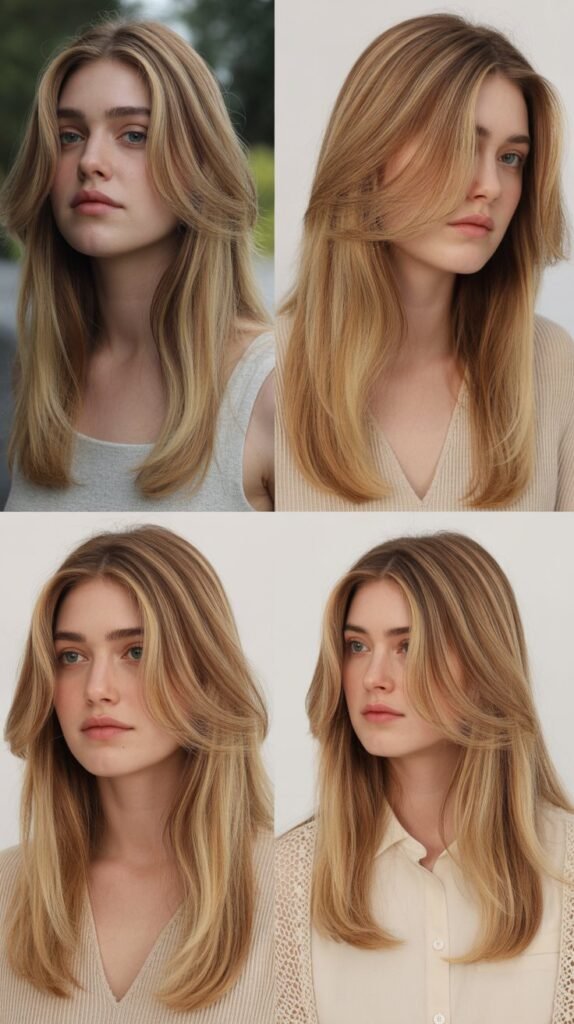
Front layers cut in a rounded, curved shape that hugs the face while the body and back remain straight and flowing.
- The rounded shape creates a soft, feminine frame that flatters the face naturally.
- This technique follows the natural curve of the face rather than creating angular or geometric lines.
- The rounded layers blend seamlessly into the straight body for a cohesive look.
- This style is universally flattering and works across different face shapes and hair textures.
- The curve can be adjusted based on personal preference, from subtle to more pronounced.
- Use a round brush during blow-drying to enhance the rounded shape of the front layers.
- The straight body provides balance to the curved front, preventing the style from becoming too voluminous or round overall.
21. Textured Front Layers With Smooth Mirror Back
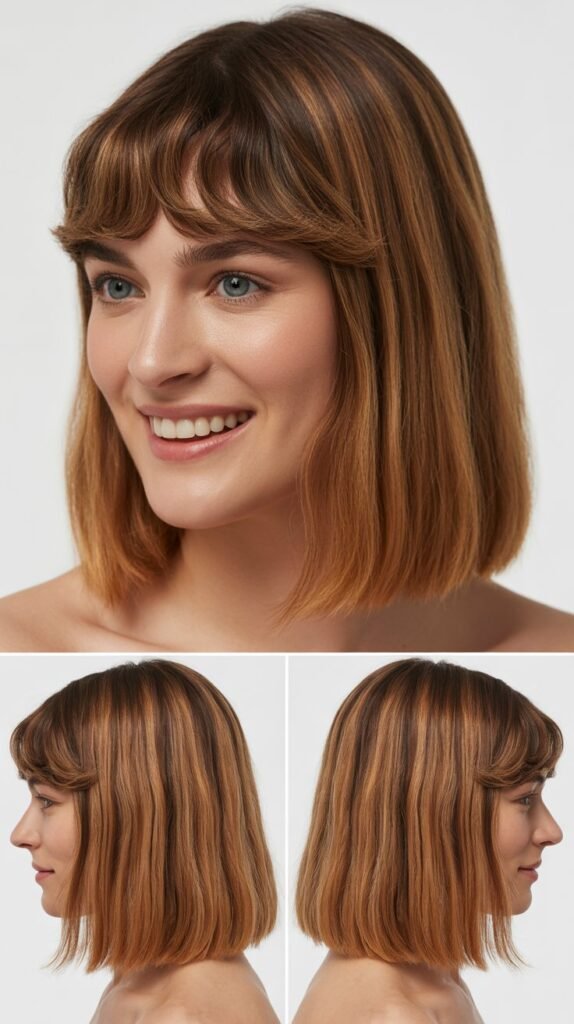
Heavily textured, piecey front layers contrast dramatically with a smooth, mirror-like back that reflects light beautifully.
- This style combines opposite textures for striking visual contrast and modern appeal.
- The textured front adds edginess while the smooth back maintains sophistication.
- This combination is popular in fashion and beauty editorial contexts.
- Use texturizing products like clay or paste on the front layers for maximum separation.
- The mirror-smooth back requires high-quality smoothing serums and expert heat styling.
- This style works best on medium to thick hair that can support both textures effectively.
- The contrast between textures creates a multidimensional look that photographs exceptionally well.
22. Invisible Layers With Straight Polish
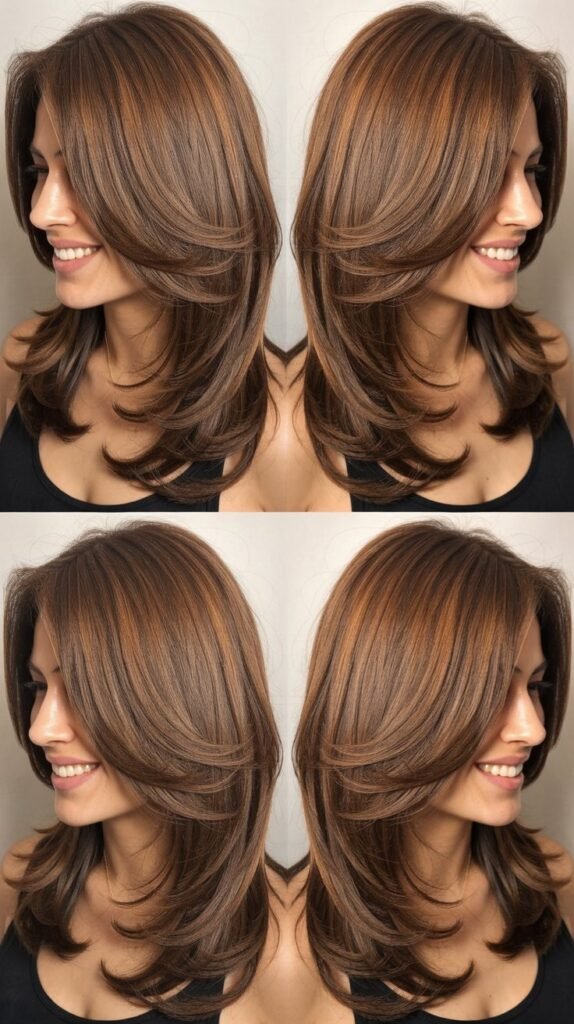
Expertly blended invisible layers throughout that add movement and dimension without any visible layering lines, all styled perfectly straight.
- This technique requires advanced cutting skills to achieve seamless blending.
- The layers add body and movement while maintaining the appearance of one-length hair.
- This approach is perfect for those wanting subtle enhancement without obvious styling.
- The straight polish emphasizes the seamless nature of the invisible layering.
- This style looks effortlessly chic and requires minimal daily styling.
- The invisible layers prevent flatness and add natural swing and movement to the hair.
- This technique works across all hair textures and is ideal for professional environments.
23. Bold Front Layers With Minimalist Back
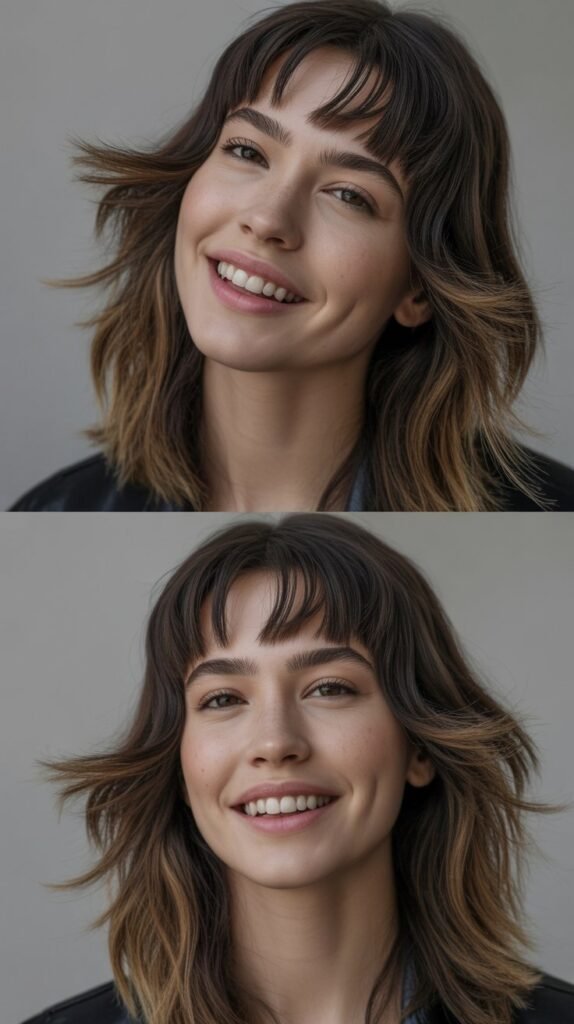
Dramatically bold, statement-making front layers contrast with an intentionally minimalist, simple straight back.
- This style makes the front layers the focal point while the back provides clean simplicity.
- The bold front can include dramatic length, color, or texture variations.
- The minimalist back prevents visual overwhelm and keeps the style wearable.
- This approach is perfect for those wanting to make a statement while maintaining balance.
- The contrast between bold front and simple back creates intentional, artistic styling.
- This style works well for creative professionals and those in fashion or beauty industries.
- The straight back requires minimal maintenance, balancing the higher-maintenance bold front layers.
24. Graduated Angle Front Layers With Even Straight Back
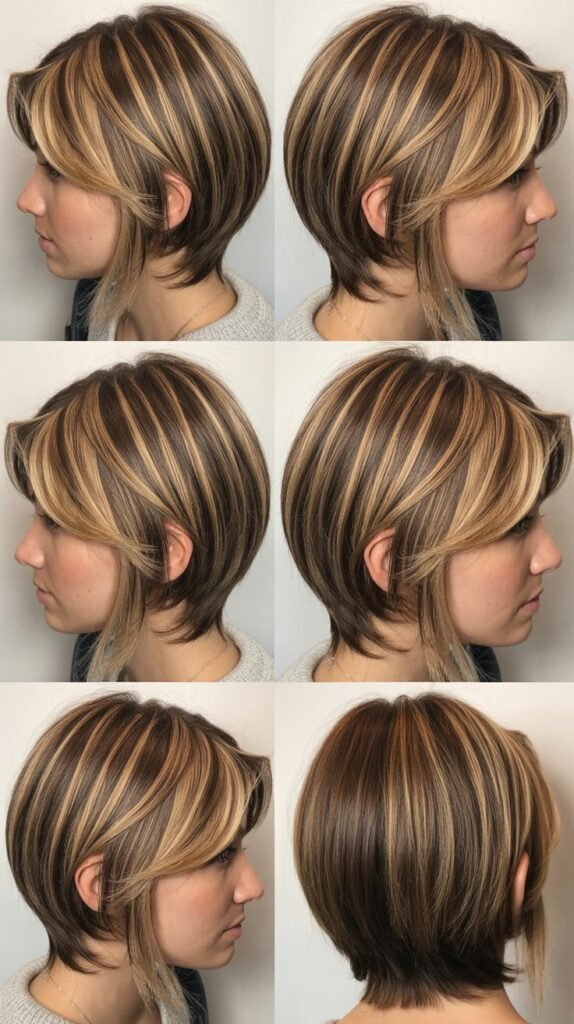
Front layers cut at a graduated angle from shortest to longest create dimensional sloping while the back remains even and straight.
- The graduated angle adds visual interest and creates natural movement in the front sections.
- This technique flatters the face by creating customizable angles based on face shape.
- The even straight back provides stability and balance to the angled front design.
- This style is versatile enough for both professional and casual settings.
- The graduated angle can be subtle or dramatic depending on personal preference.
- This approach prevents the blocky appearance that can occur with single-length front sections.
- The straight back styling keeps the overall look polished and put-together.
25. Feathered Bangs With Straight Flowing Hair
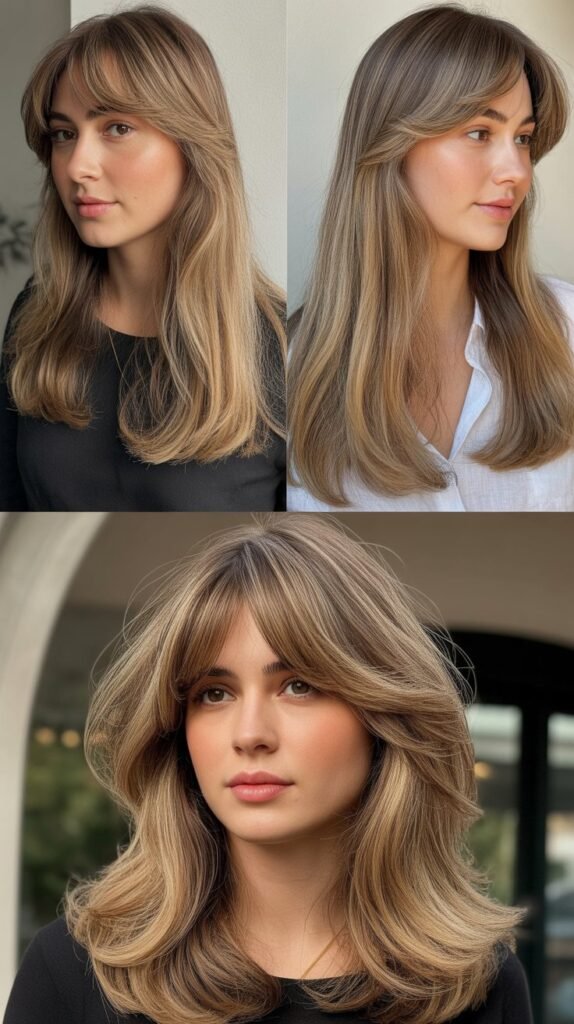
Soft, feathered bangs across the forehead blend beautifully with straight, flowing long hair behind.
- Feathered bangs create a soft, romantic appearance rather than a harsh line.
- This style evokes 70s-inspired aesthetic updated for modern sensibilities.
- The feathering technique involves point-cutting to create wispy, textured ends.
- The straight flowing hair behind provides clean contrast to the textured bangs.
- This combination works beautifully for those wanting to soften their features.
- Use a round brush to add lift and movement to the feathered bangs while blow-drying.
- The length and density of feathered bangs can be customized based on face shape and personal style.
26. Side-Part Layers With Straight Center Flow
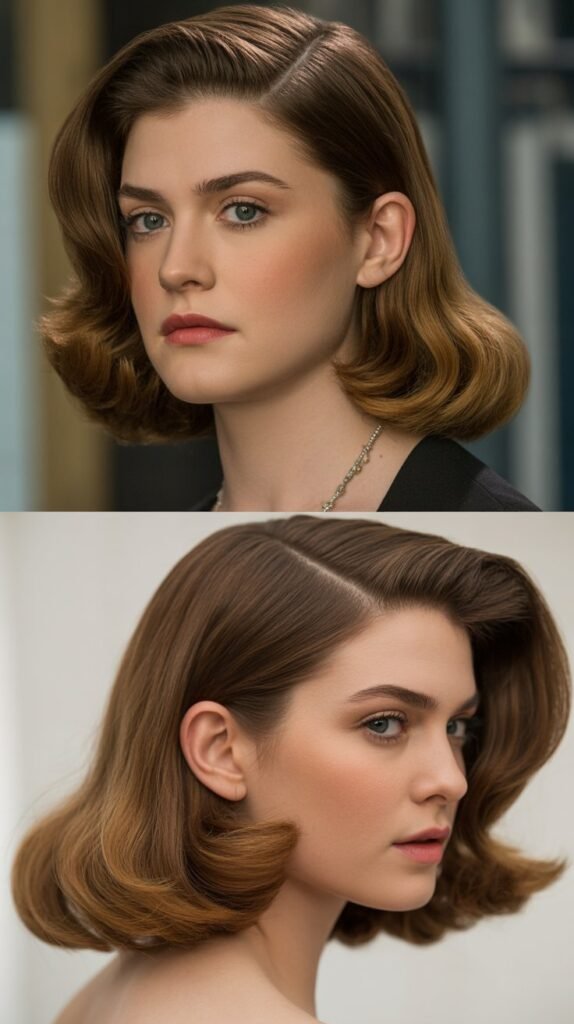
Layers concentrated on the heavier side of a deep side part while the center and opposite side flow straight and smooth.
- This asymmetrical approach creates volume and drama on one side while maintaining sleekness on the other.
- The deep side part adds sophistication and vintage Hollywood glamour.
- The concentrated layers on the heavier side prevent the style from looking flat or one-dimensional.
- The straight center flow provides balance and prevents the style from becoming too heavy on one side.
- This technique is particularly flattering for those who prefer to showcase one side of their face.
- Use volumizing products on the layered side while smoothing products on the straight-flowing side.
- This style photographs beautifully and works well for formal occasions and red carpet events.
27. Soft Wispy Layers With Straight High-Shine Back
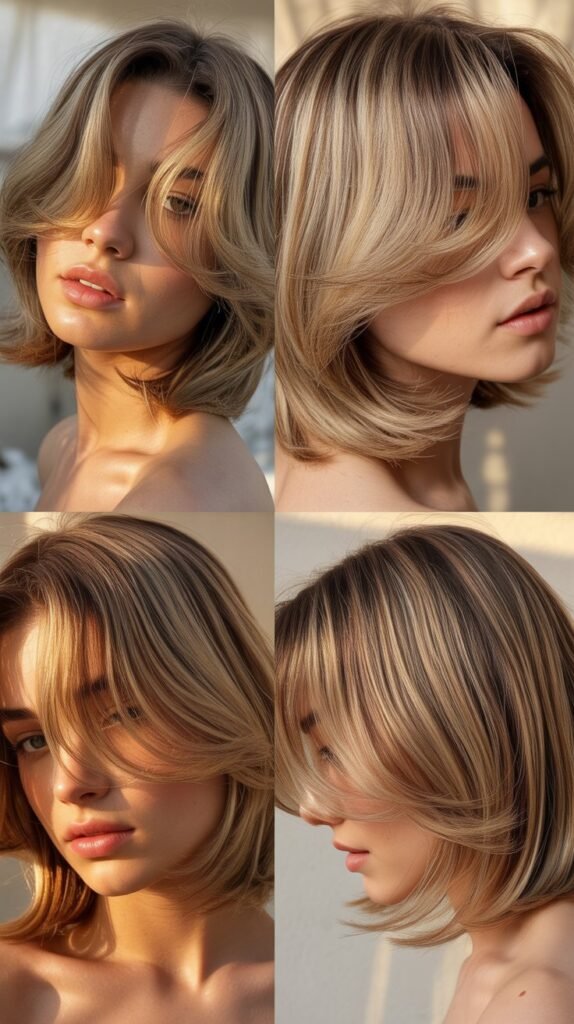
Delicate, wispy front layers create airy softness while the back is treated to high-shine, straight perfection.
- The wispy texture adds romantic femininity without weight or bulk.
- The high-shine back creates a healthy, polished appearance that catches light beautifully.
- This combination is perfect for those wanting softness around the face with glamorous shine throughout.
- The wispy layers should be kept light and feathery to maintain their airy quality.
- Apply shine-enhancing products and oils to the straight back sections for maximum gloss.
- This style works beautifully for medium to fine hair textures.
- The contrast between wispy softness and high shine creates dimensional interest.
28. Razor-Cut Front Layers With Smooth Straight Back
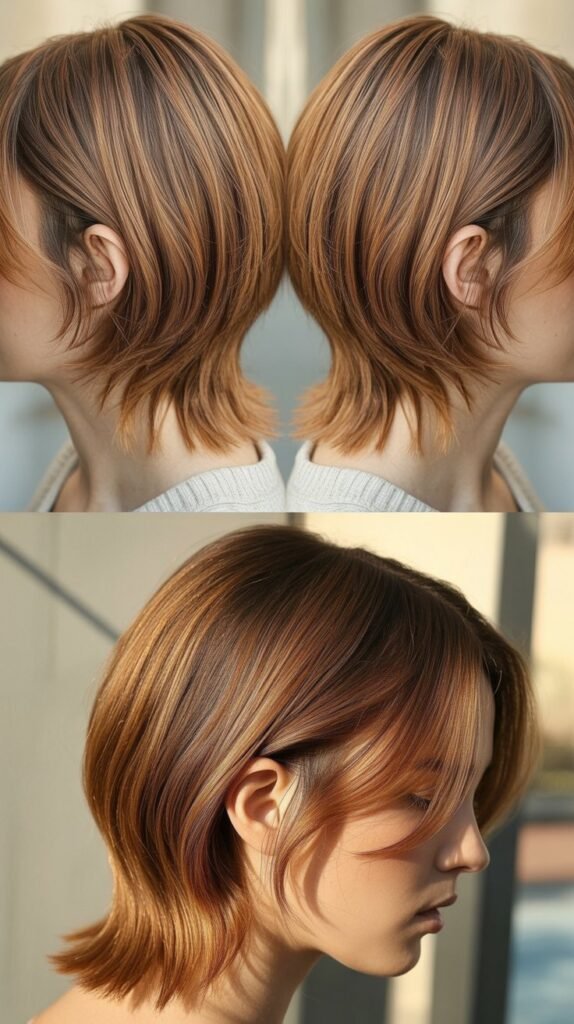
Razor-cut front layers create soft, feathered texture with tapered ends while the back remains smooth and straight.
- Razor cutting creates a different quality of layer compared to shear cutting, with softer, more graduated ends.
- This technique removes weight while maintaining a soft, feminine appearance.
- The razor-cut layers blend seamlessly and create natural movement.
- The smooth straight back provides contrast to the textured front layers.
- This style works particularly well for thick hair that benefits from weight removal.
- Razor-cut layers grow out more gracefully than shear-cut layers, requiring less frequent trims.
- This approach creates a lived-in, effortless appearance while maintaining polish.
29. Long Curtain Layers With Sleek Center-Part Back
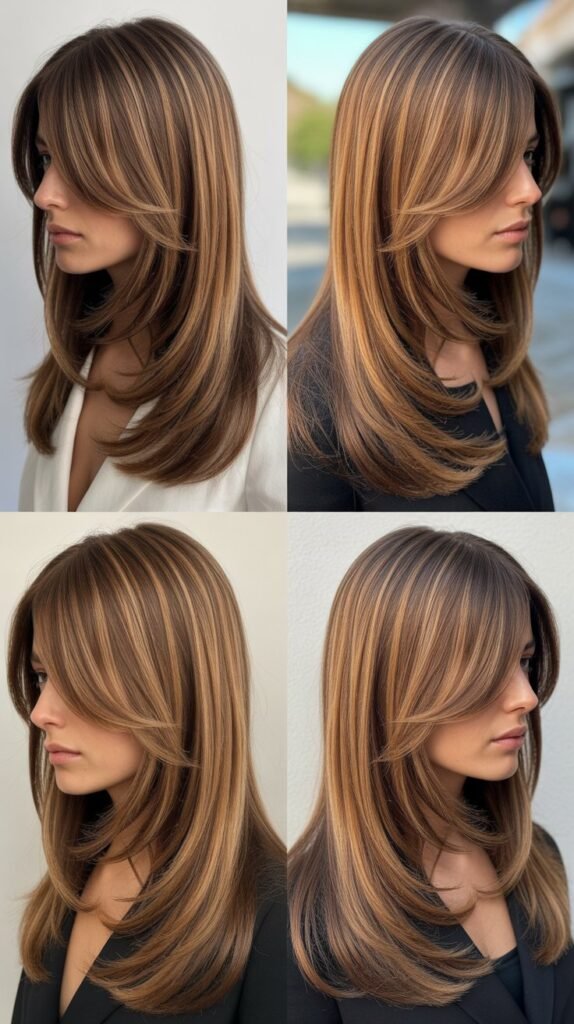
Extended curtain layers that reach beyond the chin frame the face while the center-parted back flows sleek and straight.
- These longer curtain layers create a more mature, sophisticated take on the curtain bang trend.
- The extended length allows for more versatility in styling, including tucking behind ears.
- The sleek center-part back creates symmetry and elegance.
- This style elongates the face and works particularly well for round or square face shapes.
- The longer curtain layers can be styled with slight bends or kept completely straight for varied looks.
- This combination balances face-framing softness with sleek sophistication.
- The center part draws the eye vertically, creating a lengthening effect.
30. Piece-y Front Layers With Polished Straight Back
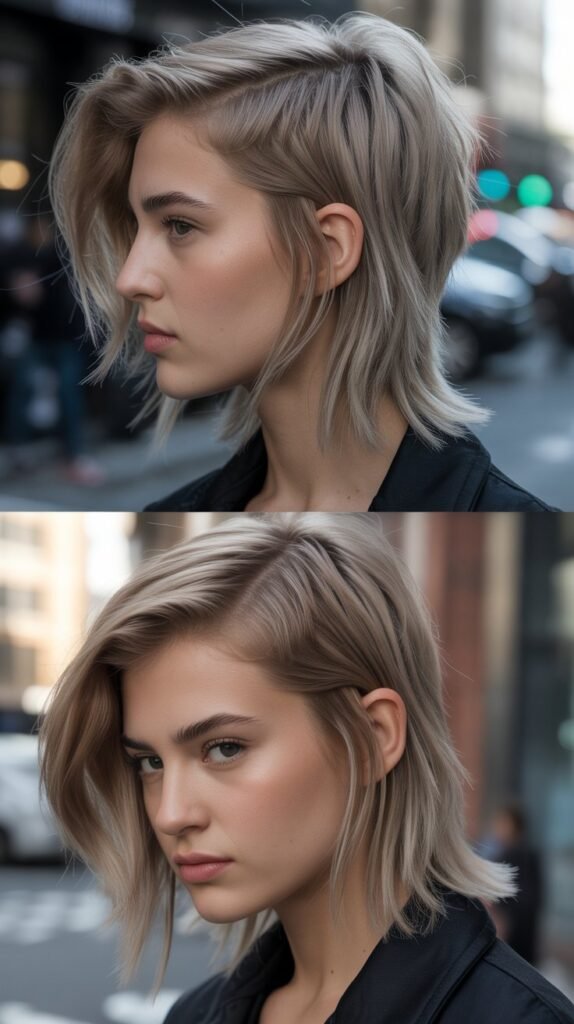
Intentionally piece-y, separated front layers create definition and texture while the back remains polished and straight.
- The piece-y texture adds modern edge and personality to the style.
- This technique involves using texturizing products to create visible separation between layer sections.
- The polished straight back provides clean contrast to the textured front.
- This style works well for those wanting an alternative, fashion-forward look.
- Use paste, wax, or texturizing cream to achieve the piece-y separation in front layers.
- The straight back should be smoothed with anti-frizz products for maximum polish.
- This combination balances edgy texture with refined sophistication.
31. Soft Baby Fringe With Long Straight Length
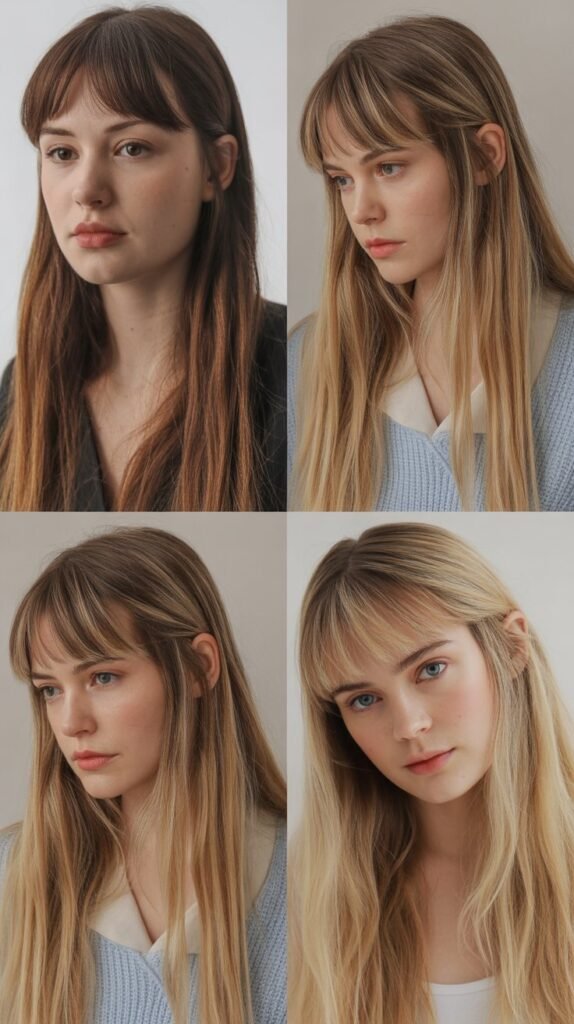
A soft, wispy baby fringe across the forehead complements long, straight hair that flows freely behind.
- Baby fringe is lighter and wispier than traditional bangs, creating a delicate frame for the forehead.
- This style adds youthful charm without the commitment of full bangs.
- The long straight length behind showcases the hair’s natural beauty and health.
- Baby fringe can be styled to the side or straight across depending on preference.
- This approach is perfect for testing out bangs without a dramatic cut.
- The wispy nature means baby fringe grows out gracefully without awkward stages.
- Keep the straight length hydrated and shiny to complement the delicate fringe.
32. Swooping Side Layers With Straight Opposite Side
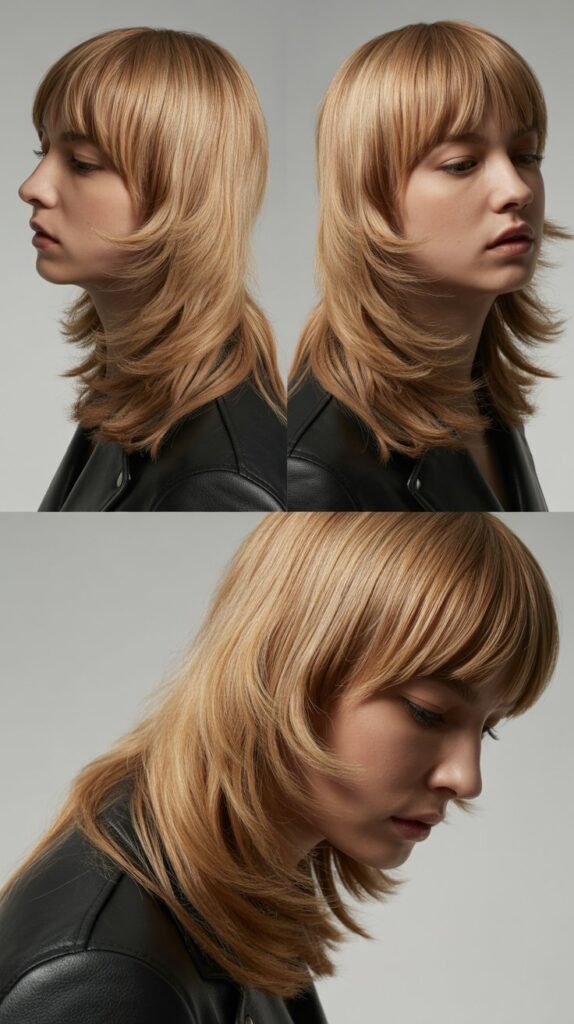
Dramatic swooping layers on one side create volume and movement while the opposite side remains straight and sleek.
- This asymmetrical approach creates visual interest and modern appeal.
- The swooping side can be styled with a round brush to enhance the dramatic curve.
- The straight opposite side provides balance and prevents overwhelming volume.
- This style works well for those with side parts who want to emphasize their preferred side.
- The swoop draws attention to the eyes and cheekbones on the layered side.
- This technique is flattering for round faces as it creates vertical lines and asymmetry.
- The contrast between swooping and straight sections creates dimensional interest.
33. Chin-Grazing Front Layers With Straight Long Back
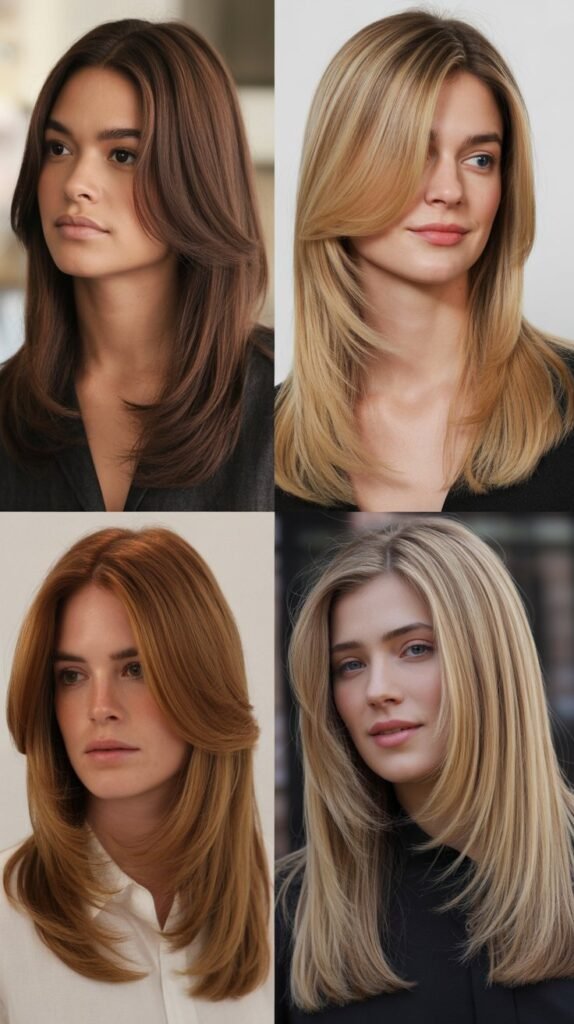
Front layers that gently graze the chin create a classic, universally flattering frame while the back extends long and straight.
- Chin-length is considered one of the most flattering layer lengths across different face shapes.
- These layers create definition around the jawline and draw attention to the face.
- The long straight back provides dramatic length contrast.
- This style balances face-framing dimension with the impact of long hair.
- Chin-grazing layers can be styled with slight bends or kept straight for versatility.
- This approach works beautifully for professional environments while remaining stylish.
- The length difference between front and back creates natural, flattering dimension.
34. Textured Shag Layers With Straight Ends
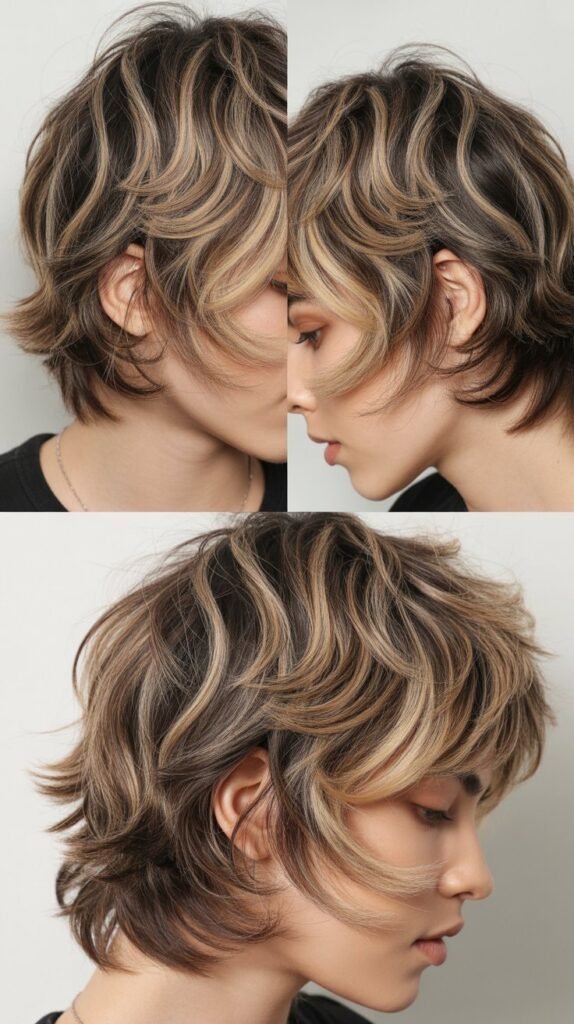
Modern shag-inspired textured layers throughout the front create lived-in appeal while the ends remain blunt and straight.
- Shag layering adds rock-and-roll edge with contemporary sophistication.
- The textured layers create volume and movement throughout the crown and front sections.
- Straight, blunt ends prevent the style from appearing too choppy or thin at the bottom.
- This combination offers the best of both worlds: textured dimension with healthy-looking ends.
- The shag layers can be customized based on desired intensity, from subtle to dramatic.
- This style works particularly well for thick hair that can support heavy texturizing.
- Use texturizing spray to enhance the shag layers while smoothing cream on the straight ends.
35. Graduated Bob Front With Straight Long Back
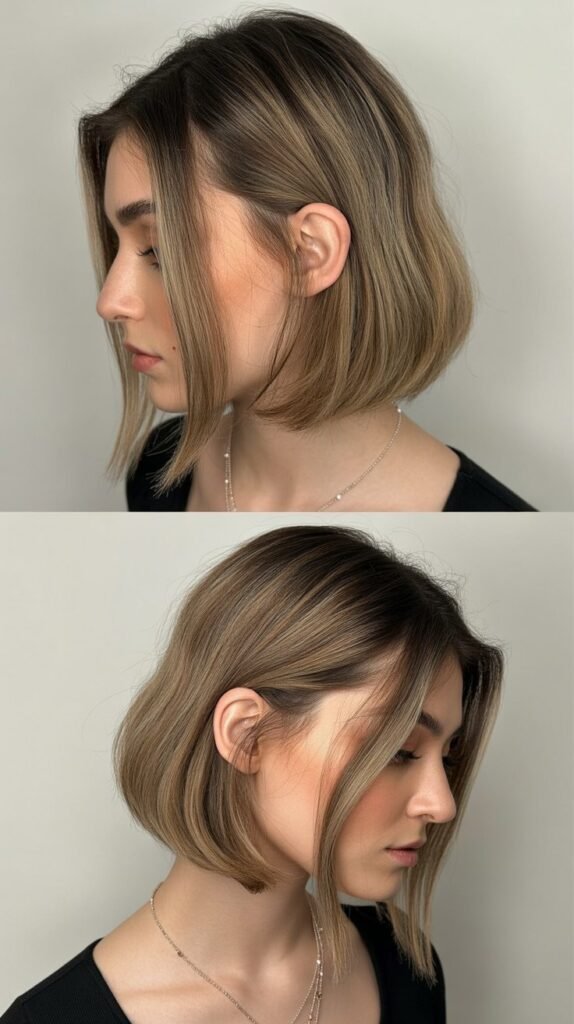
Front sections cut in a graduated bob shape while the back remains long and straight, creating dramatic length variation.
- This style offers the structure of a bob in front with the femininity of long hair in back.
- The graduated bob front typically ranges from chin to shoulder length.
- This technique creates a modern, fashion-forward silhouette.
- The straight long back can be styled in various ways including half-up styles and braids.
- This approach is perfect for those wanting to experiment with shorter lengths without committing fully.
- The graduated front adds face-framing dimension while the long back maintains versatility.
- This style requires regular maintenance to keep the graduated front shape looking intentional.
36. Soft Curved Layers With Straight Vertical Flow
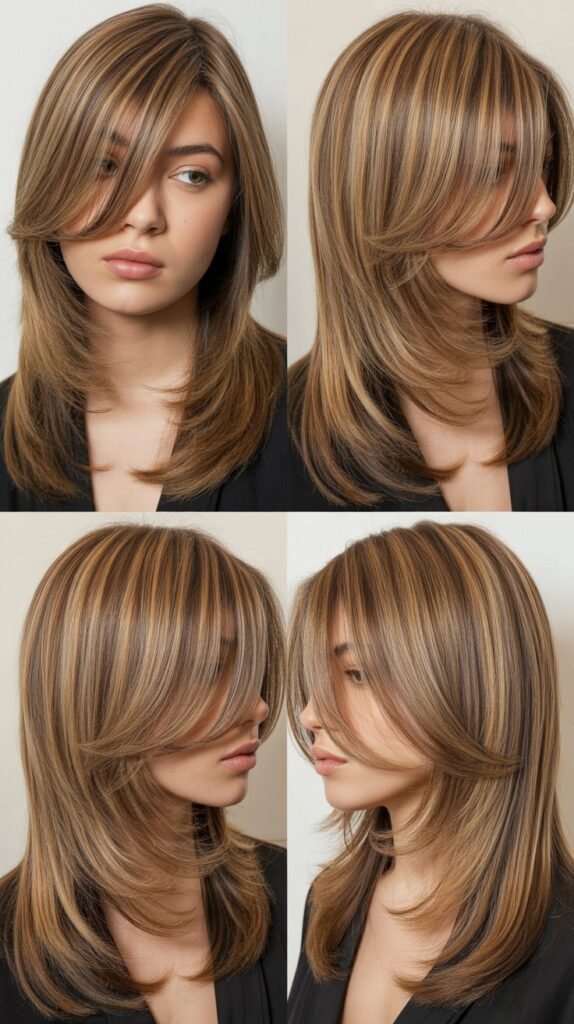
Gently curved layers that follow the face’s natural contours while the overall hair flows straight and vertical.
- The curved layers add soft dimension without disrupting the vertical flow of long hair.
- This technique flatters facial features by creating customized curves based on face shape.
- The straight vertical flow elongates the body and creates elegant lines.
- This style works universally and is appropriate for all occasions.
- The curves should be subtle enough to maintain the straight overall appearance.
- Use a paddle brush while blow-drying to enhance the straight vertical flow.
- This approach adds just enough dimension to prevent flatness while maintaining sleekness.
37. Micro-Fringe With Straight Long Hair
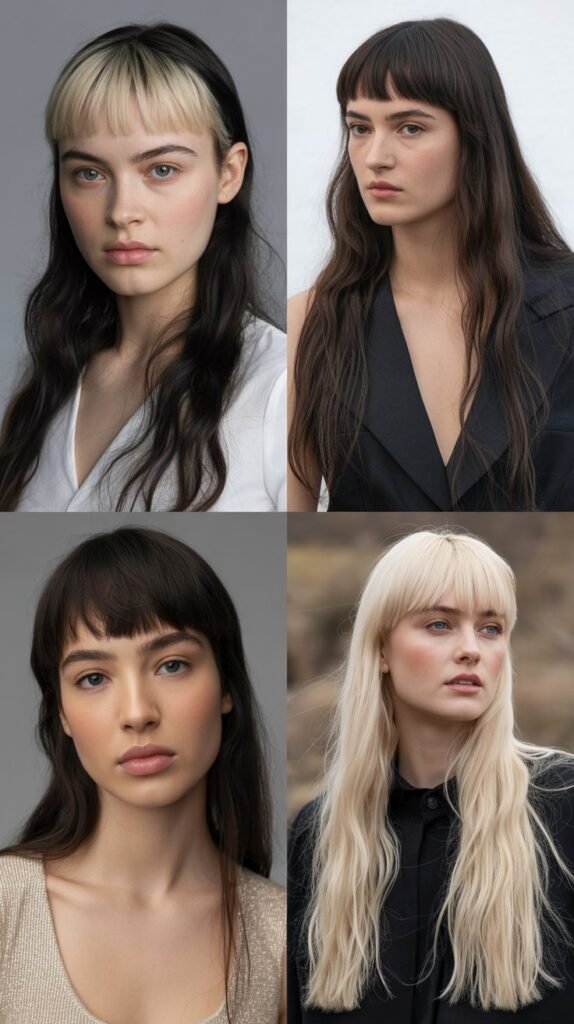
A delicate micro-fringe (baby bangs) sits high on the forehead while long straight hair flows behind, creating an editorial look.
- Micro-fringe is a bold, fashion-forward choice that makes a strong statement.
- This style sits well above the eyebrows, typically mid-forehead or higher.
- The long straight hair behind provides balance to the short, dramatic fringe.
- This combination creates a striking, high-fashion aesthetic popular in editorial contexts.
- Micro-fringe requires confidence and regular maintenance to keep the precise length.
- The straight long hair should be kept pristine and healthy to complement the bold fringe.
- This style works best for those with strong facial features and an adventurous style sensibility.
38. Layered Waves Front With Straight Back
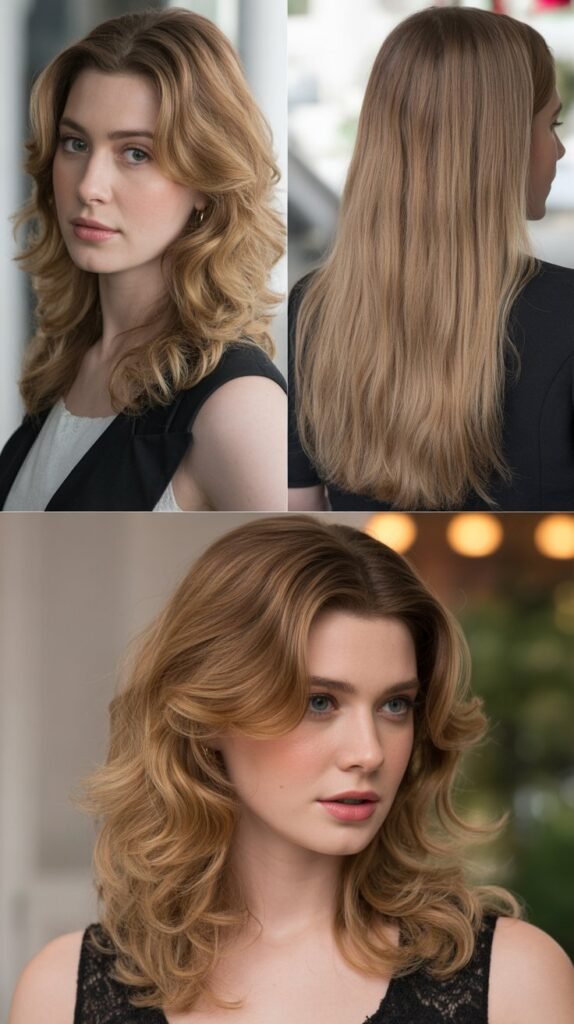
Front layers styled with soft waves or bends while the back remains completely straight, creating textural contrast.
- This style combines two different textures for dimensional interest and versatility.
- The waved front adds romantic softness and volume around the face.
- The straight back keeps the style polished and prevents overwhelming volume.
- This technique is perfect for special occasions when extra dimension is desired.
- Use a curling iron or straightener to create soft waves in the front layers only.
- The textural contrast between wavy front and straight back creates modern, intentional styling.
- This approach works beautifully for medium to thick hair textures.
39. Blunt Front Pieces With Tapered Straight Back
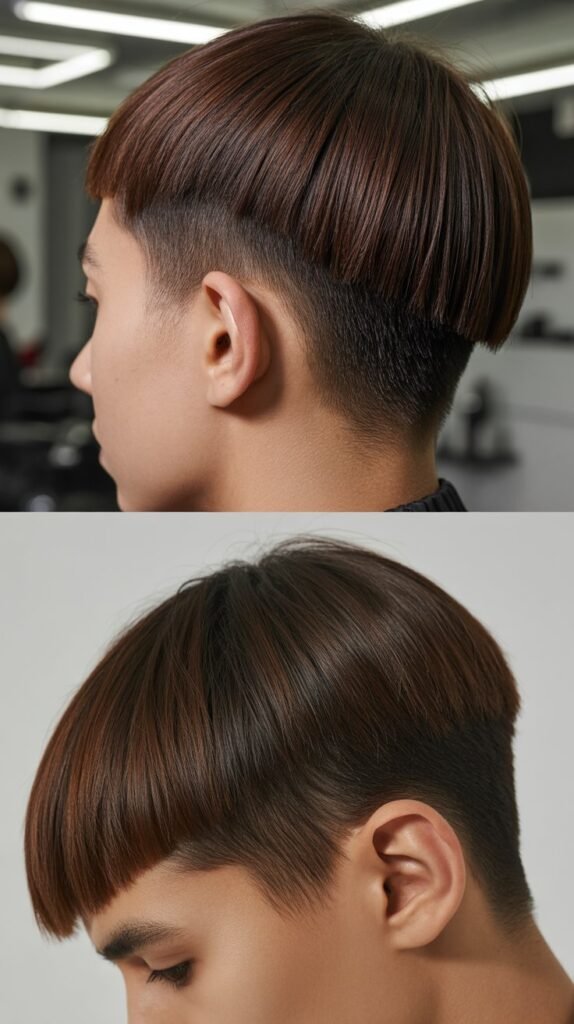
Blunt, thick front pieces frame the face boldly while the back is tapered and straight for reduced weight.
- The blunt front creates strong, intentional lines that make a statement.
- The tapered back removes bulk and weight for easier styling and management.
- This combination provides face-framing drama without overall heaviness.
- The contrast between blunt front and tapered back creates interesting dimension.
- This style works well for thick hair that benefits from weight reduction in back sections.
- The blunt front pieces should be kept at a consistent length for maximum impact.
- This approach balances bold structure with practical wearability.
40. Seamless Blend Layers With Mirror-Straight Finish
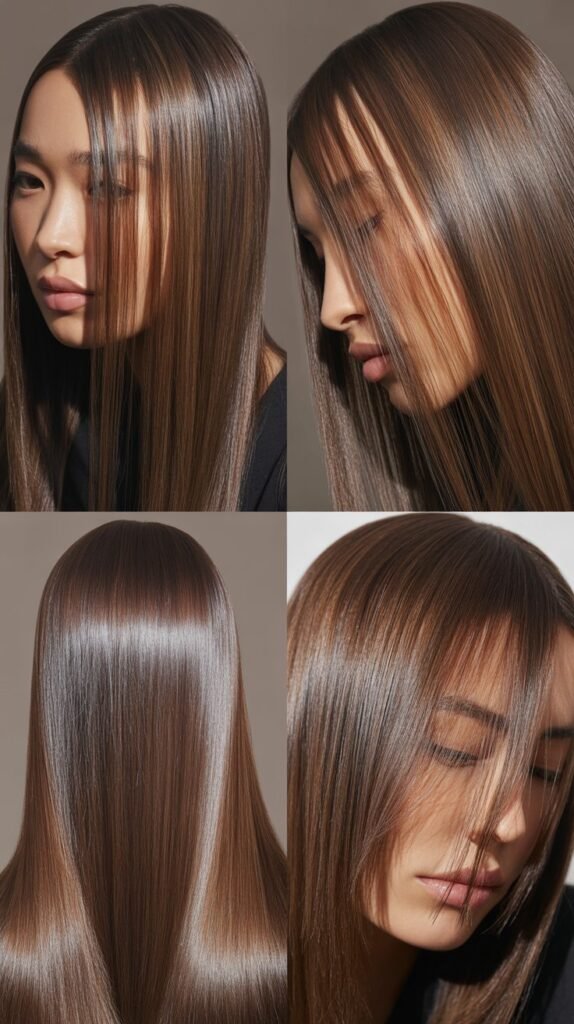
Expertly blended layers throughout that are virtually undetectable, all finished with mirror-straight styling for ultimate sophistication.
- This technique represents the pinnacle of layering artistry with seamless execution.
- The layers add body and movement while remaining invisible to the eye.
- The mirror-straight finish creates a polished, luxurious appearance.
- This style is perfect for high-stakes professional environments and formal occasions.
- The seamless blending requires advanced cutting techniques and precision.
- Use high-quality smoothing products and heat tools to achieve the mirror finish.
- This approach delivers the benefits of layering without any visual evidence of the technique.
Conclusion
The versatility and timeless appeal of 40 Long Hair Ideas With Front Layers & Smooth, Straight Back make this hairstyle combination a perennial favorite among those seeking both sophistication and dimension.
From subtle face-framing wisps to dramatic disconnected layers, the options presented throughout this guide demonstrate that front layers paired with smooth, straight backs offer endless possibilities for personal expression while maintaining elegant polish.
Whether you prefer classic simplicity, modern edge, or romantic softness, these styling approaches provide something for every aesthetic preference and lifestyle need.
The key to mastering this look lies in understanding your face shape, hair texture, and maintenance commitment, then selecting the layer style that best enhances your natural features while keeping the back section sleek and healthy.
With proper styling techniques, quality products, and regular maintenance, you can achieve a look that combines the movement and dimension of layers with the sophisticated impact of long, straight hair, creating a hairstyle that turns heads and stands the test of time.
