Finding the perfect haircut can transform your entire appearance and boost your confidence instantly.
The sweet spot between medium and short hair offers incredible versatility, combining the structure of short cuts with just enough length for styling creativity.
Whether you’re a professional seeking a polished look, an athlete wanting low maintenance, or someone who simply wants to refresh their style, the 43 Best Medium-to-Short Haircuts for Men Right Now provides comprehensive inspiration for your next barbershop visit.
This guide explores classic cuts that have stood the test of time alongside modern interpretations that push boundaries, textured styles that add dimension, fade variations that create clean lines, and styling techniques that help you maintain your look between appointments.
Each haircut is designed to work with different face shapes, hair textures, and lifestyle needs, ensuring you’ll discover options that genuinely suit you rather than following fleeting trends that don’t match your personal aesthetic.
1. The Classic Taper

The classic taper remains one of the most requested haircuts because it delivers timeless sophistication without demanding complicated styling routines.
This cut gradually reduces hair length from the top down to the neckline, creating a refined silhouette that works equally well in boardrooms and casual settings.
Key Characteristics
- The hair maintains 2-4 inches of length on top for versatile styling options
- Sides and back transition smoothly from longer to shorter without harsh lines
- The neckline features a natural, gradual fade that complements head shape
- Works exceptionally well with straight, wavy, or slightly curly hair textures
- Requires minimal product application, typically just a light pomade or cream
Maintenance Requirements
- Schedule trims every 3-4 weeks to preserve the clean tapered effect
- Daily styling takes approximately 3-5 minutes with basic products
- The cut grows out gracefully without looking unkempt between appointments
2. Textured Crop

The textured crop has surged in popularity because it adds dimension and movement while maintaining a clean, manageable length throughout.
This modern cut emphasizes natural hair texture rather than fighting against it.
Styling Approach
- Barbers use point-cutting techniques to create irregular, piece-y ends
- The fringe typically sits just above or touching the eyebrows for frame balance
- Matte styling products work best to enhance the deliberately undone appearance
- The cut deliberately avoids uniform length, embracing organic variation instead
- Natural cowlicks and growth patterns become features rather than problems
Best Candidates
- Men with thick, straight hair see the most dramatic textural contrast
- Those seeking a youthful, contemporary look without appearing too trendy
- Individuals who prefer quick, tousled styling over precise grooming routines
3. Mid Fade with Side Part

Combining classic structure with modern barbering techniques, the mid fade with side part offers sharp definition while maintaining professional appeal.
The contrast between the faded sides and longer parted top creates visual interest.
Technical Execution
- The fade begins at the temple area, roughly halfway up the sides
- A distinct side part is carved or naturally formed, typically on the left side
- Top hair ranges from 3-5 inches, allowing for swept-over styling
- The transition from faded sides to top happens gradually over 1-2 inches
- Barbers often use clippers with multiple guard sizes to achieve seamless blending
Product Recommendations
- Medium-hold pomades provide shine and control for the parted section
- Light hairspray sets the style without creating stiffness or crunchiness
- Pre-styling creams add volume and make hair more cooperative during styling
4. French Crop

The French crop distinguishes itself through its short, blunt fringe that sits forward on the forehead, creating a distinctive horizontal line.
This European-influenced style has gained international traction for its bold simplicity.
Defining Features
- The fringe is cut straight across, typically landing mid-forehead
- Back and sides are kept quite short, usually clipper-cut to uniform length
- Top section maintains just enough length for the fringe, roughly 1-2 inches
- The style emphasizes clean, geometric lines rather than soft transitions
- Minimal styling is required due to the cut’s inherent structure
Face Shape Compatibility
- Works exceptionally well for men with longer, oval face shapes
- The horizontal fringe visually shortens elongated facial proportions
- Those with very round faces might find the blunt line emphasizes width
- Angular jawlines are complemented by the crop’s geometric precision
5. Buzz Cut with Fade

The buzz cut with fade modernizes the military-inspired classic by incorporating contemporary barbering techniques that add dimension to an otherwise uniform cut.
This combination delivers maximum convenience with enhanced style.
Variation Options
- High fades create dramatic contrast, starting the taper near the crown
- Mid fades offer balanced proportions suitable for most professional environments
- Low fades provide subtle definition while maintaining conservative appearance
- Skin fades take the shortest sections down to bare skin for maximum contrast
- The top typically uses a #3 or #4 guard for consistent, short length
Lifestyle Benefits
- Morning routine becomes virtually non-existent with this low-maintenance option
- Athletic activities and physical jobs suit this practical, sweat-friendly cut
- Growing out periods remain neat-looking for extended timeframes
- Frequent travelers appreciate the style’s independence from products and tools
6. Slick Back
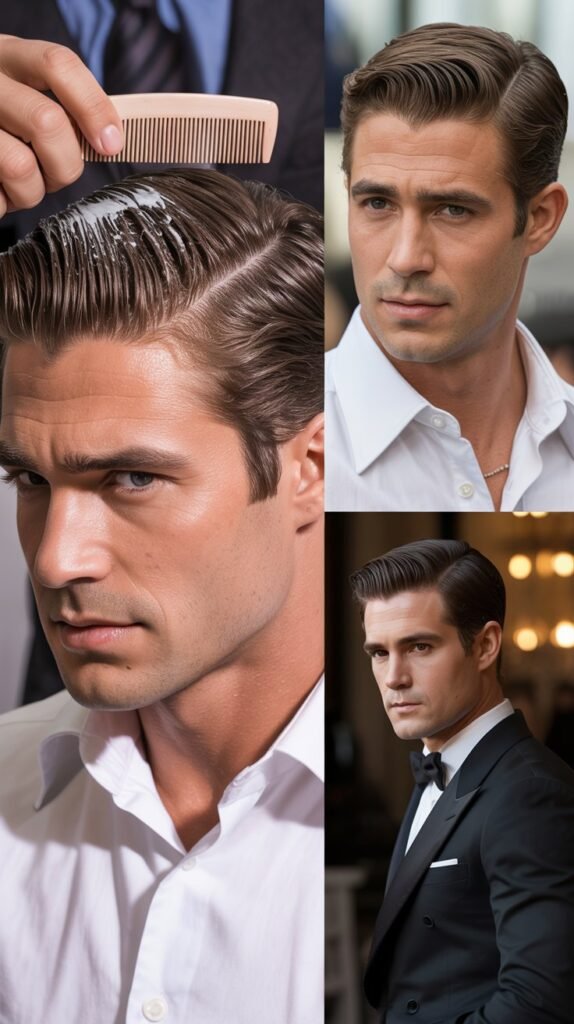
The slick back exudes confidence and sophistication by sweeping all hair backward away from the face, creating clean facial framing and an elongated head shape.
This classic styling approach adapts beautifully to modern interpretations.
Preparation Steps
- Start with damp, towel-dried hair for optimal product distribution
- Apply generous amounts of medium to strong-hold pomade throughout
- Use a comb to direct all hair backward, creating smooth alignment
- Blow-drying on low heat while combing helps set the shape more permanently
- Finish with light hairspray for all-day hold in challenging conditions
Length Requirements
- Minimum 3 inches on top allows for proper backward sweep without gaps
- 4-6 inches provides ideal length for comfortable, natural-looking results
- Sides should be shorter to emphasize the swept-back top section
- Gradually tapered sides prevent the mushroom effect from excessive top volume
7. Ivy League
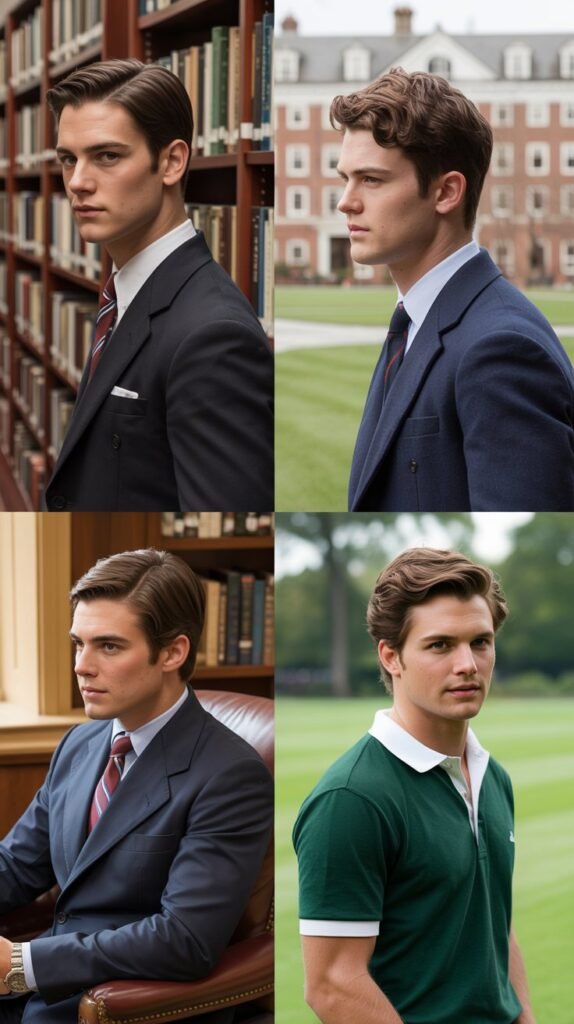
The Ivy League haircut represents American collegiate tradition, offering refined professionalism with enough length for casual styling versatility.
This cut essentially functions as a longer crew cut with a side part.
Historical Context
- Originated in Ivy League universities during the 1950s among rowing teams
- The cut allowed enough length for off-campus styling while meeting athletic requirements
- Modern versions incorporate contemporary texturing and fading techniques
- Maintains association with educated, accomplished, traditional masculinity
Styling Flexibility
- Can be worn neatly parted for formal professional environments
- Tousles casually with minimal product for weekend relaxed appearance
- The versatility makes it ideal for men with varied daily activities
- Works well for transitioning from athletic to professional contexts
8. Pompadour Fade

The pompadour fade combines rockabilly rebellion with modern barbering precision, creating dramatic height on top while maintaining clean, contemporary sides.
This bold statement cut commands attention.
Volume Creation
- Hair on top ranges from 4-6 inches, with the front section being longest
- Blow-drying upward and backward builds the foundation for height
- Strong-hold pomades or wax products maintain the sculptural shape
- The fade on sides creates stark contrast that emphasizes top volume
- Some versions incorporate hard parts for additional definition
Time Investment
- Daily styling requires 10-15 minutes for proper volume creation
- The dramatic look needs regular maintenance every 2-3 weeks
- Investment in quality blow dryers and styling products becomes essential
- Best suited for those comfortable with dedicated grooming routines
9. Crew Cut

The crew cut delivers practical simplicity with its uniformly short length that gradually tapers at the sides and back.
This American classic remains popular for its unfussy, masculine appeal.
Cut Specifications
- Top hair typically measures 1/2 to 1 inch using clippers without guards
- The crown area maintains slightly more length than the front hairline
- Sides and back taper down smoothly to blend with the shorter sections
- No distinct part or styling direction is required or intended
- The overall effect appears neat without looking overly styled or fussy
Universal Appeal
- Works across all age groups from teenagers to mature professionals
- Suits virtually all face shapes due to its balanced proportions
- Requires no styling products or tools for daily presentation
- Military, law enforcement, and athletic communities favor this functional cut
10. Quiff
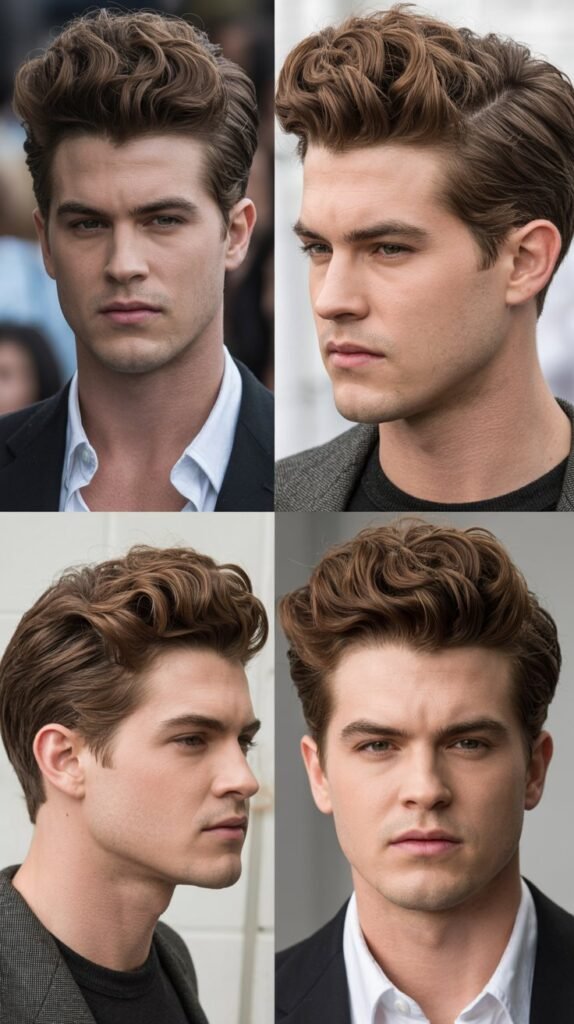
The quiff sweeps hair upward and slightly backward from the forehead, creating volume and movement that draws eyes upward.
This British-influenced style balances edgy with approachable.
Construction Technique
- Hair length on top ranges from 3-5 inches for proper lift capability
- The front section receives the most volume, standing nearly vertical
- Sides are kept shorter, often faded, to emphasize the top section
- Blow-drying while lifting upward creates the foundation structure
- Strong-hold products lock the elevated shape in place throughout the day
Style Variations
- Classic quiffs maintain smooth, pompadour-like polish and shine
- Modern quiffs incorporate texture and piece-y separation for casualness
- Undercut quiffs create extreme contrast with disconnected sides
- Messy quiffs embrace deliberately imperfect, lived-in appearance
11. High and Tight

The high and tight features extremely short sides and back with slightly longer hair on top, creating a military-inspired look that prioritizes function and discipline.
This cut makes bold, no-nonsense statements.
Military Origins
- Developed for military personnel requiring minimal maintenance in field conditions
- The short sides prevent hair from interfering with helmets and headgear
- Top section remains just long enough for some personal expression
- Modern civilian versions often add fades or texture for style enhancement
Commitment Level
- Requires maintenance every 1-2 weeks to preserve the clean-cut appearance
- Hot weather and athletic activities become more comfortable with exposed skin
- The dramatic contrast isn’t suitable for all professional environments
- Best for those confident with very short hair and comfortable with frequent cuts
12. Comb Over Fade

The comb over fade reinterprets a classic style through modern barbering, creating clean lines and contemporary proportions while maintaining traditional elegance.
Deep side parts and faded sides define this look.
Styling Process
- Hair is parted deeply on one side, often with a carved line for precision
- The longer side is combed over smoothly, creating sweeping diagonal lines
- Faded sides provide graduated transition from longer top to skin or very short hair
- Medium to high-hold products maintain the combed position throughout the day
- The look appears polished and intentional rather than naturally tousled
Professional Suitability
- Conservative enough for traditional corporate environments and client-facing roles
- The clean fade satisfies modern style expectations while maintaining propriety
- Works well for men ranging from their twenties through their fifties
- Balances contemporary trends with timeless professional presentation
13. Spiky Hair
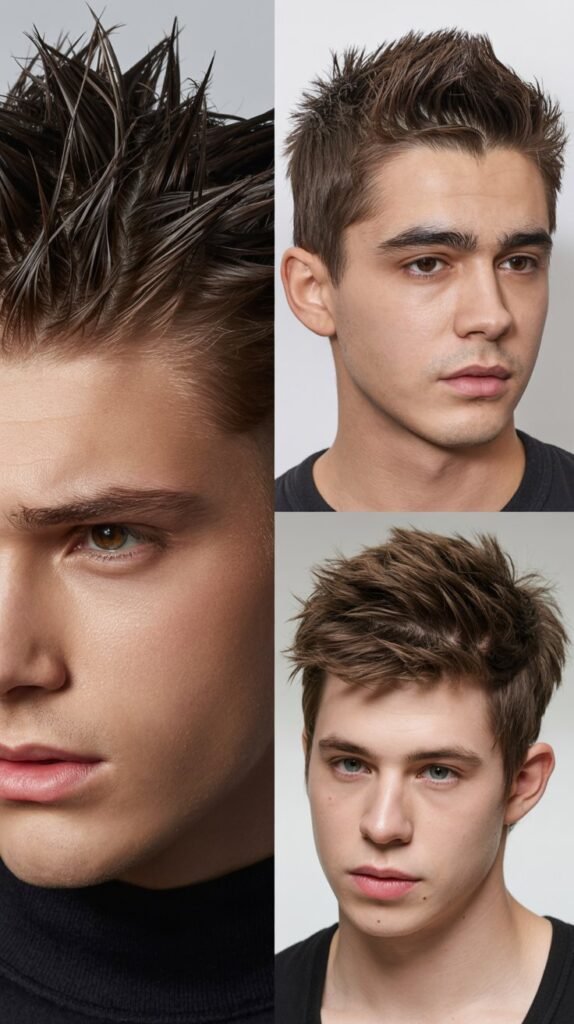
Spiky hair creates vertical texture by using products to stand individual sections upward, generating dynamic, youthful energy.
This early 2000s favorite has evolved into more refined contemporary versions.
Evolution of Style
- Earlier versions featured extremely stiff, uniform spikes with heavy gel
- Contemporary approaches create softer, more natural-looking texture with varied spike heights
- Modern products provide hold without the crunchy, helmet-like finish
- The style now incorporates movement and flexibility rather than rigid structure
Application Method
- Start with slightly damp hair for better product absorption
- Apply strong-hold wax or fiber products, distributing throughout top section
- Use fingertips to pull small sections upward, creating irregular spikes
- Vary spike height and direction for natural, organic appearance
- Avoid over-working the hair, which can create clumping or greasiness
14. Side Swept Undercut

The side swept undercut creates dramatic contrast by disconnecting short or shaved sides from the longer top section that sweeps dramatically to one side.
This fashion-forward cut makes powerful style statements.
Disconnect Definition
- Sides and back are clippered very short or shaved completely, often with zero guard
- No gradual transition exists between the short sides and longer top
- The abrupt change creates intentional, edgy visual impact
- Top section typically measures 4-6 inches for proper sweeping capability
Maintenance Considerations
- Growing out this style requires patience as the disconnect becomes less defined
- Sides need frequent touch-ups every 1-2 weeks to maintain clean contrast
- The bold look may not suit conservative professional environments
- Commitment to the style is important before requesting this dramatic cut
15. Butch Cut

The butch cut maintains uniform short length across the entire head, creating a no-fuss, masculine appearance that emphasizes facial features.
This minimalist approach strips away all styling complexity.
Simplicity Benefits
- All hair typically measures 1/4 inch using a #2 clipper guard throughout
- Morning routine becomes instantaneous with zero styling required
- Product purchases become unnecessary, saving money and bathroom space
- Travel simplifies without concerns about styling tools or products
Head Shape Importance
- This revealing cut accentuates natural head contours and skull shape
- Men with well-proportioned, symmetrical head shapes wear this cut most successfully
- Irregularities or flat spots become more noticeable without hair coverage
- Consulting with an experienced barber about suitability proves valuable
16. Faux Hawk

The faux hawk creates a mohawk-inspired center ridge without shaving the sides completely, offering edgy appeal with reversible styling flexibility.
This compromise between bold and practical gained mainstream acceptance.
Construction Method
- Sides are cut significantly shorter than the top, often faded
- Center section from forehead to crown maintains 2-4 inches of length
- Hair is styled upward and toward the center, creating a ridge effect
- The look can be styled dramatically for evenings or softened for daytime
- Unlike true mohawks, sides retain enough hair for alternative styling options
Versatility Advantage
- Can be worn spiked dramatically or combed to the side for conservative settings
- The cut allows for professional presentation when needed, edgy when desired
- Particularly popular among creative professionals with flexible dress codes
- Works well for men wanting style impact without permanent commitment
17. Angular Fringe

The angular fringe features hair cut at a diagonal across the forehead, creating geometric interest and dynamic lines.
This asymmetrical approach adds visual intrigue to standard short cuts.
Design Elements
- The fringe descends diagonally from one side of the forehead to the other
- Typically, the line travels from shorter on one temple to longer on the opposite side
- Back and sides are kept short to emphasize the angular front section
- The geometric precision requires skilled cutting for clean execution
- Regular trims every 3-4 weeks maintain the defined diagonal line
Styling Direction
- Hair naturally falls following the cut angle with minimal encouragement
- Light styling products help maintain the diagonal sweep throughout the day
- The asymmetry adds interest to oval or round face shapes
- Works particularly well with straight or slightly wavy hair textures
18. Textured Quiff

The textured quiff combines the upward sweep of classic quiffs with modern piece-y texture, creating contemporary dimension while maintaining volume and height.
This evolution makes the style more approachable and less formal.
Texture Creation
- Barbers use point-cutting and razor techniques to create irregular ends
- The front section lifts upward but maintains separated, piece-y appearance
- Matte styling products enhance texture rather than creating smooth polish
- The deliberately imperfect finish appears effortlessly stylish rather than overly groomed
- Individual strands remain visible and defined rather than blending smoothly
Modern Appeal
- Younger demographics particularly embrace this less formal quiff interpretation
- The texture prevents the style from appearing dated or overly retro
- Works well in creative industries and casual professional environments
- Balances structure with relaxed, contemporary sensibility
19. Low Fade

The low fade creates subtle graduation that begins just above the ears, offering conservative refinement with clean edges.
This understated approach suits professional environments while still incorporating modern barbering.
Fade Characteristics
- The transition from longer to shorter hair starts approximately one inch above the ear
- Blending occurs over a shorter vertical distance than mid or high fades
- The conservative fade height maintains maximum hair coverage on sides
- Suitable for traditional workplaces with grooming expectations
- Creates clean definition without dramatic contrast
Professional Advantage
- Conservative enough for corporate, legal, and financial industries
- Maintains neat appearance while incorporating contemporary barbering techniques
- Less frequent maintenance required compared to higher fades
- Works well for men preferring subtle style updates over bold changes
20. Messy Crop
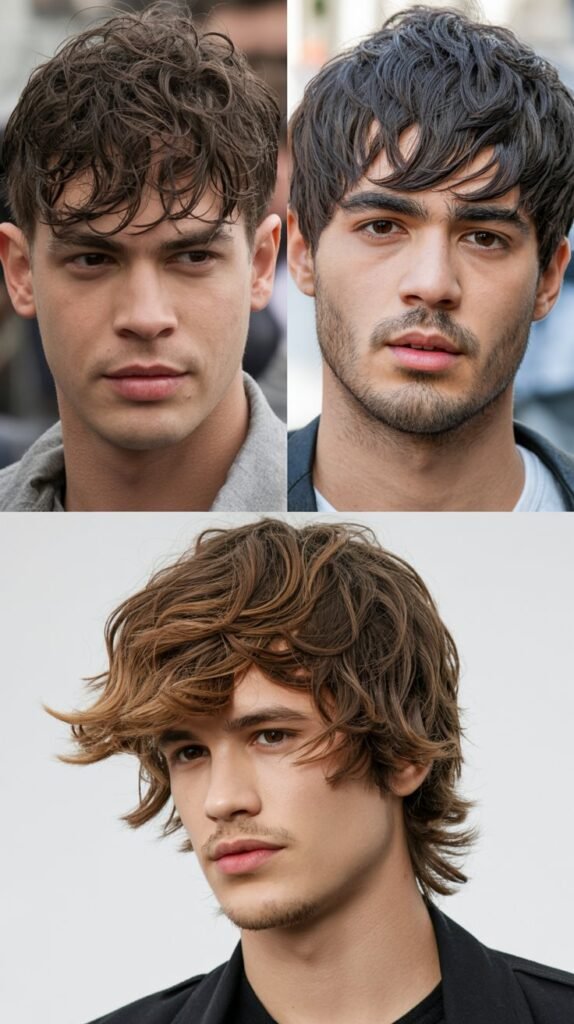
The messy crop embraces intentional disorder through choppy layers and tousled styling, creating an effortlessly cool appearance.
This deliberately undone look requires more styling than it appears to need.
Achieving “Effortless” Appearance
- Barbers create varied layer lengths throughout the top section
- Point-cutting produces irregular, choppy ends that separate naturally
- Matte clay or paste products add texture without visible product residue
- Hair is worked with fingertips to create random, organic-looking direction
- The key is controlled chaos that appears uncontrived
Common Misconceptions
- Despite appearing low-maintenance, achieving the look requires deliberate styling
- The “just woke up” aesthetic actually takes 5-10 minutes to create properly
- Products are essential for the piece-y separation and textural definition
- Regular cuts every 4-5 weeks maintain the choppy layer structure
21. Regulation Cut
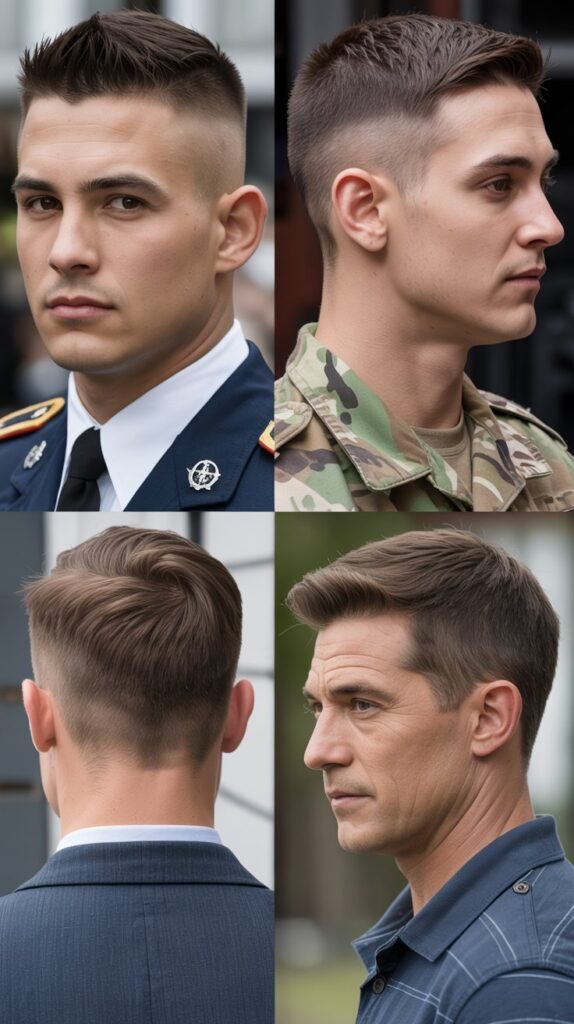
The regulation cut follows military grooming standards while allowing slight variation within prescribed guidelines.
This disciplined style emphasizes uniformity and neat presentation.
Military Specifications
- Top hair cannot exceed 2 inches in length when extended upward
- Sides and back must taper smoothly without excessive bulk
- No portion of hair can touch the ears when in natural position
- The cut must appear neat and professional from all viewing angles
- Maintenance occurs weekly to bi-weekly for standard compliance
Civilian Adaptation
- Non-military individuals adopt this style for its disciplined appearance
- Law enforcement, security professionals, and first responders favor this cut
- The style communicates reliability, orderliness, and traditional values
- Works well in hierarchical professional environments
22. Textured Fringe
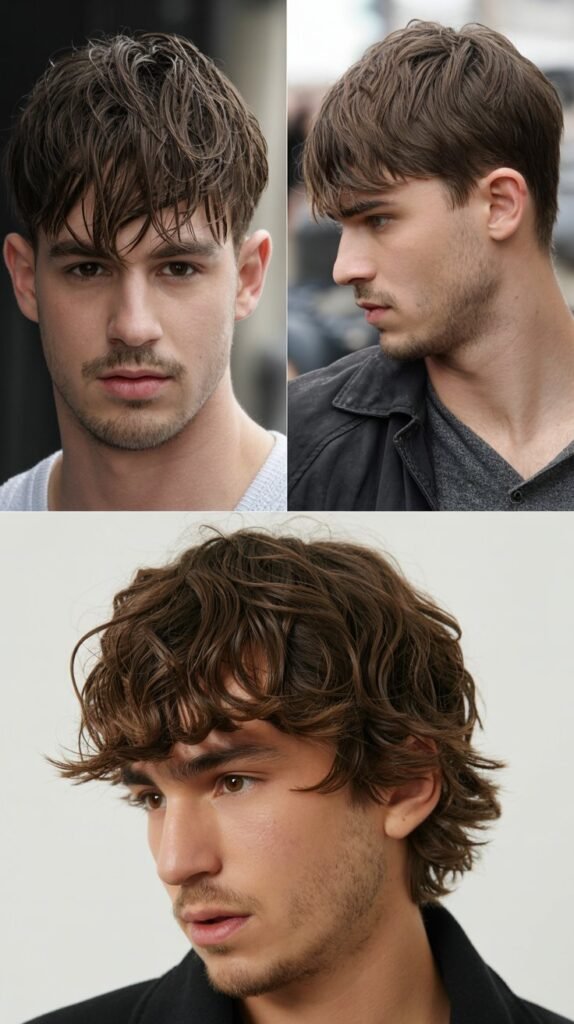
The textured fringe features choppy, piece-y bangs that fall forward onto the forehead, creating youthful, contemporary appeal.
This style adds softness and movement to otherwise structured cuts.
Fringe Characteristics
- The front section falls naturally forward rather than being styled upward or backward
- Individual strands separate visibly, creating textural interest
- Length typically reaches mid-forehead to just above eyebrows
- Point-cutting techniques produce the irregular, non-uniform ends
- The texture prevents the fringe from appearing heavy or blunt
Styling Approach
- Lightweight styling products maintain separation without weighing hair down
- Fingers are used to direct fringe forward and slightly to the side
- The casual appearance suits creative fields and relaxed professional settings
- Regular trims every 3-4 weeks prevent the fringe from obscuring vision
23. Brush Up
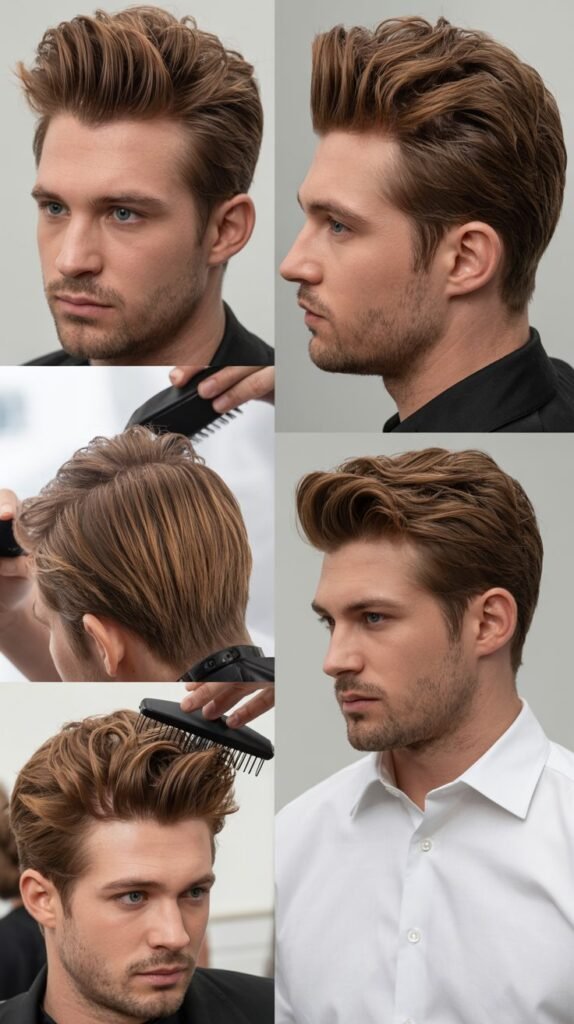
The brush up directs all hair upward and slightly backward, creating vertical height and clean facial framing.
This confident style makes facial features appear sharper and more defined.
Creating Height
- Hair length of 2-4 inches on top provides sufficient length for upward styling
- Blow-drying while brushing upward establishes the vertical foundation
- Medium to strong-hold products maintain the elevated position
- Sides are typically faded or kept short to emphasize the brushed-up top
- The forehead remains visible with hair brushed away from the face
Face Elongation
- This style visually elongates the face through vertical emphasis
- Works particularly well for men with round or square face shapes
- The upward direction draws eyes upward, creating perceived height
- Confidence is essential as the style exposes the face prominently
24. Disconnected Undercut
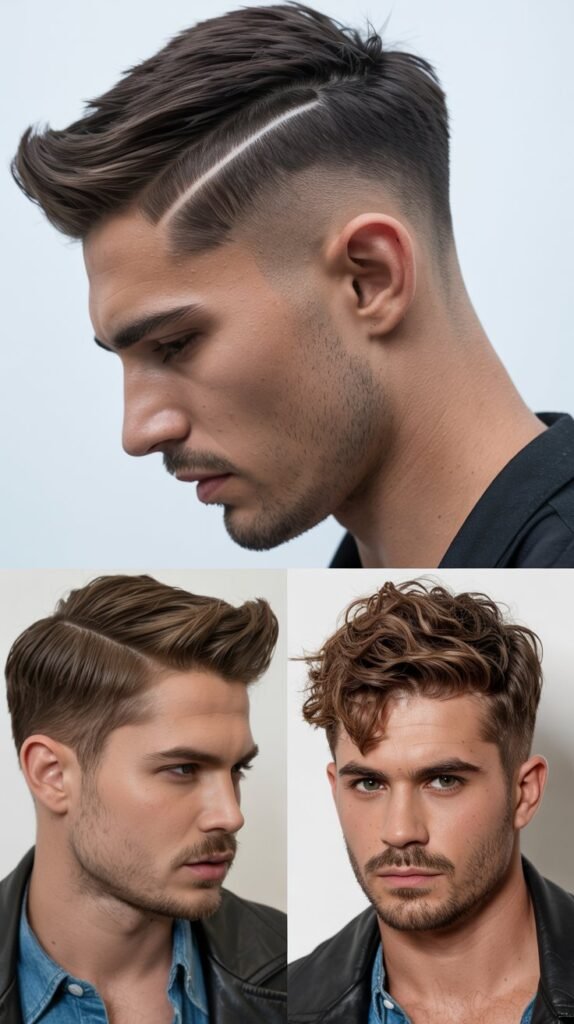
The disconnected undercut features an abrupt transition between very short sides and a longer top section with no gradual blending.
This intentional disconnect creates bold, fashion-forward impact.
Defining the Disconnect
- Sides and back are clippered to uniform short length or shaved completely
- The transition to the longer top happens suddenly without gradual tapering
- A visible horizontal line of demarcation separates the two length zones
- Top section typically measures 4-6 inches for maximum styling versatility
- The dramatic contrast creates intentional, edgy visual statements
Styling Versatility
- The longer top can be styled multiple ways: slicked back, swept over, or textured
- The bold cut allows for artistic experimentation with the top section
- Growing out requires patience as the disconnect gradually softens
- Best suited for those comfortable with attention-getting hairstyles
25. Caesar Cut

The Caesar cut features a short, horizontal fringe and uniform length throughout, creating a timeless Roman-inspired style.
This classic cut has remained relevant across decades through subtle modern adaptations.
Historical Significance
- Named after Julius Caesar, who reportedly wore this style to conceal baldness
- The cut emphasizes a straight, forward-facing fringe across the forehead
- Ancient practicality meets modern style in this enduring design
- Contemporary versions incorporate texture and slight fading for updated appeal
Cut Specifications
- Hair maintains 1-2 inches of uniform length across the entire head
- The fringe is cut bluntly straight across, typically mid-forehead
- Sides and back match the top length or are slightly shorter
- No distinct part or direction exists in traditional versions
- Modern adaptations may include light texturing or low fades
26. Skin Fade

The skin fade tapers hair down to bare skin at the lowest point, creating maximum contrast and ultra-clean definition.
This contemporary barbering technique requires precision and frequent maintenance.
Technical Execution
- The fade gradually reduces hair length from longer sections down to exposed skin
- Barbers use progressively smaller clipper guards, finishing with zero guard or razor
- The transition occurs smoothly over 1-3 inches of vertical space
- High skin fades start the taper near the crown, mid-level at temples, low near ears
- The technique requires skilled blending to avoid visible lines or patches
Maintenance Demands
- Skin fades need refreshing every 7-10 days to maintain clean appearance
- As hair grows, the stark contrast becomes less defined quickly
- The high-maintenance requirement suits those committed to regular barber visits
- Professional or athletic lifestyles often justify the upkeep investment
27. Choppy Layers

Choppy layers create dimensional texture through varied length sections cut at irregular intervals.
This technique adds movement and reduces bulk while creating modern, piece-y definition.
Layering Technique
- Barbers cut hair at different lengths throughout the head, creating varied layers
- Point-cutting and razor techniques produce the choppy, non-uniform ends
- Layers remove weight and bulk, making thick hair more manageable
- The irregular cutting creates separation and prevents hair from appearing flat
- Each layer catches light differently, adding visual dimension
Texture Enhancement
- Natural wave and curl patterns become more pronounced with layered cuts
- Straight hair gains artificial texture and movement through the varied lengths
- Styling products work more effectively with layered structure to grip
- The cut provides built-in style, requiring less manipulation daily
28. Hard Part
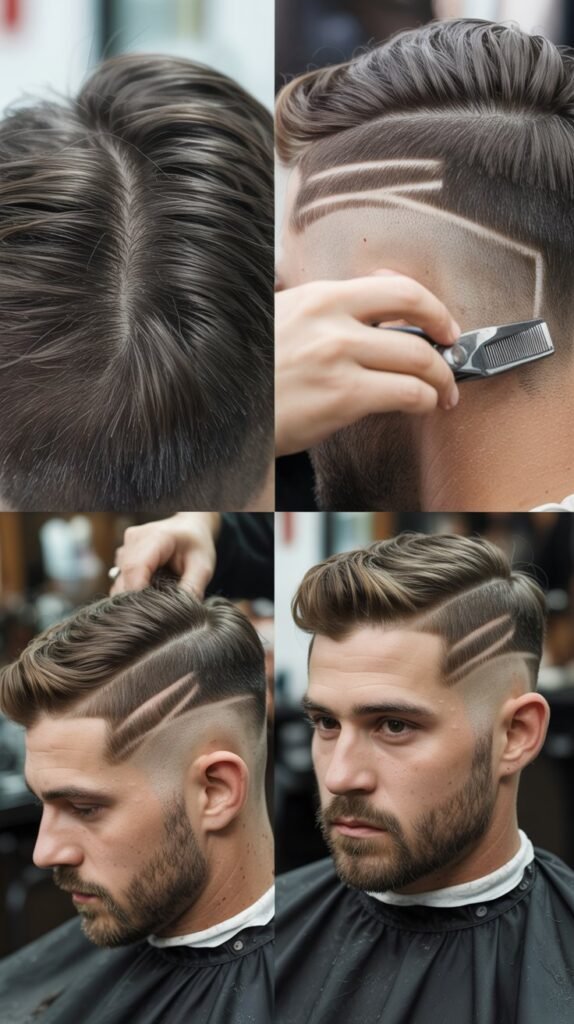
The hard part features a shaved line that creates a distinct, razor-sharp part in the hair.
This barbering detail adds precision and edge to otherwise standard haircuts.
Creating the Line
- Barbers use straight razors or trimmer blades to shave a thin, defined line
- The part typically runs from the front hairline backward, following natural part location
- The shaved line remains visible for 7-10 days before growing in enough to blur
- Hard parts can be incorporated into fades, undercuts, or classic parted styles
- The detail adds architectural precision and contemporary edge
Style Compatibility
- Works particularly well with comb overs, side parts, and slicked styles
- The sharp line emphasizes the direction and structure of the haircut
- Adds formality and intentionality to the overall appearance
- Popular in barbershops specializing in contemporary men’s grooming
29. Forward Swept

The forward swept style directs hair toward the face and forehead, creating a youthful, casual appearance.
This approach softens facial features and works particularly well with textured cuts.
Directional Styling
- All hair is brushed or combed forward toward the forehead during styling
- The front section typically falls naturally forward with minimal product
- Creates a relaxed, approachable appearance rather than polished formality
- Works best with cuts maintaining 2-4 inches of length throughout
- Natural growth patterns are embraced rather than fought against
Face Shape Effects
- Softens angular features and strong jawlines through forward movement
- Particularly flattering for men with longer face shapes
- The style draws attention to eyes and central facial features
- Creates a younger, more casual impression than backward-swept styles
30. Bald Fade

The bald fade takes the skin fade concept to its ultimate conclusion, creating seamless transition from hair to completely bare skin.
This dramatic modern technique delivers maximum impact and definition.
Ultimate Contrast
- The lowest point of the fade shows completely smooth, bare skin with zero stubble
- The transition from hair to bald occurs over a precisely blended gradient
- High bald fades start the transition near the crown for extreme contrast
- Low bald fades maintain more hair coverage while still achieving clean definition
- The technique requires masterful blending skills from experienced barbers
Artistic Potential
- The clean canvas of faded sides provides foundation for creative top styling
- Line designs, patterns, and artwork can be incorporated into the fade
- The dramatic base emphasizes whatever styling approach is used on top
- Popular in urban barbering culture and contemporary men’s grooming
31. Temple Fade
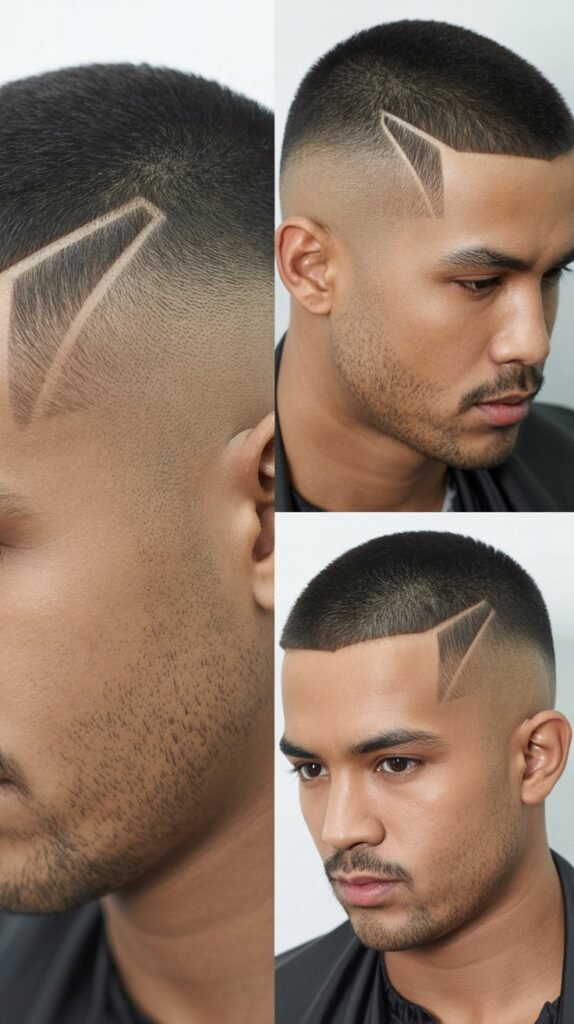
The temple fade focuses blending specifically at the temple areas, creating clean definition around the sides of the face.
This targeted approach offers subtlety while still incorporating modern fade techniques.
Focused Blending
- The fade occurs primarily at the temples, where hair meets the sides of the forehead
- Creates clean, defined edges that frame the face sharply
- Back and sides may remain longer, with primary fading at temples only
- The technique suits men wanting subtle fade incorporation without full side fading
- Particularly effective for creating clean lines with glasses or sunglasses
Professional Appeal
- The focused approach appears conservative and workplace-appropriate
- Maintains maximum hair coverage while achieving contemporary clean edges
- Works well for men transitioning from traditional cuts to modern styles
- Requires less frequent maintenance than full fades
32. Wavy Crop

The wavy crop embraces natural wave patterns through strategic cutting and minimal styling interference.
This style works with hair’s natural texture rather than against it.
Working with Waves
- Cut length maintains 2-3 inches to allow waves to form naturally without excessive bulk
- Layers remove weight while preserving enough length for wave pattern expression
- The crop shape provides structure while letting texture do the styling work
- Minimal product application maintains natural movement and bounce
- Side and back length is reduced to emphasize wavy top section
Low-Maintenance Benefits
- Natural texture provides built-in style without extensive manipulation
- Waves create dimension and interest without requiring precision styling
- The cut works with hair’s inherent characteristics for effortless results
- Particularly suited for men seeking style without high-maintenance routines
33. Military Fade

The military fade combines regulation-compliant length with contemporary fade techniques, creating a style that meets military grooming standards while incorporating modern barbering.
Regulation Compliance
- Top length remains within 2-inch maximum standards when extended upward
- Fades on sides create graduated transitions while maintaining overall shortness
- The cut appears neat and professional from all angles, meeting inspection standards
- No hair touches the ears or extends past the collar when down
- Bulk is removed to prevent excessive puffiness or volume
Service Member Preference
- Active duty personnel appreciate the contemporary styling within regulation boundaries
- The fade provides personal style expression while maintaining military discipline
- Easier maintenance than blunt, uniform regulation cuts
- Veterans often continue wearing variations of this style in civilian life
34. Rounded Crop

The rounded crop features curved, circular shaping around the perimeter, creating softer lines than angular crops.
This gentler approach suits those wanting contemporary styling with less edge.
Gentle Contouring
- The fringe and sides follow curved lines rather than sharp angles
- Creates a softer, more approachable appearance than geometric crops
- The rounded shape complements natural head contours and face shapes
- Particularly flattering for angular or square face shapes seeking softness
- The cut maintains clean structure while avoiding harsh edges
Versatile Appeal
- Works well across age ranges from young professionals to mature men
- Suitable for both casual and professional environments due to balanced styling
- The softer approach feels less trendy and more timeless than angular alternatives
- Natural growth patterns are accommodated within the rounded structure
35. Slicked Side Part
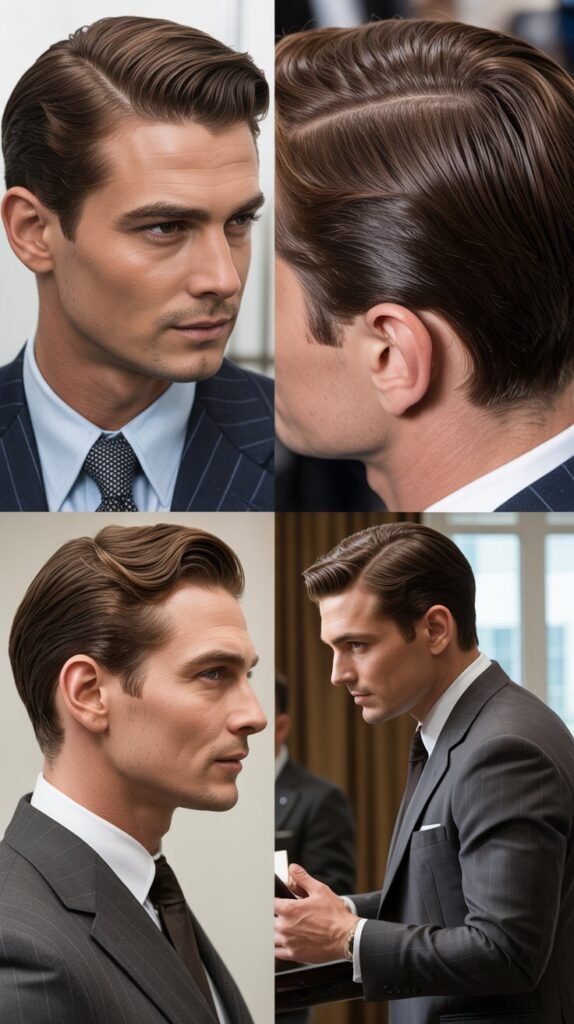
The slicked side part combines classic elegance with high-polish shine, creating sophisticated distinction through clean lines and controlled styling.
This refined approach communicates professionalism and attention to detail.
Polish and Precision
- A defined side part is created, often carved for razor-sharp definition
- Hair is combed smoothly to one side with high-shine pomade or gel
- The slicked appearance creates flawless, polished surface without texture
- Every hair lies in place, creating uniform, controlled direction
- Particularly effective for formal events, interviews, and professional settings
Product Requirements
- High-shine pomades or traditional grooming gels work best
- Medium to strong hold maintains the slicked position throughout the day
- Application on slightly damp hair allows for easier distribution and shaping
- Combing through multiple times ensures smooth, uniform coverage
36. Tapered Sides with Texture

This combination style features gradually tapered sides that blend seamlessly while the top section embraces textured, piece-y styling.
The contrast creates balanced, contemporary appeal.
Balanced Contrast
- Sides gradually reduce in length from top to bottom without harsh lines
- The smooth taper creates clean edges while maintaining natural transitions
- Top section is cut with texturing techniques for dimensional, piece-y appearance
- The combination offers structure on sides with creative freedom on top
- Works well for men wanting professional sides with stylish, modern tops
Universal Suitability
- The tapered sides maintain professional appropriateness for workplace environments
- Textured tops provide personality and style without appearing extreme
- Suitable for various face shapes due to balanced proportions
- The style grows out gracefully without awkward intermediate stages
37. Short Quiff
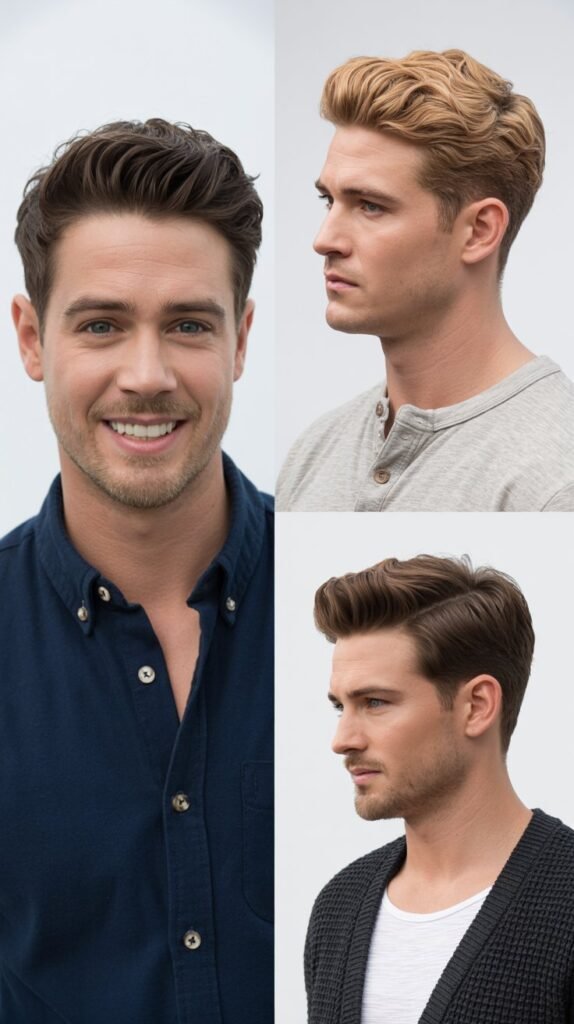
The short quiff maintains the upward-swept front characteristic of quiffs while keeping overall length conservative.
This scaled-down version offers quiff appeal with reduced maintenance and commitment.
Modest Proportions
- Top hair measures 2-3 inches rather than the 4-6 inches of dramatic quiffs
- The front section lifts upward but maintains conservative height
- Sides are kept short, often faded, to emphasize the lifted top
- Styling requires less time and product than full-sized quiffs
- The reduced scale suits professional environments and conservative preferences
Accessibility Benefits
- Easier to maintain and style than dramatic, high-volume quiffs
- Works for men wanting contemporary style without extreme commitment
- The modest height appears current without seeming fashion-forward or trendy
- Suitable for those testing quiff styling before committing to longer lengths
38. Flat Top
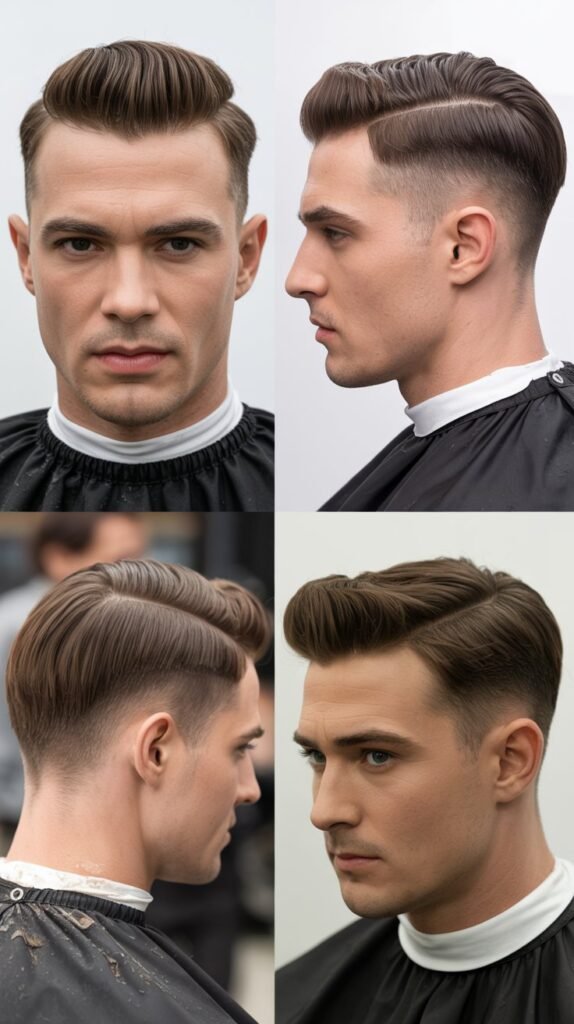
The flat top creates a horizontal plateau across the crown, with sides cut very short and the top standing vertically with a flat surface.
This architectural style makes bold geometric statements.
Geometric Precision
- Top hair stands completely vertical, creating a flat, level surface across the crown
- Sides are cut extremely short, creating stark contrast with the flat top section
- The architectural shape requires specific hair texture and density to execute properly
- Barbers use clippers and razors to create the precise horizontal plane
- The style originated in military contexts and gained civilian popularity in the 1950s-90s
Hair Requirements
- Works best with thick, straight hair that naturally stands upward when short
- Fine or thin hair struggles to create the necessary density and vertical support
- The cut reveals head shape prominently, requiring well-proportioned skull structure
- Regular maintenance every 1-2 weeks preserves the precise geometric shape
39. Layered Side Sweep

The layered side sweep incorporates dimensional layers throughout while directing all hair to sweep across to one side.
This combination creates movement, texture, and directional flow simultaneously.
Layer Integration
- Multiple length layers throughout create depth and dimension
- All layers are styled to sweep in the same diagonal direction across the head
- The varied lengths prevent the swept hair from appearing flat or lifeless
- Choppy ends add texture while maintaining the overall directional flow
- Works particularly well with wavy or slightly curly hair textures
Styling Method
- Hair is blow-dried in the desired sweep direction while still damp
- Lightweight to medium-hold products maintain the sweep without stiffness
- Fingers are used to direct and separate layers during styling
- The dimensional layers create natural-looking movement and volume
40. Crop Fade

The crop fade combines the blunt, forward-facing fringe of crop cuts with graduated fade techniques on the sides.
This modern hybrid delivers contemporary edge with clean definition.
Hybrid Elements
- The characteristic crop fringe sits forward on the forehead, cut bluntly across
- Sides incorporate fade techniques, gradually transitioning from longer to shorter
- The combination modernizes the traditional crop through contemporary barbering
- High fades create dramatic contrast, low fades offer subtle definition
- The style balances geometric precision on top with smooth gradation on sides
Contemporary Appeal
- Popular among younger demographics seeking current, fashion-forward styles
- The fade element updates the classic crop for modern tastes
- Works well in creative industries and casual professional environments
- Requires regular maintenance every 2-3 weeks to preserve both elements
41. Curly Taper

The curly taper is specifically designed for naturally curly hair, incorporating tapered sides while maintaining sufficient length on top for curl pattern expression.
This cut celebrates natural texture rather than suppressing it.
Curl-Specific Cutting
- Top section maintains 2-4 inches to allow curls to form and spring naturally
- Sides gradually taper down, reducing bulk while maintaining smooth transitions
- Cutting is performed on dry hair to account for curl spring and shrinkage
- Layers remove weight without destroying curl pattern integrity
- The taper prevents the triangular silhouette that often occurs with curly hair
Curl Care
- Moisture-rich products enhance curl definition and reduce frizz
- The cut reduces styling time by working with natural texture
- Regular trims every 4-6 weeks maintain shape as curls grow outward
- Particularly flattering for men embracing their natural hair texture
42. Business Professional
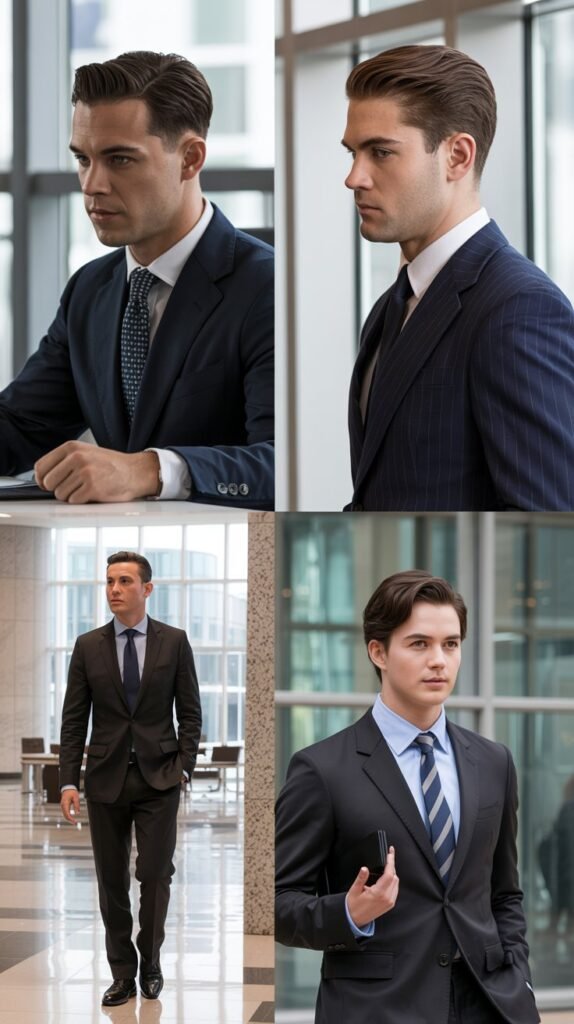
The business professional cut prioritizes conservative elegance and workplace appropriateness above trendy styling.
This timeless approach communicates reliability, competence, and traditional values.
Conservative Standards
- Top hair maintains 2-3 inches maximum, suitable for traditional combing and parting
- Sides and back are neatly tapered without trendy fade techniques
- The overall appearance prioritizes neatness and control over creative expression
- Styling follows classic patterns: side parts, backward combing, or conservative texture
- No extreme elements that might distract in professional contexts
Industry Suitability
- Ideal for law, finance, traditional corporate, and client-facing professional roles
- Communicates respect for workplace norms and conservative grooming expectations
- Works well for men in hierarchical organizations with strict appearance standards
- The timeless approach remains appropriate regardless of changing fashion trends
43. Textured Top Fade

The textured top fade combines piece-y, dimensional top styling with clean fade techniques on the sides.
This popular contemporary style balances creative texture with polished definition.
Style Synthesis
- The top section features choppy, textured layers cut with point-cutting techniques
- Sides incorporate fade techniques for graduated, clean transitions
- Matte styling products enhance texture while the fade provides structure
- The combination offers creative freedom on top with professional sides
- Works across various lengths, typically 2-4 inches on top
Widespread Popularity
- Currently one of the most requested cuts in contemporary barbershops
- Suits various age groups from teenagers through thirties and forties
- Adaptable to different professional contexts based on fade height and texture intensity
- The versatile style transitions easily between casual and smart-casual settings
Comparison Table: Maintenance and Styling Requirements
| Haircut Style | Maintenance Frequency | Daily Styling Time | Product Needs | Skill Level Required |
|---|---|---|---|---|
| Classic Taper | 3-4 weeks | 3-5 minutes | Light pomade | Beginner |
| Textured Crop | 3-4 weeks | 5-7 minutes | Matte paste | Beginner |
| Pompadour Fade | 2-3 weeks | 10-15 minutes | Strong pomade | Advanced |
| Crew Cut | 4-5 weeks | 0-1 minutes | None | Beginner |
| High and Tight | 1-2 weeks | 0-1 minutes | None | Beginner |
| Skin Fade | 7-10 days | 5-8 minutes | Medium hold | Intermediate |
| Disconnected Undercut | 1-2 weeks | 5-10 minutes | Various | Intermediate |
| Slick Back | 3-4 weeks | 8-12 minutes | Strong pomade | Intermediate |
| Business Professional | 3-4 weeks | 3-5 minutes | Light pomade | Beginner |
Styling Tips Across All Cuts
Understanding universal styling principles helps maximize any haircut’s potential and maintain professional appearance throughout the day.
Product Application
- Always start with less product than you think necessary, adding more gradually
- Distribute product evenly through towel-dried hair for best absorption and control
- Emulsify products by rubbing between palms before application to prevent clumping
- Work product from roots to ends, ensuring complete coverage throughout styled sections
- Matte products suit textured, casual styles while shine products create polished looks
Tool Usage
- Quality blow dryers with multiple heat settings provide foundational styling capability
- Round brushes create volume and lift during blow-drying for styles requiring height
- Combs work best for precise parting, slicked styles, and smooth, polished finishes
- Fingers offer the most natural-looking results for textured, piece-y, casual styles
- Invest in professional-grade tools for better results and longer tool lifespan
Common Mistakes
- Over-washing hair strips natural oils, making styling more difficult and damaging hair health
- Using too much product creates stiff, unnatural appearance and visible residue
- Blow-drying on highest heat settings damages hair and reduces overall hair health
- Neglecting regular trims allows haircuts to lose shape and intended appearance
- Fighting against natural hair texture and growth patterns creates frustration and poor results
Face Shape Guidelines
Selecting haircuts that complement your face shape creates harmony and enhances your best features while minimizing disproportion.
Oval Face Shapes
- Considered the most versatile, oval faces suit virtually all haircut styles
- Balanced proportions allow experimentation with volume, length, and structure
- Both conservative and bold styles work equally well
- Focus on personal style preferences rather than face shape limitations
Round Face Shapes
- Height and vertical emphasis create the illusion of length and elongation
- Quiffs, pompadours, and brush-up styles add beneficial vertical dimension
- Avoid styles that add width at the sides, which emphasize roundness
- Angular elements and side parts create definition and structure
Square Face Shapes
- Strong jawlines benefit from styles that add softness and texture
- Forward-sweeping fringes and textured crops soften angular features
- Side-swept styles create diagonal lines that break up square proportions
- Avoid blunt cuts that emphasize the geometric squareness
Long Face Shapes
- Horizontal elements and side volume create width to balance length
- French crops and Caesar cuts add beneficial horizontal emphasis
- Avoid excessive height that further elongates the face
- Side parts and swept styles work well for creating width illusion
Hair Texture Considerations
Different hair textures respond uniquely to various cutting and styling techniques, requiring tailored approaches.
Straight Hair
- Holds shape well but can appear flat without texture or volume techniques
- Works excellently for slicked, polished, and structured styles
- Point-cutting and layering add essential dimension and movement
- Responds predictably to styling products and heat tools
Wavy Hair
- Offers natural texture that enhances many contemporary styles
- Embracing natural wave patterns reduces styling time and effort
- Works particularly well for textured crops, quiffs, and messy styles
- May require anti-frizz products to maintain definition
Curly Hair
- Requires specific cutting techniques that account for curl spring and shrinkage
- Tapers and fades work excellently while maintaining top length for curl expression
- Moisture-rich products enhance curl definition and reduce frizz
- Cutting should occur on dry hair for accurate length assessment
Thick Hair
- Benefits from layering and thinning to remove bulk and reduce weight
- Can support virtually any style due to abundant density
- May require more product for hold due to hair volume
- Regular thinning maintenance prevents mushroom-shaped growth
Fine or Thin Hair
- Shorter lengths often work better as long hair reveals scalp more noticeably
- Textured cuts create the illusion of fuller, thicker hair
- Lightweight products prevent weighing down fine strands
- Strategic layering adds volume without removing too much density
Conclusion
Finding your ideal look among the 43 Best Medium-to-Short Haircuts for Men Right Now transforms from overwhelming to exciting when you understand how different cuts complement your unique features, lifestyle, and personal style.
The medium-to-short length category offers remarkable versatility, spanning from ultra-low-maintenance crew cuts and buzz cuts to statement-making pompadours and disconnected undercuts that demand attention.
Your perfect haircut considers multiple factors working in harmony: your natural hair texture and density, your face shape and proportions, your daily styling time availability, your professional environment’s expectations, and ultimately your personal aesthetic preferences.
Consulting with an experienced barber who understands modern techniques alongside classic foundations proves invaluable, as they can assess your specific characteristics and recommend options you might not have considered.
Remember that great haircuts require partnership between skilled cutting and consistent maintenance, so committing to regular trims and investing in appropriate styling products ensures your chosen style always looks intentional rather than neglected.
Whether you’re drawn to timeless classics like the taper and Ivy League that have proven their staying power across decades, or contemporary innovations like textured crops and skin fades that define current men’s grooming trends, the perfect haircut exists within these 43 options waiting to enhance your confidence and simplify your daily routine.
