
Embracing your natural gray hair after 60 doesn’t mean sacrificing style or volume, especially when you’re working with fine hair texture.
The journey to finding the perfect hairstyle that celebrates your silver strands while addressing the unique challenges of fine hair can feel overwhelming, but it’s also an opportunity to discover looks that are both sophisticated and manageable.
This comprehensive guide to 47 Graceful Gray Hairstyles for Women Over 60 With Fine Hair will walk you through an array of cuts, styles, and techniques specifically designed to add body, movement, and elegance to thinner hair textures.
From pixie cuts that create the illusion of thickness to layered bobs that provide natural lift, you’ll discover styling approaches that work with your hair’s natural characteristics rather than against them.
We’ll explore everything from classic cuts that never go out of style to modern trends adapted for mature women, along with practical styling tips, product recommendations, and maintenance advice that will help you achieve salon-worthy results at home.
Whether you’re looking for a dramatic change or subtle refinement, this article offers options for every face shape, lifestyle, and personal aesthetic, proving that fine gray hair can be your most beautiful asset yet.
1. The Textured Pixie Cut
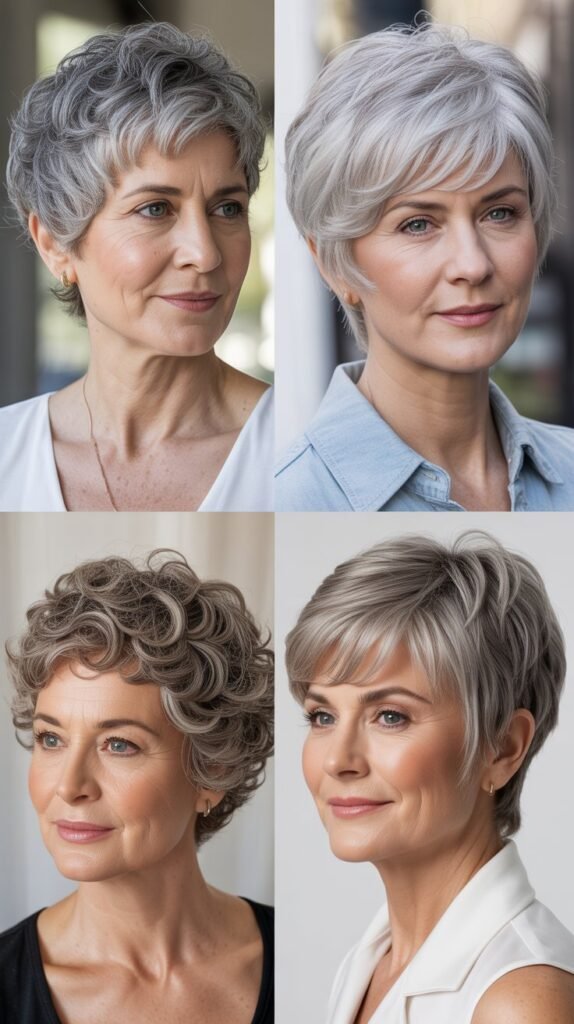
The textured pixie cut stands as one of the most flattering and practical options for women over 60 with fine gray hair, offering an effortless combination of style and manageability.
This cut works by removing excess weight from fine strands, allowing hair to lift naturally at the roots and create the appearance of fuller, thicker hair.
- The key to a successful textured pixie lies in strategic layering throughout the crown and sides, which adds dimension and prevents the flat appearance that fine hair often develops.
- Stylists typically use point-cutting or razor techniques to create soft, feathered ends that blend seamlessly and move naturally with your head movements.
- This style requires minimal daily maintenance—just a small amount of texturizing paste or mousse applied to damp hair and either air-dried or quickly blown dry with fingers.
- The gray color actually enhances the textured effect, as the natural variations in silver tones create visual depth that makes the cut appear even more dimensional.
- Women with oval, heart-shaped, or square face shapes find this cut particularly flattering, as it draws attention to facial features and creates beautiful proportions.
2. The Classic Gray Bob with Subtle Layers
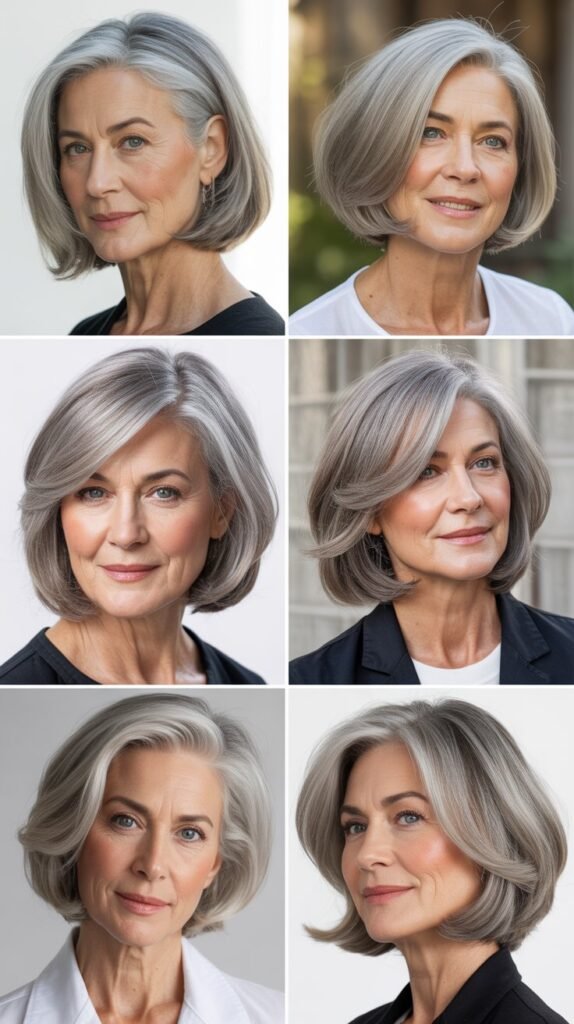
The classic bob reinvented with subtle layers has become a signature look for women embracing their gray hair, offering timeless elegance with modern functionality for fine hair types.
This versatile cut typically falls between chin and shoulder length, providing enough hair to style while maintaining a lightweight feel.
- Subtle internal layers are cut throughout the interior of the hair to remove bulk without creating visible choppy sections, giving fine hair the lift it needs.
- The perimeter can be cut blunt for a bold, graphic look or slightly textured for a softer, more romantic appearance depending on personal preference.
- This style works exceptionally well with fine hair because the layers create separation between strands, preventing them from clumping together and appearing thin.
- A center or slightly off-center part typically works best, as it allows hair to fall naturally and creates volume at the crown without requiring excessive styling.
- Regular trims every 6-8 weeks are essential to maintain the bob’s shape and prevent the ends from becoming wispy or stringy, which can emphasize thinness.
3. The Feathered Shag
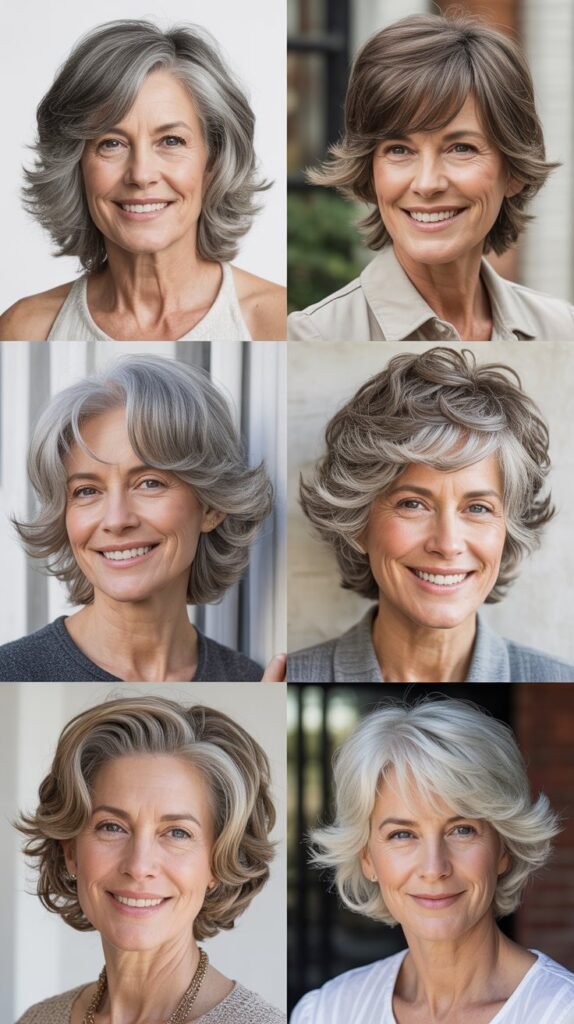
The feathered shag has experienced a major resurgence and proves particularly beneficial for fine gray hair, combining vintage appeal with contemporary edge while addressing volume concerns.
This multi-layered cut features shorter pieces around the face that gradually lengthen toward the back, creating movement and fullness throughout.
- The shag’s signature feathered layers are cut at various lengths throughout the head, with each layer slightly shorter than the one beneath it to create a stacked, voluminous effect.
- Face-framing layers typically begin around the cheekbones or jawline, drawing attention to your best features while softening the overall look.
- Fine hair benefits tremendously from this cut because the numerous layers prevent hair from lying flat against the scalp, naturally creating lift and body.
- Styling involves applying a volumizing mousse to damp hair, then blow-drying with a round brush while lifting sections away from the scalp to maximize volume.
- The beauty of gray hair in a shag cut is that the multiple layers showcase the various tones and highlights within your natural silver spectrum, creating a multi-dimensional appearance.
4. The Asymmetrical Gray Cut
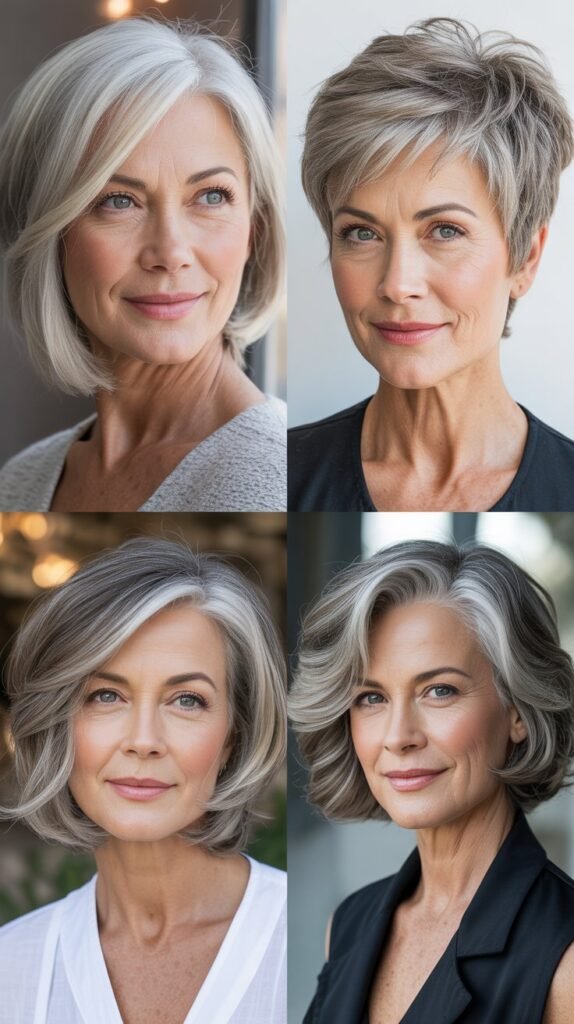
Asymmetrical cuts offer a fashion-forward approach that’s surprisingly practical for fine gray hair, creating visual interest through uneven lengths rather than relying solely on volume.
This bold style features one side cut shorter than the other, creating an edgy, contemporary look that’s gained popularity among confident, style-conscious women.
- The longer side typically falls anywhere from chin to shoulder length, while the shorter side might be cropped close to the head or styled into a sleek, tucked-behind-the-ear look.
- This dramatic difference in length naturally creates the illusion of more hair because the eye focuses on the interesting shape rather than hair density.
- Fine hair actually works advantageously with this cut because it lies smoothly against the head on the shorter side, emphasizing the clean, geometric lines of the cut.
- The longer side can be styled straight and sleek for a polished appearance or given loose waves for a softer, more romantic interpretation.
- Maintenance involves regular trims to keep the dramatic length difference sharp and defined, preventing the style from growing out into an unintentional, shapeless look.
5. The Stacked Bob
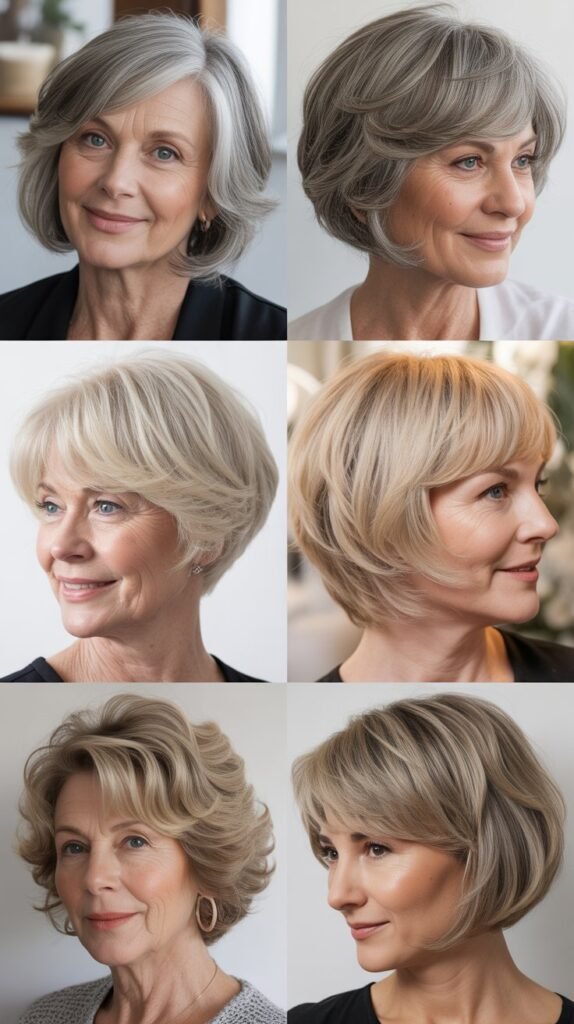
The stacked bob represents one of the most effective solutions for creating volume in fine gray hair, utilizing graduated layers in the back that create a rounded, full silhouette.
This technique involves cutting the hair shorter in the back with gradually longer pieces toward the front, building up layers that stack upon each other.
- The back section is typically cut quite short, often exposing the nape of the neck, while front pieces extend to the jawline or slightly below.
- Each layer is cut slightly longer than the one beneath it, creating a stacked or graduated effect that adds significant height and fullness to the crown area.
- This cut is particularly beneficial for fine hair because the shorter back section removes weight, allowing the remaining hair to lift and creating the appearance of density.
- Styling is relatively simple—blow-drying with a round brush while directing hair upward and forward creates the characteristic rounded shape.
- The stacked bob works beautifully with natural gray tones because the dimensional cutting technique creates shadows and highlights that make the silver shades appear richer and more varied.
6. The Side-Swept Pixie
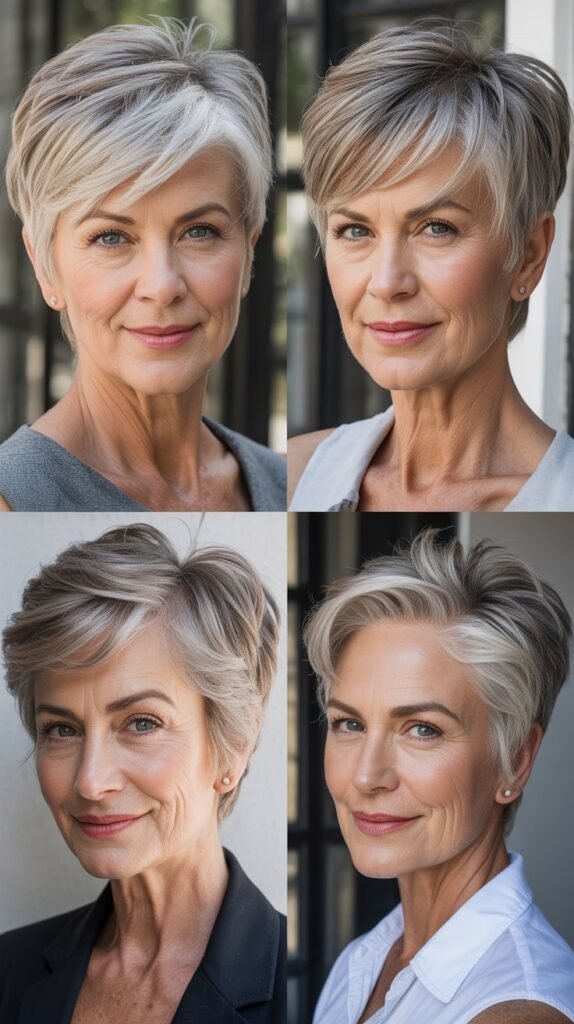
The side-swept pixie offers a softer, more feminine take on the traditional pixie cut, incorporating longer top sections that can be styled across the forehead for a flattering frame.
This variation works exceptionally well for fine gray hair by concentrating length and volume in strategic areas.
- The top section is left longer—typically 3-4 inches—while the sides and back are cut shorter, creating contrast that makes the longer sections appear fuller.
- Hair is cut and styled to sweep across the forehead and to one side, creating an asymmetrical line that’s visually interesting and draws attention upward.
- This style works particularly well for women with fine hair because the longer top section can be styled with volumizing products to create height and fullness where it matters most.
- The side-swept element creates a soft, romantic feel that balances the edginess of the short sides, making it accessible for women who want style without looking too severe.
- Gray hair enhances this look beautifully because the sweeping motion showcases the dimensional qualities of silver tones as light catches different angles.
7. The Chin-Length Layered Cut
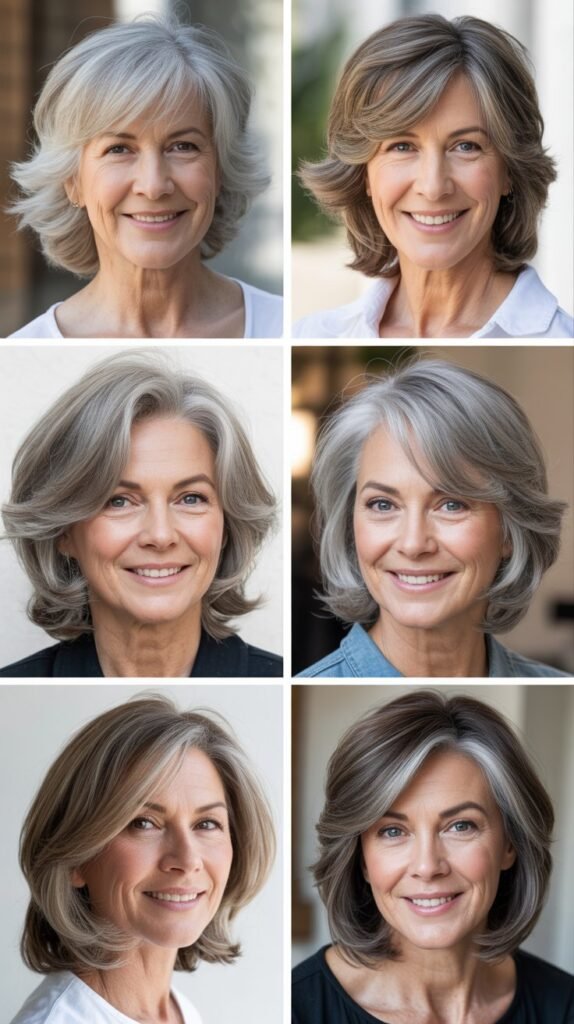
The chin-length layered cut strikes an ideal balance for women seeking a style that’s neither too short nor too long, offering versatility and volume for fine gray hair.
This universally flattering length hits right at the jawline, creating a frame that complements most face shapes.
- Layers are strategically placed throughout the cut, with shorter pieces on top to create lift and longer pieces underneath to maintain fullness at the perimeter.
- The chin-length cut is particularly effective for fine hair because it’s short enough to prevent the weight of longer hair from pulling strands flat, yet long enough to style in multiple ways.
- This length can be worn sleek and straight for a polished, professional look or given loose waves for a softer, more casual appearance.
- Face-framing layers around the jawline and cheekbones add dimension and draw attention to your best features while softening any angular aspects of the face.
- The maintenance level is moderate—requiring styling but not extensive daily manipulation, making it practical for active lifestyles.
8. The Voluminous Crown Cut
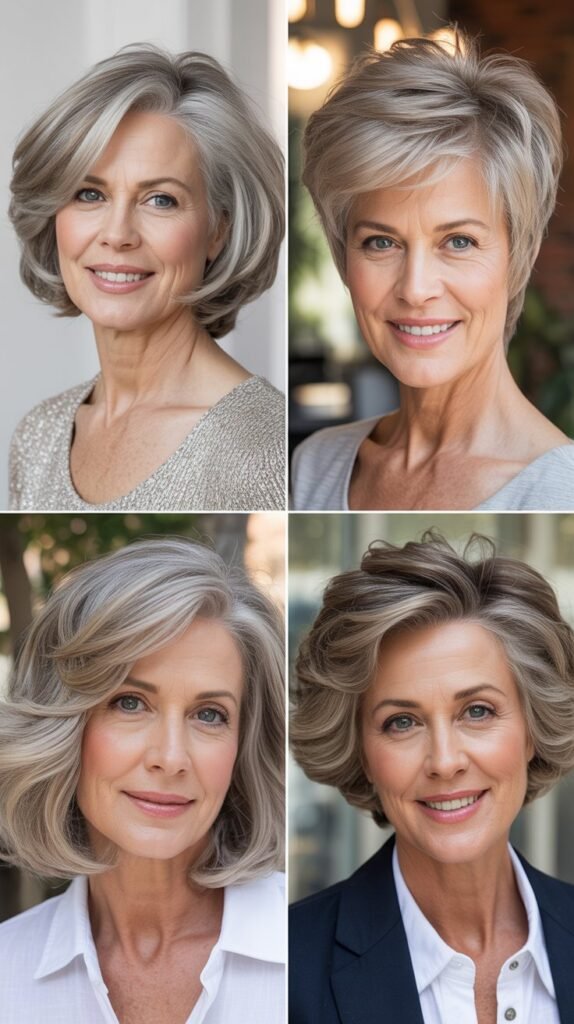
The voluminous crown cut specifically addresses the common concern of flatness at the top of the head, using strategic layering to create maximum lift where fine hair needs it most.
This approach focuses on building height through the crown area while keeping sides relatively smooth.
- Shorter layers are concentrated at the crown, cut at angles that encourage hair to stand away from the scalp and create natural volume.
- The sides are kept longer and less layered to avoid a triangular or puffy appearance, maintaining a balanced silhouette.
- This technique is particularly beneficial for fine hair because it redistributes volume to where it’s most visible and impactful—the top of the head.
- Styling involves using a volumizing spray or mousse at the roots, then blow-drying with a round brush while lifting hair upward at the crown.
- The overall length can vary based on preference, but the crown layering technique works effectively whether hair is short, medium, or longer.
9. The Soft Wedge Cut
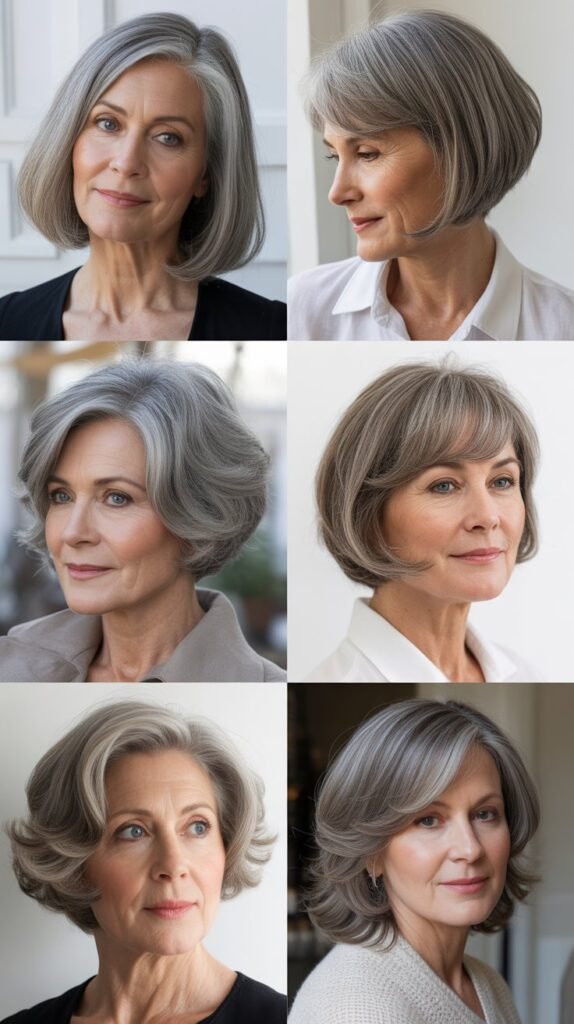
The soft wedge cut offers a modern interpretation of a classic style, creating a rounded, graduated shape that’s both elegant and practical for fine gray hair.
Unlike the sharp, angular wedges of decades past, this contemporary version features softer, more blended layers.
- The cut is graduated from back to front, with the back cut shortest and length increasing as it moves toward the face, creating a gentle slope.
- Layers are blended smoothly throughout rather than cut in harsh, distinct sections, resulting in a softer, more natural appearance.
- This style works excellently for fine hair because the layering creates fullness throughout while the tapered shape prevents hair from appearing sparse at the ends.
- The wedge naturally frames the face and draws attention upward toward the eyes and cheekbones, creating a flattering focal point.
- Maintenance is relatively minimal, as the graduated shape maintains its form even as hair grows, requiring trims only every 8-10 weeks.
10. The Textured Lob (Long Bob)
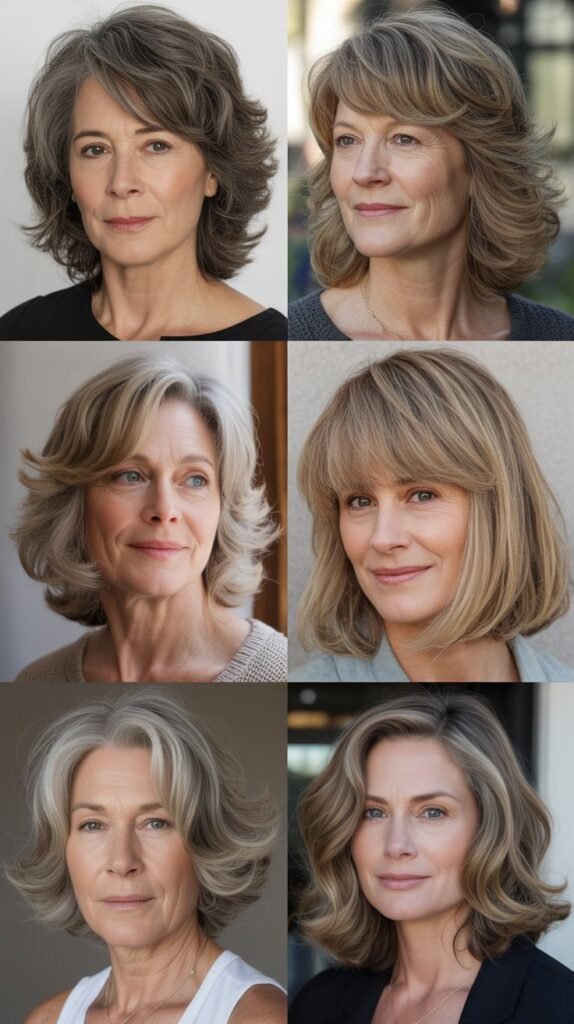
The textured lob represents the perfect compromise for women who want the sophistication of a bob with the versatility of slightly longer hair, typically falling between the chin and collarbone.
This style has become increasingly popular for its ability to make fine gray hair appear fuller through strategic texturing.
- The length hits at a sweet spot that’s long enough to pull back when desired but short enough to maintain body and movement without becoming weighed down.
- Internal texturing removes bulk while creating separation between strands, preventing fine hair from clumping together and appearing thin.
- Subtle layers throughout add dimension without creating a heavily layered look, maintaining enough density at the perimeter to avoid wispy ends.
- This style can be worn straight for a sleek, polished appearance or styled with loose waves for a more relaxed, beachy vibe.
- The gray color enhances the textured effect, as the various silver tones create natural highlights and lowlights that make the texture more visible and impactful.
11. The Short Crop with Long Bangs
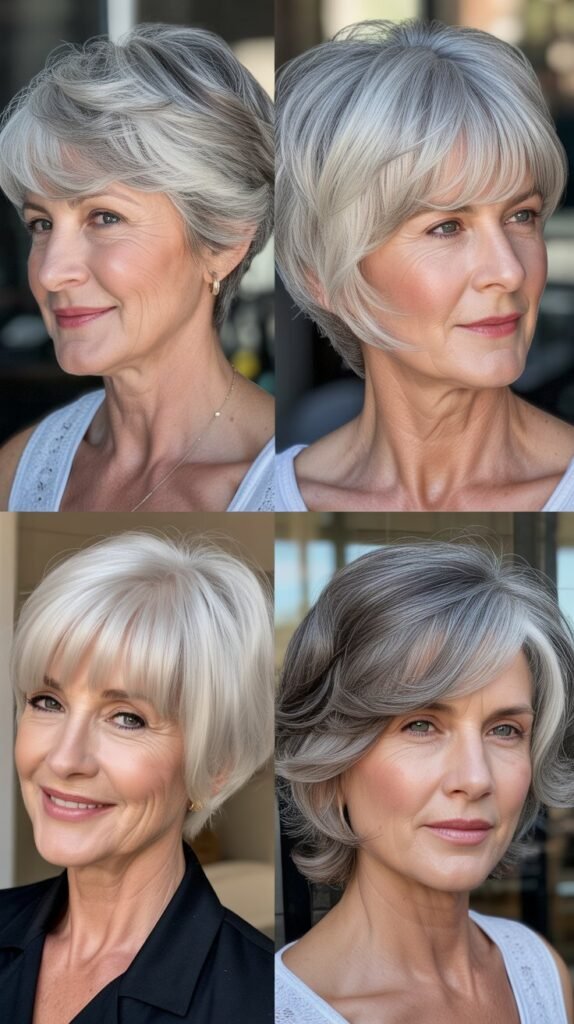
The short crop with long bangs creates an interesting contrast that’s both stylish and functional, offering fine gray hair a way to appear fuller through strategic length placement.
This cut keeps the overall length quite short while leaving the fringe area significantly longer.
- The back and sides are cropped close to the head, creating a clean, neat appearance that’s easy to maintain and style.
- The bangs section is left longer—typically extending to eyebrow level or slightly below—creating a focal point that draws attention forward.
- This length contrast creates the illusion of more hair because the eye focuses on the longer bangs rather than the overall hair density.
- The long bangs can be styled straight across for a bold statement or swept to the side for a softer look, offering versatility within one cut.
- Fine hair benefits because the short length prevents flatness while the longer bangs provide styling options and face-framing softness.
12. The Graduated Pixie
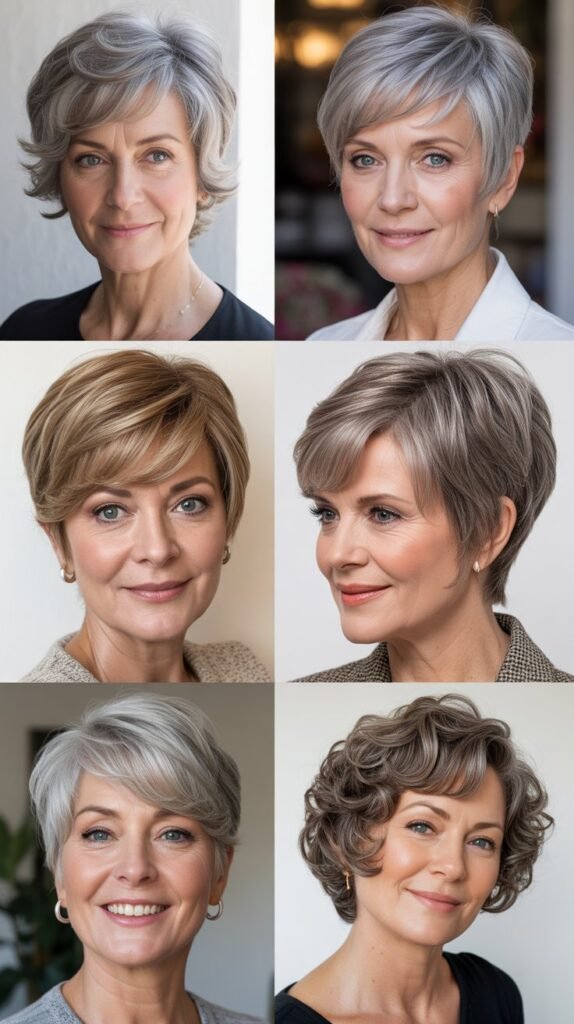
The graduated pixie takes the classic pixie cut and adds dimension through carefully planned length variations, creating a more sophisticated and textured appearance.
This style works particularly well for fine gray hair by using graduation to build apparent volume.
- Hair is cut progressively longer from the nape upward, with the shortest sections at the back of the neck and increasingly longer pieces toward the crown.
- This graduated approach creates a stacked effect that adds height and fullness to areas where fine hair typically falls flat.
- The sides can be kept relatively short and close to the head or slightly longer with texture, depending on face shape and personal preference.
- The graduated cutting technique allows for multiple styling options—from sleek and smooth to tousled and textured—with minimal product and effort.
- Gray hair’s natural texture variations work beautifully with this cut, as the graduation showcases the dimensional qualities of silver tones.
13. The Wispy Layered Bob
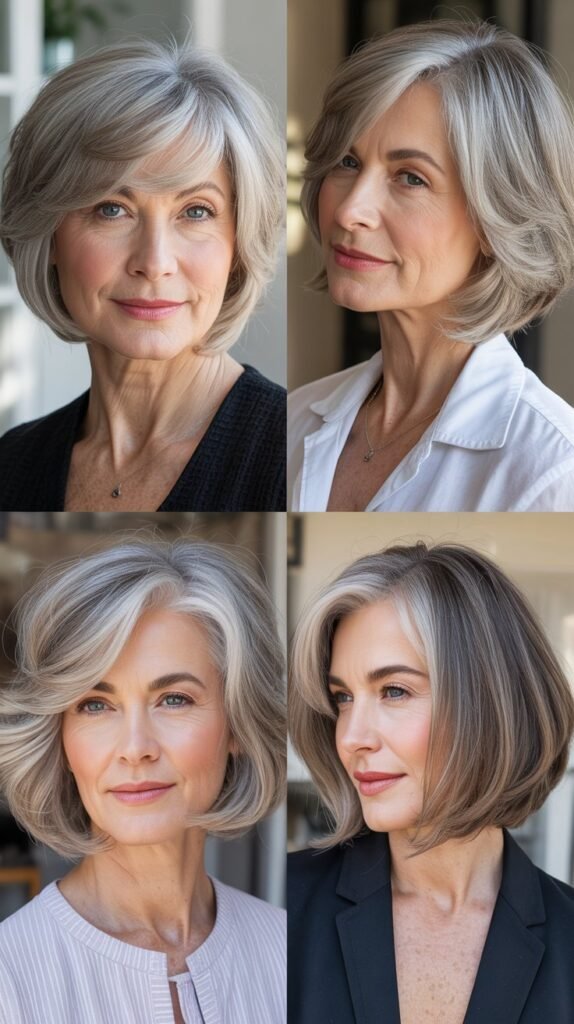
The wispy layered bob introduces delicate, feathered ends to the classic bob structure, creating a softer, more romantic look that’s particularly flattering for fine gray hair.
This style achieves fullness through the illusion of airiness rather than heavy volume.
- The bob is cut to a standard length—typically between chin and shoulder—but finished with point-cutting or razor techniques that create soft, wispy ends.
- Internal layers add movement and prevent the bulk that can make fine hair look limp, while the wispy perimeter keeps ends from appearing blunt or heavy.
- This style is especially beneficial for fine hair because the textured ends create visual interest and make hair appear less sparse than blunt cuts.
- Styling involves applying a light texturizing spray or dry shampoo and either air-drying or using a diffuser to enhance the wispy texture.
- The delicate ends catch light beautifully on gray hair, creating a soft halo effect that’s both youthful and elegant.
14. The Tapered Cut
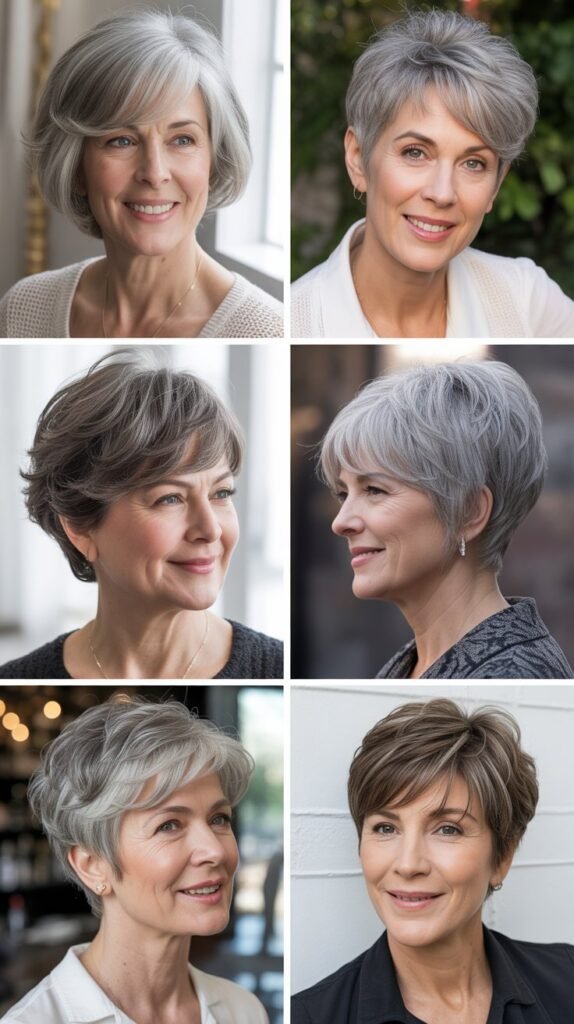
The tapered cut offers a sophisticated, polished look that gradually decreases in length from top to bottom and from front to back, creating clean lines and easy maintenance for fine gray hair.
This precise cutting technique results in a shaped, controlled appearance.
- Hair is longest at the top and front, gradually becoming shorter as it moves down and back toward the nape of the neck.
- The tapering creates a naturally lifted appearance at the crown while keeping the sides and back neat and close to the head.
- This style is particularly effective for fine hair because it removes weight from the ends while maintaining fullness where it’s most visible.
- The clean, geometric lines of a tapered cut look exceptionally sharp on gray hair, emphasizing the sleek, sophisticated nature of silver tones.
- Maintenance is straightforward, requiring regular trims every 4-6 weeks to keep the tapered shape sharp and defined.
15. The Layered Shag with Bangs
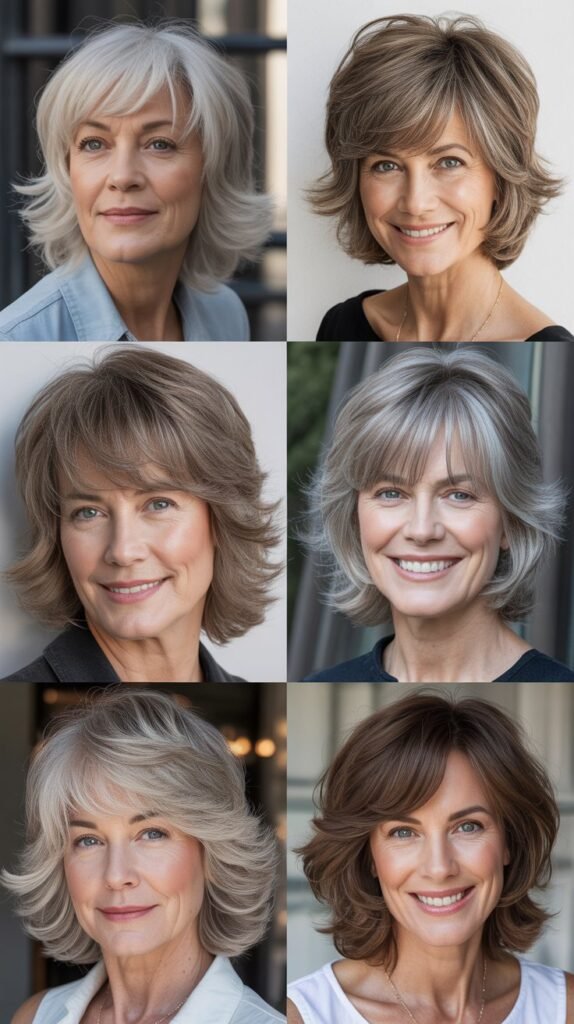
The layered shag with bangs combines two powerful volume-creating elements, offering fine gray hair maximum fullness and movement while adding face-framing softness through fringe.
This style represents a more complete approach to addressing thin hair concerns.
- Multiple layers throughout the head create separation and movement, with each layer adding to the overall volume effect.
- Bangs—whether full, side-swept, or curtain-style—add coverage at the forehead and draw attention to the eyes, creating a youthful focal point.
- The combination of shag layers and bangs creates substantial visual weight at the top of the head, balancing proportions and making fine hair appear fuller.
- Styling requires more effort than simpler cuts but offers significant payoff in terms of volume and versatility.
- Gray hair in this style showcases beautiful dimension, as the various layers catch light differently and display the range of silver tones.
16. The Rounded Bob
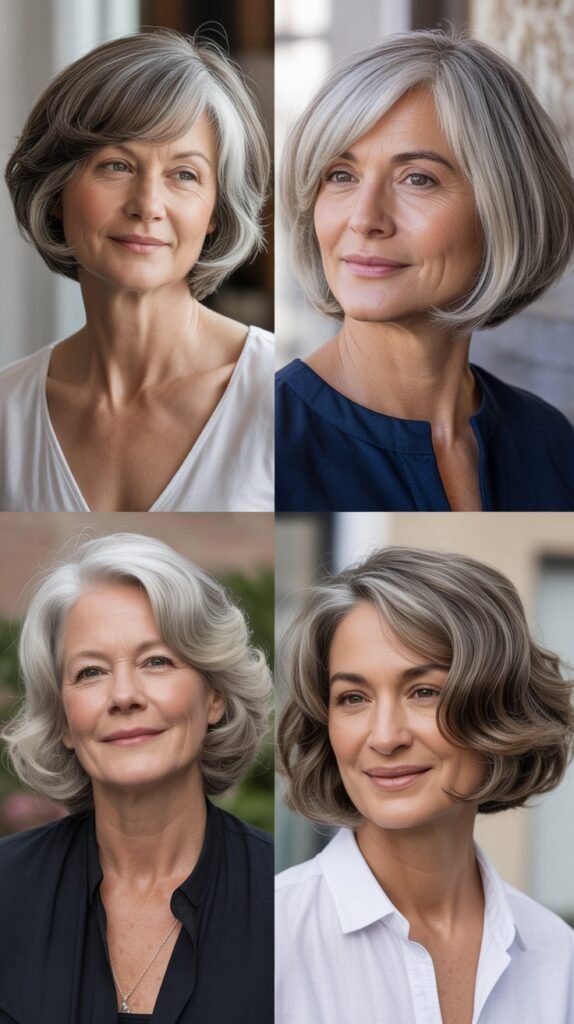
The rounded bob creates a soft, curved silhouette that’s universally flattering and particularly effective at making fine gray hair appear fuller through shape alone.
This cut emphasizes a circular form that adds width and fullness to the overall appearance.
- Hair is cut and styled to curve gently around the head, creating a rounded shape when viewed from the side or back.
- The perimeter typically follows a curved line rather than a straight horizontal cut, with hair slightly longer in front and gradually shorter toward the back.
- This shape naturally creates the illusion of volume because the rounded form suggests fullness and body throughout the cut.
- Internal layering supports the rounded shape while removing bulk that could weigh fine hair down and flatten the desired curve.
- The rounded bob works beautifully with gray hair’s natural texture, allowing the curve to showcase the dimensional qualities of silver tones.
17. The Piece-y Pixie
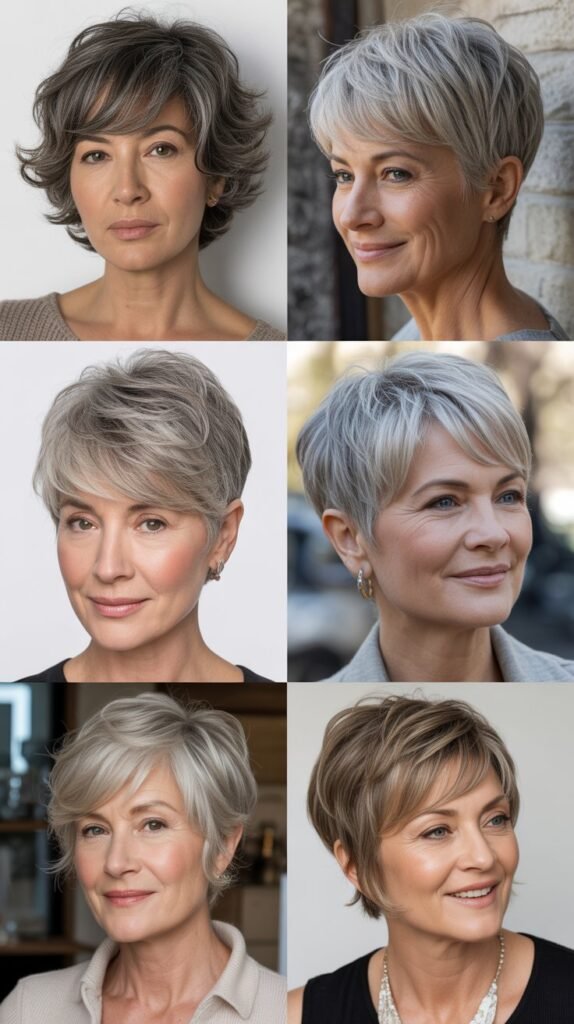
The piece-y pixie introduces separated, defined sections to the pixie cut, creating a modern, edgy look that adds substantial visual interest to fine gray hair.
This style uses product and cutting techniques to make individual pieces of hair stand out distinctly.
- Hair is cut in varied lengths throughout, with some pieces left intentionally longer to create texture and separation.
- Point-cutting or razor techniques create choppy ends that don’t blend smoothly, instead forming distinct, separated pieces.
- Styling involves applying a strong-hold styling paste or wax to dry hair and manipulating individual pieces to stand out and create definition.
- This technique is excellent for fine hair because the separated pieces create the appearance of more hair by emphasizing individual strands rather than grouping them together.
- Gray hair’s natural highlights work exceptionally well with this style, as the piece-y texture catches light and displays the full range of silver tones.
18. The Angled Bob
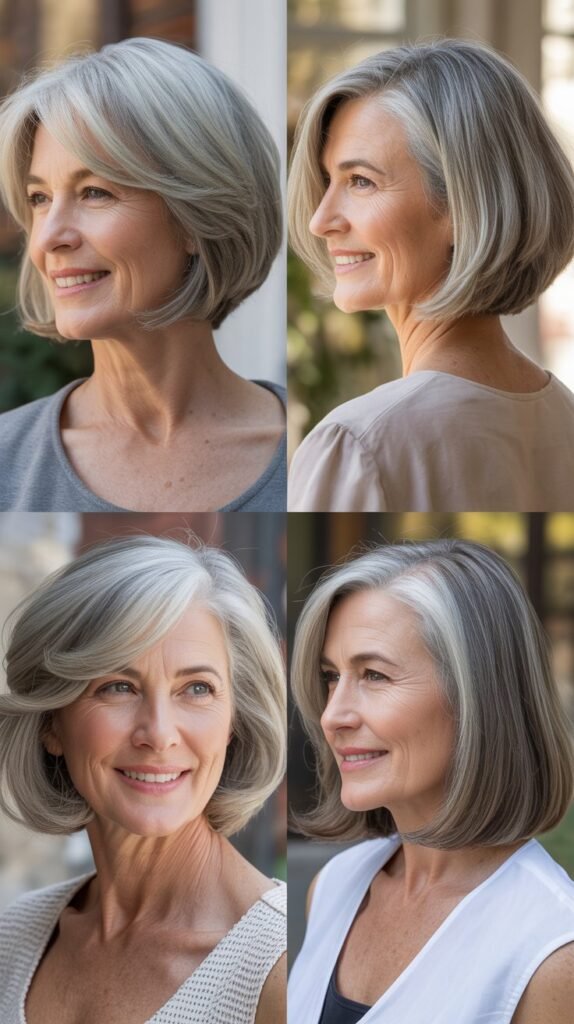
The angled bob creates a distinctive diagonal line from back to front, with hair shorter in the back and progressively longer toward the face, offering a contemporary edge to fine gray hair.
This geometric approach creates visual interest through shape rather than relying solely on volume.
- The back is typically cut quite short, often at or above the nape of the neck, while front pieces extend to chin length or below.
- The angle can be subtle—just an inch or two of difference—or dramatic, with several inches of length variation from back to front.
- This cut is particularly beneficial for fine hair because the shorter back removes weight and prevents flatness, while longer front pieces frame the face beautifully.
- The strong geometric line creates a modern, fashion-forward appearance that’s both sophisticated and edgy.
- Gray hair emphasizes the clean lines of the angled bob, with the silver tones highlighting the precise cutting and geometric shape.
19. The Choppy Mid-Length Cut
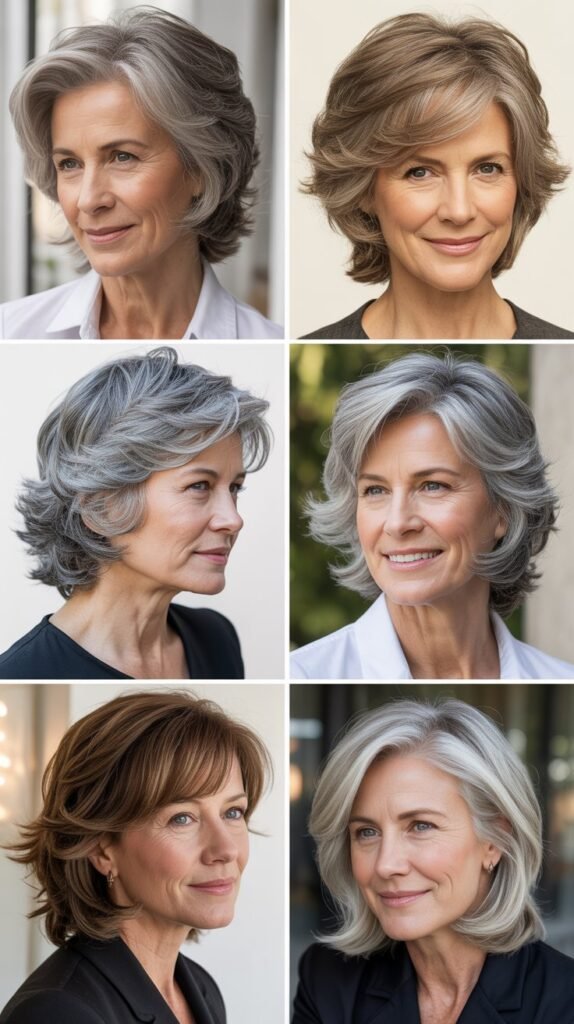
The choppy mid-length cut brings a casual, undone aesthetic to gray hair while addressing volume concerns through strategic texture and movement.
This style typically falls between the chin and shoulders and features deliberately uneven, textured ends.
- Hair is cut in irregular lengths throughout, creating a purposefully undone, lived-in appearance that’s effortlessly stylish.
- The choppy technique involves using razors or point-cutting to create varied lengths that add texture and prevent the blunt, heavy appearance that can emphasize thinness.
- This style works particularly well for fine hair because the irregular lengths create separation and movement, preventing hair from clumping together.
- Styling is minimal and embraces the natural texture—simply apply a texturizing spray or sea salt spray to damp hair and air-dry or diffuse for a casual look.
- The choppy nature of the cut showcases gray hair’s dimensional qualities, with the varied lengths catching light differently and displaying the full spectrum of silver tones.
20. The Sculptured Pixie
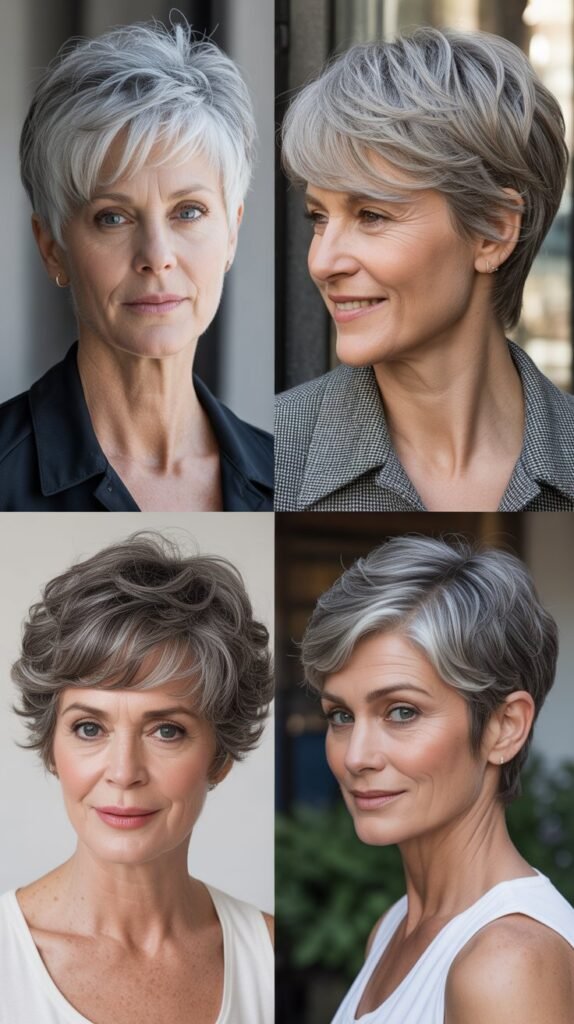
The sculptured pixie takes the traditional pixie cut to an artistic level, using precise cutting techniques to create a shaped, almost architectural appearance that’s both striking and practical for fine gray hair.
This style emphasizes clean lines and deliberate form.
- Hair is cut into a specific shape with defined sections rather than blending seamlessly throughout, creating visible structure and form.
- The sculptured approach might include distinct sections at different lengths, sharp angles, or geometric patterns that make the cut a statement piece.
- This style benefits fine hair by creating visual interest through shape rather than relying on volume, turning potential thinness into a deliberate aesthetic choice.
- The precise nature of sculptured cuts requires regular maintenance to keep the defined shape sharp and intentional.
- Gray hair enhances the sculptured effect, as the monochromatic silver tones emphasize the cut’s structure without distraction from color variations.
21. The Curly Gray Pixie
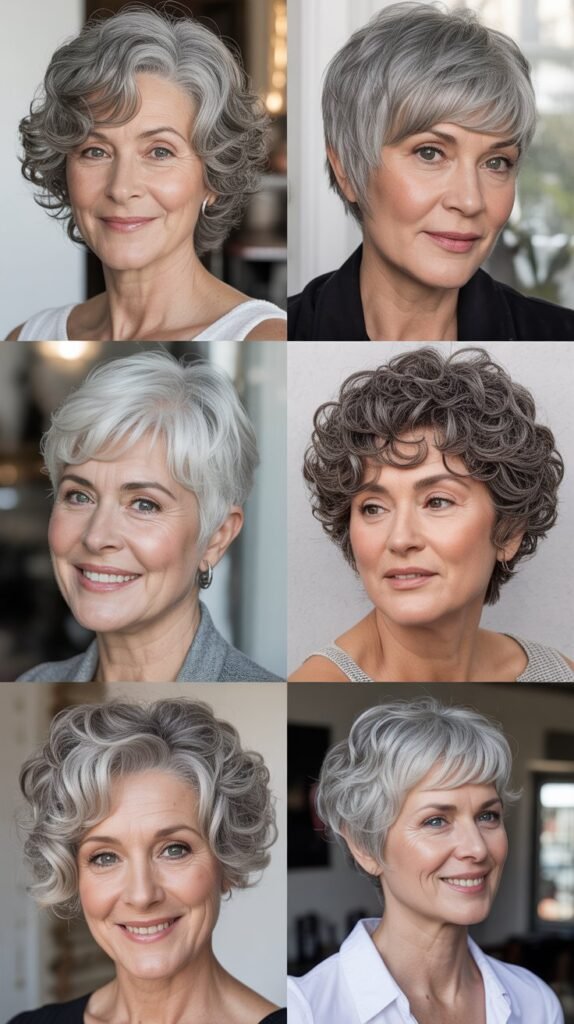
The curly gray pixie celebrates natural texture while maintaining the practical short length of a pixie cut, offering women with naturally curly or wavy fine hair a style that works with rather than against their hair’s characteristics.
This approach recognizes that fine hair can still have curl or wave patterns.
- The cut is shaped to accommodate natural curl patterns, with layers cut to enhance curl formation rather than fighting against it.
- Shorter length prevents the weight that can pull curls straight, allowing fine curly hair to spring into fuller-looking ringlets or waves.
- This style requires curl-specific products like lightweight mousse or curl-defining creams that enhance pattern without weighing fine hair down.
- The pixie length makes curly hair more manageable while the texture creates substantial visual volume that makes fine hair appear fuller.
- Gray curls have a beautiful, sophisticated appearance, with the silver tones catching light differently on each curl and creating a luminous, dimensional effect.
22. The Slicked-Back Short Cut
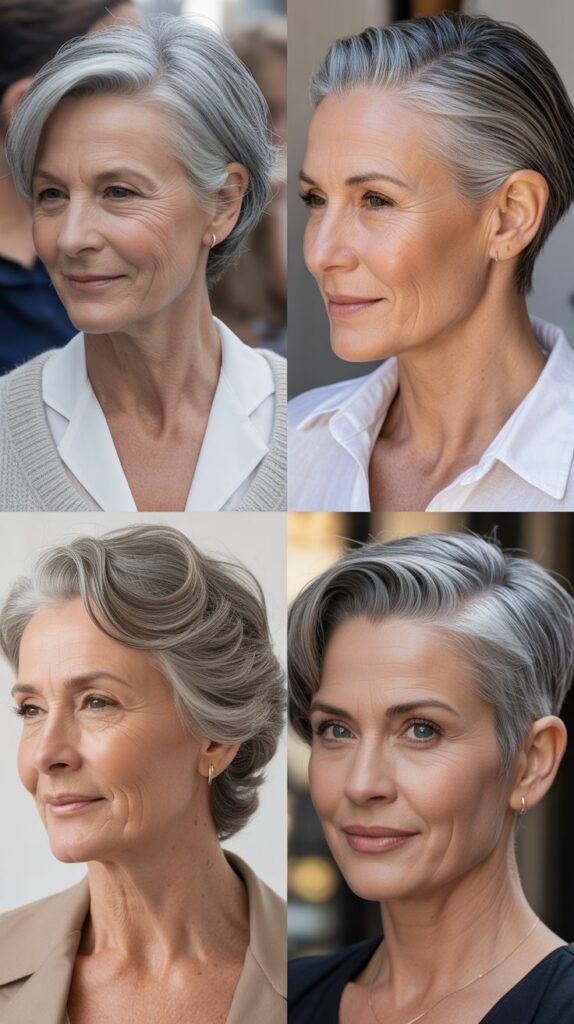
The slicked-back short cut offers a bold, confident look that’s surprisingly practical for fine gray hair, using sleekness and shine to create a polished appearance rather than relying on volume.
This style embraces a smooth, controlled aesthetic.
- Hair is cut short overall—typically similar to a pixie or crop—but styled backward away from the face rather than with forward movement.
- Products like pomade or gel are used to create a wet-looking, slicked appearance that’s intentionally smooth and flat.
- This counterintuitive approach works for fine hair because it embraces the natural tendency of thin hair to lie flat, turning a potential weakness into a deliberate style statement.
- The slicked-back look creates a sophisticated, almost androgynous appearance that’s both modern and timeless.
- Gray hair looks exceptionally elegant when slicked back, as the silver tones create a sleek, metallic appearance that’s refined and distinctive.
23. The Textured Crop
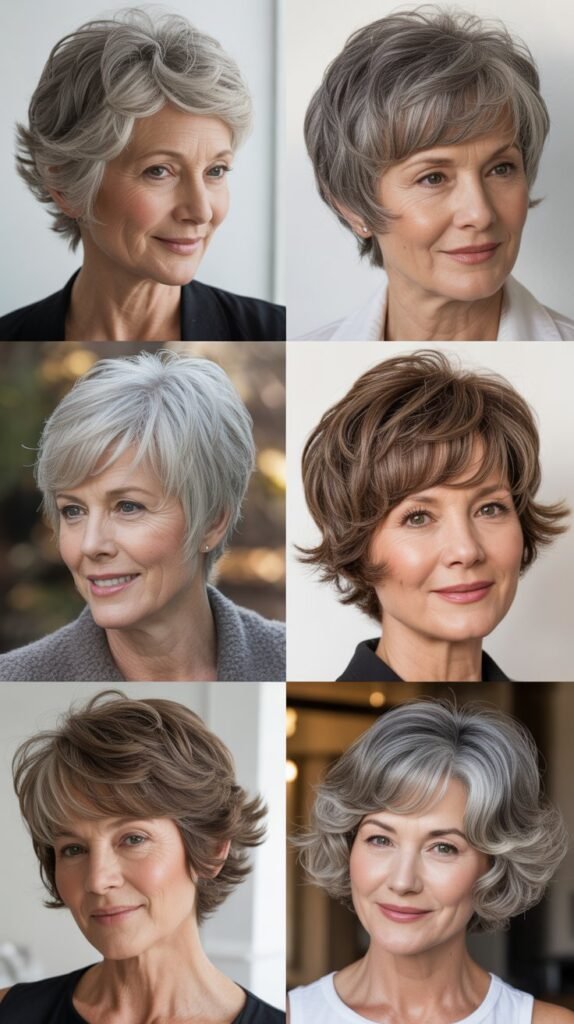
The textured crop combines the practicality of very short hair with the volume-enhancing benefits of texture, creating a low-maintenance yet stylish option for fine gray hair.
This cut is characterized by its short length overall with longer, textured sections on top.
- The sides and back are cut quite short—often with clippers—while the top is left longer and cut with texturizing techniques.
- The longer top section is typically 2-3 inches and cut with point-cutting or thinning shears to create separation and texture.
- This contrast between short sides and textured top creates the appearance of fullness where it matters most—at the top of the head.
- Styling involves applying a small amount of texturizing product to dry hair and using fingers to create piece-y separation and lift.
- The crop’s versatility allows it to be styled forward for a casual look or swept up for a more polished appearance.
24. The Shoulder-Length Layered Cut with Movement
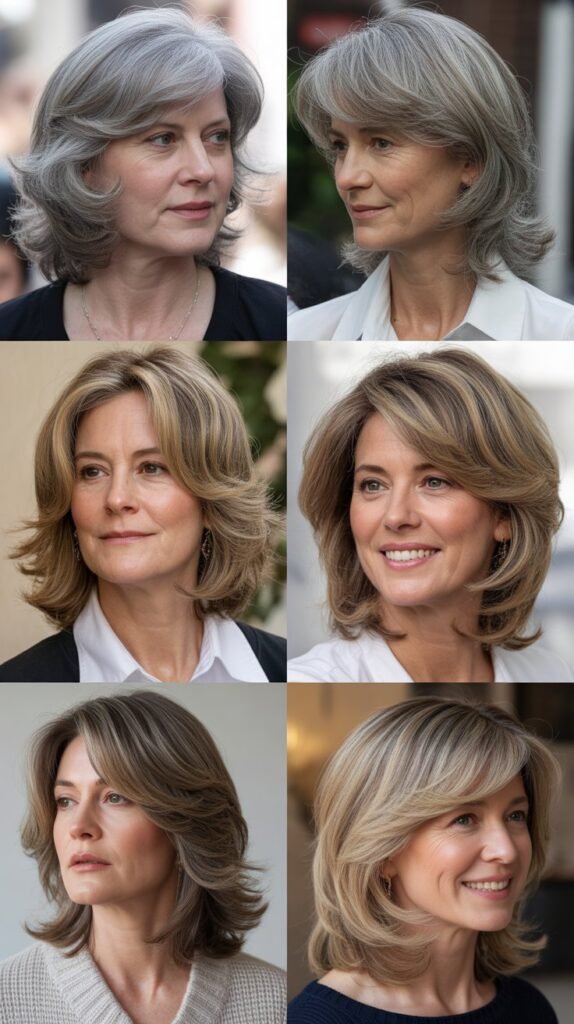
The shoulder-length layered cut with movement offers women who prefer longer hair a way to maintain length while still achieving volume and body for fine gray hair.
This style falls right at or just above the shoulders and incorporates substantial layering throughout.
- Layers begin around the cheekbone or chin level and continue throughout the length, creating movement and preventing the heavy, flat appearance longer hair can develop.
- The layering technique removes bulk from the interior while maintaining density at the perimeter, ensuring ends don’t appear wispy or thin.
- This length offers versatility—it’s long enough to pull back into a small ponytail or clip when desired but short enough to style easily.
- Movement is enhanced through styling with a large round brush or curling iron to create loose waves or bends that add body.
- Gray hair at this length showcases beautiful dimension, with the layers and movement displaying the full range of silver tones as they catch light.
25. The Undercut Pixie
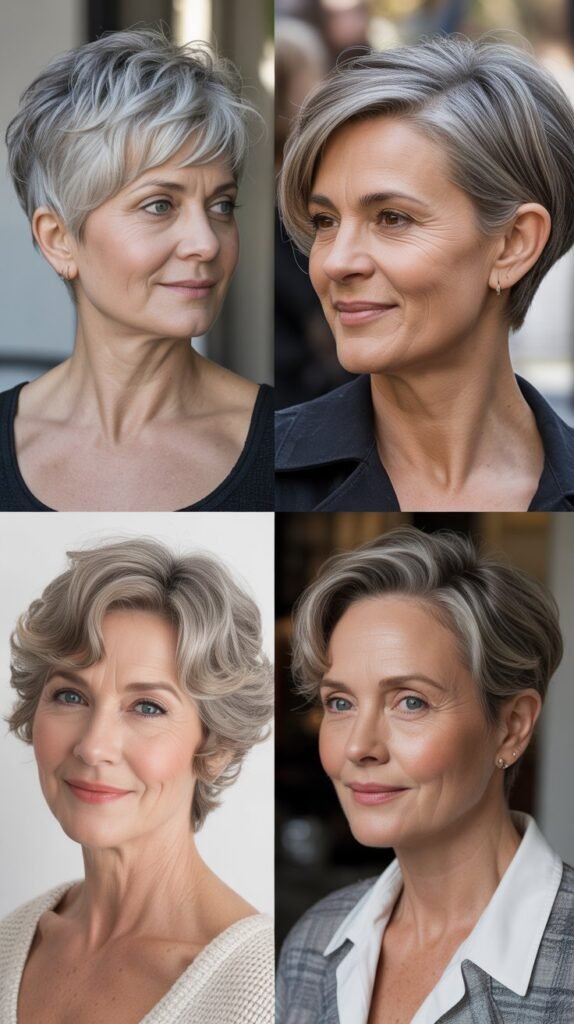
The undercut pixie adds an edgy, unexpected element to the classic pixie by incorporating shaved or very closely cropped sections underneath longer top hair.
This modern style creates dramatic contrast and surprising versatility for fine gray hair.
- The nape and potentially the sides are cut extremely short with clippers, often to a very close crop or even shaved.
- The top section is left significantly longer—typically 3-4 inches—creating a stark contrast between the undercut sections and the longer hair.
- This dramatic technique benefits fine hair because the removed underneath sections eliminate weight, allowing the longer top hair to lift and create volume.
- The longer top can be styled forward, to the side, or even swept across the undercut sections for different looks.
- The undercut adds an element of surprise and edge that’s increasingly popular among confident women seeking a bold statement with their gray hair.
26. The Swept-Forward Bob
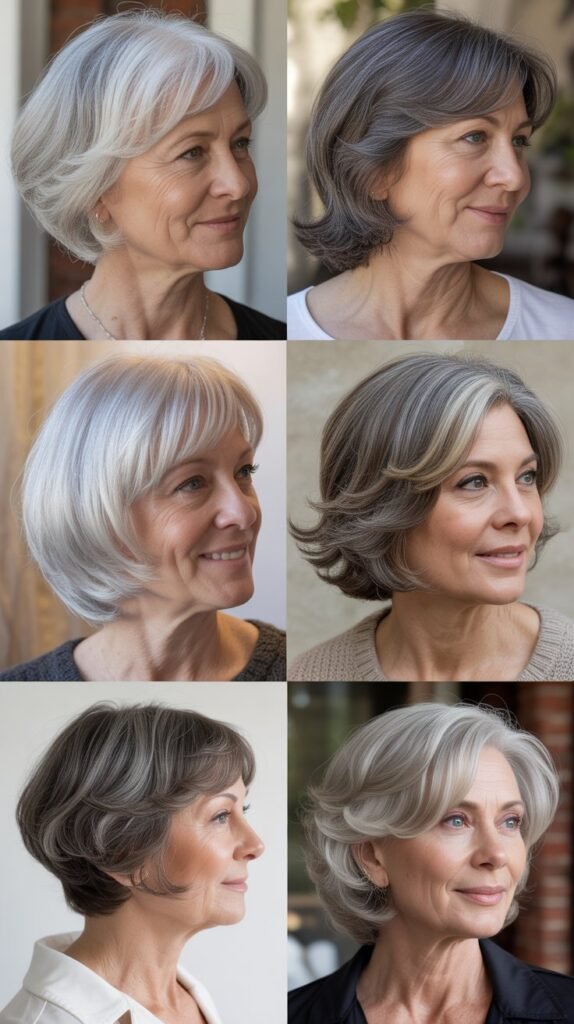
The swept-forward bob reverses the typical styling direction, bringing hair forward toward the face rather than away from it, creating a frame that’s both flattering and volume-enhancing for fine gray hair.
This styling approach works with bobs of varying lengths.
- Hair is cut in a bob shape but styled with a round brush during blow-drying to direct hair forward toward the face rather than back or to the sides.
- The forward movement creates fullness around the face and cheekbones, drawing attention to facial features and creating a soft frame.
- This technique is particularly beneficial for fine hair because the forward direction creates lift at the crown as hair is brushed up and over.
- The swept-forward styling can be done with a smooth, sleek finish or with added texture and waves for a more casual appearance.
- Gray hair looks especially sophisticated with this styling, as the forward sweep showcases the silver tones and creates a frame that’s both modern and timeless.
27. The Wavy Gray Lob
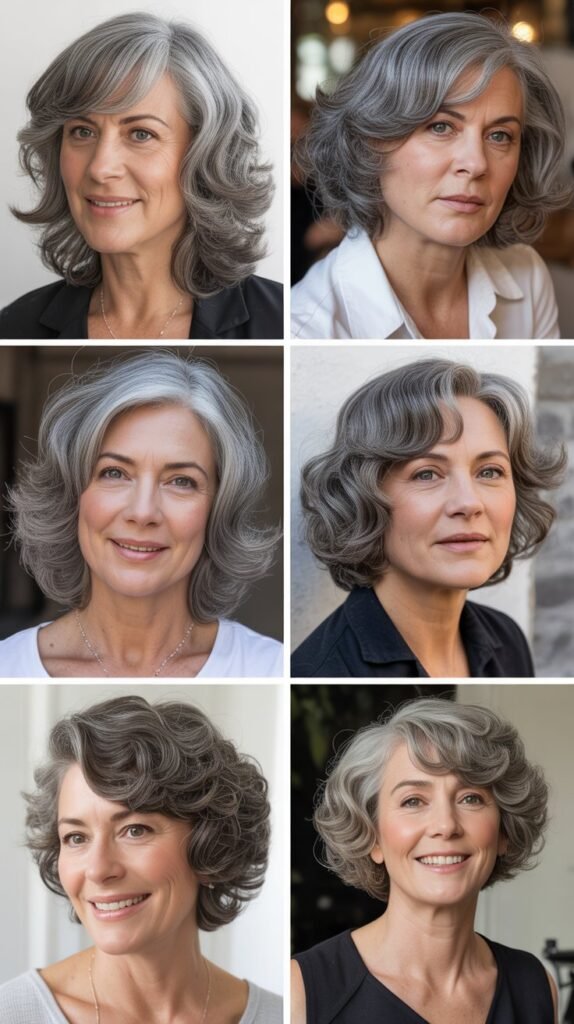
The wavy gray lob combines the increasingly popular long bob length with loose waves or bends that add substantial body and movement to fine hair.
This style achieves a relaxed, effortless aesthetic while addressing volume concerns through texture.
- The lob is cut to fall between chin and collarbone, with subtle layers throughout to support wave formation without creating excessive choppy sections.
- Waves are created using a curling iron, flat iron, or overnight braiding techniques, resulting in loose, natural-looking bends rather than tight curls.
- The combination of lob length and wavy texture creates significant visual fullness, making fine hair appear much thicker than it actually is.
- This style offers versatility—it can be worn wavy for a casual, beachy look or straightened for a sleeker, more polished appearance.
- Gray hair’s natural texture often has a slight wave that works beautifully with this style, requiring less manipulation to achieve the desired effect.
28. The Precision Blunt Bob
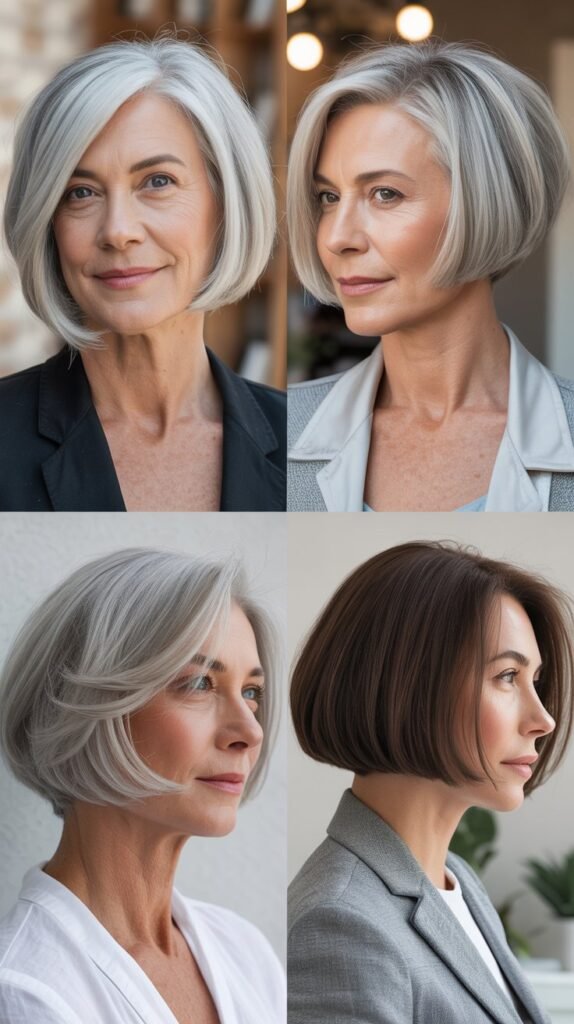
The precision blunt bob makes a powerful statement through its sharp, even perimeter and clean lines, offering fine gray hair a bold, graphic look that’s surprisingly effective at creating the illusion of thickness.
This style features minimal layering and a precisely cut edge.
- Hair is cut to one even length all around, creating a blunt, straight line at the perimeter without graduation or texture.
- The lack of layers means all hairs reach the same length, creating maximum density at the ends for a full, thick appearance.
- This style works for fine hair by keeping all available hair at the perimeter, where density is most visible and impactful.
- The blunt cut requires precise styling—typically blow-dried smooth and straight—to emphasize the clean, sharp lines.
- Gray hair enhances the graphic quality of this cut, with the monochromatic silver tones emphasizing the bold, geometric shape without color distraction.
29. The Tousled Pixie
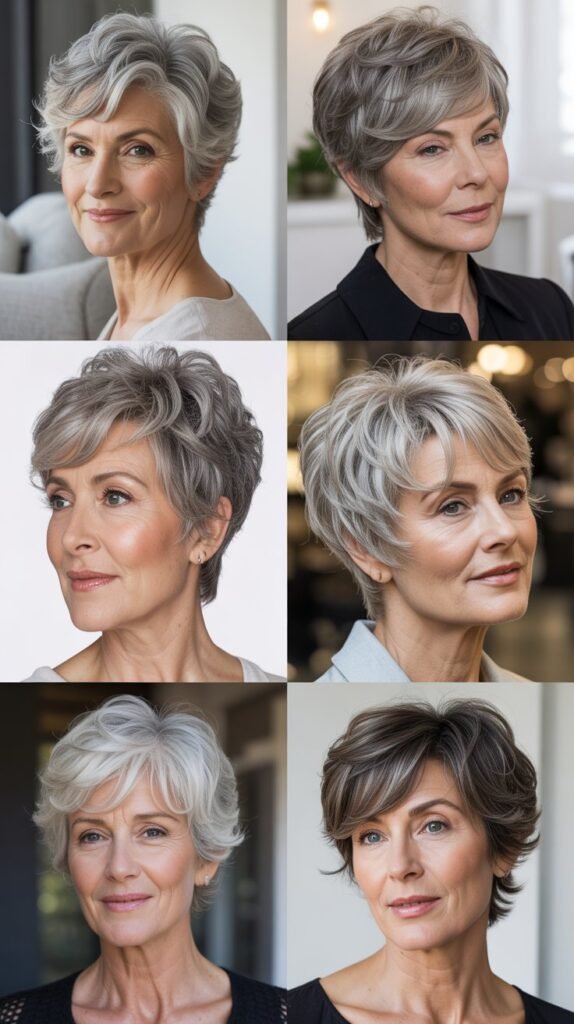
The tousled pixie embraces a deliberately messy, undone aesthetic that’s both youthful and practical for fine gray hair, using texture and movement rather than sleek precision to create style.
This approach to the pixie cut emphasizes casual, effortless appearance.
- Hair is cut in a standard pixie shape but finished with texturizing techniques that create piece-y, separated ends rather than smooth blending.
- The tousled effect is achieved through styling products like sea salt spray or texturizing paste applied to create deliberate disarray and separation.
- This style benefits fine hair because the tousled texture creates the appearance of more hair by emphasizing individual pieces and preventing them from lying flat or clumping together.
- The intentionally messy styling is actually quite simple to achieve and maintain, requiring minimal time and effort for maximum style impact.
- Gray hair’s natural texture works beautifully with tousled styling, as the various silver tones create dimension even in the deliberately disheveled appearance.
30. The Side-Part Bob
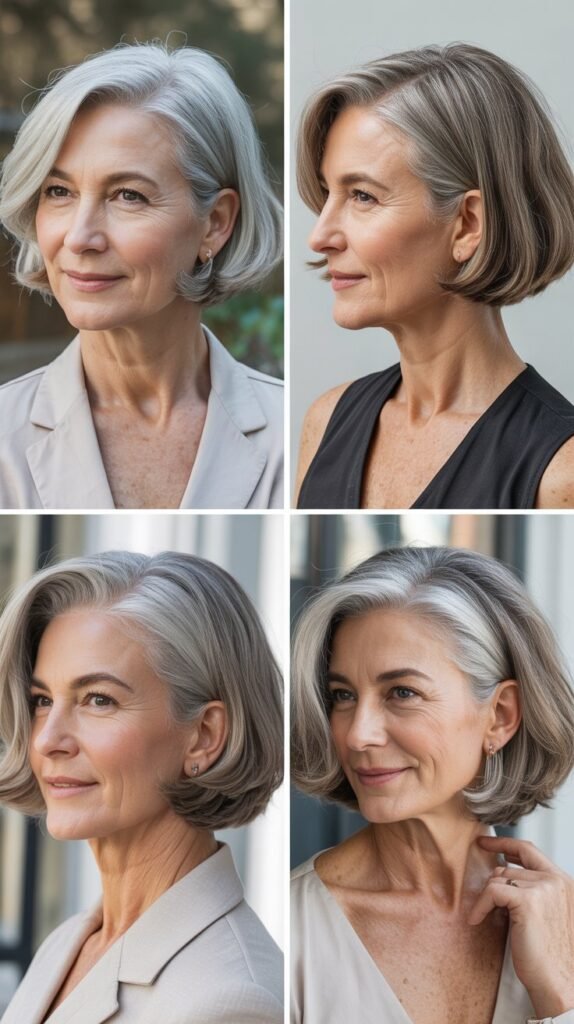
The side-part bob uses strategic parting placement to create instant volume and a flattering frame for fine gray hair, proving that sometimes the simplest changes make the biggest impact.
This classic bob is enhanced through deliberate part positioning.
- Hair is parted deeply to one side—typically about an inch or more from center—rather than in the middle or slightly off-center.
- The deep side part allows significantly more hair to fall to one side, creating volume and fullness through the bulk of hair on the heavier side.
- The lighter side is often tucked behind the ear or styled close to the head, creating contrast that makes the fuller side appear even more voluminous.
- This technique is particularly effective for fine hair because it redistributes available hair to maximize the appearance of fullness on one side.
- The side-part approach works with any bob length and can be paired with straight styling for sophistication or waves for a softer look.
31. The Layered Pixie with Height
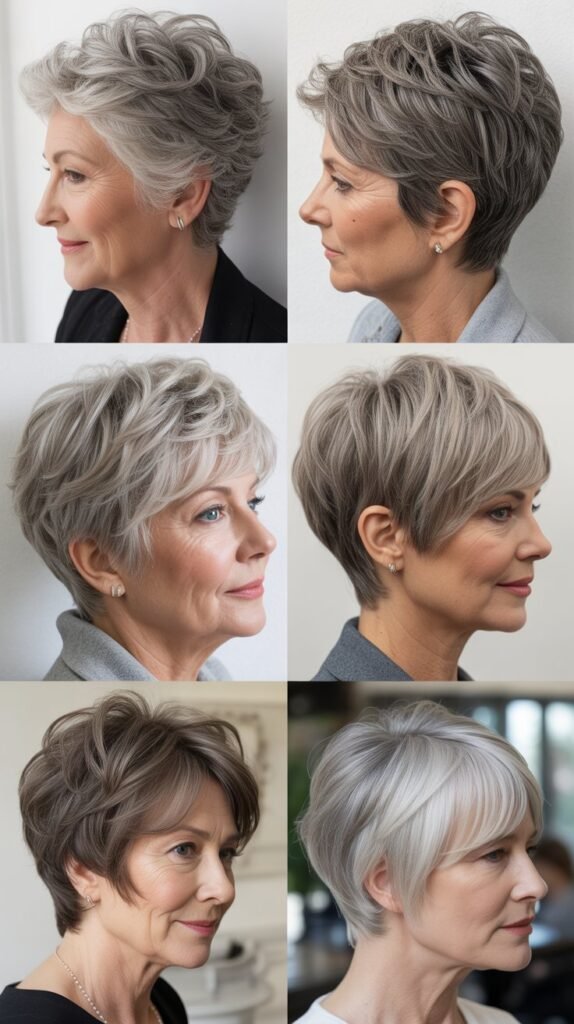
The layered pixie with height focuses specifically on creating maximum lift at the crown, addressing one of fine hair’s most common challenges while maintaining the practical short length of a pixie cut.
This style uses strategic layering to build upward rather than outward.
- Layers are concentrated at the crown and top of the head, cut to encourage hair to stand up and away from the scalp rather than lying flat.
- The sides are kept shorter and less layered to avoid adding width, maintaining a balanced silhouette that emphasizes height rather than bulk.
- Styling involves applying volumizing products at the roots and blow-drying with a round brush while directing hair upward at the crown.
- This approach is ideal for fine hair because it creates drama and presence through vertical height rather than requiring overall hair density.
- The elevated crown creates a youthful, energetic appearance while the gray color adds sophistication and elegance to the overall look.
32. The Soft A-Line Bob
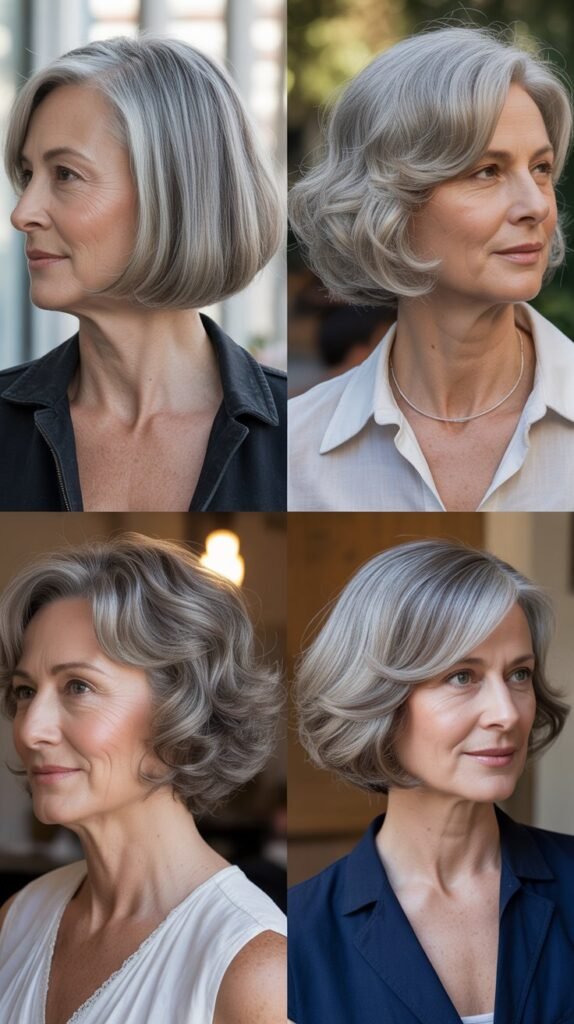
The soft A-line bob creates a gentle slope from back to front, offering a subtle variation on the classic bob that’s particularly flattering for fine gray hair through its dimensional shape.
This cut is less dramatic than a sharp angled bob but more interesting than a standard blunt bob.
- Hair gradually increases in length from back to front, with the difference typically being 1-2 inches rather than the more dramatic angles of other cuts.
- The soft A-line creates gentle framing around the face while maintaining substantial fullness at the back through the shorter length.
- Internal layering is used to support the A-line shape and create movement without creating visible choppy sections.
- This style benefits fine hair by keeping the back shorter to prevent flatness while the longer front pieces create a flattering frame without requiring excessive volume.
- The gentle slope of the A-line catches light beautifully on gray hair, showcasing the dimensional qualities of silver tones as the length transitions.
33. The Spiky Textured Cut
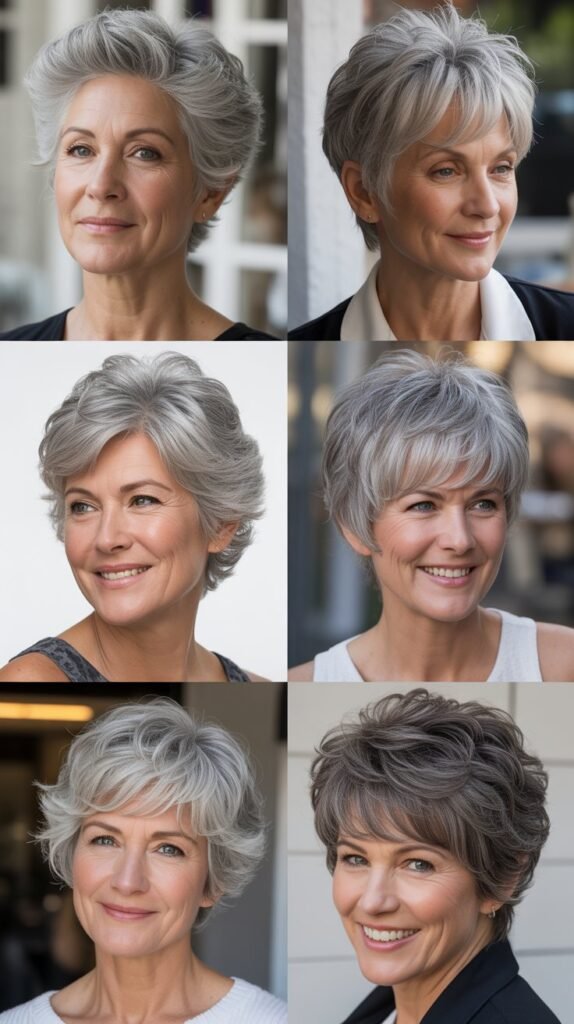
The spiky textured cut brings bold, edgy style to fine gray hair through deliberately styled upward-pointing sections that create dramatic height and personality.
This modern style is increasingly popular among confident women seeking a distinctive look.
- Hair is cut relatively short overall with varied lengths throughout, typically leaving the top section 2-3 inches long.
- Strong-hold styling products like gel or paste are used to manipulate sections of hair to stand upright in spike-like formations.
- This technique is excellent for fine hair because the spiky styling creates substantial visual volume through vertical height and separated sections.
- The edgy aesthetic can be adjusted from subtle texture with small spikes to dramatic, bold spikes depending on personal comfort and style preferences.
- Gray hair looks particularly striking with spiky styling, as the silver tones create a modern, almost futuristic appearance that’s both youthful and sophisticated.
34. The Inverted Bob
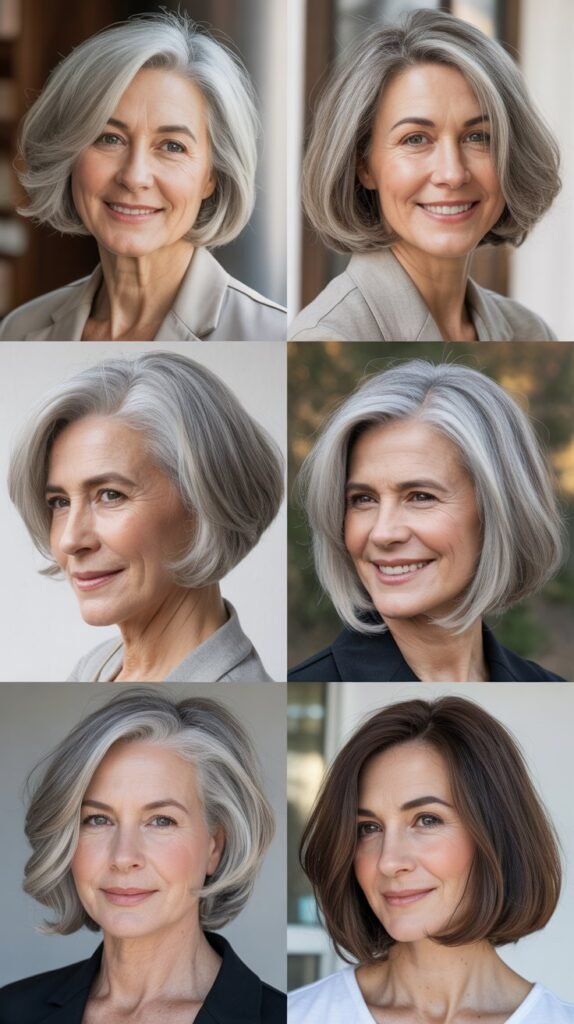
The inverted bob creates a stacked, graduated shape that’s shorter in the back and longer in the front, similar to an angled bob but with more dramatic stacking in the back section.
This style offers significant volume benefits for fine gray hair through its architectural shape.
- The back is cut in graduated layers that stack upon each other, creating a rounded, full appearance at the back of the head.
- Hair progressively lengthens as it moves from back to front, with front pieces typically falling around chin length or slightly below.
- The inverted shape naturally creates lift and fullness at the crown and back, eliminating the flat appearance that fine hair often develops in these areas.
- This style requires regular maintenance to keep the stacked back section shaped and defined, typically needing trims every 6-8 weeks.
- The dramatic shaping looks especially striking on gray hair, with the various layers and angles catching light and displaying the dimensional qualities of silver tones.
35. The Micro Bang Bob
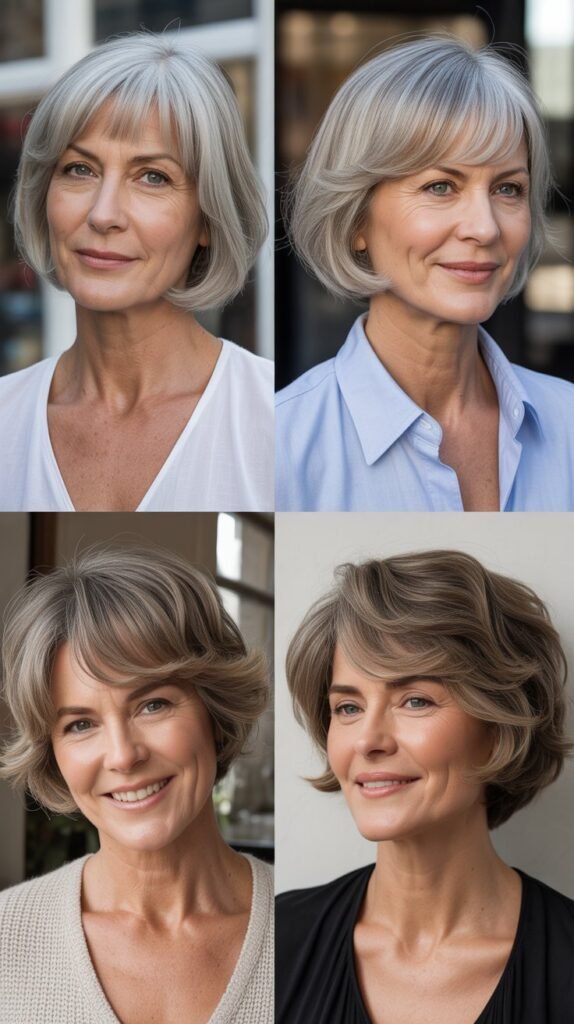
The micro bang bob combines a classic bob cut with very short, cropped bangs that create an unexpected, fashion-forward element while drawing attention to the eyes and away from hair density concerns.
This bold style makes a strong statement.
- The bob itself can be any length—chin to shoulder—but is paired with bangs that are cut quite short, typically well above the eyebrows.
- The micro bangs create a striking focal point that draws attention to the eyes and upper face, distracting from any concerns about hair thickness.
- This style works for fine hair by embracing a bold, intentional aesthetic rather than trying to create the illusion of thickness everywhere.
- The contrast between the bob length and the very short bangs creates visual interest and modern edge that’s surprisingly wearable and flattering.
- Gray hair enhances the bold nature of this cut, with the silver tones adding sophistication to what could otherwise be an overly trendy or youthful style.
36. The Feathered Back Pixie
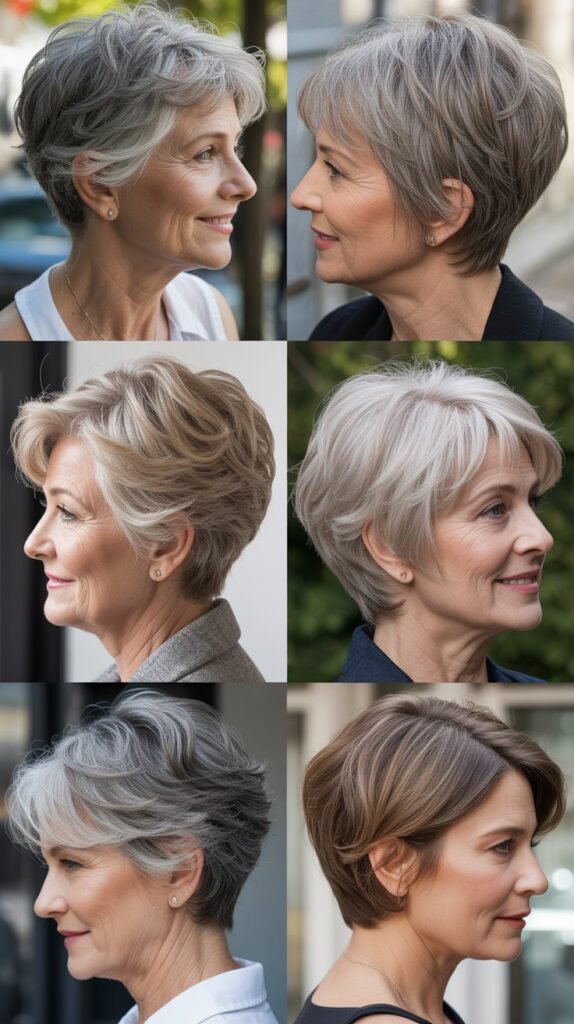
The feathered back pixie styles hair backward and upward from the face, creating a swept, voluminous look that’s both elegant and practical for fine gray hair.
This styling approach adds drama and height while maintaining the manageable length of a pixie cut.
- Hair is cut in a pixie shape with slightly longer pieces on top that can be styled backward away from the face.
- Styling involves blow-drying with a round brush while directing hair backward and upward, creating lift and sweep.
- The feathered technique uses texturizing to create soft, separated ends that prevent the slicked-back look from appearing too severe or flat.
- This style benefits fine hair by maximizing height at the crown and front hairline while the backward direction creates the illusion of fullness.
- The swept-back styling showcases gray hair beautifully, allowing the silver tones to catch light and display their dimensional qualities without obstruction from forward-facing hair.
37. The Choppy Shoulder-Length Cut with Bangs
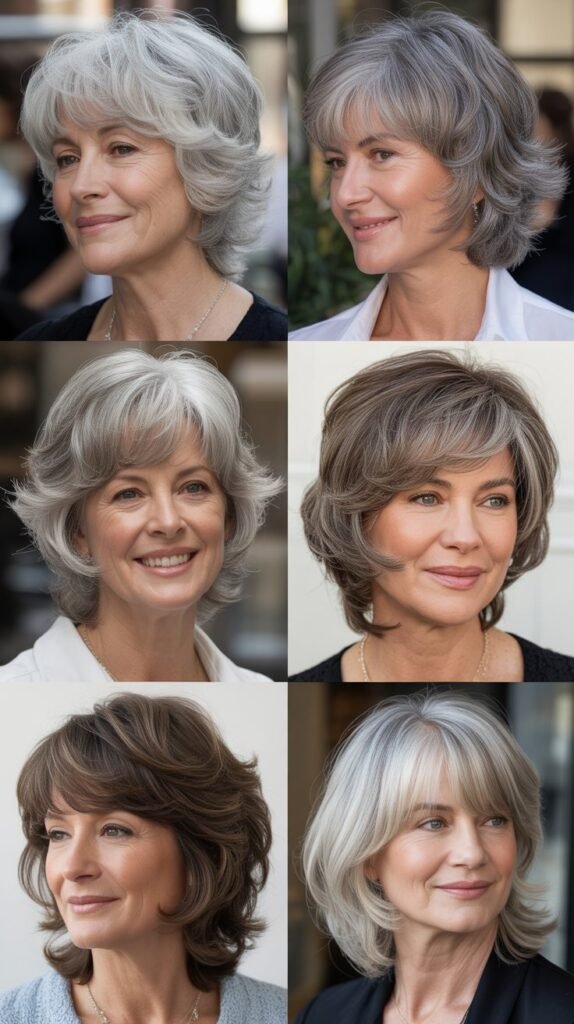
The choppy shoulder-length cut with bangs combines multiple volume-enhancing elements for a comprehensive approach to fine gray hair styling.
This style pairs textured, irregular ends with face-framing fringe for maximum impact.
- Hair is cut to shoulder length with deliberately uneven, choppy ends created through point-cutting or razor techniques.
- Bangs—whether full, side-swept, or curtain-style—add coverage and frame the face while contributing to the overall textured aesthetic.
- Internal layering throughout creates movement and prevents the heavy, flat appearance that fine hair can develop at longer lengths.
- The combination of choppy texture and bangs creates substantial visual interest that makes hair appear fuller and more dynamic.
- This style requires moderate styling effort but offers significant payoff in terms of volume, movement, and overall impact for fine gray hair.
38. The Elongated Pixie
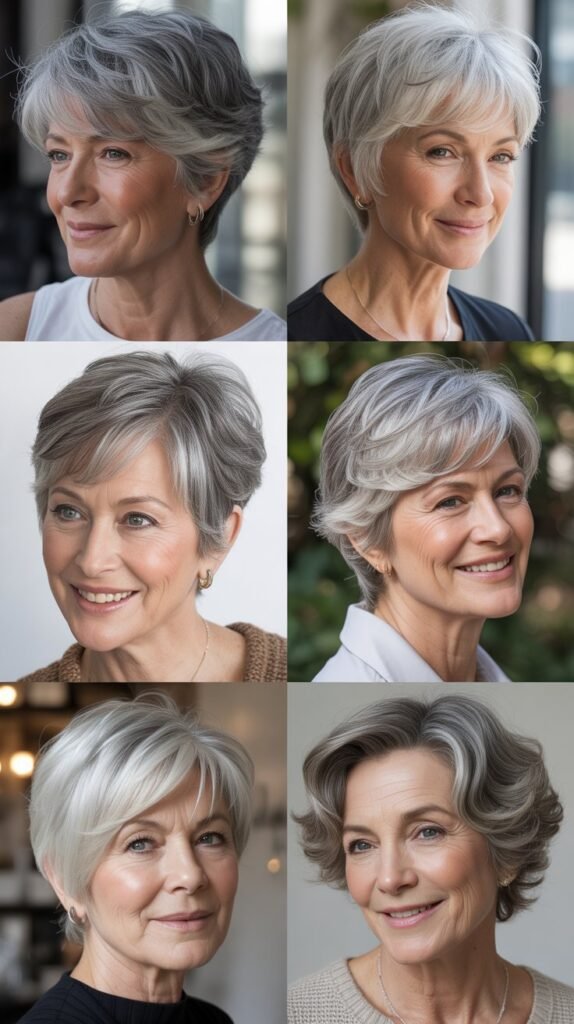
The elongated pixie stretches the traditional pixie cut to slightly longer proportions, typically leaving hair 3-4 inches long on top while keeping sides and back shorter.
This variation offers more styling versatility while maintaining the practical benefits of shorter hair for fine gray strands.
- The longer top section allows for more styling options—swept forward, to the side, or backward—without extending to bob length.
- Sides and back are kept shorter to create contrast and prevent the style from appearing shapeless or overgrown.
- This length is particularly beneficial for fine hair because it offers enough length to create visible volume and movement without the weight that pulls longer hair flat.
- The elongated proportions create a softer, more feminine appearance than traditional short pixies while remaining easy to manage and style.
- Gray hair at this length has beautiful movement and flow, showcasing the silver tones in motion as hair moves naturally with head movements.
39. The Disconnected Layers Cut
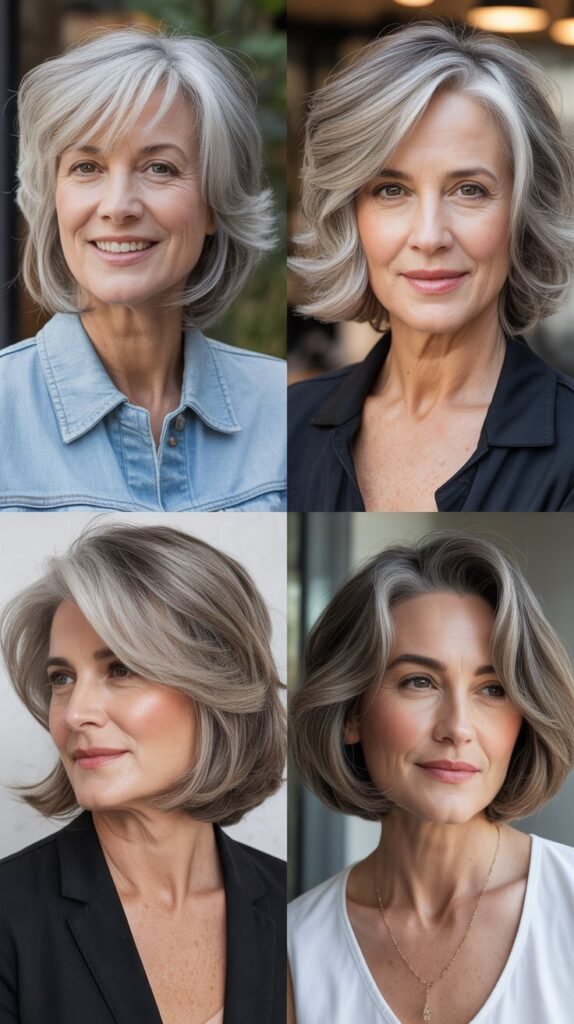
The disconnected layers cut creates deliberate separation between hair sections, featuring layers that don’t blend seamlessly but instead show visible length differences.
This modern technique creates texture and interest while addressing fine hair’s volume challenges.
- Layers are cut with intentional gaps between lengths rather than gradual blending, creating distinct sections that are visibly different.
- The disconnected approach creates substantial texture and movement as the different layer lengths interact and move independently.
- This technique benefits fine hair by creating visual fullness through the contrast and separation between layers rather than relying on overall hair density.
- The overall length can vary from short to medium, with the disconnected layering technique working effectively at multiple lengths.
- Gray hair’s dimensional qualities are enhanced by disconnected layers, as the various lengths catch light differently and showcase the range of silver tones.
40. The Volume-Boosted Bob
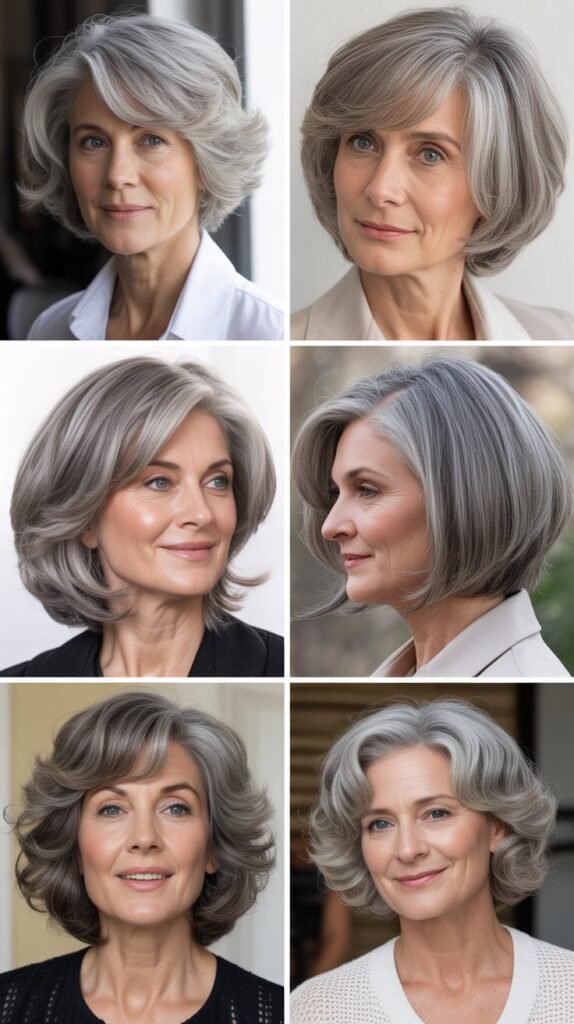
The volume-boosted bob incorporates specific cutting and styling techniques designed explicitly to maximize fullness for fine gray hair.
This comprehensive approach to the classic bob addresses multiple aspects of volume creation simultaneously.
- The bob is cut with internal layering specifically designed to remove weight without reducing perimeter density, creating lift throughout.
- Graduated layers in the back create a slight stacking effect that adds height at the crown without dramatic shape changes.
- Face-framing layers begin at the cheekbone or jawline, adding movement and dimension around the face.
- Styling emphasizes volume through root-lifting techniques, including blow-drying with a round brush while directing hair upward and away from the scalp.
- This style represents a strategic combination of cutting and styling approaches specifically engineered to give fine hair maximum apparent fullness.
41. The Curtain Bang Lob
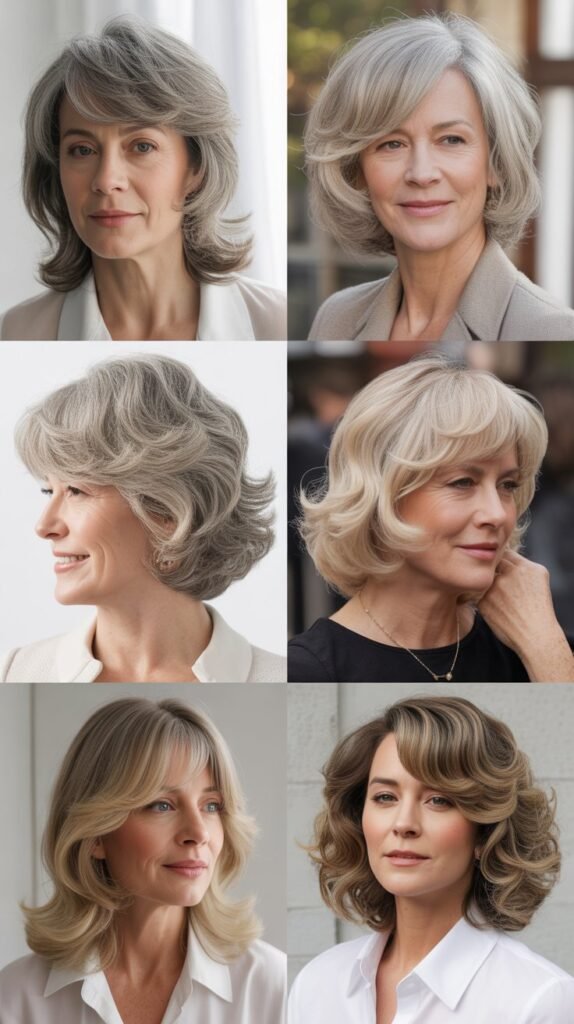
The curtain bang lob pairs the popular long bob length with center-parted bangs that frame the face like curtains, creating a soft, romantic look that’s particularly flattering for fine gray hair.
This style combines vintage inspiration with modern sensibility.
- The lob is cut to fall between chin and collarbone with subtle layers throughout to create movement without excessive choppiness.
- Bangs are parted in the center and cut to frame the face on both sides, typically grazing the cheekbones or slightly longer.
- The curtain effect creates a flattering frame that draws attention to the eyes and cheekbones while adding softness to the overall look.
- This style benefits fine hair by distributing volume around the face where it’s most visible and impactful rather than requiring fullness throughout.
- The combination of lob length and face-framing curtain bangs creates a balanced, sophisticated appearance that showcases gray hair’s elegant silver tones.
42. The Textured French Bob
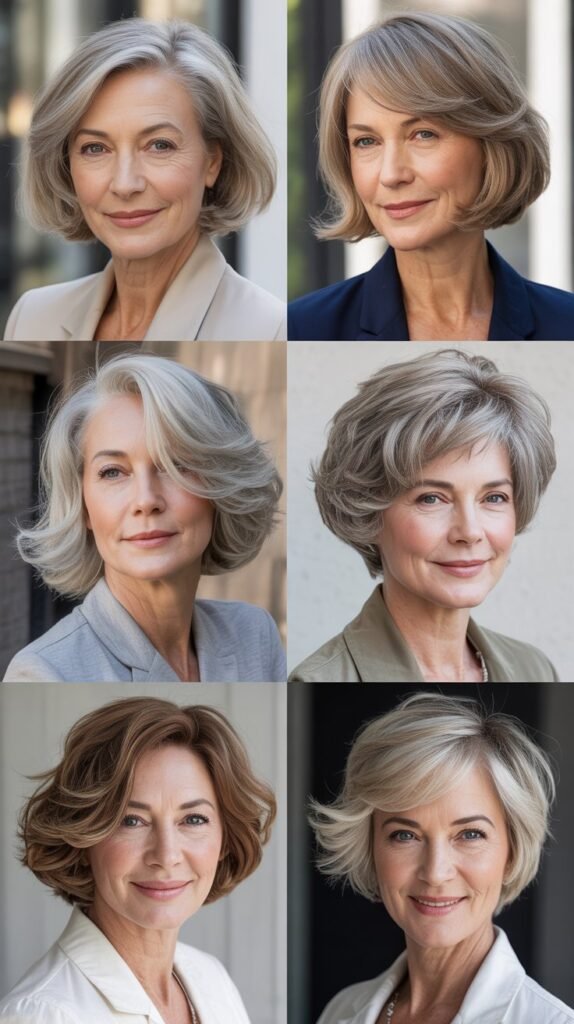
The textured French bob brings Parisian chic to fine gray hair through a chin-length cut with slightly undone styling that balances sophistication with effortless appeal.
This style has gained significant popularity for its ability to look polished yet relaxed.
- Hair is cut to chin length or slightly above, typically with a subtle curved shape that’s slightly shorter in the back.
- The French bob features either blunt ends or subtle texturing, with the key being straight-across cutting rather than dramatic layering.
- Styling embraces a slightly undone aesthetic—hair might be tucked behind one ear or have subtle bends rather than perfect straightness or curls.
- This style works beautifully for fine hair because the chin-length cut prevents weight-related flatness while the minimal styling makes thinness less apparent.
- Gray hair adds sophistication and maturity to the French bob, creating a refined, elegant appearance that’s distinctly chic.
43. The Asymmetrical Pixie
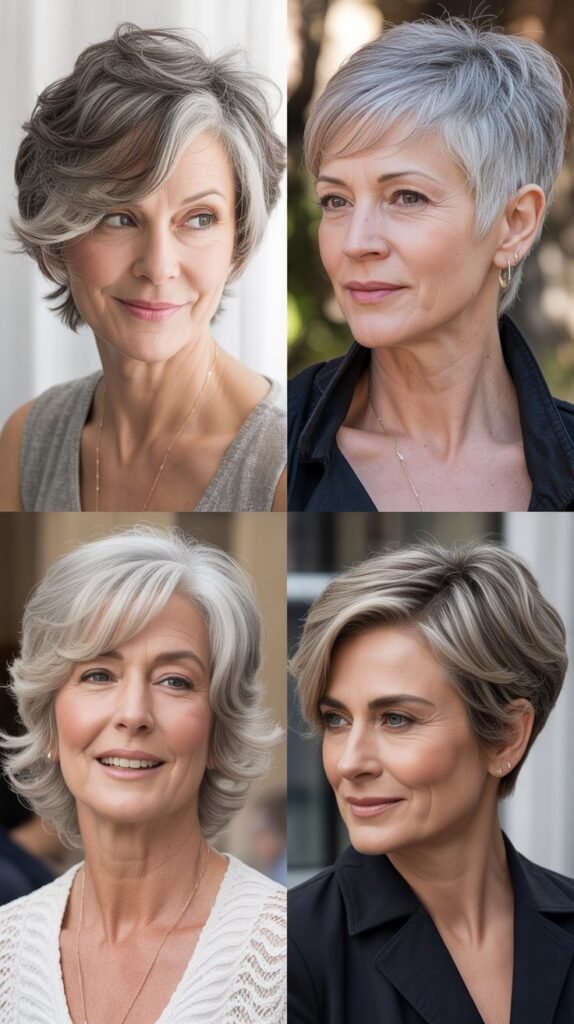
The asymmetrical pixie introduces intentional imbalance to the pixie cut, creating visual interest through uneven lengths and angles that draw attention away from hair density and toward the distinctive styling.
This bold cut makes a strong personal statement.
- One side of the pixie is cut noticeably shorter than the other, creating dramatic asymmetry that’s immediately eye-catching.
- The longer side might extend to ear length or below, while the shorter side could be cropped quite close to the head.
- This deliberate imbalance creates a modern, edgy aesthetic that’s surprisingly wearable and practical for daily styling.
- The style benefits fine hair by turning potential thinness into an intentional design element, with the focus on shape rather than volume.
- Gray hair enhances the bold nature of the asymmetrical pixie, with the silver tones adding sophistication to what might otherwise appear too youthful or trendy.
44. The Graduated Layered Cut
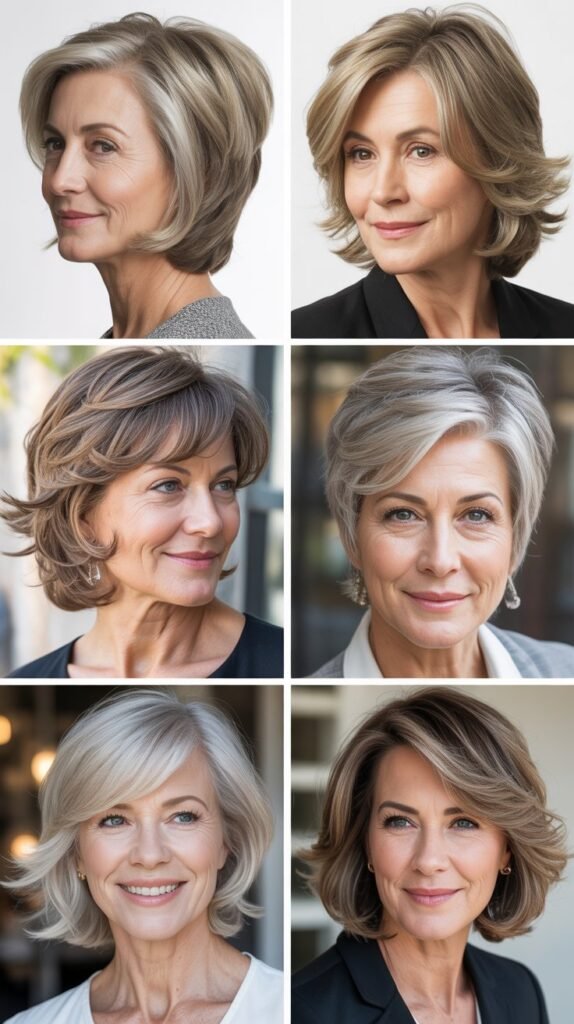
The graduated layered cut combines progressive length increases with strategic layering throughout, creating a comprehensive approach to volume and movement for fine gray hair.
This versatile style works at multiple lengths and can be customized to individual preferences.
- Hair gradually increases in length from back to front, with the back cut shorter to create lift and prevent flatness.
- Layers are incorporated throughout the length, with shorter pieces on top to create volume and longer pieces underneath to maintain density.
- The graduation creates natural body and movement as the various lengths interact, making styling easier and more successful.
- This technique is particularly effective for fine hair because it addresses multiple concerns simultaneously—removing weight, creating lift, and adding dimension.
- The layered, graduated shape showcases gray hair’s dimensional qualities beautifully, with the various lengths and layers displaying the full spectrum of silver tones.
45. The Razored Ends Bob
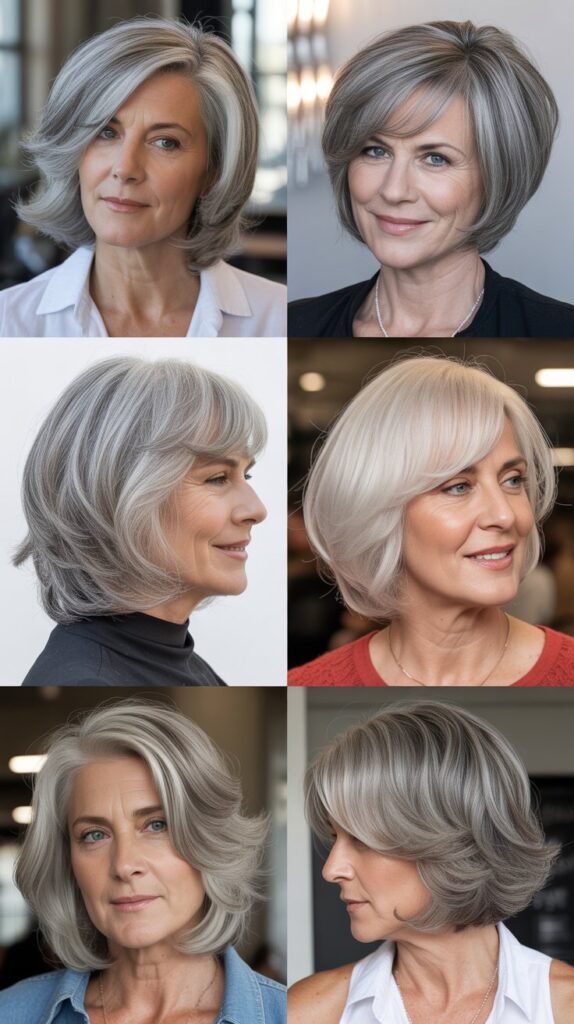
The razored ends bob uses razor cutting techniques to create soft, feathered ends that add texture and movement to the classic bob shape.
This approach is particularly beneficial for fine gray hair as it creates a lighter, airier appearance than blunt cutting.
- The bob is cut to the desired length—typically chin to shoulder—using traditional scissors for the basic shape.
- A razor is then used on the ends to create soft, feathered texture that prevents the heavy, blunt appearance that can emphasize thinness.
- The razored technique removes some density from the ends while creating textured pieces that move independently and catch light.
- Styling is simplified by the textured ends, which naturally separate and create movement without requiring extensive product or manipulation.
- Gray hair benefits from razored ends as the technique creates a soft halo effect where ends catch light, highlighting the luminous quality of silver tones.
46. The Crown-Focused Short Cut
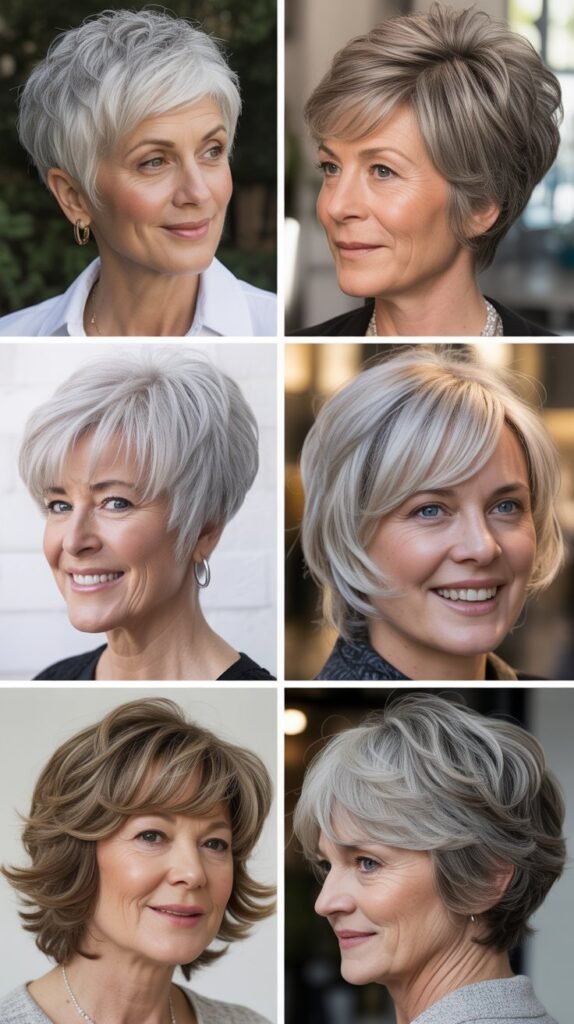
The crown-focused short cut concentrates all volume-building efforts on the top and crown area, creating maximum height where it’s most visible while keeping sides sleek and controlled.
This strategic approach is highly effective for fine gray hair’s most common challenge areas.
- Hair is cut progressively shorter from crown downward, with the longest pieces at the very top of the head.
- The crown section features substantial layering cut at angles that encourage hair to stand upward and away from the scalp.
- Sides and back are kept quite short and smooth to create contrast and prevent a bushy or wide appearance.
- Styling focuses exclusively on the crown, using volumizing products and blow-drying techniques to maximize lift in this key area.
- This concentrated approach is ideal for fine hair because it doesn’t attempt to create volume everywhere but instead focuses efforts where they’ll have maximum impact.
47. The Soft Shaggy Bob
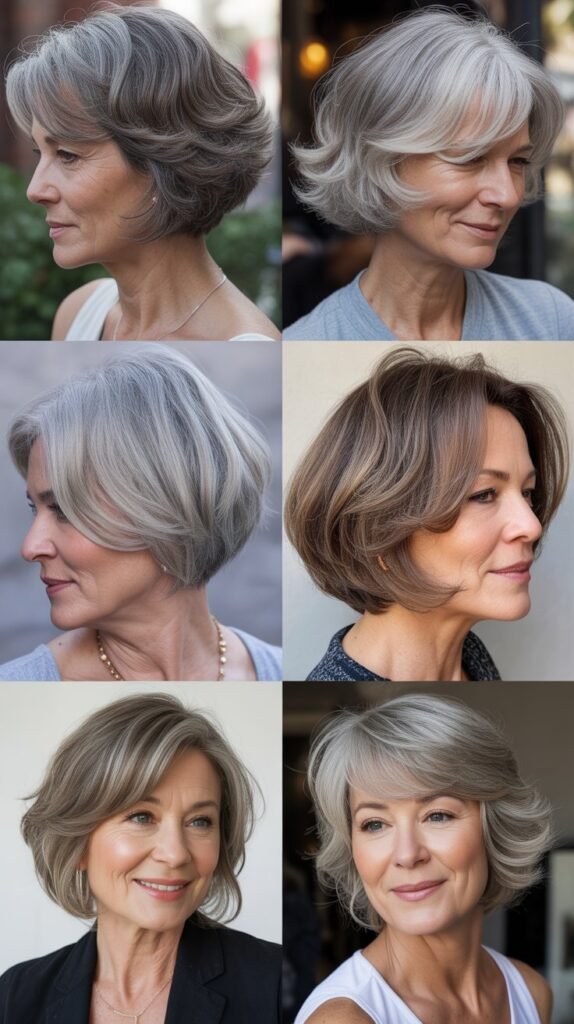
The soft shaggy bob combines the classic bob length with shag-inspired layering, creating a gentle, textured look that adds substantial body to fine gray hair without appearing too edgy or extreme.
This style represents a perfect middle ground between traditional and contemporary aesthetics.
- The bob is cut to chin or slightly below chin length with multiple soft layers throughout that create movement without choppy sections.
- Layers are blended more smoothly than a traditional shag, creating a softer, more subtle textured effect that’s accessible and wearable.
- Face-framing pieces begin around the cheekbones, gradually increasing in length as they blend into the overall bob shape.
- This style benefits fine hair through the volume-creating layering while maintaining enough length and density to avoid wispy ends.
- The soft shaggy texture showcases gray hair’s natural variations beautifully, with the layers catching light and displaying the dimensional qualities of silver tones in a flattering, natural way.
Styling Tips and Maintenance for Fine Gray Hair
| Aspect | Recommendations | Products to Consider |
|---|---|---|
| Volume Creation | Apply volumizing products at roots only; blow-dry upside down; use round brush at crown | Volumizing mousse, root-lifting spray, lightweight dry shampoo |
| Texture Enhancement | Use sea salt spray or texturizing spray on damp hair; scrunch while drying | Sea salt spray, texturizing spray, light styling paste |
| Shine and Health | Use purple shampoo weekly to prevent yellowing; apply lightweight oils to ends only | Purple shampoo, argan oil, shine serum |
| Hold and Structure | Choose lightweight products that don’t weigh hair down; avoid heavy waxes or creams | Light-hold hairspray, styling foam, flexible gel |
| Maintenance Schedule | Trim every 4-8 weeks depending on style; professional deep conditioning monthly | Bond-building treatments, protein treatments |
Understanding how to properly care for and style fine gray hair makes all the difference in achieving and maintaining the beautiful looks featured in this guide.
Fine hair requires specific approaches that differ from thicker hair types, particularly when working with gray’s unique texture characteristics.
Volumizing products should always be applied at the roots where lift is needed, never throughout the length where they can weigh hair down and create flatness.
When blow-drying, work against gravity by flipping hair upside down or using a round brush to lift sections away from the scalp, creating lasting volume at the base.
Gray hair tends to be drier than pigmented hair due to reduced sebum production, making moisture balance crucial—you want enough hydration to prevent brittleness without creating heaviness that flattens fine strands.
Purple shampoos and toners become essential tools for maintaining the beautiful silver color by neutralizing yellow or brassy tones that can develop over time.
Regular trims are particularly important for fine hair because split ends and damage are more visible and can make thinness more apparent, while fresh cuts maintain the shape and structure that create the illusion of fullness.
When selecting styling products, always choose formulas specifically labeled for fine hair, as these are designed to provide hold and texture without the weight that causes drooping and flatness.
Heat styling should be done with lower temperatures and always with heat protectant, as fine hair is more susceptible to damage from high heat.
Finally, remember that less is often more with fine hair—using too much product is one of the most common mistakes that leads to flat, greasy-looking results.
Discovering your perfect style among these 47 Graceful Gray Hairstyles for Women Over 60 With Fine Hair represents more than just a haircut—it’s an opportunity to embrace this chapter of your life with confidence and style.
Fine gray hair, when cut and styled properly, can be absolutely stunning, offering a sophisticated elegance that’s uniquely beautiful and distinctly yours.
The key lies in understanding your hair’s specific needs and working with its natural characteristics rather than fighting against them, choosing cuts that create the illusion of volume through smart design and strategic layering.
Whether you’ve been inspired by the practical simplicity of a textured pixie, the timeless elegance of a layered bob, or the bold statement of an asymmetrical cut, the most important factor is selecting a style that makes you feel beautiful and confident.
Remember that the best hairstyle is one that fits your lifestyle, complements your face shape, and makes you feel like the best version of yourself.
Don’t hesitate to consult with a skilled stylist who understands the unique properties of fine gray hair and can customize these styles to your individual needs.
Your gray hair is a badge of honor that tells the story of your experiences, wisdom, and journey, and with the right cut and care, it can be your most beautiful feature yet.
