Thick hair is a blessing, but finding the perfect chin-length cut that manages volume while enhancing your natural texture can feel like searching for a needle in a haystack.
If you’ve been struggling with bulky, shapeless haircuts or styles that lose their form by midday, you’re not alone.
The good news? 47 Trendiest Chin-Length Haircuts for Thick Hair to Try Now delivers a comprehensive guide to transforms your thick locks into a stunning, manageable masterpiece.
This article walks you through versatile bob variations, layered cuts that reduce weight, textured styles that embrace your hair’s natural body, and modern interpretations of classic looks.
Whether you prefer sleek sophistication or tousled effortlessness, you’ll discover haircuts specifically designed to work with—not against—your thick hair.
From blunt bobs that make a bold statement to razored cuts that create movement, each style is carefully selected to help you achieve a flattering, low-maintenance look that turns heads.
Get ready to find your perfect chin-length cut and say goodbye to bad hair days forever.
1. Classic Blunt Bob for Maximum Impact
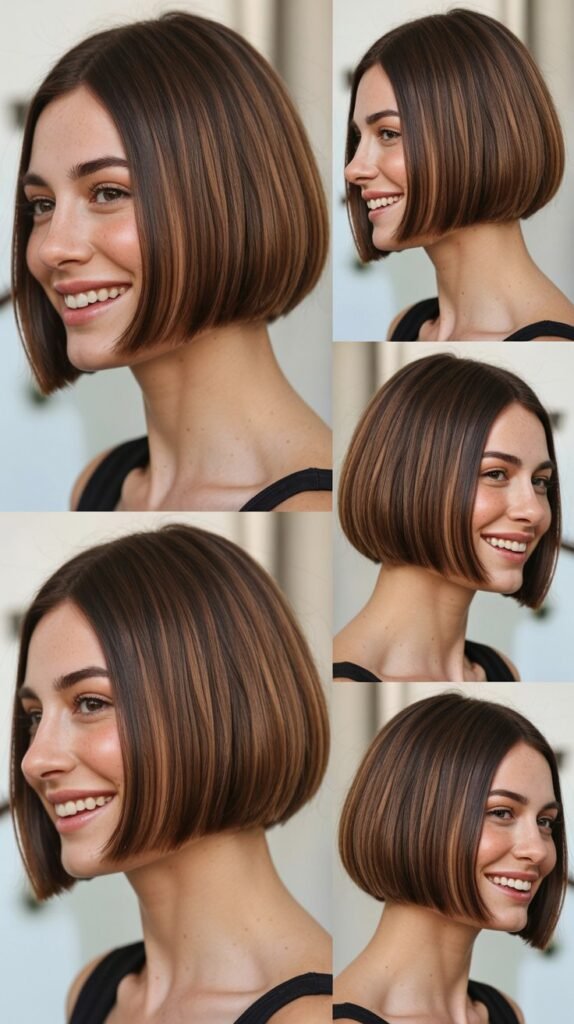
The blunt bob remains one of the most powerful haircuts for thick hair, creating a strong, geometric silhouette that commands attention.
This cut features hair cut straight across at chin-length with minimal layering, allowing the natural density of thick hair to create a luxurious, full appearance.
The weight of the cut keeps thick hair from becoming too voluminous while the sharp line creates a polished, sophisticated look.
- The blunt bob works exceptionally well for thick hair because it utilizes the hair’s natural weight to maintain shape and prevent the triangular silhouette that often plagues layered cuts on dense hair textures.
- This style requires precise cutting technique where all hair is cut to one uniform length, creating that signature straight-across hemline that appears bold and intentional.
- Styling is refreshingly simple—a round brush blow-dry creates sleekness, while air-drying offers a more relaxed, modern interpretation of the classic cut.
- The blunt bob looks particularly stunning on oval and heart-shaped faces, as the strong horizontal line balances facial proportions beautifully.
- For thick hair specifically, stylists often incorporate subtle internal layering or point-cutting techniques to remove bulk without compromising the blunt perimeter.
- Color techniques like balayage or dimensional highlights add depth and prevent the cut from appearing too heavy or one-dimensional.
- Maintenance involves regular trims every 6-8 weeks to preserve the sharp line and prevent split ends from disrupting the clean silhouette.
2. Textured Shaggy Bob with Piecey Layers
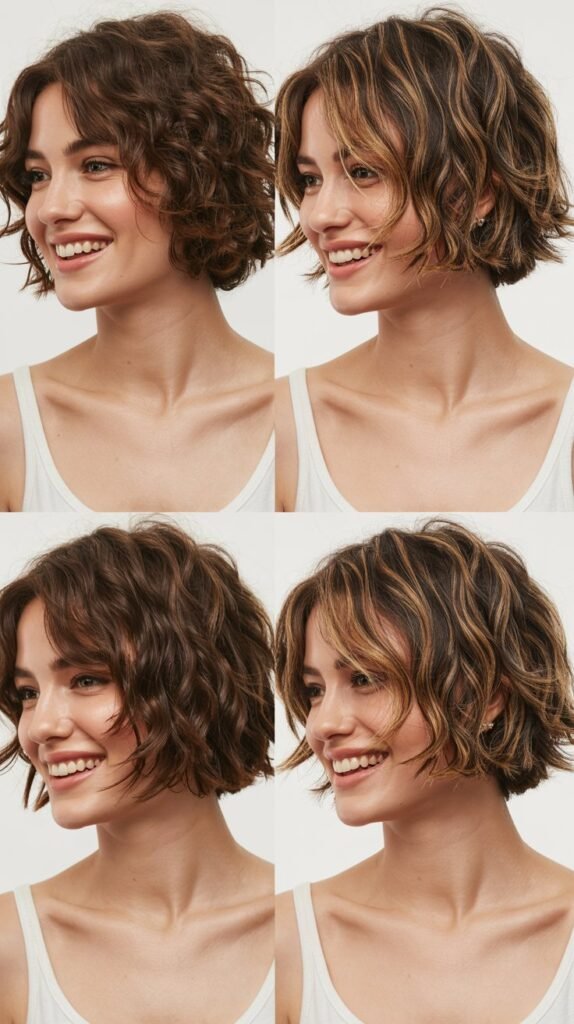
The textured shaggy bob brings an effortlessly cool vibe to chin-length cuts, perfect for thick hair that needs dimension and movement.
This style incorporates choppy, irregular layers throughout the cut, creating separation and reducing bulk while maintaining a deliberately undone appearance.
The piecey texture prevents thick hair from sitting flat or looking too uniform.
- Shaggy bobs utilize point-cutting and razor techniques to create feathered ends that naturally separate, giving thick hair a lighter, more airy quality without sacrificing volume where you want it.
- The layers in a shaggy bob are intentionally disconnected rather than blended smoothly, which creates that signature lived-in, rockstar aesthetic that’s dominated runways and red carpets.
- This cut works beautifully with thick hair’s natural texture, whether straight, wavy, or curly, as the choppy layers enhance rather than fight against your hair’s inherent movement.
- Styling products like texturizing spray, sea salt spray, or matte pomade enhance the piecey separation and help individual layers stand out.
- The shaggy bob is incredibly versatile for face shapes, as the placement of layers can be customized to frame features, soften jawlines, or add width where needed.
- This style requires minimal daily styling—many people simply scrunch product into damp hair and let it air-dry for that perfectly imperfect finish.
- The grow-out phase is more forgiving than precise cuts, as the intentionally unstructured nature means you can go 8-10 weeks between trims without losing the style’s integrity.
3. Angled Bob with Shorter Back

The angled bob features hair that’s shorter in the back and gradually lengthens toward the front, creating a dramatic, fashion-forward silhouette ideal for thick hair.
This geometric cut adds visual interest while strategically removing weight from the heaviest part of thick hair at the nape. The elongated front pieces frame the face beautifully while the shorter back prevents the dreaded pyramid shape.
- The angle in this bob can range from subtle (just an inch of difference) to extreme (several inches), allowing customization based on personal style and comfort level with bold looks.
- For thick hair, the shorter back section significantly reduces bulk where it tends to accumulate most, making the overall style more manageable and less prone to looking bottom-heavy.
- The angled bob creates a slimming effect on the face as the eye follows the diagonal line from the shorter back to the longer front, drawing attention to the jawline and cheekbones.
- This cut requires a skilled stylist who can create symmetry between both sides while maintaining the intended angle, as even slight variations become noticeable in such a geometric style.
- Styling typically involves blow-drying with a round brush, pulling the front sections forward and down to emphasize the angle, while the back can be blown smooth or given slight volume at the crown.
- The angled bob looks particularly stunning on square and round face shapes, as the forward angle creates vertical lines that lengthen the face’s appearance.
- Maintenance requires consistent trims every 6 weeks, as the angle can become distorted as hair grows, losing the cut’s signature drama and shape.
4. Razored Bob for Softness and Movement
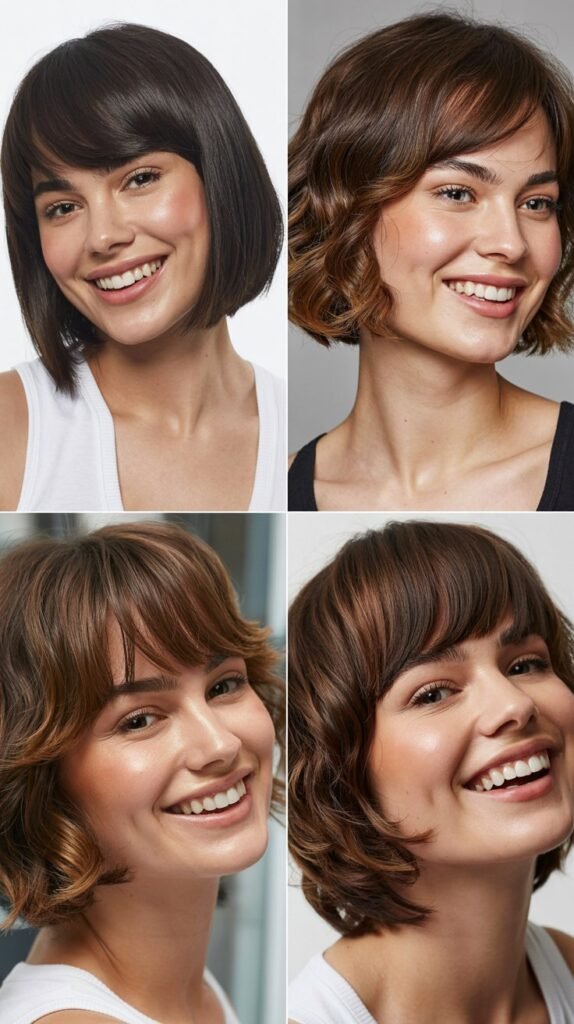
The razored bob employs a cutting technique using a razor blade instead of traditional scissors, creating softer, feathered edges that add incredible movement to thick hair.
This method naturally thins out dense hair while maintaining length, producing a lighter feel without the blunt weight of scissor-cut styles. The razor’s gliding motion through hair creates textured, wispy ends that move beautifully.
- Razor-cutting is particularly beneficial for thick hair because it removes internal bulk while creating tapered ends that lie flatter against the head, preventing the mushroom effect common with scissor cuts.
- The technique produces ends that are slightly beveled rather than blunt, allowing individual strands to catch light differently and create natural-looking dimension and depth.
- Razored bobs work exceptionally well with wavy or slightly curly thick hair, as the softer edges enhance natural texture rather than creating the harsh lines that can look incongruous with textured hair.
- This cutting method requires a highly skilled stylist, as improper razor technique can damage hair or create frizz, particularly on thick hair that may already have some texture or wave.
- Styling is effortless—the razored ends naturally fall with movement, requiring little more than a quick blow-dry or air-drying with a texturizing product for beachy waves.
- The softness of razored cuts makes them particularly flattering for angular face shapes, as the wispy, feathered quality provides gentle contrast to strong jawlines or prominent cheekbones.
- Maintenance involves trims every 6-8 weeks to refresh the razored ends and prevent them from looking scraggly or overly thin as they grow out.
5. Asymmetrical Bob with Dramatic Side Part
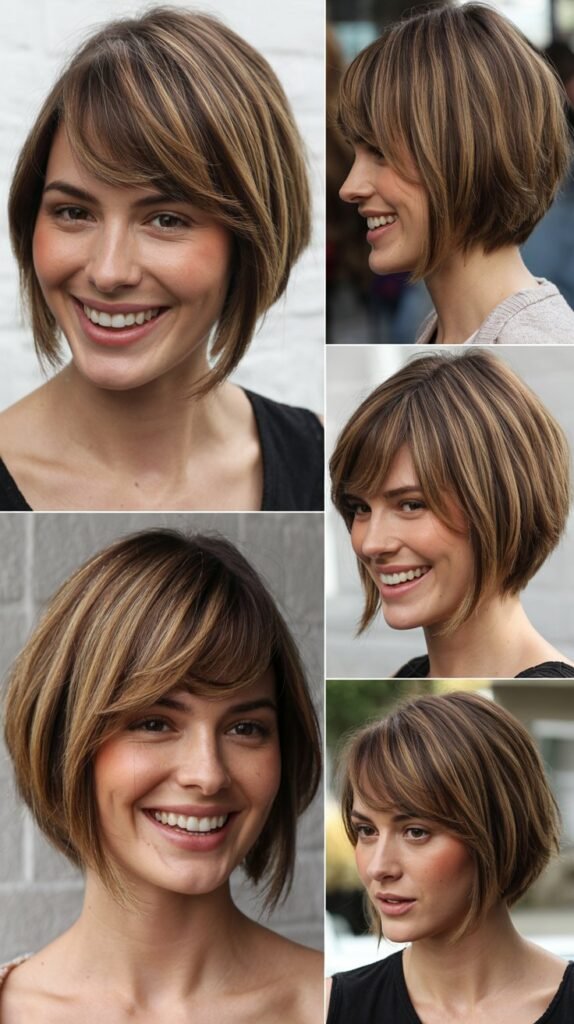
The asymmetrical bob features intentionally uneven lengths on either side of the head, creating an edgy, contemporary look that’s perfect for thick hair needing dimension.
One side is cut noticeably shorter while the other remains longer, with the dramatic difference emphasized by a deep side part. This bold style showcases thick hair’s natural fullness while adding artistic flair.
- Asymmetrical cuts work brilliantly for thick hair because they redistribute visual weight, preventing the heavy, uniform appearance that can make dense hair look overwhelming or dated.
- The dramatic side part is crucial to this style’s success, as it divides the hair into unequal sections that emphasize the length difference and create the intentional imbalance that defines asymmetry.
- This cut offers incredible versatility—tucking the shorter side behind the ear creates a completely different look than wearing both sides forward, giving you multiple styles in one cut.
- The asymmetrical bob particularly flatters oblong and oval face shapes, as the horizontal emphasis created by the uneven lengths adds width and breaks up vertical length.
- Styling requires attention to the part placement, as shifting it even slightly can diminish the asymmetrical effect, so daily styling involves maintaining that deep, dramatic side part.
- Color placement can enhance asymmetry further, with lighter pieces on the longer side drawing attention to the length difference, or darker tones on the shorter side creating shadow and depth.
- Maintenance is crucial every 6 weeks, as even growth can quickly make the asymmetry less pronounced, requiring precise trimming to maintain the intended length difference.
6. Layered Bob with Face-Framing Pieces
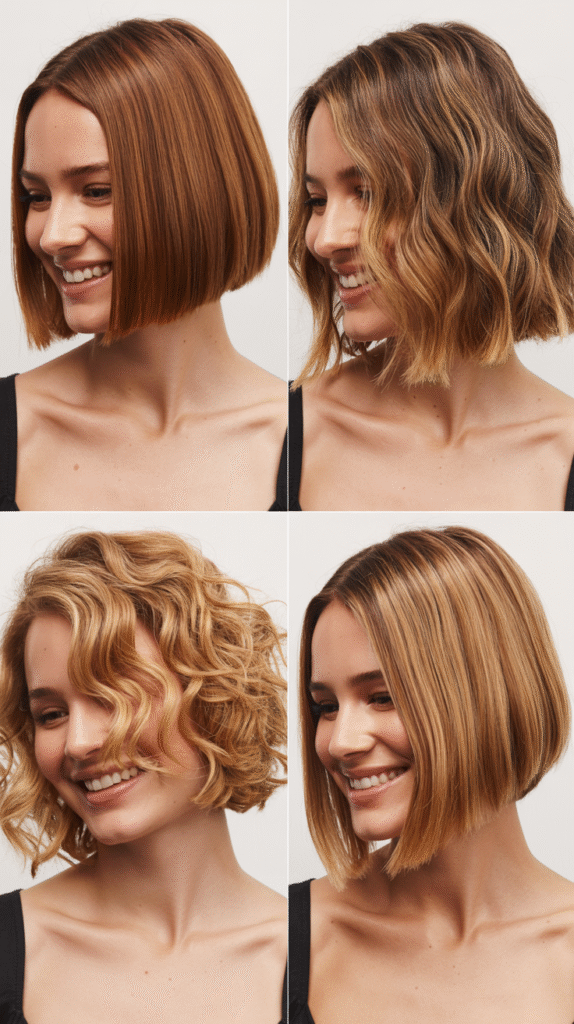
The layered bob with face-framing pieces incorporates strategic layers throughout the cut, with shorter pieces deliberately placed around the face to highlight and soften facial features.
This style is exceptional for thick hair as the layers remove bulk while the face-framing elements create a flattering, feminine silhouette. The combination provides movement without sacrificing the full body that thick hair naturally offers.
- Face-framing layers typically start around the cheekbones or jawline and gradually blend into the longer lengths, creating a gentle cascade that draws attention to the eyes and smile.
- For thick hair, internal layering throughout the cut prevents the bottom from appearing too heavy while the face-framing pieces add dimension and prevent a boxy, shapeless appearance.
- This style works universally across face shapes because the face-framing pieces can be customized—shorter for round faces to add length, longer for angular faces to soften lines.
- The layers create natural movement that makes styling easier, as thick hair no longer sits in one heavy mass but instead flows with separated, dimensional sections.
- Styling versatility is a major advantage—face-framing pieces can be blown out smooth, curled under for a retro look, or curled away from the face for softness and volume.
- Products like lightweight mousse or volumizing spray applied at the roots help the layers maintain lift and prevent thick hair from falling flat against the head.
- Maintenance requires trims every 6-8 weeks to keep the face-framing pieces at their optimal length and prevent the layers from growing out into a shapeless, blended mass.
7. Inverted Bob with Stacked Back
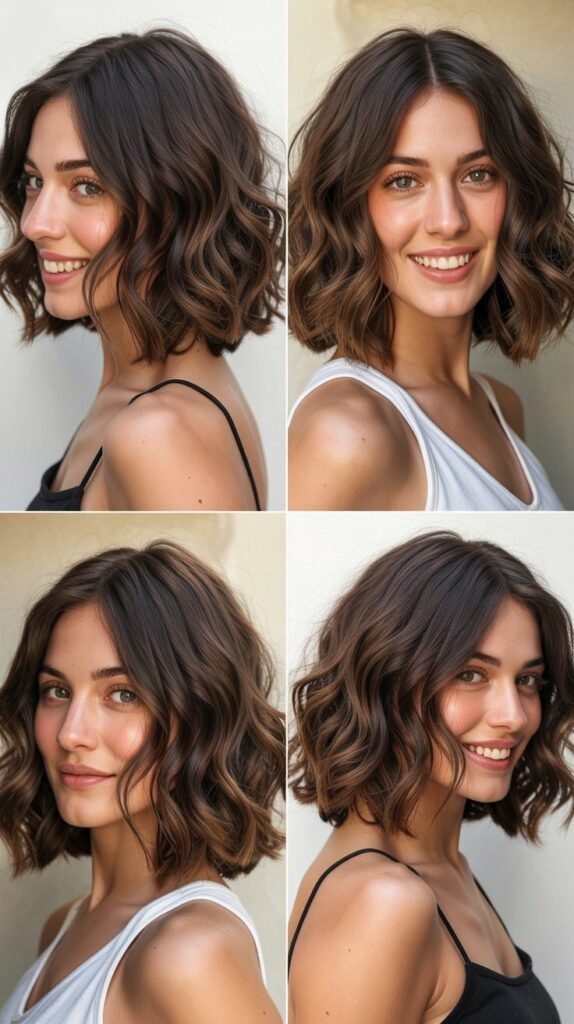
The inverted bob, also called a graduated bob, features a dramatically shorter, stacked back that gradually lengthens toward the front, creating volume at the crown and a sleek, elongated appearance.
This architectural cut is ideal for thick hair as it removes substantial weight from the nape while showcasing the hair’s density in the stacked layers. The result is a sophisticated, high-fashion silhouette.
- The stacked back is achieved through layering that creates a rounded, voluminous shape at the back of the head, with each layer slightly longer than the one beneath it, building that signature graduated effect.
- For thick hair, this cut is particularly beneficial because it concentrates volume at the crown rather than the bottom, creating lift and movement where fine hair would fall flat.
- The inverted bob creates a beautiful profile view, with the stacked layers visible from the side, adding dimension and architectural interest that makes this more than just a standard bob.
- This style requires precise cutting technique, as the graduation must be even and smooth to create the rounded shape, with any uneven layers creating a choppy rather than polished appearance.
- Styling involves blow-drying the back sections with a round brush to emphasize the stacked layers’ roundness, while the front pieces can be smoothed or given a slight bend for softness.
- The inverted bob particularly flatters round and square face shapes, as the volume at the back and elongated front create vertical lines that add length to the face’s appearance.
- Maintenance is demanding at every 4-6 weeks, as the stacked layers grow out quickly and lose their graduated shape, making the cut appear bottom-heavy and losing its defining characteristic.
8. Wavy Chin-Length Bob with Natural Texture
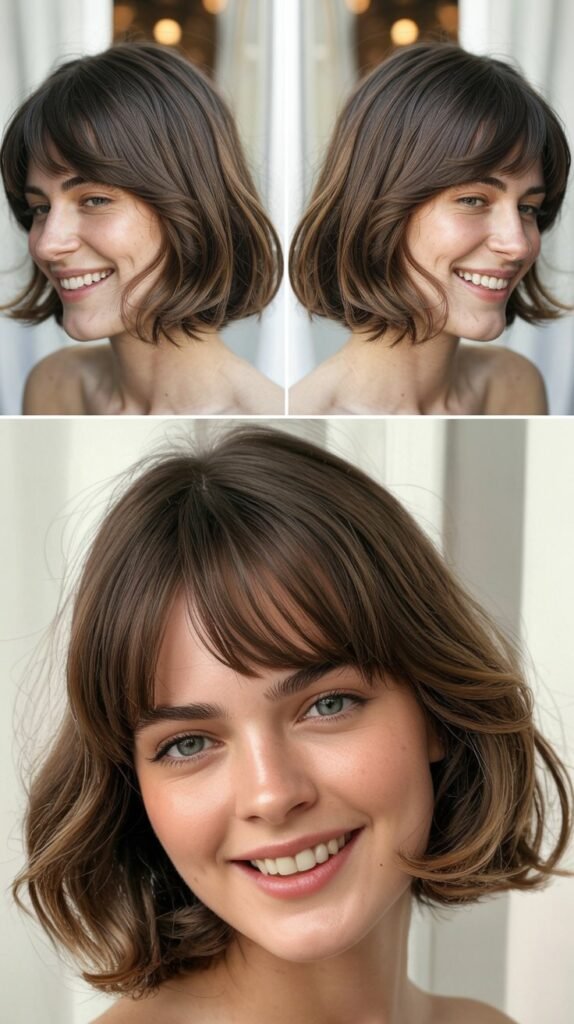
The wavy chin-length bob embraces thick hair’s natural texture, working with waves rather than against them to create a relaxed, beachy aesthetic.
This cut incorporates subtle layers that enhance wave pattern while removing just enough weight to prevent the heaviness that can weigh down thick, wavy hair. The result is effortless, touchable texture that looks intentionally undone.
- This style celebrates natural texture by cutting hair in a way that encourages waves to form their natural S-pattern, with layers placed to enhance rather than disrupt the hair’s inherent movement.
- For thick, wavy hair, minimal layering is key—too many layers create frizz and separation, while too few leave the hair looking heavy and shapeless, so a skilled stylist finds the balance.
- The chin-length hits at an ideal point for wavy hair, as it’s long enough to showcase the wave pattern but short enough to prevent the weight from pulling waves straight.
- Styling is minimal and low-maintenance—many people simply apply a curl-enhancing cream or mousse to damp hair, scrunch, and air-dry for natural, beachy waves.
- This cut works beautifully for all face shapes because waves add softness that balances both angular and rounded features, creating a universally flattering frame.
- The wavy bob transitions seamlessly from casual to dressy, looking perfectly appropriate at the beach, the office, or evening events without requiring different styling approaches.
- Maintenance is relaxed at every 8-10 weeks, as the natural texture means slight growth doesn’t dramatically alter the style’s appearance, and the undone nature is forgiving of longer intervals between trims.
9. Blunt Bob with Baby Bangs
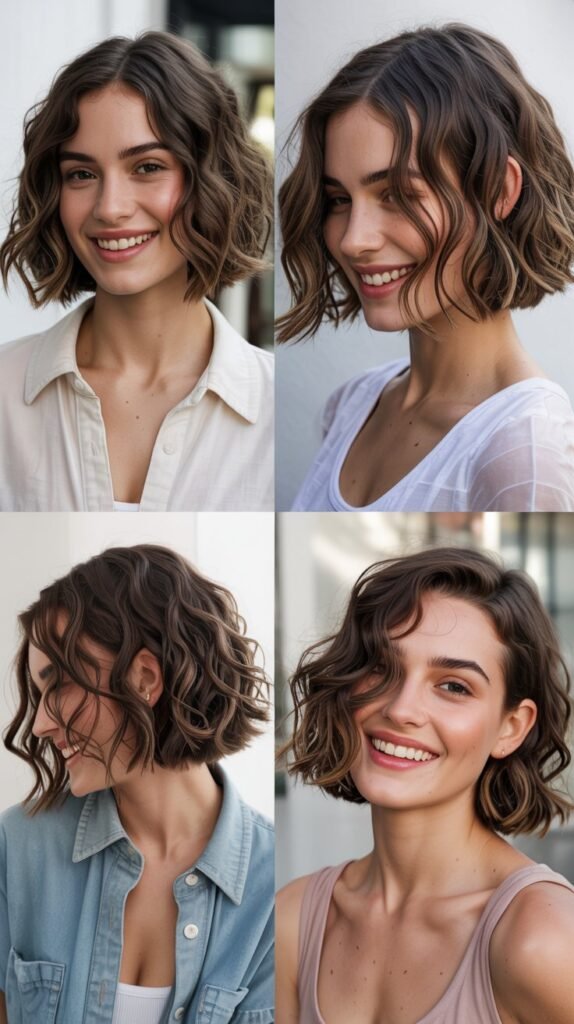
The blunt bob with baby bangs combines two bold elements—a sharp, straight-across hemline at chin-length with ultra-short bangs cut well above the eyebrows.
This daring style makes a strong fashion statement and works surprisingly well with thick hair, as the density creates the fullness needed to pull off such a striking look. The contrast between the blunt perimeter and short fringe creates visual intrigue.
- Baby bangs, also called micro bangs or short bangs, typically sit 1-2 inches above the eyebrows, creating an avant-garde, editorial appearance that immediately draws attention to the eyes.
- The combination works for thick hair because the blunt bob’s weight balances the lightness of the short bangs, preventing the overall look from appearing too severe or choppy.
- This style requires confidence and commitment, as baby bangs are a bold choice that significantly alters face shape perception, making the forehead appear longer and drawing focus to the eyes and eyebrows.
- Styling the blunt bob portion is straightforward with a flat iron or blow-dry for sleekness, while baby bangs may require daily trimming or frequent touch-ups to maintain their ultra-short length.
- The baby bang and blunt bob combination particularly flatters oval and heart-shaped faces, as these face shapes can accommodate the horizontal lines without overwhelming facial proportions.
- Color choices become important with such a statement cut—bold, solid colors emphasize the geometric nature, while dimension through highlights can soften the severity slightly.
- Maintenance is intensive, requiring trims every 3-4 weeks for the bangs alone to maintain their micro-length, plus regular trims for the blunt perimeter every 6 weeks.
10. Curly Chin-Length Bob with Defined Spirals
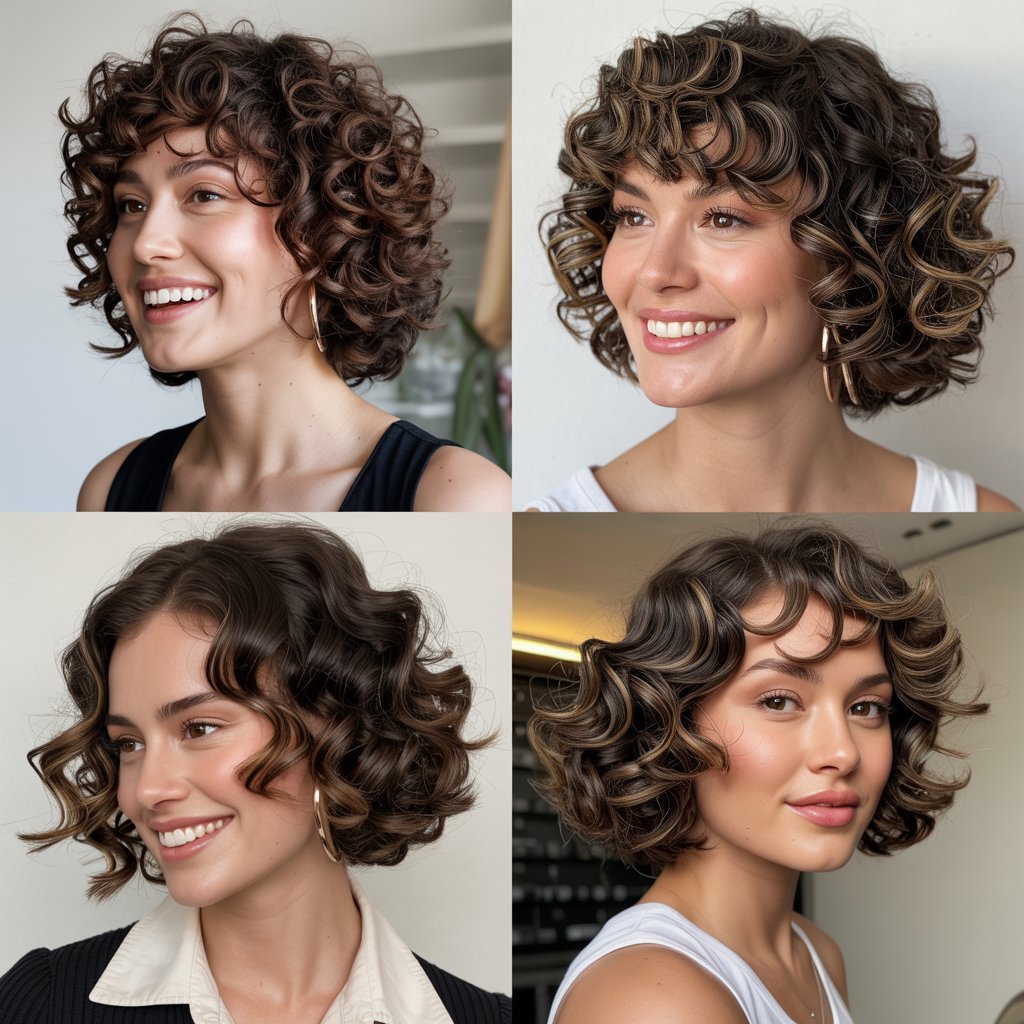
The curly chin-length bob showcases thick, curly hair’s natural bounce and volume, with a cut designed specifically to enhance curl pattern and prevent the dreaded triangle shape.
This style typically features subtle layering that removes weight while maintaining enough length for curls to form complete spirals. The result is a rounded, bouncy silhouette that celebrates natural texture.
- Curly bobs require cutting technique that works with curl pattern, often involving cutting hair dry so the stylist can see exactly how each curl falls and adjust length accordingly.
- For thick, curly hair, the goal is removing interior bulk without disrupting the curl pattern, achieved through internal layering and point-cutting that maintains the exterior shape while reducing weight.
- Chin-length is ideal for curly hair as curls naturally shrink up after drying, so hair cut at chin-length when wet will typically bounce up to a more flattering jaw-skimming length when dry.
- Styling focuses on curl definition using products like curl creams, gels, or mousses applied to soaking wet hair, then either air-dried or diffused to enhance natural spiral formation.
- This cut works beautifully for all face shapes because curls’ natural volume and movement create softness that balances features, with the rounded shape being universally flattering.
- The curly bob offers incredible versatility—worn natural for texture, straightened for a different look, or enhanced with a diffuser for extra volume and definition.
- Maintenance involves trims every 8-12 weeks, as curly hair can go longer between cuts since growth is less noticeable due to the curl shrinkage and natural volume.
11. Sleek A-Line Bob with Deep Side Part
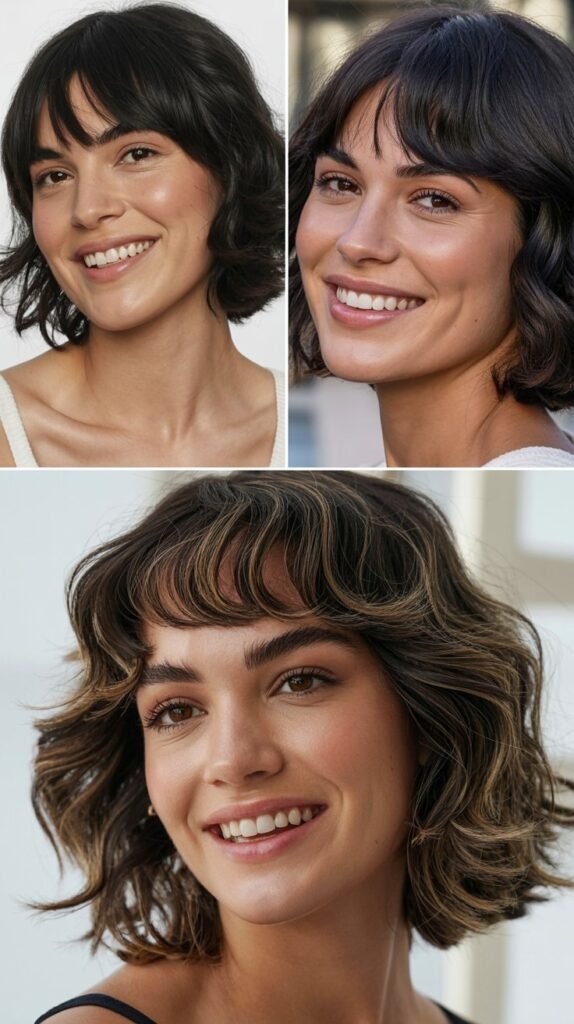
The sleek A-line bob features hair that angles forward from a shorter back to longer front, combined with a deep side part that adds drama and asymmetry.
This polished, sophisticated style utilizes thick hair’s natural weight to create the smooth, glossy finish that defines the look. The deep part creates volume on one side while the angled cut provides the geometric precision that makes this style timeless.
- The A-line shape differs from the inverted bob by maintaining a smoother, less graduated angle without the stacked layers, creating a cleaner, more streamlined silhouette ideal for professional environments.
- Deep side parts (positioned 2-3 inches from center) create natural volume on the heavier side while the opposite side can be tucked behind the ear for an asymmetrical, fashion-forward appearance.
- For thick hair, the A-line bob’s angle removes weight at the back where it tends to accumulate, while the longer front pieces showcase the hair’s fullness without overwhelming the face.
- Styling requires blow-drying with a paddle brush to achieve the signature sleekness, followed by a flat iron pass for ultimate smoothness and shine on thick hair that might otherwise appear frizzy.
- This cut particularly flatters square and round face shapes, as the forward angle creates vertical lines that visually lengthen the face while the deep part adds asymmetry that breaks up roundness.
- Color techniques like glossing treatments or single-process color enhance the sleek appearance, as the smooth surface reflects light beautifully, making the hair appear even more lustrous.
- Maintenance requires trims every 6 weeks to maintain the precise angle, as uneven growth can make the geometric shape appear sloppy or lose the clean lines that define the style.
12. Choppy Bob with Wispy Ends
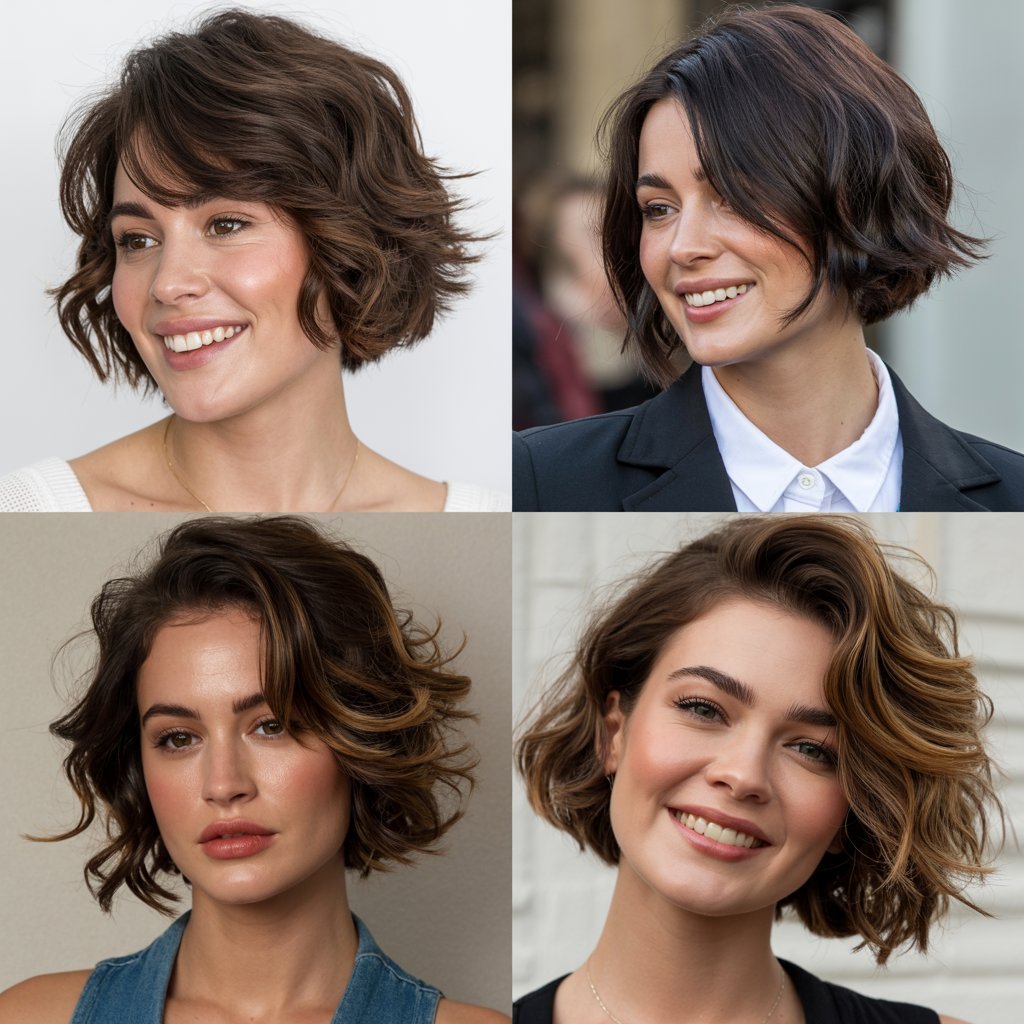
The choppy bob features irregularly cut ends and intentional disconnection between sections, creating a modern, edgy look perfect for thick hair.
This cut uses point-cutting and slicing techniques to create wispy, feathered ends that reduce bulk while adding movement. The choppy texture prevents thick hair from appearing too heavy or uniform.
- Choppy cuts intentionally avoid smooth, blended layers, instead creating visible separation between sections that gives the hair a deliberately undone, contemporary aesthetic.
- The wispy ends are achieved through vertical cutting techniques that create varying lengths at the perimeter, allowing individual pieces to separate and move independently.
- For thick hair, the choppy technique is ideal because it removes substantial weight without requiring shortening the overall length, maintaining fullness at the crown while lightening the ends.
- Styling involves enhancing the choppy texture with products like dry texturizing spray, paste, or pomade that separate pieces and emphasize the cut’s intentional irregularity.
- This style works across face shapes but particularly flatters oval and heart shapes, as the textured, broken-up perimeter prevents harsh lines while maintaining enough structure for shape.
- The choppy bob transitions easily from professional to casual settings—smoothed straight for a polished appearance or tousled for an effortless weekend vibe.
- Maintenance is forgiving every 8-10 weeks, as the intentionally irregular nature means slight growth doesn’t dramatically alter the style, and the undone aesthetic embraces imperfection.
13. Bob with Curtain Bangs
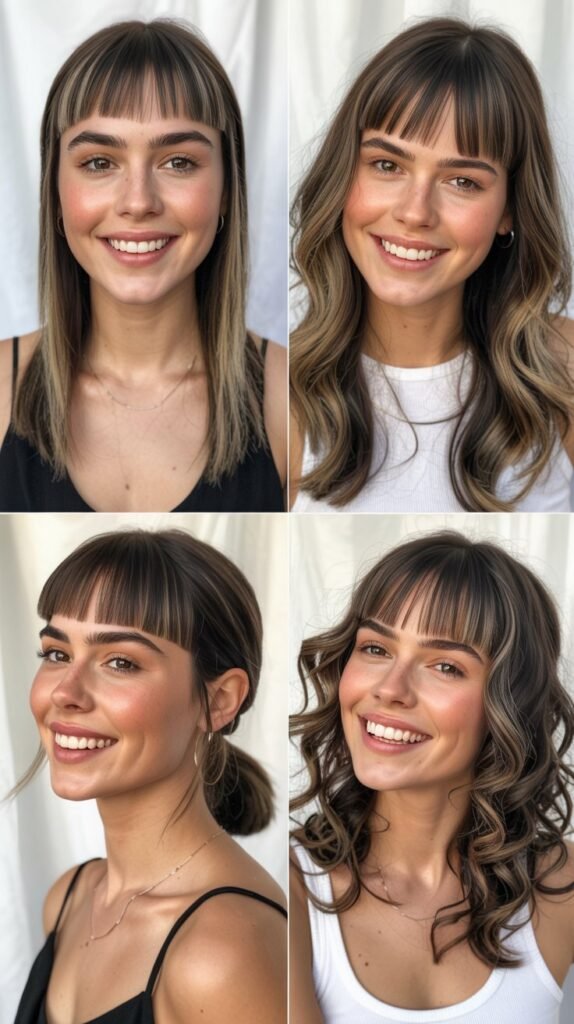
The bob with curtain bangs pairs a classic chin-length cut with face-framing bangs that part down the center and sweep to either side, creating a ’70s-inspired, effortlessly cool look.
This combination works beautifully with thick hair, as the density creates the fullness needed for curtain bangs to frame the face properly. The style balances structure and softness perfectly.
- Curtain bangs typically start shorter at the center part (around eyebrow length) and gradually lengthen as they move toward the temples, creating that characteristic curtain-like sweep that frames the face.
- For thick hair, curtain bangs require internal thinning to prevent them from appearing too heavy or blocky, allowing them to fall naturally to the sides rather than sitting straight across the forehead.
- The bob portion can be blunt, layered, or textured, with the curtain bangs adapting to any of these variations while adding that signature face-framing softness.
- Styling involves blow-drying the bangs with a round brush, rolling them away from the face on each side to create the outward curve that defines curtain bangs.
- This style flatters all face shapes—the center part and outward sweep of curtain bangs add width to narrow faces while softening angular features on square or diamond face shapes.
- The grow-out phase is exceptionally manageable, as curtain bangs are designed to gradually blend into the rest of the hair, making them a low-commitment bang option.
- Maintenance requires bang trims every 3-4 weeks to maintain the length gradient, while the bob itself needs trimming every 6-8 weeks to preserve its shape.
14. Rounded Bob with Volume at Crown
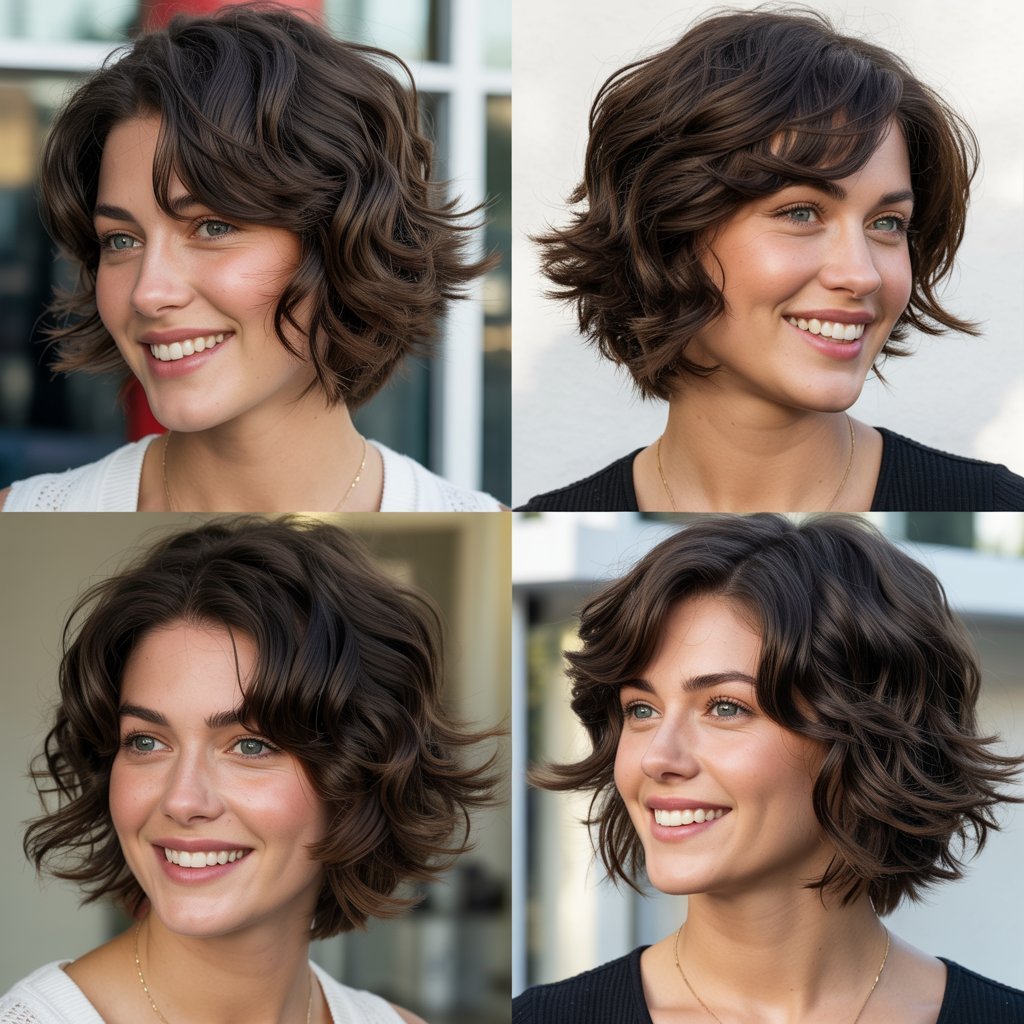
The rounded bob features a curved silhouette with strategic layering that creates maximum volume at the crown while maintaining a softer, less angular perimeter than traditional bobs.
This style is ideal for thick hair as it redistributes volume upward rather than allowing weight to pull the hair down. The result is a feminine, bouncy shape with beautiful movement.
- The rounded shape is achieved through graduation and layering that’s less dramatic than an inverted bob but still removes weight at the nape while creating lift at the crown.
- For thick hair, this technique prevents the flat-on-top, heavy-on-bottom appearance that can plague single-length cuts, instead creating proportional volume throughout.
- The crown volume is built through shorter layers at the top of the head that stack to create height, while the perimeter maintains enough length to curve under softly.
- Styling requires blow-drying with a round brush, focusing on lifting the roots at the crown while directing the ends to curve under, creating that signature rounded balloon shape.
- This cut particularly flatters long and oval face shapes, as the horizontal emphasis and rounded volume add width that balances facial length.
- The rounded bob offers versatility in styling—worn smooth for a polished, retro appearance or tousled with texture spray for a modern, undone interpretation.
- Maintenance every 6-8 weeks is necessary to maintain the rounded shape, as the graduated layers lose their dimensional quality as they grow and blend together.
15. Stacked Bob with Undercut
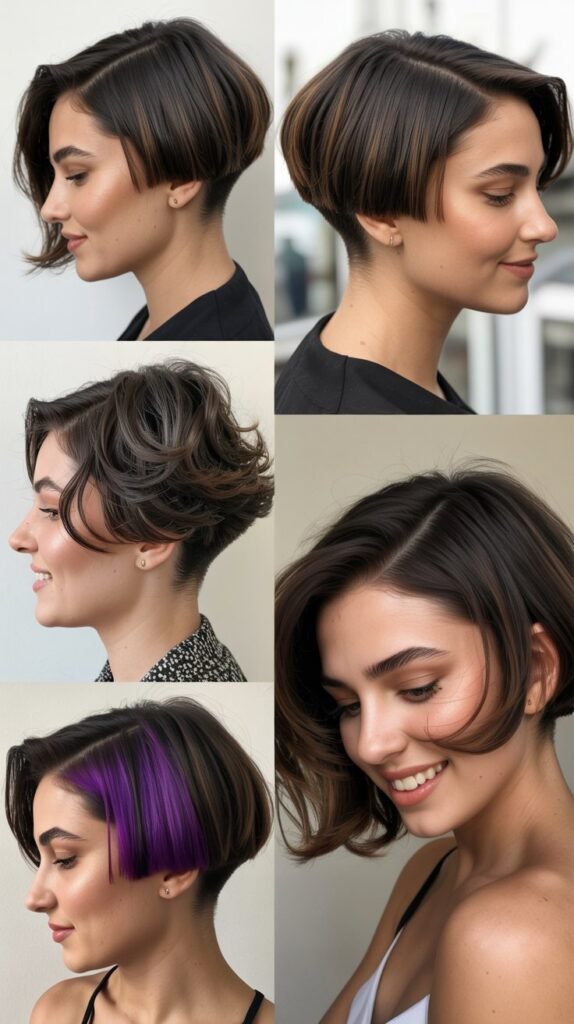
The stacked bob with undercut combines two dramatic elements—visible graduated layers at the back that create stacked volume, plus a hidden undercut beneath the surface layer that removes additional bulk.
This hybrid style is exceptional for thick hair that needs maximum weight removal without sacrificing the appearance of fullness. The undercut remains invisible when hair is down but provides significant relief.
- The undercut involves shaving or cutting the hair very short at the nape beneath the visible layers, removing weight and bulk while allowing the top layers to showcase thick hair’s natural fullness.
- Stacked layers sit atop the undercut, creating the graduated volume and rounded shape at the back of the head that makes this style recognizable and fashion-forward.
- For extremely thick hair, this combination provides the most dramatic weight reduction possible while maintaining the outward appearance of a full, voluminous bob.
- The hidden undercut offers a secret edge to an otherwise classic style, with the option to reveal it by wearing hair up or styling it into a ponytail.
- Styling the visible portions requires blow-drying with a round brush to emphasize the stacked layers, while the undercut needs no styling beyond occasional trimming.
- This cut works well for all face shapes since the stacked portion follows traditional bob flattery rules, while the undercut simply adds comfort and manageability invisible to others.
- Maintenance is frequent every 3-4 weeks for the undercut to prevent bulk from returning, plus every 6 weeks for the stacked layers to maintain their graduated appearance.
16. Tousled Bob with Beachy Waves

The tousled bob with beachy waves creates an effortlessly undone appearance that looks like you’ve just returned from a day at the beach, with relaxed waves and piece-y texture throughout.
This style works wonderfully with thick hair’s natural body, as the density creates the fullness needed for waves to look intentional rather than flat. The tousled texture prevents thick hair from appearing too structured or heavy.
- Beachy waves in thick hair create natural-looking movement through bends and curves rather than defined curls, with an imperfect, organic quality that appears entirely effortless.
- The cut itself typically features subtle layers and possibly some texturizing through point-cutting or razoring, allowing waves to form naturally without creating bulk or pyramid shapes.
- For thick hair, the tousled aesthetic works perfectly because the natural density prevents the style from looking sparse or thin, instead creating the full, voluminous waves that define beach hair.
- Styling involves applying sea salt spray or texturizing spray to damp hair, scrunching to encourage wave formation, then air-drying or diffusing for a natural finish.
- This style flatters all face shapes due to its soft, broken-up texture that doesn’t create harsh lines, with waves adding movement that draws attention to features.
- Maintenance is relaxed every 8-10 weeks, as the intentionally undone nature means the style doesn’t require precise upkeep, and slight growth enhances rather than detracts from the beachy aesthetic.
17. Blunt Bob with Center Part

The blunt bob with center part creates a symmetrical, balanced look that’s both modern and timeless, featuring a straight-across hemline at chin-length divided perfectly down the middle.
This minimalist style showcases thick hair’s natural fullness while maintaining clean lines.
The center part adds a contemporary edge to the classic blunt bob.
- Center parts create perfect symmetry that works best on balanced, oval face shapes, though they can be flattering on other shapes when adjusted to hit at the most flattering point along the part.
- The blunt perimeter combined with a center part creates a geometric, architectural quality that feels fashion-forward and sophisticated, particularly popular in editorial and runway styling.
- For thick hair, this cut utilizes the natural weight to maintain the blunt line without flyaways or wispy pieces disrupting the clean edge, creating a luxuriously full appearance.
- Styling requires blow-drying straight with a paddle brush or flat iron to emphasize the sleekness and sharp lines, with the center part meticulously placed for symmetry.
- This style makes a strong statement through its simplicity and precision, working best for those who want a bold, confident look that commands attention through clean lines rather than elaborate styling.
- Color application affects the impact significantly—solid, single-process color emphasizes the geometric quality, while dimension through balayage can soften the severity.
- Maintenance demands precision every 6 weeks to maintain the blunt line’s sharpness and the center part’s balance, as any unevenness becomes immediately noticeable in such a clean cut.
18. Layered Bob with Swoopy Ends
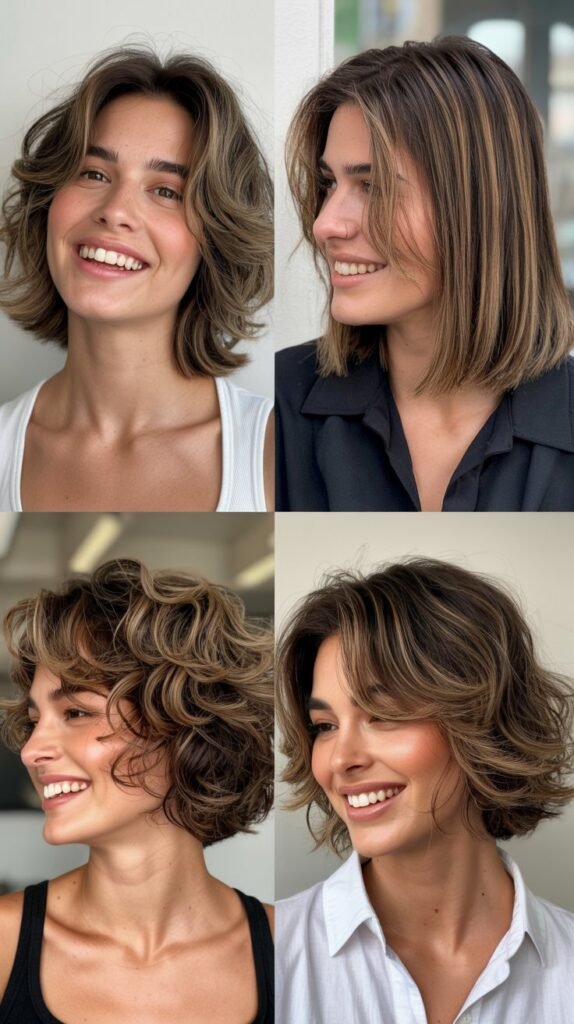
The layered bob with swoopy ends features layers throughout that create movement, with ends that curve outward or flip up rather than under, creating a playful, retro-inspired look.
This style adds personality to thick hair by using its natural body to support the outward movement. The swoopy ends prevent the cut from appearing too serious or structured.
- Swoopy ends are achieved through blow-drying with a round brush, wrapping the ends outward rather than under, creating that characteristic flip that recalls ’60s and ’70s styling.
- The layers throughout the cut ensure thick hair doesn’t become too bottom-heavy, with the swooped ends appearing intentional and light rather than weighed down.
- For thick hair, internal texturizing removes bulk that might prevent ends from flipping properly, allowing the swoopy movement to form naturally during styling.
- Styling requires some technique with a round brush and blow-dryer, rolling ends away from the head at the finish to create the flip, possibly setting with light hairspray.
- This cut flatters oval and heart-shaped faces particularly well, as the outward movement at the ends adds width at the jawline that can balance narrower chins.
- The playful nature makes this style perfect for those wanting a fun, youthful look that doesn’t take itself too seriously while still appearing polished and intentional.
- Maintenance every 6-8 weeks keeps layers fresh and ends healthy enough to flip properly, as split ends or damaged hair will resist the outward curve that defines the style.
19. Bob with Side-Swept Bangs
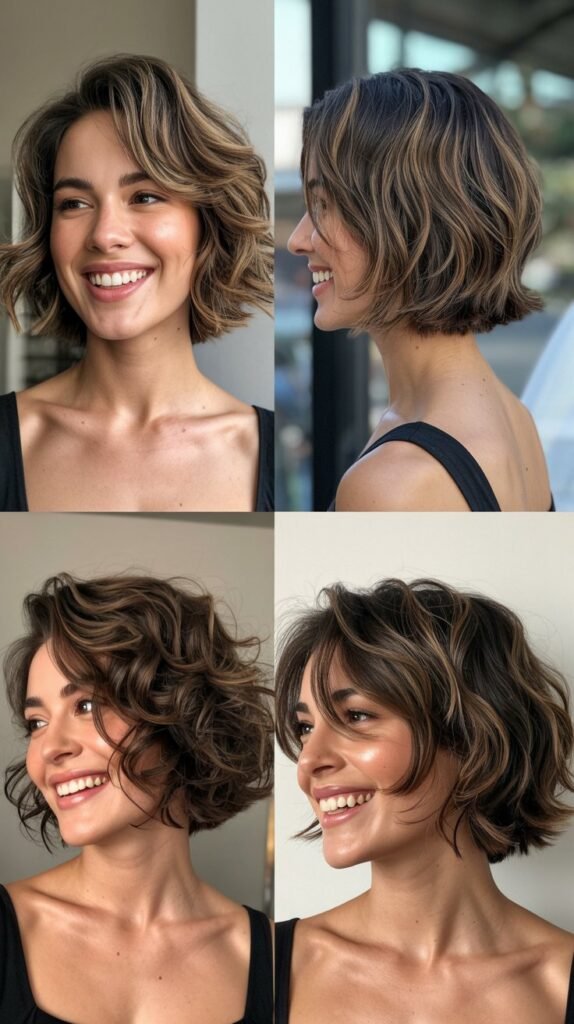
The bob with side-swept bangs pairs a chin-length cut with bangs that sweep diagonally across the forehead, creating an asymmetrical, face-framing element that adds softness and versatility.
This combination works beautifully with thick hair, as the density ensures bangs don’t appear wispy or sparse. The side-swept element prevents the heaviness that straight-across bangs might create with thick hair.
- Side-swept bangs typically start at a deep side part and angle across the forehead to end at or past the opposite eyebrow, creating a diagonal line that’s universally flattering.
- The sweep direction allows for versatility in styling—worn to one side for asymmetry, pinned back for a different look, or even blown forward for a softer, face-framing effect.
- For thick hair, side-swept bangs require internal thinning to ensure they lay flat against the forehead rather than standing away from the face due to excessive bulk.
- The bob portion can take any form—blunt, layered, textured—with side-swept bangs complementing all variations while adding that face-framing softness.
- Styling involves blow-drying bangs to the desired side with a round brush, using tension to create the smooth sweep and prevent the hair from falling back to its natural part.
- This style flatters all face shapes because the diagonal line created by side-swept bangs can be angled to complement any facial structure, adding length or width as needed.
- The grow-out phase is manageable, as side-swept bangs can be gradually blended into the bob or pinned back during awkward stages, making them less committal than other bang styles.
- Maintenance requires bang trims every 3-4 weeks to maintain the length and angle, while the bob itself needs trimming every 6-8 weeks for overall shape preservation.
20. Graduated Bob with Nape Detail
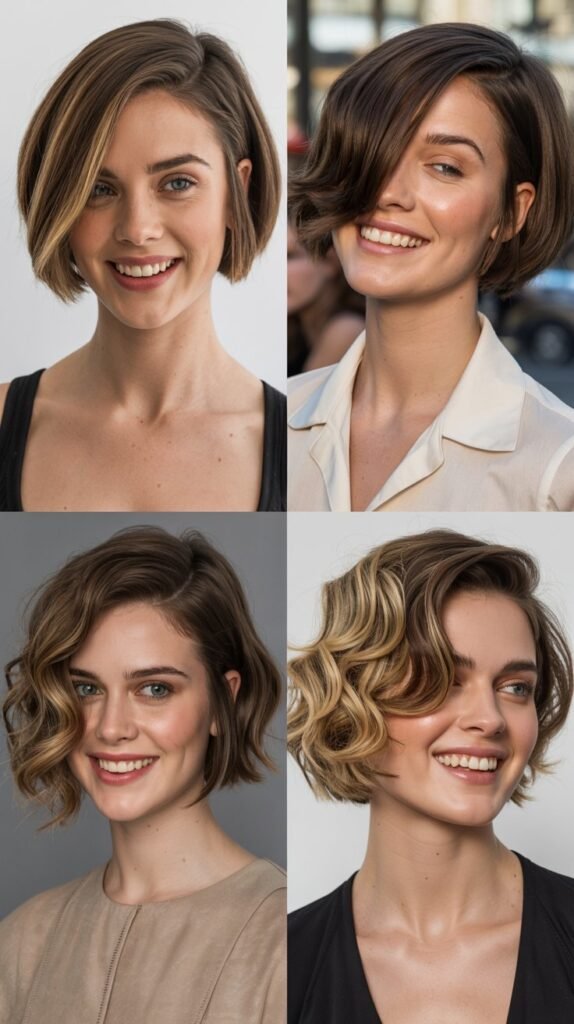
The graduated bob with nape detail features visible layering at the back that creates architectural interest and removes weight from the heaviest part of thick hair.
This style showcases dimension through stacked layers while keeping the front sleek and sophisticated. The nape detail adds an unexpected element that elevates a standard bob into something more fashion-forward.
- Graduated layering at the nape creates a rounded, voluminous shape that’s visible in profile, adding three-dimensional interest that makes the haircut itself a focal point.
- For thick hair, this technique strategically removes bulk where it accumulates most while maintaining fullness where you want it—at the crown and sides.
- The nape detail can range from subtle graduation to dramatic stacking, allowing customization based on personal style and how bold you want the look.
- Styling emphasizes the back layers through blow-drying with a round brush, directing hair forward to showcase the graduated shape and create lift at the crown.
- This cut works particularly well for those who wear hair up occasionally, as the nape detail becomes visible in ponytails or updos, adding interest to these alternative styles.
- The graduated bob flatters most face shapes, with the volume placement at the back creating balance and the sleek front sections framing the face beautifully.
- Maintenance every 6 weeks is essential to preserve the graduated layers’ definition, as growth causes them to blend together and lose the architectural quality that defines the style.
Conclusion
Finding the perfect haircut for thick hair can transform your entire look and simplify your daily routine, and 47 Trendiest Chin-Length Haircuts for Thick Hair to Try Now offers a comprehensive roadmap to achieving exactly that.
From classic blunt bobs that harness your hair’s natural weight to create bold statements, to textured shaggy cuts that embrace movement and reduce bulk, each style presented is specifically designed to work with thick hair’s unique characteristics.
Whether you gravitated toward the architectural drama of inverted bobs, the effortless cool of beachy waves, or the edgy sophistication of asymmetrical cuts, you now have the knowledge to communicate your vision clearly to your stylist.
Remember that the best haircut isn’t just about following trends—it’s about finding a style that complements your face shape, matches your lifestyle, and makes you feel confident every single day.
Thick hair is a genuine asset when cut correctly, providing the fullness and body that many spend hours trying to create artificially. Take these ideas to your trusted stylist, discuss which techniques will work best with your specific hair texture and density, and prepare to fall in love with your thick hair all over again.
The perfect chin-length cut is waiting for you, and with the right approach, your thick hair will become your favorite feature rather than a daily challenge.
