
Are you ready to transform your look with a bold, liberating cut that screams confidence? Short pixie hairstyles have evolved from a daring rebellion to a mainstream fashion statement that continues to captivate women worldwide.
Whether you’re contemplating your first major chop or seeking fresh inspiration for your next salon visit, this comprehensive guide to 53 Fearless Short Pixie Hairstyles That Make a Statement will walk you through every style possibility imaginable.
From classic cuts that never go out of fashion to edgy, avant-garde designs that push boundaries, you’ll discover pixie variations for every face shape, hair texture, and personal aesthetic.
We’ll explore styling techniques, maintenance tips, color combinations, and the transformative power of embracing shorter locks.
This isn’t just about hair—it’s about unleashing your inner boldness and making a statement that’s uniquely yours. Get ready to find the perfect pixie that will have you walking out of the salon feeling like the most fearless version of yourself.
1. The Classic Pixie Cut
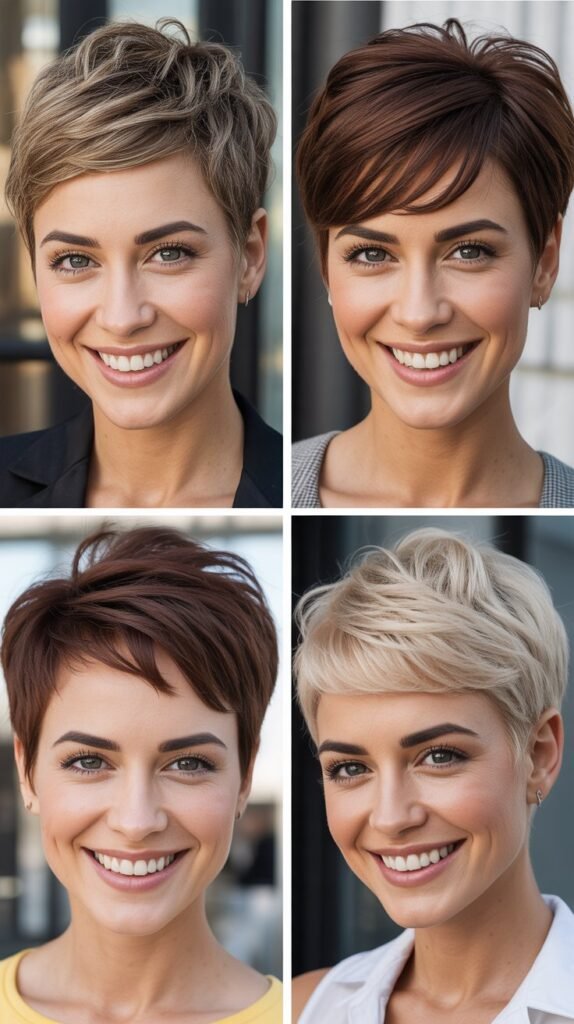
The classic pixie cut remains the foundation of short hairstyles, offering timeless elegance with minimal maintenance. This style features short sides and back with slightly longer hair on top, creating a balanced silhouette that flatters most face shapes.
The beauty of the classic pixie lies in its versatility—it can be styled sleek and polished for professional settings or tousled for a casual, carefree vibe.
- The classic pixie typically measures between 1-3 inches in length throughout, with subtle layering to create texture and movement.
- This cut works exceptionally well for women with oval, heart-shaped, and diamond face shapes, as it accentuates cheekbones and draws attention to the eyes.
- Styling requires minimal product—a small amount of pomade or wax can add definition, while a light hairspray maintains the shape throughout the day.
- The classic pixie grows out gracefully, requiring trims every 4-6 weeks to maintain its refined shape and prevent the awkward in-between stage.
- This style gained iconic status through celebrities like Audrey Hepburn and Mia Farrow, proving that simplicity often makes the strongest statement.
2. The Undercut Pixie
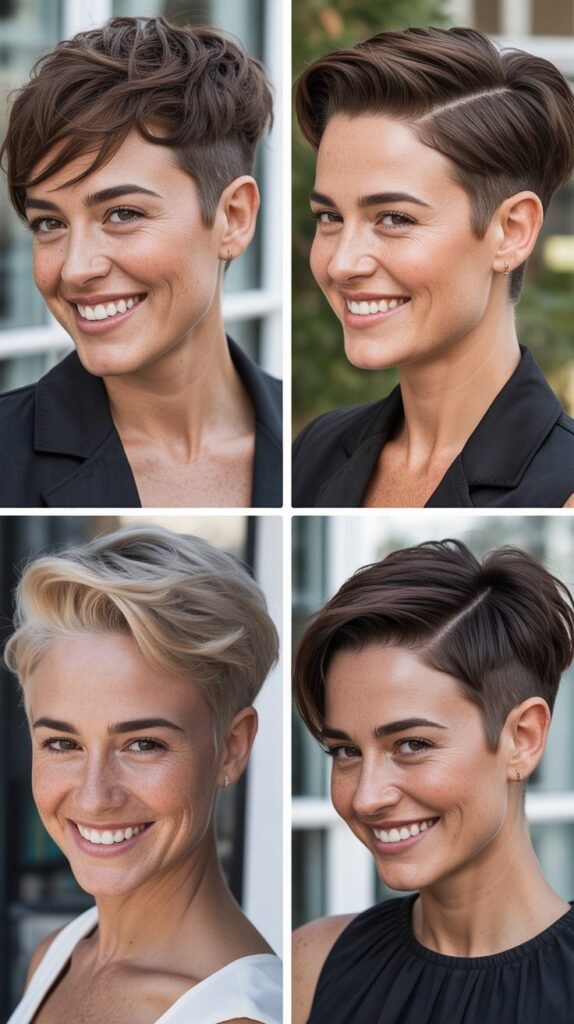
The undercut pixie brings an edgy, rebellious twist to the traditional short cut by incorporating shaved or closely clipped sections.
This contemporary style creates dramatic contrast between the longer top sections and the buzzed sides or back, resulting in a look that’s equal parts fierce and feminine.
The undercut offers endless customization possibilities, from subtle fades to bold designs shaved into the shorter sections.
- The undercut section can range from a subtle fade that’s barely noticeable to a bold, high-contrast shave that creates a striking visual impact.
- This style provides excellent cooling benefits during warmer months while adding an unexpected element when hair is worn down versus styled back.
- Women with thick, heavy hair particularly appreciate the undercut pixie as it removes bulk and makes styling significantly easier.
- Maintenance requires more frequent visits to keep the shaved sections crisp—typically every 2-3 weeks for the undercut portion.
- The undercut pixie pairs beautifully with bold hair colors, as the contrasting sections create natural highlighting effects.
- Creative shaving patterns, including geometric designs, lines, and artistic motifs, can transform the undercut into a canvas for personal expression.
3. The Textured Pixie
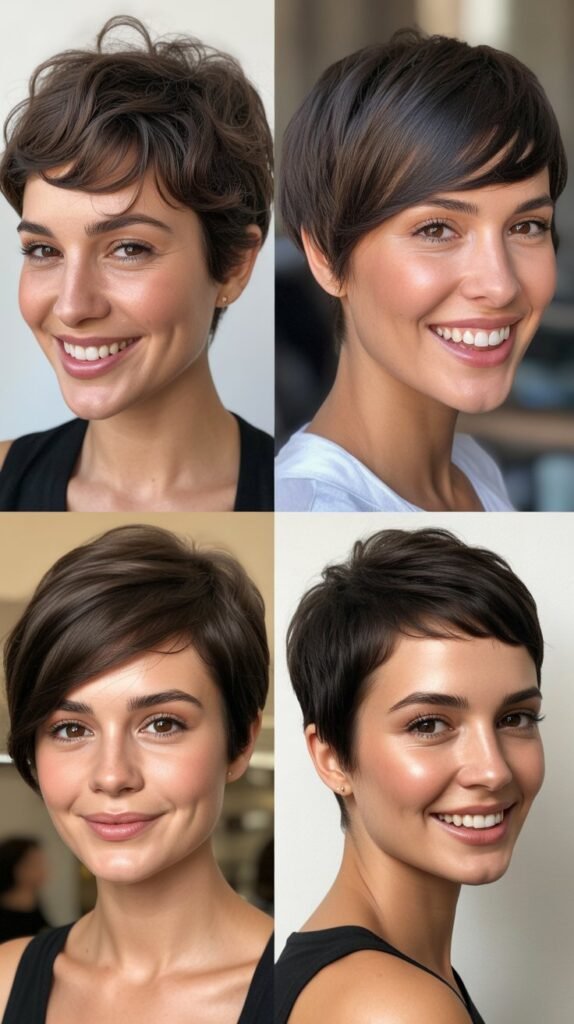
The textured pixie celebrates natural hair movement and creates dimension through strategic layering and choppy cutting techniques.
This style moves away from the precision of classic cuts, instead embracing a more lived-in, effortlessly cool aesthetic. Texture adds volume and interest, making this pixie particularly flattering for fine or thin hair that needs extra body.
- Texturizing techniques like point cutting, razor cutting, and slide cutting create the irregular, piece-y finish that defines this style.
- The textured pixie requires styling products that enhance rather than flatten—sea salt spray, texturizing paste, and dry shampoo work wonderfully.
- This cut disguises hair growth better than blunt styles, extending time between salon appointments to 6-8 weeks.
- Women with naturally wavy or slightly curly hair find the textured pixie particularly manageable, as it works with their hair’s natural pattern rather than against it.
- The intentionally imperfect finish means bad hair days are virtually nonexistent—messy looks perfectly intentional with this cut.
4. The Asymmetrical Pixie
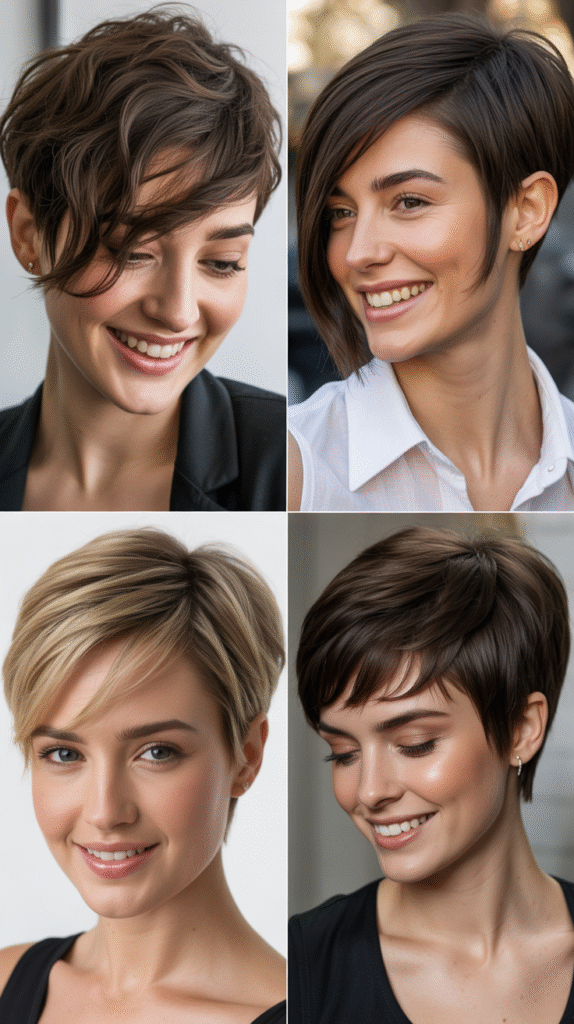
The asymmetrical pixie breaks traditional symmetry rules by featuring dramatically different lengths on each side of the head.
This avant-garde style creates visual intrigue and allows for multiple styling options depending on how the hair is positioned. The asymmetry can range from subtle variations to extreme differences that create a truly unique silhouette.
- One side typically features a shorter, buzzed or cropped section while the opposite side maintains longer layers that can sweep across the forehead or tuck behind the ear.
- This style particularly flatters women who want to camouflage facial asymmetry or balance out stronger features on one side.
- The longer section provides versatility—it can be styled forward for drama, swept back for elegance, or curled for softness.
- Asymmetrical pixies require precise cutting skills and regular maintenance every 4-5 weeks to preserve the intended proportions.
- This cut photographs exceptionally well from all angles, making it popular among women who are frequently photographed or active on social media.
- The asymmetry creates natural movement and swing, adding dynamism to a style that might otherwise appear static.
5. The Curly Pixie
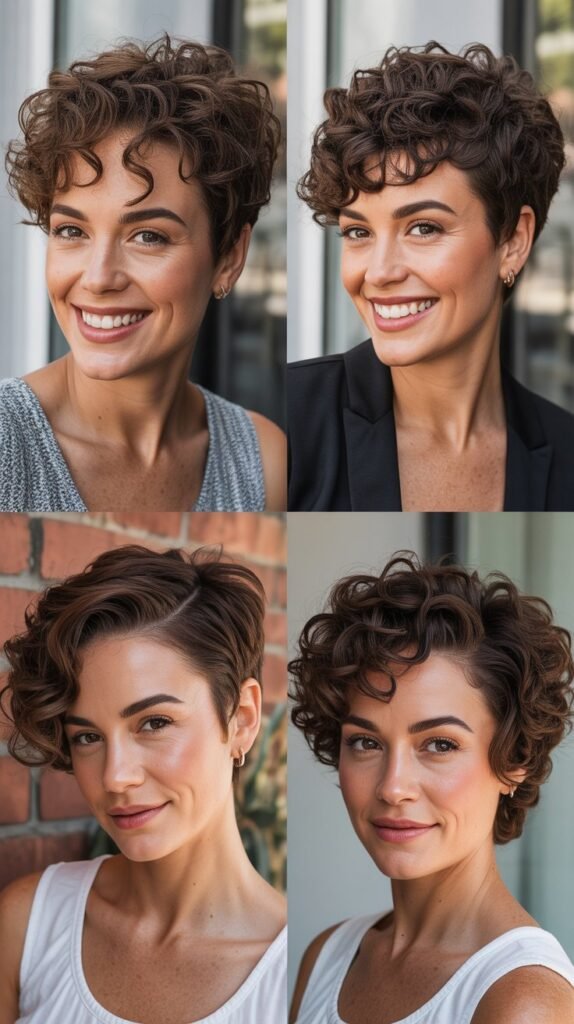
The curly pixie embraces natural curl patterns while maintaining the short, manageable length that defines pixie cuts.
This style proves that curls and short hair are not mutually exclusive, creating a halo of texture that’s both playful and sophisticated. The key to a successful curly pixie lies in cutting techniques that enhance curl formation rather than fighting against it.
- Curly pixies work best when cut dry, allowing the stylist to see exactly how each curl will fall and shape the cut accordingly.
- Women with tighter curl patterns (3b-4c) should request slightly longer lengths, as curls shrink significantly when dry.
- This style typically features shorter sides and back with more length on top, creating a flattering rounded silhouette that showcases curl texture.
- Hydration is crucial—leave-in conditioners, curl creams, and regular deep conditioning treatments keep curls defined and frizz-free.
- The curly pixie requires minimal daily styling once the cut is right—most women can simply scrunch in product and air dry.
- This cut celebrates natural texture and reduces heat damage, making it an excellent choice for curl health and recovery.
6. The Pixie Bob
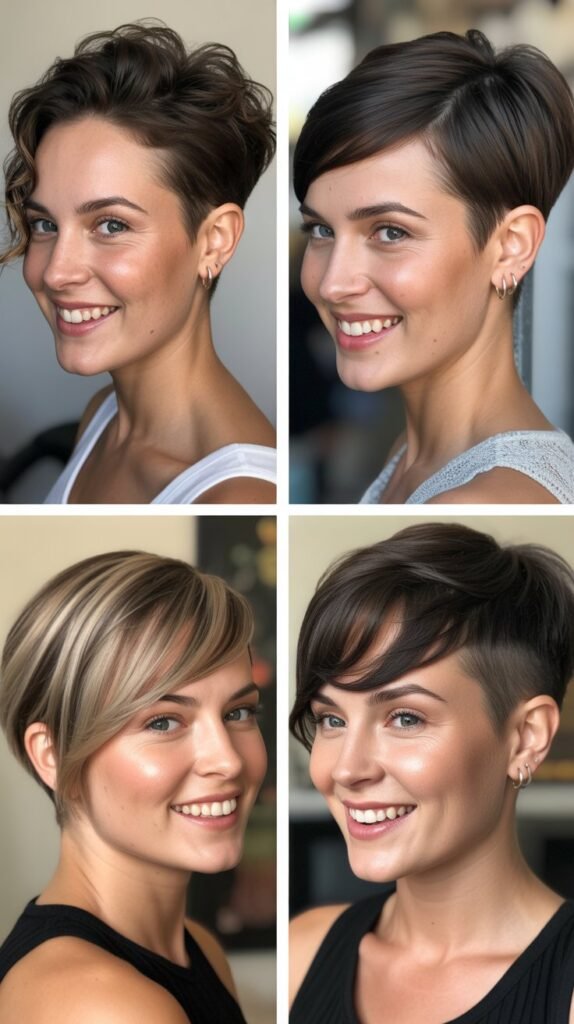
The pixie bob, often called a “bixie,” bridges the gap between a traditional pixie and a classic bob. This hybrid style maintains the short back and sides of a pixie while incorporating slightly longer lengths around the front and crown.
The result is a versatile cut that offers more styling flexibility than a standard pixie while remaining refreshingly short and easy to manage.
- The front sections typically range from chin-length to just below the ear, while the back remains short and tapered.
- This style particularly appeals to women transitioning from longer hair who want a pixie’s benefits without committing to ultra-short length.
- The pixie bob works beautifully with straight, wavy, and slightly curly hair textures, adapting easily to natural patterns.
- Styling options include sleek and straight for professional environments, tousled for casual settings, or curled under for vintage-inspired looks.
- This cut requires trims every 5-7 weeks to maintain its distinctive shape and prevent the front from growing too heavy.
- The additional length around the face provides framing that softens features and offers more coverage for those who prefer it.
7. The Spiky Pixie
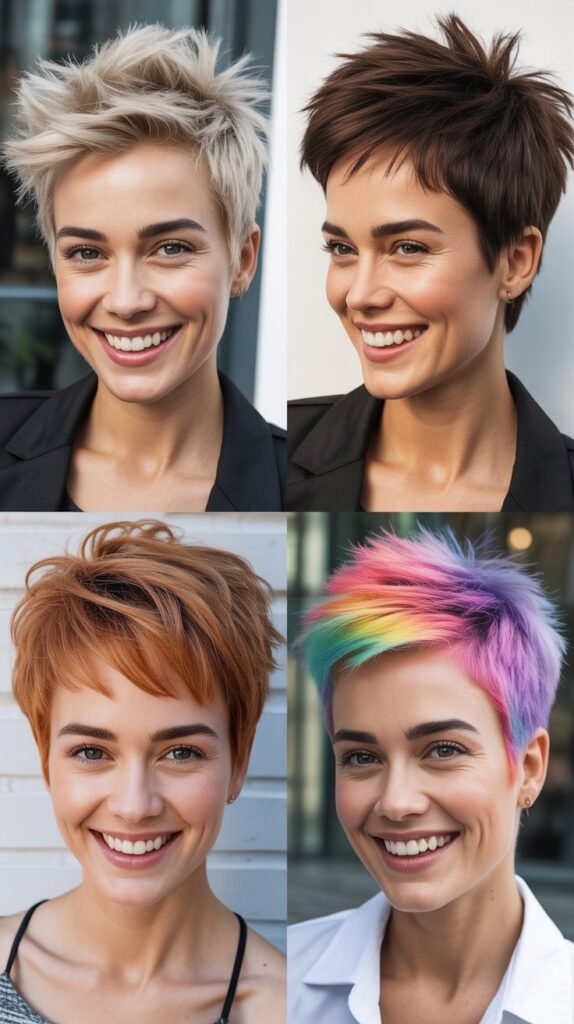
The spiky pixie delivers maximum attitude through vertical styling that defies gravity and convention. This punk-inspired style features short, choppy layers throughout that can be styled upward using strong-hold products.
The spiky pixie radiates confidence and works particularly well for women with naturally straight or slightly wavy hair that holds texture easily.
- Achieving the spiky look requires strong-hold products like gel, pomade, or molding paste applied to damp hair and styled upward while blow-drying.
- The cut itself features uniform short layers, typically 1-2 inches throughout, cut with texturizing techniques that allow individual pieces to separate.
- This style gained popularity in the early 2000s and has experienced renewed interest as 90s and 2000s fashion trends cycle back.
- The spiky pixie works exceptionally well with platinum blonde, vibrant colors, or multiple tone combinations that highlight the texture.
- Daily styling takes 5-10 minutes and holds well throughout the day with the right products, making it surprisingly practical despite its bold appearance.
- This cut suits women with angular face shapes, strong jawlines, and defined features that can carry such a dramatic style.
8. The Long Pixie
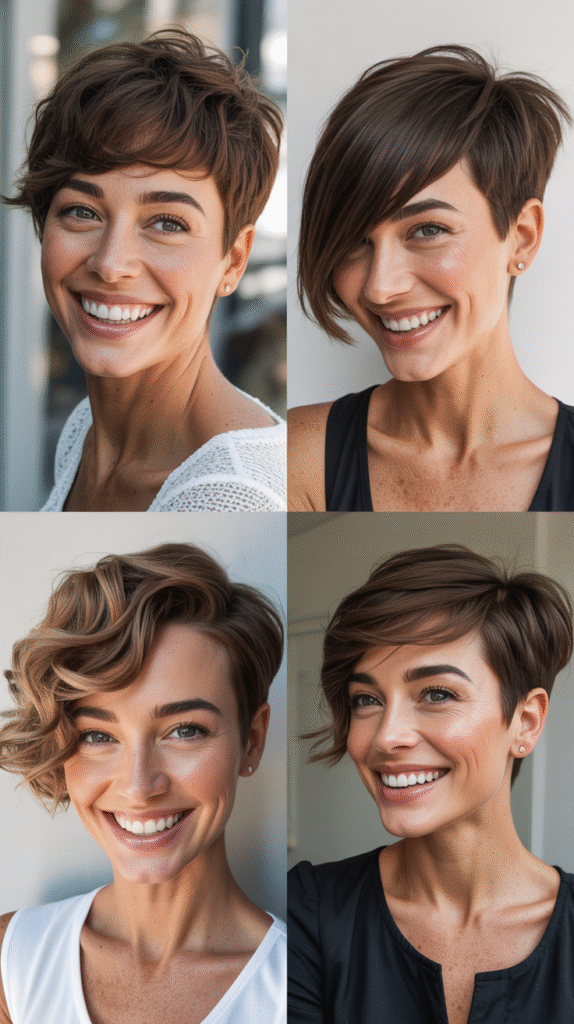
The long pixie pushes the boundaries of pixie definition by incorporating longer layers while maintaining the essential pixie characteristics of short sides and back.
This style offers the best of both worlds—the freedom and ease of short hair with enough length to pull into small ponytails or style in multiple ways. The long pixie serves as an excellent transitional cut or as a destination style in its own right.
- The top layers typically range from 3-6 inches, providing substantial length for creative styling while the sides and back remain cropped.
- This cut flatters nearly every face shape and can be adjusted to emphasize or minimize specific features through strategic length placement.
- Women transitioning from very short pixies to longer styles often use the long pixie as a growth-out strategy that looks intentional rather than unkempt.
- Styling versatility includes sleek side parts, messy textured looks, small braids, mini buns, and half-up styles impossible with shorter pixies.
- The long pixie requires less frequent maintenance than ultra-short styles, with 6-8 weeks between cuts being manageable.
- This style works beautifully with all hair types, from pin-straight to wavy, adapting to enhance natural texture.
9. The Pixie with Bangs
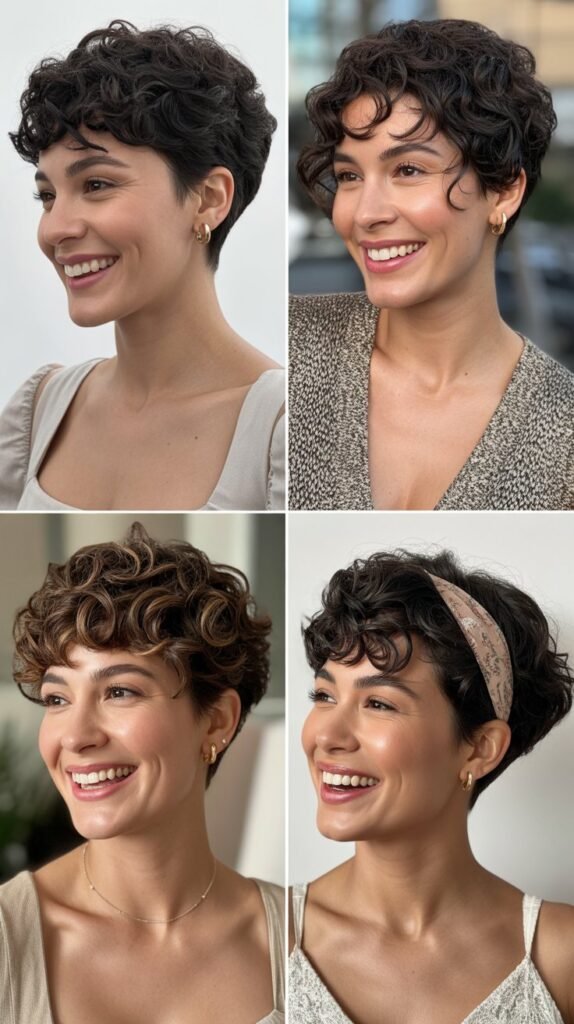
The pixie with bangs adds a distinctive fringe element that frames the face and creates a focal point. Bangs can dramatically alter the overall look of a pixie, ranging from blunt and bold to soft and wispy.
This combination offers numerous variations, each creating different effects and suiting different style preferences and face shapes.
- Blunt, straight-across bangs create a modern, high-fashion look that pairs beautifully with clean, geometric pixie cuts.
- Side-swept bangs offer a softer, more romantic approach that flatters round and square face shapes by creating diagonal lines.
- Wispy, textured bangs integrate seamlessly with textured pixie cuts, maintaining the overall casual, effortless vibe.
- Micro bangs (baby bangs) create a bold, editorial statement that works particularly well with oval and heart-shaped faces.
- The bang section requires more frequent trims every 2-3 weeks to prevent them from obscuring vision or losing their intended shape.
- Styling bangs typically requires a small round brush and blow-dryer, adding just minutes to daily routine.
- Bangs can camouflage a high forehead, minimize the appearance of fine lines, and draw attention to the eyes.
10. The Tapered Pixie
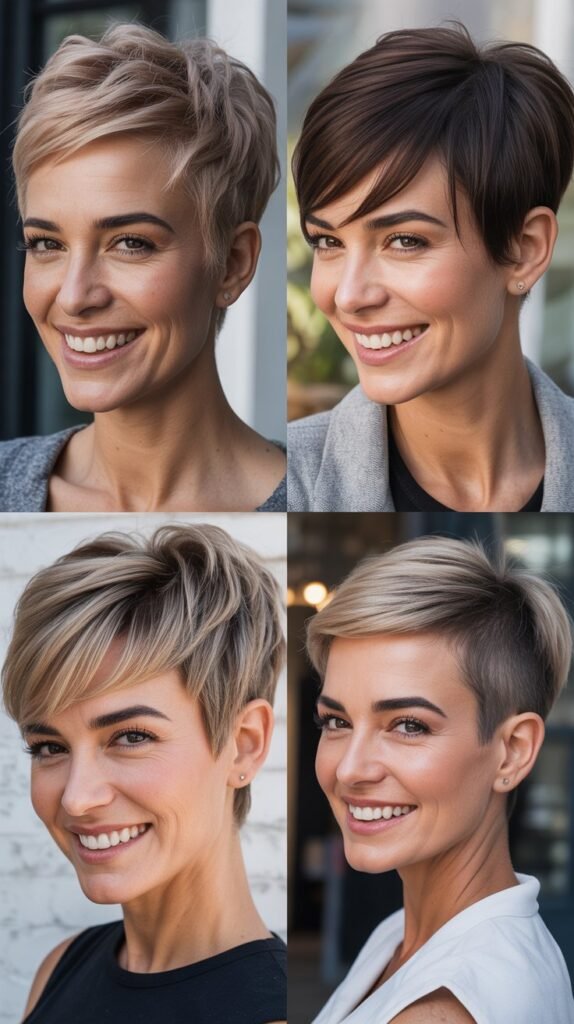
The tapered pixie features a gradual transition from longer lengths on top to progressively shorter hair at the sides and back.
This technique creates a clean, polished silhouette with natural-looking dimension. The tapered approach works exceptionally well for professional environments while remaining stylish and contemporary.
- Tapering can be subtle with minimal graduation or dramatic with high-contrast fades that approach undercut territory.
- This cutting technique reduces bulk naturally, making it ideal for thick hair that might otherwise appear heavy or shapeless in a pixie.
- The tapered pixie flatters women with longer necks, as it creates clean lines that accentuate this feature.
- Professional barbers and stylists often use clippers with guard attachments to achieve precise, even tapering.
- Maintenance schedules depend on how quickly hair grows, but most women return every 4-6 weeks to maintain crisp lines.
- This style transitions beautifully from day to night—neat and professional for work, slightly tousled for evening events.
11. The Platinum Pixie
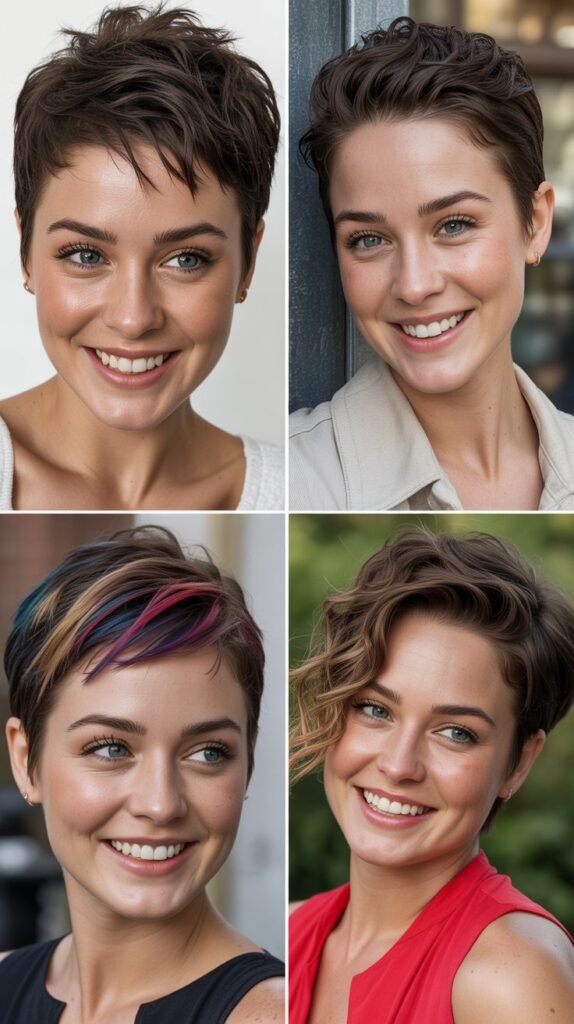
The platinum pixie combines the dramatic impact of a short cut with the striking visual effect of platinum blonde color.
This high-maintenance color choice creates a bold statement that demands attention and exudes confidence. The cool-toned blonde provides a modern, edgy aesthetic that complements a variety of pixie cut styles.
- Achieving and maintaining platinum blonde requires significant commitment, including regular toning appointments every 3-4 weeks to prevent brassiness.
- This color works best on naturally lighter hair bases, though darker hair can be lifted with professional bleaching techniques over multiple sessions.
- Purple-toned shampoos and conditioners are essential for home maintenance, neutralizing the yellow undertones that develop between salon visits.
- The platinum pixie particularly flatters cooler skin undertones and those with blue, gray, or green eyes that pop against the pale blonde.
- Heat protectants and deep conditioning treatments become non-negotiable as bleached hair requires extra care to maintain health and shine.
- This dramatic color pairs beautifully with minimalist fashion choices, allowing the hair to become the statement piece.
12. The Pixie with Shaved Sides
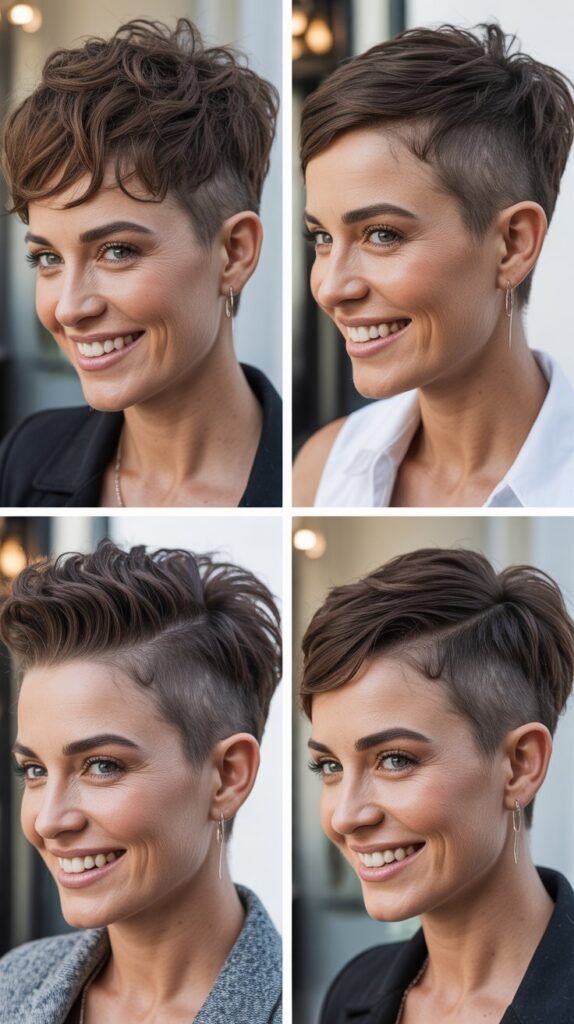
The pixie with shaved sides creates bold contrast by completely removing hair from one or both sides while maintaining length on top.
This style offers an edgier alternative to the undercut, with the shaved sections being more prominent and deliberate. The look is undeniably modern and suits women who want to make a fearless style statement.
- Shaving can be limited to one side for asymmetrical interest or applied to both sides for symmetrical drama.
- The remaining top section can be styled in numerous ways—slicked back, swept to one side, spiked up, or allowed to fall naturally.
- This style provides relief for women with very thick hair, removing significant bulk while creating architectural interest.
- The shaved sections require maintenance every 2-3 weeks to prevent stubble from looking unkempt rather than intentional.
- Creative shaving patterns, temporary tattoos, or even subtle hair dyes on the shaved sections can personalize the look further.
- This cut works particularly well with bold makeup choices and statement accessories, as the shaved sections create a canvas that doesn’t compete visually.
13. The Choppy Pixie
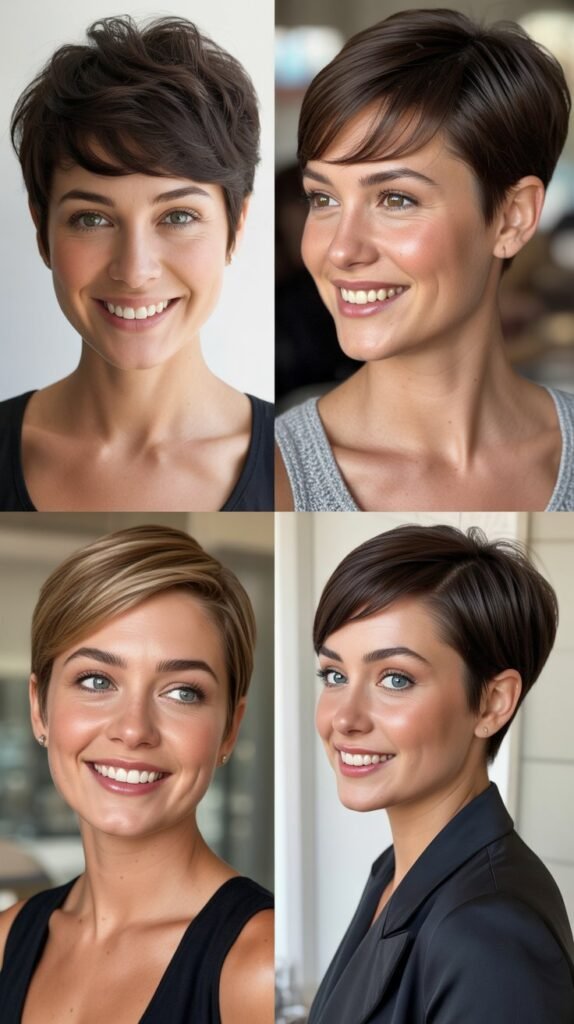
The choppy pixie embraces irregular, piece-y cutting techniques that create dynamic texture and movement. This style moves away from precision and uniformity, instead celebrating an intentionally disheveled, rock-and-roll aesthetic.
The choppy approach adds dimension to fine hair and reduces bulk in thick hair while maintaining an effortlessly cool vibe.
- Point cutting and razor techniques create the jagged, uneven edges that define the choppy pixie’s signature texture.
- This style disguises natural cowlicks and growth patterns beautifully, working with hair’s tendencies rather than fighting against them.
- Styling products like sea salt spray, texturizing cream, and light wax enhance the choppy effect without weighing hair down.
- The intentionally messy finish means this cut looks appropriate whether styled carefully or simply air-dried after washing.
- Regular trims every 6-8 weeks maintain the textured effect, though this style grows out more gracefully than precise cuts.
- The choppy pixie pairs exceptionally well with highlights, lowlights, or multiple color tones that emphasize the textured layers.
14. The Pixie Mullet
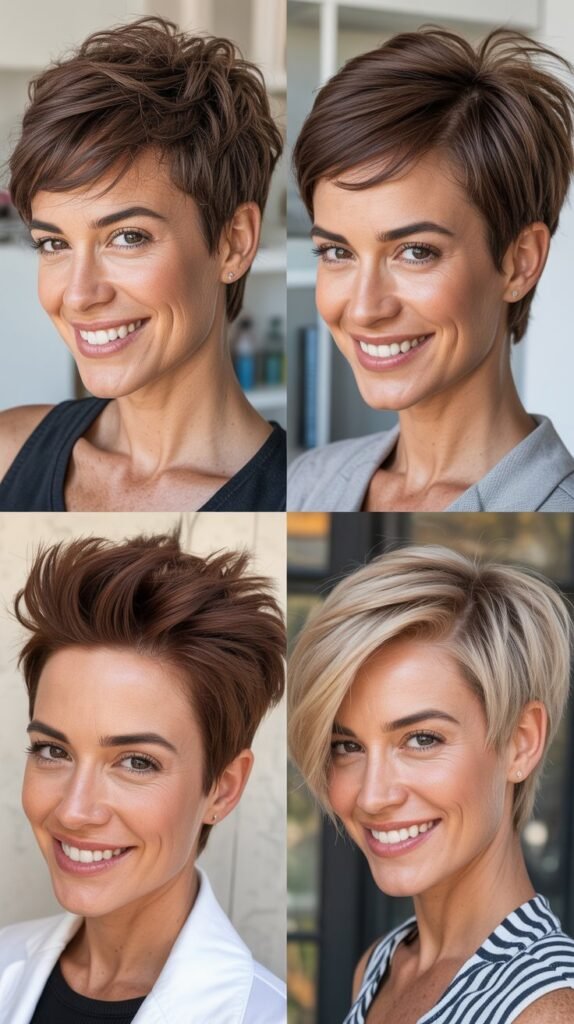
The pixie mullet, or “mixie,” combines the short, cropped front and sides of a pixie with the longer back sections characteristic of a mullet.
This unconventional hybrid style has experienced a fashion renaissance, moving from 1980s relic to contemporary fashion statement. The pixie mullet works for women who want the best of both short and long hair in one distinctive cut.
- The front and sides typically measure 1-3 inches while the back extends to neck length or slightly beyond.
- Modern versions are significantly more refined than 1980s mullets, with textured transitions and styled rather than simply long back sections.
- This cut works particularly well with wavy or curly hair in the back section, creating natural movement and volume.
- Styling the back requires minimal effort—most women simply apply leave-in conditioner and allow it to air dry.
- The pixie mullet suits bold personalities who embrace unconventional aesthetics and aren’t afraid to challenge traditional beauty standards.
- This style has gained traction through social media platforms where younger generations showcase creative interpretations.
15. The Feathered Pixie
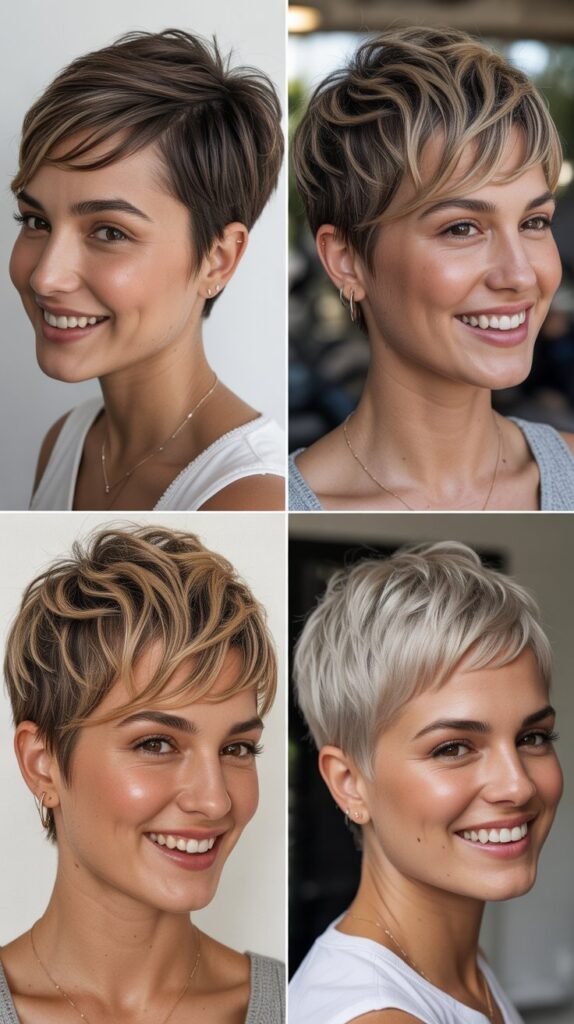
The feathered pixie incorporates soft, face-framing layers that create a delicate, feminine appearance. This technique creates movement through the ends, producing a wispy, lightweight effect reminiscent of 1970s hairstyles but updated for contemporary aesthetics.
The feathered approach softens angular features and adds romantic elements to the typically bold pixie cut.
- Feathering requires skilled scissor work, with stylists using a slicing technique that creates tapered, thin ends.
- This style particularly flatters women with round or square face shapes, as the soft layers create elongating effects.
- Fine to medium hair textures work best with feathering, as very thick hair may not achieve the desired lightness.
- Styling involves blow-drying with a round brush while directing hair away from the face to emphasize the feathered effect.
- The feathered pixie offers a more approachable alternative to edgier pixie variations while maintaining the practical benefits of short hair.
- This cut pairs beautifully with highlights that emphasize the layered movement, creating natural-looking dimension.
16. The Bowl Cut Pixie
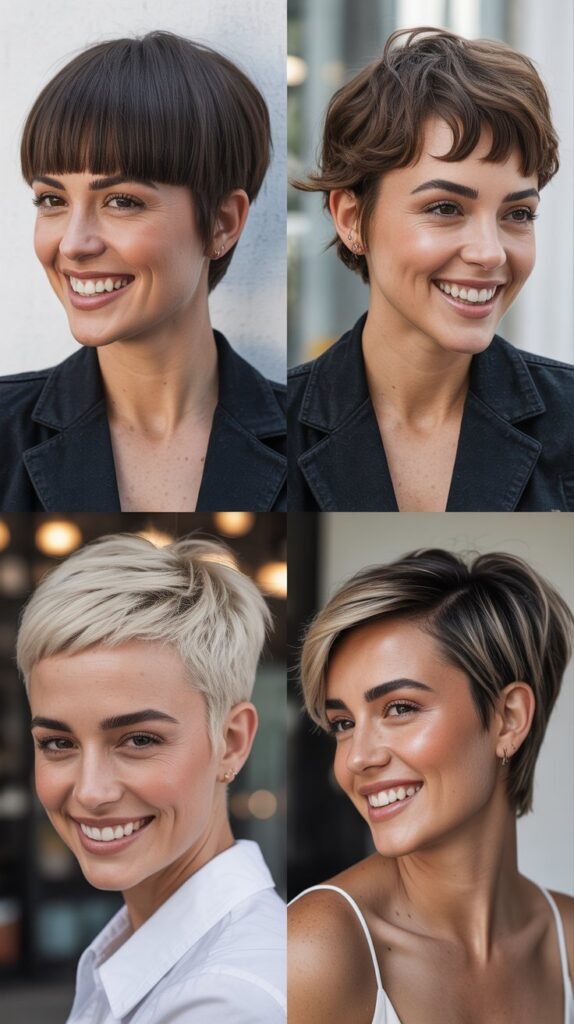
The bowl cut pixie reinterprets the classic bowl cut with modern sensibilities, creating a geometric, fashion-forward look.
This style features a distinctive rounded shape with blunt, even edges that create a striking silhouette. Once considered outdated, the bowl cut has been reclaimed by fashion-conscious women seeking unconventional aesthetics.
- The modern bowl cut pixie typically features textured rather than completely blunt edges, softening the overall effect while maintaining the distinctive shape.
- This cut requires absolute precision and looks best when maintained with regular trims every 3-4 weeks.
- The bowl cut pixie works particularly well on straight hair that can hold the clean lines, though slight texture can add contemporary interest.
- This style makes a bold statement and suits women with strong personal style who embrace unconventional aesthetics.
- Styling is remarkably simple—the cut itself creates the look with minimal product or effort required.
- The bowl cut pixie photographs exceptionally well, making it popular in fashion, art, and creative industries.
17. The Disconnected Pixie
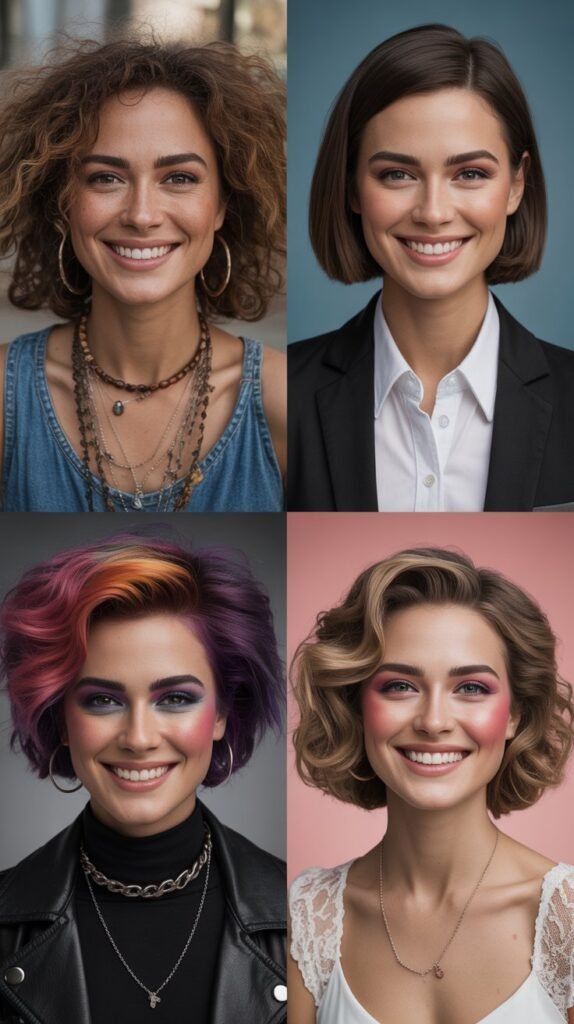
The disconnected pixie features intentional separation between different sections of the cut, creating visual interest through contrast.
This technique involves cutting hair in distinct sections without blending the transitions, resulting in a modern, architectural effect. The disconnected approach allows for dramatic styling variations depending on how different sections are positioned.
- Common disconnected combinations include long top sections with buzzed sides, or longer front pieces with extremely short back sections.
- This cutting technique creates movement and dimension automatically, as different sections respond differently to styling.
- The disconnected pixie particularly suits women with thick hair, as removing sections helps manage volume while creating interest.
- Styling can emphasize the disconnection by slicking some sections while texturizing others, or blend them by styling everything in the same direction.
- This cut requires a skilled stylist who understands sectioning and can create intentional rather than accidental disconnection.
- Maintenance schedules vary depending on which sections grow fastest, typically requiring touch-ups every 4-6 weeks.
18. The Pixie with Highlights
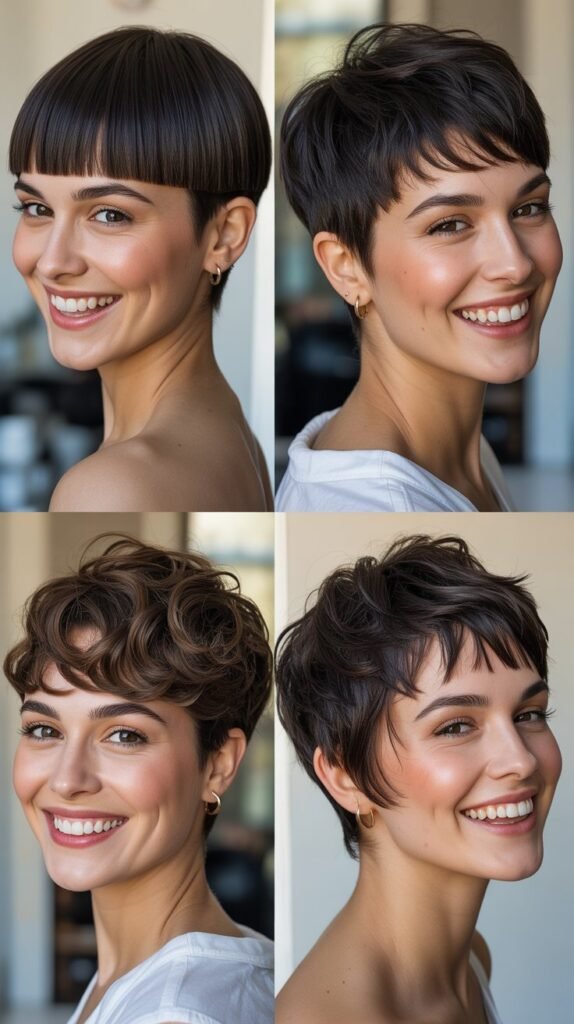
The pixie with highlights adds dimensional color that enhances texture and creates visual interest.
Highlights in short hair serve a different purpose than in long hair—they accentuate the cut’s layers and angles rather than simply adding color variation. Strategic highlight placement can enhance facial features and make the cut appear more dynamic.
- Face-framing highlights brighten the complexion and draw attention to eyes and cheekbones.
- Balayage techniques create natural-looking dimension by painting color onto specific sections rather than using traditional foils.
- Highlights can range from subtle, same-family tones to bold contrasts like platinum streaks on darker base colors.
- The short length means highlights grow out quickly, requiring color refresh appointments every 6-8 weeks.
- Strategic highlight placement can make fine hair appear fuller by creating the illusion of depth and shadow.
- Combining highlights with the pixie’s layers creates a multi-tonal effect that changes depending on styling and lighting.
19. The Slicked-Back Pixie
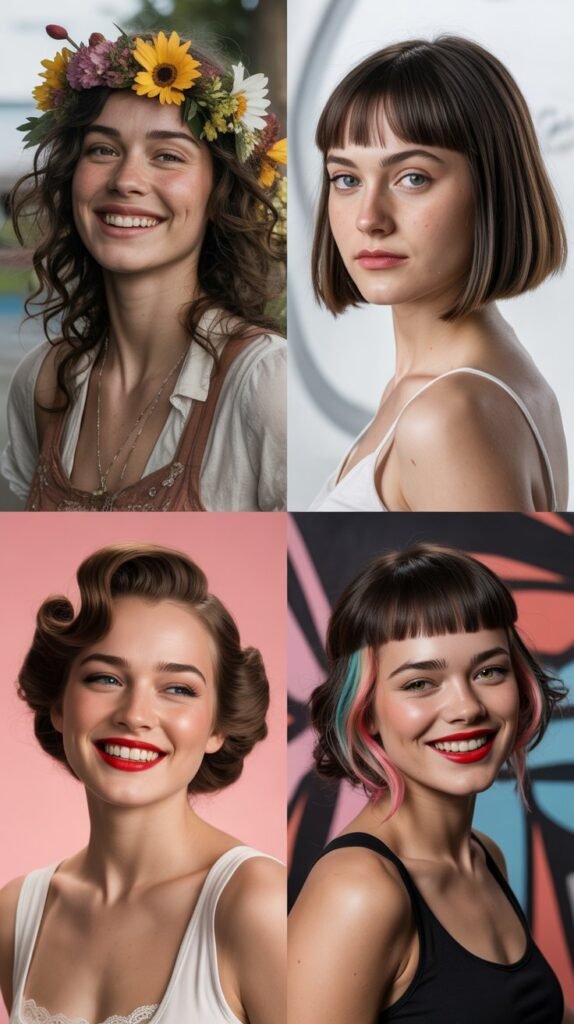
The slicked-back pixie creates a polished, sophisticated look by styling all hair away from the face toward the back.
This refined approach works beautifully for formal events, professional settings, or when a more mature aesthetic is desired.
The slicked-back style requires enough length on top to create the swept-back effect while maintaining the pixie’s short sides and back.
- Achieving the slicked-back look requires strong-hold gel or pomade applied to damp hair and combed back while blow-drying.
- This styling particularly flatters women with strong bone structure, high cheekbones, and defined features that can carry the severe lines.
- The wet-look finish can be achieved with high-shine products for evening drama or matte products for daytime sophistication.
- This style works equally well with casual or formal attire, adapting through product choice and overall styling intensity.
- The slicked-back pixie accentuates earrings beautifully, making it ideal when showcasing statement jewelry.
- Daily styling takes 5-10 minutes and holds well throughout the day with proper product selection.
20. The Tousled Pixie
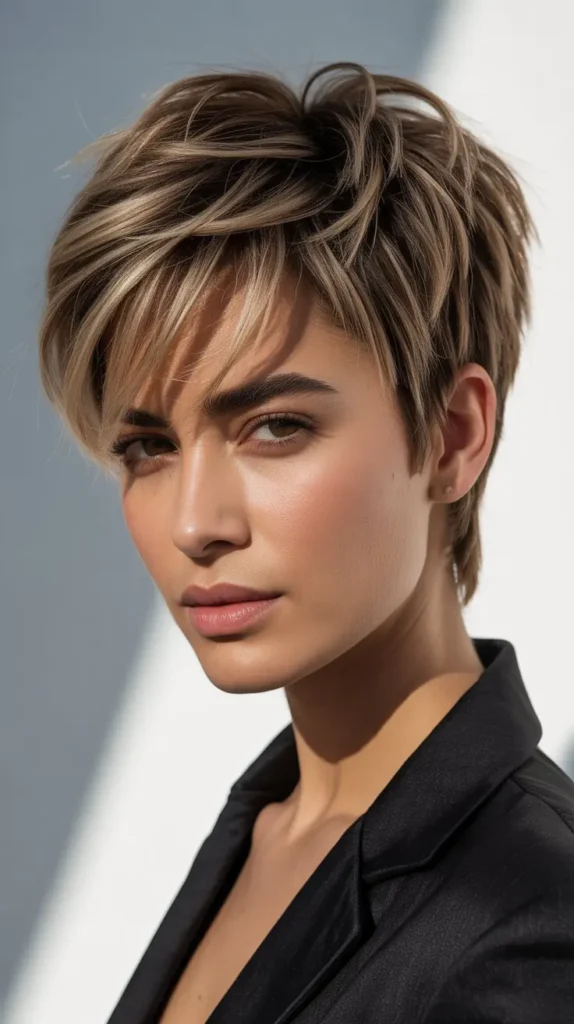
The tousled pixie embraces natural texture and creates an effortlessly undone appearance that looks casually chic.
This styling approach works with various pixie cuts, adding movement and dimension through strategic product application and styling techniques. The tousled effect communicates approachability and ease while remaining polished and intentional.
- Creating tousled texture involves applying texturizing products like sea salt spray or dry shampoo to damp or dry hair and scrunching while air-drying or diffusing.
- This styling disguises second or third-day hair beautifully, making it practical for busy lifestyles.
- The tousled pixie works with all hair textures, enhancing natural wave patterns or creating artificial texture in straight hair.
- This approach pairs perfectly with casual wardrobes, creating cohesive, laid-back aesthetics.
- The intentionally imperfect finish means this style requires minimal time commitment while looking fashionable and current.
- Adding small amounts of pomade or wax to individual pieces creates definition within the tousled texture.
21. The Pixie with Fringe
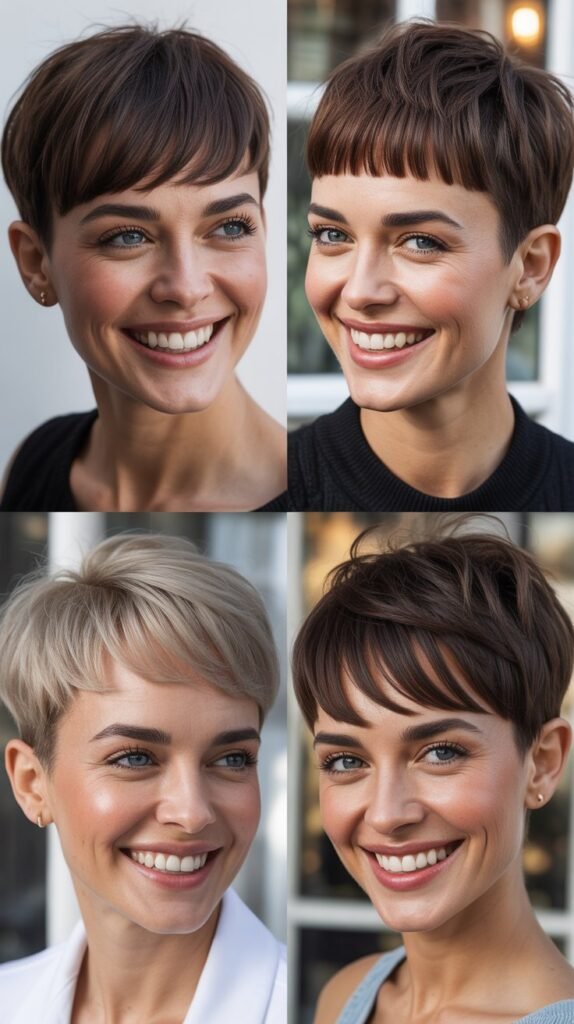
The pixie with fringe creates visual interest by incorporating a distinct forelock or fringe section that can be styled separately from the rest of the cut.
This approach adds versatility and softness while maintaining the pixie’s characteristic short length. The fringe element provides styling options that change the overall look dramatically depending on positioning.
- The fringe section typically measures 2-4 inches longer than surrounding hair, creating intentional contrast.
- This element can be styled forward across the forehead, swept dramatically to one side, or pushed back when a different look is desired.
- Women with high foreheads particularly appreciate the fringe option for its balancing effect.
- The fringe adds youthful energy to pixie cuts and can soften more severe or angular cutting styles.
- Maintenance requires regular trimming of the fringe section every 2-3 weeks to prevent it from becoming unmanageable.
- This styling works beautifully with highlights or color contrast in the fringe section, creating additional visual interest.
22. The Razored Pixie
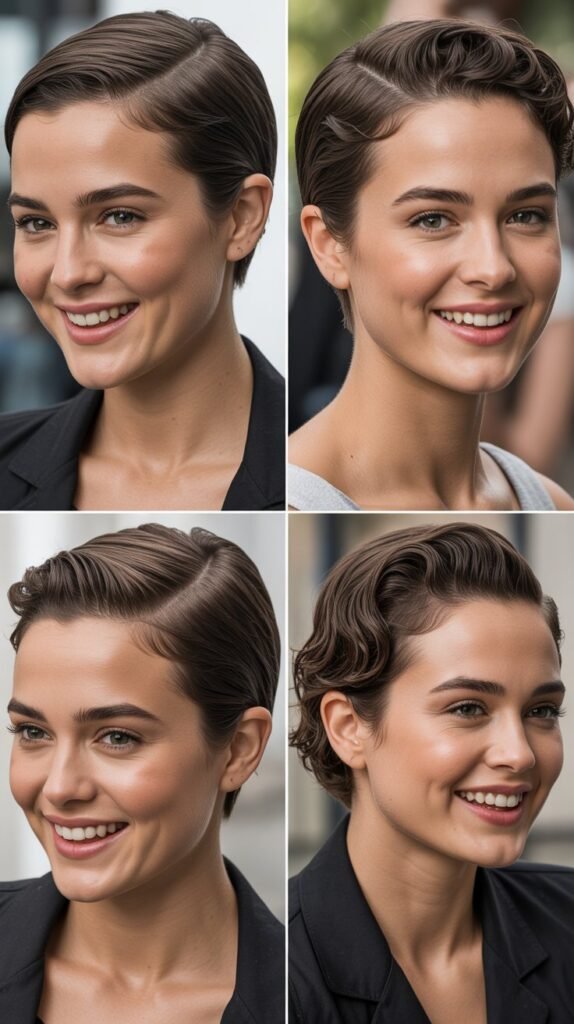
The razored pixie uses razor cutting techniques instead of traditional scissors to create extremely soft, wispy ends. This approach produces a delicate, ethereal quality with maximum movement and minimal weight.
The razored technique works particularly well on fine to medium hair textures that benefit from the whisper-thin ends.
- Razor cutting removes less hair than scissor cutting, creating tapered ends that move more freely.
- This technique produces a softer overall appearance than blunt cuts, making it ideal for women wanting a gentler pixie aesthetic.
- The razored pixie requires minimal styling—natural texture and movement are built into the cut itself.
- This approach works beautifully with air-drying, as the light ends respond naturally to hair’s tendencies.
- Regular trims every 6-8 weeks maintain the delicate end quality and prevent them from appearing damaged or stringy.
- The razored pixie pairs exceptionally well with natural hair colors and subtle highlights that enhance rather than dominate.
23. The Pixie with Temple Undercut
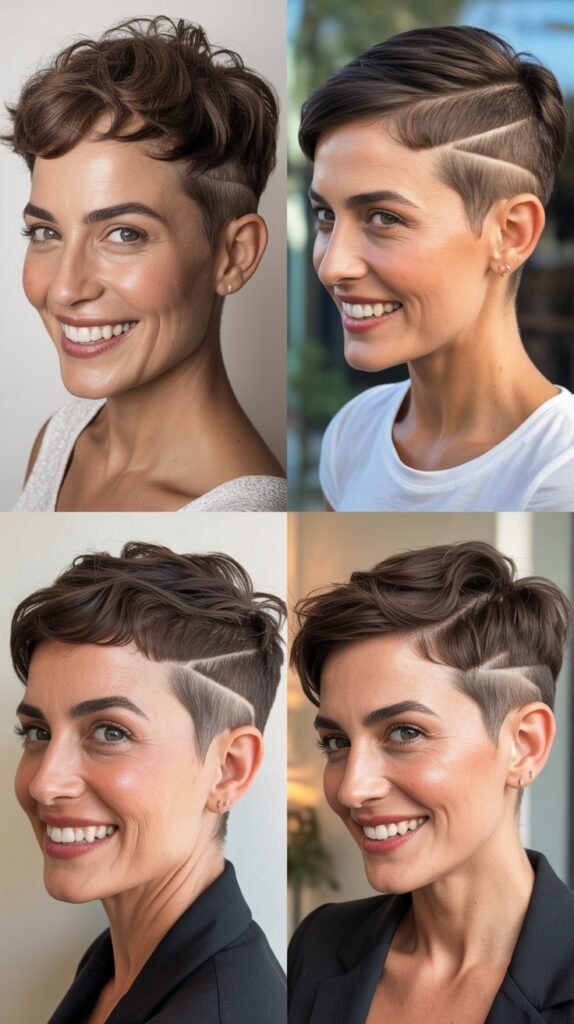
The pixie with temple undercut features shaved or very short sections specifically at the temples while maintaining length elsewhere.
This subtle yet impactful detail creates clean lines and adds contemporary edge without the commitment of a full undercut. The temple undercut provides practical benefits while making a style statement.
- Temple undercuts can be extremely subtle, nearly invisible when hair is worn down, or more prominent with higher contrast.
- This technique provides relief for women who experience tension headaches, as removing hair weight from the temple area can reduce pressure.
- The temple undercut creates clean, defined lines that emphasize bone structure and draw attention to eyes.
- Maintenance of the shaved temple sections requires appointments every 2-3 weeks to prevent visible regrowth.
- This style works beautifully with glasses, as the clean temple area prevents hair from interfering with frames.
- The undercut sections can be styled with temporary tattoos or subtle designs for added personalization.
24. The Vintage-Inspired Pixie
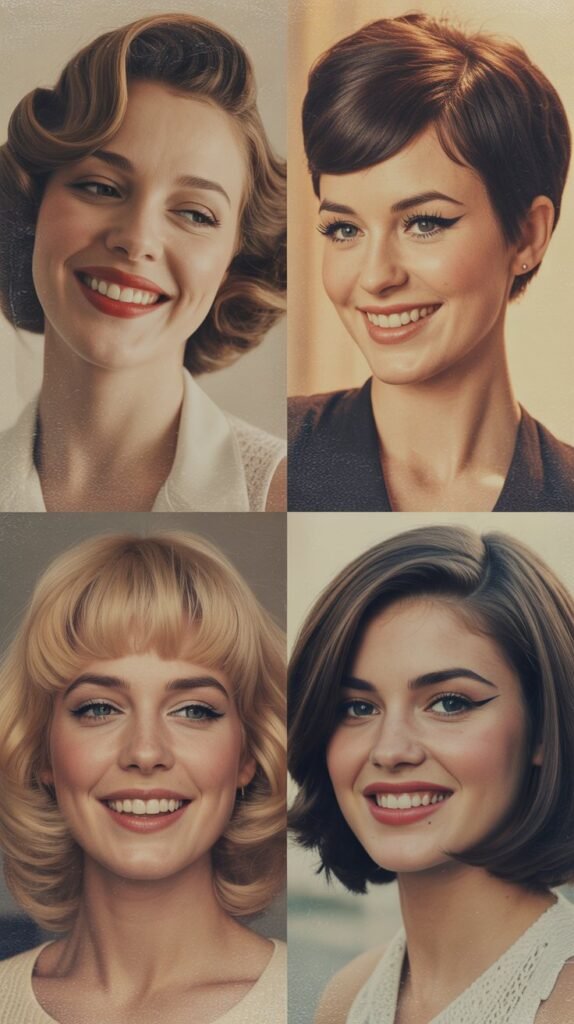
The vintage-inspired pixie draws from classic Hollywood glamour and mid-century styling to create timeless elegance.
This approach incorporates elements like pin curls, finger waves, or sculpted waves that reference 1920s-1960s hairstyles. The vintage pixie appeals to women who appreciate retro aesthetics and want something distinctly different from contemporary styles.
- Creating vintage styling requires setting techniques using rollers, pins, or styling tools to create structured waves or curls.
- This approach works best on pixies with enough length to manipulate, typically 2-3 inches minimum.
- Setting lotions and strong-hold hairsprays are essential for maintaining vintage styles throughout the day.
- The vintage pixie pairs beautifully with classic makeup looks and retro-inspired fashion choices.
- This styling requires more time commitment than modern pixie approaches, typically 20-30 minutes including setting and styling.
- The structured, deliberate nature of vintage styling creates polished, occasion-appropriate looks for formal events.
25. The Pixie with Nape Undercut
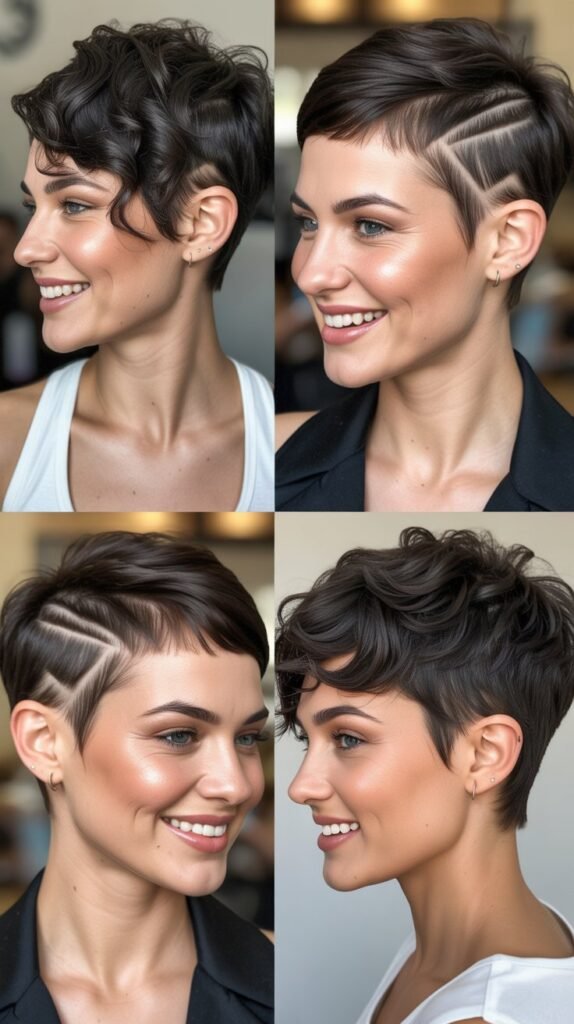
The pixie with nape undercut features a shaved or very short section at the back of the neck while maintaining length on top and sides.
This hidden undercut provides practical cooling benefits and creates visual interest when hair is styled up or away from the neck. The nape undercut offers an element of surprise—conservative from the front, edgy from behind.
- The nape undercut can extend from just below the occipital bone to higher up the back of the head, depending on desired impact.
- This technique particularly appeals to women with very thick hair at the nape, providing significant bulk removal.
- The hidden nature allows for professional workplace compatibility while still offering personal style expression.
- Creative designs shaved into the nape area can include patterns, words, or artistic motifs that are revealed when hair is styled up.
- Maintenance requires regular appointments every 2-4 weeks to keep the nape section crisp and defined.
- The nape undercut provides excellent cooling during exercise or hot weather while maintaining a polished front-facing appearance.
26. The Curly Undercut Pixie
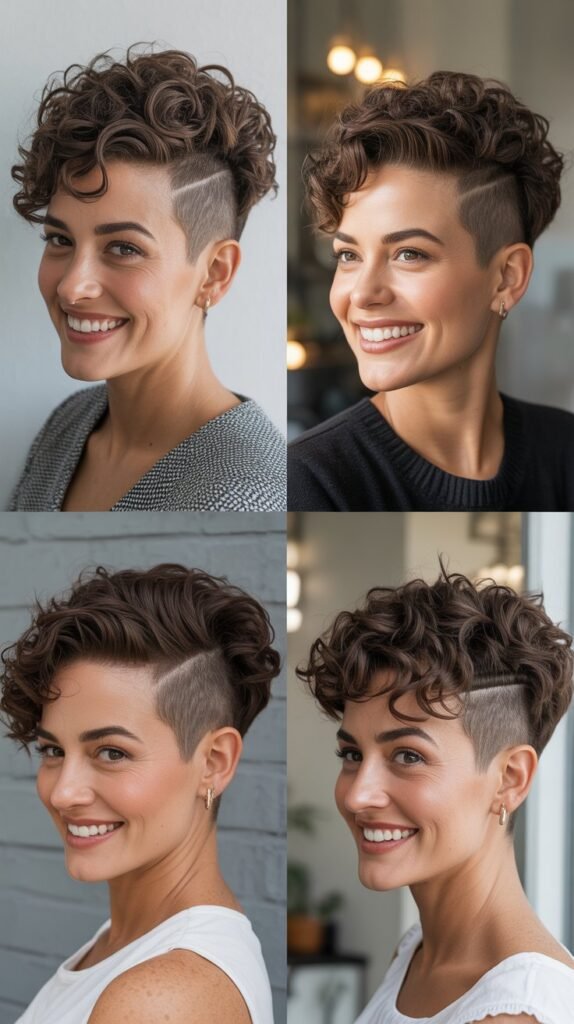
The curly undercut pixie combines natural curl texture with shaved or closely cropped sides, creating dramatic contrast between the full, textured top and sleek sides.
This style celebrates curls while managing the bulk that can come with curly hair in short cuts. The undercut enhances curl definition on top by removing competing volume from the sides.
- The top section typically measures 3-5 inches to allow curls to form properly while the sides are buzzed to a uniform short length.
- This style works with all curl types from loose waves to tight coils, adjusting lengths according to curl shrinkage.
- The undercut significantly reduces styling time by eliminating the need to manage curls on the sides.
- Curl-specific products including leave-in conditioners, curl creams, and gels maintain definition and moisture.
- The dramatic silhouette creates a powerful statement that celebrates natural texture while maintaining edge and modernity.
- This cut requires maintenance every 3-4 weeks for the undercut sections and 6-8 weeks for the curly top.
27. The Pixie with Side Part
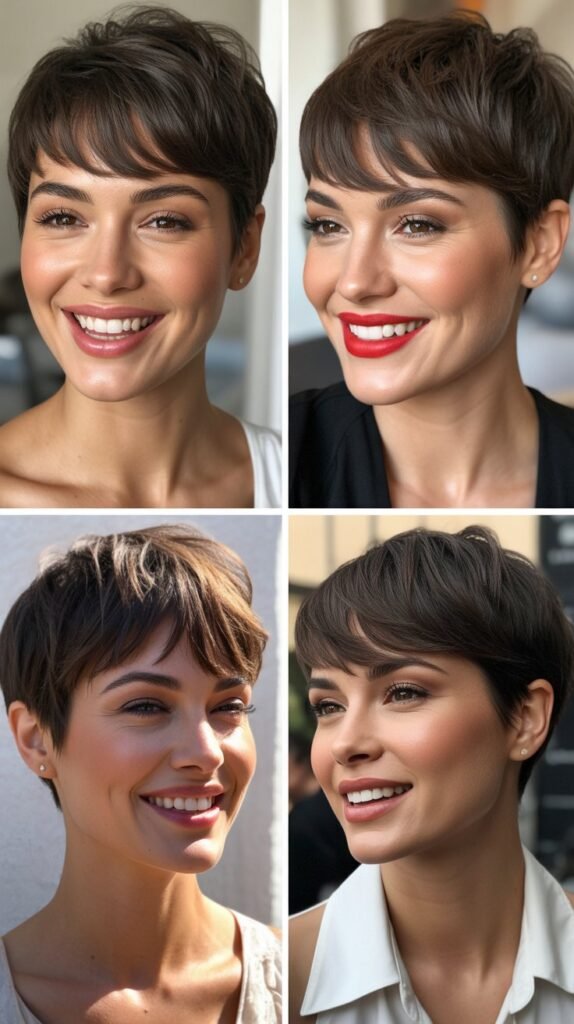
The pixie with side part creates elegant asymmetry through a defined parting line that divides the hair unevenly.
This classic styling technique adds sophistication and can dramatically alter face shape perception. The side part works with various pixie lengths and styles, providing versatility through a simple directional change.
- The part placement dramatically affects the look—a deep side part creates drama while a subtle side part appears more conservative.
- This styling particularly flatters women with round faces, as the diagonal line creates visual elongation.
- Creating a defined part requires applying product to damp hair and blow-drying in the desired direction using a comb or brush.
- The side part can be switched to the opposite side for a completely different look without cutting hair.
- This approach works beautifully for professional environments where polished, intentional styling is appreciated.
- Adding volume at the root on the heavier side of the part creates lift and prevents the style from appearing flat.
28. The Mohawk Pixie
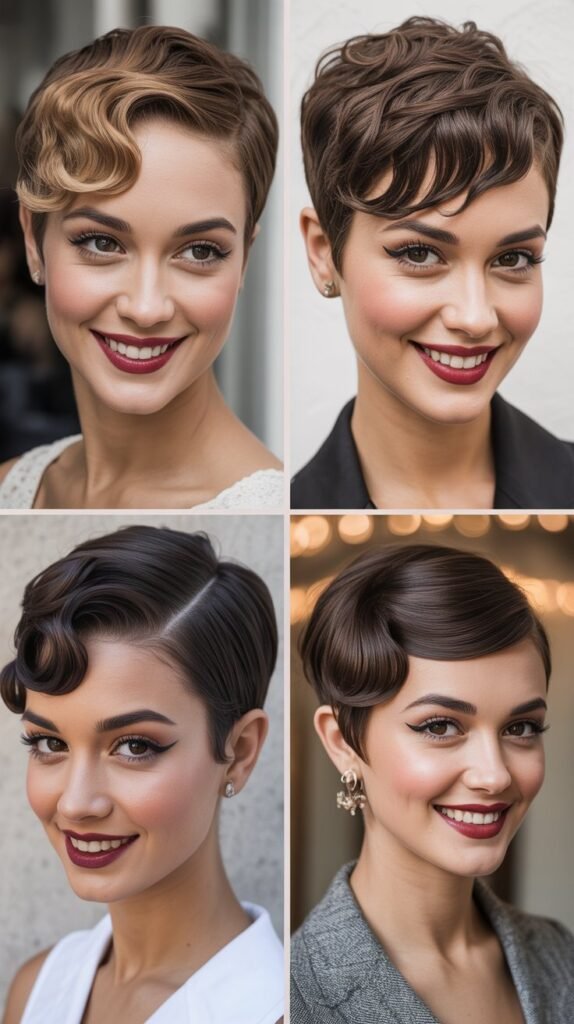
The mohawk pixie takes inspiration from punk mohawks while maintaining wearability for everyday life. This style features shorter sides with a distinct strip of longer hair running from forehead to nape that can be styled upward or worn flat.
The mohawk pixie allows for dramatic transformation between conservative and edgy depending on styling choices.
- The center strip typically measures 2-4 inches while sides are cropped close, creating the characteristic mohawk silhouette.
- This style can be worn dramatically spiked for evening events or social occasions, then slicked down for professional environments.
- This cut works particularly well with bold hair colors including vivid blues, purples, reds, or platinum blonde.
- The versatility between conservative and bold makes this pixie ideal for women with varied lifestyle demands.
- Maintenance requires regular attention to keep side sections short enough to maintain the mohawk effect, typically every 3-4 weeks.
29. The Wavy Pixie
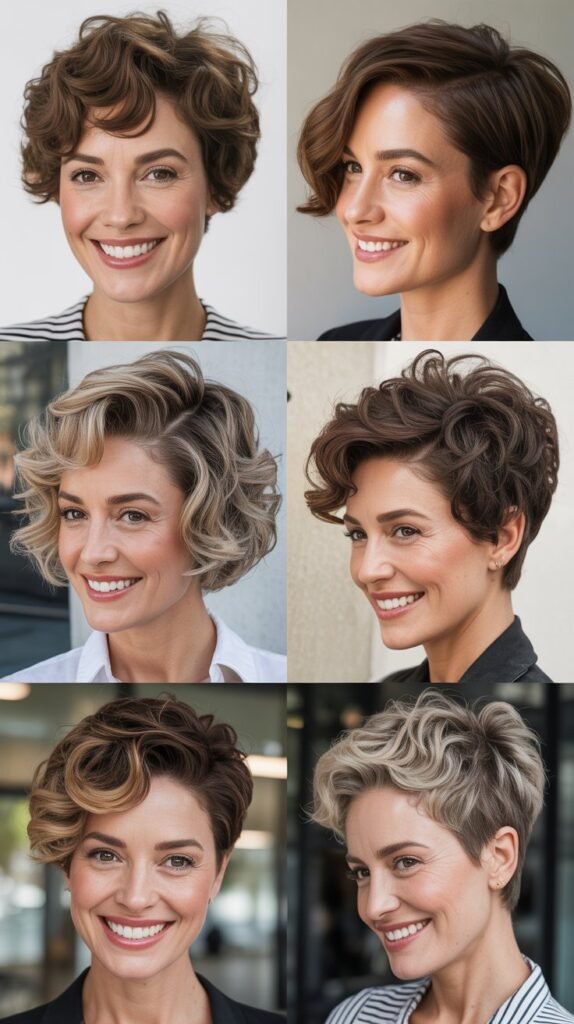
The wavy pixie enhances natural wave patterns while maintaining pixie proportions, creating soft, romantic movement.
This style works beautifully with hair that has natural texture, allowing waves to create dimension and interest without fighting against hair’s natural tendencies.
The wavy pixie offers a softer alternative to straight or heavily textured versions.
- Cutting wavy hair requires understanding wave patterns and where they naturally fall to create flattering shapes.
- This style particularly benefits from layering techniques that reduce bulk while enhancing wave formation.
- Styling products like mousse, wave-enhancing creams, and light oils define waves without weighing them down.
- The wavy pixie can be air-dried for natural results or diffused for more defined, voluminous waves.
- This cut disguises growth beautifully, as waves create natural movement that makes regrowth less noticeable.
- The wavy texture adds visual interest that makes this pixie appear dynamic from every angle.
30. The Pixie with Color Blocking
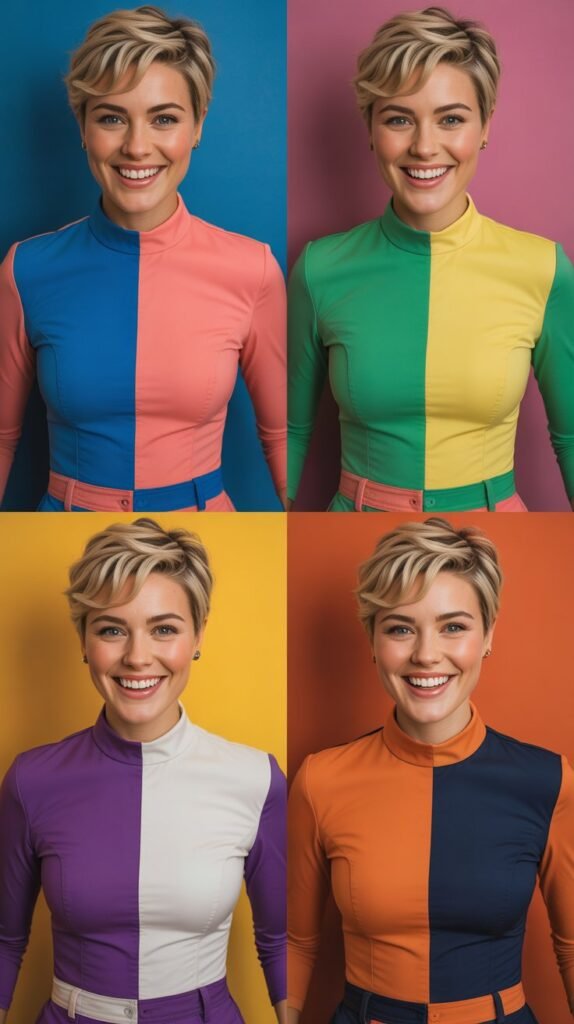
The pixie with color blocking uses distinct, contrasting color sections to create artistic, fashion-forward looks.
This technique treats hair as a canvas, applying bold color choices in specific sections to enhance the cut’s architecture. Color blocking works particularly well with pixie cuts, as the short length showcases color placement clearly.
- Common color blocking approaches include dark bases with vibrant panels, split-color designs, or rainbow sections.
- This technique requires professional application to create clean color boundaries and prevent bleeding between sections.
- Color blocking pairs beautifully with asymmetrical or architectural cuts that have distinct sections to color separately.
- Maintenance demands are high, requiring color touch-ups every 4-6 weeks to maintain vibrancy and definition.
- This bold choice works best for creative professionals or those in industries where unconventional aesthetics are embraced.
- The color blocking can be temporary using semi-permanent colors for those wanting to experiment without long-term commitment.
31. The Crown-Heavy Pixie
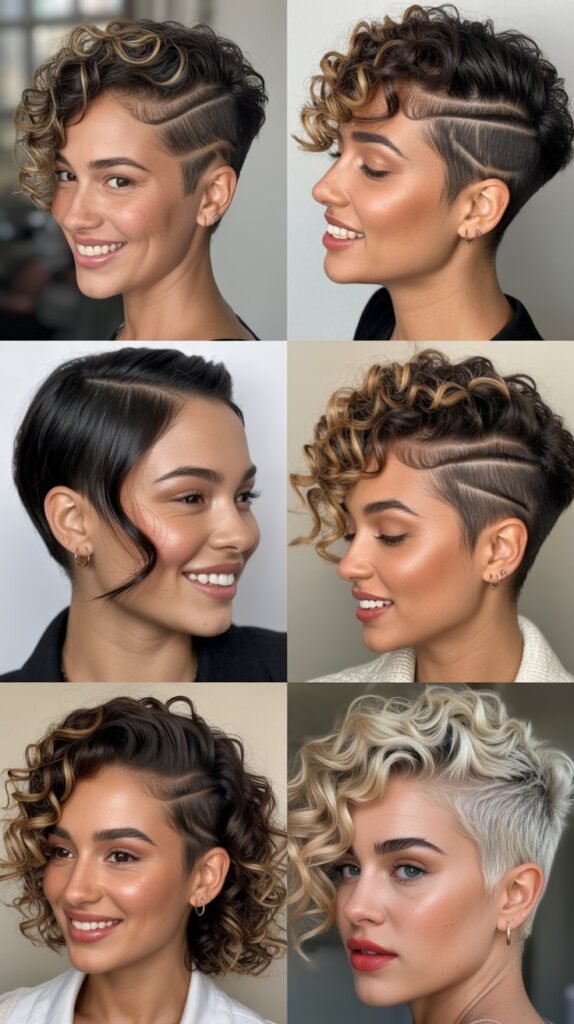
The crown-heavy pixie concentrates length and volume at the crown area while keeping sides and back very short.
This technique creates dramatic height and elongates the face, making it particularly flattering for certain face shapes. The crown-heavy approach adds visual interest through vertical emphasis rather than horizontal width.
- The crown section typically measures 3-5 inches while surrounding areas are cropped close, creating significant contrast.
- This style particularly flatters round and square face shapes by adding vertical lines that create elongation.
- Achieving the height requires blow-drying with a round brush at the roots and possibly using volumizing products.
- The crown-heavy pixie can be styled sleek for polished looks or textured for more casual, edgy aesthetics.
- This cut requires regular maintenance every 4-5 weeks to preserve the proportional contrast that makes it distinctive.
- The dramatic silhouette photographs exceptionally well and creates a memorable, unique appearance.
32. The Pixie with Peek-a-Boo Color
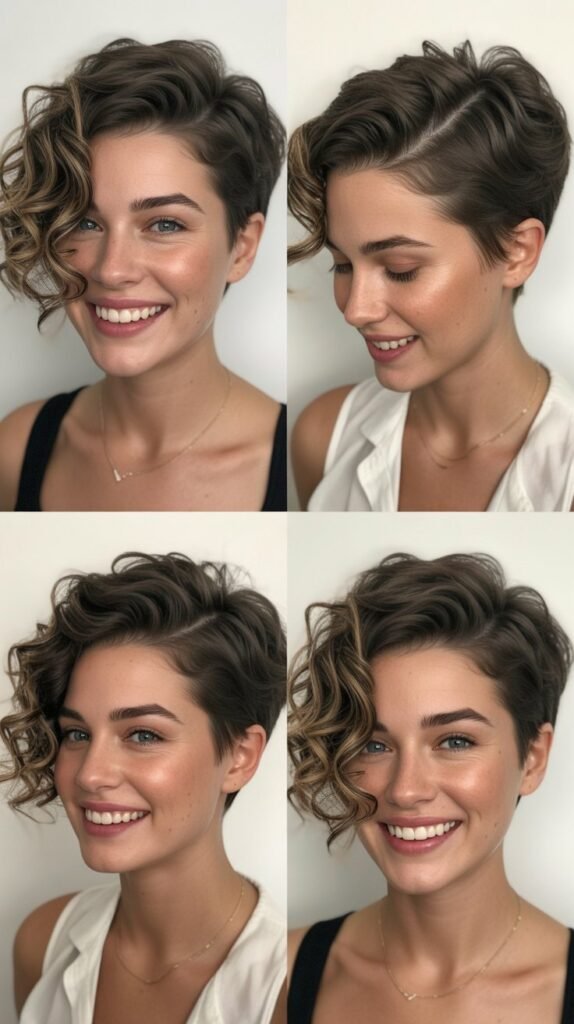
The pixie with peek-a-boo color incorporates hidden color panels that are revealed when hair moves or is styled in certain ways.
This technique adds an element of surprise and personalization while maintaining professional versatility. The hidden colors can range from subtle to vibrant depending on personal preference and lifestyle requirements.
- Peek-a-boo color is typically placed in underlayers, at the nape, or in sections that are covered when hair is styled conservatively.
- This approach allows professional workplace compatibility while offering creative expression outside work environments.
- Common color choices include vibrant fashion colors like pink, purple, blue, or pastel shades that contrast with natural tones.
- The hidden nature means color maintenance can be less frequent than with visible fashion colors, extending to 6-8 weeks between touch-ups.
- Revealing the color through styling creates opportunities for dramatic transformation between different occasions.
- This technique works particularly well with pixies that have undercut sections where color can be strategically placed.
33. The Pixie with Volume
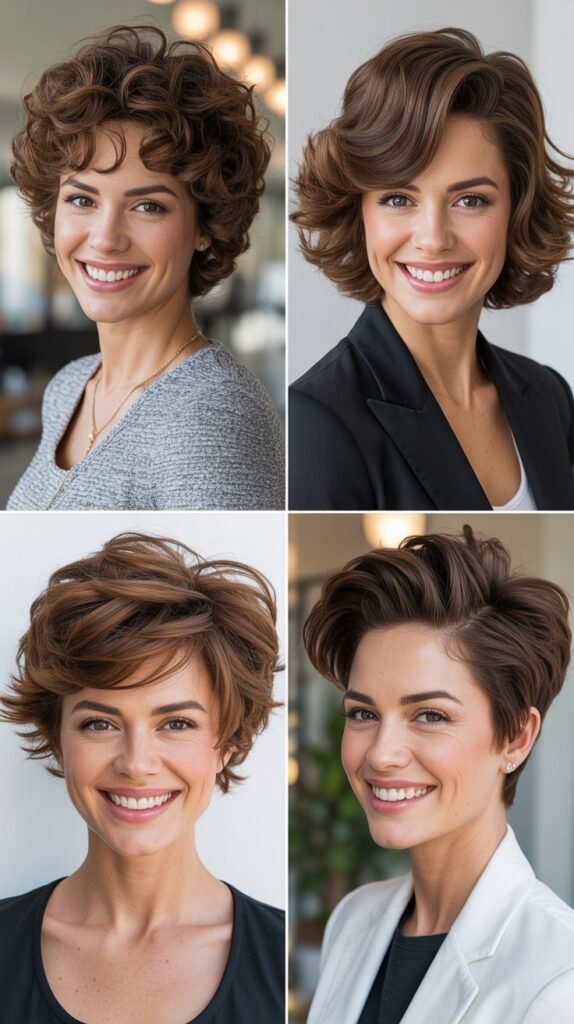
The pixie with volume focuses on creating fullness and body throughout the cut, particularly benefiting fine or thin hair. This approach uses layering, texturizing, and styling techniques to maximize apparent density.
The voluminous pixie proves that short hair doesn’t have to appear flat or lifeless.
- Strategic layering removes weight that pulls hair down while creating stacked sections that add height.
- Volumizing products including mousse, root lifters, and texturizing sprays enhance natural body.
- Blow-drying technique is crucial—directing heat upward while drying creates lift that lasts throughout the day.
- This style particularly benefits women with fine hair who want the pixie aesthetic without sacrificing apparent fullness.
- Backcombing or teasing at the roots before styling can create additional lift for special occasions.
- The voluminous pixie requires regular trims every 4-6 weeks to maintain the layering that creates the volume effect.
34. The Androgynous Pixie
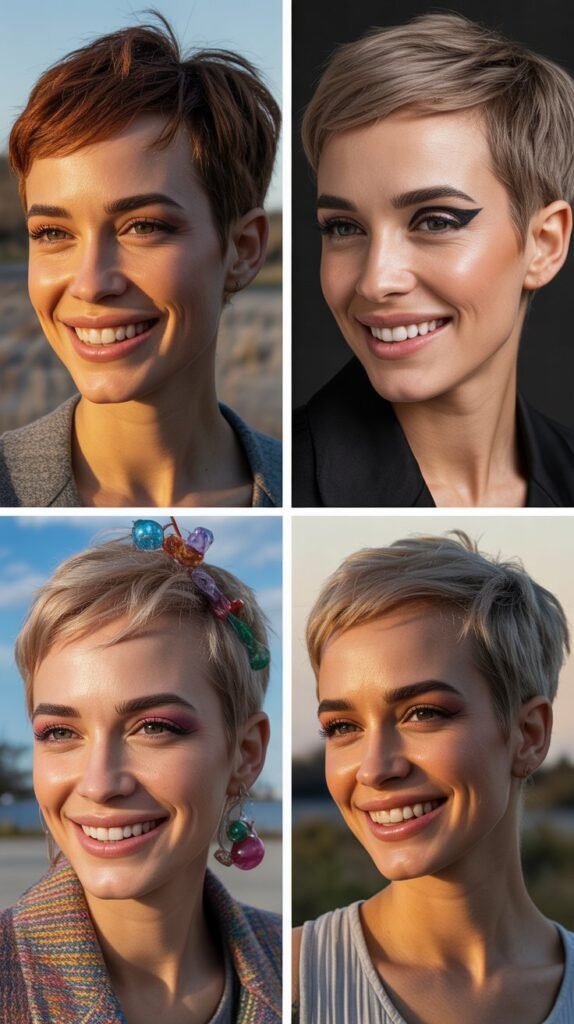
The androgynous pixie deliberately blurs traditional gender aesthetics, creating a universally appealing cut that doesn’t rely on conventionally feminine or masculine styling.
This approach emphasizes clean lines, balanced proportions, and minimal styling that allows individual features to shine. The androgynous pixie appeals to those who want to challenge or transcend traditional beauty standards.
- This cut typically features uniform lengths throughout without extreme variations or distinctly feminine elements like wispy bangs.
- The androgynous approach works with natural hair colors and minimal styling products, emphasizing the cut’s architecture.
- This style flatters strong bone structure and defined features, allowing these elements to become focal points.
- The androgynous pixie pairs well with a range of fashion styles from traditionally masculine to feminine or anywhere between.
- Maintenance is straightforward with regular trims every 5-7 weeks to maintain the clean, precise lines.
- This cut creates space for personal expression through other means like jewelry, makeup choices, or fashion rather than through hair itself.
35. The Pixie with Highlights and Lowlights
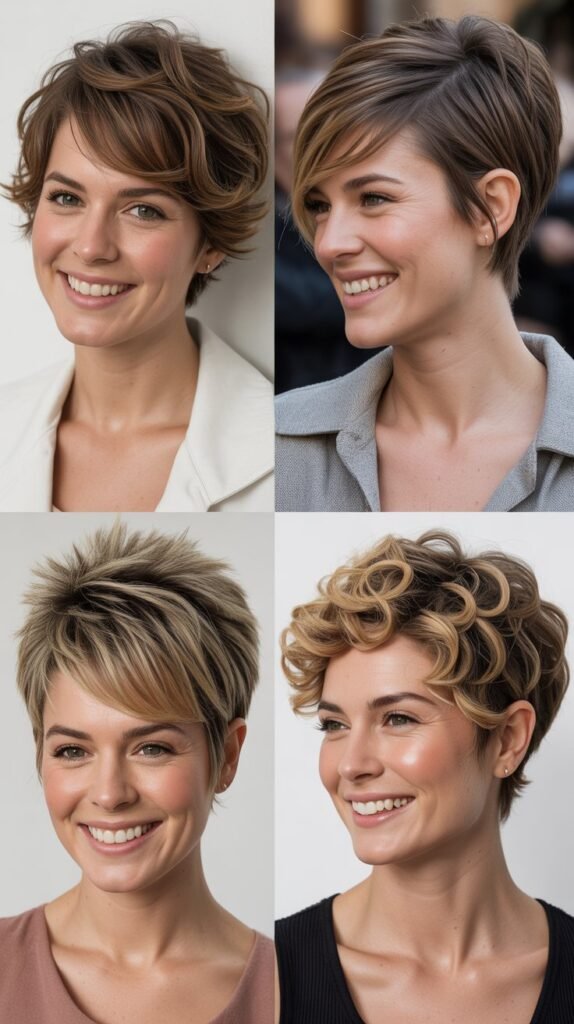
The pixie with highlights and lowlights combines lighter and darker tones to create maximum dimension and depth. This dual-tone approach adds visual complexity that makes the cut appear more intricate.
The interplay of light and dark creates natural-looking dimension that changes in different lighting conditions.
- Combining both lighter and darker tones creates a multi-dimensional effect that mimics how natural hair catches light.
- This technique particularly benefits women with medium to thick hair where dimension prevents the cut from appearing one-dimensional.
- Lowlights add depth and prevent highlights from appearing too stark or brassy against the base color.
- This color combination requires professional application for natural-looking results with proper placement.
- Maintenance intervals depend on contrast level, typically requiring salon visits every 6-8 weeks.
- The dimensional color enhances the pixie’s layers and texture, making them more visually apparent.
36. The Pixie with Hair Tattoos
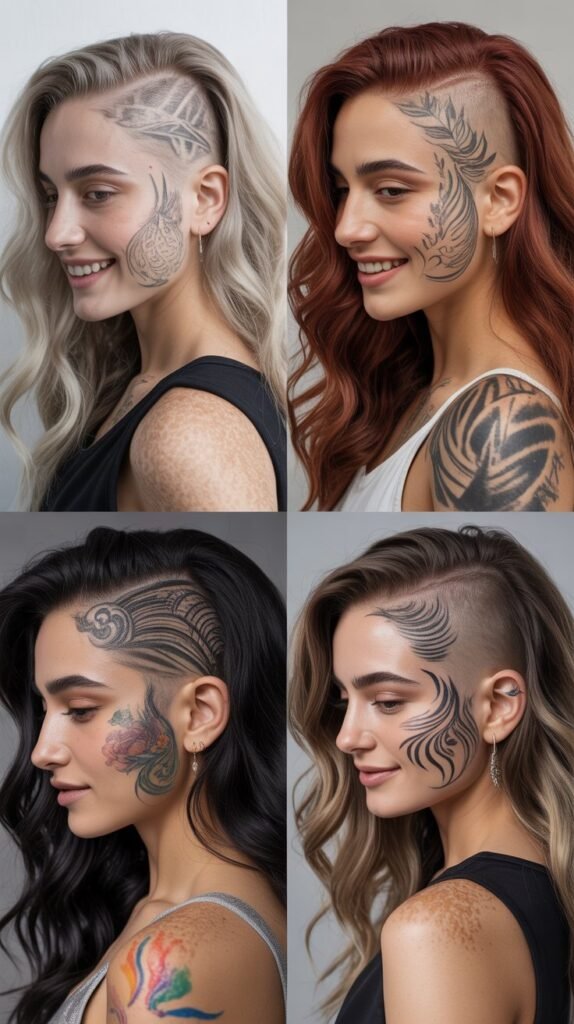
The pixie with hair tattoos incorporates shaved designs, patterns, or images into undercut or very short sections.
This artistic approach transforms hair into a canvas for creative expression. Hair tattoos range from simple geometric patterns to complex artistic designs, offering temporary personalization that grows out naturally.
- Hair tattoos are created using clippers with different guard attachments or freehand techniques to create contrast through length variation.
- Common placements include the nape, sides, or temple areas where undercuts provide the smooth canvas needed.
- Designs can be simple lines and geometric shapes or complex artistic representations depending on stylist skill and client preference.
- Hair tattoos are temporary, gradually growing out over 2-4 weeks, allowing for design changes regularly.
- This artistic element adds uniqueness and personalization that makes each pixie one-of-a-kind.
- Some women coordinate hair tattoo designs with personal symbolism, favorite imagery, or current interests.
37. The Messy Pixie
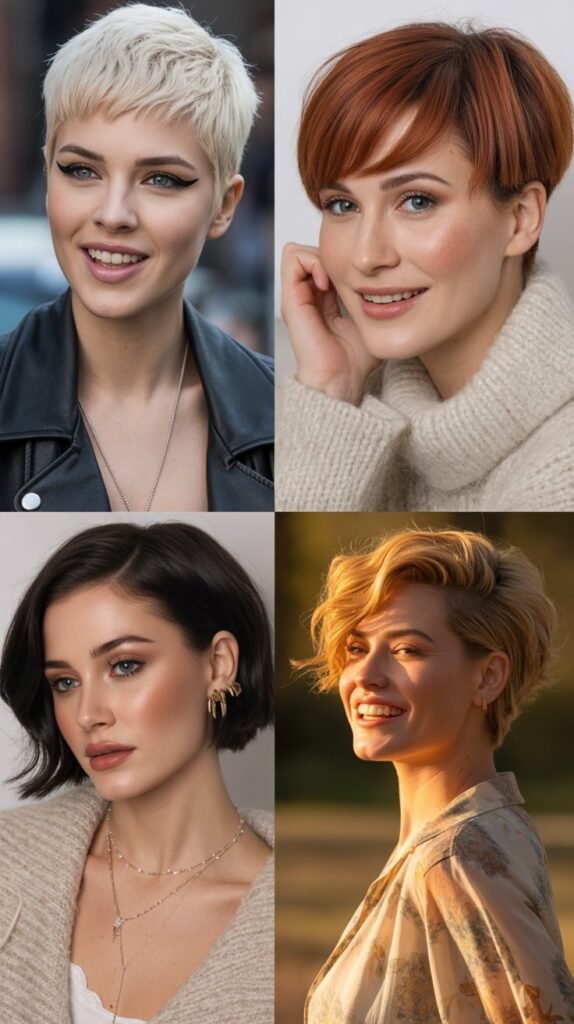
The messy pixie embraces intentional dishevelment to create an effortlessly cool, bed-head aesthetic. This styling approach rejects polished perfection in favor of natural, tousled texture.
The messy pixie communicates laid-back confidence while remaining stylish and appropriate for various settings.
- Creating controlled messiness involves applying texturizing products to damp or dry hair and scrunching or tousling randomly.
- This styling works with various pixie cuts, adding casual appeal to what might otherwise appear too structured.
- The messy approach disguises growth and regrowth beautifully, making it practical for busy lifestyles.
- Second and third-day hair often looks better with this styling than freshly washed hair.
- Dry shampoo becomes an essential product, adding both volume and texture while absorbing oil.
- The messy pixie pairs perfectly with casual fashion choices and conveys approachable, relaxed energy.
38. The Pixie with Graduated Layers
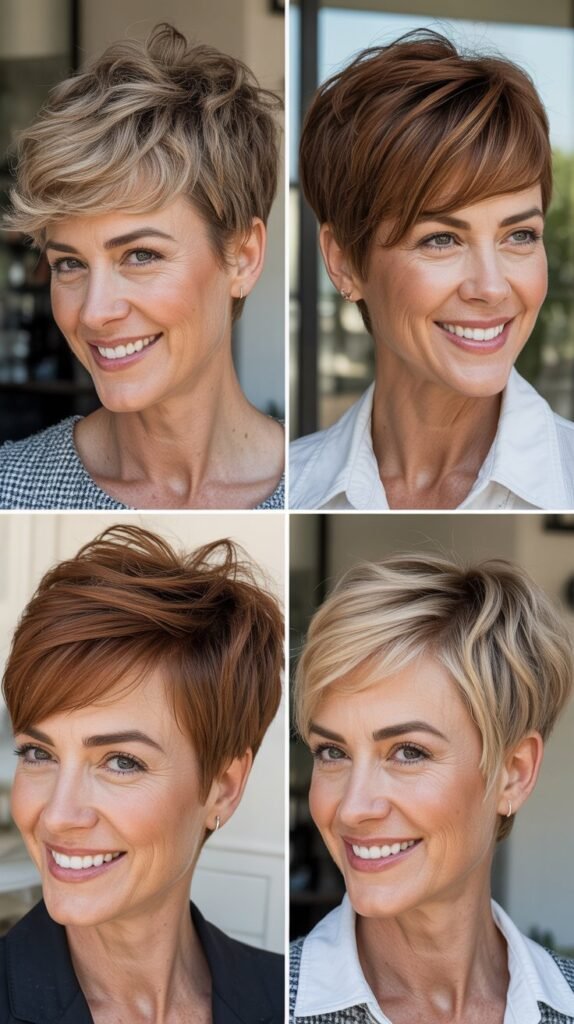
The pixie with graduated layers features progressively longer sections that create stacked, dimensional effects.
This technical approach builds volume and movement through strategic layer placement. Graduated layering adds structure and shape while maintaining the pixie’s characteristic short length.
- Graduation creates shorter layers underneath with longer layers on top, building toward a specific shape or silhouette.
- This technique naturally creates volume without requiring extensive styling or product application.
- The graduated pixie works particularly well on thick hair where the layering reduces bulk while adding shape.
- Styling is simplified as the cut creates the intended shape automatically with minimal manipulation.
- This approach requires precise cutting skills and regular maintenance every 4-6 weeks to preserve the graduated effect.
- The graduated layers catch light differently, creating natural highlights and shadows that add visual interest.
39. The Pixie with Forward Fringe
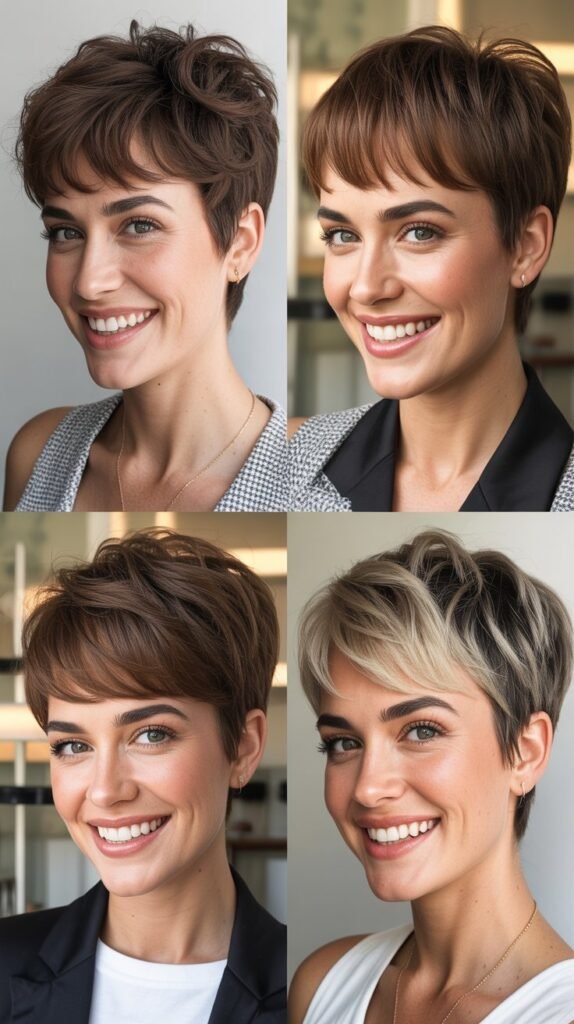
The pixie with forward fringe features a distinct section styled toward the face, creating focus around facial features. This approach differs from traditional bangs by being more textured and piece-y.
The forward fringe adds softness and can camouflage forehead size while drawing attention to eyes.
- The forward fringe typically measures 2-4 inches and is cut with point-cutting techniques for soft, piece-y ends.
- This element can be styled with fingers and product for casual texture or blow-dried with a brush for smooth elegance.
- The forward direction creates movement and prevents the pixie from appearing too uniform or severe.
- This styling particularly flatters women with high foreheads or those wanting to soften angular features.
- The fringe section requires regular trimming every 2-3 weeks to prevent it from obscuring vision.
- Adding light highlights to the fringe section creates dimension that emphasizes the forward movement.
40. The Pixie with Nape Length
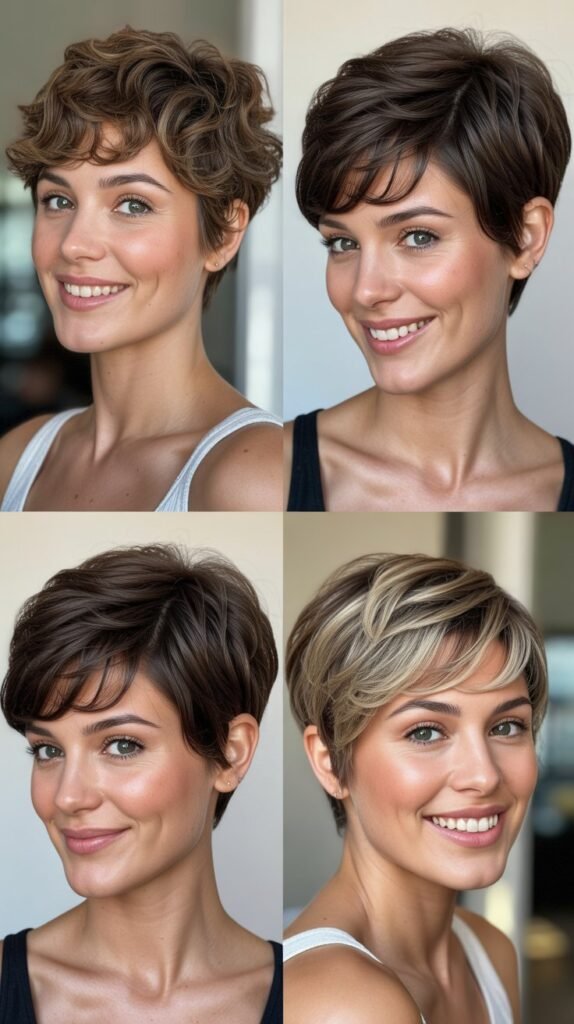
The pixie with nape length maintains longer hair at the nape of the neck while keeping the rest of the cut short.
This distinctive approach creates visual interest from behind while maintaining classic pixie proportions from the front and sides. The nape length adds feminine softness and unexpected detail.
- The nape section typically extends 1-3 inches beyond the occipital bone, creating a distinctive tail-like effect.
- This approach can be subtle with natural integration or dramatic with clear disconnection between sections.
- The nape length provides something to play with or touch, appealing to those who miss having longer hair.
- Styling the nape section can include curling, straightening, or leaving natural depending on texture and preference.
- This cut offers an element of surprise—conservative from the front, unique from behind.
- Maintenance focuses on keeping the short sections crisp while allowing the nape to grow or trimming it to maintain desired length.
41. The Pixie with Root Shadow
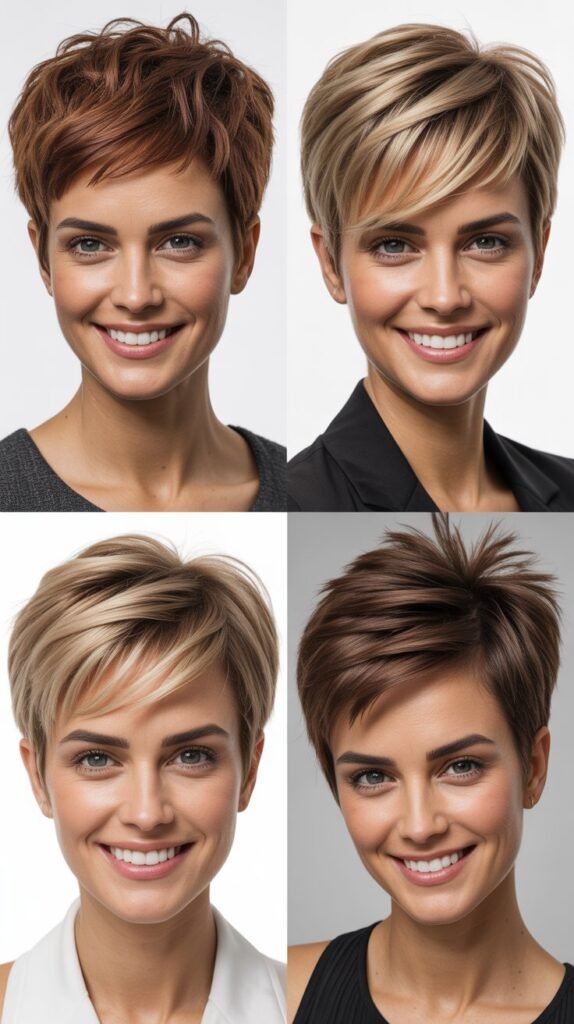
The pixie with root shadow combines darker roots with lighter lengths, creating a low-maintenance color technique that adds dimension.
This approach provides the benefits of lighter color while eliminating harsh regrowth lines. Root shadowing works particularly well with pixie cuts where color placement can enhance the cut’s architecture.
- Root shadow involves applying darker color to the root area and blending it into lighter mid-lengths and ends.
- This technique extends time between color appointments as regrowth blends seamlessly with the intentional darker roots.
- The darker roots create depth that prevents lighter colors from appearing flat or one-dimensional.
- This approach works with all color combinations from natural browns and blondes to fashion colors.
- The transition from dark to light can be gradual for natural effects or more abrupt for edgier aesthetics.
- Root shadow particularly benefits fine hair by creating the illusion of more density through color dimension.
42. The Edgy Pixie
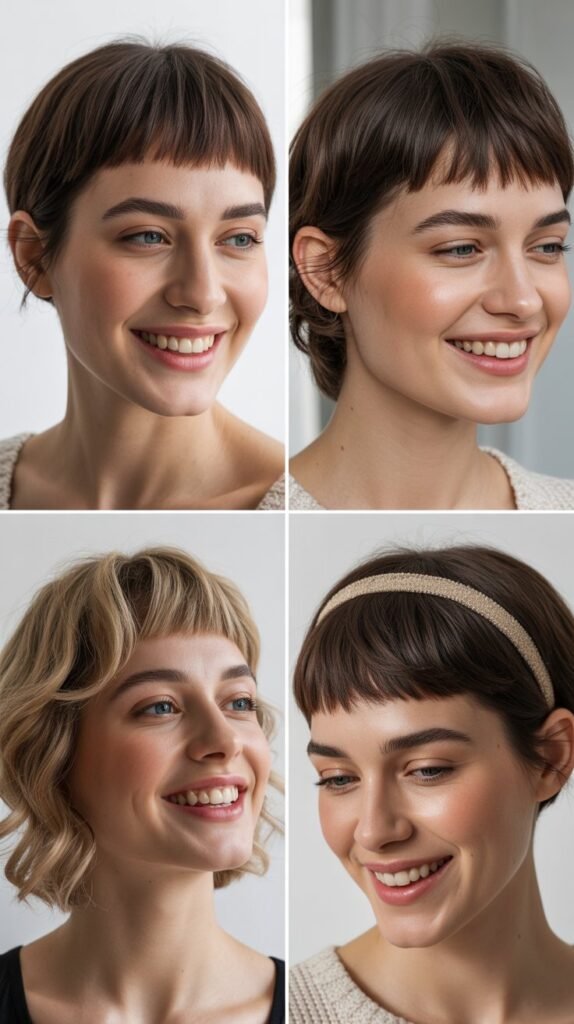
The edgy pixie combines multiple dramatic elements to create a bold, rebellious aesthetic. This approach might incorporate undercuts, unusual colors, extreme texture, or asymmetry to push boundaries.
The edgy pixie suits women who want their hair to make a strong, unapologetic statement.
- Edgy elements can include extreme asymmetry, multiple undercut sections, vivid unnatural colors, or combinations of techniques.
- This style communicates confidence and individuality, working well for creative professionals or those in artistic fields.
- The edgy pixie often becomes a conversation starter and expression of personal identity.
- Maintenance requirements vary based on specific elements but typically demand regular salon visits every 3-4 weeks.
- This approach allows for frequent changes and updates as trends evolve or personal preferences shift.
- The edgy pixie pairs with bold makeup choices, statement accessories, and fashion-forward wardrobes.
43. The Soft Pixie
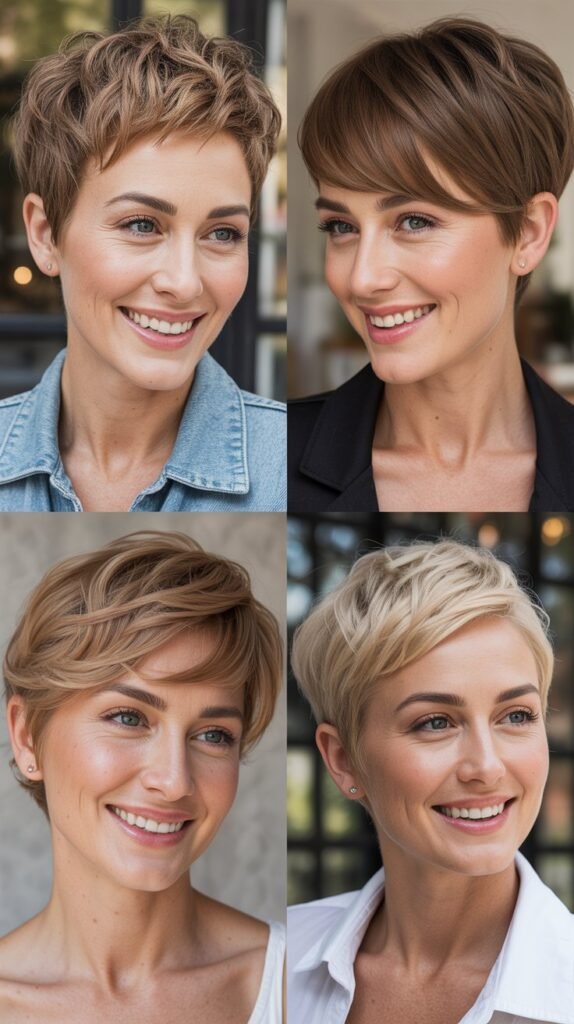
The soft pixie emphasizes gentle layers, subtle texture, and romantic styling to create an approachable, feminine look.
This approach proves that pixie cuts can be delicate and traditionally feminine rather than edgy or severe. The soft pixie appeals to women who want short hair’s benefits without sacrificing softness.
- Soft pixies feature feathered or razored ends that create whisper-light texture rather than choppy definition.
- This styling often incorporates soft waves or curls that add movement without appearing structured.
- Color choices tend toward natural tones, soft highlights, or subtle balayage rather than bold contrasts.
- The soft pixie pairs beautifully with feminine fashion choices and natural makeup looks.
- Styling requires gentle products that enhance without controlling—light mousses, wave sprays, and finishing creams work well.
- This approach flatters women with delicate features and those who prefer understated elegance to bold statements.
44. The Pixie with Side Shave
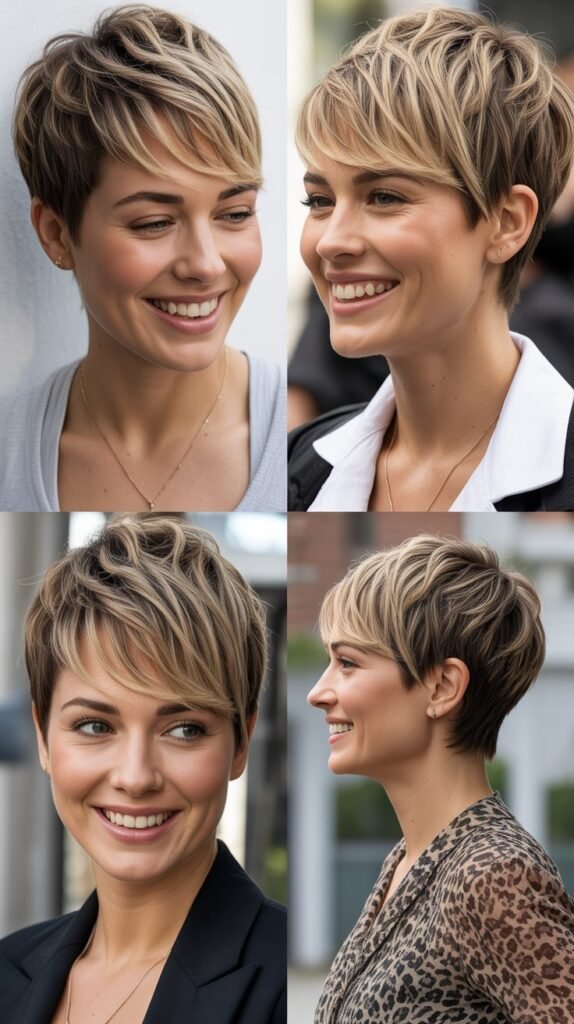
The pixie with side shave removes hair from one complete side while maintaining length on the opposite side and top.
This dramatic asymmetrical approach creates maximum contrast and visual interest. The side shave offers versatility—bold when styled to reveal it, more conservative when styled to cover it.
- The shaved side typically extends from the temple to behind the ear, removing hair entirely from that section.
- This approach works particularly well for women with thick hair as it removes significant bulk while creating architectural interest.
- The remaining hair can be styled across to cover the shave for professional settings or pushed away to reveal it.
- Creative patterns, temporary tattoos, or even permanent tattoos on the scalp can personalize the shaved section.
- Maintenance requires appointments every 2-3 weeks to keep the shaved section smooth rather than stubbly.
- The side shave creates a canvas for experimenting with different patterns and designs over time.
45. The Pixie with Baby Bangs
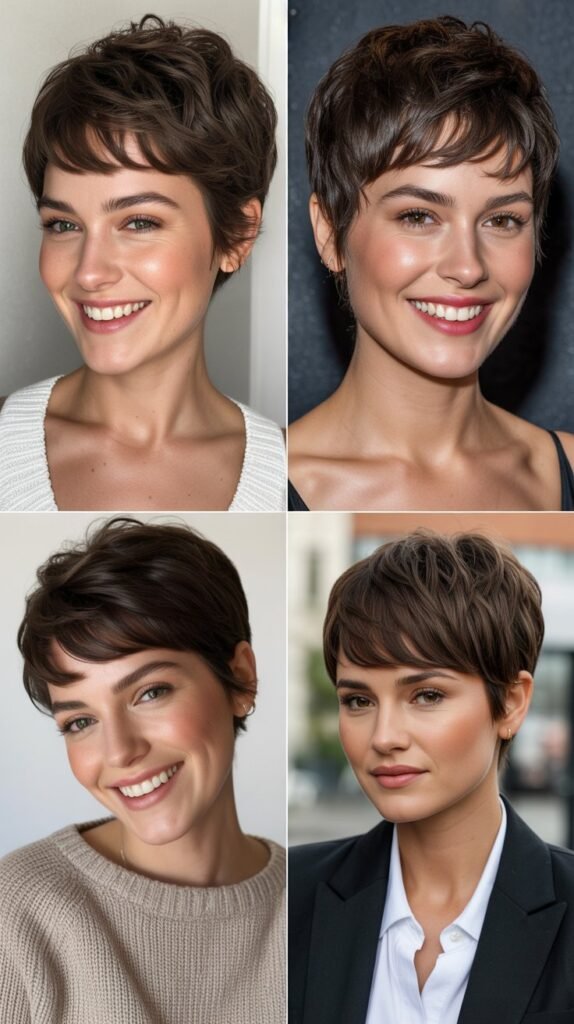
The pixie with baby bangs (micro bangs) incorporates an extremely short fringe section that sits well above the eyebrows.
This bold choice creates a distinctive, high-fashion look that demands attention. Baby bangs work particularly well with pixie cuts where the short length throughout creates cohesive proportions.
- Baby bangs typically measure 1-2 inches from the hairline, creating a striking, unexpected element.
- This style particularly flatters oval and heart-shaped faces while potentially overwhelming rounder face shapes.
- The commitment level is moderate—bangs grow out in 4-6 weeks if the look isn’t desired long-term.
- Baby bangs create a retro, 1960s-inspired aesthetic that pairs well with vintage or contemporary fashion.
- Styling is minimal as the short length prevents many manipulation options—blunt and straight is most common.
- This bold choice works best for confident women comfortable with unconventional aesthetics.
46. The Textured Crop Pixie
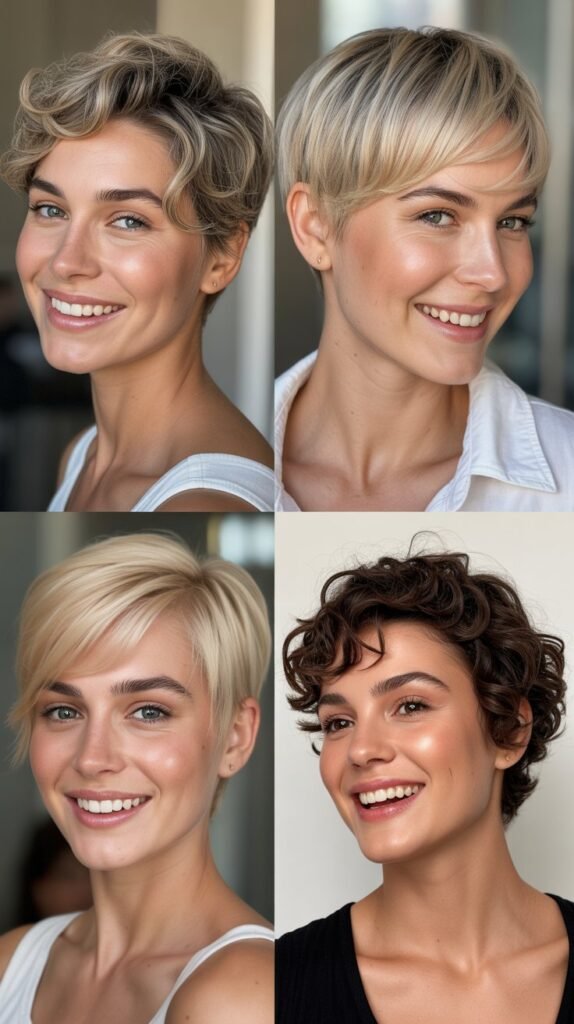
The textured crop pixie combines uniform short length throughout with heavy texturizing for a piece-y, dimensional finish.
This style maintains similar lengths all over while creating interest through texture rather than varied lengths. The textured crop offers practicality and style in equal measure.
- The cut typically measures 1-2 inches throughout with extensive point cutting or razor work creating separation.
- This style works beautifully on all hair textures, enhancing natural wave or curl patterns and adding interest to straight hair.
- Styling products like clay, paste, or texturizing sprays define individual pieces without creating stiffness.
- The textured crop disguises cowlicks and growth patterns beautifully through its intentionally irregular finish.
- Maintenance extends to 6-8 weeks as the textured nature makes growth less noticeable than blunt cuts.
- This pixie variation offers maximum versatility—it can be styled sleek, messy, or anywhere between.
47. The Pixie with Curtain Bangs
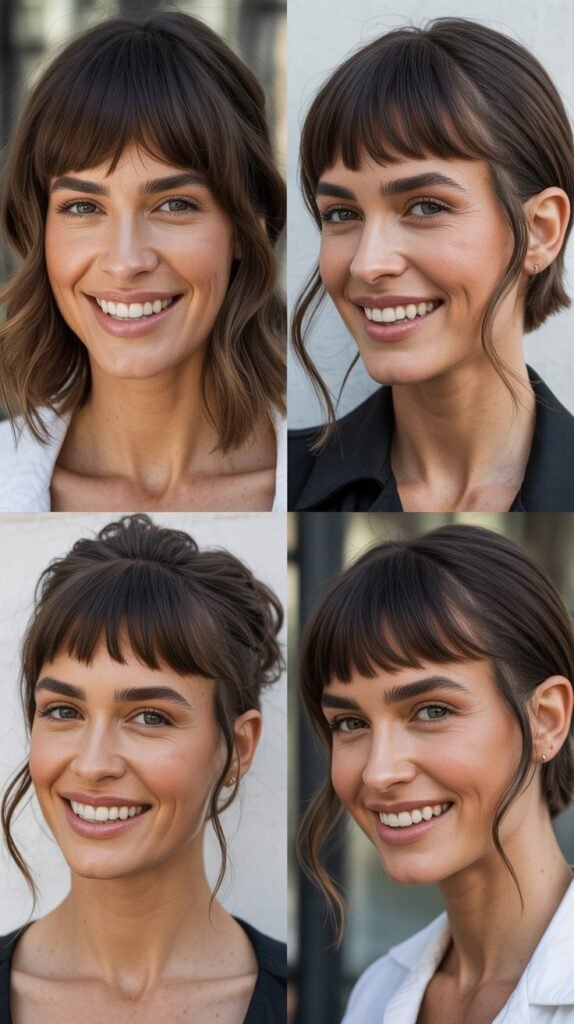
The pixie with curtain bangs incorporates a center-parted fringe that frames both sides of the face. This softer bang approach creates a romantic, 1970s-inspired aesthetic. Curtain bangs add face-framing without the commitment of blunt, straight-across bangs.
- Curtain bangs sweep away from a center part, with each side measuring 2-4 inches depending on desired drama.
- This style particularly flatters round and square faces by creating elongating diagonal lines.
- The length and shape can be adjusted to emphasize or minimize specific facial features.
- Styling involves blow-drying away from the face with a round brush or using a flat iron to create gentle bends.
- Curtain bangs grow out gracefully, transitioning naturally into the rest of the haircut without awkward stages.
- This approach adds softness to edgier pixie cuts or enhances already romantic styles.
48. The Buzzed Pixie
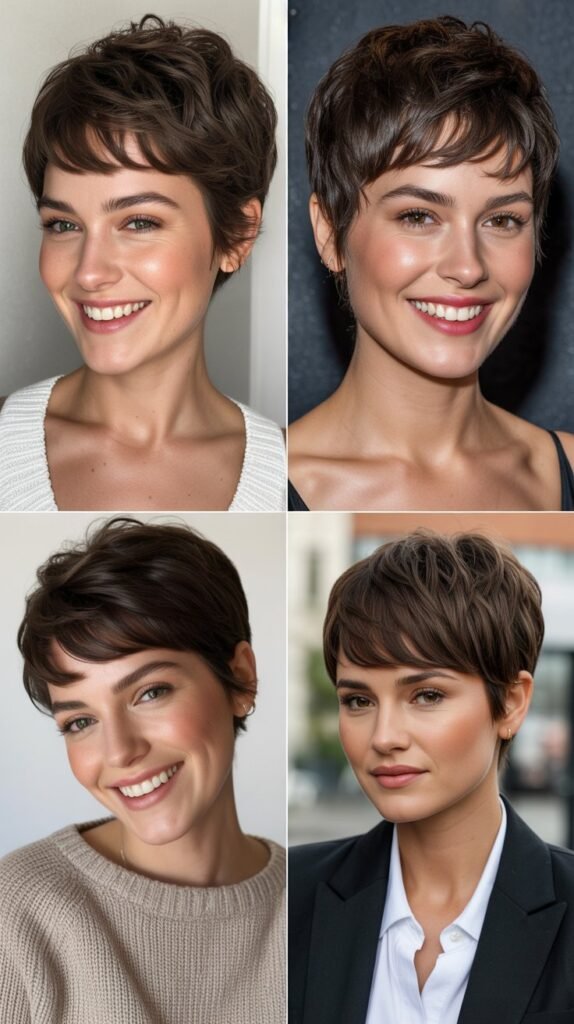
The buzzed pixie takes short hair to its extreme with clippers creating uniform, ultra-short length throughout. This minimalist approach requires absolute confidence and offers maximum practicality.
The buzzed pixie makes the strongest possible statement while requiring the least maintenance.
- Clipper guards determine length, typically ranging from 1/8 inch to 1/2 inch throughout.
- This cut requires no daily styling—simply wash and go with complete freedom from hair concerns.
- The buzzed pixie particularly suits women with beautifully shaped heads and strong facial features.
- Maintenance is minimal with touch-ups needed only every 4-6 weeks to maintain desired length.
- This style offers liberation from societal expectations around feminine hair length and appearance.
- The buzzed pixie can be transformative, often described by wearers as freeing and empowering.
49. The Pixie with Balayage
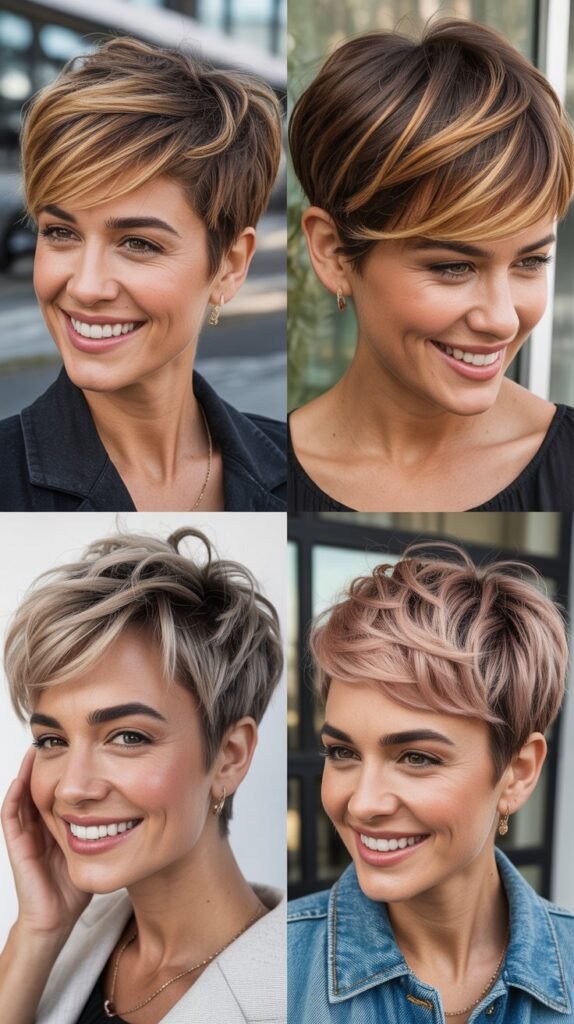
The pixie with balayage features hand-painted color that creates natural-looking dimension and sun-kissed effects.
- Balayage involves painting lightener or color onto the surface of the hair rather than using foils, creating softer, more natural transitions.
- This technique particularly enhances textured and layered pixies by accentuating the dimensional cutting.
- The grow-out is graceful as balayage doesn’t create harsh lines at the roots like traditional highlights.
- Maintenance intervals extend to 8-12 weeks as the natural-looking color doesn’t require frequent touch-ups.
- Balayage works with all base colors and can be subtle with same-family tones or dramatic with contrasting shades.
- The hand-painted approach creates unique, customized results that complement individual face shapes and features.
50. The Pixie Pompadour
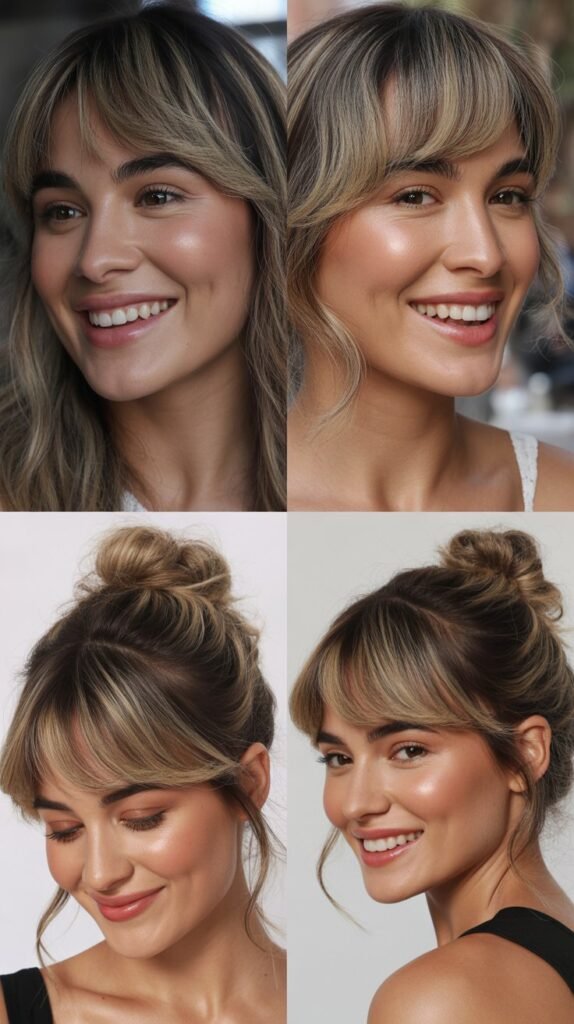
The pixie pompadour incorporates volume and height at the front hairline, styled upward and back in classic pompadour fashion.
This vintage-inspired styling creates dramatic impact and suits women who want retro glamour. The pixie pompadour works particularly well for formal events or when a more dressed-up appearance is desired.
- Creating the pompadour requires blow-drying front sections upward and back while using a round brush to create volume.
- Strong-hold products including pomade, gel, and hairspray maintain the lifted shape throughout the day.
- This styling requires sufficient length in the front section, typically 3-4 inches minimum.
- The pixie pompadour particularly flatters round faces by adding vertical height that elongates.
- This look pairs beautifully with cat-eye makeup, red lips, and vintage-inspired fashion for cohesive retro styling.
- The pompadour can be adjusted in height from subtle lift to dramatic elevation depending on occasion and preference.
51. The Platinum Blonde Pixie with Dark Roots
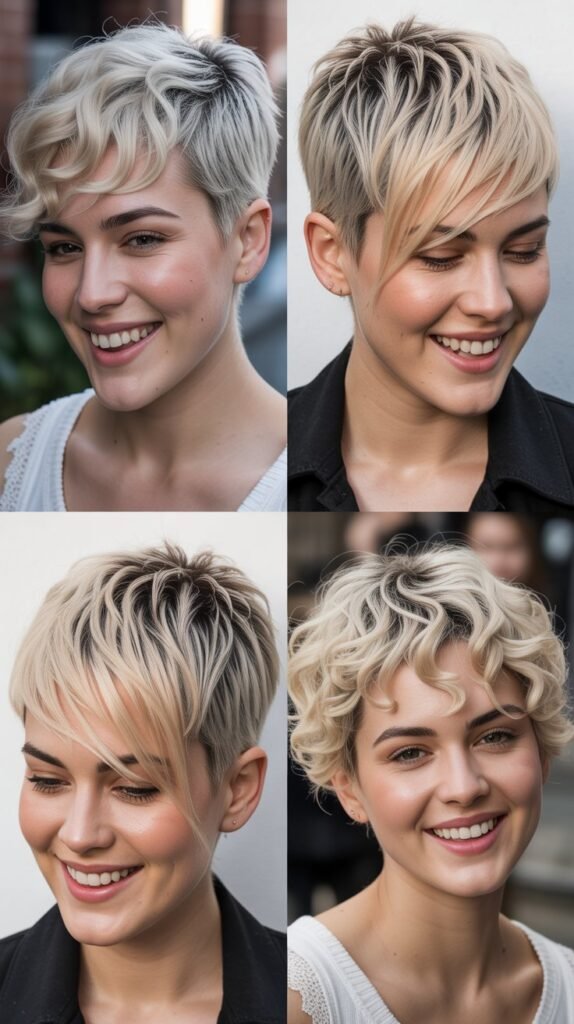
The platinum blonde pixie with dark roots intentionally maintains or creates darker root sections that contrast with platinum lengths.
This low-maintenance color approach adds dimension while reducing the frequency of root touch-ups. The contrast creates a modern, edgy aesthetic that’s both practical and stylish.
- The root section typically measures 1-2 inches of natural or darker color before transitioning to platinum.
- This approach extends time between color appointments from 3-4 weeks to 6-8 weeks or longer.
- The contrast can be soft and blended for natural effects or harsh and defined for edgier looks.
- This technique works particularly well with asymmetrical or undercut pixies where the color contrast emphasizes the cut’s architecture.
- Toning the platinum sections remains necessary every 4-6 weeks to prevent brassiness in the lighter areas.
- The dark roots add depth that prevents the platinum from appearing flat while creating visual interest.
52. The Swept-Forward Pixie
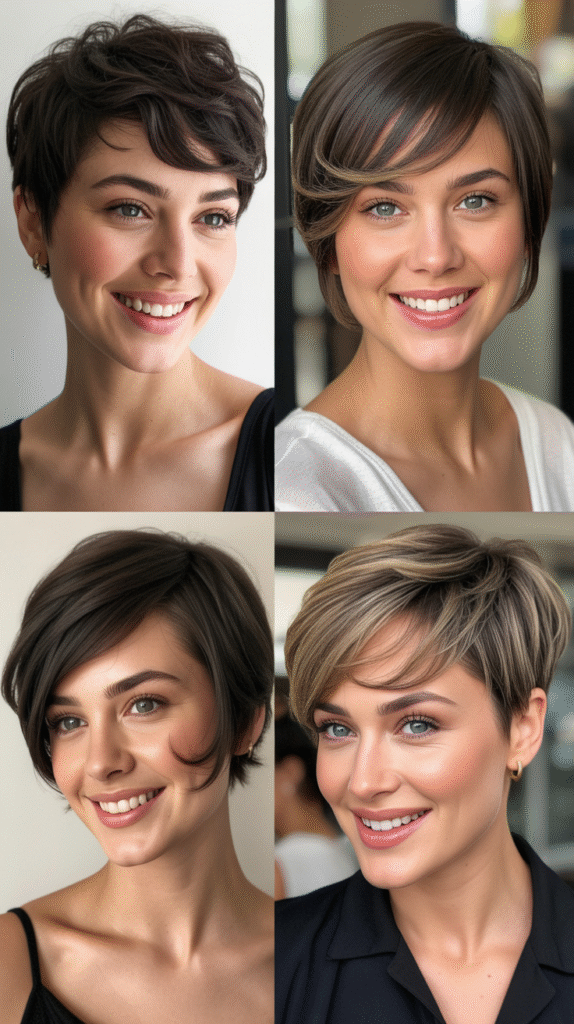
The swept-forward pixie styles hair toward the face rather than away from it, creating an unusual, fashion-forward aesthetic.
This directional choice produces distinctive movement and works particularly well with longer pixie variations. The forward sweep creates softness and mystery while remaining undeniably modern.
- Achieving the forward sweep requires blow-drying while directing hair toward the face using brushes or fingers.
- This styling works best with pixies that have sufficient length in front sections to create the intended effect.
- The forward direction creates natural face-framing that softens features and draws attention to eyes.
- Products like pomade, wax, or strong-hold gel maintain the directional styling throughout the day.
- This approach offers a completely different look from traditional pixie styling without requiring any cutting changes.
- The swept-forward pixie pairs well with dramatic eye makeup and statement eyewear.
53. The Natural Gray Pixie
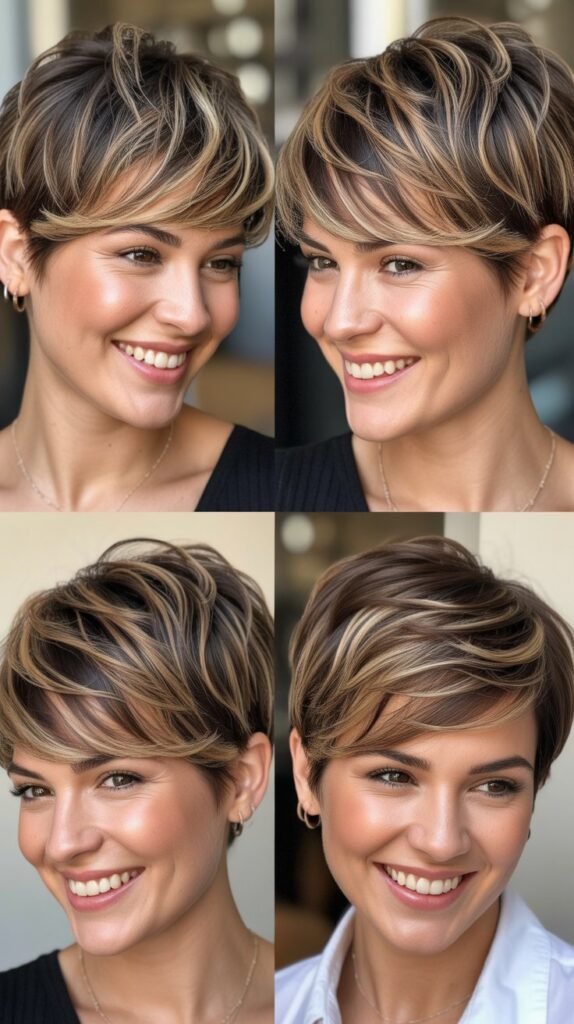
The natural gray pixie embraces silver and gray tones rather than covering them with color. This empowering choice celebrates natural aging while maintaining a stylish, contemporary appearance.
The gray pixie proves that silver hair is a fashion statement rather than something to hide.
- Gray hair often has different texture than pigmented hair, requiring adjustments to cutting and styling approaches.
- Purple-toned shampoos help prevent yellowing and maintain bright, clear silver tones.
- The gray pixie works with all pixie variations from classic to edgy, proving silver suits every style.
- This choice eliminates the time, expense, and chemical exposure of regular color treatments.
- Natural gray paired with a modern pixie cut creates a striking, sophisticated appearance that garners compliments.
- Many women report feeling liberated and authentic when embracing their natural silver with a confident pixie cut.
Conclusion
The journey through these 53 Fearless Short Pixie Hairstyles That Make a Statement reveals the incredible versatility and transformative power of short hair.
From classic elegance to punk rebellion, from natural texture celebration to bold color experimentation, the pixie cut offers endless possibilities for personal expression.
Whether you’re drawn to the low-maintenance practicality of a buzzed cut, the romantic softness of feathered layers, or the edgy drama of asymmetrical designs, there’s a pixie variation that perfectly matches your personality, lifestyle, and aesthetic preferences.
The beauty of the pixie lies not just in its diverse styling options but in the confidence it cultivates—there’s something undeniably empowering about a woman who boldly embraces short hair.
As you consider which of these fearless styles speaks to your soul, remember that hair grows back, but the confidence gained from making a bold change often lasts forever.
Your perfect pixie is waiting to help you make the statement you’ve been preparing to share with the world.
