
Dark chocolate brown hair with lowlights has emerged as one of the most sophisticated and sought-after hair color trends, offering a perfect blend of richness, dimension, and natural-looking depth that flatters virtually every skin tone.
This comprehensive guide to 61 Depth Enhancing Dark Chocolate Brown Hair With Lowlights will transform your understanding of how strategic color placement can elevate your entire look from ordinary to extraordinary.
Whether you’re considering your first lowlight treatment or looking to refine your existing chocolate brown shade, this article delivers expert insights into color selection, placement techniques, maintenance strategies, and styling approaches that professional colorists use to create stunning dimensional effects.
The beauty of dark chocolate brown with lowlights lies in its versatility—it works beautifully on various hair lengths, textures, and base colors while providing a low-maintenance alternative to highlights that grows out gracefully and maintains its appeal between salon visits.
Throughout this guide, you’ll discover specific lowlight formulas, placement patterns, complementary tones, styling techniques, and maintenance secrets that will help you achieve and preserve that coveted multi-dimensional chocolate richness that catches light beautifully and adds incredible depth to your hair.
1. Understanding Dark Chocolate Brown Base Color
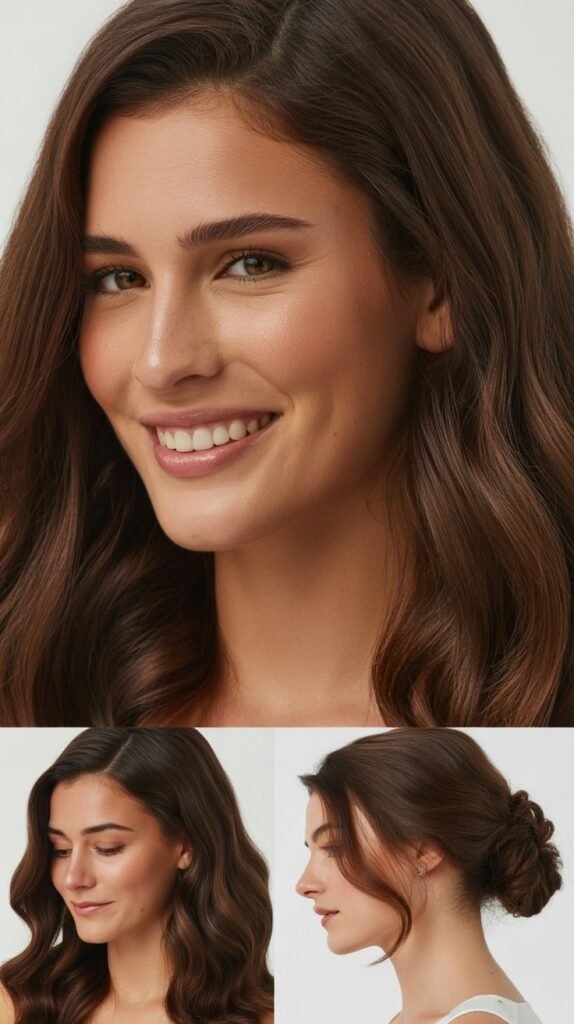
Dark chocolate brown serves as the perfect foundation for lowlight applications because of its rich, neutral undertones that complement multiple color dimensions.
- The dark chocolate brown base typically falls between level 3 and level 4 on the hair color chart, providing enough depth to create contrast with lowlights.
- This shade contains balanced cool and warm undertones that prevent the color from appearing flat or one-dimensional.
- Dark chocolate brown reflects light differently than jet black, creating natural movement and shine that enhances the overall dimensional effect.
- The base color provides adequate depth to support darker lowlights without the color appearing muddy or overly heavy.
- Professional colorists often customize the chocolate brown base by adjusting red, ash, or neutral undertones based on individual skin tones.
- This foundation color works exceptionally well for covering gray hair while maintaining a natural, youthful appearance.
- The versatility of dark chocolate brown allows for seasonal adjustments—slightly warmer in fall and winter, cooler in spring and summer.
2. Benefits of Adding Lowlights to Chocolate Brown Hair
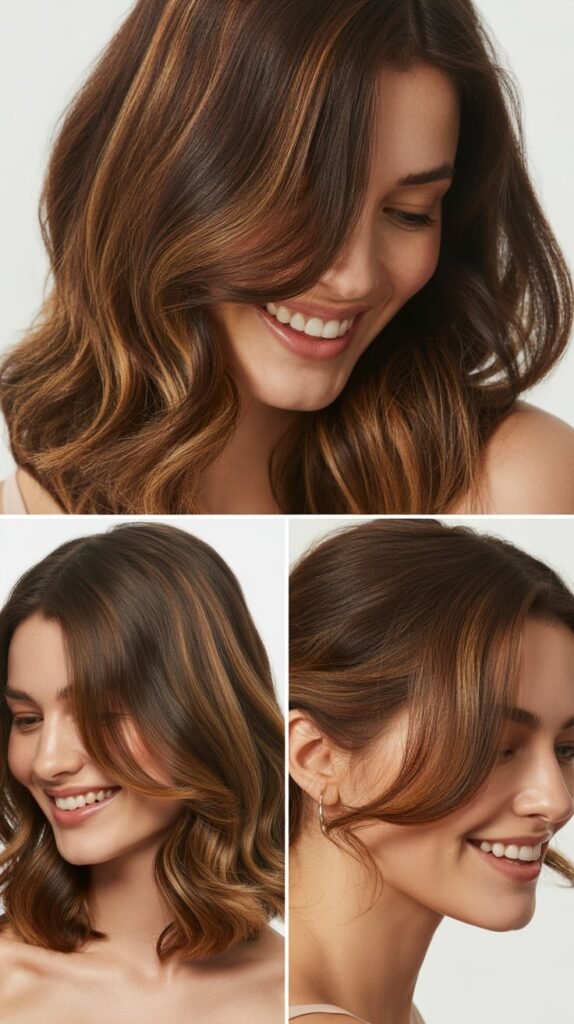
Lowlights transform flat chocolate brown hair into a multi-dimensional masterpiece that appears fuller, healthier, and more dynamic.
- Lowlights add depth and dimension that make hair appear thicker and more voluminous by creating shadow and contrast.
- The darker tones strategically placed throughout the hair create a natural-looking color variation that mimics sun-kissed effects in reverse.
- Adding lowlights reduces the harsh grow-out line that often occurs with single-process color applications.
- The technique helps blend gray hair seamlessly into the overall color scheme without complete coverage.
- Lowlights enhance hair’s natural movement by emphasizing texture, waves, and curls through strategic color placement.
- The dimensional effect created by lowlights makes hair appear shinier and healthier due to varied light reflection.
- This coloring approach offers a lower-maintenance alternative to highlights since darker regrowth blends more naturally.
- Lowlights can correct previous color mishaps by adding depth to over-lightened or brassy hair.
3. Choosing the Right Lowlight Shades for Chocolate Brown
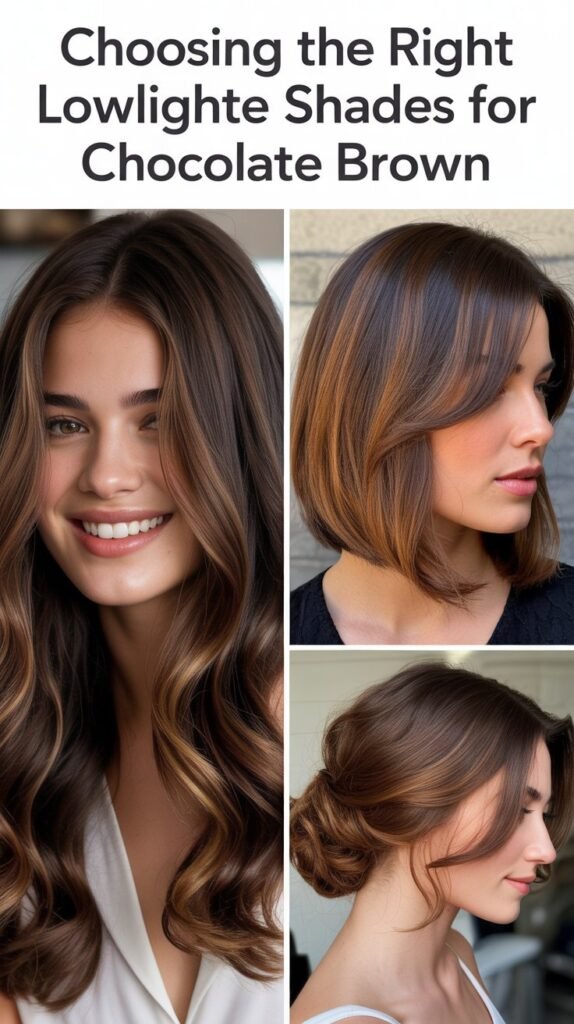
Selecting complementary lowlight shades determines the overall aesthetic and how naturally the dimensional color blends with your base.
- Espresso lowlights (level 2-3) create subtle depth that enhances chocolate brown without dramatic contrast.
- Dark auburn or mahogany tones add warmth and richness that complement warm and neutral skin tones beautifully.
- Cool ash brown lowlights provide a sophisticated, modern look that works particularly well for cool-toned complexions.
- Black coffee shades offer the deepest contrast for those seeking maximum dimension and drama.
- Warm chestnut lowlights create a sun-kissed effect that appears natural and effortless.
- Burgundy or plum undertones add unexpected sophistication and work exceptionally well for fall and winter looks.
- Mixing multiple lowlight shades creates the most natural, multidimensional result that mimics naturally variant hair color.
- The color selection should consider your natural hair color, skin undertones, eye color, and personal style preferences.
4. Face-Framing Lowlight Placement Techniques
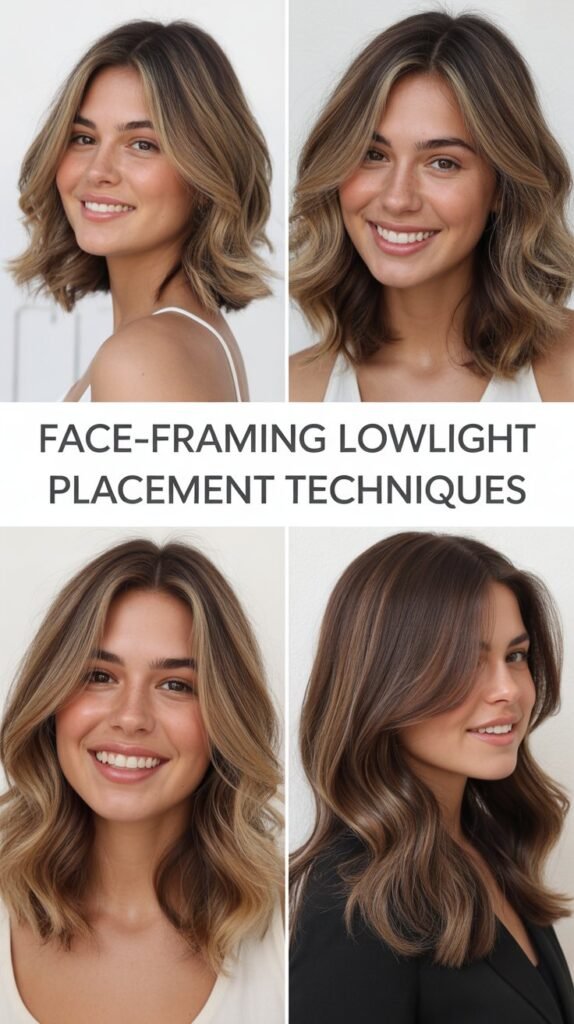
Strategic placement around the face creates definition and enhances facial features while adding sophisticated depth.
- Placing darker lowlights along the sides of the face creates a slimming, contouring effect that defines cheekbones.
- Lighter pieces kept near the front hairline prevent the face-framing lowlights from appearing too heavy or aging.
- Vertical lowlight placement elongates the face and works particularly well for round or square face shapes.
- Softer, blended lowlights around the temples and jawline create a more natural, less structured appearance.
- Face-framing lowlights should be finer and more delicate than interior lowlights to maintain facial brightness.
- The placement should follow the natural fall of your hair to ensure the lowlights appear intentional and flattering.
- Avoiding lowlights directly at the hairline prevents a harsh, unnatural appearance as the color grows out.
5. Full Head Lowlight Application Methods
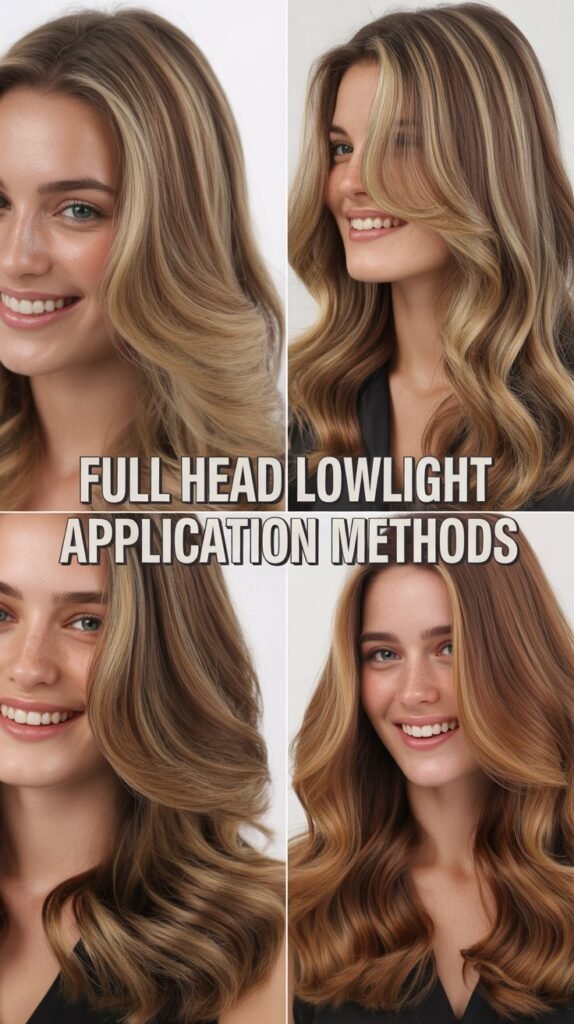
Comprehensive lowlight application throughout the entire head creates maximum dimension and visual interest from every angle.
- The weaving technique creates fine, natural-looking lowlights by selecting small sections of hair in a diagonal or V-pattern.
- Slicing produces chunkier, more dramatic lowlights that create bolder contrast and statement dimension.
- Balayage lowlights offer a hand-painted, customized approach that creates softer, more blended dimensional effects.
- Alternating between different lowlight shades throughout the head prevents the color from appearing striped or repetitive.
- Strategic placement of lowlights in the crown area adds depth without weighing down the overall appearance.
- Keeping lowlights away from the scalp by approximately one-quarter inch creates a softer, more natural grow-out pattern.
- Professional colorists typically apply lowlights in sections, working from back to front to ensure even coverage and processing.
6. Babylights vs. Lowlights: Understanding the Difference
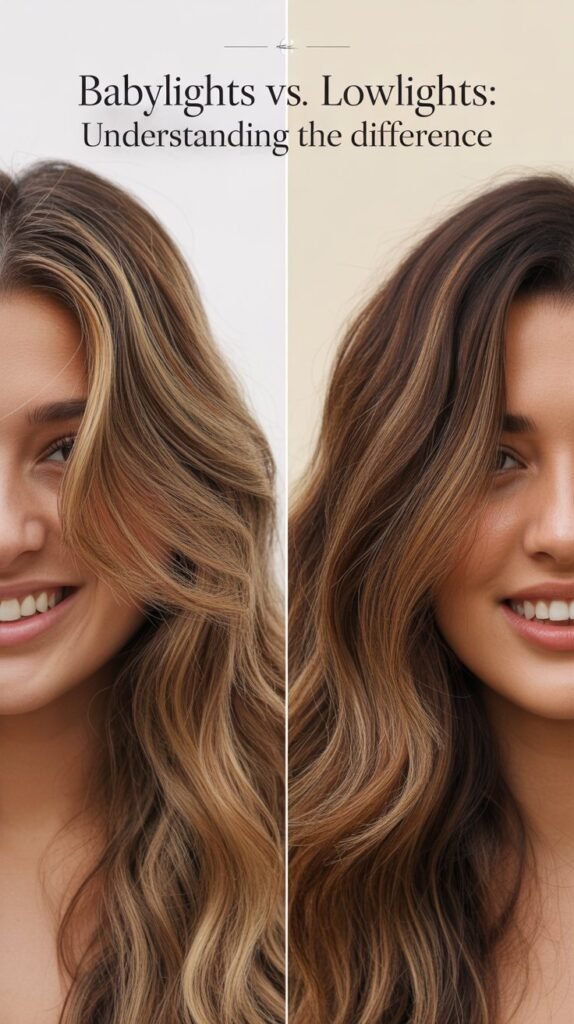
Knowing the distinction between these techniques helps you communicate effectively with your colorist about your desired results.
- Babylights are extremely fine, delicate highlights that mimic the subtle, natural color variations seen in children’s hair.
- Lowlights are darker than the base color and add depth, while babylights are lighter and add brightness.
- Combining babylights and lowlights creates the most natural, multidimensional color with both depth and brightness.
- Babylights typically require more precision and time to apply due to their ultra-fine nature.
- Lowlights generally require less frequent maintenance than babylights since darker regrowth blends more naturally.
- The cost difference between the two techniques varies based on application time and the amount of product required.
- Many modern color applications incorporate both techniques to achieve optimal dimensional results.
7. Maintenance Schedule for Chocolate Brown Lowlights
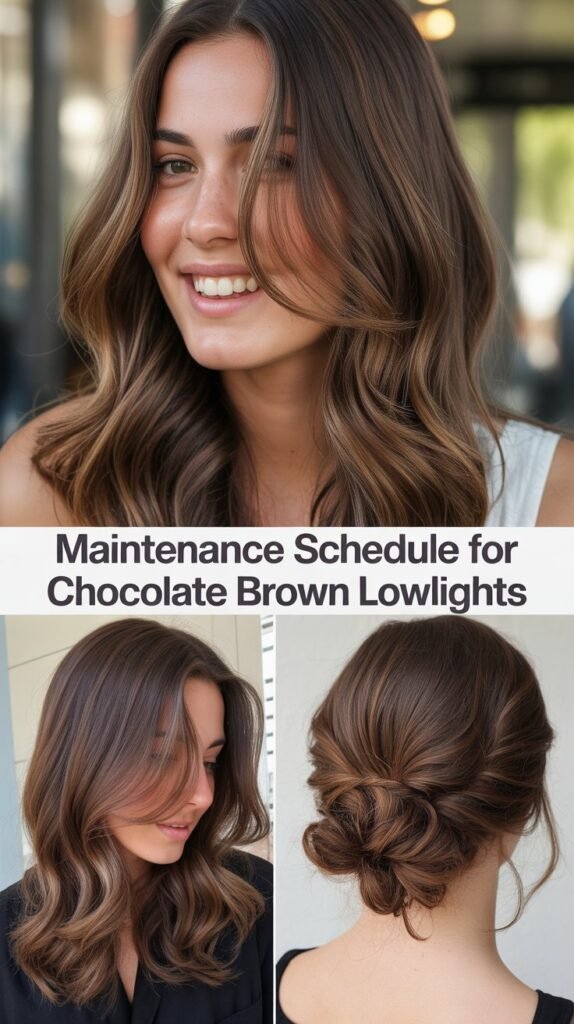
Establishing a proper maintenance routine ensures your lowlights remain vibrant and dimensional between salon visits.
| Timeframe | Recommended Maintenance | Focus Areas |
|---|---|---|
| Weeks 1-4 | Color-safe shampoo and conditioning treatments | Preserving color vibrancy |
| Weeks 5-8 | Gloss treatment or toner refresh | Maintaining shine and tone |
| Weeks 9-12 | Full lowlight refresh appointment | Reapplying lowlights where needed |
| Weeks 13-16 | Deep conditioning and potential color adjustment | Addressing any fading or brassiness |
- Dark chocolate lowlights typically last 8-12 weeks before requiring a refresh, depending on hair growth rate and color care routine.
- Using sulfate-free, color-safe shampoos significantly extends the longevity of your lowlight color.
- Limiting hair washing to 2-3 times per week helps preserve color vibrancy and prevents premature fading.
- Professional gloss treatments every 4-6 weeks enhance shine and refresh the overall color tone.
- Protecting hair from chlorine, salt water, and excessive sun exposure prevents color oxidation and brassy tones.
- Deep conditioning treatments weekly maintain hair health and color retention by sealing the hair cuticle.
- Touch-up appointments may focus only on new growth areas rather than full head reapplication, reducing processing time and cost.
8. Color-Safe Hair Care Products for Lowlights
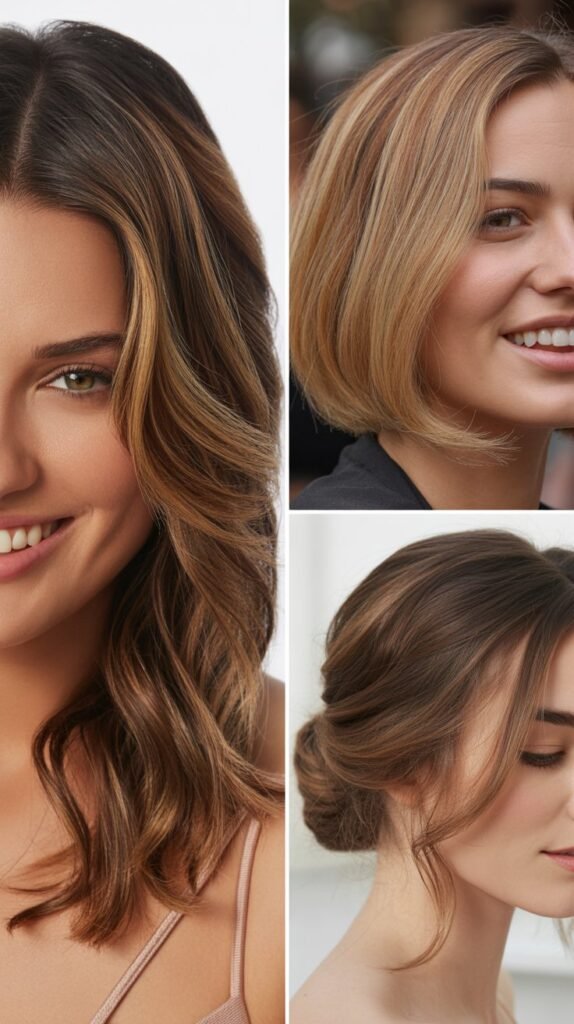
Using appropriate products specifically formulated for color-treated hair protects your investment and maintains dimensional beauty.
- Color-depositing shampoos in chocolate or espresso tones help maintain richness between salon appointments.
- Purple or blue shampoos can be used sparingly if lowlights develop warm or brassy undertones over time.
- Sulfate-free formulas prevent color molecules from being stripped during washing, significantly extending color longevity.
- Deep conditioning masks formulated for color-treated hair restore moisture while locking in color pigments.
- Leave-in treatments with UV protection shield hair color from sun-induced fading and oxidation.
- Heat protectant sprays prevent thermal damage from styling tools that can alter or fade lowlight colors.
- Professional salon products typically contain higher concentrations of color-protecting ingredients than drugstore alternatives.
- pH-balanced products maintain the hair cuticle’s integrity, which is essential for color retention and shine.
9. Styling Techniques That Showcase Lowlights
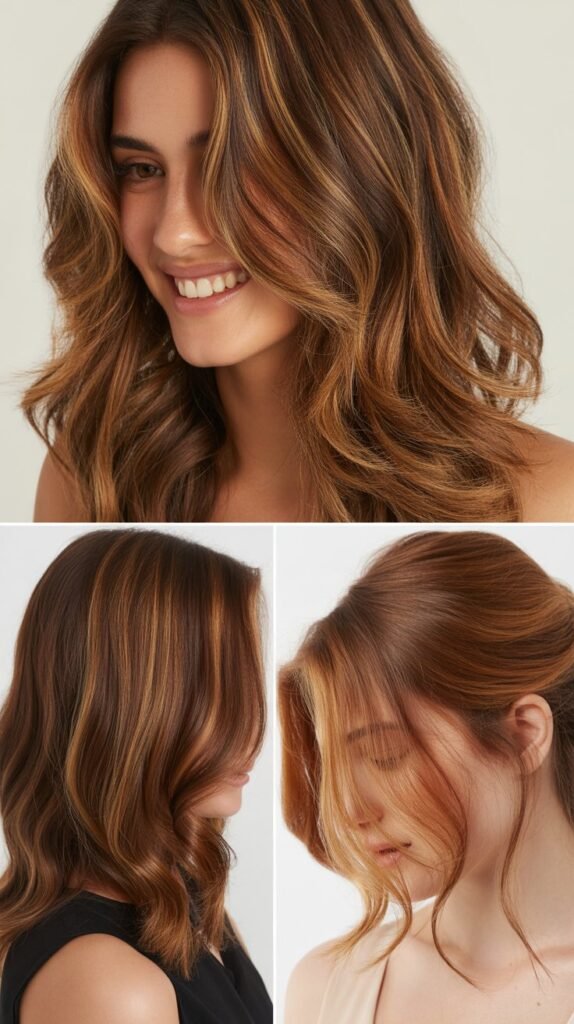
Specific styling approaches maximize the visual impact of your lowlights and create stunning dimensional effects.
- Loose waves and curls create movement that allows lowlights to catch light from multiple angles, maximizing dimensional appearance.
- Sleek, straight styling showcases the precise placement and blending of lowlights with stunning clarity.
- Side parts reveal more surface area where lowlights are visible compared to center parts.
- Voluminous styles with texture spray or mousse lift hair away from the scalp, making lowlights more visible.
- Braided styles weave different colored sections together, creating beautiful color patterns and interest.
- Half-up, half-down styles display both the crown lowlights and the face-framing dimension simultaneously.
- Updos and ponytails create unexpected color reveals as different sections of lowlighted hair interact.
- Using shine-enhancing serums or oils on styled hair amplifies light reflection and color depth.
10. Seasonal Lowlight Adjustments
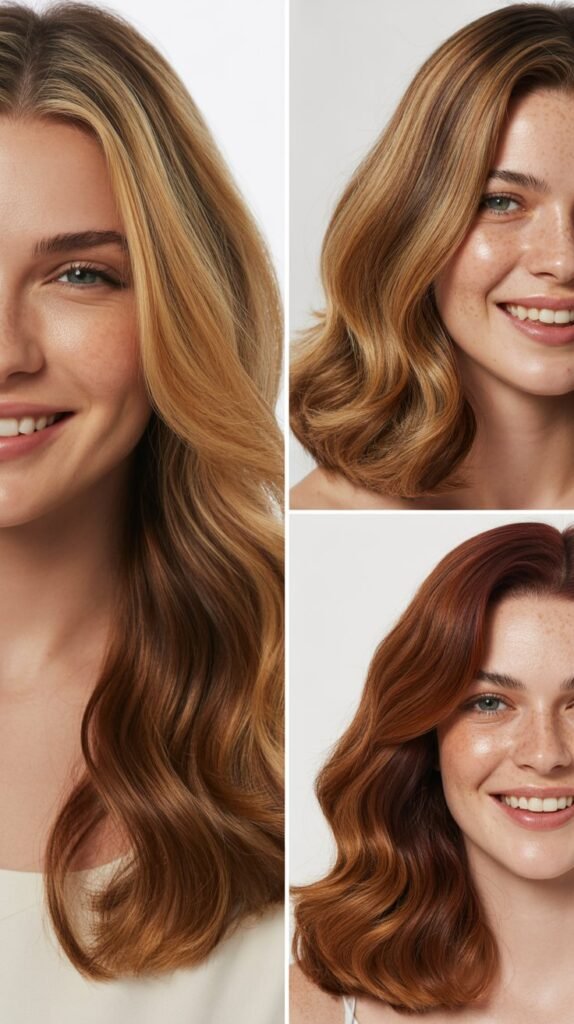
Adapting your lowlight shades and placement throughout the year keeps your look fresh and seasonally appropriate.
- Spring and summer lowlight adjustments might incorporate slightly lighter, cooler tones for a fresh, bright appearance.
- Fall lowlights benefit from rich, warm additions like auburn, copper, or burgundy undertones.
- Winter lowlight palettes can embrace deeper, cooler shades like espresso, ash brown, or even subtle violet tones.
- Year-round neutral lowlights in various chocolate and coffee shades provide consistency for those preferring timeless looks.
- Seasonal transitions don’t require complete color changes—subtle adjustments to tone and placement create significant impact.
- Adding a few strategically placed seasonal lowlights among existing color creates dimension without full reapplication.
- Consulting with your colorist about seasonal trends helps keep your look current while maintaining your signature style.
11. Lowlights for Different Hair Lengths
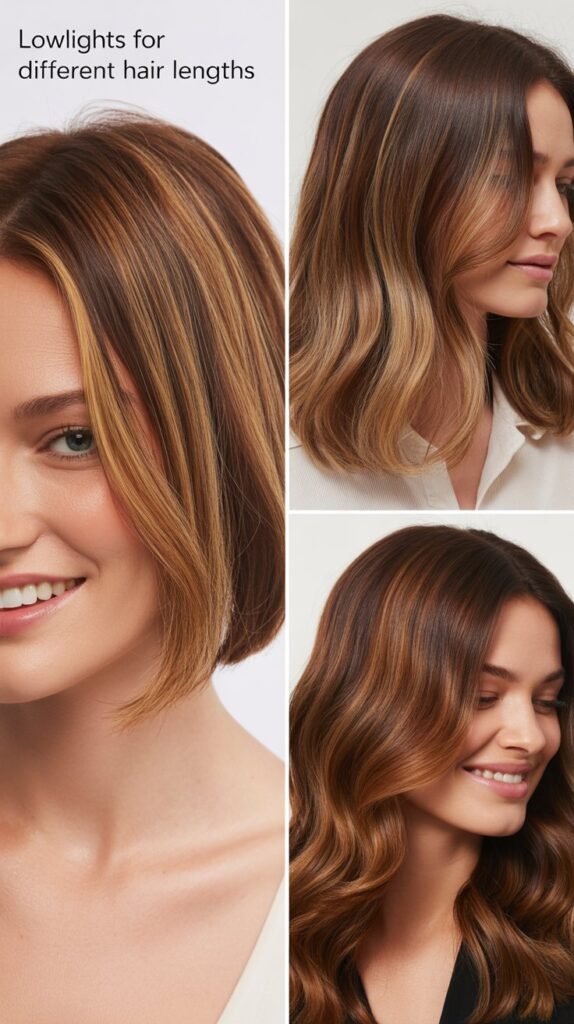
Lowlight placement and density should be adjusted based on hair length to achieve the most flattering results.
- Short hair (pixie cuts and crops) benefits from fine, strategically placed lowlights concentrated around the face and crown.
- Bob-length hair allows for more comprehensive lowlight placement while maintaining a balanced, not-too-heavy appearance.
- Shoulder-length hair provides the perfect canvas for blended lowlights that create movement and dimension throughout.
- Mid-back length hair can support more dramatic lowlight variations since the length provides ample space for color transitions.
- Very long hair requires strategic lowlight placement to prevent the ends from appearing too dark or bottom-heavy.
- Layered haircuts showcase lowlights more effectively than blunt cuts by creating movement that reveals color dimension.
- The density of lowlights should increase proportionally with hair length to maintain visual balance and interest.
12. Lowlights on Different Hair Textures
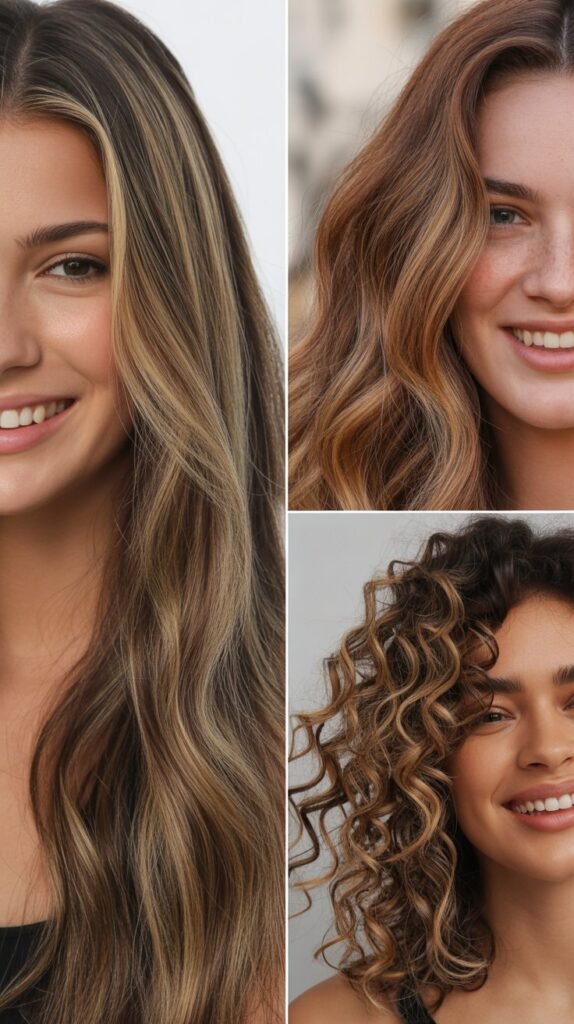
Hair texture significantly influences lowlight application techniques and visual results, requiring customized approaches.
- Straight hair displays lowlights with maximum clarity, making precise placement and blending especially important.
- Wavy hair naturally creates dimension through texture, allowing lowlights to enhance existing movement patterns.
- Curly hair benefits from chunkier lowlight sections since tight curls break up and blend color naturally.
- Coily and kinky textures require specialized application techniques that account for shrinkage and curl patterns.
- Fine hair textures may require finer lowlight sections to prevent color from appearing too heavy or obvious.
- Thick, coarse hair can support bolder lowlight placement and greater color contrast without appearing overdone.
- Textured hair often requires less frequent lowlight maintenance since the texture naturally camouflages regrowth.
- Pre-lightening is rarely necessary for lowlights, making the technique particularly gentle on textured and fragile hair types.
13. Correcting Unwanted Tones in Chocolate Brown Lowlights
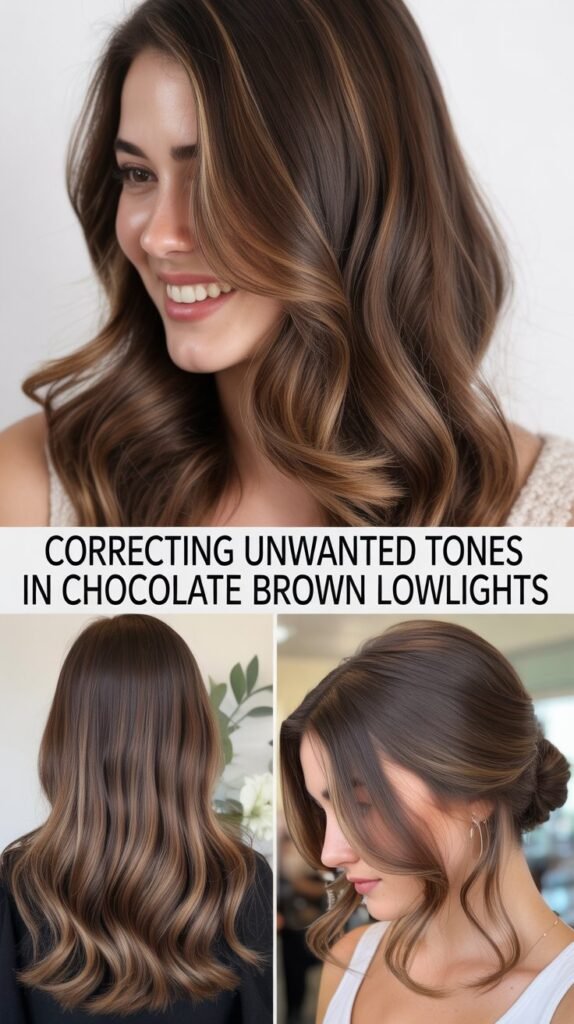
Understanding how to neutralize or adjust unwanted color developments ensures your lowlights remain beautiful over time.
- Unwanted red or orange undertones in chocolate lowlights can be neutralized with blue-based or ash toners.
- Overly cool or ashy lowlights that appear greenish benefit from warm-toned color corrections or glosses.
- Brassy developments typically result from mineral buildup, sun exposure, or using incorrect hair care products.
- Professional toning services every 6-8 weeks prevent and correct unwanted tone shifts before they become problematic.
- Color-depositing treatments at home can maintain desired tones between salon visits when used according to professional recommendations.
- Chelating shampoos remove mineral buildup that can alter lowlight color appearance, particularly in areas with hard water.
- Overly dark lowlights can be lightened slightly with professional color removal techniques followed by retoning.
14. Cost Considerations for Chocolate Brown Lowlights
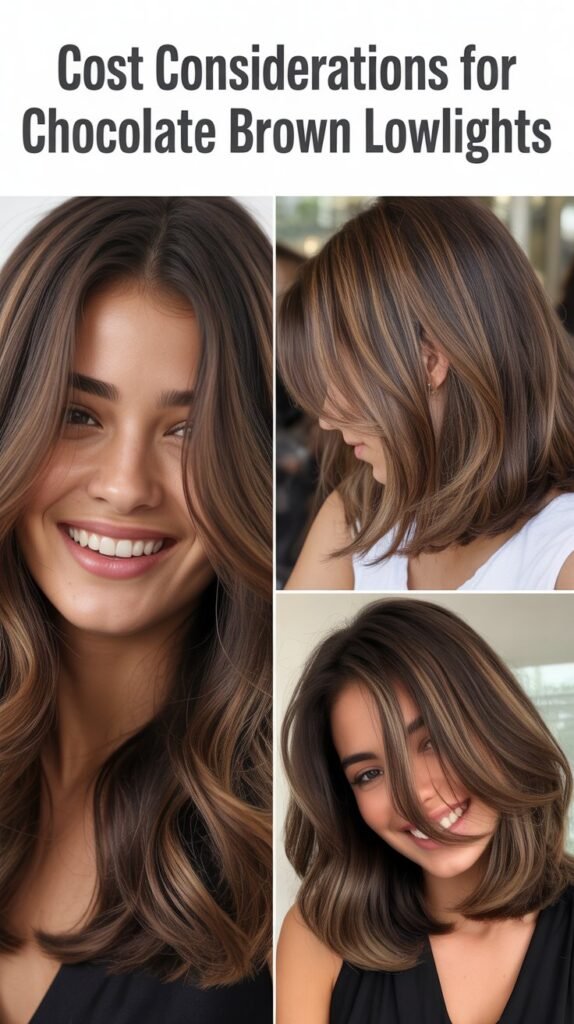
Understanding pricing factors helps you budget appropriately and make informed decisions about lowlight services.
| Service Component | Average Cost Range | Factors Affecting Price |
|---|---|---|
| Partial lowlights | $75-$150 | Hair length, salon location, colorist experience |
| Full head lowlights | $150-$300 | Number of colors used, application technique |
| Gloss/toner service | $35-$75 | Product quality, processing time |
| Maintenance touch-up | $100-$200 | Amount of regrowth, number of areas requiring attention |
- Salon location significantly impacts pricing, with metropolitan areas typically charging premium rates.
- Colorist experience and reputation often correlate with higher service costs but potentially superior results.
- Hair length and thickness directly affect the amount of product and time required, influencing final cost.
- Specialized techniques like balayage lowlights may cost more than traditional foiling methods.
- Package deals for multiple services (cut, color, gloss) often provide better value than individual service pricing.
- Consultation fees may apply at high-end salons but are often waived with service booking.
- Tipping colorists typically ranges from 15-20% of the service cost and should be factored into budget planning.
15. DIY Lowlights vs. Professional Application
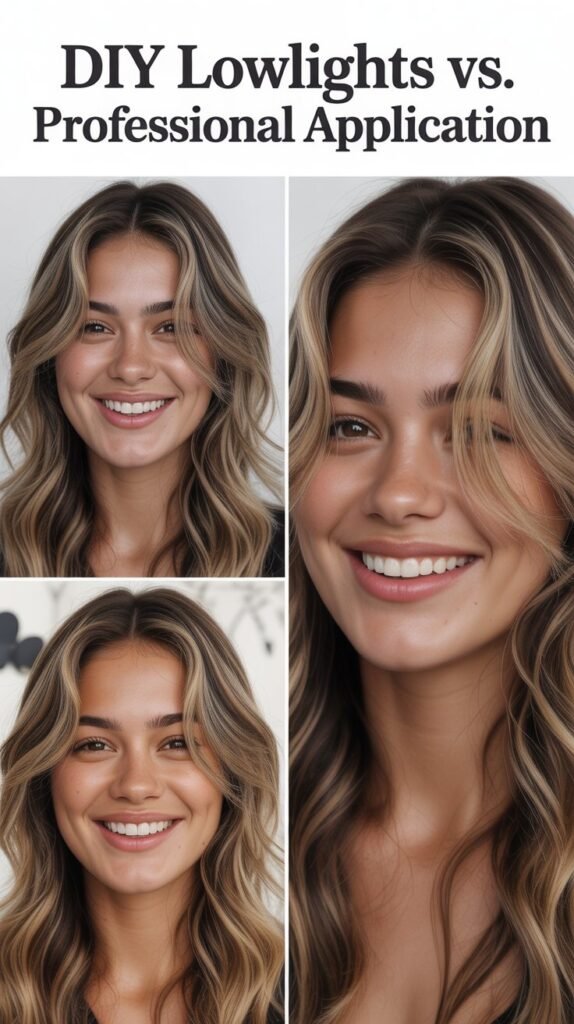
Weighing the benefits and risks of at-home lowlight application versus professional services helps you make the best choice.
- Professional colorists possess technical training and experience that ensure even application and beautiful color blending.
- DIY lowlight kits offer significant cost savings but require confidence, skill, and realistic expectations about results.
- Professional services include consultation, customized color formulation, and expert placement that’s difficult to replicate at home.
- At-home lowlighting works best for those with previous color experience and simpler, less dimensional color goals.
- Professional correction of DIY color mistakes often costs more than the original professional service would have.
- Salon-quality products typically deliver more predictable, longer-lasting results than retail box color formulations.
- The complexity of your desired lowlight pattern should guide your decision—intricate designs require professional expertise.
- Consider professional application for first-time lowlights, then potentially maintain them with DIY touch-ups if comfortable.
16. Lowlights for Gray Coverage
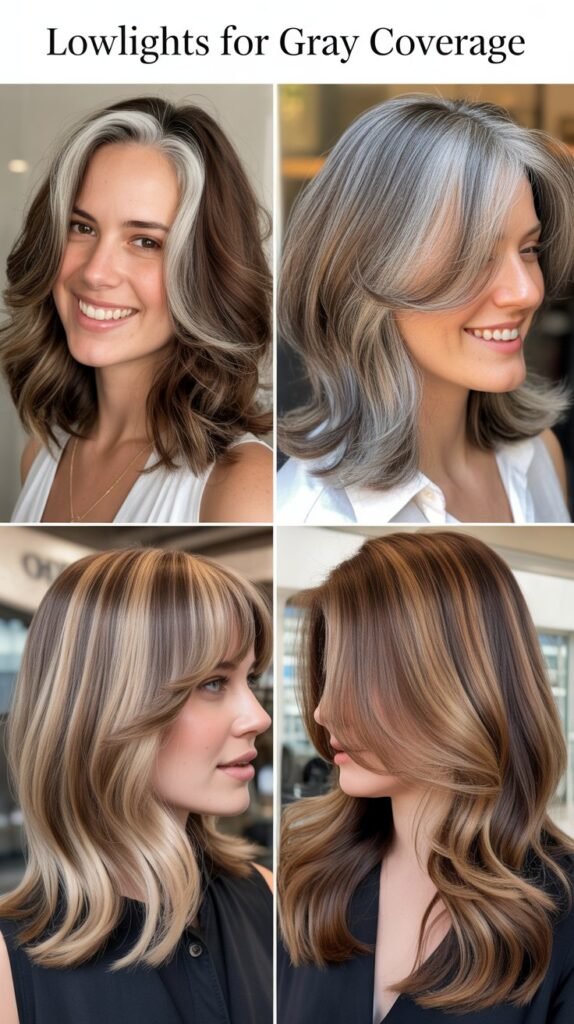
Strategic lowlight placement provides an effective, natural-looking approach to blending and covering gray hair.
- Lowlights create a dimensional gray-blending effect that’s more forgiving and natural than single-process color.
- Placing darker lowlights strategically covers resistant gray areas while maintaining overall color variation.
- The multi-tonal approach created by lowlights makes new gray growth less noticeable between appointments.
- Combining lowlights with a demi-permanent base color provides the most comprehensive and long-lasting gray coverage.
- Gray-blending lowlights work particularly well for transitioning from colored hair to natural gray gradually.
- Cooler-toned lowlights tend to blend gray hair more effectively than warm-toned options.
- The percentage of gray coverage achieved depends on lowlight density, placement, and the base color used.
17. Combining Highlights and Lowlights
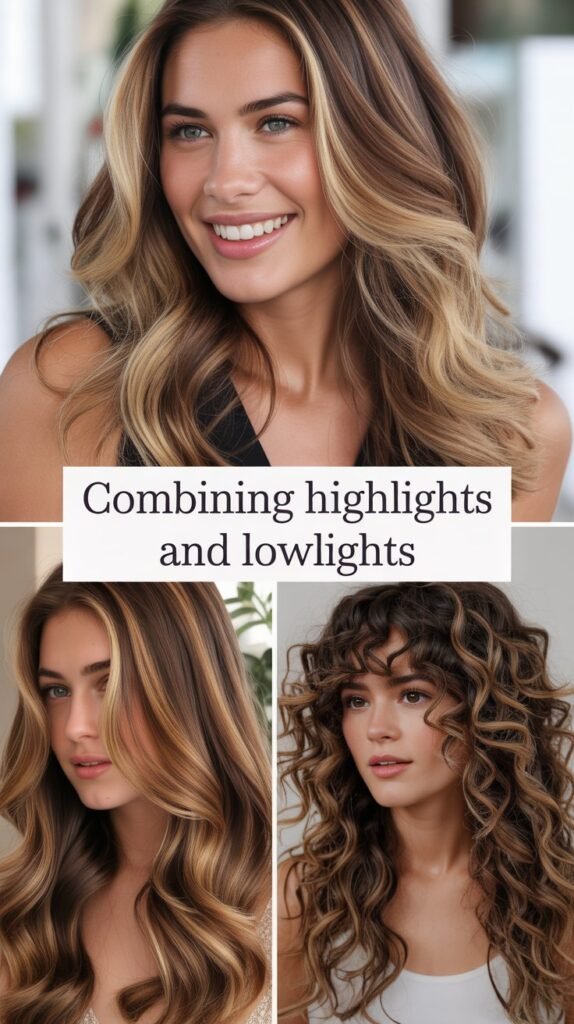
Creating a complete dimensional color masterpiece often involves strategically combining both highlighting and lowlighting techniques.
- The combination of highlights and lowlights creates the most natural, sun-kissed dimensional effect possible.
- Highlights add brightness and lift to the overall look while lowlights provide depth and richness.
- Balancing the ratio of highlights to lowlights depends on desired overall tone—more highlights for brightness, more lowlights for depth.
- Alternating highlight and lowlight placement prevents color from appearing striped or overly patterned.
- This comprehensive approach works beautifully for all hair colors transitioning to chocolate brown with dimension.
- The combined technique requires more time and expertise but delivers superior, longer-lasting dimensional results.
- Maintenance for combined services can be staggered—touching up highlights one appointment and lowlights the next.
18. Ombre and Balayage Lowlight Techniques
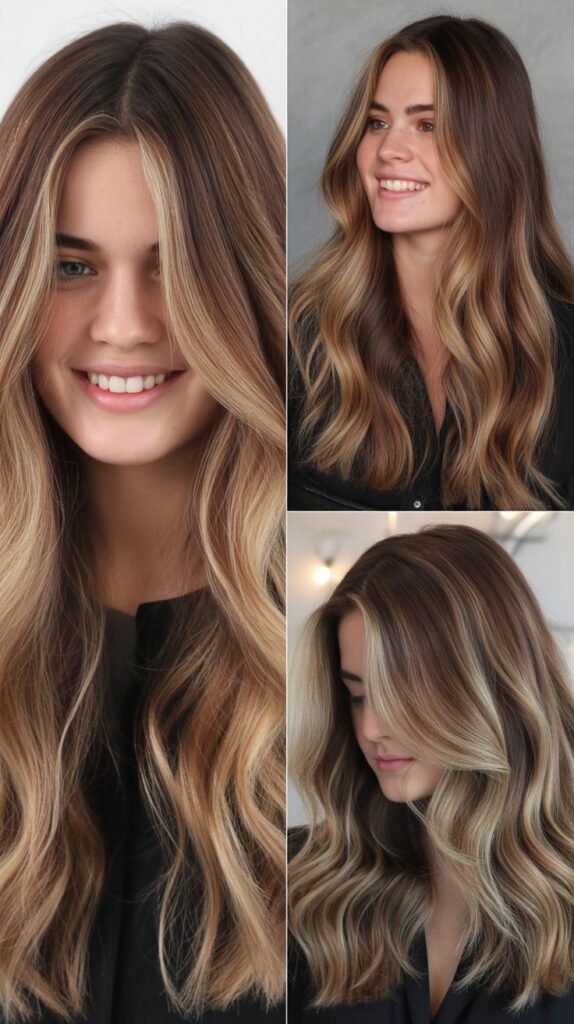
Modern lowlighting techniques like ombre and balayage create sophisticated, hand-painted dimensional effects.
- Balayage lowlights involve hand-painting darker color onto hair in a sweeping motion for natural, customized placement.
- Ombre lowlights create a gradual transition from lighter roots to darker ends, reversing the traditional ombre effect.
- These techniques produce softer, more blended results than traditional foil lowlights with less visible regrowth lines.
- Balayage lowlights allow for complete customization based on individual hair movement, texture, and desired dimension.
- The freehand nature of these techniques requires advanced colorist skill and artistic vision for optimal results.
- Processing time for balayage lowlights may be longer since color is applied in stages rather than all at once.
- These modern techniques typically command higher service prices due to the time, skill, and artistry required.
19. Lowlights for Transitioning from Lighter Hair
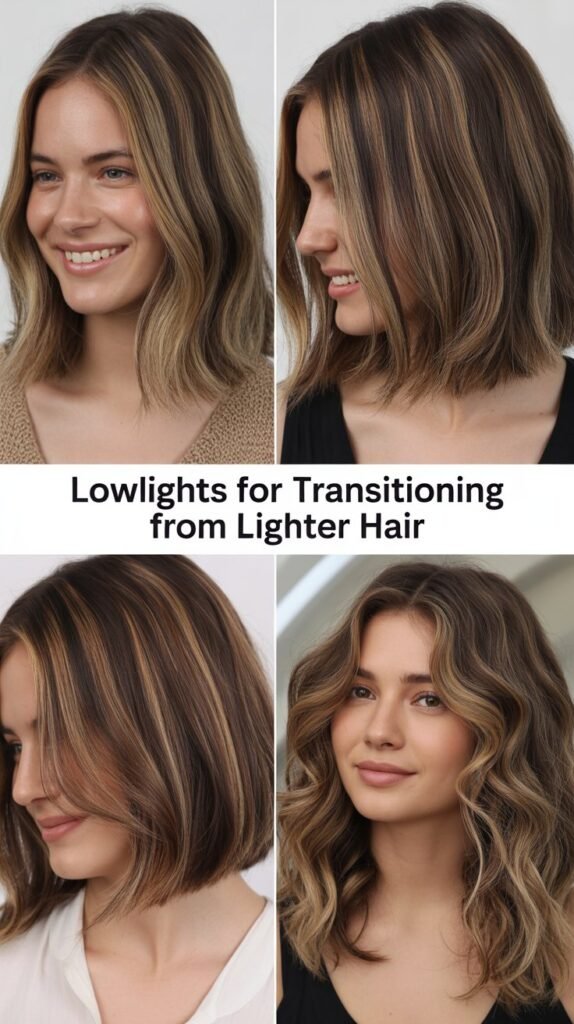
Using lowlights strategically helps transition from blonde, light brown, or highlighted hair to chocolate brown naturally.
- Gradual lowlight application over several appointments prevents drastic color shock and allows adjustment to darker tones.
- Starting with lowlights that are only 1-2 levels darker than the base color creates a subtle initial transition.
- Subsequent appointments can add progressively darker lowlights until the desired chocolate brown depth is achieved.
- This transitional approach maintains dimensional interest throughout the darkening process rather than creating flat color.
- Combining lowlights with a gradual base color darkening provides the most natural-looking transition results.
- The transitional timeline typically spans 3-6 months depending on starting color and desired end result.
- This gentler approach to color change is less damaging than attempting dramatic color shifts in a single session.
20. Protecting Lowlights from Environmental Damage
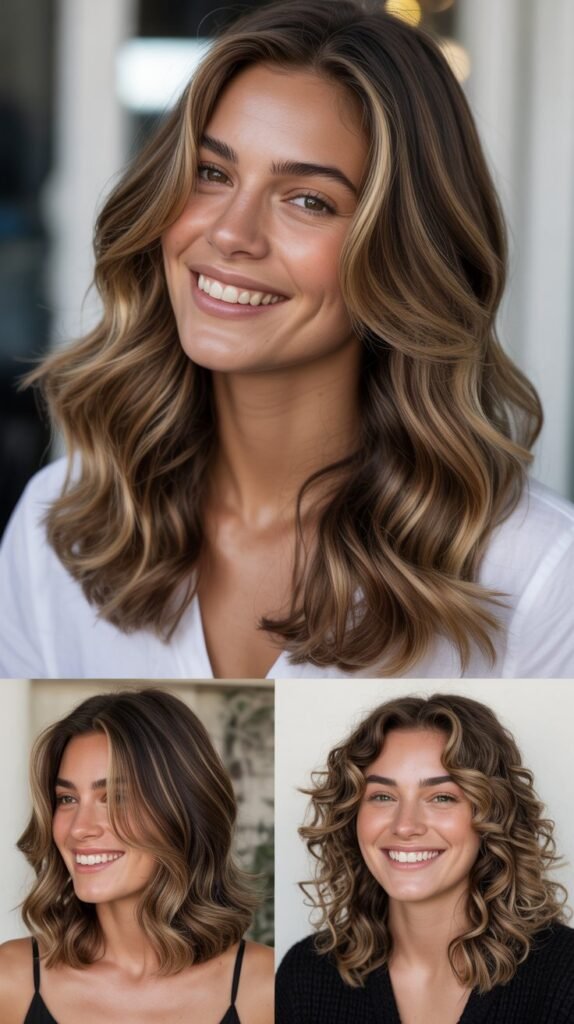
External factors can significantly impact lowlight color longevity and vibrancy, requiring protective measures.
- UV radiation from sun exposure causes oxidation that fades and alters lowlight colors, particularly in summer months.
- Chlorine from swimming pools can strip color and create unwanted green or brassy tones in chocolate lowlights.
- Salt water has similar color-stripping effects and should be rinsed from hair immediately after ocean swimming.
- Hard water minerals accumulate on hair shafts and can dull lowlight shine while altering color tone.
- Thermal styling tools can fade color more rapidly if used without proper heat protection products.
- Pollution and environmental toxins settle on hair and can cause color oxidation and dullness over time.
- Wearing protective styles or covering hair during extended outdoor exposure preserves color vibrancy.
- Installing shower filters that remove chlorine and minerals protects color in areas with hard or chemically treated water.
21. Lowlights for Warm Skin Tones
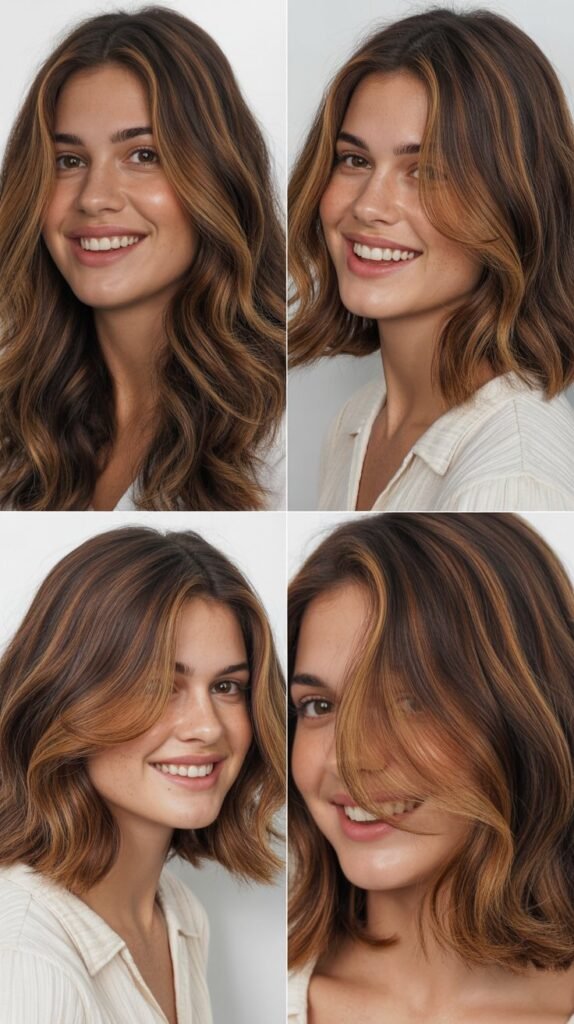
Selecting lowlight shades that complement warm undertones creates harmonious, flattering overall color results.
- Warm-toned lowlights in shades like chestnut, auburn, or mahogany enhance and complement warm skin undertones beautifully.
- Golden brown and caramel lowlights add richness without creating harsh contrast against warm complexions.
- Avoiding overly cool or ashy lowlight tones prevents the hair color from clashing with warm skin undertones.
- Copper and red-based lowlights create dimension while maintaining color harmony with warm-toned skin.
- The overall effect should enhance the skin’s natural warmth rather than competing with or contradicting it.
- Professional colorists can adjust lowlight formulas by adding warm toners to customize the perfect complementary shade.
- Testing lowlight shades near the face during consultation ensures the selected tones are truly flattering.
22. Lowlights for Cool Skin Tones
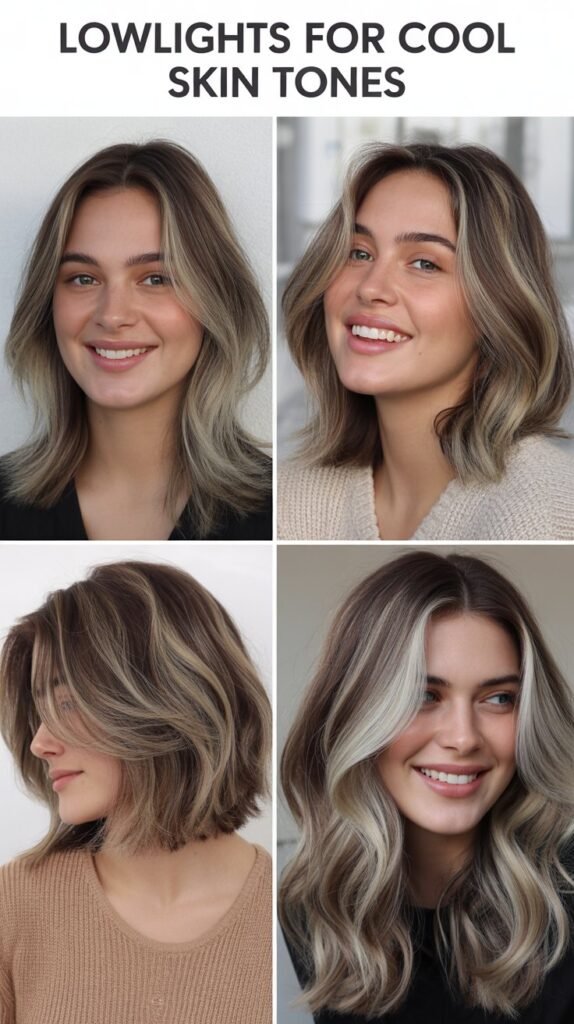
Cool-toned lowlight selections create sophisticated dimension that enhances cool or neutral complexions.
- Ash brown, cool espresso, and violet-based lowlights complement cool skin undertones without adding unwanted warmth.
- Blue-based chocolate lowlights create depth while maintaining the sophisticated coolness that flatters cool complexions.
- Avoiding overly warm or red-toned lowlights prevents unflattering color combinations with cool-toned skin.
- Mushroom brown and smoky chocolate shades provide beautiful dimension for those with cool or neutral undertones.
- The key is selecting lowlights that enhance rather than fight against the skin’s natural cool undertones.
- Cool-toned lowlights often require specific toners to maintain their ash or neutral quality over time.
- Professional color consultation should include natural and artificial lighting assessment to ensure lowlights remain flattering.
23. Lowlights for Neutral Skin Tones
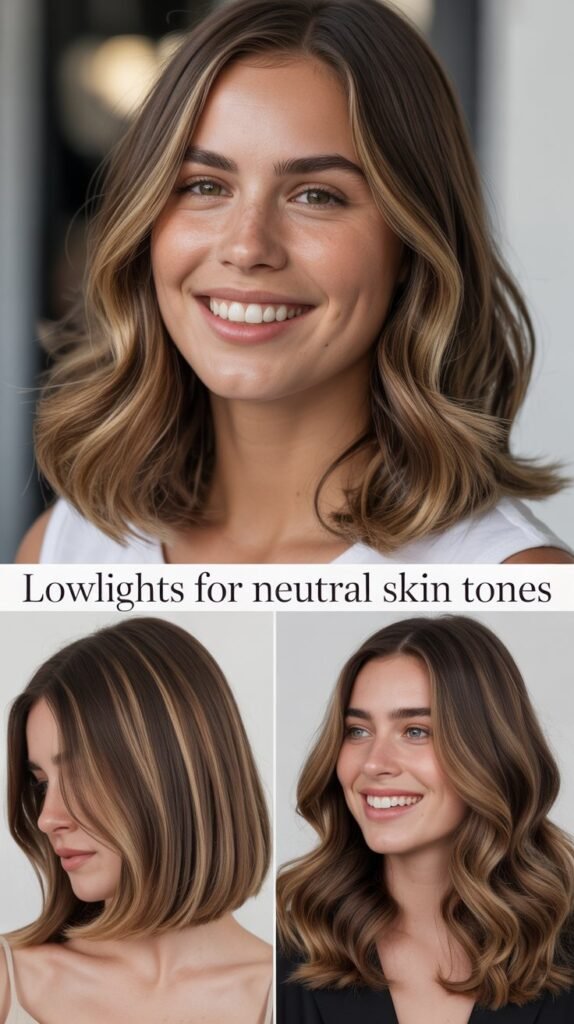
Neutral skin undertones offer the most flexibility in lowlight shade selection, accommodating both warm and cool options.
- Neutral skin tones can successfully wear lowlights ranging from warm auburn to cool ash without clashing.
- True chocolate brown lowlights with balanced undertones create the most universally flattering results for neutral complexions.
- Mixing both warm and cool lowlight tones creates beautiful, natural-looking dimension that complements neutral skin.
- The flexibility of neutral skin tones allows for seasonal lowlight adjustments without color harmony concerns.
- Experimentation with different lowlight undertones helps identify personal preferences and most flattering options.
- Neutral-based lowlights (neither distinctly warm nor cool) provide safe, beautiful results for those unsure of their undertones.
- Professional colorists can create customized lowlight formulas that incorporate multiple undertones for maximum dimension.
24. Lowlight Depth and Contrast Levels
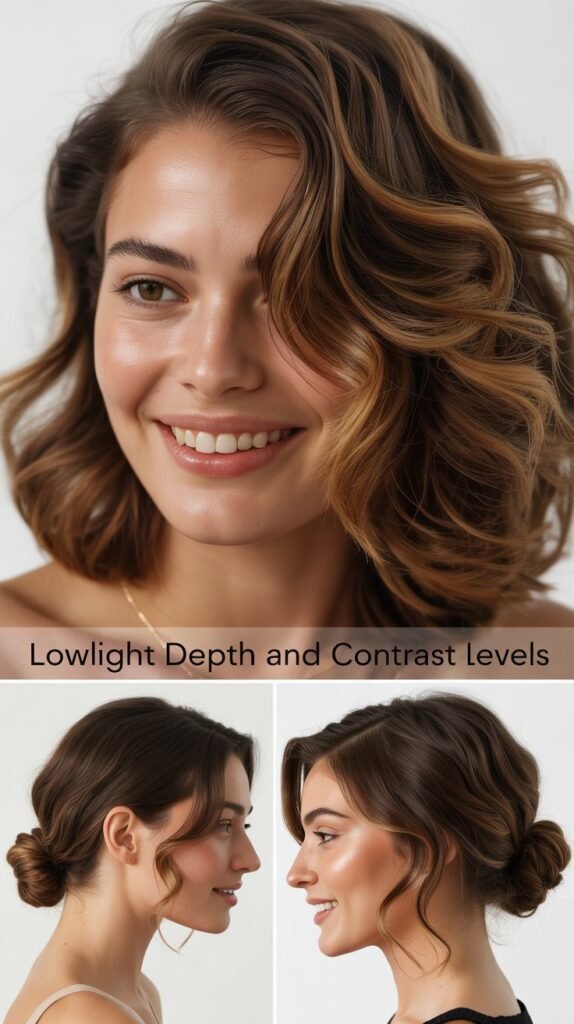
Understanding how contrast intensity affects overall appearance helps achieve your desired dimensional effect.
- Subtle lowlights only 1 level darker than the base create soft, natural dimension perfect for conservative preferences.
- Moderate contrast lowlights (2-3 levels darker) provide noticeable dimension while maintaining natural appearance.
- Dramatic lowlights (4+ levels darker) create bold, statement dimension that’s more fashion-forward and eye-catching.
- Mixing various contrast levels throughout the head produces the most natural, multidimensional results.
- Face shape, hair texture, and personal style should inform contrast level decisions.
- Higher contrast lowlights create more dramatic effects but may require more frequent maintenance.
- Lower contrast lowlights blend more seamlessly with natural hair growth, extending time between touch-ups.
25. Glossing Treatments for Enhanced Lowlights
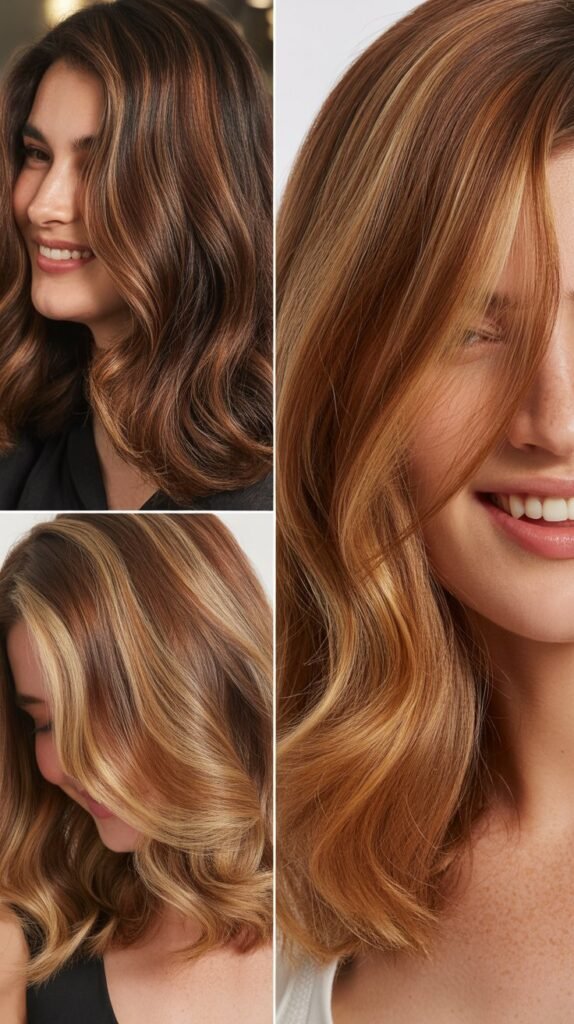
Professional gloss treatments amplify lowlight beauty by adding shine, refreshing tone, and blending color seamlessly.
- Gloss treatments are semi-permanent color services that deposit subtle tone while adding intense shine.
- Clear glosses enhance existing lowlight colors by smoothing the hair cuticle and amplifying light reflection.
- Tinted glosses can subtly adjust lowlight tones, neutralizing unwanted brassiness or adding depth.
- Glossing every 4-6 weeks maintains optimal lowlight vibrancy and prevents color from appearing dull or faded.
- The treatment takes only 15-20 minutes to process and causes minimal to no hair damage.
- Professional glosses contain conditioning agents that improve hair health while enhancing color.
- At-home glossing products are available but typically deliver less dramatic results than professional formulations.
26. Preventing Brassiness in Chocolate Lowlights
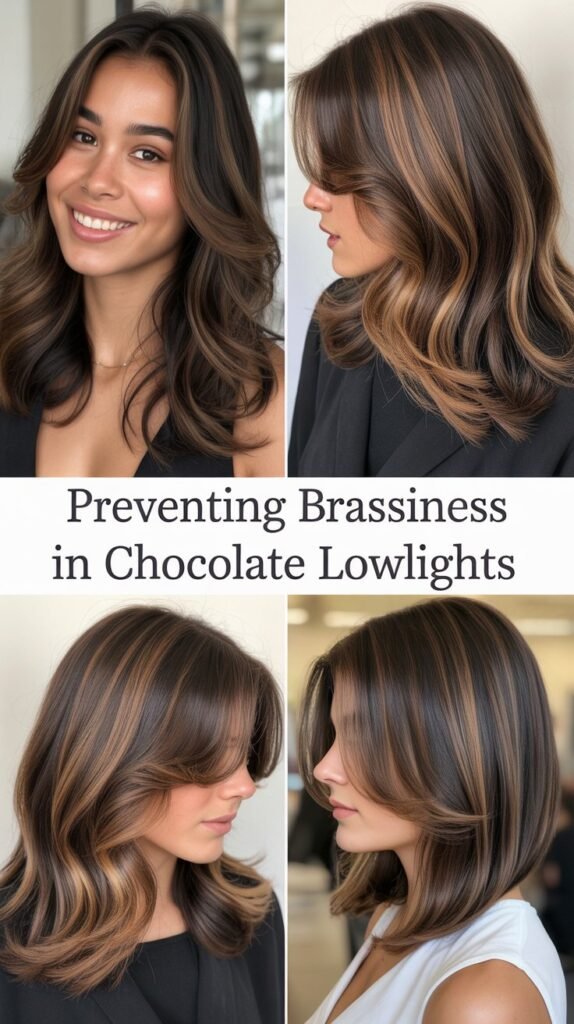
Proactive measures and corrective treatments keep chocolate lowlights looking rich and true to tone.
- Brassiness occurs when cool pigments fade, revealing underlying warm tones in the hair.
- Using purple or blue-toned shampoos weekly helps neutralize unwanted warm tones as they develop.
- Limiting heat styling and sun exposure significantly reduces the oxidation that causes brassy color shifts.
- Professional toning services quickly correct brass by depositing cool pigments that neutralize warmth.
- Color-depositing conditioners in chocolate or ash tones help maintain cool, rich lowlight color between appointments.
- Avoiding products containing sulfates, which strip color and accelerate brassiness development.
- Hard water minerals contribute to brass development, making chelating treatments or filtered water important preventive measures.
27. Lowlights for Adding Volume Appearance
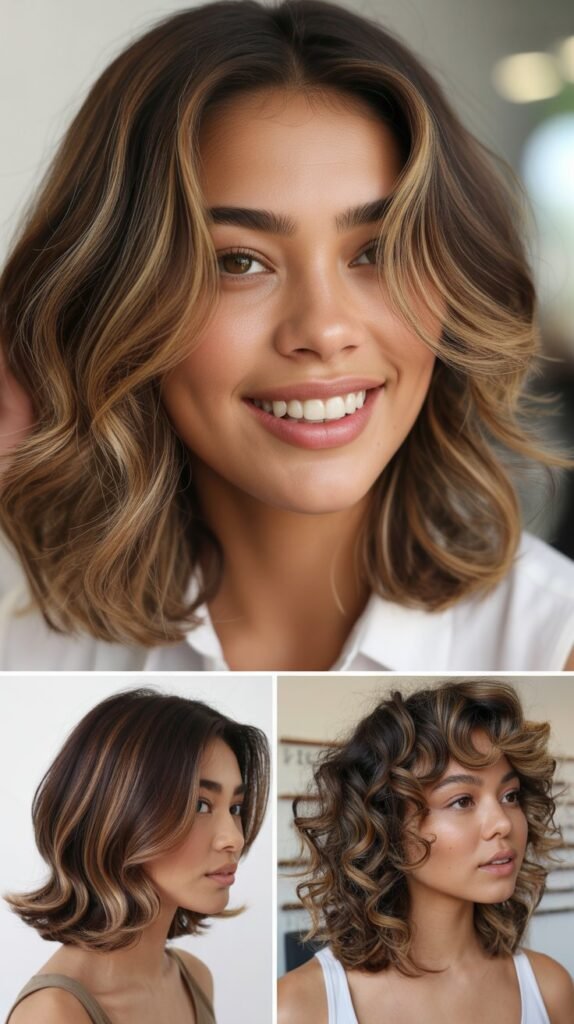
Strategic lowlight placement creates optical illusions that make hair appear fuller and more voluminous.
- Darker lowlights placed at the roots create shadow that makes the crown area appear lifted and fuller.
- Alternating light and dark sections throughout the hair creates dimension that tricks the eye into perceiving more volume.
- Concentrating lowlights at the back and sides while keeping face-framing areas lighter creates flattering fullness.
- The contrast between base color and lowlights defines individual hair strands, making the overall style appear denser.
- Lowlights work synergistically with layered cuts to maximize the volumizing optical effect.
- Placing lowlights strategically throughout thinning areas camouflages sparse sections effectively.
- The three-dimensional color effect created by lowlights makes hair appear to have more body and movement.
28. Lowlights on Previously Colored Hair
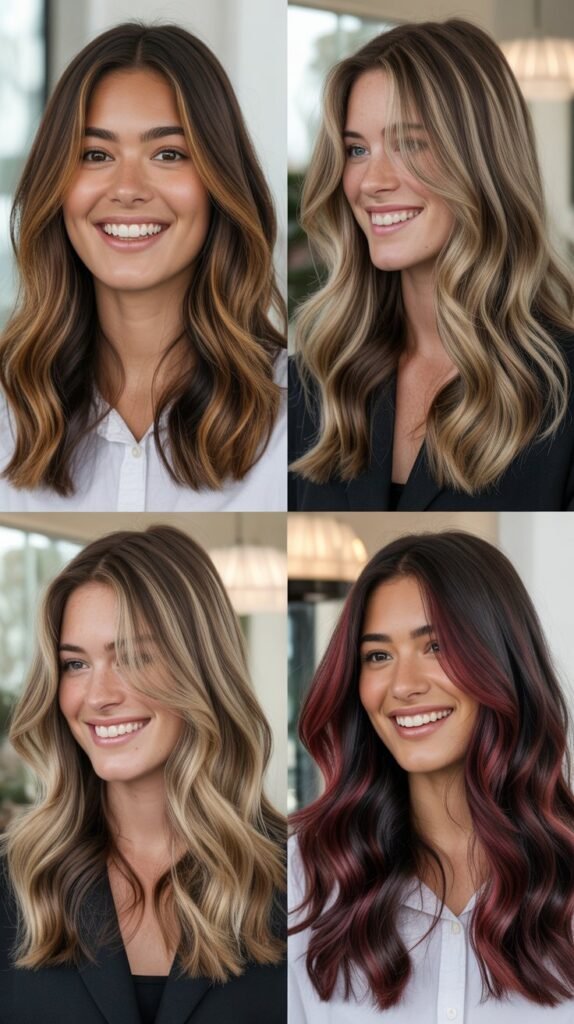
Applying lowlights to hair with existing color requires special consideration and technique adjustments.
- Previously lightened or highlighted hair may require color filling before lowlight application to ensure even color deposit.
- Hair with existing permanent color may not accept lowlights as readily, potentially requiring pre-lightening in select sections.
- Professional assessment of hair history prevents unexpected color results and ensures successful lowlight application.
- Overlapping lowlights on previously colored sections requires careful timing to avoid over-processing and damage.
- Strand testing helps predict how lowlights will interact with existing color before committing to full application.
- Color correction may be necessary before lowlighting if previous color has faded unevenly or developed unwanted tones.
- Building color gradually over multiple appointments often produces better results than attempting dramatic changes on previously colored hair.
29. Maintaining Healthy Hair with Lowlights
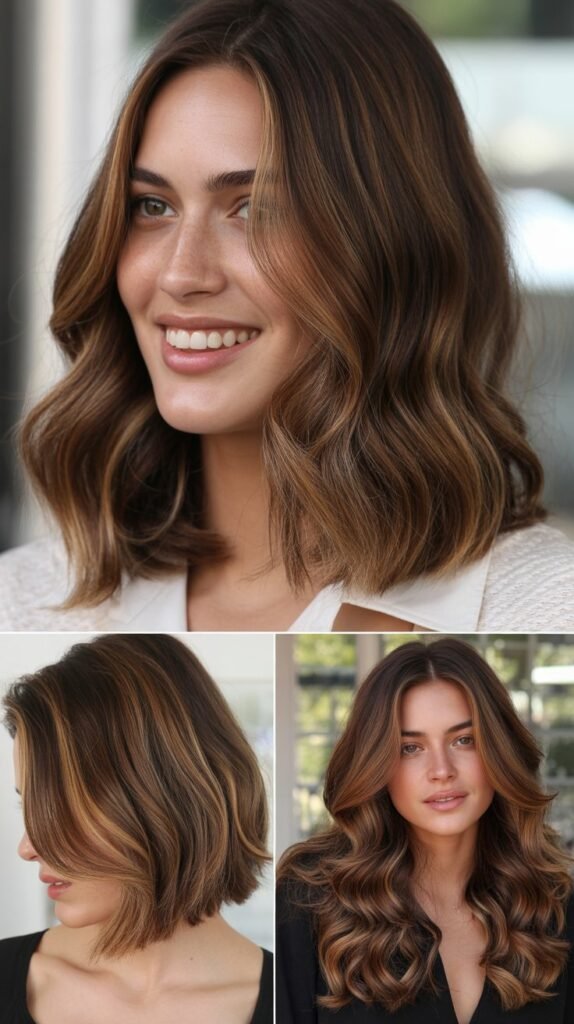
Preserving hair health during and after lowlight application ensures beautiful results and long-term hair quality.
- Using bond-building treatments during color application protects hair structure from chemical processing.
- Deep conditioning masks applied weekly restore moisture and prevent brittleness in lowlighted hair.
- Regular trims every 6-8 weeks remove damaged ends and maintain healthy appearance throughout the hair.
- Protein treatments strengthen hair structure that may be compromised by repeated color applications.
- Minimizing heat styling allows hair to recover between color appointments and prevents cumulative damage.
- Sleep on silk or satin pillowcases to reduce friction that can damage color-treated hair.
- Professional consultation about hair health should occur at every color appointment to adjust processing techniques as needed.
30. Seasonal Trends in Lowlight Colors
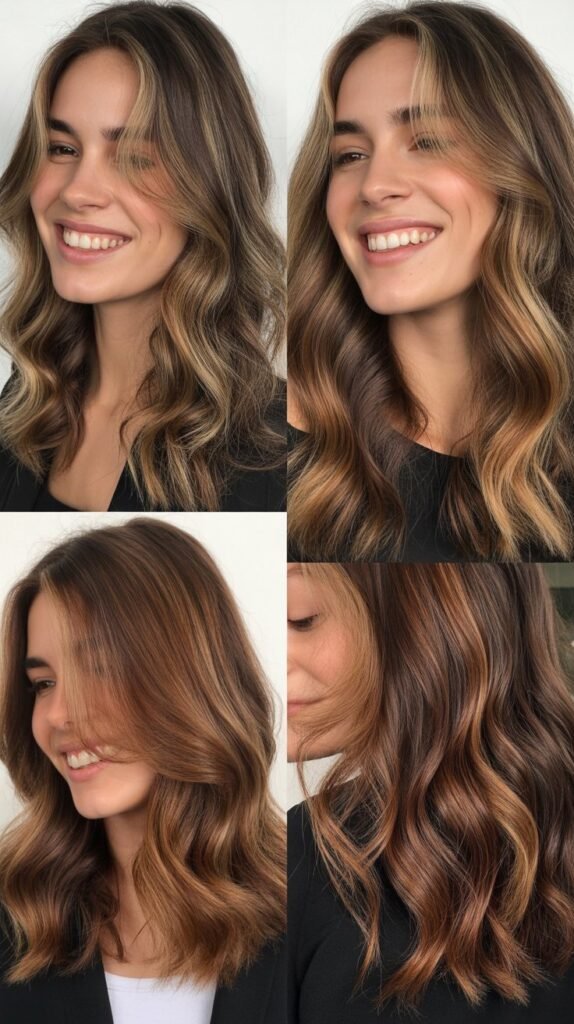
Staying current with lowlight color trends while maintaining your signature chocolate brown provides fresh, modern dimension.
- Current trends favor multi-dimensional lowlights that incorporate several complementary shades rather than single-tone applications.
- Rich, moody lowlights in burgundy, plum, and deep cherry tones are popular for fall and winter looks.
- Subtle, cool-toned lowlights in ash and mushroom brown create sophisticated spring and summer dimension.
- Money piece lowlights (concentrated face-framing color) have gained popularity for dramatic yet wearable dimension.
- Chocolate cherry lowlights combining brown and red tones offer on-trend warmth and depth.
- Dimensional lowlights that create shadow root effects provide low-maintenance style that remains trendy.
- Following color trends should always be balanced with what genuinely flatters your individual features and style.
31. Lowlights for Different Age Groups
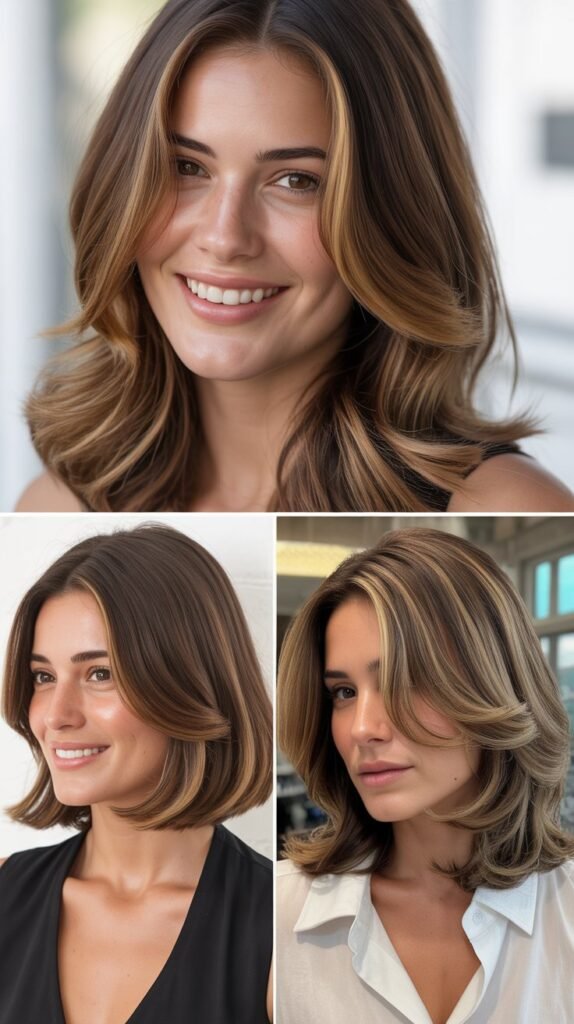
Age-appropriate lowlight selection and placement creates flattering dimension for every life stage.
- Younger clients often experiment with bolder, more dramatic lowlight contrast and trendier color combinations.
- Thirties and forties typically prefer sophisticated, natural-looking lowlights that add polish without appearing trendy.
- Mature clients often select lowlights primarily for gray coverage and face-softening dimension.
- Face-framing lowlights that are too dark can create shadows that emphasize aging concerns in mature clients.
- Softer, blended lowlights generally prove more flattering as skin loses firmness and develops fine lines.
- Cool-toned lowlights can sometimes emphasize sallow skin tones in mature complexions, requiring careful shade selection.
- Professional colorists should adjust lowlight placement and contrast levels based on age-related facial changes.
32. Correcting Over-Processed Lowlights
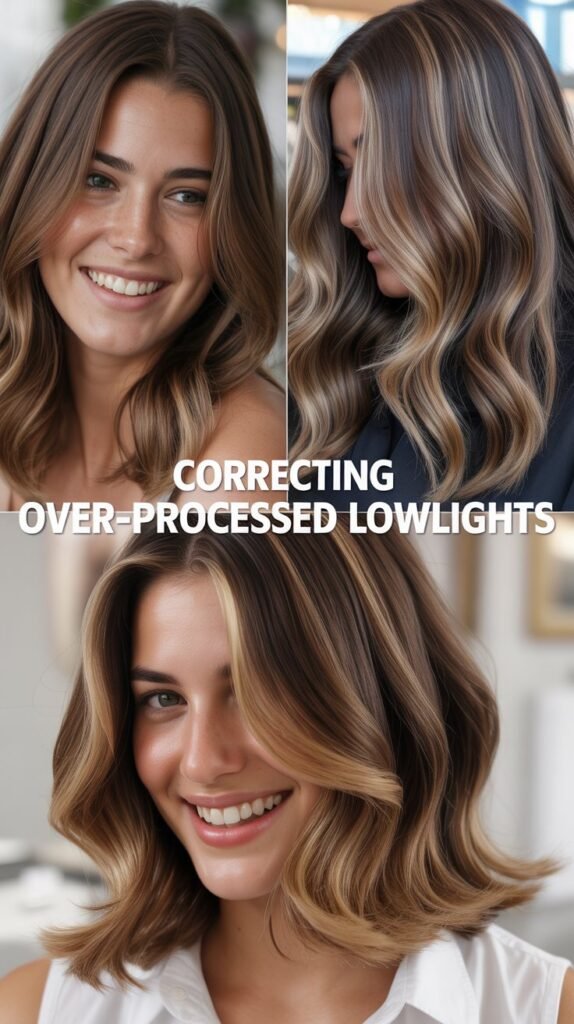
Understanding recovery techniques helps salvage lowlights that have been processed too darkly or unevenly.
- Over-darkened lowlights can be lightened using professional color removers followed by toning to desired shade.
- Uneven lowlight application may require additional lowlights in sparse areas to create balanced dimension.
- Excessively processed hair requires intensive conditioning treatments before attempting color correction.
- Gradual color correction over multiple appointments is safer for hair health than aggressive single-session fixes.
- Sometimes allowing over-dark lowlights to fade naturally for 4-6 weeks before correcting produces better results.
- Adding lighter pieces through balayage or highlights can balance lowlights that appear too heavy.
- Professional correction should always be prioritized over DIY attempts when dealing with significant color problems.
33. Lowlights and Hair Growth Patterns
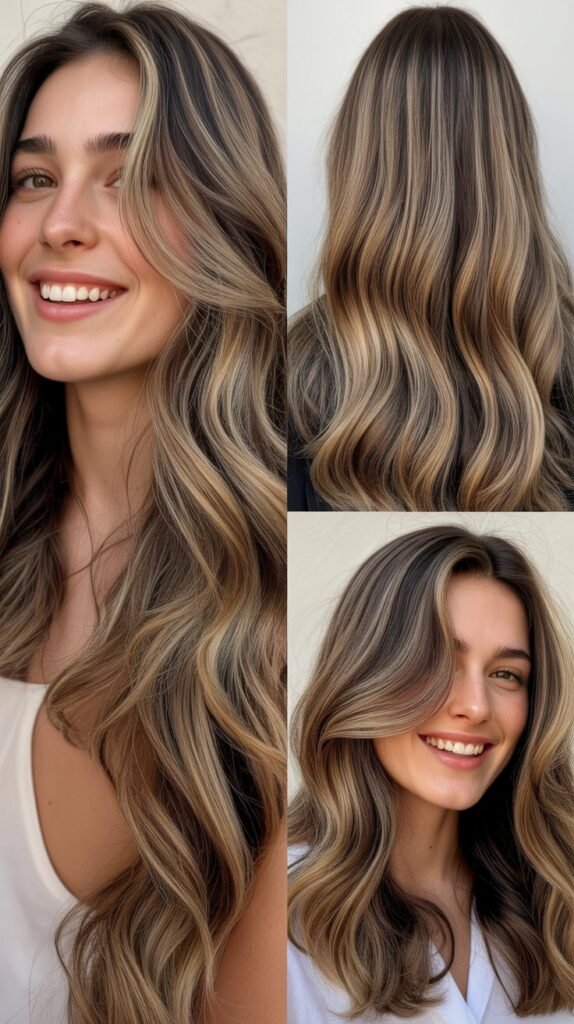
Working with natural growth patterns ensures lowlights fall naturally and maintain their intended effect.
- Lowlights should follow the hair’s natural fall and movement rather than fighting against growth patterns.
- Cowlicks and growth whorls require special lowlight placement consideration to prevent unnatural color appearance.
- Clients who frequently change their part should receive lowlights that work beautifully with multiple parting options.
- Forward-growing hair at the crown benefits from lowlights placed to enhance rather than disrupt natural direction.
- Identifying growth patterns during consultation ensures lowlight placement complements hair’s natural behavior.
- Lowlights placed against natural growth direction may not blend properly when hair is styled naturally.
- Professional colorists assess hair when dry and in natural fall to plan optimal lowlight placement.
34. Lowlights for Special Occasions
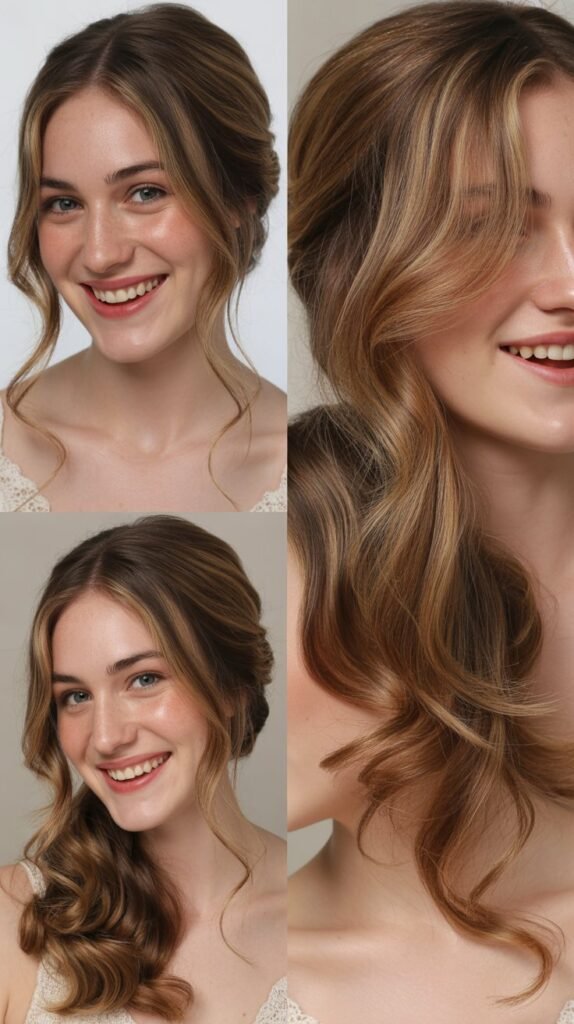
Timing and customizing lowlight services around special events ensures picture-perfect dimensional color.
- Scheduling lowlight appointments 7-10 days before events allows color to settle and oxidize to true tone.
- Special occasion lowlights may incorporate temporary tones that can be removed after the event.
- More dramatic lowlight contrast creates beautiful dimension in professional photography.
- Glossing treatments immediately before events maximize shine and color vibrancy for photos.
- Communicating event details (indoor/outdoor, lighting, photography) helps colorists customize lowlight placement.
- Trial runs for major events like weddings ensure satisfaction with lowlight results before the big day.
- Post-event color maintenance plans should be discussed to transition from special occasion lowlights to everyday color.
35. Lowlights and Curl Definition
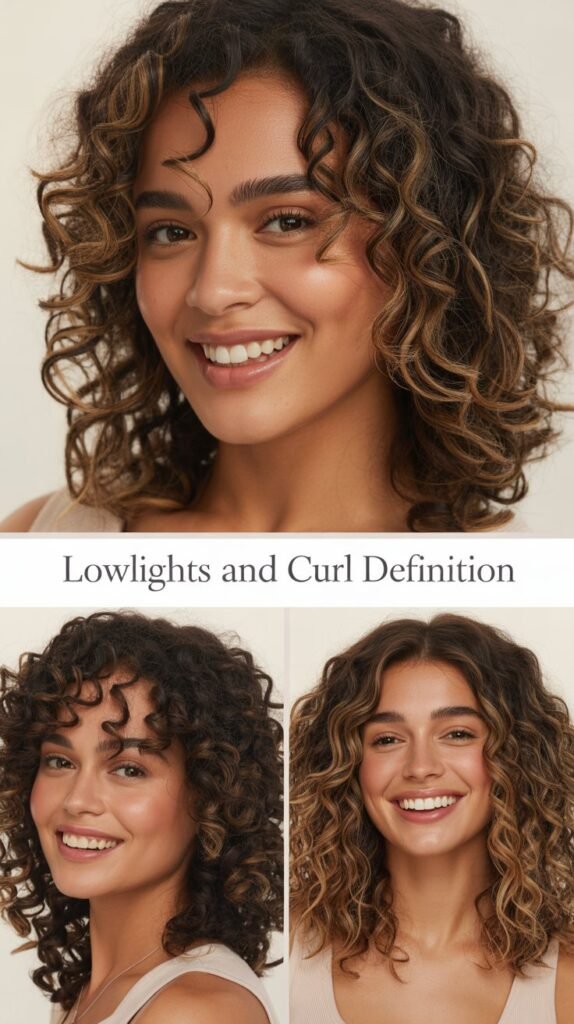
Understanding how lowlights interact with curl patterns maximizes dimensional beauty in textured hair.
- Lowlights create contrast that defines individual curl clumps and enhances natural curl pattern visibility.
- Placing lowlights at varying depths throughout curly hair prevents color from appearing flat when curls spring up.
- Curly hair’s natural dimension means lowlights can be chunkier without appearing obvious or striped.
- Processing time may need adjustment for curly hair since the curl pattern can affect even color saturation.
- Specialized curl-friendly colorists understand how to place lowlights that enhance rather than disrupt curl formation.
- The three-dimensional nature of curls creates beautiful light-catching effects with properly placed lowlights.
- Moisture-rich post-color treatments are especially important for maintaining curl health and definition.
36. Lowlight Placement for Movement
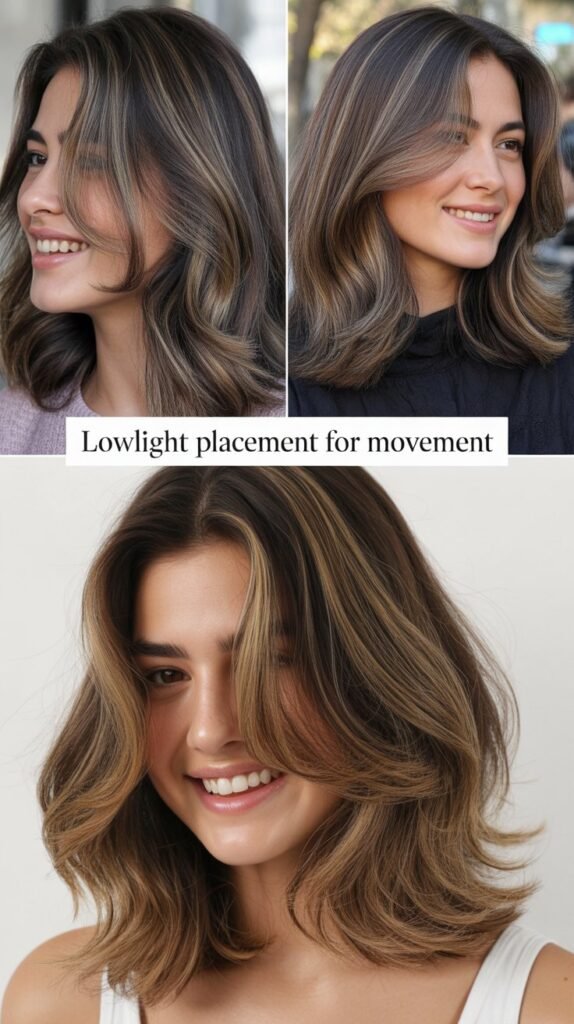
Strategic color placement enhances hair’s natural movement and creates flowing dimensional effects.
- Vertical lowlight placement creates sleek, elongating effects in straight hair styles.
- Diagonal lowlight sections create dynamic movement that’s visible from multiple angles.
- Concentrating lowlights in the mid-lengths and ends where hair moves most creates maximum dimensional impact.
- Avoiding rigid horizontal sections prevents lowlights from appearing striped or static.
- Layered haircuts showcase lowlights more effectively because the varied lengths create natural movement.
- Lowlights placed too close to the scalp can appear heavy and reduce the sense of movement.
- Balayage lowlight techniques naturally create movement-enhancing placement through their freehand application method.
37. Lowlights for Professional Settings
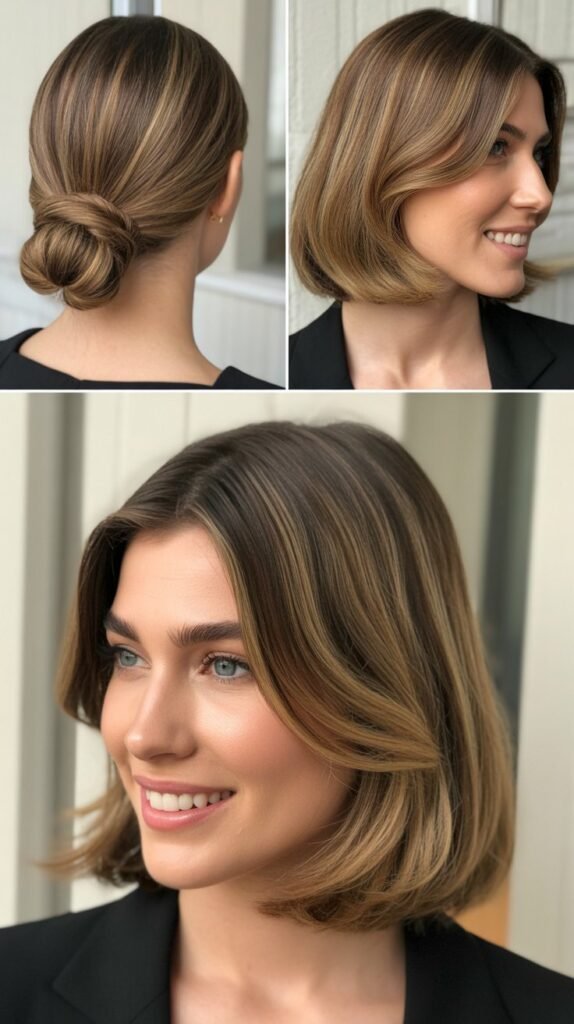
Creating workplace-appropriate dimensional color requires balancing impact with conservative professional standards.
- Subtle lowlights only 1-2 shades darker than base color maintain professional appearance in conservative industries.
- Natural-looking lowlights in chocolate and espresso tones are universally workplace-appropriate.
- Avoiding unconventional lowlight colors (purple, blue, green) in traditional professional environments.
- Well-blended lowlights create polish and dimension without appearing trendy or distracting.
- Creative industries often welcome more dramatic lowlight contrast and dimensional effects.
- Professional lowlights should enhance grooming and polished appearance rather than drawing excessive attention.
- Discussing workplace culture with your colorist helps select appropriately subtle or bold lowlight applications.
38. Lowlights and Makeup Coordination
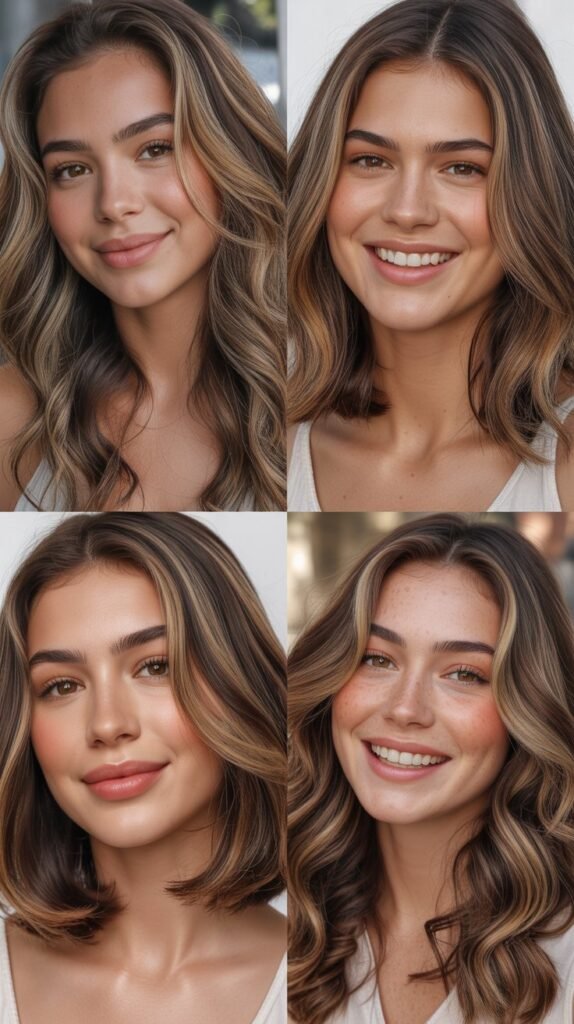
Harmonizing lowlight colors with makeup choices creates cohesive, polished overall appearance.
- Warm-toned lowlights pair beautifully with bronze, peach, and warm brown makeup palettes.
- Cool-toned lowlights complement mauve, cool pink, and silver-toned makeup applications.
- Neutral chocolate lowlights provide flexibility to wear any makeup color palette successfully.
- Rich lowlight dimension allows bolder makeup choices without overwhelming the overall appearance.
- Coordinating lip color intensity with lowlight contrast creates balanced, harmonious looks.
- Deep chocolate lowlights can support more dramatic eye makeup without appearing excessive.
- Professional makeup artists can recommend complementary products based on your specific lowlight tones.
39. Lowlights During Hair Transitions
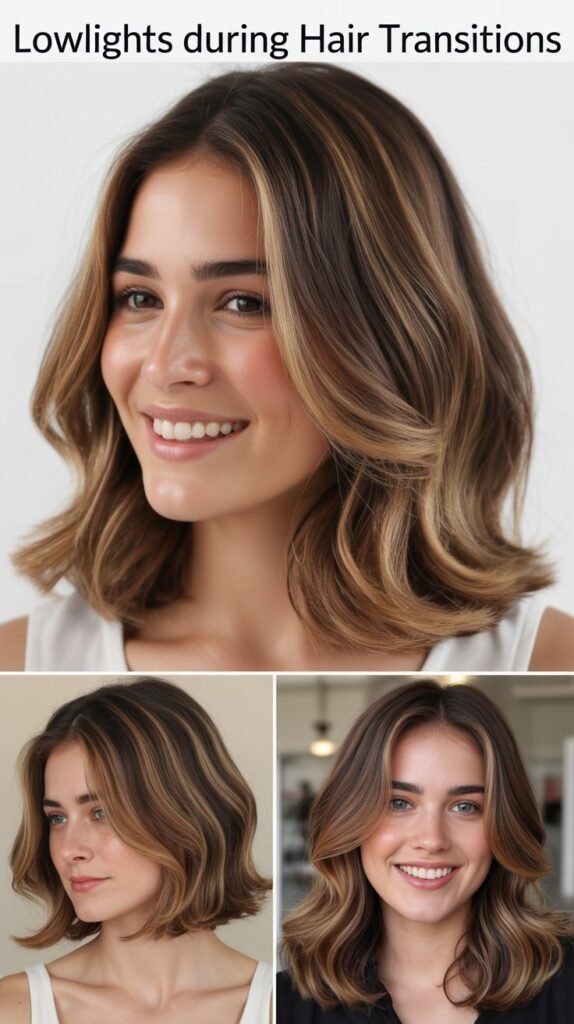
Supporting hair through growth, cut, or style transitions with strategic lowlight applications.
- Growing out shorter cuts benefits from lowlights that maintain dimension through awkward intermediate lengths.
- Transitioning from very short to longer hair can be supported with progressive lowlight applications that add interest during growth.
- Lowlights help blend demarcation lines when growing out previous color or gray coverage.
- Changing from long to short hair may require lowlight placement adjustment to suit the new style.
- Texture transitions (straightened to natural, etc.) work better with lowlights that complement the emerging texture.
- Root touch-ups can be timed with transitional haircuts to refresh overall appearance simultaneously.
- Discussing long-term hair goals with your colorist ensures lowlight applications support rather than hinder transitions.
40. Lowlights and Personal Style Expression
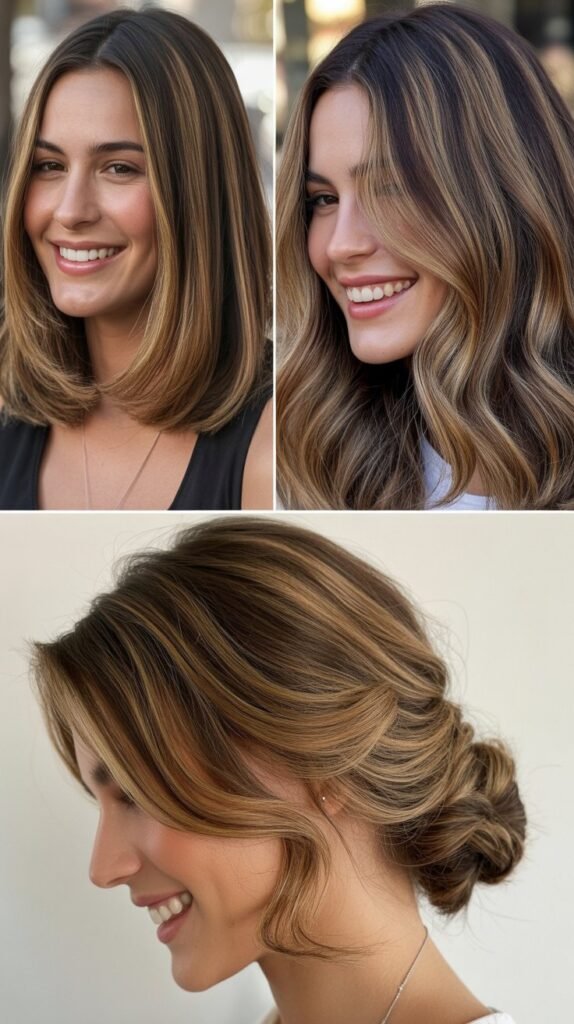
Customizing lowlight approach to reflect individual personality, lifestyle, and aesthetic preferences.
- Classic style preferences align with subtle, natural-looking lowlights in traditional chocolate tones.
- Bohemian aesthetics embrace warmer, sun-kissed lowlights with relaxed, lived-in dimensional effects.
- Edgy personal styles can incorporate bolder lowlight contrast and unconventional placement patterns.
- Romantic preferences often favor soft, blended lowlights in warm, dimensional chocolate shades.
- Minimalist aesthetics appreciate subtle lowlights that add dimension without obvious color variation.
- Glamorous styles benefit from high-contrast lowlights that create drama and visual impact.
- Your lowlights should feel authentically “you” rather than following trends that don’t align with personal style.
41. Lowlights for Active Lifestyles
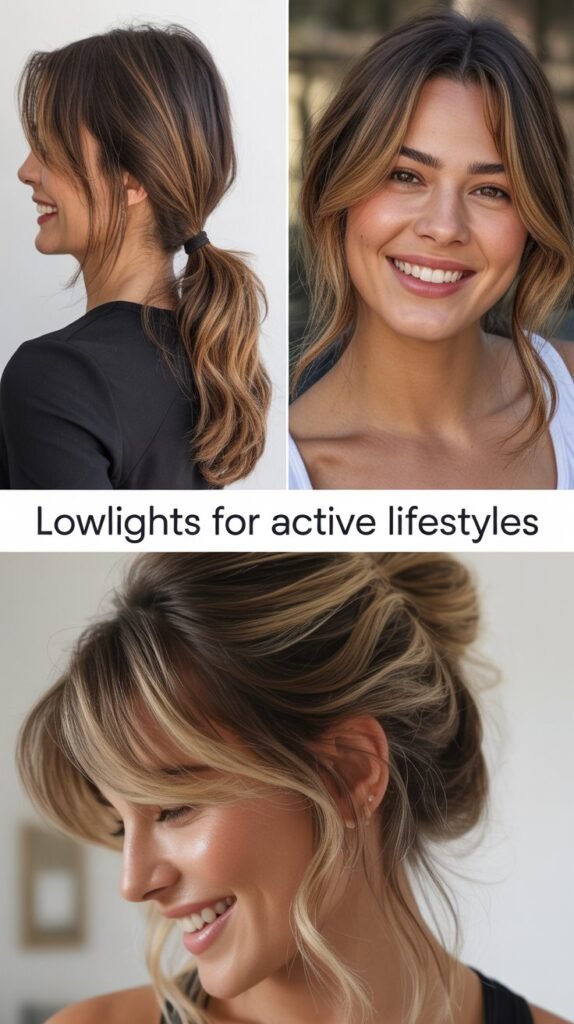
Selecting low-maintenance lowlight approaches that withstand athletic activities and busy schedules.
- Lower contrast lowlights require less frequent maintenance, ideal for those with minimal salon time.
- Lowlights generally withstand chlorine and salt water better than highlights, making them swimmer-friendly.
- Deep conditioning treatments become especially important for active individuals to maintain lowlight vibrancy.
- Protective hairstyles during intense workouts prevent friction damage that can fade lowlights prematurely.
- Dry shampoo helps extend time between washes, preserving lowlight color for busy schedules.
- UV protection products are essential for outdoor athletes to prevent sun-induced fading.
- Scheduling maintenance appointments during off-season or less busy periods helps maintain consistent color.
42. Lowlights and Skin Undertone Matching
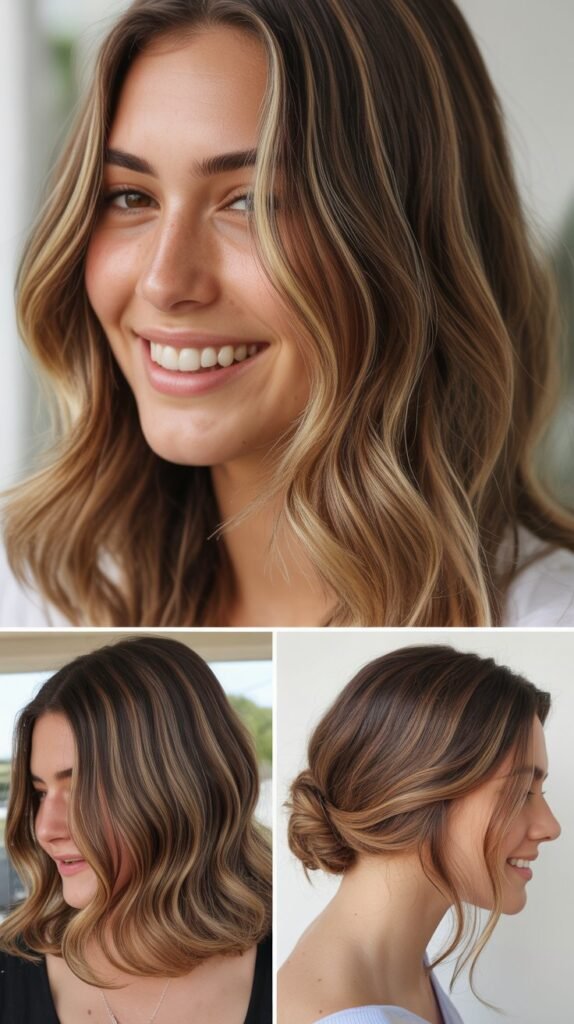
Precise undertone matching between lowlights and complexion creates the most flattering, harmonious results.
- Professional undertone assessment involves examining wrist veins, jewelry preferences, and how skin reacts to different colors.
- Warm undertones typically have greenish veins and look best in gold jewelry and warm-toned lowlights.
- Cool undertones usually have bluish veins, prefer silver jewelry, and suit cool-toned lowlight selections.
- Neutral undertones can wear both warm and cool lowlights successfully, offering maximum flexibility.
- Testing lowlight swatches near the face in natural lighting confirms complementary undertone matching.
- Mismatched undertones create subtle discord that may not be immediately identifiable but affects overall harmony.
- Professional colorists should perform undertone analysis as part of every lowlight consultation.
43. Fixing Patchy or Uneven Lowlights
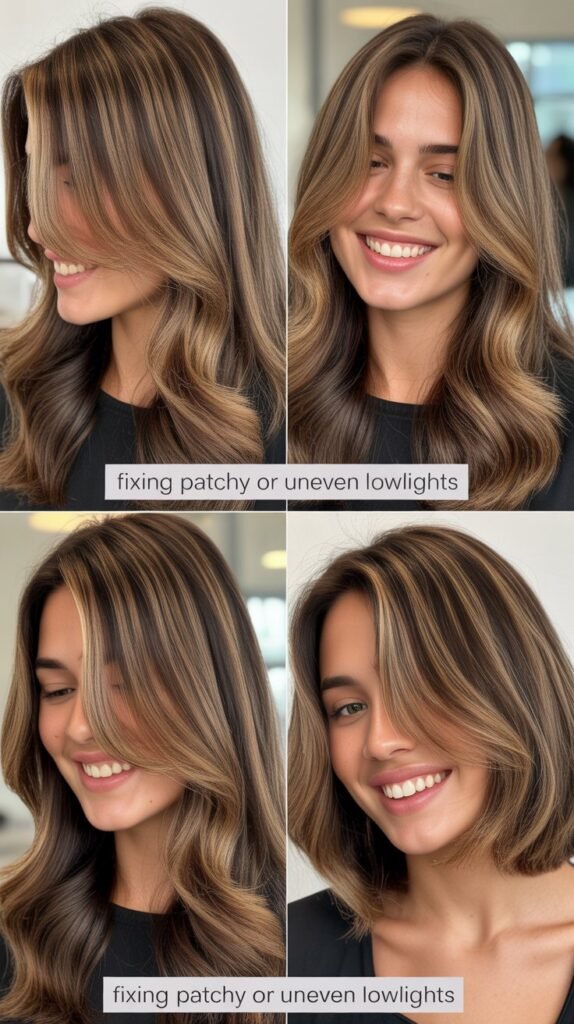
Correction techniques for lowlight applications that didn’t process evenly or were applied inconsistently.
- Patchy lowlights often result from uneven saturation during application or inconsistent processing time.
- Additional lowlights can be added to sparse areas to create even dimensional distribution.
- Toning services can help even out lowlights that processed to slightly different shades.
- Over-developed sections may be lightened slightly while under-developed areas receive additional color deposit.
- Sometimes allowing patchy lowlights to fade for several weeks creates a better canvas for correction.
- Professional correction should assess why the original application failed to prevent repeat issues.
- Complete color removal and reapplication may be necessary in extreme cases of uneven lowlight processing.
44. Lowlights for Hair Photography
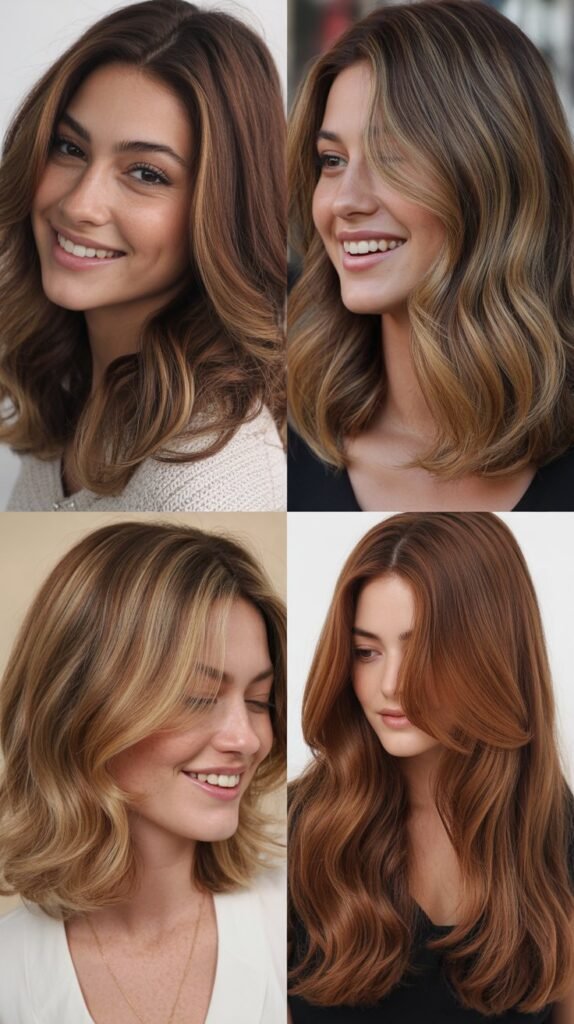
Optimizing lowlight placement and contrast specifically for photographic results and portfolio images.
- Higher contrast lowlights create more visible dimension in photographs than subtle lowlights.
- Professional photography lighting reveals lowlight placement and blending with exceptional clarity.
- Glossing treatments immediately before photo sessions maximize shine and color vibrancy in images.
- Discussing photography plans with your colorist allows optimization of lowlight placement for cameras.
- Natural outdoor lighting often requires different lowlight contrast than indoor photography for optimal results.
- Flash photography can wash out subtle lowlights, making moderate contrast ideal for event photography.
- Professional hair photographers often request specific lowlight placement to achieve desired editorial effects.
45. Lowlights and Chemical Treatments
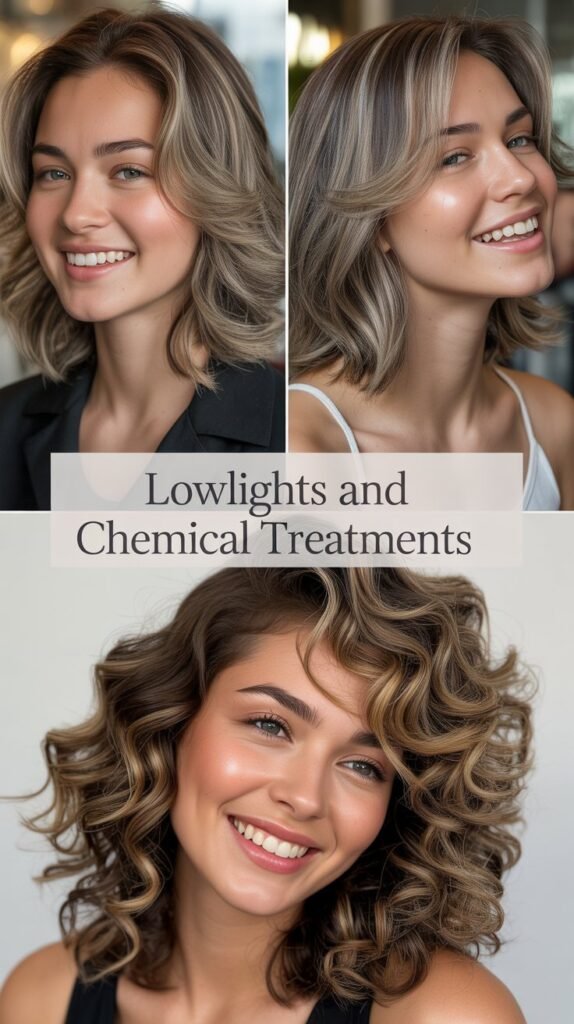
Coordinating lowlights with other chemical services like perms, relaxers, and keratin treatments.
| Chemical Service | Timing Recommendation | Special Considerations |
|---|---|---|
| Keratin Treatment | 2 weeks after lowlights | Can slightly lighten lowlight color |
| Chemical Relaxer | 2-4 weeks before lowlights | Highly processed hair needs recovery time |
| Perm | 1 week before lowlights | Ensures curl pattern is set before coloring |
| Brazilian Blowout | 2 weeks after lowlights | May alter lowlight tone slightly |
- Combining multiple chemical processes requires careful timing to prevent excessive damage.
- Hair may need intensive conditioning treatments between chemical services to maintain integrity.
- Lowlights generally tolerate chemical straightening better than highlights since they don’t require lightening.
- Professional assessment of hair condition determines whether it can safely undergo multiple chemical processes.
- Some chemical treatments may slightly alter lowlight color, requiring post-treatment toning.
- Protein treatments before and after chemical services help maintain hair strength and lowlight vibrancy.
46. Lowlights for Covering Brassy Hair
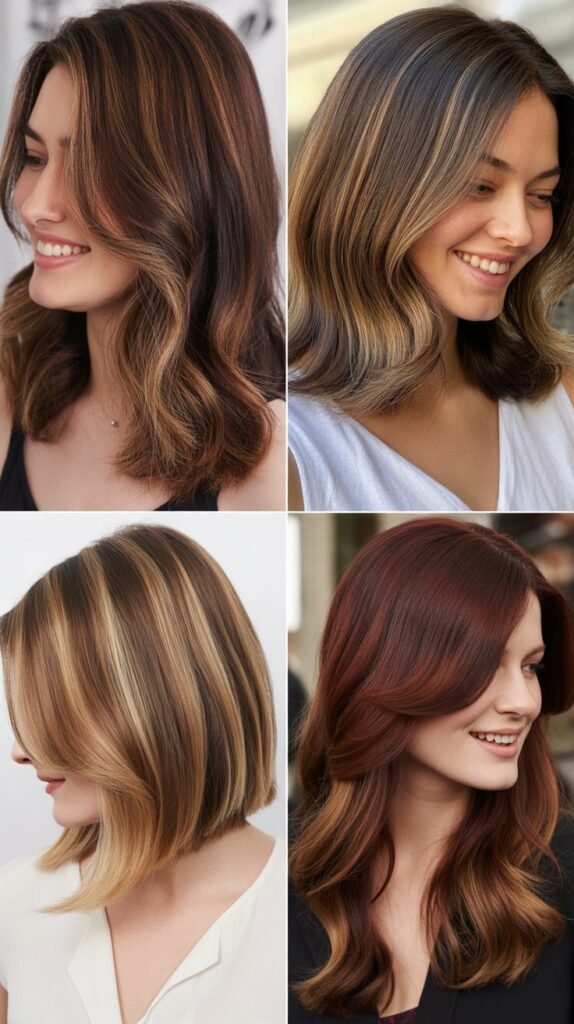
Using lowlights strategically to neutralize and cover unwanted warm tones in previously colored hair.
- Cool-toned lowlights in ash or neutral chocolate shades help neutralize existing brassiness.
- The added dimension from lowlights draws attention away from remaining warm tones.
- Combining toning service with lowlight application provides comprehensive brass correction.
- Lowlights offer a gentler alternative to aggressive color correction that can damage hair.
- Strategic placement of ash-toned lowlights throughout brassy areas provides effective neutralization.
- Maintaining lowlights with purple-toned products prevents brass from redeveloping.
- The dimensional effect from lowlights makes any remaining warmth appear intentional rather than unwanted.
47. Lowlights for Fine Hair
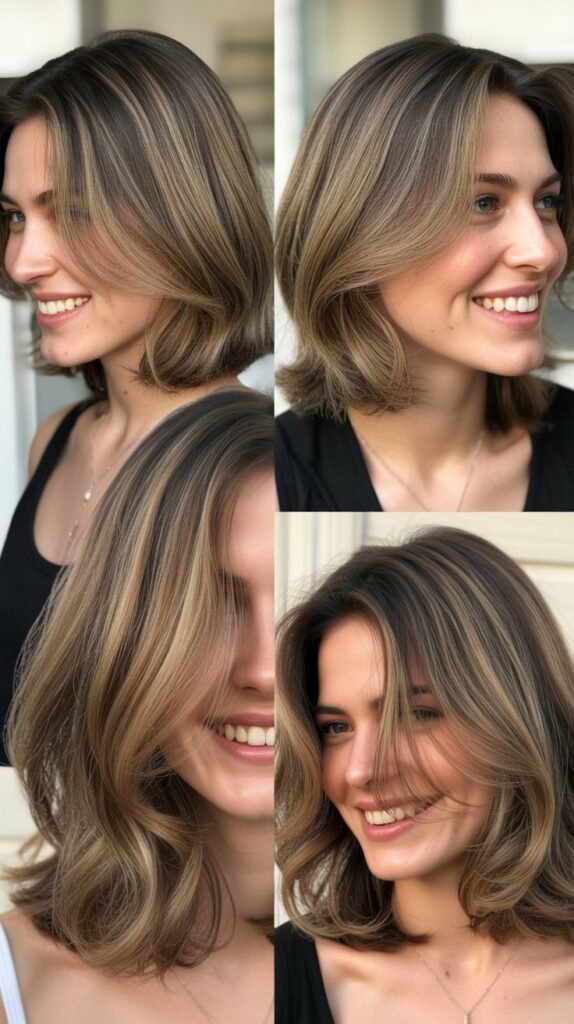
Specialized lowlight techniques that add dimension to fine hair without appearing heavy or overwhelming.
- Fine lowlight sections (baby-fine weaves) prevent color from appearing too chunky on delicate hair.
- Lower contrast between base and lowlights maintains lightweight, natural appearance on fine textures.
- Concentrating lowlights at mid-lengths and ends rather than roots prevents flat, weighed-down appearance.
- Fine hair benefits from slightly more lowlight sections to create visible dimension without heavy contrast.
- Avoiding excessive product during lowlight application prevents residue that weighs down fine hair.
- Precision placement becomes especially important since fine hair displays color with exceptional clarity.
- Combining fine lowlights with strategic highlighting creates maximum dimension for fine hair types.
48. Lowlights for Thick Hair
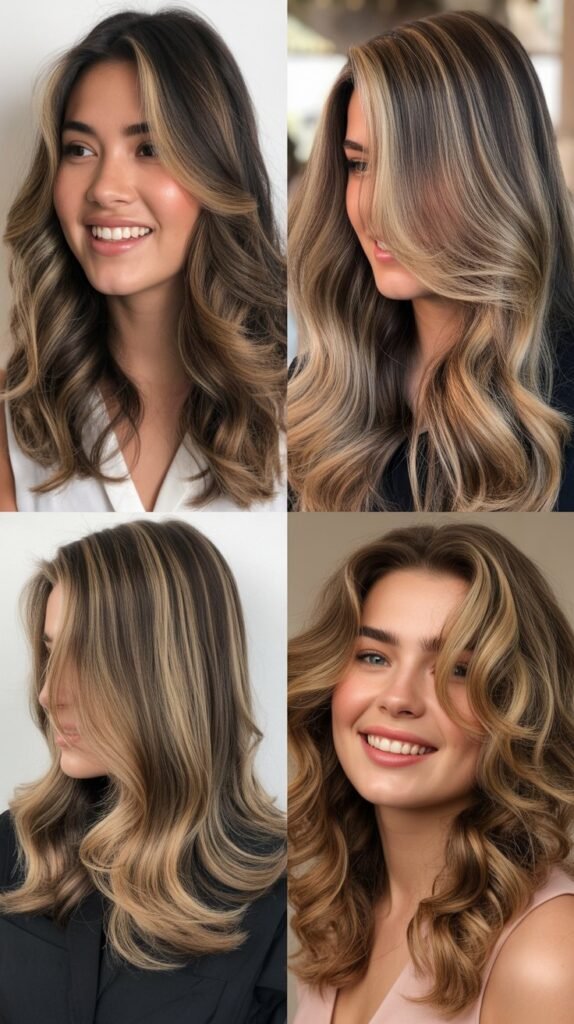
Approaches to lowlighting dense, thick hair that ensure even saturation and beautiful dimensional results.
- Thick hair requires more numerous lowlight sections to achieve visible dimensional effects throughout.
- Smaller, more manageable sections ensure even saturation and consistent color processing.
- Processing time may need extension for thick hair to achieve desired lowlight depth.
- The density of thick hair naturally creates dimension, allowing bolder lowlight placement.
- Thick hair can support higher contrast lowlights without appearing overdone or harsh.
- Strategic interior lowlighting prevents the depth of thick hair from appearing flat or one-dimensional.
- Professional application becomes especially important for thick hair due to complexity and time requirements.
49. Lowlights and Scalp Sensitivity
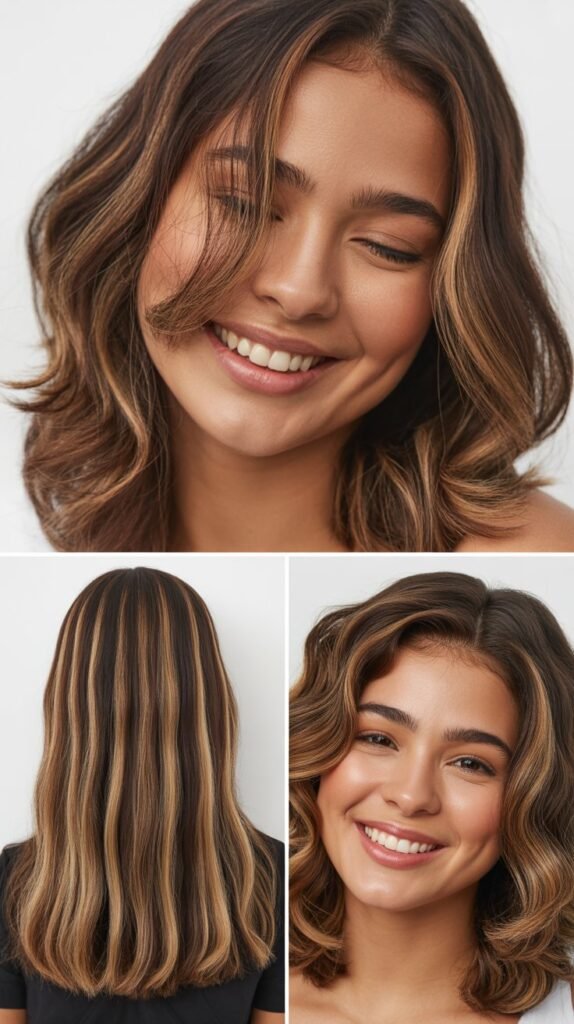
Accommodating sensitive scalps during lowlight application while still achieving beautiful dimensional results.
- Off-scalp lowlight application keeps color away from sensitive skin while still creating beautiful dimension.
- Patch testing 48 hours before service identifies potential allergic reactions to lowlight formulations.
- Barrier creams applied at the hairline protect sensitive scalp areas during color processing.
- Ammonia-free or low-ammonia lowlight formulas reduce irritation for sensitive scalps.
- Shorter processing times minimize scalp exposure to chemical formulations.
- Discussing scalp sensitivity during consultation allows colorists to select appropriate products and techniques.
- Some salons offer organic or naturally-derived lowlight options for extremely sensitive clients.
50. Lowlights for Volume-Boosting Haircuts
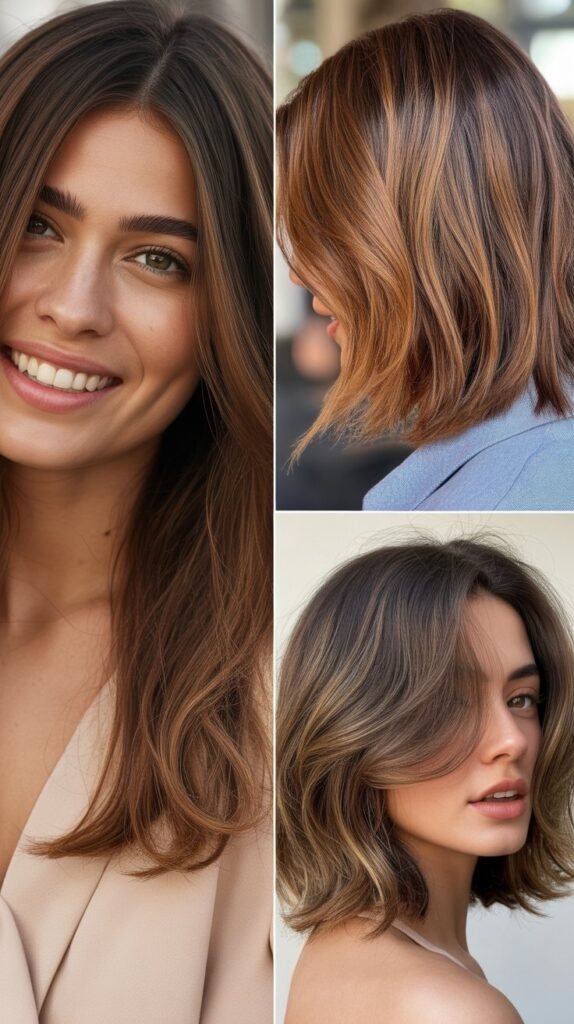
Coordinating lowlight placement with volume-enhancing cuts to maximize dimensional impact.
- Layered cuts showcase lowlights through varied lengths that reveal color dimension from multiple angles.
- Lowlights placed to follow layer pattern enhance the volumizing effect of the cut.
- Graduated and stacked styles benefit from lowlights concentrated in visible, movement-creating areas.
- Texturized cuts with choppy ends display lowlights beautifully through piece-y, defined sections.
- Coordinating lowlight placement with cutting consultation ensures color enhances intended style effects.
- The illusion of volume created by dimensional lowlights works synergistically with volume-boosting cuts.
- Professional stylists who both cut and color can create the most cohesive, dimensional results.
51. Maintaining Lowlights Between Appointments
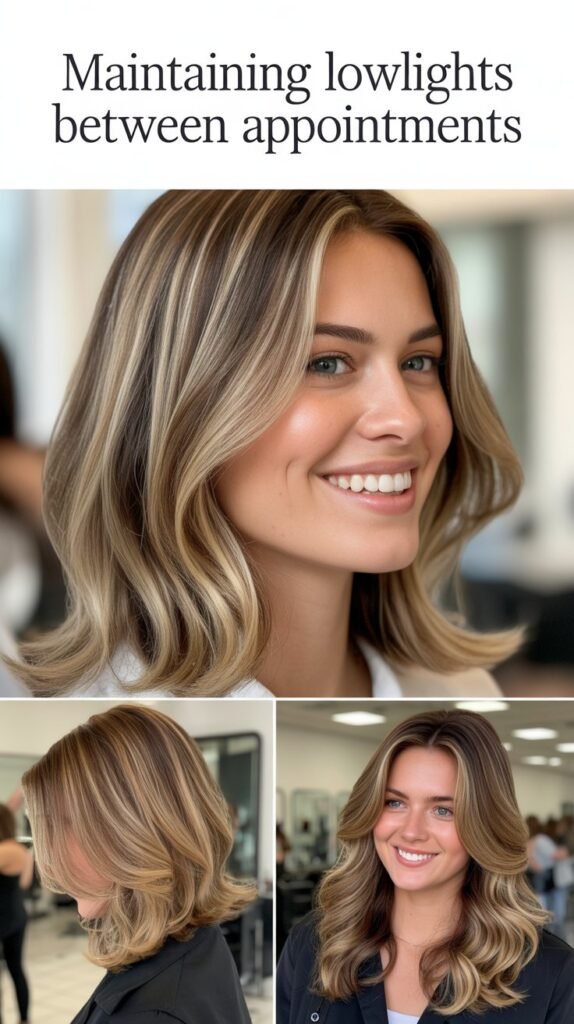
Home care strategies and professional treatments that extend lowlight beauty between salon visits.
- Color-depositing conditioners in chocolate tones refresh lowlight richness between professional services.
- Limiting washing to 2-3 times weekly prevents premature color fade and maintains vibrancy.
- Cold water rinses seal the hair cuticle, locking in lowlight color and enhancing shine.
- UV protection sprays prevent sun-induced fading during outdoor exposure.
- Professional gloss treatments every 4-6 weeks maintain optimal lowlight tone and shine.
- Avoiding clarifying shampoos that strip color helps lowlights last their maximum duration.
- Deep conditioning treatments weekly maintain hair health and color retention simultaneously.
52. Lowlights and Hair Porosity
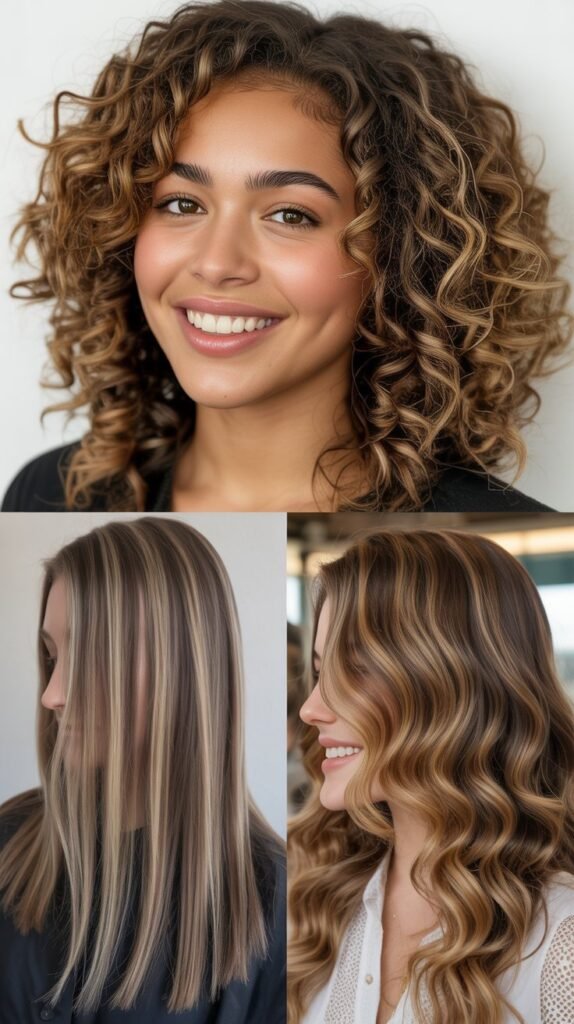
Understanding how hair porosity affects lowlight color uptake and longevity optimizes results.
- Low porosity hair resists color penetration, potentially requiring longer processing time for lowlights.
- High porosity hair absorbs color quickly but may fade faster, requiring more frequent maintenance.
- Normal porosity hair accepts and retains lowlight color optimally with standard processing times.
- Pre-treating high porosity hair with protein fillers ensures even lowlight color absorption.
- Gentle heat application can help lowlights penetrate low porosity hair more effectively.
- Color-protecting products become especially important for high porosity hair to maximize lowlight longevity.
- Professional porosity assessment during consultation ensures appropriate lowlight formulation and timing.
53. Lowlights for Reducing Hair Color Upkeep
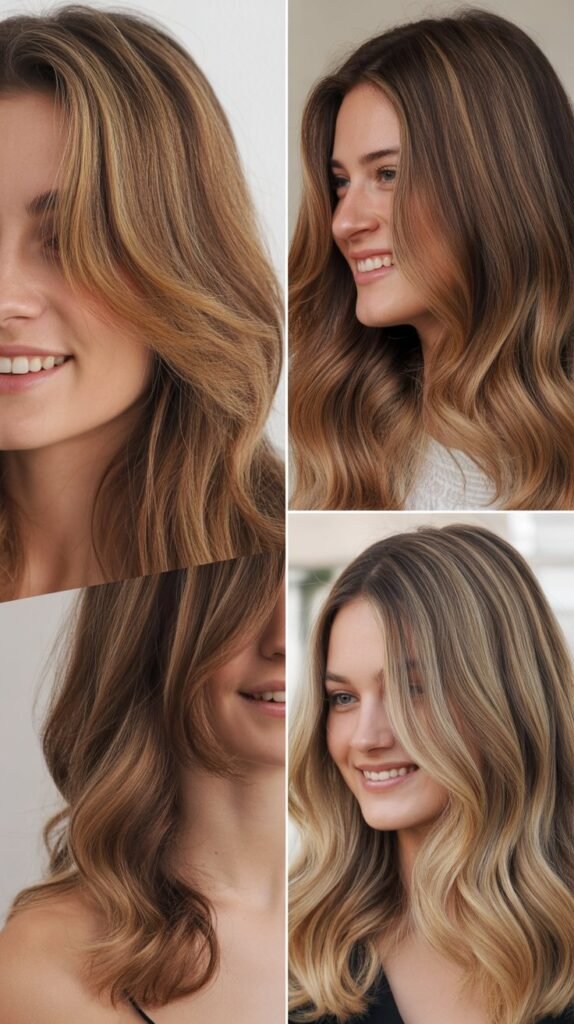
Strategic lowlight placement and color selection that minimizes maintenance requirements.
- Shadow root lowlights create intentional depth at roots that blends seamlessly with new growth.
- Lower contrast lowlights extend time between touch-ups by blending more naturally with regrowth.
- Concentrating lowlights away from the hairline creates softer grow-out that appears intentional.
- Selecting lowlight shades close to natural hair color maximizes time between maintenance appointments.
- Balayage-style lowlights grow out more gracefully than traditional foiled applications.
- Clients seeking minimum maintenance should avoid face-framing lowlights that show regrowth prominently.
- Quarterly lowlight refresh schedules work well for low-maintenance dimensional color.
54. Lowlights and Fashion/Trend Cycles
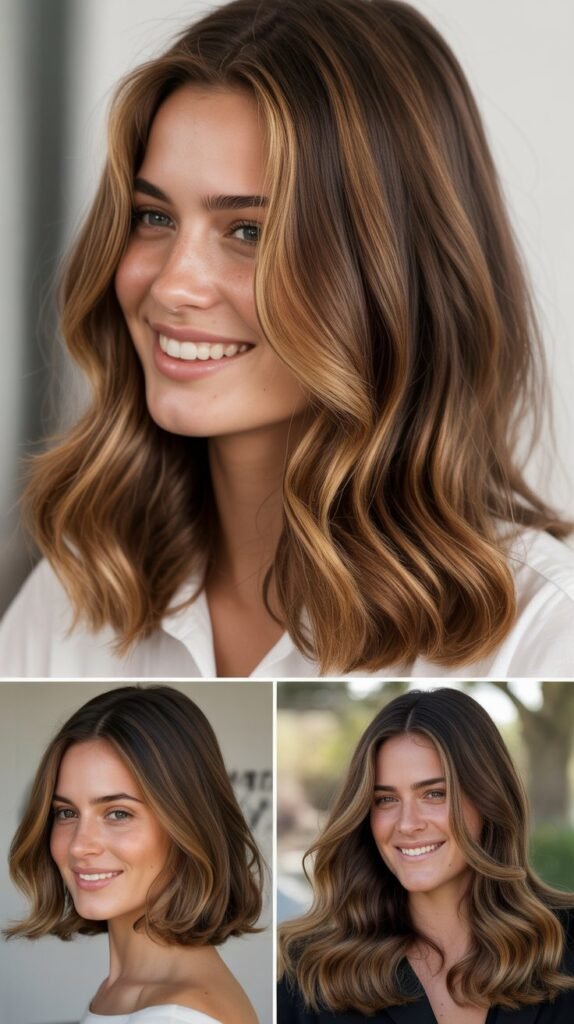
Adapting classic chocolate brown lowlights to incorporate current trends while maintaining timeless appeal.
- Money piece lowlights concentrated at face-framing sections align with current face-framing color trends.
- Ribboning lowlights (larger, more defined sections) create on-trend dimension with retro appeal.
- Micro lowlights deliver the ultra-natural dimensional effects favored in current minimalist trends.
- Combining chocolate brown with unexpected lowlight undertones (violet, burgundy) creates fashion-forward dimension.
- Classic chocolate lowlights remain perpetually stylish regardless of passing trend cycles.
- Incorporating trendy elements while maintaining a classic base ensures longevity beyond temporary fads.
- Discussing trend incorporation with your colorist balances current style with long-term wearability.
55. Lowlights for Damaged Hair Recovery
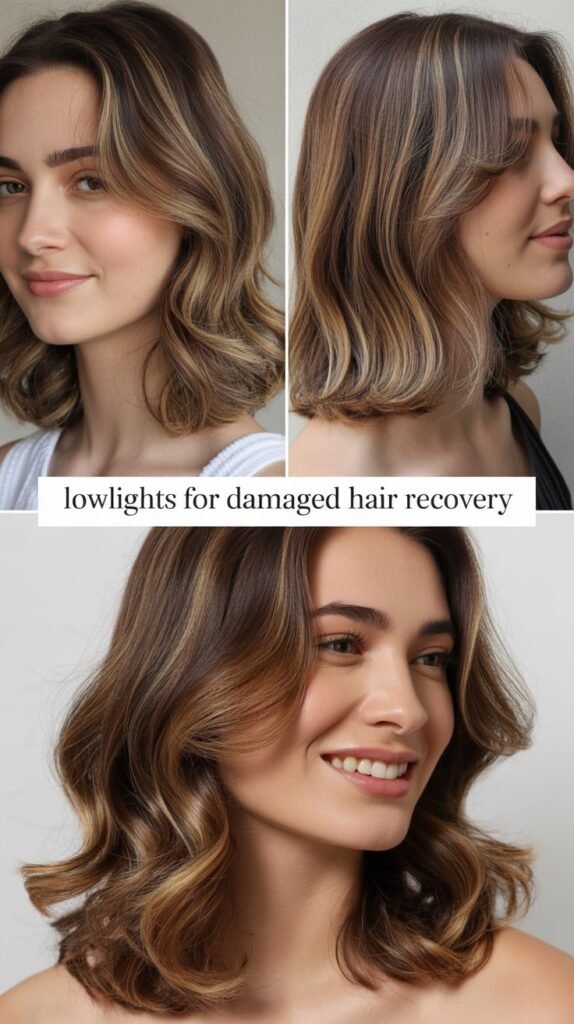
Supporting hair health recovery while maintaining dimensional color through gentle lowlight approaches.
- Demi-permanent lowlight formulas provide gentler color deposit than permanent options for compromised hair.
- Bond-building treatments during lowlight application protect hair structure from additional stress.
- Lowlights offer less damaging dimensional color than highlighting since no lightening occurs.
- Spacing lowlight applications further apart allows damaged hair recovery time between services.
- Intensive conditioning protocols before and after lowlighting support hair restoration.
- Realistic expectations about achievable lowlight results on damaged hair prevent disappointment.
- Sometimes focusing exclusively on hair recovery before adding lowlights produces superior long-term results.
56. Lowlights and Professional Color Correction
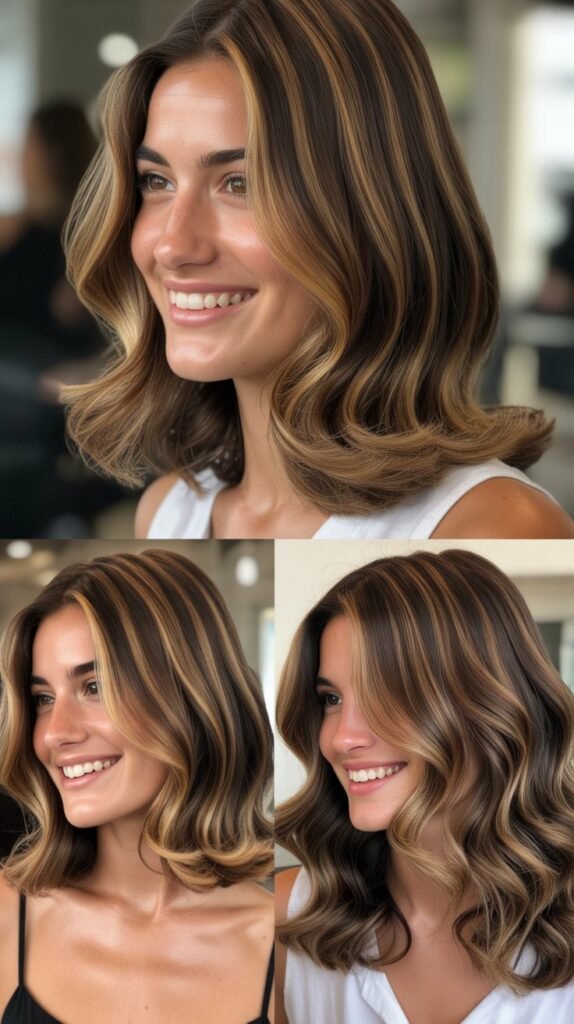
Understanding when lowlights serve as effective color correction tools versus when alternative approaches work better.
- Lowlights effectively correct over-lightened hair by reintroducing depth and dimension.
- Adding lowlights to flat, single-process color restores natural-looking variation and interest.
- Strategic lowlights can camouflage uneven color from previous services while creating intentional dimension.
- Combining color removal with lowlights corrects severe color mistakes while establishing new dimensional palette.
- Lowlights provide gentler correction alternatives than all-over color applications for many color issues.
- Professional assessment determines whether lowlights alone can correct color problems or if additional services are needed.
- Realistic correction timelines often involve gradual lowlight applications over multiple appointments.
57. Lowlights for Different Lifestyle Budgets
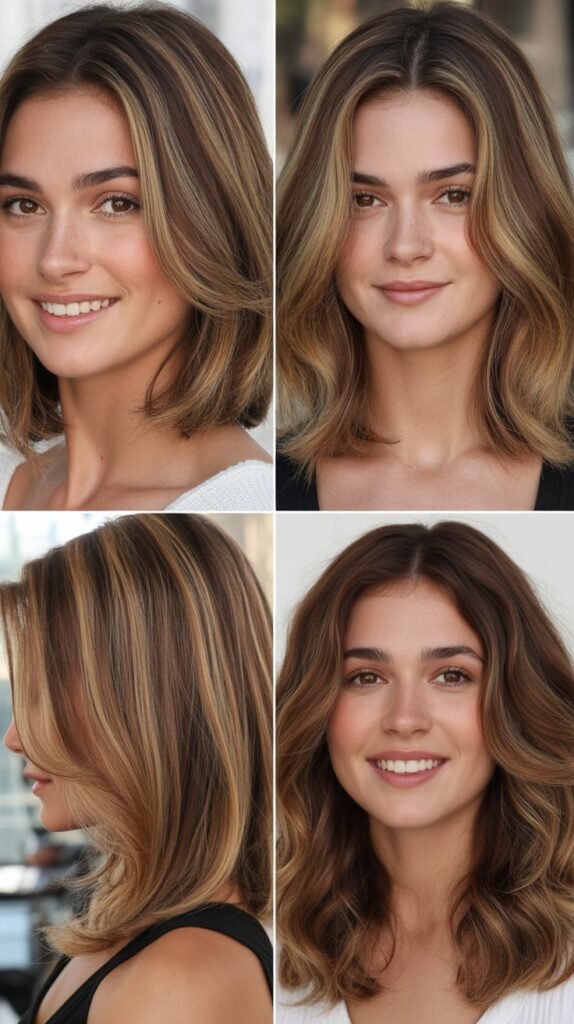
Creating beautiful chocolate brown dimension across various price points and budget considerations.
- Partial lowlights focusing on visible areas provide dimensional impact at lower cost than full applications.
- Spacing appointments to every 12-16 weeks rather than 8-10 weeks reduces annual color expenses.
- DIY root touch-ups between professional lowlight services extend time between full appointments.
- Choosing lower-contrast lowlights reduces maintenance frequency and associated costs.
- All-inclusive salon packages often provide better value than individual service pricing.
- Investing in quality color-protecting products extends lowlight longevity, reducing long-term costs.
- Training salon models receive deeply discounted services while providing supervised students with learning opportunities.
58. Lowlights and Hair Extensions
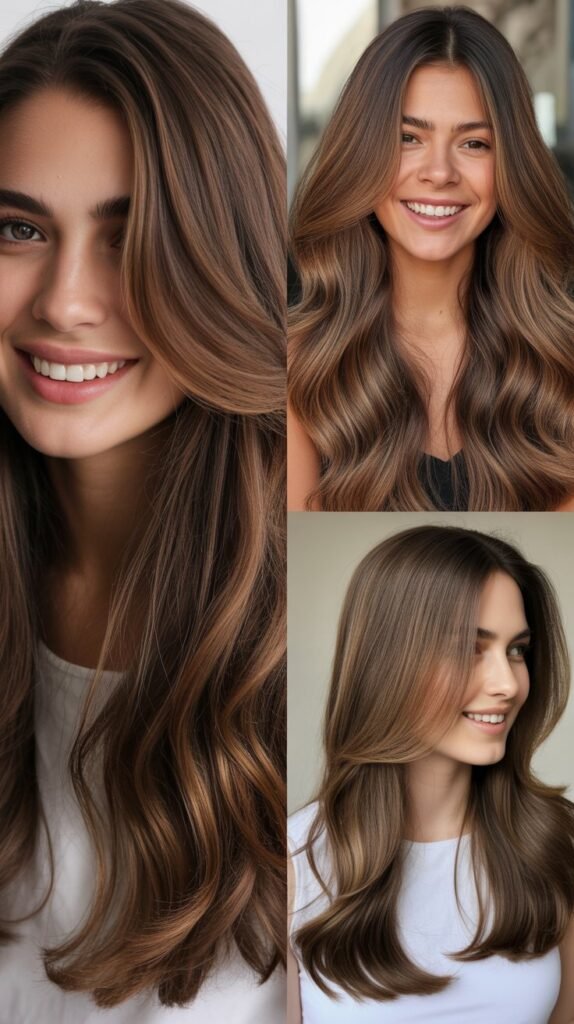
Integrating lowlights seamlessly with hair extensions for cohesive, natural-looking dimensional effects.
- Extensions should be colored to match lowlight pattern before installation for seamless blending.
- Adding lowlights to both natural hair and extensions simultaneously ensures perfect color coordination.
- Synthetic extensions cannot be colored, requiring exact lowlight shade matching when purchasing.
- Human hair extensions accept lowlights similarly to natural hair but may process slightly differently.
- Blending lowlights at the attachment points prevents visible demarcation between natural hair and extensions.
- Maintaining lowlights on extensions requires the same care as natural hair to prevent fading.
- Professional colorists experienced with extensions ensure optimal lowlight application and blending.
59. Lowlights for Camouflaging Thinning Hair
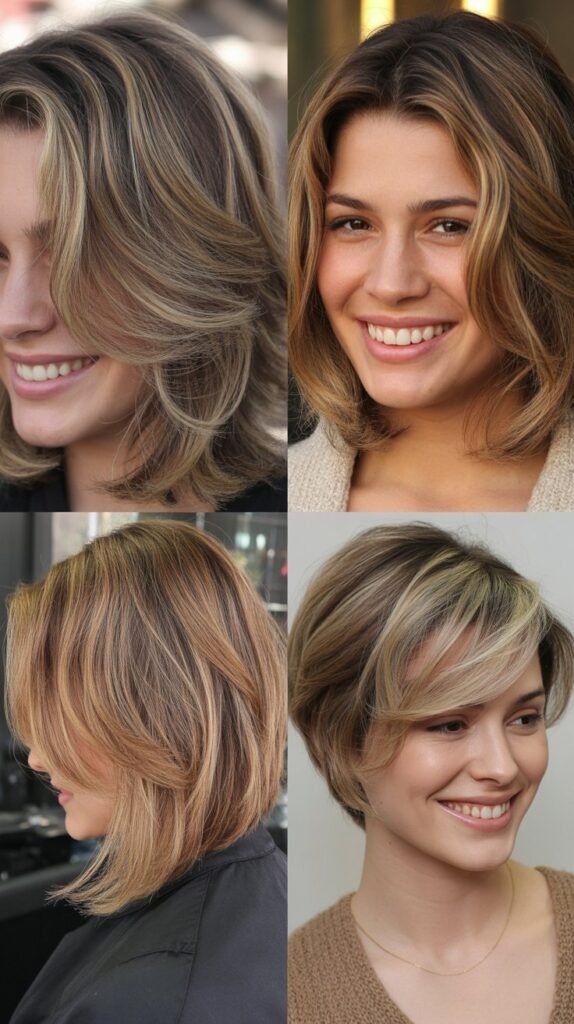
Strategic lowlight placement that minimizes the appearance of hair thinning and sparse areas.
- Lowlights in scalp-matching tones make thinning areas less noticeable by reducing contrast.
- Creating shadow through darker lowlights gives the illusion of greater hair density.
- Concentrating lowlights in fuller areas draws attention away from sparse sections.
- Avoiding high-contrast lowlights prevents emphasizing scalp visibility in thin areas.
- Combining lowlights with volumizing haircuts maximizes the fullness-enhancing effect.
- Root-darkening lowlights create shadow that camouflages visible scalp in thinning crown areas.
- Professional placement specific to individual thinning patterns produces the most effective camouflage results.
60. Lowlights and Product Recommendations
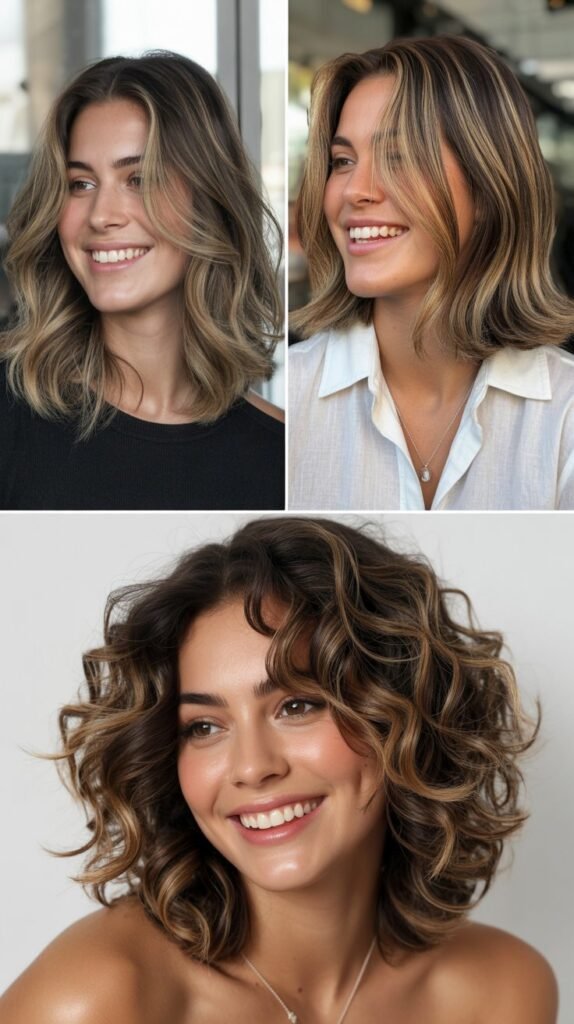
Essential product categories and specific formulation features that optimize lowlight longevity and beauty.
- Sulfate-free shampoos prevent color stripping while gently cleansing lowlighted hair.
- Color-depositing conditioners in chocolate tones refresh lowlight richness between appointments.
- Deep conditioning masks formulated for color-treated hair restore moisture while preserving color.
- Leave-in treatments with UV filters protect lowlights from sun-induced fading and brassiness.
- Heat protectants prevent thermal styling from altering or fading lowlight colors.
- Purple or blue shampoos used sparingly neutralize any warm tones that develop in chocolate lowlights.
- Professional-grade products typically contain higher concentrations of color-protecting ingredients.
- pH-balanced products maintain cuticle health essential for color retention and dimensional shine.
61. Creating Your Perfect Lowlight Consultation
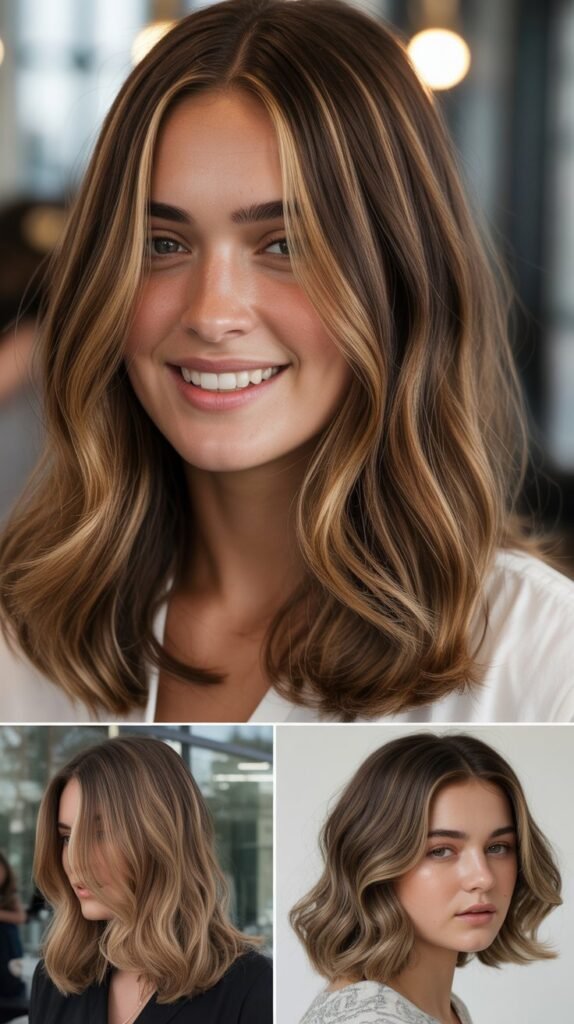
Preparing for and maximizing the value of professional lowlight consultations ensures satisfaction with results.
- Bringing inspiration photos helps communicate desired lowlight placement, contrast, and undertones effectively.
- Honest disclosure of hair history including previous color, chemical treatments, and at-home applications is essential.
- Discussing lifestyle, maintenance commitment, and budget ensures realistic lowlight recommendations.
- Professional consultations should include hair and scalp assessment to determine appropriate techniques.
- Color swatching near the face in natural lighting confirms selected lowlight shades are truly flattering.
- Establishing realistic expectations about achievable results prevents disappointment with final outcome.
- Documenting consultation details including formulas and placement ensures consistency across future appointments.
- Asking questions about maintenance, styling, and long-term color plans maximizes consultation value.
Conclusion
The journey through 61 Depth Enhancing Dark Chocolate Brown Hair With Lowlights reveals that dimensional color is both an art and a science, requiring thoughtful consideration of multiple factors from skin undertones to lifestyle needs.
Dark chocolate brown hair enhanced with strategically placed lowlights offers unparalleled sophistication, versatility, and natural-looking depth that flatters virtually every individual while providing practical benefits like easier maintenance and graceful grow-out.
By understanding the principles of color selection, placement techniques, maintenance requirements, and styling approaches outlined in this comprehensive guide, you’re now equipped to make informed decisions about your lowlight journey and communicate effectively with professional colorists.
Whether you’re seeking subtle dimension or dramatic contrast, correcting previous color mishaps or maintaining existing lowlights, the techniques and insights shared here provide a roadmap to achieving and preserving beautiful chocolate brown dimensional color.
Remember that the most successful lowlight applications result from collaboration between you and a skilled colorist who considers your unique hair characteristics, lifestyle, and aesthetic goals to create truly personalized dimensional beauty.
Your chocolate brown lowlight transformation awaits, offering the perfect blend of timeless elegance and modern dimensional sophistication that will turn heads and boost confidence every single day.
