
There’s something undeniably captivating about dark brown hair kissed with caramel highlights—it’s the perfect marriage of richness and warmth that flatters virtually every skin tone and adds dimension that turns heads.
Whether you’re looking to subtly enhance your natural brunette base or dramatically transform your look with strategically placed caramel ribbons, this color combination offers endless possibilities that exude sophistication and effortless style.
This comprehensive guide to 66 luxe dark brown hair with caramel highlights that look salon-fresh will walk you through the most stunning techniques, placement styles, maintenance tips, and styling secrets that professional colorists use to create these dimensional masterpieces.
From face-framing babylights to bold balayage statements, you’ll discover exactly how to achieve and maintain that coveted sun-kissed glow that looks like you’ve just stepped out of an expensive salon chair.
Overview of the Article
This article explores the world of dark brown hair enhanced with caramel highlights, covering everything from understanding color theory and choosing the right shade combinations to mastering various highlighting techniques and maintenance routines.
You’ll learn about different placement methods including balayage, foilayage, and traditional highlights, discover how to customize your look based on your face shape and skin tone, and gain insider knowledge on protecting your investment with proper hair care.
We’ll examine trending styles for different hair lengths and textures, provide seasonal adaptation tips, discuss the best products for color longevity, and share professional secrets for achieving that salon-fresh appearance between appointments.
Whether you’re a highlighting novice or looking to refine your existing color, this guide delivers actionable insights that will help you make informed decisions and achieve stunning results that enhance your natural beauty.
1. Understanding the Dark Brown and Caramel Color Combination
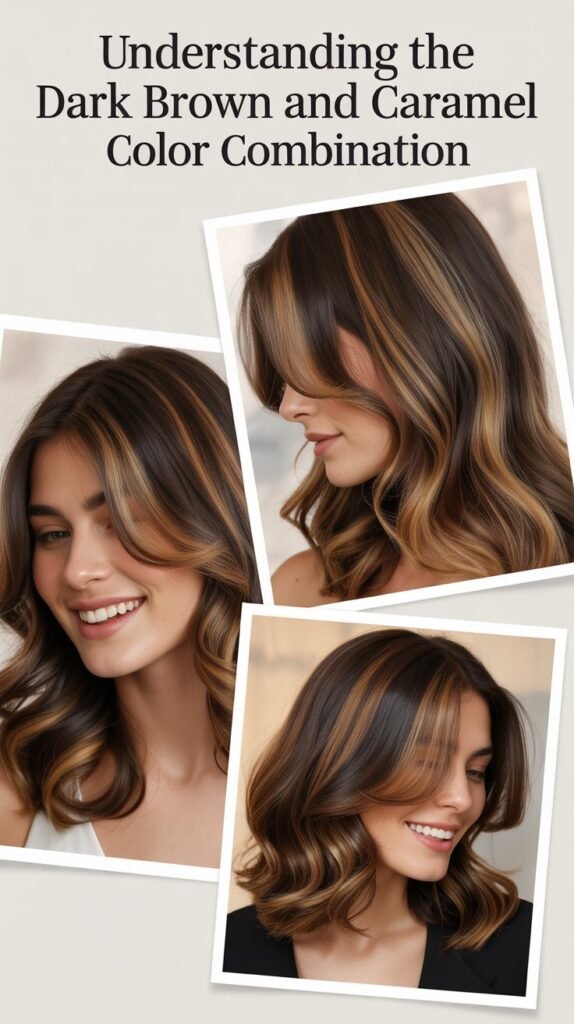
The magic of pairing dark brown hair with caramel highlights lies in the natural contrast and warmth that mimics how sunlight naturally lightens hair over time.
Dark brown serves as a rich, sophisticated base that provides depth and creates the perfect canvas for lighter tones to pop and create visual interest.
Caramel highlights—those delicious tones ranging from golden amber to buttery toffee—add warmth, dimension, and movement that prevent brunette hair from appearing flat or one-dimensional.
- Dark brown hair typically falls within levels 3 to 4 on the hair color scale, providing a deep base that’s neither black nor medium brown
- Caramel highlights generally sit between levels 6 to 8, creating a noticeable but natural-looking contrast of approximately 2-4 levels lighter than the base
- The warmth in caramel tones complements the cool or neutral undertones often found in dark brown hair, creating a balanced and harmonious color palette
- This color combination works particularly well because it mimics the natural oxidation and sun-lightening patterns that occur in brunette hair exposed to sunlight
- The contrast between dark and caramel creates depth perception, making hair appear fuller, thicker, and more voluminous than solid color
- Different ratios of dark brown to caramel can dramatically change the overall effect—more caramel creates a lighter, brighter appearance while sparse highlights offer subtle enhancement
- The transition between dark brown and caramel can be blended seamlessly for a soft effect or kept more distinct for a bolder statement
- Understanding your natural undertones (warm, cool, or neutral) helps determine which shade of caramel will look most harmonious with your specific dark brown base
2. Benefits of Caramel Highlights on Dark Brown Hair

Adding caramel highlights to dark brown hair offers numerous aesthetic and practical benefits that extend beyond simple color enhancement.
This dimensional coloring technique addresses common concerns brunettes face while elevating their overall look with warmth and sophistication.
The strategic placement of lighter tones creates visual interest that flatters facial features and adds youthful radiance.
- Creates instant dimension and depth that makes hair appear more dynamic and alive rather than flat and monotonous
- Brightens the complexion by reflecting light around the face, creating a healthy glow that can take years off your appearance
- Adds warmth to dark hair that might otherwise appear harsh or severe, especially against fair or cool-toned skin
- Requires less maintenance than all-over color since roots blend naturally as they grow out, extending time between salon visits
- Offers versatility in styling—highlights catch light differently depending on how you style your hair, making each look unique
- Works beautifully across all hair textures from straight to curly, with curls especially benefiting from the way highlights accentuate movement
- Provides a lower-commitment color option compared to full bleaching or dramatic color changes while still delivering impactful results
- Enhances natural hair movement and texture by creating visual separation between strands
- Can be customized to flatter your specific features through strategic placement around the face, crown, or throughout
- Helps camouflage gray hair gracefully by blending silver strands with intentional lighter pieces
- Creates the illusion of thicker, fuller hair by adding visual texture and breaking up solid color blocks
- Offers seasonal versatility—caramel tones feel appropriate year-round but can be adjusted slightly warmer or cooler depending on the season
3. Different Shades of Caramel Highlights to Consider

Caramel isn’t a one-size-fits-all shade—it encompasses a beautiful spectrum of warm tones that can be customized to complement your specific dark brown base and skin tone.
Understanding the nuances between different caramel variations helps you communicate effectively with your colorist and ensures you achieve the exact look you’re envisioning.
Each shade brings its own character and pairs differently with various dark brown bases.
- Light Golden Caramel: The brightest end of the caramel spectrum with prominent gold undertones that create maximum contrast against dark brown
- This shade works exceptionally well for those wanting a noticeable, sun-kissed effect that’s still within the warm brunette family
- Light golden caramel reflects the most light and creates the brightest face-framing effect
- Classic Caramel: A balanced mid-tone with equal parts gold and brown, offering the quintessential caramel shade that’s universally flattering
- This versatile shade works across most skin tones and provides noticeable dimension without appearing too light or brassy
- Classic caramel maintains a natural appearance while still delivering that coveted warmth and brightness
- Honey Caramel: Slightly lighter and more golden than classic caramel, with amber undertones that catch light beautifully
- This shade leans warmer and sunnier, perfect for those with golden or warm-toned skin who want extra radiance
- Honey caramel works particularly well for creating that lived-in, beachy vibe throughout the year
- Butterscotch Caramel: Rich and buttery with deeper golden-brown undertones that blend seamlessly with dark bases
- This shade offers subtle contrast while maintaining a sophisticated, natural appearance
- Butterscotch tones are ideal for conservative work environments or those preferring understated elegance
- Toffee Caramel: The deepest shade in the caramel family, sitting closer to the dark brown base with warm undertones
- Toffee creates subtle, sophisticated dimension that’s perfect for highlighting first-timers or those wanting minimal contrast
- This shade provides warmth without dramatic lightening, making it easier to maintain and less prone to brassiness
- Copper-Toned Caramel: Caramel with reddish-copper undertones that add extra warmth and vibrance
- This variation works beautifully on those with warm or olive skin tones and adds unexpected depth
- Copper-toned caramel creates a more unique, fashion-forward look compared to traditional caramel shades
4. Balayage Technique for Caramel Highlights

Balayage has revolutionized the way colorists apply highlights, offering a freehand painting technique that creates the most natural-looking, sun-kissed results.
This French coloring method allows for customized placement that follows your hair’s natural movement and creates seamlessly blended caramel highlights throughout dark brown hair.
The technique has become the gold standard for those seeking low-maintenance, dimensional color that grows out gracefully.
- Balayage involves hand-painting lightener onto the hair surface in sweeping motions rather than using traditional foils or caps
- This technique creates a graduated, natural-looking effect with darker roots that seamlessly transition to lighter caramel ends
- The placement is completely customizable—your colorist can concentrate color where it will be most flattering for your features and desired effect
- Balayage on dark brown hair typically focuses highlights on the mid-lengths and ends while keeping roots darker for dimension
- The freehand application means no harsh lines or obvious regrowth as hair grows out, extending time between color appointments to 3-4 months
- Colorists often apply lighter saturation at the roots and increase intensity toward the ends for the most natural sun-lightened appearance
- The technique allows for strategic face-framing pieces that brighten the complexion and highlight facial features
- Balayage can be adjusted in intensity from subtle (fewer, finer highlights) to dramatic (more saturated, bolder placement)
- The painted-on method creates a softer, more blended transition between dark brown and caramel compared to traditional foil highlights
- Works exceptionally well on wavy and curly hair because the freehand placement follows the hair’s natural pattern and enhances texture
- Can be combined with other techniques like babylights at the hairline for added brightness and dimension
- The multidimensional result catches light from every angle, creating movement and visual interest that solid color cannot achieve
5. Foilayage: Combining Foils with Balayage
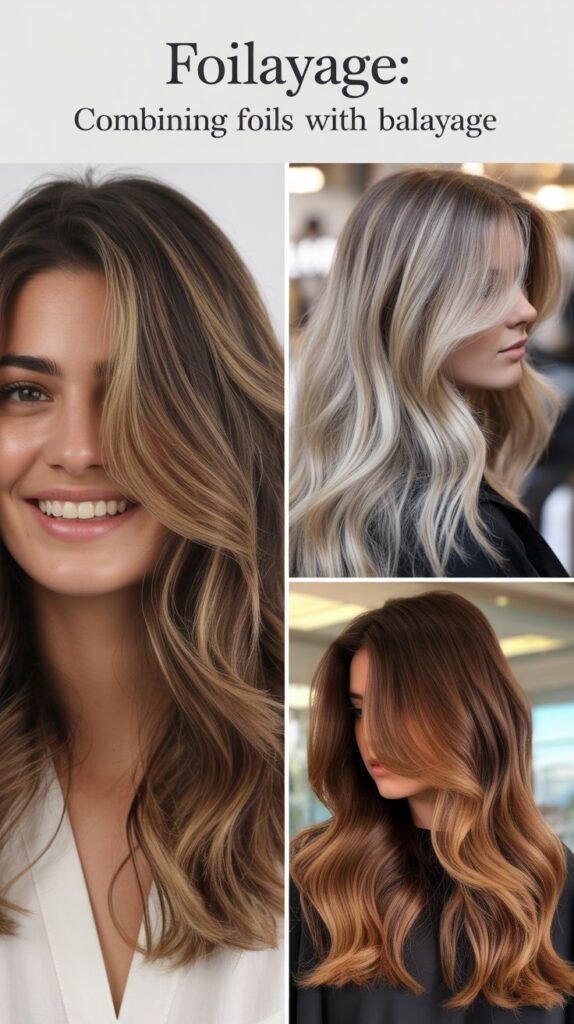
Foilayage represents the best of both worlds—combining the natural, painted-on effect of balayage with the lift power of traditional foil highlighting.
This hybrid technique has gained popularity among colorists because it allows for greater lightening on darker bases like dark brown hair while maintaining the soft, blended appearance that makes balayage so desirable.
The foiling process intensifies the lightening effect, making it easier to achieve those gorgeous caramel tones without excessive processing.
- Foilayage begins with the balayage painting technique but then encloses the painted sections in foils to trap heat and accelerate lightening
- The foiling process allows the lightener to work more efficiently, lifting dark brown hair to caramel tones more easily than open-air balayage
- This technique is particularly beneficial for dark brown hair that requires more lift to achieve visible caramel highlights
- Foilayage creates brighter, more pronounced highlights compared to traditional balayage while maintaining natural placement
- The combination technique offers more control over the final result, making it easier to achieve consistent caramel tones throughout
- Processing time is reduced compared to open-air balayage since foils trap heat and intensify the lightening action
- Colorists can strategically choose which painted sections to foil based on where more lift is needed
- The technique still maintains softer regrowth compared to traditional all-over foil highlights since the application is hand-painted
- Foilayage works excellently for clients transitioning from virgin dark brown hair who want significant caramel dimension in one session
- The method allows for more dramatic transformations while keeping the natural, lived-in aesthetic that modern clients desire
- Can be customized by varying the thickness of painted sections and selective foil placement for personalized results
- Ideal for achieving those bright, face-framing caramel pieces that require maximum lift around the hairline and front sections
6. Traditional Foil Highlights for Defined Contrast

While balayage dominates current hair trends, traditional foil highlights remain a powerful technique for creating defined, consistent caramel highlights throughout dark brown hair.
This classic method offers precision and uniformity that some clients prefer, especially those seeking more structured, evenly distributed color.
Foil highlights provide maximum lift and clear contrast between dark and light sections, making them ideal for achieving specific looks and patterns.
- Traditional foil highlighting involves sectioning hair methodically and weaving out or slicing sections to isolate and lighten
- Foils contain the lightener and trap heat, allowing maximum lift that’s essential for transforming dark brown hair to caramel tones
- This technique creates more uniform, consistent highlight placement compared to freehand methods
- Weaving (pulling out fine sections with a tail comb) creates thinner, more blended highlights throughout the hair
- Slicing (taking thicker sections) produces chunkier, more visible ribbons of caramel that create bold contrast
- The systematic sectioning ensures highlights are evenly distributed from roots to ends and throughout all layers
- Foil highlights offer the most dramatic transformation in a single session for those wanting significant color change
- The technique allows colorists to place highlights with architectural precision, following specific patterns for intended effects
- Works well for clients who prefer regular, predictable maintenance every 6-8 weeks with clear regrowth lines
- Traditional foils provide the brightest, most lifted results compared to other highlighting methods
- Can be combined with lowlights (darker pieces) to create even more dimension and prevent highlights from appearing too uniform
- Ideal for creating specific effects like heavy face-framing, concentrated crown highlights, or all-over dimensional color
- The enclosed foil environment minimizes color bleeding, ensuring each highlight remains distinct and defined
7. Babylights for Subtle Caramel Dimension

Babylights represent the most delicate and subtle highlighting technique, mimicking the fine, naturally sun-kissed strands seen in children’s hair.
This ultra-fine highlighting method creates soft caramel dimension throughout dark brown hair without obvious contrast or visible sections.
For clients seeking the most natural-looking enhancement with minimal commitment, babylights offer a sophisticated approach that adds brightness and movement while maintaining an understated elegance.
- Babylights involve taking extremely fine, hair-thin sections throughout the hair for highlighting, creating a very natural effect
- The ultra-fine sections blend seamlessly with the dark brown base, making individual highlights nearly impossible to detect
- This technique requires exceptional precision and more time than standard highlighting due to the delicate sectioning required
- Babylights are typically concentrated around the face, hairline, and top layers where light naturally hits and lightens hair
- The fine sections create a soft halo effect rather than distinct streaks, adding overall brightness without obvious highlights
- Perfect for highlighting first-timers who want to test the waters without committing to dramatic color change
- Babylights on dark brown hair create subtle caramel tones that catch light and add gentle warmth
- The technique grows out imperceptibly, making it the lowest-maintenance highlighting option available
- Works beautifully on short hair where larger highlight sections might appear too bold or chunky
- Can be layered with other techniques—babylights at the hairline combined with traditional highlights or balayage throughout creates beautiful dimension
- Ideal for conservative professional environments where dramatic hair color might be inappropriate
- The subtle nature of babylights means they can be placed more densely without appearing overdone or stripy
- Creates a lit-from-within glow that enhances natural hair color rather than dramatically transforming it
8. Face-Framing Caramel Highlights
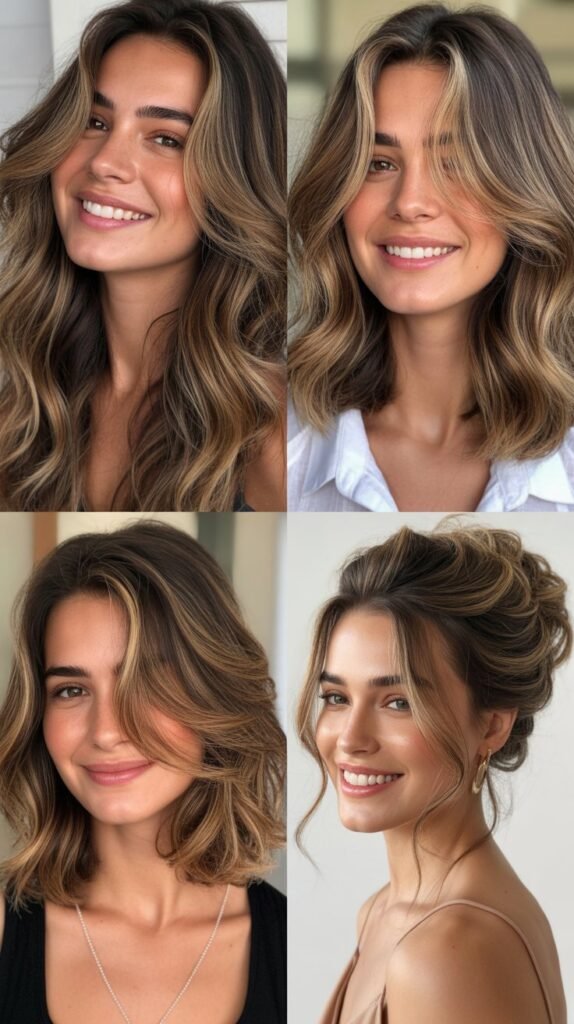
Strategic face-framing highlights serve as one of the most impactful and flattering placement techniques, concentrating caramel tones around the hairline and front sections where they’ll brighten your complexion and draw attention to your features.
This targeted approach delivers maximum visual impact with minimal overall color commitment, making it perfect for those who want the benefits of highlights without coloring their entire head.
Face-framing pieces create an instant lift that’s both youthful and sophisticated.
- Face-framing highlights concentrate lighter caramel tones within 1-3 inches of the hairline around the face, temples, and front sections
- This placement creates an instant brightening effect that reflects light onto your face, enhancing your complexion and making you appear more radiant
- The contrast between dark brown and caramel around the face draws attention to your eyes and creates a natural focal point
- Face-framing can be customized based on face shape—wider placement for round faces, vertical pieces for square faces
- This technique works exceptionally well for those with gray hair concentrated at the temples, camouflaging silver with intentional caramel
- The front-loaded color means you can style hair away from your face or tuck behind ears and still showcase the dimensional effect
- Face-framing highlights require less maintenance than all-over color since the majority of your hair remains your natural dark brown
- Can be adapted from subtle (thin babylights around the hairline) to dramatic (chunky ribbons from the hairline back)
- Works beautifully with layers and face-framing haircuts, enhancing the shape and movement of the cut
- The technique provides flexibility—you can opt for just face-framing or combine it with highlights throughout for more coverage
- Creates the illusion of lighter hair overall when styled forward without committing to extensive highlighting
- Particularly flattering for mature clients as the brightness softens facial features and minimizes the appearance of fine lines
9. Ombre Effect: Dark Brown to Caramel Gradient
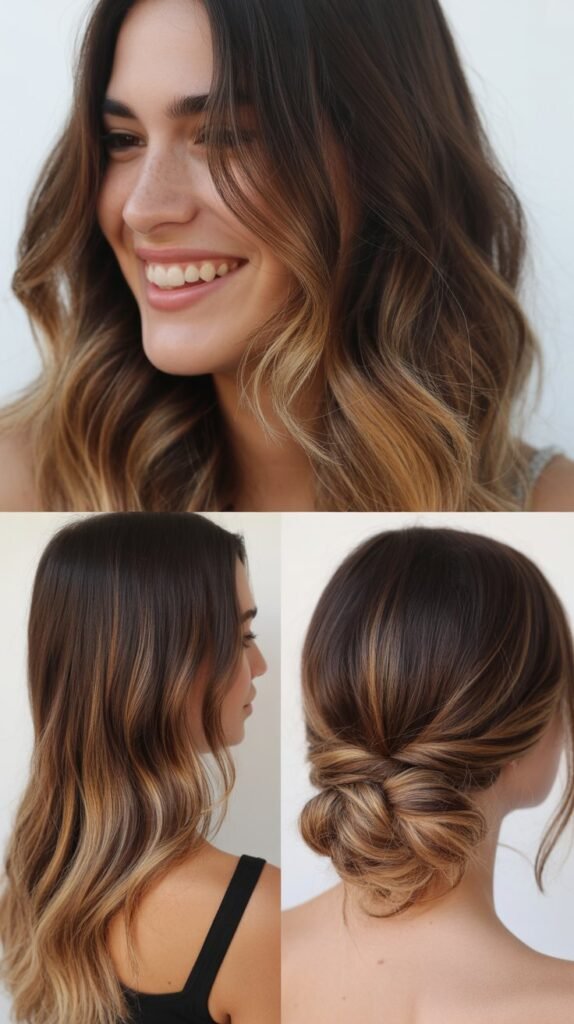
The ombre effect creates a dramatic gradient from dark brown roots to caramel ends, offering a bold, low-maintenance color option that makes a serious style statement.
This technique features a more obvious transition between dark and light compared to balayage, with color gradually intensifying toward the ends.
Ombre on dark brown hair with caramel tones creates a warm, dimensional look that’s perfect for those wanting maximum impact with minimal root maintenance.
- Ombre features a visible color gradient with darker roots and mid-lengths that transition to lighter caramel ends
- The transition zone typically begins around mid-length, creating a clear demarcation between dark brown and caramel tones
- This technique requires minimal root maintenance since the intentional dark roots are part of the desired aesthetic
- Ombre on dark brown hair often transitions through multiple caramel shades from deep toffee to lighter honey at the ends
- The gradient can be softened and blended for a more subtle effect or kept more distinct for dramatic contrast
- Works exceptionally well on longer hair where there’s more length to showcase the gradual color progression
- The concentration of lighter color at the ends draws the eye downward, making this technique particularly flattering for those wanting to emphasize length
- Ombre requires less frequent salon visits compared to traditional highlights—maintenance appointments every 3-4 months are typical
- The technique allows for creative expression through varying the start point of the transition and the intensity of the caramel tones
- Particularly popular for those wanting a trendy, fashion-forward look that still incorporates natural dark roots
- Can be combined with toning to adjust the warmth of the caramel ends and prevent brassiness
- The dramatic effect makes styling more impactful—waves and curls showcase the color transition beautifully
10. Sombre: Soft Ombre for Natural Results
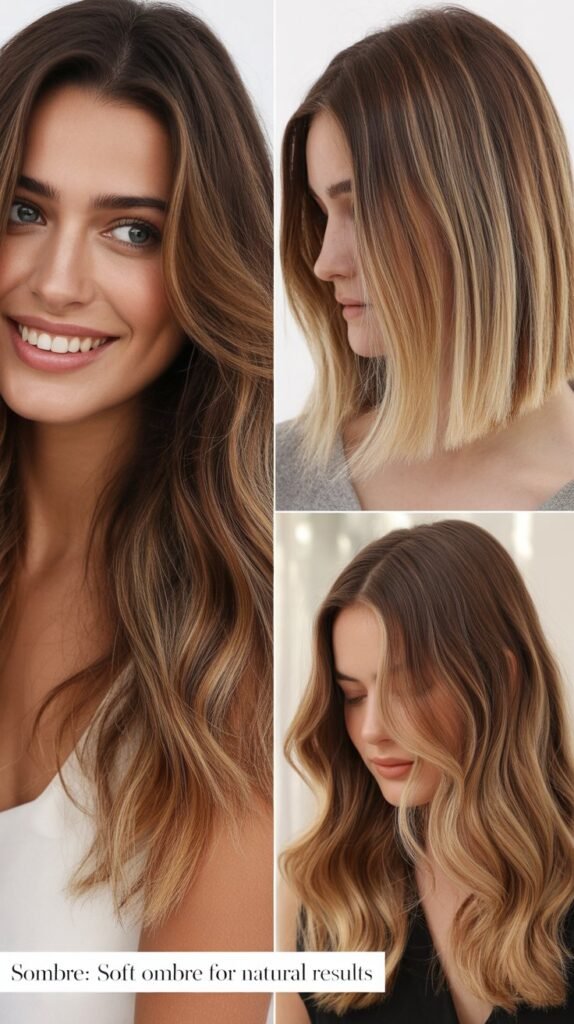
Sombre (soft ombre) offers all the benefits of the ombre technique with a much subtler, more natural-looking transition.
This refined approach to gradient coloring creates a barely-there shift from dark brown to caramel that mimics natural sun-lightening patterns.
For clients who love the low-maintenance aspect of ombre but prefer understated elegance over bold statements, sombre provides the perfect middle ground.
- Sombre creates an imperceptible gradient with heavily blended transitions that appear completely natural
- The lightening begins more gradually and earlier in the hair compared to traditional ombre, creating a softer overall effect
- This technique combines elements of balayage and ombre, using hand-painting to create seamless blending throughout
- Sombre on dark brown hair delivers caramel tones that look like your hair has naturally lightened over time in the sun
- The subtle nature means the color enhances rather than transforms, perfect for conservative preferences or professional settings
- Requires even less maintenance than ombre since the transition is so gradual that regrowth blends naturally
- Works beautifully across all hair lengths, including shorter styles where dramatic ombre might appear too bold
- The technique creates depth and dimension without obvious “colored” hair—many will simply think your hair naturally has beautiful variation
- Sombre can be customized in intensity from barely-there (1-2 levels lighter at ends) to moderate (2-3 levels lighter)
- Particularly flattering for those with naturally lighter ends from previous color or sun exposure who want to enhance rather than start fresh
- The blended approach means less risk of harsh lines or obvious grow-out even months after coloring
- Can be easily refreshed and adjusted during follow-up appointments without dramatic change to the overall look
11. Highlights for Straight Hair Textures

Straight hair provides the perfect canvas for showcasing caramel highlights on a dark brown base, as the smooth texture reflects light directly and displays color dimension with maximum clarity.
The sleek surface of straight hair makes each highlight visible and defined, requiring thoughtful placement and blending to achieve natural-looking results.
Understanding how to optimize highlighting techniques for straight textures ensures your caramel tones appear polished and intentional.
- Straight hair shows every detail of highlight placement, making precise application and thorough blending crucial for natural results
- The smooth cuticle of straight hair reflects maximum light, making caramel highlights appear brighter and more vibrant
- Balayage on straight hair requires special attention to blending since there’s less natural texture to disguise color transitions
- Face-framing highlights appear particularly striking on straight hair, creating clean, defined ribbons that frame the face beautifully
- Babylights work exceptionally well on straight textures, creating subtle dimension without obvious sections
- Straight hair benefits from strategic highlight placement in multiple layers to ensure dimension is visible from all angles
- The sleek texture makes it easier to see any brassiness or color inconsistency, requiring quality toners for perfect caramel tones
- Highlights placed too uniformly can appear stripy on straight hair, so varied placement and thickness is essential
- Straight hair is ideal for showcasing glossy, salon-fresh caramel highlights since the smooth surface maximizes shine
- Styling straight hair with slight waves or bends helps showcase the multidimensional nature of the highlights
- The clear visibility of color on straight hair means touch-ups and root blending become more noticeable as they grow out
- Proper toning and gloss treatments are particularly important for maintaining beautiful caramel tones on straight textures
12. Highlights for Wavy Hair Textures
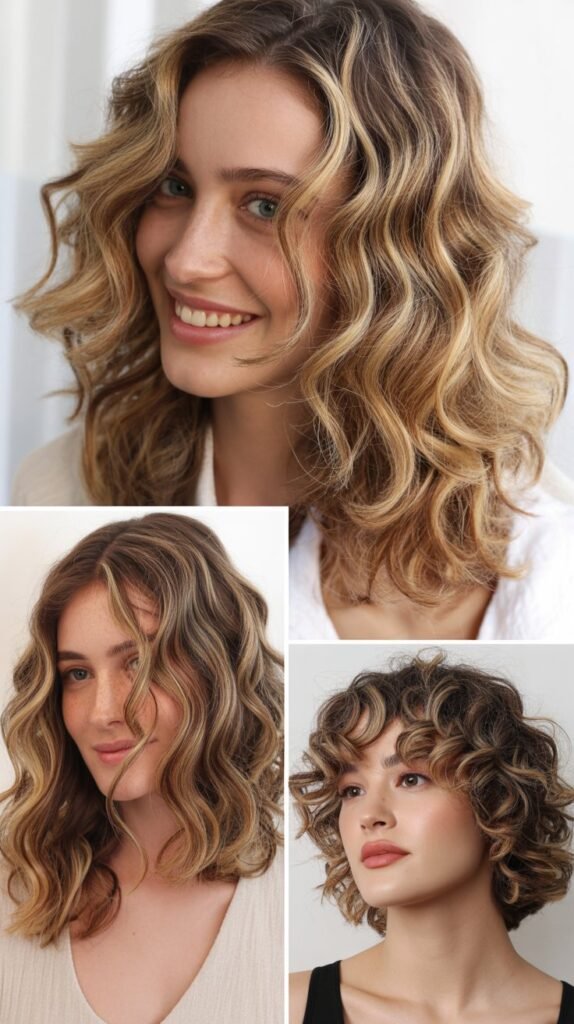
Wavy hair creates natural movement and texture that beautifully showcases caramel highlights on dark brown hair, with the bends and curves catching light from multiple angles.
The organic texture of waves helps blend highlights seamlessly while creating dynamic dimension that shifts with every movement.
Highlighting wavy hair requires techniques that work with the hair’s natural pattern to enhance rather than fight the texture.
- Wavy hair naturally creates shadows and highlights as it bends, making added caramel highlights appear even more dimensional
- The texture helps disguise any visible lines between dark brown and caramel, creating seamless blending
- Balayage works exceptionally well on wavy hair since the freehand technique follows the hair’s natural wave pattern
- Highlights can be placed strategically on the “high points” of waves where light naturally hits for the most impactful results
- The movement in wavy hair means highlights are revealed and concealed as the hair moves, creating visual interest
- Face-framing caramel pieces on wavy hair create a soft, romantic effect as the waves incorporate the lighter tones
- Wavy texture is forgiving of slight color variations, making it ideal for those wanting low-maintenance highlighting
- The natural volume in wavy hair showcases highlights throughout multiple layers without requiring excessive coloring
- Beach waves and tousled styling are particularly flattering on wavy hair with caramel highlights, enhancing the sun-kissed effect
- The texture helps caramel highlights maintain a natural appearance even as roots grow out
- Curling wavy hair or enhancing natural waves with product creates maximum dimension and light reflection
- The combination of wavy texture and dimensional caramel tones creates an effortless, lived-in look that appears professionally styled
13. Highlights for Curly Hair Textures
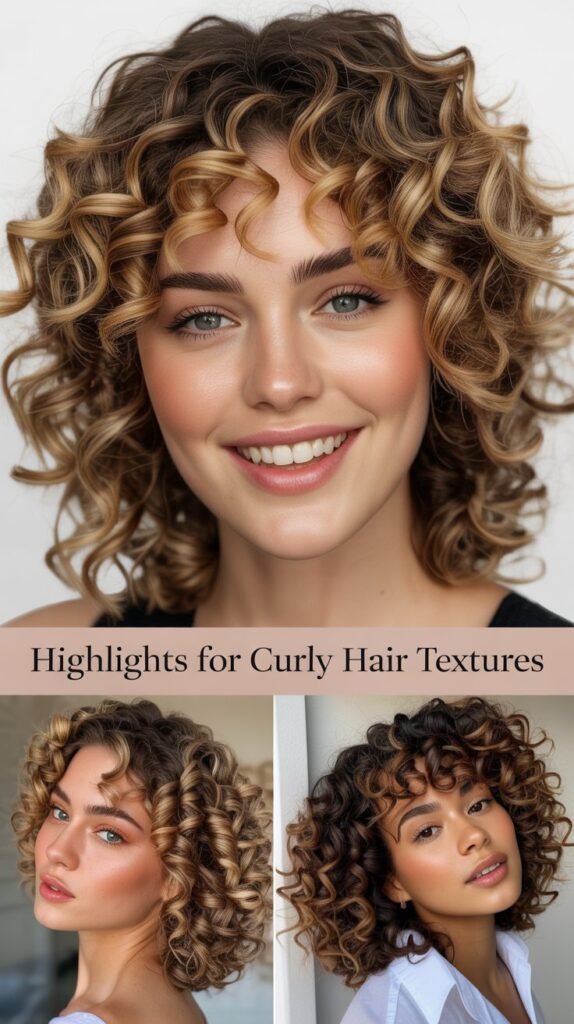
Curly hair creates three-dimensional spirals that showcase caramel highlights from every angle, with the coils and curves catching light in ways that maximize the dimensional effect.
The natural texture of curls requires specialized highlighting techniques that respect the hair’s pattern and ensure even color distribution throughout the unique structure.
When properly executed, caramel highlights on curly dark brown hair create stunning dimension that enhances the beauty of natural texture.
- Curly hair benefits from balayage application on dry hair styled in its natural curl pattern to ensure accurate, flattering placement
- The three-dimensional nature of curls means highlights are visible from multiple angles, creating maximum visual impact
- Painted-on techniques work better than foils for curly hair since they follow the hair’s natural pattern and movement
- Caramel highlights should be distributed throughout different curl layers to ensure dimension is visible when hair is worn naturally
- The coiled structure of curls naturally separates dark brown and caramel tones, creating beautiful contrast without harsh lines
- Face-framing highlights on curly hair frame the face with soft, dimensional ribbons as curls spring forward
- Curly hair requires careful consideration of shrinkage when planning highlight placement—what looks mid-length wet may appear higher when dry
- The texture naturally diffuses color, making blending between dark and light tones appear seamless and natural
- Highlighting curly hair in its natural state ensures the color placement makes sense when worn textured (not just when straightened)
- Different curl patterns (loose waves to tight coils) showcase highlights differently, requiring customized approaches
- The volume and movement of curly hair means less highlighting is needed overall to achieve visible dimension
- Proper moisture and curl-specific products are essential to maintain both curl definition and highlight vibrancy
14. Highlights for Fine Hair

Fine hair presents unique opportunities and challenges when adding caramel highlights to a dark brown base—the delicate strands can appear wispy and lack dimension, making strategic color placement particularly transformative.
Properly executed highlights add perceived thickness and depth to fine hair while requiring careful processing to avoid damage.
Understanding how to maximize the visual impact of caramel tones on finer textures ensures beautiful, voluminous-looking results.
- Fine hair benefits enormously from dimensional color since the contrast between dark and light creates visual texture and fullness
- Babylights and fine highlight sections work particularly well on fine hair, adding dimension without weighing down delicate strands
- All-over dimensional coloring (many fine highlights throughout) creates more impact than chunky sections on fine textures
- The transparency of fine hair means highlights can appear brighter and more visible even with less processing
- Strategic placement of caramel highlights where hair naturally moves and lifts creates the illusion of increased volume
- Face-framing highlights on fine hair create a brightening halo effect that makes hair appear fuller around the face
- Lowlights combined with caramel highlights add depth variation that makes fine hair appear thicker and more substantial
- Fine hair requires gentler processing and careful monitoring during highlighting to prevent damage and breakage
- The sleek nature of fine hair showcases glossy, well-maintained highlights beautifully when properly cared for
- Root shadowing or smudging techniques help fine hair appear denser by creating darker depth at the base
- Lighter caramel tones throughout create the perception of more hair since light colors reflect and appear more voluminous
- Proper volumizing products and treatments help maintain the health and appearance of fine highlighted hair
15. Highlights for Thick Hair

Thick hair provides an abundant canvas for creative highlighting, allowing for bold, dimensional caramel color throughout the dark brown base without appearing overdone.
The density of thick hair requires strategic sectioning and thorough saturation to ensure highlights are visible and evenly distributed through all layers.
When approached correctly, thick hair showcases caramel highlights with impressive depth and luxurious fullness.
- Thick hair benefits from a combination of highlighting techniques—balayage for surface dimension and foils for interior brightness
- The density means more hair must be highlighted overall to achieve visible dimension and prevent a heavy, flat appearance
- Strategic layering of highlights throughout different sections ensures color is visible from all angles and through all layers
- Thick hair can support bolder, chunkier caramel ribbons without appearing overdone or stripy
- The weight and volume of thick hair can conceal interior highlights, requiring intentional placement in deeper layers
- Face-framing highlights on thick hair create beautiful contrast and prevent excessive bulk from weighing down the face
- The abundance of hair means highlighting sessions typically take longer to ensure thorough, even application throughout
- Thick hair holds and showcases color dimension exceptionally well, making it ideal for dramatic caramel transformations
- Interior highlights that might not show on thinner hair become visible as thick hair moves and shifts
- The density allows for creative color patterns including ribbons, panels, or concentrated areas of caramel
- Proper sectioning is critical for thick hair to ensure no areas are missed and color is distributed evenly
- Thick highlighted hair benefits from regular thinning and texturizing to reduce bulk while showcasing dimensional color
16. Maintenance Requirements for Caramel Highlights

Maintaining vibrant, salon-fresh caramel highlights on dark brown hair requires consistent care, quality products, and occasional professional touch-ups.
Understanding the specific needs of highlighted hair helps preserve color integrity, prevent damage, and extend the life of your investment.
Proper maintenance ensures your caramel tones remain rich and dimensional rather than fading to brassy or dull shades.
- Touch-up frequency varies by technique—balayage may need refreshing every 3-4 months while traditional foils require 6-8 week appointments
- Purple or blue-toned shampoos aren’t typically needed for caramel highlights, but color-depositing products can maintain warmth
- Professional toning services every 6-8 weeks keep caramel tones fresh and prevent unwanted brassiness or fading
- Root touch-ups may be necessary for those with visible regrowth, though many modern techniques minimize this need
- Regular gloss treatments add shine, seal the cuticle, and refresh color vibrancy between highlighting appointments
- Heat styling should be minimized and always accompanied by heat protectant products to prevent color fading
- UV protection through hats, scarves, or UV-protectant hair products prevents sun-induced brassiness and color degradation
- Chlorine and salt water exposure should be limited or followed by immediate clarifying and deep conditioning
- Deep conditioning treatments weekly help maintain hair health and prevent the dryness that makes highlights appear dull
- Color-safe, sulfate-free shampoos and conditioners are essential for preserving caramel tones and preventing premature fading
- Washing hair less frequently (2-3 times per week) extends color life and maintains natural oils that protect highlighted strands
- At-home toning products or color-depositing treatments can be used between salon visits to maintain ideal caramel tones
| Maintenance Task | Frequency | Purpose |
|---|---|---|
| Professional Touch-Ups | 3-4 months (balayage) / 6-8 weeks (foils) | Refresh highlights and blend regrowth |
| Toning Service | 6-8 weeks | Maintain ideal caramel tone, prevent brassiness |
| Deep Conditioning | Weekly | Restore moisture and maintain hair health |
| Gloss Treatment | 4-6 weeks | Add shine and refresh color vibrancy |
| Purple/Blue Shampoo | As needed (typically not required) | Neutralize unwanted warm tones if they develop |
17. Best Products for Color-Treated Hair

Investing in professional-grade hair care products specifically formulated for color-treated hair is essential for maintaining beautiful caramel highlights on your dark brown base.
The right products protect your color investment, maintain hair health, and keep your highlights looking salon-fresh between appointments.
Quality ingredients make a measurable difference in color longevity and overall hair condition.
- Sulfate-free shampoos clean gently without stripping color or natural oils that protect highlighted hair
- Color-safe conditioners deposit moisture and seal the cuticle to lock in caramel tones and prevent fading
- Leave-in treatments provide ongoing protection against environmental damage, heat, and color degradation
- Bond-building treatments repair damage from highlighting processes and strengthen hair structure
- Color-depositing masks can refresh caramel tones between salon visits while deeply conditioning
- Heat protectant sprays are non-negotiable for anyone who uses hot tools on highlighted hair
- UV-protectant products shield hair from sun exposure that causes fading and brassiness
- Clarifying shampoos (used sparingly) remove buildup that can dull highlights and affect color appearance
- Glossing treatments add shine an
- seal color for vibrant, reflective highlights
- Dry shampoo extends time between washes, preserving color and preventing over-washing damage
- Argan oil or other lightweight hair oils add shine and smooth the cuticle without weighing down hair
- Professional color-enhancing shampoos designed for brunettes can maintain the richness of dark brown base color
18. Toning Techniques for Perfect Caramel Tones

Professional toning is the secret to achieving and maintaining those perfect caramel hues that look expensive and salon-fresh rather than brassy or washed out.
Toners adjust the underlying pigments in highlighted hair, neutralizing unwanted tones and depositing the ideal warm caramel shades.
Understanding toning processes helps you communicate with your colorist and maintain beautiful results between appointments.
- Toners are demi-permanent color treatments applied after highlighting to refine and perfect the final shade
- For caramel highlights, warm-toned toners deposit golden-brown pigments that create that signature buttery caramel color
- The toning process neutralizes any unwanted orange or yellow undertones that can appear when lifting dark brown hair
- Professional toners deposit shine and seal the hair cuticle, enhancing the overall appearance of highlights
- Different toner formulations create different caramel results—golden, honey, butterscotch, or toffee tones
- The toning step is crucial for dark brown bases since lifting to caramel often reveals brassy undertones that need correction
- Gloss toners add shine while depositing subtle color, perfect for maintenance between highlighting sessions
- At-home toning shampoos and masks can maintain professional toner results between salon visits
- The developer strength used with toners affects how much the color deposits—lower volumes create subtle shifts
- Toning typically occurs immediately after highlighting while hair is still damp for optimal color absorption
- Regular toning appointments (every 4-6 weeks) keep caramel highlights looking fresh and prevent gradual color drift
- Customized toner formulas allow colorists to create unique caramel shades that complement individual skin tones
19. Preventing Brassiness in Caramel Highlights

Brassiness—the unwanted warm, orange-toned appearance that can develop in highlights—is a common concern for those with caramel tones in dark brown hair.
Understanding why brassiness occurs and implementing preventive measures keeps your highlights looking cool-toned and intentional rather than overly warm or oxidized.
Strategic product use and maintenance habits significantly impact how your caramel tones develop over time.
- Brassiness occurs when the natural underlying warm pigments in hair are revealed as highlights fade or oxidize over time
- UV exposure from sunlight is one of the primary causes of brassiness, oxidizing color molecules and revealing orange tones
- Mineral buildup from hard water can coat hair and create a brassy cast on highlights
- Heat styling without proper protection accelerates color fading and brings out unwanted warm tones
- Using products not formulated for color-treated hair can strip toner and allow brassiness to develop
- Washing hair too frequently removes protective natural oils and causes premature color fading
- Chlorine from pools and salt from ocean water can discolor highlights and create brassiness
- Installing a shower filter removes minerals and chlorine from water that can cause color distortion
- Regular toning appointments refresh color and deposit cool-toned pigments that counteract brass
- Purple shampoo (used sparingly) can neutralize yellow tones, though it’s typically less necessary for intentionally warm caramel highlights
- Blue-toned products can correct orange brassiness when caramel highlights shift too warm
- Protecting hair from sun with hats, scarves, or UV-protectant products prevents oxidation-induced brassiness
- Deep conditioning and bond-building treatments maintain hair health, which directly affects how well hair holds color
20. Seasonal Adjustments for Caramel Highlights

Adapting your caramel highlight maintenance and shade selection to match seasonal changes helps keep your look fresh and appropriate throughout the year.
Different seasons bring varying levels of sun exposure, environmental factors, and fashion trends that influence how caramel tones appear and wear.
Subtle seasonal adjustments ensure your highlights always look intentional and current.
- Summer Adjustments: Brighter, lighter caramel tones mimic natural sun-lightening and complement tanned skin
- Increase the number or brightness of highlights during summer months for a sun-kissed, beachy appearance
- Extra UV protection becomes critical during summer to prevent excessive fading and brassiness
- More frequent toning may be needed to maintain desired caramel tones with increased sun exposure
- Fall Adjustments: Richer, deeper caramel tones like toffee and butterscotch complement autumn fashion and fading tans
- Add depth with lowlights or root shadowing to create a cozier, more dimensional autumn look
- Transition to slightly less bright highlights that feel appropriate for shorter, darker days
- Focus on maintaining moisture as heating systems and weather changes can dry highlighted hair
- Winter Adjustments: Focus shifts to maintaining existing highlights rather than adding brightness
- Richer, more golden caramel tones complement winter skin tones and feel seasonally appropriate
- Indoor heating can cause additional dryness, requiring intensive conditioning treatments
- Less sun exposure means brassiness is less of a concern, but heat styling damage increases with drier air
- Spring Adjustments: Gradually brighten and refresh highlights as days lengthen and skin tones warm
- Add new face-framing pieces or brighten existing caramel tones for a fresh, renewed appearance
- Spring is ideal for trying new highlighting techniques or adjusting placement before summer
- Begin ramping up UV protection as sun exposure increases with outdoor activities
21. Cost Considerations for Highlighting Services

Understanding the financial investment required for professional caramel highlights on dark brown hair helps you budget appropriately and make informed decisions about technique, maintenance, and salon selection.
Highlighting costs vary significantly based on multiple factors, and long-term maintenance should be considered alongside the initial investment.
Quality highlighting is an investment in your appearance that requires ongoing financial commitment.
- Initial highlighting costs typically range from $150-$400+ depending on salon location, colorist experience, and technique complexity
- Urban salons and high-end establishments generally charge premium prices compared to suburban or budget-friendly options
- Balayage and hand-painted techniques often cost more than traditional foil highlights due to the skill and time required
- Hair length and thickness significantly impact pricing—longer, thicker hair requires more product and time, increasing costs
- The number of highlighting sessions needed to achieve your desired look affects overall expense—drastic transformations may require multiple appointments
- Toning services are sometimes included in highlighting prices but may be charged separately ($50-$100)
- Maintenance appointments every 6-12 weeks add ongoing costs of $100-$300+ depending on what’s needed
- Professional color-safe products for home maintenance add $50-$150 monthly to maintain results
- Regular gloss treatments between highlighting sessions cost $75-$150 but significantly extend color freshness
- Corrective color for fixing unwanted results or brass tones can cost $200-$500+
- Investing in an experienced colorist costs more upfront but often saves money long-term through better results and less damage
- Some salons offer package deals or loyalty programs that reduce per-appointment costs for regular clients
| Service | Average Price Range | Frequency |
|---|---|---|
| Full Balayage | $200-$400+ | 3-4 months |
| Traditional Highlights | $150-$350+ | 6-8 weeks |
| Face-Framing Highlights | $100-$200 | 8-12 weeks |
| Toning Service | $50-$100 | 4-6 weeks |
| Gloss Treatment | $75-$150 | 4-6 weeks |
| Deep Conditioning | $30-$75 | 2-4 weeks |
22. Choosing the Right Colorist
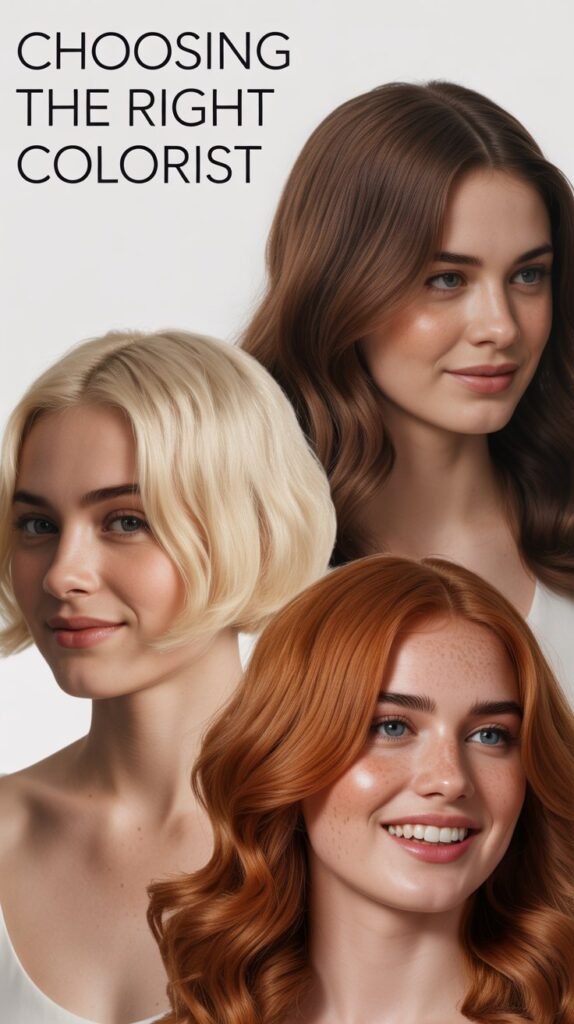
Selecting a skilled, experienced colorist is the single most important factor in achieving beautiful caramel highlights on your dark brown hair that look salon-fresh rather than DIY disasters.
The right professional understands color theory, highlighting techniques, and how to customize placement for your unique features and goals.
Investing time in finding the perfect colorist pays dividends in results, hair health, and overall satisfaction.
- Research colorists who specialize in dimensional color and highlighting techniques relevant to your desired look
- Review portfolios and before-after photos specifically showing their work on dark brown hair with caramel highlights
- Read client reviews focusing on comments about the colorist’s skill, communication, and ability to deliver requested results
- Schedule a consultation before committing to services to discuss your goals and assess the colorist’s understanding
- Ask about the colorist’s experience with your specific hair type, texture, and desired technique
- A skilled colorist will assess your natural color, skin tone, and lifestyle before recommending a personalized approach
- Red flags include colorists who promise dramatic results in one session on virgin dark brown hair or who don’t discuss maintenance
- Inquire about the products and techniques the colorist uses—quality brands and modern methods indicate expertise
- Ask how the colorist handles corrections if results aren’t as expected—their response reveals professionalism
- Consider the overall salon environment—cleanliness, organization, and client care reflect professional standards
- Price shouldn’t be the only consideration—experienced colorists charge appropriately for their expertise
- Trust your instincts during consultation—you should feel heard, understood, and confident in the colorist’s ability
- Ask for specific product recommendations and maintenance instructions—a good colorist educates clients on aftercare
23. Consultation Process and Goal Setting

A thorough consultation with your colorist before beginning the highlighting process ensures clear communication, realistic expectations, and customized results that align with your vision.
This crucial planning phase allows both you and your colorist to align on goals, discuss limitations, and develop a strategic approach.
Proper consultation prevents misunderstandings and disappointment while setting the foundation for beautiful results.
- Bring inspiration photos showing the exact caramel highlight look you’re hoping to achieve—multiple examples help convey your vision
- Be honest about your hair history including previous color, chemical treatments, and heat styling habits
- Discuss your lifestyle and maintenance capacity—how much time and money you can realistically commit to upkeep
- Your colorist should examine your natural hair color, texture, and condition before making recommendations
- Expect discussion about how your skin tone influences which caramel shades will be most flattering
- The colorist should explain which technique (balayage, foils, etc.) will best achieve your desired result
- Ask about realistic timelines—dramatic transformations may require multiple sessions to avoid damage
- Discuss placement strategies and how much of your hair will be highlighted to achieve the look you want
- Understand the expected maintenance schedule and costs before committing to the service
- Ask about potential challenges specific to your hair type or desired result
- The colorist should set realistic expectations about how light your highlights can go from your dark brown base
- Discuss aftercare requirements including recommended products and styling modifications
- Agree on a clear plan including technique, placement, expected outcome, and maintenance before proceeding
24. At-Home Touch-Up Options and Risks

While professional highlighting delivers the best results, understanding at-home touch-up options and their associated risks helps you make informed decisions about DIY color maintenance between salon visits.
Home highlighting products have improved significantly but still carry inherent risks that can result in damaged hair or undesirable color outcomes.
Weighing the cost savings against potential problems helps determine whether home maintenance is appropriate for your situation.
- At-home highlighting kits designed for dark hair can refresh face-framing pieces or add subtle dimension between professional services
- Root touch-up products temporarily mask regrowth but don’t actually highlight hair and wash out after shampooing
- Box highlighting kits typically contain harsh formulas that can cause damage, especially on previously lightened hair
- Applying lightener at home risks overlapping previously highlighted sections, causing breakage and uneven color
- Without professional training, achieving even saturation and proper placement is extremely challenging
- Home highlighting on dark brown hair is particularly risky since lifting to caramel tones requires skill to avoid brassiness
- Mistakes made during at-home highlighting often require expensive corrective color from professionals to fix
- Color-depositing treatments and glosses for maintenance are safer DIY options than actual lightening products
- Semi-permanent color can add warmth to faded highlights without the risks associated with lightener
- Heat-free highlighting methods (lemon juice, chamomile) are largely ineffective on dark brown hair and can cause dryness
- If attempting home highlights, strand testing is essential to preview results before applying to entire head
- Professional color correction for home highlighting mistakes can cost significantly more than regular maintenance appointments would have
- The safest at-home approach is maintaining professionally applied highlights with quality products rather than adding new color
25. Damage Prevention During Highlighting

Protecting your hair from damage during the highlighting process and subsequent maintenance is crucial for maintaining both hair health and color vibrancy.
Chemical lightening inherently stresses hair structure, but proper techniques and products minimize damage while achieving beautiful caramel tones.
Understanding damage prevention strategies helps you maintain strong, healthy hair throughout your highlighting journey.
- Starting with healthy, well-conditioned hair before highlighting minimizes damage and allows for better color results
- Bond-building treatments during the highlighting process reconnect broken disulfide bonds and maintain hair integrity
- Proper lightener formulation and developer strength prevent excessive damage while achieving desired lift
- Avoiding overlapping previously highlighted hair during touch-ups prevents over-processing and breakage
- Processing time should be carefully monitored—leaving lightener on longer than necessary increases damage without improving results
- Heat application should be minimal during processing to avoid excessive damage to hair structure
- Deep conditioning treatments immediately following highlighting restore moisture and smooth the cuticle
- Regular protein treatments between highlighting sessions strengthen hair and prevent breakage
- Minimizing heat styling after highlighting allows hair to recover from the chemical process
- Spacing highlighting appointments appropriately (not too frequently) gives hair time to recover between sessions
- Using quality, salon-professional products rather than budget options reduces damage during highlighting
- Regular trims remove damaged ends and prevent splitting from traveling up the hair shaft
- Maintaining overall hair health through proper nutrition and hydration supports strong hair that withstands highlighting better
26. Color Correction for Unwanted Results
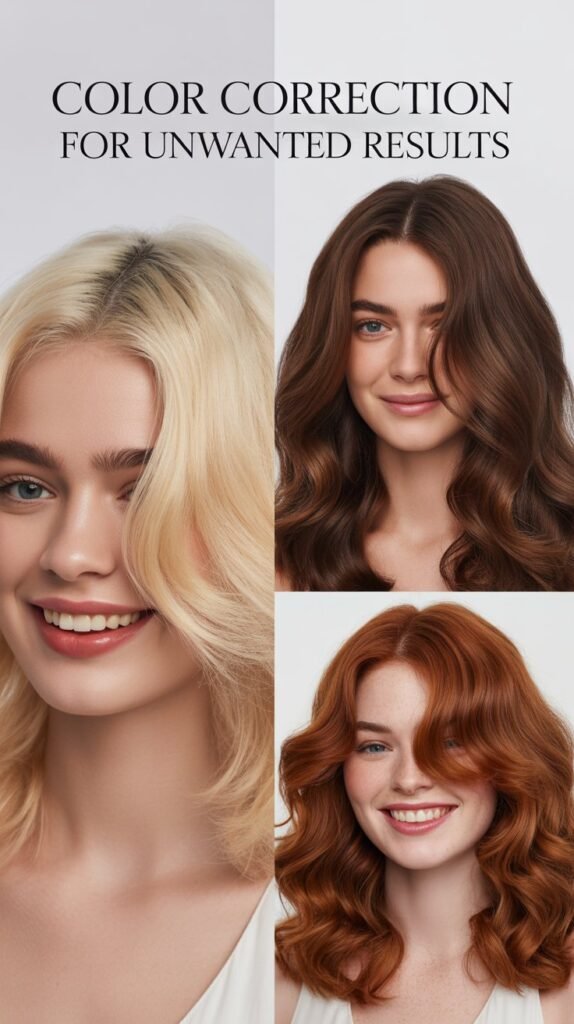
Understanding color correction options provides peace of mind that unwanted highlighting results—whether too brassy, too light, or poorly placed—can be fixed by skilled professionals.
Correction requires expertise, patience, and often multiple sessions to achieve the desired outcome without causing excessive damage.
Knowing when and how to pursue correction versus living with results helps you make informed decisions after disappointing color services.
- Color correction addresses issues including brassiness, excessive lightness, uneven placement, or colors that don’t complement skin tone
- Toning services can quickly fix brassiness without recoloring, making this the first correction approach for overly warm highlights
- Adding lowlights between too-bright caramel highlights can tone down excessive lightness and add dimension
- Gloss treatments can slightly deepen highlights that are lighter than desired without permanent color commitment
- Completely removing unwanted highlights may require color filling (depositing darker pigment) before applying new color
- Severe correction cases may need multiple sessions spaced weeks apart to avoid excessive damage
- Color correction typically costs more than regular highlighting services due to the complexity and time required
- Professional correction is always preferable to attempting home fixes that could worsen the problem
- Documentation through photos helps explain exactly what you’re unhappy with to the correction colorist
- Some correction issues (like damage) cannot be fixed with color and require hair to grow out and be trimmed
- Patience is essential during correction—rushing the process causes additional damage and potentially worse results
- Discussing what went wrong during the original service helps the correction colorist avoid repeating mistakes
- Preventive measures through proper consultation and choosing skilled colorists reduces the likelihood of needing correction
27. Skin Tone Considerations for Caramel Shades

Selecting the most flattering caramel highlight shade for your dark brown hair depends significantly on your skin’s undertones and overall coloring.
Different caramel variations complement different skin tones, with some creating harmonious enhancement while others can appear jarring or unflattering.
Understanding which caramel shades best suit your complexion ensures your highlights enhance rather than clash with your natural coloring.
- Warm Skin Tones: Honey and golden caramel highlights with yellow-gold undertones complement warm-toned skin beautifully
- Those with peach, golden, or yellow undertones in their skin look radiant with warmer caramel variations
- Rich, golden caramel creates harmony with warm complexions without washing out or appearing too contrasting
- Cool Skin Tones: Cooler caramel shades with more brown and less gold prevent overly warm appearances
- Toffee and butterscotch caramels work better than honey tones on pink or blue-undertoned skin
- Slightly ashier caramel tones (with reduced gold) create better balance with cool complexions
- Neutral Skin Tones: Have the most flexibility and can wear virtually any caramel shade from golden to toffee
- Those with balanced undertones can experiment with various caramel intensities without concern about clashing
- Fair Skin: Lighter, brighter caramel highlights create beautiful contrast without overwhelming delicate coloring
- Golden and honey caramels add warmth that prevents very fair skin from appearing washed out
- Medium Skin: Can handle a wider range of caramel intensities from subtle to bold
- Honey and classic caramel shades create stunning dimension on medium skin tones
- Deep Skin: Rich, saturated caramel tones show beautifully and create striking contrast against dark brown base
- Deeper toffee and amber caramels complement deep skin while maintaining visibility
- Test strand or temporary color can preview how specific caramel shades interact with your skin tone before committing
28. Face Shape and Strategic Highlight Placement
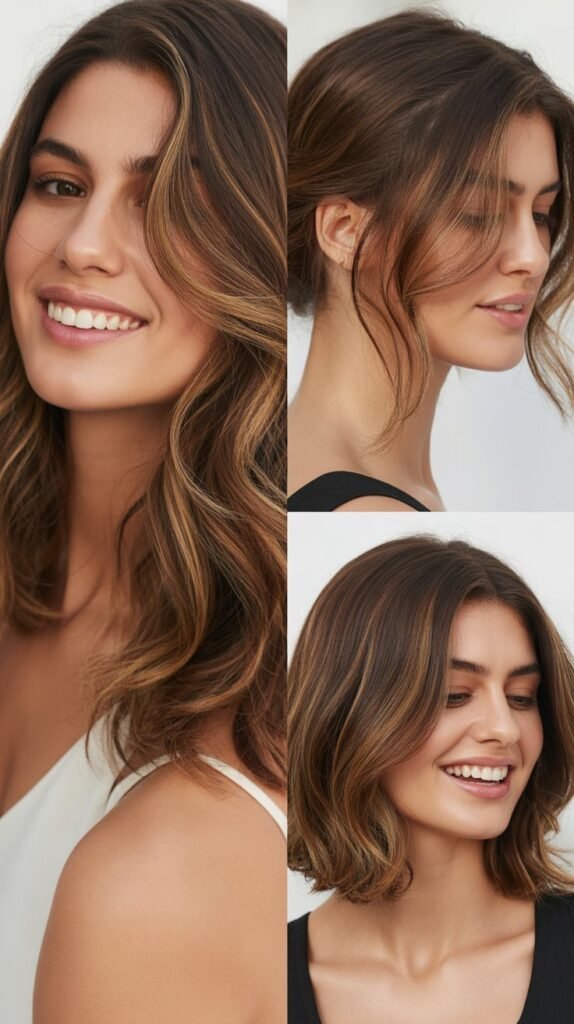
Understanding how strategic highlight placement can enhance your face shape transforms caramel highlights from simple color service to sophisticated contouring tool.
Different placement patterns create optical effects that can elongate, widen, soften, or frame facial features.
Customizing your caramel highlight placement based on face shape ensures the most flattering, harmonious results that enhance your natural beauty.
- Oval Face: The most versatile shape that suits virtually any highlight placement from all-over to concentrated
- Face-framing caramel pieces can be placed anywhere without disrupting facial balance
- Oval faces have the freedom to experiment with various highlighting techniques and intensities
- Round Face: Vertical placement of caramel highlights creates length and elongates the face
- Avoid placing bright highlights at the sides which can widen the face
- Concentrated highlights around the crown and along the interior create the illusion of length
- Square Face: Soft, face-framing caramel highlights soften angular jawlines and harsh edges
- Curved placement rather than straight lines creates more feminine softness
- Avoid heavy highlights at the jaw level which can emphasize squareness
- Heart Face: Caramel highlights concentrated at chin length and below balance a wider forehead
- Keep highlights slightly more subtle around the temples to avoid emphasizing width
- Face-framing pieces from cheekbone down create beautiful balance
- Long Face: Horizontal layers of caramel highlights create width and break up length
- Concentrated highlights around the sides add dimension that makes the face appear less elongated
- Avoid vertical placement that would further lengthen the face
- Diamond Face: Highlight placement around cheekbones emphasizes beautiful bone structure
- Soft face-framing from the temples down balances narrow forehead and chin
- Avoid heavy highlighting at the crown which can create top-heavy appearance
29. Aging Gracefully with Caramel Highlights

Caramel highlights offer an excellent strategy for aging gracefully, helping blend gray hair naturally while adding youthful warmth and dimension to dark brown bases.
Strategic highlighting placement can brighten mature complexions, soften features, and create a contemporary look that’s age-appropriate yet stylish.
Understanding how to adapt highlighting techniques for aging hair ensures beautiful results that enhance rather than appear inappropriate.
- Caramel highlights naturally camouflage gray hair by creating intentional lighter pieces that blend with silver strands
- Face-framing highlights brighten mature complexions and create a soft-focus effect that’s universally flattering
- Warmer caramel tones counteract the sallow or dull appearance that can develop in aging skin
- Strategic highlight placement draws attention to eyes and away from fine lines or other concerns
- As gray percentage increases, more caramel highlights create better blending and reduce maintenance frequency
- Softer, blended techniques like balayage appear more natural and age-appropriate than harsh, contrasting highlights
- Babylights create subtle brightness without looking like “trying too hard” or appearing dated
- Regular toning maintains appropriate warmth and prevents highlights from appearing brassy as hair texture changes
- Aging hair often becomes drier and more fragile, requiring extra care during highlighting processes
- Bond-building treatments become increasingly important for maintaining hair integrity during highlighting
- Shorter styles with caramel highlights can appear fresh and modern while being easier to maintain
- The combination of gray coverage and dimensional color creates sophisticated results that embrace aging naturally
30. Highlighting for Different Hair Lengths: Short Hair
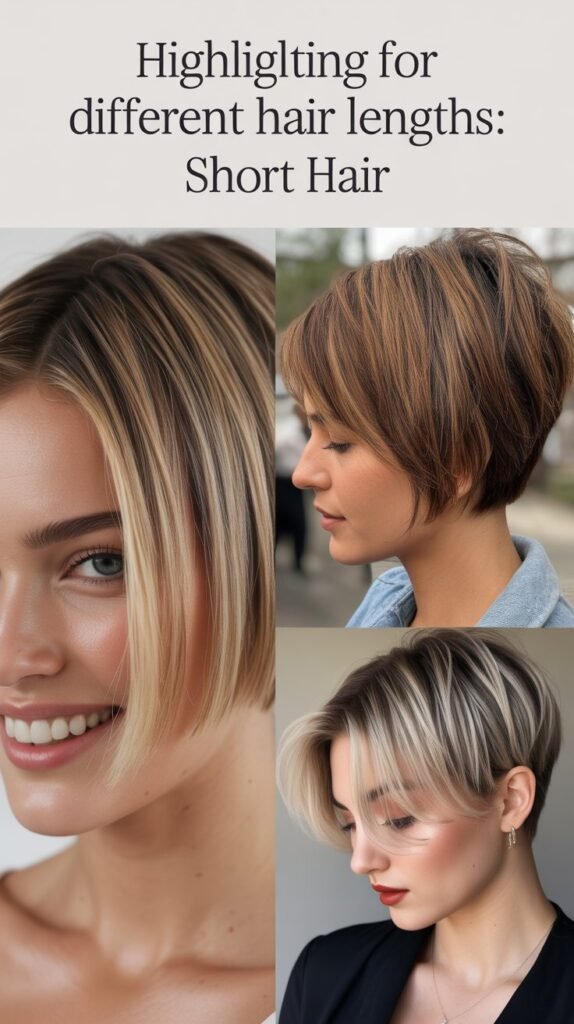
Short hairstyles showcase caramel highlights differently than longer lengths, with the reduced canvas requiring strategic placement for maximum impact.
The proximity of highlights to the face means color choices and placement dramatically affect the overall look.
Understanding how to optimize caramel highlights for pixies, bobs, and other short styles ensures beautiful results that complement rather than overwhelm the cut.
- Short hair benefits from concentrated face-framing caramel highlights that brighten the complexion and draw attention to features
- Babylights work exceptionally well on short styles, adding subtle dimension without overwhelming limited length
- Chunky highlights can appear too bold on very short hair, so finer sections often look more sophisticated
- Pixie cuts showcase caramel highlights around the face and crown where hair naturally lifts and moves
- Bob-length hair allows for face-framing combined with interior highlights for all-over dimension
- The lack of length means highlights are always visible and on display, requiring impeccable execution
- Short hair grows out faster relative to overall length, potentially requiring more frequent maintenance
- Color placement should complement the lines of the haircut, following the style’s natural movement
- Asymmetric bobs can use highlight placement to emphasize the longer side and create balance
- Short styles with texture or layers showcase highlights better than blunt, one-length cuts
- The reduced amount of hair means highlighting appointments are typically faster and less expensive
- Dramatic changes in highlight placement can coordinate with haircuts to create totally fresh looks more frequently
31. Highlighting for Different Hair Lengths: Medium Hair

Medium-length hair—from shoulder-grazing to collarbone length—offers ideal versatility for showcasing caramel highlights on dark brown bases.
This length provides enough canvas for dimensional color techniques while remaining manageable and flattering for most face shapes and lifestyles.
Understanding how to optimize highlighting for medium lengths ensures results that enhance the hair’s natural movement and style.
- Medium length provides perfect proportions for both subtle and dramatic highlighting approaches
- Balayage from mid-length to ends creates beautiful gradient effects that look natural and effortless
- Face-framing highlights can extend several inches back from the hairline without overwhelming the overall look
- The length allows for layered highlighting—surface dimension combined with interior brightness
- Medium hair showcases both the dark brown roots and caramel ends effectively when styled
- Versatile styling options (worn up, down, half-up) all display highlights differently
- Ombre and sombre techniques work beautifully on medium lengths with adequate transition space
- The length is ideal for trying multiple highlighting techniques together for maximum dimension
- Beach waves and loose curls showcase caramel highlights with beautiful movement on medium hair
- Enough length exists to create dramatic color stories without requiring excessive processing
- Medium hair allows highlights to frame the face without all the focus being immediately at the face
- The practical length accommodates active lifestyles while still providing sophisticated highlighting options
32. Highlighting for Different Hair Lengths: Long Hair
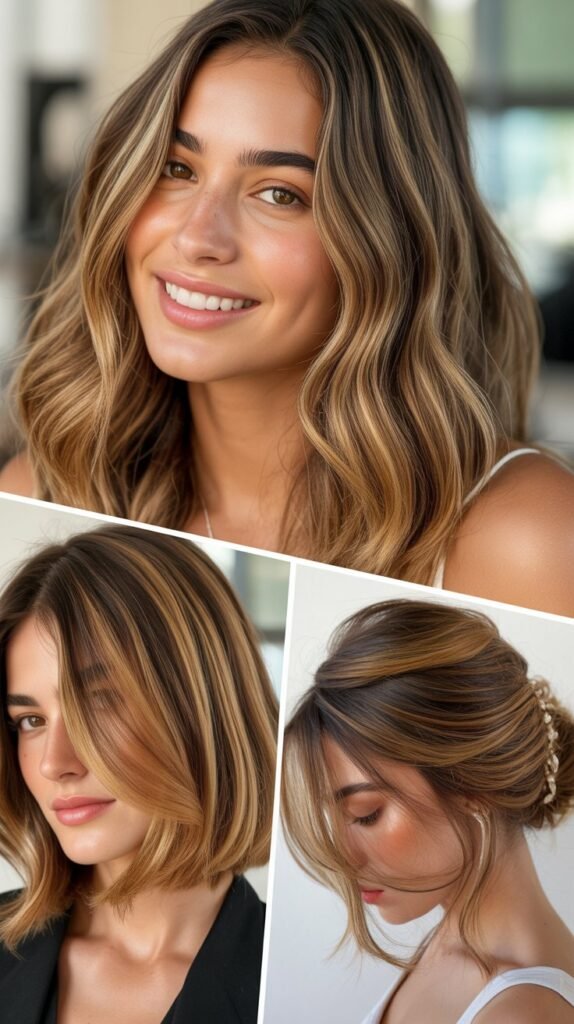
Long hair provides an expansive canvas for creative caramel highlighting that showcases dimensional color techniques to their fullest potential.
The length allows for gradual color transitions, complex blending, and impressive visual impact that shorter hair cannot achieve.
Understanding how to approach highlighting on long dark brown hair ensures results that remain healthy while achieving stunning caramel dimension throughout.
- Long hair offers maximum space for color transitions, making it ideal for ombre and sombre techniques
- The length allows for subtle root-to-end color progression that appears completely natural
- Multiple highlighting techniques can be layered—balayage through mid-lengths, babylights at the roots, and bright pieces at ends
- Long hair requires more product, time, and expense during highlighting due to the increased coverage area
- The weight of long hair can hide interior highlights unless applied throughout all layers
- Maintaining long highlighted hair requires extra care to prevent damage and breakage at already-fragile lengths
- Braids, updos, and various styles showcase highlights from different angles, providing versatility
- The length allows for dramatic color statements while keeping substantial dark brown roots for dimension
- Heat styling on long hair affects more length, making heat protection crucial for color preservation
- Long hair may require more frequent trims to maintain healthy ends after highlighting
- The visual impact of long caramel-highlighted hair is dramatic and head-turning when properly executed
- Considering the health of existing length is crucial before highlighting—damaged ends may need removal first
33. Styling Techniques That Showcase Highlights

Certain styling techniques maximize the visibility and visual impact of your caramel highlights on dark brown hair, making your color investment truly shine.
Understanding which hairstyles and styling methods best display dimensional color helps you show off your highlights daily.
Strategic styling choices can make the difference between highlights that hide and dimension that catches every eye.
- Loose Waves and Beach Waves: The movement and texture catch light from multiple angles, making highlights shimmer and shift
- Waves separate hair strands, allowing both dark brown and caramel tones to be visible simultaneously
- This styling creates the quintessential sun-kissed appearance that maximizes caramel highlight impact
- Side-Swept Styles: Wearing hair to one side showcases face-framing highlights beautifully
- The asymmetric placement creates visual interest while displaying dimensional color
- Half-Up Styles: Pulling top sections back leaves face-framing caramel pieces on display
- This styling shows highlights while creating elegant versatility for various occasions
- Braids and Braided Styles: Braiding incorporates light and dark strands together, creating beautiful woven color patterns
- Loose, textured braids display highlights better than tight braids that compress color together
- Straight and Sleek Styles: While showing less texture, straight hair displays highlights with maximum clarity
- The smooth surface reflects light directly, making caramel tones appear particularly vibrant
- High Ponytails and Top Knots: These styles showcase crown and interior highlights that might otherwise be hidden
- Creating texture in ponytails with twisting or braiding incorporates visible highlights throughout
- Adding Volume at Roots: Teasing or volumizing roots exposes underlayer highlights and adds dimension
- Root lift separates strands and allows light to hit highlights from new angles
34. Protecting Highlights from Environmental Damage
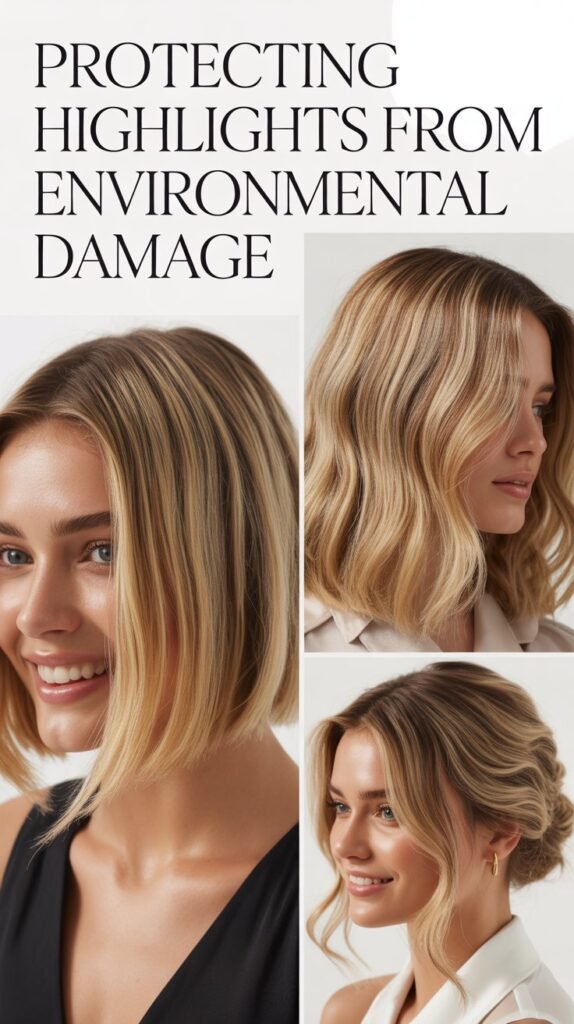
Environmental factors pose constant threats to the integrity and vibrancy of your caramel highlights, with sun exposure, pollution, and climate conditions all affecting color longevity and hair health.
Implementing protective strategies shields your investment from premature fading, damage, and unwanted color changes. Understanding environmental threats and their solutions helps maintain salon-fresh highlights longer.
- UV Protection: Sun exposure is the primary environmental threat, causing fading, brassiness, and dryness
- UV-protectant hair products create a barrier that absorbs or reflects damaging rays before they reach hair
- Wearing hats, scarves, or updos when spending extended time outdoors minimizes sun exposure
- Reapply UV protection products throughout the day just as you would sunscreen on skin
- Pollution Protection: Urban environments expose hair to pollutants that coat strands and dull highlights
- Weekly clarifying treatments remove pollution buildup that makes highlights appear lifeless
- Antioxidant hair products neutralize free radicals from pollution that accelerate color degradation
- Chlorine and Salt Water: Swimming pool chlorine and ocean salt can discolor highlights and create greenish casts
- Wet hair thoroughly with clean water before swimming to minimize absorption of pool or ocean water
- Wear a swimming cap or keep hair in a protective style when swimming frequently
- Immediately rinse and condition hair after swimming to remove damaging elements
- Climate Considerations: Dry climates require intensive hydration to prevent brittle, color-damaged hair
- Humid climates may require additional frizz control products to maintain styled appearance
- Extreme temperatures (very hot or very cold) can dry hair and accelerate color fading
- Indoor heating and air conditioning remove moisture from air and hair, requiring leave-in treatments
35. Professional vs. At-Home Highlighting: Making the Decision

Choosing between professional salon highlighting and at-home application involves weighing multiple factors including cost, desired results, skill level, and risk tolerance.
While professional services guarantee better outcomes, at-home options offer budget-friendly alternatives for those willing to accept increased risks.
Making an informed decision requires honest assessment of your priorities, abilities, and the specific results you’re hoping to achieve.
- Professional Advantages: Expert colorists understand color theory, proper placement, and customization for individual clients
- Professionals can assess hair health and choose appropriate techniques and products to minimize damage
- Salon highlighting ensures even application, proper processing times, and beautiful finishing with toners
- The investment typically includes consultation, application expertise, and guidance on maintenance
- Correcting professional work (if needed) is easier than fixing DIY disasters
- Professional highlighting usually delivers results closer to inspiration photos than home attempts
- At-Home Advantages: Significantly lower cost makes highlighting accessible on tight budgets
- Convenience of highlighting at home on your schedule without appointments
- Some simple highlighting tasks (face-framing touch-ups) may be manageable for experienced DIYers
- Professional Disadvantages: Higher cost can strain budgets, especially with ongoing maintenance
- Requires scheduling and time commitment including travel to salon
- Finding the right colorist requires research and potentially trying multiple professionals
- At-Home Disadvantages: High risk of uneven application, over-processing, damage, or unwanted color
- Difficult to see and properly apply color to back sections of your own head
- Home highlighting on dark brown hair is particularly challenging due to required lift to reach caramel tones
- Expensive professional correction often needed after unsuccessful home highlighting
- The Reality: Complex techniques like balayage and achieving specific caramel tones on dark brown hair almost always require professional expertise
- Simple root touch-ups or gloss treatments are lower-risk DIY options for maintaining professional color
- Your first highlighting service should always be professional to establish the base that you’ll maintain
| Factor | Professional Highlighting | At-Home Highlighting |
|---|---|---|
| Cost (Initial) | $150-$400+ | $10-$50 |
| Results Quality | Consistently excellent with skilled colorist | Variable, often disappointing |
| Damage Risk | Minimal with proper technique | Moderate to high |
| Customization | Fully customized to individual | Limited to kit options |
| Technique Options | All techniques available | Limited to kit capabilities |
| Best For | First-time highlighting, complex techniques, dramatic changes | Simple touch-ups, maintenance between pro services |
36. Trending Caramel Highlight Styles for 2025
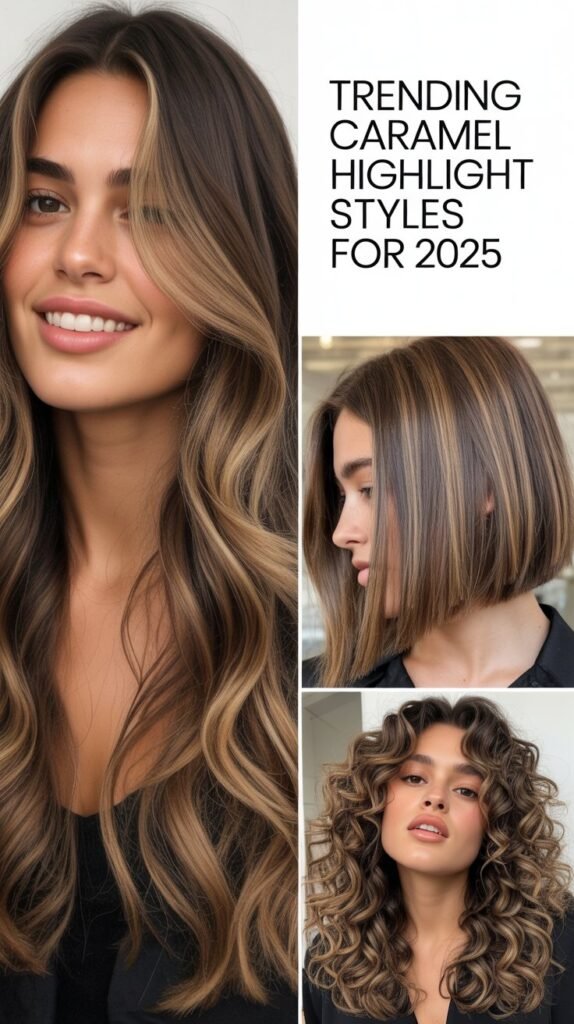
Contemporary highlighting trends evolve constantly, with 2025 bringing fresh approaches to caramel highlights on dark brown hair that balance natural aesthetics with modern edge.
Staying informed about current trends helps you communicate effectively with your colorist and choose looks that feel current and fashion-forward.
Understanding which trending techniques align with your personal style ensures your highlights feel both contemporary and authentically you.
- Lived-In Color: The continued dominance of natural-looking, low-maintenance highlighting that grows out gracefully
- Seamlessly blended caramel tones that mimic natural hair lightening rather than obviously “done” color
- Root shadowing and smudging techniques that create soft, imperceptible
transitions from dark roots
- Ribbons and Panels: Strategic placement of wider caramel sections that create intentional contrast
- Face-framing ribbons that bracket the face with bold caramel against dark brown base
- This technique offers modern edge while remaining sophisticated and wearable
- Micro-Highlights: Ultra-fine highlighting that creates barely-there dimension with maximum natural appearance
- Even finer than babylights, these microscopic highlights add subtle warmth and brightness
- Money Piece 2.0: Evolution of the face-framing trend with brighter, bolder caramel sections at the front
- Chunky, bright pieces that frame the face dramatically while keeping the rest of hair more natural
- Dimensional Depth: Combining highlights with lowlights and midtones for ultra-dimensional effects
- Multiple caramel shades throughout create depth that single-tone highlighting cannot achieve
- Warm Brunette Renaissance: Celebration of warm brown tones with rich caramel highlighting
- Moving away from cool-toned brunettes toward golden, warm, dimensional brown family colors
- Customized Placement: Highly individualized highlighting patterns designed specifically for each client’s features
- Colorists creating unique placement patterns rather than following standard formulas
37. Celebrity-Inspired Caramel Highlight Looks

Celebrity hairstyles often drive highlighting trends, with stars showcasing stunning caramel highlights on dark brown hair that inspire countless clients in salons worldwide.
Understanding which celebrities wear similar coloring helps you communicate your vision clearly using visual references your colorist will recognize.
Celebrity-inspired looks provide excellent starting points that can be customized for your individual features and lifestyle.
- Soft Balayage Inspiration: Celebrities with seamlessly blended caramel balayage that creates effortless sophistication
- Natural-looking sun-kissed effects that appear undetectable yet beautifully dimensional
- Focus on face-framing brightness with subtle progression throughout lengths
- Bold Contrast Inspiration: Stars who embrace more dramatic dark brown to caramel contrast
- Defined caramel ribbons against rich brunette base creating high-impact visual interest
- Face-framing money pieces that create Instagram-worthy brightness
- Lived-In Luxury: Celebrity looks featuring grown-out highlights that maintain beautiful dimension
- Proving that regrowth can be intentional and chic rather than unkempt
- Rich Dimension: Multi-tonal caramel highlighting that creates depth through various warm shades
- Combining honey, butterscotch, and toffee tones throughout for complex, expensive-looking color
- Seasonal Adaptation: Celebrities who adjust their caramel intensity with seasons
- Brighter summer highlights transitioning to deeper fall and winter tones
- How to Use Celebrity Inspiration: Bring multiple photos showing different angles and lighting conditions
- Discuss with your colorist how to adapt the celebrity look for your specific hair type and face shape
- Understand that professional styling and lighting make celebrity hair appear particularly glossy and perfect
- Use celebrity photos as starting points for customized looks rather than expecting identical reproduction
38. Combining Caramel Highlights with Other Techniques
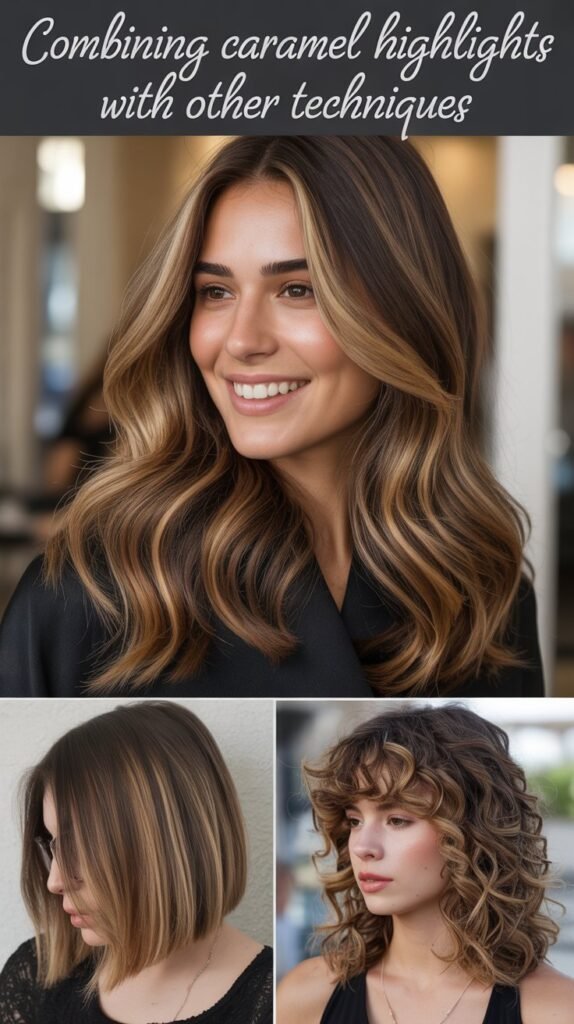
Layering multiple coloring techniques creates the most sophisticated, multidimensional caramel highlighting effects on dark brown hair.
Combining methods allows colorists to address different needs simultaneously—face-framing brightness, overall dimension, root blending, and customized placement.
Understanding how various techniques work together helps you envision and request complex, professional-looking results.
- Balayage + Babylights: Combining painted mid-length and end highlights with ultra-fine face-framing pieces
- Creates overall dimension with special brightness around the hairline for face-brightening effects
- The combination offers both natural sun-kissed appearance and strategic brightening
- Foilayage + Root Shadowing: Intensified highlighting through the lengths with darkened root application
- Achieves maximum lift for bright caramel tones while ensuring soft, blended regrowth
- Traditional Highlights + Lowlights: Alternating caramel highlights with darker pieces for extreme dimension
- Creates depth and contrast that single-process color cannot achieve
- Prevents highlights from appearing flat or one-dimensional
- Ombre + Face-Framing: Gradient coloring throughout with additional bright pieces around the face
- Addresses both overall color progression and strategic facial brightening
- Balayage + Toning: Hand-painted highlights followed by customized toner application
- Allows for creative base color with refined caramel tones in highlights
- Highlights + Gloss: Any highlighting technique sealed with glossing treatment
- Adds shine, adjusts tone, and creates professional finish
- Root Smudging + Balayage: Softening root area by blending base color into highlights
- Creates seamless transitions and extends time between touch-ups
- The combination prevents harsh lines while maintaining dimension
39. Gloss Treatments for Enhanced Shine
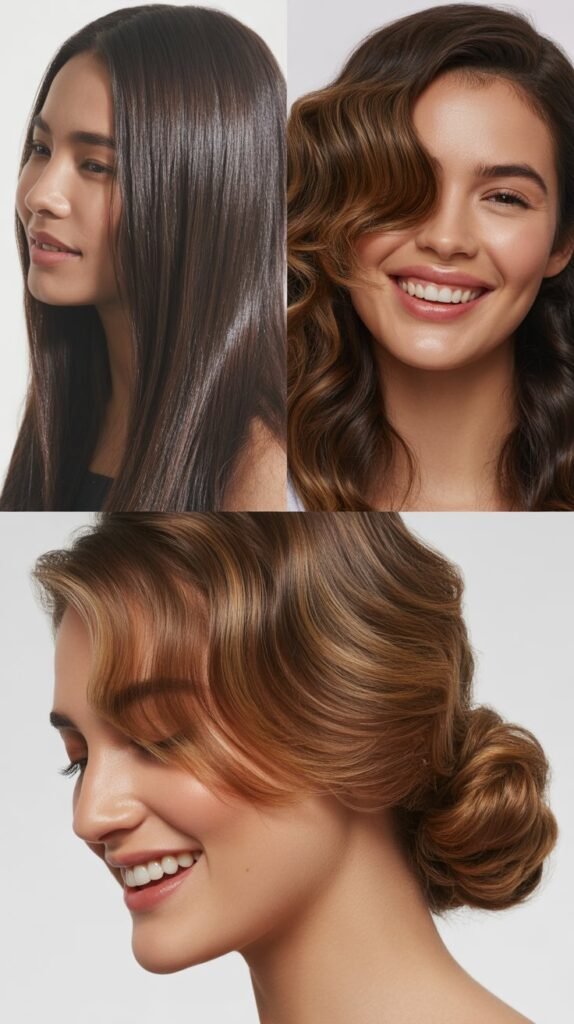
Professional gloss treatments transform caramel highlights from beautiful to breathtaking by adding mirror-like shine, sealing the cuticle, and subtly adjusting color tone.
These semi-permanent treatments are essential for maintaining salon-fresh appearance and should be considered a crucial part of highlight maintenance rather than optional luxury.
Understanding glossing benefits and frequency helps you maintain stunning results that consistently turn heads.
- Gloss treatments deposit shine while subtly adjusting or refreshing color tone without permanent commitment
- The conditioning formula seals hair cuticles, creating smooth, reflective surfaces that maximize shine
- Clear glosses add shine without color change while tinted glosses refresh or adjust existing tones
- Caramel-toned glosses can deepen or enrich faded highlights between full highlighting services
- Professional glosses typically last 4-6 weeks, providing extended shine and color enhancement
- The treatment takes only 20-30 minutes in the salon, making it convenient maintenance
- Glossing after highlighting services provides professional finishing that elevates overall results
- The process is gentler than traditional color, making it safe for frequent use
- Glosses can neutralize unwanted tones that develop in caramel highlights over time
- Regular glossing extends the life of highlighting services by maintaining vibrancy longer
- At-home gloss treatments are available but typically deliver less dramatic shine than professional options
- The investment (usually $75-$150) significantly impacts how fresh and polished highlights appear
40. Hair Health and Highlighting: Finding Balance
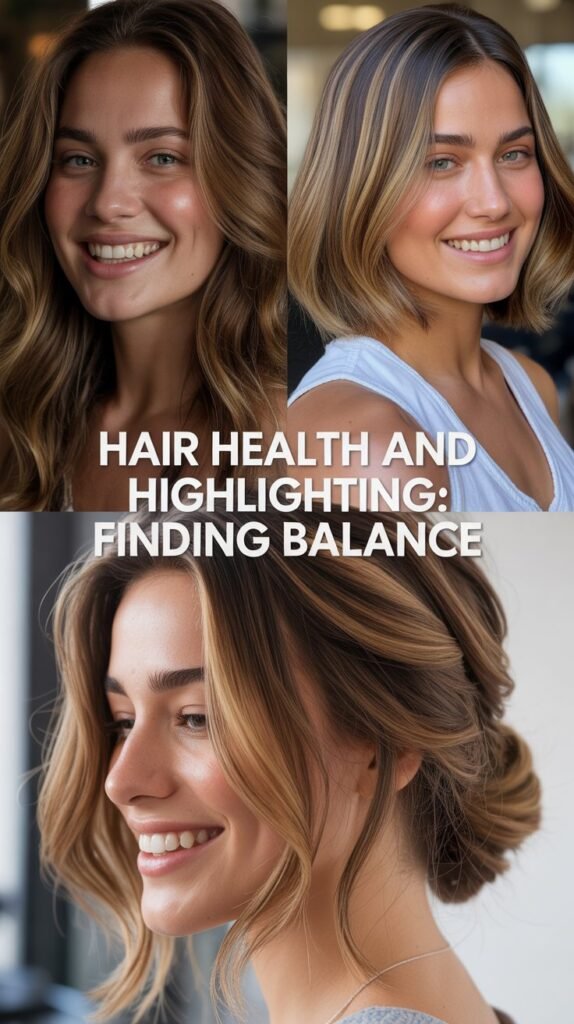
Maintaining hair health while enjoying beautiful caramel highlights requires balancing aesthetic goals with the biological reality that lightening inherently stresses hair structure.
Strategic approaches to highlighting, spacing appointments appropriately, and implementing comprehensive care routines preserve hair integrity while achieving dimensional color.
Understanding this balance helps you make decisions that support both beautiful color and healthy hair long-term.
- Starting with healthy hair before highlighting provides the best foundation for successful color that maintains integrity
- Regular protein treatments strengthen hair structure and prevent breakage from chemical processing
- Deep conditioning weekly restores moisture that lightening removes from hair
- Bond-building treatments during and after highlighting reconnect broken bonds and maintain hair strength
- Spacing highlighting appointments adequately (8-12 weeks minimum) allows hair to recover between services
- Less frequent, more strategic highlighting prevents cumulative damage from over-processing
- Heat styling should be minimized on highlighted hair to prevent additional stress beyond chemical processing
- Regular trims remove damaged ends before splitting travels up the hair shaft
- Protective styles that minimize manipulation help highlighted hair maintain health between appointments
- Silk pillowcases reduce friction that causes breakage on chemically-processed hair
- Proper nutrition including protein, biotin, and essential fatty acids supports healthy hair growth
- Listening to your hair—adjusting highlighting frequency if hair shows distress—prevents severe damage
- Understanding that hair health ultimately determines how beautiful highlights can appear motivates proper care
41. Transitioning from Other Colors to Caramel Highlights

Moving to caramel highlights on dark brown hair from previous color work requires strategic planning, professional expertise, and sometimes multiple sessions to achieve desired results safely.
Whether transitioning from all-over color, different highlight shades, or dramatic fashion colors, understanding the process helps set realistic expectations.
Proper transitioning prevents damage while gradually achieving your caramel highlight goals.
- From Blonde Highlights: Transitioning lighter highlights to caramel tones typically requires filling (adding pigment) before adjusting tone
- Simply applying darker color over blonde creates uneven results without proper pigment foundation
- Multiple sessions may be needed to gradually build appropriate depth before refining caramel tones
- From Red Tones: Red pigments must be removed or adjusted before achieving true caramel colors
- Red undertones can create muddy results if not properly neutralized during transition
- Color correction may be necessary to remove stubborn red pigments before establishing caramel tones
- From All-Over Color: Transitioning from solid color to dimensional caramel highlights involves strategic lightening
- Existing color may need removal in targeted areas to create lighter caramel pieces
- Gradual approach through multiple sessions prevents excessive damage from removing previous color
- From Fashion Colors: Bold colors (pink, blue, purple) must be fully removed before achieving natural caramel tones
- This process is complex and time-consuming, often requiring color correction specialists
- Hair health must be prioritized as removing fashion colors can be extremely damaging
- From Dark/Black Color: Lifting previous dark color to create caramel highlights is particularly challenging
- May require color removal or multiple highlighting sessions with careful processing
- Realistic expectations about achievable caramel lightness are essential with dark color history
- General Transition Tips: Patience is crucial—rushing transitions causes damage and disappointing results
- Professional consultation assessing previous color and hair condition is essential before beginning
- Transitioning gradually costs more but maintains hair health and achieves better final results
42. Lifestyle Considerations for Highlighted Hair

Your daily lifestyle significantly impacts which highlighting technique, maintenance schedule, and caramel intensity will work best for your situation.
Active lifestyles, professional requirements, styling habits, and time availability all influence highlighting decisions.
Choosing approaches that align with your reality ensures beautiful results you can actually maintain rather than high-maintenance color that becomes a burden.
- Athletic/Active Lifestyles: Frequent washing from exercise accelerates color fading, requiring hardy highlighting techniques
- Balayage or sombre with minimal face-framing offers low-maintenance options that withstand frequent cleansing
- Protective styles during workouts prevent mechanical damage and sun exposure to highlighted hair
- Professional Environments: Conservative workplaces may require subtler highlighting approaches
- Babylights, sombre, or understated balayage maintain professional appearance while adding dimension
- Extremely bold or bright caramel contrasts may not suit certain business settings
- Busy Schedules: Limited time for styling requires low-maintenance highlighting that looks good naturally
- Techniques that don’t require frequent touch-ups (balayage, ombre) accommodate hectic schedules
- Air-dry friendly highlighting that creates dimension without extensive styling fits busy lifestyles
- Frequent Travelers: Extended time away from your regular colorist requires low-maintenance color approaches
- Highlighting that grows out gracefully without obvious regrowth lines supports travel-heavy lives
- Outdoor Enthusiasts: Significant sun exposure requires extra UV protection and may cause faster color changes
- More frequent toning appointments may be necessary to counteract sun-induced brassiness
- Budget-Conscious: Balancing highlighting desires with financial reality requires strategic technique selection
- Lower-maintenance methods extend time between appointments, reducing overall annual costs
- Styling Commitment: Consider how much time you’ll realistically spend styling hair daily
- Highlights on hair you usually wear in ponytails may not justify the investment and maintenance
- Choose placement that looks good in your typical daily style rather than only when professionally styled
43. Addressing Common Highlighting Concerns

Understanding and addressing common concerns about caramel highlighting on dark brown hair helps you approach the process with realistic expectations and preparedness.
Many worries about damage, maintenance, cost, and appropriateness can be mitigated through education and proper technique selection. Knowing how to handle potential issues creates confidence in your highlighting decision.
- Damage Concerns: Modern highlighting techniques and products minimize damage when applied by skilled professionals
- Bond-building treatments, proper processing times, and quality aftercare prevent excessive damage
- Starting with healthy hair and spacing appointments appropriately maintains integrity
- Maintenance Worries: Choosing appropriate techniques for your lifestyle reduces maintenance burden
- Balayage, sombre, and babylights require less frequent touch-ups than traditional foil highlights
- Proper home care extends time between salon visits significantly
- Cost Anxiety: Highlighting is an investment, but strategic planning manages expenses
- Choosing lower-maintenance techniques reduces annual costs despite higher per-appointment prices
- Properly maintaining highlights extends their life, improving cost-per-wear value
- Age Appropriateness: Caramel highlights can be adapted to look appropriate and flattering at any age
- Subtle techniques and strategic placement ensure sophisticated rather than “trying too hard” appearance
- The warmth and face-brightening effects are particularly flattering as we age
- Work Appropriateness: Conservative highlighting options exist for even the most traditional work environments
- Communicating your professional requirements to your colorist ensures suitable results
- Gray Coverage: Caramel highlights successfully blend with and camouflage gray hair
- The dimensional color makes individual gray strands less noticeable as they grow in
- Color Commitment: Starting with subtle highlighting allows you to test the look before going bolder
- You can always add more highlights but removing them requires growing out or color correction
44. Seasonal Hair Care Adjustments
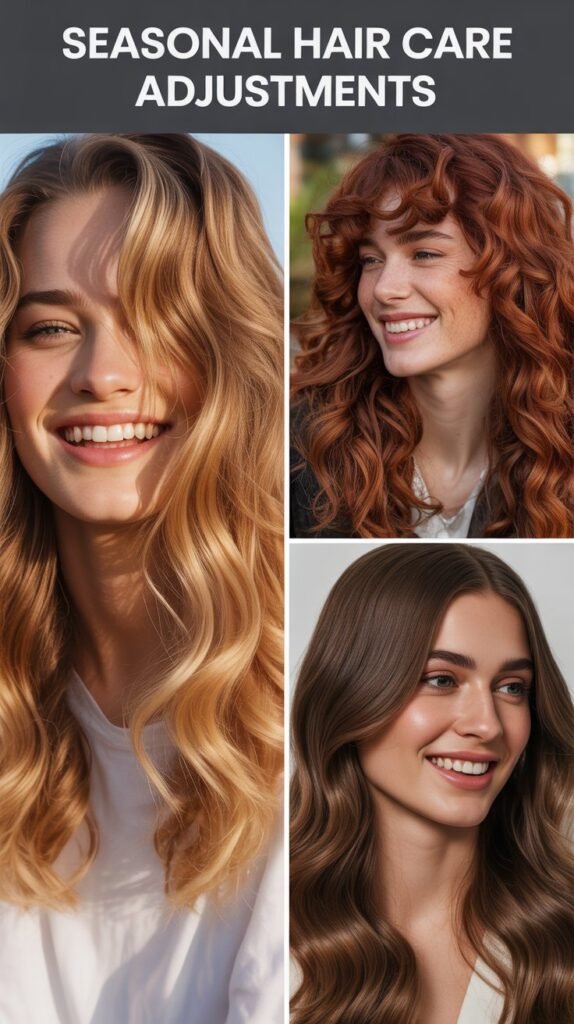
Adapting your highlighted hair care routine to seasonal changes helps maintain optimal color and condition year-round.
Different seasons present unique challenges—summer sun exposure, winter dryness, spring renewal, and fall transition—that require adjusted approaches.
Understanding seasonal hair care ensures your caramel highlights look their best regardless of weather or time of year.
- Summer Care: Maximum UV protection becomes critical to prevent fading and brassiness
- UV-protectant sprays, hats, and protective styles shield highlighted hair from intense sun
- More frequent deep conditioning addresses dryness from sun, chlorine, and salt water exposure
- Consider slightly more frequent toning to address sun-induced color changes
- Chlorine-removing shampoos prevent green tones and damage from swimming pool exposure
- Fall Care: Transition to richer, deeper caramel tones that complement autumn aesthetic
- Address any damage accumulated during active summer months with intensive treatments
- Prepare hair for drier indoor air by ramping up hydration treatments
- Winter Care: Combat indoor heating dryness with leave-in treatments and heavier conditioning
- Protect hair from cold outdoor air with hats and scarves that won’t cause breakage
- Static control products maintain style and prevent frizz in dry winter air
- Less sun exposure means brassiness becomes less concerning but dryness increases
- Spring Care: Refresh and brighten highlights after darker winter months
- Address any buildup or dullness with clarifying treatments
- Prepare hair for increased sun exposure by beginning UV protection routines
- Consider lightening or brightening caramel tones for spring renewal
- Year-Round Essentials: Quality color-safe shampoo and conditioner form foundation of all seasonal routines
- Weekly deep conditioning maintains health regardless of season
- Regular glossing treatments provide consistent shine and color refreshment throughout the year
45. Creating a Hair Care Routine for Highlighted Hair

Establishing a comprehensive, consistent hair care routine specifically designed for highlighted hair is essential for maintaining both color vibrancy and hair health.
A structured approach to daily, weekly, and monthly care ensures your caramel highlights stay fresh between salon visits. Building habits around proper care transforms highlighted hair from high-maintenance burden to beautiful, manageable asset.
Daily Routine:
- Brush hair gently with appropriate brush (wide-tooth for wet hair, soft bristles for dry hair)
- Use heat protectant before any heat styling without exception
- Apply leave-in treatment or hair oil to ends for ongoing protection and shine
- Style with lower heat settings and minimize direct heat contact time
- Sleep on silk or satin pillowcase to reduce friction and breakage overnight
Washing Routine (2-3 times per week):
- Wet hair thoroughly with lukewarm water—hot water opens cuticles and fades color faster
- Apply sulfate-free, color-safe shampoo primarily to scalp and roots
- Massage gently without creating tangles or excessive friction
- Rinse thoroughly until water runs clear
- Apply generous amount of color-safe conditioner from mid-length to ends
- Leave conditioner on for 3-5 minutes while it penetrates
- Rinse with cool water to seal cuticle and enhance shine
- Gently squeeze excess water without rough rubbing
Weekly Deep Treatment:
- Apply deep conditioning mask or treatment to clean, damp hair
- Focus on mid-lengths and ends where highlighting causes most dryness
- Leave on for recommended time (typically 10-20 minutes)
- Consider adding heat with shower cap or warm towel to enhance penetration
- Rinse thoroughly with cool water
Bi-Weekly Clarifying:
- Use gentle clarifying shampoo to remove product buildup
- Follow immediately with deep conditioning treatment
- Don’t clarify too frequently as it can strip color
Monthly Treatments:
- Protein treatment to strengthen hair structure
- At-home gloss treatment to refresh shine and tone
- Trim or dust ends to remove any splitting or damage
46. Understanding Hair Porosity and Highlighting

Hair porosity—how well your hair absorbs and retains moisture—significantly impacts both how your hair takes color during highlighting and how well it maintains caramel tones afterward.
Understanding your hair’s porosity level helps you predict highlighting results, choose appropriate techniques, and implement targeted care strategies.
Different porosity levels require different approaches for optimal highlighting outcomes.
- Low Porosity Hair: Features tightly closed cuticles that resist moisture and color absorption
- Requires longer processing times during highlighting to achieve desired caramel lift
- Once colored, maintains color exceptionally well due to closed cuticle structure
- Benefits from heat during deep conditioning to help products penetrate
- Lightweight products work better as heavy products sit on surface without absorbing
- Normal Porosity Hair: The ideal porosity with balanced absorption and retention
- Accepts color easily and maintains it well with proper care
- Most highlighting techniques work successfully on normal porosity hair
- Standard processing times and products typically deliver predicted results
- High Porosity Hair: Features raised cuticles that absorb everything quickly but release it just as fast
- May lighten faster during highlighting but also fades more quickly
- Requires intensive conditioning and protein treatments to fill gaps in cuticle structure
- Color-depositing products help maintain caramel tones between highlighting sessions
- Heavier, more occlusive products help seal moisture and color inside the hair shaft
- Testing Porosity: Float test—drop clean hair in water; sinks quickly = high porosity, floats = low porosity
- Spray test—spray water on clean hair section; beads up = low porosity, absorbs quickly = high porosity
- Porosity and Highlighting Success: Understanding your porosity helps your colorist adjust processing and products
- Communicating porosity level during consultation ensures customized approach for best results
47. Protecting Highlights During Heat Styling
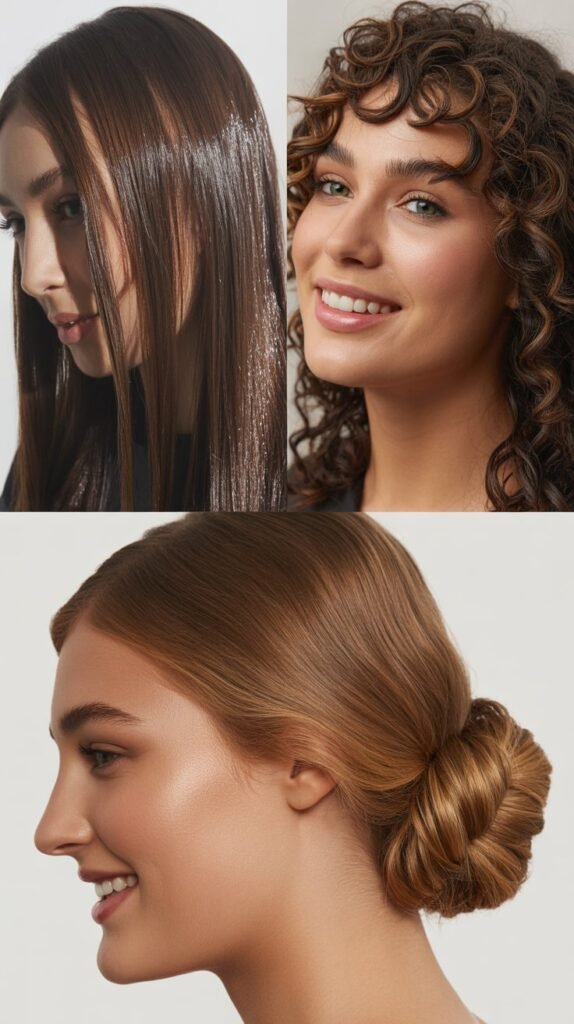
Heat styling tools—blow dryers, flat irons, curling wands—pose significant threats to highlighted hair’s health and color integrity.
The combination of chemical processing and high temperatures creates potential for severe damage, dryness, and color fading.
Implementing protective strategies and proper techniques allows you to style your caramel-highlighted hair without compromising its beauty or condition.
- Essential Heat Protection: Never apply heat tools without heat protectant—this is non-negotiable for highlighted hair
- Apply heat protectant to damp hair before blow drying and to dry hair before flat ironing or curling
- Quality heat protectants create barrier that reflects heat away from hair structure
- Temperature Settings: Use the lowest effective temperature rather than maxing out heat settings
- Fine or damaged highlighted hair: 300°F or below
- Medium texture: 300-350°F
- Thick or coarse hair: 350-400°F maximum
- Blow Drying Technique: Keep dryer nozzle pointing down the hair shaft to smooth cuticle
- Maintain 6-inch distance between dryer and hair
- Use cool shot button to set style and seal cuticle after drying
- Rough-dry hair to 70-80% before using brush to minimize heat exposure time
- Flat Ironing Safely: Use ceramic or titanium plates that distribute heat evenly
- Make one smooth pass per section rather than multiple passes
- Don’t clamp too tightly—gentle pressure protects hair structure
- Ensure hair is completely dry before flat ironing to prevent steam damage
- Curling Without Damage: Use proper barrel size for desired curl style
- Don’t hold hair on hot barrel longer than necessary (usually 8-10 seconds)
- Allow curls to cool completely before touching to set style without additional passes
- Heat-Free Styling Alternatives: Explore air-drying, braiding, twisting, and heatless curl methods
- These approaches maintain highlighted hair health while creating beautiful styles
- Limiting Frequency: Style with heat tools no more than 2-3 times per week ideally
- Allow hair to rest and recover between heat styling sessions
48. Balancing Highlights and Hair Growth Patterns
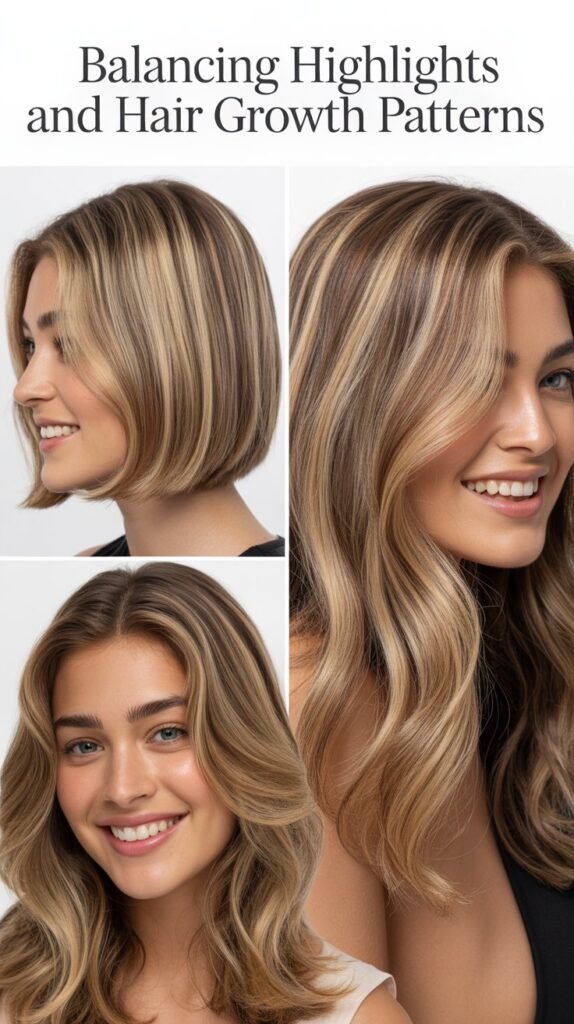
Understanding your hair’s natural growth patterns—cowlicks, whorls, directional growth—helps your colorist place caramel highlights where they’ll lie naturally and look most flattering.
Fighting against natural growth patterns creates frustration and uncooperative styling, while working with them produces effortless-looking results.
Strategic highlighting placement that considers growth patterns ensures your color enhances rather than conflicts with your hair’s natural behavior.
- Colorists should examine hair dry and in its natural state to identify growth patterns before highlighting
- Cowlicks at the hairline affect how face-framing caramel pieces will lay and should be highlighted accordingly
- Crown whorls influence how highlights radiate from the center—placement should follow this natural pattern
- Hair that grows forward naturally benefits from highlights that emphasize this forward movement
- Natural parts should be considered—highlights placed along the part become highly visible
- Directional growth at the nape affects how highlights in lower sections appear and blend
- Resistant areas that stand up naturally become focal points and may benefit from strategic highlight placement
- Growth patterns influence where volume naturally occurs—highlighting these areas maximizes dimensional effect
- Understanding hair’s natural tendencies prevents fighting against them during daily styling
- Colorists can use highlights to emphasize attractive growth patterns or minimize problematic ones
- Working with growth patterns creates highlighting that looks natural and effortless rather than “done”
- Discussing your hair’s behavior with your colorist ensures placement that works with your specific patterns
49. Touch-Up Strategies Between Appointments
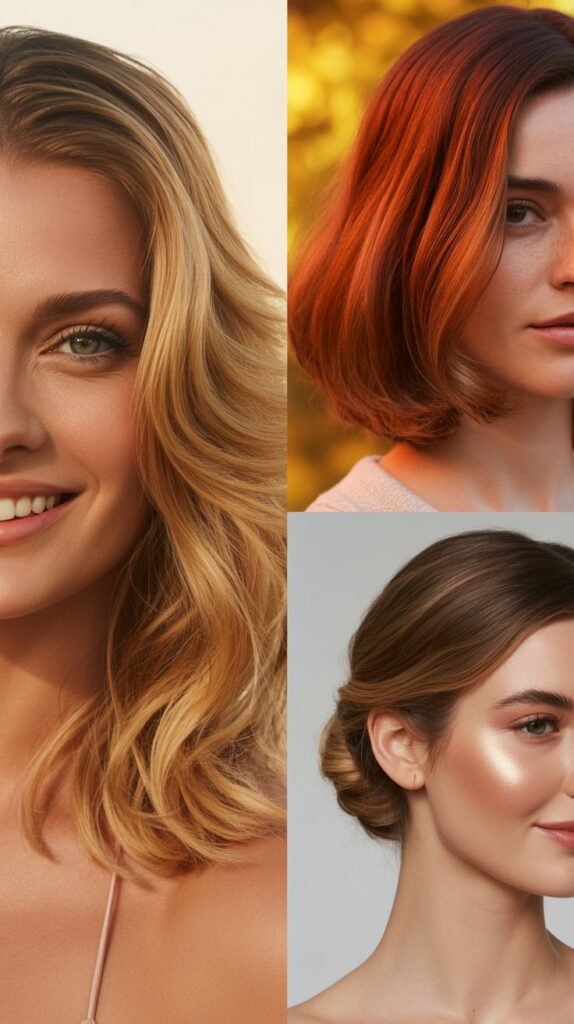
Maintaining fresh-looking caramel highlights between professional appointments requires strategic at-home touch-up approaches that extend color vibrancy without risking damage or color disasters.
Understanding which touch-up methods are safe and effective helps you maintain salon-fresh appearance longer while protecting your investment. Smart interim care bridges gaps between expensive professional services.
- Color-Depositing Shampoos and Conditioners: Gradually add warmth and refresh caramel tones with each wash
- These products work slowly and subtly without dramatic color changes
- Choose formulas specifically designed for maintaining warm caramel tones on brunette bases
- Temporary Root Touch-Up: Color sprays or powders temporarily mask regrowth for special occasions
- These wash out completely and don’t actually color hair, making them safe options
- Apply only to roots where regrowth is visible, avoiding already-highlighted sections
- At-Home Glossing Treatments: Demi-permanent gloss treatments add shine and subtle color refreshment
- Significantly safer than actual highlighting products since they deposit rather than lift color
- Follow instructions precisely to avoid unexpected results
- Strategic Styling: Style hair to minimize visible regrowth—side parts can hide regrowth along center parts
- Textured styles blend regrowth better than sleek, straight styles
- Face-framing pieces can be brought forward to emphasize highlights and minimize root visibility
- Dry Shampoo for Extended Freshness: Quality dry shampoo absorbs oil between washes
- Extended time between washes preserves color and prevents premature fading
- What Not to Do: Never apply box color or lightener over existing highlights without professional guidance
- Don’t overlap new color onto previously highlighted sections—this causes severe damage
- Avoid attempting to add new highlights at home between professional services
- Professional Mini-Services: Consider quick professional toning or gloss appointments between full highlighting
- These mini-services cost less than full appointments but significantly refresh appearance
50. Working with Multiple Hair Textures

Many people have multiple hair textures throughout their head—finer pieces around the hairline, coarser texture at the crown, varying textures from root to tip.
Understanding how caramel highlights interact with different textures within the same head of hair helps create cohesive, flattering results.
Professional colorists must adapt highlighting techniques to accommodate textural variations for even, beautiful dimension.
- Fine hairline pieces may require gentler processing and shorter development times to prevent damage
- Coarser crown areas often need more processing time to achieve the same lift as finer sections
- Different textures absorb and hold color differently, requiring adjusted formulation and timing
- Virgin hair (no previous color) processes differently than previously colored sections
- Gray hair has different structure and may require pre-softening before highlighting
- Curly sections showcase highlights differently than straight sections on the same head
- Processing should be monitored section by section rather than assuming uniform timing throughout
- Product absorption varies by texture—porous areas grab color quickly while resistant areas need longer
- Finer areas around the face may benefit from babylights while coarser areas can handle bolder sections
- Understanding texture variations prevents over-processing fine areas while properly lifting resistant sections
- Toner application may need adjustment by section to account for different textures’ absorption
- Communication with your colorist about textural variations ensures they’re prepared to customize application
- Bringing attention to areas that behave differently helps colorist plan appropriate strategies
51. Combining Caramel Highlights with Haircuts

Strategic coordination between your haircut and caramel highlight placement creates synergistic results where color and cut enhance each other.
The shape of your haircut influences how highlights appear, while highlight placement can emphasize or de-emphasize cut lines.
Working with both your colorist and stylist to plan coordinated services ensures cohesive, polished results that maximize both color and cut.
- Layered Cuts: Interior layers benefit from highlights that create separation and emphasize movement
- Placing brighter caramel tones on layer ends creates beautiful dimension as layers overlap
- Face-framing layers can be specifically highlighted to draw attention to the cut’s shaping
- Blunt Cuts: One-length cuts showcase highlights along the weight line for striking effects
- Balayage through blunt cuts prevents flatness by adding dimensional interest
- Bob Cuts: Shorter bobs benefit from concentrated face-framing caramel without excessive all-over highlighting
- Graduated bobs can use highlights to emphasize the stacked shape and volume
- Long Hair: Length provides canvas for gradual ombre or sombre effects from dark roots to caramel ends
- Highlights throughout multiple layers create dimension visible from all angles
- Shag Cuts: Choppy, textured shags are ideal for dimensional highlighting that emphasizes the textured layers
- Caramel highlights on shag pieces create separation and showcase the deliberately messy aesthetic
- Timing Services: Some stylists prefer to color before cutting to see how color affects the overall shape
- Others prefer cutting first to establish lines before adding dimensional color
- Communication is Key: Ensure both your colorist and stylist understand your overall vision
- If working with different professionals, share plans between them for coordinated results
- Maintenance Coordination: Schedule cuts and color appointments together or staggered appropriately
- Fresh color on a grown-out cut or fresh cut with faded color creates unfinished appearance
52. Photography and Social Media Considerations

In our visual social media age, understanding how caramel highlights photograph helps ensure your hair looks as stunning in photos as it does in person.
Certain color choices, placement strategies, and styling approaches photograph better than others, impacting how your highlights appear in selfies and professional photos.
Considering photographic outcomes during the planning phase ensures Instagram-worthy results.
- Natural Light Photography: Caramel highlights shine in natural light, creating beautiful dimension and warmth
- Golden hour (sunrise and sunset) particularly flatters caramel tones, making them glow
- Overcast days create soft, even lighting that shows true color without harsh contrasts
- Indoor Lighting: Warm indoor lighting enhances caramel tones while cool fluorescent lighting can wash them out
- Highlights may appear differently indoors versus outdoors in photos
- Flash Photography: Direct flash can wash out subtle highlights or create harsh contrast
- Positioning yourself at an angle to flash rather than directly in front creates more flattering lighting
- Dimensional Benefits: Multi-tonal caramel highlights photograph better than single-shade highlights
- Dimension creates visual interest that translates well to two-dimensional photos
- Styling for Photos: Loose waves and textured styles show off highlights better than super-straight hair in photos
- Movement and volume create shadows that emphasize dimensional color
- Social Media Filters: Most popular filters enhance warm tones, making caramel highlights more vibrant
- Understanding how your favorite filters interact with your hair color helps predict photographic results
- Placement for Selfies: Face-framing highlights show prominently in front-facing phone photos
- Consider which angles you typically photograph from when planning placement
- Gloss and Shine: Glossy, well-maintained highlights reflect light beautifully in photographs
- Regular gloss treatments ensure camera-ready shine
53. Addressing Regrowth: Root Management Strategies

Managing root regrowth as your natural dark brown hair grows out under caramel highlights requires strategic approaches that maintain polished appearance without excessive maintenance.
Different regrowth handling options suit different lifestyles, budgets, and aesthetic preferences. Understanding regrowth management techniques helps you plan long-term color strategy beyond the initial highlighting service.
- Root Shadowing: Applying darker color at roots that gradually blends into highlights creates intentional, soft regrowth
- This technique extends time between touch-ups by making regrowth appear intentional rather than neglected
- Root shadowing creates depth at the base that makes highlights appear more dimensional
- Root Smudging: Similar to shadowing but with even softer, more diffused application
- Creates nearly imperceptible transitions between natural dark roots and caramel highlights
- Embracing Natural Regrowth: Modern color trends favor darker roots as part of the overall look
- Lived-in color aesthetics intentionally showcase regrowth as contributing to dimensional appearance
- Strategic Touch-Ups: Only refreshing face-framing highlights while leaving interior color to grow extends maintenance frequency
- Focusing touch-ups where regrowth is most visible economizes both time and money
- Lowlight Integration: Adding darker lowlights near the roots helps blend regrowth into existing color
- Creates more gradual transitions that make regrowth less obvious
- Toning Roots: Sometimes toning natural regrowth to coordinate better with highlights extends maintenance time
- Slightly lightening or adding warmth to roots helps them blend with caramel tones
- Maintenance Frequency by Technique:
- Balayage: 3-4 months between touch-ups
- Traditional highlights: 6-8 weeks between touch-ups
- Ombre: 4-6 months between touch-ups
- Face-framing only: 8-12 weeks between touch-ups
54. Special Occasion Styling for Highlighted Hair

Preparing your caramel-highlighted dark brown hair for special events requires strategic planning to ensure your color and style look absolutely perfect when it matters most.
Understanding timeline for treatments, appropriate styling techniques, and photo-ready finishes helps you show up with confidence. Special occasions deserve special hair attention that showcases your highlights at their absolute best.
- Pre-Event Timeline: Schedule glossing treatment 1-2 weeks before events for maximum shine
- Avoid trying new highlighting techniques immediately before important events—stick with proven approaches
- Deep conditioning treatments in the weeks leading up ensure optimal hair health and manageability
- Highlighting Touch-Ups: Complete any necessary touch-ups 1-2 weeks before events, not immediately prior
- This allows color to settle and any adjustments to be made if needed
- Styling Strategies: Formal updos showcase highlights throughout multiple sections as hair is pinned and twisted
- Loose, romantic waves create dimension and movement that catches light from every angle
- Sleek, straight styles display highlights with clarity and precision
- Half-up styles combine the elegance of updo styling with the beauty of flowing highlighted hair
- Product Selection: Use humidity-resistant products if event is outdoors or in humid environments
- Extra-hold products ensure style lasts through entire event without touch-ups
- Shine-enhancing products make highlights photograph beautifully
- Testing Styles: Practice special occasion styles beforehand to ensure you achieve desired results
- Take photos in various lighting to see how style and highlights photograph
- Touch-Up Kit: Pack travel-size products for event-day touch-ups
- Include shine spray, smoothing serum, and style-holding product
- Professional Styling: Consider professional styling for major events to ensure flawless results
- Communicate that you want styling that showcases your highlights specifically
55. Long-Term Color Planning and Evolution
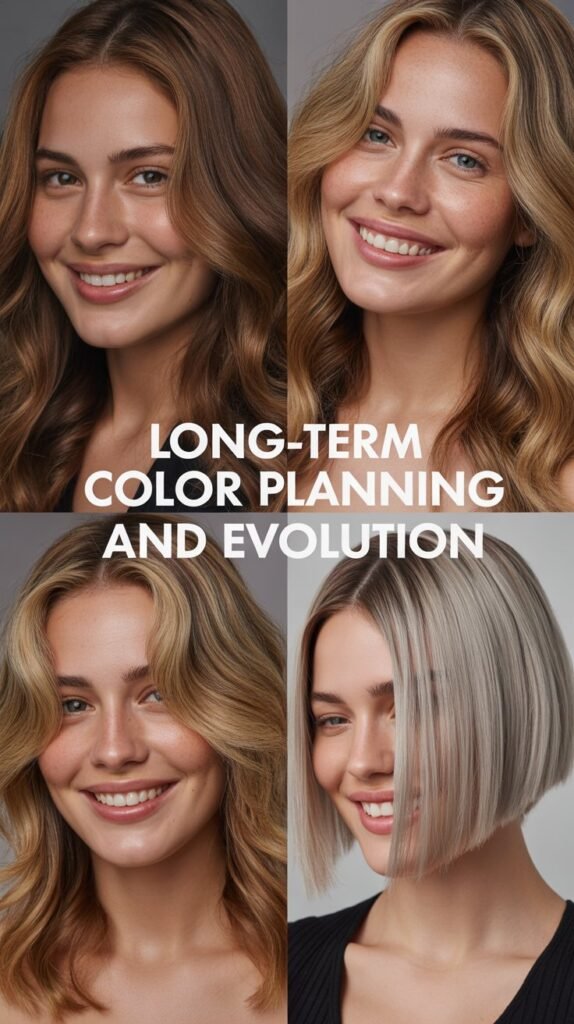
Developing a long-term vision for your caramel highlights allows for strategic evolution of your color over time rather than making impulsive decisions at each appointment.
Planning color progression—gradually lighter, seasonal adjustments, or consistent maintenance—creates cohesive results that reflect your aesthetic goals.
Working with your colorist to develop multi-appointment plans ensures each service builds toward your ultimate vision.
- Gradual Transformation: Dramatic color changes achieved gradually over multiple appointments prevent damage and allow adjustment
- First appointment: subtle caramel face-framing pieces
- Second appointment: adding more throughout while maintaining depth
- Third appointment: achieving full desired dimension
- Maintenance Phase Planning: Once desired look is achieved, plan ongoing maintenance schedule
- Determine which appointments need full highlighting versus just toning or touch-ups
- Budget annually for color maintenance rather than appointment by appointment
- Seasonal Evolution Strategy: Plan color adjustments coordinating with seasonal changes
- Summer: gradually brighten and increase caramel intensity
- Fall/Winter: deepen tones and add richness
- Spring: refresh and lighten for seasonal renewal
- Adapting to Life Changes: Color strategy should evolve with life circumstances
- New job may require more conservative approach
- Increased gray coverage needs may shift technique selection
- Budget changes might necessitate lower-maintenance options
- Building Color History: Working with the same colorist who knows your hair’s history produces best results
- They understand what’s been done previously and can plan accordingly
- Bringing new colorist up to speed on your color history prevents mistakes
- Photography Documentation: Keep photos from each appointment showing results
- Visual history helps track what works and what doesn’t over time
- Shows evolution and helps communicate preferences for future services
- Flexibility Within Plans: Allow room for spontaneous adjustments based on trends, inspiration, or mood
- Long-term planning provides direction without being rigid
56. Troubleshooting Common Highlighting Issues

Understanding how to identify and address common problems that arise with caramel highlights empowers you to seek appropriate solutions quickly.
Various issues from brassiness to uneven color to excessive damage require different remedies. Recognizing problems early and knowing how to communicate them to professionals ensures issues are resolved effectively.
- Brassiness: Overly orange or warm caramel tones that appear unintentional
- Solution: Professional toning service to neutralize unwanted warmth
- Blue-based toners counteract orange, purple-based toners counteract yellow
- Preventive care including UV protection and color-safe products
- Uneven Color: Highlights that appear splotchy or inconsistent in tone
- Solution: Additional toning or gloss to even out color throughout
- In severe cases, color correction may be needed to create uniformity
- Over-Processed Hair: Hair that feels straw-like, breaks easily, or appears frizzy
- Solution: Immediate intensive conditioning and protein treatments
- Suspend all highlighting services until hair health improves
- Consider cutting severely damaged ends that cannot be repaired
- Too Light: Highlights that are brighter than desired caramel tones
- Solution: Toning with darker caramel shades or adding lowlights
- Glazing treatments can slightly deepen overly light highlights
- Poor Placement: Highlights positioned unflattering for face shape or cut
- Solution: Strategic addition of lowlights or new highlights in better locations
- May require growing out and starting fresh in worst cases
- Fading Too Quickly: Color that loses vibrancy within weeks of service
- Solution: Switch to color-safe products if not already using them
- Increase UV protection and reduce washing frequency
- Professional glossing treatments between highlighting appointments
- Visible Lines of Demarcation: Harsh lines between dark and light instead of blended transitions
- Solution: Root smudging or additional balayage between highlighted sections
- Strategic placement of mid-tones creates better blending
57. Sustainability and Eco-Friendly Highlighting Options
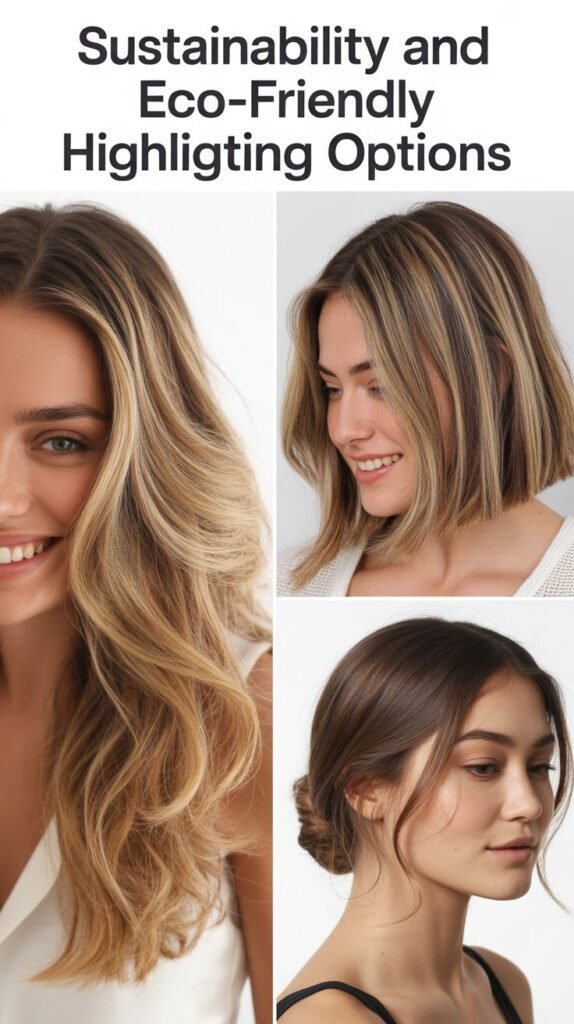
Growing awareness of environmental impact extends to hair coloring, with eco-conscious clients seeking sustainable approaches to achieving beautiful caramel highlights.
Understanding which products, techniques, and practices minimize environmental harm helps you make informed choices that align with your values. The beauty industry increasingly offers green alternatives that don’t sacrifice results.
- Organic and Natural Color Lines: Some professional brands offer highlighting products with organic, plant-based, or naturally derived ingredients
- These formulations minimize exposure to harsh chemicals for both you and salon professionals
- Results may differ slightly from conventional products, requiring realistic expectations
- Ammonia-Free Options: Many modern highlighting products eliminate ammonia, reducing harsh chemical exposure and unpleasant odors
- Ammonia-free formulas can be gentler on hair while still achieving desired lift
- Sustainable Salons: Seek salons committed to eco-friendly practices including recycling, water conservation, and green energy
- Green Circle Salons and similar programs recover and recycle salon waste including hair, foils, and color tubes
- Reduced Water Usage: Efficient rinsing techniques and water-saving fixtures reduce environmental impact
- Some salons implement water recycling systems for significant conservation
- Eco-Friendly Product Packaging: Brands increasingly use recycled, recyclable, or biodegradable packaging
- Concentrated formulas reduce packaging waste and transportation emissions
- Foil Alternatives: Some colorists use reusable highlighting tools or techniques that eliminate disposable foil waste
- Balayage and other freehand techniques naturally reduce material waste compared to traditional foiling
- Longevity Focus: Techniques that last longer between appointments reduce overall environmental impact
- Fewer appointments mean less product use, water consumption, and waste generation
- At-Home Care: Eco-friendly hair care products maintain highlights while minimizing environmental harm
- Biodegradable formulas, recyclable packaging, and concentrated products reduce home care impact
- Consumer Choices: Supporting brands and salons with genuine environmental commitments encourages industry-wide change
- Research company practices beyond marketing claims to identify truly sustainable options
58. Cultural Considerations and Hair Highlighting
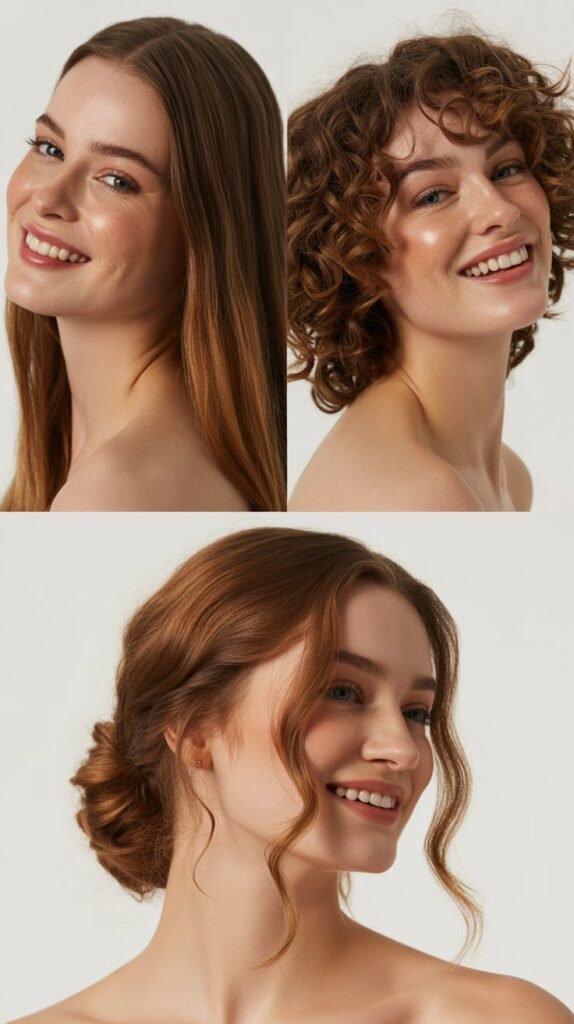
Hair highlighting practices and aesthetic preferences vary significantly across cultures, with different communities having distinct traditions, beauty standards, and approaches to hair color.
Understanding cultural context around highlighting helps inform respectful, appropriate choices.
Cultural sensitivity in hair coloring acknowledges that beauty standards and hair practices are influenced by heritage, identity, and community norms.
- Different cultures have varying levels of acceptance or preference for highlighted hair
- Some communities view natural hair color as ideal while others embrace creative color expression
- Traditional beauty standards in some cultures may influence acceptable highlighting intensity or placement
- Professional environments across different cultural contexts may have different expectations about hair color appropriateness
- Religious or cultural practices may influence hair coloring decisions and approaches
- Family and community opinions about hair color vary significantly across cultural backgrounds
- Caramel highlights on dark brown hair appear across many cultures as natural-looking enhancement
- Some cultures prefer more dramatic color changes while others favor subtle dimension
- Understanding your own cultural context helps determine what feels authentic and comfortable
- Hair texture differences across ethnicities influence which highlighting techniques work best
- Cultural celebrations and events may inspire temporary or permanent highlighting choices
- Respecting both personal preference and cultural context creates authentic color choices
- Modern global beauty landscape increasingly celebrates diverse approaches to hair coloring
- Individual choice should be honored regardless of cultural expectations or traditions
59. Budget-Friendly Highlighting Strategies

Achieving and maintaining beautiful caramel highlights on dark brown hair doesn’t necessarily require unlimited budget, though strategic planning and smart choices are essential.
Understanding where to invest and where to economize helps make quality highlighting accessible. Budget-friendly approaches balance cost management with results that still look professional and polished.
- Strategic Partial Highlighting: Focusing color on visible areas (face-framing, top layers) costs less than all-over highlighting
- Partial highlighting still creates impact while using less product and time
- Interior and underneath sections can remain natural dark brown without anyone noticing
- Extend Time Between Appointments: Choosing low-maintenance techniques (balayage, ombre) reduces annual costs
- Growing out highlights gracefully means fewer appointments needed yearly
- Even extending appointments by 2-4 weeks significantly reduces annual spending
- Timing Appointments Strategically: Schedule major highlighting before important events, maintenance appointments when less critical
- Take advantage of salon promotions or training model opportunities for reduced rates
- Invest in Quality Home Care: Professional products prevent premature fading and damage
- The upfront cost is offset by extended time between highlighting appointments
- Cheap products actually increase costs by requiring more frequent color services
- DIY Maintenance Between Professional Services: Color-depositing products, glosses, and proper care extend professional results
- Only attempt safe home maintenance, never complex highlighting
- Communicate Budget with Colorist: Honest discussion about budget allows colorist to plan services accordingly
- They can suggest lower-cost alternatives that still achieve beautiful results
- Prioritize Hair Health: Maintaining healthy hair prevents expensive correction services
- Damaged hair requires both fixing and re-coloring, doubling costs
- Consider Beauty Schools: Supervised students perform services at significantly reduced rates
- Services take longer but can provide quality results at fraction of salon prices
| Budget Strategy | Potential Savings | Considerations |
|---|---|---|
| Partial vs. Full Highlighting | 30-50% per appointment | Less overall coverage |
| Extending appointments 4 weeks | 3-4 fewer appointments yearly | Requires low-maintenance technique |
| Professional products vs. drugstore | Extends color 2-3x longer | Higher upfront cost |
| Strategic timing | 20-40% on select appointments | Requires flexibility |
| Beauty school services | 50-70% cost reduction | Longer appointment times |
60. Consultation Questions to Ask Your Colorist

Asking the right questions during your highlighting consultation ensures clear communication, realistic expectations, and customized results that align with your vision.
A thorough Q&A session with your colorist establishes trust and demonstrates their expertise. Coming prepared with thoughtful questions shows you’re an informed client serious about achieving beautiful results.
About Technique and Approach:
- Which highlighting technique do you recommend for my hair type, texture, and desired result?
- How will you customize placement specifically for my face shape and features?
- How many sessions will be needed to achieve my inspiration photo’s result?
- What level of lift can we realistically achieve in one session from my current color?
About Maintenance and Longevity:
- How often will I need touch-up appointments with this technique?
- What’s the expected maintenance schedule and cost over the next year?
- How will regrowth appear and when will it become noticeable?
- What can I do between appointments to maintain results?
About Products and Process:
- What specific products and brands will you use for my service?
- Will you be using bond-building treatments to protect my hair?
- How long will the entire appointment take from start to finish?
- What’s included in the service price (toning, styling, etc.)?
About Expected Results:
- Can you show me photos of similar work you’ve done on comparable hair?
- What exact caramel shades are you planning to create for me?
- How will these specific caramel tones look with my skin tone?
- What are realistic expectations versus my inspiration photos?
About Hair Health:
- How will highlighting affect my current hair condition?
- What treatments do you recommend to maintain hair health?
- Are there any concerns about my hair’s ability to handle this process?
About Aftercare:
- What specific products should I purchase for home maintenance?
- How should I adjust my current hair care routine?
- When can I wash my hair after the service?
- What styling limitations or recommendations should I follow?
About Problem-Solving:
- What happens if I’m not happy with the results?
- Do you offer adjustment appointments if needed?
- What’s your policy on corrections or issues?
- How should I communicate if problems arise after leaving the salon?
Conclusion
The journey to achieving luxe dark brown hair with caramel highlights that look salon-fresh is as much about education and preparation as it is about the actual coloring process itself.
Throughout this comprehensive exploration of 66 luxe dark brown hair with caramel highlights that look salon-fresh, we’ve discovered that successful highlighting results from the perfect combination of skilled technique, personalized placement, quality products, and dedicated maintenance.
From understanding color theory and choosing flattering caramel shades to mastering maintenance routines and troubleshooting common issues, every aspect contributes to creating and preserving that coveted dimensional brunette look that turns heads and radiates confidence.
Whether you’re drawn to subtle babylights that whisper sophistication, bold balayage that makes a statement, or anything in between, the key lies in working with experienced professionals who can customize approaches specifically for your unique hair, features, lifestyle, and goals.
Remember that beautiful caramel highlights represent an ongoing commitment rather than a one-time service—proper home care, regular maintenance appointments, and protective practices ensure your investment continues looking salon-fresh long after you leave the styling chair.
Armed with the knowledge from this guide, you’re now prepared to communicate effectively with your colorist, make informed decisions about techniques and maintenance, and maintain stunning results that showcase the timeless beauty of dimensional dark brown hair enhanced with warm, glowing caramel highlights that look effortlessly expensive and perpetually fresh.
