Finding the perfect blonde highlights can feel like searching for a needle in a haystack, especially when you’re worried about that dreaded brassy tone creeping in after just a few weeks.
Whether you’re a natural blonde looking to add dimension or a brunette dreaming of sun-kissed strands, the struggle to maintain that fresh-from-the-salon look without constant upkeep is real.
The good news is that achieving beautiful, low maintenance blonde highlights that stay true to their cool, warm, or neutral tones is entirely possible with the right techniques, placement strategies, and color choices.
This comprehensive guide explores 68 stunning blonde highlight options specifically designed to resist brassiness while requiring minimal salon visits, covering everything from subtle babylights to bold balayage, cool-toned ash highlights to warm honey hues, and expert tips on maintenance routines that keep your color looking fresh between appointments.
You’ll discover how different highlighting techniques work with various hair types and base colors, learn which toning strategies prevent unwanted warm tones, and find the perfect low maintenance blonde highlights that match your lifestyle, budget, and personal style without the constant worry of brassiness taking over.
1. Understanding Why Blonde Highlights Turn Brassy
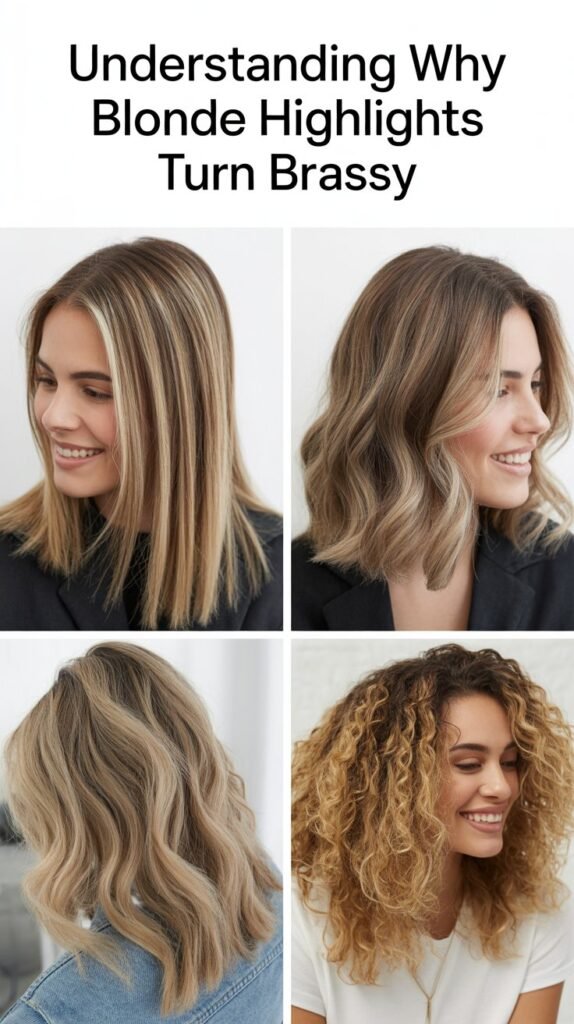
Before diving into specific highlight styles, it’s essential to understand the science behind brassiness so you can make informed choices about your color.
Brassy tones appear when the cool pigments in blonde hair fade, revealing the underlying warm pigments that naturally exist in all hair.
- Blonde hair contains yellow and orange undertones that become visible as the artificial cool pigments wash out over time through shampooing, sun exposure, and heat styling.
- Hard water with high mineral content deposits iron and copper onto hair strands, which oxidize and create orange and red tones that make highlights appear brassy.
- The natural lifting process during highlighting removes darker pigments but leaves behind warm undertones that need to be neutralized with toner for a cooler finish.
- Porous or damaged hair absorbs and releases color molecules more quickly, meaning the cool-toned pigments fade faster and expose warm undertones sooner than healthy hair.
- Environmental factors like chlorine from swimming pools, sun exposure, and pollution accelerate color oxidation and contribute to the development of unwanted warm tones.
- Using the wrong hair care products, particularly those with sulfates or those not designed for color-treated hair, strips away toner and protective coatings that keep brassiness at bay.
2. Cool-Toned Ash Blonde Highlights

Ash blonde highlights are the ultimate solution for those who want to eliminate warmth entirely from their hair color.
These cool-toned highlights contain blue and violet pigments that neutralize yellow and orange undertones, creating a sophisticated, almost silvery blonde effect.
- Ash highlights work exceptionally well on naturally cool-toned individuals with pink or blue undertones in their skin, as they complement rather than clash with natural coloring.
- The blue and violet base pigments in ash tones are specifically formulated to counteract warmth, making them naturally resistant to turning brassy compared to warmer blonde shades.
- These highlights require a skilled colorist who understands toning because too much ash can result in a greenish or muddy appearance, especially on previously colored hair.
- Ash blonde highlights fade to a softer, more neutral blonde rather than orange or yellow, meaning they maintain a more acceptable color even as they grow out.
- They pair beautifully with silver or platinum tones for a multi-dimensional cool blonde look that appears almost metallic in certain lighting conditions.
- Maintenance involves using purple shampoo once or twice weekly to deposit violet pigments that continuously neutralize any emerging warmth between salon visits.
3. Balayage Highlights for Natural Dimension

Balayage is a freehand painting technique that creates soft, natural-looking highlights with seamless transitions between colors.
This method is inherently low maintenance because it doesn’t require precise root touch-ups and grows out beautifully without harsh lines.
- The hand-painted application allows colorists to strategically place lighter pieces where the sun would naturally lighten hair, creating an organic, lived-in appearance from the start.
- Balayage highlights are typically placed starting a few inches from the roots, which means regrowth is gradual and blends naturally without creating a distinct line of demarcation.
- This technique works on all hair lengths and textures, from fine straight hair to thick coarse curls, because the colorist can customize placement based on individual hair characteristics.
- The gradual color transition from dark to light means there are multiple tones present in the hair, creating depth and dimension that prevents the flat, one-dimensional look of traditional foil highlights.
- Balayage can incorporate multiple blonde shades in one session, from deeper honey tones at the roots to lighter champagne at the ends, providing built-in tonal variety.
- Most clients can go 3-4 months between balayage touch-ups compared to 6-8 weeks for traditional highlights, significantly reducing maintenance time and expense.
- The technique is less damaging than traditional highlighting because bleach is applied only to specific sections rather than saturating large portions of hair repeatedly.
4. Babylights for Subtle Brightness
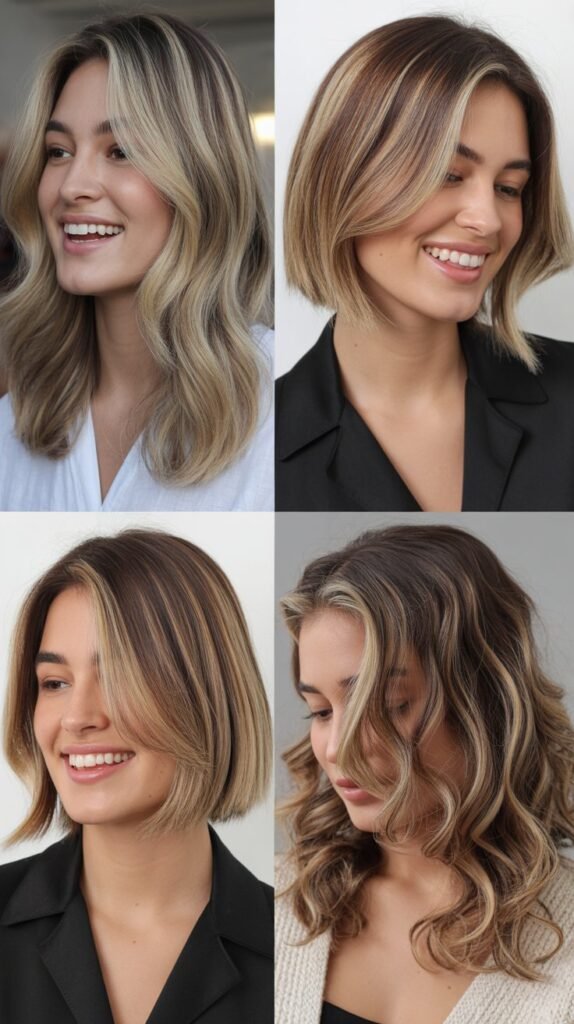
Babylights are ultra-fine, delicate highlights that mimic the natural hair color of young children who spend time in the sun.
These micro-highlights create subtle brightness and dimension without dramatic contrast, making them perfect for those seeking a natural, understated look.
- The extremely fine sections used in babylights create a soft, diffused lightness throughout the hair rather than chunky streaks that can look striped or dated.
- Because babylights are woven so finely throughout the hair, they blend seamlessly with natural color and grow out almost imperceptibly over several months.
- This technique is ideal for highlighting virgins or those with minimal previous color because it creates gentle dimension without dramatic transformation or commitment.
- Babylights work particularly well on finer hair textures where thicker highlights might create too much contrast and make hair appear thinner or more sparse.
- The subtle nature of babylights means they can be customized to be warmer or cooler depending on skin tone and preference without looking obvious or artificial.
- Maintenance is minimal because the soft blending means there’s no harsh line of demarcation as roots grow, and the overall effect remains natural for 4-5 months.
- They can be combined with other techniques like balayage or lowlights to create even more dimension and a completely customized color result.
5. Champagne Blonde Highlights
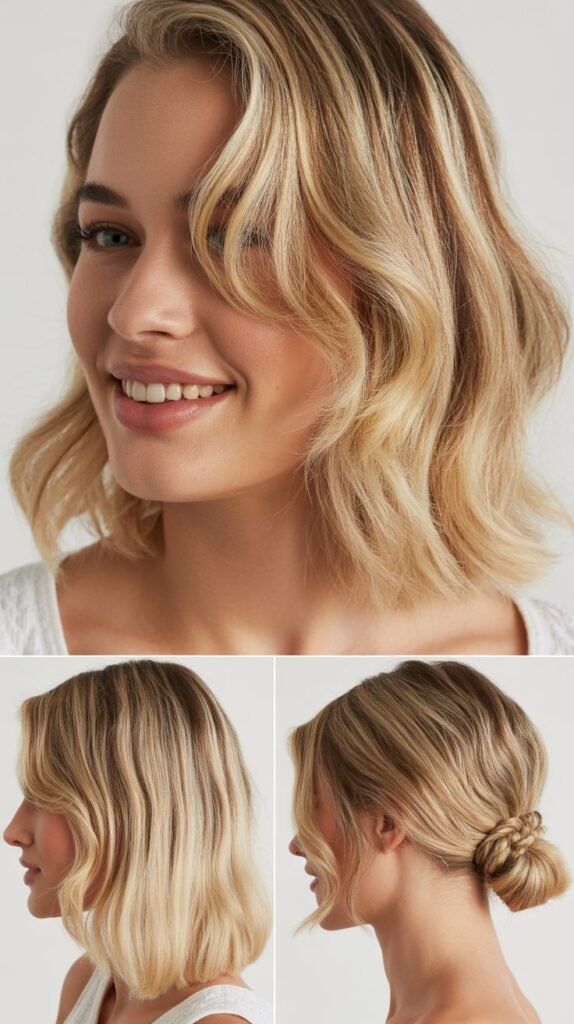
Champagne blonde is a sophisticated shade that combines beige, pearl, and soft golden tones to create a neutral blonde that flatters most skin tones.
This versatile color sits perfectly between warm and cool, making it naturally resistant to appearing overly brassy.
- The neutral base of champagne blonde contains both warm and cool pigments in balance, which means it doesn’t shift dramatically toward brassiness as it fades over time.
- This shade complements a wide range of skin tones from fair to medium-deep because it’s not too cool or too warm, making it a universally flattering option.
- Champagne highlights reflect light beautifully without appearing overly bright or platinum, creating a sophisticated glow that looks expensive and polished.
- The beige undertones in champagne blonde help bridge the gap between natural darker roots and lighter ends, creating a harmonious transition that doesn’t look grown out.
- This color requires less aggressive toning than cooler ash shades, which means less chemical processing and potentially healthier hair over time.
- Champagne blonde can be customized by adjusting the ratio of warm to cool tones based on whether you want a slightly warmer honey-champagne or cooler pearl-champagne result.
6. Face-Framing Highlights Only

Strategic placement of highlights just around the face is an excellent low maintenance option that provides maximum impact with minimal commitment.
This technique brightens the complexion and draws attention to facial features without requiring full-head highlighting.
- Face-framing highlights require significantly less time in the salon chair and use less product, making them more affordable and less damaging than full highlights.
- The strategic placement around the face creates the illusion of brightness and dimension throughout the entire head of hair even though color is applied to only a small percentage.
- This technique is perfect for those testing blonde highlights for the first time or those who want to minimize damage while still enjoying lighter accents.
- Face-framing pieces can be as subtle or bold as desired, from just a few fine babylights around the hairline to chunky ribbons of color from roots to ends.
- These highlights grow out gracefully because the focus is on the visible front sections rather than the entire head, and regrowth is less noticeable since it’s not at the crown.
- The brightening effect around the face acts like a natural contour, highlighting cheekbones and jawline while softening features in a flattering way.
- Maintenance can be stretched to 4-6 months between touch-ups since the majority of the hair remains natural and the highlighted pieces blend seamlessly as they grow.
7. Blonde Highlights on Dark Brown Hair
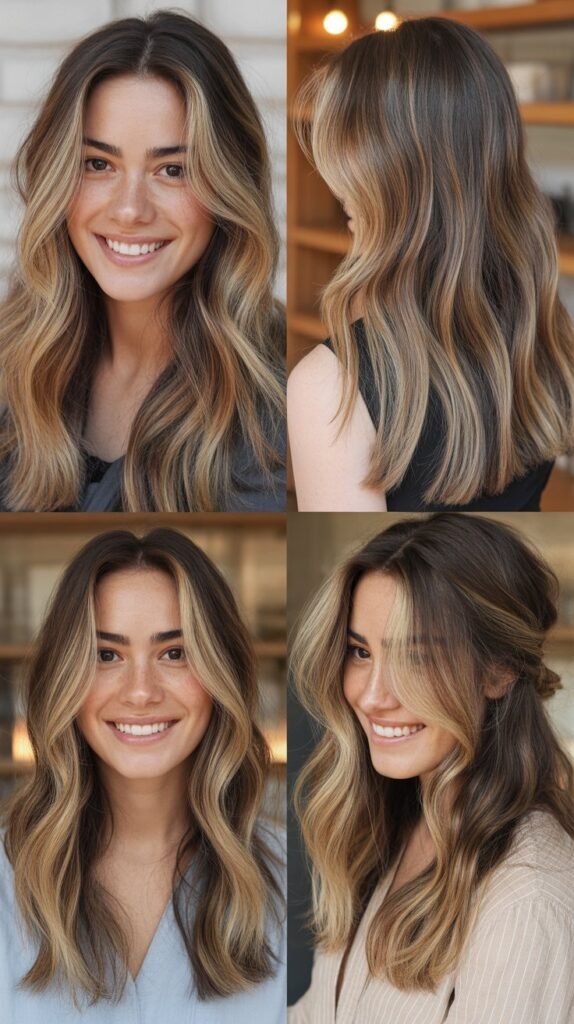
Creating blonde highlights on dark brown hair requires skill and strategy to avoid brassiness, but when done correctly, the contrast creates stunning dimension.
The key is choosing the right shade of blonde and using proper toning techniques.
- Dark brown hair contains significant red and orange undertones that must be lifted through multiple stages to reach blonde without creating copper or brassy tones.
- Caramel and honey blonde highlights tend to be more low maintenance on dark hair because they’re closer to the hair’s natural warm undertones and don’t require as much toning.
- For cooler blonde highlights on dark hair, a skilled colorist will tone with blue or violet-based products to neutralize the warmth that naturally appears during the lightening process.
- The contrast between dark brown base and blonde highlights creates natural-looking dimension that mimics sun-lightened hair, especially when placed strategically through balayage techniques.
- Starting with fewer, more subtle highlights and gradually adding more over multiple sessions is healthier for the hair and allows for better color correction if brassiness appears.
- Using a gloss or glaze treatment every 4-6 weeks helps maintain the tone of blonde highlights on dark hair by depositing semi-permanent pigments that refresh color.
- Lowlights in a medium brown shade can be added between blonde highlights to create even more dimension and help blend regrowth as the hair grows out.
8. Platinum Blonde Highlights with Proper Toning
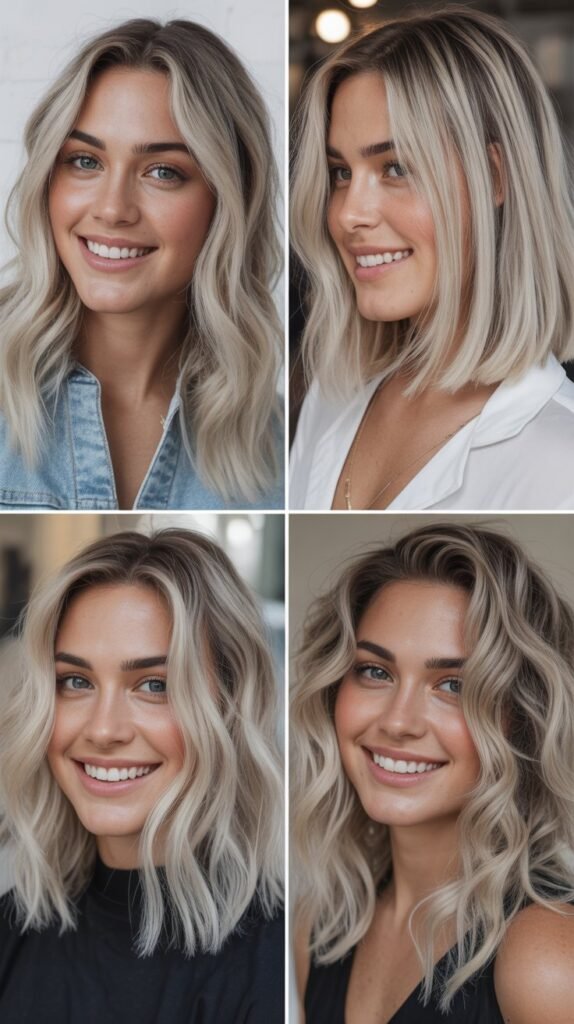
Platinum blonde highlights are the lightest, coolest shade of blonde available and require the most maintenance to keep from turning brassy.
However, with proper toning protocols and quality products, they can remain stunningly white-blonde between salon visits.
- Achieving platinum blonde requires lifting hair to the palest yellow stage and then toning with heavy violet or blue pigments to neutralize all remaining warmth.
- This shade is best suited for those with naturally cool skin undertones and light eyes, as the stark contrast can be harsh on warmer or deeper complexions.
- Platinum highlights require commitment to purple shampoo and conditioner used 2-3 times per week to continuously deposit cool pigments that fight emerging brassiness.
- The extreme lightening process necessary for platinum can be damaging, so maintaining hair health with deep conditioning treatments and protein masks is essential.
- Platinum highlights are often best achieved through multiple sessions rather than one aggressive lightening appointment to preserve hair integrity and avoid breakage.
- These highlights show every bit of color shift and fade, so they require more frequent toning appointments every 4-6 weeks to maintain the icy, white-blonde appearance.
- When platinum highlights do begin to warm slightly between appointments, they typically fade to a pale butter yellow rather than orange or brassy tones if properly maintained.
9. Honey Blonde Highlights for Warmth
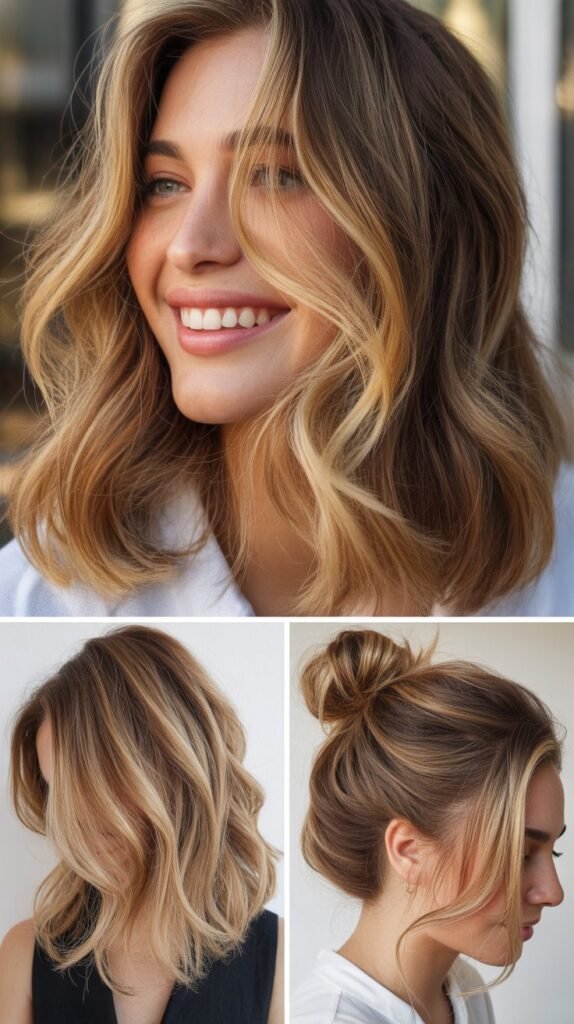
Honey blonde highlights offer a warm, golden tone that’s flattering on those with warm or neutral undertones in their skin.
While these highlights do contain more yellow pigments, their richness prevents them from looking brassy or cheap.
- The golden undertones in honey blonde are intentional and rich, creating a warm glow that looks expensive rather than the dull, orange-toned brassiness that comes from faded cool highlights.
- Honey blonde complements warm skin tones with yellow, peach, or golden undertones, as well as those with brown or hazel eyes, creating a harmonious overall appearance.
- These highlights require less intensive toning than cooler shades because the natural warmth is part of the desired color rather than something to be neutralized.
- Honey blonde works beautifully on medium to dark brown base colors because the contrast creates rich dimension without requiring extreme lightening that can damage hair.
- The warmth in honey blonde highlights is less likely to shift noticeably as they fade because they’re already in the warm color family, maintaining their intended tone longer.
- To keep honey blonde from crossing into brassy territory, occasional use of a blue shampoo (not purple) can neutralize excessive orange without removing the desired golden warmth.
- These highlights can be adjusted seasonally, going slightly lighter and brighter in summer months and richer and deeper in winter for a naturally evolving look.
10. Invisible Highlights Technique
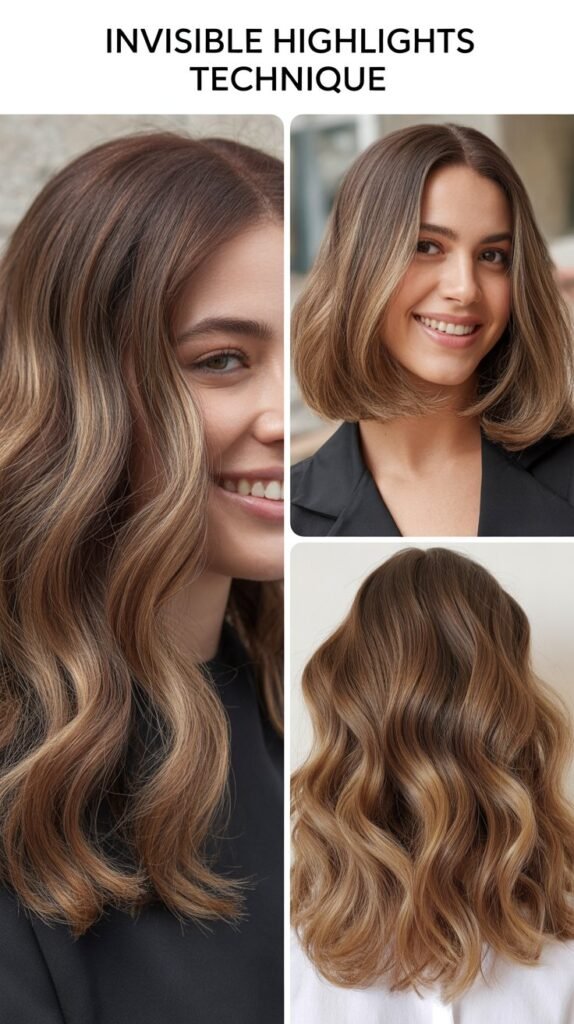
Invisible highlights, also called micro-foiling or ghost highlights, create extremely subtle dimension that’s almost undetectable as individual highlights.
This technique is perfect for those who want enhanced brightness without obvious color.
- The ultrafine sections used in invisible highlights are even smaller than babylights, creating the most natural-looking dimension possible without visible streaks or stripes.
- This technique adds overall brightness and shine to hair without dramatically changing the color, making it ideal for conservative work environments or those new to highlighting.
- Invisible highlights grow out so gradually and blend so seamlessly that clients can often go 5-6 months between touch-ups without noticeable regrowth lines.
- The subtle nature of this highlighting method means less hair is actually being lightened, resulting in less damage and better overall hair health.
- Invisible highlights work particularly well for adding dimension to naturally dark blonde or light brown hair where dramatic highlighting might look too harsh or artificial.
- Because these highlights are so fine and well-blended, they can be placed throughout the entire head or concentrated in specific areas like the crown or around the face.
- The technique requires a skilled colorist with patience and precision, but the results are worth the time investment for a truly natural-looking enhancement.
11. Beige Blonde Highlights
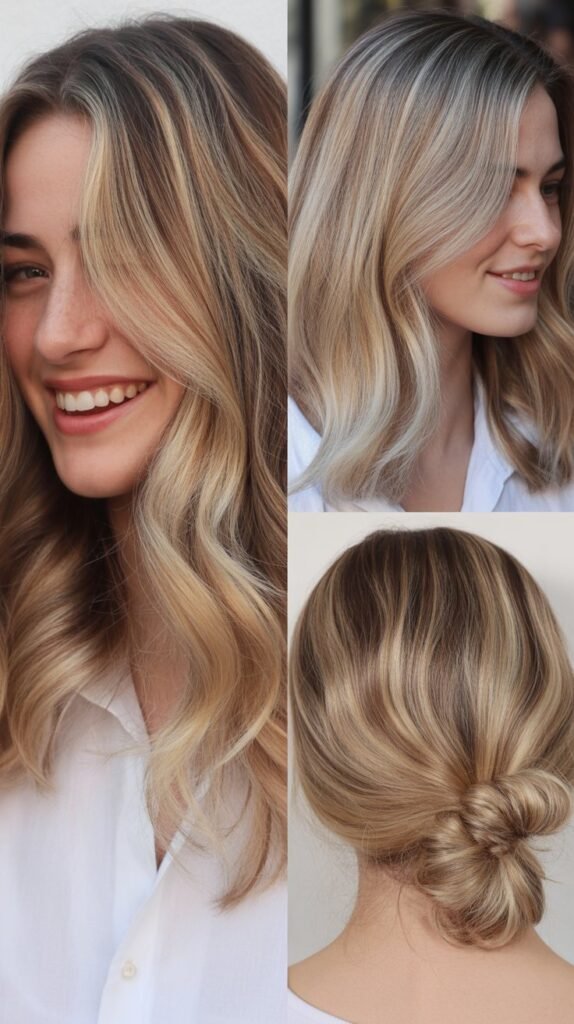
Beige blonde is a sophisticated neutral shade that leans slightly cool without being as stark as ash blonde. This versatile color contains soft brown and taupe undertones mixed with blonde, creating a muted, elegant look.
- The taupe and brown undertones in beige blonde help anchor the color and prevent it from appearing too light or washed out against the natural base color.
- Beige blonde is exceptionally flattering on those with neutral skin undertones who can wear both warm and cool colors, as it bridges the gap between the two.
- This shade is naturally resistant to brassiness because the brown undertones provide depth that doesn’t shift toward orange as the color fades over time.
- Beige highlights create a sophisticated, European-inspired look that appears expensive and polished without being overly trendy or attention-grabbing.
- The neutral nature of beige blonde means it photographs beautifully and looks consistent in various lighting conditions without appearing green, orange, or overly cool.
- Maintenance is simple with occasional gloss treatments to refresh the tone, but harsh purple shampoo can be too strong and should be used sparingly if at all.
- Beige blonde can be customized to be warmer (more honey-beige) or cooler (more ash-beige) depending on individual preferences and skin tone.
12. Bronde Highlights for Natural Transition
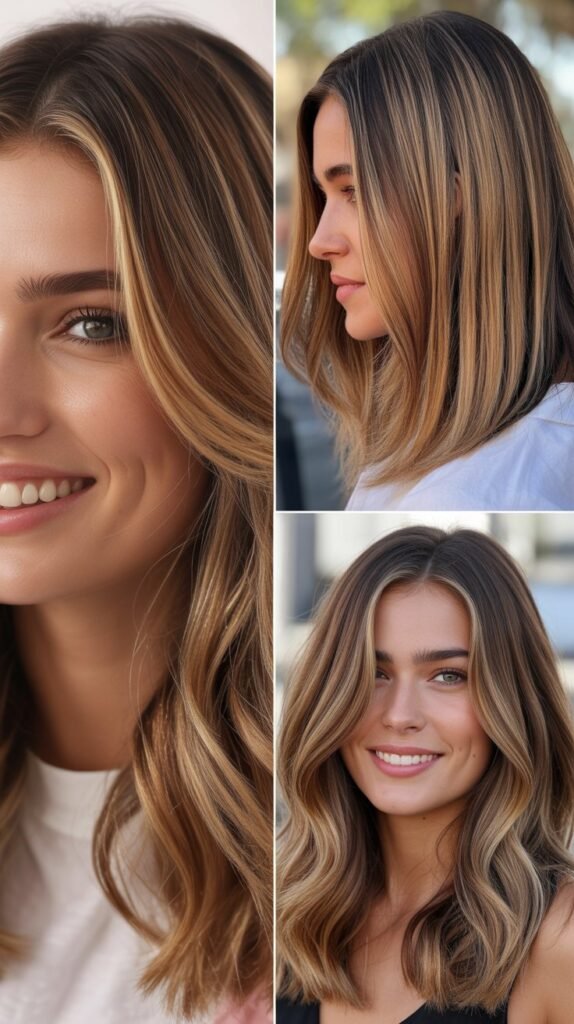
Bronde is a hybrid color that combines brown and blonde, creating highlights that provide dimension without stark contrast.
This approach is ideal for those who want the brightness of blonde without fully committing to light hair.
- Bronde highlights typically involve lightening select pieces to a light brown or dark blonde shade rather than traditional bright blonde, creating softer contrast.
- This color approach is inherently low maintenance because the highlights are close to the natural base color, making regrowth virtually unnoticeable as it grows out.
- Bronde works exceptionally well on those transitioning from darker hair to lighter hair or vice versa, providing a middle ground that’s less shocking than dramatic change.
- The technique is perfect for brunettes who want brightness but are concerned about damage from aggressive lightening required for traditional blonde highlights.
- Bronde highlights can be achieved with less lifting and fewer lightening sessions, preserving hair health while still providing noticeable dimension and interest.
- The natural-looking result of bronde means it suits professional environments and conservative lifestyles while still offering the benefits of multi-dimensional color.
- As bronde highlights fade, they typically blend back toward the natural base color rather than developing unwanted warm tones, making maintenance even easier.
13. Ribbon Highlights for Bold Contrast

Ribbon highlights, also called chunking or panel highlights, involve creating thicker, more noticeable sections of blonde that create bold contrast and statement dimension.
When done strategically, these can be surprisingly low maintenance.
- Thicker ribbon highlights mean fewer individual foils or sections are needed, reducing time in the salon chair and potentially lowering the cost of service.
- Strategic placement of ribbons, such as underneath layers or in specific face-framing sections, creates impact while leaving the majority of hair natural and undamaged.
- Ribbon highlights grew out gracefully when placed intentionally, as the contrast between natural and highlighted hair creates an edgy, intentional grown-out look.
- This bold highlighting technique works well for those with strong personal style who want their hair to make a statement rather than blend naturally.
- Money-piece ribbons that frame the face provide maximum brightness and impact with minimal color application, focusing attention where it matters most.
- Ribbon highlights can incorporate multiple blonde tones from dark to light within each ribbon to create even more dimension and prevent a flat, one-toned appearance.
- Maintenance can be extended to 4-5 months between touch-ups because the intentional contrast means regrowth looks like a stylistic choice rather than neglect.
14. Pearl Blonde Highlights
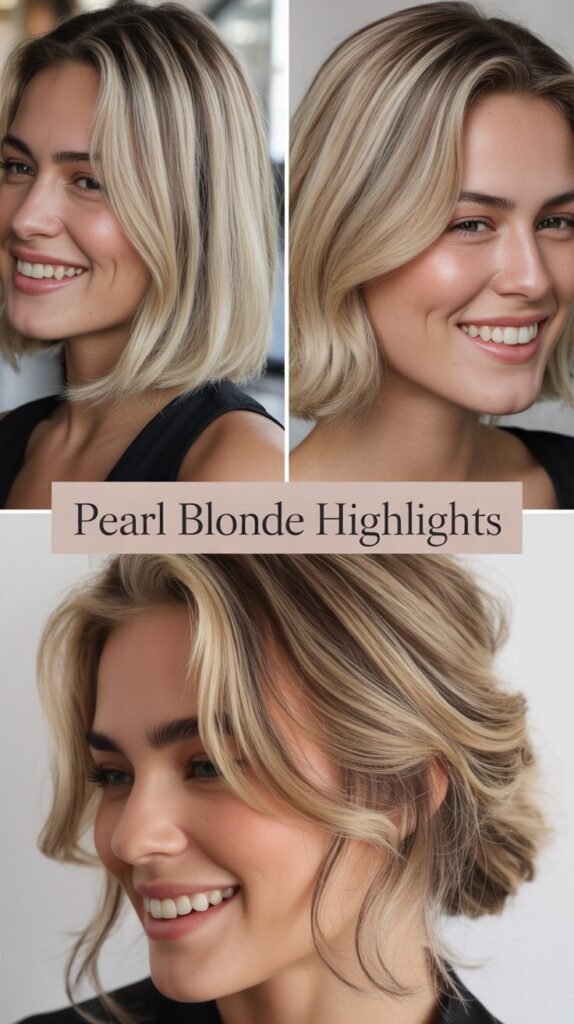
Pearl blonde is a luminous, iridescent shade that combines platinum, silver, and soft pink or lavender tones. This unique color creates a multi-dimensional effect that catches light beautifully and resists looking flat or brassy.
- The combination of cool tones including silver, platinum, and soft pastels in pearl blonde creates a complex color that doesn’t shift to simple brass as it fades.
- Pearl highlights reflect light in unique ways, creating an almost holographic effect that adds visual interest and dimension without additional color application.
- This shade works best on pre-lightened blonde hair or very light brown hair, as achieving the pale base necessary for pearl tones requires significant lifting.
- Pearl blonde is ideal for those who want something more interesting than standard platinum or ash blonde but don’t want warm-toned honey or golden highlights.
- The slight pink or lavender undertones in pearl blonde help neutralize any yellow warmth that emerges as the color fades between salon appointments.
- Maintaining pearl blonde requires specialized color-depositing products in silver, pearl, or lavender shades used weekly to refresh the unique tones.
- When pearl highlights begin to fade, they typically shift to a soft, neutral champagne or ash blonde rather than developing harsh orange or yellow tones.
15. Dimensional Highlighting with Multiple Tones
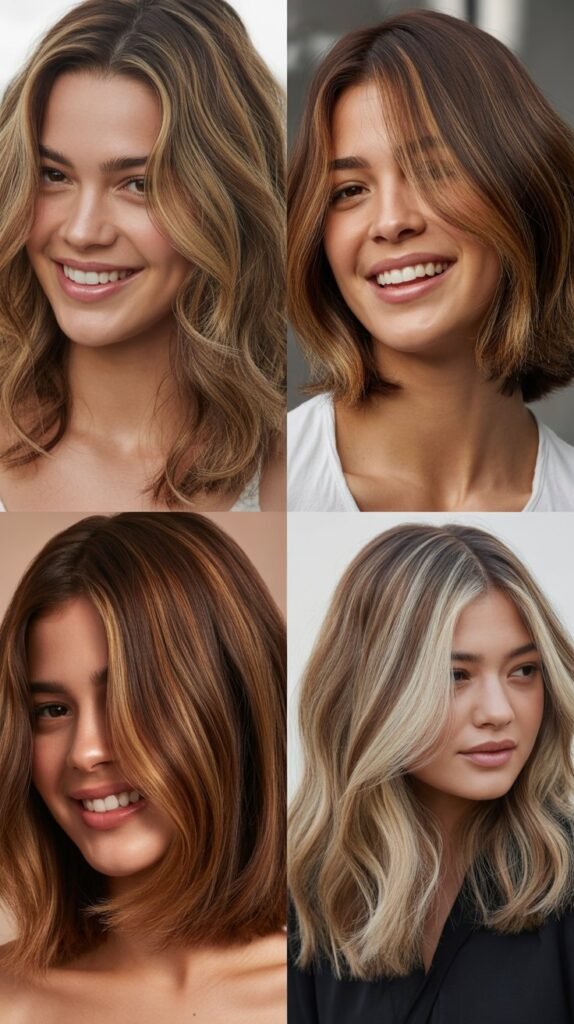
Using multiple shades of blonde in one highlighting session creates natural-looking depth and prevents the flat, one-dimensional appearance that can make highlights look fake or brassy.
This approach mimics how the sun naturally lightens hair in varying degrees.
- Incorporating three to five different blonde shades from darker honey near the roots to lighter champagne at the ends creates a gradient effect that appears organic.
- Multiple tones prevent the high-contrast, striped look of single-shade highlighting while providing built-in dimension that makes hair appear thicker and more voluminous.
- Using various blonde shades means that as different tones fade at different rates, the overall effect remains dimensional rather than becoming flat and brassy.
- Colorists can strategically place cooler tones on top layers that are most visible and slightly warmer tones underneath for a complex, layered color result.
- This technique allows for customization based on skin tone, with cooler highlights concentrated around the face for cool-toned individuals or warmer pieces for those with warm undertones.
- Dimensional highlighting requires an experienced colorist who understands color theory and can visualize how different tones will interact and blend together.
- The variety of tones means regrowth is less noticeable because there’s no single line of demarcation, just a gradual transition that looks intentional as it grows.
16. Butter Blonde Highlights

Butter blonde is a soft, creamy yellow-toned blonde that’s richer than platinum but not as golden as honey. This shade provides warmth without appearing overly brassy or cheap, creating a luxurious, buttery finish.
- The creamy, pale yellow base of butter blonde contains enough richness to prevent it from looking harsh or overly cool while avoiding the orange tones of brass.
- Butter blonde complements warm and neutral skin tones beautifully, creating a cohesive look that appears natural rather than contrasted or artificial.
- This shade requires moderate toning to remove excess warmth while maintaining the soft yellow undertones that give butter blonde its characteristic creamy appearance.
- Butter blonde highlights fade gracefully to a slightly warmer but still attractive tone rather than the harsh brassiness that occurs with some other blonde shades.
- The color works particularly well when combined with slightly deeper honey or caramel lowlights to create dimension and prevent a monochromatic appearance.
- Maintenance involves using purple shampoo sparingly, only when yellow tones become too prominent, as over-toning can remove the desired buttery quality.
- Butter blonde is ideal for those transitioning from platinum or ash blonde to something slightly warmer without committing to fully warm-toned highlights.
17. Highlights with Built-In Shadow Root

The shadow root technique involves intentionally leaving natural color at the roots before applying highlights, creating a soft gradient that eliminates the need for frequent root touch-ups.
This approach is inherently low maintenance and prevents harsh regrowth lines.
- Shadow roots create an intentional, lived-in look from the first appointment, meaning hair already appears naturally grown out rather than freshly highlighted.
- The technique involves blending the natural root color into the highlights over 2-4 inches, creating a soft transition that continues to look intentional for 4-6 months.
- Shadow roots reduce damage to the most vulnerable hair at the scalp, preserving hair health since this area isn’t repeatedly lightened with each touch-up.
- This approach is ideal for those with busy lifestyles who can’t commit to frequent salon visits or who want to extend time between appointments without visible maintenance neglect.
- The depth at the roots provides dimension and makes hair appear thicker, counteracting the potentially thinning effect of all-over blonde highlights.
- Shadow roots can be customized in depth and width based on how much regrowth time is desired between appointments and personal style preferences.
- When it is time for a touch-up, colorists can simply refresh the highlights without having to address roots since they’re already shadowed and blended.
18. Vanilla Blonde Highlights

Vanilla blonde is a soft, neutral shade that combines the paleness of platinum with slight warmth, creating a creamy blonde that’s not too cool or too warm. This versatile color flatters a wide range of skin tones.
- The neutral base of vanilla blonde contains balanced warm and cool pigments, preventing it from shifting dramatically toward brass or ash as it fades over time.
- Vanilla blonde works beautifully on those with neutral skin undertones who can wear both silver and gold jewelry equally well, complementing rather than clashing.
- This shade provides brightness without the starkness of platinum or the obvious warmth of honey, creating a sophisticated middle ground that appears expensive.
- Vanilla highlights require gentle toning to maintain the soft, creamy quality without over-toning to ash or allowing too much warmth to develop.
- The color reflects light softly, creating a natural glow that enhances complexion without the harsh contrast of cooler or warmer shades.
- Maintenance involves alternating between purple and blue shampoos or using a balance shampoo designed specifically for neutral blondes to maintain the vanilla tone.
- Vanilla blonde can be customized slightly warmer or cooler based on seasonal preferences, going more pearl in winter and slightly more buttery in summer.
19. Flamboyage for Controlled Brightness
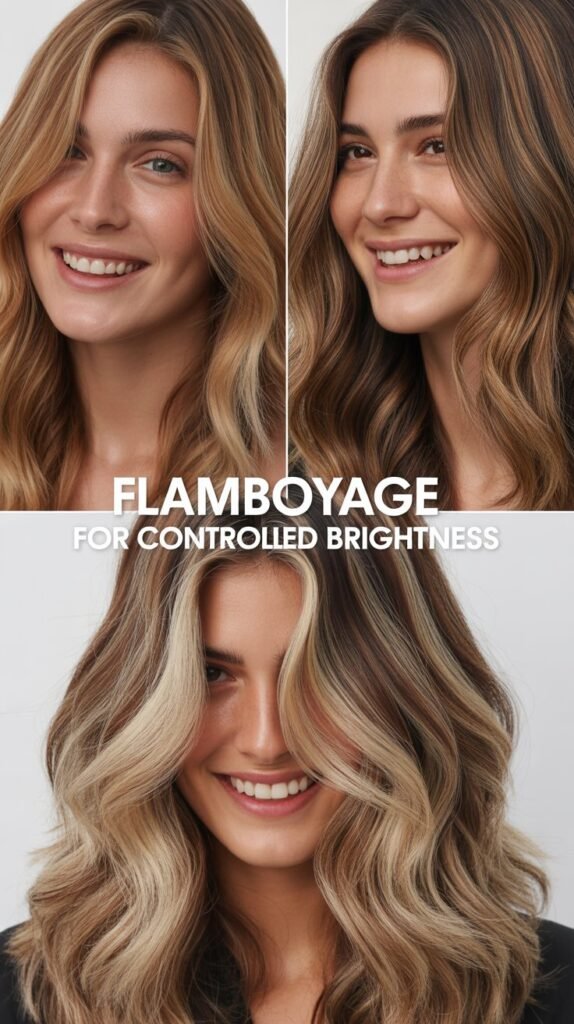
Flamboyage combines the hand-painting technique of balayage with the controlled lifting of foils, creating brighter, more saturated highlights that still maintain a natural placement.
This hybrid technique offers the best of both methods.
- Flamboyage allows colorists to paint highlights where they would naturally occur while using foils to achieve brighter lift than open-air balayage, creating more impactful results.
- The foiling process in flamboyage provides more heat and saturation, allowing for better lift on darker hair colors that might not lighten sufficiently with traditional balayage.
- This technique creates bright, sunlit highlights concentrated on the top layers and around the face while maintaining natural depth underneath for dimension.
- Flamboyage highlights grow out as gracefully as balayage because the placement is still natural and freehand rather than uniform rows of traditional foil highlights.
- The brighter results mean clients notice their highlights more immediately and get more dramatic transformation while still maintaining a natural-looking placement pattern.
- This method is ideal for those who want the natural look of balayage but need more lift to achieve their desired blonde shade, particularly on darker bases.
- Maintenance is similar to balayage, with appointments needed every 3-4 months to refresh the brightness and tone without addressing roots since they’re left natural.
20. Pintura Highlighting for Curly Hair
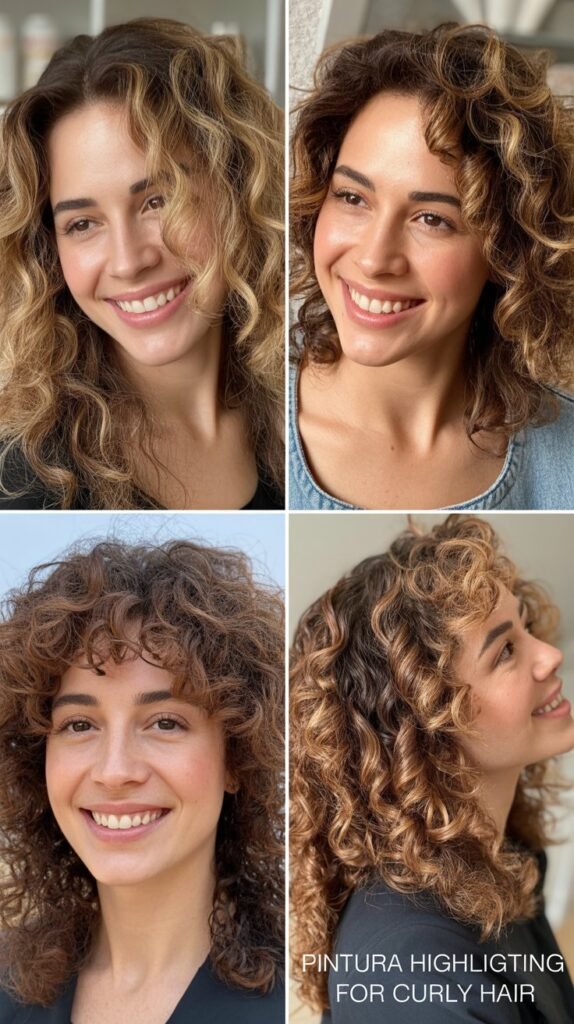
Pintura is a specialized highlighting technique designed specifically for curly and textured hair, respecting the natural curl pattern while adding dimension.
This method prevents the separated, stringy look that traditional foiling can create on curls.
- The pintura technique involves painting color onto curls in their natural state rather than straightening them, ensuring highlights fall naturally where light would hit the curls.
- This method prevents highlights from appearing chunky or separated when hair is worn curly, as the color follows the curl’s natural ribbon pattern throughout its length.
- Pintura works with the hair’s texture rather than against it, creating dimension that enhances rather than disrupts the curl pattern’s natural beauty.
- The technique requires a colorist experienced with curly hair who understands curl patterns and can visualize how color will appear when hair is dried naturally.
- Pintura highlights provide brightness and dimension while maintaining the definition and bounce of curls, avoiding the frizzy or damaged appearance some highlighting can create.
- Maintenance is low because the natural placement means regrowth is barely noticeable, and the health of curls is preserved through less aggressive processing.
- This highlighting method can incorporate multiple blonde tones placed strategically to create the most flattering dimension for each individual curl pattern.
21. Platinum Ribbons with Dark Base
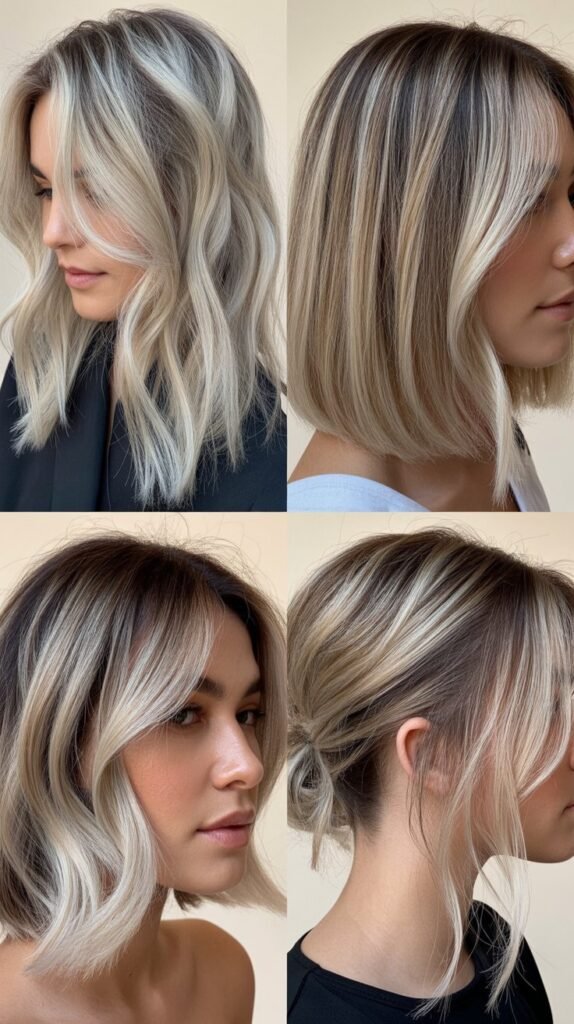
Creating bold platinum ribbon highlights against a dark natural base provides dramatic contrast while remaining surprisingly low maintenance.
The key is strategic placement and proper toning to prevent the light ribbons from becoming brassy.
- The stark contrast between platinum ribbons and dark base creates an intentional, edgy look where regrowth appears stylistic rather than neglected.
- Strategic placement of platinum ribbons in visible areas like around the face or on top layers provides maximum impact with minimal bleaching and damage.
- Thick ribbon highlights require fewer individual sections to be lightened compared to all-over highlighting, reducing processing time and preserving more natural hair.
- Platinum toning on dark hair requires skill to neutralize the strong warm undertones that emerge during lightening, using blue and violet pigments generously.
- This bold style works well for fashion-forward individuals who embrace high-contrast, statement-making hair color and don’t mind their highlights being noticeable.
- Maintenance focuses on keeping the platinum ribbons toned rather than addressing roots, since the dark base is left natural and regrowth is expected.
- When platinum ribbons begin to warm between toning appointments, the contrast against dark hair makes the warmth less noticeable than it would be on all-over blonde.
22. Rooted Blonde Highlights

Rooted blonde highlights involve keeping 2-4 inches of natural root color before transitioning into blonde, creating a trendy, low-maintenance look that’s intentionally grown out from the start.
This style celebrates natural roots rather than hiding them.
- Rooted blonde highlights require no root touch-ups for months since the dark roots are an intentional part of the style, dramatically reducing salon visits and maintenance costs.
- The obvious root creates an edgy, contemporary look that’s become fashionable rather than being seen as neglected or poorly maintained color.
- This technique is much healthier for hair since the most fragile hair at the scalp isn’t repeatedly processed with bleach during maintenance appointments.
- Rooted blonde works on all hair lengths but is particularly striking on longer hair where the transition from dark to light creates a beautiful gradient effect.
- The style can be customized with varying root depths from just one inch for subtle contrast to 4-5 inches for dramatic, high-impact dimension.
- When maintenance is eventually needed, colorists simply refresh the blonde portions without addressing roots, making appointments faster and less expensive.
- Rooted blonde is ideal for those growing out traditional highlights who want to embrace their natural color while maintaining blonde ends they’ve grown attached to.
23. Smudged Highlights for Soft Regrowth
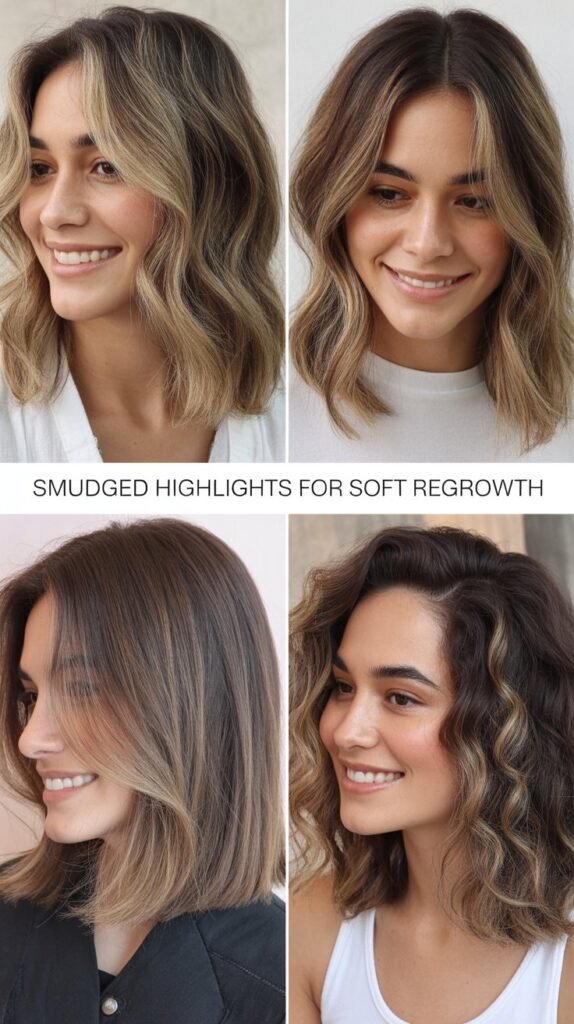
Smudging is a technique where the colorist intentionally blurs the line between natural roots and highlights using a darker toner or gloss.
This creates a soft, diffused transition that eliminates harsh regrowth lines and extends time between appointments.
- Smudging involves applying a semi-permanent color or toner to the root area and blending it into the highlights, creating a gradient effect that appears naturally sun-faded.
- This technique effectively extends the life of highlights by 4-6 weeks since the softened regrowth line is less noticeable than a harsh line of demarcation.
- Smudge treatments are quick and inexpensive compared to full highlighting services, making them an ideal maintenance option between full highlight appointments.
- The soft transition created by smudging adds dimension and depth at the roots, making hair appear fuller and more voluminous than flat all-over blonde.
- Smudging works particularly well when transitioning between highlight appointments or when trying to grow out highlights gradually without a harsh contrast.
- This technique can be performed at home between salon visits using root smudging kits or semi-permanent color applied just to the root area.
- The blurred effect of smudging creates a more natural, lived-in appearance that mimics how hair naturally grows and lightens over time with sun exposure.
24. Lived-In Blonde with Minimal Upkeep
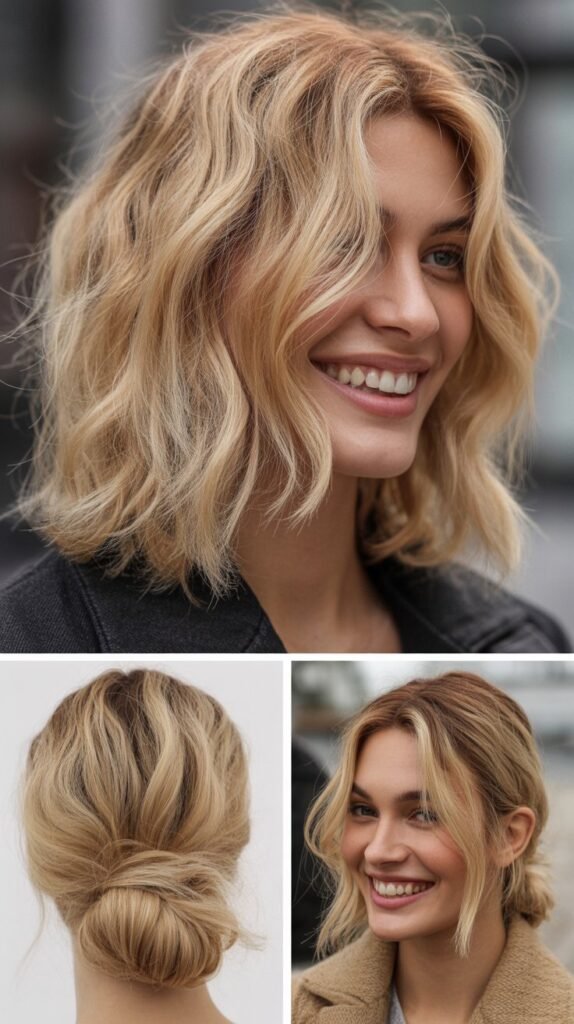
Lived-in blonde is an overall approach to highlighting that prioritizes natural-looking, low-maintenance color that appears to have grown in beautifully.
This style combines multiple techniques to create effortlessly cool blonde that requires minimal salon visits.
- Lived-in blonde incorporates balayage placement, shadow roots, and multiple tones to create color that looks natural immediately and continues to look intentional as it grows.
- The goal is hair that appears effortlessly sun-lightened rather than obviously colored, as if the person naturally has beautiful dimensional blonde hair without trying.
- This approach typically involves a combination of highlights and lowlights to create depth, preventing the flat appearance of single-tone highlighting.
- Lived-in blonde is customized to each individual’s natural base color, skin tone, and lifestyle to ensure the result is uniquely flattering and sustainable.
- The style requires an initial investment of time for proper placement and toning but pays off with 4-6 months between major coloring appointments.
- Maintenance may include occasional glossing or toning to refresh the color’s vibrancy, but structural highlighting and placement can remain untouched for months.
- Lived-in blonde works on all hair colors from natural blonde to medium brown, with adjustments made to techniques and placement based on starting color.
25. Foilyage for Maximum Dimension

Foilyage is another hybrid technique that combines strategic foil placement with freehand painting to create maximum dimension with controlled lift.
This method is particularly effective for those wanting substantial brightness without uniform highlighting.
- Foilyage uses foils to create brighter, more lifted pieces in key areas while freehand painting adds softer, more subtle dimension throughout the rest of the hair.
- The technique allows colorists to create high contrast where desired, such as around the face or on top layers, while maintaining depth and natural tones elsewhere.
- Foilyage is ideal for those with darker hair who want significant lightening but don’t want the uniform, all-over highlighted look of traditional foiling.
- The combination of techniques creates a multi-dimensional effect with bright pops of color and softer transitional tones that mimic natural sun lightening.
- This method requires an experienced colorist who can determine where to place foils for maximum impact and where to use freehand painting for softer blending.
- Maintenance is similar to balayage with appointments every 3-4 months, as the natural placement and variety of tones disguise regrowth effectively.
- Foilyage can achieve brighter blondes on dark hair in fewer sessions than traditional balayage alone, reducing the number of appointments needed to reach desired lightness.
26. Wheat Blonde Highlights

Wheat blonde is a warm, natural shade that resembles the color of golden wheat fields. This earthy tone provides warmth without appearing overly yellow or brassy, creating a grounded, natural-looking blonde.
- The golden-beige base of wheat blonde contains natural warmth that looks intentional rather than the accidental orange cast of brassy, faded highlights.
- Wheat blonde complements warm and neutral skin tones beautifully, particularly those with golden or olive undertones and brown or green eyes.
- This shade is naturally found in many people’s childhood hair color, making it appear organic and believable rather than artificially created.
- Wheat blonde requires minimal toning since the warm tones are desired, though occasional blue shampoo can prevent excessive brassiness if it develops.
- The natural warmth of wheat blonde means it fades gracefully without dramatic color shifts, maintaining an attractive tone even as pigments wash out.
- This shade works particularly well as a transition color for those moving from cooler ash or platinum tones toward warmer honey or caramel highlights.
- Wheat blonde can be customized with slightly cooler beige undertones for a more neutral result or warmer honey tones for increased richness and depth.
27. Root Melt for Seamless Growth
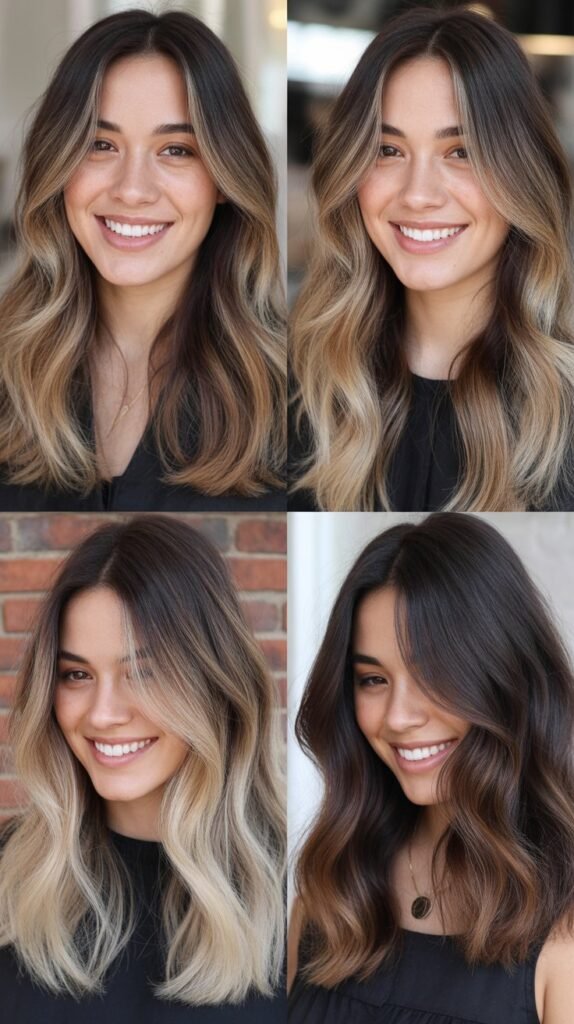
Root melt, also called root shadowing or root stretching, is a technique where darker color is applied to the roots and melted into lighter mid-lengths and ends.
This creates a seamless transition that grows out beautifully without harsh lines.
- Root melt creates an intentional gradient from dark to light that mimics natural sun-lightened hair, where roots remain darker and length gradually lightens toward ends.
- This technique extends the life of highlights significantly, allowing clients to go 4-6 months between major color services since regrowth blends seamlessly.
- The depth at roots adds dimension and makes hair appear fuller and more voluminous than flat all-over color, creating the illusion of thicker hair.
- Root melts can be customized in depth, width, and tone to complement each individual’s natural base color and desired maintenance schedule.
- The technique is healthier for hair since scalp-area hair isn’t repeatedly processed, reducing damage and breakage at the most fragile growth zone.
- Root melts can be refreshed or adjusted at each appointment, going darker for winter months or lighter for summer to create seasonal variation.
- When roots do eventually grow out, they blend naturally with the melted area rather than creating an obvious line, making maintenance truly optional.
28. Coconut Blonde Highlights
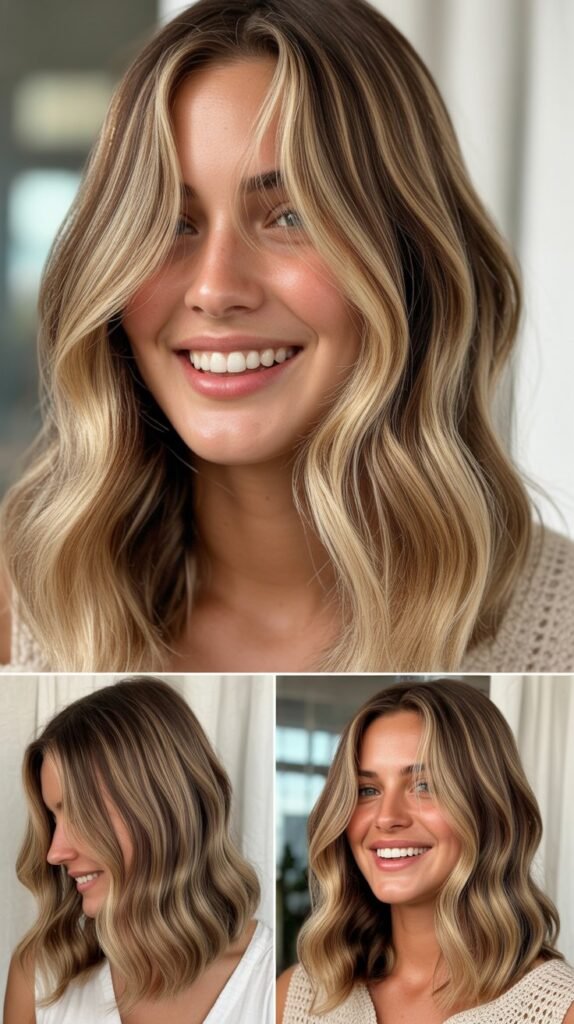
Coconut blonde is a soft, creamy shade that combines pale yellow with subtle beige undertones, resembling the inside of a coconut. This neutral-warm blonde is flattering and naturally resistant to looking brassy.
- The creamy, neutral base of coconut blonde contains both warm and cool elements, preventing extreme shifts toward brass or ash as the color fades.
- Coconut blonde works on a wide range of skin tones from fair to medium, complementing both warm and cool undertones with its balanced pigment composition.
- This shade provides softness and warmth without appearing overly golden or yellow, creating a gentle, natural-looking blonde that’s not stark or harsh.
- Coconut blonde highlights require moderate toning to maintain the creamy quality, using violet to prevent excessive yellow while avoiding over-toning to ash.
- The color reflects light beautifully, creating a subtle glow that brightens the complexion without high-contrast drama.
- Maintenance involves gentle purple shampoo use and regular glossing to keep the creamy tone fresh and prevent any unwanted warmth from developing.
- Coconut blonde can be customized slightly warmer toward butter blonde or cooler toward champagne based on individual preferences and seasonal changes.
29. Money Piece Highlights

Money piece highlights refer to the face-framing sections immediately around the face that are lightened brightest. This strategic placement provides maximum impact with minimal color application, making it highly low maintenance.
- Money piece highlights brighten the face dramatically, drawing attention to facial features and creating a lifting, contouring effect that’s incredibly flattering.
- The strategic placement requires only coloring small sections of hair, reducing damage, processing time, and cost compared to full highlighting services.
- Money pieces can be as subtle or bold as desired, from just one or two thin sections to chunky ribbons of bright blonde framing the entire face.
- This technique works on all base colors from black to blonde, providing a pop of brightness regardless of the natural or colored starting point.
- Money piece highlights grow out gracefully since they’re concentrated at the front where face-framing layers are often cut, meaning regrowth gets trimmed away naturally.
- The bright face-framing sections create the illusion of overall lighter, brighter hair even when the back and crown remain darker and natural.
- Maintenance can be extended to 3-4 months between touch-ups since the small amount of highlighted hair makes regrowth less visually obvious.
30. Mushroom Blonde Highlights

Mushroom blonde is a cool-toned, grayish-beige blonde that’s darker and more muted than traditional blonde.
This trendy shade provides dimension without bright, light-reflecting highlights, creating a sophisticated, understated look.
- The grayish-beige base of mushroom blonde is naturally resistant to brassiness since it contains minimal yellow or gold pigments that could shift to orange.
- Mushroom blonde works best on those with cool or neutral skin undertones, as the ashy quality complements pink or blue-based complexions beautifully.
- This shade provides visual interest and dimension without the high-maintenance brightness of traditional blonde highlights, appealing to those wanting subtle enhancement.
- Mushroom blonde requires toning to achieve and maintain the grayish quality, using violet and ash toners to neutralize any warmth and create the muted tone.
- The darker, more muted nature of mushroom blonde means it’s less prone to fading dramatically or showing damage compared to lighter platinum or ash shades.
- Maintenance involves regular toning every 6-8 weeks to maintain the cool, ashy quality and prevent any warmth from emerging as pigments fade.
- Mushroom blonde can incorporate multiple tones from darker taupe at roots to lighter beige-gray at ends for added dimension and a more natural appearance.
31. Icy Blonde Highlights with Blue Base
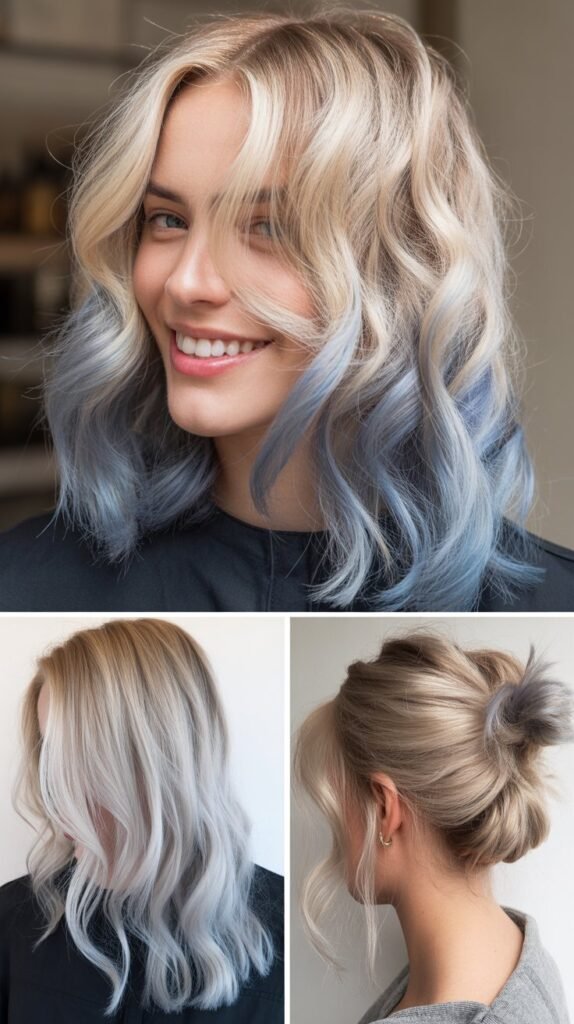
Icy blonde is the coolest, whitest shade possible, often with a slight blue or silver reflect that creates an almost frozen appearance.
While high maintenance, proper protocols can keep these highlights looking pristine between salon visits.
- Icy blonde requires lifting hair to the palest possible yellow stage and heavily toning with blue and violet pigments to achieve the white-blonde result.
- This extreme shade works best on those with very fair, cool-toned skin and light eyes, as the starkness can be harsh against warmer or deeper complexions.
- Maintaining icy blonde requires commitment to blue or purple shampoo 2-3 times weekly to continuously deposit cool pigments that fight warmth.
- The ultra-light nature of icy blonde means it shows every imperfection and color shift, requiring frequent toning appointments every 4-6 weeks.
- Achieving icy blonde on darker hair requires multiple sessions to lift gradually and preserve hair health, as aggressive single-session lifting causes severe damage.
- The blue base in icy blonde specifically counteracts yellow and orange warmth more effectively than violet alone, keeping highlights truly white rather than pale yellow.
- When icy blonde begins to fade, it typically shifts to a pale silvery-yellow rather than harsh orange if maintained properly with toning products.
32. Tortoiseshell Blonde Highlights
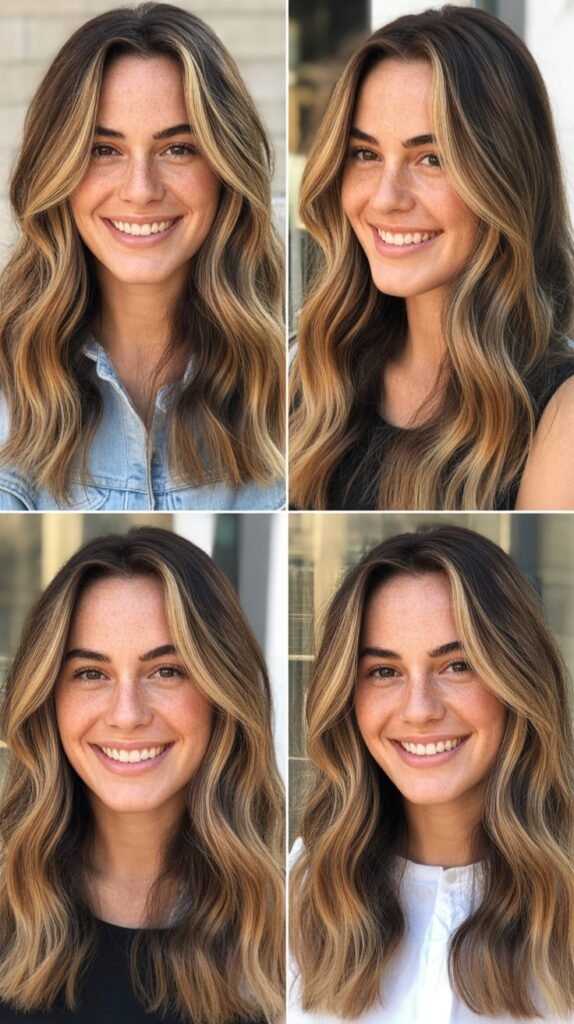
Tortoiseshell blonde combines multiple shades from dark brown to caramel to honey blonde in a hand-painted pattern that mimics the natural variation in tortoiseshell.
This dimensional approach prevents brassiness through built-in tonal variety.
- The combination of multiple tones from dark to light creates natural-looking dimension that prevents the flat, one-note appearance that can look brassy or artificial.
- Tortoiseshell blonde placement is deliberately irregular and organic, mimicking how the sun would naturally lighten random sections of hair rather than uniform patterns.
- This technique is inherently low maintenance because the variety of tones means different sections fade at different rates, maintaining overall dimension.
- The darker lowlights interspersed with blonde highlights anchor the color and prevent it from looking too light or washed out as the blonde sections fade.
- Tortoiseshell blonde works beautifully on medium to dark brown base colors, creating rich warmth without requiring extreme lightening or damage.
- The technique can be customized with warmer caramel tones for autumn/winter or brighter honey tones for spring/summer, adapting to seasonal preferences.
- Regrowth is barely noticeable with tortoiseshell blonde since the darkest lowlights are close to natural base color and blend seamlessly as roots grow.
33. Blonde Highlights with Gloss Treatment
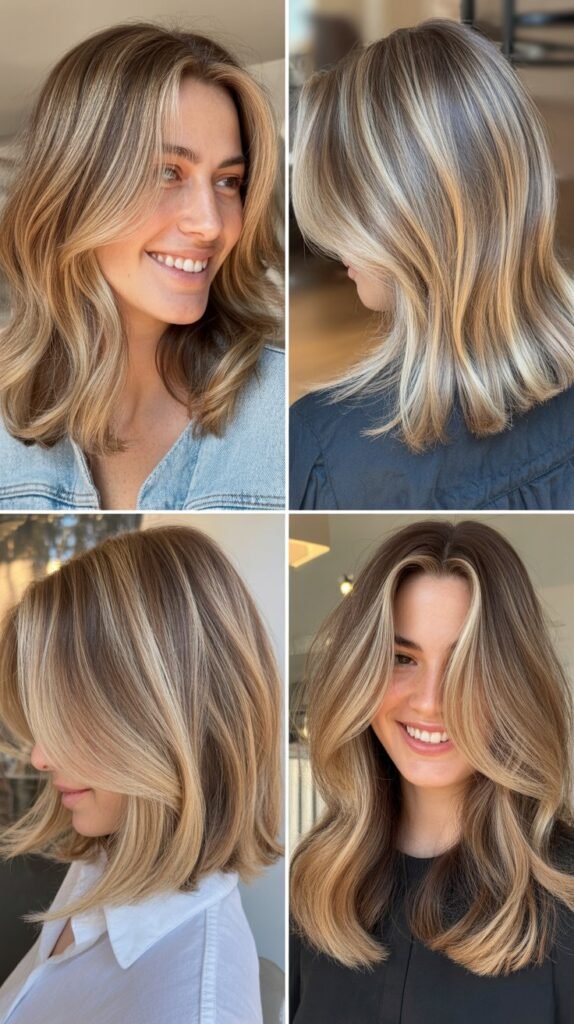
Regular gloss treatments are essential for maintaining any blonde highlights and preventing brassiness.
Glosses are semi-permanent color treatments that deposit tone, add shine, and seal the hair cuticle for healthier-looking color.
- Glosses deposit semi-permanent pigments that refresh color without the commitment or damage of permanent dye, making them ideal for maintenance between highlighting appointments.
- Regular glossing every 4-6 weeks keeps blonde highlights looking fresh by depositing cool or warm tones as needed to maintain desired shade.
- The conditioning agents in glosses smooth the hair cuticle, increasing shine and light reflection while making hair feel softer and look healthier.
- Glosses are available in various tones from cool violet and ash to warm honey and caramel, allowing customization based on desired color direction.
- The treatment helps seal color and protect against environmental damage that causes fading and brassiness, extending the vibrancy of highlights.
- Professional glosses last through 4-6 weeks of washing, gradually fading without leaving harsh lines or demarcation like permanent color can.
- At-home glosses and color-depositing treatments provide similar benefits between professional appointments, though professional formulas typically offer superior results.
34. Sandy Blonde Highlights

Sandy blonde is a natural, sun-kissed shade that combines beige, brown, and soft gold tones reminiscent of beach sand. This earthy blonde is universally flattering and naturally resistant to appearing brassy.
- The neutral-warm base of sandy blonde contains earthy undertones that prevent it from shifting to harsh orange brass as it fades over time.
- Sandy blonde complements virtually all skin tones because the balanced mix of warm and cool pigments creates a universally flattering shade.
- This color mimics natural sun-lightened hair, particularly the color achieved after summer beach vacations, making it appear organic and believable.
- Sandy blonde requires minimal toning maintenance since the natural warm tones are part of the desired color rather than something to be aggressively neutralized.
- The shade works beautifully on light to medium brown base colors, creating soft brightening without requiring extreme lightening that damages hair.
- Maintenance involves occasional glossing to refresh vibrancy and using clarifying treatments to prevent product buildup that can dull the natural-looking color.
- Sandy blonde can be customized with slightly cooler beige tones for a more neutral result or warmer honey highlights for increased richness.
35. Peekaboo Highlights Underneath

Peekaboo highlights are placed in the underlayers of hair, hidden when hair is down but visible when styled up or when hair moves. This placement is highly low maintenance since the hidden sections require no frequent touch-ups.
- Peekaboo placement means the majority of visible hair remains natural while hidden sections provide pops of color for interest without full commitment.
- The hidden nature of peekaboo highlights makes regrowth completely invisible when hair is worn down in its natural state, eliminating maintenance stress.
- This technique is perfect for professional environments where obvious highlights might be inappropriate, as the color can be revealed or hidden as desired.
- Peekaboo highlights can be any shade of blonde from subtle honey to bold platinum, with bolder choices working particularly well since they’re not always visible.
- The underneath placement creates dimension and movement when hair is styled, with glimpses of lighter color adding interest without overwhelming the overall look.
- This highlighting method allows for creativity and experimentation with color since mistakes or unwanted results are easily hidden by the top layers of hair.
- Maintenance can be extended indefinitely since the hidden placement means even significant regrowth doesn’t impact the overall appearance when hair is worn down.
36. Caramel Blonde Highlights
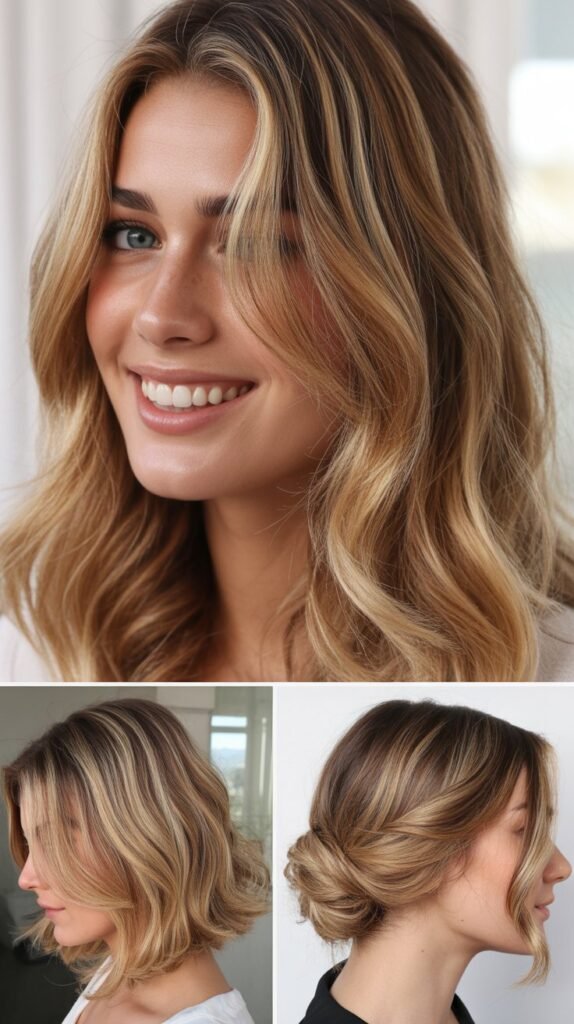
Caramel blonde combines rich brown with warm golden tones to create a delicious, dimensional color. This warm shade is flattering on those with warm or neutral undertones and provides richness without looking brassy.
- The warm golden-brown base of caramel blonde contains intentional richness that reads as expensive rather than the dull brass of faded cool highlights.
- Caramel highlights complement warm skin tones with yellow, peach, or golden undertones beautifully, as well as those with brown, hazel, or green eyes.
- This shade requires less aggressive toning than cooler blondes because the warmth is desired, though occasional blue shampoo prevents excessive orange.
- Caramel blonde works exceptionally well on medium to dark brown base colors, creating beautiful contrast without requiring extreme lightening or damage.
- The rich warmth of caramel highlights fades to a slightly lighter but still attractive warm tone rather than harsh brassiness, maintaining beauty between appointments.
- This color can be customized from lighter butterscotch-caramel to deeper toffee-caramel based on desired warmth level and contrast preference.
- Caramel blonde provides year-round appeal but is particularly popular in autumn and winter when warmer, cozier tones feel seasonally appropriate.
37. Textured Highlighting for Fine Hair
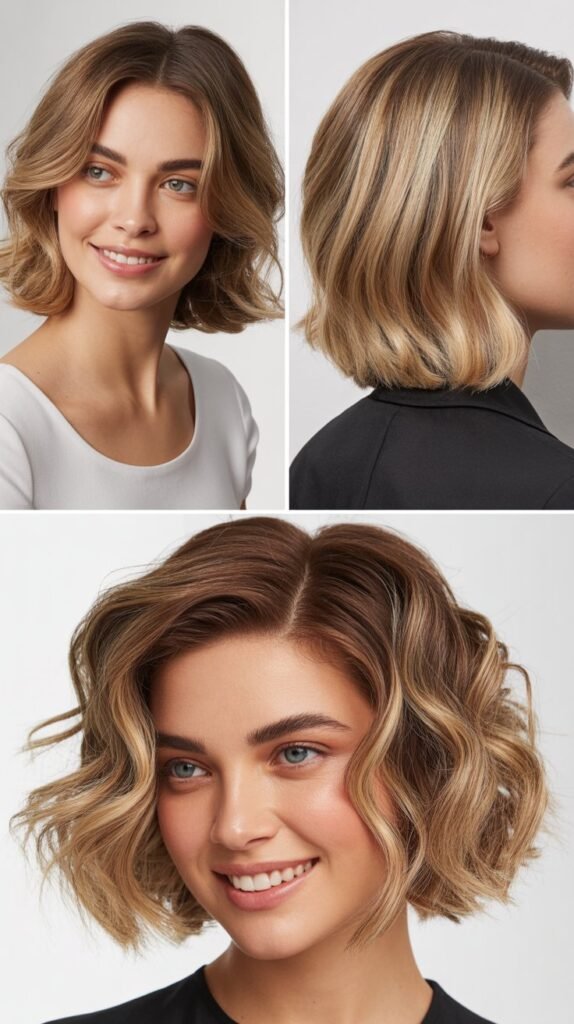
Specialized highlighting techniques for fine hair focus on creating dimension without weight while maintaining hair health.
Strategic placement and appropriate color choices prevent fine hair from looking thin or over-processed.
- Fine hair benefits from very fine, closely woven highlights that create overall dimension rather than chunky sections that can make hair appear thinner.
- Keeping highlights within 2-3 shades of the base color prevents high contrast that emphasizes the scalp showing through, maintaining the illusion of fullness.
- Babylights and micro-highlights are ideal for fine hair, creating subtle brightness and dimension without the weight of thicker foils or heavy processing.
- Placing highlights strategically on the top layers and around the face creates the illusion of volume and thickness without coloring every section.
- Fine hair is more susceptible to damage from processing, so gentle formulas and proper timing are crucial to prevent breakage that further thins appearance.
- Adding lowlights in addition to highlights creates depth and shadow that makes fine hair appear fuller and more voluminous through dimensional contrast.
- Maintenance should include regular conditioning treatments and protein masks to maintain hair health and strength, preventing the thinning appearance damaged hair creates.
38. Blonde Highlights with Purple Shampoo Routine
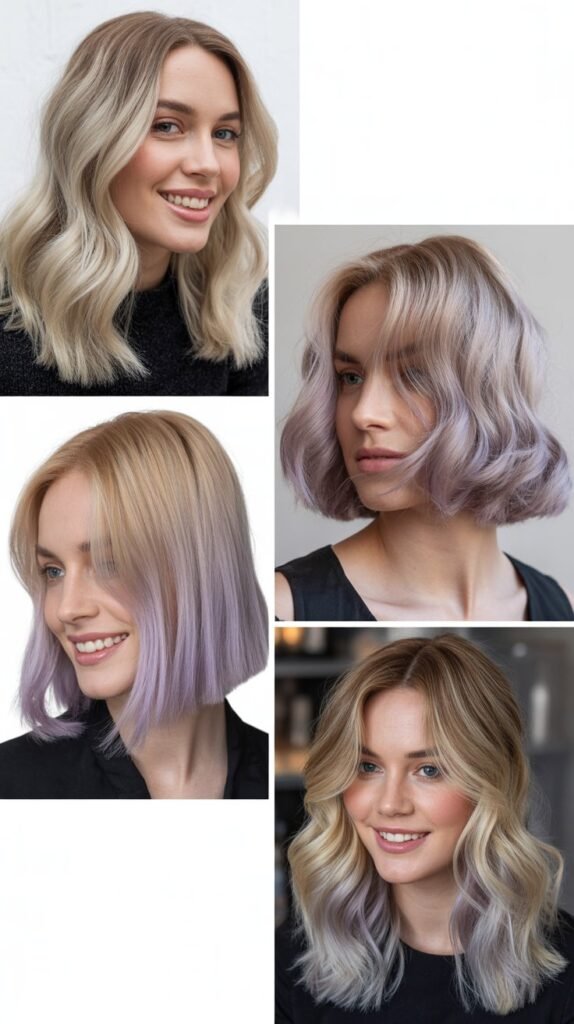
Purple shampoo is essential for maintaining cool-toned blonde highlights and preventing brassiness. Understanding how to properly use purple shampoo maximizes its effectiveness while avoiding over-toning.
- Purple shampoo contains violet pigments that neutralize yellow and pale orange tones in blonde hair based on color theory where purple and yellow are opposites.
- Proper use involves applying to wet hair, lathering thoroughly, and leaving on for 3-5 minutes before rinsing to allow pigment deposit without over-toning.
- Frequency depends on hair’s tendency toward brassiness, ranging from once weekly for naturally cool tones to 2-3 times weekly for hair prone to warmth.
- Over-using purple shampoo can cause blonde highlights to appear dull, grayish, or even slightly purple, requiring clarifying shampoo to remove excess pigment.
- Purple shampoo is most effective on level 9 and lighter hair; darker blondes may need blue shampoo instead to address deeper orange tones.
- The shampoo should be alternated with regular color-safe shampoo to maintain balance, using purple as a treatment rather than as the only cleansing product.
- Professional purple shampoos typically contain higher pigment concentrations than drugstore versions, requiring less frequent use or shorter processing time for similar results.
39. Contrast Lowlights with Blonde Highlights
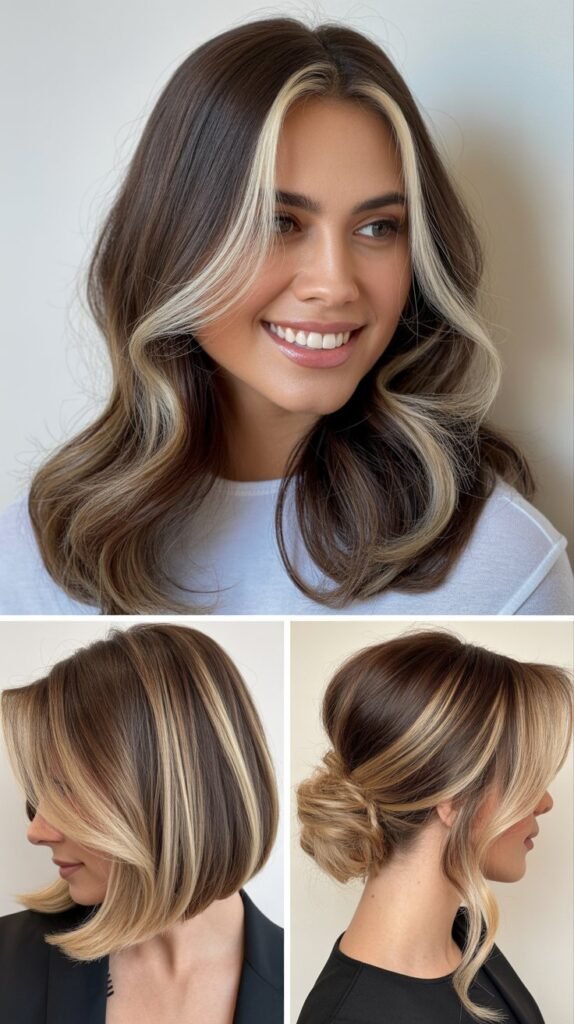
Adding lowlights alongside blonde highlights creates depth and dimension that prevents flat, one-toned hair. This technique is key to maintaining natural-looking color that doesn’t appear brassy or washed out.
- Lowlights are darker sections added throughout highlighted hair to create depth, shadow, and dimension that mimics natural multi-tonal hair color.
- The contrast between blonde highlights and darker lowlights makes each color appear more vibrant and prevents highlights from looking flat or monotone.
- Strategic lowlight placement adds back depth that aggressive highlighting removes, making hair appear thicker and more voluminous through dimensional contrast.
- Lowlights help transition and blend regrowth as natural roots grow in, making maintenance less obvious since the darker sections match or complement the base color.
- This technique prevents the overly light, washed-out appearance that can occur with extensive highlighting, maintaining richness and sophistication.
- Lowlights can be placed in the underlayers for subtle depth or woven throughout with highlights for maximum dimension depending on desired effect.
- The combination of lights and darks creates a natural-looking result that appears sun-kissed rather than obviously color-treated, with built-in dimension that prevents brassiness.
40. Warm Honey Blonde Highlights

Honey blonde is a warm, golden shade that resembles natural honey’s rich color. This popular shade provides warmth and brightness without the risk of looking cheap or brassy when done correctly.
- The golden richness of honey blonde contains depth that prevents it from reading as flat or brassy, maintaining luxury even as pigments fade over time.
- Honey highlights complement warm and neutral skin tones beautifully, particularly those with golden, peach, or olive undertones and brown or hazel eyes.
- This shade is achieved through controlled lightening and warm toning, ensuring the golden color is rich and saturated rather than pale and yellow.
- Honey blonde works exceptionally well on light to medium brown base colors, creating beautiful warmth without requiring extreme lightening or excessive damage.
- The warmth in honey blonde is intentional and beautiful, meaning it doesn’t shift to unwanted brass but rather maintains its golden quality as it fades.
- Maintenance involves minimal use of blue shampoo only if orange tones emerge, as purple shampoo can remove the desired golden warmth.
- Honey blonde can range from lighter pale honey to deeper amber honey based on preference, allowing customization of warmth intensity and depth.
41. Highlights for Gray Hair Coverage
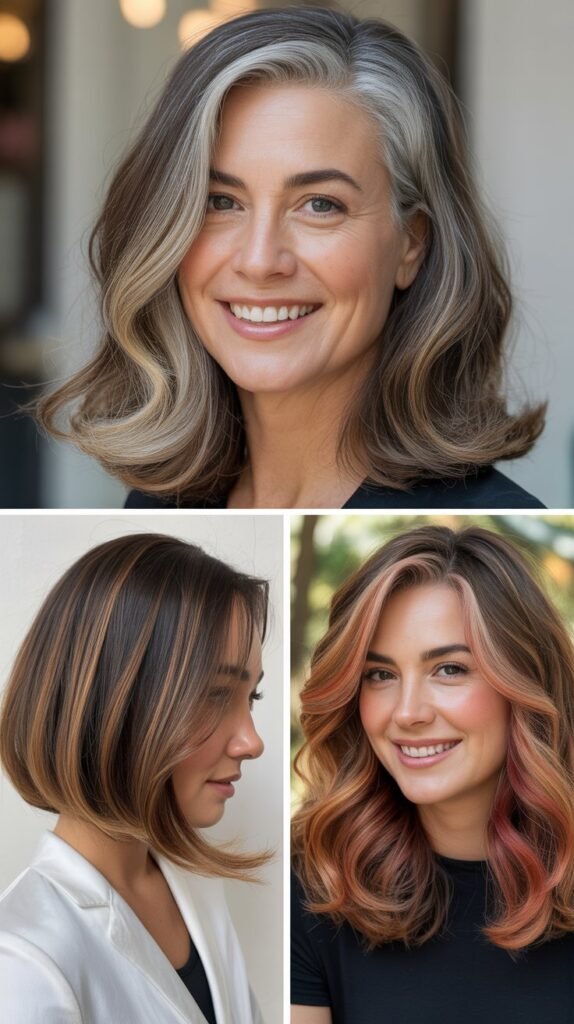
Strategic blonde highlighting can beautifully blend gray hair while adding dimension and brightness. This approach embraces grays while creating a cohesive, intentional color rather than fighting natural changes.
- Blonde highlights blend seamlessly with gray and white hairs, camouflaging them within the lighter pieces rather than creating stark contrast that emphasizes grays.
- Strategic highlight placement around the face brightens and distracts from gray growth while creating dimension that makes grays look intentional rather than neglected.
- Cool-toned ash or platinum highlights blend best with cool-toned gray hair, while warmer champagne or honey tones work better with creamy or yellowed grays.
- The highlighting process lifts and tones gray hairs along with natural pigmented hair, creating a cohesive blonde rather than leaving grays looking different.
- This approach is much lower maintenance than all-over color for gray coverage since highlights grow out gracefully and grays blend with the intended blonde.
- Adding lowlights in a medium tone alongside blonde highlights creates dimension that further camouflages grays within the multi-tonal color pattern.
- As more gray grows in over time, the ratio of highlights can be increased gradually to maintain the blended appearance without dramatic changes.
42. Balayage with Toning Gloss

Combining balayage highlighting with toning gloss treatments creates the ultimate low-maintenance blonde. The natural placement grows out beautifully while regular glossing maintains tone without additional highlighting.
- Balayage provides natural placement and seamless regrowth while toning glosses maintain the specific blonde shade desired without additional lightening.
- Regular gloss treatments every 4-6 weeks keep balayage looking fresh by depositing tone and adding shine without the damage of repeated highlighting.
- The combination allows for color customization at each appointment, adjusting tones seasonally or based on preference without structural color changes.
- Glosses seal the hair cuticle after balayage processing, improving condition and shine while locking in the freshly lightened color for longer-lasting results.
- This approach separates the highlighting service (every 3-4 months) from tone maintenance (every 4-6 weeks), providing flexibility in appointment scheduling and budgeting.
- The toning gloss can neutralize any brassiness that emerges between highlighting appointments, keeping color looking salon-fresh without bleach touch-ups.
- Clients can maintain their balayage with at-home glossing products between professional treatments, further extending the life of their color and reducing brassiness.
43. Soft Beige Highlights
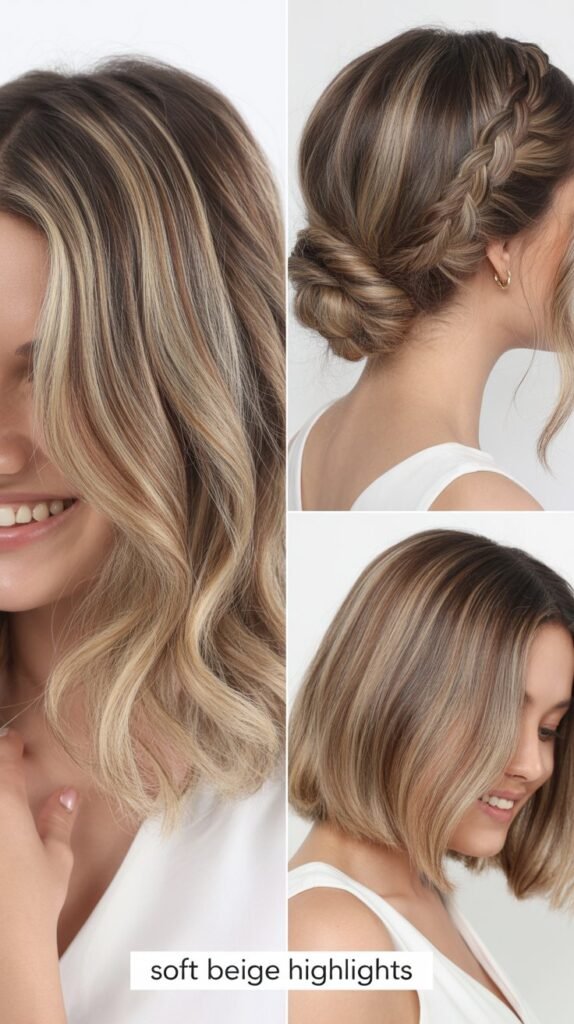
Soft beige blonde is a muted, sophisticated shade that combines blonde with brown and gray undertones. This neutral color is incredibly flattering and naturally resistant to turning brassy.
- The brown and gray undertones in beige blonde create depth that prevents the color from shifting to harsh yellow or orange as it fades.
- Beige highlights are universally flattering because the neutral base works with both warm and cool skin tones without creating harsh contrast.
- This sophisticated shade creates an expensive, European-inspired look that appears naturally dimensional rather than obviously colored or highlighted.
- Soft beige requires gentle toning to maintain the muted quality, using ash or violet toners sparingly to prevent the color from becoming too gray or green.
- The neutral nature of beige means it photographs consistently across various lighting conditions without appearing too warm or too cool depending on the light source.
- Beige blonde works beautifully as a transition shade when moving between warmer honey tones and cooler ash tones, serving as a perfect middle ground.
- Maintenance is straightforward with regular glossing to refresh the tone and occasional purple shampoo only when warmth begins to emerge.
44. Highlights with Bond-Building Treatment

Using bond-building treatments like Olaplex during and after highlighting preserves hair health and prevents damage. Healthier hair maintains color better and is less prone to brassiness caused by porosity.
- Bond-building treatments work by reconnecting broken disulfide bonds in hair that break during the chemical lightening process, minimizing damage.
- Healthier hair with intact bonds has lower porosity, meaning color molecules stay trapped inside the hair shaft longer and fade more slowly.
- Adding bond-building treatments to lightening services allows colorists to achieve brighter blondes without the extreme damage that typically accompanies aggressive lifting.
- Regular bond-building treatments between highlighting appointments maintain hair health, preventing the brittle, straw-like texture that can develop from repeated processing.
- Healthier hair reflects light better and appears shinier, making blonde highlights look more vibrant and expensive even between salon visits.
- The improved hair condition from bond treatments means highlights are less likely to develop the porous, damaged texture that absorbs minerals and causes brassiness.
- Most professional bond-building treatments include at-home maintenance products that continue protecting and strengthening hair between salon appointments.
45. Ecaille Highlights

Ecaille (French for “tortoiseshell”) is a highlighting technique that creates seamless transitions between rich brown and warm blonde tones. This method provides dimension through gradual color changes rather than distinct sections.
- Ecaille creates a gradient effect where colors blend into each other without visible lines of demarcation, mimicking the natural pattern of tortoiseshell.
- The technique incorporates multiple shades from deep brown through caramel to honey blonde, creating rich dimension that prevents flat or brassy appearance.
- Ecaille placement is deliberately varied and organic rather than uniform, creating natural-looking dimension that appears sun-kissed rather than obviously highlighted.
- This method is inherently low maintenance because the seamless blending means regrowth is barely noticeable as natural roots grow into the darkest tones.
- The variety of tones from dark to light creates built-in dimension that remains interesting even as colors fade at different rates over time.
- Ecaille works beautifully on medium to dark brown base colors, enhancing natural warmth without requiring the extreme lightening that damages hair.
- The technique can be customized with cooler or warmer tones based on preference, though it traditionally uses warm caramel and honey shades for richness.
46. Blonde Highlights on Red Hair

Creating blonde highlights on naturally red or red-toned hair requires special consideration to avoid brassiness. The key is working with rather than against the natural warm undertones present in red hair.
- Red hair contains intense warm pigments that are difficult to neutralize, so blonde highlights on red hair often work best when warmer tones like strawberry or honey are chosen.
- Attempting cool ash or platinum blonde on red hair typically results in brassiness because the underlying red pigments are so strong they overpower toners.
- Strawberry blonde highlights incorporate the natural red undertones, creating a cohesive look where the blonde and red work together rather than fighting each other.
- Lighter copper or rose gold tones can serve as transitional highlights between natural red and brighter blonde, creating gradual dimension.
- Red hair that’s been colored with permanent dye requires special attention, as removing artificial red pigment before highlighting prevents muddy or orange results.
- Maintenance involves using products designed for red hair that help maintain both the red base and blonde highlights without one color fading significantly faster.
- The combination of blonde highlights and red base creates unique, eye-catching dimension that’s less common than traditional brown-to-blonde highlighting.
47. Subtle Ombre with Blonde Ends
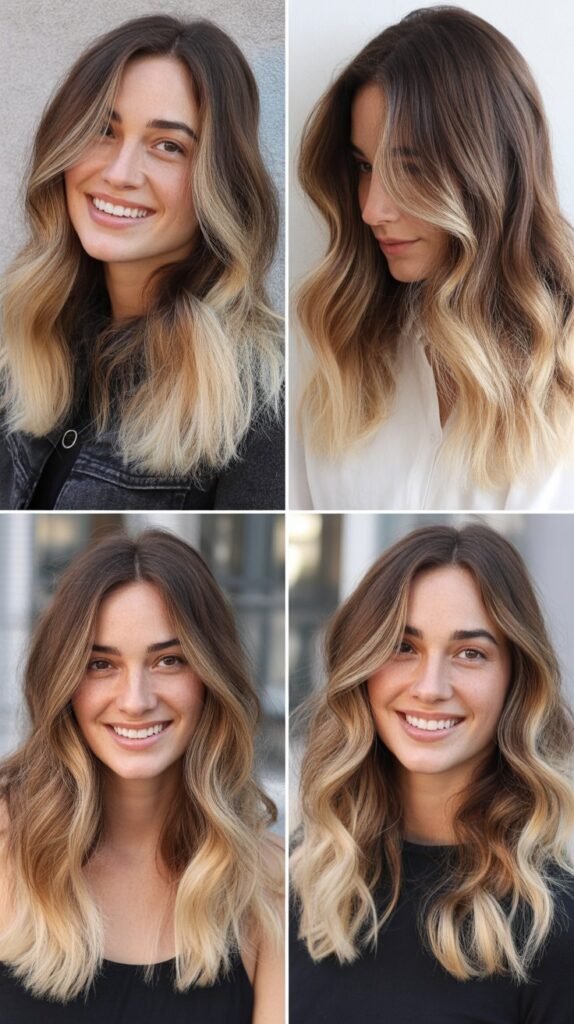
Ombre is a gradual transition from dark roots to lighter ends, with blonde ombre creating sun-kissed ends while maintaining dark roots. This dramatically low-maintenance style requires no root touch-ups.
- Ombre naturally grows out beautifully since the dark roots are intentional, eliminating the need for regular root touch-ups and reducing maintenance to occasional end refreshing.
- The gradual transition from dark to light creates dimension and interest without requiring color application to the entire head, preserving hair health.
- Ombre works on all hair lengths but is particularly stunning on longer hair where theres sufficient length to showcase the gradual color transition.
- The technique can be customized with a subtle or dramatic transition based on preference, from barely noticeable gradient to high-contrast dark-to-light effect.
- Blonde ombre is lower maintenance than all-over blonde because damage and color fading occur primarily at the ends, which can be trimmed if necessary.
- The style is perfect for those who want to try blonde without full commitment, as dark roots are expected and the blonde portion can be cut off if desired.
- Maintenance focuses on keeping the blonde ends toned and healthy rather than addressing roots, making appointments less frequent and more affordable.
48. Bright Blonde Highlights on Medium Hair

Medium-length hair (shoulder to collarbone) is ideal for showcasing blonde highlights because it provides enough length for dimension without the maintenance challenges of very long hair.
Strategic placement creates maximum impact.
- Medium-length hair allows highlights to frame the face beautifully while showcasing dimension through the mid-lengths where color change is most visible.
- The shorter length compared to long hair means less surface area requires color, reducing processing time, product usage, and overall cost of highlighting services.
- Medium hair grows past the shoulders within months, naturally trimming away some regrowth during regular haircuts and reducing the appearance of roots.
- Highlights on medium hair can be styled multiple ways from straight and sleek to wavy and textured, with each style showcasing the dimension differently.
- The length is long enough to showcase balayage, ombre, or traditional highlighting techniques effectively while remaining manageable for daily styling.
- Medium-length cuts often incorporate layers, which provide natural placement opportunities for highlights that enhance movement and dimension.
- The practicality of medium length combined with low-maintenance highlighting techniques creates an ideal combination for busy lifestyles requiring minimal upkeep.
49. Neutral Blonde Without Yellow
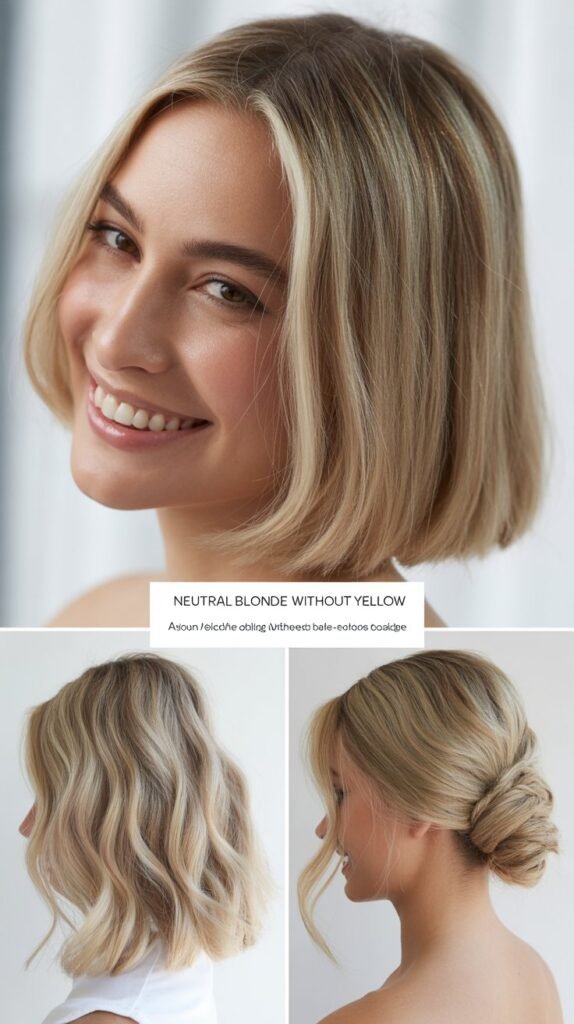
Achieving blonde highlights without yellow tones requires proper toning and maintenance. This neutral blonde sits between warm and cool, providing brightness without obvious warm or cool direction.
- Neutral blonde requires thorough toning during the highlighting process to neutralize yellow while avoiding the addition of too much ash that creates coolness.
- The balance of warm and cool pigments in neutral blonde prevents dramatic shifts as the color fades, maintaining an acceptable tone between salon visits.
- This shade works on virtually all skin tones because it doesn’t lean distinctly warm or cool, making it the most universally flattering blonde option.
- Achieving yellow-free blonde requires lifting hair to a pale yellow stage then toning with a combination of violet and blue pigments in precise ratios.
- Maintenance involves alternating between purple and blue shampoos or using specially formulated neutral blonde shampoos that deposit balanced pigments.
- The absence of yellow doesn’t mean the hair is ash or gray; neutral blonde retains brightness and lightness without the golden warmth.
- This shade is ideal for those who want blonde hair but find warm golden tones too yellow and cool ash tones too stark or gray.
50. Freehand Painting Highlights
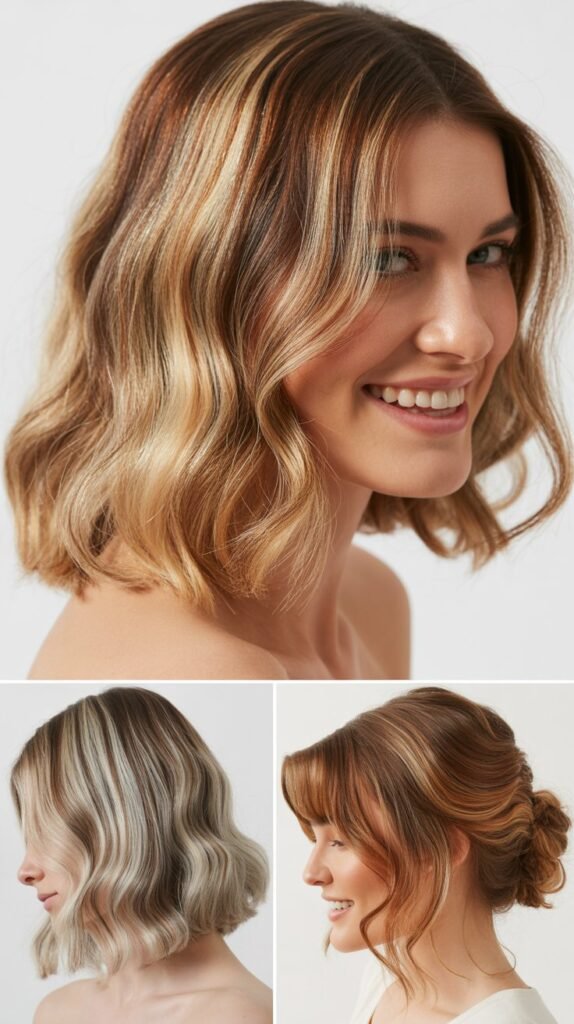
Freehand painting allows colorists to create custom, artistic highlights by painting lightener directly onto hair without foils or caps. This technique produces the most natural-looking, sun-kissed results.
- Freehand painting gives colorists complete control over placement, allowing them to follow the natural flow and movement of hair for the most organic results.
- The technique creates softer, more diffused lightening compared to foils since the lightener is exposed to air and processes more gently without concentrated heat.
- Freehand application allows for customization of each highlight based on where light would naturally hit hair based on cut, texture, and styling patterns.
- This method requires significant skill and artistic vision, as the colorist must visualize the final result and paint accordingly without the structure of foils.
- The results grow out exceptionally well because the placement is deliberately varied and natural rather than uniform, making regrowth appear intentional.
- Freehand painting can be used for various effects from subtle balayage to more dramatic ombre, depending on application density and placement pattern.
- The technique works on all hair textures and lengths, with the colorist adjusting their approach based on individual hair characteristics and desired outcome.
Conclusion
Achieving and maintaining beautiful 68 Low Maintenance Blonde Highlights That Never Look Brassy is entirely possible with the right combination of techniques, proper toning, and consistent care routines that protect your investment and keep your color looking fresh.
From cool-toned ash and platinum highlights to warm honey and caramel shades, there’s a perfect low-maintenance blonde option for every skin tone, lifestyle, and personal preference that resists the dreaded brassy tones.
The key to brass-free blonde highlights lies in choosing techniques like balayage, shadow roots, and dimensional coloring that grow out gracefully while incorporating proper toning protocols with purple or blue shampoos and regular gloss treatments that deposit corrective pigments.
Whether you prefer subtle babylights that blend seamlessly with your natural color, bold ribbon highlights that make a statement, or somewhere in between with lived-in blonde that looks effortlessly perfect, the options for beautiful, low-maintenance blonde highlights are more accessible than ever before.
By working with a skilled colorist who understands how to customize placement and tone for your unique hair, following a proper maintenance routine with quality color-safe products, and choosing blonde shades that complement rather than fight against your natural undertones, you can enjoy gorgeous blonde highlights that stay true to their intended color without constant upkeep or the stress of unwanted warm tones taking over your carefully crafted color.
