
If you’ve been struggling to find the perfect hairstyle that tames your thick, voluminous hair while keeping you effortlessly stylish, you’re about to discover your solution.
The choppy bob has revolutionized hair styling for those blessed with thick locks, offering texture, movement, and manageable elegance all in one cut.
This comprehensive guide to 26 Modern Choppy Bob Hairstyles for Thick Hair will walk you through everything from classic variations to bold contemporary styles, complete with styling tips, maintenance advice, and expert insights to help you choose the perfect look.
Whether you’re considering your first bob or looking to refresh your current style, these modern interpretations will inspire your next salon visit and transform how you approach your thick hair.
1. Classic Textured Choppy Bob
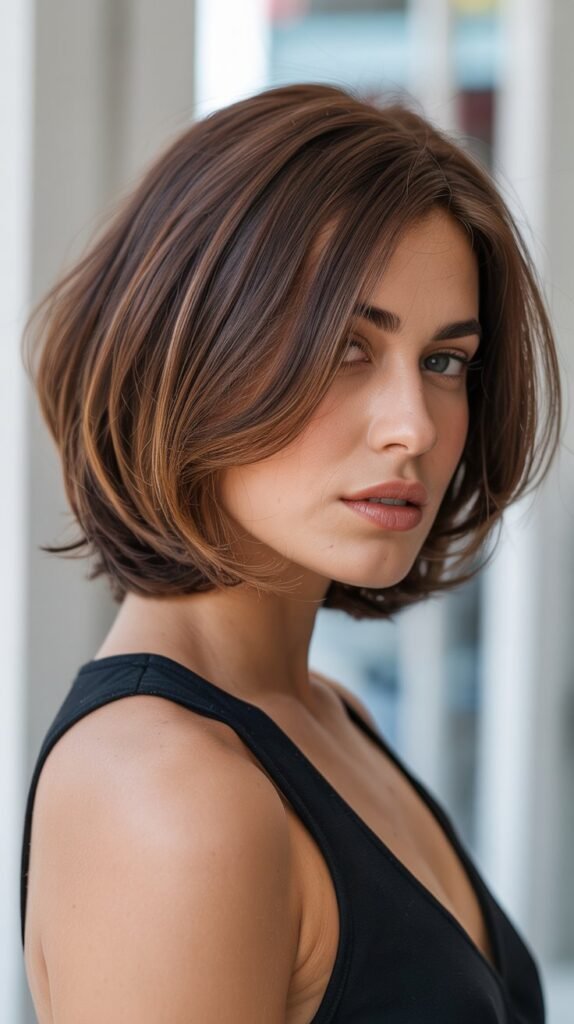
The classic textured choppy bob serves as the foundation for all modern variations, featuring strategic layering throughout that removes bulk while maintaining fullness at the crown.
Key Features:
- The cut typically falls between chin and shoulder length, making it universally flattering for most face shapes
- Layers are cut at varying lengths throughout the hair to create natural movement and reduce weight
- The choppy technique involves point-cutting or razoring the ends to produce soft, feathered edges rather than blunt lines
- This style works exceptionally well for thick hair because it distributes volume evenly instead of creating a heavy, triangular shape
Styling Tips:
- Apply a volumizing mousse to damp hair before blow-drying to enhance the textured appearance
- Use a round brush while drying to add lift at the roots and smooth the mid-lengths
- Finish with a texturizing spray to emphasize the choppy layers and create separation between strands
- For a more polished look, run a flat iron through the ends at slight angles to maintain the piece-y texture
2. Asymmetrical Choppy Bob with Deep Side Part
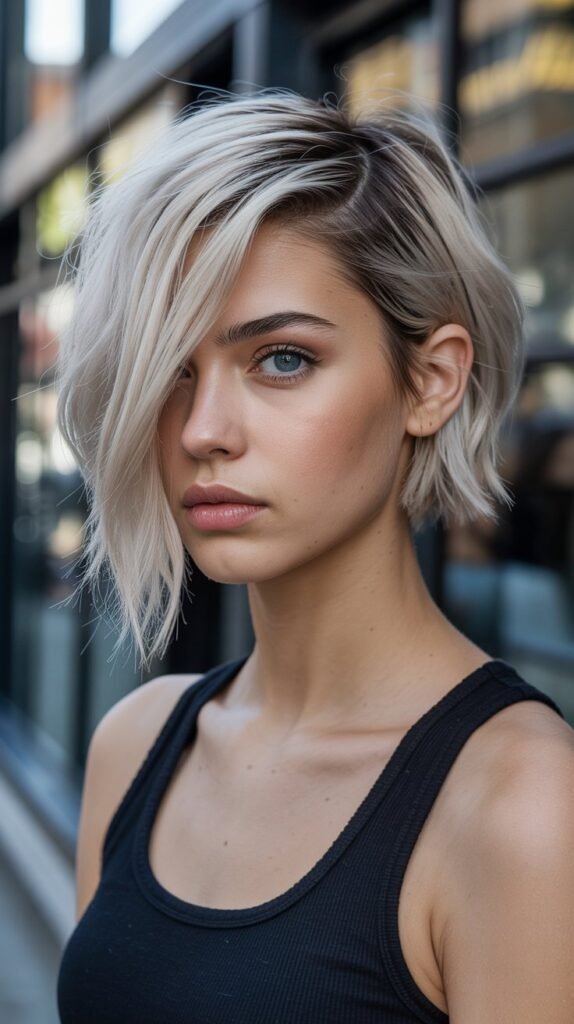
The asymmetrical choppy bob adds drama and edge to the classic cut by incorporating uneven lengths on either side of the head, creating an artistic and fashion-forward appearance.
- One side is cut noticeably shorter (often above the ear) while the other side extends longer (typically to chin or below)
- The deep side part enhances the asymmetry by creating a stark contrast between the fuller and sleeker sides
- Choppy layering throughout prevents the longer side from appearing too heavy or overwhelming
- This style particularly flatters those with thick hair because the varying lengths showcase the hair’s natural body without adding excessive bulk
- The asymmetry draws attention away from perceived facial imperfections and creates interesting angles that photograph beautifully
- Maintenance requires regular trims every 4-6 weeks to preserve the precise length difference between sides
- Consider adding subtle balayage or highlights to the longer side to emphasize the asymmetrical shape even further
3. Choppy Bob with Blunt Bangs
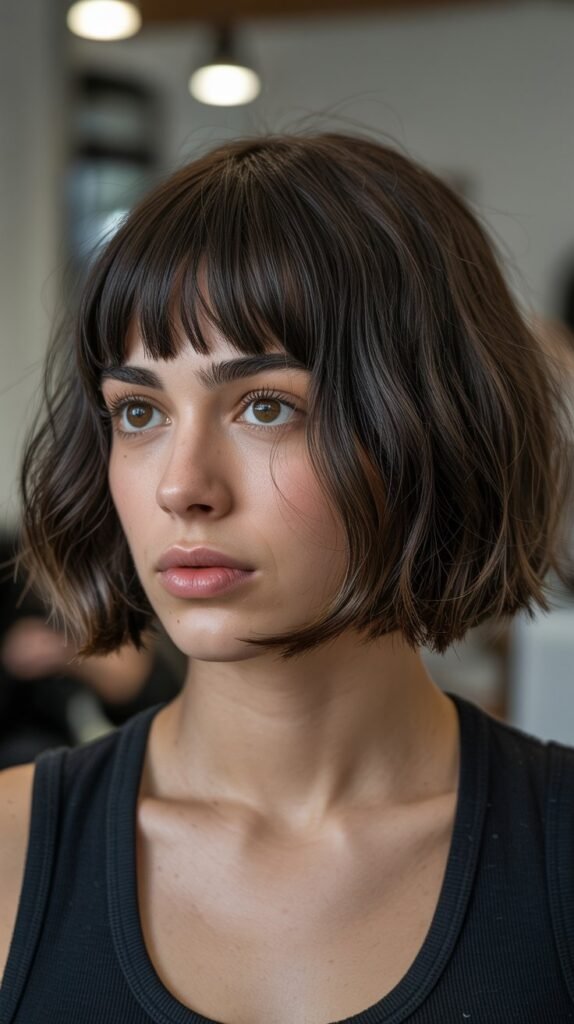
Combining choppy layers with blunt bangs creates a striking contrast that frames the face beautifully while maintaining the textured body throughout the rest of the hair.
Why This Combination Works:
- The blunt bangs provide a clean, horizontal line that balances the textured, piece-y nature of the choppy bob
- Thick hair is ideal for full, heavy bangs that won’t appear wispy or thin
- The choppy layers behind the bangs prevent the overall style from looking too severe or boxy
- This style effectively reduces face length for those with longer face shapes
Styling Considerations:
- Bangs should be cut straight across, typically at eyebrow length or slightly above
- Regular bang trims every 2-3 weeks keep them at the optimal length
- Use a small round brush to blow-dry bangs forward and slightly under for a smooth finish
- The back and sides can be air-dried with texturizing products for effortless, tousled volume
- Consider whether your hair has a natural cowlick in the bang area, which may require additional styling effort
4. Shaggy Choppy Bob
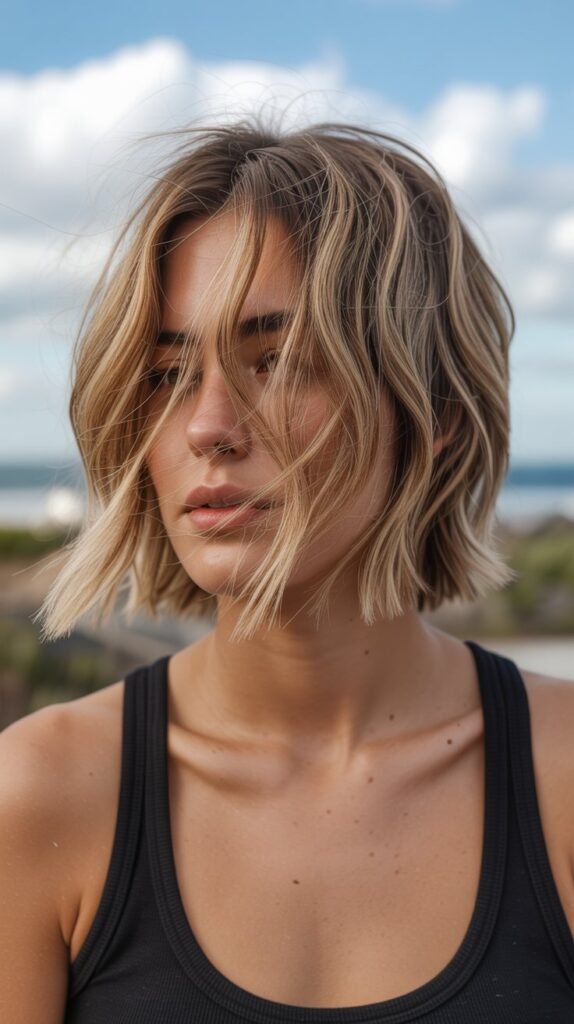
The shaggy choppy bob takes inspiration from 1970s rock-and-roll aesthetics, incorporating heavy layering and aggressive texturizing for maximum movement and carefree appeal.
- Multiple short layers are cut throughout the entire head, creating a deliberately messy, undone appearance
- The shag technique removes significant weight from thick hair, making it lighter and easier to manage
- Face-framing layers start high, often at cheekbone level, and cascade downward
- Unlike more structured choppy bobs, the shaggy version embraces irregularity and purposeful dishevelment
- This style works wonderfully for those who prefer low-maintenance hair that looks stylish when air-dried
- Natural texture—whether straight, wavy, or slightly curly—is enhanced rather than smoothed away
- Adding curtain bangs or wispy fringe complements the overall shaggy aesthetic
- Color techniques like balayage or lived-in color enhance the dimensional, textured appearance
5. Choppy Bob with Undercut
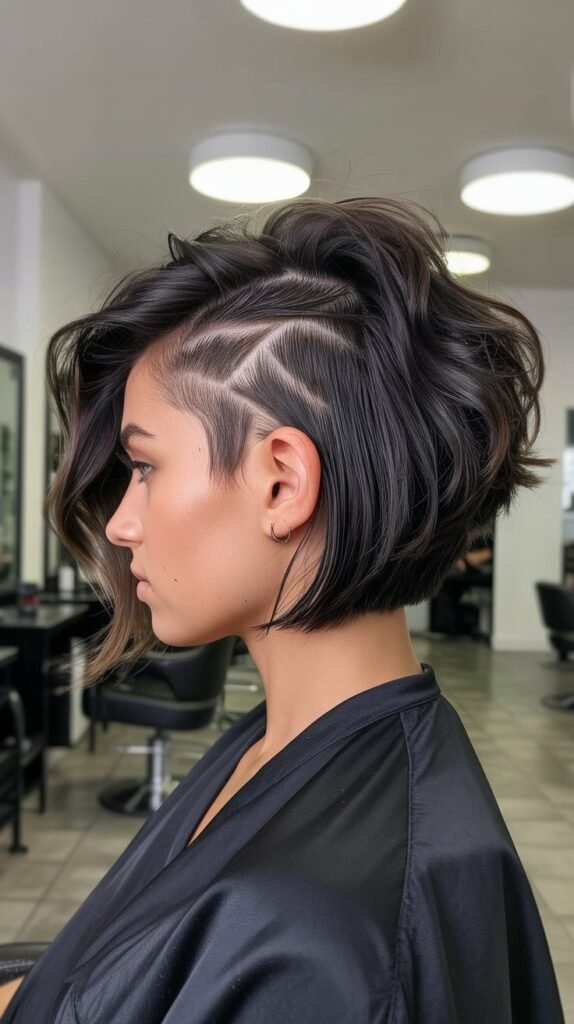
The choppy bob with undercut combines visible texture on top with shaved or very short hair underneath, creating an edgy, contemporary look with practical benefits for thick hair.
Technical Details:
- The undercut involves shaving or closely cropping hair at the nape, sides, or both to a length of 1/4 inch to 1 inch
- The longer choppy bob layers on top fall over the undercut, concealing it when desired
- This dramatically reduces bulk and heat around the neck, making it ideal for hot climates or active lifestyles
- The undercut can be subtle (hidden completely) or visible (showing at the hairline and when hair is styled up)
Styling Versatility:
- Hair can be worn down to completely cover the undercut for professional settings
- Styling hair up or to the side reveals the undercut for a bold, alternative appearance
- The reduced bulk makes styling the top section significantly faster and easier
- Less hair means less product, less drying time, and less weight pulling on the scalp
- Undercuts require regular maintenance every 2-4 weeks to keep the shaved section neat
6. Wavy Choppy Bob
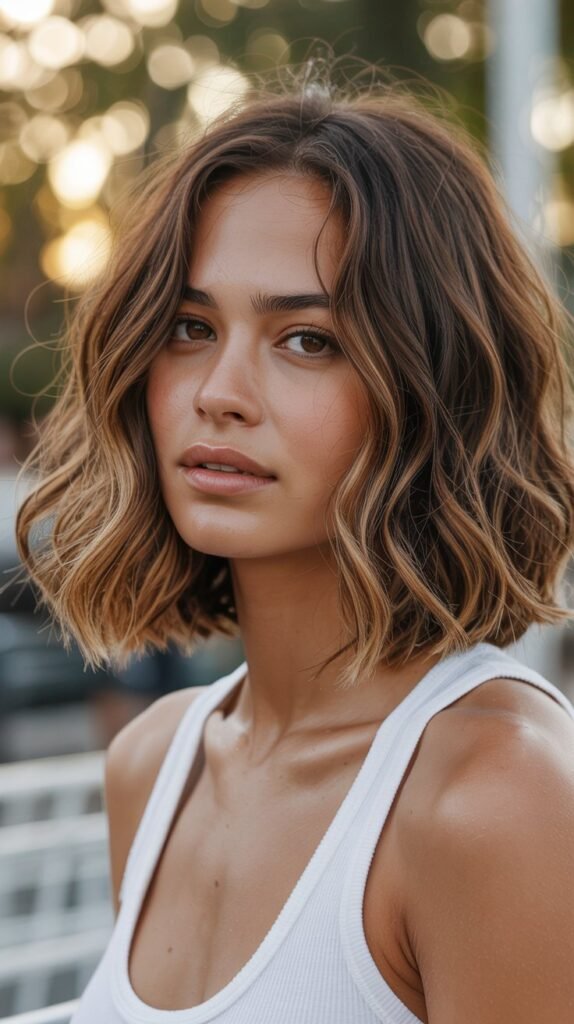
The wavy choppy bob celebrates natural or styled waves while incorporating strategic layering that prevents thick, wavy hair from becoming bulky or pyramid-shaped.
- Natural wave patterns (2A to 2C) are enhanced rather than straightened, creating effortless, beachy texture
- Choppy layers throughout remove weight and allow waves to form more defined patterns
- The cut typically features shorter layers on top that create volume and longer perimeter layers that prevent the bottom from looking too heavy
- This style is particularly flattering because the waves add width at the sides, balancing wider or angular face shapes
- Styling involves enhancing natural waves with curl-defining creams or sea salt sprays
- Diffusing hair while scrunching creates more defined waves without frizz
- The wavy choppy bob can transition seamlessly from casual daytime wear to elegant evening styling with minimal effort
- Consider adding subtle highlights or lowlights to create dimension that emphasizes the wave pattern
7. Inverted Choppy Bob
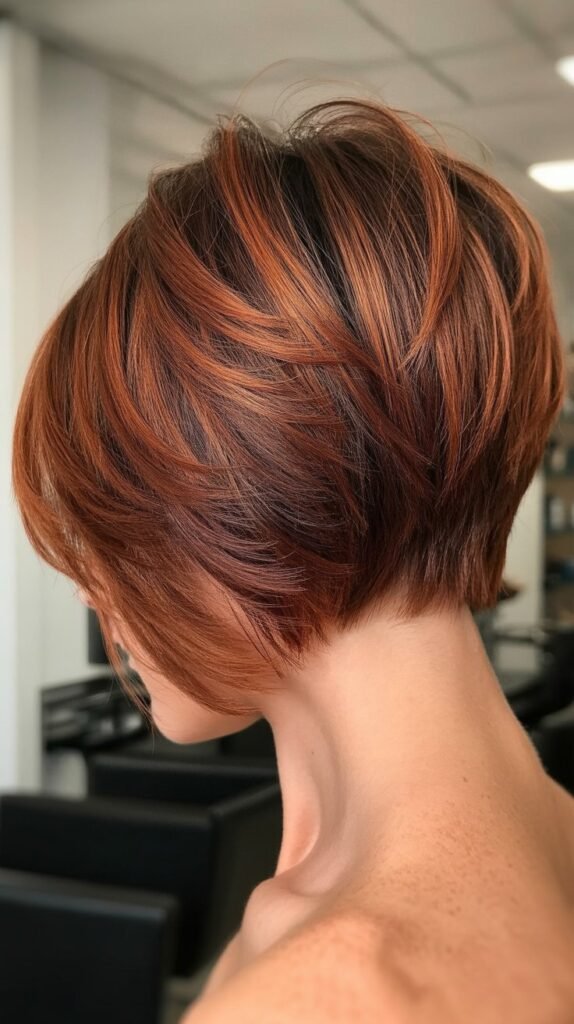
The inverted choppy bob features shorter layers at the back that gradually lengthen toward the front, creating a distinctive angled silhouette that’s both sophisticated and modern.
Structural Elements:
- Hair at the nape is cut shortest, typically 1-2 inches above the desired front length
- Layers gradually increase in length moving toward the face, creating a forward angle
- The back is often stacked with multiple short layers for added volume and lift
- Front pieces frame the face and can extend to chin length or beyond
- This structure naturally reduces bulk at the back of the head where thick hair tends to be heaviest
Advantages for Thick Hair:
- The stacked back section creates height and prevents flatness at the crown
- Shorter back layers are easier to style and dry quickly
- The angled shape draws the eye forward, emphasizing facial features
- Thick hair holds the inverted shape beautifully without falling flat
- The longer front pieces can be styled straight, wavy, or with flipped-out ends for versatility
8. Choppy Bob with Curtain Bangs
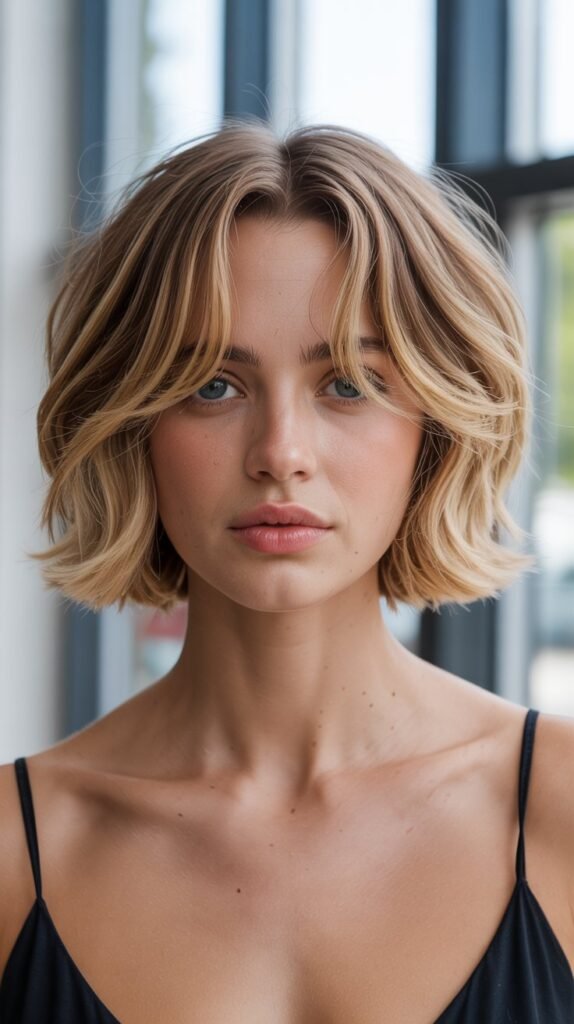
Curtain bangs paired with a choppy bob create a soft, face-framing effect that’s romantically effortless while the textured body provides modern edge.
- Curtain bangs are parted down the center and swept to either side, framing the face like curtains framing a window
- These bangs are typically longer than traditional bangs, starting at eyebrow length and gradually blending into the shorter face-framing layers
- The length makes them extremely versatile—they can be styled forward, tucked behind ears, or blended into the overall bob
- Curtain bangs suit virtually all face shapes because the center part and side-swept nature creates balance
- For thick hair, curtain bangs should be thinned at the ends to avoid heaviness across the forehead
- The choppy bob layers behind the bangs provide movement and prevent the style from looking too uniform
- Styling involves blow-drying bangs away from the center using a round brush to create the characteristic outward sweep
- This combination works beautifully with both straight and wavy hair textures
9. Razored Choppy Bob
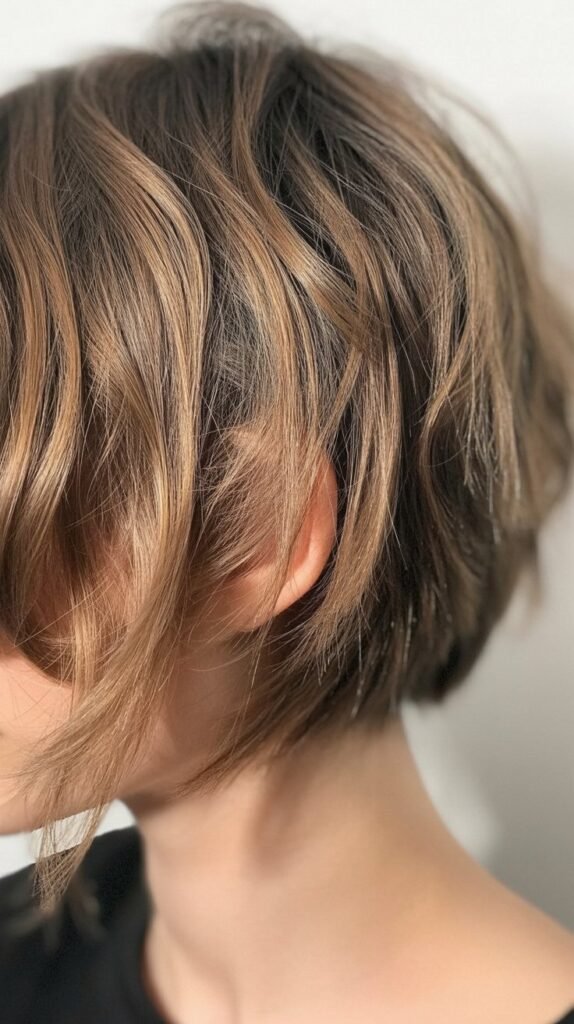
The razored choppy bob employs a razor cutting technique rather than scissors, creating ultra-soft, feathered edges that enhance movement and reduce bulk in thick hair.
Razor Cutting Technique:
- A razor blade is used to slice into the hair at angles, thinning and texturizing simultaneously
- This creates softer, more diffused edges compared to the crisp lines scissors produce
- The technique is particularly effective for thick hair because it removes weight without creating obvious layers
- Razoring can be applied throughout the entire cut or just at the ends for varied texture
Results and Styling:
- Hair appears lighter and moves more freely because the razor technique reduces density
- The feathered ends create a soft, feminine appearance even in an edgier cut
- Styling products like lightweight creams or serums enhance the feathered texture without weighing it down
- The razored ends tend to flip and move in different directions, creating natural, effortless styling
- This cut requires a skilled stylist familiar with razor techniques to avoid creating frizz or uneven texture
- Maintenance involves regular trims every 6-8 weeks to prevent the razored ends from appearing too wispy
10. Choppy Bob with Highlights
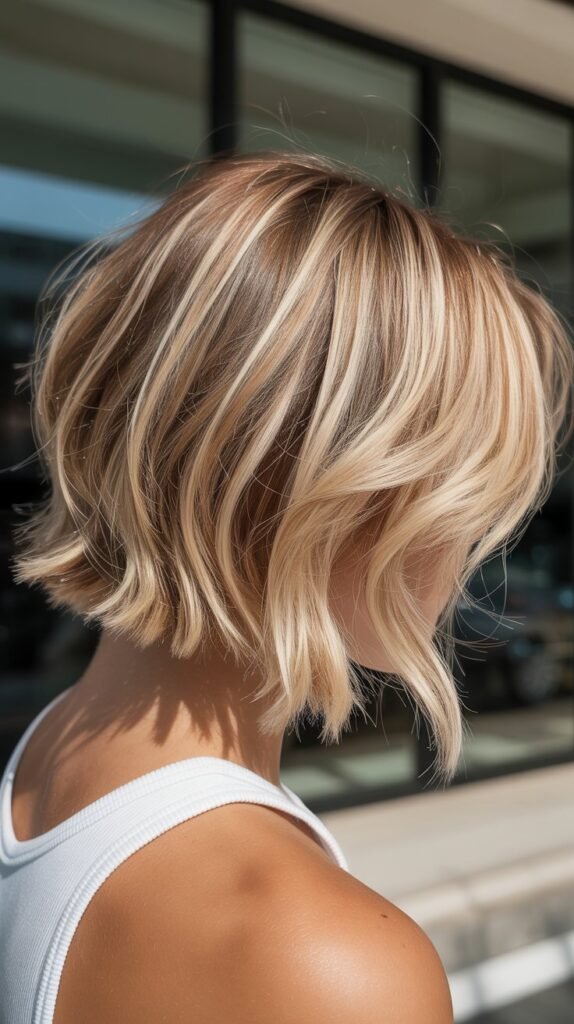
Strategic highlighting combined with a choppy bob adds dimension that emphasizes the textured layers and creates visual interest throughout thick hair.
- Highlights break up solid color and prevent thick hair from looking too heavy or monotone
- Placement should focus on face-framing pieces and the top layers where light naturally hits
- Balayage or hand-painted highlights create the most natural-looking dimension with seamless blending
- Lighter pieces throughout the choppy layers catch light and emphasize movement when hair moves
- For thick hair, highlights can be placed throughout rather than just on the surface without appearing too sparse
- Contrasting colors create more dramatic emphasis on the choppy texture, while subtle tones create soft dimension
- Cool-toned highlights (ash, platinum) create modern edge, while warm tones (caramel, honey) appear softer
- Regular toning maintains the desired highlight color and prevents brassiness
11. Messy Choppy Bob
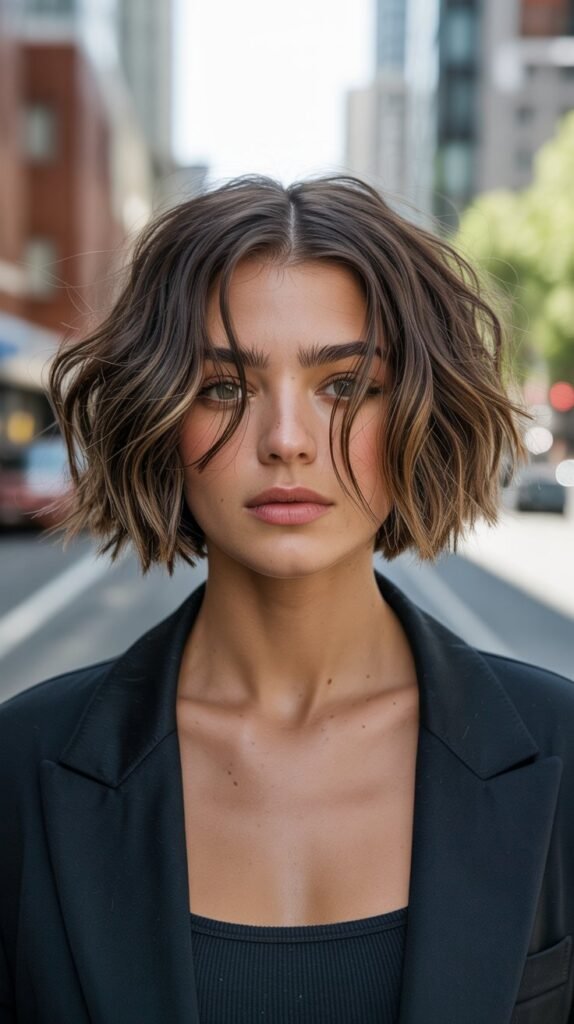
The messy choppy bob embraces intentional dishevelment, creating an effortlessly cool appearance that’s perfect for those who prefer undone, lived-in styling.
Creating the Messy Effect:
- The cut itself features irregular layers of varying lengths throughout
- Texturizing techniques like point-cutting, slicing, and razoring create piece-y, separated ends
- Rather than smoothing hair into place, styling encourages random direction and imperfect placement
- The messy aesthetic relies on creating controlled chaos that looks unplanned but remains flattering
Styling for the Messy Look:
- Apply texturizing spray or dry shampoo to clean, dry hair for grit and separation
- Scrunch hair with hands while applying product to encourage bends and waves
- Avoid brushing or combing once styled—use fingers to arrange pieces
- Allow some sections to fall forward while others are pushed back for varied dimension
- The goal is to look like you’ve done minimal styling while still appearing put-together
- This style works particularly well for thick hair because the volume and density prevent it from looking limp or too fine
- Second-day hair often looks better than freshly washed hair for achieving the messy texture
12. Choppy Bob with Side Swept Bangs
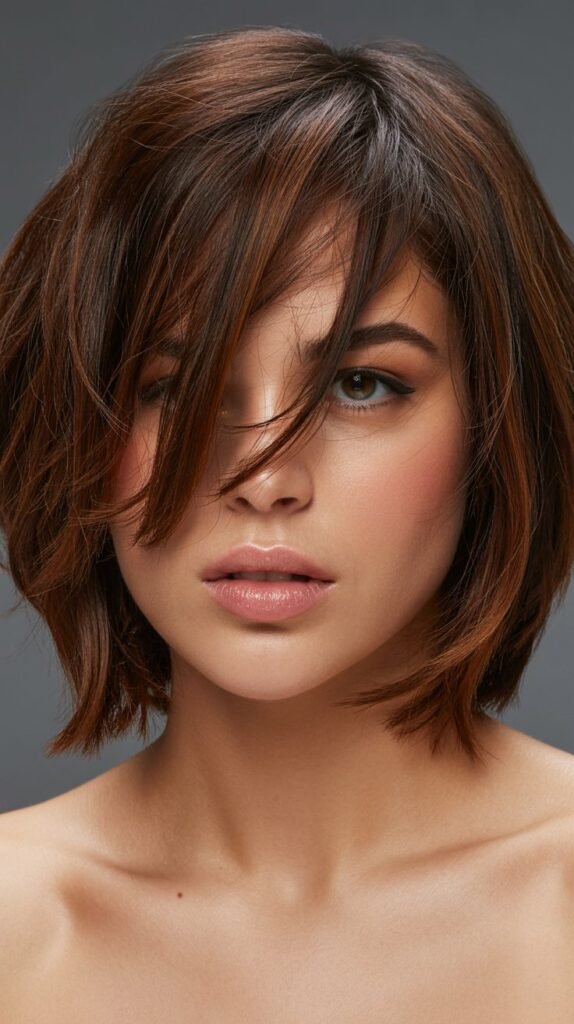
Side-swept bangs combined with a choppy bob create an asymmetrical, face-flattering frame that softens angular features while maintaining modern edge.
- Side-swept bangs are cut longer than traditional straight-across bangs, typically starting at eyebrow length
- The bangs are styled to sweep dramatically across the forehead to one side
- This creates diagonal lines that elongate round faces and soften square jawlines
- The sweeping motion draws attention to the eyes while partially concealing the forehead
- For thick hair, bangs should be properly thinned at the ends to avoid looking too heavy or costume-like
- The choppy bob layers blend seamlessly with the bangs, creating cohesive movement throughout
- Styling requires blow-drying bangs in the desired direction with a round brush or simply using fingers
- This versatile bang style can be grown out more easily than blunt bangs, transitioning naturally into longer face-framing layers
13. Choppy Lob (Long Bob)
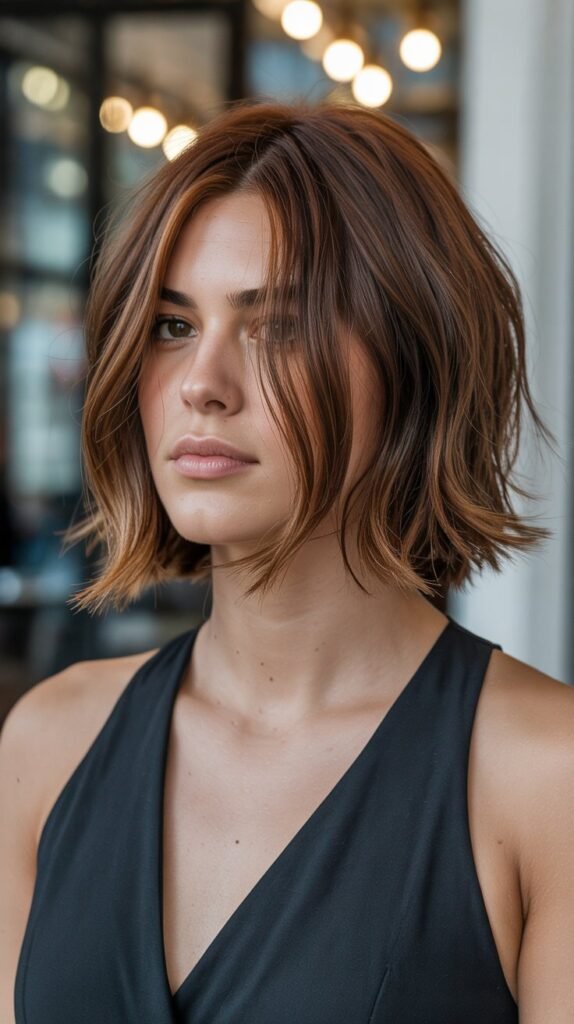
The choppy lob extends the classic bob to collarbone or shoulder length while maintaining the signature textured layers that define the choppy aesthetic.
Length and Proportions:
- Falls between chin and shoulders, typically landing at the collarbone
- Provides more length than traditional bobs while remaining distinctly shorter than long hair
- The additional length offers more styling versatility while still feeling fresh and manageable
- Choppy layers throughout prevent the longer length from weighing down thick hair
Why It Works for Thick Hair:
- The shoulder-grazing length is ideal for thick hair that might overwhelm shorter cuts
- Layers remove bulk without sacrificing the fullness that makes styling easier
- This length works beautifully for those transitioning from long hair who aren’t ready for a dramatic change
- The choppy lob can be worn straight, wavy, or with loose curls depending on the occasion
- It’s professional enough for conservative workplaces while remaining stylish and current
- Thick hair holds waves and texture beautifully at this length without requiring extensive styling
14. Choppy Bob with Peek-a-Boo Highlights
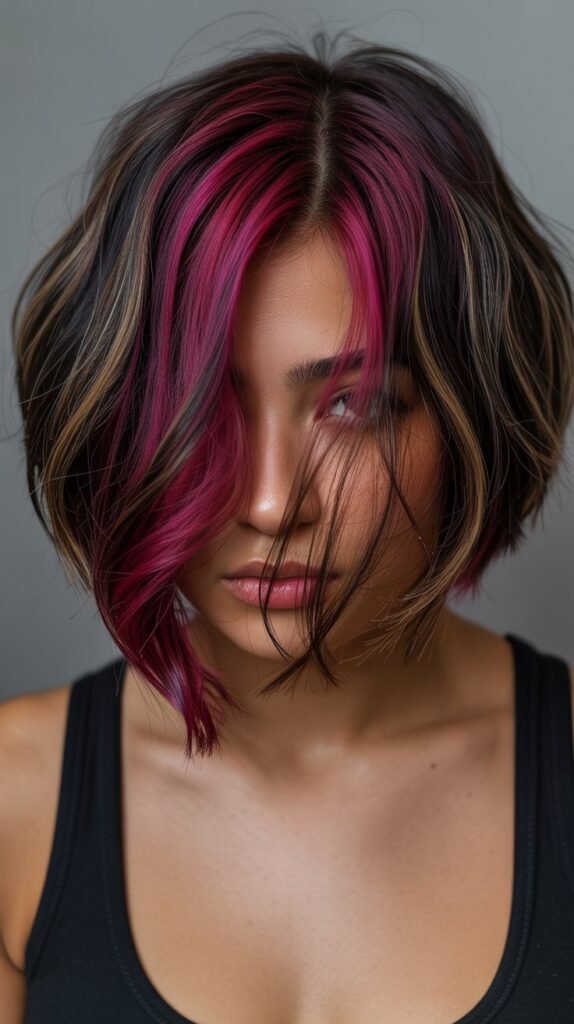
Peek-a-boo highlights hidden beneath the top layers of a choppy bob create surprising pops of color that reveal themselves with movement, adding playful dimension.
- Contrasting color is applied to underlayers while the top surface maintains a more natural or conservative shade
- When hair is styled down, only subtle hints of the color show through
- When hair is tucked behind ears, pulled up, or blown by wind, the hidden color becomes visible
- This technique is perfect for those who want creative color while maintaining professional appearance options
- Common peek-a-boo colors include vivid fashion shades (purple, blue, pink) or bold highlights (platinum against dark hair)
- For thick hair, peek-a-boo sections can be more substantial without showing through the top layers
- The choppy cut’s varied layers naturally create movement that reveals the hidden color periodically
- Maintenance depends on the color chosen—fashion colors require regular refreshing, while natural highlights can grow out gradually
15. Stacked Choppy Bob
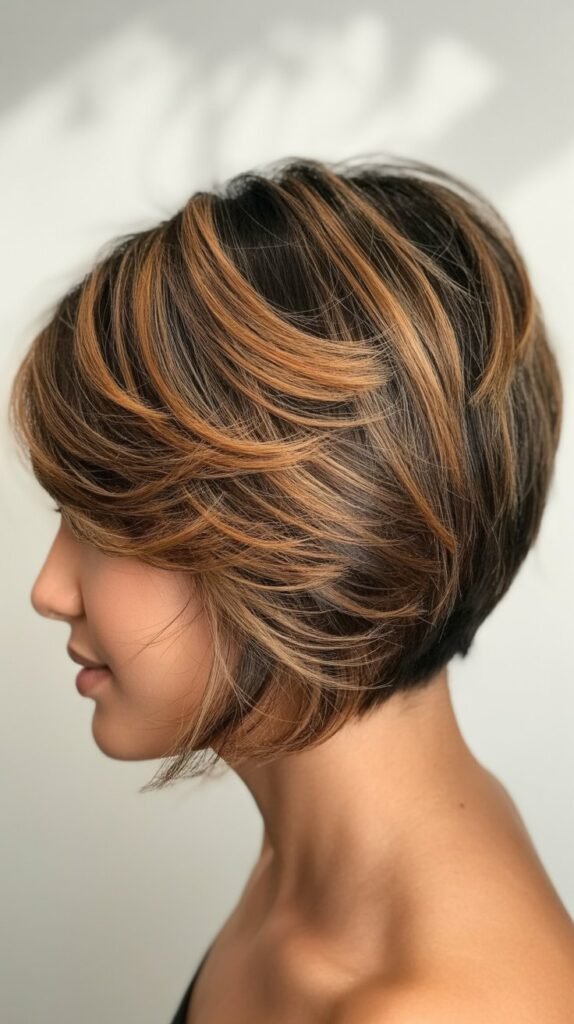
The stacked choppy bob features graduated layers at the back that are cut shorter than the front, creating volume at the crown and a rounded silhouette that’s both classic and contemporary.
Stacking Technique:
- Back sections are cut in progressively shorter layers, each one slightly elevated above the previous
- This creates a “stacked” effect with visible graduation when viewed from the side
- The shortest point is typically at mid-head level, with hair getting longer toward the nape and front
- The stacking creates natural lift and volume without requiring extensive styling
Benefits for Thick Hair:
- Removes significant bulk from the back where thick hair tends to be heaviest
- Creates shape and structure that thick hair holds beautifully without falling flat
- The shorter back sections dry quickly and require minimal maintenance
- Front sections can be styled smooth, textured, or curled while the stacked back maintains its shape
- This cut suits those who want volume at the crown without adding height with styling products
- The rounded shape softens angular features and complements most face shapes
16. Choppy Bob with Tapered Nape
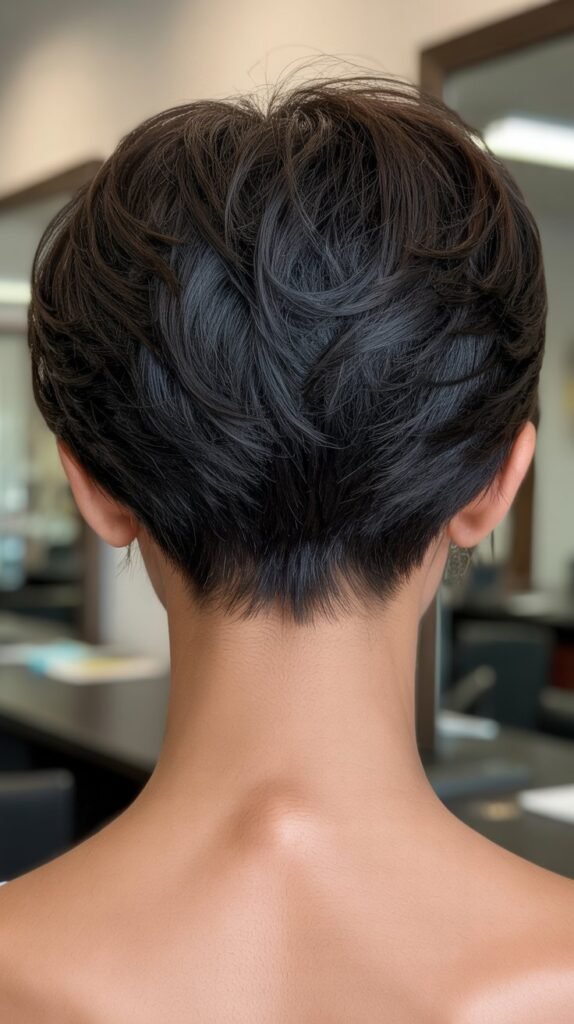
The tapered nape choppy bob features hair that gradually shortens toward the neckline, creating a clean, refined finish at the back while maintaining choppy texture throughout the rest of the cut.
- The nape (back of the neck) is cut close to the head, often with clippers or scissors held at sharp angles
- Hair gradually increases in length moving upward from the nape
- This creates a neat, precise outline at the hairline while the upper sections remain textured and choppy
- The tapering removes bulk specifically where thick hair tends to feel heavy on the neck
- This style keeps the neck cool and feels lighter, particularly beneficial in warm weather
- The tapered section requires regular maintenance every 3-4 weeks to maintain the clean shape
- Face-framing sections and top layers maintain the choppy, textured aesthetic
- The contrast between the precise taper and choppy layers creates interesting dimension
17. Choppy Bob with Baby Bangs
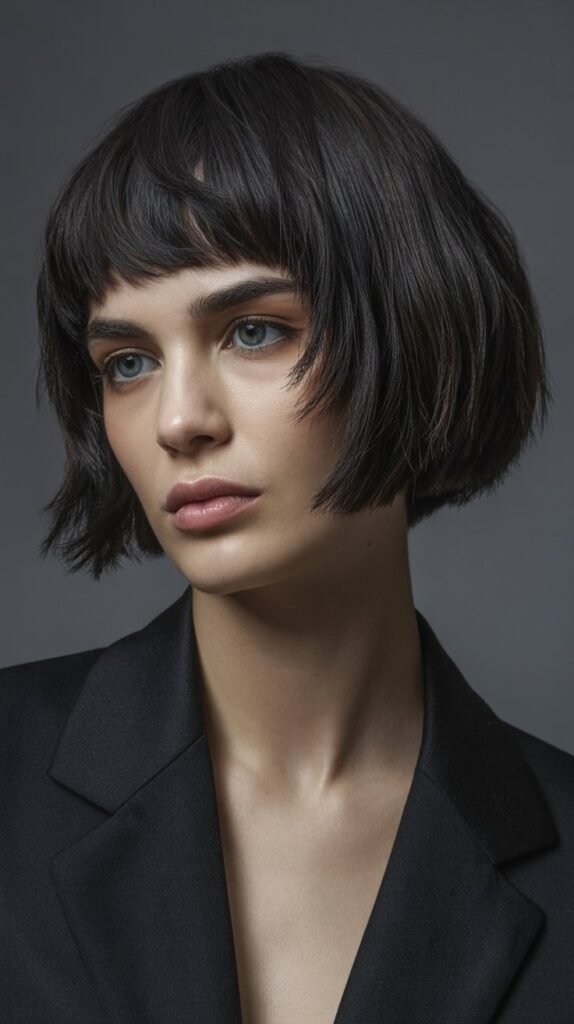
Baby bangs (micro bangs) paired with a choppy bob create a bold, fashion-forward statement that’s unmistakably edgy and contemporary.
Baby Bangs Characteristics:
- Cut significantly shorter than traditional bangs, typically ending mid-forehead or higher
- Create a stark horizontal line that draws attention to the eyes
- Often styled straight across but can be slightly textured or wispy
- This daring bang style requires confidence and regular maintenance
Pairing with Choppy Bob:
- The bold bangs contrast beautifully with the textured, piece-y nature of choppy layers
- This combination works best for those with strong, defined facial features
- Thick hair is ideal for baby bangs because the density prevents them from looking too sparse
- The choppy bob behind the bangs can be styled straight for minimalist appeal or textured for more edge
- This style suits oval and heart-shaped faces particularly well
- Consider face proportions carefully—baby bangs can shorten the appearance of the face
- Maintenance requires bang trims every 2 weeks to keep the ultra-short length
18. Layered Choppy Bob with Volume
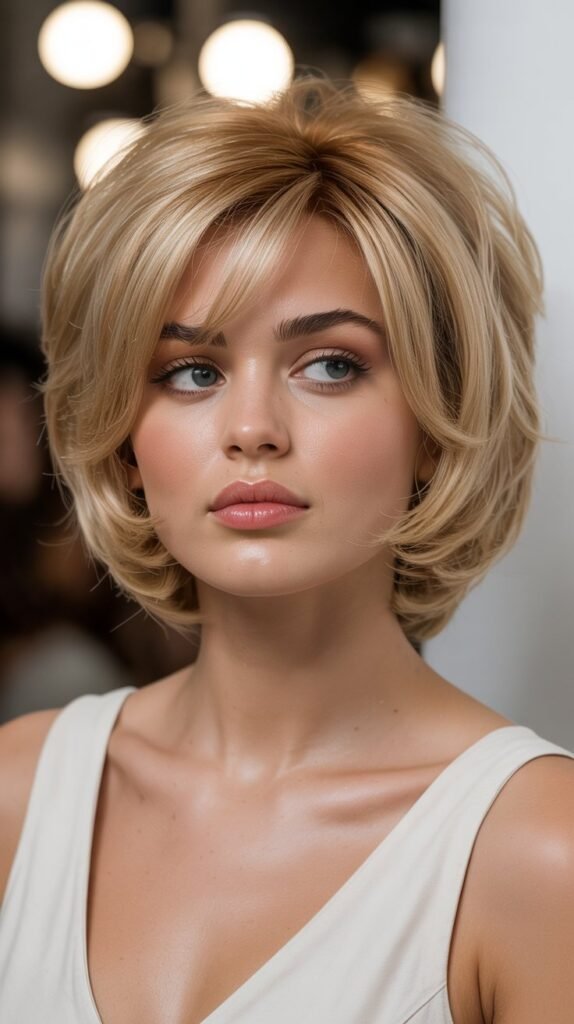
The layered choppy bob with volume emphasizes fullness and height, particularly at the crown, through strategic layering and styling techniques designed to maximize the natural body of thick hair.
- Multiple layers are cut throughout, with the shortest layers positioned at the crown for maximum lift
- Graduated lengths create natural volume without requiring teasing or excessive product
- The layers are cut at various angles to support each other and prevent collapse
- This cut is ideal for those who want big, bouncy hair without extensive daily styling
- Thick hair naturally provides the density needed for impressive volume without appearing thin or wispy
- Blow-drying with a round brush at the roots enhances the built-in volume
- Volumizing products like mousse or root-lifting spray amplify the effect
- The voluminous crown balances wider jawlines and creates a flattering silhouette
19. Choppy Bob with Ombre Effect
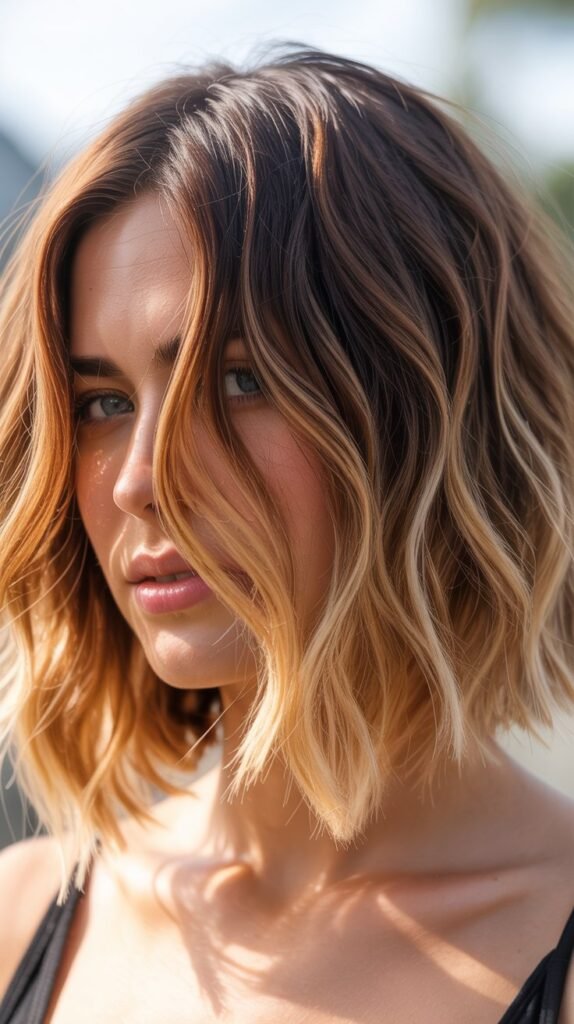
The ombre color technique transitions from darker roots to lighter ends, and when combined with a choppy bob, the color gradient beautifully emphasizes the textured layers.
Ombre Application:
- Color gradually shifts from natural or dark roots to significantly lighter ends
- The transition can be subtle (2-3 shades difference) or dramatic (dark to blonde)
- The gradient typically begins at ear level or below
- The choppy layers create varied canvas for the color, with each layer showing different points in the gradient
Visual Impact:
- Lighter ends draw attention to the textured, piece-y nature of the choppy cut
- The color dimension adds depth and movement even when hair is still
- Thick hair showcases ombre beautifully because there’s enough density to display the full color transition
- The darker roots provide low-maintenance growth as new hair blends naturally with the ombre
- Face-framing pieces often receive the lightest color, brightening the complexion
- The combination creates a sun-kissed, lived-in appearance that looks expensive and intentional
20. Choppy Bob with Flipped Ends
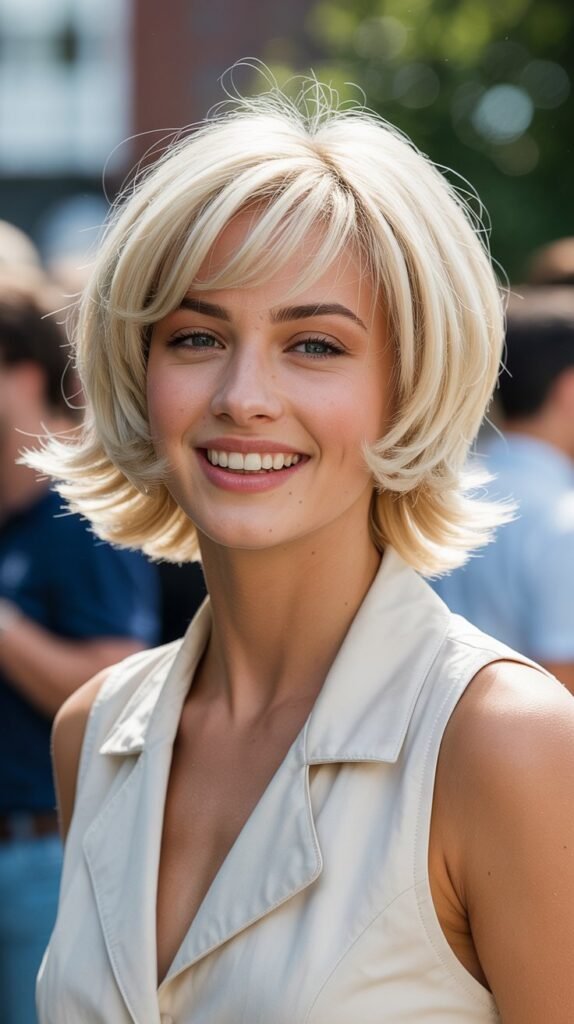
The flipped-end choppy bob features outward-curved ends that add playful movement and retro charm while the choppy layers throughout provide modern texture.
- Ends are styled to flip outward away from the face and neck
- The flip can be subtle (slight bend) or dramatic (obvious outward curl)
- This styling works particularly well at chin to shoulder length
- The outward movement creates width at the bottom, balancing narrow or pointed chins
- Thick hair holds the flipped shape beautifully without requiring strong-hold products
Styling the Flip:
- Blow-dry ends with a round brush, rolling the brush outward and away from the head
- A flat iron or curling iron can also create the flip by wrapping ends away from the face
- Finish with flexible-hold hairspray to maintain the shape without stiffness
- The choppy layers throughout create piece-y separation so the flip doesn’t look too uniform
- This style has vintage appeal reminiscent of 1960s and 1990s aesthetics while feeling current
21. Choppy Bob with Deep Layers
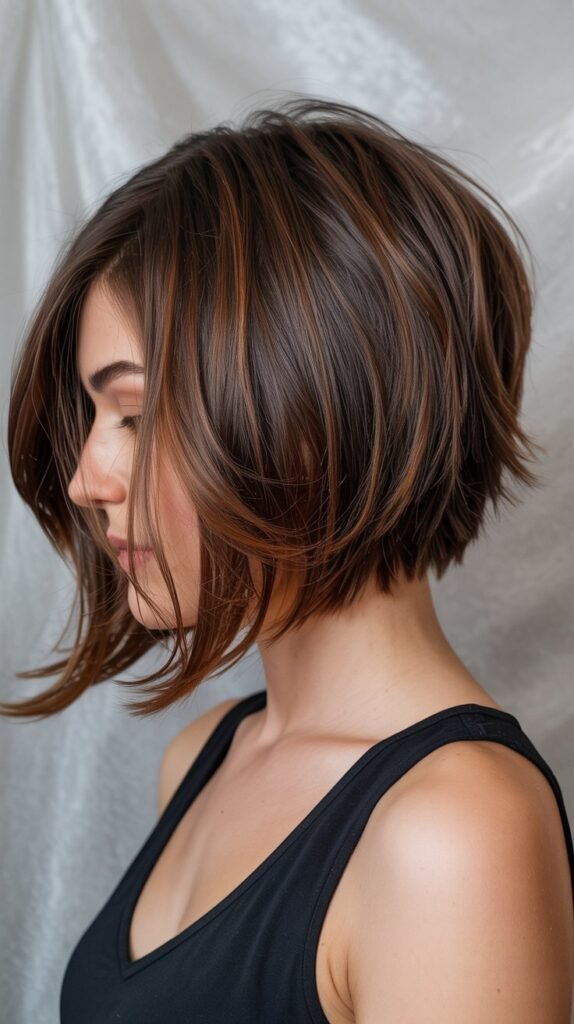
Deep layers cut throughout a choppy bob remove substantial weight from thick hair while creating dramatic movement and dimension from root to tip.
Deep Layering Technique:
- Layers are cut with significant length variation—the difference between the shortest and longest sections may be several inches
- The deepest layers typically begin at the crown or higher, creating volume at the top
- Face-framing layers start high, often at cheekbone or eye level
- The perimeter maintains length while interior sections are significantly shorter
Results for Thick Hair:
- Removes maximum bulk without sacrificing overall fullness or length
- Creates substantial movement because layers have room to separate and fall independently
- The weight removal makes thick hair significantly easier to style and dry
- Deep layers prevent the bottom section from appearing too heavy or blunt
- This cut requires skilled technique to avoid creating disconnect or visible gaps between layers
- Styling is minimal because the layers naturally fall into place with inherent movement
- Regular trims maintain the layer definition and prevent the cut from growing out awkwardly
22. Choppy Bob with Middle Part
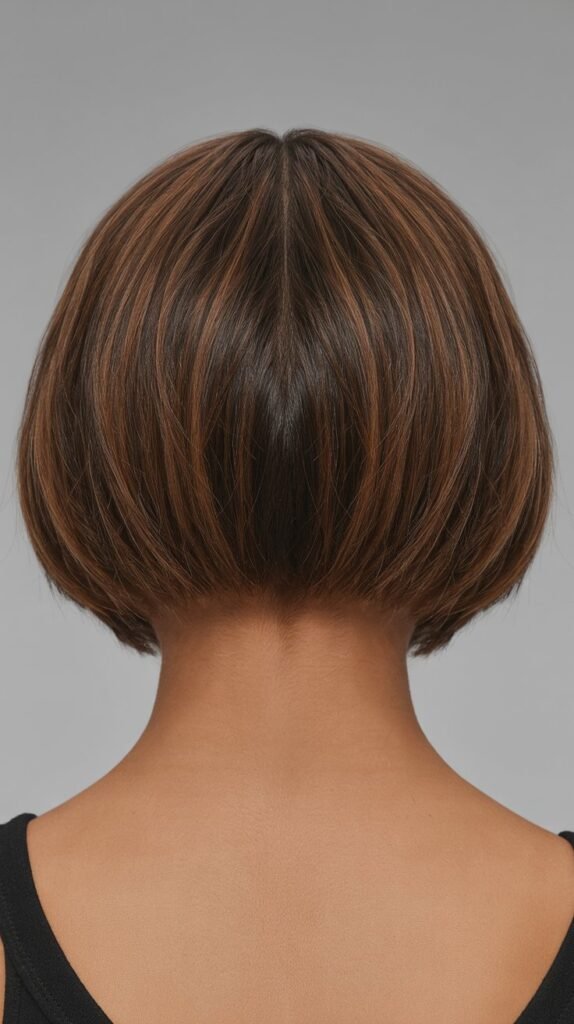
A center part combined with a choppy bob creates symmetry and balance while the textured layers prevent the style from appearing too severe or structured.
- The center part divides hair evenly, creating symmetrical sections on either side
- This parting creates balance ideal for heart-shaped and oval faces
- Face-framing layers on both sides create a softening effect around the face
- The middle part emphasizes facial symmetry and draws attention to the eyes and nose
- For thick hair, the center part allows weight to distribute evenly on both sides
Styling Considerations:
- Blow-dry hair away from the center part on both sides to create volume at the roots
- The choppy layers should be styled to fall naturally without excessive manipulation
- This parting works best when hair naturally grows from a center point, avoiding cowlick issues
- Adding slight waves or texture to the choppy layers prevents the center-parted look from appearing flat
- The style can appear bohemian when tousled or sleek and modern when straightened
- Consider face shape—center parts can elongate round faces and emphasize symmetry in balanced faces
23. Choppy Bob with Balayage
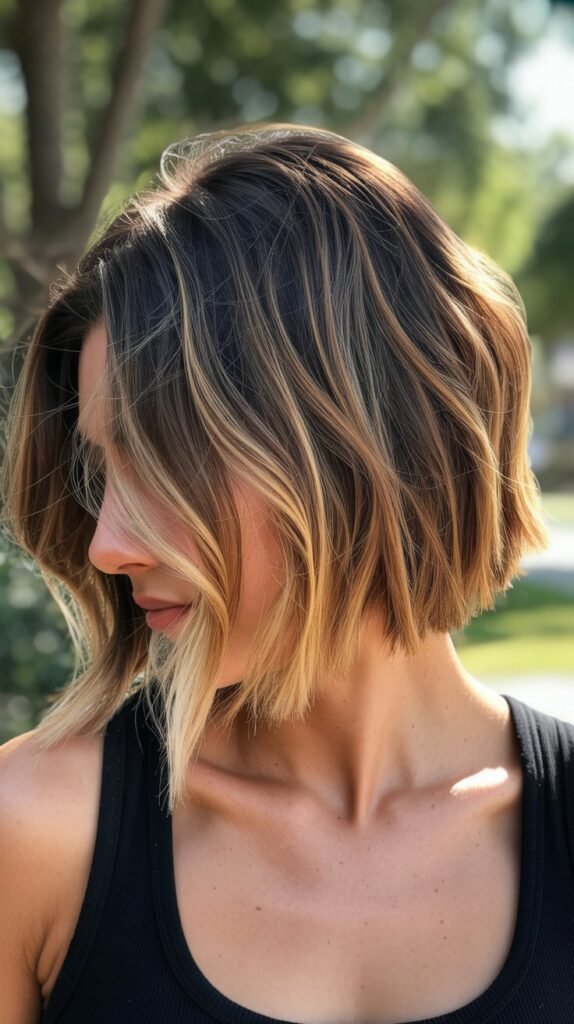
Balayage highlighting paired with a choppy bob creates natural-looking dimension through hand-painted color that emphasizes the textured layers and adds depth throughout.
Balayage Technique:
- Color is hand-painted onto sections rather than applied with foils, creating soft, blended transitions
- The technique mimics how sun would naturally lighten hair, with more color on surface layers and face-framing pieces
- There are no harsh lines or obvious streaks—the effect is seamlessly dimensional
- Balayage works beautifully with choppy cuts because the varied layer lengths showcase different tones
Benefits for Choppy Bob:
- Lighter pieces on the shorter choppy layers catch light and emphasize movement
- The color dimension adds visual interest without requiring dramatic cut changes
- For thick hair, balayage prevents the color from looking flat or one-dimensional
- The low-maintenance technique grows out naturally without obvious regrowth lines
- Face-framing balayage brightens the complexion and draws attention to facial features
- The combination of textured cut and dimensional color creates maximum visual interest
24. Choppy Bob for Fine-Textured Thick Hair
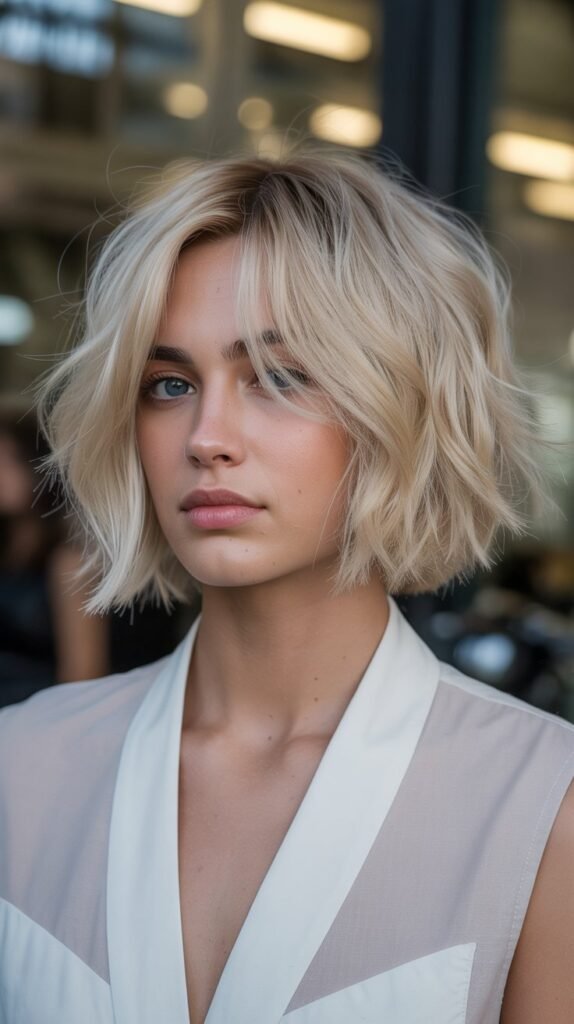
Some individuals have hair that’s thick (abundant strands) but fine-textured (narrow strand diameter), and this specialized choppy bob addresses both characteristics.
- Fine texture means each individual strand is narrow, though there are many strands
- Traditional thick-hair cuts can make fine-textured hair appear stringy or limp
- This version features precise choppy layers that create the illusion of more texture
- Strategic texturizing removes weight without thinning the hair so much it appears sparse
Cutting Considerations:
- Layers are cut with attention to maintaining fullness while creating movement
- Blunt cutting techniques are combined with minimal texturizing to preserve density
- The choppy effect comes from varied layer placement rather than aggressive thinning
- Internal layering removes bulk without affecting the visible surface density
Styling for Fine-Textured Thick Hair:
- Volumizing products add body without weighing down the fine strands
- Blow-drying with a round brush creates lift and the appearance of thicker individual strands
- Texturizing sprays add grit and separation without requiring heavy products
- The goal is to create fullness and movement while maintaining the hair’s natural abundance
25. Choppy Bob with Face-Framing Layers
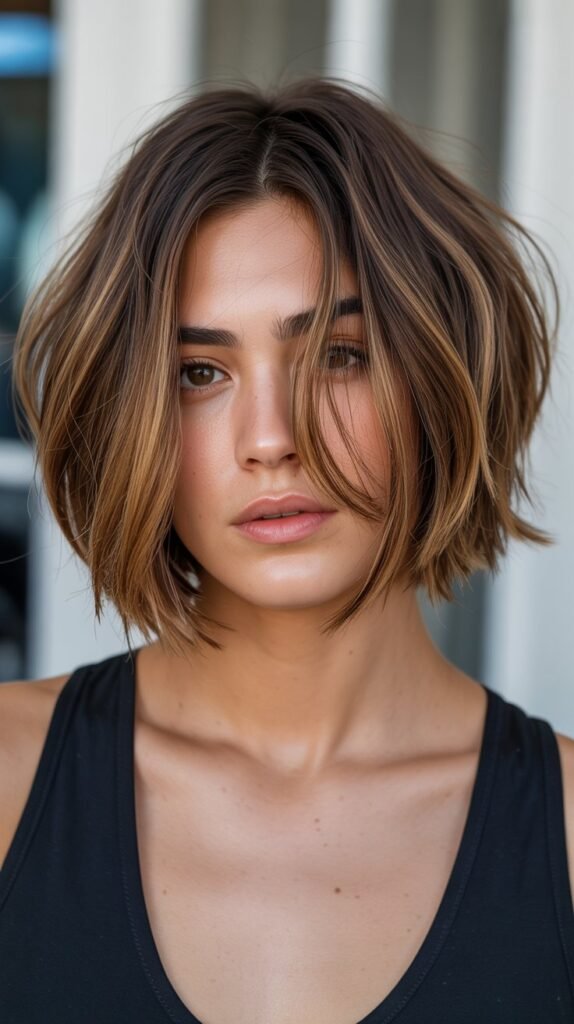
Face-framing layers integrated into a choppy bob create customized contouring that enhances facial features while the overall textured cut maintains modern edge.
Face-Framing Technique:
- Layers begin at specific points around the face—typically at cheekbone, jaw, or chin level
- These layers are cut shorter than the rest of the perimeter, gradually blending into the longer sections
- The framing pieces are angled toward the face, drawing attention to desired features
- Different face shapes benefit from framing layers placed at different starting points
Customization by Face Shape:
- Round faces: Layers start at chin level to elongate
- Square faces: Soft layers at jaw level soften angles
- Heart-shaped faces: Layers at cheekbone level balance a wider forehead
- Oval faces: Versatile—layers at any level work well
Integration with Choppy Bob:
- The face-framing pieces should be choppy and textured to match the overall aesthetic
- These sections can be styled straight for sleekness or curled for softness
- For thick hair, face-framing layers should be thinned at the ends to avoid heaviness
- The framing creates a natural focal point that flatters and enhances natural beauty
26. Choppy Bob with Natural Texture Enhancement
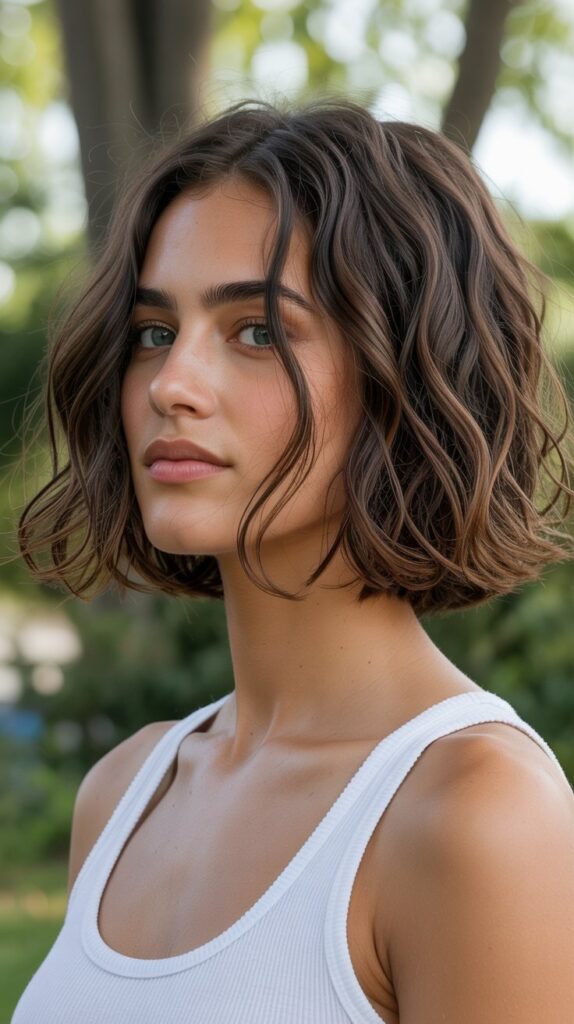
This final style celebrates the natural texture of thick hair—whether straight, wavy, or curly—through a choppy cut designed to work with, not against, the hair’s inherent characteristics.
- The cut is customized based on natural texture patterns and growth direction
- Rather than fighting the hair’s natural behavior, the layers are placed to enhance it
- For naturally straight hair, layers create movement and prevent a heavy, flat appearance
- For wavy hair, layers are positioned where waves naturally form to create defined patterns
- For curly thick hair, the choppy layers remove bulk at specific points to allow curls to spring and separate
Working with Natural Texture:
- The stylist examines the hair’s natural fall, wave pattern, and volume distribution before cutting
- Layers are placed to encourage the hair to do what it wants to do naturally
- This results in minimal styling requirements—often just air-drying with product is sufficient
- Thick hair with enhanced natural texture looks effortless yet polished
- Embracing natural texture is lower maintenance than fighting it with heat tools
- Product selection depends on texture—smoothing for straight, curl-defining for wavy or curly
- This approach creates a personalized cut that’s unique to each individual’s hair characteristics
Maintenance Tips for Choppy Bob Styles
Regular Trimming Schedule:
- Most choppy bobs require professional trims every 4-8 weeks depending on the style
- Precision cuts like asymmetrical or inverted bobs need more frequent maintenance
- Undercuts require touch-ups every 2-4 weeks to maintain clean lines
- Bangs need trimming every 2-3 weeks to maintain desired length
Product Recommendations:
- Texturizing sprays add separation and enhance choppy layers (sea salt spray, dry texture spray)
- Lightweight styling creams provide hold without weighing down thick hair
- Volumizing mousses add body when applied to damp hair before blow-drying
- Heat protectants are essential if using flat irons or curling tools regularly
- Dry shampoo extends time between washes and adds texture for second-day styling
At-Home Styling:
- Invest in a quality blow dryer with multiple heat settings for optimal styling control
- A round brush (medium to large barrel) helps create volume and smooth texture
- Flat irons can add texture by bending random sections at varied angles
- Allow hair to air-dry when possible to minimize heat damage and embrace natural texture
Professional Products vs. Drugstore:
- Professional products are more concentrated, requiring less product per use
- Thick hair often benefits from salon-quality products designed for density and texture
- However, many drugstore brands offer excellent options—focus on ingredients rather than price
- Avoid heavy oils or thick creams that can weigh down choppy texture
Styling Products Essential for Thick Choppy Bobs
Texturizing Products:
- Sea salt spray creates beachy, tousled texture with matte finish
- Dry texture spray adds grit and separation without dampness
- Texturizing paste provides piece-y definition with flexible hold
- Clay or putty offers strong hold with matte finish for messy styles
Volume Enhancers:
- Volumizing mousse adds body from roots to ends when applied to damp hair
- Root-lifting spray targets the crown area for maximum lift
- Thickening sprays coat each strand to create fuller appearance
- Dry shampoo adds texture and volume while absorbing oil
Finishing Products:
- Flexible-hold hairspray maintains style without stiffness
- Shine spray adds gloss to dull or dry-looking hair
- Anti-humidity products prevent frizz in damp climates
- Smoothing serums tame flyaways without weighing hair down
Application Tips:
- Use products sparingly on thick hair—start with a small amount and add more if needed
- Focus texturizing products on mid-lengths and ends rather than roots
- Apply volumizing products to roots while hair is damp for best results
- Finish with spray products from 8-10 inches away to avoid over-application
Common Mistakes to Avoid
Cutting Errors:
- Avoiding professional stylists and attempting to cut choppy layers at home often results in uneven, unflattering results
- Requesting too many layers can make thick hair appear thin or stringy in sections
- Not communicating clearly with your stylist about desired length and texture level
- Choosing a choppy bob style incompatible with your natural hair texture or face shape
Styling Mistakes:
- Over-brushing choppy hair, which removes the piece-y texture and creates puffiness
- Using too much product, which weighs down the textured layers
- Neglecting heat protectant when using hot tools, causing damage that disrupts texture
- Fighting against natural texture instead of working with it
Maintenance Oversights:
- Letting the cut grow out too long between trims, causing the shape to disappear
- Using heavy conditioners that weigh down the choppy texture
- Washing too frequently, which strips natural oils and creates frizz
- Not adjusting styling techniques as the cut grows and changes shape
Color Considerations:
- Choosing color techniques that don’t complement the choppy texture
- Over-processing hair, which creates damage that looks worse with textured cuts
- Neglecting toner maintenance, allowing highlights to become brassy
- Not considering how natural regrowth will look with the chosen color placement
Frequently Asked Questions
Will a choppy bob work with my thick, straight hair?
- Absolutely—choppy bobs are ideal for thick straight hair because the texturizing removes weight and creates movement that straight hair often lacks
- The choppy layers prevent straight thick hair from looking heavy or blunt
- Styling is relatively easy since straight hair naturally showcases the precise choppy layers
How often should I wash a thick choppy bob?
- Most people with thick hair can wash every 2-4 days depending on oil production and activity level
- Less frequent washing allows natural oils to condition hair and makes styling easier
- Dry shampoo extends time between washes while adding the textured, piece-y look choppy bobs require
- Over-washing can create frizz and disrupt the textured appearance
Can I still put my choppy bob in a ponytail?
- Shorter choppy bobs (chin-length or above) typically won’t fit entirely in a ponytail
- Choppy lobs (collarbone length or longer) can usually be secured in a low ponytail
- Shorter layers will likely escape, creating a soft, romantic effect around the face
- Consider using clips or pins to secure shorter sections if you need hair completely off your face
How do I sleep without ruining my choppy bob?
- Sleep on a silk or satin pillowcase to reduce friction and frizz
- For wavy or curly choppy bobs, consider a loose bun or pineapple on top of the head
- Straight choppy bobs can be lightly misted with water and restyled in the morning
- Many choppy bob styles look better with the slightly tousled texture that comes from sleeping
Is a choppy bob appropriate for professional workplaces?
- Absolutely—choppy bobs can be styled sleek and polished for conservative environments
- The level of “choppiness” can be adjusted based on workplace culture
- Avoid extreme colors or undercuts if working in very traditional settings
- When styled smoothly with minimal product, choppy bobs appear sophisticated and professional
Conclusion
The versatility and style possibilities within 26 Modern Choppy Bob Hairstyles for Thick Hair demonstrate that thick hair is an asset, not a challenge, when paired with the right cut.
From the timeless appeal of the classic textured bob to the bold statement of baby bangs, each variation offers unique benefits tailored to different lifestyles, face shapes, and personal aesthetics.
The choppy bob’s fundamental principle of strategic layering removes bulk while maintaining fullness, creating manageable, modern styles that celebrate rather than fight against thick hair’s natural abundance.
Whether you’re drawn to the effortless cool of a shaggy texture, the sophisticated angles of an inverted cut, or the dimensional beauty of balayage highlights, there’s a choppy bob perfectly suited to your needs.
The key to success lies in finding an experienced stylist who understands how to work with thick hair, communicating your styling preferences clearly, and maintaining your cut with regular trims and appropriate products.
With the right choppy bob, your thick hair transforms from something you manage into something you genuinely love—a signature style that looks intentionally textured, effortlessly chic, and uniquely yours.

