Long hair is timeless, but when paired with perfectly cut front layers, it transforms into something truly spectacular.
If you’ve been searching for ways to add dimension, movement, and a fresh update to your lengthy locks without sacrificing your hard-earned length, then 26 Fresh Long Hair Ideas With Perfectly Cut Front Layers is exactly what you need.
Front layers frame your face beautifully, create softness around your features, and give your hair that coveted lived-in, effortlessly chic appearance. This article explores 26 stunning variations of long hair with front layers that work for every face shape, hair texture, and personal style.
From subtle face-framing pieces to bold curtain bangs and everything in between, you’ll discover how strategic layering at the front can revolutionize your entire look while keeping your length intact.
Whether you’re preparing for a salon appointment or simply gathering inspiration, these ideas will help you find the perfect front-layered style that enhances your natural beauty and fits seamlessly into your lifestyle.
1. Classic Face-Framing Layers
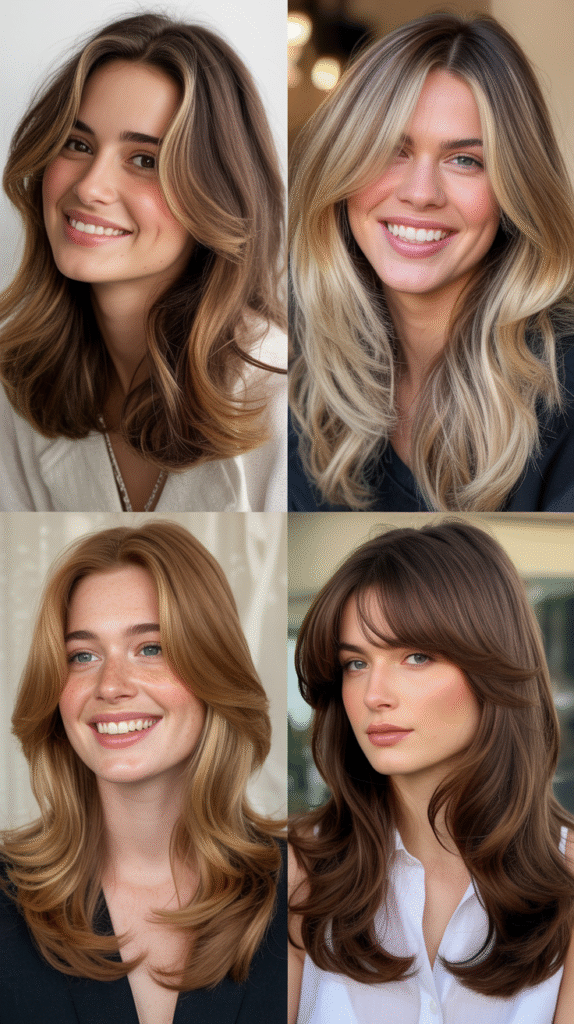
Face-framing layers are the foundation of front layer styling and work beautifully with long hair to create a soft, feminine silhouette.
These layers typically start around the cheekbones or chin and gradually blend into the rest of your hair, creating a flattering frame that draws attention to your best features.
- Face-framing layers soften angular features and add dimension to round faces by creating vertical lines along the sides of your face.
- The layers should be cut at an angle that follows your facial structure, typically starting at cheekbone level and extending downward.
- This style works exceptionally well for fine to medium hair textures as it creates the illusion of fuller, more voluminous hair.
- Styling requires minimal effort—simply blow-dry with a round brush, curling the ends slightly inward or outward depending on your preference.
- Face-framing layers are incredibly versatile and can be worn straight, wavy, or curly without losing their shape or definition.
- This classic technique has remained popular for decades because it universally flatters most face shapes and hair types.
2. Curtain Bangs With Long Hair
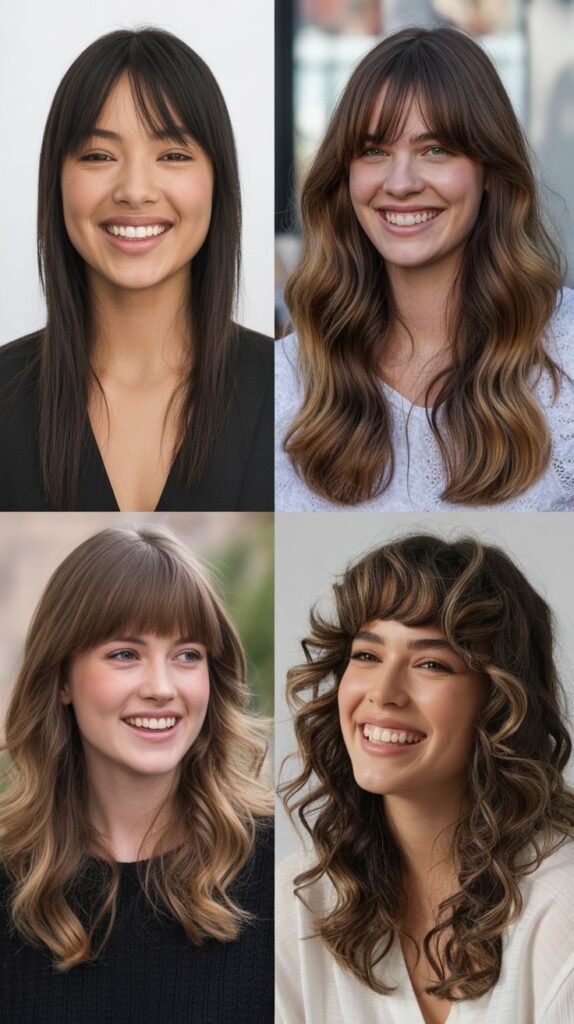
Curtain bangs have become one of the most requested front layer styles, offering a 70s-inspired, effortlessly cool vibe that works perfectly with long hair.
These bangs are parted down the middle and swept to both sides, creating a curtain-like effect that frames the face beautifully.
- Curtain bangs typically start shorter in the center (around eyebrow length) and gradually become longer toward the sides, seamlessly blending into your face-framing layers.
- This style is extremely forgiving and low-maintenance, growing out gracefully without requiring frequent trims every few weeks.
- Curtain bangs work particularly well for those who want the framing effect of bangs without the commitment of full, blunt bangs.
- The parted style elongates round faces and softens square or angular jawlines by creating diagonal lines that guide the eye.
- Styling curtain bangs requires a round brush and blow-dryer to create the signature outward sweep, or you can simply air-dry for a more relaxed, textured look.
- They pair beautifully with both straight and textured long hair, adapting to your natural hair pattern while maintaining their distinctive shape.
3. Wispy Front Layers
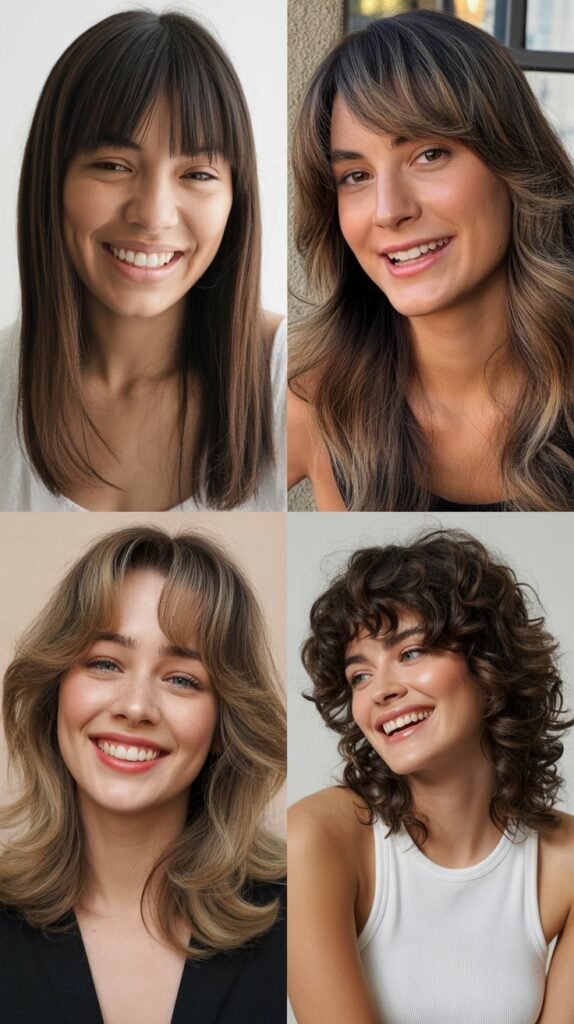
Wispy front layers offer a delicate, feathered appearance that adds softness and movement without overwhelming your overall look.
These ultra-fine layers create a gentle, airy effect that’s perfect for those seeking subtle enhancement rather than dramatic change.
- Wispy layers are achieved through point-cutting or razor-cutting techniques that create soft, textured ends rather than blunt lines.
- This style is ideal for those with thick or heavy hair who want to reduce bulk around the face without removing significant length.
- The lightweight nature of wispy layers makes them perfect for fine hair as well, adding movement without creating visible gaps or thinness.
- These layers require texturizing products like lightweight mousses or sea salt sprays to enhance their feathered appearance and prevent them from falling flat.
- Wispy front layers work beautifully when tucked behind the ears, creating a casual, effortless look that’s perfect for everyday wear.
- The soft, diffused edges of wispy layers catch light beautifully, creating dimension and interest even in solid hair colors.
4. Choppy Front Layers For Texture
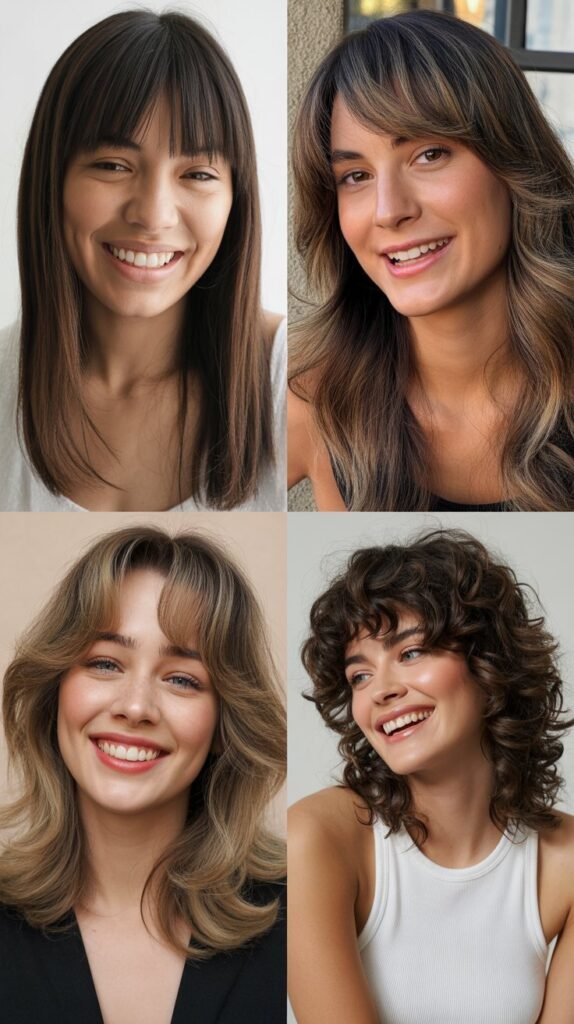
Choppy front layers deliver an edgy, modern aesthetic with intentionally uneven lengths that create bold texture and movement.
This style is perfect for those who want their long hair to make a statement rather than simply flowing in one uniform direction.
- Choppy layers are cut using point-cutting or slide-cutting techniques that create disconnection between sections, resulting in a deliberately jagged appearance.
- This style adds significant volume and dimension to flat or lifeless hair by creating multiple levels of texture throughout the front sections.
- Choppy front layers work exceptionally well with natural waves or curls, enhancing the textured pattern and creating a beautifully undone look.
- The edgy nature of choppy layers makes them ideal for those with alternative or fashion-forward personal styles.
- Styling products like texture paste, dry shampoo, or volumizing powder help emphasize the piece-y separation and enhance the choppy effect.
- This cut requires a skilled stylist who understands how to create intentional texture without making the hair look damaged or overly thin.
5. Long Layers Starting At The Chin
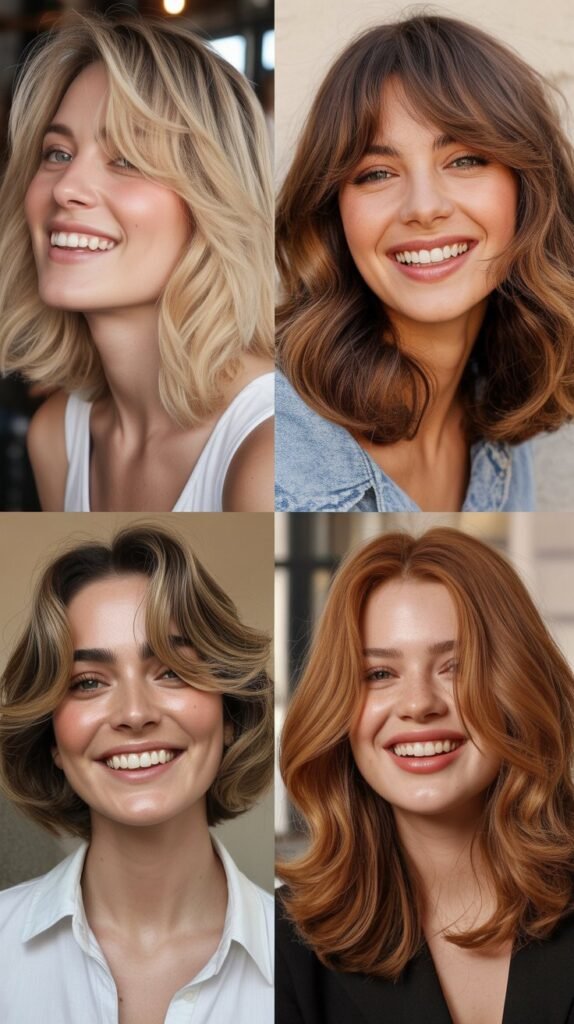
Long layers that begin at chin level offer a sophisticated, elegant approach to front layering that maintains significant length while creating beautiful movement. This style provides structure without feeling too heavy or overwhelming.
- Chin-length starting layers create a flattering focal point that draws attention to the lower face and jawline area.
- This style works particularly well for heart-shaped and oval faces, balancing proportions and adding width at the chin level.
- The longer length of these front layers makes them incredibly versatile, allowing you to tuck them behind your ears or let them hang freely.
- These layers create beautiful movement when hair is worn down and straight, with each layer catching light differently to create dimension.
- The gradual transition from chin-length to full length creates a cascading effect that’s especially stunning when the hair is styled in loose waves or curls.
- This style requires less frequent maintenance than shorter front layers, as the growth blends more naturally with the overall length.
6. Bottleneck Bangs
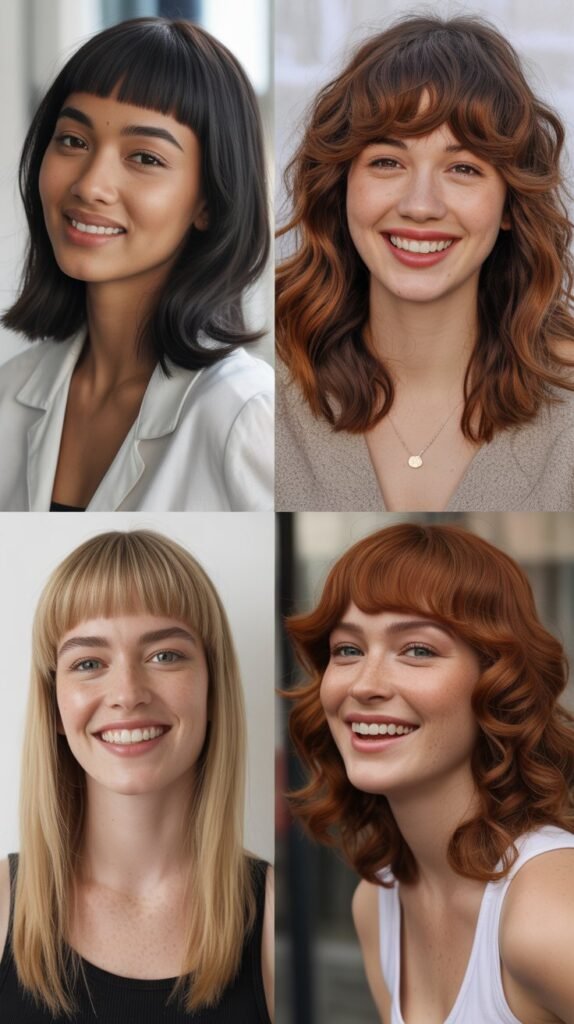
Bottleneck bangs are a modern twist on face-framing layers, characterized by their wider width at the bottom that resembles the shape of a bottle.
This unique cutting technique creates a distinctive silhouette that’s both trendy and flattering.
- Bottleneck bangs are narrower at the forehead and gradually widen as they reach the cheekbone area, creating an inverted triangular shape.
- This style is particularly flattering for round and square face shapes as the flared bottom creates angular lines that add definition.
- The unique shape of bottleneck bangs helps to contour the face naturally, creating the illusion of higher cheekbones and a more sculpted appearance.
- These bangs work best when styled with a slight bend or wave at the ends to emphasize the flare-out effect.
- Bottleneck bangs can be worn with a center part or slightly off-center, adapting to your natural hair growth pattern and personal preference.
- This style has gained popularity on social media for its ability to update long hair dramatically without requiring a significant length commitment.
7. Feathered Front Layers
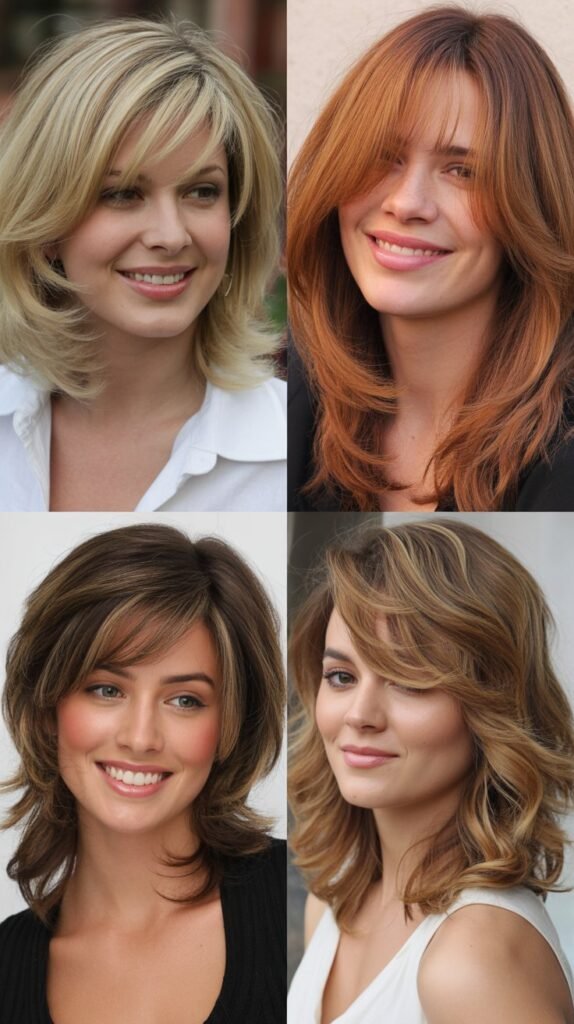
Feathered front layers bring a retro-inspired, soft texture to long hair through a cutting technique that creates layers with tapered, wispy ends.
This style evokes 70s glamour while remaining completely modern and wearable.
- Feathering is achieved by holding the hair at an angle and cutting upward with scissors or a razor to create soft, graduated ends.
- This technique removes bulk and weight from front sections while maintaining a cohesive, blended appearance throughout the hair.
- Feathered layers are excellent for thick, heavy hair as they reduce density without creating harsh lines or obvious disconnection.
- The soft, swooping nature of feathered layers creates beautiful movement that’s enhanced when hair is blown out with a round brush.
- This style works beautifully with highlights or balayage, as the textured ends showcase color dimension and depth.
- Feathered front layers require regular trims every 6-8 weeks to maintain their soft, tapered appearance and prevent the ends from looking blunt or heavy.
8. Side-Swept Front Layers
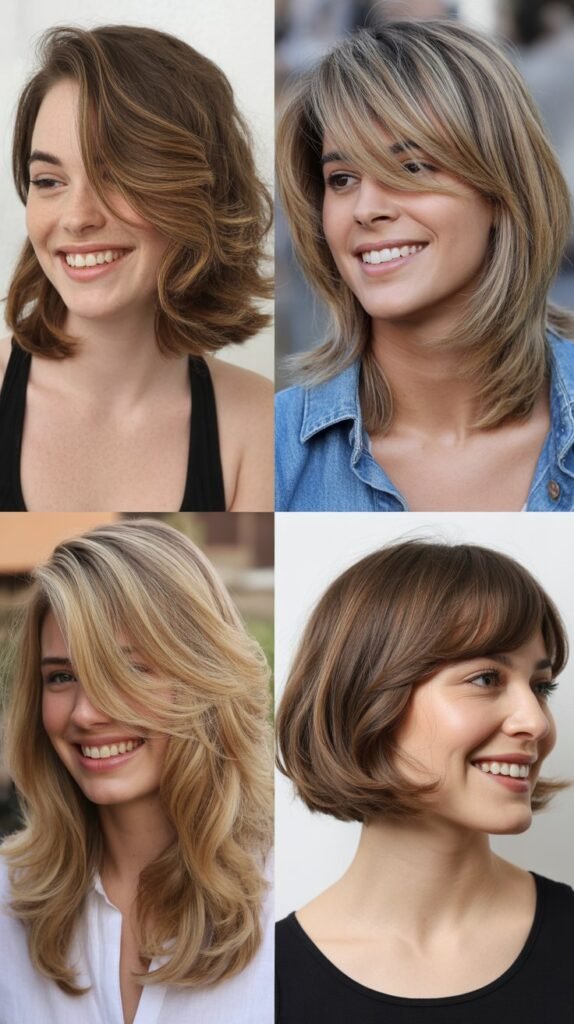
Side-swept front layers create an asymmetrical, romantic look by incorporating layers that are specifically designed to be worn swept to one side. This style adds drama and elegance while flattering the face from a different angle.
- Side-swept layers are typically longer on one side than the other, creating intentional asymmetry that draws the eye across the face.
- This style works exceptionally well for those with side parts or those who naturally push their hair to one side.
- The sweeping motion creates volume at the crown and adds height, which is particularly flattering for long faces.
- Side-swept front layers can help camouflage asymmetrical facial features or balance out a strong jawline on one side.
- Styling requires blow-drying the layers in the direction you want them to fall, using a round brush to create lift and smooth the ends.
- This look pairs beautifully with formal updos or half-up styles, as the front layers can be artfully swept across the forehead or tucked behind the ear.
9. Blunt Front Layers
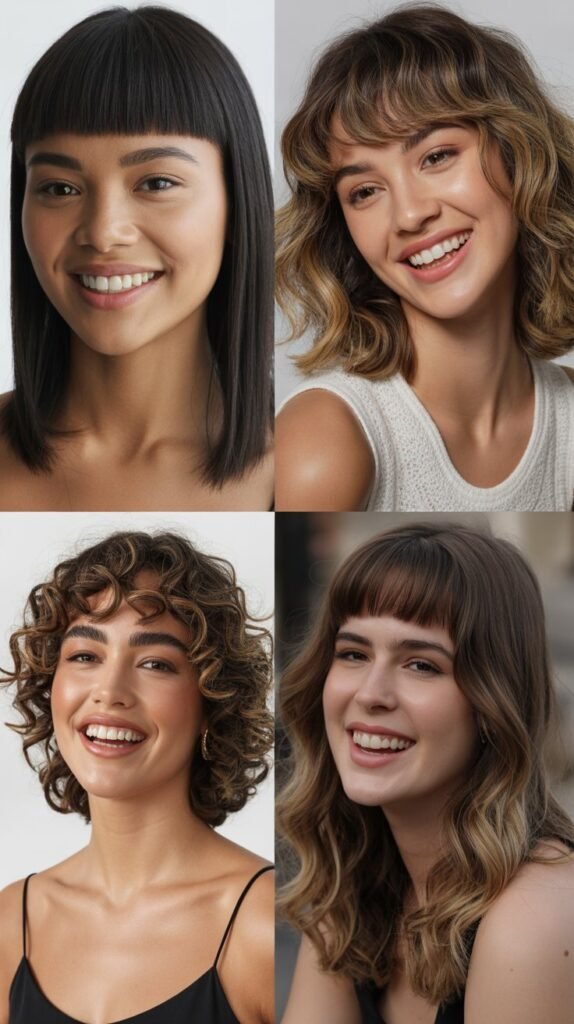
Blunt front layers offer a modern, fashion-forward approach with clean, straight-across cuts that create distinct horizontal lines.
Unlike soft or textured layers, blunt layers make a bold statement with their precise, graphic appearance.
- Blunt cutting creates layers with no graduation at the ends, resulting in a thick, full appearance that looks intentionally styled.
- This style works best on straight or slightly wavy hair where the clean lines can be fully appreciated and maintained.
- Blunt front layers are ideal for those with fine hair who want to create the illusion of density and thickness around the face.
- The graphic nature of blunt layers requires precise cutting and regular maintenance to keep the lines sharp and intentional.
- This style pairs beautifully with sleek, straight styling and looks particularly striking with bold hair colors or color blocking techniques.
- Blunt front layers work well with both center and side parts, creating different framing effects depending on how the hair is worn.
10. Graduated Front Layers
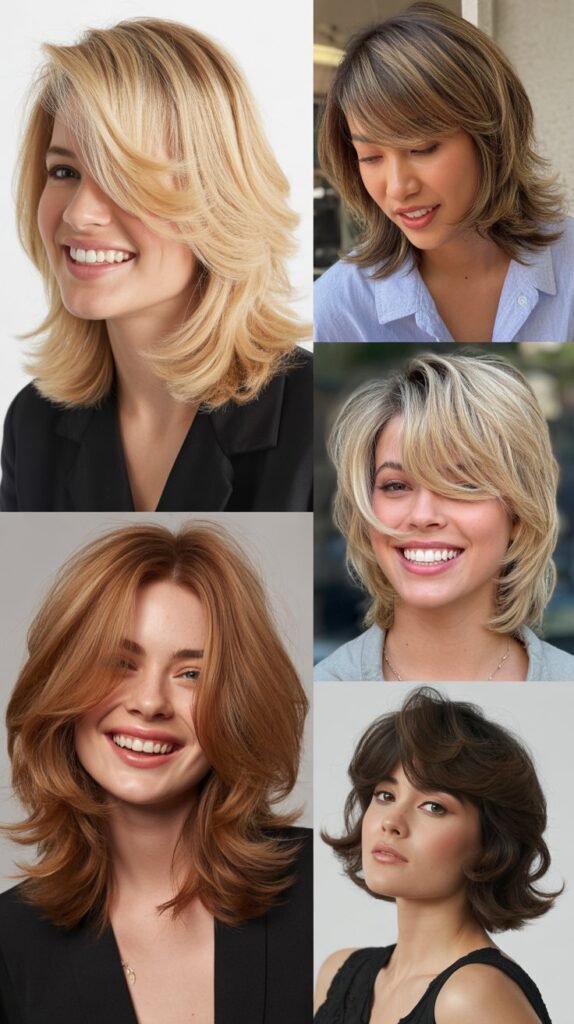
Graduated front layers involve a systematic progression of lengths that create a stacked, dimensional effect with the shortest pieces at the front and gradually increasing length toward the back.
This technique adds incredible volume and shape to long hair.
- Graduation involves cutting each subsequent layer slightly longer than the one before it, creating a stepping effect that builds volume.
- This technique is excellent for fine or thin hair as it creates the appearance of fullness and density through strategic layering.
- Graduated front layers work particularly well when blow-dried with a round brush, as each layer can be curled under or flipped out for maximum volume.
- The structured nature of graduated layers provides excellent shape retention, meaning your style will hold throughout the day without falling flat.
- This cutting technique creates beautiful movement when hair is in motion, with each layer moving independently to create a cascading effect.
- Graduated layers require a skilled stylist who can properly assess hair density and texture to determine the appropriate degree of graduation.
11. Shaggy Front Layers
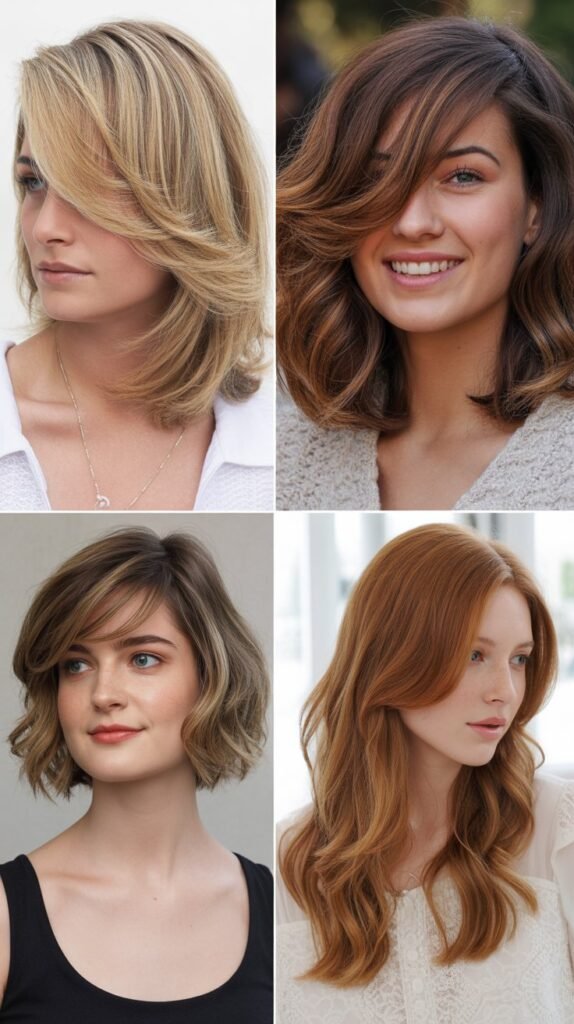
Shaggy front layers embrace a deliberately messy, rock-and-roll aesthetic with heavy texturizing, choppy ends, and a carefree attitude. This style is perfect for those who want their long hair to look effortlessly cool without precise styling.
- Shaggy layers incorporate multiple cutting techniques including point-cutting, slide-cutting, and razoring to create maximum texture and disconnection.
- This style works beautifully with natural texture, enhancing waves and curls rather than fighting against them.
- Shaggy front layers are incredibly low-maintenance, looking their best when air-dried or styled with minimal effort.
- The deliberately messy nature of shag layers makes them perfect for those who don’t want to spend time on daily styling.
- This cut requires texturizing products like sea salt spray, texture paste, or dry shampoo to enhance the piece-y separation and tousled appearance.
- Shaggy front layers work particularly well on medium to thick hair textures where the heavy texturizing won’t create excessive thinness.
12. Diagonal Front Layers
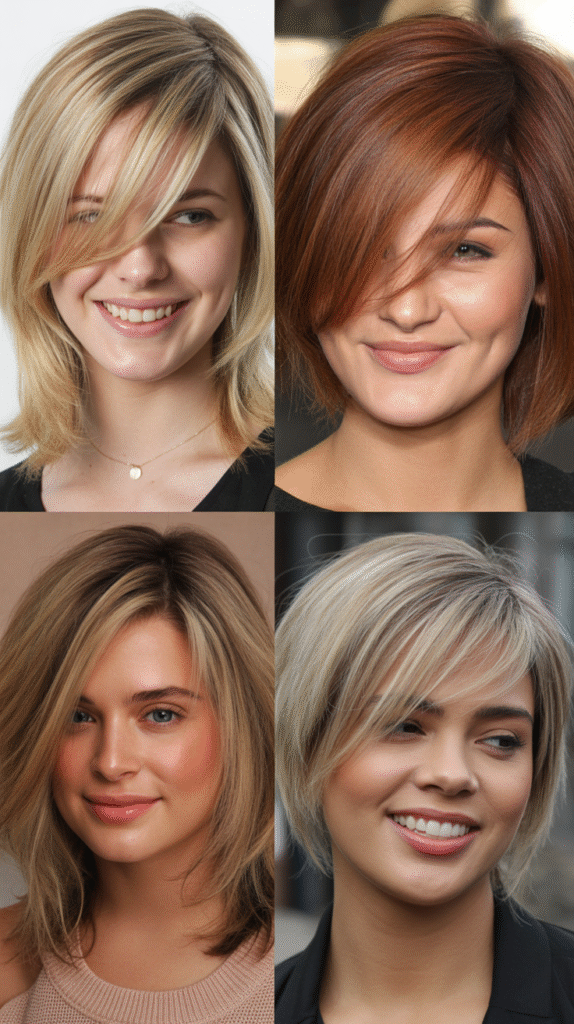
Diagonal front layers are cut at a sharp angle that creates striking geometric lines and a modern, edgy appearance. This cutting technique adds drama and visual interest to long hair through its distinctive angular shape.
- Diagonal layers are cut at a consistent angle from shortest to longest, creating a strong visual line that draws the eye downward.
- This style is particularly flattering for round faces as the diagonal lines create an elongating effect and add angularity.
- The dramatic angle of these layers makes them a statement feature that works well for those with bold, fashion-forward personal styles.
- Diagonal front layers look especially striking when paired with sleek, straight styling that emphasizes the clean cutting lines.
- This technique can be customized with a steep or gentle angle depending on how dramatic you want the effect to be.
- The geometric nature of diagonal layers requires precision cutting and regular maintenance to keep the angle sharp and intentional.
13. Soft Rounded Front Layers
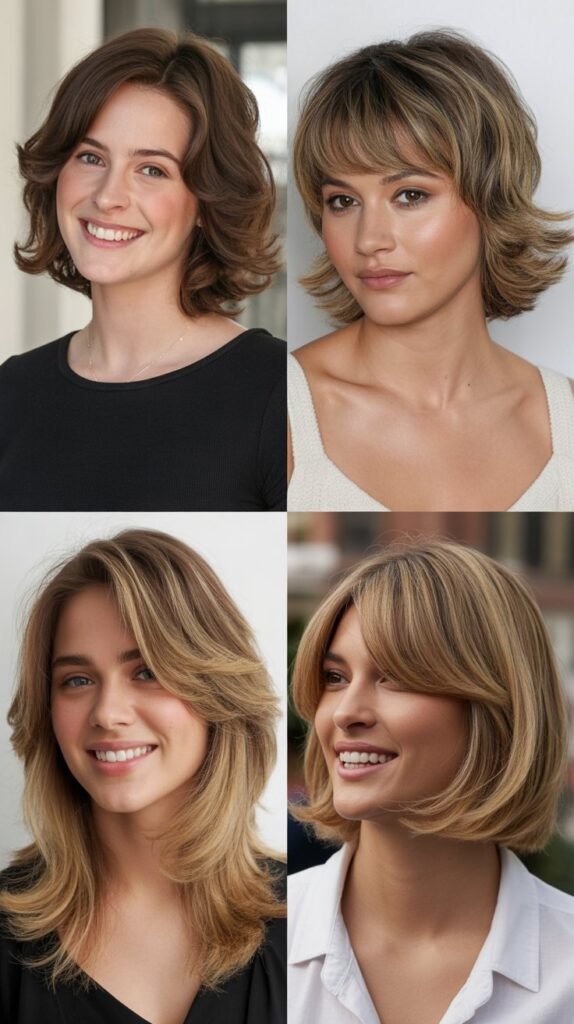
Soft rounded front layers create a gentle, curved shape around the face that follows the natural contours of your features. This technique offers a flattering, feminine appearance that’s universally wearable and easy to maintain.
- Rounded layers are cut in a semi-circular or horseshoe shape that mimics the natural curve of the face from cheekbone to cheekbone.
- This style is incredibly flattering for square and rectangular face shapes as the curves soften angular features.
- The gentle nature of rounded layers makes them perfect for those seeking subtle enhancement rather than dramatic transformation.
- These layers work beautifully when styled with inward-facing curls or waves that emphasize the rounded shape.
- Soft rounded layers blend seamlessly with the rest of the hair, creating a cohesive look without obvious disconnection or choppy sections.
- This cutting technique is versatile enough to work with various hair textures and can be adapted to be more or less dramatic based on preference.
14. Peek-A-Boo Front Layers
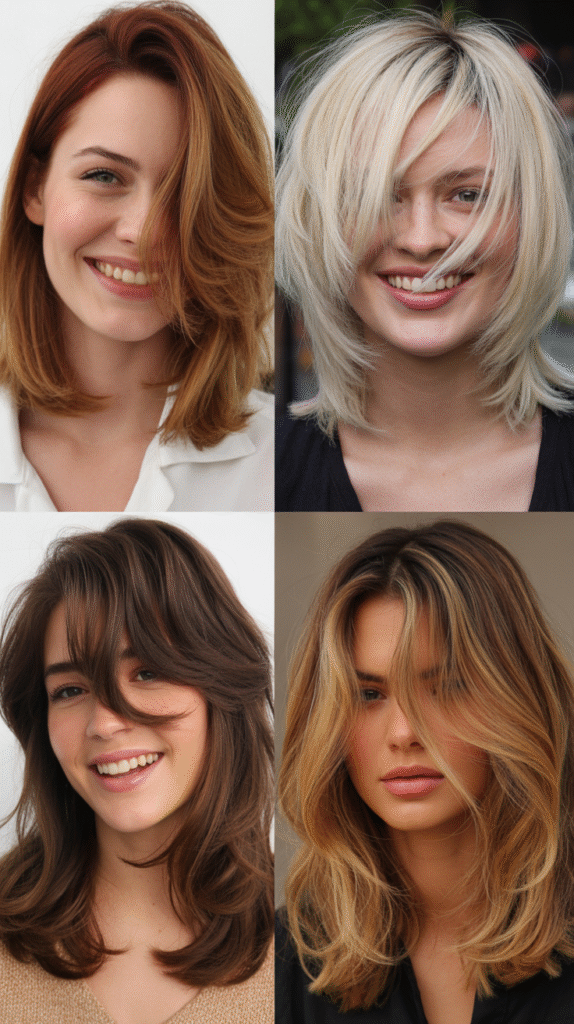
Peek-a-boo front layers are shorter pieces that sit just at or above eye level, creating a playful, flirty effect that occasionally falls forward to partially obscure the eyes. This style adds youthful energy and movement to long hair.
- Peek-a-boo layers are typically cut to eye length or just slightly longer, creating pieces that naturally want to fall forward.
- This style adds significant movement and dimension around the face, drawing attention to the eyes and upper facial features.
- The shorter length of peek-a-boo layers creates interesting contrast with longer hair, adding visual interest and depth.
- These layers work particularly well for those with naturally wavy or curly hair where the shorter pieces can spring up and create additional volume.
- Styling options are versatile—you can wear them swept to the side, pushed back with a headband, or allowed to fall naturally across the forehead.
- Peek-a-boo layers require regular trims to maintain their intended length and prevent them from growing out into longer face-framing pieces.
15. Disconnected Front Layers
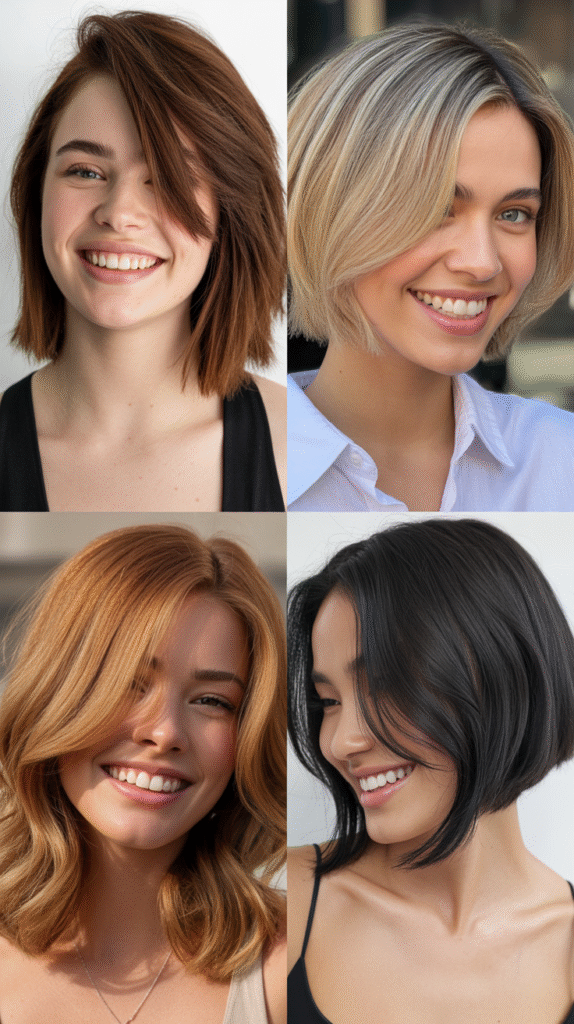
Disconnected front layers involve intentional gaps between layer lengths, creating a modern, editorial look with obvious separation between sections. This avant-garde approach to layering makes a bold style statement.
- Disconnection is created by cutting layers at significantly different lengths without gradual blending, resulting in distinct sections.
- This technique creates dramatic contrast and visual interest, making it perfect for fashion-forward individuals who want their hair to stand out.
- Disconnected layers work particularly well with color placement, as the separated sections can showcase different tones or highlights.
- This style requires confident styling and works best when the disconnection is emphasized rather than hidden or smoothed over.
- The avant-garde nature of disconnected layers means they look most striking when styled with intention, using products to enhance separation.
- This cutting technique should be performed by an experienced stylist who understands advanced layering principles and can create intentional, flattering disconnection.
16. Long Bangs As Front Layers
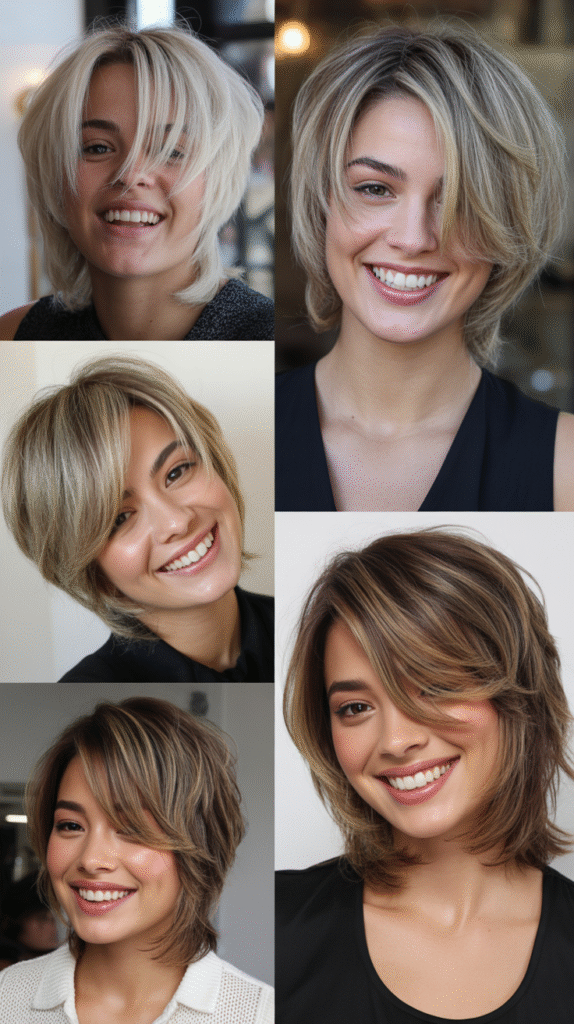
Long bangs that function as front layers offer the framing benefits of bangs without the high-maintenance commitment, sitting at nose to chin length and blending seamlessly into the rest of the hair.
This style bridges the gap between having bangs and not having them.
- Long bangs sit between nose and chin length, making them versatile enough to be tucked behind the ears or worn forward as face-framing pieces.
- This style is perfect for those growing out shorter bangs or testing whether they want to commit to traditional bangs.
- The length allows for multiple styling options—you can wear them as curtain bangs, sweep them to the side, or pull them back entirely.
- Long bangs blend more naturally with the rest of your hair than traditional short bangs, creating a cohesive, flowing appearance.
- This style requires minimal maintenance compared to eyebrow-length or shorter bangs, needing trims only every 8-10 weeks.
- Long bangs work well with various face shapes and can be customized in thickness and width to flatter your specific features.
17. Micro Front Layers
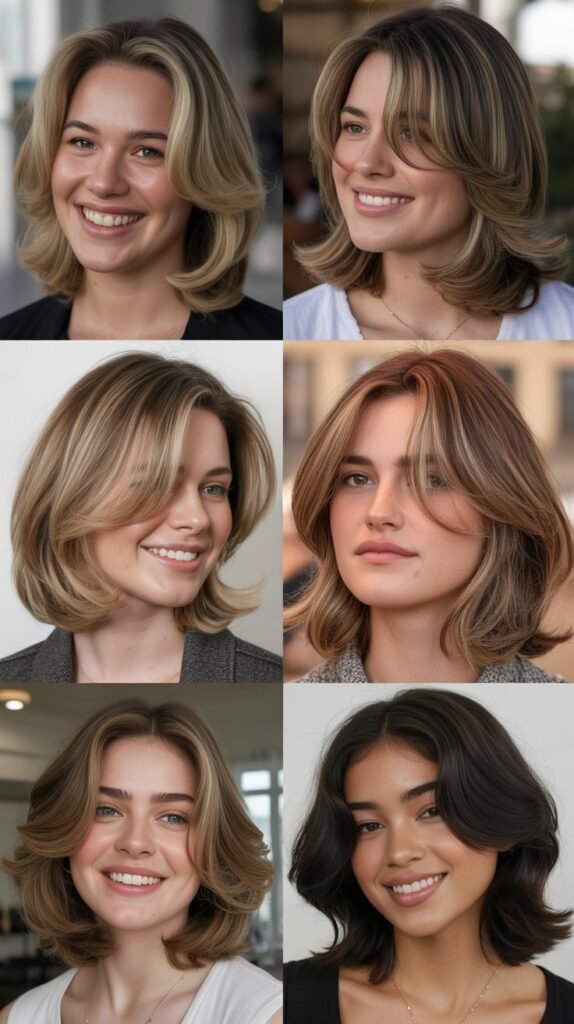
Micro front layers involve tiny, subtle variations in length that create movement and dimension without obvious layering.
This technique is perfect for those who want the benefits of layers while maintaining the appearance of blunt, one-length hair.
- Micro layers involve cutting sections at only slightly different lengths—often just a quarter to half inch of variation between layers.
- This technique is ideal for those with very long hair who want to maintain maximum length while adding some shape around the face.
- The subtle nature of micro layers means they’re virtually undetectable when hair is straight but create beautiful movement when styled with waves or curls.
- This approach works exceptionally well for thick or heavy hair where even small amounts of layering can significantly reduce bulk.
- Micro front layers are incredibly low-maintenance, as the subtle differences in length grow out gracefully without creating obvious grow-out lines.
- The technique requires a precise, skilled stylist who can create intentional subtle variation without accidentally cutting too much.
18. Layered Front With Volume
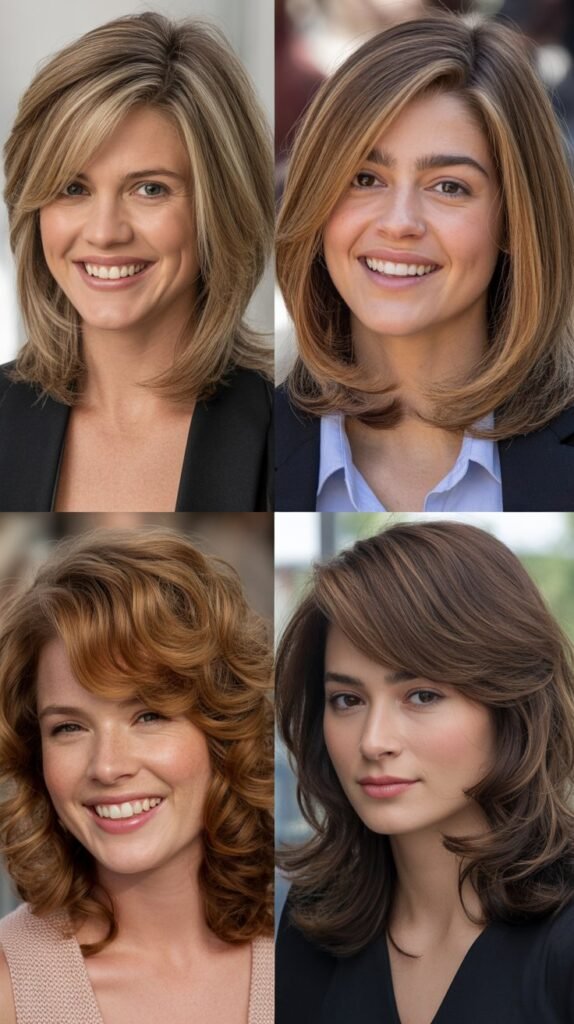
Volume-focused front layers are specifically cut and styled to create maximum lift and fullness around the face, addressing common concerns about flat or limp hair in the front sections.
This technique combines strategic cutting with volumizing styling.
- Volume-creating layers are typically cut shorter on top and gradually lengthen, allowing the shorter pieces to stack and create lift.
- This technique works particularly well for fine or thin hair where creating the appearance of fullness is a primary concern.
- The layers are often cut at an angle that encourages the hair to lift away from the scalp rather than lying flat against the head.
- Styling techniques like blow-drying with a round brush at the roots and using volumizing products are essential for maximizing the volume-creating effect.
- Root-lifting sprays, volumizing mousses, and dry shampoos help maintain the lifted appearance throughout the day.
- This style works beautifully when combined with backcombing or teasing techniques for special occasions requiring extra drama.
19. Asymmetrical Front Layers
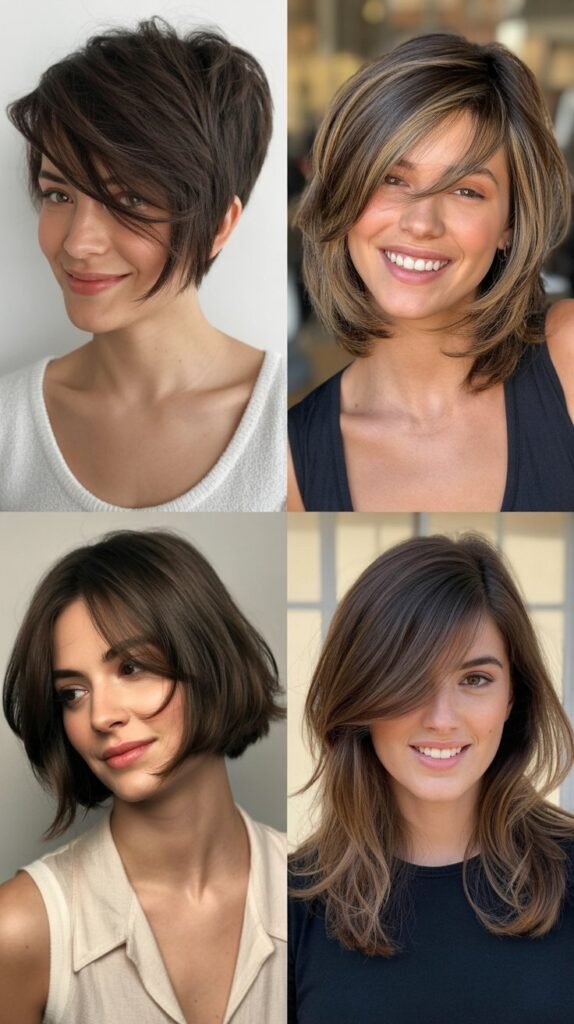
Asymmetrical front layers intentionally create different lengths on each side of the face, resulting in an edgy, modern look that breaks traditional symmetry rules. This bold style makes a definitive fashion statement.
- Asymmetry can range from subtle (one side slightly shorter) to dramatic (significant length difference between sides).
- This style works particularly well for those with off-center parts or those who naturally style their hair pushed to one side.
- Asymmetrical layers can help balance facial asymmetry or draw attention away from features you’re less confident about.
- The intentional imbalance creates visual interest and makes the hairstyle a focal point of your overall look.
- This cut requires a skilled stylist who can create intentional, flattering asymmetry rather than accidental unevenness.
- Asymmetrical front layers work best when the length difference is maintained through regular trims, as growing out can diminish the intentional effect.
20. Razored Front Layers
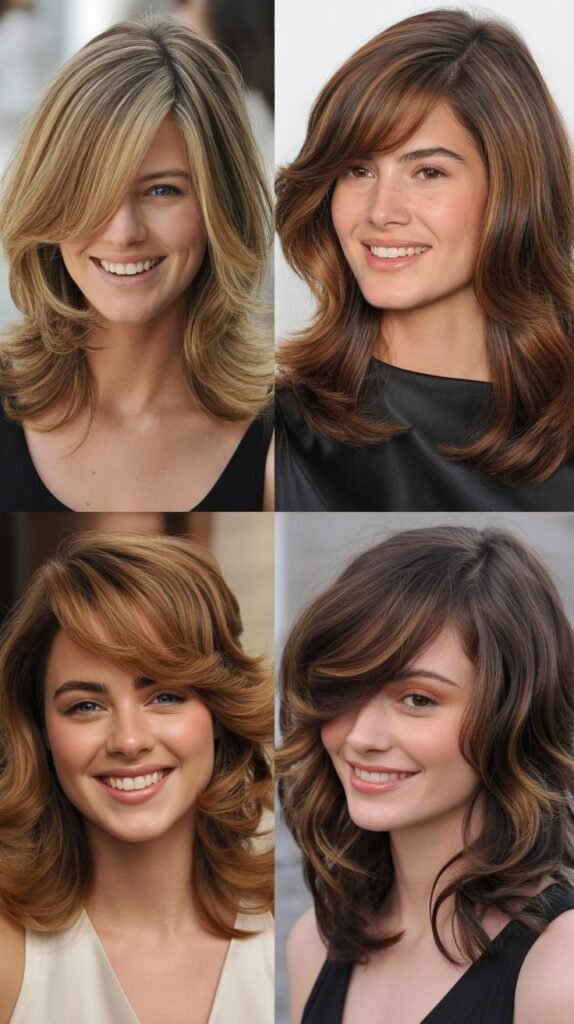
Razored front layers are created using a razor rather than scissors, resulting in ultra-soft, textured edges that create a wispy, lived-in appearance. This technique is perfect for those seeking a soft, romantic look with maximum movement.
- Razor cutting creates a different edge than scissor cutting, producing softer, more feathered ends that blend seamlessly together.
- This technique is excellent for removing bulk from thick hair without creating harsh lines or obvious disconnection.
- Razored layers work particularly well on straight to slightly wavy hair where the soft edges can be fully appreciated.
- The technique creates natural-looking texture that doesn’t require heavy product use or extensive styling to look intentional.
- Razored front layers are not recommended for very curly or coily hair textures, as the technique can create excessive frizz or damage curl patterns.
- This cutting method requires a sharp, high-quality razor and a skilled stylist who understands how to control the tool for optimal results.
21. Bold Chunky Front Layers
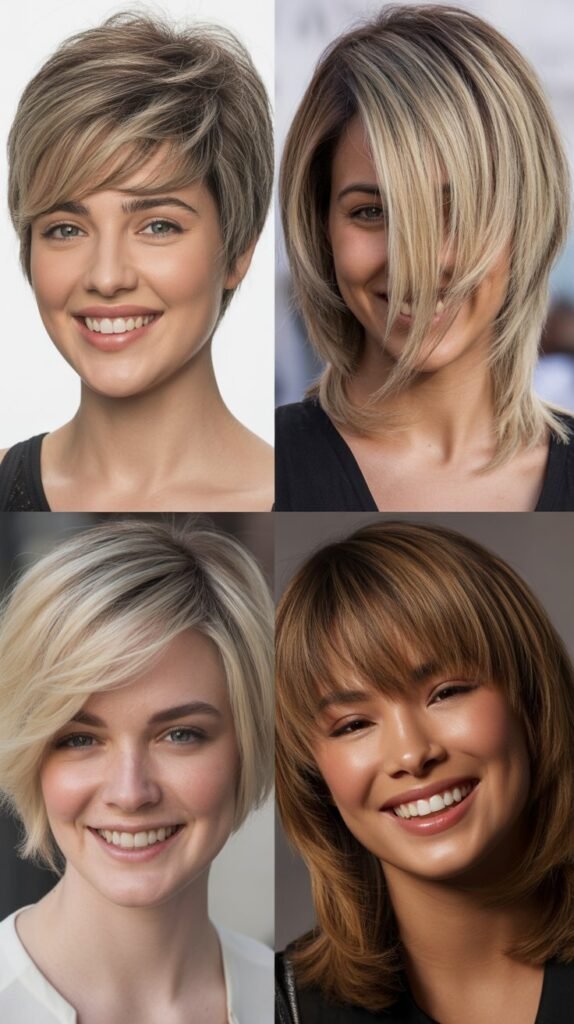
Bold chunky front layers create defined, piece-y sections with significant spacing between layers for a dramatic, editorial effect. This style is perfect for those who want their hair to make a serious statement.
- Chunky layers involve cutting distinct sections at noticeably different lengths with intentional gaps between them.
- This technique creates bold contrast and visual interest, making it ideal for photoshoots, fashion contexts, or those with adventurous personal style.
- The defined sections work beautifully with color blocking, highlights, or dimensional coloring techniques that emphasize the separated pieces.
- Chunky front layers require confident styling and look best when the separation is enhanced with texturizing products.
- This style works particularly well on medium to thick hair where the chunky sections won’t create excessive thinness.
- The bold nature of chunky layers means they’re not for everyone—this style works best for those who embrace attention-getting hair.
22. Tapered Front Layers
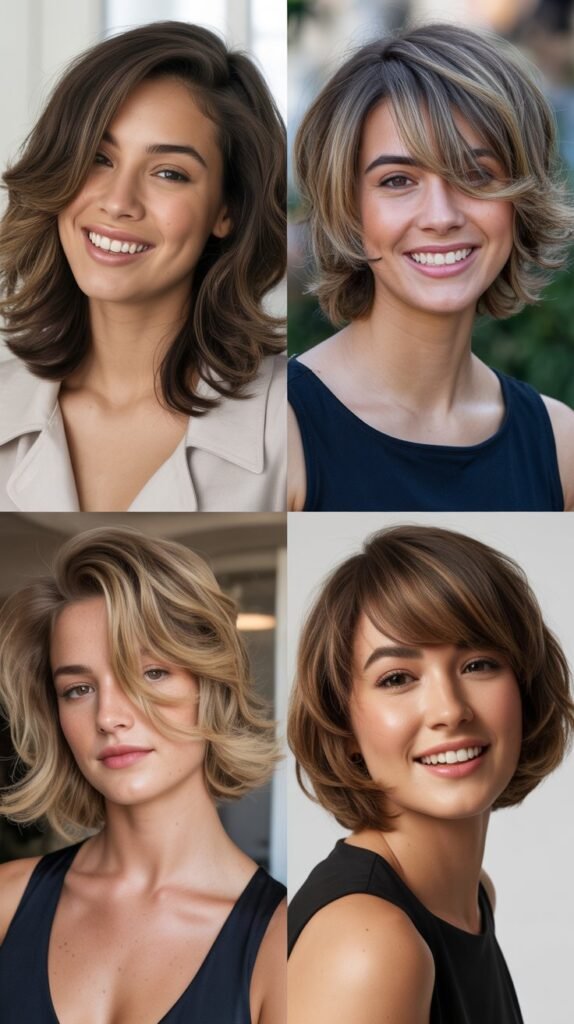
Tapered front layers gradually narrow toward the ends, creating a soft, pointed appearance that adds elegance and sophistication to long hair. This classic technique creates beautiful movement without excessive texture or choppiness.
- Tapering is achieved by cutting the hair at an angle so each layer ends in a point rather than a blunt line.
- This technique creates a refined, polished appearance that’s perfect for professional settings or classic, timeless looks.
- Tapered layers work exceptionally well when blow-dried smooth, creating sleek lines that follow the natural fall of the hair.
- The pointed ends of tapered layers create beautiful movement without the piece-y separation of choppy or textured cuts.
- This cutting technique works on all hair textures but looks particularly striking on straight or slightly wavy hair.
- Tapered front layers require precision cutting and regular maintenance to keep the pointed ends looking intentional rather than damaged.
23. Heavily Layered Front Sections
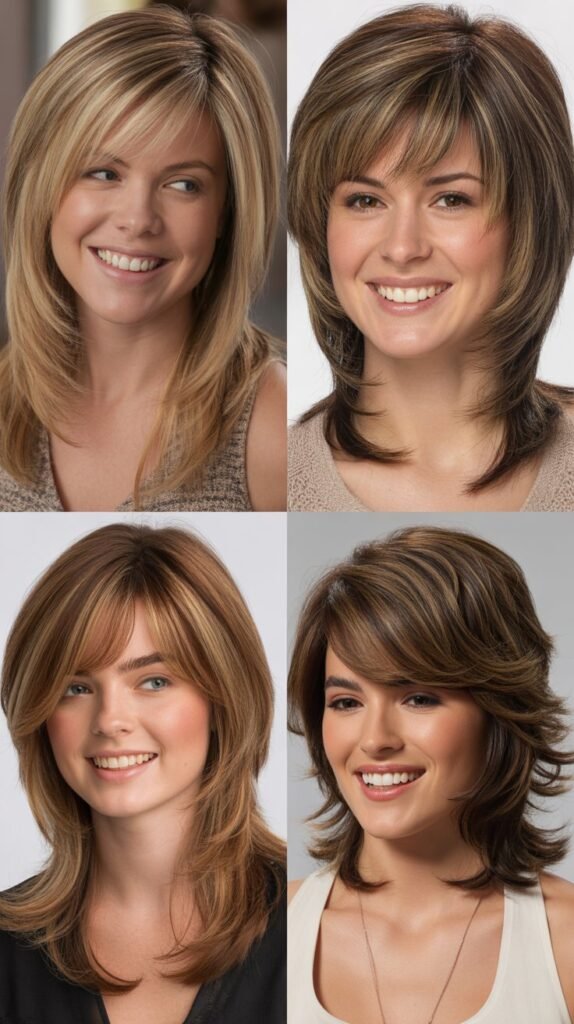
Heavily layered front sections involve multiple layers clustered closely together around the face, creating maximum movement, texture, and dimension.
This technique is perfect for those who want dramatic transformation without cutting overall length.
- Heavy layering involves cutting numerous layers in relatively small increments, creating significant graduation in a concentrated area.
- This technique is excellent for thick or coarse hair that tends to look heavy or triangular, as it removes substantial bulk around the face.
- The multiple layers create beautiful cascading movement that’s enhanced when hair is styled with waves or curls.
- Heavily layered front sections can dramatically change your overall appearance without requiring you to sacrifice length in the back.
- This style requires more frequent trims than subtler layering approaches, as the multiple layers need maintenance to prevent looking ragged.
- The technique works best when combined with proper styling products and techniques that enhance rather than weigh down the layers.
24. Minimalist Front Layers
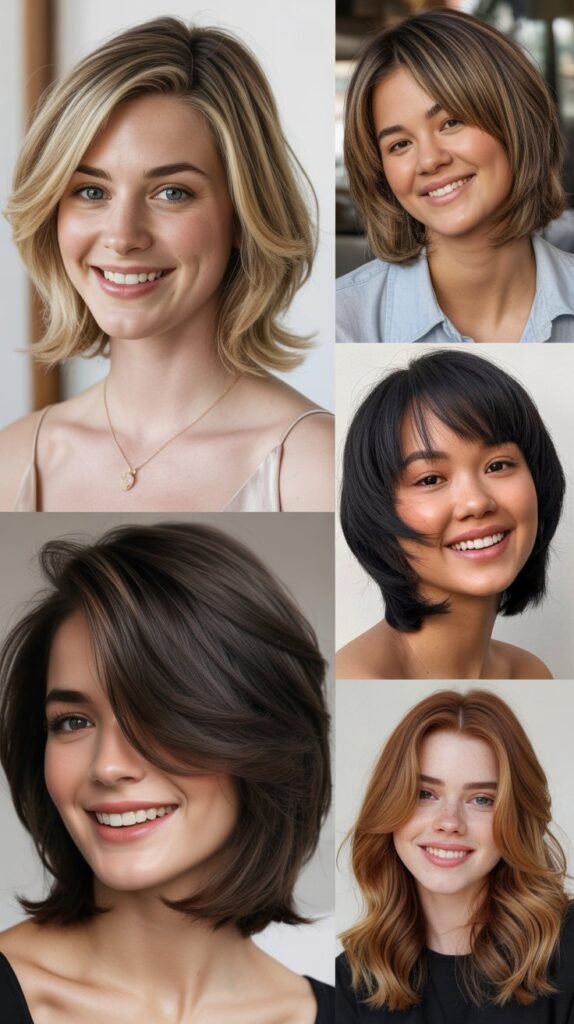
Minimalist front layers involve the absolute minimum cutting necessary to create subtle framing and movement, perfect for those who want barely-there enhancement.
This approach is ideal for length preservation while adding slight dimension.
- Minimalist layers involve cutting just a few strategic pieces around the face, leaving the majority of the hair one length.
- This approach is perfect for those growing out their hair who want some framing without compromising length goals.
- The subtle nature of minimalist layers makes them incredibly versatile and easy to style in multiple ways without the layers being too obvious.
- This technique works well for all hair types and textures, as the minimal cutting doesn’t significantly alter the hair’s natural behavior.
- Minimalist front layers are extremely low-maintenance, requiring trims only when you’re ready to sacrifice length throughout the hair.
- This approach is ideal for those who are hesitant about cutting layers but want to test the waters without major commitment.
25. Angled Bob Front With Long Back
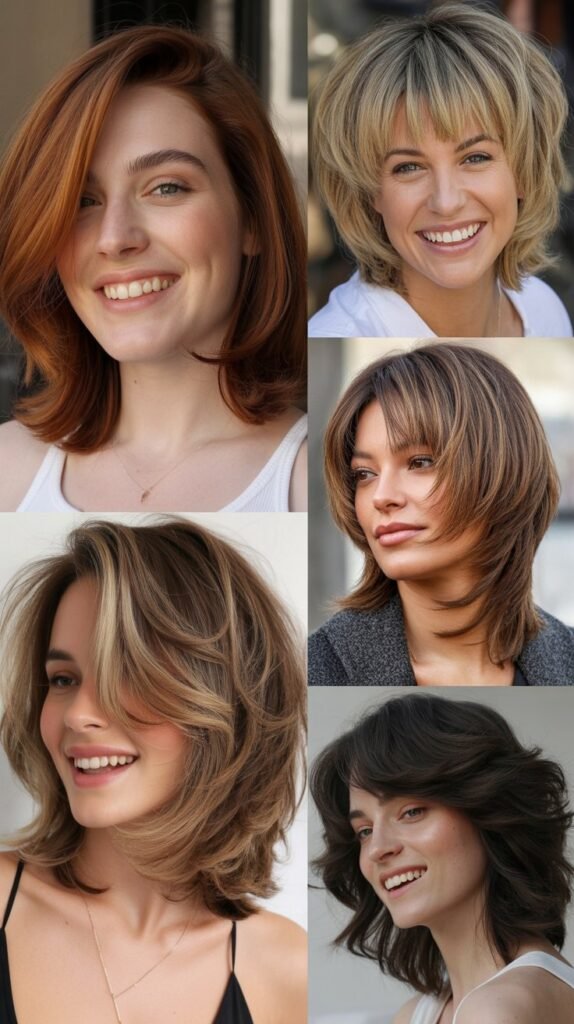
The angled bob front combined with long back hair creates a striking contrast between short, dramatic front layers and flowing length in the back. This hybrid style offers the best of both worlds—structure and length.
- This style features front sections cut to bob length (typically chin to shoulder length) while the back hair remains significantly longer.
- The dramatic contrast creates an edgy, fashion-forward look that’s perfect for those who want something truly unique.
- The angled bob front provides structure and frames the face beautifully while the long back maintains the versatility of length.
- This style works particularly well when the front sections are styled sleek and straight to emphasize the clean lines.
- The long back can be worn straight, wavy, or curly, creating interesting contrast with the structured front sections.
- This cut requires a skilled stylist who can create smooth, intentional transition between the short front and long back sections.
26. Textured Sweep Front Layers
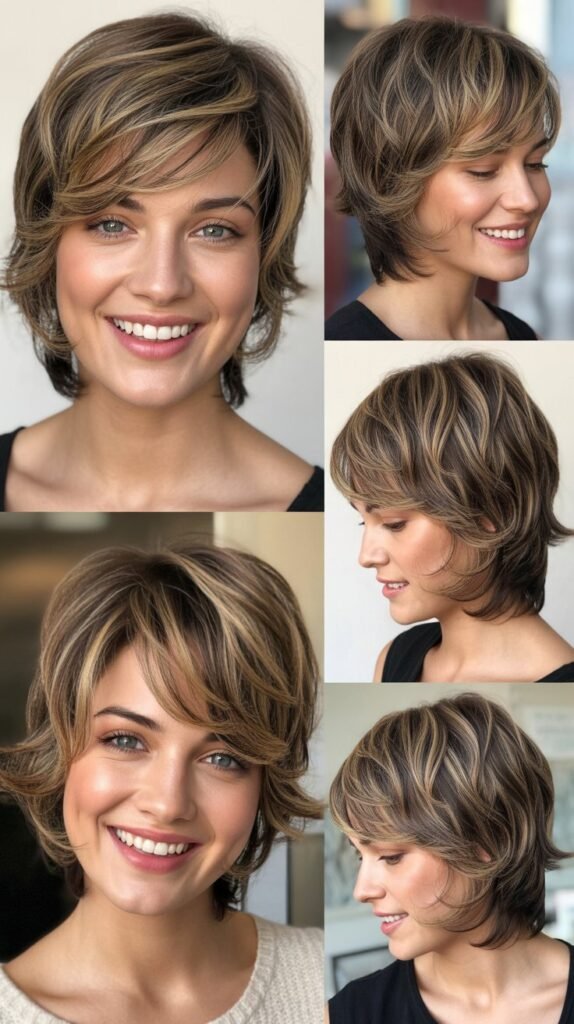
Textured sweep front layers combine multiple texturizing techniques with directional cutting to create pieces that naturally sweep across the face in one direction. This style offers built-in movement and requires minimal styling effort.
- Sweep layers are cut at an angle that encourages the hair to naturally fall in one direction across the face.
- Texturizing techniques like point-cutting or slide-cutting are incorporated throughout the sweep to create soft, piece-y movement.
- This style is perfect for those who naturally push their hair to one side or who want a romantic, windswept appearance.
- The directional cutting creates volume at the root where the sweep originates and creates beautiful cascading movement as it crosses the face.
- Textured sweep layers work beautifully with both straight and wavy hair textures, adapting to your natural hair pattern.
- Minimal styling is required—simply direct the layers in your preferred direction while blow-drying and they’ll naturally want to sweep across the face.
Styling Products Essential For Front Layers
Different front layer styles require specific products to look their best and maintain their intended shape throughout the day.
For Volume-Creating Layers:
- Volumizing mousse applied at roots before blow-drying
- Root-lifting spray for targeted lift at the crown
- Dry shampoo for refreshing and maintaining volume between washes
For Textured And Choppy Layers:
- Texture paste or pomade for piece-y separation
- Sea salt spray for enhancing natural texture
- Dry texture spray for added grip and definition
For Sleek And Smooth Layers:
- Smoothing serum or oil to eliminate frizz
- Heat protectant spray before blow-drying or flat ironing
- Finishing spray for shine and hold without stiffness
For Soft And Romantic Layers:
- Lightweight styling cream for definition without weight
- Curl-enhancing spray for wavy styles
- Flexible-hold hairspray that allows movement
Maintenance Tips For Long Hair With Front Layers
Maintaining front layers requires specific care to keep them looking fresh and intentional between salon visits.
- Schedule regular trims every 6-8 weeks specifically for the front layers, even if you’re growing out the back length.
- Use a heat protectant every time you style the front layers with hot tools, as these sections receive the most heat exposure.
- Apply conditioning treatments primarily to mid-lengths and ends rather than at the roots to prevent the front layers from looking greasy or weighed down.
- Learn to trim your own bangs or front layers between salon visits using proper techniques and sharp styling scissors.
- Sleep with hair in a loose braid or low ponytail to prevent the front layers from getting excessively tangled or developing strange bends overnight.
- Invest in a good quality round brush sized appropriately for your layer length to make at-home styling easier and more effective.
- Consider face-framing highlights or lowlights to add dimension specifically to the layered sections, making them stand out even more.
Conclusion
Throughout this comprehensive guide to 26 Fresh Long Hair Ideas With Perfectly Cut Front Layers, we’ve explored the incredible versatility and transformative power that front layers bring to long hair.
From classic face-framing styles to bold, editorial-worthy cuts, front layers offer something for every face shape, hair texture, and personal aesthetic.
The beauty of incorporating front layers into your long hair lies in the ability to dramatically update your look without sacrificing the length you’ve worked hard to grow.

