Long, thick hair is a blessing, but it can feel heavy, shapeless, and difficult to manage without the right cut.
Front layers are the transformative solution that brings movement, dimension, and effortless style to your mane.
Whether you’re looking to frame your face beautifully, reduce bulk, or simply refresh your look, front-layered haircuts offer endless possibilities.
This comprehensive guide to 48 Best Front-Layered Hair Ideas for Long, Thick Hair will walk you through curtain bangs with soft layers, face-framing feathered cuts, dramatic cascading layers, textured shag styles, and everything in between.
You’ll discover how different layering techniques can enhance your natural hair texture, complement your face shape, and make daily styling easier.
From subtle, barely-there layers to bold, statement-making cuts, each idea is designed specifically for the unique needs of long, thick hair.
Get ready to find your perfect layered look that will have you feeling confident and looking absolutely stunning.
1. Curtain Bangs with Soft Layers
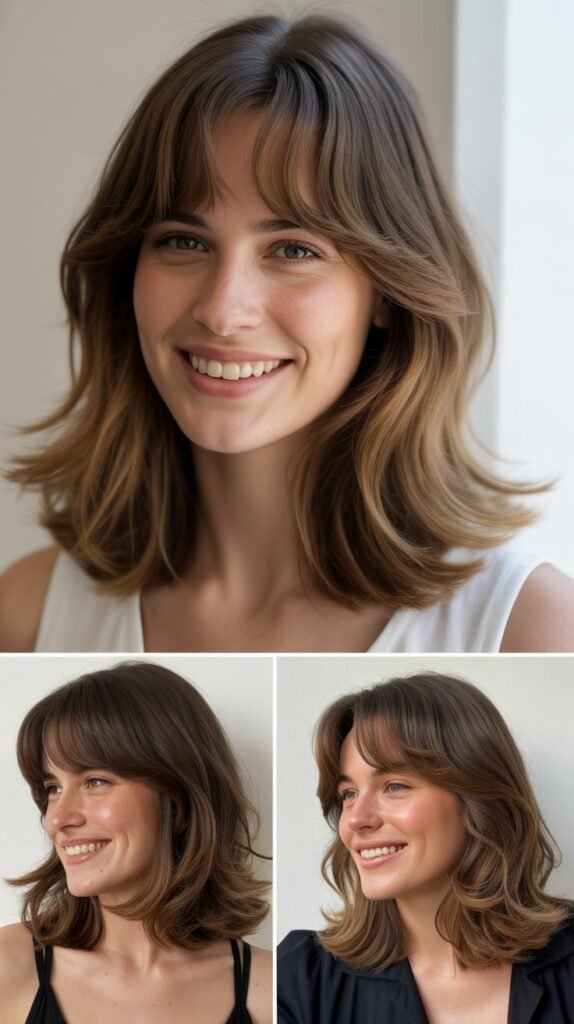
Curtain bangs paired with soft layers create a romantic, face-framing effect that’s perfect for long, thick hair.
This style features center-parted bangs that gently sweep to the sides, blending seamlessly into longer layers that cascade down your length.
The combination softens angular features while adding movement and dimension.
- The curtain bangs typically start at cheekbone or chin length, creating an effortlessly chic frame around the face.
- Soft layers throughout the length prevent the heavy bottom weight that thick hair naturally carries.
- This style works exceptionally well for oval, heart, and square face shapes by balancing proportions.
- The layers add natural volume at the crown while removing bulk from the mid-lengths and ends.
- Styling requires minimal effort—simply blow-dry with a round brush to achieve the signature swooping bang effect.
- The versatility allows you to wear hair straight, wavy, or curly while maintaining the layered structure.
- Regular trims every 6-8 weeks keep the curtain bangs at the optimal length and the layers fresh.
2. Face-Framing Feathered Layers
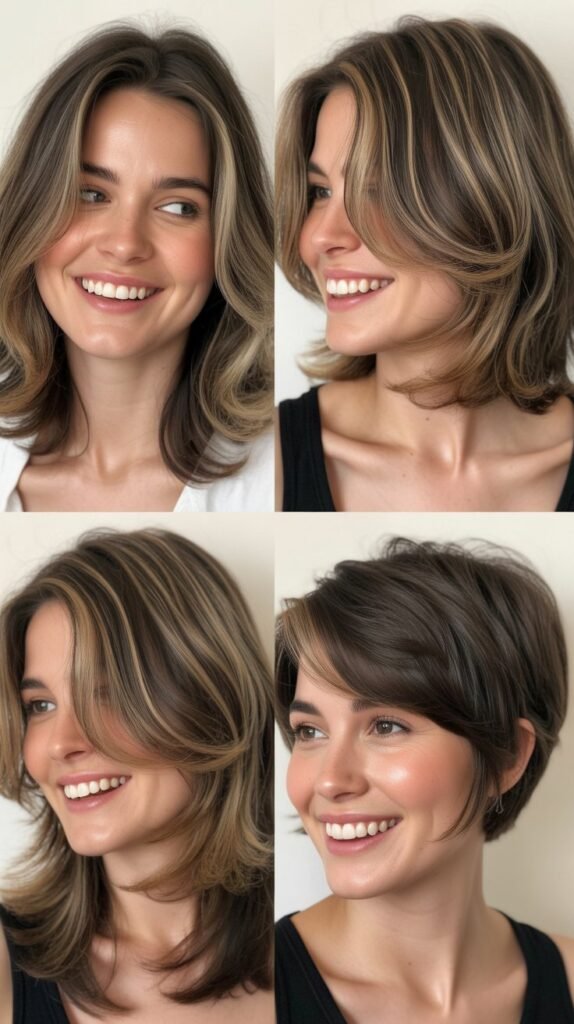
Face-framing feathered layers bring lightness and movement specifically around the perimeter of your face while maintaining length.
This technique involves cutting shorter pieces that gradually blend into longer sections, creating a feathered, wispy effect that flatters every face shape.
- Feathered layers start around the cheekbones or jawline and progressively lengthen toward the back.
- The feathering technique creates soft, textured ends rather than blunt lines for a more natural appearance.
- This approach is ideal for those who want dimension without sacrificing significant length.
- The layers remove weight from the front sections, making thick hair more manageable and less overwhelming.
- Face-framing layers can be customized to accentuate your best features, like highlighting cheekbones or softening a strong jawline.
- This style complements both straight and wavy hair textures, adapting beautifully to your natural pattern.
- Minimal styling is needed—air-drying with a texturizing spray enhances the feathered effect naturally.
3. Long Shag with Heavy Front Layers
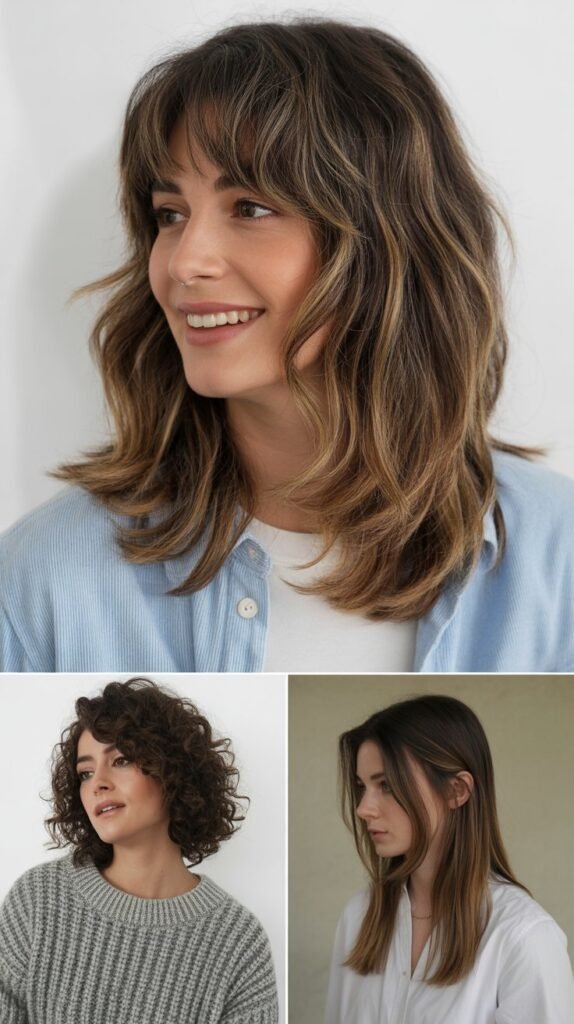
The long shag combines retro inspiration with modern sophistication through heavy front layers and choppy texture throughout.
This edgy style adds substantial volume at the crown and significant movement through disconnected layers that create an intentionally undone look.
- Heavy front layers start at eyebrow or cheekbone level, creating dramatic framing and volume.
- The shag incorporates multiple layer lengths throughout, from very short at the crown to long at the ends.
- Choppy, razor-cut ends give the style its signature textured, lived-in appearance.
- This cut works particularly well for thick hair as it removes substantial weight while adding shape.
- The disconnected layering prevents the hair from looking too uniform or heavy at the bottom.
- Styling is effortless with texturizing products—simply scrunch and go for a perfectly imperfect finish.
- The long shag suits those with naturally wavy or straight hair and can be adapted for various face shapes.
4. Subtle V-Cut Layers with Front Fringe
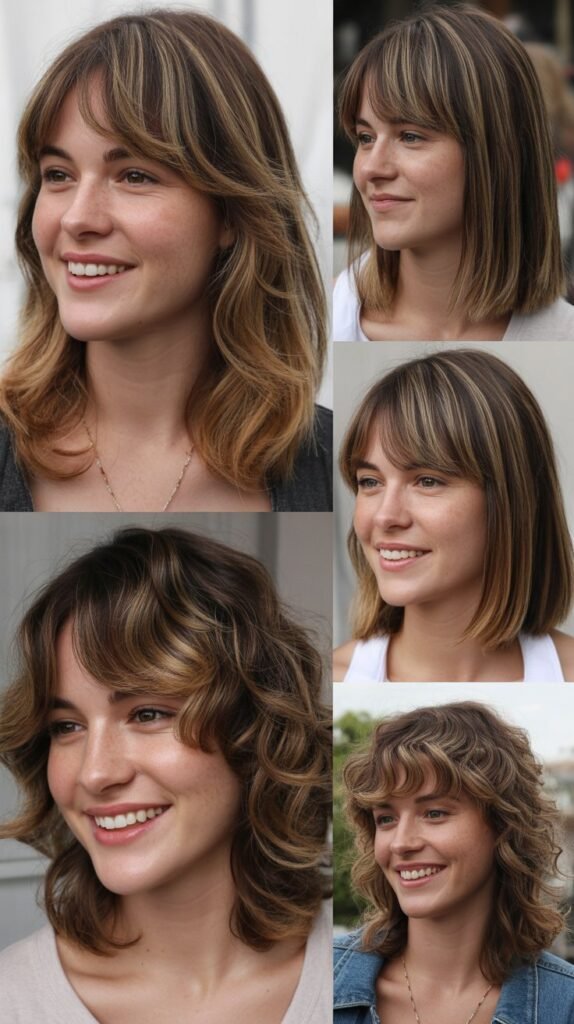
The V-cut creates a distinctive shape where the back forms a “V” point while front layers add softness and dimension.
This geometric approach maintains length while introducing movement and preventing the triangular silhouette thick hair often creates.
- The V-cut creates a pointed shape at the back that elongates the overall appearance of the hair.
- Front fringe layers start shorter and gradually blend into the longer V-shaped back sections.
- This technique distributes volume evenly, preventing the bottom-heavy look common with thick hair.
- The layering adds dimension without creating too many choppy pieces that can be difficult to style.
- The V-shape is particularly flattering when viewed from behind and creates beautiful movement when hair is worn down.
- This style works well for those who want a noticeable shape without dramatic layering throughout.
- Regular maintenance ensures the V-point remains defined and the front layers stay proportionate.
5. Wispy Front Layers with Blunt Ends
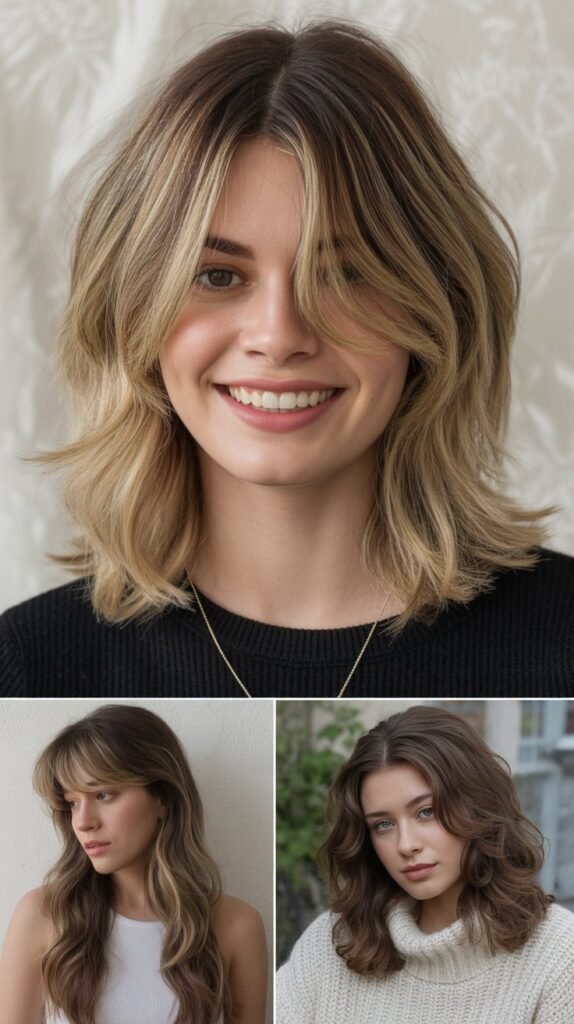
Combining wispy front layers with blunt ends creates an interesting contrast—the softness around the face paired with the strong, solid line at the bottom.
This style offers the best of both worlds for thick hair that needs dimension at the top while maintaining fullness at the ends.
- Wispy layers are cut with point-cutting or razor techniques to create soft, feathery pieces around the face.
- The blunt ends maintain maximum thickness and weight at the bottom for a healthy, full appearance.
- This combination prevents thick hair from looking too heavy while preserving the perception of density.
- Front layers typically start at chin length and gradually blend toward the blunt baseline.
- The style flatters round and oval face shapes by adding length through the blunt cut while softening with layers.
- Styling is straightforward—blow-dry the front layers with a round brush while keeping ends smooth with a paddle brush.
- This approach is ideal for those who want facial framing without committing to layers throughout the entire length.
6. Cascading Waterfall Layers
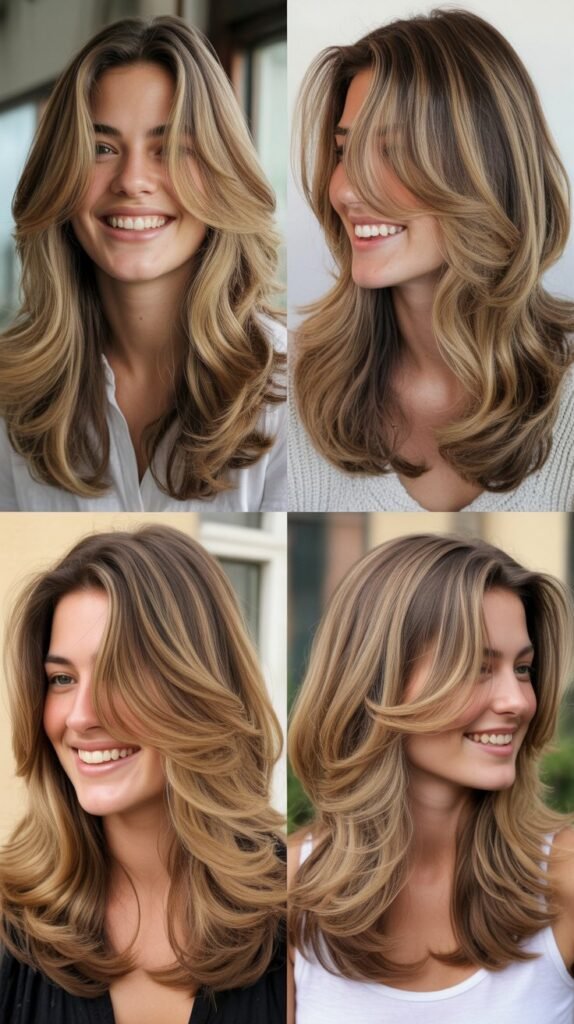
Cascading waterfall layers flow seamlessly from the front to the back in graduating lengths that mimic the natural movement of water.
This romantic style creates continuous motion throughout thick hair while maintaining substantial length and fullness.
- Layers begin at the front near the chin and cascade progressively longer toward the back in smooth gradations.
- The technique creates a seamless blend without obvious distinctions between layer lengths.
- Waterfall layering removes bulk from thick hair while maintaining a soft, feminine appearance.
- This style adds dimension and movement that catches light beautifully from every angle.
- The cascading effect works exceptionally well with loose waves or curls that emphasize the flowing layers.
- Face shapes of all types benefit from the customizable starting point of the front layers.
- Styling with a large barrel curling iron or wand enhances the waterfall effect and creates gorgeous texture.
7. Choppy Textured Front Pieces
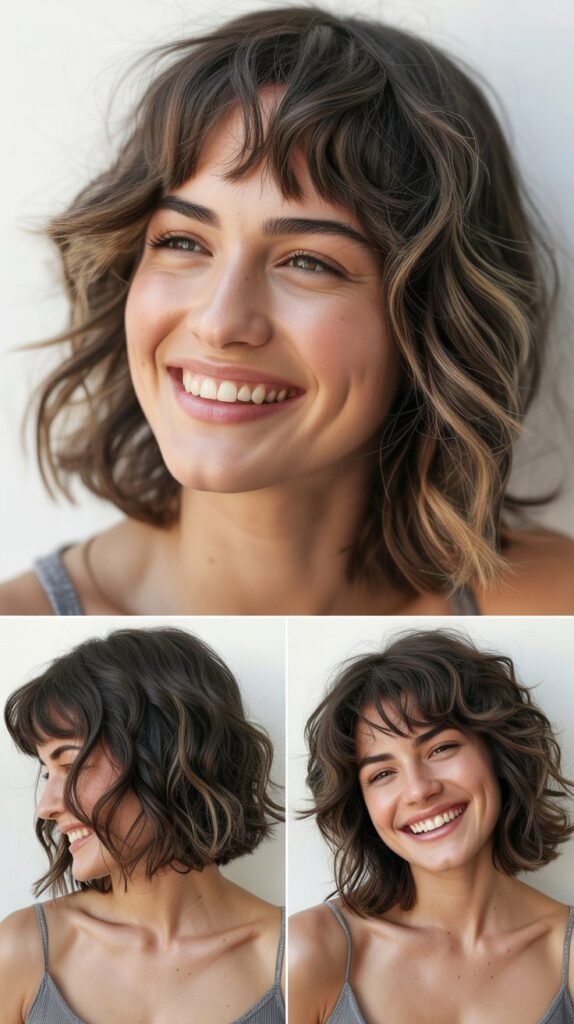
Choppy textured front pieces bring an edgy, modern vibe to long thick hair through intentionally disconnected layers around the face.
This bold approach creates striking contrast and dimension while removing weight from the heaviest areas.
- Choppy layers are created using point-cutting or razor techniques that produce varied, uneven ends.
- Front pieces typically range from jaw to shoulder length with noticeable separation between sections.
- The textured approach adds significant volume and movement without requiring extensive styling.
- This style suits those with naturally thick, coarse hair that can support the disconnected layering.
- The choppy front pieces frame the face dramatically while the back maintains more length and weight.
- Styling products like texturizing paste or sea salt spray enhance the piecey, separated effect.
- This cut works well for square and oval face shapes, adding softness through the broken-up layers.
8. Side-Swept Bangs with Graduated Layers
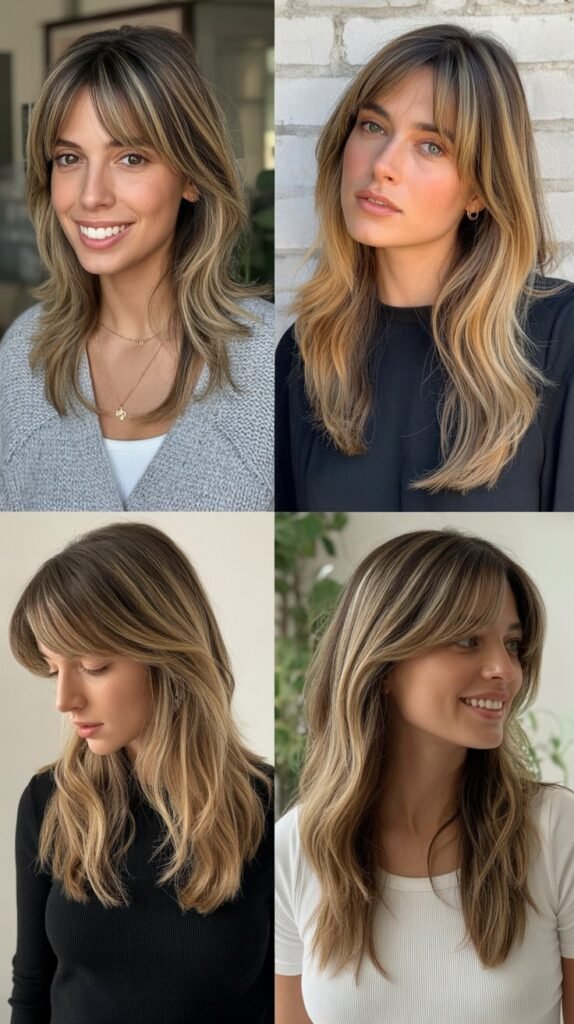
Side-swept bangs combined with graduated layers create a sophisticated, polished look that’s professional yet stylish.
The diagonal bang sweeps elegantly across the forehead while graduated layers add structure and shape throughout the length.
- Side-swept bangs start shorter on one side and gradually lengthen toward the opposite temple.
- Graduated layers cut at increasing lengths create a structured, stacked effect that removes bulk.
- The combination flatters most face shapes, particularly elongating round faces and softening angular features.
- This style offers versatility—the bangs can be worn swept dramatically to one side or more subtly parted.
- Graduated layering throughout prevents thick hair from appearing triangular or bottom-heavy.
- Blow-drying with a round brush toward the sweep direction ensures the bangs maintain their elegant curve.
- The structured layering makes styling predictable and easy to replicate at home.
9. Butterfly Layers
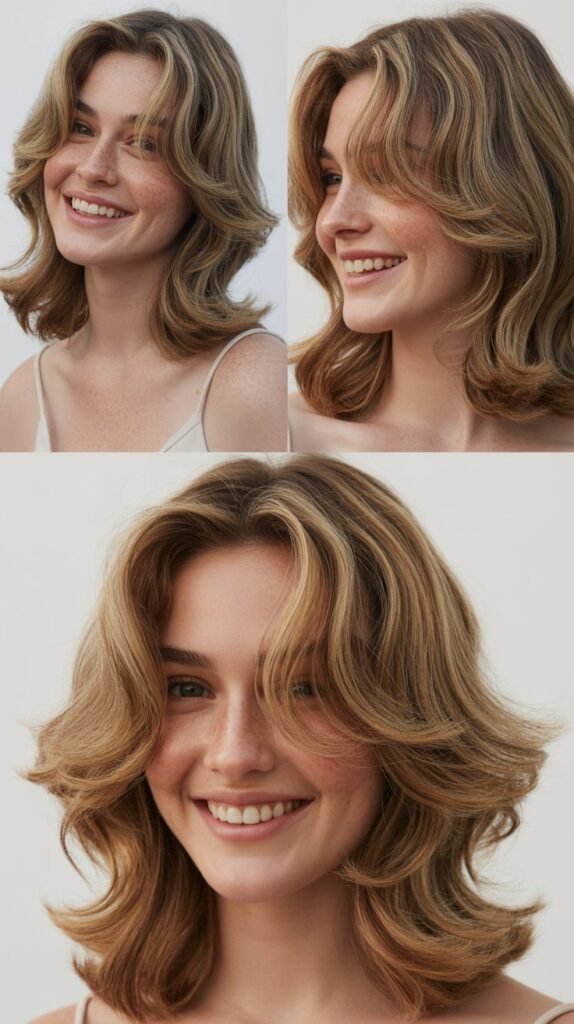
Butterfly layers create a distinctive shape that’s shorter around the face and gradually lengthens toward the back, resembling the wings of a butterfly.
This trendy technique adds significant volume and movement while maintaining the perception of length.
- The shortest layers frame the face around cheekbone level, creating maximum volume and lift.
- Layers progressively lengthen toward the back, maintaining considerable length at the nape.
- This creates a rounded, voluminous silhouette when viewed from the side, similar to butterfly wings.
- Butterfly layers work exceptionally well for thick hair as they remove significant weight from the front.
- The style adds dimension and prevents flat, lifeless hair by concentrating volume where it’s most visible.
- Styling with a blow dryer and round brush emphasizes the lifted, voluminous effect at the crown and sides.
- This cut flatters oval, heart, and diamond face shapes by adding width at the cheekbones.
10. Long Layers Starting from Collarbone
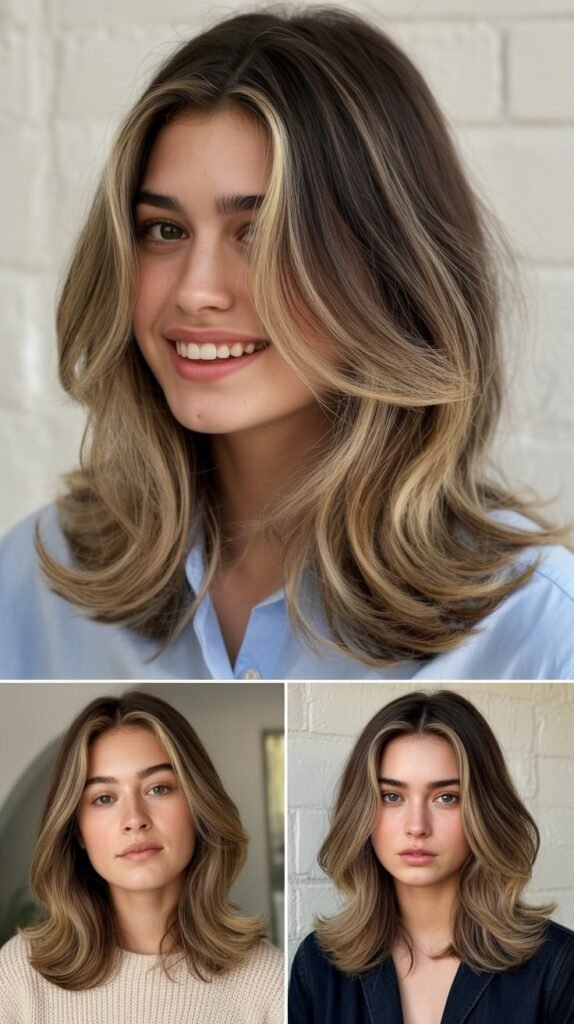
Long layers that begin at collarbone length maintain maximum length while introducing subtle movement and dimension.
This conservative approach to layering is perfect for those who love their long, thick hair but want to add some shape and reduce weight.
- The first layer begins around the collarbone, creating a gradual transition from the shortest point to the ends.
- This approach maintains significant length throughout while preventing the heavy, one-length appearance.
- Long layers are ideal for those transitioning from no layers or wanting a subtle change.
- The technique removes some weight from thick hair without sacrificing the fullness many people desire.
- Collarbone-starting layers frame the face gently without the commitment of shorter front pieces.
- This style works for all face shapes as the layering is minimal and universally flattering.
- Styling is simple—the layers add natural movement without requiring specific techniques or products.
11. Razored Front Layers with Soft Texture
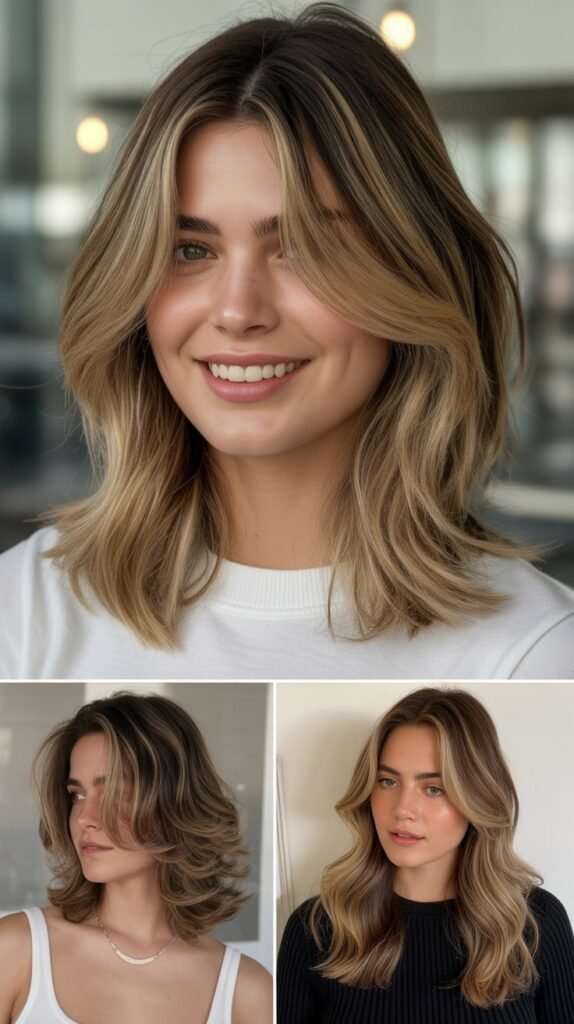
Razored front layers create incredibly soft, feathered texture around the face through a cutting technique that gently thins and texturizes thick hair.
The razor creates wispy, delicate ends that blend seamlessly and add movement without harsh lines.
- Razor cutting creates a softer, more gradual taper than scissor cutting for ultra-feminine results.
- Front layers cut with this technique have a wispy, almost invisible blend into longer sections.
- The razor removes bulk from thick hair while creating texture that moves naturally with any styling.
- This method is particularly effective for thick, coarse hair that can appear heavy or harsh with blunt cuts.
- Razored layers require less styling effort as the texture is built into the cut itself.
- The soft front framing flatters all face shapes by creating gentle, flowing lines rather than structured ones.
- Regular maintenance every 6-8 weeks keeps the razored texture fresh and prevents uneven growth patterns.
12. Face-Framing Tendrils with Internal Layers
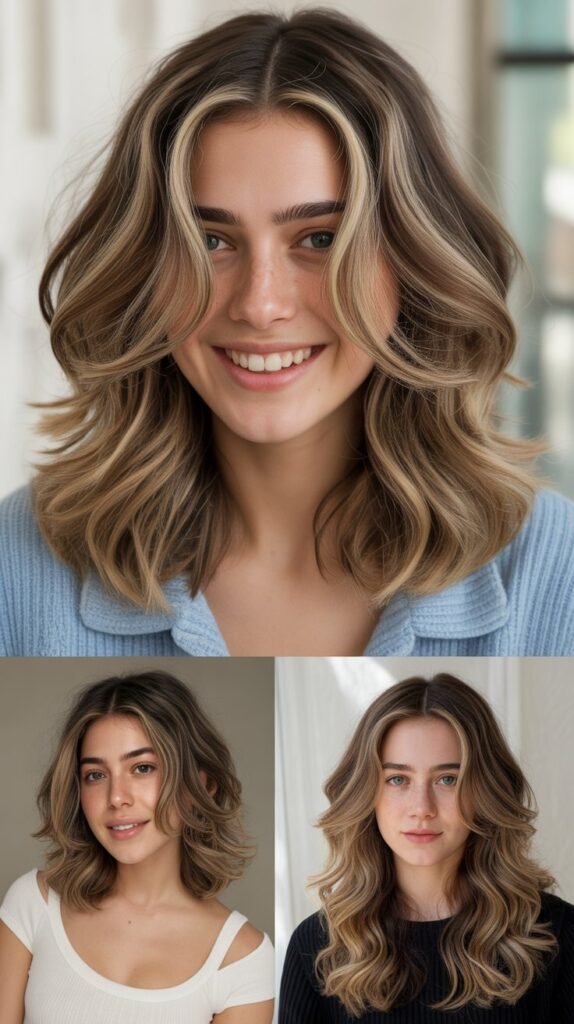
Face-framing tendrils combined with internal layers create a romantic, bohemian look where delicate wisps surround the face while hidden layers reduce bulk throughout.
This approach maintains a cohesive exterior while removing weight from within the hair shaft.
- Face-framing tendrils are very thin, delicate sections cut around the temples and cheekbones.
- Internal layers are cut underneath the top layer, removing bulk without affecting the outer appearance.
- This technique maintains a relatively uniform length on the surface while creating movement and reducing weight internally.
- The combination is ideal for thick hair that looks heavy but where the person wants to preserve a blunt appearance.
- Tendrils add a soft, romantic touch that can be worn tucked behind ears or left loose to frame the face.
- Internal layering prevents the mushroom effect thick hair can create when worn with volume.
- The style requires minimal maintenance and adapts well to both casual and formal occasions.
13. Piece-y Front Layers with Lived-In Texture
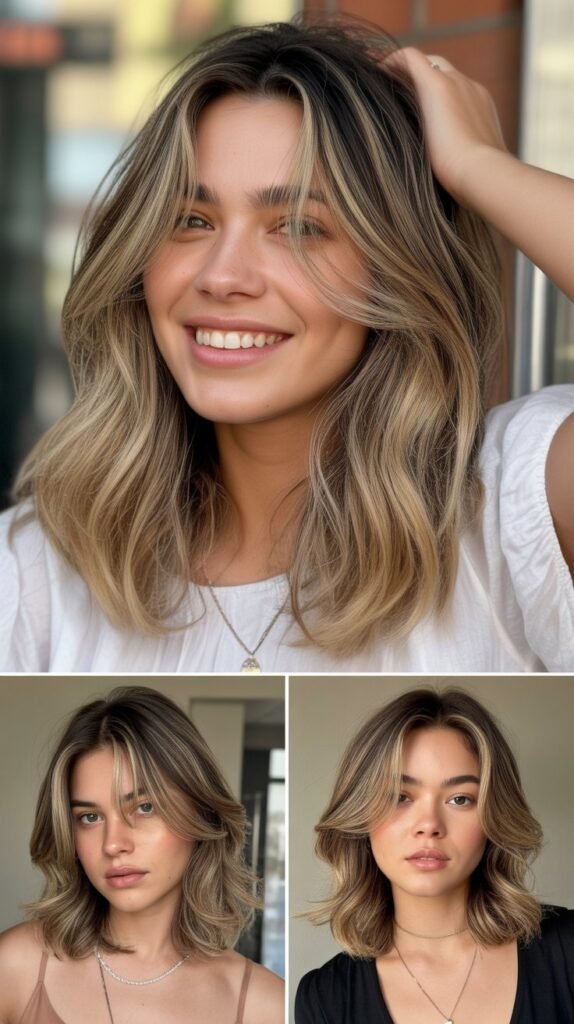
Piece-y front layers create defined, separated sections around the face with a deliberately undone, lived-in texture.
This modern approach emphasizes individual strands and sections rather than smooth, blended layers for an effortlessly cool aesthetic.
- Piece-y layers are cut to create visible separation and definition between sections rather than seamless blending.
- The lived-in texture appears effortless and low-maintenance despite being a deliberate styling choice.
- Front layers typically start at chin or collarbone length with intentional gaps between pieces.
- This style works best for those with naturally textured, wavy, or slightly coarse thick hair.
- Styling products like texture cream, sea salt spray, or light pomade enhance the separated, piece-y effect.
- The deliberately imperfect appearance suits casual, bohemian, or edgy personal styles.
- Maintenance is minimal as the style looks better when slightly grown out and undone.
14. Curtain Fringe with Long Flowing Layers
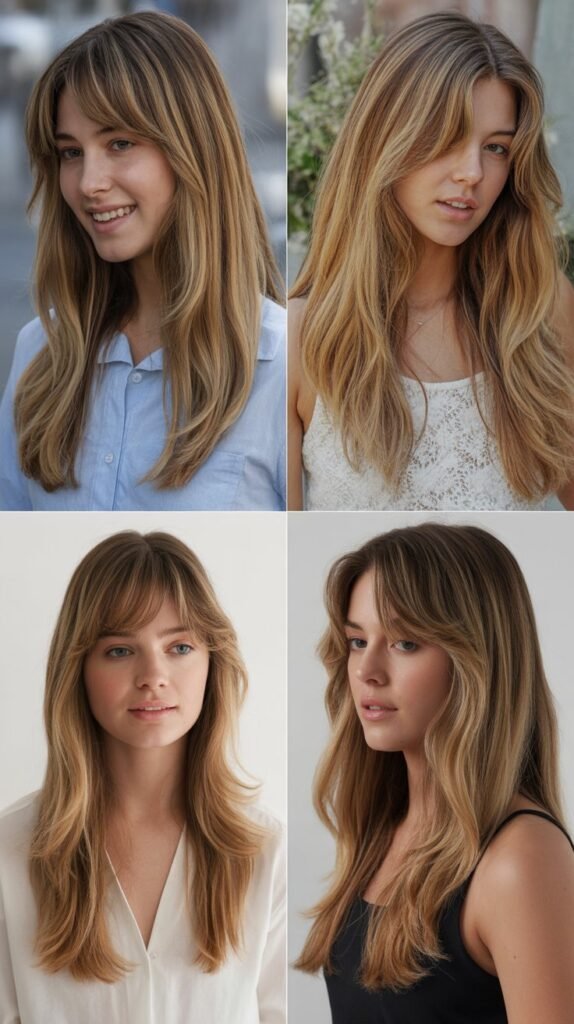
Curtain fringe paired with long flowing layers creates a feminine, romantic style reminiscent of 1970s glamour updated for modern times.
The center-parted fringe frames the face beautifully while long layers add movement throughout the length.
- Curtain fringe is longer than traditional bangs, typically reaching the cheekbones or chin when parted in the center.
- The fringe swoops gracefully to each side, creating an opening at the center that elongates the face.
- Long flowing layers begin below the fringe and cascade throughout the length in soft gradations.
- This combination works beautifully for thick hair as it removes weight while adding sophisticated movement.
- The style flatters oval, long, and heart-shaped faces by adding width at the cheekbones.
- Blow-drying with a round brush creates the signature curtain swoop and emphasizes the flowing layers.
- The versatile cut transitions easily from straight to wavy styling while maintaining its shape.
15. Asymmetrical Front Layers
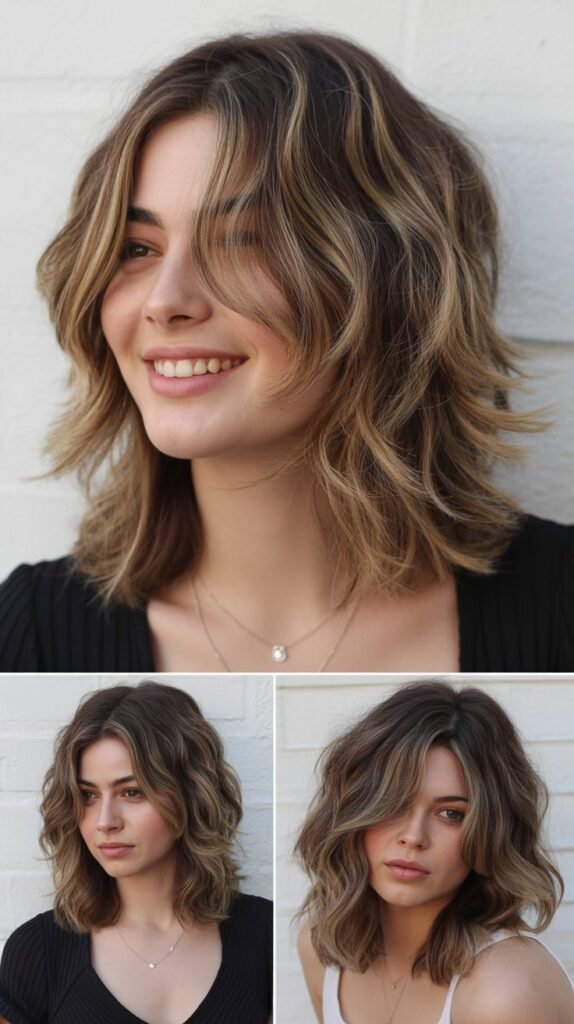
Asymmetrical front layers create visual interest and modern edge through intentionally uneven lengths on each side of the face.
This bold approach breaks traditional symmetry while adding dimension and personality to long, thick hair.
- One side features noticeably shorter layers than the other, creating deliberate imbalance and intrigue.
- The asymmetry can be subtle (1-2 inch difference) or dramatic (4+ inch difference) depending on preference.
- This style makes a statement and suits those who enjoy fashion-forward, unconventional looks.
- Asymmetrical layering works well for thick hair as it removes weight while creating a unique silhouette.
- The shorter side can be worn tucked behind the ear to emphasize the asymmetry or left loose for softer effect.
- This cut flatters most face shapes by creating diagonal lines that are universally slimming.
- Styling requires attention to emphasize the asymmetry—blow-drying each side differently enhances the effect.
16. Soft Graduated Bob Front with Long Back
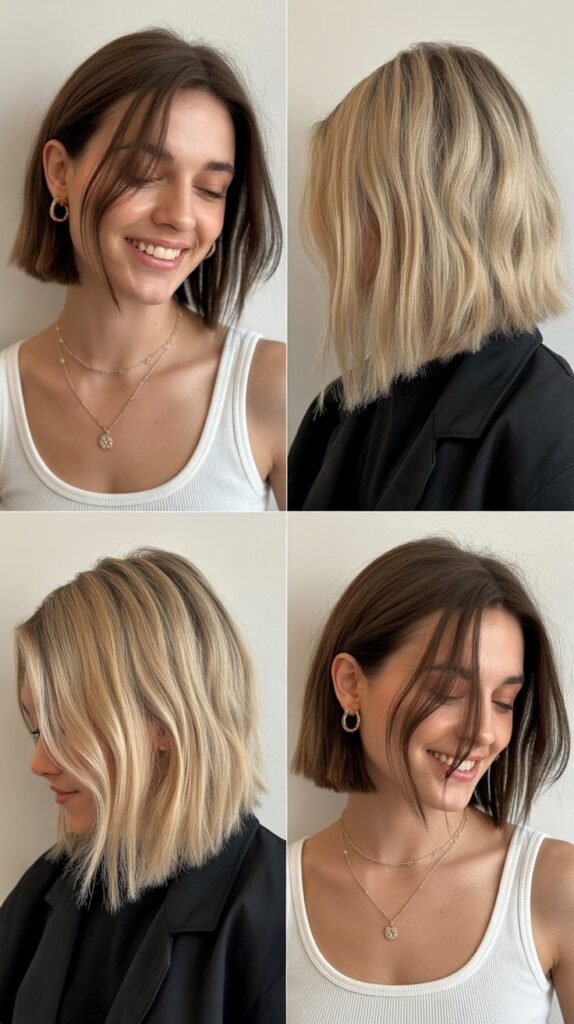
The soft graduated bob front with long back creates a mullet-inspired silhouette that’s been refined for mainstream appeal.
Shorter, layered sections at the front contrast with substantial length in the back for a contemporary, fashion-forward look.
- Front sections are cut in a graduated bob shape, typically ending between chin and shoulder length.
- The back maintains significant length, often 4-8 inches longer than the front sections.
- This creates a distinctive profile where the hair appears shorter from the front but reveals length from behind.
- The graduated front layers add volume and shape around the face while removing bulk.
- This style suits thick hair particularly well as the dramatic difference in lengths prevents heaviness.
- The modern mullet interpretation works for those wanting to experiment with edgy styles without dramatic short cuts.
- Styling the front with volume while keeping the back sleek emphasizes the intentional length difference.
17. Micro Fringe with Long Layers
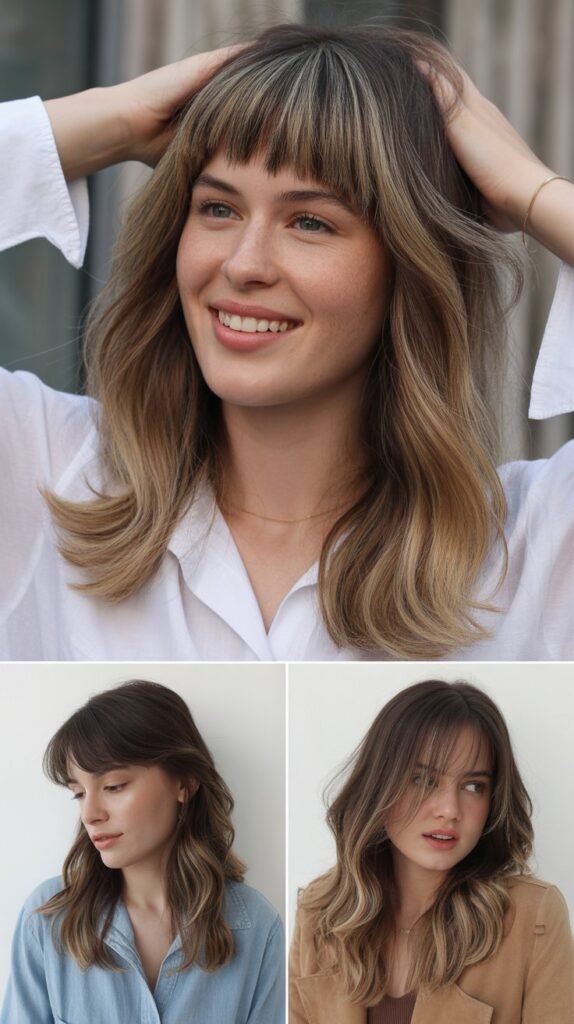
Micro fringe (also called micro bangs or baby bangs) combined with long layers creates striking contrast and high-fashion appeal.
The ultra-short bangs make a bold statement while long layers maintain feminine length and movement throughout.
- Micro fringe sits well above the eyebrows, typically at the mid-forehead, creating an attention-grabbing focal point.
- Long layers throughout the remaining hair provide movement and prevent the style from looking costume-like.
- This bold combination suits those with strong personal style and confidence to carry dramatic looks.
- The micro fringe works best on oval and heart-shaped faces, though creative styling can adapt it to others.
- Thick hair supports micro bangs better than fine hair as it maintains the necessary density and structure.
- Styling requires commitment—the fringe needs daily attention to maintain its precise line and texture.
- This is a high-maintenance style requiring frequent trims every 2-3 weeks to keep the fringe at the proper length.
18. Diagonal Forward Layers
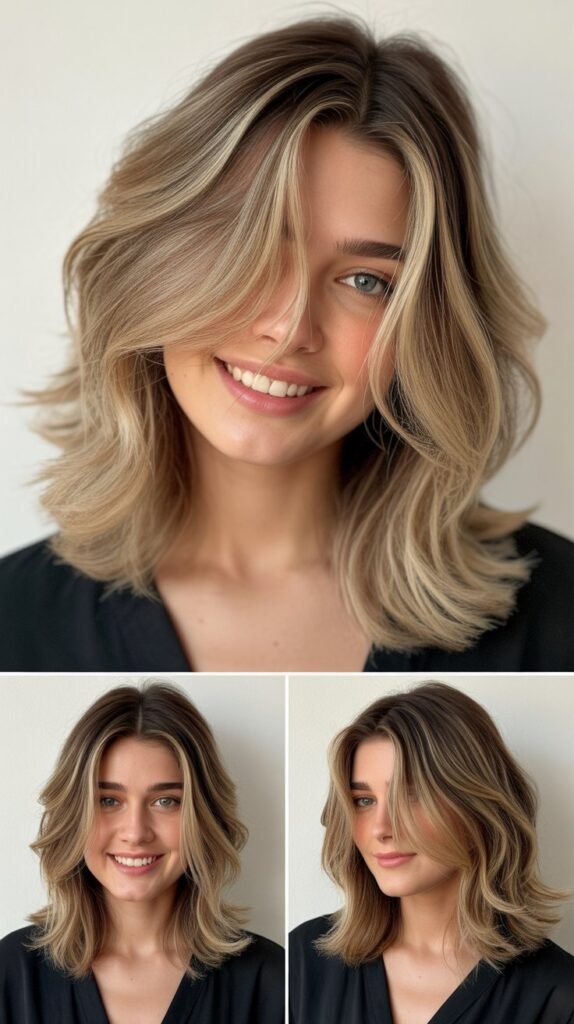
Diagonal forward layers angle toward the face, creating a distinctive shape where the hair is longer in front and gradually shorter toward the back.
This technique frames the face dramatically while adding movement and removing weight from thick hair.
- Layers are cut on a diagonal angle so the front pieces are longest and layers shorten progressively toward the nape.
- This creates a forward-sweeping movement that naturally frames and elongates the face.
- The diagonal approach adds dimension and prevents thick hair from lying flat or lifeless.
- Forward layers work particularly well for oval and round face shapes by creating vertical lines.
- The angled layering removes bulk from the back while maintaining volume and fullness around the face.
- Styling with inward-rolling brush techniques emphasizes the forward movement and face-framing effect.
- This cut is ideal for those who typically wear their hair down and forward rather than back or up.
19. Crown Layers with Long Front Pieces
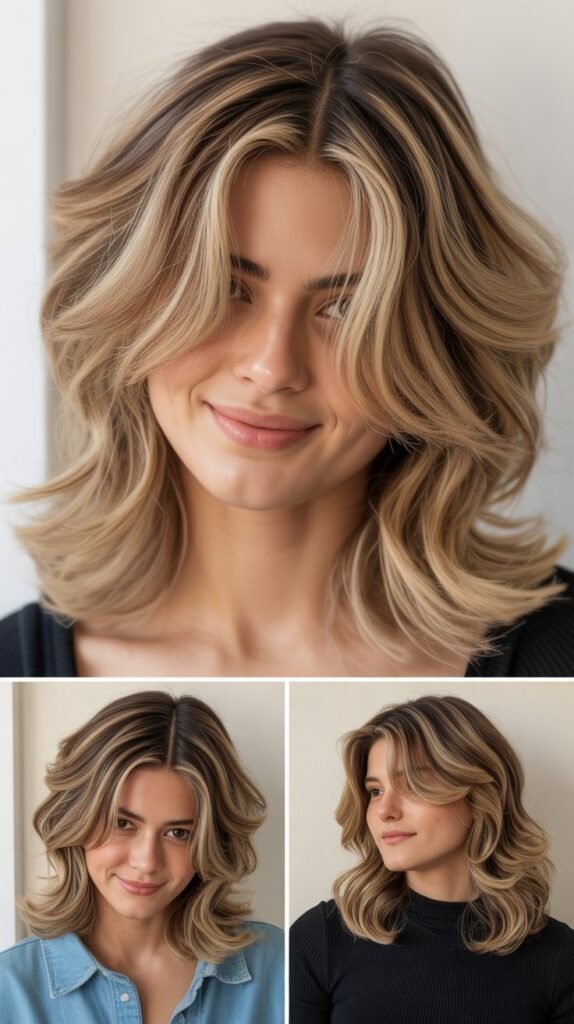
Crown layers concentrate volume and texture at the top of the head while long front pieces maintain length and framing around the face.
This technique lifts thick hair away from the scalp and prevents the flat, weighed-down appearance.
- Layers at the crown are significantly shorter than the rest, creating lift and volume at the top of the head.
- Front pieces remain long, typically chin length or longer, to frame the face without shortness.
- This combination prevents thick hair from appearing flat while maintaining facial framing and length.
- Crown layers are particularly effective for those with fine-textured but thick-density hair that lacks volume.
- The lifted crown creates a flattering silhouette that elongates the overall appearance.
- Styling requires blow-drying the crown area with a round brush or using volumizing products at the roots.
- This cut flatters all face shapes as it adds height without altering the face-framing perimeter.
20. Invisible Layers with Face-Framing
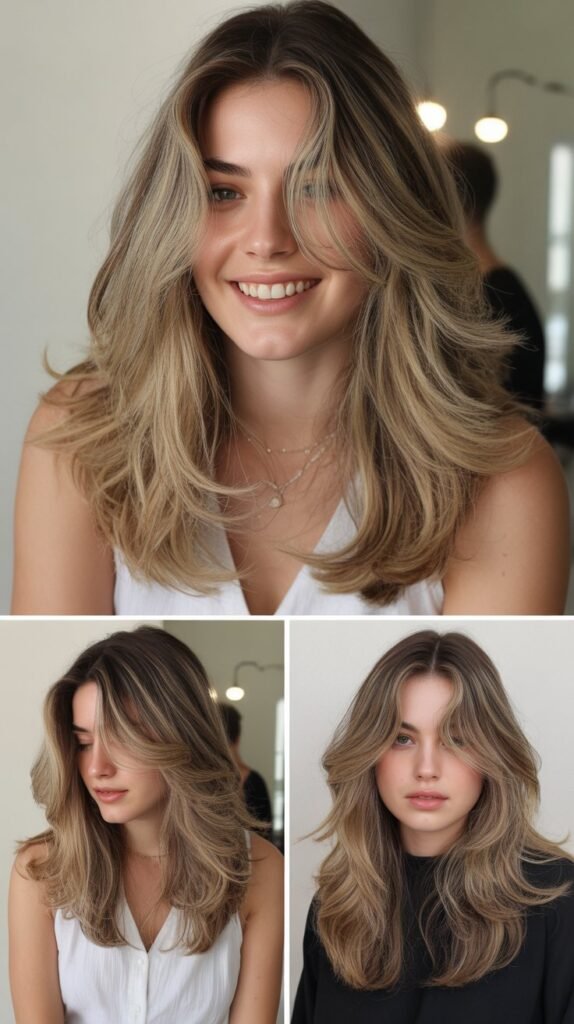
Invisible layers create subtle movement and reduce bulk without obvious layering lines, combined with face-framing pieces that add definition around the perimeter.
This sophisticated approach maintains a cohesive appearance while addressing thick hair’s weight.
- Invisible layers are cut internally, removing weight without creating visible steps or tiers in the hair.
- Face-framing pieces provide definition and shape around the front while the rest appears relatively uniform.
- This technique is ideal for those who want the benefits of layering without the obviously layered appearance.
- The seamless blending maintains a polished, cohesive look that’s appropriate for professional settings.
- Invisible layering removes significant bulk from thick hair while preserving the perception of fullness.
- The style requires skilled cutting as the layers must blend imperceptibly to achieve the desired effect.
- Maintenance is straightforward as the invisible layers grow out without creating awkward lengths.
21. Heavy Side Bang with Graduated Layers
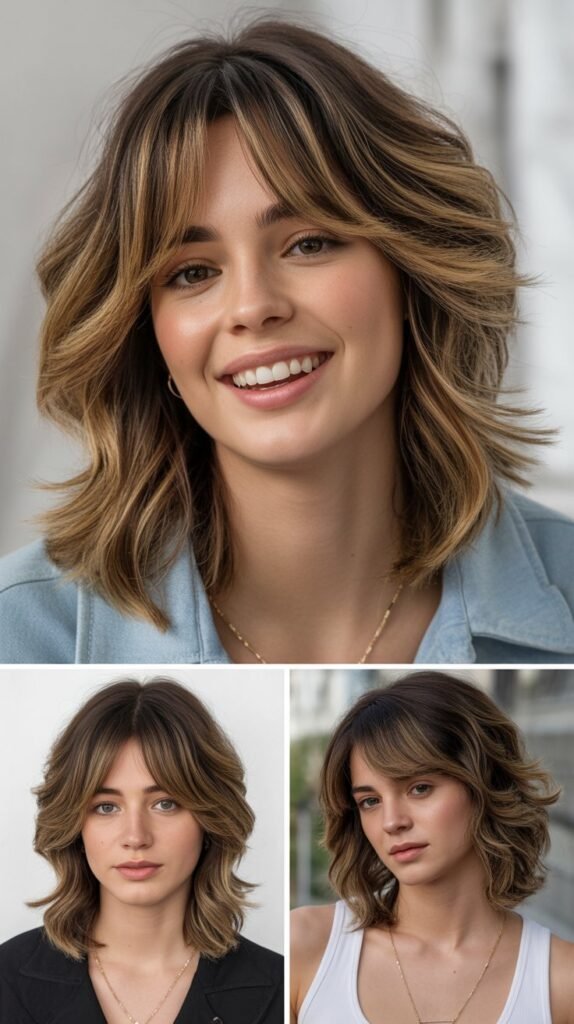
Heavy side bangs create dramatic impact when paired with graduated layers that add structure and remove weight throughout long, thick hair.
The substantial bang sweeps boldly across the forehead while graduated layers provide shape and movement.
- Heavy side bangs are thicker and fuller than standard side-swept bangs, making a strong visual statement.
- The bang sweeps across the forehead from a deep side part, covering a significant portion.
- Graduated layers cut at progressively longer lengths create structure and prevent thick hair from looking bulky.
- This combination works well for those wanting to disguise a larger forehead or balance angular features.
- The heavy bang can be worn dramatically swept or styled more subtly depending on the occasion.
- Regular trims maintain the bang at the optimal length and keep graduated layers looking fresh.
- This style suits oval, square, and heart-shaped faces by adding softness and dimension.
22. Textured Shaggy Front
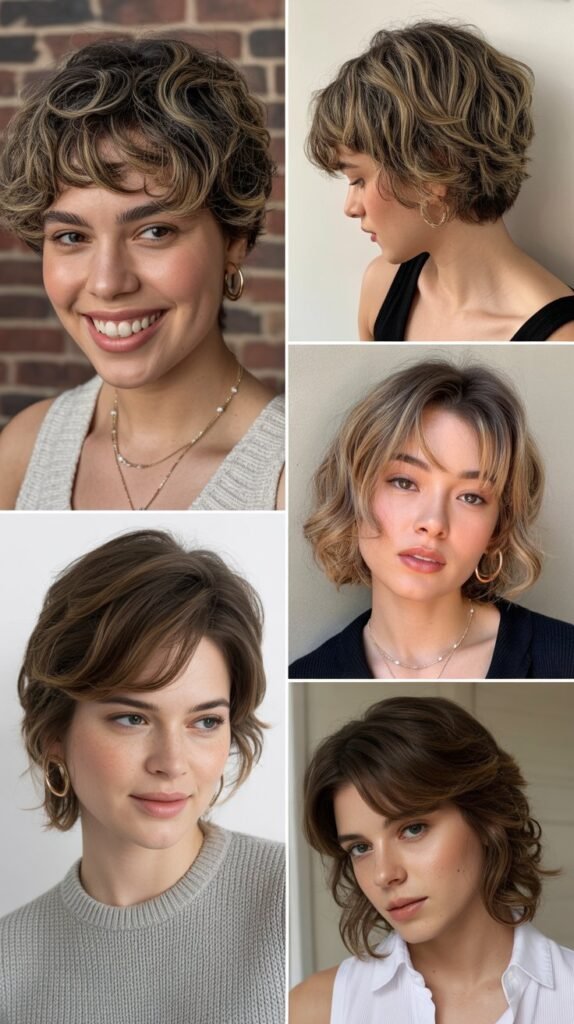
The textured shaggy front brings rock-and-roll attitude through heavily textured, choppy layers concentrated around the face.
This edgy approach creates maximum movement and dimension while embracing an intentionally messy, undone aesthetic.
- Shaggy front layers are cut with razor or point-cutting techniques to create maximum texture and separation.
- Layers vary dramatically in length, from very short pieces near the face to longer sections throughout.
- The intentionally messy appearance requires texturizing products like paste or clay to enhance definition.
- This style removes significant weight from thick hair while creating an effortlessly cool, undone look.
- The shaggy texture works best for those with naturally wavy or textured hair that supports the piece-y effect.
- Minimal styling is needed—the cut does most of the work, requiring only product to enhance texture.
- This cut suits those with alternative, artistic, or bohemian personal styles and fashion sensibilities.
23. Feathered Curtain Layers
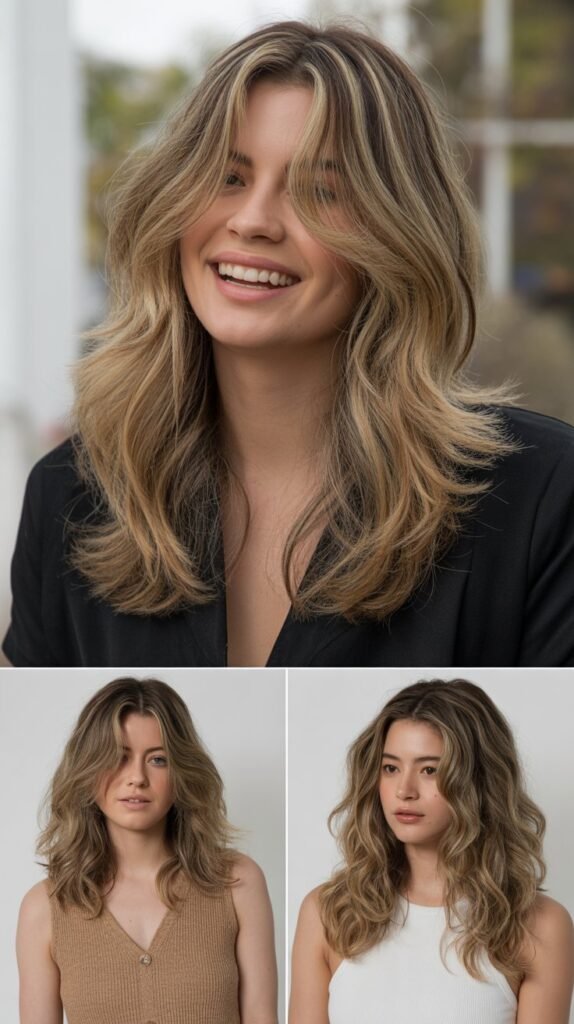
Feathered curtain layers combine the soft, face-framing nature of curtain bangs with feathered layering techniques throughout the front sections.
This creates ultra-soft, feminine framing with maximum movement and dimension around the face.
- Curtain-style parting creates the signature center opening with layers sweeping to each side.
- Feathering technique softens all layer ends for a delicate, wispy appearance without harsh lines.
- The combination adds substantial movement to thick hair while maintaining a soft, romantic aesthetic.
- Layers typically start at cheekbone length and gradually blend into longer sections toward the back.
- This style flatters all face shapes by creating customizable framing that can be adjusted to individual features.
- Blow-drying with a round brush enhances the curtain sweep and feathered texture naturally.
- The soft layers require minimal maintenance and look beautiful with both straight and wavy styling.
24. Blunt Front Layers with Textured Ends
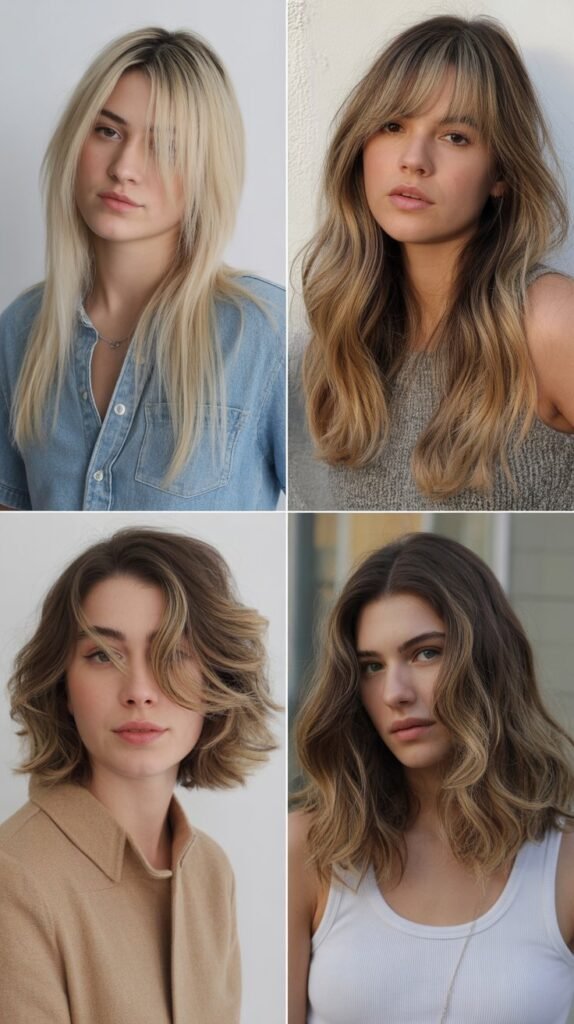
Blunt front layers create strong, graphic lines around the face while textured ends add softness and movement to prevent the style from appearing too severe.
This combination offers structure and definition while maintaining approachability.
- Front layers are cut with clean, blunt lines at specific lengths, typically chin or collarbone level.
- The ends are then texturized using point-cutting or razor techniques to soften and add movement.
- This creates a distinctive perimeter around the face while preventing the blocky appearance of fully blunt cuts.
- Blunt layers work well for thick hair as they maintain density while the textured ends add dimension.
- The structured front framing makes a statement and suits those who prefer defined, intentional styles.
- Styling is straightforward—blow-dry smooth or add waves, as the blunt lines maintain their shape regardless.
- This cut flatters square and oval face shapes by creating strong, flattering angles around the face.
25. Long Swoopy Layers
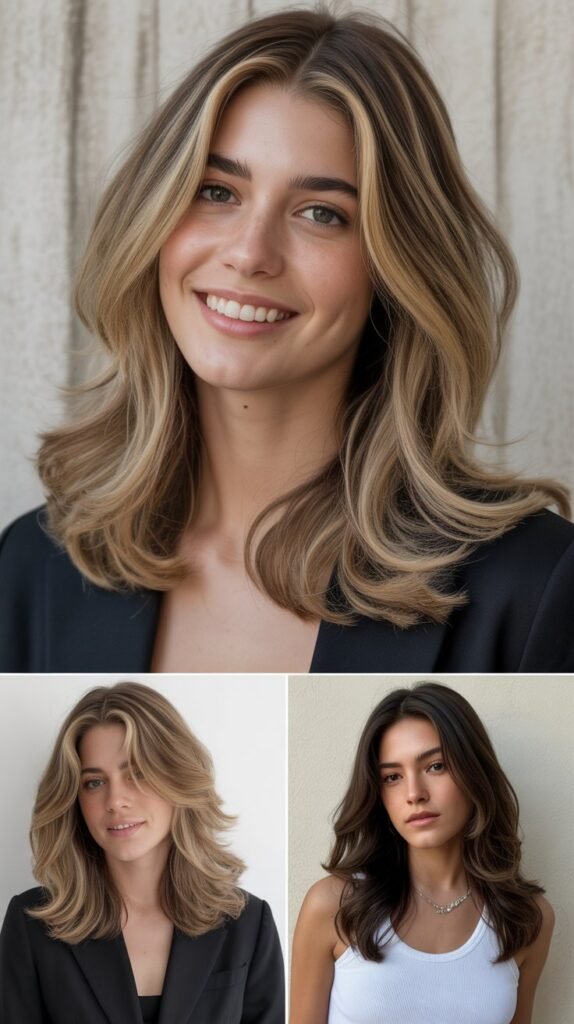
Long swoopy layers create graceful, flowing movement through soft, sweeping layers that curve naturally around the face and throughout the length.
This romantic style emphasizes fluid motion and feminine appeal while managing thick hair’s weight.
- Swoopy layers are cut with gentle curves rather than straight lines, creating natural, flowing movement.
- The layers sweep around the face and throughout the length in soft, gradual transitions.
- This technique removes weight from thick hair while creating an elegant, fluid appearance.
- Long swoopy layers work beautifully with natural waves or when styled with large barrel curls.
- The flowing movement catches light from multiple angles, adding dimension and visual interest.
- This style suits those with romantic, feminine personal styles and works for formal and casual occasions.
- Minimal maintenance is required as the soft curves grow out gracefully without awkward stages.
26. Face-Framing Money Pieces
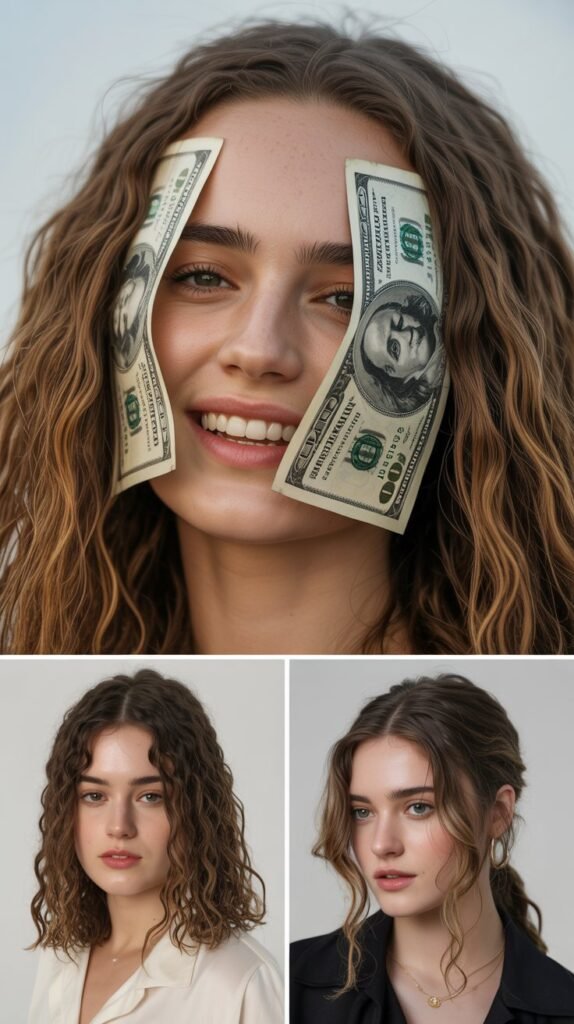
Face-framing money pieces are lighter sections of layered hair at the front that draw attention to the face, often highlighted to create even more contrast.
When combined with long, thick hair, these pieces add dimension and brightness around the face.
- Money pieces are the front sections on either side of the face, typically 1-2 inches wide.
- These pieces are cut slightly shorter than the surrounding hair to frame the face prominently.
- When highlighted or lightened, money pieces create striking contrast that brightens the complexion.
- The technique works particularly well for thick hair as it breaks up the heavy mass around the face.
- Money pieces can be customized in width and length to flatter different face shapes.
- The contrast draws the eye upward, creating a flattering focus on facial features.
- Styling these pieces with slight bends or waves enhances their framing effect and visual impact.
27. Layered Fringe with Flowing Length
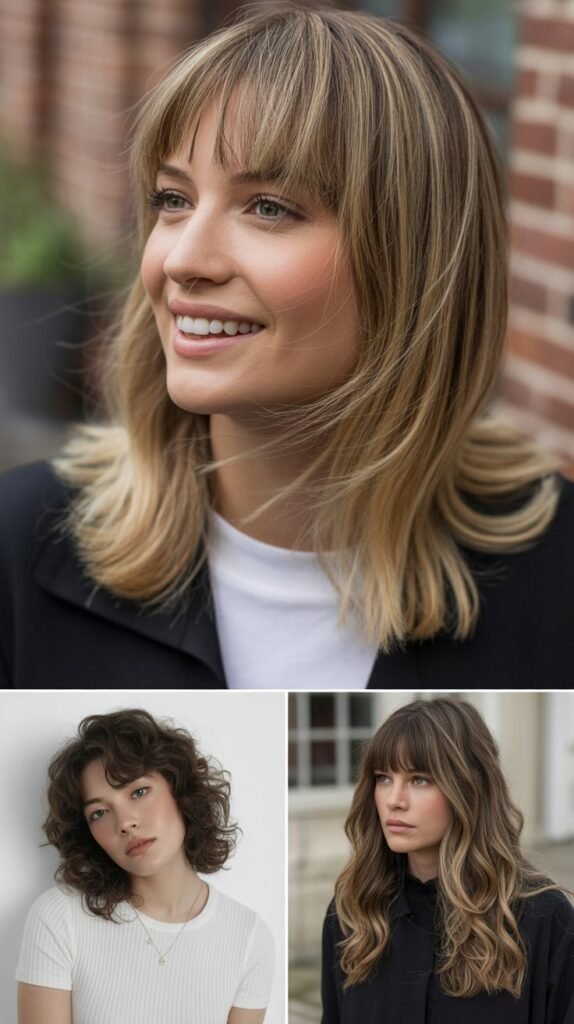
Layered fringe creates texture and movement across the forehead while flowing length maintains feminine, long hair.
This combination offers the best of both worlds—the style statement of bangs with the versatility of long hair.
- Layered fringe features multiple lengths across the forehead rather than a single blunt line.
- The varied lengths create texture and prevent thick bangs from looking too heavy or severe.
- Flowing length throughout the rest of the hair maintains the long, feminine aesthetic.
- This style works well for thick hair as the layered fringe removes bulk while adding dimension.
- The fringe can be styled straight across, swept to the side, or parted for versatility.
- Regular trims every 3-4 weeks maintain the fringe at the proper length and texture.
- This cut flatters most face shapes, with the fringe length customizable to individual features.
28. Disconnected Front Layers
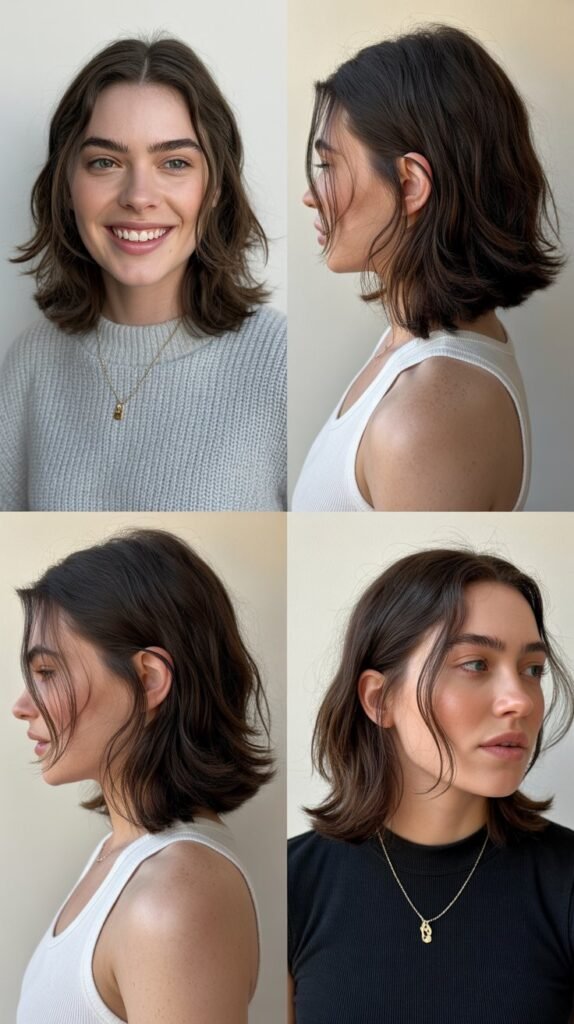
Disconnected front layers create intentional gaps and separation between layer lengths, producing a modern, edgy look with substantial dimension.
This technique embraces visible differences in length rather than seamless blending.
- Disconnected layers have noticeable gaps between lengths rather than gradual transitions.
- The front layers are cut significantly shorter than the rest, creating obvious contrast and definition.
- This bold approach adds drama and personality while removing significant weight from thick hair.
- The disconnected style works best for those comfortable with unconventional, fashion-forward looks.
- Styling with texture products enhances the separation and emphasizes the intentional disconnect.
- The cut makes a statement and suits creative individuals with alternative fashion sensibilities.
- Maintenance requires commitment as the disconnected lengths need regular trims to maintain the desired effect.
29. Soft A-Line Layers
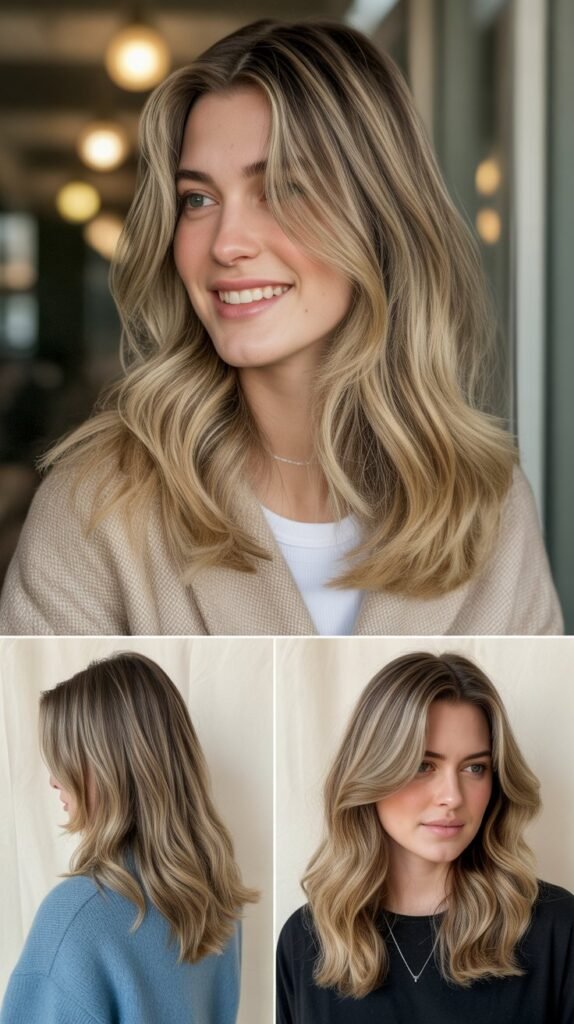
Soft A-line layers create a gentle angle where the front is slightly longer than the back, forming a subtle “A” shape.
This classic technique adds shape and dimension to long, thick hair while maintaining a polished, sophisticated appearance.
- A-line layering creates a gradual angle where hair is longest at the front and shortens toward the back.
- The soft version maintains minimal angle difference for subtle shaping rather than dramatic contrast.
- This technique adds dimension and prevents thick hair from appearing flat or shapeless.
- The A-line shape frames the face beautifully while adding visual interest when viewed from the side.
- This classic cut suits professional environments and those preferring timeless, elegant styles.
- The angled layering makes hair appear to swing forward naturally, creating flattering movement.
- Maintenance is minimal as the subtle angle grows out gracefully without creating awkward lengths.
30. Piecey Textured Layers Throughout
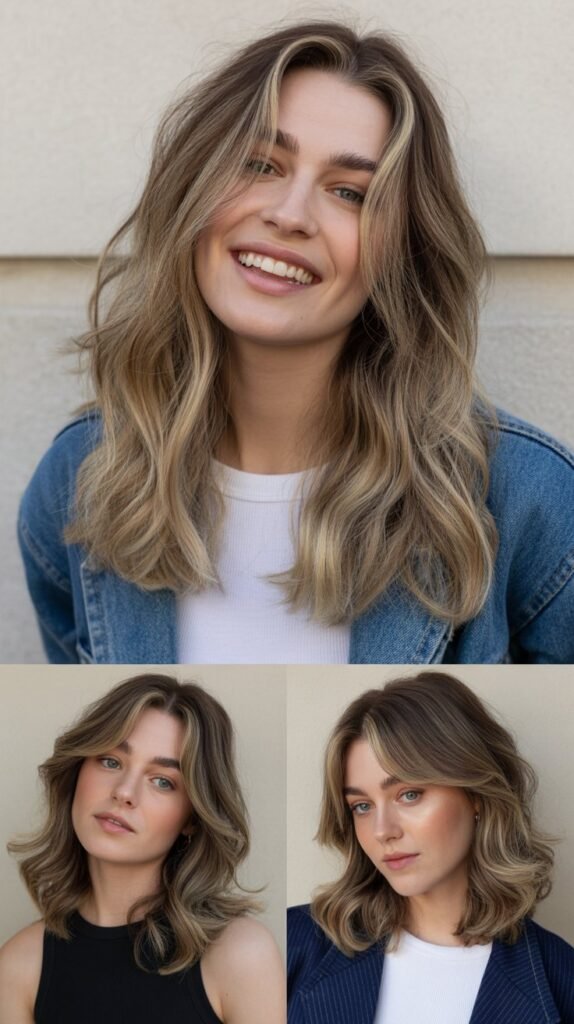
Piecey textured layers distributed throughout the hair create an all-over dimensional effect with visible separation and definition.
This modern approach emphasizes individual sections and strands for a deliberately styled, contemporary appearance.
- Layers are cut throughout the entire head, not just at the front, using texturizing techniques.
- Point-cutting or razor methods create piece-y separation and texture at all layer ends.
- The all-over approach removes significant weight from thick hair while adding maximum movement.
- Piecey texture requires styling products like cream or paste to enhance definition and separation.
- This style works best for naturally textured or wavy hair that supports the piece-y effect.
- The contemporary look suits those who enjoy modern, fashion-forward styles and don’t mind daily styling.
- Regular trims maintain the texture and prevent the layers from appearing too choppy or uneven.
31. V-Shaped Front Layers
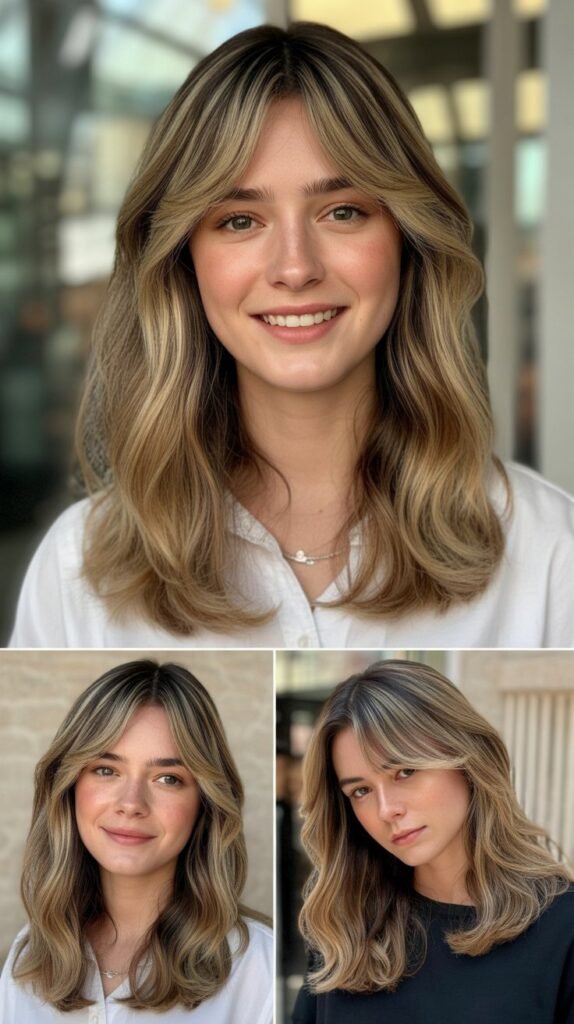
V-shaped front layers create a distinctive point at the center of the face where two diagonal lines meet, forming a “V.”
This structured approach adds strong definition and frames the face dramatically while managing thick hair’s weight.
- The V-shape is created by cutting layers that angle toward a central point at the chin or below.
- Diagonal lines on each side meet at the center, creating the signature V formation.
- This geometric approach adds strong structure and visual interest to the front sections.
- V-shaped layering removes weight from thick hair while creating a distinctive, memorable silhouette.
- The pointed center draws the eye downward, elongating the face and creating a slimming effect.
- This cut works particularly well for round or square faces that benefit from vertical emphasis.
- Styling with the point emphasized creates drama, or the V can be softened with waves for subtlety.
32. Layered Side Part with Volume
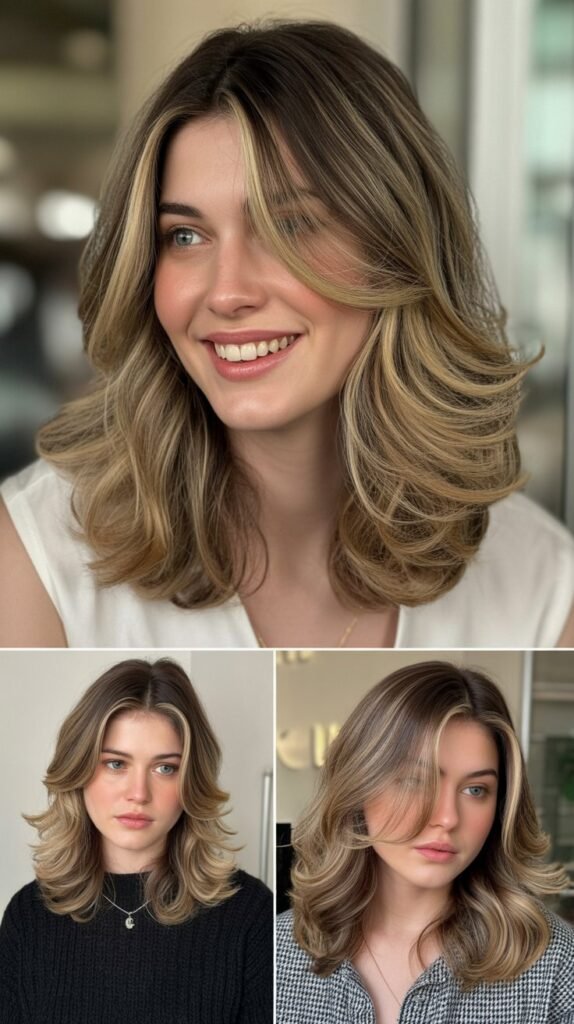
A deep side part combined with volumized layers creates dramatic asymmetry and height, making thick hair appear full of life and movement.
This classic styling technique enhances layered cuts by adding dimension through strategic parting and volume placement.
- A deep side part creates immediate visual interest by dividing hair unevenly across the head.
- Layers on the heavier side gain volume and movement, while the lighter side lies sleeker against the head.
- This technique works exceptionally well for thick hair that can support substantial volume on one side.
- The asymmetrical appearance adds sophistication and works beautifully for formal occasions or everyday wear.
- Volumizing products at the roots enhance the lift and maintain the style throughout the day.
- The deep part can be placed anywhere from the arch of the eyebrow to the temple area.
- This styling approach flatters oval, heart, and diamond face shapes by adding width where needed.
33. Wispy Baby Layers
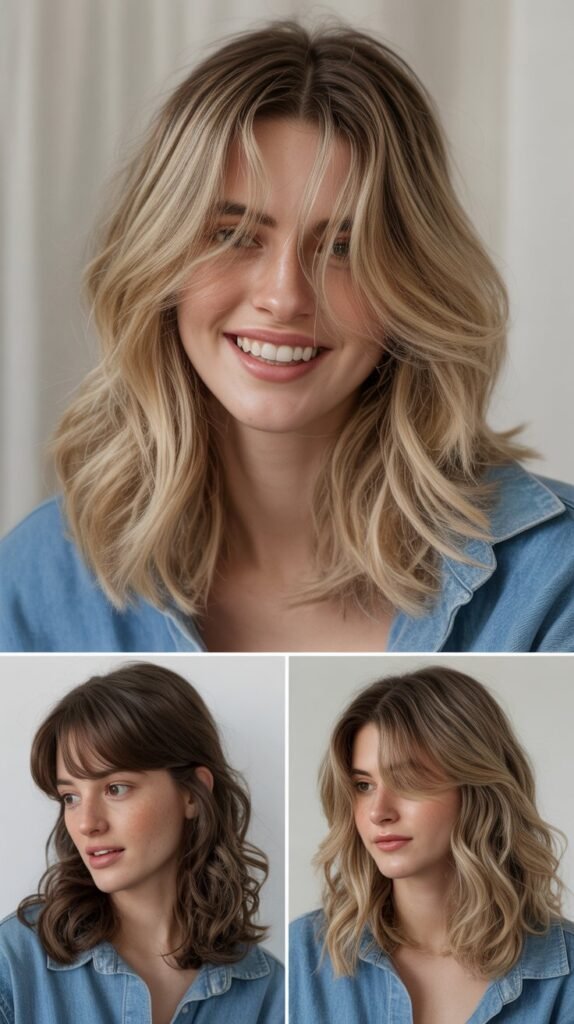
Wispy baby layers are ultra-fine, delicate pieces concentrated around the hairline and face, creating a soft, ethereal halo effect.
These gentle layers add femininity and romance without the commitment of traditional bangs or heavy framing.
- Baby layers are very short, fine pieces that frame the hairline and temples softly.
- These wispy sections are typically 1-3 inches long and blend seamlessly into longer layers.
- The delicate nature adds a romantic, youthful quality without dramatic change.
- Baby layers work particularly well for softening a strong hairline or adding texture around the face.
- This approach is ideal for those who want subtle framing without the maintenance of full bangs.
- The fine pieces can be left natural or styled with a small curling iron for added definition.
- Regular trims every 6-8 weeks maintain the wispy texture and prevent them from becoming too long.
34. Blunt Cut with Face-Framing Layers Only
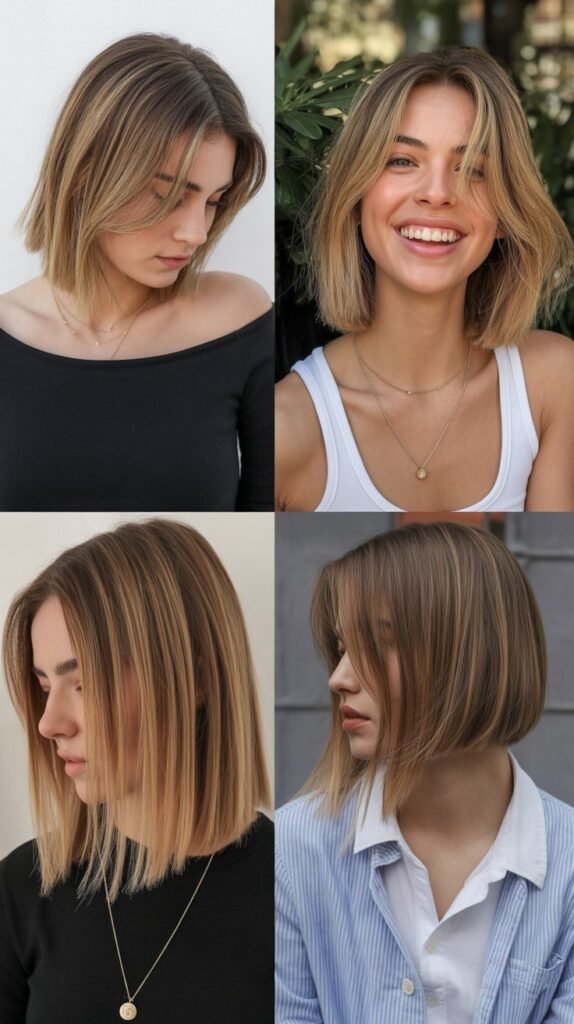
A blunt cut at the bottom combined with face-framing layers only preserves maximum thickness and weight while adding essential dimension around the face.
This strategic approach gives you the best of both worlds for thick hair.
- The bottom perimeter remains blunt and uncut, maintaining full thickness and a strong baseline.
- Face-framing layers are added only around the front sections, leaving the rest of the hair one length.
- This selective layering removes weight where it’s most visible while preserving fullness throughout.
- The blunt cut creates a healthy, thick appearance while the front layers prevent the style from looking heavy.
- This approach is perfect for those who love their thick hair but want some softness around the face.
- Styling is minimal as the blunt cut naturally falls into place with simple blow-drying.
- The combination flatters all face shapes as the framing can be customized to individual features.
35. Razored Shag Layers
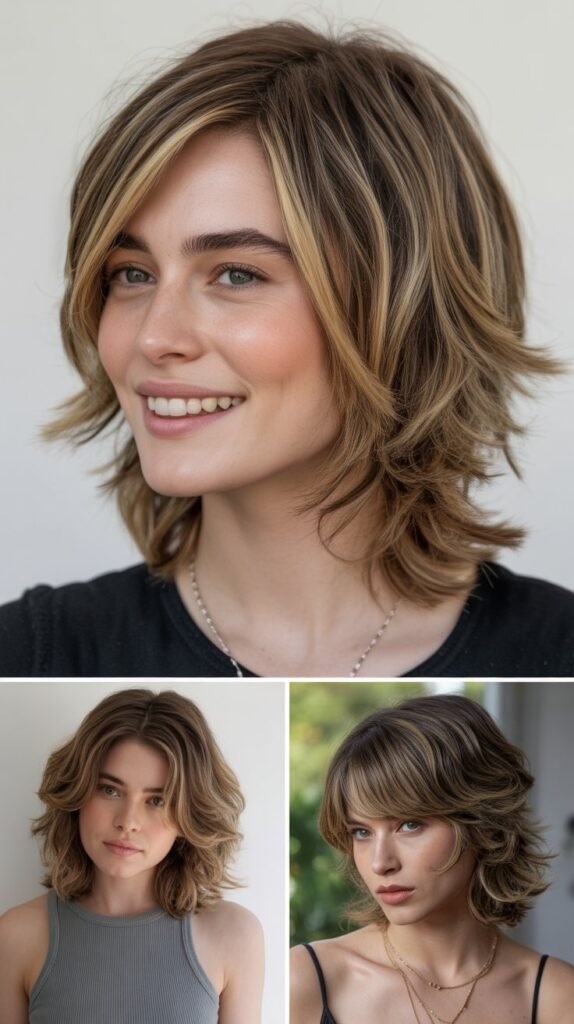
Razored shag layers bring modern edge and substantial texture through aggressive razor-cutting techniques that create feathered, separated ends throughout.
This bold approach transforms thick hair into a statement-making style with maximum movement.
- Razor cutting creates ultra-soft, feathered ends that move independently and catch light beautifully.
- Shag layering incorporates multiple lengths throughout, from very short crown layers to longer bottom sections.
- The aggressive texturizing removes significant weight, making thick hair more manageable and lighter.
- This style embraces an intentionally messy, lived-in appearance that looks effortlessly cool.
- Razored ends require texturizing products to enhance separation and prevent frizz.
- The shag works best for those with naturally textured or wavy hair that supports the piece-y effect.
- Regular maintenance every 6-8 weeks keeps the razored texture fresh and prevents excessive fraying.
36. Long Layers with Subtle Face Frame
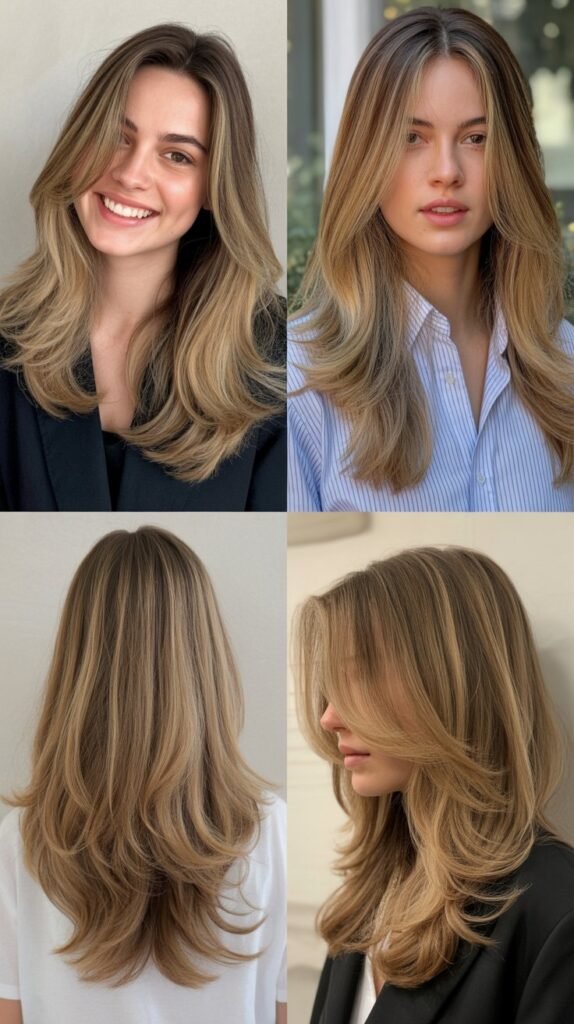
Long layers throughout combined with subtle face-framing create a conservative approach to layering that maintains length while adding gentle dimension.
This understated technique is perfect for those wanting minimal change with maximum impact on manageability.
- Long layers begin at shoulder length or below, creating gradual, barely-there transitions.
- Subtle face-framing pieces are only slightly shorter than the surrounding hair for gentle definition.
- This conservative approach maintains the appearance of long, thick hair while reducing weight and bulk.
- The minimal layering prevents dramatic change while still adding movement and shape.
- This style suits professional environments and those preferring classic, timeless aesthetics.
- Styling is effortless as the long layers naturally create movement without requiring specific techniques.
- The subtle nature means the cut grows out gracefully without awkward in-between stages.
37. Stacked Front Layers
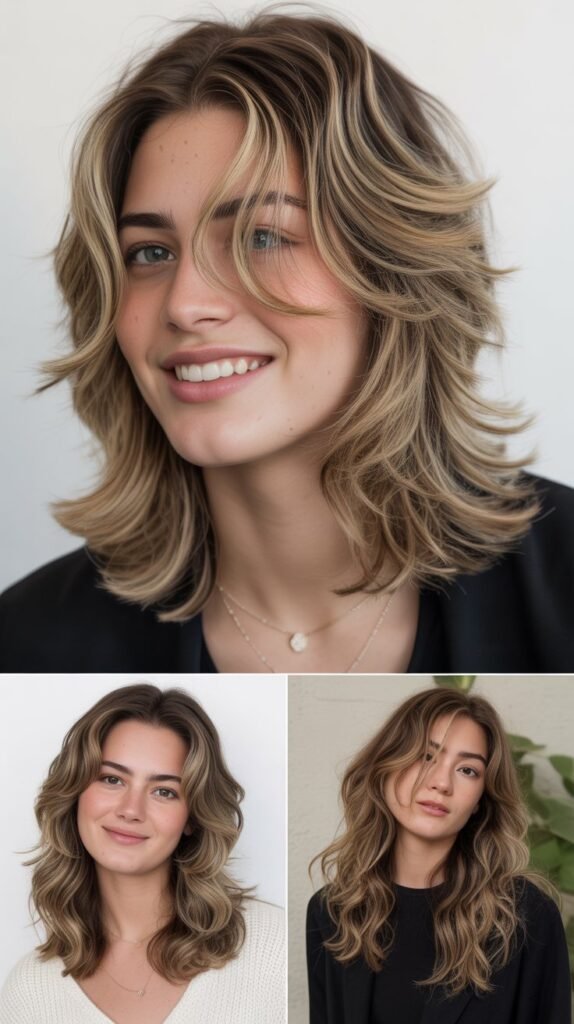
Stacked front layers create a tiered effect where multiple distinct layer lengths are visible, producing dramatic dimension and volume around the face.
This structured approach adds significant shape while removing weight from thick hair’s heaviest areas.
- Stacked layers feature noticeable separation between lengths rather than seamless blending.
- Multiple tiers are cut at the front, typically ranging from chin to collarbone to shoulder length.
- The stacked effect creates substantial volume and movement that’s impossible to miss.
- This technique works excellently for thick hair as each tier removes weight while adding dimension.
- The structured layering makes styling predictable and easy to maintain at home.
- Blow-drying with a round brush at each tier emphasizes the stacked effect and adds volume.
- This cut flatters oval and heart-shaped faces by adding width at the cheekbones and temples.
38. Feathered Bang Blend
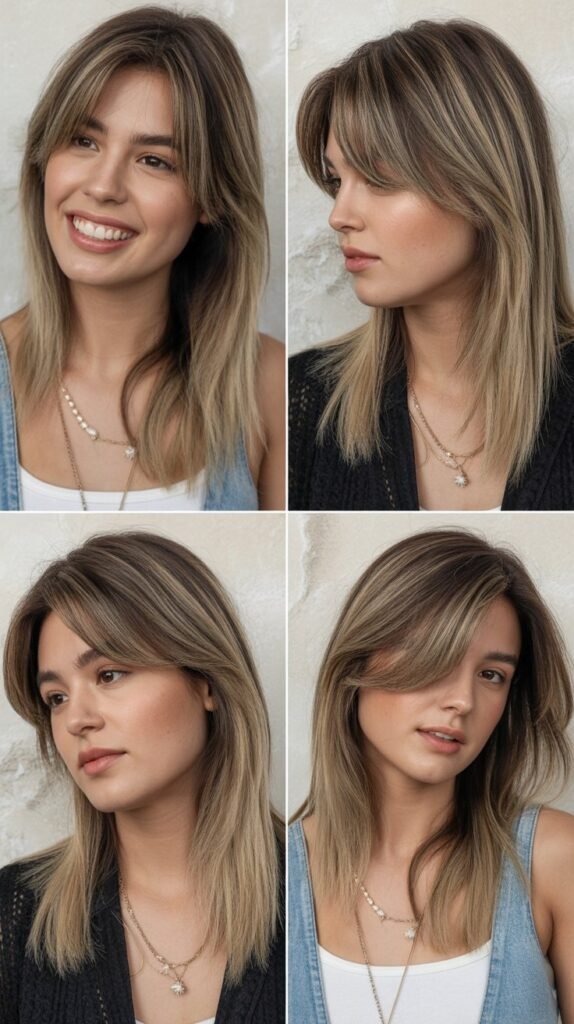
Feathered bang blend creates a seamless transition from bangs into longer layers, where the distinction between fringe and layers becomes beautifully blurred.
This soft approach adds dimension without harsh lines or obvious demarcation.
- The fringe is feathered using point-cutting or razor techniques for ultra-soft ends.
- Longer pieces at the edges of the bang blend imperceptibly into the face-framing layers.
- This creates a cohesive, flowing appearance where no harsh lines interrupt the style.
- The seamless blend works particularly well for thick hair by distributing volume evenly.
- This approach prevents the “shelf” effect that can occur with blunt bangs on thick hair.
- The soft transition allows for versatile styling—bangs can be worn down or swept to the sides easily.
- Maintenance is straightforward as the blended nature means slight growth doesn’t drastically alter the look.
39. Dimensional Crown Layers
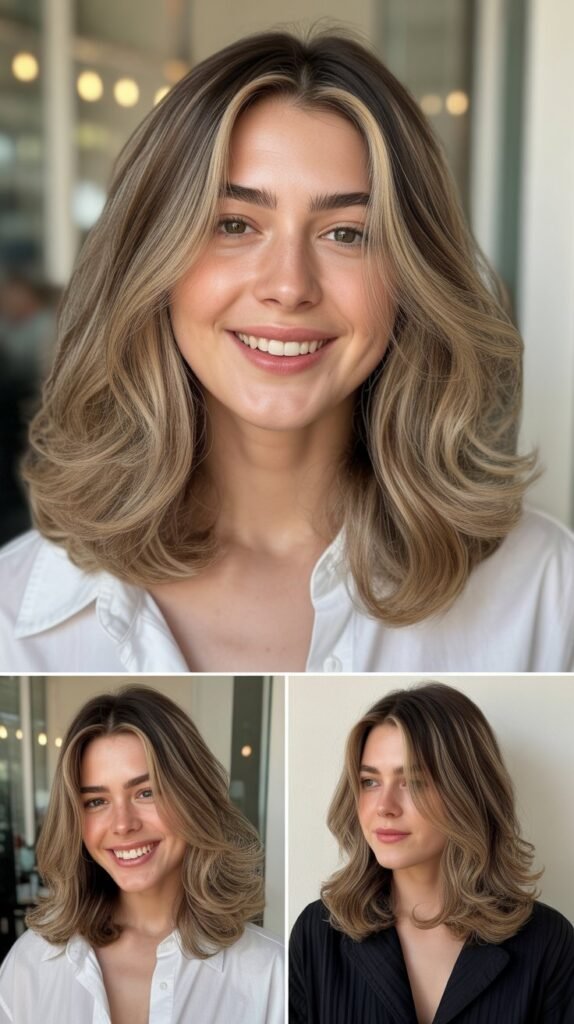
Dimensional crown layers concentrate varying lengths at the top of the head, creating lifted volume and movement that prevents flat, lifeless hair.
This technique adds height and shape where thick hair often lies heavy against the scalp.
- Multiple layer lengths at the crown create dimension and prevent the one-dimensional flatness thick hair can have.
- The shortest layers at the crown are typically 3-5 inches long, progressively lengthening downward.
- This layering removes weight from the heaviest area and allows the crown to lift naturally.
- Dimensional layering creates an optical illusion of more volume and fullness throughout.
- The technique works exceptionally well for thick hair that tends to collapse at the roots.
- Styling with volumizing mousse and blow-drying upside down enhances the lifted effect.
- This approach flatters all face shapes by adding overall balance and proportion to the silhouette.
40. Side-Swept Layers with Deep Part
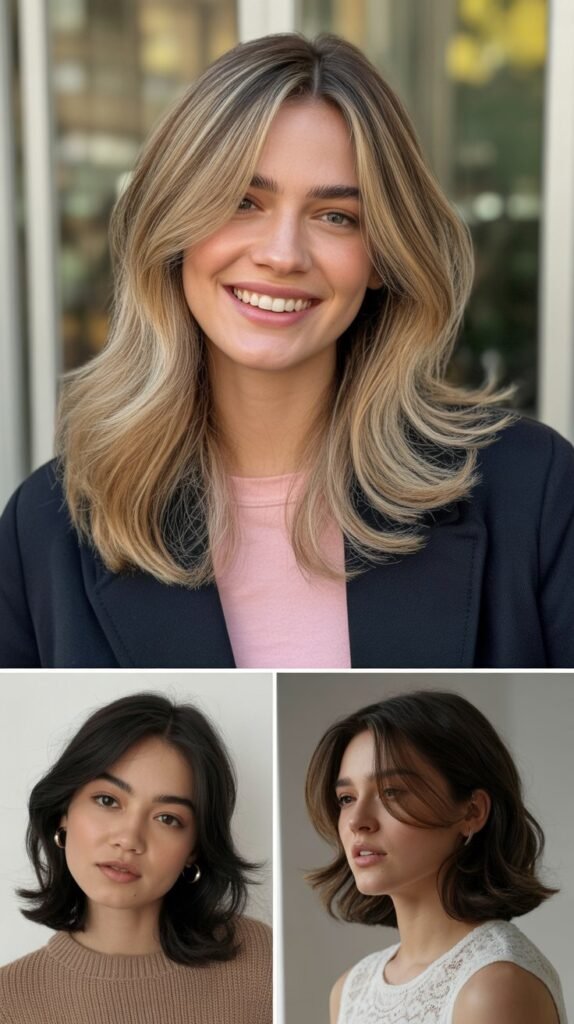
Side-swept layers combined with a deep side part create dramatic asymmetry and movement, where layers flow elegantly in one direction.
This glamorous styling technique makes thick hair appear intentionally styled and red-carpet ready.
- A deep side part divides hair dramatically unevenly, with 70-80% falling to one side.
- Layers are cut to enhance the sweeping movement toward the heavier side.
- The asymmetrical appearance adds sophistication and works beautifully for special occasions.
- Side-swept styling removes visual weight from the face and creates a slimming effect.
- This technique showcases layers beautifully as they cascade in visible tiers across one side.
- Styling with a large paddle brush toward the sweep direction ensures smooth, flowing movement.
- The dramatic part flatters oval, round, and square faces by creating diagonal lines.
41. Choppy Mid-Length Front Pieces
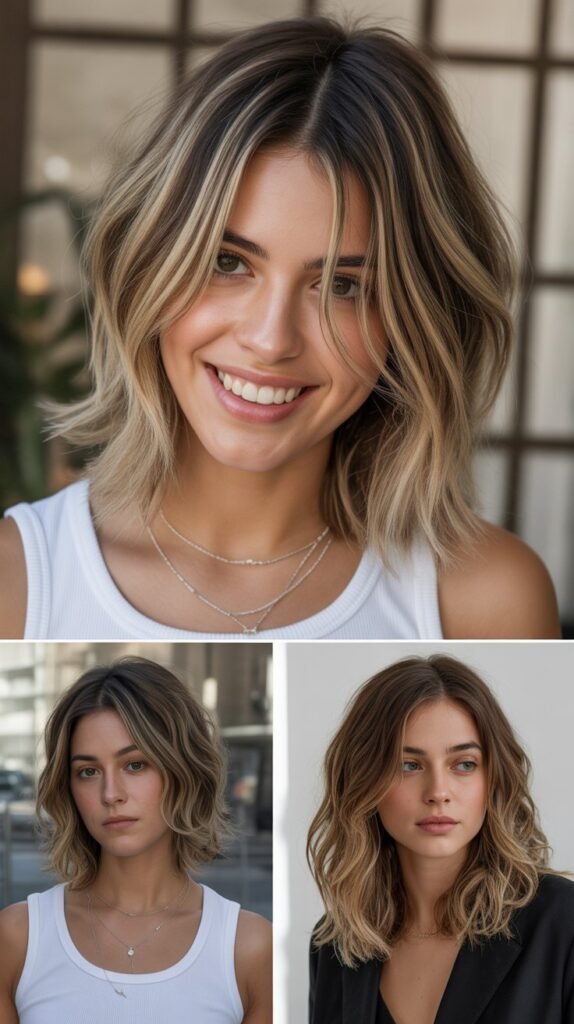
Choppy mid-length front pieces create edgy, intentionally uneven framing that falls between chin and shoulder length.
This modern approach adds personality and dimension while maintaining the versatility of longer hair behind.
- Front pieces are cut with deliberate choppiness using point-cutting or razor techniques.
- The mid-length placement (chin to shoulder) provides substantial framing without being too short.
- Choppy texture creates separation and definition that adds visual interest and dimension.
- This style removes significant weight from the front while maintaining length in the back.
- The edgy framing suits those with alternative or fashion-forward personal styles.
- Styling with texturizing products enhances the choppy, piece-y effect and separation.
- The mid-length placement is versatile enough for both casual and dressed-up occasions.
42. Graduated Length Face Frame
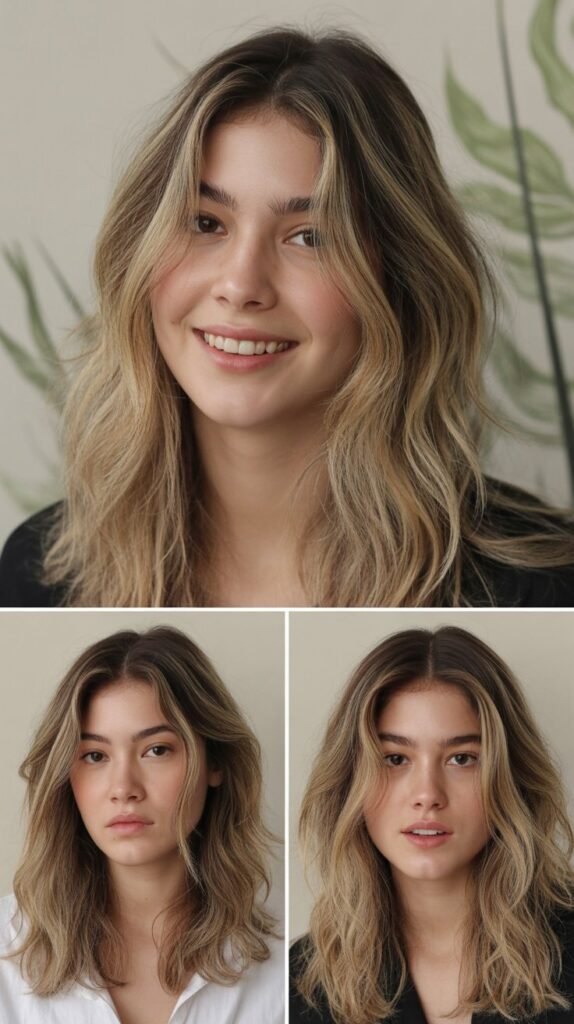
Graduated length face-framing features progressively longer pieces that create a smooth, flowing transition from shortest at the top to longest at the bottom.
This structured technique adds dimension while maintaining a polished, intentional appearance.
- The shortest pieces begin at the temples or cheekbones and gradually lengthen downward.
- Each successive section is slightly longer, creating a smooth gradient without abrupt changes.
- The graduated approach adds dimension and movement while maintaining a cohesive look.
- This technique works excellently for thick hair by removing bulk in a controlled, structured manner.
- The flowing transition flatters all face shapes by creating customizable framing.
- Styling is straightforward as the graduated lengths naturally fall into place.
- The polished appearance suits professional settings and those preferring refined aesthetics.
43. Textured Wispy Ends
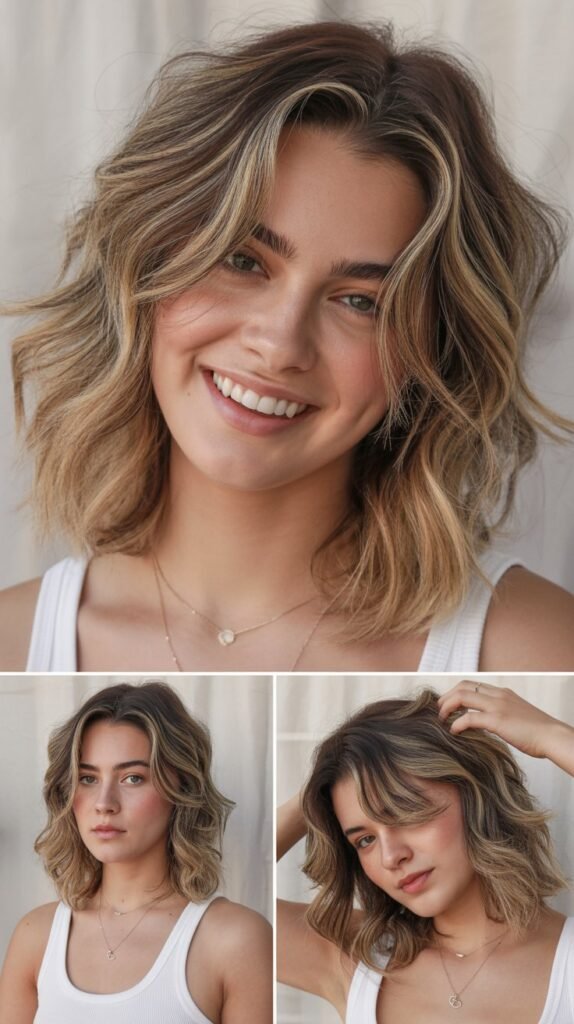
Textured wispy ends throughout the hair create a soft, delicate finish that lightens thick hair’s appearance.
This finishing technique uses point-cutting or razor methods to thin and soften all layer ends for maximum movement and femininity.
- All layer ends are texturized to create soft, wispy tips rather than blunt lines.
- Point-cutting removes weight from the very ends while maintaining length and fullness above.
- The wispy finish adds movement and prevents thick hair from looking heavy or harsh.
- This technique creates a lived-in, effortless appearance that requires minimal styling.
- Textured ends catch light beautifully and move naturally with any head movement.
- The soft finish works for both straight and wavy hair textures, adapting to natural patterns.
- Regular trims every 6-8 weeks maintain the wispy texture and prevent split ends.
44. Long Swoopy Side Bang
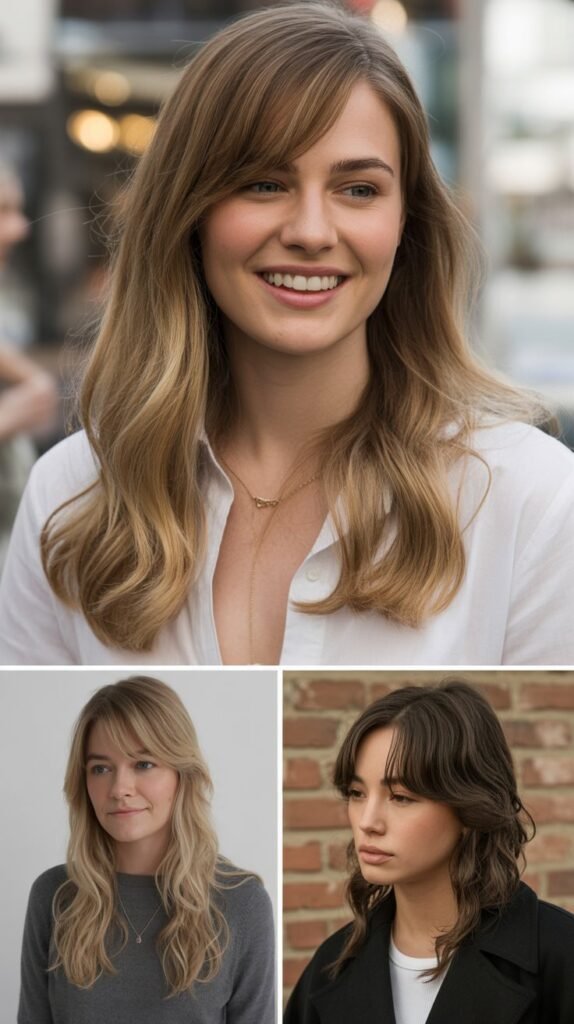
A long swoopy side bang creates dramatic, eye-catching framing that sweeps gracefully across the forehead and cheekbone.
This glamorous element adds movement and dimension while maintaining the length and thickness of the overall style.
- The side bang is cut long enough to reach the cheekbone or chin when swept to the side.
- A sweeping curve is built into the cut, creating natural movement in one direction.
- The long length provides versatility—the bang can be worn swept or blended into layers.
- This style removes weight from the front while adding a statement-making element.
- The swoopy bang flatters most face shapes by creating diagonal lines that are universally slimming.
- Styling with a round brush creates the signature curve and emphasizes the sweeping movement.
- Regular trims every 4-6 weeks maintain the optimal length and shape of the bang.
45. Invisible Front Layers
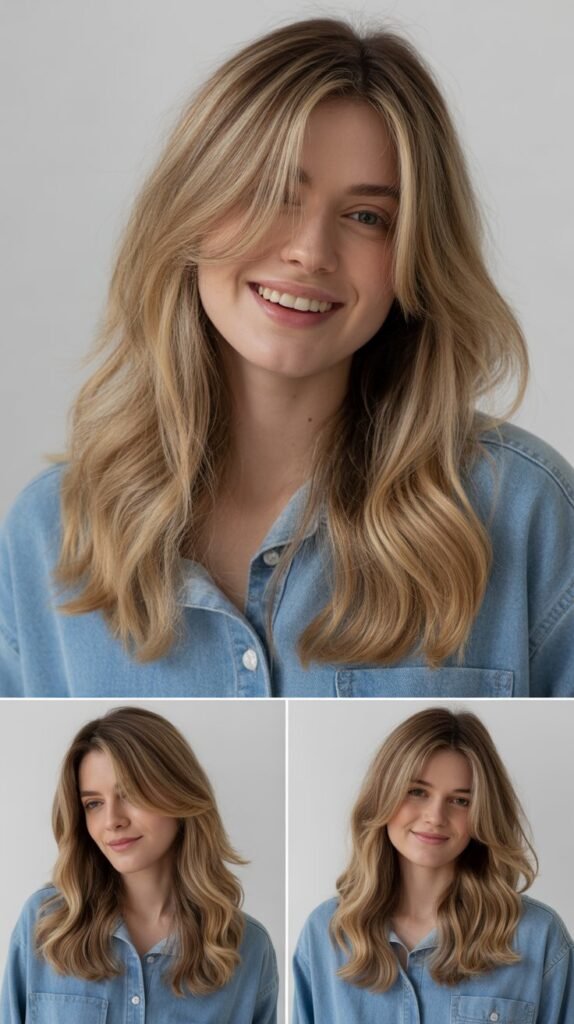
Invisible front layers create subtle dimension and remove weight without obvious layering lines visible from the front view.
This stealthy technique maintains a uniform appearance while delivering the benefits of layered hair.
- Layers are cut at the interior and underneath, invisible when viewing the hair from the front.
- The technique removes bulk and weight without altering the external silhouette or perimeter.
- Invisible layering maintains a polished, one-length appearance while adding hidden movement.
- This approach is perfect for conservative environments where dramatic layering isn’t appropriate.
- The hidden layers become visible when hair moves, creating surprise dimension and interest.
- Thick hair benefits tremendously as weight is removed without sacrificing the appearance of fullness.
- The seamless nature means minimal maintenance as the layers grow out gracefully.
46. Feathered Face-Framing Pieces
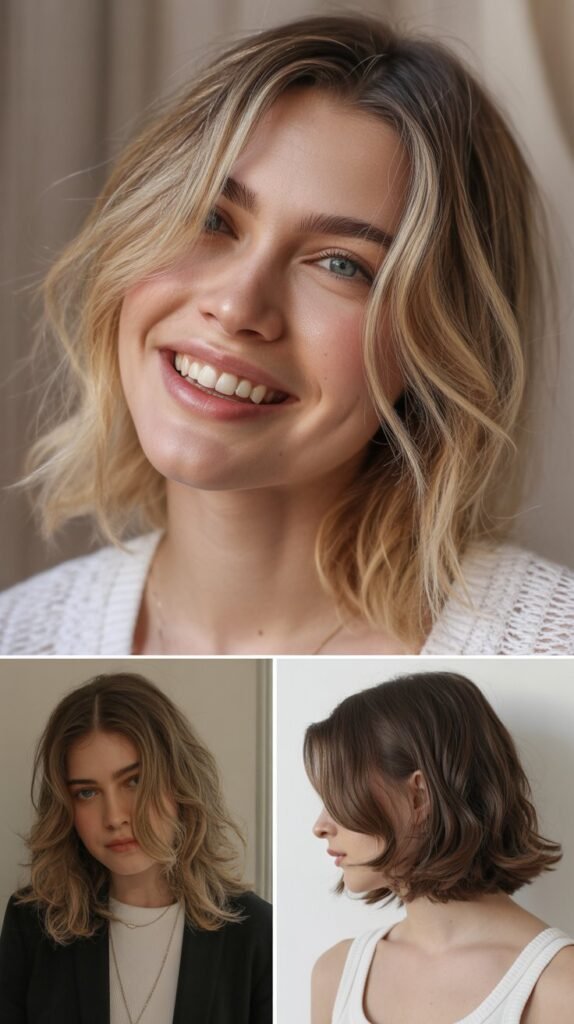
Feathered face-framing pieces create ultra-soft, delicate framing through gentle feathering techniques that produce wispy, flowing sections around the face.
This feminine approach adds dimension without harsh lines or heavy framing.
- Face-framing pieces are cut and then feathered to create soft, tapered ends.
- The feathering technique produces a lighter, more delicate effect than blunt-cut framing.
- Multiple lengths within the face-framing sections add dimension and movement.
- This style works beautifully for thick hair as the feathering removes weight while maintaining softness.
- The delicate framing flatters all face shapes by creating gentle, flowing lines.
- Styling is minimal as the feathered texture naturally creates movement and flow.
- The soft appearance suits romantic, feminine personal styles and works for any occasion.
47. Layered Peek-a-Boo Fringe
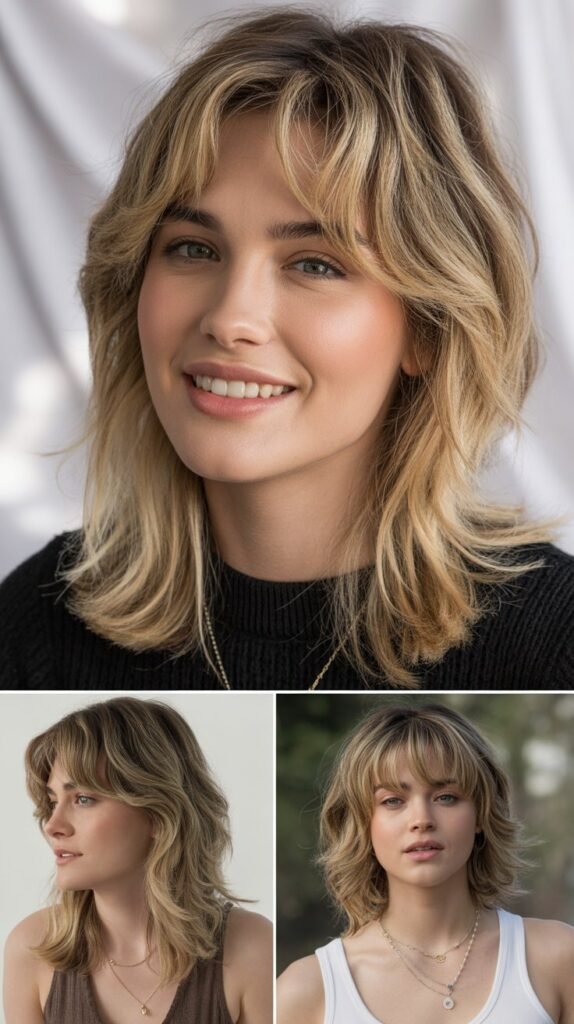
Layered peek-a-boo fringe features longer side pieces with a shorter center section, creating an intentional gap that reveals the forehead.
This playful approach adds dimension and personality while offering versatility in styling options.
- The center fringe section is cut shorter, typically ending at eyebrow length or above.
- Side pieces are significantly longer, often reaching the cheekbones or chin.
- This creates an intentional opening at the center that shows glimpses of forehead.
- Layers within the fringe add texture and prevent it from lying too flat or heavy.
- The peek-a-boo effect is playful yet sophisticated, suitable for various style preferences.
- Styling allows versatility—the fringe can be worn with the gap visible or brushed together.
- This cut flatters oval and heart-shaped faces by adding visual interest at the forehead.
48. Soft Internal Layering with Blunt Perimeter
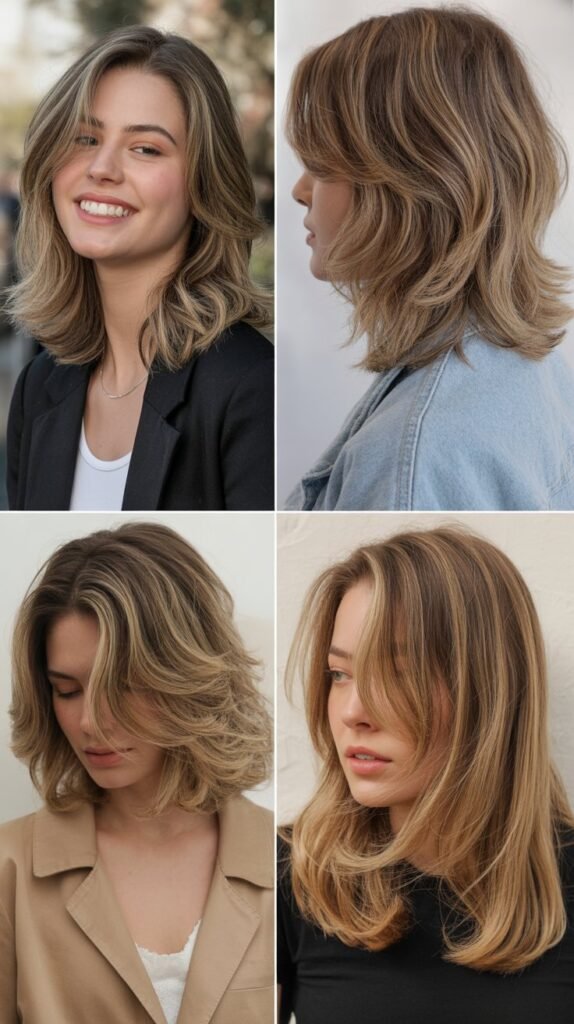
Soft internal layering combined with a blunt perimeter maintains a uniform exterior while removing substantial weight from within.
This sophisticated technique gives you the manageability of layers with the appearance of thick, full hair.
- Internal layers are cut underneath the top layer, invisible from most angles.
- The perimeter remains completely blunt and uncut, preserving maximum thickness.
- This creates the illusion of thick, one-length hair while providing the benefits of layering.
- Soft internal layering removes weight without creating visible steps or tiers.
- The technique is perfect for those who want easier styling without sacrificing appearance of fullness.
- This approach works exceptionally well in professional environments requiring polished aesthetics.
- Maintenance is minimal as the hidden layers grow out without creating obvious awkward lengths.
Conclusion
Finding the perfect layered hairstyle for long, thick hair can transform your entire look and daily routine.
Throughout this comprehensive guide to 48 Best Front-Layered Hair Ideas for Long, Thick Hair, we’ve explored a diverse range of cutting techniques—from subtle, invisible layers that maintain a uniform appearance to bold, dramatic shag cuts that make a statement.
Whether you’ve been inspired by the romantic softness of curtain bangs with cascading layers, the edgy appeal of choppy textured pieces, or the sophisticated polish of graduated face-framing layers, there’s a style here that matches your personality and lifestyle.
The key to success with layered thick hair lies in choosing a technique that removes weight where you need it while maintaining the fullness you love.
Remember that regular maintenance, proper styling products, and honest communication with your stylist ensure your layers always look their best.
Don’t be afraid to bring reference photos and ask questions during your consultation. With the right layered cut tailored to your face shape, hair texture, and personal style, your long, thick hair will become your most beautiful, manageable, and confidence-boosting asset.
Take the leap and embrace the transformative power of strategic layering—your perfect hair day awaits.
