Finding the perfect hairstyle can feel overwhelming, but medium-length layered cuts offer incredible versatility that flatters virtually everyone.
Whether you have a round, oval, square, heart-shaped, or diamond face, the right layering technique can enhance your natural features and transform your entire look.
This comprehensive guide to 37 Medium-Length Hairstyles with Layers That Work for Every Face Shape will walk you through the best cutting techniques, styling methods, and face-framing options that work harmoniously with your unique bone structure.
From subtle feathered layers to bold choppy cuts, you’ll discover how strategic layering creates movement, adds volume where needed, and balances proportions effortlessly.
Get ready to explore dimensional cuts, texturized ends, curtain bangs combinations, and modern interpretations of classic styles that will inspire your next salon visit and help you achieve a hairstyle that truly celebrates your individual beauty.
1. Face-Framing Layers for Round Faces
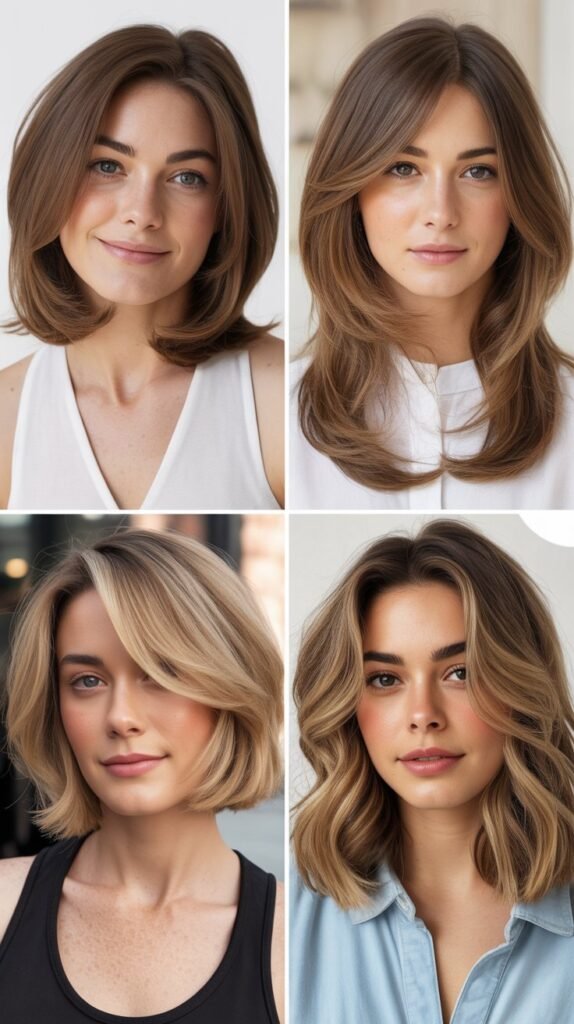
Face-framing layers are specifically designed to create vertical lines that elongate round face shapes and add definition to soft features.
These strategic cuts draw attention downward and create the illusion of length while maintaining the versatility of medium hair.
- Face-framing layers work by creating angled cuts that start around the cheekbones and gradually blend into longer lengths.
- The key is keeping layers longer in the front to avoid adding width at the widest part of the face.
- Angled layers that sweep forward create shadows and dimension that slim the appearance of round cheeks.
- Starting layers below the chin rather than at cheek level prevents emphasizing facial roundness.
- Combining face-framing layers with a middle part enhances the elongating effect significantly.
- Texturizing the ends of these layers adds movement without creating bulk around the face.
- This technique pairs beautifully with subtle balayage to create depth and visual interest.
- Styling with a slight wave or bend away from the face maximizes the slimming benefits.
2. Choppy Layers for Oval Faces
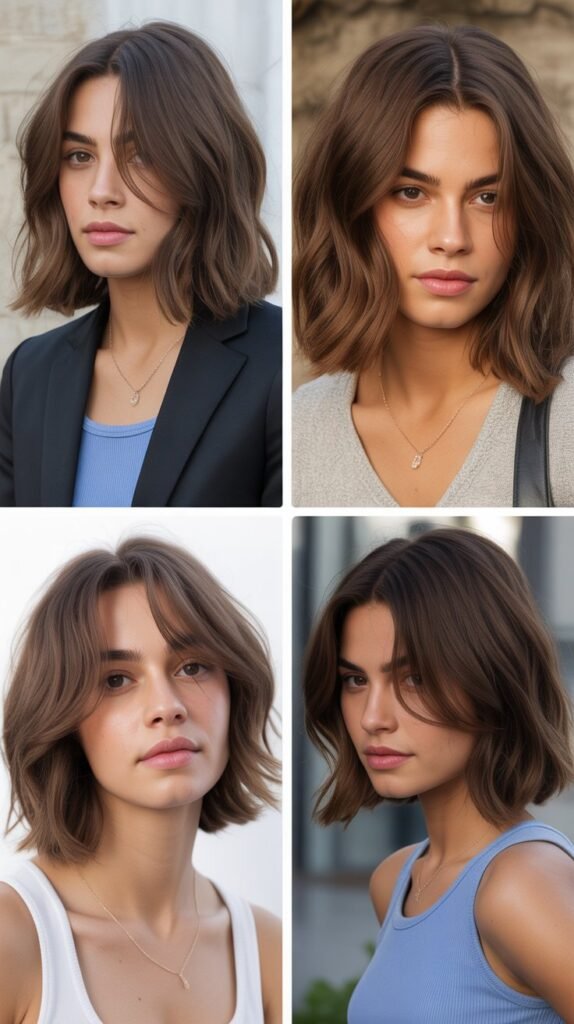
Oval faces are considered the most versatile face shape, and choppy layers take full advantage of this balanced proportion by adding edgy texture and contemporary style.
This cutting technique creates an effortlessly cool, lived-in look that works for both casual and professional settings.
- Choppy layers involve cutting hair at varying lengths with more aggressive point-cutting techniques.
- This creates a deliberately uneven, textured appearance that adds dimension and movement.
- The beauty of choppy layers on oval faces is that they can be placed throughout the hair without worrying about balance.
- Point-cutting and razor techniques remove weight while maintaining length and fullness.
- Choppy layers work exceptionally well with straight to slightly wavy hair textures.
- Adding layers throughout the crown area creates natural volume and lift at the roots.
- This style requires minimal styling effort—a texturizing spray and air-drying often suffice.
- Choppy layers can be customized to be subtle and sophisticated or bold and dramatic depending on preference.
3. Long Layers for Square Faces
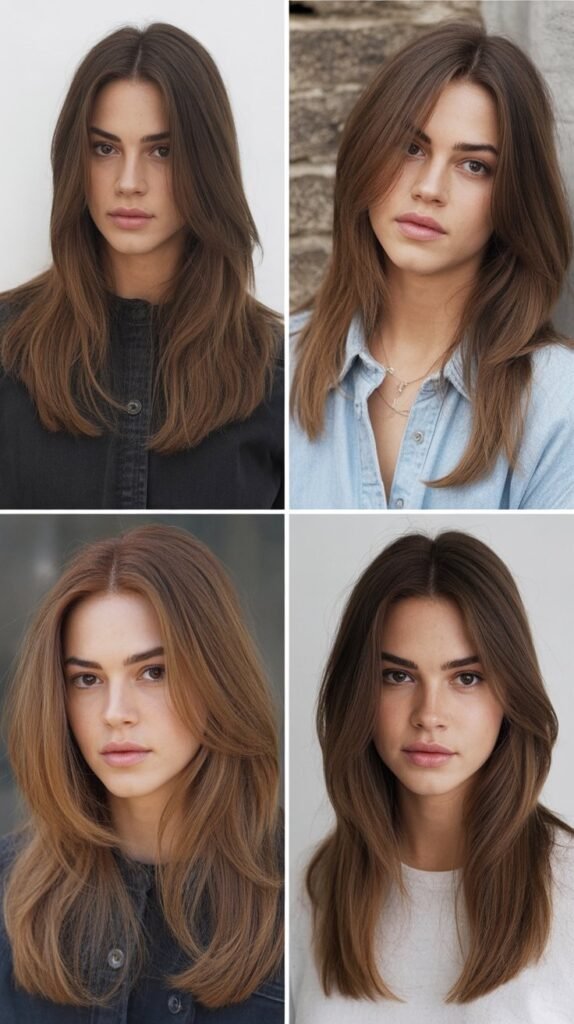
Long layers soften the angular jawline characteristic of square face shapes by creating curved lines and gentle movement around the lower face.
These flowing layers add femininity while maintaining the structural integrity of medium-length hair.
- Long layers for square faces should begin below the jawline to avoid emphasizing the jaw’s width.
- The goal is creating soft, rounded shapes that contrast with the face’s natural angles.
- Keeping substantial length in the layers prevents the style from appearing too choppy or disconnected.
- Long layers work beautifully when styled with loose waves that curve inward around the jawline.
- Side-swept bangs or longer curtain bangs complement long layers by softening forehead angles.
- Avoiding blunt cuts at jaw level is crucial as they can accentuate rather than balance square features.
- Long layers create a cascading effect that draws the eye vertically rather than horizontally.
- This technique maintains hair’s natural weight while removing just enough bulk for movement.
4. Feathered Layers for Heart-Shaped Faces

Feathered layers create soft, delicate texture that balances the wider forehead and narrower chin typical of heart-shaped faces.
This classic technique has been modernized to provide volume at the lower portions of the hair while keeping the crown area sleek.
- Feathered layers are cut with scissors held at an angle to create soft, tapered ends.
- This technique removes harsh lines and creates a gentle, feather-like appearance.
- For heart-shaped faces, concentrating feathered layers from cheekbone level downward adds width where needed.
- The softness of feathered cuts prevents drawing attention to a pointed chin.
- Keeping the crown and top layers less textured avoids adding volume to an already wider forehead.
- Feathered layers respond beautifully to blow-drying with a round brush for maximum movement.
- This style works with various hair textures from straight to moderately wavy.
- Side parts work particularly well with feathered layers on heart-shaped faces to create asymmetrical balance.
5. Blunt Layers for Diamond Faces

Diamond face shapes feature prominent cheekbones with a narrower forehead and chin, and blunt layers create horizontal lines that add width to the upper and lower face for beautiful balance.
This technique combines the precision of blunt cuts with the movement of layering.
- Blunt layers are cut straight across at various lengths rather than being tapered or feathered.
- This creates distinct sections with more weight and visible separation between layers.
- For diamond faces, blunt layers at chin and collarbone level add necessary width.
- The clean lines of blunt layers create a polished, sophisticated appearance.
- This technique works exceptionally well with straight hair that can showcase the precision of the cut.
- Blunt layers can be styled sleek for a modern look or with texture for edgier appeal.
- Adding subtle highlights to blunt layers emphasizes their dimensional quality.
- Maintenance is relatively easy as the clean lines grow out gracefully.
6. Curtain Bangs with Layers
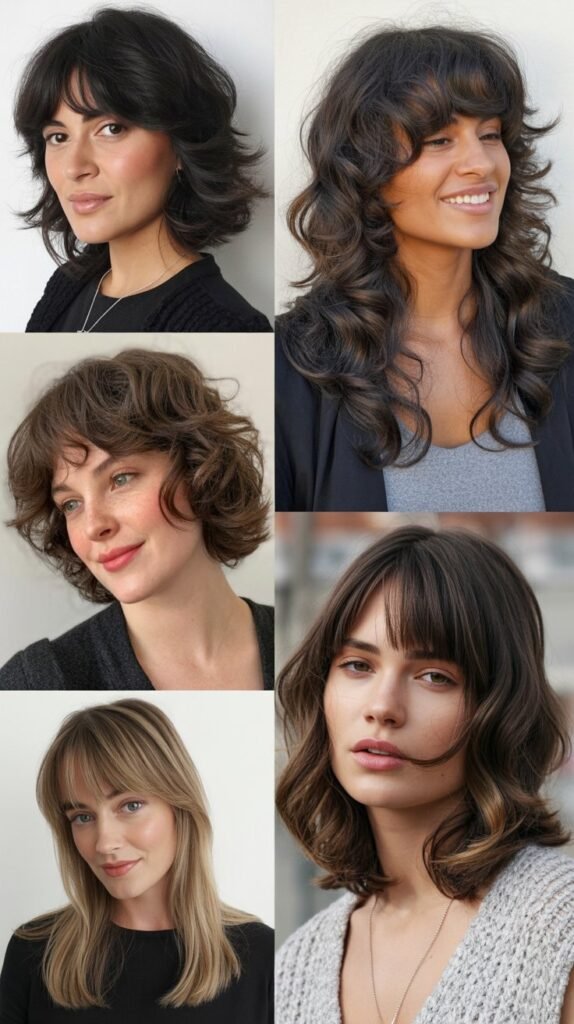
Curtain bangs paired with layers create a universally flattering frame that works with virtually every face shape while adding a trendy, youthful element.
This combination offers versatility in styling and effortlessly enhances facial features.
- Curtain bangs are parted down the middle and swept to either side, framing the face symmetrically.
- The length of curtain bangs typically ranges from eyebrow to cheekbone level.
- Layering the rest of the hair creates cohesion between the bangs and overall style.
- Curtain bangs soften strong features while highlighting eyes and cheekbones.
- This style works with straight, wavy, and curly textures with appropriate styling techniques.
- The versatility allows for styling bangs forward for drama or swept back for a softer look.
- Curtain bangs grow out gracefully and can be easily blended into face-framing layers.
- Combining curtain bangs with textured layers throughout creates a effortlessly chic, French-girl aesthetic.
7. Shaggy Layers for Texture Lovers
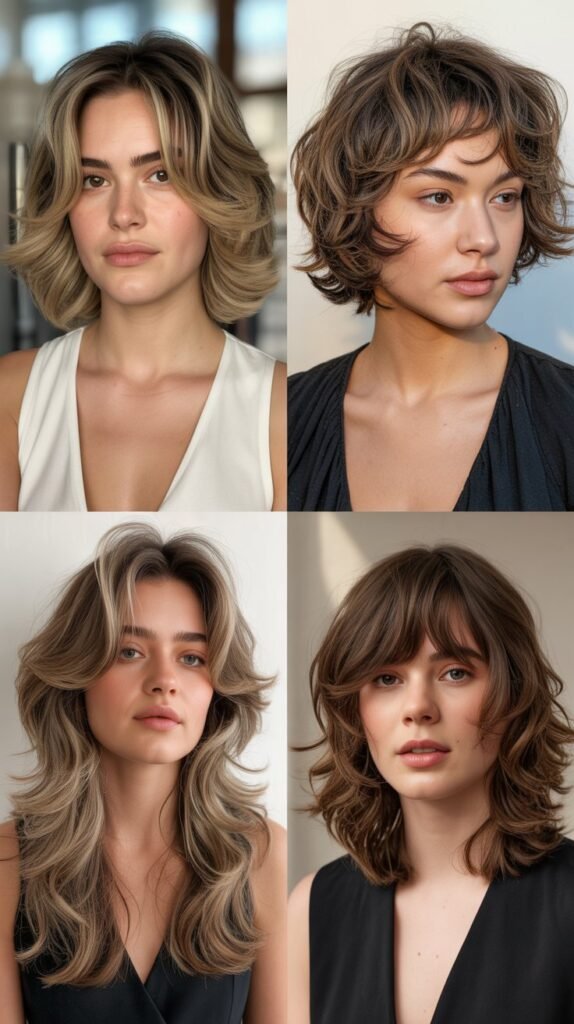
Shaggy layers embrace texture and volume through deliberately messy, heavily layered cuts that create maximum movement and a carefree vibe.
This style has made a major comeback as a modern interpretation of the classic 1970s shag.
- Shaggy layers involve cutting numerous layers throughout the hair at varying lengths.
- This technique removes significant weight while maintaining overall length and fullness.
- The disconnected nature of shaggy layers creates natural volume and lift.
- Razor cutting is often employed to create the soft, feathered edges characteristic of shags.
- Shaggy layers work beautifully with natural texture, whether wavy or curly.
- This style requires texturizing products to enhance the piece-y, separated look.
- Shorter layers around the crown add height and dimension to the silhouette.
- The beauty of shaggy layers is their low-maintenance, wash-and-go potential.
8. V-Shaped Layers for Added Length
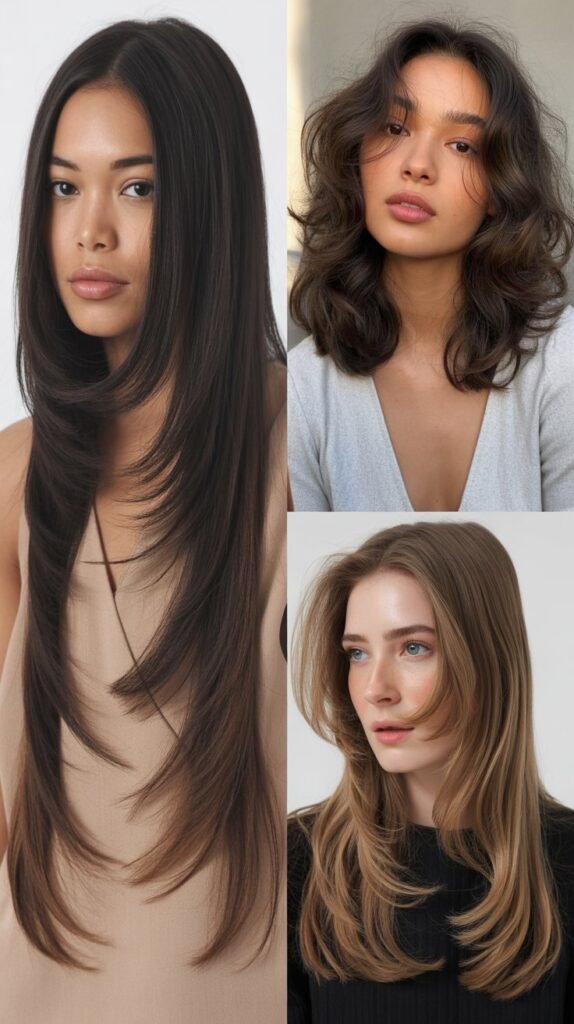
V-shaped layers create a dramatic tapered effect where the back hair is longest and gradually shortens toward the front, forming a V-shape when viewed from behind.
This technique adds visual interest while maintaining substantial length.
- The V-shape is created by cutting the back hair longer than the sides and front.
- This creates a pointed, elongated appearance at the center back.
- V-shaped layers add drama without sacrificing the security of having longer hair.
- The graduated cut creates natural movement and prevents a heavy, blunt appearance.
- This technique works well for those growing out shorter styles.
- V-shaped layers can be combined with face-framing pieces for comprehensive styling.
- The shape is particularly visible with straight hair but creates beautiful dimension in wavy hair.
- Styling the V-shape with curls or waves showcases the layering beautifully.
9. Razor-Cut Layers for Fine Hair

Razor-cut layers use a razor blade instead of scissors to create ultra-soft, feathered ends that add the illusion of thickness to fine hair.
This technique removes weight without removing volume, making it ideal for those with thinner hair textures.
- Razor cutting creates a softer, less blunt edge than scissor cutting.
- The technique involves slicing into the hair at an angle rather than cutting straight across.
- For fine hair, this prevents a thin, stringy appearance at the ends.
- Razor-cut layers blend seamlessly, creating a cohesive, flowing appearance.
- This method is particularly effective for creating wispy, romantic textures.
- The softness of razor-cut ends makes styling easier and more forgiving.
- Fine hair appears fuller because the tapered ends blend and overlap naturally.
- Maintenance involves regular trims to maintain the soft, feathered quality.
10. Disconnected Layers for Thick Hair
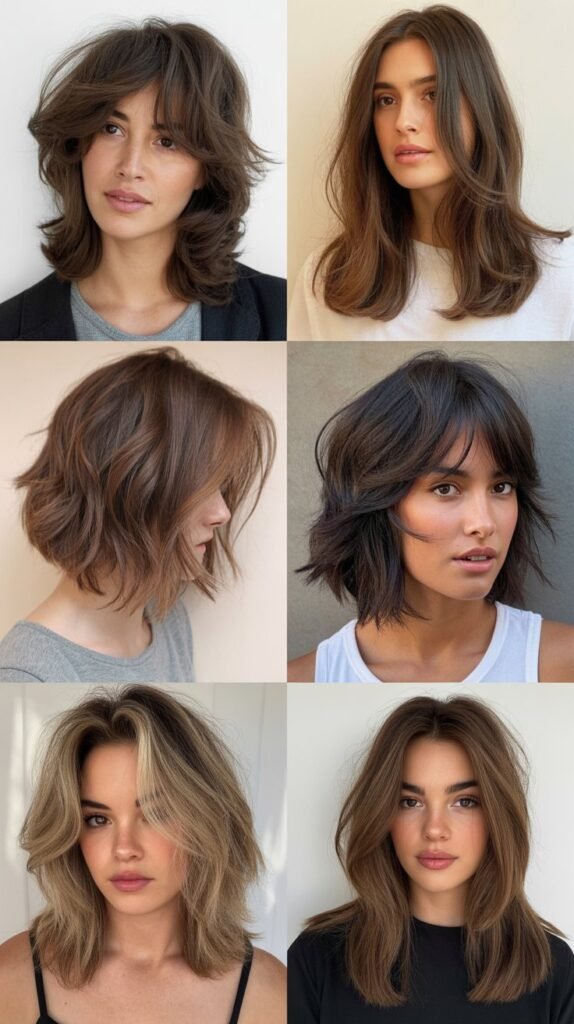
Disconnected layers feature more dramatic separation between layer lengths, creating distinct sections that remove bulk from thick hair while maintaining fullness.
This technique provides essential relief from weight while showcasing texture.
- Disconnected layers have noticeable gaps in length between each layer.
- This creates a more dramatic, editorial appearance compared to blended layers.
- For thick hair, disconnected layers remove substantial weight without thinning the overall appearance.
- The technique prevents the “triangle” shape that often occurs with thick, medium-length hair.
- Disconnected layers create natural lift at the crown by removing heavy ends.
- This style works exceptionally well with wavy and curly thick hair.
- The separation between layers creates beautiful dimension when highlighted or balayaged.
- Styling products that enhance separation and definition work best with this cut.
11. Side-Swept Layers with Deep Part
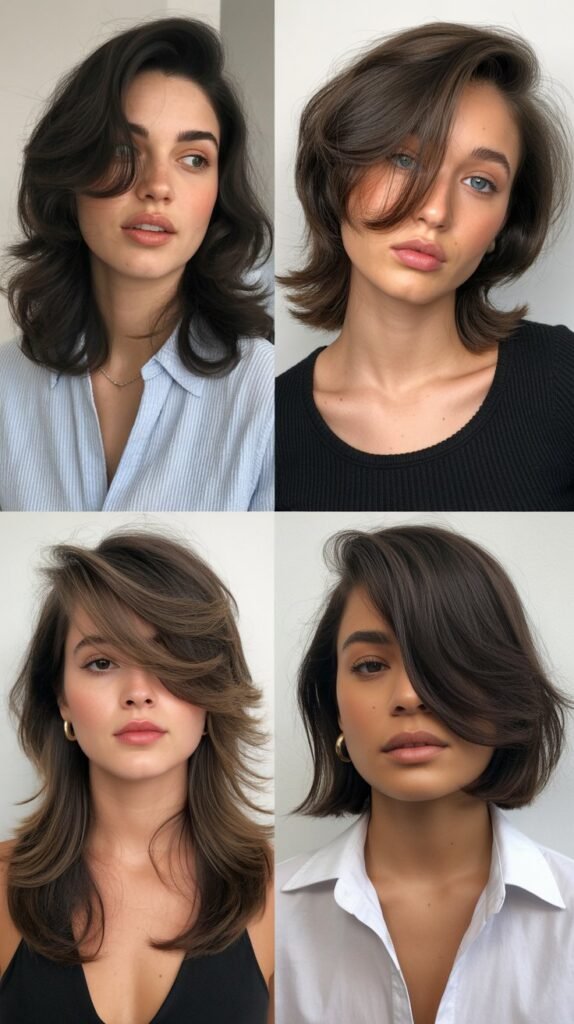
Side-swept layers combined with a deep side part create asymmetrical beauty that adds volume on one side while creating sleek elegance on the other.
This classic styling approach works across all face shapes with proper customization.
- A deep side part typically begins at or beyond the arch of one eyebrow.
- This creates an intentionally unbalanced look that adds drama and sophistication.
- Side-swept layers should be cut to fall naturally in the direction of the sweep.
- The technique adds volume to one side while the other remains sleek against the head.
- This style elongates the face and creates the illusion of height.
- Side-swept layers work beautifully for formal events and everyday wear alike.
- The asymmetry naturally frames the face and highlights bone structure.
- Styling with a flat iron or round brush enhances the smooth, polished finish.
12. Graduated Layers for Volume
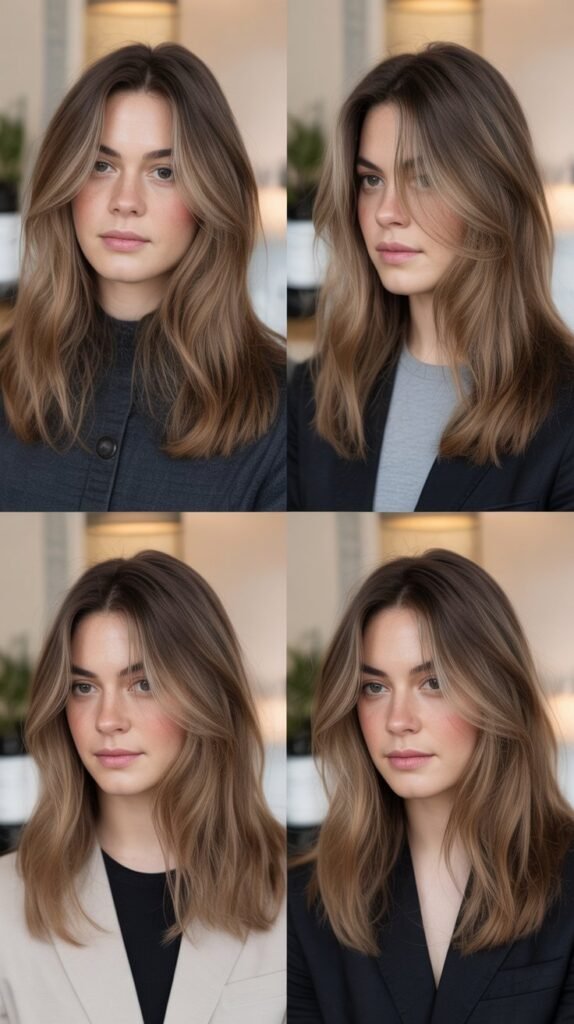
Graduated layers are stacked in a way that creates maximum volume at the crown and back while maintaining length around the face.
This architectural approach to layering adds dimension and lift for those seeking fuller-looking hair.
- Graduated layers are cut progressively shorter from the perimeter to the crown.
- This creates a stacked effect similar to a bob but with medium-length hair.
- The technique adds significant volume and roundness to the back of the head.
- Graduated layers work particularly well for fine to medium hair textures.
- The crown area receives the most layering for maximum lift and body.
- Face-framing pieces remain longer to maintain a balanced proportion.
- This style requires regular maintenance to keep the graduated shape intact.
- Blow-drying with a round brush emphasizes the volumized, rounded silhouette.
13. Wispy Layers for a Soft Look
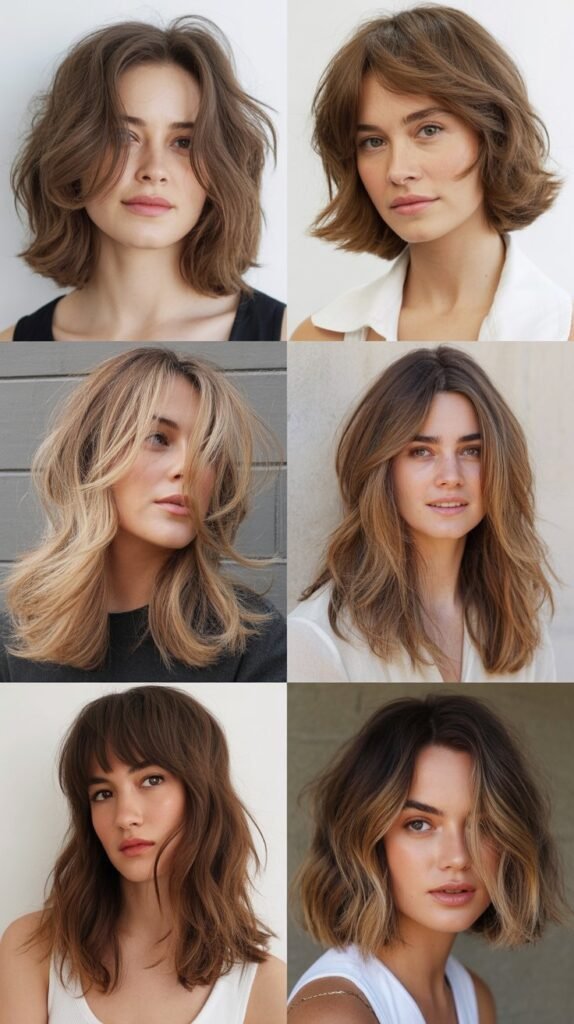
Wispy layers create an ultra-feminine, delicate appearance through soft, fine texture throughout the ends and face-framing pieces.
This ethereal approach to layering adds romance without heavy structure.
- Wispy layers are created using thinning shears and point-cutting techniques.
- The goal is removing weight while creating soft, fine ends that appear almost transparent.
- Wispy face-framing layers add gentleness around the features without harsh lines.
- This technique works beautifully for those wanting a romantic, feminine aesthetic.
- The softness of wispy layers flatters mature skin by creating a youthful appearance.
- Styling with minimal product preserves the delicate, airy quality.
- Wispy layers work with various hair types but are particularly striking on medium to fine textures.
- The technique requires a skilled stylist to avoid over-thinning or creating frizz.
14. Collarbone-Length Layers
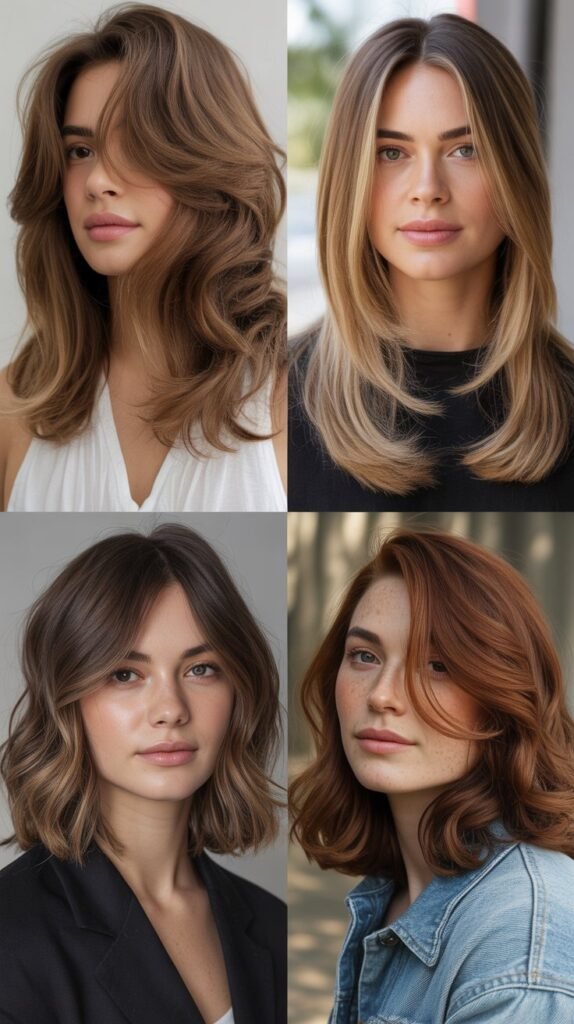
Collarbone-length layers hit at that perfect in-between length that’s neither long nor short, creating a sophisticated, polished look that’s incredibly versatile.
This length with layers provides structure while allowing various styling options.
- Collarbone length typically falls between the shoulders and clavicle bone.
- Layers at this length create movement without appearing too choppy.
- This length is universally flattering and works across all age groups.
- Collarbone-length layers are long enough to tie back but short enough to feel manageable.
- The length naturally frames the face and draws attention to the décolletage.
- Layering at this length prevents a blunt, heavy appearance.
- This style works beautifully with both professional and casual wardrobes.
- Collarbone-length layers can be styled straight, wavy, or curly with equal success.
15. Bouncy Layers for Curly Hair
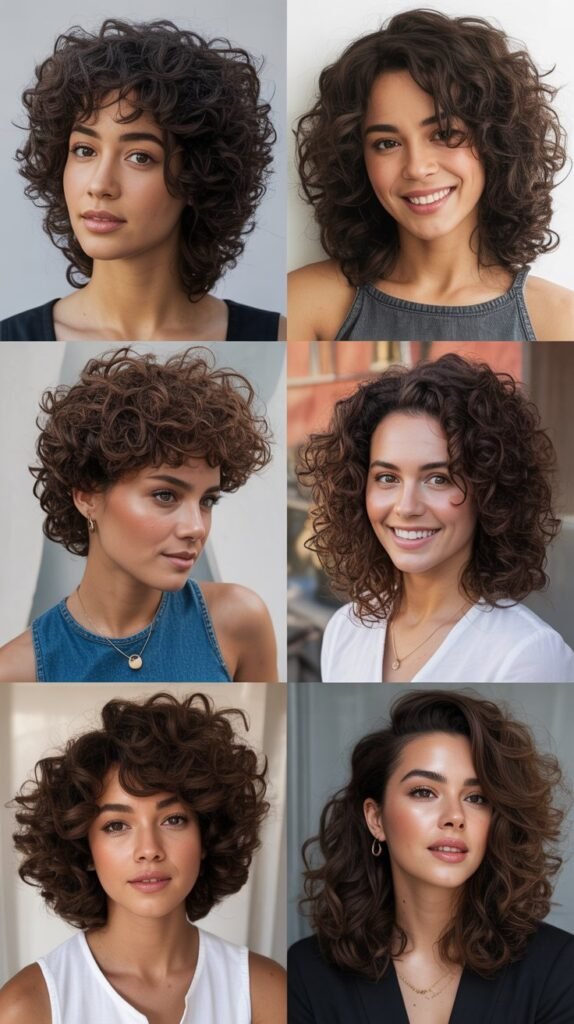
Curly hair benefits tremendously from specialized layering that removes weight while enhancing natural curl pattern and preventing the dreaded pyramid shape.
Bouncy layers celebrate curls’ natural texture while creating a balanced, flattering silhouette.
- Curly hair should be cut dry to see how layers will fall in their natural state.
- Layers remove weight from the bottom to prevent pulling curls down and stretching them.
- The technique creates varying curl lengths that add dimension and movement.
- Shorter layers at the crown add height and prevent flatness at the roots.
- Bouncy layers work with all curl types from loose waves to tight coils.
- Proper layering eliminates the triangular shape that often plagues curly medium-length hair.
- Face-framing curly layers soften features and highlight facial structure.
- Curl-specific cutting techniques ensure each ringlet maintains its integrity.
16. Internal Layers for Subtle Movement
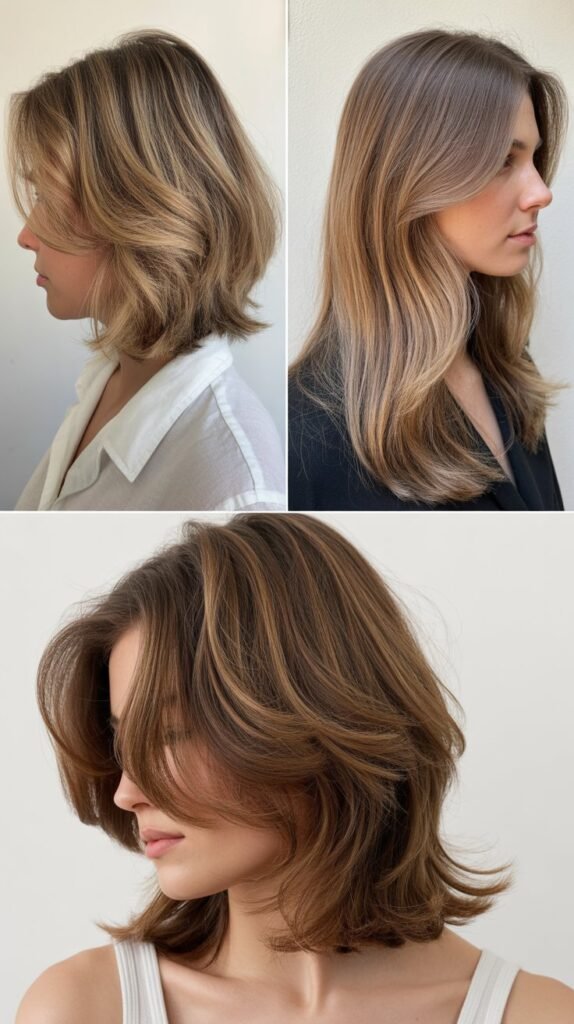
Internal layers are cut underneath the top layer of hair, creating hidden texture and movement that’s not immediately visible but adds dimension when hair moves.
This subtle approach maintains a polished exterior with strategic volume.
- Internal layers are cut into the underlayers while keeping the top surface smooth.
- This technique adds body without creating an obviously layered appearance.
- Internal layering is perfect for professional environments requiring polished looks.
- The hidden layers create natural volume and prevent hair from lying flat.
- This approach works well for those wanting texture without dramatic change.
- Internal layers are particularly effective for thick, heavy hair.
- The technique allows the surface to be styled sleek while the interior provides support.
- Movement becomes apparent when hair is tossed or styled with waves.
17. Asymmetrical Layers for Edgy Style

Asymmetrical layers feature intentionally uneven lengths where one side is cut shorter or differently than the other, creating an avant-garde, fashion-forward appearance.
This bold approach makes a strong style statement.
- Asymmetrical cuts can feature one side shorter than the other or varying layer placement.
- This technique creates visual interest and breaks traditional symmetry.
- Asymmetry works particularly well for those with strong personal style.
- The uneven layers add edge while maintaining the versatility of medium length.
- This style draws attention and becomes a conversation piece.
- Asymmetrical layers can be subtle or dramatically different depending on preference.
- Styling asymmetrical layers often involves emphasizing the difference between sides.
- This cut requires confidence and commitment to maintaining the unique shape.
18. Rounded Layers for Soft Volume
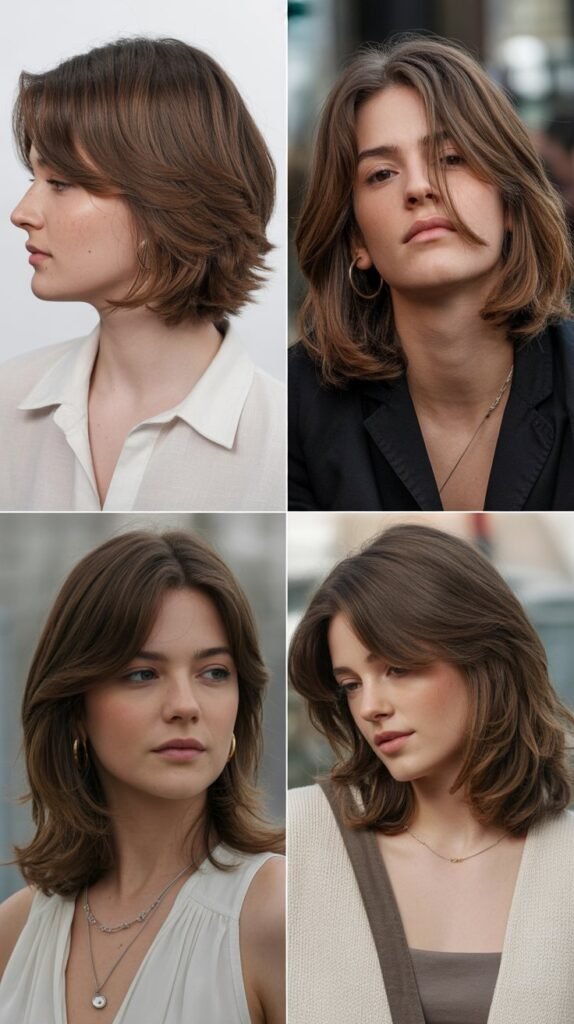
Rounded layers are cut in a circular pattern that creates soft, all-around volume with a gentle, feminine silhouette.
This approach works beautifully for those wanting fullness without harsh angles.
- Rounded layers follow the natural contour of the head for harmonious shape.
- The technique creates even volume around the entire head rather than focusing on one area.
- Rounded layers soften all face shapes by creating curved rather than angular lines.
- This cutting method is particularly flattering when styled with loose waves.
- The circular shape adds dimension without creating harsh distinctions between layers.
- Rounded layers work well with middle or side parts equally.
- This technique creates a timeless, classic appearance that ages gracefully.
- Blow-drying with a round brush emphasizes the soft, rounded shape.
19. Piece-y Layers for Textured Definition

Piece-y layers create distinct, separated sections throughout the hair for a deliberately textured, modern appearance.
This technique relies on point-cutting and texturizing to create defined, individual pieces.
- Piece-y layers are created by cutting into the hair vertically rather than horizontally.
- This creates separation and texture rather than blended, smooth layers.
- The technique works exceptionally well with texturizing products that enhance definition.
- Piece-y layers add a contemporary, editorial quality to medium-length hair.
- This style works across various hair textures from straight to wavy.
- The separated pieces create movement and dimension without appearing over-styled.
- Piece-y layers reduce bulk while maintaining fullness through strategic cutting.
- This technique pairs beautifully with highlights to emphasize the separated texture.
20. Tousled Layers for Effortless Beachy Waves

Tousled layers are specifically designed to work with relaxed, beachy waves creating an effortlessly undone appearance.
This approach combines layering techniques with styling methods for maximum casual-chic appeal.
- Tousled layers are cut with varying lengths to enhance natural wave pattern.
- The technique creates intentional imperfection for a lived-in, casual look.
- Shorter layers throughout add volume and movement to waves.
- This style works beautifully with salt sprays and texturizing products.
- Tousled layers can be air-dried for truly low-maintenance styling.
- The layering prevents waves from appearing too heavy or triangular.
- This approach creates the illusion of just-left-the-beach hair.
- Face-framing tousled layers add softness and romance to the overall style.
21. Layered Lob (Long Bob)
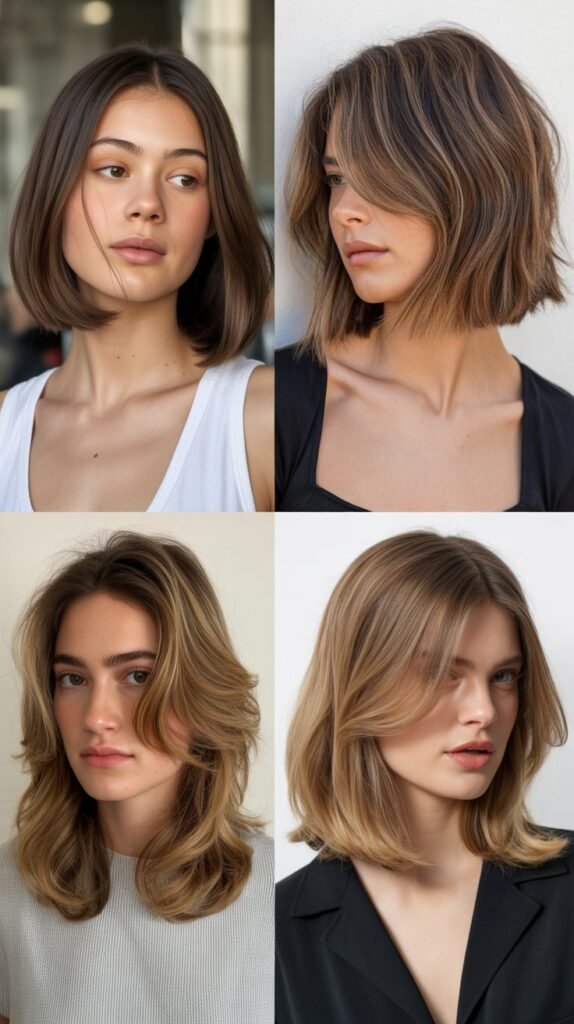
The layered lob combines the sophistication of a bob with the versatility of medium-length hair, enhanced by layers that add movement and prevent the blunt heaviness of traditional bobs.
- The lob typically falls between chin and shoulder length.
- Adding layers to a lob creates movement and texture while maintaining the structured shape.
- This style works universally across face shapes when customized with proper layer placement.
- Layered lobs can be styled sleek and straight or with texture and waves.
- The length is professional yet stylish enough for all occasions.
- Internal layering adds body without disrupting the clean lob silhouette.
- Face-framing layers enhance the lob’s naturally flattering quality.
- This style represents the perfect balance between trendy and timeless.
22. Swept-Back Layers for Forehead Emphasis

Swept-back layers are cut and styled to flow away from the face, creating height at the crown and emphasizing the forehead and bone structure.
This glamorous approach adds drama and elegance.
- Layers are cut with the understanding they’ll be styled backward from the face.
- This technique creates maximum volume at the roots and crown.
- Swept-back styling elongates the face and highlights cheekbones.
- The approach works beautifully for evening looks and special occasions.
- Layers are strategically placed to support the backward movement.
- This style requires volumizing products and blow-drying techniques.
- Swept-back layers create a confident, bold appearance.
- The technique works well with middle parts for symmetrical drama.
23. Layered Wolf Cut
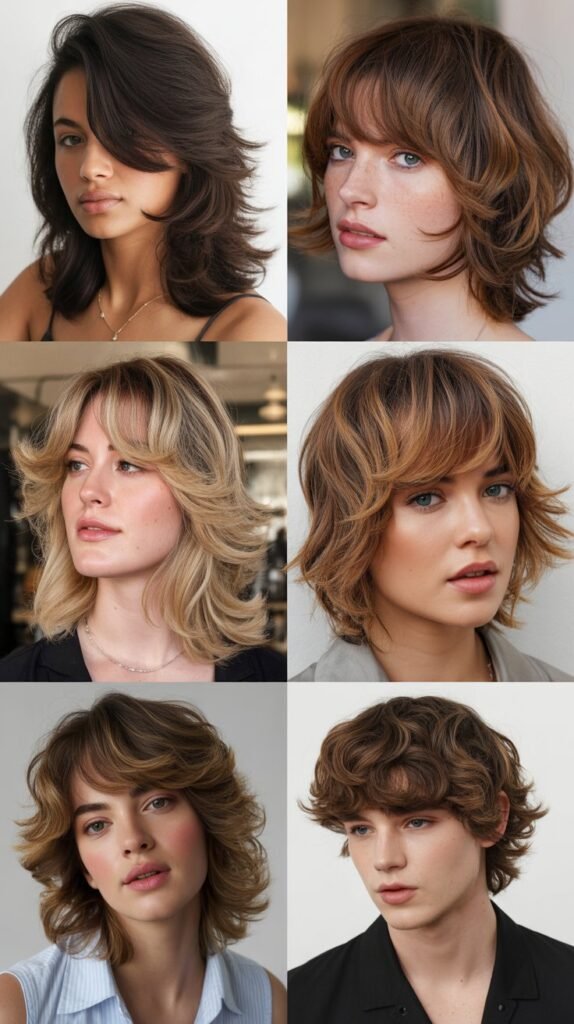
The wolf cut combines elements of shag and mullet styling with dramatic layering throughout, creating an edgy, voluminous style with shorter layers on top and longer lengths below.
- Wolf cuts feature significant contrast between short crown layers and longer bottom lengths.
- The dramatic layering creates maximum volume at the top and sides.
- This trendy style has roots in 1970s rock aesthetic updated for modern fashion.
- Wolf cuts work particularly well with naturally wavy or slightly textured hair.
- The cut requires minimal styling to achieve its signature tousled appearance.
- Shorter layers around the face create a framing effect similar to curtain bangs.
- This style makes a bold statement and suits confident personalities.
- The wolf cut’s dimensional quality works beautifully with balayage or highlights.
24. Sleek Layers for Straight Hair

Sleek layers are precision-cut for straight hair, creating clean lines and polished dimension that’s visible without styling.
This refined approach showcases the technical skill of layering on smooth textures.
- Straight hair showcases layering more clearly than textured hair.
- Sleek layers require precise cutting to create even, symmetrical results.
- The technique creates dimension through varying lengths rather than texture.
- Sleek layered styles work beautifully in professional environments.
- Flat ironing emphasizes the clean, geometric quality of the layers.
- This approach creates a modern, minimalist aesthetic.
- Sleek layers can incorporate subtle graduation for additional dimension.
- The polished quality requires regular maintenance to keep layers crisp.
25. Layered Hair with Micro Bangs

Combining micro bangs with medium layered hair creates a bold, fashion-forward statement that’s dramatic and eye-catching.
This pairing balances the shortness of micro bangs with the fullness of layered length.
- Micro bangs are cut significantly shorter than traditional bangs, often above the eyebrows.
- The extreme bangs create a striking focal point that draws attention to the eyes.
- Layering the rest of the hair balances the boldness of micro bangs.
- This style suits those with strong personal style and facial confidence.
- The combination works across various face shapes when customized properly.
- Micro bangs require regular maintenance every 2-3 weeks.
- The dramatic contrast creates an artistic, editorial appearance.
- Styling flexibility remains high despite the committed bang length.
26. Textured Layers with Highlights
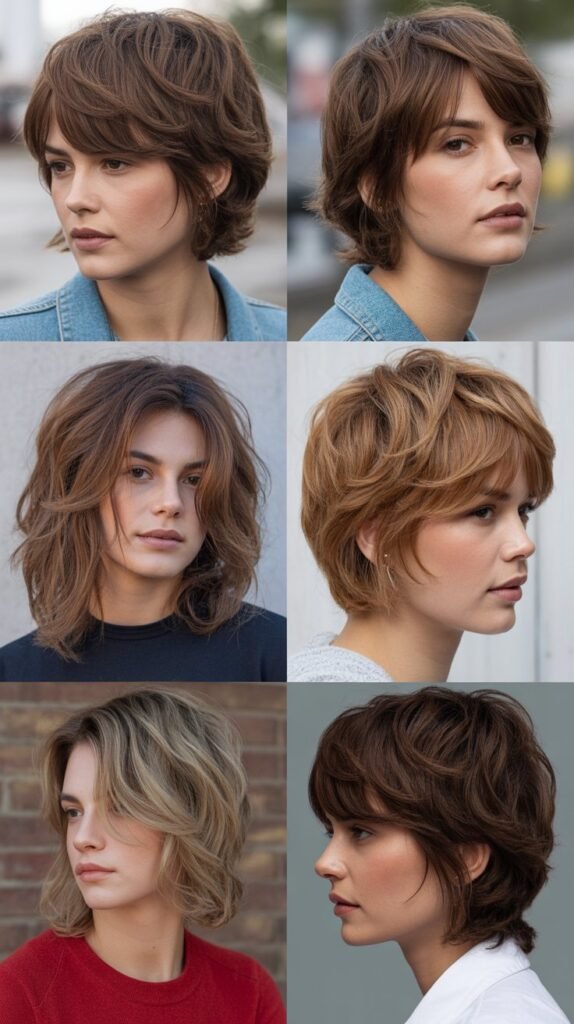
Textured layers combined with strategic highlights create multidimensional hair that appears fuller and more dynamic.
This pairing enhances both the cut and color for maximum impact.
- Highlights placed on textured layers emphasize the dimensional quality of the cut.
- Face-framing highlights on layered pieces create brightness around the features.
- The combination of texture and color adds visual interest from all angles.
- Balayage techniques work particularly well with textured layers.
- Lighter pieces on shorter layers create the illusion of additional volume.
- This pairing works across all base colors from dark to light.
- The dimensional quality makes hair appear thicker and fuller.
- Strategic color placement can enhance specific layers for customized effects.
27. Cascading Layers for Waterfall Effect
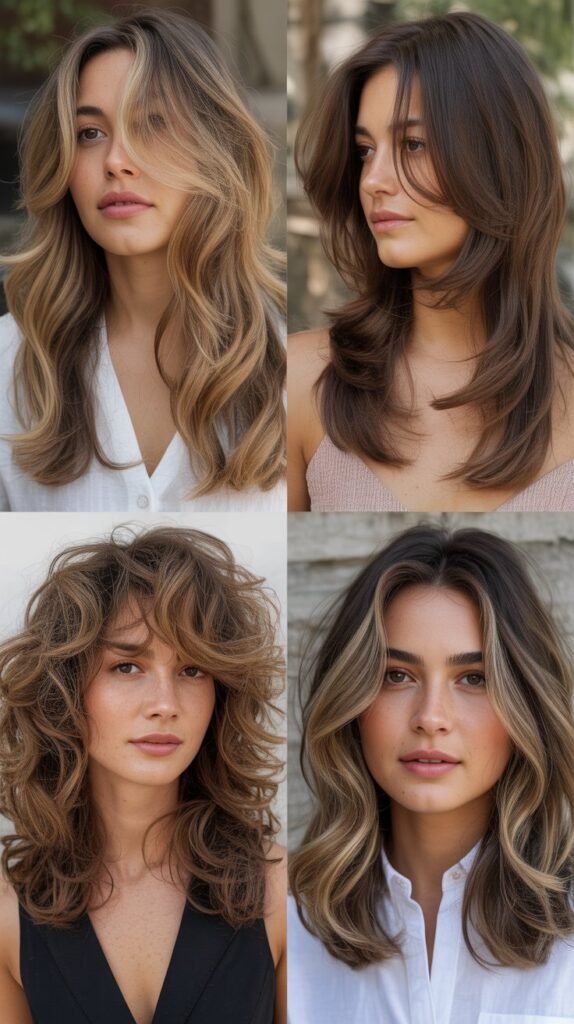
Cascading layers create a flowing, waterfall-like effect where each layer gracefully transitions into the next.
This romantic approach emphasizes movement and fluidity in medium-length hair.
- Cascading layers are blended seamlessly with minimal visible separation.
- The technique creates continuous flow from shortest to longest lengths.
- This approach works beautifully when styled with loose waves or curls.
- Cascading layers add dimension without harsh lines or obvious distinctions.
- The flowing quality creates a soft, feminine appearance.
- This style works across all hair textures with appropriate cutting techniques.
- Face-framing cascading layers add gentle softness around features.
- The seamless blending requires skillful cutting and regular maintenance.
28. Layered Hair with Blunt Bangs
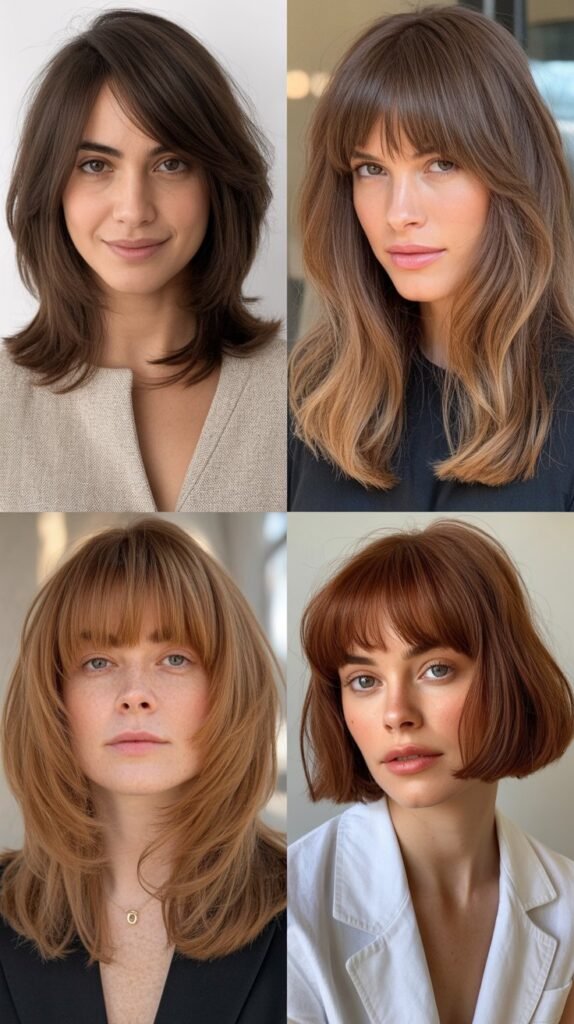
Combining blunt, straight-across bangs with layered medium hair creates interesting contrast between the precision of the bangs and the textured body of the hair.
- Blunt bangs cut straight across create a strong horizontal line at the forehead.
- The precision of blunt bangs contrasts beautifully with softer layered lengths.
- This combination suits those wanting structure and softness simultaneously.
- Blunt bangs can be cut at various lengths from brow-grazing to eyebrow-covering.
- The pairing works well with both sleek and textured styling approaches.
- Face shape considerations are crucial when determining bang length and thickness.
- Blunt bangs require regular trims to maintain their crisp appearance.
- The style creates a sophisticated, fashion-forward aesthetic.
29. Angled Layers for Forward Movement
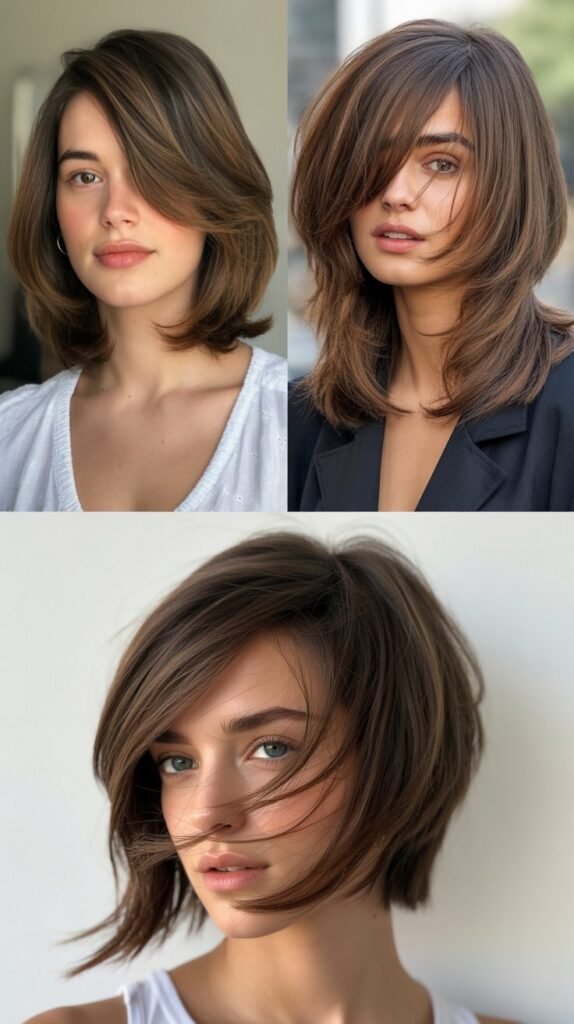
Angled layers are cut shorter in the back and gradually longer toward the front, creating forward-moving lines that direct attention toward the face.
This architectural approach adds intentional directionality.
- Angled layers create a forward slope from back to front.
- The technique adds dimension while maintaining a structured, intentional appearance.
- Angled cutting works particularly well with straight to slightly wavy hair.
- The forward angles naturally frame the face and highlight features.
- This approach can be subtle or dramatic depending on the degree of angle.
- Angled layers add sophistication and polish to medium-length styles.
- The geometric quality creates a modern, editorial aesthetic.
- Styling forward emphasizes the directional nature of the cut.
30. Layered Shoulder-Length Hair
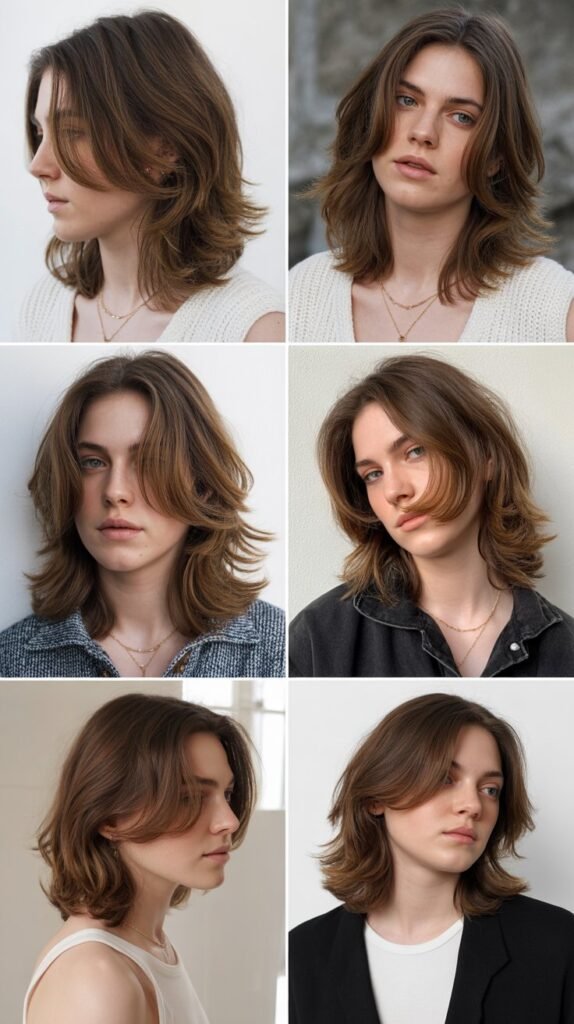
Shoulder-length hair with layers represents the quintessential medium-length style, offering maximum versatility and flattering proportions for virtually everyone.
- Shoulder-length typically falls right at or just below the shoulder bone.
- Layers at this length prevent heaviness while maintaining substantial hair.
- This length is long enough for updos but short enough for easy daily styling.
- Shoulder-length layers work across all age groups and lifestyles.
- The versatility allows for professional polish or casual texture equally.
- Face-framing layers at shoulder length naturally enhance features.
- This classic length has remained popular across decades for good reason.
- Shoulder-length layered hair can be straightened, curled, or braided successfully.
31. Lived-In Layers
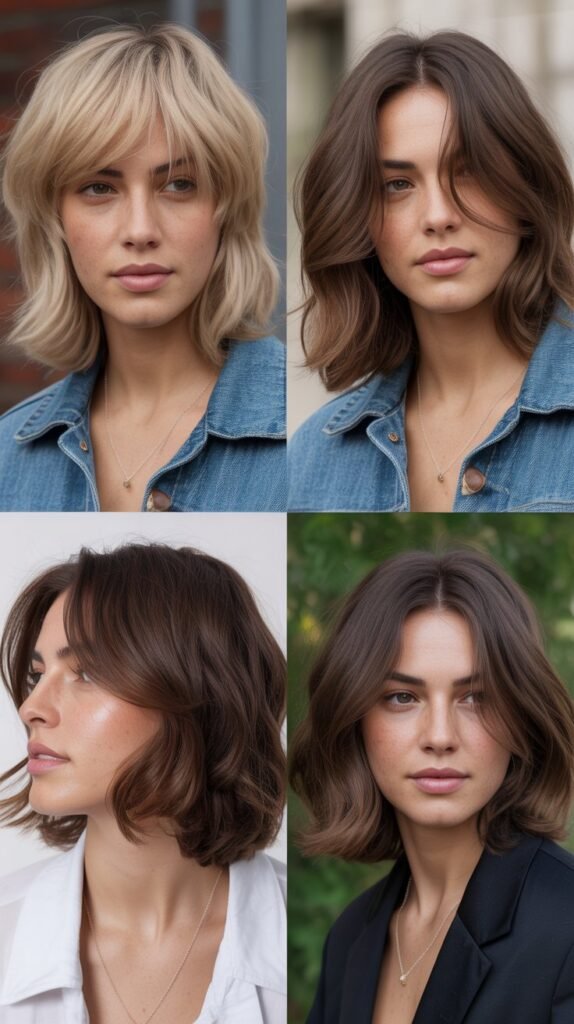
Lived-in layers are designed to look effortlessly grown-out and naturally imperfect, embracing a low-maintenance aesthetic that appears as though the cut happened weeks ago rather than days.
- Lived-in layers are cut with the intention of looking slightly grown-out.
- This technique uses softer cutting methods to avoid crisp, fresh-cut lines.
- The style requires less frequent maintenance as growth enhances rather than detracts.
- Lived-in layers work beautifully with natural texture and minimal styling.
- This approach creates an effortlessly cool, French-girl aesthetic.
- The undone quality suits casual lifestyles and busy schedules.
- Balayage or natural color variation enhances the lived-in appearance.
- This style celebrates imperfection and natural hair movement.
32. Layered Hair with Side Bangs
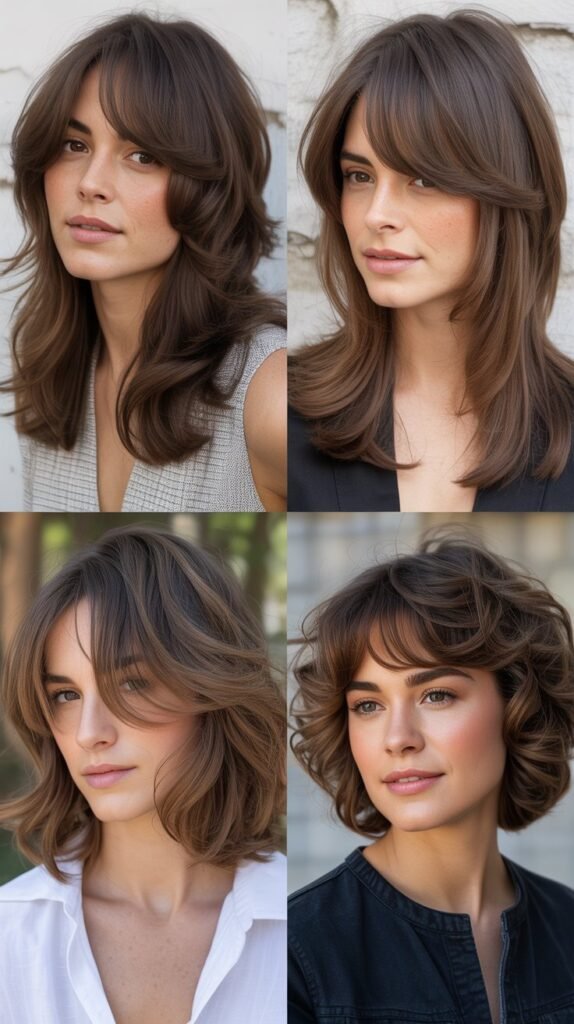
Side bangs paired with medium layered hair create asymmetry that flatters most face shapes while adding softness and frame to the face.
This classic combination remains timelessly appealing.
- Side bangs are swept across the forehead from a side part.
- The angled line of side bangs creates visual interest and softness.
- Pairing with layers creates cohesion between bangs and overall style.
- Side bangs can be cut at various lengths and thicknesses.
- This combination works particularly well for round and square face shapes.
- The asymmetry adds dimension and prevents a heavy, one-dimensional appearance.
- Side bangs can be styled forward or pinned back for versatility.
- This pairing has remained popular because it’s universally flattering.
33. Flipped-Out Layers

Flipped-out layers are styled with ends bent outward away from the face, creating a retro-inspired, playful look that adds volume and width at the bottom.
- Flipped-out styling involves bending the ends outward using a round brush or flat iron.
- This technique creates volume and width at the perimeter of the hair.
- Layers are essential for flipped-out styling to prevent a heavy, overwhelming appearance.
- The retro aesthetic works beautifully for special occasions and themed events.
- Flipped-out layers add playful energy and youthful vibrancy.
- This styling approach works best on straight to slightly wavy hair textures.
- The technique requires heat styling and setting products for longevity.
- Flipped ends can be subtle for modern appeal or dramatic for vintage authenticity.
34. Layered Waves with Dimension
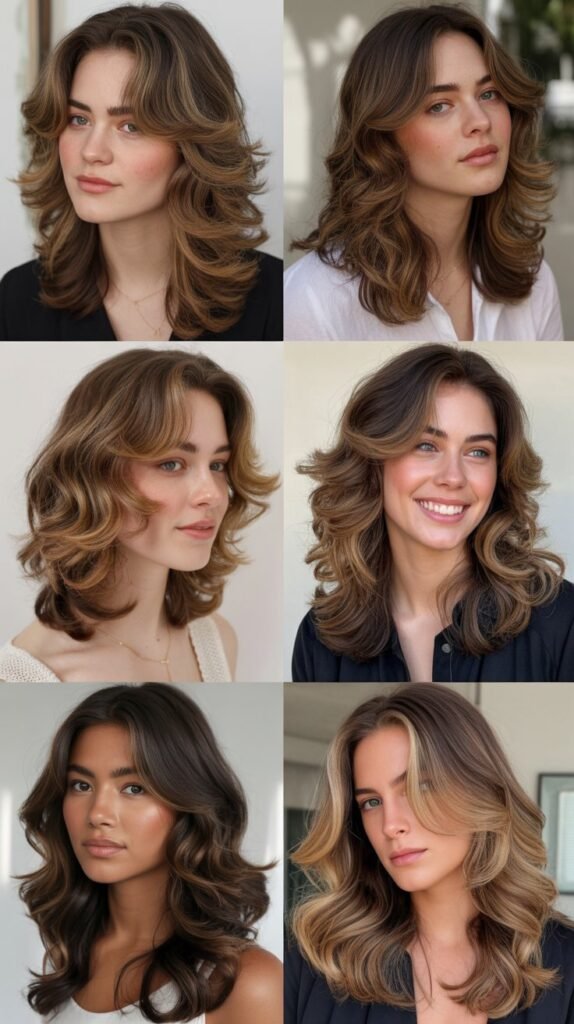
Layered waves create movement through both the cut and styling, producing dimensional, textured hair that appears full of life and natural beauty.
This combination maximizes the visual impact of medium-length hair.
- Layers cut specifically for waves enhance the natural S-curve pattern.
- The dimensional quality comes from varying wave sizes and layer lengths.
- This style works beautifully with naturally wavy hair or can be created with styling tools.
- Layered waves add volume without requiring teasing or excessive product.
- The combination creates a romantic, effortlessly beautiful appearance.
- Face-framing layered waves soften features and add femininity.
- This approach works across casual and formal styling situations.
- Sea salt sprays and wave-enhancing products maximize the textured effect.
35. Layered Hair with Root Lift
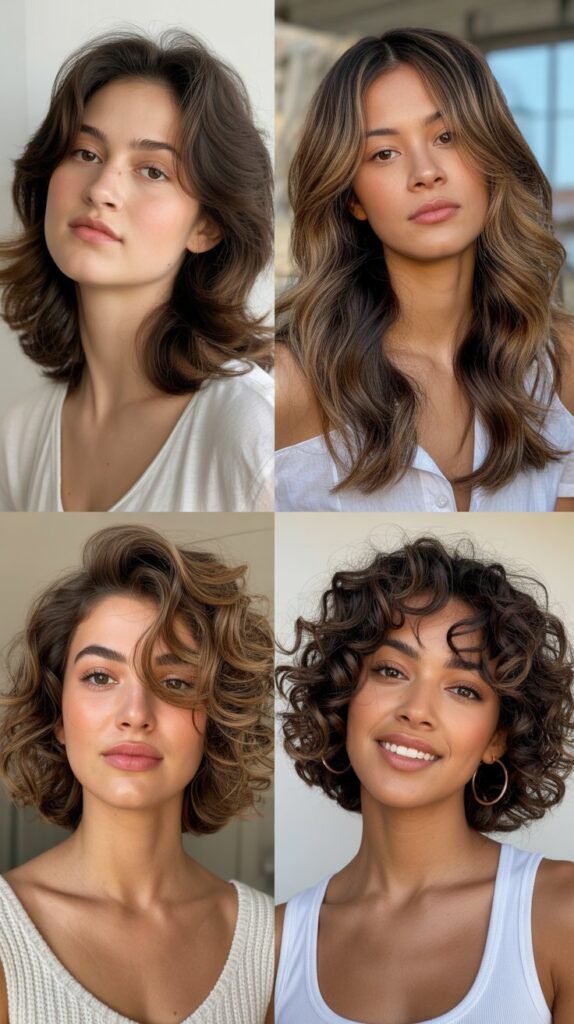
Root lift combined with layered medium hair creates maximum volume at the scalp, preventing flatness and adding height to the overall silhouette.
This technique is particularly beneficial for fine or thin hair.
- Root lift is achieved through strategic layering at the crown and top sections.
- Shorter layers underneath create natural lift and support.
- This technique prevents the flat-topped appearance common with medium-length hair.
- Blow-drying with a round brush at the roots enhances the lifted effect.
- Root lift products and volumizing sprays maximize the height.
- The elevated roots create balance and proportion throughout the style.
- This approach works particularly well for those with naturally fine hair.
- The dimensional quality makes hair appear thicker and more abundant.
36. Razored Shaggy Layers
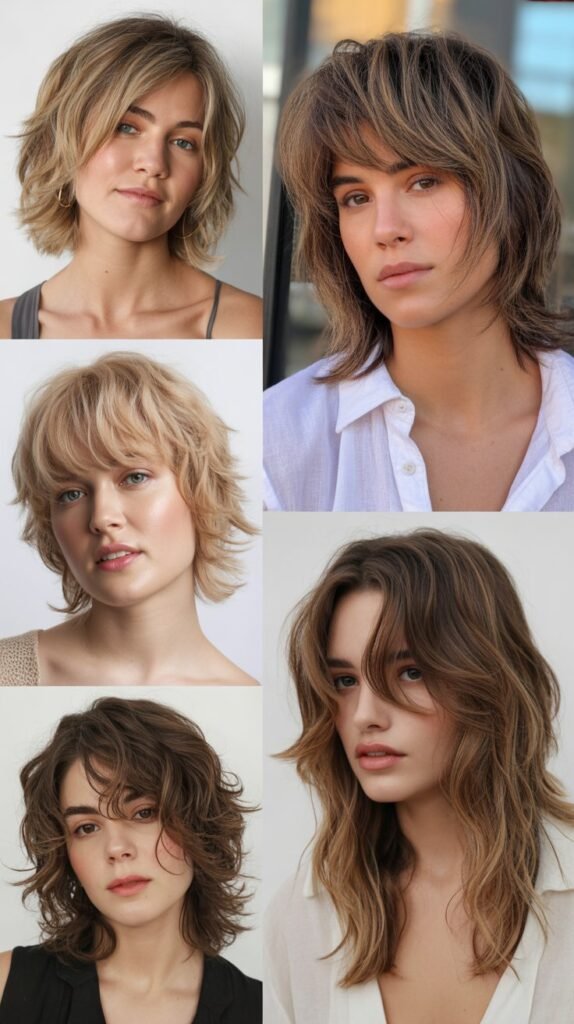
Razored shaggy layers combine the texturizing effects of razor cutting with the volume of shag styling, creating an edgy, rock-and-roll inspired aesthetic with maximum movement.
- Razor cutting creates softer, more feathered edges than scissor cutting.
- Shaggy layers are distributed heavily throughout for maximum texture.
- This combination creates an intentionally messy, lived-in appearance.
- The technique works beautifully with naturally textured or wavy hair.
- Razored shaggy layers remove bulk while maintaining fullness.
- The edgy quality suits bold personalities and fashion-forward individuals.
- Minimal styling is required as the cut does most of the work.
- This style has strong roots in 1970s and 1980s rock aesthetic.
37. Layered Hair with Peek-a-Boo Highlights
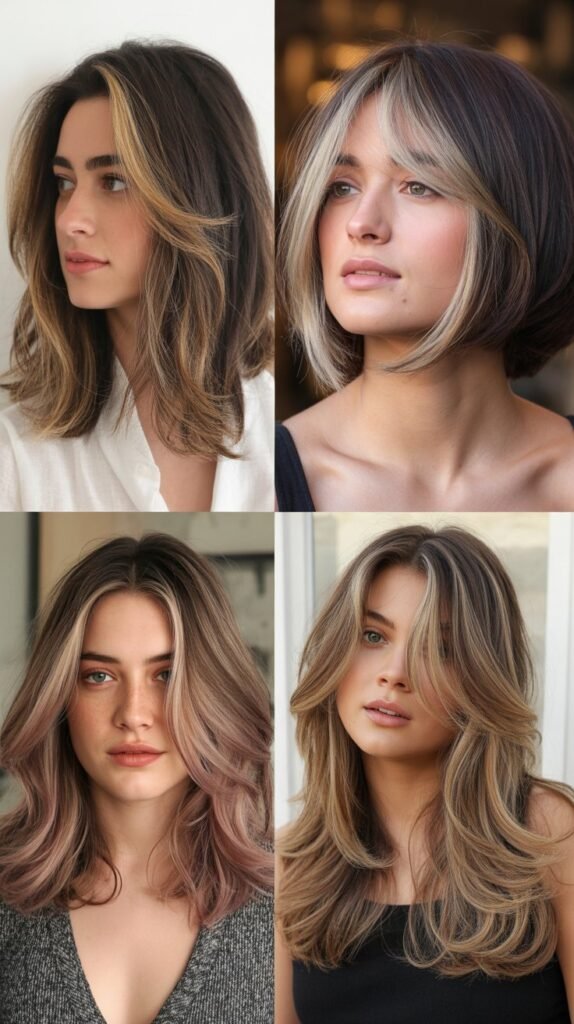
Peek-a-boo highlights hidden within layered medium hair create surprising pops of color that appear when hair moves, adding an element of playful surprise to the overall look.
- Peek-a-boo highlights are placed on underlayers that show intermittently.
- Layers are essential for this technique as they reveal the hidden color.
- The surprise element adds interest and personality to the hairstyle.
- Colors can range from subtle lighter shades to bold, vivid tones.
- This technique works particularly well with flipped or tousled styling.
- The hidden highlights create dimension without overwhelming the overall look.
- Face-framing layers can incorporate visible highlights while interior remains hidden.
- This approach allows for creative expression while maintaining professional appearance.
| Face Shape | Best Layer Type | Key Benefits | Styling Tip |
|---|---|---|---|
| Round | Face-Framing, Long Layers | Elongates face, adds definition | Style with middle part for maximum lengthening |
| Oval | Choppy, Any Layer Style | Versatile, enhances natural balance | Experiment freely with various techniques |
| Square | Long, Soft Layers | Softens angular jawline | Focus layers below jaw level |
| Heart | Feathered, Blunt Layers | Balances wide forehead, adds chin width | Concentrate volume at jawline |
| Diamond | Blunt, Rounded Layers | Adds width at forehead and chin | Style with texture at temple level |
Conclusion
Discovering the right style from these 37 Medium-Length Hairstyles with Layers That Work for Every Face Shape empowers you to make confident decisions about your next haircut.
The versatility of medium-length layered hair means you’re never locked into a single look—whether you prefer the edgy texture of choppy layers, the romantic softness of feathered cuts, or the polished sophistication of sleek layers, there’s a perfect option waiting for you.
Remember that the best hairstyle isn’t just about following trends; it’s about understanding your unique face shape, hair texture, and personal style preferences.
Consultation with a skilled stylist who understands layering techniques specific to your needs will ensure your chosen style from these 37 Medium-Length Hairstyles with Layers That Work for Every Face Shape translates beautifully from inspiration to reality.
Embrace the transformative power of the right cut, experiment with styling techniques that enhance your layers, and enjoy the confidence that comes from a hairstyle that truly works for you.

