
Dark hair doesn’t have to stay one-dimensional when you can transform it with the warmth and depth of caramel balayage.
If you’ve been dreaming of a hair color that adds brightness without the commitment of full highlights, soft balayage caramel tones offer the perfect solution.
This hand-painted technique creates natural-looking dimension that mimics how the sun would naturally lighten your hair, giving you that coveted “I just came back from vacation” glow.
Whether you have black, dark brown, or deep chocolate hair, caramel balayage works beautifully to enhance your natural beauty while maintaining your dark base.
In this comprehensive guide on 45 Soft Balayage Caramel Balayage Ideas That Look Effortless on Dark Hair, you’ll discover everything from subtle face-framing highlights to bolder caramel ribbons, maintenance tips, styling techniques, and expert advice to help you choose the perfect shade for your skin tone.
Get ready to find your ideal caramel balayage look that will have you falling in love with your hair all over again.
1. What Is Caramel Balayage and Why It Works on Dark Hair
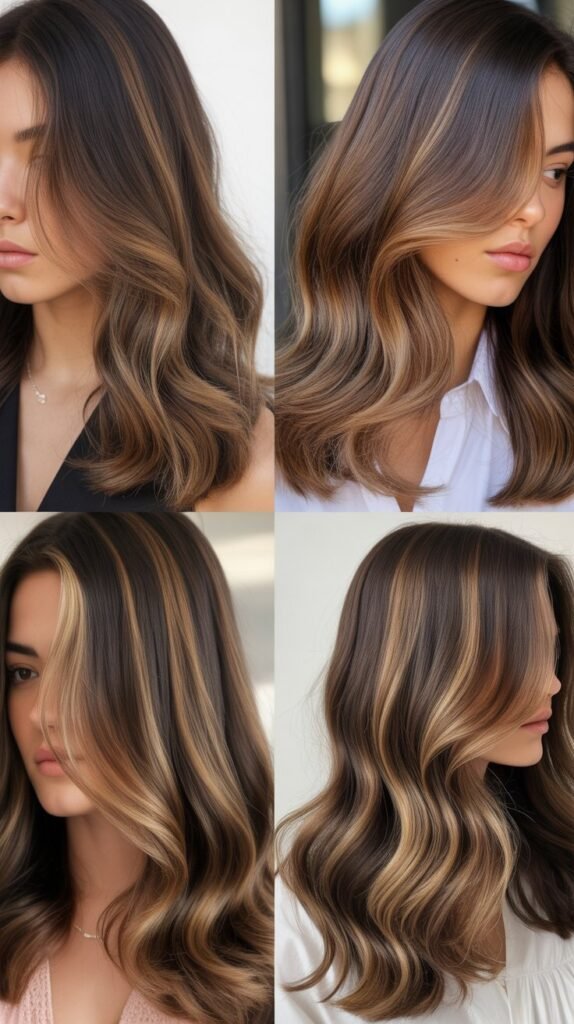
Caramel balayage is a freehand hair coloring technique where warm, golden-brown tones are painted onto dark hair to create soft, natural-looking dimension.
Unlike traditional highlights that use foils and create uniform streaks, balayage focuses on strategic placement that follows your hair’s natural flow and movement.
- The word “balayage” comes from the French term meaning “to sweep,” which describes how colorists brush the lightener onto the hair
- This technique creates a graduated, sun-kissed effect that starts darker at the roots and becomes lighter toward the ends
- Caramel tones specifically refer to warm, honey-golden shades that range from light butterscotch to deeper toffee hues
- The beauty of caramel balayage on dark hair lies in its ability to add warmth without completely changing your base color
- Dark hair provides the perfect canvas for caramel tones because the contrast creates striking dimension and depth
- The soft transition from dark roots to caramel ends means less frequent touch-ups compared to traditional highlights
- Balayage works with your hair’s natural texture, making it suitable for straight, wavy, curly, and coily hair types
- The customizable nature of balayage allows colorists to adjust the placement and intensity based on your preferences
2. Understanding Your Dark Hair Base Color

Before choosing your caramel balayage shade, understanding your natural dark hair color is essential for achieving the most flattering and seamless results.
- Dark hair bases typically range from level 1 (black) to level 4 (dark brown) on the hair color chart
- Jet black hair (level 1-2) creates the most dramatic contrast with caramel highlights and may require multiple lifting sessions
- Dark brown hair (level 3) offers a balanced base that allows caramel tones to show beautifully without excessive processing
- Medium-dark brown (level 4) is the easiest dark base to work with for caramel balayage and requires less lifting
- Virgin dark hair (never colored) typically lifts more predictably than previously dyed dark hair
- If you have box-dyed black hair, you may need a color correction session before achieving true caramel tones
- Cool-toned dark hair bases benefit from warm caramel shades to add balance and prevent ashy results
- Warm-toned dark hair bases pair beautifully with golden caramel shades that enhance the existing warmth
- Understanding your undertones helps determine whether you should go lighter or deeper with your caramel selection
3. Subtle Face-Framing Caramel Highlights

Face-framing caramel highlights offer the perfect introduction to balayage if you want to start conservatively while still brightening your overall appearance.
- Face-framing highlights concentrate lighter caramel pieces around the hairline, temples, and front sections
- This placement strategically draws attention to your facial features and creates a natural contouring effect
- Subtle face-framing works especially well for professionals who want color that’s noticeable but workplace-appropriate
- The technique requires less overall lightening, making it gentler on your hair and easier to maintain
- Face-framing pieces can be as thin as babylights or slightly thicker for more impact
- This style grows out beautifully because the lighter pieces naturally blend as they descend from the face
- You can gradually add more caramel throughout your hair in future appointments if you want to go bolder
- Face-framing caramel highlights photograph exceptionally well and add dimension to video calls
- The placement helps soften harsh features and can make you appear more youthful
4. Honey Caramel Balayage for Warm Undertones
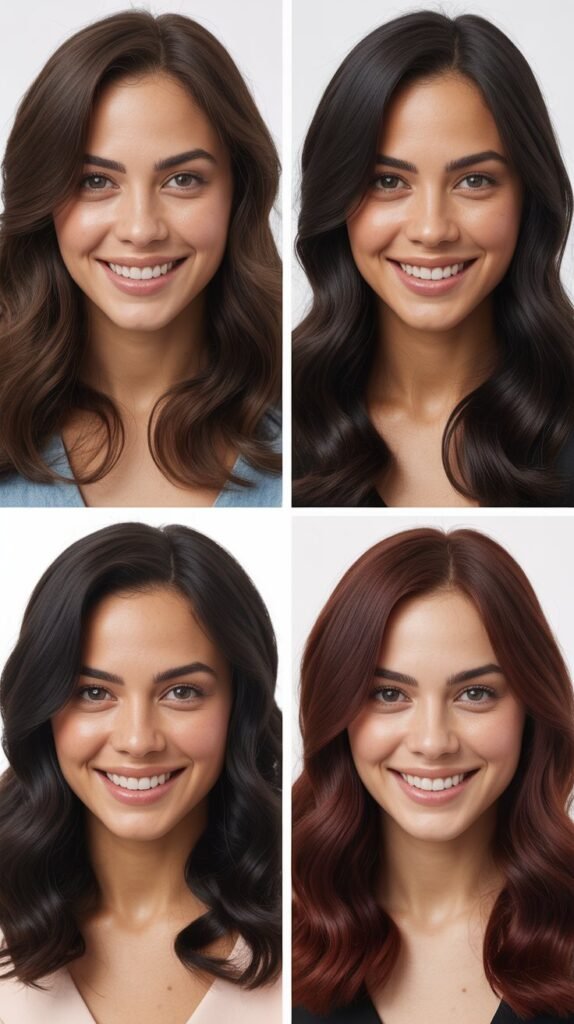
If you have warm undertones in your skin, honey caramel balayage creates a harmonious, glowing effect that complements your natural coloring perfectly.
- Honey caramel leans toward golden-yellow tones rather than reddish or neutral caramel shades
- This shade works beautifully on skin with yellow, peachy, or golden undertones
- Honey caramel adds extraordinary warmth and radiance that makes your complexion appear sun-kissed
- The color looks particularly stunning in natural sunlight where the golden tones truly come alive
- People with hazel, amber, or warm brown eyes find honey caramel especially flattering
- This shade pairs wonderfully with warm makeup tones like coral, peach, and bronze
- Honey caramel requires regular toning to maintain its golden brightness and prevent it from turning brassy
- The shade works across all seasons but particularly shines during spring and summer months
- Maintenance involves using purple or blue shampoo sparingly to preserve warmth while neutralizing unwanted orange tones
5. Chocolate Caramel Blend for Natural Dimension

A chocolate caramel blend combines deeper caramel tones with your natural dark base to create subtle, sophisticated dimension that looks incredibly natural.
- This technique uses darker caramel shades (closer to toffee or amber) that sit only 2-3 levels lighter than your base
- The subtle difference creates dimension without obvious contrast, perfect for those wanting an understated look
- Chocolate caramel works exceptionally well for conservative work environments or personal style preferences
- The blend technique involves layering multiple caramel tones to create depth rather than flat, single-dimensional color
- This approach is ideal if you’re hesitant about going too light or making a dramatic change
- The natural-looking results require less frequent maintenance since the regrowth line is virtually invisible
- Chocolate caramel balayage adds movement and texture to your hair without screaming “I just got my hair colored”
- This shade family works across all skin tones and undertones because of its versatility
- The technique often incorporates lowlights along with highlights to create even more natural dimension
6. Ribbon Caramel Balayage Technique
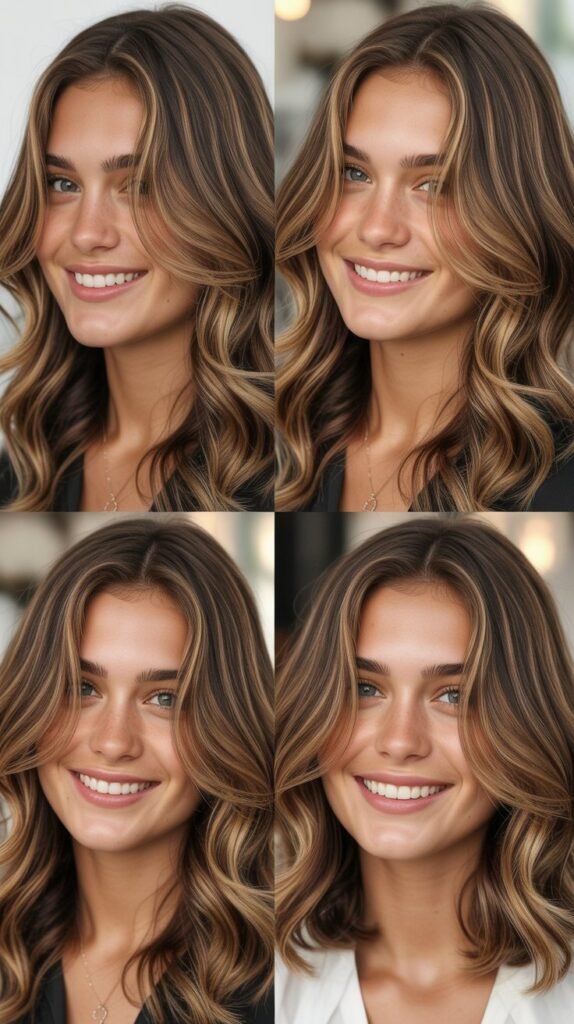
Ribbon balayage places thicker, more defined sections of caramel color throughout dark hair, creating bold statements while maintaining a soft overall effect.
- Ribbon highlights are thicker than traditional balayage but still hand-painted for a softer edge than foiled highlights
- These wider sections of caramel create more noticeable contrast and visual interest
- The placement typically follows the hair’s natural movement patterns for a flowing, cohesive look
- Ribbon balayage is perfect for those who want to make more of a statement with their color
- This technique works particularly well on long hair where the ribbons of color can really show their length
- The defined sections catch light beautifully and create multidimensional movement when hair moves
- Despite being more prominent, ribbon balayage still grows out gracefully without harsh demarcation lines
- Colorists often alternate ribbon width and spacing to create a more organic, less uniform appearance
- This technique typically requires more lifting and may need longer processing time than subtle balayage
7. Soft Caramel Ombré on Dark Hair
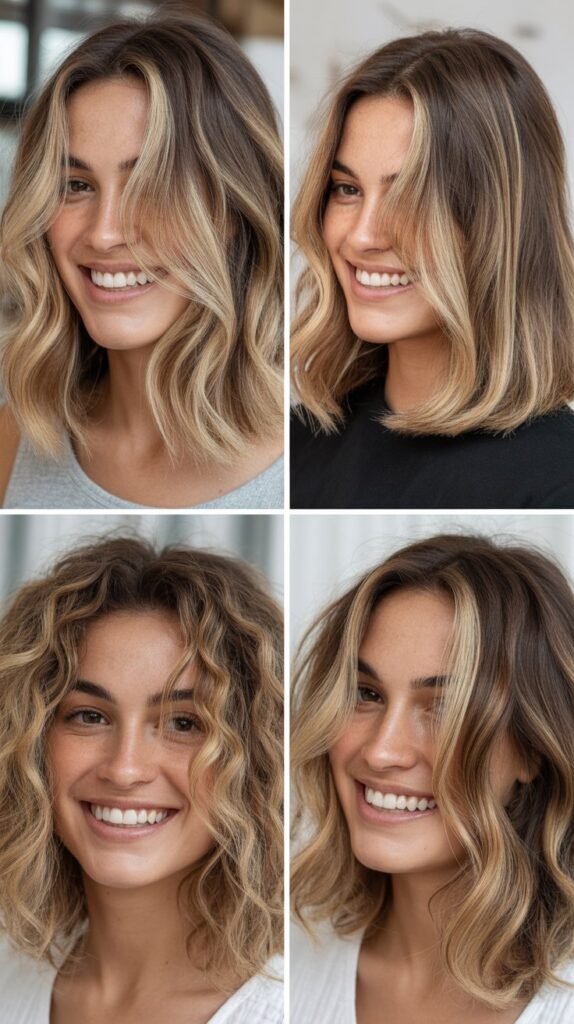
Soft caramel ombré concentrates the lighter color primarily on the bottom half to two-thirds of your hair, creating a dramatic yet wearable gradient effect.
- Ombré differs from traditional balayage by having a more concentrated color change rather than scattered highlights throughout
- The soft version features a gradual, blended transition zone rather than an abrupt line of demarcation
- Caramel ombré on dark hair creates a striking sun-kissed effect that’s both dramatic and natural-looking
- This style requires the least maintenance since your roots remain your natural dark color
- You can go 4-6 months between appointments, only needing touch-ups when the caramel fades or needs toning
- Soft caramel ombré works beautifully on long hair where the gradient has room to develop fully
- The technique is also budget-friendly for maintenance since you’re only refreshing the ends rather than full highlights
- This look photographs exceptionally well and creates beautiful movement in updos and braided styles
- The concentrated lightness at the ends draws the eye downward, which can create an elongating effect
8. Caramel Balayage with Dark Brown Base
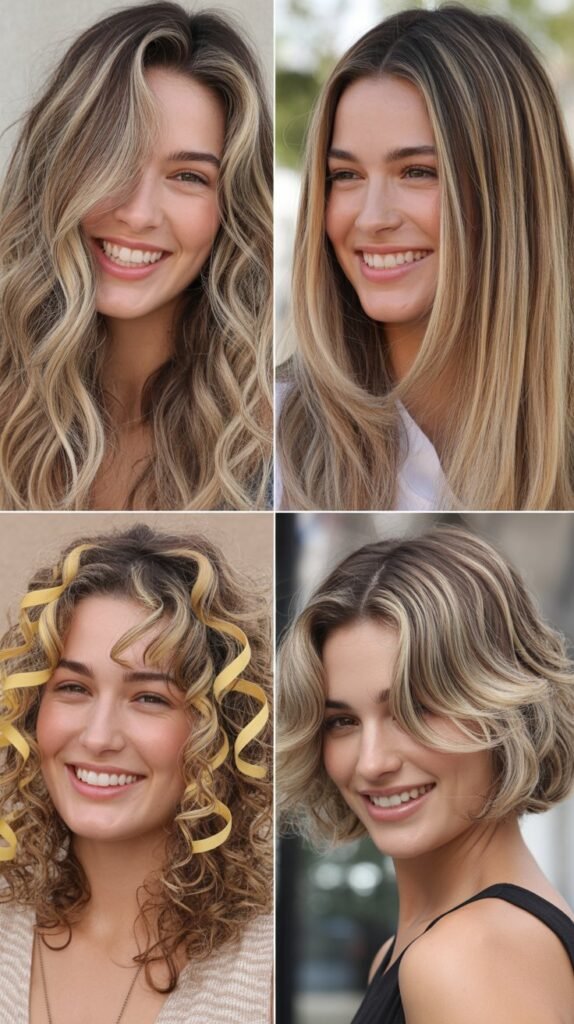
When your starting point is dark brown rather than black, caramel balayage achieves beautiful results with less processing and more color options.
- Dark brown hair (level 3-4) provides an ideal canvas for caramel balayage because less lifting is required
- The natural warm undertones in brown hair enhance caramel shades beautifully
- You can achieve richer, more vibrant caramel tones without excessive bleaching or damage
- The closer your base is to medium brown, the more seamlessly caramel highlights will blend
- Dark brown bases allow for a wider range of caramel shades from light butterscotch to deep amber
- Processing time is typically shorter on brown hair compared to black, reducing potential damage
- The results tend to look more cohesive because there’s less dramatic contrast between base and highlight
- Brown-based caramel balayage is easier to maintain at home with proper toning products
- This combination works across all skin tones and can be customized with cool or warm caramel variants
9. Butterscotch Caramel for Lighter Contrast

Butterscotch caramel represents the lighter end of the caramel spectrum, offering more contrast against dark hair for those wanting a bolder transformation.
- Butterscotch refers to the lightest caramel shades with strong yellow-gold undertones
- This shade creates maximum contrast against dark hair, making it a statement-making choice
- The lighter tone requires more lifting and possibly multiple sessions to achieve on very dark hair
- Butterscotch caramel works particularly well on those with warm or neutral skin undertones
- This shade brings exceptional brightness to the face and can create a youthful, fresh appearance
- The high contrast makes it essential to use quality toning products to prevent brassiness
- Butterscotch highlights catch light dramatically, creating dimension even in low lighting conditions
- This shade requires more frequent maintenance (every 6-8 weeks) to keep the tone fresh and vibrant
- While bolder, butterscotch caramel can still look natural if placed strategically using balayage technique
10. Caramel Highlights on Black Hair
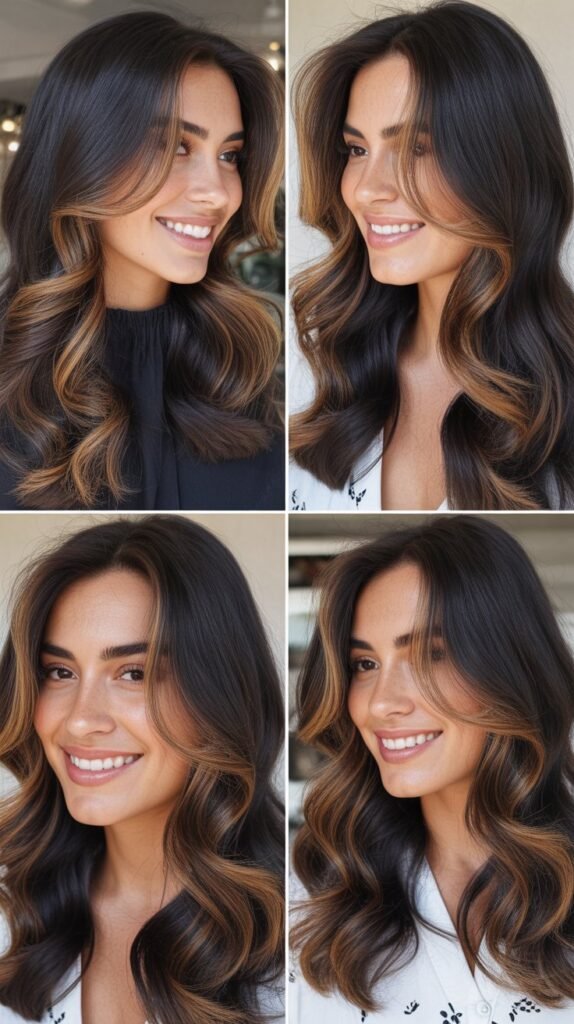
Achieving caramel balayage on jet black hair requires special techniques and considerations but delivers stunning, high-impact results.
- Black hair (level 1-2) presents the greatest challenge for caramel balayage due to the extreme lifting required
- Multiple sessions are often recommended to reach true caramel tones without causing excessive damage
- The first session typically lifts black hair to orange or copper tones, with caramel achieved in subsequent appointments
- Starting with more conservative caramel placement on black hair helps assess how your hair responds to lifting
- A professional colorist experienced with dark hair is essential to prevent breakage and achieve desired results
- The dramatic contrast between black and caramel creates an incredibly striking, fashion-forward look
- Babylights or thin ribbons work best initially on black hair to minimize damage while creating dimension
- Expect longer processing times and potentially higher costs due to the technical difficulty
- Olaplex or similar bond-building treatments are highly recommended when lifting black hair significantly
- The payoff is worth it—caramel on black hair creates unmatched depth and visual interest
11. Maintenance Schedule for Caramel Balayage

Understanding the proper maintenance schedule for your caramel balayage ensures your color stays fresh, vibrant, and healthy-looking between salon visits.
| Maintenance Task | Frequency | Purpose |
|---|---|---|
| Salon touch-ups | 10-14 weeks | Refresh faded caramel tones and add new highlights if needed |
| Toning treatments | 6-8 weeks | Neutralize brassiness and maintain color vibrancy |
| Deep conditioning | Weekly | Restore moisture and maintain hair health |
| Purple/blue shampoo | 1-2x weekly | Prevent unwanted warm or brassy tones between appointments |
| Gloss treatments | 4-6 weeks | Add shine and enhance caramel tones |
- One of balayage’s greatest benefits is the extended time between salon appointments compared to traditional highlights
- The hand-painted placement and darker roots mean you can typically wait 10-14 weeks before needing a touch-up
- Your maintenance schedule depends on how quickly your hair grows and how light you’ve gone with the caramel
- More dramatic caramel (butterscotch tones) may require toning appointments every 6-8 weeks to prevent brassiness
- Subtle chocolate-caramel blends often look beautiful for 12-16 weeks without any salon intervention
- At-home toning with purple or blue shampoo extends the life of your caramel color between appointments
- Deep conditioning treatments weekly are non-negotiable for maintaining healthy, shiny balayage hair
- Consider scheduling a gloss treatment between full balayage appointments to refresh shine and tone
- Track your maintenance in a hair journal or phone app to establish your personal ideal schedule
12. Best Caramel Tones for Cool Undertones

Even if you have cool skin undertones, you can still rock caramel balayage by choosing the right shade variations that complement rather than clash with your coloring.
- Cool undertones are identified by pink, red, or blue hues in the skin rather than yellow or golden
- For cool undertones, opt for neutral caramel shades that lean slightly toward beige rather than golden
- Ash-toned caramel or “greige” (gray-beige) caramel variations work beautifully on cool-toned individuals
- Avoid overly golden or orange-based caramels which can appear jarring against cool skin
- Neutral caramel tones contain a balance of warm and cool pigments, making them universally flattering
- Toffee and amber shades often work better than honey or butterscotch for cool undertones
- Incorporating subtle ash tones into your caramel balayage creates harmony with cool skin
- Consider adding lowlights in cool-toned browns to balance the warmth of caramel highlights
- A skilled colorist can customize your caramel formula to complement your specific undertones
- Neutral caramel requires less aggressive toning with purple shampoo compared to very warm caramels
13. Caramel Balayage on Curly Dark Hair

Curly hair and caramel balayage are a match made in heaven, as the color enhances natural curl patterns and adds exceptional dimension.
- Balayage technique naturally follows the curves and bends of curly hair, creating color that moves with your curls
- The lighter caramel tones catch light differently on each curl, creating multidimensional effects
- Placement on curly hair often focuses on the top layer and face-framing areas where curls are most visible
- Curly hair tends to process color differently than straight hair due to its structure and porosity
- Extra moisture treatments are essential for curly-haired individuals getting balayage to prevent dryness
- The hand-painted technique is ideal for curls because it doesn’t require combing through, which disrupts curl pattern
- Caramel tones on dark curly hair create beautiful contrast that defines and showcases your natural texture
- Consider your curl pattern when choosing caramel intensity—tighter curls may benefit from bolder contrast
- Curly balayage often looks even better a few weeks after application once curls settle into their natural pattern
- Use curl-specific products designed for color-treated hair to maintain both curl health and color vibrancy
14. Toffee Caramel for Subtle Richness
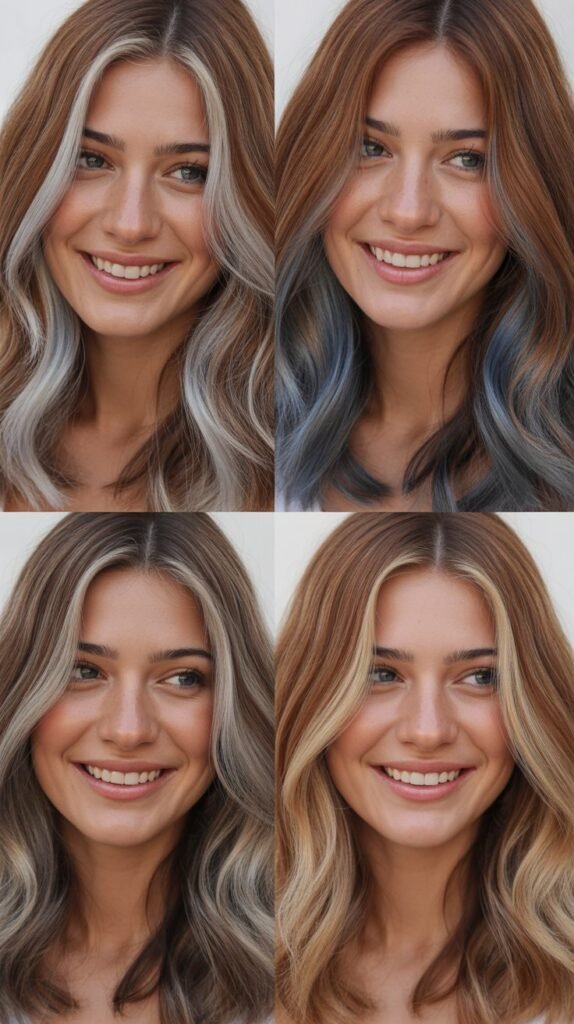
Toffee caramel sits in the middle of the caramel spectrum, offering rich, warm tones without going too light or too dark.
- Toffee caramel is characterized by medium-toned warm browns with hints of golden and amber
- This shade provides noticeable dimension without the high contrast of lighter butterscotch tones
- Toffee works across virtually all skin tones because it’s not extremely light or overly warm
- The richness of toffee caramel adds sophistication and appears polished in professional settings
- This shade requires less maintenance than lighter caramels because brassiness is less apparent
- Toffee tones blend seamlessly with dark bases, creating a very natural sun-kissed effect
- The color works beautifully in both natural and artificial lighting without appearing too stark
- Toffee caramel is an excellent choice if you’re between wanting subtle and bold color
- This shade family ages gracefully and doesn’t show regrowth as obviously as lighter highlights
- Consider toffee caramel as your starting point if unsure about how light to go—you can always add lighter pieces later
15. Caramel Balayage for Medium-Length Hair
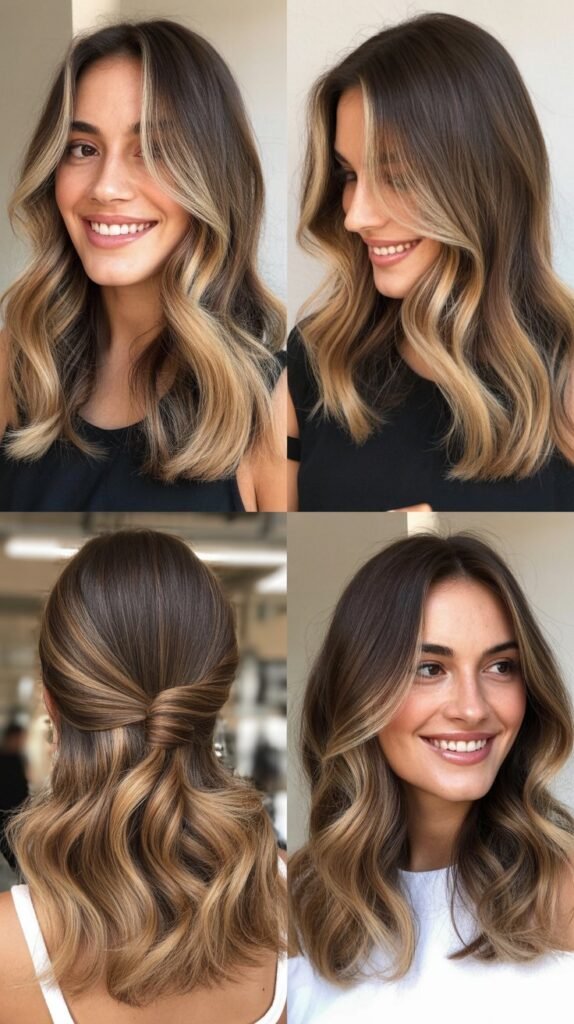
Medium-length hair offers the perfect canvas for caramel balayage, providing enough length to showcase the gradient while being manageable and versatile.
- Medium length (shoulder to collarbone) allows for beautiful color placement without overwhelming shorter styles
- The balayage can start mid-shaft, creating dimension while keeping roots natural and low-maintenance
- Medium hair is versatile enough to style multiple ways, each showcasing the caramel differently
- This length requires less product and processing than long hair, potentially reducing cost and damage
- Half-up hairstyles on medium hair beautifully display the transition from dark roots to caramel ends
- Beach waves and loose curls particularly enhance caramel balayage on medium-length hair
- The length is practical for daily life while still providing enough hair to create visual interest with color
- Caramel placement can be adjusted to work with layers, creating enhanced movement and dimension
- Medium-length balayage grows out gracefully and can easily transition to longer hair if desired
- This length works for all face shapes and can be customized with bangs or face-framing layers
16. Home Care Products for Caramel Balayage
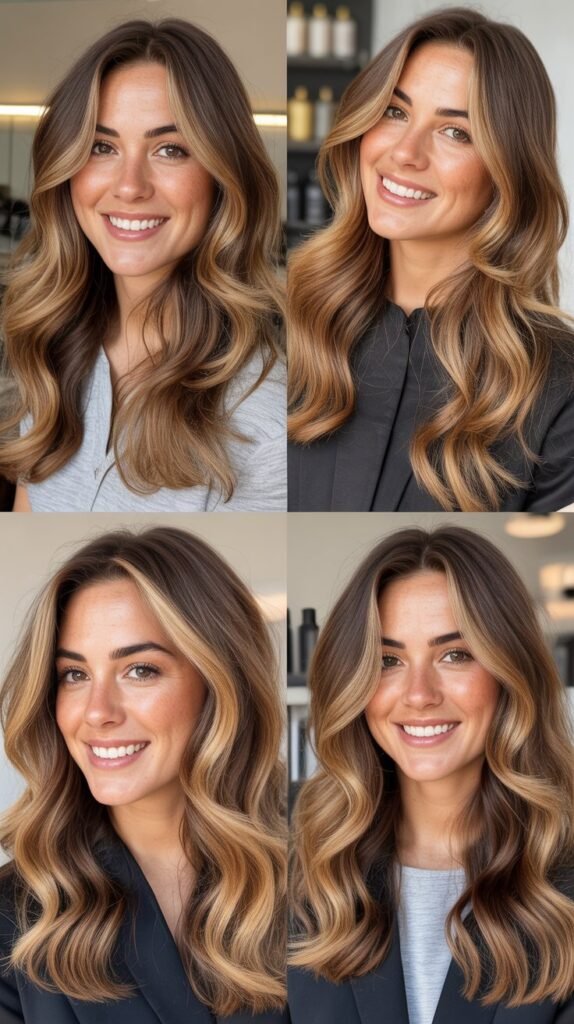
Investing in quality home care products specifically designed for color-treated hair is essential for maintaining your caramel balayage between salon visits.
- Sulfate-free shampoo is non-negotiable as sulfates strip color and cause premature fading
- Color-depositing conditioners in caramel or honey tones can refresh your color at home
- Purple or blue shampoo neutralizes unwanted brassy, orange tones that develop between appointments
- Deep conditioning masks should be used weekly to combat the dryness that lightening can cause
- Leave-in conditioners protect against environmental factors that fade color like UV rays and pollution
- Heat protectant spray is essential before using any hot tools to prevent color damage
- Hair oils with UV protection help seal the cuticle and prevent color oxidation from sun exposure
- Clarifying shampoo (used monthly) removes buildup that can dull caramel tones
- Glossing treatments at home can extend the life of your salon color and add shine
- Avoid products with high alcohol content as they dry hair and cause color to fade faster
17. Caramel Money Pieces on Dark Hair
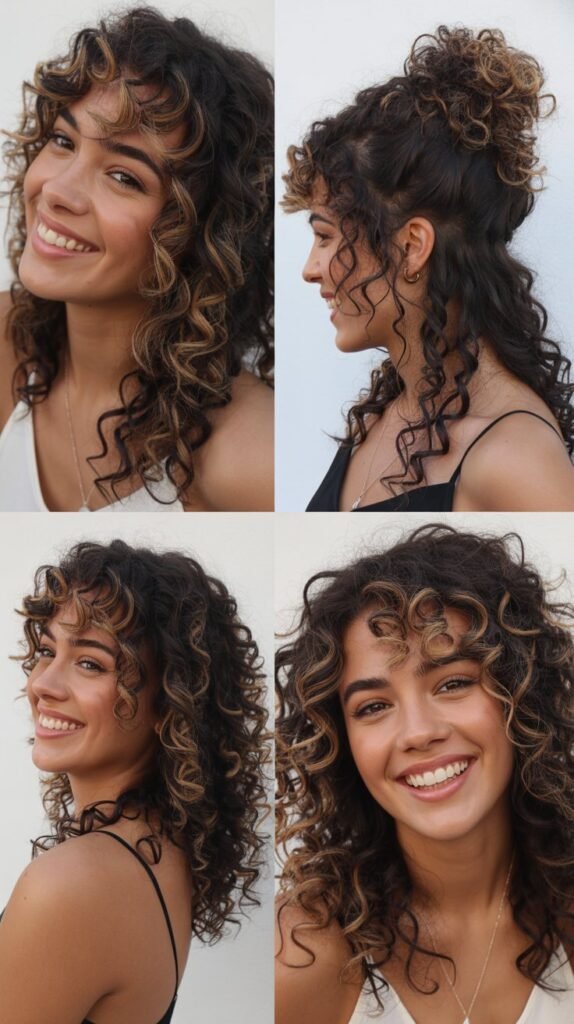
Money pieces refer to the prominent face-framing highlights that create a brightening halo effect around your face, named for their high-value appearance.
- Money pieces are the thickest, brightest highlights placed directly around the hairline and face
- These sections are typically 2-4 shades lighter than the rest of your balayage for maximum impact
- The technique creates an instant face-lifting effect by drawing light toward your features
- Money pieces work particularly well for those who primarily wear their hair down and want visible color
- The concentrated brightness frames your face beautifully in photos and video calls
- This technique can be done alone for minimal commitment or combined with overall balayage
- Caramel money pieces on dark hair create striking contrast without requiring full-head highlights
- The placement is strategic—focusing lightness where it creates the most flattering effect
- Money pieces require more frequent toning than overall balayage since they’re the lightest sections
- This trend remains popular because it delivers maximum impact with minimal hair colored
18. Seasonal Caramel Adjustments

Adjusting your caramel balayage tone with the seasons keeps your look fresh and harmonious with the changing environment and light.
| Season | Recommended Caramel Tone | Reasoning |
|---|---|---|
| Spring | Honey and butterscotch | Lighter, brighter tones complement fresh, vibrant season |
| Summer | Golden caramel with sun-kissed brightness | Mimics natural sun-lightening effect, vacation-ready look |
| Fall | Toffee and amber | Deeper, richer tones align with autumn color palette |
| Winter | Chocolate caramel and neutral tones | Sophisticated, subtle warmth for cooler months |
- Spring is the perfect time to go lighter and brighter with your caramel tones
- Summer calls for golden, sun-kissed caramel that looks like you’ve been at the beach
- Fall invites deeper, richer caramel tones like toffee, amber, and cinnamon-infused shades
- Winter can work with more subtle chocolate-caramel blends or maintain fall’s richness
- Seasonal adjustments can be as simple as changing your toning routine at home
- A seasonal gloss treatment in the salon can shift your caramel tone without full recoloring
- Lighter caramel in warmer months pairs beautifully with tanned skin
- Deeper caramel in cooler months creates cozy, sophisticated looks
- Many people naturally gravitate toward lighter hair in spring/summer and darker in fall/winter
19. Preventing Brassiness in Caramel Balayage

Brassiness—unwanted orange or brassy yellow tones—is the most common concern with caramel balayage, but it’s preventable with proper care and products.
- Brassiness occurs when the cool tones in caramel fade, leaving behind warm orange or yellow pigments
- Prevention starts in the salon with proper toning immediately after lightening
- Purple shampoo neutralizes yellow tones while blue shampoo combats orange tones
- Use toning shampoo 1-2 times per week, not daily, to avoid over-toning and dullness
- Hard water containing minerals like iron and copper can cause brassiness—consider a shower filter
- UV exposure oxidizes hair color, causing warm tones to become more prominent
- Chlorine from pools is particularly damaging to caramel tones and accelerates brassiness
- Heat styling without protection causes color molecules to break down, resulting in brassiness
- Schedule toning appointments between full balayage sessions (every 6-8 weeks) to maintain true caramel
- Cool water rinses seal the cuticle and help preserve color longer than hot water
- At-home glossing treatments with ash or neutral tones can correct minor brassiness between salon visits
20. Caramel Balayage on Long Dark Hair
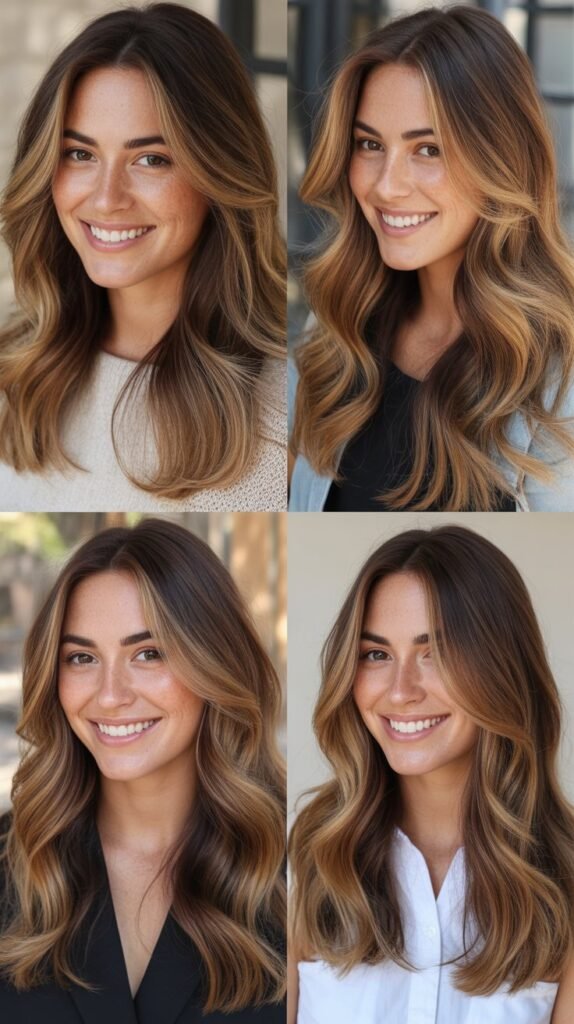
Long hair provides the ultimate canvas for caramel balayage, allowing for beautiful gradual transitions and multiple tones throughout the length.
- Long hair allows for the most gradual, natural-looking color transition from dark roots to caramel ends
- The extra length provides space for multiple caramel tones, creating incredible depth and dimension
- Longer processing time and more product are required for long hair, which can increase cost
- The weight of long hair can make color appear differently than on medium or short hair
- Caramel balayage on long hair creates stunning movement, especially in loose waves or curls
- Consider the health of your ends before getting balayage—damaged ends may need trimming first
- Long balayage hair benefits from regular trims (every 10-12 weeks) to maintain healthy-looking ends
- The length allows for dramatic ombré effects where caramel can be concentrated at the bottom half
- Braids, ponytails, and updos showcase caramel balayage beautifully on long hair
- Long hair requires more maintenance product but the stunning results are worth the investment
21. Caramel Lowlights for Added Depth

While highlights lighten, lowlights add darker tones strategically placed to create depth, dimension, and a more natural overall effect when combined with caramel balayage.
- Lowlights are darker sections woven between highlights to prevent color from looking flat or one-dimensional
- For caramel balayage, lowlights might be shades of chocolate, espresso, or rich brown
- The combination of highlights and lowlights mimics how natural hair color isn’t uniformly light or dark
- Lowlights are particularly beneficial if your hair has been lightened extensively and needs dimension restored
- They help blend natural regrowth more seamlessly by creating a gradient of tones
- For those with very dark hair, lowlights can fill in over-lightened sections while maintaining overall brightness
- The technique creates a more lived-in, effortless appearance than highlights alone
- Lowlights add richness and prevent caramel from appearing brassy by surrounding it with cooler dark tones
- This approach works beautifully for a more subtle, natural result that still has movement
- Combining caramel highlights with strategic lowlights creates the most realistic, multidimensional color
22. Protecting Caramel Balayage from Sun Damage

UV rays are one of the primary causes of color fading and brassiness in caramel balayage, making sun protection essential for maintaining your investment.
- UV radiation breaks down hair color molecules, causing caramel to fade and turn brassy
- The sun’s rays also damage the hair’s protein structure, leading to dryness and breakage
- UV-protectant hair products create a barrier that reflects damaging rays away from your hair
- Leave-in treatments with SPF should be applied daily, especially during summer months
- Hats, scarves, and updos physically protect your hair from direct sun exposure
- Swimming in chlorinated pools compounds UV damage—wear a swim cap or wet hair with clean water first
- Salt water is less damaging than chlorine but still strips color and dries hair when combined with sun
- After sun exposure, use a clarifying shampoo followed by deep conditioning to remove oxidized minerals
- Consider hair sunscreen spray specifically formulated for color-treated hair
- Limit sun exposure during peak UV hours (10 AM – 4 PM) when possible
- Indoor tanning beds are extremely damaging to hair color despite being less discussed than natural sun
23. Caramel Balayage Styling Techniques

Certain styling techniques showcase caramel balayage more effectively, enhancing the dimension and making your color investment truly shine.
- Beach waves are ideal for caramel balayage as the texture allows light to catch different tones
- Loose, voluminous curls create movement that showcases the gradient from dark to caramel
- Sleek straight hair displays the color placement most clearly, showing precise transition points
- Textured updos and half-up styles reveal hidden caramel while keeping darker base visible
- Side parts show more of your highlighted sections than center parts
- Braids, especially loose ones, weave dark and caramel sections together for beautiful dimension
- Adding texture spray or sea salt spray enhances the lived-in, effortless balayage aesthetic
- Avoid over-brushing which can blend colors together too much—embrace piece-y separation
- When blow-drying, section hair to ensure caramel pieces are visible rather than buried underneath
- Ponytails positioned higher show more color than low ponytails which hide highlights
- Consider your typical hairstyle when discussing placement with your colorist
24. Cost Considerations for Caramel Balayage

Understanding the financial investment required for caramel balayage helps you budget appropriately and make informed decisions about your hair color journey.
| Service | Estimated Cost Range | Frequency |
|---|---|---|
| Initial balayage (dark hair) | $200-$500+ | One-time |
| Balayage touch-ups | $150-$400 | Every 10-14 weeks |
| Toning appointments | $50-$150 | Every 6-8 weeks |
| Deep conditioning treatments | $30-$75 | Every 4-6 weeks |
| At-home maintenance products | $100-$200 | Every 2-3 months |
- Initial caramel balayage on dark hair typically costs $200-$500+ depending on location, salon, and hair length
- Major metropolitan areas generally have higher pricing than smaller cities or towns
- Highly experienced colorists specializing in balayage may charge premium rates but often deliver superior results
- Hair length significantly impacts cost—long hair requires more product and time than short hair
- Multiple session approaches (for very dark hair) multiply the cost but are necessary for healthy results
- Consider the total annual cost including touch-ups, toning, treatments, and home products
- Many salons offer package deals or membership programs that reduce per-visit costs
- Quality initial application by an experienced professional can actually save money long-term
- Budget for professional deep conditioning treatments every 6-8 weeks to maintain hair health
- Premium at-home products may seem expensive but extend the life of your color, saving money overall
25. Caramel Balayage on Short Dark Hair

Short hair presents unique opportunities for caramel balayage, creating bold, modern looks that frame the face beautifully and require specific placement strategies.
- Short hair (above shoulder length) showcases caramel placement more prominently since there’s less length to distribute color
- Balayage on short hair focuses primarily on the top layers and face-framing sections for maximum visibility
- Pixie cuts and very short styles benefit from concentrated caramel pieces around the crown and sides
- Bob haircuts provide an ideal canvas for subtle-to-medium caramel balayage that adds dimension
- The shorter the hair, the more frequently you’ll need touch-ups since growth is more noticeable
- Short caramel balayage creates a modern, edgy aesthetic that stands out in professional and social settings
- Less hair means lower product costs and potentially faster service times
- Textured short styles like shaggy bobs particularly benefit from caramel dimension
- Consider how your short cut grows out—some styles require regular trims which affect color maintenance timing
- Short balayage can always be grown out seamlessly as your hair length increases
26. Consulting with Your Colorist
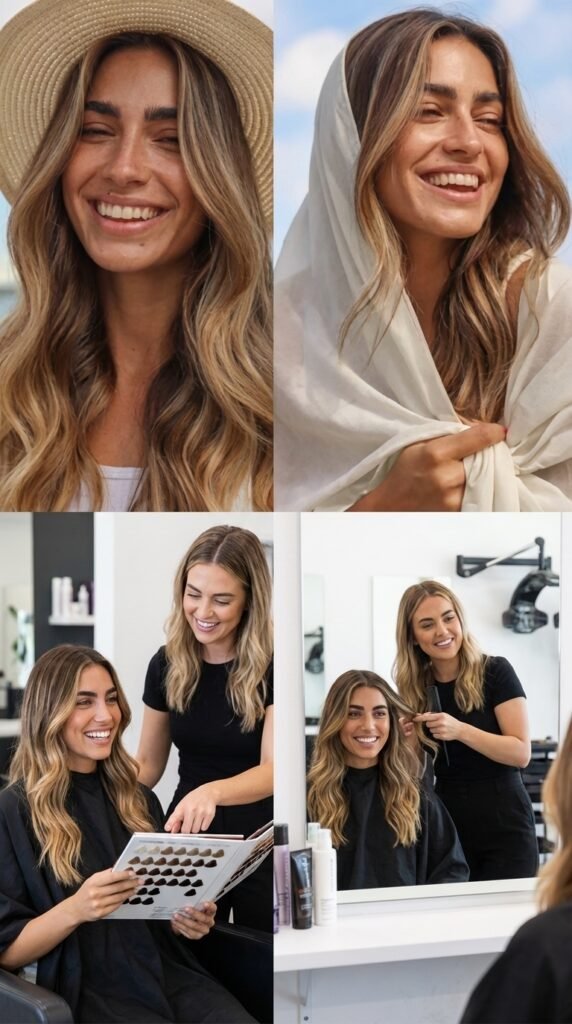
A thorough consultation with an experienced colorist is the foundation of achieving your perfect caramel balayage result while maintaining hair health.
- Bring multiple reference photos showing different angles and lighting of caramel balayage you admire
- Discuss your hair history honestly including previous color treatments, chemical services, and heat damage
- Be transparent about your lifestyle, maintenance commitment, and budget for ongoing care
- A quality colorist will assess your hair’s current condition and may recommend treatments before balayage
- Ask about their experience specifically with dark hair and lifting techniques for caramel tones
- Discuss realistic expectations—very dark hair may not reach light butterscotch in one session
- Inquire about the products they use, including bond-building treatments during the process
- Talk about your typical styling routine to ensure color placement works with how you wear your hair
- Ask for a maintenance plan including timeline and estimated costs for touch-ups and toning
- Discuss your skin tone and undertones to determine the most flattering caramel shade
- Don’t hesitate to ask questions about anything you don’t understand regarding the process
- A good colorist will be honest about what’s achievable and what’s best for your hair’s health
- Request a strand test if you’re concerned about how your hair will respond to lightening
27. Caramel Balayage with Bangs

Bangs add an extra element to consider when planning caramel balayage, as the color placement around your face becomes even more crucial for a cohesive look.
- Curtain bangs pair beautifully with face-framing caramel highlights that blend seamlessly into the bangs
- Blunt, straight-across bangs can feature subtle caramel pieces or remain darker for contrast
- Side-swept bangs benefit from caramel placement that follows the sweep direction naturally
- Wispy, textured bangs showcase caramel dimension when pieces are woven throughout
- Heavy bangs may hide some of your caramel balayage, so discuss visibility concerns with your colorist
- Consider whether you want your bangs lighter, darker, or blended with your overall balayage
- Bangs grow out quickly, so factor in regular bang trims when planning your maintenance schedule
- Face-framing caramel pieces around bangs create exceptional dimension and draw attention to your eyes
- The combination of bangs and balayage can create a youthful, fresh appearance
- Avoid placing too much caramel directly in bangs if you have oily skin, as lightened hair can appear greasier
28. Transition from Highlights to Balayage

If you currently have traditional foil highlights and want to transition to caramel balayage, specific techniques help blend the two for a seamless transformation.
- Traditional highlights create more uniform, striped effects while balayage offers softer, painted transitions
- Your colorist can use balayage to connect existing highlights, creating a more blended appearance
- Lowlights placed between old highlights add depth and begin creating the dimensional balayage look
- Allow some of your old highlights to grow out slightly before adding balayage to avoid over-processing
- The transition may require 2-3 appointments to fully blend old highlights into soft caramel balayage
- Toning services help unify different color sections during the transition period
- Some existing highlights can be incorporated into your new balayage design rather than starting completely fresh
- Be patient with the process—rushing can result in over-processed, damaged hair
- The transition period is an excellent time to focus on deep conditioning and hair health
- Communicate your end goal clearly so your colorist can create a strategic transition plan
29. Caramel Balayage for Different Age Groups

Caramel balayage is universally flattering but can be tailored to enhance beauty at different life stages with age-appropriate placement and intensity.
- In your 20s, you can experiment with bolder, lighter caramel contrasts and trendier placement styles
- Your 30s are perfect for sophisticated caramel balayage that works in professional environments
- In your 40s, strategic caramel placement can soften features and add youthful brightness around the face
- Your 50s benefit from caramel that adds warmth and camouflages gray hair beginning to appear
- In your 60s and beyond, subtle caramel brightens without appearing too dramatic or maintenance-heavy
- Face-framing caramel pieces at any age create a soft-focus effect that’s universally flattering
- Mature skin often benefits from warmer tones like caramel that add warmth to the complexion
- As we age, hair often becomes more porous and can lift more easily, requiring gentler processing
- The natural dimension of balayage blends seamlessly with gray hairs as they emerge
- Caramel balayage at any age should make you feel confident and true to your personal style
30. Caramel Balayage for Special Occasions

Special events provide the perfect opportunity to refresh or enhance your caramel balayage for maximum impact in photos and videos.
- Schedule a toning appointment 1-2 weeks before your special event to ensure fresh, vibrant caramel
- Avoid scheduling a full balayage service within two weeks of an important event in case adjustments are needed
- A glossing treatment a few days before your event adds incredible shine for photos
- Consider slightly lighter caramel pieces for outdoor events where natural light will showcase your color
- For photography, ensure your caramel tones are properly toned to avoid brassiness in flash photos
- Weddings and formal events benefit from polished, refined caramel balayage with excellent conditioning
- Vacation-bound? Schedule your balayage 3-4 weeks before travel so it looks sun-kissed upon arrival
- Special occasion styling like updos or waves showcase balayage dimension beautifully
- Bring your stylist photos of your event hairstyle to ensure color placement will show in that style
- A professional blowout on the day of your event makes caramel balayage look absolutely stunning
31. Combining Balayage Techniques

Master colorists often combine multiple balayage techniques in one application to create the most natural, multidimensional caramel results on dark hair.
- Babylights (ultra-fine highlights) can be combined with thicker ribbons for varied dimension
- Face-framing money pieces paired with subtle overall balayage creates focus while maintaining natural depth
- Ombré effects on the lower half combined with scattered highlights throughout adds interest at all levels
- Teasy-lights (backcombing before painting) adds texture and multiple tonal variations within each section
- Mixing different caramel shades from honey to toffee creates more natural-looking dimension
- Root smudging or shadow roots can be added to balayage for an even more seamless grow-out
- Combining balayage with lowlights prevents the color from appearing too uniform or single-dimensional
- Flash balayage uses aluminum strips without foiling for controlled diffusion between painted sections
- Foilayage combines traditional foils on some sections with freehand balayage on others for varied results
- These combined techniques require advanced skills, so seek an experienced colorist for complex applications
32. Caramel Balayage During Pregnancy

Pregnancy raises unique considerations for hair coloring, but caramel balayage can be a safer option than many other color services with proper precautions.
- Most doctors consider hair coloring safe after the first trimester when major development is complete
- Balayage is particularly pregnancy-friendly because color doesn’t touch the scalp, minimizing absorption
- Ensure your salon is well-ventilated to avoid inhaling strong fumes from lightener and color
- Opt for ammonia-free products and gentler, natural formulations when possible
- Inform your colorist about your pregnancy so they can adjust their approach accordingly
- Some women experience hormonal changes affecting hair texture and porosity during pregnancy
- Your hair may process color differently while pregnant, so conservative application is wise
- Pregnancy is an excellent time for subtle, low-maintenance caramel that won’t require frequent touch-ups
- Consider scheduling less frequent appointments since you may have other priorities postpartum
- Always consult your healthcare provider before any chemical service during pregnancy
- Some pregnant women choose to wait until after delivery for major color changes, using balayage for subtle maintenance only
33. Common Caramel Balayage Mistakes
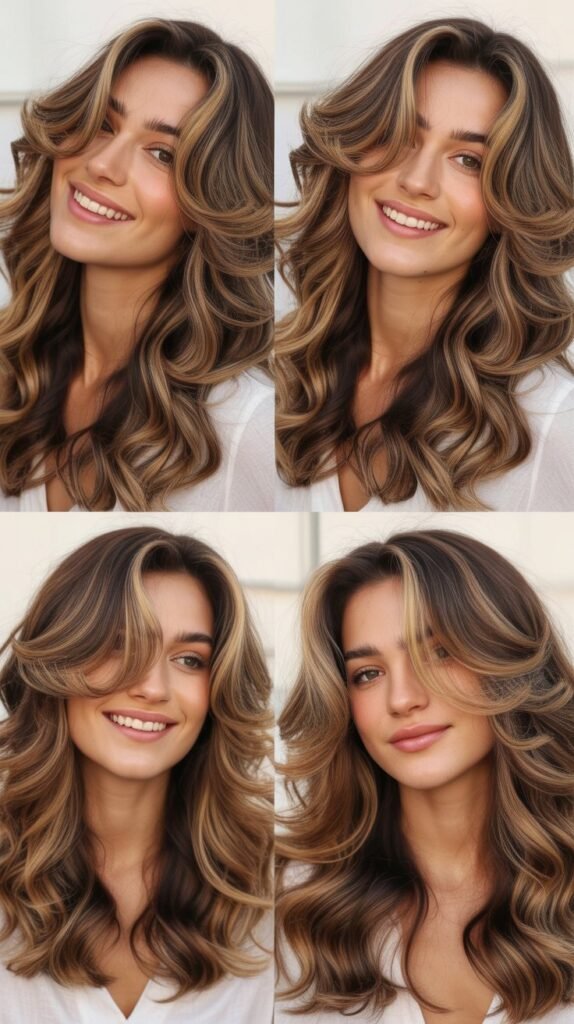
Understanding common pitfalls helps you avoid them and ensures you achieve the beautiful, natural-looking caramel balayage you desire.
- Going too light too fast on very dark hair causes excessive damage and unnatural-looking results
- Improper toning after lightening leaves hair brassy orange rather than true caramel
- Placing color too close to roots defeats the low-maintenance purpose of balayage
- Creating obvious horizontal lines rather than seamless blending results in a striped appearance
- Using the wrong developer strength can cause breakage or insufficient lift
- Skipping bond-building treatments during processing leads to compromised hair integrity
- Over-saturating hair with color prevents proper processing and wastes product
- Insufficient processing time results in patchy, uneven caramel that doesn’t fully develop
- Failing to consider how the person styles their hair leads to hidden or poorly placed color
- Using box dye or attempting DIY balayage at home almost always yields poor results
- Not accounting for the client’s undertones creates unflattering color choices
- Rushing the process or not allowing enough appointment time for proper application
- Neglecting to explain maintenance requirements leads to disappointed clients with faded color
34. DIY Maintenance Between Appointments

While professional services are essential for balayage application, strategic at-home maintenance extends your color and keeps it looking fresh between salon visits.
- Invest in a quality purple or blue shampoo to combat brassiness, using it 1-2 times weekly
- Apply deep conditioning masks weekly, focusing on mid-lengths and ends where color is concentrated
- Use color-depositing conditioners in caramel or honey tones to refresh color gradually
- Rinse hair with cool water to seal the cuticle and lock in color after conditioning
- Apply leave-in treatments with UV protection daily to prevent sun-related fading
- Limit heat styling when possible, and always use heat protectant spray when you do style
- Try air-drying or lower heat settings to reduce color-damaging stress on hair
- Use dry shampoo between washes to extend time between shampoos and preserve color
- Apply hair masks overnight once a month for intensive conditioning and color preservation
- Clarify monthly with a gentle clarifying shampoo to remove buildup that dulls caramel tones
- Mix glossing treatments at home using clear or tinted glosses designed for at-home use
- Avoid chlorine and saltwater when possible, or thoroughly wet hair and apply conditioner before swimming
35. Caramel Balayage on Straight Hair
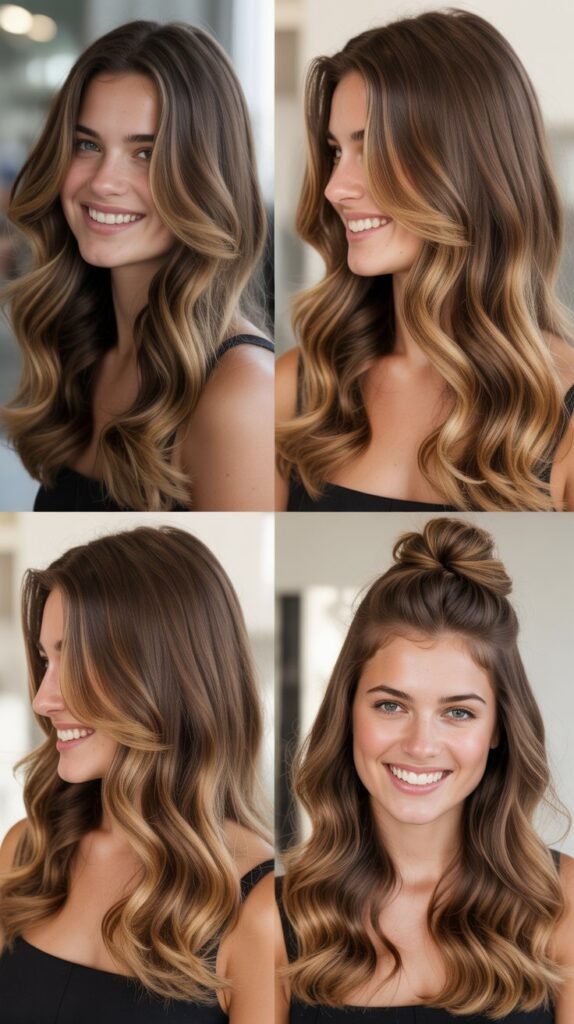
Straight hair showcases caramel balayage with exceptional clarity, displaying the color placement and gradients in the most detailed way.
- Straight hair reveals color placement most obviously, so precise application is crucial
- The smooth surface of straight hair reflects light uniformly, making caramel tones appear very glossy
- Any harsh lines or uneven coloring will be more visible on straight hair than textured styles
- Straight hair allows viewers to see the full gradient from dark roots to caramel ends clearly
- Sleek straight styling showcases the dimensional quality of multiple caramel tones beautifully
- Face-framing caramel pieces on straight hair create striking contrast and frame features crisply
- Straight hair may require more frequent trims to keep ends looking polished and color fresh
- The smoothness of straight hair makes it easier to maintain with proper products and care
- Adding slight waves or bends with a curling iron can create additional dimension in caramel balayage
- Straight hair photographed well, making caramel balayage ideal for those who appear in media or photos frequently
36. Building Your Caramel Over Time

A gradual approach to caramel balayage, especially on very dark hair, produces healthier, more natural-looking results than dramatic one-session transformations.
- Starting conservatively with subtle caramel allows you to assess how you feel about lighter color
- Multiple sessions prevent over-processing and maintain hair integrity throughout the lightening process
- Building gradually is essential for black hair that requires significant lifting to reach true caramel
- Each session allows your colorist to evaluate how your hair responded and adjust the approach
- Gradual building creates the most natural-looking results as color develops in layers
- Your hair’s health remains paramount when taking the slow-and-steady approach
- Most people feel more comfortable with gradual change rather than dramatic immediate transformation
- Building over time allows you to stop at your ideal level rather than going too light immediately
- The process gives you time to establish your maintenance routine and commitment level
- Budget-wise, spacing appointments allows you to distribute costs over time rather than one expensive session
- Hair that’s lightened gradually typically maintains better condition and shine long-term
37. Caramel Balayage with Other Hair Treatments
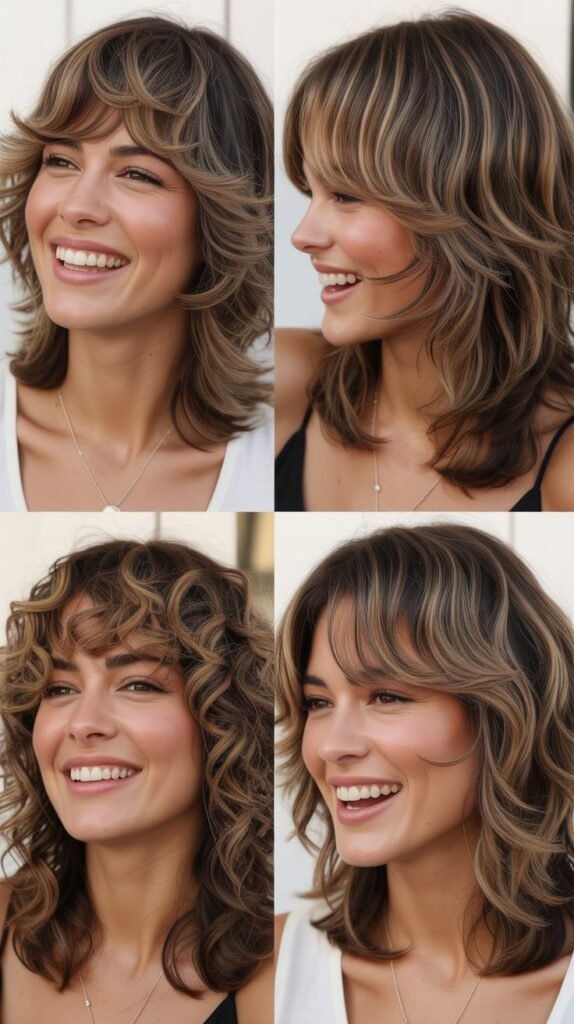
Understanding how caramel balayage interacts with other chemical and physical hair treatments helps you maintain healthy hair while achieving your desired look.
- Keratin smoothing treatments should be done at least two weeks before or after balayage to avoid color shift
- Japanese straightening and similar permanent straightening should be completed before any color services
- Bond-building treatments like Olaplex can be incorporated into balayage service for strengthening
- Hair botox and deep conditioning treatments can be done between balayage appointments for maintenance
- Avoid relaxers and perms while maintaining caramel balayage as the combination is extremely damaging
- Clarifying treatments should be scheduled carefully to avoid stripping freshly applied caramel color
- Protein treatments help maintain strength in lightened hair but should be balanced with moisture
- Brazilian blowouts can affect caramel tones and should be discussed with your colorist before proceeding
- Scalp treatments and exfoliating services are safe to do alongside balayage maintenance
- Always inform any stylist performing a service about your caramel balayage to avoid conflicts
- Space chemical services at least 2-3 weeks apart when possible to allow hair to recover
38. Caramel Balayage Cost vs. Benefit Analysis

Understanding the full investment required for caramel balayage helps you make an informed decision about whether this color commitment aligns with your lifestyle and budget.
Benefits:
- Creates dimension and brightness that elevates your overall appearance
- Lower maintenance than traditional highlights with longer time between appointments
- Works with your natural color rather than covering it, looking more authentic
- Adds versatility to your styling options with visible color in multiple hairstyles
- Boosts confidence and can create a more polished, put-together look
- Ages gracefully and grows out without harsh lines
- Can be customized to any level of commitment from subtle to bold
- Complements dark hair beautifully while maintaining your base color
Costs:
- Initial investment of $200-$500+ depending on location and hair length
- Ongoing touch-ups every 10-14 weeks at $150-$400 each
- Professional toning appointments every 6-8 weeks at $50-$150
- Monthly product expenses of $30-70 for quality at-home maintenance
- Deep conditioning treatments every 4-6 weeks at $30-75
- Potential additional costs for hair repair if damage occurs
- Time commitment of 2-4 hours per salon appointment
- Need to adjust your styling routine to protect color investment
39. Fixing Unwanted Caramel Balayage Results
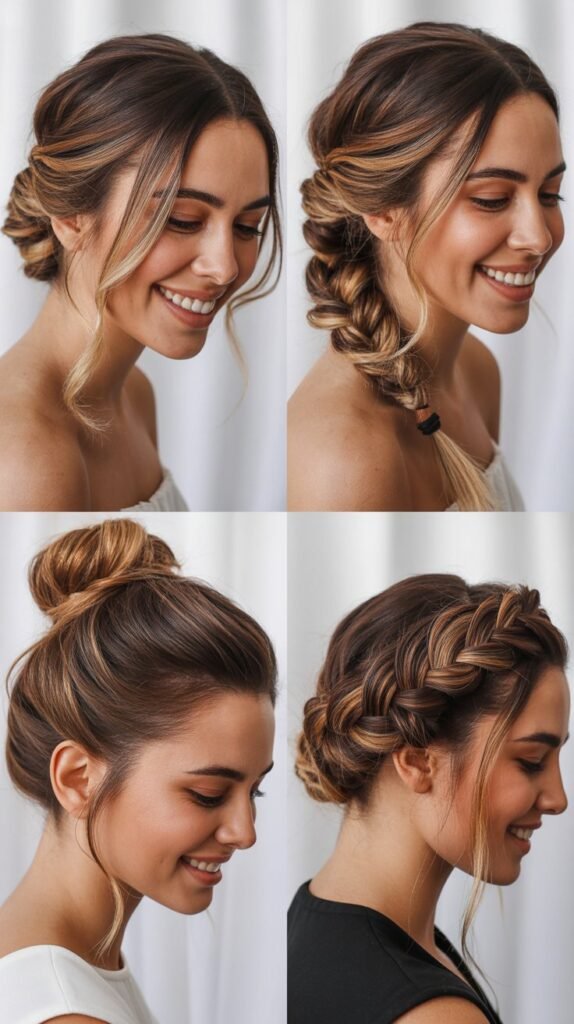
If your caramel balayage didn’t turn out as expected, several correction options can address common issues while preserving your hair’s health.
- For overly brassy results, a toning treatment with cool-based toners neutralizes unwanted warmth
- If your caramel is too light, colorists can add lowlights or glaze to deepen and enrich the tone
- Uneven or patchy balayage can be corrected by adding more color to sparse areas
- Over-processed, damaged ends may require trimming and intensive conditioning before color correction
- If color is too close to roots, growing it out slightly and adding root smudging creates better blend
- For insufficient caramel (not light enough), additional lifting in a separate session achieves desired brightness
- Color corrections should always be done professionally—avoid attempting DIY fixes with box dye
- Express concerns to your original colorist first, as many offer complimentary correction services
- If seeking a different colorist for correction, bring photos and be honest about what was done
- Allow at least 2-4 weeks between initial service and correction to let hair recover
- Understand that some corrections may require multiple appointments for safe, healthy results
40. Caramel Balayage Inspiration from Different Cultures

Caramel balayage translates beautifully across various hair textures and cultural aesthetics, each bringing unique approaches to this versatile technique.
- Asian hair typically has the darkest, most resistant base requiring patient lifting for true caramel tones
- The straight, coarse texture of much Asian hair showcases caramel placement with exceptional clarity
- Latin hair often features natural warmth that harmonizes beautifully with golden caramel shades
- Afro-textured hair benefits from moisture-focused balayage techniques that preserve curl integrity
- Protective styling in Black hair culture can be enhanced with strategic caramel placement on natural hair
- Middle Eastern hair textures often have natural wave that creates beautiful movement with caramel dimension
- Different cultural beauty standards influence whether subtle or bold caramel is preferred
- Each hair texture requires adjusted processing times and customized techniques for optimal results
- The versatility of caramel balayage makes it adaptable to diverse hair types and aesthetic preferences
- Seeking colorists experienced with your specific hair texture ensures best results
41. Styling Products That Enhance Caramel Balayage
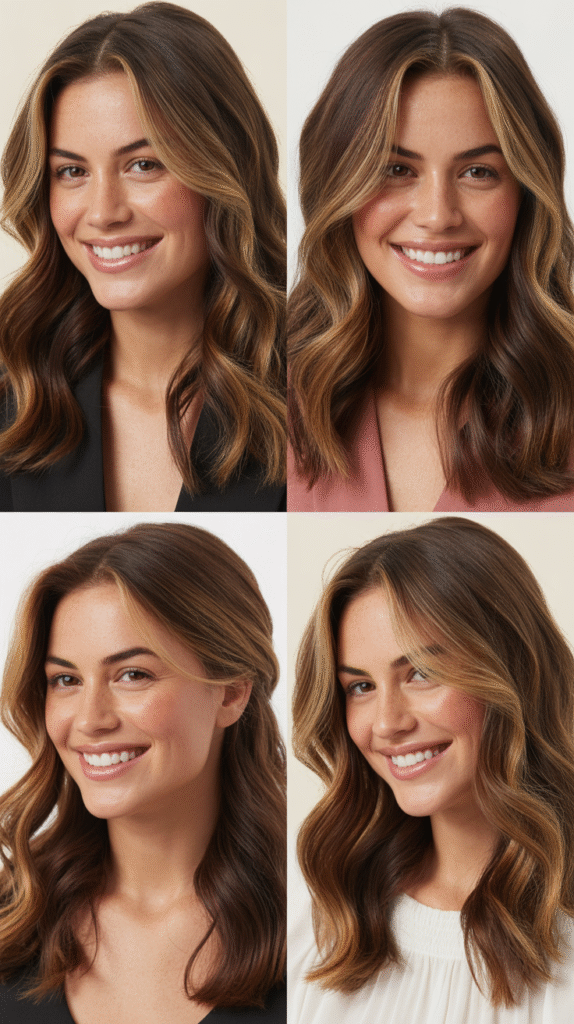
Certain styling products are specifically formulated to enhance color-treated hair, making your caramel balayage appear more vibrant and healthy.
- Color-enhancing styling creams with caramel or golden pigments refresh color between washes
- Shine serums with light-reflecting particles make caramel tones appear more luminous and glossy
- Texturizing sprays and dry shampoos designed for colored hair maintain dimension without stripping color
- Heat protectants with UV filters serve double duty protecting against styling damage and sun fading
- Lightweight oils seal the cuticle without weighing hair down, maintaining color vibrancy
- Mousse and volumizing products for colored hair add body without compromising color integrity
- Sea salt sprays enhance texture while containing protective ingredients for color-treated hair
- Glossing sprays provide instant shine and can subtly enhance caramel tones
- Curl-enhancing products for colored hair define texture while preserving color vibrancy
- Finishing sprays with flexible hold maintain styles without alcohol that can dry and fade color
- Always choose products specifically labeled safe for color-treated or highlighted hair
42. Caramel Balayage for Fine vs. Thick Hair
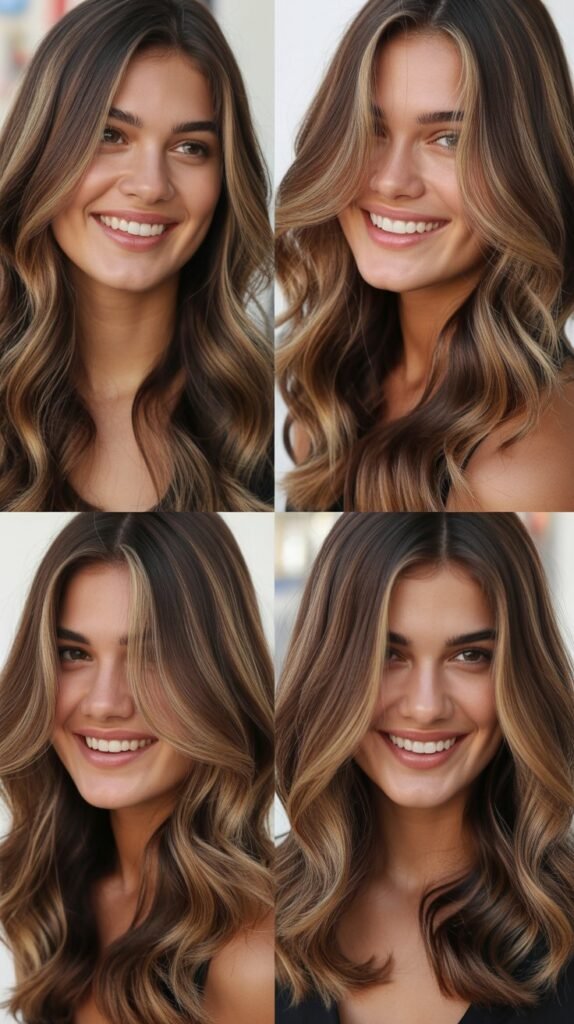
Hair density affects how caramel balayage should be applied and how the final result appears, requiring customized approaches for fine and thick hair types.
Fine Hair Considerations:
- Requires more delicate lightening to prevent over-processing and breakage
- Benefits from thinner, more frequent caramel pieces to create illusion of density
- Looks best with subtle caramel since heavy contrast can make hair appear thinner
- Needs gentle processing and thorough bond-building treatments during application
- Styles well with volumizing products that don’t weigh down fine texture
- May require more frequent trims to keep ends looking full and healthy
Thick Hair Considerations:
- Can handle more extensive lightening without appearing over-processed
- Requires thorough sectioning to ensure all layers receive color, not just the surface
- Benefits from chunkier caramel ribbons that are visible through the density
- Takes longer to process and may require more product, affecting cost
- Can showcase both subtle and dramatic caramel variations beautifully
- Grows out gracefully due to the volume maintaining dimension
43. Transitioning Your Caramel Through the Years

As your style, lifestyle, and preferences evolve, your caramel balayage can adapt while maintaining the integrity and beauty of your color.
- In your twenties, experiment with placement, from subtle to bold, finding what resonates with you
- As your career develops, you might transition to more refined, polished caramel that suits professional environments
- During busy life phases (new parenthood, career changes), lower-maintenance caramel reduces appointment frequency
- As gray hair emerges, caramel balayage seamlessly blends silver strands into your overall color
- Mature hair often becomes finer, requiring adjustments to prevent over-processing
- Your color preferences may shift over time—warmer or cooler caramels can accommodate changing tastes
- Life changes like relocating may require finding new colorists who understand your balayage journey
- Seasonal preferences might become more or less important as your lifestyle changes
- Building a long-term relationship with a colorist allows them to evolve your balayage thoughtfully
- Your caramel balayage can remain a signature look while adapting to who you are at each life stage
44. Caramel Balayage FAQ and Troubleshooting
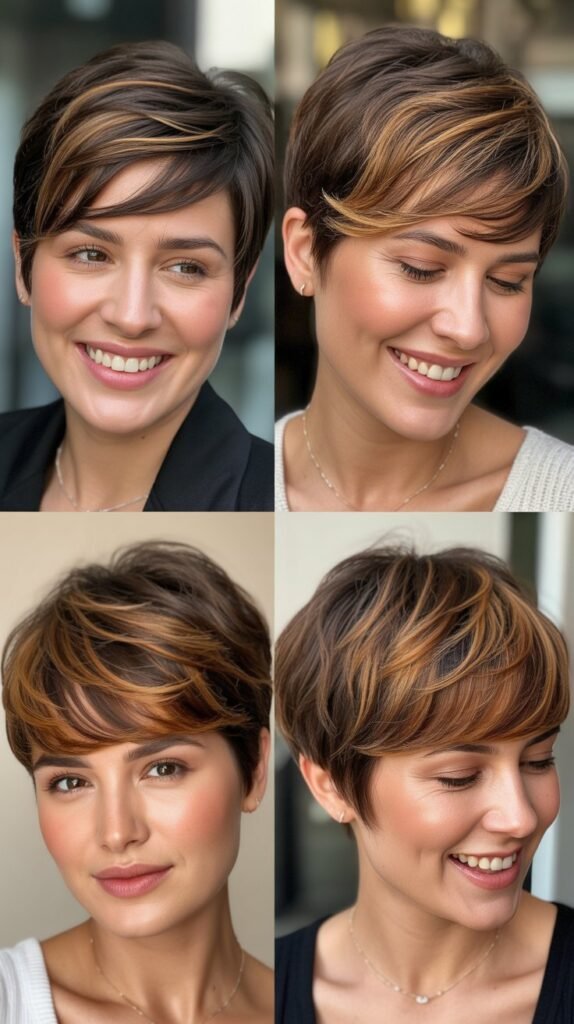
Addressing the most common questions and concerns about caramel balayage helps you feel confident in your color choice and maintenance approach.
How long does caramel balayage last?
- The color placement lasts 10-14 weeks before touch-ups, but tone may need refreshing at 6-8 weeks
Will it damage my dark hair?
- Lightening always affects hair structure, but balayage with proper technique and aftercare minimizes damage significantly
Can I swim with caramel balayage?
- Yes, but wet hair first with clean water, apply leave-in conditioner, and rinse immediately after swimming
How often should I wash my hair?
- Ideally 2-3 times weekly maximum to preserve color; use dry shampoo between washes
Can I go back to all dark hair?
- Yes, your colorist can fill and darken caramel sections, though it may take multiple sessions for even results
Why is my caramel turning orange?
- Brassiness occurs when cool tones fade; use purple/blue shampoo and schedule a toning appointment
Can I get caramel balayage while transitioning to gray?
- Absolutely—balayage beautifully blends emerging gray hair with your dark base and caramel highlights
45. Final Caramel Balayage Tips for Success

Ensuring long-term success with your caramel balayage requires commitment to proper care, realistic expectations, and communication with your colorist.
- Choose an experienced colorist specializing in dark hair and balayage techniques—this is not the time to save money with an inexperienced stylist
- Maintain realistic expectations about what’s achievable in one session, especially with very dark hair
- Invest in quality products specifically designed for color-treated hair from the beginning
- Establish your maintenance routine immediately after your first balayage appointment
- Take progress photos to track your color journey and communicate with your colorist
- Don’t skip deep conditioning treatments—they’re essential for maintaining healthy balayage hair
- Protect your color investment from environmental factors like sun, chlorine, and hard water
- Listen to your colorist’s advice about timing for touch-ups and toning appointments
- Be patient with the process, especially if building your caramel gradually over multiple sessions
- Enjoy the versatility and dimension that caramel balayage brings to your dark hair
- Remember that beautiful balayage is a partnership between you and your colorist requiring commitment from both
- Embrace the effortless, natural beauty that properly maintained caramel balayage creates
Conclusion
The journey to finding your perfect caramel balayage among these 45 Soft Balayage Caramel Balayage Ideas That Look Effortless on Dark Hair is an exciting transformation that celebrates your natural beauty while adding warmth, dimension, and sophistication.
Whether you’ve chosen subtle face-framing highlights, rich toffee tones, or bold butterscotch ribbons, your caramel balayage reflects your personal style and enhances your dark hair’s natural depth.
The key to maintaining your stunning results lies in consistent care, quality products, and a partnership with a skilled colorist who understands your vision and your hair’s unique needs.
Remember that beautiful balayage grows more gorgeous over time as the colors soften and blend, creating that coveted lived-in look that makes caramel balayage endlessly appealing. Embrace the compliments, enjoy the dimension, and feel confident knowing your caramel balayage makes you look effortlessly radiant every single day.

