
If you’ve been struggling with fine, limp hair that lacks volume and body, you’re about to discover a game-changing solution.
Medium blunt haircuts are the secret weapon that hairstylists have been using for decades to create the illusion of thicker, fuller hair.
This comprehensive guide explores 62 Thin Hair Medium Blunt Haircuts That Add Instant Density, offering you a complete roadmap to transforming your hair from flat and lifeless to bouncy and voluminous.
Throughout this article, you’ll discover the science behind why blunt cuts work so effectively for thin hair, explore various styling techniques that maximize density, learn about face-shape considerations, understand maintenance requirements, and find professional tips for communicating with your stylist.
Whether you have naturally fine hair or have experienced thinning due to age, stress, or other factors, these carefully curated haircut ideas will help you achieve the thick, healthy-looking hair you’ve always wanted.
1. Understanding Why Blunt Cuts Create Volume for Thin Hair
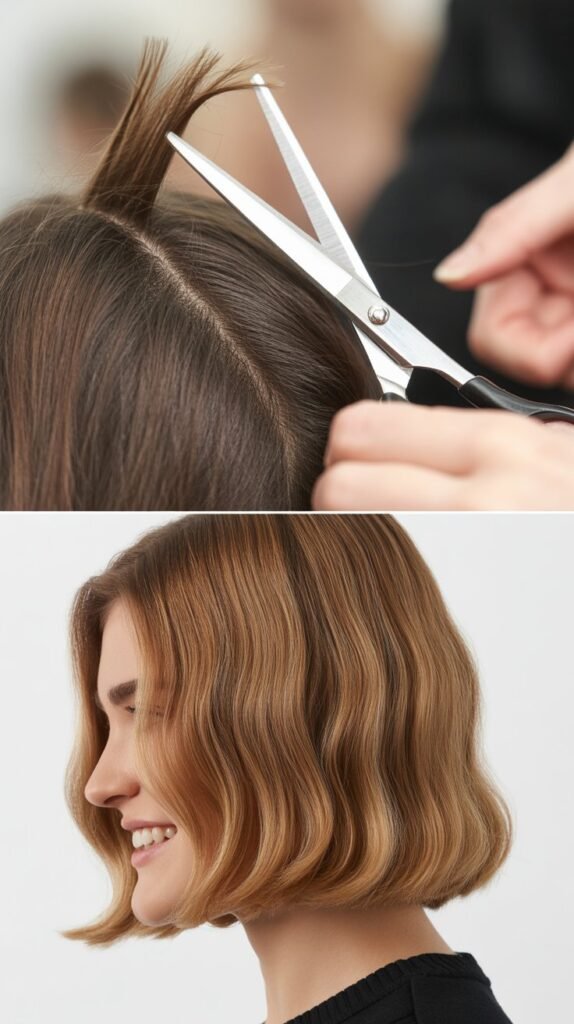
Before diving into specific haircut styles, it’s essential to understand the mechanics behind why blunt cuts are so effective for adding density to thin hair.
The blunt cutting technique involves cutting hair straight across at the same length, creating a solid, even baseline that makes hair appear fuller and thicker.
- When hair is cut bluntly, all strands end at the same point, creating a visual wall of hair that appears denser than layered or tapered cuts.
- Layered cuts remove weight from the ends, which can make thin hair look wispy and sparse, while blunt cuts preserve every strand for maximum fullness.
- The straight edge created by blunt cutting reflects light more uniformly, creating the optical illusion of thicker hair.
- Blunt cuts eliminate the feathered, see-through ends that often plague thin hair, replacing them with solid, substantial-looking perimeters.
- This cutting technique works particularly well at medium lengths because there’s enough hair to create movement without sacrificing the density that comes from keeping all strands at the same length.
- The weight of medium-length hair helps it lie flatter at the roots while the blunt ends create fullness where it’s most visible.
- Professional stylists often combine blunt cutting with strategic internal layering to maintain density at the perimeter while creating movement throughout the interior.
2. The Classic Medium Blunt Bob
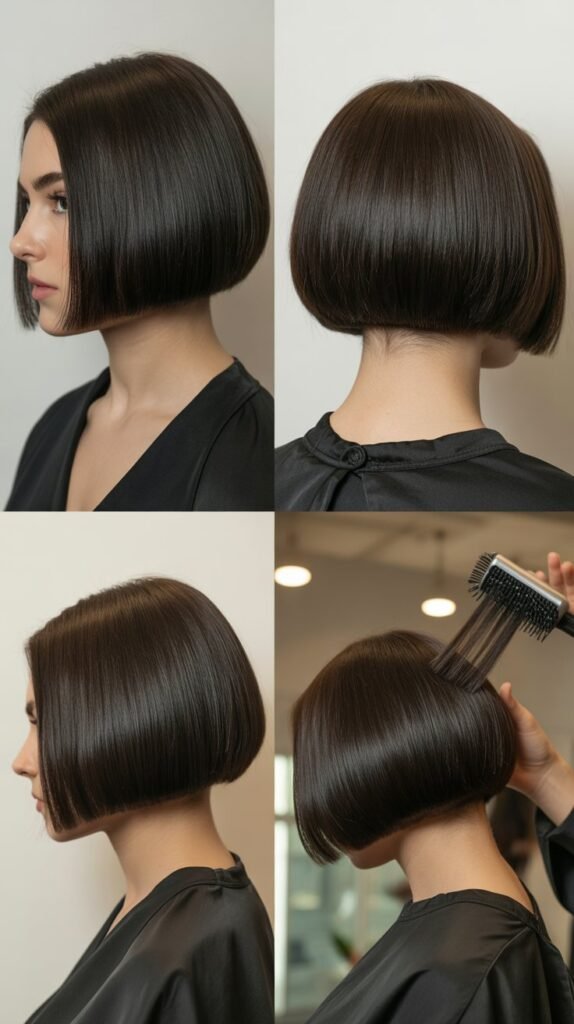
The timeless medium blunt bob remains one of the most effective haircuts for creating instant density in thin hair.
This versatile style typically falls between the jawline and shoulders, offering the perfect balance of length and volume.
- The classic blunt bob cuts all hair to one uniform length, creating maximum thickness at the ends where thinness is most noticeable.
- This style works exceptionally well for straight to slightly wavy hair textures, as the hair naturally falls into the blunt shape.
- Keeping the length between chin and collarbone ensures the hair has enough weight to look substantial without becoming too heavy and flat.
- A center or slight off-center part typically works best, as severe side parts can expose scalp and diminish the fullness effect.
- The blunt bob can be customized with subtle variations in length, with the back slightly shorter than the front for added dimension.
- Styling requires minimal effort—a round brush blow-dry creates volume at the roots while maintaining the sleek, blunt ends.
- This cut grows out beautifully, maintaining its shape and fullness for 6-8 weeks before requiring a trim.
- Adding a gloss treatment or shine serum enhances the reflective quality of the blunt ends, further amplifying the appearance of thickness.
3. The Textured Blunt Lob (Long Bob)
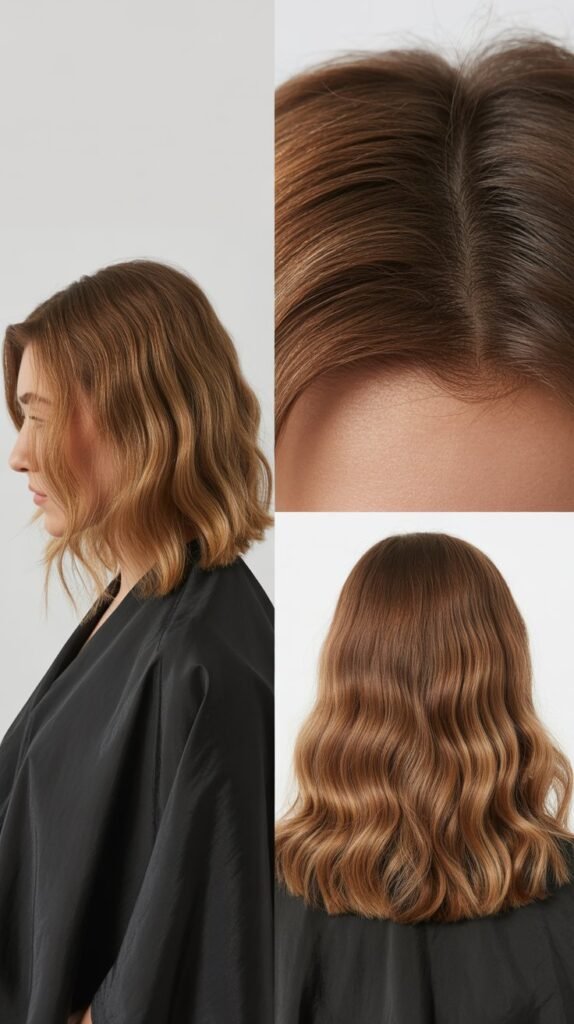
The lob, or long bob, extends slightly longer than the classic bob, typically grazing the shoulders while maintaining the density-boosting blunt perimeter.
Adding texture to this cut creates movement without sacrificing fullness.
- The lob length provides versatility for styling while keeping enough weight to prevent thin hair from looking stringy.
- Internal texturizing using point-cutting or slide-cutting techniques creates movement without removing the blunt perimeter.
- This style works beautifully with natural texture, enhancing waves while the blunt baseline adds structure and fullness.
- The slightly longer length allows for various styling options including loose waves, sleek straight looks, or textured updos.
- Face-framing pieces can be incorporated while maintaining the overall blunt shape for added dimension.
- The textured lob flatters most face shapes, with the length and fullness creating a balanced, proportionate appearance.
- Styling products like texturizing sprays and sea salt mists enhance natural movement while the blunt ends provide a finished look.
4. Blunt Cut with Micro Bangs
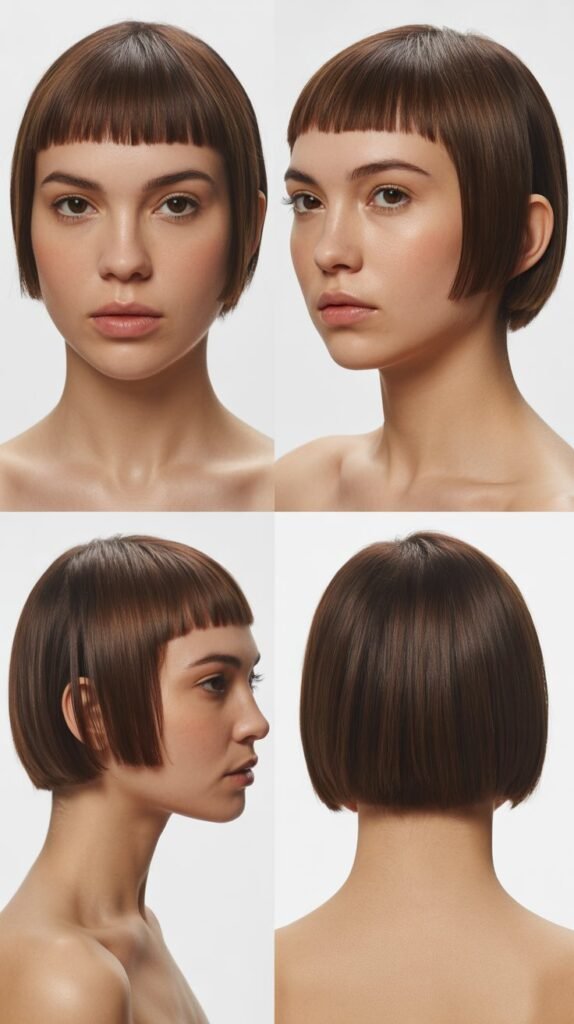
Combining a medium blunt cut with micro bangs creates a bold, modern look while adding an extra element of density and frame for the face.
This edgy style draws attention upward and creates the illusion of fuller hair overall.
- Micro bangs cut straight across the forehead add another horizontal blunt line, multiplying the density-creating effect.
- The contrast between short bangs and medium-length hair creates visual interest that distracts from thinness.
- This style requires commitment and regular maintenance, with bang trims needed every 2-3 weeks.
- The geometric precision of micro bangs paired with blunt ends creates a high-fashion, intentional appearance.
- Face shape considerations are crucial—micro bangs work best on oval, heart, and diamond face shapes.
- Styling involves blow-drying bangs forward and flat while the length can be worn sleek or with subtle texture.
- The bold nature of this cut makes thin hair appear intentionally styled rather than sparse.
5. The Blunt A-Line Bob
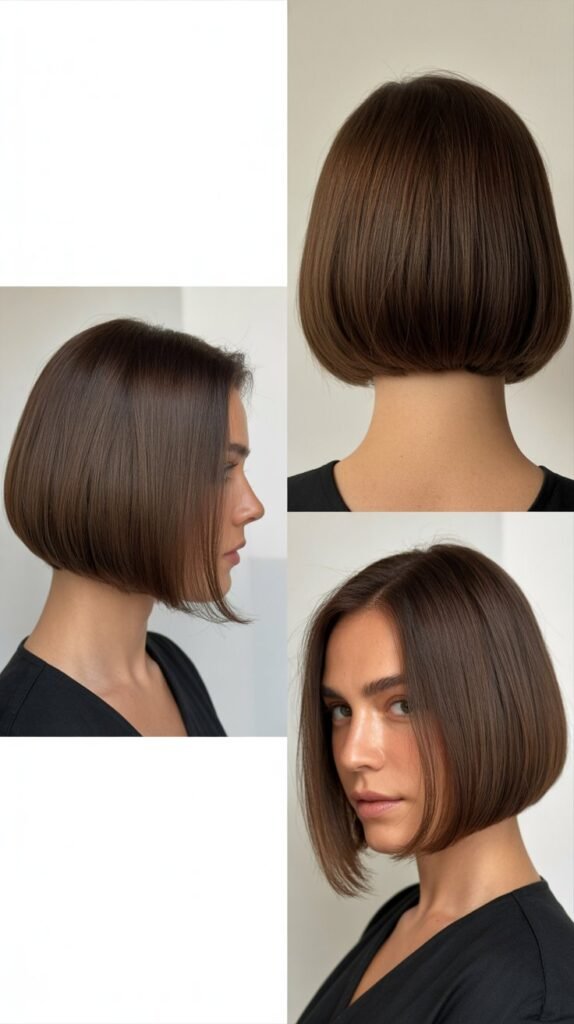
The A-line bob features a longer front and shorter back, all cut bluntly to create a dramatic angle that adds dimension and perceived thickness.
This graduated style offers movement while maintaining the density benefits of blunt cutting.
- The angled shape creates a stacked appearance at the back, adding volume in the crown area where thinning often occurs.
- Longer front pieces draw the eye forward, creating a lengthening effect on the face while maintaining fullness.
- The dramatic angle provides built-in movement and dimension without requiring internal layering that could thin the appearance.
- This cut works particularly well for fine, straight hair that holds the angular shape naturally.
- The shorter back section requires regular trims every 4-6 weeks to maintain the precise angle.
- Styling typically involves blow-drying with a round brush, directing hair forward to emphasize the A-line shape.
- The graduated length creates the illusion of thicker hair by concentrating volume at the back while elongating the front.
- This style can be customized with varying degrees of angle, from subtle to dramatic, depending on personal preference.
6. Blunt Cut with Curtain Bangs
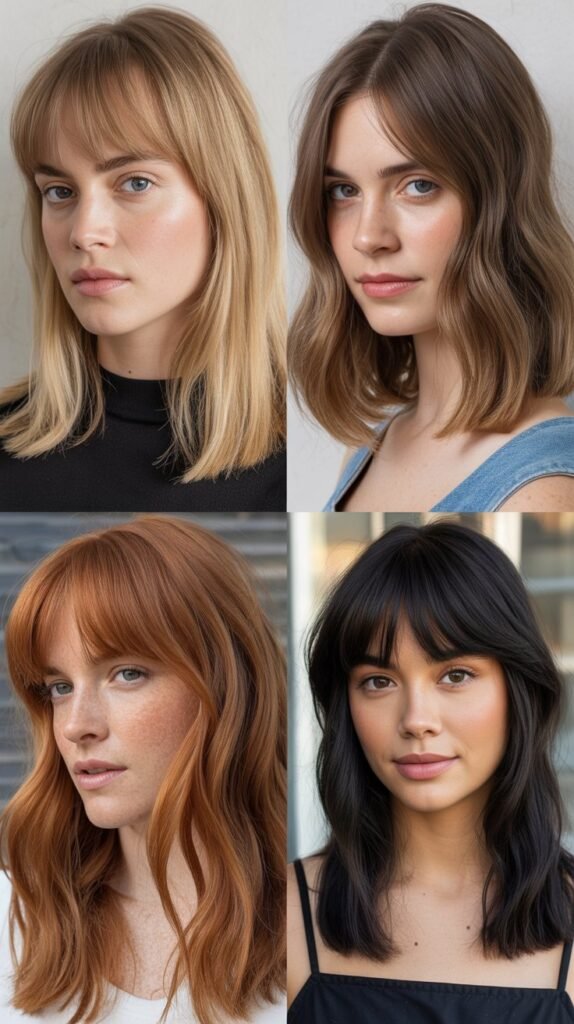
Curtain bangs paired with a medium blunt cut offer a softer, more romantic approach while still delivering impressive density.
The face-framing bangs part in the center and sweep to the sides, creating movement while the blunt baseline adds fullness.
- Curtain bangs are typically cut with slight layering to create the sweeping effect, while the rest of the hair maintains its blunt perimeter.
- This combination offers the best of both worlds—movement around the face with density throughout the length.
- The bangs can be customized to various lengths, from eye-grazing to cheekbone-length, depending on preference.
- Unlike micro bangs, curtain bangs are more forgiving and versatile, easily pinned back or styled differently.
- The center part created by curtain bangs helps distribute hair evenly, preventing the thinning appearance that can come from heavy side parts.
- Styling requires blow-drying bangs away from the face using a round brush while keeping the ends blunt and full.
- This style works beautifully with natural texture, allowing slight waves to enhance the romantic, effortless appearance.
- The face-framing effect of curtain bangs draws attention to facial features while the blunt length creates a balanced silhouette.
7. The Blunt Collarbone Cut
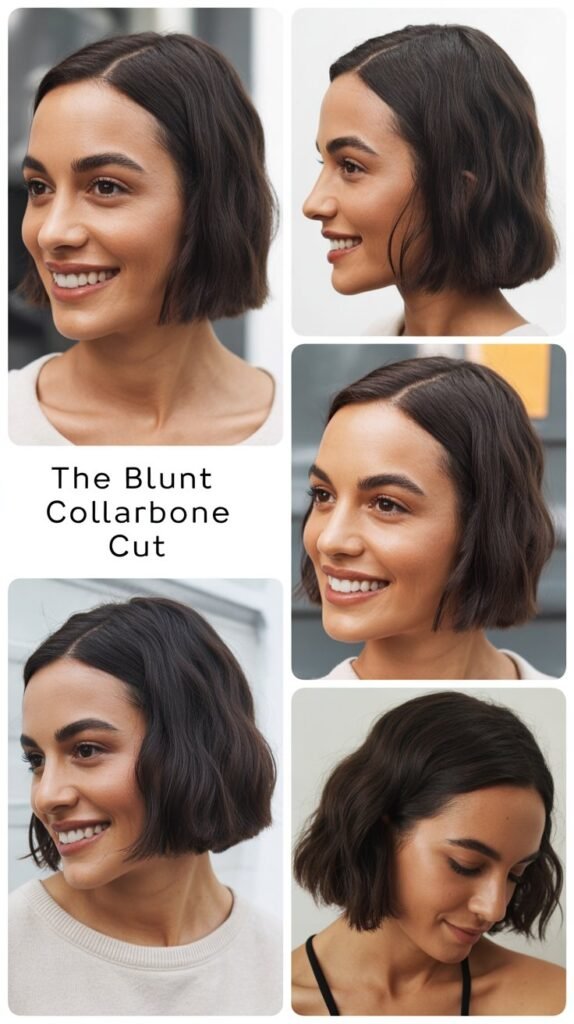
The collarbone-length blunt cut hits at the perfect spot to create maximum fullness while maintaining enough length for versatility.
This flattering length works across all ages and lifestyles.
- The collarbone length provides enough weight to prevent flyaways while keeping hair light enough to maintain volume.
- This cut creates a natural resting point that frames the face and neck beautifully.
- The blunt perimeter at this length creates a substantial, healthy-looking finish that disguises thinness.
- This versatile length allows for various styling options including half-up styles, low ponytails, and loose waves.
- The cut works well with natural hair texture, whether straight, wavy, or slightly curly.
- Minimal styling is required—air-drying with a smoothing cream often provides a polished look.
- The length is practical for active lifestyles while sophisticated enough for professional settings.
- Regular trims every 6-8 weeks maintain the blunt edge and prevent split ends that can make thin hair look unhealthy.
8. Blunt Cut with Subtle Face-Framing Layers
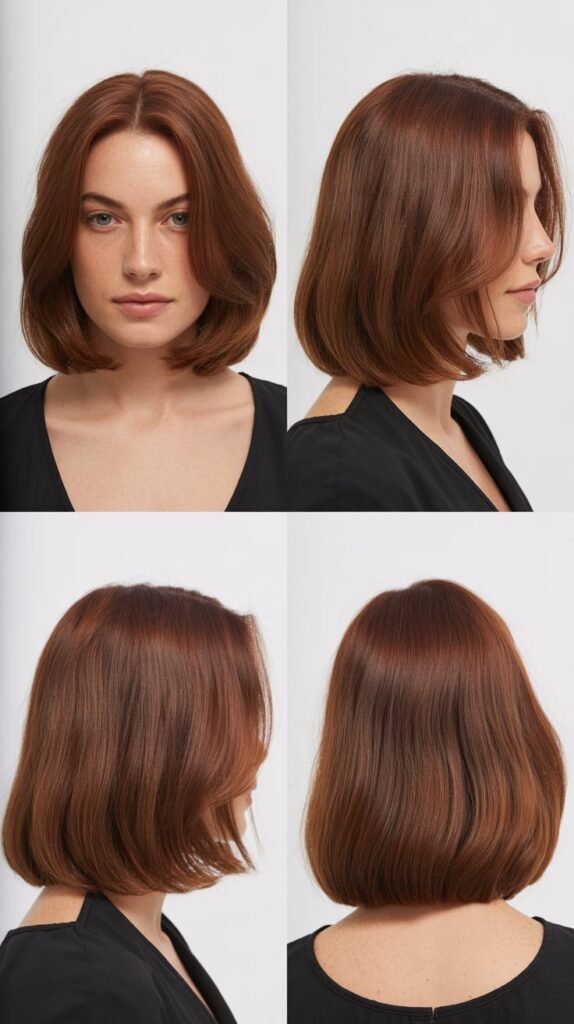
While maintaining a predominantly blunt perimeter, adding subtle face-framing layers creates dimension and movement around the face without sacrificing overall density.
This approach offers customization while preserving thickness.
- Strategic face-framing layers begin around the cheekbone or chin area, gradually blending into the blunt baseline.
- These layers create movement and dimension where it’s most visible while keeping the overall perimeter intact for density.
- The technique involves cutting just the front sections in subtle increments while leaving the back and sides bluntly cut.
- This approach is ideal for those wanting some softness and customization without losing the fullness benefits.
- Face-framing layers can be adjusted to complement specific face shapes—shorter for round faces, longer for elongated faces.
- Styling involves curling or waving just the face-framing pieces for dimension while keeping ends smooth and blunt.
- The combination creates a modern, lived-in look that doesn’t appear too severe or geometric.
- This cut offers easier growing-out process as the layers gradually blend with the length.
9. The Blunt Shag
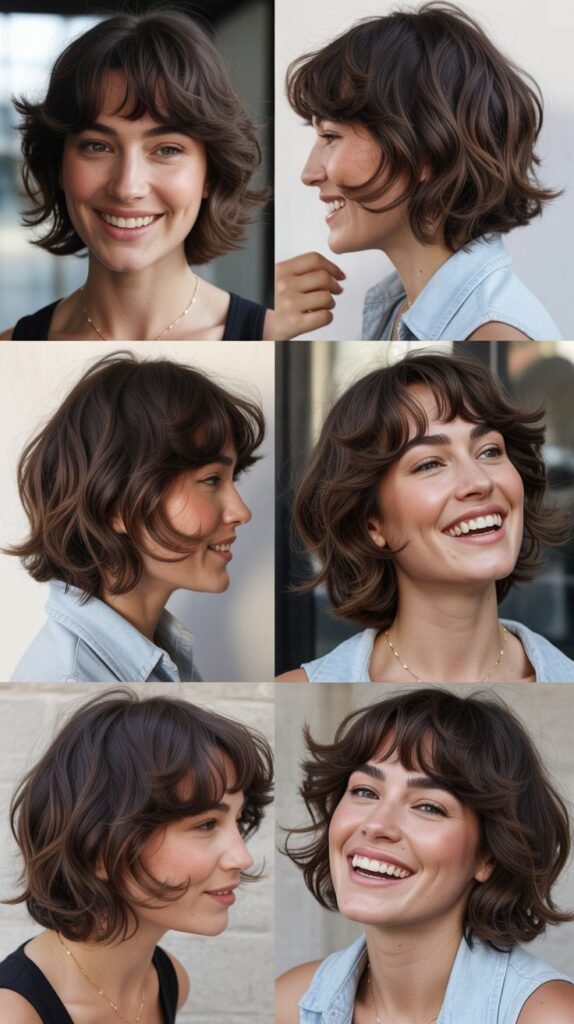
The modern blunt shag combines the textured, layered interior of a traditional shag with a blunt perimeter, creating a style that’s both edgy and voluminous.
This contemporary approach to the classic shag maximizes density for thin hair.
- Interior layers are cut throughout the mid-lengths to create lift and movement while the perimeter remains bluntly cut.
- This technique provides the textured, rock-and-roll vibe of a shag without the thinned-out ends.
- The blunt baseline grounds the style, preventing it from looking too choppy or sparse.
- Point-cutting and texturizing techniques create separation and movement within while maintaining density at the edges.
- This style works beautifully with natural texture, enhancing waves and creating effortless, tousled looks.
- Styling involves using texturizing products and scrunching while drying to encourage natural movement.
- The blunt shag offers maximum versatility—can be worn sleek, wavy, or intentionally messy.
- This cut requires a skilled stylist who understands how to balance interior texture with perimeter density.
10. Blunt Cut with Deep Side Part
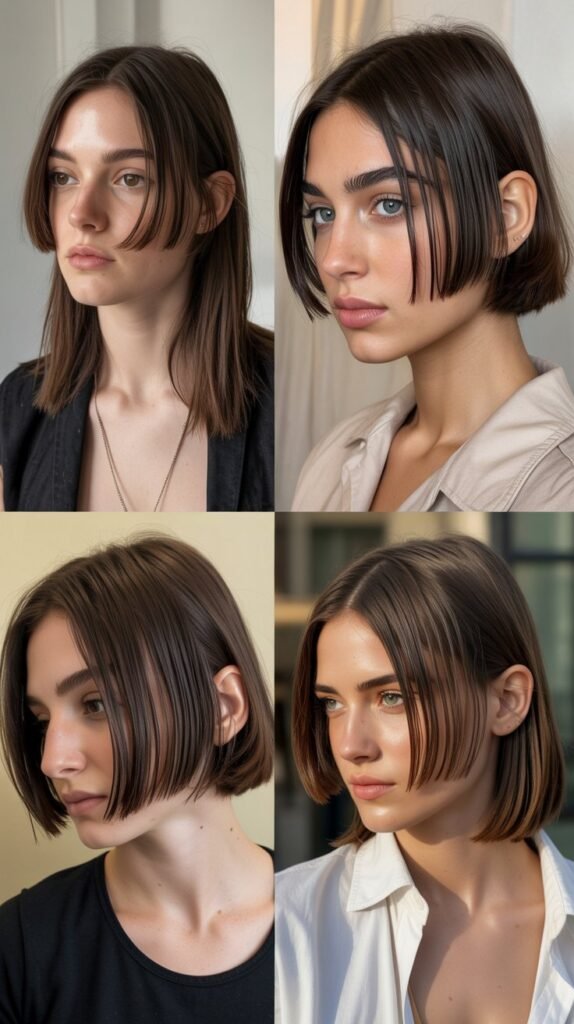
Pairing a blunt cut with a deep side part creates drama and volume while maintaining the density-boosting benefits of the blunt perimeter.
The asymmetrical part adds instant lift at the roots.
- A deep side part creates natural lift on the heavier side, adding immediate volume at the crown.
- The part should be positioned far enough to the side to create drama—typically aligned with the outer edge of the eyebrow.
- This styling approach works especially well for those with finer hair that tends to lie flat.
- The blunt ends maintain fullness while the side part adds dimension and movement.
- Alternating the part location occasionally can prevent hair from developing a permanent crease and maintain root volume.
- Styling involves blow-drying hair away from the part line to maximize lift and volume.
- The asymmetrical look created by the deep part draws attention and creates visual interest.
- This combination works for all medium blunt cut lengths, from bobs to collarbone cuts.
11. The Inverted Blunt Bob
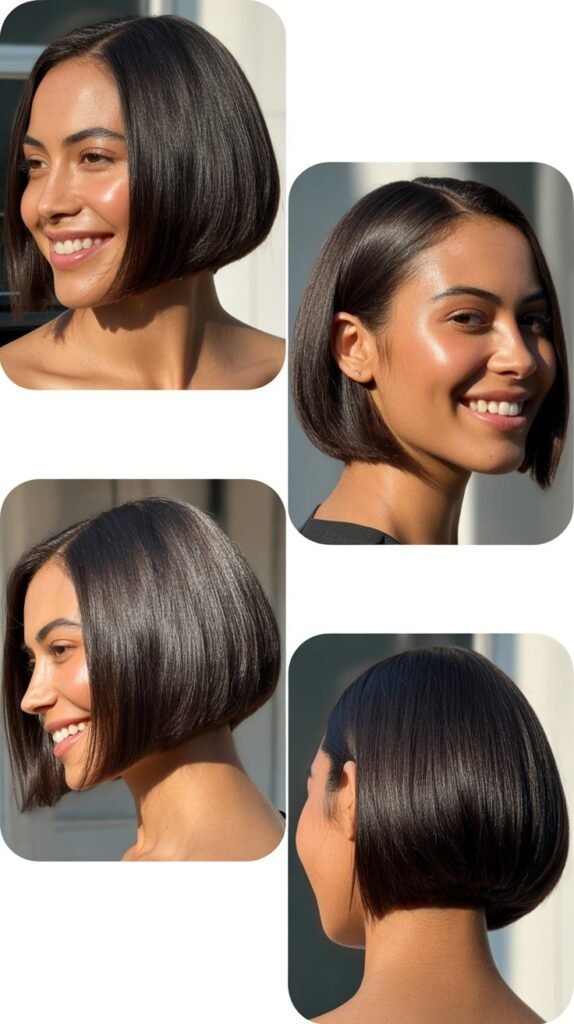
The inverted bob features shorter layers in the back that gradually lengthen toward the front, all cut bluntly to create maximum volume in the back while maintaining face-framing length.
This architectural cut creates impressive fullness.
- The inverted shape creates natural stacking in the back, adding volume precisely where many experience thinning.
- Shorter back sections are graduated but cut bluntly at each level, maintaining density throughout the stacked area.
- Longer front pieces provide face-framing benefits while the short back prevents the cut from feeling too heavy.
- This cut requires precise technique and regular maintenance to keep the inverted shape sharp and volumized.
- The graduated back can be customized from subtle to dramatic depending on the degree of inversion desired.
- Styling involves blow-drying with a round brush, directing the back forward and under to emphasize the stacked shape.
- The inverted bob works particularly well for straight to slightly wavy hair that holds the structured shape.
- This cut is ideal for those wanting maximum volume in the crown and nape area.
12. Blunt Cut with Babylights
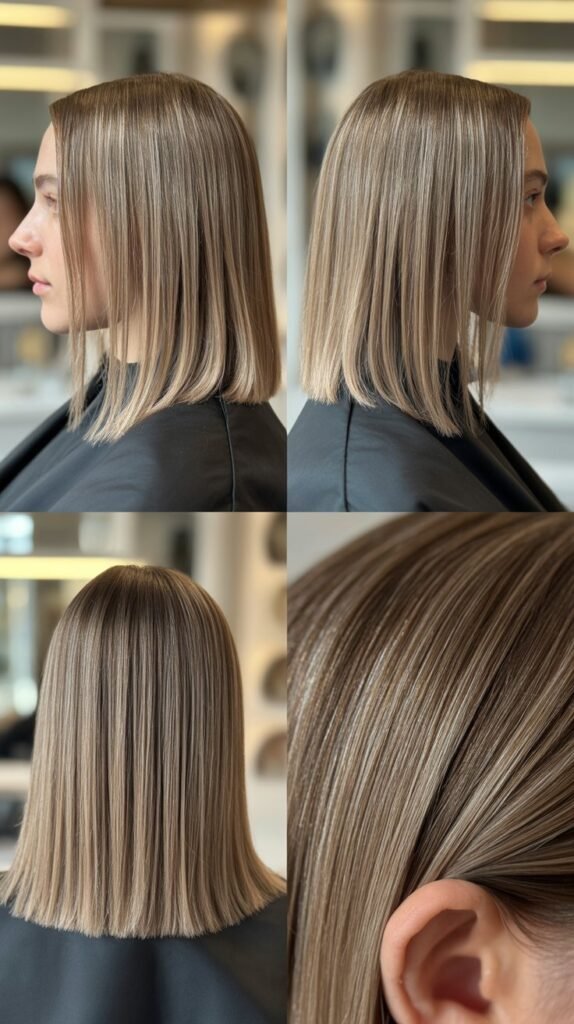
Combining a blunt cut with babylights (very fine, subtle highlights) creates dimension and the illusion of thickness through color technique while the cut provides structural density.
This pairing offers multi-dimensional fullness.
- Babylights are extremely fine highlights that mimic natural sun-lightened hair, adding depth without harsh contrast.
- The subtle color variation creates shadows and highlights that give the illusion of more texture and volume.
- When combined with a blunt cut, the color dimension enhances the fullness created by the blunt baseline.
- Placement focuses on face-framing areas and throughout the crown to maximize the brightening, volumizing effect.
- This technique is lower maintenance than traditional highlights, requiring touch-ups every 10-12 weeks.
- The natural appearance of babylights complements the intentional, clean lines of a blunt cut.
- Color dimension can be customized to be very subtle or more noticeable depending on preference.
- This combination works for all hair colors, from blonde to brunette to red, with highlights customized accordingly.
13. The Blunt Chin-Length Bob
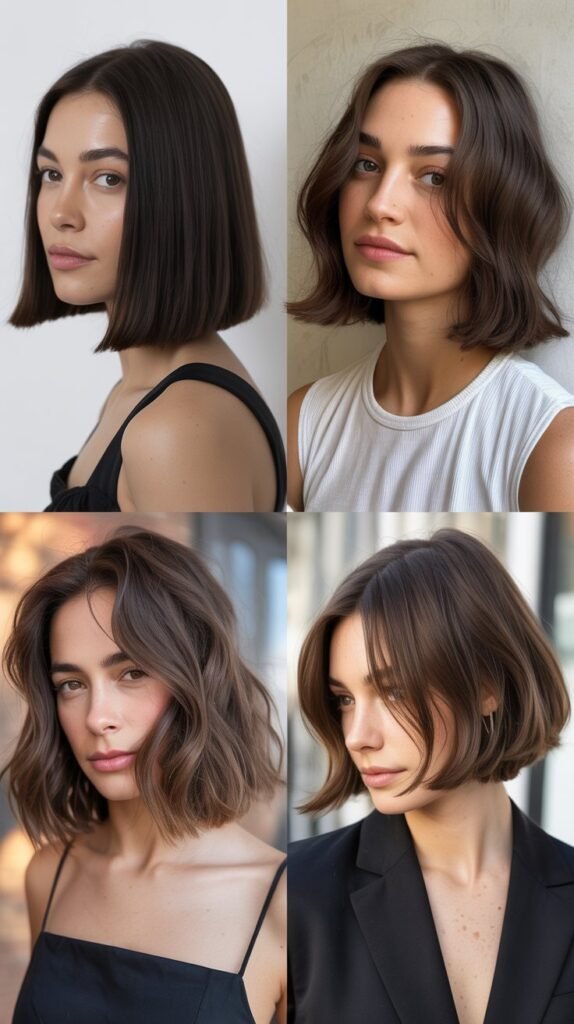
The chin-length blunt bob creates maximum density by concentrating all hair at a short-to-medium length that prevents any thinning or tapering.
This classic length has been proven to add instant thickness.
- Chin-length creates a perfect balance—short enough to maintain fullness but long enough to avoid looking too severe.
- This length works particularly well for those with very fine or thinning hair as it maximizes the appearance of density.
- The cut typically grazes the jawline, creating a flattering frame for the face while maintaining volume.
- Styling is straightforward with a blow-dryer and round brush, creating slight inward movement at the ends.
- The shorter length means less weight pulling down on roots, allowing for more natural volume at the crown.
- This cut can be customized with the front slightly longer than the back for added dimension.
- The chin-length bob works across all face shapes when adjusted properly—slightly longer for round faces, slightly shorter for long faces.
- Maintenance is relatively minimal, with trims needed every 5-7 weeks to maintain the blunt edge.
14. Blunt Cut with Balayage
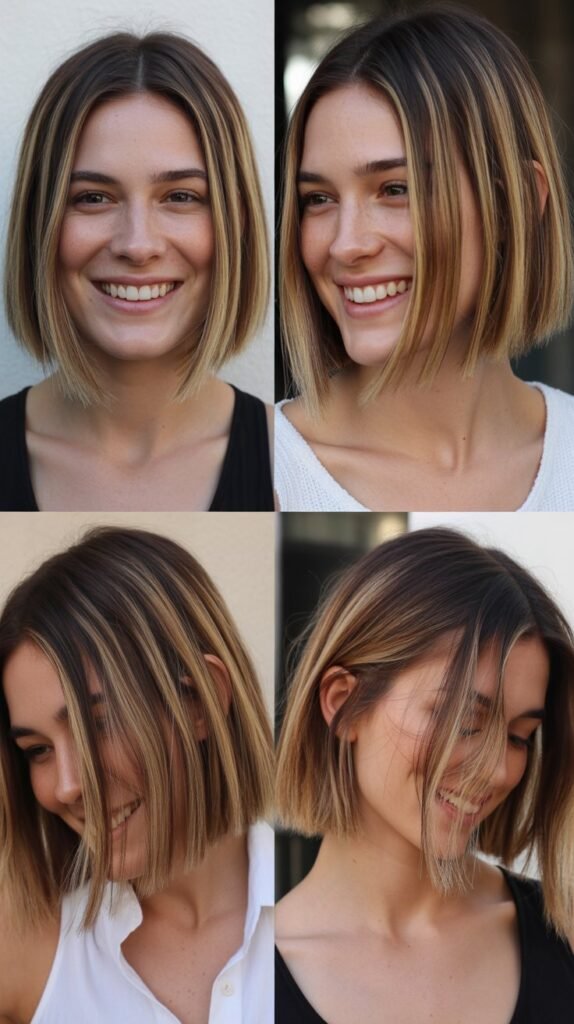
Balayage, a hand-painted highlighting technique, adds dimension and depth to a blunt cut, creating the illusion of fuller hair through strategic color placement while the cut provides actual density.
- Balayage creates a natural gradient of color that adds visual texture and depth to blunt cuts.
- The hand-painted technique allows for customized placement that enhances the cut’s shape and fullness.
- Lighter pieces concentrated around the face brighten and create the illusion of more volume.
- The low-maintenance nature of balayage complements the easy-care aspect of blunt cuts.
- Color dimension created by balayage makes individual strands more visible, enhancing the perception of thickness.
- This technique works beautifully on all base colors, creating sun-kissed dimension tailored to each hair color.
- The subtle color variation prevents the blunt cut from looking too one-dimensional or severe.
- Touch-ups are needed less frequently than traditional highlights, typically every 12-16 weeks.
15. The Blunt Bob with Undercut
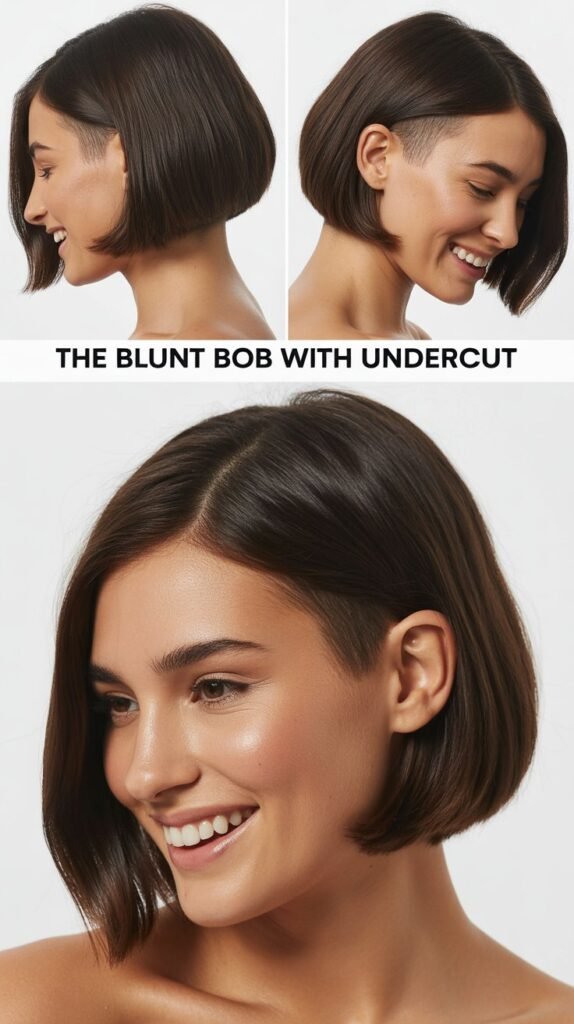
Adding a hidden undercut beneath a blunt bob reduces bulk at the nape while creating the illusion of even more density on top.
This modern technique offers practical benefits for thick-textured fine hair.
- The undercut removes weight from underneath, allowing the top layers to sit better and appear fuller.
- When hair is down, the blunt bob looks completely intact, hiding the undercut entirely.
- This technique is particularly beneficial for those with fine hair that’s dense (many hairs but each strand is thin).
- The undercut reduces drying time and makes styling easier while maintaining the blunt perimeter’s fullness.
- Hair on top lies flatter and smoother, creating a more polished appearance and reducing puffiness.
- The hidden nature of the undercut provides styling versatility—can be revealed in updos or kept hidden.
- This cut requires regular maintenance every 4-6 weeks to keep the undercut section short.
- Cooling and refreshing benefits make this ideal for those living in warm climates or who exercise frequently.
16. Blunt Cut with Root Shadow
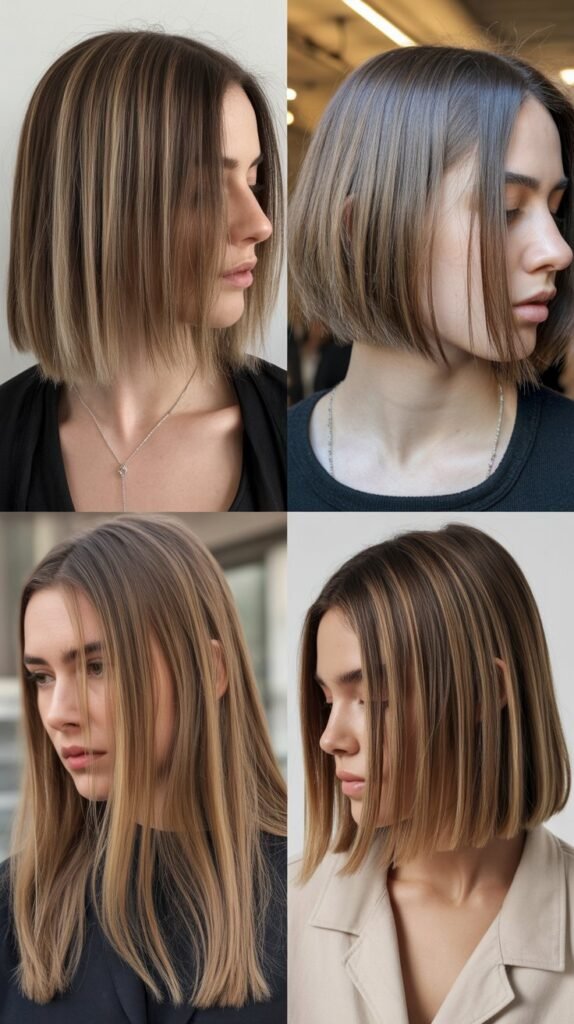
Root shadowing involves darkening the roots while keeping ends lighter, creating depth and dimension that makes hair appear thicker at the crown where thinning is often most noticeable.
- Darker roots create a shadow effect that makes the scalp less visible, addressing one of the primary concerns with thin hair.
- The technique creates natural-looking dimension that mimics how hair naturally lightens at the ends.
- Root shadowing extends the time between color appointments, making maintenance more manageable.
- The darker roots add visual density where it’s most needed while lighter ends prevent heaviness.
- This color technique complements the blunt cut’s density-creating properties with optical fullness.
- The gradual transition from dark to light creates depth that makes individual sections of hair more distinguishable.
- Root shadow works for all hair colors, customized to each person’s natural base and desired end color.
- The low-maintenance nature aligns perfectly with the easy-care benefits of blunt cuts.
17. The Blunt Layered Perimeter
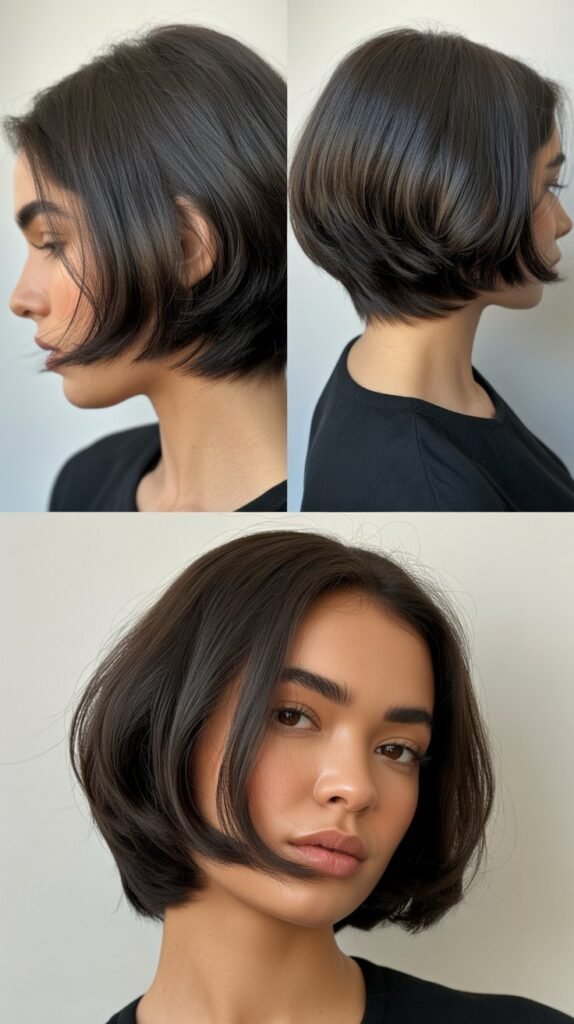
This technique involves creating multiple blunt sections throughout the cut rather than traditional tapered layers, resulting in stepped blunt edges that create fullness at various levels while maintaining density.
- Rather than tapering layers into thin ends, each layer is cut bluntly, creating multiple “shelves” of fullness.
- This approach provides movement and dimension without sacrificing the density that blunt cutting provides.
- The technique creates volume throughout the hair rather than just at the perimeter.
- Each blunt layer sits on top of the one below it, creating a stacked effect that amplifies fullness.
- This cut works well for medium-length hair that needs both movement and density.
- Styling involves enhancing the natural separation between layers with texturizing products.
- The multiple blunt edges catch light at different angles, creating visual interest and depth.
- This technique requires a skilled stylist familiar with precision cutting methods.
18. Blunt Cut with Dimensional Color
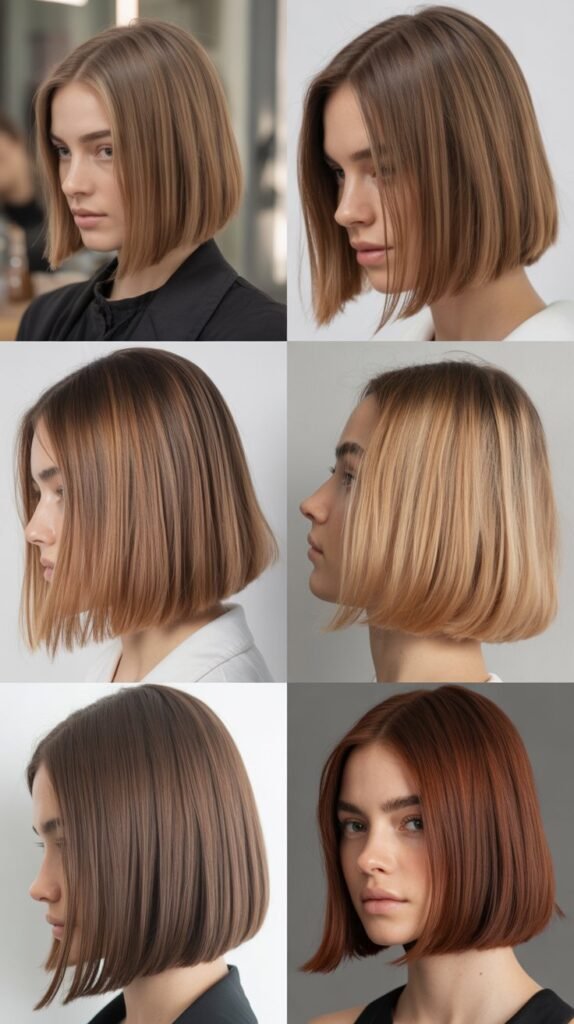
Dimensional color involves using multiple shades within the same color family to create depth and texture, making thin hair appear fuller when combined with a density-creating blunt cut.
- Multiple color tones create shadows and highlights that give the illusion of more hair and texture.
- The varied shades make individual sections more visible, enhancing the perception of volume.
- Dimensional color complements the blunt perimeter by adding visual interest throughout the length.
- This technique can be subtle or dramatic depending on the contrast between shades used.
- Natural-looking dimension mimics how hair would naturally lighten and darken in different areas.
- The color variation prevents the blunt cut from appearing flat or one-dimensional.
- Maintenance varies based on technique—some dimensional color methods last 8-12 weeks.
- This approach works for all base colors, from platinum blonde to deep brunette.
19. The Asymmetrical Blunt Bob
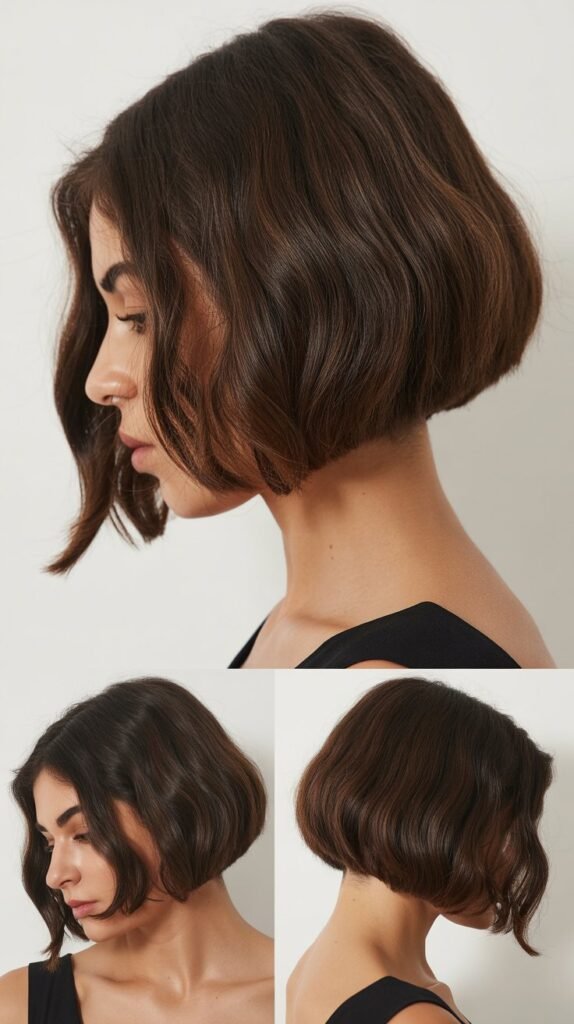
The asymmetrical blunt bob features one side longer than the other, all cut bluntly to create an edgy, modern look while maintaining maximum density on both sides.
- The asymmetry creates visual interest and modern edge while the blunt cutting maintains fullness.
- One side is typically cut 1-3 inches longer than the other, creating a dramatic diagonal line.
- This cut draws attention and makes a statement, shifting focus from hair thinness to intentional style.
- The blunt edges on both sides ensure neither side appears wispy or thin.
- Styling can emphasize the asymmetry by wearing the longer side forward and shorter side tucked back.
- This cut works particularly well for those wanting to make a bold style statement.
- The asymmetrical shape provides built-in movement and dimension without requiring internal layering.
- Regular trims every 5-7 weeks maintain the precise asymmetrical shape and blunt edges.
20. Blunt Cut with Glossing Treatment
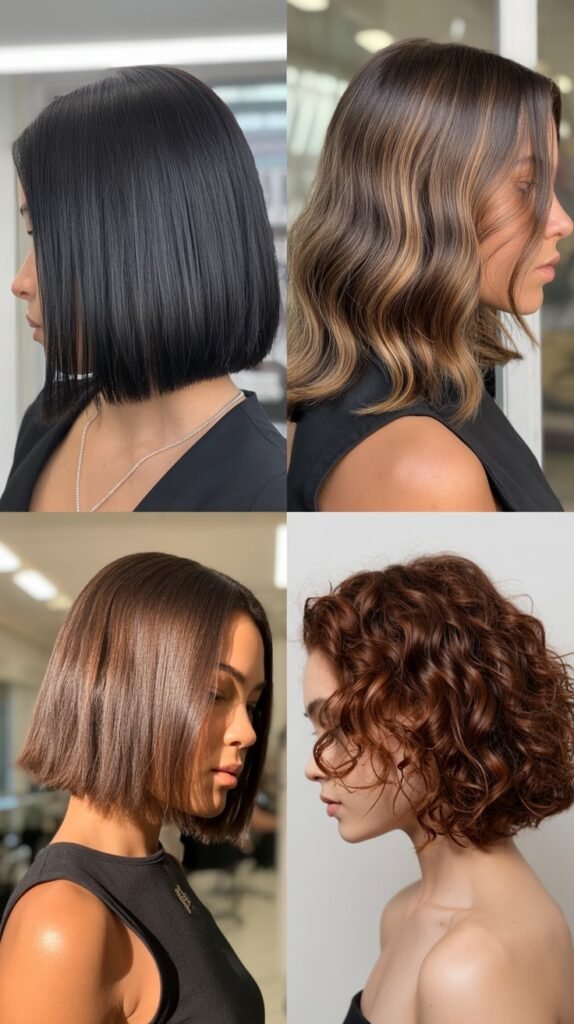
Glossing treatments add shine and can subtly adjust tone while enhancing the density-creating effects of a blunt cut by making hair reflect more light and appear thicker.
- Glossing treatments coat the hair shaft, creating a reflective surface that makes hair appear fuller.
- The shine enhancement makes the blunt baseline more prominent and eye-catching.
- Gloss can subtly adjust tone, neutralizing brassiness or adding warmth without permanent color commitment.
- The treatment seals the cuticle, making hair smoother and reducing frizz that can make thin hair look sparse.
- Semi-permanent gloss typically lasts 4-6 weeks, providing extended shine benefits.
- The smooth, glossy finish complements the clean, precise lines of blunt cuts.
- Regular glossing treatments can improve hair health over time by protecting from environmental damage.
- This addition enhances the density illusion created by blunt cutting through improved light reflection.
21. The Blunt Midi Cut with Slight Wave
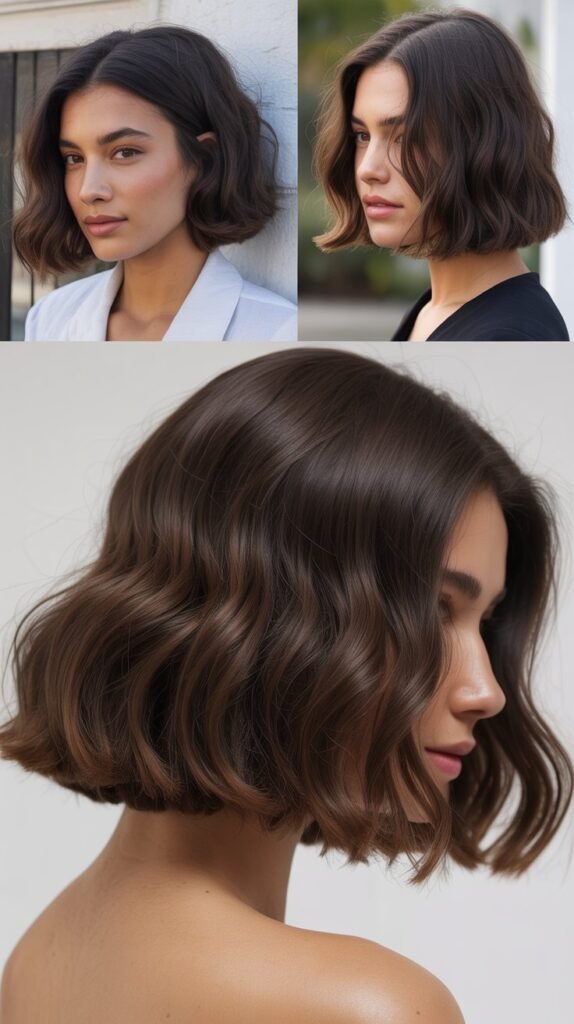
The midi-length blunt cut with gentle waves combines the density of blunt cutting with the volume-creating properties of texture, resulting in maximum fullness for thin hair.
- Midi-length (between collarbone and mid-back) provides enough length for noticeable waves while maintaining the blunt perimeter.
- Gentle waves create volume and movement throughout the length while blunt ends add density.
- The combination of texture and blunt baseline creates multi-dimensional fullness.
- Waves can be created with various tools—curling wands, flat irons, or heat-free methods like braiding.
- The blunt cut provides structure so waves don’t appear stringy or thin at the ends.
- This style works beautifully for various occasions, from casual to formal.
- Natural wave patterns are enhanced by the blunt cut, which prevents ends from looking wispy.
- Texturizing products amplify the waves while maintaining the clean blunt perimeter.
22. Blunt Cut with Money Pieces
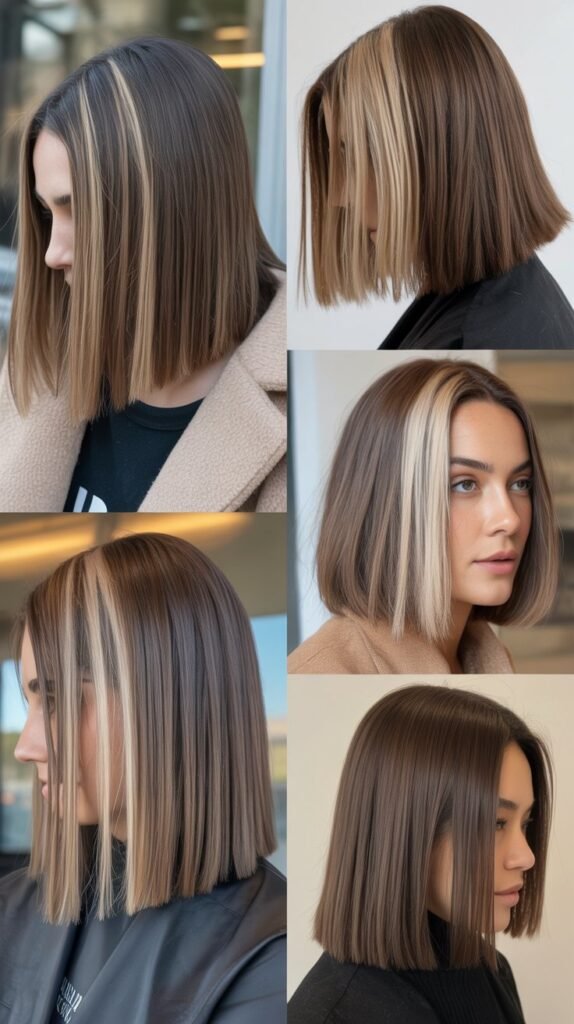
Money pieces are bold face-framing highlights that create a striking contrast and draw attention to the face while the blunt cut creates overall density and fullness.
- Money pieces are thicker, more noticeable highlights positioned at the front, typically 1-3 shades lighter than base color.
- The bright face-framing sections create a brightening, face-lifting effect while drawing attention upward.
- Combined with a blunt cut, the bold color creates a high-impact look that distracts from thinness.
- This trend works for all hair colors—blonde, brunette, red, or dark hair can all feature money pieces.
- The contrasting color makes the hair appear more dynamic and voluminous.
- Maintenance is relatively simple as the color placement is focused in one area.
- Money pieces can be as subtle or dramatic as desired, from barely-there highlights to platinum contrast.
- The combination creates an intentionally styled look that appears fashion-forward rather than thin.
23. The Blunt French Bob
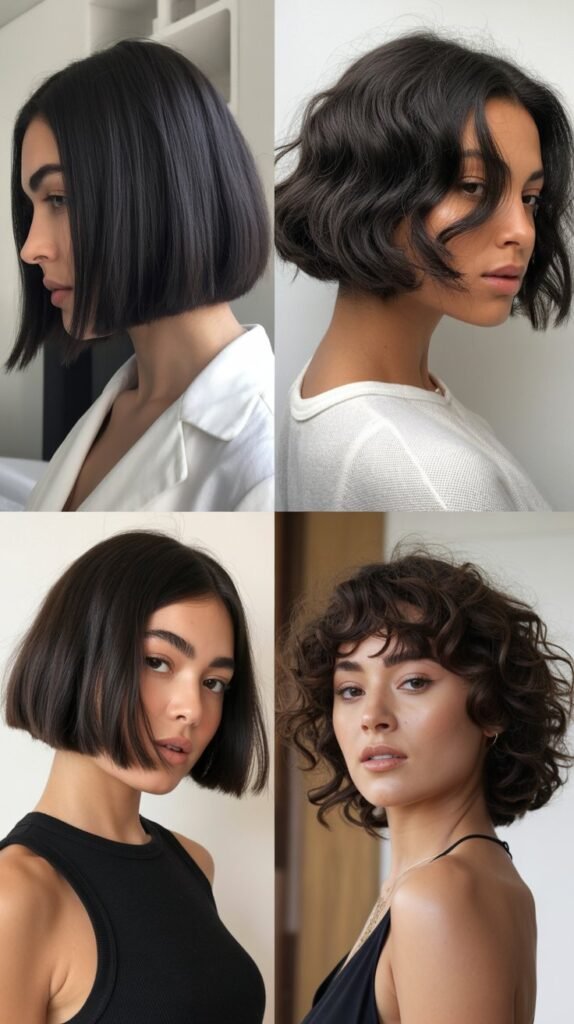
The French bob is a chin-length or slightly shorter blunt cut that sits above the jawline, creating Parisian chic while maximizing density through its short, blunt perimeter.
- The French bob typically ends at or just above the chin, creating a clean, sophisticated silhouette.
- The shorter length prevents any weight from pulling down the blunt ends, maintaining maximum fullness.
- This cut is characterized by its precision and clean lines, requiring regular trims for maintenance.
- The French bob often includes full or curtain bangs, adding another horizontal blunt line for density.
- Styling involves blow-drying with a round brush, creating subtle inward movement at the ends.
- The short length makes styling quick and easy, perfect for low-maintenance routines.
- This classic cut flatters most face shapes, particularly oval, heart, and square faces.
- The French bob exudes confidence and sophistication, making thin hair appear intentionally chic.
24. Blunt Cut with Lowlights
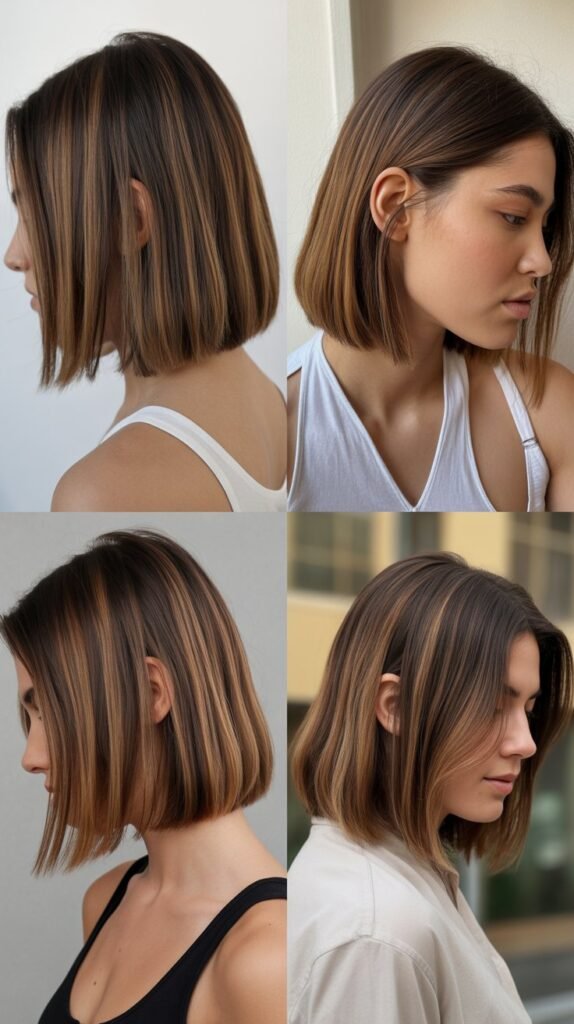
Lowlights add darker tones throughout the hair, creating depth and shadow that makes thin hair appear thicker by adding visual dimension when combined with a blunt cut.
- Lowlights are darker sections woven throughout the hair, typically 1-2 shades darker than the base color.
- The darker tones create shadow and depth that make hair appear multi-dimensional and fuller.
- When combined with a blunt cut, lowlights enhance the density-creating effect through color contrast.
- Strategic placement of lowlights can contour the face and create the illusion of more texture.
- This technique works particularly well for those with highlighted or lighter hair looking to add depth.
- Lowlights are lower maintenance than highlights, as regrowth is less noticeable with darker tones.
- The shadowing effect created by lowlights makes the scalp less visible in those with thin hair.
- Customized placement ensures the lowlights complement the blunt cut’s shape and enhance fullness.
25. The Blunt Cut with Side-Swept Bangs
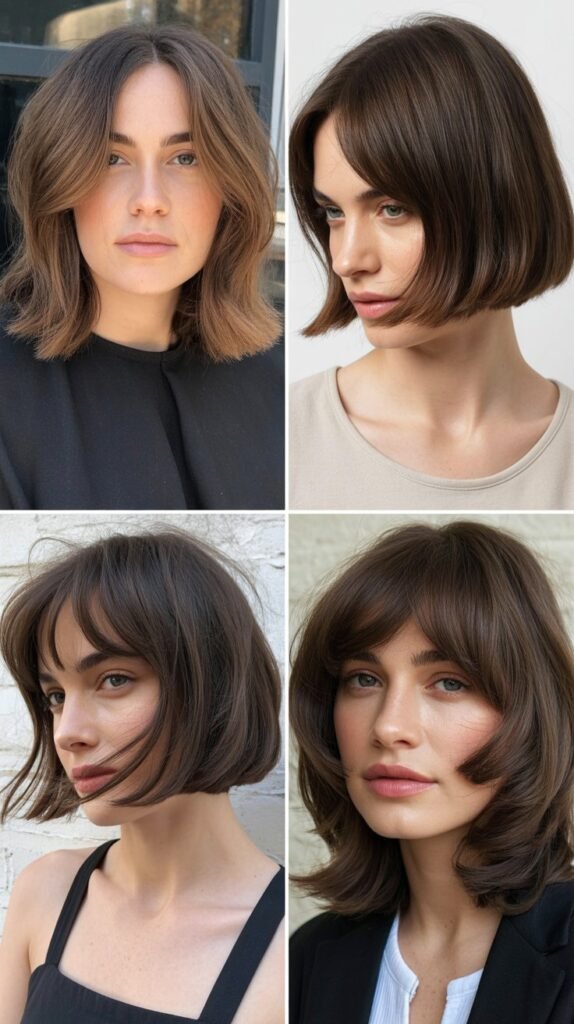
Side-swept bangs paired with a blunt medium cut create asymmetry and movement while adding another element of density through the bangs’ weight and coverage.
- Side-swept bangs are cut on an angle, creating diagonal movement that complements the horizontal blunt baseline.
- The bangs add coverage across the forehead, creating another layer of fullness and dimension.
- This style is more forgiving than straight-across bangs, easier to style and grow out if desired.
- The sweeping motion of the bangs creates movement that enhances the structured blunt cut.
- Side-swept bangs can be cut to various lengths, from brow-grazing to eye-length.
- Styling involves blow-drying bangs to the side with a round brush, creating volume at the root.
- The combination works well for those wanting to soften a blunt cut while maintaining density.
- This style flatters most face shapes, with bang length adjusted to complement individual features.
26. Blunt Cut with Volume Powder
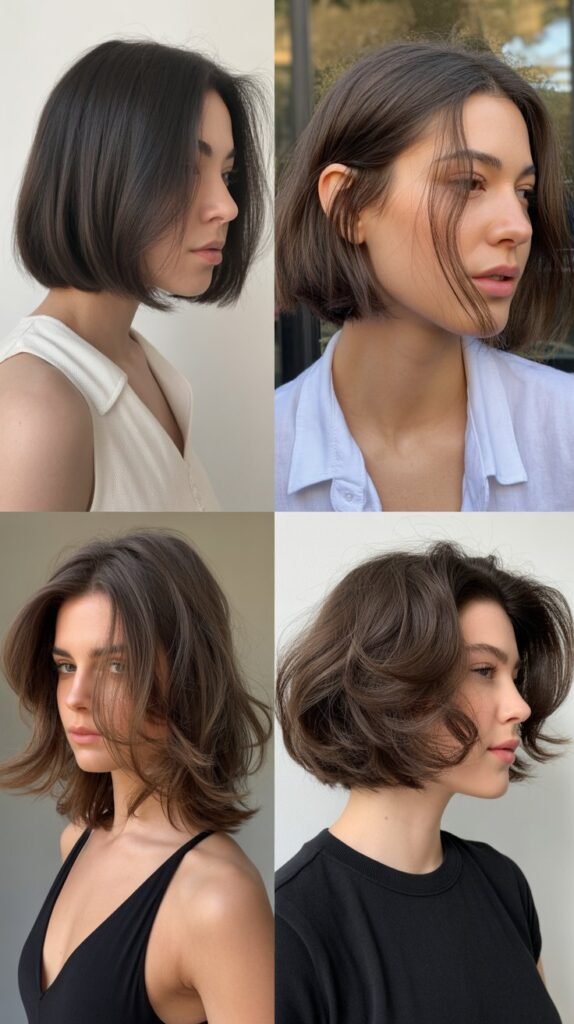
While not a cutting technique, incorporating volume powder into the styling of a blunt cut amplifies the density-creating effects through added root lift and texture.
- Volume powder is applied to dry roots, creating instant lift and texture at the crown.
- The product works by coating hair strands, making them appear thicker and creating space between hairs.
- When combined with a blunt cut, volume powder enhances the overall fullness from roots to ends.
- Application involves sprinkling or spraying powder at the roots and massaging into the scalp area.
- The matte texture created by volume powder complements the sleek blunt ends for balanced fullness.
- This product is particularly effective for fine, thin hair that tends to lie flat.
- Volume powder provides long-lasting lift without the crunch or stiffness of hairspray.
- Strategic application in the crown area creates maximum impact where thinning is often most noticeable.
27. The Stacked Blunt Bob
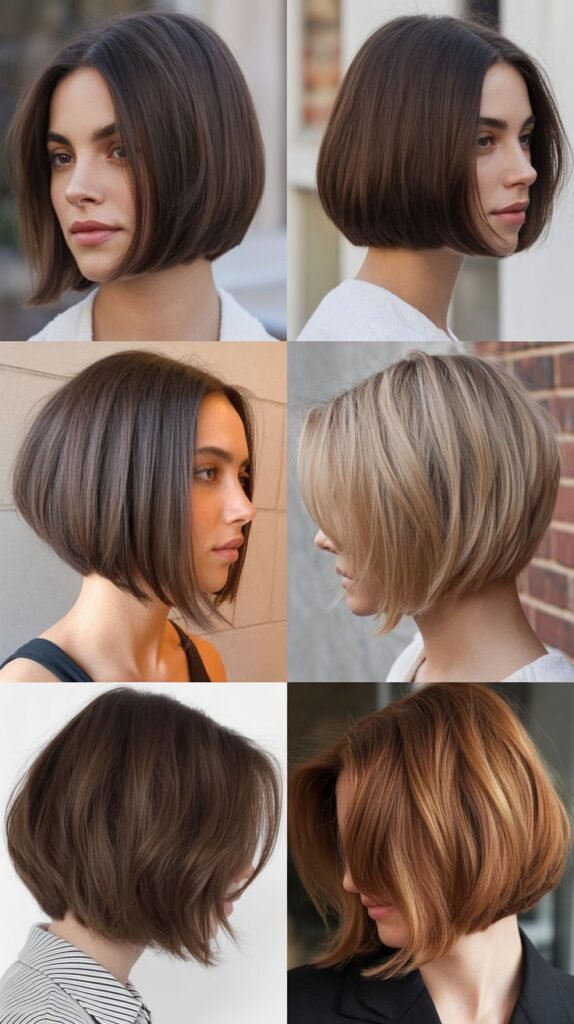
The stacked bob features graduated layers in the back cut bluntly at each level, creating impressive volume and height in the back while maintaining face-framing length in the front.
- Stacking involves cutting the back in graduated sections, each cut bluntly to create stair-step fullness.
- The shortest section is at the nape, with each subsequent section slightly longer, creating height and volume.
- This technique is excellent for creating volume in the crown area where many experience thinning.
- The stacked back provides dramatic fullness while longer front sections remain face-flattering.
- This cut requires regular maintenance every 4-6 weeks to keep the stacked shape pronounced.
- Styling involves blow-drying with a round brush, directing hair forward to emphasize the stacked silhouette.
- The architectural nature of this cut makes a bold statement, appearing intentionally voluminous.
- Stacking can be customized from subtle to extreme depending on the degree of graduation desired.
28. Blunt Cut with Root Boost
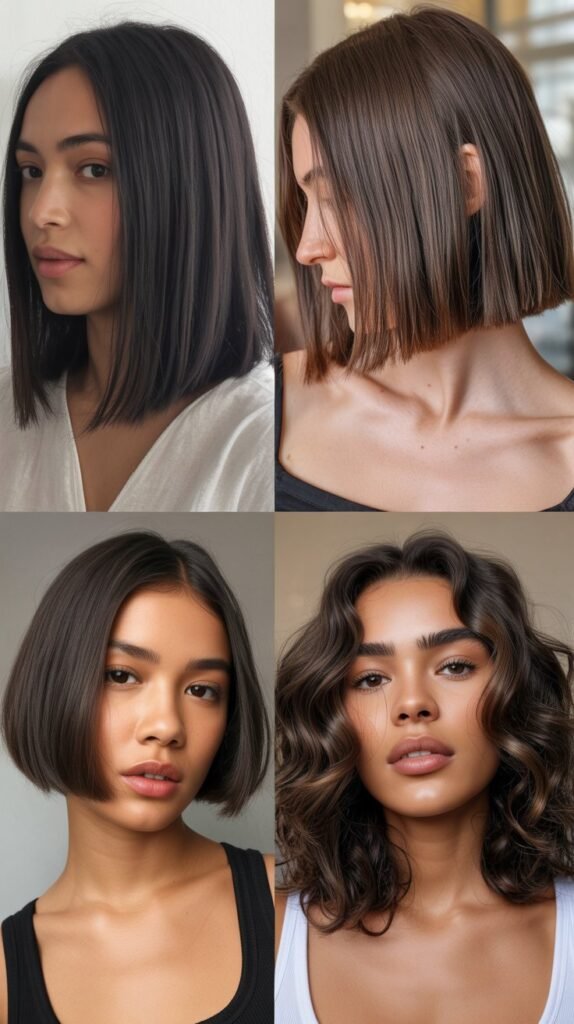
Root-boosting products and techniques enhance the volume-creating effects of a blunt cut by adding lift at the scalp where flatness is most problematic for thin hair.
- Root-boosting products are applied to damp hair at the scalp before drying, creating lasting lift.
- These products work by coating the hair shaft near the root, adding body and preventing flatness.
- Blow-drying techniques like lifting sections and directing air at the roots maximize the boosting effect.
- When combined with a blunt cut, root boost creates fullness from scalp to ends.
- Products range from mousse to sprays to powders, each offering different levels and types of lift.
- The lifted roots complement the dense blunt ends, creating overall volumized appearance.
- Root-boosting is particularly effective for hair that tends to lie flat or becomes oily quickly.
- This addition to a blunt cut routine requires minimal extra time but provides significant impact.
29. The Blunt Shoulder-Length Cut
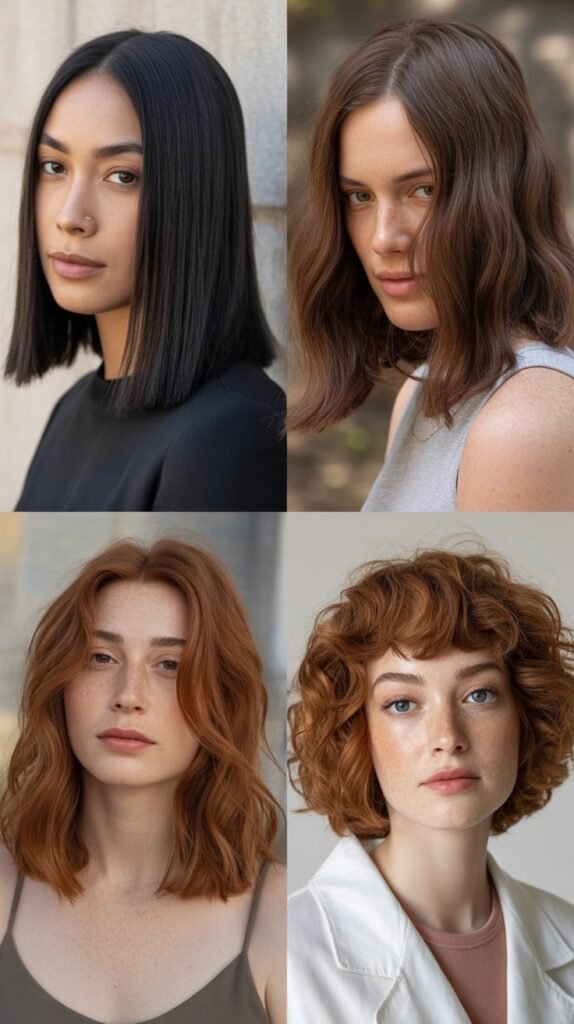
The shoulder-length blunt cut hits right at the shoulders, creating a versatile, classic look that maximizes density while offering styling flexibility for various occasions.
- Shoulder-length provides the ideal balance between manageable length and impressive fullness.
- This length allows the hair to swing freely while maintaining enough weight to create density.
- The blunt baseline at shoulder level creates a substantial, finished appearance.
- This versatile length can be worn straight, wavy, curled, or in various updos and half-up styles.
- The shoulder-length cut flatters virtually all face shapes and works across all age ranges.
- Maintenance is straightforward, requiring trims every 6-8 weeks to maintain the blunt edge.
- This length works well with both center and side parts, offering styling flexibility.
- The shoulder-grazing length creates movement when walking while maintaining a professional, polished appearance.
30. Blunt Cut with Teasing Technique
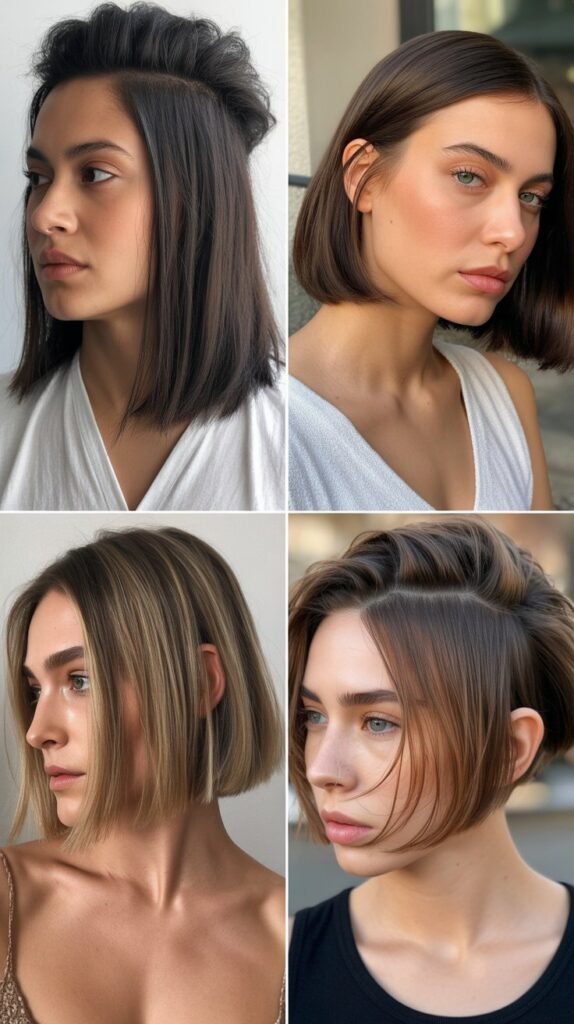
Strategic teasing or backcombing at the crown adds instant volume that enhances the density created by a blunt cut, providing maximum fullness throughout.
- Teasing involves gently backcombing hair at the roots to create volume and lift.
- This technique is applied to the crown area before smoothing the top layer over the teased sections.
- When combined with a blunt cut, teasing creates height at the top while the blunt ends provide perimeter density.
- Proper technique involves using a fine-tooth comb and working in small sections.
- The teased sections are hidden beneath smooth top layers, creating a polished appearance.
- This method provides instant, dramatic volume for special occasions or everyday wear.
- Hairspray applied to teased sections helps maintain the lift throughout the day.
- Gentle brushing and detangling are essential when removing teased sections to prevent damage.
31. The Blunt Cut with Internal Texturizing
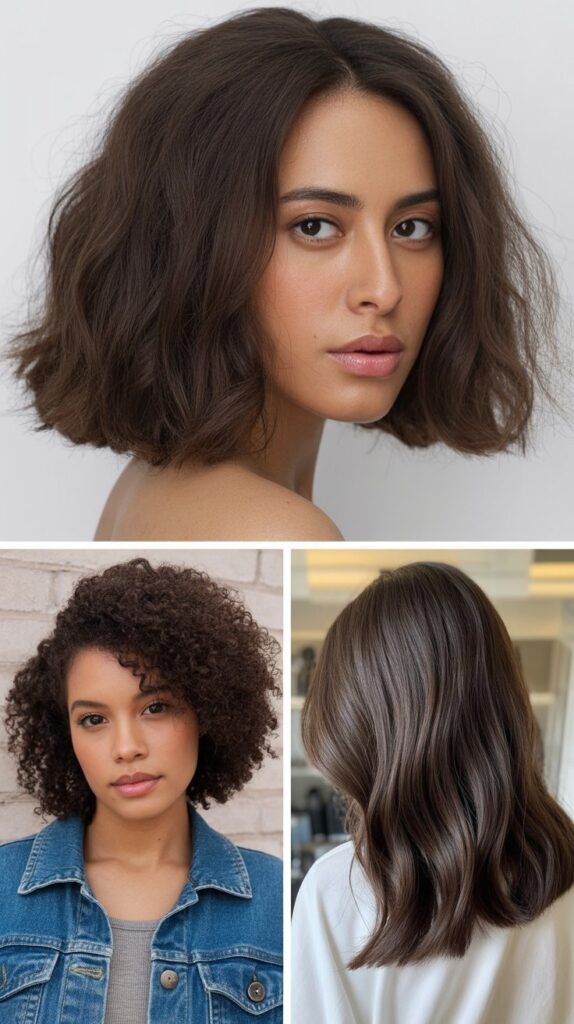
Internal texturizing involves creating texture and movement within the hair while maintaining a completely blunt perimeter, offering the best of both worlds for thin hair.
- This technique uses point-cutting or razor-cutting internally while leaving the perimeter perfectly blunt.
- Internal texture creates movement and prevents the hair from looking too heavy or solid.
- The blunt perimeter maintains density and fullness despite the internal texturizing.
- This approach is ideal for those wanting a softer, more lived-in look without sacrificing thickness.
- The internal layers create air and movement that prevent the cut from looking too severe.
- Styling products like texturizing spray enhance the internal movement while keeping ends full.
- This technique requires a skilled stylist who understands proper texturizing placement.
- The combination creates a modern, effortless appearance with maintained fullness.
32. Blunt Cut with Blow-Dry Cream
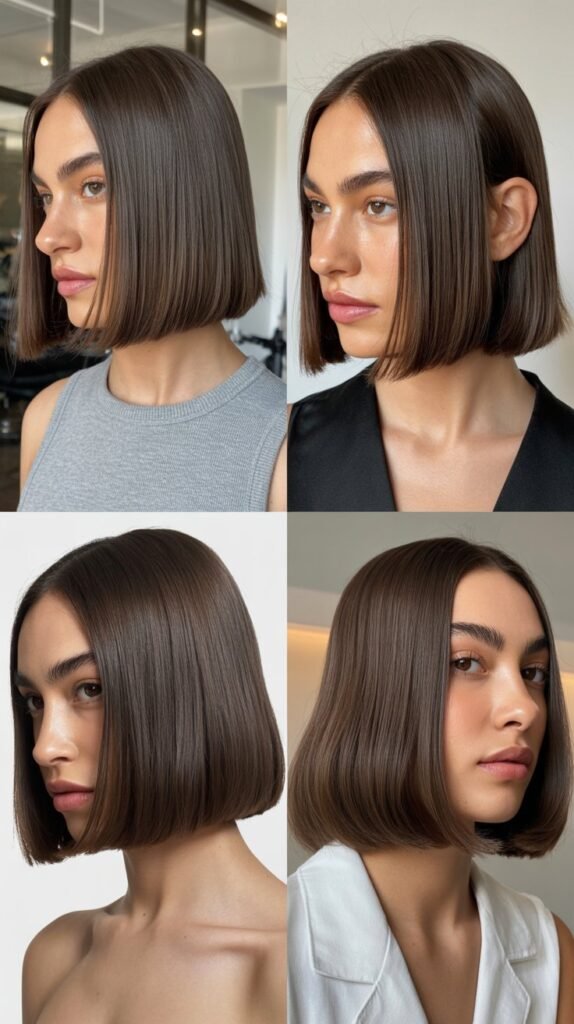
Blow-dry creams provide heat protection while adding body and thickness to each strand, enhancing the volume created by a blunt cut for maximum density.
- Blow-dry creams coat each hair strand, making it appear thicker and more substantial.
- These products provide heat protection while adding volume and smoothness.
- When applied before blow-drying a blunt cut, the cream enhances the natural density of the style.
- The product helps hair hold volume and style throughout the day without becoming limp.
- Blow-dry creams typically contain polymers and proteins that add temporary thickness to hair.
- Application involves working a small amount through damp hair, focusing on mid-lengths to ends.
- The smooth finish created by blow-dry cream complements the sleek blunt perimeter.
- This product is particularly beneficial for fine, thin hair that needs added body and heat protection.
33. The One-Length Blunt Cut
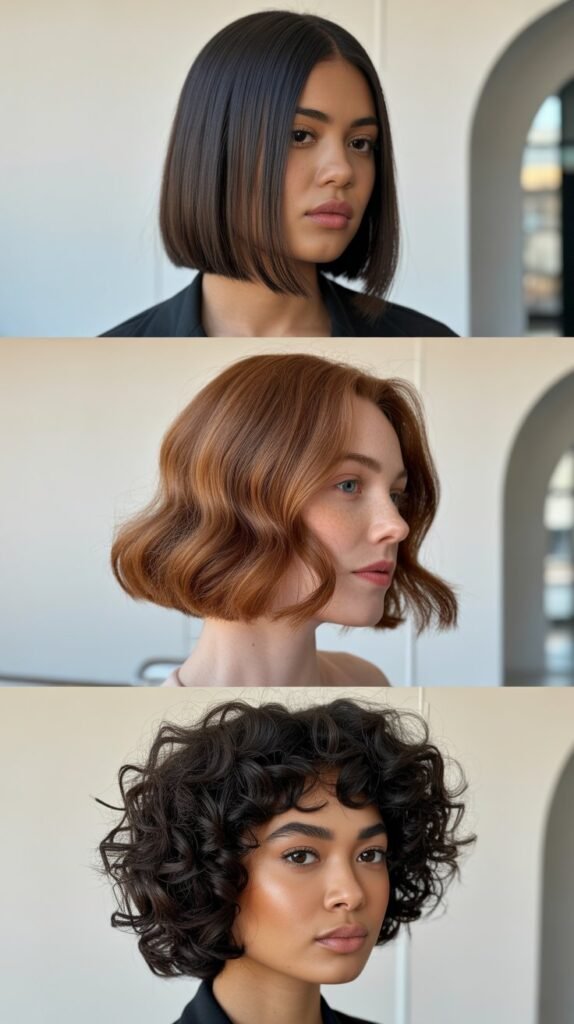
The one-length blunt cut involves cutting all hair to exactly the same length with no graduation or layers, creating maximum density and a dramatic, minimalist aesthetic.
- This ultra-precise cut creates the maximum possible density by keeping every strand at identical length.
- The one-length approach prevents any tapering or thinning that occurs with layered cuts.
- This style works best for straight to slightly wavy hair that naturally falls into the blunt shape.
- The dramatic uniformity of the cut makes a bold, intentional statement.
- Styling is minimal—often just blow-drying straight is sufficient to showcase the clean lines.
- This cut requires precise technique and regular maintenance to keep the perfect baseline.
- The one-length blunt cut is ideal for those wanting maximum simplicity and fullness.
- This geometric approach creates the ultimate density-boosting effect for thin hair.
34. Blunt Cut with Volumizing Mousse
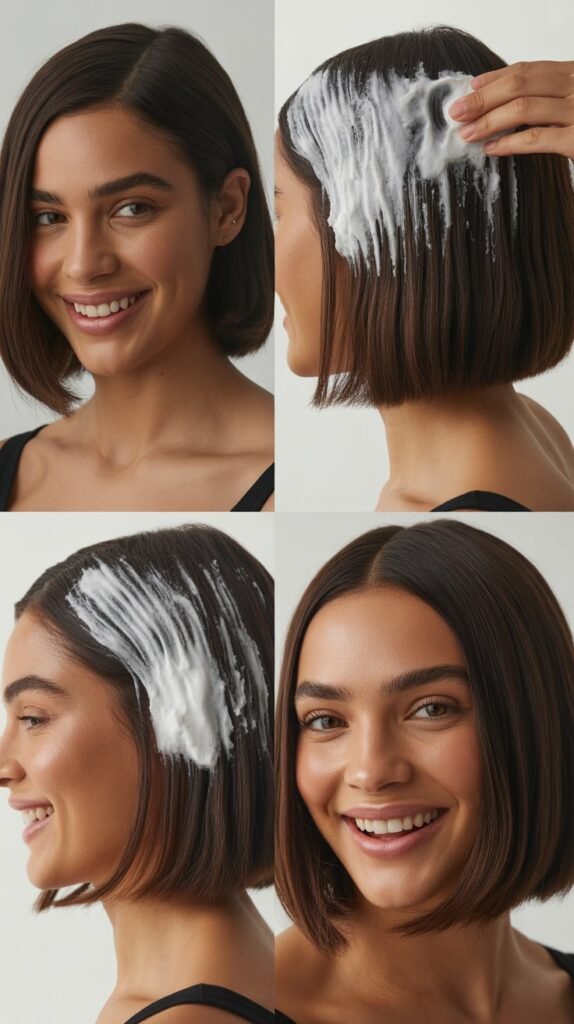
Volumizing mousse adds body and lift throughout the hair while providing hold, enhancing the fullness created by a blunt cut from roots to ends.
- Volumizing mousse is applied to damp hair before styling, creating lift and body as hair dries.
- The product expands when applied, coating strands and creating space between individual hairs.
- Mousse provides light to medium hold while adding volume, perfect for maintaining blunt cut fullness.
- Application involves distributing mousse evenly through damp hair, focusing on roots for maximum lift.
- The product works particularly well with blow-drying, as heat activates its volumizing properties.
- Modern mousses are lightweight and non-crunchy, unlike older formulations.
- When combined with a blunt cut, mousse creates overall body that complements the dense perimeter.
- This product is ideal for fine hair that needs both volume and light styling hold.
35. The Blunt Bob with Nape Undercut
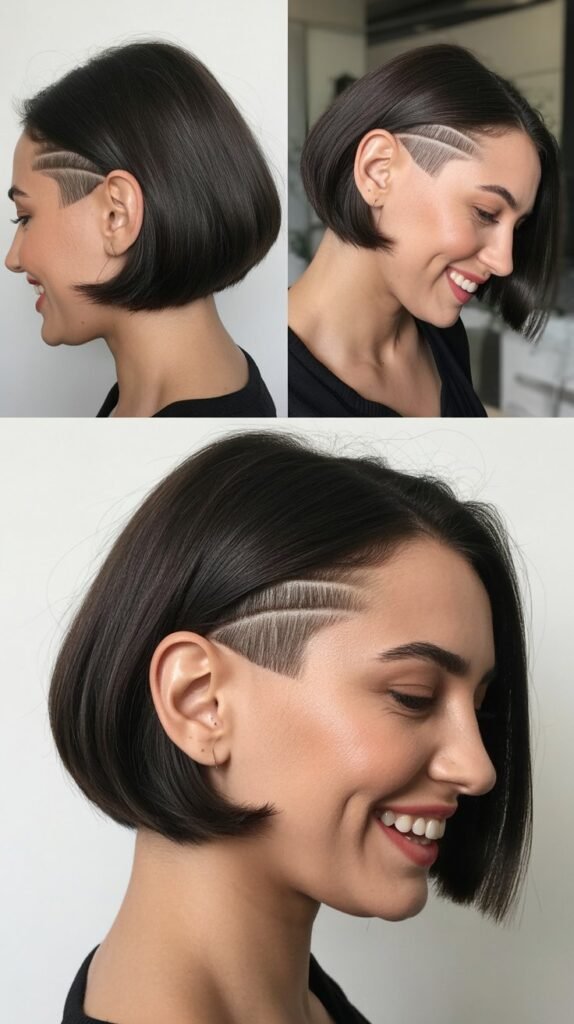
A hidden undercut at the nape beneath a blunt bob removes weight where it’s least visible, allowing the visible portions to appear even fuller and sit better.
- The nape undercut removes hair from the lowest section at the back of the head.
- This creates cooling comfort while reducing bulk that can cause the bob to stick out awkwardly.
- When hair is down, the blunt bob appears completely intact with enhanced smoothness and density.
- The undercut can be simple or feature shaved designs for added interest when hair is worn up.
- This modification is particularly beneficial for those with thick-textured but fine individual strands.
- The reduced weight allows the visible hair to lie flatter and smoother, appearing more polished.
- Regular maintenance every 3-4 weeks keeps the undercut section short and the style looking fresh.
- This hidden feature provides practical benefits without compromising the blunt bob’s aesthetic.
36. Blunt Cut with Dry Texturizing Spray
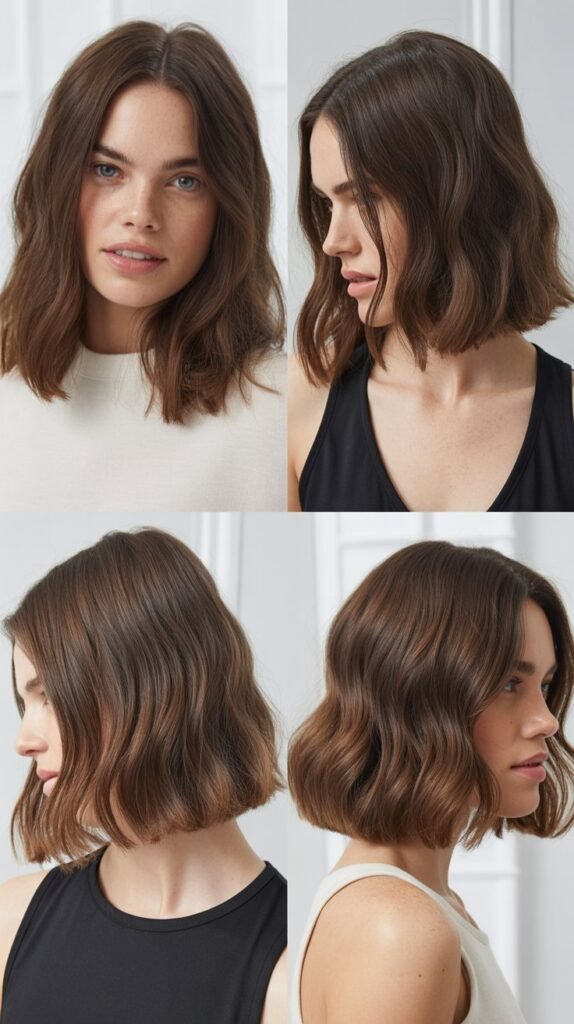
Dry texturizing spray adds grip, volume, and separation to styled hair, enhancing the fullness of a blunt cut with modern, lived-in texture.
- Dry texturizing spray is applied to dry, styled hair to add grit and separation.
- The product creates a matte, textured finish that makes hair appear fuller and more voluminous.
- When used on a blunt cut, texturizing spray adds dimension while maintaining the dense perimeter.
- Application involves spraying throughout mid-lengths and ends, then scrunching or tousling for distribution.
- This product is ideal for creating undone, effortless looks on blunt cuts that might otherwise appear too sleek.
- Texturizing spray can refresh second-day hair, adding volume and absorbing oil.
- The matte finish complements the precise blunt edges for a modern, balanced look.
- This finishing product enhances the perception of fullness without weighing hair down.
37. The Blunt Graduated Bob
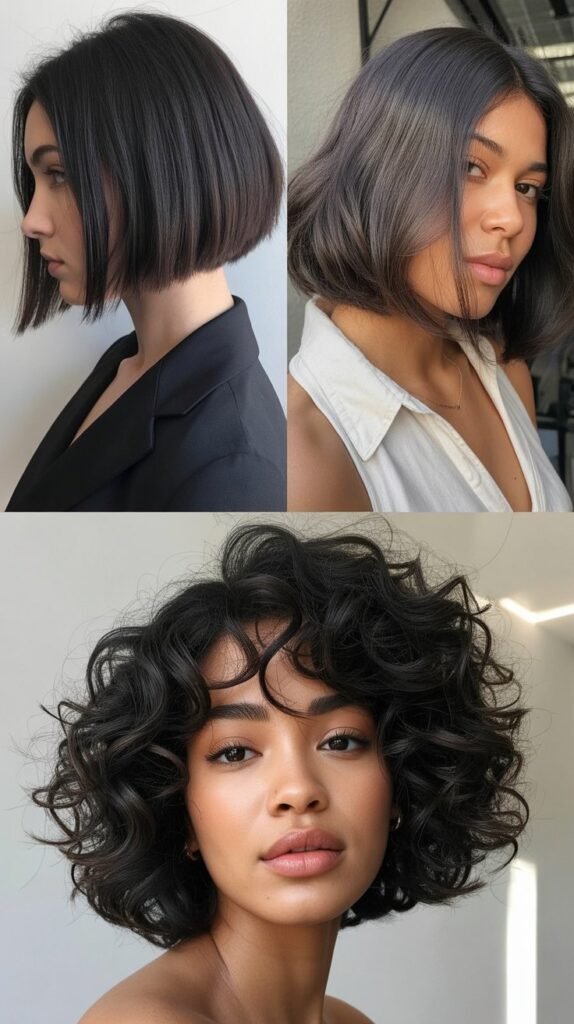
The graduated bob features subtle graduation with each level cut bluntly, creating a softly rounded shape that adds volume while maintaining density throughout.
- Gentle graduation creates a slightly rounded shape rather than perfectly one-length.
- Each graduated section is cut bluntly, maintaining density at multiple levels.
- This softer approach to blunt cutting creates more movement while preserving fullness.
- The graduation is subtle enough to maintain the blunt cut’s density-creating benefits.
- This style works well for those wanting a less severe look while maximizing thickness.
- The rounded shape created by graduation flatters most face shapes and head shapes.
- Styling involves blow-drying with a round brush to enhance the natural curve of the cut.
- This versatile cut bridges the gap between heavily layered and one-length blunt styles.
38. Blunt Cut with Hot Rollers
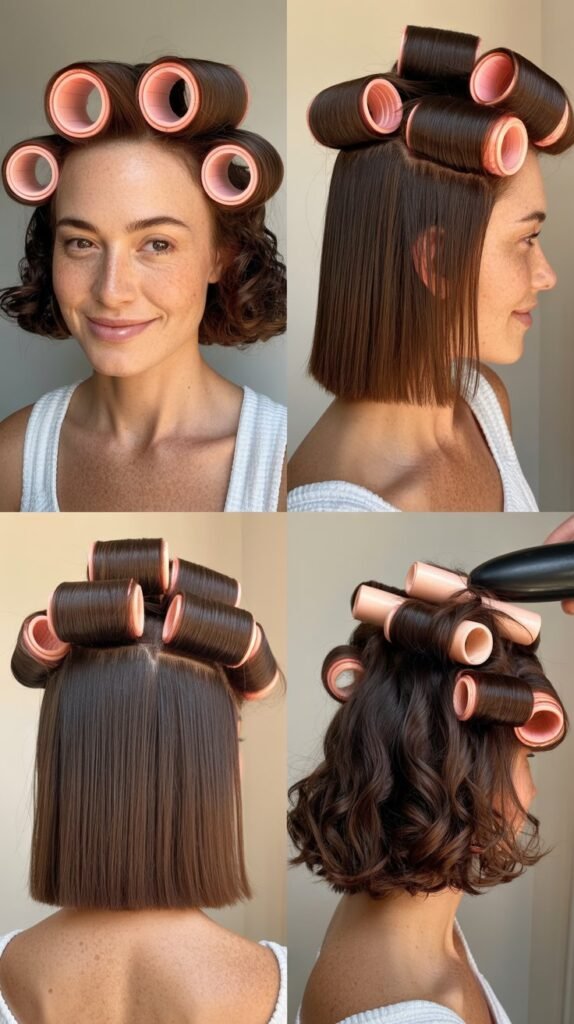
Hot rollers create volume and body that enhance the fullness of a blunt cut, providing lasting lift and curve without the damage of other heat styling tools.
- Hot rollers are set in dry or slightly damp hair to create volume and smooth curl.
- The technique adds body throughout the hair while the blunt ends maintain their fullness.
- Rollers come in various sizes—larger for volume, smaller for tighter curl.
- Setting hair in rollers creates lasting lift at the crown and movement throughout.
- This heat styling method is gentler on hair than curling irons or flat irons.
- The volume created by hot rollers complements the density of blunt cutting perfectly.
- Rollers can be positioned strategically for maximum lift in areas where volume is desired.
- This classic styling technique creates polished, voluminous results ideal for special occasions.
39. The Blunt Cut with Razored Bangs
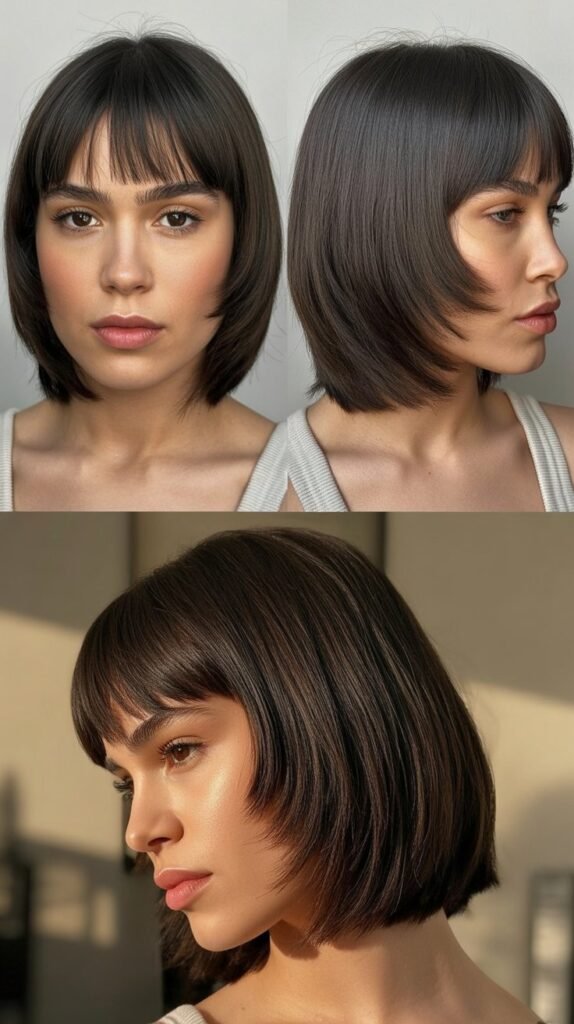
Razored bangs add soft, feathered texture around the face while the rest of the cut remains blunt, creating contrast that draws attention and maintains overall density.
- Razoring creates soft, feathered texture in bangs that contrasts with the blunt perimeter.
- This technique adds movement and softness around the face while maintaining fullness through the length.
- The textured bangs create dimension and visual interest that complements the clean blunt baseline.
- Razored bangs are typically easier to style and blend more seamlessly than blunt-cut bangs.
- This combination offers a modern, editorial look that balances softness with structure.
- The feathered bangs can be styled with various techniques—swept to the side, blow-dried forward, or tousled.
- Regular bang trims every 3-4 weeks maintain the textured appearance.
- This pairing works well for those wanting facial framing without committing to heavy, blunt bangs.
40. Blunt Cut with Thickening Spray
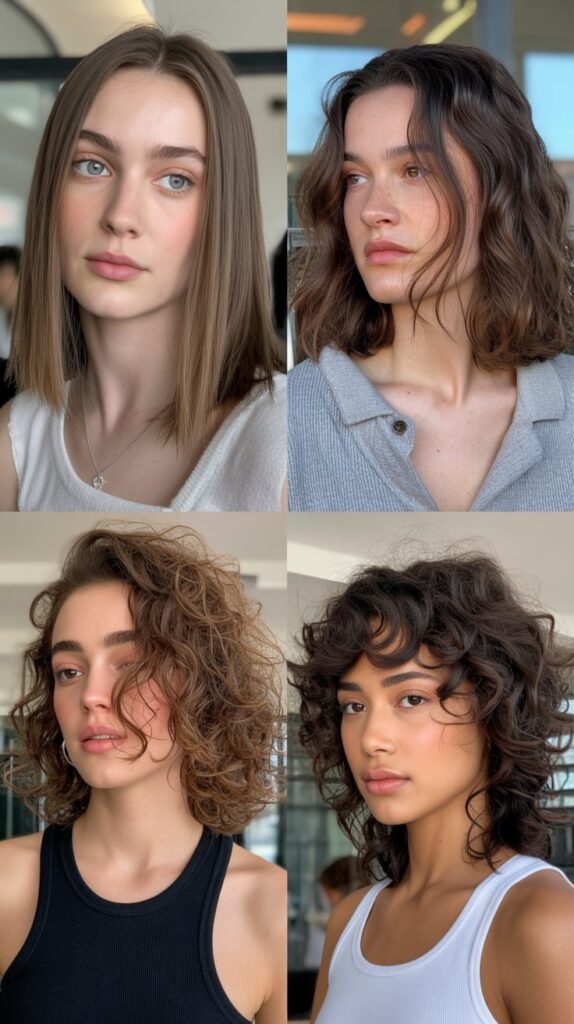
Thickening sprays contain polymers and proteins that coat hair strands, making each appear fuller and enhancing the density created by a blunt cut.
- Thickening sprays are applied to damp hair before styling to add body and diameter to each strand.
- The products contain ingredients that swell the hair shaft, creating the appearance of thicker hair.
- When combined with a blunt cut, thickening spray enhances fullness from roots through the blunt ends.
- Application involves spraying throughout hair, focusing on roots and mid-lengths for maximum impact.
- These products provide light hold while adding volume and thickness.
- Thickening spray works synergistically with heat styling to create lasting body.
- The added thickness makes the blunt perimeter appear even more substantial and full.
- This product is particularly effective for very fine, thin hair that needs noticeable volume enhancement.
41. The Blunt Lob with Beveled Ends
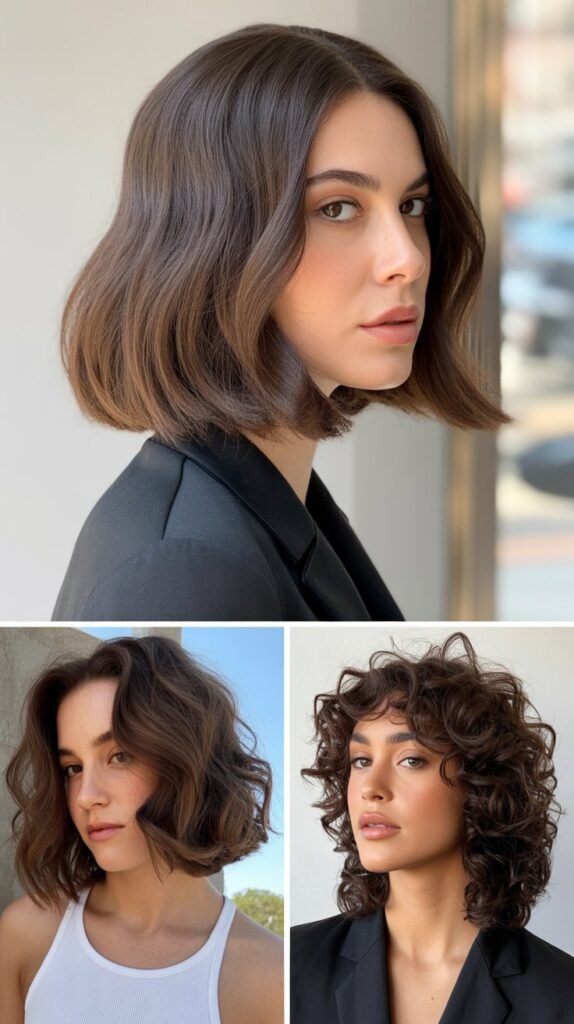
Beveling involves creating subtle internal angles at the ends while maintaining a blunt perimeter, adding softness and movement to the classic lob.
- Beveling creates a soft, slightly rounded edge rather than a perfectly blunt line.
- This technique maintains density while adding subtle movement and preventing severity.
- The beveled ends create a softer, more wearable version of the blunt lob.
- This approach is ideal for those wanting fullness without the stark precision of a pure blunt cut.
- Beveling involves cutting at a slight angle that’s nearly imperceptible but creates softness.
- The technique prevents the cut from looking too harsh or geometric.
- Styling enhances the natural movement created by beveling while maintaining fullness.
- This subtle modification makes blunt cuts more versatile and wearable for everyday styling.
42. Blunt Cut with Diffuser Drying
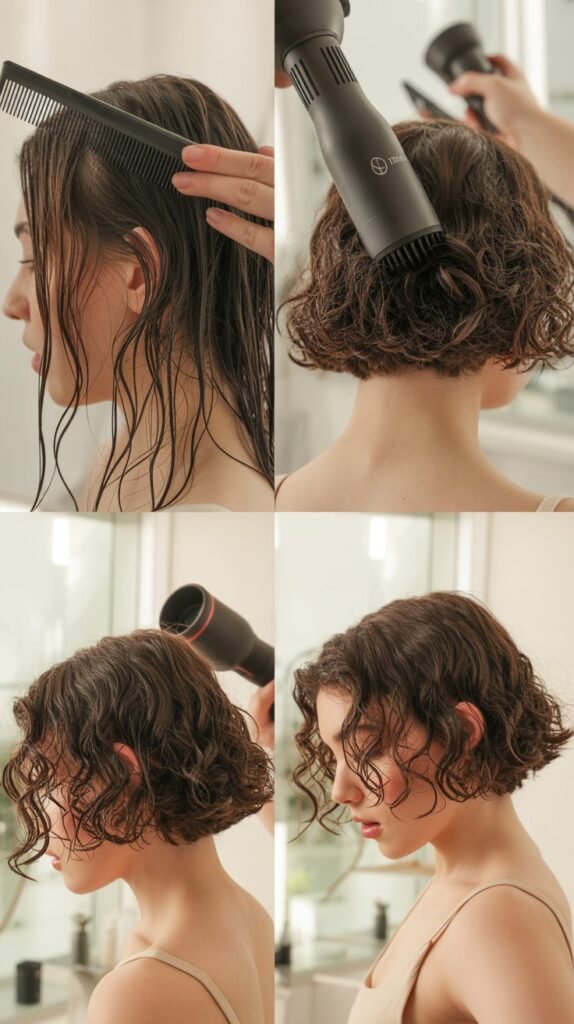
Diffuser drying enhances natural texture and creates volume at the roots, complementing the density of a blunt cut with lifted, textured fullness.
- The diffuser attachment disperses airflow, drying hair gently while enhancing natural texture.
- This technique creates volume at the roots and throughout without disrupting curl or wave patterns.
- When used on a blunt cut, diffusing adds body while the blunt ends maintain structure and density.
- Proper technique involves cupping sections of hair in the diffuser bowl and holding still as hair dries.
- Diffuser drying is ideal for those with natural texture who want to enhance waves or curls.
- The method creates frizz-free volume that lasts throughout the day.
- Combined with a blunt cut, diffusing creates maximum fullness from roots to textured, blunt ends.
- This styling approach is gentle on hair and enhances natural beauty without excessive manipulation.
43. The Blunt Cut with Highlights and Lowlights
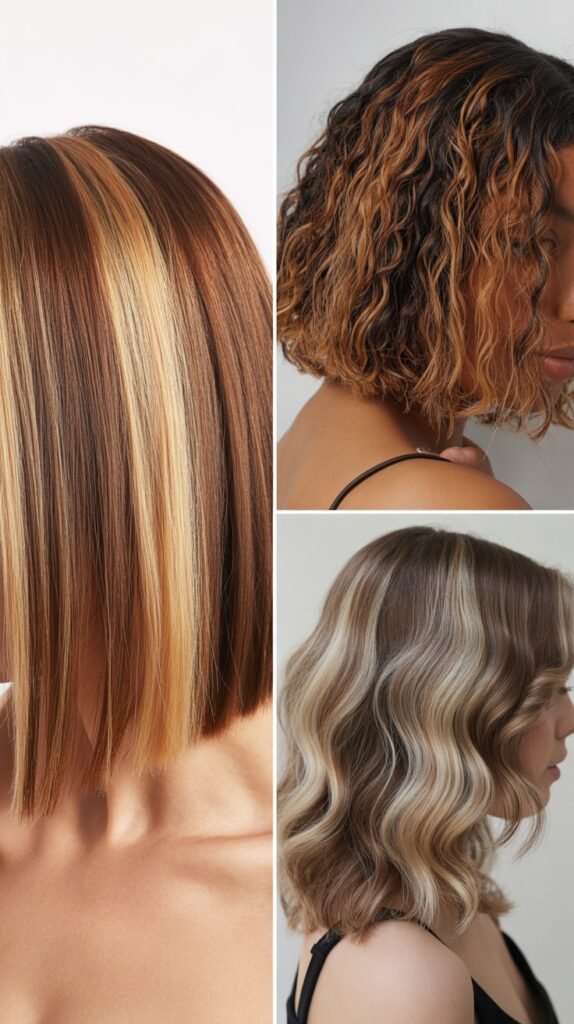
Combining both highlights and lowlights creates maximum dimensional depth that makes thin hair appear fuller, especially when paired with the density of a blunt cut.
- Strategic placement of both lighter and darker tones creates multi-dimensional fullness.
- The color contrast makes individual sections more visible, enhancing the perception of volume.
- Highlights brighten and lift while lowlights add depth and shadow for balanced dimension.
- When combined with a blunt cut, the color dimension amplifies the structural density.
- Placement can be customized to enhance the cut’s shape and flatter face features.
- The varied tones create natural-looking depth that mimics sun-kissed hair.
- Maintenance varies but typically requires touch-ups every 8-12 weeks depending on placement.
- This comprehensive color approach creates maximum optical fullness for thin hair.
44. Blunt Cut with Velcro Rollers
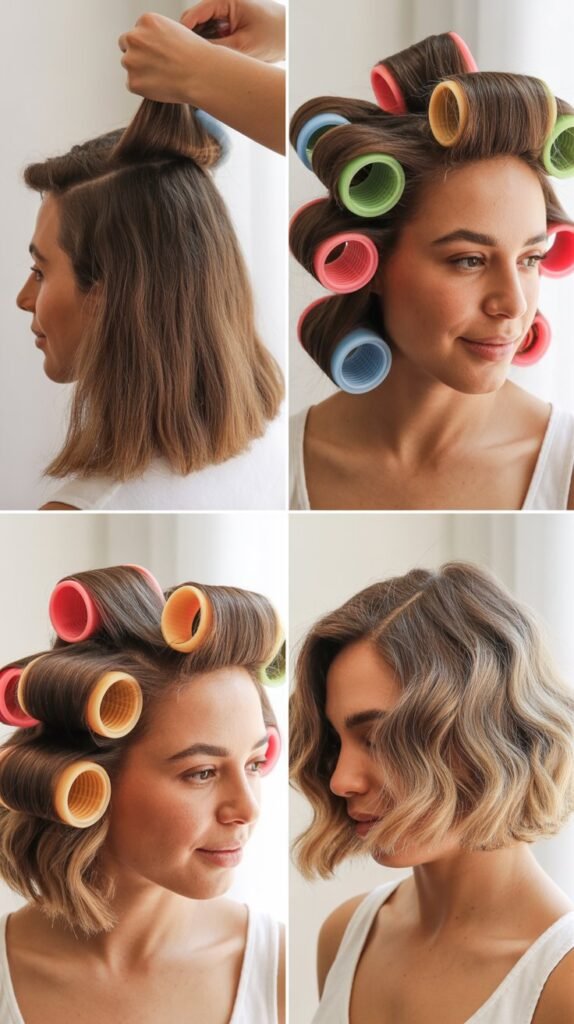
Velcro rollers create volume without heat damage, adding body and lift that enhance the fullness of a blunt cut for special occasions or everyday styling.
- Velcro rollers grip hair without pins or clips, creating smooth volume as hair dries or cools.
- This heat-free method is gentle on hair while providing impressive lift and body.
- Rollers can be used on damp hair (air-dried) or dry hair (with brief heat from blow-dryer).
- Various sizes create different effects—large for volume, medium for body, small for curl.
- When used on a blunt cut, velcro rollers add height at the crown and movement throughout.
- The technique is ideal for creating volume for special events without heat damage.
- Setting time ranges from 20 minutes to several hours depending on method used.
- The volume created complements the blunt cut’s density for maximum fullness.
45. The Blunt Pageboy Cut
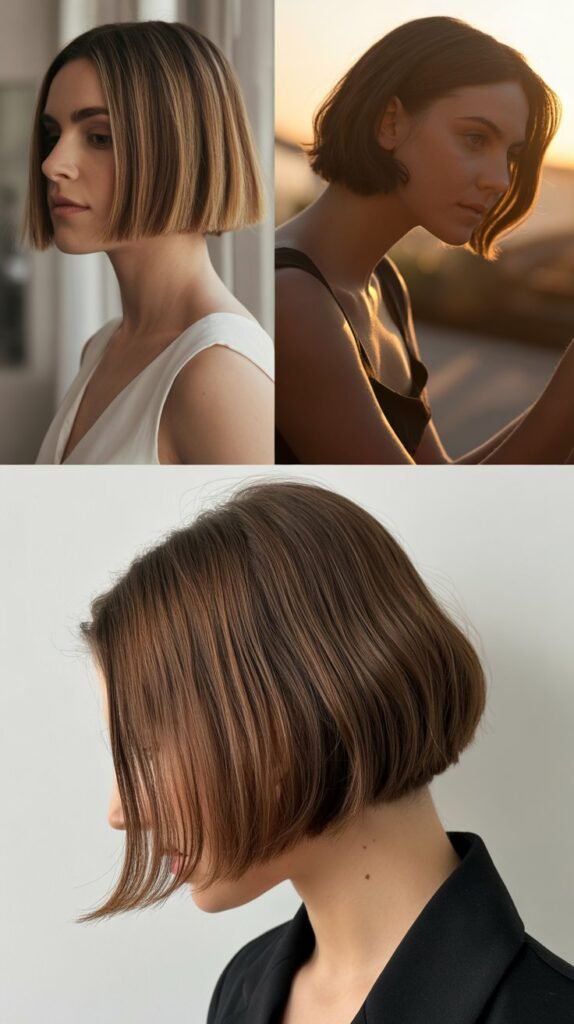
The pageboy cut features a short to medium blunt baseline with bangs, creating a vintage-inspired look that maximizes density through its precise, rounded shape.
- The pageboy traditionally features blunt-cut bangs and a blunt baseline that curves under.
- This retro-inspired cut creates fullness through its rounded, mushroom-like silhouette.
- The style works best on straight to slightly wavy hair that holds the curved shape.
- Blunt cutting at both the perimeter and bangs creates multiple horizontal lines of density.
- Styling involves blow-drying with a round brush, curving ends under for the classic pageboy shape.
- The cut can be modernized with updates like curtain bangs or slightly longer lengths.
- This style makes a bold statement, appearing intentionally vintage and voluminous.
- The pageboy’s precision requires regular trims every 4-6 weeks to maintain its characteristic shape.
46. Blunt Cut with Sea Salt Spray
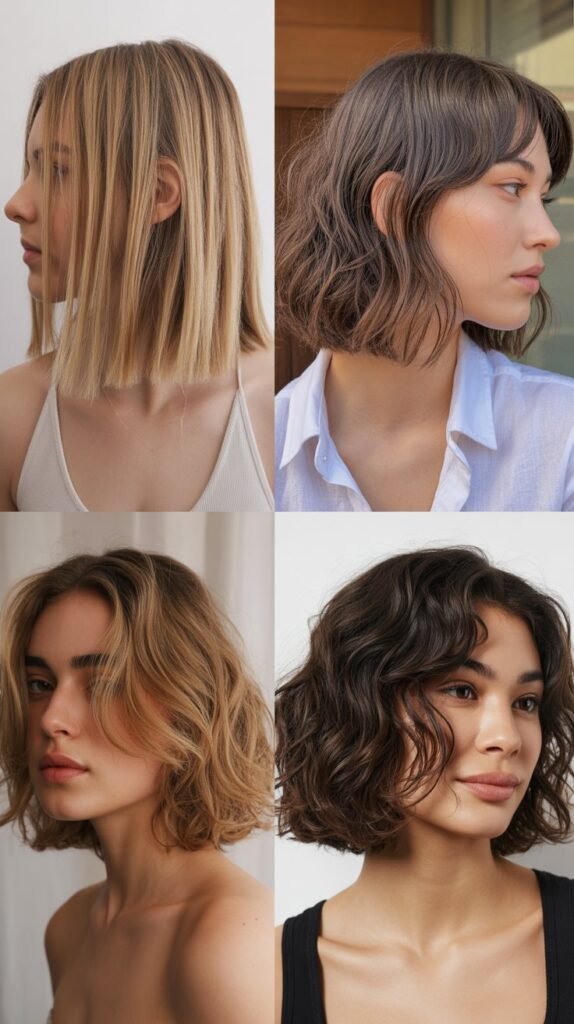
Sea salt spray creates textured, beachy waves that add volume and movement to a blunt cut, providing casual fullness with an effortless aesthetic.
- Sea salt spray mimics the texture-creating effects of ocean water, adding grit and wave to hair.
- The product is applied to damp hair and scrunched or twisted to encourage natural texture.
- When used on a blunt cut, sea salt spray creates tousled volume while maintaining dense, blunt ends.
- This styling approach is ideal for achieving casual, lived-in looks with minimal effort.
- The matte, textured finish created by sea salt spray enhances the perception of fuller hair.
- Application can be on damp hair for air-drying or dry hair for added texture.
- The beachy, undone appearance complements the clean lines of a blunt cut.
- This product works particularly well for those with natural wave or slight texture.
47. The Blunt Italian Bob
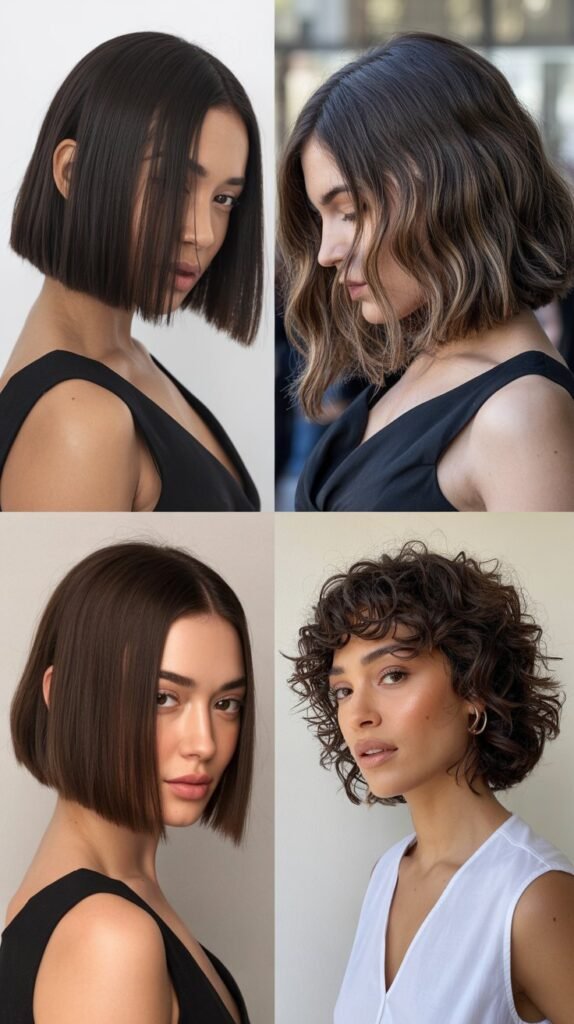
The Italian bob features a slightly shorter length with rounded edges and often includes bangs, creating a sophisticated, European-inspired look with maximum density.
- The Italian bob typically sits between the jaw and chin, cut bluntly with slightly rounded edges.
- This style often includes full or curtain bangs that complement the bob’s length.
- The rounded, softer approach to blunt cutting creates movement while maintaining fullness.
- This European-inspired cut exudes sophistication and intentional style.
- Styling involves blow-drying with a round brush, creating soft inward movement at the ends.
- The slightly shorter length makes styling quick while the blunt edges maintain density.
- This cut flatters various face shapes, particularly oval, heart, and square faces.
- The Italian bob represents a modern take on classic blunt bob styling with added refinement.
48. Blunt Cut with Protein Treatment
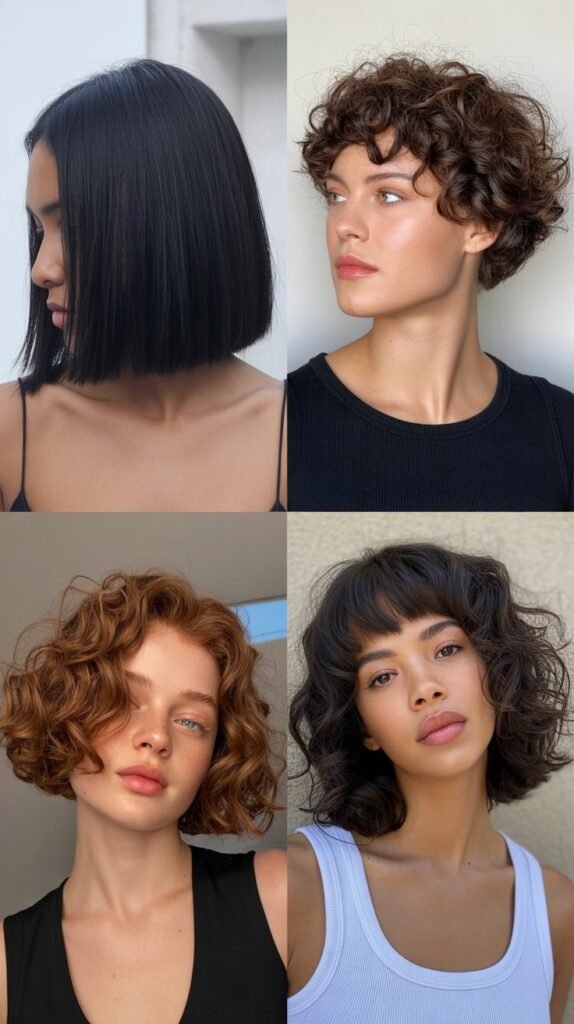
Protein treatments strengthen and temporarily thicken hair strands, enhancing the density created by a blunt cut through improved hair health and structure.
- Protein treatments contain hydrolyzed proteins that penetrate and coat the hair shaft.
- These treatments strengthen hair from within while adding temporary thickness to each strand.
- When used regularly on a blunt cut, protein treatments enhance the overall fullness and health.
- Application involves working treatment through clean, damp hair and allowing it to process.
- Processing times vary from 10-30 minutes depending on product strength.
- The strengthened hair holds blunt cut styles better and appears fuller and healthier.
- Regular protein treatments (every 4-6 weeks) can improve the appearance of thin hair over time.
- This addition to a hair care routine complements the structural density of blunt cutting.
49. The Blunt Cut with Pieced-Out Texture
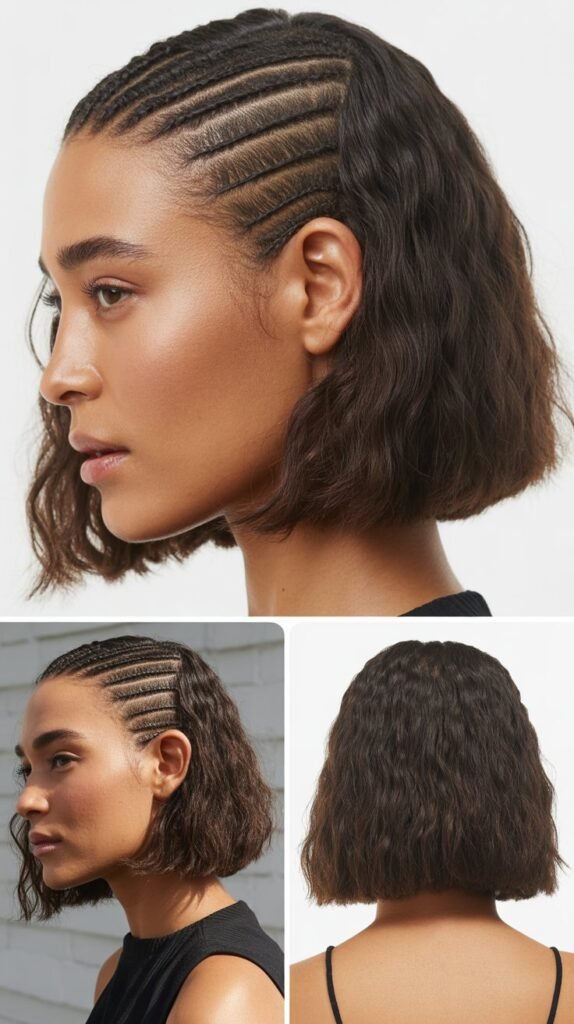
Piecing out a blunt cut involves using styling products to create defined, separated sections that add dimension and perceived fullness while maintaining the blunt perimeter.
- Piecing involves using pomade, wax, or cream to define individual sections of hair.
- This technique creates separation and texture that makes hair appear fuller and more dimensional.
- The blunt perimeter remains intact while internal sections are textured and defined.
- Application involves working small amounts of product through mid-lengths and ends with fingers.
- This styling approach creates a modern, editorial look on blunt cuts.
- The defined pieces catch light differently, creating visual interest and the illusion of more hair.
- Piecing works particularly well on shorter to medium blunt cuts.
- This technique allows for versatile styling—can be subtle for everyday or dramatic for special occasions.
50. Blunt Cut with Ombré Color
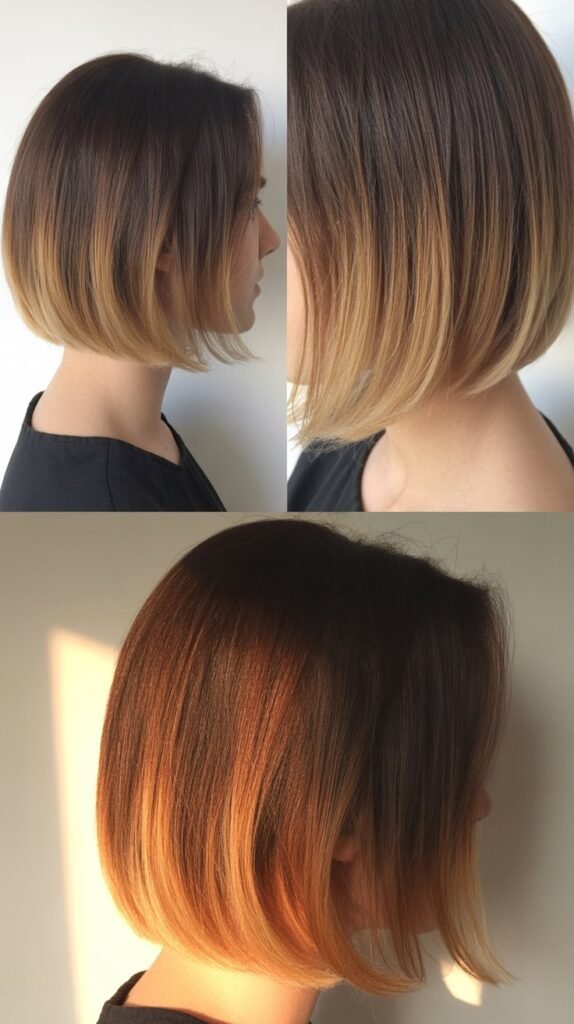
Ombré color transitions from darker roots to lighter ends, creating dimension and visual interest that enhances the density of a blunt cut through color contrast.
- Ombré creates a gradual color transition, typically from natural darker roots to lighter mid-lengths and ends.
- The color dimension adds visual texture that makes hair appear fuller and more voluminous.
- When combined with a blunt cut, ombré enhances the structured shape with color depth.
- The lighter ends draw attention to the blunt perimeter, emphasizing its fullness.
- Ombré is relatively low-maintenance, with touch-ups needed every 8-12 weeks or longer.
- The technique can be subtle or dramatic depending on the contrast between root and end colors.
- The color transition creates natural-looking dimension that complements the clean blunt lines.
- This color approach works for all base colors, from blonde to brunette to unconventional fashion colors.
51. The Blunt Chin-Length Cut with Full Bangs
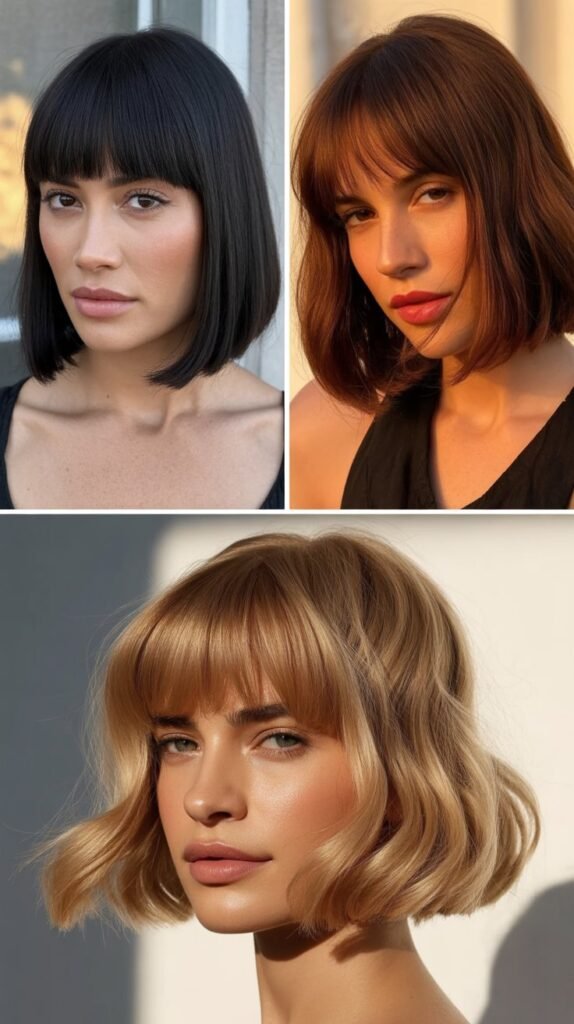
Combining a chin-length blunt cut with full, blunt-cut bangs creates multiple horizontal lines of density, maximizing fullness for thin hair.
- Full bangs cut straight across the forehead add another layer of blunt, dense hair.
- The combination of blunt bangs and blunt baseline creates maximum coverage and fullness.
- This style works best for those comfortable with regular bang maintenance and styling.
- The chin-length cut provides enough length for versatility while maximizing density.
- Both the bangs and perimeter require regular trims to maintain their blunt precision.
- Styling involves blow-drying bangs forward and flat while the length can be worn sleek or with slight texture.
- This double-blunt approach makes a bold statement while providing maximum thickness.
- The style flatters oval, heart, and long face shapes particularly well.
52. Blunt Cut with Ceramic Brush Styling
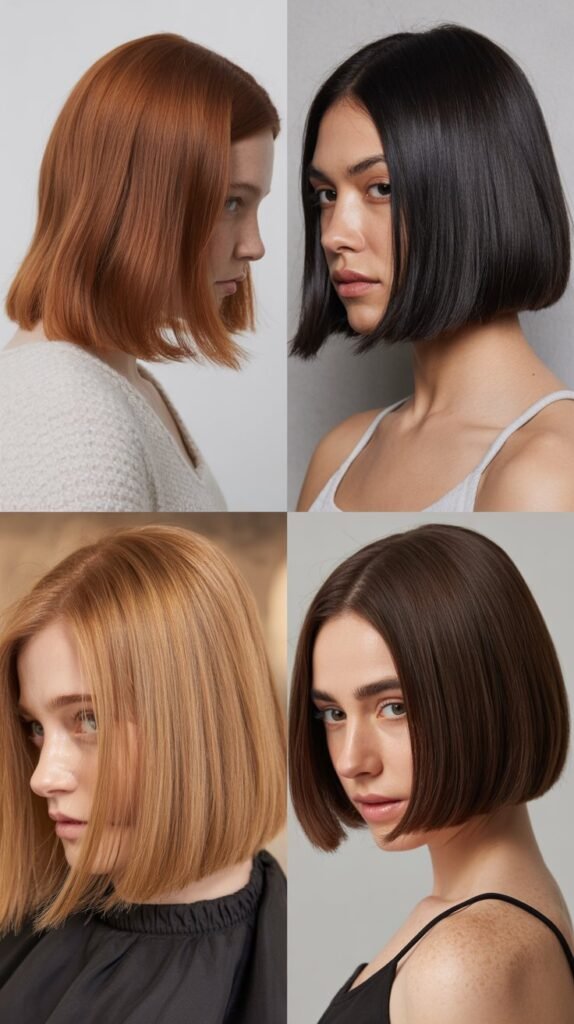
Using a ceramic thermal brush during blow-drying creates smooth volume and lasting style, enhancing the density of a blunt cut with polished fullness.
- Ceramic brushes retain and distribute heat evenly, creating smooth, voluminous results.
- The thermal properties allow for faster drying and more lasting volume.
- When used on a blunt cut, ceramic brushes create root lift while smoothing the blunt ends.
- Proper technique involves working in sections, wrapping hair around the brush and applying heat.
- The brush’s tension and heat create volume that lasts throughout the day.
- Various barrel sizes create different effects—larger for volume, smaller for more curl.
- This styling method produces salon-quality results at home with practice.
- The smooth, voluminous finish complements the precise density of blunt cutting.
53. The Blunt Cut with Disconnected Undercut
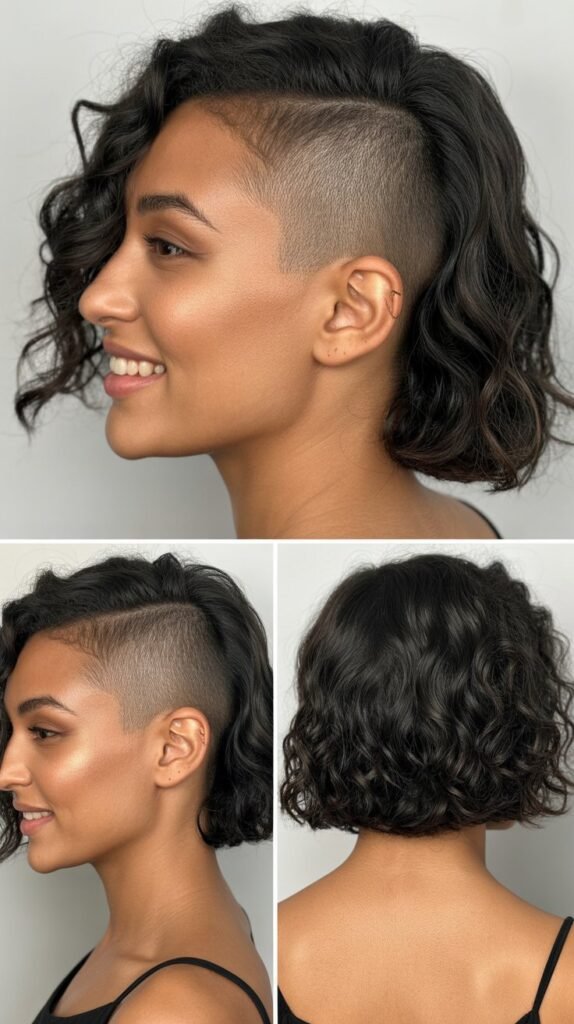
A disconnected undercut features a sharp contrast between longer top sections and very short underneath sections, all cut bluntly at their respective lengths for dramatic effect.
- Disconnected undercuts create a stark contrast rather than gradual blending between sections.
- The top section is cut bluntly at medium length while underneath is cut very short, also bluntly.
- This edgy style reduces bulk while creating the illusion of thick, dense hair on top.
- When hair is down, the longer blunt section appears extremely full and voluminous.
- The undercut can feature designs, patterns, or simple close-cropping.
- This style works well for those wanting dramatic transformation and modern edge.
- Regular maintenance every 3-4 weeks keeps the undercut section short and the contrast pronounced.
- The disconnected approach makes thin top sections appear intentionally thick and dramatic.
54. Blunt Cut with Flexible Hold Hairspray
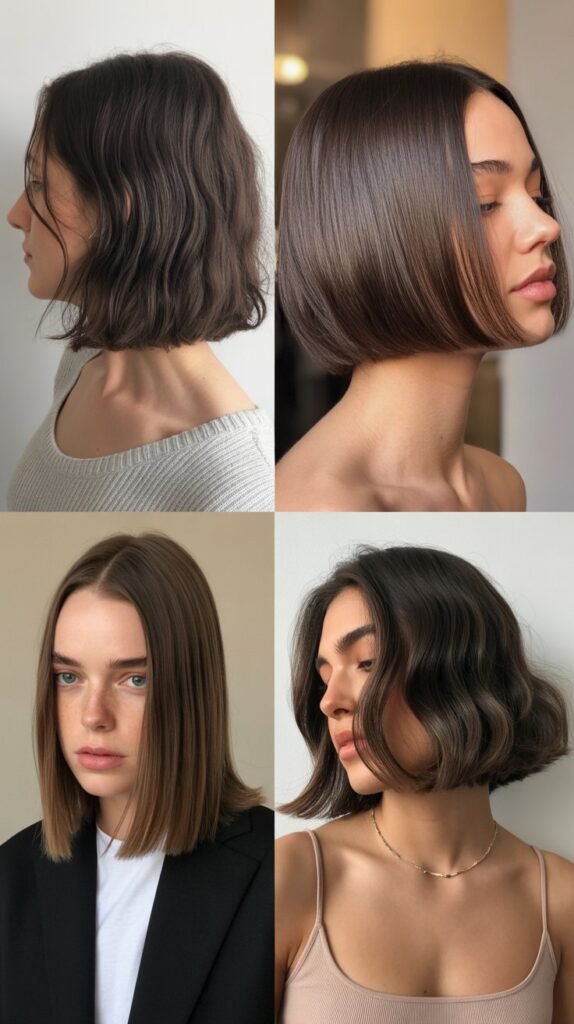
Flexible hold hairspray maintains style and volume without stiffness, preserving the fullness of a blunt cut throughout the day while allowing natural movement.
- Flexible hold hairsprays provide lasting hold while allowing hair to move naturally.
- These products lock in volume and style created during blow-drying without creating stiffness.
- When used on a blunt cut, flexible spray maintains fullness and shape throughout the day.
- Application involves misting over finished style from about 10-12 inches away.
- Modern formulations provide humidity resistance while remaining touchable and flexible.
- The maintained volume complements the structural density of the blunt cut.
- Flexible sprays can be layered throughout styling or applied only as a finishing step.
- This final step ensures the density-creating effects of the blunt cut last from morning to night.
55. The Blunt Razor-Cut Bob
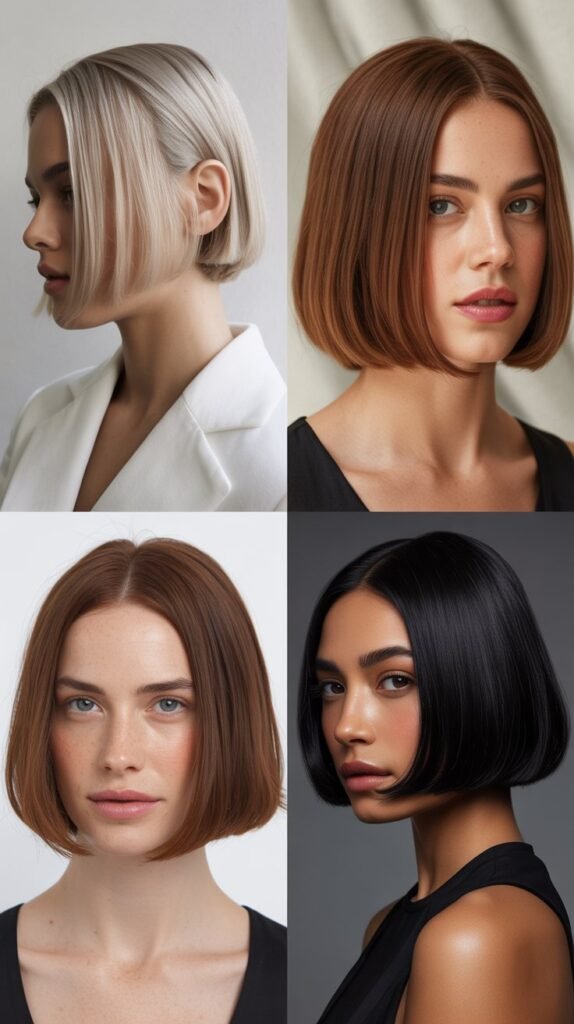
The razor-cut bob uses a razor instead of scissors to create ultra-precise blunt edges with subtle internal texture, resulting in a modern, edgy look with maintained density.
- Razor-cutting creates sharp, precise blunt edges while adding subtle internal texture.
- This technique produces a slightly different aesthetic than scissor-cutting, with softer internal movement.
- The razor-cut blunt bob maintains density at the perimeter while creating lightness within.
- This method works well for various hair textures, adapting to each hair’s characteristics.
- The razor allows for more fluid, organic cutting motions that create natural-looking texture.
- Styling enhances the textured interior while the blunt perimeter provides structure.
- This technique requires a skilled stylist experienced with razor-cutting.
- The result is a modern, editorial look that balances precision with effortless texture.
56. Blunt Cut with Crown Teasing
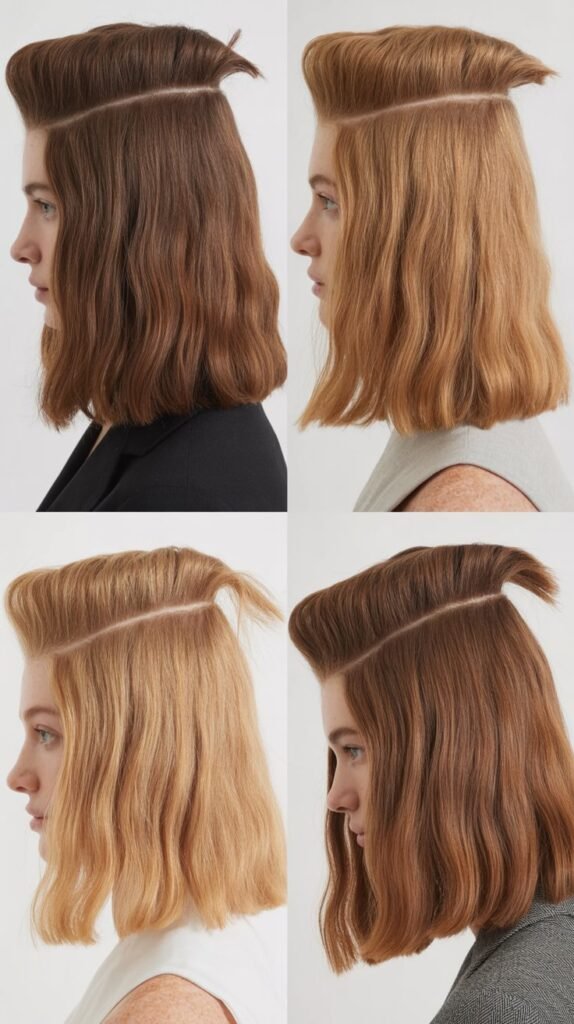
Strategic teasing at the crown creates height and volume in the most visible area, enhancing the overall fullness of a blunt cut.
- Crown teasing involves backcombing hair at the highest point of the head to create lift.
- This technique adds height where it’s most noticeable, creating balanced fullness with the blunt ends.
- Proper teasing involves working in small sections and gently combing toward the scalp.
- The teased sections are hidden beneath smooth top layers for a polished appearance.
- Hairspray applied to teased sections helps maintain lift throughout the day.
- When combined with a blunt cut, crown teasing creates maximum vertical and horizontal volume.
- This technique is ideal for special occasions or when maximum volume is desired.
- Gentle removal is essential to prevent breakage—using conditioner and wide-tooth comb helps.
57. The Blunt Cut with Lifted Roots
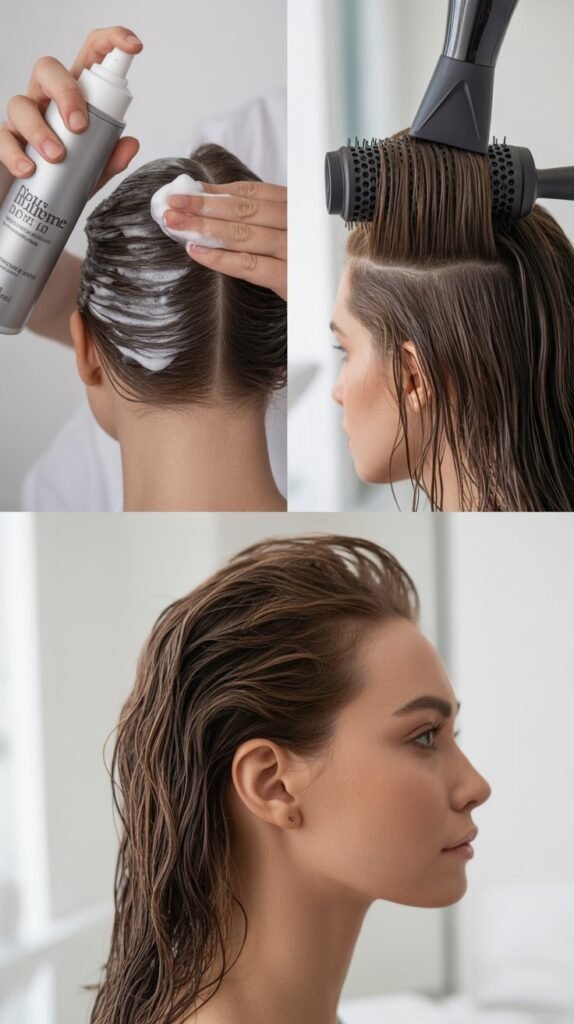
Root-lifting techniques and products create volume at the scalp, addressing flatness where it’s most problematic and enhancing the overall density of a blunt cut.
- Root-lifting involves using products and techniques specifically designed to create volume at the scalp.
- Products like root-lifting sprays are applied directly to roots before blow-drying.
- Blow-drying technique involves lifting sections perpendicular to the head and directing air at roots.
- The lifted roots create height that complements the horizontal density of blunt ends.
- This approach addresses the common problem of flat roots with thin hair.
- Styling tools like root-lifters or clips can be used during drying for additional lift.
- The enhanced root volume creates balanced fullness from scalp through the blunt perimeter.
- This technique transforms flat thin hair into voluminous, lifted locks that maintain the blunt cut’s density.
58. Blunt Cut with Hair Fibers
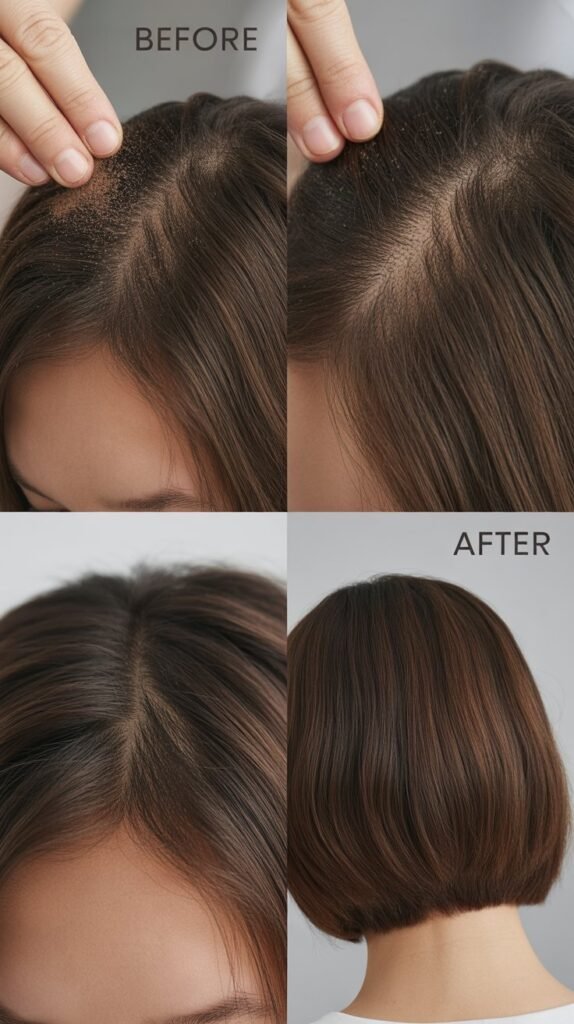
Hair-building fibers adhere to existing strands, creating the appearance of thicker, fuller hair that enhances the density already created by a blunt cut.
- Hair fibers are made from keratin or cotton and electrostatically cling to existing hair.
- These fibers fill in sparse areas and create the appearance of significantly thicker hair.
- When used on a blunt cut, fibers enhance the already-dense perimeter for maximum fullness.
- Application involves sprinkling or spraying fibers onto dry, styled hair in areas needing density.
- The fibers blend seamlessly with natural hair color when properly matched.
- Setting spray applied over fibers helps them stay in place throughout the day.
- This temporary solution provides instant, dramatic fullness for special occasions or daily wear.
- Hair fibers wash out completely with regular shampooing, making them non-committal.
59. The Blunt Cut with Zigzag Part
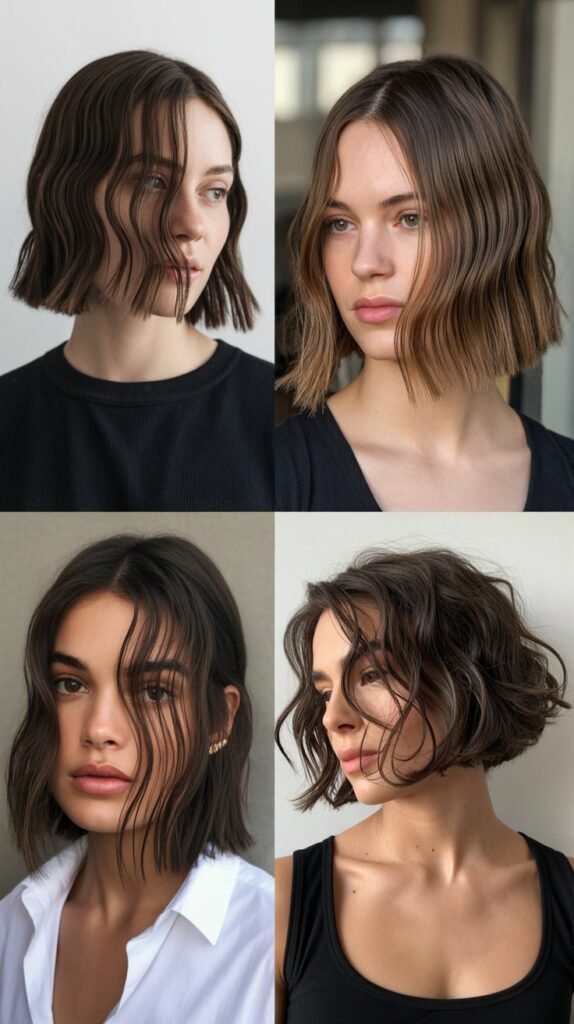
A zigzag part creates instant volume at the crown by preventing hair from lying flat in a straight line, adding dimensional lift that complements blunt cut density.
- The zigzag part is created by moving a comb back and forth while parting hair.
- This irregular parting prevents hair from settling into a flat crease, creating natural lift.
- The added crown volume complements the perimeter density of a blunt cut perfectly.
- This simple technique requires no products or heat, just strategic parting.
- The zigzag can be subtle or pronounced depending on the size of the zigzag pattern.
- This parting technique works with any bluntcut length or style.
- The lifted roots created by zigzag parting last throughout the day.
- This method is ideal for those with very flat roots who want instant, product-free volume.
60. Blunt Cut with Curl Enhancing Products
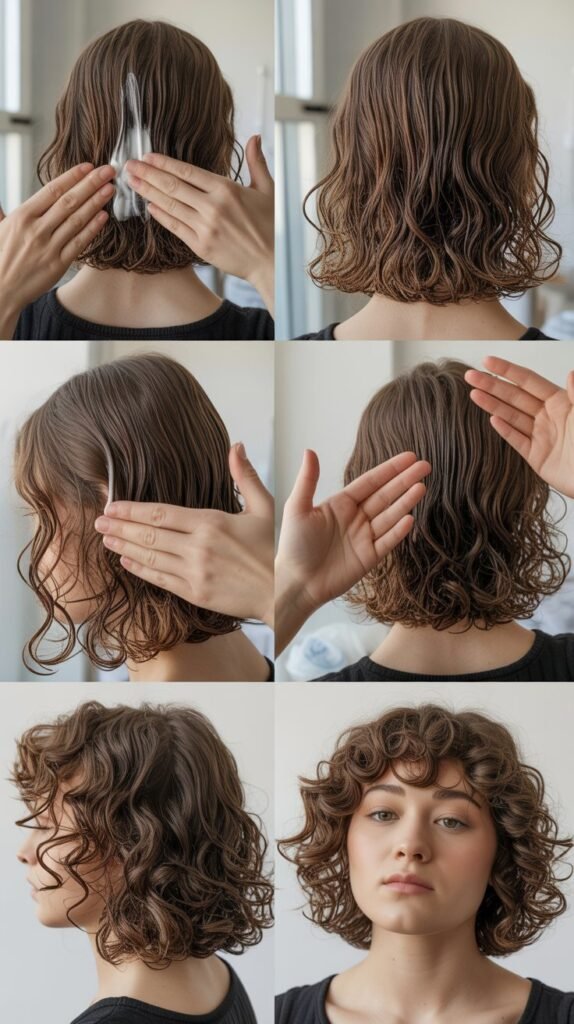
For those with natural curl or wave, curl-enhancing products define texture while the blunt cut maintains density, creating voluminous, textured fullness.
- Curl-enhancing creams and gels define natural curl patterns while reducing frizz.
- When used on a blunt cut with natural texture, these products enhance waves or curls throughout.
- The blunt perimeter maintains structure and density even with pronounced curl.
- Application involves working product through damp hair and scrunching to encourage curl formation.
- Defined curls create volume and dimension that combine with blunt cut density for maximum fullness.
- Air-drying or diffuser-drying allows curls to form naturally while maintaining the blunt baseline.
- This approach celebrates natural texture while benefiting from the density of blunt cutting.
- The combination creates bouncy, voluminous curls with substantial, healthy-looking ends.
61. The Blunt Cut with Hidden Layers
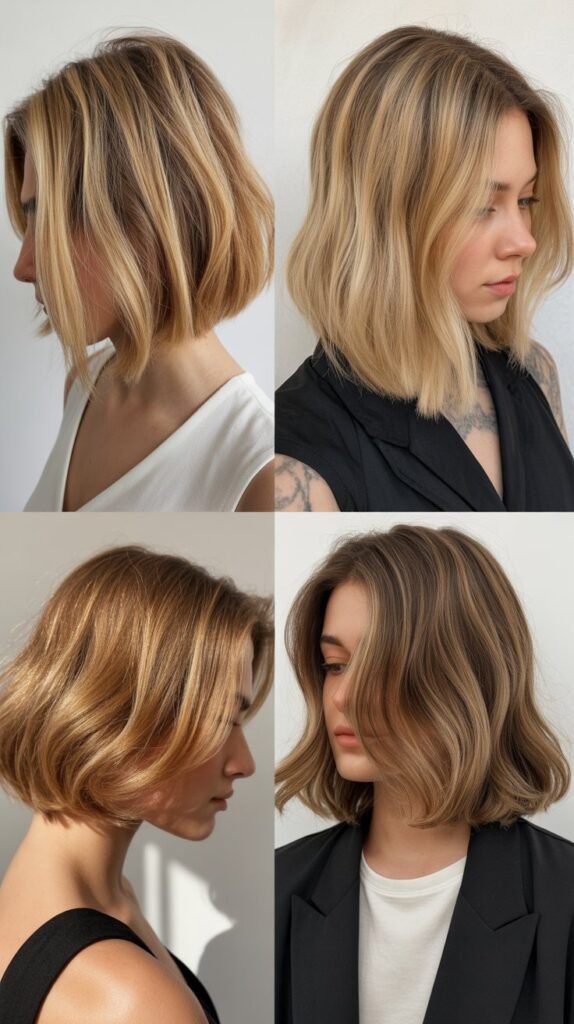
Hidden layers are cut into the interior of the hair while the perimeter remains completely blunt, creating internal movement and volume without sacrificing density.
- Hidden layers are strategically placed within the hair, invisible from the outside.
- These internal layers create lift and movement while the blunt perimeter maintains fullness.
- The technique is ideal for those with very thick-textured fine hair who need weight removal.
- Hidden layers prevent the heavy, triangular shape that can occur with medium-length blunt cuts.
- The invisible layering allows for more versatile styling while preserving density.
- This approach requires a skilled stylist who understands proper internal layering placement.
- The result is a blunt cut that moves beautifully while appearing completely one-length.
- Hidden layers provide the best of both worlds—movement and density.
62. Blunt Cut with Heat Protectant and Round Brush
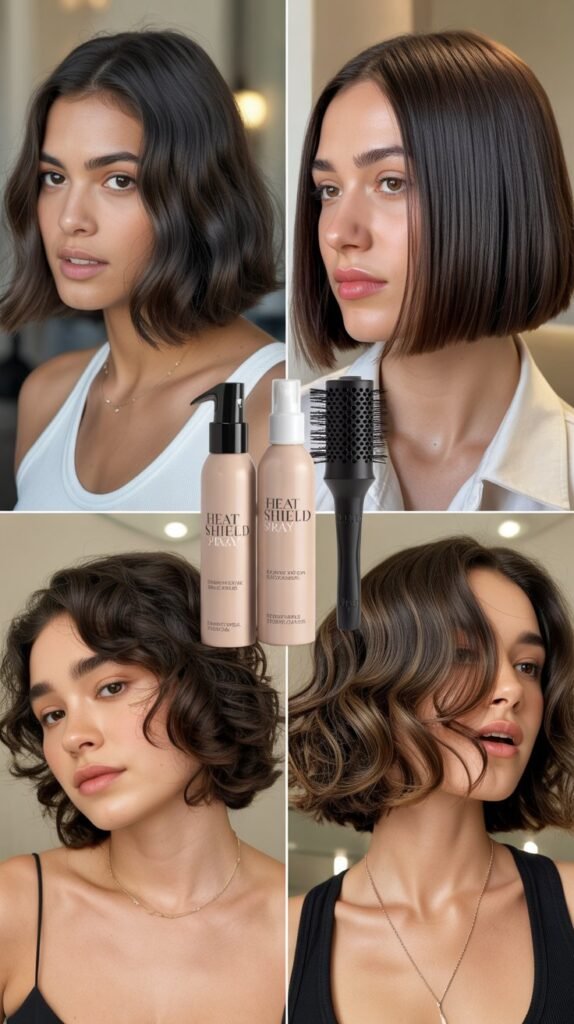
Using quality heat protectant with round brush blow-drying creates smooth, voluminous results that enhance the density of a blunt cut while protecting hair health.
- Heat protectant products shield hair from thermal damage during blow-drying and heat styling.
- These products contain silicones and polymers that coat hair, protecting it while adding smoothness.
- When applied before round brush blow-drying a blunt cut, protectant enables heat styling without damage.
- Proper technique involves working in sections, wrapping hair around brush and applying steady heat.
- The round brush creates volume and smooth movement while protectant maintains hair health.
- Protected, healthy hair appears fuller and more lustrous than damaged hair.
- This styling method produces salon-quality results with maximum volume and smoothness.
- Regular use of heat protectant preserves the integrity of the blunt cut, preventing split ends that undermine density.
Conclusion
Throughout this comprehensive exploration of 62 Thin Hair Medium Blunt Haircuts That Add Instant Density, you’ve discovered the transformative power of blunt cutting techniques for fine, thin hair.
From classic bobs to modern textured lobs, from strategic color applications to expert styling methods, each approach offers unique benefits for creating the illusion of thicker, fuller hair.
The key takeaway is that blunt cuts work by preserving every strand of hair at the perimeter, creating a solid baseline that appears dramatically fuller than tapered or heavily layered alternatives.
Whether you choose a precision one-length cut, an inverted bob with stacked volume, or a textured blunt shag, the fundamental principle remains the same: blunt edges create visual density that transforms thin hair.
By combining these cutting techniques with strategic styling products, proper blow-drying methods, and complementary color techniques, you can achieve the thick, voluminous hair you’ve always desired.
Remember that finding the right stylist who understands the nuances of cutting thin hair is essential, as is maintaining regular trims to keep your blunt edges sharp and your style looking its fullest.
With the knowledge and inspiration from these 62 styles, you’re now equipped to make informed decisions about your next haircut and embrace the confidence that comes with beautifully full, healthy-looking hair.
