
The medium blunt haircut has evolved from a simple style choice into a powerful statement of precision and sophistication that continues to dominate salon requests worldwide.
If you’re considering a transformation that combines low maintenance with high impact, you’ve landed in exactly the right place.
This comprehensive guide to 64 Straight Style Medium Blunt Haircuts That Stay Sharp will walk you through every variation, styling technique, and maintenance secret that professionals use to keep these cuts looking razor-sharp.
Whether you’re drawn to the classic one-length bob or intrigued by modern textured variations, you’ll discover how this versatile cut adapts to different face shapes, hair textures, and personal styles while maintaining its signature clean lines and effortless edge.
1. Classic One-Length Blunt Bob
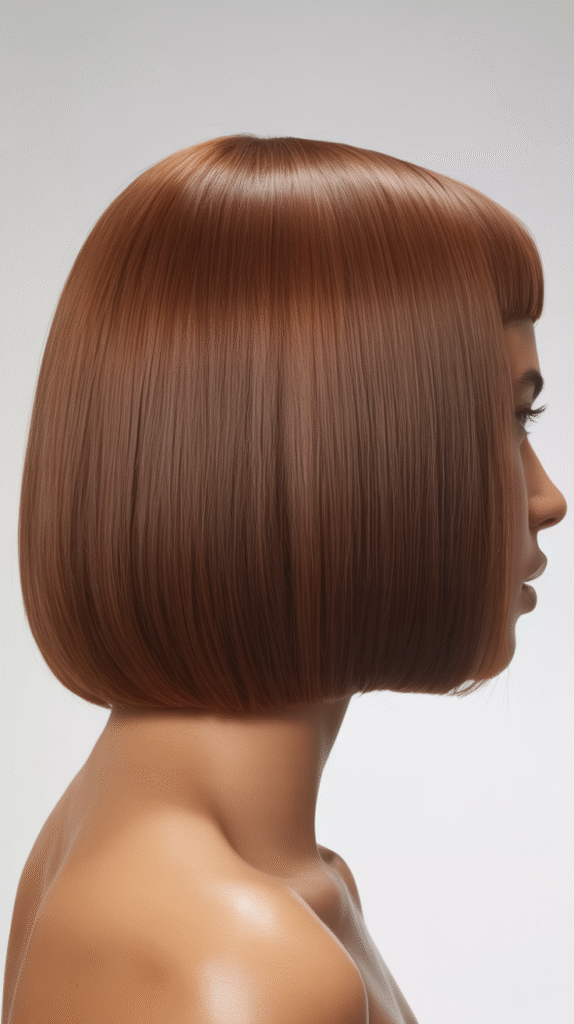
The foundation of all medium blunt haircuts starts with the timeless one-length bob that sits perfectly between chin and shoulder.
This cut features hair that’s precisely trimmed to create an even, horizontal line with no layering or graduation.
- The one-length blunt bob creates an optical illusion of thicker, denser hair due to the weight line at the perimeter.
- This style works exceptionally well for those with fine to medium hair density who want to maximize volume appearance.
- The cutting technique requires sectioning hair horizontally and trimming each section to the exact same length using a zero-degree elevation.
- Maintenance involves trimming every 6-8 weeks to preserve the sharp, blunt edge that defines this cut.
- Styling takes minimal effort as the cut naturally falls into place with a simple blow-dry and flat iron pass.
- The geometric precision of this cut pairs beautifully with center parts, side parts, or slicked-back styles for versatility.
2. Textured Blunt Cut With Choppy Ends
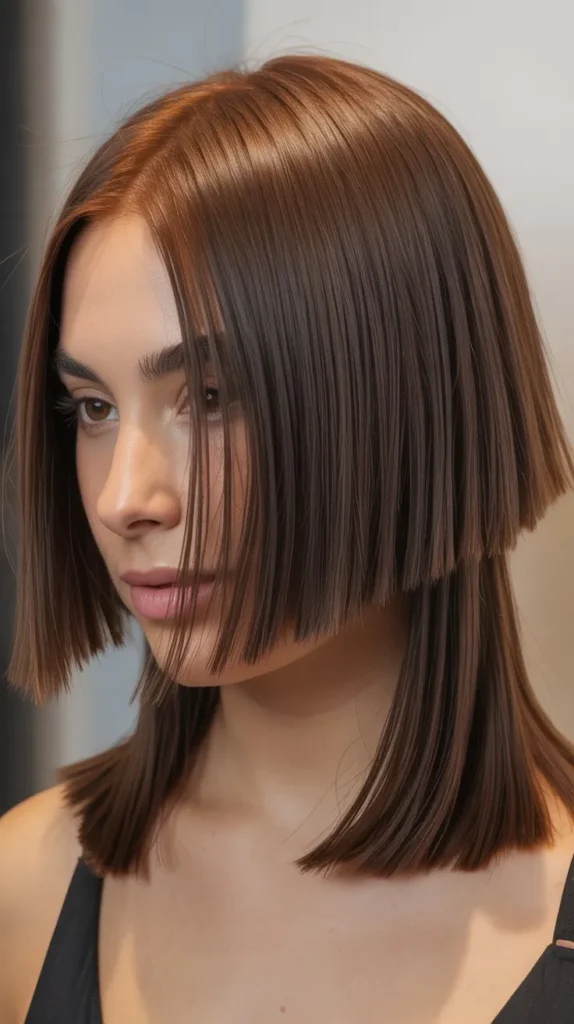
Modern stylists have reimagined the traditional blunt cut by incorporating subtle texture and choppy elements while maintaining the overall blunt silhouette.
This approach softens the severity while keeping the structural integrity intact.
- Point cutting or slide cutting techniques create micro-variations in length that add movement without compromising the blunt appearance.
- The choppy texture prevents the cut from looking too heavy or dated while maintaining contemporary appeal.
- This variation suits individuals who want the blunt aesthetic but need more styling versatility for different occasions.
- Hair with natural wave benefits particularly from this technique as it enhances texture without creating frizz.
- Styling products like texturizing sprays and sea salt mists amplify the intentionally undone finish.
- The choppy ends catch light differently, creating dimension that flat blunt cuts sometimes lack.
- This cut transitions seamlessly from professional settings to casual environments with simple styling adjustments.
3. Blunt Cut With Face-Framing Layers
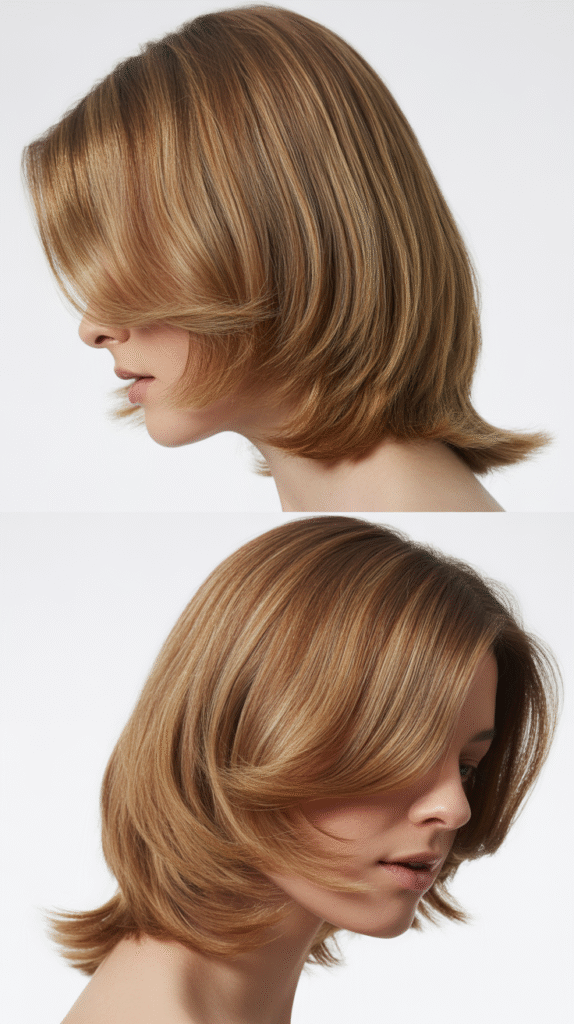
Combining blunt perimeter lines with strategic face-framing pieces creates a hybrid cut that offers the best of both worlds—structure and softness.
- The face-framing layers typically start at cheekbone or chin level and gradually blend into the blunt baseline.
- This technique draws attention to facial features while the blunt back maintains thickness and weight.
- Round face shapes particularly benefit as the angled front pieces create vertical lines that elongate the face.
- The layers require precise angle cutting to ensure they blend seamlessly without disrupting the overall blunt effect.
- Styling involves directing the front pieces away from or toward the face depending on desired effect.
- This cut provides opportunities for varied looks—sleek and straight or with soft bends in the front sections.
4. Asymmetrical Blunt Bob
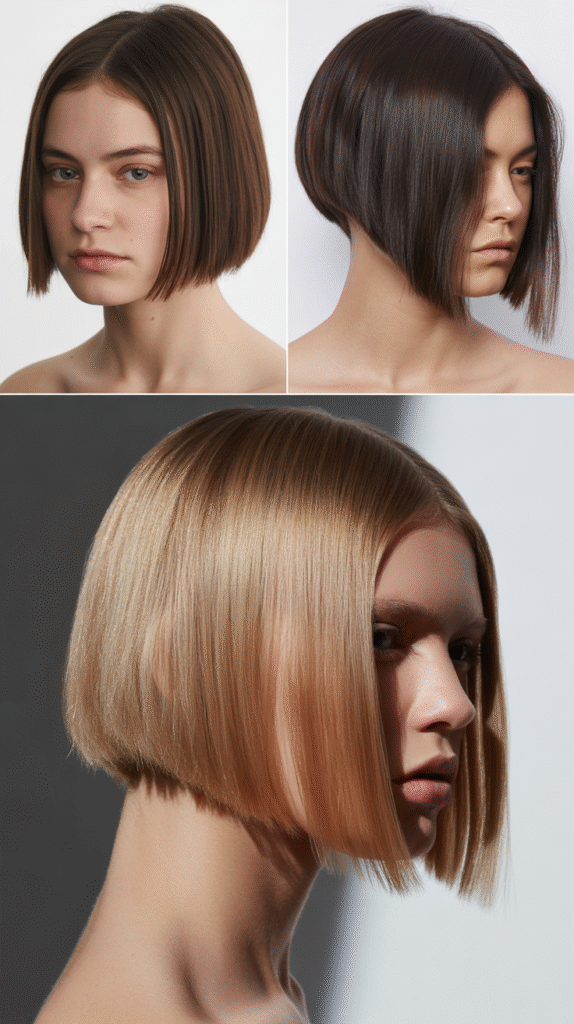
The asymmetrical variation introduces deliberate imbalance by creating different lengths on each side while maintaining blunt, clean lines throughout.
- One side typically sits at chin length while the other extends to shoulder or collarbone, creating dramatic visual interest.
- The cutting technique requires meticulous precision to ensure both sides maintain perfectly blunt edges despite different lengths.
- This style makes a bold statement and works best for individuals comfortable with attention-grabbing haircuts.
- Face shape considerations include using the longer side to balance prominent features or angular jaw lines.
- Styling flexibility allows wearing hair behind the ear on the shorter side for maximum asymmetry exposure.
- The cut naturally directs hair forward, making it ideal for those who prefer hair around the face rather than behind shoulders.
- Maintenance demands precision trims to keep the length differential consistent and edges sharp.
5. Micro-Blunt Bob (Chin-Length)
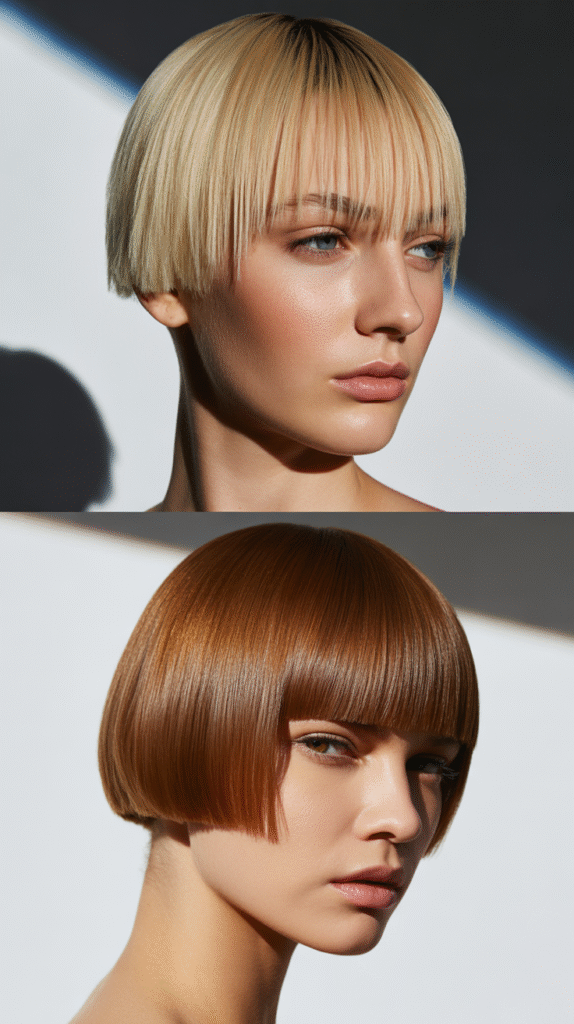
The micro-blunt bob sits precisely at chin level, creating a sophisticated frame that emphasizes facial features and neck elegance.
- This length provides maximum versatility for styling—tucked behind ears, worn forward, or slicked back completely.
- The chin-length cut elongates the neck and highlights the collarbone area for an elegant silhouette.
- Precision cutting is critical as even half an inch variation dramatically changes the overall effect.
- This length suits oval, heart, and diamond face shapes particularly well by balancing proportions.
- Hair texture matters significantly; this cut shows every imperfection so healthy, smooth hair is essential.
- Styling requires straightening tools to achieve the sleek finish that maximizes the cut’s architectural appeal.
6. Shoulder-Grazing Blunt Cut
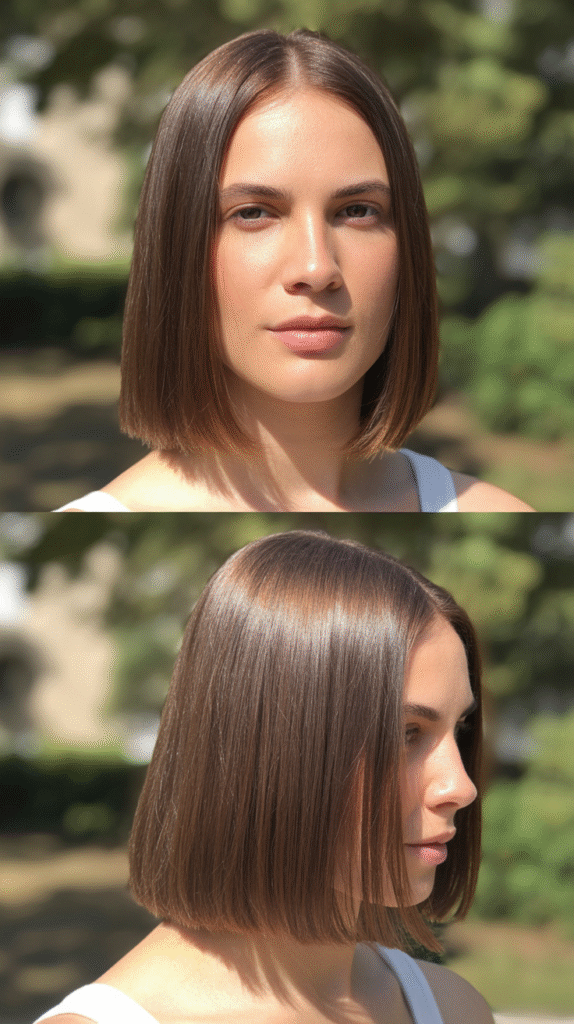
Sitting precisely at shoulder length, this variation offers more versatility than shorter versions while maintaining the signature blunt aesthetic.
- The shoulder-length variation provides enough length for various updo options while keeping maintenance manageable.
- This cut creates a sophisticated, professional appearance suitable for corporate environments and formal occasions.
- The weight distribution at shoulder level can make hair appear thicker and healthier than layered alternatives.
- Styling options expand significantly with this length—half-up styles, low ponytails, and braids all work beautifully.
- Face shape compatibility is broad, though adjustments in parting can optimize results for specific features.
- The shoulder-grazing length tends to stay in place better than shorter versions, reducing constant adjustment throughout the day.
- This cut works exceptionally well for those transitioning from long hair who aren’t ready for dramatic short styles.
7. Blunt Cut With Curtain Bangs
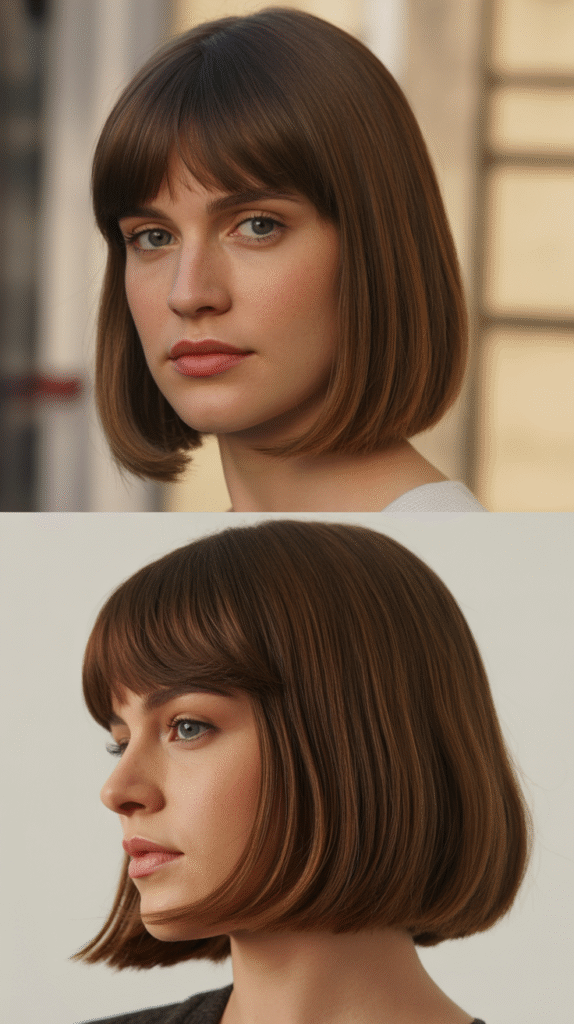
Pairing a medium blunt cut with curtain bangs creates a balanced look that combines retro charm with modern precision.
- Curtain bangs part down the middle and frame the face on both sides, softening the geometric severity of blunt cuts.
- The bang length typically ranges from eyebrow to cheekbone, creating a gradual transition to the main length.
- This combination suits oval, long, and heart-shaped faces by adding width at the forehead and balance to proportions.
- Styling requires a round brush to create the signature outward curve that characterizes curtain bangs.
- The bangs grow out gracefully, blending into face-framing layers rather than creating awkward in-between stages.
- This style references 1970s aesthetics while feeling completely contemporary when paired with blunt perimeters.
8. Blunt Lob (Long Bob)
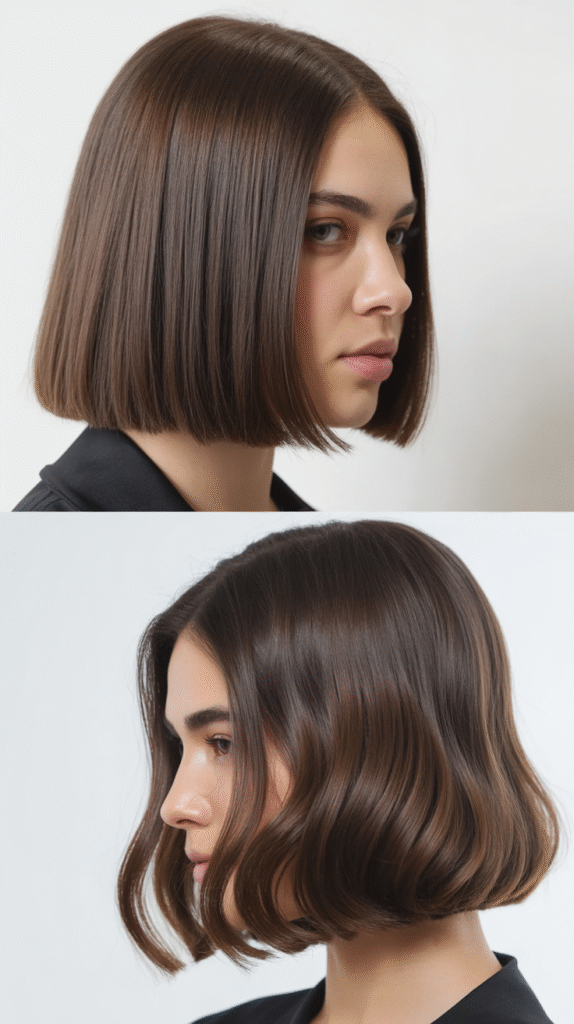
The blunt lob extends to collarbone length, offering the sophistication of a bob with the versatility of longer hair.
- This length is consistently among the most requested cuts due to its universally flattering nature and styling flexibility.
- The blunt lob provides enough length for ponytails and buns while maintaining a polished, intentional appearance.
- Cutting technique involves precise sectioning to ensure all hair falls to the same point despite head curvature.
- This cut suits virtually all face shapes with minor adjustments in parting and styling direction.
- Maintenance is relatively low-effort, requiring trims every 8-10 weeks to maintain the blunt edge.
- The lob length is ideal for those who want to experiment with color techniques like balayage while maintaining sharp lines.
- Styling versatility includes straight and sleek, wavy and textured, or completely slicked back for different occasions.
9. Blunt Cut With Straight-Across Bangs
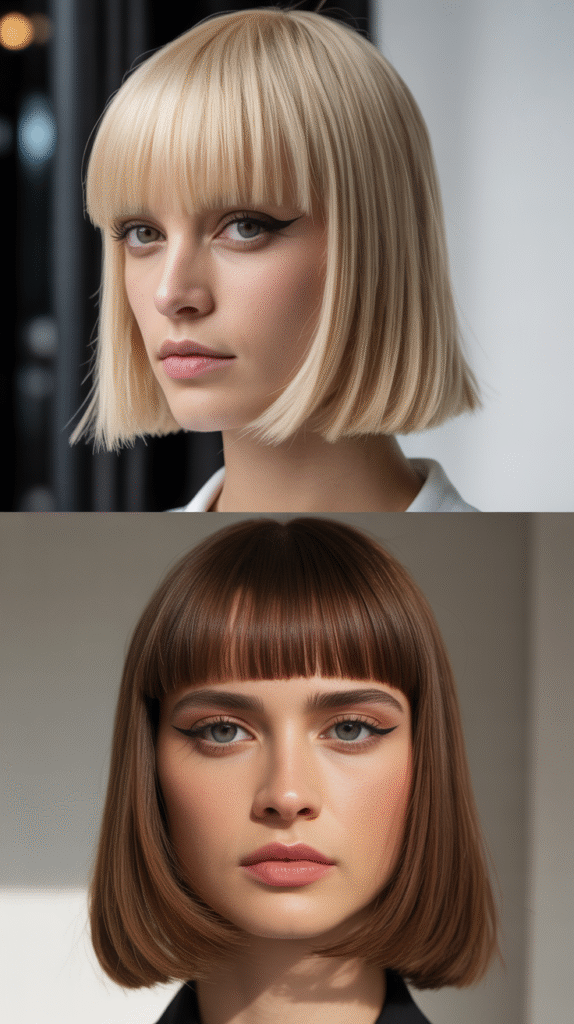
Combining a medium blunt cut with full, straight-across bangs creates a bold, fashion-forward statement with strong geometric appeal.
- The straight-across bangs typically sit at eyebrow level or just above, creating a strong horizontal line that mirrors the blunt perimeter.
- This double-blunt effect makes a powerful visual statement and requires confidence to pull off effectively.
- Face shape considerations are crucial; this style works best for oval and heart-shaped faces with balanced proportions.
- Cutting bangs requires extreme precision as they frame the eyes and any unevenness becomes immediately apparent.
- Styling bangs involves blow-drying forward with tension to maintain the straight, flat appearance.
- This combination references both vintage and futuristic aesthetics depending on overall styling approach.
- Maintenance requires frequent bang trims every 2-3 weeks to prevent them from obscuring vision.
10. Graduated Blunt Bob
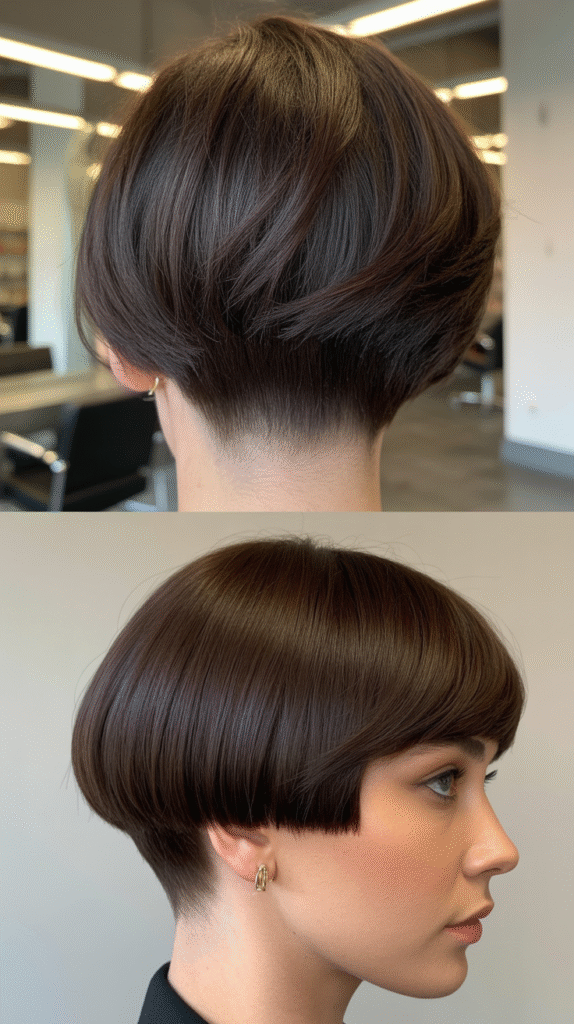
While maintaining blunt edges, the graduated version incorporates subtle stacking at the back for volume and shape definition.
- The graduation creates shorter layers underneath while maintaining longer lengths on top and perimeter edges.
- This technique adds volume at the crown and nape, particularly beneficial for fine or flat hair types.
- The cutting approach uses increasing elevation toward the back while keeping the perimeter at zero degrees.
- Face-framing remains long and blunt while interior graduation provides movement and body.
- Styling is simplified as the cut naturally lifts at the crown without requiring excessive teasing or products.
- This variation suits individuals who want blunt aesthetics but need architectural support for their hair type.
- The graduated interior allows for more air circulation, making this cut comfortable in warm climates.
11. Blunt Cut With Middle Part
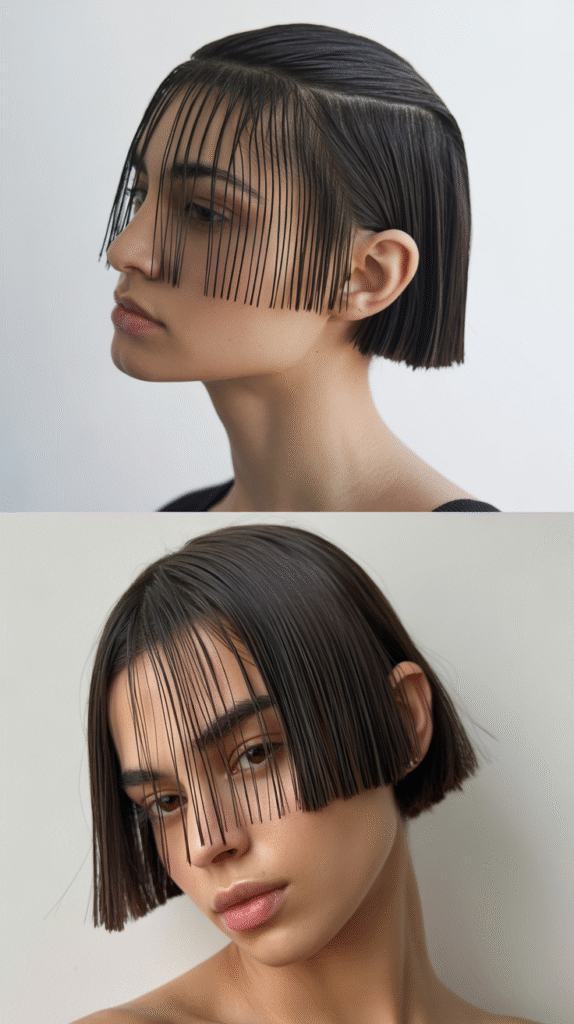
The middle part paired with a medium blunt cut creates perfect symmetry and a polished, sophisticated appearance.
- The middle part creates two equal sections that frame the face identically, emphasizing facial symmetry.
- This styling approach works exceptionally well for oval and heart-shaped faces with balanced features.
- Achieving a perfect middle part requires finding the natural center point of the head, typically aligned with the nose.
- The blunt cut’s weight keeps hair lying flat against the head, preventing volume that might disrupt the sleek lines.
- Styling products like smoothing serums help maintain the part’s precision throughout the day.
- This look conveys minimalism and modern sophistication, popular in contemporary fashion and professional settings.
12. Blunt Cut With Deep Side Part
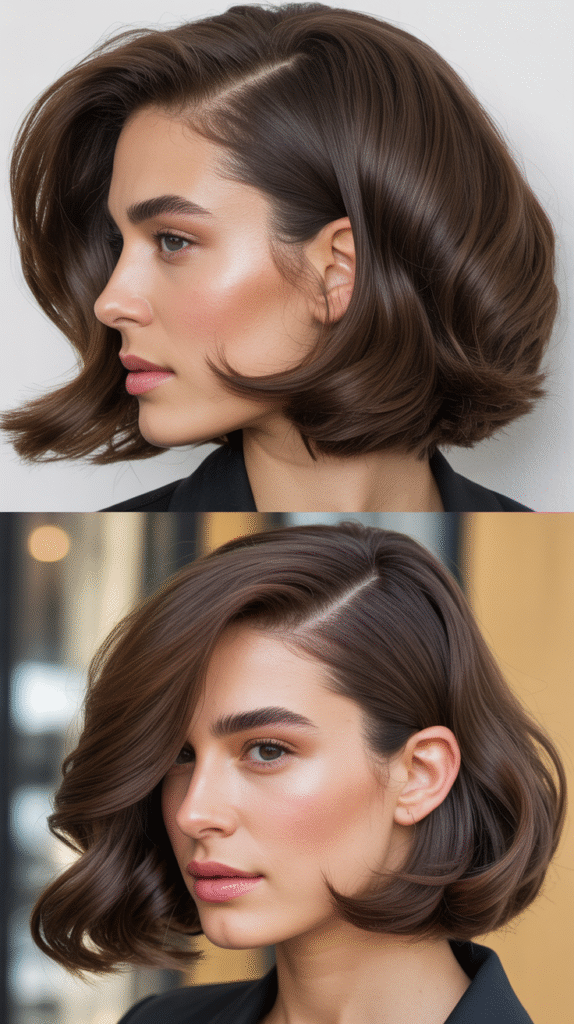
A deep side part adds drama and asymmetry to the otherwise balanced medium blunt cut, creating volume on one side.
- The deep side part typically divides hair at a 70/30 or 80/20 ratio rather than the standard 60/40.
- This styling technique adds height at the crown on the heavier side while the lighter side tucks sleekly behind the ear.
- Face shapes with prominent features on one side can use the heavier section to balance proportions.
- Styling requires directing the majority section away from the face while blow-drying for maximum volume.
- The deep part creates Old Hollywood glamour when combined with smooth, glossy blunt cuts.
- This approach works particularly well for formal events and occasions requiring elevated styling.
13. Blunt Cut With Subtle Undercutting
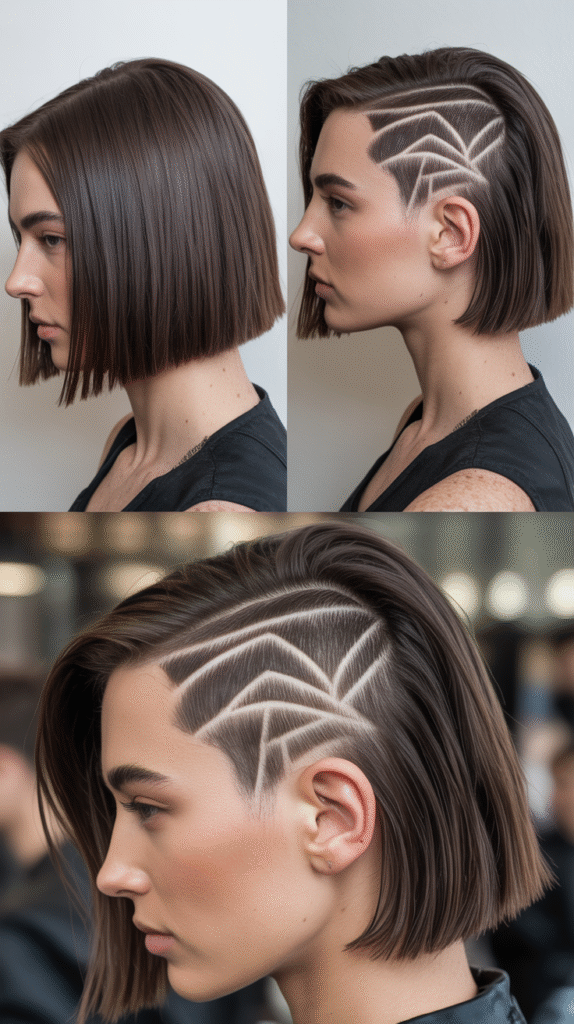
Hidden undercuts beneath the top layers maintain the blunt appearance while removing bulk and adding edge.
- The undercut section is shaved or closely trimmed at the nape or sides, completely hidden when hair is down.
- This technique reduces volume for thick hair types while maintaining the blunt perimeter’s fullness.
- The hidden nature allows for professional appearance when needed and edgy reveal for casual settings.
- Undercut designs can include patterns or geometric shapes for additional personalization.
- Maintenance requires regular touch-ups every 3-4 weeks to keep the undercut section neat.
- This option particularly appeals to those who want dramatic change without fully committing to visible alternative styles.
14. Sleek and Glossy Blunt Cut
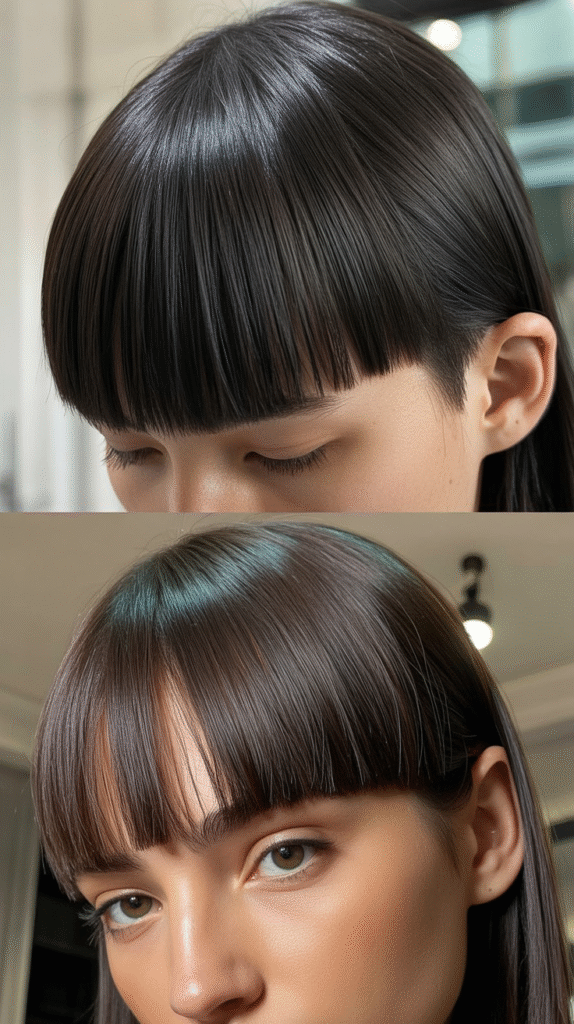
Emphasizing ultra-smooth, glossy finishes transforms the medium blunt cut into a red-carpet-worthy statement.
- Achieving glass-like shine requires combination treatments including glossing services, smoothing products, and proper heat styling.
- The sleek finish emphasizes the precision of the blunt cut, making every line and angle visually striking.
- Hair health is paramount for this look; damaged or porous hair cannot achieve the same reflective quality.
- Styling involves careful flat iron work at appropriate temperatures with smoothing serums applied beforehand.
- This aesthetic suits formal occasions, professional photography, and high-fashion contexts.
- Maintenance includes regular deep conditioning treatments and professional glossing services every 4-6 weeks.
- The glossy finish enhances any hair color but particularly dramatizes darker shades through light reflection.
15. Blunt Cut With Wispy Ends
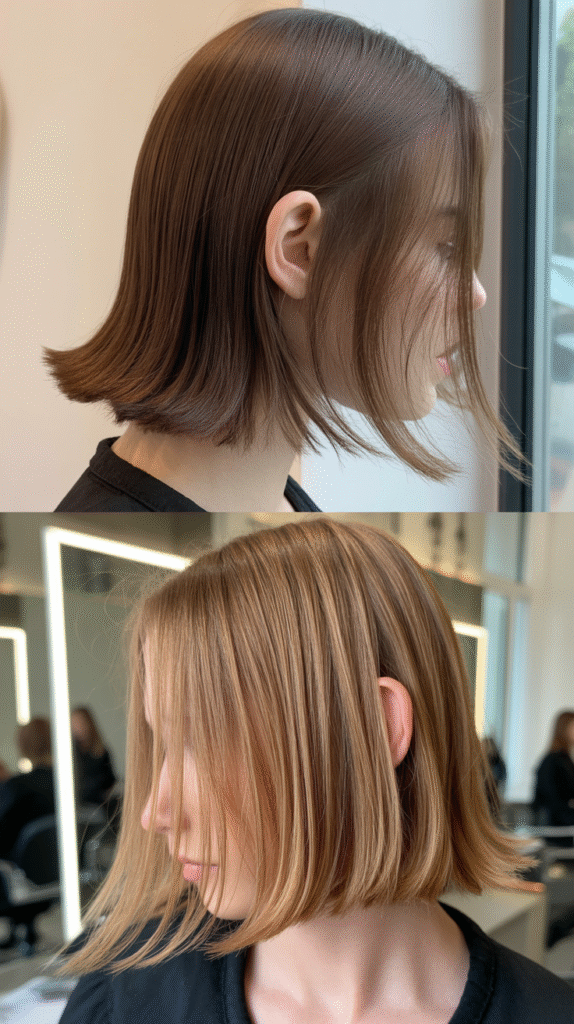
Softening the strict blunt edge with subtle wispy texture creates a more approachable, lived-in version of the classic cut.
- Point cutting or razor techniques create feathered ends that maintain the overall blunt shape while softening harshness.
- This variation appeals to those who find traditional blunt cuts too severe or high-maintenance.
- The wispy texture allows for easier blending as the cut grows out between salon visits.
- Styling requires less precision as the intentional imperfection disguises minor irregularities.
- This approach works well for hair with natural texture that resists completely straight, blunt styling.
- The softened edges create movement and dimension that catches light beautifully.
16. Blunt Cut With Razored Texture
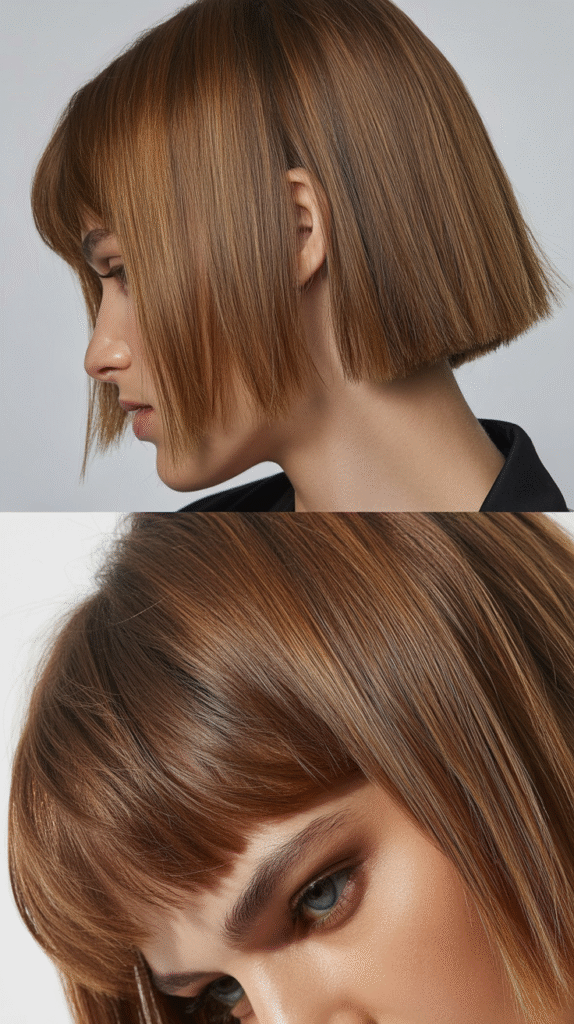
Razor cutting techniques introduce strategic texture throughout while maintaining the characteristic blunt perimeter.
- The razor removes microscopic amounts of hair at varying lengths, creating soft texture without obvious layering.
- This technique works exceptionally well for thick hair that appears too bulky with traditional blunt cutting.
- The razored interior provides movement while the scissor-cut perimeter maintains sharp definition.
- Styling becomes more forgiving as the interior texture allows for both sleek and tousled approaches.
- This cut suits active lifestyles where wash-and-go styling is preferable to extensive daily maintenance.
- The razored sections create subtle dimension that enhances natural hair color variation.
17. Blunt Cut With Beveled Edges
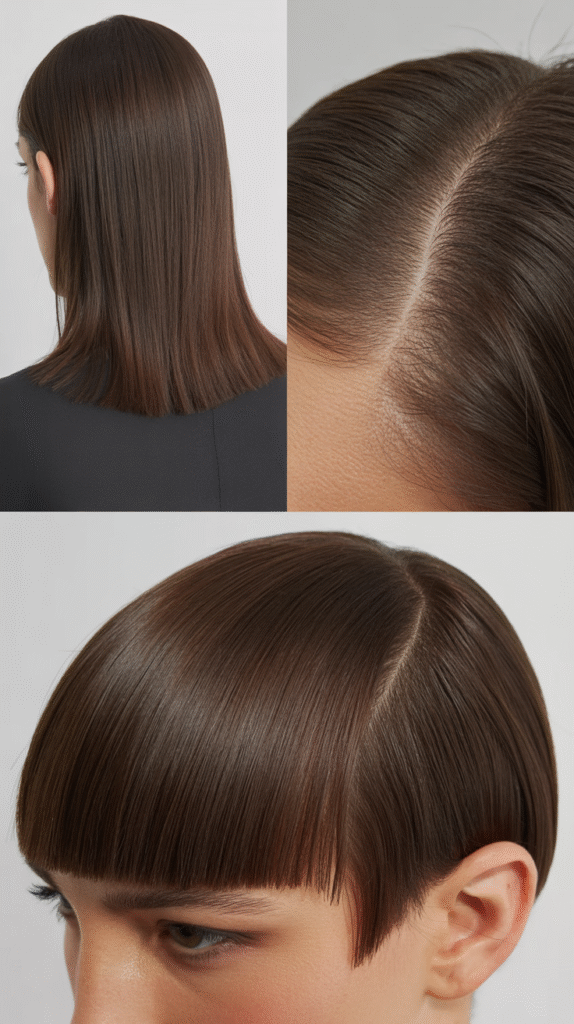
Beveling creates slightly angled edges that maintain bluntness while adding subtle sophistication and preventing harsh lines.
- The beveling technique angles the cutting shears slightly inward, creating edges that turn under naturally.
- This approach provides built-in styling direction, reducing daily maintenance time significantly.
- The beveled edges prevent the mushroom effect that sometimes occurs with completely blunt, one-length cuts.
- Hair naturally follows the beveled direction when blow-dried, creating polish without extensive styling effort.
- This cut suits professionals who need consistently polished appearance without daily salon-level styling time.
- The subtle inward turn creates softness around the face while maintaining the strong perimeter line.
18. Blunt Cut With Peek-A-Boo Highlights
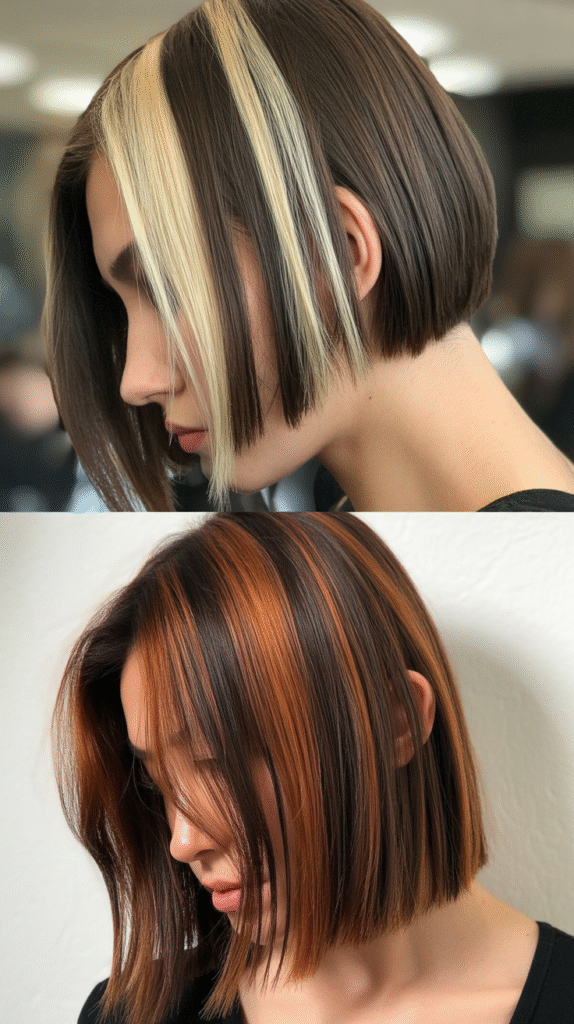
Strategic color placement enhances the dimensional quality of medium blunt cuts without disrupting the clean lines.
- Peek-a-boo highlights hide beneath top layers, revealed only when hair moves or is styled differently.
- This color technique adds depth and dimension to blunt cuts that might otherwise appear flat.
- The hidden nature allows for bold color choices without committing to fully visible dramatic change.
- Placement typically focuses on interior sections and underneath layers for maximum peek-a-boo effect.
- The straight, blunt cut showcases color placement beautifully when hair swings and moves.
- Maintenance requires color touch-ups every 8-12 weeks depending on color choice and growth rate.
19. Blunt Cut for Fine Hair
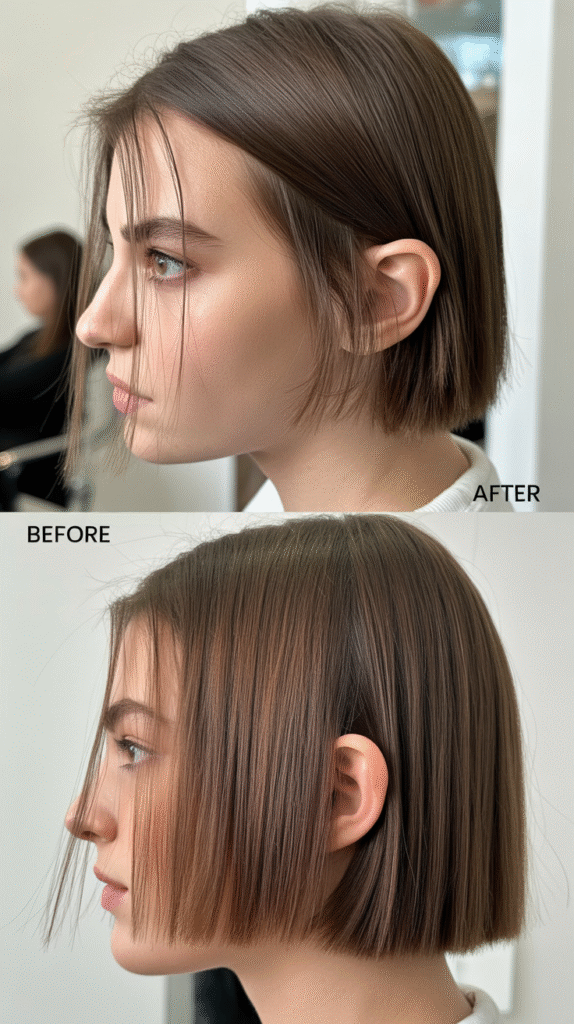
Specialized cutting techniques optimize the medium blunt cut specifically for fine hair textures that need maximum fullness.
- Blunt cutting creates the illusion of density by removing wispy, tapered ends that make fine hair appear thinner.
- The solid weight line at the perimeter prevents see-through sections that plague layered cuts on fine hair.
- Strategic length placement—typically between chin and collarbone—maximizes volume appearance without excessive weight.
- Styling focuses on root-lifting techniques and volumizing products to enhance the cut’s natural fullness.
- This approach avoids over-layering which removes precious density from already fine hair.
- Regular trims every 6-8 weeks prevent split ends that make fine hair appear even thinner.
- The blunt perimeter creates a clean finish that photographs and presents as thick, healthy hair.
20. Blunt Cut for Thick Hair
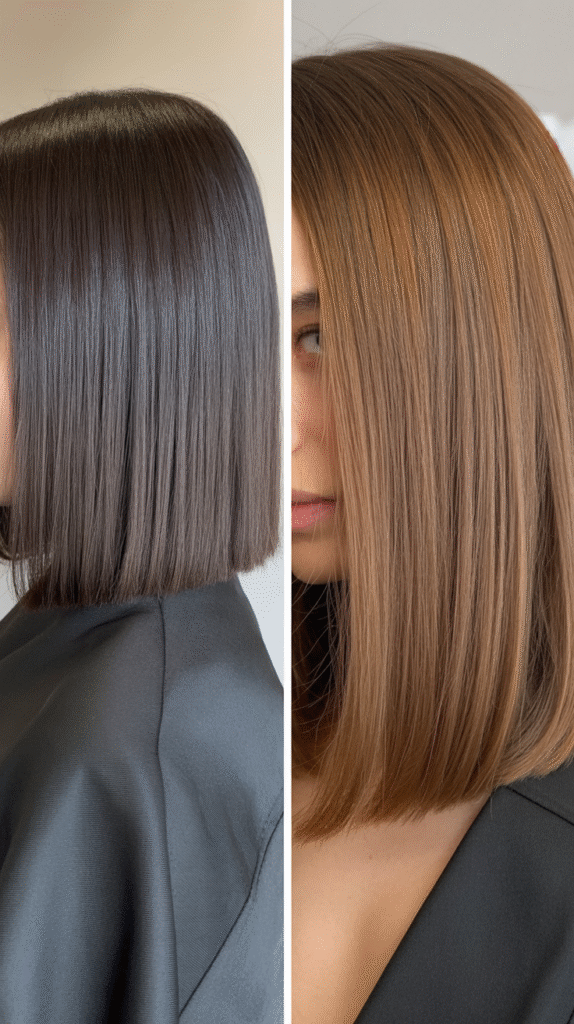
Adapting the medium blunt cut for thick hair requires specific techniques to manage volume while maintaining the style’s integrity.
- Internal layering or thinning techniques remove bulk from the interior while preserving the solid blunt perimeter.
- The one-length cut can actually help control thick hair by creating weight that pulls it downward.
- Cutting when hair is dry allows stylists to see exactly how thick hair naturally falls and adjusts accordingly.
- Styling products focus on smoothing and frizz control rather than volumizing for thick hair types.
- This cut can make very thick hair more manageable by removing random lengths that create puffiness.
- The blunt edge creates a clean finish that prevents the bottom-heavy appearance layered cuts can create on thick hair.
21. Blunt Cut With Root Shadow
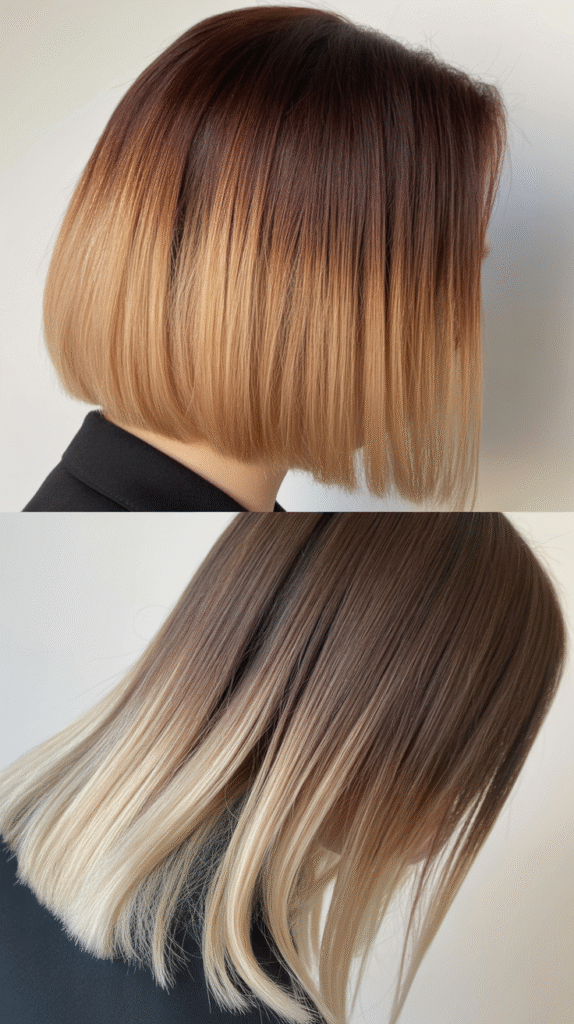
Combining root shadow color techniques with medium blunt cuts creates low-maintenance, dimensional hair color.
- Root shadow involves applying darker color at the roots that gradually blends into lighter mid-lengths and ends.
- This technique extends time between color appointments by creating intentional, flattering root growth appearance.
- The straight nature of blunt cuts showcases the color gradient beautifully along the hair length.
- Dimensional coloring adds visual interest to cuts that might otherwise appear too uniform.
- Styling the color requires maintaining healthy, shiny hair to maximize the color transition’s impact.
- This approach particularly suits those transitioning from high-maintenance color to more sustainable options.
22. Blunt Cut With Balayage
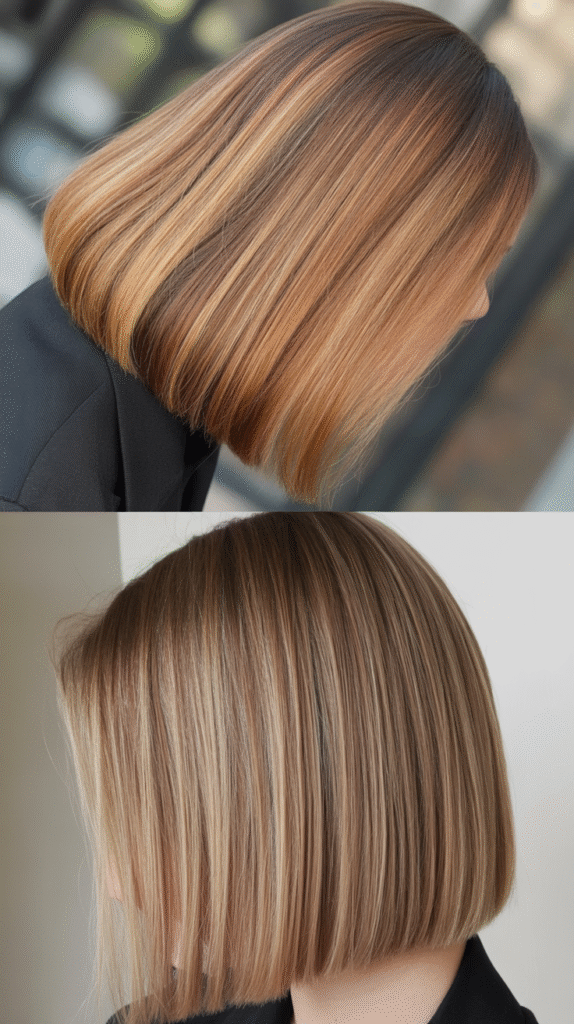
Hand-painted balayage highlights add sun-kissed dimension to medium blunt cuts while maintaining clean, sharp lines.
- Balayage placement on blunt cuts typically focuses on face-framing sections and mid-lengths for natural light reflection.
- The painting technique creates soft, blended color that doesn’t disrupt the cut’s geometric precision.
- Straight hair shows balayage placement clearly, requiring skilled application for natural-looking results.
- The color dimension prevents the one-dimensional appearance that solid color can create on blunt cuts.
- Maintenance is lower than traditional highlights, requiring touch-ups every 12-16 weeks.
- This combination offers the structure of a blunt cut with the softness of dimensional color.
23. Blunt Cut With Lowlights
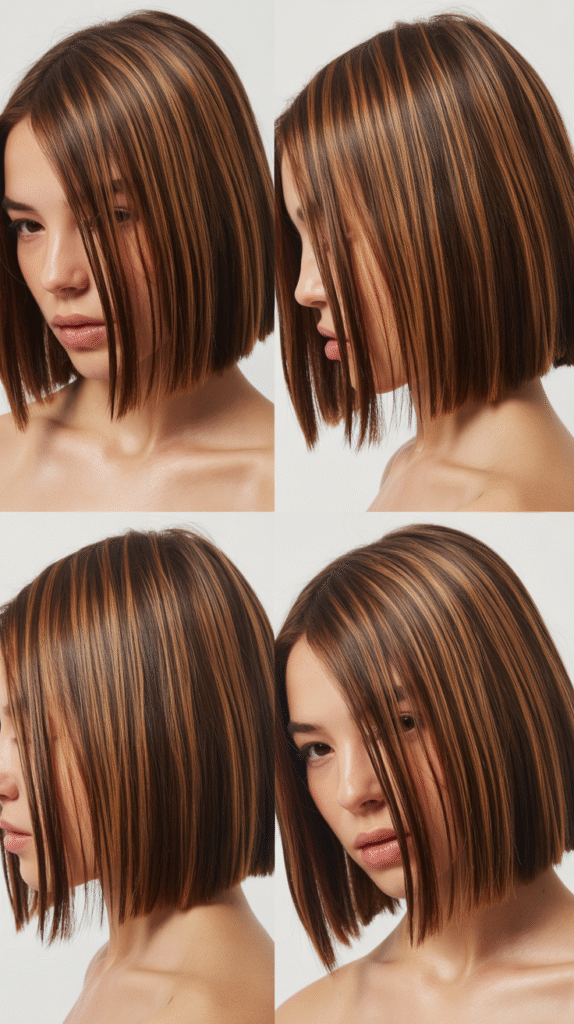
Strategic lowlight placement adds depth and richness to medium blunt cuts, creating multi-dimensional color.
- Lowlights involve adding darker tones beneath and throughout the hair for depth and dimension.
- This technique particularly benefits those with flat-looking color who want enrichment without full color change.
- The blunt cut’s straight lines showcase the lowlight placement in organized, predictable patterns.
- Color placement typically includes underneath sections and interior pieces for subtle dimensional effect.
- Lowlights add visual weight and richness that complements the structural weight of blunt cuts.
- This approach is less damaging than highlighting as it deposits color rather than lightening hair.
24. Blunt Cut With Ombré
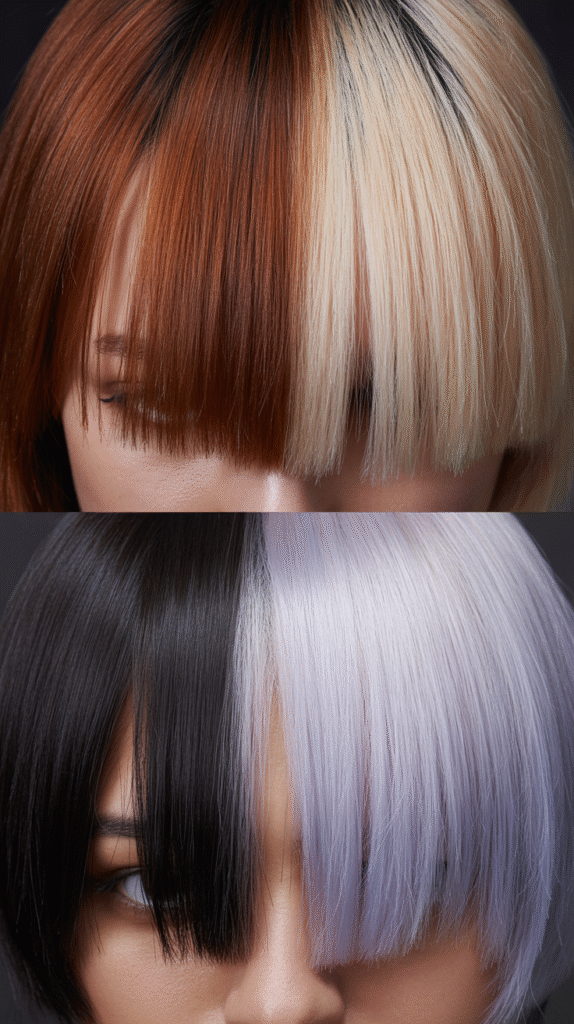
The ombré color technique transitions from dark roots to lighter ends, creating striking contrast on medium blunt cuts.
- Ombré creates gradual color transition along the hair shaft, with the most dramatic change at the mid-lengths and ends.
- The blunt perimeter creates a strong baseline for the color transition, emphasizing the lighter ends.
- This color technique adds dimension and visual interest to the otherwise uniform blunt silhouette.
- Maintenance involves touch-ups every 12-16 weeks focusing on the transition zone rather than roots.
- The straight nature of the cut displays the color graduation in clean, visible stages.
- This approach allows for creative color choices while maintaining professional appearance through dark roots.
25. Blunt Cut Styling With Beach Waves
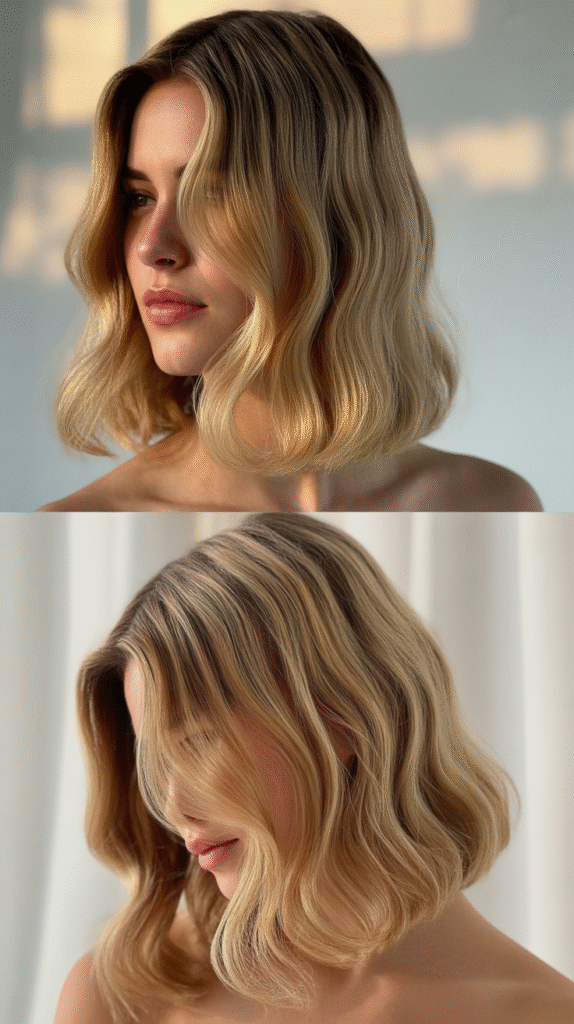
Transforming the typically sleek blunt cut with beach waves creates casual, effortless styling variation.
- Beach wave styling adds texture and movement to blunt cuts without disrupting the foundational perimeter line.
- The waves typically begin at mid-shaft, allowing the blunt ends to remain visible and defined.
- Styling techniques include salt spray application, braiding damp hair, or using wave-creating tools.
- This approach softens the geometric severity of blunt cuts for casual, weekend styling.
- The waves add volume and dimension while the blunt base prevents the style from appearing messy.
- This styling option demonstrates the versatility of blunt cuts beyond their signature sleek appearance.
26. Blunt Cut With Air-Dried Finish
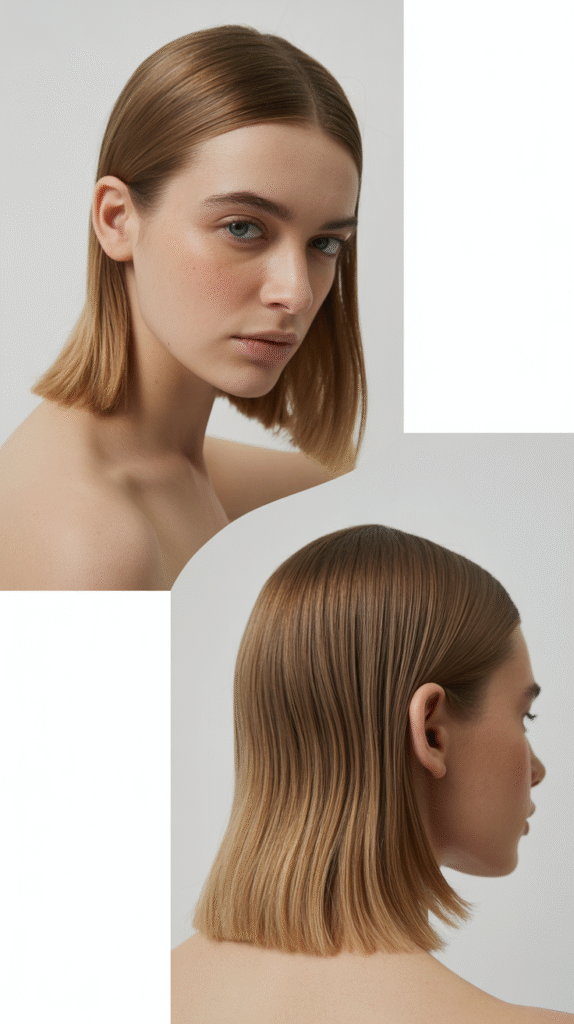
Embracing natural texture with air-dried styling creates an effortless, modern take on the medium blunt cut.
- Air-drying techniques allow natural hair texture to emerge while the blunt perimeter maintains structure.
- This low-maintenance approach appeals to minimalists and those prioritizing hair health over constant heat styling.
- Products like leave-in conditioners and air-dry creams enhance natural texture without weighing hair down.
- The blunt cut provides enough structure that even naturally dried hair maintains intentional appearance.
- This method works particularly well for slightly wavy hair that benefits from texture enhancement.
- The approach reduces heat damage, supporting overall hair health and the cut’s longevity between trims.
27. Blunt Cut With Sleek Ponytail
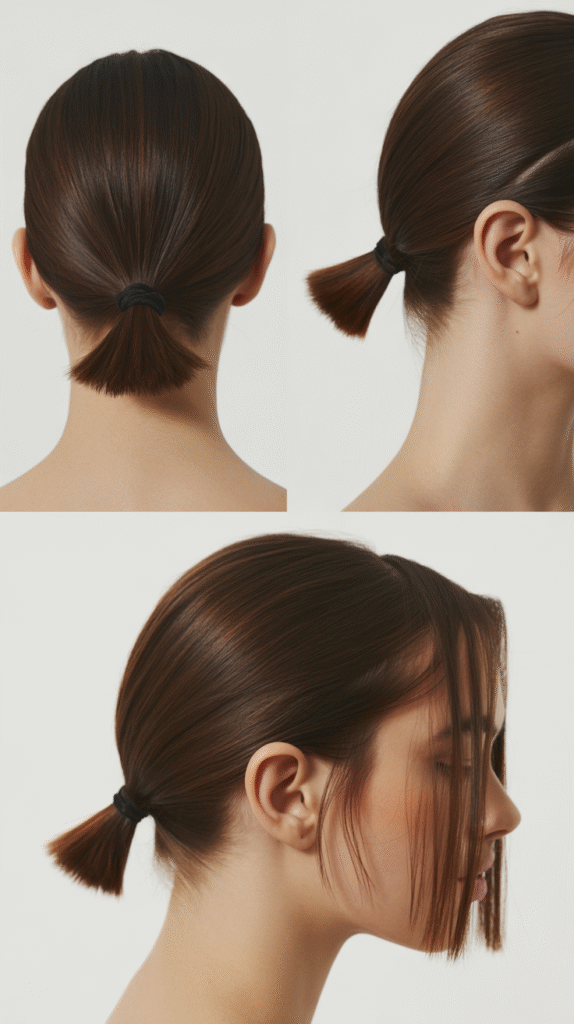
Styling the medium blunt cut into a sleek ponytail creates polished elegance for various occasions.
- The blunt ends create a striking, uniform finish at the ponytail’s terminus rather than wispy, tapered ends.
- Ponytail placement varies from low nape to mid-height depending on hair length and desired formality.
- Smoothing products and careful brushing ensure sleek, bump-free styling from roots to ponytail base.
- The blunt cut provides enough length for secure ponytails without requiring excessive elastic tension.
- This styling option transforms the cut from casual to formal while maintaining its signature clean lines.
- Face-framing pieces can be left out intentionally or slicked back completely depending on desired effect.
28. Blunt Cut With Half-Up Styling
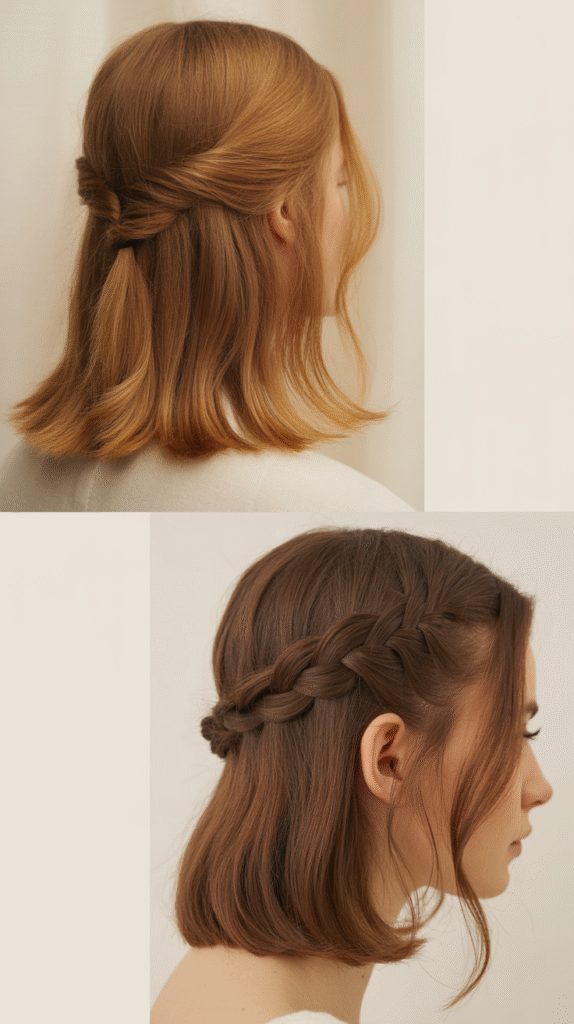
Half-up hairstyles showcase the medium blunt cut’s versatility while maintaining visibility of the perimeter line.
- Half-up styles pull the crown and temple sections back while leaving the blunt perimeter flowing freely.
- This styling balances the severity of blunt cuts with softer, more romantic top-section treatments.
- Variations include half-up buns, twisted sections, braided crowns, and simple clips or ties.
- The styling keeps hair off the face while showcasing the precision of the blunt-cut ends.
- This approach works well for both casual and formal occasions depending on execution refinement.
- The blunt bottom section provides weight that prevents the half-up style from appearing too fluffy or unbalanced.
29. Blunt Cut With Tucked Behind Ears
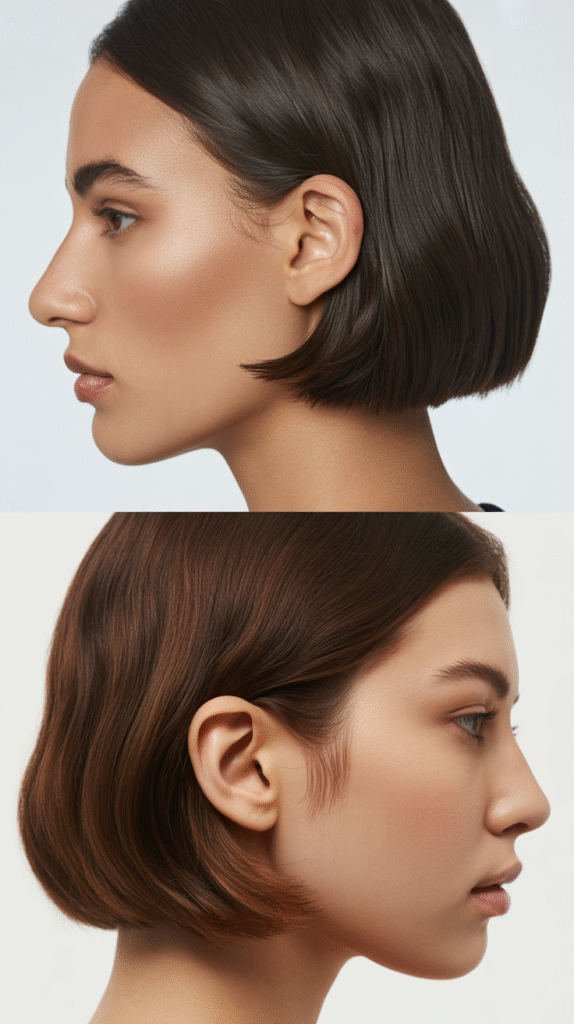
The simple act of tucking a medium blunt cut behind the ears creates instant sophistication and face-opening effect.
- Tucking hair behind ears fully exposes facial features and creates clean, streamlined appearance.
- This styling particularly flatters those with interesting earrings or facial features to emphasize.
- The blunt cut’s weight keeps tucked hair in place better than layered cuts that tend to slip forward.
- One-sided tucking creates asymmetrical interest while maintaining the cut’s overall balance.
- This no-product, no-tool styling option offers instant transformation for rushed mornings or quick changes.
- The exposed ear and jaw line create elegant profile views that showcase facial structure.
30. Blunt Cut With Slicked-Back Styling
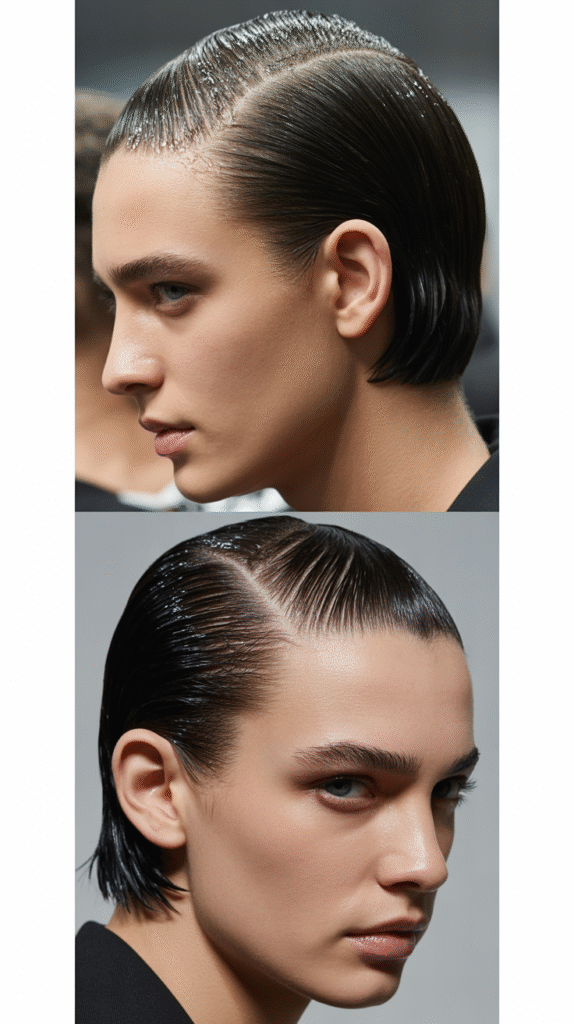
Completely slicked-back styling transforms the medium blunt cut into an edgy, high-fashion statement.
- Gel, pomade, or high-hold styling creams create the signature wet, sleek appearance of slicked-back hair.
- This styling fully exposes facial features and bone structure for dramatic, confident presentation.
- The blunt ends create strong visual impact when all hair is directed backward uniformly.
- Application requires distributing product evenly through damp hair and combing back with fine-tooth comb.
- This look suits editorial fashion, formal events, and those comfortable with bold styling statements.
- The slicked-back approach prevents hair from interfering with activities, making it practical for active occasions.
31. Blunt Cut With Center Braid
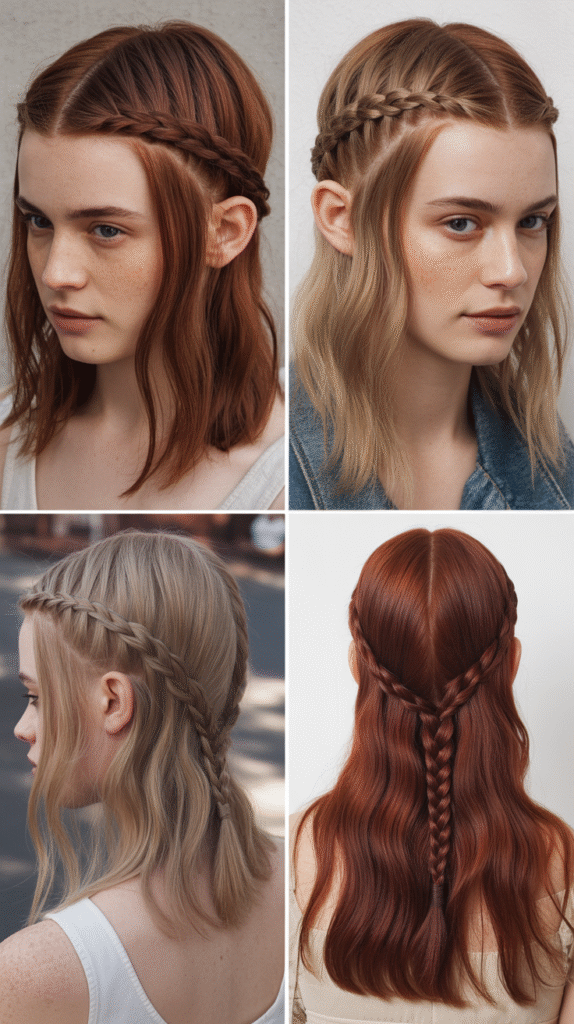
Incorporating a single center braid into the medium blunt cut creates bohemian charm while maintaining structure.
- A single braid down the center back creates textural interest against the surrounding straight, blunt sections.
- This styling works particularly well for casual occasions and adds dimension to otherwise uniform cuts.
- The braid can be tight and sleek or loosely woven depending on desired formality level.
- Blunt-cut hair braids cleanly without wispy ends disrupting the braid’s termination point.
- This approach offers styling variety without requiring heat tools or extensive product application.
- The center braid creates visual interest from behind while face-framing sections remain sleek.
32. Blunt Cut With Side Braid
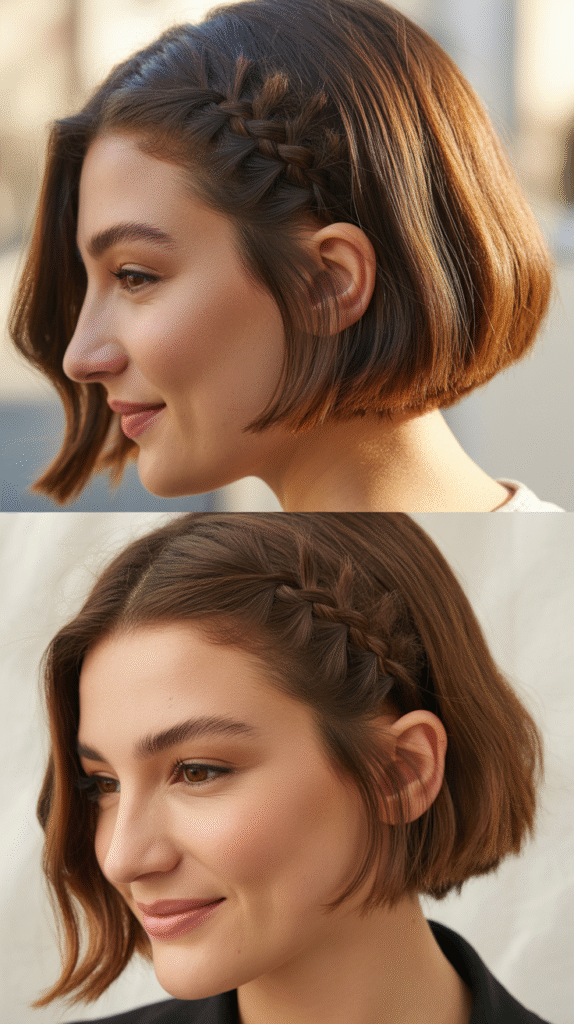
Single side braids accent the medium blunt cut while maintaining asymmetrical visual interest and face framing.
- Side braids typically begin at the temple or behind the ear and incorporate small sections while leaving bulk loose.
- This styling creates asymmetry and interest without requiring complete braiding of all hair.
- The blunt perimeter remains visible and provides weight balance to the braided accent.
- Various braid types—three-strand, fishtail, or rope—create different textural effects.
- This approach suits casual and semi-formal occasions, offering polished yet relaxed appearance.
- The braid keeps face-framing sections controlled while maintaining overall loose, flowing aesthetic.
33. Blunt Cut With Crown Braiding
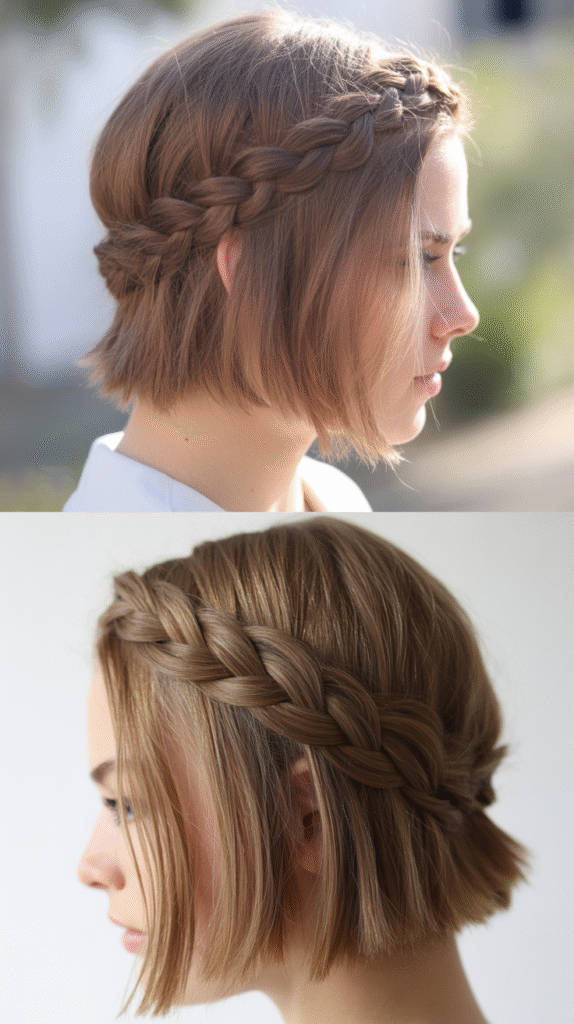
Crown braids or braided headbands accentuate the medium blunt cut while adding romantic, feminine detail.
- Crown braids wrap around the head’s perimeter, creating headband effect while leaving blunt lengths flowing below.
- This styling particularly suits special occasions, weddings, and events requiring elevated hair styling.
- The braid controls flyaways and face-framing pieces while showcasing the blunt cut’s clean lines.
- Various braid thicknesses from thin accent braids to substantial crown plaits create different effects.
- This approach combines structured braiding with the soft flow of loose, blunt-cut hair.
- The crown braid draws attention upward while the blunt perimeter maintains visual weight at the bottom.
34. Blunt Cut With Flat Iron Waves
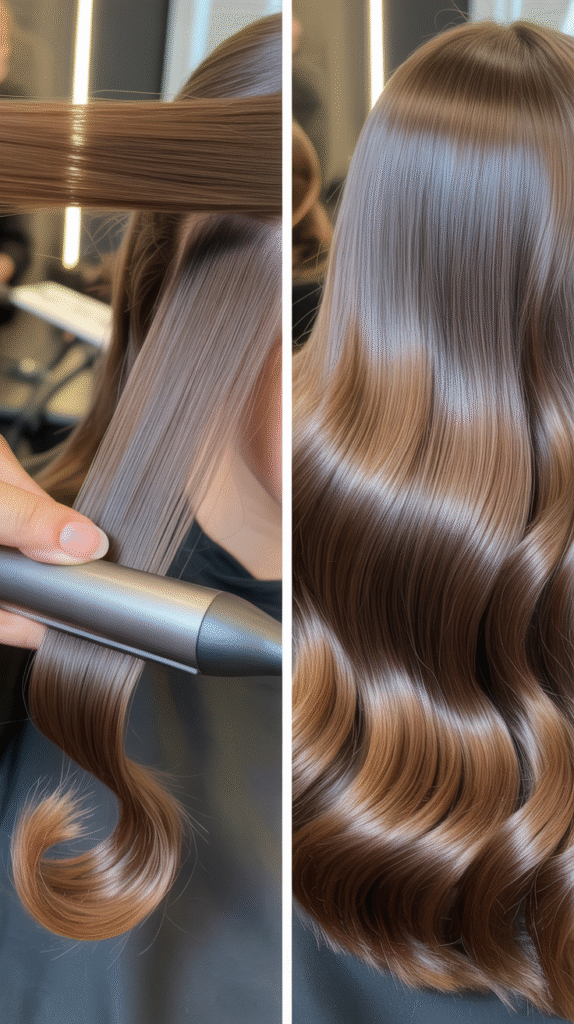
Creating defined waves with a flat iron adds texture and dimension to the typically straight medium blunt cut.
- Flat iron waving involves twisting the iron while pulling through hair sections to create defined S-curves.
- This technique adds volume and texture while maintaining the polished quality associated with blunt cuts.
- The waves typically begin at ear level, allowing the blunt perimeter to remain visible and defined.
- This styling suits formal occasions and creates Old Hollywood glamour when executed with precision.
- Setting spray or light hairspray maintains the wave pattern throughout extended wear periods.
- The defined waves add dimension and movement that catches light beautifully against blunt edges.
35. Blunt Cut With Curling Iron Curls
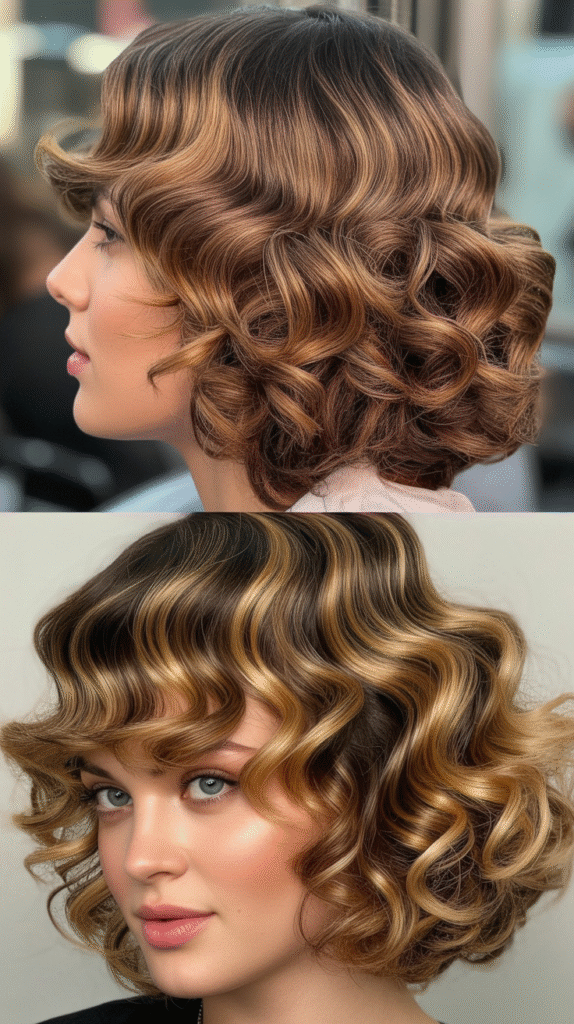
Adding curling iron curls to medium blunt cuts creates volume and romantic texture while maintaining structure.
- Curling techniques vary from tight ringlets to loose, flowing curls depending on iron size and wrapping method.
- The curls add significant volume while the blunt base cut provides weight that prevents excessive poof.
- This styling transformation demonstrates the versatility of blunt cuts beyond their signature straight appearance.
- Curl patterns can be brushed out for soft waves or left defined for more dramatic texture.
- This approach suits special occasions, formal events, and situations requiring elevated styling.
- The curls temporarily disguise the blunt perimeter while maintaining the cut’s overall structural integrity.
36. Blunt Cut With Velcro Roller Set
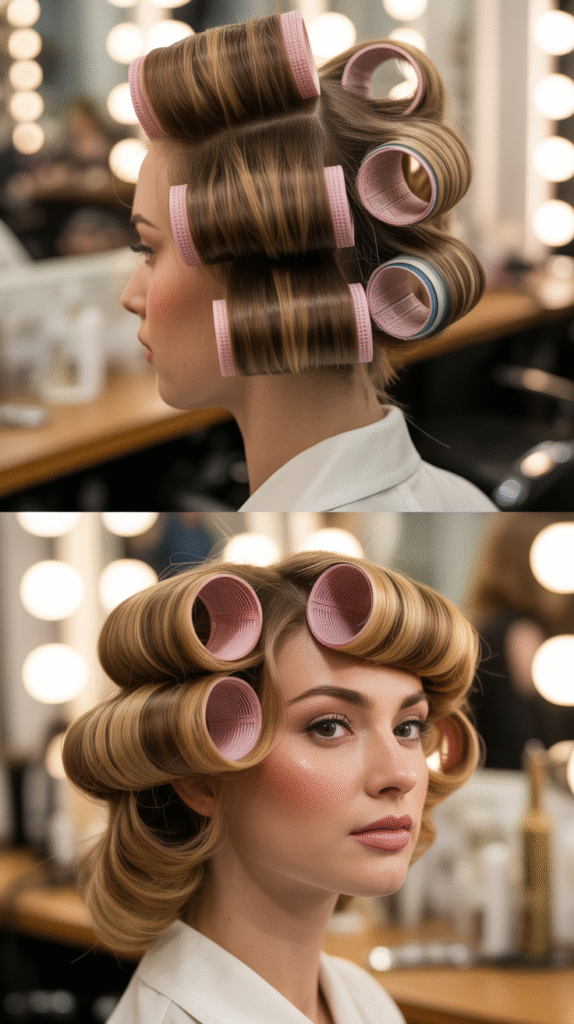
Traditional velcro roller setting creates bouncy volume and smooth finish on medium blunt cuts.
- Velcro rollers create volume without crimping or harsh curl marks that hot tools can create.
- The setting technique involves rolling damp hair around appropriately sized rollers and allowing to air dry or using low heat.
- This method creates smooth, rounded ends that enhance the blunt cut’s polished appearance.
- The bouncy finish adds retro charm while maintaining the modern precision of blunt cutting.
- This heat-free option reduces damage while achieving salon-quality volume and smoothness.
- The roller set provides longer-lasting results than blow-dried volume, maintaining bounce throughout the day.
37. Blunt Cut With Pin-Straight Styling
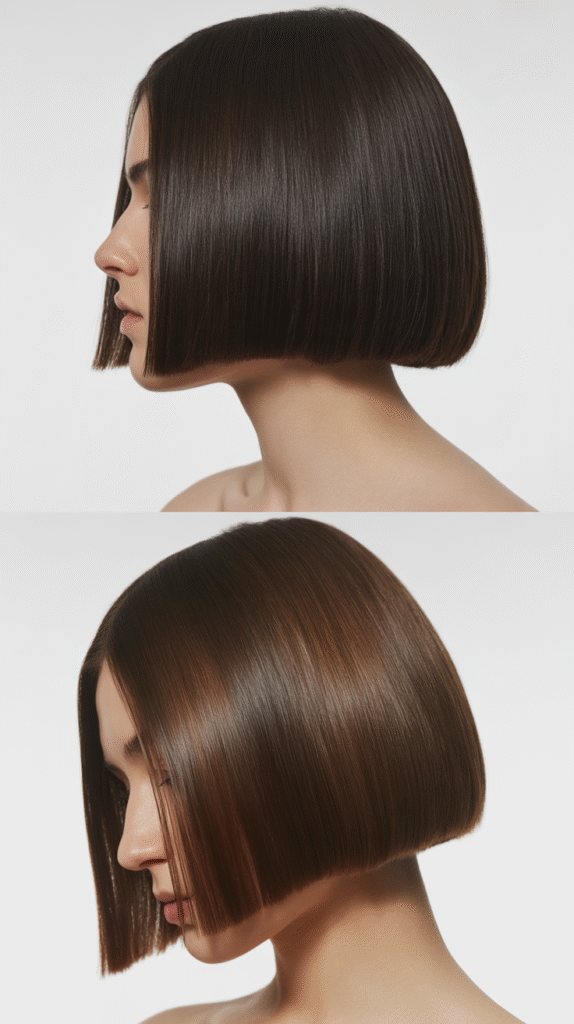
Ultra-straight styling emphasizes the architectural precision of medium blunt cuts for maximum impact.
- Achieving pin-straight results requires quality flat iron work at appropriate temperatures for hair type.
- This styling showcases every aspect of the blunt cut’s precision, making proper cutting technique critical.
- Heat protectant products prevent damage from the high temperatures needed for glass-smooth results.
- The ultra-straight finish creates sophisticated, editorial-quality appearance suitable for professional settings.
- This approach works best on naturally straight or slightly wavy hair types.
- Humidity and weather conditions can affect longevity, requiring anti-frizz products in challenging climates.
38. Blunt Cut for Round Face Shapes
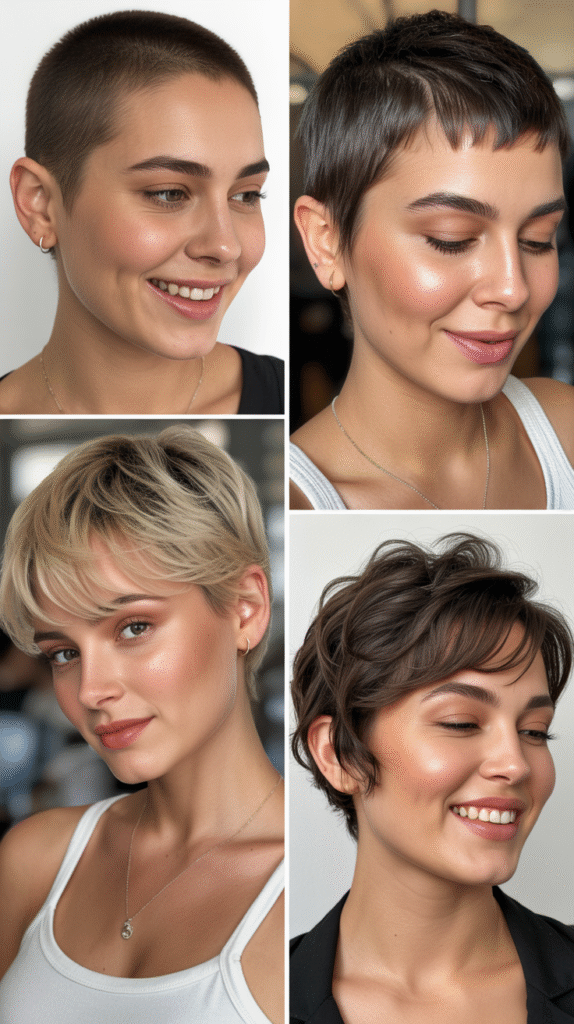
Specialized adaptations optimize the medium blunt cut specifically for round face shapes requiring elongation.
- Longer lengths past the chin create vertical lines that visually lengthen round faces.
- Deep side parts add height and asymmetry that counterbalances facial roundness.
- Slight forward angles where hair is longer in front than back create slimming diagonal lines.
- Center parts can work if paired with chin-length or longer cuts that extend the face downward.
- Avoiding cuts that end at the widest part of the face prevents emphasizing roundness.
- Face-framing pieces slightly longer than the rest add length where needed most.
39. Blunt Cut for Oval Face Shapes
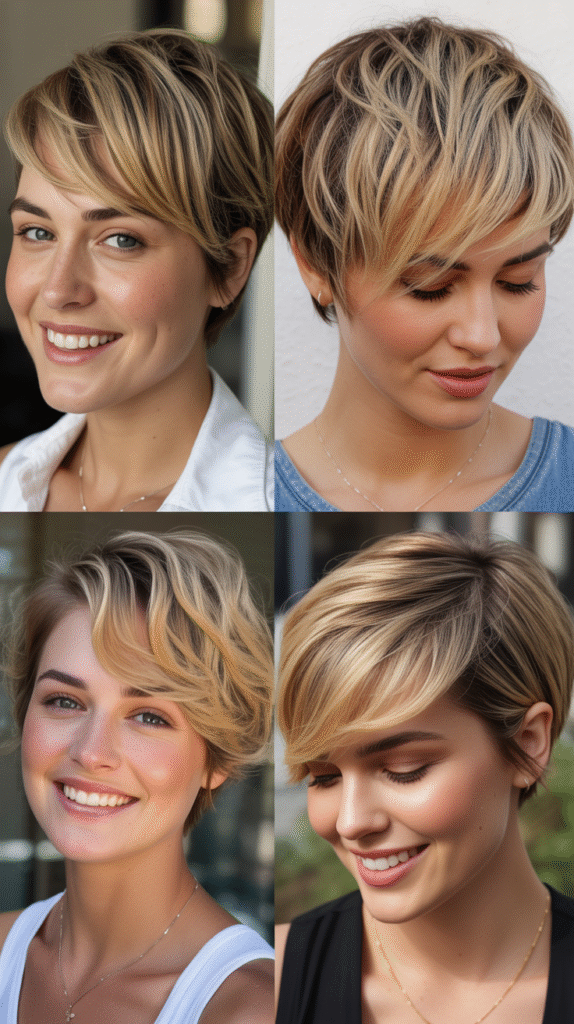
The universally flattering oval face shape accommodates virtually any medium blunt cut variation with excellent results.
- Oval faces provide ideal proportions that work with any length from chin to shoulder.
- Both middle and side parts create balanced, harmonious framing for oval facial structures.
- Bangs or no bangs both work equally well, allowing personal preference to guide decisions.
- This face shape can handle the most severe, geometric blunt cuts without harsh appearance.
- Experimentation with asymmetry, texture, and varying lengths all yield flattering results.
- The balanced proportions mean styling choices can prioritize personal style over corrective measures.
40. Blunt Cut for Square Face Shapes
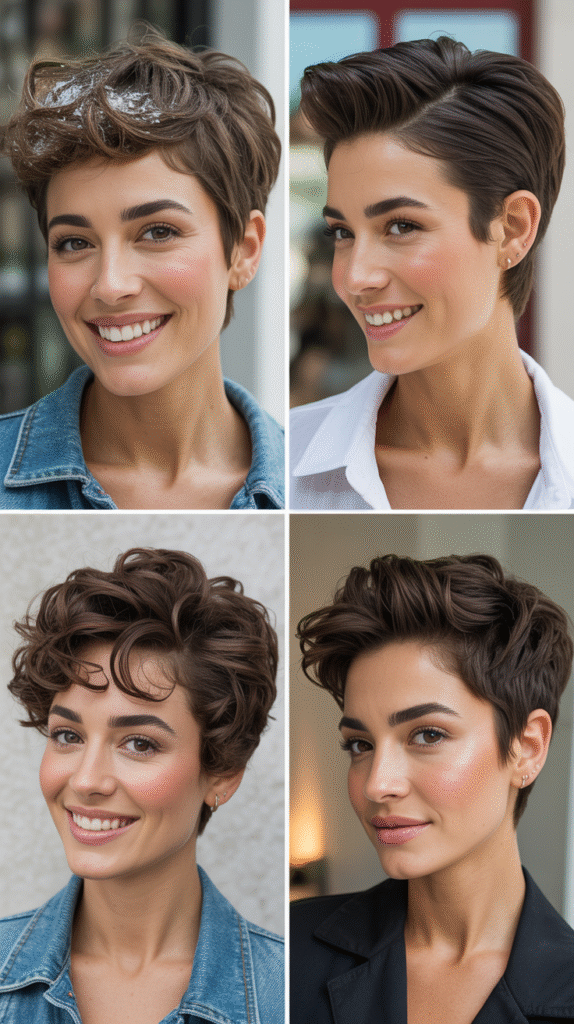
Adapting medium blunt cuts for square faces involves softening angular jaw lines while maintaining style integrity.
- Lengths that fall just below the jaw line help soften and elongate square facial structures.
- Slight waves or texture at the ends prevent the blunt cut from emphasizing angular jaw lines.
- Side parts create asymmetry that balances the geometric symmetry of square faces.
- Face-framing layers or curtain bangs soften the overall appearance while maintaining blunt perimeter.
- Avoiding cuts that end directly at jaw line prevents drawing attention to the widest point.
- Shoulder-length variations work particularly well by creating vertical lines past the jaw.
41. Blunt Cut for Heart-Shaped Faces
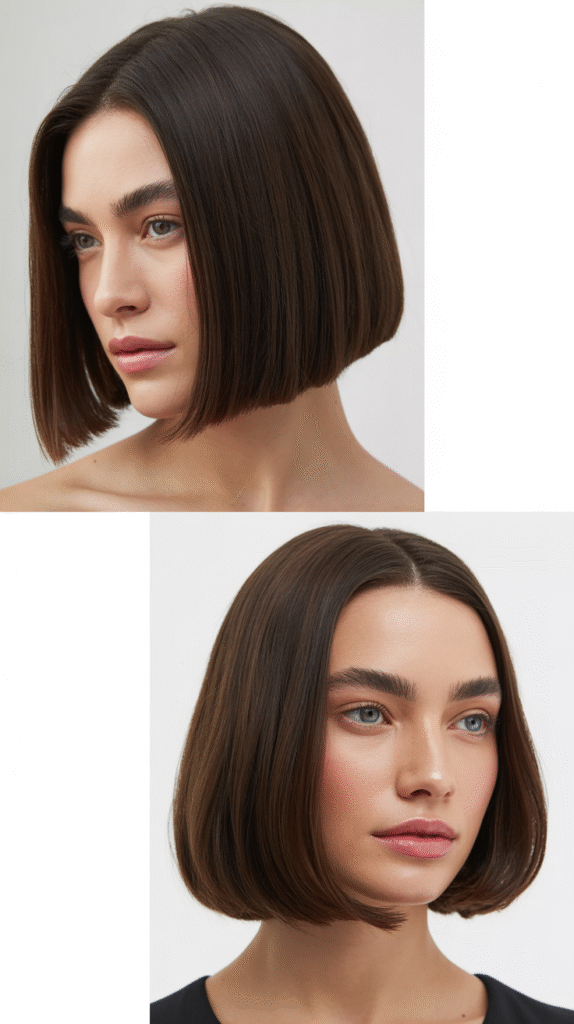
Heart-shaped faces benefit from medium blunt cuts that add width at the jaw while balancing narrow chins.
- Chin-length and slightly longer blunt cuts add visual weight at the narrow chin area.
- The width created by blunt perimeters balances broader foreheads characteristic of heart shapes.
- Curtain bangs or side-swept bangs reduce forehead prominence while maintaining blunt integrity.
- Textured or slightly flipped ends add width at the bottom, creating balanced proportions.
- Center parts can emphasize forehead width, so side parts often create more balanced appearance.
- The blunt cut’s geometric nature complements the defined features common in heart-shaped faces.
42. Blunt Cut for Long Face Shapes
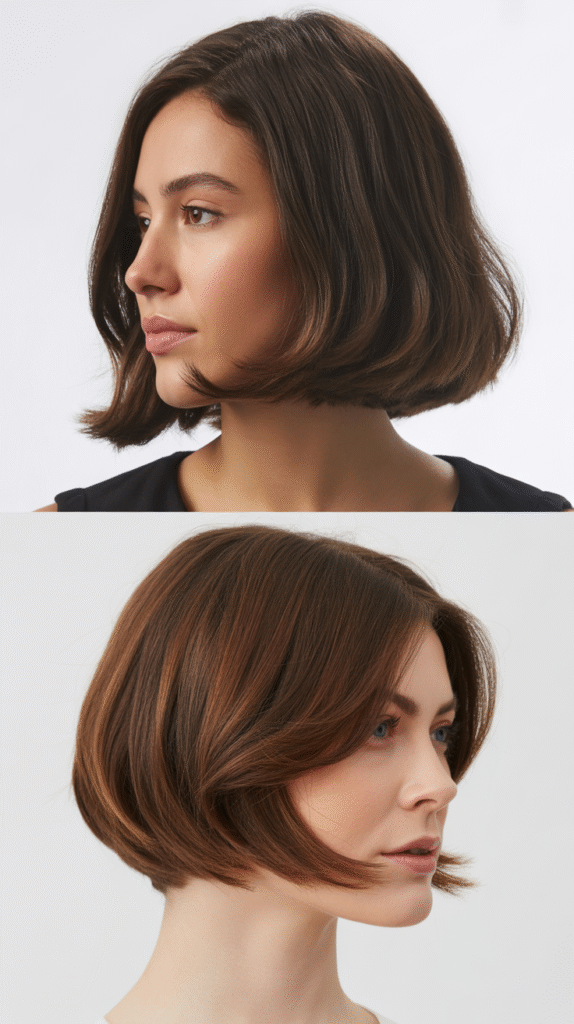
Medium blunt cuts create horizontal lines that visually widen and shorten long face shapes.
- Blunt cuts ending between chin and shoulder create strong horizontal lines that break up vertical length.
- Straight-across or curtain bangs add horizontal division that shortens overall face appearance.
- The width of blunt perimeters adds broadness that balances narrow, elongated faces.
- Avoiding very long lengths prevents emphasizing the face’s natural vertical orientation.
- Side parts can add width at the crown, creating better proportional balance.
- Slight outward styling at the ends increases width where long faces often narrow.
43. Blunt Cut Maintenance Schedule
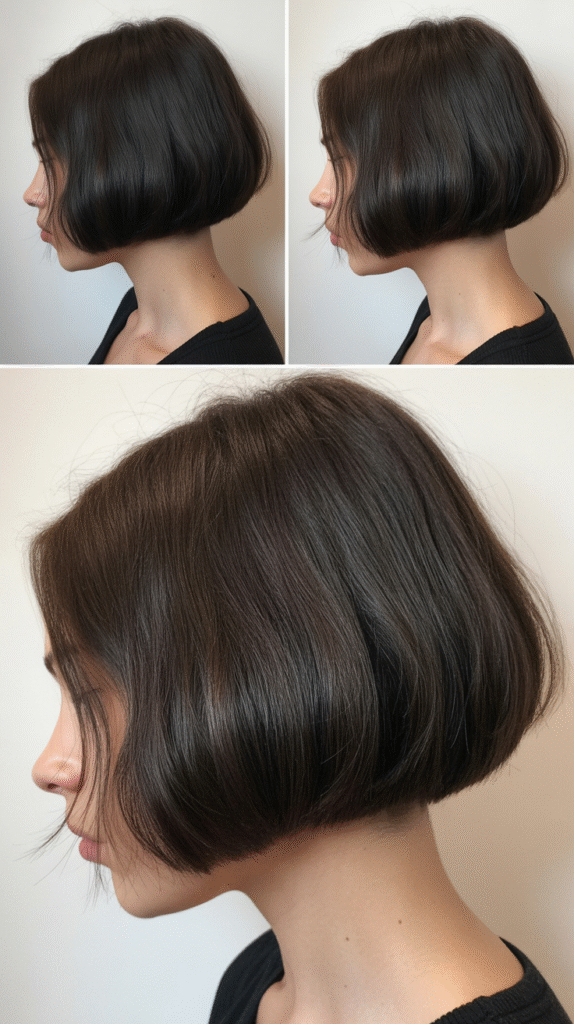
Proper maintenance timing ensures medium blunt cuts retain their sharp, precise appearance between salon visits.
| Timeframe | Maintenance Action | Purpose |
|---|---|---|
| Every 6-8 weeks | Full perimeter trim | Maintain blunt edge sharpness |
| Every 2-3 weeks | Bang trim (if applicable) | Prevent vision obstruction |
| Every 4-6 weeks | Deep conditioning treatment | Preserve hair health and shine |
| Every 8-12 weeks | Color touch-up (if colored) | Maintain color vibrancy |
| Weekly | At-home protein treatment | Strengthen and protect hair structure |
- Regular trims prevent the blunt edge from becoming ragged or uneven as hair grows.
- The precise nature of blunt cuts makes maintenance more critical than with layered styles.
- Waiting too long between trims can compromise the cut’s architectural integrity.
- Professional trimming ensures evenness that DIY cutting rarely achieves.
- Consistent maintenance prevents having to remove excessive length to regain sharpness.
- Scheduling appointments in advance ensures regular maintenance rhythm.
44. Blunt Cut Styling Products Guide
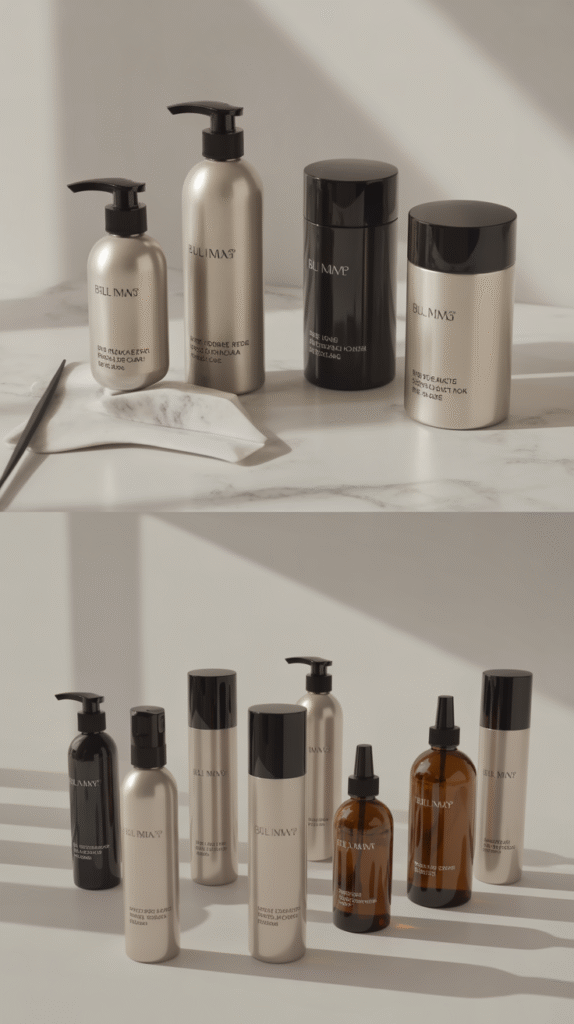
Selecting appropriate products maximizes the medium blunt cut’s potential across various styling approaches.
| Product Type | Purpose | Best For |
|---|---|---|
| Smoothing serum | Frizz control and shine | Sleek, straight styling |
| Heat protectant | Damage prevention | Any heat styling |
| Volumizing mousse | Root lift and body | Fine hair needing volume |
| Texturizing spray | Piece-y definition | Casual, undone styling |
| Strong-hold hairspray | Style longevity | Formal occasions |
| Leave-in conditioner | Moisture and protection | Air-dried, natural styling |
- Product selection should match desired styling outcome and natural hair characteristics.
- Less is often more with blunt cuts; over-application can weigh hair down and disrupt clean lines.
- Quality products prevent damage that compromises the cut’s sharp appearance.
- Different styling approaches require different product combinations for optimal results.
- Professional-grade products often provide superior results for maintaining precision cuts.
45. Blunt Cut Heat Styling Techniques
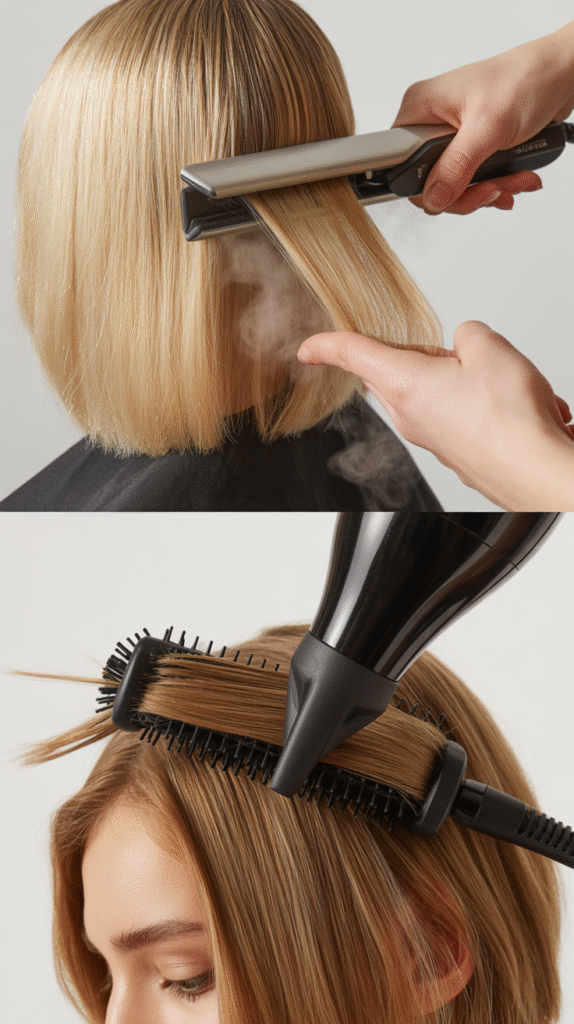
Mastering heat styling techniques ensures consistent, professional-looking results with medium blunt cuts at home.
- Sectioning hair into manageable portions ensures even heat distribution and smooth results.
- Flat iron technique involves starting close to roots and pulling straight down through ends in single motion.
- Blow-drying with paddle brush creates smooth, sleek finish while maintaining volume at roots.
- Heat settings should match hair type—fine hair requires lower temperatures than thick, coarse hair.
- Finishing with cool shot button seals cuticle and sets style for longer-lasting results.
- Working from bottom sections upward prevents previously styled sections from being disrupted.
- Consistent tension while pulling tools through hair creates uniformity critical for blunt cut appearance.
46. Blunt Cut Damage Prevention
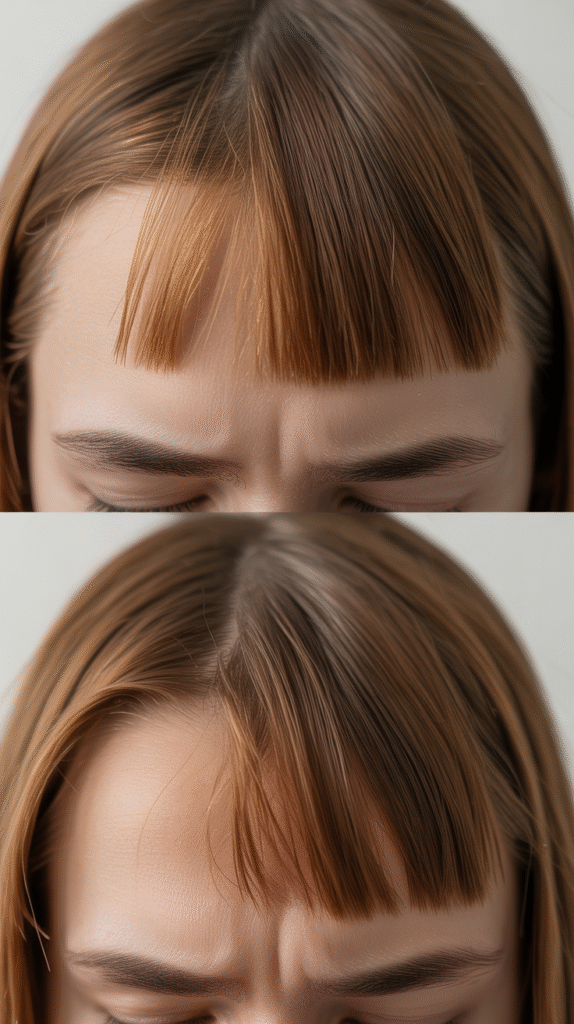
Protecting hair health maintains the blunt cut’s sharp appearance and prevents split ends that compromise precision.
- Regular deep conditioning treatments maintain moisture balance essential for healthy-looking blunt cuts.
- Limiting heat styling frequency reduces cumulative damage that affects cut quality.
- Using sharp, professional shears during trims prevents blunt trauma that causes splitting.
- Silk or satin pillowcases reduce friction that creates breakage and frizz overnight.
- Protective styles during exercise or sleep prevent mechanical damage from friction and pulling.
- Quality hair ties without metal components prevent breakage when creating ponytails or buns.
- UV protection products shield hair from sun damage that affects color and texture.
47. Blunt Cut for Different Hair Textures
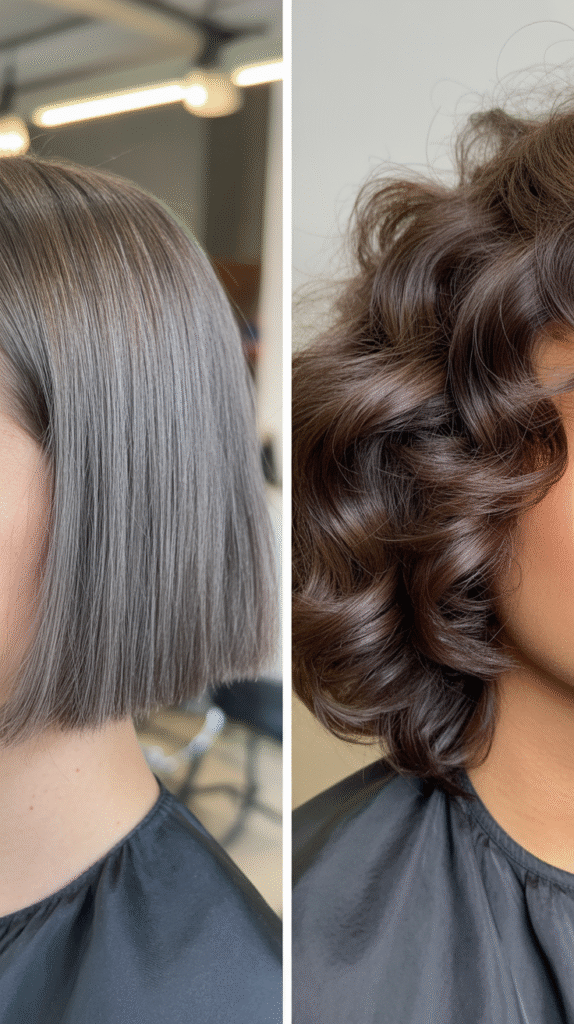
Adapting cutting and styling techniques for various hair textures ensures successful blunt cuts across hair types.
- Fine hair benefits from precise, sharp cutting that maximizes the appearance of density and fullness.
- Medium-texture hair accepts blunt cutting most easily, requiring minimal special adaptation.
- Coarse hair may need internal thinning to prevent excessive bulk while maintaining blunt perimeter.
- Naturally wavy hair requires blow-drying or straightening to showcase the blunt cut’s precision.
- Thick hair benefits from cutting when dry to see exactly how it naturally falls and adjusts.
- Each texture requires customized product selection and styling approach for optimal results.
48. Blunt Cut Color Considerations
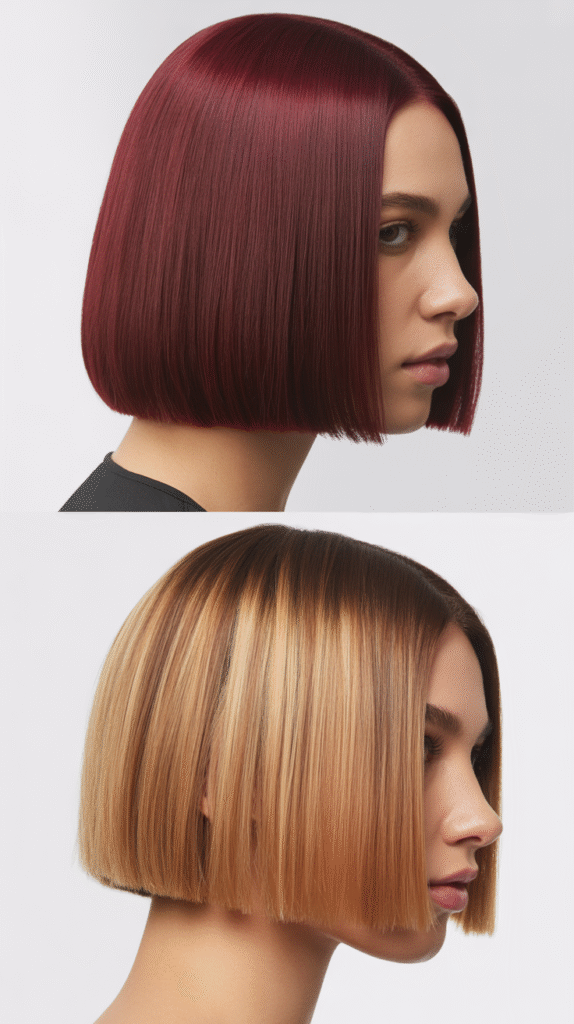
Strategic color choices and placement enhance medium blunt cuts while maintaining their structural integrity.
- Solid colors create uniform, monolithic appearance that emphasizes the cut’s geometric precision.
- Dimensional coloring adds depth and visual interest without disrupting clean lines.
- Lighter colors highlight the blunt cut’s architectural nature and show texture more readily.
- Darker shades create sleek, sophisticated appearance with high-shine potential.
- Color placement should follow the hair’s natural fall pattern to avoid disrupting the blunt aesthetic.
- Professional color application ensures even results that complement rather than compete with the cut.
49. Blunt Cut Transformation Stories
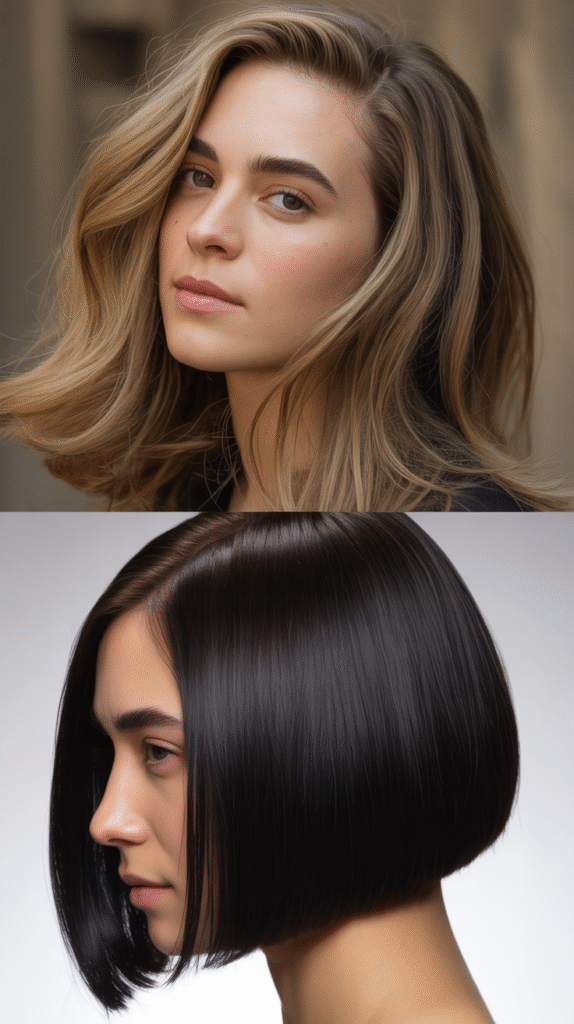
Understanding transformation potential helps set realistic expectations for switching to medium blunt cuts.
- Transitioning from long, layered hair to blunt cuts represents significant visual and maintenance change.
- The transformation typically involves removing several inches and creating completely new shape.
- Initial adjustment period allows getting accustomed to new styling requirements and appearance.
- Most people report reduced styling time once they master their blunt cut’s requirements.
- The dramatic change often provides psychological refresh and renewed confidence.
- Understanding the commitment helps ensure satisfaction with the transformation decision.
50. Blunt Cut Seasonal Adaptations
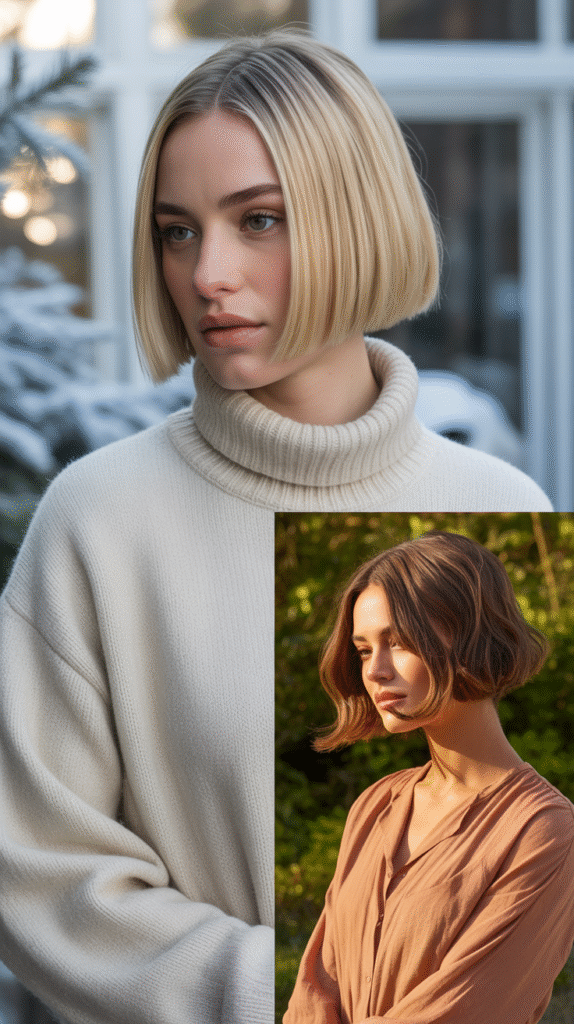
Adapting blunt cut styling to seasonal changes maintains comfort and appearance year-round.
- Summer styling focuses on sleek, off-the-face approaches that manage heat and humidity.
- Fall transitions incorporate richer colors and slightly more textured styling for seasonal appropriateness.
- Winter styling emphasizes moisture retention and static prevention in dry, cold conditions.
- Spring allows experimentation with lighter colors and softer, air-dried textures.
- Product adjustments match seasonal weather challenges like humidity, dryness, or wind.
- Hat-friendly styling during winter prevents crushing or flattening the blunt cut’s shape.
51. Blunt Cut for Professional Settings
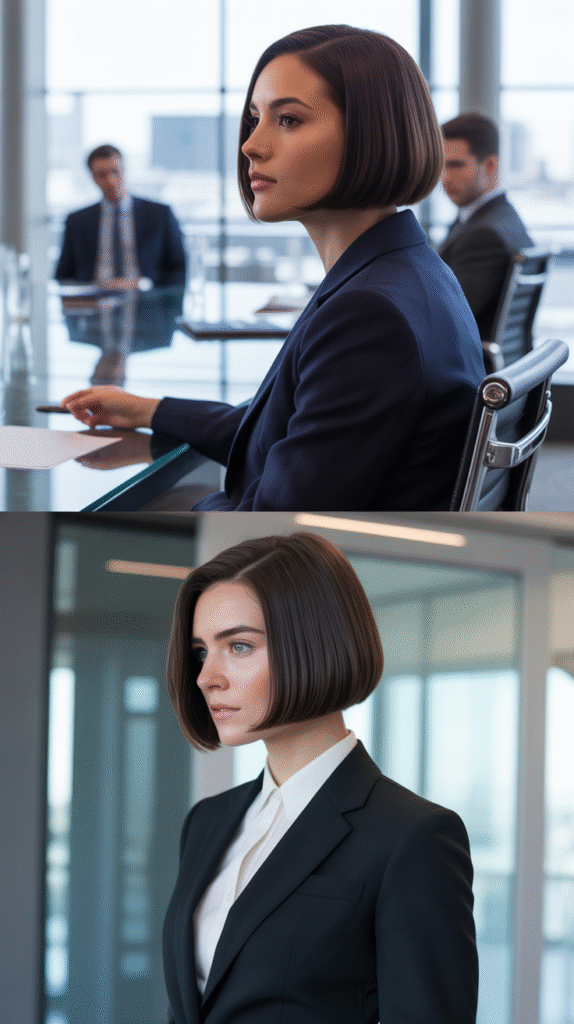
Medium blunt cuts excel in professional environments through their polished, put-together appearance.
- The clean, geometric lines convey competence, attention to detail, and professionalism.
- Minimal styling requirements allow consistent, reliable appearance for important meetings.
- The cut’s sophistication translates well across various professional industries and dress codes.
- Conservative styling approaches like sleek, straight finishes suit formal business environments.
- The blunt cut requires minimal adjustment throughout the workday, maintaining presentation standards.
- Professional appearance remains intact from morning presentations through evening networking events.
52. Blunt Cut for Casual Lifestyles
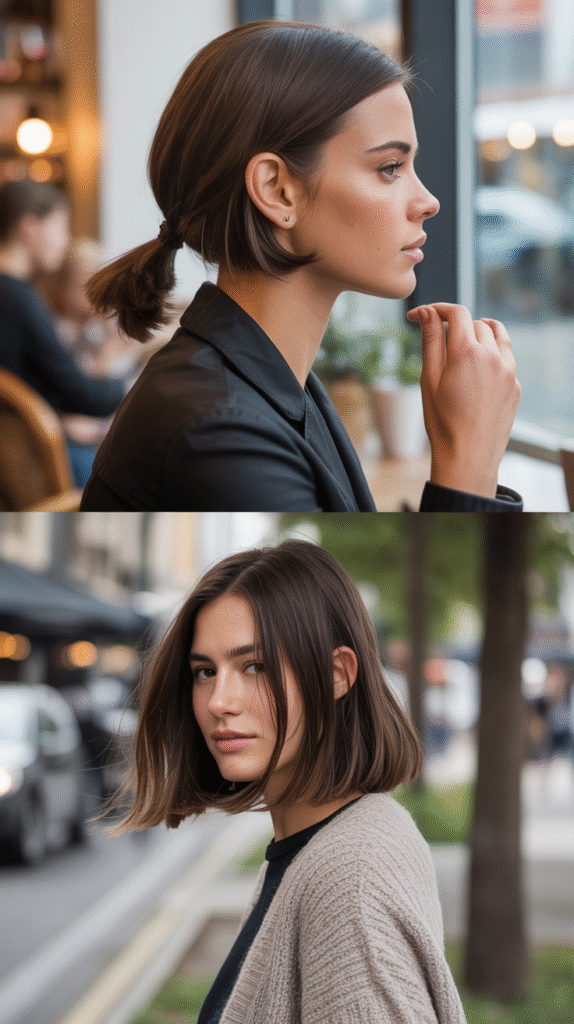
The medium blunt cut’s versatility makes it equally suitable for relaxed, casual everyday wear.
- Air-dried styling creates effortless, low-maintenance appearance for casual activities.
- The cut’s structure means even minimal styling looks intentional rather than neglected.
- Easy ponytails and buns provide practical solutions for active, on-the-go days.
- The blunt perimeter maintains polished appearance even with casual, undone styling.
- Transition from gym to coffee shop requires minimal touch-up or restyling.
- The cut balances looking put-together with comfortable, approachable casualness.
53. Blunt Cut for Special Occasions
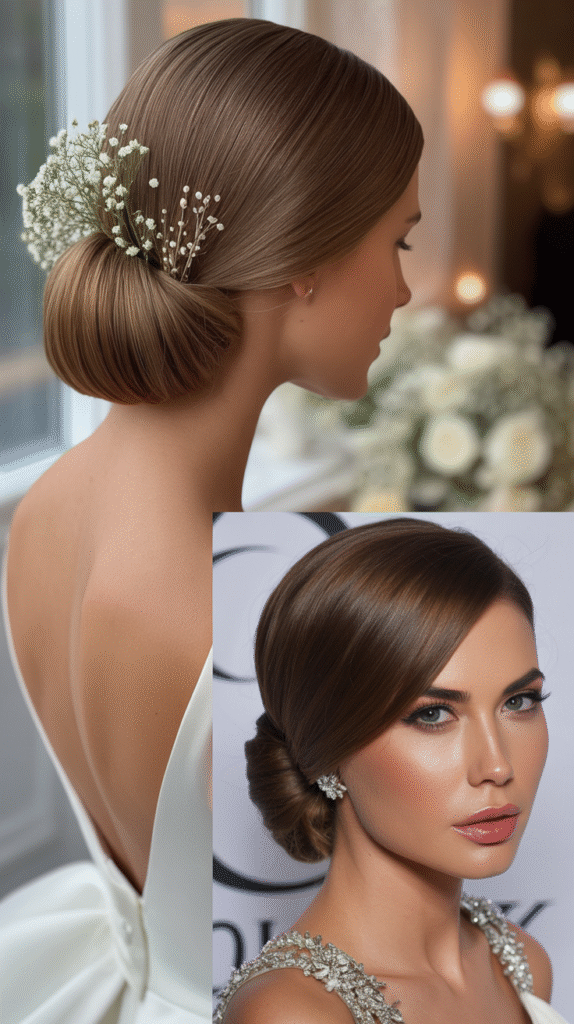
Elevating medium blunt cuts for special events demonstrates their formal styling potential.
- Sleek low buns showcase the blunt cut’s precision while creating elegant formal appearance.
- Half-up styles maintain visibility of the blunt perimeter while adding special-occasion polish.
- Hair accessories like jeweled pins or elegant clips elevate simple blunt cuts dramatically.
- Carefully crafted waves or curls transform the everyday cut into special-event glamour.
- The cut’s clean foundation allows elaborate styling without appearing overdone or fussy.
- Professional styling for major events maximizes the cut’s formal presentation potential.
54. Blunt Cut With Hair Accessories
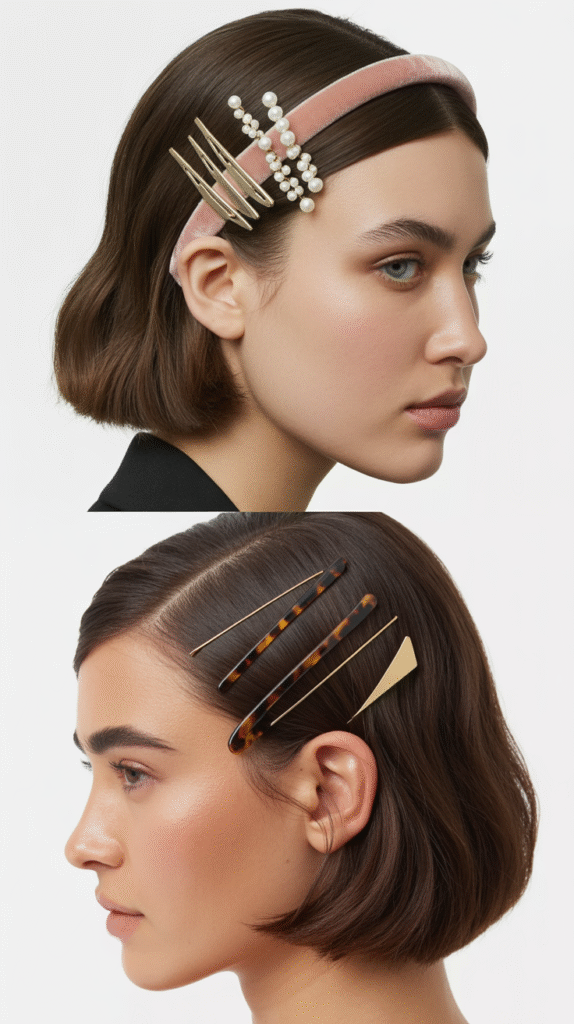
Strategic accessory use enhances medium blunt cuts while maintaining their architectural integrity.
- Minimalist metal clips create modern, editorial-quality accent without overwhelming the cut.
- Headbands add retro charm while keeping face-framing sections controlled and polished.
- Decorative bobby pins arranged artistically transform simple styling into fashion statements.
- Scrunchies and fabric-covered elastics add soft, feminine touch to blunt cut ponytails.
- Statement barrettes become focal points that complement rather than compete with clean lines.
- Accessory placement should enhance the cut’s geometric nature rather than disrupting it.
55. Blunt Cut Nighttime Routine
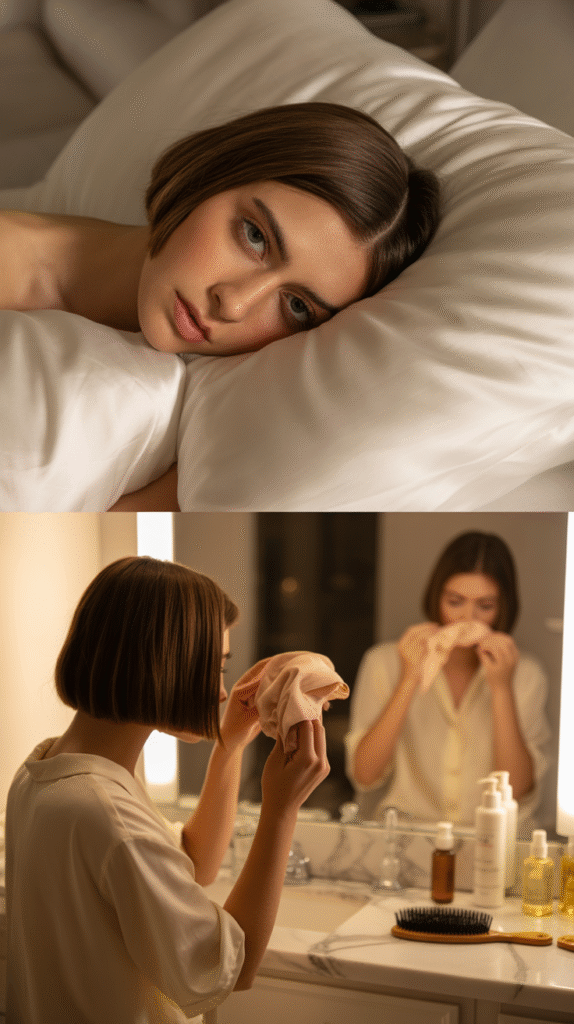
Proper nighttime care preserves the medium blunt cut’s sharp appearance and prevents morning styling challenges.
- Silk or satin pillowcases reduce friction that creates frizz and disrupts the blunt cut’s smoothness.
- Loose braids protect hair while sleeping without creating tight bends or crimps.
- Slightly elevated pillow positions prevent hair from bunching under head weight.
- Dry shampoo application at night allows absorption time, making morning styling easier.
- Leave-in treatments applied before bed maximize absorption and morning shine.
- Morning styling time reduces significantly with proper nighttime preparation and protection.
56. Blunt Cut Morning Styling Routine
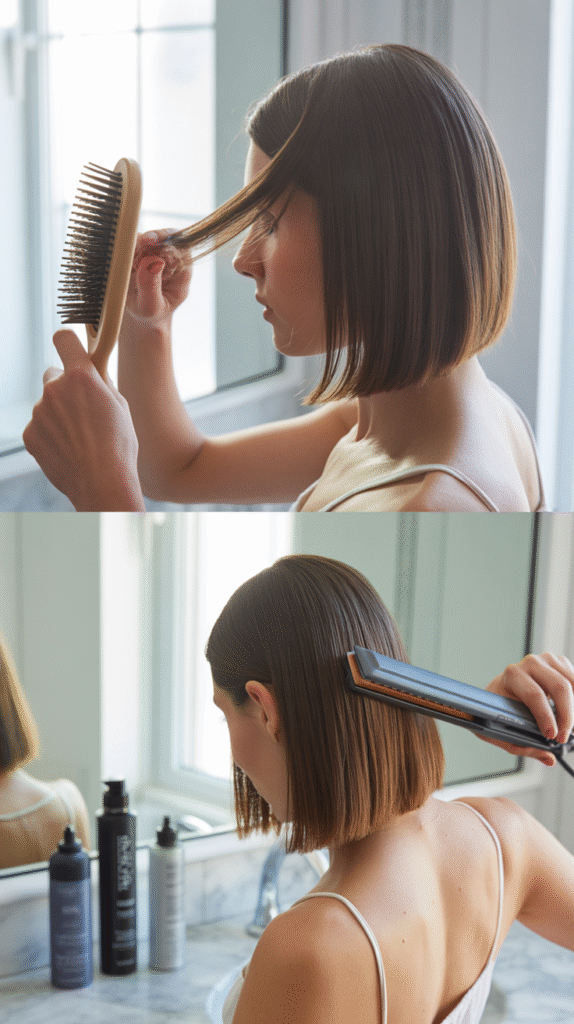
Efficient morning routines maintain the medium blunt cut’s polished appearance for daily wear.
- Quick brush-through with paddle brush removes overnight tangles and smooths surface.
- Smoothing serum application on damp hair prepares for heat styling and frizz control.
- Focused flat iron work on visible sections creates polished appearance without styling every strand.
- Dry shampoo at roots provides volume and refreshes hair between full washing days.
- The blunt cut’s structure means minimal styling achieves maximum polished impact.
- Five-minute routines become achievable once technique mastery develops.
57. Blunt Cut Wash Day Routine
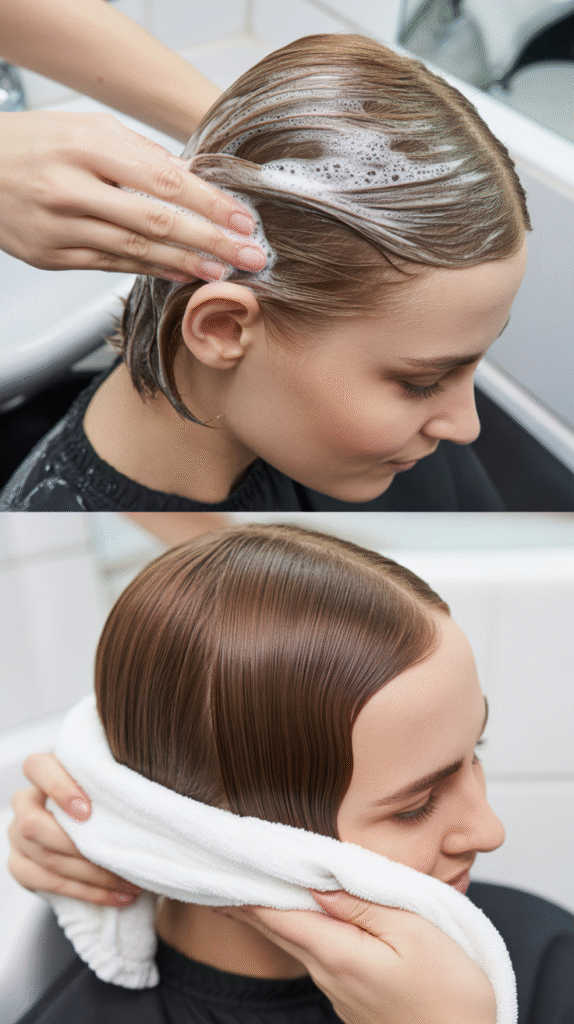
Proper washing techniques maintain hair health essential for sharp, precise blunt cut appearance.
- Focusing shampoo on scalp and roots prevents stripping moisture from mid-lengths and ends.
- Conditioner application from mid-shaft to ends maintains hydration where blunt cuts need it most.
- Cool water rinses seal cuticles, creating smoother, shinier finish on blunt-cut hair.
- Microfiber towels or t-shirts reduce friction compared to traditional terrycloth towels.
- Gentle squeezing rather than rubbing prevents damage and frizz in wet, vulnerable hair.
- Detangling with wide-tooth combs starts at ends and works upward, preventing breakage.
58. Blunt Cut for Active Lifestyles
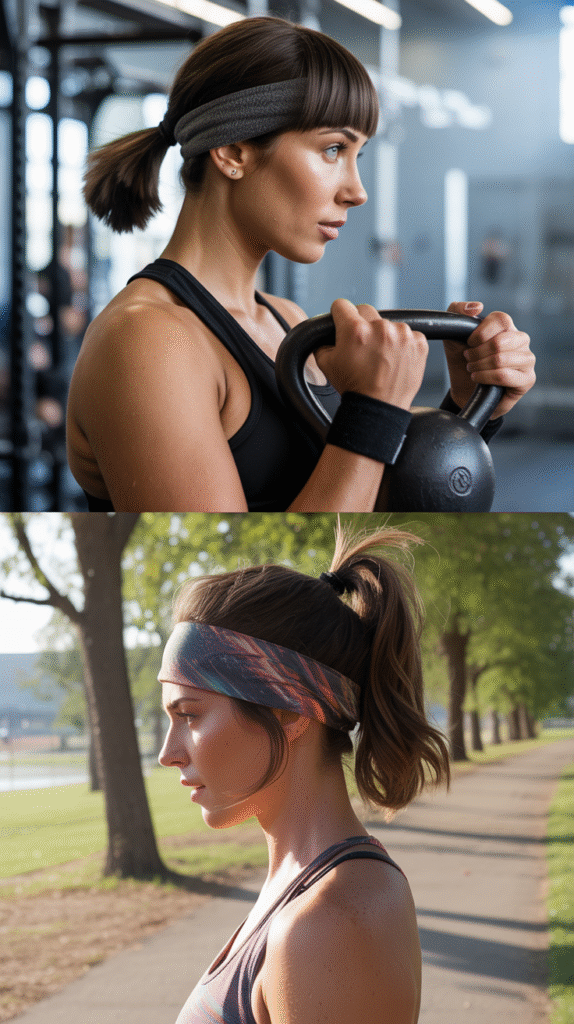
Medium blunt cuts adapt well to athletic and active lifestyles through practical styling solutions.
- Sleek ponytails keep hair completely off face and neck during intense physical activity.
- The blunt cut’s length allows secure ties without requiring excessive tension or multiple elastics.
- Moisture-wicking headbands manage sweat while protecting styled hair during workouts.
- Post-workout refresh requires minimal effort—simple smoothing and possible dry shampoo application.
- The cut’s structure means it regains shape quickly after being pulled back or compressed.
- Active individuals appreciate the wash-and-go potential when time is limited.
59. Blunt Cut Humidity Management
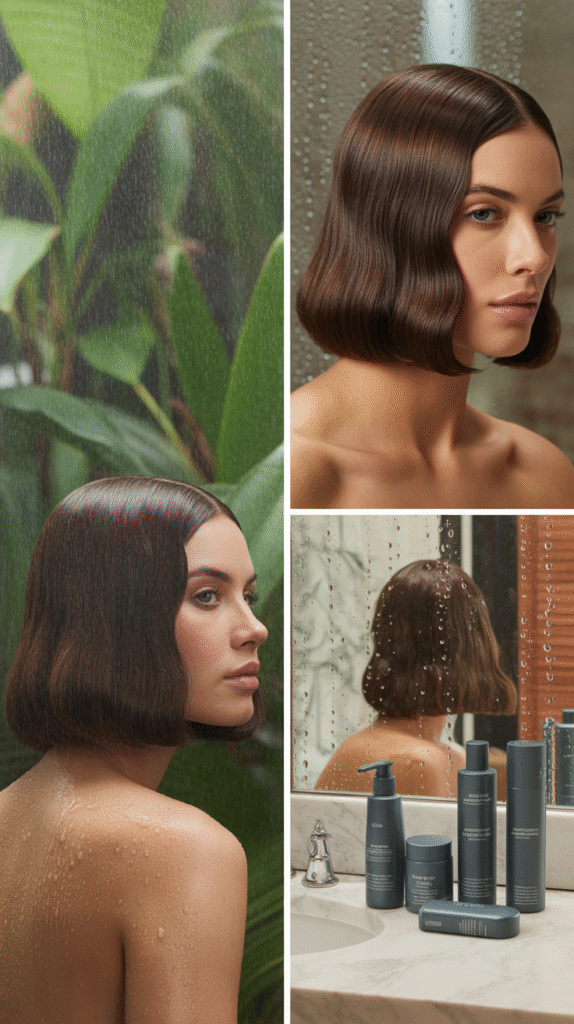
Controlling frizz and maintaining smoothness in humid conditions preserves blunt cut precision.
- Anti-humidity products create protective barriers that seal cuticles against moisture absorption.
- Smoothing serums applied to damp hair provide foundation for humidity-resistant styling.
- Finishing sprays with humidity blockers maintain sleek appearance throughout humid days.
- Avoiding touching or constantly adjusting hair prevents disrupting humidity protection.
- Strategic updo options during extreme humidity maintain polished appearance when fighting nature is futile.
- Quality flat iron work with proper products provides several hours of humidity resistance.
60. Blunt Cut for Travel
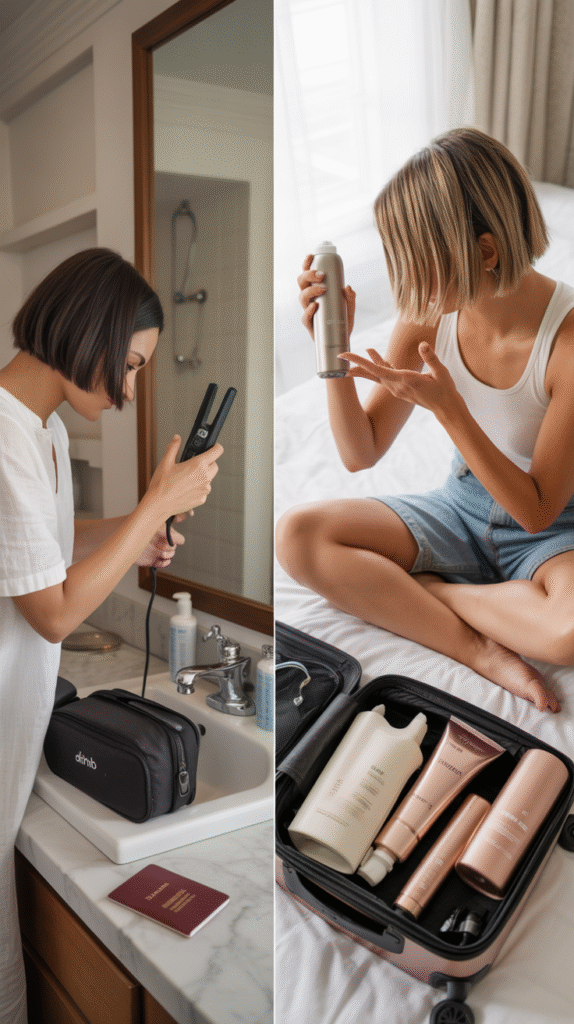
The medium blunt cut’s versatility and relatively low maintenance make it excellent for travel situations.
- Packing essentials include travel-size heat tools, smoothing products, and dry shampoo.
- The cut’s structure means acceptable appearance is achievable even without full styling arsenal.
- Air-dried options provide backup when hotel outlets or voltage converters create challenges.
- Simple ponytails and buns offer polished appearance during long travel days.
- The blunt cut transitions well across time zones and climate changes with minimal adjustment.
- Touchup trims can wait until returning home without significantly compromising appearance.
61. Blunt Cut Budget Considerations
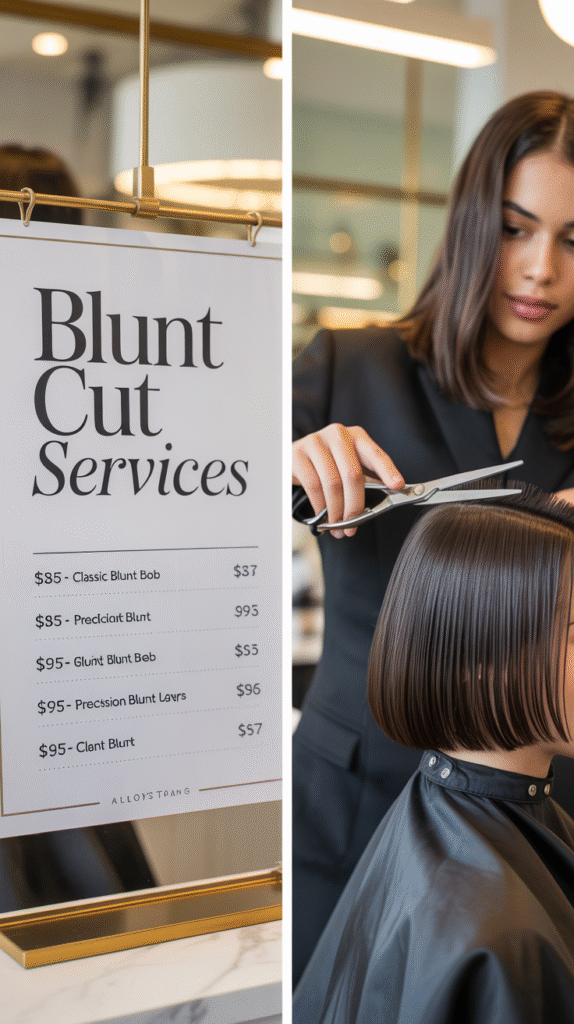
Understanding cost factors helps plan and budget for maintaining medium blunt cuts long-term.
| Service | Frequency | Estimated Cost Range |
|---|---|---|
| Blunt cut trim | Every 6-8 weeks | $40-$100 |
| Bang trim | Every 2-3 weeks | $0-$25 |
| Color service | Every 8-12 weeks | $80-$300 |
| Deep conditioning | Every 4-6 weeks | $25-$60 |
| Styling products | Monthly | $20-$50 |
- Initial investment in quality styling tools provides long-term value for home maintenance.
- Professional cutting justifies its cost through precision that DIY attempts rarely achieve.
- Building relationships with stylists sometimes yields pricing flexibility or package deals.
- Product selection can balance budget consciousness with quality requirements.
- Some maintenance aspects like bang trims may be complimentary between full cuts.
62. Blunt Cut DIY Maintenance Tips
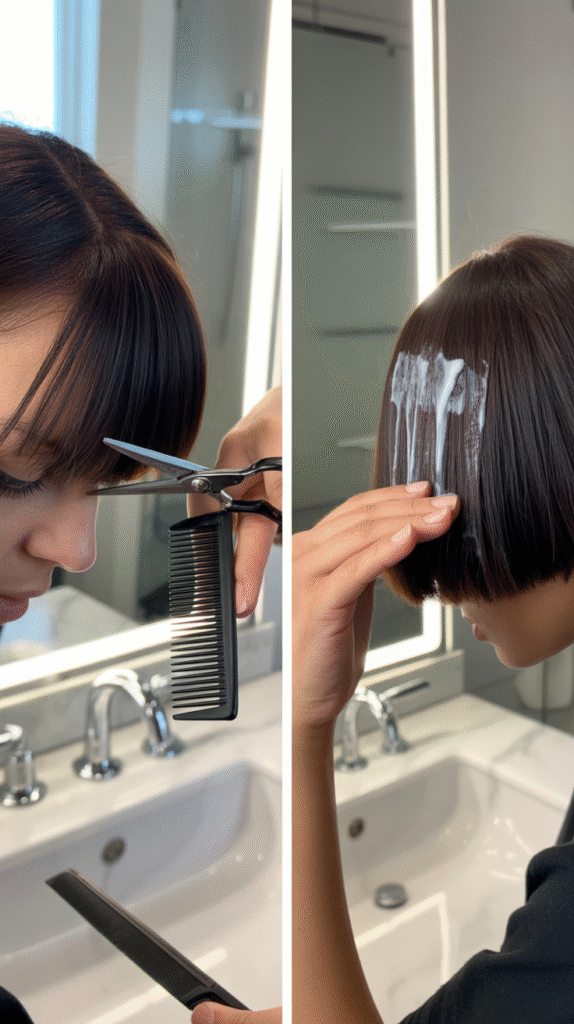
While professional cutting is recommended, some maintenance tasks can be managed at home carefully.
- Bang trimming between appointments requires proper scissors, dry hair, and conservative approach.
- Deep conditioning treatments at home supplement professional services cost-effectively.
- Root touch-up products extend color services when full salon visits aren’t immediately possible.
- Careful self-trimming of obvious split ends prevents waiting until scheduled appointments.
- Understanding personal limitations prevents DIY disasters that require corrective professional work.
- Most stylists discourage self-cutting the main perimeter due to precision requirements.
63. Blunt Cut Confidence Building
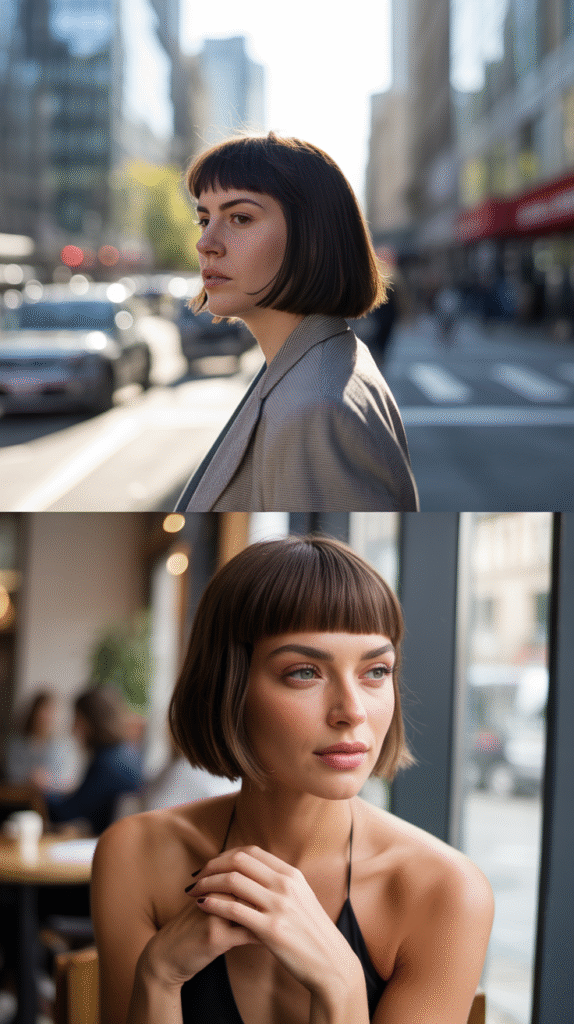
The transformative power of medium blunt cuts often extends beyond appearance to personal confidence.
- The decisive, clean lines of blunt cuts often reflect and encourage decisive, confident attitudes.
- Dramatic transformations to blunt cuts frequently coincide with other positive life changes.
- The polished appearance creates positive feedback loop of looking good and feeling confident.
- Maintenance commitment demonstrates self-care priority that extends to other life areas.
- The cut’s versatility supports confidence across professional, social, and personal contexts.
- Many report that compliments on their blunt cut boost overall self-esteem significantly.
64. Blunt Cut Future Trends
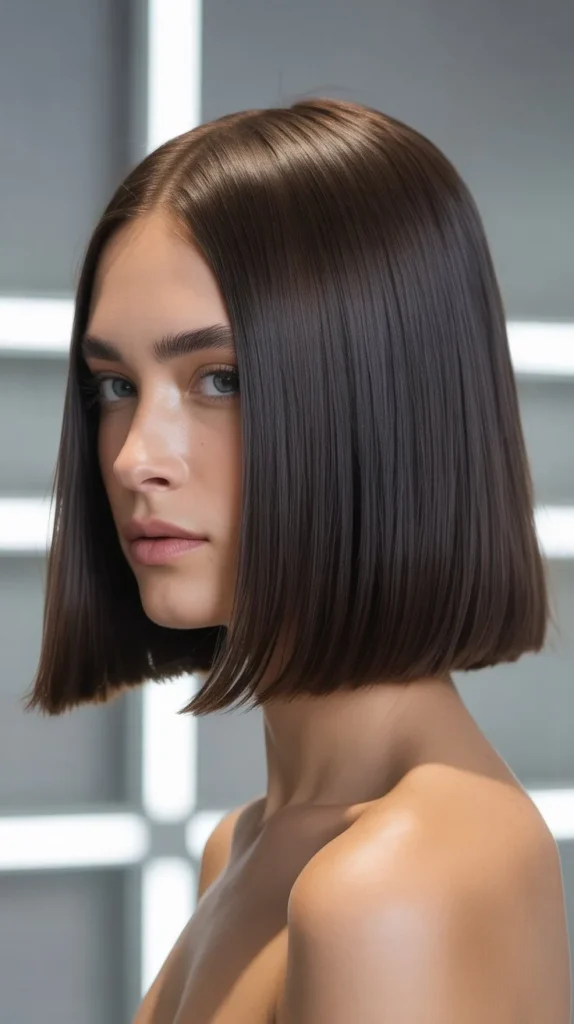
Understanding emerging trends helps anticipate how medium blunt cuts will evolve while maintaining core characteristics.
- Softened, less severe interpretations incorporate subtle texture while maintaining blunt foundations.
- Color techniques continue evolving to add dimension without disrupting geometric precision.
- Hybrid cuts combining blunt perimeters with hidden layers represent growing trend category.
- Sustainable hair care approaches influence product choices and styling method preferences.
- Technology improvements in cutting tools enable even more precise blunt cutting techniques.
- The fundamental appeal of clean, sharp lines ensures blunt cuts remain relevant indefinitely.
- Individual customization rather than one-size-fits-all approaches defines modern blunt cutting.
Conclusion
The enduring appeal of 64 Straight Style Medium Blunt Haircuts That Stay Sharp lies in their perfect balance of precision and versatility that adapts seamlessly to modern life demands.
From the boardroom to the beach, these cuts maintain their sophisticated edge while offering surprising flexibility in styling options that suit every occasion and personality.
The sharp, clean lines create an unmistakable statement of intentionality and polish that elevates your entire appearance with remarkably minimal daily effort.
Whether you choose the classic one-length bob, experiment with textured variations, or embrace bold asymmetrical designs, the medium blunt cut provides a foundation for endless personal expression within its structured framework.
By understanding proper maintenance schedules, mastering essential styling techniques, and selecting approaches that complement your unique face shape and lifestyle, you’ll unlock the full potential of this timeless yet thoroughly contemporary haircut that truly stays sharp in every sense.
