
The pixie cut has evolved from a bold statement to a sophisticated style choice that combines elegance with effortless maintenance.
58 Sleek Short Pixie Hairstyles for a Clean, Sharp Look explores the transformative power of this iconic haircut that continues to captivate fashion-forward individuals across all age groups.
Whether you’re considering your first dramatic chop or searching for fresh inspiration to reinvigorate your current pixie, this comprehensive guide delivers exactly what you need.
From classic cuts that never go out of style to modern interpretations with edgy textures and unexpected details, you’ll discover how the right pixie can enhance your facial features, express your personality, and simplify your daily routine.
This article walks you through styling techniques, maintenance tips, face shape considerations, and creative variations that prove short hair can be just as versatile and feminine as longer styles.
Get ready to find your perfect pixie and embrace the confidence that comes with a clean, sharp look that turns heads wherever you go.
1. Classic Sleek Pixie Cut
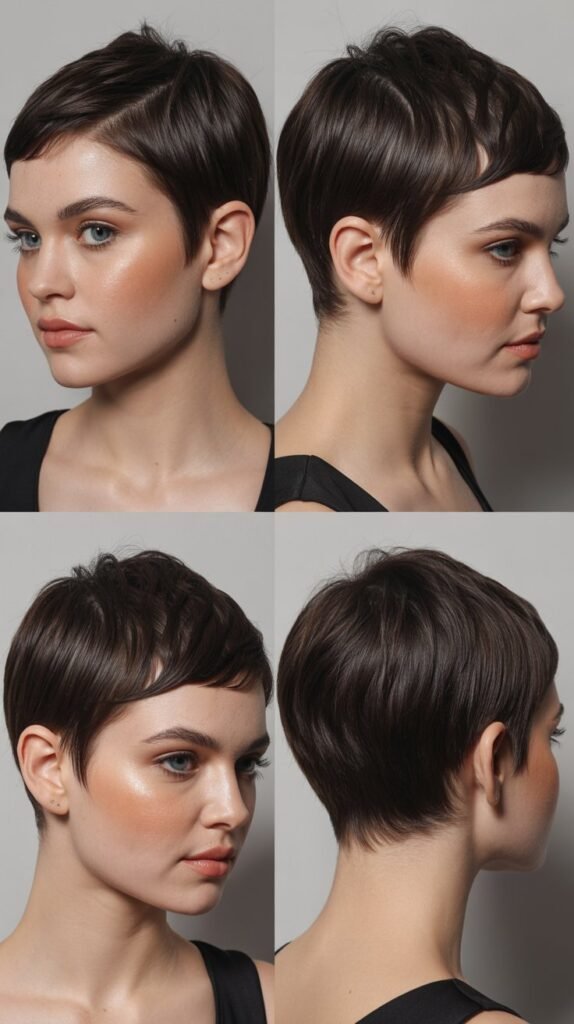
The classic sleek pixie cut represents timeless elegance in its purest form, featuring closely cropped sides with slightly longer length on top that can be styled smooth and polished.
This foundational style works beautifully for professional settings while maintaining an air of sophistication that never feels outdated.
- The traditional pixie cut typically measures between one to three inches on top with tapered or buzzed sides that create a clean silhouette.
- This style emphasizes facial features, particularly the eyes and cheekbones, making it ideal for those who want to showcase their natural bone structure.
- Styling requires minimal effort with just a small amount of pomade or smoothing serum to create that signature polished finish.
- The classic pixie works exceptionally well for fine to medium hair textures that naturally lay flat without excessive volume.
- Maintenance involves regular trims every 4-6 weeks to preserve the sharp lines and prevent the style from losing its structured shape.
- Color options range from natural shades to bold hues, though darker colors tend to emphasize the sleek, graphic quality of the cut.
2. Textured Pixie with Side Swept Bangs
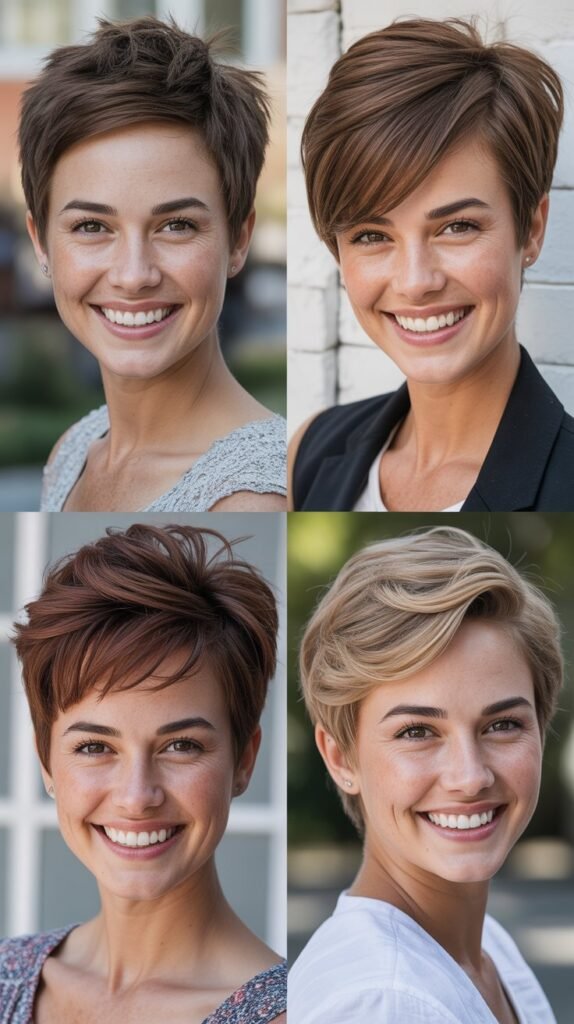
The textured pixie with side-swept bangs introduces movement and softness to the sharp pixie silhouette, creating a romantic yet contemporary aesthetic.
This variation adds dimension through layered cutting techniques while the angled fringe provides face-framing femininity.
- Side-swept bangs create an asymmetrical element that draws attention across the face and can help balance facial proportions.
- The textured layers throughout the cut prevent the style from appearing too severe or masculine, adding a softer touch.
- Styling involves using texturizing products like sea salt spray or light mousse to enhance natural texture while directing bangs to one side.
- This variation particularly flatters oval, heart-shaped, and diamond face shapes by creating width at the forehead.
- The longer fringe section can be styled in multiple ways—swept dramatically across, tucked behind the ear, or even styled forward for different looks.
- This pixie style transitions beautifully from casual daytime wear to evening sophistication with minimal adjustment.
3. Undercut Pixie for Bold Contrast
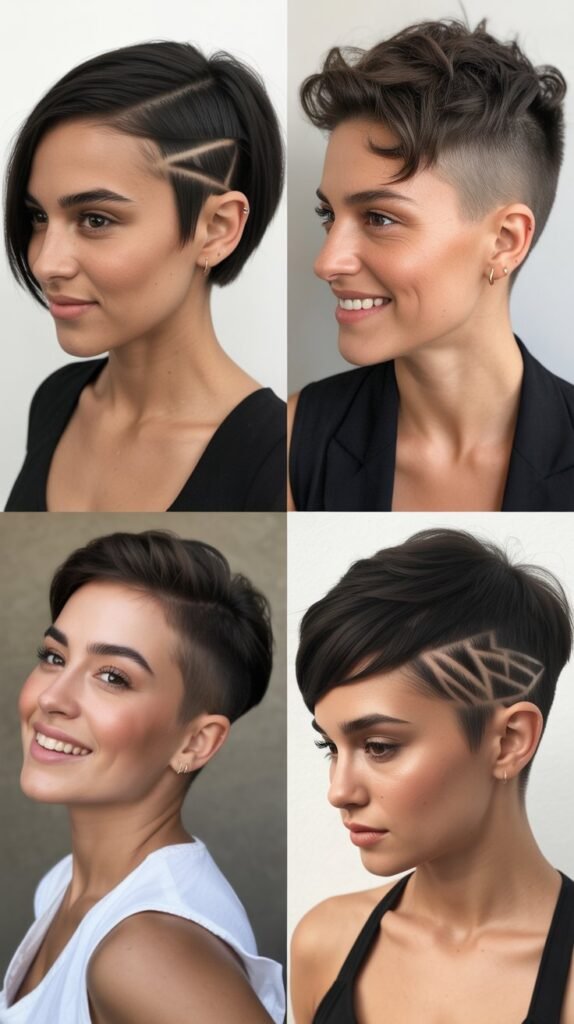
The undercut pixie delivers maximum impact through dramatic contrast between closely shaved sections and longer top layers.
This edgy interpretation appeals to those who want their hairstyle to make a statement while maintaining the pixie’s clean aesthetic.
- The undercut typically involves shaving or closely buzzing the sides and back to a uniform length, often using clippers with specific guard sizes.
- The longer top section can range from two to five inches, providing ample styling versatility while the shaved portions require minimal upkeep.
- This style creates a cooling effect during warm weather since the shaved sections reduce overall hair coverage on the scalp.
- Undercuts allow for creative design elements like geometric patterns, lines, or even artistic shaving that adds personalized flair.
- Styling the longer top section can include slicking it back, creating volume, or adding texture depending on personal preference and occasion.
- The stark contrast works particularly well for those with thick hair, as it removes bulk while keeping the desirable length where it matters most.
4. Choppy Layered Pixie
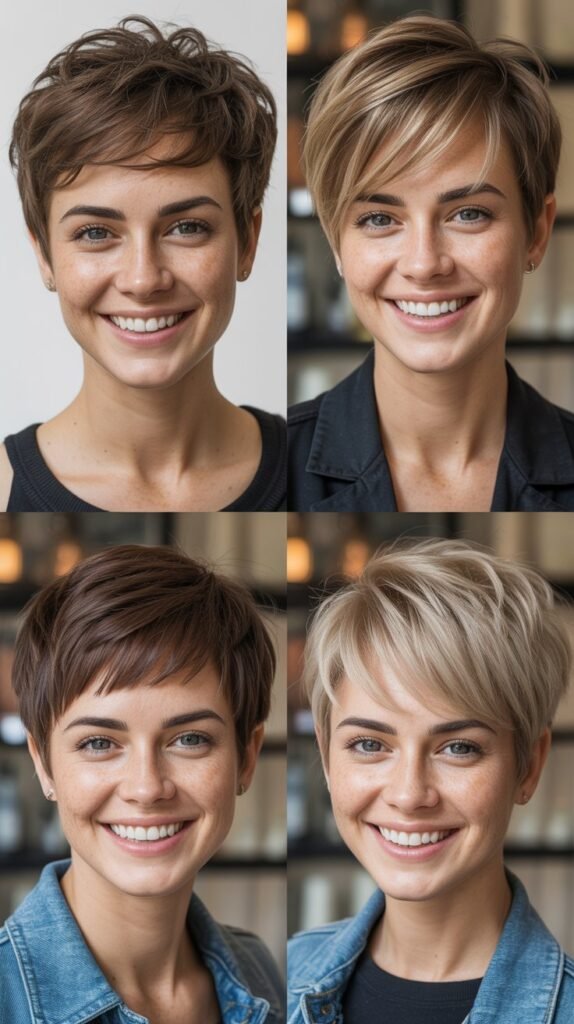
The choppy layered pixie embraces an intentionally tousled, piece-y finish that exudes effortless cool and youthful energy.
This style relies on strategic layering techniques that create separation and movement throughout the cut.
- Choppy layers are achieved through point-cutting and razor techniques that create uneven, jagged ends rather than blunt lines.
- This cutting method adds substantial volume and dimension, making it an excellent choice for those with fine or thin hair.
- The separated, piece-y texture gives the illusion of more hair while creating a modern, fashion-forward appearance.
- Styling requires texturizing paste, clay, or wax worked through damp or dry hair with fingers to emphasize the choppy effect.
- The tousled nature of this style means it looks intentionally undone, making it forgiving for busy mornings or active lifestyles.
- This pixie variation pairs exceptionally well with highlights or balayage that emphasize the layered dimension.
5. Slicked Back Pixie
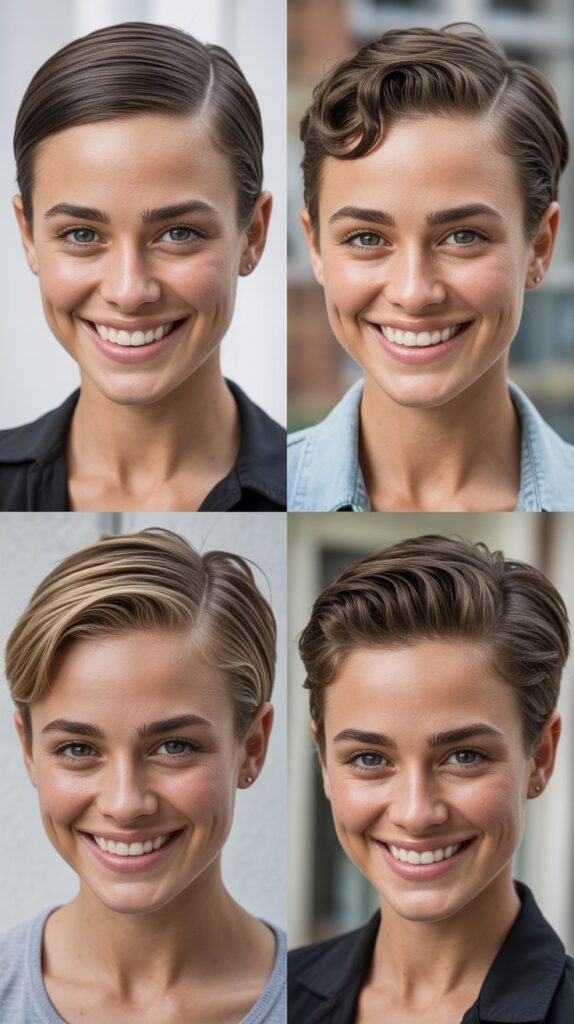
The slicked-back pixie channels sophisticated glamour reminiscent of old Hollywood while maintaining contemporary edge.
This styling approach works with various pixie lengths, transforming the cut into an elegant, refined statement.
- Achieving this look requires sufficient length on top (typically three inches minimum) to create the backward sweep effect.
- Products like strong-hold gel, pomade, or styling cream provide the necessary control and shine for the signature slicked appearance.
- This styling method accentuates facial features completely, making it ideal for those confident in showcasing their entire face structure.
- The slicked-back pixie transitions seamlessly from professional environments to evening events, offering remarkable versatility.
- For added interest, the sides can be kept slightly longer and tucked behind the ears or shaved short for maximum contrast.
- This style works particularly well on naturally straight or slightly wavy hair textures that respond well to smoothing products.
6. Asymmetrical Pixie Cut
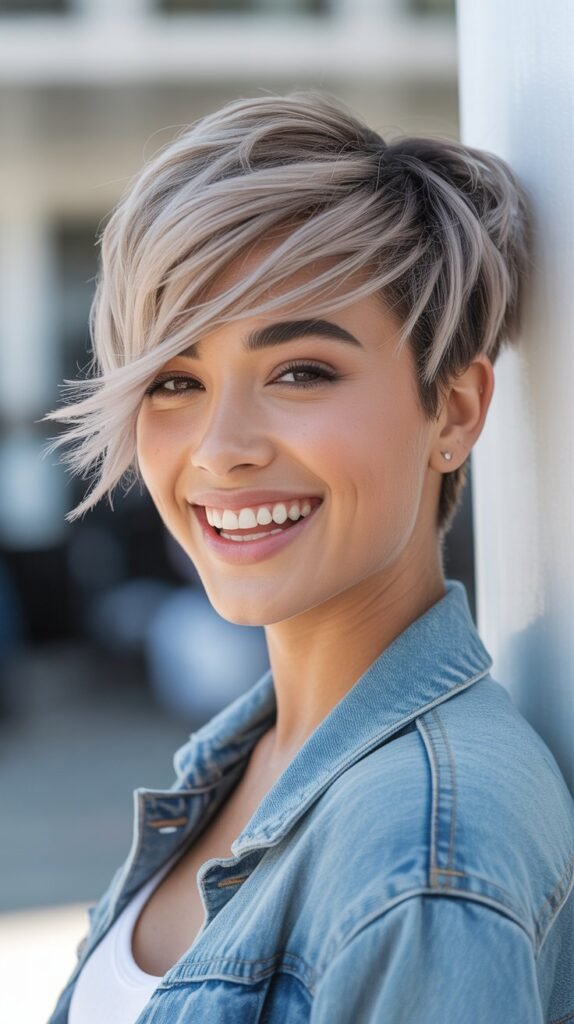
The asymmetrical pixie cut breaks traditional symmetry rules by featuring distinctly different lengths on each side, creating visual intrigue and modern edge.
This artistic approach to the pixie offers a fashion-forward alternative for those seeking something beyond conventional cuts.
- Asymmetry can be subtle with a slight length difference or dramatic with one side significantly shorter than the other.
- The longer side typically falls somewhere between ear and chin length, while the shorter side may be closely cropped or buzzed.
- This design naturally draws the eye, creating a dynamic focal point that adds interest to the overall appearance.
- Asymmetrical pixies particularly flatter those who prefer styling hair to one side, as the cut naturally supports this direction.
- The contrasting lengths provide styling flexibility—the longer section can be straightened, curled, or textured while the short side remains neat.
- This cut requires precise technical execution and regular maintenance to preserve the intended proportions and sharp lines.
7. Pixie with Tapered Nape
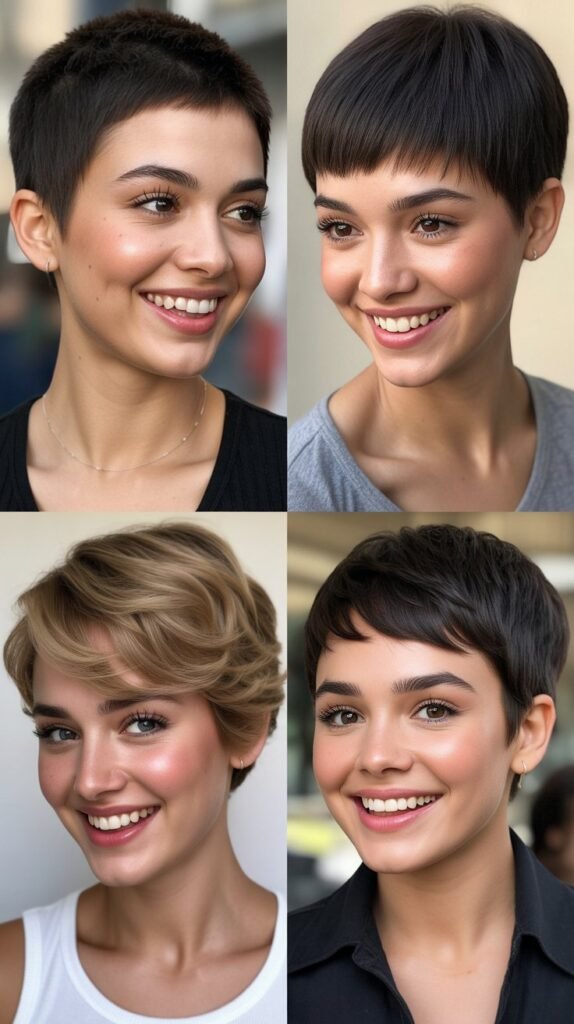
The pixie with tapered nape features gradually shortened hair at the back of the neck, creating a feminine, elongating effect.
This subtle detail adds refinement to the overall silhouette while maintaining the pixie’s characteristic cleanness.
- Tapering involves gradually blending the hair from longer at the crown to progressively shorter as it approaches the neckline.
- This technique creates a softer, more feminine appearance compared to blunt or sharply defined nape lines.
- The tapered nape visually elongates the neck, creating an elegant silhouette that’s particularly flattering from profile and rear views.
- This detail works beautifully for all hair textures, though it’s especially effective for those with natural curl who want controlled shaping.
- Maintenance requires attention during trims to preserve the gradual transition rather than creating harsh lines or steps.
- The tapered approach provides a professional, polished appearance suitable for conservative environments while maintaining style.
8. Curly Pixie Cut
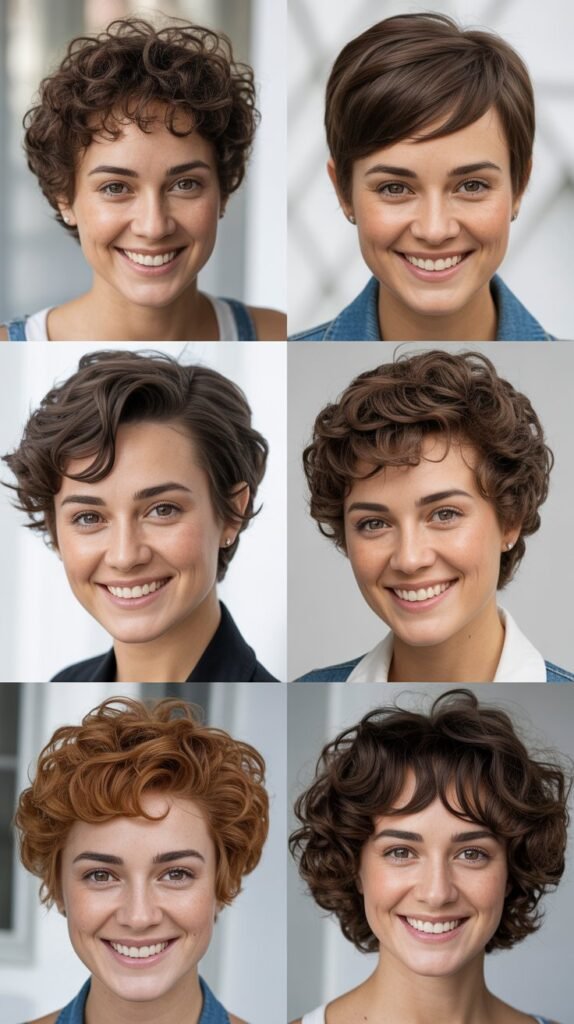
The curly pixie cut celebrates natural texture by working with curls rather than against them, creating voluminous, playful styles full of personality.
This approach proves that pixie cuts aren’t exclusively for straight hair and can beautifully showcase curl patterns.
- Cutting curly hair into a pixie requires specialized techniques that account for how curls spring up when dry, typically cutting longer than the desired finished length.
- The shorter length reduces curl weight, often resulting in bouncier, more defined curl patterns with enhanced natural volume.
- Styling focuses on moisture and curl definition using leave-in conditioners, curl creams, and diffusing techniques rather than brushing or combing.
- This style particularly benefits those with thick, coarse curls who find longer lengths heavy or difficult to manage.
- The curly pixie can be customized with varied lengths throughout, from tight cropped sides to longer curly tops for dimension.
- Maintenance includes regular deep conditioning treatments to keep curls healthy and hydrated, preventing frizz and maintaining definition.
9. Pixie with Long Bangs
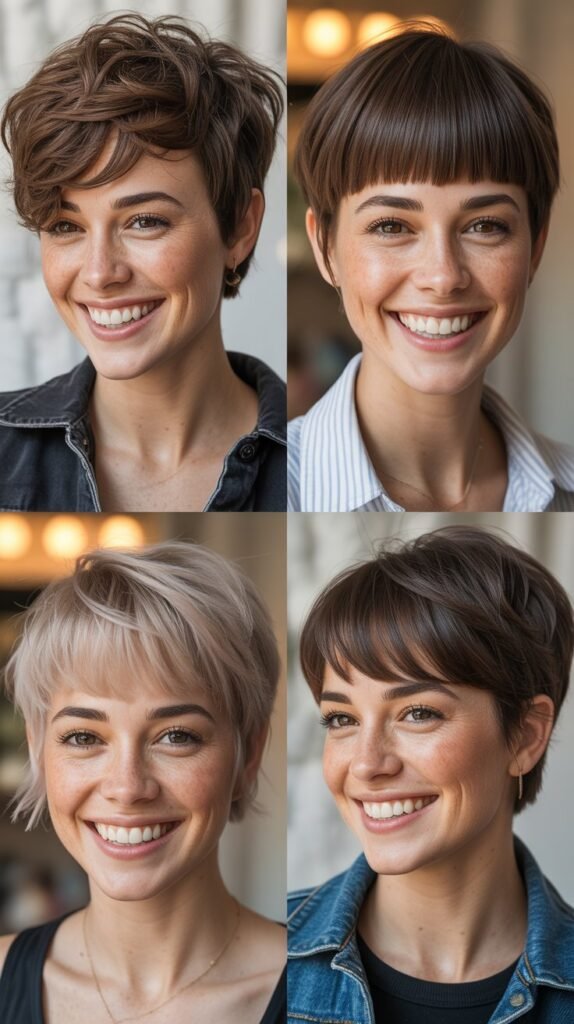
The pixie with long bangs maintains dramatic eye-grazing or cheekbone-length fringe while keeping the rest of the hair short and neat.
This combination creates striking contrast and offers styling versatility within the short haircut category.
- Long bangs typically range from eyebrow-grazing to chin-length, providing enough length to style in various directions or textures.
- The extended fringe section draws attention to the eyes and can be used to conceal or minimize forehead size or shape concerns.
- Styling options include sweeping bangs to the side, straightening them forward, adding curl or wave, or even pinning them back for variety.
- This style requires more frequent bang trims (every 2-3 weeks) to prevent them from obstructing vision while maintaining the precise length.
- The contrast between the substantial fringe and close-cropped back and sides creates an edgy, fashion-forward aesthetic.
- This variation works across face shapes, with the long bangs customizable to complement individual features and proportions.
10. Platinum Blonde Pixie
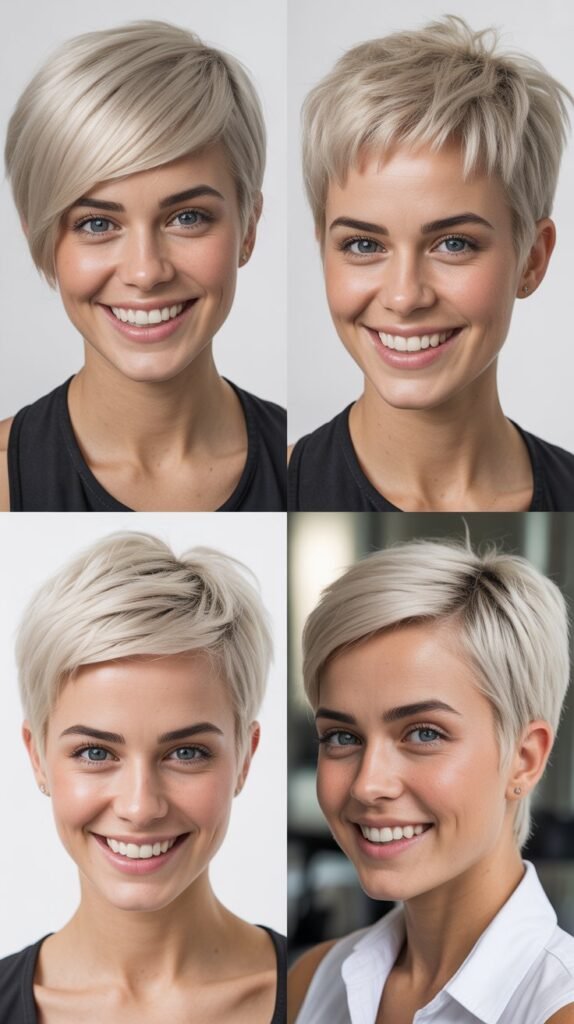
The platinum blonde pixie combines the sharp clean lines of the cut with striking ultra-light hair color for maximum impact.
This dramatic pairing creates a bold, attention-commanding look that exudes confidence and modern style.
- Achieving platinum blonde requires significant lightening, often involving multiple sessions to lift darker hair without causing excessive damage.
- The ultra-light shade provides stunning contrast against the structured pixie shape, emphasizing every angle and detail of the cut.
- Platinum color requires dedicated maintenance including purple-toning shampoos to prevent brassiness and regular deep conditioning treatments.
- This combination particularly flatters those with cool undertones in their complexion, creating a cohesive, harmonious appearance.
- The bright color makes even simple pixie styles appear fashion-forward and editorial, reducing the need for complex styling.
- Root maintenance becomes essential as regrowth shows quickly against platinum, typically requiring touch-ups every 4-6 weeks.
11. Feathered Pixie Cut
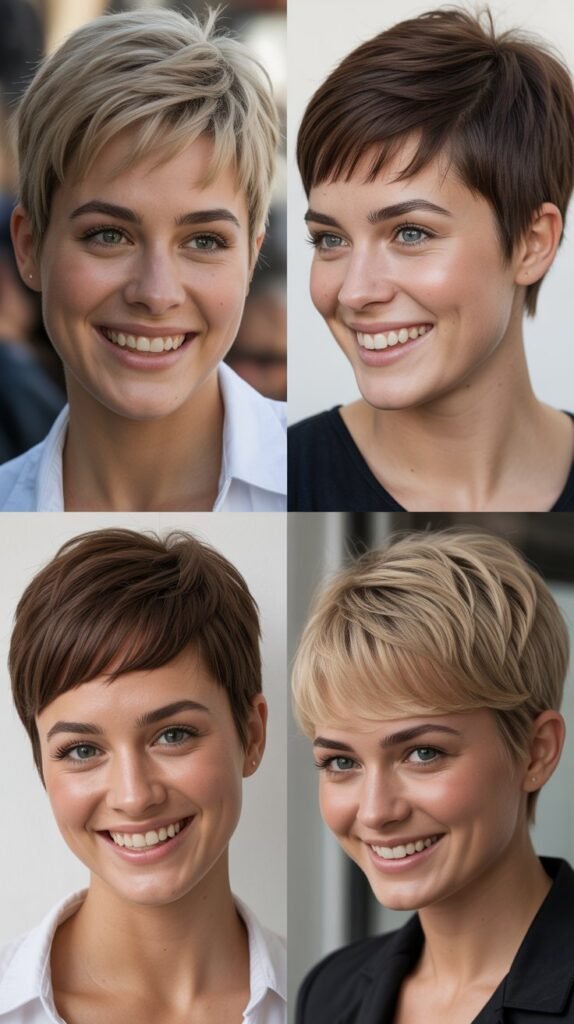
The feathered pixie cut incorporates soft, layered pieces that create gentle movement reminiscent of delicate feathers.
This technique softens the pixie silhouette while maintaining its characteristic short length and easy maintenance.
- Feathering involves cutting hair at slight angles to create wispy, tapered ends that move naturally and catch light beautifully.
- This technique adds dimension without bulk, making it ideal for those with medium to thick hair who want to reduce heaviness.
- Styling emphasizes the feathered ends using light products like mousses or texturizing sprays that enhance movement without weighing hair down.
- The softer edges created by feathering provide a more romantic, feminine interpretation of the traditionally androgynous pixie cut.
- This style ages gracefully as it grows, maintaining a pleasant shape during the weeks between salon appointments.
- Feathered pixies work particularly well for those transitioning from longer styles, as the softer approach feels less dramatically different.
12. Pixie with Buzzed Sides
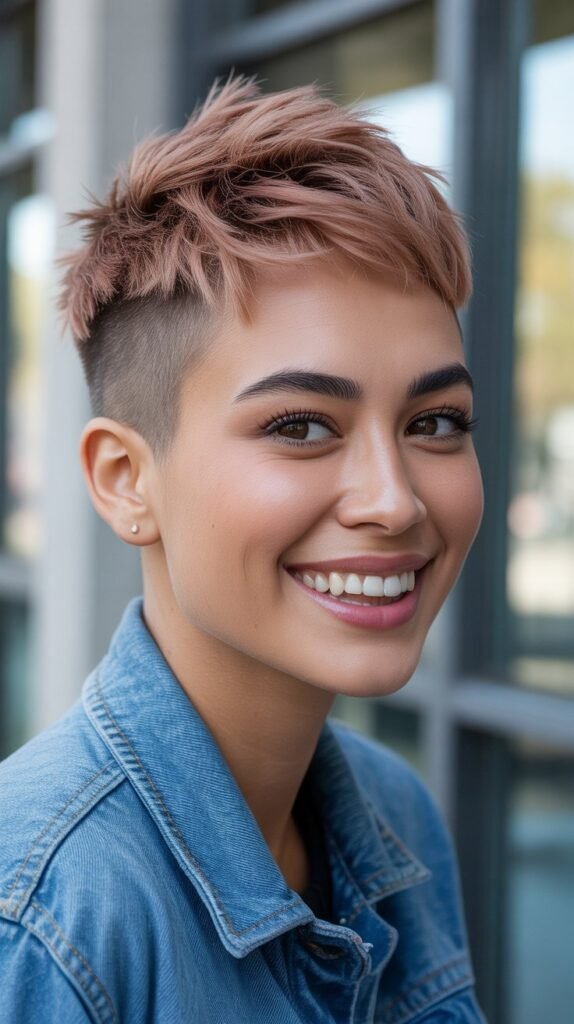
The pixie with buzzed sides features extremely short or shaved lateral sections that create bold contrast with the longer crown area.
This high-contrast style delivers edgy sophistication while remaining remarkably low-maintenance on the sides and back.
- Buzzed sections typically range from a zero guard (skin-close shave) to a three guard, depending on desired contrast and personal preference.
- The longer top section provides creative freedom for styling—from slicked-back elegance to textured volume or even mohawk-inspired looks.
- This style offers practical benefits including reduced heat during warm weather and simplified morning routines with less hair to manage.
- The buzzed sides can incorporate designs, patterns, or fade techniques that add personalized artistic elements to the cut.
- Growth maintenance differs between sections, with buzzed areas requiring more frequent attention to maintain the clean contrast.
- This bold style particularly appeals to those who embrace alternative fashion aesthetics while appreciating functional simplicity.
13. Soft Rounded Pixie
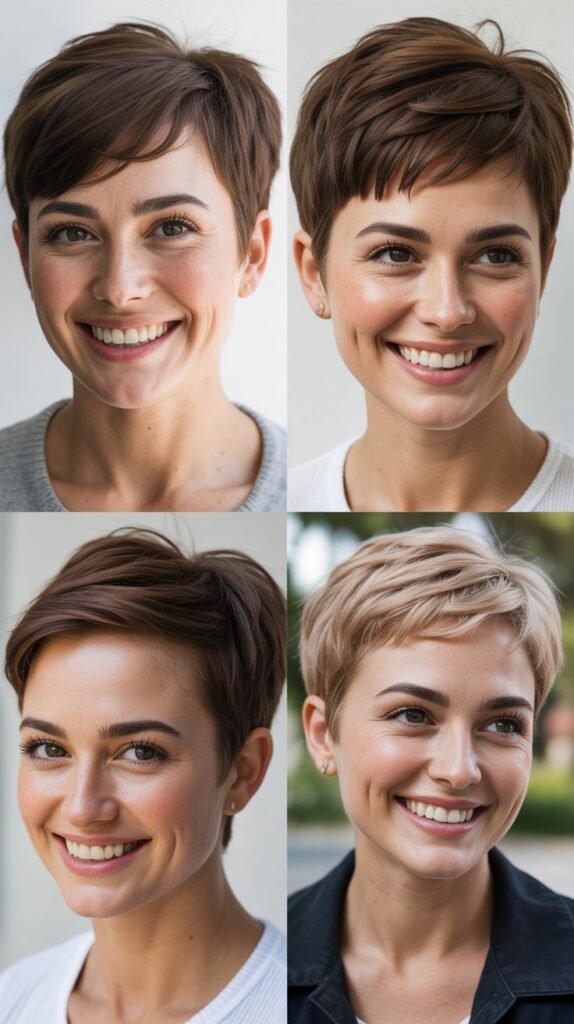
The soft rounded pixie features curved, gentle shaping that creates a feminine, approachable silhouette.
This interpretation prioritizes softness over angular edges, resulting in a universally flattering and accessible short style.
- The rounded shaping follows the natural head contour, creating a cap-like appearance that feels organic rather than severe.
- This style particularly flatters round and oval face shapes by complementing rather than contrasting with natural facial curves.
- Styling focuses on smooth, polished finishes using round brushes during blow-drying to enhance the curved silhouette.
- The softer approach makes this pixie variation especially suitable for professional or conservative environments where dramatic styles might seem inappropriate.
- Maintenance involves regular trims to preserve the rounded shape and prevent awkward growth patterns from disrupting the smooth contour.
- This gentle interpretation proves that pixie cuts can project softness and femininity while maintaining the practical benefits of short hair.
14. Disconnected Pixie Cut
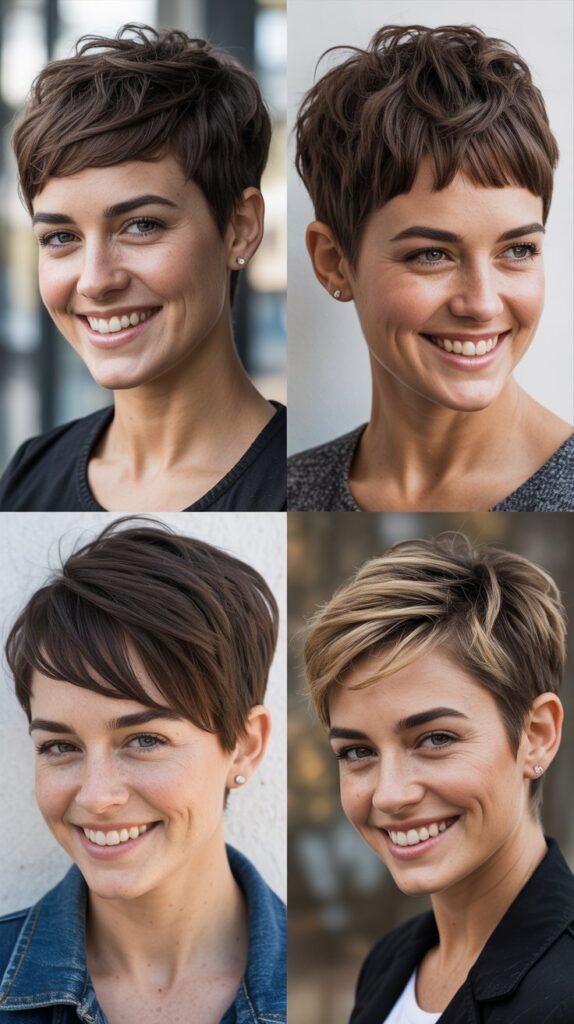
The disconnected pixie cut features distinct, unblended sections with noticeable length differences that create an intentionally choppy, modern aesthetic.
This contemporary approach embraces contrast and separation rather than gradual transitions.
- Disconnection refers to the technique of leaving visible length differences between sections without traditional blending or graduation.
- This creates graphic, architectural shapes within the haircut itself, making the structure a design element beyond just styling.
- The intentional contrast adds visual interest and dimension, preventing the pixie from appearing flat or one-dimensional.
- Styling can emphasize the disconnection by using products that create piece-y separation and texture throughout the cut.
- This modern technique works particularly well for those seeking avant-garde or fashion-forward appearances that push traditional boundaries.
- The disconnected approach requires skilled technical execution to ensure the unblended sections appear intentional rather than poorly cut.
15. Pixie with Micro Bangs
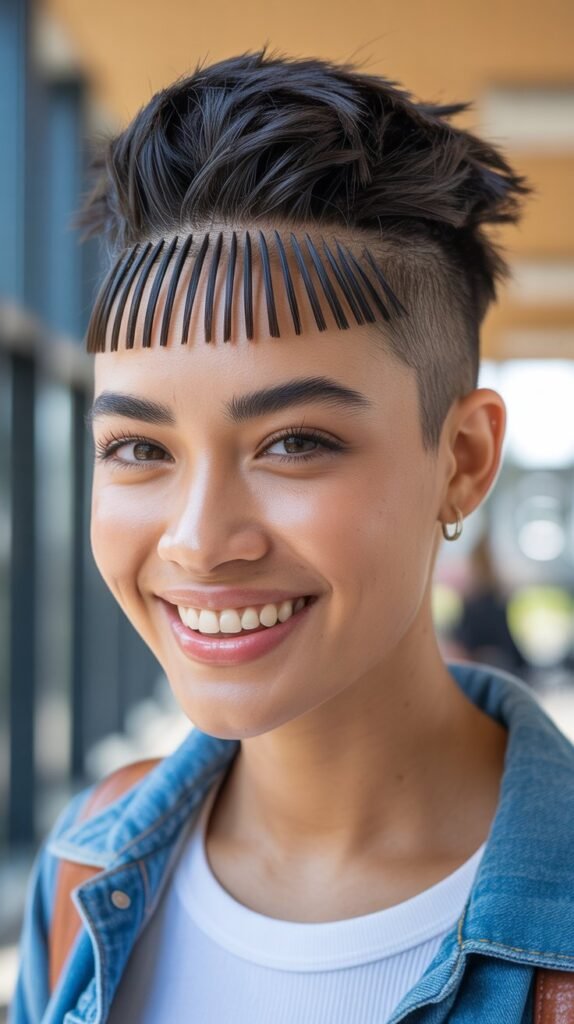
The pixie with micro bangs combines short overall length with dramatically cropped fringe that sits well above the eyebrows.
This bold pairing creates a striking, unconventional look that commands attention and projects confidence.
- Micro bangs typically measure one to two inches maximum, creating an intentionally abbreviated fringe that defies traditional bang proportions.
- This dramatic fringe style draws immediate attention to the eyes and can make a strong personal style statement.
- The combination works particularly well for those with smaller foreheads, as the short bangs don’t overwhelm facial proportions.
- Styling requires minimal effort since the short length prevents the fringe from falling in eyes or requiring constant adjustment.
- This bold choice represents commitment, as micro bangs take considerable time to grow out if you change your mind.
- The pairing of micro bangs with a pixie cut creates double impact—two bold choices that amplify each other’s effect.
16. Shaggy Pixie Cut
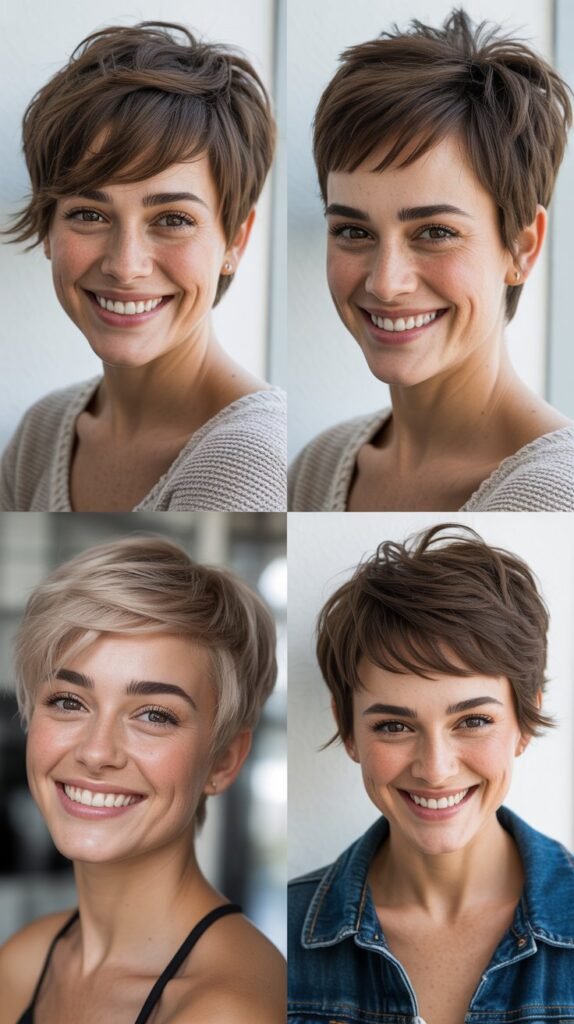
The shaggy pixie cut embraces intentional dishevelment with heavily layered, piece-y texture throughout. This rock-and-roll inspired variation brings attitude and effortless cool to the classic pixie silhouette.
- Shaggy cuts feature numerous layers of varying lengths that create substantial texture and the appearance of more volume and density.
- This style works exceptionally well for fine or thin hair, as the layered structure makes hair appear fuller and more substantial.
- Styling embraces the “undone” aesthetic using texturizing products and finger-styling rather than precise brushing or combing.
- The shaggy approach provides forgiving styling—bedhead texture looks intentional rather than unkempt with this cut.
- This variation pairs beautifully with lived-in color techniques like balayage or highlights that emphasize the layered dimension.
- The casual, low-maintenance vibe appeals to those who want stylish short hair without daily high-effort styling routines.
17. Side-Parted Sleek Pixie
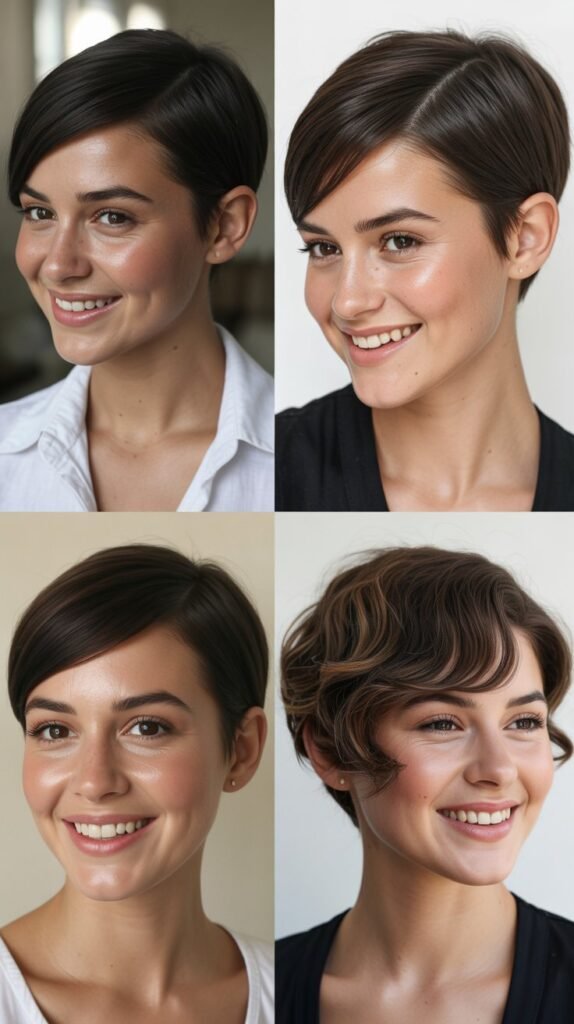
The side-parted sleek pixie features a defined part line with smoothly styled hair swept to one side. This classic styling approach adds sophistication and polish to various pixie lengths and shapes.
- The side part creates asymmetry that adds interest while remaining professional and polished in appearance.
- Styling requires blow-drying hair in the desired direction followed by smoothing products to maintain the sleek finish.
- The part placement can be adjusted based on face shape and features—deeper side parts create more drama while subtle parts remain understated.
- This styling method works across pixie variations, from classic cuts to textured styles that benefit from directional styling.
- The sleek side-swept look particularly flatters those with oval or heart-shaped faces by creating balanced proportions.
- Maintaining the part requires daily styling, making this approach ideal for those who enjoy the routine of styled hair.
18. Pixie Bob Hybrid
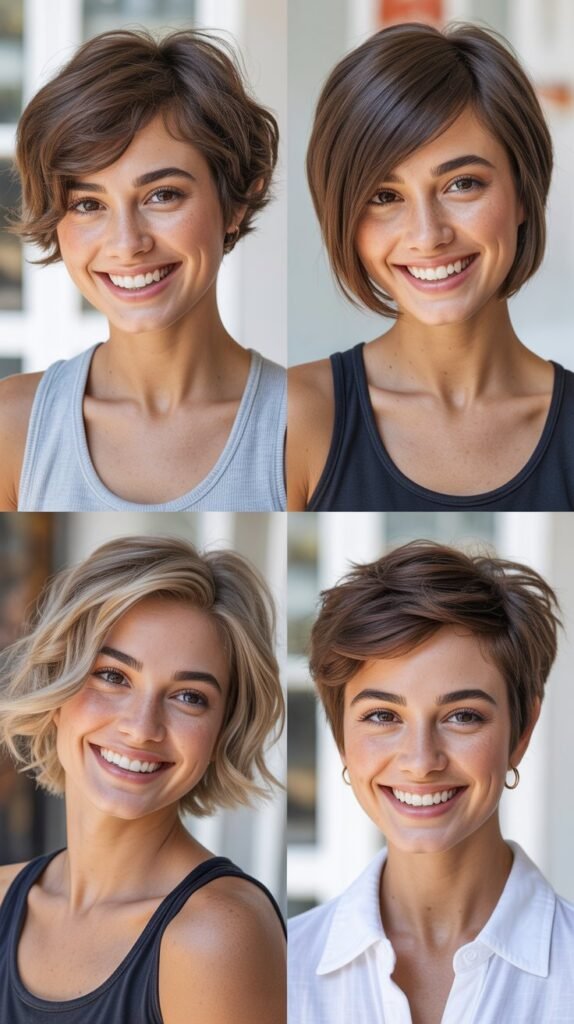
The pixie bob hybrid blends characteristics of both cuts, featuring pixie-short back and sides with bob-length sections around the face.
This creative compromise offers styling versatility while maintaining much of the pixie’s easy maintenance.
- This hybrid typically keeps hair at the crown and front longer (chin-length or shorter) while maintaining traditionally pixie-short back and sides.
- The longer front sections provide face-framing and styling options typically associated with bobs while retaining pixie convenience.
- Styling versatility includes straightening the longer pieces, adding curl or wave, or tucking them behind ears for different looks.
- This compromise appeals to those considering a pixie but hesitant about losing all face-framing length.
- The hybrid cut reduces overall bulk and maintenance compared to full bobs while providing more styling flexibility than traditional pixies.
- This style works across face shapes, with the longer front sections customizable to complement individual features.
19. Textured French Pixie
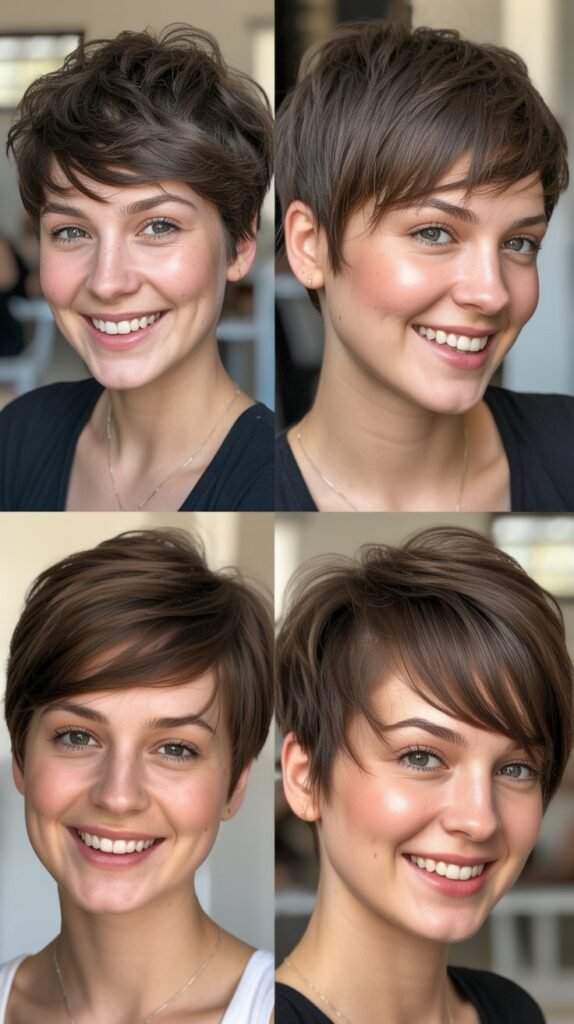
The textured French pixie embodies Parisian chic with tousled, naturally styled texture that appears effortlessly elegant.
This approach combines the pixie’s practicality with French fashion’s signature understated sophistication.
- The French pixie emphasizes natural texture over heavily styled perfection, embracing hair’s organic movement and character.
- Styling involves minimal product use—typically just a small amount of texturizing spray or light pomade for definition without stiffness.
- This interpretation deliberately avoids over-styled appearance, instead cultivating an “I woke up like this” aesthetic that feels authentic.
- The approach works beautifully for naturally wavy or slightly textured hair that gains dimension when kept short.
- This style embodies the French beauty philosophy of enhancing natural features rather than dramatically transforming them.
- The understated elegance makes this pixie variation suitable for diverse settings from casual to professional environments.
20. Pixie with Graduation
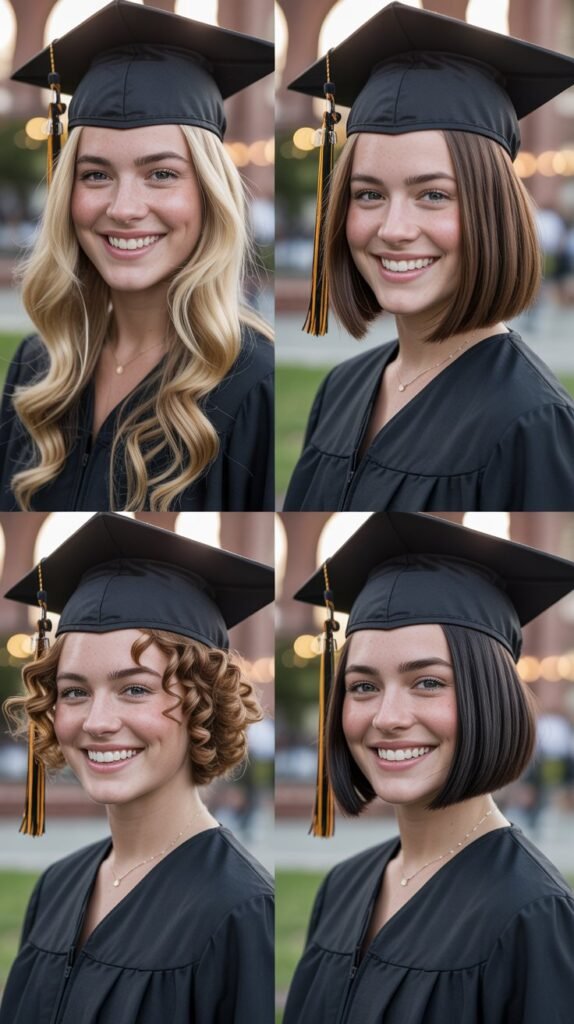
The pixie with graduation features progressively shorter lengths from top to bottom, creating smooth transitions that follow the head’s natural contours.
This technical approach produces a polished, three-dimensional result with sophisticated depth.
- Graduation involves cutting each section slightly shorter than the one above it, creating stacked layers that build volume and shape.
- This technique prevents the pixie from appearing flat, instead creating built-in volume and movement throughout the cut.
- The graduated structure particularly benefits those with fine or thin hair by maximizing the appearance of fullness and density.
- Styling becomes easier with graduation since the cut itself creates the desired shape, requiring minimal manipulation or product.
- This approach requires technical precision during cutting to ensure smooth transitions without creating obvious steps or disconnection.
- Graduated pixies maintain their shape well as they grow, typically looking presentable longer between salon appointments than blunt-cut versions.
21. Edgy Spiky Pixie
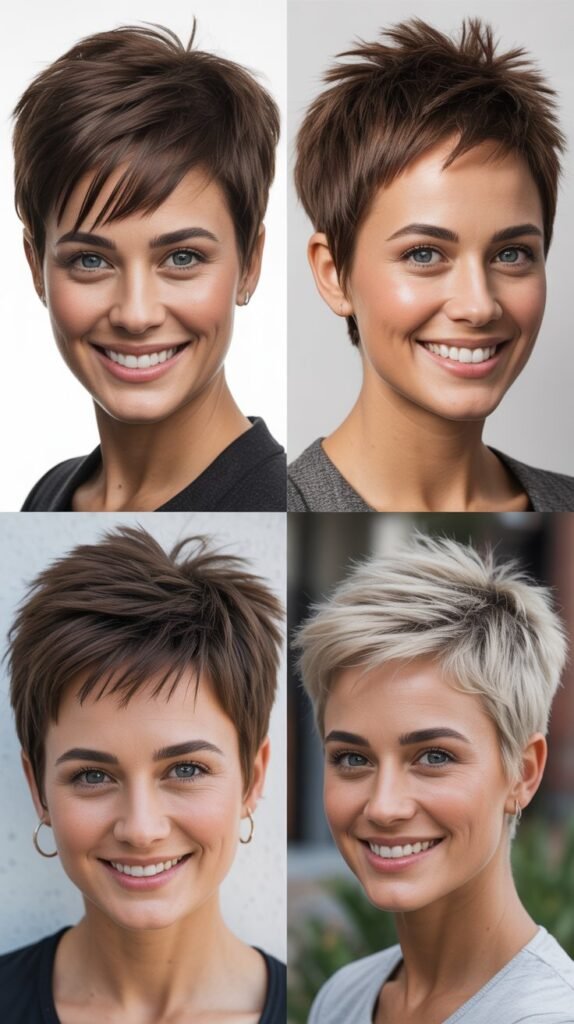
The edgy spiky pixie features upward-styled pieces that create vertical dimension and punk-inspired attitude.
This bold styling approach transforms the pixie from sleek to rebellious while maintaining the cut’s fundamental structure.
- Creating spikes requires sufficient length (typically 1-3 inches on top) and strong-hold products like gel, wax, or pomade.
- The spiked styling adds significant height, making this approach particularly flattering for those who want to elongate facial proportions.
- This style projects confidence and individuality, making strong personal statements through hair structure and styling.
- Maintaining spiked styles requires daily styling commitment and product use to achieve and hold the vertical dimension.
- The edgy aesthetic pairs well with bold makeup, fashion-forward clothing, and alternative personal style expressions.
- While the spiked styling creates dramatic effect, the underlying pixie cut remains practical for daily life when styled differently.
22. Pixie with Highlights
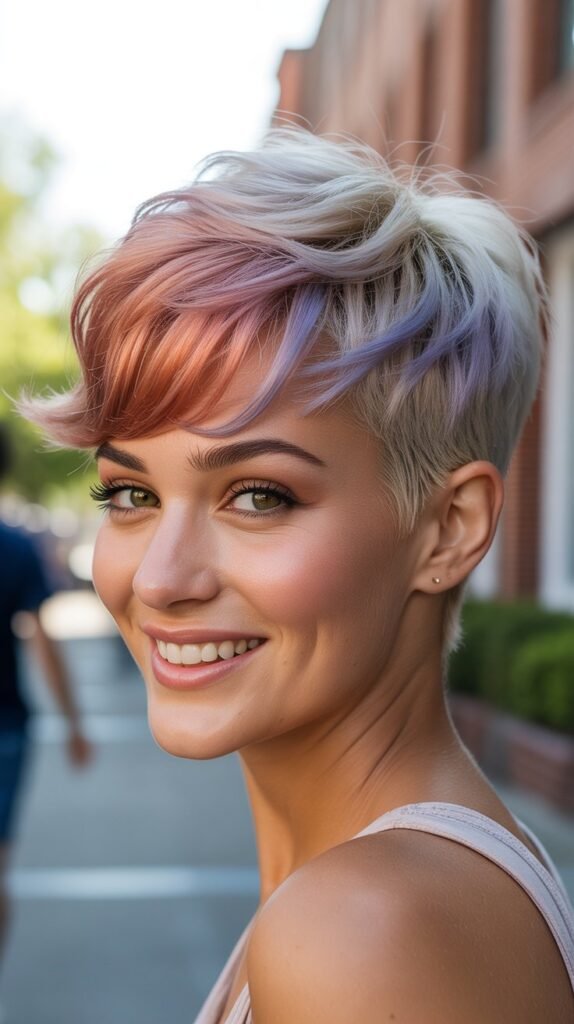
The pixie with highlights incorporates lighter color sections that add dimension, depth, and visual interest to short hair.
Strategic color placement can enhance the cut’s structure while adding personalized artistic flair.
- Highlights on short hair create three-dimensional effects, emphasizing layers, texture, and the cut’s architectural elements.
- Placement options include face-framing highlights that brighten the complexion or scattered pieces throughout for all-over dimension.
- Lighter pieces catch and reflect light differently than the base color, creating movement and interest even in simple styles.
- Maintenance for highlighted pixies involves color touch-ups every 6-8 weeks as roots become visible against shorter length.
- The contrast between base color and highlights can range from subtle (1-2 shades lighter) to dramatic (multiple shades for bold impact).
- Highlights provide an opportunity to experiment with color without full commitment, adding personality to classic pixie cuts.
23. Vintage-Inspired Pixie
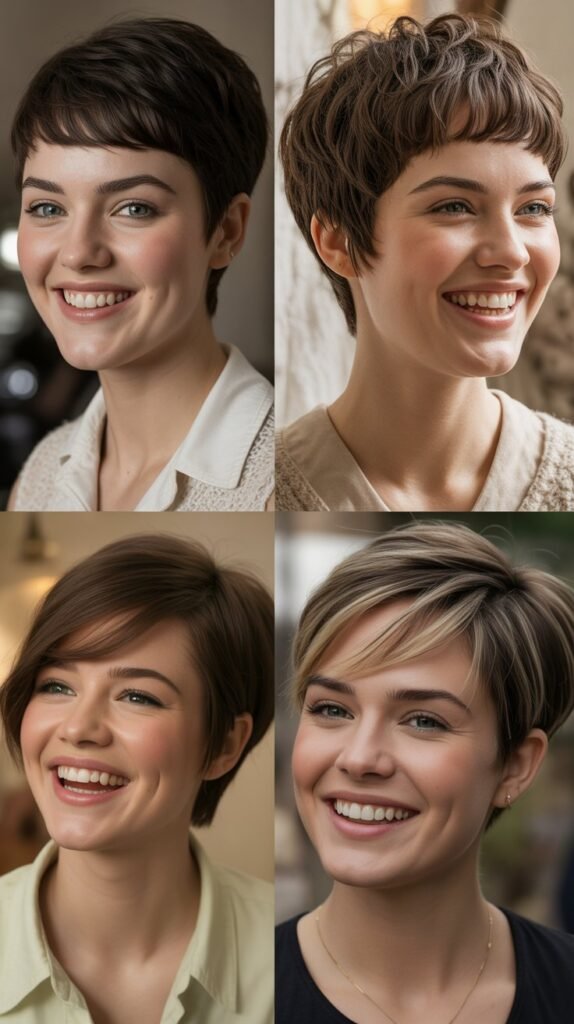
The vintage-inspired pixie draws from classic Hollywood glamour and retro aesthetics, incorporating elements like finger waves, soft rolls, or period-specific styling techniques.
This nostalgic approach brings timeless elegance to contemporary short hair.
- Vintage styling often incorporates techniques like setting with rollers, creating S-curve finger waves, or smoothly rolled sections.
- This approach particularly suits special occasions, themed events, or those who appreciate mid-century fashion and aesthetics.
- Achieving vintage pixie styles typically requires more styling time and technique knowledge than modern casual approaches.
- Products like setting lotion, strong-hold hairspray, and shine-enhancing pomades help recreate authentic period appearances.
- The vintage pixie can reference specific eras from the sleek 1920s to the voluminous 1950s, each with distinctive characteristics.
- This styling direction proves that pixie cuts transcend trends, having been fashionable across multiple decades with varied interpretations.
24. Pixie with Peek-a-Boo Color
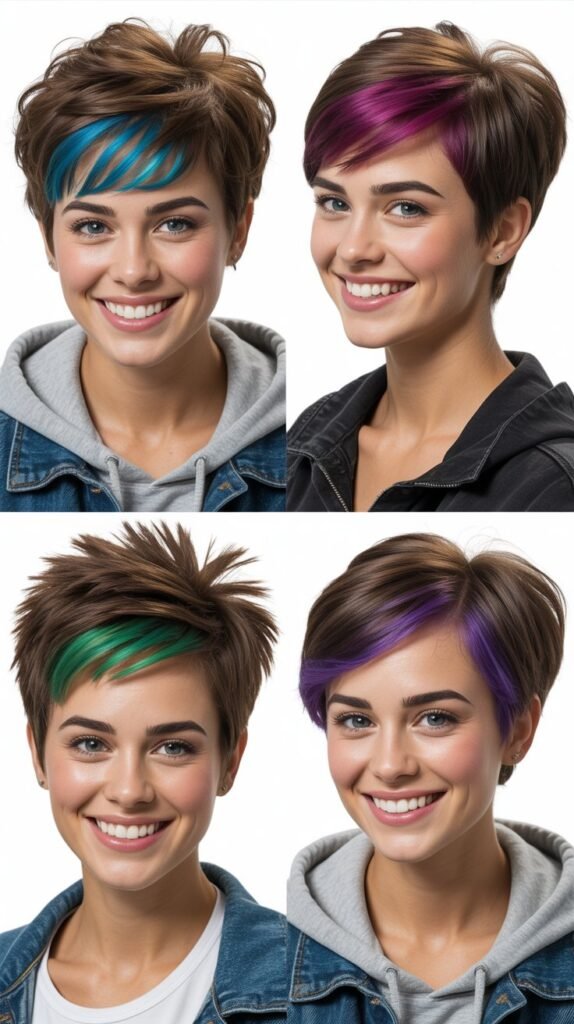
The pixie with peek-a-boo color features hidden color sections that reveal when hair moves or styles in certain directions.
This playful approach adds surprise elements and personalized flair without overwhelming professional appearance.
- Peek-a-boo coloring typically places bright or contrasting shades underneath top layers or in unexpected sections that normally remain concealed.
- The hidden placement allows for bold color experimentation while maintaining professional appearance when hair lies naturally.
- This technique works particularly well with undercut pixies, where the shaved sections can feature vibrant colors that show when desired.
- Color choices range from natural but contrasting shades to fashion colors like blues, purples, pinks, or pastels for maximum impact.
- The playful nature of peek-a-boo color adds personality and individuality without requiring full commitment to all-over bold color.
- Maintenance varies based on chosen colors, with fashion shades requiring more frequent refreshing to maintain vibrancy.
25. Pixie Mullet
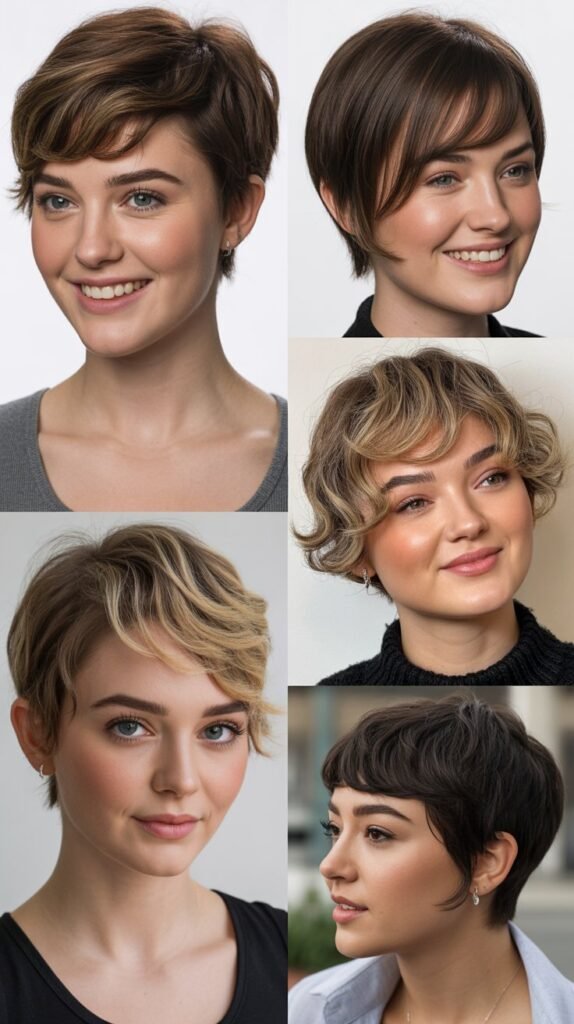
The pixie mullet combines short front and side sections with intentionally longer back length, creating a contemporary update on the classic mullet silhouette.
This unexpected combination delivers edgy style with surprising versatility.
- The modern pixie mullet features more subtle length contrast than traditional mullets, creating wearable everyday style rather than costume-like appearance.
- Front and side sections typically measure 1-3 inches while the back extends to nape-length or slightly beyond for distinctive contrast.
- This style allows for varied styling with the longer back section—left natural, curled, straightened, or even braided for different looks.
- The mullet revival in contemporary fashion makes this once-controversial style newly relevant and surprisingly popular among style-forward individuals.
- This cut provides an interesting solution for those growing out pixies, as it works with the natural growth pattern of longer back sections.
- The pixie mullet requires confident styling to avoid appearing dated or unkempt rather than intentionally fashionable.
26. Crown-Length Pixie
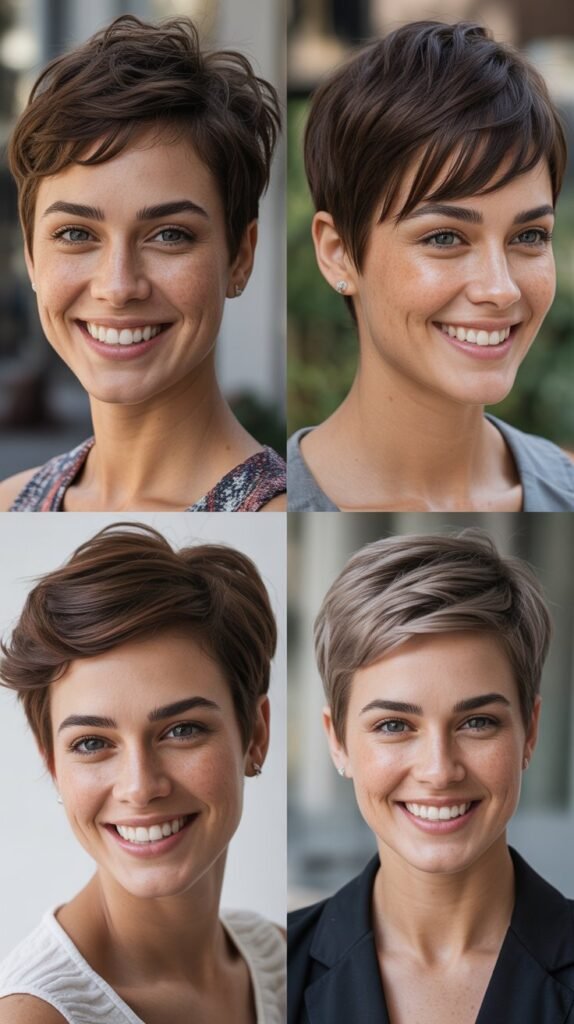
The crown-length pixie maintains the majority of length concentrated at the crown area while keeping sides and back relatively short.
This strategic length placement creates volume and height while preserving pixie practicality.
- Concentrating length at the crown creates natural lift and volume, particularly beneficial for those with flat or fine hair textures.
- The longer crown section (typically 3-5 inches) provides styling versatility for slicked-back looks, textured volume, or directional styling.
- This approach balances the pixie’s ease—short sides require minimal maintenance—with styling flexibility from the longer top section.
- The crown length can be styled dramatically different ways depending on occasion, from professional smooth styles to casual tousled texture.
- This cut particularly flatters oblong or rectangular face shapes by adding width at the crown to balance facial proportions.
- Maintenance focuses primarily on the longer crown section while the short sides and back require regular trimming for shape preservation.
27. Pixie with Fringe
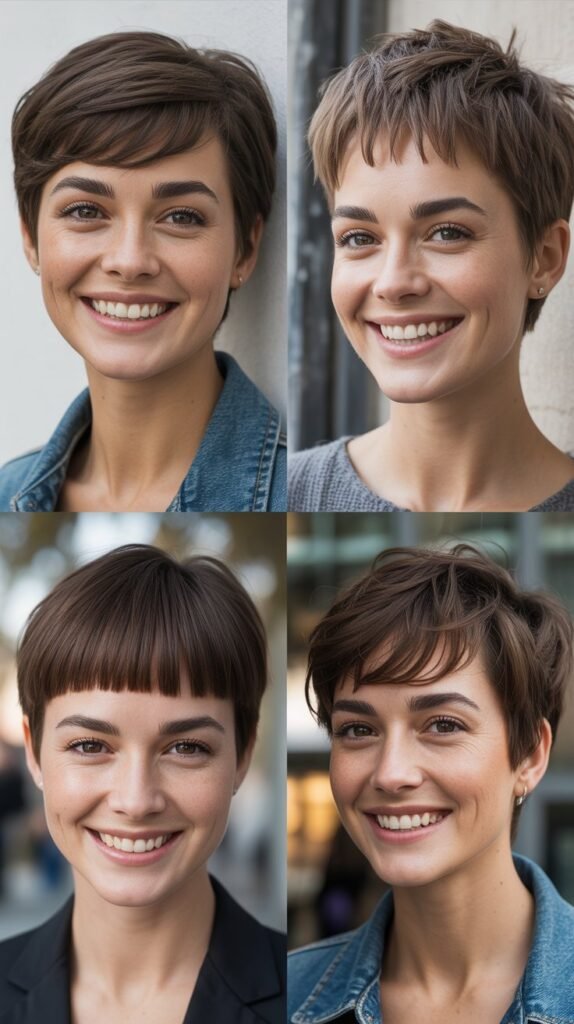
The pixie with fringe features a distinct bang section that adds face-framing dimension and styling versatility. The fringe element softens the overall look while providing options for varied styling approaches.
- Fringe sections can vary from wispy and light to thick and substantial, customized based on hair density and desired aesthetic.
- The addition of fringe provides an opportunity to conceal or minimize forehead concerns while drawing attention to eyes.
- Styling options include straight-across blunt fringe, angled side-swept versions, or textured piece-y interpretations for different effects.
- Fringe requires more frequent trimming than the rest of the cut (every 2-3 weeks) to maintain the precise length and prevent vision obstruction.
- This element adds a youthful quality to pixie cuts, softening the overall appearance and creating a less severe aesthetic.
- The fringe section can be styled differently than the rest of the pixie, creating interesting contrast between smooth bangs and textured top sections.
28. Wispy Pixie Cut
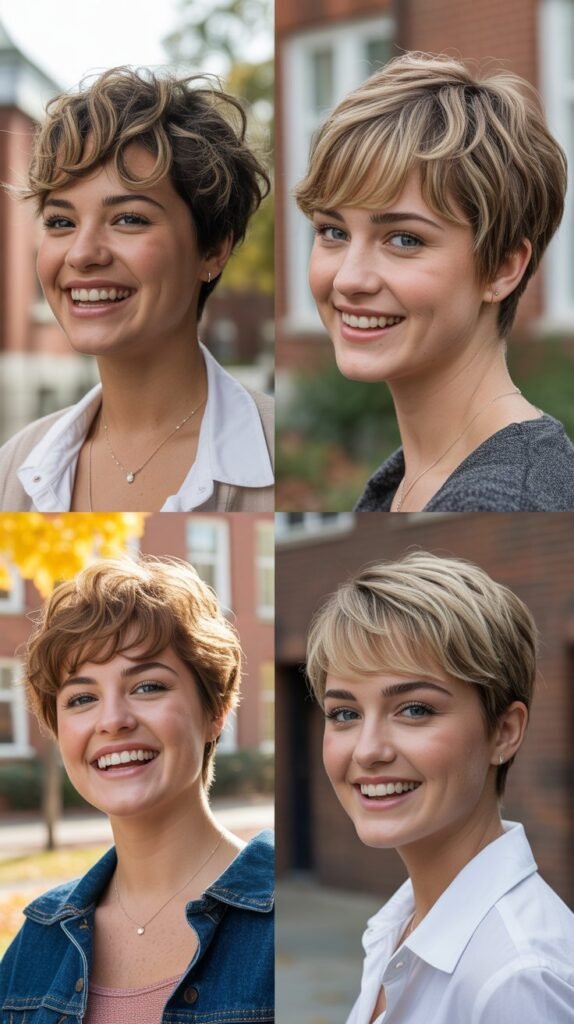
The wispy pixie cut features delicate, fine-textured ends throughout that create an airy, ethereal quality. This gentle approach emphasizes softness and femininity while maintaining short length practicality.
- Wispy texture results from specific cutting techniques including point-cutting, razor cutting, or thinning shears that create feathered ends.
- This approach works particularly well for those with naturally fine hair, as it embraces rather than fights the hair’s inherent characteristics.
- Styling emphasizes the delicate texture using minimal products—usually just light sprays or mousse that enhance without weighing down.
- The wispy quality creates movement and dimension that prevents fine hair from appearing flat or lifeless in short styles.
- This feminine interpretation proves that pixie cuts don’t require harsh lines or severe angles to make strong style statements.
- The delicate nature requires regular trims to maintain the intentional wispy ends and prevent them from appearing damaged rather than designed.
29. Androgynous Pixie
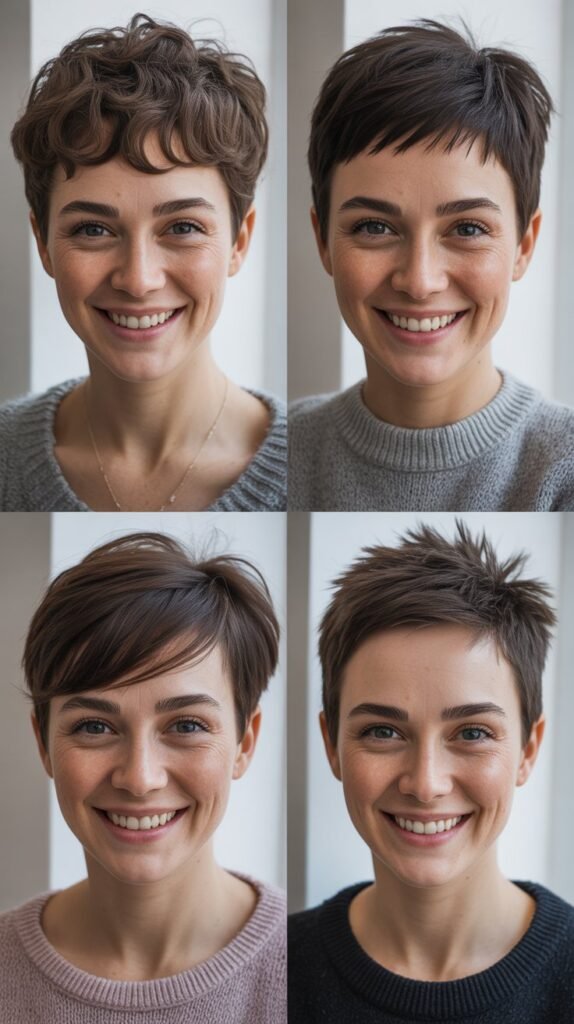
The androgynous pixie deliberately blurs traditional gender associations in hairstyling, creating clean, architectural lines without specifically masculine or feminine elements.
This neutral approach emphasizes individual features and personal style beyond gendered expectations.
- The androgynous approach typically features uniform lengths, clean lines, and minimal styling rather than traditionally feminine softness or curls.
- This style allows individual facial features and bone structure to become the focal point without hair adding gendered context.
- Styling tends toward natural texture or sleek simplicity, avoiding overtly feminine or masculine styling products or techniques.
- The androgynous pixie appeals to those who appreciate minimalist aesthetics and want hairstyles that transcend traditional gender presentation.
- This interpretation particularly resonates within LGBTQ+ communities but appeals to anyone seeking style beyond traditional categories.
- The clean, unadorned nature makes this pixie variation professional, versatile, and remarkably low-maintenance for daily wear.
30. Pixie with Shaved Patterns
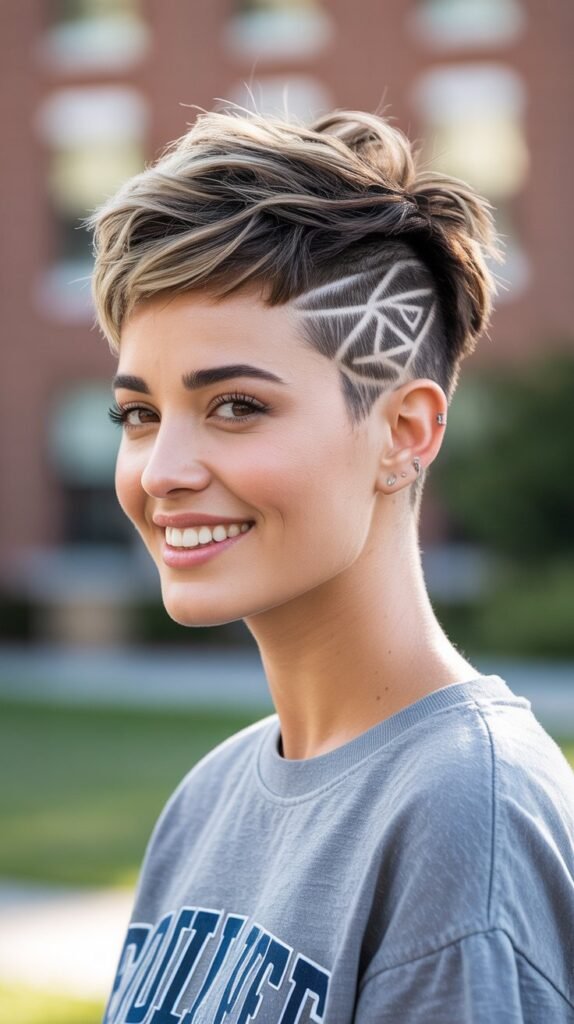
The pixie with shaved patterns incorporates artistic designs etched into the closely cropped sections for personalized creative expression.
These custom elements transform functional short sections into artistic canvases.
- Patterns range from simple lines and geometric shapes to complex images requiring significant artistic skill and time to execute.
- Common design elements include stars, lightning bolts, flowers, abstract patterns, or custom images that hold personal significance.
- The patterns are created using clippers and trimmers with guards removed to achieve the clean contrast necessary for visible designs.
- These artistic elements require frequent maintenance (every 1-2 weeks) as hair growth quickly blurs the clean lines of detailed patterns.
- Shaved pattern placement typically occurs on the sides or back where they’re visible but can be concealed if needed for professional settings.
- This customization option allows for seasonal updates, trying different designs without permanent commitment as hair quickly grows back.
31. Voluminous Pixie
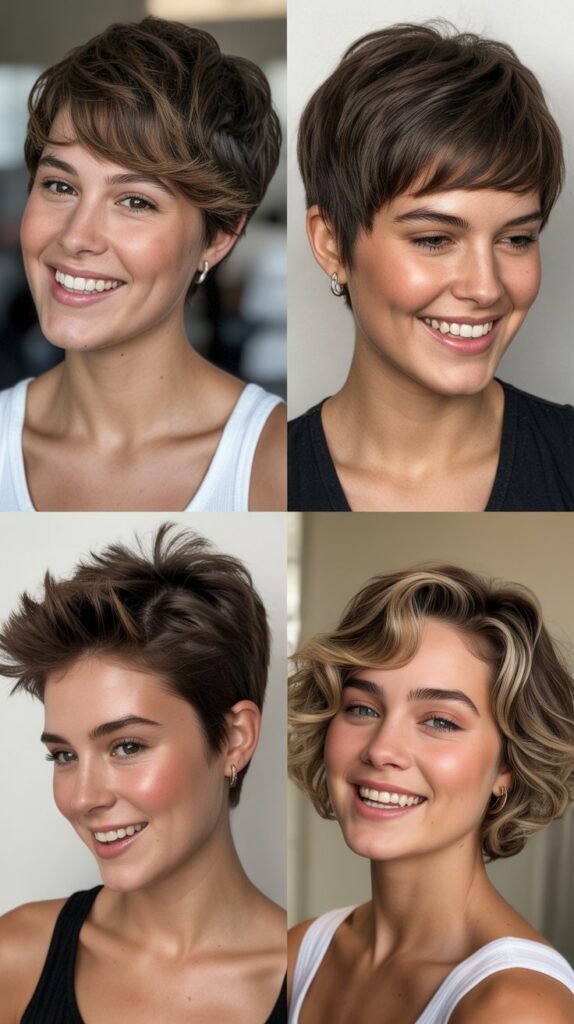
The voluminous pixie maximizes height and fullness through strategic cutting and styling techniques that create maximum dimension.
This approach proves that short hair can deliver substantial visual impact through volume rather than length.
- Volume creation typically involves graduated layering, crown length concentration, and styling with volumizing products and techniques.
- Blow-drying with a round brush, using root-lifting products, and backcombing selective sections all contribute to building height and fullness.
- This style particularly benefits those with fine or thin hair who want their pixie to appear substantial rather than flat or sparse.
- The volumized approach adds drama and presence, making the pixie a statement style rather than simply practical short hair.
- Styling requires more time and effort than sleek pixies but delivers impressive results for special occasions or those who enjoy styling routines.
- The voluminous quality can be adjusted based on occasion—full drama for events or moderate volume for everyday professional wear.
32. Pixie for Thick Hair
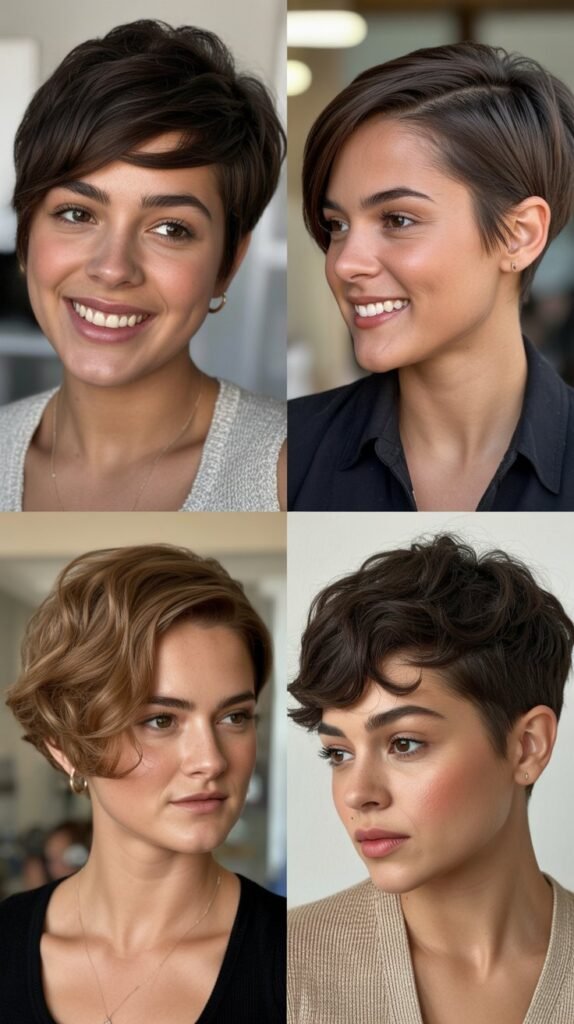
The pixie for thick hair incorporates specific techniques to manage density while maintaining the cut’s characteristic shape. Strategic texturizing and thinning create wearable short styles without excessive bulk.
- Thick hair pixies typically involve internal layer thinning using texturizing shears to remove weight without affecting the exterior shape.
- The cut may incorporate more aggressive tapering on sides and back to prevent the mushroom-like appearance thick hair can create in short styles.
- Styling focuses on controlling volume through smoothing products and techniques rather than adding more volume or texture.
- The substantial density provides natural body and movement without requiring additional product or manipulation for fullness.
- Regular thinning maintenance becomes essential between cuts to prevent the style from becoming overly heavy or losing its intended shape.
- This adaptation proves that pixies work beautifully for all hair densities when cut appropriately for the specific hair characteristics.
33. Minimalist Pixie
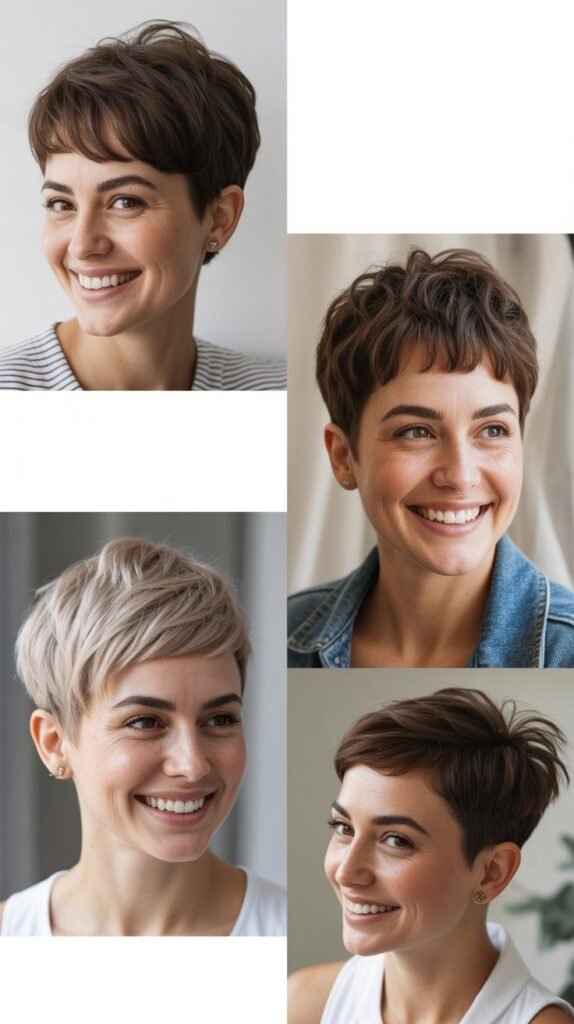
The minimalist pixie embraces simplicity with uniform lengths and uncomplicated styling that prioritizes function and ease.
This stripped-down approach delivers maximum convenience with clean, unfussy aesthetics.
- The minimalist cut typically features one consistent length throughout or very subtle variations, avoiding dramatic contrast or complex layering.
- This approach requires minimal styling—often just washing and air-drying or quick finger-combing produces the desired result.
- The simplicity appeals to those prioritizing convenience and time savings over elaborate styling or dramatic aesthetic statements.
- Despite the uncomplicated nature, the clean lines and precise cutting create sophisticated, intentional appearance rather than neglected or careless styling.
- This variation works exceptionally well for active lifestyles, busy professionals, or anyone who values efficiency in their morning routine.
- The minimalist pixie can be enhanced with quality haircuts and occasional color refreshes while maintaining its fundamentally simple nature.
34. Pixie with Baby Bangs
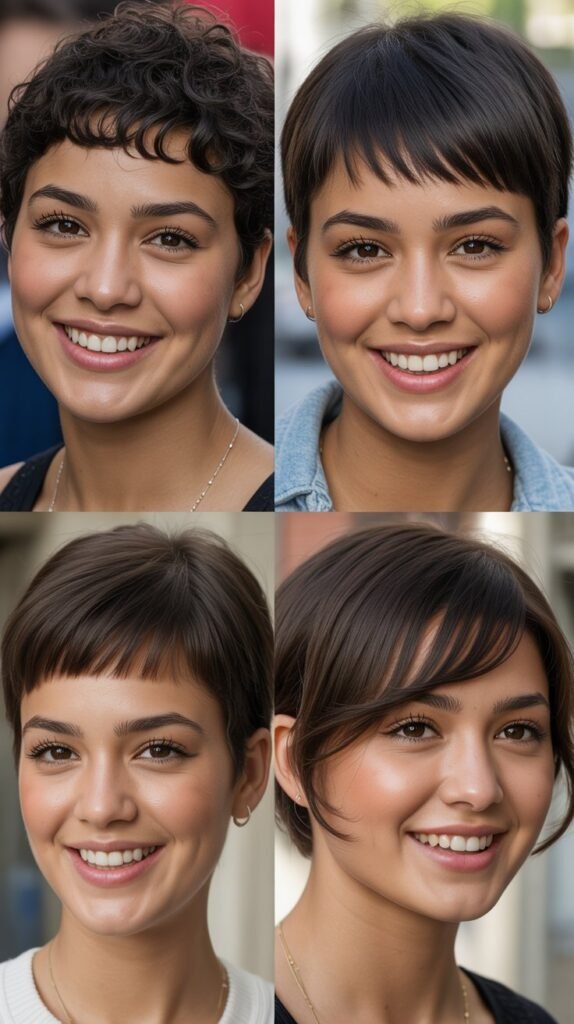
The pixie with baby bangs features ultra-short fringe that creates a distinctive, fashion-forward statement. This bold combination doubles down on short length for maximum impact.
- Baby bangs typically measure one inch or less, sitting well above the eyebrows and creating immediately noticeable contrast with conventional fringe.
- This dramatic choice emphasizes eyes and eyebrows while requiring confidence to carry off successfully in various social settings.
- The ultra-short fringe requires frequent maintenance as even minor growth significantly impacts the intended aesthetic.
- Styling remains minimal due to the abbreviated length, though products can add texture or piece-y separation to the tiny fringe section.
- This bold pairing appeals to fashion-forward individuals who embrace unconventional aesthetics and enjoy making distinctive style statements.
- The combination works particularly well with graphic makeup and bold fashion choices that complement the hair’s dramatic aesthetic.
35. Pixie Grown Out
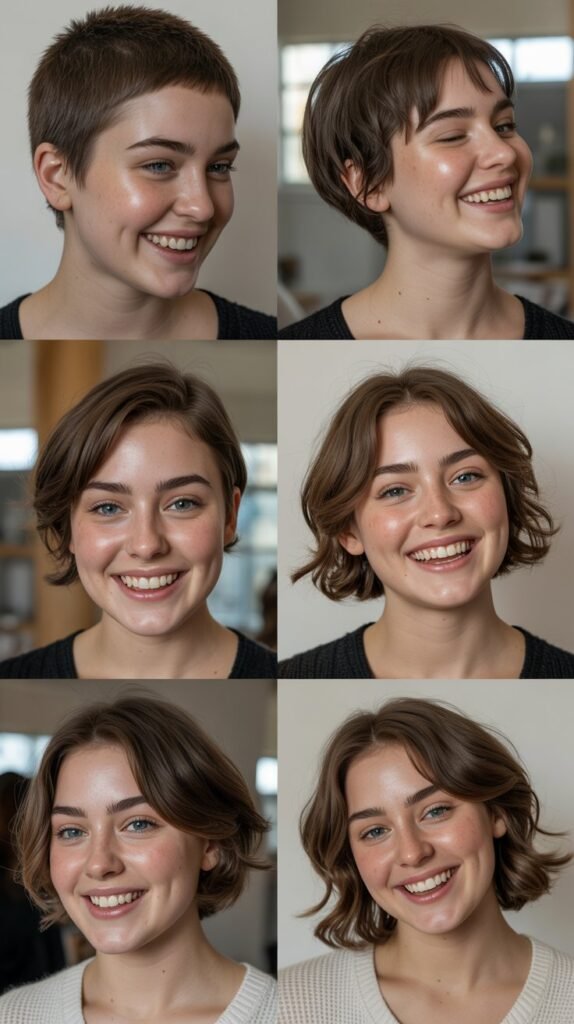
The grown-out pixie represents the transitional phase when a pixie cut begins lengthening beyond its original shape.
This awkward stage can be styled intentionally to create interesting interim looks while growing toward a different style.
- The growing-out phase typically features uneven lengths with the back and sides growing faster than intended while the top maintains more length.
- Strategic styling using bobby pins, small clips, headbands, or styling products can make transitional lengths work rather than simply enduring them.
- Regular maintenance trims can shape the growing pixie into intermediate styles like pixie-bobs or longer asymmetrical cuts during the transition.
- This phase requires patience and creative styling solutions, viewing it as an opportunity to explore different looks rather than frustrating waiting period.
- Adding texture through styling products helps blend uneven lengths while creating intentional tousled appearance that disguises awkward growth.
- Understanding that growth takes time—typically 6-12 months to reach chin length—helps set realistic expectations during the transition process.
36. Pixie with Color Melt
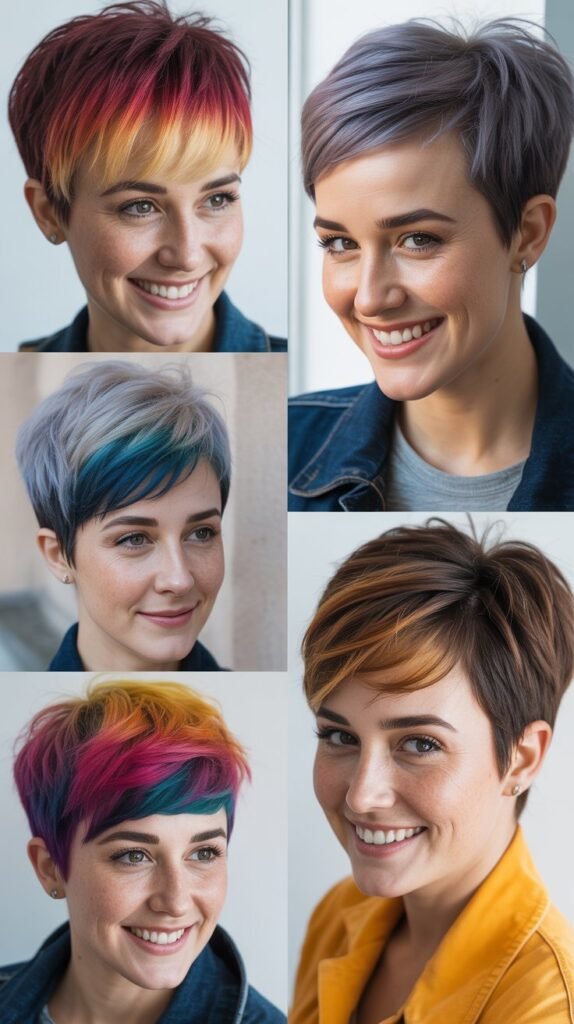
The pixie with color melt features gradual color transitions that create seamless blending between shades. This sophisticated color technique adds dimension and artistic interest to short hair without harsh lines.
- Color melting involves blending multiple shades together so transitions appear gradual rather than distinctly separated.
- This technique works with both natural color progressions (darker roots to lighter ends) and fashion colors for artistic rainbow effects.
- The short canvas of pixie cuts means color melts appear more concentrated and visible than on longer hair where transitions span greater length.
- Maintenance requires professional color refreshing every 6-8 weeks to maintain the seamless blending and vibrancy of the melt.
- The dimensional effect enhances the cut’s structure, with different shades emphasizing layers, texture, and architectural elements.
- Color melt options range from subtle natural progressions to bold multi-color statements depending on personal style preferences.
37. Textured Crop Pixie
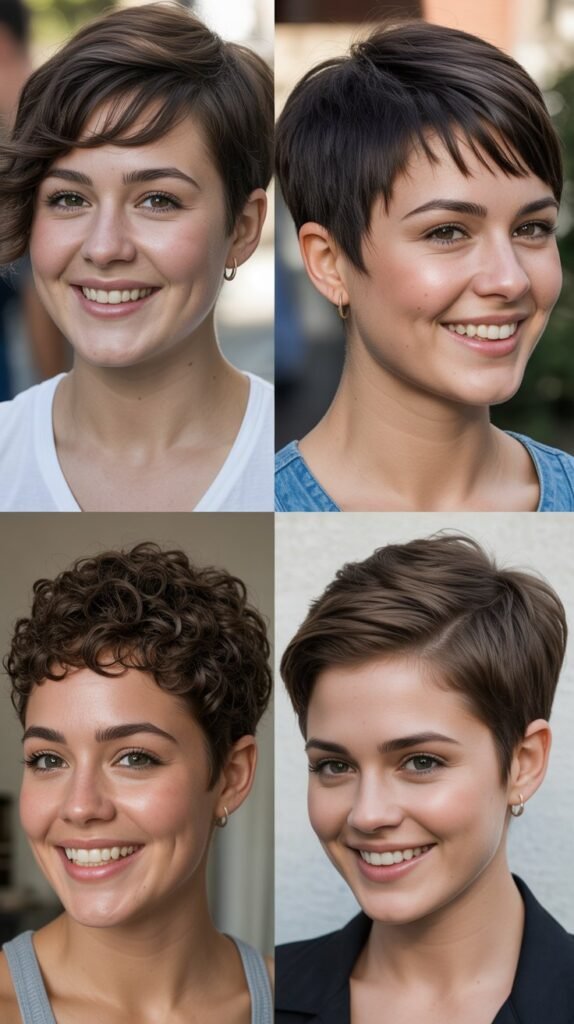
The textured crop pixie features short, uniform length with substantial texture added through product and styling. This modern interpretation emphasizes piece-y separation and matte finishes over smooth styling.
- The crop typically maintains relatively uniform length (1-2 inches) throughout rather than dramatic variations between sections.
- Texture comes primarily from styling with clay, paste, or wax products that create separation and definition without shine or stiffness.
- This style embraces slightly disheveled, lived-in appearance that feels current and effortlessly cool rather than overly groomed.
- The matte texture provides substantial grip and hold while maintaining natural movement rather than helmet-like rigidity.
- This interpretation works across various occasions from casual daily wear to evening events when paired with appropriate clothing and makeup.
- The textured crop requires daily product application but minimal time investment—usually just working product through with fingers produces the desired effect.
38. Pixie with Nape Undercut
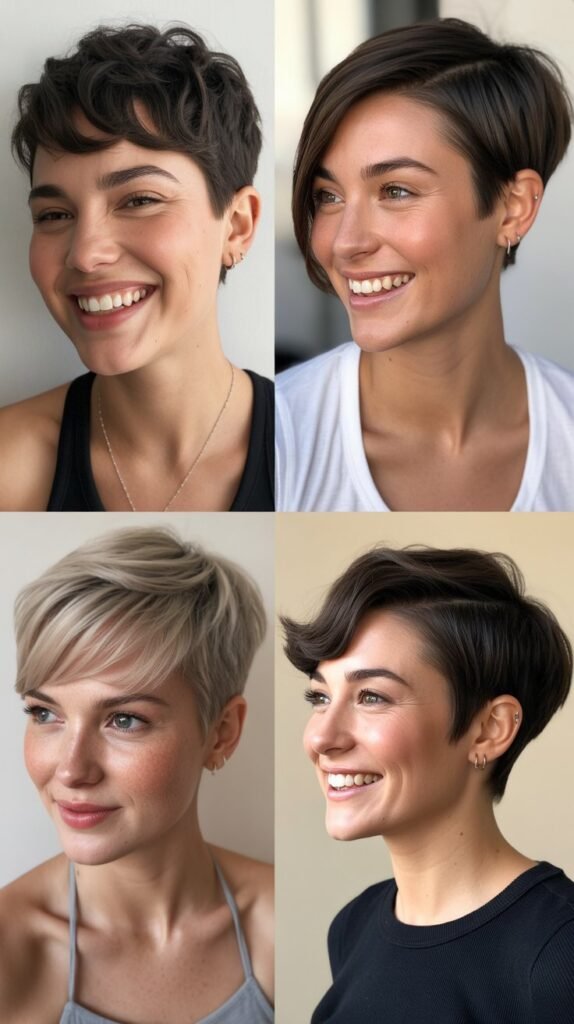
The pixie with nape undercut features shaved or closely cropped hair specifically at the back of the neck while maintaining traditional pixie length elsewhere.
This targeted detail adds edge while remaining somewhat concealable.
- The nape undercut creates interesting detail visible from behind or when hair is tucked up, while remaining hidden when hair falls naturally.
- This placement offers a compromise between conservative presentation and edgy personal style that can be revealed or concealed as situations require.
- The shaved nape section provides cooling benefits and eliminates the sometimes-awkward growth pattern at the hairline for easier maintenance.
- This detail can incorporate patterns or designs within the undercut section for additional personalized creative expression.
- The nape undercut requires regular maintenance (every 2-3 weeks) to preserve the clean contrast and prevent the shaved section from becoming unintentionally fuzzy.
- This subtle rebellious element appeals to those who want to incorporate edge into otherwise professional or conservative appearances.
39. Pixie with Side Shave
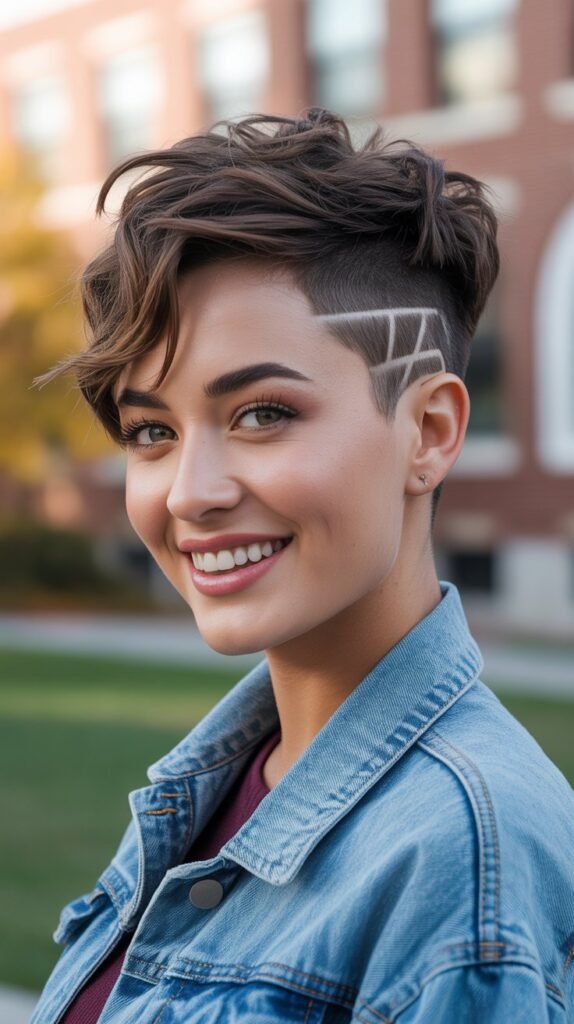
The pixie with side shave features one dramatically shortened or shaved side while maintaining length on the opposite side and top. This asymmetrical approach creates bold visual impact and styling versatility.
- The shaved side typically goes down to skin or very close crop using clippers, creating maximum contrast with the fuller opposite side.
- This dramatic asymmetry draws attention and creates memorable visual impact that clearly communicates personal style confidence.
- The longer side can be styled various ways—swept over the shaved section, tucked behind the ear, or even braided for different looks.
- This style offers the practical cooling and ease of shaved sections while maintaining enough length for styling flexibility and femininity if desired.
- The side shave requires regular maintenance on the shaved portion while the longer section can grow between appointments without losing the style’s essence.
- This bold choice works particularly well for those who appreciate alternative fashion, punk aesthetics, or distinctive personal presentation.
40. Finger-Combed Pixie
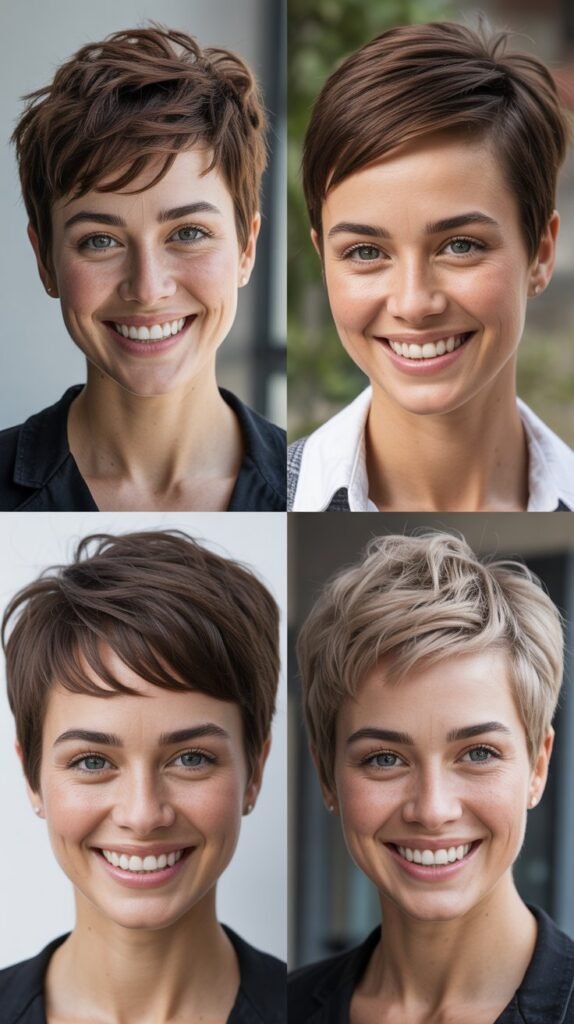
The finger-combed pixie emphasizes natural texture and casual styling achieved simply by running fingers through hair. This effortless approach prioritizes ease and natural movement over precision or structure.
- This styling method works best with cuts that have good inherent shape, as finger-combing enhances rather than creates the structure.
- Products like light pomades, texturizing creams, or sea salt sprays add definition and hold while maintaining the natural, touchable feel.
- The approach embraces slight imperfection and variation, celebrating hair’s organic tendencies rather than forcing it into precise styles.
- Finger-combing creates piece-y separation and lived-in texture that appears authentically casual rather than carefully constructed.
- This method suits busy mornings, active lifestyles, or anyone who prefers spending minimal time on hair styling.
- The relaxed aesthetic pairs well with casual fashion and natural makeup for cohesive, effortless overall presentation.
41. Pixie with Root Shadow
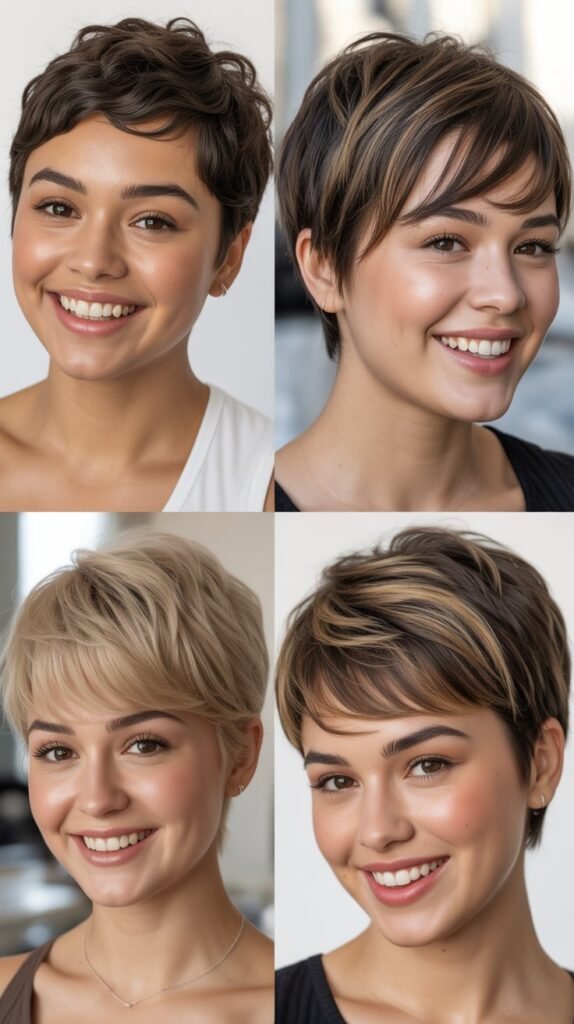
The pixie with root shadow features intentionally darker roots that gradually blend into lighter lengths. This dimensional color technique adds depth while reducing visible regrowth lines and maintenance frequency.
- Root shadowing involves applying darker color at the roots that blends seamlessly into the lighter base color throughout the length.
- This technique creates soft, natural-looking dimension while making color maintenance less demanding as regrowth blends into the intentional shadow.
- The darker roots add depth and prevent the flatness that can occur with all-over single-process light colors on short hair.
- Shadow placement can be customized from subtle (one shade darker) to dramatic (several shades difference) based on desired contrast.
- This approach works particularly well for those lightening hair who want to reduce the frequency of color touch-ups required.
- The dimensional effect enhances texture and layers, creating visual interest through both color and cut structure.
42. Pixie for Fine Hair
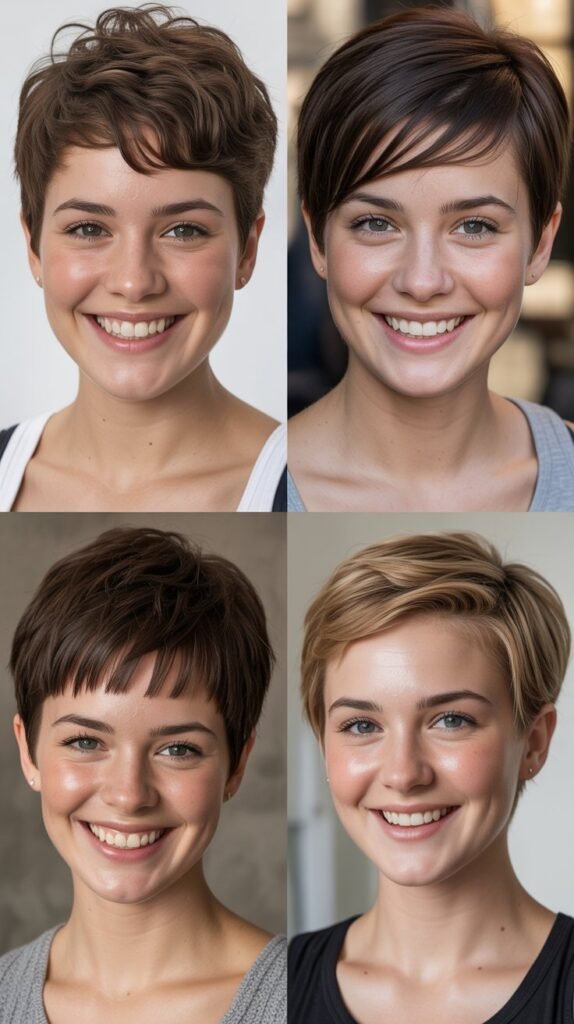
The pixie for fine hair incorporates specific techniques that maximize the appearance of fullness and density. Strategic cutting and styling create the illusion of more substantial hair than actually exists.
- Fine hair pixies benefit from graduated layering that builds volume without removing too much density through thinning.
- Blunt cutting techniques preserve the hair ends’ thickness, preventing the wispy, sparse appearance that can result from excessive texturizing.
- Styling focuses on volumizing products like mousses and root lifters applied to damp hair before blow-drying for maximum fullness.
- The shorter length reduces weight that pulls fine hair flat, allowing it to maintain more natural lift and body.
- Strategic color placement through highlights or dimensional color creates the illusion of more depth and thickness.
- This adaptation proves that fine hair can successfully wear pixie cuts when cut and styled with techniques that complement its characteristics.
43. Pixie with Curtain Bangs
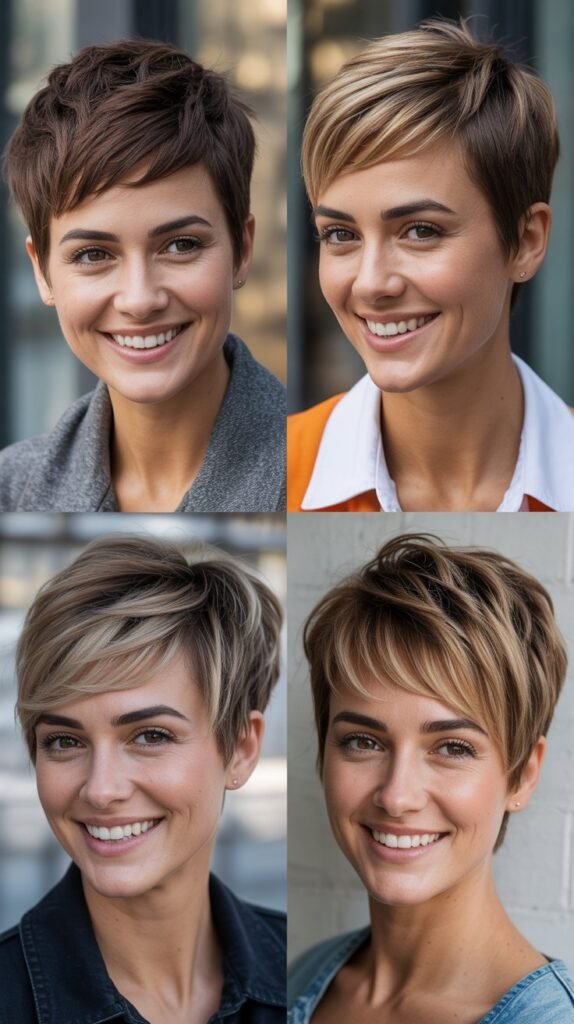
The pixie with curtain bangs features center-parted fringe that sweeps to either side of the face. This face-framing element adds softness and vintage-inspired charm to short hair.
- Curtain bangs typically reach eyebrow length or slightly longer, creating soft framing on both sides of the face.
- The center part creates symmetry while the sweeping sides add movement and softness that balances the pixie’s short overall length.
- This style requires sufficient length in the front section to create the curtain effect, making it unsuitable for extremely short crops.
- Styling involves blow-drying the bangs with a round brush to create the characteristic outward sweep on each side.
- The curtain fringe adds feminine romantic quality while maintaining the pixie’s practical short length throughout the rest of the cut.
- This detail particularly flatters oval, heart-shaped, and diamond face shapes by creating width at the forehead while framing the face.
44. Modern Pixie Cut
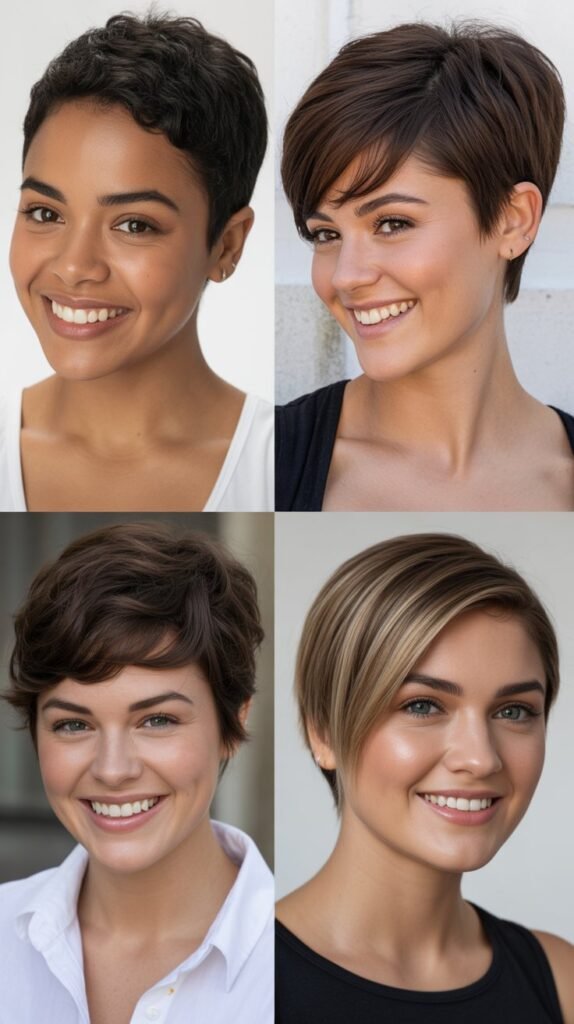
The modern pixie cut incorporates current trends and techniques while maintaining the style’s fundamental characteristics. This contemporary interpretation keeps the pixie feeling fresh and relevant to current fashion.
- Modern variations often combine elements from different styles—undercuts paired with textured tops, or traditional pixies updated with current color trends.
- Contemporary styling emphasizes texture, movement, and piece-y separation over the smooth, polished finishes of previous decades.
- Current trends lean toward slightly longer lengths with more versatility rather than the ultra-short crops popular in earlier pixie iterations.
- Modern pixies frequently incorporate color techniques like balayage, color melts, or fashion colors that add dimension and personality.
- The updated approach balances edge with wearability, creating styles that feel current without becoming dated as trends evolve.
- This interpretation appeals to those who want classic pixie convenience updated with contemporary aesthetics and styling approaches.
45. Pixie with Deep Side Part
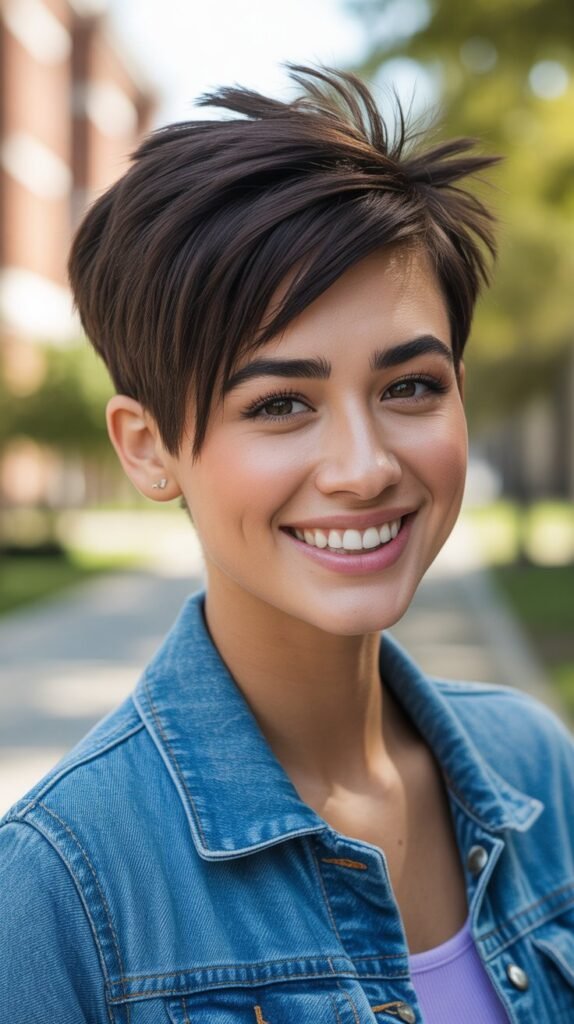
The pixie with deep side part features a dramatically off-center part line that creates asymmetry and visual interest. This simple styling element significantly changes the overall appearance and proportions.
- Deep parts typically place the part line several inches from the center, creating substantial asymmetry between the two sides.
- The heavier side gains volume and presence while the lighter side remains sleeker and closer to the head.
- This styling approach can help balance asymmetrical face shapes or features by strategically placing volume where needed.
- Creating and maintaining the deep part requires blow-drying hair in the desired direction and may involve products for hold.
- The dramatic part adds sophistication and polish, making it particularly suitable for professional environments or formal occasions.
- This element can be varied by changing the part placement, allowing for different looks without cutting or restyling the entire pixie.
46. Pixie with Balayage
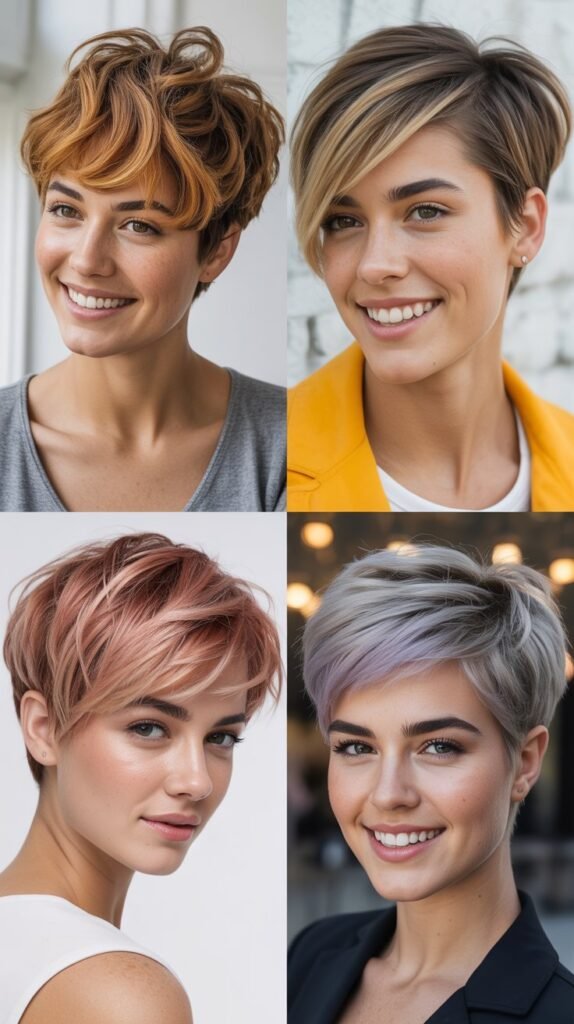
The pixie with balayage features hand-painted color highlights that create natural-looking dimension. This freehand coloring technique adds depth and interest while maintaining organic color placement.
- Balayage involves painting color onto hair in sweeping motions rather than using traditional foil highlighting techniques.
- On short hair, balayage creates concentrated color dimension that emphasizes the cut’s structure and architectural elements.
- The technique produces natural-looking results that mimic how sun would naturally lighten hair, creating soft dimensional effects.
- Placement focuses on areas where light would naturally hit—the top surface, around the face, and crown area for maximum impact.
- Maintenance for balayage pixies remains relatively low as the hand-painted placement grows out more naturally than traditional highlights.
- This sophisticated color approach elevates simple pixie cuts, adding luxury and dimension without overwhelming the style’s clean lines.
47. Pixie for Round Faces
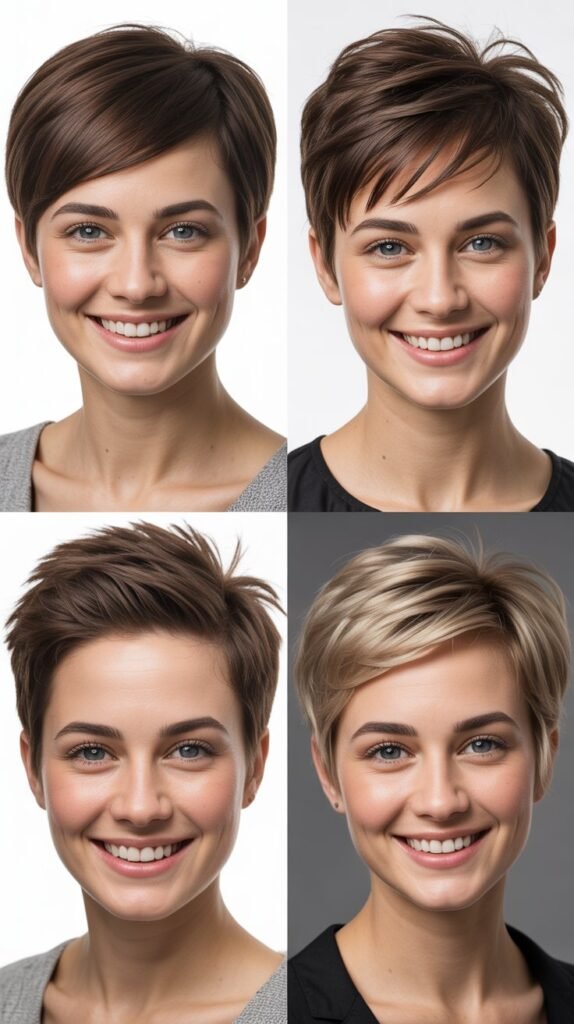
The pixie for round faces incorporates specific elements that create length and angularity to balance facial roundness. Strategic styling and cutting techniques work to elongate and slim visual proportions.
- Pixies for round faces typically include height at the crown to add vertical dimension that elongates the overall silhouette.
- Angled or asymmetrical elements create diagonal lines that counter the face’s circular shape, adding definition and structure.
- Side-swept bangs or parts direct attention diagonally across the face rather than emphasizing its width.
- Avoiding blunt, straight-across elements prevents drawing horizontal lines that emphasize roundness rather than counteracting it.
- Slight longer sections around the ears and nape can create slimming framing that defines the jawline.
- This tailored approach proves that round faces can successfully wear pixie cuts when elements are customized to flatter specific facial proportions.
48. Swept-Up Pixie
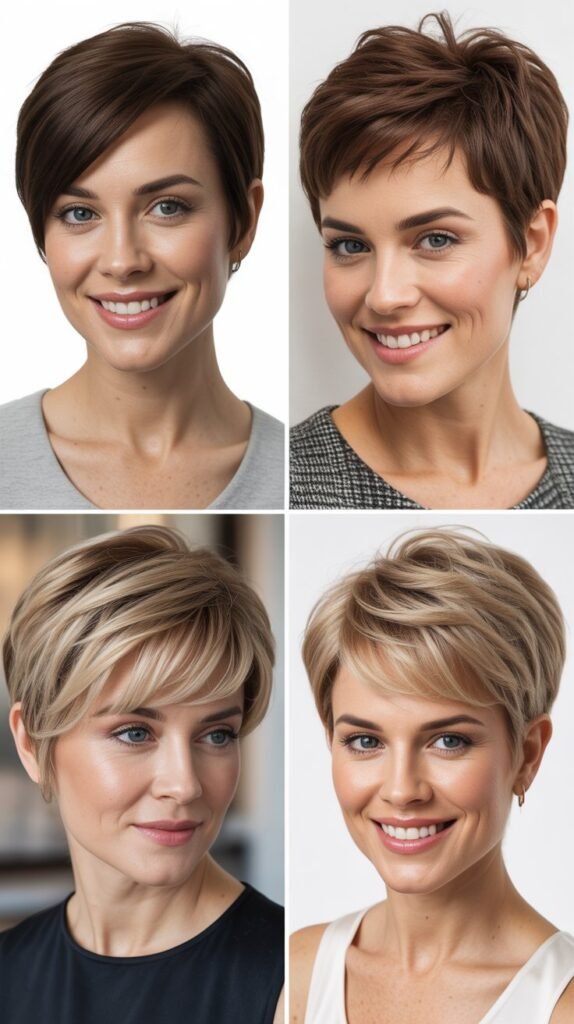
The swept-up pixie features hair styled upward and back from the face for height and dramatic effect. This styling direction creates sophistication and draws attention upward rather than outward.
- Creating the swept-up look requires sufficient length (typically 2-4 inches minimum) to work with when directing hair upward.
- Styling involves blow-drying hair in the desired direction followed by products like pomade, gel, or wax to maintain the upward position.
- This approach adds significant height, making it particularly flattering for those wanting to elongate their overall proportions.
- The swept-up styling projects confidence and polish, working particularly well for professional settings or formal occasions.
- This direction keeps hair completely off the face, emphasizing facial features and bone structure while creating clean, uncluttered appearance.
- The dramatic upward styling can be adjusted in intensity from subtle lift to extreme height depending on desired impact.
49. Pixie with Lowlights
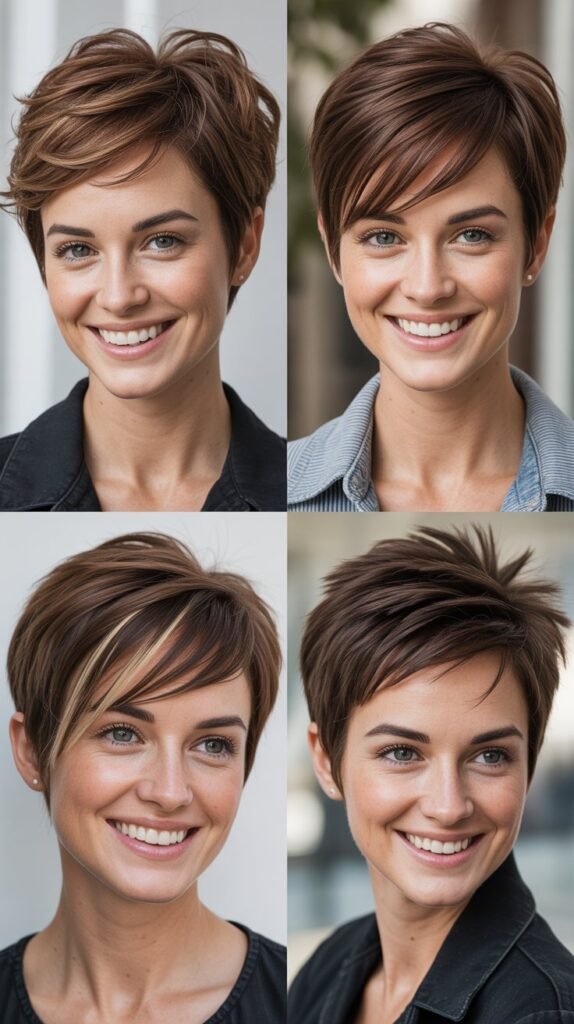
The pixie with lowlights incorporates darker color sections that add depth and contrast to the base color. This inverse highlighting technique creates rich dimension that enhances the cut’s texture.
- Lowlights add darker tones woven throughout lighter base colors, creating shadow and dimension that makes hair appear fuller.
- On short hair, lowlights create definition between layers and add visual interest to simple styles that might otherwise appear flat.
- This technique works particularly well for those wanting to deepen previously lightened hair or add richness to naturally light colors.
- Strategic placement focuses on underneath sections and interior layers where shadows would naturally occur for authentic-looking results.
- Lowlights require less maintenance than highlights as regrowth blends more seamlessly with the darker color additions.
- This dimensional approach adds sophistication and depth, proving that pixies can carry complex color work despite their short length.
50. Pixie for Oval Faces
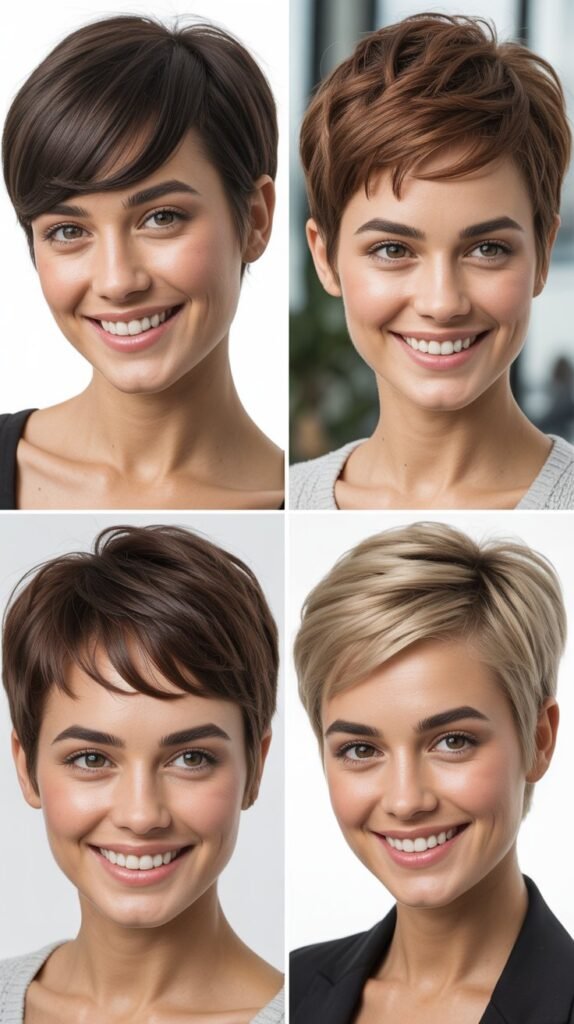
The pixie for oval faces takes advantage of balanced facial proportions that suit virtually any pixie variation. This versatile face shape allows for creative freedom in choosing style elements.
- Oval faces’ balanced proportions mean they can successfully wear everything from ultra-short crops to longer pixie-bob hybrids.
- The versatility allows for experimentation with asymmetry, extreme lengths, bold colors, or unconventional elements without proportional concerns.
- Those with oval faces can choose pixie elements based purely on personal style preferences rather than needing specific features to balance facial structure.
- This freedom enables trying trending styles, dramatic changes, or classic interpretations with equal success.
- The naturally balanced proportions mean that styling direction—whether swept forward, back, or to the side—all work equally well.
- Oval-faced individuals can use their pixie choice to express personality and style without structural limitations dictating options.
51. Pixie with Ombré
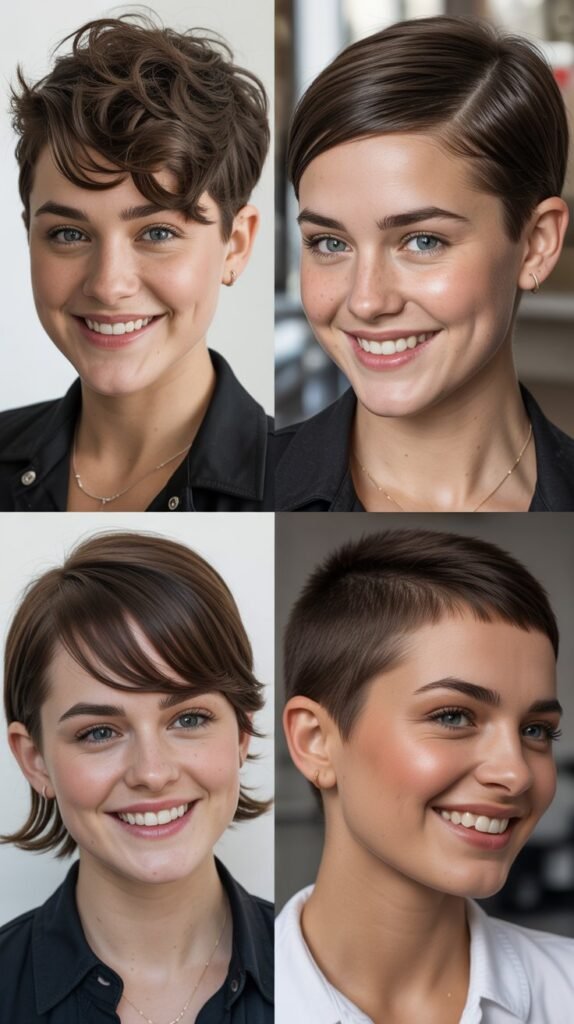
The pixie with ombré features gradual color transition from darker roots to lighter ends. This popular color technique creates dimension and interest while reducing maintenance frequency.
- Ombré on short hair creates concentrated color transitions that are more visible and dramatic than on longer lengths.
- The technique typically progresses from natural darker roots through mid-tones to lighter ends, creating depth and dimension.
- Short hair ombré requires skilled application to create smooth transitions within limited length rather than harsh lines of demarcation.
- This color approach allows for growing out lightened hair more gracefully as the darker roots are intentional rather than neglected regrowth.
- Maintenance focuses on preserving the lighter ends’ tone and condition while allowing roots to grow naturally as part of the design.
- The dimensional effect enhances pixie structure and texture, making layers and movement more visible through color contrast.
52. Pixie for Square Faces
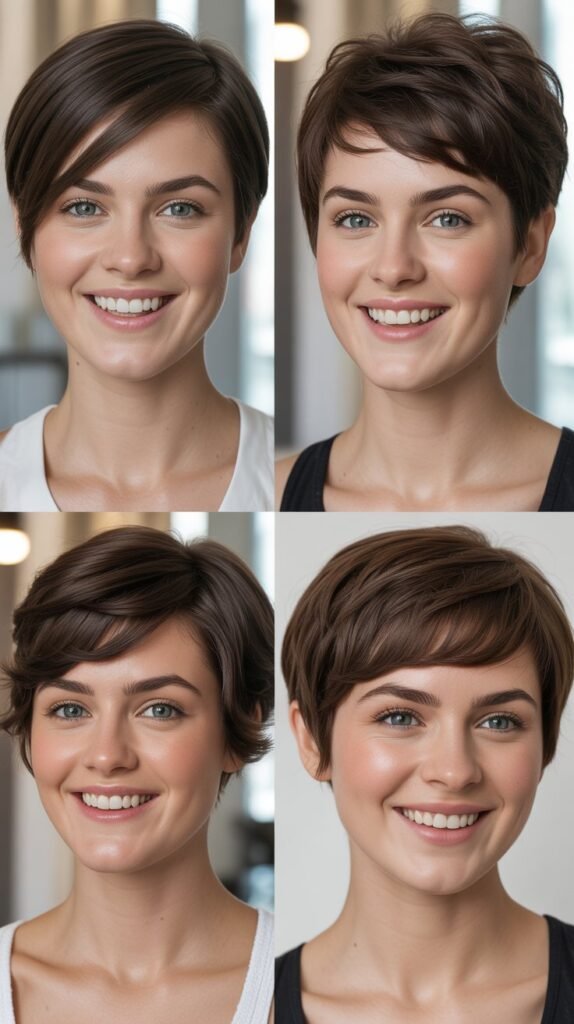
The pixie for square faces incorporates softening elements that complement angular jawlines and minimize facial width. Strategic styling creates curves and movement to balance strong facial structure.
- Pixies for square faces benefit from soft, textured elements rather than blunt geometric lines that echo the face’s natural angularity.
- Side-swept or curved fringe softens the forehead and draws attention diagonally rather than emphasizing width.
- Volume at the crown adds height that elongates the face and reduces emphasis on its squareness.
- Avoiding severe geometric cuts or blunt edges helps prevent reinforcing the face’s already strong structural lines.
- Slight length around the jaw can create softening frames that blend the transition from face to neck.
- These customizations prove that square faces can wear pixies beautifully when elements are chosen to complement rather than emphasize angular features.
53. Messy Pixie Style
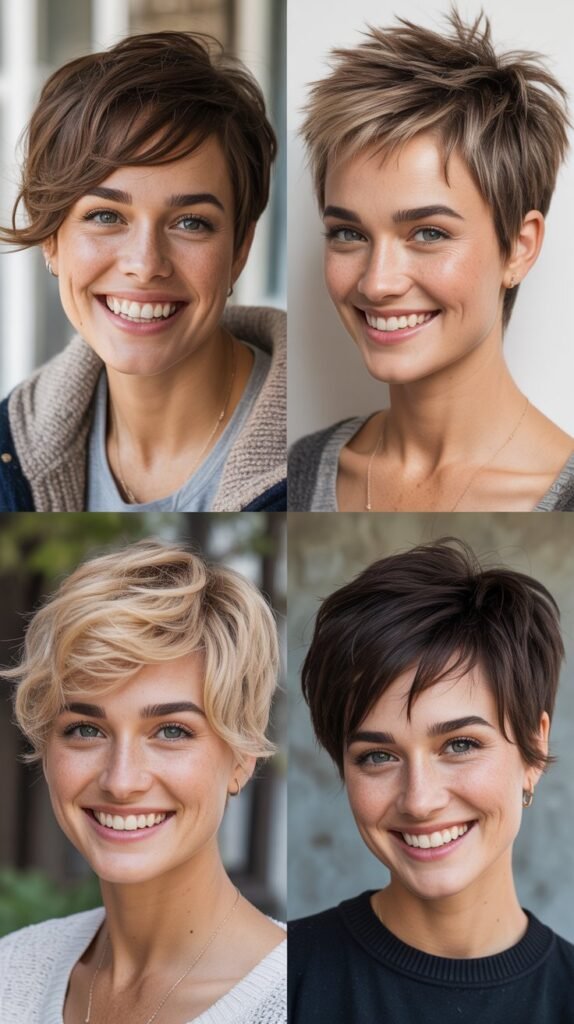
The messy pixie style embraces deliberately tousled, undone texture for casual, effortless appeal. This intentionally disheveled approach communicates relaxed confidence and approachable style.
- The messy aesthetic requires good underlying cut structure so the deliberate disorder appears intentional rather than unkempt.
- Styling involves texturizing products worked through hair with fingers, scrunching, or tousling rather than careful arranging.
- This approach works particularly well for naturally wavy or textured hair that gains character when left slightly undone.
- The casual appearance suits relaxed environments and pairs well with natural makeup and comfortable fashion choices.
- Despite appearing effortless, achieving the right balance of messy-but-styled requires understanding how much product and manipulation to use.
- This style celebrates hair’s natural tendencies and texture rather than forcing it into unnaturally smooth or structured styles.
54. Pixie with Face-Framing Layers
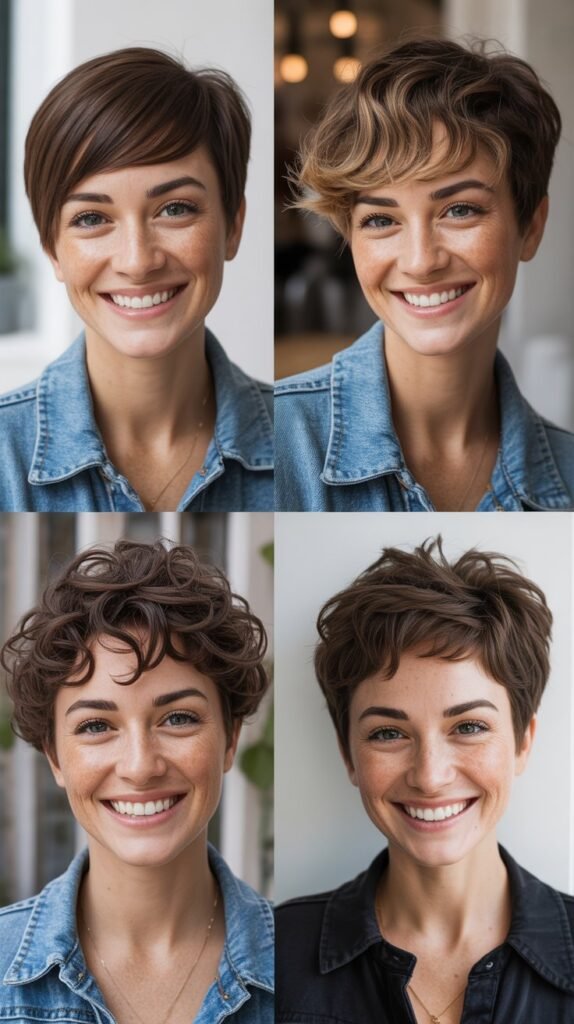
The pixie with face-framing layers incorporates slightly longer pieces around the facial perimeter that create soft framing. These strategic sections add femininity while maintaining short overall length.
- Face-framing layers typically fall around the temples, cheeks, or jaw, creating gentle lengthening that softens the transition between hair and face.
- These longer sections can be styled toward the face for framing or away for a different effect, providing styling versatility.
- The framing elements add femininity to pixie cuts that might otherwise read as androgynous or severe.
- Strategic placement draws attention to favorable facial features like eyes or cheekbones while the framing provides gentle contouring.
- The layers require some length to work effectively, making this approach unsuitable for extremely short or cropped pixie variations.
- This detail bridges the gap between ultra-short crops and longer styles, providing comfort for those hesitant about losing all face-framing length.
55. Pixie for Heart-Shaped Faces
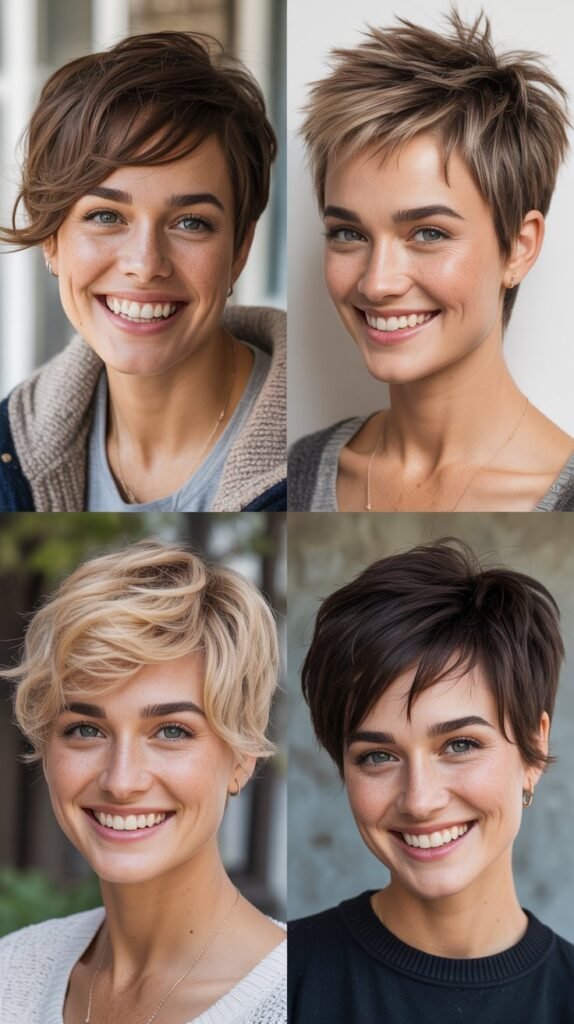
The pixie for heart-shaped faces incorporates elements that balance a wider forehead and narrower chin. Specific styling and cutting techniques create visual harmony across facial proportions.
- Heart-shaped faces benefit from pixies with width at the jawline to balance the naturally wider forehead and create better proportion.
- Side-swept or wispy bangs can minimize forehead width while drawing attention across the face rather than emphasizing the top-heavy structure.
- Avoiding excessive volume at the crown prevents making the forehead appear even wider and throwing proportions further off balance.
- Slight length or texture around the jaw and ears creates balancing width at the face’s narrower lower portion.
- These face-specific customizations ensure the pixie flatters rather than exaggerates the heart-shaped structure.
- This tailored approach demonstrates how pixies can be adapted to complement any face shape through strategic element placement.
56. Slicked-Down Pixie
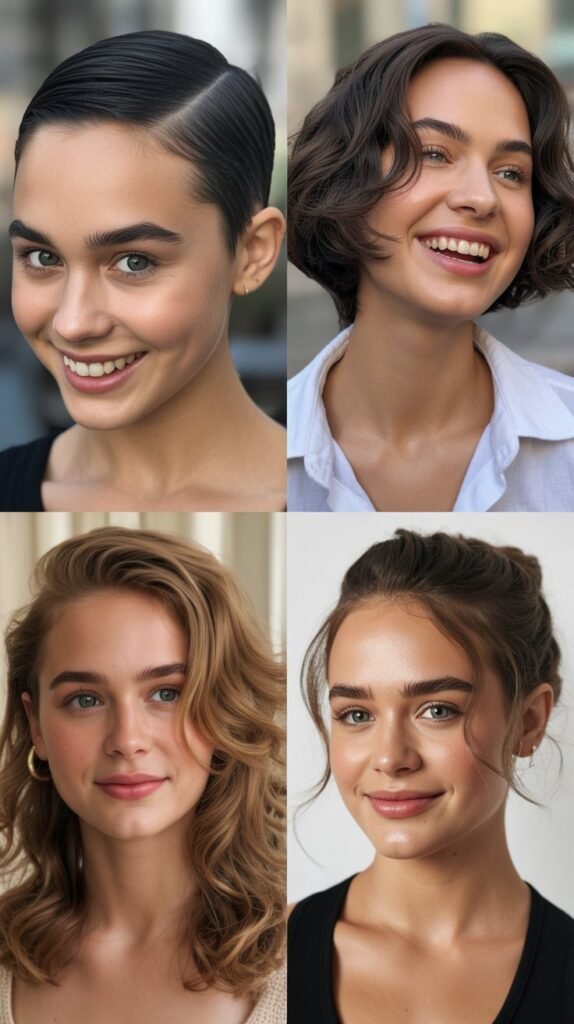
The slicked-down pixie features hair styled close to the head with smooth, polished products creating sleek sophistication. This ultra-neat styling projects elegance and controlled refinement.
- Achieving this look requires strong-hold products like gel or pomade that provide shine and control while keeping hair flat against the head.
- The sleek styling completely exposes facial features and bone structure, making it ideal for those confident in their facial proportions.
- This approach works particularly well for professional environments, formal occasions, or when paired with elegant fashion and makeup.
- The close styling reduces overall volume, making it especially suitable for those with thick or coarse hair wanting to minimize bulk.
- Maintaining the sleek appearance throughout the day may require touch-ups or additional product application for lasting hold.
- This sophisticated styling transforms even simple pixie cuts into elegant statements through the power of smooth, controlled finishing.
57. Pixie with Natural Texture
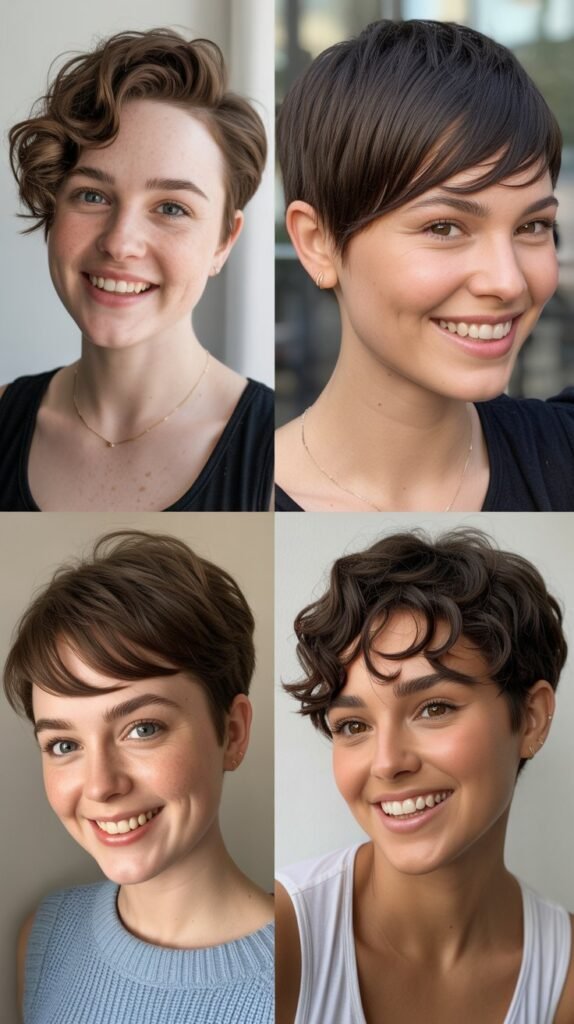
The pixie with natural texture celebrates hair’s inherent characteristics whether curly, wavy, or straight. This approach emphasizes working with rather than against natural tendencies for authentic, effortless results.
- Cutting techniques respect how different textures behave when short, adjusting approaches for curly, wavy, or straight hair characteristics.
- Styling focuses on enhancing natural texture through appropriate products—curl creams for curls, sea salt spray for waves, smoothing serums for straight hair.
- This philosophy embraces hair’s authentic state rather than forcing it into styles that require fighting its natural inclinations.
- The approach typically requires less daily manipulation and heat styling since the goal is enhancement rather than transformation.
- Natural texture pixies celebrate individuality and diversity, acknowledging that beautiful short hair comes in many different textures and patterns.
- This authentic approach often proves more sustainable long-term as it doesn’t require constant effort to maintain unnatural styling.
58. Statement Pixie Cut
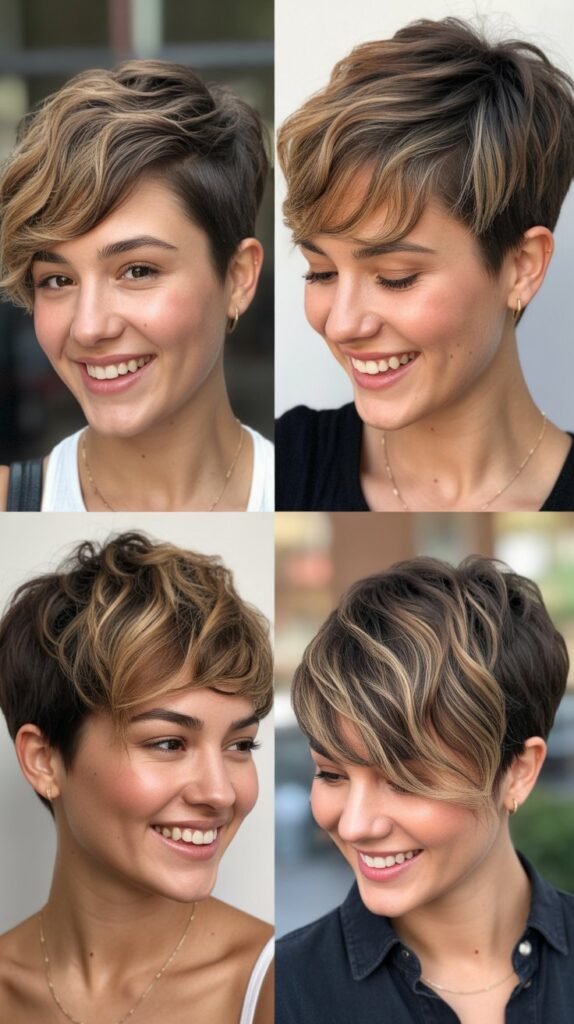
The statement pixie cut combines multiple bold elements—dramatic color, unconventional cutting techniques, or extreme styling—for maximum impact.
This fearless approach makes hair a central element of personal style expression.
- Statement pixies might incorporate vibrant fashion colors, extreme asymmetry, shaved patterns, or unexpected texture combinations.
- These bold styles communicate confidence and individuality, making clear that the wearer embraces distinctive personal presentation.
- The dramatic nature requires commitment to maintenance and styling to preserve the statement-making elements.
- Statement pixies work particularly well for creative professionals, artists, or those in industries that celebrate personal style expression.
- The bold approach often becomes a signature element of personal branding and identity beyond just a hairstyle choice.
- This fearless interpretation proves that pixie cuts can push boundaries and challenge conventional beauty standards while remaining wearable and functional.
Conclusion
The journey through 58 Sleek Short Pixie Hairstyles for a Clean, Sharp Look reveals the extraordinary versatility and timeless appeal of this iconic haircut.
From classic sleek variations to bold contemporary interpretations, the pixie cut continues to evolve while maintaining its core promise of style with simplicity.
Whether you’ve discovered the perfect cut for your face shape, found inspiration for your next color transformation, or gained confidence to finally take the plunge into short hair, this comprehensive guide proves that pixies offer endless possibilities for self-expression.
The clean, sharp aesthetic of a well-executed pixie cut transcends trends, providing a foundation for personal style that adapts to your life, schedule, and evolving preferences.
Embrace the freedom, confidence, and striking beauty that comes with joining the ranks of pixie enthusiasts who’ve discovered that sometimes less truly is more, and that the right short haircut can be the most transformative beauty decision you’ll ever make.

