
The pixie cut has transcended decades as a symbol of confidence, liberation, and bold style choices, and 2026 is witnessing an extraordinary evolution of this timeless haircut.
Whether you’re contemplating your first dramatic chop or seeking fresh inspiration to reinvent your current pixie, the year 2026 brings an exciting fusion of classic elegance and avant-garde creativity that will transform how you perceive short hair.
This comprehensive guide to 62 Trend Setting Pixie Hairstyles Inspired by 2026 Looks explores everything from textured crops and asymmetric cuts to color innovations and styling techniques that define modern pixie aesthetics.
You’ll discover how today’s top hairstylists are reimagining the pixie with unexpected layers, sculptural shapes, and personalized details that flatter every face shape and hair texture.
The article covers essential maintenance tips, styling products, celebrity inspirations, and practical advice for transitioning to shorter lengths while maintaining hair health and versatility.
From edgy undercuts to soft feminine variations, from platinum blonde statements to rich dimensional colors, each hairstyle showcases the remarkable range and adaptability of the pixie cut in contemporary fashion.
The 2026 pixie revolution celebrates individuality, empowering you to express your unique personality through carefully crafted cuts that balance sophistication with playful experimentation.
1. Classic Textured Pixie with Modern Twist
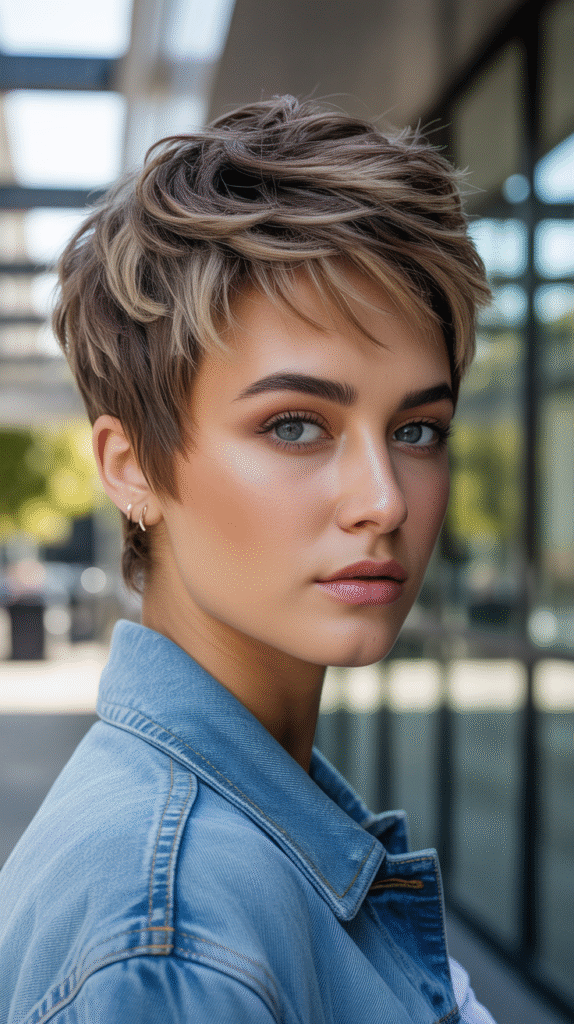
The classic textured pixie remains a foundational style in 2026, but contemporary interpretations have elevated it with innovative cutting techniques and dimensional styling.
This versatile cut works beautifully for women seeking a low-maintenance yet polished look that transitions seamlessly from professional settings to casual weekends.
- The textured pixie incorporates strategically placed layers throughout the crown and sides to create natural movement and prevent the flat appearance often associated with ultra-short cuts.
- Stylists achieve the modern twist by using point-cutting and razor techniques that soften edges while maintaining structure, resulting in a effortlessly tousled finish.
- This style particularly flatters oval and heart-shaped faces by adding width at the temples and creating balanced proportions.
- The beauty of this cut lies in its adaptability—you can style it sleek and sophisticated for formal occasions or add texturizing products for a relaxed, piece-y look.
- Maintenance requires trimming every 4-6 weeks to preserve the shape and prevent the style from growing out awkwardly.
- Color dimension through subtle highlights or lowlights enhances the textured layers and adds visual depth to the overall style.
2. Asymmetric Pixie with Long Side Bang
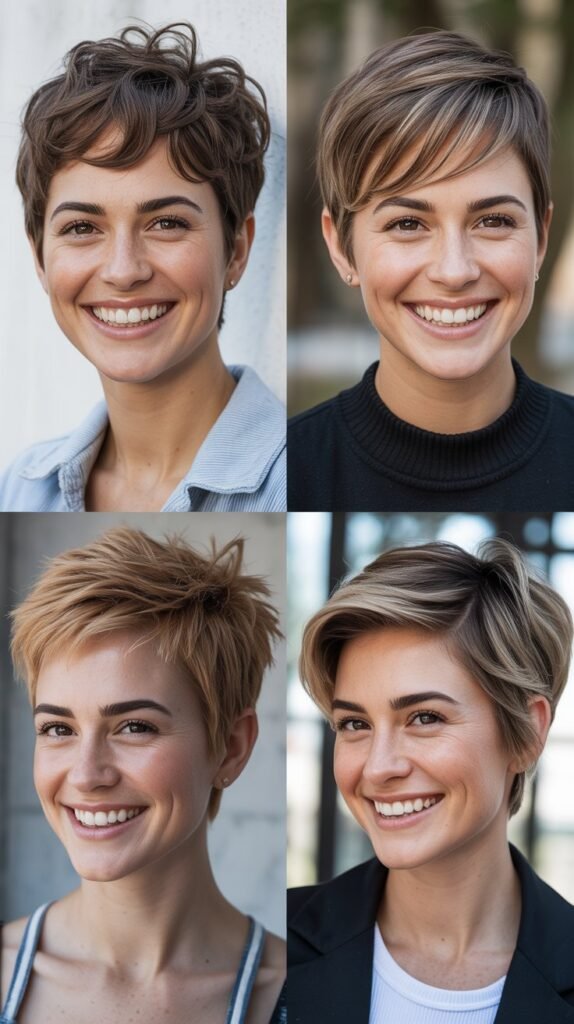
Asymmetry dominates 2026 pixie trends, offering an edgy alternative to traditional balanced cuts.
The asymmetric pixie with elongated side bang creates dramatic visual interest while providing styling versatility that appeals to fashion-forward individuals.
- This style features significantly shorter hair on one side—often clippered or closely cropped—while the opposite side maintains longer lengths that sweep across the forehead or cheekbone.
- The extended side bang can be styled forward for a mysterious, face-framing effect or tucked behind the ear to reveal the shorter undercut section.
- Asymmetric cuts work exceptionally well for square and rectangular face shapes by softening angular jawlines and drawing attention to the eyes.
- The dramatic contrast between sides creates a rebellious aesthetic that challenges conventional beauty standards while remaining professionally acceptable in most work environments.
- Styling products like lightweight pomades or texture creams help define the longer section while maintaining the clean lines of the shorter side.
- This cut requires precise execution from an experienced stylist who understands angle work and can customize the length differential to complement your facial features.
- Maintenance involves more frequent trims on the short side to preserve the dramatic contrast, typically every 3-4 weeks.
3. Pixie with Undercut Design
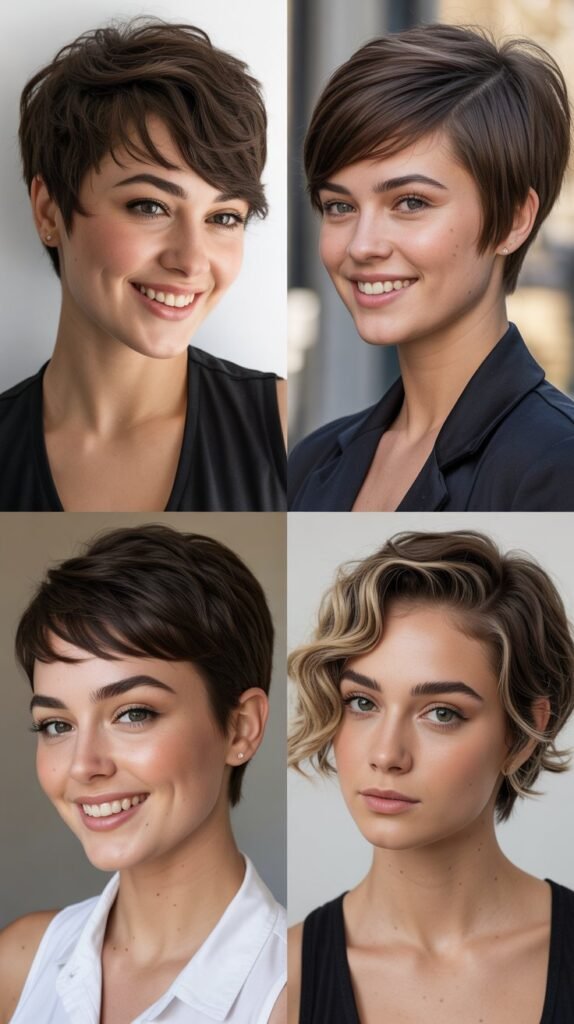
The undercut pixie represents one of 2026’s most artistic and personalized hair trends, allowing individuals to express creativity through shaved patterns and designs.
This style combines the practicality of short hair with unique artistic elements that make each cut truly one-of-a-kind.
- The undercut section typically appears at the nape, sides, or temples, where hair is shaved close to the scalp and then enhanced with intricate designs created using clippers and razors.
- Popular design elements in 2026 include geometric patterns, nature-inspired motifs like leaves or waves, minimalist line work, and even personalized symbols that hold special meaning.
- The longer pixie hair on top provides coverage when desired, allowing you to reveal or conceal the undercut design depending on the occasion and your styling preference.
- This style works beautifully for individuals with thick, dense hair, as the undercut reduces bulk while adding visual lightness and contemporary edge.
- Collaborating with a skilled barber or stylist who specializes in hair artistry ensures your design is executed with precision and artistic flair.
- Undercut designs require maintenance every 2-3 weeks to keep lines sharp and patterns visible, though the frequency depends on your hair growth rate.
- The temporary nature of these designs allows for seasonal changes and experimentation with different artistic expressions throughout the year.
4. Soft Feminine Pixie with Wispy Layers
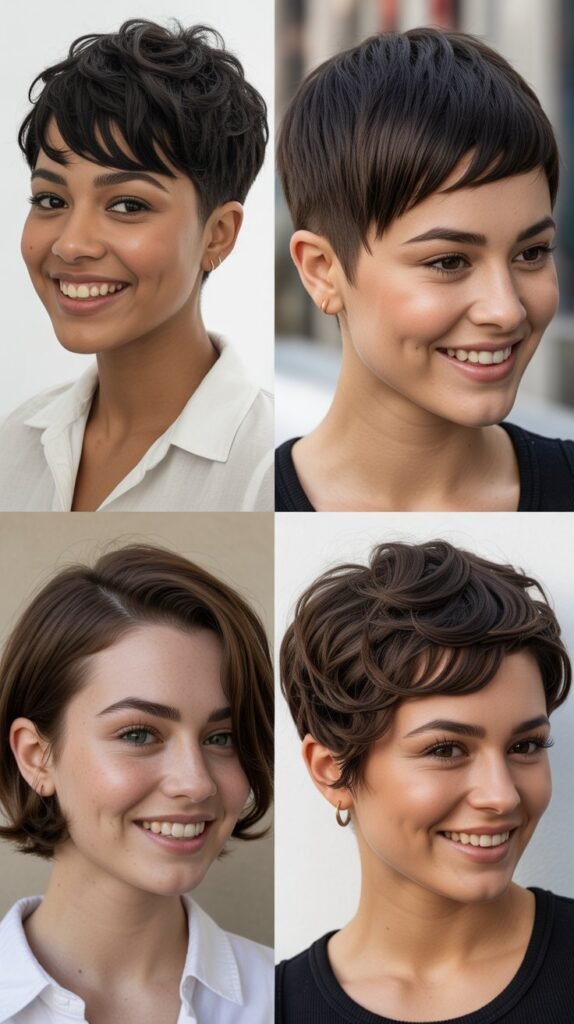
Not all pixie cuts embrace bold edginess—the soft feminine pixie with wispy layers offers a delicate, romantic alternative that proves short hair can be incredibly graceful and gentle.
This 2026 trend appeals to those seeking a pixie that maintains traditionally feminine aesthetics while enjoying the freedom of short hair.
- This style features longer lengths throughout the crown and top, typically 2-4 inches, with feathered layers that create soft, fluid movement rather than structured definition.
- The sides and back are kept relatively short but are blended seamlessly into the longer top sections without harsh lines or dramatic contrasts.
- Wispy, piece-y bangs or face-framing sections soften the forehead and draw attention to the eyes, creating a youthful and approachable appearance.
- This cut particularly flatters round and oval face shapes by adding height at the crown while maintaining softness around the face.
- Styling involves minimal product—usually just a light mousse or texturizing spray—to enhance natural texture without weighing down the delicate layers.
- The soft feminine pixie works beautifully with natural hair colors and subtle balayage techniques that add dimension without overwhelming the gentle aesthetic.
- Maintenance is relatively low-stress, requiring trims every 5-7 weeks to maintain the wispy texture and prevent layers from becoming too heavy.
5. Platinum Blonde Pixie Statement
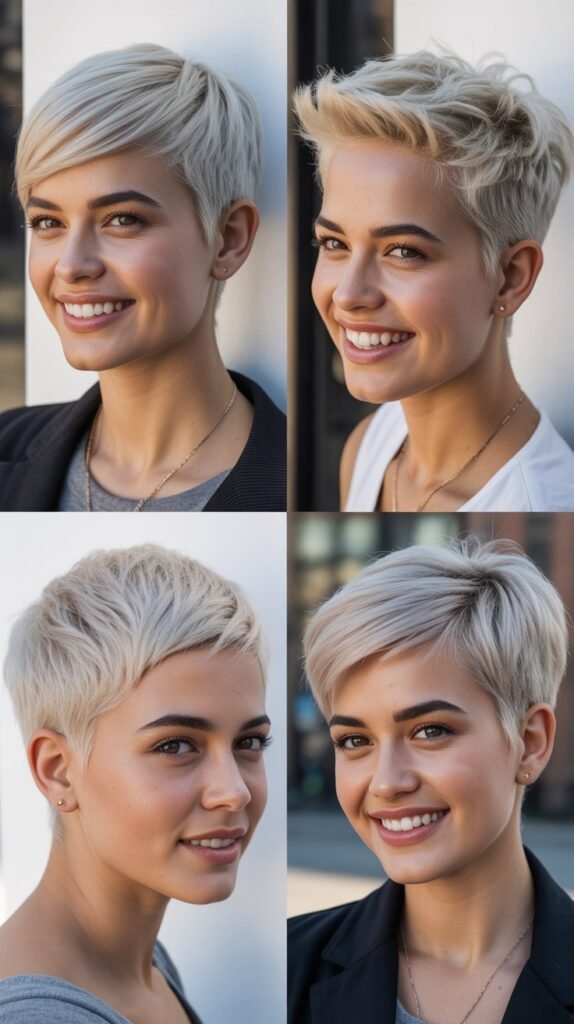
The platinum blonde pixie represents ultimate commitment to both color and cut, creating a striking, high-impact look that dominates 2026 fashion runways and social media.
This bold combination demands attention while projecting confidence and modern sophistication.
- Achieving true platinum blonde requires significant lifting and toning, especially for those with naturally dark hair, making consultation with a color specialist essential before committing to this dramatic transformation.
- The ultra-light blonde shade creates maximum contrast with the scalp and facial features, making the pixie cut appear even more defined and sculptural.
- Platinum blonde works exceptionally well with textured, piece-y pixie styles where the light color emphasizes each individual strand and layer.
- This color requires substantial maintenance including purple-toning shampoos, deep conditioning treatments, and regular salon visits every 4-6 weeks to maintain the bright, non-brassy tone.
- Skin tone considerations matter significantly—platinum blonde particularly flatters cool and neutral undertones, though skilled colorists can adjust the tone to complement warmer complexions.
- The pixie cut actually helps maintain platinum blonde health by reducing the total amount of hair requiring intensive lightening and chemical processing.
- Protective products including heat protectants and UV filters become essential when combining platinum color with short styling that receives frequent heat exposure.
6. Curly Pixie with Natural Texture
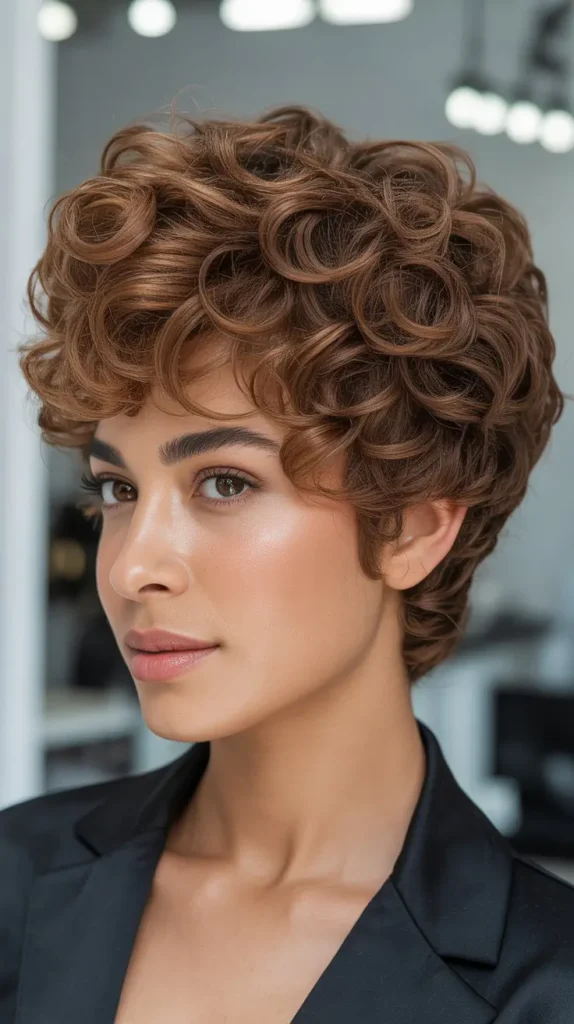
The curly pixie celebrates natural texture and represents 2026’s embrace of authentic, unprocessed beauty.
This style proves that short cuts aren’t exclusively for straight hair, offering a liberating option for individuals with naturally curly or coily hair patterns.
- The curly pixie requires specialized cutting techniques from stylists experienced with textured hair, as curls behave differently than straight hair and appear shorter when dry than when wet.
- This style typically maintains more length overall—usually 2-4 inches—to accommodate curl shrinkage while still creating the characteristic pixie silhouette.
- Layering becomes crucial for curly pixies to remove bulk, create shape, and prevent the triangular appearance that can occur with single-length curly cuts.
- The natural volume and movement of curls eliminate the need for extensive styling products or heat tools, making this one of the most low-maintenance pixie variations.
- Curl-specific products including leave-in conditioners, curl creams, and light gels help define texture while maintaining the hair’s natural moisture balance.
- The curly pixie particularly flatters round faces by adding height at the crown and creating vertical emphasis that elongates facial proportions.
- Maintenance focuses more on hair health and moisture retention than frequent trimming, with shape-ups needed every 6-8 weeks depending on growth rate and desired length.
7. Slicked-Back Pixie for Formal Elegance
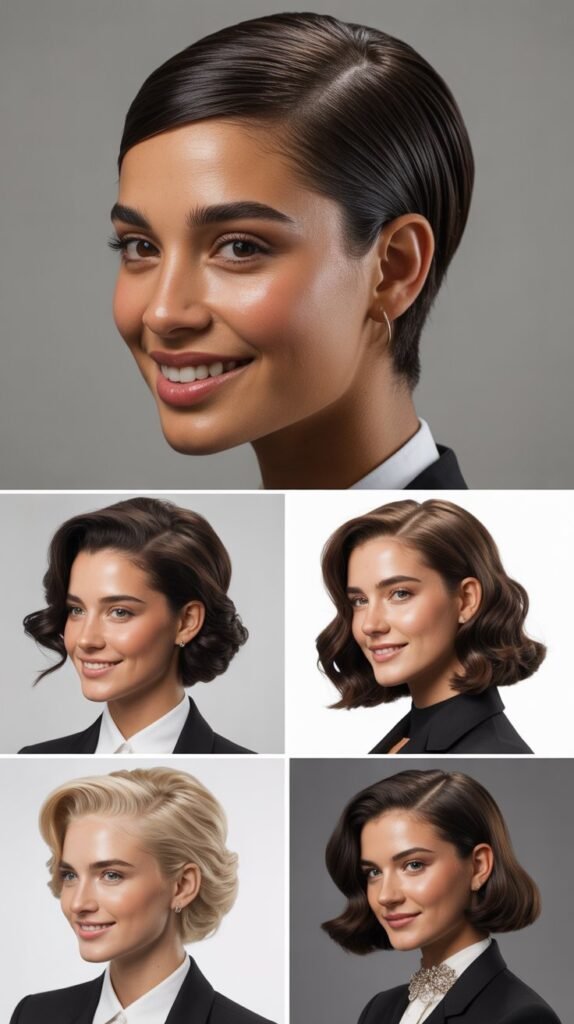
The slicked-back pixie transforms short hair into sophisticated, red-carpet-worthy elegance, proving that pixie cuts offer remarkable versatility beyond casual styling.
This 2026 trend shows how minimal length can create maximum impact for formal occasions.
- This styling technique works with pixies of varying lengths, using strong-hold gels or pomades to sweep hair back from the face and create sleek, sculpted lines.
- The slicked-back look emphasizes facial features and bone structure, creating a striking, fashion-forward appearance that photographs beautifully.
- Application involves working product through damp hair, combing everything backward in a uniform direction, and allowing hair to dry naturally or using low heat to set the style.
- High-shine products create the most dramatic effect, though matte pomades offer a more subtle, modern interpretation of the slicked-back aesthetic.
- This style works exceptionally well for special events, professional presentations, or any occasion requiring polished, put-together appearance.
- The slicked-back pixie particularly complements statement jewelry, bold lip colors, and elegant clothing by creating clean lines that don’t compete with other style elements.
- While the style appears simple, proper technique ensures hair stays in place throughout the day or evening without appearing greasy or overly stiff.
8. Choppy Pixie with Razor-Cut Edges
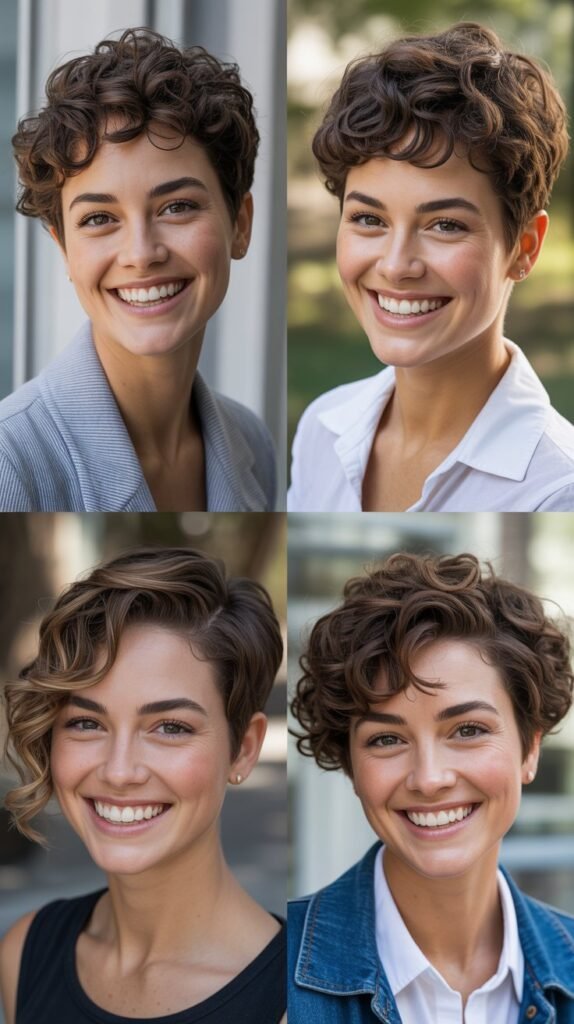
The choppy pixie with razor-cut edges embodies raw, intentional imperfection that defines 2026’s alternative beauty aesthetics.
This deliberately unrefined style creates edgy, rock-inspired looks that celebrate individuality and non-conformity.
- Razor cutting creates thin, feathered ends that appear more textured and less blunt than scissor-cut hair, generating that coveted piece-y, lived-in appearance.
- The choppy technique involves cutting hair at various lengths and angles throughout, creating deliberate irregularity that adds visual interest and movement.
- This style works beautifully for fine to medium hair textures, as the razor cutting removes weight while creating the illusion of fuller, more voluminous hair.
- Styling requires minimal effort—often just running fingers through hair with a small amount of texture paste or dry shampoo to enhance the naturally messy aesthetic.
- The choppy pixie pairs perfectly with bold hair colors, particularly vibrant fashion shades or high-contrast color blocking that emphasizes the textured layers.
- This cut flatters most face shapes by creating softness and movement rather than harsh, structured lines that might emphasize angular features.
- Maintenance involves regular trims every 4-5 weeks to preserve the intentionally choppy texture and prevent the style from appearing unkempt rather than artfully disheveled.
9. Pixie with Tapered Nape
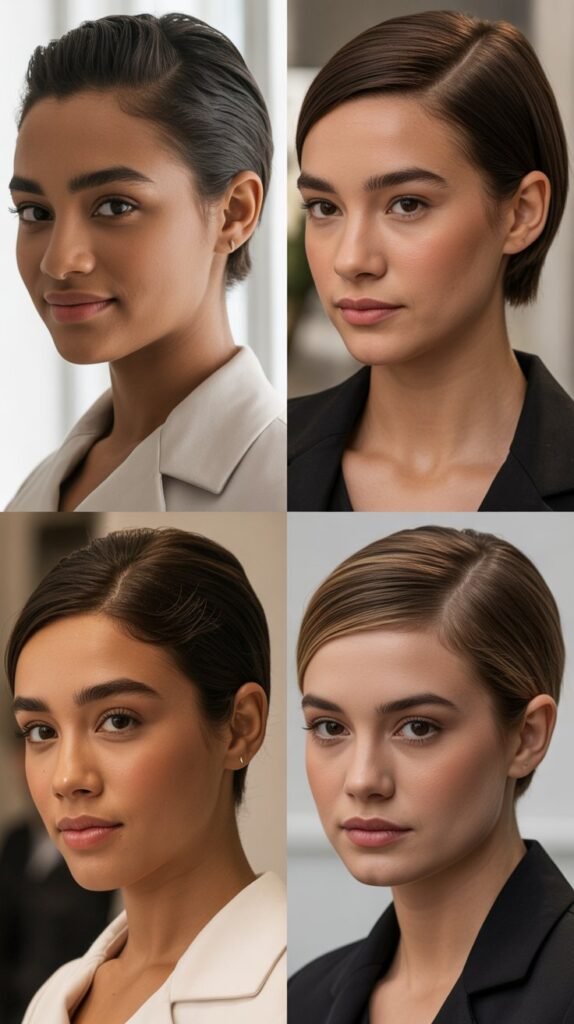
The tapered nape pixie offers clean, refined sophistication with a modern edge, featuring gradually shortened hair at the back of the head that creates beautiful neck-lengthening effects.
This 2026 style balances contemporary trends with timeless elegance.
- The taper involves gradually decreasing hair length from the occipital bone downward, creating a smooth transition that can end in a close crop or even skin-fade at the hairline.
- This technique adds structural definition and draws attention to the neck and shoulders, creating an elongating effect that appears particularly graceful.
- Tapered napes work with various pixie styles on top—from textured and messy to smooth and sleek—providing versatility while maintaining clean back sections.
- The style requires skilled clipper work and blending techniques to achieve seamless gradation without visible lines or uneven sections.
- Maintenance becomes more frequent for tapered napes, typically requiring touch-ups every 3-4 weeks to maintain the clean, precise lines characteristic of this cut.
- This style particularly benefits those with strong, defined neck and shoulder lines, as the tapered section emphasizes these natural features.
- The tapered nape also provides cooling comfort during warm weather while maintaining professional, polished appearance in any setting.
10. Long Pixie with Curtain Bangs
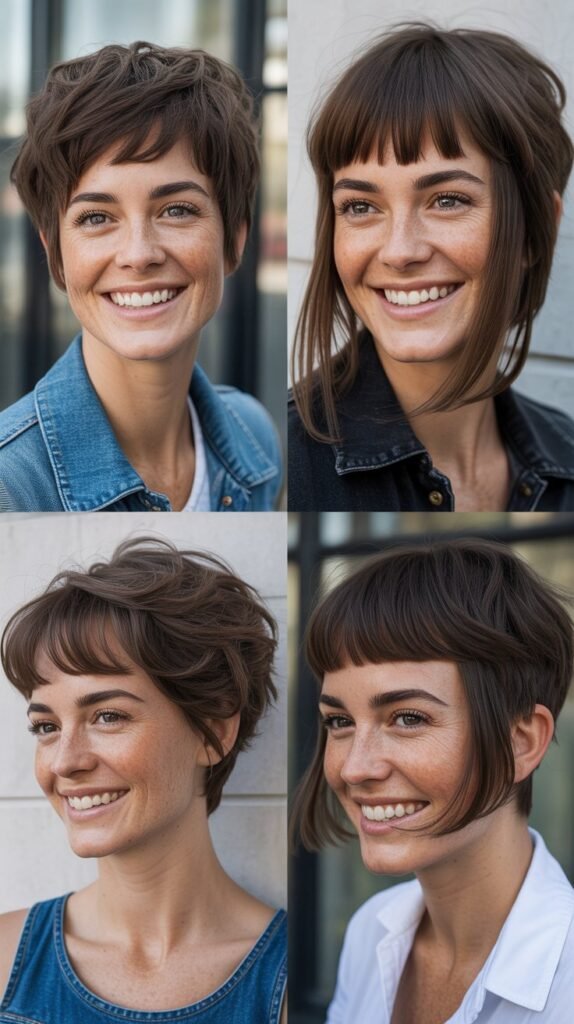
The long pixie with curtain bangs bridges the gap between pixie cuts and longer styles, offering security and versatility for those hesitant to commit to ultra-short lengths.
This 2026 trend provides the best of both worlds—manageable short hair with enough length for varied styling.
- This style maintains 3-5 inches of length throughout the top and crown, with slightly shorter sides and back creating the characteristic pixie silhouette.
- Curtain bangs—face-framing sections that part down the middle and sweep to either side—add softness and draw attention to the eyes while providing coverage for the forehead.
- The longer length allows for multiple styling options including tucking behind ears, styling forward for fuller appearance, or even creating small braids or twists for special occasions.
- This cut works beautifully for first-time pixie wearers, as the additional length provides comfort and styling familiarity while still delivering short hair benefits.
- Curtain bangs require regular trimming every 3-4 weeks to maintain the perfect length that frames the face without obstructing vision.
- The long pixie flatters all face shapes due to its adaptability—styling adjustments can emphasize or minimize different facial features as desired.
- Coloring techniques like balayage or babylights add beautiful dimension to the longer sections, creating depth that enhances the overall style.
11. Pixie Mullet Fusion
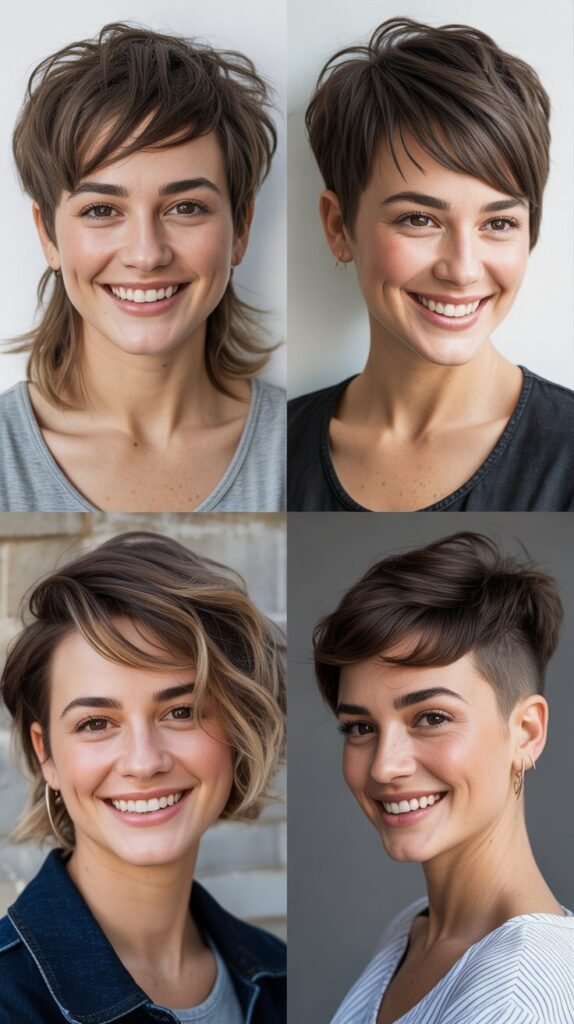
The pixie mullet fusion represents 2026’s bold experimentation with contrasting lengths, combining the short, structured front and sides of a pixie with the extended, sometimes dramatic length at the back characteristic of mullets.
This unconventional style challenges traditional hair norms while creating statement-making looks.
- This hybrid style features typical pixie proportions through the front, crown, and sides, while maintaining significantly longer hair at the nape that can extend to the shoulders or beyond.
- The mullet element can be subtle and blended or dramatically contrasting, depending on personal preference and willingness to embrace the unconventional aesthetic.
- Modern interpretations soften the traditionally harsh mullet lines by incorporating layers, texture, and gradual blending that creates more contemporary, wearable results.
- This style particularly appeals to creative professionals, artists, and individuals in fashion-forward industries where self-expression through appearance is celebrated.
- Styling offers remarkable versatility—the longer back section can be straightened, curled, braided, or left natural while the shorter pixie portion receives separate styling attention.
- The pixie mullet works best on medium to thick hair textures that provide enough density to support the contrasting lengths without appearing thin or wispy.
- Maintenance requires attention to both sections, with the shorter pixie area needing trims every 4-5 weeks while the longer mullet length receives periodic shaping every 8-10 weeks.
12. Silver and Gray Pixie for Mature Elegance
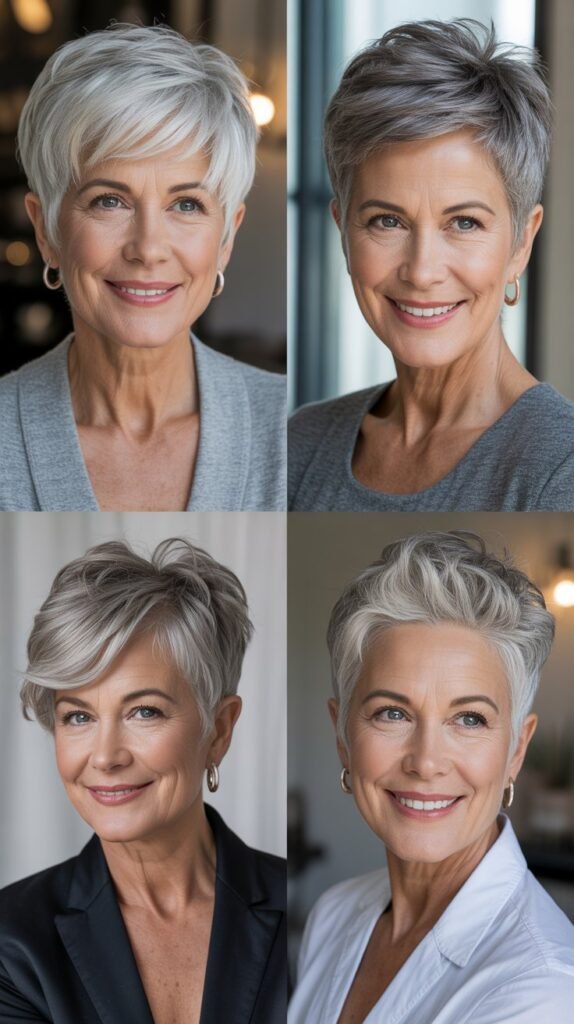
Embracing natural silver and gray tones represents 2026’s celebration of aging gracefully and authentically.
The silver pixie cut combines sophisticated color with modern styling, creating looks that radiate confidence, wisdom, and contemporary beauty standards that transcend age.
- Natural gray and silver hair often has different texture than pigmented hair—frequently coarser and sometimes more wiry—requiring specialized cutting techniques and products.
- The pixie cut length actually showcases silver hair beautifully, as shorter lengths appear healthier, shinier, and more vibrant than longer gray hair that may show years of damage.
- Transitioning to fully gray or silver can happen gradually through a pixie cut, as the shorter length means less waiting time compared to growing out longer styles.
- Purple-toning shampoos and conditioners become essential for maintaining bright, non-yellowing silver and gray tones that appear fresh and intentional rather than dull or aging.
- Modern pixie cuts for mature women incorporate softer, face-framing layers that provide flattering effects without the severe lines sometimes associated with traditional short cuts on older individuals.
- This style pairs beautifully with bold fashion choices, statement glasses, and confident styling that challenges outdated notions about age-appropriate hairstyles.
- The low-maintenance nature of short gray hair appeals particularly to mature women seeking stylish, practical options that don’t require frequent coloring appointments or extensive styling routines.
13. Disconnected Pixie with Volume on Top
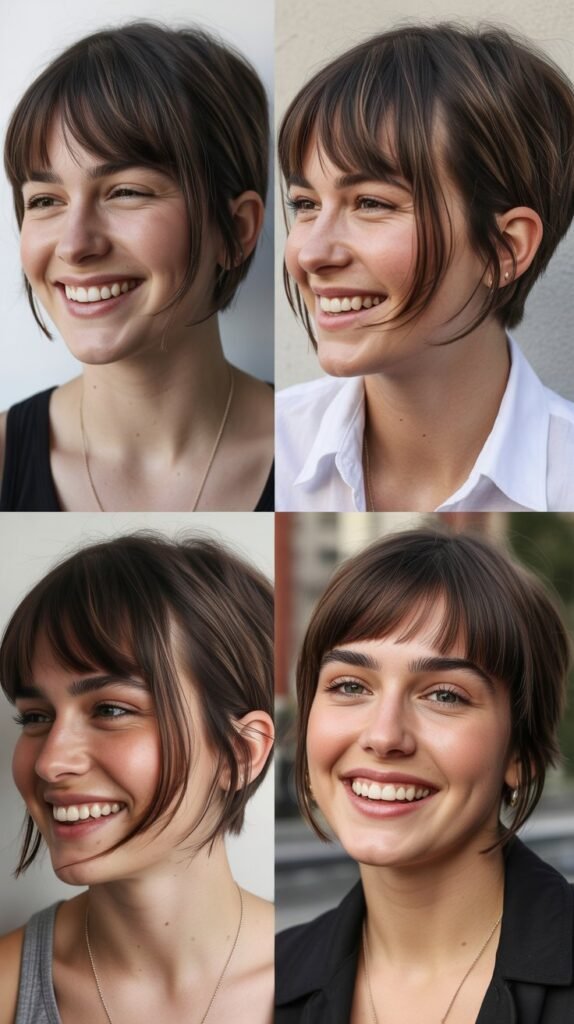
The disconnected pixie creates dramatic visual impact through intentional length separation between the crown area and the sides or back.
This 2026 style emphasizes height and volume while maintaining clean, short perimeter sections that keep the overall look crisp and modern.
- This cut features substantial length difference—often several inches—between the top section and the closely cropped sides and back, creating striking dimensional contrast.
- The disconnected technique eliminates gradual blending, instead creating defined separation lines that emphasize the architectural quality of the haircut.
- Maximum volume is achieved through layering techniques in the longer top section combined with volumizing products and often blow-drying with directional styling.
- This style works exceptionally well for fine hair, as the cutting technique creates the illusion of fullness and density by strategically concentrating length in one area.
- The disconnected pixie flatters long and oval face shapes by adding width and volume at the crown, balancing facial proportions and drawing eyes upward.
- Styling requires more time and effort than many pixie variations, involving products like root lifters, texture sprays, and sometimes heat styling to achieve and maintain the distinctive volume.
- Maintenance focuses on keeping the short sections clean and tight through frequent trims every 3-4 weeks while allowing the top section more growing time between cuts.
14. Pixie with Micro Bangs
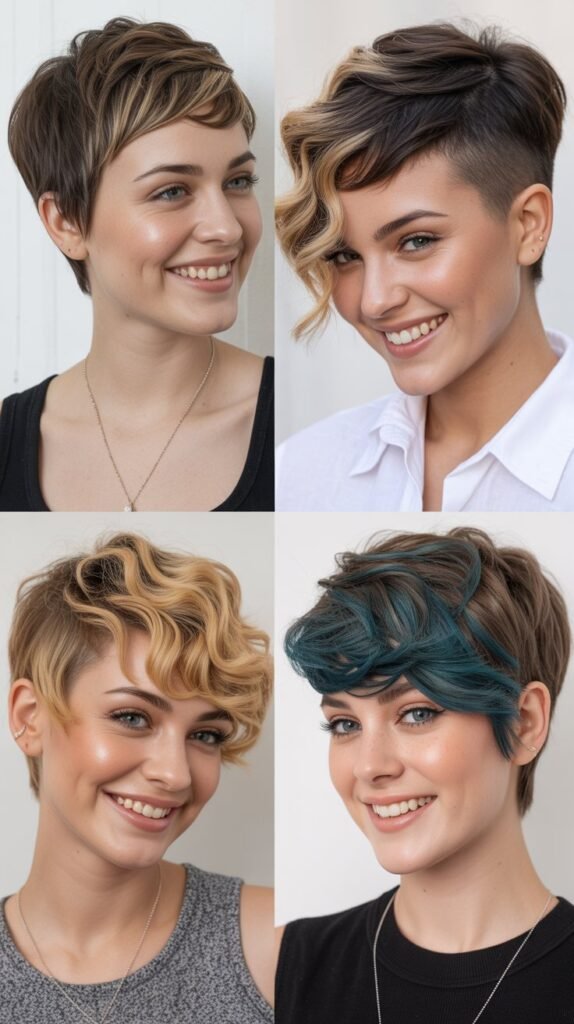
Micro bangs—ultra-short fringe cut well above the eyebrows—create one of 2026’s most polarizing yet fashion-forward looks when paired with pixie cuts.
This daring combination appeals to trendsetters willing to embrace unconventional beauty standards with confidence and attitude.
- Micro bangs typically extend only 1-2 inches from the hairline, creating a blunt, horizontal line that sits dramatically high on the forehead.
- This bold fringe draws intense focus to the eyes and brows, making careful grooming and potentially stronger makeup in these areas important styling considerations.
- The combination of micro bangs and short pixie hair creates a distinctly modern, almost futuristic aesthetic associated with fashion-forward, artistic styling.
- This style works best for oval and heart-shaped faces with balanced proportions, though confident individuals of any face shape can wear micro bangs successfully with proper styling.
- Micro bangs require extremely frequent trimming—potentially every 2-3 weeks—to maintain the ultra-short length and prevent them from growing into more traditional bang territory.
- The stark, geometric quality of micro bangs pairs beautifully with either sleek, polished pixie styling or deliberately tousled, textured approaches.
- This look particularly complements bold fashion choices, minimalist aesthetics, and individuals working in creative industries where distinctive personal branding matters.
15. Layered Crown Pixie with Short Sides
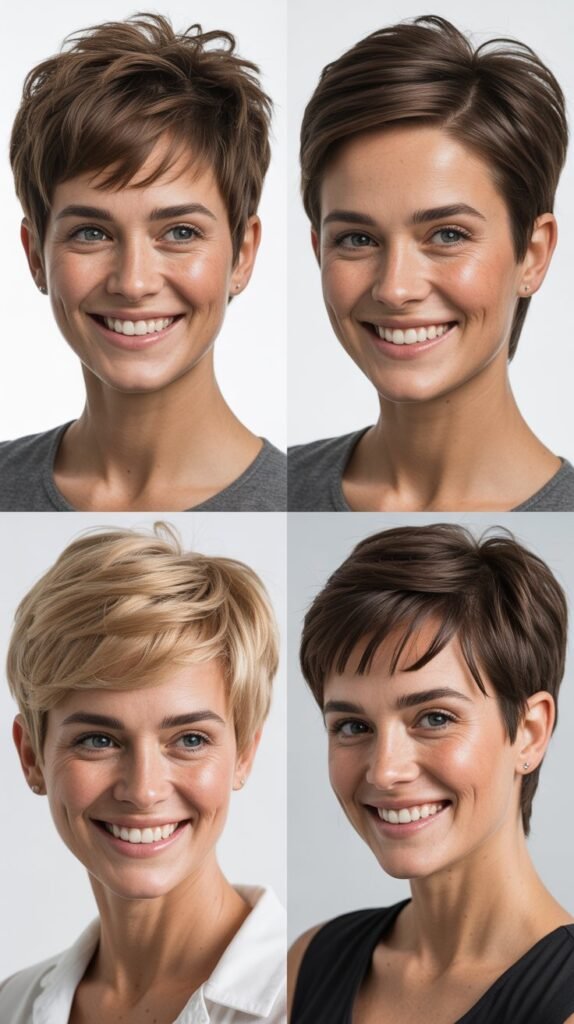
The layered crown pixie combines volume and movement on top with clean, close-cropped sides, creating a versatile style that offers both professional polish and casual cool.
This 2026 favorite provides styling flexibility while maintaining the distinctive pixie silhouette.
- This cut maintains 2-4 inches of layered hair through the crown and top, creating natural volume and movement, while sides are cut very short with clippers or scissors.
- The layering technique removes bulk while adding texture, allowing fine hair to appear fuller and thick hair to lie more naturally without excessive weight.
- Short sides create clean definition around the face and ears, emphasizing facial features while keeping the overall look fresh and modern.
- This style offers remarkable styling versatility—wear it slicked back for formal occasions, tousled and textured for casual days, or blown out for maximum volume during special events.
- The contrast between longer top and short sides allows for creative color placement, including vivid colors on top with natural or darker tones on the sides.
- Maintenance requires regular attention to the short sides every 3-4 weeks while the top can grow slightly longer between cuts, typically needing shaping every 5-6 weeks.
- This pixie variation flatters nearly all face shapes by offering customization in top styling that can emphasize or minimize different facial features as desired.
16. Pixie with Shaved Sides
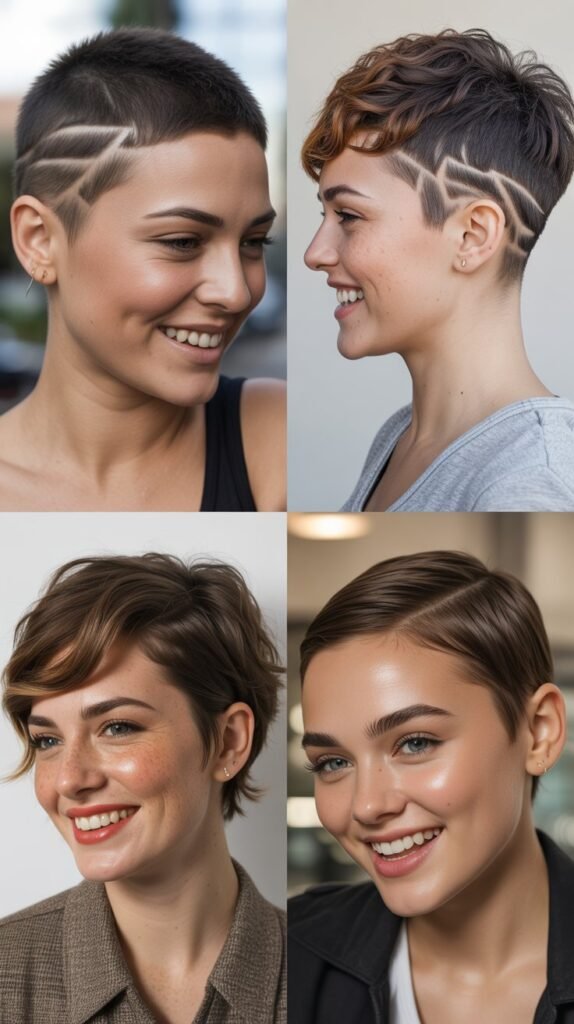
Taking the short-sides concept to its extreme, the pixie with fully shaved sides creates maximum contrast and impact.
This 2026 style embraces edginess and modern aesthetics while providing practical benefits during warm weather and active lifestyles.
- Shaved sides typically use clippers without guards or with minimal guard lengths, creating smooth, skin-close sections that contrast dramatically with longer top sections.
- The shaved areas can extend from the temples down to the ears and possibly include sections of the back, depending on personal preference and overall design.
- This technique significantly reduces styling time and product needs, as only the longer top section requires any attention or manipulation.
- Shaved sides work particularly well in warm climates or for active individuals, providing cooling comfort while maintaining stylish appearance.
- The stark contrast created by shaved sides draws attention to the styled top section, making texture, color, and volume in that area even more prominent and impactful.
- This style requires the most frequent maintenance of any pixie variation—shaved sections need attention every 2-3 weeks to maintain clean lines and prevent stubble from appearing unkempt.
- Individuals transitioning to shaved-side pixies should consider the growing-out process, as regaining length in these sections takes considerable time and may involve awkward stages.
17. Textured Pixie Bob Hybrid
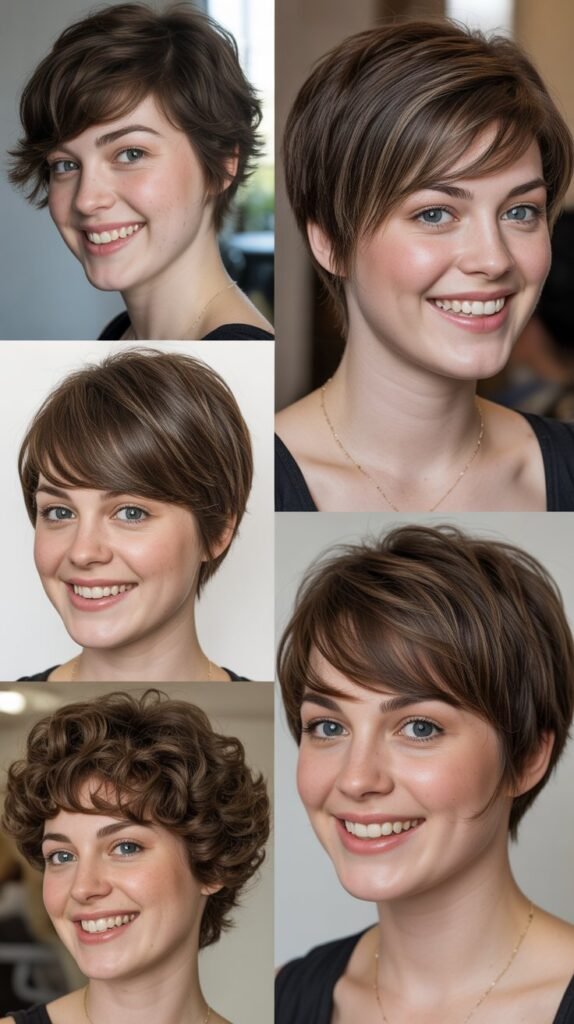
The textured pixie bob hybrid extends pixie principles slightly longer, creating a transitional style between classic pixie cuts and short bobs.
This 2026 trend appeals to those seeking pixie manageability with bob-like versatility and styling options.
- This style maintains approximately 3-6 inches of length overall, with longer sections around the face and gradually shorter hair toward the back, creating a gently angled silhouette.
- Heavy texturizing and layering throughout prevents the blunt, heavy appearance of traditional bobs while maintaining enough length for varied styling approaches.
- The hybrid length allows for small ponytails, half-up styles, and tucking behind ears—options not available with shorter pixie variations.
- This cut works beautifully for individuals transitioning from longer hair to shorter styles, providing a less dramatic initial change while testing comfort with reduced length.
- Styling can range from smooth and sleek using straightening tools to tousled and beachy using texture sprays and natural drying techniques.
- The textured pixie bob flatters most face shapes due to its adaptable nature—angling and styling can be customized to complement individual features and preferences.
- Maintenance falls between typical pixie and bob requirements, with shaping needed every 5-7 weeks to maintain the textured ends and prevent excessive length.
18. Pixie with Highlighted Dimension
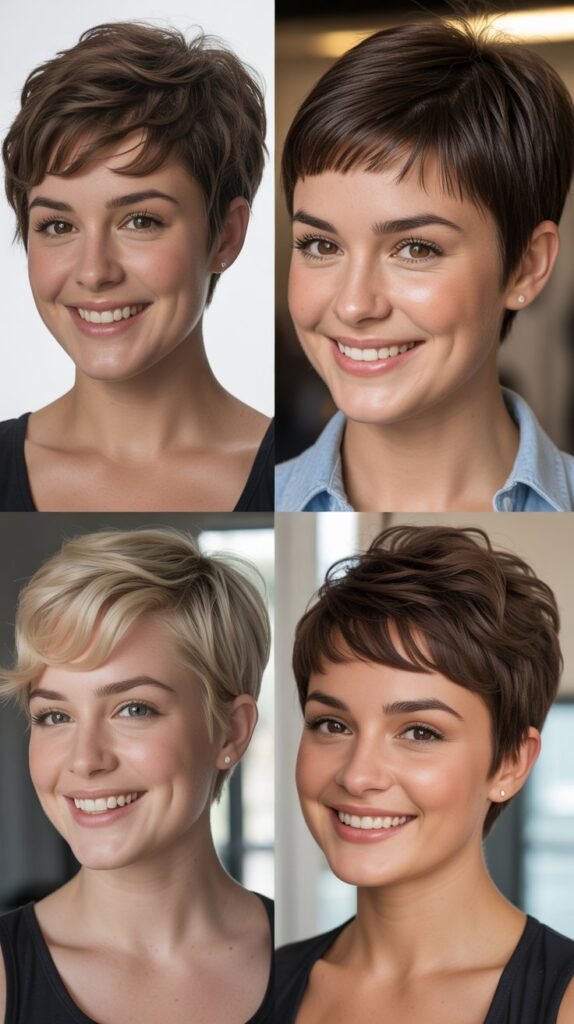
Strategic highlighting transforms pixie cuts from single-dimensional color into rich, complex tones that add visual depth and interest.
This 2026 coloring trend enhances the cut’s layers and texture while creating movement and shine that catches light beautifully.
- Pixie cuts provide ideal canvases for highlighting work, as the short length means less hair requires processing and results appear fresh longer than on lengthy styles.
- Babylights—ultra-fine, delicate highlights—add subtle dimension that appears natural and sun-kissed, perfect for those seeking enhanced but not dramatically different coloring.
- Balayage techniques on pixies focus on painting lighter tones through the top layers and around the face, creating depth without the maintenance demands of traditional foil highlights.
- Chunky, contrast highlights make bold statements, particularly effective on textured, piece-y pixies where the color placement emphasizes individual sections and layers.
- Placement considerations matter significantly in pixie highlighting—front and crown sections receive most focus as these areas are most visible and frame the face.
- Cool-toned highlights in ash, platinum, or icy blonde suit cool complexions, while warm caramel, honey, and golden tones complement warm undertones beautifully.
- Maintenance for highlighted pixies involves purple or blue-toning products to control brassiness, with color refresh appointments typically needed every 6-8 weeks as the short hair grows out relatively quickly.
19. Sleek Pixie with Side Part
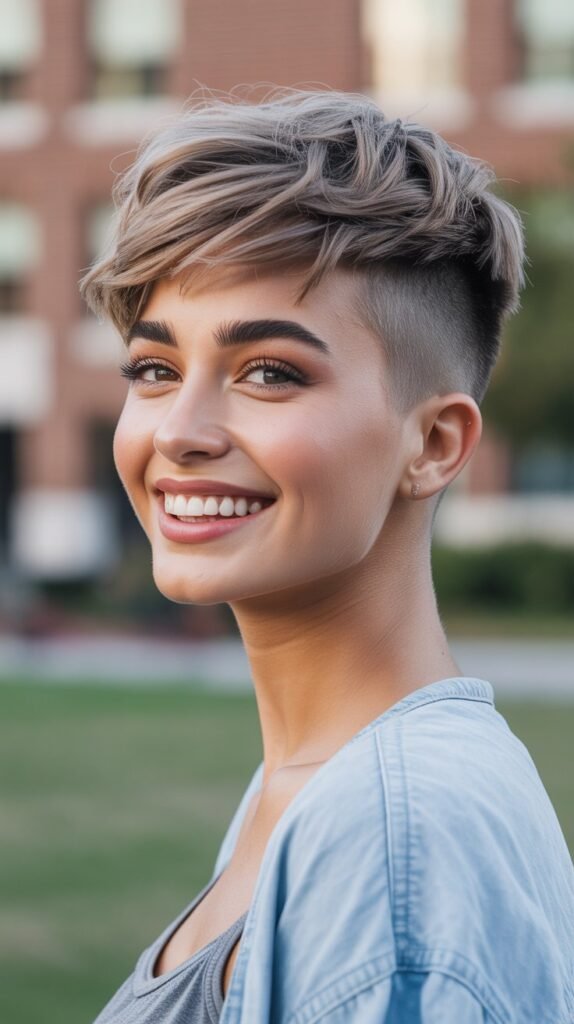
The sleek side-parted pixie embodies polished sophistication and timeless elegance, proving that short hair can project professional refinement and classic beauty.
This 2026 style appeals to those seeking put-together looks that transition seamlessly between business and social settings.
- This style involves creating a clean, defined side part—typically about 1-2 inches from the center—and smoothing hair flat to the head on both sides using straightening tools and smoothing products.
- High-shine serums and smoothing creams eliminate frizz and flyaways while creating the glossy, polished finish characteristic of sleek styling.
- The side part creates asymmetry that flatters most face shapes by breaking up symmetry and adding visual interest to otherwise simple, smooth styling.
- This approach works particularly well for straight to slightly wavy hair textures, though individuals with curlier hair can achieve the look using proper smoothing techniques and products.
- The sleek pixie pairs beautifully with professional clothing, statement jewelry, and classic makeup looks, creating cohesive, elegant personal presentation.
- Styling requires heat tools including flat irons or smoothing brushes, along with heat protectant products to maintain hair health despite regular thermal styling.
- Maintenance focuses on regular trims every 5-6 weeks to maintain clean lines and proper length distribution that supports the smooth, structured appearance.
20. Pixie with Feathered Layers
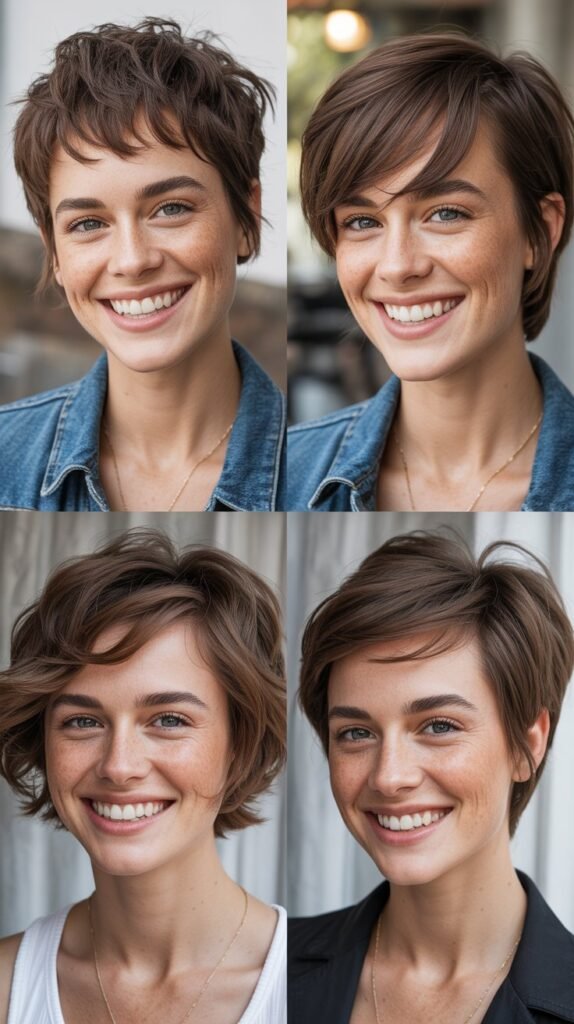
Feathered layering creates soft, flowing movement in pixie cuts, offering a romantic, ethereal quality that contrasts with more structured or edgy pixie variations.
This 2026 trend emphasizes grace, femininity, and gentle beauty through carefully crafted cutting techniques.
- Feathering involves cutting hair at angles that create thin, tapered ends rather than blunt edges, resulting in wispy, delicate layers that move naturally.
- This technique works throughout the pixie cut—from the crown layers to the perimeter sections—creating cohesive softness rather than isolated textured areas.
- Feathered pixies work beautifully for fine to medium hair textures, as the cutting method prevents weight accumulation while creating the illusion of fuller, more voluminous hair.
- Styling requires minimal product—light texture sprays or mousses enhance natural movement without creating stiffness or disrupting the flowing quality of the feathered layers.
- This style particularly flatters round and square face shapes by adding softness that counterbalances angular features and creates gentle, flowing lines.
- The feathered approach also provides excellent transition styling for growing out pixie cuts, as the wispy ends blend more naturally during the awkward growing-out phases.
- Maintenance involves regular trims every 5-6 weeks to preserve the feathered texture and prevent ends from becoming too thin or wispy rather than deliberately textured.
21. Bold Color Block Pixie
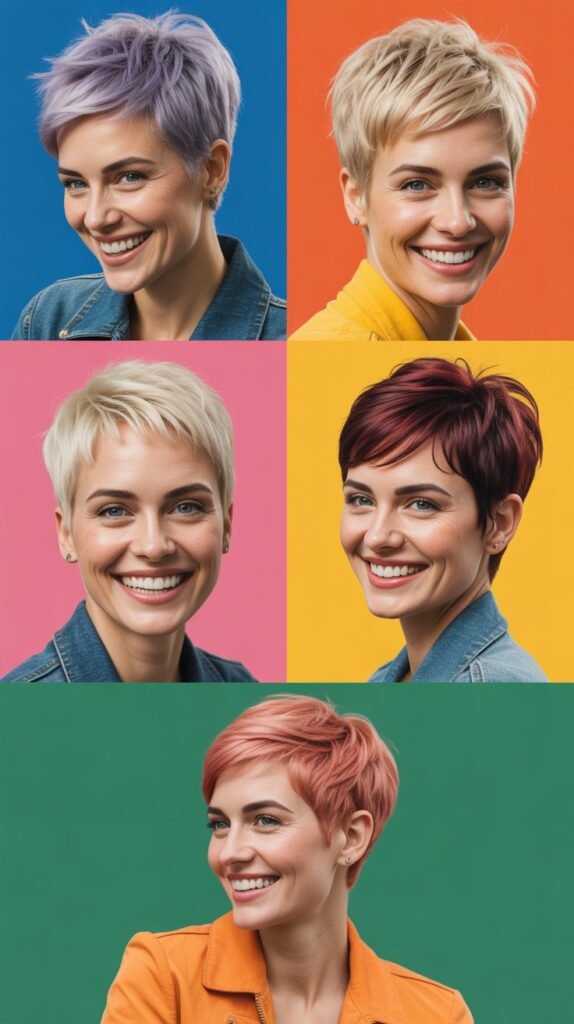
Color blocking brings graphic design principles to hair, creating pixie cuts with distinct sections of contrasting colors that make powerful visual statements.
This 2026 trend celebrates artistic expression and bold personal style through strategic color placement and saturated tones.
- Color blocking involves applying distinctly different colors to separate sections of the pixie cut, creating intentional contrast rather than blended transitions between shades.
- Popular combinations include complementary colors (purple and yellow, blue and orange), analogous colors (pink and purple, blue and green), or high-contrast pairings (platinum and black).
- The pixie cut’s short length makes color blocking more achievable and affordable than on longer hair, requiring less product and processing time to achieve saturated results.
- Strategic placement matters significantly—some designs feature one color on top with different colors on the sides, while others create vertical sections or asymmetric distributions.
- This artistic approach works best on straight to slightly wavy hair textures where color sections remain distinct and visible rather than blending together through curls.
- Maintenance for color-blocked pixies requires dedication, including color-specific shampoos and conditioners, regular toning appointments, and touch-ups every 4-6 weeks as roots grow and colors fade.
- The temporary nature of fashion colors allows for seasonal changes, making color blocking an excellent option for those who enjoy frequent style evolution and experimentation.
22. Pixie with Crown Braid Detail
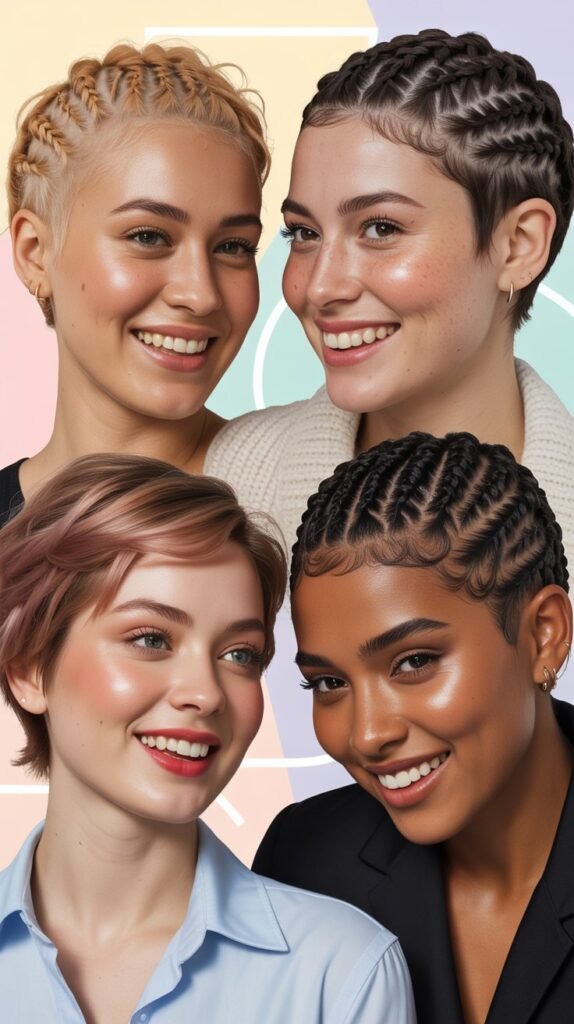
Incorporating braid elements into pixie cuts might seem impossible, but creative 2026 styling proves otherwise.
Small braids, twisted sections, and woven details add feminine romance and intricate beauty to short hair, challenging assumptions about pixie limitations.
- Crown braids on pixies involve creating small French braids, Dutch braids, or twisted sections using the longer hair available on top, typically starting near the hairline and extending backward.
- These details work best on longer pixie variations with at least 3-4 inches of length in the crown area, providing enough hair to manipulate into braided patterns.
- Small accent braids add special-occasion elegance to pixie cuts, proving that short hair can be styled for weddings, formal events, and romantic dates with surprising sophistication.
- The braid technique also offers practical benefits, controlling longer top sections during active days or keeping hair off the face during work or exercise.
- Adding small decorative elements like tiny flowers, pins, or jeweled accessories to pixie braids enhances the romantic, feminine aesthetic even further.
- This styling approach requires some manual dexterity and practice, though numerous tutorials available online demonstrate techniques specifically adapted for short hair lengths.
- The braided sections can be combined with other styling methods—leaving the sides sleek while braiding the top, or creating texture everywhere except the braided detail for visual contrast.
23. Graduated Pixie Cut
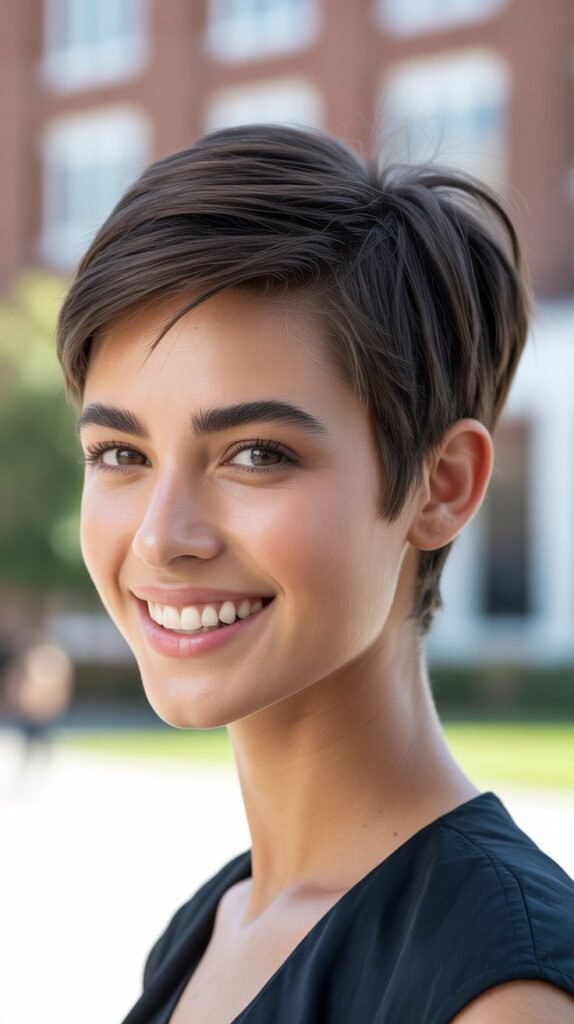
The graduated pixie features progressive length changes from shorter back sections to longer front areas, creating a structured, architectural shape that defines 2026’s more sculpted pixie aesthetics.
This precision cut offers sophistication and deliberate styling.
- This cut creates a visible angle from the back toward the front, with the nape being shortest and hair gradually increasing in length as it moves forward toward the face.
- The graduation can be subtle—just an inch or two of difference—or dramatic with several inches separating the shortest and longest sections.
- This structured approach provides built-in styling, as the hair naturally falls into the intended shape due to the precise length distribution and angle work.
- Graduated pixies particularly flatter square and rectangular face shapes by creating diagonal lines that soften angular features and add visual movement.
- The style works beautifully in professional environments, projecting competence, attention to detail, and polished personal presentation.
- Maintenance demands precision and regularity, requiring appointments every 4-5 weeks with skilled stylists who can maintain the exact angles and graduation that define the cut.
- This pixie variation allows for length at the front that can be styled various ways—swept to the side, curled forward, or straightened—while the shorter back provides easy care and cooling comfort.
24. Pixie with Quif Styling
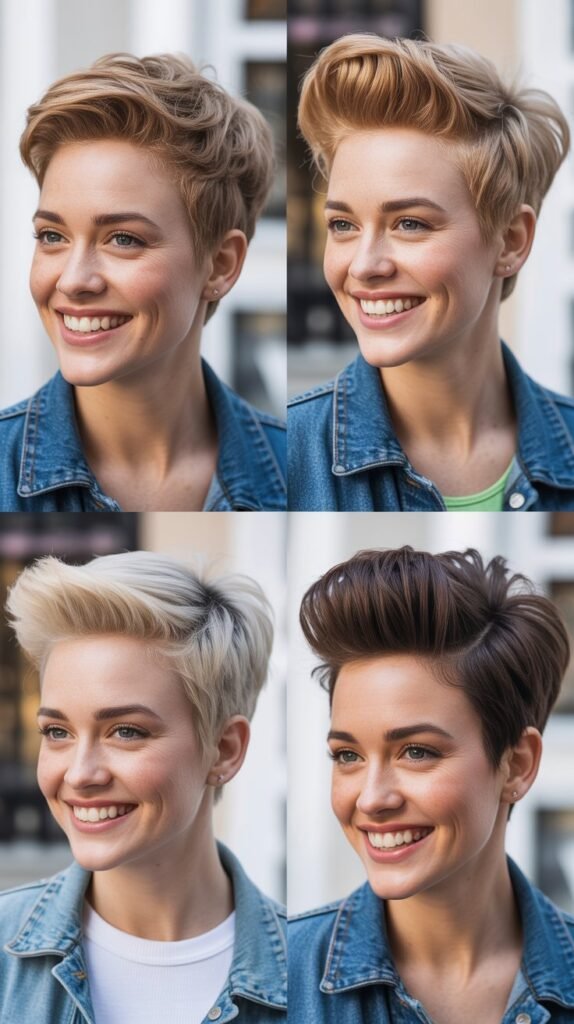
The quiff—hair styled upward and backward from the forehead—brings rockabilly and vintage influences to modern pixie cuts.
This 2026 styling technique adds height, drama, and retro-cool aesthetics that work for both casual and dressed-up occasions.
- Creating a quiff requires sufficient length in the front and crown sections—typically at least 2-3 inches—to provide enough hair for upward styling and backward sweep.
- The technique involves applying volumizing products to damp hair, then using blow dryers with concentrator nozzles or round brushes to direct hair upward and back while building volume.
- Strong-hold products like gels, pomades, or hairsprays secure the quiff shape throughout the day, preventing collapse or drooping that would diminish the dramatic effect.
- Modern quiff styling ranges from subtle, natural-looking lifts to dramatic, sky-high volumes reminiscent of 1950s pompadours adapted for contemporary aesthetics.
- The quiff adds significant height that elongates the face, making this style particularly flattering for round and square face shapes seeking vertical emphasis.
- This styling works with various pixie base cuts, from disconnected styles with short sides to more uniform lengths that provide styling versatility.
- The quiff represents one of the more time-intensive pixie styling options, requiring 10-15 minutes of effort and proper technique to achieve professional-looking results.
25. Natural Root Pixie with Colored Ends
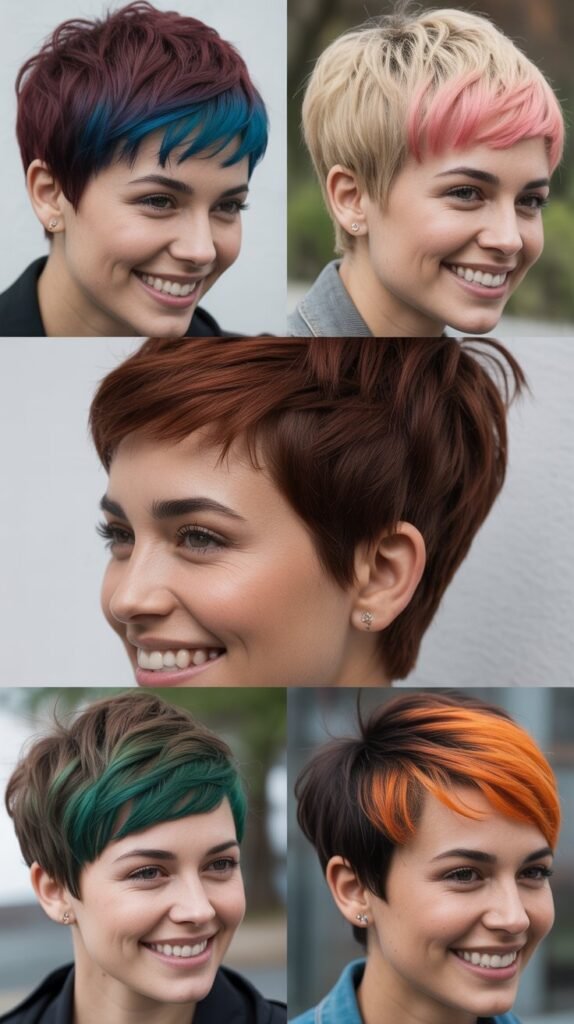
The natural root technique—allowing roots to grow in their original color while maintaining fashion colors on the ends—offers 2026’s solution to high-maintenance vivid color demands.
This approach reduces upkeep while creating dimensional, intentionally grown-out aesthetics.
- This coloring approach involves applying fashion colors or bleached tones only to the ends and mid-lengths while leaving 1-2 inches of natural root color visible and untouched.
- The intentional root appearance reduces maintenance demands significantly, as new growth blends naturally into the existing color design rather than creating harsh demarcation lines.
- This technique works particularly well for pixies, as the short overall length means the colored sections remain relatively close to the face where they provide maximum visual impact.
- Popular combinations include dark natural roots with pastel pink, lavender, or blue ends, or natural brunette roots with platinum or silver-toned ends.
- The dimensional quality adds depth and visual interest while the natural roots provide grounding and prevent the colors from appearing overly artificial or cartoonish.
- Maintenance focuses primarily on toning and refreshing the colored ends every 6-8 weeks rather than constant root touch-ups required by all-over coloring.
- This approach also proves gentler on hair health, as the most processed sections can be trimmed away during regular pixie maintenance while roots remain undamaged by chemical treatments.
26. Pixie with Finger Wave Details
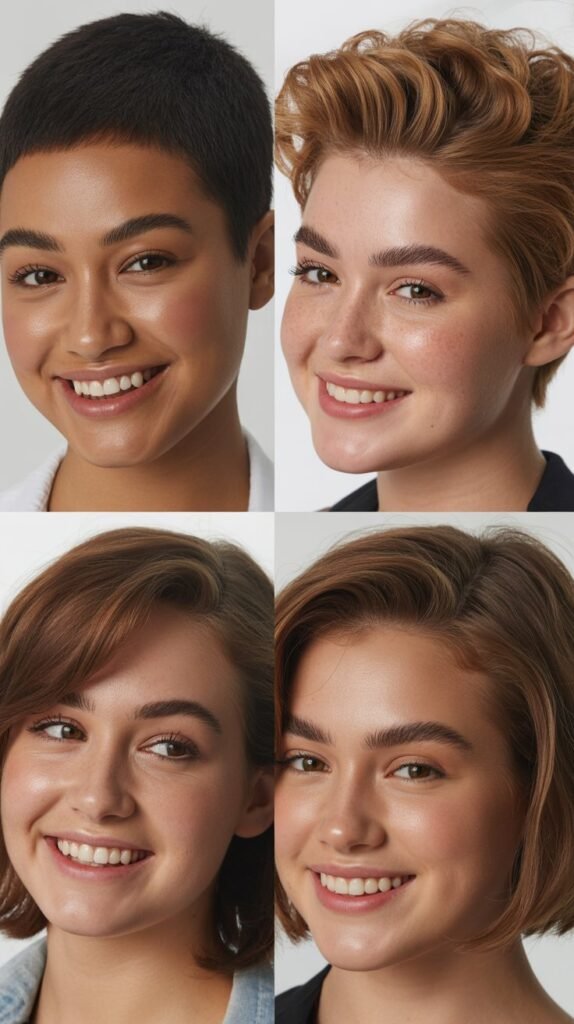
Finger waves—S-shaped curves created in wet hair—bring 1920s glamour to contemporary pixie cuts.
This 2026 revival of vintage styling techniques creates sophisticated, artistic looks perfect for special occasions and fashion-forward statements.
- Finger waves work best on shorter pixie sections, using styling gel and finger-pinching techniques to create uniform S-shaped waves that lie flat against the head.
- This styling requires wet hair, strong-hold gel, and patient technique—waves are formed by pushing hair forward and back in alternating directions while pinching the curves into place.
- The result creates a sculptural, almost art deco appearance that photographs beautifully and makes striking impressions at formal events, themed parties, or artistic photoshoots.
- Modern interpretations often combine finger waves with other elements—waved front sections with textured top, or waved sides with smooth backs—creating hybrid vintage-contemporary looks.
- This styling technique works on most hair textures, though very curly or coily hair requires straightening before wave formation for best definition and uniformity.
- Finger waves remain in place throughout an event when properly set, though creating them requires 30-45 minutes of careful work and proper drying time.
- The deliberately retro aesthetic pairs beautifully with vintage clothing, bold red lips, defined eyebrows, and classic jewelry for cohesive period-inspired styling.
27. Pixie with Shaved Pattern at Nape
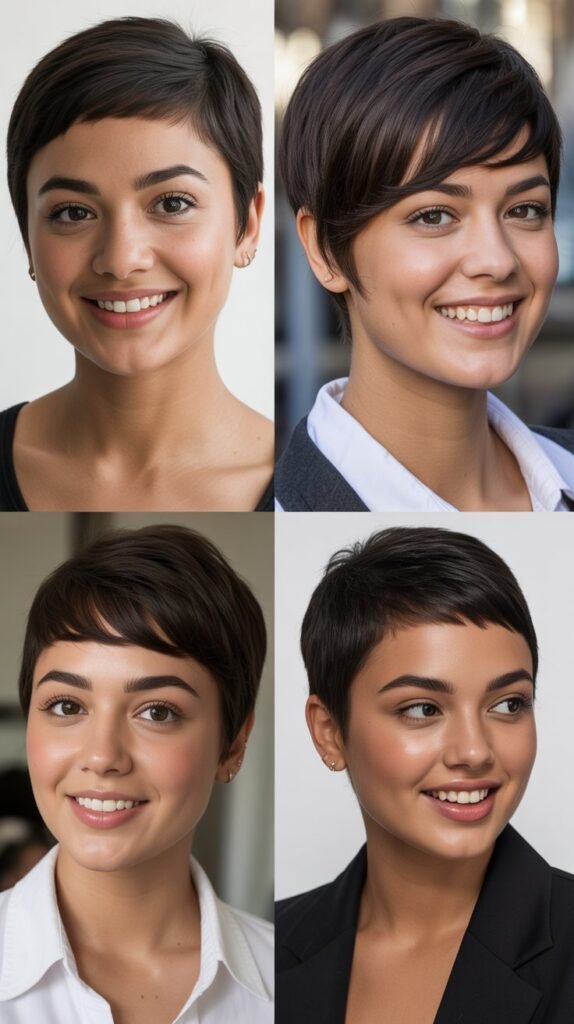
Artistic shaved designs at the nape add hidden surprise elements to pixie cuts, revealing intricate patterns when hair is pulled up or styled away from the neck.
This 2026 trend offers secret artistry that can be displayed or concealed depending on styling preferences.
- Nape patterns remain hidden during down-styled moments, revealing themselves when hair is swept up, braided, or styled forward—offering dual styling personalities within one haircut.
- Popular designs include geometric patterns, floral motifs, stars, tribal-inspired patterns, and personalized symbols that hold special meaning to the wearer.
- The nape location provides an ideal canvas for detailed work, as the area remains relatively flat and visible when displayed, allowing intricate designs to be appreciated.
- This subtle approach to hair artistry works well for individuals in conservative professional environments, as the designs can be easily concealed during work hours.
- Creating these patterns requires skilled artistry and steady hands, making consultation with experienced barbers or stylists who specialize in hair designs essential.
- Maintenance involves shaving touch-ups every 2-3 weeks to keep pattern lines sharp and visible, with the frequency depending on individual hair growth rates.
- The temporary nature allows for seasonal design changes, holiday themes, or rotating artwork that keeps the look fresh and allows for creative experimentation.
28. Textured Pixie with Sea Salt Spray
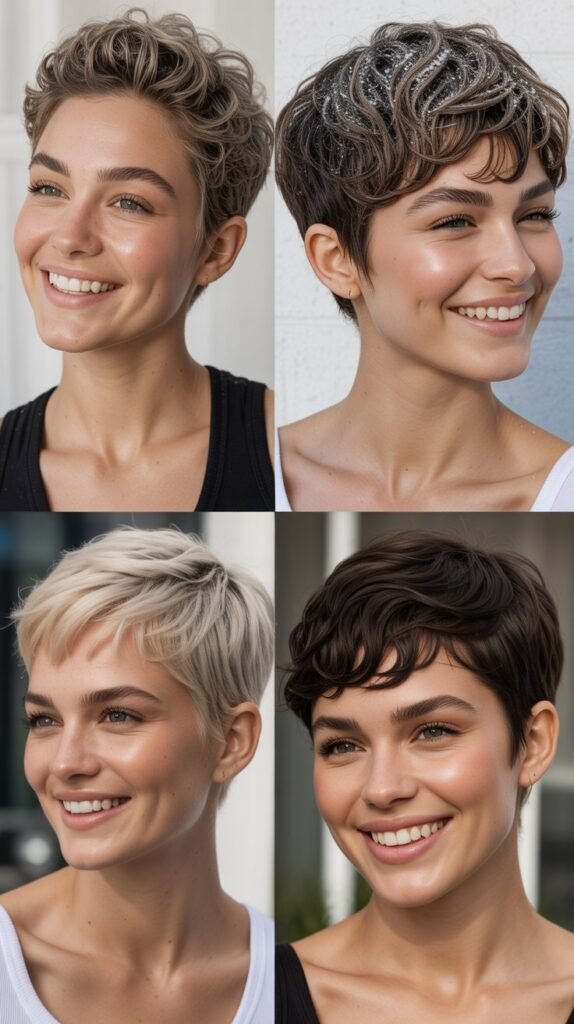
Sea salt spray texturizing has become a 2026 pixie styling staple, creating effortless, beachy texture that appears naturally tousled and casually chic.
This low-maintenance approach delivers the coveted “just came from the ocean” aesthetic without actual beach visits.
- Sea salt spray works by adding grip and texture to hair shafts, creating separation between strands and enhancing natural wave patterns while providing light hold.
- Application involves spraying the product onto damp or dry hair, then scrunching or tousling with hands to distribute evenly and create desired texture and movement.
- This styling method works exceptionally well for naturally wavy or slightly curly hair, enhancing existing texture rather than fighting against natural patterns.
- The beachy aesthetic pairs beautifully with relaxed, casual styling—perfect for weekend wear, vacation looks, or laid-back work environments with flexible dress codes.
- Sea salt spray provides the benefit of refreshing next-day hair, adding texture and reviving flattened sections without requiring complete restyling from scratch.
- The product can be layered with other styling elements—applying to damp hair before blow-drying for maximum texture or misting onto finished styles for additional piece-y definition.
- Those with naturally dry hair should use sea salt spray sparingly and follow with leave-in conditioners, as the salt content can be further drying without proper moisture balance.
29. Pixie with Side Swept Volume
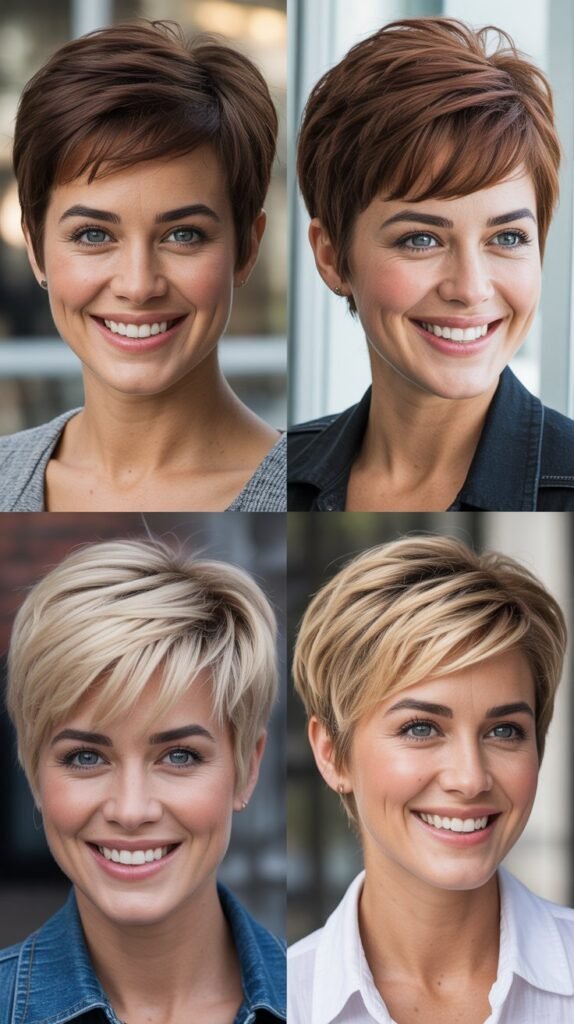
Side swept styling directs all or most of the pixie’s length toward one side, creating dramatic asymmetry and volume that flatters the face while adding glamorous appeal.
This 2026 styling technique offers red-carpet elegance adapted for everyday wearability.
- This technique works best with longer pixie cuts that provide 2-4 inches of length to sweep across the head, creating visible drama and movement.
- Creating side swept volume involves applying volumizing mousse or spray to damp hair, then blow-drying while directing all hair toward the chosen side using brushes or fingers.
- The style emphasizes one side of the face while revealing the ear and creating clean lines on the opposite side, drawing attention to facial features like eyes and cheekbones.
- Strong-hold products including hairspray or styling creams secure the swept position throughout the day, preventing hair from falling back to natural positions.
- This styling particularly flatters oval and heart-shaped faces by creating balanced proportions and drawing the eye across the face in a flattering diagonal line.
- The side swept approach works beautifully for special occasions, professional presentations, or any time polished, put-together appearance is desired.
- The style can be adjusted throughout the day—sweeping to different sides for varied looks or adding height and volume as needed with minimal effort.
30. Pixie with Underlayer Color
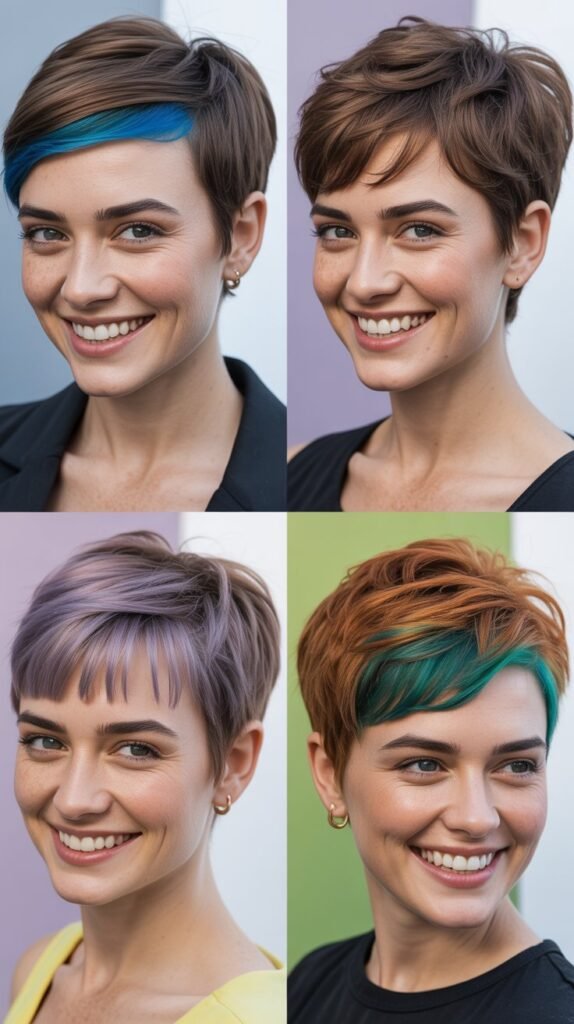
Underlayer coloring—also called peek-a-boo highlights—involves coloring hidden bottom layers in vivid or contrasting shades that flash into view during movement or specific styling.
This 2026 trend offers conservative-friendly color experimentation with professional versatility.
- This technique involves sectioning the hair horizontally and applying fashion colors to underneath layers while keeping top, visible layers in natural or conservative tones.
- The hidden colors reveal themselves during movement, when wind catches hair, during styling like tucking behind ears, or when deliberately showcasing through parting changes.
- This approach allows professional flexibility—keeping colored sections hidden during work presentations while revealing them during personal time or creative environments.
- Popular combinations include natural brunette tops with electric blue, vivid purple, or hot pink underlayers, or blonde tops with pastel pink or lavender hidden beneath.
- The pixie cut’s shorter length makes underlayer colors more accessible and affordable than on longer hair, requiring less product and processing time.
- Maintenance focuses on the colored underlayer sections, requiring toning and color refreshing every 4-6 weeks depending on color choice and fading rates.
- This technique works on all hair textures and provides an excellent introduction to vivid colors for those hesitant about full-commitment fashion coloring.
31. Blunt Bang Pixie
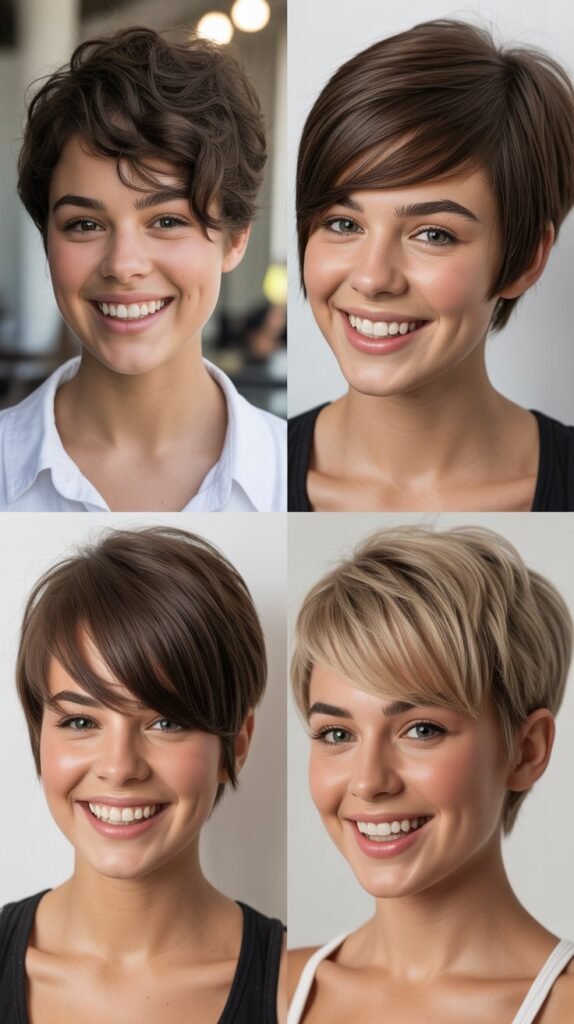
Blunt bangs cut in a straight, horizontal line across the forehead create striking, geometric framing for pixie cuts.
This 2026 style combines vintage influences with contemporary edge, delivering looks that photograph beautifully and make memorable impressions.
- Blunt bangs typically fall between the eyebrows and mid-forehead, cut in a straight line that creates strong horizontal emphasis across the face.
- This geometric framing draws intense focus to the eyes and requires well-groomed brows and potentially stronger eye makeup to balance the bold bang presence.
- The blunt cut works particularly well with straight to slightly wavy hair textures, though individuals with curlier hair can achieve the look using straightening techniques and smoothing products.
- This style flatters oval and heart-shaped faces especially well, though the bang length and thickness can be adjusted to complement various facial proportions.
- Maintaining perfectly straight blunt bangs requires frequent trimming every 2-3 weeks to prevent growth from disrupting the clean horizontal line.
- The blunt bang pixie pairs beautifully with either textured, piece-y styling in the rest of the cut or sleek, smooth styling for maximum geometric impact.
- Daily styling involves straightening the bang section with flat irons or blow-drying smooth, while the rest of the pixie can receive varied styling treatments.
32. Pixie with Mohawk Styling
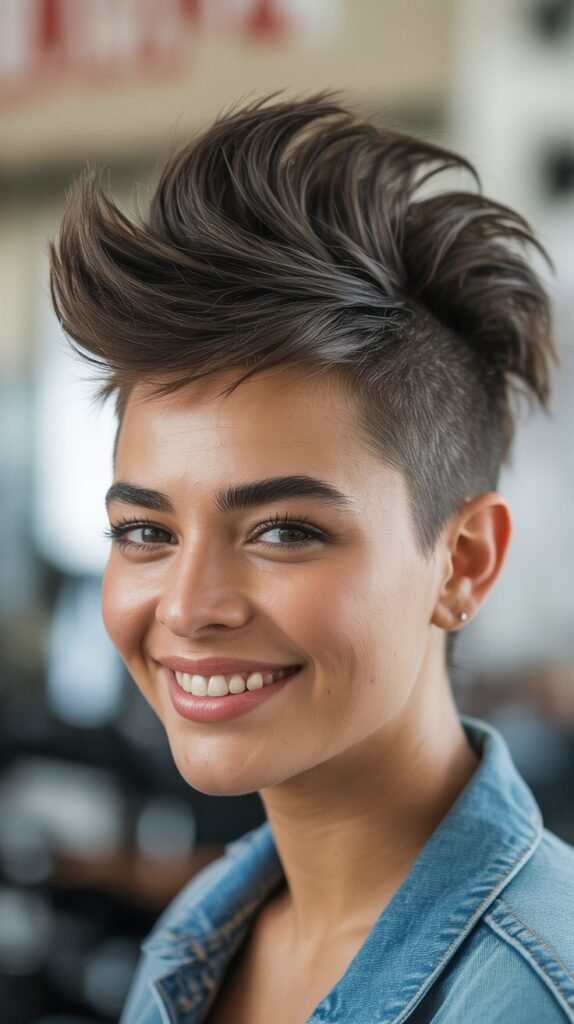
Mohawk-inspired styling brings punk rock edge to pixie cuts, creating dramatic center ridge volume while keeping sides sleek or closely cropped.
This 2026 trend adapts rebellious hairstyling history for contemporary, wearable interpretations that maintain professional acceptability.
- This styling technique concentrates length and volume along the center of the head from front to back, creating a raised ridge while sides remain flat, slicked, or closely cropped.
- The mohawk effect can range from subtle—just slightly more volume in the center—to dramatic with inches of height styled straight up using strong-hold products.
- Creating this look involves applying heavy-hold gels, pomades, or styling creams to damp hair, then blow-drying upward along the center line while smoothing or slicking the sides.
- Modern interpretations often soften the traditional mohawk’s harsh lines, creating textured, piece-y center sections rather than stiff, uniform spikes.
- This styling particularly suits oval and long face shapes, as the vertical emphasis draws eyes upward and adds balanced width through the center of the head.
- The mohawk-styled pixie makes statements at concerts, creative events, and casual settings while remaining achievable for everyday wear with proper technique and products.
- The style can be adjusted throughout the day—wearing it full and dramatic for evenings, then dampening and smoothing down for more conservative daytime requirements.
33. Soft Pastel Pixie
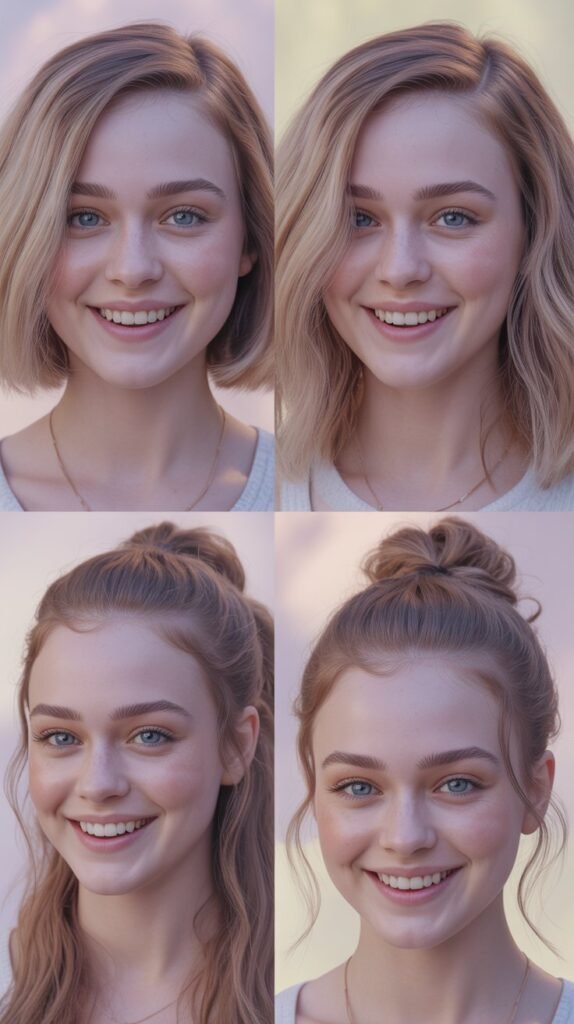
Soft pastel colors including lavender, rose, peach, mint, and baby blue transform pixie cuts into dreamy, ethereal styles that dominate 2026’s softer aesthetic trends.
These gentle fashion colors create romantic, whimsical looks without the harshness of saturated vivid tones.
- Pastel colors require pre-lightening hair to very pale blonde levels—typically level 9 or 10—to achieve the true soft, delicate tones characteristic of these shades.
- The shorter pixie length makes achieving and maintaining pastels more manageable than on longer hair, requiring less bleaching product and fewer color applications.
- Pastel maintenance demands dedication including purple or blue-toning treatments, color-depositing conditioners, and avoiding excessive heat styling that accelerates fading.
- These soft tones work beautifully with feminine, romantic styling—wispy layers, soft curls, or gentle waves that complement the delicate color aesthetic.
- Pastels fade relatively quickly compared to permanent colors, typically requiring refreshing every 4-6 weeks or transitioning through various tones as they lighten.
- The gentle nature of pastel colors makes them workplace-appropriate in many professional environments that might reject more vibrant fashion colors.
- Combining multiple pastel shades—like lavender and pink or mint and peach—creates dreamy, multi-dimensional looks that appear artistic and intentional.
34. Pixie with Sculptural Layers
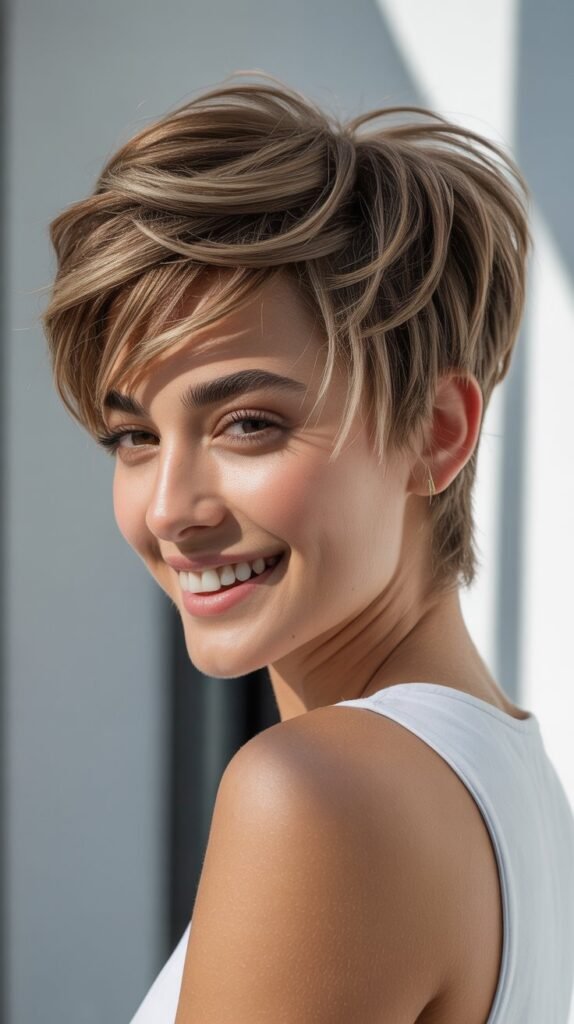
Sculptural layering creates architectural, almost three-dimensional shapes within pixie cuts, emphasizing the artistic possibilities of strategic hair placement.
This 2026 trend celebrates precision cutting that treats hair as sculptural medium rather than simply functional covering.
- This cutting technique involves creating distinct, sometimes dramatic layer separations that produce visible dimensional effects rather than seamlessly blended transitions.
- Sculptural pixies often feature geometric precision—sharp angles, clean lines, and intentional asymmetry that appears deliberately crafted rather than naturally occurring.
- The style works particularly well for thick, dense hair that provides enough substance to support dramatic shaping without appearing thin or wispy.
- This artistic approach pairs beautifully with fashion-forward styling, contemporary clothing, and individuals working in creative industries where distinctive appearance is valued.
- Maintaining sculptural precision requires expert cutting every 4-5 weeks with stylists who understand architectural hair design and can replicate the specific shapes.
- The dramatic nature of sculptural pixies makes them conversation starters and memorable features that distinguish personal style and project confidence.
- Styling typically remains minimal to allow the cut itself to provide the visual interest, though color placement can enhance the dimensional effects.
35. Pixie with Rounded Shape
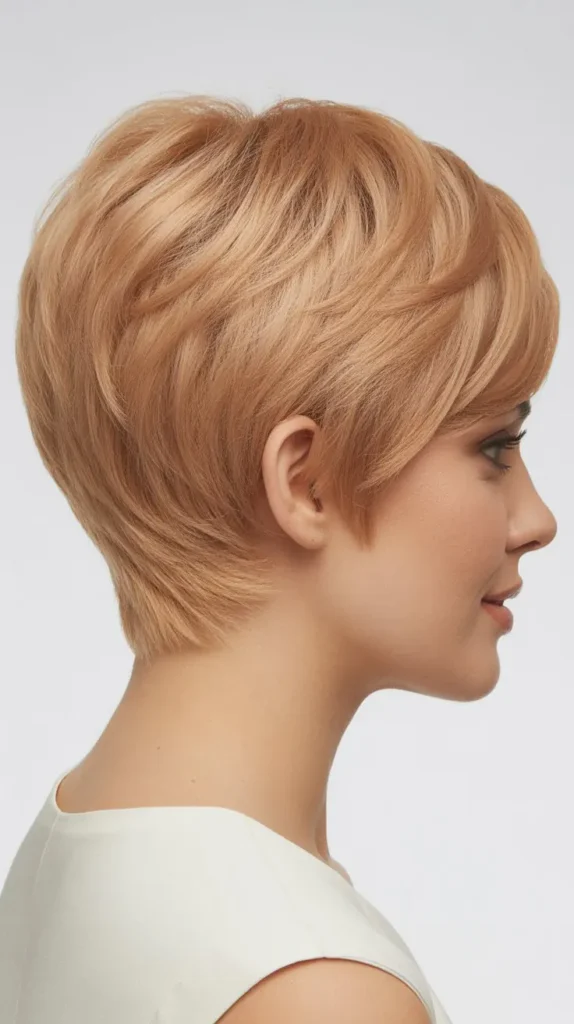
The rounded pixie creates softer, more feminine silhouettes through curved cutting lines that follow the head’s natural contours.
This 2026 style offers gentle, approachable aesthetics that emphasize softness over edgy angles.
- This cut follows the head’s natural curves, creating rounded rather than angular shapes that appear organic and flowing rather than geometrically structured.
- The technique involves cutting hair to uniform lengths around the head or with subtle graduation that maintains curved lines throughout.
- Rounded pixies particularly flatter round and square faces by adding softness that complements rather than contrasts with natural facial roundness.
- This approach creates universally flattering, approachable aesthetics that work in conservative professional environments while remaining stylish and contemporary.
- The gentle nature of rounded cuts pairs beautifully with natural hair colors, subtle highlighting, and minimal product styling that enhances rather than dramatically transforms texture.
- Maintenance focuses on preserving the rounded shape through regular trims every 5-6 weeks that maintain uniform length distribution and curved lines.
- This style works across all age ranges, providing youthful energy for younger wearers while offering age-appropriate sophistication for mature individuals.
36. Pixie with Baby Bangs
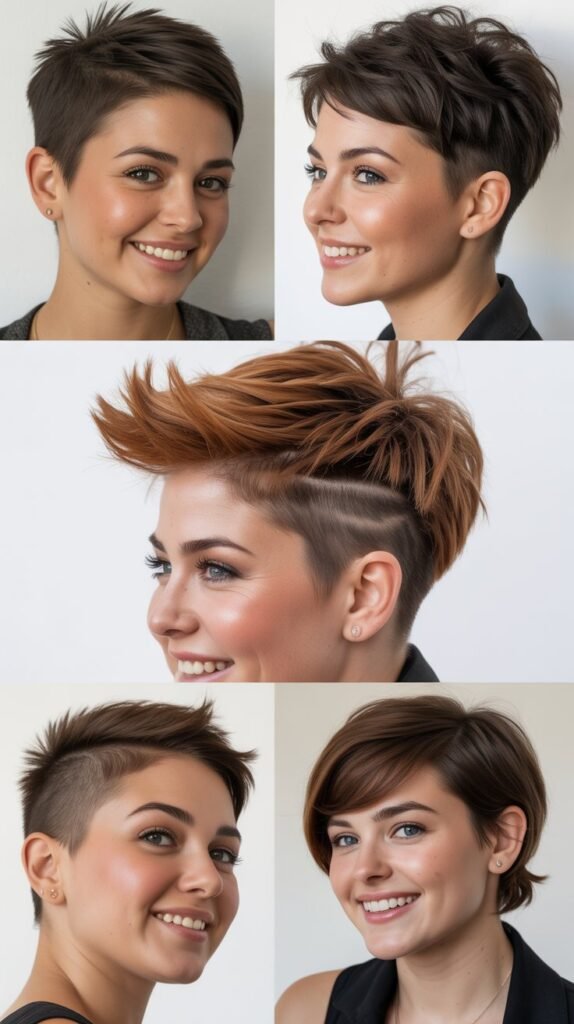
Baby bangs—extremely short fringe that barely extends past the hairline—create one of 2026’s most daring and fashion-forward looks when incorporated into pixie cuts.
This bold styling choice demands confidence and projects avant-garde aesthetics.
- Baby bangs typically measure less than an inch from the hairline, creating a barely-there fringe that reveals most of the forehead.
- This ultra-short fringe creates striking, almost futuristic appearances associated with high fashion, editorial photography, and artistic styling.
- The exposed forehead emphasis makes facial features—especially eyes and eyebrows—the central focus, requiring well-groomed brows and often stronger makeup application.
- Baby bangs work best for individuals with relatively smooth foreheads without significant texture or scarring they prefer to conceal.
- Maintaining these extremely short bangs requires frequent trimming every 1-2 weeks to prevent them from growing beyond the dramatically short length that defines the style.
- This bold choice pairs well with either sleek, polished pixie styling or deliberately textured, messy approaches that create interesting contrasts.
- The baby bang pixie particularly appeals to fashion enthusiasts, creative professionals, and individuals seeking distinctive, memorable personal styling that challenges conventional beauty standards.
37. Voluminous Crown Pixie
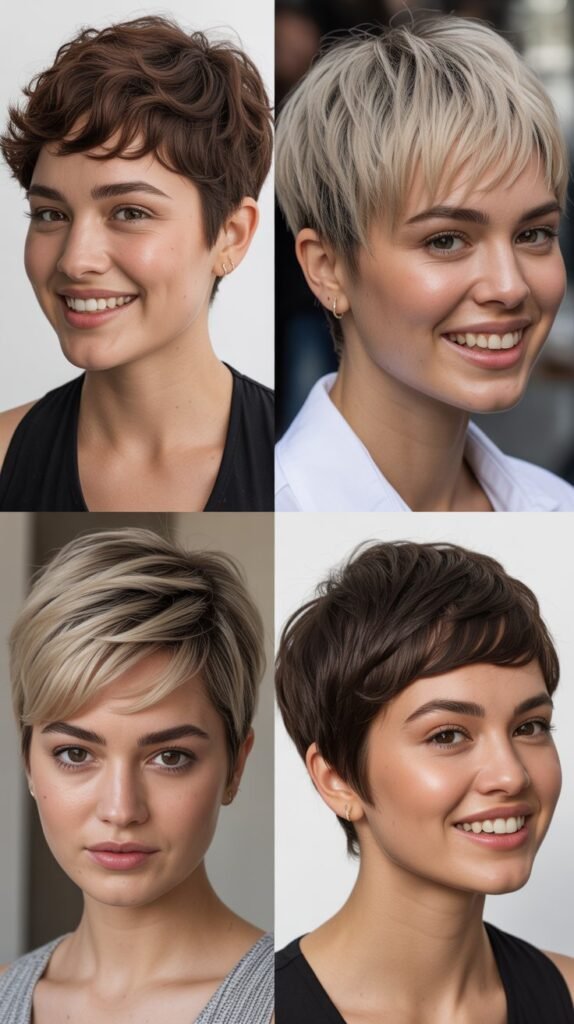
Maximum volume concentrated at the crown creates dramatic height and presence in pixie cuts, offering 2026’s answer to flat-top concerns while adding fashion-forward impact.
This style proves that pixies can deliver serious volume despite minimal length.
- This style concentrates length at the crown—typically 3-5 inches—while keeping perimeter sections shorter, creating maximum height potential and dramatic vertical emphasis.
- Achieving significant volume involves layering techniques, volumizing products, blow-drying with lift, and sometimes backcombing or teasing to build and maintain height.
- The dramatic crown height particularly flatters round and square face shapes by adding vertical lines that elongate facial proportions and balance width.
- This high-impact style works beautifully for special occasions, performances, or any situation where memorable, attention-getting presence is desired.
- Maintaining volume throughout the day requires strong-hold hairsprays and possibly touch-ups with dry shampoo or texture spray for refreshing.
- The style can be adjusted for different occasions—wearing full dramatic height for events, then smoothing down to more subtle elevation for everyday activities.
- Fine hair particularly benefits from this cutting and styling approach, as concentrated volume at the crown creates the illusion of overall fullness and thickness.
38. Pixie with Fringe Detail
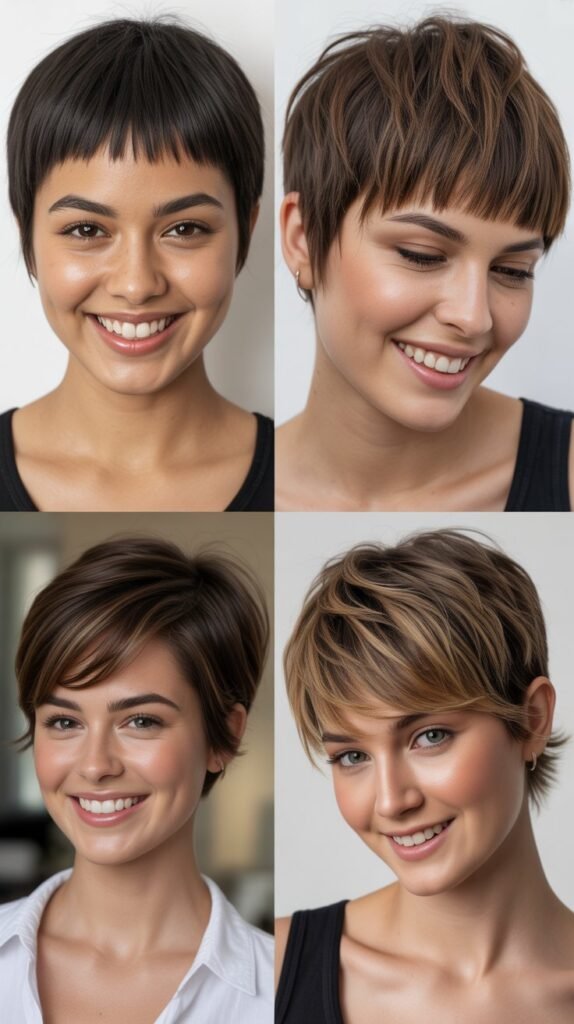
Strategic fringe sections—face-framing pieces of varying lengths—add softness and customization to pixie cuts.
This 2026 trend allows personalization through deliberately styled front sections that complement facial features while maintaining overall short length.
- Fringe sections can vary dramatically in length, from short, choppy pieces that graze the eyebrows to longer, side-swept sections that reach the cheekbones.
- These face-framing elements soften the overall pixie aesthetic and can be customized to minimize or emphasize different facial features based on individual preferences.
- Fringe adds versatility to pixie cuts, as the front sections can be styled multiple ways—straightened smooth, curled forward, swept aside, or textured and piece-y.
- This styling element works across all face shapes, as length and angle adjustments allow for customization that flatters oval, round, square, heart, and long faces equally.
- Maintenance of fringe sections requires more frequent attention than the rest of the cut—typically trimming every 3-4 weeks to maintain flattering lengths.
- The fringe can serve practical purposes beyond aesthetics, including concealing forehead concerns, balancing facial proportions, or drawing attention to eyes.
- Growing out pixie cuts becomes less awkward when fringe sections are maintained, as the longer front pieces blend more naturally into transitional lengths.
39. Two-Toned Pixie
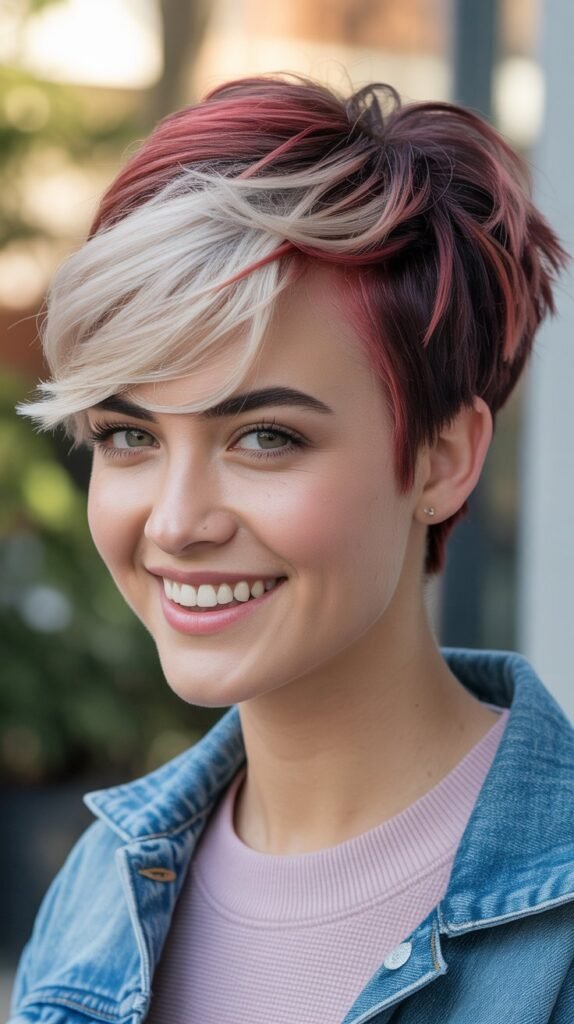
Two-toned coloring creates bold, graphic statements through distinctly different colors placed in separate sections of pixie cuts.
This 2026 trend embraces high-contrast, artistic coloring that makes unforgettable visual impressions.
- This technique involves dividing the pixie into sections—often top versus sides, or front versus back—and applying dramatically different colors to each section.
- Popular combinations include platinum blonde with jet black, natural brunette with vibrant red, dark purple with silver, or navy blue with bright teal.
- The pixie’s short length makes two-toned coloring more achievable and affordable than on longer hair, requiring less product and processing time for dramatic results.
- Strategic color placement can enhance the cut’s shape and structure, with lighter tones adding dimension and darker tones creating depth and defining lines.
- This bold coloring approach works best when the base cut features distinct sections—like disconnected layers or undercuts—that naturally separate the two color zones.
- Maintenance requires attention to both colors, including toning appointments for lightened sections and color refreshing for both tones every 4-6 weeks.
- The high-contrast nature makes this style particularly photogenic and impactful in both personal and professional creative contexts.
40. Pixie with Textured Nape
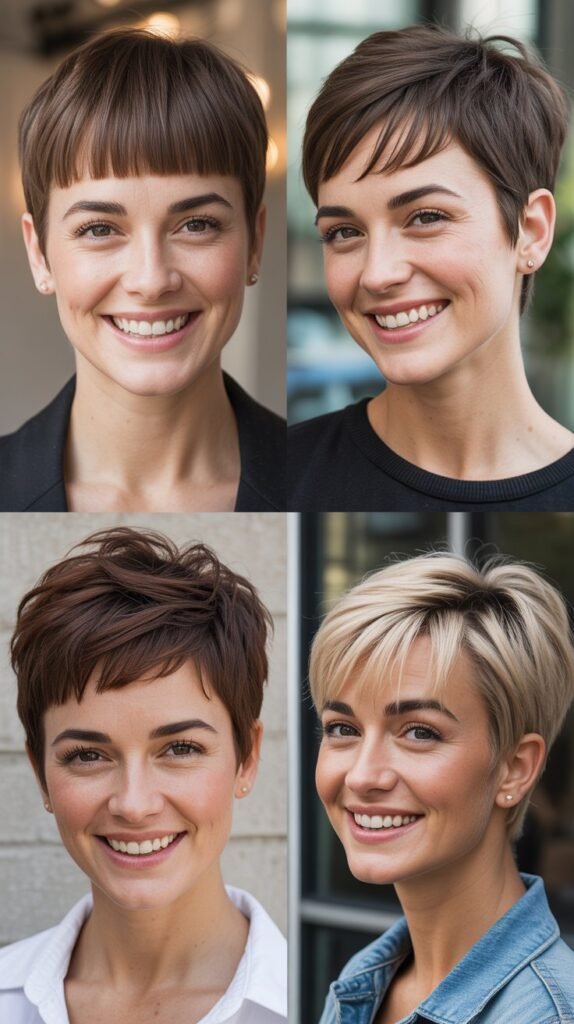
While many pixies feature clean, tapered napes, textured nape styling adds dimension and interest to the back view. This 2026 trend recognizes that pixie cuts are visible from 360 degrees and deserve attention at the nape.
- Textured nape involves point-cutting, razoring, or layering techniques that create piece-y, dimensional effects at the base of the hairline rather than clean, tapered finishes.
- This approach adds visual interest from behind and prevents the back view from appearing too simple or stark compared to more detailed front and side sections.
- The texture works particularly well when the nape hair grows in interesting patterns or whorls, as the cutting technique can enhance rather than fight natural growth directions.
- Styling the textured nape typically requires minimal effort—often just a small amount of texture paste or pomade worked through the ends for definition.
- This technique provides excellent transition styling for growing out pixie cuts, as the piece-y texture blends more naturally into increasing lengths than blunt perimeter cuts.
- The textured nape pairs beautifully with both polished front styling—creating interesting contrast—or cohesive all-over texture for uniform appearance.
- Maintenance involves preserving the textured ends through regular trims every 5-6 weeks that refresh the piece-y quality without removing length unnecessarily.
41. Pixie with Defined Part Line
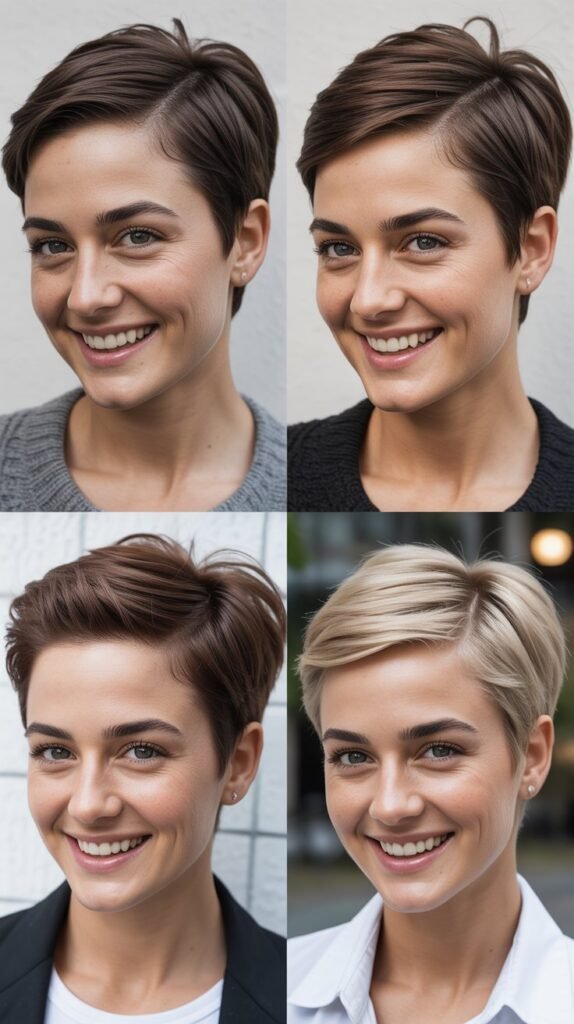
A precisely defined part line—whether center, side, or even zigzag—adds structure and polish to pixie cuts.
This 2026 styling detail transforms casual short hair into deliberately groomed, sophisticated looks that show attention to detail.
- Creating defined parts involves using fine-tooth combs to separate hair into precise sections, often enhanced with straightening tools or smoothing products for maximum clarity.
- Side parts—placed anywhere from just off-center to several inches to one side—create asymmetry and can be positioned to flatter individual face shapes and features.
- Center parts offer symmetrical styling that works particularly well for balanced, oval face shapes and creates contemporary, minimalist aesthetics.
- Creative parts including zigzag or geometric patterns add playful elements while maintaining the overall polished quality of defined separation.
- The defined part works with various styling approaches—smoothed hair on both sides, volume on one side with smoothness on the other, or textured throughout with the part providing structure.
- This styling detail suits professional environments beautifully, projecting put-together, carefully groomed appearance that translates to competence and attention to detail.
- Maintaining defined parts throughout the day requires light hairspray or smoothing products that prevent hair from falling back across the part line.
42. Edgy Faux Hawk Pixie
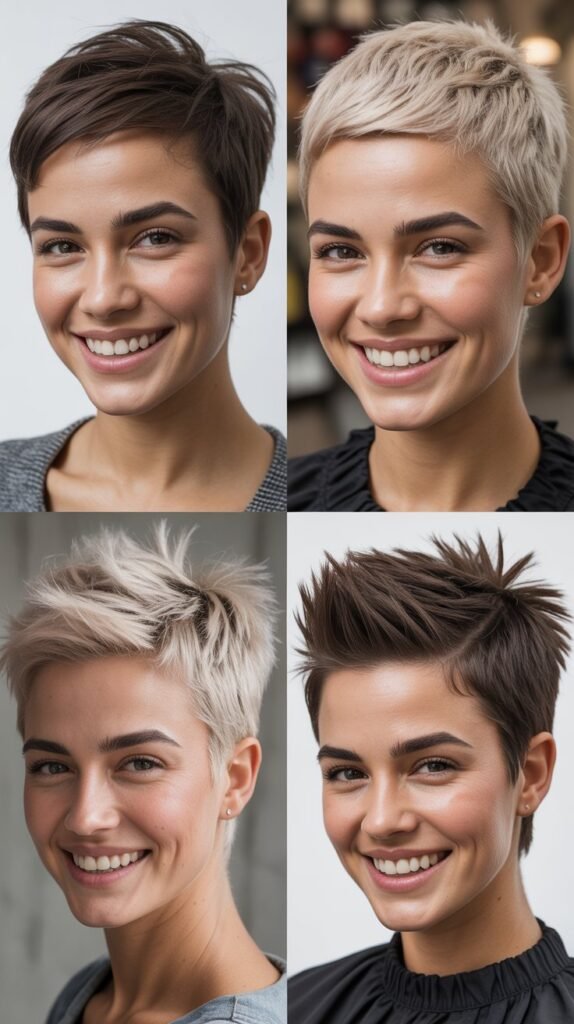
The faux hawk adapts mohawk aesthetics for more wearable, professional-friendly styling, creating center strip volume without the commitment of shaved sides.
This 2026 pixie variation offers edginess with versatility and easy style adjustments.
- This styling creates the appearance of mohawk volume along the head’s center while maintaining hair on the sides rather than shaving them completely.
- The effect is achieved through product and styling technique—smoothing or slicking side hair down while building volume through the center with gels, mousses, or pomades.
- Faux hawk styling works with pixies of various base lengths, from very short crops that create subtle center definition to longer cuts that allow dramatic height.
- The reversible nature provides styling flexibility—wearing the faux hawk for casual or evening occasions, then restyling everything smooth or tousled for professional settings.
- This approach particularly appeals to those attracted to mohawk aesthetics but unable to commit due to professional requirements or concerns about growing out shaved sections.
- Creating the faux hawk involves sectioning hair down the center, applying strong-hold products, and using fingers or brushes to direct center hair upward while smoothing sides.
- The style can be adjusted throughout the day, adding more height and definition for after-work activities or smoothing down as needed for conservative environments.
43. Pixie with Ombre Effect
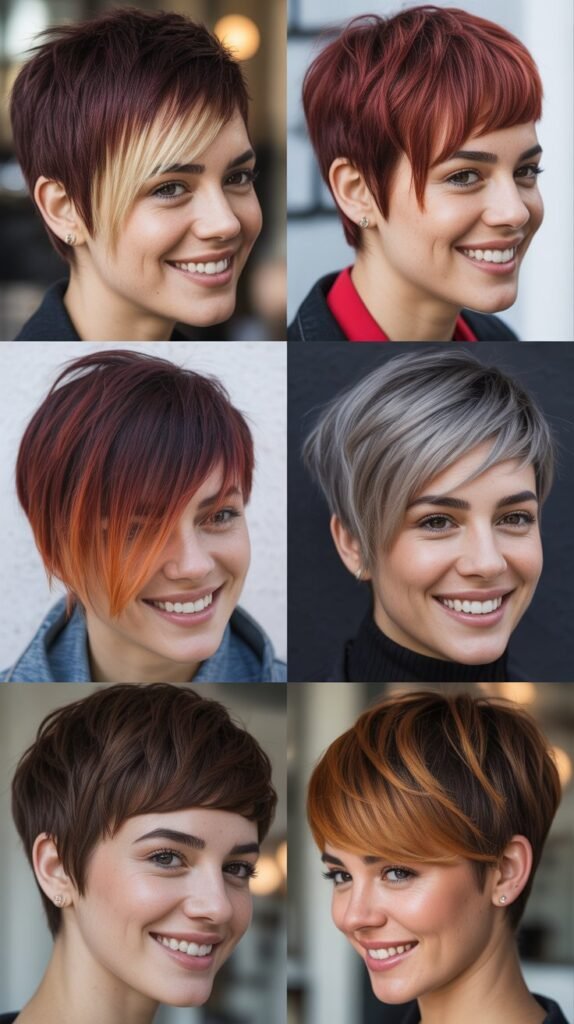
Ombre coloring—gradual transition from darker roots to lighter ends—adds dimensional beauty to pixie cuts despite the limited length available for color gradation.
This 2026 trend adapts popular long-hair coloring for short styles with beautiful results.
- Pixie ombre typically features concentrated color transition in the 2-4 inches between roots and ends, creating condensed but visible gradation from dark to light.
- Popular combinations include natural brunette roots to caramel or honey ends, black roots to silver or gray ends, or red roots transitioning to orange or copper tips.
- The shorter transition distance actually makes pixie ombre maintenance easier than long-hair versions, as there’s less hair requiring color work and touch-ups.
- This technique adds depth and dimension that enhances pixie texture, with lighter ends emphasizing layers and creating visual movement throughout the cut.
- Ombre coloring on pixies works best when the cut includes sufficient length variation—longer tops with shorter sides showcase the color transition most effectively.
- Maintenance focuses on toning the lighter ends to prevent brassiness and occasional root touch-ups, typically needed every 6-8 weeks depending on color choice.
- The gradual color change provides more forgiving grow-out than single-process color, as incoming roots blend naturally into the darker ombre base.
44. Pixie with Angular Fringe
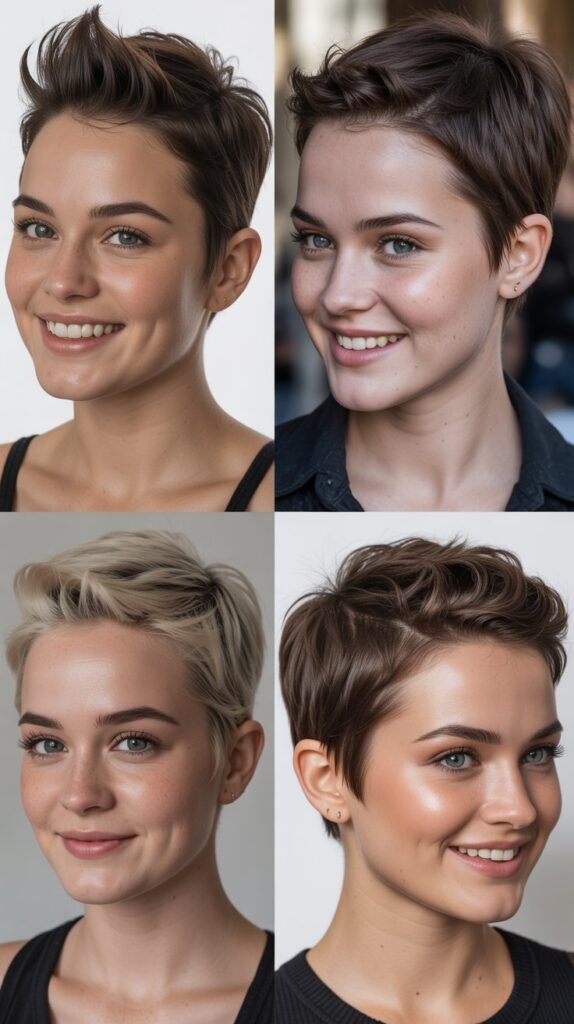
Angular fringe cut at deliberate diagonals or asymmetric lengths creates edgy, modern framing for pixie cuts.
This 2026 trend uses geometric bang shapes to add visual interest and contemporary edge to short hairstyles.
- Angular fringe involves cutting front sections at intentional diagonals rather than straight across, creating dynamic lines that add movement and visual interest.
- The angle can slope from shorter on one side to longer on the other, creating dramatic asymmetry that draws the eye across the face in flattering diagonal motion.
- This framing technique works particularly well for square and rectangular faces, as the diagonal lines soften angular jaw structures and create more flowing aesthetics.
- Multiple angles can be incorporated—steeper sections near the temples transitioning to gentler slopes toward the center—for complex, artistic fringing.
- The angular approach pairs beautifully with other asymmetric elements including side-swept styling, undercuts, or disconnected layers for cohesive edgy aesthetics.
- Styling angular fringe typically involves straightening to emphasize the geometric lines, though textured, piece-y approaches can soften the look for different occasions.
- Maintenance requires preserving the precise angles through regular trims every 3-4 weeks with stylists who understand the importance of maintaining exact diagonal lines.
45. Retro-Inspired Pixie
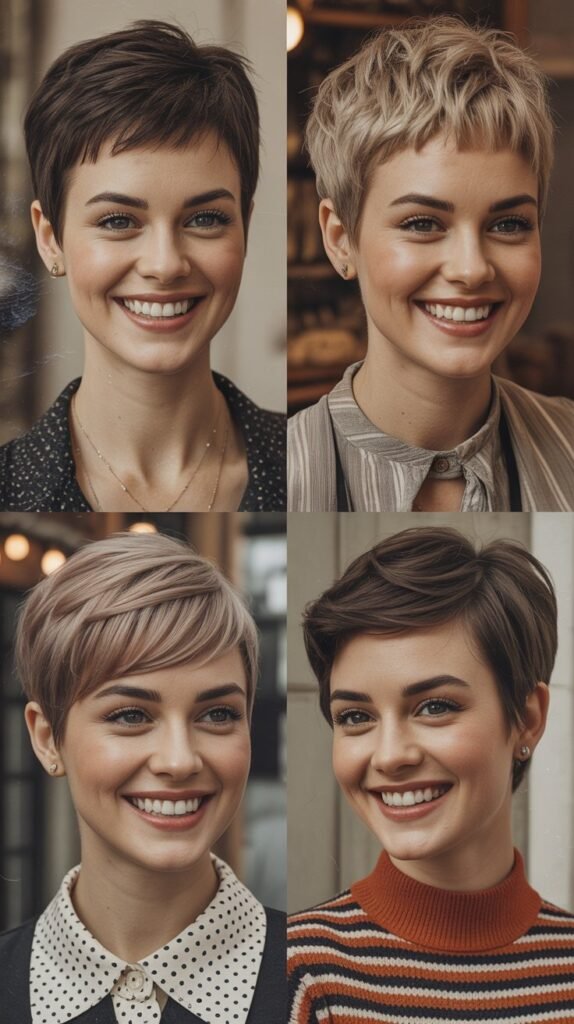
Drawing from iconic pixie moments throughout fashion history—particularly 1960s mod styles and 1990s minimalism—creates vintage-inspire cuts adapted for 2026 sensibilities.
These retro pixies honor classic proportions while incorporating contemporary techniques and styling.
- Retro pixies often feature specific proportions like the 1960s “Twiggy” style with close-cropped sides and slightly longer, forward-combed tops, or 1990s “Winona Ryder” piece-y, textured cuts.
- These styles honor historical silhouettes while incorporating modern cutting techniques, products, and styling methods that make them more wearable for contemporary lifestyles.
- Color choices can enhance the vintage vibe—rich brunettes, platinum blondes, or natural shades that reference specific eras without relying on costumey bright colors.
- Retro styling pairs beautifully with vintage or vintage-inspired fashion, creating cohesive aesthetic statements that celebrate specific periods’ style sensibilities.
- Modern adaptations often soften traditionally severe retro lines or add texture where historical versions featured smooth, one-dimensional styling.
- These cuts appeal particularly to those who appreciate fashion history and want to incorporate classic style references into personal appearance while maintaining contemporary relevance.
- Maintenance focuses on preserving the characteristic proportions and shapes that define specific retro periods, requiring regular appointments with stylists familiar with historical references.
46. Pixie with Extreme Length Contrast
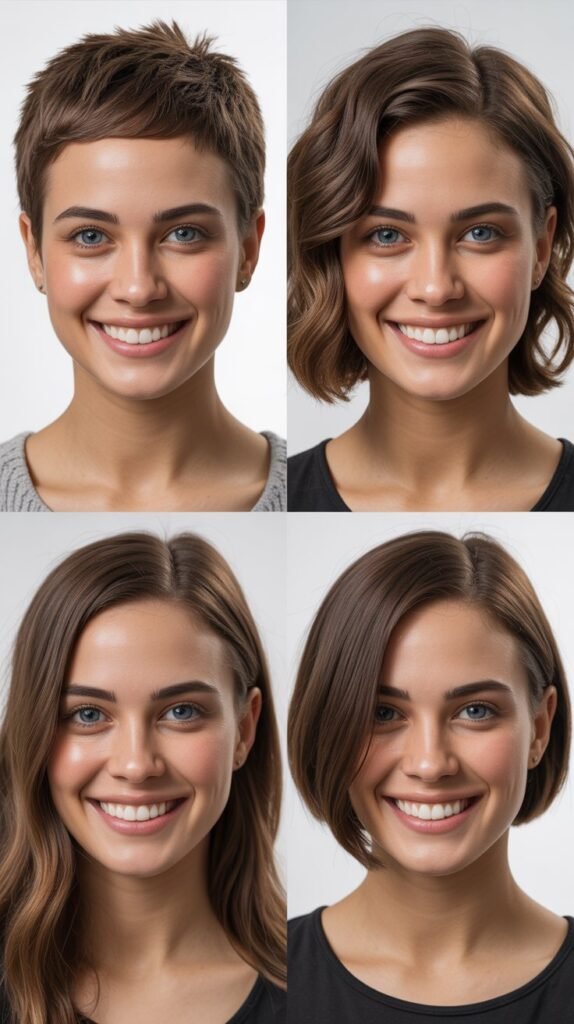
Maximum length contrast—combining very short sections (clippered or closely cropped) with significantly longer areas (3+ inches)—creates the most dramatic, architectural pixie styles.
This 2026 trend pushes boundaries and makes powerful style statements.
- This approach eliminates gradual blending in favor of intentional, dramatic separation between ultra-short and longer sections, creating striking visual impact.
- Common implementations include fully shaved or buzzed sides and back with 4-6 inch tops, or one entire side kept long while the other is cropped close to the scalp.
- The extreme contrast draws attention and creates memorable, distinctive styling that immediately communicates fashion-forward sensibilities and confident self-expression.
- This cut works best for individuals with strong facial features and bone structure, as the dramatic proportions draw significant attention to the face.
- Styling the longer sections becomes crucial, as they provide the primary visual interest and focal point that balances the barely-there short areas.
- Maintenance requires frequent attention to the shortest sections—every 2-3 weeks—to preserve the dramatic contrast before short areas grow out and blur the intentional separation.
- The bold nature makes this style particularly appealing in creative industries, artistic communities, and fashion-forward environments that value distinctive personal presentation.
47. Curly Pixie with Defined Ringlets
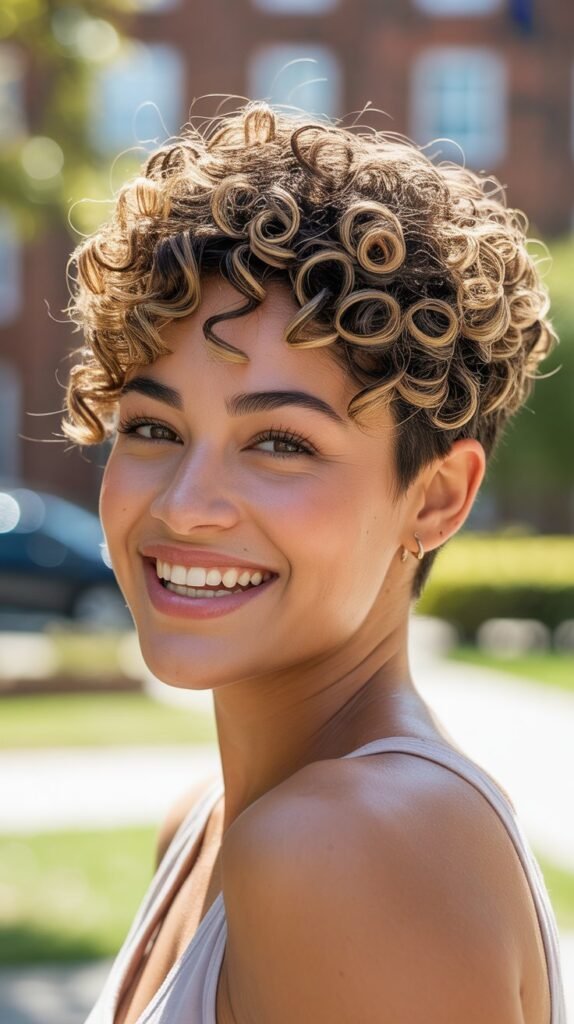
For those with natural curl patterns, defining individual ringlets transforms curly pixies into sculptural, three-dimensional styles.
This 2026 approach celebrates natural texture through products and techniques that enhance curl definition rather than fight it.
- Defining ringlets involves using curl-enhancing products including creams, gels, and leave-in conditioners while employing techniques like finger-coiling or shingling to separate and define individual curls.
- The pixie length actually makes curl definition easier than on longer hair, as there’s less weight pulling curls down and products penetrate more evenly through shorter lengths.
- Proper hydration becomes crucial for defined curls, requiring regular deep conditioning treatments and moisture-rich products that prevent frizz and maintain curl integrity.
- This styling approach works across curl types from loose waves (2B-2C) to tight coils (4A-4C), with technique adjustments for different textures and curl sizes.
- Defined curly pixies require minimal daily restyling—often just refreshing with water or curl refresher sprays and occasional redefining of front sections.
- Night protection through satin pillowcases or bonnets helps preserve curl definition between wash days, extending styling longevity.
- The three-dimensional quality of defined ringlets creates natural volume and interest that eliminates the need for additional volumizing techniques or products.
48. Pixie with Metallic Tones
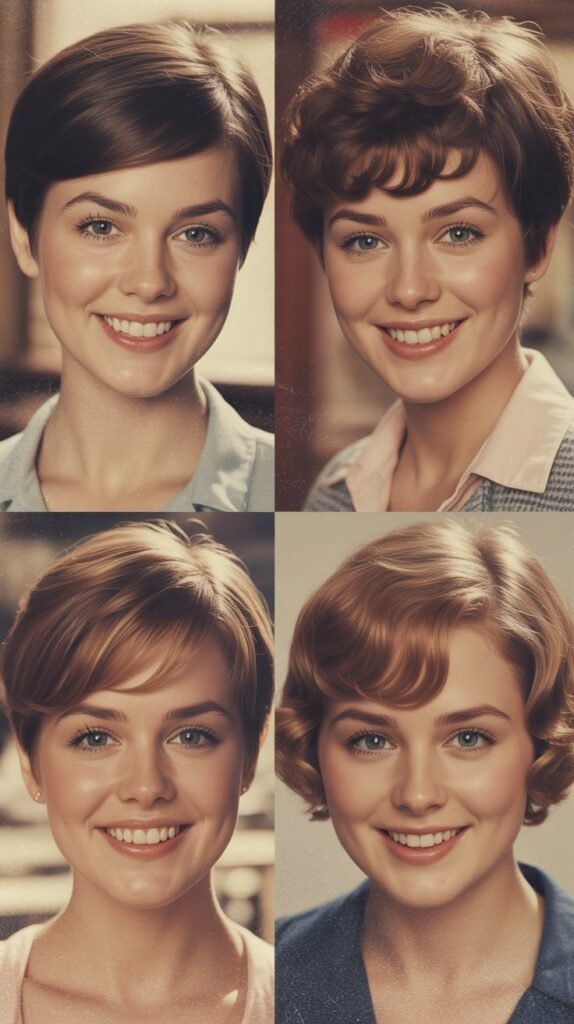
Metallic hair colors including rose gold, gunmetal gray, bronze, and platinum create futuristic, high-fashion effects on pixie cuts.
This 2026 coloring trend transforms short hair into reflective, dimensional art through specialized toning and color techniques.
- Metallic tones require extremely lightened base hair—typically level 9 or 10—followed by specialized toners that deposit metallic pigments creating reflective, dimensional effects.
- Rose gold combines warm pink and copper tones for soft, romantic metallics, while gunmetal blends silver and slate for cool, edgy aesthetics.
- The pixie cut’s shorter length showcases metallic colors beautifully, as the concentration of reflective pigment appears more intense and saturated than on longer lengths.
- These sophisticated colors work in professional environments better than traditional vivid fashion colors, offering creativity within more conservative boundaries.
- Maintaining metallic vibrancy requires color-depositing shampoos, toning treatments every 4-6 weeks, and protection from elements that cause fading including chlorine and UV exposure.
- Metallic tones pair beautifully with sleek, polished styling that maximizes light reflection, though they also work with textured approaches that create dimensional effects.
- The temporary nature of metallic toners allows for seasonal color changes, adapting warmer bronze and rose tones for autumn and cooler silver and platinum for winter.
49. Pixie with Stacked Back
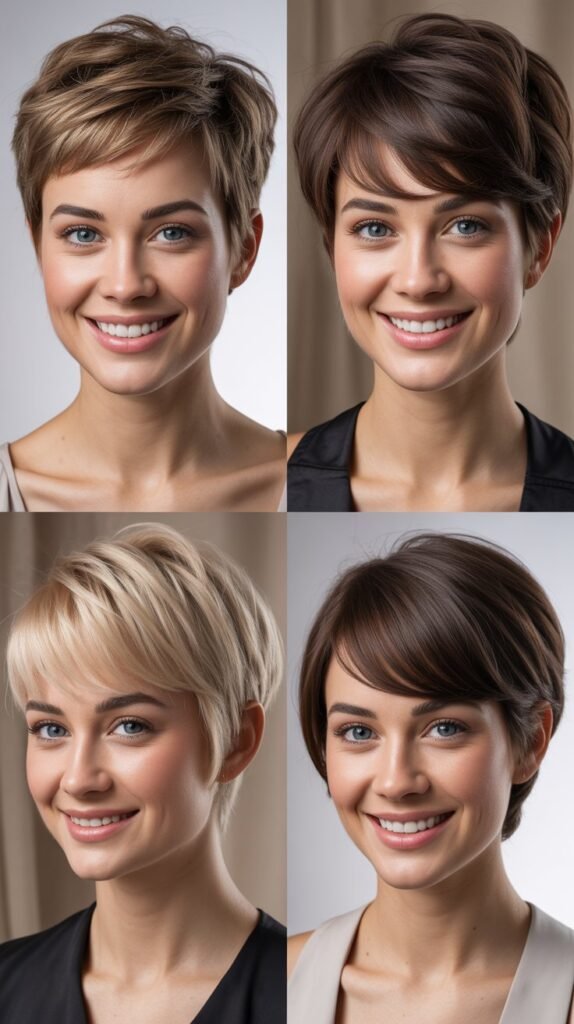
Stacked back sections feature graduated layers that create volume and rounded shapes at the back of the head.
This 2026 technique addresses concerns about flat back-of-head appearance while adding stylish dimension to the pixie’s rear view.
- Stacking involves cutting shorter layers underneath with progressively longer layers on top, creating built-in volume and rounded shapes that don’t require extensive styling.
- This technique particularly benefits those with flatter head shapes, as the stacking adds architectural dimension that creates more rounded, balanced proportions.
- The graduated layers ensure the back doesn’t appear triangular or bulky, instead creating smooth, flowing curves that appear natural and intentional.
- Stacked backs work beautifully with various front and side styling—from textured and piece-y to smooth and sleek—while maintaining consistent back volume.
- This cutting approach reduces styling time, as the stacking creates automatic shape and volume that doesn’t require blow-drying or product manipulation to achieve.
- Maintenance focuses on preserving the stacked graduation through regular trims every 4-5 weeks that maintain the shorter underneath layers and longer surface layers.
- The dimensional back view ensures the pixie appears interesting and well-considered from every angle, not just the front-facing perspective.
50. Pixie with Face-Framing Highlights
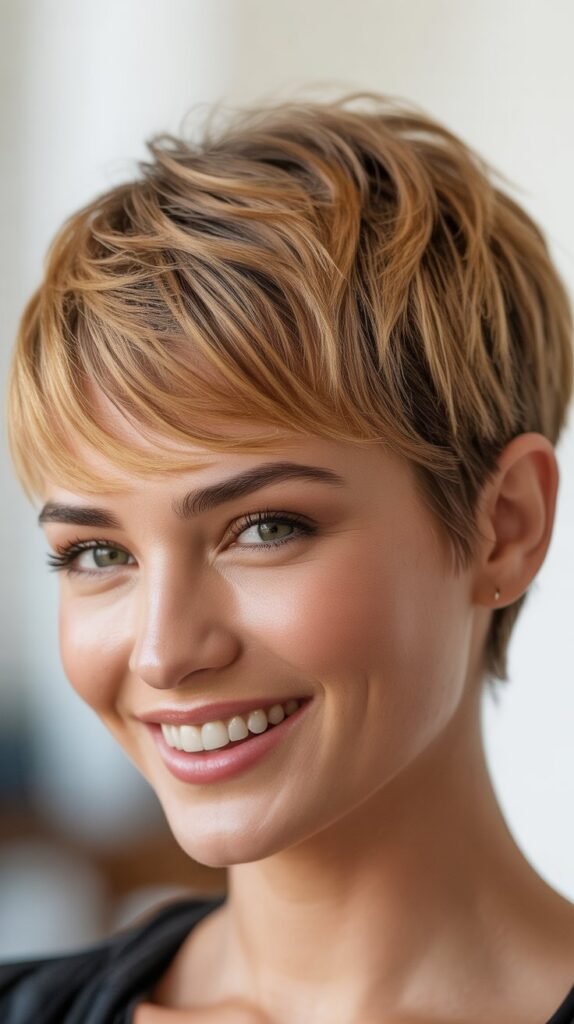
Strategic highlighting placed specifically around the face adds dimension and draws attention to features while maintaining overall color simplicity.
This 2026 technique offers maximum impact with minimal color commitment and maintenance.
- Face-framing highlights involve lightening select sections around the hairline, temples, and front portions while leaving the majority of hair in natural or base color.
- The lighter tones draw light to the face, creating illuminating effects that brighten complexion and draw attention to eyes and facial features.
- This technique requires significantly less maintenance than all-over highlighting, as the majority of hair remains natural and only small front sections need periodic toning and touch-ups.
- The strategic placement works with pixie cuts of various lengths, from very short crops with just subtle lightening to longer pixies with more extensive face-framing color.
- Popular approaches include keeping highlights within 2-3 shades of the base color for subtle enhancement or creating more dramatic contrast with significant lightening for bolder effects.
- This highlighting approach works across all base colors—lightening brunette bases to caramel or honey, warming red bases with copper accents, or brightening blonde bases with platinum pieces.
- Maintenance typically requires toning appointments every 6-8 weeks rather than the more frequent touch-ups needed for all-over highlighting techniques.
51. Pixie with Textured Ends
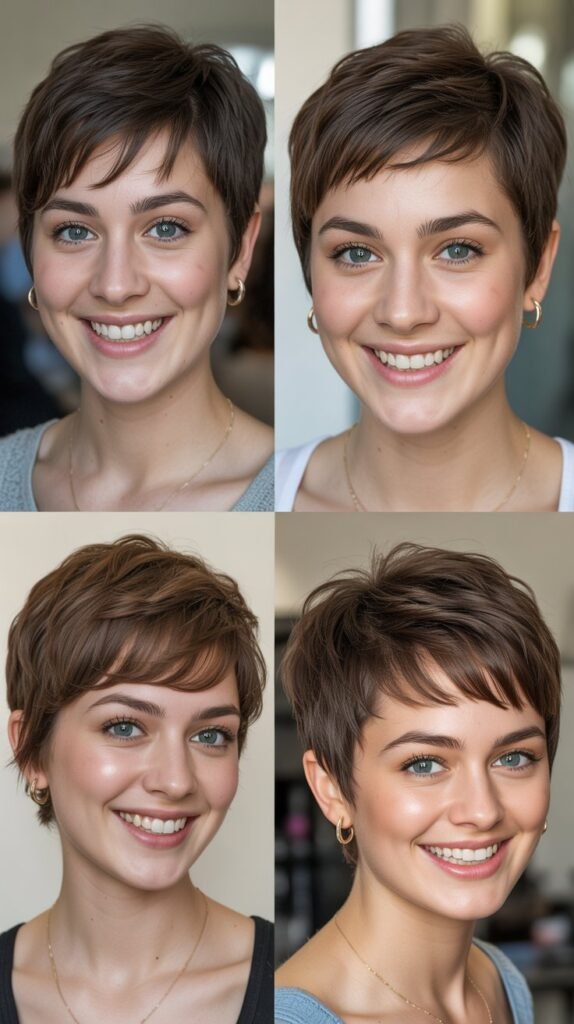
Focusing texture specifically at the ends of pixie cuts creates movement and interest while maintaining body control throughout the length.
This 2026 styling technique emphasizes piece-y, separated ends that add contemporary edge to short styles.
- Textured ends are achieved through point-cutting, razor work, or thinning techniques that create irregular, varied end lengths rather than blunt, uniform perimeters.
- This approach adds movement and prevents the heavy, helmet-like appearance that can occur with blunt-cut pixies, especially on thick or dense hair.
- Styling products including texture pastes, dry shampoos, or light pomades enhance the piece-y ends by separating and defining individual sections.
- The textured ends work particularly well with layered pixie cuts, as the varied lengths throughout the cut naturally support and enhance end texture.
- This technique benefits all hair textures—adding definition to straight hair, enhancing natural wave in textured hair, and preventing bulk in thick hair types.
- Maintenance involves preserving the textured ends through regular trims every 5-6 weeks that refresh the irregular end work without removing length unnecessarily.
- The casual, lived-in appearance created by textured ends suits contemporary aesthetics that favor authentic, natural-looking styling over overly polished perfection.
52. Pixie with Dramatic Side Part
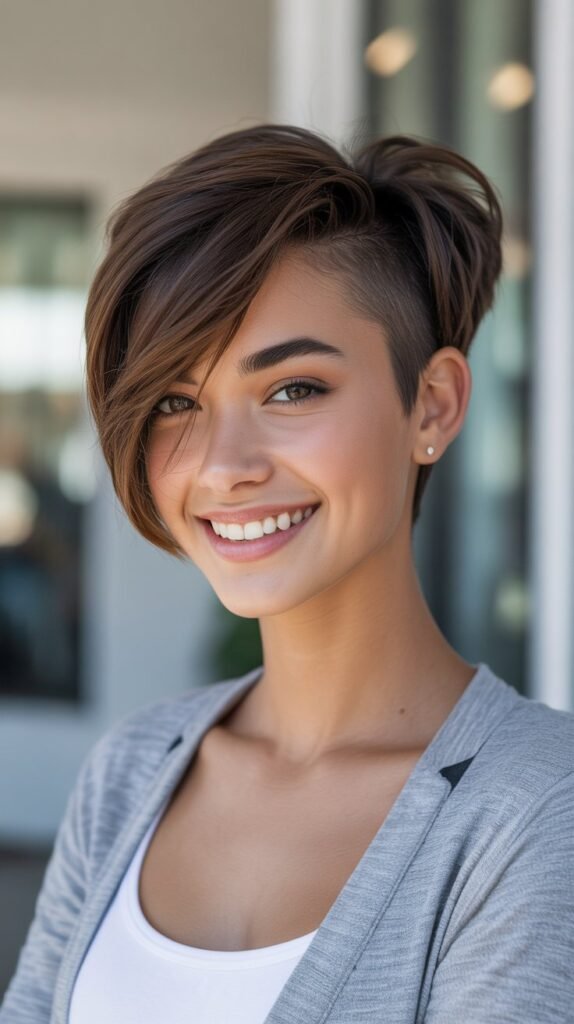
Placing the part line far to one side—2-3 inches from center or even closer to the ear—creates maximum asymmetry and volume opportunity.
This 2026 styling detail transforms standard pixies into dramatic, red-carpet-worthy looks through simple part placement.
- Dramatic side parts create natural volume on the heavier side while exposing scalp and creating sleek flatness on the lighter side, producing striking asymmetric effects.
- The significant part offset draws attention across the face in diagonal lines that flatter most face shapes, particularly those seeking to minimize width or emphasize vertical length.
- Creating and maintaining the dramatic part requires product support including volumizing sprays on the full side and smoothing products on the sleek side for maximum contrast.
- This styling approach works with various base cuts, from disconnected pixies with short sides to more uniform lengths that provide styling flexibility.
- The dramatic side part photographs beautifully, creating dynamic angles and interesting negative space that translates well in both casual and professional photography.
- Daily styling becomes quick and efficient, as the part placement automatically creates the intended asymmetric effect with minimal additional manipulation needed.
- The style can be reversed—switching the part to the opposite side—for varied looks and to prevent hair from training too permanently in one direction.
53. Pixie with Natural Wave Enhancement
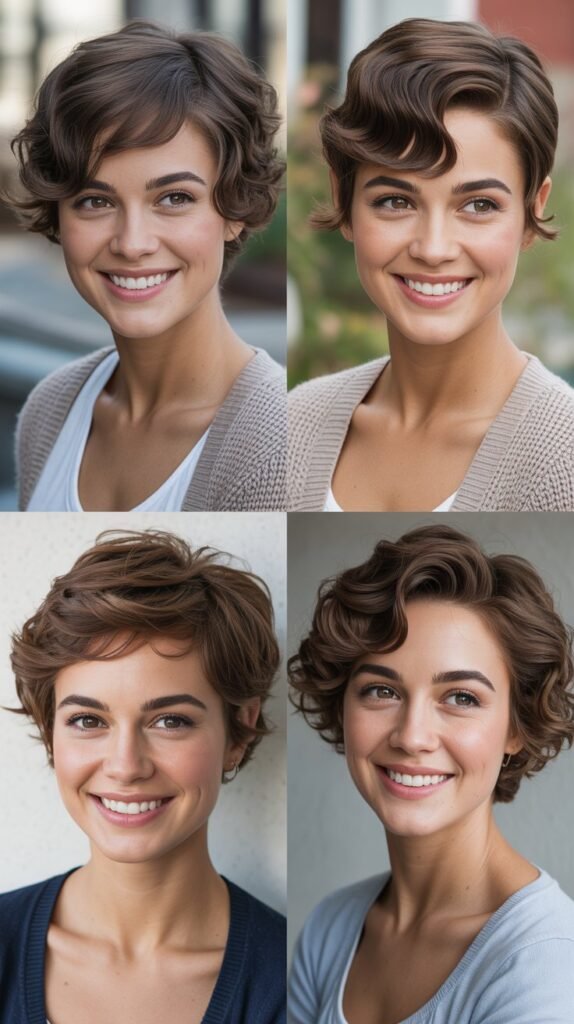
For those with naturally wavy hair (2A-2C patterns), enhancing rather than straightening these natural movements creates effortless, beachy pixie styles.
This 2026 approach celebrates authentic texture through products and techniques that support natural patterns.
- Wave enhancement involves using lightweight mousse or wave sprays on damp hair, then either air-drying or diffusing gently without disturbing the natural wave formation.
- This approach eliminates daily heat styling demands while celebrating natural texture, making it one of the most low-maintenance pixie variations.
- Strategic layering becomes crucial for wavy pixies, as proper layer placement can enhance wave definition and prevent the triangular shape that sometimes occurs with wavy hair.
- Products should provide hold and definition without weighing down waves, as heavy products can stretch out wave patterns and create limp, undefined results.
- Natural wave enhancement works beautifully for casual, relaxed aesthetics and pairs well with minimal makeup and natural fashion choices for cohesive styling.
- The lived-in, effortless appearance translates well across occasions, working equally for weekend errands, casual work environments, and relaxed social gatherings.
- Maintenance focuses on regular trims every 5-7 weeks to preserve layer placement and prevent wavy hair from becoming too heavy or losing its natural pattern.
54. Pixie with Contrast Undercut
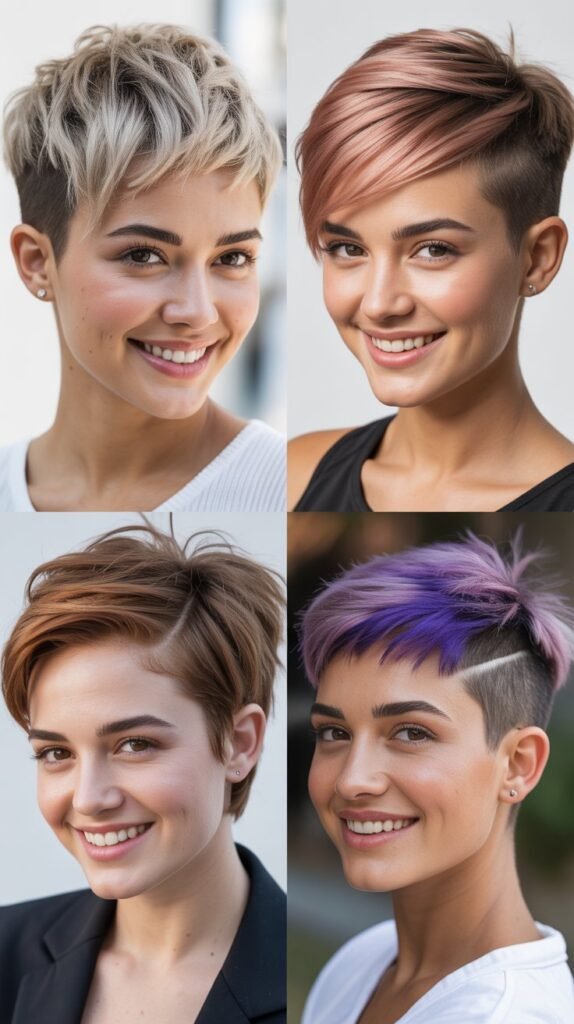
Creating artistic contrast through undercut placement and length opposition adds modern edge to pixie cuts.
This 2026 technique combines ultra-short or shaved sections with longer pixie areas for maximum visual impact and style interest.
- Contrast undercuts feature significant length separation—often combining shaved or buzzed sections with 3-4 inch top lengths—creating intentional, dramatic opposition rather than blended graduations.
- Popular placements include undercuts at the nape that extend into V-shapes, temple undercuts that create side contrast, or full-side undercuts paired with opposite-side length.
- The high contrast serves both aesthetic and practical purposes—adding edge while reducing styling demands and creating cooling comfort in warmer climates.
- This technique works particularly well for thick hair, as removing undercut bulk creates more manageable overall hair volume while maintaining length where desired.
- The undercut sections can remain plain or incorporate shaved designs, patterns, or color for additional personalization and artistic expression.
- Maintenance requires frequent attention to undercut areas—every 2-3 weeks—to preserve the clean contrast before regrowth blurs the intentional separation.
- Growing out contrast undercuts requires commitment and patience, as the drastically different lengths create extended awkward phases during the growing process.
55. Pixie with Soft Texture Throughout
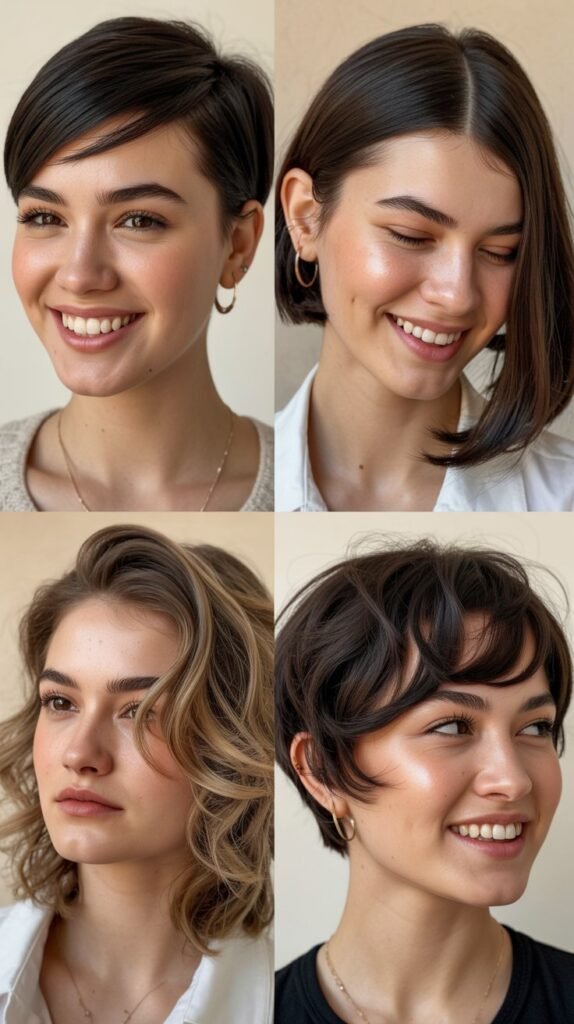
Rather than focusing texture in specific areas, distributing soft, natural-looking texture throughout the entire pixie creates cohesive, effortless styling.
This 2026 approach emphasizes touchable, lived-in aesthetics over structured, heavily styled looks.
- Soft all-over texture is achieved through layering techniques, point-cutting, and occasionally light razor work that creates gentle, flowing movement without harsh separations or piece-y definitions.
- This styling approach requires minimal product—often just light texture spray or mousse—and emphasizes natural drying or gentle diffusing rather than intensive heat styling.
- The cohesive texture creates harmonious styling without dramatic contrasts or attention-grabbing elements, offering sophisticated simplicity and understated elegance.
- This technique works beautifully across hair types, providing definition for straight hair, enhancing existing texture in wavy hair, and creating manageable styling for curly hair.
- The soft texture approach pairs well with natural or subtly enhanced hair colors, minimal makeup, and casual to business-casual fashion for complete understated aesthetics.
- Daily styling becomes remarkably simple—often just running fingers through hair with minimal product application and allowing natural air-drying to create the intended effect.
- Maintenance focuses on preserving the soft, layered texture through regular trims every 6-7 weeks that prevent excessive length accumulation that could weigh down the gentle texture.
56. Pixie with Statement Earrings Integration
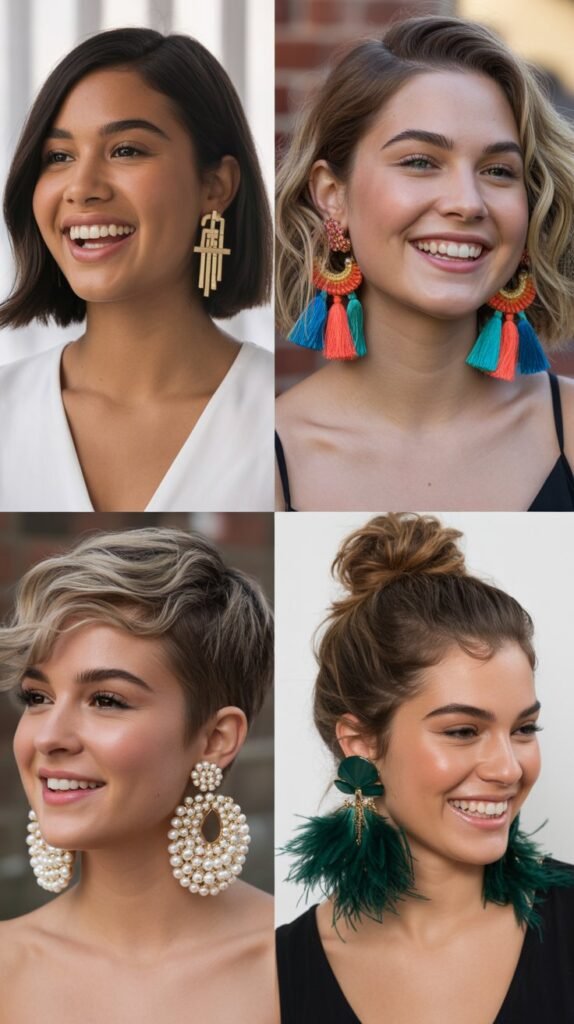
While not strictly a hair technique, 2026’s pixie trend emphasizes the relationship between short hair and statement jewelry, particularly earrings.
The pixie cut’s exposed ears create perfect showcases for bold, artistic, or meaningful earring choices that become integral style elements.
- Pixie cuts eliminate hair interference with earrings, allowing full visibility of even large, dramatic pieces without tangling or covering concerns that affect longer hairstyles.
- Strategic hair styling—tucking behind ears, side-sweeping, or creating updrafts—can further emphasize statement earrings and draw attention to these accessory focal points.
- The minimalist quality of short hair allows bold earrings to become primary style statements without competing with hair volume or intricate styling.
- Earring choices can transform pixie aesthetics dramatically—sleek modern studs create minimalist looks, vintage chandelier pieces add romance, and bold geometric designs emphasize contemporary edge.
- Color coordination between hair and jewelry creates cohesive styling—metallic hair tones complement metal jewelry choices, while vivid hair colors can match or deliberately contrast with colored gemstones.
- Multiple piercings become more visible and impactful with pixie cuts, allowing creative curation arrangements that function as wearable art displayed against the clean canvas of short hair.
- The symbiotic relationship between pixies and statement jewelry encourages investment in quality, meaningful pieces that serve as permanent style signatures complementing the temporary, changeable nature of hair.
57. Pixie for Thick Hair with Strategic Thinning
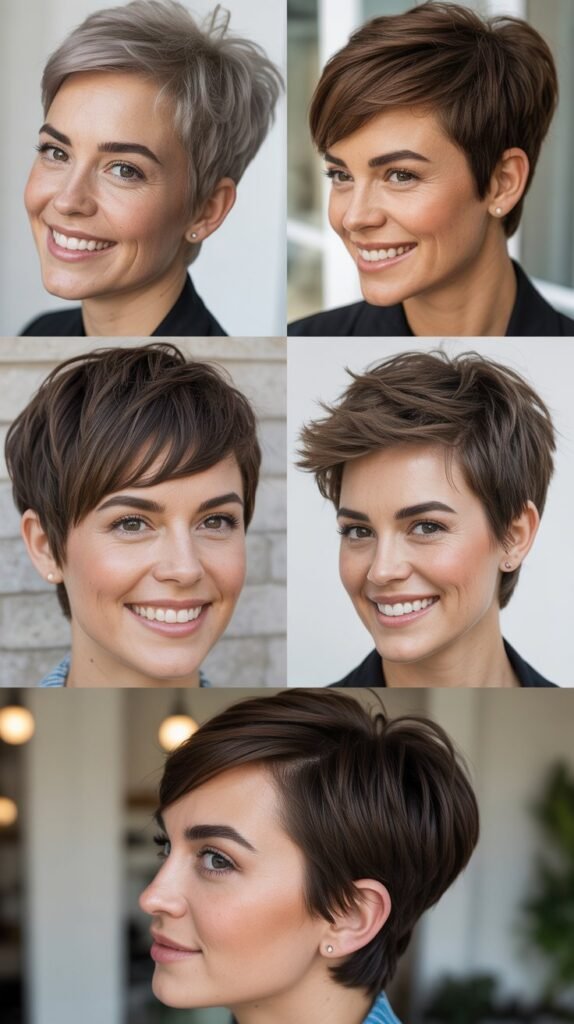
Thick, dense hair often benefits from specialized pixie cutting techniques that remove bulk while maintaining style integrity.
This 2026 approach addresses thickness concerns through strategic thinning that creates manageable, stylish results without sacrificing the benefits of abundant hair.
- Strategic thinning involves using thinning shears, razors, or undercutting techniques to remove interior bulk while maintaining surface length and overall shape integrity.
- This approach prevents the mushroom or pyramid shapes that can occur when thick hair is cut short without proper bulk removal, creating flattering, balanced proportions instead.
- Thinning techniques must be applied judiciously—over-thinning creates wispy, unmanageable results, while strategic removal maintains body while improving styling cooperation.
- The reduced bulk makes daily styling faster and easier, as there’s less hair to manipulate and products distribute more evenly through lightened density.
- Thick-haired pixies benefit particularly from undercut techniques that remove significant bulk at the nape and sides while maintaining length and fullness through visible areas.
- Regular maintenance appointments every 4-5 weeks become especially important for thick hair, as rapid growth can quickly restore bulk and compromise the styling benefits of thinning.
- Working with stylists experienced in thick hair cutting ensures proper technique application that achieves bulk removal without creating choppy, uneven, or unflattering results.
58. Pixie with Wispy Temple Sections
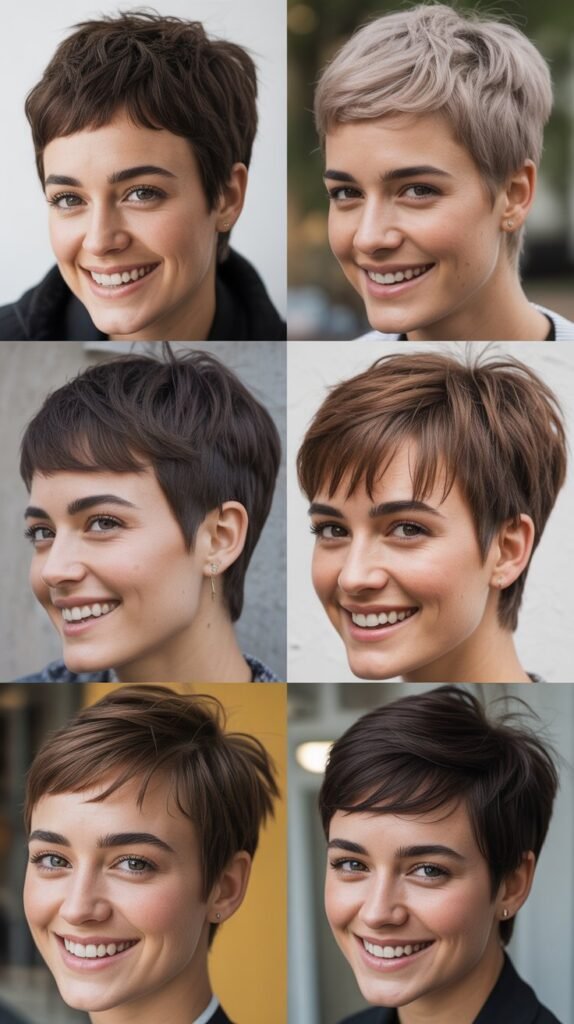
Delicate, wispy sections at the temples create soft face-framing that adds feminine appeal while maintaining overall pixie shortness.
This 2026 detail focuses on tiny sections that make significant aesthetic impact through strategic placement and careful cutting.
- Wispy temple sections are created by isolating small portions of hair at the temples and cutting them to lengths that frame the face—typically ending between the cheekbone and jawline.
- These delicate pieces soften the transition between hair and bare skin around the face, preventing harsh lines and adding gentle, feminine touches to potentially severe short cuts.
- The wispy quality is achieved through point-cutting or razor techniques that create thin, tapered ends rather than blunt edges, ensuring the sections appear delicate and intentional.
- This detail particularly flatters square and rectangular face shapes by softening angular jawlines and adding gentle curves that balance strong facial features.
- Styling wispy temple sections requires minimal effort—often just light texture cream or spray worked through the delicate pieces to prevent stiffness while maintaining separation.
- The temple sections can be styled various ways—curled forward toward the face, swept backward into the overall style, or left to fall naturally depending on preferences and occasions.
- Maintenance involves careful attention during trims to preserve the delicate wispy quality and appropriate length that frames without overwhelming the face.
59. Pixie with Maximum Crown Height
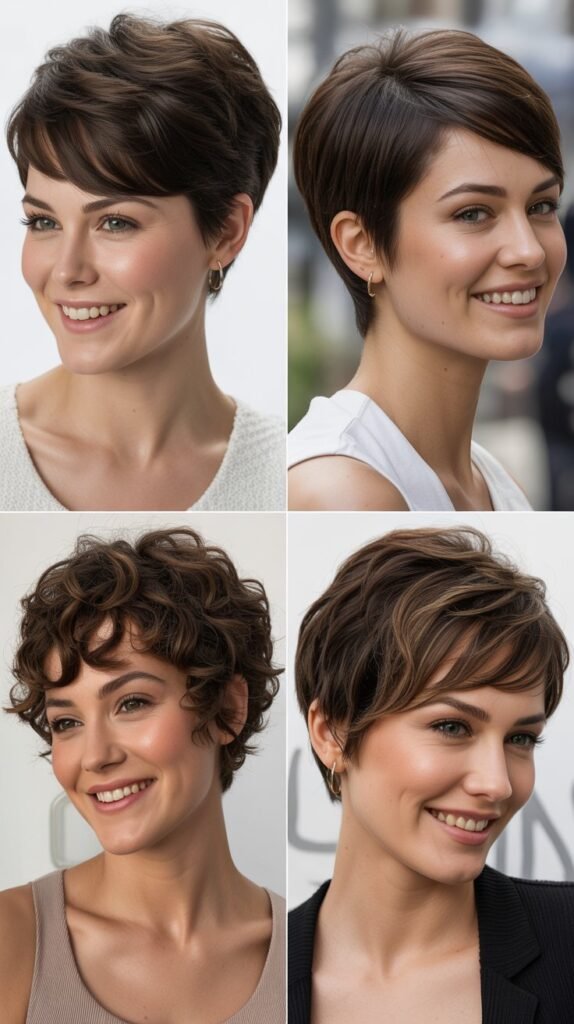
Pushing crown height to its limits creates dramatic, attention-commanding pixie styles that make powerful impressions.
This 2026 trend embraces volume maximalism through cutting techniques, styling products, and deliberate shaping that achieves sky-high results.
- Maximum height requires both strategic cutting—maintaining 4-6 inches of length at the crown—and intensive styling using volumizing products, blow-drying techniques, and sometimes backcombing or teasing.
- This dramatic approach works particularly well for special occasions, performances, fashion events, or any situation where memorable, impactful styling is desired over subtle understatement.
- The extreme height particularly flatters round faces by adding significant vertical lines that dramatically elongate facial proportions and create balanced overall appearance.
- Maintaining maximum height throughout an event requires strong-hold hairsprays, potential touch-ups with dry shampoo or texture spray, and possibly reinforcement of teased sections.
- This bold styling pairs beautifully with dramatic makeup, statement fashion pieces, and confident personal presentation that embraces attention-getting aesthetics.
- The crown-focused volume creates interesting silhouettes and adds inches to overall height, producing presence and impact that belies the pixie’s actual minimal hair length.
- While achievable for special occasions, this extreme styling approach is less practical for daily wear due to the time, product, and maintenance demands required to maintain maximum height.
60. Pixie with Graduated Color
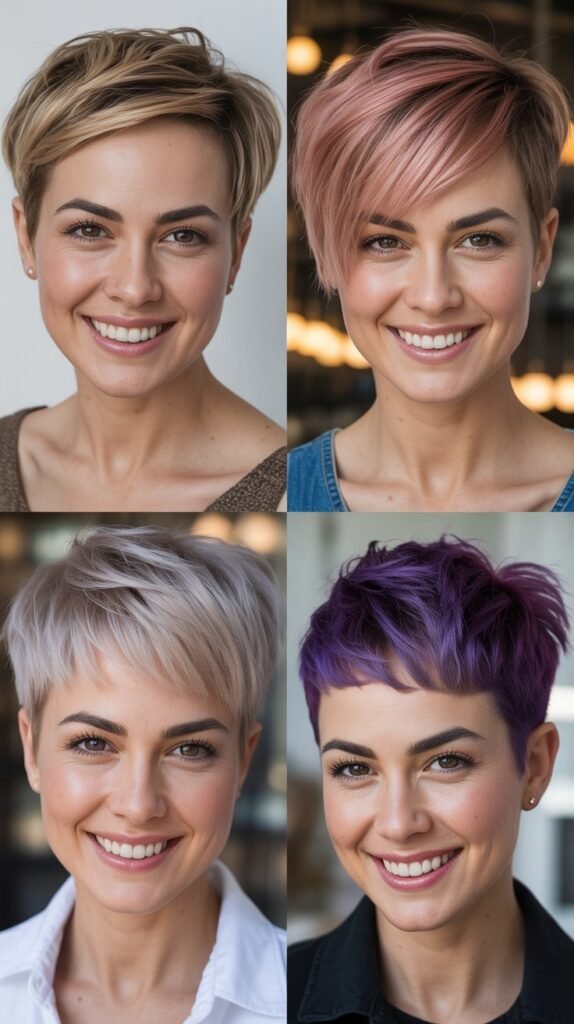
Graduated color techniques—where saturation or tone changes gradually from roots to ends—add sophisticated dimension to pixie cuts.
This 2026 coloring approach creates depth and visual interest through controlled color progression rather than stark contrasts.
- Graduated coloring differs from ombre through more subtle, controlled transitions that can involve saturation changes (intense to pastel) or tone shifts (cool to warm within the same color family).
- The pixie’s short length requires condensed gradations that occur within 2-4 inches, making precise color application and blending essential for smooth, attractive results.
- This technique adds movement and dimension that enhances the pixie’s texture and layers, with lighter or brighter ends drawing eyes to textured areas and styled sections.
- Popular applications include burgundy roots graduating to rose ends, ash brown roots to cool blonde ends, or navy roots graduating to teal tips.
- The gradual nature creates forgiving maintenance, as root regrowth blends naturally into the darker graduated base rather than creating obvious demarcation lines.
- Maintenance focuses primarily on toning and refreshing the lighter or different-toned ends every 6-8 weeks while roots can grow naturally with minimal attention.
- The sophisticated color approach works in professional environments better than stark contrast techniques, offering creativity within more conservative boundaries.
61. Pixie with Cowlick Management
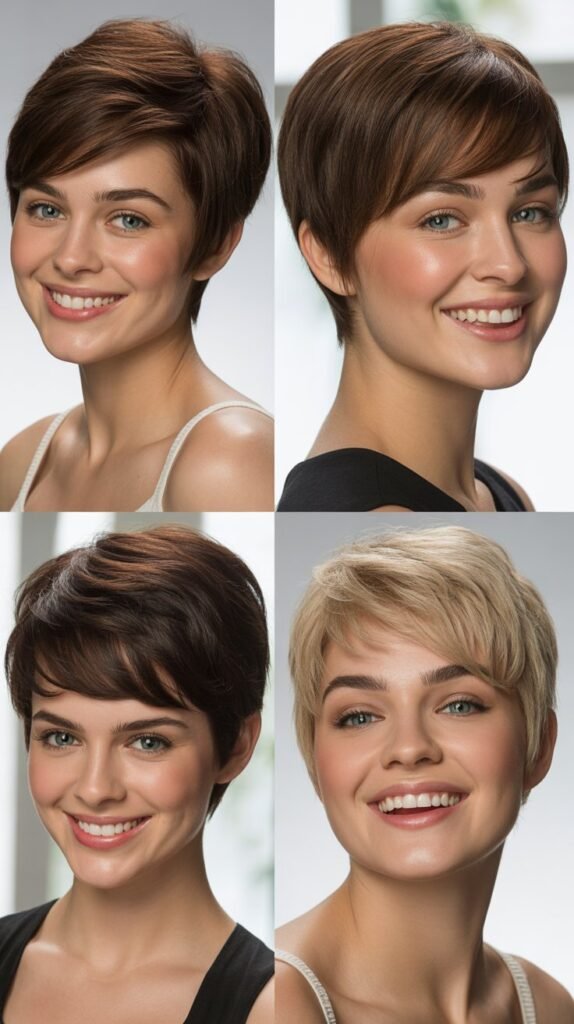
Natural cowlicks and growth patterns present unique challenges for pixie cuts, but 2026’s approach emphasizes working with rather than against these natural features.
Strategic cutting and styling techniques transform potential problems into distinctive style elements.
- Cowlick management begins during cutting, with stylists analyzing natural growth patterns and directing the cut to complement rather than fight these permanent features.
- Front cowlicks can be incorporated into textured, forward-styled bangs or piece-y front sections that use the natural lift cowlicks provide for added volume.
- Crown cowlicks can be utilized for height and volume, cutting layers that work with the natural lift direction rather than trying to force hair flat against natural growth.
- Side cowlicks can inform asymmetric styling decisions, with longer hair on one side accommodating growth patterns while shorter opposite sides create balanced overall appearance.
- Understanding that cowlicks are permanent and working with them reduces daily styling frustration and creates more maintainable, authentic personal styles.
- Some pixie variations naturally accommodate cowlicks better than others—textured, piece-y styles work with natural patterns while sleek, smooth styles require more effort to overcome them.
- Open communication with stylists about growth patterns and cowlick locations ensures cuts are designed specifically for individual hair behavior rather than generic pixie templates.
62. Versatile Styling Pixie
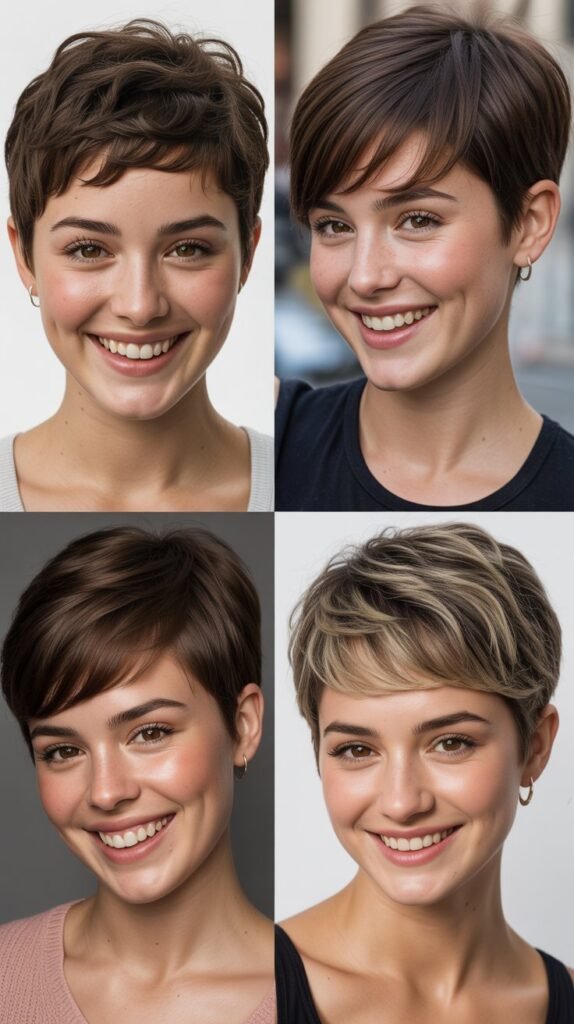
The ultimate 2026 pixie embraces versatility above all else, cut and colored to allow maximum styling variations for different occasions, moods, and requirements.
This final trend celebrates the pixie’s remarkable adaptability through strategic length and technique choices.
- Versatile pixies typically maintain 3-4 inches of length on top with moderately short sides, providing enough hair to manipulate while keeping overall maintenance manageable.
- The length distribution allows for multiple styling approaches—slicked back for formal occasions, textured and tousled for casual days, side-swept for romantic looks, and volumized for special events.
- Strategic layering throughout provides both styling cooperation and the ability to create varied shapes and volumes depending on product and technique applications.
- This approach particularly appeals to those who desire variety without committing to single, static looks or requiring multiple haircuts to achieve different aesthetics.
- Investment in diverse styling products—volumizing mousse, texture spray, smoothing serum, and strong-hold gel—enables the various transformations the versatile pixie can achieve.
- The adaptable nature makes this pixie variation ideal for individuals with varied lifestyle demands including professional obligations, social events, athletic activities, and creative pursuits.
- Maintenance focuses on preserving the base cut’s structural integrity and appropriate length distribution rather than enforcing single styling approaches, typically requiring appointments every 5-6 weeks.
Conclusion
The journey through these 62 Trend Setting Pixie Hairstyles Inspired by 2026 Looks reveals the extraordinary evolution and remarkable versatility of short hair in contemporary fashion.
From classic textured crops to bold color experiments, from architectural sculptural cuts to soft romantic variations, the pixie cut has proven itself as one of the most adaptable and expressive hairstyles available today.
Whether you’re drawn to edgy undercuts and vivid colors or prefer subtle textures and natural tones, the 2026 pixie landscape offers options that complement every personality, lifestyle, and aesthetic preference.
The key to pixie success lies in finding skilled stylists who understand your hair’s unique characteristics, maintaining regular appointments to preserve your chosen style’s integrity, and embracing the confidence that comes with bold hairstyle choices.
Short hair demands visibility and presence, transforming the wearer into someone who commands attention through deliberate style choices rather than hiding behind longer lengths.
As you consider which of these 62 Trend Setting Pixie Hairstyles Inspired by 2026 Looks resonates with your personal vision,
remember that the best haircut is one that makes you feel authentically yourself—whether that means embracing dramatic change or making subtle refinements to your current style.
The pixie revolution continues to empower individuals to express their unique identities through carefully crafted cuts that celebrate both the artistry of hairstyling and the courage of those who wear them with confidence.

