
Finding the perfect hairstyle that complements your natural texture while maintaining an effortless, lived-in look can transform your entire appearance.
If you have wavy medium-length hair and are considering a fresh update, wispy bangs with layers offer the ideal combination of movement, dimension, and face-framing sophistication.
This comprehensive guide explores 62 Airy & Textured Wispy Bangs With Layers for Wavy Medium Hair That Feel Natural, providing you with styling techniques, maintenance tips, cutting methods, and inspirational ideas to help you achieve that coveted naturally beautiful look.
Whether you’re looking to soften your features, add volume, or simply refresh your current style, this article delivers everything you need to know about creating and maintaining wispy bangs that work harmoniously with your wavy hair texture.
1. Understanding Wispy Bangs and Their Natural Appeal
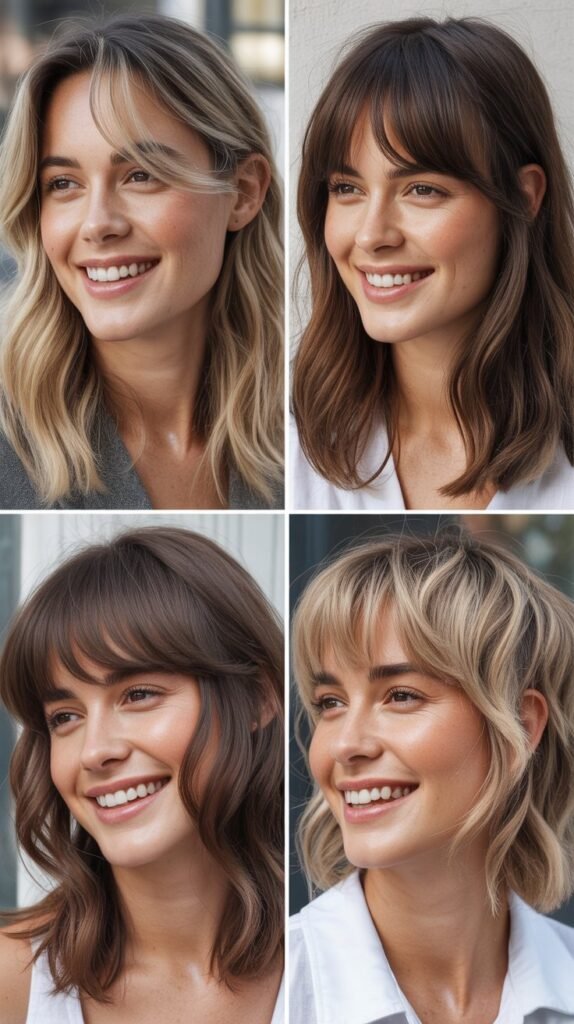
Wispy bangs represent a softer, more delicate approach to traditional fringe styles, characterized by their feathered, lightweight appearance that blends seamlessly with the rest of your hair.
- Unlike blunt-cut bangs, wispy bangs feature varying lengths and texturized ends that create an airy, breathable effect across your forehead.
- The natural appeal lies in their ability to frame the face without appearing heavy or overly styled, making them particularly flattering for wavy hair textures.
- These bangs work with your hair’s natural movement rather than against it, resulting in a low-maintenance style that looks intentionally undone.
- The textured nature of wispy bangs means they grow out gracefully, eliminating the harsh grow-out phases associated with blunt bangs.
- For medium-length wavy hair, wispy bangs add dimension and visual interest while maintaining the overall harmony of your hairstyle.
2. Benefits of Layered Cuts for Wavy Medium Hair
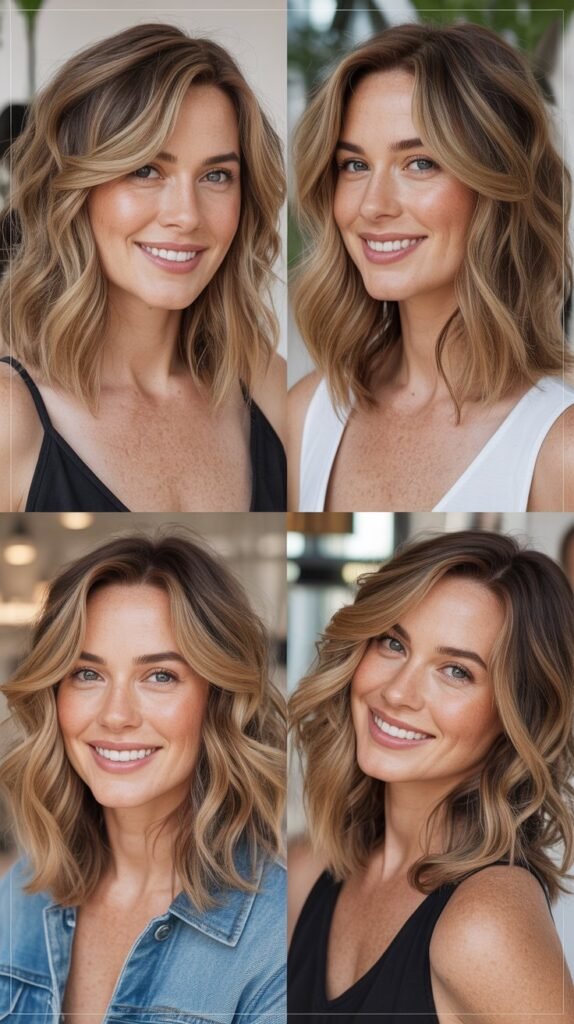
Layers are essential for maximizing the natural beauty of wavy hair, creating shape, reducing bulk, and enhancing your hair’s innate texture.
- Strategic layering removes excess weight from medium-length wavy hair, allowing your natural wave pattern to spring to life with more definition.
- Layers create dimensional movement throughout your hair, preventing the flat, triangle-shaped silhouette that often plagues one-length wavy cuts.
- When combined with wispy bangs, layers ensure a cohesive flow from your fringe to the lengths, creating a unified, polished appearance.
- Proper layering techniques can address common wavy hair concerns such as frizz, lack of volume at the roots, and heavy ends.
- The right layer placement can be customized to flatter your specific face shape while working with your individual wave pattern.
- Layered cuts dry faster and require less styling product, making your daily hair routine more efficient.
3. Face Shapes That Benefit Most From Wispy Bangs
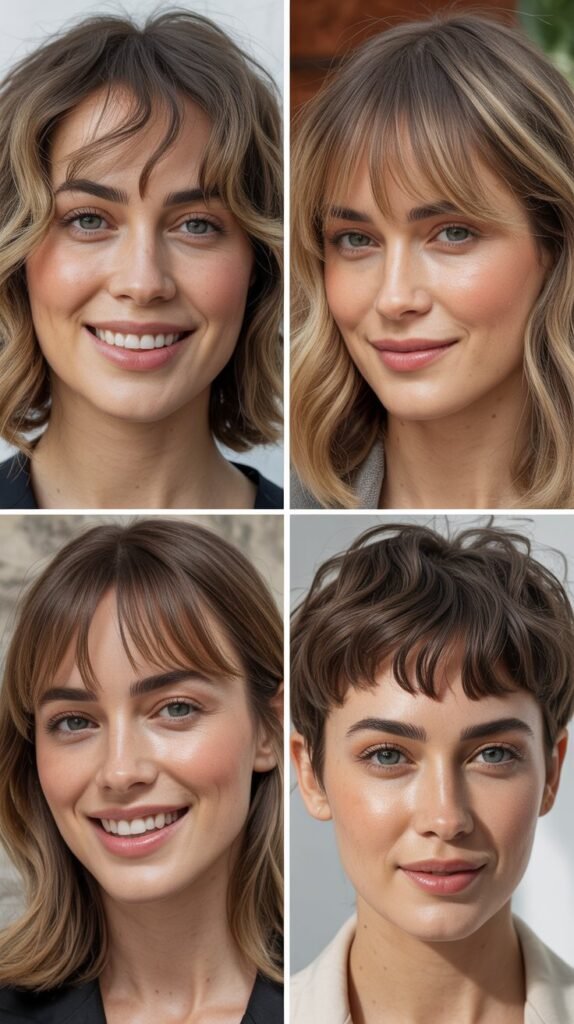
Understanding how wispy bangs interact with different face shapes helps you customize the style to achieve the most flattering results.
- Oval faces are universally flattered by wispy bangs, as this balanced face shape can accommodate various bang lengths and textures without overwhelming features.
- Round faces benefit from side-swept wispy bangs that create vertical lines and angles, visually elongating the face while softening the overall appearance.
- Heart-shaped faces find wispy bangs particularly advantageous, as the soft fringe balances a wider forehead and draws attention to the eyes.
- Square faces are softened by the delicate, feathered nature of wispy bangs, which contrast beautifully with angular jawlines and create feminine balance.
- Long or oblong faces can use wispy bangs to break up facial length, creating horizontal visual interest that makes the face appear more proportionate.
- Even diamond-shaped faces benefit from wispy bangs that add width at the forehead, balancing narrow temples and prominent cheekbones.
4. Essential Cutting Techniques for Natural-Looking Wispy Bangs
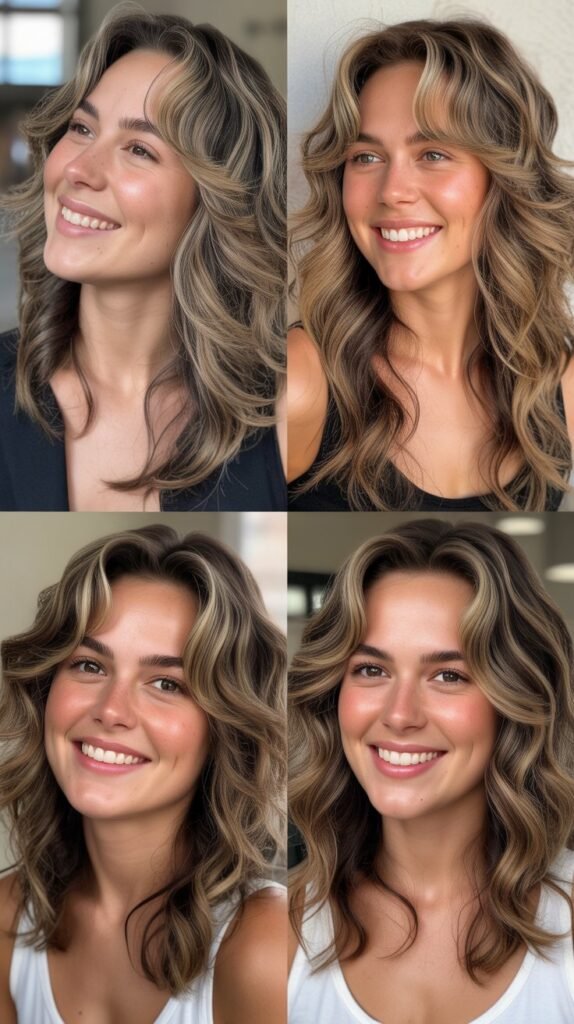
The cutting method your stylist employs determines whether your wispy bangs look intentionally textured or accidentally choppy.
- Point cutting is the foundational technique for creating wispy bangs, where scissors are held vertically to snip into the hair at angles, creating soft, feathered edges.
- Slide cutting involves gliding scissors down the hair shaft at an angle, removing weight and creating seamless transitions between bang lengths.
- Razor cutting can produce ultra-soft, feathered ends when used sparingly, though it requires an experienced stylist to avoid creating frizz in wavy hair.
- The bangs should be cut while dry on wavy hair to account for shrinkage and natural texture, ensuring accurate length assessment.
- Creating varying lengths within the bang section—shorter pieces near the center and longer pieces toward the sides—produces the most natural, face-framing effect.
- Your stylist should work with your hair’s natural fall and cowlicks rather than fighting against them, ensuring the bangs lie naturally without constant styling.
5. Layer Placement Strategies for Maximum Movement
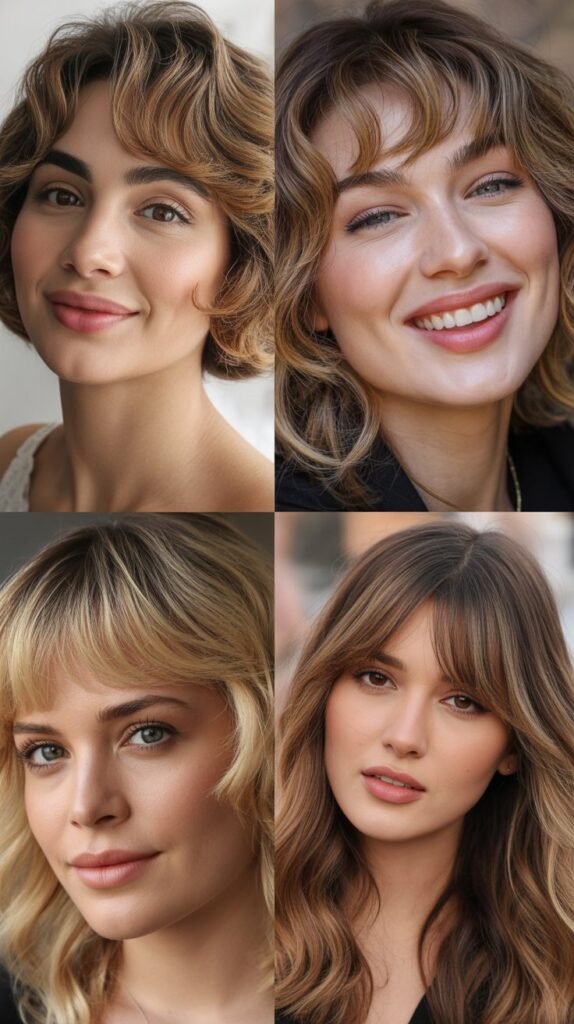
Strategic layer placement throughout your medium-length wavy hair creates the foundation for a dynamic, dimensional hairstyle that complements wispy bangs.
- Face-framing layers begin at the cheekbone or chin level and gradually increase in length, creating a flattering halo effect around your face.
- Internal layers remove bulk from the interior of your hair without affecting the perimeter length, reducing heaviness while maintaining visual fullness.
- Graduated layers create a stacked effect where each layer is slightly shorter than the one beneath it, producing volume and lift at the crown.
- The longest layers should connect seamlessly with your overall hair length, typically falling between the shoulders and collarbone for medium hair.
- Layers should be customized based on your wave pattern—looser waves can handle more dramatic layering, while tighter waves require more conservative layer placement.
- Avoiding layers that are too short prevents the “poodle effect” where wavy hair springs up excessively, creating unflattering volume and shape.
6. Styling Products That Enhance Natural Texture
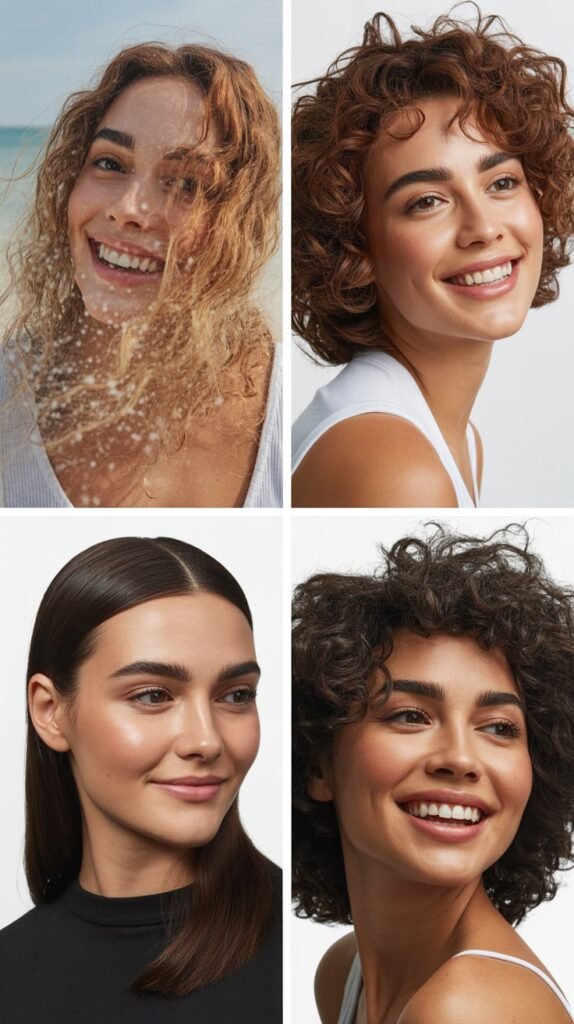
The right product selection amplifies your wavy hair’s natural texture while keeping wispy bangs soft, touchable, and naturally separated.
- Sea salt sprays enhance wave definition and create beachy texture without heaviness, perfect for maintaining the airy quality of wispy bangs.
- Lightweight mousse applied to damp hair provides hold and volume without the crunchiness or stiffness that can make bangs look unnatural.
- Texturizing creams offer piecey definition and separation, particularly effective for styling wispy bangs and enhancing the textured, feathered appearance.
- Wave-enhancing sprays containing polymers help maintain your natural curl pattern while providing light hold and frizz control throughout the day.
- Dry shampoo serves double duty by absorbing oil at the roots and adding volume, keeping bangs from appearing greasy or flat between washes.
- Finishing sprays with flexible hold lock in your style without creating stiffness, allowing your wispy bangs and layers to move naturally.
| Product Type | Primary Benefit | Best Application Method | Ideal Hair Density |
|---|---|---|---|
| Sea Salt Spray | Wave definition and texture | Spray on damp or dry hair, scrunch | Fine to medium |
| Lightweight Mousse | Volume and hold | Apply to damp roots, distribute through lengths | All densities |
| Texturizing Cream | Piecey separation and definition | Rub between palms, apply to dry hair | Medium to thick |
| Wave-Enhancing Spray | Curl pattern support | Spray on damp hair before air-drying | All densities |
| Dry Shampoo | Oil absorption and volume | Spray at roots, let sit, then massage in | All densities |
7. Blow-Drying Techniques for Enhanced Volume and Shape
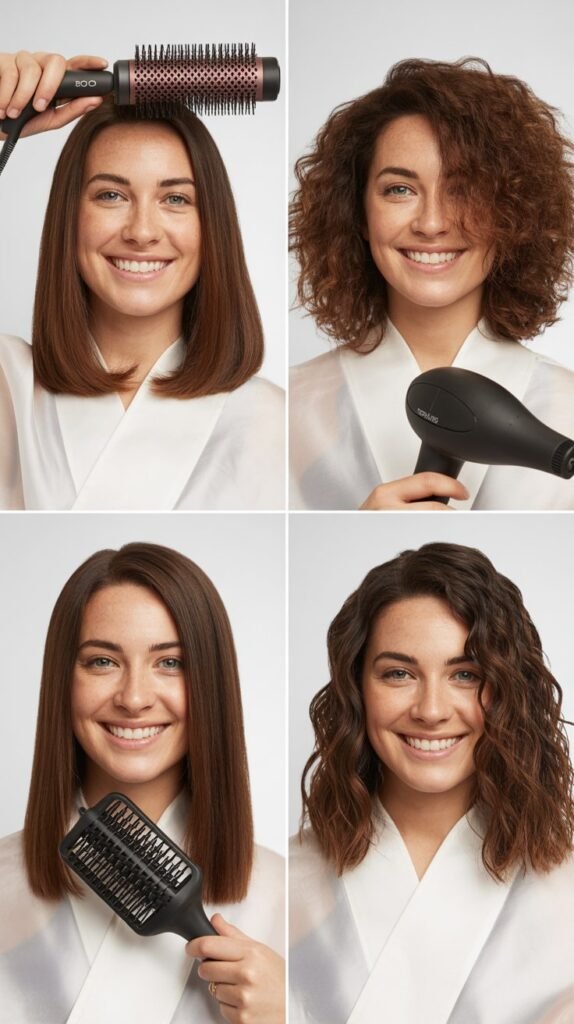
Proper blow-drying methods can dramatically enhance the natural beauty of your wispy bangs and layered wavy hair while minimizing frizz and maximizing movement.
- Begin by applying a heat protectant spray throughout damp hair to shield your strands from thermal damage during the drying process.
- Use a diffuser attachment on your blow dryer to dry wavy sections by cupping hair in the diffuser bowl and lifting toward the scalp, which enhances natural wave patterns.
- For wispy bangs specifically, use a round brush (medium barrel size) to gently dry the fringe while directing airflow downward, creating subtle lift and preventing the bangs from drying flat.
- The cool shot button on your dryer should be used as a finishing step to set your style and seal the hair cuticle, adding shine and reducing frizz.
- Avoid over-drying, which can create frizz and disrupt your natural wave pattern—aim for about 80% dry, allowing the remaining moisture to air-dry.
- Section your hair strategically while blow-drying, starting with the back sections and finishing with the front layers and bangs for maximum control.
8. Air-Drying Methods for Effortless, Natural Looks
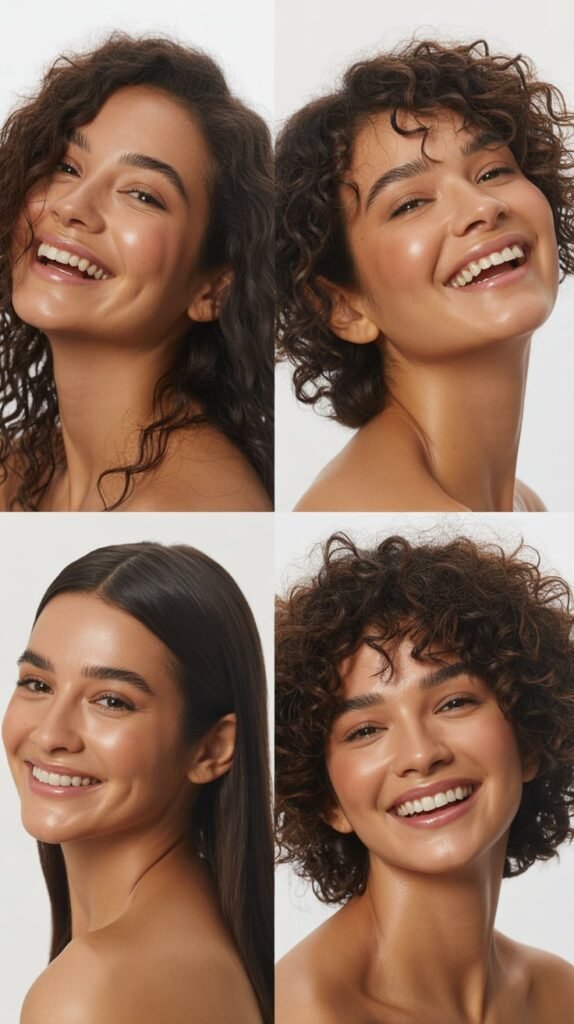
Air-drying is often the most effective approach for achieving that naturally textured, lived-in appearance with wispy bangs and wavy medium hair.
- After washing, gently squeeze excess water from your hair using a microfiber towel or cotton t-shirt, which reduces friction and minimizes frizz compared to traditional terry cloth towels.
- Apply your styling products (mousse, cream, or wave spray) to damp hair, using the scrunching method to encourage wave formation without disturbing the natural pattern.
- For wispy bangs, lightly finger-comb them into place while damp, then leave them alone to dry naturally—excessive touching creates frizz and disrupts the delicate texture.
- The plopping technique involves wrapping your hair in a t-shirt or microfiber towel for 15-30 minutes to enhance wave definition and reduce drying time.
- Consider the pineappling method for overnight air-drying, where you loosely gather hair at the crown before bed, preserving wave pattern while you sleep.
- Resist the urge to touch your hair repeatedly while it air-dries, as this breaks up the wave clumps and creates frizz, particularly problematic for maintaining wispy bang texture.
9. Curtain Bang Variations for Wavy Medium Hair
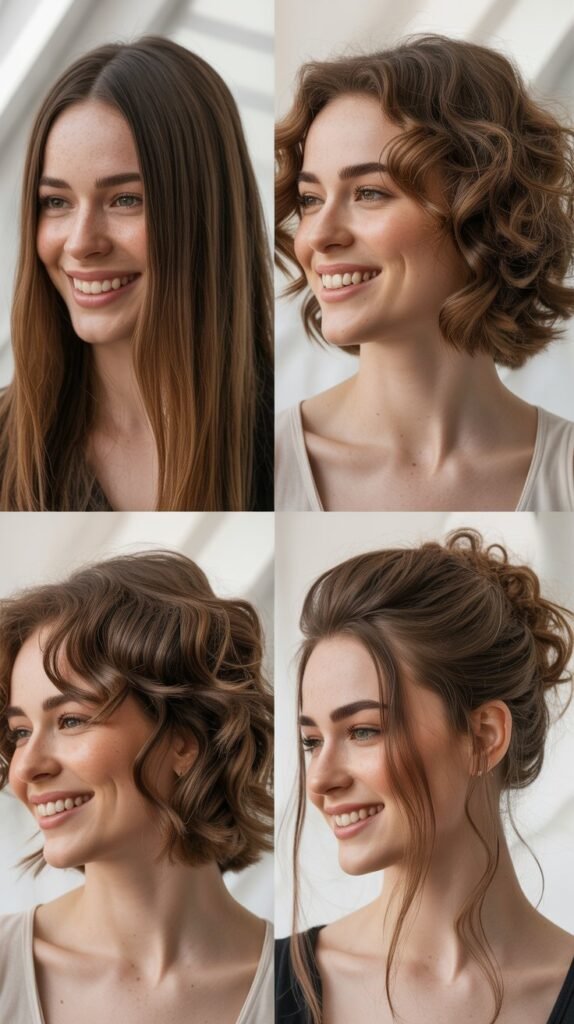
Curtain bangs represent a popular wispy bang variation that parts down the center and frames both sides of the face, creating a retro-inspired yet contemporary look.
- The defining characteristic of curtain bangs is the center part that allows the fringe to sweep away from the face on both sides, creating a soft, face-framing effect.
- Curtain bangs work exceptionally well with wavy medium hair because the natural texture adds movement and prevents the bangs from lying too flat against the forehead.
- The length of curtain bangs typically ranges from eyebrow-grazing to cheekbone-length, with the shortest point at the center and gradually lengthening toward the sides.
- This style offers incredible versatility—you can part them down the middle for the classic curtain effect or sweep them to one side for a different look.
- Curtain bangs grow out more gracefully than traditional blunt bangs, as they blend naturally into face-framing layers as they lengthen.
- The styling process is simple: apply a small amount of texturizing product, create your center part, and use your fingers to sweep each side away from your face.
10. Side-Swept Wispy Bangs for Asymmetrical Appeal
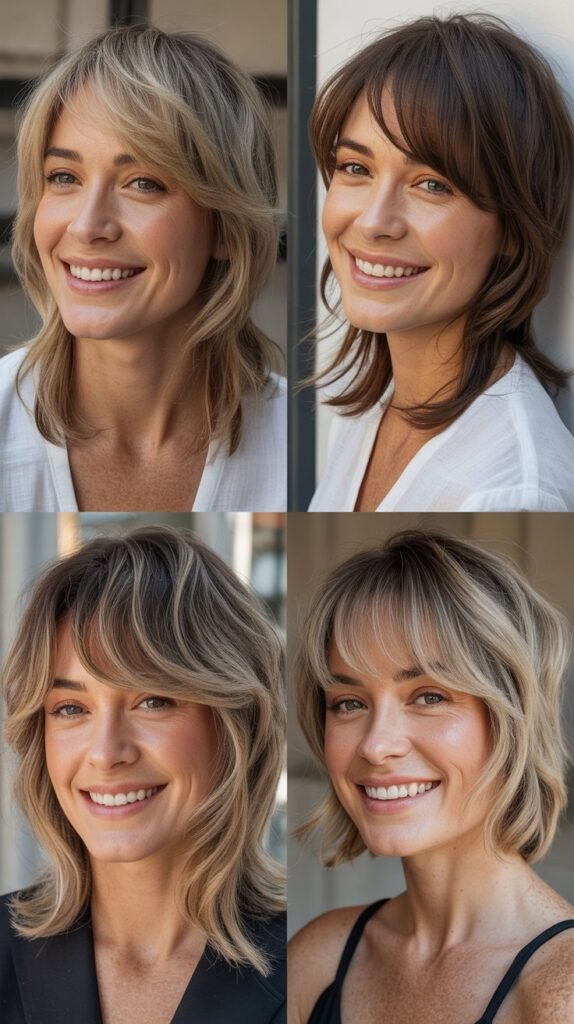
Side-swept wispy bangs create an elegant, asymmetrical look that flatters virtually all face shapes while adding sophisticated movement to your layered wavy hair.
- The off-center part (typically positioned above one eyebrow) is fundamental to achieving the proper side-swept angle for your wispy bangs.
- Side-swept bangs naturally create diagonal lines across the forehead, which are universally flattering and draw attention to the eyes.
- For wavy hair, the natural texture enhances the swept effect, allowing the bangs to curve gracefully across the forehead without requiring excessive styling.
- This bang style offers practical benefits for those with cowlicks or strong natural parts, as you can work with your hair’s natural growth pattern rather than against it.
- The length of side-swept wispy bangs typically ranges from eyebrow-length to just below the eye on the longer side, creating beautiful face-framing dimension.
- To style, apply a small amount of lightweight styling cream to damp bangs, sweep them in your desired direction, and either air-dry or gently blow-dry with a round brush.
11. Blunt-Cut Wispy Bangs for Bold Contrast
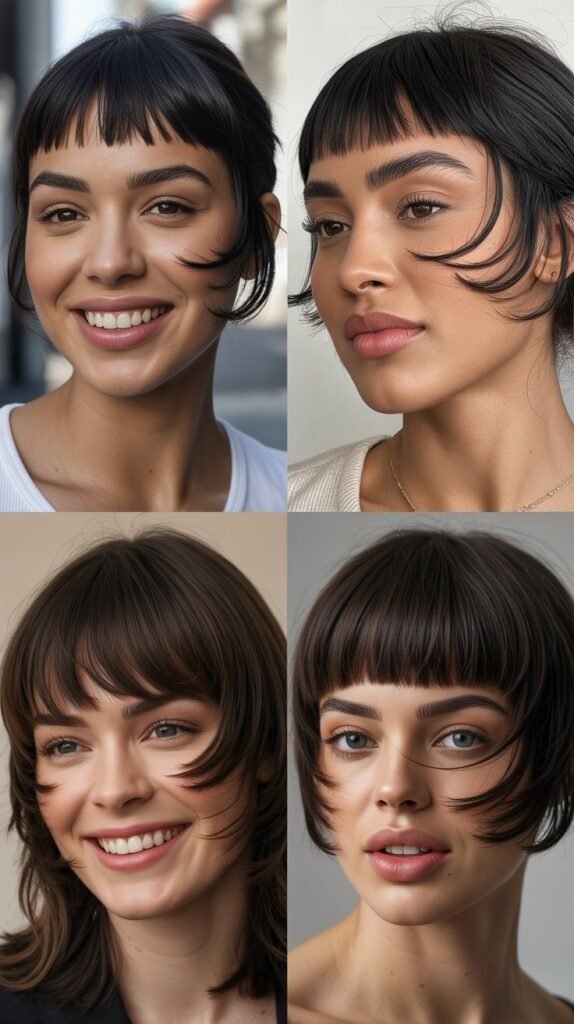
Combining blunt-cut edges with wispy texturing creates an interesting juxtaposition that adds modern edge to your wavy medium-length hair.
- While the perimeter of these bangs follows a relatively straight, blunt line across the forehead, the internal texturing creates wispy, feathered pieces that soften the overall effect.
- This hybrid approach works beautifully with wavy hair because the blunt edge provides structure while the textured interior prevents heaviness.
- The contrast between the defined edge and the airy interior creates visual interest and dimension that complements the movement in your layered lengths.
- Blunt-cut wispy bangs make a stronger style statement than fully feathered bangs, ideal if you want your fringe to be a focal point of your hairstyle.
- These bangs require more precise maintenance than fully wispy versions, typically needing trims every 3-4 weeks to maintain the crisp perimeter line.
- Styling involves using a flat brush or your fingers to direct the bangs straight down while blow-drying, then applying texturizing spray to create separation and movement.
12. Micro Bangs with Wispy Texture for Edgy Looks
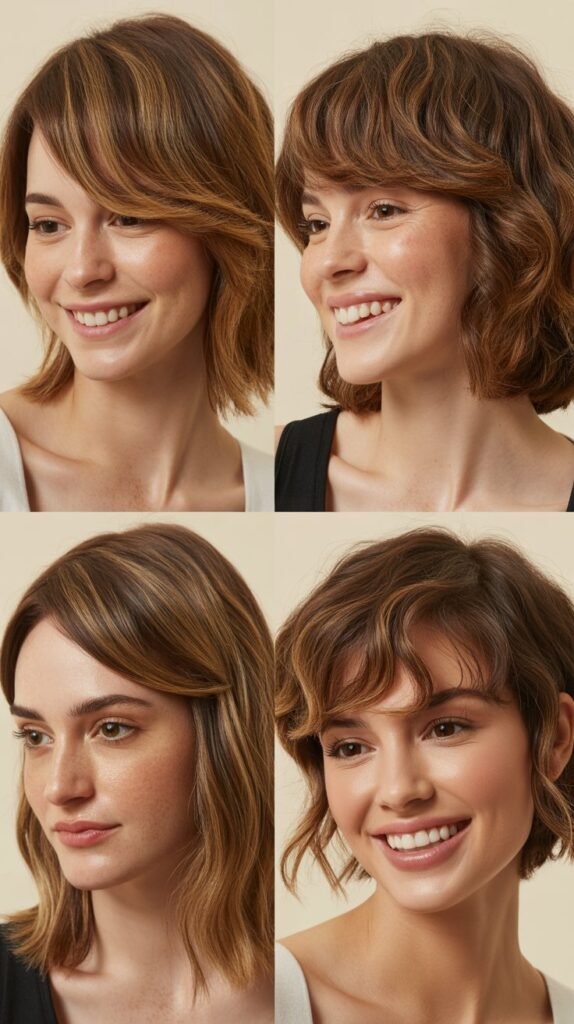
Micro bangs represent a daring, fashion-forward option that, when combined with wispy texturing, creates an edgy yet wearable statement on wavy medium hair.
- Micro bangs are cut significantly shorter than traditional bangs, typically sitting well above the eyebrows and sometimes as high as mid-forehead.
- The wispy texturing is essential for making micro bangs wearable on wavy hair, as it prevents them from appearing too harsh or costume-like.
- This bold fringe style creates striking contrast with medium-length wavy hair, drawing maximum attention to the eyes and creating a high-fashion aesthetic.
- Micro bangs work best on individuals with smaller foreheads and delicate features, though creative styling can make them work for various face shapes.
- The commitment level is higher with micro bangs, as they require regular trims every 2-3 weeks and offer limited styling versatility compared to longer bang options.
- Styling micro bangs on wavy hair involves applying a smoothing serum to keep them lying flat while allowing the rest of your hair to maintain its natural texture.
13. Wispy Baby Bangs for Vintage-Inspired Charm
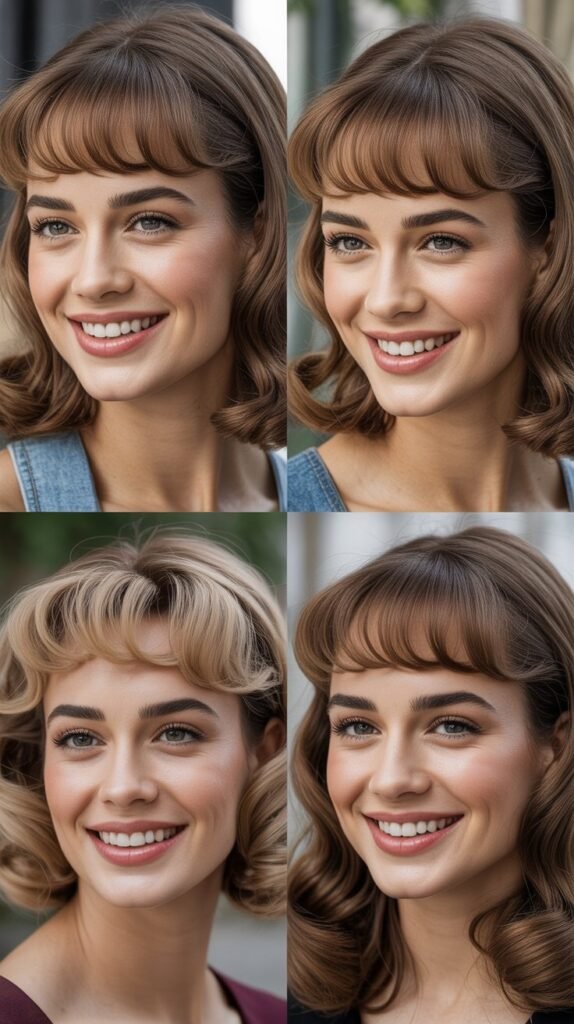
Baby bangs offer a softer, more delicate take on short fringe, combining vintage charm with contemporary wispy texturing for a unique look.
- Baby bangs fall between micro bangs and traditional bangs in length, typically ending at eyebrow level or slightly above.
- The wispy, feathered texture prevents baby bangs from appearing too heavy or severe, creating a playful, youthful appearance that complements wavy medium hair.
- This style evokes vintage aesthetics from the 1950s and 1960s while feeling fresh and modern when paired with contemporary layered cuts.
- Baby bangs create beautiful contrast when your wavy hair has significant texture and movement, as the more structured fringe provides visual anchoring.
- Face shape considerations are important—baby bangs work exceptionally well on heart-shaped and oval faces but may overwhelm very round or square faces.
- Maintenance involves regular trims every 3-4 weeks and daily styling with a small round brush or flat iron to keep the fringe smooth and polished.
14. Shaggy Layers with Wispy Bangs for Maximum Texture
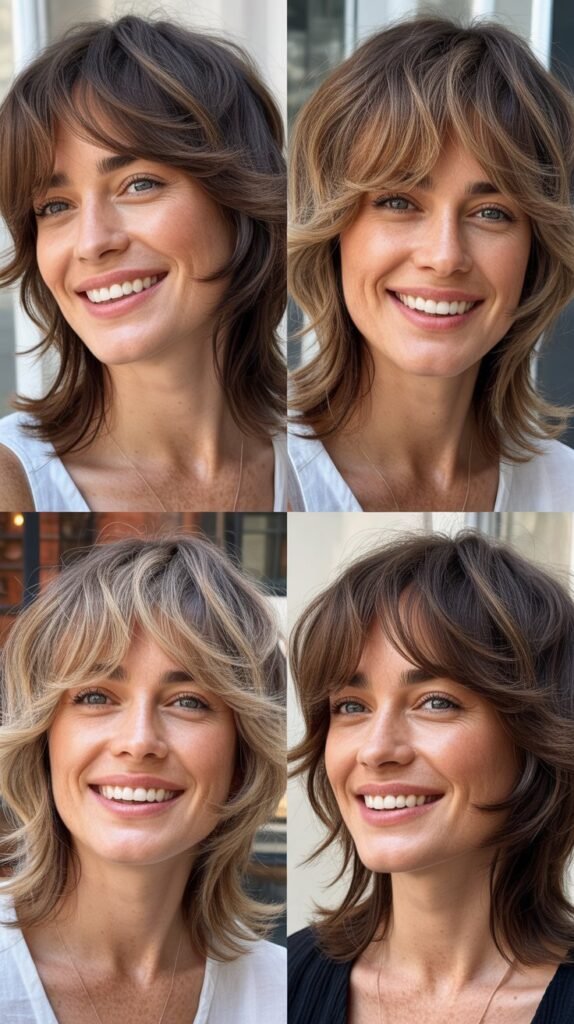
The shag haircut represents the ultimate textured style, combining heavy layering throughout with wispy bangs for a thoroughly modern, lived-in appearance.
- Shaggy layers are characterized by choppy, heavily textured layers throughout the hair, creating significant movement and dimension from roots to ends.
- When paired with wispy bangs, the shag creates a cohesive, ultra-textured look where the fringe seamlessly integrates with the heavily layered lengths.
- This style is ideal for wavy medium hair because it works with your natural texture, requiring minimal styling to achieve that perfectly undone, rock-and-roll aesthetic.
- The shag’s layers are typically shorter at the crown and progressively longer toward the perimeter, creating volume on top while maintaining length.
- Styling a shag with wispy bangs involves applying texturizing products, scrunching while air-drying or diffusing, and embracing the deliberately messy, tousled appearance.
- This cut grows out beautifully, maintaining its textured, shaggy character for months between haircuts, making it ideal for low-maintenance styling routines.
15. Feathered Bangs for Soft, Retro Appeal
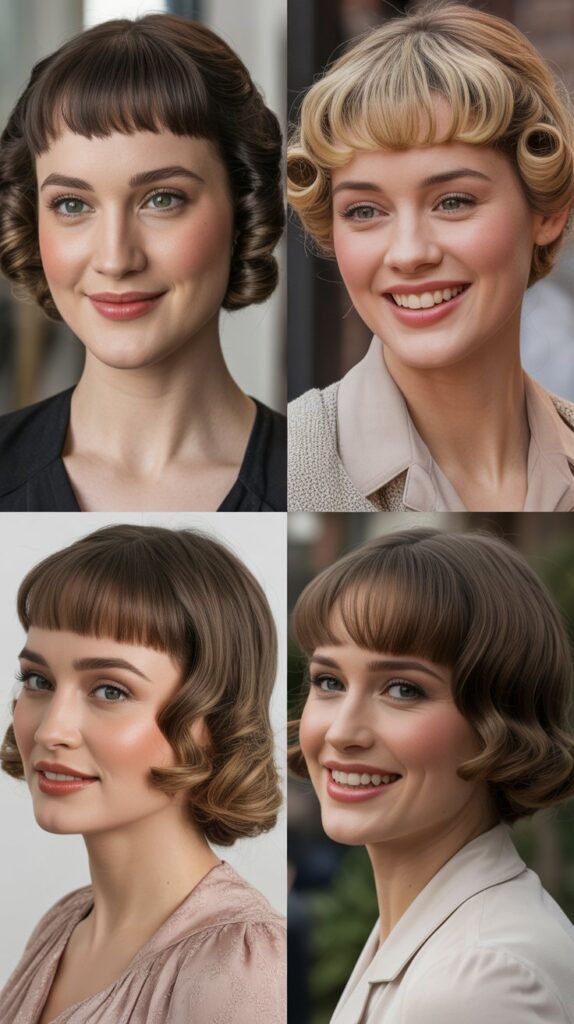
Feathered bangs bring 1970s inspiration into the modern era, creating soft, face-framing fringe that blends beautifully with layered wavy medium hair.
- Feathering refers to a cutting technique where hair is held perpendicular to the head and cut at an angle, creating layers that flip outward like bird feathers.
- Feathered wispy bangs have more volume and lift than flat-lying fringe, curving gently away from the forehead for a retro yet timeless appearance.
- This style works exceptionally well with wavy hair’s natural body, as your texture enhances the feathered effect without requiring excessive blow-drying or hot tool use.
- The length of feathered bangs typically falls at eyebrow level, with the feathered pieces framing the face and blending seamlessly into longer face-framing layers.
- To achieve the feathered look, use a medium round brush while blow-drying, rolling the brush under and away from your face to create the characteristic outward curve.
- Feathered bangs offer nostalgic charm while feeling current and fresh, particularly when paired with modern layered cuts and contemporary styling products.
16. Piece-y Bangs for Defined Separation
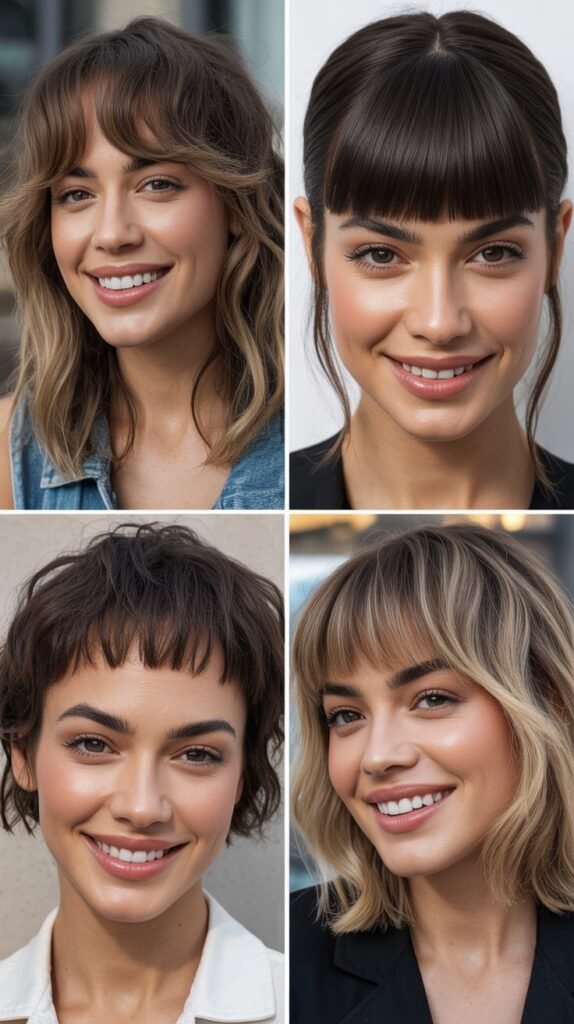
Piece-y wispy bangs emphasize individual strands and sections rather than creating a unified fringe, resulting in a contemporary, high-texture appearance.
- The piece-y effect is achieved through strategic point-cutting and texturizing combined with specific styling products that encourage strand separation.
- Unlike traditional wispy bangs that blend together, piece-y bangs maintain visible separation between sections, creating a deliberately styled yet natural appearance.
- This style works beautifully with wavy medium hair because the textured lengths and piece-y bangs create a cohesive, thoroughly modern aesthetic throughout.
- Styling products like texturizing paste, pomade, or fiber cream are essential for achieving and maintaining the piece-y separation in your bangs.
- To style, take small amounts of product between your fingertips and twist or pinch small sections of your wispy bangs, creating defined, separated pieces.
- Piece-y bangs offer a fashion-forward, editorial quality that photographs beautifully and allows for significant styling versatility based on how much separation you create.
17. Tapered Bangs That Gradually Blend Into Layers
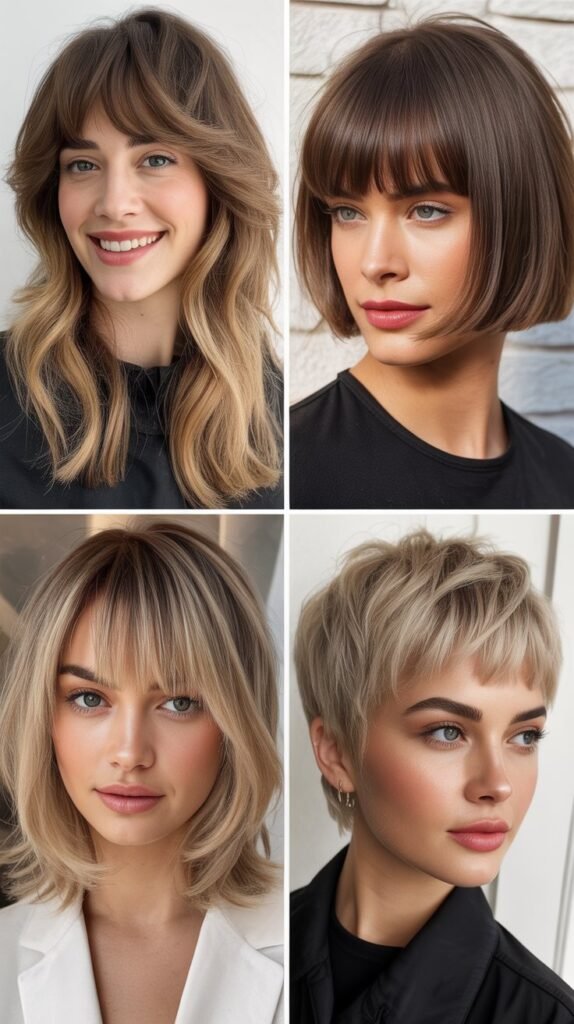
Tapered wispy bangs create seamless transitions from fringe to face-framing layers, resulting in a cohesive, flowing hairstyle without harsh lines or obvious separations.
- Tapering refers to gradually increasing the length of bangs as they move from the center of your forehead toward the sides of your face.
- This technique ensures your wispy bangs don’t end abruptly but instead flow naturally into your face-framing layers, creating beautiful continuity throughout your hairstyle.
- Tapered bangs are particularly flattering for wavy medium hair because they complement your hair’s natural movement and prevent the fringe from looking like a separate, disconnected element.
- The shortest point of tapered bangs typically sits at the bridge of the nose or just above, while the longest edges blend into cheekbone-length layers.
- This style offers exceptional versatility—you can wear the bangs swept to the side, parted down the center, or brushed forward across your forehead.
- Maintenance is relatively low compared to blunt-edged bangs, as the tapered nature means growth is less noticeable and trims can be spaced further apart.
18. Choppy Bangs for Intentional Texture
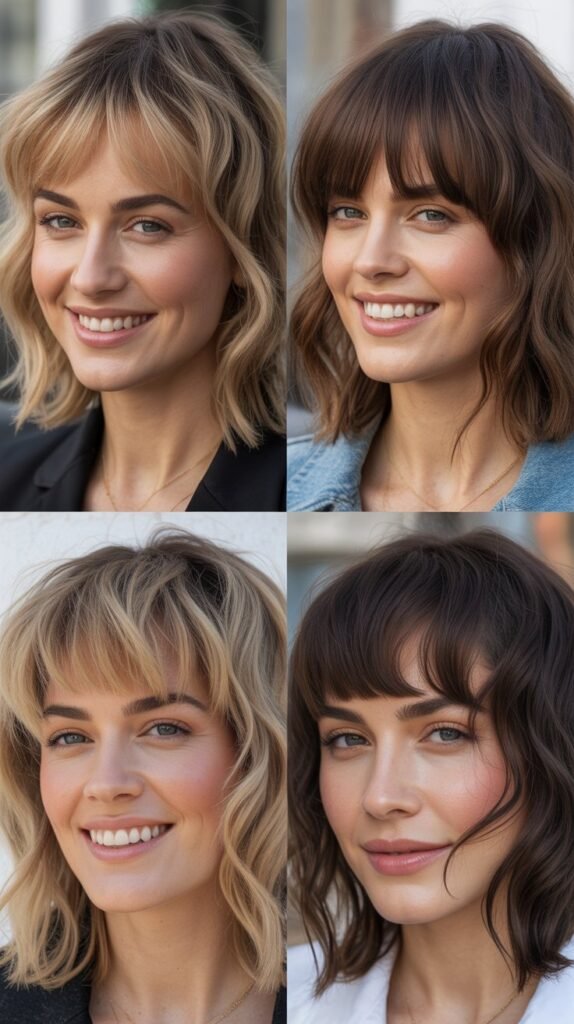
Choppy wispy bangs embrace intentional irregularity, featuring varied lengths and visible texture that create a deliberately undone, modern aesthetic.
- Choppy bangs are cut with deliberate length variation, creating an irregular, textured edge that appears artfully disheveled rather than perfectly groomed.
- This style celebrates imperfection and works exceptionally well with wavy medium hair, as the textured fringe complements the natural movement in your lengths.
- The choppy cutting technique involves using point-cutting extensively, creating significant depth and dimension within the bang section.
- Styling choppy bangs is remarkably easy—simply apply texturizing spray or cream, tousle with your fingers, and allow them to fall naturally without overthinking placement.
- Choppy wispy bangs grow out gracefully because the irregular lengths mean growth appears intentional rather than neglected, extending time between trims.
- This style suits individuals seeking a low-maintenance, cool-girl aesthetic that looks effortlessly stylish without requiring precision styling.
19. Eyebrow-Grazing Bangs for Classic Appeal
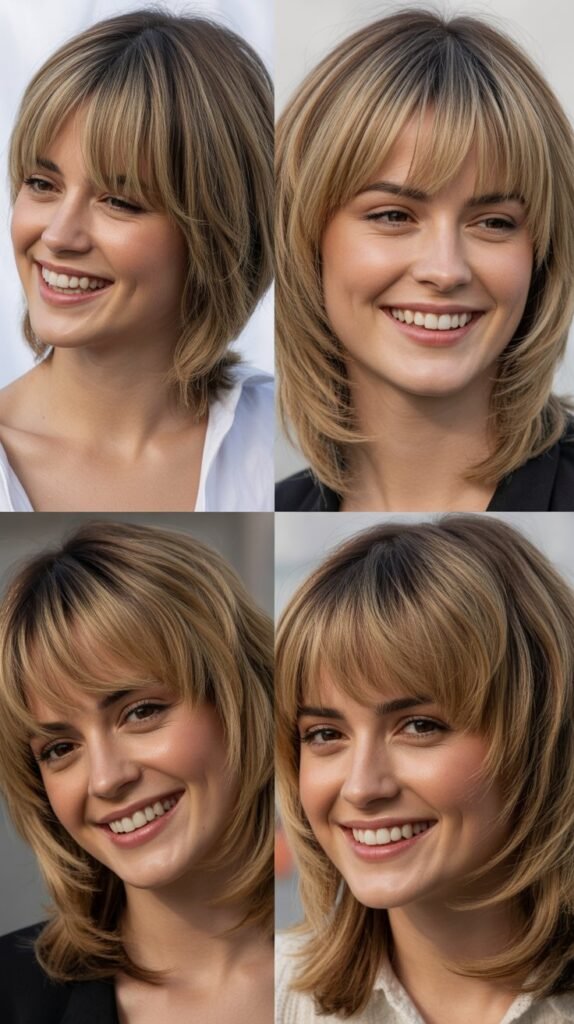
Eyebrow-grazing wispy bangs represent a classic, universally flattering length that provides coverage without overwhelming your features or appearing too heavy.
- This length sits at or just above the eyebrows, creating the perfect balance between making a statement and maintaining versatility in your overall look.
- Eyebrow-length bangs are long enough to be swept to the side or parted down the center when desired, yet short enough to provide distinct fringe definition.
- The wispy texturing prevents eyebrow-grazing bangs from appearing too thick or blunt, maintaining the light, airy quality that complements wavy medium hair.
- This length draws attention to the eyes without covering them, creating a flattering focal point that enhances your natural features.
- Maintenance is moderate—eyebrow-grazing bangs typically require trims every 4-6 weeks to maintain the ideal length, though the wispy texture allows for some flexibility.
- For wavy hair, this length works harmoniously with your natural texture, requiring minimal styling to maintain a polished yet natural appearance.
20. Brow-Skimming Bangs for Versatile Styling
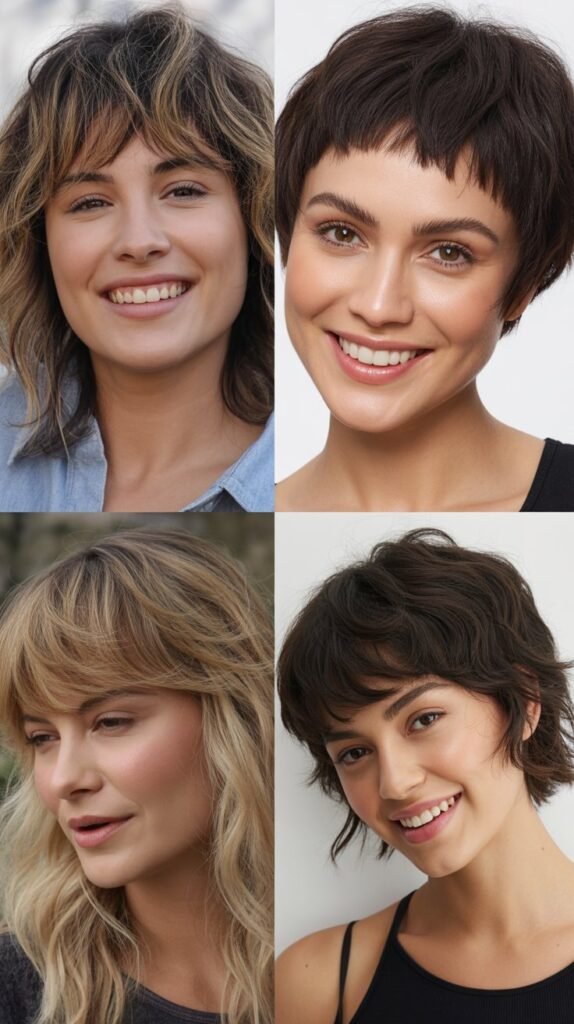
Brow-skimming wispy bangs sit slightly longer than eyebrow-grazing styles, offering maximum versatility for different styling options and face-framing effects.
- These bangs fall at a length that just touches or slightly covers the eyebrows, providing more coverage than shorter styles while maintaining a light, wispy appearance.
- The extra length allows for greater styling versatility—you can brush them straight down, sweep them dramatically to one side, or create a center part for curtain-bang styling.
- Brow-skimming length is ideal for those new to bangs, as it provides enough length to experiment with different looks without committing to very short fringe.
- This length works beautifully with wavy medium hair because it allows your natural texture to create subtle movement within the bangs without them appearing too piecey or separated.
- The brow-skimming length also offers practical benefits—it keeps hair out of your eyes during activities while maintaining the face-framing benefits of bangs.
- Growth between trims is less noticeable with this length, as the bangs can be styled in various ways even as they lengthen, extending time between salon visits.
21. Nose-Length Bangs for Extreme Versatility
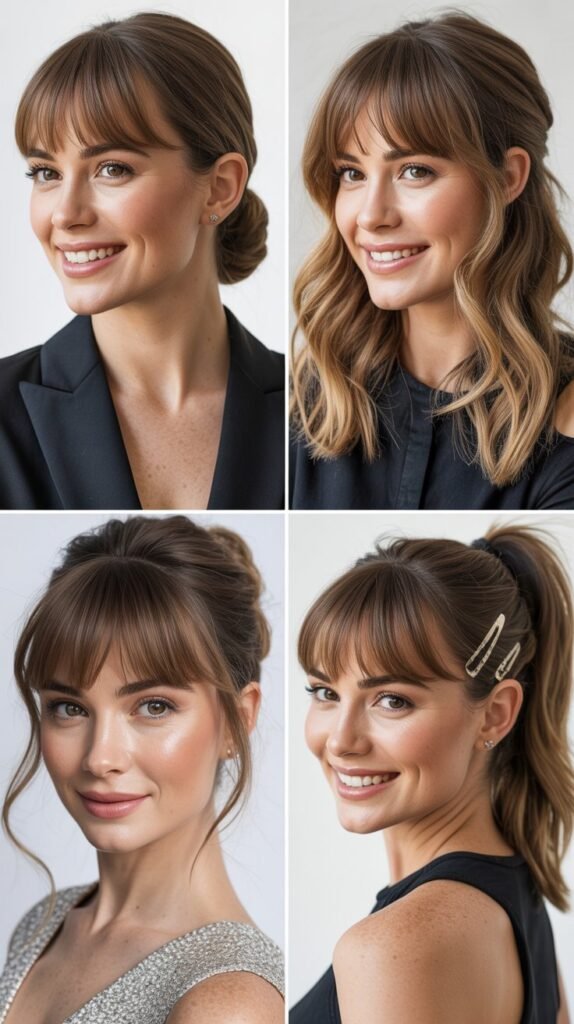
Nose-length wispy bangs provide the ultimate in styling flexibility, functioning as both fringe and face-framing layers depending on how you choose to style them.
- At this length, bangs extend to approximately the tip of your nose, creating substantial face-framing without truly being traditional bangs in the conventional sense.
- This length allows you to sweep the bangs completely to the side, part them down the center for curtain styling, or even tuck them behind your ears when desired.
- Nose-length wispy bangs are ideal for individuals who want the option of bangs without fully committing, as the length provides maximum styling flexibility.
- For wavy medium hair, this length integrates beautifully with face-framing layers, creating seamless movement from the front of your hair to the sides.
- The extended length means these bangs require less frequent trims—typically every 6-8 weeks—making them lower maintenance than shorter bang styles.
- This versatile length works particularly well if you’re growing out shorter bangs, as it represents an attractive transitional phase that offers numerous styling options.
22. Maintaining Bang Shape Between Salon Visits
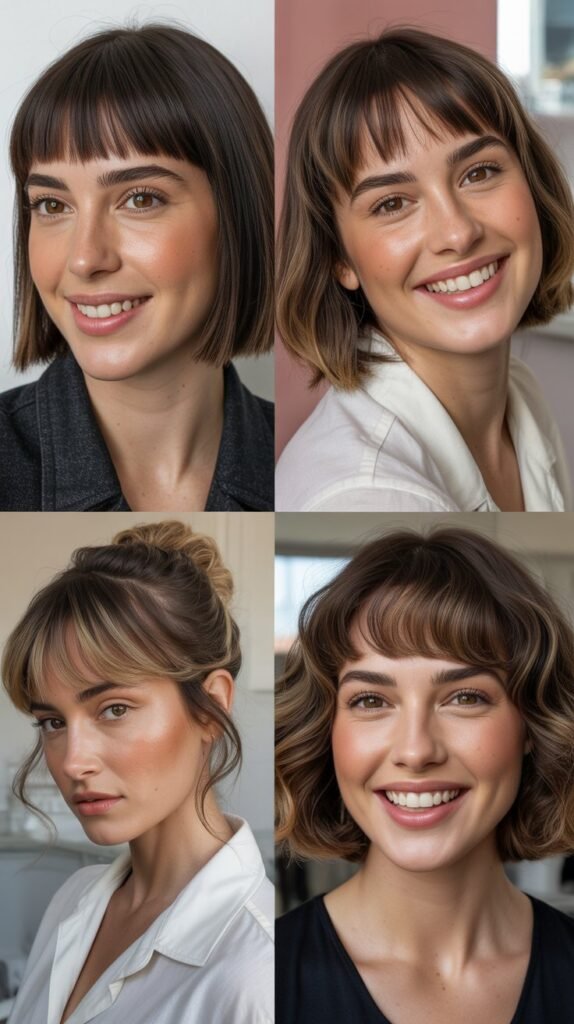
Proper maintenance between professional trims keeps your wispy bangs looking intentional and polished rather than neglected and overgrown.
- Invest in a pair of professional hair-cutting scissors (never use regular household scissors) for minor at-home bang trims when they begin covering your eyes.
- To trim wispy bangs at home, work with dry hair so you can accurately see the finished length, and cut conservatively—you can always remove more but cannot add length back.
- Use the point-cutting technique by holding scissors vertically and making small snips into the ends of your bangs, maintaining the wispy, textured appearance.
- Trim your bangs only when they’re clean and styled as you normally wear them, ensuring you’re cutting the length you actually see day-to-day.
- Between trims, use dry shampoo on bangs to absorb oil and extend time between washing, as bangs tend to get oily faster than the rest of your hair.
- If your bangs become too long to function properly before your scheduled salon appointment, consider scheduling a “bang trim only” appointment, which many salons offer as a quick, inexpensive service.
| Maintenance Task | Frequency | Tools Needed | Time Required |
|---|---|---|---|
| Professional trim | Every 4-6 weeks | None (salon visit) | 10-15 minutes |
| At-home dusting | As needed, typically every 2-3 weeks | Professional scissors | 5 minutes |
| Bang washing | Daily or every other day | Gentle shampoo | 2-3 minutes |
| Deep conditioning | Weekly | Moisturizing conditioner or mask | 10 minutes |
| Texturizing refresh | Daily | Dry shampoo, texturizing spray | 2 minutes |
23. Styling Wispy Bangs in Humid Climates
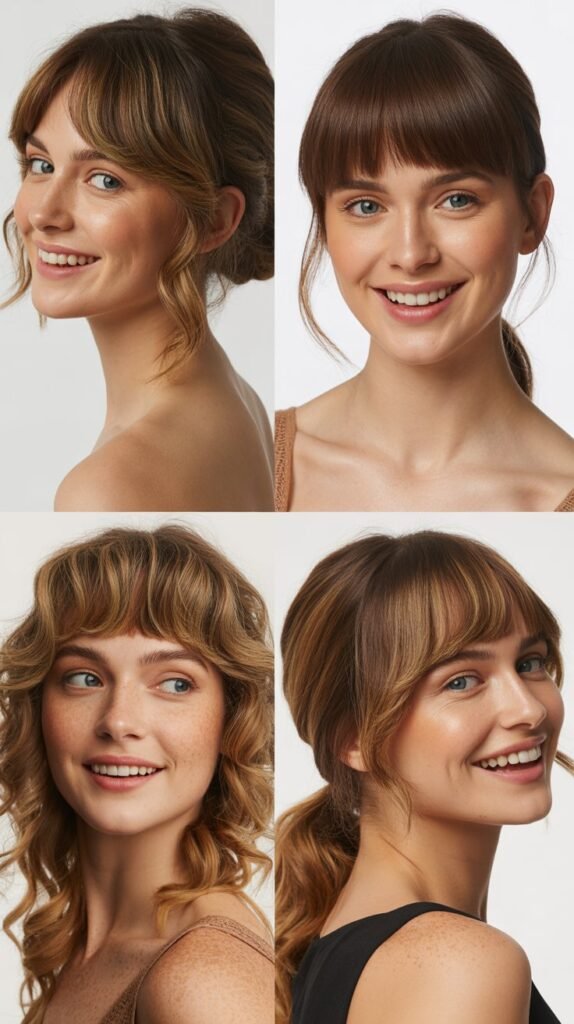
Humidity presents unique challenges for wispy bangs and wavy hair, requiring specific strategies to maintain style integrity and prevent frizz.
- Begin with an anti-humidity primer or serum applied to damp bangs before styling, creating a protective barrier against moisture in the air.
- For wavy hair in humid climates, embrace your natural texture rather than fighting it—attempting to straighten or smooth excessively will create a losing battle with humidity.
- Use lightweight, humidity-resistant styling products specifically formulated to combat frizz while maintaining movement and touchable texture.
- The cold shot setting on your blow dryer is essential in humid climates, as it seals the hair cuticle and helps lock in your style before you step outside.
- Consider using a small amount of lightweight oil or serum on styled bangs as a finishing touch, which creates slip and prevents frizz without weighing hair down.
- Touch-ups throughout the day can be accomplished with dry shampoo (to absorb moisture and oil) and a small amount of texturizing spray to refresh separation.
24. Cold Weather Styling Tips for Wispy Bangs
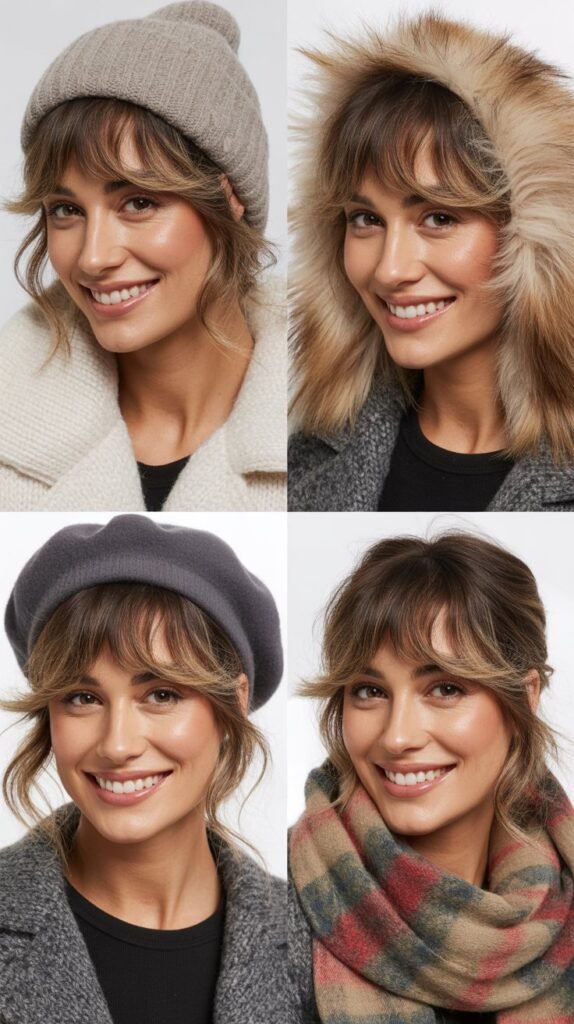
Winter weather creates different challenges for wispy bangs, including static electricity, hat hair, and moisture from snow or rain.
- Combat static by applying a small amount of leave-in conditioner or anti-static spray to your palms and smoothing over your bangs before heading outside.
- When wearing hats, style your bangs first, then carefully place your hat starting from the back of your head, allowing bangs to fall naturally outside the hat’s brim.
- Upon removing your hat, shake your bangs gently with your fingers and apply a touch of texturizing spray to revive the wispy, separated appearance.
- Indoor heating creates dry air that can lead to brittle, static-prone hair—use a humidifier in your home and office to maintain moisture in the air.
- Deep condition your wavy hair and wispy bangs weekly during winter months to replace moisture lost to cold, dry air and indoor heating.
- Carry a small travel-size anti-static spray or lightweight hair oil in your bag for quick touch-ups after removing winter accessories.
25. Color Techniques That Enhance Wispy Bangs and Layers
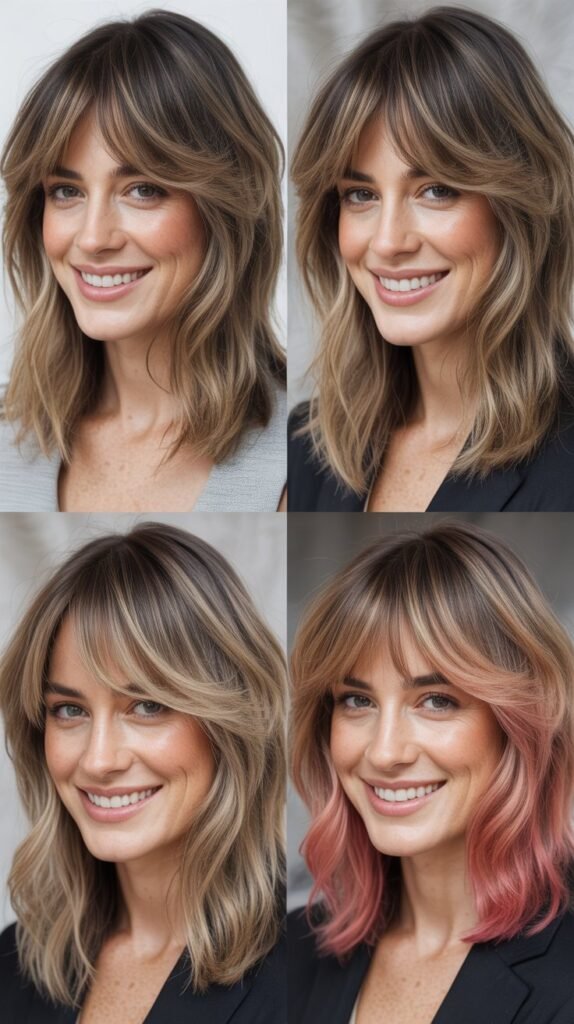
Strategic hair coloring can dramatically enhance the dimension and movement in wispy bangs and layered wavy medium hair.
- Babylights (extremely fine, delicate highlights) throughout your bangs create subtle dimension that emphasizes the wispy, feathered texture and adds brightness around your face.
- Face-framing highlights in shades 2-3 levels lighter than your base color draw attention to your wispy bangs and create the illusion of sun-kissed, natural dimension.
- Balayage painting technique works beautifully on layered wavy hair, as the hand-painted highlights follow your hair’s natural movement and enhance the multidimensional appearance.
- Consider slightly lighter tones at the ends of your wispy bangs compared to the roots, creating a gradient effect that adds depth and makes the feathered texture more visible.
- For those wanting to add richness rather than brightness, lowlights in deeper tones create shadow and dimension, making lighter pieces appear even brighter by contrast.
- Shadow root techniques allow you to extend time between color appointments while maintaining a natural, lived-in appearance that complements the effortless aesthetic of wispy bangs.
26. Accessorizing Wispy Bangs for Different Occasions
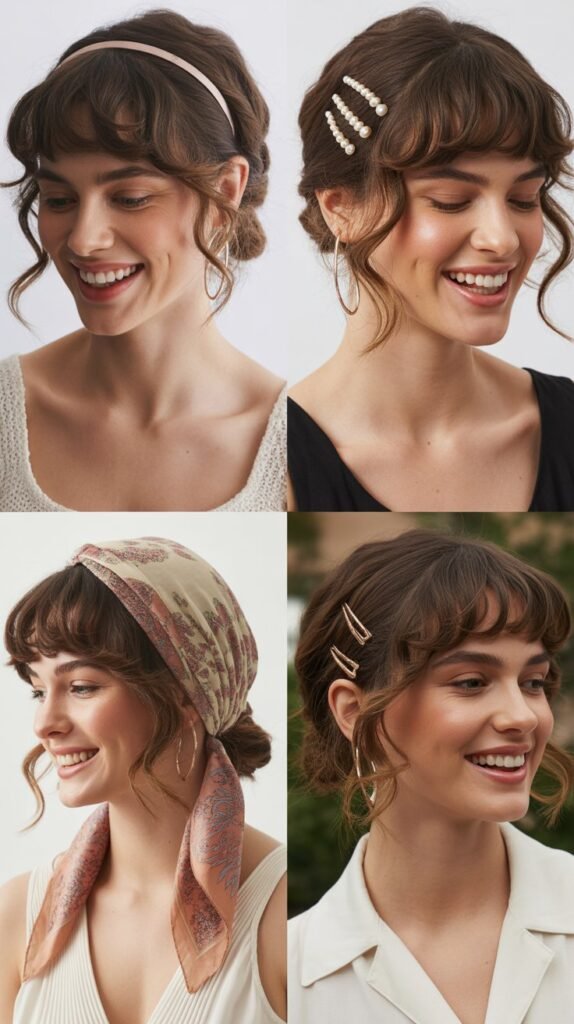
Strategic accessory choices can transform your wispy bangs and layered wavy hair from casual to formal, allowing versatility for various occasions.
- Headbands (particularly padded or knotted styles) can be positioned behind your wispy bangs to hold back the rest of your hair while allowing the fringe to frame your face.
- Hair clips and pins in various sizes can be used to sweep bangs to the side for formal events or pin them back completely when you want a different look.
- Silk or satin scarves wrapped around your head with bangs left out create a retro, glamorous aesthetic perfect for special occasions or bad hair days.
- Delicate hair jewelry, such as decorative bobby pins or thin headbands, adds elegance without overwhelming the soft, natural appearance of wispy bangs.
- For casual settings, claw clips can secure the bulk of your wavy hair while leaving wispy bangs and face-framing layers loose for an effortlessly chic appearance.
- Wide-brimmed hats work beautifully with wispy bangs—style your bangs to peek out beneath the brim for a sophisticated, sun-protective look.
27. Workout-Friendly Styling for Active Lifestyles
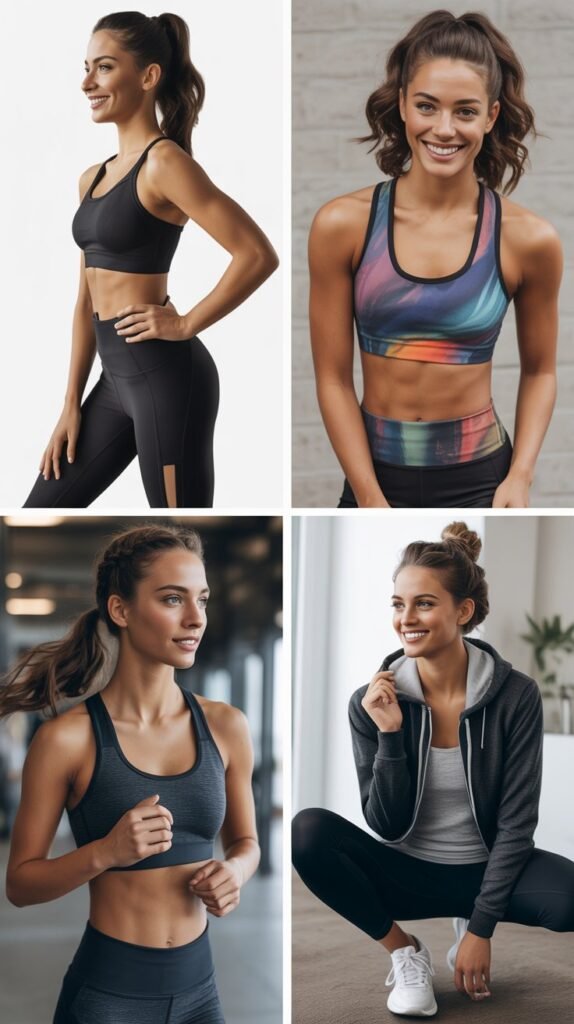
Maintaining stylish wispy bangs during exercise requires strategic approaches that keep hair out of your face while minimizing post-workout styling damage.
- Use a thin elastic headband positioned just behind your wispy bangs to hold them back during workouts, preventing sweat and oil buildup in the fringe.
- Apply dry shampoo to bangs before your workout rather than after—this creates an absorbent barrier that soaks up sweat and oil during exercise.
- Pull the rest of your wavy medium hair into a high ponytail or bun, leaving wispy bangs and face-framing pieces loose, or incorporate them into a secure but non-damaging style.
- Post-workout, avoid washing bangs with hot water immediately, as this can strip natural oils—instead, rinse with cool water and apply a lightweight leave-in conditioner.
- If bangs become sweaty and matted during exercise, use a blow dryer on cool setting with your fingers to revive texture and separation without full restyling.
- Consider rotating between bang-forward and bang-back workouts to prevent constant stress on the same hair sections and maintain the health of your wispy fringe.
28. Sleeping Strategies to Preserve Wispy Bang Shape
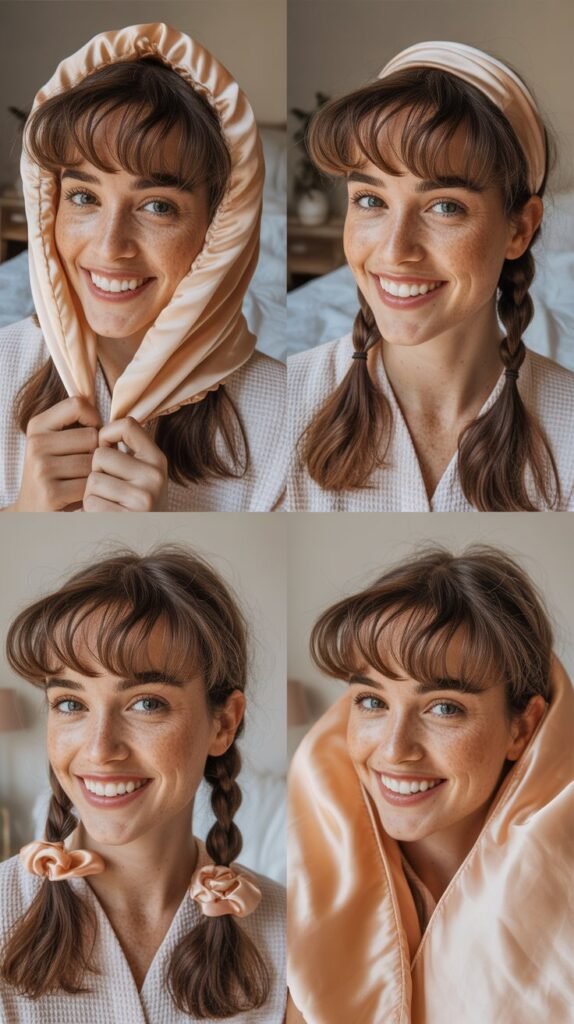
Overnight care significantly impacts how your wispy bangs look the following morning and can reduce daily styling time considerably.
- Use a silk or satin pillowcase to reduce friction while you sleep, which minimizes frizz, preserves your natural wave pattern, and prevents bangs from becoming matted or flattened.
- Before bed, lightly mist your bangs with water and reshape them with your fingers, allowing them to dry naturally in the correct position while you sleep.
- The headband method involves wearing a soft, stretchy headband pushed back slightly from your bangs while sleeping, which keeps the fringe from becoming completely flat against your forehead.
- For those who sleep on their stomachs or sides, consider using small velcro rollers in your wispy bangs at night to maintain volume and natural movement.
- Alternatively, the “pineapple” method for your overall hair (gathering hair loosely at the top of your head) can work while leaving bangs loose to maintain their shape.
- In the morning, if bangs need refreshing, lightly dampen them with water or setting spray, apply a small amount of texturizing product, and allow to air-dry or quickly blow-dry with cool air.
29. Transitioning From Other Bang Styles to Wispy Bangs
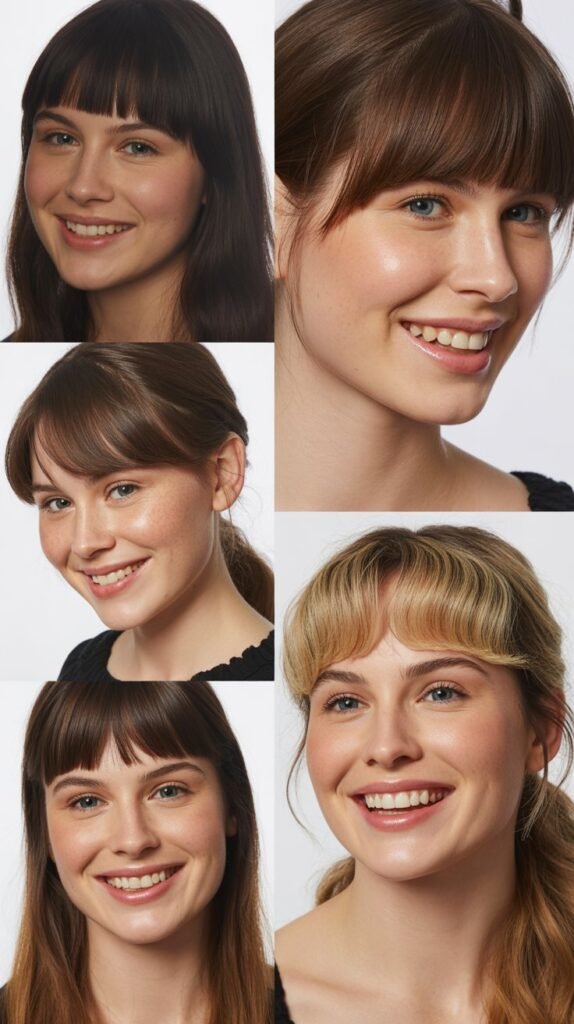
Successfully transitioning from different bang styles to wispy bangs requires patience and strategic approaches depending on your starting point.
- From blunt bangs: Request that your stylist use point-cutting and texturizing techniques to gradually thin out the blunt edge while maintaining length, creating the wispy, feathered effect.
- From curtain bangs: The transition is relatively simple—ask your stylist to adjust the center length (making it slightly shorter) and add more texturizing throughout for a wispier appearance.
- From side-swept bangs: Gradually reduce the length on the longer side while increasing texturizing throughout, creating a more balanced, wispy fringe that can be styled multiple ways.
- Growing out short bangs: As they reach eyebrow length, have your stylist add significant texturing to create the wispy effect, which makes the grow-out phase more attractive.
- From no bangs: Start with longer, brow-skimming wispy bangs that offer maximum versatility as you adjust to having fringe, then shorten gradually if desired.
- Between appointments, use texturizing products and techniques to create separation and lightness in your existing bangs, previewing the wispy aesthetic you’re working toward.
30. Face-Framing Highlights Specifically for Wispy Bangs
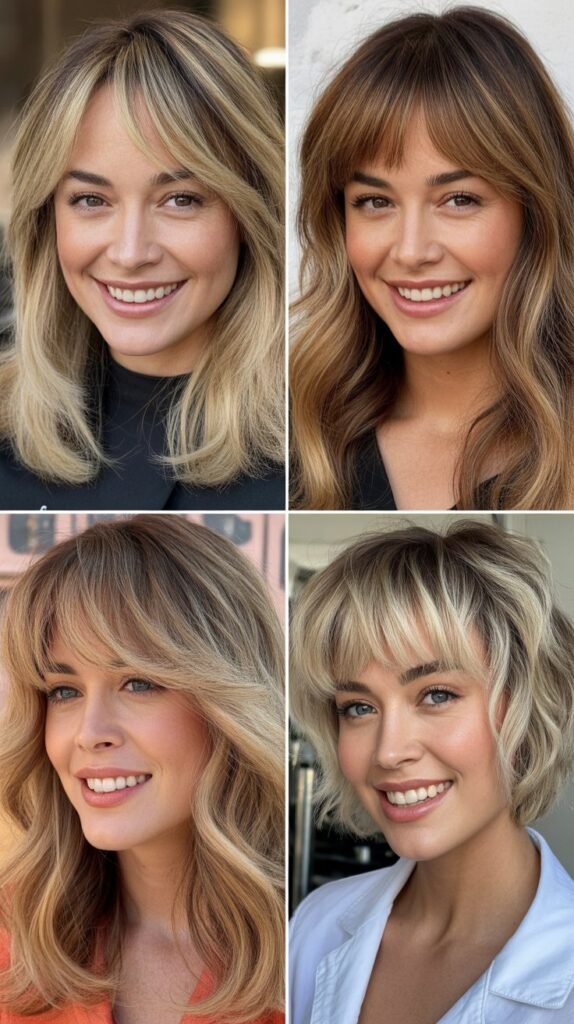
Strategic highlighting around your wispy bangs and face can create stunning dimensional effects that enhance your overall appearance and draw attention to your features.
- Money piece highlights (thick, bright highlights framing the face) work beautifully with wispy bangs, creating bold contrast and dimensional brightness that highlights the feathered texture.
- For a more subtle effect, request micro-highlights woven throughout your bangs, which add dimension without creating obvious streaks or stripes.
- Ribbon highlighting involves painting a thick section of bangs 2-3 shades lighter, creating a focal point that emphasizes the wispy, textured cutting style.
- Consider tonal highlighting using shades within 1-2 levels of your base color for natural-looking dimension that enhances rather than dramatically changes your appearance.
- The placement of highlights should follow your bang’s natural fall—if you typically wear them swept to one side, concentrate lighter pieces on that dominant side.
- Coordinate your bang highlights with face-framing highlights throughout your layered lengths, creating cohesive brightness that flows naturally from front to back.
31. Balayage Application for Dimensional Wavy Hair
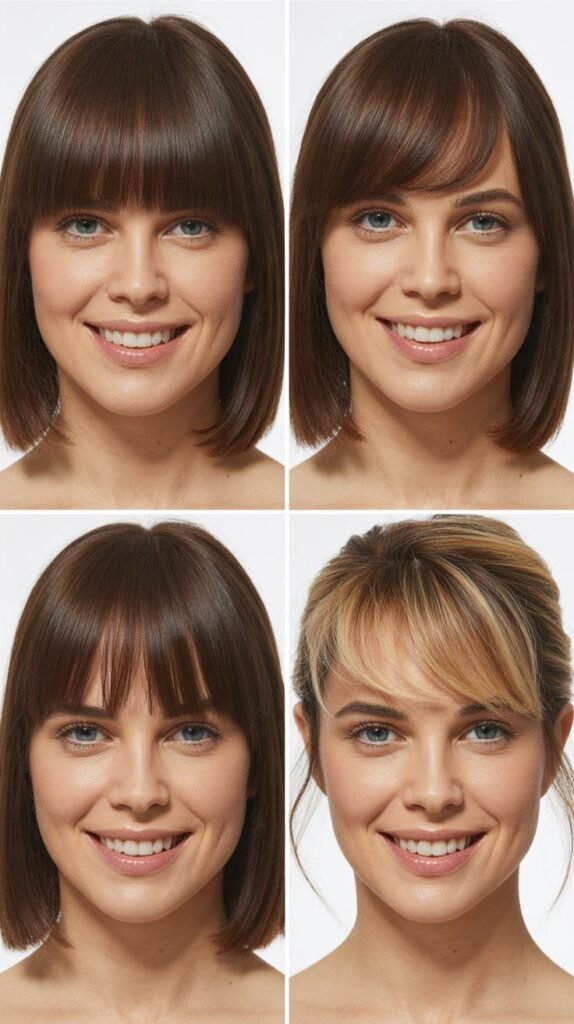
Balayage coloring technique complements wispy bangs and wavy medium hair beautifully by following the natural movement and creating sun-kissed dimension throughout.
- Balayage is a hand-painted highlighting technique where color is applied in sweeping motions, creating a natural gradient from darker roots to lighter ends.
- For wavy hair, balayage artists paint color where the sun would naturally lighten your hair—predominantly on the surface layers and around your face, including through wispy bangs.
- The technique creates multidimensional color that moves with your waves, emphasizing the texture and layers throughout your medium-length cut.
- Balayage in wispy bangs should be applied with a light hand, focusing on the mid-lengths to ends rather than saturating the entire bang section.
- This coloring method grows out gracefully without harsh lines, typically requiring touch-ups only every 3-4 months, making it ideal for low-maintenance color lovers.
- The dimensional nature of balayage makes your hair appear thicker and fuller, as the varied tones create the illusion of depth and volume throughout your wavy texture.
32. Ombre Effects on Layered Medium Hair
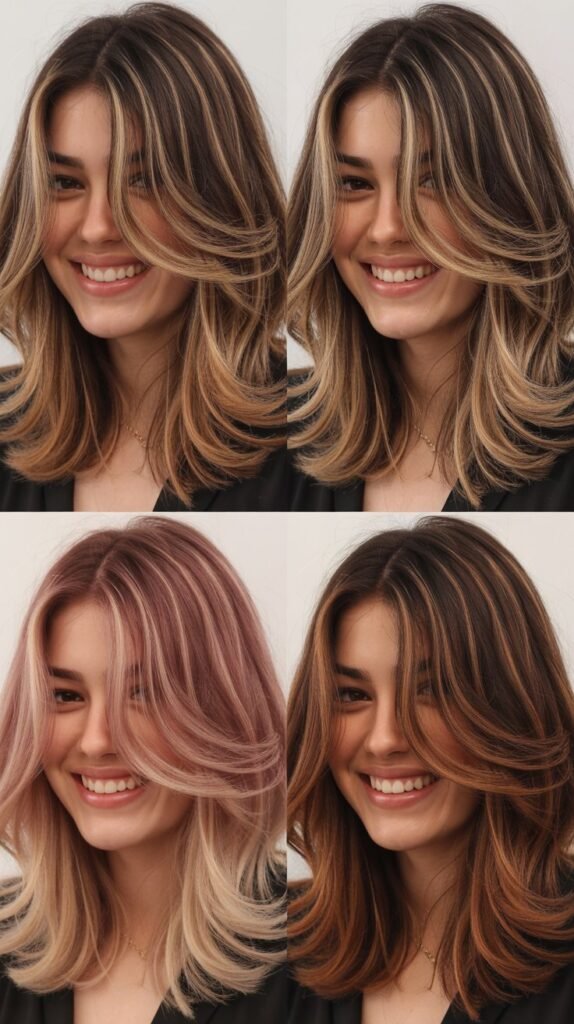
Ombre coloring creates dramatic gradient effects that pair beautifully with wispy bangs and layered wavy medium hair for a bold, contemporary aesthetic.
- Ombre features a distinct color transition from darker roots to significantly lighter ends, creating high-contrast drama throughout your medium-length hair.
- For wispy bangs, the ombre effect typically begins below the fringe or in the lower third of the bangs, maintaining darker roots that frame your face naturally.
- This technique works exceptionally well on layered wavy hair because the varied lengths create beautiful dimensional color transitions that move with your waves.
- Reverse ombre (lighter roots, darker ends) offers an edgier alternative that can make wispy bangs appear even lighter and more delicate against darker lengths.
- The bold nature of ombre requires confidence and commitment, as the color contrast is intentional and noticeable, creating a statement-making appearance.
- Maintenance involves regular toning appointments to keep the lighter sections fresh and vibrant, typically every 4-6 weeks, along with color-safe products to prevent fading.
33. Lowlights for Added Depth and Richness
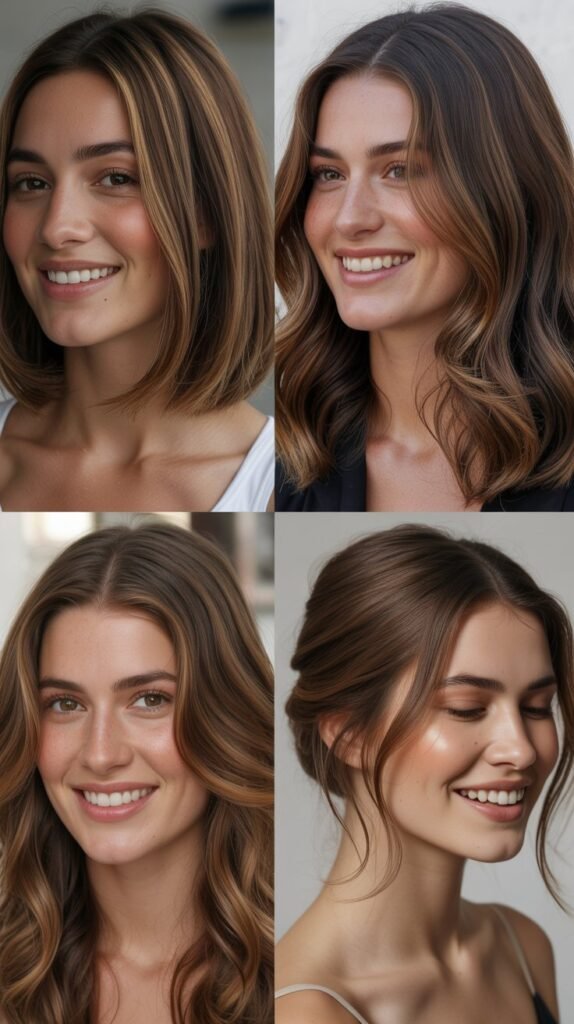
Lowlights create shadow and depth in your wispy bangs and layered wavy hair, enhancing dimension through darker tones rather than lighter highlights.
- Lowlights are sections of hair colored darker than your base shade, typically 2-3 levels deeper, creating contrast and making lighter pieces appear even brighter.
- For wispy bangs, strategic lowlight placement in the underlayers creates the illusion of thicker, fuller fringe while maintaining the light, airy appearance on top.
- This technique adds richness and complexity to your overall color, preventing flat, one-dimensional appearance and creating visual interest as your wavy hair moves.
- Lowlights work beautifully as a correction technique if previous highlighting made your hair too light—they restore depth without requiring you to color your entire head darker.
- The dimensional effect of lowlights enhances your hair’s natural texture, as the varying tones create shadows and highlights that move with your waves.
- Maintenance is typically lower than highlighting, as darker roots growing in are less noticeable, and lowlights generally fade more gracefully than lighter highlights.
34. Root Tapping for Natural-Looking Color
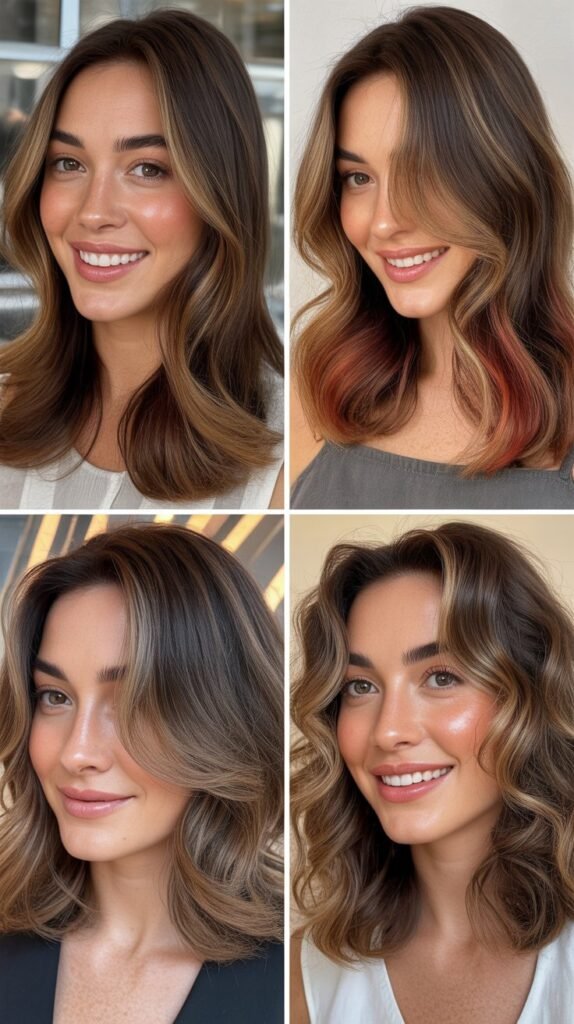
Root tapping creates seamlessly blended color transitions that look incredibly natural on wispy bangs and layered wavy medium hair.
- Root tapping involves applying color to the roots and then “tapping” it downward with a brush or fingers, creating a soft, blurred transition rather than harsh color lines.
- This technique is particularly effective for wispy bangs because it creates dimension without obvious stripes or sections, maintaining the soft, natural aesthetic of feathered fringe.
- Root tapping works with any color service—highlights, lowlights, or all-over color—creating soft, diffused results that appear sun-kissed rather than obviously colored.
- For wavy hair, this technique follows your natural texture, allowing color to sit differently on each wave and creating truly unique, customized-looking results.
- The blended nature of root tapping means grow-out is virtually imperceptible, extending time between color appointments and creating low-maintenance, lived-in color.
- This method prevents the “stripey” appearance that sometimes occurs with traditional highlighting, instead creating soft veils of color throughout your wispy bangs and layers.
35. Seasonal Color Changes for Wispy Bangs
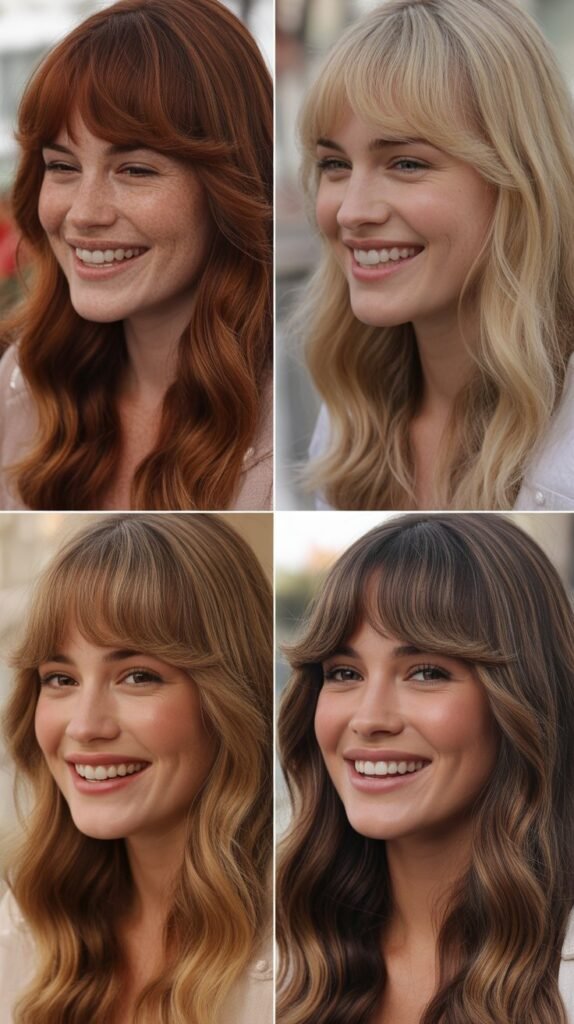
Adapting your hair color seasonally can refresh your wispy bangs and layered wavy hair while complementing changing wardrobes and natural light conditions.
- Spring: Lighten bangs with soft, pastel-toned highlights or babylights that create brightness and freshness, reflecting the season’s renewal energy.
- Summer: Embrace sun-kissed warmth with golden or honey-toned highlights throughout bangs and layers, creating a natural beach-hair aesthetic.
- Fall: Deepen your color with rich, warm lowlights in copper, auburn, or chocolate tones that complement autumn’s cozy, warm color palette.
- Winter: Add cool-toned highlights or ash-based colors for sophisticated dimension, or go richer and deeper for dramatic winter contrast.
- Seasonal color changes don’t require complete color overhauls—subtle tonal shifts through strategic highlighting or gloss treatments can refresh your wispy bangs’ appearance.
- Consider your skin’s undertones when selecting seasonal colors—warm undertones are flattered by golden and copper tones, while cool undertones shine with ash and platinum shades.
36. Heat Protectant Application for Styling Safety
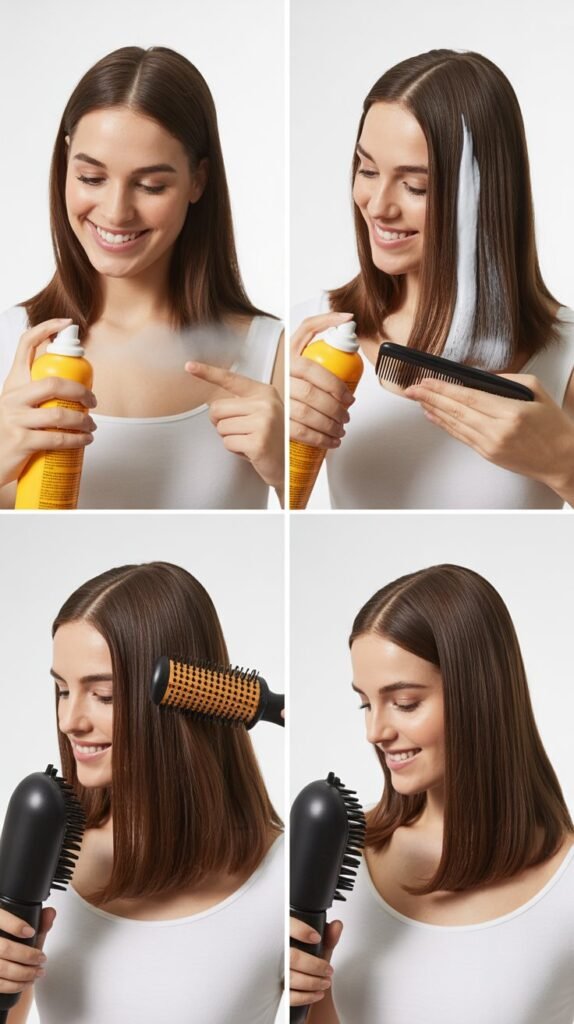
Proper heat protection is essential when styling wispy bangs and wavy medium hair with hot tools, preventing damage while maintaining health and shine.
- Apply heat protectant to completely damp hair before any heat styling, as this allows the protective ingredients to bond with the hair shaft before heat exposure.
- For wispy bangs specifically, spray heat protectant on your fingers and smooth through the fringe rather than spraying directly, which can oversaturate and create heaviness.
- Choose heat protectants formulated for your specific hair texture—wavy hair benefits from lightweight, non-greasy formulas that won’t weigh down natural movement.
- The proper amount of heat protectant for medium-length hair is typically 6-8 sprays or pumps distributed evenly throughout, with extra attention to the most heat-exposed areas like bangs.
- Heat protectant should be applied before every heat styling session, even if you’re just touching up your wispy bangs with a flat iron or curling wand.
- Look for products containing ingredients like silicones, keratin, or amino acids, which create a protective barrier between your hair and heat styling tools.
| Heat Tool | Maximum Safe Temperature | Heat Protectant Layers Needed | Recommended Styling Frequency |
|---|---|---|---|
| Blow Dryer | 300-350°F (150-175°C) | 1 layer | Daily (with protectant) |
| Flat Iron | 300-350°F (150-175°C) | 2 layers | 2-3 times per week maximum |
| Curling Iron | 300-350°F (150-175°C) | 2 layers | 2-3 times per week maximum |
| Hot Air Brush | 250-300°F (120-150°C) | 1 layer | Daily (with protectant) |
37. Deep Conditioning Treatments for Healthy Wispy Bangs
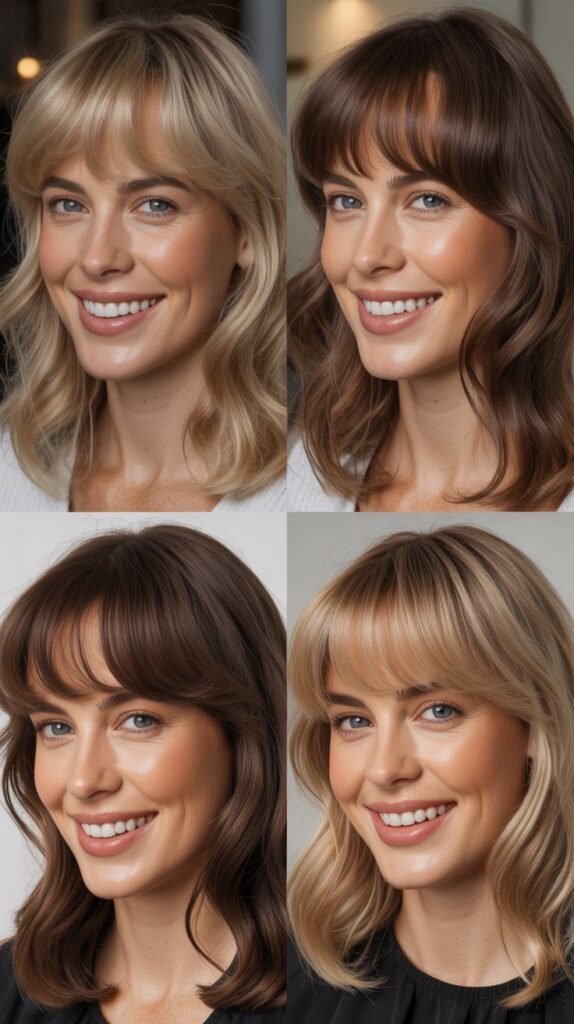
Regular deep conditioning maintains the health, softness, and natural movement essential for beautiful wispy bangs and layered wavy hair.
- Apply intensive conditioning masks or treatments weekly, focusing on mid-lengths to ends while using a lighter application on wispy bangs to avoid weighing them down.
- For bangs specifically, use a small amount of deep conditioner on the ends only, avoiding the roots which can become greasy and lose volume if over-conditioned.
- Leave-in treatments applied to damp hair before styling provide ongoing moisture and protection throughout the day without heaviness or buildup.
- Heat-activated deep conditioners work beautifully with wavy hair—apply the treatment, cover with a shower cap, and use a blow dryer’s heat to enhance penetration.
- Focus deep conditioning efforts on addressing your hair’s specific needs: protein treatments for strength, moisture treatments for hydration, or smoothing treatments for frizz control.
- The frequency of deep conditioning depends on your hair’s condition—damaged or color-treated hair benefits from twice-weekly treatments, while healthy hair may need only weekly conditioning.
38. Trimming Schedules to Maintain Shape and Health
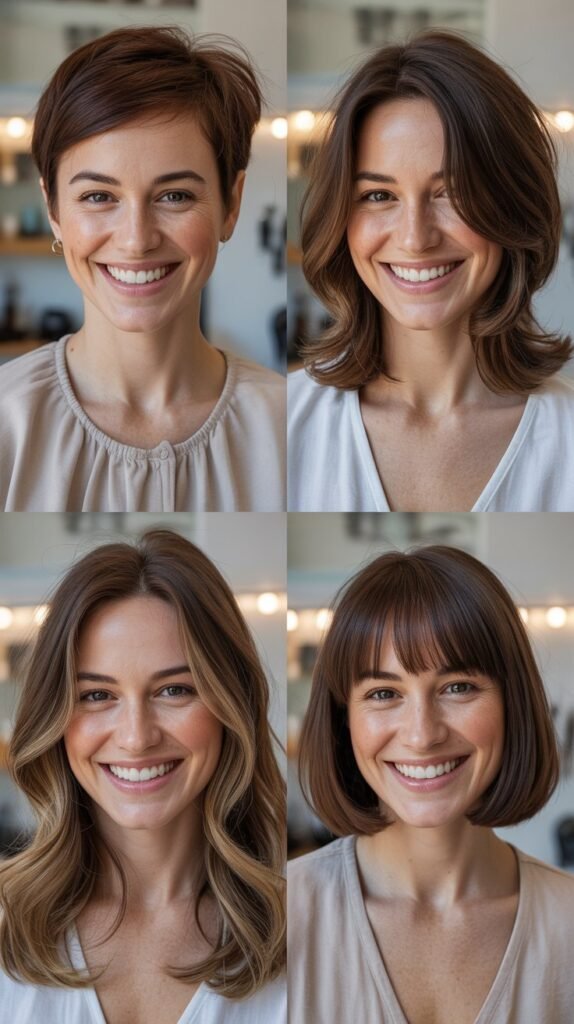
Establishing a consistent trimming schedule keeps your wispy bangs and layered wavy medium hair looking fresh, healthy, and intentionally styled.
- Wispy bangs require trims every 3-4 weeks to maintain their ideal length and prevent them from becoming too long and losing their definition.
- Your overall layered cut should be trimmed every 8-12 weeks to maintain shape, remove split ends, and keep the layers cohesive and well-defined.
- Consider “dusting” appointments between major cuts—these involve removing just the damaged ends (1/4 inch or less) to maintain health without altering length significantly.
- The growth rate of your hair affects your ideal trimming schedule—faster-growing hair may need more frequent trims to maintain the intended style.
- If you’re growing your hair out, trimming every 10-12 weeks removes damage while still allowing length retention, and your stylist can gradually adjust layer placement as hair lengthens.
- Bang-only trim appointments are often offered as quick, inexpensive services that keep your fringe fresh without requiring time and expense of a full haircut.
39. Clarifying Treatments to Remove Product Buildup
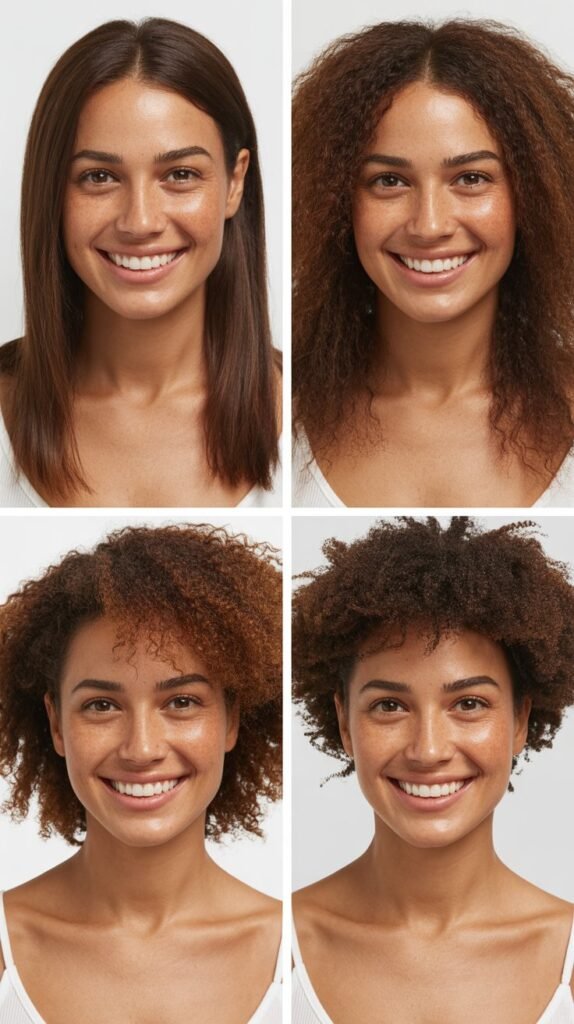
Regular clarifying removes the product buildup that can weigh down wispy bangs and diminish the natural movement of your wavy medium hair.
- Use a clarifying shampoo once every 1-2 weeks to thoroughly cleanse hair and scalp, removing accumulated styling products, oils, and environmental pollutants.
- For wispy bangs that are exposed to more styling products than the rest of your hair, consider clarifying the bang area more frequently—up to twice weekly if needed.
- After clarifying, always follow with a deep conditioning treatment, as clarifying shampoos can be drying and your hair needs moisture restoration.
- DIY clarifying treatments like apple cider vinegar rinses (1 part vinegar to 3 parts water) effectively remove buildup while being gentler than commercial clarifying shampoos.
- Signs that you need clarifying include: hair feeling heavy or limp, styling products not working effectively, dullness, or wispy bangs lying flat despite styling efforts.
- Avoid clarifying too frequently, as this can strip natural oils and lead to dryness—once or twice monthly is sufficient for most hair types unless you use exceptionally heavy products.
40. Sulfate-Free Products for Color-Treated Hair
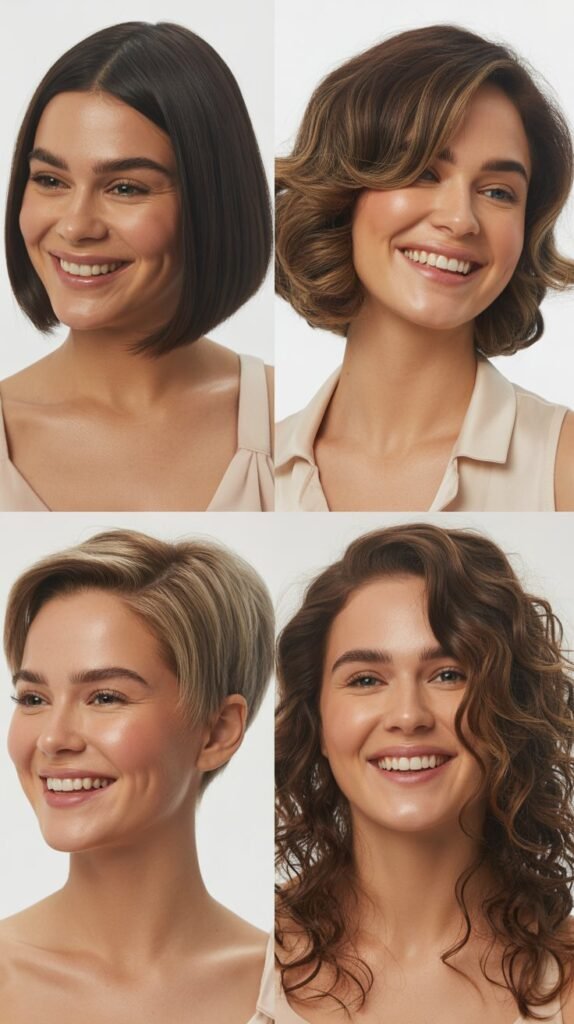
Sulfate-free hair care products preserve color vibrancy and maintain the health of your wispy bangs and wavy medium hair when colored or highlighted.
- Sulfates are harsh detergents that strip color and natural oils from hair, leading to faster fading and increased dryness in color-treated hair.
- Sulfate-free shampoos clean gently using alternative cleansing agents, preserving your color investment while maintaining hair health and natural moisture balance.
- For wispy bangs with face-framing highlights, sulfate-free products prevent the brassy, yellowing effect that sulfates can create in lightened hair.
- These gentler formulas are particularly important for wavy hair, which tends to be naturally drier and benefits from moisture-preserving cleansing methods.
- Transitioning to sulfate-free products may require an adjustment period where hair feels different—give it 2-3 weeks for your scalp to regulate oil production naturally.
- Look for sulfate-free shampoos specifically formulated for color-treated hair, which contain additional color-protecting and enhancing ingredients beyond just sulfate elimination.
41. Curl-Enhancing Products for Wavy Texture
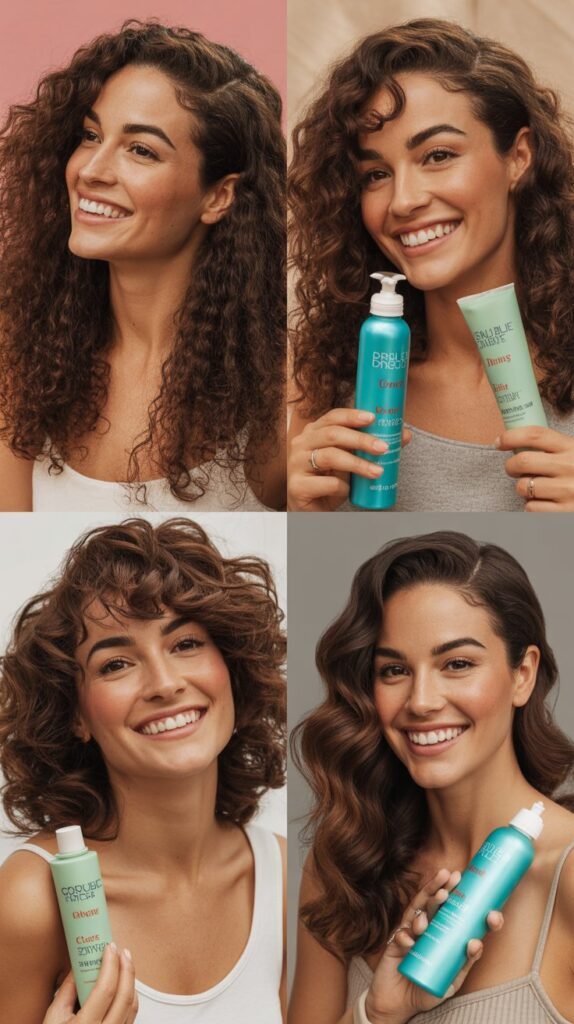
Specialized curl-enhancing products maximize your wavy hair’s natural texture while keeping wispy bangs defined without crunchiness or heaviness.
- Curl-enhancing creams work through damp hair to define wave patterns, reduce frizz, and create bouncy, touchable texture from roots to ends.
- For wispy bangs, use curl cream sparingly—a pea-sized amount smoothed through with fingers maintains definition without weighing down the delicate fringe.
- Wave sprays containing sea salt or similar texturizing ingredients create beachy, tousled waves that complement the lived-in aesthetic of wispy bangs perfectly.
- Mousse formulated for curly/wavy hair provides volume and hold without the stiffness of traditional mousses, ideal for maintaining wispy bang separation and movement.
- Gel-cream hybrids offer the definition of gel with the moisture of cream, creating the perfect balance for wavy hair that needs both hold and hydration.
- Apply curl products to soaking wet hair for maximum definition, then either air-dry or diffuse on low heat to enhance your natural wave pattern.
42. Managing Cowlicks in Wispy Bang Areas
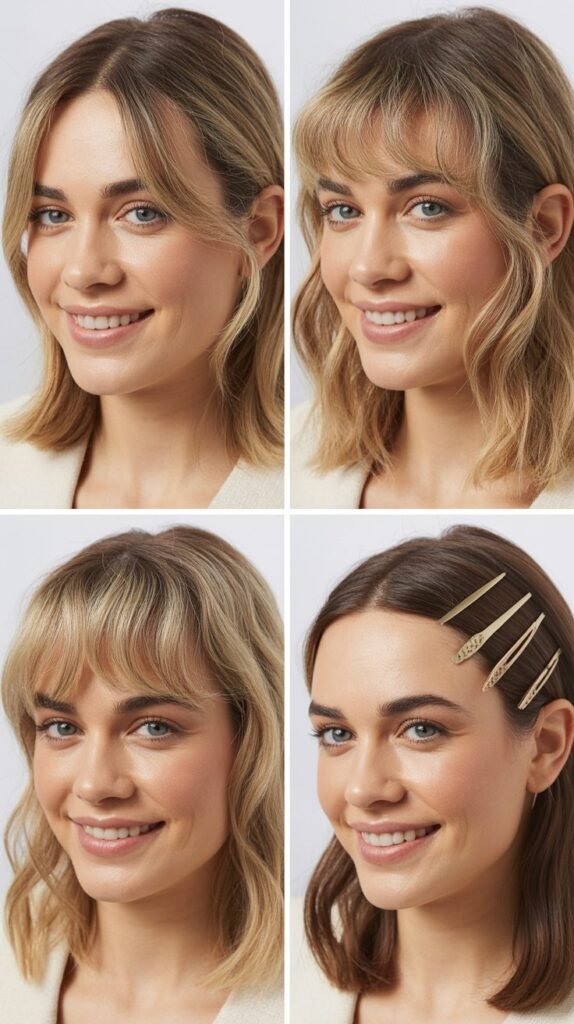
Cowlicks present unique challenges when styling wispy bangs, but strategic approaches can work with rather than against these natural growth patterns.
- Identify your cowlick’s direction and location by observing how your bangs naturally fall when wet—working with this pattern rather than against it ensures easier daily styling.
- Cut wispy bangs slightly longer in cowlick areas, as the hair naturally lifts and appears shorter than surrounding sections when styled.
- Use a round brush while blow-drying to direct cowlicks in your desired direction, applying heat while holding hair in place, then blasting with cool air to set.
- For stubborn cowlicks, dampen just that section in the morning, apply a small amount of lightweight gel or mousse, and re-dry while directing hair appropriately.
- Consider styling your wispy bangs in a way that works with the cowlick—if it pushes hair to the right, embrace side-swept bangs in that direction.
- Never cut wispy bangs too short in cowlick areas, as the shorter the hair, the more pronounced the cowlick becomes—length provides weight that helps control the pattern.
43. Creating Volume at the Roots While Maintaining Wispy Bangs
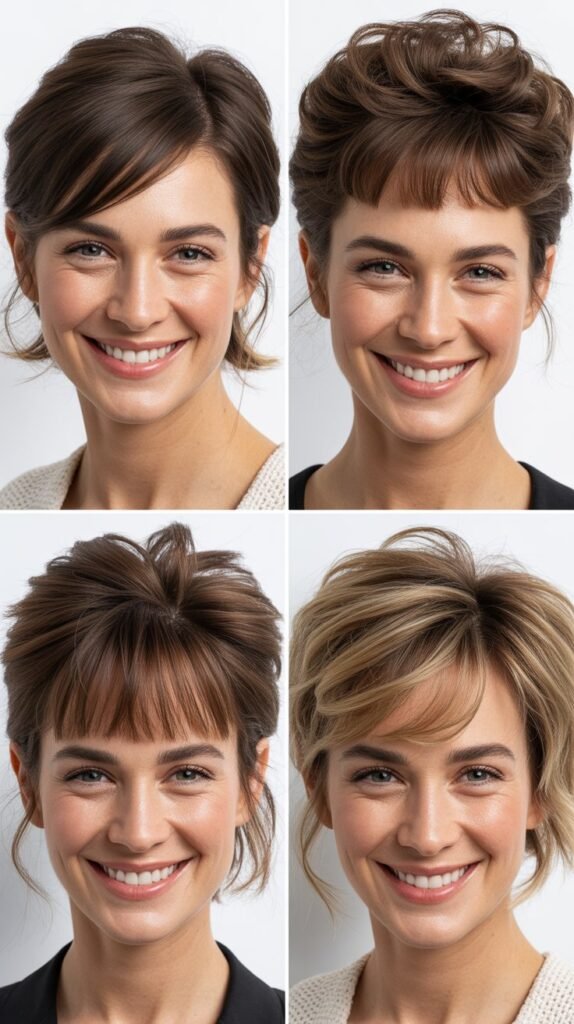
Root volume creates lift and dimension throughout your wavy medium hair while keeping wispy bangs soft and face-framing rather than puffy or overdone.
- Apply volumizing mousse or spray specifically at the roots of your crown and sides, avoiding the bang area which should maintain its airy, natural-lying quality.
- Use a round brush while blow-drying to lift roots away from your scalp, creating volume in the crown while blow-drying bangs forward and flat for contrast.
- Root-lifting clips can be placed at the crown while hair dries, creating volume in back while allowing wispy bangs to dry naturally flat against your forehead.
- The contrast between voluminous roots and soft, face-framing wispy bangs creates beautiful dimensional styling that’s flattering and contemporary.
- Avoid applying heavy products near your roots if you have fine hair, as this can cause volume to fall flat—opt for lightweight formulas designed specifically for root lift.
- Dry shampoo applied at the roots (not in bangs) creates instant volume and texture by absorbing oils and adding grip that helps hair stand away from the scalp.
44. Preventing and Treating Split Ends in Bangs
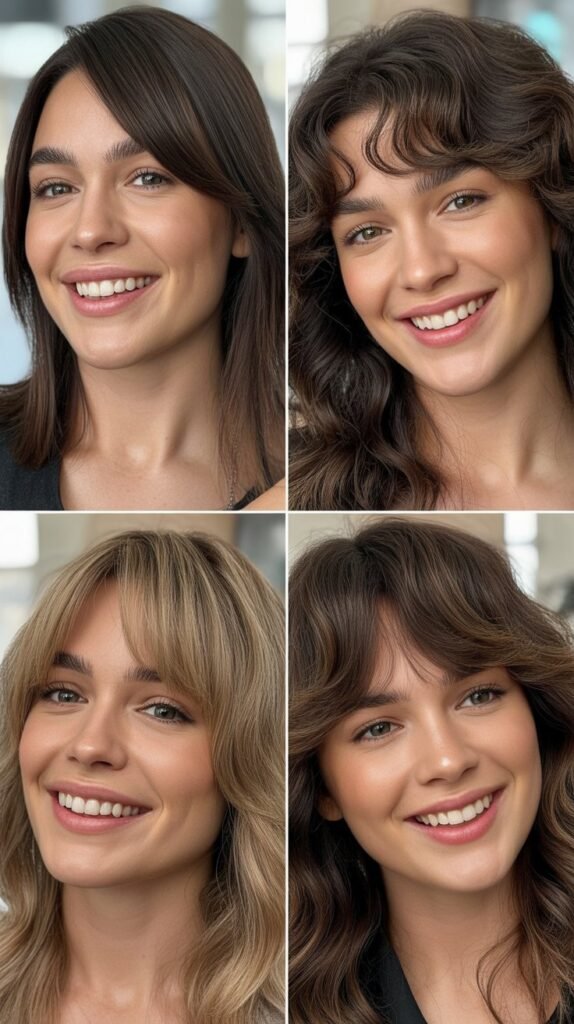
Split ends in wispy bangs are particularly noticeable and can quickly make your fringe appear damaged and unkempt rather than intentionally textured.
- Regular trims every 3-4 weeks are the primary prevention method for split ends in bangs, removing damaged ends before splits can travel up the hair shaft.
- Use heat tools on the lowest effective temperature and always with heat protectant, as excessive heat is a primary cause of split ends in frequently-styled bangs.
- Apply a small amount of hair oil or serum to bang ends daily, focusing on the last inch or two to seal the cuticle and prevent environmental damage.
- Avoid over-washing bangs, as excessive shampooing strips natural oils that protect against splitting—consider rinsing bangs with just water between full washes if needed.
- When you notice split ends appearing, resist the urge to pull or pick at them, which makes splitting worse—instead, schedule a trim as soon as possible.
- Protein treatments applied monthly can strengthen wispy bangs and reduce the likelihood of splitting, particularly if your hair is chemically treated or heat-styled frequently.
45. Texturizing Techniques Your Stylist Should Use
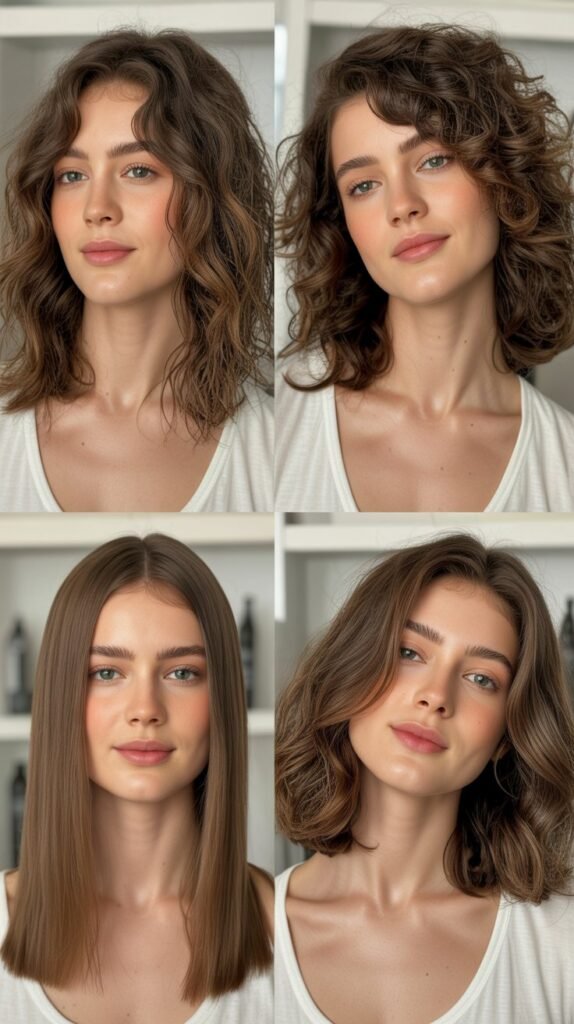
Professional texturizing methods transform ordinary bangs into beautifully wispy, naturally-textured fringe that complements your wavy medium hair.
- Point cutting is the fundamental texturizing technique, where scissors are held vertically and snipped into hair ends at angles, creating soft, feathered texture.
- Notching involves making small V-shaped cuts into the hair, removing tiny sections to reduce bulk and create internal texture without altering the overall length significantly.
- Channel cutting uses scissors to slice out narrow channels of hair from within the bang section, creating movement and reducing density for an airier appearance.
- Slithering (also called slicing) involves sliding scissors down the hair shaft at an angle, removing weight and creating seamless blending between lengths.
- Texturizing should be performed on dry hair for wavy textures, allowing your stylist to see exactly how the hair will fall and ensuring accurate results.
- Over-texturizing is a common mistake that makes wispy bangs look sparse and stringy—request conservative texturizing that can be adjusted if needed rather than removing too much initially.
46. Face-Framing Layer Angles That Complement Bangs
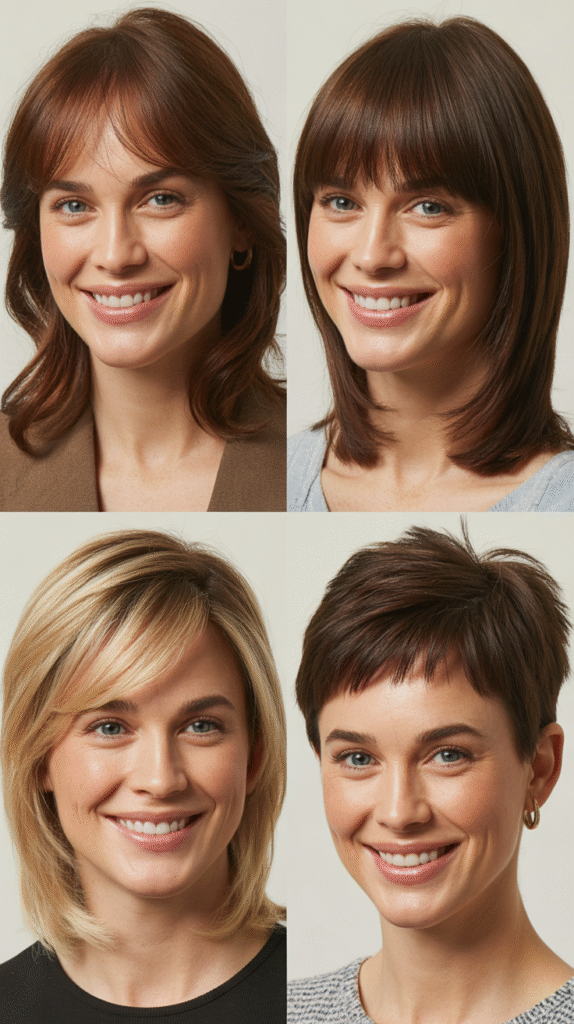
The angle at which face-framing layers are cut dramatically affects how they interact with your wispy bangs and overall style cohesion.
- Steep angles (where layers are significantly shorter at the front and dramatically increase in length toward the back) create dynamic, frame-the-face effect that transitions smoothly from wispy bangs.
- Gradual angles produce subtle, barely-noticeable layering that creates movement without obvious “steps” in your hair, ideal for those wanting understated dimension.
- The first face-framing layer should begin at approximately the same length as the longest point of your wispy bangs, creating seamless flow from fringe to layers.
- For oval and heart-shaped faces, layers beginning at cheekbone length beautifully frame features while connecting naturally with eyebrow-grazing or longer wispy bangs.
- Round faces benefit from longer face-framing layers (chin to jawline length) that create vertical lines and elongate, with wispy bangs swept to the side rather than straight across.
- Square faces are softened by face-framing layers beginning at cheekbone length or slightly longer, which balance angular jawlines while transitioning smoothly from textured bangs.
47. Incorporating Bangs Into Updos and Half-Up Styles
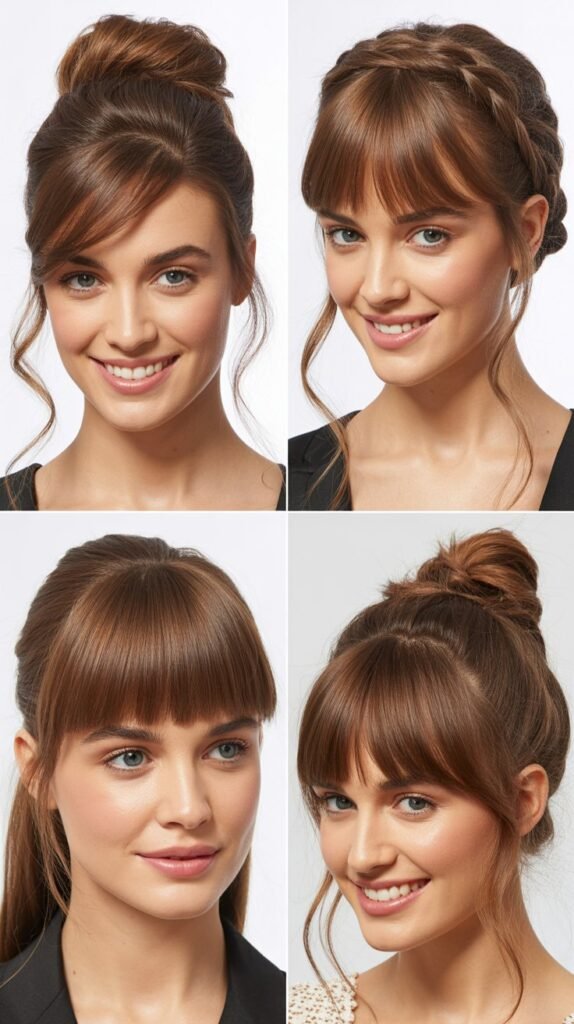
Wispy bangs offer versatility when creating updos and half-up styles, adding softness and face-framing to polished looks.
- For classic updos, leave wispy bangs and face-framing pieces loose, sweeping bangs to the side or allowing them to fall naturally while securing the rest of your hair.
- Half-up styles work beautifully with wispy bangs—pull back the top section from behind your bangs, allowing the fringe to frame your face while showcasing your wavy texture.
- Use small bobby pins to secure pieces behind your bangs if needed, hiding pins within the hair rather than across the bang section for an invisible, polished finish.
- Romantic updos benefit from pulling a few wispy pieces from the bang area to frame your face, creating a soft, intentionally undone appearance.
- For formal updos, lightly smooth wispy bangs with a small amount of pomade or cream for a more polished appearance while maintaining the textured, feathered look.
- Top knots and high buns allow wispy bangs to shine as the focal point, creating casual-chic contrast between the secured hair and loose, face-framing fringe.
48. Braided Styles That Showcase Wispy Bangs
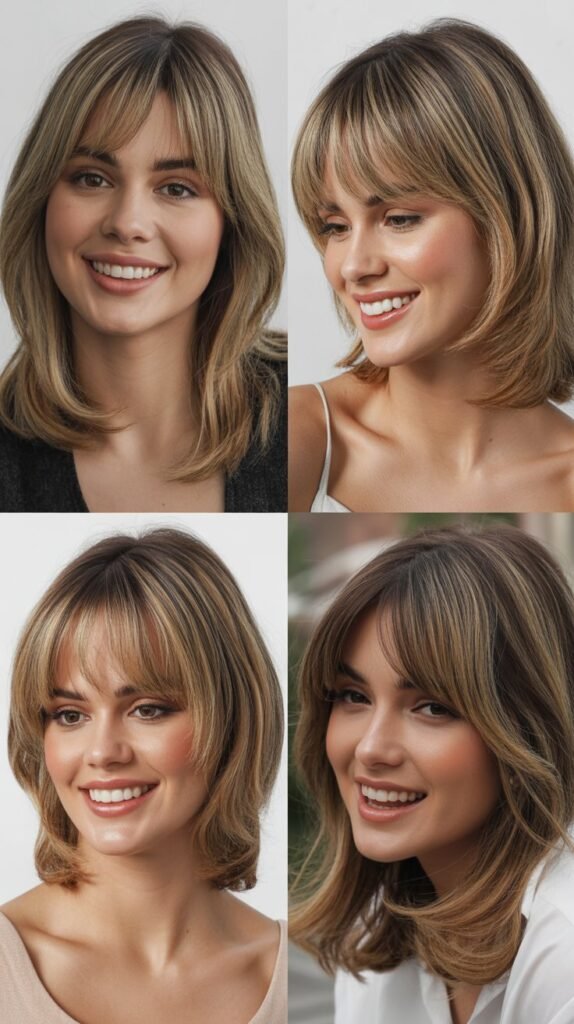
Braided hairstyles beautifully complement wispy bangs, creating interesting texture contrasts and highlighting your face-framing fringe.
- Crown braids that wrap around your head work perfectly with wispy bangs left loose, creating a romantic, bohemian aesthetic that feels effortlessly beautiful.
- Side braids (whether French, Dutch, or simple three-strand) draw the eye while allowing wispy bangs to frame the opposite side of your face for balanced styling.
- Boxer braids (two French or Dutch braids) create sporty, casual appeal with wispy bangs providing softness to balance the structured braided sections.
- For casual styles, create a single braid down your back while leaving wispy bangs and face-framing layers loose, combining polished and relaxed elements.
- Milkmaid braids (two braids wrapped around the crown) showcase wispy bangs beautifully, creating vintage-inspired elegance perfect for special occasions.
- Braided styles work with your wavy texture, enhancing rather than fighting natural wave patterns while wispy bangs add delicate framing that prevents braids from appearing too severe.
49. Ponytail Variations for Wavy Hair With Wispy Bangs
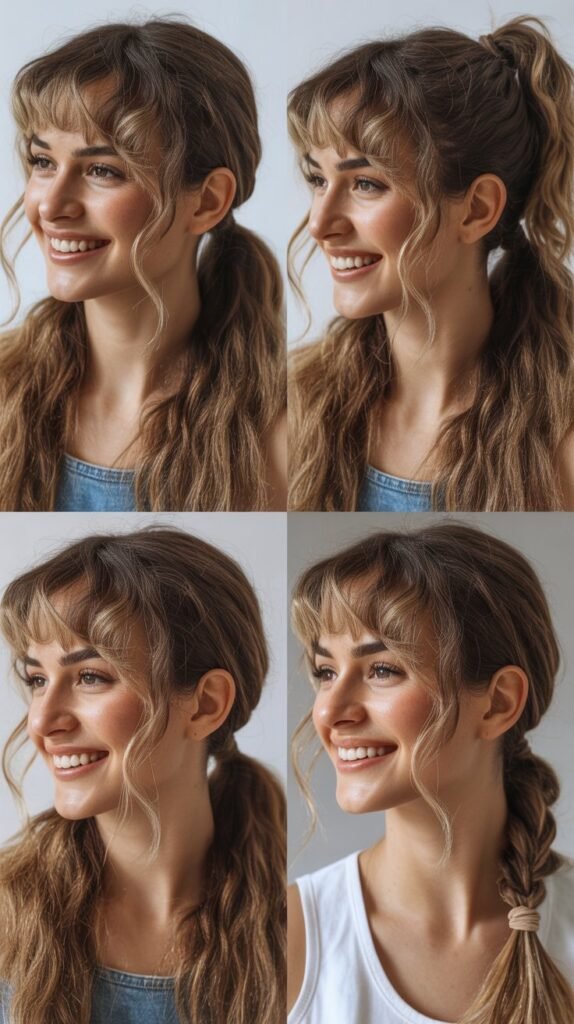
Ponytails offer quick, practical styling while allowing your wispy bangs to shine as a defining feature of your overall look.
- High ponytails create youthful, energetic appeal—gather wavy hair at the crown while leaving wispy bangs and face-framing pieces loose for soft contrast.
- Low ponytails offer sophisticated, polished styling—secure hair at the nape while styling wispy bangs swept to the side or straight across for elegant framing.
- The messy ponytail embraces your wavy texture—loosely gather hair without smoothing, allowing natural texture and wispy bangs to create an intentionally undone appearance.
- Side ponytails provide asymmetrical interest—sweep your wavy hair to one side at ear level or lower, with wispy bangs creating balance on the opposite side.
- Enhance ponytails by wrapping a section of hair around the elastic to conceal it, creating polished finish while your wispy bangs add casual, face-framing softness.
- Add volume to ponytails by gently pulling on the crown section before securing, creating lift that complements rather than competes with your wispy bang styling.
50. Handling Bang-Related Hair Emergencies
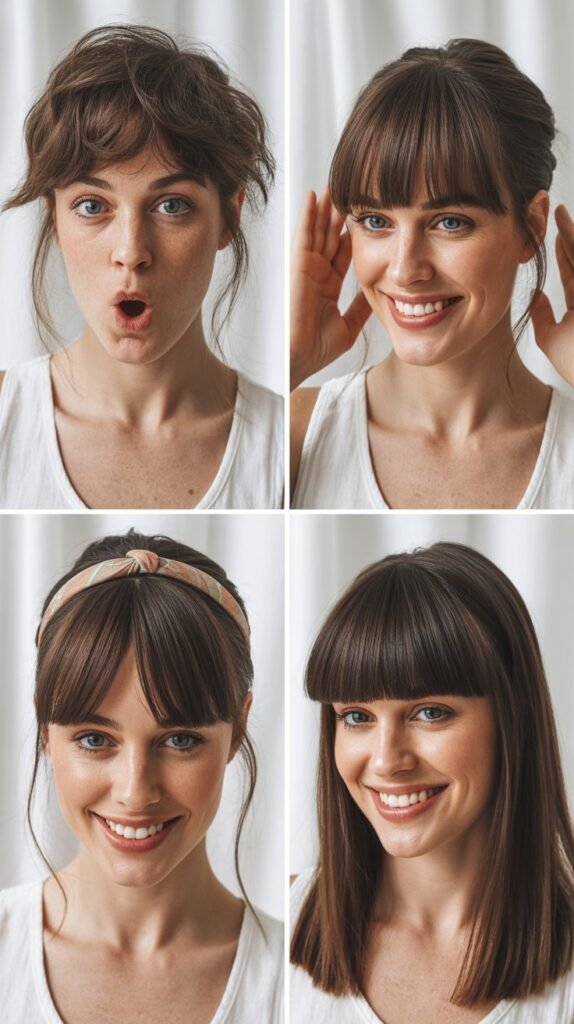
Quick solutions for common wispy bang emergencies help you maintain your style even when facing unexpected challenges.
- Greasy bangs mid-day: Apply dry shampoo directly to bang roots, wait 2-3 minutes for absorption, then massage through and brush out for instant oil removal.
- Bangs too long: Use the twist-and-pin method—twist bangs to one side and secure with a decorative bobby pin or clip until you can schedule a trim.
- Flat, lifeless bangs: Lightly dampen with water or setting spray, apply volumizing powder or dry shampoo at roots, blow-dry upward with round brush.
- Bangs won’t stay separated/wispy: Mist with texturizing spray, scrunch gently, then separate individual pieces with your fingers coated in a tiny amount of pomade or cream.
- Cowlick making bangs stick up: Wet that section only, apply small amount of gel, blow-dry in the desired direction with concentrated heat, finish with cool shot to set.
- Emergency when caught without styling products: Water alone can work—dampen bangs, shake head gently while air-drying, and use fingers to direct natural fall and separation.
51. Consultation Tips for Your Hairstylist
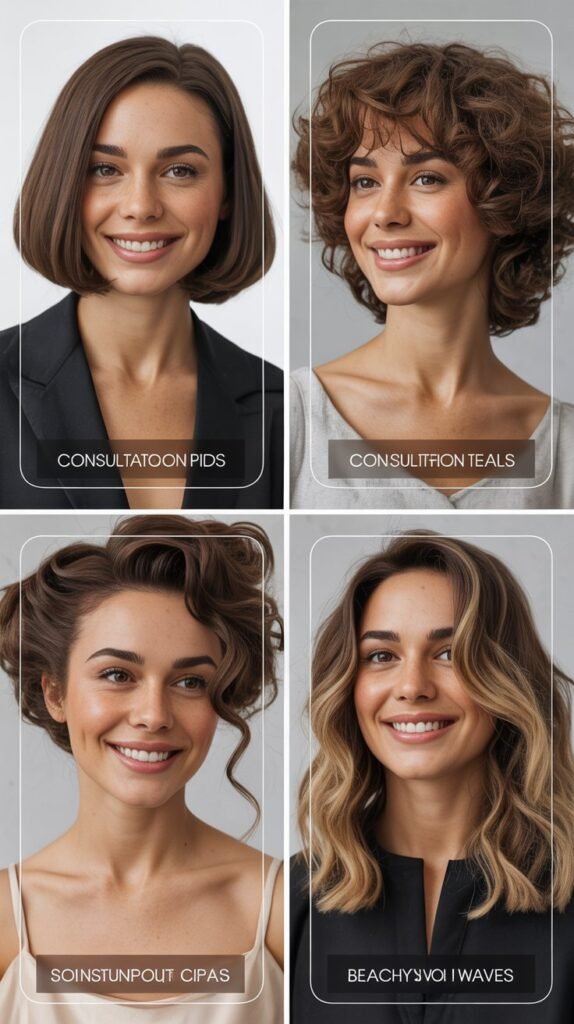
Effective communication with your stylist ensures you receive wispy bangs and layers that perfectly suit your wavy medium hair and lifestyle.
- Bring multiple reference photos showing different angles of your desired wispy bang style, as single images don’t capture the complete look or movement.
- Discuss your daily styling routine honestly—if you rarely use heat tools, tell your stylist so they can create a cut that air-dries beautifully without extensive styling.
- Mention any cowlicks, growth patterns, or previous bang experiences that affected your styling, allowing your stylist to adjust the cut accordingly.
- Ask your stylist to explain the cutting technique they’ll use for creating wispy texture, ensuring they understand you want soft, feathered bangs rather than blunt edges.
- Request a styling demonstration during your appointment where your stylist shows you exactly how to maintain and style your new wispy bangs at home.
- Discuss maintenance expectations including trim frequency, product recommendations, and realistic daily styling time required to maintain your desired appearance.
52. Budget-Friendly At-Home Maintenance
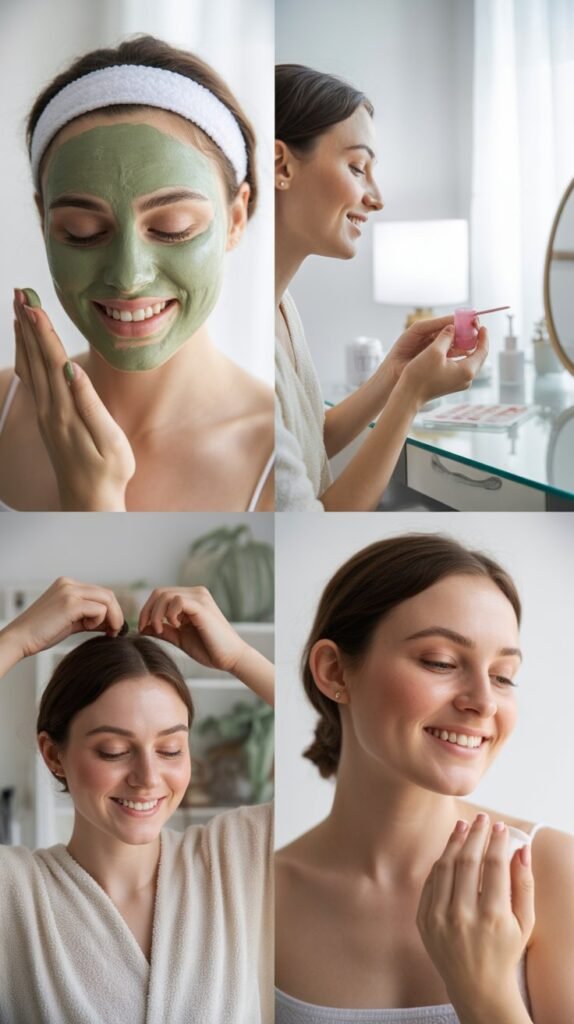
Maintaining beautiful wispy bangs and layered wavy hair doesn’t require constant salon visits or expensive products with strategic at-home care.
- Learn basic point-cutting technique for minor bang trims between salon visits—watch tutorial videos and practice on small sections before attempting full trims.
- Invest in quality professional hair scissors ($20-40 range) rather than using household scissors, which cause split ends and damage through their dull blades.
- Create DIY deep conditioning treatments using natural ingredients like coconut oil, avocado, or honey—these cost-effective treatments rival salon masks in effectiveness.
- Master air-drying techniques that work with your natural wave pattern, reducing dependence on heat tools and extending the life of heat-styled looks.
- Purchase travel or sample sizes of premium styling products to test before committing to full-size versions, preventing waste from products that don’t work for your hair.
- Extend time between color appointments by using color-depositing conditioners or glosses that refresh tone and add shine without requiring professional services.
| At-Home Maintenance Task | Professional Cost | DIY Cost | Savings Per Year |
|---|---|---|---|
| Bang trims (monthly) | $15-25 per trim | $30 one-time scissors | $150-270 annually |
| Deep conditioning | $30-50 per treatment | $5-10 DIY ingredients | $300-480 annually |
| Styling products | $25-40 per product | $10-20 drugstore versions | $180-240 annually |
| Color glossing | $50-75 per service | $10-15 at-home gloss | $240-360 annually |
53. Professional Products Worth the Investment
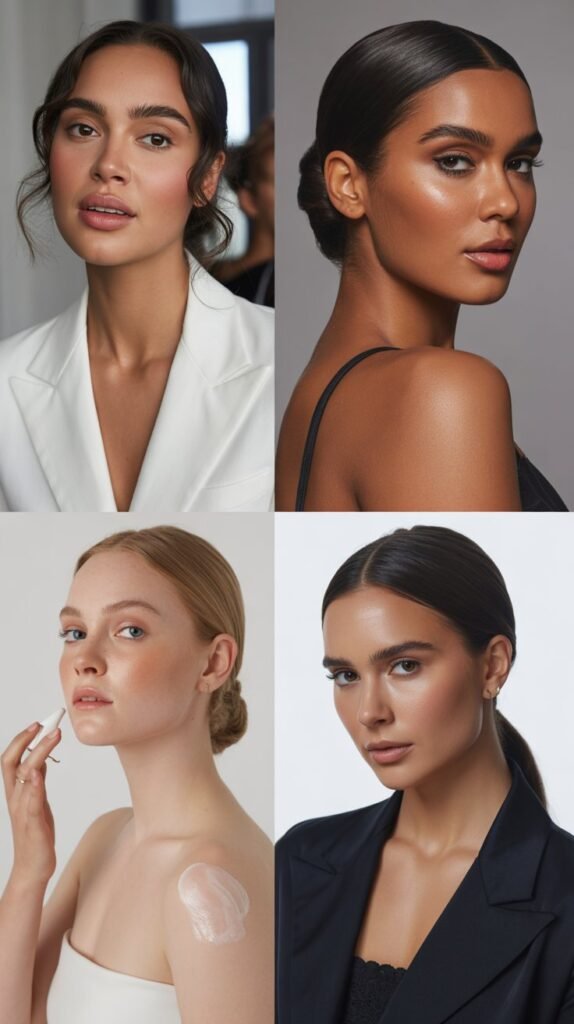
While budget-friendly options exist, certain professional products deliver results that justify their higher price points for wispy bangs and wavy hair.
- Professional texturizing sprays contain superior ingredients that create long-lasting separation and piece-y definition without the sticky buildup of drugstore alternatives.
- High-quality heat protectants from professional lines offer superior thermal protection, often withstanding temperatures up to 450°F while drugstore versions fail around 350°F.
- Salon-exclusive curl creams typically contain higher concentrations of active ingredients, meaning you use less product per application, ultimately stretching your investment further.
- Professional color-safe shampoos and conditioners preserve your investment in highlights or color by using gentler cleansers and superior color-protecting technology.
- Finishing sprays from professional brands offer flexible hold without stiffness, allowing wispy bangs to move naturally while maintaining separation and definition throughout the day.
- While professional products cost 2-3 times more than drugstore options, they typically last longer due to higher concentration, requiring less product per use for effective results.
54. Adapting Wispy Bangs for Different Hair Densities
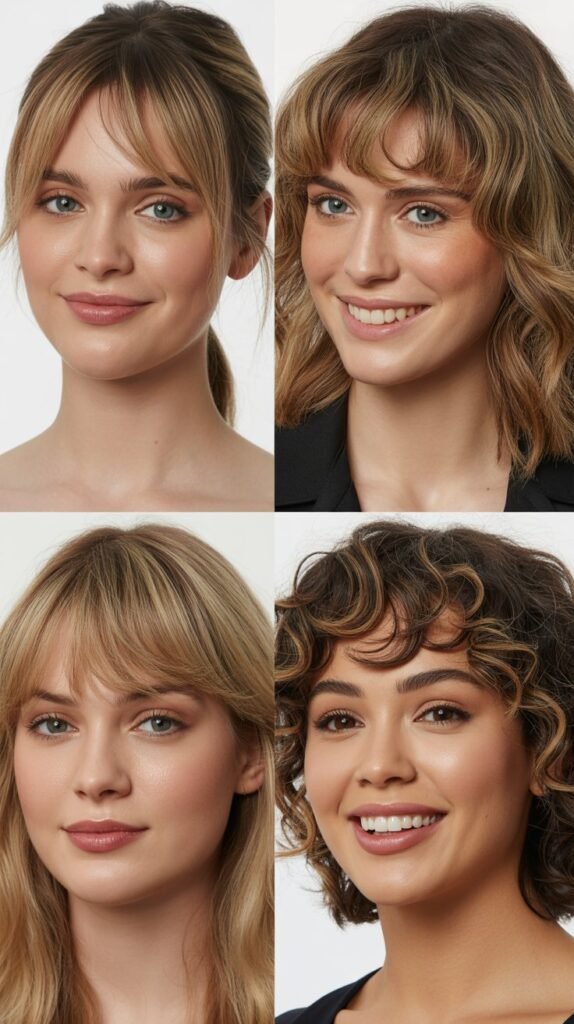
Hair density (how many individual strands you have) significantly affects how wispy bangs should be cut and styled for optimal results.
- Fine/thin hair: Wispy bangs should be cut from a smaller section to prevent the fringe from looking too sparse—your stylist should create the illusion of fullness through strategic layering.
- Medium density hair: This texture handles wispy bangs most easily, allowing for moderate bang width and natural-looking texture without appearing too heavy or too thin.
- Thick/dense hair: Wispy bangs require significant internal texturizing to prevent them from lying heavy and flat—your stylist should remove substantial bulk while maintaining the overall shape.
- For fine hair, avoid over-texturizing wispy bangs, as removing too much can make them appear stringy rather than delicately wispy and face-framing.
- Thick hair benefits from channel cutting and thinning techniques that remove internal weight without affecting the perimeter length or overall shape of wispy bangs.
- Styling products should match your density—fine hair needs lightweight formulas while thick hair can handle richer creams and stronger-hold products without appearing weighed down.
55. Adapting Wispy Bangs for Different Hair Densities
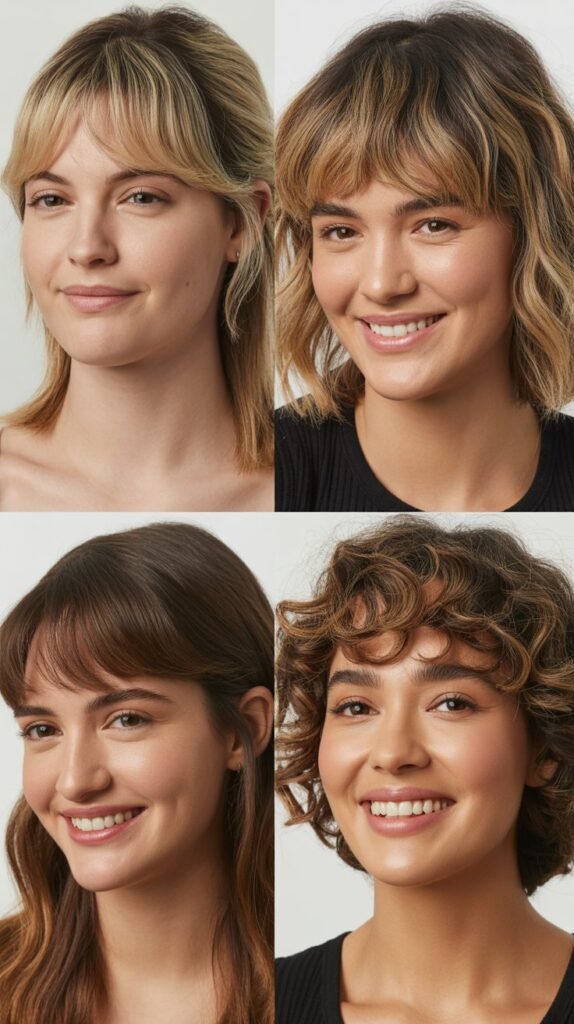
Understanding your specific wave pattern (2A, 2B, or 2C) helps you choose the most flattering wispy bang style and appropriate styling techniques.
- Type 2A (loose, subtle waves): These waves are easiest to style with wispy bangs, as the gentle texture creates soft movement without excessive volume or unpredictability.
- Type 2B (more defined S-shaped waves): This texture adds beautiful movement to wispy bangs but may require light styling to prevent the fringe from becoming too wavy or curly.
- Type 2C (defined waves bordering on curly): This texture creates the most movement in wispy bangs but may need strategic cutting to prevent excessive curling in the fringe.
- For looser waves (2A), wispy bangs can be cut slightly shorter as they won’t spring up significantly when dry, maintaining relatively true-to-length appearance.
- Tighter waves (2C) require wispy bangs to be cut longer when wet to account for significant shrinkage and spring when dry, preventing them from ending up too short.
- Your wave pattern affects product selection—tighter waves need more moisture and definition products, while looser waves require lighter, texture-enhancing formulas to avoid weighing down natural movement.
56. Nighttime Hair Care Routines for Longevity
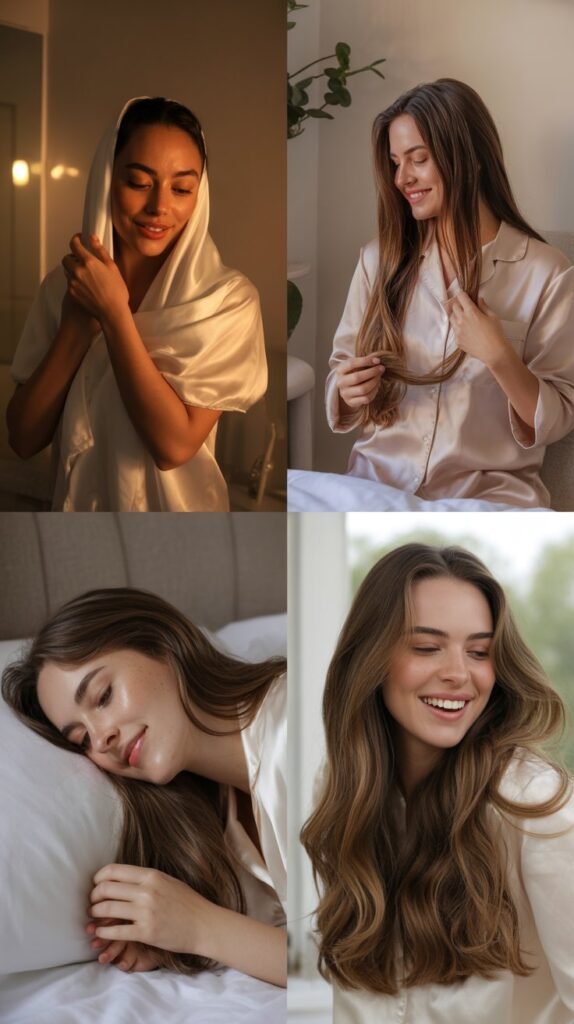
Establishing protective nighttime routines preserves your wispy bangs and wavy layers, reducing morning styling time and extending your style’s lifespan.
- Silk or satin pillowcases minimize friction during sleep, preventing frizz formation and helping wispy bangs maintain their styled shape rather than becoming matted or flattened.
- The “pineapple” technique—loosely gathering hair at the crown with a scrunchie—protects wavy texture overnight while leaving bangs loose to maintain their natural fall.
- For those who sleep on their stomachs or sides, consider using small foam rollers in the bang area to maintain volume and prevent flattening during sleep.
- Apply a small amount of leave-in conditioner or serum to bang ends before bed to nourish hair overnight and wake up with softer, more manageable fringe.
- Never go to bed with wet or damp wispy bangs, as sleeping on wet hair creates unpredictable bends, kinks, and flat spots that are difficult to correct in the morning.
- Consider using a silk or satin sleep bonnet for maximum protection if you toss and turn significantly during sleep, though this works best for protecting overall hair rather than styled bangs specifically.
57. Refreshing Second-Day (and Beyond) Wispy Bangs
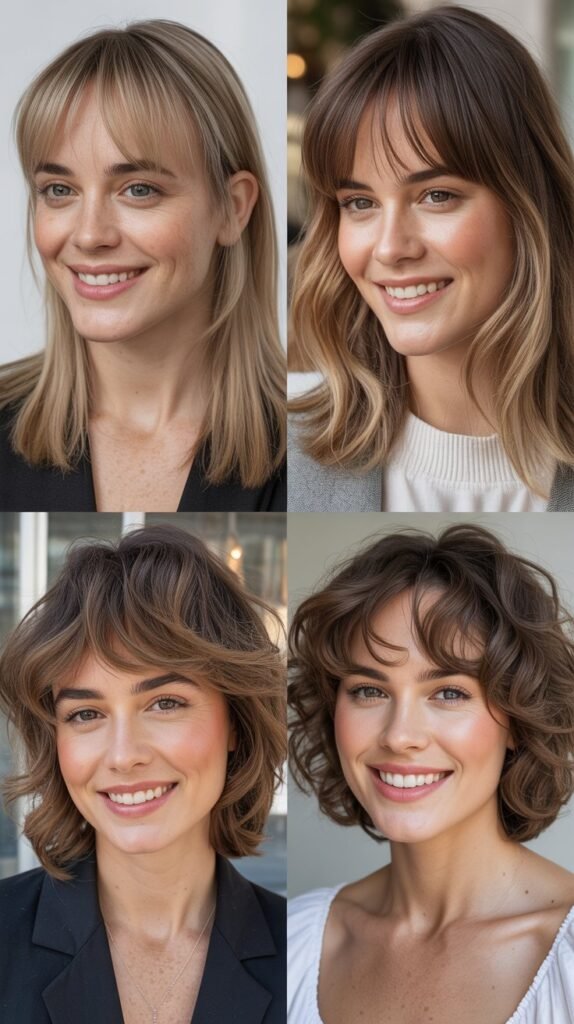
Strategic refresh techniques extend your style multiple days, reducing washing frequency while maintaining fresh-looking wispy bangs and wavy hair.
- Start with dry shampoo applied at the roots (not through the lengths), focusing on bang area and crown where oil accumulates fastest—wait 2-3 minutes before massaging in.
- Lightly mist wispy bangs with water or wave-refreshing spray, scrunch gently to reactivate curl pattern, and allow to air-dry or diffuse briefly for renewed definition.
- Use a small amount of texturizing spray or powder worked through bang ends to restore separation and piece-y definition that may have blended together overnight.
- For flattened roots, clip the top sections up with small sectioning clips, spritz roots with water or volumizing spray, and blow-dry for quick volume restoration.
- Revive overall wavy texture by scrunching sections with slightly damp hands, encouraging wave reformation without requiring complete restyling or rewashing.
- If bangs look greasy but the rest of your hair is fine, wash only the bang section in the sink with a small amount of shampoo, rinse, and re-style just that area.
58. Celebrity Inspiration for Wispy Bangs and Layers
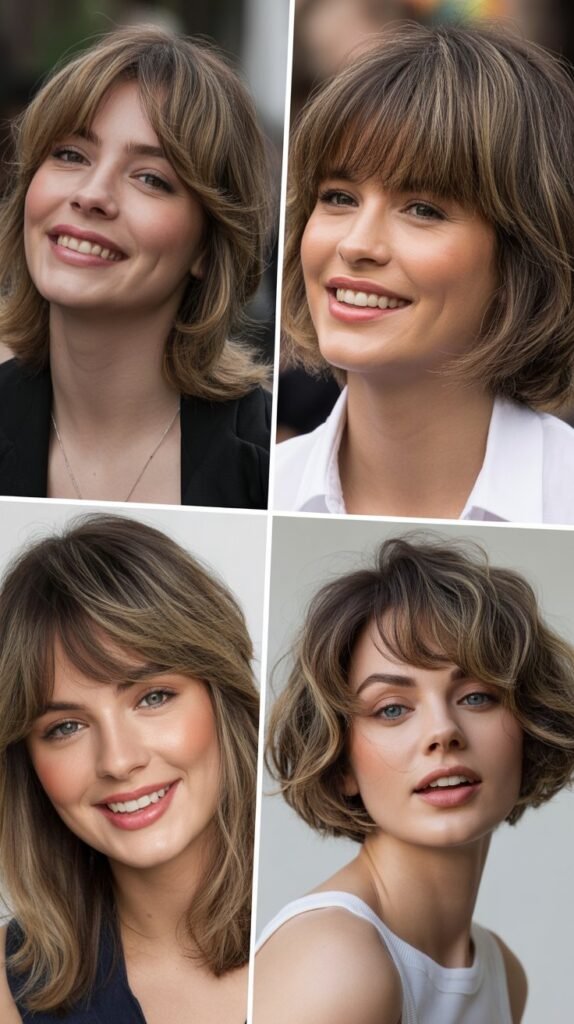
Drawing inspiration from celebrities who rock wispy bangs with wavy medium hair helps visualize different styling possibilities and variations.
- Celebrities have popularized various wispy bang interpretations, from ultra-soft, barely-there fringe to more defined, statement-making versions that suit different face shapes and personal styles.
- When using celebrity photos as reference for your stylist, bring multiple images showing different angles and styling variations to communicate the complete look you’re seeking.
- Remember that celebrities have professional styling teams creating their looks—set realistic expectations about daily maintenance and styling time required to recreate similar appearances.
- Look for celebrities with similar hair texture and face shapes to yours for the most realistic inspiration that translates well to your individual features and hair characteristics.
- Notice how celebrities adapt their wispy bangs for different occasions—swept to the side for red carpets, tousled and casual for street style, or polished and smooth for formal events.
- Use celebrity inspiration as a starting point but work with your stylist to customize the look for your lifestyle, maintenance preferences, and individual hair characteristics.
59. Troubleshooting Common Bang Problems
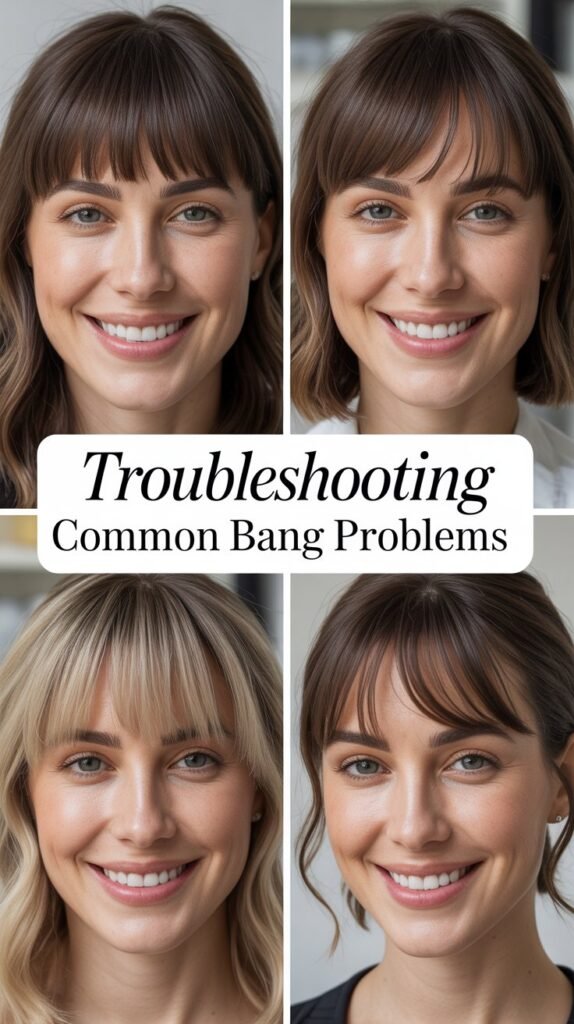
Identifying and solving frequent wispy bang challenges helps you maintain beautiful, face-framing fringe without frustration or constant salon visits.
- Problem: Bangs separate in the center creating a gap Solution: Apply a small amount of gel or mousse to damp bangs, blow-dry while brushing them together toward the center, use cool shot to set.
- Problem: Bangs flip to one side due to cowlick Solution: Work with the cowlick by cutting bangs to naturally sweep in that direction rather than fighting the growth pattern.
- Problem: Bangs look stringy rather than wispy Solution: Reduce product use, apply texturizing spray, and separate pieces manually with fingertips rather than brushing through.
- Problem: Bangs are too short after cutting Solution: Use styling techniques like blowing downward while stretching bangs or bobby-pinning them back in creative ways until they grow to desired length.
- Problem: Bangs won’t blend with rest of hair Solution: Request additional face-framing layers that transition smoothly from bang length to longer sections, creating gradual blending.
- Problem: Bangs look different every day Solution: Develop a consistent styling routine performed the same way each time, creating predictable, repeatable results.
60. Seasonal Styling Adjustments for Year-Round Appeal
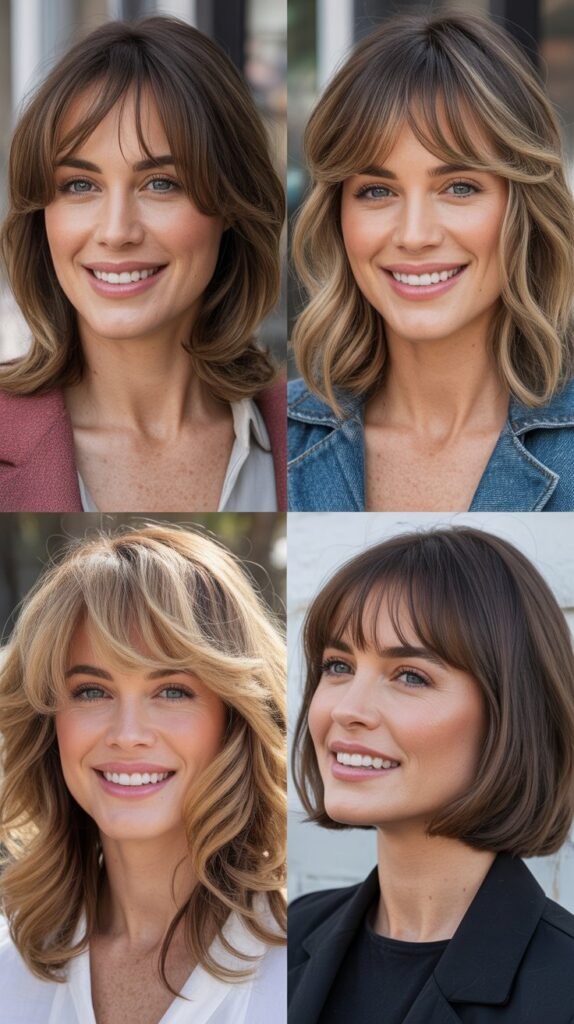
Adapting your wispy bang styling approach throughout the year ensures beautiful results despite changing weather conditions and environmental factors.
- Spring: Embrace increased humidity by using anti-frizz products and allowing natural texture to emerge rather than fighting moisture in the air with excessive heat styling.
- Summer: Protect wispy bangs from sun damage with leave-in conditioners containing UV filters, and embrace more textured, beachy styling that works with heat and humidity.
- Fall: Transition to richer conditioning treatments as weather cools and indoor heating begins drying hair, maintaining softness and preventing static in wispy bangs.
- Winter: Combat static and dryness with regular deep conditioning, anti-static products, and protective styling under hats that doesn’t flatten or damage delicate wispy bangs.
- Adjust product types seasonally—lighter formulas for humid months, richer treatments for dry winter air—to address environmental factors affecting your hair.
- Consider seasonal color adjustments that complement changing light conditions, adding warmth in fall and winter or brightness in spring and summer to refresh your overall appearance.
61. Building a Complete Wavy Hair Care Routine
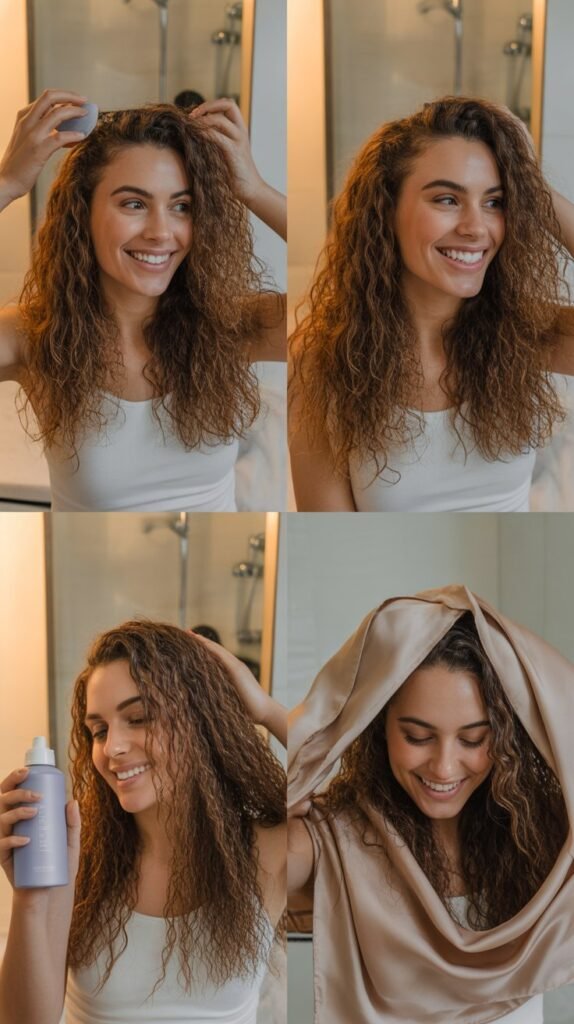
A comprehensive hair care routine addressing all aspects of hair health creates the foundation for beautiful wispy bangs and wavy medium hair.
- Cleansing (2-3 times weekly): Use sulfate-free shampoo focusing on scalp and roots, followed by moisturizing conditioner concentrated on mid-lengths to ends.
- Deep conditioning (weekly): Apply intensive mask or treatment, focusing on lengths and ends while using lighter application on wispy bangs to avoid weighing them down.
- Styling (daily or as needed): Apply appropriate products to damp hair (wave cream, mousse, or spray), scrunch to encourage curl pattern, then air-dry or diffuse on low heat.
- Protection (before every heat styling): Apply heat protectant throughout hair, using finger application rather than direct spray on delicate wispy bangs to avoid oversaturation.
- Maintenance (ongoing): Regular trims every 3-4 weeks for bangs, 8-12 weeks for overall cut, plus clarifying treatment monthly to remove product buildup.
- Nighttime care (daily): Sleep on silk or satin pillowcase, protect hair with pineapple method or bonnet, apply leave-in treatment to ends for overnight nourishment.
| Routine Component | Frequency | Time Required | Key Products |
|---|---|---|---|
| Shampooing & Conditioning | 2-3 times weekly | 10-15 minutes | Sulfate-free shampoo, moisturizing conditioner |
| Deep Conditioning | Weekly | 15-20 minutes | Hair mask or intensive treatment |
| Styling | As needed (daily-3x weekly) | 10-30 minutes | Wave cream, mousse, texturizing spray |
| Bang-specific care | Daily | 2-5 minutes | Dry shampoo, texturizing product |
| Professional maintenance | Every 3-12 weeks | 30-90 minutes | Regular trims, color services |
62. Confidence and Styling Mindset for Wispy Bangs
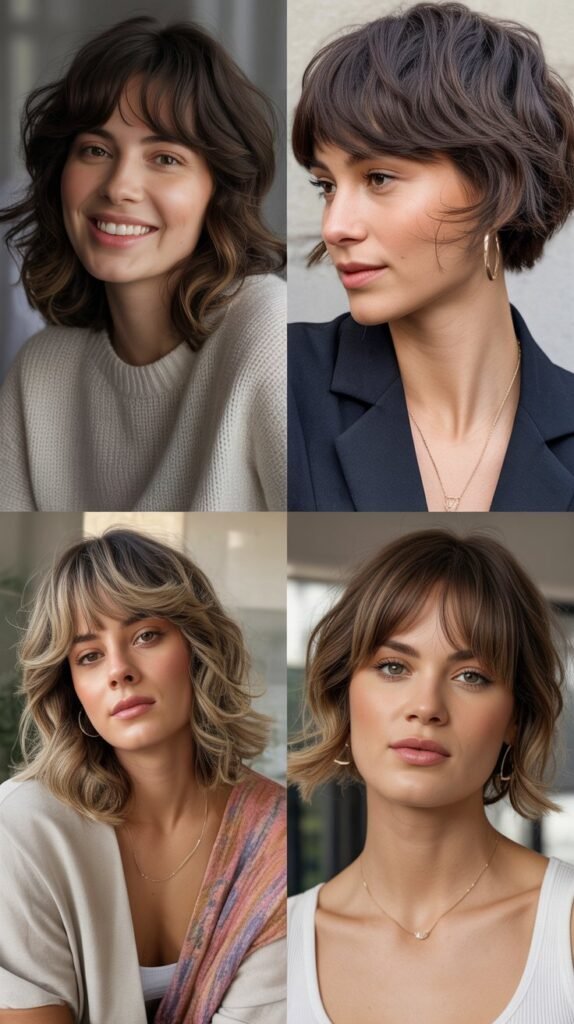
The psychological aspect of wearing wispy bangs—embracing the style with confidence and developing a positive styling mindset—is as important as technical skills.
- Accept that wispy bangs will have natural variation day-to-day and embrace the imperfection rather than striving for identical results each time you style.
- Develop realistic expectations about styling time and maintenance—beautiful wispy bangs require some effort, and accepting this prevents frustration and disappointment.
- Remember that others rarely notice the minor imperfections you obsess over in the mirror—that slightly asymmetrical section or single piece behaving differently isn’t visible to anyone else.
- Trust your stylist’s expertise and communicate openly about concerns, but also give new cuts 2-3 weeks to settle before deciding whether they truly work for you.
- Understand that hair has growth cycles, hormonal influences, and responds to environmental factors—some days your wispy bangs will cooperate more than others, and that’s completely normal.
- Embrace the learning curve of a new style, giving yourself permission to experiment with different products and techniques before finding what works best for your individual hair.
- Most importantly, wear your wispy bangs with confidence and personality—your self-assurance makes any hairstyle more attractive than perfect technique ever could.
Conclusion
Throughout this comprehensive guide on 62 Airy & Textured Wispy Bangs With Layers for Wavy Medium Hair That Feel Natural, we’ve explored every aspect of achieving and maintaining this beautifully versatile hairstyle.
From understanding the fundamental cutting techniques that create soft, feathered fringe to mastering daily styling methods that work with your natural wave pattern, you now have the knowledge to confidently pursue this flattering look.
We’ve covered essential topics including product selection, seasonal adjustments, color enhancement, maintenance schedules, and troubleshooting common challenges that arise with wispy bangs.
Whether you’re transitioning from another bang style, considering bangs for the first time, or looking to refine your current wispy fringe, the techniques and insights shared here empower you to communicate effectively with your stylist and maintain beautiful results at home.
Remember that the true beauty of wispy bangs lies in their effortless, natural appearance—embrace the slight imperfections, work with your hair’s unique characteristics, and wear your style with the confidence it deserves.
With the right approach, wispy bangs and layers transform wavy medium hair into a dimensional, face-framing masterpiece that feels authentically you.

