
Finding the perfect hairstyle for thick hair can feel like searching for a needle in a haystack, but 27 Flattering Wavy Pixie Hair Ideas for Thick Hair opens up a world of stunning possibilities that work with your hair’s natural volume rather than against it.
Thick, wavy hair possesses incredible texture and body that can transform a simple pixie cut into a show-stopping style with dimension, movement, and personality.
This comprehensive guide explores diverse wavy pixie variations specifically designed to flatter thick hair textures, from soft romantic waves to edgy textured crops, each offering unique styling opportunities that celebrate volume while maintaining manageability.
Whether you’re considering your first pixie cut or looking to refresh your current short style, these carefully curated ideas provide inspiration for cuts that enhance your natural wave pattern, frame your face beautifully, and simplify your daily routine.
The article covers essential styling techniques, maintenance tips, and expert recommendations to help you choose and maintain the perfect wavy pixie that complements your face shape, lifestyle, and personal aesthetic while showcasing the beautiful fullness that thick hair naturally provides.
1. Classic Wavy Pixie with Side-Swept Bangs

The classic wavy pixie with side-swept bangs remains a timeless choice that softens facial features while managing thick hair’s volume.
This versatile style combines short back and sides with slightly longer top sections that sweep gracefully to one side, creating elegant movement.
Key Features and Benefits
- The side-swept bangs create asymmetry that adds visual interest and balances various face shapes.
- Thick hair provides the perfect foundation for voluminous bangs that won’t fall flat throughout the day.
- The graduated length from back to front prevents the bulky appearance that thick hair sometimes creates.
- This style works exceptionally well for heart-shaped and oval faces by drawing attention to the eyes.
- Styling requires minimal effort—simply apply texturizing cream to damp hair and blow-dry with fingers.
Styling Recommendations
- Use a lightweight mousse on damp hair to enhance natural wave patterns without weighing down the style.
- Direct the bangs to one side using a round brush while blow-drying to create smooth, flowing movement.
- Finish with a small amount of pomade on the ends to define pieces and add subtle shine.
- For extra hold on humid days, spritz with flexible-hold hairspray focusing on the bang area.
2. Textured Choppy Wavy Pixie

The textured choppy wavy pixie embraces thick hair’s natural body through strategically placed layers that create intentional, piece-y texture.
This modern interpretation adds edge and contemporary flair to the traditional pixie silhouette.
Cutting Technique and Structure
- Point-cutting and razor techniques remove bulk while creating feathered, separated ends that move independently.
- Multiple layers throughout prevent the pyramid shape that thick hair can create in pixie cuts.
- The choppy texture disguises thick hair’s density, making it appear intentionally tousled rather than heavy.
- Shorter underlayers reduce weight while maintaining volume on top where it creates desirable lift.
- This cut typically features varied lengths ranging from 1-3 inches depending on head placement.
Maintenance and Styling Tips
- Apply sea salt spray to towel-dried hair and scrunch upward to encourage natural wave formation.
- Air-drying works beautifully with this style, as the choppy texture looks better slightly undone.
- Use your fingers to separate and define individual pieces rather than combing for a softer finish.
- Schedule trims every 4-6 weeks to maintain the choppy texture and prevent thick hair from overwhelming the shape.
3. Asymmetrical Wavy Pixie
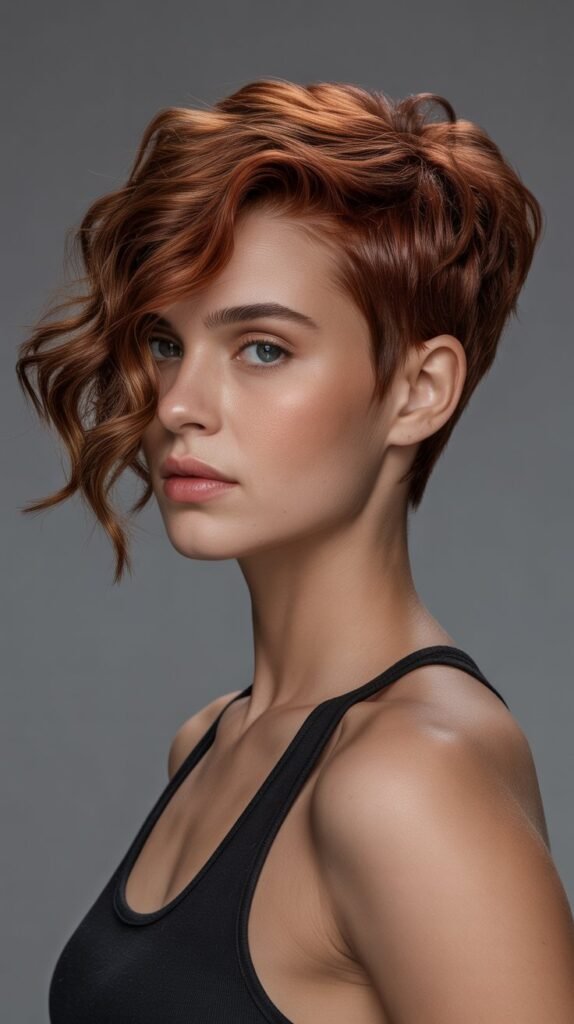
The asymmetrical wavy pixie creates dramatic visual impact through intentional length differences between sides, perfectly managing thick hair’s volume by distributing it strategically.
Design Elements and Proportions
- One side typically measures 3-5 inches longer than the opposite side, creating bold contrast.
- The longer side can be swept across the forehead, tucked behind the ear, or styled forward for versatility.
- Thick hair’s natural body prevents the longer section from appearing limp or lifeless.
- The shorter side often features an undercut or close taper that reduces bulk and emphasizes the asymmetry.
- This style works particularly well for square and round face shapes by creating diagonal lines.
Styling Variations
- Enhance waves on the longer side using a small-barrel curling iron for defined spiral texture.
- Slick the shorter side back with gel for a polished contrast between the two sides.
- Create volume at the crown by backcombing slightly before smoothing the surface layer.
- Switch the direction of the sweep occasionally to refresh the look without cutting.
4. Curly-Wavy Pixie with Defined Ringlets
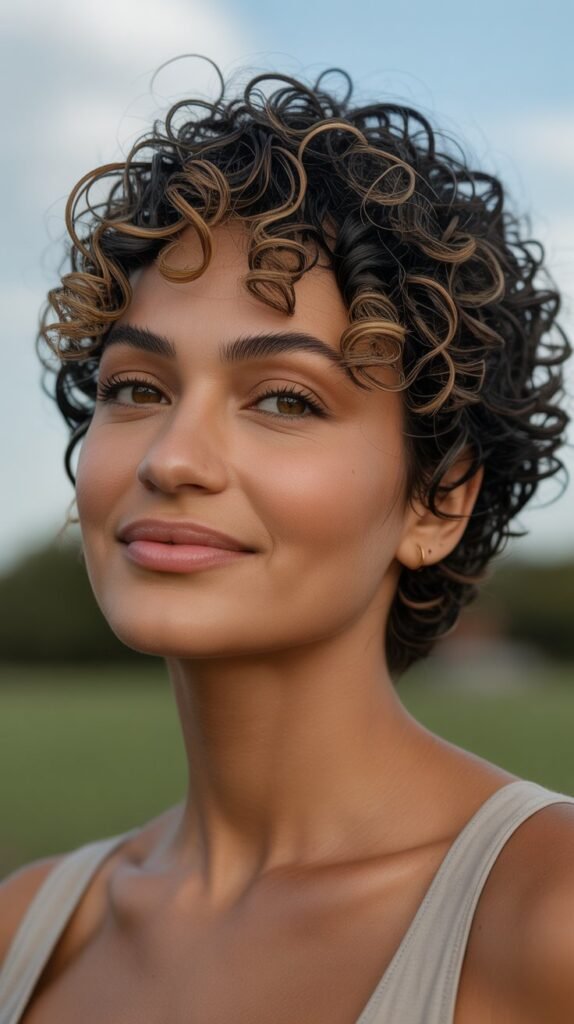
For those with naturally tighter wave patterns in thick hair, the curly-wavy pixie with defined ringlets celebrates coil definition while maintaining pixie proportions.
This style showcases texture as the primary design element.
Curl-Specific Cutting Approach
- Dry cutting techniques allow the stylist to see each curl’s natural pattern and cut accordingly.
- Layers follow the curl pattern rather than fighting it, ensuring ringlets spring up beautifully.
- Thick hair provides the density needed for full, lush ringlet coverage without sparse patches.
- The cut removes interior bulk without disturbing the surface curl pattern that creates visual appeal.
- Length typically ranges from 2-4 inches to allow curls to form complete ringlets.
Curl Care and Enhancement
- Apply curl-defining cream to soaking wet hair using the “praying hands” method to encourage clumping.
- Diffuse on low heat and speed settings to dry without disrupting curl formation.
- Refresh curls on subsequent days using a spray bottle with water and leave-in conditioner.
- Sleep on a silk or satin pillowcase to minimize friction that causes frizz in curly pixie styles.
5. Wavy Pixie with Undercut
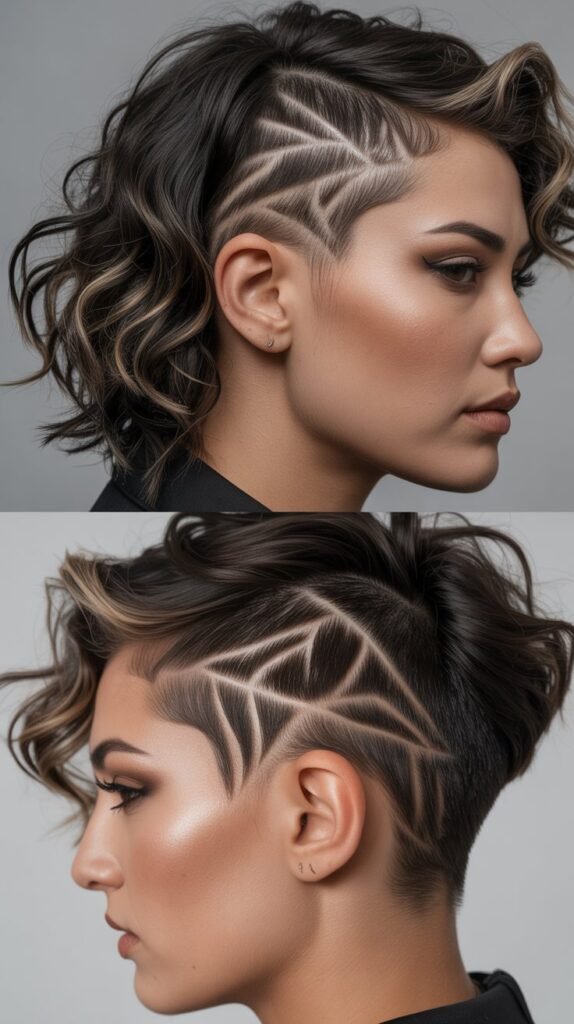
The wavy pixie with undercut combines feminine waves on top with edgy shaved sections underneath, creating the perfect solution for managing thick hair’s bulk.
Undercut Placement Options
- Side undercuts reduce volume on one or both sides while leaving the top section full and wavy.
- Nape undercuts remove weight from the back, preventing the “mushroom” effect thick hair creates.
- The shaved section can feature designs, patterns, or simple clean lines depending on personal style.
- Thick top layers drape over the undercut, allowing you to reveal or conceal it as desired.
- This technique significantly reduces styling time by eliminating hair that requires blow-drying and product.
Styling and Maintenance Balance
- The wavy top section requires regular moisturizing and styling products while the undercut needs minimal care.
- Enhance waves using a 1-inch curling wand, wrapping random sections for natural-looking texture.
- The undercut requires maintenance every 2-3 weeks to keep clean lines and prevent grown-out bulk.
- Sweep the top section to various sides to showcase or hide the undercut based on occasion.
6. Long Pixie with Beach Waves
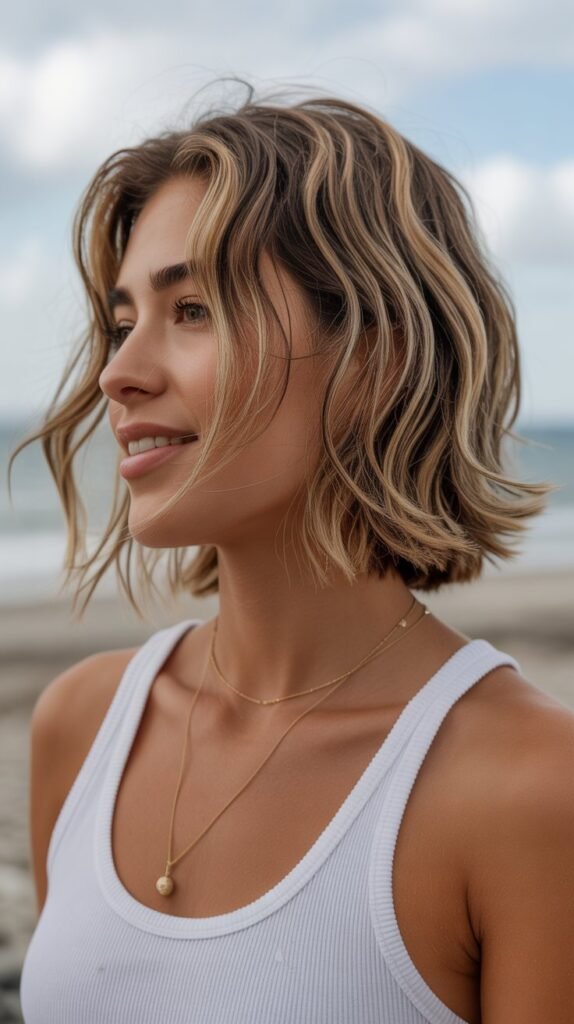
The long pixie with beach waves extends pixie proportions while incorporating relaxed, tousled texture that thick hair holds exceptionally well throughout the day.
Length and Layer Configuration
- The top section measures 4-6 inches, providing enough length for substantial wave formation.
- Sides and back remain shorter (2-3 inches) to maintain pixie classification while managing volume.
- Long layers throughout prevent bulk accumulation while allowing waves to cascade naturally.
- This style bridges the gap between pixie and bob, offering versatility for those transitioning.
- Thick hair’s natural body creates the fullness that makes beach waves appear lush rather than stringy.
Achieving Perfect Beach Texture
- Mix sea salt spray with a small amount of texturizing cream for enhanced hold without stiffness.
- Braid damp hair in 3-4 sections before bed, then separate waves with fingers in the morning.
- Use a flat iron to create bends rather than curls by twisting the iron 180 degrees as you glide.
- Rough-dry hair with your head flipped upside down to encourage volume and natural wave patterns.
7. Wavy Pixie with Tapered Nape

The wavy pixie with tapered nape offers clean, professional polish at the back while maintaining playful texture on top—ideal for thick hair that tends toward heaviness.
Taper Specifications and Benefits
- The nape gradually shortens from about 2 inches to skin-close contact, creating a clean silhouette.
- This technique eliminates the bulky appearance at the back that thick hair naturally creates.
- The taper provides a polished, finished look from all angles, not just the front.
- Thick hair on top contrasts beautifully with the precise lines of the tapered section.
- This style works in both professional and casual settings due to its balanced aesthetic.
Maintenance Requirements
- The taper requires regular maintenance every 3-4 weeks to prevent fuzzy, grown-out appearance.
- Use clippers at home between salon visits to maintain clean neck lines if comfortable.
- The wavy top section needs styling but the tapered back requires only a quick blow-dry.
- Apply light oil or serum to the tapered area to add shine and smooth any flyaways.
8. Wavy Pixie with Bangs and Layers
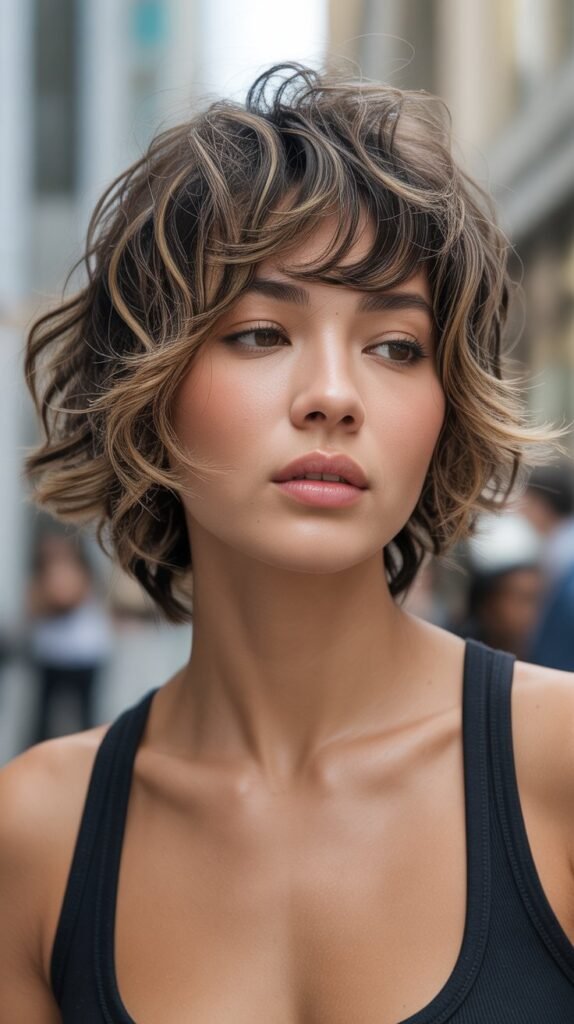
The wavy pixie with bangs and layers maximizes movement and dimension, with multiple length variations that prevent thick hair from appearing one-dimensional or heavy.
Layer Placement Strategy
- The shortest layers typically start at the crown, creating lift that counteracts thick hair’s tendency to lie flat.
- Mid-length layers throughout the sides add shape and prevent boxiness.
- The longest layers frame the face and create the bang section, adding softness.
- Each layer should differ by at least half an inch to create visible separation and texture.
- Strategic layering removes up to 40% of thick hair’s bulk without compromising fullness.
Bang Styling Variations
- Side-swept bangs create asymmetry and work well for those with prominent foreheads.
- Blunt bangs cut straight across add boldness and work beautifully with thick hair’s density.
- Wispy, piece-y bangs offer a softer approach that doesn’t feel too severe.
- Curtain bangs parted in the middle frame the face on both sides for balanced proportions.
9. Wavy Pixie with Voluminous Crown

The wavy pixie with voluminous crown emphasizes height and lift at the top, using thick hair’s natural body as an asset rather than a challenge to overcome.
Creating and Maintaining Height
- The crown section should be cut 3-4 inches long while surrounding areas remain shorter to support the volume.
- Backcombing at the roots before styling creates the foundation for lasting height.
- Thick hair provides the density needed to support voluminous styling without appearing thin or sparse.
- The volume at the crown elongates round face shapes and adds drama to any pixie cut.
- This style works particularly well for fine-featured faces that benefit from added presence.
Volume-Boosting Techniques
- Apply volumizing mousse directly to the roots while hair is still damp.
- Blow-dry the crown section while lifting it away from the scalp with a round brush.
- Tease the underlayers at the crown for internal support that maintains volume throughout the day.
- Finish with strong-hold hairspray directed at the roots from underneath for invisible support.
10. Messy Wavy Pixie

The messy wavy pixie embraces intentional dishevelment, creating an effortlessly cool aesthetic that works beautifully with thick hair’s natural texture and volume.
Achieving Artful Messiness
- The key is structured chaos—the cut provides shape while styling creates controlled disorder.
- Thick hair naturally holds the tousled, piece-y texture that defines this style.
- Multiple products layered together (mousse, cream, and wax) create the complex texture that looks effortless.
- This style requires the least precision during styling, making mornings faster and easier.
- The messy aesthetic actually looks better on second or third-day hair than freshly washed.
Product Application Techniques
- Emulsify a pea-sized amount of styling wax between palms before running fingers through hair.
- Scrunch hair randomly while it’s still slightly damp to encourage uneven wave patterns.
- Pull small sections in different directions to create the piece-y separation that defines messiness.
- Avoid combs and brushes entirely—fingers are the only tool needed for authentic messy texture.
11. Wavy Pixie Bob Hybrid
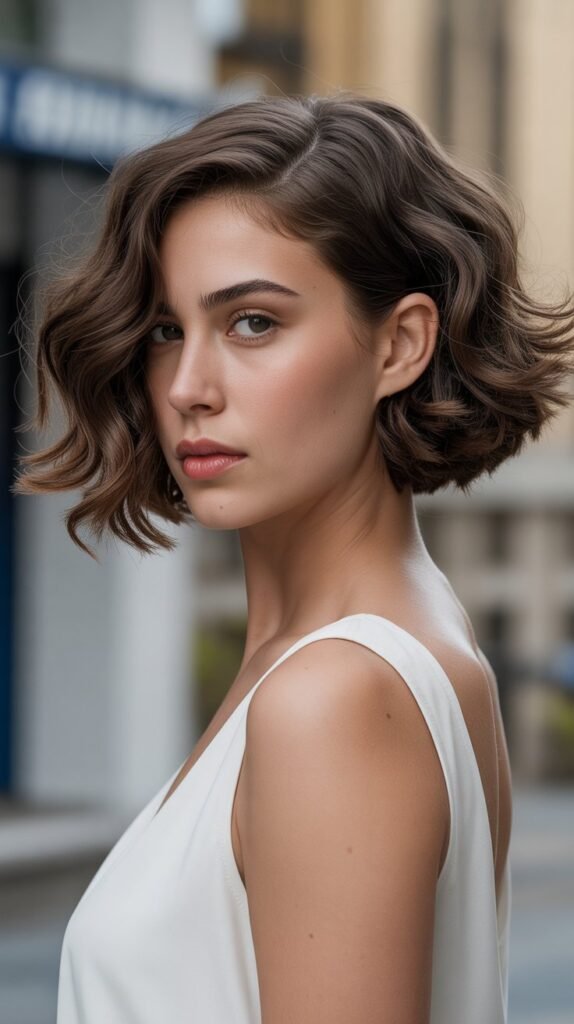
The wavy pixie bob hybrid extends beyond traditional pixie length while maintaining short-hair benefits, offering the perfect transition style for thick hair management.
Length Gradation and Structure
- The front sections reach chin length or slightly beyond, typically 4-6 inches.
- The back remains pixie-short (1-2 inches) to prevent bulk accumulation and maintain ease.
- This graduated length creates an A-line silhouette that’s universally flattering.
- Thick hair provides the fullness needed to make the longer front sections appear lush and healthy.
- The style offers more versatility than traditional pixies while remaining low-maintenance.
Styling Versatility
- Tuck both sides behind ears for a sleek, face-framing effect that showcases bone structure.
- Style the front sections forward with waves for a softer, more romantic appearance.
- Straighten the longer pieces for a sharp, geometric look that contrasts with the short back.
- Add waves only to the longer sections while keeping the back sleek for modern contrast.
12. Shaggy Wavy Pixie
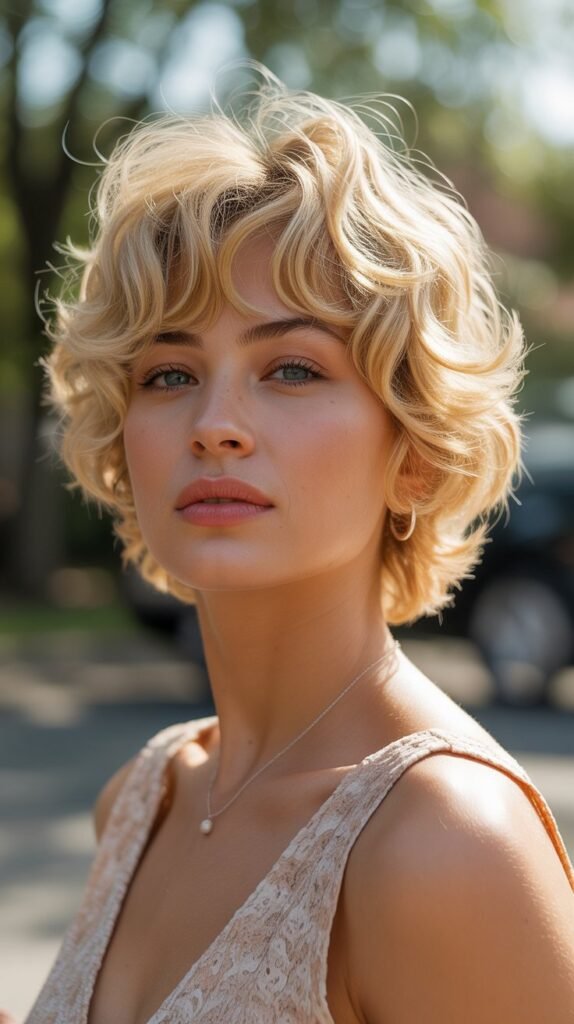
The shaggy wavy pixie revives retro texture with contemporary refinement, using disconnected layers that celebrate thick hair’s natural movement and body.
Shag-Specific Cutting Technique
- The shag relies on extreme layering with significant length variation between the shortest and longest pieces.
- Thick hair is ideal for shags because the style requires substantial density to avoid appearing sparse.
- Razor cutting creates the feathered, wispy ends that define authentic shag texture.
- The layers should be random and asymmetrical rather than perfectly graduated for authentic shag appearance.
- This cut removes considerable bulk while maintaining visual fullness through strategic layering.
Styling for Maximum Shag Effect
- Rough-dry hair using fingers to create separation between layers rather than smooth cohesion.
- Apply texturizing spray throughout for enhanced piece-y definition and grip.
- Curl random sections in alternating directions for the unstructured wave pattern shags require.
- Embrace natural hair movement rather than trying to control or perfect the style.
13. Wavy Pixie with Face-Framing Layers
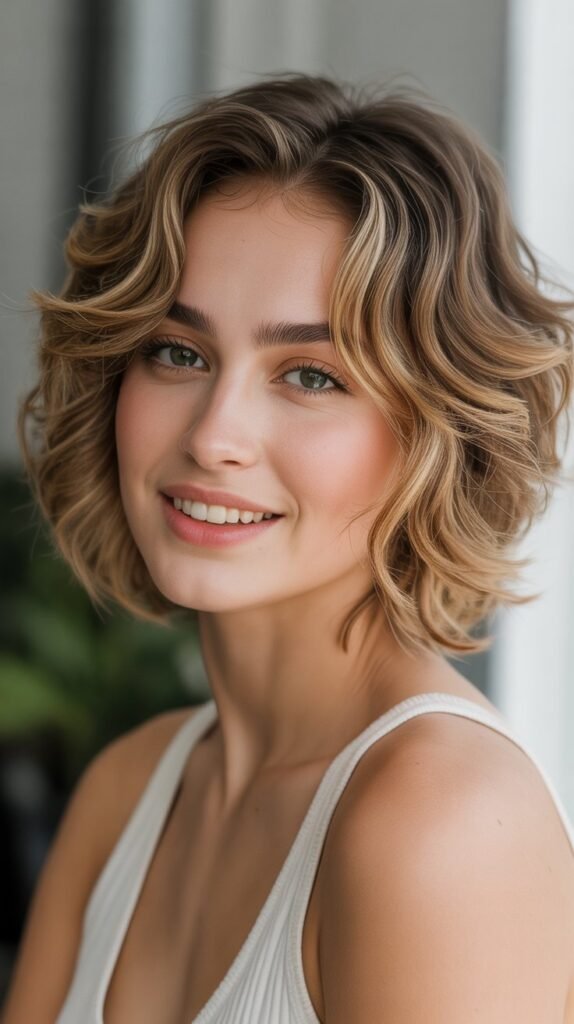
The wavy pixie with face-framing layers strategically places longer pieces around the face to soften features and create customized flattery for individual face shapes.
Face-Framing Layer Placement
- The longest layers typically fall between cheekbone and jawline, drawing attention to these areas.
- Thick hair ensures these framing pieces have enough body to curve naturally around the face.
- The layers should be cut to follow your natural wave pattern for styling ease.
- These strategic pieces can minimize wide foreheads, soften angular jaws, or add width to narrow faces.
- The contrast between short back sections and longer front pieces creates dimensional interest.
Customization for Face Shapes
- Round faces benefit from longer, angular layers that create vertical lines and elongation.
- Square faces look best with soft, wispy layers that fall around the jaw to minimize angles.
- Heart-shaped faces need layers that add width at the jawline to balance narrower chins.
- Oval faces can experiment with any layer length and placement due to balanced proportions.
14. Wavy Pixie with Highlights

The wavy pixie with highlights adds dimension and depth that’s particularly striking in thick hair, as the waves catch and reflect light from multiple colored tones.
Color Placement Strategies
- Babylights throughout the top section create natural-looking sun-kissed dimension.
- Thicker ribbon highlights placed strategically add bold contrast and visual interest.
- Balayage techniques work beautifully on wavy pixies, painting color where light naturally hits.
- Thick hair provides enough density for multiple highlight shades without over-processing.
- The waves create shadows and highlights naturally, which colored highlights enhance dramatically.
Maintenance Considerations
- Use color-safe shampoo to prevent premature fading and maintain vibrancy.
- Schedule color refresh appointments every 8-10 weeks to maintain dimensional appearance.
- Apply purple or blue toning shampoo weekly if highlights include blonde tones to prevent brassiness.
- Deep condition regularly as highlighted thick hair can become dry at the ends.
15. Wavy Pixie with Swept-Back Styling
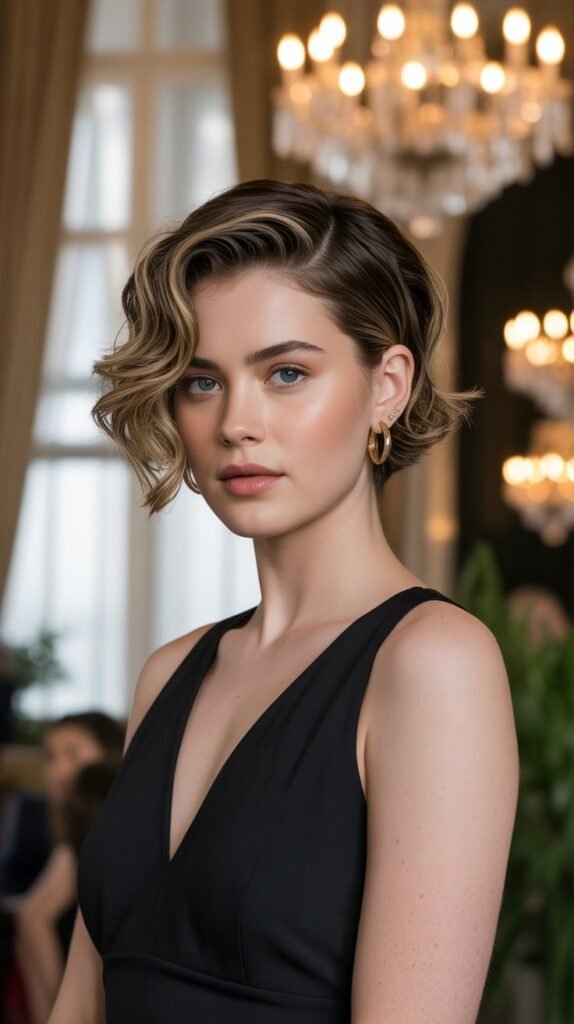
The wavy pixie with swept-back styling creates elegant sophistication by directing all hair away from the face, showcasing facial features while maintaining textured interest.
Styling Techniques for Swept-Back Looks
- Apply strong-hold gel to the front section while hair is very damp for maximum control.
- Blow-dry the front hairline in a backward direction using a round brush for smooth results.
- The back and crown can remain wavy and textured, creating contrast with the sleek front.
- This style works exceptionally well for evening events, professional settings, or when you want impact.
- Thick hair holds the swept-back style without falling forward throughout the day.
Securing the Style
- Use bobby pins at the crown if needed to ensure front sections stay back initially.
- Strong-hold pomade applied to damp hair provides grip that keeps styles in place.
- Finish with firm-hold hairspray, concentrating on the swept-back sections.
- Consider tiny clear elastic bands for sports or very active days to ensure security.
16. Disconnected Wavy Pixie
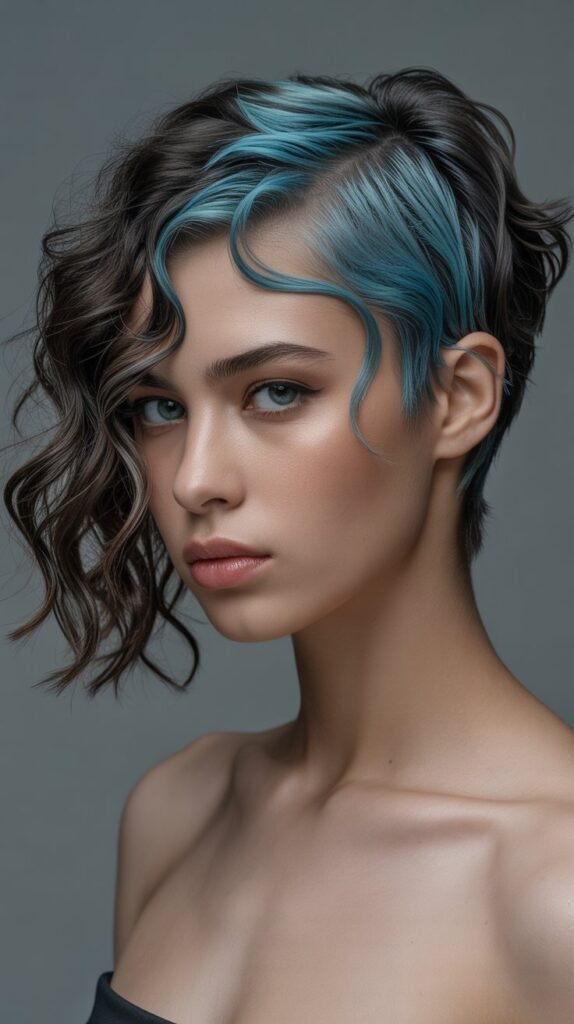
The disconnected wavy pixie features intentional length gaps between sections, creating modern, editorial appeal that manages thick hair through strategic sectioning.
Understanding Disconnection Technique
- “Disconnection” means sections don’t blend seamlessly—visible length differences create graphic lines.
- The top section might measure 4 inches while sides remain 1 inch with no gradual transition.
- This creates intentional contrast that appears architectural and fashion-forward.
- Thick hair is essential for disconnected cuts because the abrupt length changes require density.
- The style challenges traditional blending techniques for deliberately bold results.
Styling Disconnected Sections
- Each section can be styled differently—perhaps wavy on top and sleek on sides.
- Product application should vary by section to enhance the disconnected appearance.
- The distinct sections allow creative color placement, with different colors in different zones.
- This style requires confidence as it’s noticeably unconventional and attracts attention.
17. Wavy Pixie with Nape Design
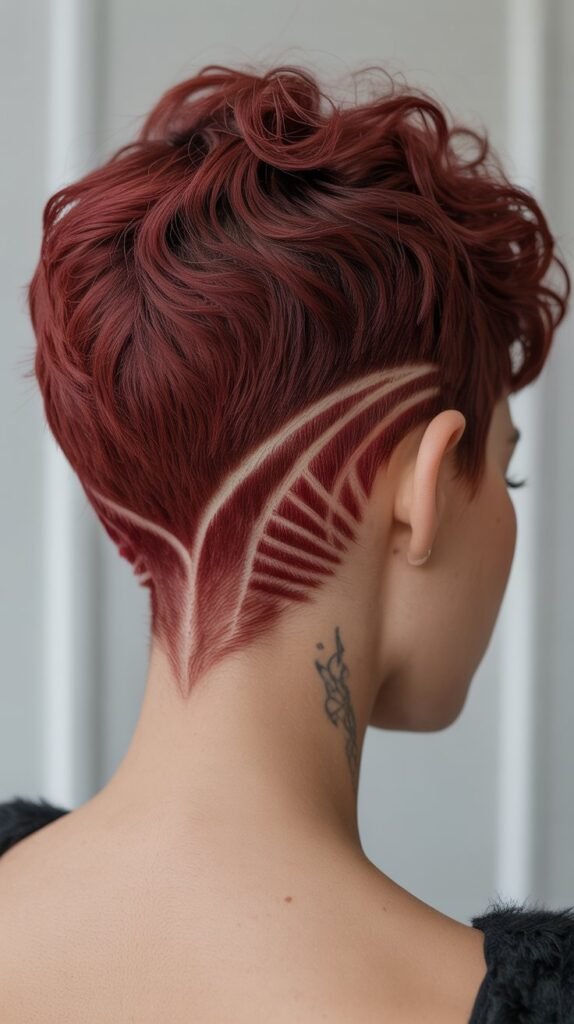
The wavy pixie with nape design adds artistic flair to the back of the head, transforming the often-overlooked area into a statement feature.
Popular Design Elements
- Geometric patterns like triangles, lines, or chevrons create modern visual interest.
- Floral or organic designs offer softer, more feminine appeal.
- Lightning bolts, stars, or abstract shapes suit edgier personalities.
- The design can be subtle (only visible when hair is swept up) or bold (with shorter surrounding hair).
- Thick hair on top can be styled to reveal or conceal the design as desired.
Design Maintenance
- Nape designs require touch-ups every 2-3 weeks as hair growth blurs clean lines.
- Some people choose temporary designs using hair chalk or color sprays for special occasions.
- Professional execution is crucial—poorly done designs appear messy rather than intentional.
- Consider your professional environment before choosing highly visible or controversial designs.
18. Romantic Wavy Pixie

The romantic wavy pixie emphasizes soft, feminine texture through deliberately gentle waves and face-softening layers that make thick hair appear delicate despite its density.
Creating Softness and Romance
- Larger, looser waves create softer appearance than tight, defined waves.
- The cutting avoids harsh lines, instead using soft graduation and gentle layering.
- Thick hair provides the body needed for voluminous romantic styling without appearing limp.
- Longer wispy pieces around the face and nape enhance feminine appeal.
- This style works beautifully for weddings, dates, or any occasion requiring softer presentation.
Romantic Styling Products and Methods
- Use smoothing cream rather than texturizing products for softer, silkier wave definition.
- Large-barrel curling irons (1.5-2 inches) create the gentle curves that define romantic waves.
- Brush through styled waves with a soft bristle brush to soften and blend them.
- Finish with light-hold, humidity-resistant hairspray that doesn’t create stiffness or crunch.
19. Wavy Pixie with Razored Edges
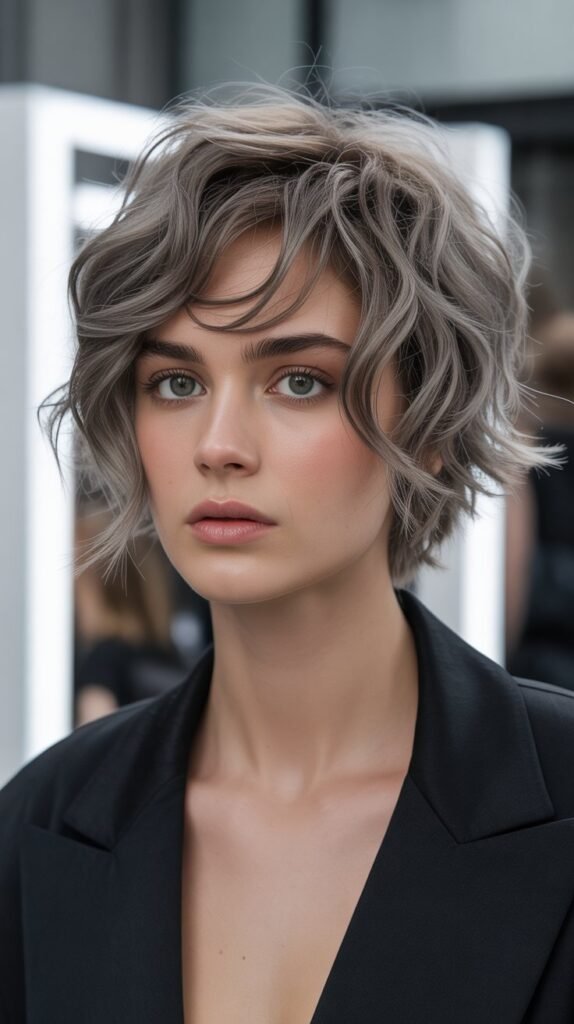
The wavy pixie with razored edges uses specialized razor cutting techniques that thin thick hair while creating ultra-textured, feathered ends with exceptional movement.
Razor Cutting Benefits for Thick Hair
- Razors slice through hair rather than bluntly cutting, creating softer, tapered ends.
- This technique significantly reduces bulk without sacrificing the appearance of fullness.
- Razored edges move independently, creating the piece-y separation that adds visual interest.
- The feathered effect is particularly visible in thick hair because of the density contrast.
- Razor cuts typically require more frequent maintenance as they grow out less gracefully than scissor cuts.
Styling Razored Pixies
- Point-apply wax or pomade to razored ends to emphasize separation and texture.
- The wispy, thinned ends require less product than blunt cuts to avoid appearing greasy.
- Air-drying often produces excellent results with razored cuts as the technique creates natural texture.
- Use round brushes minimally as they can catch on razored ends—fingers work better for styling.
20. Wavy Pixie with Forward-Swept Fringe
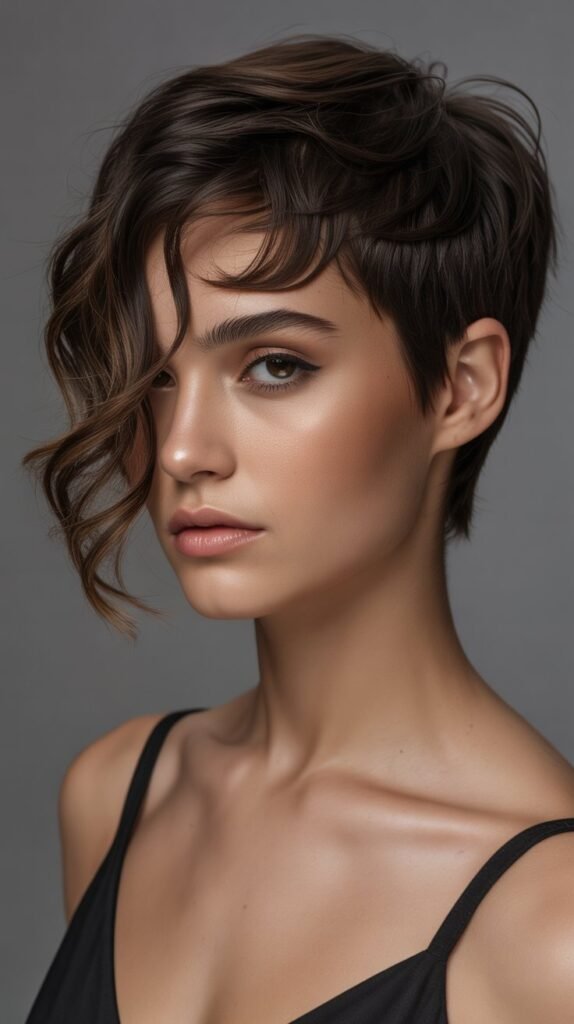
The wavy pixie with forward-swept fringe draws attention to the eyes and creates coverage for larger foreheads while utilizing thick hair’s body for full, sweeping movement.
Fringe Design and Placement
- The fringe typically measures 3-4 inches long to allow proper sweeping motion across the forehead.
- Forward direction is key—the fringe must be cut and styled to naturally fall toward the face.
- Thick hair creates substantial, full fringe that doesn’t appear sparse or thin.
- This style works exceptionally well for oblong faces by shortening apparent face length.
- The fringe can sweep to either side depending on natural hair growth patterns and preference.
Fringe Styling and Control
- Round brushes are essential for creating the proper forward curve and volume in the fringe.
- Styling cream applied to damp fringe before blow-drying provides hold and definition.
- The fringe may require morning touch-ups with a flat iron for consistent direction.
- Use clips to train the fringe in the desired direction while getting ready or during sleep.
21. Wavy Pixie with Balayage
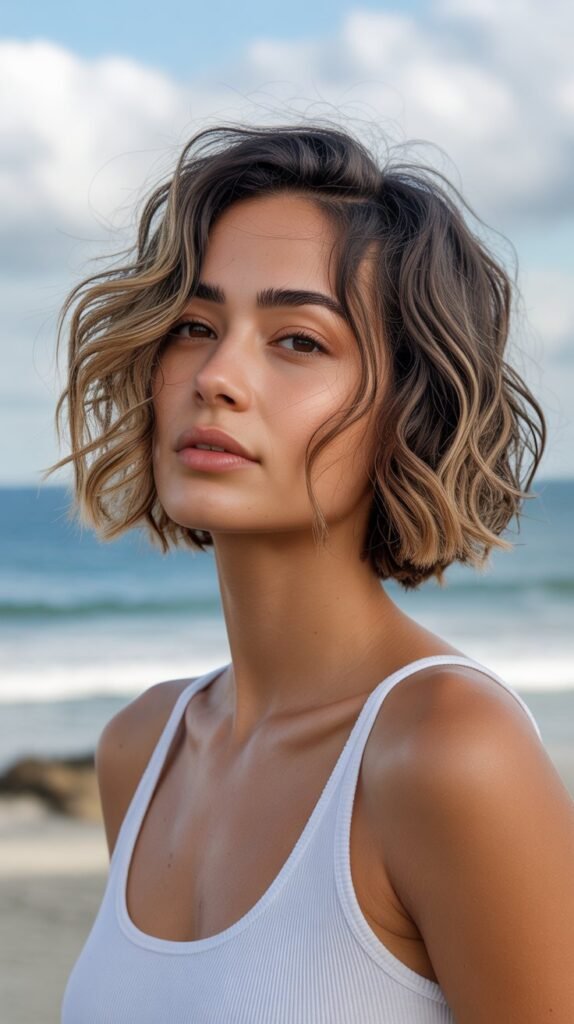
The wavy pixie with balayage features hand-painted color that creates natural-looking dimension, with waves enhancing the color’s depth and multi-tonal appearance.
Balayage Application on Pixie Cuts
- The colorist paints lightest shades on the most exposed areas—top surface and around the face.
- Balayage creates a lived-in look that grows out beautifully without harsh regrowth lines.
- Thick hair showcases balayage dimension better than fine hair due to more surface area.
- The waves create shadows that make the color appear to have even more depth and variation.
- This low-maintenance color technique suits busy lifestyles as it requires fewer touch-up appointments.
Color Transition Techniques
- Start subtle with highlights only 2-3 shades lighter than the base for natural results.
- Gradually go lighter with each appointment if desiring dramatic transformation without damage.
- The shortest back sections often remain darkest while the longer top section features lightest tones.
- Toning treatments every few appointments keep the color fresh and prevent unwanted warmth.
22. Tousled Wavy Pixie

The tousled wavy pixie creates perfectly imperfect texture that appears casually styled yet deliberately fashionable, utilizing thick hair’s natural body for effortless movement.
Achieving Effortless Tousle
- The foundation is a well-cut style with sufficient layering to create automatic texture.
- Thick hair holds tousled styling longer than fine hair without falling flat.
- The goal is hair that looks like you ran your fingers through it—natural, not overdone.
- This style works equally well for casual daytime activities and relaxed evening events.
- Second-day hair often achieves better tousled texture than freshly washed hair.
Quick Tousle Techniques
- Scrunch damp hair with texturizing spray and let air-dry for natural tousled waves.
- Use a diffuser attachment on your blow dryer while scrunching hair randomly.
- Twist random sections and loosely pin them, then release after 15 minutes for tousled bends.
- Apply dry shampoo at roots between washes to maintain volume and enhance tousled texture.
23. Wavy Pixie with Elongated Sideburns
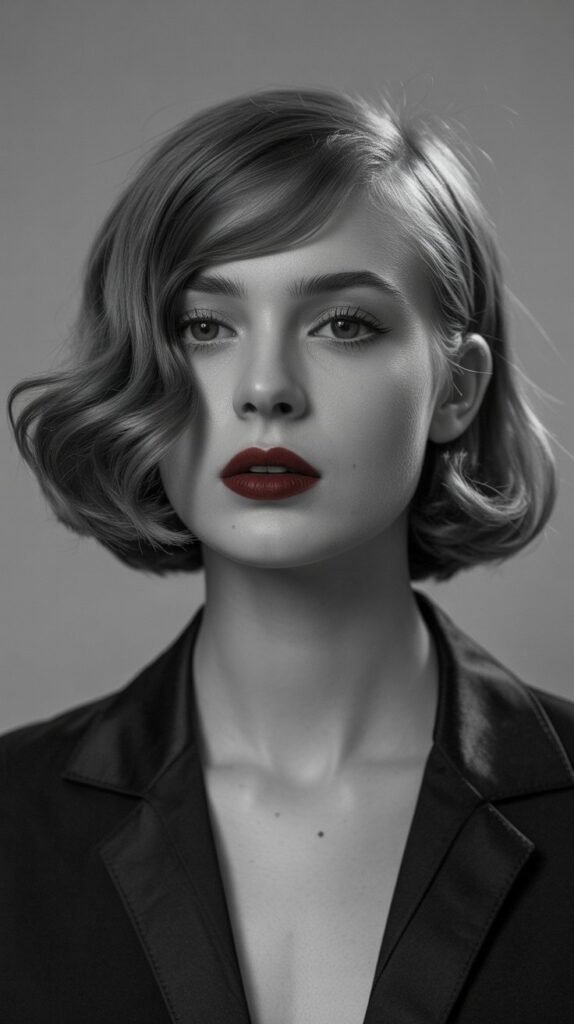
The wavy pixie with elongated sideburns extends hair in front of the ears, creating unique face-framing that adds softness and vintage-inspired charm.
Sideburn Length and Shape Options
- Classic pointed sideburns taper to a point at approximately earlobe level.
- Blunt-cut sideburns end at a straight horizontal line for more modern appeal.
- Wispy, textured sideburns integrate seamlessly with face-framing layers for softer effect.
- Thick hair provides the density needed to make sideburns appear intentional rather than sparse.
- Sideburns can be temporarily pinned back when you want different styling options.
Styling Considerations
- Direct sideburns forward toward the face or backward toward the ears depending on desired effect.
- Apply small amounts of pomade to keep sideburns defined and separated from surrounding hair.
- Curling the sideburns creates vintage appeal while leaving them straight offers modern edge.
- Consider face shape—long faces benefit from horizontal sideburns while round faces suit vertical lines.
24. Wavy Pixie with Platinum Color

The wavy pixie with platinum color creates dramatic, eye-catching contrast that works beautifully with thick hair’s texture, as the light color showcases wave patterns and movement.
Achieving and Maintaining Platinum
- Platinum requires professional bleaching, often multiple sessions to protect hair health.
- Thick hair provides more forgiveness during the bleaching process as there’s more hair to work with.
- Purple shampoo is essential for platinum tones to prevent unwanted yellow or brassy hues.
- The waves in platinum hair catch and reflect light dramatically, creating stunning dimension.
- Budget for regular toning appointments every 4-6 weeks to maintain true platinum color.
25. Wavy Pixie with Natural Texture Enhancement

The wavy pixie with natural texture enhancement works with your hair’s inherent wave pattern rather than fighting it, using products and techniques that amplify what’s already there.
Working With Natural Patterns
- Identify your natural wave pattern (loose S-waves, tighter spirals, or mixed patterns) before cutting.
- The cut should follow your natural hair growth patterns and wave directions.
- Thick hair’s natural texture creates automatic volume and body without extensive styling.
- This approach reduces styling time and product usage while celebrating natural beauty.
- Cuts should accommodate crown cowlicks, natural parts, and directional growth patterns.
Enhancement Product Choices
- Curl creams enhance natural wave definition without creating stiff or crunchy texture.
- Light oils add shine and reduce frizz while allowing natural movement.
- Wave-enhancing sprays provide hold without weighing down thick hair’s natural body.
- Minimal product application allows hair’s natural texture to shine through authentically.
26. Wavy Pixie with Edgy Styling

The wavy pixie with edgy styling pushes conventional boundaries through bold styling choices, dramatic colors, and unconventional textures that showcase personal style fearlessly.
Edgy Elements and Characteristics
- Contrasting textures combine sleek sections with deliberately rough, textured areas for visual tension.
- Unconventional color choices like vivid blues, purples, greens, or split-color designs make bold statements.
- Thick hair provides the perfect canvas for dramatic styling that requires substantial density to execute properly.
- Asymmetrical elements, unexpected partings, and intentional dishevelment create rebellious appeal.
- This style suits creative professionals, artists, and anyone wanting to express individuality through hair.
Creating Edge Through Products and Techniques
- Strong-hold gel slicks certain sections while leaving others deliberately messy for contrast.
- Matte-finish styling paste creates the slightly gritty texture associated with edgy aesthetics.
- Spike random sections using fingers and strong-hold products for punk-inspired dimension.
- Combine multiple styling products in different areas to create varied textures within one style.
- Embrace unconventional color application like streaks, chunks, or underneath-only coloring for surprise elements.
Maintenance and Lifestyle Considerations
- Edgy styles often require more frequent salon visits to maintain clean lines and fresh colors.
- Consider workplace dress codes before committing to extremely bold or unconventional styling choices.
- Temporary color options like hair chalk or wash-out dyes allow experimentation without permanent commitment.
- The confidence to carry edgy styles is as important as the technical execution of the cut.
27. Wavy Pixie with Ombre Effect

The wavy pixie with ombre effect features gradual color transition from darker roots to lighter ends, creating beautiful dimension that waves enhance through natural light and shadow play.
Ombre Versus Balayage on Pixie Cuts
- Ombre creates horizontal color banding with more noticeable transition lines than balayage.
- The shorter length of pixie cuts means ombre transitions happen quickly over just a few inches.
- Thick hair showcases ombre effects beautifully as there’s sufficient density to display the gradient.
- Waves create natural shadowing that softens potentially harsh ombre transition lines.
- This technique works best when the top section has at least 3-4 inches of length for visible gradient.
Ombre Color Combinations
- Brunette to blonde: Classic combination offering maximum contrast and drama.
- Black to red: Creates fiery, passionate appearance with striking dimensional effect.
- Brown to caramel: Subtle, sophisticated option for those wanting warmth without extreme change.
- Blonde to platinum: Creates bright, luminous effect with subtle but noticeable transition.
- Unconventional colors: Purple to pink, blue to green, or any creative combination for artistic expression.
Styling to Enhance Ombre
- Wave the lighter sections more prominently to draw attention to the color transition.
- Position the lightest sections around your face where they catch light and frame features.
- Use glossing treatments to enhance shine and make color transitions appear more seamless.
- Consider how your natural part affects where the lightest colors will be most visible.
Long-Term Ombre Maintenance
- Ombre grows out more gracefully than all-over color since roots are intentionally dark.
- The light ends require more conditioning and protection as they’ve undergone more processing.
- Plan for color refresh appointments every 10-12 weeks to maintain vibrancy in lighter sections.
- Use heat protectant sprays before styling as lightened ends are more susceptible to heat damage.
- Purple or blue shampoos help maintain cool tones in blonde or silver ombre sections.
Styling Products Essential for Wavy Pixie Success
Understanding which products work best for thick, wavy pixie cuts ensures your style looks salon-fresh daily while maintaining hair health and manageability.
Foundation Products for Damp Hair
- Volumizing mousse: Creates lift at roots while defining waves throughout thick hair without weighing it down.
- Curl-enhancing cream: Defines wave patterns and reduces frizz while adding moisture to thick texture.
- Heat protectant spray: Essential before any hot tool use to prevent damage and maintain hair health.
- Leave-in conditioner: Provides ongoing moisture for thick hair that can become dry, especially at ends.
Finishing Products for Styled Hair
- Texturizing spray: Adds grip, separation, and piece-y definition to enhance wavy texture and create lived-in appeal.
- Lightweight pomade: Defines individual pieces and adds subtle shine without greasiness or heavy buildup.
- Dry shampoo: Extends time between washes while adding volume and refreshing texture on second and third days.
- Flexible-hold hairspray: Maintains style without stiffness, allowing natural movement while preventing humidity-induced frizz.
Application Tips for Maximum Results
- Always emulsify products between palms before applying to ensure even distribution throughout thick hair.
- Apply styling products to damp rather than soaking wet or completely dry hair for best absorption and effectiveness.
- Use less product than you think necessary initially—you can always add more but removing excess is difficult.
- Focus heavier products on ends and lighter products at roots to prevent weighing down the crown area.
Styling Tools for Wavy Pixie Perfection
The right tools make achieving professional-looking wavy pixie styles at home significantly easier and help maintain thick hair’s health through proper technique.
Essential Heat Styling Tools
- Blow dryer with concentrator nozzle: Directs airflow precisely for smooth results and reduces frizz in thick, wavy hair.
- Diffuser attachment: Enhances natural wave patterns while minimizing frizz and maintaining volume throughout thick hair.
- Small barrel curling iron (¾-1 inch): Creates defined waves and adds texture to specific sections for customized styling.
- Flat iron with rounded edges: Smooths sections when desired and can create waves through twisting technique.
Brushes and Combs That Work
- Wide-tooth comb: Detangles thick, wavy hair while wet without causing breakage or disrupting wave patterns.
- Round brush (small to medium): Creates volume at roots and smooths sections during blow-drying for polished results.
- Paddle brush with flexible bristles: Smooths and detangles when straighter styles are desired without damaging thick strands.
- Boar bristle brush: Distributes natural oils and adds shine when gently brushing through dry, styled wavy pixies.
Tool Maintenance and Care
- Clean heat styling tools monthly to remove product buildup that reduces effectiveness and can damage hair.
- Replace brushes and combs when bristles become bent or damaged to prevent hair breakage.
- Use appropriate heat settings for your hair thickness—thick hair tolerates higher heat but still requires protection.
- Store tools properly to maintain their effectiveness and extend their lifespan significantly.
Face Shape Considerations for Wavy Pixie Cuts
Choosing the right wavy pixie variation for your specific face shape ensures the most flattering results that enhance your natural features beautifully.
General Guidelines for All Faces
- Wavy texture softens angular features regardless of face shape, making pixies more forgiving than straight versions.
- Thick hair provides the body needed to create desired proportions through strategic styling and cutting.
- Consult with experienced stylists who can assess your specific features beyond basic face shape categorization.
- Consider your facial features (prominent chin, high cheekbones, strong nose) alongside overall face shape for optimal results.
Seasonal Styling Adjustments for Wavy Pixies
Thick, wavy pixie cuts require different approaches throughout the year as weather conditions affect texture, volume, and manageability significantly.
Summer Styling Strategies
- Humidity increases wave definition but can also cause frizz in thick hair requiring anti-humidity products.
- Lighter products work better in warm weather as heavy creams and oils become too greasy quickly.
- Protect color-treated wavy pixies with UV protection sprays to prevent fading and damage from sun exposure.
- Embrace natural texture by air-drying more often to reduce heat damage during already warm months.
- Chlorine and salt water require clarifying treatments to remove buildup that dulls wavy pixie texture.
Winter Weather Adaptations
- Static electricity in thick hair responds well to anti-static sprays and increased conditioning treatments.
- Indoor heating dries hair significantly, requiring more intensive moisture treatments and leave-in products.
- Hats flatten wavy pixies temporarily, so carry travel-sized products for quick refreshing after removing headwear.
- Cold outdoor temperatures followed by warm indoor spaces create frizz requiring smoothing serums and oils.
- Reduce washing frequency as winter air is drying, relying on dry shampoo to extend time between washes.
Year-Round Consistency Tips
- Invest in a humidifier for your bedroom to maintain optimal moisture levels for hair health regardless of season.
- Adjust product amounts seasonally—less in humid summer months, more in dry winter conditions.
- Protect hair before swimming year-round by wetting it with clean water and applying protective leave-in products.
- Schedule color and cut maintenance appointments consistently every 6-8 weeks regardless of seasonal schedule changes.
Maintenance Schedule for Wavy Thick Hair Pixies
Establishing a consistent maintenance routine ensures your wavy pixie always looks its best while keeping thick hair healthy and manageable long-term.
Weekly Care Requirements
- Washing frequency: 2-3 times weekly for most thick, wavy hair types to maintain natural oils while preventing buildup.
- Deep conditioning: Once weekly treatment focusing on ends to maintain moisture in thick hair that can become dry.
- Scalp care: Gentle scalp massage during washing to stimulate healthy growth and remove product buildup effectively.
- Style refresh: Mid-week touch-ups using dry shampoo and light re-styling to extend initial wash-day results.
Monthly Professional Maintenance
- Haircut refresh: Every 4-6 weeks to maintain pixie shape and remove bulk that accumulates in thick hair.
- Color touch-ups: If applicable, every 4-8 weeks depending on color type and desired maintenance level.
- Toner application: For highlighted or lightened hair to maintain color vibrancy and eliminate brassiness.
- Deep treatment: Professional salon treatments address damage and dryness more intensively than at-home options.
At-Home Maintenance Tools
- Keep sharp hair scissors specifically for trimming face-framing pieces and maintaining neck lines between salon visits.
- Invest in salon-quality products that last longer and perform better than drugstore alternatives for thick, wavy hair.
- Use satin or silk pillowcases to reduce friction that causes frizz and preserves styled waves overnight.
- Maintain a consistent routine rather than sporadic intensive care for best long-term hair health results.
Transitioning to a Wavy Pixie from Longer Hair
Making the decision to cut long or medium-length thick hair into a wavy pixie requires preparation, realistic expectations, and understanding the commitment involved.
Pre-Cut Considerations
- Consult with stylists experienced specifically in cutting thick, wavy hair for realistic previews of potential results.
- Bring multiple reference photos showing different angles of desired styles rather than single inspiration images.
- Discuss your daily styling commitment realistically—pixies require daily attention despite being “low-maintenance” compared to long hair.
- Consider doing a gradual transition through a bob or lob before committing to full pixie length.
- Understand that thick hair behaves differently at short lengths and may reveal waves not visible when longer.
The Cutting Process
- Professional execution is essential for thick hair pixies as DIY attempts rarely achieve desired results.
- The initial cut typically takes 60-90 minutes for thick hair requiring substantial thinning and layering.
- Stylists should cut dry or after initial rough-drying to see how thick wavy hair naturally behaves.
- Request a thorough styling tutorial during your first appointment to learn techniques for home maintenance.
- Take photos immediately after the salon visit for reference when styling at home initially.
Emotional and Practical Adjustment
- Allow 2-4 weeks to emotionally adjust to dramatically shorter hair and develop new styling routines.
- Experiment with different products and techniques to discover what works best for your specific hair texture.
- Expect some trial and error initially—short hair styling has a learning curve even for experienced stylists.
- Join online communities or forums for pixie cut wearers to share experiences, tips, and encouragement.
- Remember that hair grows back if you ultimately decide pixie length isn’t for you long-term.
Growing Out Gracefully
- If you decide to grow out your pixie, schedule regular trims to shape growth stages and avoid awkward phases.
- Use accessories like headbands, clips, and scarves creatively during in-between lengths for styling variety.
- Thick hair makes growing-out stages easier as density prevents sparse, stringy appearance during transition.
- Consider strategic highlights or color changes to add interest during potentially frustrating growth periods.
Conclusion
The journey through 27 Flattering Wavy Pixie Hair Ideas for Thick Hair reveals the incredible versatility and beauty that emerges when you embrace your hair’s natural texture and volume.
From classic elegance to edgy contemporary styles, wavy pixie cuts offer transformative possibilities that celebrate thick hair’s inherent body rather than fighting against it.
Each variation presented provides unique solutions for managing volume while creating stunning visual appeal that turns heads and simplifies daily routines.
The key to pixie success with thick, wavy hair lies in finding experienced stylists who understand how to work with your texture, investing in quality products that enhance rather than suppress natural waves, and committing to regular maintenance that keeps your style looking fresh and intentional.
Whether you choose romantic soft waves, bold asymmetrical designs, or textured choppy layers, thick wavy hair provides the perfect foundation for pixie cuts that make powerful style statements.
These 27 ideas demonstrate that short hair and thick texture create a winning combination when approached with proper technique, realistic expectations, and celebration of your hair’s unique characteristics.
Your perfect wavy pixie awaits among these options, ready to showcase your personality while honoring the beautiful, abundant hair you’ve been given.

