
Finding the perfect haircut for boys with fine straight hair can transform their entire look and boost their confidence.
Fine straight hair has unique characteristics that require specific cutting techniques and styling approaches to create volume, texture, and movement.
This comprehensive guide to the Top 27 Boys’ Haircuts with Fine Straight Hair will walk you through the most flattering styles that work beautifully with this hair type, from classic cuts to modern trends.
Whether you’re a parent searching for your son’s next haircut or a young man looking to refresh your style, you’ll discover expert-recommended options that add dimension and personality while being easy to maintain.
Each style has been carefully selected to maximize the natural qualities of fine straight hair, ensuring your chosen cut looks full, stylish, and age-appropriate.
1. The Classic Textured Crop
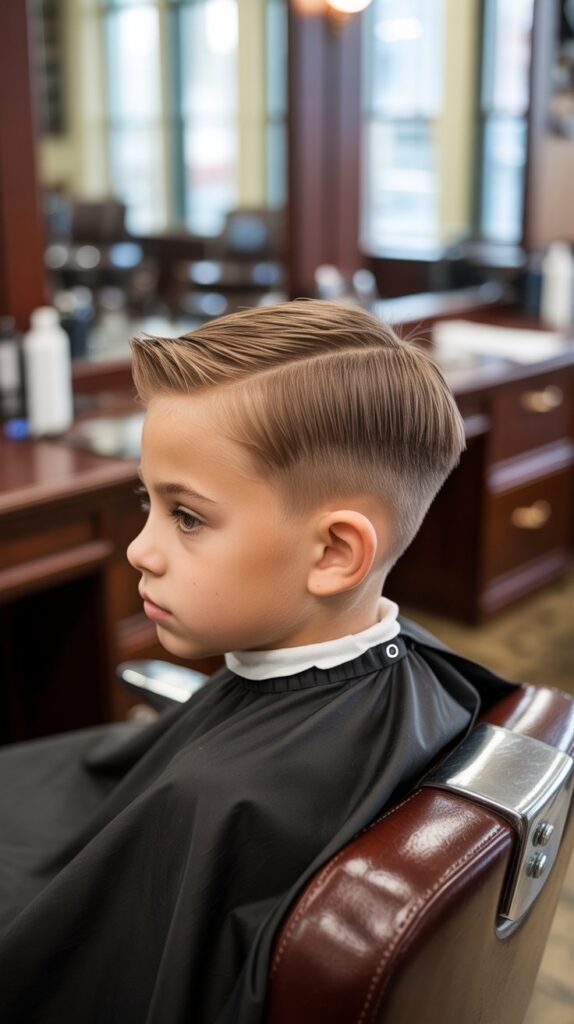
The textured crop stands as one of the most versatile options for boys with fine straight hair, offering a modern twist on traditional short styles.
This cut works by creating strategic layers throughout the top while keeping the sides shorter, which naturally adds the illusion of thickness and movement.
- The textured crop typically features 1-2 inches of length on top, allowing enough hair to create visible texture without appearing flat.
- Barbers achieve this look by using point-cutting techniques that remove weight from the ends, creating separation and dimension.
- The sides are usually cut short with clippers (typically a #3 or #4 guard), creating a clean contrast that draws attention to the textured top.
- Styling requires minimal effort—simply apply a small amount of lightweight styling cream or sea salt spray to damp hair and tousle forward.
- This cut grows out gracefully over 4-6 weeks, making it cost-effective and low-maintenance for busy families.
- The textured crop suits most face shapes, particularly round and oval faces, as the forward styling adds definition to the facial structure.
- According to <a href=”https://www.menshairstyletrends.com/”>men’s hairstyle experts</a>, this cut remains popular because it adapts well to different hair densities while maintaining a youthful appearance.
2. The Side-Swept Fringe

The side-swept fringe offers a sophisticated yet playful option that strategically uses length to create the appearance of fuller hair.
This style directs all the hair’s natural movement to one side, concentrating volume where it’s most visible.
- The key to this cut lies in maintaining 2-3 inches of length on top while gradually tapering the sides and back.
- Hair is cut at a slight angle, with the longest pieces at the front hairline, creating a natural sweeping motion.
- The fringe typically falls just above or at eyebrow level, providing coverage that adds dimension to the overall style.
- This cut works exceptionally well for boys with cowlicks, as the side direction can naturally incorporate the hair’s growth pattern.
- Styling involves blow-drying the hair to one side using a round brush to build volume at the roots.
- A lightweight pomade or styling cream helps hold the swept direction throughout the day without weighing down fine strands.
- The side-swept fringe particularly flatters heart-shaped and diamond-shaped faces by softening angular features.
3. The Buzz Cut with Fade

The buzz cut with fade represents the ultimate low-maintenance option that paradoxically makes fine hair appear thicker through uniform shortness.
This military-inspired style has evolved into countless modern variations that suit young boys perfectly.
- The top is typically cut to a #3 or #4 guard length (3/8 to 1/2 inch), creating an even surface that doesn’t reveal thinness.
- The fade begins at the temples and neckline, gradually transitioning from skin or a #1 guard up to the top length.
- This cut eliminates the need for styling products entirely, saving time and money for families.
- Fine straight hair actually holds a buzz cut shape better than thicker hair types, maintaining clean lines longer.
- The style requires trimming every 2-3 weeks to maintain the sharp fade and prevent awkward growth stages.
- Buzz cuts work for all face shapes but particularly complement strong jawlines and prominent facial features.
- During summer months, this cut provides excellent cooling and reduces the need for constant hair management during sports activities.
4. The Ivy League Cut

The Ivy League cut bridges the gap between casual and formal, offering enough length for styling versatility while maintaining a polished appearance.
This preppy style has remained popular for decades due to its universally flattering nature.
- This cut features approximately 1-1.5 inches on top, gradually decreasing in length toward the crown.
- The sides and back are tapered with scissors or clippers, creating a clean but not severe transition.
- Unlike a crew cut, the Ivy League allows for a side part and can be combed in different directions.
- Fine straight hair naturally holds the side-parted style that defines this classic cut without requiring heavy products.
- A small amount of lightweight pomade or styling cream provides light hold while maintaining natural movement.
- The cut works exceptionally well for school settings where neat appearance is valued but extreme styles are discouraged.
5. The French Crop

The French crop delivers maximum style impact for fine straight hair by emphasizing a distinct horizontal fringe line across the forehead.
This European-inspired cut has gained significant popularity in recent years for its bold yet manageable aesthetic.
- The defining feature is a blunt-cut fringe that typically sits 1-2 inches above the eyebrows, creating a strong horizontal line.
- The top measures about 1-2 inches in length, with texture added through point-cutting or razor techniques.
- Sides are usually faded or cut very short, creating maximum contrast with the textured top section.
- This cut naturally makes fine hair appear thicker because the blunt fringe concentrates visual weight at the front.
- Styling is remarkably simple—hair naturally falls forward, requiring only a small amount of matte clay or paste for texture.
- The French crop suits square and rectangular face shapes particularly well by adding horizontal lines that balance facial proportions.
- This style grows out cleanly over 5-7 weeks, with the fringe remaining distinct even as length increases.
6. The Slicked-Back Undercut
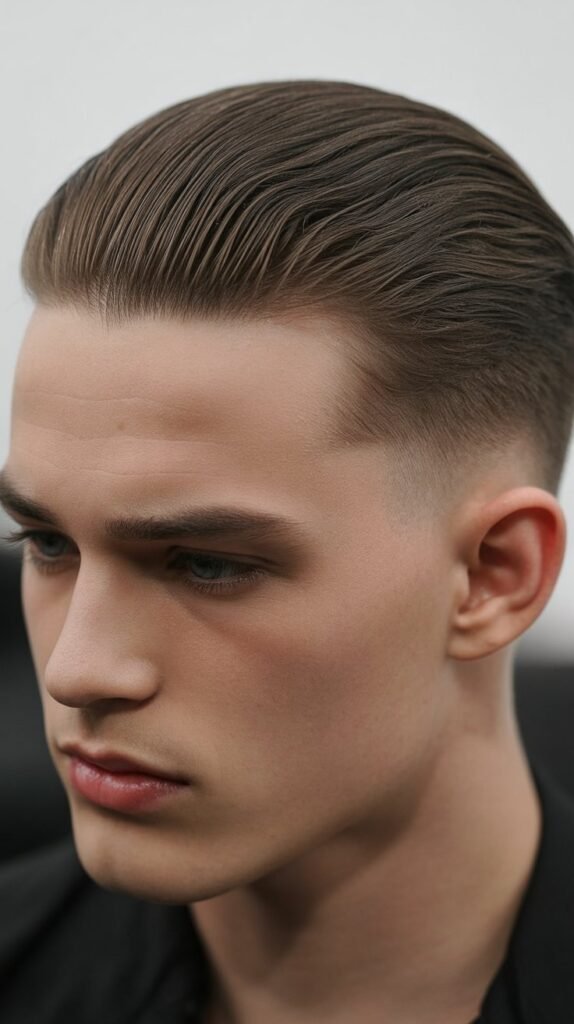
The slicked-back undercut creates a dramatic, sophisticated look that’s surprisingly practical for fine straight hair when cut and styled correctly.
This style works by creating stark contrast between long top sections and very short sides.
- The top section maintains 3-4 inches of length, providing enough hair to slick back completely without gaps.
- Sides and back are typically cut to a #1 or #2 guard, creating a “disconnect” where there’s no gradual transition.
- Fine straight hair actually slicks back more smoothly than thick hair, creating a sleek surface without bulk.
- This style requires a medium to strong-hold gel or pomade applied to damp hair and combed straight back.
- The slicked-back look works best for formal occasions, performances, or special events rather than everyday school wear.
- Face shape considerations are important—this cut elongates the face, making it ideal for round or square faces but potentially overwhelming for already long faces.
- Maintenance requires daily styling but the actual cut can last 6-8 weeks before needing significant reshaping.
7. The Messy Spiky Style

The messy spiky style transforms fine straight hair into a textured, dynamic look that suggests fullness through strategic product application and cutting techniques.
This energetic style appeals to active boys who want personality in their haircut.
- The cut features 2-3 inches of length on top with significant layering to remove weight and allow individual sections to stand up.
- Sides are cut shorter (often tapered or faded) to ensure attention remains on the textured top portion.
- Point-cutting and texturizing shears create the piecey separation necessary for individual spikes to form.
- Fine hair naturally spikes more easily than thick hair because individual strands don’t weigh each other down.
- Styling requires a strong-hold gel or clay applied to damp hair, then scrunched or twisted into random spiky formations.
- This cut allows for style variation—hair can be worn spiky for casual days or combed down for more formal occasions.
- The messy aesthetic means this style is forgiving of growth and doesn’t require perfect maintenance between cuts.
8. The Caesar Cut
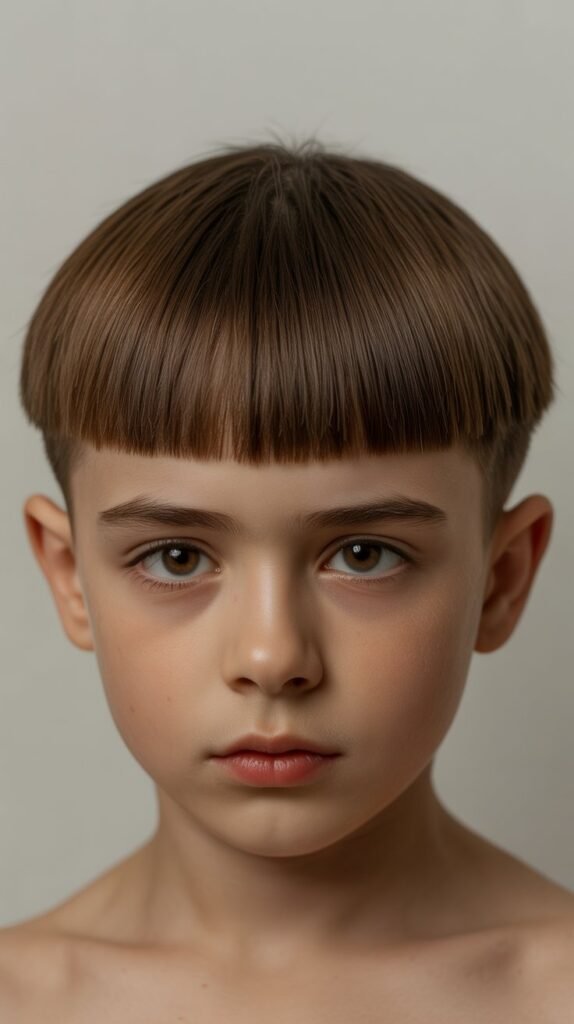
The Caesar cut pays homage to Julius Caesar himself, featuring a short, horizontally-cut fringe that creates the illusion of denser hair.
This Roman-inspired style has remained relevant for millennia due to its practical elegance.
- The entire head is typically cut to a uniform 1-2 inch length, creating consistent coverage that minimizes the appearance of fine texture.
- The signature feature is a short, straight-across fringe that extends about 1 inch onto the forehead.
- Unlike the French crop, the Caesar cut maintains similar length throughout rather than creating dramatic contrast.
- This cut is incredibly low-maintenance, requiring minimal styling—often just towel-drying and finger-combing.
- Fine straight hair holds the Caesar cut shape exceptionally well because the short length prevents strands from separating or appearing stringy.
- The style suits all face shapes but particularly complements oval and square faces by adding horizontal dimension.
- According to <a href=”https://www.thebarberpost.com/”>professional barbers</a>, the Caesar cut remains popular for young boys because it requires minimal daily effort while looking intentionally styled.
9. The Faux Hawk

The faux hawk (or “fohawk”) offers the edgy appeal of a mohawk while maintaining appropriate length on the sides for school and family settings.
This rebellious-yet-acceptable style adds height and drama to fine straight hair.
- The center strip of hair runs from the forehead to the crown, typically 2-3 inches in length, while sides taper down gradually.
- Unlike a true mohawk, sides aren’t shaved but rather cut short with clippers or scissors, creating a wearable compromise.
- Texturizing the center section is crucial for fine hair, as it prevents the style from looking flat or falling over.
- Styling requires a strong-hold product (gel, paste, or clay) applied to the center section and pushed upward and toward the middle.
- The faux hawk can be styled dramatically for weekends or toned down for school by simply combing hair to the side.
- This cut particularly appeals to boys aged 8-14 who want to express individuality while adhering to most dress codes.
- The style grows out over 4-6 weeks, with the mohawk ridge becoming less pronounced but still maintaining stylish shape.
10. The Bowl Cut (Modern Version)

The modern bowl cut has evolved significantly from its 1990s predecessor, now incorporating texture, layers, and subtle asymmetry.
This reinvented classic works beautifully with fine straight hair when executed with contemporary techniques.
- Unlike the traditional bowl cut, modern versions include internal layering that prevents the mushroom-like appearance.
- The perimeter creates a rounded shape around the head but isn’t cut in a harsh, uniform line—instead, it features soft graduation.
- Length typically ranges from 2-4 inches, with shorter layers underneath and longer pieces on top to create movement.
- Fine straight hair naturally falls into the bowl shape without excessive styling, making this a practical choice.
- Minimal product is needed—perhaps a small amount of lightweight cream to enhance texture and reduce static.
- The modern bowl cut suits round, oval, and heart-shaped faces by creating soft framing around the facial features.
- This cut has been embraced by fashion-forward families who appreciate its retro-modern aesthetic and low-maintenance nature.
11. The Comb-Over Fade

The comb-over fade combines classic barbering techniques with modern fade expertise, creating a style that appears sophisticated beyond its years.
This cut strategically uses direction to maximize the appearance of volume.
- A defined side part is created (either shaved in or simply combed), typically positioned 1-2 inches from the center of the head.
- The longer section on the heavy side measures 2-3 inches, providing enough length to comb over dramatically.
- The opposite side and back feature a skin fade or low fade, creating striking contrast with the longer top.
- Fine straight hair combs over smoothly and stays in place better than thick hair, which tends to resist directional styling.
- Styling requires a medium-hold pomade or cream combed through damp hair in the desired direction.
- This cut works exceptionally well for formal events, school pictures, and occasions where a polished appearance is expected.
- The comb-over fade suits oval, square, and rectangular face shapes by adding width through the horizontal sweeping motion.
12. The Long Layers on Top
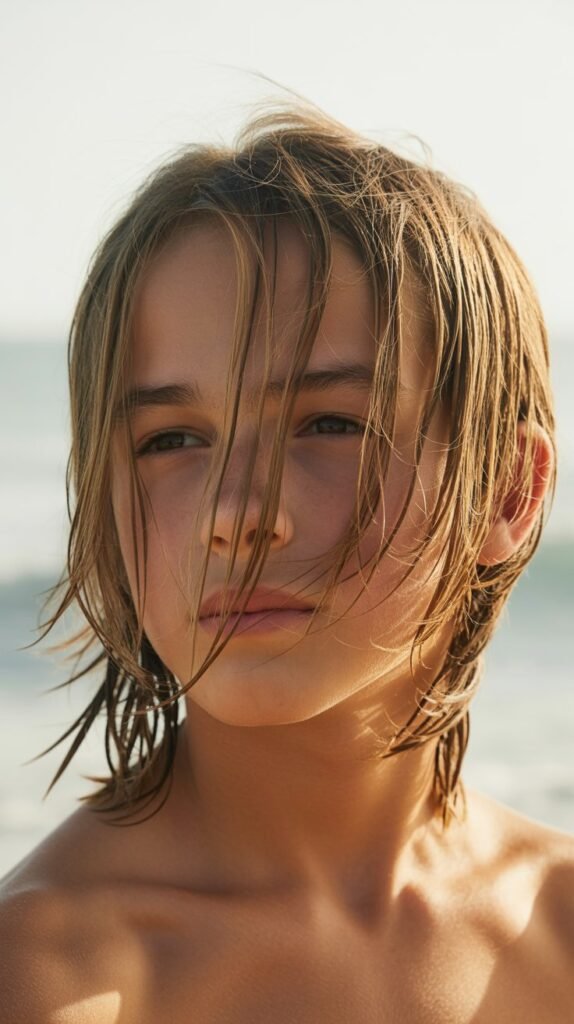
Long layers on top create a youthful, flowing aesthetic that embraces the natural straight texture of fine hair.
This style requires more maintenance than shorter cuts but offers significantly more styling versatility.
- The top section typically measures 3-5 inches in length, with multiple layers cut throughout to prevent a flat, heavy appearance.
- Sides and back are cut shorter (usually 1-2 inches) to maintain shape and prevent the style from appearing unkempt.
- Layering is essential for fine hair at longer lengths—without it, the hair appears stringy and lifeless.
- This cut allows for multiple styling options: worn forward, swept to the side, or even pulled back into a small ponytail for sports.
- Daily maintenance includes washing, conditioning, and applying a volumizing mousse or spray for body.
- The style particularly suits active, creative boys who appreciate having hair to style and play with.
- According to <a href=”https://www.allthingshair.com/”>hair care specialists</a>, longer styles on fine hair require more attention to hair health, including regular trims every 6-8 weeks to prevent split ends.
13. The High and Tight
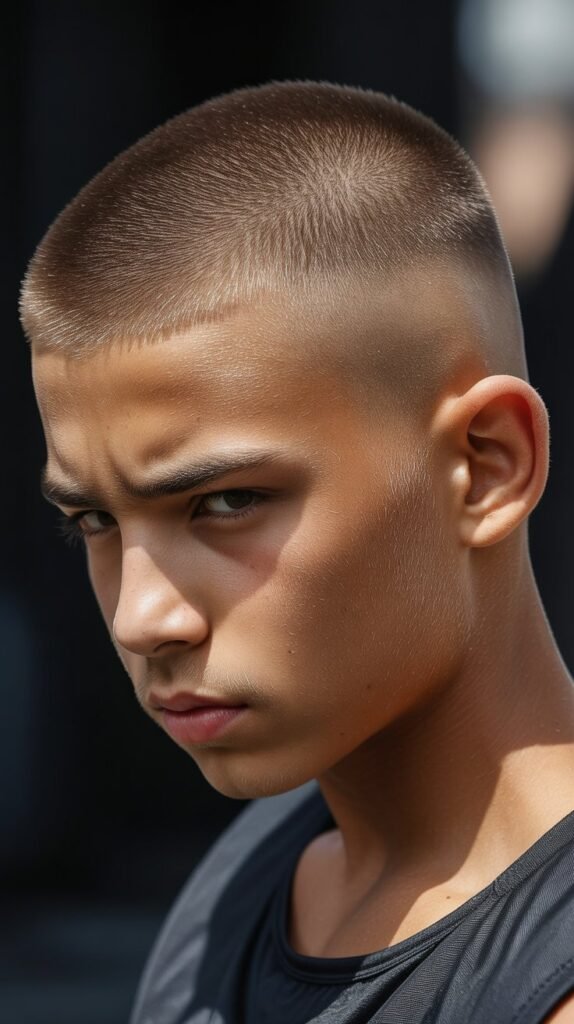
The high and tight military-inspired cut offers maximum practicality while creating the optical illusion of thicker hair on top.
This disciplined style has transitioned from military bases to mainstream popularity.
- The top section is cut very short (usually a #3 or #4 guard), creating uniform coverage without revealing scalp.
- Sides and back are cut even shorter or faded to skin, creating the “high and tight” characteristic contrast.
- This cut eliminates all styling requirements—simply wash and go with no products needed.
- Fine hair actually benefits from this ultra-short approach, as the brevity prevents any appearance of thinness or limpness.
- The style is ideal for athletic boys involved in sports, as it stays completely out of the face and requires zero maintenance during activities.
- Maintenance requires frequent trims (every 2-3 weeks) to maintain the precise, clean lines.
- The high and tight suits all face shapes but particularly complements strong, masculine facial features and athletic builds.
14. The Textured Quiff

The textured quiff elevates fine straight hair with dramatic height and forward volume, creating a statement style that commands attention.
This fashion-forward cut requires some styling commitment but delivers impressive results.
- The front section of hair measures 3-4 inches, providing enough length to create significant lift when styled upward and slightly forward.
- Hair gradually decreases in length toward the crown, while sides are faded or cut short for contrast.
- Texturizing throughout the top section is crucial for fine hair, as it creates the piecey separation that defines a quiff.
- Styling involves blow-drying hair upward using a round brush, then applying a strong-hold product to maintain the lifted shape.
- The quiff creates vertical height that balances facial proportions, particularly flattering for round or square face shapes.
- This style has become increasingly popular among pre-teens and teenagers who follow current hair trends.
- While the quiff requires daily styling effort, fine straight hair actually holds the lifted shape longer than thick, heavy hair that tends to fall flat.
15. The Side Part with Taper

The classic side part with taper represents timeless barbering at its finest, offering clean-cut sophistication that’s appropriate for any setting.
This traditional style has endured for generations because it simply works.
- A clean side part is created approximately 1-2 inches from the center of the head, using the natural growth pattern as a guide.
- The top section maintains 1.5-2 inches of length, enough to comb distinctly to one side while staying neat.
- Sides and back are tapered with scissors or clippers, creating a gradual transition from longer to shorter.
- Fine straight hair naturally holds a side part better than wavy or curly hair, staying in place throughout the day.
- Minimal product is needed—a small amount of light pomade or cream provides subtle hold without looking stiff or greasy.
- This cut is universally appropriate for school, family events, formal occasions, and everyday wear.
- The side part with taper suits all face shapes and has been recommended by barbers for decades as a foolproof option for boys with fine hair.
16. The Crew Cut
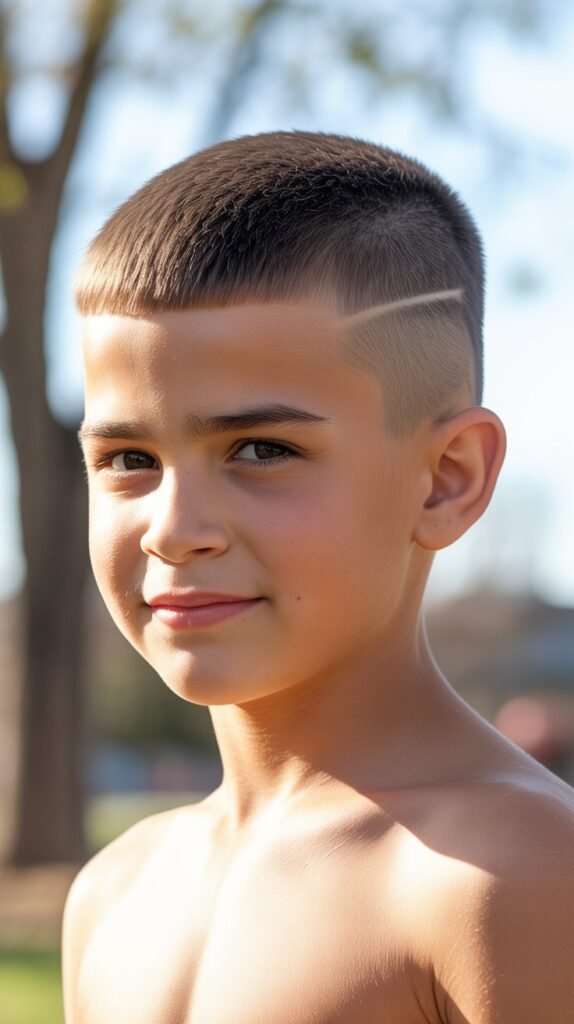
The crew cut stands as one of the most iconic American hairstyles, offering a no-nonsense approach that makes fine hair appear uniformly dense.
This athletic style has remained popular since the 1950s for its practical elegance.
- The top is typically cut to 3/4 to 1 inch in length, standing upright without requiring styling products.
- Hair gradually decreases in length from front to back, with the front hairline being the longest point.
- Sides are cut very short with clippers, usually a #2 or #3 guard, creating clean definition.
- Fine straight hair maintains the crew cut shape exceptionally well because individual strands naturally stand up at short lengths.
- This cut requires virtually no styling—simply towel dry and go about the day.
- The crew cut is ideal for active boys, particularly those involved in sports, swimming, or outdoor activities.
- Maintenance involves trimming every 3-4 weeks to maintain the characteristic short, uniform appearance.
17. The Pompadour

The pompadour creates dramatic volume and vintage-inspired style that seems counterintuitive for fine hair but actually works beautifully with proper cutting and styling techniques.
This Elvis-inspired look has experienced a major revival.
- The front section requires 3-5 inches of length to create the signature swept-back height characteristic of a pompadour.
- Sides are typically faded or cut short to emphasize the dramatic volume on top.
- Layering and texturizing throughout the top section prevents fine hair from clumping together or appearing greasy.
- Styling requires blow-drying hair upward and backward using a round brush, then applying strong-hold pomade or gel.
- Fine straight hair actually holds pompadour volume exceptionally well because it’s less heavy than thick hair.
- This style works best for older boys (ages 12+) who appreciate vintage aesthetics and have the patience for daily styling.
- The pompadour suits oval, diamond, and heart-shaped faces by adding height that balances facial proportions.
18. The Flat Top

The flat top delivers a bold, architectural statement that transforms fine straight hair into a precisely shaped form.
This retro style has maintained a dedicated following for its distinctive, confident appearance.
- The top is cut to create a completely flat horizontal plane, typically 1-2 inches in height above the scalp.
- Sides are cut vertically, creating 90-degree angles that define the architectural nature of this cut.
- Fine straight hair stands upright more easily than thick hair, making the flat top shape easier to achieve and maintain.
- Styling requires a strong-hold gel or styling glue applied to damp hair, then blow-dried upward while brushing the top flat.
- This cut requires specialized barbering skills and frequent maintenance (every 2-3 weeks) to maintain the precise flat shape.
- The flat top suits square and rectangular face shapes by echoing angular facial features.
- While less common today, this style appeals to boys who want to stand out with a distinctive, vintage-military aesthetic.
19. The Surfer Shag

The surfer shag embraces a carefree, layered aesthetic that gives fine straight hair natural movement and beach-inspired texture.
This laid-back style has gained popularity among boys who prefer a more relaxed, effortless look.
- This cut features multiple layers throughout, with the longest pieces reaching 3-4 inches and shorter layers creating texture.
- Unlike more structured cuts, the surfer shag intentionally looks slightly messy and undone, embracing natural movement.
- Layers are cut at various lengths to create a piecey, separated appearance that adds dimension to fine hair.
- The cut typically includes longer pieces around the face and ears, creating a shaggy, grown-out appearance.
- Styling is minimal—apply a sea salt spray or texturizing product to damp hair and allow to air dry or scrunch with a diffuser.
- This style particularly suits oval and heart-shaped faces, as the layered pieces around the face provide soft framing.
20. The Disconnected Undercut

The disconnected undercut creates striking contrast through an abrupt transition between long top sections and extremely short sides.
This avant-garde style makes a bold statement while remaining surprisingly wearable.
- The top section maintains 3-5 inches of length while sides are cut to a #1 or #2 guard with no gradual fade.
- The “disconnect” refers to the visible line where long hair abruptly meets short hair without blending.
- Fine straight hair benefits from this cut because the length on top can be styled in multiple ways without appearing too heavy.
- Styling options include slicking back, sweeping to the side, or wearing messy and textured depending on the occasion.
- This versatile cut allows for dramatic style changes with the same base cut, simply by changing how the top is styled.
- The disconnected undercut suits all face shapes but requires confidence to wear due to its bold, fashion-forward appearance.
- Maintenance involves keeping sides trimmed every 3-4 weeks while allowing the top to grow to desired length.
21. The Blunt Fringe

The blunt fringe features a straight-across, heavy bang that creates a bold horizontal line across the forehead.
This contemporary style adds weight and dimension to fine straight hair through strategic cutting.
- The fringe is cut in a straight horizontal line, typically falling at eyebrow level or just above.
- Unlike graduated or feathered fringes, the blunt fringe maintains uniform length across the entire forehead.
- Top and sides can vary in length, but the defining feature remains the heavy, straight-across fringe.
- Fine straight hair actually performs better with blunt cuts than thick hair because there’s less bulk to create a shelf-like appearance.
- Minimal styling is required—the fringe naturally falls forward, though a light smoothing serum can reduce static.
- This cut suits square and rectangular face shapes by adding softening horizontal lines across angular features.
- The blunt fringe has become popular in contemporary fashion, appearing in runway shows and editorial shoots.
22. The Asymmetrical Cut

The asymmetrical cut embraces intentional unevenness, creating visual interest through different lengths on each side of the head.
This artistic style allows for creative expression while working beautifully with fine straight hair.
- One side of the head features noticeably more length (often 2-3 inches longer) than the other side.
- The longer side can be swept across the forehead or hang down toward the cheek, creating dramatic movement.
- The shorter side is typically cut close to the head, sometimes faded or undercut for maximum contrast.
- Fine straight hair showcases asymmetry particularly well because the straight texture makes the length difference clearly visible.
- Styling involves emphasizing the longer side by sweeping it across or styling it forward with product.
- This bold cut appeals to creative, artistic boys who want to express individuality through their appearance.
- The asymmetrical cut suits oval and diamond face shapes by adding unique angles that create visual interest.
23. The Temple Fade

The temple fade focuses specifically on the temple areas, creating clean, sharp lines that frame the face while maintaining length on top.
This detail-oriented cut adds precision and style to fine straight hair.
- The fade begins specifically at the temples, creating sharp, defined lines that curve around the ears.
- The top section maintains 2-3 inches of length, providing styling versatility while keeping the overall look neat.
- Unlike a full fade that extends around the entire head, the temple fade focuses only on the front corners and side areas.
- This targeted approach works well for fine hair because it creates definition without removing too much hair overall.
- The temple fade adds face-framing structure that draws attention to facial features and creates a polished appearance.
- Styling the top can vary from neat and combed to textured and messy, while the temple fades remain sharp regardless.
- This cut requires maintenance every 2-3 weeks to keep the fade lines crisp and well-defined.
24. The Forward Brush Cut

The forward brush cut directs all hair toward the forehead, creating concentrated volume and coverage that’s ideal for fine straight hair.
This straightforward style maximizes the appearance of fullness through directional cutting and styling.
- The entire head is cut to a relatively uniform length of 1-2 inches, with a slight increase in length toward the front.
- Hair is cut and styled to naturally fall forward, creating a concentrated band of coverage across the forehead.
- This directional approach makes fine hair appear thicker because all strands move in the same direction rather than separating.
- Styling is remarkably simple—brush or comb hair forward after washing, possibly with a small amount of light styling cream.
- The forward brush cut works particularly well for boys with high foreheads or receding hairlines, providing strategic coverage.
- This cut suits most face shapes, particularly oval and oblong faces, by adding horizontal dimension across the forehead.
- Maintenance is minimal, with trims needed every 4-6 weeks to maintain the uniform length and forward direction.
25. The Choppy Layers
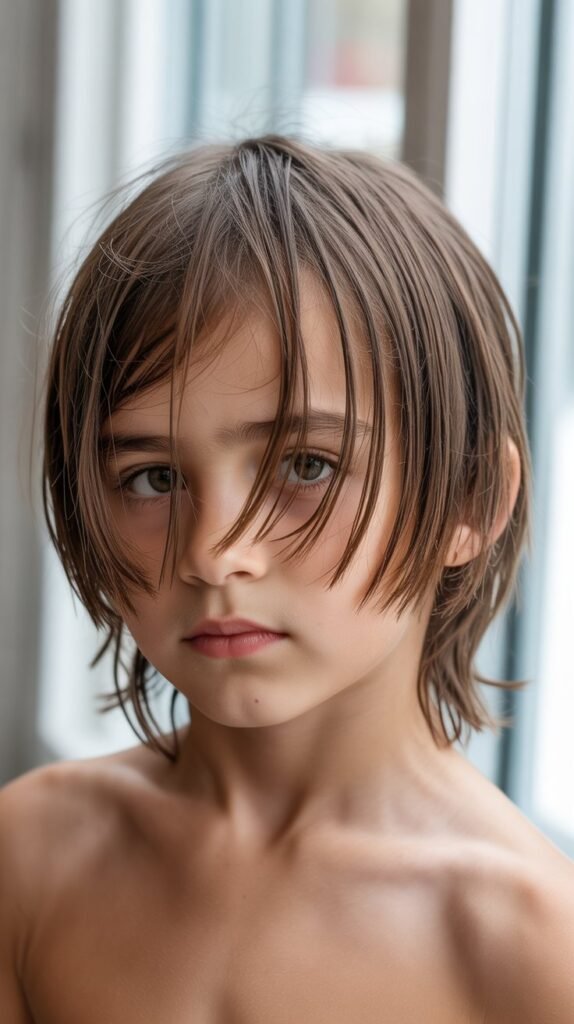
Choppy layers create intentional irregularity throughout fine straight hair, breaking up uniformity to add texture, movement, and visual interest.
This editorial-inspired cut has gained mainstream popularity for its effortlessly cool appearance.
- Multiple layers are cut throughout the hair at various lengths, creating an irregular, non-uniform appearance.
- The cutting technique involves point-cutting and slicing to create separation between sections rather than blunt lines.
- Choppy layers work exceptionally well for fine hair because they create the illusion of density through texture rather than actual thickness.
- The cut intentionally looks slightly messy and undone, embracing natural movement rather than forcing hair into specific directions.
- Styling involves applying a texturizing product to damp hair and either air-drying or rough-drying with hands for natural separation.
- This style suits boys with creative, artistic personalities who appreciate fashion-forward aesthetics.
26. The Low Maintenance Shag

The low maintenance shag combines the texture of layered cuts with the ease of shorter styles, creating a practical option that looks intentionally styled with minimal effort.
This modern take on the classic shag suits busy families and active boys.
- The cut features layers throughout but maintains a shorter overall length (2-3 inches) compared to traditional longer shags.
- Layers are cut to create texture without requiring extensive styling or product application.
- The shorter length means the shag shape is maintained even with natural air-drying, requiring no blow-drying or styling tools.
- Fine straight hair naturally separates into the piecey texture that defines shag cuts without appearing stringy.
- This cut works for boys who want style without dedicating significant time to hair care each morning.
- The low maintenance shag suits all face shapes and can be adapted to various lengths depending on personal preference.
- Maintenance involves regular trims every 5-7 weeks to maintain the layered shape and prevent the cut from growing out awkwardly.
27. The Graduated Bob

The graduated bob creates a sophisticated, modern silhouette through carefully calibrated length variation from front to back.
While traditionally considered a more feminine style, the contemporary graduated bob has become increasingly popular for boys seeking fashion-forward looks.
- The front sections are noticeably longer (often 3-4 inches) while the back is cut shorter (1-2 inches), creating an angled profile.
- The graduation is cut to create a clean, intentional slope from front to back when viewed from the side.
- Internal layering prevents the bob from appearing too heavy or helmet-like, which is particularly important for fine hair.
- Fine straight hair showcases the graduated bob’s clean lines beautifully because the straight texture makes the angle clearly visible.
- Styling involves blow-drying smooth or allowing to air dry, possibly with a light styling cream to enhance shine and reduce static.
- This cut appeals to fashion-conscious families who embrace contemporary, gender-neutral styling trends.
- The graduated bob suits oval, heart, and diamond-shaped faces by creating angular framing around the facial features.
Styling Products for Fine Straight Hair
Understanding the right products is essential for maintaining these haircuts and maximizing their appearance. Fine straight hair requires lightweight formulations that provide hold without weighing down the hair.
- Lightweight Styling Creams work best for fine hair as they provide light hold and definition without creating stiffness or greasiness.
- Sea Salt Sprays add texture and slight volume to fine straight hair, creating a natural, tousled appearance without weight.
- Matte Clays and Pastes offer stronger hold for styles like quiffs and pompadours while maintaining a natural, non-shiny finish.
- Volumizing Mousses applied to damp hair before blow-drying create lift at the roots, essential for styles requiring height.
- Light Pomades provide shine and hold for slicked-back or side-parted styles without the heaviness of traditional pomades.
- Avoid heavy waxes, thick gels, and oil-based products that will make fine hair appear greasy and flat within hours.
- Water-based products are preferable as they wash out easily and don’t build up on fine hair over time.
Maintenance Tips for Fine Straight Hair
Proper maintenance between haircuts ensures these styles look their best and remain healthy. Fine straight hair has specific care requirements that differ from thicker hair types.
- Washing Frequency: Fine straight hair typically requires washing every 1-2 days as it shows oil more quickly than thicker hair types.
- Shampooing Technique: Use a volumizing or lightweight shampoo, focusing on the scalp rather than the hair lengths to avoid stripping natural oils.
- Conditioning Approach: Apply conditioner only to the ends of the hair, avoiding the roots which can become weighed down and greasy.
- Drying Method: Gently squeeze excess water with a towel rather than rubbing vigorously, which can cause breakage in fine hair.
- Blow-Drying: When blow-drying, use medium heat and direct airflow against the natural growth pattern to create volume at the roots.
- Trimming Schedule: Regular trims every 4-6 weeks prevent split ends and maintain the haircut’s intended shape, which is especially important for fine hair that shows damage easily.
- Heat Protection: If using heat styling tools, always apply a heat protectant spray to prevent damage to delicate fine strands.
- Nighttime Care: Consider using a silk or satin pillowcase to reduce friction that can cause breakage and static in fine straight hair.
Choosing the Right Barber or Stylist
Finding a skilled professional who understands fine straight hair is crucial for achieving these haircuts successfully. Not all barbers and stylists have equal experience with this specific hair type.
- Look for barbers or stylists who specifically mention experience with fine or thin hair in their profiles or reviews.
- During consultations, ask about their approach to adding volume and texture to fine straight hair through cutting techniques.
- Experienced professionals will discuss texturizing methods, point-cutting, and layering strategies specific to fine hair.
- Bring reference photos of desired haircuts, but be open to professional recommendations about what will work best with your specific hair type.
- A skilled barber will assess hair density, growth patterns, and face shape before recommending modifications to achieve the best results.
- Establish a regular relationship with one barber or stylist who becomes familiar with your hair’s characteristics and preferred styles.
- Don’t hesitate to ask questions about styling techniques and product recommendations during appointments—professionals appreciate engaged clients.
Common Mistakes to Avoid
Understanding what doesn’t work for fine straight hair helps prevent disappointing results and styling frustrations. Certain approaches that work for thicker hair types can actually harm the appearance of fine hair.
- Over-Washing: Washing fine hair too frequently (more than once daily) strips natural oils and can actually make hair appear limper and less voluminous.
- Heavy Products: Using products designed for thick, coarse hair will weigh down fine strands and make hair appear greasy and flat.
- Excessive Length Without Layers: Growing fine hair too long without strategic layering results in stringy, lifeless appearance that emphasizes thinness.
- Blunt, One-Length Cuts: Cutting all hair to exactly the same length creates a heavy, flat appearance without dimension or movement.
- Skipping Regular Trims: Allowing fine hair to grow too long between cuts leads to split ends and a damaged appearance that makes hair look even thinner.
- Over-Brushing: Brushing fine hair excessively can cause breakage and make hair appear flat by distributing oils from roots to ends too thoroughly.
- Using High Heat Without Protection: Applying high heat from blow dryers or styling tools without heat protectant damages fine hair quickly and irreparably.
- Copying Styles Designed for Thick Hair: Attempting haircuts and styles specifically created for thick hair types often results in disappointment when fine hair doesn’t hold the same shape.
Adapting Styles for Different Face Shapes
Face shape considerations ensure the chosen haircut enhances natural features and creates balanced proportions. Different cuts flatter different facial structures when working with fine straight hair.
- Oval Face Shape: This balanced shape suits virtually all haircut styles, making it the most versatile face shape for experimentation.
- Round Face Shape: Styles with height and vertical lines (quiffs, pompadours, faux hawks) elongate the face and create better proportion.
- Square Face Shape: Textured, softer styles (choppy layers, surfer shag, messy spikes) soften angular jawlines and add gentle contrast.
- Heart Face Shape: Styles with volume at the sides or longer pieces around the face (side-swept fringe, graduated bob) balance wider foreheads.
- Diamond Face Shape: Styles with width at the forehead and chin (side-swept styles, textured crops) balance prominent cheekbones.
- Rectangular/Oblong Face Shape: Horizontal styles (Caesar cuts, blunt fringes, forward brush cuts) add width and reduce the appearance of length.
- Barbers and stylists can assess face shape during consultations and recommend modifications to standard cuts that enhance individual features.
- Remember that face shape is just one consideration—personal style, lifestyle requirements, and hair characteristics also play important roles.
Seasonal Considerations
Different seasons may influence haircut choices for boys with fine straight hair due to weather conditions, activity levels, and practical considerations throughout the year.
- Summer Styles: Shorter cuts (buzz cuts, crew cuts, high and tight) provide cooling comfort and require minimal maintenance during hot weather and swimming activities.
- Fall/Back-to-School: Medium-length styles (textured crops, Ivy League, side parts) offer polished appearance while remaining manageable for school routines.
- Winter Considerations: Slightly longer styles provide warmth and protection from cold weather while addressing static electricity common in heated indoor environments.
- Spring Growth: Allow hair to grow slightly longer as weather warms, transitioning from short winter cuts to more textured, layered spring styles.
- Static Management: Fine straight hair is particularly prone to static during dry winter months—use leave-in conditioners and avoid over-washing.
- Sun Protection: Fine hair is more susceptible to sun damage during summer—consider shorter cuts or use UV-protective hair products.
- Sports Seasons: Coordinate haircuts with sports seasons, opting for lower-maintenance styles during periods of high athletic activity.
- Holiday Events: Plan haircuts 1-2 weeks before major holidays or events to ensure hair looks fresh but has settled into its natural shape.
Building Confidence Through Haircuts
The psychological impact of a well-executed haircut extends beyond appearance, significantly affecting a boy’s self-confidence and self-image during formative years.
- A haircut that suits a boy’s personality and lifestyle creates a sense of ownership and pride in his appearance.
- Age-appropriate involvement in haircut decisions (showing preferences, choosing from options) builds decision-making skills and personal agency.
- Positive feedback from peers, family, and teachers after a great haircut reinforces self-esteem and social confidence.
- Regular grooming routines established through haircut maintenance teach responsibility and self-care habits.
- Experimenting with different styles during childhood and adolescence allows for creative self-expression in a temporary, low-risk way.
- A consistent, well-maintained haircut provides one less source of worry during challenging developmental periods like puberty or school transitions.
- Parents and caregivers should emphasize that while appearance matters, true confidence comes from character, kindness, and personal development—haircuts are simply one tool for self-expression.
Conclusion
The journey through these Top 27 Boys’ Haircuts with Fine Straight Hair reveals that having fine hair is not a limitation but rather an opportunity to explore styles specifically designed to enhance this hair type’s natural characteristics.
From the classic simplicity of a crew cut to the bold statement of an asymmetrical design, each style offers unique advantages for fine straight hair when executed with proper technique and maintained with appropriate care.
The key to success lies in understanding that fine hair requires strategic cutting approaches—texturizing, layering, and directional styling—that create the illusion of fullness while embracing the hair’s natural straight texture.
Whether your priority is low maintenance for active lifestyles, sophisticated polish for formal settings, or creative expression through fashion-forward cuts, this comprehensive guide to the Top 27 Boys’ Haircuts with Fine Straight Hair provides options for every personality, face shape, and lifestyle need.
Remember that the best haircut combines technical execution with personal style, practical considerations, and most importantly, makes the wearer feel confident and comfortable in his own skin. With the right cut, proper products, regular maintenance, and a skilled barber or stylist, fine straight hair can be transformed into a stylish asset that enhances appearance and builds self-confidence throughout childhood and adolescence.

