
If you’ve been struggling to find a hairstyle that adds volume, movement, and style to your thin fine hair, the Top 33 Flattering Stacked Inverted Bob Haircuts for Thin Fine Hair might just be the answer you’ve been searching for.
This comprehensive guide explores one of the most transformative and voluminous haircuts specifically designed for those with fine, thin hair textures.
The stacked inverted bob combines strategic layering, graduated lengths, and expertly angled cuts to create an illusion of thickness and fullness that seems almost magical.
Throughout this article, you’ll discover 33 distinct variations of this flattering cut, each carefully selected to address the unique challenges of thin hair while maximizing style, versatility, and manageability.
From subtle stacks to dramatic angles, from chin-length classics to shorter pixie-bob hybrids, we’ll explore cutting techniques, styling methods, maintenance tips, and color strategies that work harmoniously with the stacked inverted bob structure.
Whether you’re looking for a professional corporate look, a trendy modern style, or an easy wash-and-go option, this guide provides detailed insights into how each variation can transform your fine hair from flat and lifeless to full and fabulous.
You’ll also learn about the technical aspects of the cut, including graduation angles, stacking techniques, and texturizing methods that professional stylists use to create maximum volume and dimension specifically for thin fine hair types.
1. Classic Stacked Inverted Bob with Blunt Edges

The classic stacked inverted bob with blunt edges represents the foundational style from which all other variations emerge, featuring clean lines and precise cutting that creates instant volume for thin fine hair.
This timeless cut has remained popular for decades because it delivers consistent results and works beautifully with various face shapes and personal styles.
- The blunt edge cutting technique involves creating sharp, uncompromised lines at the perimeter of the haircut, which makes thin hair appear thicker and more substantial than it actually is.
- The stacking begins at the crown or occipital bone area, where layers are gradually shortened to create a rounded, voluminous silhouette at the back of the head.
- The inverted angle means the hair is longer in the front, typically reaching chin length or slightly below, while dramatically shorter in the back.
- This creates a forward-facing line that draws attention to your facial features and away from the volume-challenged back sections.
- The graduated layers in the stack compress upon each other, creating a cushion effect that lifts the hair away from the scalp and prevents the flat appearance common with thin hair.
- Styling this cut requires minimal effort—a round brush and blow dryer directed upward at the stacked section creates immediate lift and volume.
- The blunt edges require regular trims every 4-6 weeks to maintain the sharp, thick appearance and prevent the wispy, thin look that occurs when fine hair grows out.
- This version works exceptionally well for those with straight to slightly wavy hair textures, as the hair naturally falls into the intended shape with minimal product.
2. Textured Stacked Inverted Bob with Razored Ends
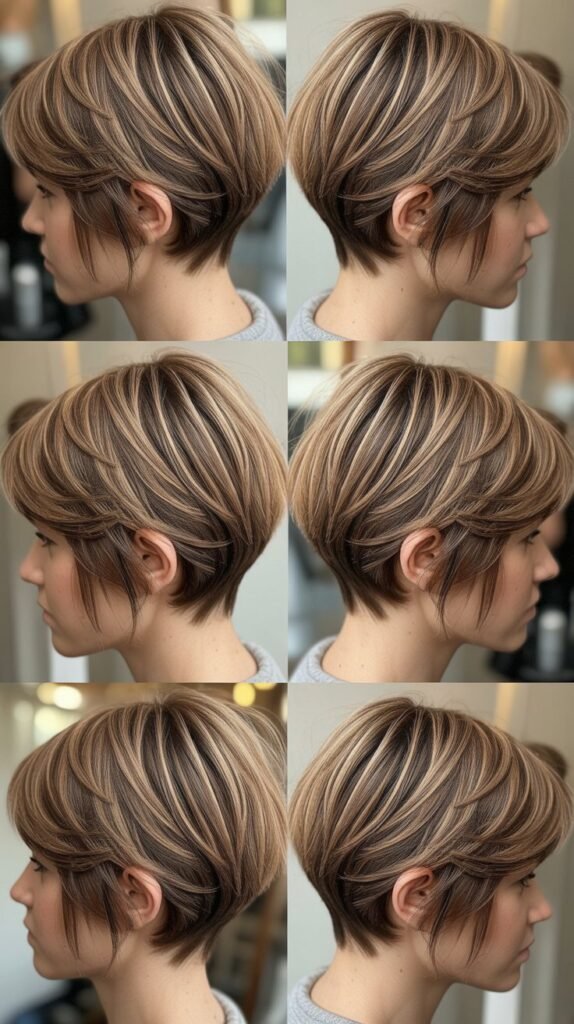
The textured stacked inverted bob with razored ends introduces a softer, more modern approach to the traditional cut by incorporating wispy, feathered ends that add movement and dimension to thin fine hair.
This variation works particularly well for those seeking a less severe, more contemporary aesthetic while still benefiting from the volume-boosting stacked structure.
- Razor cutting creates feathered, tapered ends that remove weight from the perimeter without sacrificing the illusion of thickness.
- The texturizing technique involves using a razor blade or texturizing shears to create micro-layers within each section, which adds internal movement to fine hair.
- This method prevents the hair from clumping together in flat, lifeless sections, instead encouraging individual strands to separate and create dimensional texture.
- The stacked layers in this version are still present but transition more gradually, creating a softer, more blended appearance from back to front.
- The razored ends catch light differently than blunt cuts, creating highlights and lowlights naturally through the varying lengths.
- This cut provides more styling versatility, allowing you to create beachy waves, tousled texture, or smooth sleekness depending on your mood and occasion.
- The textured approach requires slightly less maintenance between cuts, as the grow-out phase appears intentional rather than unkempt.
- Products like texturizing sprays, sea salt sprays, and light mousses work exceptionally well with this cut to enhance the piecey, separated appearance.
3. Asymmetrical Stacked Inverted Bob

The asymmetrical stacked inverted bob takes the traditional structure and adds a bold, edgy twist by creating different lengths on each side of the head, offering a fashion-forward option for those with thin fine hair who want to make a statement.
This dramatic variation draws attention away from hair density concerns and focuses instead on the striking geometric shape and intentional imbalance.
- The asymmetry involves cutting one side significantly shorter than the other, with differences ranging from subtle (1-2 inches) to dramatic (3-4 inches or more).
- The stacking remains concentrated at the back, providing the necessary volume foundation, while the asymmetrical front pieces create visual interest and movement.
- This cut works particularly well for those with naturally off-center parts or cowlicks that create natural directional flow.
- The longer side typically falls at or below chin length, while the shorter side may reach anywhere from ear-level to jawline.
- The dramatic difference in lengths creates an optical illusion that distracts from fine hair texture and focuses attention on the intentional design.
- Styling can emphasize the asymmetry by tucking the shorter side behind the ear while allowing the longer side to fall forward over the face.
- This variation requires commitment, as growing out asymmetrical cuts involves a awkward transition period where the shorter side catches up to the longer side.
- The boldness of this cut pairs exceptionally well with highlights, balayage, or contrasting colors that emphasize the different sections and angles.
4. Choppy Layered Stacked Inverted Bob

The choppy layered stacked inverted bob incorporates deliberate, disconnected layers throughout the cut to create maximum texture, movement, and volume for thin fine hair.
This modern interpretation prioritizes edginess and dimension over the smooth, polished appearance of traditional versions.
- The choppy layers are created by point-cutting and slide-cutting techniques that produce uneven, jagged edges throughout the hairstyle.
- These disconnected sections don’t blend seamlessly like traditional layers, instead creating intentional separation that adds visual interest and perceived thickness.
- The stacking at the back remains the foundation for volume, but the choppy layers extend this fullness throughout the entire cut.
- This technique works particularly well for fine hair because the varying lengths prevent the hair from laying flat against the scalp in uniform sections.
- The layers create pockets of air and space between sections, which dramatically increases the appearance of density and volume.
- Styling involves using texturizing products, root lifters, and sometimes a flat iron or curling wand to emphasize the piecey, separated nature of the layers.
- This cut has a deliberately “undone” quality that makes it perfect for casual, effortless styling while still looking polished and intentional.
- The choppy nature means this cut grows out more gracefully than precise blunt cuts, as the intentional irregularity accommodates slight growth without looking unkempt.
5. Stacked Inverted Bob with Nape Undercut

The stacked inverted bob with nape undercut combines the volume-creating properties of stacking with the dramatic edge of an undercut section at the nape, creating a hybrid style that’s both practical and fashion-forward for thin fine hair.
This variation offers a cooling option for those with thicker napes while emphasizing the stacked volume above.
- The undercut involves using clippers or very close scissors work to remove hair at the nape (back of the neck), typically from the hairline up to where the stacking begins.
- This creates a sharp contrast between the fuller, stacked section above and the skin or very short hair below.
- For thin fine hair, this technique actually makes the stacked portion appear fuller by comparison, creating a more dramatic volume difference.
- The undercut section can be maintained as close-cropped, faded, or even patterned with designs for those wanting extra personalization.
- This style keeps the neck cooler and reduces styling time, as there’s less hair to manage and blow-dry.
- The undercut grows out relatively quickly (requiring maintenance every 3-4 weeks), but this can be managed at home with clippers or during regular salon visits.
- When hair is worn down, the undercut is hidden by the stacked layers above, making it a secret edgy element that can be revealed when desired.
- This variation works exceptionally well for active lifestyles, as the reduced hair at the nape prevents excessive sweating and discomfort during exercise.
6. Graduated Stacked Inverted Bob with Extreme Angle

The graduated stacked inverted bob with extreme angle pushes the traditional inversion to its maximum potential, creating a dramatic difference between the shortest back sections and the longest front pieces.
This bold variation is perfect for those with thin fine hair who want to make a strong style statement while maximizing the volume-creating benefits of stacking.
- The extreme angle typically means the back is cut very short (sometimes as short as 1-2 inches) while the front extends to chin length or below.
- This significant length difference creates a striking geometric shape that becomes the focal point of your overall appearance.
- The graduated stacking at the back is aggressive, with each layer significantly shorter than the one above it, creating a stair-step effect that produces maximum lift and volume.
- This dramatic angling works exceptionally well for thin hair because it redistributes the hair’s weight forward, where it appears fuller and more substantial.
- The back sections require very frequent trims (every 3-4 weeks) to maintain the precise angle and prevent the loss of the dramatic line.
- Styling emphasizes the smooth, sleek nature of the angle, typically requiring a blow dryer with concentrator nozzle and flat iron to perfect the clean lines.
- This cut pairs beautifully with bold colors, ombre effects, or highlights that follow and emphasize the dramatic angled line.
- The extreme version makes a bold fashion statement and works best for those confident in carrying an attention-grabbing hairstyle.
7. Stacked Inverted Bob with Curtain Bangs
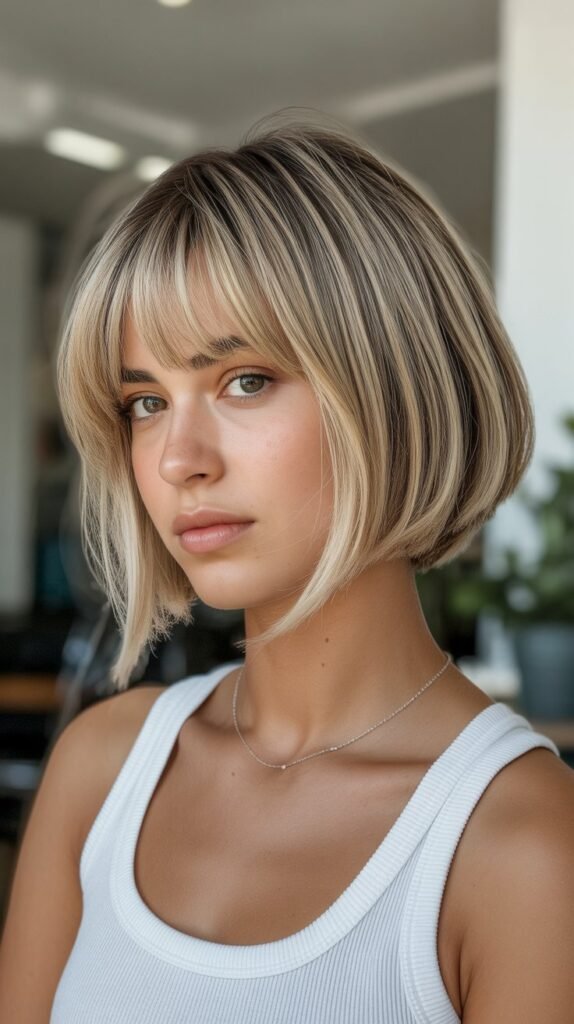
The stacked inverted bob with curtain bangs combines two trending hair elements into one cohesive style that addresses multiple concerns for those with thin fine hair.
The curtain bangs frame the face beautifully while the stacked back provides essential volume and structure.
- Curtain bangs are characterized by their center-parted, face-framing nature that sweeps to either side like opened curtains.
- These bangs are typically longer in the center (at the nose or mid-cheek level) and gradually blend into the longer front sections of the inverted bob.
- For thin fine hair, curtain bangs add facial framing without the heavy commitment of full blunt bangs that can make fine hair look thinner elsewhere.
- The stacking at the back creates the necessary volume foundation while the curtain bangs draw attention forward to the face.
- This combination works exceptionally well for various face shapes, as the adjustable length and angle of curtain bangs can be customized to enhance different features.
- The bangs require regular trimming every 3-4 weeks to maintain their shape, though they grow out more gracefully than blunt bangs.
- Styling involves blow-drying the bangs with a round brush, directing them away from the center part to create the signature curtain sweep.
- This style offers versatility—the bangs can be swept to the side, pinned back, or styled forward depending on the occasion and desired look.
8. Curly Stacked Inverted Bob
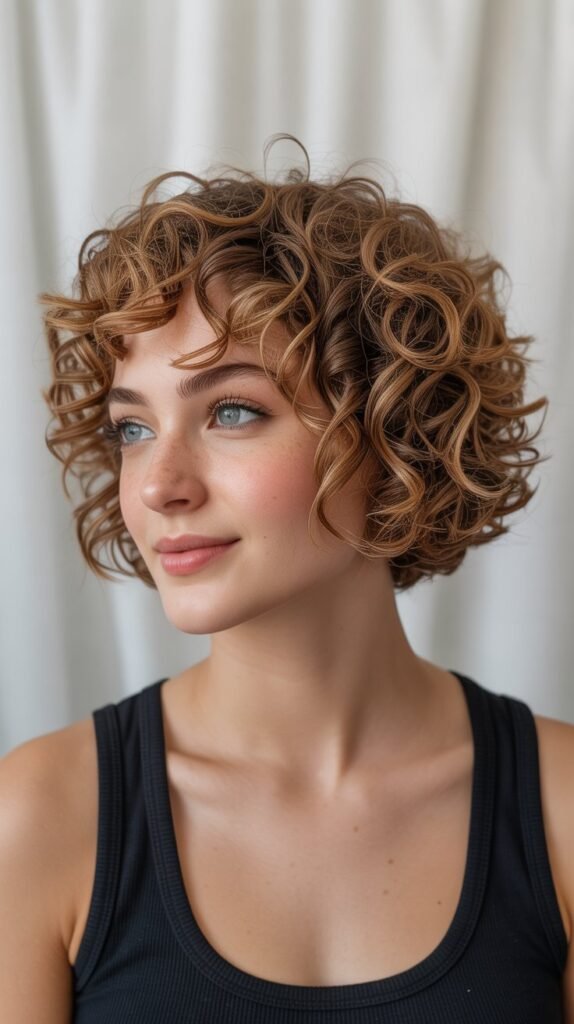
The curly stacked inverted bob proves that this volume-boosting cut isn’t just for straight hair, offering those with naturally curly or permed thin fine hair a structured style that enhances their texture while adding dimension.
This variation requires specialized cutting techniques that account for curl pattern and shrinkage.
- Curly hair should be cut dry or damp (never soaking wet) to accurately assess how the curls will spring up and settle in the final style.
- The stacking in curly hair creates a rounded, voluminous shape that appears even fuller than straight hair versions due to the three-dimensional nature of curls.
- The inverted angle means curls frame the face beautifully while the shorter back prevents the triangular, bottom-heavy shape that can occur with curly hair.
- For thin fine curly hair, this cut maximizes the volume potential by positioning curls at various heights and angles.
- The layers must be carefully placed to avoid creating frizzy, disconnected sections that can occur when curly hair is over-layered.
- Curl-specific products like leave-in conditioners, curl creams, and anti-frizz serums are essential for maintaining definition and preventing the dry, frizzy appearance.
- This cut requires less frequent trimming than straight versions (every 8-12 weeks) because the curl pattern disguises some of the growth.
- The styling process focuses on enhancing natural curl pattern through scrunching, diffusing, and proper product application rather than fighting against the texture.
9. Stacked Inverted Bob with Side-Swept Bangs
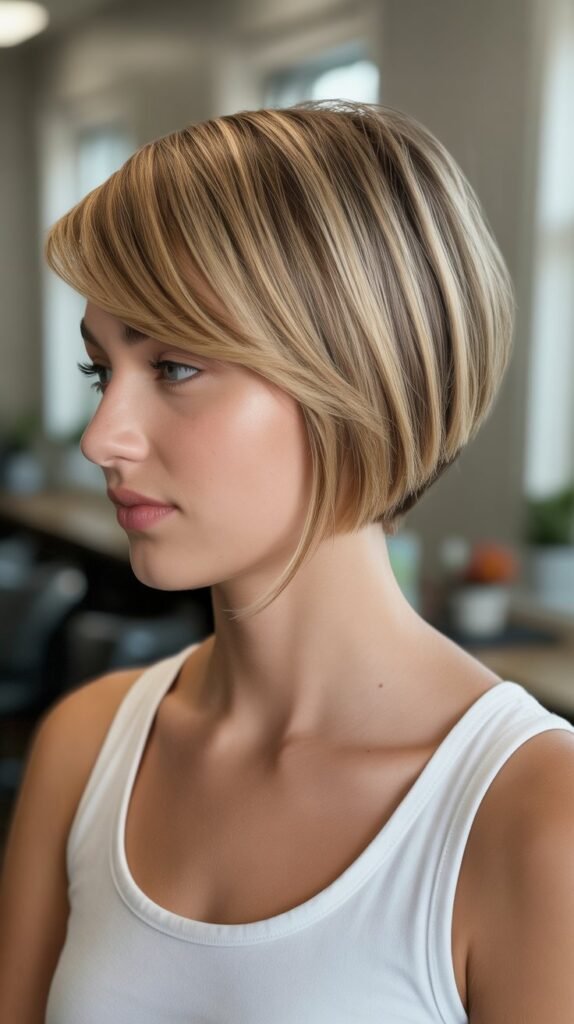
The stacked inverted bob with side-swept bangs offers a softer, more romantic alternative to center-parted or straight-across bangs, providing asymmetrical interest while maintaining the volume benefits of stacking for thin fine hair.
This classic combination never goes out of style and flatters most face shapes.
- Side-swept bangs are cut at an angle, longer on one side than the other, creating a diagonal line across the forehead.
- These bangs naturally fall to one side, creating asymmetry that draws the eye and adds visual interest to the overall style.
- For thin fine hair, side-swept bangs add coverage and dimension to the front without the weight and density requirements of full blunt bangs.
- The stacked back provides the necessary volume foundation while the sweeping bangs create movement and softness around the face.
- This style is particularly flattering for those with prominent foreheads, as the diagonal line of the bangs provides coverage while still showing some skin.
- The bangs can be styled various ways—swept heavily to one side, softly blown across, or even pinned back when desired.
- Maintenance requires trimming every 4-6 weeks to prevent the bangs from growing too long and losing their sweeping shape.
- This combination works well with both straight and slightly wavy hair textures, as the side-swept nature accommodates natural movement.
10. Micro-Stacked Inverted Bob
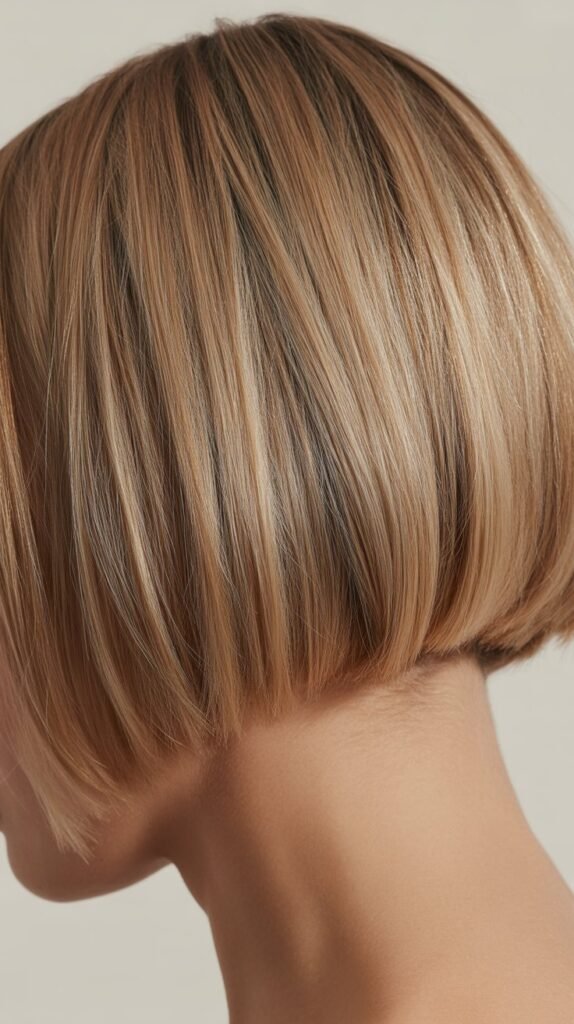
The micro-stacked inverted bob features very subtle, gradual stacking that creates volume without the dramatic rounded shape of traditional stacking, offering a more conservative option for those with thin fine hair who want added fullness with a natural appearance.
This refined version suits professional environments and those preferring understated elegance.
- The micro-stacking involves creating very small incremental differences between each layer, typically only 1/8 to 1/4 inch between sections.
- This gradual progression creates a subtle lift and volume that appears more natural and less structured than aggressive stacking.
- For thin fine hair, this technique provides essential volume without creating the “helmet head” appearance that can occur with extreme stacking.
- The inverted angle remains but is also more subtle, with less dramatic difference between back and front lengths.
- This conservative approach makes the cut more versatile for various settings, from corporate offices to formal events.
- The micro-stacking grows out more gracefully than dramatic versions, extending the time between necessary cuts to 6-8 weeks.
- Styling is simpler and faster, as the subtle nature of the cut doesn’t require extensive blow-drying or precise product placement.
- This version works particularly well for those transitioning from longer hair who want to maintain some length while adding volume.
11. Stacked Inverted Bob with Balayage Highlights
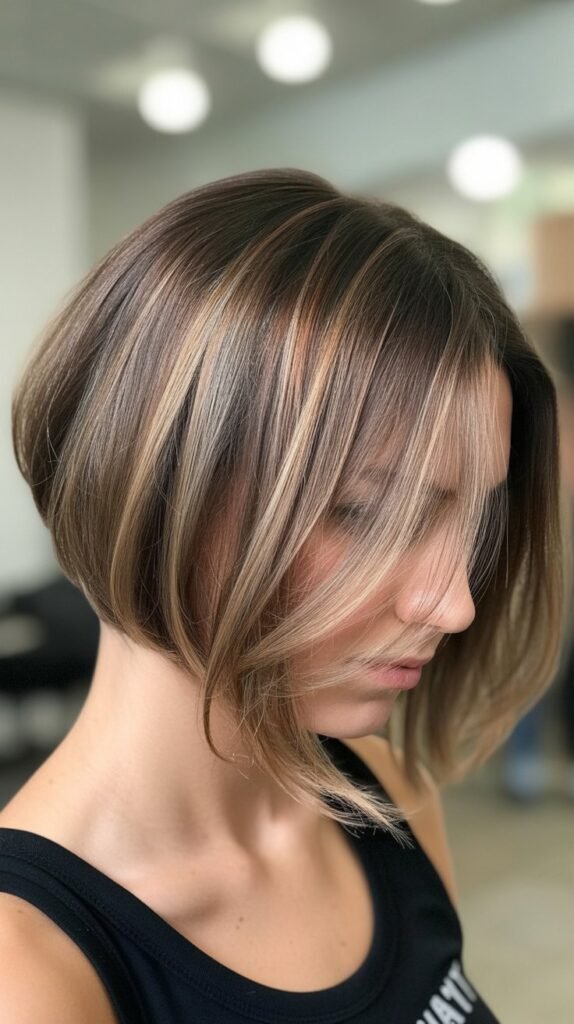
The stacked inverted bob with balayage highlights combines structural volume with color dimension, creating a multi-faceted approach to making thin fine hair appear fuller and more substantial.
The hand-painted highlights follow the natural contours of the cut, emphasizing the stacking and angles.
- Balayage involves hand-painting highlights onto the hair in sweeping motions, creating a natural, sun-kissed appearance that grows out softly.
- For stacked inverted bobs, the highlights are strategically placed to emphasize the graduated layers and create depth perception.
- Lighter pieces are typically concentrated at the crown and throughout the stacked section, where light reflection creates the illusion of more volume.
- The dimensional color prevents thin fine hair from appearing flat and one-dimensional, as the varying tones create shadows and highlights that mimic thickness.
- The inverted angle is enhanced by placing lighter pieces along the forward-facing lengths, drawing the eye toward the longer front sections.
- Balayage requires less maintenance than traditional foil highlights, as the grow-out is intentionally blended and natural-looking (lasting 12-16 weeks between appointments).
- The color technique works with various base colors, from subtle caramel on brunettes to platinum ribbons on blondes.
- This combination of cut and color creates a premium, salon-fresh appearance that significantly elevates the overall look of thin fine hair.
12. Disconnected Stacked Inverted Bob

The disconnected stacked inverted bob features intentionally separated layers that don’t blend into each other, creating a modern, edgy appearance with exceptional texture and movement for thin fine hair.
This avant-garde variation pushes the boundaries of traditional bob styling.
- Disconnection refers to the technique of creating distinct sections of hair at different lengths without gradual blending between them.
- This creates visible “steps” or sections throughout the cut, with each layer maintaining its individual identity rather than melting into the next.
- For thin fine hair, this technique maximizes volume by creating multiple levels at which hair can stack upon itself.
- The stacked back features these disconnected sections most prominently, creating a architectural, structured appearance.
- The inverted angle is emphasized by the disconnection, as the length progression from back to front becomes more noticeable.
- This cut requires advanced styling skills and products to emphasize the separated nature, including texturizing sprays, pomades, and sometimes strategic blow-drying.
- The modern, fashion-forward appearance makes this ideal for creative professionals, artists, or those in trendy urban environments.
- Maintenance requires precise cutting from experienced stylists who understand disconnection techniques, typically every 5-7 weeks.
13. Stacked Inverted Bob with Baby Bangs

The stacked inverted bob with baby bangs creates a retro-inspired, fashion-forward look that combines the volume benefits of stacking with the bold statement of very short, above-eyebrow bangs.
This daring combination works surprisingly well for those with thin fine hair who want maximum impact.
- Baby bangs (also called micro bangs) are cut significantly shorter than traditional bangs, typically ending 1-2 inches above the eyebrows.
- These ultra-short bangs create a striking contrast with the longer front sections of the inverted bob, emphasizing the length difference.
- For thin fine hair, baby bangs work well because they require minimal hair from the top section, leaving more density for the main body of the cut.
- The stacked back provides essential volume while the baby bangs draw all attention forward to the eyes and facial features.
- This combination creates a vintage-modern aesthetic reminiscent of 1960s mod styles updated for contemporary tastes.
- Baby bangs require frequent trims (every 2-3 weeks) to maintain their ultra-short length and prevent them from growing into regular bangs.
- This bold choice isn’t for everyone and requires confidence to carry the attention-grabbing look.
- The styling is relatively simple—baby bangs typically lie flat naturally, while the rest of the cut follows standard stacked bob styling techniques.
14. Soft Stacked Inverted Bob with Waves
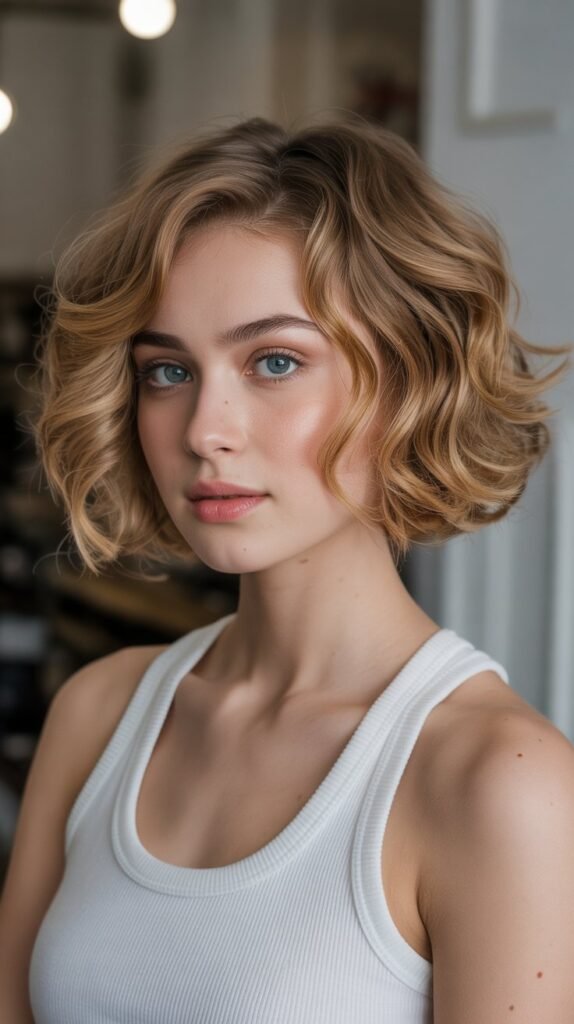
The soft stacked inverted bob with waves transforms the typically sleek structure into a romantic, textured style that adds dimension and movement to thin fine hair.
This styling variation proves that stacked bobs can be versatile beyond straight, smooth finishes.
- Soft waves are created using various tools including curling irons, wands, hot rollers, or braiding techniques followed by heat application.
- The waves add horizontal volume to complement the vertical volume created by the stacking, maximizing the fullness appearance.
- For thin fine hair, waves create the illusion of density by causing individual strands to separate and take up more space.
- The stacked structure provides a foundation that prevents waves from falling flat at the roots, maintaining lift and body.
- The inverted angle looks beautiful when waved, as the longer front pieces can be styled into loose, face-framing curls.
- This styling approach works for both casual and formal occasions, offering versatility from beachy waves to elegant vintage curls.
- Products like sea salt spray, curl-enhancing mousse, and flexible hold hairspray maintain the waves without weighing down fine hair.
- The waves can be refreshed on second and third days with dry shampoo and a curling wand touch-up, extending the style’s longevity.
15. Stacked Inverted Bob with Shaved Side Design
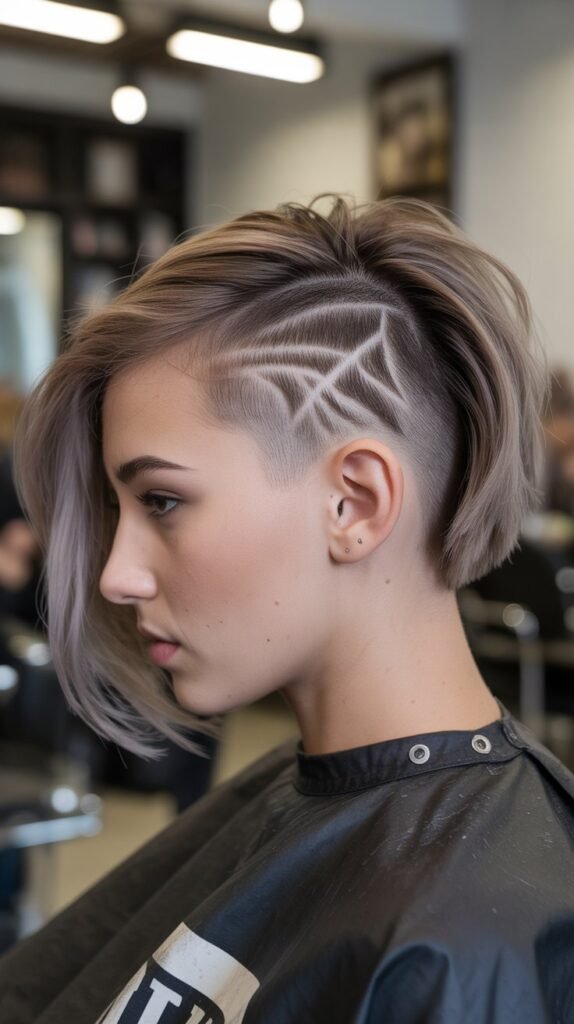
The stacked inverted bob with shaved side design takes edginess to the next level by incorporating artistic clipper work on one or both sides, creating a dramatic contrast with the fuller stacked crown and maintaining manageability for thin fine hair.
This punk-inspired variation makes a bold personal statement.
- The shaved side involves using clippers to remove hair from temple to ear on one or both sides, creating bare or very short sections.
- These shaved areas can feature patterns, lines, geometric designs, or simply be faded gradually for a clean aesthetic.
- For thin fine hair, removing hair from the sides actually makes the top and back appear fuller by comparison and reduces the overall hair mass to manage.
- The stacked volume at the crown becomes even more dramatic when contrasted with the shaved sides.
- This style can be worn two ways—with the fuller sections covering the shaved areas for a more conservative look, or swept back/pinned to reveal the shaved design.
- The shaved sections require frequent maintenance (every 2-3 weeks) to keep the design crisp and prevent fuzzy grow-out.
- This bold choice suits creative individuals, performers, or those in environments where unconventional appearance is accepted or celebrated.
- The grow-out process is lengthy if you decide to change the style, requiring several months to a year for the shaved sections to catch up.
16. Graduated Bob with Heavy Stacking

The graduated bob with heavy stacking emphasizes the back volume to an extreme degree, creating a pronounced rounded shape that dramatically transforms thin fine hair into a full, voluminous style.
This variation prioritizes back volume above all other considerations.
- Heavy stacking involves creating very short layers at the nape that progressively lengthen dramatically as they move toward the crown.
- This aggressive graduation creates a pronounced bump or rounded shape at the back of the head, similar to a 1960s beehive in silhouette.
- For thin fine hair, this technique provides maximum volume where it’s often most needed—at the crown and back, where hair tends to lie flattest.
- The graduation typically spans 3-5 inches of length difference between the shortest nape layer and the crown length.
- This creates a stair-step effect that’s visible in profile, clearly showing each layer sitting atop the one below.
- The front sections maintain moderate length (typically chin-level) while the back is significantly shorter and fuller.
- Styling requires directing airflow upward during blow-drying to maximize the lift, often using a round brush under each stacked section.
- This dramatic version makes a strong style statement and works best for those wanting maximum impact and don’t mind frequent salon visits.
17. Stacked Inverted Bob with Root Perm

The stacked inverted bob with root perm combines chemical texture with strategic cutting to create long-lasting volume for thin fine hair that holds throughout the day and between washes
This technical approach addresses the common problem of fine hair falling flat shortly after styling.
- Root perms (also called spot perms) involve applying permanent wave solution only to the first 1-2 inches of hair at the scalp, creating lasting lift.
- This chemical volume works synergistically with the stacked structure, as both elements focus on creating height at the crown and back.
- For thin fine hair, root perms provide the foundation volume that manual styling alone can’t always achieve or maintain.
- The permed roots prevent the stacked layers from falling flat against the scalp, maintaining the cut’s intended shape throughout the day.
- This combination significantly reduces daily styling time, as the chemical lift does much of the volumizing work automatically.
- Root perms last 2-4 months before requiring renewal, providing long-term volume solution between chemical services.
- The technique must be performed carefully to avoid over-processing fine hair, which can lead to breakage or damage.
- Styling remains simple—blow-drying with fingers running through the roots is often sufficient, as the perm provides the necessary lift.
18. Pixie-Bob Hybrid with Stacking
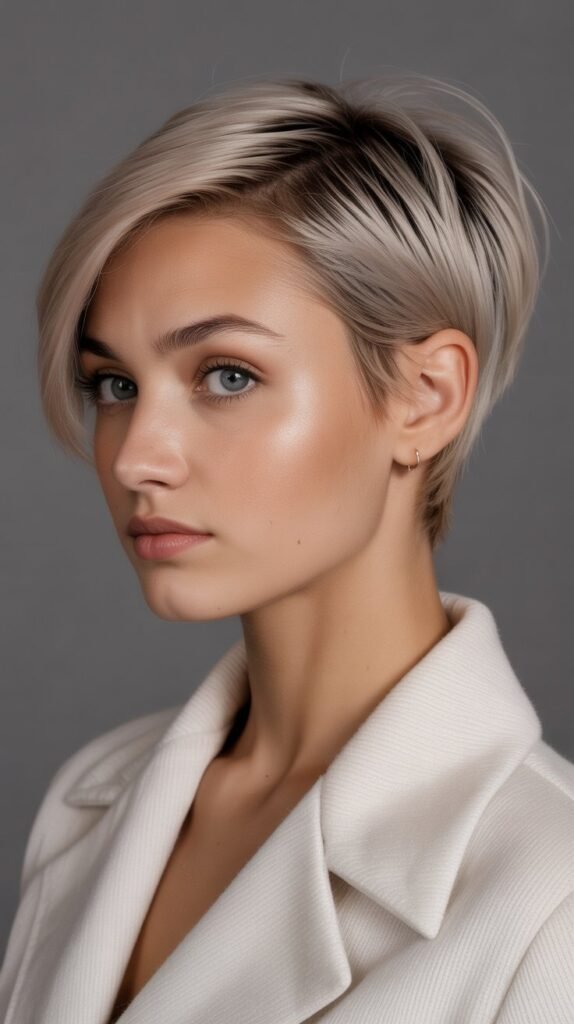
The pixie-bob hybrid with stacking merges two popular short styles into one innovative cut that offers the ease of a pixie with the structure of a bob, ideal for thin fine hair that benefits from both cutting approaches.
This modern fusion creates a unique, personalized appearance.
- The pixie elements include very short sides and back (typically 1-3 inches) with textured, choppy layers throughout.
- The bob elements maintain slightly longer front sections that can reach ear or jaw length, preserving some of the inverted angle.
- The stacking occurs primarily at the crown and occipital area, creating volume in the transitional zone between the pixie back and bob front.
- For thin fine hair, this combination maximizes volume by removing excess weight while maintaining enough length in strategic areas to create shape.
- This hybrid offers exceptional versatility—it can be styled sleek and polished for professional settings or tousled and textured for casual occasions.
- The maintenance schedule falls between pixie (every 3-4 weeks) and bob (every 5-6 weeks) requirements, typically needing attention every 4-5 weeks.
- This cut works particularly well for active lifestyles, as it dries quickly and requires minimal product and styling time.
- The transition between pixie and bob sections should be carefully blended to avoid harsh disconnection unless intentional edginess is desired.
19. Stacked Inverted Bob with Ombre Color
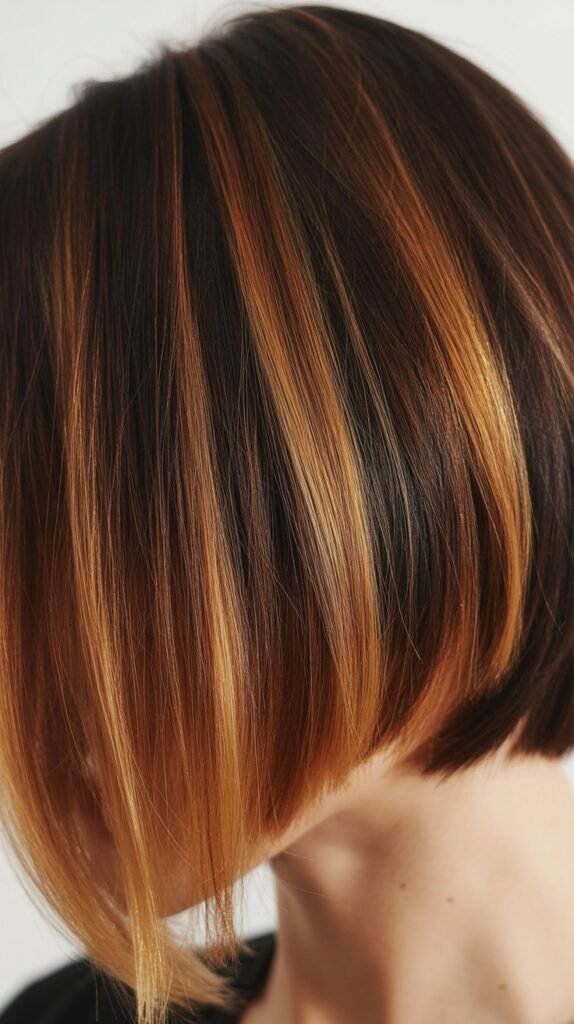
The stacked inverted bob with ombre color combines graduated cutting with graduated color, creating a harmonious visual flow from darker roots to lighter ends that enhances the perception of volume and dimension in thin fine hair.
This dual-gradient approach maximizes visual interest.
- Ombre color transitions from one shade at the roots to a distinctly different shade at the ends, typically darker to lighter.
- For stacked inverted bobs, the ombre transition often begins at the occipital bone, where the stacking is most pronounced.
- The lighter ends draw attention forward to the longest, most visible sections of the inverted bob, emphasizing the face-framing pieces.
- This color technique creates depth perception that makes thin fine hair appear to have more layers and dimension than it actually possesses.
- The graduated color mirrors the graduated cut, with both elements working together to create visual interest and movement.
- Ombre grows out gracefully, requiring minimal maintenance (every 12-16 weeks) as the intentional dark-to-light transition disguises root growth.
- Popular ombre combinations include brunette to caramel, black to ash blonde, or auburn to copper, depending on natural base color.
- The striking color change becomes a focal point that distracts from hair density concerns and instead highlights the intentional design.
20. Blunt Stacked Inverted Bob with Middle Part

The blunt stacked inverted bob with middle part offers a symmetrical, balanced approach that frames the face evenly while providing the volume benefits of stacking for thin fine hair.
This classic variation suits various face shapes and professional environments.
- The middle part creates a clean, precise line down the center of the head, dividing the hair into equal left and right sections.
- Blunt cutting around the perimeter maintains sharp edges that make thin hair appear thicker and more substantial.
- The stacking at the back provides essential volume while the symmetrical front sections frame the face in balanced proportions.
- For thin fine hair, the middle part allows maximum visibility of the stacked volume at the crown, where lift is most beneficial.
- This styling approach works particularly well for those with symmetrical facial features and proportionate face shapes.
- The blunt edges require regular maintenance (every 4-6 weeks) to prevent the softening and thinning that occurs as fine hair grows.
- Styling involves blow-drying both sides away from the center part to create symmetrical volume and movement.
- This timeless look suits professional environments, formal occasions, and those preferring classic, refined aesthetics over trendy variations.
21. Stacked Inverted Bob with Undercut Pattern
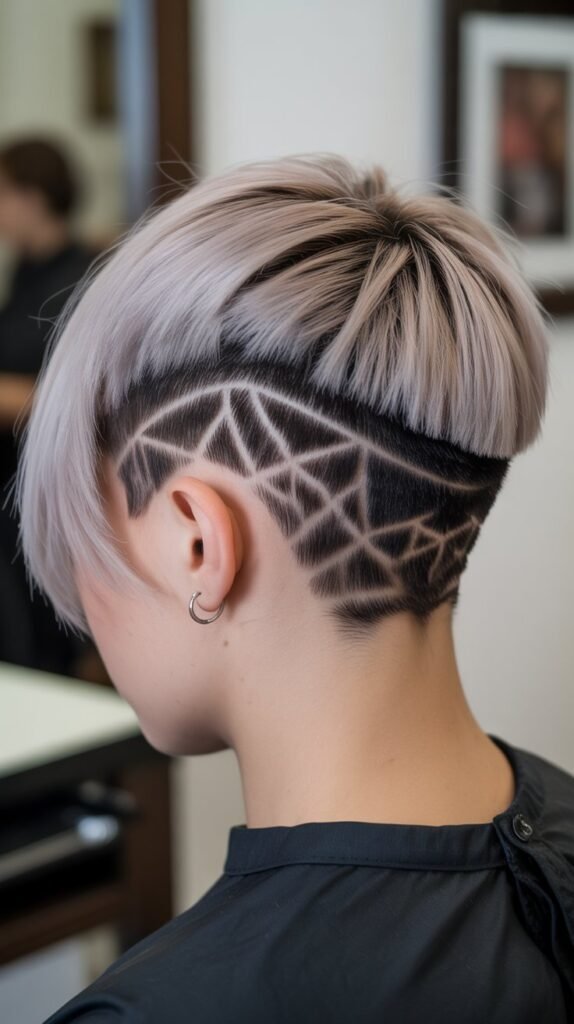
The stacked inverted bob with undercut pattern elevates the standard undercut by incorporating intricate designs, lines, or geometric shapes into the shaved section, creating wearable art that complements the fuller stacked crown and works with thin fine hair’s reduced density.
This artistic variation expresses personality and creativity.
- Undercut patterns are created using clippers with various guard sizes and artistic precision to etch designs into the shaved section.
- Common patterns include geometric lines, stars, flowers, tribal designs, or personalized symbols meaningful to the wearer.
- For thin fine hair, the pattern draws attention to the artistic element rather than hair density, shifting focus to intentional design.
- The stacked volume above the pattern becomes even more dramatic by contrast, creating a tiered effect of fullness above and design below.
- These patterns can be hidden when hair is worn down or revealed when styled up, offering versatility in professional versus casual settings.
- The patterns require frequent maintenance (every 2-3 weeks) as they blur and disappear as the shaved hair grows.
- This bold choice works well for creative individuals, performers, younger demographics, or those in progressive work environments.
- The pattern can be changed or refreshed at each maintenance appointment, allowing for ongoing creative expression.
22. Stacked Inverted Bob with Face-Framing Layers

The stacked inverted bob with face-framing layers incorporates strategic layering around the face to soften the look and add dimension specifically where it frames the facial features, while maintaining the volume benefits of stacking for thin fine hair. This flattering variation enhances facial features while addressing the unique challenges of fine hair texture.
- Face-framing layers are cut shorter around the face, typically starting at cheekbone or chin level and gradually blending into the longer front sections.
- These layers create movement and softness that draw attention to the eyes, cheekbones, and jawline, enhancing natural facial structure.
- For thin fine hair, face-framing layers add dimension without removing excessive weight from the overall style, maintaining the appearance of fullness.
- The stacked back continues to provide essential volume while the face-framing pieces create forward interest and distract from the back sections.
- This technique works exceptionally well for various face shapes—shorter layers can widen narrow faces while longer layers can elongate round faces.
- The layers can be styled multiple ways: blown smooth for sleek sophistication, curled under for classic elegance, or flipped out for playful dimension.
- Products like lightweight serums and texture sprays enhance the face-framing layers without weighing down the fine hair.
- Maintenance requires attention to both the stacked back (every 5-6 weeks) and the face-framing pieces, which may need trimming every 4-5 weeks to maintain their shape.
23. Stacked Inverted Bob with Deep Side Part
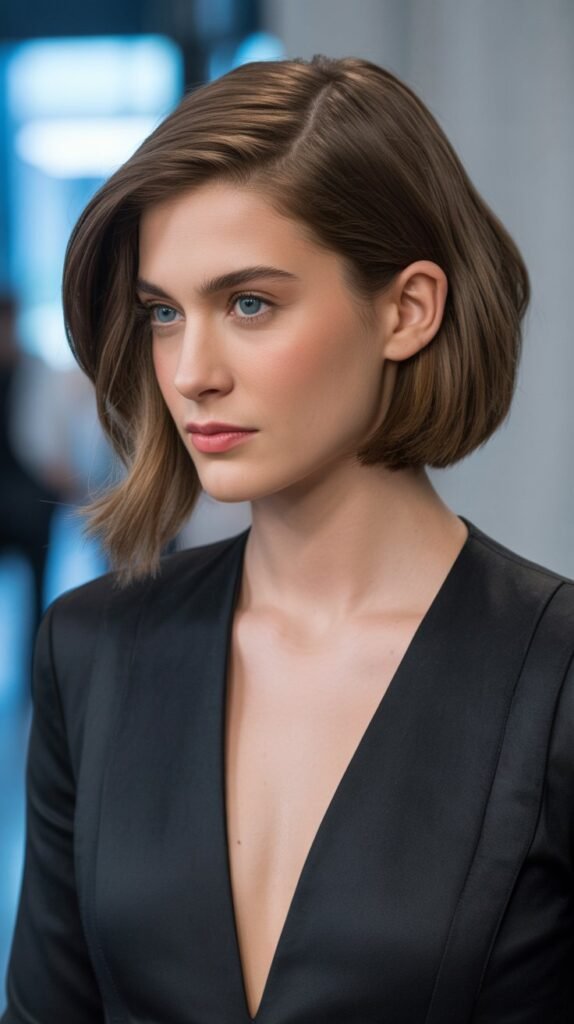
The stacked inverted bob with deep side part creates dramatic asymmetry by shifting the part significantly off-center, adding instant volume on one side while creating sleek, swept drama on the other—an effective technique for maximizing the appearance of fullness in thin fine hair
. This styling choice transforms the entire look without changing the cut itself.
- A deep side part is positioned 2-3 inches away from the center, creating unequal distribution of hair between the two sides.
- The heavier side (with more hair) naturally gains volume and presence, appearing fuller and more substantial than center-parted versions.
- For thin fine hair, this asymmetrical distribution creates the illusion of density by concentrating hair mass predominantly on one side.
- The stacked back provides foundation volume while the deep part adds directional interest and dimension to the overall style.
- The swept-over side creates Hollywood glamour reminiscent of classic screen sirens, adding sophistication and elegance.
- This styling technique can be alternated—switching the deep part from left to right occasionally prevents hair from developing permanent part lines.
- Root-lifting products applied at the part line enhance the volume on the fuller side while volumizing spray on the swept side prevents flatness.
- The deep side part works beautifully for special occasions, professional presentations, or any time you want to elevate the standard stacked bob appearance.
24. Stacked Inverted Bob with Crown Layers

The stacked inverted bob with crown layers concentrates additional layering specifically at the crown area to maximize height and volume where thin fine hair typically falls flattest.
This targeted approach addresses the most problematic area for those with fine hair while maintaining the structure of the inverted bob.
- Crown layers are shorter pieces cut specifically at the highest point of the head, creating lift that radiates outward from the center.
- These layers are typically 2-4 inches shorter than the surrounding hair, creating a dramatic height difference that produces volume.
- For thin fine hair, crown layers solve the common problem of flat, lifeless roots by creating natural lift through the shorter length’s spring and bounce.
- The stacked structure in the back complements the crown layers, creating a comprehensive volume solution from multiple angles.
- These layers can be styled with root-lifting products and blow-dried upward to maximize their height-creating potential.
- The crown layers grow out relatively gracefully, as their intended purpose is to create height even as they lengthen slightly between cuts.
- This variation works particularly well for those with cowlicks or natural hair whorls at the crown, as the shorter layers work with rather than against these growth patterns.
- Maintenance focuses on keeping the crown layers at their optimal length (every 5-6 weeks) while the rest of the cut follows standard bob maintenance schedules.
25. Stacked Inverted Bob with Peekaboo Highlights

The stacked inverted bob with peekaboo highlights incorporates hidden color underneath the top layers that reveals itself with movement, creating surprise dimension and visual interest that distracts from thin fine hair density concerns.
This playful color technique adds depth without overwhelming the overall look.
- Peekaboo highlights are placed on the underlayers—sections that are typically hidden when hair is styled normally but revealed with movement or when styled up.
- These hidden highlights can be bold, contrasting colors (like pink, purple, or blue) or more subtle tones that complement the base color.
- For thin fine hair, peekaboo placement concentrates color in the stacked back sections, where the graduated layers naturally create reveal-and-conceal effects.
- The technique adds dimension to the back view, which is often the most visible angle of a stacked bob and can appear one-dimensional on fine hair.
- This approach offers versatility—conservative when worn down for professional settings, fun and edgy when styled to reveal the hidden colors.
- Peekaboo highlights require less frequent maintenance than traditional highlights (every 8-12 weeks) since root growth is less noticeable on underlayers.
- The color placement follows the stacked structure, emphasizing the graduated layers and creating visual interest in the architectural shape.
- This technique is ideal for those wanting to experiment with color without full commitment to an obvious, all-over dye job.
26. Voluminous Stacked Inverted Bob with Teasing

The voluminous stacked inverted bob with teasing takes the natural volume of stacking and amplifies it through backcombing techniques, creating maximum fullness for thin fine hair that needs extra height and presence.
This styling approach is perfect for special occasions or those who want dramatic impact.
- Teasing (also called backcombing or ratting) involves combing hair backward toward the scalp to create tangles that add volume and height.
- For stacked bobs, teasing is concentrated at the crown and through the stacked sections, building upon the existing structural volume.
- This technique can double or triple the apparent volume of thin fine hair, creating a dramatically fuller appearance.
- The stacking provides the foundation while teasing creates the amplified dimension, with both techniques working synergistically.
- Proper teasing requires starting with clean, dry hair and working in small sections to create controlled volume rather than messy tangles.
- Products like volumizing powder, texturizing spray, and strong-hold hairspray maintain the teased volume throughout the day or evening.
- The teased sections are smoothed over with a top layer of untreated hair, creating a polished exterior while hiding the teasing underneath.
- This styling approach is removable—washing returns hair to its natural state, making it ideal for temporary transformation for special events.
27. Stacked Inverted Bob with Tapered Nape

The stacked inverted bob with tapered nape features a gradual reduction in length at the nape area rather than a blunt line, creating a softer, more natural appearance while maintaining the volume benefits of stacking for thin fine hair.
This refined technique offers a compromise between edgy and conservative styling.
- Tapering involves gradually shortening the hair at the nape so it blends seamlessly into the hairline rather than ending abruptly.
- This creates a softer, more feminine appearance compared to blunt-cut napes or undercuts, while still removing weight from the bottom.
- For thin fine hair, the tapered nape reduces bulk at the heaviest point while directing attention upward to the fuller stacked sections.
- The graduation creates a gentle fade effect from the shortest hairs at the hairline upward to the beginning of the stacked layers.
- This technique works particularly well for those with longer, thicker nape hair who want a cleaner appearance without the commitment of an undercut.
- The tapered section requires maintenance every 4-5 weeks to prevent it from growing out into a blunt, thick nape line.
- Styling focuses on the stacked volume above while the tapered nape maintains a clean, finished appearance from all angles.
- This variation bridges traditional and modern aesthetics, offering updated styling without extreme edginess.
28. Stacked Inverted Bob with Wispy Ends

The stacked inverted bob with wispy ends softens the entire look through point-cutting and thinning techniques that create feathery, delicate tips, particularly effective for thin fine hair that can appear too blunt or heavy with traditional cutting methods.
This approach emphasizes lightness and movement.
- Wispy ends are created using point-cutting, where scissors cut into the hair at an angle rather than straight across, creating irregular, feathered tips.
- Thinning shears may also be used sparingly on the very ends to remove density and create separation between individual strands.
- For thin fine hair, wispy ends prevent the clumpy, heavy appearance that can make hair look both thin and unflattering simultaneously.
- The stacked structure provides volume at the roots and crown while the wispy ends add movement and dimension at the perimeter.
- This technique creates an airy, effortless appearance that moves naturally and catches light beautifully due to the varied lengths.
- The wispy nature means this cut grows out more gracefully than blunt versions, as the intentional irregularity accommodates slight growth.
- Styling products should be lightweight—heavy creams or gels will weigh down and clump the wispy ends, defeating their purpose.
- This variation works exceptionally well for those seeking a romantic, soft, feminine aesthetic rather than sharp, structured styling.
29. Stacked Inverted Bob with Finger Wave Details

The stacked inverted bob with finger wave details incorporates vintage styling techniques from the 1920s-30s era, creating S-shaped curves and ridges that add texture and dimension to thin fine hair while maintaining the modern structure of stacking.
This retro-inspired approach offers unique, eye-catching styling.
- Finger waves are created using setting lotion, fingers, and a comb to mold wet hair into S-shaped patterns that set as the hair dries.
- These sculptural waves add texture and dimension that makes thin fine hair appear fuller through the three-dimensional wave pattern.
- For stacked inverted bobs, finger waves are typically placed on the sides and front sections, where they’re most visible and create facial framing.
- The stacked back provides structural volume while the finger waves add artistic, decorative interest to the visible sections.
- This styling technique requires practice and skill but creates a stunning, vintage-glamour appearance perfect for special occasions.
- The waves can be set with pins or clips and dried naturally or under a hooded dryer, lasting several days with proper maintenance.
- Products like strong-hold setting lotion and finishing spray maintain the crisp, defined nature of finger waves throughout wear.
- This dramatic styling makes a bold statement and works particularly well for themed events, vintage photo shoots, or those who appreciate old Hollywood glamour.
30. Stacked Inverted Bob with Lived-In Texture

The stacked inverted bob with lived-in texture embraces a deliberately undone, effortless aesthetic that appears naturally tousled and imperfect, working exceptionally well for thin fine hair by disguising the precision of the cut and creating organic movement.
This low-maintenance approach appeals to those seeking casual, modern styling.
- Lived-in texture refers to styling that appears effortlessly undone, as if you’ve been wearing the style for several hours and it’s naturally settled.
- This is achieved through techniques like air-drying, scrunching with texturizing products, and avoiding overly structured blow-drying or flat-ironing.
- For thin fine hair, the deliberately imperfect texture creates visual interest and dimension that perfect, smooth styling doesn’t provide.
- The stacked structure provides the necessary volume foundation while the textured styling adds casual, contemporary appeal.
- This approach works with natural hair texture—slight waves or bends are enhanced rather than eliminated, creating authentic movement.
- Products like sea salt spray, dry texture spray, and lightweight styling creams create the piecey, separated appearance without stiffness.
- The beauty of lived-in texture is its longevity—second and third-day hair often looks better as natural oils add texture and separation.
- This styling philosophy prioritizes ease and natural beauty over perfection, making it ideal for busy lifestyles and those who dislike extensive styling routines.
31. Stacked Inverted Bob with Dimensional Lowlights
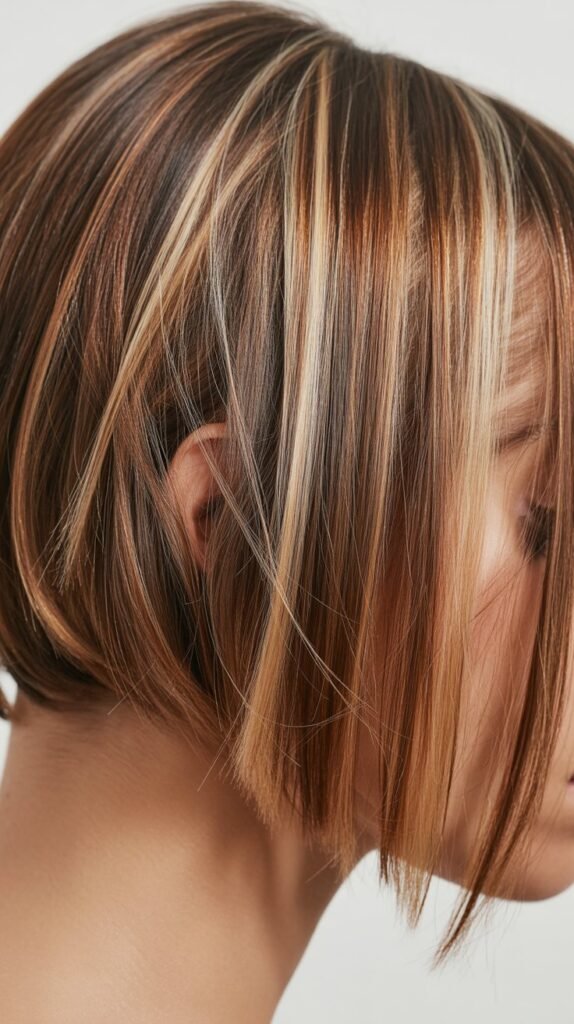
The stacked inverted bob with dimensional lowlights adds depth and richness through strategically placed darker tones that create shadow and dimension, making thin fine hair appear fuller through color contrast and visual depth.
This technique complements the structural volume of stacking with color-based dimension.
- Lowlights are darker sections of color woven through the hair, creating contrast with the base color or existing highlights.
- For stacked inverted bobs, lowlights are placed strategically in the underlayers and throughout the stacked sections to create depth perception.
- The darker tones create shadows that make the lighter sections appear more prominent, creating dimension that mimics the appearance of thicker hair.
- This color technique works synergistically with the graduated layers—darker underlayers make upper layers appear to lift and separate more dramatically.
- Lowlights add richness to the overall color while preventing the flat, one-dimensional appearance common with single-process color on fine hair.
- The dimensional color requires less maintenance than highlights alone, as lowlights grow out gracefully and often improve with time.
- Popular lowlight combinations include chocolate tones in caramel hair, deep burgundy in auburn hair, or ash tones in platinum blonde.
- This sophisticated color approach works well for professional environments and those seeking polished, salon-quality appearance.
32. Stacked Inverted Bob with Textured Crown
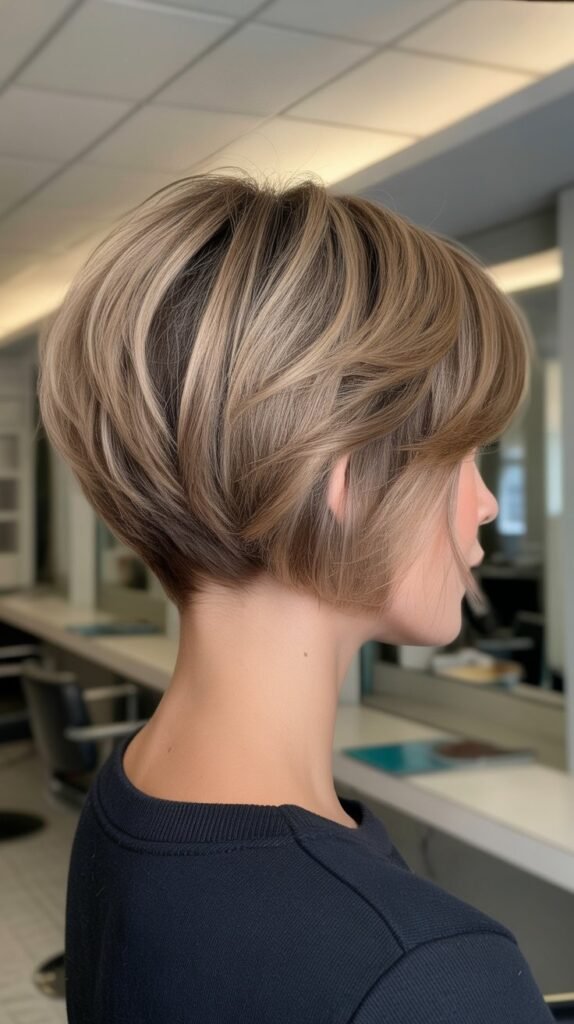
The stacked inverted bob with textured crown focuses specifically on creating choppy, piecey texture at the very top of the head, addressing the flat-crown problem common in thin fine hair while maintaining smoother styling through the rest of the cut.
This targeted approach maximizes volume where it matters most.
- Textured crown styling involves point-cutting, razoring, or slide-cutting the top sections to create irregular, separated pieces.
- These textured pieces stand up and away from the scalp more easily than blunt-cut sections, creating natural lift and volume.
- For thin fine hair, concentrating texture at the crown solves the primary volume challenge without making the entire style appear overly choppy.
- The stacked back works in harmony with the textured crown, creating comprehensive volume from roots through mid-lengths.
- Styling focuses on enhancing the textured crown pieces with root-lifting products and upward blow-drying techniques.
- The rest of the hair can be styled smoothly to contrast with the textured crown, or additional texture can be added throughout for cohesive styling.
- This technique works particularly well for those with stubborn flat crowns or cowlicks that resist traditional styling.
- Maintenance requires attention to the textured crown sections every 5-6 weeks to maintain the irregular lengths that create the volume effect.
33. Stacked Inverted Bob with Soft A-Line

The stacked inverted bob with soft A-line combines two complementary cutting techniques—stacking for volume and A-line for elegant forward angle—creating a sophisticated style that flatters thin fine hair through both structure and shape.
This refined variation offers timeless elegance with modern volume.
- A-line refers to a cutting angle where the hair gradually lengthens from back to front when viewed from the side, creating an “A” shape.
- The soft version features a gentle, gradual angle rather than dramatic length difference, creating subtle sophistication.
- For thin fine hair, the A-line draws the eye forward along the angled line, directing attention to the longer, more visible front sections.
- The stacked back provides essential volume while the A-line creates elegant movement and flow from back to front.
- This combination creates a polished, professional appearance suitable for corporate environments and formal occasions.
- The gentle angle is easier to maintain than extreme inversions, requiring trims every 6-7 weeks to preserve the shape.
- Styling emphasizes smooth, sleek finish that showcases the clean lines and elegant angle of the cut.
- This classic approach works across age ranges and professional contexts, offering versatility and timeless appeal.
Essential Products for Stacked Inverted Bob Success
For Volume Enhancement:
- Root-lifting sprays applied before blow-drying maximize the stacking’s volume potential
- Volumizing mousses create foundation lift that supports the stacked structure throughout the day
- Dry texture sprays refresh and revive volume on second and third-day hair
- Volumizing powders applied directly at roots create instant lift for special occasions
For Hold and Structure:
- Medium-hold hairsprays maintain the stacked shape without creating stiffness or crunchiness
- Flexible styling creams provide hold while allowing natural movement through fine hair
- Light pomades define pieces and separate sections without weighing down thin hair
- Setting sprays seal styles and protect against humidity that causes fine hair to fall flat
For Texture and Dimension:
- Sea salt sprays create beachy, piecey texture that adds visual interest to stacked bobs
- Texturizing sprays provide grip and separation that makes thin hair appear fuller
- Dry shampoos absorb oil while adding gritty texture that creates volume at roots
- Finishing creams add subtle texture and separation to wispy or feathered ends
Maintenance Schedule for Long-Lasting Results
Weekly Care:
- Deep conditioning treatments restore moisture without weighing down fine hair
- Scalp massages stimulate blood flow and promote healthy hair growth from follicles
- Product buildup removal using clarifying treatments ensures styling products work effectively
- Heat protection application before any hot tool use prevents damage that makes thin hair appear thinner
Bi-Weekly Attention:
- Root touch-ups for colored stacked bobs maintain consistent color without full processing
- Dry cutting touch-ups for bangs or face-framing pieces between full salon appointments
- Deep scalp cleansing removes product buildup that can weigh down fine hair at roots
- Protein treatments strengthen fine hair strands and improve overall hair health
Monthly Professional Services:
- Full haircut maintenance preserves the stacked shape and prevents loss of volume-creating structure
- Gloss treatments add shine and dimension that makes thin hair appear healthier and fuller
- Scalp treatments promote optimal growing conditions for fine hair
- Color services refresh dimensional highlights, lowlights, or all-over color
Styling Tips for Maximum Volume
Blow-Drying Techniques:
- Always blow-dry hair in the opposite direction of its natural fall to create maximum lift at roots
- Use a round brush under each stacked section, rolling upward and holding heat for 5-10 seconds
- Direct airflow upward at the crown while using fingers to lift sections away from scalp
- Finish with cool shot button to set the style and seal cuticles for lasting shine
- Allow hair to cool completely in the volumized position before touching or styling further
Product Application Methods:
- Apply volumizing products to damp (not soaking wet) hair for optimal absorption and effectiveness
- Focus root-lifting products at the scalp in the stacked sections where volume is most needed
- Distribute products evenly using fingers rather than combs to avoid weighing down fine hair
- Use minimal amounts—fine hair requires less product than thick hair, and excess causes flatness
- Layer products strategically: volumizer first, heat protectant second, finishing spray last
Hot Tool Strategies:
- Use lower heat settings (250-300°F) on fine hair to prevent damage while still achieving style
- Curl or wave in small sections to create maximum volume and texture throughout
- Alternate curl directions to create natural-looking movement rather than uniform spirals
- Allow curls to cool completely in your hand before releasing for longer-lasting hold
- Use flat iron at roots to create lift rather than smoothness, directing plates upward
Face Shape Compatibility Guide
Oval Faces:
- Nearly all stacked inverted bob variations work beautifully with oval face shapes due to balanced proportions
- Experiment with any length from extreme angle to subtle A-line without concerns about face elongation or widening
- Focus on personal style preference rather than face-shape constraints when selecting your variation
Round Faces:
- Longer front pieces (chin-length or below) help elongate round faces and create vertical lines
- Avoid extreme stacking that adds width at the sides; instead focus volume at crown for height
- Asymmetrical variations draw attention to angles rather than curves, creating flattering contrast
- Side-swept or deep side parts create diagonal lines that slim facial appearance
Square Faces:
- Soft, textured variations with wispy ends soften strong jawlines and angular features
- Face-framing layers that hit below the jaw create length and soften the squareness
- Avoid blunt edges at jaw level; instead extend length past the jaw or stop above it
- Waves and curls add softness that contrasts beautifully with angular facial structure
Heart-Shaped Faces:
- Chin-length or slightly longer front pieces balance wider foreheads with narrower chins
- Add fullness at jaw level through the inverted angle to create width where needed
- Curtain bangs or side-swept bangs minimize forehead width and balance proportions
- Avoid excessive volume at crown which can emphasize the wider forehead area
Long Faces:
- Focus volume at the sides rather than crown to create width that balances facial length
- Bangs (especially blunt or baby bangs) shorten the appearance of long faces
- Avoid extreme length in front pieces which can further elongate the face
- Heavier stacking at the sides with less height at crown creates horizontal balance
Conclusion
The Top 33 Flattering Stacked Inverted Bob Haircuts for Thin Fine Hair represent more than just trendy hairstyles—they are strategic solutions engineered specifically to address the unique challenges faced by those with fine, thin hair textures.
Throughout this comprehensive exploration, we’ve discovered that the stacked inverted bob’s genius lies in its architectural approach to creating volume through graduated layering, strategic angling, and innovative cutting techniques.
Each of the 33 variations offers distinct advantages, from the classic elegance of soft A-lines to the bold statements of asymmetrical designs, from the edgy creativity of undercut patterns to the romantic softness of textured waves.
The versatility of this cut family means that regardless of your face shape, lifestyle demands, professional requirements, or personal aesthetic preferences, there exists a stacked inverted bob variation perfectly suited to your needs.
The key to success with these cuts lies in three critical elements: selecting a skilled stylist who understands the nuances of cutting fine hair, maintaining the precise shape through regular trims, and employing proper styling techniques and products that enhance rather than diminish volume.
By understanding the technical aspects of stacking, graduation, and texturizing, you can communicate effectively with your stylist to achieve your vision.
Remember that the stacked inverted bob is fundamentally transformative for thin fine hair, turning what many consider a limitation into an opportunity for stunning, voluminous style.
Whether you choose conservative micro-stacking for professional environments or dramatic graduated angles for fashion-forward impact, these cuts consistently deliver the fullness, movement, and confidence that thin fine hair deserves, proving that with the right cut, any hair type can achieve remarkable beauty and presence.

