
Finding the perfect haircut that flatters your face shape can transform not just your appearance but your entire confidence.
If you have a round or chubby face, short pixie haircuts offer an incredible opportunity to create dimension, elongate your features, and showcase your best assets.
The key lies in understanding which styles add height, create angles, and draw attention to your eyes and cheekbones rather than widening your face.
This comprehensive guide to 36 Best Short Pixie Haircuts for Chubby Faces will walk you through the most flattering pixie variations, styling techniques, and expert tips that work specifically for fuller face shapes.
Whether you’re considering your first pixie cut or looking to refresh your current style, you’ll discover textured crops, asymmetrical designs, layered options, and face-framing techniques that celebrate your features while creating the illusion of length and definition.
From classic pixies with side-swept bangs to edgy undercuts and voluminous styles, each option has been carefully selected to complement rounder faces and help you make a confident, informed decision about your next salon visit.
1. Classic Tapered Pixie with Side Part
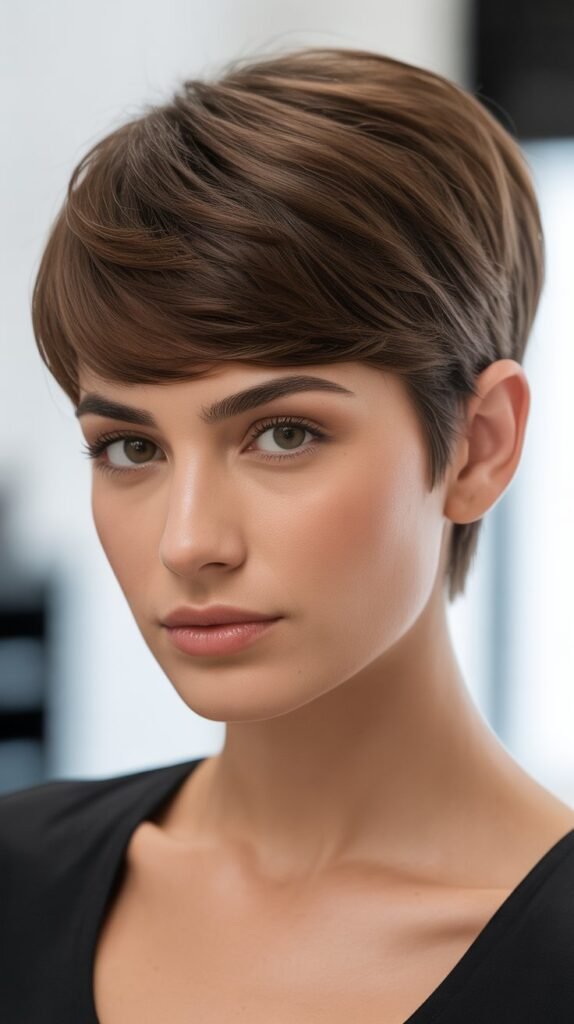
A timeless approach to the pixie cut, this style uses strategic tapering and asymmetry to create facial balance.
The side part naturally draws the eye diagonally across the face, creating length rather than width.
- The classic tapered pixie features hair that’s longer on top (approximately 2-3 inches) and gradually shortened toward the neckline and around the ears.
- A deep side part is crucial for chubby faces as it creates diagonal lines that elongate rather than horizontal lines that widen.
- The longer top section can be swept to one side, adding height at the crown which draws attention upward and creates the illusion of a longer face.
- This style works exceptionally well with straight to slightly wavy hair textures that hold the side-swept shape throughout the day.
- Ask your stylist to keep some length around the crown area while maintaining clean, tapered sides that don’t add bulk around the cheeks.
- Styling requires minimal effort—simply apply a lightweight mousse to damp hair, blow-dry in the direction of the part, and finish with a small amount of pomade for definition.
2. Textured Pixie with Piecey Layers

Texture is your best friend when you have a fuller face, and this pixie style maximizes dimension through choppy, piecey layers.
The broken-up texture prevents the hair from laying flat, which would emphasize roundness.
- Piecey layers are cut at varying lengths throughout the pixie, creating a deliberately uneven, textured appearance that adds visual interest.
- This technique prevents the “helmet head” effect that can make round faces appear even rounder by breaking up solid lines.
- The choppy texture creates shadows and dimension, which naturally slim the appearance of the face.
- This style requires texturizing products like clay, paste, or fiber wax to separate the pieces and maintain the messy, lived-in look.
- The beauty of this cut lies in its versatility—you can style it sleek for professional settings or tousled for casual occasions.
- Regular trims every 4-6 weeks are essential to maintain the precise layering that makes this cut work for fuller faces.
3. Asymmetrical Pixie with Long Side Bangs
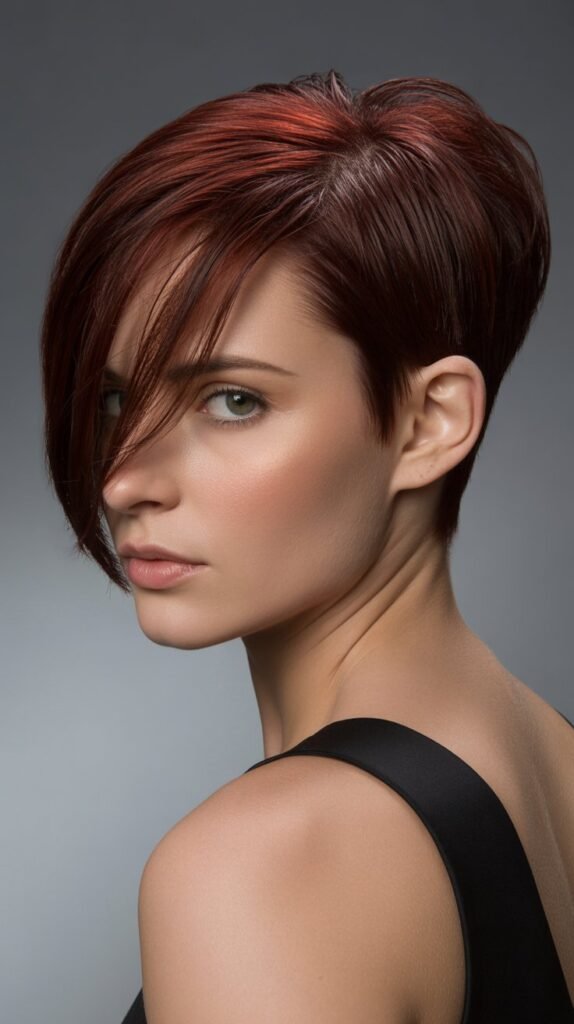
Asymmetry is a powerful tool for balancing round face shapes, and this pixie takes full advantage by incorporating dramatically different lengths on each side.
The longer side bangs create a slimming diagonal line across the face.
- One side of the hair is cut very short (often clipper-cut close to the head) while the other side retains length that can be swept across the forehead and cheek.
- The long side bangs typically extend to cheekbone or even chin length, creating a dramatic angular line that counteracts facial roundness.
- This style draws attention to the eyes and cheekbones while the longer side visually narrows the face width.
- The contrast between short and long sides creates an edgy, fashion-forward look that’s perfect for those who want to make a bold statement.
- Styling involves blow-drying the longer side forward and using a flat iron to smooth it into place while the short side requires minimal maintenance.
- This cut works particularly well for those with straight to slightly wavy hair that can hold the sleek line of the longer bangs.
4. Voluminous Pixie with Height at Crown
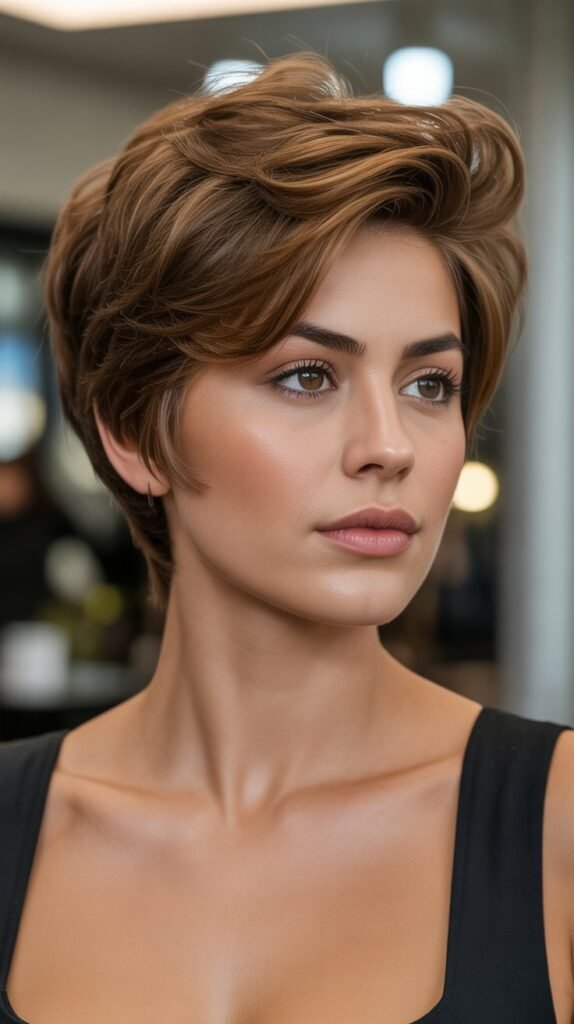
Creating height at the crown is one of the most effective strategies for elongating a round face, and this voluminous pixie maximizes vertical dimension.
The added height creates the illusion of length.
- The hair at the crown is left longer (3-4 inches) and cut with internal layers that allow it to stand up and create volume.
- The sides and back are kept shorter to emphasize the height on top and prevent adding width at the temples and ears.
- This vertical emphasis draws the eye upward rather than side-to-side, creating a lengthening effect on the face.
- Achieving this style requires blow-drying with a round brush, directing hair upward at the roots, and using volumizing products like root lifters or mousses.
- A lightweight hairspray helps maintain the height throughout the day without making the hair stiff or unnatural-looking.
- This style works for most hair textures but is particularly stunning on those with naturally thick hair that provides the necessary body.
5. Undercut Pixie with Longer Top
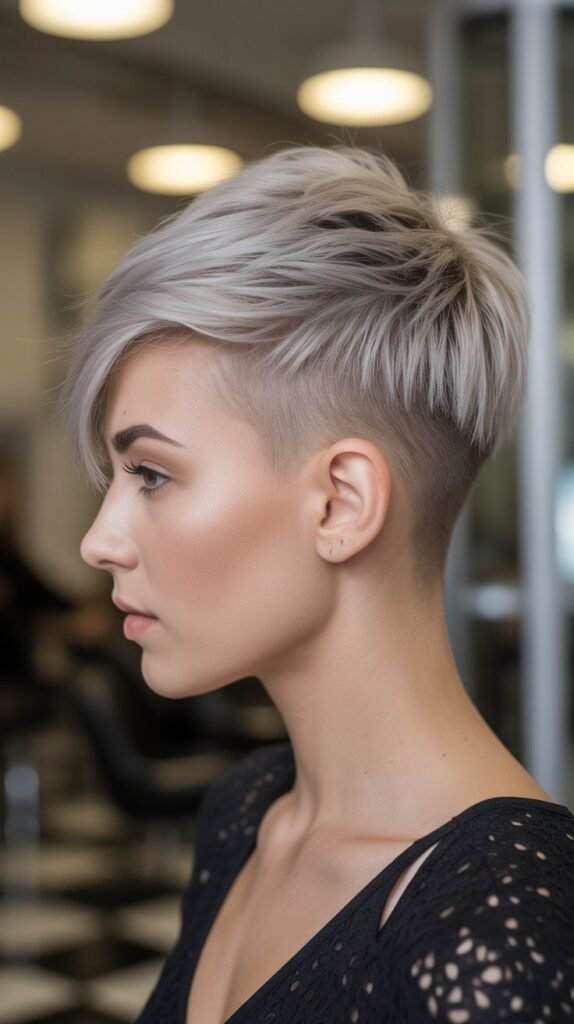
The undercut pixie combines edgy, modern styling with face-slimming proportions by creating stark contrast between the shaved or very short sides and the longer top section.
This dramatic difference creates vertical lines that elongate.
- The sides and back are cut very short with clippers (often to a #2 or #3 guard) or even completely shaved, creating a clean, defined undercut.
- The top section remains significantly longer (3-5 inches), allowing for various styling options from slicked back to textured and messy.
- This contrast creates strong vertical lines that naturally slim the appearance of a round face by eliminating bulk at the sides.
- The longer top can be styled with height and volume, further enhancing the elongating effect.
- Many people choose to add designs or patterns to the undercut section for additional visual interest and personalization.
- Maintenance requires regular trimming of the undercut section (every 2-3 weeks) to keep the clean, defined look.
6. Pixie with Wispy Micro Bangs
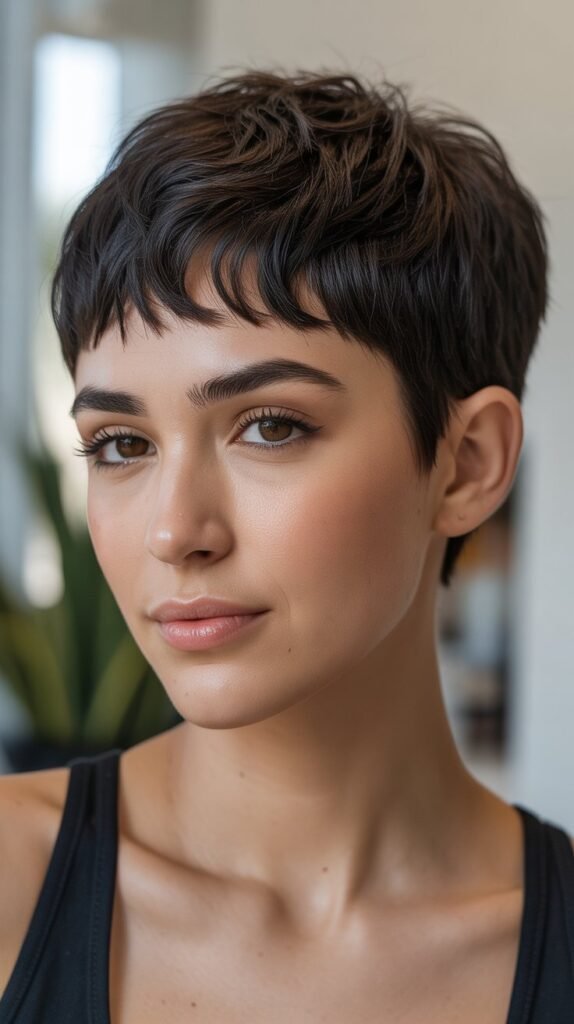
Micro bangs might seem counterintuitive for round faces, but when cut wispy and textured rather than blunt, they create a focal point at the forehead that draws attention upward.
The key is keeping them light and piece-y.
- Micro bangs are cut significantly shorter than traditional bangs, typically falling mid-forehead or higher.
- The wispy, textured quality is essential—blunt micro bangs would create a horizontal line that widens the face.
- These bangs draw attention to the eyes and create a focal point at the upper portion of the face, pulling the viewer’s gaze upward.
- The rest of the pixie should be textured and layered to complement the edgy, modern vibe of the micro bangs.
- This style works best for those with straight to slightly wavy hair that won’t cause the bangs to curl or frizz.
- Daily styling involves using a small amount of pomade or wax to separate and define the individual wispy pieces.
7. Feathered Pixie with Soft Layers

Feathered layers create movement and softness while preventing the hair from laying flat against the head.
This technique is particularly flattering for chubby faces as the feathered texture creates dimension without adding width.
- Feathering involves cutting the hair with a razor or scissors held at an angle to create soft, tapered ends rather than blunt edges.
- These softer edges create movement and prevent harsh lines that can emphasize facial roundness.
- The layers are distributed throughout the cut to create all-over texture and dimension that adds visual interest.
- This style has a romantic, feminine quality that softens features while still maintaining the modern appeal of a pixie cut.
- Styling requires blow-drying with your fingers running through the hair to enhance the feathered texture and natural movement.
- A light styling cream or serum helps define the feathered pieces without weighing them down or making them look stiff.
8. Slicked-Back Pixie with Shine

Taking the hair back and away from the face is an incredibly effective way to create length and showcase facial features.
The slicked-back pixie is sophisticated, modern, and inherently elongating for round face shapes.
- All the hair is directed backward from the hairline, eliminating any forward-falling pieces that could widen the face.
- The hair at the crown is left long enough to slick back while maintaining some volume, preventing the style from looking too flat.
- High-shine products like pomades or gels are used to create the characteristic glossy, wet-look finish that defines this style.
- This look naturally elongates the face by revealing the entire forehead and creating clean, streamlined lines.
- The sides are typically cut short and tapered to complement the slicked-back top and maintain the sleek silhouette.
- This style works for both professional and evening occasions, offering sophisticated polish with an edge.
9. Choppy Pixie with Razored Ends

Razor cutting creates ultra-light, textured ends that add movement and prevent the hair from appearing heavy or bulky.
For chubby faces, this technique ensures the pixie doesn’t add unwanted volume at the wrong places.
- A razor is used instead of or in addition to scissors to create tapered, feather-light ends on each strand.
- This technique removes bulk while maintaining length, resulting in a softer, more textured appearance.
- The choppy, razored pieces create movement and dimension that prevent the style from looking too “done” or structured.
- This approach is particularly effective for those with thick hair who need to remove weight without sacrificing the overall shape.
- Styling involves using texturizing products to enhance and separate the razored pieces, creating a deliberately undone look.
- The lightweight ends move naturally with your head movement, creating a dynamic, modern appearance.
10. Pixie with Angular Side-Swept Fringe
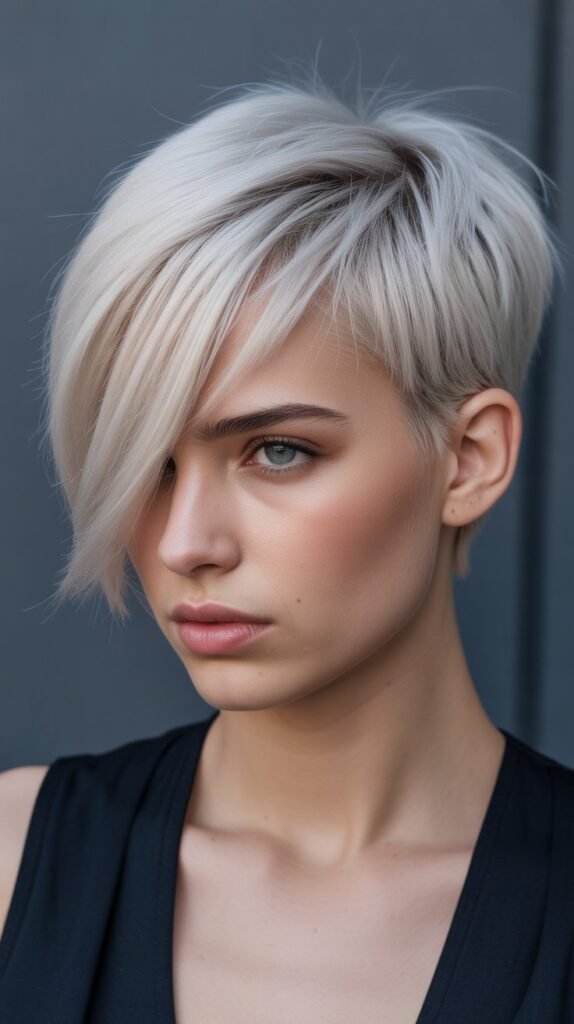
An angular side-swept fringe creates diagonal lines across the face, one of the most flattering techniques for round face shapes.
The sharp angle provides structure and definition while drawing the eye across rather than around the face.
- The fringe is cut at a deliberate angle, starting longer at one side and gradually shortening as it moves across the forehead.
- This diagonal line creates the illusion of length and adds angular definition to softer facial features.
- The rest of the pixie is typically kept textured and short, allowing the angular fringe to be the focal point of the style.
- The longer end of the fringe can extend to cheekbone length, providing additional face-framing and slimming effects.
- Styling requires blow-drying the fringe in the direction of the angle and using a flat iron to create a sharp, sleek line.
- This cut makes a strong style statement and works best for those who want a high-fashion, editorial look.
11. Layered Pixie with Volume and Lift
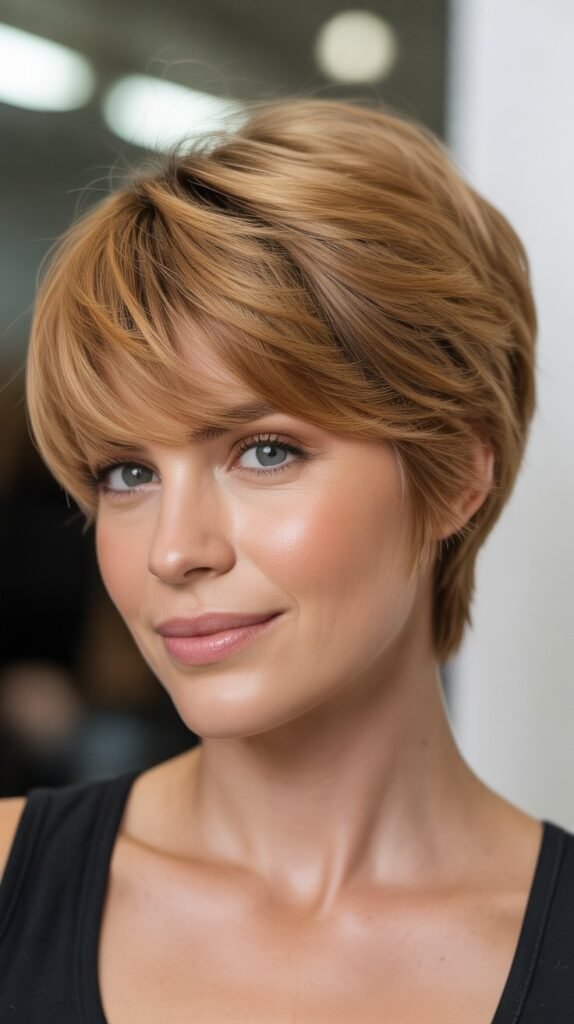
Strategic layering throughout a pixie cut creates natural lift and volume that works to elongate round faces.
The key is concentrating the layers and volume at the crown and top rather than the sides.
- Multiple layers of varying lengths are cut throughout the pixie, with the shortest layers at the bottom and increasingly longer layers toward the top.
- This creates natural stacking and volume that lifts away from the head rather than lying flat.
- The layering removes bulk while maintaining fullness where it’s needed most—at the crown and top of the head.
- Volume at the upper portions of the head creates vertical emphasis that lengthens the appearance of the face.
- Styling involves blow-drying with a round brush to enhance the natural volume created by the layers.
- This cut works beautifully for those with naturally thick or wavy hair that has inherent body.
12. Pixie with Shaggy Texture
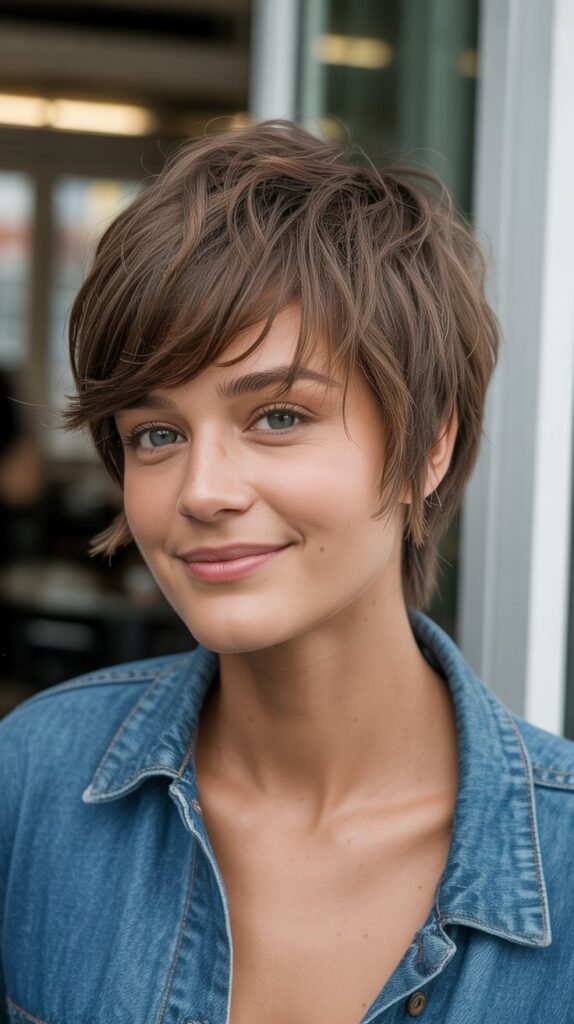
The shaggy pixie embraces a deliberately messy, lived-in texture that creates dimension and prevents the hair from looking too controlled or structured.
This relaxed approach is both flattering and low-maintenance.
- The shaggy texture is achieved through point-cutting and texturizing techniques that create an intentionally irregular, choppy appearance.
- Pieces of varying lengths throughout the cut create a naturally tousled, just-rolled-out-of-bed aesthetic.
- This texture adds dimension and movement that prevents the style from appearing flat or adding width to the face.
- The deliberately imperfect nature of the cut makes it incredibly forgiving and easy to style without looking overly “done.”
- Minimal styling is required—simply apply texturizing spray to damp hair, scrunch, and allow to air dry or diffuse.
- This style is perfect for those who want the sophistication of a pixie cut with a more relaxed, bohemian vibe.
13. Pixie with Extreme Side Part and Swoop

Taking the side part to an extreme (very close to the ear on one side) and creating a dramatic swoop across the forehead maximizes the diagonal lines that elongate round faces.
This bold approach makes a strong style statement.
- The part is placed very low, close to the ear or temple on one side, creating maximum asymmetry.
- The hair from the “fuller” side is then swept dramatically across the forehead in a bold, swooping motion.
- This extreme diagonal line provides significant face-lengthening and adds dramatic flair to the overall look.
- The side with less hair is typically cut very short and close to the head, emphasizing the contrast.
- Styling requires blow-drying in the direction of the swoop and using strong-hold products to maintain the dramatic shape.
- This look is ideal for those with naturally straight hair that can hold the sleek, swooping line without excessive maintenance.
14. Curly Pixie with Defined Ringlets

Curly hair and pixie cuts can be a stunning combination when cut properly to create height and definition rather than width.
The key is encouraging the curls to grow upward and creating shape at the crown.
- The pixie is cut to work with the natural curl pattern, shorter at the sides and longer at the crown to create vertical emphasis.
- Curls are encouraged to spring upward from the crown, creating height that elongates the face.
- The sides are kept shorter to prevent the style from adding width, while the top retains enough length for the curls to form properly.
- Defining individual curls with curl cream or gel creates texture and separation that adds visual interest.
- This cut celebrates natural texture while creating a shape that flatters fuller face shapes.
- Maintenance involves regular moisture treatments to keep curls healthy and defined, and trims every 6-8 weeks to maintain the shape.
15. Pixie Bob Hybrid (Longer Pixie)
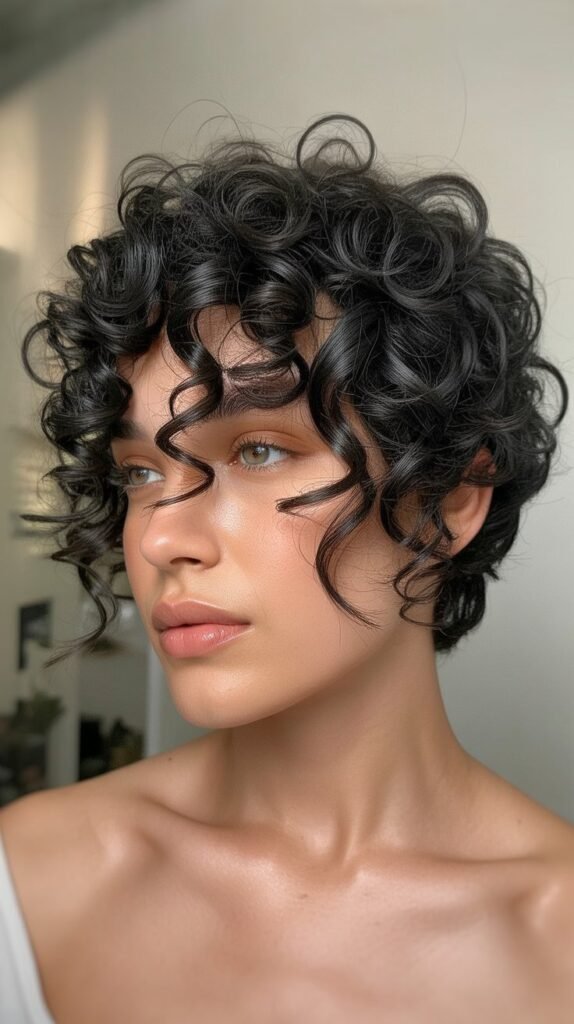
This style bridges the gap between a traditional pixie and a bob, offering more length and versatility while still maintaining the easy maintenance and face-framing benefits of a pixie cut.
- The hair is left longer than a traditional pixie (2-4 inches on top, touching the ears and nape), but shorter than a typical bob.
- This length allows for more styling versatility, including the ability to tuck behind ears or sweep to different sides.
- Layers and texture prevent the style from looking too heavy or adding width to the face.
- The longer length can be particularly flattering for those transitioning to short hair or who aren’t quite ready for an ultra-short pixie.
- Styling options include sleek and straight, textured and tousled, or even loosely waved for added dimension.
- This cut requires less frequent maintenance than shorter pixies while still offering the fresh, modern aesthetic.
16. Platinum Blonde Pixie with Dark Roots

While not a cut technique per se, the high-contrast color combination of platinum blonde with dark roots creates vertical lines and dimension that work to elongate the face.
The visual interest also draws attention to the hair rather than face shape.
- The stark contrast between dark roots and platinum blonde ends creates vertical lines that naturally lengthen the appearance of the face.
- The dimensional color adds visual depth and texture even to simple cuts, preventing any flat, one-dimensional appearance.
- This bold color choice makes a strong style statement and draws attention to the haircut itself.
- The natural root shadow also makes maintenance easier, as the intentional dark roots mean less frequent touch-ups are needed.
- This coloring works with virtually any pixie cut style, adding an extra element of visual interest and dimension.
- Regular toning treatments are necessary to maintain the platinum shade and prevent unwanted yellow or brassy tones.
17. Disconnected Pixie with Defined Sections

A disconnected cut features distinct sections of different lengths that don’t blend seamlessly together.
This intentional contrast creates angles and structure that add definition to soft, round facial features.
- Instead of gradual blending, the hair transitions abruptly from one length to another, creating visible “disconnections.”
- The top section remains significantly longer and can be styled separately from the much shorter sides and back.
- These defined sections create strong lines and angles that add structure and definition to the overall look.
- The architectural quality of this cut is very modern and fashion-forward, perfect for those who want an edgy aesthetic.
- Styling often involves emphasizing the contrast by slicking or smoothing the top section while keeping the sides close to the head.
- This cut requires precision cutting and regular maintenance to keep the distinct sections defined and intentional-looking.
18. Pixie with Nape Detail or Design

While the main body of the pixie flatters the face, adding an undercut design or pattern at the nape adds personality and visual interest.
This detail draws attention away from face shape and toward the creative element.
- The nape area is cut very short or shaved, providing a canvas for designs ranging from simple lines to intricate patterns.
- Popular designs include geometric patterns, swirls, stars, or even nature-inspired motifs like leaves or flowers.
- This creative element adds personality and uniqueness to the pixie cut while the main cut still flatters the face shape.
- The design typically lasts 1-2 weeks before growing out and requiring a touch-up to maintain its definition.
- This option is perfect for those who want to express creativity and individuality through their hairstyle.
- Finding a skilled barber or stylist experienced in hair designs is essential for achieving clean, precise patterns.
19. Soft Romantic Pixie with Feminine Details

Not all pixies have to be edgy or severe. A soft, romantic pixie with gentle layers and feminine styling can be equally flattering for chubby faces while maintaining a more traditional, approachable aesthetic.
- Layers are cut to create soft, gentle movement rather than choppy, piece-y texture.
- The overall shape is rounded and feminine rather than angular or architectural.
- Slight waves or curls can be added with a small curling iron to enhance the romantic, soft quality.
- The cutting techniques used create a gentler, more subtle version of the pixie that’s less dramatic but still flattering.
- This style works beautifully for those who want short hair but prefer a more classic, traditionally feminine appearance.
- Styling involves soft blow-drying with a round brush and finishing with a light serum for shine and smoothness.
20. Pixie with Temple Undercut

Strategic undercuts at the temples remove bulk from the sides of the face while creating interesting visual detail.
This technique is specifically flattering for round faces as it removes width exactly where it’s least needed.
- The hair at the temples is cut very short or shaved while the rest of the sides may be slightly longer.
- This removes bulk and width right at the widest part of the face, creating a slimming effect.
- The undercut sections can be left plain or decorated with designs for added visual interest.
- The top section remains long enough to style with volume and texture, maintaining the overall pixie shape.
- This technique creates a modern, edgy look that’s perfect for those who want something between a full undercut and a traditional pixie.
- Touch-ups every 2-3 weeks help maintain the clean, defined look of the undercut sections.
21. Textured Crop Pixie
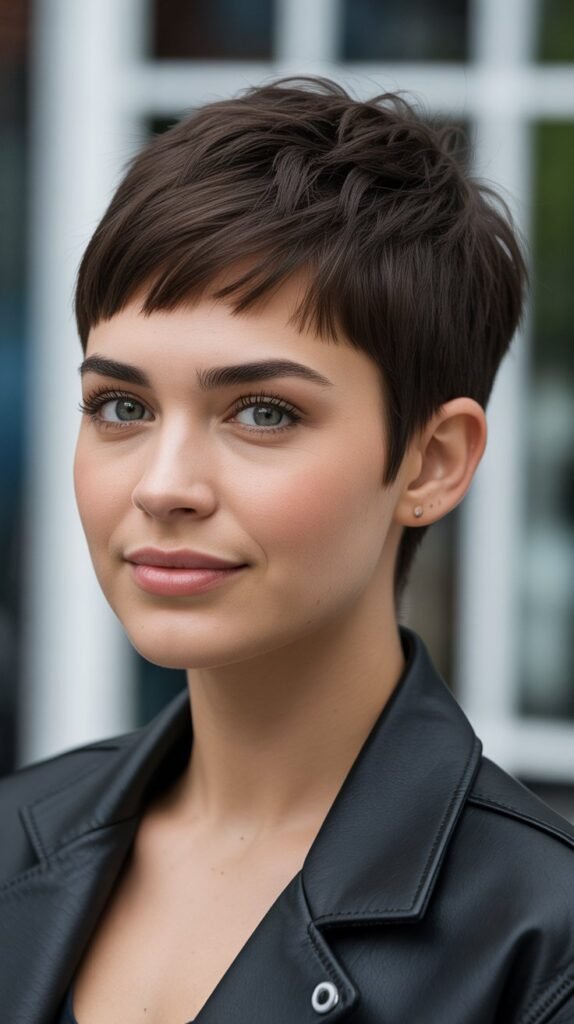
The textured crop is a more masculine-leaning pixie style that works surprisingly well for women with round faces.
The all-over short length with added texture creates a clean, sharp look that doesn’t add width.
- The hair is cut to a relatively uniform short length all over, typically 1-2 inches, with slightly more length left on top.
- Heavy texturizing creates piece-y, choppy texture throughout that adds dimension without bulk.
- The clean, cropped silhouette keeps the style close to the head, preventing any width-adding volume at the sides.
- This style has an androgynous quality that many find liberating and refreshing.
- Styling is incredibly easy—simply apply texturizing paste to damp hair and tousle with fingers as it air dries.
- This cut requires frequent trims (every 3-4 weeks) to maintain the precise, cropped shape.
22. Pixie with Baby Bangs and Length on Top
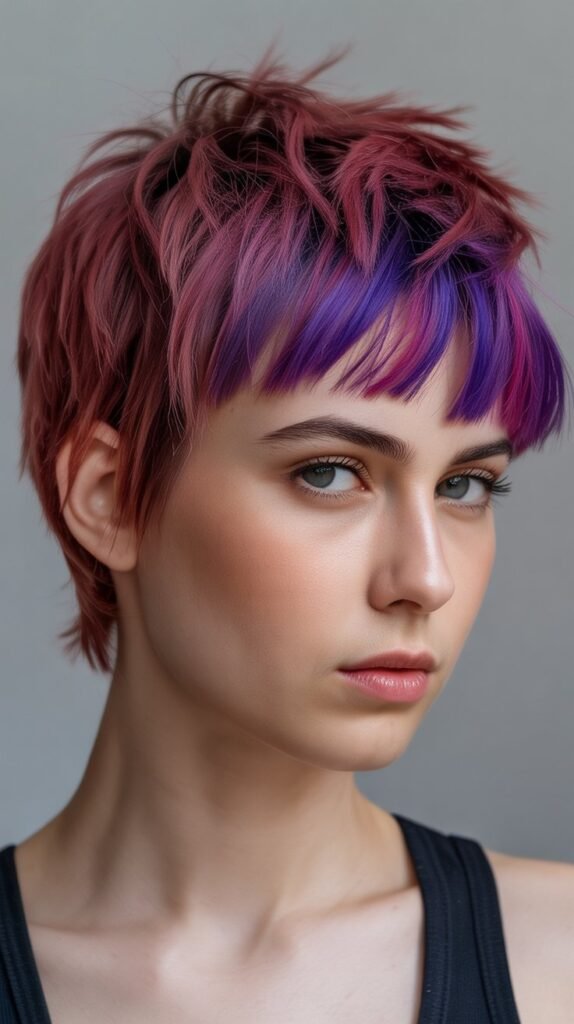
Baby bangs (slightly longer than micro bangs but still very short) combined with length and volume on top create a quirky, artistic look that draws attention upward and away from facial width.
- Baby bangs fall just below the hairline, creating a young, fresh focal point at the forehead.
- The top section is left significantly longer (3-4 inches) and styled with height and volume.
- This creates a mushroom-like silhouette that emphasizes the upper portion of the face and head.
- The quirky, alternative aesthetic of this style works well for creative individuals and those in artistic fields.
- The combination of short bangs and voluminous top creates vertical emphasis that elongates round faces.
- This style works best with straight to slightly wavy hair that can hold the distinct shape of both the bangs and the voluminous top.
23. Side-Shaved Pixie (Half Shaved)

Taking the asymmetry of the pixie to its extreme, the side-shaved style features one entire side shaved or cut very short while the other maintains significant length.
This dramatic contrast creates powerful diagonal lines.
- One entire side of the head is shaved down to a very short length or completely shaved.
- The opposite side retains significant length that can be swept over the top and across the forehead.
- This extreme asymmetry creates the strongest possible diagonal line, highly effective for elongating round faces.
- The style makes a bold, confident statement and is perfect for those who want maximum impact.
- Maintenance of the shaved side requires frequent touch-ups (every 1-2 weeks) to keep it clean and defined.
- The longer side can be styled in various ways—straight and sleek, textured and messy, or even braided for added interest.
24. Pixie with Finger Waves

Adding vintage-inspired finger waves to a pixie cut creates sophisticated texture and movement while the wave patterns naturally create dimension that flatters fuller faces.
This style combines retro glamour with modern cut.
- Finger waves are created using styling gel and clips to form S-shaped patterns in the hair as it dries.
- These waves add sophisticated texture and vintage glamour to the modern pixie cut.
- The wave patterns create shadows and dimension that add visual interest and prevent flatness.
- This styling technique works best on pixies with enough length to form the waves (at least 2-3 inches on top).
- The vintage aesthetic creates a unique, eye-catching look that’s perfect for special occasions or those who love retro styles.
- Creating finger waves requires practice and patience but results in a truly stunning, one-of-a-kind appearance.
25. Tousled Bedhead Pixie
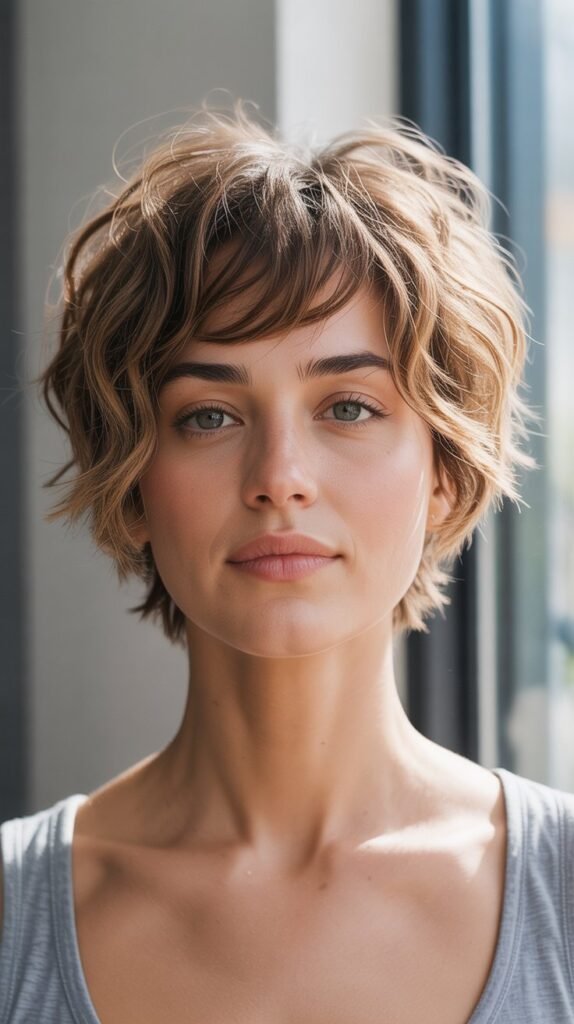
The deliberately messy, just-woke-up aesthetic of the bedhead pixie creates natural-looking texture and dimension.
This effortless style is both flattering and incredibly low-maintenance for round faces.
- The hair is cut with heavy texturizing and point-cutting to create piece-y, separated strands.
- Styling embraces natural texture and movement rather than trying to control or perfect it.
- The deliberately messy quality creates dimension and prevents the hair from lying flat against the head.
- This approach is perfect for those who want a stylish pixie without spending time on elaborate styling routines.
- Simply apply texturizing spray to damp hair, scrunch and tousle, then allow to air dry for the perfect bedhead look.
- The effortless aesthetic works for both casual and surprisingly even professional settings, depending on how it’s worn.
26. Pixie with Graduated Nape

A graduated nape features hair that’s cut progressively shorter as it moves down toward the neck, creating a stacked, tapered effect.
This technique adds shape and structure to the back of the pixie while keeping the front face-flattering.
- The hair at the nape is cut in graduated layers, with each layer slightly shorter than the one above it.
- This creates a stacked, tapered effect that adds shape and volume to the back of the head.
- The graduated nape prevents the pixie from looking too flat or shapeless from behind.
- This cutting technique provides structure and polish to the overall style while remaining flattering from the front and sides.
- The clean lines of a properly executed graduated nape require regular maintenance to keep the shape crisp.
- This technique works well with virtually any front and top styling, making it a versatile foundation for various pixie looks.
27. Pixie with Longer Fringe and Short Back

Keeping the front significantly longer than the back creates forward momentum that draws attention to facial features while the short back prevents bulk and adds modern edge.
This versatile cut offers multiple styling options.
- The fringe and front sections are left long enough to reach the eyebrows or beyond, while the back is cropped very short.
- This length contrast creates interest and allows the longer front to frame the face and draw attention forward.
- The short back keeps the style modern and prevents any outdated or heavy appearance.
- The longer fringe can be styled multiple ways—swept to the side, across the forehead, or even tucked behind the ears.
- This versatility makes it an excellent choice for those who like to change their look regularly without cutting their hair.
- The dramatic length difference requires precision cutting to ensure the transition looks intentional and stylish rather than accidental.
28. Spiky Pixie with All-Over Texture

Spiky texture creates vertical lines throughout the pixie, with each spike drawing the eye upward. This edgy style is inherently elongating for round faces while making a bold statement.
- The hair is cut with significant texturizing and layering to allow pieces to stand up easily.
- Strong-hold products like gel, pomade, or wax are used to create individual spikes throughout the hair.
- The upward direction of the spikes creates vertical emphasis that naturally elongates the face.
- This style has a punk-rock, rebellious aesthetic that’s perfect for those who want an edgy, alternative look.
- The spiky texture can be varied from fine, needle-like spikes to chunky, piece-y spikes depending on personal preference.
- While the style looks complex, it’s actually quite simple to achieve with the right products and basic finger-styling techniques.
29. Wavy Pixie with Loose Texture
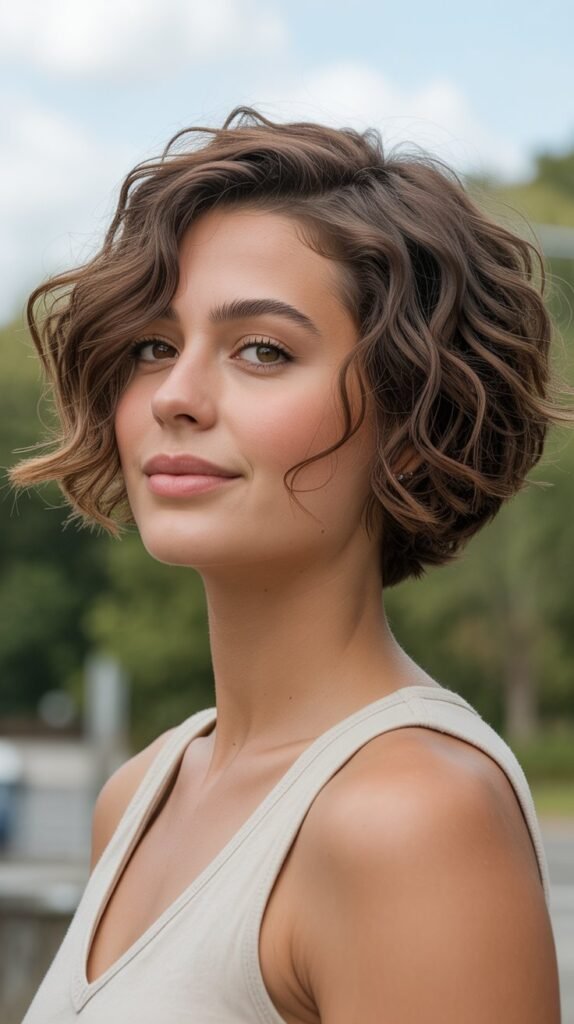
For those with natural wave, a pixie cut with loose, gentle waves creates soft movement and dimension.
The key is encouraging the waves to add height rather than width through proper cutting and styling.
- The pixie is cut to work with natural wave patterns, leaving enough length for waves to form properly (typically 2-4 inches on top).
- Layers are strategically placed to encourage waves to lift upward from the crown rather than fall to the sides.
- The soft texture of the waves adds dimension and interest without the severe edge of choppy or piece-y texture.
- This approach creates a romantic, feminine interpretation of the pixie that flatters round faces through its dimension and movement.
- Styling involves applying curl-enhancing products and diffusing or air-drying to encourage natural wave formation.
- This style works beautifully for those transitioning from longer wavy hair who want to maintain their natural texture in a short cut.
30. Pixie with Colored Tips or Ends

Adding bright color to the tips or ends of a pixie creates visual interest and dimension while the contrasting colors create the illusion of texture and movement.
This technique draws attention to the haircut itself.
- The base color remains natural or a single shade while the ends are dyed a contrasting bright color.
- This color placement emphasizes the texture and layers of the cut, making them more visible and impactful.
- The dimensional color creates visual interest that draws attention to the hair rather than face shape.
- Popular color combinations include dark roots with pastel tips, or natural brown with vibrant jewel-tone.
- The colored tips can be changed relatively easily without affecting the base color, allowing for frequent updates and experimentation.
- This technique requires bleaching the ends before applying vivid colors, so working with a professional colorist experienced in fantasy colors is recommended.
- Regular color maintenance every 4-6 weeks helps keep the vibrant tips looking fresh and prevents fading.
31. Pixie with Forward-Swept Crown

Directing the crown hair forward rather than back or to the sides creates unique dimension and draws attention to the center of the face and eyes.
This technique is particularly effective for adding length to round faces.
- The hair at the crown is cut and styled to fall forward toward the face rather than lying back.
- This forward movement creates a unique silhouette that adds interest and dimension to the standard pixie shape.
- The technique draws attention to the center of the face, particularly the eyes and upper facial features.
- The forward-swept crown creates vertical and diagonal lines that help elongate round face shapes.
- Styling requires blow-drying the crown section forward and using products to maintain the directional movement throughout the day.
- This style works best with straight to slightly wavy hair that can hold the forward direction without excessive curl or frizz.
- The unique appearance sets this pixie apart from more traditional styles while remaining highly flattering.
32. Pixie Mullet Hybrid

The modern pixie mullet combines short sides and top with slightly longer length at the back, creating an edgy, contemporary look. When executed properly, the length in back creates a slimming diagonal line.
- The sides and top are cut in typical pixie fashion (short and textured) while the back is left noticeably longer.
- Unlike traditional mullets, the modern version features textured, piece-y length in back rather than solid, heavy hair.
- The longer back section creates diagonal lines from the short sides down to the longer nape, which can be elongating.
- This style has experienced a major resurgence in fashion-forward circles and works for those wanting an edgy, trend-conscious look.
- The back length typically falls between collar-length and shoulder-length, depending on personal preference.
- Styling involves texturizing the back section to keep it light and piece-y rather than heavy or flat.
- Regular trims to the short sections (every 4-6 weeks) maintain the contrast while the back can be trimmed less frequently.
33. Pixie with Deep Side Part and Undercut
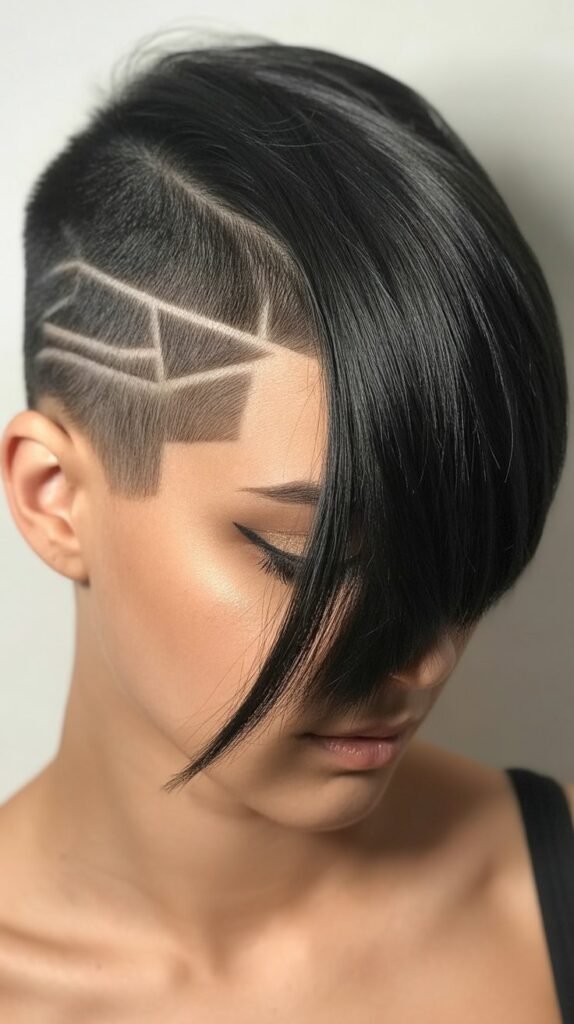
Combining a deep side part with an undercut on the shorter side maximizes asymmetry and creates the strongest possible diagonal line across the face.
This bold combination is exceptionally flattering for round faces.
- The part is placed very deep, close to the ear or temple, dividing the hair into dramatically unequal sections.
- The side with less hair features an undercut or very short clipper cut, emphasizing the asymmetry.
- The larger section of hair is swept dramatically across the head, creating a strong diagonal line.
- The combination of the deep part and undercut creates maximum face-slimming effect through extreme asymmetry.
- This bold style makes a strong fashion statement and works best for those confident in carrying an edgy, attention-getting look.
- Maintenance requires regular touch-ups to the undercut section every 2-3 weeks to keep the contrast sharp and defined.
- Styling involves blow-drying the longer section in the direction of the sweep and using strong-hold products to maintain the dramatic shape.
34. Curly Pixie with Tapered Sides

For those with natural curls, a pixie with curly top and tapered sides creates the perfect balance—celebrating natural texture while preventing width at the sides of the face.
- The top section retains enough length (2-4 inches) for curls to form properly and spring upward.
- The sides are tapered progressively shorter using clippers, removing bulk and width at the temples and ears.
- This combination celebrates natural curl while creating a shape that’s flattering for round faces.
- The contrast between the curly top and tapered sides creates visual interest and modern edge.
- Curl-defining products applied to damp hair enhance the natural curl pattern and provide hold without crunchiness.
- The tapered sides require regular maintenance (every 3-4 weeks) while the curly top can grow longer between cuts.
- This style works beautifully for those who want to embrace their natural texture in a short, manageable style.
35. Pixie with Extreme Texture and Separation

Taking texturizing to the maximum, this pixie features heavily separated, piece-y strands throughout.
The extreme texture creates dimension and prevents any flat, width-adding appearance.
- Heavy texturizing techniques including point-cutting, razoring, and slicing create maximum separation between strands.
- Each piece of hair is visible and defined individually rather than blending together into a solid mass.
- Strong texturizing products like fiber wax or clay are essential for maintaining the separated, piece-y appearance.
- The extreme texture creates shadows and dimension that add visual complexity and interest.
- This style requires confidence to carry as it’s deliberately messy and unconventional in appearance.
- The texture prevents the hair from lying flat, naturally creating dimension that flatters fuller faces.
- Regular trims every 5-6 weeks maintain the precise texturizing that makes this cut work.
36. Sleek Pixie with Angled Sides
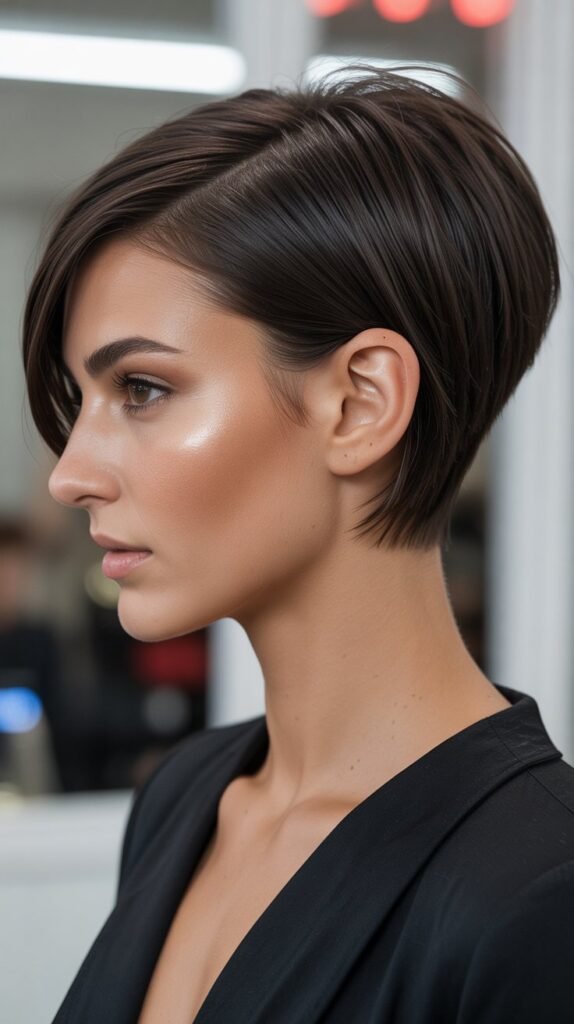
A sleek, polished pixie with sides cut at an angle creates clean, sharp lines that add structure and definition to soft facial features.
The angular quality provides visual contrast to round face shapes.
- The sides are cut at a deliberate angle, gradually increasing in length as they move from back to front.
- The hair is styled sleek and smooth with high shine, emphasizing the angular cut lines.
- These sharp, diagonal lines provide structure and definition that contrasts beautifully with rounder facial features.
- The sophisticated, polished appearance makes this style perfect for professional environments.
- Styling requires blow-drying smooth with a paddle brush and finishing with shine-enhancing serum or pomade.
- The sleek finish keeps the style close to the head, preventing any width-adding volume at the sides.
- The angular sides create the illusion of a more oval face shape by introducing geometric lines.
Styling Tips for Pixie Haircuts on Chubby Faces
Understanding how to style your pixie cut is just as important as choosing the right cut. Proper styling techniques can enhance the face-slimming effects of your pixie and help you achieve the most flattering look possible.
- Always create height at the crown – Use volumizing products at the roots and blow-dry upward to create lift that elongates your face.
- Avoid adding volume at the sides – Keep the sides sleek and close to the head to prevent widening your face.
- Embrace asymmetry – Side parts, swept styles, and asymmetrical elements create diagonal lines that slim.
- Use the right products – Texturizing pastes, clays, and pomades allow you to create piece-y, dimensional texture that adds visual interest without bulk.
- Consider your hair’s natural texture – Work with your natural wave or curl pattern rather than fighting it for easier daily styling.
- Invest in quality styling tools – A good blow dryer with concentrator nozzle and a small round brush are essential for creating volume where you want it.
- Don’t over-style – Pixies often look best with a slightly undone, lived-in appearance rather than overly polished perfection.
- Experiment with different partings – Changing your part can dramatically alter the appearance of your pixie and face shape.
- Use shine products strategically – Add shine to highlight texture and dimension, but avoid making hair look greasy or heavy.
- Schedule regular trims – Pixies require more frequent maintenance than longer styles, typically every 4-6 weeks to maintain the flattering shape.
How to Choose the Right Pixie for Your Face
While all the styles featured in this guide work for chubby faces, selecting the specific pixie that’s best for YOU depends on several additional factors beyond face shape alone.
- Consult with a skilled stylist who has experience cutting pixies and working with various face shapes—bring reference photos of styles you love.
- Consider your daily styling commitment – Some pixies require significant daily styling while others are virtually wash-and-go.
- Think about your hair’s growth pattern – Cowlicks, whorls, and natural growth direction affect which styles will work best and be easiest to maintain.
- Be realistic about maintenance – Pixies grow out quickly and require frequent trims; ensure you’re prepared for regular salon visits.
- Start conservatively if nervous – You can always go shorter, but you can’t add length back once it’s cut.
- Consider your styling skills – If you’re not confident with styling tools and products, choose a cut that looks good with minimal intervention.
- Factor in seasonal considerations – Very short pixies may leave your neck and ears cold in winter; plan accordingly.
Common Mistakes to Avoid with Pixie Cuts and Round Faces
Even with the right cut, certain styling choices and techniques can work against you rather than flattering your face shape. Here are critical mistakes to avoid.
- Blunt, straight-across bangs – These create a horizontal line that widens the face; opt for side-swept, wispy, or angular bangs instead.
- Styling hair flat against the head – Volume is your friend; flat hair emphasizes roundness rather than creating elongation.
- Adding too much volume at the sides – While you want height on top, avoid puffing out the sides which adds width exactly where you don’t want it.
- Cutting hair all one length – This creates a round, helmet-like shape that mirrors and emphasizes facial roundness; layers and texture are essential.
- Center parts – These divide the face symmetrically down the middle, emphasizing width; deep side parts are far more flattering.
- Neglecting regular trims – Grown-out pixies lose their shape quickly and can become unflattering as they lose their strategic proportions.
- Using too much product – Heavy products weigh hair down, eliminating the volume and texture that make pixies flattering for round faces.
- Ignoring face-framing – The pieces around your face are most critical; ensure they’re cut to flatter rather than widen.
- Choosing styles that require textures you don’t have – Fighting your natural hair texture daily becomes exhausting; work with what you have.
- Being too timid with styling – Pixies often look best with bold styling choices; embrace texture, volume, and asymmetry rather than playing it safe.
Maintenance and Care for Your Pixie Cut
Keeping your pixie looking its best requires specific maintenance routines and care practices. Proper care ensures your cut remains flattering and fresh between salon visits.
- Schedule regular salon appointments every 4-6 weeks – Pixies grow out quickly and lose their shape faster than longer styles.
- Invest in quality hair products – With less hair, each product’s effect is more noticeable; choose professional-grade styling products.
- Use a lightweight shampoo and conditioner – Heavy products can weigh down short hair, eliminating the volume and texture that makes pixies flattering.
- Apply heat protectant before using hot tools – Short hair may be heat-styled more frequently, so protection is essential to prevent damage.
- Learn to do minor bang trims at home – Between salon visits, carefully trimming your bangs can keep your style fresh without a full appointment.
- Consider your pillow and sleep habits – Pixies can develop interesting “bed head” patterns; embrace them as part of the tousled look or restyle in the morning.
- Protect your hair color – If you’ve colored your pixie, use color-safe products and limit washing to every other day if possible.
- Keep styling tools clean – Residue on brushes, combs, and tools transfers to your hair; clean them weekly.
- Adjust your routine seasonally – Humidity, cold, and weather conditions affect pixies differently than long hair; adapt your products and techniques accordingly.
- Don’t over-wash – Short hair doesn’t require daily washing for most people; every other day or even every third day can be sufficient.
- Moisturize your scalp – With less hair covering it, your scalp may be more exposed to elements; keep it healthy with appropriate treatments.
Accessories and Styling Additions for Pixie Cuts
While pixies are beautiful on their own, strategic accessories can add interest, change up your look, and even enhance the face-slimming effects of your cut.
- Statement earrings – With short hair, your ears are fully visible; bold earrings draw attention and can create vertical lines that elongate.
- Decorative clips and pins – Small jeweled or decorative pins can add sparkle and personality while securing pieces in place.
- Thin headbands – Pushed back slightly from the hairline, thin headbands add height and create visual interest without overwhelming the style.
- Hair jewelry – Small decorative pieces that attach to individual strands add elegance for special occasions.
- Temporary color – Hair chalk, color sprays, or temporary dyes allow you to experiment with color without commitment.
- Scarves and bandanas – Tied headband-style or wrapped around the head, these add retro charm and versatility.
- Bobby pins used decoratively – Instead of hiding pins, arrange them in visible patterns as part of the style itself.
- Glitter and shine – Special occasion sparkle can be added to pixies with glitter sprays or gels for a glamorous effect.
- Small hair combs – Decorative combs tucked into the side add vintage elegance and can help secure longer sections.
- Embrace your face – Remember that with a pixie, your face is the main accessory; makeup and skincare become more visible and important.
Celebrity Inspiration: Pixie Cuts on Round Faces
Many celebrities with rounder face shapes have successfully worn pixie cuts, proving that this style can be universally flattering when cut and styled appropriately.
- Ginnifer Goodwin – Known for her various pixie styles that showcase how versatile the cut can be for round faces, from sleek to textured.
- Kate Mara – Has worn pixies with side-swept elements and texture that demonstrate flattering techniques for softer face shapes.
- Jennifer Lawrence – Though her face isn’t extremely round, she’s shown how pixies with height and texture work for fuller-faced individuals.
- Michelle Williams – Her iconic bleached pixie demonstrates how color and strategic cutting create dimension.
- Carey Mulligan – Has worn various pixie iterations showing how different styling of the same cut can create different effects.
- Kris Jenner – Her signature voluminous pixie shows how height and texture work for mature women with fuller faces.
- Jenna Elfman – Has worn pixies that demonstrate how layering and movement prevent the style from appearing too severe.
- Study these celebrities’ various pixie styles – Notice how they incorporate the techniques mentioned throughout this article like height, texture, and asymmetry.
- Bring reference photos to your stylist – Showing examples of pixies you admire on similar face shapes helps communicate your vision.
- Remember that professional styling matters – Celebrity photos often show professionally styled hair; be realistic about your daily styling capabilities.
Transitioning to a Pixie Cut
Making the leap to a pixie cut is a significant change. Understanding the transition process can help you feel prepared and confident in your decision.
- Consider transitioning gradually – Go from long to bob to pixie if you’re nervous about the dramatic change.
- Prepare emotionally – Short hair can feel liberating but also vulnerable; be ready for the psychological adjustment.
- Take photos before cutting – Document your long hair; you’ll appreciate having these memories even if you love your pixie.
- Schedule adequate time for your appointment – A good pixie cut takes time; don’t rush your stylist by booking a short appointment.
- Discuss styling expectations with your stylist – Be honest about how much time you’ll spend styling and your skill level with products and tools.
- Understand the growing-out process – If you later decide to grow your pixie out, know that it requires patience and multiple transition cuts.
- Start with a slightly longer pixie – You can always go shorter at your next appointment, but you can’t add length back.
- Be prepared for reactions – People will comment on your new look; decide in advance how you’ll respond to both positive and negative feedback.
- Give yourself time to adjust – It may take a few days or weeks to get used to your reflection and develop your styling routine.
- Plan your first cut during a relaxed time – Avoid major life events or stressful periods for your pixie debut; give yourself space to adjust.
Conclusion
Choosing from the 36 Best Short Pixie Haircuts for Chubby Faces opens up a world of stylish, modern possibilities that celebrate your features while creating flattering dimension and elongation.
The key to a successful pixie cut for round face shapes lies in understanding the fundamental principles of creating height, embracing texture, utilizing asymmetry, and avoiding width at the sides of the face.
Whether you gravitate toward the edgy drama of an undercut pixie, the soft romance of feathered layers, the bold statement of extreme asymmetry, or the classic elegance of a tapered cut with side-swept bangs, there’s a pixie variation that perfectly suits your personal style, hair texture, and lifestyle needs
. Remember that the most flattering pixie cut is one that not only complements your face shape but also aligns with your daily maintenance capabilities, styling confidence, and authentic self-expression.
Working with an experienced stylist who understands face shapes and has a portfolio of successful pixie cuts is invaluable in achieving the look you desire.
As you embark on your pixie journey, embrace the liberation, versatility, and confidence that comes with short hair, knowing that with the right cut and styling techniques, you can showcase your beautiful features while looking absolutely stunning.

