
Are face cleanser and face wash the same? Not exactly. This guide explains the difference, how to pick one for your skin, and how to use each in a simple routine. Follow clear steps and tips to get the best results for your skin type.
Key Takeaways
- Point 1: Are face cleanser and face wash the same? No. They serve similar goals but work differently on skin.
- Point 2: Cleansers are gentler and remove oils; face washes clean deeply and can foam.
- Point 3: Choose by skin type: dry, oily, sensitive, or acne-prone.
- Point 4: Use the right order: double cleanse if wearing makeup; otherwise one step may suffice.
- Point 5: Watch for irritation, dryness, or residue and adjust products or frequency.
- Point 6: Simple tests help you pick the right product and avoid common mistakes.
Introduction: What you’ll learn
Many people ask, are face cleanser and face wash the same? This guide answers that question. It also shows how to choose, how to use each one, and how to build a simple routine. You will get step-by-step instructions. You will see tips and troubleshooting advice. By the end, you will know which product fits your skin.
Step 1: Understand the basics
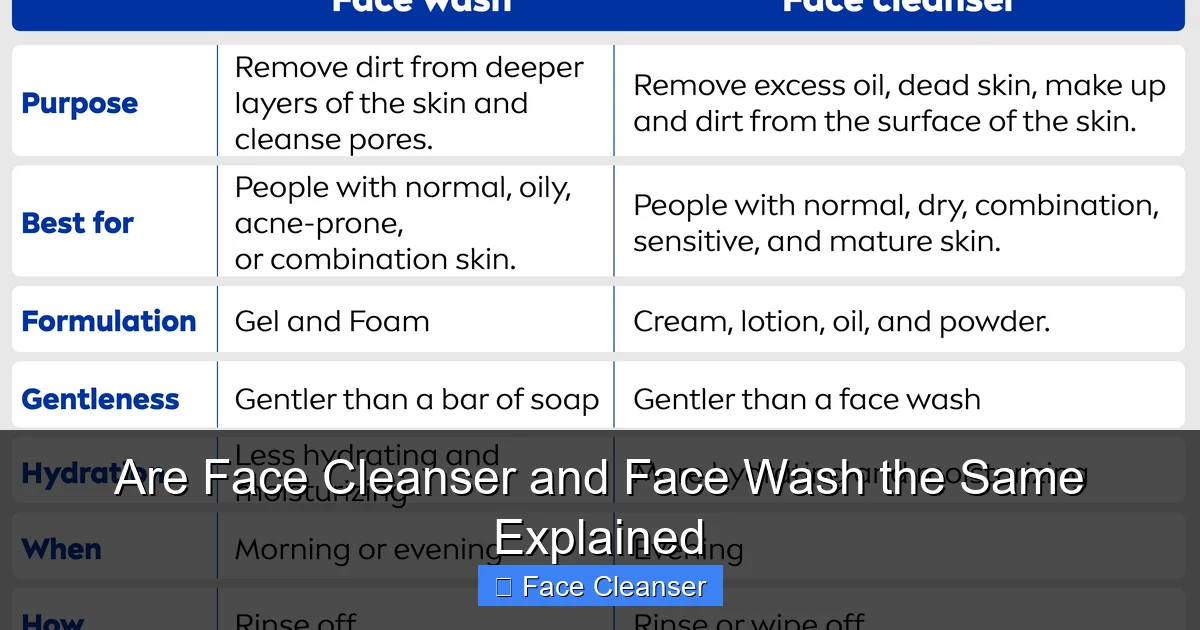
First, learn what each product does. This helps you answer, are face cleanser and face wash the same? They are not identical. Both clean skin. But they work in different ways.
Visual guide about Are Face Cleanser and Face Wash the Same Explained
Image source: img.nivea.com
What is a face cleanser?
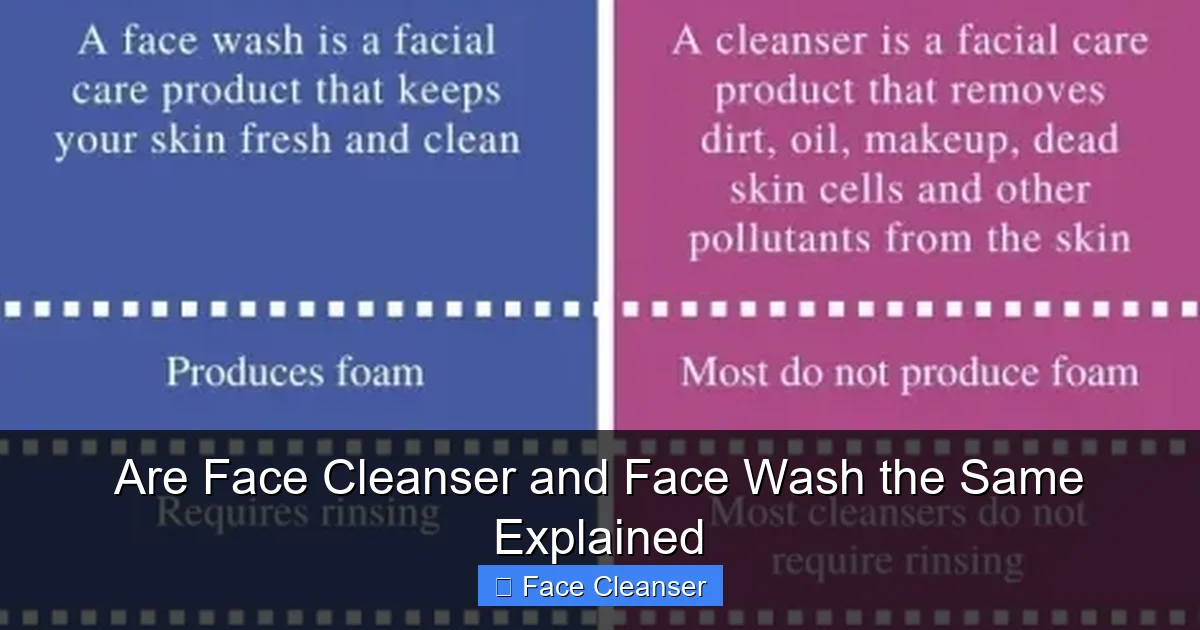
A face cleanser is usually cream or lotion based. It often has mild surfactants or oils. It removes dirt, light makeup, and oil. It is gentle. It does not strip natural oils. Many cleansers are good for dry or sensitive skin.
What is a face wash?
A face wash often foams. It contains stronger surfactants. It removes sweat, excess oil, and deeper dirt. It can be better for oily or acne-prone skin. But it can dry out sensitive skin if the formula is harsh.
Still wondering, are face cleanser and face wash the same? The short answer: no. They share a goal. They do not act the same on skin.
Step 2: Know the key differences
Understanding differences makes choices easier. Ask: What is my skin type? What is my main skin goal? Then choose.
Visual guide about Are Face Cleanser and Face Wash the Same Explained
Image source: i0.wp.com
Texture and feel
Cleansers: cream, milk, balm. They feel smooth. Face washes: gel or foam. They feel slick and bubbly. This difference helps answer, are face cleanser and face wash the same? Not by texture.
Cleansing power
Face wash can remove heavy oil and sweat. Cleansers remove dirt and makeup without stripping. If you use heavy sunscreen or makeup, you might need a cleanser first, then a face wash.
pH and gentleness
Cleansers often have skin-friendly pH. Face wash can be higher pH. Higher pH can irritate sensitive skin. This is another reason they are not the same.
Step 3: Match product to skin type
To answer, are face cleanser and face wash the same, you must think about your skin. Choose a product that suits it.
Visual guide about Are Face Cleanser and Face Wash the Same Explained
Image source: beautycaters.com
Dry skin
Picks: cream cleansers, oil cleansers, micellar water. Avoid foaming washes that leave skin tight. Use a gentle cleanser that keeps moisture.
Oily skin
Picks: gel face wash, foaming wash, salicylic acid options. A face wash can help control oil. But do not over-clean. Over-washing makes skin produce more oil.
Sensitive skin
Picks: fragrance-free cleansers, micellar water, gentle cream cleansers. Avoid strong surfactants. Sensitive skin might react to foaming face wash.
Combination skin
Use both types. A gentle cleanser daily. A targeted face wash on oily zones. This mixed approach answers, are face cleanser and face wash the same? You can use both in one routine.
Acne-prone skin
Look for face washes with salicylic acid. They can unclog pores and control oil. Use a gentle cleanser if you have active treatment that can dry skin. That gives balance.
Step 4: How to use a cleanser
Using the right method helps. Follow these steps to clean skin gently.
Step 4.1: Prepare your face
- Wash your hands.
- Remove heavy makeup with a wipe or oil.
- Wet your face with lukewarm water.
Step 4.2: Apply the cleanser
- Use a dime-size amount for creams or gels.
- Massage gently with fingertips for 30–60 seconds.
- Focus on areas with dirt or makeup.
Step 4.3: Rinse and pat dry
- Rinse with lukewarm water.
- Pat skin dry with a soft towel.
- Follow with moisturizer if skin feels dry.
Repeat if you wear heavy makeup. Using a balm or oil before a gentle cleanser helps. Many ask, are face cleanser and face wash the same? For use, they follow similar basic steps. But feel and results differ.
Step 5: How to use a face wash
Face wash often foams and works deeper. Use it right to avoid dryness.
Step 5.1: Wet your face
Use lukewarm water. Hot water can strip oils. Cold water can close pores and reduce cleaning power.
Step 5.2: Dispense and lather
- Use a small amount. Many foams expand.
- Rub between palms to make foam.
- Apply gently to the face.
Step 5.3: Massage and rinse
- Massage 30–60 seconds. Do not rub hard.
- Rinse thoroughly. Remove all foam.
- Pat dry and apply moisturizer.
Use face wash once or twice daily depending on oiliness. This helps answer, are face cleanser and face wash the same? They differ in frequency for many people.
Step 6: Double cleansing method
Double cleansing uses two products. It is popular and effective. It helps if you wear makeup or sunscreen.
Step 6.1: First cleanse
Use an oil-based cleanser or balm. This removes makeup and sunscreen. It lifts away heavy products. Many people ask, are face cleanser and face wash the same? In double cleansing, both play roles.
Step 6.2: Second cleanse
Use a water-based face wash or gentle cleanser. This removes sweat and grime. It leaves skin clean and ready for treatment products.
Step 6.3: When to double cleanse
- After long days with heavy makeup.
- When using sunscreen.
- If you live in a polluted city.
Step 7: Choosing ingredients
Ingredients tell a lot. They guide you to pick a cleanser or face wash. This helps answer, are face cleanser and face wash the same? Ingredient lists show function.
Gentle surfactants
Look for words like “mild” or “non-stripping.” Ingredients such as decyl glucoside are gentle. They are good in cleansers.
Active acne ingredients
Salicylic acid or benzoyl peroxide appears in some face washes. They help acne. These ingredients can be drying. Use carefully.
Hydrating ingredients
Look for glycerin, hyaluronic acid, or ceramides in cleansers. They help lock in moisture. They are great for dry skin.
Oils and balms
Oil cleansers remove makeup well. They break down heavy sunscreens and makeup. They are not the same as foaming face washes.
Step 8: Build a simple routine
Keep routines simple. Follow skin needs. This section gives examples for different skin types.
Routine for dry skin
- AM: gentle cleanser, hydrating toner, moisturizer, SPF.
- PM: oil or cream cleanser, moisturizer or night cream.
Routine for oily skin
- AM: foaming face wash, lightweight moisturizer, SPF.
- PM: oil cleanse if heavy makeup, then salicylic face wash, treatment as needed.
Routine for sensitive skin
- AM: gentle cream cleanser, fragrance-free moisturizer, SPF.
- PM: micellar water or gentle cleanser, moisturizer.
Routine for combination skin
- AM: gentle cleanser or gel cleanser, moisturizer, SPF.
- PM: oil cleanse if makeup, then gentle wash on oily zones, moisturizer.
These routines show that are face cleanser and face wash the same is not a yes-or-no. It depends on your steps and needs.
Step 9: Practical tips and examples
Here are real tips. They help you use products better and avoid mistakes.
- Tip: Test a small area first. This helps spot irritation.
- Tip: Avoid hot water. It dries skin.
- Tip: Use sunscreen after morning washing.
- Tip: Do not mix too many active ingredients at once.
- Example: If your skin feels tight after a face wash, switch to a milder cleanser.
- Example: If your makeup lifts but oil remains, try double cleansing with oil then face wash.
Each tip answers, in practice, whether are face cleanser and face wash the same. Their roles differ. Your use matters most.
Troubleshooting: Common problems and fixes
Problems happen. Below are common issues and simple fixes. Use them to avoid damage.
Problem: Skin feels tight and dry
Fix: Cut back on face wash. Switch to a gentle cleanser. Use moisturizer right after cleansing. Avoid exfoliating every day.
Problem: Breakouts after switching product
Fix: Give skin two weeks to adjust. If breakouts persist, stop the new product. Try a cleanser for acne-prone skin with salicylic acid once daily.
Problem: Makeup not removing fully
Fix: Use an oil or balm first. Then use a gentle cleanser or face wash. This double-cleanse method removes stubborn makeup.
Problem: Irritation or burning
Fix: Stop the product. Look for fragrance-free and hypoallergenic labels. See a dermatologist if symptoms persist.
Problem: Too oily after washing
Fix: Use a balancing face wash with salicylic acid. Do not over-wash. Use a lightweight, non-comedogenic moisturizer.
Each fix shows that are face cleanser and face wash the same is a practical question. The right choice depends on outcome.
Step 10: How to pick products in-store or online
Follow these steps when choosing a new product.
Step 10.1: Read labels
Look for key ingredients. Avoid harsh sulfates for dry skin. Seek salicylic acid for acne-prone skin. This helps decide if a product is a cleanser or a face wash.
Step 10.2: Check reviews and claims
Look for reviews from similar skin types. Check clinical claims like “gentle” or “non-drying.” Be wary of hype.
Step 10.3: Patch test
Apply a small amount behind your ear. Wait 24 hours. If no reaction, try on the face.
Step 10.4: Buy travel sizes first
Test a small size before committing. This saves money and skin stress.
As you shop, remember the main question: are face cleanser and face wash the same? Use labels and ingredients to tell the difference.
Myths and facts
Many myths exist. Let’s clear them up.
- Myth: Face wash cleans better than cleanser. Fact: It depends on the product and skin type.
- Myth: Cleansers cannot remove makeup. Fact: Some cleansers, especially oil or balm cleansers, remove heavy makeup well.
- Myth: Foaming is always better. Fact: Foam is not always needed. It can dry skin.
- Myth: You must use face wash every day. Fact: Some skin types do better with gentler cleansers daily.
Understanding myths helps you see why the question are face cleanser and face wash the same can confuse people. They are different tools.
When to see a dermatologist
See a pro if you have persistent problems. If irritation, rashes, or severe acne occur, get expert care. A dermatologist will recommend cleansers or medicated washes. They can tell you if a cleanser or face wash suits your skin best.
Conclusion
This guide answered: are face cleanser and face wash the same? The answer is no. They both clean skin. But they do so differently. A cleanser is gentler. A face wash often foams and cleans deeper. Your skin type and routine decide which is best.
Follow the steps here. Test products. Patch test first. Use double cleansing with heavy makeup. Choose ingredients that match your skin. Adjust if you see irritation. Then you will have a simple, effective routine for healthy skin.
