
Finding the perfect haircut for your little one can feel overwhelming, especially when dealing with straight fine hair that requires special consideration.
The right style can transform your baby boy’s appearance while ensuring his delicate hair looks fuller, healthier, and adorably stylish.
In this comprehensive guide on Top 30+ Baby Boys’ Haircuts for Straight Fine Hair, we’ll explore a diverse collection of age-appropriate, easy-to-maintain styles that work beautifully with fine hair textures.
From classic cuts that never go out of style to modern trendy looks that make heads turn, you’ll discover practical styling tips, maintenance advice, and expert insights to help you choose the ideal haircut for your precious little man.
Whether you’re preparing for his first haircut or looking to refresh his current style, this article will equip you with everything you need to make confident decisions about your baby boy’s hair.
1. The Classic Baby Boy Buzz Cut
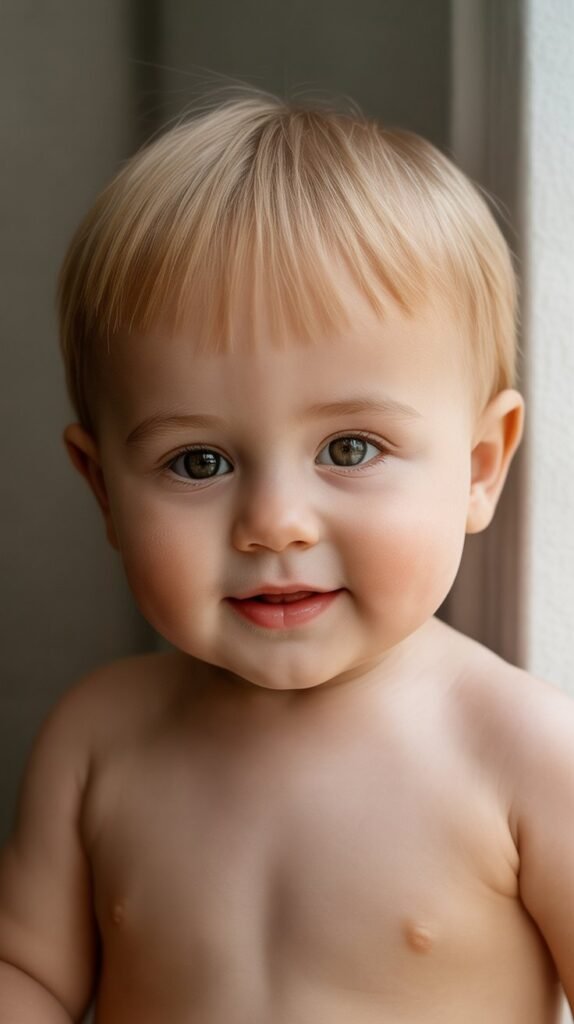
The buzz cut remains one of the most practical and timeless options for baby boys with straight fine hair, offering ultimate ease and a clean, fresh appearance.
This style requires minimal maintenance and keeps your little one comfortable during active play and warm weather.
- The buzz cut uses clippers to create an even, short length all around the head, typically ranging from 1/8 inch to 1/2 inch.
- This style is particularly beneficial for fine hair because it creates the illusion of fuller, thicker hair by eliminating the wispy ends.
- Parents appreciate the buzz cut because it requires virtually no styling products or daily maintenance routines.
- The haircut grows out evenly, meaning you won’t need frequent trims to maintain a neat appearance.
- It’s an excellent choice for babies who don’t enjoy sitting still during haircuts, as the process is quick and straightforward.
- The buzz cut works well for all face shapes and can be easily customized with slightly longer lengths on top if desired.
- This style keeps hair off the face and neck, reducing irritation and keeping your baby cooler during summer months.
2. Textured Crop for Fine Hair
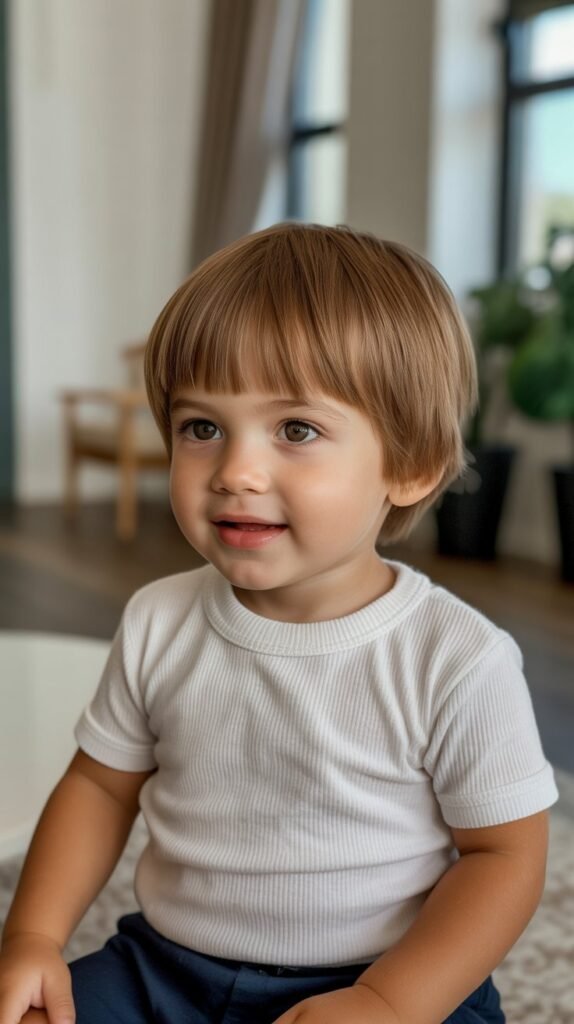
The textured crop adds dimension and movement to straight fine hair, creating a modern, stylish look that appears fuller and more voluminous
This cut strategically layers the hair to maximize the appearance of thickness while remaining age-appropriate for baby boys.
- The textured crop features shorter sides with slightly longer hair on top, typically ranging from 1 to 2 inches in length.
- Stylists create texture by using point-cutting techniques that remove weight and add movement throughout the hair.
- This style works exceptionally well for fine hair because the layers prevent the hair from lying flat against the scalp.
- The cut requires minimal styling—simply running your fingers through damp hair after bath time creates the desired tousled look.
- A small amount of lightweight styling cream can enhance the texture without weighing down fine hair.
- The textured crop grows out gracefully, maintaining its shape for 4-6 weeks between haircuts.
- This versatile style can be dressed up for special occasions or kept casual for everyday play.
3. Side-Swept Fringe Style
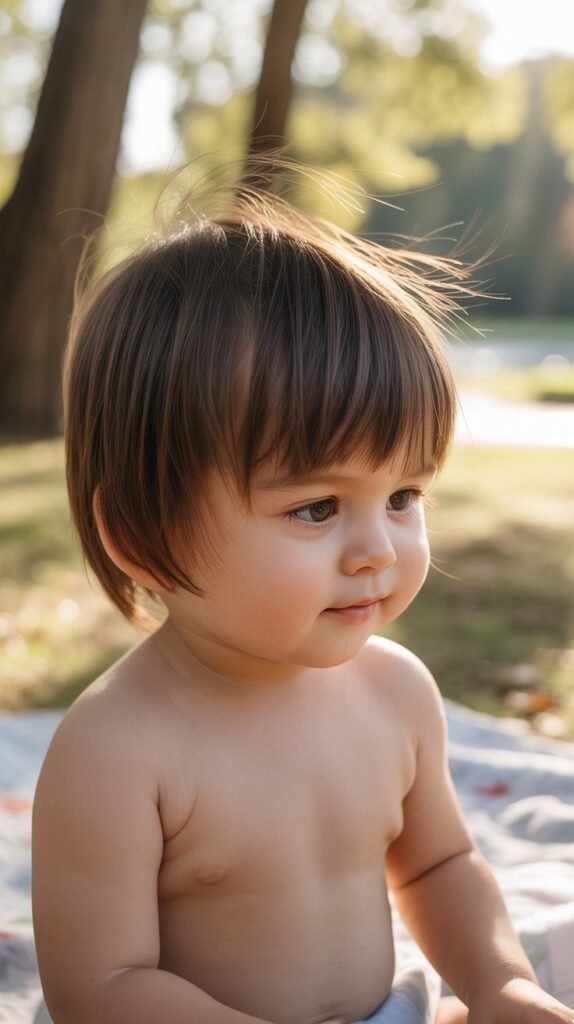
The side-swept fringe creates a charming, slightly sophisticated look that works beautifully with straight fine hair while adding softness around your baby’s face.
This style keeps hair out of the eyes while maintaining enough length to create visual interest and movement.
- The side-swept fringe features longer hair at the front that’s styled to one side, creating an asymmetrical look.
- The back and sides are kept shorter (typically 1-2 inches) while the front fringe measures 2-3 inches in length.
- This style adds the appearance of volume to fine hair by creating diagonal lines that draw the eye across the face.
- The fringe can be styled easily by combing damp hair to the side after washing and allowing it to air dry.
- For babies with very fine hair, a tiny amount of lightweight mousse helps hold the side sweep in place.
- This cut works particularly well for babies with oval or round face shapes, as it creates flattering angles.
- The style requires regular trims every 3-4 weeks to keep the fringe from falling into your baby’s eyes.
4. The Gentle Taper Cut
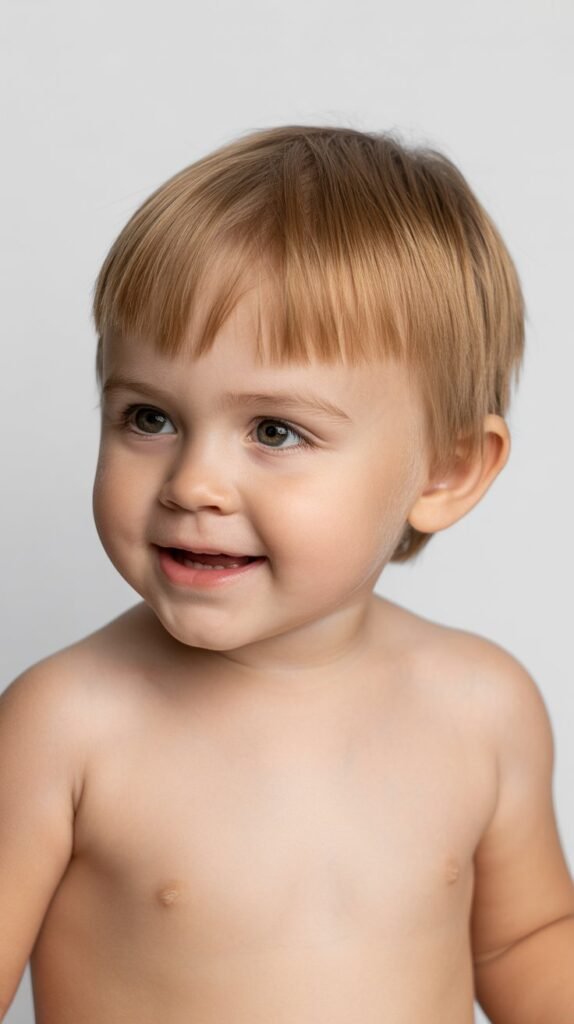
The gentle taper cut offers a soft transition from longer hair on top to shorter hair on the sides and back, creating a polished yet natural look perfect for straight fine hair.
This classic approach provides structure while maintaining a baby-appropriate softness.
- The taper cut gradually decreases hair length from the crown down to the neckline and around the ears.
- The top section typically remains 1.5 to 2 inches long, providing enough length to work with fine hair’s natural texture.
- Unlike harsh fade cuts, the gentle taper maintains softness appropriate for a baby’s delicate features.
- This style creates the illusion of fuller hair by keeping strategic length on top while cleaning up the sides.
- The taper cut requires minimal styling—simply brushing or combing after washing keeps the hair neat and tidy.
- It’s an ideal choice for babies transitioning from their first wispy baby hair to slightly thicker toddler hair.
- The cut works well for both straight and slightly wavy fine hair textures.
5. Messy Spiky Top
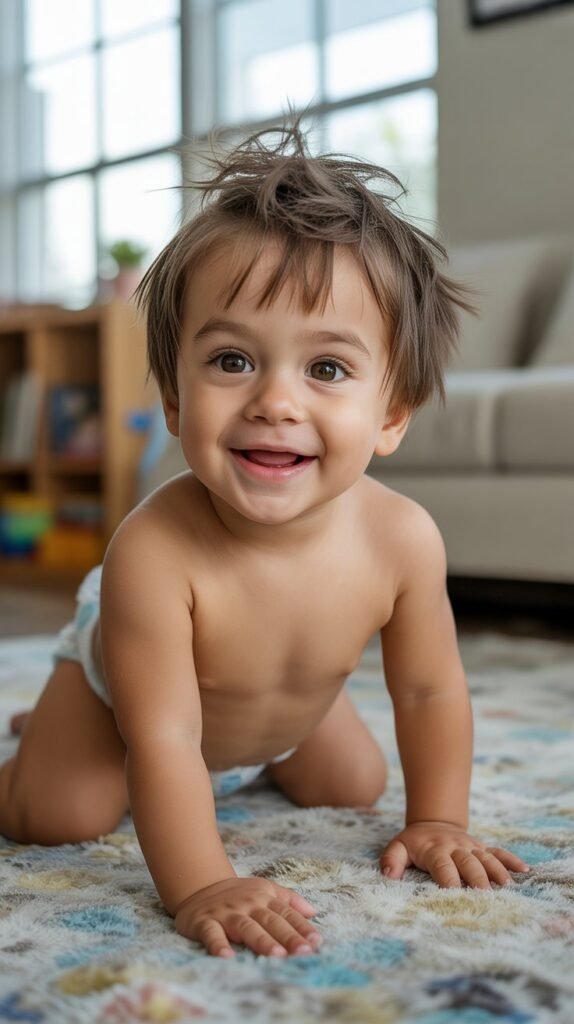
The messy spiky top brings playful energy and added height to straight fine hair, creating a fun, youthful look that makes thin hair appear fuller.
This style embraces your baby boy’s natural texture while adding deliberate, stylish volume.
- This cut features very short sides (usually clipper-cut) with longer hair on top measuring 1.5 to 2.5 inches.
- The contrast between the short sides and longer top creates visual interest and makes fine hair appear thicker.
- Styling involves applying a small amount of lightweight hair paste or cream to slightly damp hair.
- Gently lifting and twisting small sections of hair upward creates the spiky texture without harsh, stiff spikes.
- The messy approach works perfectly for fine hair because it doesn’t require perfect hold or structure.
- This style is particularly practical because even when it falls flat throughout the day, it still looks intentionally tousled.
- Parents can easily recreate this look at home with minimal products and effort.
6. Soft Undercut for Babies
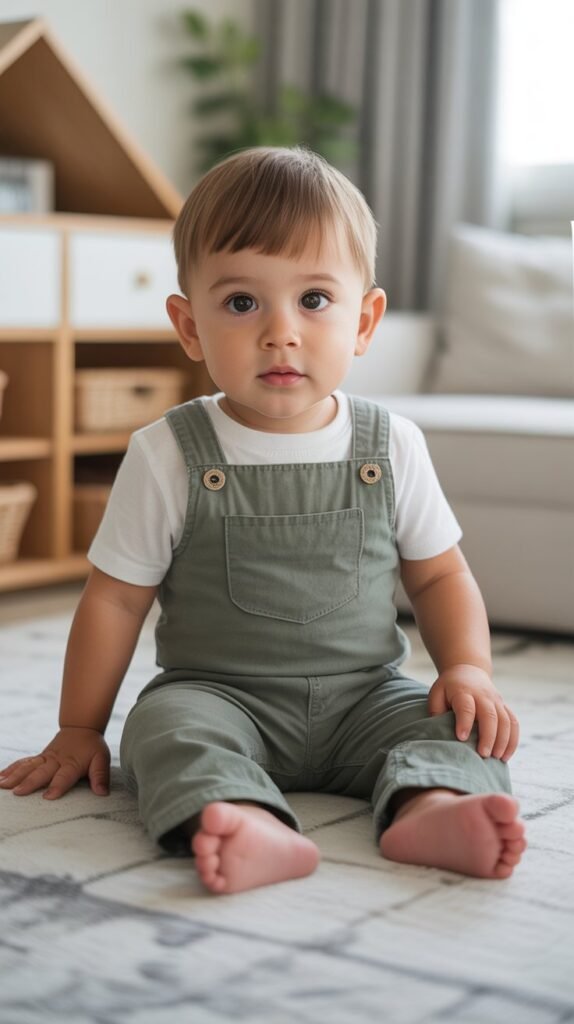
The soft undercut provides a modern, trendy look while being gentler and more age-appropriate than traditional undercuts seen on older children and adults
. This style offers excellent dimension for straight fine hair without appearing too severe.
- The soft undercut keeps the sides and back shorter (typically with scissors rather than harsh clippers) while maintaining length on top.
- Unlike adult undercuts with dramatic disconnection, the baby version features a subtle, blended transition.
- The top section ranges from 2 to 3 inches, providing enough length to create various looks with straight fine hair.
- This cut adds height and fullness to the crown area, which is especially beneficial for fine-textured hair.
- The style can be worn forward for a casual look or swept back for a slightly more polished appearance.
- Maintenance is relatively simple, requiring only finger-combing or light brushing after washing.
- The soft undercut grows out gracefully and can be easily maintained with trims every 5-6 weeks.
7. Bowl Cut Modernized
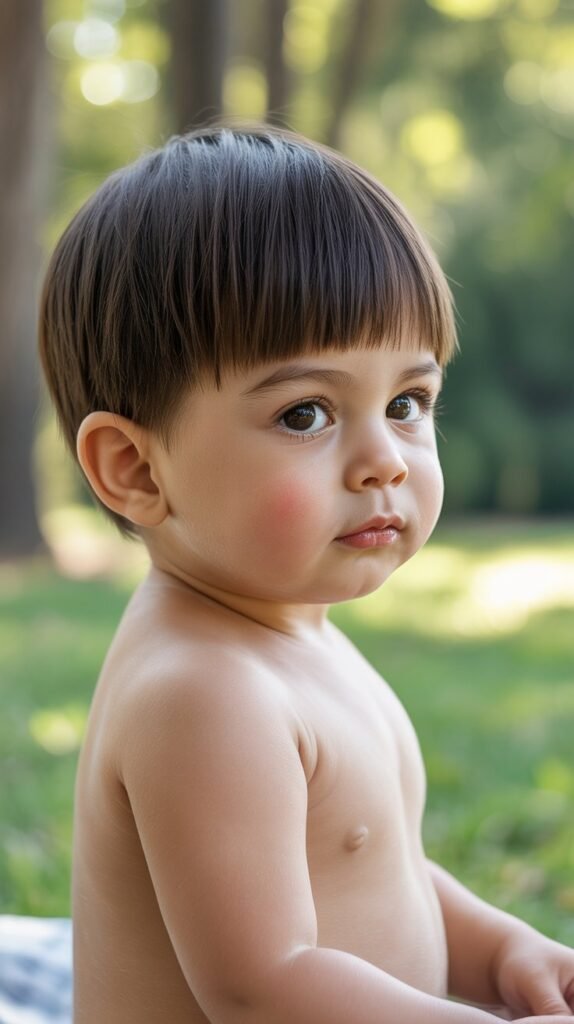
The modernized bowl cut has evolved from its traditional roots into a stylish, contemporary option that works surprisingly well with straight fine hair.
This updated version features softer edges and subtle layering that creates movement while maintaining the classic silhouette.
- The modern bowl cut features a rounded shape around the head with hair that typically measures 2-3 inches in length.
- Unlike the harsh, blunt bowl cuts of the past, today’s version incorporates subtle texturing and softened edges.
- This style works excellently for fine hair because the weight distribution helps hair lay smoothly without looking sparse.
- The cut frames the face beautifully and keeps hair consistently out of your baby’s eyes.
- Point-cutting techniques at the edges create a softer, more natural appearance rather than a stark line.
- The bowl cut requires minimal daily styling, making it perfect for busy parents and active babies.
- This style is particularly flattering on babies with round or heart-shaped faces.
8. The Casual Shaggy Cut
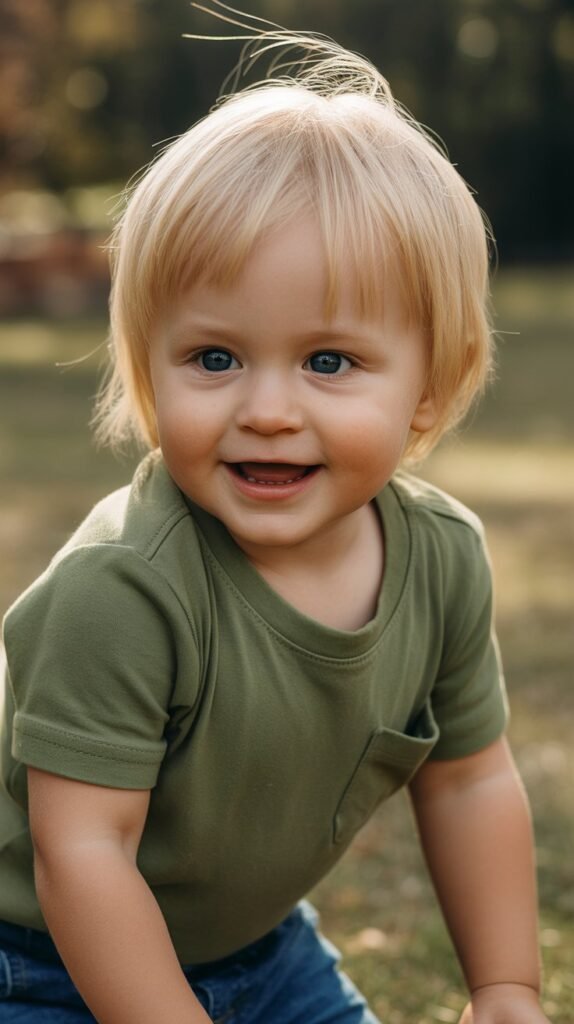
The casual shaggy cut brings an effortlessly cool, laid-back vibe to your baby boy’s appearance while adding much-needed dimension to straight fine hair.
This style embraces natural texture and movement, creating the appearance of fuller, more voluminous hair.
- The shaggy cut features multiple layers throughout, with lengths typically ranging from 1.5 to 3 inches depending on the area.
- Layers are cut at different angles to create piece-y, separated sections that add visual fullness to fine hair.
- This style works particularly well for babies with naturally straight hair because the layers prevent it from looking flat.
- The casual nature of the cut means slight imperfections or uneven growth actually enhance the overall aesthetic.
- Minimal styling is required—simply towel-dry after washing and allow hair to air dry for the perfect shaggy look.
- A light leave-in conditioner spray can help manage any flyaways without weighing down fine hair.
- The shaggy cut offers excellent versatility, working well for both casual play and slightly more formal occasions.
9. Classic Short and Neat
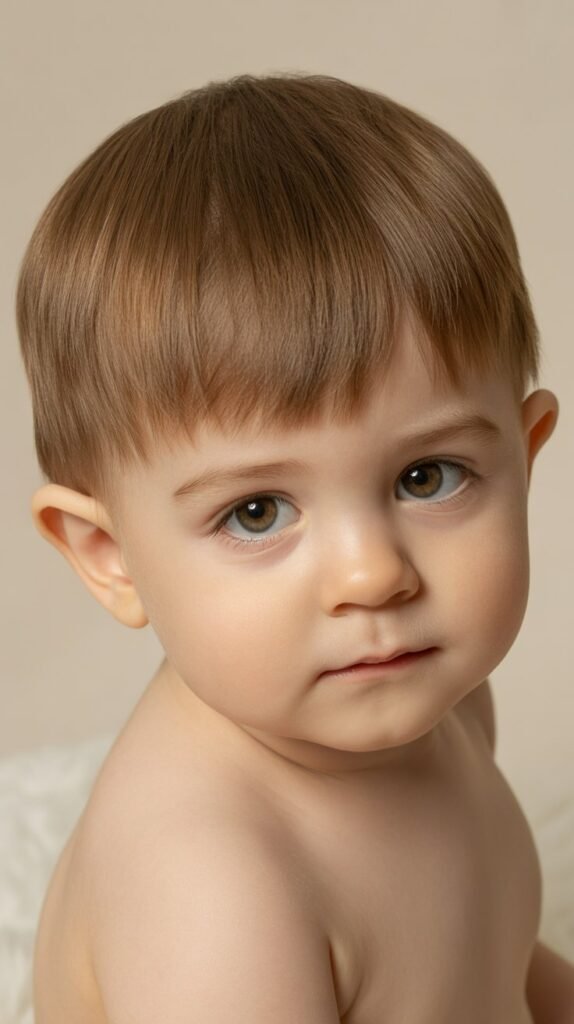
The classic short and neat cut represents timeless simplicity and practicality, offering a clean, well-groomed appearance that’s perfect for baby boys with straight fine hair.
This traditional approach never goes out of style and requires minimal maintenance.
- This cut maintains uniform short length (typically 1-1.5 inches) all over, creating a tidy, polished appearance.
- The style is achieved through careful scissor work that ensures even distribution of hair length throughout.
- For fine hair, this cut prevents the wispy, uneven look that can occur when hair grows longer and loses shape.
- The short length makes hair appear denser and fuller by eliminating the thin, tapered ends common with fine hair.
- This style requires absolutely no styling products or techniques—simply wash and go.
- It’s an excellent choice for babies with sensitive scalps, as short hair reduces tangling and pulling during care.
- The classic short and neat cut works well for all face shapes and hair colors.
10. Forward-Brushed Fringe
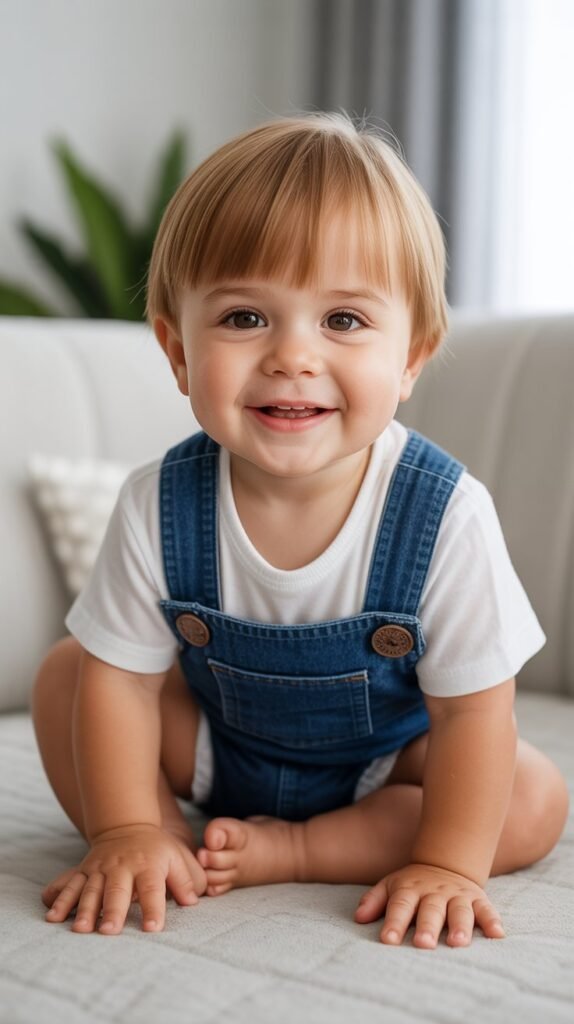
The forward-brushed fringe creates a sweet, youthful look while strategically adding fullness to straight fine hair at the front.
This style draws attention to your baby’s adorable facial features while providing practical coverage and dimension.
- The forward-brushed fringe features slightly longer hair at the front (2-2.5 inches) that’s styled to fall naturally forward onto the forehead.
- The sides and back are kept shorter (1-1.5 inches) to create contrast and prevent the overall style from looking too heavy.
- This cut works exceptionally well for fine hair because the forward movement creates the illusion of density and volume.
- The fringe can be trimmed just above the eyebrows or left slightly longer for a more relaxed, casual appearance.
- Styling simply involves brushing or combing hair forward after washing while it’s still damp.
- A tiny amount of lightweight styling cream can help fine hair hold the forward direction throughout the day.
- The forward fringe naturally parts in the center or slightly off-center, adding to the style’s casual, effortless charm.
11. Ivy League Cut for Babies

The Ivy League cut brings a refined, preppy aesthetic to baby boys while working wonderfully with straight fine hair to create the appearance of thickness and structure.
This sophisticated yet age-appropriate style offers versatility and timeless appeal.
- The Ivy League cut is essentially a longer version of a crew cut, with hair measuring 1.5-2 inches on top.
- The sides and back are tapered shorter, creating a clean, graduated look that adds definition to fine hair.
- The length on top is sufficient to be brushed to the side or styled with a slight upward lift for added volume.
- This cut creates natural dimension that makes fine hair appear fuller, especially when styled with a subtle side part.
- The style works beautifully for special occasions like family photos, holidays, or celebrations.
- Daily maintenance is minimal—simply comb after washing and allow to air dry or gently towel dry.
- The Ivy League cut grows out gracefully and maintains its shape for 4-5 weeks between trims.
12. Butch Cut Variation
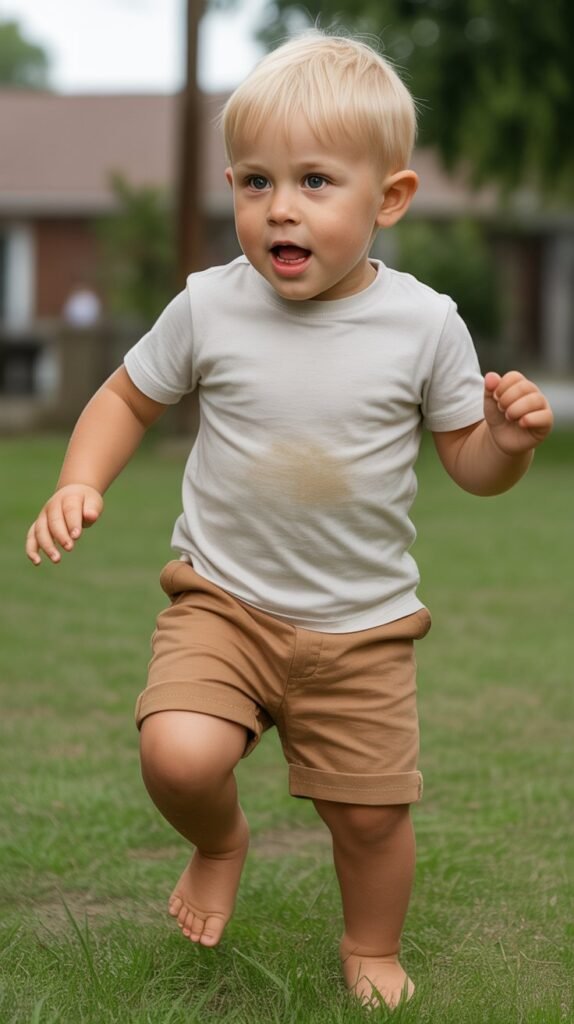
The butch cut variation offers a super-short, uniform length that’s practical, comfortable, and ideal for straight fine hair that needs to appear fuller and more robust.
This military-inspired style has been adapted to suit baby boys with a gentler, softer approach.
- The butch cut maintains hair at approximately 1/4 to 1/2 inch in length all over the head using clippers.
- This ultra-short style makes fine hair appear denser because you see more of the hair shaft rather than wispy ends.
- The cut is exceptionally low-maintenance, requiring no styling products, brushing, or daily care routines.
- It’s perfect for active babies and toddlers who are constantly moving, playing, and exploring.
- The butch cut keeps your baby cool and comfortable, especially beneficial during warmer months or in hot climates.
- Hair grows out evenly from this style, and the cut can last 3-4 weeks before needing a refresh.
- This style is particularly practical for babies who dislike having their hair washed or styled.
13. Soft Quiff Style

The soft quiff style brings a touch of modern sophistication to baby boys’ haircuts while creating impressive volume and height for straight fine hair.
This style adapts the classic quiff to be gentler and more appropriate for young children.
- The soft quiff features shorter sides (1-1.5 inches) with longer hair on top (2-3 inches) that’s lifted upward and slightly back.
- The height created at the front makes fine hair appear significantly fuller and more voluminous.
- Unlike adult quiffs that use strong-hold products, the baby version uses minimal lightweight styling cream or mousse.
- The style is created by gently lifting hair upward and back while it’s still damp, then allowing it to air dry.
- The soft quiff works particularly well for babies with naturally straight hair that can hold a subtle lift.
- This style adds structure to fine hair without requiring complex styling techniques or time-consuming routines.
- The look can be achieved in under a minute, making it practical for busy mornings.
14. Caesar Cut for Little Ones

The Caesar cut provides a classic Roman-inspired look that’s been adapted perfectly for baby boys with straight fine hair, offering a distinctive style with a short, horizontal fringe.
This cut creates the appearance of fullness while remaining practical and easy to maintain.
- The Caesar cut features short, uniform length (1-1.5 inches) all over with a distinctive short fringe brushed forward.
- The fringe typically measures 1-2 inches and is cut straight across, creating a signature horizontal line above the eyebrows.
- This style works excellently for fine hair because the forward direction and blunt cut create the illusion of density.
- The even length distribution prevents fine hair from looking wispy or uneven at the ends.
- Styling is incredibly simple—just brush or comb hair forward after washing and allow to dry naturally.
- The Caesar cut frames the face beautifully and draws attention to your baby’s eyes and smile.
- This style has historical significance and timeless appeal, never looking outdated or overly trendy.
15. Layered Crown with Short Sides
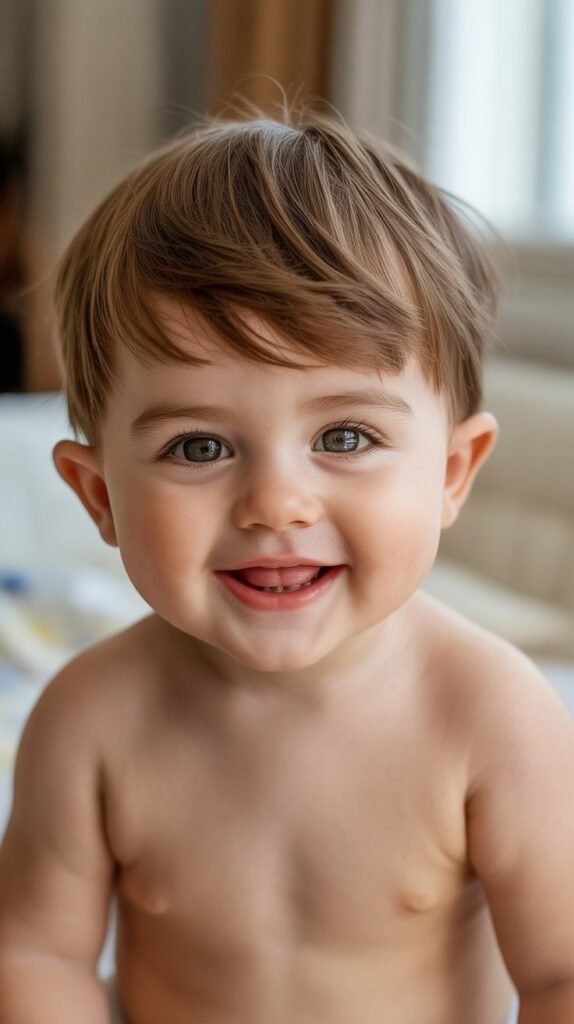
- The crown area features 2-3 inches of strategically layered hair that creates lift and movement.
- The sides and back are clipper-cut or scissor-cut to 1/2 to 1 inch, creating strong contrast with the top.
- Multiple layers at the crown prevent fine hair from falling flat against the scalp.
- The dramatic difference in length between top and sides makes even the finest hair appear substantially fuller.
- This cut can be styled with fingers to create texture or simply left to dry naturally for a more casual look.
- The layered crown allows for versatility—hair can be styled forward, to the side, or with a slight lift.
- Regular trims every 4-5 weeks maintain the shape and prevent the crown from becoming too heavy.
16. Minimalist Crew Cut
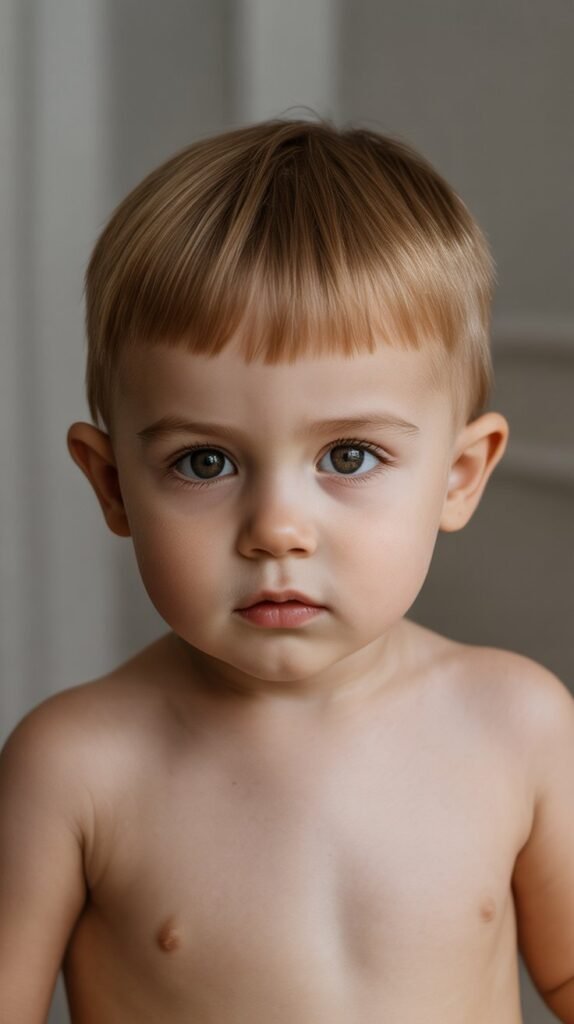
The minimalist crew cut embodies simplicity and functionality while providing an ideal solution for baby boys with straight fine hair that needs a clean, uniform appearance.
This military-inspired style has been softened for young children while maintaining its practical benefits.
- The crew cut features very short sides and back (1/4 to 1/2 inch) with slightly longer hair on top (1 to 1.5 inches).
- The top is cut to stand slightly upright, creating a subtle brush-like appearance that adds height to fine hair.
- This style makes fine hair appear fuller by emphasizing the density at the base rather than the wispy ends.
- The crew cut requires absolutely no daily styling or maintenance products.
- It’s an excellent choice for babies with very fine hair that doesn’t hold styles well or lacks natural body.
- The cut keeps hair completely off the ears, neck, and face, maximizing comfort during play and sleep.
- This style maintains its neat appearance for 3-4 weeks, making it economical and convenient for busy families.
17. Textured Fringe Forward
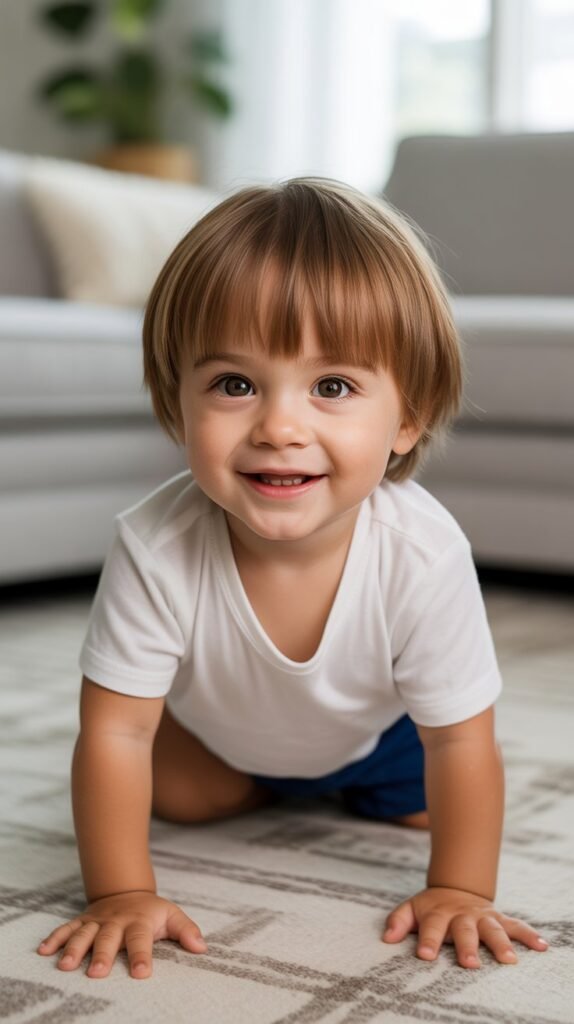
The textured fringe forward combines the charm of a classic fringe with modern texturizing techniques that add critical dimension to straight fine hair.
This style creates movement and the appearance of fullness while maintaining a youthful, playful aesthetic.
- The fringe measures 2-3 inches in length and is cut with point-cutting or slide-cutting techniques to create texture.
- The sides and back are kept at 1-1.5 inches, providing enough length to maintain softness while creating contrast.
- Texturizing removes bulk without removing length, perfect for fine hair that needs to appear fuller rather than flatter.
- The fringe is styled forward and slightly to one side, creating natural-looking movement and direction.
- A small amount of sea salt spray or texturizing spray can enhance the piece-y, separated look.
- This style works particularly well for babies with straight hair that has a tendency to fall flat without texture.
- The textured fringe forward grows out gracefully and can be easily maintained between regular haircuts.
18. Short All-Around with Slight Top Length

The short all-around with slight top length creates a balanced, proportionate look that’s perfect for straight fine hair needing a little extra presence without dramatic styling.
This subtle approach adds just enough dimension while remaining natural and age-appropriate.
- This cut maintains 3/4 to 1 inch length on the sides and back with 1.5 to 2 inches on top.
- The subtle length difference creates just enough visual interest without appearing stark or disconnected.
- The slightly longer top allows fine hair to have some movement and body rather than lying completely flat.
- This versatile style can be brushed forward, to the side, or left to dry naturally in any direction.
- The cut works well for babies transitioning from very fine baby hair to slightly thicker toddler hair.
- Maintenance is minimal—simply wash, gently towel dry, and allow to air dry or briefly brush into place.
- This style flatters all face shapes and works equally well for formal and casual occasions.
19. Side Part Gentleman’s Cut

The side part gentleman’s cut brings timeless elegance and refinement to baby boys’ hairstyles while working beautifully with straight fine hair to create defined sections and the appearance of fullness.
This classic style has remained popular across generations for good reason.
- The side part creates a defined line separating hair into two sections, typically with a 70/30 or 60/40 ratio.
- The larger section measures 2-2.5 inches in length and is combed smoothly to the side.
- The smaller section is combed in the opposite direction, creating clean lines that add structure to fine hair.
- The sides and back are tapered shorter (1-1.5 inches) to maintain balance and prevent heaviness.
- A small amount of lightweight pomade or styling cream helps maintain the part and adds subtle shine.
- This style works exceptionally well for special occasions, family photos, or when you want your baby looking extra polished.
- The side part creates the illusion of denser hair by organizing it into defined sections rather than letting it scatter randomly.
20. Natural Tousled Look

The natural tousled look embraces your baby boy’s inherent hair texture and movement, creating an effortlessly charming style that actually makes straight fine hair appear fuller through strategic disorder.
This approach celebrates natural beauty while requiring minimal intervention.
- This cut features slightly varied lengths throughout (1.5-2.5 inches) that create organic, unstructured movement.
- Rather than fighting against fine hair’s tendency to move in different directions, this style embraces it completely.
- The tousled effect is achieved through cutting techniques that remove weight and create natural separation between sections.
- Styling involves simply towel-drying after washing and allowing hair to air dry with minimal touching or manipulation.
- A light texturizing spray or sea salt spray can enhance the natural movement without adding weight.
- This style is perfect for active babies because it looks intentional even when hair gets mussed during play.
- The natural tousled look works especially well for babies with hair that has slight natural wave or varied growth patterns.
21. Asymmetrical Modern Cut
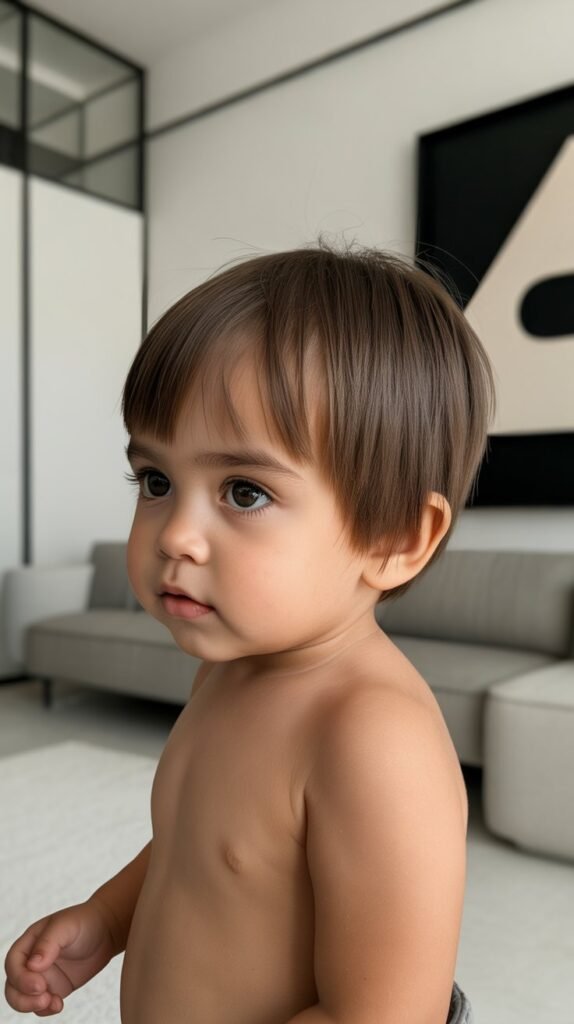
The asymmetrical modern cut introduces contemporary style through intentionally uneven lengths that create visual interest and the appearance of greater volume in straight fine hair.
This fashion-forward approach offers uniqueness while remaining appropriate for young children.
- The asymmetrical cut features longer hair on one side (2-3 inches) that gradually transitions to shorter length on the opposite side (1-1.5 inches).
- This intentional imbalance creates movement and dimension that draws the eye across the head, making hair appear fuller.
- The front section typically sweeps across the forehead at an angle, adding to the asymmetrical aesthetic.
- The style works particularly well for fine hair because the varied lengths prevent it from looking uniformly flat.
- Styling involves combing or brushing hair in the intended direction while damp, then allowing it to air dry.
- This cut makes a statement without requiring complex daily maintenance or styling products.
- The asymmetrical modern cut is ideal for parents wanting their baby boy to have a distinctive, fashion-conscious look.
22. Choppy Layered Cut
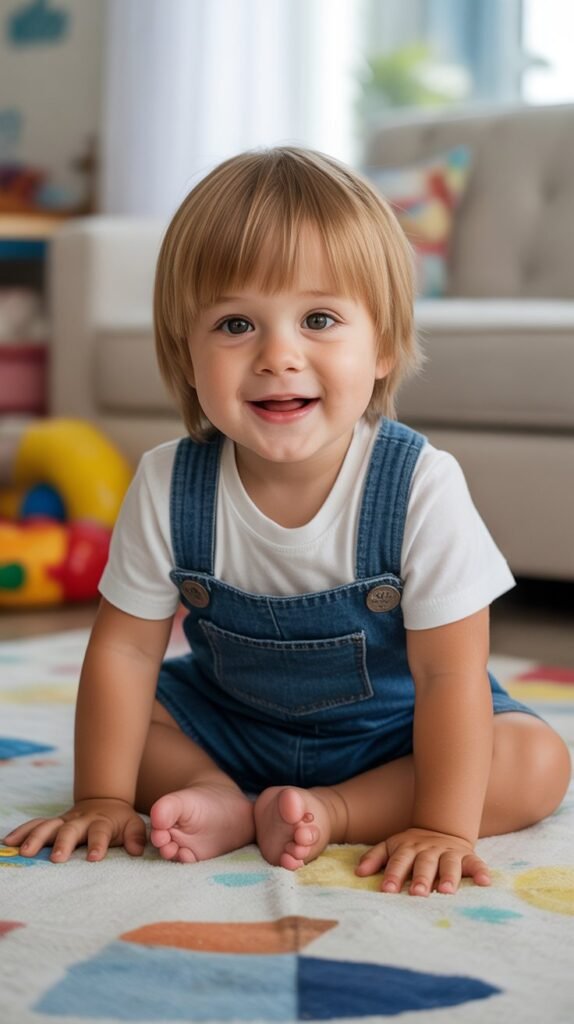
The choppy layered cut creates deliberate, piece-y sections throughout the hair that add substantial dimension and the illusion of thickness to straight fine hair.
This edgy yet playful style brings texture and movement through strategic cutting techniques.
- The choppy layers are created using point-cutting and slicing techniques that create separation between hair sections.
- Lengths vary throughout, typically ranging from 1.5 to 3 inches depending on the area and desired effect.
- The intentionally uneven, disconnected pieces prevent fine hair from clumping together and looking sparse.
- This style adds significant visual volume because the eye perceives more dimension with the separated sections.
- The choppy effect requires minimal styling—simply running fingers through damp hair creates the desired look.
- A small amount of lightweight paste or cream can be used to define individual pieces for special occasions.
- This cut grows out gracefully because the intentional irregularity means slight growth doesn’t disrupt the overall aesthetic.
23. High and Tight Variation

The high and tight variation adapts a classic military cut into a baby-appropriate style that creates dramatic contrast perfect for showcasing what length exists in straight fine hair.
This bold look emphasizes the difference between very short sides and relatively longer top.
- The sides and back are cut extremely short (1/8 to 1/4 inch) using clippers, creating a “high” line of demarcation.
- The top section measures 1.5 to 2.5 inches, appearing substantially fuller due to the stark contrast with the sides.
- The “tight” refers to the precision and neatness of the cut, with clean lines around the ears and neckline.
- This style makes even the finest hair appear dense on top because attention is drawn to the length difference.
- The high and tight requires virtually no daily maintenance and keeps babies cool and comfortable.
- Regular maintenance every 3-4 weeks is recommended to keep the dramatic contrast crisp and defined.
- This cut works particularly well for babies with very straight hair that naturally stands up slightly when cut to this length.
24. Rounded Mushroom Cut

The rounded mushroom cut creates a distinctive silhouette that works surprisingly well with straight fine hair by using the hair’s natural tendency to lay smooth.
This style has evolved into a modern, softer version of traditional mushroom cuts from previous decades.
- The mushroom cut features a rounded dome shape on top with length typically measuring 2-3 inches.
- The perimeter is cut in a circular pattern that follows the natural curve of the head.
- The sides and back can be either incorporated into the rounded shape or cut shorter for a more defined mushroom silhouette.
- This style works excellently for fine hair because the weight distribution helps hair lay smoothly in the desired round shape.
- The cut requires minimal styling—simply combing hair down and around after washing maintains the mushroom effect.
- Point-cutting around the edges softens what could otherwise be harsh lines, creating a more contemporary look.
- The rounded mushroom cut is particularly charming on babies with round faces, as it complements their natural features.
25. Graduated Bob for Boys
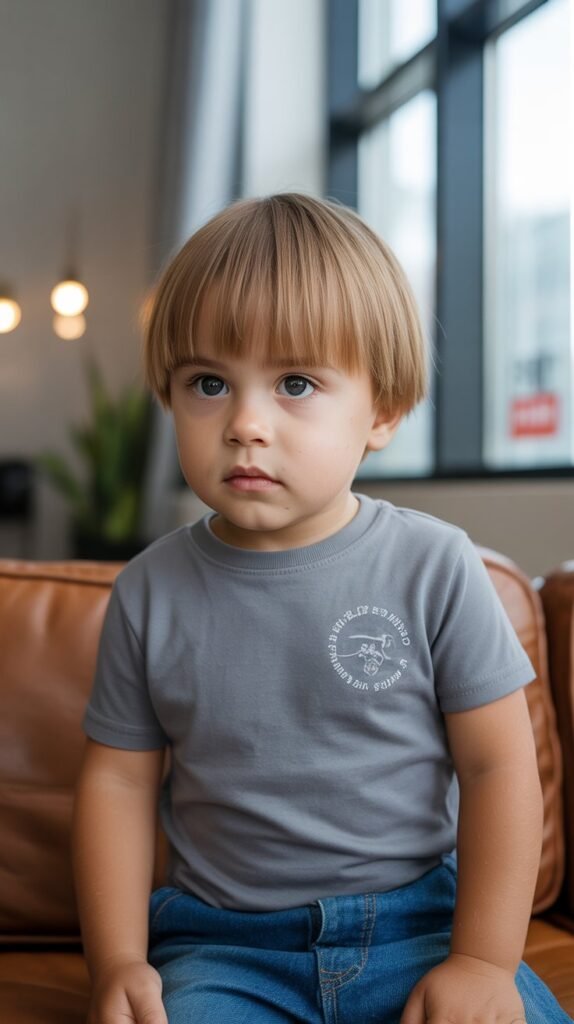
The graduated bob for boys represents a longer style option that works beautifully with straight fine hair by creating stacked layers in the back that add volume and dimension.
This unisex cut has been adapted to suit baby boys while maintaining practicality.
- The graduated bob features shorter layers in the back (1.5-2 inches) that gradually transition to longer lengths toward the front (2.5-3 inches).
- The stacked layers in the back create lift and volume, perfect for combating flat fine hair.
- The graduated angle creates visual interest and movement as the hair follows the line from back to front.
- This style works particularly well for babies with straight hair that needs encouragement to have body and swing.
- The bob length keeps hair manageable and out of the eyes while still providing enough length for styling options.
- A light leave-in conditioner helps maintain smoothness and prevents fine hair from tangling.
- The graduated bob grows out gracefully and can easily transition into other styles as your baby’s hair grows.
26. Faux Hawk for Babies

The faux hawk for babies brings playful edge and personality to straight fine hair through a center strip of slightly longer hair flanked by shorter sides.
This fun, bold style creates significant height that makes fine hair appear substantially fuller.
- The faux hawk features very short sides (1/2 to 3/4 inch) with a center strip of longer hair (2-3 inches) running from forehead to crown.
- Unlike a true mohawk, the faux hawk blends more gradually and can be worn spiked up or lying flat for versatility.
- The style creates dramatic height when styled, making fine hair appear significantly thicker and fuller.
- Styling involves applying a small amount of lightweight gel or paste to the center section and gently lifting upward.
- The faux hawk can be worn styled for special occasions or left natural for everyday casual wear.
- This cut works exceptionally well for babies with naturally straight hair that can be easily manipulated when damp.
- The bold, fun nature of the faux hawk makes it perfect for parents wanting their baby boy to have a distinctive look.
27. Swept-Back Classic
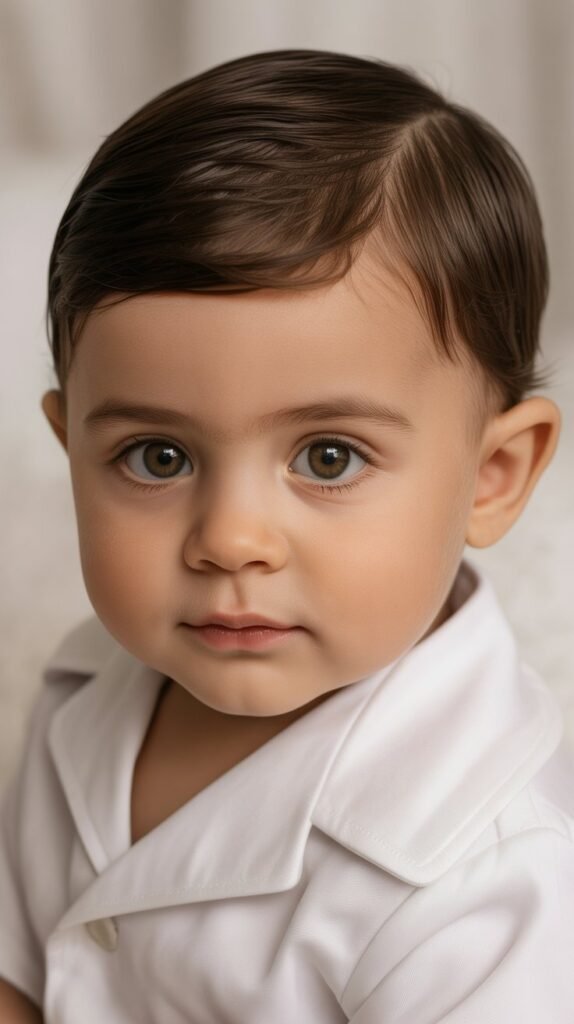
The swept-back classic creates a mature, polished appearance while adding volume to straight fine hair through strategic backward direction.
This sophisticated style has been adapted from adult looks to work beautifully for baby boys.
- The swept-back style features 2-3 inches of length on top that’s directed backward from the forehead.
- The sides are kept shorter (1-1.5 inches) and can be combed back as well or left slightly forward for contrast.
- Sweeping hair backward naturally lifts it away from the scalp, creating the appearance of greater volume for fine hair.
- This style works best with straight hair that doesn’t have a strong forward cowlick or directional growth pattern.
- A small amount of lightweight pomade or styling cream helps maintain the backward direction throughout the day.
- The swept-back classic is ideal for formal occasions, professional photos, or when you want your baby looking especially dapper.
- Despite its polished appearance, the style can be easily relaxed by simply running wet fingers through to soften the look.
28. Blended Fade with Length on Top
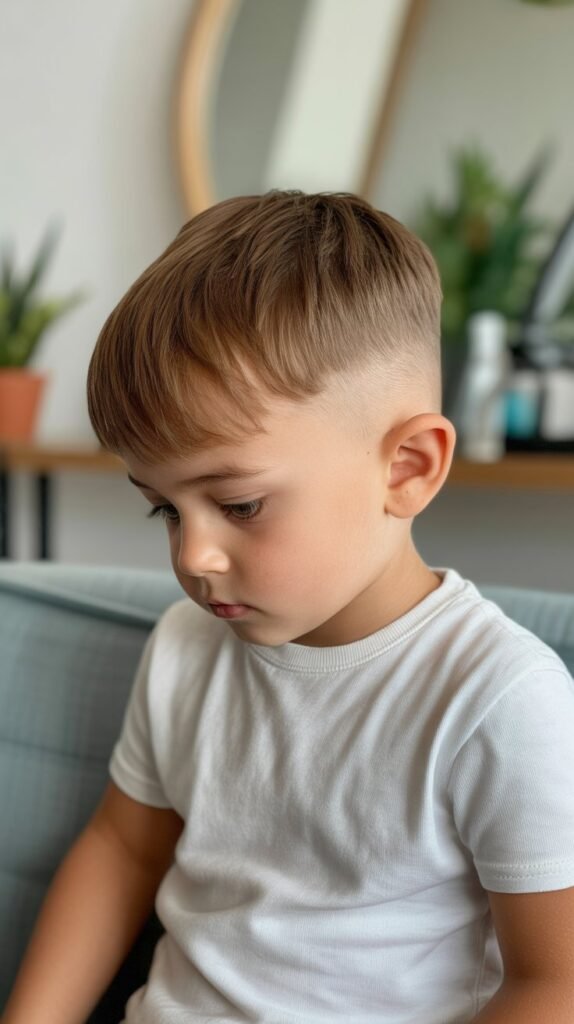
The blended fade with length on top creates a gradual transition from very short sides to substantially longer top hair, offering modern style that makes straight fine hair appear much fuller.
This cut uses professional blending techniques to create seamless transitions.
- The fade begins extremely short at the bottom (often down to skin) and gradually blends upward to the longer top section.
- The top measures 2-3.5 inches, providing ample length to create various styles and appearances of fullness.
- The gradual blend creates multiple tones or shades in the hair, adding visual dimension perfect for fine hair.
- This sophisticated cut requires a skilled barber or stylist familiar with proper fade techniques.
- The longer top can be styled forward, to the side, swept back, or even slightly spiked depending on preference.
- The contrast between the faded sides and fuller top draws attention to the area where you want to emphasize volume.
- This style requires more frequent maintenance (every 2-3 weeks) to keep the fade looking sharp and blended.
29. Soft Curly-Top Cut
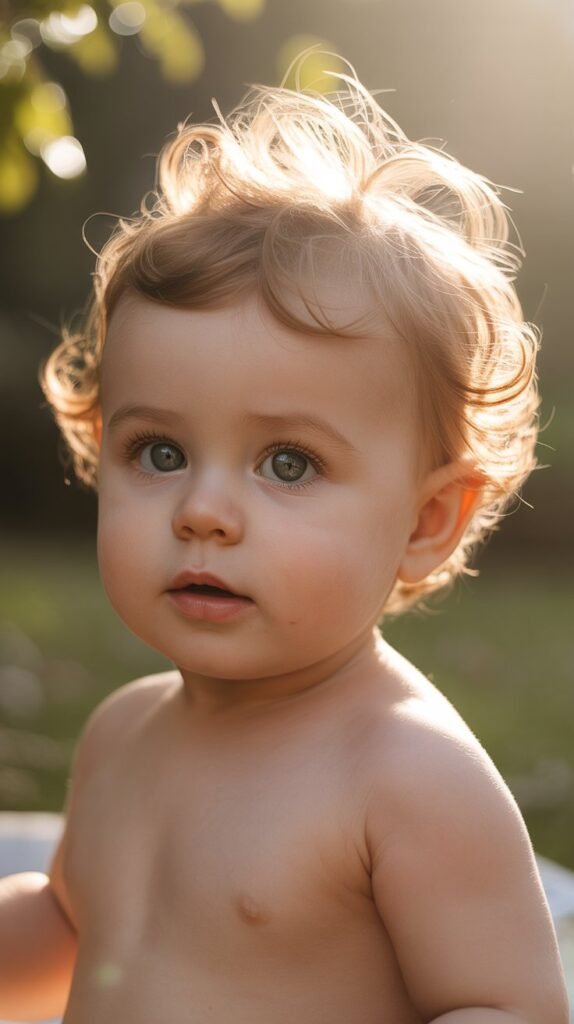
The soft curly-top cut creates gentle lift and subtle wave at the crown area, working with straight fine hair’s potential for slight movement when cut at the right length.
This style encourages natural body that makes hair appear fuller and more dynamic.
- The top section is cut to 2.5-3 inches, a length that often allows straight fine hair to develop slight natural wave or curve.
- The sides and back are kept shorter (1-1.5 inches) to emphasize the fuller, lifted appearance on top.
- The cut uses texturizing techniques that remove weight and encourage hair to lift away from the scalp naturally.
- After washing, gently scrunching the top section while damp can enhance any natural wave tendency.
- A tiny amount of lightweight mousse applied to damp hair helps encourage and maintain the lifted, wavy texture.
- This style works particularly well for babies whose straight fine hair has a slight natural bend or wave that emerges at certain lengths.
- The soft curly-top cut requires minimal daily effort while creating maximum visual volume and interest.
30. Scissor-Over-Comb Precision Cut
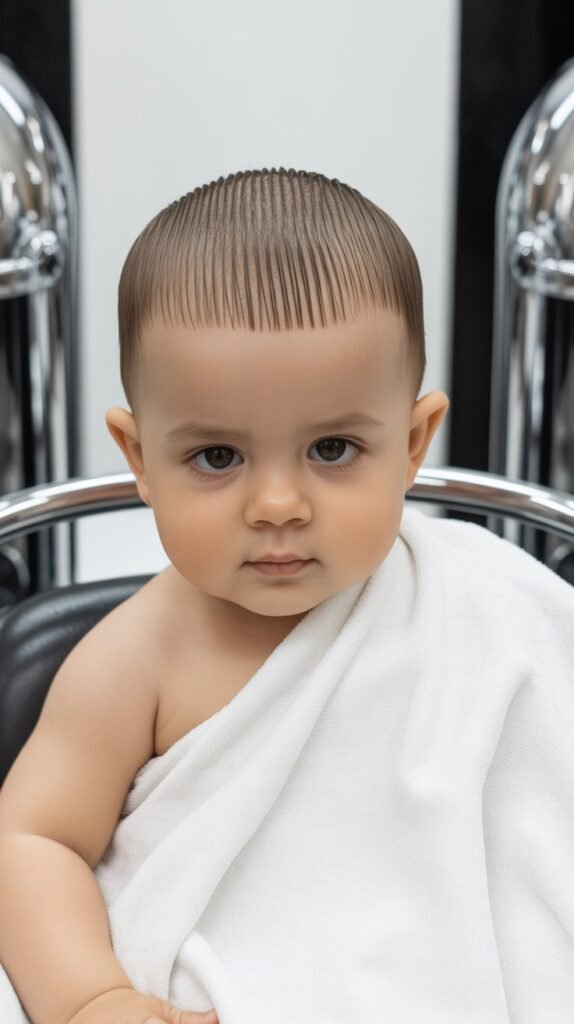
The scissor-over-comb precision cut represents a traditional barbering technique that creates exceptionally clean, graduated results perfect for straight fine hair.
This meticulous approach ensures every hair is cut to exact specifications for a polished, refined appearance.
- The scissor-over-comb technique uses a comb to lift hair at precise angles while scissors cut above the comb.
- This method creates perfectly graduated transitions from shorter to longer sections without harsh lines.
- The technique is particularly effective for fine hair because it maintains every possible hair shaft for maximum density appearance.
- The sides and back gradually taper from very short at the bottom (1/4 inch) to longer at the top (1.5-2 inches).
- The crown area maintains the most length (2-2.5 inches), creating a natural dome shape that adds height.
- This traditional approach requires a skilled barber but delivers exceptionally clean, professional results.
- The precision cut maintains its shape beautifully for 4-5 weeks, making it economical despite requiring professional expertise.
31. Layered Fringe with Texture

The layered fringe with texture combines multiple cutting techniques to create maximum dimension and apparent fullness in straight fine hair.
This comprehensive approach addresses fine hair’s challenges through strategic layering, texturizing, and fringe work.
- The fringe area features multiple layers cut at different lengths (1.5-3 inches) to create depth and dimension.
- Texturizing throughout the fringe removes weight and allows individual sections to separate and move independently.
- The layered approach prevents fine hair from clumping together into thin, wispy sections.
- The sides are kept shorter (1-1.5 inches) to draw attention to the fuller, more textured fringe area.
- Styling involves applying a small amount of sea salt spray or texturizing product to damp hair.
- Gently tousling the fringe area with fingers while drying creates the desired piece-y, dimensional effect.
- This style offers excellent versatility—the fringe can be worn forward, swept to the side, or styled with slight lift depending on the occasion.
32. Classic Tapered Sides with Brushed Top
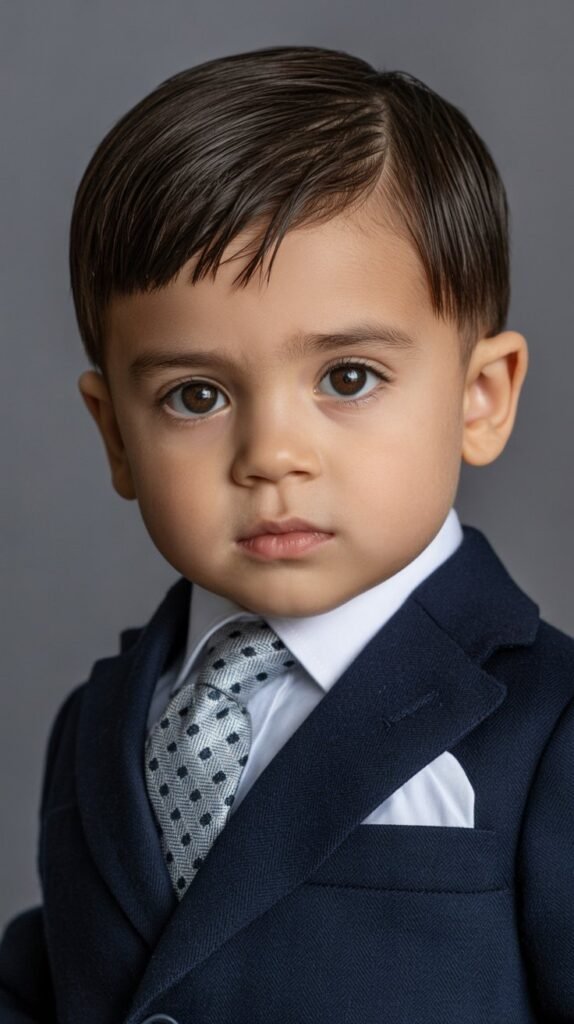
The classic tapered sides with brushed top delivers timeless elegance while creating the illusion of fuller, thicker straight fine hair through strategic length placement and styling direction.
This refined style works beautifully for both everyday wear and special occasions.
- The tapered sides gradually decrease from 1.5 inches at the top to 1/2 inch at the bottom, creating smooth transitions.
- The top section measures 2-3 inches and is brushed neatly to one side or straight back for a polished appearance.
- The brushing motion naturally lifts hair away from the scalp, creating visual volume perfect for fine hair.
- This style works exceptionally well for babies with straight hair that naturally wants to lay in one direction.
- A small amount of lightweight pomade or grooming cream helps maintain the brushed direction and adds subtle shine.
- The classic tapered sides with brushed top is ideal for formal events, professional photos, or traditional family gatherings.
- Despite its refined appearance, the style can be quickly refreshed throughout the day with a simple comb or brush.
33. Natural Length All-Over
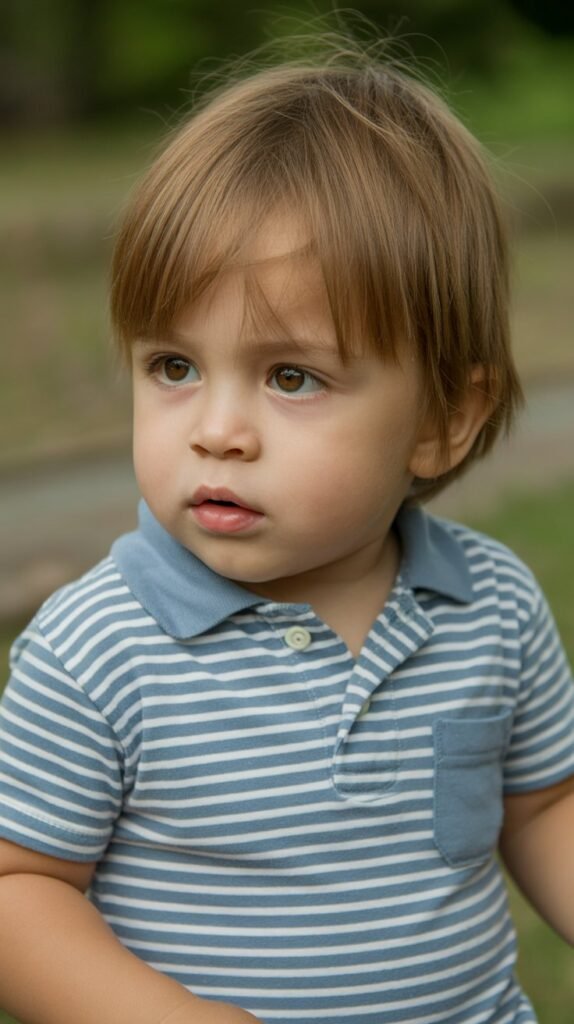
The natural length all-over cut maintains consistent medium length throughout the entire head, celebrating your baby boy’s natural hair texture while providing enough length to create body and movement in straight fine hair.
This approach embraces simplicity and natural beauty.
- This cut maintains 2-2.5 inches of length uniformly across the entire head, including sides, back, and top.
- The consistent length prevents any area from looking sparse while giving fine hair maximum opportunity to show body.
- Minimal layering or texturizing maintains as much hair density as possible throughout.
- This style requires the least maintenance of almost any cut—simply wash, gently towel dry, and let air dry naturally.
- The natural length all-over works particularly well for babies with very fine hair that looks thin when cut too short.
- This approach allows you to observe your baby’s natural hair growth patterns and tendencies before committing to more structured styles.
- The cut grows out evenly and gracefully, requiring trims only every 6-8 weeks to maintain the preferred length.
Tips for Maintaining Fine Hair Between Cuts
Proper maintenance between haircuts ensures your baby boy’s straight fine hair continues to look its best while remaining healthy and manageable.
- Use gentle, sulfate-free baby shampoo that won’t strip natural oils from fine hair, washing only 2-3 times per week.
- Apply a lightweight leave-in conditioner spray specifically formulated for fine hair to prevent tangles without adding weight.
- Avoid heavy oils, creams, or products that can make fine hair look greasy and flat against the scalp.
- Use a soft-bristle brush or wide-tooth comb designed for babies to prevent breakage and damage to delicate fine hair.
- Pat hair gently with a soft towel after washing rather than rubbing vigorously, which can cause tangling and breakage.
- Allow hair to air dry whenever possible, as heat styling tools are unnecessary and potentially damaging for baby hair.
- Trim any developing split ends promptly to prevent them from traveling up the hair shaft and causing more extensive damage.
- Protect your baby’s hair from excessive sun exposure with hats, as UV rays can weaken fine hair structure.
- Ensure your baby receives proper nutrition including proteins, vitamins, and omega-3 fatty acids that support healthy hair growth.
- Schedule regular professional trims to maintain the shape and health of the haircut style you’ve chosen.
Choosing the Right Stylist or Barber
Selecting a skilled professional who understands baby boys’ hair and specifically fine hair textures is crucial for achieving the best results.
- Look for stylists or barbers who specialize in children’s haircuts and have experience working with babies and toddlers.
- Ask to see photos of previous work, particularly examples showing fine hair transformations and baby boy haircuts.
- Schedule a consultation before the first haircut to discuss your child’s hair type, growth patterns, and your style preferences.
- Choose a salon or barbershop with a kid-friendly environment featuring distractions like toys, videos, or special children’s chairs.
- Inquire about the professional’s familiarity with texturizing techniques, which are essential for making fine hair appear fuller.
- Confirm that the stylist uses sharp, professional-grade scissors and clippers, as dull tools can damage fine hair.
- Discuss realistic expectations about what’s achievable with your baby’s specific hair texture and density.
- Ask about recommended styling products and techniques that work specifically for straight fine hair.
- Establish a relationship with one consistent stylist who becomes familiar with your baby’s hair over time.
- Request tips for at-home maintenance and touch-ups between professional appointments.
Styling Products Safe for Baby Boys
When styling products are necessary, choosing safe, gentle formulas designed for young children with fine hair is essential.
- Select products specifically labeled as hypoallergenic and designed for babies or young children under age 3.
- Choose lightweight formulas such as mousses, sprays, or water-based creams that won’t weigh down fine hair.
- Avoid products containing harsh chemicals, strong fragrances, alcohol, or sulfates that can irritate sensitive scalps.
- Look for natural ingredients like aloe vera, chamomile, or coconut oil that provide hold without harmful additives.
- Use minimal amounts—typically a pea-sized portion is more than sufficient for baby boys’ fine hair.
- Apply styling products to damp rather than dry hair for easier distribution and more natural-looking results.
- Consider DIY alternatives like diluted aloe vera gel or cornstarch-based powders for volume without chemicals.
- Always perform a patch test on a small area of skin before using any new product extensively on your baby.
- Store styling products safely out of reach and never leave your baby unattended with styling products nearby.
- Consult with your pediatrician if you have concerns about specific ingredients or your baby shows any signs of irritation.
Understanding Your Baby’s Hair Growth Patterns
Recognizing your baby boy’s unique hair growth patterns helps you choose styles that work with rather than against natural tendencies.
- Observe the direction hair naturally wants to grow from the crown, which often dictates which styles will be easiest to maintain.
- Identify any cowlicks or whorls—areas where hair grows in circular patterns that resist certain styling directions.
- Note the hair’s texture changes as your baby grows, as fine baby hair often becomes slightly thicker during toddlerhood.
- Understand that hair growth rates vary across the scalp, with some areas growing faster than others.
- Recognize that seasonal changes can affect hair growth speed and texture, often growing faster during warmer months.
- Document your baby’s hair journey with photos to track changes and identify patterns over time.
- Accept that baby hair is temporary—the fine, soft texture will eventually transition to more mature hair characteristics.
- Work with your stylist to choose cuts that accommodate rather than fight against your baby’s natural growth patterns.
- Be patient with awkward growth stages, knowing that consistent trims help hair grow in more evenly over time.
- Remember that each baby’s hair is unique, and what works for one child may not work for another.
Conclusion
Choosing from these Top 30+ Baby Boys’ Haircuts for Straight Fine Hair empowers you to find the perfect style that enhances your little one’s natural beauty while addressing the unique challenges of fine hair texture.
Whether you prefer classic, timeless cuts or modern, trendy styles, this comprehensive guide has provided you with detailed information about options that create the appearance of fuller, healthier hair while remaining age-appropriate and practical for daily life.
Remember that the best haircut is one that suits your baby’s individual personality, your family’s lifestyle, and your child’s specific hair characteristics.
With proper care, regular maintenance, and the right styling approach, your baby boy’s straight fine hair can look absolutely wonderful in any of these carefully selected styles.
Trust your instincts, work with a skilled professional, and most importantly, enjoy this special time watching your little one grow and develop his own unique style.
