The low taper fade has revolutionized modern grooming for Black men, offering a perfect blend of sophistication, versatility, and cultural expression that complements natural hair textures beautifully.
This timeless haircut starts the fade just above the ears and gradually tapers down to the neckline, creating a clean, professional look that transitions seamlessly from boardrooms to social gatherings.
Whether you’re seeking a conservative style for your corporate environment or a bold statement piece that showcases your personality, the low taper fade adapts to every lifestyle and hair type with remarkable ease.
In this comprehensive guide to Top 30+ Jaw-Dropping Low Taper Fade Haircuts for Black Men, we’ll explore an extensive collection of cutting-edge styles that range from classic elegance to contemporary innovation, each designed to enhance your facial features while celebrating the unique texture and versatility of Black hair.
You’ll discover detailed breakdowns of each style, maintenance tips from professional barbers, styling techniques that work specifically for coily and kinky hair textures, and expert advice on communicating your vision to your barber for perfect results every time.
Get ready to transform your look and find the perfect low taper fade that not only suits your face shape and lifestyle but also makes you feel confident and unstoppable every single day.
1. Classic Low Taper Fade with Waves
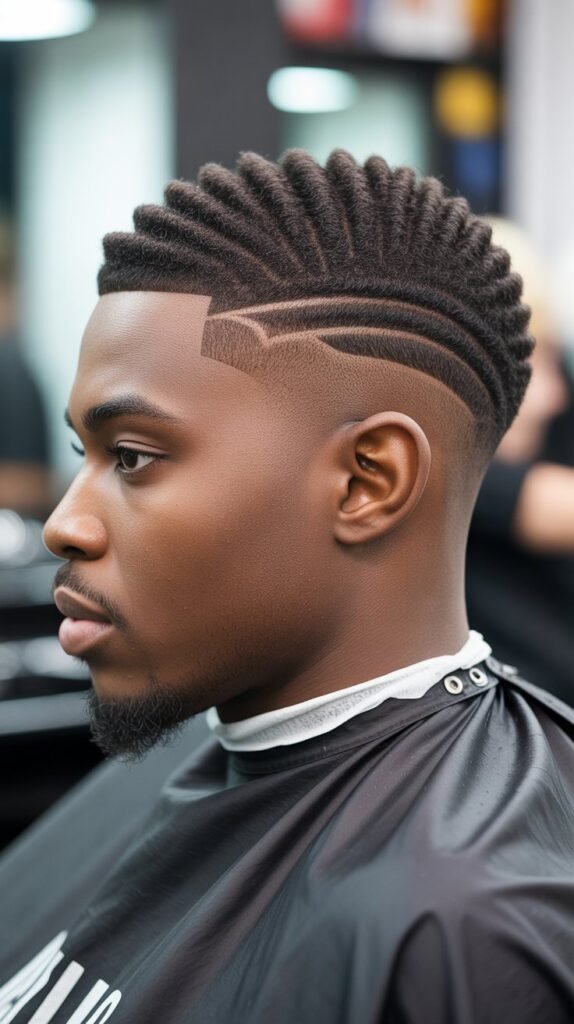
The classic low taper fade with waves represents the quintessential Black barbershop experience, combining timeless grooming traditions with contemporary precision cutting.
This style celebrates the natural wave pattern in Black hair while maintaining sharp, clean lines that exude professionalism and style.
Key Features:
- The fade begins approximately one inch above the ears and gradually tapers down to skin level at the neckline, creating a subtle yet sophisticated transition
- The top section maintains 1-2 inches of length, providing adequate hair for developing and maintaining deep 360 waves
- Regular brushing with a wave brush (preferably boar bristle) in a circular pattern helps train the hair into the desired wave formation
- A moisturizing pomade or wave grease applied daily keeps the waves defined and prevents dryness that can disrupt the pattern
- The contrast between the faded sides and the textured top creates dimensional depth that enhances facial structure
Maintenance Requirements:
- Weekly barber visits or bi-weekly touch-ups keep the fade crisp and prevent the tapered sections from growing out unevenly
- Nightly durag or wave cap wear compresses the waves and maintains the pattern while you sleep
- Deep conditioning treatments every two weeks preserve hair health and prevent breakage from constant brushing
2. Low Taper Fade with Twists
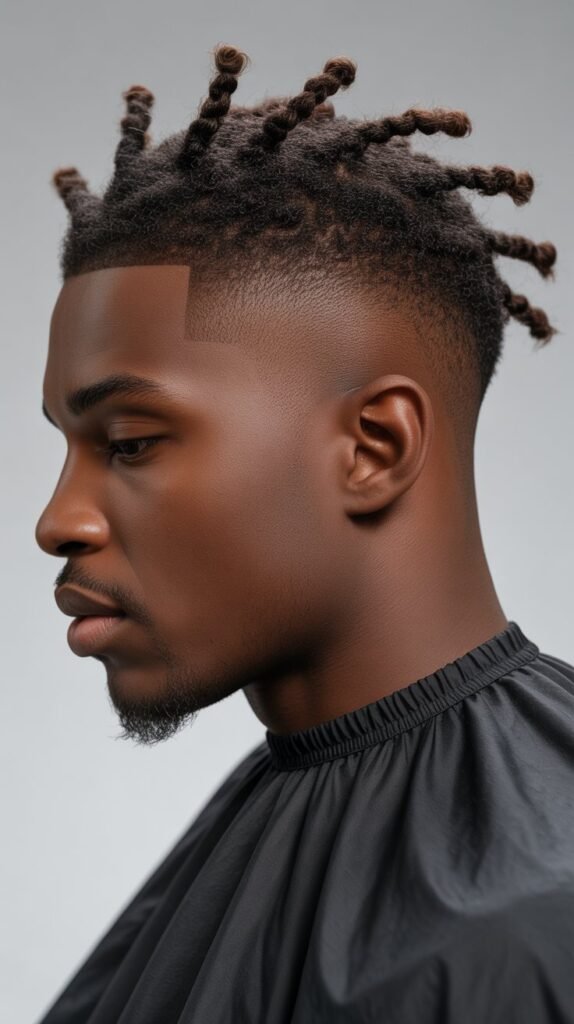
The low taper fade with twists merges protective styling with modern barbering techniques, offering a look that’s both culturally significant and fashion-forward.
This versatile style works exceptionally well for those who want to protect their hair while maintaining a polished appearance.
Styling Breakdown:
- Two-strand twists cover the top and crown sections, typically ranging from 3-5 inches in length depending on personal preference
- The low fade creates a dramatic contrast that makes the twisted texture stand out prominently
- Twists can be styled in various directions—backward, to the side, or even in a mohawk formation for added creativity
- This style works beautifully with natural hair and requires minimal heat styling, promoting overall hair health
- The rope-like texture of the twists adds visual interest and dimension that photographs exceptionally well
Durability Factor:
- Twists can last anywhere from 2-4 weeks with proper nighttime maintenance using a satin bonnet or pillowcase
- The style requires less daily manipulation than other options, reducing breakage and promoting length retention
- Refreshing the fade every 10-14 days keeps the contrast sharp while the twists remain intact
- Light moisturizing spray applied every 2-3 days prevents the twists from becoming dry and frizzy
3. Low Taper Fade with Curls

The low taper fade with curls celebrates natural coily and curly textures while providing structure through strategic fading.
This style has gained tremendous popularity as the natural hair movement continues to influence modern barbering aesthetics.
Texture Enhancement:
- The top section maintains 2-4 inches of length, allowing natural curl patterns to form and bounce freely
- A curl-defining cream or gel applied to damp hair enhances the curl definition and reduces frizz significantly
- The low fade provides a clean canvas that makes the curly top section the undeniable focal point
- This style works brilliantly for type 3 and type 4 hair textures, showcasing the natural beauty of coils and curls
- The contrast between the faded sides and voluminous curls creates a balanced silhouette that complements most face shapes
Styling Techniques:
- The “wash and go” method involves applying product to soaking wet hair and allowing it to air dry or diffusing on low heat
- Finger coiling individual curls creates more defined spiral patterns for special occasions or when you want extra polish
- A pick or wide-tooth comb lifts the roots for added volume without disrupting the curl pattern
- Nighttime pineappling (gathering curls at the top of the head) preserves the style for multiple days
4. Low Taper Fade with Dreadlocks
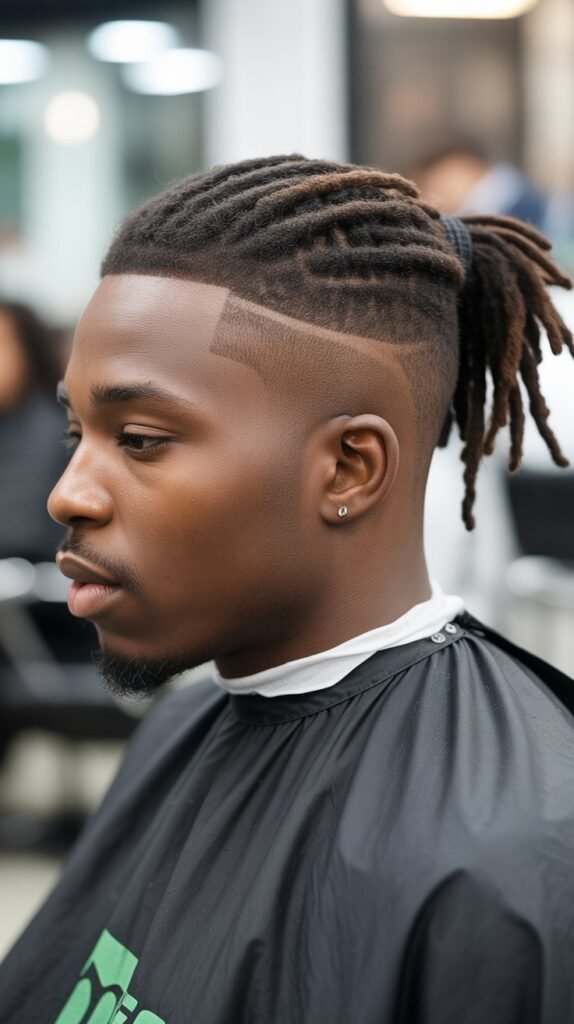
The low taper fade with dreadlocks creates a striking juxtaposition between permanent loc’d hair and the clean, maintained sides.
This style represents a modern evolution of traditional locs, appealing to professionals and creatives alike.
Loc Considerations:
- Established locs work best with this style, typically requiring at least 6-12 months of loc development for optimal results
- The locs on top can range from thin to thick, pencil-sized to jumbo, depending on the desired aesthetic
- Fading around locs requires a skilled barber who understands how to work carefully around the delicate transition zone
- The low taper draws attention upward to the locs while maintaining a groomed, intentional appearance
- This combination allows loc-wearers to participate in professional environments while maintaining their natural hair journey
Maintenance Protocol:
- Locs require retwisting every 4-6 weeks to maintain neat roots and prevent excessive frizz
- The fade should be touched up every 1-2 weeks to maintain the stark contrast with the loc’d sections
- Loc maintenance products like locking gels and natural oils keep the dreadlocks healthy without product buildup
- Regular scalp cleansing prevents buildup that can weaken locs at the root
5. Low Taper Fade with Line Up

The low taper fade with line up emphasizes geometric precision and sharp angles, creating an ultra-clean look that’s become a signature of contemporary Black barbering.
The razor-sharp hairline and perfectly executed fade work together to frame the face with architectural precision.
Precision Elements:
- The edge up (line up) creates defined angles at the temples, forehead, and sideburn areas using a razor or trimmer
- Straight lines along the forehead create a crisp boundary that enhances facial symmetry
- The low taper fade complements the line up by maintaining the same level of precision throughout the entire haircut
- Temple fades can be incorporated to create even more angular detail and dimension
- This style requires steady hands and an experienced barber who understands facial proportions and bone structure
Best Practices:
- Line ups should follow your natural hairline shape rather than creating an unnaturally straight line that looks artificial
- Weekly maintenance appointments keep the line up sharp, as edges can become fuzzy within 5-7 days
- Using a trimmer at home between appointments helps maintain the look but requires caution to avoid mistakes
- Post-cut witch hazel application soothes any razor irritation and prevents ingrown hairs along the hairline
6. Low Taper Fade with Afro

The low taper fade with afro combines cultural heritage with modern grooming, creating a style that’s both revolutionary and rooted in Black hair history.
This look celebrates volume and natural texture while maintaining clean, contemporary lines.
Volume Management:
- The afro section typically extends 2-6 inches from the scalp depending on hair density and personal preference
- Regular shaping appointments ensure the afro maintains a round, symmetrical silhouette rather than growing unevenly
- The low fade creates a graduated transition that prevents the “mushroom” effect common with disconnected afros
- A moisturizing routine is essential, as afro-textured hair tends toward dryness and requires regular hydration
- Pick combing lifts the roots and distributes volume evenly throughout the afro section
Styling Strategy:
- Wash and condition the afro section regularly to remove product buildup and maintain hair health
- Leave-in conditioners and natural oils like jojoba or coconut oil provide moisture without weighing down the hair
- A pick with wide teeth prevents breakage while achieving maximum volume and lift
- The fade should be refreshed every 10-14 days to maintain the clean contrast with the textured top
7. Low Taper Fade with Cornrows
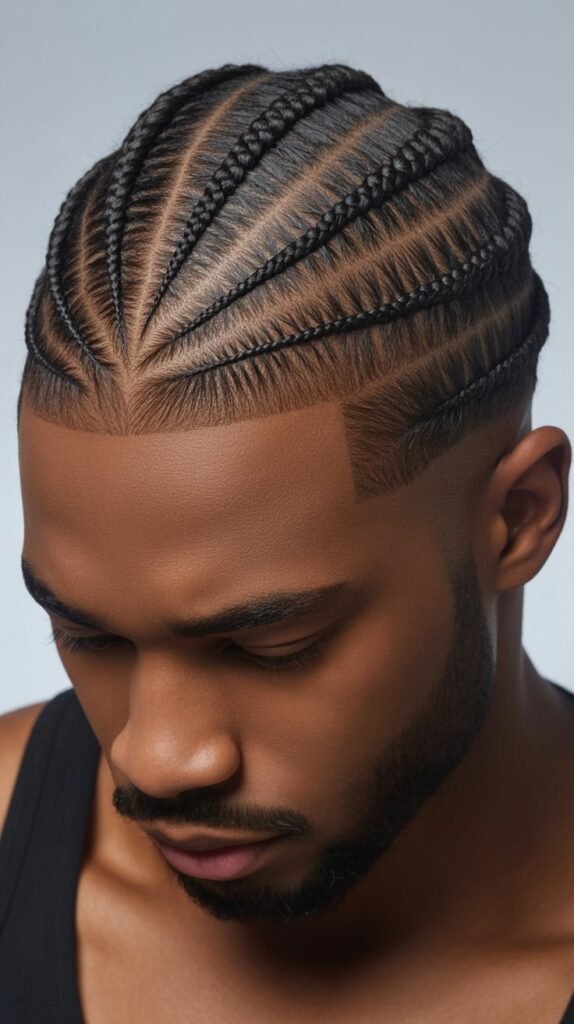
The low taper fade with cornrows merges intricate braiding artistry with precision barbering, resulting in a style that’s both protective and visually stunning.
This combination offers endless creative possibilities through various cornrow patterns and directions.
Braiding Patterns:
- Straight-back cornrows create a sleek, streamlined look that works well for professional and athletic settings
- Curved or zigzag patterns add artistic flair and showcase the braider’s technical skill
- Feed-in cornrows create a more natural-looking start at the hairline and reduce tension on the scalp
- The number of cornrows can vary from 4-5 large braids to 10+ smaller braids depending on the desired aesthetic
- The low fade provides a clean backdrop that makes the cornrow pattern stand out dramatically
Duration and Care:
- Cornrows typically last 2-4 weeks before requiring removal and re-braiding to prevent matting
- The fade needs touching up every 1-2 weeks to maintain the contrast with the braided sections
- Nightly satin bonnet wear protects the cornrows and prevents frizz along the parts
- Light oil application to the scalp every few days prevents dryness and itching
- Avoid excessive tension during braiding to prevent traction alopecia around the hairline
8. Low Taper Fade Mohawk
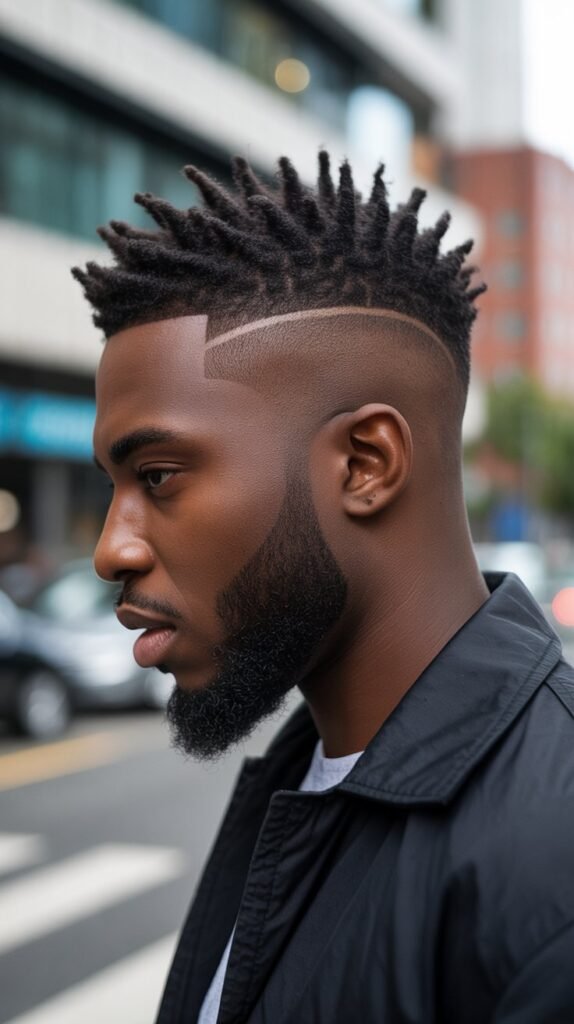
The low taper fade mohawk brings edgy rebellion to the sophisticated world of tapered haircuts, creating a bold statement that’s impossible to ignore.
This style maintains professionalism through the low fade while expressing individuality through the elevated center strip.
Structure Details:
- The mohawk strip runs from the forehead to the crown, typically 2-4 inches wide depending on head size and preference
- Hair length in the mohawk section ranges from 2-6 inches, allowing for various styling options
- Both sides feature the signature low taper fade that gradually decreases to skin level
- The mohawk can be styled upward with strong-hold products for maximum drama or brushed forward for a more subdued look
- This versatile cut transitions easily from conservative (when styled down) to bold (when styled up)
Styling Variations:
- Strong-hold gels or pomades create the classic spiked mohawk appearance for evening events or creative professions
- The mohawk section can be twisted, braided, or loc’d for added texture and cultural expression
- A blow dryer and round brush add volume when styling the mohawk upward
- For professional settings, the mohawk can be brushed to one side or slicked back with a lighter product
9. Low Taper Fade with Temple Fade

The low taper fade with temple fade adds an extra dimension of precision through focused fading at the temple areas.
This detail-oriented style appeals to those who appreciate subtle enhancements and architectural precision in their grooming.
Technical Execution:
- The temple fade creates a C-shaped curved fade around the temple area that extends toward the sideburns
- This additional fading creates a frame-within-a-frame effect that draws attention to the eyes and upper face
- The low taper fade on the sides and back complements the temple fade without competing for visual attention
- Barbers use progressively smaller clipper guards to create the graduated effect in the temple region
- The temple fade can be extremely tight (skin fade) or more gradual depending on personal preference
Facial Enhancement:
- This style works exceptionally well for angular or oval face shapes by adding horizontal visual interest
- The temple fade creates the illusion of a wider forehead, balancing out longer face shapes
- Round faces benefit from the added definition and structure the temple fade provides
- The curved lines soften harsh angles while maintaining masculine definition
10. Low Taper Fade with Beard

The low taper fade with beard creates a cohesive grooming statement that connects facial hair seamlessly with the haircut.
This holistic approach to men’s grooming has become increasingly popular as beards have regained mainstream acceptance.
Integration Techniques:
- The fade extends down into the beard area, creating a gradient effect that connects hair and facial hair naturally
- Beard length should be proportional to the hair on top—shorter hair pairs well with a closer-trimmed beard
- The transition point where the fade meets the beard requires careful blending to avoid harsh lines
- Sideburns serve as the bridge between the low taper fade and the beard, requiring precise shaping
- A skilled barber shapes the beard to complement the face shape while maintaining harmony with the haircut
Beard Maintenance:
- Daily beard oil application keeps facial hair soft and promotes healthy growth
- Regular trimming every 1-2 weeks maintains the desired beard shape and prevents wild, uneven growth
- The fade and beard should be maintained on the same schedule for optimal cohesion
- Beard brushing distributes natural oils and trains the hair to grow in the desired direction
- A matching grooming routine for both hair and beard creates a polished, intentional overall appearance
11. Low Taper Fade with Hard Part

The low taper fade with hard part introduces a bold linear element that creates instant visual impact and defines clear sections within the haircut.
The razored part line has become a signature element in contemporary barbering.
Part Placement:
- The hard part is typically placed 1-2 inches from the natural part line, creating a defined separation
- A straight razor or trimmer creates a clean channel through the hair, revealing the scalp in a precise line
- The part can extend from the hairline to the crown or stop midway depending on the desired effect
- Popular placements include the side part (classic), off-center part (contemporary), or even multiple parts for creative expression
- The low taper fade on the sides emphasizes the architectural quality of the hard part
Styling Around the Part:
- Hair on either side of the part can be styled in opposite directions to maximize the visual separation
- The hard part creates a natural guide for combing and styling, simplifying daily grooming
- Products like pomades and gels keep hair in place on both sides of the part without covering the line
- The shaved part line requires touch-ups every 7-10 days to remain visible and sharp
12. Low Taper Fade with Sponge Curls

The low taper fade with sponge curls creates a textured, organic look that celebrates natural curl patterns while adding intentional structure.
The curl sponge technique has revolutionized styling for Black men with coily hair textures.
Sponge Technique:
- A curl sponge with holes or grooves is rubbed in circular motions over damp, product-enhanced hair
- This creates uniform, defined curl clusters that have a twisted appearance without traditional twisting
- The technique works best on hair that’s 1-3 inches in length with a naturally coily texture
- Moisturizing products applied before sponging help define the curls and prevent frizz
- The low taper fade provides clean contrast that makes the sponged texture the focal point
Product Recommendations:
- Curl-defining creams with medium hold work exceptionally well for the sponging technique
- Avoid heavy products that weigh down the curls or create stiffness and crunchiness
- A light oil finish adds shine and prevents the curls from looking dry or dull
- Refreshing the curls every 2-3 days maintains definition between wash days
13. Low Taper Fade with Frohawk
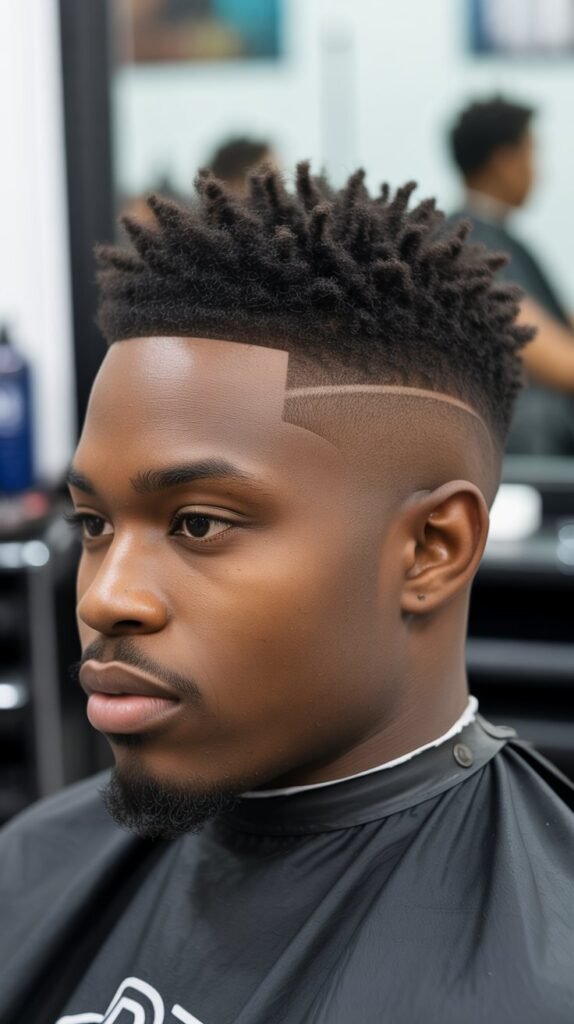
The low taper fade with frohawk (faux hawk) combines the volume and texture of an afro with the structural elements of a mohawk, creating a best-of-both-worlds style.
This look is particularly popular among those who want to make a statement while maintaining versatility.
Design Elements:
- The center strip maintains fuller length (typically 3-6 inches) while the sides feature the low taper fade
- Unlike a traditional mohawk, the frohawk has a wider center section that gradually tapers toward the sides
- The natural texture remains intact, creating volume and height through the center of the head
- This style can be worn elevated for maximum impact or relaxed for a more casual appearance
- The gradual transition from the faded sides to the textured center creates a softer, more natural mohawk effect
Versatile Styling:
- For professional settings, the frohawk can be moisturized and picked out evenly for a uniform afro-like appearance
- Evening events call for more dramatic styling with the center elevated and shaped into a pronounced ridge
- Products range from light moisturizers for daytime to strong-hold gels for more structured evening looks
- The style works beautifully with various hair types from loose curls to tight coils
14. Low Taper Fade with Buzz Cut
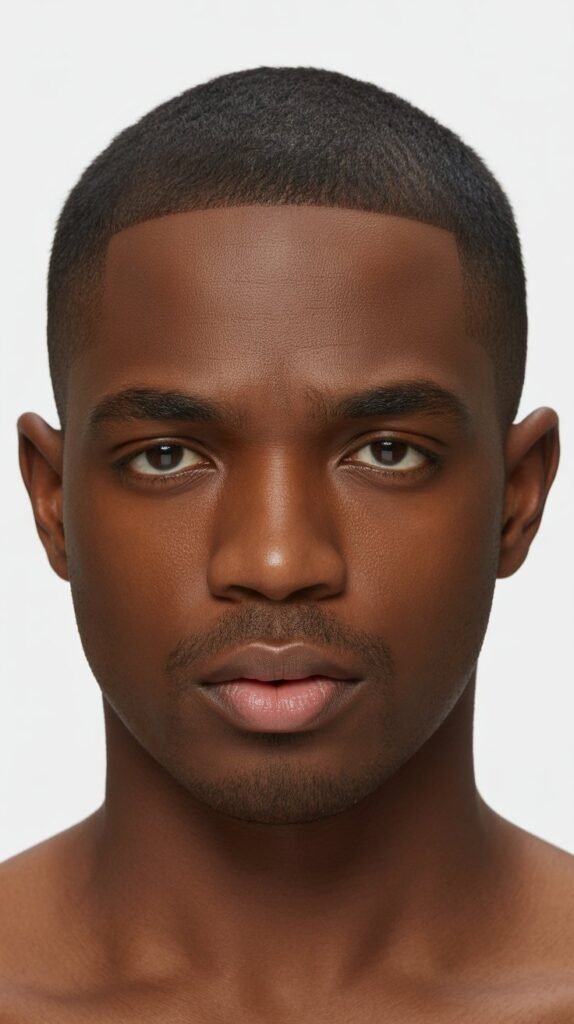
The low taper fade with buzz cut represents minimalist grooming at its finest, combining extreme convenience with sharp, military-inspired aesthetics.
This ultra-low maintenance style has gained popularity among professionals and athletes alike.
Cut Specifications:
- The top section is buzzed to a uniform length, typically between 1/8 inch to 1/2 inch using clipper guards
- The low taper fade creates subtle dimension despite the overall short length
- This style works brilliantly for those with receding hairlines or thinning hair, as the uniform length minimizes contrast
- The buzz cut provides the ultimate low-maintenance lifestyle while still looking intentionally groomed
- Face shape becomes more prominent with this style, making it ideal for those with strong facial features
Practical Benefits:
- Morning routine is virtually nonexistent—no styling products or time-consuming grooming required
- The style remains fresh-looking for 2-3 weeks before requiring a touch-up
- Ideal for athletes, military personnel, or anyone in high-activity professions
- Summer-friendly option that keeps the head cool in hot weather
- Eliminates concerns about hair damage, product buildup, or complex maintenance routines
15. Low Taper Fade with Drop Fade
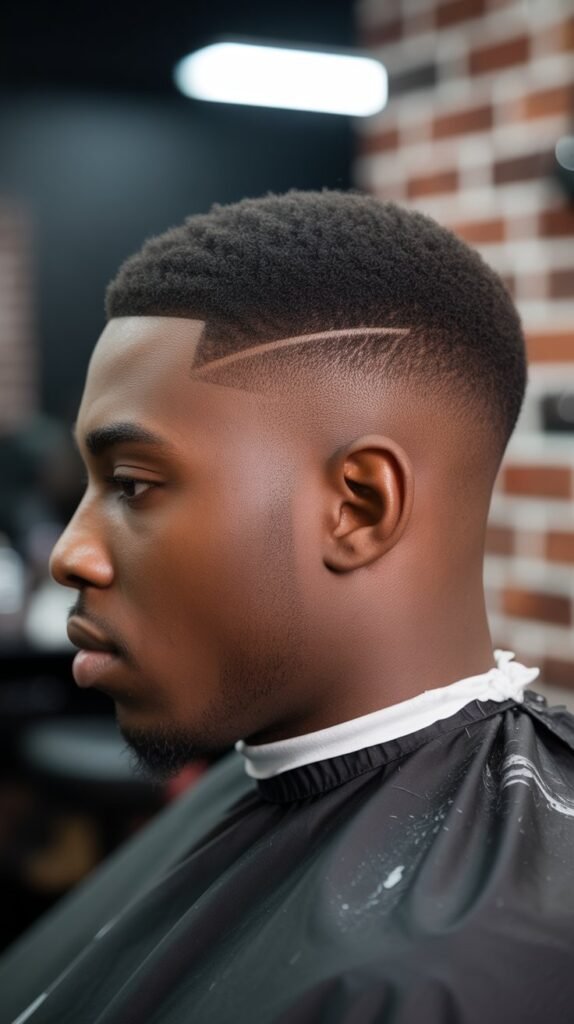
The low taper fade with drop fade introduces a curved, arcing fade line that “drops” down behind the ear, creating a unique silhouette that’s become increasingly popular in modern barbering.
This style adds visual interest through non-traditional fade placement.
Drop Fade Mechanics:
- The fade line curves downward behind the ear rather than following a straight horizontal line
- This creates an arc-shaped fade pattern that adds dimension and follows the natural head shape
- The drop effect emphasizes the hair on top and creates the illusion of more volume
- The technique requires advanced barbering skills to execute the curved transition smoothly
- The low starting point maintains professionalism while the drop adds contemporary edge
Visual Impact:
- The drop fade creates a dynamic look that appears different from various angles
- This style photographs exceptionally well due to the dimensional quality of the curved fade
- The technique works beautifully with various top styles from waves to curls to twists
- Round and oval face shapes particularly benefit from the vertical emphasis the drop fade creates
16. Low Taper Fade with Finger Waves
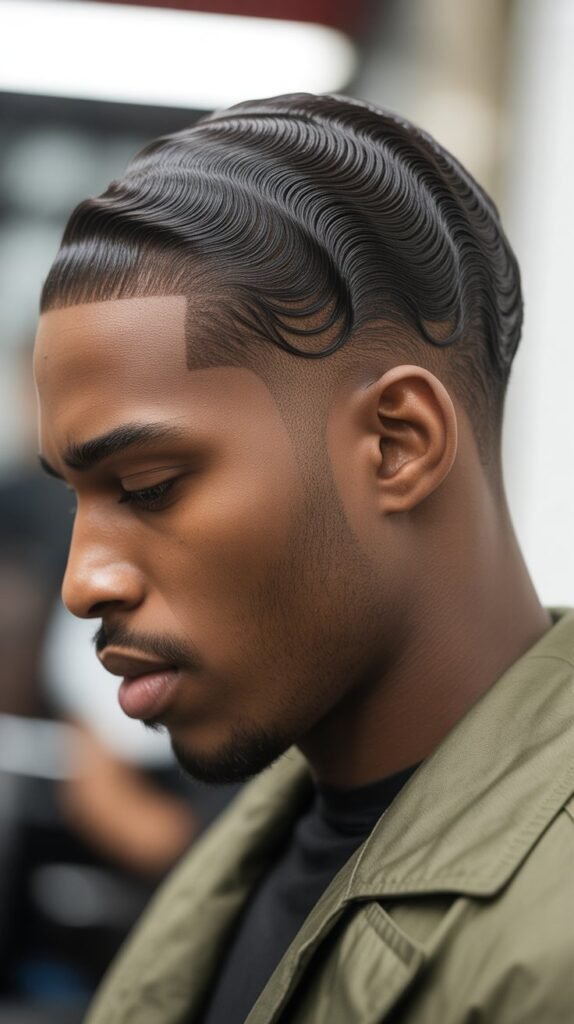
The low taper fade with finger waves brings vintage glamour into contemporary styling, celebrating a technique that has deep roots in Black hair culture.
This sophisticated style requires skill and patience but delivers stunning, sculptural results.
Wave Formation:
- Finger waves are created by shaping damp hair into S-shaped curves using fingers, combs, and setting products
- The technique works best on hair that’s 1-3 inches in length with some natural wave pattern
- Wave patterns can run horizontally across the head or be styled in various directional formations
- The low taper fade provides clean contrast that makes the sculptural wave pattern the undeniable focal point
- This vintage technique has seen a major resurgence in fashion-forward barbershops and styling salons
Durability and Maintenance:
- Properly set finger waves can last 3-5 days with careful nighttime maintenance using a durag or wave cap
- Setting lotion or gel provides the hold necessary for the waves to dry and maintain their shape
- The waves require minimal daily manipulation once set, making them surprisingly low-maintenance between settings
- The fade needs refreshing every 1-2 weeks while the finger waves can be reset as needed
17. Low Taper Fade with Box Braids
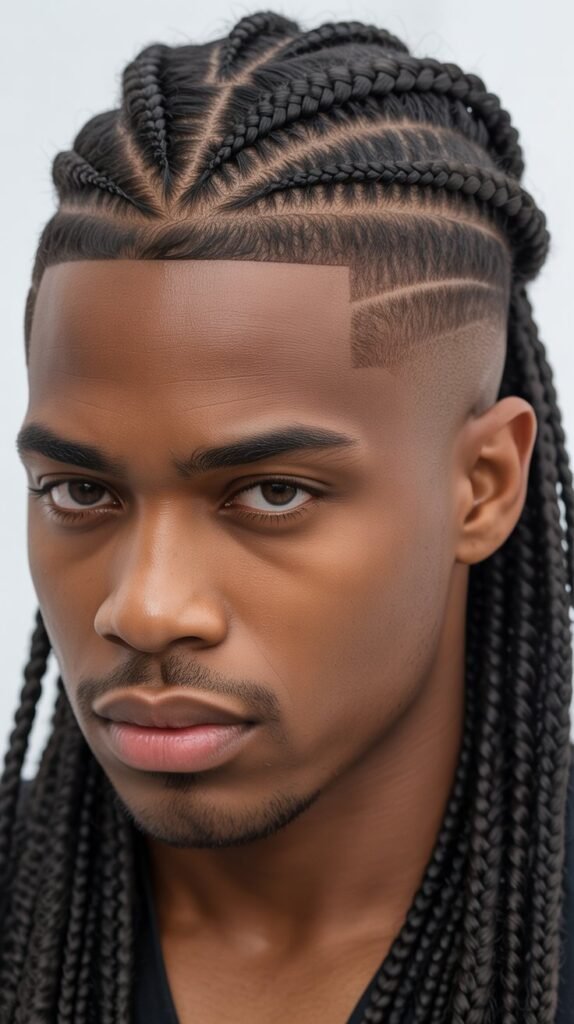
The low taper fade with box braids merges protective styling with precision barbering, creating a look that’s both practical and visually striking.
The contrast between geometric braids and the faded sides has become increasingly popular.
Braiding Specifications:
- Box braids are individual plaits created by sectioning hair into square-shaped parts
- Braid size can vary from micro (pencil-thin) to jumbo (thumb-thick) depending on preference and hair density
- The braids typically range from shoulder-length to waist-length, offering dramatic length and versatility
- Extensions are often added during the braiding process to achieve desired length and thickness
- The low fade creates clean contrast at the sides and back, preventing bulk in the lower sections
Styling Versatility:
- Box braids can be worn loose and flowing, pulled into ponytails, or styled into updos for different occasions
- The braids provide excellent protection for natural hair, promoting growth and reducing daily manipulation
- This style works well for those transitioning from relaxed to natural hair
- Box braids typically last 6-8 weeks with proper care and maintenance
- The fade should be touched up every 2-3 weeks to maintain the stark contrast
18. Low Taper Fade with Pompadour
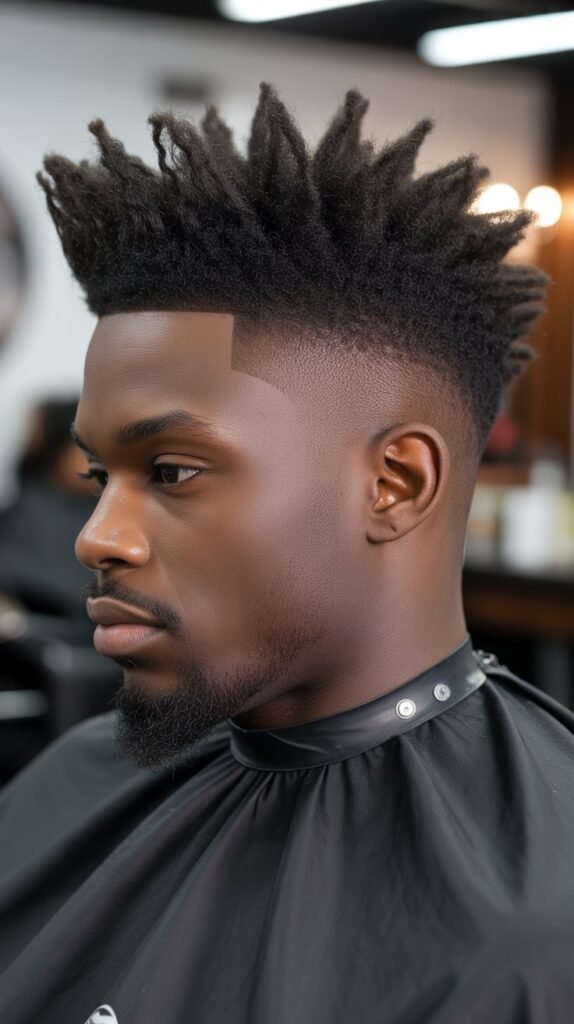
The low taper fade with pompadour combines vintage elegance with modern precision, creating a style that commands attention while maintaining sophistication.
This voluminous look has transcended its 1950s origins to become a contemporary classic.
Pompadour Construction:
- The front section is styled upward and backward, creating significant height and volume at the forehead
- Hair length of 3-6 inches on top provides adequate length for proper pompadour formation
- The sides feature the low taper fade, creating dramatic contrast with the voluminous top
- A blow dryer and round brush are essential tools for building the foundation height
- The pompadour works beautifully with natural texture or can be smoothed for a more polished appearance
Product and Technique:
- Strong-hold pomades or gels maintain the pompadour’s structure throughout the day
- The styling process involves blow-drying the hair upward and backward while brushing
- A small amount of product is worked through the hair before styling for hold and control
- The finished look can range from sleek and polished to textured and modern
- This style requires daily styling commitment but delivers impressive visual impact
19. Low Taper Fade with Textured Top
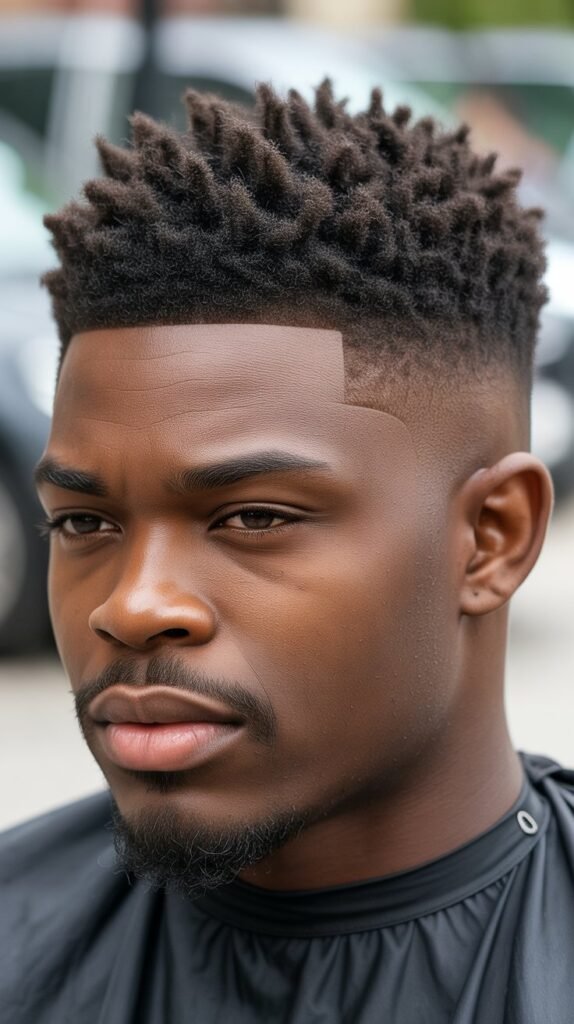
The low taper fade with textured top celebrates natural hair texture while maintaining clean, modern lines through strategic cutting and minimal styling.
This approach has become increasingly popular as more men embrace their natural hair characteristics.
Texture Enhancement:
- The top section is cut with texturizing techniques that enhance the hair’s natural movement and volume
- Point cutting, razor cutting, or thinning shears create piece-y, separated sections rather than blunt lines
- Length on top ranges from 2-4 inches, providing enough hair to showcase texture without becoming unruly
- The low taper fade keeps the sides neat while drawing all attention to the textured crown
- This style works exceptionally well for men with naturally wavy, curly, or coily hair patterns
Minimal Maintenance Approach:
- A small amount of texturizing cream or light pomade enhances the natural texture without stiffness
- The “wash and go” approach works beautifully with this cut, requiring minimal daily styling time
- Air drying or diffusing on low heat preserves the natural texture and prevents heat damage
- The cut itself does most of the work, making this an ideal choice for those who prefer simpler grooming routines
20. Low Taper Fade with Slick Back
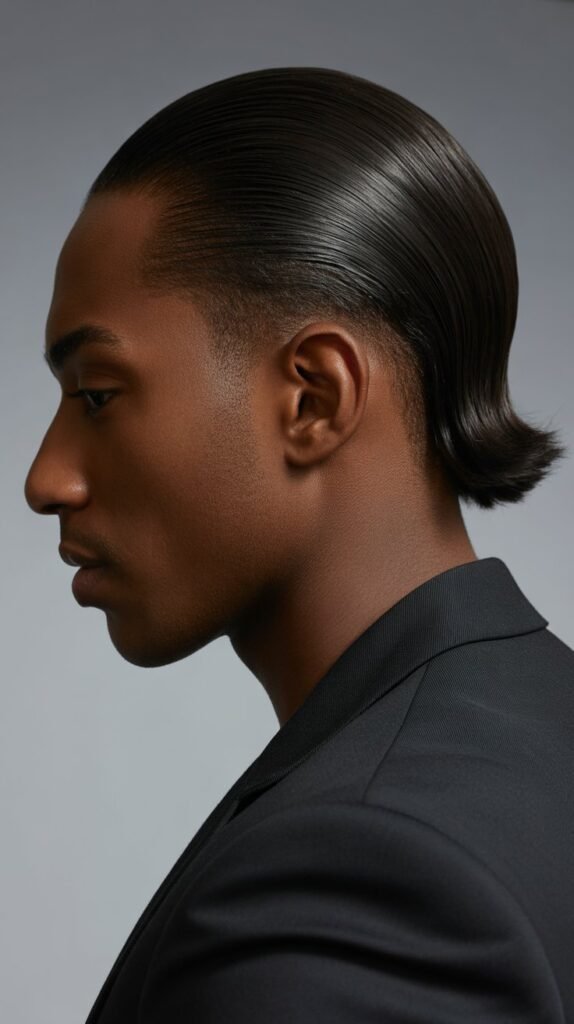
The low taper fade with slick back delivers timeless sophistication through clean lines and polished styling.
This Wall Street-worthy look has maintained popularity across decades due to its versatility and professional appearance.
Styling Methodology:
- All hair on top is combed straight back from the hairline toward the crown
- Hair length of 3-5 inches provides adequate length for proper slick back formation without excessive bulk
- High-shine pomades create the classic wet look, while matte products offer a more contemporary appearance
- The low taper fade on sides and back emphasizes the sleek, streamlined quality of the slicked-back top
- This style works particularly well for formal events, business settings, and upscale social occasions
Product Selection:
- Water-based pomades provide strong hold with easy washout, avoiding buildup issues
- Oil-based pomades offer superior shine and hold but require more thorough cleansing
- The amount of product should be sufficient to hold hair in place without looking greasy or overdone
- Application to damp hair allows for easier distribution and smoother styling
21. Low Taper Fade with Spiky Top
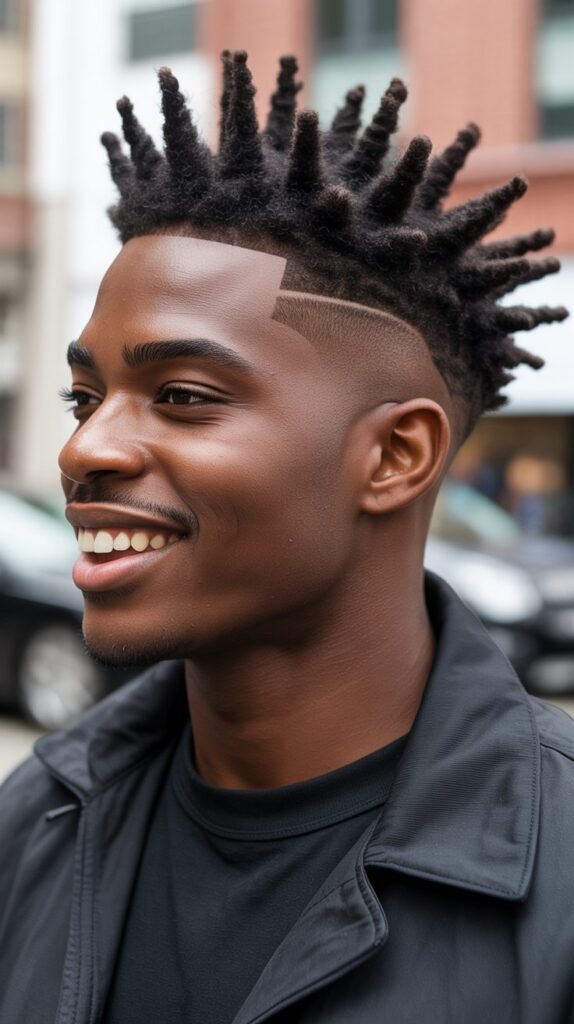
The low taper fade with spiky top brings playful energy and youthful dynamism to the sophisticated fade foundation.
This style works particularly well for social settings and creative professional environments.
Spike Formation:
- Hair on top is cut to 1-3 inches and styled upward into individual spikes or a uniform spiked texture
- Strong-hold gel or styling paste provides the structure necessary to defy gravity
- Spikes can be uniform in height or varied for a more organic, textured appearance
- The low taper fade creates clean contrast that makes the spiky texture stand out dramatically
- This style works best for those with naturally straight to wavy hair, though coily hair can achieve a similar effect with the right products
Application Technique:
- Product is applied to damp hair and worked through from roots to tips
- Fingers are used to pull small sections upward, forming individual spikes
- A blow dryer can be used to set the spikes in place and add extra height
- The finished look should appear intentionally styled rather than perfectly uniform
22. Low Taper Fade with Side Part
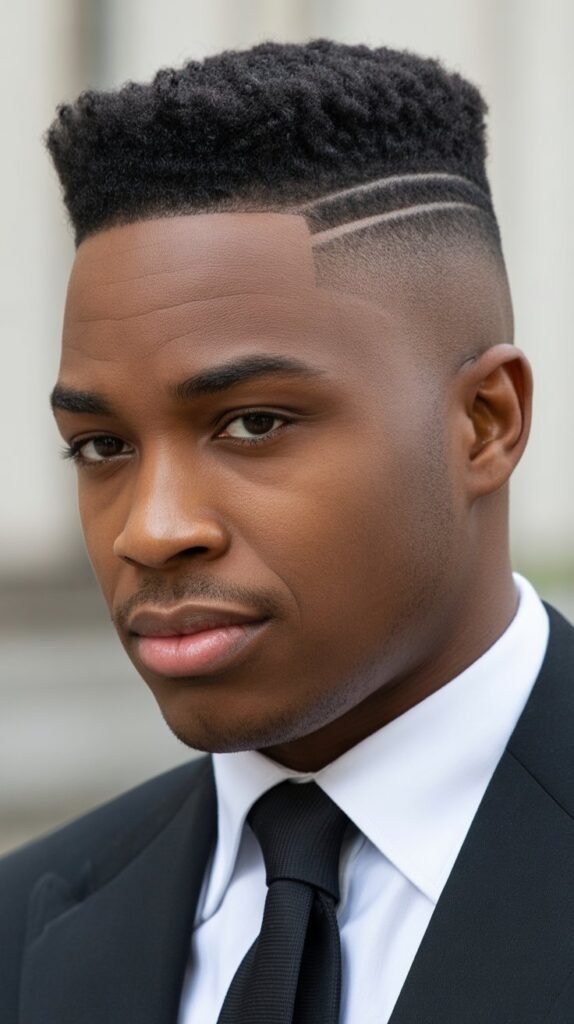
The low taper fade with side part represents classic barbering at its most refined, combining traditional grooming sensibilities with modern execution.
This timeless style remains a go-to choice for professional men across industries.
Part Placement and Formation:
- The part is positioned 1-3 inches from the center, creating an asymmetrical division
- A comb creates a clean line that serves as the foundation for the entire style
- Hair on the larger side is typically swept across or slightly back, while the smaller side lies close to the head
- The low taper fade enhances the side part by creating clean sides that don’t compete with the parted top
- This style flatters most face shapes and hair types, making it universally appealing
Professional Advantages:
- The side part communicates professionalism and attention to detail in business environments
- The style transitions seamlessly from office settings to evening social events
- Minimal daily styling time is required once the part is established
- Works well in conservative professional environments while still looking contemporary
23. Low Taper Fade with Burst Fade
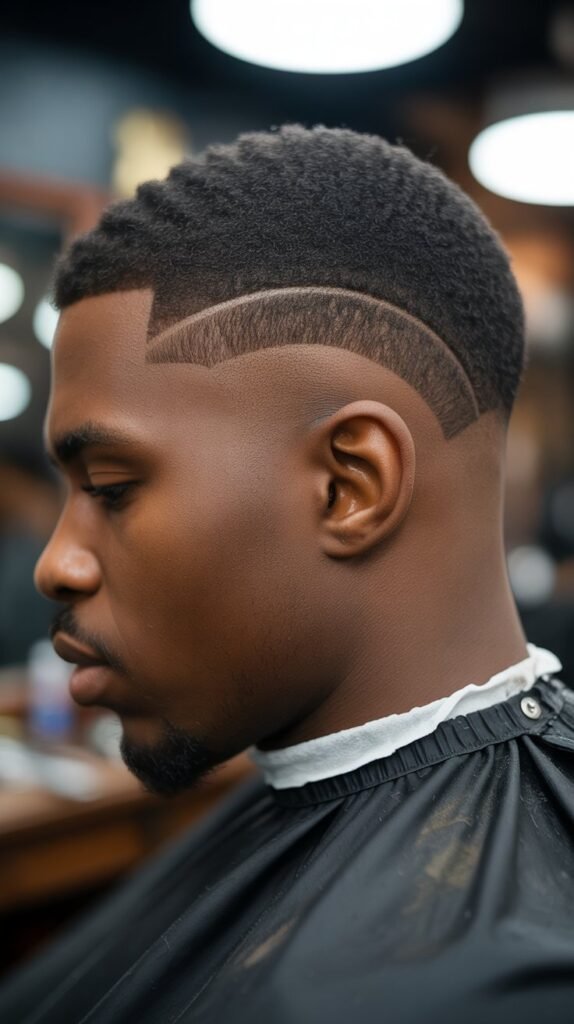
The low taper fade with burst fade creates a circular, sunburst-like fade pattern around the ears that adds unique visual interest.
This contemporary technique has become a favorite among those seeking something beyond traditional fade lines.
Burst Fade Characteristics:
- The fade radiates outward from behind the ear in a semi-circular pattern
- Unlike traditional fades that follow horizontal lines, the burst curves around the ear’s natural shape
- The effect creates a frame-like quality that draws attention to the ear area
- This technique requires advanced barbering skills and precise clipper work
- The burst fade can be combined with various top styles from curls to mohawks to pompadours
Styling Compatibility:
- Mohawk styles pair particularly well with burst fades, as the circular fade complements the vertical center strip
- Curly and textured tops benefit from the dimensional quality the burst fade provides
- The circular fade pattern creates visual interest that looks impressive from all angles
- This style photographs exceptionally well due to its architectural, sculptural quality
24. Low Taper Fade with High Top
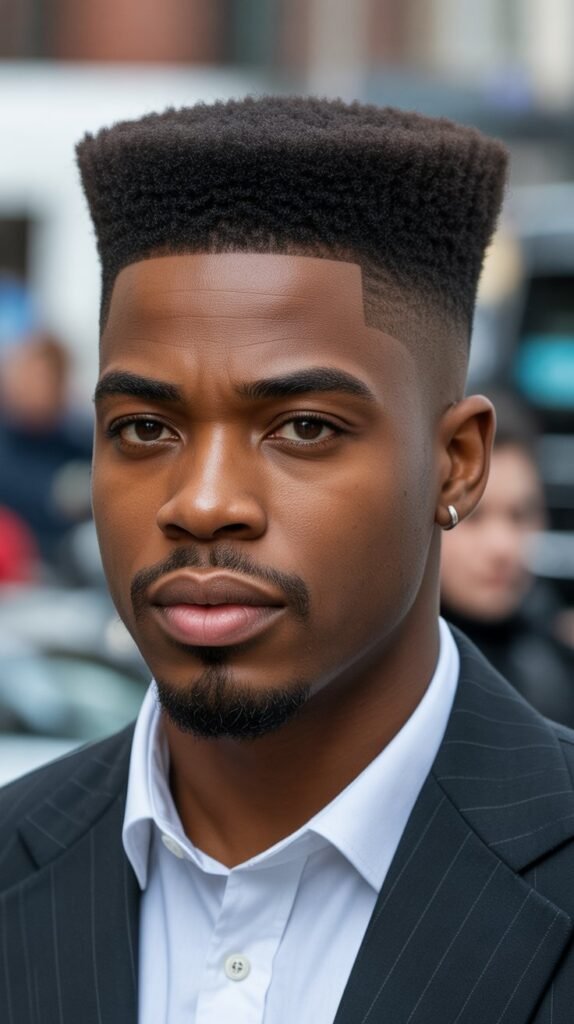
The low taper fade with high top brings back the iconic 1980s and 90s silhouette with contemporary refinements.
This bold style makes an unmistakable statement while celebrating Black hair culture and history.
Structural Elements:
- The top section is cut flat across, creating a box or cylindrical shape that stands 2-6 inches above the scalp
- The sides feature the low taper fade, creating dramatic contrast with the elevated top section
- The high top can be rounded at the corners for a softer appearance or kept angular for maximum impact
- This style requires regular maintenance to keep the flat top level and symmetrical
- Hair density and texture significantly affect how high the top section can be built
Cultural Significance:
- The high top represents an important era in Black hair culture and hip-hop aesthetics
- Modern interpretations often incorporate designs, hard parts, or varying heights for personalized expression
- This style requires confidence to pull off but delivers unmatched visual impact
- The high top works particularly well for those with thick, coily hair that provides natural volume
25. Low Taper Fade with Faux Locs

The low taper fade with faux locs offers the aesthetic of dreadlocks with the flexibility of a temporary style.
This protective styling option has gained tremendous popularity for its versatility and cultural expression.
Installation Process:
- Faux locs are created by wrapping synthetic hair around sections of natural hair using a crocheting or wrapping technique
- The locs can be installed over cornrows, two-strand twists, or directly on natural hair depending on the method
- Length options range from shoulder-length to waist-length or longer, providing dramatic versatility
- Thickness can vary from thin, pencil-sized locs to thick, chunky locs depending on personal preference
- The low taper fade at the sides and nape creates clean contrast that prevents bulk and maintains a polished appearance
Advantages Over Permanent Locs:
- Faux locs can be removed after 6-8 weeks without the long-term commitment of traditional locs
- The style allows experimentation with the loc aesthetic before committing to the permanent journey
- Natural hair underneath remains protected and continues growing during the installation period
- Various colors and ombre effects can be achieved through synthetic hair selection
- The fade requires touch-ups every 2-3 weeks while the faux locs remain installed
26. Low Taper Fade with Comb Over

The low taper fade with comb over delivers sophisticated elegance through asymmetrical styling and clean lines.
This executive-level style has become increasingly popular in corporate and upscale professional environments.
Comb Over Construction:
- Hair on top is grown to 2-4 inches and swept dramatically to one side
- The part line (natural or hard) creates the division point from which hair is combed over
- The heavier side features volume and sweep, while the lighter side lies flat against the head
- The low taper fade provides clean contrast that emphasizes the directional flow of the comb over
- This style works beautifully for those with receding hairlines, as the swept hair provides coverage
Styling Requirements:
- Medium to strong-hold pomade or cream provides the hold necessary to maintain the swept direction
- The hair should be blow-dried in the desired direction before product application for best results
- A comb creates the smooth, uniform appearance characteristic of proper comb over styling
- The style should look intentional and polished rather than like hair simply fell to one side
27. Low Taper Fade with Design/Pattern

The low taper fade with design or pattern transforms the haircut into a canvas for artistic expression.
These intricate designs range from subtle geometric patterns to elaborate artistic statements that showcase barber artistry.
Design Options:
- Simple line designs include straight lines, curves, or geometric shapes shaved into the faded area
- Complex designs can incorporate logos, symbols, tribal patterns, or even portrait-style artwork
- Lightning bolts, waves, stars, and abstract patterns remain popular choices
- The design is typically placed on the sides or back where the faded area provides the canvas
- Fresh designs last 1-2 weeks before growing out and requiring touch-ups or complete redesigns
Placement Strategies:
- Side placement makes designs visible in profile photographs and conversations
- Back placement creates surprise factor and works well for those in client-facing professions
- Temple area designs add detail without overwhelming the overall look
- Multiple small designs distributed around the fade create visual interest from all angles
- Barbers use trimmers, razors, and varying clipper guards to create depth and dimension in designs
Design Considerations:
- Professional environments may have restrictions on visible hair designs, so placement matters
- Simple, subtle designs have longer visibility periods than intricate, detailed work
- Design complexity should match the barber’s skill level to ensure quality results
- Designs fade as hair grows, creating an ombre effect before eventually disappearing
28. Low Taper Fade with Quiff
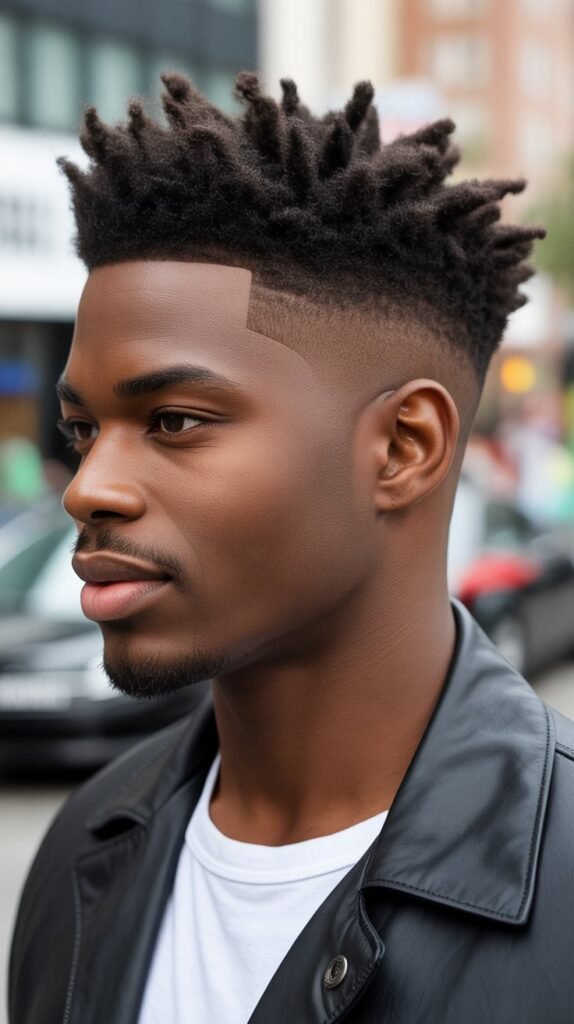
The low taper fade with quiff combines British styling tradition with contemporary fade techniques, creating a voluminous, swept-back look that exudes confidence.
This style has gained international popularity across diverse professional and social settings.
Quiff Formation:
- The front section is styled upward and backward, creating height at the forehead similar to a pompadour
- Unlike the pompadour’s dramatic backward sweep, the quiff has a more relaxed, slightly forward-leaning appearance
- Hair length of 3-5 inches on top provides adequate length for proper quiff structure
- The low taper fade creates clean sides that emphasize the volume and height of the quiff
- This style works well with various hair textures from straight to wavy to loosely curly
Styling Process:
- Hair is blow-dried upward and back using a round brush or fingers to create foundational volume
- Product is applied to damp or dry hair depending on the product type and desired finish
- The front is lifted and pushed back while maintaining forward momentum rather than strict backward styling
- The finished quiff should have natural-looking volume rather than appearing overly structured or stiff
29. Low Taper Fade with Messy Top
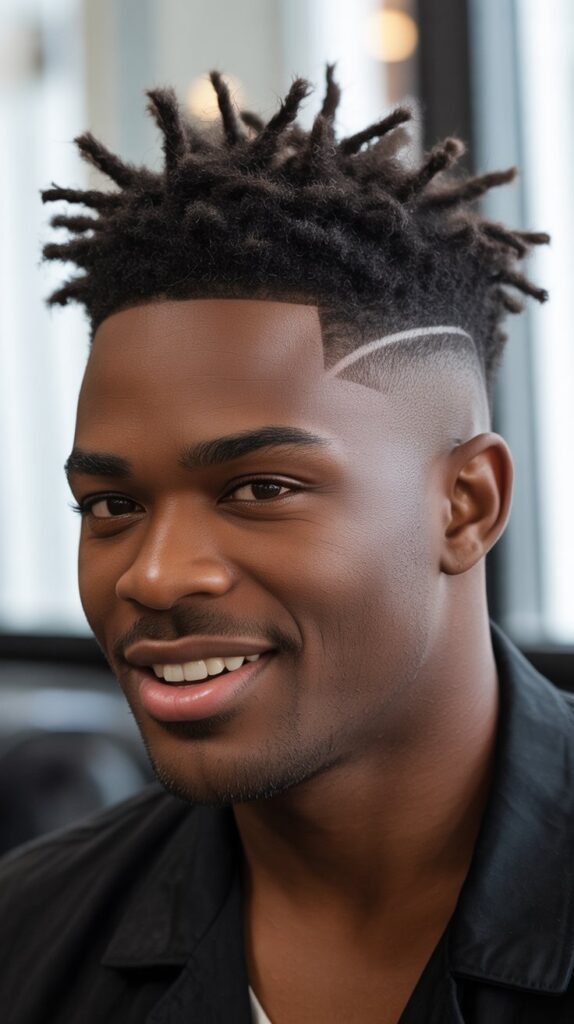
The low taper fade with messy top embraces controlled chaos, creating an effortlessly cool aesthetic that’s become increasingly popular among younger professionals and creatives.
This style balances intentional dishevelment with clean, precise fading.
Controlled Messiness:
- The top section is cut with heavy texturizing to create piece-y, separated sections
- Hair length of 2-4 inches provides enough length for texture without becoming unmanageable
- The “messy” appearance should look intentionally styled rather than genuinely unkempt
- The low taper fade provides the structure and cleanliness that makes the messy top work aesthetically
- This style communicates casual confidence and modern sensibilities
Product Application:
- Texturizing creams, clays, or pastes work best for achieving the desired separated, piece-y texture
- Product is worked through hair with fingers, deliberately creating irregular patterns and directions
- The goal is to enhance natural texture and movement rather than forcing hair into rigid structures
- A small amount of product goes a long way—over-application creates greasiness rather than texture
- The finished look should appear as though minimal effort was required, even though intentional styling occurred
30. Low Taper Fade with Braided Top
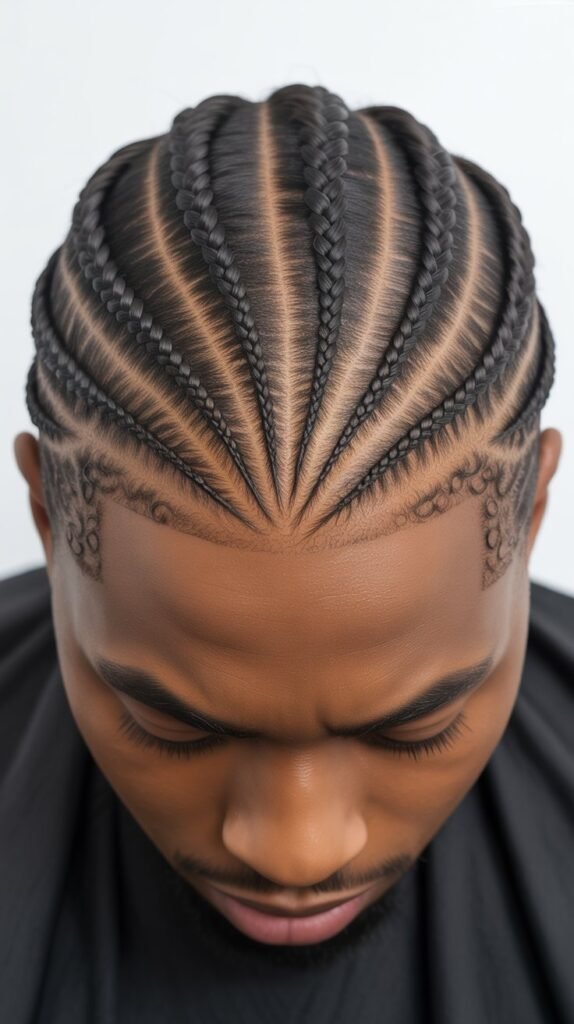
The low taper fade with braided top merges protective styling with precision barbering, offering countless creative possibilities through various braiding patterns and techniques.
This style provides both aesthetic appeal and practical hair protection.
Braiding Variations:
- Cornrows across the top create a sleek, streamlined appearance with various pattern options
- Individual braids offer more versatility for styling into ponytails, buns, or leaving loose
- Zig-zag or curved patterns add artistic flair and showcase advanced braiding technique
- Feed-in braiding techniques create a more natural appearance at the hairline and reduce tension
- The low taper fade provides clean contrast that makes the braided sections stand out prominently
Practical Benefits:
- Braiding protects natural hair from environmental damage and reduces daily manipulation
- The style requires minimal morning maintenance beyond moisturizing the scalp
- Braids typically last 2-4 weeks before requiring removal and re-braiding
- The fade needs touching up every 1-2 weeks to maintain the sharp contrast
- Satin bonnets or durags at night preserve the braids and prevent frizzing
Styling Flexibility:
- Braids can be styled into various updos for formal occasions or left down for casual settings
- Beads, cuffs, or colored extensions can be added for personalized expression
- The clean faded sides ensure the style looks polished even when braids become slightly worn
Maintenance Tips for Low Taper Fade Haircuts
Maintaining your low taper fade requires consistent attention and proper care to keep it looking sharp and fresh. Understanding the maintenance requirements ensures your style always looks its best and extends the life of your haircut between barber visits.
Maintenance Schedule:
- Schedule barber appointments every 1-2 weeks for optimal fade freshness and lineup crispness
- Some styles with protective elements (braids, twists, locs) allow for longer periods between fade touch-ups
- Home maintenance between appointments includes moisturizing, brushing, and minor edge work if you’re skilled with trimmers
- The fade grows out faster than the top section, so prioritize maintaining the tapered areas for overall appearance
- Consistent maintenance schedules prevent the “grown out” appearance and keep your style looking intentional
Daily Care Routine:
- Moisturize your scalp and hair daily with water-based leave-in conditioners or natural oils like jojoba or argan
- Brush or comb your hair in the desired direction to train growth patterns and maintain style shape
- Wear a durag, wave cap, or satin bonnet at night to preserve styles and prevent frizz
- Avoid excessive heat styling which can damage hair texture and make styling more difficult
- Keep your hairline and neck clean by washing regularly and exfoliating to prevent ingrown hairs
Product Recommendations:
- Invest in quality clippers if you plan to do minor maintenance at home between professional cuts
- Use sulfate-free shampoos that clean without stripping natural oils from your hair and scalp
- Deep condition weekly to maintain hair health, especially for textured or chemically treated hair
- Choose styling products based on your specific hair type and the hold level your style requires
- Witch hazel or aftershave products soothe skin after lineups and prevent razor bumps
How to Communicate with Your Barber
Effective communication with your barber ensures you get exactly the low taper fade style you envision. Clear, specific descriptions and visual references eliminate confusion and lead to consistently excellent results.
Preparation Steps:
- Bring reference photos showing multiple angles of your desired style (front, sides, back)
- Screenshots from social media or saved images from style websites provide visual clarity
- Understand basic barbering terminology to describe what you want accurately
- Consider your face shape, hair texture, and lifestyle when selecting a style
- Be realistic about maintenance requirements and whether the style fits your daily routine
Key Communication Points:
- Specify where you want the fade to start: low (above the ears), mid (temple level), or high (near the crown)
- Describe how tight or gradual you want the fade transition from longer to shorter hair
- Communicate your desired top length and whether you want texturizing or blunt cutting
- Discuss whether you want a natural or hard part, and if so, where it should be placed
- Ask about the maintenance schedule and products needed to maintain your chosen style
Building Barber Relationships:
- Consistency with the same barber allows them to learn your hair and preferences over time
- Provide honest feedback about what you like or want adjusted in your current cut
- Ask questions about technique, products, and maintenance to increase your hair knowledge
- Respect your barber’s time by arriving promptly for appointments and communicating schedule changes
- Understanding that barbers are artists who appreciate clients who value their craft and expertise
Best Face Shapes for Low Taper Fade Styles
Understanding how different low taper fade variations complement various face shapes helps you select the most flattering style. Face shape analysis ensures your haircut enhances your natural features rather than working against them.
Consultation Considerations:
- Bring your face shape analysis to your barber consultation for personalized recommendations
- Consider your most prominent features (strong jaw, high forehead, wide temples) when selecting styles
- Remember that hair texture also plays a role—some styles work better with certain textures regardless of face shape
- Your barber can assess your face shape and make professional recommendations based on their experience
- Try different variations within your recommended category to find what feels most authentically you
Cost Considerations and Budgeting
Understanding the financial investment required for low taper fade haircuts helps you budget appropriately and maintain your style consistently. Costs vary based on location, barber experience, and style complexity.
Initial Haircut Costs:
- Basic low taper fade in most markets ranges from $25-$50 depending on location and barber experience
- High-end barbershops in major metropolitan areas may charge $50-$100 or more for detailed work
- Complex styles with designs, intricate braiding, or artistic elements command premium pricing ($60-$150)
- First-time clients may pay slightly more as barbers learn their hair and establish the base cut
- Specialist barbers with significant social media followings or celebrity clientele typically charge premium rates
Ongoing Maintenance Expenses:
- Weekly or bi-weekly fade touch-ups add up to $100-$200+ monthly if maintaining maximum freshness
- Some barbershops offer monthly membership programs that reduce per-visit costs for regular clients
- Home maintenance tools (quality clippers, trimmers, products) represent a $100-$300 initial investment
- Quality hair products (moisturizers, styling products, tools) cost approximately $30-$75 monthly
- Protective styles with braiding or twisting may have higher upfront costs but lower maintenance frequency
Budget-Friendly Strategies:
- Learn basic edge-up and neckline maintenance to extend time between professional cuts
- Build a relationship with a barber who offers loyalty discounts or package deals
- Some barbering schools offer discounted cuts performed by supervised students learning the craft
- Invest in quality home tools that pay for themselves after several uses
- Choose styles that look good slightly grown out, reducing the frequency of required appointments
Value Considerations:
- Premium barbershops often provide better consistency, shorter wait times, and superior service experiences
- Establishing a relationship with a skilled barber is worth paying fairly for their expertise
- Your appearance directly impacts professional and social opportunities, making quality cuts a worthwhile investment
- Proper maintenance prevents having to restart styles from scratch, which saves money long-term
Seasonal Styling Adjustments
Adapting your low taper fade style to different seasons ensures comfort and optimal appearance year-round. Weather conditions, temperature variations, and seasonal activities influence style maintenance and product selection.
Summer Styling:
- Shorter overall length keeps the head cooler during hot weather months
- Lighter products prevent greasiness and product melt-down in heat and humidity
- More frequent fade touch-ups may be necessary as increased sweating accelerates hair growth appearance
- Protective styles like braids or twists reduce daily manipulation in humid conditions
- Sun protection for the scalp becomes important, especially with very short fades
- Water-resistant products work better for those who swim frequently during summer months
Winter Styling:
- Slightly longer top sections provide warmth and protection from cold weather
- Richer, oil-based products combat dryness caused by indoor heating and cold outdoor air
- Static electricity becomes a concern with certain hair types, requiring anti-static products
- Hat hair becomes a consideration—styles that can be quickly reshaped work best
- Deeper conditioning treatments prevent cold-weather brittleness and breakage
- The fade itself requires the same maintenance frequency regardless of season
Spring and Fall Transitions:
- Gradually adjust hair length as temperatures shift between seasonal extremes
- Reevaluate product routines to match changing humidity levels
- Spring is ideal for trying new styles as you prepare for summer social activities
- Fall offers opportunity to grow out hair slightly for winter protective styling
- Seasonal style changes keep your look fresh and aligned with current fashion trends
Activity-Based Considerations:
- Athletes may prefer shorter, lower-maintenance options during their sport’s season
- Outdoor workers benefit from styles that withstand weather exposure and physical activity
- Those with increased social activities during certain seasons might invest more in style complexity
- Holiday seasons often inspire more elaborate styling for events and photographs
Conclusion
The world of low taper fade haircuts for Black men offers an extraordinary range of possibilities that celebrate natural texture, cultural heritage, and individual expression while maintaining professional polish and contemporary style.
Throughout this comprehensive exploration of Top 30+ Jaw-Dropping Low Taper Fade Haircuts for Black Men, we’ve journeyed through classic styles like waves and lineups that honor barbering traditions, contemporary innovations including burst fades and designer patterns that push creative boundaries, protective styling options such as braids and twists that prioritize hair health, and bold statements like mohawks and pompadours that command attention in any setting.
The low taper fade serves as the perfect foundation for countless style variations because it provides clean, professional sides while allowing creative freedom on top, making it adaptable to corporate boardrooms, creative studios, athletic fields, and social gatherings alike.
Your choice of low taper fade style should reflect not only your aesthetic preferences but also your lifestyle requirements, maintenance commitment, face shape considerations, and the image you want to project to the world around you.
Remember that the relationship you build with a skilled barber who understands Black hair texture and cultural styling traditions is invaluable, as their expertise transforms your vision into reality with precision and artistry that enhances your natural features.
Whether you prefer the timeless elegance of waves and parts, the protective benefits of braids and twists, the bold creativity of designs and colors, or the modern sophistication of textured and styled options, there’s a low taper fade variation perfectly suited to your unique personality and needs.
Invest in quality products specifically formulated for Black hair, maintain a consistent care routine that includes moisturizing and protection, schedule regular barber appointments to keep your fade sharp and intentional, and don’t be afraid to experiment with different styles until you discover the look that makes you feel most confident and authentically yourself.
The low taper fade isn’t just a haircut—it’s a form of self-expression, a connection to cultural heritage, and a daily boost of confidence that reminds you that you’re presenting your absolute best self to the world every single day.
