
Wispy bangs with layers transform straight hair from ordinary to extraordinary, creating a soft, romantic frame that flatters every face shape.
If you’ve been contemplating a hairstyle refresh that combines elegance with effortless style, you’re in the right place.
This comprehensive guide to 66 Sleek & Timeless Wispy Bangs With Layers for Straight Hair That Never Go Out of Style will walk you through every variation, styling technique, and maintenance tip you need to achieve and maintain this coveted look.
From understanding the anatomy of perfect wispy bangs to discovering which layering technique suits your hair texture, you’ll find detailed insights on face-flattering options, celebrity-inspired styles, and professional cutting methods.
Whether you prefer curtain bangs, side-swept wisps, or bold choppy layers, this article covers diverse options that work for fine, medium, and thick straight hair.
You’ll also learn about color techniques that enhance layers, styling products that maintain that coveted wispy texture, and how to communicate your vision to your hairstylist for perfect results every time.
1. Understanding Wispy Bangs: The Foundation of Effortless Style
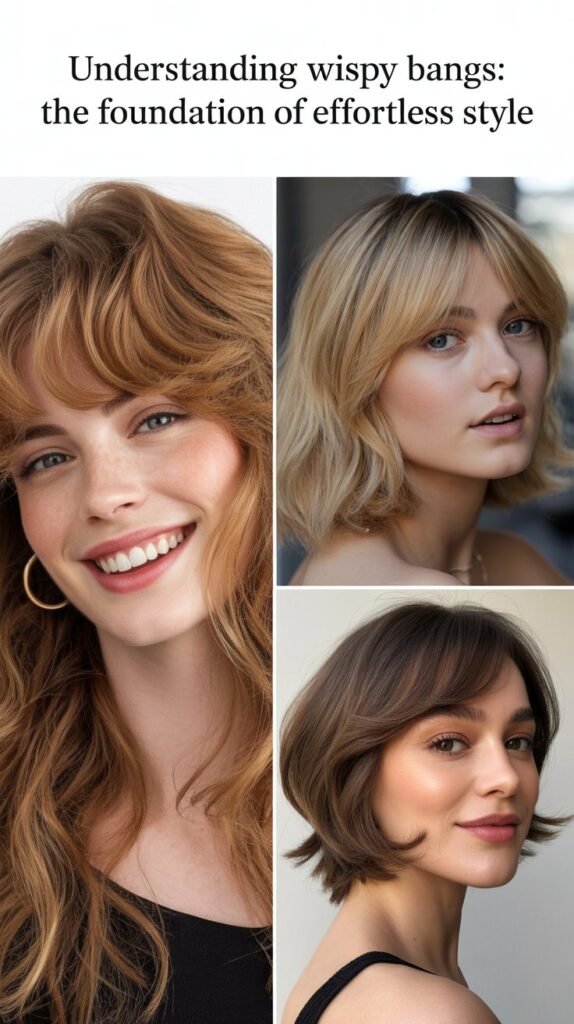
Wispy bangs represent the delicate balance between structured and soft, creating a feathered effect that gently frames the face without overwhelming your features.
Unlike blunt bangs that create a heavy horizontal line, wispy bangs are textured, piece-y, and intentionally imperfect, making them incredibly forgiving and versatile for straight hair.
- Wispy bangs are characterized by their thinned-out ends that create a soft, airy appearance rather than a solid curtain of hair across the forehead.
- The technique involves point-cutting or razor-cutting to remove weight from the ends while maintaining length at the root, creating that signature feathered effect.
- This style works exceptionally well with straight hair because the natural texture allows the wispy pieces to fall gracefully without excessive curling or frizzing.
- The beauty of wispy bangs lies in their low-maintenance nature, as they don’t require perfect precision and actually look better with a slightly undone appearance.
- For straight hair specifically, wispy bangs prevent the heavy, blunt look that can make fine hair appear limp or thick hair seem overwhelming.
2. The Perfect Partnership: Why Layers Enhance Wispy Bangs
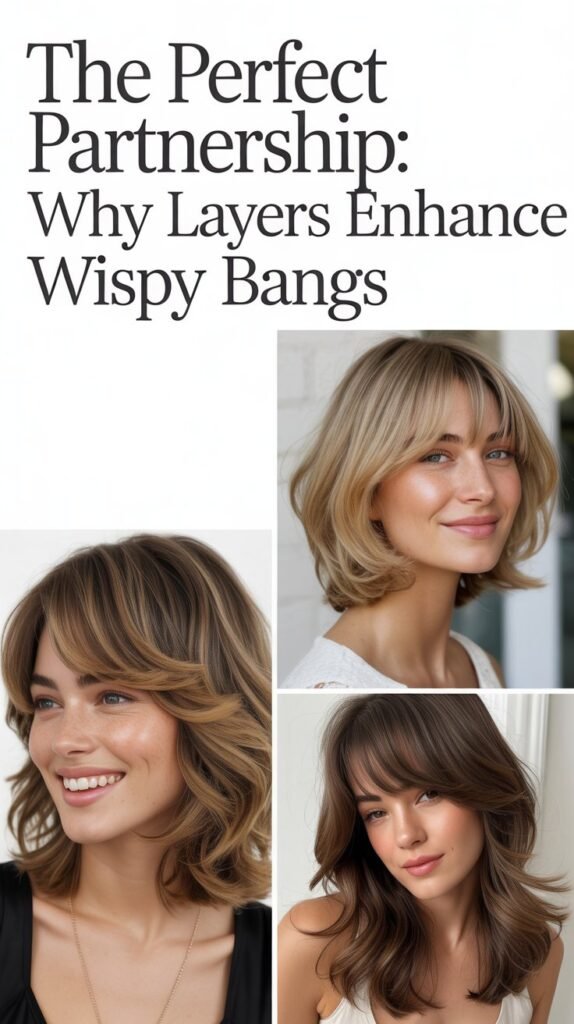
Layers create dimension and movement throughout your hair, working synergistically with wispy bangs to produce a cohesive, flowing hairstyle that appears intentionally designed rather than randomly cut.
The combination prevents your bangs from looking like an isolated element and instead integrates them into your overall hair structure.
- Layers remove bulk from straight hair without sacrificing length, creating natural movement that complements the lightweight nature of wispy bangs.
- When cut properly, layers guide the eye from the face-framing bangs down through the hair, creating a harmonious silhouette that flatters your facial structure.
- The layering technique prevents straight hair from appearing flat or one-dimensional by introducing varying lengths that catch light differently.
- Face-framing layers that start near the bangs create a seamless transition, ensuring your wispy fringe doesn’t look disconnected from the rest of your hairstyle.
- Internal layers add volume at the crown while keeping ends lighter, which balances the visual weight of bangs and prevents your hair from looking bottom-heavy.
- For straight hair types, strategic layering prevents the triangular shape that often occurs when all hair is one length, especially when combined with bangs.
3. Face Shape Analysis: Matching Wispy Bangs and Layers to Your Features
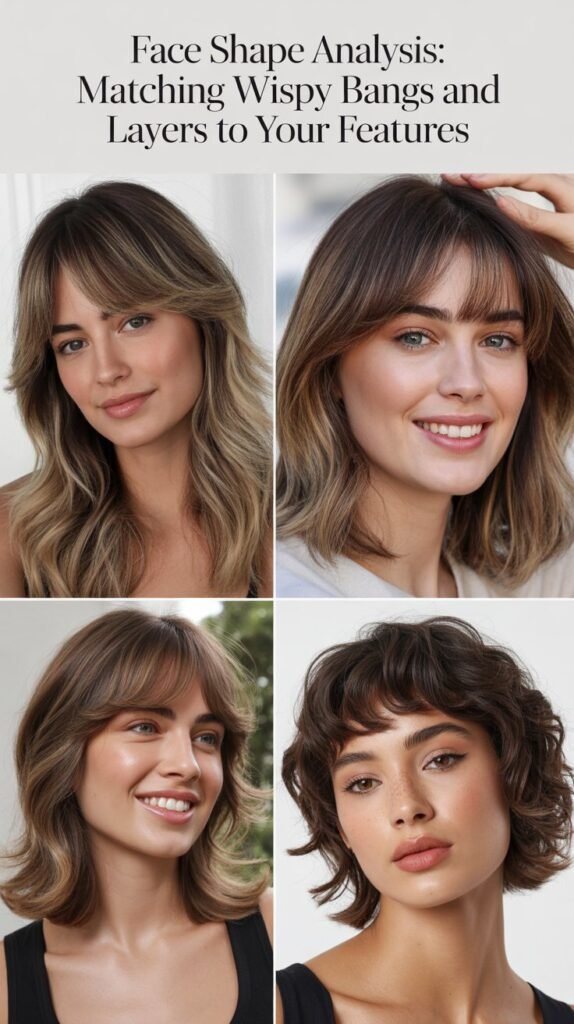
Understanding your face shape is crucial for selecting the wispy bang and layer combination that will enhance your best features while softly minimizing areas you’re less confident about.
Different face shapes benefit from specific bang lengths, densities, and layer placements.
| Face Shape | Ideal Bang Length | Best Layer Placement | Key Styling Tip |
|---|---|---|---|
| Oval | Eyebrow-grazing to eyelash length | Layers starting at chin level | Most versatile; can experiment with various densities |
| Round | Longer, side-swept wisps | Long layers starting below chin | Avoid blunt cuts at cheek level; create vertical lines |
| Square | Soft, piece-y bangs past eyebrows | Face-framing layers around jawline | Soften angles with wispy texture, avoid harsh lines |
| Heart | Curtain-style wispy bangs | Layers beginning at cheekbone | Balance wider forehead with side-swept pieces |
| Long | Fuller wispy bangs | Shoulder-length layers for width | Create horizontal dimension to shorten appearance |
| Diamond | Side-parted wispy fringe | Cheekbone-level layers | Widen narrow forehead and soften cheekbones |
- Oval faces have the flexibility to wear virtually any wispy bang style, from full to sparse, making this the most experimental face shape for this look.
- Round faces benefit from longer, side-swept wispy bangs that create diagonal lines and vertical emphasis rather than horizontal fullness across the forehead.
- Square face shapes are softened beautifully by wispy texture that breaks up the strong horizontal lines of the jawline and forehead.
- Heart-shaped faces look stunning with curtain bangs that add width at the chin level while the wispy texture prevents the forehead from appearing too prominent.
- Long faces gain balance from wispy bangs that shorten the vertical appearance, especially when paired with layers that add width at the sides.
- Diamond face shapes achieve harmony when wispy bangs add subtle width to the forehead while face-framing layers soften prominent cheekbones.
4. Curtain Bangs With Layers: The Ultimate Versatile Option
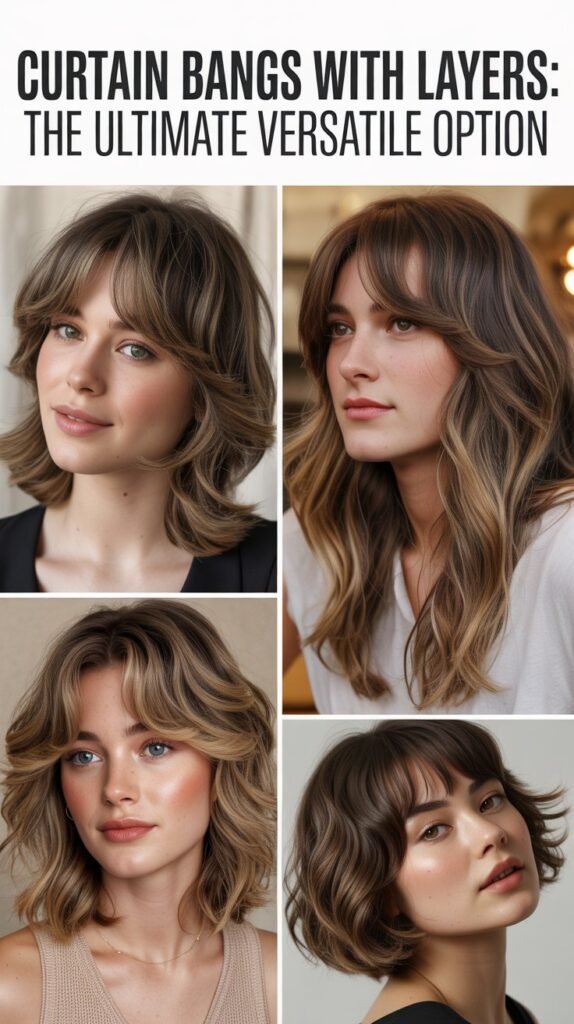
Curtain bangs represent one of the most popular wispy bang variations, parted down the middle or slightly off-center to frame both sides of the face like, well, curtains.
Combined with layers, this style creates an effortlessly chic look that transitions seamlessly from casual to elegant settings.
- Curtain bangs are longer at the outer edges and shorter at the center, creating a gentle arc that opens up the face while still providing forehead coverage.
- This style works exceptionally well for straight hair because the natural fall of the hair creates clean lines without requiring extensive heat styling.
- The layering technique for curtain bangs typically includes face-framing pieces that graduate in length from the shortest bang section to longer layers around the cheekbones and jaw.
- Curtain bangs offer incredible styling versatility—wear them swept to the sides for a polished look or styled forward for more coverage.
- The beauty of this option lies in its forgiving growth pattern; as curtain bangs grow out, they naturally blend into face-framing layers without an awkward in-between phase.
- For straight hair specifically, curtain bangs maintain their shape throughout the day with minimal product, requiring only a quick blow-dry with a round brush to set the curve.
5. Side-Swept Wispy Bangs With Cascading Layers
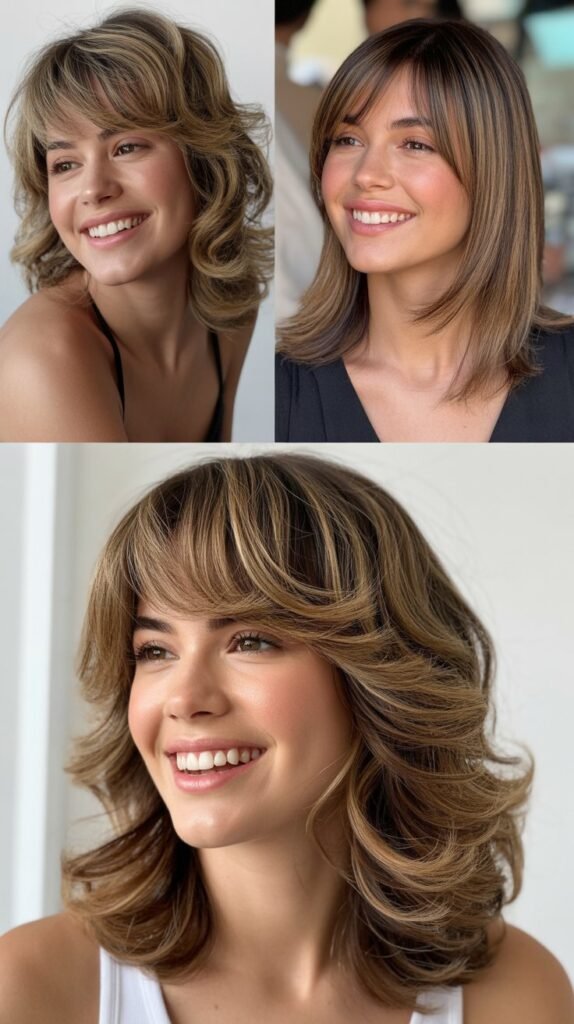
Side-swept wispy bangs create asymmetry that adds interest and dimension to straight hair while maintaining a sophisticated, mature appearance.
When paired with cascading layers, this combination delivers movement and elegance that works for both professional and social environments.
- Side-swept bangs are cut at an angle with the shortest pieces at one side gradually lengthening toward the other, creating a diagonal line across the forehead.
- The wispy texture prevents side-swept bangs from appearing heavy or dated, keeping the look fresh and modern rather than reminiscent of earlier decades.
- Cascading layers work in harmony with the diagonal direction of side-swept bangs, creating a cohesive flow from the forehead down through the lengths.
- This style particularly flatters square and round face shapes by creating diagonal lines that elongate the face and draw attention away from width.
- Side-swept wispy bangs require minimal daily maintenance on straight hair—a simple blow-dry with fingers directing the hair to the preferred side is often sufficient.
- The combination works beautifully for those who want bang coverage without commitment, as side-swept styles are easier to pin back or blend when growing out.
6. Choppy Layers With Wispy Bangs: Edgy Meets Elegant
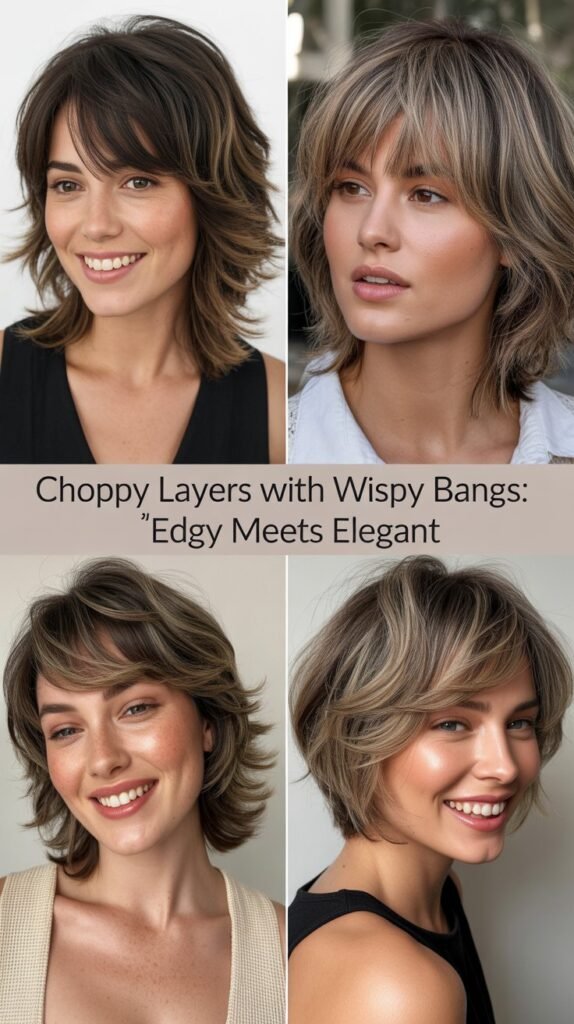
Choppy layers introduce an edgier, more textured dimension to the classic wispy bang look, creating intentional irregularity that adds personality and movement to straight hair.
This combination appeals to those seeking a contemporary, fashion-forward aesthetic without sacrificing sophistication.
- Choppy layers are cut using point-cutting or slide-cutting techniques that create irregular, non-uniform lengths throughout the hair for maximum texture.
- Unlike traditional blended layers that create smooth transitions, choppy layers intentionally show separation between sections for a more modern, deconstructed appearance.
- Wispy bangs cut with choppy techniques have more pronounced pieces and gaps, creating a deliberately undone look that’s simultaneously styled and effortless.
- This combination works particularly well for fine straight hair, as the choppy cutting technique removes weight and creates the illusion of thickness and volume.
- The styling approach for choppy layers involves embracing texture with sea salt sprays or texturizing products rather than smoothing everything into submission.
- Choppy layers with wispy bangs offer the perfect balance for those who want an edgy aesthetic without committing to dramatic color or extremely short cuts.
7. Long Layers With Wispy Bangs: Maintaining Length While Adding Movement
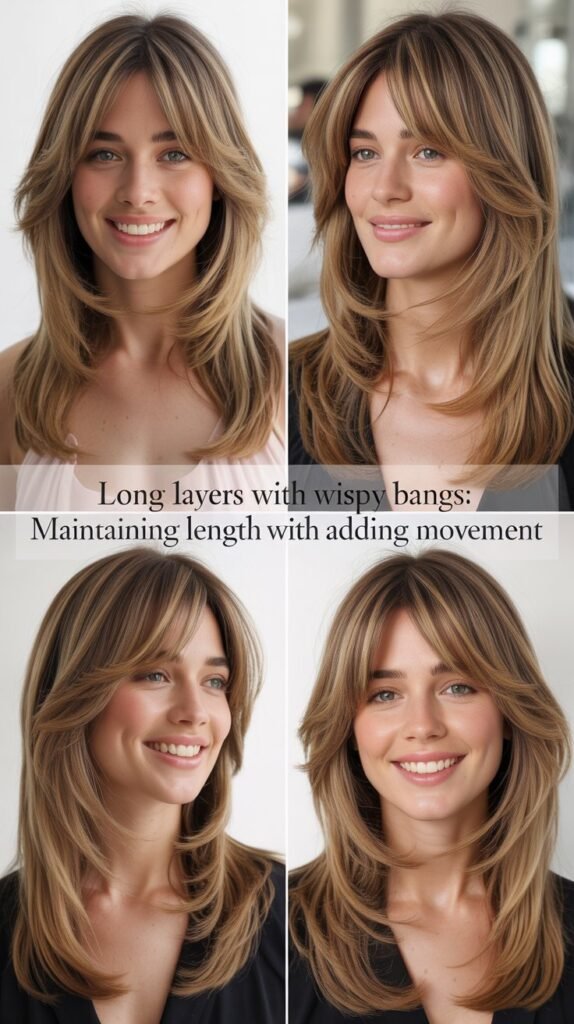
Long layers preserve your overall length while introducing subtle dimension and movement, making this combination ideal for those who want the benefits of wispy bangs and layers without sacrificing their long hair journey.
This approach creates a cascading, flowing effect that’s both romantic and practical.
- Long layers typically begin below the shoulders and create gentle, gradual length variations that maintain the overall appearance of long hair.
- This layering technique removes just enough weight to prevent long straight hair from appearing heavy or dragged down while adding shape and dimension.
- Wispy bangs paired with long layers create a beautiful frame for the face without the commitment of shorter layers that might take years to grow out.
- The combination is particularly flattering for those with thick straight hair, as the long layers reduce bulk without creating excessive volume or puffiness.
- Styling long layers with wispy bangs on straight hair is remarkably simple—the natural weight of the hair helps layers fall into place with minimal effort.
- This option provides the best of both worlds for length-lovers who still want the face-framing benefits and modern aesthetic that wispy bangs and layers provide.
8. Medium-Length Cuts: The Sweet Spot for Wispy Bangs and Layers
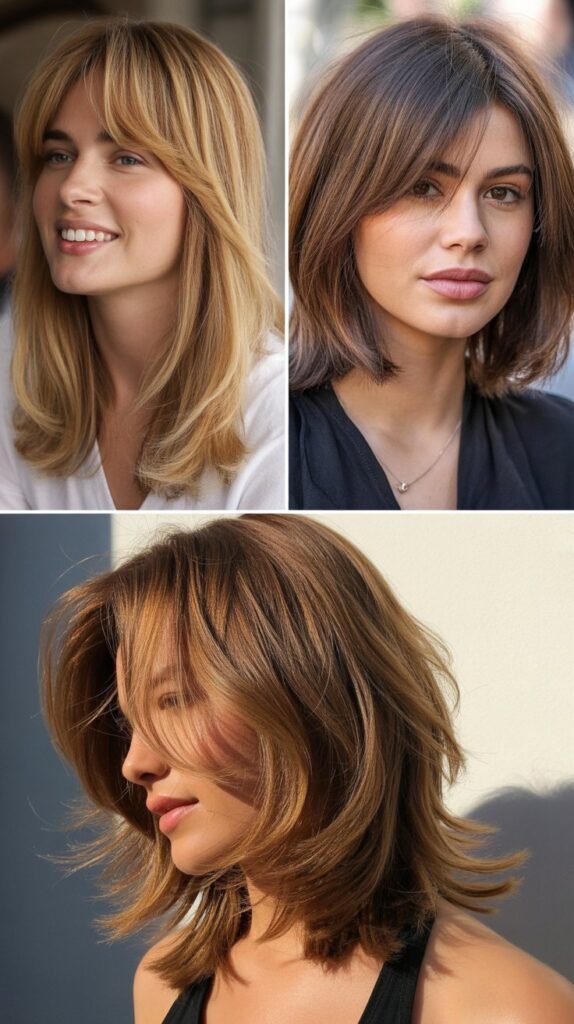
Medium-length hair, typically falling between the shoulders and collarbone, offers the ideal canvas for showcasing wispy bangs and layers because it provides enough length for dimension without the weight that can flatten the style.
This versatile length suits virtually all lifestyles and maintenance preferences.
- Medium-length cuts allow for more dramatic layering than longer hair while maintaining feminine softness and styling versatility.
- This length creates natural body and movement in straight hair without requiring the extensive styling that longer or shorter cuts often demand.
- Wispy bangs on medium-length hair create perfect proportion, neither overwhelming the overall style nor appearing as an afterthought.
- The collarbone-to-shoulder length range is particularly practical for busy lifestyles, as it’s long enough to pull back but short enough to air-dry relatively quickly.
- Medium cuts with layers and wispy bangs transition well between casual and formal settings with simple styling adjustments like tucking behind ears or adding waves.
- This length allows for strategic layer placement that can target specific concerns, whether you want more volume at the crown or slimming around the jawline.
9. Short Cuts With Wispy Bangs: Proving Layers Work at Every Length
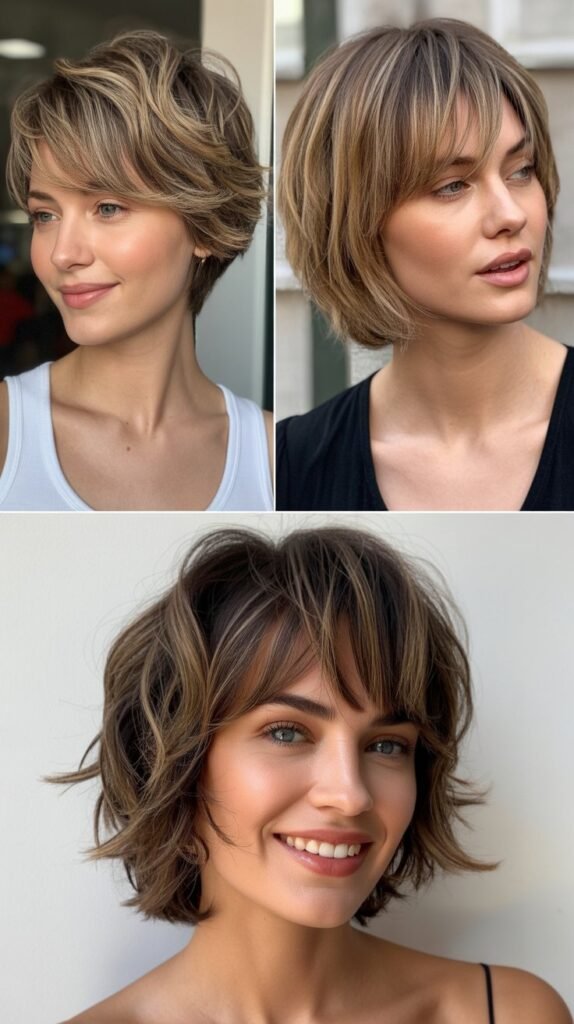
Short hair combined with wispy bangs and layers creates a chic, low-maintenance look that’s both modern and timeless, challenging the misconception that this styling approach only works on longer hair.
From pixie-adjacent styles to chin-length bobs, short cuts with wispy bangs deliver maximum impact with minimal length.
- Short bobs with wispy bangs create a sophisticated, polished appearance that works beautifully in professional environments while remaining fashion-forward.
- Wispy bangs on short cuts prevent the harsh, severe lines that can make short hair appear too structured or masculine.
- Layering short hair requires precise technique to avoid creating unwanted volume or awkward proportions, making professional cutting essential for this length.
- The combination of short length with wispy texture creates incredible styling versatility—add texture for a tousled look or smooth for elegance.
- Chin-length bobs with wispy bangs and subtle layers offer the perfect compromise for those transitioning from long to short hair gradually.
- Short cuts with this styling approach require more frequent maintenance (every 4-6 weeks) to preserve the shape and prevent overgrowth from compromising the style.
10. Blunt Cut Base With Wispy Bangs: Structured Meets Soft
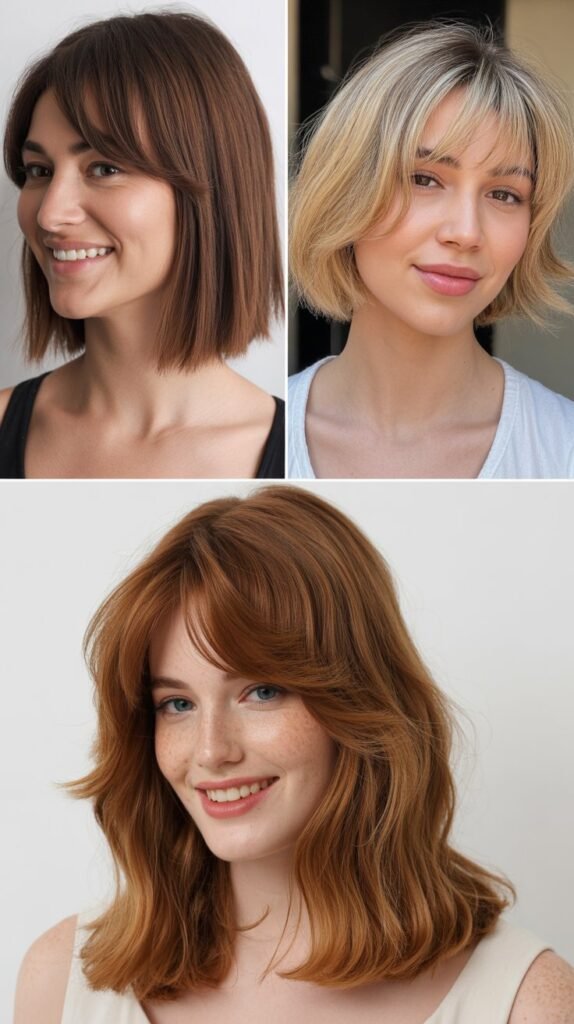
A blunt baseline combined with wispy bangs creates fascinating contrast—the strong, precise horizontal line at the ends juxtaposed with the soft, feathered texture at the face.
This combination appeals to those who appreciate clean lines but want to avoid an overly severe appearance.
- The blunt cut creates a strong foundation that makes straight hair appear fuller and healthier by preventing thinned-out, wispy ends throughout the length.
- Internal layers can still be incorporated with a blunt perimeter, removing bulk from the interior while maintaining the solid baseline for maximum impact.
- Wispy bangs soften the severity of a blunt cut, preventing the overall look from appearing too harsh or geometric.
- This combination is particularly striking on thick straight hair where the blunt line can be truly substantial and the contrast with wispy bangs more dramatic.
- Styling a blunt cut with wispy bangs is straightforward—the precision of the cut does much of the work, requiring only smoothing and minor styling of the fringe.
- The juxtaposition creates visual interest and prevents the one-note appearance that fully blunt cuts (including blunt bangs) can sometimes create.
11. Face-Framing Layers: The Secret to Cohesive Wispy Bang Integration
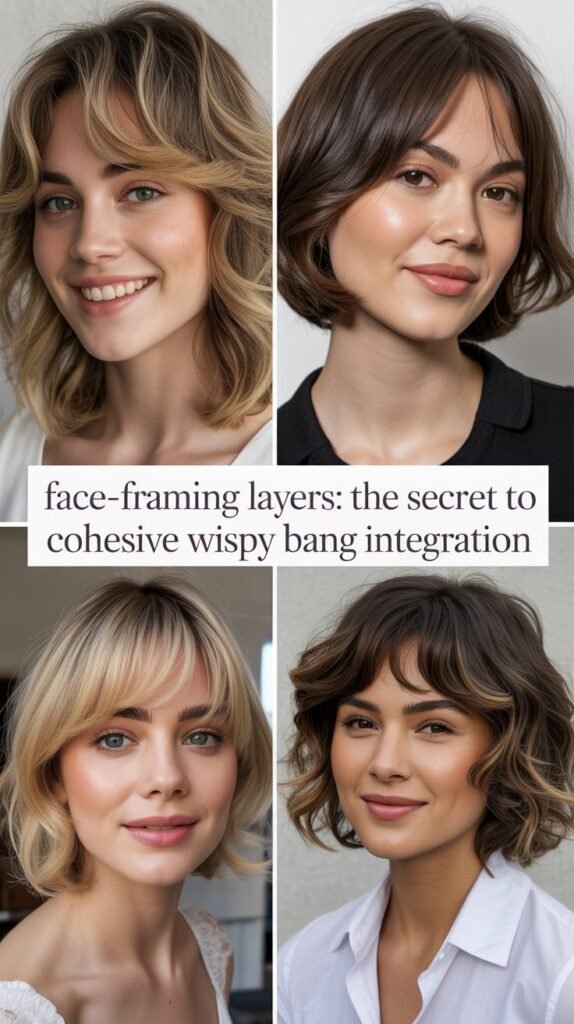
Face-framing layers are the crucial connecting element that makes wispy bangs appear integrated rather than added-on, creating a seamless flow from the forehead down through the hair.
These strategic layers transform separate elements into a cohesive hairstyle that looks intentionally designed.
- Face-framing layers typically start near the bang length and gradually increase in length as they move away from the face, creating a gentle cascade.
- These layers are cut at angles that complement your face shape, whether you need softening around a square jaw or slimming along round cheeks.
- The technique involves cutting layers that follow the natural contour of your face, ensuring they fall in flattering positions rather than arbitrary measurements.
- Face-framing layers prevent the common problem of wispy bangs looking disconnected from the rest of the hairstyle, especially as they grow out.
- On straight hair, these layers create natural movement without requiring heat styling, as gravity naturally pulls them into position.
- The styling benefit of face-framing layers is significant—they require minimal effort to look polished and can be easily tucked behind ears when you want a different appearance.
12. Textured Ends With Wispy Bangs: Cohesive Style Throughout
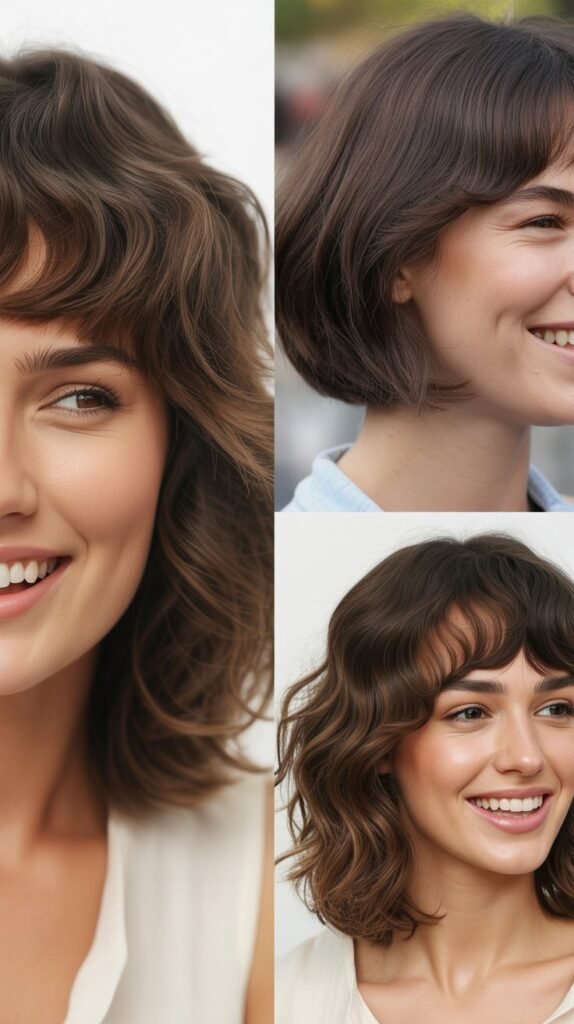
Textured ends throughout your hair create consistency with the wispy, piece-y nature of your bangs, ensuring your entire hairstyle maintains the same aesthetic rather than having different finishes at different sections.
This approach creates a deliberately undone, effortlessly cool appearance.
- Textured ends are achieved through point-cutting, razor-cutting, or slide-cutting techniques that create irregular lengths at the very tips of the hair.
- This technique removes the blunt line at the ends while maintaining overall length, creating movement and preventing straight hair from appearing too heavy.
- When your ends match the textured, wispy quality of your bangs, the entire hairstyle appears cohesive and intentionally styled rather than mismatched.
- Textured ends work particularly well for fine straight hair, as they prevent the thin, straggly appearance that blunt cuts can create when hair lacks density.
- The maintenance requirement for textured ends is actually lower than blunt cuts, as slight growth doesn’t immediately compromise the style’s appearance.
- Styling products like texturizing sprays or light sea salt formulas enhance the piece-y nature of textured ends, making them look effortlessly undone.
13. Voluminous Crown With Wispy Bangs: Creating Lift and Dimension
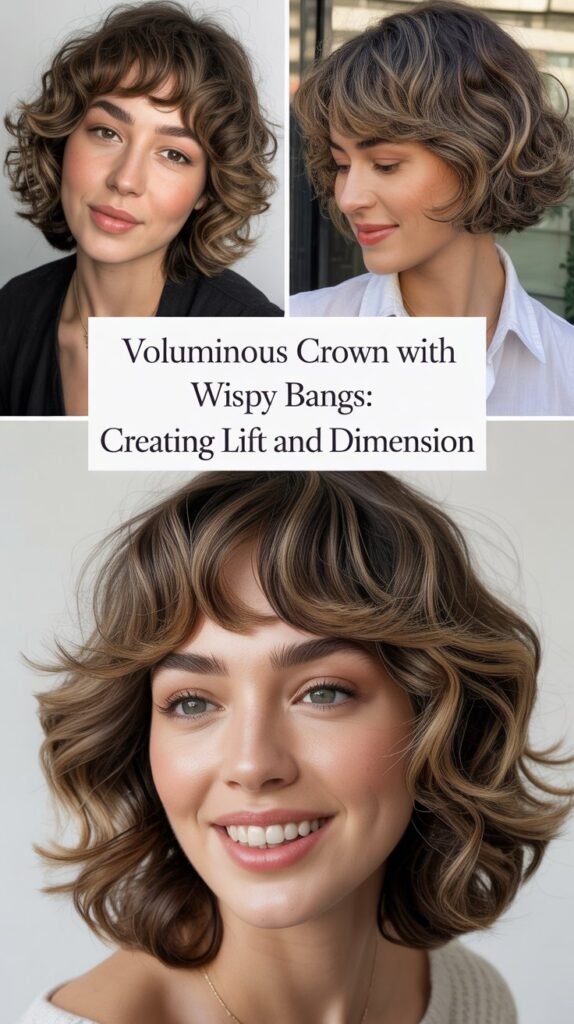
Strategic layering at the crown creates lift and volume that prevents straight hair from appearing flat, especially when combined with wispy bangs that might otherwise weigh down the forehead area.
This technique addresses one of the most common concerns for those with naturally straight hair.
- Crown layers are shorter than the surrounding hair, creating natural lift at the root area when hair is cut and styled properly.
- The technique involves creating internal layers that aren’t visible when hair is down but provide the structure needed for volume and body.
- Wispy bangs balance crown volume by preventing the top-heavy appearance that excessive crown height without face-framing can create.
- For straight hair specifically, crown layers need to be cut with precision to avoid the “pyramid” shape that can occur when too much hair is removed from this area.
- Styling crown layers requires directing hair upward and back during blow-drying rather than straight down, setting the volume at the root.
- The combination of crown volume with wispy bangs creates a flattering silhouette that elongates the face and prevents the flat-against-the-head appearance common with fine straight hair.
14. Asymmetrical Layers With Wispy Bangs: Embracing Modern Irregularity
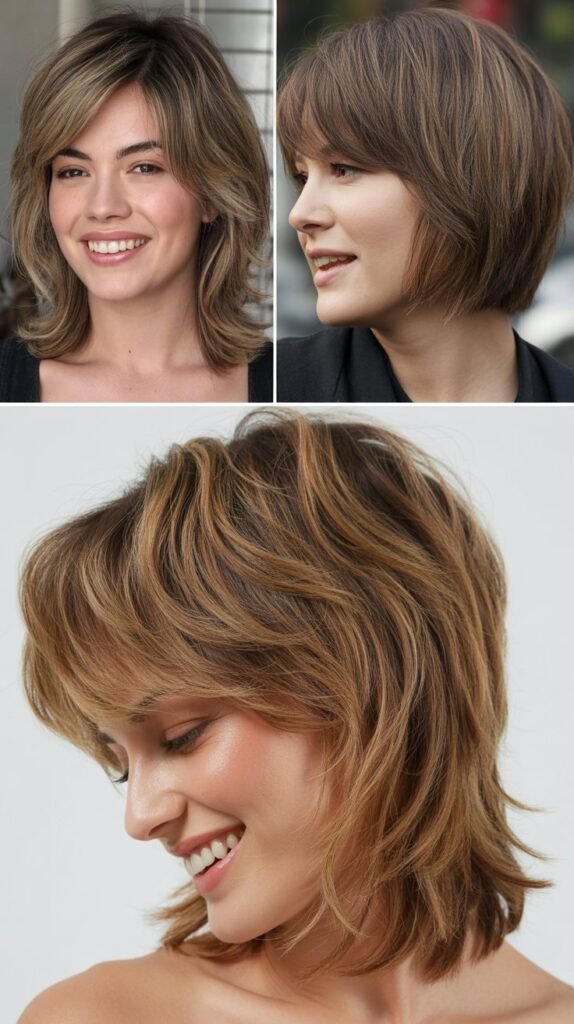
Asymmetrical layering creates intentional imbalance that adds visual interest and contemporary edge to the classic wispy bang and layer combination.
This approach appeals to those who want their hairstyle to make a statement while remaining wearable and flattering.
- Asymmetrical layers involve cutting different lengths on each side of the head, creating deliberate imbalance that’s visually striking and modern.
- This technique can be subtle (a few inches difference) or dramatic (one side significantly longer than the other) depending on personal preference and lifestyle.
- Wispy bangs complement asymmetrical layers by adding softness to what could otherwise be an overly severe or geometric style.
- The approach works particularly well for those with strong personal style who want their hair to reflect their creative, individualistic approach to fashion.
- Asymmetrical cuts with wispy bangs require skilled cutting and often more frequent maintenance to preserve the intentional imbalance as hair grows.
- Styling asymmetrical layers on straight hair is relatively simple since the natural fall of the hair showcases the different lengths without requiring extensive manipulation.
15. Graduated Layers: Creating Smooth Transitions From Bangs to Ends
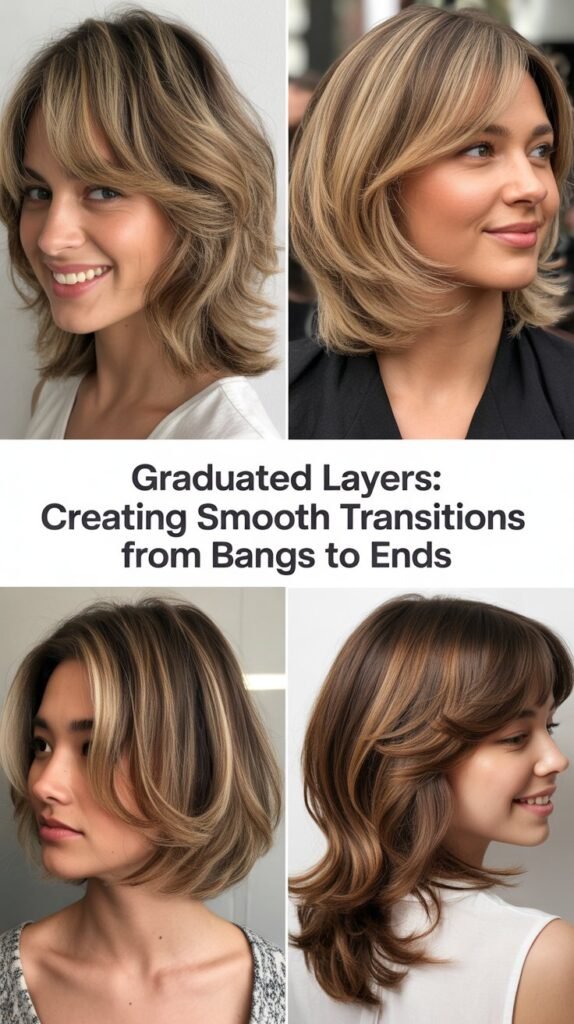
Graduated layers create smooth, flowing transitions from your wispy bangs through progressively longer sections, ensuring there are no abrupt length changes that disrupt the visual flow of your hairstyle.
This classic cutting technique delivers timeless elegance and natural movement.
- Graduated layering involves cutting each section slightly longer than the one above it, creating a stacked effect that builds volume and shape.
- This technique is particularly effective for straight hair as it creates natural body without requiring the hair to have inherent texture or wave.
- Wispy bangs serve as the shortest point in graduated layering, with face-framing pieces and subsequent layers progressively lengthening toward the back.
- The approach prevents the flat, lifeless appearance that one-length straight hair can have while maintaining a polished, sophisticated aesthetic.
- Graduated layers create the most movement at the crown and face-framing areas where you most want dimension and volume.
- Styling graduated layers on straight hair requires minimal effort—a simple blow-dry following the natural direction of the cut enhances the built-in shape and movement.
16. Minimal Layers With Wispy Bangs: For Those Who Prefer Subtlety
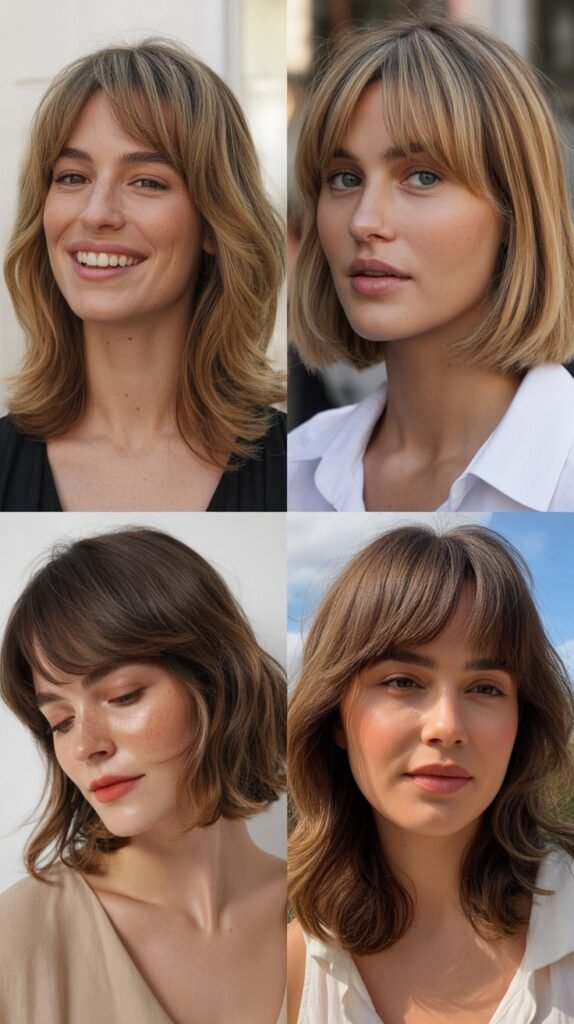
Not everyone wants dramatic layering, and minimal layers paired with wispy bangs offer the perfect solution for those who prefer subtle dimension without sacrificing length or creating excessive texture.
This approach maintains the sleek quality of straight hair while adding just enough interest to prevent monotony.
- Minimal layering involves creating just a few strategic length variations, typically around the face and at the very ends, while keeping most hair the same length.
- This approach is ideal for those with fine straight hair who worry that extensive layering will make their hair appear thinner or less full.
- Wispy bangs add the primary face-framing element in minimal layer cuts, doing the heavy lifting in terms of creating dimension and interest.
- The beauty of this combination lies in its versatility—hair can be worn sleek and straight or styled with waves without layers creating awkward lengths.
- Minimal layers maintain maximum length and fullness while still preventing the harsh, heavy appearance that completely blunt cuts can create.
- This option requires less frequent trims since there aren’t multiple layer lengths to maintain, making it practical for those with busy schedules or limited access to quality stylists.
17. Heavy Wispy Bangs With Fine Layers: Balancing Density
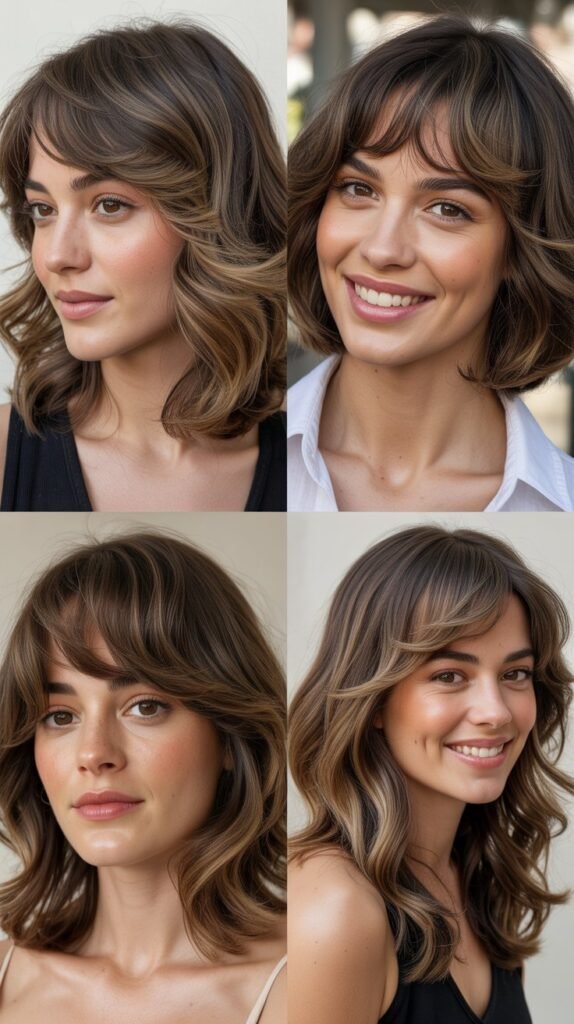
Heavy wispy bangs—meaning more hair incorporated into the bang section—create a bolder fringe while maintaining the soft, feathered texture that defines wispy styling.
Paired with fine layers, this combination offers density where you want it and lightness where you need it.
- Heavy wispy bangs incorporate more hair from further back on the head, creating fuller fringe coverage while maintaining the textured, piece-y ends that define wispy styling.
- Fine layers throughout the rest of the hair balance the weight of heavier bangs, preventing the style from appearing top-heavy or unbalanced.
- This combination works exceptionally well for those with thick straight hair who have enough density to create substantial bangs while still needing weight removal through layers.
- The heavier bang section provides more styling versatility—you can sweep them to the side, part them in the middle, or style them forward for different looks.
- Fine layers create subtle movement without creating obvious separation between sections, maintaining a polished, cohesive appearance.
- Styling heavy wispy bangs requires slightly more effort than sparse bangs, as the additional hair needs to be properly dried and directed to maintain the wispy texture.
18. Sparse Wispy Bangs With Defined Layers: For Minimalist Aesthetics
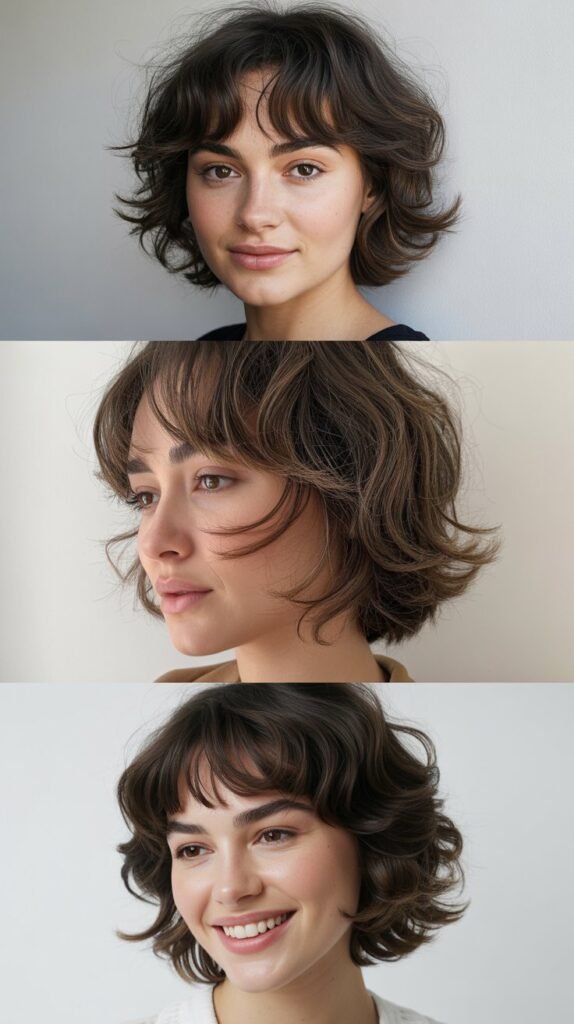
Sparse wispy bangs incorporate less hair into the fringe section, creating sheer, see-through coverage that’s incredibly low-maintenance and perfect for those who want the suggestion of bangs without full commitment.
Paired with defined layers, this creates a light, airy aesthetic.
- Sparse wispy bangs use minimal hair from just the front section of the head, creating transparency where the forehead shows through between pieces.
- This approach is ideal for those hesitant about bangs or who want extremely low-maintenance styling that requires little daily effort.
- Defined layers with sparse bangs create interesting contrast—the minimal fringe paired with clear layer delineation throughout the length.
- Sparse bangs are particularly forgiving as they grow out, blending seamlessly into face-framing layers without an awkward transition phase.
- The combination works well for those with fine straight hair who worry that too much hair in the bang section will make their overall style appear thin or sparse.
- Styling sparse wispy bangs is virtually effortless on straight hair—they naturally fall into position with minimal manipulation or product.
19. Piecey Bangs With Layered Ends: Embracing Defined Separation
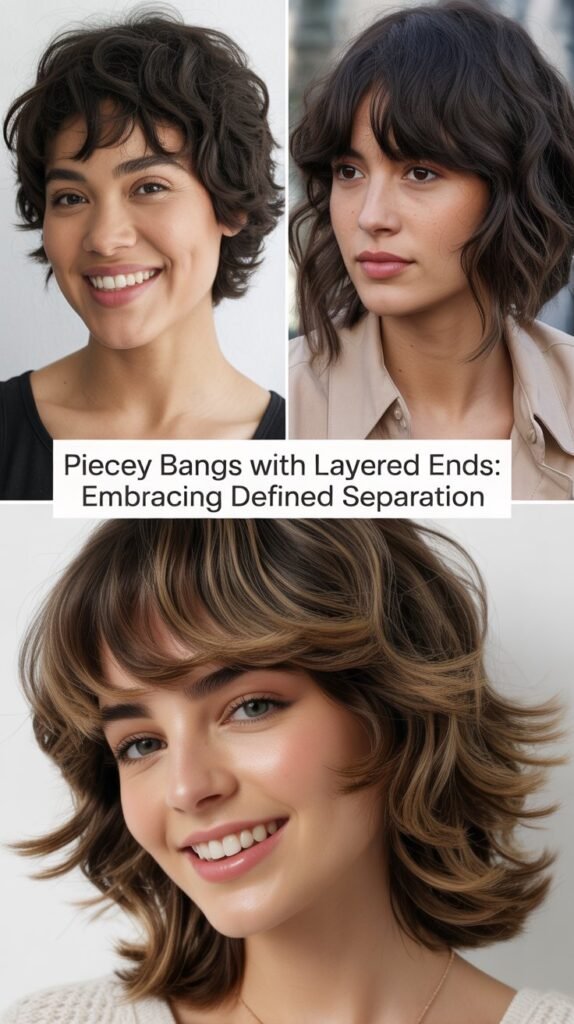
Piecey bangs feature pronounced separation between sections, creating a deliberately textured, editorial appearance that’s fashion-forward and contemporary.
Combined with layered ends throughout the hair, this style makes a definite aesthetic statement.
- Piecey bangs are created through aggressive texturizing techniques and styling products that encourage hair to clump into defined sections rather than blending together.
- The pronounced separation creates a modern, editorial quality that sets this style apart from softer, more blended wispy bang approaches.
- Layered ends throughout the hair echo the piecey quality of the bangs, creating consistency in texture and finish from face to ends.
- This combination requires styling products like texturizing paste, molding cream, or fiber products that create definition and hold individual pieces.
- Piecey styling works particularly well on straight hair because the natural texture allows for clean separation without frizziness obscuring the intentional gaps.
- The maintenance for piecey bangs is moderate—while the cut itself is forgiving, achieving the styled, separated look requires daily product application and intentional styling.
20. Soft, Blended Layers With Wispy Bangs: Classic Femininity
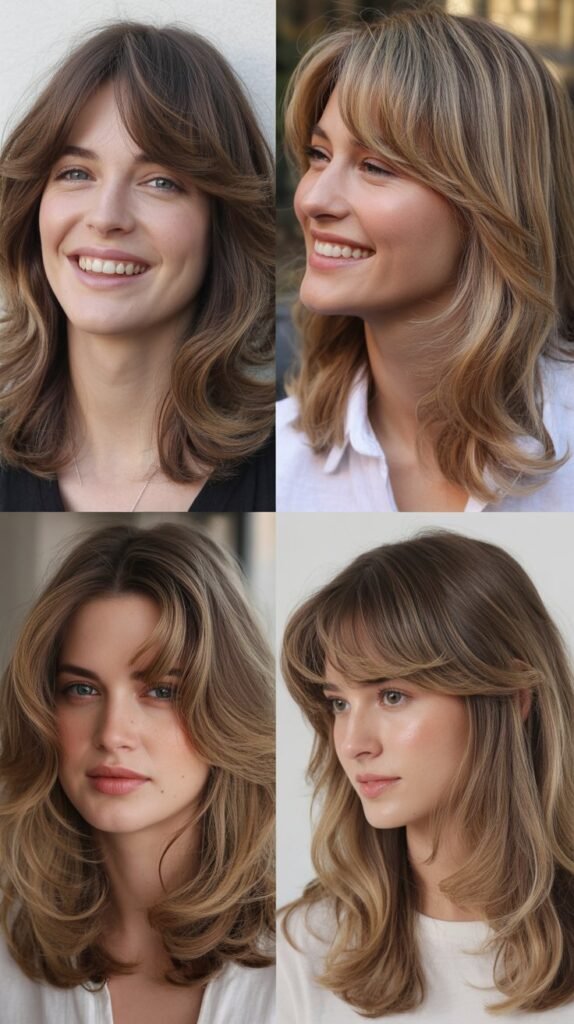
Soft, blended layers create seamless transitions between lengths, delivering classic feminine elegance that never goes out of style.
Combined with wispy bangs, this approach offers timeless beauty that flatters virtually everyone and suits any occasion.
- Blended layers are cut and finished to create imperceptible transitions between lengths, avoiding harsh lines or obvious separation between sections.
- This technique delivers movement and dimension while maintaining the smooth, polished appearance that defines classic hairstyling.
- Wispy bangs with soft, blended layers create approachable, universally flattering beauty that works across age ranges and personal styles.
- The combination is particularly suited to straight hair, as the natural texture allows for smooth blending without the interference of curl patterns.
- Styling blended layers with wispy bangs is straightforward—the cut does most of the work, requiring only basic blow-drying and smoothing for a finished appearance.
- This timeless approach ensures your hairstyle won’t appear dated in photos years from now, making it ideal for those who prefer classic rather than trendy aesthetics.
21. Color Techniques That Enhance Wispy Bangs and Layers
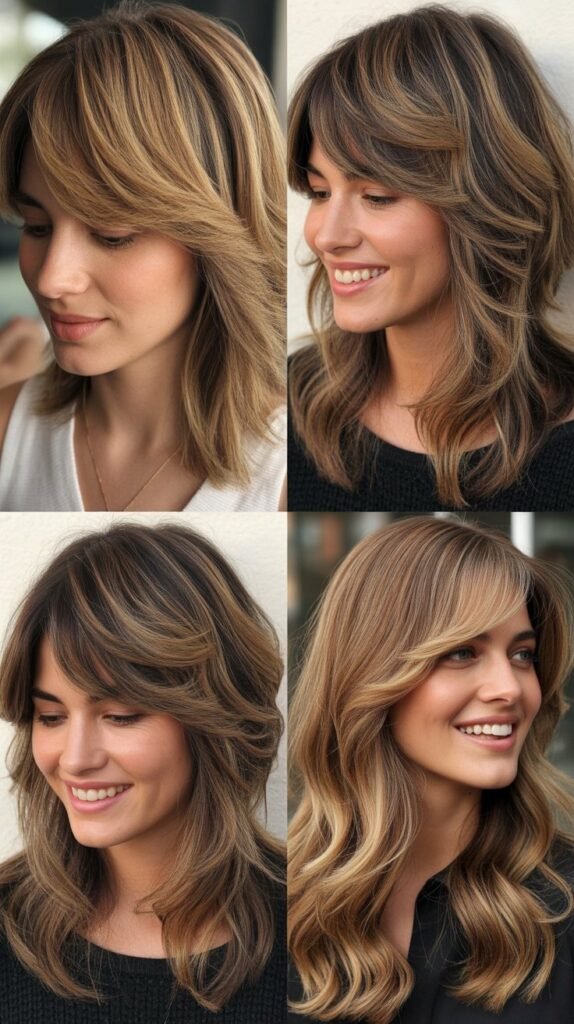
Strategic color placement amplifies the dimension created by wispy bangs and layers, using highlights, lowlights, and balayage techniques to emphasize movement and depth.
Color can make layers more visible and create interest even in minimal layer cuts.
| Color Technique | Best For | Effect on Layers | Maintenance Level |
|---|---|---|---|
| Face-Framing Highlights | All layer types | Emphasizes bangs and front layers | Moderate (8-12 weeks) |
| Balayage | Long to medium layers | Creates natural dimension throughout | Low (12-16 weeks) |
| Babylights | Fine, minimal layers | Adds subtle brightness and texture | Moderate (8-10 weeks) |
| Lowlights | Heavy wispy bangs | Adds depth and prevents flatness | Moderate (10-12 weeks) |
| Money Piece | Curtain or side-swept bangs | Dramatic face-framing brightness | High (6-8 weeks) |
| All-Over Color | Any layer type | Provides consistent base for layers | Moderate (6-8 weeks) |
- Face-framing highlights placed around wispy bangs and front layers create brightness that draws attention to the face and emphasizes the layered structure.
- Balayage creates natural-looking dimension by hand-painting color onto sections, making layers more visible through light and dark contrast.
- Babylights involve ultra-fine highlight placement that mimics natural sun-kissed hair, adding subtle dimension perfect for those who prefer understated color.
- Strategic lowlights add depth to straight hair with layers, preventing the flat, one-dimensional appearance that solid color can create.
- The “money piece” technique—bold highlights framing the face—works beautifully with curtain bangs and face-framing layers, creating dramatic yet wearable contrast.
- Dimensional coloring makes layers and wispy bangs more apparent even when hair is worn straight and unstyled, enhancing the cut’s inherent movement.
22. Styling Products for Maintaining Wispy Texture
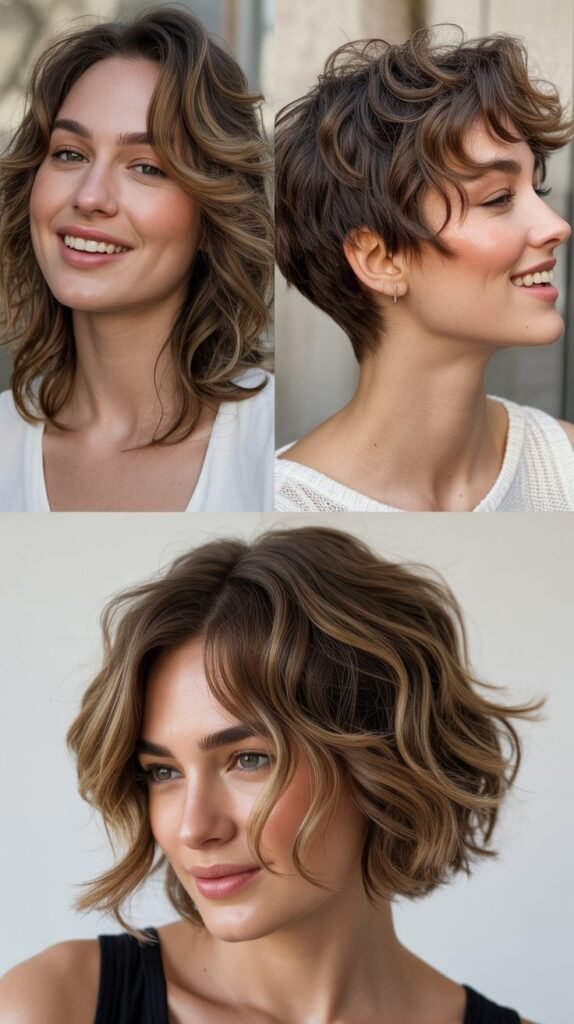
The right styling products make the difference between wispy bangs that maintain their feathered, piece-y texture and bangs that clump together or separate excessively.
Understanding which formulas enhance your specific hair type and desired finish ensures consistent, salon-quality results.
- Lightweight mousse applied to damp hair before blow-drying creates body and hold without the stiffness or crunchiness that can compromise wispy texture.
- Texturizing sprays add grip and separation to wispy bangs, emphasizing the piece-y quality without making hair feel sticky or product-heavy.
- Smoothing serums or lightweight oils prevent frizz on straight hair while maintaining movement, particularly important in humid climates where wispy bangs can puff up.
- Dry texture sprays refresh second-day styles and reactivate the wispy, piece-y quality of bangs without requiring a full restyle.
- Heat protectants are essential when styling wispy bangs with hot tools, preserving hair health while allowing you to achieve your desired shape and finish.
- Finishing sprays with flexible hold maintain your style without freezing it in place, allowing wispy bangs to move naturally while preventing complete loss of shape.
23. Blow-Drying Techniques for Wispy Bangs With Layers
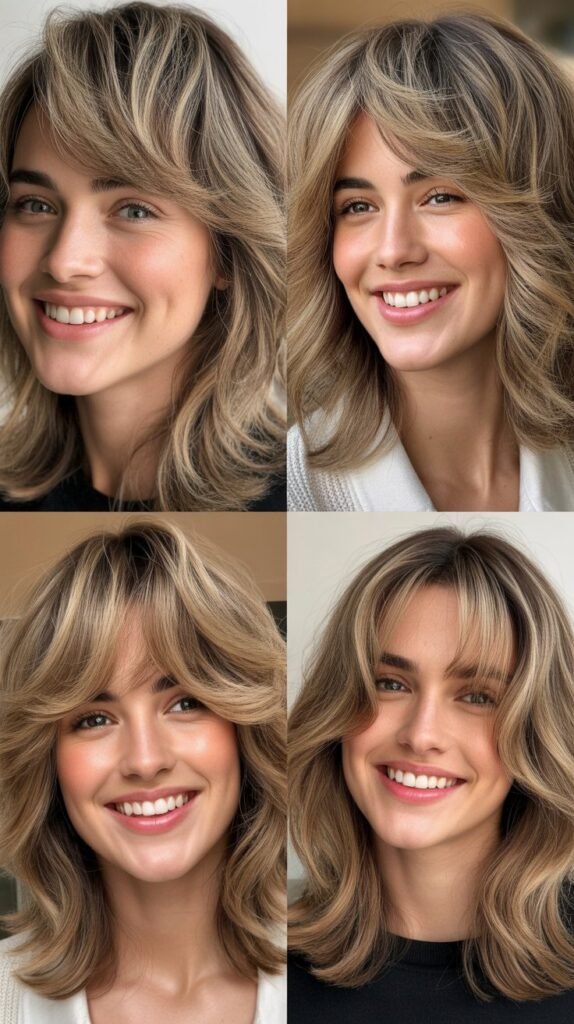
Proper blow-drying technique is crucial for achieving and maintaining the wispy, feathered quality of your bangs while enhancing the movement created by layers.
The right approach can make styling faster, easier, and deliver professional-looking results at home.
- Start blow-drying wispy bangs when they’re about 70% dry to prevent over-drying and maintain natural movement rather than creating stiffness.
- Use a small round brush (1-2 inches) for wispy bangs, rolling hair forward and down while directing airflow downward to smooth the cuticle and create the desired shape.
- For layers throughout straight hair, direct airflow down the hair shaft from root to tip, following the natural direction of the cut to enhance built-in movement.
- Overdirect hair at the crown by lifting sections upward and back during drying to create volume and prevent flatness at the root area.
- Point the blow dryer nozzle downward along the hair shaft to close the cuticle and create smooth, shiny results that showcase your layers.
- Finish wispy bangs by quickly running them over a cool shot setting to set the style and add longevity to your blow-out.
24. Heat Styling Tools: Which Ones Work Best
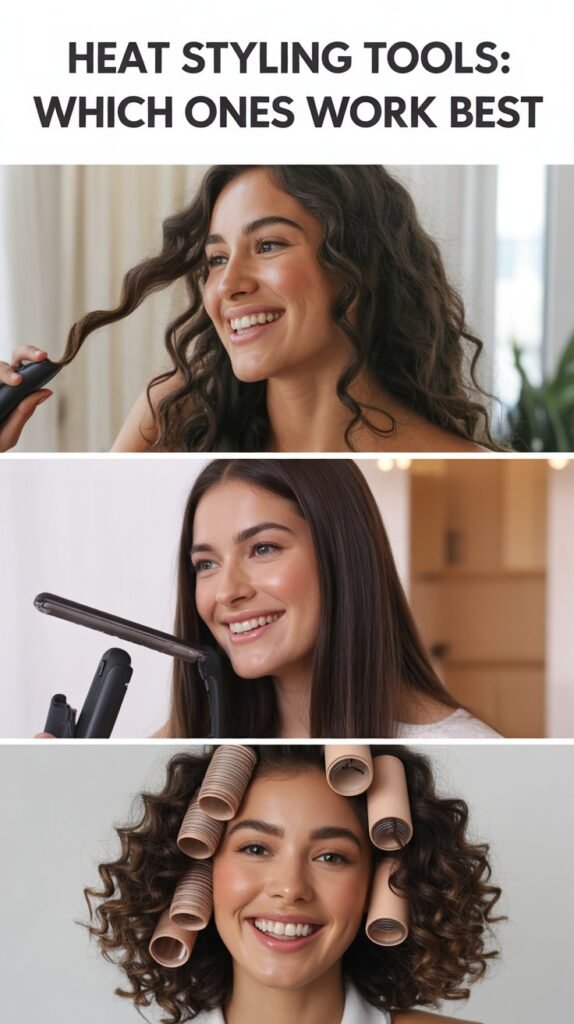
Different heat styling tools create different effects on wispy bangs and layers, and understanding which tools deliver your desired result prevents frustration and heat damage.
The right tool makes styling faster and more effective while minimizing potential harm to your hair.
- Round brushes in various sizes (small for bangs, medium for face-framing layers, large for length) create smooth, polished results with natural-looking curve and movement.
- Flat irons smooth straight hair beautifully and can add subtle bends in wispy bangs and layers when used with proper technique, creating movement without obvious curls.
- Curling wands or irons add texture to layered ends and can create soft bends in wispy bangs for a more undone, lived-in appearance.
- Blow dryer brushes combine drying and styling in one tool, making them efficient for straight hair with wispy bangs and layers, though they’re best for slight smoothing rather than dramatic styling.
- Small straightening brushes or mini flat irons work specifically well for wispy bangs, providing control and precision without the bulk of full-size tools.
- Always use heat styling tools on completely dry hair (except when blow-drying) and never exceed the necessary temperature—straight hair typically styles well at medium heat settings (300-350°F).
25. Air-Dry Styling for Low-Maintenance Results
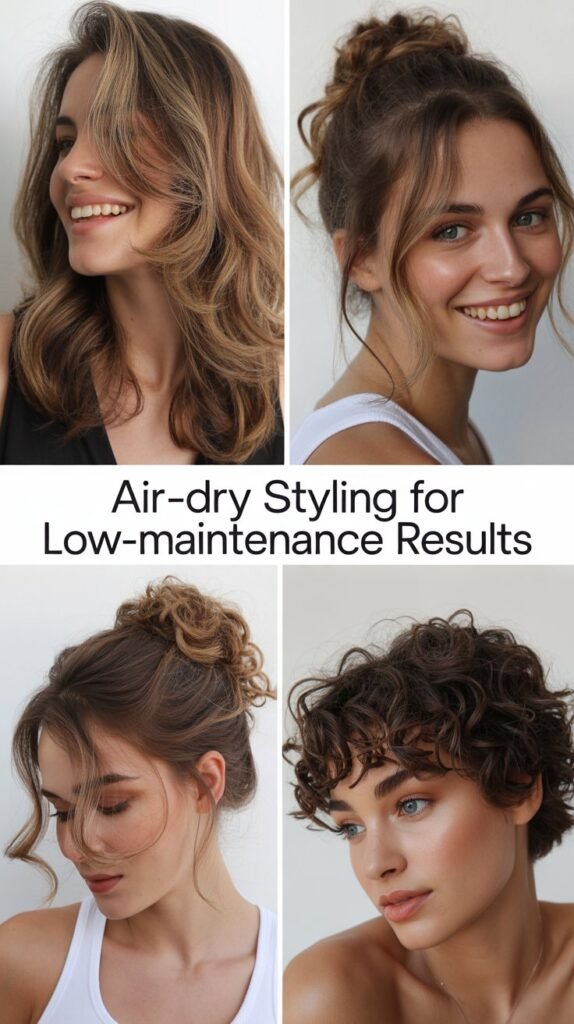
Air-drying straight hair with wispy bangs and layers can deliver beautiful, effortless results when done correctly, saving time and reducing heat damage.
The key is using the right products and techniques to enhance your natural texture rather than fighting against it.
- Apply leave-in treatments or lightweight styling products to damp hair after washing to provide structure and definition as hair air-dries.
- Gently finger-comb or brush wispy bangs into position while damp, allowing them to dry in the direction you want them to fall for minimal styling effort.
- Twist or scrunch layers slightly while damp if you want subtle texture and movement rather than completely straight, flat results.
- Clip the crown section up while hair air-dries to create lift at the roots and prevent the flat, plastered appearance that can occur when heavy wet hair dries against the scalp.
- For wispy bangs specifically, periodically check on them as they dry and reshape if needed, as they’ll set in whatever position they dry in.
- Consider using a microfiber towel or t-shirt to remove excess moisture before air-drying to speed up the process and reduce frizz on straight hair.
26. Maintenance Schedule: Keeping Your Cut Fresh
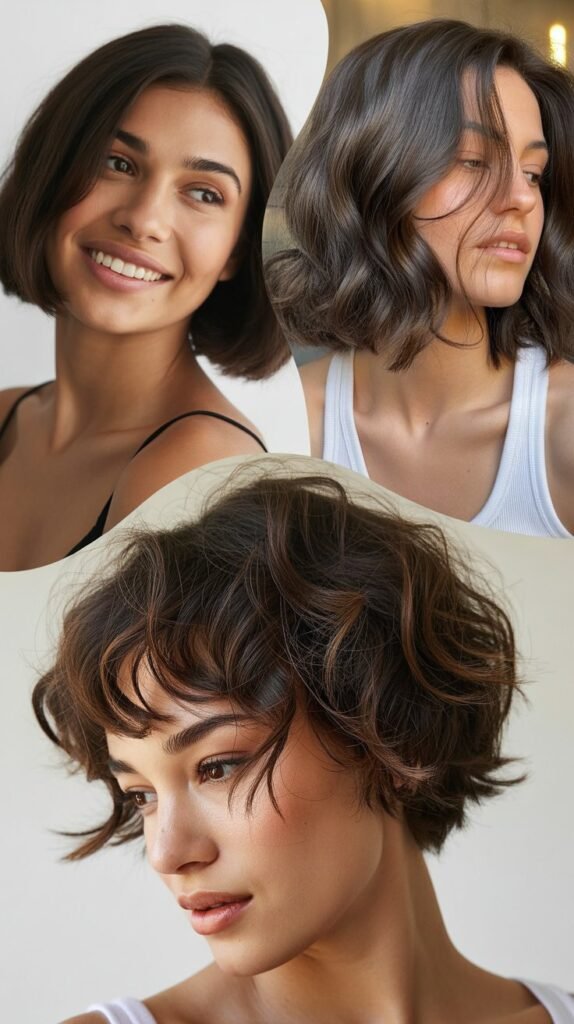
Regular maintenance is essential for preserving the shape, proportion, and overall appearance of wispy bangs with layers, preventing the overgrown, shapeless look that can develop when cuts go too long between trims.
Understanding the ideal maintenance schedule helps you plan and budget accordingly.
| Hair Element | Maintenance Frequency | Why This Timing |
|---|---|---|
| Wispy Bangs | 3-4 weeks | Bangs grow fastest and lose shape quickly |
| Face-Framing Layers | 6-8 weeks | Maintain proportion with bangs and overall style |
| Overall Layer Shape | 8-12 weeks | Preserve movement and prevent bulk buildup |
| Textured Ends | 10-14 weeks | Texturized ends are forgiving; can go longer |
| Heavy Wispy Bangs | 2-3 weeks | More hair means more frequent shaping needed |
| Color Touch-Ups | 6-12 weeks | Varies by technique; balayage lasts longest |
- Wispy bangs require the most frequent maintenance because even a quarter-inch of growth can significantly alter their shape and the way they frame your face.
- Between professional cuts, you can carefully point-cut your own bangs to extend time between appointments, though this requires confidence and proper shears.
- Face-framing layers that connect to your wispy bangs need regular refreshing to maintain the seamless integration that makes the style work.
- Overall layer shape can go slightly longer between cuts, especially if you have longer layers rather than short, choppy ones that show growth more obviously.
- Textured, wispy ends are more forgiving of growth than blunt cuts, as slight length increase doesn’t dramatically compromise the style’s appearance.
- If you have color that enhances your layers, factor color maintenance into your schedule, potentially alternating between bang trims and full cuts with color services.
27. DIY Bang Trimming: Emergency Maintenance Between Salon Visits
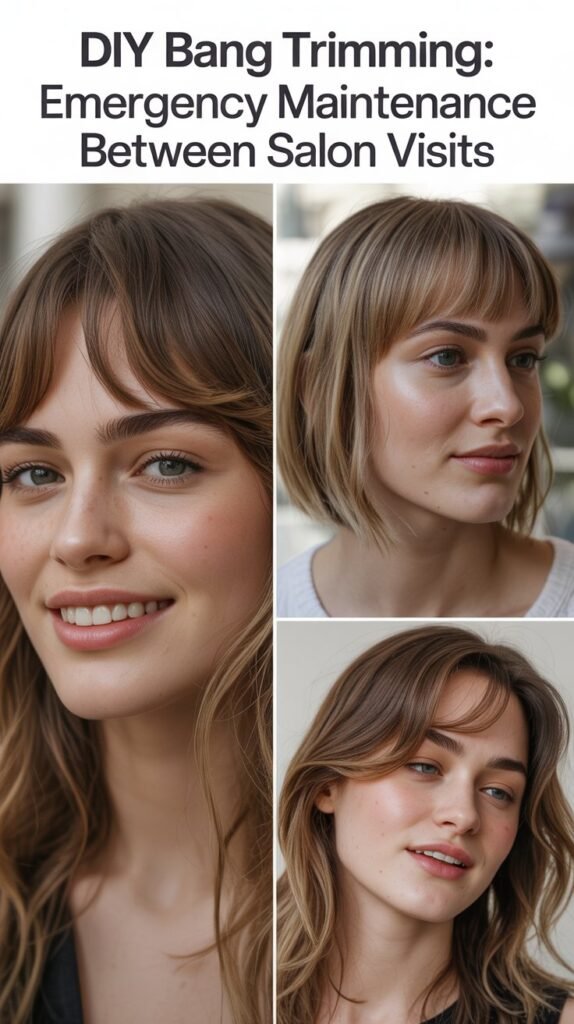
Learning to do minor wispy bang maintenance at home can extend time between professional appointments and save money, though it’s crucial to understand the limitations and risks of DIY trimming.
Conservative, careful trims are always preferable to ambitious cuts that could require professional correction.
- Invest in proper hairstyling shears rather than regular scissors, as sharp, professional scissors create clean cuts while dull scissors create damaged, split ends.
- Always trim wispy bangs when they’re completely dry, as wet hair appears longer and will shrink as it dries, often resulting in accidentally cutting bangs too short.
- Use the point-cutting technique—holding scissors vertically and cutting into the ends at an angle—to maintain the wispy, textured quality rather than creating blunt lines.
- Work with small sections and take off tiny amounts at a time, remembering that you can always cut more but cannot put hair back.
- Only trim the very ends of your wispy bangs (no more than 1/4 inch) and leave face-framing layers to professionals, as cutting layers requires understanding of angles and technique.
- If you make a mistake, resist the urge to keep cutting to “fix” it—instead, contact your stylist for an appointment to correct the issue professionally.
28. Dealing With Cowlicks: Challenges and Solutions for Wispy Bangs
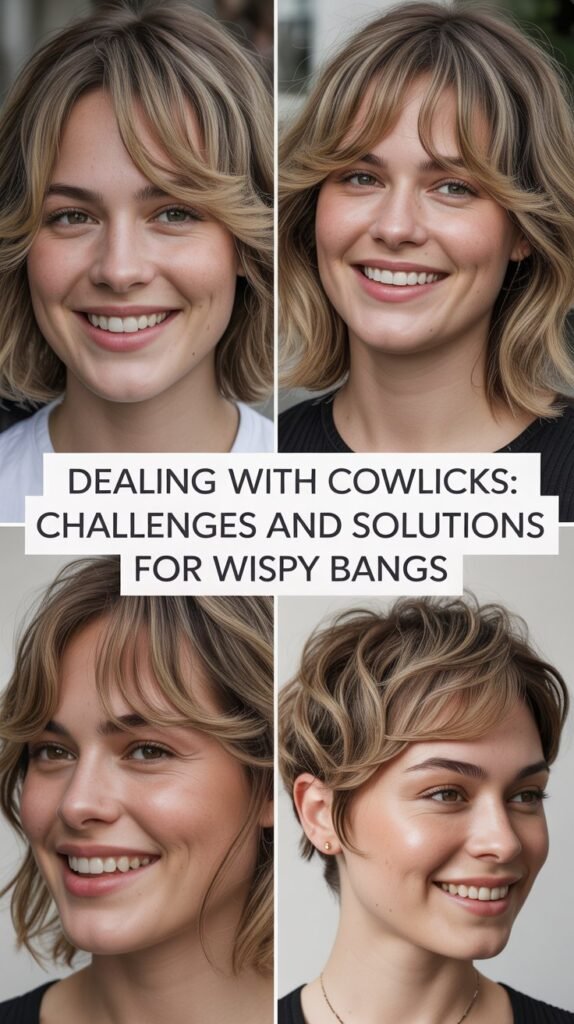
Cowlicks—sections where hair grows in a different direction than surrounding hair—can present challenges when trying to achieve smooth, cooperative wispy bangs.
However, with the right cutting and styling approaches, cowlicks can be managed and even incorporated into your style.
- Skilled stylists cut wispy bangs with cowlicks in mind, often slightly longer in cowlick areas to account for the way these sections lift or push hair in unexpected directions.
- Blow-drying wispy bangs in the opposite direction of the cowlick pattern while hair is very wet can help train hair to lay the way you want it to.
- Using slightly more styling product (mousse or light gel) in cowlick areas when hair is damp provides extra hold to keep rebellious sections in place as they dry.
- Consider curtain bangs or side-swept styles rather than straight-across bangs if you have a strong cowlick at the center of your forehead, as these styles work with rather than against the growth pattern.
- Flat irons or straightening brushes can smooth stubborn cowlick areas in wispy bangs, though this requires daily styling and heat protectant for hair health.
- In some cases, slightly heavier or longer wispy bangs have enough weight to overcome cowlick patterns that might disrupt lighter, shorter bangs.
29. Humidity Management: Keeping Wispy Bangs Fresh in Challenging Weather
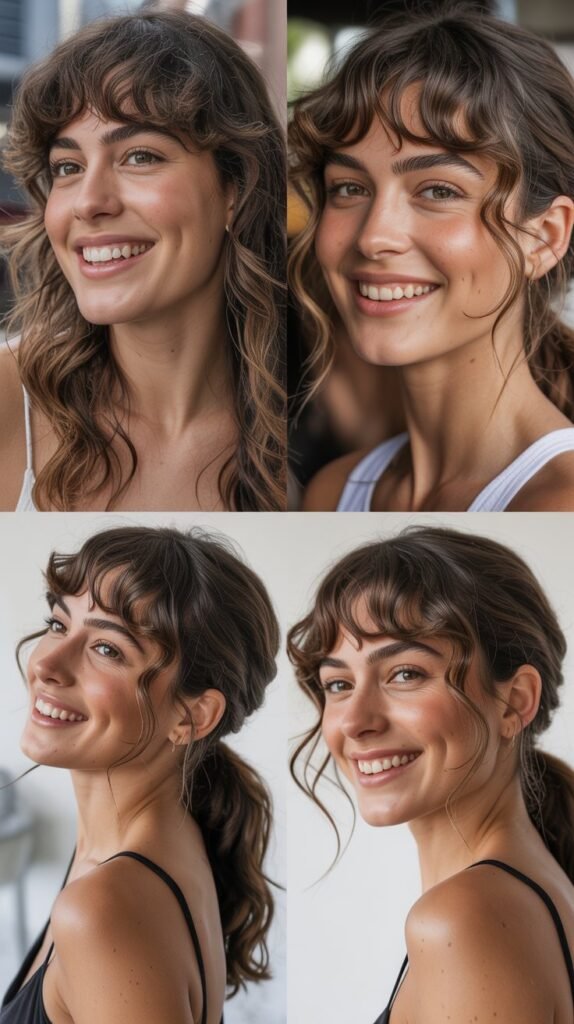
Humidity challenges wispy bangs by causing frizz, excessive separation, or causing straight hair to wave or puff unexpectedly, compromising the smooth, feathered appearance that defines the style.
Strategic products and techniques help maintain your look regardless of weather conditions.
- Anti-humidity or anti-frizz serums applied to wispy bangs before styling create a protective barrier that shields hair from moisture in the air.
- Lightweight oils smoothed over the surface of dry bangs and layers seal the cuticle and prevent humidity from penetrating the hair shaft and causing frizz.
- Avoid over-washing wispy bangs, as natural oils help protect against humidity while frequent washing strips these protective oils and makes hair more vulnerable.
- Finishing sprays with humidity resistance help set your style and create an additional protective layer, though avoid heavy applications that eliminate movement.
- If wispy bangs become puffy or frizzy throughout the day, a small amount of smoothing cream rubbed between palms and lightly pressed onto bangs can refresh the style.
- In extremely humid climates, consider slightly longer wispy bangs with more weight, as they’re less likely to react dramatically to atmospheric moisture than very short, sparse bangs.
30. Transitioning Seasons: Adjusting Your Style Throughout the Year
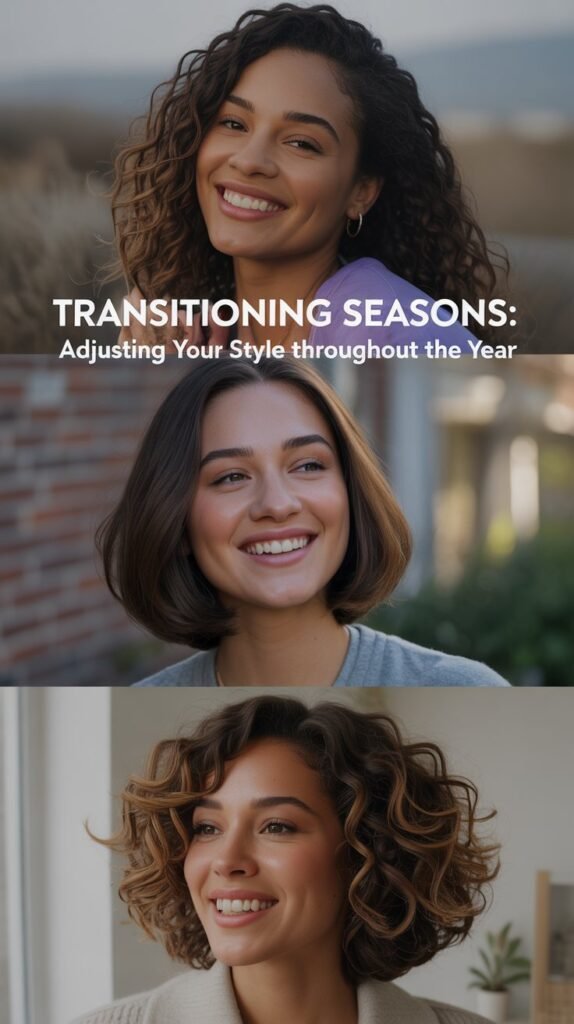
Different seasons present different challenges and opportunities for wispy bangs and layers, from winter dryness to summer humidity to fall static.
Adjusting your products, styling techniques, and even cut slightly with the seasons helps maintain optimal results year-round.
- Winter dryness requires richer conditioning treatments and moisturizing styling products to prevent static, flyaways, and brittle texture in wispy bangs.
- Summer humidity calls for anti-frizz products, lightweight hold, and potentially slightly different styling techniques to maintain the wispy texture despite atmospheric moisture.
- Fall often brings static electricity issues that can make wispy bangs stand out awkwardly; leave-in conditioners and anti-static products become essential.
- Spring’s variable weather requires versatile styling approaches and products that address both humidity and dryness depending on daily conditions.
- Consider slightly different bang lengths or layer placements seasonally—shorter, lighter layers in summer to prevent excessive volume in humidity, slightly longer in winter when static is concerning.
- Year-round, adjust your washing frequency seasonally, as you may need more frequent washing in sweaty summer months and can often extend time between washes in winter.
31. Working With Different Hair Densities
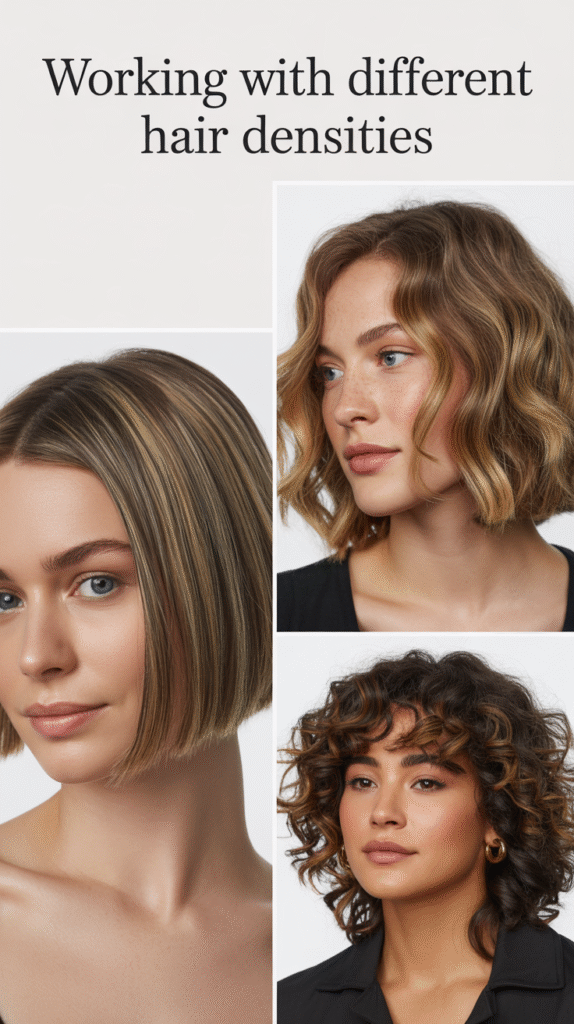
Hair density—the amount of hair per square inch on your scalp—significantly impacts how wispy bangs and layers should be cut and styled.
Understanding your density ensures you choose approaches that work with rather than against your natural hair characteristics.
- Fine, low-density hair benefits from minimal layering to preserve the appearance of fullness, with wispy bangs cut to avoid taking too much hair from the overall density.
- Medium-density straight hair is most versatile, working well with nearly all layering and wispy bang approaches without special considerations.
- Thick, high-density hair actually requires more aggressive layering to remove bulk and weight that can overwhelm wispy bangs and create a heavy appearance.
- Wispy bangs on low-density hair should be sparse and sheer to avoid making the remaining hair appear too thin, while high-density hair can support heavier bangs.
- Layer placement varies by density—high-density hair benefits from internal layers that remove weight without creating visible separation, while low-density hair needs carefully placed external layers for maximum impact.
- Texturizing techniques used to create wispy ends must be adjusted for density; over-texturizing fine hair creates stringy ends while under-texturizing thick hair leaves excessive weight.
32. Working With Different Hair Thickness (Strand Diameter)
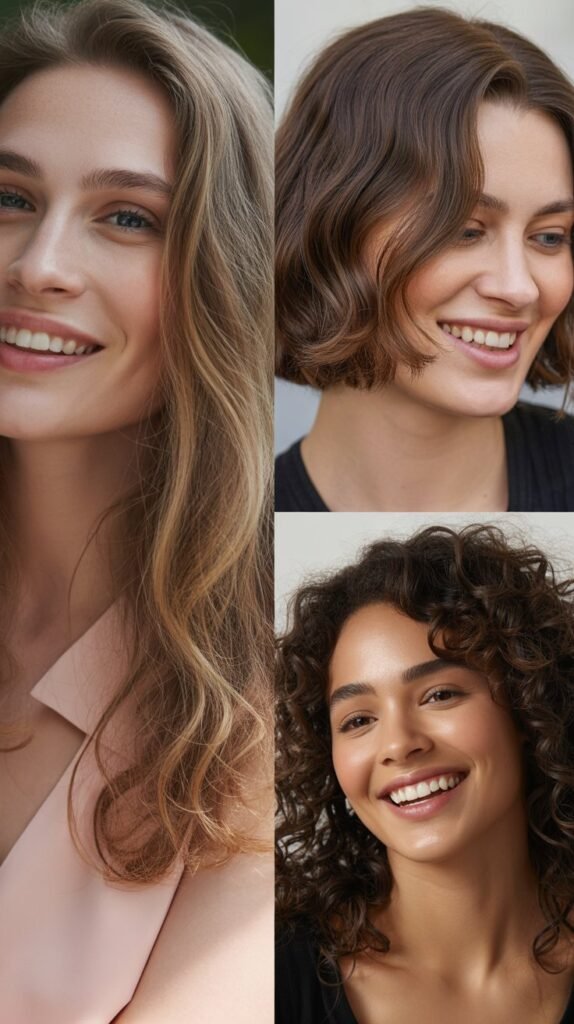
Hair thickness refers to the diameter of individual strands and differs from density (how many strands you have). Fine, medium, and coarse hair textures all require different approaches to wispy bangs and layering for optimal results.
- Fine-textured hair (thin individual strands) holds style well but lacks body, benefiting from wispy bangs that don’t require much hair and layers that create the illusion of volume.
- Medium-textured hair is most forgiving, working with virtually all cutting and styling techniques without requiring significant adjustments.
- Coarse-textured hair (thick individual strands) holds shape stubbornly and may resist wispy styling, often requiring more aggressive texturizing to create the feathered effect.
- Wispy bangs on fine hair should be cut with conservative thinning to preserve whatever natural body exists, while coarse hair needs significant texturizing to prevent blunt, heavy bangs.
- Fine hair typically styles quickly with heat tools as individual strands heat and cool rapidly, while coarse hair requires more time and higher temperatures.
- Products must be selected based on strand thickness—fine hair is easily weighed down by heavy products while coarse hair may need richer formulations for manageability.
33. Addressing Hair Growth Patterns
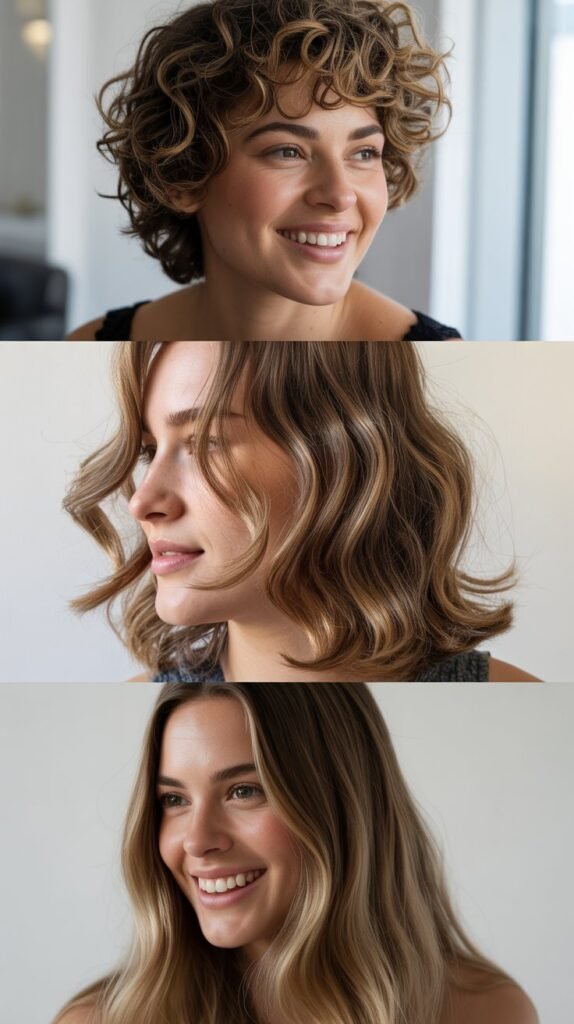
Natural hair growth patterns—the direction hair naturally wants to grow—significantly impact how wispy bangs and layers fall and how much daily styling effort is required.
Working with rather than against these patterns produces better, longer-lasting results.
- Forward growth patterns at the hairline make wispy bangs easier to style as hair naturally wants to fall toward the face, requiring minimal encouragement during styling.
- Backward growth patterns require more effort to train wispy bangs forward, often needing strategic cutting that accounts for hair wanting to lift away from the forehead.
- Side-sweeping growth patterns work beautifully with curtain bangs or side-swept styles, as you’re working with the natural direction rather than fighting it.
- Crown whorls that spiral strongly in one direction should be considered when placing layers, as hair may insist on moving in specific directions regardless of cutting.
- Double crown whorls create unique challenges for layer placement and may require asymmetrical cutting to accommodate the opposing directional pulls.
- Skilled stylists examine growth patterns before cutting wispy bangs and layers, making strategic decisions about length and placement based on how hair naturally behaves.
34. Celebrity Inspiration: Iconic Wispy Bangs and Layer Combinations
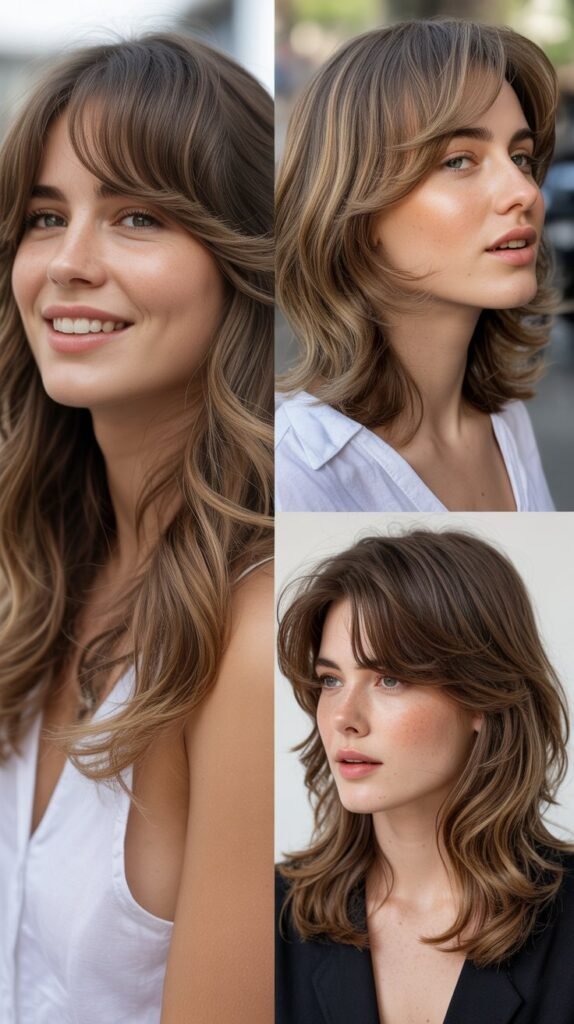
Celebrity hairstyles provide excellent visual references when communicating your desired look to your stylist, offering real-world examples of how different wispy bang and layer combinations appear on various face shapes and hair types.
- Curtain bangs with long layers, popularized by numerous celebrities, create an effortlessly cool, 70s-inspired aesthetic that works across age ranges.
- Blunt bobs with wispy bangs deliver sophisticated, fashion-forward appeal that’s been embraced by style icons seeking polished yet modern looks.
- Long, heavily layered styles with wispy bangs create romantic, feminine appeal that photographs beautifully and works for both casual and formal settings.
- Side-swept wispy bangs with face-framing layers offer classic elegance that’s been a red carpet staple for decades because of its universally flattering nature.
- Choppy, textured styles with piecey wispy bangs appeal to those seeking edgier, fashion-forward aesthetics inspired by alternative and indie celebrity styles.
- When showing reference photos to your stylist, bring multiple examples showing your desired style from various angles and in different lighting to ensure clear communication.
35. Communicating With Your Stylist: Getting the Results You Want
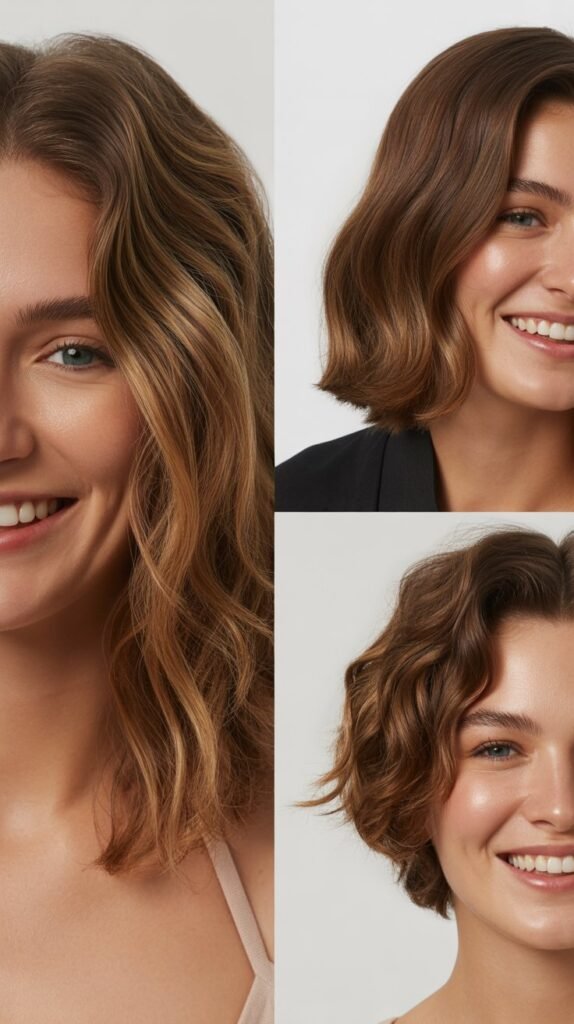
Clear communication with your hairstylist is essential for achieving your desired wispy bang and layer combination, preventing the disappointment and frustration that comes from miscommunication or unclear expectations.
- Bring multiple reference photos showing your desired style from different angles—front, side, and back views help your stylist understand the complete picture.
- Discuss your daily styling routine honestly, including how much time you’ll actually invest in styling, as this helps your stylist create a cut that works with your lifestyle.
- Explain your hair’s tendencies—what it does naturally that you love or hate—so your stylist can work with your hair’s characteristics rather than fighting them.
- Use descriptive language about the feeling you want rather than just technical terms: “soft and romantic,” “edgy and modern,” “professional but not severe.”
- Discuss maintenance expectations upfront, including how often you’re willing to return for bang trims and whether you prefer lower-maintenance or more precise styles.
- Don’t hesitate to ask questions during the consultation about technique, styling, and products—good stylists appreciate engaged clients who want to understand the process.
36. Growing Out Wispy Bangs: Strategies for the Transition
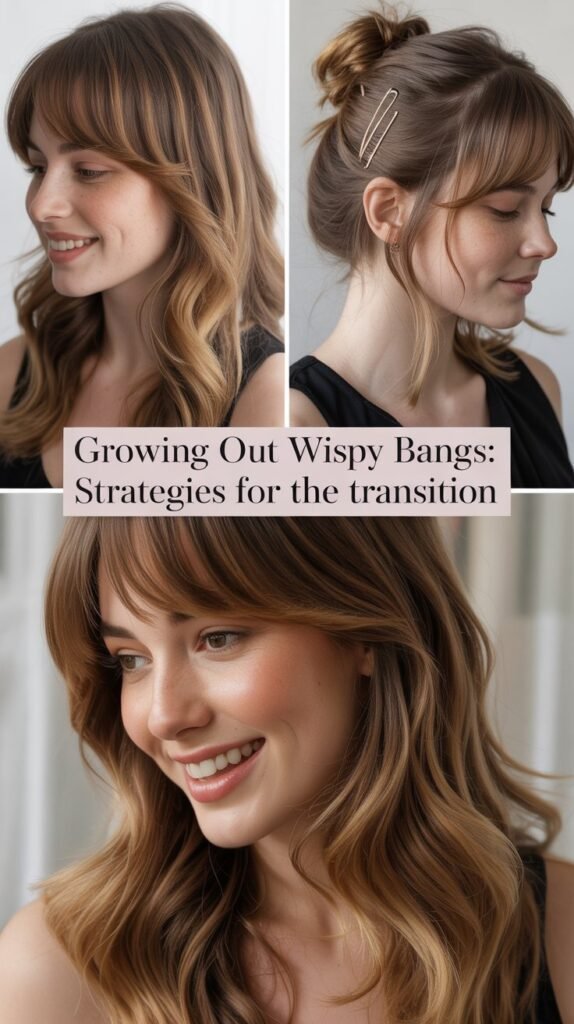
Eventually, you may decide to grow out your wispy bangs, and understanding strategies for managing the awkward in-between phase makes the transition less frustrating and ensures you still look polished throughout the process.
- Continue trimming wispy bangs slightly longer at each appointment rather than letting them grow completely unattended, creating a controlled transition to face-framing layers.
- Embrace side-swept styling during the grow-out phase, using the awkward bang length as intentional face-framing pieces rather than trying to force them into their original position.
- Experiment with hair accessories like headbands, clips, or scarves that keep growing bangs off your face while adding style interest during the transition.
- Ask your stylist to gradually blend growing bangs into face-framing layers, creating seamless integration rather than obvious “bangs” and “no-bangs” sections.
- Use bobby pins or small clips strategically placed to secure growing bangs during the most awkward phase, choosing decorative options that make the styling look intentional.
- Consider texture styling (waves or bends) during the grow-out phase, as texture helps disguise the awkward lengths that can be obvious in straight hair.
37. Combining Wispy Bangs With Extensions
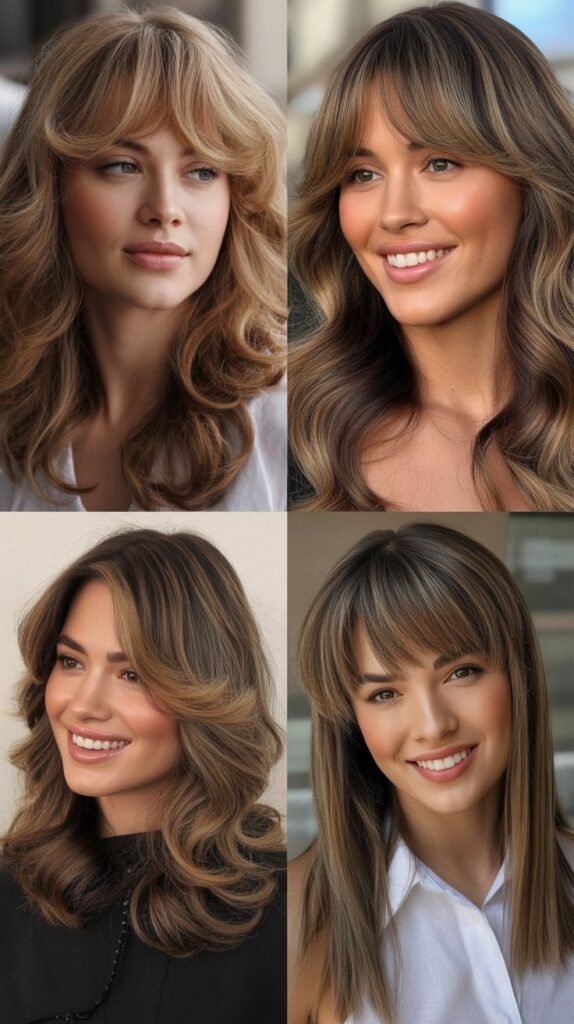
Hair extensions can add length, volume, or both to layered styles with wispy bangs, though careful selection and placement ensures extensions blend seamlessly rather than creating obvious contrast with your natural hair.
- Clip-in extensions work well with layered cuts as they can be placed strategically to add volume where needed without interfering with the precision of your cut.
- Permanent extensions (tape-ins, sew-ins, fusion) should be discussed with your stylist before getting wispy bangs and layers, as placement impacts how the cut will work.
- Extensions add volume and length but require your layers to be cut with their presence in mind, ensuring natural blending from your bio hair through the added hair.
- Wispy bangs remain your natural hair, so ensure extension color matches perfectly—even slight color differences are obvious when bangs contrast with length.
- Layered cuts with extensions require experienced stylists who understand how to blend natural and extension hair seamlessly, avoiding the line of demarcation that announces “these are extensions.”
- Consider that extensions add weight to your style, potentially requiring different layer placement or styling techniques than you’d use with your natural hair alone.
38. Wispy Bangs for Glasses Wearers
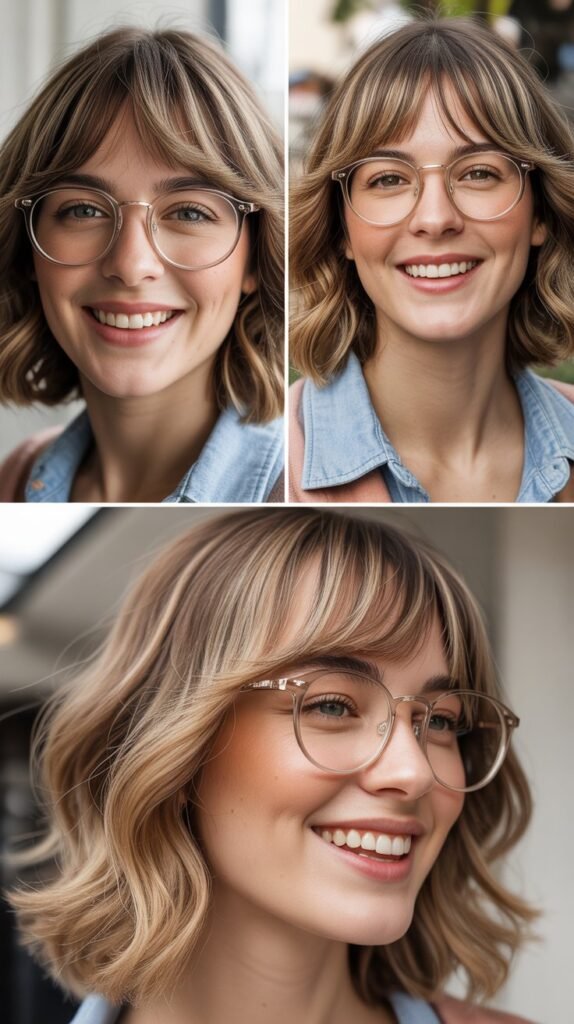
Glasses add another element to consider when designing wispy bangs and layers, as frames interact with your hairstyle and can either enhance or clash with your chosen cut depending on how thoughtfully the combination is planned.
- Wispy bangs work beautifully with glasses because their soft, piece-y texture prevents the harsh, severe appearance that blunt bangs can create when combined with frames.
- Consider your frame size when determining bang length—larger frames may pair better with longer wispy bangs that don’t compete visually with substantial eyewear.
- Side-swept wispy bangs often work better than straight-across styles for glasses wearers, as they don’t interfere with the top of frames or create awkward gaps.
- Ensure your stylist accounts for how glasses sit on your face during the consultation, as frames change the visual proportions and may impact ideal bang length.
- Lighter, more sparse wispy bangs often complement glasses better than heavy bangs, as frames already add visual weight to the face area.
- Face-framing layers that sit outside the frame area help balance glasses and prevent them from dominating your appearance, creating cohesion between eyewear and hairstyle.
39. Special Occasion Styling for Wispy Bangs and Layers
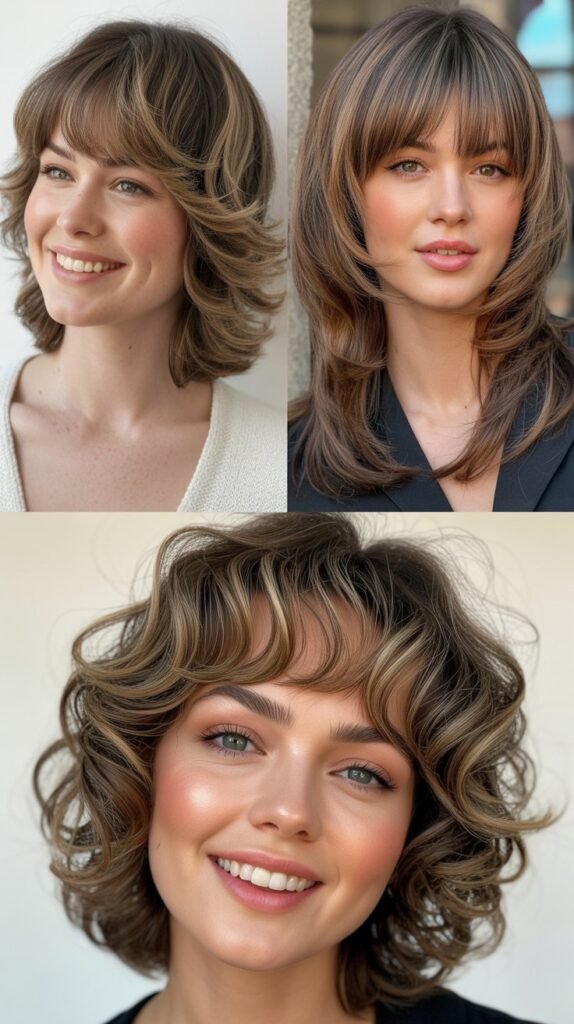
While wispy bangs and layers look beautiful in everyday styling, special occasions may call for elevated approaches that transform your cut into formal, glamorous, or creatively styled looks for weddings, parties, or professional events.
- Half-up styles showcase wispy bangs and face-framing layers beautifully while securing the rest of your hair for an elegant, polished appearance perfect for formal events.
- Soft waves or curls added to layers create romantic, dimensional texture while wispy bangs remain relatively straight for interesting contrast.
- Accessories like decorative pins, small clips, or delicate headbands can be incorporated into wispy bangs and layers for special events, adding sparkle or detail to your style.
- Sleek, straight styling with ultra-smooth wispy bangs and glossy layers creates sophisticated, modern elegance suitable for professional or black-tie occasions.
- Textured updos can incorporate wispy bangs left out to frame the face while layers add interesting texture and volume to the updo structure itself.
- Consider professional styling for truly important occasions, as experienced stylists can manipulate wispy bangs and layers in creative ways you might not achieve independently.
40. Budget-Friendly Maintenance: Maximizing Salon Visits
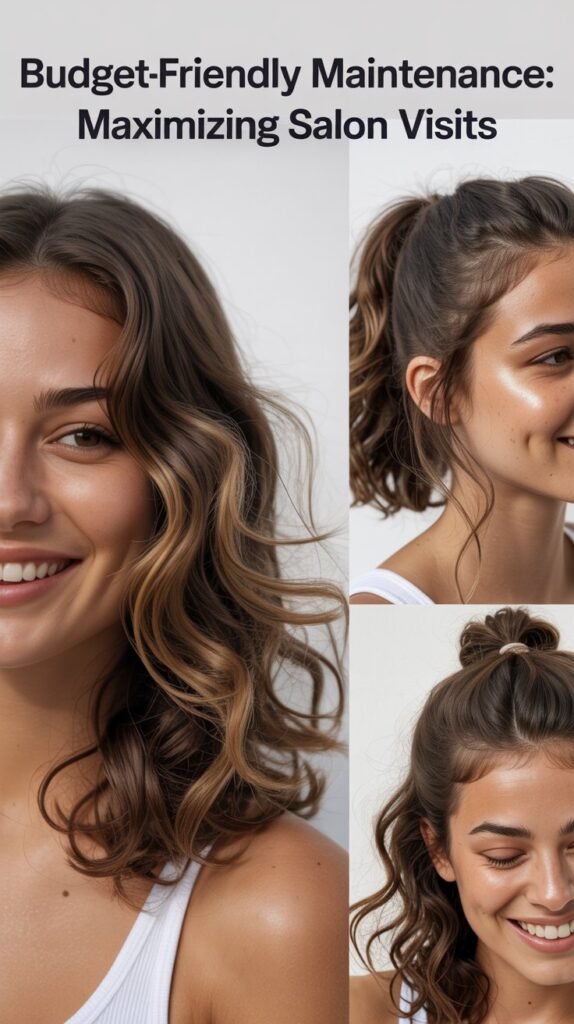
Maintaining wispy bangs and layers can become expensive with frequent salon visits, but strategic approaches help you look polished while managing costs and extending time between professional appointments.
- Schedule bang-only appointments between full cuts—many salons offer quick, inexpensive bang trims that refresh your fringe without the cost of a complete haircut.
- Learn conservative DIY bang trimming techniques to handle emergency maintenance when you can’t get to the salon, extending time between professional cuts.
- Invest in quality products appropriate for your hair type, as the right styling products help your cut look fresh longer and reduce the need for frequent restyling cuts.
- Consider alternating between full-service appointments with your regular stylist and more affordable options at training academies or chain salons for simple maintenance.
- Communicate openly with your stylist about budget constraints—they may suggest slightly different cutting techniques or maintenance schedules that work within your means.
- Protect your investment by following proper hair care routines at home, including appropriate washing frequency, heat protection, and gentle handling that prevents damage requiring corrective cuts.
41. Preventing and Repairing Damage in Layered Hair With Bangs
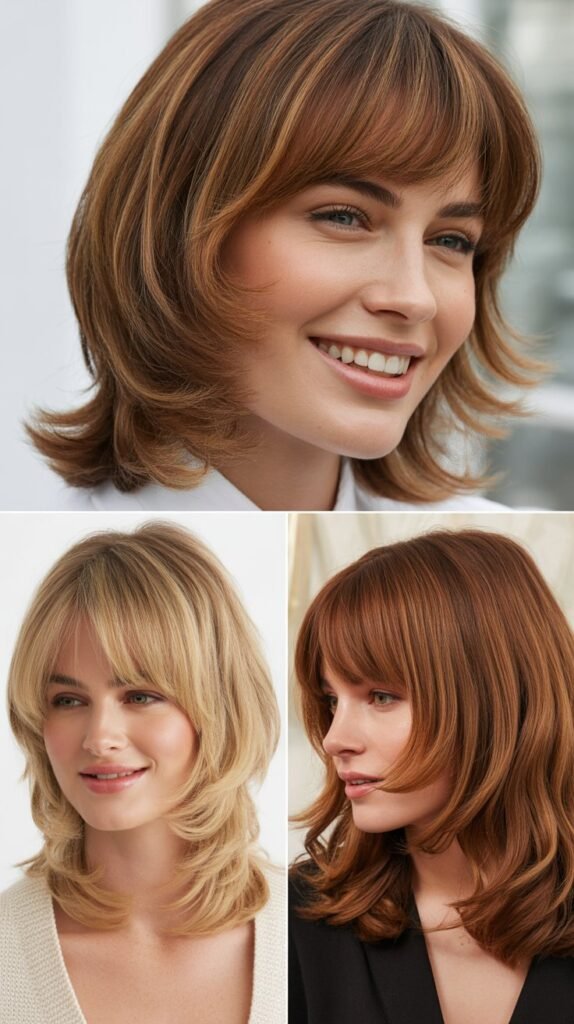
Wispy bangs and layered straight hair can be vulnerable to damage from frequent styling, heat tools, and environmental stressors, but preventive care and targeted treatments maintain healthy hair that holds its style beautifully.
- Heat protectant products are non-negotiable when using blow dryers, flat irons, or curling tools on wispy bangs and layers, creating a protective barrier against thermal damage.
- Regular deep conditioning treatments (weekly or bi-weekly) replenish moisture and proteins that styling and environmental exposure deplete from your hair.
- Trim wispy bangs and layer ends regularly to remove split ends before they travel up the hair shaft, maintaining the clean lines that make the style work.
- Avoid over-washing straight hair with layers and bangs, as excessive shampooing strips natural oils that protect hair and keep it healthy.
- Use silk or satin pillowcases to reduce friction while sleeping, preventing the breakage and damage that cotton pillowcases can cause, particularly to delicate wispy bangs.
- If damage occurs, communicate honestly with your stylist about treatments or temporary style adjustments (like slightly shorter layers that remove damaged ends) while hair recovers.
42. Nighttime Routines: Protecting Your Style While You Sleep
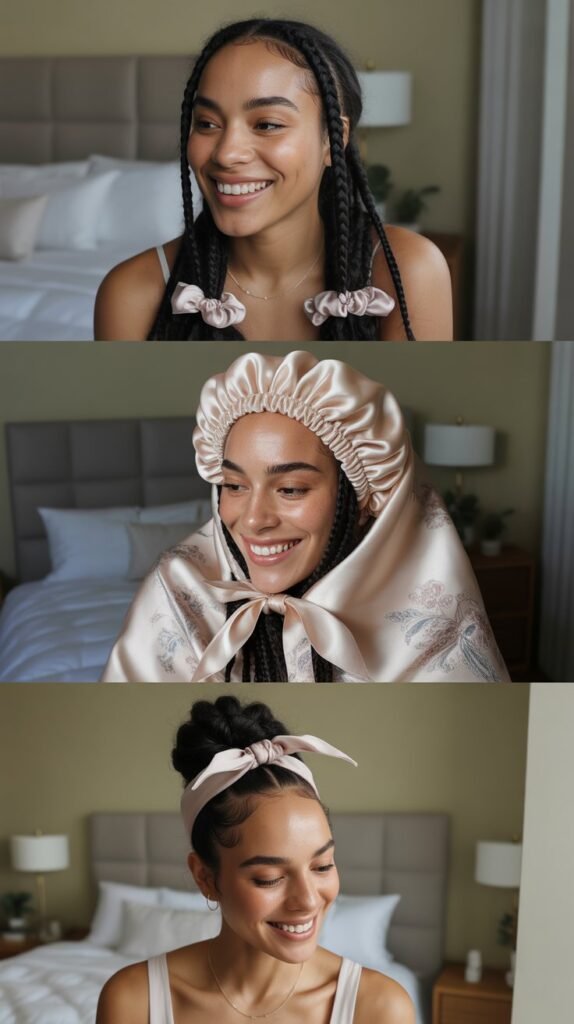
How you handle your wispy bangs and layers before bed impacts how they look when you wake up and how much restyling effort morning requires, making an effective nighttime routine essential for maintaining your style.
- Gently brush or comb your hair before bed to remove tangles and distribute natural oils from roots to ends, promoting hair health and easier morning styling.
- Consider loosely clipping wispy bangs to the side or securing them gently with a soft headband to maintain their shape and prevent them from becoming oily or flattened against your forehead.
- Silk or satin pillowcases reduce friction that creates frizz, tangles, and misshapen wispy bangs, while cotton creates resistance that disrupts your style.
- For those with longer layers, loosely braiding or securing hair in a low, gentle ponytail prevents excessive tangling without creating creases or kinks.
- Avoid going to bed with damp or wet hair, as this creates the perfect conditions for frizz, unusual bends, and flattened wispy bangs that are difficult to restyle.
- Apply overnight treatments or leave-in products before bed when appropriate, allowing them to work while you sleep for healthier, more manageable hair in the morning.
43. Second-Day Styling: Refreshing Your Look Without Washing
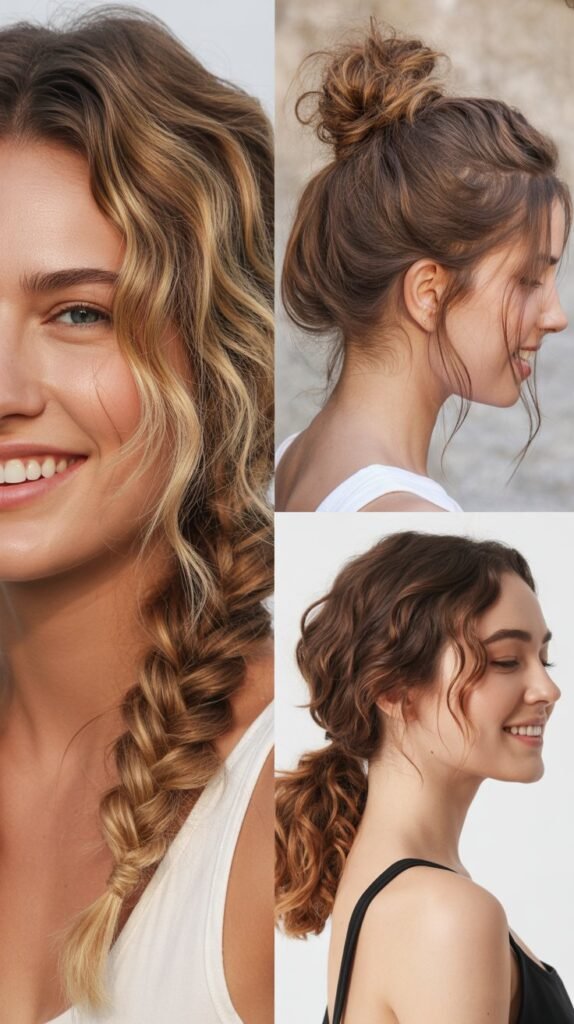
Learning to refresh wispy bangs and layers on non-wash days extends time between shampoos, saves styling time, and actually benefits hair health by preserving natural oils and reducing styling stress.
- Dry shampoo applied to roots (avoiding wispy bangs unless absolutely necessary) absorbs oil and adds volume, making hair appear freshly washed without actual washing.
- A quick blast of heat from your blow dryer directed at wispy bangs can reshape them and remove any overnight flattening or weird bends.
- Lightly misting wispy bangs with water and restyling just that section is faster than washing and styling your entire head while still achieving fresh-looking bangs.
- Texture spray or dry texture products refresh layers and add body to second-day hair, reviving movement and preventing the limp appearance that can develop.
- Strategic accessory use—headbands, clips, or styled back sections—can disguise slightly oily roots or less-than-perfect layers on days you’re extending between washes.
- Understand your hair’s oil production patterns—wispy bangs may need refreshing before the rest of your hair does since they’re against your forehead where skin produces oil.
44. Travel Considerations: Maintaining Your Style On the Go
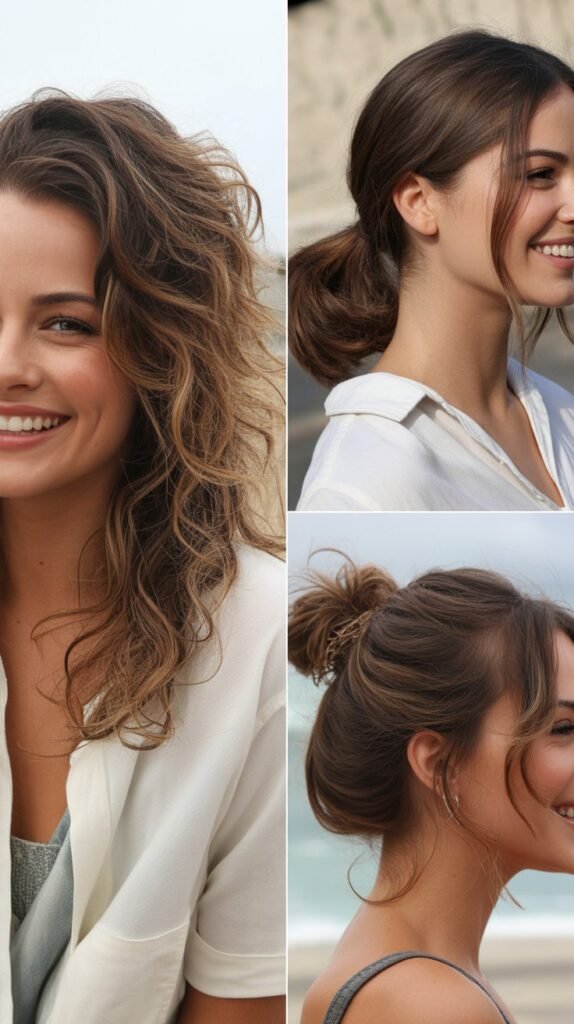
Traveling presents unique challenges for maintaining wispy bangs and layers, from limited access to styling tools to environmental changes, but smart planning ensures you look polished even away from home.
- Invest in travel-sized styling tools (mini flat irons, compact blow dryers, or blow dryer brushes) that pack efficiently without sacrificing the ability to style wispy bangs and layers properly.
- Bring multi-purpose products that serve several functions—like a product that works as both heat protectant and styling cream—to minimize luggage space.
- Pack products in TSA-approved containers or purchase travel sizes of your essential styling products to avoid issues at airport security.
- Research the climate of your destination and adjust product selection accordingly—bring anti-humidity products for tropical locations or extra moisturizing products for dry climates.
- Consider protective hairstyles for long travel days (like loose braids or low buns) that prevent excessive tangling or damage while still looking intentional.
- If traveling to locations with different water quality, be aware that hard water or high mineral content can affect how your hair behaves and may require adjusted product usage.
45. Color Maintenance for Enhanced Dimension
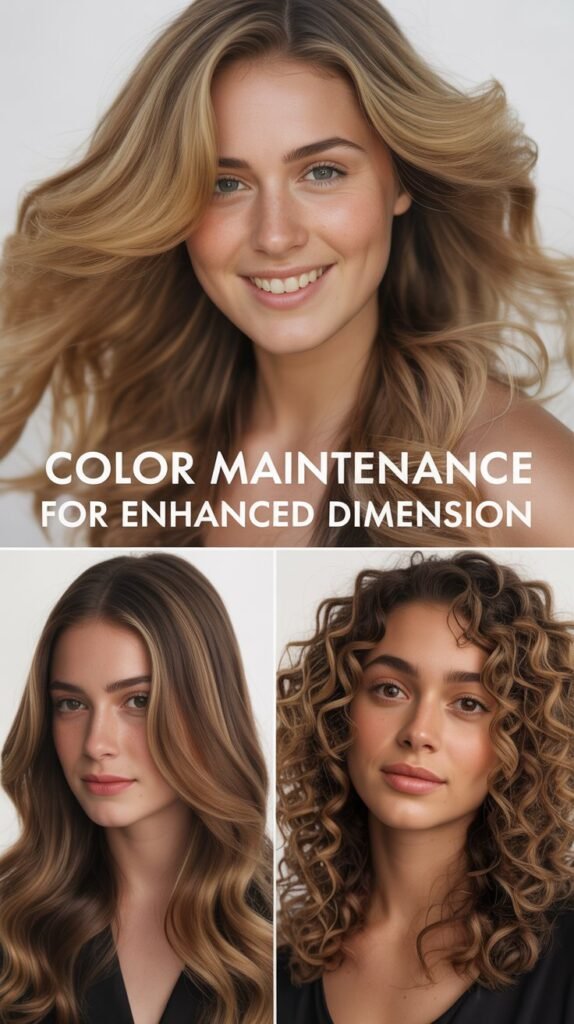
If you’ve added color to enhance your wispy bangs and layers, proper maintenance preserves the vibrancy and dimension that makes your cut look its best, preventing fading or color changes that diminish the style’s impact.
- Color-safe shampoos and conditioners contain gentler cleansers that clean hair without stripping color molecules, significantly extending the life of your color between salon visits.
- Purple or blue-toned shampoos neutralize unwanted warmth in highlighted or lightened hair, keeping dimensional color looking fresh rather than brassy.
- Limit washing frequency to preserve color—every wash removes some color molecules, so extending time between shampoos keeps color vibrant longer.
- UV protection products shield colored hair from sun damage that causes fading, particularly important for face-framing highlights that receive direct sun exposure.
- Deep conditioning treatments formulated for colored hair replenish moisture without depositing unwanted tones or accelerating color fade.
- Schedule color touch-ups based on your color type—balayage can go 12-16 weeks while root touch-ups for all-over color typically need 6-8 weeks for best results.
46. Workplace Appropriateness: Professional Styling Options
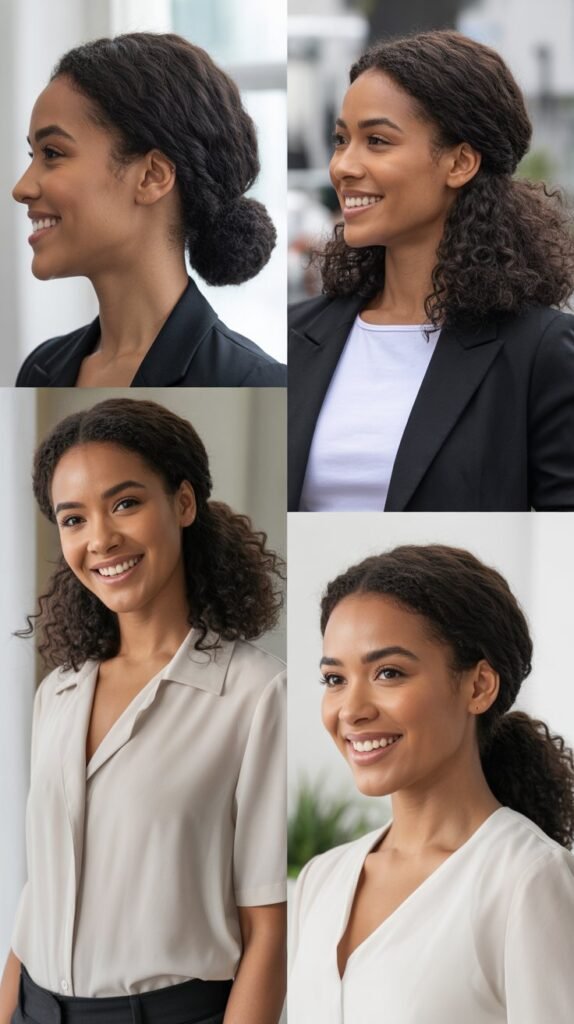
Wispy bangs and layers work beautifully in professional settings when styled appropriately, offering polished, sophisticated options that meet workplace expectations while still expressing personal style.
- Sleek, straight styling with smooth wispy bangs and polished layers creates classic professional appearance suitable for conservative work environments.
- Side-swept wispy bangs appear particularly mature and professional, avoiding the youthful or trendy associations that straight-across bangs can sometimes carry.
- Half-up styles or low ponytails with wispy bangs left out frame the face professionally while keeping hair controlled and away from the face during work.
- Minimal product use prevents the over-styled or “done” appearance that can seem inappropriate in professional settings, instead creating natural-looking polish.
- For video calls and virtual meetings, ensure wispy bangs are well-maintained and styled, as bangs are particularly noticeable on camera and can appear messy if neglected.
- Understand your workplace culture—creative industries often embrace more textured, piece-y styling while traditional corporate environments may expect smoother, more conservative approaches.
47. Age Appropriateness: Wispy Bangs and Layers Across Life Stages
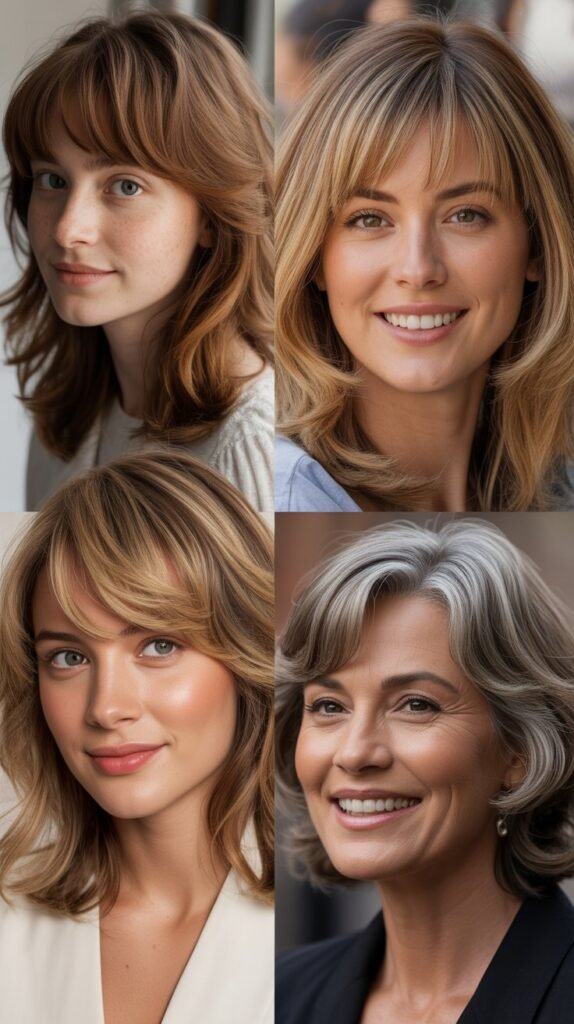
Wispy bangs and layers flatter all ages when cut and styled appropriately for your life stage, offering youthful freshness for younger clients and sophisticated elegance for mature individuals.
- Younger clients (teens and twenties) can embrace shorter, choppier layers and more experimental wispy bang styles without concern about appearing unprofessional or inappropriate.
- Thirties and forties benefit from face-framing layers that soften early signs of aging while wispy bangs distract from forehead lines or create youthful freshness.
- Mature clients (fifties and beyond) look stunning with slightly longer, softer wispy bangs that frame the face gently without overwhelming features or appearing too trendy.
- Layering placement becomes more important with age—higher layers around the face can lift features that may be starting to show gravity’s effects.
- Wispy bangs actually work wonderfully for mature hair that’s becoming finer or thinner, as the soft, sparse quality disguises density changes while creating youthful framing.
- Adapt styling techniques to your age and lifestyle—busy professionals may prefer lower-maintenance approaches while those with more time can embrace styling that requires more effort.
48. Seasonal Hair Care Adjustments
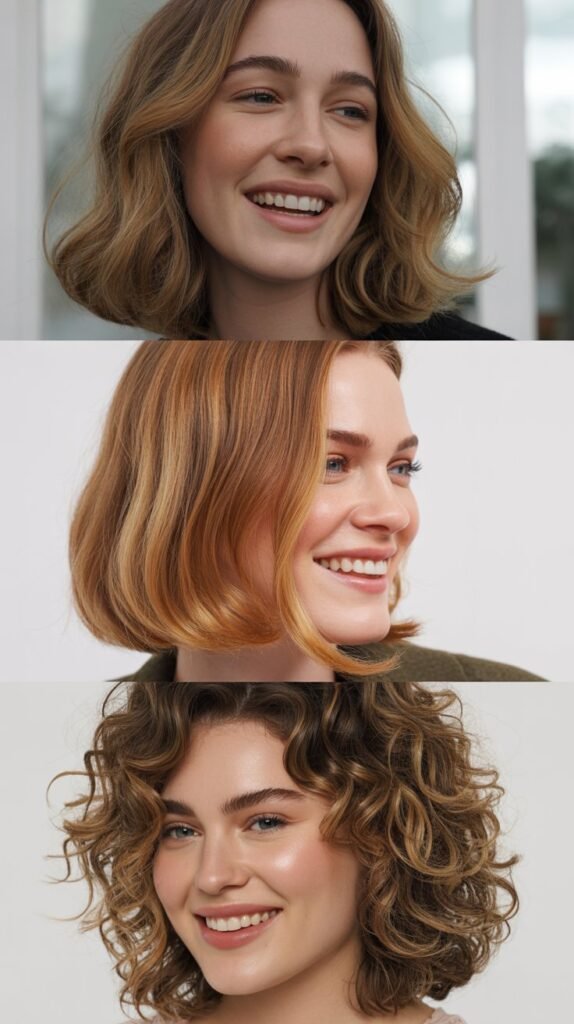
Different seasons require different hair care approaches to maintain healthy wispy bangs and layers, as temperature extremes, humidity variations, and environmental changes impact hair behavior and styling needs.
- Winter’s dry air and indoor heating create static and brittleness in wispy bangs that require richer conditioners, leave-in treatments, and anti-static products.
- Summer humidity demands anti-frizz products, lighter styling formulas, and potentially more frequent washing as sweat and environmental exposure increase.
- Spring and fall transitional weather requires flexible product wardrobes that address variable conditions, from humid rainy days to dry, breezy ones.
- Sun exposure in summer can dry and damage hair, particularly color-treated wispy bangs and layers, requiring UV protection products and potentially deep conditioning treatments.
- Winter hats and scarves can flatten or misshape wispy bangs, so consider strategic styling that accounts for headwear or bring tools for quick touch-ups after removing hats.
- Adjust your washing frequency seasonally—you may need to wash more often in summer when sweating is common and can extend time between washes in winter when environmental exposure is minimal.
49. Combining Wispy Bangs With Updos and Ponytails
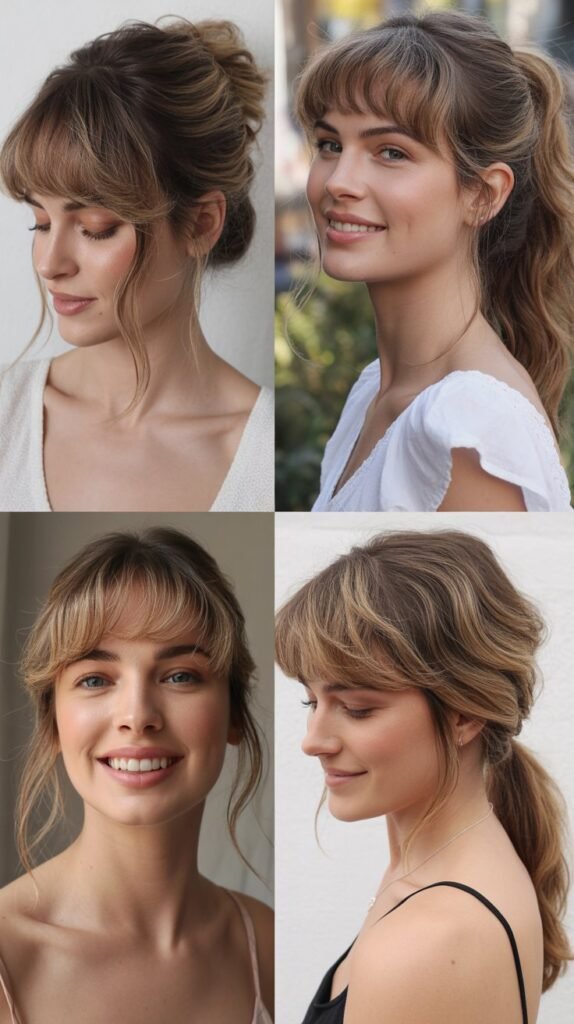
Wispy bangs don’t limit your styling versatility, and in fact, they create beautiful framing for updos and ponytails that would otherwise pull all hair away from the face and potentially create a harsh appearance.
- Wispy bangs left out of ponytails or buns create soft face-framing that prevents the severe, exposed appearance that can occur when all hair is pulled back.
- High ponytails with wispy bangs achieve youthful, energetic appeal perfect for casual settings or active days when you need hair secured but still want style.
- Messy buns with wispy bangs and a few face-framing layers pulled out create effortlessly chic, undone elegance suitable for everything from brunch to evening events.
- Sleek, low ponytails with smooth wispy bangs deliver sophisticated polish for professional settings or formal occasions when you want controlled elegance.
- Braided styles can incorporate layers gradually while leaving wispy bangs out, creating interesting texture and detail in your updo.
- The key to successful updos with wispy bangs is ensuring the bangs are well-styled even when the rest of your hair is secured, as bangs become even more prominent when they’re the primary face-framing element.
50. Troubleshooting Common Problems
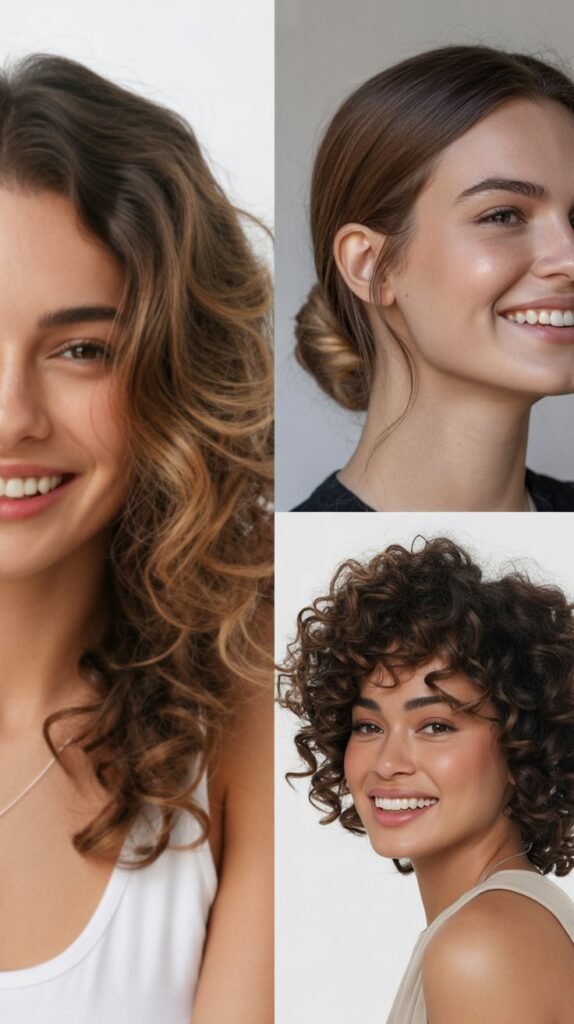
Even with perfect cutting and styling, wispy bangs and layers can present challenges, but understanding common problems and their solutions prevents frustration and keeps your style looking its best.
| Problem | Likely Cause | Solution |
|---|---|---|
| Wispy bangs becoming oily quickly | Forehead oil transfer, touching bangs | Use dry shampoo; avoid touching; consider bang clip overnight |
| Layers looking flat and lifeless | Lack of volume at roots, heavy products | Use volumizing products; blow-dry with lift at crown |
| Wispy bangs won’t hold shape | Natural growth pattern, humidity | Use stronger hold products; flat iron lightly; try different part |
| Excessive separation in bangs | Over-texturizing, wrong products | Use smoothing serum; less texturizing spray; possible trim |
| Layers creating triangle shape | Poor cutting technique, wrong layer placement | Consult new stylist; request internal rather than external layers |
| Bangs sticking out oddly | Cowlick, drying position, sleeping position | Blow-dry in opposite direction; use product; clip at night |
- Oily wispy bangs are one of the most common complaints and can be managed with dry shampoo applied specifically to bang area or strategic bang clipping at night to keep them off your forehead.
- Flat layers often indicate either lack of volumizing product at roots or blow-drying technique that directs hair downward rather than lifting it during the drying process.
- Wispy bangs that won’t hold their styled shape may need stronger hold products, different styling tools (like a small round brush during blow-drying), or slight length or texturing adjustments.
- When wispy bangs become too piecey or separated, smoothing serums and avoiding excessive texturizing products helps them blend together more cohesively.
- Triangle-shaped layers indicate cutting technique issues and usually require visiting a different, more skilled stylist who understands proper layer placement for straight hair.
51. Combining Wispy Bangs With Hair Accessories
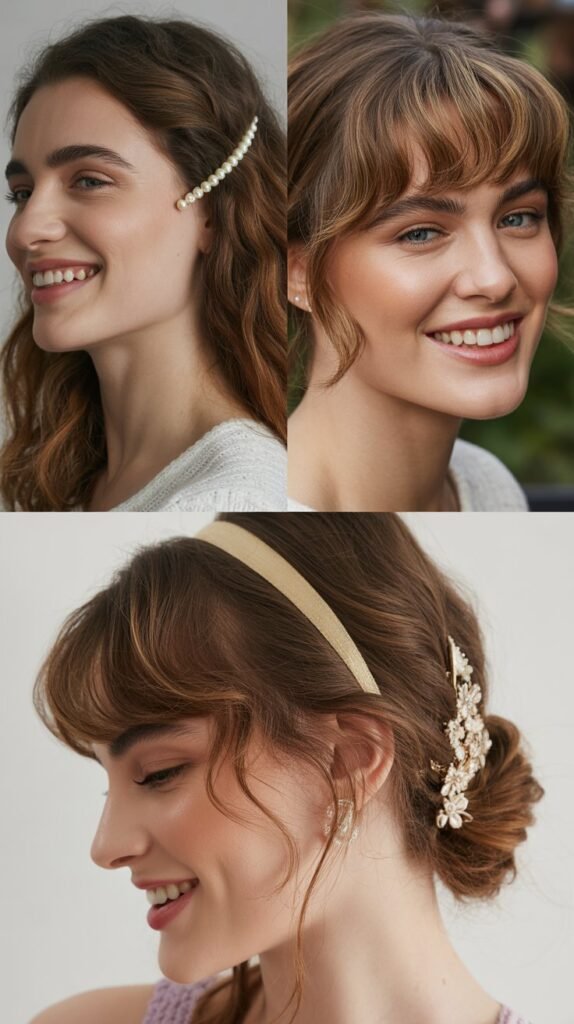
Hair accessories enhance wispy bangs and layers, adding interest, solving styling challenges, or simply creating variety in your everyday look without requiring cutting or major styling changes.
- Headbands worn behind wispy bangs create vintage-inspired elegance while keeping hair controlled, working particularly well when you’re between washes and want to disguise oily roots.
- Small decorative clips or barrettes can pin back one side of curtain bangs for asymmetrical interest or secure side-swept bangs while adding sparkle or detail.
- Hair scarves tied as headbands or incorporated into ponytails add color and pattern to simple styles while keeping wispy bangs prominent as the face-framing element.
- Bobby pins can be used functionally to secure growing-out bangs or decoratively when arranged in patterns or clusters for trendy, Instagram-worthy styling.
- Claw clips secure half-up styles while allowing wispy bangs and face-framing layers to remain loose and soft around the face.
- When selecting accessories, consider your wispy bang style—delicate accessories suit sparse, light bangs while bolder pieces can handle heavier, fuller bang sections.
52. The Psychology of Bangs: Why This Change Feels Significant
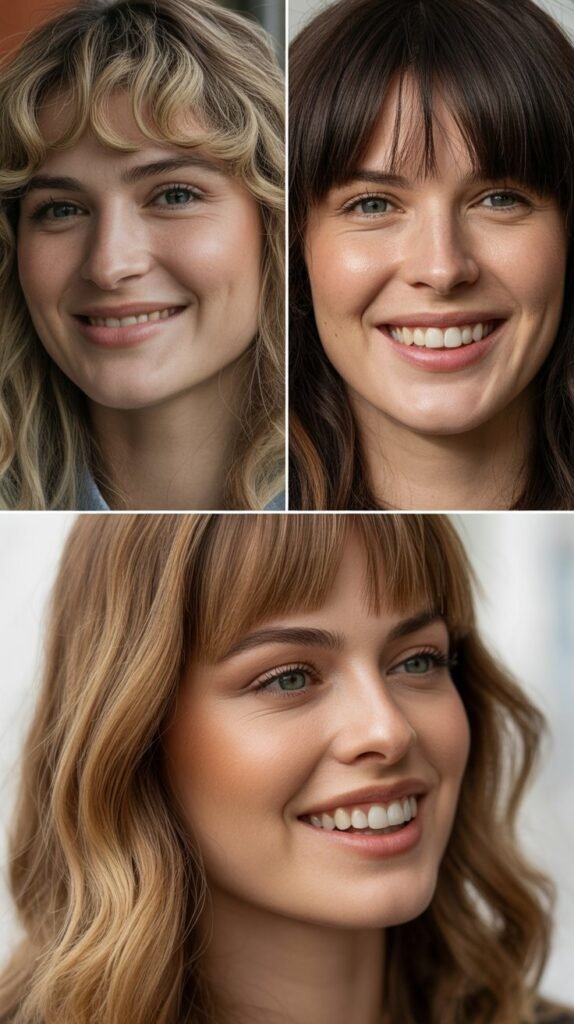
Getting wispy bangs represents more than a simple haircut for many people, carrying psychological weight and emotional significance that hairstylists and friends may not fully appreciate without understanding the deeper meaning.
- Bangs create a significant change to your appearance, altering your face shape and the way others perceive you, which explains why the decision feels momentous rather than casual.
- For many, getting wispy bangs represents taking control, making a bold change, or symbolizing a new chapter in life—the physical change reflects internal transformation.
- The commitment level of bangs (even wispy ones that grow out relatively easily) can create anxiety about making the wrong choice or not liking the results.
- Social media amplification of hair transformations has increased pressure around bang decisions, with people aware their new style will be photographed and potentially shared widely.
- Understanding that wispy bangs are relatively low-commitment compared to blunt bangs—they grow out more gracefully and blend into layers—can ease decision anxiety.
- If you’re uncertain, consider starting with clip-in bang extensions to “test drive” the look before committing to cutting your hair, reducing the fear of an irreversible decision.
53. Virtual Consultations and AI Tools for Visualizing Your Cut
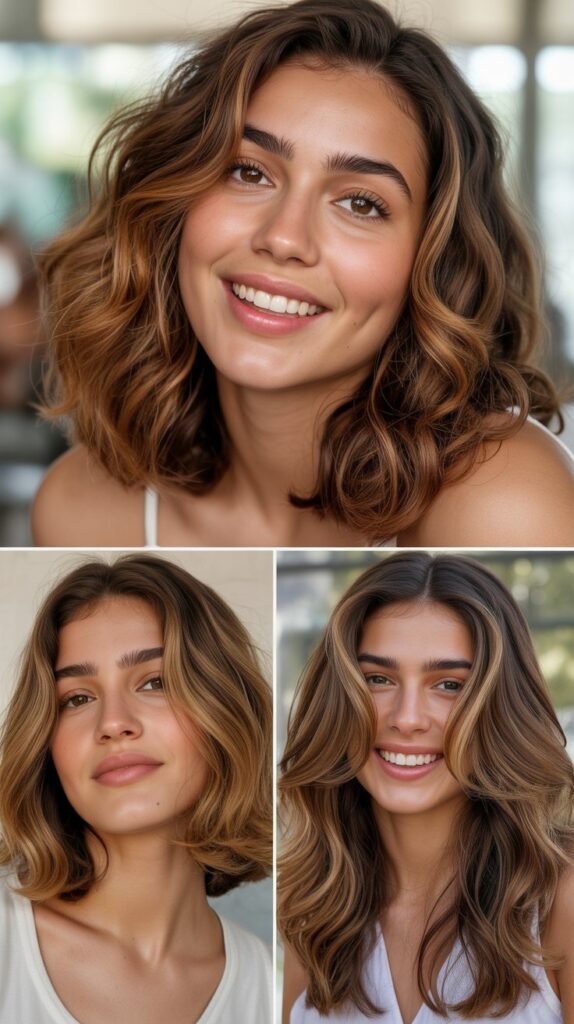
Technology offers new ways to preview wispy bangs and layers before committing to the cut, reducing uncertainty and improving communication between clients and stylists.
- Virtual try-on apps allow you to upload your photo and digitally add various wispy bang and layer styles, helping you visualize how different options might look on your face shape.
- AI-powered tools can analyze your face shape and hair texture to recommend wispy bang styles that will likely flatter your features, offering data-driven suggestions.
- Instagram and Pinterest filters sometimes offer bang try-on options, though these are typically less accurate than dedicated hairstyle apps designed specifically for visualization.
- Some salons offer digital consultation services where you can send photos and receive stylist recommendations before booking an in-person appointment.
- Remember that virtual tools provide approximations rather than perfect predictions, as they can’t account for your hair’s specific texture, growth patterns, or how the cut will move.
- Use virtual tools as conversation starters with your stylist rather than definitive answers, bringing your digital mock-ups to consultations as part of your reference materials.
54. Sustainability Considerations in Hair Care
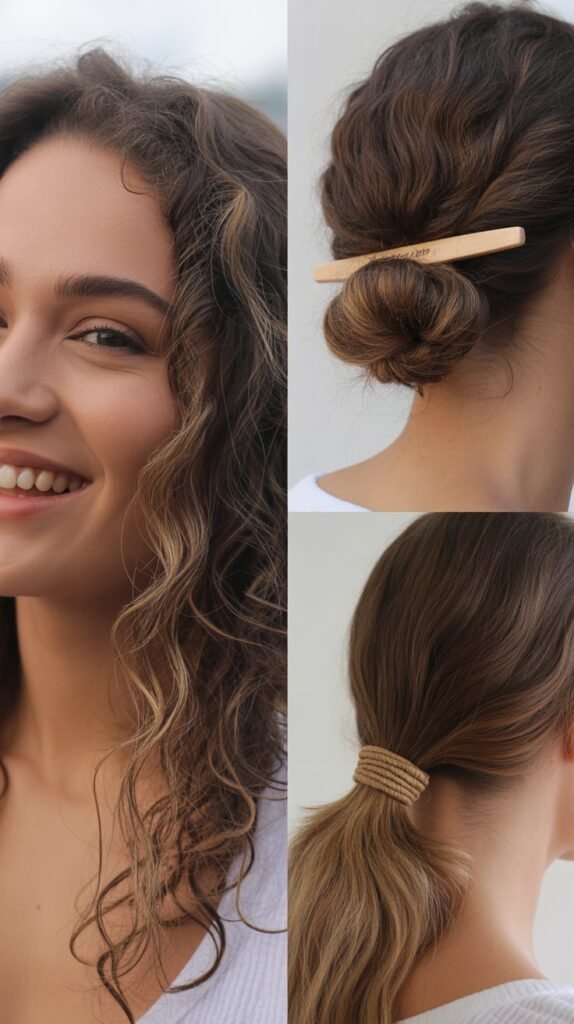
Environmentally conscious consumers can maintain beautiful wispy bangs and layers while minimizing environmental impact through thoughtful product choices and sustainable practices.
- Choose hair care products from brands committed to sustainable practices, including recyclable packaging, natural ingredients, and ethical sourcing.
- Reduce water consumption by extending time between washes, using dry shampoo for refreshing, and turning water off while applying shampoo and conditioner.
- Select multi-purpose products that serve several functions, reducing the total number of products you purchase and eventually discard.
- Support salons that prioritize sustainability through practices like recycling hair clippings, using energy-efficient tools, and offering sustainable product lines.
- Consider the longevity of styling tools, investing in durable, high-quality items that last years rather than cheap tools that break quickly and create waste.
- When possible, choose cruelty-free and vegan products that align with ethical values while still delivering the performance needed for styling wispy bangs and layers effectively.
55. Men’s Wispy Bangs and Layers: Breaking Gender Styling Norms
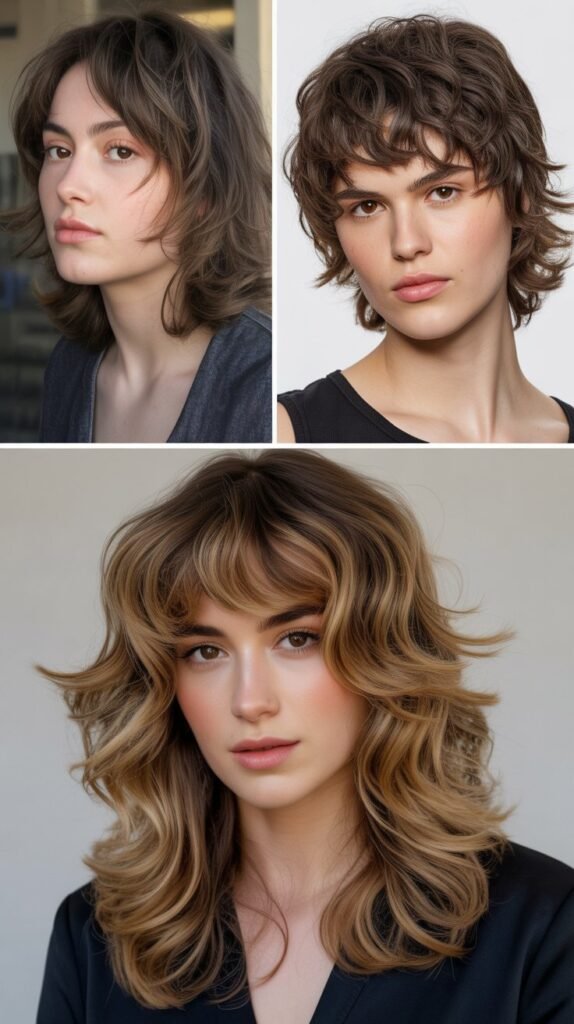
Wispy bangs and layered cuts aren’t exclusive to any gender, and increasingly, men are embracing these styles for their face-framing benefits and modern aesthetic appeal.
- Men’s wispy bangs tend to be slightly different in execution—often textured, piece-y, and styled forward or to the side rather than blunt or heavily styled.
- Layering in men’s cuts creates movement and removes bulk, particularly important for those with thick, straight hair that can appear heavy without dimension.
- The maintenance for men’s wispy bangs and layers mirrors women’s requirements—regular trims, appropriate products, and daily styling effort.
- Face-framing layers work just as effectively for masculine faces as feminine ones, softening strong features and creating flattering dimension.
- Men may prefer more subtle, understated wispy bangs that create texture and interest without appearing overly styled or “done.”
- Communication with barbers or stylists is equally important for men, bringing reference photos and discussing lifestyle, styling ability, and maintenance commitment.
56. Cultural Considerations and Global Perspectives
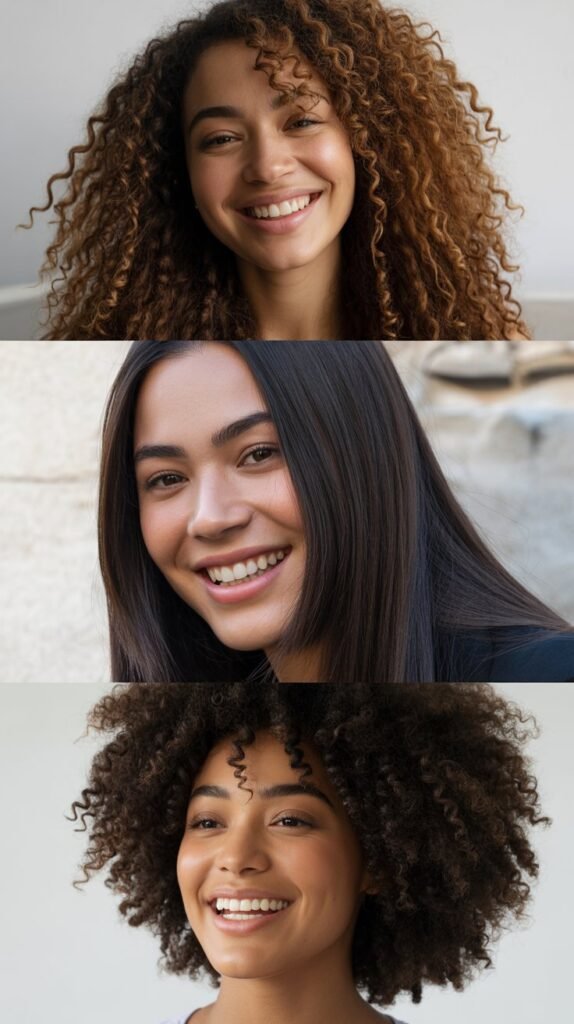
Wispy bangs and layers appear across cultures worldwide, though preferences, styling approaches, and cultural meanings can vary significantly depending on geographic location and cultural context.
- Asian beauty standards often favor softer, more delicate wispy bangs paired with minimal layers that maintain length and fullness, creating youthful, feminine aesthetics.
- European approaches tend toward more dramatic layering and sometimes choppier, more textured wispy bangs that create editorial, fashion-forward appeal.
- Different cultures have varying perspectives on appropriate hair length, maintenance expectations, and how much styling effort is considered normal or excessive.
- Face shape ideals vary culturally, influencing which wispy bang and layer combinations are most sought-after in different regions—some cultures prize roundness while others prefer elongation.
- Hair texture differences across ethnicities mean that what works for naturally straight Asian hair may require adjustments for naturally straight Caucasian or Hispanic hair with different density or diameter.
- Respect cultural context when sharing or seeking inspiration, understanding that what’s trending in one region may not translate directly to another due to different beauty ideals and hair characteristics.
57. The Role of Hair Texture in Wispy Bang Success
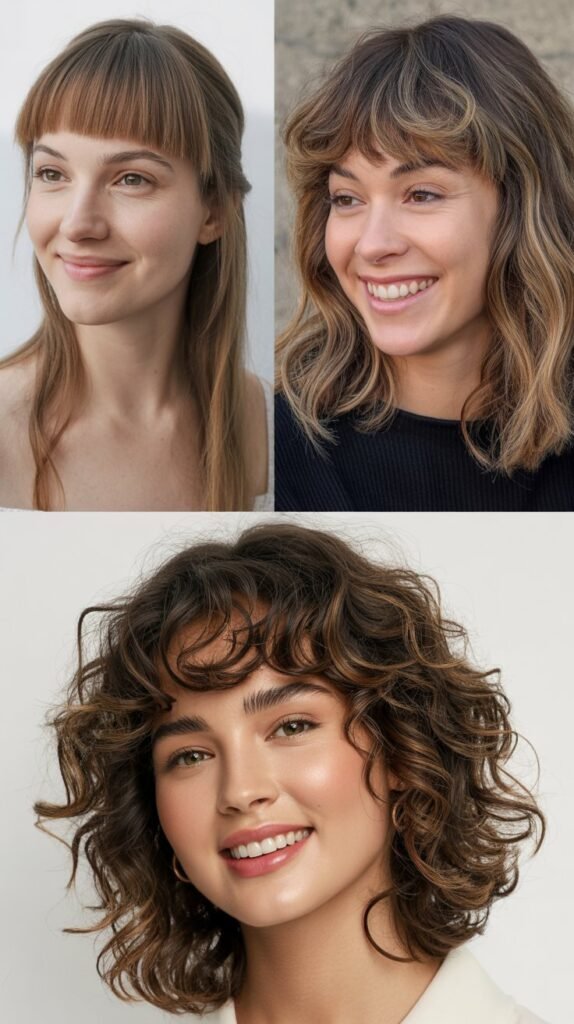
While this article focuses on straight hair, understanding how texture influences wispy bangs helps you communicate with your stylist and set realistic expectations for how your specific hair will respond to this cut.
- Ultra-fine, silky straight hair creates the most delicate, ethereal wispy bangs but may lack body and require volumizing products to prevent limp appearance.
- Medium-texture straight hair offers the most versatility, holding wispy styling well while maintaining enough body to create the piece-y separation that defines the look.
- Coarse straight hair requires more aggressive texturizing to achieve wispy effects, as thick individual strands naturally want to be blunt rather than feathered.
- Hair that’s straight but has slight bends or irregularities can create interesting texture in wispy bangs without additional styling, though may require smoothing for sleek looks.
- Previously chemically treated straight hair (from relaxers or keratin treatments) may behave differently than naturally straight hair, being either more cooperative or more resistant depending on treatment type.
- Communicate your hair’s specific texture characteristics to your stylist, including how it behaves when cut, whether it tends to puff or lie flat, and how it responds to products.
58. Postpartum Hair Changes and Wispy Bangs
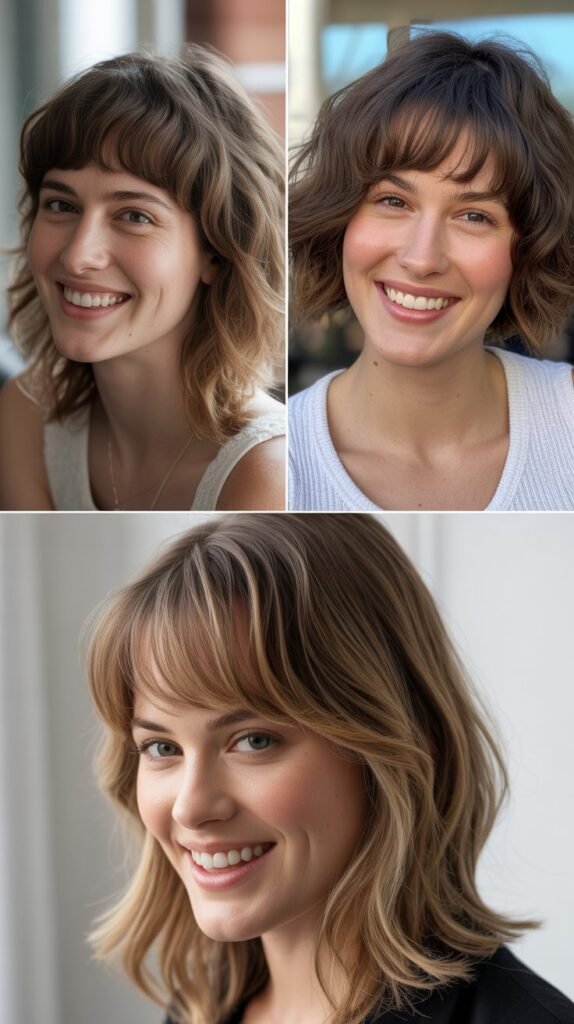
Pregnancy and postpartum periods bring hormonal changes that significantly impact hair texture, density, and behavior, influencing how wispy bangs and layers should be approached during this life stage.
- Postpartum hair loss, particularly around the hairline and temples, can make wispy bangs strategic for disguising thinning areas while hair regrows.
- Hormonal changes may temporarily alter hair texture—previously straight hair might develop wave or vice versa—requiring adjusted cutting and styling approaches.
- New mothers often have limited styling time, making low-maintenance wispy bangs and layers that air-dry well particularly valuable during this demanding period.
- Wispy bangs can create the fresh, polished appearance that many new mothers crave when they feel exhausted and disheveled from round-the-clock childcare.
- Discuss postpartum hair status honestly with your stylist, as they can adjust cutting techniques to work with temporary hair changes and thinning areas.
- Consider that postpartum hair changes are typically temporary, so avoid making dramatic permanent changes to your hair during this transition period.
59. Medical Conditions and Hair Loss: Using Wispy Bangs Strategically
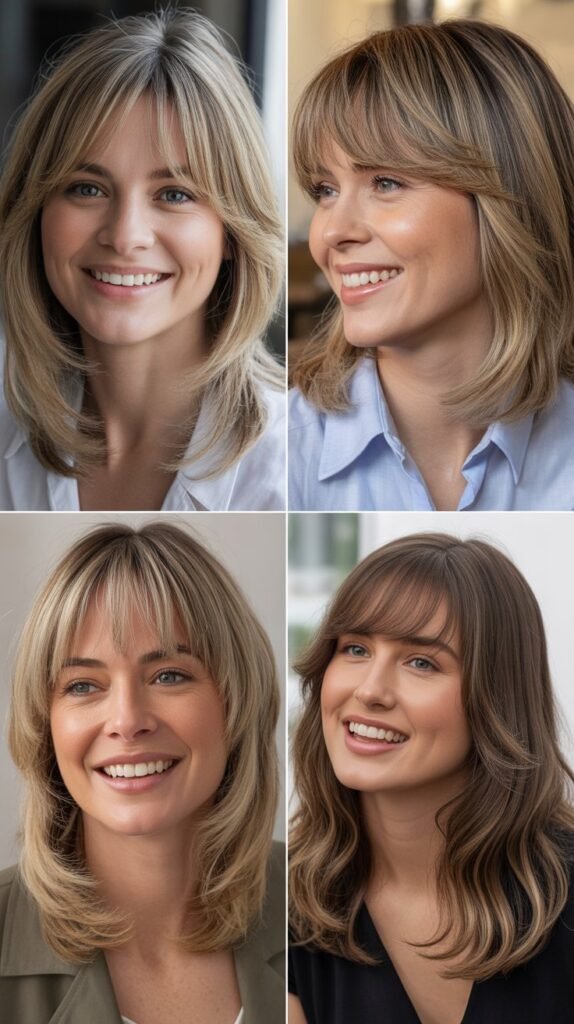
Various medical conditions and treatments affect hair growth, texture, and density, but wispy bangs and strategic layering can help manage appearance concerns while maintaining style and confidence.
- Wispy bangs can strategically disguise hairline recession or thinning at the temples, creating the appearance of fuller hair while providing coverage where density has decreased.
- Sparse wispy bangs work particularly well for those experiencing overall thinning, as they require less hair than full bangs while still providing face-framing benefits.
- Layering must be approached carefully with thinning hair, as over-layering can make thinness more apparent rather than disguising it through strategic volume placement.
- For those undergoing chemotherapy or experiencing medical hair loss, wispy bangs on wigs can create natural-looking, face-flattering styles during treatment.
- Communicate openly with your stylist about medical conditions affecting your hair, as they can adapt techniques to work with your specific situation sensitively and effectively.
- Consider working with stylists who specialize in medical hair loss, as they have advanced training in creating beautiful styles that address unique challenges.
60. The Economics of Salon Services: Understanding Pricing
Wispy bang and layer services vary significantly in price depending on location, stylist experience, and salon positioning, and understanding pricing helps you budget appropriately and find quality services within your means.
- High-end salons in major cities may charge significantly more for the same cut than suburban or small-town salons, with location overhead being a major pricing factor.
- Stylist experience level impacts pricing—master stylists or those with advanced training typically charge premium rates compared to junior stylists or assistants.
- Bang-only trim services are usually offered at discounted rates (often $15-30) compared to full haircuts, providing affordable maintenance between complete cuts.
- Some salons offer tiered pricing based on stylist level, allowing you to choose between different price points for the same type of service.
- Promotional periods, particularly at training academies or newer salons building clientele, can offer significant savings without compromising quality.
- Remember that cheaper isn’t always better—skilled cutting makes an enormous difference with wispy bangs and layers, so sometimes paying more ensures better results that last longer between cuts.
61. Building a Relationship With Your Stylist
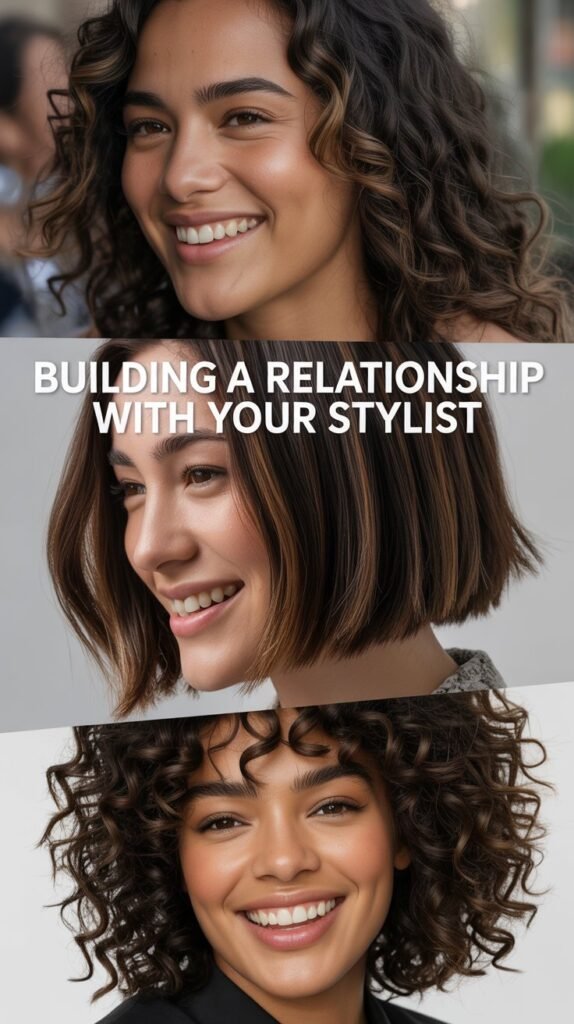
Consistent work with the same stylist creates benefits for your wispy bangs and layers, as your stylist learns your hair’s specific characteristics, preferences, and how previous cuts have grown out.
- Working with the same stylist allows them to track how your hair grows, what works and doesn’t work, and to make informed refinements with each appointment.
- Established stylist relationships create comfort with communication, making it easier to discuss concerns or request adjustments without awkwardness.
- Your stylist maintains notes about your hair, previous cuts, and products used, ensuring consistency and continuous improvement rather than starting from scratch each visit.
- Building loyalty often results in better appointment availability, as longtime clients frequently receive priority scheduling during busy periods.
- Some stylists offer loyalty benefits like occasional complimentary bang trims or product discounts for consistent clients who provide reliable business.
- If you must switch stylists, bring detailed notes about your current cut, maintenance schedule, and what you love or want changed to help your new stylist understand your needs quickly.
62. Photographing Your Wispy Bangs: Tips for Best Results
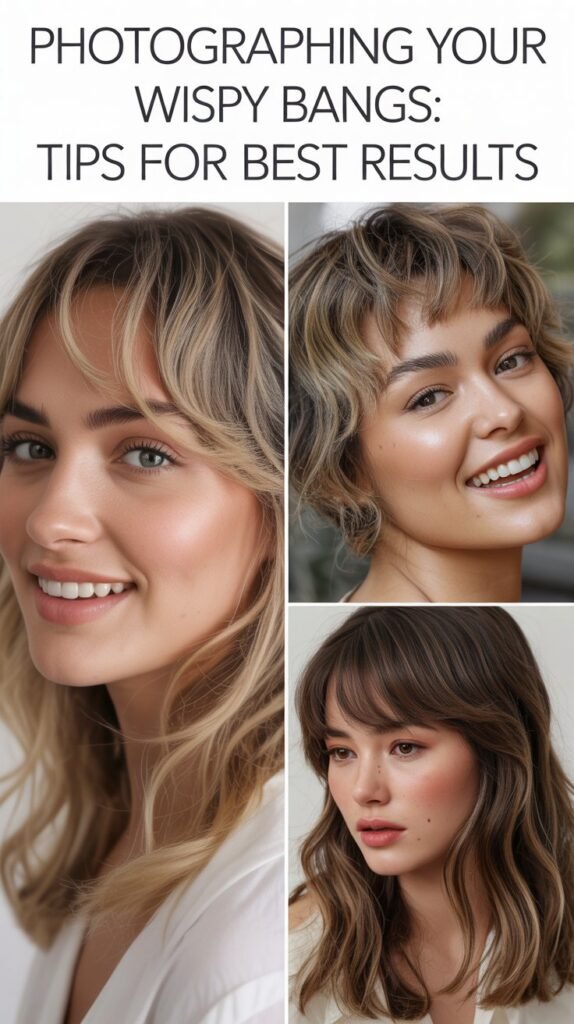
Wispy bangs and layers photograph beautifully when you understand how to position yourself and work with lighting, ensuring your hairstyle looks as good in photos as it does in person.
- Natural lighting creates the most flattering photos of wispy bangs, showing texture and dimension without the harshness that overhead or direct flash creates.
- Slightly angling your face rather than shooting straight-on shows the dimension of layers and how wispy bangs frame your features rather than hiding them.
- Avoid directly overhead lighting that creates shadows under wispy bangs and makes them appear disconnected from the rest of your hair.
- For selfies, holding the camera slightly above eye level and angling down creates the most universally flattering perspective for showing wispy bangs and face-framing layers.
- Wind or fans can create beautiful movement in layered hair and wispy bangs for dynamic photos, though too much wind creates messiness rather than artful movement.
- Consider having hair freshly styled for important photos—wispy bangs and layers look most photogenic when recently washed, properly dried, and styled with appropriate products.
63. Social Media Trends and Wispy Bangs
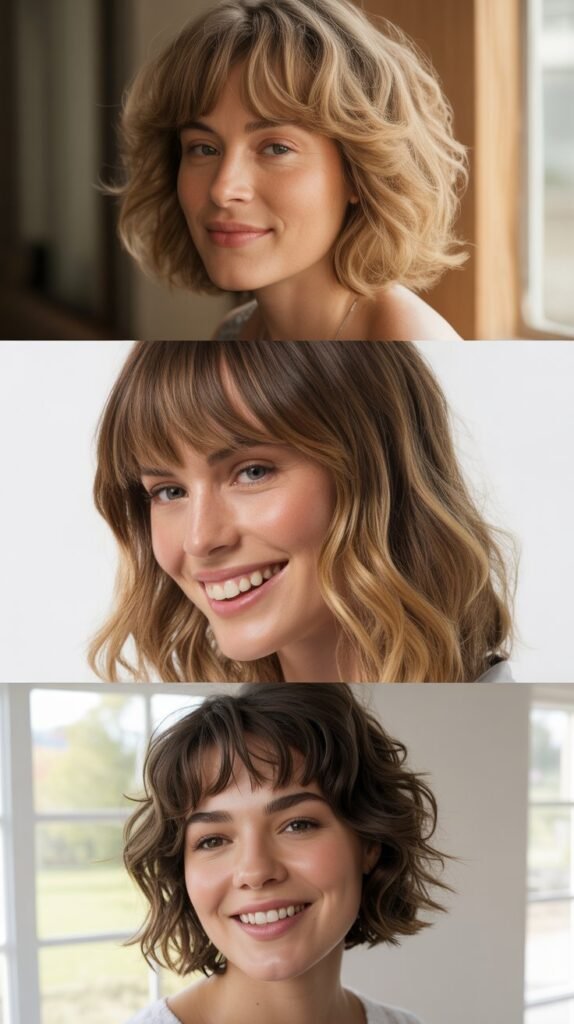
Social media platforms significantly influence wispy bang and layer trends, with viral styles, celebrity posts, and influencer content driving popularity of specific variations and styling approaches.
- TikTok hairstyle transformations featuring wispy bangs generate millions of views, influencing widespread adoption of specific cutting and styling techniques.
- Instagram provides endless inspiration through hairstylist portfolio accounts, celebrity styling, and beauty influencers showcasing various wispy bang and layer combinations.
- Hashtags like #wispybangs, #curtainbangs, or #layeredhair allow you to explore thousands of examples when seeking inspiration or visualizing how styles look on different people.
- Before-and-after transformation content creates realistic expectations, showing not just the final styled result but also the cutting process and how different faces respond to similar cuts.
- Be cautious about trendy variations—what looks stunning on an influencer with professional styling may not translate to your daily life without similar effort and skill.
- Save posts that inspire you to create a comprehensive inspiration board for stylist consultations, showing multiple angles and styling variations of your desired look.
64. The Science of Hair: Understanding What Makes Wispy Bangs Possible
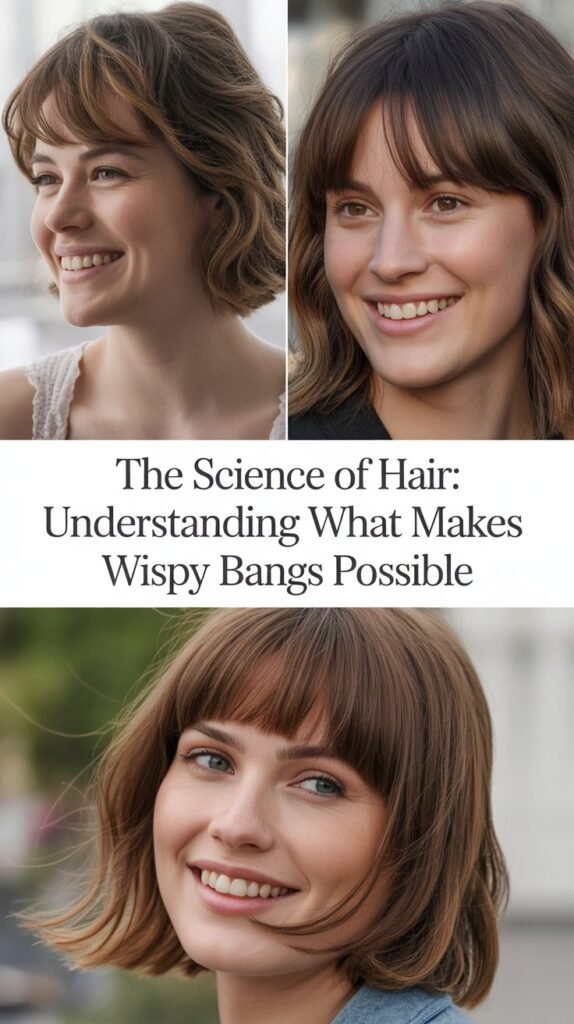
Understanding the biological structure of hair helps you comprehend why certain techniques create wispy effects and how your hair’s specific characteristics influence what’s achievable with your cut.
- Hair consists of a cuticle (outer layer), cortex (middle structure), and sometimes medulla (inner core), with cutting techniques affecting how these layers appear and behave.
- Point-cutting and texturizing work by removing portions of the hair shaft at angles, creating irregular lengths that produce the feathered, piece-y effect defining wispy bangs.
- Straight hair reflects light uniformly when the cuticle lies flat, which is why smooth styling creates shine while textured styling creates more matte, dimensional appearance.
- Hair grows from follicles at angles determined by genetics, creating your natural growth patterns that stylists must work with when cutting wispy bangs.
- The diameter of individual hair strands (hair thickness) is determined by the follicle size and doesn’t change with cutting—only styling and texturizing alter how thick or thin hair appears.
- Understanding that hair is dead protein once it emerges from the follicle explains why conditioning and treatments work externally but can’t fundamentally change hair’s structure or characteristics.
65. Future Trends: Where Wispy Bangs and Layers Are Heading
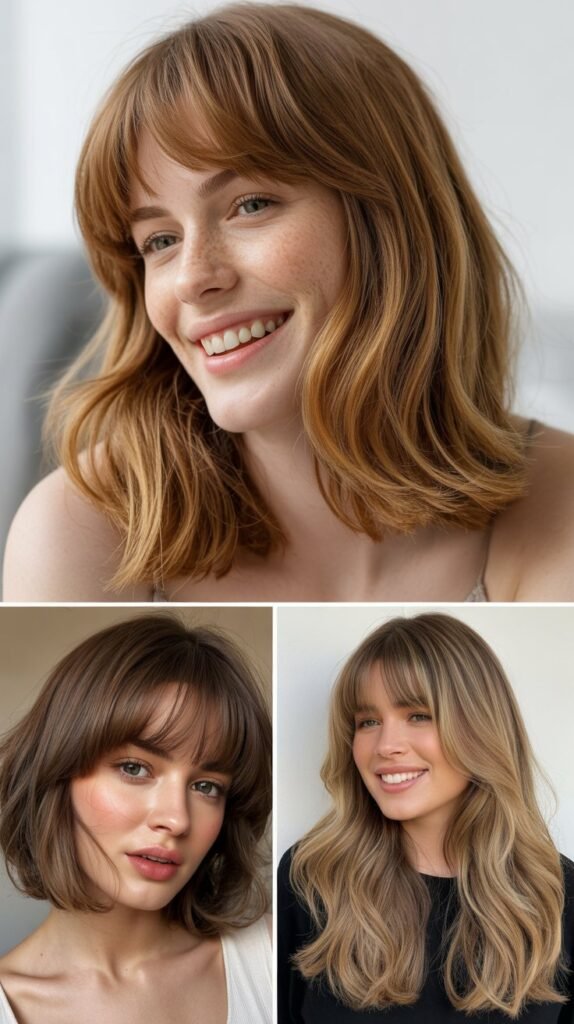
While wispy bangs and layers are timeless, specific variations trend in and out of popularity, and understanding emerging directions helps you decide whether to embrace current trends or stick with classic approaches.
- Extremely textured, piece-y “shag” variations of layered cuts with wispy bangs are experiencing renewed popularity, bringing 70s-inspired aesthetics into modern styling.
- Micro-bangs and baby bangs combined with long layers create dramatic contrast that’s trending among fashion-forward individuals willing to make bold statements.
- Curtain bangs continue dominating as perhaps the most popular wispy bang variation, showing remarkable staying power across multiple years rather than being a brief trend.
- Hybrid cuts combining elements of multiple styles—like Korean-inspired “see-through bangs” merged with Western layering techniques—create cross-cultural fusion styles.
- Increased emphasis on low-maintenance, air-dry styling is influencing cutting techniques, with stylists designing wispy bangs and layers that look intentional without heat styling.
- While trends come and go, the fundamental appeal of wispy bangs with layers remains constant, suggesting that classic variations will continue being relevant regardless of temporary trend shifts.
66. Making the Decision: Is This Style Right for You?
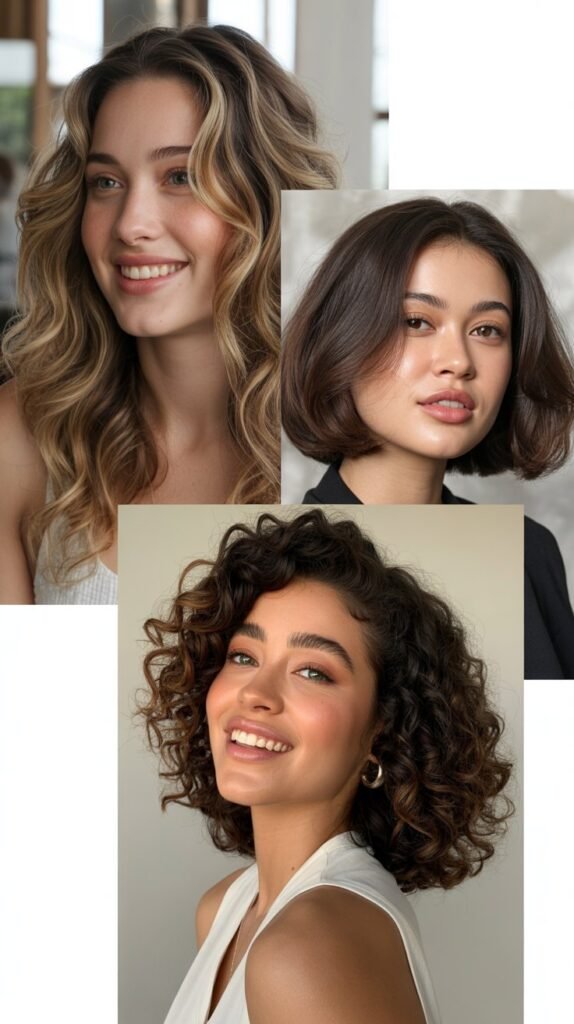
After exploring every aspect of wispy bangs with layers, the final consideration is whether this style aligns with your lifestyle, hair characteristics, maintenance willingness, and personal aesthetic preferences.
- Honestly assess your daily styling time and ability—wispy bangs and layers can be low-maintenance but do require some daily attention for best results.
- Consider your hair’s specific characteristics including texture, density, growth patterns, and any medical or hormonal factors that influence its behavior.
- Evaluate your face shape and features to determine which wispy bang and layer variation will most flatter your unique proportions and characteristics.
- Think about your lifestyle including work environment, activity level, and whether your daily routine accommodates the maintenance this style requires.
- Review your budget for both initial cutting and ongoing maintenance, ensuring the financial commitment aligns with your resources and priorities.
- Trust your instincts—if you’ve been drawn to wispy bangs and layers repeatedly, that persistent attraction suggests the style resonates with your personal aesthetic and deserves serious consideration.
Conclusion
The journey through these 66 variations and considerations for sleek and timeless wispy bangs with layers for straight hair reveals why this combination never goes out of style—its remarkable versatility adapts to virtually every face shape, hair type, lifestyle, and personal aesthetic while maintaining effortless elegance.
From understanding the foundational techniques that create wispy texture to exploring cutting-edge trends and timeless classics, you now possess comprehensive knowledge to confidently pursue this flattering, dimensional style.
Whether you choose subtle face-framing layers with sparse wispy bangs for minimal commitment or embrace bold choppy layers with heavy textured fringe for maximum impact, the principles remain consistent: working with your natural hair characteristics, communicating clearly with skilled stylists, maintaining your cut through appropriate scheduling and care, and styling with techniques and products suited to your specific hair.
66 Sleek & Timeless Wispy Bangs With Layers for Straight Hair That Never Go Out of Style represents not just a hairstyle but an approach to beauty that balances structure with softness, precision with natural movement, and trendy elements with classic appeal.
Armed with this knowledge, you’re prepared to make informed decisions about cuts, maintenance, styling, and all the nuanced choices that transform a simple haircut into a signature style that enhances your natural beauty and fits seamlessly into your life.

